EP3361872B1 - A biopesticide - Google Patents
A biopesticide Download PDFInfo
- Publication number
- EP3361872B1 EP3361872B1 EP17758287.1A EP17758287A EP3361872B1 EP 3361872 B1 EP3361872 B1 EP 3361872B1 EP 17758287 A EP17758287 A EP 17758287A EP 3361872 B1 EP3361872 B1 EP 3361872B1
- Authority
- EP
- European Patent Office
- Prior art keywords
- npv
- granulovirus
- cryptophlebia
- larvae
- peltastica
- Prior art date
- Legal status (The legal status is an assumption and is not a legal conclusion. Google has not performed a legal analysis and makes no representation as to the accuracy of the status listed.)
- Active
Links
Images



Classifications
-
- A—HUMAN NECESSITIES
- A01—AGRICULTURE; FORESTRY; ANIMAL HUSBANDRY; HUNTING; TRAPPING; FISHING
- A01N—PRESERVATION OF BODIES OF HUMANS OR ANIMALS OR PLANTS OR PARTS THEREOF; BIOCIDES, e.g. AS DISINFECTANTS, AS PESTICIDES OR AS HERBICIDES; PEST REPELLANTS OR ATTRACTANTS; PLANT GROWTH REGULATORS
- A01N63/00—Biocides, pest repellants or attractants, or plant growth regulators containing microorganisms, viruses, microbial fungi, animals or substances produced by, or obtained from, microorganisms, viruses, microbial fungi or animals, e.g. enzymes or fermentates
- A01N63/40—Viruses, e.g. bacteriophages
-
- C—CHEMISTRY; METALLURGY
- C12—BIOCHEMISTRY; BEER; SPIRITS; WINE; VINEGAR; MICROBIOLOGY; ENZYMOLOGY; MUTATION OR GENETIC ENGINEERING
- C12N—MICROORGANISMS OR ENZYMES; COMPOSITIONS THEREOF; PROPAGATING, PRESERVING, OR MAINTAINING MICROORGANISMS; MUTATION OR GENETIC ENGINEERING; CULTURE MEDIA
- C12N15/00—Mutation or genetic engineering; DNA or RNA concerning genetic engineering, vectors, e.g. plasmids, or their isolation, preparation or purification; Use of hosts therefor
- C12N15/09—Recombinant DNA-technology
- C12N15/63—Introduction of foreign genetic material using vectors; Vectors; Use of hosts therefor; Regulation of expression
- C12N15/79—Vectors or expression systems specially adapted for eukaryotic hosts
- C12N15/85—Vectors or expression systems specially adapted for eukaryotic hosts for animal cells
- C12N15/86—Viral vectors
-
- C—CHEMISTRY; METALLURGY
- C12—BIOCHEMISTRY; BEER; SPIRITS; WINE; VINEGAR; MICROBIOLOGY; ENZYMOLOGY; MUTATION OR GENETIC ENGINEERING
- C12N—MICROORGANISMS OR ENZYMES; COMPOSITIONS THEREOF; PROPAGATING, PRESERVING, OR MAINTAINING MICROORGANISMS; MUTATION OR GENETIC ENGINEERING; CULTURE MEDIA
- C12N7/00—Viruses; Bacteriophages; Compositions thereof; Preparation or purification thereof
-
- C—CHEMISTRY; METALLURGY
- C12—BIOCHEMISTRY; BEER; SPIRITS; WINE; VINEGAR; MICROBIOLOGY; ENZYMOLOGY; MUTATION OR GENETIC ENGINEERING
- C12N—MICROORGANISMS OR ENZYMES; COMPOSITIONS THEREOF; PROPAGATING, PRESERVING, OR MAINTAINING MICROORGANISMS; MUTATION OR GENETIC ENGINEERING; CULTURE MEDIA
- C12N2710/00—MICROORGANISMS OR ENZYMES; COMPOSITIONS THEREOF; PROPAGATING, PRESERVING, OR MAINTAINING MICROORGANISMS; MUTATION OR GENETIC ENGINEERING; CULTURE MEDIA dsDNA viruses
- C12N2710/00011—Details
- C12N2710/14011—Baculoviridae
- C12N2710/14111—Nucleopolyhedrovirus, e.g. autographa californica nucleopolyhedrovirus
- C12N2710/14121—Viruses as such, e.g. new isolates, mutants or their genomic sequences
-
- C—CHEMISTRY; METALLURGY
- C12—BIOCHEMISTRY; BEER; SPIRITS; WINE; VINEGAR; MICROBIOLOGY; ENZYMOLOGY; MUTATION OR GENETIC ENGINEERING
- C12N—MICROORGANISMS OR ENZYMES; COMPOSITIONS THEREOF; PROPAGATING, PRESERVING, OR MAINTAINING MICROORGANISMS; MUTATION OR GENETIC ENGINEERING; CULTURE MEDIA
- C12N2710/00—MICROORGANISMS OR ENZYMES; COMPOSITIONS THEREOF; PROPAGATING, PRESERVING, OR MAINTAINING MICROORGANISMS; MUTATION OR GENETIC ENGINEERING; CULTURE MEDIA dsDNA viruses
- C12N2710/00011—Details
- C12N2710/14011—Baculoviridae
- C12N2710/14111—Nucleopolyhedrovirus, e.g. autographa californica nucleopolyhedrovirus
- C12N2710/14122—New viral proteins or individual genes, new structural or functional aspects of known viral proteins or genes
-
- C—CHEMISTRY; METALLURGY
- C12—BIOCHEMISTRY; BEER; SPIRITS; WINE; VINEGAR; MICROBIOLOGY; ENZYMOLOGY; MUTATION OR GENETIC ENGINEERING
- C12N—MICROORGANISMS OR ENZYMES; COMPOSITIONS THEREOF; PROPAGATING, PRESERVING, OR MAINTAINING MICROORGANISMS; MUTATION OR GENETIC ENGINEERING; CULTURE MEDIA
- C12N2710/00—MICROORGANISMS OR ENZYMES; COMPOSITIONS THEREOF; PROPAGATING, PRESERVING, OR MAINTAINING MICROORGANISMS; MUTATION OR GENETIC ENGINEERING; CULTURE MEDIA dsDNA viruses
- C12N2710/00011—Details
- C12N2710/14011—Baculoviridae
- C12N2710/14111—Nucleopolyhedrovirus, e.g. autographa californica nucleopolyhedrovirus
- C12N2710/14132—Use of virus as therapeutic agent, other than vaccine, e.g. as cytolytic agent
-
- C—CHEMISTRY; METALLURGY
- C12—BIOCHEMISTRY; BEER; SPIRITS; WINE; VINEGAR; MICROBIOLOGY; ENZYMOLOGY; MUTATION OR GENETIC ENGINEERING
- C12N—MICROORGANISMS OR ENZYMES; COMPOSITIONS THEREOF; PROPAGATING, PRESERVING, OR MAINTAINING MICROORGANISMS; MUTATION OR GENETIC ENGINEERING; CULTURE MEDIA
- C12N2710/00—MICROORGANISMS OR ENZYMES; COMPOSITIONS THEREOF; PROPAGATING, PRESERVING, OR MAINTAINING MICROORGANISMS; MUTATION OR GENETIC ENGINEERING; CULTURE MEDIA dsDNA viruses
- C12N2710/00011—Details
- C12N2710/14011—Baculoviridae
- C12N2710/14111—Nucleopolyhedrovirus, e.g. autographa californica nucleopolyhedrovirus
- C12N2710/14141—Use of virus, viral particle or viral elements as a vector
- C12N2710/14143—Use of virus, viral particle or viral elements as a vector viral genome or elements thereof as genetic vector
Definitions
- This invention relates to a biopesticide, more particularly a nucleopolyhedrovirus (NPV), for use in controlling insect populations.
- NPV nucleopolyhedrovirus
- Chemical pesticides are the most commonly used agents for controlling insect pests in agriculture and forestry. Chemical insecticides may have adverse impacts not only on their target organisms but also on beneficial insects, such as bees and other pollinators. Accumulation of chemical pesticides through the food chain of an ecosystem has also been shown to have an adverse effect on birds and other insect predators. Furthermore, residues of chemical pesticides on fruit, vegetables and nuts may cause health problems among the human population.
- Insect baculoviruses are one group of insect biopesticides that have been promoted as an alternative control agent to chemical pesticides. These viruses, which can be isolated from a variety of insect species, exhibit relatively narrow host ranges and have almost no adverse environmental impact due to their host specificity. The absence of chemical residues means that long-term environmental hazards and health concerns are reduced with biopesticides.
- biopesticides there are several disadvantages to biopesticides, including cost of production, efficacy and stability.
- Nucleopolyhedrovirus (NPV) or alphabaculovirus is a genus of baculoviruses that infect insects, mostly moths and butterflies. NPVs have been known to be useful as biopesticides for insect-infested crops. NPVs have a high species specificity and while this enhances their utility as biopesticides, it may limit their effectiveness in cases of multiple pest infestation. Furthermore, there are isolated incidents of species of moth pests developing resistance to commercially-available strains of baculoviruses.
- Cryptophlebia peltastica (also known as litchi moth) is a species of moth that is an important pest of litchi trees ( Litchi chinensis ) in Southern Africa, Mauritius and elsewhere. C. peltastica larvae are known to damage up to 20% of fruits in commercial orchards. This moth is also a pest of macadamia and a variety of other commercially significant trees and plants. There are currently no known biopesticides that specifically target C. peltastica and to date, no NPVs have been isolated from C. peltastica or from any other species within the same genus or the lepidopteran tribe Grapholitini.
- a nucleopolyhedrovirus for use in controlling insect populations, the NPV having a genome sequence with at least 85% sequence identity to SEQ ID NO: 2 and being an isolate or genotype of the NPV whose genome sequence is represented by SEQ ID NO: 2, wherein the NPV has a virulence host range comprising the Grapholitini tribe of the lepidopteran family, Tortricidae.
- the NPV may have a polyhedrin gene with more than 93% sequence identity to SEQ ID NO: 1.
- the host range may include Cryptophlebia peltastica , Thaumatotibia leucotreta , Cydia pomonella , Grapholita molesta, and Thaumatotibia batracopa.
- the insects may be selected from the tribe Grapholitini, particularly the larvae of Cryptophlebia peltastica , Thaumatotibia (Cryptophlebia) leucotreta, Cydia pomonella, Grapholita molesta or Thaumatotibia batracopa.
- the NPV may be used in combination with one or more additional biopesticides, and the one or more additional biopesticide may be a Cryptophlebia leucotreta granulovirus, a Cydia pomonella granulovirus, a Cryptophlebia batracopa granulovirus or a Grapholita molesta granulovirus.
- the NPV genome sequence may contain only one recognition site for the restriction enzyme Sma1.
- a biopesticidal composition comprising an NPV as described above and one or more agronomically acceptable adjuvants and/or diluents.
- the composition may comprise an additional biopesticide, which may be a Cryptophlebia leucotreta granulovirus, a Cydia pomonella granulovirus, a Cryptophlebia batracopa granulovirus or a Grapholita molesta granulovirus.
- the composition may further comprise a feeding stimulant, a mineral oil and a UV protectant.
- a method of controlling insect populations comprising applying to the insects and/or their locus an insecticidally effective amount of an NPV as described above or a biopesticidal composition as described above.
- the method may comprise simultaneously or sequentially applying, in addition to the NPV or biopesticidal composition, at least one additional biopesticide to the insects and/or their locus.
- a method of treating or preventing insect infestations on plants or fruit comprising applying an insecticidally effective amount of an NPV as described above or a biopesticidal composition as described above to the plants or fruit.
- the invention provides a nucleopolyhedrovirus (NPV), also known as an alphabaculovirus, a biopesticidal composition comprising the NPV, and a method of controlling insect populations and infestations.
- NPV nucleopolyhedrovirus
- 'plant' is used in a general sense and is understood to refer to trees, shrubs and bushes, as well as the fruit, seeds and nuts of such trees, shrubs and bushes.
- 'insecticidally effective amount' is understood to refer to those quantities of virus which will result in a significant mortality rate in a treated group of insect pests as compared to an untreated group.
- Transitions refer to substitutions between nucleotide bases of the same type (purine for purine or pyrimidine for pyrimidine), whereas transversions refer to substitutions of a purine for a pyrimidine or a pyrimidine for a purine.
- two viruses are considered to be different virus species if the K-2-P distance between single and/or concatenated sequences is larger than 0.050. For distances between 0.015 and 0.050, complementary information is needed to determine whether two viruses are the same or different species. This definition is explained in further detail in Jehle et al Virology 346 (2006) 180 - 193 .
- the NPV was isolated from larvae of the Cryptophlebia peltastica moth in which it proliferates and to which it is pathogenic.
- the virus produces polyhedrin proteins that form occlusion bodies (OBs or polyhedra), which are globular structures that protect the virus particles from the outside environment until they are ingested by an insect host.
- OBs or polyhedra occlusion bodies
- the NPV is characterized by its genome sequence which has at least 85% sequence identity to SEQ ID NO: 2.
- the NPV has a characteristic polyhedrin gene that has a nucleotide sequence with at least 75% sequence identity to SEQ ID NO: 1, with the proviso that SEQ ID NO: 1 does not encode the Epinotia granitalis baculovirus polyhedrin gene.
- the NPV can be characterized by its genome sequence which can have at at least 90%, 91%, 92%, 93%, 94%, 95%, 96%, 97%, 98%, 99% or 100% sequence identity with SEQ ID NO: 2.
- the virus can have a polyhedrin gene with a sequence that has at least 80% sequence identity to SEQ ID NO: 1, and in further embodiments the virus can have a polyhedrin gene with at least 85%, 90%, 91%, 92%, 93%, 94%, 95%, 96%, 97%, 98%, 99% or 100% sequence identity with SEQ ID NO: 1.
- the virus has a polyhedrin gene with a nucleotide sequence that has more than 93% sequence identity to SEQ ID NO: 1.
- the NPV can be characterised in that it is an isolate or genotype of the NPV species whose genome sequence is represented by SEQ ID NO: 2.
- the NPV may have a virulence host range that comprises the Grapholitini tribe of the lepidopteran family, Tortricidae.
- the NPV can have a virulence host range that includes members of the Grapholitini tribe selected from Cryptophlebia peltastica , Thaumatotibia leucotreta , Cydia pomonella , Grapholita molesta (oriental fruit moth), and Thaumatotibia batracopa (macadamia nut borer).
- the nucleotide sequence of the NPV genome can have a characteristic single recognition site for the restriction enzyme, Sma1. This allows the NPV to be identified from other viruses that have more than one Sma1 recognition site.
- the NPV can be applied in combination with one or more additional biopesticides, simultaneously, sequentially, or in a combined composition, in order to increase the spectrum of activity and to reduce the possibility of insect pests developing resistance to the virus.
- the NPV can be co-administered with another NPV or a betabaculovirus, also referred to as a granulovirus (GV), such as a Cryptophlebia leucotreta granulovirus, a Cydia pomonella granulovirus, a Cryptophlebia batracopa granulovirus or a Grapholita molesta granulovirus.
- GV granulovirus
- the NPV can be combined with one or more agronomically acceptable components, including adjuvants, diluents, surfactants, dispersing agents, emulsifiers, spreading agents and/or wetting agents to form a biopesticidal composition.
- the NPV can also be formulated to improve the stability or maintain the activity of the virus.
- composition comprising the NPV may additionally contain:
- the composition can be formulated to comprise molasses, mineral oil, and one or more of the UV protectant Break-Thru® OE446, Uvinil and clove oil.
- the formulation can further comprise glycerine and distilled water.
- the minimum effective concentration of the virus is 1 OB, which can be sufficient to kill 50% of first instar larvae in a treated sample.
- the biopesticidal composition can be formulated to have a concentration of the NPV of from about 1 x 10 3 to about 1 x 10 15 viral occlusion bodies/ml. In some embodiments, the biopesticidal composition can have a concentration of the NPV of about 1 x 10 10 viral OBs/ml.
- a solution of the NPV can be produced on a commercial scale according to the following method. Jars containing cooked larval diet are placed into a biohazard chamber and sheets containing C. peltastica eggs each containing approximately 400 eggs are sterilized with formalin before being placed onto the diet in the rearing jars. The jars are then sealed. Approximately 80% of the rearing bottles containing 4 th and 5 th instar larvae are removed. The remaining 20% of the rearing bottles have their lids replaced with a cotton wool plug under the biohazard chamber and are left for a further ⁇ 8d for the larvae to move out of the diet and begin pupation in the cotton wool substrate.
- the pupated larvae are then removed from the jars and placed into containers containing approximately 10 mm of larval diet. Once the larvae cover the surface of the diet they are inoculated by spraying the surface of the diet with viral inoculum.
- the jars are then closed with a breathable lid and monitored.
- the diet and infected larvae are then harvested from the container after 7-8 days.
- the diet and harvested larvae are then homogenized in 4 litres of water per kilogram of diet and infected larvae (at pH 5.0), until the mixture appears uniformly smooth (approximately 20 min at 2400 rpm).
- the resulting liquid is sieved through a 100 micron nylon mesh into a clean container and re-homogenized after dilution with fresh water.
- the re-homogenized mixture is re-sieved and stored in cooling vats at 4°C. Storage bottles containing glycerol and distilled water are prepared before being filled with the virus suspension. The final product is stored at 4
- the biopesticidal composition can include one or more additional biopesticides, such as another NPV or GV.
- the additional biopesticide is a Cryptophlebia leucotreta granulovirus, a Cydia pomonella granulovirus, a Cryptophlebia batracopa granulovirus or a Grapholita molesta granulovirus.
- the NPV or composition is suitable for use as a biopesticide for controlling insect populations, particularly populations of moth and butterfly larvae of the tribe Grapholitini.
- the virus also has activity against a range of other insect pests and can be used as a biopesticide for controlling Thaumatotibia leucotreta (false codling moth) and Cydia pomonella (codling moth) species.
- Thaumatotibia leucotreta is sometimes referred to as Cryptophlebia leucotreta and the two names can be used interchangeably.
- the virus can have activity against at least some strains of codling moth larvae that are resistant to Cydia pomonella granulovirus.
- the NPV or composition can be applied to trees or plants as a biopesticide for treating or preventing insect infestations.
- Suitable examples include citrus (all varieties), grape (all varieties), peaches, plums, nectarines, apples, pears, walnuts, quinces, hazelnuts, pecans, macadamia, avocado, litchis, lychees, peppers, ornamentals, cotton, karalla, olives, grape vines, pepper bushes, pomegranates and persimmons.
- the NPV or composition can be applied to the insects themselves and/or to the locus of the insects.
- the NPV can be applied to the fruit, leaves, flowers and/or bark of the trees or plants which may be occupied or anticipated to be occupied by insect pests.
- the NPV can be applied by spraying, although any suitable application method can be used.
- the insecticidal activity or effectiveness of the NPV arises when an occlusion body (OB) of the virus is ingested by an insect host during feeding.
- OB occlusion body
- the polyhedrin sac of the OB is solubilised by action of the alkaline digestive juices (pH 9.5 to 11.5) and by enzymatic degradation, which releases viral particles.
- Primary infection occurs in cells in the gut, followed by other cell types including haemocytes, tracheal cells, and fat cells.
- the cells contain multiple viral particles which are present in the nucleus. Eventually the nucleus and the cell rupture, liberating a plurality of viral OBs.
- the external appearance of infected larvae changes during viral infection.
- the larvae become sluggish and their growth is stunted. As infection progresses, the integument of the larvae may change colour. Eventually the integument ruptures and a greyish-white fluid is released containing multiple viral OBs. When healthy larvae feed on plant parts that have been contaminated with this fluid, they ingest the viral OBs and become infected themselves, leading to further propagation of the virus.
- a protocol for a granulovirus (GV) crude extract was adapted from Parnell et al . (2002). However, no virus was observed using this method and therefore an NPV protocol adapted from Grzywacz et al . (2007) was used instead.
- Insect cadavers were homogenised in 1 ml of 0.1% SDS in a microtube to disrupt the cuticle. The microtube was then vortexed for approximately 2 minutes. The homogenate was then centrifuged at 100 xg for 10 to 20 seconds to remove insect debris. The supernatant was collected and placed into a separate microtube.
- the pellet was re-suspended in 1 ml 0.1% SDS and again centifuged at 100 xg for 10 to 20 seconds. The supernatant was pooled and the pellet discarded. The pooled supernatant was centrifuged at 2 500 xg for 5 minutes to pellet the virus. The supernatant was discarded and the pellet was re-suspended in 1 ml ddH 2 O and centrifuged at 2 500 xg for 5 minutes. The supernatant was again discarded and the pellet re-suspended in approximately 100 to 200 ⁇ l ddH 2 O.
- occlusion bodies were purified using a glycerol gradient.
- a 50 to 60% glycerol gradient was prepared in a microtube, following a method adapted from Grzywacz et al (2007), by placing 500 ⁇ l of 60% glycerol into a 2 ml tube overlaid with 500 ⁇ l of 50% glycerol.
- the pellet from a crude extract was re-suspended in 500 ⁇ l of 20% glycerol. 100 ⁇ l of this sample was then placed on top of the gradient and centrifuged at maximum speed for 15 minutes.
- Both the band and pellet were collected and re-suspended in 1 ml ddH 2 O and centrifuged at maximum (12 100 x g) speed for 15 minutes. The supernatant was discarded and the pellet was re-suspended and centrifuged again as described above. The final pellet was re-suspended in ddH 2 O.
- a drop of the prepared sample ( ⁇ 2 ⁇ l) was placed on a Forvar carbon coated grid for 30 seconds. Filter paper was used to drain off the excess sample. A drop of uranyl acetate was then placed on the grid and left for 20 seconds. Filter paper was used to remove the excess stain and the grid was left overnight. The grid was observed using a Zeiss Libra 120 transmission electron microscope at 80 000 kV. The images were analysed using Mega View (G2) Olympus analyses software. The size, width and diameter of the OBs was determined by measuring 100 OBs from the images taken.
- G2 Mega View
- a CTAB DNA extraction protocol was adapted from Aspinall et al . (2002). Using 200 ⁇ l of crude/purified occlusion bodies extracted, 90 ⁇ l of 1M sodium carbonate (Na 2 CO 3 ) was added and incubated at 31°C for 30 minutes. 120 ⁇ l Tris-HCl (1M, pH6.8), 90 ⁇ l of 10% SDS and 50 ⁇ l proteinase K (25 mg/ml) were added and samples incubated for a further 30 minutes at 37°C. 10 ⁇ l RNAse A (10mg/ml) was then added and incubated for another 30 minutes at 37°C. The solution was then centrifuged at 12 100 xg for 3 minutes.
- 1M sodium carbonate Na 2 CO 3
- 120 ⁇ l Tris-HCl (1M, pH6.8) 90 ⁇ l of 10% SDS and 50 ⁇ l proteinase K (25 mg/ml) were added and samples incubated for a further 30 minutes at 37°C.
- the supernatant was transferred to a new 1.5 ml tube and the pellet was discarded.
- 400 ⁇ l of warm CTAB buffer was then added to the supernatant and incubated at 70°C for 60 minutes.
- 400 ⁇ l of 4°C choloroform was added and the sample centrifuged at 6 500 xg for 10 minutes.
- the upper phase was transferred into a new 1.5 ml tube and 400 ⁇ l of -25°C isopropanol was added.
- the sample was then left overnight at -25°C.
- the sample was then centrifuged at 12 100 x g for 20 minutes and the supernatant discarded.
- 1 ml of cold 70% ethanol was added to the pellet and the sample centrifuged at 12 100 xg for 5 minutes.
- the supernatant was discarded and the pellet was incubated at 50 °C, until dry.
- the pellet was re-suspended in 20 ⁇ l 10 mM Tris-HCl (p
- oligonucleotide primers prPH-1 and prPH-2 designed by Lange et al. (2004) were used to genetically characterise the isolated NPV (Table 1). The primers were used to amplify the polyhedrin gene using DNA extracted from the purified OBs. Table 1: Degenerate oligonucleotide primers for the partial amplification of the polH/gran gene region (Lange et al . 2004).
- PCR reactions were set up for a positive control, negative control and C. peltastica NPV.
- the positive control consisted of DNA extracted from CrleGV ( Cryptophlebia leucotreta granulovirus) to ensure correct amplification with the degenerate primers and the negative control contained no DNA to determine the presence of contamination.
- the DNA concentration for C. peltastica NPV was determined using a Nanodrop spectrophotometer (Thermo Scientific®) to be approximately 84 ng/ ⁇ l. This was considered when mixing the reagents.
- PCR parameters used for the amplification of the polyhedrin gene were adapted from Lange et al . (2004) in order to obtain a PCR product of the 507 to 510 nucleotides for analysis.
- the PCR amplification was performed in a thermocycler (BIO-RAD®).
- the PCR products were analysed by 1% AGE and band sizes estimated using GeneRuler 1 Kbp DNA Ladder (Thermo Scientific®) to confirm the presence and size of the virus gene.
- PCR products obtained were sequenced by Inqaba Biotechnology Industries (Pty) Ltd (South Africa). FinchTV® version 1.4.0 (Geospiza Inc. 2004-2006) was used to view the chromatograms in order to clean-up ambiguous nucleotides. Following the clean-up, sequences were subjected to NCBI BLAST to determine a closely matched baculovirus sequence. Sequences were analysed in MEGA® 6 (Tamura et al . 2013) to determine single nucleotide polymorphisms (SNPs). Once SNPs were determined, the sequences were translated to determine if the SNPs resulted in amino acid changes.
- SNPs single nucleotide polymorphisms
- Symptomatic larvae from the culture began once the culture reached high densities. Symptomatic larvae were found randomly during rearing, in medium to low densities depending on how crowded the larvae were and the time the infected larvae were found. Symptomatic larvae were found on the surface of the diet, within the diet and hanging from the sides of the containers. Early symptoms of the virus were observed by a colour change in the insects, commonly from milky pink to brown-black. Once larvae had reached the brown/black stage they were prone to rupturing as the cuticle became soft and liquefied. Caution was therefore taken when these larvae were collected to avoid rupturing the cuticle.
- Glycerol gradient centrifugation was used to purify OBs from the crude extract. A band forming on top of the gradient and the pellet were collected and placed in separate microtubes. TEM was then completed on both samples. Very few to no OBs were observed in the band, with numerous pure OBs found in the pelleted sample.
- the pelleted sample contained the majority of the NPV OBs. Even though the sample was found in the pellet where the insect debris is usually found, the sample was pure. OBs were observed and could be morphological characterised. As shown in Figure 2 the varying sizes, circular shapes and clumping together of the NPV can be observed.
- Genomic DNA was successfully extracted from C. peltastica NPV crude extract of OBs.
- the DNA was analysed on 0.7% agarose gel electrophoresis and found to be of high molecular weight (>10 000 bp) ( Figure 4 ).
- Genomic DNA obtained was used to amplify the polyhedrin gene using degenerate primers.
- the amplified product was analysed on 1% agarose gel electrophoresis, illustrated in Figure 5 . There was no evidence of contamination as no band was present in the negative control (Lane 3).
- the positive control of CrleGV was successful as a ⁇ 700 base pair product was amplified (Lane 5 & 6).
- the polyhedrin gene of C. peltastica was successfully amplified, as evidenced by the obtained PCR product of approximately 700 base pairs (Lane 8 & 9). All products were of good quality, producing pure, tight bands.
- Sequences obtained were subjected to a BLAST, using a blastn analysis where a closest match of 93% was observed with a partial sequence of Epinotia granitalis baculovirus polyhedrin gene region (501 nucleotides). After sequence clean-up the sequence for C. peltastica NPV polH was found to be 507 nucleotides in length (SEQ ID NO:1). Following translation and alignment between the two sequences, several SNPs were observed. Five of these SNPs resulted in amino acid changes: Isoleucine to Valine, Phenylalanine to Tyrosine, Serine to Alanine, Valine to Isoleucine and Glutamic acid to Aspartic acid. The remaining SNPs were minor and did not result in any changes.
- E. granitalis the cypress bark moth
- Japanese cedar and Japanese cypress There is limited research on E. granitalis baculovirus and only a partial polh / gran sequence is available for comparison.
- the reasons as to why the polyhedrin gene sequences of these viruses are so closely matched are unknown because they infect different insect species that are not found in the same geographic region and they do not share the same hosts.
- REN analysis is a technique used extensively in molecular biology for genetic engineering, genome mapping and DNA sequence analysis (Roberts 1979; Bikandi et al. 2004). REN analysis is also an important technique that can be used to compare the genotypes of different virus isolates for biological control purposes.
- Restriction endonuclease analysis is used to create a genetic 'fingerprint' for isolated viruses.
- viral DNA is digested with the use of restriction enzymes. These enzymes cut the DNA strands at certain nucleotide sequences, resulting in several pieces of DNA strands. The fragments are then analysed by agarose gel electrophoresis, which separates them according to size creating a DNA profile. It is from these 'fingerprints' that viral isolates can be characterised in terms of genotype.
- Genomic DNA was extracted and used to create REN profiles, using the following fast digest restriction enzymes Bam H1, Eco R1, Hind 111, Kpn 1, Pst 1, Sal 1, Sma 1, Xba 1 and Xho 1 (Thermo Scientific®, USA).
- a 30 ⁇ l reaction was set up, comprising of 200ng/ ⁇ l of template DNA, 3 ⁇ l fast digest restriction enzyme, 3 ⁇ l fast digest buffer and the remaining volume made up with ddH 2 O. The reaction was incubated at 37 °C for 15 minutes.
- REN profiles were visualised using 0.6 % agarose gel electrophoresis, which were electrophoresed at 30 volts for 16 hours in 1X TAE buffer and stained with ethidium bromide.
- REN profiles of Bam H1, Eco R1, Hind 111, Kpn 1, Pst 1, Sal 1, Xba 1 and Xho 1 produced a characteristic profile that could be used to easily distinguish CrpeNPV from similar baculoviruses.
- the REN profile produced by Sma 1 digestion produced a characteristic profile containing a single band in the agarose gel electrophoresis gel ( Figure 6 ). This indicates that there is only one recognition site in the CrpeNPV genome for Sma 1, which can be used as a simple means of analysis and identification of virus isolates.
- the full genome (SEQ ID NO:2) of CrpeNPV was sequenced by Inqaba Biotechnical Industries (Pty) Ltd (South Africa) using a MiSeq Desktop Sequencer (Illumina).
- the Illumina sequencing of the full genome of CrpeNPV produced a total of 3 871 946 paired reads.
- Geneious (New Zealand) version R7 was used to complete a de novo assembly.
- the ends of the paired reads were trimmed using the soft trimming function in Geneious. Once the paired reads were trimmed a de novo assembly was run using 20% of the data and numerous contigs were produced. The longest contig was selected and a consensus sequence was generated to create a full genome sequence for CrpeNPV.
- a total of 3 871 946 paired reads were produced from the Illumina sequencing. Of these reads 760 297 were used to complete a de novo assembly, which produced 104 532 contigs. The largest contig, contig 1, was used to create a consensus sequence of 116 646 bp. The consensus sequence had a coverage of 731.6 ⁇ 390.8 (Mean ⁇ StDev) and a GC content of 37.1 %.
- the full genome of CrpeNPV (SEQ ID NO: 2) was annotated using a database of 18 NPV full genome reference sequences. A total of 105 genes with complete coding regions (stop to start condons) were identified in the genome. The 105 genes were labelled according to ORF numbers, ORF1 starting at the polyhedrin gene.
- the gp64 gene is a distinguishing feature for NPVs, as NPVs are divided into two groups, group 1 and group 2. Group 1 NPVs express the gp64 gene and fusion protein, whereas group 2 NPVs lack the gp64 gene but contain the fusion protein. Therefore the CrpeNPV is a group 2 NPV since it lacks the gp64 gene.
- the bioassays were used to determine the virulence of CrpeNPV against C. peltastica, T. leucotreta and C. pomonella using a surface dose bioassay method.
- the first objective of the bioassay study was to determine the concentration of the viral product required to cause 50% (LC 50 ) and 90% (LC 90 ) mortality by using a range of doses against all three species.
- the second objective was to determine the speed to kill 50% (LT 50 ) and 90% (LT 90 ) of the population using the LC 90 value obtained from the dose-response assays.
- Inoculated glass vials were left for ⁇ 30 mins, until the diet had dried. One neonate larva was placed into each vial. All larvae were from the same batch of eggs, hatching at the same time. Vials were then closed with a lid and left upside down for approximately twelve hours to prevent larvae from escaping. Vials were kept in a CE room at 27°C and a relative humidity of 60 - 80%. Vials were then turned upright. Approximately 24 hours later, lids were replaced with cotton wool.
- a volume of 50 ⁇ l of each viral dilution and control was pipetted onto the centre of the diet surface. The fluid was spread evenly over the diet surface by rotating the plates. Inoculated plates were left for ⁇ 30 mins, until diet had dried. One neonate larva was placed into each well. All larvae were from the same batch of eggs, hatching at the same time. Assay plates were sealed with parafilm and kept in a CE room at 27°C and a relative humidity of 60 - 80%.
- Time response bioassays were conducted in glass vials. Fifty glass vials were inoculated with 100 ⁇ l of sterile distilled water and 50 vials were inoculated with the LC 90 (calculated from the dose-response bioassays) solution of purified CrpeNPV. The diet was left for ⁇ 30 mins, until it had dried adequately. One neonate larva was placed into each vial. Vials were sealed with a lid and the same process repeated as above and kept in a CE room at 27°C and a relative humidity of 60 - 80%. Bioassays were replicated three times. After 16 hours, the vials were inspected for dead larvae.
- leucotreta (False Codling Moth) LC 50 2.29 x 10 3 4.095 x 10 3 - LC 90 9.97 x 10 4 1.185 x 10 5 - C. pomonella (South African Codling Moth) LC 50 1.43 x 10 3 - 1.632 x 10 3 LC 90 1.26 x 10 4 - 1.163 x 10 5 CpS LC 50 2.70 x 10 3 LC 90 2.86 x 10 4 CpRR1 LC 50 3.64 x 10 3 LC 90 3.24 x 10 4
- the virulence of CrpeNPV against T. leucotreta and C. pomonella was slightly more fatal than that of their homologous baculoviruses, CrleGV and CpGV-SA.
- the LC 50 and LC 90 for CrleGV against its homologous host, T. leucotreta was found to be 4.095 x 10 3 OBs/ml and 1.185 x 10 5 OBs/ml respectively (Moore et al . 2011).
- the LC 50 and LC 90 for CpGV-SA against its homologous host, C. pomonella was found to be 1.632 x 10 3 OBs/ml and 1.163 x 10 5 OBs/ml respectively (Motsoeneng 2016).
- Table 3 Comparison of LC 50 values for European C. pomonella isolates CpS, CpRR1 and Cp5M against isolates of CpGV.
- the CpS, CpRR1 and Cp5M isolates are susceptible, resistant, and more resistant, respectively, to CpGV.
- M is a Mexican strain of CpGV
- V015 is a resistance overcoming Mexican isolate of CpGV
- I07R and 112 are Egyptian isolates of CpGV
- S is an isolate of CpGV isolated from the commercial product, Virosoft
- E2 is an English isolate of CpGV
- Madex Plus is a laboratory selected isolate from CpGV-resistant codling moth.
- Table 5 Comparison of LT50 and LT90 values for two Cydia pomonella cultures; CpS (susceptible) and Cp5M (resistant) against four viral isolates; CpGV-S, CpGV-E2, CpGV-M and CrpeNPV.
- CpS CpR5M LT 50 LT 90 LT 50 LT 90 CpGV-S 139.28 183.55 - - CpGV-E2 107.68 132.07 126.89 156.48
- the speed of kill for CrpeNPV against the heterologous hosts was greater than that of their homologous granuloviruses (Table 4).
- Table 4 The speed of kill for CrpeNPV against the heterologous hosts was greater than that of their homologous granuloviruses (Table 4).
- LT 50 and LT 90 for CrleGV against T. leucotreta was observed to be 118 hours and 176 hours (Moore et al . 2011) and a LT 50 of 135 hours for CpGV-SA against C. pomonella (Motsoeneng 2016).
- Table 6 Comparison of the LC50 and LC90 values for the three European codling moth cultures: CpS, CpRR1 and CpR5M after seven days Dose (OBs/ml) CpS LC 50 2.70 x 10 3 LC 90 2.86 x 10 4 CpRR1 LC 50 3.64 x 10 3 LC 90 3.24 x 10 4 Cp5M LC 50 2.19 x 10 3 LC 90 2.32 x 10 4 Table 7: Comparison of the LC50 and LC90 values for the three European codling moth cultures: CpS, CpRR1 and CpR5M after fourteen days Dose (OBs/ml) CpS LC 50 8.39 x 10 2 LC 90 7.98 x 10 3 CpRR1 LC 50 1.39 x 10 3 LC 90 1.69 x 10 4 Cp5M LC 50 7.02 x 10 2 LC 90 4.68 x 10 3
- CrpeNPV has activity against a wide host range including CpGV-resistant species of moth pests. This could be useful when multiple lepidopterans infest the same host because not only will the primary pest be controlled but also the secondary pests. The secondary pests are usually only observed once the primary pest has been suppressed.
- CrpeNPV has the potential to be commercially developed into a biopesticide for controlling insect populations of C. peltastica, T. leucotreta and C. pomonella in trees and plants, particularly in fruit (e.g. litchi, citrus, apple and pear) and nut (e.g. macadamia and walnut) trees. Additionally, CrpeNPV could also be used to control other lepidopteran pests in the Tortricidae family.
Landscapes
- Life Sciences & Earth Sciences (AREA)
- Health & Medical Sciences (AREA)
- Engineering & Computer Science (AREA)
- Zoology (AREA)
- Genetics & Genomics (AREA)
- Wood Science & Technology (AREA)
- Chemical & Material Sciences (AREA)
- General Health & Medical Sciences (AREA)
- Virology (AREA)
- Organic Chemistry (AREA)
- Biotechnology (AREA)
- Bioinformatics & Cheminformatics (AREA)
- Microbiology (AREA)
- Biomedical Technology (AREA)
- General Engineering & Computer Science (AREA)
- Plant Pathology (AREA)
- Biochemistry (AREA)
- Agronomy & Crop Science (AREA)
- Immunology (AREA)
- Pest Control & Pesticides (AREA)
- Environmental Sciences (AREA)
- Dentistry (AREA)
- Medicinal Chemistry (AREA)
- Biophysics (AREA)
- Physics & Mathematics (AREA)
- Molecular Biology (AREA)
- Agricultural Chemicals And Associated Chemicals (AREA)
- Micro-Organisms Or Cultivation Processes Thereof (AREA)
- Peptides Or Proteins (AREA)
- Pharmaceuticals Containing Other Organic And Inorganic Compounds (AREA)
- Nitrogen And Oxygen Or Sulfur-Condensed Heterocyclic Ring Systems (AREA)
Description
- This invention relates to a biopesticide, more particularly a nucleopolyhedrovirus (NPV), for use in controlling insect populations.
- Chemical pesticides are the most commonly used agents for controlling insect pests in agriculture and forestry. Chemical insecticides may have adverse impacts not only on their target organisms but also on beneficial insects, such as bees and other pollinators. Accumulation of chemical pesticides through the food chain of an ecosystem has also been shown to have an adverse effect on birds and other insect predators. Furthermore, residues of chemical pesticides on fruit, vegetables and nuts may cause health problems among the human population.
- Concerns over the use of chemical pesticides have led to an increased interest in biological pesticides. Insect baculoviruses are one group of insect biopesticides that have been promoted as an alternative control agent to chemical pesticides. These viruses, which can be isolated from a variety of insect species, exhibit relatively narrow host ranges and have almost no adverse environmental impact due to their host specificity. The absence of chemical residues means that long-term environmental hazards and health concerns are reduced with biopesticides. However, there are several disadvantages to biopesticides, including cost of production, efficacy and stability.
- Nucleopolyhedrovirus (NPV) or alphabaculovirus is a genus of baculoviruses that infect insects, mostly moths and butterflies. NPVs have been known to be useful as biopesticides for insect-infested crops. NPVs have a high species specificity and while this enhances their utility as biopesticides, it may limit their effectiveness in cases of multiple pest infestation. Furthermore, there are isolated incidents of species of moth pests developing resistance to commercially-available strains of baculoviruses.
- Cryptophlebia peltastica (also known as litchi moth) is a species of moth that is an important pest of litchi trees (Litchi chinensis) in Southern Africa, Mauritius and elsewhere. C. peltastica larvae are known to damage up to 20% of fruits in commercial orchards. This moth is also a pest of macadamia and a variety of other commercially significant trees and plants. There are currently no known biopesticides that specifically target C. peltastica and to date, no NPVs have been isolated from C. peltastica or from any other species within the same genus or the lepidopteran tribe Grapholitini.
- There is therefore a need for a biopesticide which is active against Cryptophlebia peltastica and/or other insect pests.
- In accordance with a first aspect of the invention, there is provided a nucleopolyhedrovirus (NPV) for use in controlling insect populations, the NPV having a genome sequence with at least 85% sequence identity to SEQ ID NO: 2 and being an isolate or genotype of the NPV whose genome sequence is represented by SEQ ID NO: 2, wherein the NPV has a virulence host range comprising the Grapholitini tribe of the lepidopteran family, Tortricidae.
- The NPV may have a polyhedrin gene with more than 93% sequence identity to SEQ ID NO: 1.
- The host range may include Cryptophlebia peltastica, Thaumatotibia leucotreta, Cydia pomonella, Grapholita molesta, and Thaumatotibia batracopa.
- The insects may be selected from the tribe Grapholitini, particularly the larvae of Cryptophlebia peltastica, Thaumatotibia (Cryptophlebia) leucotreta, Cydia pomonella, Grapholita molesta or Thaumatotibia batracopa.
- The NPV may be used in combination with one or more additional biopesticides, and the one or more additional biopesticide may be a Cryptophlebia leucotreta granulovirus, a Cydia pomonella granulovirus, a Cryptophlebia batracopa granulovirus or a Grapholita molesta granulovirus.
- The NPV genome sequence may contain only one recognition site for the restriction enzyme Sma1.
- In accordance with a second aspect of the invention, there is provided a biopesticidal composition comprising an NPV as described above and one or more agronomically acceptable adjuvants and/or diluents.
- The composition may comprise an additional biopesticide, which may be a Cryptophlebia leucotreta granulovirus, a Cydia pomonella granulovirus, a Cryptophlebia batracopa granulovirus or a Grapholita molesta granulovirus. The composition may further comprise a feeding stimulant, a mineral oil and a UV protectant.
- In accordance with a third aspect of the invention, there is provided a method of controlling insect populations, the method comprising applying to the insects and/or their locus an insecticidally effective amount of an NPV as described above or a biopesticidal composition as described above.
- The method may comprise simultaneously or sequentially applying, in addition to the NPV or biopesticidal composition, at least one additional biopesticide to the insects and/or their locus.
- In accordance with a fourth aspect of the invention, there is provided a method of treating or preventing insect infestations on plants or fruit, the method comprising applying an insecticidally effective amount of an NPV as described above or a biopesticidal composition as described above to the plants or fruit.
-
- Figure 1
- illustrates transmission electron micrographs of NPV occlusion bodies (OBs) isolated from symptomatic C. peltastica larvae.
- Figure 2
- illustrates a transmission electron micrograph of purified C. peltastica NPV OBs.
- Figure 3
- illustrates transmission electron micrographs of OBs after sectioning of resin-embedded samples.
- Figure 4
- illustrates a 0.7% agarose gel electrophoresis used to observe genomic DNA of C. peltastica NPV. Lane 1: GeneRuler 1 Kbp DNA Ladder (Thermo Scientific®), Lane 3: NPV genomic DNA.
- Figure 5
- illustrates a 1% agarose gel electrophoresis showing PCR amplification of the polyhedrin gene of C. peltastica NPV. Lane 1: GeneRuler 1 Kbp DNA Ladder (Thermo Scientific®), Lane 3: negative control and Lane 5: ± 700 bp positive control PCR product of concentrated CrleGV DNA, Lane 6: ± 700 bp PCR product of 1:10 dilution of CrleGV DNA, Lane 8: concentrate DNA of C. peltastica NPV and Lane 9: 1:10 dilution of C. peltastica NPV DNA.
- Figure 6
- is a Sma1 restriction profile comparing an in silico digest of C. peltastica NPV and a REN digest of C. peltastica NPV.
- Figure 7
- is a graph illustrating the infectivity of C. peltastica NPV against three European codling moth cultures with varying degrees of resistance to Cydia pomonella granulovirus (CpGV): CpS (susceptible), CpRR1 (resistant) and Cp5M (more resistant).
- The invention provides a nucleopolyhedrovirus (NPV), also known as an alphabaculovirus, a biopesticidal composition comprising the NPV, and a method of controlling insect populations and infestations.
- Throughout the specification, the term 'plant' is used in a general sense and is understood to refer to trees, shrubs and bushes, as well as the fruit, seeds and nuts of such trees, shrubs and bushes.
- Moreover, the word 'comprise' or variations such as 'comprises' or 'comprising' is understood to imply the inclusion of a stated integer or group of integers but not the exclusion of any other integer or group of integers.
- Furthermore, 'insecticidally effective amount' is understood to refer to those quantities of virus which will result in a significant mortality rate in a treated group of insect pests as compared to an untreated group.
- The definition of a baculovirus species as herein described is understood to refer to all isolates and genotypes that have a K-2-P distance between single and/or concatenated polh, lef-8 and lef-9 nucleotide sequences which is smaller than 0.015. K-2-P is the Kimura 2-parameter distance (K), which is determined by the Kimura two parameter model according to the following formula:

- The NPV was isolated from larvae of the Cryptophlebia peltastica moth in which it proliferates and to which it is pathogenic. The virus produces polyhedrin proteins that form occlusion bodies (OBs or polyhedra), which are globular structures that protect the virus particles from the outside environment until they are ingested by an insect host. The NPV is characterized by its genome sequence which has at least 85% sequence identity to SEQ ID NO: 2. The NPV has a characteristic polyhedrin gene that has a nucleotide sequence with at least 75% sequence identity to SEQ ID NO: 1, with the proviso that SEQ ID NO: 1 does not encode the Epinotia granitalis baculovirus polyhedrin gene.
- In some embodiments the NPV can be characterized by its genome sequence which can have at at least 90%, 91%, 92%, 93%, 94%, 95%, 96%, 97%, 98%, 99% or 100% sequence identity with SEQ ID NO: 2.
- In further embodiments, the virus can have a polyhedrin gene with a sequence that has at least 80% sequence identity to SEQ ID NO: 1, and in further embodiments the virus can have a polyhedrin gene with at least 85%, 90%, 91%, 92%, 93%, 94%, 95%, 96%, 97%, 98%, 99% or 100% sequence identity with SEQ ID NO: 1. In some embodiments, the virus has a polyhedrin gene with a nucleotide sequence that has more than 93% sequence identity to SEQ ID NO: 1. The NPV can be characterised in that it is an isolate or genotype of the NPV species whose genome sequence is represented by SEQ ID NO: 2.
- The NPV may have a virulence host range that comprises the Grapholitini tribe of the lepidopteran family, Tortricidae. In particular, the NPV can have a virulence host range that includes members of the Grapholitini tribe selected from Cryptophlebia peltastica, Thaumatotibia leucotreta, Cydia pomonella, Grapholita molesta (oriental fruit moth), and Thaumatotibia batracopa (macadamia nut borer).
- The nucleotide sequence of the NPV genome can have a characteristic single recognition site for the restriction enzyme, Sma1. This allows the NPV to be identified from other viruses that have more than one Sma1 recognition site.
- The NPV can be applied in combination with one or more additional biopesticides, simultaneously, sequentially, or in a combined composition, in order to increase the spectrum of activity and to reduce the possibility of insect pests developing resistance to the virus. In particular, the NPV can be co-administered with another NPV or a betabaculovirus, also referred to as a granulovirus (GV), such as a Cryptophlebia leucotreta granulovirus, a Cydia pomonella granulovirus, a Cryptophlebia batracopa granulovirus or a Grapholita molesta granulovirus.
- The NPV can be combined with one or more agronomically acceptable components, including adjuvants, diluents, surfactants, dispersing agents, emulsifiers, spreading agents and/or wetting agents to form a biopesticidal composition. The NPV can also be formulated to improve the stability or maintain the activity of the virus.
- In particular, a composition comprising the NPV may additionally contain:
- (i) one or more of the GVs referred to above;
- (ii) one or more feeding stimulant selected from molasses, sugar, syrup, alcohol sugars (such as mannitol and xylitol) and Stevia leaf extract; and
- (iii) one or more UV protectant.
- In a preferred embodiment, the composition can be formulated to comprise molasses, mineral oil, and one or more of the UV protectant Break-Thru® OE446, Uvinil and clove oil. In this and other embodiments, the formulation can further comprise glycerine and distilled water.
- The minimum effective concentration of the virus is 1 OB, which can be sufficient to kill 50% of first instar larvae in a treated sample.
- The biopesticidal composition can be formulated to have a concentration of the NPV of from about 1 x 10³ to about 1 x 10¹⁵ viral occlusion bodies/ml. In some embodiments, the biopesticidal composition can have a concentration of the NPV of about 1 x 10¹⁰ viral OBs/ml.
- A solution of the NPV can be produced on a commercial scale according to the following method. Jars containing cooked larval diet are placed into a biohazard chamber and sheets containing C. peltastica eggs each containing approximately 400 eggs are sterilized with formalin before being placed onto the diet in the rearing jars. The jars are then sealed. Approximately 80% of the rearing bottles containing 4th and 5th instar larvae are removed. The remaining 20% of the rearing bottles have their lids replaced with a cotton wool plug under the biohazard chamber and are left for a further ±8d for the larvae to move out of the diet and begin pupation in the cotton wool substrate.
- The pupated larvae are then removed from the jars and placed into containers containing approximately 10 mm of larval diet. Once the larvae cover the surface of the diet they are inoculated by spraying the surface of the diet with viral inoculum. The jars are then closed with a breathable lid and monitored. The diet and infected larvae are then harvested from the container after 7-8 days. The diet and harvested larvae are then homogenized in 4 litres of water per kilogram of diet and infected larvae (at pH 5.0), until the mixture appears uniformly smooth (approximately 20 min at 2400 rpm). The resulting liquid is sieved through a 100 micron nylon mesh into a clean container and re-homogenized after dilution with fresh water. The re-homogenized mixture is re-sieved and stored in cooling vats at 4°C. Storage bottles containing glycerol and distilled water are prepared before being filled with the virus suspension. The final product is stored at 4°C.
- The biopesticidal composition can include one or more additional biopesticides, such as another NPV or GV. In some embodiments, the additional biopesticide is a Cryptophlebia leucotreta granulovirus, a Cydia pomonella granulovirus, a Cryptophlebia batracopa granulovirus or a Grapholita molesta granulovirus.
- The NPV or composition is suitable for use as a biopesticide for controlling insect populations, particularly populations of moth and butterfly larvae of the tribe Grapholitini. Although isolated from C. peltastica, the virus also has activity against a range of other insect pests and can be used as a biopesticide for controlling Thaumatotibia leucotreta (false codling moth) and Cydia pomonella (codling moth) species. Thaumatotibia leucotreta is sometimes referred to as Cryptophlebia leucotreta and the two names can be used interchangeably. Furthermore, the virus can have activity against at least some strains of codling moth larvae that are resistant to Cydia pomonella granulovirus.
- The NPV or composition can be applied to trees or plants as a biopesticide for treating or preventing insect infestations. Suitable examples include citrus (all varieties), grape (all varieties), peaches, plums, nectarines, apples, pears, walnuts, quinces, hazelnuts, pecans, macadamia, avocado, litchis, lychees, peppers, ornamentals, cotton, karalla, olives, grape vines, pepper bushes, pomegranates and persimmons.
- The NPV or composition can be applied to the insects themselves and/or to the locus of the insects. For example, the NPV can be applied to the fruit, leaves, flowers and/or bark of the trees or plants which may be occupied or anticipated to be occupied by insect pests. In some embodiments, the NPV can be applied by spraying, although any suitable application method can be used.
- The insecticidal activity or effectiveness of the NPV arises when an occlusion body (OB) of the virus is ingested by an insect host during feeding. Once inside the insect gut, the polyhedrin sac of the OB is solubilised by action of the alkaline digestive juices (pH 9.5 to 11.5) and by enzymatic degradation, which releases viral particles. Primary infection occurs in cells in the gut, followed by other cell types including haemocytes, tracheal cells, and fat cells. In advanced stages of viral infection, the cells contain multiple viral particles which are present in the nucleus. Eventually the nucleus and the cell rupture, liberating a plurality of viral OBs. The external appearance of infected larvae changes during viral infection. The larvae become sluggish and their growth is stunted. As infection progresses, the integument of the larvae may change colour. Eventually the integument ruptures and a greyish-white fluid is released containing multiple viral OBs. When healthy larvae feed on plant parts that have been contaminated with this fluid, they ingest the viral OBs and become infected themselves, leading to further propagation of the virus.
- The invention will now be described in more detail by way of the following non-limiting examples.
- A laboratory culture of C. peltastica was established at Rhodes University, Waainek research facility, South Africa. During rearing, larvae showing symptoms of 'wilting' disease were collected in microtubes and placed at -25°C for future use. These symptoms were associated with colour change: milky pink appearance (early stage) and black/ brown appearance (late stage).
- In an attempt to isolate a baculovirus from the symptomatic larvae, a protocol for a granulovirus (GV) crude extract was adapted from Parnell et al. (2002). However, no virus was observed using this method and therefore an NPV protocol adapted from Grzywacz et al. (2007) was used instead. Insect cadavers were homogenised in 1 ml of 0.1% SDS in a microtube to disrupt the cuticle. The microtube was then vortexed for approximately 2 minutes. The homogenate was then centrifuged at 100 xg for 10 to 20 seconds to remove insect debris. The supernatant was collected and placed into a separate microtube. The pellet was re-suspended in 1 ml 0.1% SDS and again centifuged at 100 xg for 10 to 20 seconds. The supernatant was pooled and the pellet discarded. The pooled supernatant was centrifuged at 2 500 xg for 5 minutes to pellet the virus. The supernatant was discarded and the pellet was re-suspended in 1 ml ddH2O and centrifuged at 2 500 xg for 5 minutes. The supernatant was again discarded and the pellet re-suspended in approximately 100 to 200 µl ddH2O.
- To distinguish the morphology of the baculovirus, occlusion bodies (OBs) were purified using a glycerol gradient. A 50 to 60% glycerol gradient was prepared in a microtube, following a method adapted from Grzywacz et al (2007), by placing 500 µl of 60% glycerol into a 2 ml tube overlaid with 500 µl of 50% glycerol. The pellet from a crude extract was re-suspended in 500 µl of 20% glycerol. 100 µl of this sample was then placed on top of the gradient and centrifuged at maximum speed for 15 minutes. Both the band and pellet were collected and re-suspended in 1 ml ddH2O and centrifuged at maximum (12 100 xg) speed for 15 minutes. The supernatant was discarded and the pellet was re-suspended and centrifuged again as described above. The final pellet was re-suspended in ddH2O.
- A drop of the prepared sample (±2 µl) was placed on a Forvar carbon coated grid for 30 seconds. Filter paper was used to drain off the excess sample. A drop of uranyl acetate was then placed on the grid and left for 20 seconds. Filter paper was used to remove the excess stain and the grid was left overnight. The grid was observed using a Zeiss Libra 120 transmission electron microscope at 80 000 kV. The images were analysed using Mega View (G2) Olympus analyses software. The size, width and diameter of the OBs was determined by measuring 100 OBs from the images taken.
- A CTAB DNA extraction protocol was adapted from Aspinall et al. (2002). Using 200 µl of crude/purified occlusion bodies extracted, 90 µl of 1M sodium carbonate (Na2CO3) was added and incubated at 31°C for 30 minutes. 120 µl Tris-HCl (1M, pH6.8), 90 µl of 10% SDS and 50 µl proteinase K (25 mg/ml) were added and samples incubated for a further 30 minutes at 37°C. 10 µl RNAse A (10mg/ml) was then added and incubated for another 30 minutes at 37°C. The solution was then centrifuged at 12 100 xg for 3 minutes. The supernatant was transferred to a new 1.5 ml tube and the pellet was discarded. 400 µl of warm CTAB buffer was then added to the supernatant and incubated at 70°C for 60 minutes. 400 µl of 4°C choloroform was added and the sample centrifuged at 6 500 xg for 10 minutes. The upper phase was transferred into a new 1.5 ml tube and 400 µl of -25°C isopropanol was added. The sample was then left overnight at -25°C. The sample was then centrifuged at 12 100 xg for 20 minutes and the supernatant discarded. 1 ml of cold 70% ethanol was added to the pellet and the sample centrifuged at 12 100 xg for 5 minutes. The supernatant was discarded and the pellet was incubated at 50 °C, until dry. The pellet was re-suspended in 20
µl 10 mM Tris-HCl (pH 8.0). - Degenerate oligonucleotide primers, prPH-1 and prPH-2 designed by Lange et al. (2004) were used to genetically characterise the isolated NPV (Table 1). The primers were used to amplify the polyhedrin gene using DNA extracted from the purified OBs.
Table 1: Degenerate oligonucleotide primers for the partial amplification of the polH/gran gene region (Lange et al. 2004). Oligonucleotide name Sequence (5' to 3') Polh/gran (prPH-1) TGTAAAACGACGGCCAGTNRCNGARGAYCCNTT SEQ ID NO: 3 (Polh/gran (prPH-2) CAGGAAACAGCTATGACCDGGNGCRAAYTCYTT SEQ ID NO: 4 *N= C, A, T or G; R= A or G; Y= C or T; D = A, G or T - PCR reactions were set up for a positive control, negative control and C. peltastica NPV. The positive control consisted of DNA extracted from CrleGV (Cryptophlebia leucotreta granulovirus) to ensure correct amplification with the degenerate primers and the negative control contained no DNA to determine the presence of contamination. The DNA concentration for C. peltastica NPV was determined using a Nanodrop spectrophotometer (Thermo Scientific®) to be approximately 84 ng/µl. This was considered when mixing the reagents.
- PCR parameters used for the amplification of the polyhedrin gene were adapted from Lange et al. (2004) in order to obtain a PCR product of the 507 to 510 nucleotides for analysis. The PCR amplification was performed in a thermocycler (BIO-RAD®). The PCR products were analysed by 1% AGE and band sizes estimated using
GeneRuler 1 Kbp DNA Ladder (Thermo Scientific®) to confirm the presence and size of the virus gene. - The PCR products obtained were sequenced by Inqaba Biotechnology Industries (Pty) Ltd (South Africa). FinchTV® version 1.4.0 (Geospiza Inc. 2004-2006) was used to view the chromatograms in order to clean-up ambiguous nucleotides. Following the clean-up, sequences were subjected to NCBI BLAST to determine a closely matched baculovirus sequence. Sequences were analysed in MEGA® 6 (Tamura et al. 2013) to determine single nucleotide polymorphisms (SNPs). Once SNPs were determined, the sequences were translated to determine if the SNPs resulted in amino acid changes.
- Collection of symptomatic larvae from the culture began once the culture reached high densities. Symptomatic larvae were found randomly during rearing, in medium to low densities depending on how crowded the larvae were and the time the infected larvae were found. Symptomatic larvae were found on the surface of the diet, within the diet and hanging from the sides of the containers. Early symptoms of the virus were observed by a colour change in the insects, commonly from milky pink to brown-black. Once larvae had reached the brown/black stage they were prone to rupturing as the cuticle became soft and liquefied. Caution was therefore taken when these larvae were collected to avoid rupturing the cuticle.
- Transmission electron microscopy of a crude extract confirmed the presence of a baculovirus. The OBs were observed as amorphous black structures clumped together. The images of the OBs show the characteristic features of a NPV (
Figure 1 ). The OBs varied in size between 421 nm to 1263.2 nm. The mean size of 100 NPV OBs was found to be 731.09 ± 15.13 nm. - Glycerol gradient centrifugation was used to purify OBs from the crude extract. A band forming on top of the gradient and the pellet were collected and placed in separate microtubes. TEM was then completed on both samples. Very few to no OBs were observed in the band, with numerous pure OBs found in the pelleted sample.
- The pelleted sample contained the majority of the NPV OBs. Even though the sample was found in the pellet where the insect debris is usually found, the sample was pure. OBs were observed and could be morphological characterised. As shown in
Figure 2 the varying sizes, circular shapes and clumping together of the NPV can be observed. - Genomic DNA was successfully extracted from C. peltastica NPV crude extract of OBs. The DNA was analysed on 0.7% agarose gel electrophoresis and found to be of high molecular weight (>10 000 bp) (
Figure 4 ). - Genomic DNA obtained was used to amplify the polyhedrin gene using degenerate primers. The amplified product was analysed on 1% agarose gel electrophoresis, illustrated in
Figure 5 . There was no evidence of contamination as no band was present in the negative control (Lane 3). The positive control of CrleGV was successful as a ± 700 base pair product was amplified (Lane 5 & 6). The polyhedrin gene of C. peltastica was successfully amplified, as evidenced by the obtained PCR product of approximately 700 base pairs (Lane 8 & 9). All products were of good quality, producing pure, tight bands. - Sequences obtained were subjected to a BLAST, using a blastn analysis where a closest match of 93% was observed with a partial sequence of Epinotia granitalis baculovirus polyhedrin gene region (501 nucleotides). After sequence clean-up the sequence for C. peltastica NPV polH was found to be 507 nucleotides in length (SEQ ID NO:1). Following translation and alignment between the two sequences, several SNPs were observed. Five of these SNPs resulted in amino acid changes: Isoleucine to Valine, Phenylalanine to Tyrosine, Serine to Alanine, Valine to Isoleucine and Glutamic acid to Aspartic acid. The remaining SNPs were minor and did not result in any changes.
- E. granitalis, the cypress bark moth, is native to Japan and is a pest of Japanese cedar and Japanese cypress (Takatsuka 2007). There is limited research on E. granitalis baculovirus and only a partial polh/gran sequence is available for comparison. The reasons as to why the polyhedrin gene sequences of these viruses are so closely matched are unknown because they infect different insect species that are not found in the same geographic region and they do not share the same hosts.
- This is the first identification of a NPV infecting C. peltastica and further characterisation through whole genome sequencing and REN analysis of genomic DNA was conducted to investigate the novel status of this virus.
- Further genetic characterisation of the isolated NPV was carried out using restriction endonuclease (REN) analysis and sequencing of the full genome. REN analysis is a technique used extensively in molecular biology for genetic engineering, genome mapping and DNA sequence analysis (Roberts 1979; Bikandi et al. 2004). REN analysis is also an important technique that can be used to compare the genotypes of different virus isolates for biological control purposes.
- Restriction endonuclease analysis is used to create a genetic 'fingerprint' for isolated viruses. In order to produce this 'fingerprint' viral DNA is digested with the use of restriction enzymes. These enzymes cut the DNA strands at certain nucleotide sequences, resulting in several pieces of DNA strands. The fragments are then analysed by agarose gel electrophoresis, which separates them according to size creating a DNA profile. It is from these 'fingerprints' that viral isolates can be characterised in terms of genotype.
- Genomic DNA was extracted and used to create REN profiles, using the following fast digest restriction enzymes BamH1, EcoR1, Hind111, Kpn1, Pst1, Sal1, Sma1, Xba1 and Xho1 (Thermo Scientific®, USA). A 30 µl reaction was set up, comprising of 200ng/ µl of template DNA, 3 µl fast digest restriction enzyme, 3 µl fast digest buffer and the remaining volume made up with ddH2O. The reaction was incubated at 37 °C for 15 minutes. REN profiles were visualised using 0.6 % agarose gel electrophoresis, which were electrophoresed at 30 volts for 16 hours in 1X TAE buffer and stained with ethidium bromide. Images of the REN profiles were captured using UVIpro chemi (UVItec) UV trans-illuminator. To determine the band sizes two DNA ladders were used, a GeneRuler high range ladder (Thermo Scientific®, USA) and
GeneRuler 1 Kb DNA ladder (Thermo Scientific®, USA). UviBand software (UVItec) was used to estimate the band and genome sizes. - None of the REN profiles of BamH1, EcoR1, Hind111, Kpn1, Pst1, Sal1, Xba1 and Xho1 produced a characteristic profile that could be used to easily distinguish CrpeNPV from similar baculoviruses. However, the REN profile produced by Sma1 digestion produced a characteristic profile containing a single band in the agarose gel electrophoresis gel (
Figure 6 ). This indicates that there is only one recognition site in the CrpeNPV genome for Sma1, which can be used as a simple means of analysis and identification of virus isolates. - As no other profiles of known CrpeNPV analogues were available for comparison, REN analysis could not be used to accurately characterise CrpeNPV. Therefore the whole genome was sequenced for a more accurate method of genetic characterisation.
- The full genome (SEQ ID NO:2) of CrpeNPV, using approximately 100 ng of DNA extracted from purified OBs, was sequenced by Inqaba Biotechnical Industries (Pty) Ltd (South Africa) using a MiSeq Desktop Sequencer (Illumina). The Illumina sequencing of the full genome of CrpeNPV produced a total of 3 871 946 paired reads. Geneious (New Zealand) version R7 (Kearse et a/. 2012) was used to complete a de novo assembly. In order to produce a de novo assembly, the ends of the paired reads were trimmed using the soft trimming function in Geneious. Once the paired reads were trimmed a de novo assembly was run using 20% of the data and numerous contigs were produced. The longest contig was selected and a consensus sequence was generated to create a full genome sequence for CrpeNPV.
- A total of 3 871 946 paired reads were produced from the Illumina sequencing. Of these reads 760 297 were used to complete a de novo assembly, which produced 104 532 contigs. The largest contig,
contig 1, was used to create a consensus sequence of 116 646 bp. The consensus sequence had a coverage of 731.6 ± 390.8 (Mean ± StDev) and a GC content of 37.1 %. The full genome of CrpeNPV (SEQ ID NO: 2) was annotated using a database of 18 NPV full genome reference sequences. A total of 105 genes with complete coding regions (stop to start condons) were identified in the genome. The 105 genes were labelled according to ORF numbers, ORF1 starting at the polyhedrin gene. - The majority of the 31 core genes identified in all baculovirus genome were recognised in the CrpeNPV genome with the exception of gp64, p6.9, odvp-6e, p95, vp80/97, gp67, p87, lef-6, ptp-2, ptp-2, arif, vef, pcna, ie-2, lef-7, pe38 and lef-3. The gp64 gene is a distinguishing feature for NPVs, as NPVs are divided into two groups,
group 1 andgroup 2.Group 1 NPVs express the gp64 gene and fusion protein, whereasgroup 2 NPVs lack the gp64 gene but contain the fusion protein. Therefore the CrpeNPV is agroup 2 NPV since it lacks the gp64 gene. - The results of the BLAST search revealed that there are no known polyhedrin genes having a nucleotide sequence greater than 93% sequence identity to SEQ ID NO: 1 (the CrpeNPV polyhedrin gene sequence).
- The bioassays were used to determine the virulence of CrpeNPV against C. peltastica, T. leucotreta and C. pomonella using a surface dose bioassay method. The first objective of the bioassay study was to determine the concentration of the viral product required to cause 50% (LC50) and 90% (LC90) mortality by using a range of doses against all three species. The second objective was to determine the speed to kill 50% (LT50) and 90% (LT90) of the population using the LC90 value obtained from the dose-response assays.
- Surface dose bioassays were conducted in glass vials. Each glass vial was filled with 2 g of false codling moth (FCM) artificial diet and 2 ml of distilled water, the diet autoclaved at 121 °C for 13 minutes. Six five-fold dilutions of purified OBs of CrpeNPV in sterilised distilled water were used for doses and sterile distilled water as a control. Forty eight larvae were treated per dose (48 glass vials per dose) and assays were replicated three times. A volume of 100 µl of each viral dilution and control was pipetted onto the centre of the diet surface. The fluid was spread evenly over the diet surface by rotating the vial at an angle. Inoculated glass vials were left for ± 30 mins, until the diet had dried. One neonate larva was placed into each vial. All larvae were from the same batch of eggs, hatching at the same time. Vials were then closed with a lid and left upside down for approximately twelve hours to prevent larvae from escaping. Vials were kept in a CE room at 27°C and a relative humidity of 60 - 80%. Vials were then turned upright. Approximately 24 hours later, lids were replaced with cotton wool.
- After 7 days, vials were opened and diet was inspected. Larvae were recorded as dead or alive. The dose-response curve was calculated using PROBAN (Van Ark 1995) software used for probit analysis (Finney 1971). Mortality of control larvae were taken into consideration by PROBAN and corrected using Abbott's formula (Abbott 1925). From the analysis, LC50 and LC90 were calculated for each replicate. An average LC50 and LC90 were obtained from the means from the three assays.
- Surface dose bioassays were conducted in 24 well plates. Diet was prepared by adding 250 g of FCM artificial diet to a pyrex dish, 300 ml of dH2O was added to the diet. The diet was sterilised in an oven at 180°C for 30 mins. Diet plugs were then cut out using a glass vial. Diet plugs were then pressed into the wells of the plate using a sterile glass rod. Six five-fold dilutions of purified OBs of CrpeNPV in sterilised distilled water were used for doses and sterile distilled water as a control. Forty eight larvae were treated per dose (two 24 well plates per dose) and assays were replicated three times. A volume of 50 µl of each viral dilution and control was pipetted onto the centre of the diet surface. The fluid was spread evenly over the diet surface by rotating the plates. Inoculated plates were left for ± 30 mins, until diet had dried. One neonate larva was placed into each well. All larvae were from the same batch of eggs, hatching at the same time. Assay plates were sealed with parafilm and kept in a CE room at 27°C and a relative humidity of 60 - 80%.
- After 7 days, plates were opened and diet was inspected. Larvae were recorded as dead or alive. The dose-response curve was calculated using PROBAN (Van Ark 1995) software used for probit analysis (Finney 1971). Mortality of control larvae were taken into consideration by PROBAN and corrected using Abbott's formula (Abbott 1925). From the analysis, LC50 and LC90 were calculated for each replicate. An average LC50 and LC90 were obtained from the means from the three assays.
- Surface dose bioassays were conducted in 24 well plates. Diet was prepared by autoclaving 13 g of agar in 400 ml of distilled water. 235.27 g of pre-mixed bollworm diet was sterilised in an oven at 180 °C for 10 mins. A 1527 µl of propionic acid and 154 µl of phosphoric acid was mixed into the sterilised diet. Agar was then added to the diet, 200 to 400 ml of boiling water was added and mixed to form a uniform paste. Diet was then piped into the 24 well plates. Five five-fold dilutions of purified OBs of CrpeNPV in sterilised distilled water was used for doses and sterile distilled water as a control. Forty eight larvae were treated per dose (two 24 well plates per dose) and assays were replicated three times. A volume of 50 µl of each viral dilution and control was pipetted onto the centre of the diet surface. The fluid was spread evenly over the diet surface by rotating the plates. Inoculated plates were left for ± 30 mins, until diet had dried. One neonate larva was placed into each well. All larvae were from the same batch of eggs, hatching at the same time. Wells were sealed with parafilm and kept in a CE room at 27°C and a relative humidity of 60 - 80%.
- After 7 days, plates were opened and diet was inspected. Larvae were recorded as dead or alive. The dose-response curve was calculated using PROBAN (Van Ark 1995) software used for probit analysis (Finney 1971). Mortality of control larvae were taken into consideration by PROBAN and corrected using Abbott's formula (Abbott 1925). From the analysis, LC50 and LC90 were calculated for each replicate. An average LC50 and LC90 were obtained from the means from the three assays.
- Time response bioassays were conducted in glass vials. Fifty glass vials were inoculated with 100 µl of sterile distilled water and 50 vials were inoculated with the LC90 (calculated from the dose-response bioassays) solution of purified CrpeNPV. The diet was left for ± 30 mins, until it had dried adequately. One neonate larva was placed into each vial. Vials were sealed with a lid and the same process repeated as above and kept in a CE room at 27°C and a relative humidity of 60 - 80%. Bioassays were replicated three times. After 16 hours, the vials were inspected for dead larvae. Subsequently, vials were checked every 8 hours until mortality had ceased. Diet was then dissected to determine whether the remaining vials contained dead or alive larvae. Time-response was analysed using a logit regression in STATISTICA version V12 (StatSoft 2013). From the results obtained, the LT50 and LT90 were calculated.
- The dose response curves for LC50 and LC90 were determined for each species and isolate. The results are presented in Table 2 below.
Table 2: Comparison of the mean LC50 and LC90 values for C. peltastica, T. leucotreta and C. pomonella (South African) and C. pomonella (European, with isolates CpS and CpRR1 being susceptible and resistant, respectively, to CpGV). DOSE RESPONSE (OBs/ml) CrpeNPV CrleGV CpGV C. peltastica (Litchi Moth) LC50 8.19 x 10³ - - LC90 3.33 x 10⁵ - - T. leucotreta (False Codling Moth) LC50 2.29 x 10³ 4.095 x 10³ - LC90 9.97 x 10⁴ 1.185 x 10⁵ - C. pomonella (South African Codling Moth) LC50 1.43 x 10³ - 1.632 x 10³ LC90 1.26 x 10⁴ - 1.163 x 10⁵ CpS LC50 2.70 x 10³ LC90 2.86 x 10⁴ CpRR1 LC50 3.64 x 10³ LC90 3.24 x 10⁴ - The virulence of CrpeNPV against T. leucotreta and C. pomonella was slightly more fatal than that of their homologous baculoviruses, CrleGV and CpGV-SA. The LC50 and LC90 for CrleGV against its homologous host, T. leucotreta was found to be 4.095 x 10³ OBs/ml and 1.185 x 10⁵ OBs/ml respectively (Moore et al. 2011). The LC50 and LC90 for CpGV-SA against its homologous host, C. pomonella was found to be 1.632 x 10³ OBs/ml and 1.163 x 10⁵ OBs/ml respectively (Motsoeneng 2016).
Table 3: Comparison of LC50 values for European C. pomonella isolates CpS, CpRR1 and Cp5M against isolates of CpGV. The CpS, CpRR1 and Cp5M isolates are susceptible, resistant, and more resistant, respectively, to CpGV. LC50 (OBs/ml) for 14 days CpGV Isolates Cps CpRR1 Cp5M M 1.34 x 10² 4.46 x 10⁷ 1.88 x 10⁸ V015 9.94 x 10² 8.82 x 10² I07R 1.58 x 10³ 6.97 x 10³ 1.46 x 10⁷ I12 8.90 x 10² 1.40 x 10³ 7.76 x 10⁶ S 2.50 x 10³ 7.20 x 10² E2 9.50 x 10² 2.80 x 10² Madex Plus 5.26 x 10² 6.32 x 10⁶ CrpeNPV 8.39 x 10² 1.39 x 10³ - The results illustrated in Table 3 demonstrate comparable activity of CrpeNPV against CpGV-sensitive and CpGV-resistant European codling moth isolates. M is a Mexican strain of CpGV; V015 is a resistance overcoming Mexican isolate of CpGV; I07R and 112 are Iranian isolates of CpGV; S is an isolate of CpGV isolated from the commercial product, Virosoft; E2 is an English isolate of CpGV; Madex Plus is a laboratory selected isolate from CpGV-resistant codling moth.
- Speed to kill values LT50 and LT90 were determined for each species and are illustrated in Table 4 below.
C. peltastica had an LT50 of 73.44 hours and LT90 of 89.21 hours.
T. leucotreta had a LT50 of 80.69 hours and LT90 of 96.37 hours.
C. pomonella had a LT50 of 106.09 and LT90 of 125.52 hours.Table 4: Comparison of the mean LT50 and LT90 values for C. peltastica, T. leucotreta and C. pomonella. TIME RESPONSE (at LC90 dose) CrpeNPV CrleGV CpGV C. peltastica (Litchi Moth) LT50 73.44 hours - - LT90 89.21 hours - - T. leucotreta (False Codling Moth) LT50 80.69 hours 118 hours - LT90 96.37 hours 176 hours - C. pomonella (Codling Moth) LT50 106.09 hours - 135 hours LT90 125.52 hours - - Table 5: Comparison of LT50 and LT90 values for two Cydia pomonella cultures; CpS (susceptible) and Cp5M (resistant) against four viral isolates; CpGV-S, CpGV-E2, CpGV-M and CrpeNPV. CpS CpR5M LT50 LT90 LT50 LT90 CpGV-S 139.28 183.55 - - CpGV-E2 107.68 132.07 126.89 156.48 CpGV-M 115.58 148.74 200.00 - CrpeNPV 120.34 147.49 110.92 135.18 - The speed of kill for CrpeNPV against the heterologous hosts was greater than that of their homologous granuloviruses (Table 4). As the LT50 and LT90 for CrleGV against T. leucotreta was observed to be 118 hours and 176 hours (Moore et al. 2011) and a LT50 of 135 hours for CpGV-SA against C. pomonella (Motsoeneng 2016).
- From the above results it was established that CrpeNPV was more virulent against the neonate T. leucotreta and C. pomonella larvae, specifically with a significantly faster speed of kill for both species. The mean LC and LT values were slightly less than for their own homologous baculovirus, CrleGV and CpGV-SA.
- Two discriminating virus concentrations (5.8 x 10⁴ and 5.8 x 10⁵ OBs/ml) were used to test the infectivity of CrpeNPV against three European codling moth (C. pomonella) cultures with varying susceptibilities to Cydia pomonella granulosis virus (CpGV): CpS (susceptible), CpRR1 (resistant) and Cp5M (more resistant). CrpeNPV caused 100% mortality for all three cultures at 5.8 x 10⁴ and 5.8 x 10⁵ OBs/ml (see
Figure 7 ). Assays were also performed to determine the LC50 and LC90 values after seven and fourteen days incubation time and the results are presented in Tables 6 and 7 below.Table 6: Comparison of the LC50 and LC90 values for the three European codling moth cultures: CpS, CpRR1 and CpR5M after seven days Dose (OBs/ml) CpS LC50 2.70 x 10³ LC90 2.86 x 10⁴ CpRR1 LC50 3.64 x 10³ LC90 3.24 x 10⁴ Cp5M LC50 2.19 x 10³ LC90 2.32 x 10⁴ Table 7: Comparison of the LC50 and LC90 values for the three European codling moth cultures: CpS, CpRR1 and CpR5M after fourteen days Dose (OBs/ml) CpS LC50 8.39 x 10² LC90 7.98 x 10³ CpRR1 LC50 1.39 x 10³ LC90 1.69 x 10⁴ Cp5M LC50 7.02 x 10² LC90 4.68 x 10³ - These results indicate that CrpeNPV has activity against a wide host range including CpGV-resistant species of moth pests. This could be useful when multiple lepidopterans infest the same host because not only will the primary pest be controlled but also the secondary pests. The secondary pests are usually only observed once the primary pest has been suppressed.
- The biological activity of CrpeNPV was found to be more virulent against the heterologous hosts including CpGV-resistant codling moth species with a faster speed of kill. These results indicate that CrpeNPV has the potential to be commercially developed into a biopesticide for controlling insect populations of C. peltastica, T. leucotreta and C. pomonella in trees and plants, particularly in fruit (e.g. litchi, citrus, apple and pear) and nut (e.g. macadamia and walnut) trees. Additionally, CrpeNPV could also be used to control other lepidopteran pests in the Tortricidae family.




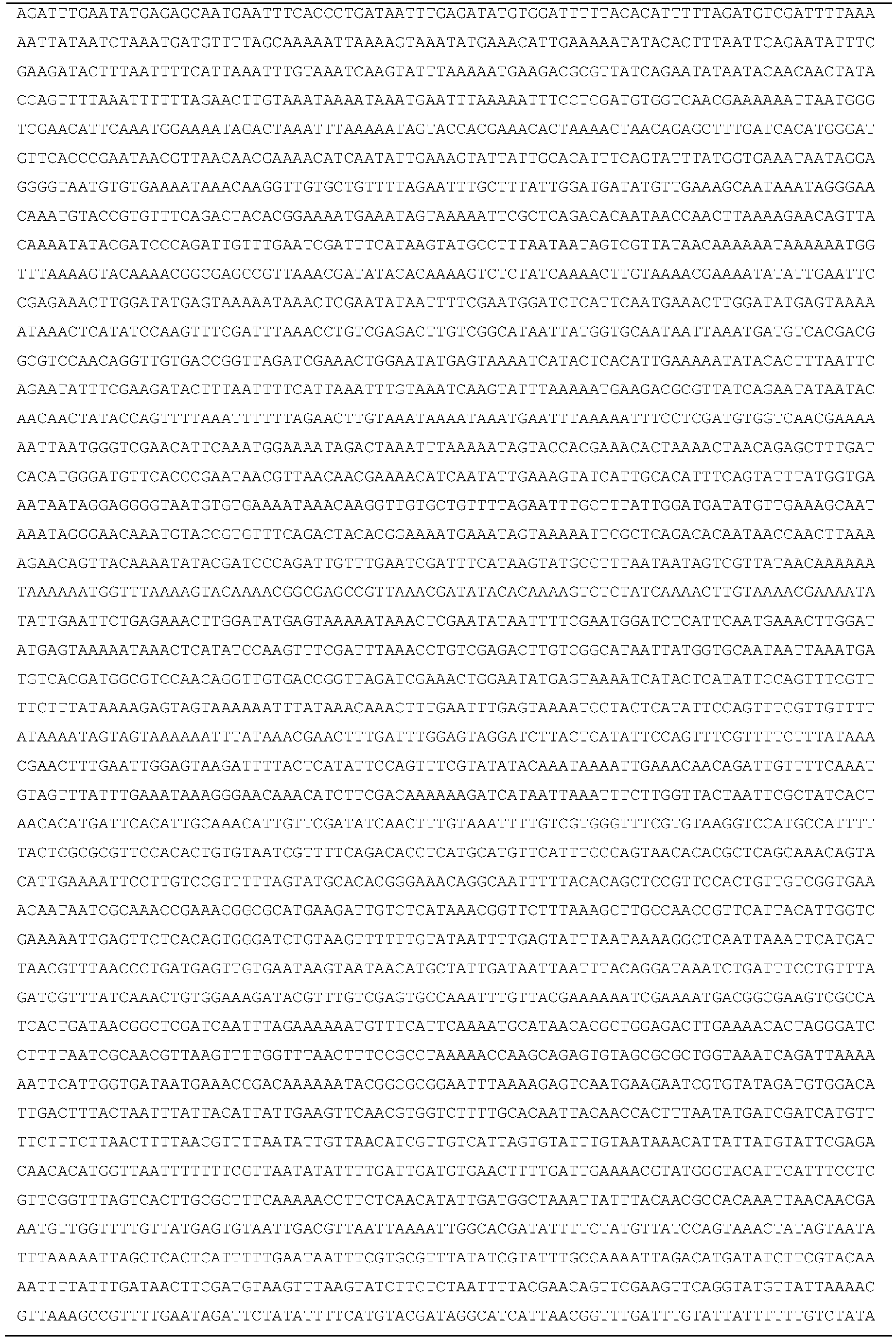


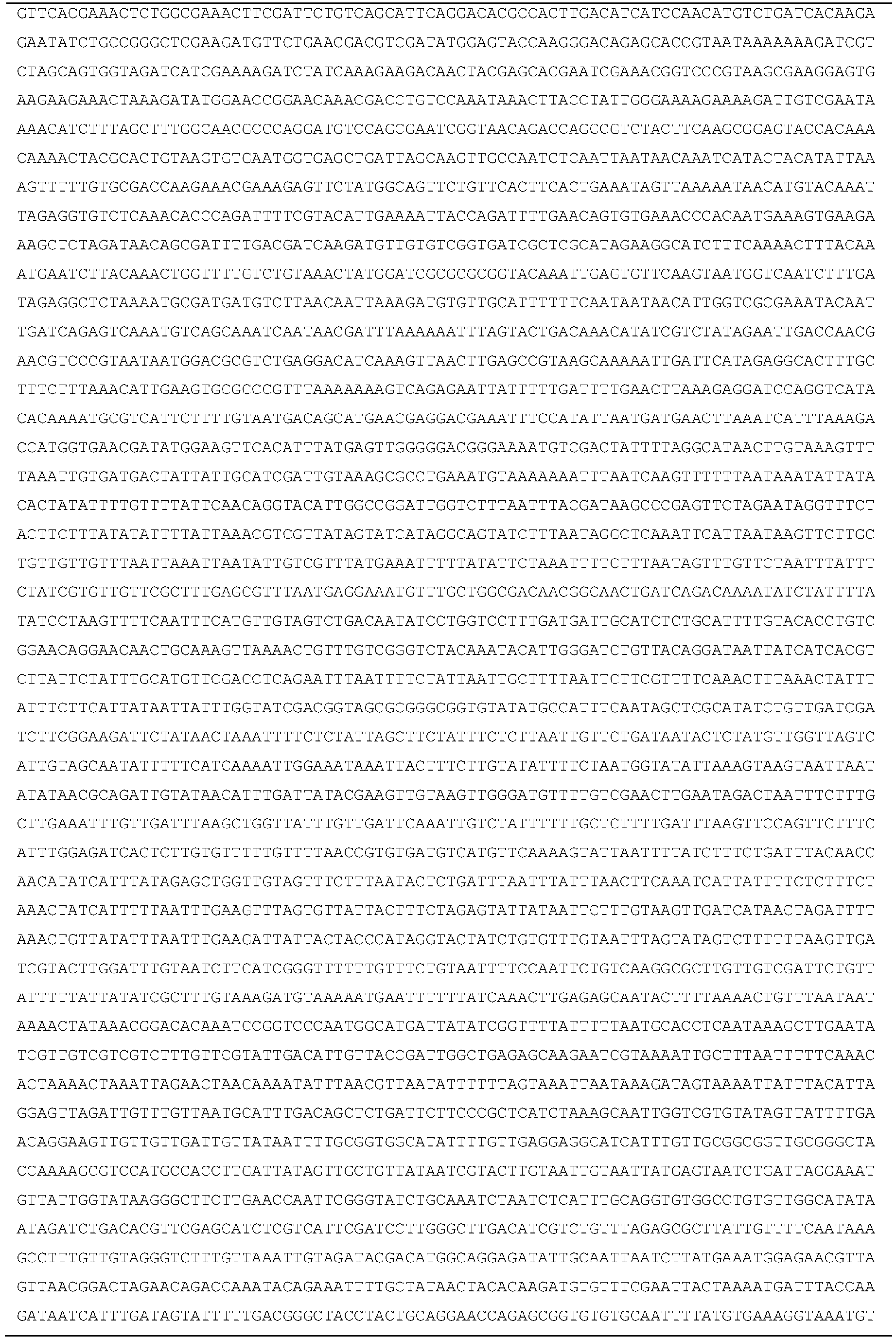


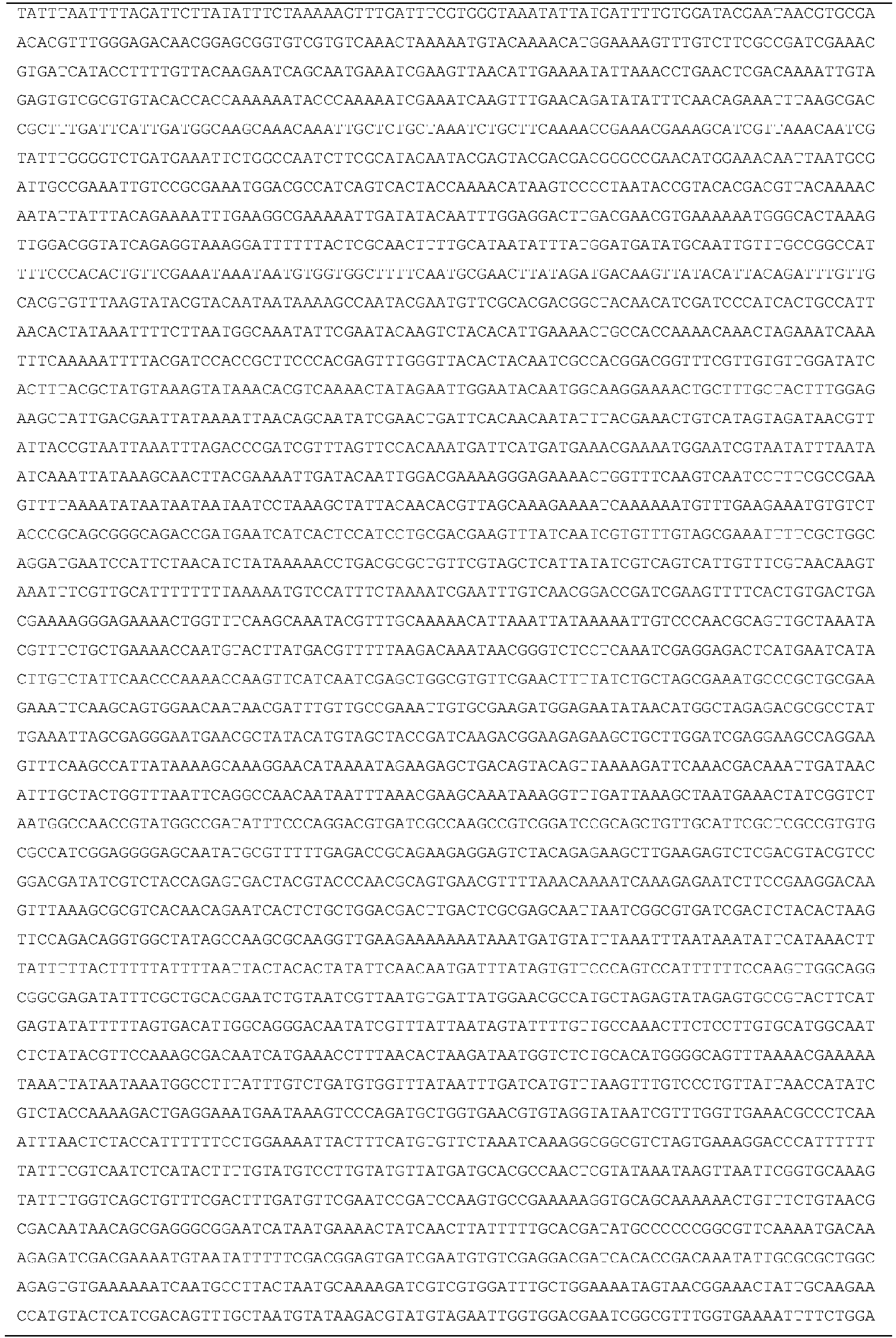


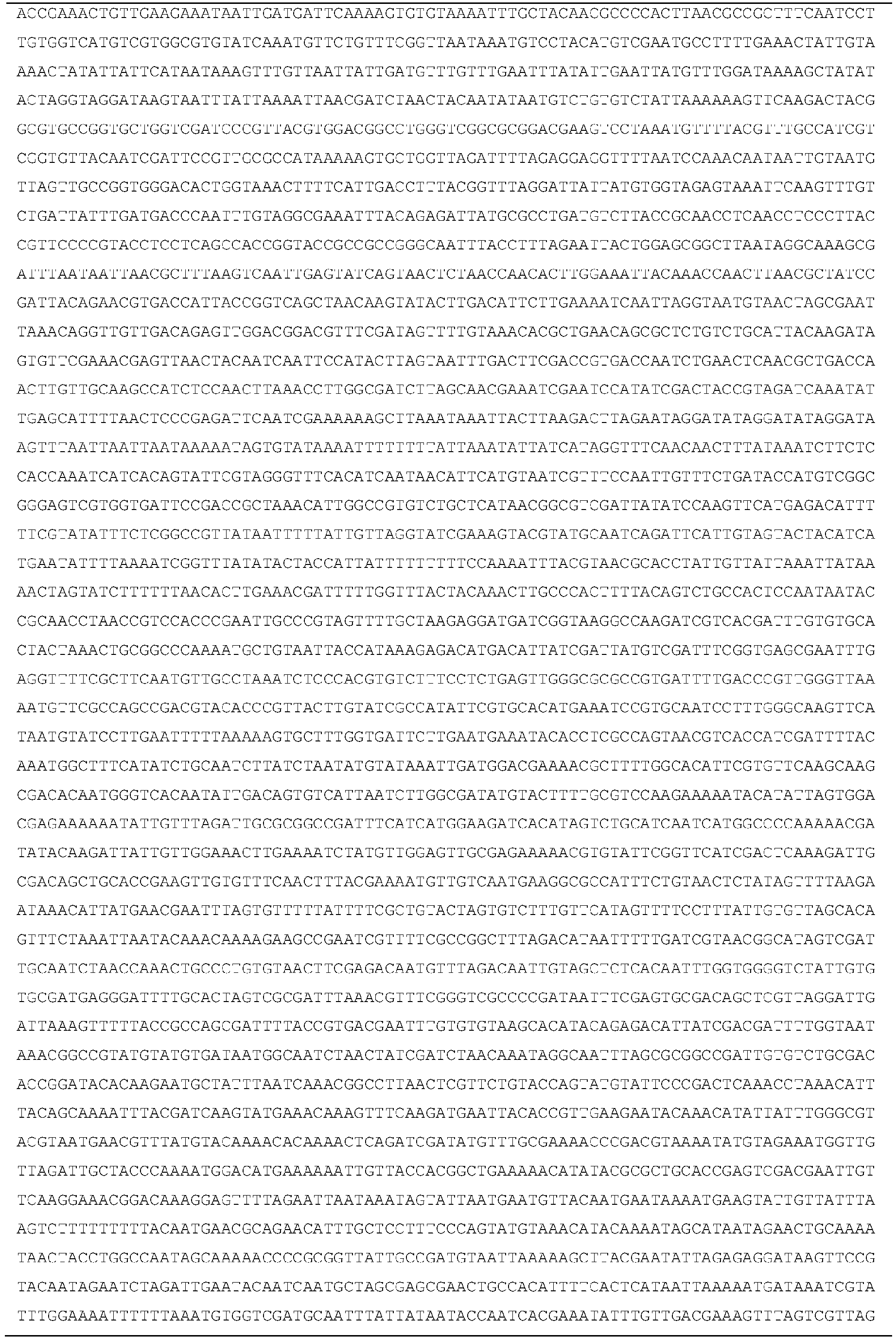


-
- <110> Rhodes University Citrus Research International (Pty) Ltd River Bioscience (Pty) Ltd
- <120> A Biopesticide
- <130> P3264PC00
- <150>
ZA 2016/05197
<151> 2016-07-26 - <160> 4
- <170> PatentIn version 3.5
- <210> 1
<211> 521
<212> DNA
<213> Cryptophlebia peltastica nuclear polyhedrosis virus - <220>
<221> Polyhedrin gene
<222> (1)..(521) - <400> 1
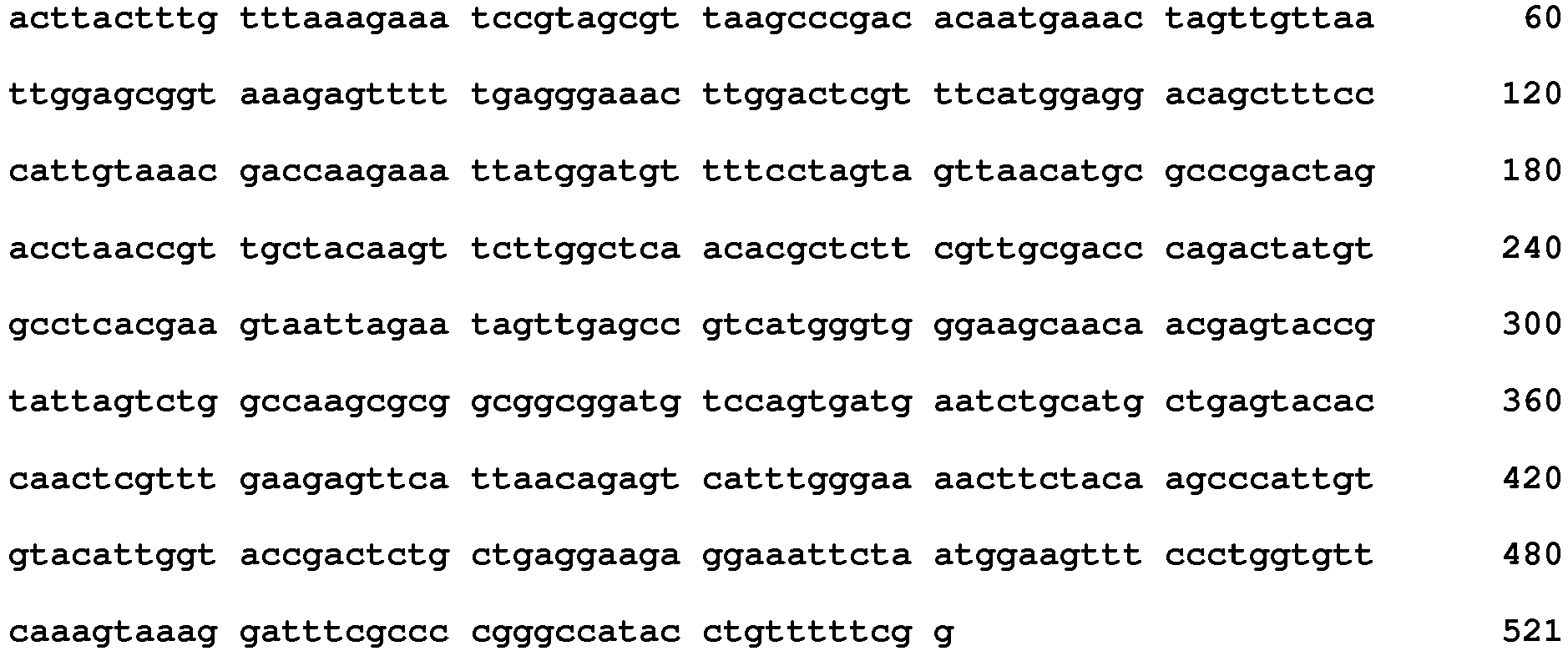
- <210> 2
<211> 116646
<212> DNA
<213> Cryptophlebia peltastica nuclear polyhedrosis virus - <220>
<221> Genome sequence
<222> (1)..(116646) - <400> 2



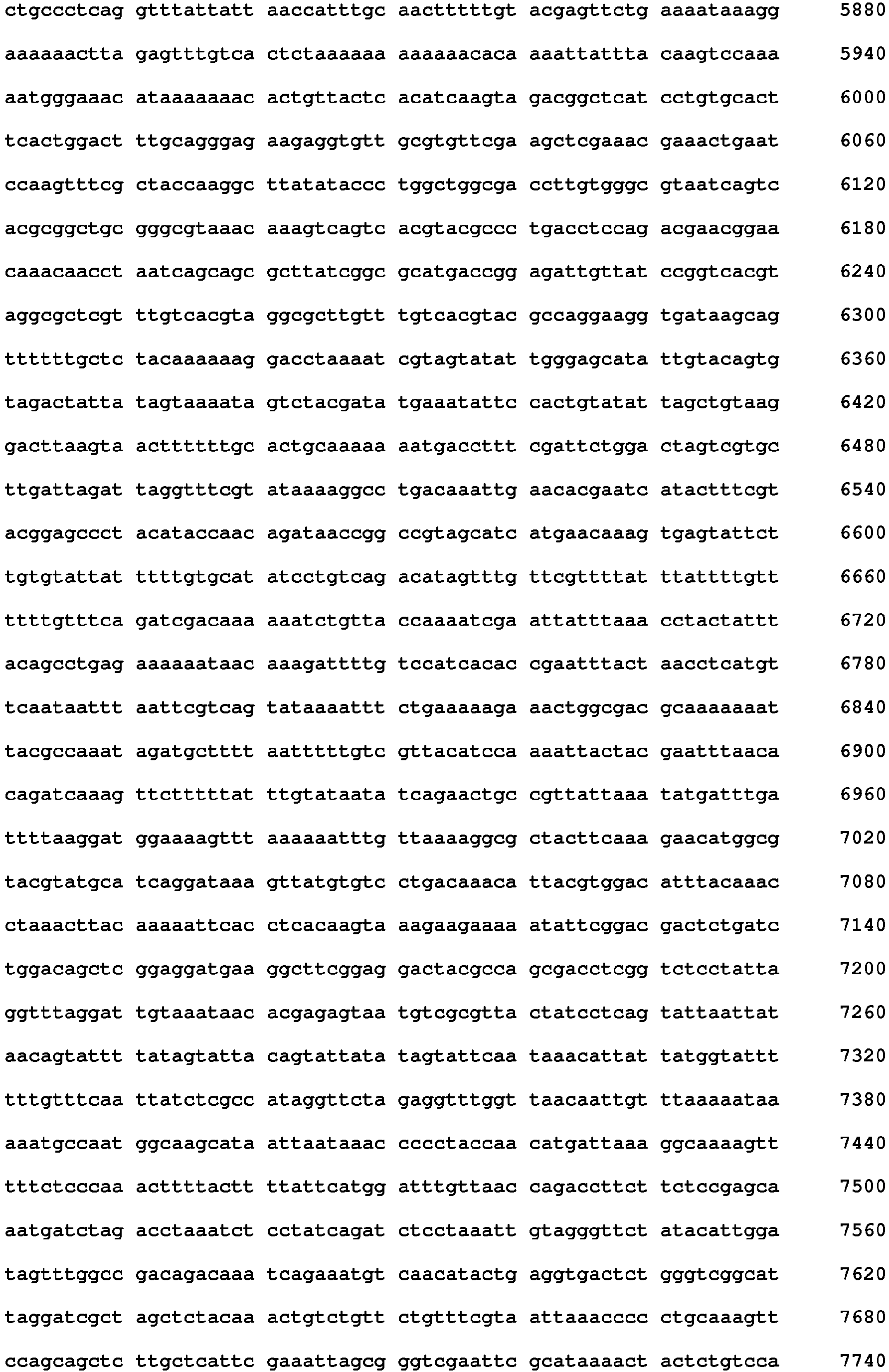

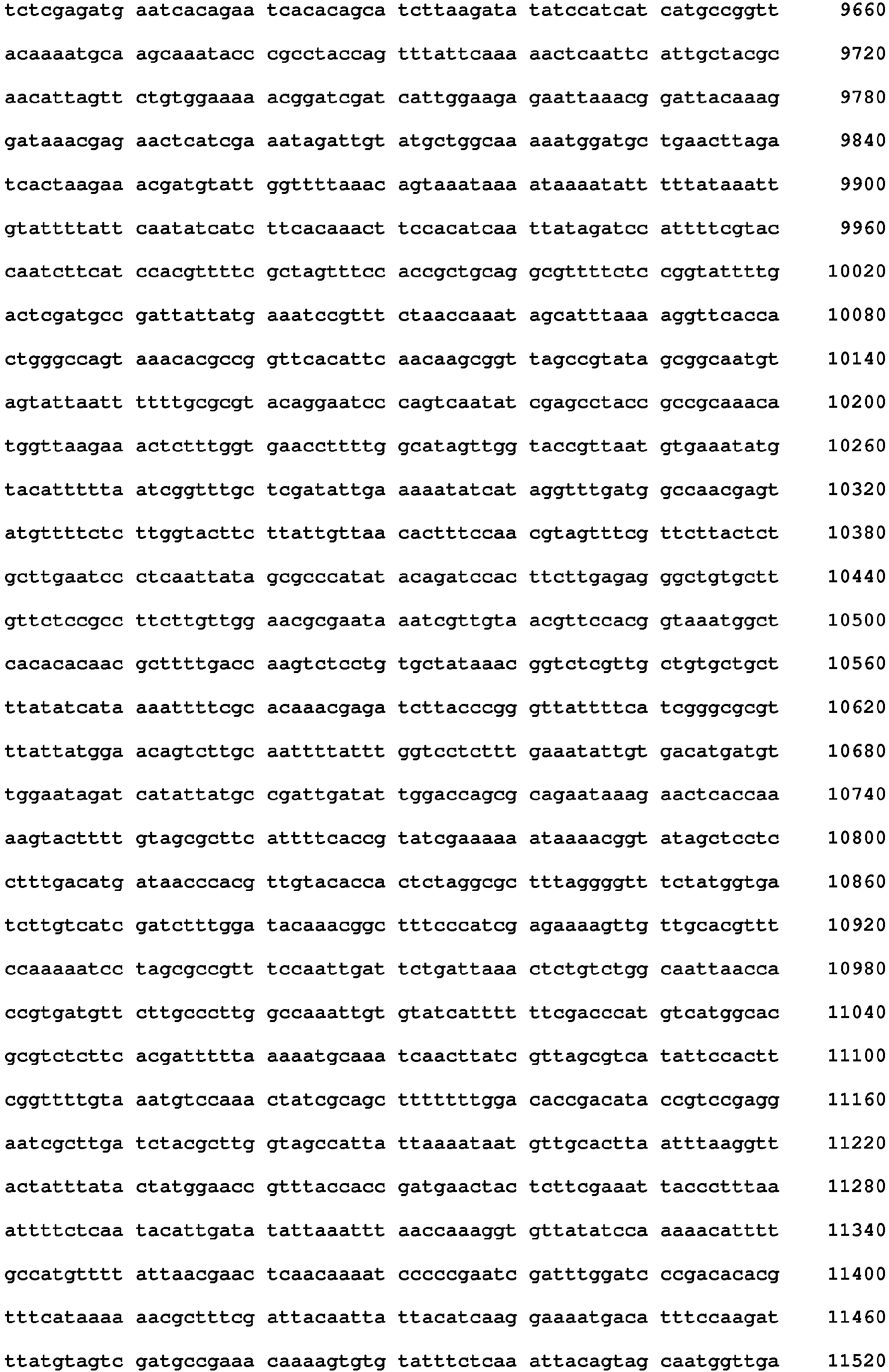


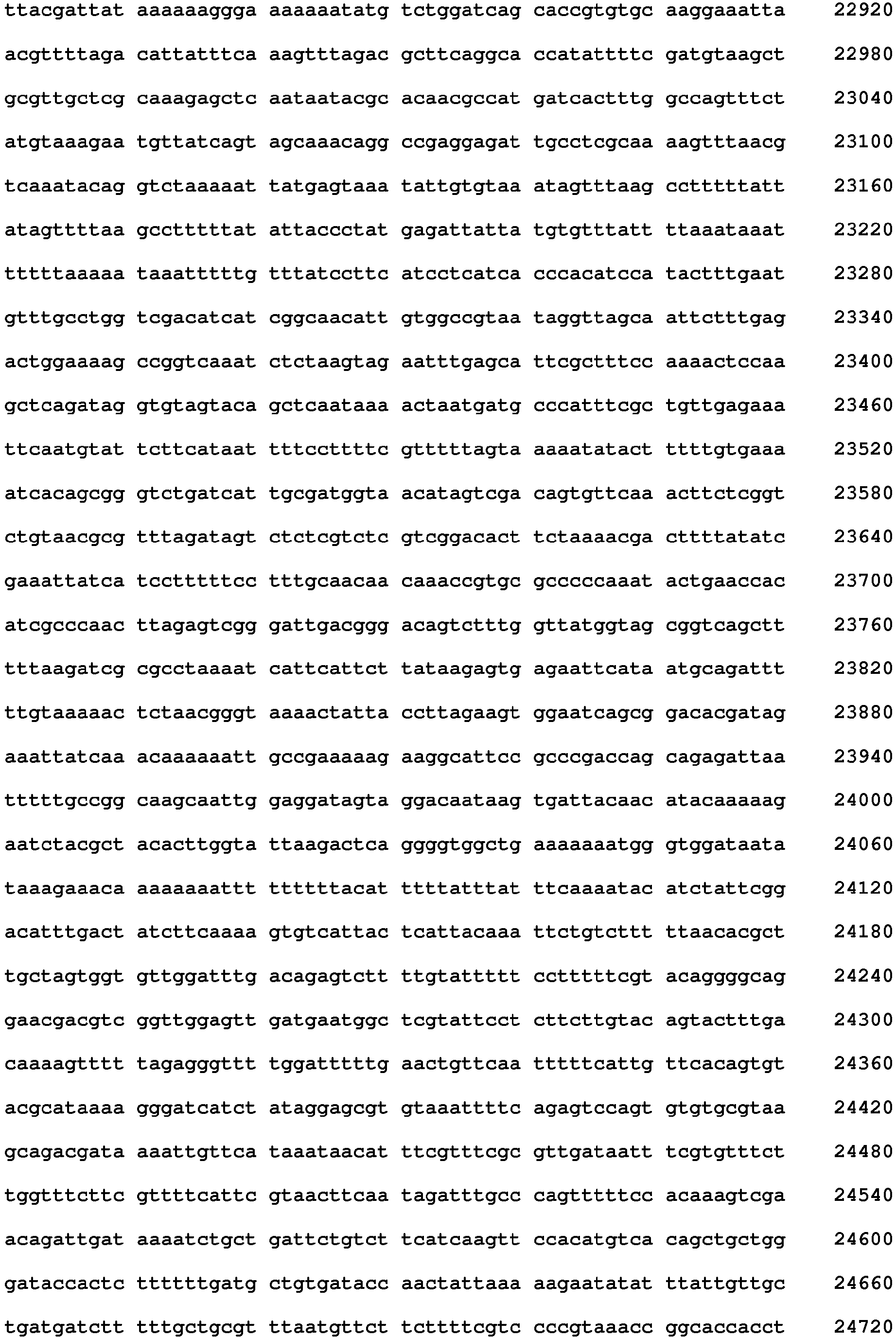


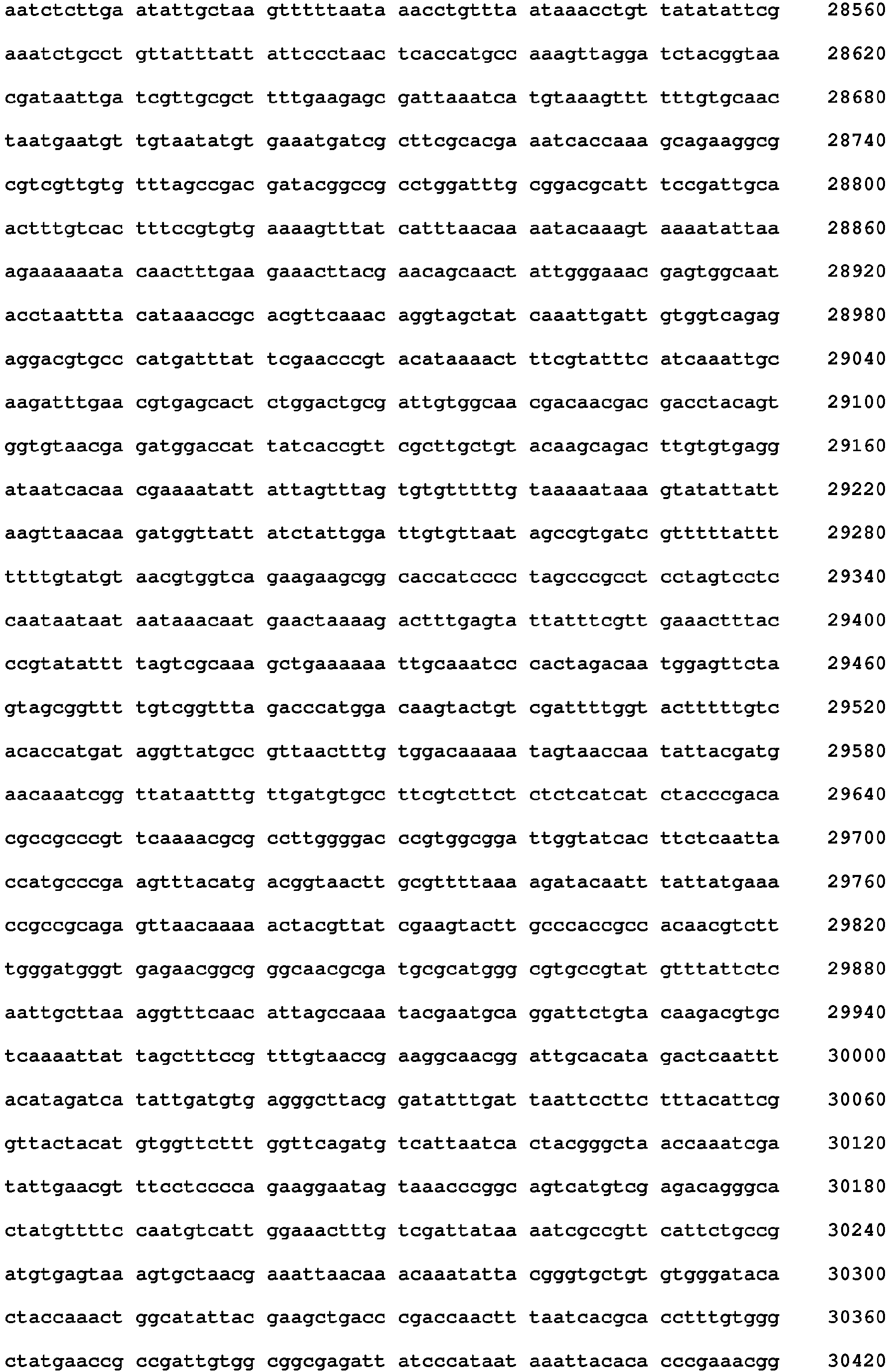


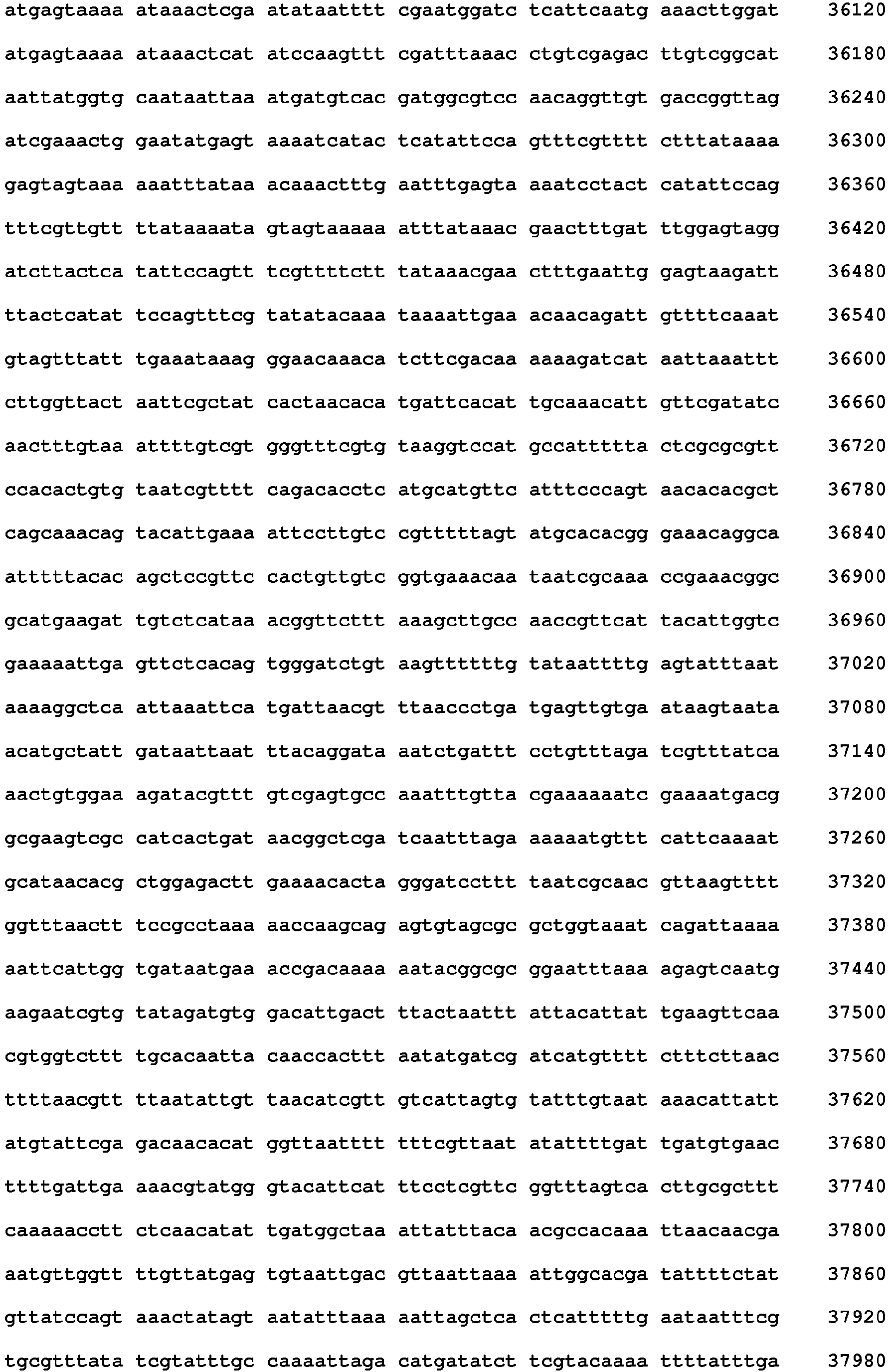
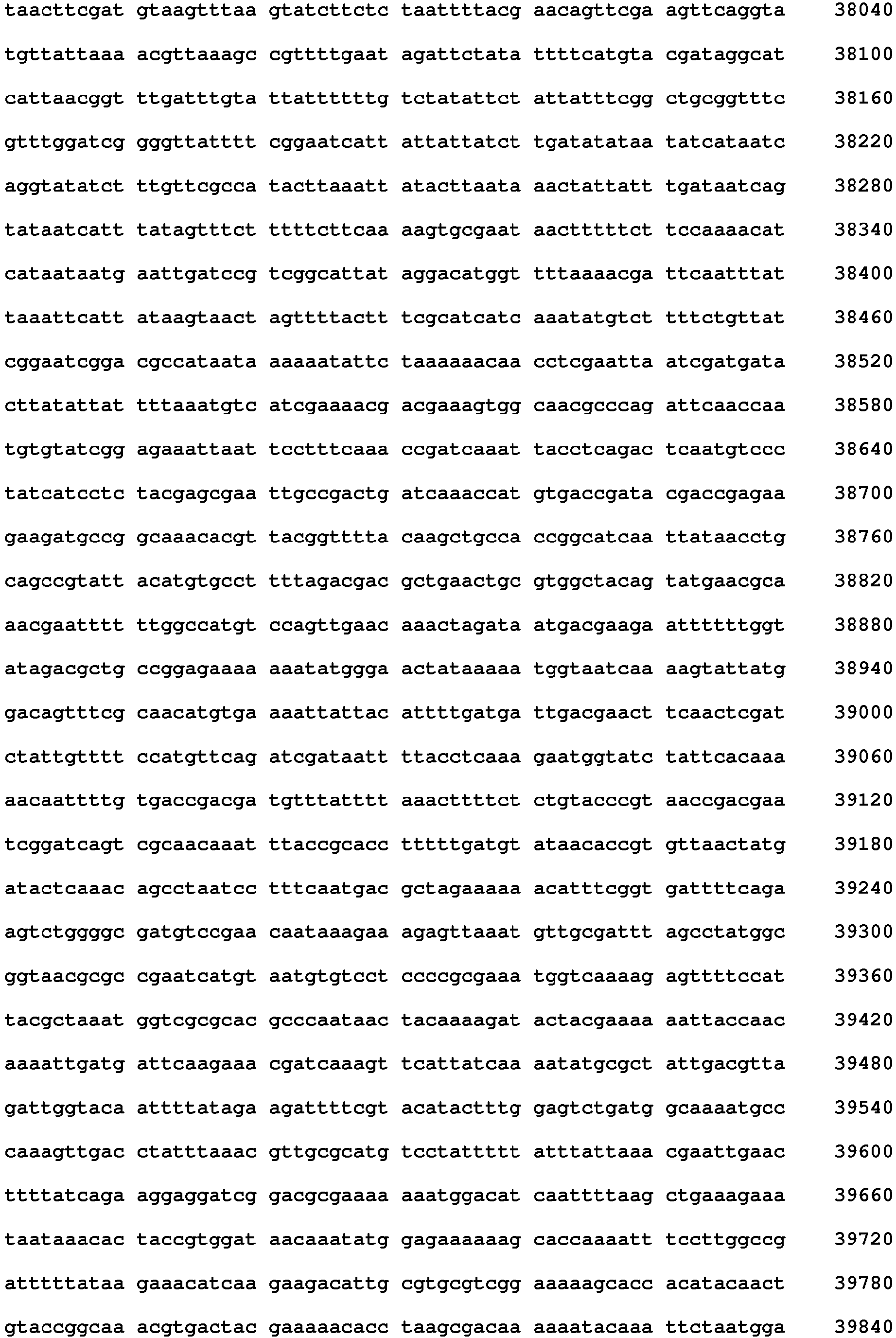


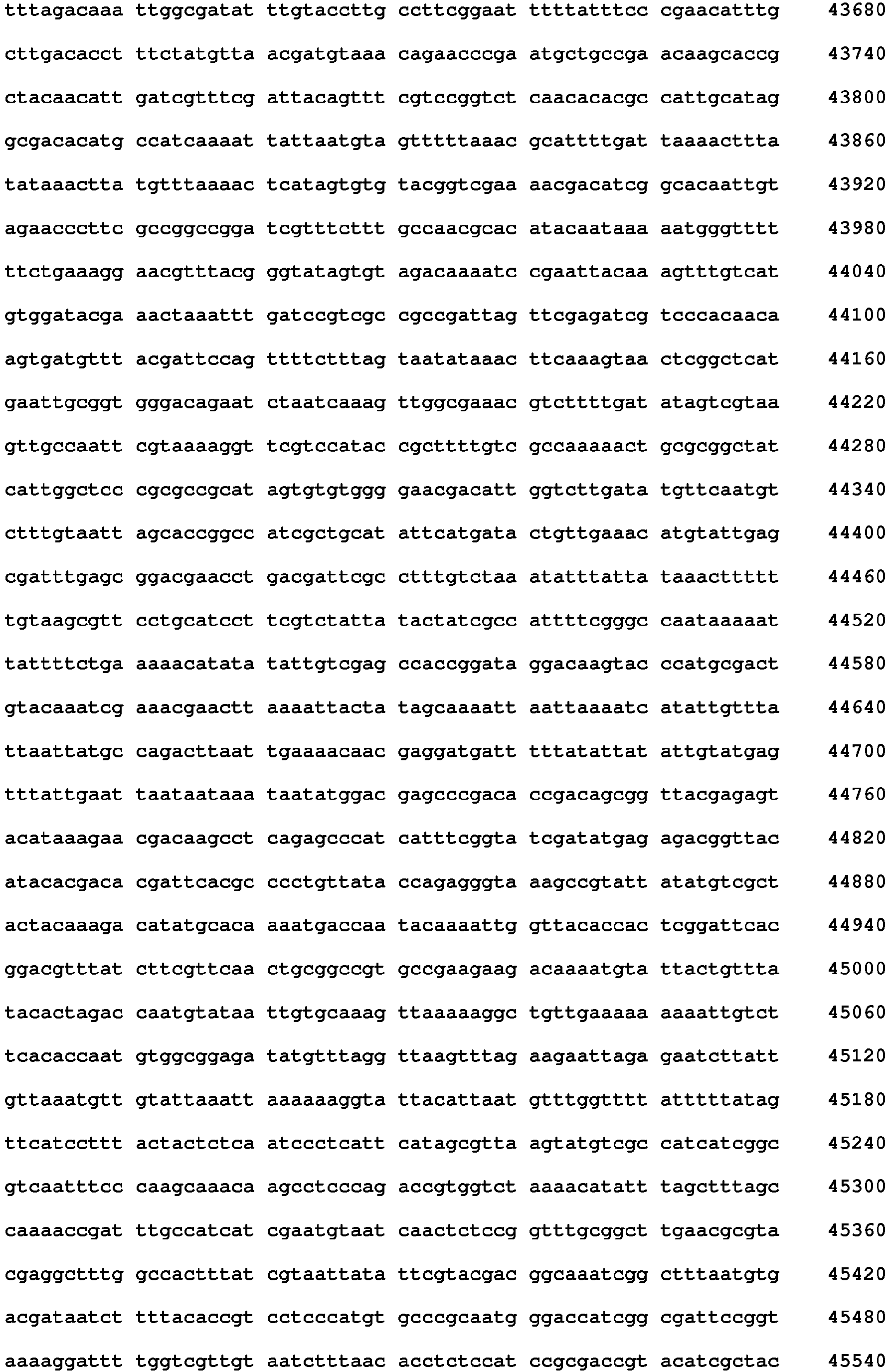


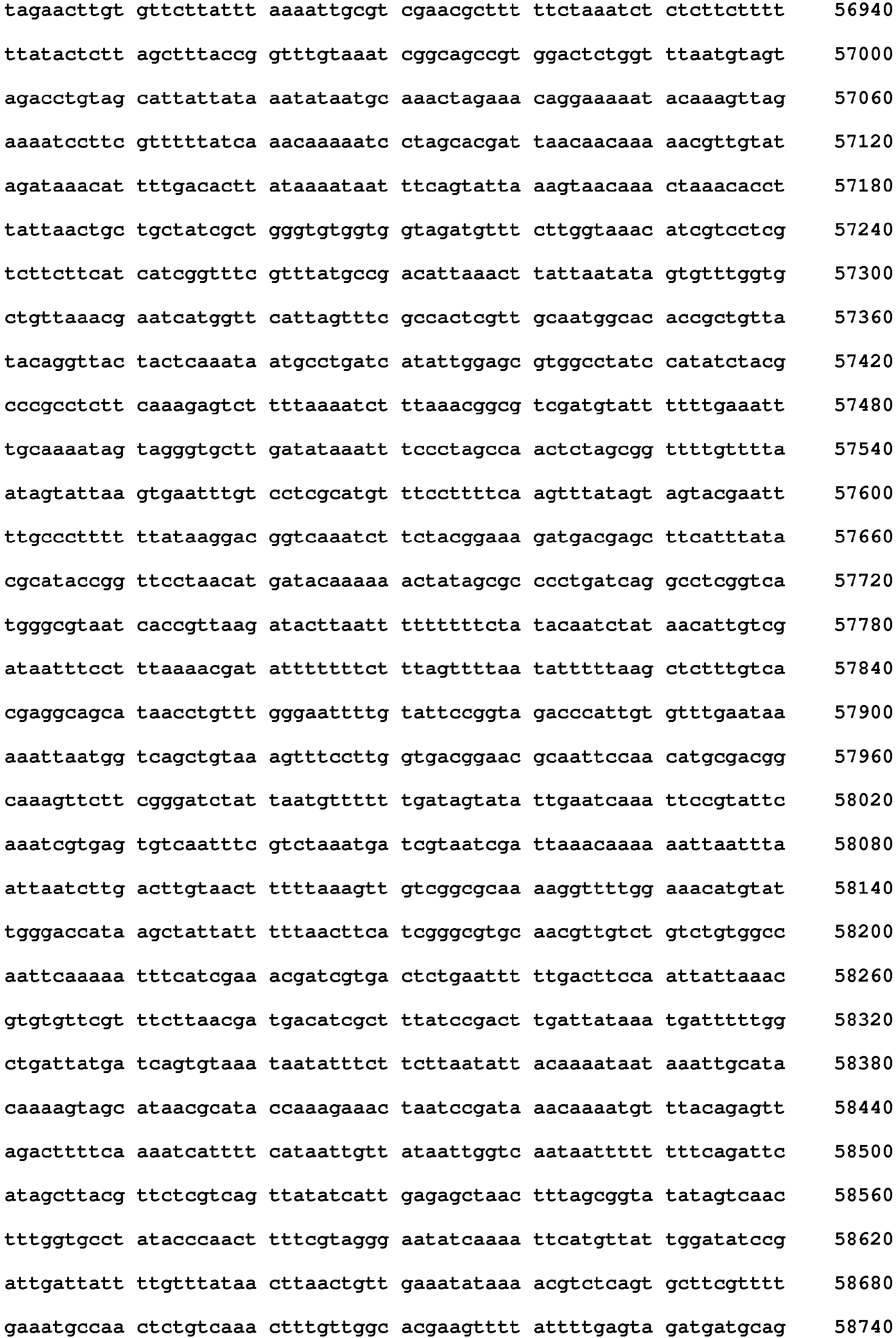
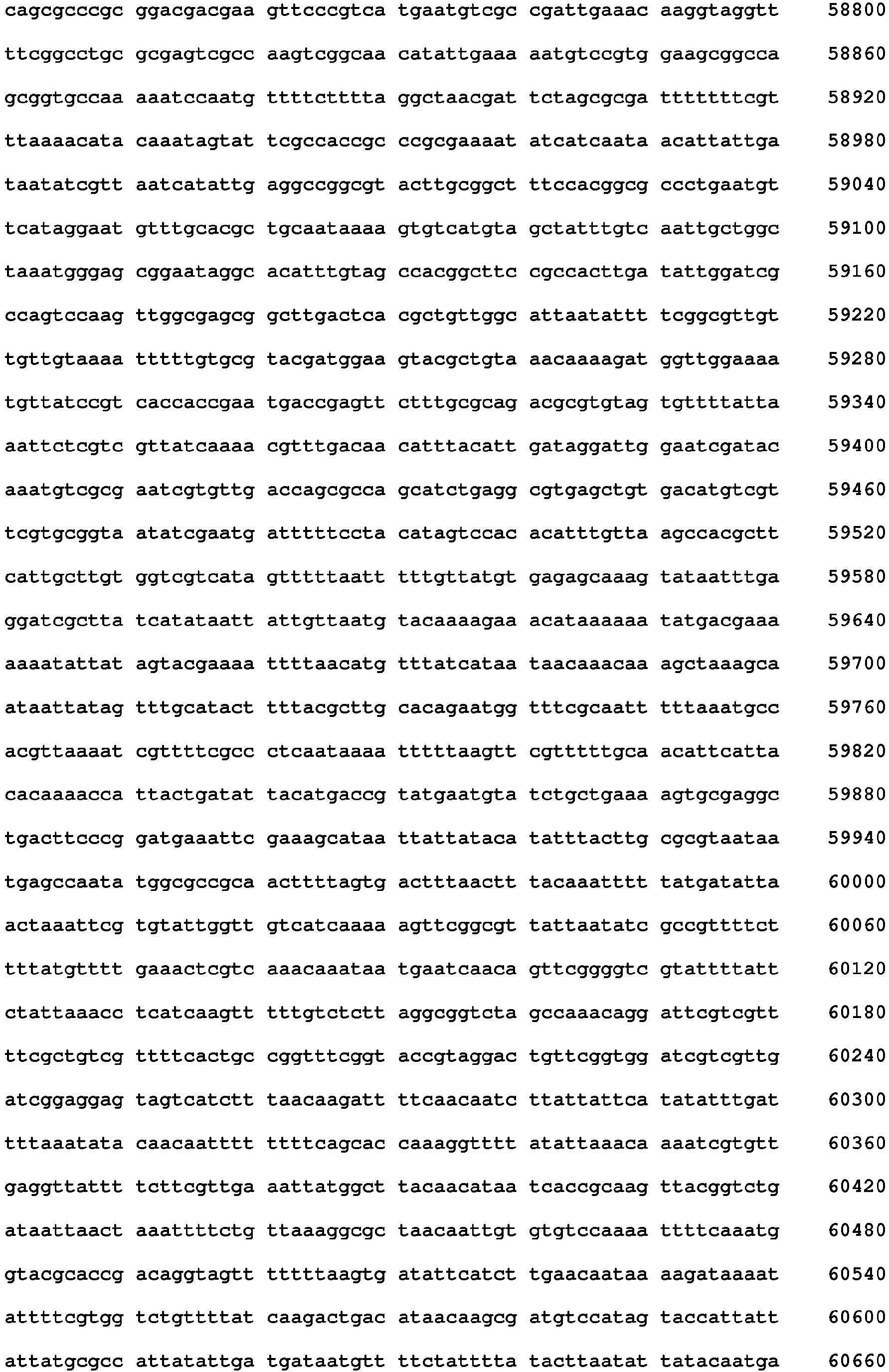
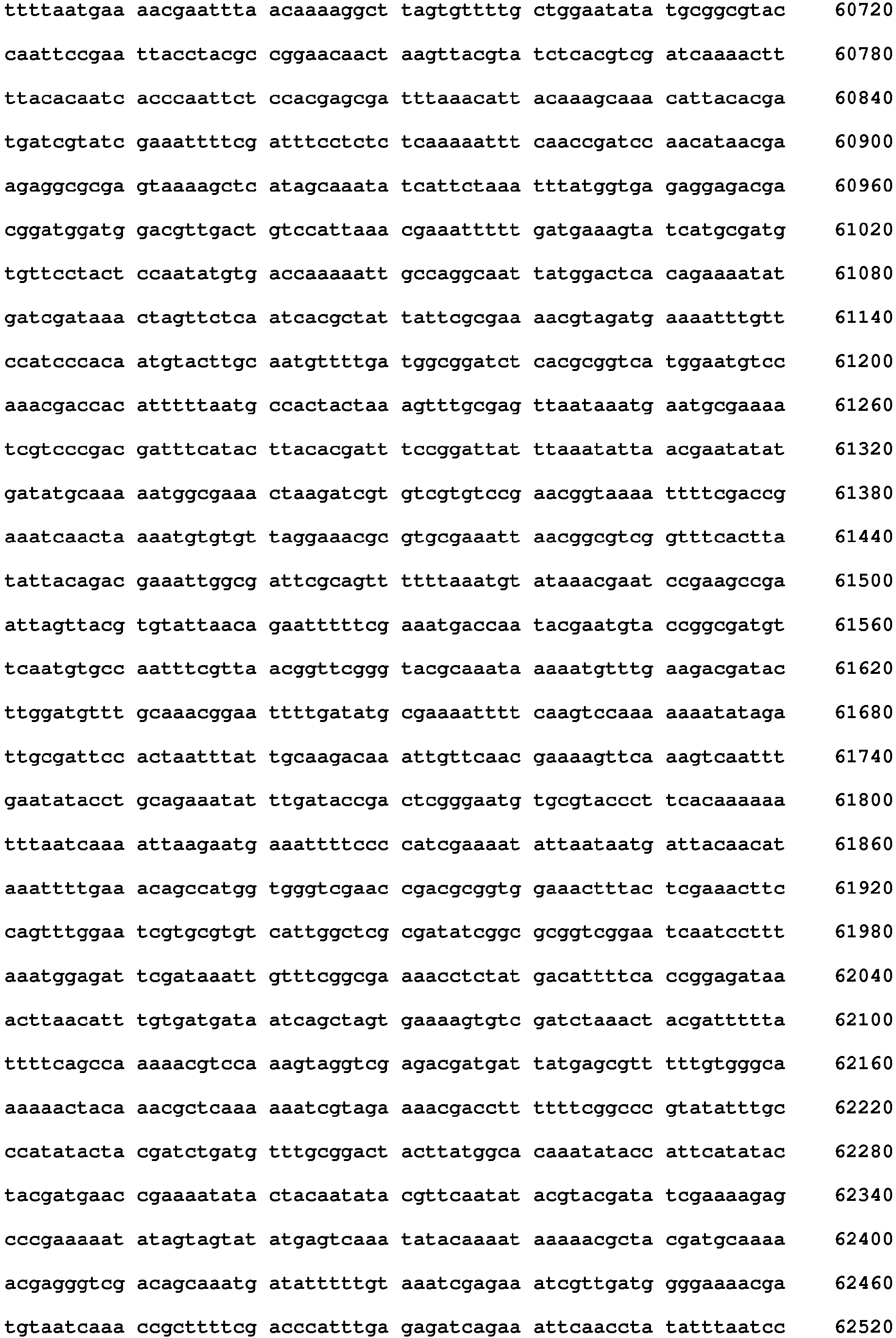
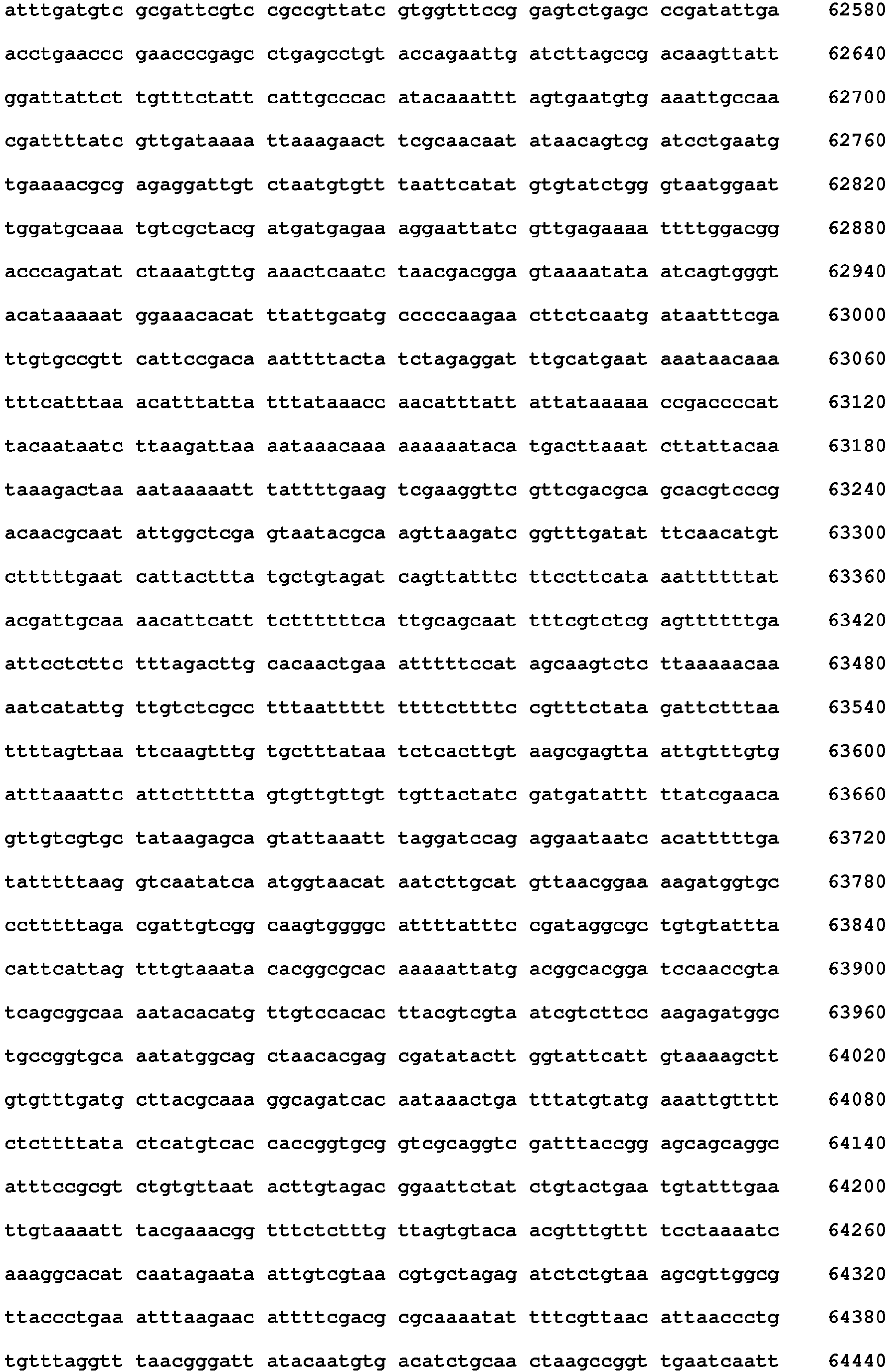

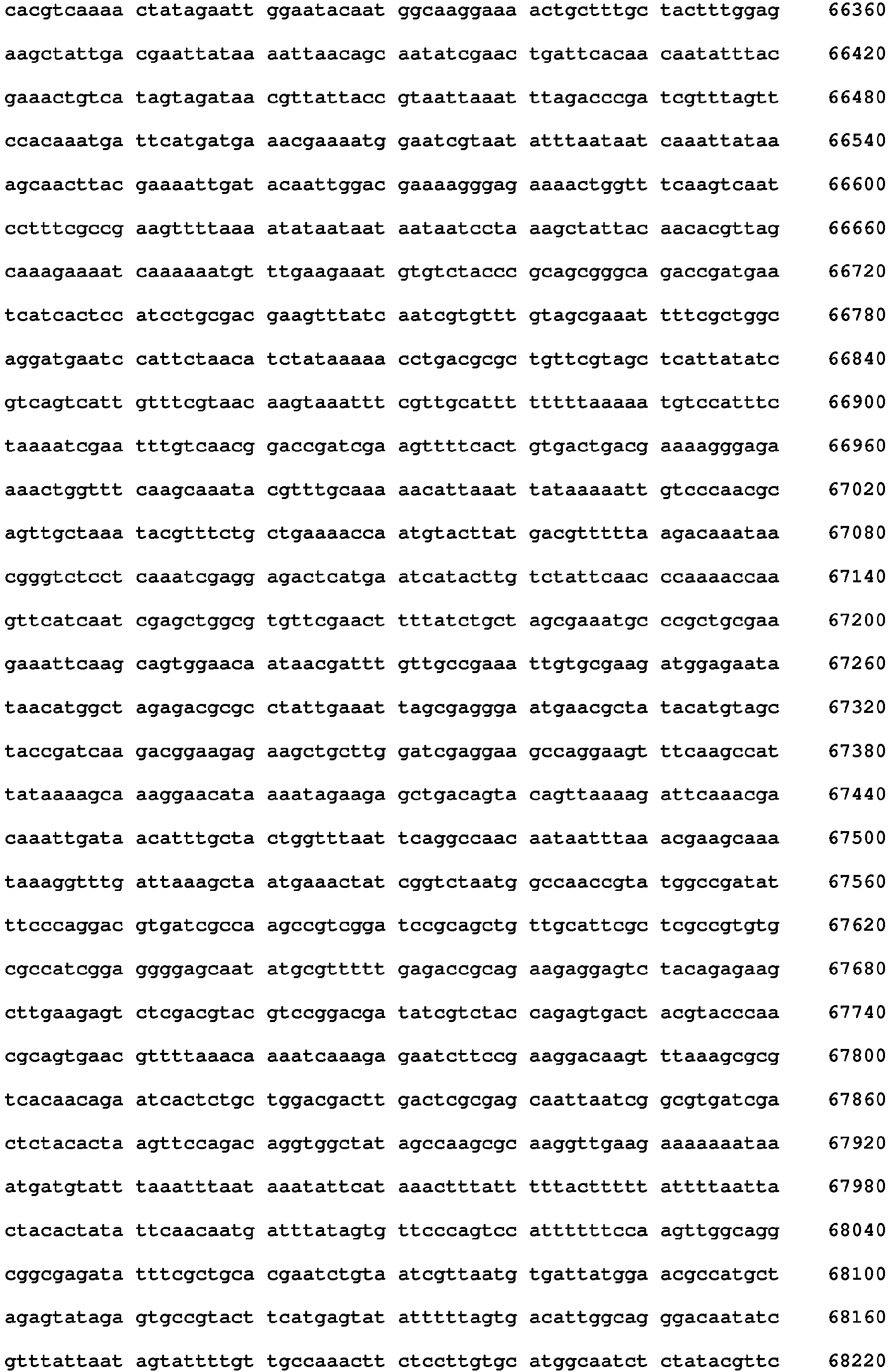


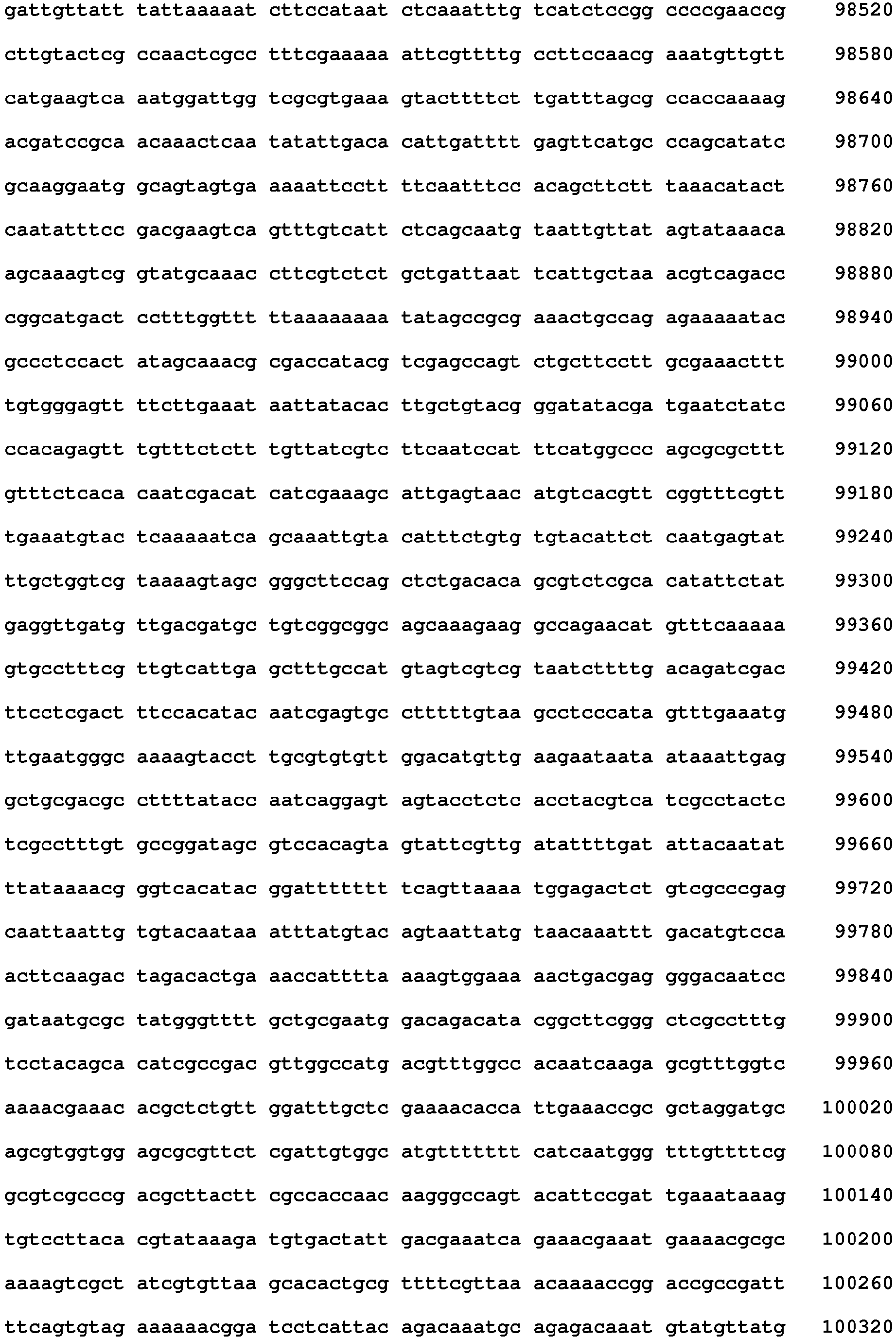


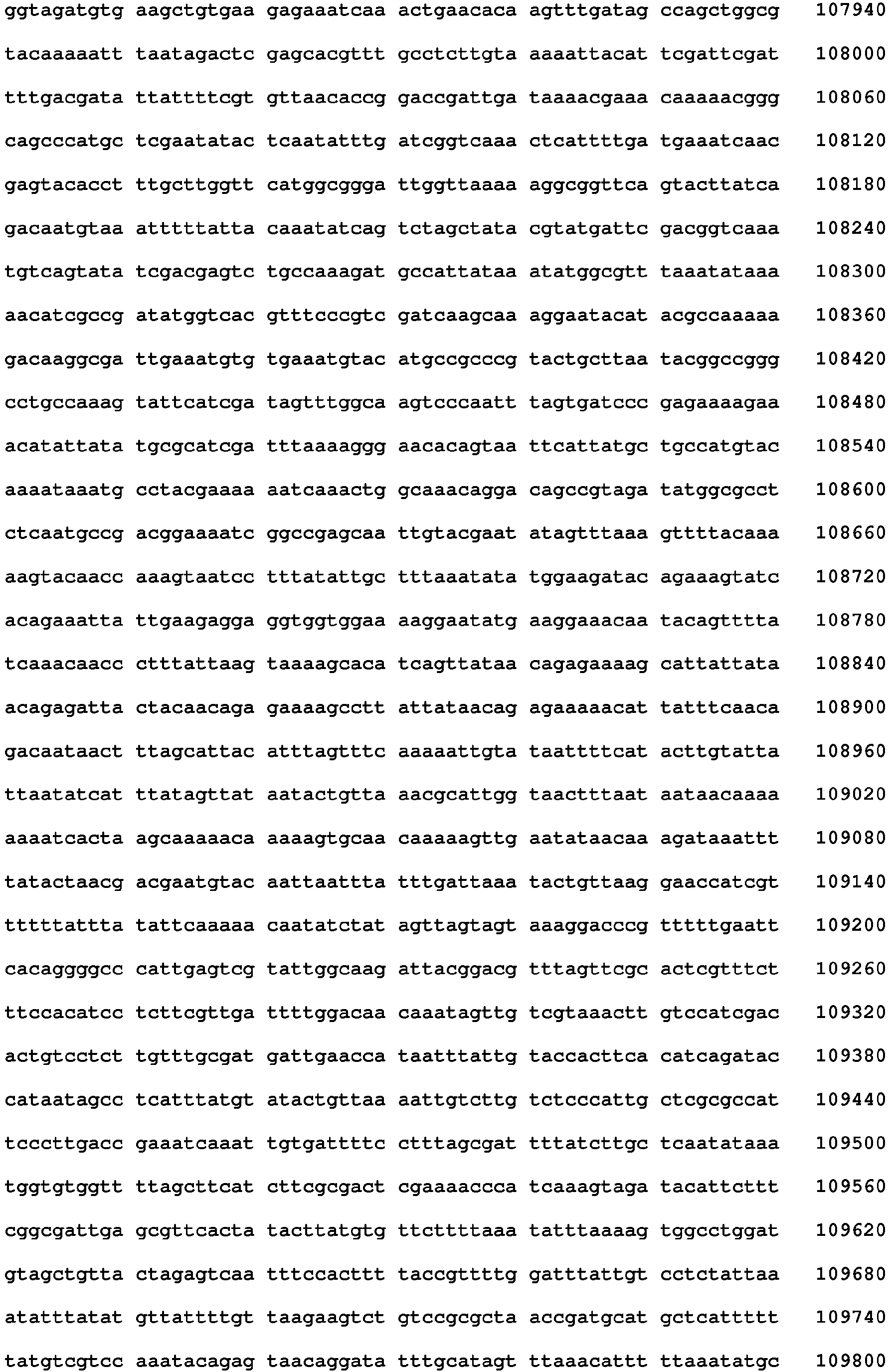


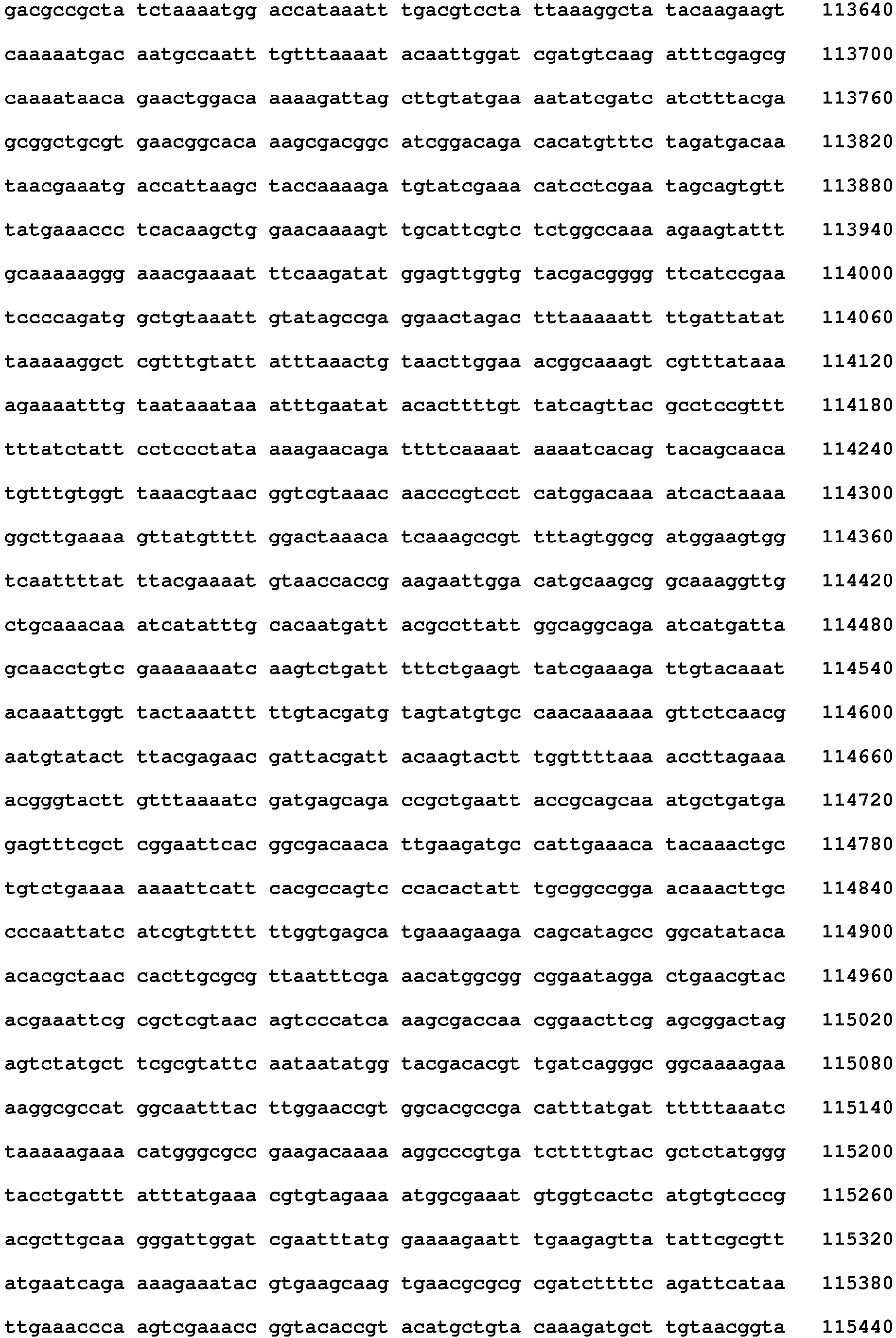

- <210> 3
<211> 33
<212> DNA
<213> Artificial Sequence - <220>
<223> PCT Primer for polH/gran gene - <220>
<221> misc_feature
<222> (19)..(19)
<223> N= C, A, T or G - <220>
<221> misc_feature
<222> (20)..(20)
<223> R= A or G - <220>
<221> misc_feature
<222> (22)..(22)
<223> N= C, A, T or G - <220>
<221> misc_feature
<222> (25)..(25)
<223> R= A or G - <220>
<221> misc_feature
<222> (28)..(28)
<223> Y= C or T - <220>
<221> misc_feature
<222> (31)..(31)
<223> N= C, A, T or G - <400> 3
tgtaaaacga cggccagtnr cngargaycc ntt 33 - <210> 4
<211> 33
<212> DNA
<213> Artificial Sequence - <220>
<223> PCT primer for polH/gran gene - <220>
<221> misc_feature
<222> (19)..(19)
<223> D = A, G or T - <220>
<221> misc_feature
<222> (22)..(22)
<223> N = C, A, T or G - <220>
<221> misc_feature
<222> (25)..(25)
<223> R = A or G - <220>
<221> misc_feature
<222> (28)..(28)
<223> Y = C or T - <220>
<221> misc_feature
<222> (31)..(31)
<223> Y = C or T - <400> 4
caggaaacag ctatgaccdg gngcraaytc ytt 33
Claims (12)
- A nucleopolyhedrovirus (NPV) suitable for use in controlling insect populations, the NPV having a genome sequence with at least 85% sequence identity to SEQ ID NO: 2 and being an isolate or genotype of the NPV whose genome sequence is represented by SEQ ID NO: 2, wherein the NPV has a virulence host range comprising the Grapholitini tribe of the lepidopteran family, Tortricidae.
- An NPV as claimed in claim 1, which has a polyhedrin gene with more than 93% sequence identity to SEQ ID NO: 1.
- An NPV as claimed in claim 1, wherein the host range comprises Cryptophlebia peltastica, Thaumatotibia leucotreta, Cydia pomonella, Grapholita molesta, and Thaumatotibia batracopa.
- An NPV as claimed in any one of claims 1 to 3, wherein the insects are selected from the tribe Grapholitini, preferably from the larvae of Cryptophlebia peltastica, Thaumatotibia (Cryptophlebia) leucotreta, Cydia pomonella Grapholita molesta or Thaumatotibia batracopa.
- An NPV as claimed in any one of claims 1 to 4, which is used in combination with one or more additional biopesticides, preferably selected from a Cryptophlebia leucotreta granulovirus, a Cydia pomonella granulovirus, a Cryptophlebia batracopa granulovirus or a Grapholita molesta granulovirus.
- An NPV as claimed in any one of claims 1 to 5, wherein the NPV genome sequence contains only one recognition site for the restriction enzyme Sma1.
- A biopesticidal composition comprising an NPV as claimed in any one of claims 1 to 6 and one or more agronomically acceptable adjuvants and/or diluents.
- A composition as claimed in claim 7, which comprises an additional biopesticide, preferably selected from a Cryptophlebia leucotreta granulovirus, a Cydia pomonella granulovirus, a Cryptophlebia batracopa granulovirus or a Grapholita molesta granulovirus.
- A composition as claimed in claim 7 or claim 8, further comprising a feeding stimulant, a mineral oil and a UV protectant.
- A method of controlling insect populations, the method comprising applying to the insects or their locus an insecticidally effective amount of an NPV according to any one of claims 1 to 6 or a biopesticidal composition according to any one of claims 7 to 9.
- A method as claimed in claim 10, which comprises simultaneously or sequentially applying, in addition to the NPV or biopesticidal composition, at least one additional biopesticide to the insects or their locus.
- A method of treating or preventing insect infestations on plants or fruit, the method comprising applying an insecticidally effective amount of an NPV according to any one of claims 1 to 6 or a biopesticidal composition according to any one of claims 7 to 9 to the plants or fruit.
Priority Applications (3)
| Application Number | Priority Date | Filing Date | Title |
|---|---|---|---|
| HRP20200338TT HRP20200338T1 (en) | 2016-07-26 | 2017-07-26 | A biopesticide |
| MA43006A MA43006B1 (en) | 2016-07-26 | 2017-07-26 | Biopesticide |
| PL17758287T PL3361872T3 (en) | 2016-07-26 | 2017-07-26 | A biopesticide |
Applications Claiming Priority (2)
| Application Number | Priority Date | Filing Date | Title |
|---|---|---|---|
| ZA201605197 | 2016-07-26 | ||
| PCT/IB2017/054543 WO2018020441A1 (en) | 2016-07-26 | 2017-07-26 | A biopesticide |
Publications (2)
| Publication Number | Publication Date |
|---|---|
| EP3361872A1 EP3361872A1 (en) | 2018-08-22 |
| EP3361872B1 true EP3361872B1 (en) | 2019-12-11 |
Family
ID=59714076
Family Applications (1)
| Application Number | Title | Priority Date | Filing Date |
|---|---|---|---|
| EP17758287.1A Active EP3361872B1 (en) | 2016-07-26 | 2017-07-26 | A biopesticide |
Country Status (12)
| Country | Link |
|---|---|
| US (1) | US10779543B2 (en) |
| EP (1) | EP3361872B1 (en) |
| AU (1) | AU2017225007B2 (en) |
| CY (1) | CY1122854T1 (en) |
| ES (1) | ES2777448T3 (en) |
| HR (1) | HRP20200338T1 (en) |
| HU (1) | HUE048669T2 (en) |
| MA (1) | MA43006B1 (en) |
| PL (1) | PL3361872T3 (en) |
| PT (1) | PT3361872T (en) |
| WO (1) | WO2018020441A1 (en) |
| ZA (1) | ZA201900791B (en) |
Families Citing this family (1)
| Publication number | Priority date | Publication date | Assignee | Title |
|---|---|---|---|---|
| CN118979018B (en) * | 2024-05-23 | 2025-04-01 | 沈阳农业大学 | Malus pomonella nuclear polyhedrosis virus strain and application thereof in biological pesticides |
-
2017
- 2017-07-26 WO PCT/IB2017/054543 patent/WO2018020441A1/en not_active Ceased
- 2017-07-26 EP EP17758287.1A patent/EP3361872B1/en active Active
- 2017-07-26 US US16/320,890 patent/US10779543B2/en active Active
- 2017-07-26 HU HUE17758287A patent/HUE048669T2/en unknown
- 2017-07-26 MA MA43006A patent/MA43006B1/en unknown
- 2017-07-26 HR HRP20200338TT patent/HRP20200338T1/en unknown
- 2017-07-26 ES ES17758287T patent/ES2777448T3/en active Active
- 2017-07-26 PT PT177582871T patent/PT3361872T/en unknown
- 2017-07-26 AU AU2017225007A patent/AU2017225007B2/en active Active
- 2017-07-26 PL PL17758287T patent/PL3361872T3/en unknown
-
2019
- 2019-02-07 ZA ZA2019/00791A patent/ZA201900791B/en unknown
-
2020
- 2020-03-11 CY CY20201100215T patent/CY1122854T1/en unknown
Non-Patent Citations (7)
| Title |
|---|
| DR. GIANPIERO GUELI ALLETTI: "Statement in silico specifity", EXPERT REPORT APIS, May 2019 (2019-05-01) |
| JUKES M. D. ET AL.: "Baculovirus synergy: mixed Alphabaculovirus and Betabaculovirus infections for the control of Thaumatotibia leucotreta in South Africa", MICROBIAL AD NEMATODE CONTROL OF INVERTEBRATE PESTS IOBC-WPRS BULLETIN, vol. 129, 14 June 2017 (2017-06-14), pages 170 - 174, XP055765980 |
| MARSBERG T. ET AL.: "Program and Abstract Book", 16TH MEETING OF THE IOBC-ECPRS WORKING GROUP, 11 June 2017 (2017-06-11) - 15 June 2017 (2017-06-15), pages 108, XP055766026 |
| MARSBERG T. ET AL.: "The isolation of a novel alphabaculovirus and its potential for microbial control of key tortricid moth pests", IOBC-WPRS BULLETIN, vol. 129, 14 June 2017 (2017-06-14), pages 175 - 178, XP055766002 |
| MARSBERG, T. ET AL.: "The Isolation and genetic characteriszation of a novel alphabaculovirus for the microbial control of Cryptophlebia peltastica and closely related tortricid pests", PHD THESIS, December 2016 (2016-12-01), RHODES UNIVERSITY, XP055766005 |
| SIP: "Programme and abstract", 49TH ANNUAL MEETING OF THE SIP 2016, 24 July 2016 (2016-07-24) - 28 July 2016 (2016-07-28), pages 65, XP055766018 |
| SMITS P. H.: "Nuclear Polyhedrosis Virus as Biological Control Agent of Spodoptera Exigua", PROEFSCHRIFT - THESIS, 7 January 1987 (1987-01-07), Landbouwuniversiteit Wageningen, XP055766010 |
Also Published As
| Publication number | Publication date |
|---|---|
| US10779543B2 (en) | 2020-09-22 |
| AU2017225007B2 (en) | 2018-03-01 |
| HRP20200338T1 (en) | 2020-06-12 |
| PL3361872T3 (en) | 2020-06-01 |
| PT3361872T (en) | 2020-03-24 |
| WO2018020441A1 (en) | 2018-02-01 |
| EP3361872A1 (en) | 2018-08-22 |
| ES2777448T3 (en) | 2020-08-05 |
| CY1122854T1 (en) | 2021-05-05 |
| MA43006B1 (en) | 2020-02-28 |
| HUE048669T2 (en) | 2020-08-28 |
| ZA201900791B (en) | 2023-04-26 |
| AU2017225007A1 (en) | 2018-02-15 |
| CA3032057A1 (en) | 2018-02-01 |
| US20190159464A1 (en) | 2019-05-30 |
Similar Documents
| Publication | Publication Date | Title |
|---|---|---|
| Donati et al. | New insights on the bacterial canker of kiwifruit (Pseudomonas syringae pv. actinidiae) | |
| Bastianel et al. | The citrus leprosis pathosystem | |
| Soares et al. | Colletotrichum siamense is the main aetiological agent of anthracnose of avocado in south‐eastern Brazil | |
| HU228475B1 (en) | Methods of controlling cutworm pests | |
| Gómez Valderrama et al. | Potential of betabaculoviruses to control the tomato leafminer Tuta absoluta (Meyrick) | |
| CN112746025A (en) | Beauveria bassiana preparation as well as preparation method and use method thereof | |
| Lietze et al. | Salivary gland hypertrophy viruses: a novel group of insect pathogenic viruses | |
| Simoni et al. | Thyreophagus corticalis as a vector of hypovirulence in Cryphonectria parasitica in chestnut stands | |
| Lee et al. | Occurrence and characterization of a nucleopolyhedrovirus from Maruca vitrata (Lepidoptera, Pyralidae) isolated in Taiwan | |
| EP3361872B1 (en) | A biopesticide | |
| Rabalski et al. | An alphabaculovirus isolated from dead Lymantria dispar larvae shows high genetic similarity to baculovirus previously isolated from Lymantria monacha–an example of adaptation to a new host | |
| CA3032057C (en) | A biopesticide containing a nucleopolyhedrovirus | |
| Rolim et al. | Fungi of the botryosphaeriaceae family cause different levels of stem canker on pecan trees (Carya illinoinensis) in Brazil | |
| Gupta et al. | Field evaluation of Lymantria obfuscata multiple nucleopolyhedrovirus for the management of Indian gypsy moth in Jammu & Kashmir, India | |
| Hudson et al. | Comparison of the feeding behavior and genetics of beet leafhopper, Circulifer tenellus, populations from California and New Mexico | |
| Chambers | Production of Cydia pomonella granulovirus (CpGV) in a heteralogous host, Thaumatotibia leucotreta (Meyrick)(False Codling Moth) | |
| Miyazaki et al. | Selective occurrence of endogenous double-stranded RNAs in insects | |
| Ranjbar et al. | Assessment of Three Common Methods for DNA Extraction in Trissolcus Sp. Egg Parasitoid Wasp of Green Stink Bugs | |
| Tanuja | Characterisation of Nuclear Polyhedrosis Viruses (NPVs) Associated with Lepidoptera | |
| Babin et al. | Effect of temperature on the Cacao swollen shoot virus (CSSV, Badnavirus) vection by the mealybug Planococcus citri to cocoa seedlings in the laboratory | |
| Mtambanengwe | Genetic Characterisation of a Range of Geographically Distinct Helicoverpa Armigera Nucleopolyhedrovirus (HearNPV) Isolates and Evaluation of Biological Activity against South African Populations of the African Bollworm, Helicoverpa Armigera (Hubner) | |
| Silva et al. | Fungi from the body surface of Spodoptera frugiperda (Lepidoptera: Noctuidae) and bioassay of insecticidal activity | |
| Ludewig | The establishment of a virus free laboratory colony of Cryptophlebia leucotreta (false codling moth) and characterisation of Cryptophlebia leucotreta granulovirus (CrleGV) genes | |
| Tabaković-Tošić | Lymantria dispar multicapsid nuclear polyhedrosis virus and Entomophaga maimaiga-significant biological agents of the gypsy moth control in the forests of Central Serbia in the period 2010-2014. | |
| US10362788B2 (en) | Helicoverpa armigera single nucleopolyhedrovirus (HearSNPV) genotypes, method of producing same and use as a biological control agent |
Legal Events
| Date | Code | Title | Description |
|---|---|---|---|
| STAA | Information on the status of an ep patent application or granted ep patent |
Free format text: STATUS: UNKNOWN |
|
| STAA | Information on the status of an ep patent application or granted ep patent |
Free format text: STATUS: THE INTERNATIONAL PUBLICATION HAS BEEN MADE |
|
| PUAI | Public reference made under article 153(3) epc to a published international application that has entered the european phase |
Free format text: ORIGINAL CODE: 0009012 |
|
| STAA | Information on the status of an ep patent application or granted ep patent |
Free format text: STATUS: REQUEST FOR EXAMINATION WAS MADE |
|
| 17P | Request for examination filed |
Effective date: 20180514 |
|
| AK | Designated contracting states |
Kind code of ref document: A1 Designated state(s): AL AT BE BG CH CY CZ DE DK EE ES FI FR GB GR HR HU IE IS IT LI LT LU LV MC MK MT NL NO PL PT RO RS SE SI SK SM TR |
|
| AX | Request for extension of the european patent |
Extension state: BA ME |
|
| STAA | Information on the status of an ep patent application or granted ep patent |
Free format text: STATUS: EXAMINATION IS IN PROGRESS |
|
| 17Q | First examination report despatched |
Effective date: 20181026 |
|
| GRAP | Despatch of communication of intention to grant a patent |
Free format text: ORIGINAL CODE: EPIDOSNIGR1 |
|
| STAA | Information on the status of an ep patent application or granted ep patent |
Free format text: STATUS: GRANT OF PATENT IS INTENDED |
|
| INTG | Intention to grant announced |
Effective date: 20190731 |
|
| DAX | Request for extension of the european patent (deleted) | ||
| GRAS | Grant fee paid |
Free format text: ORIGINAL CODE: EPIDOSNIGR3 |
|
| RAV | Requested validation state of the european patent: fee paid |
Extension state: MA Effective date: 20180514 |
|
| GRAA | (expected) grant |
Free format text: ORIGINAL CODE: 0009210 |
|
| STAA | Information on the status of an ep patent application or granted ep patent |
Free format text: STATUS: THE PATENT HAS BEEN GRANTED |
|
| AK | Designated contracting states |
Kind code of ref document: B1 Designated state(s): AL AT BE BG CH CY CZ DE DK EE ES FI FR GB GR HR HU IE IS IT LI LT LU LV MC MK MT NL NO PL PT RO RS SE SI SK SM TR |
|
| REG | Reference to a national code |
Ref country code: GB Ref legal event code: FG4D |
|
| REG | Reference to a national code |
Ref country code: CH Ref legal event code: EP |
|
| REG | Reference to a national code |
Ref country code: AT Ref legal event code: REF Ref document number: 1211241 Country of ref document: AT Kind code of ref document: T Effective date: 20191215 |
|
| REG | Reference to a national code |
Ref country code: DE Ref legal event code: R096 Ref document number: 602017009674 Country of ref document: DE |
|
| REG | Reference to a national code |
Ref country code: IE Ref legal event code: FG4D |
|
| REG | Reference to a national code |
Ref country code: HR Ref legal event code: TUEP Ref document number: P20200338 Country of ref document: HR |
|
| REG | Reference to a national code |
Ref country code: MA Ref legal event code: VAGR Ref document number: 43006 Country of ref document: MA Kind code of ref document: B1 |
|
| REG | Reference to a national code |
Ref country code: RO Ref legal event code: EPE |
|
| RAP2 | Party data changed (patent owner data changed or rights of a patent transferred) |
Owner name: CITRUS RESEARCH INTERNATIONAL (PTY) LTD Owner name: RHODES UNIVERSITY Owner name: RIVER BIOSCIENCE (PTY) LTD |
|
| REG | Reference to a national code |
Ref country code: CH Ref legal event code: NV Representative=s name: ISLER AND PEDRAZZINI AG, CH |
|
| REG | Reference to a national code |
Ref country code: PT Ref legal event code: SC4A Ref document number: 3361872 Country of ref document: PT Date of ref document: 20200324 Kind code of ref document: T Free format text: AVAILABILITY OF NATIONAL TRANSLATION Effective date: 20200310 |
|
| REG | Reference to a national code |
Ref country code: NL Ref legal event code: FP |
|
| REG | Reference to a national code |
Ref country code: LT Ref legal event code: MG4D |
|
| PG25 | Lapsed in a contracting state [announced via postgrant information from national office to epo] |
Ref country code: NO Free format text: LAPSE BECAUSE OF FAILURE TO SUBMIT A TRANSLATION OF THE DESCRIPTION OR TO PAY THE FEE WITHIN THE PRESCRIBED TIME-LIMIT Effective date: 20200311 Ref country code: FI Free format text: LAPSE BECAUSE OF FAILURE TO SUBMIT A TRANSLATION OF THE DESCRIPTION OR TO PAY THE FEE WITHIN THE PRESCRIBED TIME-LIMIT Effective date: 20191211 Ref country code: SE Free format text: LAPSE BECAUSE OF FAILURE TO SUBMIT A TRANSLATION OF THE DESCRIPTION OR TO PAY THE FEE WITHIN THE PRESCRIBED TIME-LIMIT Effective date: 20191211 Ref country code: LV Free format text: LAPSE BECAUSE OF FAILURE TO SUBMIT A TRANSLATION OF THE DESCRIPTION OR TO PAY THE FEE WITHIN THE PRESCRIBED TIME-LIMIT Effective date: 20191211 Ref country code: LT Free format text: LAPSE BECAUSE OF FAILURE TO SUBMIT A TRANSLATION OF THE DESCRIPTION OR TO PAY THE FEE WITHIN THE PRESCRIBED TIME-LIMIT Effective date: 20191211 |
|
| REG | Reference to a national code |
Ref country code: GR Ref legal event code: EP Ref document number: 20200400668 Country of ref document: GR Effective date: 20200511 |
|
| PG25 | Lapsed in a contracting state [announced via postgrant information from national office to epo] |
Ref country code: RS Free format text: LAPSE BECAUSE OF FAILURE TO SUBMIT A TRANSLATION OF THE DESCRIPTION OR TO PAY THE FEE WITHIN THE PRESCRIBED TIME-LIMIT Effective date: 20191211 |
|
| REG | Reference to a national code |
Ref country code: HR Ref legal event code: T1PR Ref document number: P20200338 Country of ref document: HR |
|
| PG25 | Lapsed in a contracting state [announced via postgrant information from national office to epo] |
Ref country code: AL Free format text: LAPSE BECAUSE OF FAILURE TO SUBMIT A TRANSLATION OF THE DESCRIPTION OR TO PAY THE FEE WITHIN THE PRESCRIBED TIME-LIMIT Effective date: 20191211 |
|
| PG25 | Lapsed in a contracting state [announced via postgrant information from national office to epo] |
Ref country code: EE Free format text: LAPSE BECAUSE OF FAILURE TO SUBMIT A TRANSLATION OF THE DESCRIPTION OR TO PAY THE FEE WITHIN THE PRESCRIBED TIME-LIMIT Effective date: 20191211 |
|
| REG | Reference to a national code |
Ref country code: ES Ref legal event code: FG2A Ref document number: 2777448 Country of ref document: ES Kind code of ref document: T3 Effective date: 20200805 |
|
| REG | Reference to a national code |
Ref country code: HR Ref legal event code: ODRP Ref document number: P20200338 Country of ref document: HR Payment date: 20200717 Year of fee payment: 4 |
|
| REG | Reference to a national code |
Ref country code: HU Ref legal event code: AG4A Ref document number: E048669 Country of ref document: HU |
|
| PG25 | Lapsed in a contracting state [announced via postgrant information from national office to epo] |
Ref country code: SM Free format text: LAPSE BECAUSE OF FAILURE TO SUBMIT A TRANSLATION OF THE DESCRIPTION OR TO PAY THE FEE WITHIN THE PRESCRIBED TIME-LIMIT Effective date: 20191211 Ref country code: SK Free format text: LAPSE BECAUSE OF FAILURE TO SUBMIT A TRANSLATION OF THE DESCRIPTION OR TO PAY THE FEE WITHIN THE PRESCRIBED TIME-LIMIT Effective date: 20191211 Ref country code: IS Free format text: LAPSE BECAUSE OF FAILURE TO SUBMIT A TRANSLATION OF THE DESCRIPTION OR TO PAY THE FEE WITHIN THE PRESCRIBED TIME-LIMIT Effective date: 20200411 |
|
| REG | Reference to a national code |
Ref country code: DE Ref legal event code: R026 Ref document number: 602017009674 Country of ref document: DE |
|
| PLBI | Opposition filed |
Free format text: ORIGINAL CODE: 0009260 |
|
| PLAX | Notice of opposition and request to file observation + time limit sent |
Free format text: ORIGINAL CODE: EPIDOSNOBS2 |
|
| 26 | Opposition filed |
Opponent name: ANDERMATT BIOCONTROL AG Effective date: 20200910 |
|
| PG25 | Lapsed in a contracting state [announced via postgrant information from national office to epo] |
Ref country code: DK Free format text: LAPSE BECAUSE OF FAILURE TO SUBMIT A TRANSLATION OF THE DESCRIPTION OR TO PAY THE FEE WITHIN THE PRESCRIBED TIME-LIMIT Effective date: 20191211 |
|
| PG25 | Lapsed in a contracting state [announced via postgrant information from national office to epo] |
Ref country code: SI Free format text: LAPSE BECAUSE OF FAILURE TO SUBMIT A TRANSLATION OF THE DESCRIPTION OR TO PAY THE FEE WITHIN THE PRESCRIBED TIME-LIMIT Effective date: 20191211 |
|
| PLBB | Reply of patent proprietor to notice(s) of opposition received |
Free format text: ORIGINAL CODE: EPIDOSNOBS3 |
|
| PG25 | Lapsed in a contracting state [announced via postgrant information from national office to epo] |
Ref country code: MC Free format text: LAPSE BECAUSE OF FAILURE TO SUBMIT A TRANSLATION OF THE DESCRIPTION OR TO PAY THE FEE WITHIN THE PRESCRIBED TIME-LIMIT Effective date: 20191211 |
|
| PG25 | Lapsed in a contracting state [announced via postgrant information from national office to epo] |
Ref country code: LU Free format text: LAPSE BECAUSE OF NON-PAYMENT OF DUE FEES Effective date: 20200726 |
|
| REG | Reference to a national code |
Ref country code: HR Ref legal event code: ODRP Ref document number: P20200338 Country of ref document: HR Payment date: 20210720 Year of fee payment: 5 |
|
| PG25 | Lapsed in a contracting state [announced via postgrant information from national office to epo] |
Ref country code: IE Free format text: LAPSE BECAUSE OF NON-PAYMENT OF DUE FEES Effective date: 20200726 |
|
| PLCK | Communication despatched that opposition was rejected |
Free format text: ORIGINAL CODE: EPIDOSNREJ1 |
|
| REG | Reference to a national code |
Ref country code: DE Ref legal event code: R100 Ref document number: 602017009674 Country of ref document: DE |
|
| REG | Reference to a national code |
Ref country code: AT Ref legal event code: UEP Ref document number: 1211241 Country of ref document: AT Kind code of ref document: T Effective date: 20191211 |
|
| PLBN | Opposition rejected |
Free format text: ORIGINAL CODE: 0009273 |
|
| STAA | Information on the status of an ep patent application or granted ep patent |
Free format text: STATUS: OPPOSITION REJECTED |
|
| 27O | Opposition rejected |
Effective date: 20220124 |
|
| PG25 | Lapsed in a contracting state [announced via postgrant information from national office to epo] |
Ref country code: MT Free format text: LAPSE BECAUSE OF FAILURE TO SUBMIT A TRANSLATION OF THE DESCRIPTION OR TO PAY THE FEE WITHIN THE PRESCRIBED TIME-LIMIT Effective date: 20191211 |
|
| PG25 | Lapsed in a contracting state [announced via postgrant information from national office to epo] |
Ref country code: MK Free format text: LAPSE BECAUSE OF FAILURE TO SUBMIT A TRANSLATION OF THE DESCRIPTION OR TO PAY THE FEE WITHIN THE PRESCRIBED TIME-LIMIT Effective date: 20191211 |
|
| REG | Reference to a national code |
Ref country code: HR Ref legal event code: ODRP Ref document number: P20200338 Country of ref document: HR Payment date: 20220627 Year of fee payment: 6 |
|
| PG25 | Lapsed in a contracting state [announced via postgrant information from national office to epo] |
Ref country code: CY Free format text: LAPSE BECAUSE OF NON-PAYMENT OF DUE FEES Effective date: 20220726 |
|
| P01 | Opt-out of the competence of the unified patent court (upc) registered |
Effective date: 20230513 |
|
| REG | Reference to a national code |
Ref country code: HR Ref legal event code: ODRP Ref document number: P20200338 Country of ref document: HR Payment date: 20230531 Year of fee payment: 7 |
|
| REG | Reference to a national code |
Ref country code: HR Ref legal event code: ODRP Ref document number: P20200338 Country of ref document: HR Payment date: 20240628 Year of fee payment: 8 |
|
| PGFP | Annual fee paid to national office [announced via postgrant information from national office to epo] |
Ref country code: PL Payment date: 20250506 Year of fee payment: 9 |
|
| PGFP | Annual fee paid to national office [announced via postgrant information from national office to epo] |
Ref country code: PT Payment date: 20250429 Year of fee payment: 9 |
|
| PGFP | Annual fee paid to national office [announced via postgrant information from national office to epo] |
Ref country code: FR Payment date: 20250630 Year of fee payment: 9 |
|
| PGFP | Annual fee paid to national office [announced via postgrant information from national office to epo] |
Ref country code: TR Payment date: 20250610 Year of fee payment: 9 |
|
| PGFP | Annual fee paid to national office [announced via postgrant information from national office to epo] |
Ref country code: HU Payment date: 20250722 Year of fee payment: 9 |
|
| PGFP | Annual fee paid to national office [announced via postgrant information from national office to epo] |
Ref country code: NL Payment date: 20250723 Year of fee payment: 9 |
|
| REG | Reference to a national code |
Ref country code: HR Ref legal event code: ODRP Ref document number: P20200338 Country of ref document: HR Payment date: 20250825 Year of fee payment: 9 |
|
| PGFP | Annual fee paid to national office [announced via postgrant information from national office to epo] |
Ref country code: ES Payment date: 20250803 Year of fee payment: 9 |
|
| PGFP | Annual fee paid to national office [announced via postgrant information from national office to epo] |
Ref country code: DE Payment date: 20250720 Year of fee payment: 9 |
|
| PGFP | Annual fee paid to national office [announced via postgrant information from national office to epo] |
Ref country code: GR Payment date: 20250721 Year of fee payment: 9 |
|
| PGFP | Annual fee paid to national office [announced via postgrant information from national office to epo] |
Ref country code: IT Payment date: 20250721 Year of fee payment: 9 |
|
| PGFP | Annual fee paid to national office [announced via postgrant information from national office to epo] |
Ref country code: BG Payment date: 20250805 Year of fee payment: 9 Ref country code: BE Payment date: 20250702 Year of fee payment: 9 Ref country code: GB Payment date: 20250713 Year of fee payment: 9 |
|
| PGFP | Annual fee paid to national office [announced via postgrant information from national office to epo] |
Ref country code: HR Payment date: 20250825 Year of fee payment: 9 |
|
| PGFP | Annual fee paid to national office [announced via postgrant information from national office to epo] |
Ref country code: AT Payment date: 20250721 Year of fee payment: 9 |
|
| PGFP | Annual fee paid to national office [announced via postgrant information from national office to epo] |
Ref country code: CH Payment date: 20250801 Year of fee payment: 9 |
|
| PGFP | Annual fee paid to national office [announced via postgrant information from national office to epo] |
Ref country code: CZ Payment date: 20250721 Year of fee payment: 9 |
|
| PGFP | Annual fee paid to national office [announced via postgrant information from national office to epo] |
Ref country code: RO Payment date: 20250707 Year of fee payment: 9 |
|
| VSFP | Annual fee paid to validation state [announced via postgrant information from national office to epo] |
Ref country code: MA Payment date: 20230510 Year of fee payment: 7 |
|
| VSFP | Annual fee paid to validation state [announced via postgrant information from national office to epo] |
Ref country code: MA Payment date: 20220705 Year of fee payment: 6 Ref country code: MA Payment date: 20210729 Year of fee payment: 5 Ref country code: MA Payment date: 20200811 Year of fee payment: 4 |
|
| VSFP | Annual fee paid to validation state [announced via postgrant information from national office to epo] |
Ref country code: MA Payment date: 20240620 Year of fee payment: 8 |
|
| VSFP | Annual fee paid to validation state [announced via postgrant information from national office to epo] |
Ref country code: MA Payment date: 20250430 Year of fee payment: 9 |
|
| PGFP | Annual fee paid to national office [announced via postgrant information from national office to epo] |
Ref country code: CY Payment date: 20250710 Year of fee payment: 9 |