EP3360866B1 - Mirabegron prodrugs - Google Patents
Mirabegron prodrugs Download PDFInfo
- Publication number
- EP3360866B1 EP3360866B1 EP17156130.1A EP17156130A EP3360866B1 EP 3360866 B1 EP3360866 B1 EP 3360866B1 EP 17156130 A EP17156130 A EP 17156130A EP 3360866 B1 EP3360866 B1 EP 3360866B1
- Authority
- EP
- European Patent Office
- Prior art keywords
- alkyl
- saturated
- unsaturated
- optionally substituted
- mirabegron
- Prior art date
- Legal status (The legal status is an assumption and is not a legal conclusion. Google has not performed a legal analysis and makes no representation as to the accuracy of the status listed.)
- Not-in-force
Links
- 229960001551 mirabegron Drugs 0.000 title claims description 51
- 239000000651 prodrug Substances 0.000 title claims description 37
- 229940002612 prodrug Drugs 0.000 title claims description 37
- PBAPPPCECJKMCM-IBGZPJMESA-N mirabegron Chemical compound S1C(N)=NC(CC(=O)NC=2C=CC(CCNC[C@H](O)C=3C=CC=CC=3)=CC=2)=C1 PBAPPPCECJKMCM-IBGZPJMESA-N 0.000 title claims description 35
- 125000000217 alkyl group Chemical group 0.000 claims description 36
- -1 carbonate compound Chemical class 0.000 claims description 30
- 229920006395 saturated elastomer Polymers 0.000 claims description 29
- 125000000623 heterocyclic group Chemical group 0.000 claims description 22
- 125000000753 cycloalkyl group Chemical group 0.000 claims description 17
- 229910052757 nitrogen Inorganic materials 0.000 claims description 15
- 125000003118 aryl group Chemical group 0.000 claims description 11
- 125000001072 heteroaryl group Chemical group 0.000 claims description 11
- 229910052739 hydrogen Inorganic materials 0.000 claims description 11
- 239000001257 hydrogen Substances 0.000 claims description 11
- 125000004435 hydrogen atom Chemical group [H]* 0.000 claims description 11
- 125000002496 methyl group Chemical group [H]C([H])([H])* 0.000 claims description 11
- 125000004432 carbon atom Chemical group C* 0.000 claims description 9
- 229910052760 oxygen Inorganic materials 0.000 claims description 9
- 125000001997 phenyl group Chemical group [H]C1=C([H])C([H])=C(*)C([H])=C1[H] 0.000 claims description 9
- 229910052717 sulfur Inorganic materials 0.000 claims description 9
- 150000001875 compounds Chemical class 0.000 claims description 8
- 125000004417 unsaturated alkyl group Chemical group 0.000 claims description 8
- 125000001495 ethyl group Chemical group [H]C([H])([H])C([H])([H])* 0.000 claims description 7
- 125000001449 isopropyl group Chemical group [H]C([H])([H])C([H])(*)C([H])([H])[H] 0.000 claims description 7
- 238000000034 method Methods 0.000 claims description 7
- 239000008194 pharmaceutical composition Substances 0.000 claims description 7
- BVKZGUZCCUSVTD-UHFFFAOYSA-L Carbonate Chemical compound [O-]C([O-])=O BVKZGUZCCUSVTD-UHFFFAOYSA-L 0.000 claims description 6
- 206010020853 Hypertonic bladder Diseases 0.000 claims description 6
- 208000009722 Overactive Urinary Bladder Diseases 0.000 claims description 6
- 125000003342 alkenyl group Chemical group 0.000 claims description 6
- 125000000740 n-pentyl group Chemical group [H]C([H])([H])C([H])([H])C([H])([H])C([H])([H])C([H])([H])* 0.000 claims description 6
- 208000020629 overactive bladder Diseases 0.000 claims description 6
- 150000003839 salts Chemical class 0.000 claims description 6
- 125000006529 (C3-C6) alkyl group Chemical group 0.000 claims description 5
- 125000004108 n-butyl group Chemical group [H]C([H])([H])C([H])([H])C([H])([H])C([H])([H])* 0.000 claims description 5
- 125000004123 n-propyl group Chemical group [H]C([H])([H])C([H])([H])C([H])([H])* 0.000 claims description 5
- 125000002914 sec-butyl group Chemical group [H]C([H])([H])C([H])([H])C([H])(*)C([H])([H])[H] 0.000 claims description 5
- BTJIUGUIPKRLHP-UHFFFAOYSA-N 4-nitrophenol Chemical compound OC1=CC=C([N+]([O-])=O)C=C1 BTJIUGUIPKRLHP-UHFFFAOYSA-N 0.000 claims description 4
- 229910052794 bromium Inorganic materials 0.000 claims description 4
- 229910052801 chlorine Inorganic materials 0.000 claims description 4
- 229910052740 iodine Inorganic materials 0.000 claims description 4
- 239000002253 acid Substances 0.000 claims description 3
- 239000012453 solvate Substances 0.000 claims description 3
- 125000003107 substituted aryl group Chemical group 0.000 claims description 3
- 125000000999 tert-butyl group Chemical group [H]C([H])([H])C(*)(C([H])([H])[H])C([H])([H])[H] 0.000 claims description 3
- 125000004178 (C1-C4) alkyl group Chemical group 0.000 claims description 2
- 125000000229 (C1-C4)alkoxy group Chemical group 0.000 claims description 2
- 125000004191 (C1-C6) alkoxy group Chemical group 0.000 claims description 2
- GOJUJUVQIVIZAV-UHFFFAOYSA-N 2-amino-4,6-dichloropyrimidine-5-carbaldehyde Chemical group NC1=NC(Cl)=C(C=O)C(Cl)=N1 GOJUJUVQIVIZAV-UHFFFAOYSA-N 0.000 claims description 2
- 125000004493 2-methylbut-1-yl group Chemical group CC(C*)CC 0.000 claims description 2
- 125000005278 alkyl sulfonyloxy group Chemical group 0.000 claims description 2
- 125000005279 aryl sulfonyloxy group Chemical group 0.000 claims description 2
- 125000000484 butyl group Chemical group [H]C([*])([H])C([H])([H])C([H])([H])C([H])([H])[H] 0.000 claims description 2
- 229940126214 compound 3 Drugs 0.000 claims description 2
- 229940125898 compound 5 Drugs 0.000 claims description 2
- 229910052731 fluorine Inorganic materials 0.000 claims description 2
- 229910052736 halogen Inorganic materials 0.000 claims description 2
- 150000002367 halogens Chemical class 0.000 claims description 2
- 125000001972 isopentyl group Chemical group [H]C([H])([H])C([H])(C([H])([H])[H])C([H])([H])C([H])([H])* 0.000 claims description 2
- 238000004519 manufacturing process Methods 0.000 claims description 2
- 125000000951 phenoxy group Chemical group [H]C1=C([H])C([H])=C(O*)C([H])=C1[H] 0.000 claims description 2
- 125000001436 propyl group Chemical group [H]C([*])([H])C([H])([H])C([H])([H])[H] 0.000 claims description 2
- 125000001424 substituent group Chemical group 0.000 claims description 2
- 125000000547 substituted alkyl group Chemical group 0.000 claims description 2
- YMWUJEATGCHHMB-UHFFFAOYSA-N Dichloromethane Chemical compound ClCCl YMWUJEATGCHHMB-UHFFFAOYSA-N 0.000 description 78
- WEVYAHXRMPXWCK-UHFFFAOYSA-N Acetonitrile Chemical compound CC#N WEVYAHXRMPXWCK-UHFFFAOYSA-N 0.000 description 60
- XEKOWRVHYACXOJ-UHFFFAOYSA-N Ethyl acetate Chemical compound CCOC(C)=O XEKOWRVHYACXOJ-UHFFFAOYSA-N 0.000 description 60
- 239000010410 layer Substances 0.000 description 41
- UIIMBOGNXHQVGW-UHFFFAOYSA-M Sodium bicarbonate Chemical class [Na+].OC([O-])=O UIIMBOGNXHQVGW-UHFFFAOYSA-M 0.000 description 34
- ZMANZCXQSJIPKH-UHFFFAOYSA-N Triethylamine Chemical compound CCN(CC)CC ZMANZCXQSJIPKH-UHFFFAOYSA-N 0.000 description 34
- 239000000243 solution Substances 0.000 description 32
- RTZKZFJDLAIYFH-UHFFFAOYSA-N Diethyl ether Chemical compound CCOCC RTZKZFJDLAIYFH-UHFFFAOYSA-N 0.000 description 30
- 239000012267 brine Substances 0.000 description 28
- HPALAKNZSZLMCH-UHFFFAOYSA-M sodium;chloride;hydrate Chemical compound O.[Na+].[Cl-] HPALAKNZSZLMCH-UHFFFAOYSA-M 0.000 description 28
- 239000012044 organic layer Substances 0.000 description 26
- 239000000203 mixture Substances 0.000 description 23
- 229940093499 ethyl acetate Drugs 0.000 description 20
- 235000019439 ethyl acetate Nutrition 0.000 description 20
- PMZURENOXWZQFD-UHFFFAOYSA-L Sodium Sulfate Chemical compound [Na+].[Na+].[O-]S([O-])(=O)=O PMZURENOXWZQFD-UHFFFAOYSA-L 0.000 description 18
- 238000000746 purification Methods 0.000 description 17
- XLYOFNOQVPJJNP-UHFFFAOYSA-N water Substances O XLYOFNOQVPJJNP-UHFFFAOYSA-N 0.000 description 16
- YXFVVABEGXRONW-UHFFFAOYSA-N Toluene Chemical compound CC1=CC=CC=C1 YXFVVABEGXRONW-UHFFFAOYSA-N 0.000 description 15
- 238000002953 preparative HPLC Methods 0.000 description 15
- 239000011541 reaction mixture Substances 0.000 description 15
- IAZDPXIOMUYVGZ-WFGJKAKNSA-N Dimethyl sulfoxide Chemical compound [2H]C([2H])([2H])S(=O)C([2H])([2H])[2H] IAZDPXIOMUYVGZ-WFGJKAKNSA-N 0.000 description 14
- VHYFNPMBLIVWCW-UHFFFAOYSA-N 4-Dimethylaminopyridine Chemical compound CN(C)C1=CC=NC=C1 VHYFNPMBLIVWCW-UHFFFAOYSA-N 0.000 description 12
- 229910052938 sodium sulfate Inorganic materials 0.000 description 11
- 235000011152 sodium sulphate Nutrition 0.000 description 11
- 229960004132 diethyl ether Drugs 0.000 description 10
- 210000002381 plasma Anatomy 0.000 description 8
- 235000017557 sodium bicarbonate Nutrition 0.000 description 8
- 229910000030 sodium bicarbonate Inorganic materials 0.000 description 8
- 239000007787 solid Substances 0.000 description 8
- DYHSDKLCOJIUFX-UHFFFAOYSA-N tert-butoxycarbonyl anhydride Chemical compound CC(C)(C)OC(=O)OC(=O)OC(C)(C)C DYHSDKLCOJIUFX-UHFFFAOYSA-N 0.000 description 8
- 238000005160 1H NMR spectroscopy Methods 0.000 description 7
- 239000007983 Tris buffer Substances 0.000 description 7
- 238000006243 chemical reaction Methods 0.000 description 7
- 239000002904 solvent Substances 0.000 description 7
- 229960000549 4-dimethylaminophenol Drugs 0.000 description 6
- 229940079593 drug Drugs 0.000 description 6
- 239000003814 drug Substances 0.000 description 6
- 239000000047 product Substances 0.000 description 6
- 235000002639 sodium chloride Nutrition 0.000 description 6
- XBXCNNQPRYLIDE-UHFFFAOYSA-N tert-butylcarbamic acid Chemical compound CC(C)(C)NC(O)=O XBXCNNQPRYLIDE-UHFFFAOYSA-N 0.000 description 6
- 238000013265 extended release Methods 0.000 description 5
- 0 *C(*)OC(Oc(cc1)ccc1[N+]([O-])=O)=O Chemical compound *C(*)OC(Oc(cc1)ccc1[N+]([O-])=O)=O 0.000 description 4
- 241000700159 Rattus Species 0.000 description 4
- 125000001231 benzoyloxy group Chemical group C(C1=CC=CC=C1)(=O)O* 0.000 description 4
- 238000003776 cleavage reaction Methods 0.000 description 4
- 239000000706 filtrate Substances 0.000 description 4
- 230000007017 scission Effects 0.000 description 4
- LKZMBDSASOBTPN-UHFFFAOYSA-L silver carbonate Substances [Ag].[O-]C([O-])=O LKZMBDSASOBTPN-UHFFFAOYSA-L 0.000 description 4
- ZXSQEZNORDWBGZ-UHFFFAOYSA-N 1,3-dihydropyrrolo[2,3-b]pyridin-2-one Chemical compound C1=CN=C2NC(=O)CC2=C1 ZXSQEZNORDWBGZ-UHFFFAOYSA-N 0.000 description 3
- KXDHJXZQYSOELW-UHFFFAOYSA-M Carbamate Chemical compound NC([O-])=O KXDHJXZQYSOELW-UHFFFAOYSA-M 0.000 description 3
- 108090000371 Esterases Proteins 0.000 description 3
- OKKJLVBELUTLKV-UHFFFAOYSA-N Methanol Chemical compound OC OKKJLVBELUTLKV-UHFFFAOYSA-N 0.000 description 3
- 229920003171 Poly (ethylene oxide) Polymers 0.000 description 3
- VYPSYNLAJGMNEJ-UHFFFAOYSA-N Silicium dioxide Chemical compound O=[Si]=O VYPSYNLAJGMNEJ-UHFFFAOYSA-N 0.000 description 3
- XAGFODPZIPBFFR-UHFFFAOYSA-N aluminium Chemical compound [Al] XAGFODPZIPBFFR-UHFFFAOYSA-N 0.000 description 3
- 229910052782 aluminium Inorganic materials 0.000 description 3
- KRKNYBCHXYNGOX-UHFFFAOYSA-N citric acid Chemical compound OC(=O)CC(O)(C(O)=O)CC(O)=O KRKNYBCHXYNGOX-UHFFFAOYSA-N 0.000 description 3
- 150000002148 esters Chemical group 0.000 description 3
- 239000012530 fluid Substances 0.000 description 3
- 239000011888 foil Substances 0.000 description 3
- 229920000642 polymer Polymers 0.000 description 3
- 238000010992 reflux Methods 0.000 description 3
- 150000003335 secondary amines Chemical class 0.000 description 3
- 229910001958 silver carbonate Inorganic materials 0.000 description 3
- 238000003756 stirring Methods 0.000 description 3
- 239000000126 substance Substances 0.000 description 3
- DXVQFTPXVZUWIF-UHFFFAOYSA-N 1-chloroethyl (4-nitrophenyl) carbonate Chemical compound CC(Cl)OC(=O)OC1=CC=C([N+]([O-])=O)C=C1 DXVQFTPXVZUWIF-UHFFFAOYSA-N 0.000 description 2
- CSCPPACGZOOCGX-UHFFFAOYSA-N Acetone Chemical compound CC(C)=O CSCPPACGZOOCGX-UHFFFAOYSA-N 0.000 description 2
- HEDRZPFGACZZDS-UHFFFAOYSA-N Chloroform Chemical compound ClC(Cl)Cl HEDRZPFGACZZDS-UHFFFAOYSA-N 0.000 description 2
- 239000002202 Polyethylene glycol Substances 0.000 description 2
- FAPWRFPIFSIZLT-UHFFFAOYSA-M Sodium chloride Chemical compound [Na+].[Cl-] FAPWRFPIFSIZLT-UHFFFAOYSA-M 0.000 description 2
- WYURNTSHIVDZCO-UHFFFAOYSA-N Tetrahydrofuran Chemical compound C1CCOC1 WYURNTSHIVDZCO-UHFFFAOYSA-N 0.000 description 2
- DTQVDTLACAAQTR-UHFFFAOYSA-M Trifluoroacetate Chemical compound [O-]C(=O)C(F)(F)F DTQVDTLACAAQTR-UHFFFAOYSA-M 0.000 description 2
- 238000010521 absorption reaction Methods 0.000 description 2
- 239000000654 additive Substances 0.000 description 2
- 230000000996 additive effect Effects 0.000 description 2
- KXDHJXZQYSOELW-UHFFFAOYSA-N carbonic acid monoamide Natural products NC(O)=O KXDHJXZQYSOELW-UHFFFAOYSA-N 0.000 description 2
- 238000004440 column chromatography Methods 0.000 description 2
- ZOOSILUVXHVRJE-UHFFFAOYSA-N cyclopropanecarbonyl chloride Chemical compound ClC(=O)C1CC1 ZOOSILUVXHVRJE-UHFFFAOYSA-N 0.000 description 2
- 206010012601 diabetes mellitus Diseases 0.000 description 2
- 239000006260 foam Substances 0.000 description 2
- 235000013305 food Nutrition 0.000 description 2
- 239000012458 free base Substances 0.000 description 2
- 238000004128 high performance liquid chromatography Methods 0.000 description 2
- 230000007062 hydrolysis Effects 0.000 description 2
- 238000006460 hydrolysis reaction Methods 0.000 description 2
- 230000000968 intestinal effect Effects 0.000 description 2
- KQNPFQTWMSNSAP-UHFFFAOYSA-N isobutyric acid Chemical compound CC(C)C(O)=O KQNPFQTWMSNSAP-UHFFFAOYSA-N 0.000 description 2
- 125000001160 methoxycarbonyl group Chemical group [H]C([H])([H])OC(*)=O 0.000 description 2
- SFLHYAAXKQZMSX-UHFFFAOYSA-N methyl 2-benzoyloxy-6-hydroxy-3-nitrobenzoate Chemical compound C(C1=CC=CC=C1)(=O)OC=1C(=C(C=CC=1[N+](=O)[O-])O)C(=O)OC SFLHYAAXKQZMSX-UHFFFAOYSA-N 0.000 description 2
- HALUJHOBNHLIPO-UHFFFAOYSA-N methyl 2-hexanoyloxy-6-hydroxy-3-nitrobenzoate Chemical compound C(CCCCC)(=O)OC=1C(=C(C=CC=1[N+](=O)[O-])O)C(=O)OC HALUJHOBNHLIPO-UHFFFAOYSA-N 0.000 description 2
- 230000035515 penetration Effects 0.000 description 2
- 229920001223 polyethylene glycol Polymers 0.000 description 2
- 230000000979 retarding effect Effects 0.000 description 2
- 239000000741 silica gel Substances 0.000 description 2
- 229910002027 silica gel Inorganic materials 0.000 description 2
- 239000007916 tablet composition Substances 0.000 description 2
- JVSFQJZRHXAUGT-UHFFFAOYSA-N 2,2-dimethylpropanoyl chloride Chemical compound CC(C)(C)C(Cl)=O JVSFQJZRHXAUGT-UHFFFAOYSA-N 0.000 description 1
- DSNIXJIXOKQEKR-UHFFFAOYSA-N C=NCCC(N)OC(Oc(cc1)ccc1[N+]([O-])=O)=O Chemical compound C=NCCC(N)OC(Oc(cc1)ccc1[N+]([O-])=O)=O DSNIXJIXOKQEKR-UHFFFAOYSA-N 0.000 description 1
- FBPFZTCFMRRESA-FSIIMWSLSA-N D-Glucitol Natural products OC[C@H](O)[C@H](O)[C@@H](O)[C@H](O)CO FBPFZTCFMRRESA-FSIIMWSLSA-N 0.000 description 1
- FBPFZTCFMRRESA-KVTDHHQDSA-N D-Mannitol Chemical compound OC[C@@H](O)[C@@H](O)[C@H](O)[C@H](O)CO FBPFZTCFMRRESA-KVTDHHQDSA-N 0.000 description 1
- FBPFZTCFMRRESA-JGWLITMVSA-N D-glucitol Chemical compound OC[C@H](O)[C@@H](O)[C@H](O)[C@H](O)CO FBPFZTCFMRRESA-JGWLITMVSA-N 0.000 description 1
- LFQSCWFLJHTTHZ-UHFFFAOYSA-N Ethanol Chemical compound CCO LFQSCWFLJHTTHZ-UHFFFAOYSA-N 0.000 description 1
- 229920000161 Locust bean gum Polymers 0.000 description 1
- 229930195725 Mannitol Natural products 0.000 description 1
- MMAPWHHUUXOJOR-UHFFFAOYSA-N [1-(chloromethyl)-4-nitrocyclohexa-2,4-dien-1-yl] hydrogen carbonate Chemical compound C(O)(=O)OC1(CC=C(C=C1)[N+](=O)[O-])CCl MMAPWHHUUXOJOR-UHFFFAOYSA-N 0.000 description 1
- LBYFHZLMKVJMKP-UHFFFAOYSA-N [1-(iodomethyl)-4-nitrocyclohexa-2,4-dien-1-yl] hydrogen carbonate Chemical compound C(O)(=O)OC1(CC=C(C=C1)[N+](=O)[O-])CI LBYFHZLMKVJMKP-UHFFFAOYSA-N 0.000 description 1
- IZEYQQOTASRMCN-UHFFFAOYSA-N [2-[2-(2-methylpropoxy)ethyl]-4-nitrophenyl] hydrogen carbonate Chemical compound CC(C)COCCC1=C(C=CC(=C1)[N+](=O)[O-])OC(=O)O IZEYQQOTASRMCN-UHFFFAOYSA-N 0.000 description 1
- 150000001263 acyl chlorides Chemical class 0.000 description 1
- 239000000048 adrenergic agonist Substances 0.000 description 1
- 150000001412 amines Chemical class 0.000 description 1
- 125000003277 amino group Chemical group 0.000 description 1
- 230000004888 barrier function Effects 0.000 description 1
- 150000004657 carbamic acid derivatives Chemical class 0.000 description 1
- WIKQEUJFZPCFNJ-UHFFFAOYSA-N carbonic acid;silver Chemical compound [Ag].[Ag].OC(O)=O WIKQEUJFZPCFNJ-UHFFFAOYSA-N 0.000 description 1
- AOGYCOYQMAVAFD-UHFFFAOYSA-N chlorocarbonic acid Chemical class OC(Cl)=O AOGYCOYQMAVAFD-UHFFFAOYSA-N 0.000 description 1
- QOPVNWQGBQYBBP-UHFFFAOYSA-N chloroethyl chloroformate Chemical compound CC(Cl)OC(Cl)=O QOPVNWQGBQYBBP-UHFFFAOYSA-N 0.000 description 1
- JYWJULGYGOLCGW-UHFFFAOYSA-N chloromethyl chloroformate Chemical compound ClCOC(Cl)=O JYWJULGYGOLCGW-UHFFFAOYSA-N 0.000 description 1
- 239000013078 crystal Substances 0.000 description 1
- 125000000113 cyclohexyl group Chemical group [H]C1([H])C([H])([H])C([H])([H])C([H])(*)C([H])([H])C1([H])[H] 0.000 description 1
- 125000001511 cyclopentyl group Chemical group [H]C1([H])C([H])([H])C([H])([H])C([H])(*)C1([H])[H] 0.000 description 1
- 125000001559 cyclopropyl group Chemical group [H]C1([H])C([H])([H])C1([H])* 0.000 description 1
- 238000000354 decomposition reaction Methods 0.000 description 1
- 230000003247 decreasing effect Effects 0.000 description 1
- 238000010511 deprotection reaction Methods 0.000 description 1
- 230000002255 enzymatic effect Effects 0.000 description 1
- 230000009246 food effect Effects 0.000 description 1
- 235000021471 food effect Nutrition 0.000 description 1
- 238000009472 formulation Methods 0.000 description 1
- 238000001640 fractional crystallisation Methods 0.000 description 1
- 230000002496 gastric effect Effects 0.000 description 1
- 210000001035 gastrointestinal tract Anatomy 0.000 description 1
- 239000000499 gel Substances 0.000 description 1
- 239000001866 hydroxypropyl methyl cellulose Substances 0.000 description 1
- 229920003088 hydroxypropyl methyl cellulose Polymers 0.000 description 1
- 235000010979 hydroxypropyl methyl cellulose Nutrition 0.000 description 1
- UFVKGYZPFZQRLF-UHFFFAOYSA-N hydroxypropyl methyl cellulose Chemical compound OC1C(O)C(OC)OC(CO)C1OC1C(O)C(O)C(OC2C(C(O)C(OC3C(C(O)C(O)C(CO)O3)O)C(CO)O2)O)C(CO)O1 UFVKGYZPFZQRLF-UHFFFAOYSA-N 0.000 description 1
- 239000012535 impurity Substances 0.000 description 1
- UQSXHKLRYXJYBZ-UHFFFAOYSA-N iron oxide Inorganic materials [Fe]=O UQSXHKLRYXJYBZ-UHFFFAOYSA-N 0.000 description 1
- 239000000711 locust bean gum Substances 0.000 description 1
- 235000010420 locust bean gum Nutrition 0.000 description 1
- 239000000594 mannitol Substances 0.000 description 1
- 235000010355 mannitol Nutrition 0.000 description 1
- 239000011159 matrix material Substances 0.000 description 1
- 238000002844 melting Methods 0.000 description 1
- 230000008018 melting Effects 0.000 description 1
- 125000005948 methanesulfonyloxy group Chemical group 0.000 description 1
- 229940120393 myrbetriq Drugs 0.000 description 1
- XBXCNNQPRYLIDE-UHFFFAOYSA-M n-tert-butylcarbamate Chemical compound CC(C)(C)NC([O-])=O XBXCNNQPRYLIDE-UHFFFAOYSA-M 0.000 description 1
- ZHCAAFJSYLFLPX-UHFFFAOYSA-N nitrocyclohexatriene Chemical group [O-][N+](=O)C1=CC=C=C[CH]1 ZHCAAFJSYLFLPX-UHFFFAOYSA-N 0.000 description 1
- 125000004433 nitrogen atom Chemical group N* 0.000 description 1
- 239000012074 organic phase Substances 0.000 description 1
- 230000003204 osmotic effect Effects 0.000 description 1
- NDLPOXTZKUMGOV-UHFFFAOYSA-N oxo(oxoferriooxy)iron hydrate Chemical compound O.O=[Fe]O[Fe]=O NDLPOXTZKUMGOV-UHFFFAOYSA-N 0.000 description 1
- 239000008363 phosphate buffer Substances 0.000 description 1
- 239000001267 polyvinylpyrrolidone Substances 0.000 description 1
- 235000013855 polyvinylpyrrolidone Nutrition 0.000 description 1
- 229920000036 polyvinylpyrrolidone Polymers 0.000 description 1
- 238000002360 preparation method Methods 0.000 description 1
- 230000008929 regeneration Effects 0.000 description 1
- 238000011069 regeneration method Methods 0.000 description 1
- 239000003340 retarding agent Substances 0.000 description 1
- 230000002441 reversible effect Effects 0.000 description 1
- KQTXIZHBFFWWFW-UHFFFAOYSA-L silver(I) carbonate Inorganic materials [Ag]OC(=O)O[Ag] KQTXIZHBFFWWFW-UHFFFAOYSA-L 0.000 description 1
- 239000011780 sodium chloride Substances 0.000 description 1
- 239000007892 solid unit dosage form Substances 0.000 description 1
- 239000000600 sorbitol Substances 0.000 description 1
- 235000010356 sorbitol Nutrition 0.000 description 1
- 238000012453 sprague-dawley rat model Methods 0.000 description 1
- KZNICNPSHKQLFF-UHFFFAOYSA-N succinimide Chemical group O=C1CCC(=O)N1 KZNICNPSHKQLFF-UHFFFAOYSA-N 0.000 description 1
- YLQBMQCUIZJEEH-UHFFFAOYSA-N tetrahydrofuran Natural products C=1C=COC=1 YLQBMQCUIZJEEH-UHFFFAOYSA-N 0.000 description 1
- 238000002560 therapeutic procedure Methods 0.000 description 1
- KJAMZCVTJDTESW-UHFFFAOYSA-N tiracizine Chemical compound C1CC2=CC=CC=C2N(C(=O)CN(C)C)C2=CC(NC(=O)OCC)=CC=C21 KJAMZCVTJDTESW-UHFFFAOYSA-N 0.000 description 1
- 239000000230 xanthan gum Substances 0.000 description 1
- 235000010493 xanthan gum Nutrition 0.000 description 1
- 229920001285 xanthan gum Polymers 0.000 description 1
- 229940082509 xanthan gum Drugs 0.000 description 1
Images



Classifications
-
- C—CHEMISTRY; METALLURGY
- C07—ORGANIC CHEMISTRY
- C07D—HETEROCYCLIC COMPOUNDS
- C07D277/00—Heterocyclic compounds containing 1,3-thiazole or hydrogenated 1,3-thiazole rings
- C07D277/02—Heterocyclic compounds containing 1,3-thiazole or hydrogenated 1,3-thiazole rings not condensed with other rings
- C07D277/20—Heterocyclic compounds containing 1,3-thiazole or hydrogenated 1,3-thiazole rings not condensed with other rings having two or three double bonds between ring members or between ring members and non-ring members
- C07D277/32—Heterocyclic compounds containing 1,3-thiazole or hydrogenated 1,3-thiazole rings not condensed with other rings having two or three double bonds between ring members or between ring members and non-ring members with hetero atoms or with carbon atoms having three bonds to hetero atoms with at the most one bond to halogen, e.g. ester or nitrile radicals, directly attached to ring carbon atoms
- C07D277/38—Nitrogen atoms
- C07D277/40—Unsubstituted amino or imino radicals
-
- A—HUMAN NECESSITIES
- A61—MEDICAL OR VETERINARY SCIENCE; HYGIENE
- A61P—SPECIFIC THERAPEUTIC ACTIVITY OF CHEMICAL COMPOUNDS OR MEDICINAL PREPARATIONS
- A61P13/00—Drugs for disorders of the urinary system
-
- A—HUMAN NECESSITIES
- A61—MEDICAL OR VETERINARY SCIENCE; HYGIENE
- A61P—SPECIFIC THERAPEUTIC ACTIVITY OF CHEMICAL COMPOUNDS OR MEDICINAL PREPARATIONS
- A61P13/00—Drugs for disorders of the urinary system
- A61P13/10—Drugs for disorders of the urinary system of the bladder
Definitions
- the present invention relates to prodrugs of Mirabegron and their use in therapy.
- Mirabegron is a ⁇ -3 adrenergic agonist indicated for the treatment of overactive bladder.
- Extended-release tablets containing 25 mg or 50 mg Mirabegron are commercially available under the tradenames Betmiga® and Myrbetriq®.
- the use of Mirabegron for the treatment of overactive bladder is described in European patent EP 1 559 427 .
- the free base of Mirabegron can be formulated as a stable matrix-type extended-release tablet containing polyethylene oxide as retarding polymer as well as ferric oxide, as described in European patent EP 1 205 190 .
- the commercially available tablets which are prepared by using the technique described in EP 1 205 190 , provide a relatively low bioavailability of the drug, which is even lower if the tablet is taken together with food.
- European patent application EP 2 345 410 suggests an extended-release tablet that contains a hydrogel-forming polymer, preferably polyethylene oxide, and an additive that ensures penetration of water into the pharmaceutical composition.
- the additive is selected from polyethylene glycol, polyvinylpyrrolidone, mannitol, sorbitol, sodium chloride, etc.
- European patent application EP 2 554 168 discloses a multi-layer tablet comprising a Mirabegron-containing layer and release-controlling layers, a tablet in which the drug is contained in a gel formulation composed of gums like locust bean gum and xanthan gum, as well as osmotic pump type tablet formulations.
- various tablet formulations have been described in the state of the art in order to minimize the food effect and, thus, enhance the oral bioavailability of Mirabegron.
- a prodrug of Mirabegron improves the oral bioavailability of the drug.
- the present invention relates to a prodrug of Mirabegron represented by the following formula (I) wherein
- R 1 is not hydrogen
- the prodrugs of formula (I) are obtained as a diastereomeric mixture.
- the diastereomers can be separated by using HPLC or by fractional crystallization.
- a carbamate is formed with Mirabegron's secondary amine (the N phenethyl atom).
- a prodrug is an enzymatically reversible derivative of a drug, i.e. a compound that, upon introduction in the appropriate biological system, reverts back to the parent molecule by virtue of enzymatic cleavage.
- the secondary amine atom of Mirabegron is derivatized as a carbamate, whereby the polar amino group is masked and the drug absorption and, thus, oral bioavailability is enhanced.
- an ester moiety is linked to the carbamate moiety in the prodrugs of the present invention in order to initiate the regeneration of the parent amine Mirabegron by an esterase-catalyzed hydrolysis of the ester moiety.
- the use of a mixed ester-carbamate group as prodrug motif was disclosed in US 5,684,018 .
- the saturated alkyl group is C 1-7 alkyl, preferably C 1-5 alkyl
- the unsaturated alkyl group is C 2-7 alkenyl, preferably C 2-5 alkenyl
- the saturated or unsaturated cycloalkyl group is cyclo C 3-6 alkyl
- the saturated or unsaturated (cycloalkyl)alkyl group is (cyclo-C 3-6 alkyl)C 1-5 alkyl
- the saturated or unsaturated heterocyclyl group is cyclo C 3-6 heterocyclyl, in which 1 to 3 carbon atoms of the ring are replaced by O, N or S
- the saturated or unsaturated (heterocyclyl)alkyl group is (cyclo C 3-6 heterocyclyl)C 1-5 alkyl, in which 1 to 3 carbon atoms of the ring are replaced by O, N or S
- the aryl group is C 6 or C 10 aryl
- the heteroaryl group is C 6 or C 10 heteroaryl
- R 1 represents hydrogen or an unsubstituted, saturated alkyl
- R 2 represents an unsubstituted, saturated alkyl, or an unsubstituted aryl.
- R 1 can be selected from hydrogen, methyl, ethyl, n-propyl, iso-propyl, n-butyl, sec-butyl and tert-butyl
- R 2 can be selected from methyl, ethyl, propyl (n- or iso-), butyl (n-, sec- or tert-), n-pentyl, 2-methylbutyl, 3-methylbutyl and phenyl.
- R 1 is hydrogen or methyl
- R 2 is selected from methyl, ethyl, n-propyl, iso-propyl, n-butyl, sec-butyl, n-pentyl and phenyl.
- a prodrug in which R 1 is methyl and R 2 is iso-propyl (Enacarbil-N phenethyl -Mirabegron).
- prodrugs in which R 1 is hydrogen and R 2 is n-pentyl (hexanoyloxy(methoxy)carbonyl-N phenethyl -Mirabegron) or phenyl (benzoyloxy(methoxy)carbonyl-N phenethyl -mirabegron),
- the prodrugs of the present invention may be prepared as outlined in the following scheme:
- the key intermediate of the process is the mixed carbonate 5 with a para-nitrophenyl moiety that reacts with Mirabegron to yield the N phenethyl -Mirabegron derivatized prodrug I.
- the present invention relates to a process for preparing a prodrug of formula (1) comprising the step of reacting Mirabegron and a carbonate compound represented by the following formula (5) wherein R 1 and R 2 are as defined above.
- chloroformates and carbamates with, e.g., a succinimide moiety of the following formulas may be used:
- the mixed carbonate compound 5 may be prepared by reacting a carbonate compound and an acid of the following formulas 3 and 4 wherein R 1 and R 2 are as defined above, and X is a leaving group, e.g. Cl, Br, I, alkylsulfonyloxy or arylsulfonyloxy (e.g. methanesulfonyloxy or para-toluene-sulfonyloxy).
- R 1 and R 2 are as defined above
- X is a leaving group, e.g. Cl, Br, I, alkylsulfonyloxy or arylsulfonyloxy (e.g. methanesulfonyloxy or para-toluene-sulfonyloxy).
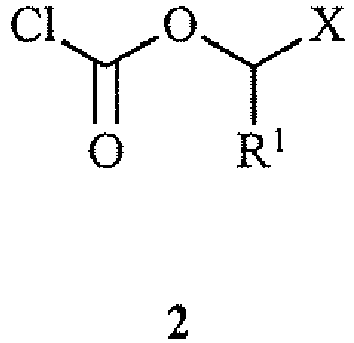
- the carbonate compound 3 may be prepared by reacting para-nitrophenol and a compound of the following formula 2 wherein R 1 and X are as defined above.
- the present invention further relates to a pharmaceutical composition for oral administration comprising a prodrug of formula (I).
- the pharmaceutical composition for oral administration is an extended-release tablet containing the prodrug evenly dispersed within a retarding polymer.
- the extended-release matrix contains polyethylene oxide and/or hydroxypropylmethyl cellulose as a retarding agent as well as polyethylene glycol.
- the pharmaceutical composition is suitable for the treatment of overactive bladder.
- the prodrug of the present invention may be used for the treatment of overactive bladder.
- the chemical stability of the prodrugs of formula (I) was tested in simulated gastric fluid (pH 2), fasted-state simulated intestinal fluid (pH 6.5), fed-state simulated intestinal fluid (pH 5.0) and in phosphate buffer (pH 7.5). No hydrolytical cleavage of the prodrug was observed within 48 hours under all conditions.
- the prodrugs of the present invention have excellent chemical stability, i.e. they are not hydrolyzed during the passage through the gastrointestinal tract, that they are absorbed faster than the parent compound Mirabegron and that the parent compound is readily set free by esterases after penetration through the biological barrier.
- R 3 represents an optionally substituted, saturated or unsaturated alkyl, optionally substituted, saturated or unsaturated cycloalkyl, optionally substituted, saturated or unsaturated (cycloalkyl)alkyl, optionally substituted, saturated or unsaturated heterocyclyl, optionally substituted, saturated or unsaturated (heterocyclyl)alkyl, optionally substituted aryl, or optionally substituted heteroaryl, or a pharmaceutically acceptable salt thereof or a solvate thereof.
- the saturated alkyl group is C 1-7 alkyl, preferably C 1-5 alkyl
- the unsaturated alkyl group is C 2-7 alkenyl, preferably C 2-5 alkenyl
- the saturated or unsaturated cycloalkyl group is cyclo-C 3-6 alkyl
- the saturated or unsaturated (cycloalkyl)alkyl group is (cyclo-C 3-6 alkyl)C 1-5 alkyl
- the saturated or unsaturated heterocyclyl group is cyclo-C 3-6 heterocyclyl, in which 1 to 3 carbon atoms of the ring are replaced by O, N or S
- the saturated or unsaturated (heterocyclyl)alkyl group is (cyclo-C 3-6 heterocyclyl)C 1-5 alkyl, in which 1 to 3 carbon atoms of the ring are replaced by O, N or S
- the aryl group is C 6 or C 10 aryl
- the heteroaryl group is C 6 or C 6 or C
- R 3 represents an unsubstituted, saturated alkyl, an unsubstituted cycloalkyl or an unsubstituted aryl; more preferably, R 3 is selected from methyl, ethyl, n-propyl, iso-propyl, n-butyl, sec-butyl, tert-butyl, cyclopropyl, cyclopentyl, cyclohexyl and phenyl.
- the prodrug of formula (II) may be prepared by protecting the nitrogen atoms of Mirabegron, e.g. as tris(tert-butyl carbamate), and subsequent reaction of the nitrogen-protected Mirabegron derivative with the corresponding activated acid derivative (e.g., with the respective acyl chloride) followed by deprotection.
- the invention is further illustrated by reference to the following examples.
- Step c Enacarbil-N phenethyl -Mirabegron
- the aqueous layer was carefully basified to pH 6 with saturated sodium hydrogen carbonate solution and then brine was added and the aqueous layer was extracted several times with ethylacetate. Further purification was achieved by preparative HPLC: Phenomenex Luna Phenyl-Hexyl: MeCN/H 2 O/TFA 50:50:0.1. The product fractions were combined and acetonitrile was evaporated in vacuum. The aqueous layer was carefully basified to pH 6 with saturated sodium hydrogen carbonate solution and then brine was added and the aqueous layer was extracted several times with ethylacetate. The residue was treated with diethyl ether and dried in vacuum and a white solid was obtained.
- Step c Benzoyloxy(methoxy)carbonyl-4-nitrophenol
- Step d Benzoyloxy(methoxy)carbonyl-N phenethyl -Mirabegron
- Mirabegron was dissolved in dry dichloromethane. Then triethylamine and benzoyloxy(methoxy)carbonyl-4-nitrophenol were added. After stirring for 2 days the reaction mixture was quenched with 100 ml water and a small amount of sodium hydrogen carbonate solution was added. The aqueous layer was extracted twice with dichloromethane. The combined organic layers were evaporated in vacuum. The first purification was achieved by preparative HPLC: Phenomenex Luna Phenyl-Hexyl: MeCN/H 2 O/TFA 60:40:0.1. The product fractions were combined and acetonitrile was evaporated in vacuum.
- the aqueous layer was carefully basified to pH 6 with saturated sodium hydrogen carbonate solution and then brine was added and the aqueous layer was extracted several times with ethylacetate. Further purification was achieved by repeated preparative HPLC: Phenomenex Luna Phenyl-Hexyl: MeCN/H 2 O/TFA 60:40:0.1. The product fractions were combined and acetonitrile was evaporated in vacuum. The aqueous layer was carefully basified to pH 6 with saturated sodium hydrogen carbonate solution and then brine was added and the aqueous layer was extracted several times with ethylacetate. The residue was treated with diethyl ether and dried in vacuum and a light yellow solid was obtained.
- Steps a and b correspond to steps a and b of Example 2.
- Mirabegron was dissolved in dry dichloromethane. Then triethylamine and hexanoyloxy(methoxy)carbonyl-4-nitrophenol were added. After stirring for 2 days the reaction mixture was quenched with 100 ml water and a small amount of sodium hydrogen carbonate solution was added. The aqueous layer was extracted twice with dichloromethane. The combined organic layers were evaporated in vacuum. The first purification was achieved by preparative HPLC: Phenomenex Luna Phenyl-Hexyl: MeCN/H 2 O/TFA 60:40:0.1. The product fractions were combined and acetonitrile was evaporated in vacuum.
- the aqueous layer was carefully basified to pH 6 with saturated sodium hydrogen carbonate solution and then brine was added and the aqueous layer was extracted several times with ethylacetate. Further purification was achieved by repeated preparative HPLC: Phenomenex Luna Phenyl-Hexyl: MeCN/H 2 O/TFA 60:40:0.1. The product fractions were combined and acetonitrile was evaporated in vacuum. The aqueous layer was carefully basified to pH 6 with saturated sodium hydrogen carbonate solution and then brine was added and the aqueous layer was extracted several times with ethylacetate. The residue was treated with diethyl ether and dried in vacuum and a white solid was obtained.
- Step a N,N',N'-Mirabegron-tris(t-butylcarbamate)
- Step b O-Pivaloyl-N,N',N'-Mirabegron-tris(t-butylcarbamate)
- Step a corresponds to step a of Example 4.
- Step b O-Cyclopropanoyl-N,N',N'-Mirabegron-tris(t-butylcarbamate)
- Step a N,N',N'-Mirabegron-tris(t-butylcarbamate)
- Step b O-Benzoyl-N,N',N'-Mirabegron-tris(t-butylcarbamate)
- Step a corresponds to step a of Example 6.
- Step b O-Propanoyl-N,N',N-Mirabegron-tris(t-butylcarbamate)
Landscapes
- Health & Medical Sciences (AREA)
- Chemical & Material Sciences (AREA)
- Organic Chemistry (AREA)
- Nuclear Medicine, Radiotherapy & Molecular Imaging (AREA)
- Pharmacology & Pharmacy (AREA)
- Chemical Kinetics & Catalysis (AREA)
- General Chemical & Material Sciences (AREA)
- Medicinal Chemistry (AREA)
- Bioinformatics & Cheminformatics (AREA)
- Engineering & Computer Science (AREA)
- Urology & Nephrology (AREA)
- Life Sciences & Earth Sciences (AREA)
- Animal Behavior & Ethology (AREA)
- General Health & Medical Sciences (AREA)
- Public Health (AREA)
- Veterinary Medicine (AREA)
- Pharmaceuticals Containing Other Organic And Inorganic Compounds (AREA)
- Acyclic And Carbocyclic Compounds In Medicinal Compositions (AREA)
Description
- The present invention relates to prodrugs of Mirabegron and their use in therapy.
- Mirabegron is a β-3 adrenergic agonist indicated for the treatment of overactive bladder. Extended-release tablets containing 25 mg or 50 mg Mirabegron are commercially available under the tradenames Betmiga® and Myrbetriq®. The use of Mirabegron for the treatment of overactive bladder is described in
European patent EP 1 559 427 . - Initially, Mirabegron was developed as a remedy for diabetes.
European patent EP 1 028 111 discloses the preparation of the dihydrochloride salt of Mirabegron (example 41) and its use for the treatment of diabetes mellitus. According to Europeanpatent application EP 1 440 969 , the dihydrochloride salt has strong hygroscopicity and is unstable, which poses problems for converting the drug into solid unit dosage forms. As a solution to this problem, the application suggests the crystalline forms α and β of Mirabegron (the free base), which are much less hygroscopic than the dihydrochloride salt. - The free base of Mirabegron can be formulated as a stable matrix-type extended-release tablet containing polyethylene oxide as retarding polymer as well as ferric oxide, as described in
European patent EP 1 205 190 . However, the commercially available tablets, which are prepared by using the technique described inEP 1 205 190 - As a solution to the decreased oral bioavailability if Mirabegron is administered together with food, European
patent application EP 2 345 410 suggests an extended-release tablet that contains a hydrogel-forming polymer, preferably polyethylene oxide, and an additive that ensures penetration of water into the pharmaceutical composition. Preferably, the additive is selected from polyethylene glycol, polyvinylpyrrolidone, mannitol, sorbitol, sodium chloride, etc. Europeanpatent application EP 2 554 168 discloses a multi-layer tablet comprising a Mirabegron-containing layer and release-controlling layers, a tablet in which the drug is contained in a gel formulation composed of gums like locust bean gum and xanthan gum, as well as osmotic pump type tablet formulations. Hence, various tablet formulations have been described in the state of the art in order to minimize the food effect and, thus, enhance the oral bioavailability of Mirabegron. - It was an object of the present invention to provide a pharmaceutical composition containing Mirabegron with improved oral bioavailability. This object is solved by the subject matter as defined in the claims.
- It was found that a prodrug of Mirabegron according to the present invention improves the oral bioavailability of the drug. Thus, the present invention relates to a prodrug of Mirabegron represented by the following formula (I)

- R1 represents hydrogen or an optionally substituted, saturated or unsaturated alkyl, and
- R2 represents an optionally substituted, saturated or unsaturated alkyl, optionally substituted, saturated or unsaturated cycloalkyl, optionally substituted, saturated or unsaturated (cycloalkyl)alkyl, optionally substituted, saturated or unsaturated heterocyclyl, optionally substituted, saturated or unsaturated (heterocyclyl)alkyl, optionally substituted aryl, or optionally substituted heteroaryl,
- In case R1 is not hydrogen, the prodrugs of formula (I) are obtained as a diastereomeric mixture. The diastereomers can be separated by using HPLC or by fractional crystallization.
- In the prodrugs of the present invention, a carbamate is formed with Mirabegron's secondary amine (the Nphenethyl atom). A prodrug is an enzymatically reversible derivative of a drug, i.e. a compound that, upon introduction in the appropriate biological system, reverts back to the parent molecule by virtue of enzymatic cleavage. The secondary amine atom of Mirabegron is derivatized as a carbamate, whereby the polar amino group is masked and the drug absorption and, thus, oral bioavailability is enhanced. However, since the carbamate after absorption needs to be hydrolyzed to carbamic acid and the corresponding alcohol, and since the rates of hydrolysis of secondary amines are very slow, an ester moiety is linked to the carbamate moiety in the prodrugs of the present invention in order to initiate the regeneration of the parent amine Mirabegron by an esterase-catalyzed hydrolysis of the ester moiety. The use of a mixed ester-carbamate group as prodrug motif was disclosed in
US 5,684,018 . - In the prodrugs of the present invention, usually the saturated alkyl group is C1-7 alkyl, preferably C1-5 alkyl, the unsaturated alkyl group is C2-7 alkenyl, preferably C2-5 alkenyl, the saturated or unsaturated cycloalkyl group is cyclo C3-6 alkyl, the saturated or unsaturated (cycloalkyl)alkyl group is (cyclo-C3-6 alkyl)C1-5 alkyl, the saturated or unsaturated heterocyclyl group is cyclo C3-6 heterocyclyl, in which 1 to 3 carbon atoms of the ring are replaced by O, N or S, the saturated or unsaturated (heterocyclyl)alkyl group is (cyclo C3-6 heterocyclyl)C1-5alkyl, in which 1 to 3 carbon atoms of the ring are replaced by O, N or S, the aryl group is C6 or C10 aryl, and the heteroaryl group is C6 or C10 heteroaryl, in which 1 to 3 carbon atoms of the ring are replaced by O, N or S.
- It is more preferred that R1 represents hydrogen or an unsubstituted, saturated alkyl, and R2 represents an unsubstituted, saturated alkyl, or an unsubstituted aryl. For example, R1 can be selected from hydrogen, methyl, ethyl, n-propyl, iso-propyl, n-butyl, sec-butyl and tert-butyl, and R2 can be selected from methyl, ethyl, propyl (n- or iso-), butyl (n-, sec- or tert-), n-pentyl, 2-methylbutyl, 3-methylbutyl and phenyl. Most preferably, R1 is hydrogen or methyl, and R2 is selected from methyl, ethyl, n-propyl, iso-propyl, n-butyl, sec-butyl, n-pentyl and phenyl. Especially preferred is a prodrug in which R1 is methyl and R2 is iso-propyl (Enacarbil-Nphenethyl-Mirabegron). Also especially preferred are prodrugs in which R1 is hydrogen and R2 is n-pentyl (hexanoyloxy(methoxy)carbonyl-Nphenethyl-Mirabegron) or phenyl (benzoyloxy(methoxy)carbonyl-Nphenethyl-mirabegron),
- The prodrugs of the present invention may be prepared as outlined in the following scheme:

- The key intermediate of the process is the mixed
carbonate 5 with a para-nitrophenyl moiety that reacts with Mirabegron to yield the Nphenethyl-Mirabegron derivatized prodrug I. Hence, the present invention relates to a process for preparing a prodrug of formula (1) comprising the step of reacting Mirabegron and a carbonate compound represented by the following formula (5)
- As an alternative to the mixed
carbonate 5, chloroformates and carbamates with, e.g., a succinimide moiety of the following formulas may be used:
- The mixed
carbonate compound 5 may be prepared by reacting a carbonate compound and an acid of the followingformulas 
- The
carbonate compound 3 may be prepared by reacting para-nitrophenol and a compound of the followingformula 2
- The present invention further relates to a pharmaceutical composition for oral administration comprising a prodrug of formula (I). Preferably, the pharmaceutical composition for oral administration is an extended-release tablet containing the prodrug evenly dispersed within a retarding polymer. Preferably, the extended-release matrix contains polyethylene oxide and/or hydroxypropylmethyl cellulose as a retarding agent as well as polyethylene glycol. The pharmaceutical composition is suitable for the treatment of overactive bladder. The prodrug of the present invention may be used for the treatment of overactive bladder.
- The chemical stability of the prodrugs of formula (I) was tested in simulated gastric fluid (pH 2), fasted-state simulated intestinal fluid (pH 6.5), fed-state simulated intestinal fluid (pH 5.0) and in phosphate buffer (pH 7.5). No hydrolytical cleavage of the prodrug was observed within 48 hours under all conditions.
- Compared to the parent compound Mirabegron, it was found that the Tmax is earlier and the Cmax is higher after the oral administration of Enacarbil-Nphenethyl-Mirabegron to Sprague Dawley rats. The half-life of this prodrug in rat blood plasma was less than 0.5 h and in human blood plasma less than 2.5 h. Almost 100 % esterase cleavage was found in rat blood plasma after 1 h, whereas about 70 % of the prodrug was cleaved within 4 hours in human blood plasma.
- The half-life of Benzoyloxy(methoxy)carbonyl-Nphenethyl-Mirabegron in rat blood plasma and in human blood plasma was less than 0.5 h. Almost 100 % esterase cleavage was found in rat blood plasma after 1 h, whereas almost 100 % of the prodrug was cleaved within 4 hours in human blood plasma.
- Hence, it could be demonstrated that the prodrugs of the present invention have excellent chemical stability, i.e. they are not hydrolyzed during the passage through the gastrointestinal tract, that they are absorbed faster than the parent compound Mirabegron and that the parent compound is readily set free by esterases after penetration through the biological barrier.
- Other prodrugs are represented by the following formula (II)

or a pharmaceutically acceptable salt thereof or a solvate thereof. - In the prodrugs of formula (II), usually the saturated alkyl group is C1-7 alkyl, preferably C1-5 alkyl, the unsaturated alkyl group is C2-7 alkenyl, preferably C2-5 alkenyl, the saturated or unsaturated cycloalkyl group is cyclo-C3-6 alkyl, the saturated or unsaturated (cycloalkyl)alkyl group is (cyclo-C3-6 alkyl)C1-5 alkyl, the saturated or unsaturated heterocyclyl group is cyclo-C3-6 heterocyclyl, in which 1 to 3 carbon atoms of the ring are replaced by O, N or S, the saturated or unsaturated (heterocyclyl)alkyl group is (cyclo-C3-6 heterocyclyl)C1-5 alkyl, in which 1 to 3 carbon atoms of the ring are replaced by O, N or S, the aryl group is C6 or C10 aryl, and the heteroaryl group is C6 or C10 heteroaryl, in which 1 to 3 carbon atoms of the ring are replaced by O, N or S. Preferably, R3 represents an unsubstituted, saturated alkyl, an unsubstituted cycloalkyl or an unsubstituted aryl; more preferably, R3 is selected from methyl, ethyl, n-propyl, iso-propyl, n-butyl, sec-butyl, tert-butyl, cyclopropyl, cyclopentyl, cyclohexyl and phenyl.
- The prodrug of formula (II) may be prepared by protecting the nitrogen atoms of Mirabegron, e.g. as tris(tert-butyl carbamate), and subsequent reaction of the nitrogen-protected Mirabegron derivative with the corresponding activated acid derivative (e.g., with the respective acyl chloride) followed by deprotection. The invention is further illustrated by reference to the following examples.
-

- To an ice-cold reaction mixture containing p-nitrophenol (1.39 g, 10 mmol) and triethylamine (10 mmol) in dichloromethane (50 mL) was added 1-chloroethyl chloroformate (1.2 mL, 11 mmol) in 10 ml of dichloromethane. The mixture was stirred at 0°C for 30 min and then at room temperature for 1 hour. The reaction mixture was diluted with water; the organic layer was washed 5-7 times with saturated sodium bicarbonate solution (until the color of the aqueous layer is not very strong yellow-colored) and dried. After removing the solvent under reduced pressure, the residue was dissolved in ethyl acetate, washed 3x with saturated sodium bicarbonate solution, 2x with 10% citric acid, and 2-3x with brine. The organic layer was dried over anhydrous sodium sulfate and evaporated under reduced pressure to give 2,4 g (97%) of the title compound as an off-white solid.
Yield:
12 g (M 245.6), 48.9 mmol -

1 M 245.6 6.0 g 25.0 mmol 1.0 eq 2 M 88.1, d 0.95 12 ml 125.0 mmol 5.0 eq Ag2CO3 M 275.7 10g 37.5 mmol 1.5 eq dry toluene 125 ml - To the solution of 1-chloroethyl-p-nitrophenyl carbonate and isobutyric acid in toluene, silver carbonate is added. The mixture is stirred under reflux overnight in the dark (aluminum foil is used to cover the equipment). The reaction mixture was allowed to cool to room temperature and filtered through a pad of Celite. The filtrate was washed 5x with saturated sodium bicarbonate solution. After removing the solvent under reduced pressure, the residue was dissolved in ethyl acetate, washed 3x with saturated sodium bicarbonate solution and 1-2x with brine. The organic layer was dried over anhydrous sodium sulfate and evaporated under reduced pressure. The isolated substance contains only 20% of the title compound and 80% of an unknown impurity, probably an isobutyric ester.
Yield:
5 g (purity 20%) -


- Mirabegron was dissolved in dry dichloromethane. Then triethylamine and the crude Enacarbil-Donor from step b) were added. After stirring for 7 days the reaction mixture was quenched with 100 ml water and a small amount of sodium hydrogen carbonate solution was added. The aqueous layer was extracted twice with dichloromethane. The combined organic layers were evaporated in vacuum. The first purification was achieved by preparative HPLC: Phenomenex Luna Phenyl-Hexyl: MeCN/H2O/TFA 70:30:0.1. The product fractions were combined and acetonitrile was evaporated in vacuum. The aqueous layer was carefully basified to
pH 6 with saturated sodium hydrogen carbonate solution and then brine was added and the aqueous layer was extracted several times with ethylacetate. Further purification was achieved by preparative HPLC: Phenomenex Luna Phenyl-Hexyl: MeCN/H2O/TFA 50:50:0.1. The product fractions were combined and acetonitrile was evaporated in vacuum. The aqueous layer was carefully basified topH 6 with saturated sodium hydrogen carbonate solution and then brine was added and the aqueous layer was extracted several times with ethylacetate. The residue was treated with diethyl ether and dried in vacuum and a white solid was obtained.
Yield:
0.3 g
Melting point (m.p.): 58-62°C. MS (ESI) m/z 555.2299 (M+H)+.
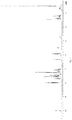
1H-NMR (DMSO-d6):Figure 1 (1 Diastereomer) -

- To a -40 °C reaction mixture containing p-nitrophenol and chloromethyl chloroformate in tetrahydrofuran was added triethylamine in one portion. The mixture was stirred at -40°C for 30 min. The solid was filtered off and the filtrate was diluted with ethyl acetate; the organic layer was washed 5 times with a mixture of water, brine and sodium hydrogen carbonate solution. The organic layer was dried over anhydrous sodium sulfate and evaporated under reduced pressure.
Yield:
20 g (M 231.6), 86.3 mmol, 86%, yellow oil -

- To a solution of 1 in acetone was added NaI in one portion and the mixture was stirred at 50°C overnight. The solvent was evaporated and the residue was dissolved in diethylether. The organic phase was washed 3 times with brine and dried over sodium sulfate.
Yield:
6 g (M 323.0), 18.6 mmol, 86% -

- To the solution of 1 and 2 in toluene, silver carbonate is added. The mixture is stirred under reflux 2 h in the dark (aluminum foil is used to cover the equipment). The reaction mixture was allowed to cool to room temperature and filtered. The filtrate was washed with water and brine and dried over anhydrous sodium sulfate. After removing the solvent under reduced pressure, the residue was dissolved in diethylether, washed 3 x with sodium bicarbonate solution and 1 x with brine. The organic layer was dried over anhydrous sodium sulfate and evaporated under reduced pressure.
Yield:
2.8 g (M 317.3), 8.8 mmol, 86%, yellow oil -

- Mirabegron was dissolved in dry dichloromethane. Then triethylamine and benzoyloxy(methoxy)carbonyl-4-nitrophenol were added. After stirring for 2 days the reaction mixture was quenched with 100 ml water and a small amount of sodium hydrogen carbonate solution was added. The aqueous layer was extracted twice with dichloromethane. The combined organic layers were evaporated in vacuum. The first purification was achieved by preparative HPLC: Phenomenex Luna Phenyl-Hexyl: MeCN/H2O/TFA 60:40:0.1. The product fractions were combined and acetonitrile was evaporated in vacuum. The aqueous layer was carefully basified to
pH 6 with saturated sodium hydrogen carbonate solution and then brine was added and the aqueous layer was extracted several times with ethylacetate. Further purification was achieved by repeated preparative HPLC: Phenomenex Luna Phenyl-Hexyl: MeCN/H2O/TFA 60:40:0.1. The product fractions were combined and acetonitrile was evaporated in vacuum. The aqueous layer was carefully basified topH 6 with saturated sodium hydrogen carbonate solution and then brine was added and the aqueous layer was extracted several times with ethylacetate. The residue was treated with diethyl ether and dried in vacuum and a light yellow solid was obtained.
Yield:
650 mg (M 574.7), 1.1 mmol, 14 %, light yellow solid.
m.p.: 71-74°C. MS (ESI) m/z 575.1961 (M+H)+.
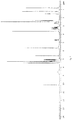
1H-NMR (DMSO-d6):Figure 2 - Steps a and b correspond to steps a and b of Example 2.
-

- To the solution of 1 and 2 in toluene, silver carbonate is added. The mixture is stirred under reflux 2 h in the dark (aluminum foil is used to cover the equipment). The reaction mixture was allowed to cool to room temperature and filtered. The filtrate was washed with water and brine and dried over anhydrous sodium sulfate. After removing the solvent under reduced pressure, the residue was dissolved in diethylether, washed 3 x with sodium bicarbonate solution and 1 x with brine. The organic layer was dried over anhydrous sodium sulfate and evaporated under reduced pressure.
Yield:
3.5 g (M 311.3), 8.4 mmol, 90%, yellow oil -

- Mirabegron was dissolved in dry dichloromethane. Then triethylamine and hexanoyloxy(methoxy)carbonyl-4-nitrophenol were added. After stirring for 2 days the reaction mixture was quenched with 100 ml water and a small amount of sodium hydrogen carbonate solution was added. The aqueous layer was extracted twice with dichloromethane. The combined organic layers were evaporated in vacuum. The first purification was achieved by preparative HPLC: Phenomenex Luna Phenyl-Hexyl: MeCN/H2O/TFA 60:40:0.1. The product fractions were combined and acetonitrile was evaporated in vacuum. The aqueous layer was carefully basified to
pH 6 with saturated sodium hydrogen carbonate solution and then brine was added and the aqueous layer was extracted several times with ethylacetate. Further purification was achieved by repeated preparative HPLC: Phenomenex Luna Phenyl-Hexyl: MeCN/H2O/TFA 60:40:0.1. The product fractions were combined and acetonitrile was evaporated in vacuum. The aqueous layer was carefully basified topH 6 with saturated sodium hydrogen carbonate solution and then brine was added and the aqueous layer was extracted several times with ethylacetate. The residue was treated with diethyl ether and dried in vacuum and a white solid was obtained.
Yield:
200 mg (M 568.7), 0.35 mmol, 4%, white solid
m.p.: 58-63°C. MS (ESI) m/z 569.2412 (M+H)+.
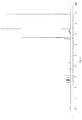
1H-NMR (DMSO-d6):Figure 3 -

- Mirabegron was dissolved in dry dichloromethane. Then triethylamine and Boc2O were added. DMAP was added and the reaction was stirred overnight. Additional Boc2O and NEt3 was added and the mixture was stirred one more night. The reaction mixture was quenched with 500 ml water and brine was added. The aqueous layer was extracted twice with dichloromethane. The combined organic layers were evaporated in vacuum. Purification was achieved by repeated column chromatography: silica gel: chloroform/methanol 97.5:2.5.
Yield:
17 g (M 696.9), 24.4 mmol -

- 1 was dissolved in dry dichloromethane. Then triethylamine, pivaloyl chloride and DMAP were added and the reaction was stirred overnight. The reaction mixture was quenched with 100 ml water and brine was added. The aqueous layer was extracted twice with dichloromethane. The combined organic layers were evaporated in vacuum. Purification was achieved by preparative HPLC: Phenomenex Luna Phenyl-Hexyl: MeCN/H2O/TFA 85:15:0.1. The aqueous layer was carefully basified to
pH 6 with saturated sodium hydrogen carbonate solution and acetonitrile was removed in vacuum. Then brine was added and the aqueous layer was extracted several times with ethylacetate. The combined organic layers were dried over sodium sulfate and evaporated in vacuum.
Yield:
1.6 g (M 781,0), 2.1 mmol -

- 1 was dissolved in dry dichloromethane. Then 2.0 ml TFA were added and the mixture was stirred overnight. 2.0 ml TFA were added and the mixture was stirred one more night. Water was added and the mixture was neutralized with saturated sodium hydrogen carbonate solution. The aqueous layer was extracted twice with dichloromethane and twice with ethyl acetate. The combined organic layers were dried over sodium sulfate and evaporated in vacuum. Further purification was achieved by preparative HPLC: Phenomenex Luna Phenyl-Hexyl: MeCN/H2O/TFA 40:60:0.1. The aqueous layer was carefully basified to
pH 6 with saturated sodium hydrogen carbonate solution and acetonitrile was removed in vacuum. Then brine was added and the aqueous layer was extracted several times with ethylacetate. The combined organic layers were dried over sodium sulfate and evaporated in vacuum. The oily residue was treated with diethyl ether and dried in vacuum and a white foam was obtained.
Yield:
0.5 g (M 480.6), 1.05 mmol
m.p.; 48-50°C. MS (ESI) m/z 481.2227 (M+H)+.
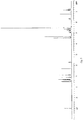
1H-NMR (DMSO-d6):Figure 4 - Step a corresponds to step a of Example 4.
-

- 1 was dissolved in dry dichloromethane. Then triethylamine, cyclopropanoyl chloride (Cp-Cl) and DMAP were added and the reaction was stirred overnight. The reaction mixture was quenched with 100 ml water and brine was added. The aqueous layer was extracted twice with dichloromethane. The combined organic layers were evaporated in vacuum. Purification was achieved by repeated preparative HPLC: Phenomenex Luna Phenyl-Hexyl: MeCN/H2O/TFA 80:20:0.1. The aqueous layer was carefully basified to
pH 6 with saturated sodium hydrogen carbonate solution and acetonitrile was removed in vacuum. Then brine was added and the aqueous layer was extracted several times with ethylacetate. The combined organic layers were dried over sodium sulfate and evaporated in vacuum.
Yield:
3.5 g (M 764.9), 4.6 mmol -

- 1 was dissolved in dry dichloromethane. Then 1.5 ml TFA were added and the mixture was stirred overnight. Then 1.5 ml TFA were added and once more 1.5 ml TFA and the mixture was stirred one more night. Water was added and the mixture was neutralized with saturated sodium hydrogen carbonate solution. The aqueous layer was extracted twice with dichloromethane and twice with ethyl acetate, The combined organic layers were dried over sodium sulfate and evaporated in vacuum, Further purification was achieved by repeated preparative HPLC: Phenomenex Luna Phenyl-Hexyl: MeCN/H2O/TFA 30:70:0.1. The aqueous layer was carefully basified to
pH 6 with saturated sodium hydrogen carbonate solution and acetonitrile was removed in vacuum. Then brine was added and the aqueous layer was extracted several times with ethylacetate. The combined organic layers were dried over sodium sulfate and evaporated in vacuum. The residue was treated with diethyl ether and dried in vacuum and a white solid was obtained.
Yield:
0.2 g (M 464.6), 0.43 mmol
m.p.: 44-47°C. MS (ESI) m/z 465.1917 (M+H)+.
1H-NMR (DMSO-d6):Figure 5 -

- Mirabegron was dissolved in dry dichloromethane. Then triethylamine and Boc2O were added. DMAP was added and the reaction was stirred overnight. Additional Boc2O was added and the mixture was stirred one more night. The reaction mixture was quenched with 500 ml water and brine was added. The aqueous layer was extracted twice with dichloromethane. The combined organic layers were evaporated in vacuum. Purification was achieved by repeated column chromatography: silica gel: toluene/ethylacetate 1:1.
Yield:
13.7 g (M 696.9), 19.7 mmol -


- 1 was dissolved in dry dichloromethane. Then triethylamine, Benzoyl-Cl and DMAP were added and the reaction was stirred overnight. The reaction mixture was quenched with 100 ml water and brine was added. The aqueous layer was extracted twice with dichloromethane. The combined organic layers were evaporated in vacuum. Purification was achieved by preparative HPLC: Phenomenex Luna Phenyl-Hexyl: MeCN/H2O/TFA 85:15:0.1. Acetonitrile was removed in vacuum and the aqueous layer was carefully basified to
pH 6 with saturated sodium hydrogen carbonate solution. Then brine was added and the aqueous layer was extracted several times with ethylacetate. The combined organic layers were dried over sodium sulfate and evaporated in vacuum.
Yield:
8.0 g (M 801.0), 10.0 mmol -

- 1 was dissolved in dry dichloromethane. Then 4.0 ml TFA were added and the mixture was stirred overnight. 2.0 ml TFA were added and the mixture was stirred one more night. 2.0 ml TFA were added and the mixture was stirred one more night. The solvent and TFA were removed in vacuum. Further purification was achieved by preparative HPLC: Phenomenex Luna Phenyl-Hexyl: MeCN/H2O/TFA 30:70:0.1. Acetonitrile was removed in vacuum. Then brine and sodium hydrogen carbonate solution was added and the aqueous layer was extracted several times with ethylacetate. The combined organic layers were dried over sodium sulfate and evaporated in vacuum. The residue was treated with diethyl ether and dried in vacuum and a white foam was obtained.
Yield:
1.1 g (M 500.6), 2.2 mmol
m.p.: 59-64°C. MS (ESI) m/z 501.1962 (M+H)+.
1H-NMR (DMSO-d6):Figure 6 - Step a corresponds to step a of Example 6.
-

- 1 was dissolved in dry dichloromethane. Then triethylamine, Propanoyl-Cl and DMAP were added and the reaction was stirred overnight. The reaction mixture was quenched with 100 ml water and brine was added. The aqueous layer was extracted twice with dichloromethane. The combined organic layers were evaporated in vacuum. Purification was achieved by preparative HPLC: Phenomenex Luna Phenyl-Hexyl: MeCN/H2O/TFA 85:15:0.1. Acetonitrile was removed in vacuum and the aqueous layer was carefully basified to
pH 6 with saturated sodium hydrogen carbonate solution. Then brine was added and the aqueous layer was extracted several times with ethylacetate. The combined organic layers were dried over sodium sulfate and evaporated in vacuum.
Yield:
4.2 g (M 752.9), 5.6 mmol -

- 1 was dissolved in dry dichloromethane. Then 4.0 ml TFA were added and the mixture was stirred overnight. 2.0 ml TFA were added and the mixture was stirred one more night. 2.0 ml TFA were added and the mixture was stirred one more night. The solvent and TFA were removed in vacuum. Further purification was achieved by preparative HPLC: Phenomenex Luna Phenyl-Hexyl: MeCN/H2O/TFA 30:70:0.1 Acetonitrile was removed in vacuum. Then brine and sodium hydrogen carbonate solution was added and the aqueous layer was extracted several times with ethylacetate. The combined organic layers were dried over sodium sulfate and evaporated in vacuum. The residue was treated with diethyl ether and dried in vacuum (decomposition; purity by HPLC is 80%). Purification was achieved once more by preparative HPLC: Phenomenex Luna Phenyl-Hexyl: MeCN/H2O/TFA 30:70:0.1. Acetonitrile was removed in vacuum. The aqueous residue was lyophilized and white crystals were obtained.
Yield:
1.0 g (M 566.6)
m.p.: 70-75°C. MS (ESI) m/z 453.1957 (M-CF3COOH+H)+.
1H-NMR (DMSO-d6):Figure 7
or a pharmaceutically acceptable salt thereof or a solvate thereof.
Claims (13)
- A prodrug of mirabegron represented by the following formula (I)
 - R1 represents hydrogen or an optionally substituted, saturated or unsaturated alkyl, and- R2 represents an optionally substituted, saturated or unsaturated alkyl, optionally substituted, saturated or unsaturated cycloalkyl, optionally substituted, saturated or unsaturated (cycloalkyl)alkyl, optionally substituted, saturated or unsaturated heterocyclyl, optionally substituted, saturated or unsaturated (heterocyclyl)alkyl, optionally substituted aryl, or optionally substituted heteroaryl,wherein the substituent of the optionally substituted alkyl, cycloalkyl, (cycloalkyl)alkyl, heterocyclyl, (heterocyclyl)alkyl, aryl and heteroaryl is selected from halogen (F, Cl, Br or I), C1-6-alkoxy, preferably C1-4-alkoxy, more preferably C1-2-alkoxy, phenoxy, (C1-4 alkyl)2 amino and phenyl,
or a pharmaceutically acceptable salt thereof or a solvate thereof. - Prodrug according to claim 1, wherein
the saturated alkyl group is C1-7 alkyl, preferably C1-5 alkyl, the unsaturated alkyl group is C2-7 alkenyl, preferably C2-5 alkenyl, the saturated or unsaturated cycloalkyl group is cyclo-C3-6 alkyl, the saturated or unsaturated (cycloalkyl)alkyl group is (cyclo-C3-6 alkyl)C1-5 alkyl, the saturated or unsaturated heterocyclyl group is cyclo-C3-6 heterocyclyl, in which 1 to 3 carbon atoms of the ring are replaced by O, N or S, the saturated or unsaturated (heterocyclyl)alkyl group is (cyclo-C3-6 heterocyclyl)C1-5 alkyl, in which 1 to 3 carbon atoms of the ring are replaced by O, N or S, the aryl group is C6 or C10 aryl, and the heteroaryl group is C6 or C10 heteroaryl, in which 1 to 3 carbon atoms of the ring are replaced by O, N or S. - Prodrug according to claim 1 or 2, wherein- R1 represents hydrogen or an unsubstituted, saturated alkyl, and- R2 represents an unsubstituted, saturated alkyl, or an unsubstituted aryl.
- Prodrug according to claim 3, wherein- R1 is selected from hydrogen, methyl, ethyl, n-propyl, iso-propyl, n-butyl, sec-butyl and tert-butyl, and- R2 is selected from methyl, ethyl, propyl (n- or iso-), butyl (n-, sec- or tert-), n-pentyl, 2-methylbutyl, 3-methylbutyl and phenyl.
- Prodrug according to claim 4, wherein- R1 is hydrogen or methyl, and- R2 is selected from methyl, ethyl, n-propyl, iso-propyl, n-butyl, sec-butyl, n-pentyl and phenyl.
- Prodrug according to claim 5, wherein- R1 is methyl, and- R2 is iso-propyl.
- Prodrug according to claim 5, wherein- R1 is hydrogen, and- R2 is n-pentyl or phenyl.
- A process for preparing a prodrug according to any one of claims 1-7, wherein the process comprises the step of reacting mirabegron and a carbonate compound represented by the following formula (5)

- The process according to claim 8, wherein the carbonate compound 5 is prepared by reacting a carbonate compound and an acid of the following formulas 3 and 4

- The process according to claim 9, wherein the carbonate compound 3 is prepared by reacting p-nitrophenol and a compound of the following formula 2
- A pharmaceutical composition for oral administration comprising a prodrug according to any one of claims 1-7.
- A pharmaceutical composition according to claim 11 for use in a method of treating overactive bladder.
- A prodrug according to any one of claims 1-7 for use in a method of treating overactive bladder.
Priority Applications (5)
| Application Number | Priority Date | Filing Date | Title |
|---|---|---|---|
| EP17156130.1A EP3360866B1 (en) | 2017-02-14 | 2017-02-14 | Mirabegron prodrugs |
| EP18213426.2A EP3489224A1 (en) | 2017-02-14 | 2017-02-14 | Mirabegron prodrugs |
| SI201730033T SI3360866T1 (en) | 2017-02-14 | 2017-02-14 | Mirabegron prodrugs |
| ES17156130T ES2717534T3 (en) | 2017-02-14 | 2017-02-14 | Prodrugs of Mirabegron |
| PT17156130T PT3360866T (en) | 2017-02-14 | 2017-02-14 | Mirabegron prodrugs |
Applications Claiming Priority (1)
| Application Number | Priority Date | Filing Date | Title |
|---|---|---|---|
| EP17156130.1A EP3360866B1 (en) | 2017-02-14 | 2017-02-14 | Mirabegron prodrugs |
Related Child Applications (1)
| Application Number | Title | Priority Date | Filing Date |
|---|---|---|---|
| EP18213426.2A Division EP3489224A1 (en) | 2017-02-14 | 2017-02-14 | Mirabegron prodrugs |
Publications (2)
| Publication Number | Publication Date |
|---|---|
| EP3360866A1 EP3360866A1 (en) | 2018-08-15 |
| EP3360866B1 true EP3360866B1 (en) | 2019-01-02 |
Family
ID=58046541
Family Applications (2)
| Application Number | Title | Priority Date | Filing Date |
|---|---|---|---|
| EP18213426.2A Withdrawn EP3489224A1 (en) | 2017-02-14 | 2017-02-14 | Mirabegron prodrugs |
| EP17156130.1A Not-in-force EP3360866B1 (en) | 2017-02-14 | 2017-02-14 | Mirabegron prodrugs |
Family Applications Before (1)
| Application Number | Title | Priority Date | Filing Date |
|---|---|---|---|
| EP18213426.2A Withdrawn EP3489224A1 (en) | 2017-02-14 | 2017-02-14 | Mirabegron prodrugs |
Country Status (4)
| Country | Link |
|---|---|
| EP (2) | EP3489224A1 (en) |
| ES (1) | ES2717534T3 (en) |
| PT (1) | PT3360866T (en) |
| SI (1) | SI3360866T1 (en) |
Families Citing this family (3)
| Publication number | Priority date | Publication date | Assignee | Title |
|---|---|---|---|---|
| KR20200117091A (en) * | 2019-04-02 | 2020-10-14 | 제이투에이치바이오텍 (주) | Prodrug compound of mirabegron and its medical use for treating or alleviating overactive bladder diseases |
| EP3722285B1 (en) | 2020-04-08 | 2022-03-30 | Alfred E. Tiefenbacher (GmbH & Co. KG) | Process for preparing mirabegron enacarbil |
| WO2022006336A1 (en) * | 2020-07-01 | 2022-01-06 | Jubilant Pharma Holdings Inc. | Long-acting injection dosage form of beta 3 adrenoreceptor agonists |
Family Cites Families (8)
| Publication number | Priority date | Publication date | Assignee | Title |
|---|---|---|---|---|
| US5684018A (en) | 1994-12-13 | 1997-11-04 | Merck & Co., Inc. | Acyloxyisopropyl carbamates as prodrugs for amine drugs |
| US6346532B1 (en) | 1997-10-17 | 2002-02-12 | Yamanouchi Pharmaceutical Co., Ltd. | Amide derivatives or salts thereof |
| DE60027728T2 (en) | 1999-08-04 | 2007-04-26 | Astellas Pharma Inc. | STABLE MEDICAL COMPOSITIONS FOR ORAL ADMINISTRATION USING IRON OXIDES |
| US7342117B2 (en) | 2001-10-30 | 2008-03-11 | Astellas Pharma Inc. | α-form or β-form crystal of acetanilide derivative |
| RU2321401C2 (en) | 2002-11-07 | 2008-04-10 | Астеллас Фарма Инк. | Drug against hyperactive bladder comprising derivative of acetic acid anilide as active component |
| TWI478712B (en) | 2008-09-30 | 2015-04-01 | Astellas Pharma Inc | Pharmaceutical composition for modified release |
| WO2011122524A1 (en) | 2010-03-29 | 2011-10-06 | アステラス製薬株式会社 | Controlled release pharmaceutical composition |
| CN103201260B (en) * | 2010-11-11 | 2015-05-27 | 莱德克斯制药有限公司 | Drug derivatives |
-
2017
- 2017-02-14 ES ES17156130T patent/ES2717534T3/en active Active
- 2017-02-14 SI SI201730033T patent/SI3360866T1/en unknown
- 2017-02-14 EP EP18213426.2A patent/EP3489224A1/en not_active Withdrawn
- 2017-02-14 EP EP17156130.1A patent/EP3360866B1/en not_active Not-in-force
- 2017-02-14 PT PT17156130T patent/PT3360866T/en unknown
Non-Patent Citations (1)
| Title |
|---|
| None * |
Also Published As
| Publication number | Publication date |
|---|---|
| EP3360866A1 (en) | 2018-08-15 |
| PT3360866T (en) | 2019-02-19 |
| SI3360866T1 (en) | 2019-04-30 |
| ES2717534T3 (en) | 2019-06-21 |
| EP3489224A1 (en) | 2019-05-29 |
Similar Documents
| Publication | Publication Date | Title |
|---|---|---|
| FI93217C (en) | Process for the preparation of therapeutically active esters and amides of nucleoside derivatives | |
| ES2220927T3 (en) | DERIVATIVES OF DC-89. | |
| US7420063B2 (en) | Process for preparing a dipeptidyl peptidase IV inhibitor and intermediates employed therein | |
| CN103140227B (en) | Prepare the method for tubulin Lysin | |
| JP2510839B2 (en) | Novel process for the preparation of novel N- (acyloxy-alkoxy) carbonyl derivatives useful as biotransformable prodrug moieties for primary and secondary amine functional groups in drugs | |
| EP3277660B1 (en) | Water-soluble l-dopa esters | |
| KR100189043B1 (en) | Galantamine derivatives and pharmaceutical compositions containing them | |
| WO2018165250A1 (en) | Glucuronide prodrugs of tofacitinib | |
| JP6374436B2 (en) | Pure erlotinib | |
| EA004770B1 (en) | Novel esters derived from (rr,ss)-2-hydroxybenzoate of 3-(2-dimethylaminomethyl-1-hydroxycyclohexyl)phenyl | |
| US10710961B2 (en) | Method for preparing intermediate of 4-methoxypyrrole derivative | |
| EP3360866A1 (en) | Mirabegron prodrugs | |
| CA2082820C (en) | Derivatives of 6-aminooctahydroindolizinetriol | |
| KR100281867B1 (en) | 3- (bis-substituted phenylmethylene) oxindole derivatives | |
| SU724085A3 (en) | Method of obtaining 6-methyl-8-nitromethylergoline of salts thereof | |
| AP636A (en) | Zwitterionic forms of trovafloxacin. | |
| FR2995605A1 (en) | MACROLIDE DERIVATIVES, THEIR PREPARATION AND THEIR THERAPEUTIC APPLICATION. | |
| CZ20021435A3 (en) | Prodrugs of 6-methoxy-2-naphthylacetic acid | |
| EP1511728B1 (en) | Oxophenyl-cyclohexyl-propanolamine derivatives, production and use thereof in therapeutics | |
| EP0273357B1 (en) | Fluorine-containing macrolide compounds, pharmaceutical compositions comprising the same and their use for the manufacture of medicaments | |
| KR101715682B1 (en) | Novel intermediates for preparing saxagliptin, preparing methods thereof and preparing methods of saxagliptin using the same | |
| KR900001207B1 (en) | Method for preparing N- (1-substituted-4,5-dihydro-1H-pyrazol-4-yl) benzamide | |
| EP0008657B1 (en) | Alpha-vinyl-alpha-aminoacids and their esters and pharmaceutical compositions containing them | |
| CN119192111A (en) | Vinyl pyrone compound | |
| CN108047304A (en) | - 7 selective depressant of metalloproteinases and its preparation method and application |
Legal Events
| Date | Code | Title | Description |
|---|---|---|---|
| STAA | Information on the status of an ep patent application or granted ep patent |
Free format text: STATUS: EXAMINATION IS IN PROGRESS |
|
| PUAI | Public reference made under article 153(3) epc to a published international application that has entered the european phase |
Free format text: ORIGINAL CODE: 0009012 |
|
| 17P | Request for examination filed |
Effective date: 20170719 |
|
| AK | Designated contracting states |
Kind code of ref document: A1 Designated state(s): AL AT BE BG CH CY CZ DE DK EE ES FI FR GB GR HR HU IE IS IT LI LT LU LV MC MK MT NL NO PL PT RO RS SE SI SK SM TR |
|
| AX | Request for extension of the european patent |
Extension state: BA ME |
|
| GRAP | Despatch of communication of intention to grant a patent |
Free format text: ORIGINAL CODE: EPIDOSNIGR1 |
|
| RBV | Designated contracting states (corrected) |
Designated state(s): AL AT BE BG CH CY CZ DE DK EE ES FI FR GB GR HR HU IE IS IT LI LT LU LV MC MK MT NL NO PL PT RO RS SE SI SK SM TR |
|
| STAA | Information on the status of an ep patent application or granted ep patent |
Free format text: STATUS: GRANT OF PATENT IS INTENDED |
|
| INTG | Intention to grant announced |
Effective date: 20181004 |
|
| GRAS | Grant fee paid |
Free format text: ORIGINAL CODE: EPIDOSNIGR3 |
|
| GRAA | (expected) grant |
Free format text: ORIGINAL CODE: 0009210 |
|
| STAA | Information on the status of an ep patent application or granted ep patent |
Free format text: STATUS: THE PATENT HAS BEEN GRANTED |
|
| AK | Designated contracting states |
Kind code of ref document: B1 Designated state(s): AL AT BE BG CH CY CZ DE DK EE ES FI FR GB GR HR HU IE IS IT LI LT LU LV MC MK MT NL NO PL PT RO RS SE SI SK SM TR |
|
| REG | Reference to a national code |
Ref country code: GB Ref legal event code: FG4D |
|
| REG | Reference to a national code |
Ref country code: CH Ref legal event code: EP Ref country code: AT Ref legal event code: REF Ref document number: 1084190 Country of ref document: AT Kind code of ref document: T Effective date: 20190115 |
|
| REG | Reference to a national code |
Ref country code: IE Ref legal event code: FG4D |
|
| REG | Reference to a national code |
Ref country code: DE Ref legal event code: R096 Ref document number: 602017001590 Country of ref document: DE |
|
| REG | Reference to a national code |
Ref country code: PT Ref legal event code: SC4A Ref document number: 3360866 Country of ref document: PT Date of ref document: 20190219 Kind code of ref document: T Free format text: AVAILABILITY OF NATIONAL TRANSLATION Effective date: 20190212 |
|
| REG | Reference to a national code |
Ref country code: CH Ref legal event code: NV Representative=s name: GOTTSCHALK MAIWALD PATENTANWALTS- UND RECHTSAN, CH |
|
| REG | Reference to a national code |
Ref country code: SE Ref legal event code: TRGR |
|
| REG | Reference to a national code |
Ref country code: NL Ref legal event code: FP |
|
| REG | Reference to a national code |
Ref country code: LT Ref legal event code: MG4D |
|
| REG | Reference to a national code |
Ref country code: GR Ref legal event code: EP Ref document number: 20190400895 Country of ref document: GR Effective date: 20190524 |
|
| REG | Reference to a national code |
Ref country code: NO Ref legal event code: T2 Effective date: 20190102 |
|
| REG | Reference to a national code |
Ref country code: AT Ref legal event code: MK05 Ref document number: 1084190 Country of ref document: AT Kind code of ref document: T Effective date: 20190102 |
|
| REG | Reference to a national code |
Ref country code: ES Ref legal event code: FG2A Ref document number: 2717534 Country of ref document: ES Kind code of ref document: T3 Effective date: 20190621 |
|
| PG25 | Lapsed in a contracting state [announced via postgrant information from national office to epo] |
Ref country code: PL Free format text: LAPSE BECAUSE OF FAILURE TO SUBMIT A TRANSLATION OF THE DESCRIPTION OR TO PAY THE FEE WITHIN THE PRESCRIBED TIME-LIMIT Effective date: 20190102 Ref country code: LT Free format text: LAPSE BECAUSE OF FAILURE TO SUBMIT A TRANSLATION OF THE DESCRIPTION OR TO PAY THE FEE WITHIN THE PRESCRIBED TIME-LIMIT Effective date: 20190102 |
|
| PG25 | Lapsed in a contracting state [announced via postgrant information from national office to epo] |
Ref country code: HR Free format text: LAPSE BECAUSE OF FAILURE TO SUBMIT A TRANSLATION OF THE DESCRIPTION OR TO PAY THE FEE WITHIN THE PRESCRIBED TIME-LIMIT Effective date: 20190102 Ref country code: LV Free format text: LAPSE BECAUSE OF FAILURE TO SUBMIT A TRANSLATION OF THE DESCRIPTION OR TO PAY THE FEE WITHIN THE PRESCRIBED TIME-LIMIT Effective date: 20190102 Ref country code: IS Free format text: LAPSE BECAUSE OF FAILURE TO SUBMIT A TRANSLATION OF THE DESCRIPTION OR TO PAY THE FEE WITHIN THE PRESCRIBED TIME-LIMIT Effective date: 20190502 Ref country code: BG Free format text: LAPSE BECAUSE OF FAILURE TO SUBMIT A TRANSLATION OF THE DESCRIPTION OR TO PAY THE FEE WITHIN THE PRESCRIBED TIME-LIMIT Effective date: 20190402 Ref country code: RS Free format text: LAPSE BECAUSE OF FAILURE TO SUBMIT A TRANSLATION OF THE DESCRIPTION OR TO PAY THE FEE WITHIN THE PRESCRIBED TIME-LIMIT Effective date: 20190102 |
|
| REG | Reference to a national code |
Ref country code: DE Ref legal event code: R097 Ref document number: 602017001590 Country of ref document: DE |
|
| PG25 | Lapsed in a contracting state [announced via postgrant information from national office to epo] |
Ref country code: SK Free format text: LAPSE BECAUSE OF FAILURE TO SUBMIT A TRANSLATION OF THE DESCRIPTION OR TO PAY THE FEE WITHIN THE PRESCRIBED TIME-LIMIT Effective date: 20190102 Ref country code: RO Free format text: LAPSE BECAUSE OF FAILURE TO SUBMIT A TRANSLATION OF THE DESCRIPTION OR TO PAY THE FEE WITHIN THE PRESCRIBED TIME-LIMIT Effective date: 20190102 Ref country code: EE Free format text: LAPSE BECAUSE OF FAILURE TO SUBMIT A TRANSLATION OF THE DESCRIPTION OR TO PAY THE FEE WITHIN THE PRESCRIBED TIME-LIMIT Effective date: 20190102 Ref country code: LU Free format text: LAPSE BECAUSE OF NON-PAYMENT OF DUE FEES Effective date: 20190214 Ref country code: AT Free format text: LAPSE BECAUSE OF FAILURE TO SUBMIT A TRANSLATION OF THE DESCRIPTION OR TO PAY THE FEE WITHIN THE PRESCRIBED TIME-LIMIT Effective date: 20190102 Ref country code: DK Free format text: LAPSE BECAUSE OF FAILURE TO SUBMIT A TRANSLATION OF THE DESCRIPTION OR TO PAY THE FEE WITHIN THE PRESCRIBED TIME-LIMIT Effective date: 20190102 Ref country code: AL Free format text: LAPSE BECAUSE OF FAILURE TO SUBMIT A TRANSLATION OF THE DESCRIPTION OR TO PAY THE FEE WITHIN THE PRESCRIBED TIME-LIMIT Effective date: 20190102 Ref country code: MC Free format text: LAPSE BECAUSE OF FAILURE TO SUBMIT A TRANSLATION OF THE DESCRIPTION OR TO PAY THE FEE WITHIN THE PRESCRIBED TIME-LIMIT Effective date: 20190102 |
|
| PLBE | No opposition filed within time limit |
Free format text: ORIGINAL CODE: 0009261 |
|
| STAA | Information on the status of an ep patent application or granted ep patent |
Free format text: STATUS: NO OPPOSITION FILED WITHIN TIME LIMIT |
|
| PG25 | Lapsed in a contracting state [announced via postgrant information from national office to epo] |
Ref country code: SM Free format text: LAPSE BECAUSE OF FAILURE TO SUBMIT A TRANSLATION OF THE DESCRIPTION OR TO PAY THE FEE WITHIN THE PRESCRIBED TIME-LIMIT Effective date: 20190102 |
|
| 26N | No opposition filed |
Effective date: 20191003 |
|
| PG25 | Lapsed in a contracting state [announced via postgrant information from national office to epo] |
Ref country code: TR Free format text: LAPSE BECAUSE OF FAILURE TO SUBMIT A TRANSLATION OF THE DESCRIPTION OR TO PAY THE FEE WITHIN THE PRESCRIBED TIME-LIMIT Effective date: 20190102 |
|
| PG25 | Lapsed in a contracting state [announced via postgrant information from national office to epo] |
Ref country code: MT Free format text: LAPSE BECAUSE OF NON-PAYMENT OF DUE FEES Effective date: 20190214 |
|
| PG25 | Lapsed in a contracting state [announced via postgrant information from national office to epo] |
Ref country code: CY Free format text: LAPSE BECAUSE OF FAILURE TO SUBMIT A TRANSLATION OF THE DESCRIPTION OR TO PAY THE FEE WITHIN THE PRESCRIBED TIME-LIMIT Effective date: 20190102 |
|
| PG25 | Lapsed in a contracting state [announced via postgrant information from national office to epo] |
Ref country code: HU Free format text: LAPSE BECAUSE OF FAILURE TO SUBMIT A TRANSLATION OF THE DESCRIPTION OR TO PAY THE FEE WITHIN THE PRESCRIBED TIME-LIMIT; INVALID AB INITIO Effective date: 20170214 |
|
| PGFP | Annual fee paid to national office [announced via postgrant information from national office to epo] |
Ref country code: IE Payment date: 20220203 Year of fee payment: 6 Ref country code: FI Payment date: 20220203 Year of fee payment: 6 Ref country code: DE Payment date: 20220215 Year of fee payment: 6 Ref country code: CH Payment date: 20220216 Year of fee payment: 6 |
|
| PGFP | Annual fee paid to national office [announced via postgrant information from national office to epo] |
Ref country code: SE Payment date: 20220216 Year of fee payment: 6 Ref country code: PT Payment date: 20220203 Year of fee payment: 6 Ref country code: NO Payment date: 20220214 Year of fee payment: 6 Ref country code: NL Payment date: 20220224 Year of fee payment: 6 Ref country code: IT Payment date: 20220207 Year of fee payment: 6 Ref country code: GR Payment date: 20220203 Year of fee payment: 6 Ref country code: FR Payment date: 20220222 Year of fee payment: 6 Ref country code: ES Payment date: 20220307 Year of fee payment: 6 Ref country code: CZ Payment date: 20220207 Year of fee payment: 6 Ref country code: BE Payment date: 20220225 Year of fee payment: 6 |
|
| PG25 | Lapsed in a contracting state [announced via postgrant information from national office to epo] |
Ref country code: MK Free format text: LAPSE BECAUSE OF FAILURE TO SUBMIT A TRANSLATION OF THE DESCRIPTION OR TO PAY THE FEE WITHIN THE PRESCRIBED TIME-LIMIT Effective date: 20190102 |
|
| PGFP | Annual fee paid to national office [announced via postgrant information from national office to epo] |
Ref country code: SI Payment date: 20220203 Year of fee payment: 6 |
|
| PGFP | Annual fee paid to national office [announced via postgrant information from national office to epo] |
Ref country code: GB Payment date: 20230126 Year of fee payment: 7 |
|
| P01 | Opt-out of the competence of the unified patent court (upc) registered |
Effective date: 20230601 |
|
| REG | Reference to a national code |
Ref country code: DE Ref legal event code: R119 Ref document number: 602017001590 Country of ref document: DE |
|
| REG | Reference to a national code |
Ref country code: NO Ref legal event code: MMEP |
|
| REG | Reference to a national code |
Ref country code: CH Ref legal event code: PL |
|
| REG | Reference to a national code |
Ref country code: SE Ref legal event code: EUG |
|
| REG | Reference to a national code |
Ref country code: NL Ref legal event code: MM Effective date: 20230301 |
|
| REG | Reference to a national code |
Ref country code: BE Ref legal event code: MM Effective date: 20230228 |
|
| PG25 | Lapsed in a contracting state [announced via postgrant information from national office to epo] |
Ref country code: SE Free format text: LAPSE BECAUSE OF NON-PAYMENT OF DUE FEES Effective date: 20230215 Ref country code: PT Free format text: LAPSE BECAUSE OF NON-PAYMENT OF DUE FEES Effective date: 20230814 Ref country code: NO Free format text: LAPSE BECAUSE OF NON-PAYMENT OF DUE FEES Effective date: 20230228 Ref country code: LI Free format text: LAPSE BECAUSE OF NON-PAYMENT OF DUE FEES Effective date: 20230228 Ref country code: FI Free format text: LAPSE BECAUSE OF NON-PAYMENT OF DUE FEES Effective date: 20230214 Ref country code: CZ Free format text: LAPSE BECAUSE OF NON-PAYMENT OF DUE FEES Effective date: 20230214 Ref country code: CH Free format text: LAPSE BECAUSE OF NON-PAYMENT OF DUE FEES Effective date: 20230228 |
|
| PG25 | Lapsed in a contracting state [announced via postgrant information from national office to epo] |
Ref country code: SI Free format text: LAPSE BECAUSE OF NON-PAYMENT OF DUE FEES Effective date: 20230215 Ref country code: NL Free format text: LAPSE BECAUSE OF NON-PAYMENT OF DUE FEES Effective date: 20230301 Ref country code: GR Free format text: LAPSE BECAUSE OF NON-PAYMENT OF DUE FEES Effective date: 20230906 |
|
| REG | Reference to a national code |
Ref country code: SI Ref legal event code: KO00 Effective date: 20231023 |
|
| REG | Reference to a national code |
Ref country code: IE Ref legal event code: MM4A |
|
| PG25 | Lapsed in a contracting state [announced via postgrant information from national office to epo] |
Ref country code: IT Free format text: LAPSE BECAUSE OF NON-PAYMENT OF DUE FEES Effective date: 20230214 Ref country code: IE Free format text: LAPSE BECAUSE OF NON-PAYMENT OF DUE FEES Effective date: 20230214 Ref country code: FR Free format text: LAPSE BECAUSE OF NON-PAYMENT OF DUE FEES Effective date: 20230228 Ref country code: DE Free format text: LAPSE BECAUSE OF NON-PAYMENT OF DUE FEES Effective date: 20230901 |
|
| PG25 | Lapsed in a contracting state [announced via postgrant information from national office to epo] |
Ref country code: BE Free format text: LAPSE BECAUSE OF NON-PAYMENT OF DUE FEES Effective date: 20230228 |
|
| REG | Reference to a national code |
Ref country code: ES Ref legal event code: FD2A Effective date: 20240403 |
|
| PG25 | Lapsed in a contracting state [announced via postgrant information from national office to epo] |
Ref country code: ES Free format text: LAPSE BECAUSE OF NON-PAYMENT OF DUE FEES Effective date: 20230215 |
|
| PG25 | Lapsed in a contracting state [announced via postgrant information from national office to epo] |
Ref country code: ES Free format text: LAPSE BECAUSE OF NON-PAYMENT OF DUE FEES Effective date: 20230215 |
|
| GBPC | Gb: european patent ceased through non-payment of renewal fee |
Effective date: 20240214 |
|
| PG25 | Lapsed in a contracting state [announced via postgrant information from national office to epo] |
Ref country code: GB Free format text: LAPSE BECAUSE OF NON-PAYMENT OF DUE FEES Effective date: 20240214 |
|
| PG25 | Lapsed in a contracting state [announced via postgrant information from national office to epo] |
Ref country code: GB Free format text: LAPSE BECAUSE OF NON-PAYMENT OF DUE FEES Effective date: 20240214 |