EP3360333B1 - Segmented video content storage - Google Patents
Segmented video content storage Download PDFInfo
- Publication number
- EP3360333B1 EP3360333B1 EP16787640.8A EP16787640A EP3360333B1 EP 3360333 B1 EP3360333 B1 EP 3360333B1 EP 16787640 A EP16787640 A EP 16787640A EP 3360333 B1 EP3360333 B1 EP 3360333B1
- Authority
- EP
- European Patent Office
- Prior art keywords
- record
- content
- request
- recording
- segment
- Prior art date
- Legal status (The legal status is an assumption and is not a legal conclusion. Google has not performed a legal analysis and makes no representation as to the accuracy of the status listed.)
- Active
Links
Images


Classifications
-
- H—ELECTRICITY
- H04—ELECTRIC COMMUNICATION TECHNIQUE
- H04N—PICTORIAL COMMUNICATION, e.g. TELEVISION
- H04N21/00—Selective content distribution, e.g. interactive television or video on demand [VOD]
- H04N21/20—Servers specifically adapted for the distribution of content, e.g. VOD servers; Operations thereof
- H04N21/21—Server components or server architectures
- H04N21/218—Source of audio or video content, e.g. local disk arrays
- H04N21/2181—Source of audio or video content, e.g. local disk arrays comprising remotely distributed storage units, e.g. when movies are replicated over a plurality of video servers
-
- G—PHYSICS
- G06—COMPUTING OR CALCULATING; COUNTING
- G06F—ELECTRIC DIGITAL DATA PROCESSING
- G06F16/00—Information retrieval; Database structures therefor; File system structures therefor
- G06F16/70—Information retrieval; Database structures therefor; File system structures therefor of video data
- G06F16/71—Indexing; Data structures therefor; Storage structures
-
- G—PHYSICS
- G06—COMPUTING OR CALCULATING; COUNTING
- G06F—ELECTRIC DIGITAL DATA PROCESSING
- G06F16/00—Information retrieval; Database structures therefor; File system structures therefor
- G06F16/90—Details of database functions independent of the retrieved data types
- G06F16/95—Retrieval from the web
- G06F16/955—Retrieval from the web using information identifiers, e.g. uniform resource locators [URL]
-
- H—ELECTRICITY
- H04—ELECTRIC COMMUNICATION TECHNIQUE
- H04N—PICTORIAL COMMUNICATION, e.g. TELEVISION
- H04N21/00—Selective content distribution, e.g. interactive television or video on demand [VOD]
- H04N21/20—Servers specifically adapted for the distribution of content, e.g. VOD servers; Operations thereof
- H04N21/23—Processing of content or additional data; Elementary server operations; Server middleware
- H04N21/231—Content storage operation, e.g. caching movies for short term storage, replicating data over plural servers, prioritizing data for deletion
- H04N21/23103—Content storage operation, e.g. caching movies for short term storage, replicating data over plural servers, prioritizing data for deletion using load balancing strategies, e.g. by placing or distributing content on different disks, different memories or different servers
-
- H—ELECTRICITY
- H04—ELECTRIC COMMUNICATION TECHNIQUE
- H04N—PICTORIAL COMMUNICATION, e.g. TELEVISION
- H04N21/00—Selective content distribution, e.g. interactive television or video on demand [VOD]
- H04N21/20—Servers specifically adapted for the distribution of content, e.g. VOD servers; Operations thereof
- H04N21/23—Processing of content or additional data; Elementary server operations; Server middleware
- H04N21/231—Content storage operation, e.g. caching movies for short term storage, replicating data over plural servers, prioritizing data for deletion
- H04N21/23113—Content storage operation, e.g. caching movies for short term storage, replicating data over plural servers, prioritizing data for deletion involving housekeeping operations for stored content, e.g. prioritizing content for deletion because of storage space restrictions
-
- H—ELECTRICITY
- H04—ELECTRIC COMMUNICATION TECHNIQUE
- H04N—PICTORIAL COMMUNICATION, e.g. TELEVISION
- H04N21/00—Selective content distribution, e.g. interactive television or video on demand [VOD]
- H04N21/20—Servers specifically adapted for the distribution of content, e.g. VOD servers; Operations thereof
- H04N21/23—Processing of content or additional data; Elementary server operations; Server middleware
- H04N21/232—Content retrieval operation locally within server, e.g. reading video streams from disk arrays
-
- H—ELECTRICITY
- H04—ELECTRIC COMMUNICATION TECHNIQUE
- H04N—PICTORIAL COMMUNICATION, e.g. TELEVISION
- H04N21/00—Selective content distribution, e.g. interactive television or video on demand [VOD]
- H04N21/20—Servers specifically adapted for the distribution of content, e.g. VOD servers; Operations thereof
- H04N21/23—Processing of content or additional data; Elementary server operations; Server middleware
- H04N21/234—Processing of video elementary streams, e.g. splicing of video streams or manipulating encoded video stream scene graphs
- H04N21/2343—Processing of video elementary streams, e.g. splicing of video streams or manipulating encoded video stream scene graphs involving reformatting operations of video signals for distribution or compliance with end-user requests or end-user device requirements
- H04N21/23439—Processing of video elementary streams, e.g. splicing of video streams or manipulating encoded video stream scene graphs involving reformatting operations of video signals for distribution or compliance with end-user requests or end-user device requirements for generating different versions
-
- H—ELECTRICITY
- H04—ELECTRIC COMMUNICATION TECHNIQUE
- H04N—PICTORIAL COMMUNICATION, e.g. TELEVISION
- H04N21/00—Selective content distribution, e.g. interactive television or video on demand [VOD]
- H04N21/20—Servers specifically adapted for the distribution of content, e.g. VOD servers; Operations thereof
- H04N21/23—Processing of content or additional data; Elementary server operations; Server middleware
- H04N21/239—Interfacing the upstream path of the transmission network, e.g. prioritizing client content requests
- H04N21/2393—Interfacing the upstream path of the transmission network, e.g. prioritizing client content requests involving handling client requests
-
- H—ELECTRICITY
- H04—ELECTRIC COMMUNICATION TECHNIQUE
- H04N—PICTORIAL COMMUNICATION, e.g. TELEVISION
- H04N21/00—Selective content distribution, e.g. interactive television or video on demand [VOD]
- H04N21/20—Servers specifically adapted for the distribution of content, e.g. VOD servers; Operations thereof
- H04N21/27—Server based end-user applications
- H04N21/274—Storing end-user multimedia data in response to end-user request, e.g. network recorder
- H04N21/2747—Remote storage of video programmes received via the downstream path, e.g. from the server
-
- H—ELECTRICITY
- H04—ELECTRIC COMMUNICATION TECHNIQUE
- H04N—PICTORIAL COMMUNICATION, e.g. TELEVISION
- H04N21/00—Selective content distribution, e.g. interactive television or video on demand [VOD]
- H04N21/80—Generation or processing of content or additional data by content creator independently of the distribution process; Content per se
- H04N21/83—Generation or processing of protective or descriptive data associated with content; Content structuring
- H04N21/835—Generation of protective data, e.g. certificates
- H04N21/8355—Generation of protective data, e.g. certificates involving usage data, e.g. number of copies or viewings allowed
-
- H—ELECTRICITY
- H04—ELECTRIC COMMUNICATION TECHNIQUE
- H04N—PICTORIAL COMMUNICATION, e.g. TELEVISION
- H04N21/00—Selective content distribution, e.g. interactive television or video on demand [VOD]
- H04N21/80—Generation or processing of content or additional data by content creator independently of the distribution process; Content per se
- H04N21/83—Generation or processing of protective or descriptive data associated with content; Content structuring
- H04N21/845—Structuring of content, e.g. decomposing content into time segments
- H04N21/8456—Structuring of content, e.g. decomposing content into time segments by decomposing the content in the time domain, e.g. in time segments
Definitions
- the present disclosure relates generally to storage systems, and in particular, to systems, methods and apparatuses enabling storage of video content data for multiple users.
- US 2013/142499 discloses a remote storage digital video recorder (RS-DVR) system that includes a network interface to communicate data between the RS-DVR system and a subscriber system via a network, a file system module coupled to the network interface, an ingest agent coupled to the file system module to receive encoded media segments that represent media content files encoded at a plurality of different bitrates; and a storage architecture coupled to the file system to store the encoded media segments, resulting in stored media segments.
- US 2014/165116 discloses a RS-DVR system that receives a media content file that is stored in a storage architecture of the RS-DVR system. The same stored media content file is assigned to multiple subscribers such that each of the multiple subscribers shares a common identifier that references a single common physical copy of the same stored media content file in the storage architecture of the RS-DVR system.
- a method includes a method includes receiving a segment of content, determining that the segment is referenced by at least one active record of a recordings database, and, responsive to the determination, storing the segment.
- policies may indicate that a single common copy be stored for consumption by any of the users (or at least a subset of the multiple users) or that a unique copy be stored for consumption by each individual user (or at least the users not in the subset). Such policies may be based on legal requirements associated with the content, limitations of the storage system (e.g., available storage space), or other factors.
- the policies may vary by the location of the multiple users and the content. For example, in order to fit within fair use of copyright, a policy can dictate that a scripted drama television program be stored as a unique copy for each individual user. As another example, a policy can dictate that an educational program can be stored as a single common copy for consumption by any user. As another example, a policy can dictate that any programs from a public broadcasting channel can be stored as a single common copy for consumption by any user. As another example, a policy can dictate that particular programs or channels for which rights have been negotiated can be stored as a single common copy for consumption by any user.
- a policy can indicate that a common copy be stored for consumption by any of a subset of the users (e.g., users in a first jurisdiction) and that a unique copy be stored for consumption for each individual user not within the subset.
- a policy can dictate that a broadcast of a college sporting event can be stored as a single common copy for consumption by any user within the state of the college, but that unique copies of the sporting event be stored for consumption by individual users not in the state.
- Storing a unique copy of streaming media content for each user presents a number of challenges, including the storage space used in storing multiple copies of the same data. Accordingly, it is desirable to store data for multiple users using a single common copy if possible (e.g., allowed by policy).
- up to half of all recording requests can be for non-standard times (e.g., not limited to the changing of the hour or half-hour).
- a storage system can receive recording requests for media content with a wide degree of variance in the start times and end times. For example, two users requesting recording of a show nominally broadcast between 8:00 pm and 9:00 pm can request recordings from 8:00 pm to 9:00 pm and from 7:57 pm to 9:03 pm, respectively.
- Various exemplary implementations described include a storage system that can simultaneously store content under different storage policies, such common copy storage or unique copy storage, and can map the wide variety of schedule requests to the underlying recordings such that all users, including users sharing the same content, have their own personalized view of the content based on their schedule request.
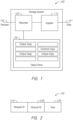
- FIG. 1 is a block diagram of a storage system 100. While certain specific features are illustrated, those of ordinary skill in the art will appreciate from the present disclosure that various other features have not been illustrated for the sake of brevity and so as not to obscure more pertinent aspects of the example implementations disclosed herein.
- the storage system 100 includes an ingester module 110 that receives data 101, a recorder module 120 that receives requests 102 to store the data 101 for a user, and an object store 130 that stores the data 101.
- the object store 130 includes a number of storage locations at which objects can be stored.
- the object store 130 can store, among other things, a unique copy of the data 101 for each of a number of requesting users and a common copy of the data 101 that is shared between a number of requesting users.
- Each of the modules 110, 120, 1 30 of the storage system can be implemented on the same or separate computing devices.
- the object store 130 can be a distributed object store including multiple computing devices networked over multiple locations.
- the storage system 100 is configured to store video data associated with multicast (e.g., broadcast) content and, thus, acts as a digital video recorder (DVR). As both the data 101 and the requests 102 can be received over a network, the storage system 100 can function as a cloud-based DVR.
- multicast e.g., broadcast
- DVR digital video recorder
- a user can use the storage system 100 to record a television program within the storage system and watch the television program at a time later than the broadcast time.
- the recorder module 120 receives a recording request 102 from a user indicating that the user desires to record a particular television program.
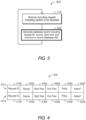
- the recording request 102 can include a recording request identifier (ID) 210, a channel ID 220, and temporal data 230 indicative of a time span of the recording.
- ID recording request identifier
- the recording request ID 210 (referred to as a "request ID”) can be a unique identifier that is different for each recording request.
- the request ID 210 can be a UUID (universally unique identifier).
- the request ID 210 includes a user ID or, at least, indicates a user identifier or user device (such as a set-top box).
- the channel ID 220 can be an identifier that indicates a broadcast channel or sub-channel (also referred to as profiles).
- a broadcast channel can include sub-channels with multiple versions of the same broadcast.
- the broadcast channel can include sub-channels (also referred to as channels) with video data at different bitrates or with different audio/subtitles.
- the channel ID 220 indicates a broadcast channel and the recording request 102 further includes data indicating the sub-channel or profile.
- the channel ID 220 indicates the sub-channel or profile.
- the temporal data 230 can indicate the time span of the recording in a variety of ways. In some implementations, the temporal data 230 indicates a start time and an end time of the recording. In some implementations, the temporal data 230 indicates a start time and a recording length of the recording. In some implementations, the temporal data 230 indicates one or more standard programming slots (e.g., 8:00 pm to 8:30 pm and 8:30 pm to 9:00 pm) and the recorder module 230 determines the time span of the recording based on the programming slot.
- standard programming slots e.g., 8:00 pm to 8:30 pm and 8:30 pm to 9:00 pm
- the recording module 120 instructs the ingester module 110 to receive (or retrieve) data 101 from the indicated channel (or sub-channel) during the time span and return the data 101 to the recorder module 120.
- the recorder module 120 stores the data 101 in the object store 130 for later access for the user according to a storage policy.
- the recorder module 120 can handle the multiple requests in a number of ways to improve efficiency of the storage system 100. For example, the recorder module 120 can receive a first recording request (having a first request ID, a channel ID, and temporal data) and a second recording request (having a second request ID, the same channel ID, and the same, or at least overlapping, temporal data).
- a first recording request having a first request ID, a channel ID, and temporal data
- a second recording request having a second request ID, the same channel ID, and the same, or at least overlapping, temporal data
- the recorder module 120 receives the data from the ingester module 110 and, for each recording request, instructs the object store 130 to store a unique copy of the data as a separate object in the object store 130.
- the recorder module 120 can submit a first PUT command to the object store 130 including the data and can further submit a second PUT command to the object store 130 including the second request ID and the data.
- the recorder module 120 can store metadata associating the first request ID with the object created by the first PUT command and associating the second request ID with the object created by the second PUT command.
- implementations may be inefficient for large numbers of recordings. Nevertheless, storage policy may dictate that such an implementation be employed for at least some recording requests.
- Such implementations include multiple PUT commands from the recorder module 120 increasing the overhead of the signaling.
- Such implementations also include the recorder module 120 pushing identical data to the object store 130 multiple times, inefficiently using network bandwidth and increasing the overhead of transport. Further, creation of a large number of objects can create a sizable amount of metadata to be managed by the recorder module 120.
- the recorder module 120 receives the data from the ingester module 110 and instructs the object store 130 to store a common copy of the data as a single object in the object store 130.
- the recorder module 120 can store metadata associating the first request ID with the object created by the PUT command and associating the second request ID with the same object.
- the recorder module 120 can, in some implementations (as described above) create a unique copy for each request.
- the recorder module can create a copy from the earliest start time to the latest end time. For example, if the first request indicated 7:59 pm to 8:30 pm and the second request indicated 8:00 pm to 8:35 pm, the recorder module 120 can store an object including the content between 7:59 pm and 8:35 pm. Further, the recorder module 120 can include bookmarks in the content that represent the requested subsections of each request.
- the data 101 received by recorder module 120 is video data broken into segments of approximately 2 seconds. In some exemplary implementations, the segments may be other lengths of time, e.g., between approximately 2 seconds and 10 seconds. In some exemplary implementations, the data 101 is received by the ingester module 110 as segments. In some exemplary implementations, the data 101 is converted by the ingester module 110 into segments before being sent to the recorder module 120.
- the recorder module 120 in response to receiving a recording request, creates a database record including the request ID, data indicative of the channel (or sub-channel or other source), data indicative of the start time and end time, and data indicative of a storage policy.
- the storage policy can signal directives such as common/unique copy storage per user, resiliency, and so forth.
- the storage policy can indicate whether a unique copy of the content is to be stored for the user or whether a common copy of the content to be stored can satisfy the recording request.
- the storage policy can be based on a number of factors, such as the location of the requestor of the recording request (e.g., the user), the source of the content, the nature of the content (e.g., educational or public domain), or rights to the content.
- the recorder module 120 determines whether there is at least one recording scheduled for the segment (e.g., whether the time of the segment is between the start time and end time of a database record indicating the source of the segment).
- the recorder module 120 will write the segment to the object store 130.
- the recorder module 120 stores a unique copy of the segment for each recording scheduled for the segment with a storage policy indicating storage of a unique copy. Further, the recorder module 120 stores a common copy of the segment if there is at least one recording scheduled for the segment with a storage policy indicating storage of a common copy.
- the recorded segments are written to the object store 130 using deterministic key names such that a particular segment can be retrieved by the channel ID, start time, and end time.
- the recorder module 120 can store a lookup table associating segment information (e.g., channel ID, start time, and end time) to an object identifier of the object store 130.
- the table can, instead or additionally, be stored in the object store 130.
- the recorder module 120 When the recorder module 120 receives a read request for a particular recording request (e.g., a read request indicating a request ID), the recorder module 120 reads the database to determine the channel ID, start time, and time for the recording request. The recorder module 120 determines a set of objects to retrieve from the object store 130 (either using the lookup table or heuristics based on the deterministic key names). The recorder module 120 reads the set of objects from the object store 130 and returns them in response to the read request.
- a read request for a particular recording request e.g., a read request indicating a request ID
- the recorder module 120 reads the database to determine the channel ID, start time, and time for the recording request.
- the recorder module 120 determines a set of objects to retrieve from the object store 130 (either using the lookup table or heuristics based on the deterministic key names).
- the recorder module 120 reads the set of objects from the object store 130 and returns
- the recorder module 120 when a recording deletion request indicating a request ID is received by the recorder module 120, the recorder module 120 removes the request ID from its database (or marks it deleted, invalid, or inactive). Thus, such a recording request (or record in the database) is not considered when determining whether or how to store a received segment. Further, the recorder system 120 can periodically delete stored segments that are not referenced by any active recording requests in the database.
- the recorder module 120 can receive a record modification request to modify the start time and end time of a recording request stored in the database. If the segments indicated by the modified start time and end times of the record modification request are stored in the object store, the recorder module 120 indicates that the request was successful and modifies the record of the database to include the modified start time and end time. Thus, a user can modify the timespan of a recording even after the start time and/or the end time of the recording has passed.
- Figure 3 is a flowchart representation of a method of handling a recording request in accordance with some exemplary implementations.
- the method 300 is performed by a recorder module, such as the recorder module 120 of Figure 1 .
- the method 300 is performed by processing logic, including hardware, firmware, software, or a combination thereof.
- the method 300 is performed by a processor executing code stored in a non- transitory computer-readable medium (e.g., a memory).
- the method 300 includes receiving a recording request and generating a database record corresponding to the recording request.
- the method 300 begins, in block 310, with the recorder module receiving a recording request indicating content to be recorded.
- the recording request includes data indicative of a source (e.g., a channel or sub-channel) and temporal data indicative of a time span of the recording.
- a source e.g., a channel or sub-channel
- temporal data can indicate the time span of the recording in a number of ways.
- the recorder module 320 in response to receiving the recording request, the recorder module 320 generates a database record in a recordings database including a request ID, a source ID, data indicative of a start time, data indicative of an end time, and data indicative of a storage policy.
- the data indicative of the start time and end time can be stored as temporal data in a variety of ways.
- the recording request includes the request ID.
- the recorder module assigns the request ID to the recording request and, optionally, returns the request ID to the requestor.
- generating the database record includes determining a storage policy for the recording request.
- the storage policy can indicate whether a unique copy of the content is to be stored for the user or whether a common copy of the content to be stored can satisfy the recording request.
- the storage policy can be based on a number of factors, such as the location of the requestor of the recording request (e.g., the user), the source of the content, the nature of the content (e.g., educational or public domain), or rights to the content.
- the method 300 returns to block 310 where additional recording requests can be received by the recorder module.
- Figure 4 is a block diagram of an example recordings database in accordance with some implementations.
- the recordings database 400 includes a plurality of records 401a-401b. Although only two records 401a-401b are illustrated in Figure 4 , it is to be appreciated that the recordings database 400 can include any number of records.
- Each record 401a-401b includes a request ID field 410a-410b that stores a request ID, a source field 420a-420b that stores data indicative of a source (e.g., a channel ID) of a recording, a start time field 430a-430b that stores data indicative of a start time of the recording, an end time field 440a-440b that stores data indicative of an end time of the recording, a policy field 450a-450b that stores data indicative of a storage policy and an active field 460a-460b that stores a flag indicative of whether or not the record is active.
- a request ID field 410a-410b that stores a request ID
- a source field 420a-420b that stores data indicative of a source (e.g., a channel ID) of a recording
- a start time field 430a-430b that stores data indicative of a start time of the recording
- an end time field 440a-440b that stores data indicative of an end time of the recording
- Figure 5 is a flowchart representation of a method of handling a received segment in accordance with some exemplary implementations.
- the method 500 is performed by a recorder module, such as the recorder module 120 of Figure 1 .
- the method 500 is performed by processing logic, including hardware, firmware, software, or a combination thereof.
- the method 500 is performed by a processor executing code stored in a non- transitory computer-readable medium (e.g., a memory).
- the method 500 includes receiving a segment and, if the segment is referenced by an active record, storing the segment.
- the method 500 begins, in block 510, with the recorder module receiving a segment of content from a source.
- the recorder module receives the segment from an ingester module which receives (or retrieves) the segment from the source.
- the recorder module determines whether the segment is referenced by any active record in a recordings database (e.g., the recordings database 400 of Figure 4 ).
- the segment can include metadata indicative the source of the segment and a time of the segment. If the source metadata of the data matches the source field 420a- 420b of an active record and the time of the segments falls within the start time and end time of the record, the segment is referenced by an active record and the method 500 continues to block 530. If not, the method 500 returns to block 510 where additional segments are received from the source (and/or other sources).
- the recorder module stores the segment.
- the recorder module stores the segment in an object store.
- storing the segment includes storing the segment in the object store using a deterministic key name based on the source of the segment and the time of the segment (e.g., using the metadata).
- storing the segment includes storing the source of the segment and the time of the segment (e.g., the metadata) in a lookup table in association with an object ID of the object stored on the object store containing the segment.
- the recorder module stores a unique copy of the segment for each active record that references the segment and has a storage policy indicating storage of a unique copy. In some exemplary implementations, the recorder module stores a common copy of the segment if any active record references the segment and has a storage policy indicating storage of a common copy.
- the method 500 returns to block 510 where additional segments can be received by the recorder module from the source and/or other sources.
- Figure 6 is a flowchart representation of a method of handling a recording deletion request in accordance with some implementations.
- the method 600 is performed by a recorder module, such as the recorder module 120 of Figure 1 .
- the method 600 is performed by processing logic, including hardware, firmware, software, or a combination thereof.
- the method 600 is performed by a processor executing code stored in a non- transitory computer-readable medium (e.g., a memory).
- the method 600 includes receiving a recording deletion request and marking a corresponding record inactive.
- the method 600 optionally further includes deleting segments not referenced by active records.
- the method 600 begins, in block 610, with the recorder module receiving a recording deletion request.
- the recording deletion request can include a request ID of a record of a recording database stored by the recorder module (e.g., the recording database 400 of Figure 4 ).
- the recorder module marks as inactive the record in the recording database indicated by the recording deletion request.
- the recorder module changes a flag in an active field (e.g., the active field 460a-460b of Figure 4 ) to indicate that the record is inactive.
- the recorder module determines whether to deduplicate the stored segments. In some exemplary implementations, the recorder module determines to deduplicate the stored segments in response to marking a record inactive. In some exemplary implementations, the recorder module determines to deduplicate stored segments in response to marking a threshold number of records inactive. For example, in some exemplary implementations, every tenth recording deletion request triggers deduplication. In some exemplary implementations, the recorder module determines to deduplicate stored segments periodically. For example, in some exemplary implementations, stored segments are deduplicated daily.
- the recording module determines that a day has passed since the last deduplication, the recording module determines to deduplicate the stored segments and the method 600 proceeds to block 640. If the recording module determines not to deduplicate the stored segments, the method 600 returns to block 610 where the recorder module can receive additional recording deletion requests.
- the recorder module deletes segments not referenced by active records.
- the recorder module stores a table of all segments that are stored in the object store.
- the recorder module request a list from the object store of the segments that are stored in the object store.
- deleting segments includes sending a command to the object store to delete the segments.
- the recorder module sends the recordings database to the object store and the object store deletes stored segments not referenced by any active record.
- the recorder module sends the recordings database to the object store with inactive records removed or sends the recordings database in an otherwise compressed format.
- the method 600 returns to block 610 where the recorder module can receive additional recording deletion requests.
- Figure 7 is a flowchart representation of a method of handling a record modification request in accordance with some implementations.
- the method 700 is performed by a recorder module, such as the recorder module 120 of Figure 1 .
- the method 700 is performed by processing logic, including hardware, firmware, software, or a combination thereof.
- the method 700 is performed by a processor executing code stored in a non- transitory computer-readable medium (e.g., a memory).
- the method 700 includes receiving a record modification request and, if the request can be granted, modifying a record corresponding to the request.
- the method 700 begins, in block 710, with the recorder module receiving a record modification request.
- the record modification request can include a request ID of a record of a recording database stored by the recorder module (e.g., the recording database 400 of Figure 4 ).
- the record modification request can further include modified temporal data indicating a modified timespan for the recording.
- the record modification request can include a modified start time, a modified end time, or both.
- the recorder module determines whether the segments indicated by the modified temporal data are available (e.g., are recorded or are recordable due to the time of the segment being in the future). If the recorder module determines that the segments are not available, the method 700 continues to block 730 where the recorder module indicates that the request is denied before returning to block 710 where the recorder module can receive additional record modification requests.
- the method 700 continues to block 740 where the recorder module indicates that the request is granted before continuing to block 750 where the recorder module modifying the record according to the request.
- the recorder module locates a record in a recordings database having the request ID of the record modification request stored in a request ID field. The recorder module then modifies the located record by replacing the data of the start time field and end time field with the modified temporal data.
- the method 700 returns to block 710 where the recorder module can receive additional record modification requests.
- the recorder module can determine that some, but not all, of the segments indicated by the modified temporal data are available. In response, the recorder module can indicate that the request is partially granted and modify the corresponding record to reference the segments indicated by the modified temporal data that are available.
- Figure 8 is a flowchart representation of a method of handling a read request in accordance with some exemplary implementations.
- the method 800 is performed by a recorder module, such as the recorder module 120 of Figure 1 .
- the method 800 is performed by processing logic, including hardware, firmware, software, or a combination thereof.
- the method 800 is performed by a processor executing code stored in a non-transitory computer-readable medium (e.g., a memory).
- the method 800 includes receiving a read request indicating a recording and returning one or more segments associated with the recording.
- the method 800 begins, in block 810, with the recorder module receiving a read request indicating a recording.
- the recorder module in response to receiving the read request, returns one or more segments associated with the recording.
- the method 800 returns to block 810 where additional read requests can be received by the recorder module.
- the read request includes a request ID and the recording module locates a record in a recordings database having the request ID of the read request stored in a request ID field.
- the recorder module then retrieves (from the object store) segments referenced by the record (or at least those that have been recorded) and returns (to the requestor) the retrieved segments.
- Figure 9 is a block diagram of a computing device 900 in accordance with some exemplary implementations.
- the computing device 900 corresponds to the recorder module 120 of Figure 1 and performs one or more of the functionalities described above with respect to the recorder module 120. While certain specific features are illustrated, those skilled in the art will appreciate from the present disclosure that various other features have not been illustrated for the sake of brevity, and so as not to obscure more pertinent aspects of the embodiments disclosed herein.
- the computing device 900 includes one or more processing units (CPU's) 902 (e.g., processors), one or more output interfaces 903 (e.g., a network interface), a memory 906, a programming interface 908, and one or more communication buses 904 for interconnecting these and various other components.
- CPU's processing units
- output interfaces 903 e.g., a network interface
- memory 906 e.g., a flash memory
- programming interface 908 e.g., a programming interface
- communication buses 904 for interconnecting these and various other components.
- the communication buses 904 include circuitry that interconnects and controls communications between system components.
- the memory 906 includes high-speed random access memory, such as DRAM, SRAM, DDR RAM or other random access solid state memory devices; and, in some exemplary implementations, include non-volatile memory, such as one or more magnetic disk storage devices, optical disk storage devices, flash memory devices, or other non-volatile solid state storage devices.
- the memory 906 optionally includes one or more storage devices remotely located from the CPU(s) 902.
- the memory 906 comprises a non-transitory computer readable storage medium.
- the memory 906 or the non-transitory computer readable storage medium of the memory 906 stores the following programs, modules and data structures, or a subset thereof including an optional operating system 930 and a recording module 940.
- one or more instructions are included in a combination of logic and non- transitory memory.
- the operating system 930 includes procedures for handling various basic system services and for performing hardware dependent tasks.
- the recording module 940 is configured to handle requests relating to recording segments of video data. To that end, the recording module 940 includes an interface module 941 and a database module 942.
- the interface module 941 is configured to receive a segment of content. To that end, the interface module 941 includes a set of instructions 941a and heuristics and metadata 941b. In some implementations, the database module 942 is configured to determine that the segment is referenced by at least one active record of a recordings database. To that end, the database module 942 includes a set of instructions 942a and heuristics and metadata 942b. In some implementations, the interface module 941 is configured to, responsive to the determination, store the segment (e.g., in an object store).
- the recording module 940, the interface module 941, and the database module 942 are illustrated as residing on a single computing device 900, it should be understood that in other embodiments, any combination of the recording module 940, the interface module 941, and the database module 942 can reside in separate computing devices in various implementations. For example, in some exemplary implementations each of the recording module 940, the interface module 941, and the database module 942 reside on a separate computing device.
- Figure 9 is intended more as functional description of the various features which are present in a particular implementation as opposed to a structural schematic of the embodiments described herein.
- items shown separately could be combined and some items could be separated.
- some functional modules shown separately in Figure 9 could be implemented in a single module and the various functions of single functional blocks could be implemented by one or more functional blocks in various embodiments.
- the actual number of modules and the division of particular functions and how features are allocated among them will vary from one embodiment to another, and may depend in part on the particular combination of hardware, software and/or firmware chosen for a particular embodiment.
- the order of the steps and/or phases can be rearranged and certain steps and/or phases may be omitted entirely.
- the methods described herein are to be understood to be open-ended, such that additional steps and/or phases to those shown and described herein can also be performed.
- the computer system may, in some cases, include multiple distinct computers or computing devices (e.g., physical servers, workstations, storage arrays, etc.) that communicate and interoperate over a network to perform the described functions.
- Each such computing device typically includes a processor (or multiple processors) that executes program instructions or modules stored in a memory or other non-transitory computer-readable storage medium or device.
- the various functions disclosed herein may be embodied in such program instructions, although some or all of the disclosed functions may alternatively be implemented in application-specific circuitry (e.g., ASICs or FPGAs) of the computer system. Where the computer system includes multiple computing devices, these devices may, but need not, be co-located.
- the results of the disclosed methods and tasks may be persistently stored by transforming physical storage devices, such as solid state memory chips and/or magnetic disks, into a different state.
Landscapes
- Engineering & Computer Science (AREA)
- Multimedia (AREA)
- Signal Processing (AREA)
- Databases & Information Systems (AREA)
- Theoretical Computer Science (AREA)
- General Engineering & Computer Science (AREA)
- Physics & Mathematics (AREA)
- General Physics & Mathematics (AREA)
- Data Mining & Analysis (AREA)
- Computer Security & Cryptography (AREA)
- Software Systems (AREA)
- Information Retrieval, Db Structures And Fs Structures Therefor (AREA)
- Television Signal Processing For Recording (AREA)
- Human Computer Interaction (AREA)
- Signal Processing For Digital Recording And Reproducing (AREA)
Description
- The present disclosure relates generally to storage systems, and in particular, to systems, methods and apparatuses enabling storage of video content data for multiple users.
- The ongoing development, maintenance and expansion of storage systems often involves providing storage of data for multiple users. As the number of users increases, the amount of signaling, bandwidth used, and metadata stored increases, degrading the efficiency of the storage system.
-
US 2013/142499 discloses a remote storage digital video recorder (RS-DVR) system that includes a network interface to communicate data between the RS-DVR system and a subscriber system via a network, a file system module coupled to the network interface, an ingest agent coupled to the file system module to receive encoded media segments that represent media content files encoded at a plurality of different bitrates; and a storage architecture coupled to the file system to store the encoded media segments, resulting in stored media segments.US 2014/165116 discloses a RS-DVR system that receives a media content file that is stored in a storage architecture of the RS-DVR system. The same stored media content file is assigned to multiple subscribers such that each of the multiple subscribers shares a common identifier that references a single common physical copy of the same stored media content file in the storage architecture of the RS-DVR system. - So that the present disclosure can be understood by those of ordinary skill in the art, a more detailed description may be had by reference to aspects of some illustrative implementations, some of which are shown in the accompanying drawings.
-
Figure 1 is a block diagram of a storage system in accordance with some exemplary implementations. -
Figure 2 is a block diagram of a recording request in accordance with some exemplary implementations. -
Figure 3 is a flowchart representation of a method of handling a recording request in accordance with some exemplary implementations. -
Figure 4 is a block diagram of an example recordings database in accordance with some exemplary implementations. -
Figure 5 is a flowchart representation of a method of handling a received segment in accordance with some exemplary implementations. -
Figure 6 is a flowchart representation of a method of handling a recording deletion request in accordance with some exemplary implementations. -
Figure 7 is a flowchart representation of a method of handling a record modification request in accordance with some exemplary implementations. -
Figure 8 is a flowchart representation of a method of handling a recording request in accordance with some exemplary implementations. -
Figure 9 is a block diagram of a computing device in accordance with some exemplary implementations. - In accordance with common practice various features shown in the drawings may not be drawn to scale, as the dimensions of various features may be arbitrarily expanded or reduced for clarity. Moreover, the drawings may not depict all of the aspects and/or variants of a given system, method or apparatus admitted by the specification. Finally, like reference numerals are used to denote like features throughout the figures.
- Numerous details are described herein in order to provide a thorough understanding of the illustrative implementations shown in the accompanying drawings. However, the accompanying drawings merely show some example aspects of the present disclosure and are therefore not to be considered limiting. Those of ordinary skill in the art will appreciate from the present disclosure that other effective aspects and/or variants do not include all of the specific details of the example implementations described herein. While pertinent features are shown and described, those of ordinary skill in the art will appreciate from the present disclosure that various other features, including well-known systems, methods, components, devices, and circuits, have not been illustrated or described in exhaustive detail for the sake of brevity and so as not to obscure more pertinent aspects of the example implementations disclosed herein.
- Various exemplary implementations disclosed herein include apparatuses, systems, and methods for efficiently storing data for multiple users. For example, in some exemplary implementations, a method includes a method includes receiving a segment of content, determining that the segment is referenced by at least one active record of a recordings database, and, responsive to the determination, storing the segment.
- When streaming media content for consumption by multiple users is received by a storage system, policies may indicate that a single common copy be stored for consumption by any of the users (or at least a subset of the multiple users) or that a unique copy be stored for consumption by each individual user (or at least the users not in the subset). Such policies may be based on legal requirements associated with the content, limitations of the storage system (e.g., available storage space), or other factors.
- The policies may vary by the location of the multiple users and the content. For example, in order to fit within fair use of copyright, a policy can dictate that a scripted drama television program be stored as a unique copy for each individual user. As another example, a policy can dictate that an educational program can be stored as a single common copy for consumption by any user. As another example, a policy can dictate that any programs from a public broadcasting channel can be stored as a single common copy for consumption by any user. As another example, a policy can dictate that particular programs or channels for which rights have been negotiated can be stored as a single common copy for consumption by any user.
- In some embodiments, a policy can indicate that a common copy be stored for consumption by any of a subset of the users (e.g., users in a first jurisdiction) and that a unique copy be stored for consumption for each individual user not within the subset. For example, a policy can dictate that a broadcast of a college sporting event can be stored as a single common copy for consumption by any user within the state of the college, but that unique copies of the sporting event be stored for consumption by individual users not in the state.
- Storing a unique copy of streaming media content for each user presents a number of challenges, including the storage space used in storing multiple copies of the same data. Accordingly, it is desirable to store data for multiple users using a single common copy if possible (e.g., allowed by policy). On many cloud-based DVR systems, up to half of all recording requests can be for non-standard times (e.g., not limited to the changing of the hour or half-hour). Further, a storage system can receive recording requests for media content with a wide degree of variance in the start times and end times. For example, two users requesting recording of a show nominally broadcast between 8:00 pm and 9:00 pm can request recordings from 8:00 pm to 9:00 pm and from 7:57 pm to 9:03 pm, respectively.
- Various exemplary implementations described include a storage system that can simultaneously store content under different storage policies, such common copy storage or unique copy storage, and can map the wide variety of schedule requests to the underlying recordings such that all users, including users sharing the same content, have their own personalized view of the content based on their schedule request.
-
Figure 1 is a block diagram of astorage system 100. While certain specific features are illustrated, those of ordinary skill in the art will appreciate from the present disclosure that various other features have not been illustrated for the sake of brevity and so as not to obscure more pertinent aspects of the example implementations disclosed herein. To that end, thestorage system 100 includes aningester module 110 that receivesdata 101, arecorder module 120 that receivesrequests 102 to store thedata 101 for a user, and anobject store 130 that stores thedata 101. Theobject store 130 includes a number of storage locations at which objects can be stored. Theobject store 130 can store, among other things, a unique copy of thedata 101 for each of a number of requesting users and a common copy of thedata 101 that is shared between a number of requesting users. - Each of the
modules object store 130 can be a distributed object store including multiple computing devices networked over multiple locations. - In some exemplary implementations, the
storage system 100 is configured to store video data associated with multicast (e.g., broadcast) content and, thus, acts as a digital video recorder (DVR). As both thedata 101 and therequests 102 can be received over a network, thestorage system 100 can function as a cloud-based DVR. - As an example, a user can use the
storage system 100 to record a television program within the storage system and watch the television program at a time later than the broadcast time. To that end, therecorder module 120 receives arecording request 102 from a user indicating that the user desires to record a particular television program. As shown inFigure 2 , therecording request 102 can include a recording request identifier (ID) 210, achannel ID 220, andtemporal data 230 indicative of a time span of the recording. - The recording request ID 210 (referred to as a "request ID") can be a unique identifier that is different for each recording request. For example, the
request ID 210 can be a UUID (universally unique identifier). In some implementations, therequest ID 210 includes a user ID or, at least, indicates a user identifier or user device (such as a set-top box). - The
channel ID 220 can be an identifier that indicates a broadcast channel or sub-channel (also referred to as profiles). In some implementations, a broadcast channel can include sub-channels with multiple versions of the same broadcast. For example, the broadcast channel can include sub-channels (also referred to as channels) with video data at different bitrates or with different audio/subtitles. Thus, in some implementations, thechannel ID 220 indicates a broadcast channel and therecording request 102 further includes data indicating the sub-channel or profile. In some implementations, thechannel ID 220 indicates the sub-channel or profile. - In various exemplary implementations, the
temporal data 230 can indicate the time span of the recording in a variety of ways. In some implementations, thetemporal data 230 indicates a start time and an end time of the recording. In some implementations, thetemporal data 230 indicates a start time and a recording length of the recording. In some implementations, thetemporal data 230 indicates one or more standard programming slots (e.g., 8:00 pm to 8:30 pm and 8:30 pm to 9:00 pm) and therecorder module 230 determines the time span of the recording based on the programming slot. - In response to receiving the
recording request 102, therecording module 120 instructs theingester module 110 to receive (or retrieve)data 101 from the indicated channel (or sub-channel) during the time span and return thedata 101 to therecorder module 120. When received from theingester module 110, therecorder module 120 stores thedata 101 in theobject store 130 for later access for the user according to a storage policy. - When multiple users submit requests to store the same data (e.g., record the same content), the
recorder module 120 can handle the multiple requests in a number of ways to improve efficiency of thestorage system 100. For example, therecorder module 120 can receive a first recording request (having a first request ID, a channel ID, and temporal data) and a second recording request (having a second request ID, the same channel ID, and the same, or at least overlapping, temporal data). - In some exemplary implementations, the
recorder module 120 receives the data from theingester module 110 and, for each recording request, instructs theobject store 130 to store a unique copy of the data as a separate object in theobject store 130. For example, therecorder module 120 can submit a first PUT command to theobject store 130 including the data and can further submit a second PUT command to theobject store 130 including the second request ID and the data. Therecorder module 120 can store metadata associating the first request ID with the object created by the first PUT command and associating the second request ID with the object created by the second PUT command. - However, such implementations may be inefficient for large numbers of recordings. Nevertheless, storage policy may dictate that such an implementation be employed for at least some recording requests. Such implementations include multiple PUT commands from the
recorder module 120 increasing the overhead of the signaling. Such implementations also include therecorder module 120 pushing identical data to theobject store 130 multiple times, inefficiently using network bandwidth and increasing the overhead of transport. Further, creation of a large number of objects can create a sizable amount of metadata to be managed by therecorder module 120. - Thus, in some exemplary implementations, the
recorder module 120 receives the data from theingester module 110 and instructs theobject store 130 to store a common copy of the data as a single object in theobject store 130. Therecorder module 120 can store metadata associating the first request ID with the object created by the PUT command and associating the second request ID with the same object. - When the two requests reference overlapping times, but not the same time, the
recorder module 120 can, in some implementations (as described above) create a unique copy for each request. In some implementations, the recorder module can create a copy from the earliest start time to the latest end time. For example, if the first request indicated 7:59 pm to 8:30 pm and the second request indicated 8:00 pm to 8:35 pm, therecorder module 120 can store an object including the content between 7:59 pm and 8:35 pm. Further, therecorder module 120 can include bookmarks in the content that represent the requested subsections of each request. - In some exemplary implementations, the
data 101 received byrecorder module 120 is video data broken into segments of approximately 2 seconds. In some exemplary implementations, the segments may be other lengths of time, e.g., between approximately 2 seconds and 10 seconds. In some exemplary implementations, thedata 101 is received by theingester module 110 as segments. In some exemplary implementations, thedata 101 is converted by theingester module 110 into segments before being sent to therecorder module 120. - Thus, in some exemplary implementations, in response to receiving a recording request, the
recorder module 120 creates a database record including the request ID, data indicative of the channel (or sub-channel or other source), data indicative of the start time and end time, and data indicative of a storage policy. The storage policy can signal directives such as common/unique copy storage per user, resiliency, and so forth. In particular, the storage policy can indicate whether a unique copy of the content is to be stored for the user or whether a common copy of the content to be stored can satisfy the recording request. The storage policy can be based on a number of factors, such as the location of the requestor of the recording request (e.g., the user), the source of the content, the nature of the content (e.g., educational or public domain), or rights to the content. - In response to receiving a segment from the
ingester module 110, therecorder module 120 determines whether there is at least one recording scheduled for the segment (e.g., whether the time of the segment is between the start time and end time of a database record indicating the source of the segment). - If so, the
recorder module 120 will write the segment to theobject store 130. In some implementations, therecorder module 120 stores a unique copy of the segment for each recording scheduled for the segment with a storage policy indicating storage of a unique copy. Further, therecorder module 120 stores a common copy of the segment if there is at least one recording scheduled for the segment with a storage policy indicating storage of a common copy. - In some exemplary implementations, the recorded segments are written to the
object store 130 using deterministic key names such that a particular segment can be retrieved by the channel ID, start time, and end time. Alternatively, in some exemplary implementations, therecorder module 120 can store a lookup table associating segment information (e.g., channel ID, start time, and end time) to an object identifier of theobject store 130. In some exemplary implementations, the table can, instead or additionally, be stored in theobject store 130. - When the
recorder module 120 receives a read request for a particular recording request (e.g., a read request indicating a request ID), therecorder module 120 reads the database to determine the channel ID, start time, and time for the recording request. Therecorder module 120 determines a set of objects to retrieve from the object store 130 (either using the lookup table or heuristics based on the deterministic key names). Therecorder module 120 reads the set of objects from theobject store 130 and returns them in response to the read request. - In some exemplary implementations, when a recording deletion request indicating a request ID is received by the
recorder module 120, therecorder module 120 removes the request ID from its database (or marks it deleted, invalid, or inactive). Thus, such a recording request (or record in the database) is not considered when determining whether or how to store a received segment. Further, therecorder system 120 can periodically delete stored segments that are not referenced by any active recording requests in the database. - In some exemplary implementations, the
recorder module 120 can receive a record modification request to modify the start time and end time of a recording request stored in the database. If the segments indicated by the modified start time and end times of the record modification request are stored in the object store, therecorder module 120 indicates that the request was successful and modifies the record of the database to include the modified start time and end time. Thus, a user can modify the timespan of a recording even after the start time and/or the end time of the recording has passed. -
Figure 3 is a flowchart representation of a method of handling a recording request in accordance with some exemplary implementations. In some exemplary implementations (and as detailed below as an example), themethod 300 is performed by a recorder module, such as therecorder module 120 ofFigure 1 . In some exemplary implementations, themethod 300 is performed by processing logic, including hardware, firmware, software, or a combination thereof. In some exemplary implementations, themethod 300 is performed by a processor executing code stored in a non- transitory computer-readable medium (e.g., a memory). Briefly, themethod 300 includes receiving a recording request and generating a database record corresponding to the recording request. - The
method 300 begins, inblock 310, with the recorder module receiving a recording request indicating content to be recorded. In some exemplary implementations, the recording request includes data indicative of a source (e.g., a channel or sub-channel) and temporal data indicative of a time span of the recording. As noted above, the temporal data can indicate the time span of the recording in a number of ways. - At
block 320, in response to receiving the recording request, therecorder module 320 generates a database record in a recordings database including a request ID, a source ID, data indicative of a start time, data indicative of an end time, and data indicative of a storage policy. In various exemplary implementations, the data indicative of the start time and end time can be stored as temporal data in a variety of ways. In some exemplary implementations, the recording request includes the request ID. In some implementations, the recorder module assigns the request ID to the recording request and, optionally, returns the request ID to the requestor. - In some embodiments, generating the database record includes determining a storage policy for the recording request. In particular, the storage policy can indicate whether a unique copy of the content is to be stored for the user or whether a common copy of the content to be stored can satisfy the recording request. The storage policy can be based on a number of factors, such as the location of the requestor of the recording request (e.g., the user), the source of the content, the nature of the content (e.g., educational or public domain), or rights to the content.
- Following
block 320, themethod 300 returns to block 310 where additional recording requests can be received by the recorder module. -
Figure 4 is a block diagram of an example recordings database in accordance with some implementations. As shown inFigure 4 , therecordings database 400 includes a plurality of records 401a-401b. Although only two records 401a-401b are illustrated inFigure 4 , it is to be appreciated that therecordings database 400 can include any number of records. Each record 401a-401b includes arequest ID field 410a-410b that stores a request ID, a source field 420a-420b that stores data indicative of a source (e.g., a channel ID) of a recording, astart time field 430a-430b that stores data indicative of a start time of the recording, an end time field 440a-440b that stores data indicative of an end time of the recording, apolicy field 450a-450b that stores data indicative of a storage policy and an active field 460a-460b that stores a flag indicative of whether or not the record is active. -
Figure 5 is a flowchart representation of a method of handling a received segment in accordance with some exemplary implementations. In some exemplary implementations (and as detailed below as an example), themethod 500 is performed by a recorder module, such as therecorder module 120 ofFigure 1 . In some exemplary implementations, themethod 500 is performed by processing logic, including hardware, firmware, software, or a combination thereof. In some exemplary implementations, themethod 500 is performed by a processor executing code stored in a non- transitory computer-readable medium (e.g., a memory). Briefly, themethod 500 includes receiving a segment and, if the segment is referenced by an active record, storing the segment. - The
method 500 begins, inblock 510, with the recorder module receiving a segment of content from a source. In some exemplary implementations, the recorder module receives the segment from an ingester module which receives (or retrieves) the segment from the source. - At
block 520, the recorder module determines whether the segment is referenced by any active record in a recordings database (e.g., therecordings database 400 ofFigure 4 ). In particular, the segment can include metadata indicative the source of the segment and a time of the segment. If the source metadata of the data matches the source field 420a- 420b of an active record and the time of the segments falls within the start time and end time of the record, the segment is referenced by an active record and themethod 500 continues to block 530. If not, themethod 500 returns to block 510 where additional segments are received from the source (and/or other sources). - At
block 530, the recorder module stores the segment. In some exemplary implementations, the recorder module stores the segment in an object store. In some exemplary implementations, storing the segment includes storing the segment in the object store using a deterministic key name based on the source of the segment and the time of the segment (e.g., using the metadata). In some exemplary implementations, storing the segment includes storing the source of the segment and the time of the segment (e.g., the metadata) in a lookup table in association with an object ID of the object stored on the object store containing the segment. - In some exemplary implementations, the recorder module stores a unique copy of the segment for each active record that references the segment and has a storage policy indicating storage of a unique copy. In some exemplary implementations, the recorder module stores a common copy of the segment if any active record references the segment and has a storage policy indicating storage of a common copy.
- Following
block 530, themethod 500 returns to block 510 where additional segments can be received by the recorder module from the source and/or other sources. -
Figure 6 is a flowchart representation of a method of handling a recording deletion request in accordance with some implementations. In some exemplary implementations (and as detailed below as an example), themethod 600 is performed by a recorder module, such as therecorder module 120 ofFigure 1 . In some exemplary implementations, themethod 600 is performed by processing logic, including hardware, firmware, software, or a combination thereof. In some exemplary implementations, themethod 600 is performed by a processor executing code stored in a non- transitory computer-readable medium (e.g., a memory). Briefly, themethod 600 includes receiving a recording deletion request and marking a corresponding record inactive. Themethod 600 optionally further includes deleting segments not referenced by active records. - The
method 600 begins, inblock 610, with the recorder module receiving a recording deletion request. The recording deletion request can include a request ID of a record of a recording database stored by the recorder module (e.g., therecording database 400 ofFigure 4 ). - At
block 620, the recorder module marks as inactive the record in the recording database indicated by the recording deletion request. In some implementations, the recorder module changes a flag in an active field (e.g., the active field 460a-460b ofFigure 4 ) to indicate that the record is inactive. - At
block 630, the recorder module determines whether to deduplicate the stored segments. In some exemplary implementations, the recorder module determines to deduplicate the stored segments in response to marking a record inactive. In some exemplary implementations, the recorder module determines to deduplicate stored segments in response to marking a threshold number of records inactive. For example, in some exemplary implementations, every tenth recording deletion request triggers deduplication. In some exemplary implementations, the recorder module determines to deduplicate stored segments periodically. For example, in some exemplary implementations, stored segments are deduplicated daily. Thus, if atblock 630, the recording module determines that a day has passed since the last deduplication, the recording module determines to deduplicate the stored segments and themethod 600 proceeds to block 640. If the recording module determines not to deduplicate the stored segments, themethod 600 returns to block 610 where the recorder module can receive additional recording deletion requests. - At block 640, the recorder module deletes segments not referenced by active records. In some exemplary implementations, the recorder module stores a table of all segments that are stored in the object store. In some exemplary implementations, the recorder module request a list from the object store of the segments that are stored in the object store. In some exemplary implementations, deleting segments includes sending a command to the object store to delete the segments. In some exemplary implementations, the recorder module sends the recordings database to the object store and the object store deletes stored segments not referenced by any active record. In some exemplary implementations, the recorder module sends the recordings database to the object store with inactive records removed or sends the recordings database in an otherwise compressed format.
- Following block 640, the
method 600 returns to block 610 where the recorder module can receive additional recording deletion requests. -
Figure 7 is a flowchart representation of a method of handling a record modification request in accordance with some implementations. In some exemplary implementations (and as detailed below as an example), themethod 700 is performed by a recorder module, such as therecorder module 120 ofFigure 1 . In some exemplary implementations, themethod 700 is performed by processing logic, including hardware, firmware, software, or a combination thereof. In some exemplary implementations, themethod 700 is performed by a processor executing code stored in a non- transitory computer-readable medium (e.g., a memory). Briefly, themethod 700 includes receiving a record modification request and, if the request can be granted, modifying a record corresponding to the request. - The
method 700 begins, inblock 710, with the recorder module receiving a record modification request. The record modification request can include a request ID of a record of a recording database stored by the recorder module (e.g., therecording database 400 ofFigure 4 ). The record modification request can further include modified temporal data indicating a modified timespan for the recording. For example, the record modification request can include a modified start time, a modified end time, or both. - At
block 720, the recorder module determines whether the segments indicated by the modified temporal data are available (e.g., are recorded or are recordable due to the time of the segment being in the future). If the recorder module determines that the segments are not available, themethod 700 continues to block 730 where the recorder module indicates that the request is denied before returning to block 710 where the recorder module can receive additional record modification requests. - If the recorder module determines that the segments are available, the
method 700 continues to block 740 where the recorder module indicates that the request is granted before continuing to block 750 where the recorder module modifying the record according to the request. In some exemplary implementations, the recorder module locates a record in a recordings database having the request ID of the record modification request stored in a request ID field. The recorder module then modifies the located record by replacing the data of the start time field and end time field with the modified temporal data. - Following
block 750, themethod 700 returns to block 710 where the recorder module can receive additional record modification requests. - In some exemplary implementations, at
block 720, the recorder module can determine that some, but not all, of the segments indicated by the modified temporal data are available. In response, the recorder module can indicate that the request is partially granted and modify the corresponding record to reference the segments indicated by the modified temporal data that are available. -
Figure 8 is a flowchart representation of a method of handling a read request in accordance with some exemplary implementations. In some exemplary implementations (and as detailed below as an example), themethod 800 is performed by a recorder module, such as therecorder module 120 ofFigure 1 . In some exemplary implementations, themethod 800 is performed by processing logic, including hardware, firmware, software, or a combination thereof. In some exemplary implementations, themethod 800 is performed by a processor executing code stored in a non-transitory computer-readable medium (e.g., a memory). Briefly, themethod 800 includes receiving a read request indicating a recording and returning one or more segments associated with the recording. - The
method 800 begins, inblock 810, with the recorder module receiving a read request indicating a recording. Atblock 820, in response to receiving the read request, the recorder module returns one or more segments associated with the recording. Followingblock 820, themethod 800 returns to block 810 where additional read requests can be received by the recorder module. - In some exemplary implementations, the read request includes a request ID and the recording module locates a record in a recordings database having the request ID of the read request stored in a request ID field. The recorder module then retrieves (from the object store) segments referenced by the record (or at least those that have been recorded) and returns (to the requestor) the retrieved segments.
-
Figure 9 is a block diagram of acomputing device 900 in accordance with some exemplary implementations. In some exemplary implementations, thecomputing device 900 corresponds to therecorder module 120 ofFigure 1 and performs one or more of the functionalities described above with respect to therecorder module 120. While certain specific features are illustrated, those skilled in the art will appreciate from the present disclosure that various other features have not been illustrated for the sake of brevity, and so as not to obscure more pertinent aspects of the embodiments disclosed herein. To that end, as a non-limiting example, in some embodiments thecomputing device 900 includes one or more processing units (CPU's) 902 (e.g., processors), one or more output interfaces 903 (e.g., a network interface), amemory 906, aprogramming interface 908, and one ormore communication buses 904 for interconnecting these and various other components. - In some exemplary implementations, the
communication buses 904 include circuitry that interconnects and controls communications between system components. Thememory 906 includes high-speed random access memory, such as DRAM, SRAM, DDR RAM or other random access solid state memory devices; and, in some exemplary implementations, include non-volatile memory, such as one or more magnetic disk storage devices, optical disk storage devices, flash memory devices, or other non-volatile solid state storage devices. Thememory 906 optionally includes one or more storage devices remotely located from the CPU(s) 902. Thememory 906 comprises a non-transitory computer readable storage medium. Moreover, in some exemplary implementations, thememory 906 or the non-transitory computer readable storage medium of thememory 906 stores the following programs, modules and data structures, or a subset thereof including anoptional operating system 930 and arecording module 940. In some exemplary implementations, one or more instructions are included in a combination of logic and non- transitory memory. Theoperating system 930 includes procedures for handling various basic system services and for performing hardware dependent tasks. In some exemplary implementations, therecording module 940 is configured to handle requests relating to recording segments of video data. To that end, therecording module 940 includes aninterface module 941 and adatabase module 942. - In some exemplary implementations, the
interface module 941 is configured to receive a segment of content. To that end, theinterface module 941 includes a set ofinstructions 941a and heuristics andmetadata 941b. In some implementations, thedatabase module 942 is configured to determine that the segment is referenced by at least one active record of a recordings database. To that end, thedatabase module 942 includes a set ofinstructions 942a and heuristics and metadata 942b. In some implementations, theinterface module 941 is configured to, responsive to the determination, store the segment (e.g., in an object store). - Although the
recording module 940, theinterface module 941, and thedatabase module 942 are illustrated as residing on asingle computing device 900, it should be understood that in other embodiments, any combination of therecording module 940, theinterface module 941, and thedatabase module 942 can reside in separate computing devices in various implementations. For example, in some exemplary implementations each of therecording module 940, theinterface module 941, and thedatabase module 942 reside on a separate computing device. - Moreover,
Figure 9 is are intended more as functional description of the various features which are present in a particular implementation as opposed to a structural schematic of the embodiments described herein. As recognized by those of ordinary skill in the art, items shown separately could be combined and some items could be separated. For example, some functional modules shown separately inFigure 9 could be implemented in a single module and the various functions of single functional blocks could be implemented by one or more functional blocks in various embodiments. The actual number of modules and the division of particular functions and how features are allocated among them will vary from one embodiment to another, and may depend in part on the particular combination of hardware, software and/or firmware chosen for a particular embodiment. - The present disclosure describes various features, no single one of which is solely responsible for the benefits described herein. It will be understood that various features described herein may be combined, modified, or omitted, as would be apparent to one of ordinary skill. Other combinations and sub-combinations than those specifically described herein will be apparent to one of ordinary skill, and are intended to form a part of this disclosure. Various methods are described herein in connection with various flowchart steps and/or phases. It will be understood that in many cases, certain steps and/or phases may be combined together such that multiple steps and/or phases shown in the flowcharts can be performed as a single step and/or phase. Also, certain steps and/or phases can be broken into additional sub -components to be performed separately. In some instances, the order of the steps and/or phases can be rearranged and certain steps and/or phases may be omitted entirely. Also, the methods described herein are to be understood to be open-ended, such that additional steps and/or phases to those shown and described herein can also be performed.
- Some or all of the methods and tasks described herein may be performed and fully automated by a computer system. The computer system may, in some cases, include multiple distinct computers or computing devices (e.g., physical servers, workstations, storage arrays, etc.) that communicate and interoperate over a network to perform the described functions. Each such computing device typically includes a processor (or multiple processors) that executes program instructions or modules stored in a memory or other non-transitory computer-readable storage medium or device. The various functions disclosed herein may be embodied in such program instructions, although some or all of the disclosed functions may alternatively be implemented in application-specific circuitry (e.g., ASICs or FPGAs) of the computer system. Where the computer system includes multiple computing devices, these devices may, but need not, be co-located. The results of the disclosed methods and tasks may be persistently stored by transforming physical storage devices, such as solid state memory chips and/or magnetic disks, into a different state.
Claims (10)
- A method at a storage system (100) including an object store (130) that stores unique copies of content segments and common copies of content segments, and a record database that stores records corresponding to recording requests (102), the method comprising:receiving a plurality of recording requests (102) indicating content to be recorded and a plurality of incoming content segments together with source metadata indicative of a source of the incoming content segment and temporal metadata indicative of a time of the incoming content segment;for each one of the plurality of received recording requests, generating (320) a record corresponding to the recording request for storage in the record database, the record including a request identifier, data indicative of a source of the content to be recorded, temporal data indicative of a timespan of the content, storage policy data indicating whether to associate the record with a unique copy of the content or a common copy of the content, and a flag indicative of whether the record is active or inactive;for each content segment of the plurality of received incoming segments:determining (520) whether the content in the received content segment is referenced by at least one active record in the record database by determining that the source of the incoming content segment included in the source metadata of the received incoming content segment matches the source of content indicated in the data indicative of a source of the content in the at least one active record and that the time of the incoming content segment included in the temporal metadata of the received incoming content segment falls within the timespan indicated in the temporal data indicative of a timespan of the content in the at least one active record;for each active record that references the content segment and has storage policy data indicating unique copy storage, storing (530) in the object store (130) a unique copy of the content segment and an association of the content segment with the request identifier of the active record; andfor multiple active records that reference the content segment and have storage policy data indicating common copy storage, storing (530) in the object store (130) a single common copy of the content segment and associations of the content segment with therequest identifier for each of the multiple active records,the method further comprising:receiving a recording deletion request referencing a particular record in the record database; andmarking the flag of the particular record in the record database as inactive.
- The method of claim 1, wherein the multiple active records comprise all active records that reference the segment and have the storage policy data indicating common copy storage.
- The method of claim 1, wherein generating the record in the record database includes determining a storage policy associated with a recording request.
- The method of claim 3, wherein the storage policy is determined based on at least one of a location of a requestor of the recording request, the source of the content, nature of the content, or rights to the content.
- The method of claim 1, further comprising deleting content segments not referenced by at least one active record in the record database.
- The method of claim 1, further comprising:receiving a record modification request indicating a particular record in the record database;determining that content segments indicated by the modification request are available; andmodifying the particular record in the record database according to the record modification request.
- The method of claim 1, further comprising:receiving a read request indicating a particular record in the record database; andreturning one or more content segments from the object store associated with the particular record in the record database.
- The method of any preceding claim, wherein storing the content segment includes storing the content segment using a deterministic key name based on the metadata for the content segment.
- The method of claim 1, wherein the storage system functions as a cloud-based digital video recording, DVR, system.
- A system (100) comprising:a network interface;one or more processors; anda non-transitory memory comprising instructions that when executed cause the one or more processors to perform operations comprising all steps of a method according to any one of the preceding claims.
Applications Claiming Priority (3)
| Application Number | Priority Date | Filing Date | Title |
|---|---|---|---|
| US201562239373P | 2015-10-09 | 2015-10-09 | |
| US201562239379P | 2015-10-09 | 2015-10-09 | |
| PCT/US2016/056133 WO2017062869A1 (en) | 2015-10-09 | 2016-10-07 | Segmented video content storage |
Publications (2)
| Publication Number | Publication Date |
|---|---|
| EP3360333A1 EP3360333A1 (en) | 2018-08-15 |
| EP3360333B1 true EP3360333B1 (en) | 2023-12-06 |
Family
ID=58499450
Family Applications (1)
| Application Number | Title | Priority Date | Filing Date |
|---|---|---|---|
| EP16787640.8A Active EP3360333B1 (en) | 2015-10-09 | 2016-10-07 | Segmented video content storage |
Country Status (3)
| Country | Link |
|---|---|
| US (3) | US10992965B2 (en) |
| EP (1) | EP3360333B1 (en) |
| CN (1) | CN108370449B (en) |
Families Citing this family (8)
| Publication number | Priority date | Publication date | Assignee | Title |
|---|---|---|---|---|
| US11580125B2 (en) * | 2015-05-08 | 2023-02-14 | Adp, Inc. | Information system with temporal data |
| US10405012B2 (en) | 2016-12-25 | 2019-09-03 | Synamedia Limited | Cloud DVR Optimization |
| US20190130027A1 (en) * | 2017-11-02 | 2019-05-02 | International Business Machines Corporation | Data classification |
| US10405027B2 (en) | 2017-12-03 | 2019-09-03 | Cisco Technology, Inc. | Cloud DVR system with retroactive recording |
| CN111309764B (en) * | 2019-12-18 | 2023-04-25 | 上海金融期货信息技术有限公司 | High-efficiency low-redundancy client data caching device |
| US11706479B2 (en) * | 2019-12-19 | 2023-07-18 | Comcast Cable Communications, Llc | Methods and systems for storing user-specific media sequences |
| US11212573B2 (en) * | 2020-02-10 | 2021-12-28 | Synamedia Limited | Systems, methods, and devices for managing segmented media content |
| US11570487B2 (en) | 2020-08-18 | 2023-01-31 | Comcast Cable Communications, Llc | Methods and systems for accessing stored content |
Citations (3)
| Publication number | Priority date | Publication date | Assignee | Title |
|---|---|---|---|---|
| US20140165116A1 (en) * | 2011-12-06 | 2014-06-12 | DISH Digital L.L.C. | Efficient assignment of program copies in a network digital video recorder |
| US20140337901A1 (en) * | 2013-05-07 | 2014-11-13 | Ericsson Television Inc. | Network personal video recorder system, method and associated subscriber device |
| US9003462B2 (en) * | 2011-02-10 | 2015-04-07 | Comcast Cable Communications, Llc | Content archive model |
Family Cites Families (16)
| Publication number | Priority date | Publication date | Assignee | Title |
|---|---|---|---|---|
| US9161068B2 (en) * | 2004-03-24 | 2015-10-13 | Onstream Media Corporation | Remotely accessed virtual recording room |
| US7716705B2 (en) * | 2005-08-31 | 2010-05-11 | Time Warner Cable Inc. | Remote DVR manager |
| US7818775B2 (en) * | 2005-12-21 | 2010-10-19 | At&T Intellectual Property I, L.P. | System and method for recording and time-shifting programming in a television distribution system with limited content retention |
| US8156090B1 (en) * | 2005-12-22 | 2012-04-10 | Unisys Corporation | Maintaining file name uniqueness in an application development environment of a computing system |
| US20080115170A1 (en) * | 2006-10-30 | 2008-05-15 | Qualcomm Incorporated | Methods and apparatus for recording and sharing broadcast media content on a wireless communication device |
| US20130254314A1 (en) * | 2009-06-09 | 2013-09-26 | Edmond K. Chow | Digital content delivery |
| US20110016490A1 (en) | 2009-07-16 | 2011-01-20 | Germar Schaefer | Systems and methods for managing content in real-time |
| US9413393B2 (en) | 2009-12-29 | 2016-08-09 | International Business Machines Corporation | Encoding multi-media content for a centralized digital video storage system |
| US9106943B2 (en) * | 2011-05-04 | 2015-08-11 | Cisco Technology, Inc. | Sharing of subscriber-recorded digital video recorder content |
| US8983274B2 (en) * | 2011-05-20 | 2015-03-17 | Echostar Technologies L.L.C. | Systems and methods for revolving recording conflicts |
| US9998783B2 (en) * | 2011-06-20 | 2018-06-12 | Comcast Cable Communications, Llc | Network recorder buffer |
| EP3340575A1 (en) | 2011-12-06 | 2018-06-27 | EchoStar Technologies L.L.C. | Remote storage digital video recorder and related operating methods |
| US20140157324A1 (en) * | 2012-11-30 | 2014-06-05 | Comcast Cable Communications, Llc | Content Identification and Management |
| US20150067736A1 (en) * | 2013-08-28 | 2015-03-05 | Cox Communications, Inc. | Systems and Methods of Notification of Duplicate Content Available Elsewhere |
| US10715837B2 (en) * | 2015-03-13 | 2020-07-14 | At&T Intellectual Property I, L.P. | Determination of a service office of a media content distribution system to record a media content item with a network recorder |
| CN104750859A (en) * | 2015-04-16 | 2015-07-01 | 成都影泰科技有限公司 | Network storing method |
-
2016
- 2016-10-07 US US15/288,007 patent/US10992965B2/en active Active
- 2016-10-07 EP EP16787640.8A patent/EP3360333B1/en active Active
- 2016-10-07 CN CN201680072258.XA patent/CN108370449B/en active Active
- 2016-10-07 US US15/288,000 patent/US10331738B2/en active Active
-
2021
- 2021-03-30 US US17/217,342 patent/US11490131B2/en active Active
Patent Citations (3)
| Publication number | Priority date | Publication date | Assignee | Title |
|---|---|---|---|---|
| US9003462B2 (en) * | 2011-02-10 | 2015-04-07 | Comcast Cable Communications, Llc | Content archive model |
| US20140165116A1 (en) * | 2011-12-06 | 2014-06-12 | DISH Digital L.L.C. | Efficient assignment of program copies in a network digital video recorder |
| US20140337901A1 (en) * | 2013-05-07 | 2014-11-13 | Ericsson Television Inc. | Network personal video recorder system, method and associated subscriber device |
Also Published As
| Publication number | Publication date |
|---|---|
| EP3360333A1 (en) | 2018-08-15 |
| US11490131B2 (en) | 2022-11-01 |
| US20170102890A1 (en) | 2017-04-13 |
| CN108370449B (en) | 2021-08-06 |
| US10992965B2 (en) | 2021-04-27 |
| US20210219003A1 (en) | 2021-07-15 |
| CN108370449A (en) | 2018-08-03 |
| US20170105028A1 (en) | 2017-04-13 |
| US10331738B2 (en) | 2019-06-25 |
Similar Documents
| Publication | Publication Date | Title |
|---|---|---|
| US10331738B2 (en) | Segmented video content storage | |
| US10642917B2 (en) | Method and device for sharing segmented video content across multiple manifests | |
| JP4491150B2 (en) | Streaming information equipment with buffer read and write synchronization functions | |
| JP4491151B2 (en) | Streaming information receiver data format | |
| US7966351B2 (en) | Fast and efficient method for deleting very large files from a filesystem | |
| US9055268B2 (en) | Multi-tier recorder to enable seek-back unique copy recording | |
| CA2767024A1 (en) | Content archive model | |
| WO2022042514A1 (en) | Metadata synchronization method and apparatus | |
| CN118131983A (en) | Public timeline processing for unique lists | |
| CN109936751A (en) | Video recording method, device, equipment, computer readable storage medium and system | |
| CN101848366B (en) | Filing and program broadcasting method and equipment of time shift slicing files in IPTV (Internet Protocol Television) system | |
| WO2017062869A1 (en) | Segmented video content storage | |
| US9979787B2 (en) | Information processing system, network storage device, and non-transitory recording medium | |
| EP3863289B1 (en) | Systems, methods, and devices for managing segmented media content | |
| WO2014072872A1 (en) | Persistent review buffer | |
| EP4127973B1 (en) | Systems, methods, and devices for managing storage of media objects | |
| US10631019B2 (en) | Remote storage digital video recording optimization method and system | |
| AU2016223008A1 (en) | Managing data | |
| US20190132632A1 (en) | Cloud DVR Storage Reduction | |
| JP2007300186A (en) | Content viewing apparatus and content viewing apparatus control method |
Legal Events
| Date | Code | Title | Description |
|---|---|---|---|
| STAA | Information on the status of an ep patent application or granted ep patent |
Free format text: STATUS: UNKNOWN |
|
| STAA | Information on the status of an ep patent application or granted ep patent |
Free format text: STATUS: THE INTERNATIONAL PUBLICATION HAS BEEN MADE |
|
| PUAI | Public reference made under article 153(3) epc to a published international application that has entered the european phase |
Free format text: ORIGINAL CODE: 0009012 |
|
| STAA | Information on the status of an ep patent application or granted ep patent |
Free format text: STATUS: REQUEST FOR EXAMINATION WAS MADE |
|
| 17P | Request for examination filed |
Effective date: 20180502 |
|
| AK | Designated contracting states |
Kind code of ref document: A1 Designated state(s): AL AT BE BG CH CY CZ DE DK EE ES FI FR GB GR HR HU IE IS IT LI LT LU LV MC MK MT NL NO PL PT RO RS SE SI SK SM TR |
|
| AX | Request for extension of the european patent |
Extension state: BA ME |
|
| DAV | Request for validation of the european patent (deleted) | ||
| DAX | Request for extension of the european patent (deleted) | ||
| RAP1 | Party data changed (applicant data changed or rights of an application transferred) |
Owner name: SYNAMEDIA LIMITED |
|
| STAA | Information on the status of an ep patent application or granted ep patent |
Free format text: STATUS: EXAMINATION IS IN PROGRESS |
|
| 17Q | First examination report despatched |
Effective date: 20201005 |
|
| REG | Reference to a national code |
Ref legal event code: R079 Ipc: G06F0016710000 Ref country code: DE Ref legal event code: R079 Ref document number: 602016084591 Country of ref document: DE Free format text: PREVIOUS MAIN CLASS: H04N0021231000 Ipc: G06F0016710000 |
|
| RIC1 | Information provided on ipc code assigned before grant |
Ipc: H04N 21/2343 20110101ALI20230307BHEP Ipc: H04N 21/218 20110101ALI20230307BHEP Ipc: H04N 21/239 20110101ALI20230307BHEP Ipc: H04N 21/231 20110101ALI20230307BHEP Ipc: H04N 21/845 20110101ALI20230307BHEP Ipc: H04N 21/2747 20110101ALI20230307BHEP Ipc: H04N 21/8355 20110101ALI20230307BHEP Ipc: H04N 21/232 20110101ALI20230307BHEP Ipc: G06F 16/955 20190101ALI20230307BHEP Ipc: G06F 16/71 20190101AFI20230307BHEP |
|
| GRAP | Despatch of communication of intention to grant a patent |
Free format text: ORIGINAL CODE: EPIDOSNIGR1 |
|
| STAA | Information on the status of an ep patent application or granted ep patent |
Free format text: STATUS: GRANT OF PATENT IS INTENDED |
|
| P01 | Opt-out of the competence of the unified patent court (upc) registered |
Effective date: 20230514 |
|
| INTG | Intention to grant announced |
Effective date: 20230607 |
|
| GRAS | Grant fee paid |
Free format text: ORIGINAL CODE: EPIDOSNIGR3 |
|
| GRAA | (expected) grant |
Free format text: ORIGINAL CODE: 0009210 |
|
| STAA | Information on the status of an ep patent application or granted ep patent |
Free format text: STATUS: THE PATENT HAS BEEN GRANTED |
|
| AK | Designated contracting states |
Kind code of ref document: B1 Designated state(s): AL AT BE BG CH CY CZ DE DK EE ES FI FR GB GR HR HU IE IS IT LI LT LU LV MC MK MT NL NO PL PT RO RS SE SI SK SM TR |
|
| REG | Reference to a national code |
Ref country code: GB Ref legal event code: FG4D |
|
| REG | Reference to a national code |
Ref country code: CH Ref legal event code: EP |
|
| REG | Reference to a national code |
Ref country code: DE Ref legal event code: R096 Ref document number: 602016084591 Country of ref document: DE |
|
| REG | Reference to a national code |
Ref country code: IE Ref legal event code: FG4D |
|
| REG | Reference to a national code |
Ref country code: LT Ref legal event code: MG9D |
|
| PG25 | Lapsed in a contracting state [announced via postgrant information from national office to epo] |
Ref country code: GR Free format text: LAPSE BECAUSE OF FAILURE TO SUBMIT A TRANSLATION OF THE DESCRIPTION OR TO PAY THE FEE WITHIN THE PRESCRIBED TIME-LIMIT Effective date: 20240307 |
|
| REG | Reference to a national code |
Ref country code: NL Ref legal event code: MP Effective date: 20231206 |
|
| PG25 | Lapsed in a contracting state [announced via postgrant information from national office to epo] |
Ref country code: LT Free format text: LAPSE BECAUSE OF FAILURE TO SUBMIT A TRANSLATION OF THE DESCRIPTION OR TO PAY THE FEE WITHIN THE PRESCRIBED TIME-LIMIT Effective date: 20231206 |
|
| PG25 | Lapsed in a contracting state [announced via postgrant information from national office to epo] |
Ref country code: ES Free format text: LAPSE BECAUSE OF FAILURE TO SUBMIT A TRANSLATION OF THE DESCRIPTION OR TO PAY THE FEE WITHIN THE PRESCRIBED TIME-LIMIT Effective date: 20231206 |
|
| PG25 | Lapsed in a contracting state [announced via postgrant information from national office to epo] |
Ref country code: LT Free format text: LAPSE BECAUSE OF FAILURE TO SUBMIT A TRANSLATION OF THE DESCRIPTION OR TO PAY THE FEE WITHIN THE PRESCRIBED TIME-LIMIT Effective date: 20231206 Ref country code: GR Free format text: LAPSE BECAUSE OF FAILURE TO SUBMIT A TRANSLATION OF THE DESCRIPTION OR TO PAY THE FEE WITHIN THE PRESCRIBED TIME-LIMIT Effective date: 20240307 Ref country code: ES Free format text: LAPSE BECAUSE OF FAILURE TO SUBMIT A TRANSLATION OF THE DESCRIPTION OR TO PAY THE FEE WITHIN THE PRESCRIBED TIME-LIMIT Effective date: 20231206 Ref country code: BG Free format text: LAPSE BECAUSE OF FAILURE TO SUBMIT A TRANSLATION OF THE DESCRIPTION OR TO PAY THE FEE WITHIN THE PRESCRIBED TIME-LIMIT Effective date: 20240306 |
|
| REG | Reference to a national code |
Ref country code: AT Ref legal event code: MK05 Ref document number: 1639091 Country of ref document: AT Kind code of ref document: T Effective date: 20231206 |
|
| PG25 | Lapsed in a contracting state [announced via postgrant information from national office to epo] |
Ref country code: NL Free format text: LAPSE BECAUSE OF FAILURE TO SUBMIT A TRANSLATION OF THE DESCRIPTION OR TO PAY THE FEE WITHIN THE PRESCRIBED TIME-LIMIT Effective date: 20231206 |
|
| PG25 | Lapsed in a contracting state [announced via postgrant information from national office to epo] |
Ref country code: SE Free format text: LAPSE BECAUSE OF FAILURE TO SUBMIT A TRANSLATION OF THE DESCRIPTION OR TO PAY THE FEE WITHIN THE PRESCRIBED TIME-LIMIT Effective date: 20231206 Ref country code: RS Free format text: LAPSE BECAUSE OF FAILURE TO SUBMIT A TRANSLATION OF THE DESCRIPTION OR TO PAY THE FEE WITHIN THE PRESCRIBED TIME-LIMIT Effective date: 20231206 Ref country code: NO Free format text: LAPSE BECAUSE OF FAILURE TO SUBMIT A TRANSLATION OF THE DESCRIPTION OR TO PAY THE FEE WITHIN THE PRESCRIBED TIME-LIMIT Effective date: 20240306 Ref country code: NL Free format text: LAPSE BECAUSE OF FAILURE TO SUBMIT A TRANSLATION OF THE DESCRIPTION OR TO PAY THE FEE WITHIN THE PRESCRIBED TIME-LIMIT Effective date: 20231206 Ref country code: LV Free format text: LAPSE BECAUSE OF FAILURE TO SUBMIT A TRANSLATION OF THE DESCRIPTION OR TO PAY THE FEE WITHIN THE PRESCRIBED TIME-LIMIT Effective date: 20231206 Ref country code: HR Free format text: LAPSE BECAUSE OF FAILURE TO SUBMIT A TRANSLATION OF THE DESCRIPTION OR TO PAY THE FEE WITHIN THE PRESCRIBED TIME-LIMIT Effective date: 20231206 |
|
| PG25 | Lapsed in a contracting state [announced via postgrant information from national office to epo] |
Ref country code: IS Free format text: LAPSE BECAUSE OF FAILURE TO SUBMIT A TRANSLATION OF THE DESCRIPTION OR TO PAY THE FEE WITHIN THE PRESCRIBED TIME-LIMIT Effective date: 20240406 |
|
| PG25 | Lapsed in a contracting state [announced via postgrant information from national office to epo] |
Ref country code: AT Free format text: LAPSE BECAUSE OF FAILURE TO SUBMIT A TRANSLATION OF THE DESCRIPTION OR TO PAY THE FEE WITHIN THE PRESCRIBED TIME-LIMIT Effective date: 20231206 Ref country code: CZ Free format text: LAPSE BECAUSE OF FAILURE TO SUBMIT A TRANSLATION OF THE DESCRIPTION OR TO PAY THE FEE WITHIN THE PRESCRIBED TIME-LIMIT Effective date: 20231206 |
|
| PG25 | Lapsed in a contracting state [announced via postgrant information from national office to epo] |
Ref country code: SK Free format text: LAPSE BECAUSE OF FAILURE TO SUBMIT A TRANSLATION OF THE DESCRIPTION OR TO PAY THE FEE WITHIN THE PRESCRIBED TIME-LIMIT Effective date: 20231206 |
|
| PG25 | Lapsed in a contracting state [announced via postgrant information from national office to epo] |
Ref country code: SM Free format text: LAPSE BECAUSE OF FAILURE TO SUBMIT A TRANSLATION OF THE DESCRIPTION OR TO PAY THE FEE WITHIN THE PRESCRIBED TIME-LIMIT Effective date: 20231206 Ref country code: SK Free format text: LAPSE BECAUSE OF FAILURE TO SUBMIT A TRANSLATION OF THE DESCRIPTION OR TO PAY THE FEE WITHIN THE PRESCRIBED TIME-LIMIT Effective date: 20231206 Ref country code: RO Free format text: LAPSE BECAUSE OF FAILURE TO SUBMIT A TRANSLATION OF THE DESCRIPTION OR TO PAY THE FEE WITHIN THE PRESCRIBED TIME-LIMIT Effective date: 20231206 Ref country code: IT Free format text: LAPSE BECAUSE OF FAILURE TO SUBMIT A TRANSLATION OF THE DESCRIPTION OR TO PAY THE FEE WITHIN THE PRESCRIBED TIME-LIMIT Effective date: 20231206 Ref country code: IS Free format text: LAPSE BECAUSE OF FAILURE TO SUBMIT A TRANSLATION OF THE DESCRIPTION OR TO PAY THE FEE WITHIN THE PRESCRIBED TIME-LIMIT Effective date: 20240406 Ref country code: EE Free format text: LAPSE BECAUSE OF FAILURE TO SUBMIT A TRANSLATION OF THE DESCRIPTION OR TO PAY THE FEE WITHIN THE PRESCRIBED TIME-LIMIT Effective date: 20231206 Ref country code: CZ Free format text: LAPSE BECAUSE OF FAILURE TO SUBMIT A TRANSLATION OF THE DESCRIPTION OR TO PAY THE FEE WITHIN THE PRESCRIBED TIME-LIMIT Effective date: 20231206 Ref country code: AT Free format text: LAPSE BECAUSE OF FAILURE TO SUBMIT A TRANSLATION OF THE DESCRIPTION OR TO PAY THE FEE WITHIN THE PRESCRIBED TIME-LIMIT Effective date: 20231206 |
|
| PG25 | Lapsed in a contracting state [announced via postgrant information from national office to epo] |
Ref country code: PL Free format text: LAPSE BECAUSE OF FAILURE TO SUBMIT A TRANSLATION OF THE DESCRIPTION OR TO PAY THE FEE WITHIN THE PRESCRIBED TIME-LIMIT Effective date: 20231206 Ref country code: PT Free format text: LAPSE BECAUSE OF FAILURE TO SUBMIT A TRANSLATION OF THE DESCRIPTION OR TO PAY THE FEE WITHIN THE PRESCRIBED TIME-LIMIT Effective date: 20240408 |
|
| PG25 | Lapsed in a contracting state [announced via postgrant information from national office to epo] |
Ref country code: PT Free format text: LAPSE BECAUSE OF FAILURE TO SUBMIT A TRANSLATION OF THE DESCRIPTION OR TO PAY THE FEE WITHIN THE PRESCRIBED TIME-LIMIT Effective date: 20240408 Ref country code: PL Free format text: LAPSE BECAUSE OF FAILURE TO SUBMIT A TRANSLATION OF THE DESCRIPTION OR TO PAY THE FEE WITHIN THE PRESCRIBED TIME-LIMIT Effective date: 20231206 |
|
| REG | Reference to a national code |
Ref country code: DE Ref legal event code: R097 Ref document number: 602016084591 Country of ref document: DE |
|
| PG25 | Lapsed in a contracting state [announced via postgrant information from national office to epo] |
Ref country code: DK Free format text: LAPSE BECAUSE OF FAILURE TO SUBMIT A TRANSLATION OF THE DESCRIPTION OR TO PAY THE FEE WITHIN THE PRESCRIBED TIME-LIMIT Effective date: 20231206 |
|
| PLBE | No opposition filed within time limit |
Free format text: ORIGINAL CODE: 0009261 |
|
| STAA | Information on the status of an ep patent application or granted ep patent |
Free format text: STATUS: NO OPPOSITION FILED WITHIN TIME LIMIT |
|
| PG25 | Lapsed in a contracting state [announced via postgrant information from national office to epo] |
Ref country code: SI Free format text: LAPSE BECAUSE OF FAILURE TO SUBMIT A TRANSLATION OF THE DESCRIPTION OR TO PAY THE FEE WITHIN THE PRESCRIBED TIME-LIMIT Effective date: 20231206 |
|
| PG25 | Lapsed in a contracting state [announced via postgrant information from national office to epo] |
Ref country code: SI Free format text: LAPSE BECAUSE OF FAILURE TO SUBMIT A TRANSLATION OF THE DESCRIPTION OR TO PAY THE FEE WITHIN THE PRESCRIBED TIME-LIMIT Effective date: 20231206 Ref country code: DK Free format text: LAPSE BECAUSE OF FAILURE TO SUBMIT A TRANSLATION OF THE DESCRIPTION OR TO PAY THE FEE WITHIN THE PRESCRIBED TIME-LIMIT Effective date: 20231206 |
|
| 26N | No opposition filed |
Effective date: 20240909 |
|
| REG | Reference to a national code |
Ref country code: CH Ref legal event code: PL |
|
| PG25 | Lapsed in a contracting state [announced via postgrant information from national office to epo] |
Ref country code: MC Free format text: LAPSE BECAUSE OF FAILURE TO SUBMIT A TRANSLATION OF THE DESCRIPTION OR TO PAY THE FEE WITHIN THE PRESCRIBED TIME-LIMIT Effective date: 20231206 |
|
| PG25 | Lapsed in a contracting state [announced via postgrant information from national office to epo] |
Ref country code: LU Free format text: LAPSE BECAUSE OF NON-PAYMENT OF DUE FEES Effective date: 20241007 Ref country code: BE Free format text: LAPSE BECAUSE OF NON-PAYMENT OF DUE FEES Effective date: 20241031 |
|
| PG25 | Lapsed in a contracting state [announced via postgrant information from national office to epo] |
Ref country code: CH Free format text: LAPSE BECAUSE OF NON-PAYMENT OF DUE FEES Effective date: 20241031 |
|
| REG | Reference to a national code |
Ref country code: BE Ref legal event code: MM Effective date: 20241031 |
|
| PG25 | Lapsed in a contracting state [announced via postgrant information from national office to epo] |
Ref country code: FI Free format text: LAPSE BECAUSE OF FAILURE TO SUBMIT A TRANSLATION OF THE DESCRIPTION OR TO PAY THE FEE WITHIN THE PRESCRIBED TIME-LIMIT Effective date: 20231207 |
|
| PG25 | Lapsed in a contracting state [announced via postgrant information from national office to epo] |
Ref country code: IE Free format text: LAPSE BECAUSE OF NON-PAYMENT OF DUE FEES Effective date: 20241007 |
|
| PGFP | Annual fee paid to national office [announced via postgrant information from national office to epo] |
Ref country code: DE Payment date: 20251029 Year of fee payment: 10 |
|
| PGFP | Annual fee paid to national office [announced via postgrant information from national office to epo] |
Ref country code: GB Payment date: 20251027 Year of fee payment: 10 |
|
| PGFP | Annual fee paid to national office [announced via postgrant information from national office to epo] |
Ref country code: FR Payment date: 20251027 Year of fee payment: 10 |
|
| PG25 | Lapsed in a contracting state [announced via postgrant information from national office to epo] |
Ref country code: CY Free format text: LAPSE BECAUSE OF FAILURE TO SUBMIT A TRANSLATION OF THE DESCRIPTION OR TO PAY THE FEE WITHIN THE PRESCRIBED TIME-LIMIT; INVALID AB INITIO Effective date: 20161007 |
|
| PG25 | Lapsed in a contracting state [announced via postgrant information from national office to epo] |
Ref country code: HU Free format text: LAPSE BECAUSE OF FAILURE TO SUBMIT A TRANSLATION OF THE DESCRIPTION OR TO PAY THE FEE WITHIN THE PRESCRIBED TIME-LIMIT; INVALID AB INITIO Effective date: 20161007 |