EP3358296A1 - Periphery recognition device - Google Patents
Periphery recognition device Download PDFInfo
- Publication number
- EP3358296A1 EP3358296A1 EP16850901.6A EP16850901A EP3358296A1 EP 3358296 A1 EP3358296 A1 EP 3358296A1 EP 16850901 A EP16850901 A EP 16850901A EP 3358296 A1 EP3358296 A1 EP 3358296A1
- Authority
- EP
- European Patent Office
- Prior art keywords
- distance
- long
- short
- region
- sensor
- Prior art date
- Legal status (The legal status is an assumption and is not a legal conclusion. Google has not performed a legal analysis and makes no representation as to the accuracy of the status listed.)
- Granted
Links
Images




Classifications
-
- G—PHYSICS
- G08—SIGNALLING
- G08G—TRAFFIC CONTROL SYSTEMS
- G08G1/00—Traffic control systems for road vehicles
- G08G1/16—Anti-collision systems
- G08G1/166—Anti-collision systems for active traffic, e.g. moving vehicles, pedestrians, bikes
-
- G—PHYSICS
- G01—MEASURING; TESTING
- G01C—MEASURING DISTANCES, LEVELS OR BEARINGS; SURVEYING; NAVIGATION; GYROSCOPIC INSTRUMENTS; PHOTOGRAMMETRY OR VIDEOGRAMMETRY
- G01C11/00—Photogrammetry or videogrammetry, e.g. stereogrammetry; Photographic surveying
- G01C11/02—Picture taking arrangements specially adapted for photogrammetry or photographic surveying, e.g. controlling overlapping of pictures
-
- G—PHYSICS
- G01—MEASURING; TESTING
- G01C—MEASURING DISTANCES, LEVELS OR BEARINGS; SURVEYING; NAVIGATION; GYROSCOPIC INSTRUMENTS; PHOTOGRAMMETRY OR VIDEOGRAMMETRY
- G01C21/00—Navigation; Navigational instruments not provided for in groups G01C1/00 - G01C19/00
- G01C21/26—Navigation; Navigational instruments not provided for in groups G01C1/00 - G01C19/00 specially adapted for navigation in a road network
- G01C21/265—Navigation; Navigational instruments not provided for in groups G01C1/00 - G01C19/00 specially adapted for navigation in a road network constructional aspects of navigation devices, e.g. housings, mountings, displays
-
- G—PHYSICS
- G01—MEASURING; TESTING
- G01C—MEASURING DISTANCES, LEVELS OR BEARINGS; SURVEYING; NAVIGATION; GYROSCOPIC INSTRUMENTS; PHOTOGRAMMETRY OR VIDEOGRAMMETRY
- G01C3/00—Measuring distances in line of sight; Optical rangefinders
- G01C3/02—Details
- G01C3/06—Use of electric means to obtain final indication
-
- G—PHYSICS
- G01—MEASURING; TESTING
- G01C—MEASURING DISTANCES, LEVELS OR BEARINGS; SURVEYING; NAVIGATION; GYROSCOPIC INSTRUMENTS; PHOTOGRAMMETRY OR VIDEOGRAMMETRY
- G01C3/00—Measuring distances in line of sight; Optical rangefinders
- G01C3/02—Details
- G01C3/06—Use of electric means to obtain final indication
- G01C3/08—Use of electric radiation detectors
-
- G—PHYSICS
- G06—COMPUTING OR CALCULATING; COUNTING
- G06T—IMAGE DATA PROCESSING OR GENERATION, IN GENERAL
- G06T1/00—General purpose image data processing
-
- G—PHYSICS
- G06—COMPUTING OR CALCULATING; COUNTING
- G06T—IMAGE DATA PROCESSING OR GENERATION, IN GENERAL
- G06T7/00—Image analysis
- G06T7/50—Depth or shape recovery
- G06T7/55—Depth or shape recovery from multiple images
- G06T7/593—Depth or shape recovery from multiple images from stereo images
-
- G—PHYSICS
- G06—COMPUTING OR CALCULATING; COUNTING
- G06T—IMAGE DATA PROCESSING OR GENERATION, IN GENERAL
- G06T7/00—Image analysis
- G06T7/70—Determining position or orientation of objects or cameras
-
- G—PHYSICS
- G06—COMPUTING OR CALCULATING; COUNTING
- G06V—IMAGE OR VIDEO RECOGNITION OR UNDERSTANDING
- G06V20/00—Scenes; Scene-specific elements
- G06V20/50—Context or environment of the image
- G06V20/56—Context or environment of the image exterior to a vehicle by using sensors mounted on the vehicle
-
- G—PHYSICS
- G06—COMPUTING OR CALCULATING; COUNTING
- G06V—IMAGE OR VIDEO RECOGNITION OR UNDERSTANDING
- G06V20/00—Scenes; Scene-specific elements
- G06V20/50—Context or environment of the image
- G06V20/56—Context or environment of the image exterior to a vehicle by using sensors mounted on the vehicle
- G06V20/58—Recognition of moving objects or obstacles, e.g. vehicles or pedestrians; Recognition of traffic objects, e.g. traffic signs, traffic lights or roads
-
- G—PHYSICS
- G06—COMPUTING OR CALCULATING; COUNTING
- G06V—IMAGE OR VIDEO RECOGNITION OR UNDERSTANDING
- G06V20/00—Scenes; Scene-specific elements
- G06V20/60—Type of objects
- G06V20/64—Three-dimensional [3D] objects
-
- G—PHYSICS
- G08—SIGNALLING
- G08G—TRAFFIC CONTROL SYSTEMS
- G08G1/00—Traffic control systems for road vehicles
- G08G1/16—Anti-collision systems
-
- G—PHYSICS
- G06—COMPUTING OR CALCULATING; COUNTING
- G06T—IMAGE DATA PROCESSING OR GENERATION, IN GENERAL
- G06T2207/00—Indexing scheme for image analysis or image enhancement
- G06T2207/10—Image acquisition modality
- G06T2207/10004—Still image; Photographic image
- G06T2207/10012—Stereo images
-
- G—PHYSICS
- G06—COMPUTING OR CALCULATING; COUNTING
- G06T—IMAGE DATA PROCESSING OR GENERATION, IN GENERAL
- G06T2207/00—Indexing scheme for image analysis or image enhancement
- G06T2207/30—Subject of image; Context of image processing
- G06T2207/30248—Vehicle exterior or interior
- G06T2207/30252—Vehicle exterior; Vicinity of vehicle
Definitions
- the present invention relates to a periphery recognition device, and more particularly to a periphery recognition device that is suitably attached to a sensor for long-distance detection and a sensor for wide-angle and short-distance detection.
- the image processing device is used in applications for monitoring systems that detect invasions of suspicious individuals and other abnormalities and onboard systems that support safe driving of cars.
- a plurality of cameras are used and distances from the cameras to objects present in a long-distance area and a short-distance area are detected by combining distance images regarding long and short distances, and a scale of hardware or software is reduced through a solid object detection function that uses the combined distance image.
- the present invention has been made in view of the above-described problems, and an object thereof is to provide a periphery recognition device that makes it possible to: minimize a load from object recognition processing for recognizing an object moving between one region covered by a long-distance sensor and/or a wide-angle short-distance sensor to another such region; and reduce the proportion of non-recognition or erroneous recognition of an object moving from the region covered by the long-distance sensor or the wide-angle short-distance sensor to a boundary region.
- the periphery recognition device includes: a first sensor that is configured to acquire situation data of a long-distance area; a second sensor that has a detection region having a wider angle than the first sensor and is configured to acquire situation data of a short-distance area in the detection region; a long-distance object recognition unit that recognizes an object present in the long-distance area based on three-dimensional long-distance data calculated based on the situation data acquired by the first sensor; a short-distance object recognition unit that recognizes an object present in a wide-angle and short-distance area based on three-dimensional wide-angle short-distance data calculated based on the situation data acquired by the second sensor; and an information linkage unit that transfers information relating to the object between the long-distance object recognition unit and the short-distance object recognition unit.
- the periphery recognition device includes: a sensor that is configured to acquire situation data outside a vehicle; and an object recognition unit that detects and recognizes an object based on the situation data acquired by the sensor.
- the object recognition unit specifies a relatively-moving body relatively moving from a recognizable region where it is possible to detect and recognize the object to a detectable region where it is possible to detect the object but difficult to recognize the object based on a recognition result in the recognizable region.
- the periphery recognition device of the present invention it is possible to minimize the load from the object recognition processing for recognizing the object moving between one region covered by the first sensor for long distance and/or the second sensor for wide angle and short distance to another such region, and further, it is possible to reduce the proportion of non-recognition or erroneous recognition of the object moving from one (recognizable region) of the regions covered by the first sensor for long distance and the second sensor for wide angle and short distance to the boundary region (detectable region).
- a first sensor for long-distance detection and a second sensor for wide-angle and short-distance detection are constituted by a stereo camera device provided with a pair of onboard cameras including a camera suitable for long-distance detection and a camera suitable for wide-angle and short-distance detection.
- the first sensor and the second sensor may be constituted, for example, by a detection device including a radar, an ultrasonic sensor, and the like.
- FIG. 1 is a block diagram illustrating an internal configuration of a first embodiment of a periphery recognition device according to the present invention.
- a periphery recognition device 1 of the present embodiment basically includes two cameras (sensors) 11a and 11b installed at the same height, an object recognition unit 18 including a three-dimensional distance image generation unit 12, a long-distance object recognition unit 13, a short-distance object recognition unit 14, and a feedback unit (information linkage unit) 15, and a control application processing unit 16.
- the two cameras 11a and 11b are arranged at approximately the same position of a vehicle, for example, toward a front side of the vehicle in order to acquire situation data outside the vehicle, the camera 11a is suitable for long-distance detection (that is, a camera that can acquire situation data of an object or the like present in a long-distance area with high accuracy), and the camera 11b is suitable for wide-angle and short-distance detection (that is, a camera that has a wider-angle field of view (detection region) as compared with the camera 11a and can acquire situation data of an object or the like present in a wide-angle and short-distance area with high accuracy) (see FIG. 2 ).
- long-distance detection that is, a camera that can acquire situation data of an object or the like present in a long-distance area with high accuracy
- the camera 11b is suitable for wide-angle and short-distance detection (that is, a camera that has a wider-angle field of view (detection region)
- the three-dimensional distance image generation unit 12 functions as a three-dimensional data generation unit that calculates three-dimensional long-distance data based on the situation data obtained by the camera (first sensor) 11a and calculates three-dimensional wide-angle short-distance data based on the situation data obtained by the camera (second sensor) 11b.
- the three-dimensional distance image generation unit 12 performs stereo matching using image signals received from the cameras 11a and 11b and creates a three-dimensional distance image for a long distance relating to a region 100d illustrated in FIG. 4(B) and a three-dimensional distance image for a wide angle and a near distance relating to a region 100e illustrated in FIG. 4(B) .
- this stereo matching a unit image that minimizes a difference between the image signals is determined among unit images each of which is set in advance for two images compared with each other. That is, a region where the same object is projected is detected. Accordingly, the three-dimensional distance image for a long distance and the three-dimensional distance image for a wide angle and a short distance are formed.
- the three-dimensional distance image is an image having a value of a distance from the camera to the object in real environment.
- the three-dimensional distance image generation unit 12 creates the image (long-distance image) for the long distance relating to the region 100d illustrated in FIG. 4(B) and the image (short-distance image) for a wide angle and a short distance relating to the region 100e illustrated in FIG. 4(B) .
- the long-distance object recognition unit 13 functions as a first object recognition unit that recognizes an object present in a long-distance area as a first region, and recognizes a solid object in an image based on the three-dimensional distance image and the long-distance image (three-dimensional long-distance data) for the long distance created by the three-dimensional distance image generation unit 12. Next, the long-distance object recognition unit 13 transmits information on the recognized solid object to the feedback unit 15.
- the feedback unit 15 functions as the information linkage unit that transfers information relating to the object between the long-distance object recognition unit 13 and the short-distance object recognition unit 14.
- the feedback unit 15 records the information on the solid object recognized by the long-distance object recognition unit 13 and transmits the stored information on the solid object to the short-distance object recognition unit 14.
- the feedback unit 15 can include a solid object map 15a which indicates at least a type of the solid object and a current position and speed of the three-dimensional object in the real environment as illustrated in FIG. 3 , in order to record object recognition information created by the long-distance object recognition unit 13 and the short-distance object recognition unit 14.
- the short-distance object recognition unit 14 functions as a second object recognition unit that recognizes an object present in a wide-angle and short-distance area as a second region, different from the first region, and detects an object present in a detectable region (to be described later) as a third region, different from the first region and the second region, and recognizes a solid object in an image based on the three-dimensional distance image and the short-distance image (three-dimensional wide-angle short-distance data) for the short distance created by the three-dimensional distance image generation unit 12.
- the short-distance object recognition unit 14 reads the information on the recognized solid object transmitted by the feedback unit 15.
- the control application processing unit 16 determines a control application (control operation) to be executed by the vehicle on which the periphery recognition device 1 is mounted in accordance with the solid object recognized by the long-distance object recognition unit 13 and the short-distance object recognition unit 14.
- the periphery recognition device 1 is applied as a system configured to monitor the surroundings of the vehicle will be described in more detail with reference to FIGS. 2 and 4 to 6 .
- FIG. 2 illustrates each field of view (detection regions 100a and 100b) of the cameras 11a and 11b mounted on a vehicle V.
- the camera 11a has the detection region 100a at a viewing angle ⁇ a, and a region (region apart from the vehicle V by a predetermined distance) 101a outside the detection region 100a is set to a long-distance "recognizable region" (first region).
- the camera 11b has the detection region 100b at a viewing angle ⁇ b (> ⁇ a), a region (region within a predetermined distance from the vehicle V) 101b inside the detection region 100b is set to a wide-angle and short-distance "recognizable region” (second region), and a region (region apart from the vehicle V by the predetermined distance) outside the detection region 100b, particularly, a lateral region 101c of the long-distance "recognizable region” 101a thereof is set to the "detectable region (also referred to as a boundary region)" (third region).
- the term "recognizable” means to be capable of acquiring various types of information relating to an object, such as a type (a vehicle, a two-wheeled vehicle, a bicycle, a pedestrian, a guardrail, a signal, a utility pole, or the like) of the object (solid object), a position of the object, and speed of the object
- the term “detectable” means to be capable of acquiring information such as a position of an object and speed of the object although information relating to, for example, a type of the object (solid object) cannot be acquired.
- FIG. 4 illustrates a situation where the vehicle V equipped with the periphery recognition device 1 illustrated in FIG. 1 is at an intersection.
- FIG. 4(A) is an overhead view when a pedestrian PA, a pedestrian PB, and a vehicle VA are in the field of view of (the cameras 11a and 11b of) the periphery recognition device 1.
- FIG. 4(A) illustrates a state where the vehicle VA is in the long-distance "recognizable region" 101a, the pedestrian PA is in the wide-angle and short-distance "recognizable region” 101b, and the pedestrian PB has moved from the long-distance "recognizable region" 101a and is in the "detectable region” 101c.
- FIG. 4(B) illustrates a state obtained by displaying the above-described situation by images acquired by the cameras 11a and 11b
- the region 100d is a region covered by the long-distance "recognizable region” 101a
- the region 100e corresponds to a region covered by the wide-angle and short-distance "recognizable region” 101b and the "detectable region” 101c.
- the pedestrian PA in the region 100e is in the wide-angle and short-distance "recognizable region”, and thus, is recognizable as a pedestrian.
- the pedestrian PB in the region 100e is in the "detectable region", and thus, there is a possibility that it is difficult to recognize whether the pedestrian PB is a pedestrian only with the information obtained from the camera 11b.
- FIG. 5 sequentially illustrates a situation where the vehicle V equipped with the periphery recognition device 1 illustrated in FIG. 1 enters an intersection.
- pedestrians P1 and P2 enter the long-distance "recognizable region" 101a as the vehicle V approaches the intersection, and thus, the pedestrians P1 and P2 are recognized by the long-distance object recognition unit 13 (according to a flow illustrated in FIG. 6 to be described later), and solid object information (information relating to the solid object) as a recognition result is recorded in the feedback unit 15.
- the pedestrians P1 and P2 move from the long-distance "recognizable region” 101a and reach the "detectable region” 101c when the vehicle V continues to move toward the intersection as illustrated in FIG. 5(B) .
- the short-distance object recognition unit 14 estimates the current position of the solid object recorded by the long-distance object recognition unit 13 using the solid object information transmitted from the feedback unit 15, and collates this estimation result with a result of the object detection processing step S3 illustrated in FIG. 6 to be described later, thereby calculating the solid object information on the pedestrians P1 and P2.
- the short-distance object recognition unit 14 calculates the solid object information on the pedestrians P1 and P2 using the solid object information transmitted from the feedback unit 15 and the result of the object detection processing step S3 illustrated in FIG. 6 to be described later.
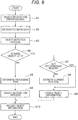
- FIG. 6 is a flowchart describing object recognition processing performed by the periphery recognition device 1 illustrated in FIG. 1 , and particularly, a process executed by each of the long-distance object recognition unit 13 and the short-distance object recognition unit 14.
- the three-dimensional distance image and a region image corresponding to each other generated by the three-dimensional distance image generation unit 12 are processed in an object recognition preprocessing step S1.
- a conventionally-known method can be applied in this processing method, and thus, a detailed description thereof will be omitted here.
- the solid object information transmitted by the feedback unit 15 is read out if readable in a feedback data receiving step S2, and a position in the real environment of the solid object as a candidate is calculated in the object detection processing step S3.
- an object data presence confirming step S4 determines whether the solid object information relating to the solid object as the candidate is included in the solid object information transmitted by the feedback unit 15 is determined in an object data presence confirming step S4.
- a type (kind) of object recognition processing that needs to be executed based on characteristics of the solid object as the candidate is determined in a processing type determination step S5, and recognition processing determined in the processing type determination step S5 is executed to generate solid object information including at least a type, a current position, and speed of the solid object in an object recognition processing step S6.
- the solid object information on the solid object as the candidate is included in the solid object information transmitted by the feedback unit 15 in the object data presence confirming step S4, whether the solid object as the candidate is in the "recognizable region" is determined in a recognizable test step S7.
- the solid object information is generated using the solid object information transmitted from the feedback unit 15 and the result of the object detection processing step S3 (the position in the real environment of the solid object) in an object information updating step S9.
- a current position of the solid object whose information is included in the information transmitted from the feedback unit 15 is calculated in a current position estimation step S8, this calculation result is collated with the result of the object detection processing step S3 (the position in the real environment of the solid object), and the solid object information is generated using the solid information transmitted from the feedback unit 15 and the result of the object detection processing step S3 in the object information updating step S9.
- the solid object information generated in the object recognition processing step S6 or the object information updating step S9 is recorded in the feedback unit 15 in an object information recording step S10.
- the first object recognition unit that recognizes the object present in the first region and the second object recognition unit that recognizes the object present in the second region different from the first region and detects the object present in the third region different from the first region and the second region are provided, and the information linkage unit (feedback unit) transfers the information relating to the object between the first object recognition unit and the second object recognition unit according to the periphery recognition device 1 of the present embodiment.
- the feedback unit 15 is configured to transfer the information relating to the object between the long-distance object recognition unit 13 and the short-distance object recognition unit 14, the information to be transmitted includes the object recognition information created by the long-distance object recognition unit 13 and the short-distance object recognition unit 14, and the object recognition information to be transmitted is used to determine whether the object has moved from one of the regions 101a and 101b (see FIG. 2 ) covered by the respective cameras (the first sensor and the second sensor) 11a and 11b to the other region.
- the object is recognized based on the object recognition information to be transmitted, and thus, it is possible to minimize a processing load from one or both of the long-distance object recognition unit 13 and the short-distance object recognition unit 14 (in the first embodiment, the short-distance object recognition unit 14).
- the object recognition information created by the long-distance object recognition unit 13 and the short-distance object recognition unit 14 is recorded in the feedback unit 15, and thus, this object recognition information is used to recognize an object that has moved from one of the regions 101a and 101b (see FIG. 2 , the "recognizable region") covered by the respective cameras (the first sensor and the second sensor) 11a and 11b and is present in the region 101c (see FIG. 2 , the "detectable region") therebetween.
- the object recognition information created by the long-distance object recognition unit 13 and the short-distance object recognition unit 14 is recorded in the feedback unit 15, and thus, this object recognition information is used to recognize an object that has moved from one of the regions 101a and 101b (see FIG. 2 , the "recognizable region") covered by the respective cameras (the first sensor and the second sensor) 11a and 11b and is present in the region 101c (see FIG. 2 , the "detectable region") therebetween.
- the periphery recognition device 1 it is possible to minimize the load from the short-distance object recognition unit 14 when the object (relatively-moving object) has moved from the long-distance "recognizable region” and reached the short-distance "recognizable region”, and it is possible to reduce the proportion of non-recognition or erroneous recognition of the object (relatively-moving body) that has moved from the long-distance "recognizable region” and reached the "detectable region".
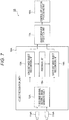
- FIG. 7 is a block diagram illustrating an internal configuration of a second embodiment of a periphery recognition device according to the present invention.
- a periphery recognition device 1A of the second embodiment illustrated in FIG. 7 is different from the periphery recognition device 1 of the first embodiment illustrated in FIG. 1 only in terms that an object behavior prediction unit 17A is provided, and the other configurations are substantially the same. Therefore, the same reference numerals are given to the same configurations as those of the periphery recognition device 1 of the first embodiment, and a detailed description thereof will be omitted.
- the object behavior prediction unit 17A which is the difference, will be mainly described.
- the object behavior prediction unit 17A calculates a prediction value of a path in the real environment that an object is planned to follow in the future according to characteristics of the object obtained from solid object information (including at least a type, a current position, and speed of the solid object) generated by one or both of a long-distance object recognition unit 13A and a short-distance object recognition unit 14A.
- a control application processing unit 16A determines a control application (control operation) to be executed by a vehicle on which the periphery recognition device 1A is mounted in accordance with the solid object recognized by the long-distance object recognition unit 13A and the short-distance object recognition unit 14A and a behavior of the object predicted by the object behavior prediction unit 17A.
- the periphery recognition device 1A is applied as a system configured to monitor the surroundings of the vehicle will be described in more detail with reference to FIG. 8 .
- FIG. 8 illustrates a situation where a vehicle V equipped with the periphery recognition device 1A illustrated in FIG. 7 is at an intersection and a driver of the vehicle V is to turn right following a path PT1.
- a two-wheeled vehicle TV1 (relatively-moving body) is recognized by the long-distance object recognition unit 13A in this situation, the solid object information generated in this manner is used by the object behavior prediction unit 17A in order to determine the control application to be executed by the vehicle V and to calculate a path PT2 of the solid object to be used by the control application processing unit 16A (in the illustrated example, a path along which the two-wheeled vehicle TV1 travels straight on the opposite lane).
- the short-distance object recognition unit 14A calculates the solid object information on the two-wheeled vehicle TV1 using the solid object information transmitted from a feedback unit 15A. Then, the solid object information generated in this manner is used by the object behavior prediction unit 17A in order to determine the control application to be executed by the vehicle V and to calculate a path PT3 of the solid object to be used by the control application processing unit 16A (in the illustrated example, a path along which the two-wheeled vehicle TV1 further travels straight).
- periphery recognition device 1A of the second embodiment it is possible to reduce the proportion of non-recognition or erroneous recognition of the object (relatively-moving object) that has moved from the long-distance "recognizable region” and reached the "detectable region", similarly to the periphery recognition device 1 of the first embodiment described above.
- FIG. 9 is a block diagram illustrating an internal configuration of a third embodiment of a periphery recognition device according to the present invention.
- a periphery recognition device 1B of the third embodiment illustrated in FIG. 9 is different from the periphery recognition device 1 of the first embodiment illustrated in FIG. 1 in terms that information is exchanged bidirectionally between a long-distance object recognition unit 13B and a feedback unit 15B and between a short-distance object recognition unit 14B and the feedback unit 15B, and the other configurations are substantially the same. Therefore, the same reference numerals are given to the same configurations as those of the periphery recognition device 1 of the first embodiment, and a detailed description thereof will be omitted. Hereinafter, the difference will be mainly described.
- the short-distance object recognition unit 14B reads information on the recognized solid object from the feedback unit 15B or records the information in the feedback unit 15B, and uses the information for a process of recognizing a solid object based on a three-dimensional distance image and a short-distance image for a short distance created by a three-dimensional distance image generation unit 12B.
- the long-distance object recognition unit 13B reads information on the recognized solid object from the feedback unit 15B or records the information in the feedback unit 15B, and uses the information for the process of recognizing a solid object based on a three-dimensional distance image and a long-distance image for a long distance created by a three-dimensional distance image generation unit 12B.
- the feedback unit 15B records the information on the solid object recognized by the short-distance object recognition unit 14B and the long-distance object recognition unit 13B and transmits the stored solid object information to the short-distance object recognition unit 14B and the long-distance object recognition unit 13B.
- the periphery recognition device 1B is applied as a system configured to monitor the surroundings of the vehicle will be described in more detail with reference to FIG. 10 .
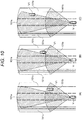
- FIG. 10 sequentially illustrates a situation where the vehicle V equipped with the periphery recognition device 1B illustrated in FIG. 9 travels on an arterial road.
- the short-distance object recognition unit 14B estimates a current position of the solid object recorded by the short-distance object recognition unit 14B using the solid object information transmitted from the feedback unit 15B, and collates a result of the estimation with the result of the object detection processing step S3 illustrated in FIG. 6 , thereby calculating the solid object information on the vehicle V1.
- the long-distance object recognition unit 13B calculates the solid object information on the vehicle V1 using the solid object information transmitted from the feedback unit 15B and the result of the object detection processing step S3 illustrated in FIG. 6 .
- the solid object information on the vehicle V1 is calculated in the same manner as in the first embodiment described above (that is, the solid object information generated by the long-distance object recognition unit 13B is handed over to the short-distance object recognition unit 14B).
- the periphery recognition device 1B of the third embodiment it is possible to minimize the load from the long-distance object recognition unit 13B when the object (relatively-moving object) has moved from the short-distance "recognizable region” and reached the long-distance "recognizable region”, and it is possible to reduce the proportion of non-recognition or erroneous recognition of the object (relatively-moving body) that has moved from the short-distance "recognizable region” and reached the "detectable region", similarly to the periphery recognition device 1 of the first embodiment described above.
- the solid object information generated by the long-distance object recognition unit may be input again to the long-distance object recognition unit from the feedback unit and used when the object moves from the long-distance "recognizable region", passes through the "detectable region", and enters the long-distance "recognizable region” again, and the solid object information generated by the short-distance object recognition unit may be input again to the short-distance object recognition unit from the feedback unit and used when the object moves from the short-distance "recognizable region", passes through the "detectable region", and enters the short-distance "recognizable region” again.
- the present invention is not limited to the above-described first to third embodiments, and includes various modifications.
- the above-described first to third embodiments have been described in detail in order to describe the present invention in an easily understandable manner, and are not necessarily limited to one including the entire configuration that has been described above.
- some configurations of a certain embodiment can be substituted by configurations of another embodiment, and further, a configuration of another embodiment can be added to a configuration of a certain embodiment.
- deletion or substitution of other configurations can be made with respect to some configurations of each embodiment.
- the periphery recognition devices 1, 1A, and 1B include the recognizable region in which it is possible to detect and recognize the object and the detectable region in which it is possible to detect the object but it is difficult to recognize the object has been described in the above-described embodiments.
- the recognition or identification
- the movement of the object may be caused by movement of the vehicle, by movement of the object, or by movement of both the vehicle and the object.
- the periphery recognition device it is possible to consider the configuration in which the sensor that is configured to acquire situation data outside the vehicle and the object recognition unit that detects and recognizes the object based on the situation data acquired by the sensor are provided, and the object recognition unit specifies the relatively-moving body relatively moving from the recognizable region (first or second region) where it is possible to detect and recognize the object to the detectable region (third region) where it is possible to detect the object but difficult to recognize the object based on the recognition result in the recognizable region (first or second region).
- This configuration is not limited to the periphery recognition device having the plurality of sensors as in the above-described embodiments, but can be also applied to a device having only one sensor.
- each of the above-described configurations, functions, processing units, processing means, and the like may be realized, for example, by hardware by designing with an integrated circuit and the like.
- each of the above-described configurations, functions, and the like may also be realized by software by causing a processor to interpret and execute a program for realizing each of the functions.
- Information such as programs, tables, and files that realize the respective functions can be installed in a storage device such as a memory, a hard disk, and a solid state drive (SSD), or a storage medium such as an IC card, an SD card, and a DVD.
- SSD solid state drive
- control line and an information line considered to be necessary for the description have been illustrated, and all control lines and information lines required as a product are not illustrated. It may be considered that most of the configurations are practically connected to each other.
Landscapes
- Engineering & Computer Science (AREA)
- Physics & Mathematics (AREA)
- General Physics & Mathematics (AREA)
- Radar, Positioning & Navigation (AREA)
- Remote Sensing (AREA)
- Theoretical Computer Science (AREA)
- Multimedia (AREA)
- Computer Vision & Pattern Recognition (AREA)
- Electromagnetism (AREA)
- Automation & Control Theory (AREA)
- Image Analysis (AREA)
- Traffic Control Systems (AREA)
- Measurement Of Optical Distance (AREA)
- Image Processing (AREA)
- Length Measuring Devices By Optical Means (AREA)
Abstract
Description
- The present invention relates to a periphery recognition device, and more particularly to a periphery recognition device that is suitably attached to a sensor for long-distance detection and a sensor for wide-angle and short-distance detection.
- In recent years, an image processing device that detects a solid object (three-dimensional object) by utilizing a stereo camera has been used.
- The image processing device is used in applications for monitoring systems that detect invasions of suspicious individuals and other abnormalities and onboard systems that support safe driving of cars.
- In onboard environment, it is necessary to implement detection and distance measurement of an object and find out a safe steering method in advance in order to satisfy a requirement of an application for detecting a vehicle, a pedestrian, and an object positioned on a front side, for example.
- In an image processing apparatus disclosed in
PTL 1, a plurality of cameras are used and distances from the cameras to objects present in a long-distance area and a short-distance area are detected by combining distance images regarding long and short distances, and a scale of hardware or software is reduced through a solid object detection function that uses the combined distance image. - PTL 1: Japanese Patent Application Laid-Open No.
2012-103109 - In the above-described conventional technique for recognizing a type (kind) of a detected object; however, when an object moves from a region covered by a long-distance camera to a region covered by a short-distance camera, or moves in the opposite direction thereof, it is necessary to perform perfect object recognition with respect to a candidate object entering that region, and a load of object recognition processing increases. In addition, the measurement accuracy generally decreases in a boundary region, and thus, there is a problem of an increase in proportion of non-recognition or erroneous recognition of the object that has moved to the boundary region from the region covered by the long-distance camera or the short-distance camera.
- The present invention has been made in view of the above-described problems, and an object thereof is to provide a periphery recognition device that makes it possible to: minimize a load from object recognition processing for recognizing an object moving between one region covered by a long-distance sensor and/or a wide-angle short-distance sensor to another such region; and reduce the proportion of non-recognition or erroneous recognition of an object moving from the region covered by the long-distance sensor or the wide-angle short-distance sensor to a boundary region.
- In order to solve the above-described problems, the periphery recognition device according to the present invention includes: a first sensor that is configured to acquire situation data of a long-distance area; a second sensor that has a detection region having a wider angle than the first sensor and is configured to acquire situation data of a short-distance area in the detection region; a long-distance object recognition unit that recognizes an object present in the long-distance area based on three-dimensional long-distance data calculated based on the situation data acquired by the first sensor; a short-distance object recognition unit that recognizes an object present in a wide-angle and short-distance area based on three-dimensional wide-angle short-distance data calculated based on the situation data acquired by the second sensor; and an information linkage unit that transfers information relating to the object between the long-distance object recognition unit and the short-distance object recognition unit.
- In addition, the periphery recognition device according to the present invention includes: a sensor that is configured to acquire situation data outside a vehicle; and an object recognition unit that detects and recognizes an object based on the situation data acquired by the sensor. The object recognition unit specifies a relatively-moving body relatively moving from a recognizable region where it is possible to detect and recognize the object to a detectable region where it is possible to detect the object but difficult to recognize the object based on a recognition result in the recognizable region.
- According to the periphery recognition device of the present invention, it is possible to minimize the load from the object recognition processing for recognizing the object moving between one region covered by the first sensor for long distance and/or the second sensor for wide angle and short distance to another such region, and further, it is possible to reduce the proportion of non-recognition or erroneous recognition of the object moving from one (recognizable region) of the regions covered by the first sensor for long distance and the second sensor for wide angle and short distance to the boundary region (detectable region).
- Other objects, configurations, and effects which have not been described above become apparent from embodiments to be described hereinafter.
-
-
FIG. 1 is a block diagram illustrating an internal configuration of a first embodiment of a periphery recognition device according to the present invention. -
FIG. 2 is a plan view illustrating a detection region covered by each camera illustrated inFIG. 1 . -
FIG. 3 is a view illustrating an overview of a solid object map. -
FIG. 4 is a view illustrating a situation where a vehicle equipped with the periphery recognition device illustrated inFIG. 1 is at an intersection, in which (A) is an overhead view thereof, and (B) is a view illustrating a scene ahead of the vehicle. -
FIG. 5 is an overhead view sequentially illustrating a situation where the vehicle equipped with the periphery recognition device illustrated inFIG. 1 enters an intersection, in which (A) is a view illustrating a situation where a pedestrian is included in a long-distance recognizable region, (B) is a view illustrating a situation where a pedestrian is included in a detectable region, and (C) is a view illustrating a situation where a pedestrian is included in a short-distance recognizable region. -
FIG. 6 is a flowchart describing object recognition processing performed by the periphery recognition device illustrated inFIG. 1 . -
FIG. 7 is a block diagram illustrating an internal configuration of a second embodiment of a periphery recognition device according to the present invention. -
FIG. 8 is an overhead view illustrating a situation where a vehicle equipped with the periphery recognition device illustrated inFIG. 7 is at an intersection, in which (A) is a view illustrating a situation where a two-wheeled vehicle is included in a long-distance recognizable region, and (B) is a view illustrating a situation where a two-wheeled vehicle is included in a detectable region. -
FIG. 9 is a block diagram illustrating an internal configuration of a third embodiment of a periphery recognition device according to the present invention. -
FIG. 10 is an overhead view sequentially illustrating a situation where a vehicle equipped with the periphery recognition device illustrated inFIG. 9 travels on an arterial road, in which (A) is a view illustrating a situation where a vehicle traveling in an overtaking lane is included in a short-distance recognizable region, (B) is a view illustrating a situation where a vehicle traveling in an overtaking lane is included in a detectable region, and (C) is a view illustrating a situation where a vehicle traveling in an overtaking lane is included in a long-distance recognizable region. - Hereinafter, embodiments of a periphery recognition device according to the present invention will be described with reference to the drawings. Hereinafter, the description will be given regarding a case where a first sensor for long-distance detection and a second sensor for wide-angle and short-distance detection are constituted by a stereo camera device provided with a pair of onboard cameras including a camera suitable for long-distance detection and a camera suitable for wide-angle and short-distance detection. However, it is a matter of course that the first sensor and the second sensor may be constituted, for example, by a detection device including a radar, an ultrasonic sensor, and the like.
-
FIG. 1 is a block diagram illustrating an internal configuration of a first embodiment of a periphery recognition device according to the present invention. - As illustrated in the drawing, a
periphery recognition device 1 of the present embodiment basically includes two cameras (sensors) 11a and 11b installed at the same height, anobject recognition unit 18 including a three-dimensional distanceimage generation unit 12, a long-distanceobject recognition unit 13, a short-distanceobject recognition unit 14, and a feedback unit (information linkage unit) 15, and a controlapplication processing unit 16. - The two
cameras camera 11a is suitable for long-distance detection (that is, a camera that can acquire situation data of an object or the like present in a long-distance area with high accuracy), and thecamera 11b is suitable for wide-angle and short-distance detection (that is, a camera that has a wider-angle field of view (detection region) as compared with thecamera 11a and can acquire situation data of an object or the like present in a wide-angle and short-distance area with high accuracy) (seeFIG. 2 ). - The three-dimensional distance
image generation unit 12 functions as a three-dimensional data generation unit that calculates three-dimensional long-distance data based on the situation data obtained by the camera (first sensor) 11a and calculates three-dimensional wide-angle short-distance data based on the situation data obtained by the camera (second sensor) 11b. - Specifically, the three-dimensional distance
image generation unit 12 performs stereo matching using image signals received from thecameras region 100d illustrated inFIG. 4(B) and a three-dimensional distance image for a wide angle and a near distance relating to aregion 100e illustrated inFIG. 4(B) . In this stereo matching, a unit image that minimizes a difference between the image signals is determined among unit images each of which is set in advance for two images compared with each other. That is, a region where the same object is projected is detected. Accordingly, the three-dimensional distance image for a long distance and the three-dimensional distance image for a wide angle and a short distance are formed. Incidentally, the three-dimensional distance image is an image having a value of a distance from the camera to the object in real environment. In addition, the three-dimensional distanceimage generation unit 12 creates the image (long-distance image) for the long distance relating to theregion 100d illustrated inFIG. 4(B) and the image (short-distance image) for a wide angle and a short distance relating to theregion 100e illustrated inFIG. 4(B) . - The long-distance
object recognition unit 13 functions as a first object recognition unit that recognizes an object present in a long-distance area as a first region, and recognizes a solid object in an image based on the three-dimensional distance image and the long-distance image (three-dimensional long-distance data) for the long distance created by the three-dimensional distanceimage generation unit 12. Next, the long-distanceobject recognition unit 13 transmits information on the recognized solid object to thefeedback unit 15. - The
feedback unit 15 functions as the information linkage unit that transfers information relating to the object between the long-distanceobject recognition unit 13 and the short-distanceobject recognition unit 14. Here, thefeedback unit 15 records the information on the solid object recognized by the long-distanceobject recognition unit 13 and transmits the stored information on the solid object to the short-distanceobject recognition unit 14. - In this case, the
feedback unit 15 can include asolid object map 15a which indicates at least a type of the solid object and a current position and speed of the three-dimensional object in the real environment as illustrated inFIG. 3 , in order to record object recognition information created by the long-distanceobject recognition unit 13 and the short-distanceobject recognition unit 14. - The short-distance
object recognition unit 14 functions as a second object recognition unit that recognizes an object present in a wide-angle and short-distance area as a second region, different from the first region, and detects an object present in a detectable region (to be described later) as a third region, different from the first region and the second region, and recognizes a solid object in an image based on the three-dimensional distance image and the short-distance image (three-dimensional wide-angle short-distance data) for the short distance created by the three-dimensional distanceimage generation unit 12. Next, the short-distanceobject recognition unit 14 reads the information on the recognized solid object transmitted by thefeedback unit 15. - The control
application processing unit 16 determines a control application (control operation) to be executed by the vehicle on which theperiphery recognition device 1 is mounted in accordance with the solid object recognized by the long-distanceobject recognition unit 13 and the short-distanceobject recognition unit 14. - Next, a case where the
periphery recognition device 1 is applied as a system configured to monitor the surroundings of the vehicle will be described in more detail with reference toFIGS. 2 and4 to 6 . -
FIG. 2 illustrates each field of view (detection regions cameras camera 11a has thedetection region 100a at a viewing angle θa, and a region (region apart from the vehicle V by a predetermined distance) 101a outside thedetection region 100a is set to a long-distance "recognizable region" (first region). In addition, thecamera 11b has thedetection region 100b at a viewing angle θb (> θa), a region (region within a predetermined distance from the vehicle V) 101b inside thedetection region 100b is set to a wide-angle and short-distance "recognizable region" (second region), and a region (region apart from the vehicle V by the predetermined distance) outside thedetection region 100b, particularly, alateral region 101c of the long-distance "recognizable region" 101a thereof is set to the "detectable region (also referred to as a boundary region)" (third region). - In this specification, the term "recognizable" means to be capable of acquiring various types of information relating to an object, such as a type (a vehicle, a two-wheeled vehicle, a bicycle, a pedestrian, a guardrail, a signal, a utility pole, or the like) of the object (solid object), a position of the object, and speed of the object, and the term "detectable" means to be capable of acquiring information such as a position of an object and speed of the object although information relating to, for example, a type of the object (solid object) cannot be acquired. That is, measurement accuracy is lower in the above-described "detectable region" 101c than in the wide-angle and short-distance "recognizable region" 101b, and thus, there is a possibility that the object recognition becomes difficult in the "detectable region" 101c.
-
FIG. 4 illustrates a situation where the vehicle V equipped with theperiphery recognition device 1 illustrated inFIG. 1 is at an intersection. -
FIG. 4(A) is an overhead view when a pedestrian PA, a pedestrian PB, and a vehicle VA are in the field of view of (thecameras periphery recognition device 1. Here,FIG. 4(A) illustrates a state where the vehicle VA is in the long-distance "recognizable region" 101a, the pedestrian PA is in the wide-angle and short-distance "recognizable region" 101b, and the pedestrian PB has moved from the long-distance "recognizable region" 101a and is in the "detectable region" 101c. - In addition,
FIG. 4(B) illustrates a state obtained by displaying the above-described situation by images acquired by thecameras region 100d is a region covered by the long-distance "recognizable region" 101a, and theregion 100e corresponds to a region covered by the wide-angle and short-distance "recognizable region" 101b and the "detectable region" 101c. As described above, the pedestrian PA in theregion 100e is in the wide-angle and short-distance "recognizable region", and thus, is recognizable as a pedestrian. However, the pedestrian PB in theregion 100e is in the "detectable region", and thus, there is a possibility that it is difficult to recognize whether the pedestrian PB is a pedestrian only with the information obtained from thecamera 11b. -
FIG. 5 sequentially illustrates a situation where the vehicle V equipped with theperiphery recognition device 1 illustrated inFIG. 1 enters an intersection. - As illustrated in
FIG. 5(A) , pedestrians P1 and P2 (relatively-moving bodies which are objects that relatively move with respect to the vehicle V) enter the long-distance "recognizable region" 101a as the vehicle V approaches the intersection, and thus, the pedestrians P1 and P2 are recognized by the long-distance object recognition unit 13 (according to a flow illustrated inFIG. 6 to be described later), and solid object information (information relating to the solid object) as a recognition result is recorded in thefeedback unit 15. - Next, the pedestrians P1 and P2 move from the long-distance "recognizable region" 101a and reach the "detectable region" 101c when the vehicle V continues to move toward the intersection as illustrated in
FIG. 5(B) . Here, the short-distanceobject recognition unit 14 estimates the current position of the solid object recorded by the long-distanceobject recognition unit 13 using the solid object information transmitted from thefeedback unit 15, and collates this estimation result with a result of the object detection processing step S3 illustrated inFIG. 6 to be described later, thereby calculating the solid object information on the pedestrians P1 and P2. - Next, when the pedestrians P1 and P2 move from the long-distance "recognizable region" 101a and reach the wide-angle and short-distance "recognizable region" 101b as illustrated in
FIG. 5(C) , the short-distanceobject recognition unit 14 calculates the solid object information on the pedestrians P1 and P2 using the solid object information transmitted from thefeedback unit 15 and the result of the object detection processing step S3 illustrated inFIG. 6 to be described later. -
FIG. 6 is a flowchart describing object recognition processing performed by theperiphery recognition device 1 illustrated inFIG. 1 , and particularly, a process executed by each of the long-distanceobject recognition unit 13 and the short-distanceobject recognition unit 14. - First, the three-dimensional distance image and a region image corresponding to each other generated by the three-dimensional distance
image generation unit 12 are processed in an object recognition preprocessing step S1. Incidentally, a conventionally-known method can be applied in this processing method, and thus, a detailed description thereof will be omitted here. - Next, the solid object information transmitted by the
feedback unit 15 is read out if readable in a feedback data receiving step S2, and a position in the real environment of the solid object as a candidate is calculated in the object detection processing step S3. - Next, whether the solid object information relating to the solid object as the candidate is included in the solid object information transmitted by the
feedback unit 15 is determined in an object data presence confirming step S4. When it is determined that such information is not included, a type (kind) of object recognition processing that needs to be executed based on characteristics of the solid object as the candidate is determined in a processing type determination step S5, and recognition processing determined in the processing type determination step S5 is executed to generate solid object information including at least a type, a current position, and speed of the solid object in an object recognition processing step S6. - On the other hand, when it is determined that the solid object information on the solid object as the candidate is included in the solid object information transmitted by the
feedback unit 15 in the object data presence confirming step S4, whether the solid object as the candidate is in the "recognizable region" is determined in a recognizable test step S7. When it is determined to be in the "recognizable region", the solid object information is generated using the solid object information transmitted from thefeedback unit 15 and the result of the object detection processing step S3 (the position in the real environment of the solid object) in an object information updating step S9. - On the other hand, when it is determined that the solid object as the candidate is not in the "recognizable region" in the recognizable test step S7, a current position of the solid object whose information is included in the information transmitted from the
feedback unit 15 is calculated in a current position estimation step S8, this calculation result is collated with the result of the object detection processing step S3 (the position in the real environment of the solid object), and the solid object information is generated using the solid information transmitted from thefeedback unit 15 and the result of the object detection processing step S3 in the object information updating step S9. - Then, the solid object information generated in the object recognition processing step S6 or the object information updating step S9 is recorded in the
feedback unit 15 in an object information recording step S10. - In this manner, the first object recognition unit that recognizes the object present in the first region and the second object recognition unit that recognizes the object present in the second region different from the first region and detects the object present in the third region different from the first region and the second region are provided, and the information linkage unit (feedback unit) transfers the information relating to the object between the first object recognition unit and the second object recognition unit according to the
periphery recognition device 1 of the present embodiment. Specifically, thefeedback unit 15 is configured to transfer the information relating to the object between the long-distanceobject recognition unit 13 and the short-distanceobject recognition unit 14, the information to be transmitted includes the object recognition information created by the long-distanceobject recognition unit 13 and the short-distanceobject recognition unit 14, and the object recognition information to be transmitted is used to determine whether the object has moved from one of theregions FIG. 2 ) covered by the respective cameras (the first sensor and the second sensor) 11a and 11b to the other region. The object is recognized based on the object recognition information to be transmitted, and thus, it is possible to minimize a processing load from one or both of the long-distanceobject recognition unit 13 and the short-distance object recognition unit 14 (in the first embodiment, the short-distance object recognition unit 14). - In addition, the object recognition information created by the long-distance
object recognition unit 13 and the short-distanceobject recognition unit 14 is recorded in thefeedback unit 15, and thus, this object recognition information is used to recognize an object that has moved from one of theregions FIG. 2 , the "recognizable region") covered by the respective cameras (the first sensor and the second sensor) 11a and 11b and is present in theregion 101c (seeFIG. 2 , the "detectable region") therebetween. Thus, it is possible to reduce the proportion of non-recognition or erroneous recognition of an object having moved from the "recognizable region" and reached the "detectable region". - That is, with such configuration and operation of the
periphery recognition device 1 according to the first embodiment, it is possible to minimize the load from the short-distanceobject recognition unit 14 when the object (relatively-moving object) has moved from the long-distance "recognizable region" and reached the short-distance "recognizable region", and it is possible to reduce the proportion of non-recognition or erroneous recognition of the object (relatively-moving body) that has moved from the long-distance "recognizable region" and reached the "detectable region". -
FIG. 7 is a block diagram illustrating an internal configuration of a second embodiment of a periphery recognition device according to the present invention. - A
periphery recognition device 1A of the second embodiment illustrated inFIG. 7 is different from theperiphery recognition device 1 of the first embodiment illustrated inFIG. 1 only in terms that an objectbehavior prediction unit 17A is provided, and the other configurations are substantially the same. Therefore, the same reference numerals are given to the same configurations as those of theperiphery recognition device 1 of the first embodiment, and a detailed description thereof will be omitted. Hereinafter, the objectbehavior prediction unit 17A, which is the difference, will be mainly described. - The object
behavior prediction unit 17A calculates a prediction value of a path in the real environment that an object is planned to follow in the future according to characteristics of the object obtained from solid object information (including at least a type, a current position, and speed of the solid object) generated by one or both of a long-distanceobject recognition unit 13A and a short-distanceobject recognition unit 14A. - A control
application processing unit 16A determines a control application (control operation) to be executed by a vehicle on which theperiphery recognition device 1A is mounted in accordance with the solid object recognized by the long-distanceobject recognition unit 13A and the short-distanceobject recognition unit 14A and a behavior of the object predicted by the objectbehavior prediction unit 17A. - Next, a case where the
periphery recognition device 1A is applied as a system configured to monitor the surroundings of the vehicle will be described in more detail with reference toFIG. 8 . -
FIG. 8 illustrates a situation where a vehicle V equipped with theperiphery recognition device 1A illustrated inFIG. 7 is at an intersection and a driver of the vehicle V is to turn right following a path PT1. - As illustrated in
FIG. 8(A) , a two-wheeled vehicle TV1 (relatively-moving body) is recognized by the long-distanceobject recognition unit 13A in this situation, the solid object information generated in this manner is used by the objectbehavior prediction unit 17A in order to determine the control application to be executed by the vehicle V and to calculate a path PT2 of the solid object to be used by the controlapplication processing unit 16A (in the illustrated example, a path along which the two-wheeled vehicle TV1 travels straight on the opposite lane). - In addition, when the two-wheeled vehicle TV1 has moved from the long-distance "recognizable region" 101a and reached the "detectable region" 101c as illustrated in
FIG. 8(B) , the short-distanceobject recognition unit 14A calculates the solid object information on the two-wheeled vehicle TV1 using the solid object information transmitted from afeedback unit 15A. Then, the solid object information generated in this manner is used by the objectbehavior prediction unit 17A in order to determine the control application to be executed by the vehicle V and to calculate a path PT3 of the solid object to be used by the controlapplication processing unit 16A (in the illustrated example, a path along which the two-wheeled vehicle TV1 further travels straight). - In
periphery recognition device 1A of the second embodiment as well, it is possible to reduce the proportion of non-recognition or erroneous recognition of the object (relatively-moving object) that has moved from the long-distance "recognizable region" and reached the "detectable region", similarly to theperiphery recognition device 1 of the first embodiment described above. -
FIG. 9 is a block diagram illustrating an internal configuration of a third embodiment of a periphery recognition device according to the present invention. - A
periphery recognition device 1B of the third embodiment illustrated inFIG. 9 is different from theperiphery recognition device 1 of the first embodiment illustrated inFIG. 1 in terms that information is exchanged bidirectionally between a long-distanceobject recognition unit 13B and afeedback unit 15B and between a short-distanceobject recognition unit 14B and thefeedback unit 15B, and the other configurations are substantially the same. Therefore, the same reference numerals are given to the same configurations as those of theperiphery recognition device 1 of the first embodiment, and a detailed description thereof will be omitted. Hereinafter, the difference will be mainly described. - Specifically, in the
periphery recognition device 1B according to the third embodiment, the short-distanceobject recognition unit 14B reads information on the recognized solid object from thefeedback unit 15B or records the information in thefeedback unit 15B, and uses the information for a process of recognizing a solid object based on a three-dimensional distance image and a short-distance image for a short distance created by a three-dimensional distanceimage generation unit 12B. Further, the long-distanceobject recognition unit 13B reads information on the recognized solid object from thefeedback unit 15B or records the information in thefeedback unit 15B, and uses the information for the process of recognizing a solid object based on a three-dimensional distance image and a long-distance image for a long distance created by a three-dimensional distanceimage generation unit 12B. In addition, thefeedback unit 15B records the information on the solid object recognized by the short-distanceobject recognition unit 14B and the long-distanceobject recognition unit 13B and transmits the stored solid object information to the short-distanceobject recognition unit 14B and the long-distanceobject recognition unit 13B. - Next, a case where the
periphery recognition device 1B is applied as a system configured to monitor the surroundings of the vehicle will be described in more detail with reference toFIG. 10 . -
FIG. 10 sequentially illustrates a situation where the vehicle V equipped with theperiphery recognition device 1B illustrated inFIG. 9 travels on an arterial road. - When a vehicle V1 (relatively-moving body) travels on an overtaking lane next to a lane on which the vehicle V travels (speed of the vehicle V1 is faster than speed of the vehicle V) as illustrated in
FIG. 10(A) , the vehicle V1 first enters the short-distance "recognizable region" 101b, and thus, the vehicle V1 is recognized (according to the flow illustrated inFIG. 6 ) by the short-distanceobject recognition unit 14B, and solid object information as a recognition result is recorded in thefeedback unit 15B. - Next, when the
vehicle 1 continues to move forward to move from the short-distance "recognizable region" 101b and reaches the "detectable region" 101c as illustrated inFIG. 10(B) , the short-distanceobject recognition unit 14B estimates a current position of the solid object recorded by the short-distanceobject recognition unit 14B using the solid object information transmitted from thefeedback unit 15B, and collates a result of the estimation with the result of the object detection processing step S3 illustrated inFIG. 6 , thereby calculating the solid object information on the vehicle V1. - Next, when the vehicle V1 moves from the short-distance "recognizable region" 101b and reaches the long-distance "recognizable region" 101a as illustrated in
FIG. 10(C) , the long-distanceobject recognition unit 13B calculates the solid object information on the vehicle V1 using the solid object information transmitted from thefeedback unit 15B and the result of the object detection processing step S3 illustrated inFIG. 6 . - For example, when the speed of the vehicle V1 is slower than the speed of the vehicle V, and the vehicle V1 moves from the long-distance "recognizable region" 101a, passes through the "detectable region" 101c, and reaches the short-distance "recognizable region" 101b, the solid object information on the vehicle V1 is calculated in the same manner as in the first embodiment described above (that is, the solid object information generated by the long-distance
object recognition unit 13B is handed over to the short-distanceobject recognition unit 14B). - In the
periphery recognition device 1B of the third embodiment as well, it is possible to minimize the load from the long-distanceobject recognition unit 13B when the object (relatively-moving object) has moved from the short-distance "recognizable region" and reached the long-distance "recognizable region", and it is possible to reduce the proportion of non-recognition or erroneous recognition of the object (relatively-moving body) that has moved from the short-distance "recognizable region" and reached the "detectable region", similarly to theperiphery recognition device 1 of the first embodiment described above. - In the first to third embodiments described above, the description has been given basically regarding the case where the object moves from the long-distance "recognizable region", passes through the "detectable region", and reaches the short-distance "recognizable region" and the solid object information generated by the long-distance object recognition unit is transmitted to the short-distance object recognition unit via the feedback unit, and the case where the object moves from the short-distance "recognizable region", passes through the "detectable region", and reaches the long-distance "recognizable region" and the solid object information generated by the short-distance object recognition unit is transmitted to the long-distance object recognition unit via the feedback unit. However, the solid object information generated by the long-distance object recognition unit may be input again to the long-distance object recognition unit from the feedback unit and used when the object moves from the long-distance "recognizable region", passes through the "detectable region", and enters the long-distance "recognizable region" again, and the solid object information generated by the short-distance object recognition unit may be input again to the short-distance object recognition unit from the feedback unit and used when the object moves from the short-distance "recognizable region", passes through the "detectable region", and enters the short-distance "recognizable region" again. In addition, it is obvious that the above-described effects of the present invention can be obtained as the solid object information generated by the long-distance object recognition unit is transmitted to the short-distance object recognition unit via the feedback unit even at a stage where the object has moved from the long-distance "recognizable region" and reached the "detectable region".
- Incidentally, the present invention is not limited to the above-described first to third embodiments, and includes various modifications. For example, the above-described first to third embodiments have been described in detail in order to describe the present invention in an easily understandable manner, and are not necessarily limited to one including the entire configuration that has been described above. In addition, some configurations of a certain embodiment can be substituted by configurations of another embodiment, and further, a configuration of another embodiment can be added to a configuration of a certain embodiment. In addition, addition, deletion or substitution of other configurations can be made with respect to some configurations of each embodiment.
- Incidentally, the fact that the
periphery recognition devices - There is a case where such a relatively-moving body moves again to the recognizable region once after moving from the recognizable region to the detectable region, and there is a risk that the load of the recognition processing increases or a risk that recognition accuracy decreases by performing the recognition processing again when the relatively-moving body has moved again to the recognizable region. Thus, if past recognition results in the recognizable region can be used when the object has relatively moved to the detectable region from the recognizable region, it is possible to reduce the load of the recognition processing and improve the recognition accuracy.
- In addition, as the periphery recognition device, it is possible to consider the configuration in which the sensor that is configured to acquire situation data outside the vehicle and the object recognition unit that detects and recognizes the object based on the situation data acquired by the sensor are provided, and the object recognition unit specifies the relatively-moving body relatively moving from the recognizable region (first or second region) where it is possible to detect and recognize the object to the detectable region (third region) where it is possible to detect the object but difficult to recognize the object based on the recognition result in the recognizable region (first or second region). This configuration is not limited to the periphery recognition device having the plurality of sensors as in the above-described embodiments, but can be also applied to a device having only one sensor.
- In addition, a part or all of each of the above-described configurations, functions, processing units, processing means, and the like may be realized, for example, by hardware by designing with an integrated circuit and the like. In addition, each of the above-described configurations, functions, and the like may also be realized by software by causing a processor to interpret and execute a program for realizing each of the functions. Information such as programs, tables, and files that realize the respective functions can be installed in a storage device such as a memory, a hard disk, and a solid state drive (SSD), or a storage medium such as an IC card, an SD card, and a DVD.
- In addition, only a control line and an information line considered to be necessary for the description have been illustrated, and all control lines and information lines required as a product are not illustrated. It may be considered that most of the configurations are practically connected to each other.
-
- 1
- periphery recognition device
- 11a
- camera (first sensor)
- 11b
- camera (second sensor)
- 12
- three-dimensional distance image generation unit
- 13
- long-distance object recognition unit
- 14
- short-distance object recognition unit
- 15
- feedback unit (information linkage unit)
- 15a
- solid object map
- 16
- control application processing unit
- 100a
- detection region of
camera 11a - 100b
- detection region of
camera 11b - 101a
- long-distance recognizable region (first region)
- 101b
- wide-angle and short-distance recognizable region (second region)
- 101c
- detectable region (third region)
Claims (7)
- A periphery recognition device comprising:a first sensor that is configured to acquire situation data of a long-distance area;a second sensor that has a detection region having a wider angle than the first sensor and is configured to acquire situation data of a short-distance area in the detection region;a long-distance object recognition unit that recognizes an object present in the long-distance area based on three-dimensional long-distance data calculated based on the situation data acquired by the first sensor;a short-distance object recognition unit that recognizes the object present in a wide-angle and short-distance area based on three-dimensional wide-angle short-distance data calculated based on the situation data acquired by the second sensor; andan information linkage unit that transfers information relating to the object between the long-distance object recognition unit and the short-distance object recognition unit.
- The periphery recognition device according to claim 1, wherein
the information linkage unit comprises a solid object map that is configured to record object recognition information created by the long-distance object recognition unit and the short-distance object recognition unit and indicates at least a type of a solid object, and a current position and speed in real environment of a three-dimensional object. - The periphery recognition device according to claim 1, wherein
the information linkage unit transfers the information relating to the object from the long-distance object recognition unit to the short-distance object recognition unit or from the short-distance object recognition unit to the long-distance object recognition unit. - The periphery recognition device according to claim 1, wherein
the first sensor and the second sensor in the periphery recognition device are constituted by a stereo camera device including a pair of cameras suitable for detection in a long distance and detection in a wide angle and a short distance, and
the periphery recognition device further comprising a three-dimensional distance image generation unit that performs stereo matching using an image signal received from the stereo camera device and creates a three-dimensional distance image for the long distance and a three-dimensional distance image for the wide angle and short distance. - The periphery recognition device according to claim 1, wherein
the first sensor and the second sensor are mounted on a vehicle. - The periphery recognition device according to claim 5, further comprising
a control application processing unit that determines a control operation to be executed by the vehicle on which the first sensor and the second sensor are mounted. - A periphery recognition device comprising:a sensor that is configured to acquire situation data outside a vehicle; andan object recognition unit that detects and recognizes an object based on the situation data acquired by the sensor,wherein the object recognition unit specifies a relatively-moving body relatively moving from a recognizable region where it is possible to detect and recognize the object to a detectable region where it is possible to detect the object but difficult to recognize the object based on a recognition result in the recognizable region.
Applications Claiming Priority (2)
| Application Number | Priority Date | Filing Date | Title |
|---|---|---|---|
| JP2015191331A JP6677474B2 (en) | 2015-09-29 | 2015-09-29 | Perimeter recognition device |
| PCT/JP2016/073029 WO2017056724A1 (en) | 2015-09-29 | 2016-08-05 | Periphery recognition device |
Publications (3)
| Publication Number | Publication Date |
|---|---|
| EP3358296A1 true EP3358296A1 (en) | 2018-08-08 |
| EP3358296A4 EP3358296A4 (en) | 2019-08-14 |
| EP3358296B1 EP3358296B1 (en) | 2024-04-03 |
Family
ID=58427429
Family Applications (1)
| Application Number | Title | Priority Date | Filing Date |
|---|---|---|---|
| EP16850901.6A Active EP3358296B1 (en) | 2015-09-29 | 2016-08-05 | Periphery recognition device |
Country Status (5)
| Country | Link |
|---|---|
| US (1) | US10796167B2 (en) |
| EP (1) | EP3358296B1 (en) |
| JP (1) | JP6677474B2 (en) |
| CN (1) | CN108027237B (en) |
| WO (1) | WO2017056724A1 (en) |
Families Citing this family (7)
| Publication number | Priority date | Publication date | Assignee | Title |
|---|---|---|---|---|
| JP6583527B2 (en) * | 2016-02-22 | 2019-10-02 | 株式会社リコー | Image processing apparatus, imaging apparatus, mobile device control system, image processing method, and program |
| WO2019089591A1 (en) * | 2017-10-30 | 2019-05-09 | Mobileye Vision Technologies Ltd. | Vehicle navigation based on human activity |
| JP2020013332A (en) * | 2018-07-18 | 2020-01-23 | トヨタ自動車株式会社 | Image recognition device |
| JP7120835B2 (en) * | 2018-07-18 | 2022-08-17 | トヨタ自動車株式会社 | Image processing device |
| JP7253693B2 (en) * | 2018-10-18 | 2023-04-07 | 学校法人 芝浦工業大学 | Image processing device |
| JP7359107B2 (en) * | 2020-08-26 | 2023-10-11 | 株式会社デンソー | Object recognition devices, mobile collision prevention devices, and vehicles |
| JP7472816B2 (en) * | 2021-02-12 | 2024-04-23 | トヨタ自動車株式会社 | Attention-calling device |
Family Cites Families (22)
| Publication number | Priority date | Publication date | Assignee | Title |
|---|---|---|---|---|
| JP3468428B2 (en) * | 1993-03-24 | 2003-11-17 | 富士重工業株式会社 | Vehicle distance detection device |
| JPH1139596A (en) * | 1997-07-17 | 1999-02-12 | Fuji Heavy Ind Ltd | Outside monitoring device |
| JPH11183172A (en) * | 1997-12-25 | 1999-07-09 | Mitsubishi Heavy Ind Ltd | Photography survey support system |
| JP2001033236A (en) * | 1999-07-23 | 2001-02-09 | Mitsubishi Heavy Ind Ltd | Stereoscopic image measuring device and stereoscopic image measuring method |
| JP4593736B2 (en) * | 2000-07-14 | 2010-12-08 | オリンパス株式会社 | Ranging device |
| US20050278088A1 (en) * | 2004-05-29 | 2005-12-15 | Craig Thorner | Method and apparatus for collision avoidance and enhanced visibility in vehicles |
| CN1937766A (en) * | 2005-09-20 | 2007-03-28 | 富士能株式会社 | Surveillance camera apparatus and surveillance camera system |
| US7576639B2 (en) * | 2006-03-14 | 2009-08-18 | Mobileye Technologies, Ltd. | Systems and methods for detecting pedestrians in the vicinity of a powered industrial vehicle |
| CN101656840B (en) * | 2008-08-22 | 2011-09-28 | 原相科技股份有限公司 | Wide-angle sensor array module and its image correction method, operation method and application |
| JP5278819B2 (en) * | 2009-05-11 | 2013-09-04 | 株式会社リコー | Stereo camera device and vehicle exterior monitoring device using the same |
| JP5476960B2 (en) * | 2009-12-08 | 2014-04-23 | トヨタ自動車株式会社 | Vehicle forward monitoring device |
| JP5776173B2 (en) * | 2010-03-01 | 2015-09-09 | 株式会社リコー | Imaging device and distance measuring device |
| US20120320193A1 (en) * | 2010-05-12 | 2012-12-20 | Leica Geosystems Ag | Surveying instrument |
| JP2012103109A (en) * | 2010-11-10 | 2012-05-31 | Panasonic Corp | Stereo image processing device, stereo image processing method and program |
| JP5617100B2 (en) * | 2011-02-08 | 2014-11-05 | 株式会社日立製作所 | Sensor integration system and sensor integration method |
| KR101824439B1 (en) * | 2011-02-16 | 2018-02-02 | 주식회사 스테레오피아 | Mobile Stereoscopic Camera Apparatus and Method of Shooting thereof |
| JP5951785B2 (en) * | 2012-10-04 | 2016-07-13 | アルプス電気株式会社 | Image processing apparatus and vehicle forward monitoring apparatus |
| JP6180968B2 (en) * | 2014-03-10 | 2017-08-16 | 日立オートモティブシステムズ株式会社 | Vehicle control device |
| EP2918972B1 (en) * | 2014-03-14 | 2019-10-09 | Leica Geosystems AG | Method and handheld distance measuring device for generating a spatial model |
| JP6545997B2 (en) * | 2015-04-24 | 2019-07-17 | 日立オートモティブシステムズ株式会社 | Image processing device |
| RU2713958C2 (en) * | 2015-12-17 | 2020-02-11 | Ниссан Мотор Ко., Лтд. | Parking assistance method and device |
| EP3223034B1 (en) * | 2016-03-16 | 2022-07-20 | Ricoh Company, Ltd. | Object detection apparatus and moveable apparatus |
-
2015
- 2015-09-29 JP JP2015191331A patent/JP6677474B2/en active Active
-
2016
- 2016-08-05 CN CN201680033003.2A patent/CN108027237B/en active Active
- 2016-08-05 EP EP16850901.6A patent/EP3358296B1/en active Active
- 2016-08-05 WO PCT/JP2016/073029 patent/WO2017056724A1/en not_active Ceased
- 2016-08-05 US US15/741,807 patent/US10796167B2/en active Active
Also Published As
| Publication number | Publication date |
|---|---|
| CN108027237A (en) | 2018-05-11 |
| JP2017067535A (en) | 2017-04-06 |
| CN108027237B (en) | 2020-11-03 |
| EP3358296A4 (en) | 2019-08-14 |
| WO2017056724A1 (en) | 2017-04-06 |
| EP3358296B1 (en) | 2024-04-03 |
| JP6677474B2 (en) | 2020-04-08 |
| US10796167B2 (en) | 2020-10-06 |
| US20180197020A1 (en) | 2018-07-12 |
Similar Documents
| Publication | Publication Date | Title |
|---|---|---|
| EP3358296B1 (en) | Periphery recognition device | |
| JP4420011B2 (en) | Object detection device | |
| EP3007099B1 (en) | Image recognition system for a vehicle and corresponding method | |
| JP6747269B2 (en) | Object recognition device | |
| EP3057063B1 (en) | Object detection device and vehicle using same | |
| CN103781685B (en) | The autonomous drive-control system of vehicle | |
| US10246030B2 (en) | Object detection apparatus and driving assistance apparatus | |
| CN107209998B (en) | Lane line recognition device and lane line recognition method | |
| US20180137376A1 (en) | State estimating method and apparatus | |
| EP3372456A1 (en) | Obstacle detection device | |
| Dueholm et al. | Trajectories and maneuvers of surrounding vehicles with panoramic camera arrays | |
| EP3651138A1 (en) | Exterior recognition device for vehicles | |
| CN111937036A (en) | Method, apparatus, and computer-readable storage medium with instructions for processing sensor data | |
| US20120257056A1 (en) | Image processing apparatus, image processing method, and image processing program | |
| EP3168750B1 (en) | Information processing system | |
| EP3690802A1 (en) | Vehicle exterior recognition device | |
| US20160307026A1 (en) | Stereoscopic object detection device and stereoscopic object detection method | |
| WO2023090170A1 (en) | Image processing device | |
| CN113875223A (en) | External environment recognition device | |
| JP6663622B2 (en) | Imaging device | |
| CN107767698B (en) | Method for converting sensor data | |
| KR20230110397A (en) | Stationary Obstacle Detection Method for Vehicle by Seonsor Fusion Technology, Obstacle Detection System and Driving System for Vehicle Using the Same | |
| JP2018018215A (en) | Object feature point detector | |
| US20250342688A1 (en) | Abnormality diagnosis device | |
| JPH1011585A (en) | Object detection device |
Legal Events
| Date | Code | Title | Description |
|---|---|---|---|
| STAA | Information on the status of an ep patent application or granted ep patent |
Free format text: STATUS: THE INTERNATIONAL PUBLICATION HAS BEEN MADE |
|
| PUAI | Public reference made under article 153(3) epc to a published international application that has entered the european phase |
Free format text: ORIGINAL CODE: 0009012 |
|
| STAA | Information on the status of an ep patent application or granted ep patent |
Free format text: STATUS: REQUEST FOR EXAMINATION WAS MADE |
|
| 17P | Request for examination filed |
Effective date: 20180202 |
|
| AK | Designated contracting states |
Kind code of ref document: A1 Designated state(s): AL AT BE BG CH CY CZ DE DK EE ES FI FR GB GR HR HU IE IS IT LI LT LU LV MC MK MT NL NO PL PT RO RS SE SI SK SM TR |
|
| AX | Request for extension of the european patent |
Extension state: BA ME |
|
| DAV | Request for validation of the european patent (deleted) | ||
| DAX | Request for extension of the european patent (deleted) | ||
| RIC1 | Information provided on ipc code assigned before grant |
Ipc: G08G 1/16 20060101ALI20190416BHEP Ipc: G06T 1/00 20060101ALI20190416BHEP Ipc: G01C 3/06 20060101AFI20190416BHEP |
|
| A4 | Supplementary search report drawn up and despatched |
Effective date: 20190712 |
|
| RIC1 | Information provided on ipc code assigned before grant |
Ipc: G08G 1/16 20060101ALI20190708BHEP Ipc: G01C 3/06 20060101AFI20190708BHEP Ipc: G06T 1/00 20060101ALI20190708BHEP |
|
| RAP3 | Party data changed (applicant data changed or rights of an application transferred) |
Owner name: HITACHI ASTEMO, LTD. |
|
| STAA | Information on the status of an ep patent application or granted ep patent |
Free format text: STATUS: EXAMINATION IS IN PROGRESS |
|
| 17Q | First examination report despatched |
Effective date: 20220506 |
|
| GRAP | Despatch of communication of intention to grant a patent |
Free format text: ORIGINAL CODE: EPIDOSNIGR1 |
|
| STAA | Information on the status of an ep patent application or granted ep patent |
Free format text: STATUS: GRANT OF PATENT IS INTENDED |
|
| INTG | Intention to grant announced |
Effective date: 20231117 |
|
| GRAS | Grant fee paid |
Free format text: ORIGINAL CODE: EPIDOSNIGR3 |
|
| GRAA | (expected) grant |
Free format text: ORIGINAL CODE: 0009210 |
|
| STAA | Information on the status of an ep patent application or granted ep patent |
Free format text: STATUS: THE PATENT HAS BEEN GRANTED |
|
| AK | Designated contracting states |
Kind code of ref document: B1 Designated state(s): AL AT BE BG CH CY CZ DE DK EE ES FI FR GB GR HR HU IE IS IT LI LT LU LV MC MK MT NL NO PL PT RO RS SE SI SK SM TR |
|
| REG | Reference to a national code |
Ref country code: GB Ref legal event code: FG4D |
|
| REG | Reference to a national code |
Ref country code: CH Ref legal event code: EP |
|
| REG | Reference to a national code |
Ref country code: DE Ref legal event code: R096 Ref document number: 602016086725 Country of ref document: DE |
|
| REG | Reference to a national code |
Ref country code: IE Ref legal event code: FG4D |
|
| REG | Reference to a national code |
Ref country code: LT Ref legal event code: MG9D |
|
| REG | Reference to a national code |
Ref country code: NL Ref legal event code: MP Effective date: 20240403 |
|
| REG | Reference to a national code |
Ref country code: AT Ref legal event code: MK05 Ref document number: 1672787 Country of ref document: AT Kind code of ref document: T Effective date: 20240403 |
|
| PG25 | Lapsed in a contracting state [announced via postgrant information from national office to epo] |
Ref country code: NL Free format text: LAPSE BECAUSE OF FAILURE TO SUBMIT A TRANSLATION OF THE DESCRIPTION OR TO PAY THE FEE WITHIN THE PRESCRIBED TIME-LIMIT Effective date: 20240403 |
|
| PG25 | Lapsed in a contracting state [announced via postgrant information from national office to epo] |
Ref country code: NL Free format text: LAPSE BECAUSE OF FAILURE TO SUBMIT A TRANSLATION OF THE DESCRIPTION OR TO PAY THE FEE WITHIN THE PRESCRIBED TIME-LIMIT Effective date: 20240403 |
|
| PG25 | Lapsed in a contracting state [announced via postgrant information from national office to epo] |
Ref country code: IS Free format text: LAPSE BECAUSE OF FAILURE TO SUBMIT A TRANSLATION OF THE DESCRIPTION OR TO PAY THE FEE WITHIN THE PRESCRIBED TIME-LIMIT Effective date: 20240803 |
|
| PG25 | Lapsed in a contracting state [announced via postgrant information from national office to epo] |
Ref country code: BG Free format text: LAPSE BECAUSE OF FAILURE TO SUBMIT A TRANSLATION OF THE DESCRIPTION OR TO PAY THE FEE WITHIN THE PRESCRIBED TIME-LIMIT Effective date: 20240403 |
|
| PG25 | Lapsed in a contracting state [announced via postgrant information from national office to epo] |
Ref country code: FI Free format text: LAPSE BECAUSE OF FAILURE TO SUBMIT A TRANSLATION OF THE DESCRIPTION OR TO PAY THE FEE WITHIN THE PRESCRIBED TIME-LIMIT Effective date: 20240403 Ref country code: HR Free format text: LAPSE BECAUSE OF FAILURE TO SUBMIT A TRANSLATION OF THE DESCRIPTION OR TO PAY THE FEE WITHIN THE PRESCRIBED TIME-LIMIT Effective date: 20240403 |
|
| PG25 | Lapsed in a contracting state [announced via postgrant information from national office to epo] |
Ref country code: GR Free format text: LAPSE BECAUSE OF FAILURE TO SUBMIT A TRANSLATION OF THE DESCRIPTION OR TO PAY THE FEE WITHIN THE PRESCRIBED TIME-LIMIT Effective date: 20240704 |
|
| PG25 | Lapsed in a contracting state [announced via postgrant information from national office to epo] |
Ref country code: PT Free format text: LAPSE BECAUSE OF FAILURE TO SUBMIT A TRANSLATION OF THE DESCRIPTION OR TO PAY THE FEE WITHIN THE PRESCRIBED TIME-LIMIT Effective date: 20240805 |
|
| PG25 | Lapsed in a contracting state [announced via postgrant information from national office to epo] |
Ref country code: ES Free format text: LAPSE BECAUSE OF FAILURE TO SUBMIT A TRANSLATION OF THE DESCRIPTION OR TO PAY THE FEE WITHIN THE PRESCRIBED TIME-LIMIT Effective date: 20240403 |
|
| PG25 | Lapsed in a contracting state [announced via postgrant information from national office to epo] |
Ref country code: CZ Free format text: LAPSE BECAUSE OF FAILURE TO SUBMIT A TRANSLATION OF THE DESCRIPTION OR TO PAY THE FEE WITHIN THE PRESCRIBED TIME-LIMIT Effective date: 20240403 |
|
| PG25 | Lapsed in a contracting state [announced via postgrant information from national office to epo] |
Ref country code: AT Free format text: LAPSE BECAUSE OF FAILURE TO SUBMIT A TRANSLATION OF THE DESCRIPTION OR TO PAY THE FEE WITHIN THE PRESCRIBED TIME-LIMIT Effective date: 20240403 |
|
| PG25 | Lapsed in a contracting state [announced via postgrant information from national office to epo] |
Ref country code: PL Free format text: LAPSE BECAUSE OF FAILURE TO SUBMIT A TRANSLATION OF THE DESCRIPTION OR TO PAY THE FEE WITHIN THE PRESCRIBED TIME-LIMIT Effective date: 20240403 |
|
| PG25 | Lapsed in a contracting state [announced via postgrant information from national office to epo] |
Ref country code: LV Free format text: LAPSE BECAUSE OF FAILURE TO SUBMIT A TRANSLATION OF THE DESCRIPTION OR TO PAY THE FEE WITHIN THE PRESCRIBED TIME-LIMIT Effective date: 20240403 |
|
| PG25 | Lapsed in a contracting state [announced via postgrant information from national office to epo] |
Ref country code: PT Free format text: LAPSE BECAUSE OF FAILURE TO SUBMIT A TRANSLATION OF THE DESCRIPTION OR TO PAY THE FEE WITHIN THE PRESCRIBED TIME-LIMIT Effective date: 20240805 Ref country code: PL Free format text: LAPSE BECAUSE OF FAILURE TO SUBMIT A TRANSLATION OF THE DESCRIPTION OR TO PAY THE FEE WITHIN THE PRESCRIBED TIME-LIMIT Effective date: 20240403 Ref country code: NO Free format text: LAPSE BECAUSE OF FAILURE TO SUBMIT A TRANSLATION OF THE DESCRIPTION OR TO PAY THE FEE WITHIN THE PRESCRIBED TIME-LIMIT Effective date: 20240703 Ref country code: LV Free format text: LAPSE BECAUSE OF FAILURE TO SUBMIT A TRANSLATION OF THE DESCRIPTION OR TO PAY THE FEE WITHIN THE PRESCRIBED TIME-LIMIT Effective date: 20240403 Ref country code: IS Free format text: LAPSE BECAUSE OF FAILURE TO SUBMIT A TRANSLATION OF THE DESCRIPTION OR TO PAY THE FEE WITHIN THE PRESCRIBED TIME-LIMIT Effective date: 20240803 Ref country code: HR Free format text: LAPSE BECAUSE OF FAILURE TO SUBMIT A TRANSLATION OF THE DESCRIPTION OR TO PAY THE FEE WITHIN THE PRESCRIBED TIME-LIMIT Effective date: 20240403 Ref country code: GR Free format text: LAPSE BECAUSE OF FAILURE TO SUBMIT A TRANSLATION OF THE DESCRIPTION OR TO PAY THE FEE WITHIN THE PRESCRIBED TIME-LIMIT Effective date: 20240704 Ref country code: FI Free format text: LAPSE BECAUSE OF FAILURE TO SUBMIT A TRANSLATION OF THE DESCRIPTION OR TO PAY THE FEE WITHIN THE PRESCRIBED TIME-LIMIT Effective date: 20240403 Ref country code: ES Free format text: LAPSE BECAUSE OF FAILURE TO SUBMIT A TRANSLATION OF THE DESCRIPTION OR TO PAY THE FEE WITHIN THE PRESCRIBED TIME-LIMIT Effective date: 20240403 Ref country code: CZ Free format text: LAPSE BECAUSE OF FAILURE TO SUBMIT A TRANSLATION OF THE DESCRIPTION OR TO PAY THE FEE WITHIN THE PRESCRIBED TIME-LIMIT Effective date: 20240403 Ref country code: BG Free format text: LAPSE BECAUSE OF FAILURE TO SUBMIT A TRANSLATION OF THE DESCRIPTION OR TO PAY THE FEE WITHIN THE PRESCRIBED TIME-LIMIT Effective date: 20240403 Ref country code: AT Free format text: LAPSE BECAUSE OF FAILURE TO SUBMIT A TRANSLATION OF THE DESCRIPTION OR TO PAY THE FEE WITHIN THE PRESCRIBED TIME-LIMIT Effective date: 20240403 Ref country code: RS Free format text: LAPSE BECAUSE OF FAILURE TO SUBMIT A TRANSLATION OF THE DESCRIPTION OR TO PAY THE FEE WITHIN THE PRESCRIBED TIME-LIMIT Effective date: 20240703 |
|
| REG | Reference to a national code |
Ref country code: DE Ref legal event code: R097 Ref document number: 602016086725 Country of ref document: DE |
|
| PG25 | Lapsed in a contracting state [announced via postgrant information from national office to epo] |
Ref country code: DK Free format text: LAPSE BECAUSE OF FAILURE TO SUBMIT A TRANSLATION OF THE DESCRIPTION OR TO PAY THE FEE WITHIN THE PRESCRIBED TIME-LIMIT Effective date: 20240403 |
|
| PG25 | Lapsed in a contracting state [announced via postgrant information from national office to epo] |
Ref country code: EE Free format text: LAPSE BECAUSE OF FAILURE TO SUBMIT A TRANSLATION OF THE DESCRIPTION OR TO PAY THE FEE WITHIN THE PRESCRIBED TIME-LIMIT Effective date: 20240403 |
|
| PG25 | Lapsed in a contracting state [announced via postgrant information from national office to epo] |
Ref country code: RO Free format text: LAPSE BECAUSE OF FAILURE TO SUBMIT A TRANSLATION OF THE DESCRIPTION OR TO PAY THE FEE WITHIN THE PRESCRIBED TIME-LIMIT Effective date: 20240403 Ref country code: SK Free format text: LAPSE BECAUSE OF FAILURE TO SUBMIT A TRANSLATION OF THE DESCRIPTION OR TO PAY THE FEE WITHIN THE PRESCRIBED TIME-LIMIT Effective date: 20240403 |
|
| PG25 | Lapsed in a contracting state [announced via postgrant information from national office to epo] |
Ref country code: SM Free format text: LAPSE BECAUSE OF FAILURE TO SUBMIT A TRANSLATION OF THE DESCRIPTION OR TO PAY THE FEE WITHIN THE PRESCRIBED TIME-LIMIT Effective date: 20240403 |
|
| PG25 | Lapsed in a contracting state [announced via postgrant information from national office to epo] |
Ref country code: SM Free format text: LAPSE BECAUSE OF FAILURE TO SUBMIT A TRANSLATION OF THE DESCRIPTION OR TO PAY THE FEE WITHIN THE PRESCRIBED TIME-LIMIT Effective date: 20240403 Ref country code: SK Free format text: LAPSE BECAUSE OF FAILURE TO SUBMIT A TRANSLATION OF THE DESCRIPTION OR TO PAY THE FEE WITHIN THE PRESCRIBED TIME-LIMIT Effective date: 20240403 Ref country code: RO Free format text: LAPSE BECAUSE OF FAILURE TO SUBMIT A TRANSLATION OF THE DESCRIPTION OR TO PAY THE FEE WITHIN THE PRESCRIBED TIME-LIMIT Effective date: 20240403 Ref country code: EE Free format text: LAPSE BECAUSE OF FAILURE TO SUBMIT A TRANSLATION OF THE DESCRIPTION OR TO PAY THE FEE WITHIN THE PRESCRIBED TIME-LIMIT Effective date: 20240403 Ref country code: DK Free format text: LAPSE BECAUSE OF FAILURE TO SUBMIT A TRANSLATION OF THE DESCRIPTION OR TO PAY THE FEE WITHIN THE PRESCRIBED TIME-LIMIT Effective date: 20240403 |
|
| PLBE | No opposition filed within time limit |
Free format text: ORIGINAL CODE: 0009261 |
|
| STAA | Information on the status of an ep patent application or granted ep patent |
Free format text: STATUS: NO OPPOSITION FILED WITHIN TIME LIMIT |
|
| 26N | No opposition filed |
Effective date: 20250106 |
|
| REG | Reference to a national code |
Ref country code: CH Ref legal event code: PL |
|
| PG25 | Lapsed in a contracting state [announced via postgrant information from national office to epo] |
Ref country code: LU Free format text: LAPSE BECAUSE OF NON-PAYMENT OF DUE FEES Effective date: 20240805 |
|
| GBPC | Gb: european patent ceased through non-payment of renewal fee |
Effective date: 20240805 |
|
| PG25 | Lapsed in a contracting state [announced via postgrant information from national office to epo] |
Ref country code: MC Free format text: LAPSE BECAUSE OF FAILURE TO SUBMIT A TRANSLATION OF THE DESCRIPTION OR TO PAY THE FEE WITHIN THE PRESCRIBED TIME-LIMIT Effective date: 20240403 Ref country code: SI Free format text: LAPSE BECAUSE OF FAILURE TO SUBMIT A TRANSLATION OF THE DESCRIPTION OR TO PAY THE FEE WITHIN THE PRESCRIBED TIME-LIMIT Effective date: 20240403 Ref country code: CH Free format text: LAPSE BECAUSE OF NON-PAYMENT OF DUE FEES Effective date: 20240831 |
|
| REG | Reference to a national code |
Ref country code: BE Ref legal event code: MM Effective date: 20240831 |
|
| PG25 | Lapsed in a contracting state [announced via postgrant information from national office to epo] |
Ref country code: GB Free format text: LAPSE BECAUSE OF NON-PAYMENT OF DUE FEES Effective date: 20240805 |
|
| PG25 | Lapsed in a contracting state [announced via postgrant information from national office to epo] |
Ref country code: BE Free format text: LAPSE BECAUSE OF NON-PAYMENT OF DUE FEES Effective date: 20240831 |
|
| PG25 | Lapsed in a contracting state [announced via postgrant information from national office to epo] |
Ref country code: FR Free format text: LAPSE BECAUSE OF NON-PAYMENT OF DUE FEES Effective date: 20240831 |
|
| PG25 | Lapsed in a contracting state [announced via postgrant information from national office to epo] |
Ref country code: IE Free format text: LAPSE BECAUSE OF NON-PAYMENT OF DUE FEES Effective date: 20240805 |
|
| PG25 | Lapsed in a contracting state [announced via postgrant information from national office to epo] |
Ref country code: SE Free format text: LAPSE BECAUSE OF FAILURE TO SUBMIT A TRANSLATION OF THE DESCRIPTION OR TO PAY THE FEE WITHIN THE PRESCRIBED TIME-LIMIT Effective date: 20240403 |
|
| PGFP | Annual fee paid to national office [announced via postgrant information from national office to epo] |
Ref country code: DE Payment date: 20250702 Year of fee payment: 10 |
|
| PG25 | Lapsed in a contracting state [announced via postgrant information from national office to epo] |
Ref country code: CY Free format text: LAPSE BECAUSE OF FAILURE TO SUBMIT A TRANSLATION OF THE DESCRIPTION OR TO PAY THE FEE WITHIN THE PRESCRIBED TIME-LIMIT; INVALID AB INITIO Effective date: 20160805 Ref country code: IT Free format text: LAPSE BECAUSE OF FAILURE TO SUBMIT A TRANSLATION OF THE DESCRIPTION OR TO PAY THE FEE WITHIN THE PRESCRIBED TIME-LIMIT Effective date: 20240403 |
|
| PG25 | Lapsed in a contracting state [announced via postgrant information from national office to epo] |
Ref country code: HU Free format text: LAPSE BECAUSE OF FAILURE TO SUBMIT A TRANSLATION OF THE DESCRIPTION OR TO PAY THE FEE WITHIN THE PRESCRIBED TIME-LIMIT; INVALID AB INITIO Effective date: 20160805 |