EP3355223A1 - Unlock method and mobile terminal - Google Patents
Unlock method and mobile terminal Download PDFInfo
- Publication number
- EP3355223A1 EP3355223A1 EP16894087.2A EP16894087A EP3355223A1 EP 3355223 A1 EP3355223 A1 EP 3355223A1 EP 16894087 A EP16894087 A EP 16894087A EP 3355223 A1 EP3355223 A1 EP 3355223A1
- Authority
- EP
- European Patent Office
- Prior art keywords
- mobile terminal
- screen
- pms
- fingerprint image
- fingerprint
- Prior art date
- Legal status (The legal status is an assumption and is not a legal conclusion. Google has not performed a legal analysis and makes no representation as to the accuracy of the status listed.)
- Granted
Links
Images



Classifications
-
- G—PHYSICS
- G06—COMPUTING OR CALCULATING; COUNTING
- G06F—ELECTRIC DIGITAL DATA PROCESSING
- G06F21/00—Security arrangements for protecting computers, components thereof, programs or data against unauthorised activity
- G06F21/30—Authentication, i.e. establishing the identity or authorisation of security principals
- G06F21/31—User authentication
- G06F21/32—User authentication using biometric data, e.g. fingerprints, iris scans or voiceprints
-
- G—PHYSICS
- G06—COMPUTING OR CALCULATING; COUNTING
- G06F—ELECTRIC DIGITAL DATA PROCESSING
- G06F3/00—Input arrangements for transferring data to be processed into a form capable of being handled by the computer; Output arrangements for transferring data from processing unit to output unit, e.g. interface arrangements
- G06F3/01—Input arrangements or combined input and output arrangements for interaction between user and computer
- G06F3/048—Interaction techniques based on graphical user interfaces [GUI]
- G06F3/0484—Interaction techniques based on graphical user interfaces [GUI] for the control of specific functions or operations, e.g. selecting or manipulating an object, an image or a displayed text element, setting a parameter value or selecting a range
-
- G—PHYSICS
- G06—COMPUTING OR CALCULATING; COUNTING
- G06F—ELECTRIC DIGITAL DATA PROCESSING
- G06F9/00—Arrangements for program control, e.g. control units
- G06F9/06—Arrangements for program control, e.g. control units using stored programs, i.e. using an internal store of processing equipment to receive or retain programs
- G06F9/44—Arrangements for executing specific programs
- G06F9/4401—Bootstrapping
- G06F9/4418—Suspend and resume; Hibernate and awake
-
- G—PHYSICS
- G06—COMPUTING OR CALCULATING; COUNTING
- G06F—ELECTRIC DIGITAL DATA PROCESSING
- G06F9/00—Arrangements for program control, e.g. control units
- G06F9/06—Arrangements for program control, e.g. control units using stored programs, i.e. using an internal store of processing equipment to receive or retain programs
- G06F9/44—Arrangements for executing specific programs
- G06F9/445—Program loading or initiating
- G06F9/44521—Dynamic linking or loading; Link editing at or after load time, e.g. Java class loading
-
- G—PHYSICS
- G06—COMPUTING OR CALCULATING; COUNTING
- G06V—IMAGE OR VIDEO RECOGNITION OR UNDERSTANDING
- G06V40/00—Recognition of biometric, human-related or animal-related patterns in image or video data
- G06V40/10—Human or animal bodies, e.g. vehicle occupants or pedestrians; Body parts, e.g. hands
- G06V40/12—Fingerprints or palmprints
- G06V40/1365—Matching; Classification
-
- H—ELECTRICITY
- H04—ELECTRIC COMMUNICATION TECHNIQUE
- H04M—TELEPHONIC COMMUNICATION
- H04M1/00—Substation equipment, e.g. for use by subscribers
- H04M1/72—Mobile telephones; Cordless telephones, i.e. devices for establishing wireless links to base stations without route selection
- H04M1/724—User interfaces specially adapted for cordless or mobile telephones
- H04M1/72448—User interfaces specially adapted for cordless or mobile telephones with means for adapting the functionality of the device according to specific conditions
- H04M1/72463—User interfaces specially adapted for cordless or mobile telephones with means for adapting the functionality of the device according to specific conditions to restrict the functionality of the device
- H04M1/724631—User interfaces specially adapted for cordless or mobile telephones with means for adapting the functionality of the device according to specific conditions to restrict the functionality of the device by limiting the access to the user interface, e.g. locking a touch-screen or a keypad
-
- H—ELECTRICITY
- H04—ELECTRIC COMMUNICATION TECHNIQUE
- H04W—WIRELESS COMMUNICATION NETWORKS
- H04W52/00—Power management, e.g. Transmission Power Control [TPC] or power classes
- H04W52/02—Power saving arrangements
- H04W52/0209—Power saving arrangements in terminal devices
- H04W52/0251—Power saving arrangements in terminal devices using monitoring of local events, e.g. events related to user activity
- H04W52/0254—Power saving arrangements in terminal devices using monitoring of local events, e.g. events related to user activity detecting a user operation or a tactile contact or a motion of the device
-
- H—ELECTRICITY
- H04—ELECTRIC COMMUNICATION TECHNIQUE
- H04W—WIRELESS COMMUNICATION NETWORKS
- H04W52/00—Power management, e.g. Transmission Power Control [TPC] or power classes
- H04W52/02—Power saving arrangements
- H04W52/0209—Power saving arrangements in terminal devices
- H04W52/0261—Power saving arrangements in terminal devices managing power supply demand, e.g. depending on battery level
- H04W52/0267—Power saving arrangements in terminal devices managing power supply demand, e.g. depending on battery level by controlling user interface components
- H04W52/027—Power saving arrangements in terminal devices managing power supply demand, e.g. depending on battery level by controlling user interface components by controlling a display operation or backlight unit
-
- H—ELECTRICITY
- H04—ELECTRIC COMMUNICATION TECHNIQUE
- H04W—WIRELESS COMMUNICATION NETWORKS
- H04W52/00—Power management, e.g. Transmission Power Control [TPC] or power classes
- H04W52/02—Power saving arrangements
- H04W52/0209—Power saving arrangements in terminal devices
- H04W52/0261—Power saving arrangements in terminal devices managing power supply demand, e.g. depending on battery level
- H04W52/0274—Power saving arrangements in terminal devices managing power supply demand, e.g. depending on battery level by switching on or off the equipment or parts thereof
-
- G—PHYSICS
- G06—COMPUTING OR CALCULATING; COUNTING
- G06F—ELECTRIC DIGITAL DATA PROCESSING
- G06F9/00—Arrangements for program control, e.g. control units
- G06F9/06—Arrangements for program control, e.g. control units using stored programs, i.e. using an internal store of processing equipment to receive or retain programs
- G06F9/44—Arrangements for executing specific programs
- G06F9/445—Program loading or initiating
-
- H—ELECTRICITY
- H04—ELECTRIC COMMUNICATION TECHNIQUE
- H04W—WIRELESS COMMUNICATION NETWORKS
- H04W88/00—Devices specially adapted for wireless communication networks, e.g. terminals, base stations or access point devices
- H04W88/02—Terminal devices
-
- Y—GENERAL TAGGING OF NEW TECHNOLOGICAL DEVELOPMENTS; GENERAL TAGGING OF CROSS-SECTIONAL TECHNOLOGIES SPANNING OVER SEVERAL SECTIONS OF THE IPC; TECHNICAL SUBJECTS COVERED BY FORMER USPC CROSS-REFERENCE ART COLLECTIONS [XRACs] AND DIGESTS
- Y02—TECHNOLOGIES OR APPLICATIONS FOR MITIGATION OR ADAPTATION AGAINST CLIMATE CHANGE
- Y02D—CLIMATE CHANGE MITIGATION TECHNOLOGIES IN INFORMATION AND COMMUNICATION TECHNOLOGIES [ICT], I.E. INFORMATION AND COMMUNICATION TECHNOLOGIES AIMING AT THE REDUCTION OF THEIR OWN ENERGY USE
- Y02D30/00—Reducing energy consumption in communication networks
- Y02D30/70—Reducing energy consumption in communication networks in wireless communication networks
Definitions
- the present disclosure relates to the field of mobile terminal technology, and particularly to an unlocking method and a mobile terminal.
- fingerprint identification technology has become a standard configuration of mainstream mobile terminals.
- this process can be achieved as extracting features, saving data and comparing, lighting up a screen, and unlocking a system.
- an original fingerprint image is read or acquired by a fingerprint reader, and then the acquired original fingerprint image is processed preliminarily to make it clearer. Thereafter, compare feature points of the processed original fingerprint image with feature points of registered fingerprint templates.
- the screen can be lit up and the system can be unlocked when the processed original fingerprint image matches the registered fingerprint template. Time from reading the original fingerprint image to unlocking the system is generally called unlocking time.
- the length of the unlocking time has become one aspect of competition of various manufacturers. How to optimize the unlocking time of the mobile terminal has become a technical problem to be solved in the field.
- Embodiments of the disclosure provide an unlocking method and a mobile terminal to shorten the total time required to switch the mobile terminal from a screen-off state to a screen-on unlock state, which is beneficial to improving unlocking efficiency of the mobile terminal and user experience.
- an unlocking method includes the following operations.
- An original fingerprint image is acquired and a power management service (PMS) of a mobile terminal is woken up when detecting a touch operation on a fingerprint identification module of the mobile terminal.
- PMS power management service
- a fingerprint identification process is performed on the original fingerprint image.
- the PMS is notified to light up a screen when detecting that a result of the fingerprint identification process is match.
- FIG. 1 is an architecture diagram illustrating a mobile terminal 100 according to an embodiment of the disclosure.
- the mobile terminal 100 in FIG. 1 can include at least one processor 101, at least one memory 102, at least one communication bus 103, a receiving/transmitting circuit 104, an antenna 105, at least one touch screen 106, at least one display screen 107, a microphone 108, a speaker 109, a SIM (subscriber identification module) card 110, a fingerprint identification module 111, a Bluetooth controller 113, and a digital signal processing circuit 114.
- SIM subscriber identification module
- the memory 102 includes at least one selected from a group consisting of a random access memory, a non-volatile memory, and an external memory.
- the processor 101 is configured to control communication with an external cellular network through the receiving/transmitting circuit 104 and the antenna 105.
- the memory 102 stores instruction sets therein and the instruction sets are integrated with an operation system or application programs that can be executed by the processor 101.
- the instruction sets can instruct the processor 101 to execute the unlocking method of the embodiments of the disclosure.
- the mobile terminal can be any general electronic device such as a smart phone, a tablet, a laptop, or the like.
- Wearable devices in communication connection with the mobile terminal can be electronic devices such as smart bracelets, smart suits, smart shoes, and the like.
- the processor 101 of the mobile terminal 100 can be coupled with the at least one memory 102.
- the memory 102 stores the instruction sets in advance, where the instruction sets includes an initializing module, an identification processing module, and a screen-on control module.
- the memory 102 can further store a kernel module and the kernel module includes an operation system (e.g., WINDOWSTM, ANDROIDTM, IOSTM, etc.).
- the processor 101 invokes the instruction sets to execute the unlocking method of the embodiment of the disclosure as follows.
- the processor 101 of the mobile terminal 100 executes the initializing module in the memory 102 to acquire an original fingerprint image and wake up a power management service (PMS) of the mobile terminal when detecting a touch operation on a fingerprint identification module of the mobile terminal.
- PMS power management service
- the processor 101 of the mobile terminal 100 executes the identification processing module in the memory 102 to perform a fingerprint identification process on the original fingerprint image.
- the processor 101 of the mobile terminal 100 executes the screen-on control module in the memory 102 to notify the PMS to light up a screen when detecting that a result of the fingerprint identification process is match.
- the mobile terminal can acquire the original fingerprint image to perform the fingerprint identification process and at the same time, wake up the PMS of the mobile terminal when detecting the touch operation on the fingerprint identification module of the mobile terminal. Thereafter, the mobile terminal can notify the PMS to light up the screen when detecting that the result of the fingerprint identification process is match.
- the mobile terminal wakes up the PMS immediately when the touch operation on the fingerprint identification module of the mobile terminal is detected, when the mobile terminal detects that the result of the fingerprint identification process is match, there is no need to consume additional time to wake up the PMS; instead, the mobile terminal notifies the PMS to light up the screen according to the result of the comparison directly. Therefore, for the mobile terminal, the total time of switching from a screen-off state to a screen-on unlock state can be shortened, so as to help to improve unlocking efficiency of the mobile terminal and user experience.
- the processor 101 is further configured to disable a loading service of a main lock-screen interface of the mobile terminal when detecting the touch operation on the fingerprint identification module of the mobile terminal.
- the processor 101 is further configured to notify the PMS to enter a suspending state when detecting that the result of the fingerprint identification process is not match.
- the processor 101 is further configured to notify the PMS to light up the screen, enable the loading service of the main lock-screen interface, and load the main lock-screen interface by the loading service of the main lock-screen interface when detecting that the result of the fingerprint identification process is not match.
- the mobile terminal when the mobile terminal detects that the result of the fingerprint identification process is not match, to reduce power consumption of the device, the mobile terminal notifies the PMS to enter a suspending state, which is advantageous for saving power.
- the processor 101 performs the fingerprint identification process on the original fingerprint image as follows.
- Image enhancement is performed on the original fingerprint image to obtain a target fingerprint image.
- a result of match is generated when the target fingerprint image is matched with the pre-stored registered fingerprint template.
- the manner in which the fingerprint identification process is performed on the original fingerprint image can be various.
- the disclosure is not limited thereto.
- the total time required for performing the fingerprint identification process is generally within 300ms and it usually takes about 400ms for the operation system of the mobile terminal to wake up the PSM, that is, if the process of performing the fingerprint identification process and the process of waking up the PSM are performed sequentially, a duration of about 700ms will be consumed.
- the unlocking method of the embodiments of the disclosure can shorten the time required to unlock the mobile terminal in the screen-on state and improve the user experience.
- the processor 101 is further configured to: load an application desktop of a system of the mobile terminal, load an application that was running when the screen of the mobile terminal was locked or turned off last time, or load a preset application.
- N applications are running in the background of the mobile terminal and N is a positive integer.
- the processor 101 is further configured to obtain screen-on starting priorities corresponding to the N applications and load an application having the highest screen-on starting priority among the N applications, after the processor 101 notifies the PMS to light up the screen.
- the processor 101 is further configured to: acquire a current system time, determine a screen-on time period corresponding to the current system time, determine a screen-on application desktop corresponding to the screen-on time period according to a preset mapping relation between screen-on time periods and screen-on application desktops of the mobile terminal, and load the screen-on application desktop.
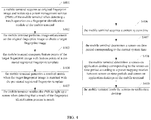
- FIGS. 2 and 2.1 are schematic flow charts illustrating an unlocking method according to a first method embodiment of the present disclosure. Although the unlocking method described herein is executed based on the mobile terminal illustrated in FIG. 1 , it should be noted that, the operation environment of the unlocking method disclosed in the embodiment of the disclosure is not limited to the above mobile terminal.
- the unlocking method of the embodiment of the disclosure includes the following operations.
- the mobile terminal acquires an original fingerprint image and wakes up a power management service (PMS) of the mobile terminal when detecting a touch operation on a fingerprint identification module of the mobile terminal.
- PMS power management service
- the mobile terminal performs a fingerprint identification process on the original fingerprint image.
- the mobile terminal can perform the fingerprint identification process on the original fingerprint image in various implementation manners.
- the disclosure is not particularly restricted herein.
- the mobile terminal performs the fingerprint identification process on the original fingerprint image as follows.
- the mobile terminal performs image enhancement on the original fingerprint image to obtain a target fingerprint image.
- the mobile terminal compares feature points of the target fingerprint image with feature points of a pre-stored registered fingerprint template.
- the mobile terminal generates a result of match when the target fingerprint image is matched with the pre-stored registered fingerprint template.
- the mobile terminal generates a result of not match when the target fingerprint image is not matched with the pre-stored registered fingerprint template.
- the mobile terminal notifies the PMS to light up a screen (screen on) when detecting that a result of the fingerprint identification process is match.
- the mobile terminal can further remove a main lock-screen interface loaded by a loading service and load a preset interface.
- the loading service of the main lock-screen interface can be disabled, that is to say, in the case that the loading service of the main lock-screen interface has been disabled, after the mobile terminal controls the PMS to light up the screen, the mobile terminal can load the preset interface directly.
- the mobile terminal can acquire the original fingerprint image to perform the fingerprint identification process and at the same time, wake up the PMS of the mobile terminal when detecting the touch operation on the fingerprint identification module of the mobile terminal. And then, the mobile terminal can notify the PMS to light up the screen when detecting that the result of the fingerprint identification process is match. Since the mobile terminal starts to wake up the PMS when detecting the touch operation on the fingerprint identification module of the mobile terminal, when the mobile terminal detects that the result of the fingerprint identification process is match, there is no need to take additional time to wake up the PMS; instead, the mobile terminal notifies the PMS to light up the screen according to the result of the comparison directly. As a result, the total time required to switch the mobile terminal from a screen-off state to a screen-on unlock state can be reduced, and unlocking efficiency of the mobile terminal and user experience can be improved.
- the mobile terminal is further configured to execute the following operations.
- the mobile terminal disables the loading service of the main lock-screen interface of the mobile terminal when detecting the touch operation on the fingerprint identification module of the mobile terminal.
- the mobile terminal is further configured to execute the following operation.
- the mobile terminal notifies the PMS to enter a suspending state when detecting that the result of the fingerprint identification process is not match.
- the mobile terminal can notify the PMS to light up the screen, enable the loading service of the main lock-screen interface, and load the main lock-screen interface by the loading service of the main lock-screen interface when detecting that the result of the fingerprint identification process is not match.
- the mobile terminal when the mobile terminal detects that the result of the fingerprint identification process is not match, in order to reduce power consumption of the device, the mobile terminal notifies the PMS to enter a suspending state to save power.
- the mobile terminal after the mobile terminal notifies the PMS to light up the screen, the mobile terminal is further configured to execute the following operations.
- the mobile terminal loads an application desktop of a system of the mobile terminal.
- the mobile terminal loads an application that was running when the screen of the mobile terminal was locked or turned off last time.
- the mobile terminal loads a preset application.
- the mobile terminal has N applications running in the background and N is a positive integer. After the mobile terminal notifies the PMS to light up the screen, the mobile terminal is further configured to execute the following operations.
- the mobile terminal obtains screen-on starting priorities corresponding to the N applications.
- the mobile terminal loads an application having the highest screen-on starting priority among the N applications.
- a weather application For instance, a weather application, instant messaging apps (such as QQ® and WeChat®), a payment app (such as Alipay®), a music player (such as TTPOD®), and a system application are running in the background of the mobile terminal.
- the TTPOD has the highest screen-on starting priority.
- the mobile terminal will load an application interface of the TTPOD, for example, a music-playing lyrics-displaying interface corresponding to a currently played song, a main interface of the TTPOD, or the like can be loaded.
- the mobile terminal lights up and unlocks the screen conveniently, besides, it is also possible to easily load on the current screen an background running application with higher priority, which is beneficial to improving the user experience.
- the mobile terminal after the mobile terminal notifies the PMS to light up the screen, the mobile terminal is further configured to execute the following operations.
- the mobile terminal acquires a current system time.
- the mobile terminal determines a screen-on time period corresponding to the current system time.
- the mobile terminal determines a screen-on application desktop corresponding to the screen-on time period according to a preset mapping relation between screen-on time periods and screen-on application desktops of the mobile terminal.
- the mobile terminal loads the screen-on application desktop.
- the mobile terminal includes three application desktops, that is, application desktop 1, application desktop 2, and application desktop 3.
- Application desktop 1 is mainly provided with office applications such as a notepad, a mailbox application, an intra-enterprise chat application, and so on.
- Application desktop 2 is mainly provided with entertainment applications such as various game applications, music players, video players, etc.
- Application desktop 3 is mainly provided with other types of applications such as ride-hailing applications, various system applications, and the like.
- the user can preset a mapping relation between the three application desktops and different time periods. For example, 9:00 a.m. to 12:00 noon and 2:00 p.m. to 5:00 p.m. are set as working time periods and correspond to application desktop 1. 12:00 noon to 2:00 p.m.
- the mobile terminal is set as an entertainment time period and corresponds to application desktop 2.
- the mobile terminal detects that the current system time is 10:00 a.m., the mobile terminal determines the corresponding screen-on time period as the working time period. After the mobile terminal determines that application desktop 1 corresponds to the working time period, the mobile terminal loads application desktop 1. In this way, it helps to improve convenience for the user in using applications corresponding to different time periods and improve user experience.
- the mobile terminal can further determine a target application among the applications of the mobile terminal and loads the target application.
- the target application refers to an application that is most frequently used in the time period corresponding to the current system time. For example, the user usually opens the Uber® app at 9:30 p.m., so the mobile terminal can record in advance usage times or usage frequencies of various applications used by the user after 9:00 p.m. in the last month for example.
- the mobile terminal can query an application with the most usage time or highest usage frequency based on the recorded history record (usage times or usage frequencies of applications in a certain time period or different time periods) and loads the application. Therefore, it is possible to provide the user with application loading service more conveniently and smartly and help to improve the user experience.
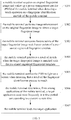
- FIGS. 3 and 3.1 are schematic flow charts illustrating an unlocking method according to a second method embodiment of the present disclosure. As illustrated in FIGS. 3 and 3.1 , the method of the embodiment of the disclosure includes the following operations.
- the mobile terminal acquires an original fingerprint image and wakes up a power management service (PMS) of the mobile terminal when detecting a touch operation on a fingerprint identification module of the mobile terminal.
- PMS power management service
- the mobile terminal performs a fingerprint identification process on the original fingerprint image.
- the mobile terminal notifies the PMS to light up a screen when detecting that a result of the fingerprint identification process is match.
- the mobile terminal loads an application that was running when the screen of the mobile terminal was locked or turned off last time.
- the application that was running when the screen of the mobile terminal was locked or turned off last time is a music player. Consequently, the mobile terminal will load the music player after notifying the PMS to light up the screen. In this way, the application interface of the recently used application can be provided to the user quickly and conveniently and user experience can be improved.
- the mobile terminal can acquire the original fingerprint image to perform the fingerprint identification process and at the same time, wake up the PMS of the mobile terminal when detecting the touch operation on the fingerprint identification module of the mobile terminal. Thereafter, the mobile terminal can notify the PMS to light up the screen when detecting that the result of the fingerprint identification process is match.
- the mobile terminal starts to wake up the PMS when the touch operation on the fingerprint identification module of the mobile terminal is detected, when the mobile terminal detects that the result of the fingerprint identification process is match, there is no need to consume additional time to wake up the PMS; instead, the mobile terminal notifies the PMS to light up the screen according to the result of the comparison directly. Consequently, for the mobile terminal, the total time of switching from a screen-off state to a screen-on unlock state can be shortened, so as to help to improve unlocking efficiency of the mobile terminal and user experience.
- the mobile terminal can timely load the application that was running when the screen of the mobile terminal was locked or turned off last time after notifying the PMS to light up the screen, so that the user can be provided with the application interface of the recently used application conveniently and the user experience can be improved.
- FIG. 4 is a schematic flow chart illustrating an unlocking method according to a third method embodiment of the present disclosure. As illustrated in FIG. 4 , the method of the embodiment of the disclosure includes the following operations.
- a mobile terminal acquires an original fingerprint image and wakes up a power management service (PMS) of the mobile terminal when detecting a touch operation on a fingerprint identification module of the mobile terminal.
- PMS power management service
- the mobile terminal performs image enhancement on the original fingerprint image to obtain a target fingerprint image.
- the mobile terminal compares feature points of the target fingerprint image with feature points of a pre-stored registered fingerprint template.
- the mobile terminal generates a result of match when the target fingerprint image is matched with the pre-stored registered fingerprint template.
- the mobile terminal notifies the PMS to light up a screen when detecting that a result of the fingerprint identification process is match.
- the mobile terminal acquires a current system time.
- the mobile terminal determines a screen-on time period corresponding to the current system time.
- the mobile terminal determines a screen-on application desktop corresponding to the screen-on time period according to a preset mapping relation between screen-on time periods and screen-on application desktops of the mobile terminal.
- the mobile terminal loads the screen-on application desktop.
- the mobile terminal includes three application desktops, that is, application desktop 1, application desktop 2, and application desktop 3.
- Application desktop 1 is mainly provided with office applications such as a notepad, a mailbox application, an intra-enterprise chat application, and so forth.
- Application desktop 2 is mainly provided with entertainment applications such as various game applications, music players, video players, etc.
- Application desktop 3 is mainly provided with other types of applications such as ride-hailing applications, various system applications, and the like.
- the user can preset a mapping relation between the three application desktops and different time periods. For example, 9:00 a.m. to 12:00 noon and 2:00 p.m. to 5:00 p.m. are set as working time periods and correspond to application desktop 1. 12:00 noon to 2:00 p.m.
- the mobile terminal is set as an entertainment time period and corresponds to application desktop 2.
- the corresponding screen-on time period is determined as the working time period.
- the mobile terminal loads application desktop 1. In this way, it is beneficial to improving convenience of the user in using applications corresponding to different time periods and user experience.
- the mobile terminal can acquire the original fingerprint image to perform the fingerprint identification process and at the same time, wake up the PMS of the mobile terminal when detecting the touch operation on the fingerprint identification module of the mobile terminal. And then, the mobile terminal can notify the PMS to light up the screen when detecting that the result of the fingerprint identification process is match. Since the mobile terminal starts to wake up the PMS when detecting the touch operation on the fingerprint identification module of the mobile terminal, when the mobile terminal detects that the result of the fingerprint identification process is match, there is no need to consume additional time to wake up the PMS; instead, the mobile terminal notifies the PMS to light up the screen according to the result of the comparison directly. As a result, the total time required to switch the mobile terminal from a screen-off state to a screen-on unlock state can be reduced, and unlocking efficiency of the mobile terminal and user experience can be improved.
- the mobile terminal can load the screen-on application desktop corresponding to the screen-on time period in time, where the screen-on time period corresponds to the current system time. As a result, it is possible to improve convenience of using the application corresponding to the current time period by the user and user experience.
- FIG. 5 is a schematic flow chart illustrating an unlocking method according to a fourth method embodiment of the present disclosure. As illustrated in FIG. 5 , the method of the embodiment of the disclosure includes the following operations.
- a mobile terminal acquires an original fingerprint image and wakes up a power management service (PMS) of the mobile terminal when detecting a touch operation on a fingerprint identification module of the mobile terminal.
- PMS power management service
- the mobile terminal performs image enhancement on the original fingerprint image to obtain a target fingerprint image.
- the mobile terminal compares feature points of the target fingerprint image with feature points of a pre-stored registered fingerprint template.
- the mobile terminal generates a result of match when the target fingerprint image is matched with the pre-stored registered fingerprint template.
- the mobile terminal notifies the PMS to light up a screen when detecting that a result of the fingerprint identification process is match.
- the mobile terminal determines, from among applications of the mobile terminal, a target application used most frequently in a time period corresponding to a current system time.
- the mobile terminal loads the target application.
- the user usually opens the Uber® app at 9:30 p.m., so the mobile terminal can record in advance usage times or usage frequencies of various applications used by the user after 9:00 p.m. in the last month for instance.
- the mobile terminal can query an application with the most usage time or highest usage frequency based on the recorded history record (usage times or usage frequencies of applications in a certain time period or different time periods) and loads the application. Therefore, the user can be provided with application loading service more conveniently and smartly and user experience can be improved.
- the device embodiment is configured to execute the methods of the method embodiments.
- FIG. 6 is a block diagram illustrating components of the mobile terminal according to a device embodiment of the present disclosure.
- the mobile terminal can include an initializing unit 601, an identification processing unit 602, and a screen-on control unit 603.
- the initializing unit 601 is configured to acquire an original fingerprint image and wake up a power management service (PMS) of the mobile terminal when detecting a touch operation on a fingerprint identification module of the mobile terminal.
- PMS power management service
- the identification processing unit 602 is configured to perform a fingerprint identification process on the original fingerprint image.
- the screen-on control unit 603 is configured to notify the PMS to light up a screen when detecting that a result of the fingerprint identification process is match.
- the mobile terminal further includes a suspending unit.
- the suspending unit is configured to notify the PMS to enter a suspending state when detecting that the result of the fingerprint identification process is not match.
- the identification processing unit 602 is configured to: perform image enhancement on the original fingerprint image to obtain a target fingerprint image, compare feature points of the target fingerprint image with feature points of a pre-stored registered fingerprint template, and generate a result of match when the target fingerprint image is matched with the pre-stored registered fingerprint template, or generate a result of not match when the target fingerprint image is not matched with the pre-stored registered fingerprint template.
- the mobile terminal further includes a first loading unit, a second loading unit, and a third loading unit.
- the first loading unit is configured to load an application desktop of a system of the mobile terminal after the screen-on control unit 603 notifies the PMS to light up the screen.
- the second loading unit is configured to load an application that was running when the screen of the mobile terminal was locked or turned off last time after the screen-on control unit 603 notifies the PMS to light up the screen.
- the third loading unit is configured to load a preset application after the screen-on control unit 603 notifies the PMS to light up the screen.
- the mobile terminal has N applications running in the background and N is a positive integer.
- the initializing unit 601 is further configured to obtain screen-on starting priorities corresponding to the N applications after the screen-on control unit 603 notifies the PMS to light up the screen.
- the mobile terminal further includes a fourth loading unit.
- the fourth loading unit is configured to load an application having the highest screen-on starting priority among the N applications.
- the initializing unit 601 is further configured to acquire a current system time.
- the mobile terminal further includes a determining unit and a fifth loading unit.
- the determining unit is configured to determine a screen-on time period corresponding to the current system time.
- the determining unit is further configured to determine a screen-on application desktop corresponding to the screen-on time period according to a preset mapping relation between screen-on time periods and screen-on application desktops of the mobile terminal.
- the fifth loading unit is configured to load the screen-on application desktop.
- the mobile terminal described in the device embodiment of the disclosure is presented in the form of functional units.
- the term "unit” used herein should be understood as the broadest meaning as possible, and an object for implementing functions defined by each "unit” may be, for example, an integrated circuit (ASIC), a single circuit, a processor (shared, dedicated, or chipset) and a memory for executing one or more software or firmware programs, a combinational logic circuit, and/or other suitable components that can achieve the above described functions.
- ASIC integrated circuit
- processor shared, dedicated, or chipset
- memory for executing one or more software or firmware programs
- combinational logic circuit and/or other suitable components that can achieve the above described functions.
- the form of hardware carriers of the mobile terminal may be the mobile terminal 100 illustrated in FIG. 1 .
- Functions of the initializing unit 601 can be achieved by the processor 101 and the memory 102 of the mobile terminal 100.
- the processor 101 executes the initializing module in the memory 102 to acquire the original fingerprint image and wake up the PMS of the mobile terminal.
- Functions of the identification processing unit 602 can be implemented by the processor 101 and the memory 102 of the mobile terminal 100.
- the processor 101 executes the identification processing module in the memory 102 to perform the fingerprint identification process on the original fingerprint image.
- Functions of the screen-on control unit 603 can be realized by the processor 101 and the memory 102 of the mobile terminal 100.
- the processor 101 executes the screen-on control module in the memory 102 to notify the PSM to light up the screen.
- the initializing module of the mobile terminal acquires the original fingerprint image and at the same time, wakes up the PMS of the mobile terminal when detecting the touch operation on the fingerprint identification module of the mobile terminal. Thereafter, the identification processing module of the mobile terminal performs the fingerprint identification process on the original fingerprint image. At last, the screen-on control module of the mobile terminal notifies the PMS to light up the screen when detecting that the result of the fingerprint identification process is match.
- the mobile terminal starts to wake up the PMS when the touch operation on the fingerprint identification module of the mobile terminal is detected, when the mobile terminal detects that the result of the fingerprint identification process is match, there is no need to consume additional time to wake up the PMS; instead, the mobile terminal notifies the PMS to light up the screen according to the result of the comparison directly. Consequently, for the mobile terminal, the total time of switching from a screen-off state to a screen-on unlock state can be shortened, so as to help to improve unlocking efficiency of the mobile terminal and user experience.
- Embodiments of the present disclosure also provide a computer readable storage medium.
- the computer readable storage medium can store programs which, when executed, can implement all or part of the operations of any of the unlocking methods described in the above-described method embodiments.
- the apparatus disclosed in embodiments provided herein may be implemented in other manners.
- the device/apparatus embodiments described above are merely illustrative; for instance, the division of the unit is only a logical function division and there can be other manners of division during actual implementations, for example, multiple units or components may be combined or may be integrated into another system, or some features may be ignored, omitted, or not performed.
- coupling or communication connection between each illustrated or discussed component may be direct coupling or communication connection, or may be indirect coupling or communication among devices or units via some interfaces, and may be electrical connection, mechanical connection, or other forms of connection.
- the units described as separate components may or may not be physically separated, the components illustrated as units may or may not be physical units, that is, they may be in the same place or may be distributed to multiple network elements. All or part of the units may be selected according to actual needs to achieve the purpose of the technical solutions of the embodiments.
- the functional units in various embodiments of the present disclosure may be integrated into one processing unit, or each unit may be physically present, or two or more units may be integrated into one unit.
- the above-mentioned integrated unit can be implemented in the form of hardware or a software function unit.
- the integrated unit may be stored in a computer-readable memory when it is implemented in the form of a software functional unit and is sold or used as a separate product.
- the technical solutions of the present disclosure essentially, or the part of the technical solutions that contributes to the related art, or all or part of the technical solutions, may be embodied in the form of a software product which is stored in a memory and includes instructions for causing a computer device (which may be a personal computer, a server, or a network device and so on) to perform all or part of the steps described in the various embodiments of the present disclosure.
- the memory includes various medium capable of storing program codes, such as a USB (universal serial bus) flash disk, a read-only memory (ROM), a random access memory (RAM), a removable hard disk, Disk, compact disc (CD), or the like.
Landscapes
- Engineering & Computer Science (AREA)
- Theoretical Computer Science (AREA)
- Software Systems (AREA)
- Computer Networks & Wireless Communication (AREA)
- Signal Processing (AREA)
- Human Computer Interaction (AREA)
- Computer Security & Cryptography (AREA)
- General Engineering & Computer Science (AREA)
- General Physics & Mathematics (AREA)
- Physics & Mathematics (AREA)
- Computer Hardware Design (AREA)
- Multimedia (AREA)
- Telephone Function (AREA)
- User Interface Of Digital Computer (AREA)
- Image Input (AREA)
Abstract
Description
- This application claims priority to Chinese Patent Application No.
201610147551.X, filed on March, 14, 2016 - The present disclosure relates to the field of mobile terminal technology, and particularly to an unlocking method and a mobile terminal.
- At present, fingerprint identification technology has become a standard configuration of mainstream mobile terminals. When the fingerprint identification technology is used in unlocking, waking up, and other functions of the mobile terminal in a screen-off state, this process can be achieved as extracting features, saving data and comparing, lighting up a screen, and unlocking a system. At the beginning, an original fingerprint image is read or acquired by a fingerprint reader, and then the acquired original fingerprint image is processed preliminarily to make it clearer. Thereafter, compare feature points of the processed original fingerprint image with feature points of registered fingerprint templates. The screen can be lit up and the system can be unlocked when the processed original fingerprint image matches the registered fingerprint template. Time from reading the original fingerprint image to unlocking the system is generally called unlocking time.
- The length of the unlocking time has become one aspect of competition of various manufacturers. How to optimize the unlocking time of the mobile terminal has become a technical problem to be solved in the field.
- Embodiments of the disclosure provide an unlocking method and a mobile terminal to shorten the total time required to switch the mobile terminal from a screen-off state to a screen-on unlock state, which is beneficial to improving unlocking efficiency of the mobile terminal and user experience.
- According to the embodiments of the disclosure, there is provided an unlocking method. The method includes the following operations.
- An original fingerprint image is acquired and a power management service (PMS) of a mobile terminal is woken up when detecting a touch operation on a fingerprint identification module of the mobile terminal.
- A fingerprint identification process is performed on the original fingerprint image.
- The PMS is notified to light up a screen when detecting that a result of the fingerprint identification process is match.
- To describe the technical solutions in the embodiments of the present disclosure more clearly, the following briefly introduces the accompanying drawings required for describing the embodiments. Apparently, the accompanying drawings in the following description illustrate some embodiments of the present disclosure. Those of ordinary skill in the art may also obtain other drawings based on these accompanying drawings without creative efforts.
-
FIG. 1 is a schematic structural diagram illustrating a mobile terminal according to an embodiment of the present disclosure. -
FIG. 2 is a schematic flow chart illustrating an unlocking method according to a first method embodiment of the present disclosure. -
FIG. 2.1 is a schematic flow chart illustrating an unlocking method according to a first method embodiment of the present disclosure. -
FIG. 3 is a schematic flow chart illustrating an unlocking method according to a second method embodiment of the present disclosure. -
FIG. 3.1 is a schematic flow chart illustrating an unlocking method according to a second method embodiment of the present disclosure. -
FIG. 4 is a schematic flow chart illustrating an unlocking method according to a third method embodiment of the present disclosure. -
FIG. 5 is a schematic flow chart illustrating an unlocking method according to a fourth method embodiment of the present disclosure. -
FIG. 6 is a block diagram illustrating a structure of a mobile terminal according to a device embodiment of the present disclosure. - Technical solutions in the embodiments of the present disclosure will be described clearly and completely hereinafter with reference to the accompanying drawings in the embodiments of the present disclosure. Apparently, the described embodiments are merely some rather than all embodiments of the present disclosure. All other embodiments obtained by those of ordinary skill in the art based on the embodiments of the present disclosure without creative efforts shall fall within the protection scope of the present disclosure.
- The terms "first", "second", "third", and "fourth" used in the specification, the claims, and the accompany drawings of the present disclosure are used for distinguishing between different objects rather than describing a particular order. The terms "include", "comprise", and "have" as well as variations thereof are intended to cover non-exclusive inclusion. For example, a process, method, system, product, or apparatus including a series of steps or units is not limited to the listed steps or units, it can optionally include other steps or units that are not listed; alternatively, other steps or units inherent to the process, method, product, or device can be included either.
- The term "embodiment" or "implementation" referred to herein means that a particular feature, structure, or feature described in conjunction with the embodiment may be contained in at least one embodiment of the present disclosure. The phrase appearing in various places in the specification does not necessarily refer to the same embodiment, nor does it refer to an independent or alternative embodiment that is mutually exclusive with other embodiments. It is expressly and implicitly understood by those skilled in the art that an embodiment described herein may be combined with other embodiments.
- To better understand an unlocking method and a mobile terminal of the embodiments of the disclosure, a mobile terminal applicable to the embodiments of the disclosure will be described hereinafter.
FIG. 1 is an architecture diagram illustrating amobile terminal 100 according to an embodiment of the disclosure. Themobile terminal 100 inFIG. 1 can include at least oneprocessor 101, at least onememory 102, at least one communication bus 103, a receiving/transmitting circuit 104, anantenna 105, at least onetouch screen 106, at least onedisplay screen 107, amicrophone 108, aspeaker 109, a SIM (subscriber identification module)card 110, afingerprint identification module 111, a Bluetoothcontroller 113, and a digital signal processing circuit 114. Thememory 102 includes at least one selected from a group consisting of a random access memory, a non-volatile memory, and an external memory. Theprocessor 101 is configured to control communication with an external cellular network through the receiving/transmitting circuit 104 and theantenna 105. Thememory 102 stores instruction sets therein and the instruction sets are integrated with an operation system or application programs that can be executed by theprocessor 101. The instruction sets can instruct theprocessor 101 to execute the unlocking method of the embodiments of the disclosure. For example, the mobile terminal can be any general electronic device such as a smart phone, a tablet, a laptop, or the like. Wearable devices in communication connection with the mobile terminal can be electronic devices such as smart bracelets, smart suits, smart shoes, and the like. - The
processor 101 of themobile terminal 100 can be coupled with the at least onememory 102. Thememory 102 stores the instruction sets in advance, where the instruction sets includes an initializing module, an identification processing module, and a screen-on control module. Thememory 102 can further store a kernel module and the kernel module includes an operation system (e.g., WINDOWS™, ANDROID™, IOS™, etc.). - The
processor 101 invokes the instruction sets to execute the unlocking method of the embodiment of the disclosure as follows. - The
processor 101 of themobile terminal 100 executes the initializing module in thememory 102 to acquire an original fingerprint image and wake up a power management service (PMS) of the mobile terminal when detecting a touch operation on a fingerprint identification module of the mobile terminal. - The
processor 101 of themobile terminal 100 executes the identification processing module in thememory 102 to perform a fingerprint identification process on the original fingerprint image. - The
processor 101 of themobile terminal 100 executes the screen-on control module in thememory 102 to notify the PMS to light up a screen when detecting that a result of the fingerprint identification process is match. - According to the embodiment, the mobile terminal can acquire the original fingerprint image to perform the fingerprint identification process and at the same time, wake up the PMS of the mobile terminal when detecting the touch operation on the fingerprint identification module of the mobile terminal. Thereafter, the mobile terminal can notify the PMS to light up the screen when detecting that the result of the fingerprint identification process is match. As the mobile terminal wakes up the PMS immediately when the touch operation on the fingerprint identification module of the mobile terminal is detected, when the mobile terminal detects that the result of the fingerprint identification process is match, there is no need to consume additional time to wake up the PMS; instead, the mobile terminal notifies the PMS to light up the screen according to the result of the comparison directly. Therefore, for the mobile terminal, the total time of switching from a screen-off state to a screen-on unlock state can be shortened, so as to help to improve unlocking efficiency of the mobile terminal and user experience.
- As one implementation, the
processor 101 is further configured to disable a loading service of a main lock-screen interface of the mobile terminal when detecting the touch operation on the fingerprint identification module of the mobile terminal. - As one implementation, the
processor 101 is further configured to notify the PMS to enter a suspending state when detecting that the result of the fingerprint identification process is not match. Alternatively, theprocessor 101 is further configured to notify the PMS to light up the screen, enable the loading service of the main lock-screen interface, and load the main lock-screen interface by the loading service of the main lock-screen interface when detecting that the result of the fingerprint identification process is not match. - It can be seen that, when the mobile terminal detects that the result of the fingerprint identification process is not match, to reduce power consumption of the device, the mobile terminal notifies the PMS to enter a suspending state, which is advantageous for saving power.
- As one implementation, the
processor 101 performs the fingerprint identification process on the original fingerprint image as follows. - Image enhancement is performed on the original fingerprint image to obtain a target fingerprint image.
- Compare feature points of the target fingerprint image with feature points of a pre-stored registered fingerprint template.
- A result of match is generated when the target fingerprint image is matched with the pre-stored registered fingerprint template.
- Otherwise, a result of not match is generated when the target fingerprint image is not matched with the pre-stored registered fingerprint template.
- It should be noted that, the manner in which the fingerprint identification process is performed on the original fingerprint image can be various. The disclosure is not limited thereto. In addition, since the total time required for performing the fingerprint identification process is generally within 300ms and it usually takes about 400ms for the operation system of the mobile terminal to wake up the PSM, that is, if the process of performing the fingerprint identification process and the process of waking up the PSM are performed sequentially, a duration of about 700ms will be consumed. By adopting the parallel processing manner described in the embodiments of the disclosure, that is, when the mobile terminal starts to perform the fingerprint identification process, the process of waking up the PSM is performed simultaneously; in this manner, about 300ms can be saved. As can be seen, the unlocking method of the embodiments of the disclosure can shorten the time required to unlock the mobile terminal in the screen-on state and improve the user experience.
- As one implementation, after the
processor 101 notifies the PMS to light up the screen, theprocessor 101 is further configured to: load an application desktop of a system of the mobile terminal, load an application that was running when the screen of the mobile terminal was locked or turned off last time, or load a preset application. - As one implementation, N applications are running in the background of the mobile terminal and N is a positive integer. The
processor 101 is further configured to obtain screen-on starting priorities corresponding to the N applications and load an application having the highest screen-on starting priority among the N applications, after theprocessor 101 notifies the PMS to light up the screen. - As one implementation, after the
processor 101 notifies the PMS to light up the screen, theprocessor 101 is further configured to: acquire a current system time, determine a screen-on time period corresponding to the current system time, determine a screen-on application desktop corresponding to the screen-on time period according to a preset mapping relation between screen-on time periods and screen-on application desktops of the mobile terminal, and load the screen-on application desktop. - Consistent with the technical solutions described above, as an implementation,
FIGS. 2 and2.1 are schematic flow charts illustrating an unlocking method according to a first method embodiment of the present disclosure. Although the unlocking method described herein is executed based on the mobile terminal illustrated inFIG. 1 , it should be noted that, the operation environment of the unlocking method disclosed in the embodiment of the disclosure is not limited to the above mobile terminal. - As illustrated in
FIGS. 2 and2.1 , the unlocking method of the embodiment of the disclosure includes the following operations. - At S201, the mobile terminal acquires an original fingerprint image and wakes up a power management service (PMS) of the mobile terminal when detecting a touch operation on a fingerprint identification module of the mobile terminal.
- At S202, the mobile terminal performs a fingerprint identification process on the original fingerprint image.
- It can be understood that, the mobile terminal can perform the fingerprint identification process on the original fingerprint image in various implementation manners. The disclosure is not particularly restricted herein.
- As one example, the mobile terminal performs the fingerprint identification process on the original fingerprint image as follows.
- The mobile terminal performs image enhancement on the original fingerprint image to obtain a target fingerprint image.
- The mobile terminal compares feature points of the target fingerprint image with feature points of a pre-stored registered fingerprint template.
- The mobile terminal generates a result of match when the target fingerprint image is matched with the pre-stored registered fingerprint template.
- Otherwise, the mobile terminal generates a result of not match when the target fingerprint image is not matched with the pre-stored registered fingerprint template.
- At S203, the mobile terminal notifies the PMS to light up a screen (screen on) when detecting that a result of the fingerprint identification process is match.
- When the mobile terminal detects that the result of the fingerprint identification process is match, the mobile terminal can further remove a main lock-screen interface loaded by a loading service and load a preset interface. Alternatively, the loading service of the main lock-screen interface can be disabled, that is to say, in the case that the loading service of the main lock-screen interface has been disabled, after the mobile terminal controls the PMS to light up the screen, the mobile terminal can load the preset interface directly.
- According to the embodiment, the mobile terminal can acquire the original fingerprint image to perform the fingerprint identification process and at the same time, wake up the PMS of the mobile terminal when detecting the touch operation on the fingerprint identification module of the mobile terminal. And then, the mobile terminal can notify the PMS to light up the screen when detecting that the result of the fingerprint identification process is match. Since the mobile terminal starts to wake up the PMS when detecting the touch operation on the fingerprint identification module of the mobile terminal, when the mobile terminal detects that the result of the fingerprint identification process is match, there is no need to take additional time to wake up the PMS; instead, the mobile terminal notifies the PMS to light up the screen according to the result of the comparison directly. As a result, the total time required to switch the mobile terminal from a screen-off state to a screen-on unlock state can be reduced, and unlocking efficiency of the mobile terminal and user experience can be improved.
- As one implementation, in this embodiment, the mobile terminal is further configured to execute the following operations.
- The mobile terminal disables the loading service of the main lock-screen interface of the mobile terminal when detecting the touch operation on the fingerprint identification module of the mobile terminal.
- As one implementation, in this embodiment, the mobile terminal is further configured to execute the following operation.
- The mobile terminal notifies the PMS to enter a suspending state when detecting that the result of the fingerprint identification process is not match. Alternatively, the mobile terminal can notify the PMS to light up the screen, enable the loading service of the main lock-screen interface, and load the main lock-screen interface by the loading service of the main lock-screen interface when detecting that the result of the fingerprint identification process is not match.
- It can be seen that, when the mobile terminal detects that the result of the fingerprint identification process is not match, in order to reduce power consumption of the device, the mobile terminal notifies the PMS to enter a suspending state to save power.
- As one implementation, in this embodiment, after the mobile terminal notifies the PMS to light up the screen, the mobile terminal is further configured to execute the following operations.
- The mobile terminal loads an application desktop of a system of the mobile terminal.
- Alternatively, the mobile terminal loads an application that was running when the screen of the mobile terminal was locked or turned off last time.
- Alternatively, the mobile terminal loads a preset application.
- As one implementation, the mobile terminal has N applications running in the background and N is a positive integer. After the mobile terminal notifies the PMS to light up the screen, the mobile terminal is further configured to execute the following operations.
- The mobile terminal obtains screen-on starting priorities corresponding to the N applications.
- The mobile terminal loads an application having the highest screen-on starting priority among the N applications.
- For instance, a weather application, instant messaging apps (such as QQ® and WeChat®), a payment app (such as Alipay®), a music player (such as TTPOD®), and a system application are running in the background of the mobile terminal. In addition, the TTPOD has the highest screen-on starting priority. As a result, the mobile terminal will load an application interface of the TTPOD, for example, a music-playing lyrics-displaying interface corresponding to a currently played song, a main interface of the TTPOD, or the like can be loaded.
- In this embodiment, the mobile terminal lights up and unlocks the screen conveniently, besides, it is also possible to easily load on the current screen an background running application with higher priority, which is beneficial to improving the user experience.
- As one implementation, in this embodiment, after the mobile terminal notifies the PMS to light up the screen, the mobile terminal is further configured to execute the following operations.
- The mobile terminal acquires a current system time.
- The mobile terminal determines a screen-on time period corresponding to the current system time.
- The mobile terminal determines a screen-on application desktop corresponding to the screen-on time period according to a preset mapping relation between screen-on time periods and screen-on application desktops of the mobile terminal.
- The mobile terminal loads the screen-on application desktop.
- For instance, the mobile terminal includes three application desktops, that is, application desktop 1, application desktop 2, and application desktop 3. Application desktop 1 is mainly provided with office applications such as a notepad, a mailbox application, an intra-enterprise chat application, and so on. Application desktop 2 is mainly provided with entertainment applications such as various game applications, music players, video players, etc. Application desktop 3 is mainly provided with other types of applications such as ride-hailing applications, various system applications, and the like. The user can preset a mapping relation between the three application desktops and different time periods. For example, 9:00 a.m. to 12:00 noon and 2:00 p.m. to 5:00 p.m. are set as working time periods and correspond to application desktop 1. 12:00 noon to 2:00 p.m. is set as an entertainment time period and corresponds to application desktop 2. When the mobile terminal detects that the current system time is 10:00 a.m., the mobile terminal determines the corresponding screen-on time period as the working time period. After the mobile terminal determines that application desktop 1 corresponds to the working time period, the mobile terminal loads application desktop 1. In this way, it helps to improve convenience for the user in using applications corresponding to different time periods and improve user experience.
- Furthermore, after the mobile terminal notifies the PMS to light up the screen, the mobile terminal can further determine a target application among the applications of the mobile terminal and loads the target application. The target application refers to an application that is most frequently used in the time period corresponding to the current system time. For example, the user usually opens the Uber® app at 9:30 p.m., so the mobile terminal can record in advance usage times or usage frequencies of various applications used by the user after 9:00 p.m. in the last month for example. After the mobile terminal notifies the PMS to light up the screen, the mobile terminal can query an application with the most usage time or highest usage frequency based on the recorded history record (usage times or usage frequencies of applications in a certain time period or different time periods) and loads the application. Therefore, it is possible to provide the user with application loading service more conveniently and smartly and help to improve the user experience.
-
FIGS. 3 and3.1 are schematic flow charts illustrating an unlocking method according to a second method embodiment of the present disclosure. As illustrated inFIGS. 3 and3.1 , the method of the embodiment of the disclosure includes the following operations. - At S301, the mobile terminal acquires an original fingerprint image and wakes up a power management service (PMS) of the mobile terminal when detecting a touch operation on a fingerprint identification module of the mobile terminal.
- At S302, the mobile terminal performs a fingerprint identification process on the original fingerprint image.
- At S303, the mobile terminal notifies the PMS to light up a screen when detecting that a result of the fingerprint identification process is match.
- At S304, the mobile terminal loads an application that was running when the screen of the mobile terminal was locked or turned off last time.
- For example, the application that was running when the screen of the mobile terminal was locked or turned off last time is a music player. Consequently, the mobile terminal will load the music player after notifying the PMS to light up the screen. In this way, the application interface of the recently used application can be provided to the user quickly and conveniently and user experience can be improved.
- According to the embodiment, the mobile terminal can acquire the original fingerprint image to perform the fingerprint identification process and at the same time, wake up the PMS of the mobile terminal when detecting the touch operation on the fingerprint identification module of the mobile terminal. Thereafter, the mobile terminal can notify the PMS to light up the screen when detecting that the result of the fingerprint identification process is match. As the mobile terminal starts to wake up the PMS when the touch operation on the fingerprint identification module of the mobile terminal is detected, when the mobile terminal detects that the result of the fingerprint identification process is match, there is no need to consume additional time to wake up the PMS; instead, the mobile terminal notifies the PMS to light up the screen according to the result of the comparison directly. Consequently, for the mobile terminal, the total time of switching from a screen-off state to a screen-on unlock state can be shortened, so as to help to improve unlocking efficiency of the mobile terminal and user experience.
- Moreover, the mobile terminal can timely load the application that was running when the screen of the mobile terminal was locked or turned off last time after notifying the PMS to light up the screen, so that the user can be provided with the application interface of the recently used application conveniently and the user experience can be improved.
-
FIG. 4 is a schematic flow chart illustrating an unlocking method according to a third method embodiment of the present disclosure. As illustrated inFIG. 4 , the method of the embodiment of the disclosure includes the following operations. - At S401, a mobile terminal acquires an original fingerprint image and wakes up a power management service (PMS) of the mobile terminal when detecting a touch operation on a fingerprint identification module of the mobile terminal.
- At S402, the mobile terminal performs image enhancement on the original fingerprint image to obtain a target fingerprint image.
- At S403, the mobile terminal compares feature points of the target fingerprint image with feature points of a pre-stored registered fingerprint template.
- At S404, the mobile terminal generates a result of match when the target fingerprint image is matched with the pre-stored registered fingerprint template.
- At S405, the mobile terminal notifies the PMS to light up a screen when detecting that a result of the fingerprint identification process is match.
- At S406, the mobile terminal acquires a current system time.
- At S407, the mobile terminal determines a screen-on time period corresponding to the current system time.
- At S408, the mobile terminal determines a screen-on application desktop corresponding to the screen-on time period according to a preset mapping relation between screen-on time periods and screen-on application desktops of the mobile terminal.
- At S409, the mobile terminal loads the screen-on application desktop.
- For example, the mobile terminal includes three application desktops, that is, application desktop 1, application desktop 2, and application desktop 3. Application desktop 1 is mainly provided with office applications such as a notepad, a mailbox application, an intra-enterprise chat application, and so forth. Application desktop 2 is mainly provided with entertainment applications such as various game applications, music players, video players, etc. Application desktop 3 is mainly provided with other types of applications such as ride-hailing applications, various system applications, and the like. The user can preset a mapping relation between the three application desktops and different time periods. For example, 9:00 a.m. to 12:00 noon and 2:00 p.m. to 5:00 p.m. are set as working time periods and correspond to application desktop 1. 12:00 noon to 2:00 p.m. is set as an entertainment time period and corresponds to application desktop 2. When the mobile terminal detects that the current system time is 10:00 a.m., the corresponding screen-on time period is determined as the working time period. After the mobile terminal determines that application desktop 1 corresponds to the working time period, the mobile terminal loads application desktop 1. In this way, it is beneficial to improving convenience of the user in using applications corresponding to different time periods and user experience.
- According to the embodiment, the mobile terminal can acquire the original fingerprint image to perform the fingerprint identification process and at the same time, wake up the PMS of the mobile terminal when detecting the touch operation on the fingerprint identification module of the mobile terminal. And then, the mobile terminal can notify the PMS to light up the screen when detecting that the result of the fingerprint identification process is match. Since the mobile terminal starts to wake up the PMS when detecting the touch operation on the fingerprint identification module of the mobile terminal, when the mobile terminal detects that the result of the fingerprint identification process is match, there is no need to consume additional time to wake up the PMS; instead, the mobile terminal notifies the PMS to light up the screen according to the result of the comparison directly. As a result, the total time required to switch the mobile terminal from a screen-off state to a screen-on unlock state can be reduced, and unlocking efficiency of the mobile terminal and user experience can be improved.
- In addition, after the mobile terminal notifies the PMS to light up the screen, the mobile terminal can load the screen-on application desktop corresponding to the screen-on time period in time, where the screen-on time period corresponds to the current system time. As a result, it is possible to improve convenience of using the application corresponding to the current time period by the user and user experience.
-
FIG. 5 is a schematic flow chart illustrating an unlocking method according to a fourth method embodiment of the present disclosure. As illustrated inFIG. 5 , the method of the embodiment of the disclosure includes the following operations. - At S501, a mobile terminal acquires an original fingerprint image and wakes up a power management service (PMS) of the mobile terminal when detecting a touch operation on a fingerprint identification module of the mobile terminal.
- At S502, the mobile terminal performs image enhancement on the original fingerprint image to obtain a target fingerprint image.
- At S503, the mobile terminal compares feature points of the target fingerprint image with feature points of a pre-stored registered fingerprint template.
- At S504, the mobile terminal generates a result of match when the target fingerprint image is matched with the pre-stored registered fingerprint template.
- At S505, the mobile terminal notifies the PMS to light up a screen when detecting that a result of the fingerprint identification process is match.
- At S506, the mobile terminal determines, from among applications of the mobile terminal, a target application used most frequently in a time period corresponding to a current system time.
- At S507, the mobile terminal loads the target application.
- For instance, the user usually opens the Uber® app at 9:30 p.m., so the mobile terminal can record in advance usage times or usage frequencies of various applications used by the user after 9:00 p.m. in the last month for instance. After the mobile terminal notifies the PMS to light up the screen, the mobile terminal can query an application with the most usage time or highest usage frequency based on the recorded history record (usage times or usage frequencies of applications in a certain time period or different time periods) and loads the application. Therefore, the user can be provided with application loading service more conveniently and smartly and user experience can be improved.
- The following describes a device embodiment of the disclosure. The device embodiment is configured to execute the methods of the method embodiments.
- Based on the architecture of the mobile terminal illustrated in
FIG. 1 , the embodiment of the disclosure provides a mobile terminal.FIG. 6 is a block diagram illustrating components of the mobile terminal according to a device embodiment of the present disclosure. - As illustrated in
FIG. 6 , the mobile terminal can include aninitializing unit 601, anidentification processing unit 602, and a screen-oncontrol unit 603. - The initializing
unit 601 is configured to acquire an original fingerprint image and wake up a power management service (PMS) of the mobile terminal when detecting a touch operation on a fingerprint identification module of the mobile terminal. - The
identification processing unit 602 is configured to perform a fingerprint identification process on the original fingerprint image. - The screen-on
control unit 603 is configured to notify the PMS to light up a screen when detecting that a result of the fingerprint identification process is match. - The mobile terminal further includes a suspending unit.
- The suspending unit is configured to notify the PMS to enter a suspending state when detecting that the result of the fingerprint identification process is not match.
- The
identification processing unit 602 is configured to: perform image enhancement on the original fingerprint image to obtain a target fingerprint image, compare feature points of the target fingerprint image with feature points of a pre-stored registered fingerprint template, and generate a result of match when the target fingerprint image is matched with the pre-stored registered fingerprint template, or generate a result of not match when the target fingerprint image is not matched with the pre-stored registered fingerprint template. - The mobile terminal further includes a first loading unit, a second loading unit, and a third loading unit.
- The first loading unit is configured to load an application desktop of a system of the mobile terminal after the screen-on
control unit 603 notifies the PMS to light up the screen. - The second loading unit is configured to load an application that was running when the screen of the mobile terminal was locked or turned off last time after the screen-on
control unit 603 notifies the PMS to light up the screen. - The third loading unit is configured to load a preset application after the screen-on
control unit 603 notifies the PMS to light up the screen. - As one implementation, the mobile terminal has N applications running in the background and N is a positive integer.
- The initializing
unit 601 is further configured to obtain screen-on starting priorities corresponding to the N applications after the screen-oncontrol unit 603 notifies the PMS to light up the screen. - The mobile terminal further includes a fourth loading unit.
- The fourth loading unit is configured to load an application having the highest screen-on starting priority among the N applications.
- As one implementation, the initializing
unit 601 is further configured to acquire a current system time. - The mobile terminal further includes a determining unit and a fifth loading unit.
- The determining unit is configured to determine a screen-on time period corresponding to the current system time. The determining unit is further configured to determine a screen-on application desktop corresponding to the screen-on time period according to a preset mapping relation between screen-on time periods and screen-on application desktops of the mobile terminal.
- The fifth loading unit is configured to load the screen-on application desktop.
- It is to be noted that, the mobile terminal described in the device embodiment of the disclosure is presented in the form of functional units. The term "unit" used herein should be understood as the broadest meaning as possible, and an object for implementing functions defined by each "unit" may be, for example, an integrated circuit (ASIC), a single circuit, a processor (shared, dedicated, or chipset) and a memory for executing one or more software or firmware programs, a combinational logic circuit, and/or other suitable components that can achieve the above described functions.
- For example, those skilled in the art may understand that the form of hardware carriers of the mobile terminal may be the
mobile terminal 100 illustrated inFIG. 1 . - Functions of the initializing
unit 601 can be achieved by theprocessor 101 and thememory 102 of themobile terminal 100. As one implementation, theprocessor 101 executes the initializing module in thememory 102 to acquire the original fingerprint image and wake up the PMS of the mobile terminal. - Functions of the
identification processing unit 602 can be implemented by theprocessor 101 and thememory 102 of themobile terminal 100. As one implementation, theprocessor 101 executes the identification processing module in thememory 102 to perform the fingerprint identification process on the original fingerprint image. - Functions of the screen-on
control unit 603 can be realized by theprocessor 101 and thememory 102 of themobile terminal 100. As one implementation, theprocessor 101 executes the screen-on control module in thememory 102 to notify the PSM to light up the screen. - According to the embodiment of the disclosure, the initializing module of the mobile terminal acquires the original fingerprint image and at the same time, wakes up the PMS of the mobile terminal when detecting the touch operation on the fingerprint identification module of the mobile terminal. Thereafter, the identification processing module of the mobile terminal performs the fingerprint identification process on the original fingerprint image. At last, the screen-on control module of the mobile terminal notifies the PMS to light up the screen when detecting that the result of the fingerprint identification process is match. As the mobile terminal starts to wake up the PMS when the touch operation on the fingerprint identification module of the mobile terminal is detected, when the mobile terminal detects that the result of the fingerprint identification process is match, there is no need to consume additional time to wake up the PMS; instead, the mobile terminal notifies the PMS to light up the screen according to the result of the comparison directly. Consequently, for the mobile terminal, the total time of switching from a screen-off state to a screen-on unlock state can be shortened, so as to help to improve unlocking efficiency of the mobile terminal and user experience.
- Embodiments of the present disclosure also provide a computer readable storage medium. The computer readable storage medium can store programs which, when executed, can implement all or part of the operations of any of the unlocking methods described in the above-described method embodiments.
- It is to be noted that, for the sake of simplicity, the foregoing method embodiments are described as a series of action combinations, however, it will be appreciated by those skilled in the art that the present disclosure is not limited by the sequence of actions described. According to the present disclosure, certain steps or operations may be performed in other order or simultaneously. Besides, it will be appreciated by those skilled in the art that the embodiments described in the specification are exemplary embodiments and the actions and modules involved are not necessarily essential to the present disclosure.
- In the foregoing embodiments, the description of each embodiment has its own emphasis. For the parts not described in detail in one embodiment, reference may be made to related descriptions in other embodiments.
- In the embodiments of the disclosure, it should be understood that, the apparatus disclosed in embodiments provided herein may be implemented in other manners. For example, the device/apparatus embodiments described above are merely illustrative; for instance, the division of the unit is only a logical function division and there can be other manners of division during actual implementations, for example, multiple units or components may be combined or may be integrated into another system, or some features may be ignored, omitted, or not performed. In addition, coupling or communication connection between each illustrated or discussed component may be direct coupling or communication connection, or may be indirect coupling or communication among devices or units via some interfaces, and may be electrical connection, mechanical connection, or other forms of connection.
- The units described as separate components may or may not be physically separated, the components illustrated as units may or may not be physical units, that is, they may be in the same place or may be distributed to multiple network elements. All or part of the units may be selected according to actual needs to achieve the purpose of the technical solutions of the embodiments.
- In addition, the functional units in various embodiments of the present disclosure may be integrated into one processing unit, or each unit may be physically present, or two or more units may be integrated into one unit. The above-mentioned integrated unit can be implemented in the form of hardware or a software function unit.
- The integrated unit may be stored in a computer-readable memory when it is implemented in the form of a software functional unit and is sold or used as a separate product. Based on such understanding, the technical solutions of the present disclosure essentially, or the part of the technical solutions that contributes to the related art, or all or part of the technical solutions, may be embodied in the form of a software product which is stored in a memory and includes instructions for causing a computer device (which may be a personal computer, a server, or a network device and so on) to perform all or part of the steps described in the various embodiments of the present disclosure. The memory includes various medium capable of storing program codes, such as a USB (universal serial bus) flash disk, a read-only memory (ROM), a random access memory (RAM), a removable hard disk, Disk, compact disc (CD), or the like.
- It will be understood by those of ordinary skill in the art that all or a part of the various methods of the embodiments described above may be accomplished by means of a program to instruct associated hardware, the program may be stored in a computer-readable memory, which may include a flash memory, a read-only memory (ROM), a random-access memory (RAM), Disk or compact disc (CD), and so on. While the present disclosure has been described in detail above with reference to the exemplary embodiments, the scope of the present disclosure is not limited thereto. As will occur to those skilled in the art, the present disclosure is susceptible to various modifications and changes without departing from the spirit and principle of the present disclosure. Therefore, the scope of the present disclosure should be determined by the scope of the claims.
Claims (20)
- An unlocking method, comprising:acquiring an original fingerprint image and waking up a power management service (PMS) of a mobile terminal when detecting a touch operation on a fingerprint identification module of the mobile terminal;performing a fingerprint identification process on the original fingerprint image; andnotifying the PMS to light up a screen when detecting that a result of the fingerprint identification process is match.
- The method of claim 1, wherein the method further comprises:
notifying the PMS to enter a suspending state when detecting that the result of the fingerprint identification process is not match. - The method of claim 1 or 2, wherein the performing a fingerprint identification process on the original fingerprint image comprises:performing image enhancement on the original fingerprint image to obtain a target fingerprint image;comparing feature points of the target fingerprint image with feature points of a pre-stored registered fingerprint template; andgenerating a result of match when the target fingerprint image is matched with the pre-stored registered fingerprint template; orgenerating a result of not match when the target fingerprint image is not matched with the pre-stored registered fingerprint template.
- The method of any of claims 1-3, wherein the method further comprises the following after the notifying the PMS to light up a screen:loading an application desktop of a system of the mobile terminal;loading an application that was running when the screen of the mobile terminal was locked or turned off last time; orloading a preset application.
- The method of any of claims 1-3, wherein N applications are running in the background of the mobile terminal and N is a positive integer; the method further comprising the following after the notifying the PMS to light up a screen:obtaining screen-on starting priorities corresponding to the N applications; andloading an application having the highest screen-on starting priority among the N applications.
- A mobile terminal, comprising:an initializing unit, configured to acquire an original fingerprint image and wake up a power management service (PMS) of the mobile terminal when detecting a touch operation on a fingerprint identification module of the mobile terminal;an identification processing unit, configured to perform a fingerprint identification process on the original fingerprint image; anda screen-on control unit, configured to notify the PMS to light up a screen when detecting that a result of the fingerprint identification process is match.
- The mobile terminal of claim 6, wherein the mobile terminal further comprises:
a suspending unit, configured to notify the PMS to enter a suspending state when detecting that the result of the fingerprint identification process is not match. - The mobile terminal of claim 6 or 7, wherein the identification processing unit is configured to:perform image enhancement on the original fingerprint image to obtain a target fingerprint image;compare feature points of the target fingerprint image with feature points of a pre-stored registered fingerprint template; andgenerate a result of match when the target fingerprint image is matched with the pre-stored registered fingerprint template; orgenerate a result of not match when the target fingerprint image is not matched with the pre-stored registered fingerprint template.
- The mobile terminal of any of claims 6-8, wherein the mobile terminal further comprises:a first loading unit, configured to load an application desktop of a system of the mobile terminal after the screen-on control unit notifies the PMS to light up the screen;a second loading unit, configured to load an application that was running when the screen of the mobile terminal was locked or turned off last time after the screen-on control unit notifies the PMS to light up the screen; ora third loading unit, configured to load a preset application after the screen-on control unit notifies the PMS to light up the screen.
- The mobile terminal of any of claims 6-8, wherein N applications are running in the background of the mobile terminal and N is a positive integer;
wherein the initializing unit is further configured to obtain screen-on starting priorities corresponding to the N applications after the screen-on control unit notifies the PMS to light up the screen;
wherein the mobile terminal further comprises:
a forth loading unit, configured to load an application having the highest screen-on starting priority among the N applications. - A mobile terminal, comprising:a memory, configured to store executable program codes; anda processor, coupled with the memory;wherein the processor is configured to invoke the executable program codes stored in the memory to:acquire an original fingerprint image and wake up a power management service (PMS) of the mobile terminal when detecting a touch operation on a fingerprint identification module of the mobile terminal;perform a fingerprint identification process on the original fingerprint image; andnotify the PMS to light up a screen when detecting a result of the fingerprint identification process is match.
- The mobile terminal of claim 11, wherein the processor is further configured to:
notify the PMS to enter a suspending state when detecting that the result of the fingerprint identification process is not match. - The mobile terminal of claim 11 or 12, wherein the processor configured to perform the fingerprint identification process on the original fingerprint image is configured to:perform image enhancement on the original fingerprint image to obtain a target fingerprint image;compare feature points of the target fingerprint image with feature points of a pre-stored registered fingerprint template; andgenerate a result of match when the target fingerprint image is matched with the pre-stored registered fingerprint template; orgenerate a result of not match when the target fingerprint image is not matched with the pre-stored registered fingerprint template.
- The mobile terminal of any of claims 11-13, wherein the processor is further configured to execute the following after the processor notifies the PMS to light up the screen:loading an application desktop of a system of the mobile terminal;loading an application that was running when the screen of the mobile terminal was locked or turned off last time; orloading a preset application.
- The mobile terminal of any of claims 11-13, wherein N applications are running in the background of the mobile terminal and N is a positive integer; the processor being further configured to execute the following after the processor notifies the PMS to light up the screen:obtaining screen-on starting priorities corresponding to the N applications; andloading an application having the highest screen-on starting priority among the N applications.
- A computer storage medium, configured to store programs that, when executed, are configured to:acquire an original fingerprint image and wake up a power management service (PMS) of a mobile terminal when detecting a touch operation on a fingerprint identification module of the mobile terminal;perform a fingerprint identification process on the original fingerprint image; andnotify the PMS to light up a screen when detecting that a result of the fingerprint identification process is match.
- The computer storage medium of claim 16, wherein the programs are further configured to:
notify the PMS to enter a suspending state when detecting that the result of the fingerprint identification process is not match. - The computer storage medium of claim 16 or 17, wherein the programs configured to perform the fingerprint identification process on the original fingerprint image are configured to:perform image enhancement on the original fingerprint image to obtain a target fingerprint image;compare feature points of the target fingerprint image with feature points of a pre-stored registered fingerprint template; andgenerate a result of match when the target fingerprint image is matched with the pre-stored registered fingerprint template; orgenerate a result of not match when the target fingerprint image is not matched with the pre-stored registered fingerprint template.
- The computer storage medium of any of claims 16-18, wherein the programs are further configured to execute the following after the notifying the PMS to light up a screen:loading an application desktop of a system of the mobile terminal;loading an application that was running when the screen of the mobile terminal was locked or turned off last time; orloading a preset application.
- The computer storage medium of any of claims 16-18, wherein N applications are running in the background of the mobile terminal and N is a positive integer; the programs being further configured to execute the following after the notifying the PMS to light up a screen:obtaining screen-on starting priorities corresponding to the N applications; andloading an application having the highest screen-on starting priority among the N applications.
Applications Claiming Priority (2)
| Application Number | Priority Date | Filing Date | Title |
|---|---|---|---|
| CN201610147551.XA CN105740690B (en) | 2016-03-14 | 2016-03-14 | An unlocking method and mobile terminal |
| PCT/CN2016/088395 WO2017156925A1 (en) | 2016-03-14 | 2016-07-04 | Unlock method and mobile terminal |
Publications (3)
| Publication Number | Publication Date |
|---|---|
| EP3355223A1 true EP3355223A1 (en) | 2018-08-01 |
| EP3355223A4 EP3355223A4 (en) | 2018-08-29 |
| EP3355223B1 EP3355223B1 (en) | 2019-11-13 |
Family
ID=56250656
Family Applications (1)
| Application Number | Title | Priority Date | Filing Date |
|---|---|---|---|
| EP16894087.2A Active EP3355223B1 (en) | 2016-03-14 | 2016-07-04 | Unlock method and mobile terminal |
Country Status (5)
| Country | Link |
|---|---|
| US (1) | US10275586B2 (en) |
| EP (1) | EP3355223B1 (en) |
| CN (2) | CN107967419B (en) |
| ES (1) | ES2761877T3 (en) |
| WO (1) | WO2017156925A1 (en) |
Cited By (1)
| Publication number | Priority date | Publication date | Assignee | Title |
|---|---|---|---|---|
| EP3785155A4 (en) * | 2018-07-18 | 2021-06-02 | Samsung Electronics Co., Ltd. | MANAGEMENT PROCESS AND APPARATUS FOR UNLOCKING AN ELECTRONIC DEVICE |
Families Citing this family (30)
| Publication number | Priority date | Publication date | Assignee | Title |
|---|---|---|---|---|
| CN107656665A (en) * | 2016-07-25 | 2018-02-02 | 印象认知(北京)科技有限公司 | Fingerprint collecting control method, device and electronic equipment based on display screen |
| CN106227539A (en) * | 2016-07-25 | 2016-12-14 | 努比亚技术有限公司 | The method of bright screen, device and electronic equipment |
| CN107622189A (en) * | 2016-08-18 | 2018-01-23 | 北京小米移动软件有限公司 | Method and device for optimizing fingerprint unlocking |
| CN106485120A (en) * | 2016-09-22 | 2017-03-08 | 宇龙计算机通信科技(深圳)有限公司 | Light screen method, light screen apparatus and terminal |
| CN106569656A (en) * | 2016-10-18 | 2017-04-19 | 维沃移动通信有限公司 | Operation control method for mobile terminal, and mobile terminal |
| CN106886403A (en) * | 2017-01-12 | 2017-06-23 | 努比亚技术有限公司 | A kind of terminal and unlocking method |
| CN107045604A (en) * | 2017-02-22 | 2017-08-15 | 北京小米移动软件有限公司 | Information processing method and device |
| CN107422962A (en) * | 2017-03-08 | 2017-12-01 | 广东欧珀移动通信有限公司 | A kind of bright screen control method and equipment |
| CN107066859A (en) * | 2017-03-15 | 2017-08-18 | 广东欧珀移动通信有限公司 | A fingerprint unlocking method and device |
| CN107087053B (en) | 2017-03-15 | 2019-09-17 | Oppo广东移动通信有限公司 | A kind of screen backlight control method and mobile terminal |
| CN106951761A (en) * | 2017-03-15 | 2017-07-14 | 广东欧珀移动通信有限公司 | A fingerprint unlocking method and device |
| CN107180180B (en) * | 2017-04-28 | 2020-08-18 | Oppo广东移动通信有限公司 | Unlock control method and related products |
| CN107194227A (en) * | 2017-04-28 | 2017-09-22 | 广东欧珀移动通信有限公司 | Unlock control method and related products |
| CN107122649B (en) * | 2017-04-28 | 2020-07-03 | Oppo广东移动通信有限公司 | Unlocking control method, mobile terminal and computer-readable storage medium |
| CN107194225B (en) * | 2017-04-28 | 2020-02-18 | Oppo广东移动通信有限公司 | Unlock control method and related products |
| US20200372239A1 (en) * | 2017-05-15 | 2020-11-26 | Microsoft Technology Licensing, Llc | Device wake-up based on fingerprint sensor |
| CN107566650B (en) * | 2017-09-12 | 2020-01-31 | Oppo广东移动通信有限公司 | Unlock control method and related products |
| CN108388786A (en) * | 2018-02-13 | 2018-08-10 | 北京小米移动软件有限公司 | Unlocked by fingerprint method and device |
| CN116257836B (en) * | 2018-03-26 | 2023-11-28 | 华为技术有限公司 | Fingerprint unlocking method and terminal |
| CN108762814B (en) * | 2018-05-07 | 2022-05-31 | Oppo广东移动通信有限公司 | Bright screen method and related equipment |
| CN109409333A (en) * | 2018-11-29 | 2019-03-01 | 北京小米移动软件有限公司 | Unlocked by fingerprint method, apparatus, equipment and storage medium |
| CN109375964A (en) * | 2018-12-21 | 2019-02-22 | Tcl移动通信科技(宁波)有限公司 | Mobile terminal fingerprint startup processing method, mobile terminal and storage medium |
| CN109711135B (en) * | 2018-12-28 | 2023-06-30 | 努比亚技术有限公司 | Method, terminal and computer readable storage medium for screen-off control |
| CN110209428B (en) * | 2018-12-28 | 2023-08-29 | 深圳市泰衡诺科技有限公司 | A terminal screen wake-up method, device, terminal and storage medium |
| TWI709920B (en) * | 2019-10-08 | 2020-11-11 | 大陸商北京集創北方科技股份有限公司 | Circuit and information processing device for accelerating fingerprint unlocking |
| CN111460481A (en) * | 2020-04-14 | 2020-07-28 | Oppo广东移动通信有限公司 | Privacy protection method, device and equipment based on terminal equipment |
| NL2025868B1 (en) | 2020-06-19 | 2022-02-17 | Microsoft Technology Licensing Llc | Power key and fingerprint reader |
| CN112068947A (en) * | 2020-09-23 | 2020-12-11 | 深圳市欢太科技有限公司 | Application program entering method and device, terminal equipment and computer readable medium |
| CN113220196B (en) * | 2021-04-30 | 2022-03-11 | 深圳掌酷软件有限公司 | A wake-up method for a specified application in an off-screen state |
| CN119252160B (en) * | 2024-04-30 | 2025-09-05 | 荣耀终端股份有限公司 | Display control method, device and storage medium |
Family Cites Families (40)
| Publication number | Priority date | Publication date | Assignee | Title |
|---|---|---|---|---|
| US20040125993A1 (en) * | 2002-12-30 | 2004-07-01 | Yilin Zhao | Fingerprint security systems in handheld electronic devices and methods therefor |
| KR20250099420A (en) * | 2007-09-24 | 2025-07-01 | 애플 인크. | Embedded authentication systems in an electronic device |
| US8276816B2 (en) * | 2007-12-14 | 2012-10-02 | Validity Sensors, Inc. | Smart card system with ergonomic fingerprint sensor and method of using |
| JP5104544B2 (en) * | 2008-05-23 | 2012-12-19 | 富士通株式会社 | Key input processing apparatus and key input processing method |
| GB2482625B (en) * | 2009-04-29 | 2015-06-17 | Hewlett Packard Development Co | Fingerprint scanner |
| US8379943B2 (en) * | 2009-05-28 | 2013-02-19 | Li-Kuo Chiu | High-performance fingerprint image-processing method |
| US8874129B2 (en) * | 2010-06-10 | 2014-10-28 | Qualcomm Incorporated | Pre-fetching information based on gesture and/or location |
| US8311514B2 (en) * | 2010-09-16 | 2012-11-13 | Microsoft Corporation | Prevention of accidental device activation |
| CN102622159A (en) * | 2011-01-28 | 2012-08-01 | 炬力集成电路设计有限公司 | Portable equipment as well as realizing method and system of user interface of same |
| EP2908676B1 (en) * | 2012-08-21 | 2023-11-29 | Pond, Renee | Electronically customizable articles |
| CN103049195B (en) * | 2012-12-31 | 2015-12-23 | 广东欧珀移动通信有限公司 | A kind of mobile terminal unlock method and device |
| CN104063141A (en) * | 2013-03-18 | 2014-09-24 | 维沃移动通信有限公司 | Method and system for synchronously controlling screen lighting and unlocking of mobile touch screen handheld device in blank screen locking state |
| CN104063237A (en) * | 2013-03-21 | 2014-09-24 | 富泰华工业(深圳)有限公司 | Application program management system and method |
| US9224029B2 (en) * | 2013-06-14 | 2015-12-29 | Apple Inc. | Electronic device switchable to a user-interface unlocked mode based upon a pattern of input motions and related methods |
| CN103425432A (en) * | 2013-08-13 | 2013-12-04 | Tcl通讯(宁波)有限公司 | Quick response method of LCD (liquid crystal display) and mobile terminal |
| CN103605453B (en) * | 2013-11-14 | 2017-03-15 | 宇龙计算机通信科技(深圳)有限公司 | A kind of application program image target display packing and device |
| EP3072083B1 (en) * | 2013-11-22 | 2018-07-18 | Shenzhen Goodix Technology Co., Ltd. | Secure human fingerprint sensor |
| CN103714323B (en) * | 2013-12-25 | 2017-06-16 | 广西科技大学 | Fingerprint Image Enhancement and fingerprint identification device |
| CN104850214B (en) * | 2014-02-14 | 2018-09-04 | 维沃移动通信有限公司 | A method of it is intended to shorten mobile terminal wakeup time by predicting that user wakes up |
| US9195878B2 (en) * | 2014-02-21 | 2015-11-24 | Fingerprint Cards Ab | Method of controlling an electronic device |
| CN103902002B (en) * | 2014-03-10 | 2016-03-30 | 小米科技有限责任公司 | Method for managing power supply and device |
| KR102206054B1 (en) * | 2014-05-09 | 2021-01-21 | 삼성전자주식회사 | Method for processing fingerprint and electronic device thereof |
| CN107765774B (en) * | 2014-05-14 | 2020-03-20 | 深圳市汇顶科技股份有限公司 | Terminal login method and system based on fingerprint identification in standby state |
| KR102264808B1 (en) * | 2014-06-23 | 2021-06-14 | 삼성전자주식회사 | Method for processing fingerprint and electronic device thereof |
| US9390308B2 (en) * | 2014-09-12 | 2016-07-12 | Blackberry Limited | Fingerprint scanning method |
| CN105528099B (en) * | 2014-09-29 | 2018-04-13 | 神盾股份有限公司 | Electronic device combining fingerprint identification function with touch screen and control method thereof |
| CN104361272A (en) * | 2014-10-11 | 2015-02-18 | 深圳市汇顶科技股份有限公司 | Fingerprint input information processing method and system and mobile terminal |
| CN104391635B (en) * | 2014-11-26 | 2018-06-19 | 小米科技有限责任公司 | Solve the device and method of lock screen |
| CN104461358B (en) * | 2014-11-28 | 2017-12-05 | 小米科技有限责任公司 | Light the method and device of screen |
| CN104573575A (en) * | 2015-01-23 | 2015-04-29 | 厦门美图移动科技有限公司 | Fingerprint recognition device and method and mobile terminal |
| US20160246396A1 (en) * | 2015-02-20 | 2016-08-25 | Qualcomm Incorporated | Interactive touchscreen and sensor array |
| CN104850433A (en) * | 2015-04-30 | 2015-08-19 | 广东欧珀移动通信有限公司 | Mobile terminal application starting method and mobile terminal |
| CN105068710A (en) * | 2015-07-31 | 2015-11-18 | 上海斐讯数据通信技术有限公司 | Dynamic arrangement method, system and mobile terminal of desktop application icons |
| CN105159585B (en) * | 2015-08-27 | 2018-05-29 | 广东欧珀移动通信有限公司 | A kind of function unlocking method and system based on fingerprint |
| US10261804B2 (en) * | 2015-09-11 | 2019-04-16 | Qualcomm Incorporated | Gradual power wake-up mechanism |
| CN105303090A (en) * | 2015-10-19 | 2016-02-03 | 广东欧珀移动通信有限公司 | Method, device and terminal for fingerprint unlocking |
| US10402616B2 (en) * | 2015-10-21 | 2019-09-03 | Motorola Mobility Llc | Fingerprint sensor with proximity detection, and corresponding devices, systems, and methods |
| CN105389102A (en) * | 2015-10-21 | 2016-03-09 | 北京用友政务软件有限公司 | Control method for home key of electronic equipment |
| US9836592B2 (en) * | 2015-11-19 | 2017-12-05 | Hewlett-Packard Development Company, L.P. | Fingerprint scans with power buttons |
| US9454259B2 (en) * | 2016-01-04 | 2016-09-27 | Secugen Corporation | Multi-level command sensing apparatus |
-
2016
- 2016-03-14 CN CN201711276402.4A patent/CN107967419B/en not_active Expired - Fee Related
- 2016-03-14 CN CN201610147551.XA patent/CN105740690B/en active Active
- 2016-07-04 WO PCT/CN2016/088395 patent/WO2017156925A1/en not_active Ceased
- 2016-07-04 ES ES16894087T patent/ES2761877T3/en active Active
- 2016-07-04 EP EP16894087.2A patent/EP3355223B1/en active Active
-
2018
- 2018-05-10 US US15/975,887 patent/US10275586B2/en active Active
Cited By (2)
| Publication number | Priority date | Publication date | Assignee | Title |
|---|---|---|---|---|
| EP3785155A4 (en) * | 2018-07-18 | 2021-06-02 | Samsung Electronics Co., Ltd. | MANAGEMENT PROCESS AND APPARATUS FOR UNLOCKING AN ELECTRONIC DEVICE |
| US11995162B2 (en) | 2018-07-18 | 2024-05-28 | Samsung Electronics Co., Ltd. | Method and apparatus for managing unlocking of an electronic device |
Also Published As
| Publication number | Publication date |
|---|---|
| CN107967419A (en) | 2018-04-27 |
| CN105740690A (en) | 2016-07-06 |
| EP3355223B1 (en) | 2019-11-13 |
| CN107967419B (en) | 2021-08-24 |
| EP3355223A4 (en) | 2018-08-29 |
| CN105740690B (en) | 2018-01-19 |
| US20180260551A1 (en) | 2018-09-13 |
| US10275586B2 (en) | 2019-04-30 |
| WO2017156925A1 (en) | 2017-09-21 |
| ES2761877T3 (en) | 2020-05-21 |
Similar Documents
| Publication | Publication Date | Title |
|---|---|---|
| EP3355223B1 (en) | Unlock method and mobile terminal | |
| US11467855B2 (en) | Application preloading method and device, storage medium and terminal | |
| US11099901B2 (en) | Method for resource allocation and terminal device | |
| EP3197059B1 (en) | Method for controlling sim card and sd card and electronic device implementing the same | |
| EP2996409B1 (en) | Information processing method and electronic device supporting the same | |
| US10366029B2 (en) | Data transceiving method and device | |
| EP3352449B1 (en) | Electronic device and photographing method | |
| EP3926466A1 (en) | Electronic device which prefetches application and method therefor | |
| WO2019024649A1 (en) | Application program launching method, device, storage medium and terminal | |
| US11016853B2 (en) | Method for displaying time information in low power state and electronic device including the same | |
| EP3125101A1 (en) | Screen controlling method and electronic device for supporting the same | |
| EP3016374A1 (en) | Electronic device for sensing lens and operating method thereof | |
| US10334173B2 (en) | Electronic device and method for editing image in electronic device | |
| CN106020838A (en) | Unlocking control method and mobile terminal | |
| TW201416979A (en) | Method for accelerating boot and computer system device | |
| CN116865407A (en) | Charging method and terminal equipment | |
| CN117632816A (en) | Methods and electronic devices for connecting external devices to smart terminals | |
| US20160086479A1 (en) | Method for controlling alarm and electronic device supporting the same | |
| US10922857B2 (en) | Electronic device and operation method for performing a drawing function | |
| US9354942B2 (en) | Coordinating power states in a hybrid information handling device | |
| CN114691218B (en) | Coprocessor chip, electronic device and startup method | |
| KR102956855B1 (en) | Electronic device for switching between a dual standby mode and a single standby mode and method for the same | |
| CN107656772A (en) | Face identification method and Related product | |
| US20230161324A1 (en) | Electronic apparatus for performing heating control and control method therefor | |
| CN107679384A (en) | A kind of unlocking processing method and relevant device |
Legal Events
| Date | Code | Title | Description |
|---|---|---|---|
| STAA | Information on the status of an ep patent application or granted ep patent |
Free format text: STATUS: THE INTERNATIONAL PUBLICATION HAS BEEN MADE |
|
| PUAI | Public reference made under article 153(3) epc to a published international application that has entered the european phase |
Free format text: ORIGINAL CODE: 0009012 |
|
| STAA | Information on the status of an ep patent application or granted ep patent |
Free format text: STATUS: REQUEST FOR EXAMINATION WAS MADE |
|
| 17P | Request for examination filed |
Effective date: 20180423 |
|
| AK | Designated contracting states |
Kind code of ref document: A1 Designated state(s): AL AT BE BG CH CY CZ DE DK EE ES FI FR GB GR HR HU IE IS IT LI LT LU LV MC MK MT NL NO PL PT RO RS SE SI SK SM TR |
|
| AX | Request for extension of the european patent |
Extension state: BA ME |
|
| A4 | Supplementary search report drawn up and despatched |
Effective date: 20180730 |
|
| RIC1 | Information provided on ipc code assigned before grant |
Ipc: G06K 9/00 20060101ALI20180724BHEP Ipc: G06F 21/32 20130101AFI20180724BHEP |
|
| STAA | Information on the status of an ep patent application or granted ep patent |
Free format text: STATUS: EXAMINATION IS IN PROGRESS |
|
| 17Q | First examination report despatched |
Effective date: 20190301 |
|
| DAV | Request for validation of the european patent (deleted) | ||
| DAX | Request for extension of the european patent (deleted) | ||
| GRAP | Despatch of communication of intention to grant a patent |
Free format text: ORIGINAL CODE: EPIDOSNIGR1 |
|
| STAA | Information on the status of an ep patent application or granted ep patent |
Free format text: STATUS: GRANT OF PATENT IS INTENDED |
|
| INTG | Intention to grant announced |
Effective date: 20190813 |
|
| GRAS | Grant fee paid |
Free format text: ORIGINAL CODE: EPIDOSNIGR3 |
|
| GRAA | (expected) grant |
Free format text: ORIGINAL CODE: 0009210 |
|
| STAA | Information on the status of an ep patent application or granted ep patent |
Free format text: STATUS: THE PATENT HAS BEEN GRANTED |
|
| AK | Designated contracting states |
Kind code of ref document: B1 Designated state(s): AL AT BE BG CH CY CZ DE DK EE ES FI FR GB GR HR HU IE IS IT LI LT LU LV MC MK MT NL NO PL PT RO RS SE SI SK SM TR |
|
| RAP1 | Party data changed (applicant data changed or rights of an application transferred) |
Owner name: GUANGDONG OPPO MOBILE TELECOMMUNICATIONS CORP., LT |
|
| REG | Reference to a national code |
Ref country code: AT Ref legal event code: REF Ref document number: 1202422 Country of ref document: AT Kind code of ref document: T Effective date: 20191115 Ref country code: CH Ref legal event code: EP |
|
| REG | Reference to a national code |
Ref country code: DE Ref legal event code: R096 Ref document number: 602016024491 Country of ref document: DE |
|
| REG | Reference to a national code |
Ref country code: IE Ref legal event code: FG4D |
|
| REG | Reference to a national code |
Ref country code: NL Ref legal event code: FP |
|
| REG | Reference to a national code |
Ref country code: LT Ref legal event code: MG4D |
|
| PG25 | Lapsed in a contracting state [announced via postgrant information from national office to epo] |
Ref country code: BG Free format text: LAPSE BECAUSE OF FAILURE TO SUBMIT A TRANSLATION OF THE DESCRIPTION OR TO PAY THE FEE WITHIN THE PRESCRIBED TIME-LIMIT Effective date: 20200213 Ref country code: SE Free format text: LAPSE BECAUSE OF FAILURE TO SUBMIT A TRANSLATION OF THE DESCRIPTION OR TO PAY THE FEE WITHIN THE PRESCRIBED TIME-LIMIT Effective date: 20191113 Ref country code: LV Free format text: LAPSE BECAUSE OF FAILURE TO SUBMIT A TRANSLATION OF THE DESCRIPTION OR TO PAY THE FEE WITHIN THE PRESCRIBED TIME-LIMIT Effective date: 20191113 Ref country code: NO Free format text: LAPSE BECAUSE OF FAILURE TO SUBMIT A TRANSLATION OF THE DESCRIPTION OR TO PAY THE FEE WITHIN THE PRESCRIBED TIME-LIMIT Effective date: 20200213 Ref country code: PL Free format text: LAPSE BECAUSE OF FAILURE TO SUBMIT A TRANSLATION OF THE DESCRIPTION OR TO PAY THE FEE WITHIN THE PRESCRIBED TIME-LIMIT Effective date: 20191113 Ref country code: GR Free format text: LAPSE BECAUSE OF FAILURE TO SUBMIT A TRANSLATION OF THE DESCRIPTION OR TO PAY THE FEE WITHIN THE PRESCRIBED TIME-LIMIT Effective date: 20200214 Ref country code: FI Free format text: LAPSE BECAUSE OF FAILURE TO SUBMIT A TRANSLATION OF THE DESCRIPTION OR TO PAY THE FEE WITHIN THE PRESCRIBED TIME-LIMIT Effective date: 20191113 Ref country code: LT Free format text: LAPSE BECAUSE OF FAILURE TO SUBMIT A TRANSLATION OF THE DESCRIPTION OR TO PAY THE FEE WITHIN THE PRESCRIBED TIME-LIMIT Effective date: 20191113 Ref country code: PT Free format text: LAPSE BECAUSE OF FAILURE TO SUBMIT A TRANSLATION OF THE DESCRIPTION OR TO PAY THE FEE WITHIN THE PRESCRIBED TIME-LIMIT Effective date: 20200313 |
|
| REG | Reference to a national code |
Ref country code: ES Ref legal event code: FG2A Ref document number: 2761877 Country of ref document: ES Kind code of ref document: T3 Effective date: 20200521 |
|
| PG25 | Lapsed in a contracting state [announced via postgrant information from national office to epo] |
Ref country code: IS Free format text: LAPSE BECAUSE OF FAILURE TO SUBMIT A TRANSLATION OF THE DESCRIPTION OR TO PAY THE FEE WITHIN THE PRESCRIBED TIME-LIMIT Effective date: 20200313 Ref country code: RS Free format text: LAPSE BECAUSE OF FAILURE TO SUBMIT A TRANSLATION OF THE DESCRIPTION OR TO PAY THE FEE WITHIN THE PRESCRIBED TIME-LIMIT Effective date: 20191113 Ref country code: HR Free format text: LAPSE BECAUSE OF FAILURE TO SUBMIT A TRANSLATION OF THE DESCRIPTION OR TO PAY THE FEE WITHIN THE PRESCRIBED TIME-LIMIT Effective date: 20191113 |
|
| PG25 | Lapsed in a contracting state [announced via postgrant information from national office to epo] |
Ref country code: AL Free format text: LAPSE BECAUSE OF FAILURE TO SUBMIT A TRANSLATION OF THE DESCRIPTION OR TO PAY THE FEE WITHIN THE PRESCRIBED TIME-LIMIT Effective date: 20191113 |
|
| PG25 | Lapsed in a contracting state [announced via postgrant information from national office to epo] |
Ref country code: RO Free format text: LAPSE BECAUSE OF FAILURE TO SUBMIT A TRANSLATION OF THE DESCRIPTION OR TO PAY THE FEE WITHIN THE PRESCRIBED TIME-LIMIT Effective date: 20191113 Ref country code: EE Free format text: LAPSE BECAUSE OF FAILURE TO SUBMIT A TRANSLATION OF THE DESCRIPTION OR TO PAY THE FEE WITHIN THE PRESCRIBED TIME-LIMIT Effective date: 20191113 Ref country code: CZ Free format text: LAPSE BECAUSE OF FAILURE TO SUBMIT A TRANSLATION OF THE DESCRIPTION OR TO PAY THE FEE WITHIN THE PRESCRIBED TIME-LIMIT Effective date: 20191113 Ref country code: DK Free format text: LAPSE BECAUSE OF FAILURE TO SUBMIT A TRANSLATION OF THE DESCRIPTION OR TO PAY THE FEE WITHIN THE PRESCRIBED TIME-LIMIT Effective date: 20191113 |
|
| REG | Reference to a national code |
Ref country code: DE Ref legal event code: R097 Ref document number: 602016024491 Country of ref document: DE |
|
| REG | Reference to a national code |
Ref country code: AT Ref legal event code: MK05 Ref document number: 1202422 Country of ref document: AT Kind code of ref document: T Effective date: 20191113 |
|
| PG25 | Lapsed in a contracting state [announced via postgrant information from national office to epo] |
Ref country code: SK Free format text: LAPSE BECAUSE OF FAILURE TO SUBMIT A TRANSLATION OF THE DESCRIPTION OR TO PAY THE FEE WITHIN THE PRESCRIBED TIME-LIMIT Effective date: 20191113 Ref country code: SM Free format text: LAPSE BECAUSE OF FAILURE TO SUBMIT A TRANSLATION OF THE DESCRIPTION OR TO PAY THE FEE WITHIN THE PRESCRIBED TIME-LIMIT Effective date: 20191113 |
|
| PLBE | No opposition filed within time limit |
Free format text: ORIGINAL CODE: 0009261 |
|
| STAA | Information on the status of an ep patent application or granted ep patent |
Free format text: STATUS: NO OPPOSITION FILED WITHIN TIME LIMIT |
|
| 26N | No opposition filed |
Effective date: 20200814 |
|
| PG25 | Lapsed in a contracting state [announced via postgrant information from national office to epo] |
Ref country code: AT Free format text: LAPSE BECAUSE OF FAILURE TO SUBMIT A TRANSLATION OF THE DESCRIPTION OR TO PAY THE FEE WITHIN THE PRESCRIBED TIME-LIMIT Effective date: 20191113 Ref country code: SI Free format text: LAPSE BECAUSE OF FAILURE TO SUBMIT A TRANSLATION OF THE DESCRIPTION OR TO PAY THE FEE WITHIN THE PRESCRIBED TIME-LIMIT Effective date: 20191113 |
|
| PG25 | Lapsed in a contracting state [announced via postgrant information from national office to epo] |
Ref country code: MC Free format text: LAPSE BECAUSE OF FAILURE TO SUBMIT A TRANSLATION OF THE DESCRIPTION OR TO PAY THE FEE WITHIN THE PRESCRIBED TIME-LIMIT Effective date: 20191113 |
|
| REG | Reference to a national code |
Ref country code: CH Ref legal event code: PL |
|
| REG | Reference to a national code |
Ref country code: BE Ref legal event code: MM Effective date: 20200731 |
|
| PG25 | Lapsed in a contracting state [announced via postgrant information from national office to epo] |
Ref country code: LU Free format text: LAPSE BECAUSE OF NON-PAYMENT OF DUE FEES Effective date: 20200704 Ref country code: LI Free format text: LAPSE BECAUSE OF NON-PAYMENT OF DUE FEES Effective date: 20200731 Ref country code: CH Free format text: LAPSE BECAUSE OF NON-PAYMENT OF DUE FEES Effective date: 20200731 Ref country code: IE Free format text: LAPSE BECAUSE OF NON-PAYMENT OF DUE FEES Effective date: 20200704 |
|
| PG25 | Lapsed in a contracting state [announced via postgrant information from national office to epo] |
Ref country code: BE Free format text: LAPSE BECAUSE OF NON-PAYMENT OF DUE FEES Effective date: 20200731 |
|
| PG25 | Lapsed in a contracting state [announced via postgrant information from national office to epo] |
Ref country code: TR Free format text: LAPSE BECAUSE OF FAILURE TO SUBMIT A TRANSLATION OF THE DESCRIPTION OR TO PAY THE FEE WITHIN THE PRESCRIBED TIME-LIMIT Effective date: 20191113 Ref country code: MT Free format text: LAPSE BECAUSE OF FAILURE TO SUBMIT A TRANSLATION OF THE DESCRIPTION OR TO PAY THE FEE WITHIN THE PRESCRIBED TIME-LIMIT Effective date: 20191113 Ref country code: CY Free format text: LAPSE BECAUSE OF FAILURE TO SUBMIT A TRANSLATION OF THE DESCRIPTION OR TO PAY THE FEE WITHIN THE PRESCRIBED TIME-LIMIT Effective date: 20191113 |
|
| PG25 | Lapsed in a contracting state [announced via postgrant information from national office to epo] |
Ref country code: MK Free format text: LAPSE BECAUSE OF FAILURE TO SUBMIT A TRANSLATION OF THE DESCRIPTION OR TO PAY THE FEE WITHIN THE PRESCRIBED TIME-LIMIT Effective date: 20191113 |
|
| P01 | Opt-out of the competence of the unified patent court (upc) registered |
Effective date: 20230412 |
|
| PGFP | Annual fee paid to national office [announced via postgrant information from national office to epo] |
Ref country code: NL Payment date: 20250723 Year of fee payment: 10 |
|
| PGFP | Annual fee paid to national office [announced via postgrant information from national office to epo] |
Ref country code: ES Payment date: 20250819 Year of fee payment: 10 |
|
| PGFP | Annual fee paid to national office [announced via postgrant information from national office to epo] |
Ref country code: DE Payment date: 20250722 Year of fee payment: 10 |
|
| PGFP | Annual fee paid to national office [announced via postgrant information from national office to epo] |
Ref country code: IT Payment date: 20250731 Year of fee payment: 10 |
|
| PGFP | Annual fee paid to national office [announced via postgrant information from national office to epo] |
Ref country code: GB Payment date: 20250724 Year of fee payment: 10 |
|
| PGFP | Annual fee paid to national office [announced via postgrant information from national office to epo] |
Ref country code: FR Payment date: 20250722 Year of fee payment: 10 |