EP3353983B1 - Method and system with a passive web application firewall - Google Patents
Method and system with a passive web application firewall Download PDFInfo
- Publication number
- EP3353983B1 EP3353983B1 EP16774587.6A EP16774587A EP3353983B1 EP 3353983 B1 EP3353983 B1 EP 3353983B1 EP 16774587 A EP16774587 A EP 16774587A EP 3353983 B1 EP3353983 B1 EP 3353983B1
- Authority
- EP
- European Patent Office
- Prior art keywords
- attack
- computer
- entries
- attacks
- implemented functionality
- Prior art date
- Legal status (The legal status is an assumption and is not a legal conclusion. Google has not performed a legal analysis and makes no representation as to the accuracy of the status listed.)
- Active
Links
Images

Classifications
-
- H—ELECTRICITY
- H04—ELECTRIC COMMUNICATION TECHNIQUE
- H04L—TRANSMISSION OF DIGITAL INFORMATION, e.g. TELEGRAPHIC COMMUNICATION
- H04L63/00—Network architectures or network communication protocols for network security
- H04L63/02—Network architectures or network communication protocols for network security for separating internal from external traffic, e.g. firewalls
-
- H—ELECTRICITY
- H04—ELECTRIC COMMUNICATION TECHNIQUE
- H04L—TRANSMISSION OF DIGITAL INFORMATION, e.g. TELEGRAPHIC COMMUNICATION
- H04L63/00—Network architectures or network communication protocols for network security
- H04L63/14—Network architectures or network communication protocols for network security for detecting or protecting against malicious traffic
- H04L63/1408—Network architectures or network communication protocols for network security for detecting or protecting against malicious traffic by monitoring network traffic
- H04L63/1425—Traffic logging, e.g. anomaly detection
-
- H—ELECTRICITY
- H04—ELECTRIC COMMUNICATION TECHNIQUE
- H04L—TRANSMISSION OF DIGITAL INFORMATION, e.g. TELEGRAPHIC COMMUNICATION
- H04L63/00—Network architectures or network communication protocols for network security
- H04L63/14—Network architectures or network communication protocols for network security for detecting or protecting against malicious traffic
- H04L63/1433—Vulnerability analysis
-
- H—ELECTRICITY
- H04—ELECTRIC COMMUNICATION TECHNIQUE
- H04L—TRANSMISSION OF DIGITAL INFORMATION, e.g. TELEGRAPHIC COMMUNICATION
- H04L63/00—Network architectures or network communication protocols for network security
- H04L63/14—Network architectures or network communication protocols for network security for detecting or protecting against malicious traffic
- H04L63/1441—Countermeasures against malicious traffic
Definitions
- Network-based services can provide users with access to computer-implemented functionality over a network without requiring that the user install software for performing such functionality locally on the user's computing device, thereby saving the user financial resources that would otherwise have been expended in purchasing such software, as well as the computing resources of storing and executing such software. Instead, users can simply access such network-based services when they desire to avail themselves of the computer-implemented functionality offered by such services.
- the popularity of network-based services also increases their profile as targets for attacks or other like malicious actions.
- US 7 574 740 B1 discloses an intrusion detection system for detecting intrusion events in a computer network.
- the intrusion detection system comprises a sensor for monitoring data packets of a network environment for possible intrusion events.
- the sensor initiates a vulnerability analysis of a target computer for an attack.
- the intrusion detection system evaluates the severity of the detected intrusion event and issues an alert having a ranked priority corresponding to the severity of the intrusion. This alert is then presented to a security technician to prompt an action appropriate with the ranking of this alert.
- US 2004/0073800 A1 discloses an intrusion detection system, wherein a vulnerability determination or assessment for identifying defects of computers is performed to determine whether and what vulnerabilities exist on these computers. Attack signatures of certain attack types that are continually updated are identified and correlated with the identified specific vulnerabilities of said computers. The attack signatures are then loaded into a pattern detection engine in order to actively monitor only those attack types to which these computers are vulnerable.
- US 2006/0253906 A1 discloses a system and a method for modifying known attacks in order for testing an intrusion detection system.
- US 2012/0304244 A1 discloses a malware analysis system that handles potential malware sample received from a firewall.
- the potential malware samples are analyzed using a virtual machine to determine if the potential malware samples are malware.
- a signature is automatically generated if the potential malware samples are determined to be malware.
- the invention is defined by a method of protecting delivery of computer-implemented functionality that is offered over a network, a computing device, and a system according to the independent claims. Preferred embodiments are defined in the dependent claims.
- a passive web application firewall can reactively identify vulnerabilities, enabling such vulnerabilities to be quickly ameliorated, without intercepting communications or introducing other suboptimal aspects of traditional web application firewalls.
- Communications directed to the network-based services can be logged and such logged communications can be scanned for entries evidencing attacks, such as based on predetermined attack signatures, patterns, or other syntactical aspects. Further evaluation of the entries identified as evidencing attacks can be performed to identify a subset of those entries that identify likely successful attacks. Such further evaluation can include attacking the network-based service in an equivalent manner to that evidenced by the unified entries.
- Vulnerability amelioration can be automatic, such as by automatically adjusting the settings corresponding to the implementation of the network-based services to ameliorate identified vulnerabilities in a predetermined manner.
- a passive web application firewall can reactively identify vulnerabilities, enabling such vulnerabilities to be quickly ameliorated, without intercepting communications or introducing other suboptimal aspects of traditional web application firewalls.
- Communications directed to the network-based services can be logged and such logged communications can be scanned for entries evidencing attacks, such as based on predetermined attack signatures, patterns, or other syntactical aspects. Further evaluation of the entries identified as evidencing attacks can be performed to identify a subset of those entries that identify likely successful attacks. Such further evaluation can include attacking the network-based service in an equivalent manner to that evidenced by the unified entries.
- Vulnerability amelioration can be automatic, such as by automatically adjusting the settings corresponding to the implementation of the network-based services to ameliorate identified vulnerabilities in a predetermined manner.
- the term "computer-implemented functionality” means the execution of computer-executable instructions on one or more host computing devices that receive communications, from a remote client, requesting the performance of one or more functions and providing one or more constraints, such as parameters, variables and the like, that delineate the requested functions, and, in response, the execution of the computer-executable instructions performs the requested functions and generates results that are returned to such a remote client through communications directed thereto.
- the term “computer-implemented functionality” includes the provision of search functionality, mapping functionality, content creation functionality, email functionality, personal information management functionality, and other like functionality.
- references herein to the "Internet”, “Web” or “World Wide Web”, and “webpages” or “websites” are meant to be exemplary only and are not intended as an explicit limitation of the described mechanisms to only in embodiments utilizing the HyperText Transfer Protocol (HTTP) and the HyperText Markup Language (HTML). To the contrary, the mechanisms described herein are equally utilizable with any network infrastructure, communicational protocols, and interfaces.
- HTTP HyperText Transfer Protocol
- HTML HyperText Markup Language
- program modules include routines, programs, objects, components, data structures, and the like that perform particular tasks or implement particular abstract data types.
- the computing devices need not be limited to conventional personal computers, and include other computing configurations, including hand-held devices, multi-processor systems, microprocessor based or programmable consumer electronics, network PCs, minicomputers, mainframe computers, and the like.
- the computing devices need not be limited to stand-alone computing devices, as the mechanisms may also be practiced in distributed computing environments where tasks are performed by remote processing devices that are linked through a communications network.
- program modules may be located in both local and remote memory storage devices.
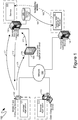
- the exemplary system 100 of Figure 1 is shown as comprising a traditional desktop client computing device 110, and a mobile client computing device 120 that are both communicationally coupled to a network 190.
- the network 190 also has, communicationally coupled to it, computing devices hosting a service that provides computer-implemented functionality to clients over the network 190. While services, such as the exemplary service 131 are often executed across multiple computing devices operating in parallel or as a single cohesive computing unit, in a manner well known to those skilled in the art, for simplicity the exemplary system 100 of Figure 1 shows only a single service hosting computing device 130 that illustratively represents such one or more devices.
- Users can access the computer-implemented functionality, offered by the service 131, through communications established between the computer-executable instructions that implement the service 131 and computer-executable instructions being executed on computing devices utilized by such users, such as the exemplary browser application 111, being executed on the desktop client computing device 110, or the exemplary browser application 121, being executed by the mobile client computing device 120.
- a user utilizing the browser application 121, executing on the mobile client computing device 120 can communicate requests, such as are exemplarily illustrated by the communication 171, to the service 131 executing on the exemplary service hosting computing device 130.
- the computer-executable instructions comprising the service 131 can perform the requested operations and can return to the user responsive communication 172, thereby enabling the user to remotely access the computer-implemented functionality being offered by the service 131.
- the service 131 can be the target of malicious activity in the form of attacks directed to the service 131 that seek to either damage the ability of the service 131 to provide to the computer-implemented functionality, or that seek to access information, through the service 131, to which access would otherwise not be allowed.
- One mechanism that can provide some protection against such attacks can be an active web application firewall, such as exemplary active web application firewall 160.
- an active web application firewall such as exemplary active web application firewall 160, can intercept communications directed to the service 131, such as the exemplary communications 175, and can scan such communications for maliciousness in order to preemptively detect an attack prior to such communications being passed along to the service 131.
- communications 175, originally directed to the service 131, or, more specifically, directed to a specific endpoint within the service 131, such as a specific service hosting computing device, can be intercepted by the active web application firewall 160, and can be compared with known, or predetermined, attack signatures, patterns, or other syntactical aspects. If the active web application firewall 160 determines that the communications 175 are an attack, they can be terminated at the active web application firewall 160, and never reach the service 131.
- the active web application firewall 160 determines that the communications 175 are not an attack, they can be passed through the active web application firewall 160, as illustrated by the dashed lines 176, and then allowed to proceed to the specific endpoint within the service 131 to which they were originally directed, as illustrated by the communications 177.
- active web application firewalls have disadvantages in the manner in which they protect the service 131 from attacks.
- the active web application firewall 160 can only stop an attack if the attack has a syntax equivalent to already known attacks.
- the active web application firewall 160 can violate other security provisions, such as the requirement that secure communications be terminated only at a specific endpoint within the service 131, such as a specific computing device, and not at an intermediate endpoint, such as the active web application firewall 160. Consequently, there can be many situations in which an active web application firewall, such as the exemplary web application firewall 160, is undesirable or insufficient to adequately protect the service 131.
- the service 131 can be protected by a passive web application firewall, such as exemplary passive web application firewall 151.
- exemplary passive web application firewall 151 shown is executing on a protection computing device 150.
- a passive web application firewall can execute across multiple computing devices operating in parallel or otherwise as a cluster of computing devices acting as a cohesive computing unit, and the protection computing device 150 is meant to be illustrative of any one or more such computing devices.
- the exemplary passive web application firewall 151 can allow communications with the service 131 without interrupting such communications and without acting prior to such communications being received by the service 131.
- communications such as the exemplary communication 171 can be directed to a specific endpoint within the service 131, such as a specific computing device, and can, actually, terminate at such a specific endpoint, thereby fulfilling any security requirements that require a specific termination endpoint for the communications 171.
- the passive web application firewall 151 can utilize records generated by the service 131, which can generate records of the communications that it has received in the form of logs, such as exemplary service logs 141.
- the service 131 upon receiving communications, such as the exemplary communication 171, the service 131 can log such a communication in the exemplary service logs 141.
- the entire communication 171 can be stored is a log entry in the service logs 141.
- the passive web application firewall 151 can then access the service logs 141, as illustrated by the arrow 181, and, in a manner which will be described in further detail below, can identify communications, previously received by the service 131, that are determined to have been attacks. From among those attacks, the passive web application firewall 151 can, in a manner that will be described in further detail below, identify those attacks that exploit actual vulnerabilities, or, stated differently, those attacks that are likely to succeed. Once such attacks that are likely to succeed are identified, the passive web application firewall 151 can provide notification of the vulnerabilities targeted by such attacks and such information can be utilized, either by automated mechanisms, through manual adjustments, or combinations thereof, to update or modify the service 131 so as to ameliorate the identified vulnerabilities, as graphically represented by the dashed arrow 182.
- exemplary system 200 shown therein illustrates exemplary components and operations of a passive web application firewall, such as exemplary passive web application firewall 151 that was illustrated in Figure 1 and referenced above.
- a service such as exemplary service 131, providing users with computer-implemented functionality, can receive inbound communications, such as exemplary inbound communications 211, by which users can access such a service 131.
- the service 131, or components executing together therewith can log the received communications 211 as part of the service logs 141, in the form of logged received communications 221.
- an attack detection component such as exemplary attack detection component 240
- the obtaining of such log entries, graphically represented by the arrow 231, by the attack detection component 240 can be through explicit request/response paradigms, whereby the attack detection component 240 issues an explicit request for log entries from the service logs 141, and receives, in response thereto, the log entries requested.
- the attack detection component 240 can receive entries from the service logs 141 in a streamed manner such that the entries are provided, to the attack detection components 240, contemporaneously with their storage in the service logs 141.
- An attack detection component such as exemplary attack detection component 240, can evaluate the received log entries, representing the inbound communications 211 that have been received by the service 131, to identify those of the inbound communications 211 that are deemed to be attacks, or communications of a malicious nature or intent.
- the attack detection component 240 can compare the logged communications to predetermined attack syntaxes, including predetermined attack signatures, predetermined attack patterns, and other like predetermined attack syntax. Such an operation can be performed in a manner analogous to that utilized by conventional active web application firewalls. More specifically, each log entry can be compared against a list or other like collection of known attack syntax to determine correspondence between log entry and any attack syntax in the collection. A log entry indicative of inbound communications matching one or more known attack syntax can be identified as an attack by the exemplary attack detection component 240.
- attack detection component 240 Various different forms of attacks can be detected by the exemplary attack detection component 240.
- cross site scripting attacks can be detected by searching for predetermined expressions or types of expressions commonly utilized in cross site scripting attacks.
- code injection attacks can be detected by searching for the hexadecimal equivalent of the single quote character, the double-dash character, or other like characters predetermined to be part of a code injection attack.
- malicious file execution attacks can be detected by searching for various protocol specifiers, identification of remote computing devices, and other like attack syntax.
- Cross site forgery attacks, indirect object reference attacks, improper authentication and session management attacks, improper error handling attacks, and other like attacks can be detected by the attack detection component 240 in an analogous manner.
- Log entries identified as attacks by the exemplary attack detection component 240 can, according to one aspect, be provided to a subsequent component that can evaluate whether such identified attacks are likely to be successful and can, thereby, test the vulnerability of the service 131 to such attacks.
- the exemplary system 200 of Figure 2 illustrates such a vulnerability testing component in the form of the exemplary vulnerability testing component 250, which can receive the log entries identified as attacks 241 from the exemplary attack detection component 240.
- the vulnerability testing component 250 can attempt to attack the service 131 in a manner equivalent to, or analogous to, the attacks in the log entries 241 that were received from the attack detection component 240.
- the vulnerability testing component 250 can issue that same inbound communication, with that same syntax and those same alphanumeric strings, as an attack 251 on the service 131.
- the vulnerability testing component 250 can then receive results 252, from the service 131, and, based on those results 252, exemplary vulnerability testing component 250 can determine whether the attack exploited an actual vulnerability, or, conversely, whether the attack failed and the service 131 is not vulnerable to such an attack.
- the vulnerability testing component 250 can utilize machine learning or fuzzy logic to deviate from the exact alphanumeric strings of the log entries that were identified as attacks 241 to attempt, as part of the attacks 251, different variations of the attacks represented by the log entries 241.
- the vulnerability testing component 250 can try different values of the same parameters identified in the log entries that were identified as attacks 241.
- the vulnerability testing component 250 can attempt attacks 251 that substitute equivalent functionality. For example, an injection attack from one of the log entries 241 can be attempted, as part of the attacks 251, both with identical alphanumeric strings to those of the log entry 241, and with alphanumeric strings where, for example, the single quote character is replaced by the double-dash character.
- the vulnerability testing component 250 can receive the results 252 of such a communication.
- the exemplary vulnerability testing component 250 can determine that an attack was successful if the results 252 evidence the execution, by the service 131, of computer-executable instructions that were inserted by the attack.
- the exemplary vulnerability testing component 250 can determine that an attack was successful if the results 252 evidence that one or more parameters defining the operation of the service 131 were either set improperly, thereby allowing the attack to succeed, or are now set improperly due to the attack.
- the vulnerability testing component 250 can identify the corresponding log entries as targeting vulnerabilities and can provide a notification 259 of such vulnerabilities.
- an optional vulnerability amelioration component 260 can automatically undertake actions to limit the success of attacks directed to such vulnerabilities.
- the vulnerability amelioration component 260 can change the values of predefined parameters or settings 261 that define the framework on which the service 131 executes to no longer enable attacks directed to identified vulnerabilities to succeed, or otherwise decrease or eliminate the risk posed by such attacks to the service 131.
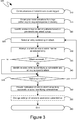
- the exemplary flow diagram 300 shown therein illustrates an exemplary series of steps that can implement a passive web application firewall, such as that illustrated above. More specifically, at step 310, inbound communications directed to a service can be logged such that some or all of the inbound communicational data is retained. At step 315, previously received inbound communications can be obtained from the logs into which they were logged by step 310. As indicated previously, the obtaining, at step 315, can be in response to explicit requests for such prior communications, or can be as part of a streaming of the prior communications to the computer-executable instructions executing the steps of the exemplary flow diagram 300.
- the logged prior communications can be scanned to identify entries in those logs that evidence an attack.
- scanning can be based on known signatures of previously detected attacks.
- scanning can be informed by attacks detected by an active web application firewall, such as that illustrated in Figure 1 , which can be utilized in conjunction with the passive web application firewall described herein. More specifically, as the active web application firewall identifies specific syntax as a new attack, such updated information can be provided and utilized as part of the scanning of the entries, at step 320, to identify those entries, corresponding to inbound communications, which are determined to be an attack.
- log entries, corresponding to inbound communications, that are determined to be an attack are identified, at step 320, processing can proceed to steps 325 through 345, wherein those identified log entries are then evaluated to determine which of those attacks was directed to an actual vulnerability, such that the attack is likely to succeed.
- one of the entries identified at step 320 can be selected.
- the service can be attacked in the same manner as the entry selected at step 325.
- the generated attacks, at step 330 can be identical to the attack of the entry selected at step 325, or they can be variants thereof, such as variants utilizing different parameter values, different key characters or symbols, and other like variations.
- a determination can be made as to whether the attacks, of step 330, were successful.
- an attack can be determined to be successful if it results in the execution of computer-executable instructions inserted by the attack, it results in, or relies upon, settings or parameter values that are improper or incorrect, or otherwise meets criteria of a successful attack. If, at step 335, it is determined that the attack was successful, then the entry selected at step 325 can be identified as part of a subset of log entries, corresponding to prior communications, that are attacks targeted at actual vulnerabilities and are, therefore, attacks that are likely to succeed. Processing can then proceed to step 345.
- step 335 it is determined that the attack, of step 330, was not successful, processing can directly proceed to step 345, where further determination can be made as to whether there are any additional entries from among the entries identified at step 320. If such additional entries remain, processing can return to step 325 and steps 325 through 345 can be performed again.
- processing can proceed to step 350, and a notification can be generated identifying those entries, corresponding to communications that were previously directed to the service, which have been identified both as an attack, and, moreover, an attack that is likely to succeed because it is targeting a vulnerability.
- the relevant processing can end at step 360.
- an additional step 355 can be performed where settings of the platform upon which the computer-executable instructions providing the service are executing, including the settings of those computer-executable instructions themselves, can be changed to ameliorate the vulnerabilities identified at step 350.
- such automated amelioration can be in the form of predetermined changes to settings, parameter or variable values, or other like changes.
- the automated changes at step 355, can change settings in accordance with known best practices to reduce security risks.
- the automated changes, at step 355, can change settings in accordance with predetermined conditions that can specify alternative settings if certain events or vulnerabilities are detected. Subsequently, the relevant processing can end at step 360.
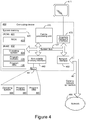
- the exemplary computing device 400 can include, but is not limited to, one or more central processing units (CPUs) 420, a system memory 430, and a system bus 421 that couples various system components including the system memory to the processing unit 420.
- the system bus 421 may be any of several types of bus structures including a memory bus or memory controller, a peripheral bus, and a local bus using any of a variety of bus architectures.
- the computing device 400 can optionally include graphics hardware, including, but not limited to, a graphics hardware interface 470 and a display device 471, which can include display devices capable of receiving touch-based user input, such as a touch-sensitive, or multi-touch capable, display device.
- graphics hardware including, but not limited to, a graphics hardware interface 470 and a display device 471, which can include display devices capable of receiving touch-based user input, such as a touch-sensitive, or multi-touch capable, display device.
- a graphics hardware interface 470 and a display device 471 can include display devices capable of receiving touch-based user input, such as a touch-sensitive, or multi-touch capable, display device.
- a graphics hardware interface 470 can include display devices capable of receiving touch-based user input, such as a touch-sensitive, or multi-touch capable, display device.
- one or more of the CPUs 420, the system memory 430 and other components of the computing device 400 can be physically co-located, such as on a single chip.
- the computing device 400 also typically includes computer readable media, which can include any available media that can be accessed by computing device 400 and includes both volatile and nonvolatile media and removable and non-removable media.
- computer readable media may comprise computer storage media and communication media.
- Computer storage media includes media implemented in any method or technology for storage of content such as computer readable instructions, data structures, program modules or other data.
- Computer storage media includes, but is not limited to, RAM, ROM, EEPROM, flash memory or other memory technology, CD-ROM, digital versatile disks (DVD) or other optical disk storage, magnetic cassettes, magnetic tape, magnetic disk storage or other magnetic storage devices, or any other medium which can be used to store the desired content and which can be accessed by the computing device 400.
- Computer storage media does not include communication media.
- Communication media typically embodies computer readable instructions, data structures, program modules or other data in a modulated data signal such as a carrier wave or other transport mechanism and includes any content delivery media.
- communication media includes wired media such as a wired network or direct-wired connection, and wireless media such as acoustic, RF, infrared and other wireless media. Combinations of the any of the above should also be included within the scope of computer readable media.
- the system memory 430 includes computer storage media in the form of volatile and/or nonvolatile memory such as read only memory (ROM) 431 and random access memory (RAM) 432.
- ROM read only memory
- RAM random access memory
- BIOS basic input/output system 433
- RAM 432 typically contains data and/or program modules that are immediately accessible to and/or presently being operated on by processing unit 420.
- Figure 4 illustrates operating system 434, other program modules 435, and program data 436.
- the computing device 400 may also include other removable/non-removable, volatile/nonvolatile computer storage media.
- Figure 4 illustrates a hard disk drive 441 that reads from or writes to non-removable, nonvolatile magnetic media.
- Other removable/non-removable, volatile/nonvolatile computer storage media that can be used with the exemplary computing device include, but are not limited to, magnetic tape cassettes, flash memory cards, digital versatile disks, digital video tape, solid state RAM, solid state ROM, and other computer storage media as defined and delineated above.
- the hard disk drive 441 is typically connected to the system bus 421 through a non-volatile memory interface such as interface 440.
- drives and their associated computer storage media discussed above and illustrated in Figure 4 provide storage of computer readable instructions, data structures, program modules and other data for the computing device 400.
- hard disk drive 441 is illustrated as storing operating system 444, other program modules 445, and program data 446. Note that these components can either be the same as or different from operating system 434, other program modules 435 and program data 436.
- Operating system 444, other program modules 445 and program data 446 are given different numbers hereto illustrate that, at a minimum, they are different copies.
- the computing device 400 may operate in a networked environment using logical connections to one or more remote computers.
- the computing device 400 is illustrated as being connected to the general network connection 461 through a network interface or adapter 460, which is, in turn, connected to the system bus 421.
- program modules depicted relative to the computing device 400, or portions or peripherals thereof may be stored in the memory of one or more other computing devices that are communicatively coupled to the computing device 400 through the general network connection 461. It will be appreciated that the network connections shown are exemplary and other means of establishing a communications link between computing devices may be used.
- the exemplary computing device 400 can be a virtual computing device, in which case the functionality of the above-described physical components, such as the CPU 420, the system memory 430, the network interface 460, and other like components can be provided by computer-executable instructions.
- Such computer-executable instructions can execute on a single physical computing device, or can be distributed across multiple physical computing devices, including being distributed across multiple physical computing devices in a dynamic manner such that the specific, physical computing devices hosting such computer-executable instructions can dynamically change over time depending upon need and availability.
- the underlying physical computing devices hosting such a virtualized computing device can, themselves, comprise physical components analogous to those described above, and operating in a like manner.
- virtual computing devices can be utilized in multiple layers with one virtual computing device executing within the construct of another virtual computing device.
- the term "computing device”, therefore, as utilized herein, means either a physical computing device or a virtualized computing environment, including a virtual computing device, within which computer-executable instructions can be executed in a manner consistent with their execution by a physical computing device.
- terms referring to physical components of the computing device, as utilized herein, mean either those physical components or virtualizations thereof performing the same or equivalent functions.
Landscapes
- Engineering & Computer Science (AREA)
- Computer Security & Cryptography (AREA)
- Computer Hardware Design (AREA)
- Computing Systems (AREA)
- General Engineering & Computer Science (AREA)
- Computer Networks & Wireless Communication (AREA)
- Signal Processing (AREA)
- Computer And Data Communications (AREA)
- Data Exchanges In Wide-Area Networks (AREA)
Description
- Modern computer networking hardware enables physically separate computing devices to communicate with one another orders of magnitude faster than was possible with prior generations of networking hardware. Consequently, it has become more practical to perform digital data processing at locations remote from the user requesting such processing, or on whose behalf such processing is being performed. Network-based services can provide users with access to computer-implemented functionality over a network without requiring that the user install software for performing such functionality locally on the user's computing device, thereby saving the user financial resources that would otherwise have been expended in purchasing such software, as well as the computing resources of storing and executing such software. Instead, users can simply access such network-based services when they desire to avail themselves of the computer-implemented functionality offered by such services. The popularity of network-based services also increases their profile as targets for attacks or other like malicious actions.
-
US 7 574 740 B1 discloses an intrusion detection system for detecting intrusion events in a computer network. The intrusion detection system comprises a sensor for monitoring data packets of a network environment for possible intrusion events. In response to an intrusion event, the sensor initiates a vulnerability analysis of a target computer for an attack. Based on this vulnerability analysis, the intrusion detection system evaluates the severity of the detected intrusion event and issues an alert having a ranked priority corresponding to the severity of the intrusion. This alert is then presented to a security technician to prompt an action appropriate with the ranking of this alert. -
US 2004/0073800 A1 discloses an intrusion detection system, wherein a vulnerability determination or assessment for identifying defects of computers is performed to determine whether and what vulnerabilities exist on these computers. Attack signatures of certain attack types that are continually updated are identified and correlated with the identified specific vulnerabilities of said computers. The attack signatures are then loaded into a pattern detection engine in order to actively monitor only those attack types to which these computers are vulnerable. -
US 2006/0253906 A1 discloses a system and a method for modifying known attacks in order for testing an intrusion detection system. -
US 2012/0304244 A1 discloses a malware analysis system that handles potential malware sample received from a firewall. The potential malware samples are analyzed using a virtual machine to determine if the potential malware samples are malware. A signature is automatically generated if the potential malware samples are determined to be malware. - The invention is defined by a method of protecting delivery of computer-implemented functionality that is offered over a network, a computing device, and a system according to the independent claims. Preferred embodiments are defined in the dependent claims.
- To protect network-based services, offering computer implemented functionality, from attacks, a passive web application firewall can reactively identify vulnerabilities, enabling such vulnerabilities to be quickly ameliorated, without intercepting communications or introducing other suboptimal aspects of traditional web application firewalls. Communications directed to the network-based services can be logged and such logged communications can be scanned for entries evidencing attacks, such as based on predetermined attack signatures, patterns, or other syntactical aspects. Further evaluation of the entries identified as evidencing attacks can be performed to identify a subset of those entries that identify likely successful attacks. Such further evaluation can include attacking the network-based service in an equivalent manner to that evidenced by the unified entries. Attacks that are found to be successful can identify vulnerabilities, and a notification of such vulnerabilities can be provided to facilitate amelioration of such vulnerabilities, thereby increasing the security of such network-based services. Vulnerability amelioration can be automatic, such as by automatically adjusting the settings corresponding to the implementation of the network-based services to ameliorate identified vulnerabilities in a predetermined manner.
- This Summary is provided to introduce a selection of concepts in a simplified form that are further described below in the Detailed Description. This Summary is not intended to identify key features or essential features of the claimed subject matter, nor is it intended to be used to limit the scope of the claimed subject matter.
- Additional features and advantages will be made apparent from the following detailed description that proceeds with reference to the accompanying drawings.
- The following detailed description may be best understood when taken in conjunction with the accompanying drawings, of which:
-
Figure 1 is a block diagram of an exemplary system that includes a passive web application firewall; -
Figure 2 is a block diagram of exemplary components of a passive web application firewall; -
Figure 3 is a flow diagram of an exemplary operation of a passive web application firewall; and -
Figure 4 is a block diagram of an exemplary computing device. - The following description relates to protecting, from attacks, services that offer computer-implemented functionality to users through network communications. A passive web application firewall can reactively identify vulnerabilities, enabling such vulnerabilities to be quickly ameliorated, without intercepting communications or introducing other suboptimal aspects of traditional web application firewalls. Communications directed to the network-based services can be logged and such logged communications can be scanned for entries evidencing attacks, such as based on predetermined attack signatures, patterns, or other syntactical aspects. Further evaluation of the entries identified as evidencing attacks can be performed to identify a subset of those entries that identify likely successful attacks. Such further evaluation can include attacking the network-based service in an equivalent manner to that evidenced by the unified entries. Attacks that are found to be successful can identify vulnerabilities, and a notification of such vulnerabilities can be provided to facilitate amelioration of such vulnerabilities, thereby increasing the security of such network-based services. Vulnerability amelioration can be automatic, such as by automatically adjusting the settings corresponding to the implementation of the network-based services to ameliorate identified vulnerabilities in a predetermined manner.
- The techniques described herein make reference to services that offer computer implemented-functionality over a network. As utilized herein, the term "computer-implemented functionality" means the execution of computer-executable instructions on one or more host computing devices that receive communications, from a remote client, requesting the performance of one or more functions and providing one or more constraints, such as parameters, variables and the like, that delineate the requested functions, and, in response, the execution of the computer-executable instructions performs the requested functions and generates results that are returned to such a remote client through communications directed thereto. Consequently, the term "computer-implemented functionality" includes the provision of search functionality, mapping functionality, content creation functionality, email functionality, personal information management functionality, and other like functionality. Additionally, references herein to the "Internet", "Web" or "World Wide Web", and "webpages" or "websites" are meant to be exemplary only and are not intended as an explicit limitation of the described mechanisms to only in embodiments utilizing the HyperText Transfer Protocol (HTTP) and the HyperText Markup Language (HTML). To the contrary, the mechanisms described herein are equally utilizable with any network infrastructure, communicational protocols, and interfaces.
- Although not required, the description below will be in the general context of computer-executable instructions, such as program modules, being executed by a computing device. More specifically, the description will reference acts and symbolic representations of operations that are performed by one or more computing devices or peripherals, unless indicated otherwise. As such, it will be understood that such acts and operations, which are at times referred to as being computer-executed, include the manipulation by a processing unit of electrical signals representing data in a structured form. This manipulation transforms the data or maintains it at locations in memory, which reconfigures or otherwise alters the operation of the computing device or peripherals in a manner well understood by those skilled in the art. The data structures where data is maintained are physical locations that have particular properties defined by the format of the data.
- Generally, program modules include routines, programs, objects, components, data structures, and the like that perform particular tasks or implement particular abstract data types. Moreover, those skilled in the art will appreciate that the computing devices need not be limited to conventional personal computers, and include other computing configurations, including hand-held devices, multi-processor systems, microprocessor based or programmable consumer electronics, network PCs, minicomputers, mainframe computers, and the like. Similarly, the computing devices need not be limited to stand-alone computing devices, as the mechanisms may also be practiced in distributed computing environments where tasks are performed by remote processing devices that are linked through a communications network. In a distributed computing environment, program modules may be located in both local and remote memory storage devices.
- With reference to
Figure 1 , anexemplary system 100 is illustrated, providing context for the descriptions below. Theexemplary system 100 ofFigure 1 is shown as comprising a traditional desktopclient computing device 110, and a mobileclient computing device 120 that are both communicationally coupled to anetwork 190. Thenetwork 190 also has, communicationally coupled to it, computing devices hosting a service that provides computer-implemented functionality to clients over thenetwork 190. While services, such as theexemplary service 131 are often executed across multiple computing devices operating in parallel or as a single cohesive computing unit, in a manner well known to those skilled in the art, for simplicity theexemplary system 100 ofFigure 1 shows only a single servicehosting computing device 130 that illustratively represents such one or more devices. - Users can access the computer-implemented functionality, offered by the
service 131, through communications established between the computer-executable instructions that implement theservice 131 and computer-executable instructions being executed on computing devices utilized by such users, such as theexemplary browser application 111, being executed on the desktopclient computing device 110, or theexemplary browser application 121, being executed by the mobileclient computing device 120. For example, and as illustrated inFigure 1 , a user utilizing thebrowser application 121, executing on the mobileclient computing device 120, can communicate requests, such as are exemplarily illustrated by thecommunication 171, to theservice 131 executing on the exemplary servicehosting computing device 130. In response, the computer-executable instructions comprising theservice 131 can perform the requested operations and can return to the userresponsive communication 172, thereby enabling the user to remotely access the computer-implemented functionality being offered by theservice 131. - As indicated previously, the
service 131 can be the target of malicious activity in the form of attacks directed to theservice 131 that seek to either damage the ability of theservice 131 to provide to the computer-implemented functionality, or that seek to access information, through theservice 131, to which access would otherwise not be allowed. One mechanism that can provide some protection against such attacks can be an active web application firewall, such as exemplary activeweb application firewall 160. As will be recognized by those skilled in the art, an active web application firewall, such as exemplary activeweb application firewall 160, can intercept communications directed to theservice 131, such as theexemplary communications 175, and can scan such communications for maliciousness in order to preemptively detect an attack prior to such communications being passed along to theservice 131. More specifically,communications 175, originally directed to theservice 131, or, more specifically, directed to a specific endpoint within theservice 131, such as a specific service hosting computing device, can be intercepted by the activeweb application firewall 160, and can be compared with known, or predetermined, attack signatures, patterns, or other syntactical aspects. If the activeweb application firewall 160 determines that thecommunications 175 are an attack, they can be terminated at the activeweb application firewall 160, and never reach theservice 131. Conversely, if the activeweb application firewall 160 determines that thecommunications 175 are not an attack, they can be passed through the activeweb application firewall 160, as illustrated by the dashedlines 176, and then allowed to proceed to the specific endpoint within theservice 131 to which they were originally directed, as illustrated by thecommunications 177. - As will be recognized by those skilled in the art, active web application firewalls have disadvantages in the manner in which they protect the
service 131 from attacks. For example, the activeweb application firewall 160 can only stop an attack if the attack has a syntax equivalent to already known attacks. As another example, the activeweb application firewall 160 can violate other security provisions, such as the requirement that secure communications be terminated only at a specific endpoint within theservice 131, such as a specific computing device, and not at an intermediate endpoint, such as the activeweb application firewall 160. Consequently, there can be many situations in which an active web application firewall, such as the exemplaryweb application firewall 160, is undesirable or insufficient to adequately protect theservice 131. - Accordingly, in one aspect, the
service 131 can be protected by a passive web application firewall, such as exemplary passiveweb application firewall 151. For purposes of illustration, the exemplary passiveweb application firewall 151 shown is executing on aprotection computing device 150. However, as will be recognized by those skilled in the art, a passive web application firewall can execute across multiple computing devices operating in parallel or otherwise as a cluster of computing devices acting as a cohesive computing unit, and theprotection computing device 150 is meant to be illustrative of any one or more such computing devices. Unlike the activeweb application firewall 160, the exemplary passiveweb application firewall 151 can allow communications with theservice 131 without interrupting such communications and without acting prior to such communications being received by theservice 131. Thus, communications, such as theexemplary communication 171 can be directed to a specific endpoint within theservice 131, such as a specific computing device, and can, actually, terminate at such a specific endpoint, thereby fulfilling any security requirements that require a specific termination endpoint for thecommunications 171. Instead of intercepting communications, the passiveweb application firewall 151 can utilize records generated by theservice 131, which can generate records of the communications that it has received in the form of logs, such as exemplary service logs 141. For example, upon receiving communications, such as theexemplary communication 171, theservice 131 can log such a communication in the exemplary service logs 141. To conserve space, only certain information from thecommunication 171 can be logged in the service logs 141, though, alternatively, theentire communication 171 can be stored is a log entry in the service logs 141. - The passive
web application firewall 151 can then access the service logs 141, as illustrated by thearrow 181, and, in a manner which will be described in further detail below, can identify communications, previously received by theservice 131, that are determined to have been attacks. From among those attacks, the passiveweb application firewall 151 can, in a manner that will be described in further detail below, identify those attacks that exploit actual vulnerabilities, or, stated differently, those attacks that are likely to succeed. Once such attacks that are likely to succeed are identified, the passiveweb application firewall 151 can provide notification of the vulnerabilities targeted by such attacks and such information can be utilized, either by automated mechanisms, through manual adjustments, or combinations thereof, to update or modify theservice 131 so as to ameliorate the identified vulnerabilities, as graphically represented by the dashedarrow 182. - Turning to
Figure 2 ,exemplary system 200 shown therein illustrates exemplary components and operations of a passive web application firewall, such as exemplary passiveweb application firewall 151 that was illustrated inFigure 1 and referenced above. More specifically, and as illustrated by theexemplary system 200 ofFigure 2 , a service, such asexemplary service 131, providing users with computer-implemented functionality, can receive inbound communications, such as exemplaryinbound communications 211, by which users can access such aservice 131. In addition to performing requested operations and, thereby, providing users with access to the computer-implemented functionality provided by theservice 131, theservice 131, or components executing together therewith can log the receivedcommunications 211 as part of the service logs 141, in the form of logged receivedcommunications 221. - According to one aspect, an attack detection component, such as exemplary
attack detection component 240, can obtain, such as from the exemplary service logs 141, log entries corresponding to theinbound communications 211. The obtaining of such log entries, graphically represented by thearrow 231, by theattack detection component 240 can be through explicit request/response paradigms, whereby theattack detection component 240 issues an explicit request for log entries from the service logs 141, and receives, in response thereto, the log entries requested. Alternatively, or in addition, theattack detection component 240 can receive entries from the service logs 141 in a streamed manner such that the entries are provided, to theattack detection components 240, contemporaneously with their storage in the service logs 141. - An attack detection component, such as exemplary
attack detection component 240, can evaluate the received log entries, representing theinbound communications 211 that have been received by theservice 131, to identify those of theinbound communications 211 that are deemed to be attacks, or communications of a malicious nature or intent. According to one aspect, theattack detection component 240 can compare the logged communications to predetermined attack syntaxes, including predetermined attack signatures, predetermined attack patterns, and other like predetermined attack syntax. Such an operation can be performed in a manner analogous to that utilized by conventional active web application firewalls. More specifically, each log entry can be compared against a list or other like collection of known attack syntax to determine correspondence between log entry and any attack syntax in the collection. A log entry indicative of inbound communications matching one or more known attack syntax can be identified as an attack by the exemplaryattack detection component 240. - Various different forms of attacks can be detected by the exemplary
attack detection component 240. For example, cross site scripting attacks can be detected by searching for predetermined expressions or types of expressions commonly utilized in cross site scripting attacks. As another example, code injection attacks can be detected by searching for the hexadecimal equivalent of the single quote character, the double-dash character, or other like characters predetermined to be part of a code injection attack. As yet another example, malicious file execution attacks can be detected by searching for various protocol specifiers, identification of remote computing devices, and other like attack syntax. Cross site forgery attacks, indirect object reference attacks, improper authentication and session management attacks, improper error handling attacks, and other like attacks can be detected by theattack detection component 240 in an analogous manner. - Log entries identified as attacks by the exemplary
attack detection component 240 can, according to one aspect, be provided to a subsequent component that can evaluate whether such identified attacks are likely to be successful and can, thereby, test the vulnerability of theservice 131 to such attacks. Theexemplary system 200 ofFigure 2 illustrates such a vulnerability testing component in the form of the exemplaryvulnerability testing component 250, which can receive the log entries identified asattacks 241 from the exemplaryattack detection component 240. According to one aspect, thevulnerability testing component 250 can attempt to attack theservice 131 in a manner equivalent to, or analogous to, the attacks in thelog entries 241 that were received from theattack detection component 240. - For example, if one of the
entries 241 was a cross site scripting attack having a specific syntax and specific alphanumeric strings, then thevulnerability testing component 250 can issue that same inbound communication, with that same syntax and those same alphanumeric strings, as anattack 251 on theservice 131. Thevulnerability testing component 250 can then receiveresults 252, from theservice 131, and, based on thoseresults 252, exemplaryvulnerability testing component 250 can determine whether the attack exploited an actual vulnerability, or, conversely, whether the attack failed and theservice 131 is not vulnerable to such an attack. As another example, thevulnerability testing component 250 can utilize machine learning or fuzzy logic to deviate from the exact alphanumeric strings of the log entries that were identified asattacks 241 to attempt, as part of theattacks 251, different variations of the attacks represented by thelog entries 241. For example, thevulnerability testing component 250 can try different values of the same parameters identified in the log entries that were identified asattacks 241. As another example, thevulnerability testing component 250 can attemptattacks 251 that substitute equivalent functionality. For example, an injection attack from one of thelog entries 241 can be attempted, as part of theattacks 251, both with identical alphanumeric strings to those of thelog entry 241, and with alphanumeric strings where, for example, the single quote character is replaced by the double-dash character. - Once the exemplary
vulnerability testing component 250 issues a communication inbound to theservice 131 as one of theattacks 251, thevulnerability testing component 250 can receive theresults 252 of such a communication. According to one aspect, the exemplaryvulnerability testing component 250 can determine that an attack was successful if theresults 252 evidence the execution, by theservice 131, of computer-executable instructions that were inserted by the attack. According to another aspect, the exemplaryvulnerability testing component 250 can determine that an attack was successful if theresults 252 evidence that one or more parameters defining the operation of theservice 131 were either set improperly, thereby allowing the attack to succeed, or are now set improperly due to the attack. - If the
results 252 of anattack 251 evidence that the attack was successful, or evidence that the attack is likely to be successful, such as in the manner illustrated above, thevulnerability testing component 250 can identify the corresponding log entries as targeting vulnerabilities and can provide anotification 259 of such vulnerabilities. According to one aspect, an optionalvulnerability amelioration component 260 can automatically undertake actions to limit the success of attacks directed to such vulnerabilities. For example, thevulnerability amelioration component 260 can change the values of predefined parameters orsettings 261 that define the framework on which theservice 131 executes to no longer enable attacks directed to identified vulnerabilities to succeed, or otherwise decrease or eliminate the risk posed by such attacks to theservice 131. - Turning to
Figure 3 , the exemplary flow diagram 300 shown therein illustrates an exemplary series of steps that can implement a passive web application firewall, such as that illustrated above. More specifically, atstep 310, inbound communications directed to a service can be logged such that some or all of the inbound communicational data is retained. Atstep 315, previously received inbound communications can be obtained from the logs into which they were logged bystep 310. As indicated previously, the obtaining, atstep 315, can be in response to explicit requests for such prior communications, or can be as part of a streaming of the prior communications to the computer-executable instructions executing the steps of the exemplary flow diagram 300. Subsequently, atstep 320, the logged prior communications can be scanned to identify entries in those logs that evidence an attack. As indicated previously, such scanning can be based on known signatures of previously detected attacks. Alternatively, or in addition, such scanning can be informed by attacks detected by an active web application firewall, such as that illustrated inFigure 1 , which can be utilized in conjunction with the passive web application firewall described herein. More specifically, as the active web application firewall identifies specific syntax as a new attack, such updated information can be provided and utilized as part of the scanning of the entries, atstep 320, to identify those entries, corresponding to inbound communications, which are determined to be an attack. - Once log entries, corresponding to inbound communications, that are determined to be an attack are identified, at
step 320, processing can proceed tosteps 325 through 345, wherein those identified log entries are then evaluated to determine which of those attacks was directed to an actual vulnerability, such that the attack is likely to succeed. Atstep 325, one of the entries identified atstep 320 can be selected. Atstep 330, the service can be attacked in the same manner as the entry selected atstep 325. As indicated previously, the generated attacks, atstep 330, can be identical to the attack of the entry selected atstep 325, or they can be variants thereof, such as variants utilizing different parameter values, different key characters or symbols, and other like variations. Atstep 335, a determination can be made as to whether the attacks, ofstep 330, were successful. As indicated previously, an attack can be determined to be successful if it results in the execution of computer-executable instructions inserted by the attack, it results in, or relies upon, settings or parameter values that are improper or incorrect, or otherwise meets criteria of a successful attack. If, atstep 335, it is determined that the attack was successful, then the entry selected atstep 325 can be identified as part of a subset of log entries, corresponding to prior communications, that are attacks targeted at actual vulnerabilities and are, therefore, attacks that are likely to succeed. Processing can then proceed to step 345. Conversely, if, atstep 335, it is determined that the attack, ofstep 330, was not successful, processing can directly proceed to step 345, where further determination can be made as to whether there are any additional entries from among the entries identified atstep 320. If such additional entries remain, processing can return to step 325 andsteps 325 through 345 can be performed again. - Subsequent to the
steps 320 through 345, once no further entries, identified as attacks, remain to be evaluated for whether such attacks were likely to be successful, processing can proceed to step 350, and a notification can be generated identifying those entries, corresponding to communications that were previously directed to the service, which have been identified both as an attack, and, moreover, an attack that is likely to succeed because it is targeting a vulnerability. According to one aspect, subsequent to the provision of the notification, atstep 350, the relevant processing can end atstep 360. Alternatively, or in addition, anadditional step 355 can be performed where settings of the platform upon which the computer-executable instructions providing the service are executing, including the settings of those computer-executable instructions themselves, can be changed to ameliorate the vulnerabilities identified atstep 350. As indicated previously, such automated amelioration can be in the form of predetermined changes to settings, parameter or variable values, or other like changes. For example, the automated changes, atstep 355, can change settings in accordance with known best practices to reduce security risks. As another example, the automated changes, atstep 355, can change settings in accordance with predetermined conditions that can specify alternative settings if certain events or vulnerabilities are detected. Subsequently, the relevant processing can end atstep 360. - Turning to
Figure 4 , anexemplary computing device 400 is illustrated which can perform some or all of the mechanisms and actions described above. Theexemplary computing device 400 can include, but is not limited to, one or more central processing units (CPUs) 420, asystem memory 430, and asystem bus 421 that couples various system components including the system memory to theprocessing unit 420. Thesystem bus 421 may be any of several types of bus structures including a memory bus or memory controller, a peripheral bus, and a local bus using any of a variety of bus architectures. Thecomputing device 400 can optionally include graphics hardware, including, but not limited to, agraphics hardware interface 470 and adisplay device 471, which can include display devices capable of receiving touch-based user input, such as a touch-sensitive, or multi-touch capable, display device. Depending on the specific physical implementation, one or more of theCPUs 420, thesystem memory 430 and other components of thecomputing device 400 can be physically co-located, such as on a single chip. In such a case, some or all of thesystem bus 421 can be nothing more than silicon pathways within a single chip structure and its illustration inFigure 4 can be nothing more than notational convenience for the purpose of illustration. - The
computing device 400 also typically includes computer readable media, which can include any available media that can be accessed by computingdevice 400 and includes both volatile and nonvolatile media and removable and non-removable media. By way of example, and not limitation, computer readable media may comprise computer storage media and communication media. Computer storage media includes media implemented in any method or technology for storage of content such as computer readable instructions, data structures, program modules or other data. Computer storage media includes, but is not limited to, RAM, ROM, EEPROM, flash memory or other memory technology, CD-ROM, digital versatile disks (DVD) or other optical disk storage, magnetic cassettes, magnetic tape, magnetic disk storage or other magnetic storage devices, or any other medium which can be used to store the desired content and which can be accessed by thecomputing device 400. Computer storage media, however, does not include communication media. Communication media typically embodies computer readable instructions, data structures, program modules or other data in a modulated data signal such as a carrier wave or other transport mechanism and includes any content delivery media. By way of example, and not limitation, communication media includes wired media such as a wired network or direct-wired connection, and wireless media such as acoustic, RF, infrared and other wireless media. Combinations of the any of the above should also be included within the scope of computer readable media. - The
system memory 430 includes computer storage media in the form of volatile and/or nonvolatile memory such as read only memory (ROM) 431 and random access memory (RAM) 432. A basic input/output system 433 (BIOS), containing the basic routines that help to transfer content between elements withincomputing device 400, such as during start-up, is typically stored inROM 431.RAM 432 typically contains data and/or program modules that are immediately accessible to and/or presently being operated on by processingunit 420. By way of example, and not limitation,Figure 4 illustratesoperating system 434,other program modules 435, and program data 436. - The
computing device 400 may also include other removable/non-removable, volatile/nonvolatile computer storage media. By way of example only,Figure 4 illustrates ahard disk drive 441 that reads from or writes to non-removable, nonvolatile magnetic media. Other removable/non-removable, volatile/nonvolatile computer storage media that can be used with the exemplary computing device include, but are not limited to, magnetic tape cassettes, flash memory cards, digital versatile disks, digital video tape, solid state RAM, solid state ROM, and other computer storage media as defined and delineated above. Thehard disk drive 441 is typically connected to thesystem bus 421 through a non-volatile memory interface such asinterface 440. - The drives and their associated computer storage media discussed above and illustrated in
Figure 4 , provide storage of computer readable instructions, data structures, program modules and other data for thecomputing device 400. InFigure 4 , for example,hard disk drive 441 is illustrated as storingoperating system 444,other program modules 445, andprogram data 446. Note that these components can either be the same as or different fromoperating system 434,other program modules 435 and program data 436.Operating system 444,other program modules 445 andprogram data 446 are given different numbers hereto illustrate that, at a minimum, they are different copies. - The
computing device 400 may operate in a networked environment using logical connections to one or more remote computers. Thecomputing device 400 is illustrated as being connected to thegeneral network connection 461 through a network interface oradapter 460, which is, in turn, connected to thesystem bus 421. In a networked environment, program modules depicted relative to thecomputing device 400, or portions or peripherals thereof, may be stored in the memory of one or more other computing devices that are communicatively coupled to thecomputing device 400 through thegeneral network connection 461. It will be appreciated that the network connections shown are exemplary and other means of establishing a communications link between computing devices may be used. - Although described as a single physical device, the
exemplary computing device 400 can be a virtual computing device, in which case the functionality of the above-described physical components, such as theCPU 420, thesystem memory 430, thenetwork interface 460, and other like components can be provided by computer-executable instructions. Such computer-executable instructions can execute on a single physical computing device, or can be distributed across multiple physical computing devices, including being distributed across multiple physical computing devices in a dynamic manner such that the specific, physical computing devices hosting such computer-executable instructions can dynamically change over time depending upon need and availability. In the situation where theexemplary computing device 400 is a virtualized device, the underlying physical computing devices hosting such a virtualized computing device can, themselves, comprise physical components analogous to those described above, and operating in a like manner. Furthermore, virtual computing devices can be utilized in multiple layers with one virtual computing device executing within the construct of another virtual computing device. The term "computing device", therefore, as utilized herein, means either a physical computing device or a virtualized computing environment, including a virtual computing device, within which computer-executable instructions can be executed in a manner consistent with their execution by a physical computing device. Similarly, terms referring to physical components of the computing device, as utilized herein, mean either those physical components or virtualizations thereof performing the same or equivalent functions. - As can be seen from the above descriptions, mechanisms for increasing the protection, of services offering computer-implemented functionality, through the use of a passive web application firewall, have been presented. In view of the many possible variations of the subject matter described herein, we claim as our invention all such embodiments as may come within the scope of the following claims.
Claims (8)
- A method implementing a passive web application firewall for protecting delivery of computer-implemented functionality that is offered over a network, the method comprising the steps of:obtaining logs of prior communications received by the computer-implemented functionality;identifying (320) a set of entries from the obtained logs as attacks, wherein each entry of the set of entries is identified as an attack if its syntax matches a form of at least one pre-determined attack syntax of a set of pre-determined attack syntaxes, but is not identical to any pre-determined attack syntax of the set of pre-determined attack syntaxes;testing vulnerabilities based on the identified set of entries, including:selecting (325) an entry of the identified set of entries;generating an attack directed to the computer-implemented functionality, the generated attack being analogous to an attack of the selected entry, and attacking (330) the computer-implemented functionality using the generated attack;determining (335) whether the generated attack exploited an actual vulnerability or whether the generated attack failed and the computer-implemented functionality is not vulnerable to the generated attack, based on results of the generated attack received from the computer-implemented functionality, wherein the generated attack exploited an actual vulnerability if the results evidence an execution, by the computer-implemented functionality, of computer-executable instructions that were inserted by the generated attack, or if the results evidence that one or more parameters defining the operation of the computer-implemented functionality were either set improperly, thereby allowing the generated attack to succeed, or are now set improperly due to the generated attack; andif it is determined (335) that the generated attack exploited the actual vulnerability, identifying (340) the selected entry as an attack targeted at the actual vulnerability and as part of a subset of entries, from the set of entries, that are attacks targeted at actual vulnerabilities;repeating the testing of vulnerabilities for other entries from the set of entries; and generating (350) notification of only the subset of entries;wherein the set of pre-determined attack syntaxes is updated based on attacks detected by an active web application firewall that blocks detected attacks prior to those communications being received by the computer-implemented functionality.
- The method of claim 1, wherein the obtaining the logs comprises obtaining the prior communications directed to the computer-implemented functionality as streamed data.
- The method of claim 1, further comprising:identifying one or more settings whose current settings enable attacks, associated with the subset of entries, to succeed; andchanging (355) at least some of the identified one or more settings.
- One or more computer-readable media comprising computer-executable instructions, which, when executed by a protection computing device (150), configure the protection computing device (150) to perform a method according to any one of the preceding claims.
- A system implementing a passive web application firewall for protecting delivery of computer-implemented functionality that is offered over a network, comprising:a first set of computing devices configured to perform steps comprising:obtaining logs of prior communications received by the computer-implemented functionality;identifying a set of entries from the obtained logs as attacks, wherein each entry of the set of entries is identified as an attack if its syntax matches a form of at least one pre-determined attack syntax of a set of pre-determined attack syntaxes, but is not identical to any pre-determined attack syntax of the set of pre-determined attack syntaxes; anda second set of computing devices for testing vulnerabilities based on the identified set of entries, the second set of computing devices configured to perform steps comprising:selecting an entry of the identified set of entries;generating an attack directed to the computer-implemented functionality, the generated attack being analogous to an attack of the selected entry, and attacking the computer-implemented functionality using the generated attack;determining whether the generated attack exploited an actual vulnerability or whether the generated attack failed and the computer-implemented functionality is not vulnerable to the generated attack, based on results of the generated attack received from the computer-implemented functionality, wherein the generated attack exploited an actual vulnerability if the results evidence an execution, by the computer-implemented functionality, of computer-executable instructions that were inserted by the generated attack, or if the results evidence that one or more parameters defining the operation of the computer-implemented functionality were either set improperly, thereby allowing the generated attack to succeed, or are now set improperly due to the generated attack; andif it is determined (335) that the generated attack exploited the actual vulnerability, identifying the selected entry as an attack targeted at the actual vulnerability and as part of a subset of entries, from the set of entries, that are attacks targeted at actual vulnerabilities;repeating the testing of vulnerabilities for other entries from the set of entries; andgenerating notification of only the subset of entries;wherein the first set of computing devices is further configured to update the set of pre-determined attack syntaxes using updated information received from an active web application firewall, wherein the updated information comprises syntaxes of attacks detected by the active web application firewall, the active web application firewall being configured to block the detected attacks prior to those communications being received by the computer-implemented functionality.
- The system of claim 5, further comprising a third set of computing devices executing computer-executable instructions implementing the computer-implemented functionality.
- The system of claim 5, further comprising a third set of computing devices configured to perform steps comprising:identifying one or more settings whose current settings enable attacks, associated with the subset of entries, to succeed; andchanging at least some of the identified one or more settings.
- The system of claim 5, wherein the first and second sets of computing devices are wholly distinct from one another.
Applications Claiming Priority (2)
| Application Number | Priority Date | Filing Date | Title |
|---|---|---|---|
| US14/864,858 US9853940B2 (en) | 2015-09-24 | 2015-09-24 | Passive web application firewall |
| PCT/US2016/052360 WO2017053206A1 (en) | 2015-09-24 | 2016-09-16 | Passive web application firewall |
Publications (2)
| Publication Number | Publication Date |
|---|---|
| EP3353983A1 EP3353983A1 (en) | 2018-08-01 |
| EP3353983B1 true EP3353983B1 (en) | 2021-11-10 |
Family
ID=57018195
Family Applications (1)
| Application Number | Title | Priority Date | Filing Date |
|---|---|---|---|
| EP16774587.6A Active EP3353983B1 (en) | 2015-09-24 | 2016-09-16 | Method and system with a passive web application firewall |
Country Status (4)
| Country | Link |
|---|---|
| US (1) | US9853940B2 (en) |
| EP (1) | EP3353983B1 (en) |
| CN (1) | CN108028843B (en) |
| WO (1) | WO2017053206A1 (en) |
Families Citing this family (5)
| Publication number | Priority date | Publication date | Assignee | Title |
|---|---|---|---|---|
| US10567396B2 (en) * | 2015-12-15 | 2020-02-18 | Webroot Inc. | Real-time scanning of IP addresses |
| CN107426252B (en) * | 2017-09-15 | 2019-10-25 | 北京百悟科技有限公司 | The method and apparatus of web application firewall service is provided |
| US10542025B2 (en) * | 2017-12-26 | 2020-01-21 | International Business Machines Corporation | Automatic traffic classification of web applications and services based on dynamic analysis |
| CN108848088A (en) * | 2018-06-12 | 2018-11-20 | 浪潮软件集团有限公司 | A security testing system and method based on big data behavior analysis |
| US11425092B2 (en) * | 2020-05-26 | 2022-08-23 | Radware, Ltd. | System and method for analytics based WAF service configuration |
Citations (1)
| Publication number | Priority date | Publication date | Assignee | Title |
|---|---|---|---|---|
| US20120304244A1 (en) * | 2011-05-24 | 2012-11-29 | Palo Alto Networks, Inc. | Malware analysis system |
Family Cites Families (17)
| Publication number | Priority date | Publication date | Assignee | Title |
|---|---|---|---|---|
| US7574740B1 (en) | 2000-04-28 | 2009-08-11 | International Business Machines Corporation | Method and system for intrusion detection in a computer network |
| AU2003233640A1 (en) | 2002-05-22 | 2003-12-12 | Lucid Security Corporation | Adaptive intrusion detection system |
| US6952779B1 (en) | 2002-10-01 | 2005-10-04 | Gideon Cohen | System and method for risk detection and analysis in a computer network |
| US7941856B2 (en) | 2004-12-06 | 2011-05-10 | Wisconsin Alumni Research Foundation | Systems and methods for testing and evaluating an intrusion detection system |
| WO2008097198A1 (en) | 2007-02-09 | 2008-08-14 | Agency For Science, Technology And Research | Apparatus and method for analysis of data traffic |
| US8424094B2 (en) | 2007-04-02 | 2013-04-16 | Microsoft Corporation | Automated collection of forensic evidence associated with a network security incident |
| US8601586B1 (en) | 2008-03-24 | 2013-12-03 | Google Inc. | Method and system for detecting web application vulnerabilities |
| US9871811B2 (en) | 2009-05-26 | 2018-01-16 | Microsoft Technology Licensing, Llc | Identifying security properties of systems from application crash traffic |
| US8856869B1 (en) | 2009-06-22 | 2014-10-07 | NexWavSec Software Inc. | Enforcement of same origin policy for sensitive data |
| US8438270B2 (en) | 2010-01-26 | 2013-05-07 | Tenable Network Security, Inc. | System and method for correlating network identities and addresses |
| CN103023710B (en) * | 2011-09-21 | 2016-06-08 | 阿里巴巴集团控股有限公司 | A kind of safety test system and method |
| US9213832B2 (en) | 2012-01-24 | 2015-12-15 | International Business Machines Corporation | Dynamically scanning a web application through use of web traffic information |
| US9544324B2 (en) | 2012-03-02 | 2017-01-10 | Trustwave Holdings, Inc. | System and method for managed security assessment and mitigation |
| KR101239401B1 (en) | 2012-10-05 | 2013-03-06 | 강명훈 | Log analysys system of the security system and method thereof |
| WO2014083382A1 (en) * | 2012-11-27 | 2014-06-05 | Robojar Pty Ltd | A system and method for authenticating the legitimacy of a request for a resource by a user |
| WO2014112185A1 (en) * | 2013-01-21 | 2014-07-24 | 三菱電機株式会社 | Attack analysis system, coordination device, attack analysis coordination method, and program |
| CN104063309A (en) * | 2013-03-22 | 2014-09-24 | 南京理工大学常熟研究院有限公司 | Web application program bug detection method based on simulated strike |
-
2015
- 2015-09-24 US US14/864,858 patent/US9853940B2/en active Active
-
2016
- 2016-09-16 WO PCT/US2016/052360 patent/WO2017053206A1/en not_active Ceased
- 2016-09-16 CN CN201680054890.1A patent/CN108028843B/en active Active
- 2016-09-16 EP EP16774587.6A patent/EP3353983B1/en active Active
Patent Citations (1)
| Publication number | Priority date | Publication date | Assignee | Title |
|---|---|---|---|---|
| US20120304244A1 (en) * | 2011-05-24 | 2012-11-29 | Palo Alto Networks, Inc. | Malware analysis system |
Also Published As
| Publication number | Publication date |
|---|---|
| US20170093795A1 (en) | 2017-03-30 |
| WO2017053206A1 (en) | 2017-03-30 |
| CN108028843B (en) | 2021-01-01 |
| EP3353983A1 (en) | 2018-08-01 |
| CN108028843A (en) | 2018-05-11 |
| US9853940B2 (en) | 2017-12-26 |
Similar Documents
| Publication | Publication Date | Title |
|---|---|---|
| US12166786B1 (en) | Malware detection verification and enhancement by coordinating endpoint and malware detection systems | |
| US11936666B1 (en) | Risk analyzer for ascertaining a risk of harm to a network and generating alerts regarding the ascertained risk | |
| AU2018217323B2 (en) | Methods and systems for identifying potential enterprise software threats based on visual and non-visual data | |
| CN102932329B (en) | A kind of method, device and client device that the behavior of program is tackled | |
| RU2571721C2 (en) | System and method of detecting fraudulent online transactions | |
| US10521212B2 (en) | Alerting the presence of bundled software during an installation | |
| US8312536B2 (en) | Hygiene-based computer security | |
| US8726391B1 (en) | Scheduling malware signature updates in relation to threat awareness and environmental safety | |
| US8312537B1 (en) | Reputation based identification of false positive malware detections | |
| US9444834B2 (en) | Method and system for detecting behavior of remotely intruding into computer | |
| CN102916937B (en) | A kind of method, device and client device tackling web page attacks | |
| JP5920169B2 (en) | Unauthorized connection detection method, network monitoring apparatus and program | |
| CN107077410A (en) | Analyze client application behavior to detect anomalies and block access | |
| JP2013168141A (en) | Method for detecting malware | |
| EP3086526B1 (en) | Launching a browser in a safe mode if needed | |
| US9275231B1 (en) | Method and apparatus for securing a computer using an optimal configuration for security software based on user behavior | |
| US9853940B2 (en) | Passive web application firewall | |
| US8490195B1 (en) | Method and apparatus for behavioral detection of malware in a computer system | |
| US8516100B1 (en) | Method and apparatus for detecting system message misrepresentation using a keyword analysis | |
| US8141153B1 (en) | Method and apparatus for detecting executable software in an alternate data stream | |
| US20160197946A1 (en) | System and Method for Monitoring a Computer System Using Machine Interpretable Code | |
| US9276947B2 (en) | Identifying misuse of legitimate objects | |
| US9350755B1 (en) | Method and apparatus for detecting malicious software transmission through a web portal | |
| JP6498413B2 (en) | Information processing system, information processing apparatus, control server, generation server, operation control method, and operation control program | |
| EP2973176B1 (en) | System and method employing structured intelligence to verify and contain threats at endpoints |
Legal Events
| Date | Code | Title | Description |
|---|---|---|---|
| STAA | Information on the status of an ep patent application or granted ep patent |
Free format text: STATUS: THE INTERNATIONAL PUBLICATION HAS BEEN MADE |
|
| PUAI | Public reference made under article 153(3) epc to a published international application that has entered the european phase |
Free format text: ORIGINAL CODE: 0009012 |
|
| STAA | Information on the status of an ep patent application or granted ep patent |
Free format text: STATUS: REQUEST FOR EXAMINATION WAS MADE |
|
| 17P | Request for examination filed |
Effective date: 20180418 |
|
| AK | Designated contracting states |
Kind code of ref document: A1 Designated state(s): AL AT BE BG CH CY CZ DE DK EE ES FI FR GB GR HR HU IE IS IT LI LT LU LV MC MK MT NL NO PL PT RO RS SE SI SK SM TR |
|
| AX | Request for extension of the european patent |
Extension state: BA ME |
|
| DAV | Request for validation of the european patent (deleted) | ||
| DAX | Request for extension of the european patent (deleted) | ||
| STAA | Information on the status of an ep patent application or granted ep patent |
Free format text: STATUS: EXAMINATION IS IN PROGRESS |
|
| 17Q | First examination report despatched |
Effective date: 20191030 |
|
| GRAP | Despatch of communication of intention to grant a patent |
Free format text: ORIGINAL CODE: EPIDOSNIGR1 |
|
| STAA | Information on the status of an ep patent application or granted ep patent |
Free format text: STATUS: GRANT OF PATENT IS INTENDED |
|
| INTG | Intention to grant announced |
Effective date: 20210408 |
|
| RAP3 | Party data changed (applicant data changed or rights of an application transferred) |
Owner name: MICROSOFT TECHNOLOGY LICENSING, LLC |
|
| RIN1 | Information on inventor provided before grant (corrected) |
Inventor name: FRUTH, ROBERT C. Inventor name: RAMDATMISIER, VIRESH Inventor name: MARKEY, BARRY Inventor name: FISH, ROBERT Inventor name: TAYLER, ERIK Inventor name: BOIA, DRAGOS Inventor name: ANKNEY, DONALD |
|
| GRAJ | Information related to disapproval of communication of intention to grant by the applicant or resumption of examination proceedings by the epo deleted |
Free format text: ORIGINAL CODE: EPIDOSDIGR1 |
|
| STAA | Information on the status of an ep patent application or granted ep patent |
Free format text: STATUS: EXAMINATION IS IN PROGRESS |
|
| GRAP | Despatch of communication of intention to grant a patent |
Free format text: ORIGINAL CODE: EPIDOSNIGR1 |
|
| STAA | Information on the status of an ep patent application or granted ep patent |
Free format text: STATUS: GRANT OF PATENT IS INTENDED |
|
| INTC | Intention to grant announced (deleted) | ||
| INTG | Intention to grant announced |
Effective date: 20210706 |
|
| GRAS | Grant fee paid |
Free format text: ORIGINAL CODE: EPIDOSNIGR3 |
|
| GRAA | (expected) grant |
Free format text: ORIGINAL CODE: 0009210 |
|
| STAA | Information on the status of an ep patent application or granted ep patent |
Free format text: STATUS: THE PATENT HAS BEEN GRANTED |
|
| AK | Designated contracting states |
Kind code of ref document: B1 Designated state(s): AL AT BE BG CH CY CZ DE DK EE ES FI FR GB GR HR HU IE IS IT LI LT LU LV MC MK MT NL NO PL PT RO RS SE SI SK SM TR |
|
| RAP3 | Party data changed (applicant data changed or rights of an application transferred) |
Owner name: MICROSOFT TECHNOLOGY LICENSING, LLC |
|
| REG | Reference to a national code |
Ref country code: GB Ref legal event code: FG4D |
|
| REG | Reference to a national code |
Ref country code: AT Ref legal event code: REF Ref document number: 1447109 Country of ref document: AT Kind code of ref document: T Effective date: 20211115 Ref country code: CH Ref legal event code: EP |
|
| REG | Reference to a national code |
Ref country code: DE Ref legal event code: R096 Ref document number: 602016066056 Country of ref document: DE |
|
| REG | Reference to a national code |
Ref country code: DE Ref legal event code: R079 Ref document number: 602016066056 Country of ref document: DE Free format text: PREVIOUS MAIN CLASS: H04L0029060000 Ipc: H04L0065000000 |
|
| REG | Reference to a national code |
Ref country code: IE Ref legal event code: FG4D |
|
| REG | Reference to a national code |
Ref country code: LT Ref legal event code: MG9D |
|
| REG | Reference to a national code |
Ref country code: NL Ref legal event code: MP Effective date: 20211110 |
|
| REG | Reference to a national code |
Ref country code: AT Ref legal event code: MK05 Ref document number: 1447109 Country of ref document: AT Kind code of ref document: T Effective date: 20211110 |
|
| PG25 | Lapsed in a contracting state [announced via postgrant information from national office to epo] |
Ref country code: RS Free format text: LAPSE BECAUSE OF FAILURE TO SUBMIT A TRANSLATION OF THE DESCRIPTION OR TO PAY THE FEE WITHIN THE PRESCRIBED TIME-LIMIT Effective date: 20211110 Ref country code: LT Free format text: LAPSE BECAUSE OF FAILURE TO SUBMIT A TRANSLATION OF THE DESCRIPTION OR TO PAY THE FEE WITHIN THE PRESCRIBED TIME-LIMIT Effective date: 20211110 Ref country code: FI Free format text: LAPSE BECAUSE OF FAILURE TO SUBMIT A TRANSLATION OF THE DESCRIPTION OR TO PAY THE FEE WITHIN THE PRESCRIBED TIME-LIMIT Effective date: 20211110 Ref country code: BG Free format text: LAPSE BECAUSE OF FAILURE TO SUBMIT A TRANSLATION OF THE DESCRIPTION OR TO PAY THE FEE WITHIN THE PRESCRIBED TIME-LIMIT Effective date: 20220210 Ref country code: AT Free format text: LAPSE BECAUSE OF FAILURE TO SUBMIT A TRANSLATION OF THE DESCRIPTION OR TO PAY THE FEE WITHIN THE PRESCRIBED TIME-LIMIT Effective date: 20211110 |
|
| PG25 | Lapsed in a contracting state [announced via postgrant information from national office to epo] |
Ref country code: IS Free format text: LAPSE BECAUSE OF FAILURE TO SUBMIT A TRANSLATION OF THE DESCRIPTION OR TO PAY THE FEE WITHIN THE PRESCRIBED TIME-LIMIT Effective date: 20220310 Ref country code: SE Free format text: LAPSE BECAUSE OF FAILURE TO SUBMIT A TRANSLATION OF THE DESCRIPTION OR TO PAY THE FEE WITHIN THE PRESCRIBED TIME-LIMIT Effective date: 20211110 Ref country code: PT Free format text: LAPSE BECAUSE OF FAILURE TO SUBMIT A TRANSLATION OF THE DESCRIPTION OR TO PAY THE FEE WITHIN THE PRESCRIBED TIME-LIMIT Effective date: 20220310 Ref country code: PL Free format text: LAPSE BECAUSE OF FAILURE TO SUBMIT A TRANSLATION OF THE DESCRIPTION OR TO PAY THE FEE WITHIN THE PRESCRIBED TIME-LIMIT Effective date: 20211110 Ref country code: NO Free format text: LAPSE BECAUSE OF FAILURE TO SUBMIT A TRANSLATION OF THE DESCRIPTION OR TO PAY THE FEE WITHIN THE PRESCRIBED TIME-LIMIT Effective date: 20220210 Ref country code: NL Free format text: LAPSE BECAUSE OF FAILURE TO SUBMIT A TRANSLATION OF THE DESCRIPTION OR TO PAY THE FEE WITHIN THE PRESCRIBED TIME-LIMIT Effective date: 20211110 Ref country code: LV Free format text: LAPSE BECAUSE OF FAILURE TO SUBMIT A TRANSLATION OF THE DESCRIPTION OR TO PAY THE FEE WITHIN THE PRESCRIBED TIME-LIMIT Effective date: 20211110 Ref country code: HR Free format text: LAPSE BECAUSE OF FAILURE TO SUBMIT A TRANSLATION OF THE DESCRIPTION OR TO PAY THE FEE WITHIN THE PRESCRIBED TIME-LIMIT Effective date: 20211110 Ref country code: GR Free format text: LAPSE BECAUSE OF FAILURE TO SUBMIT A TRANSLATION OF THE DESCRIPTION OR TO PAY THE FEE WITHIN THE PRESCRIBED TIME-LIMIT Effective date: 20220211 Ref country code: ES Free format text: LAPSE BECAUSE OF FAILURE TO SUBMIT A TRANSLATION OF THE DESCRIPTION OR TO PAY THE FEE WITHIN THE PRESCRIBED TIME-LIMIT Effective date: 20211110 |
|
| PG25 | Lapsed in a contracting state [announced via postgrant information from national office to epo] |
Ref country code: SM Free format text: LAPSE BECAUSE OF FAILURE TO SUBMIT A TRANSLATION OF THE DESCRIPTION OR TO PAY THE FEE WITHIN THE PRESCRIBED TIME-LIMIT Effective date: 20211110 Ref country code: SK Free format text: LAPSE BECAUSE OF FAILURE TO SUBMIT A TRANSLATION OF THE DESCRIPTION OR TO PAY THE FEE WITHIN THE PRESCRIBED TIME-LIMIT Effective date: 20211110 Ref country code: RO Free format text: LAPSE BECAUSE OF FAILURE TO SUBMIT A TRANSLATION OF THE DESCRIPTION OR TO PAY THE FEE WITHIN THE PRESCRIBED TIME-LIMIT Effective date: 20211110 Ref country code: EE Free format text: LAPSE BECAUSE OF FAILURE TO SUBMIT A TRANSLATION OF THE DESCRIPTION OR TO PAY THE FEE WITHIN THE PRESCRIBED TIME-LIMIT Effective date: 20211110 Ref country code: DK Free format text: LAPSE BECAUSE OF FAILURE TO SUBMIT A TRANSLATION OF THE DESCRIPTION OR TO PAY THE FEE WITHIN THE PRESCRIBED TIME-LIMIT Effective date: 20211110 Ref country code: CZ Free format text: LAPSE BECAUSE OF FAILURE TO SUBMIT A TRANSLATION OF THE DESCRIPTION OR TO PAY THE FEE WITHIN THE PRESCRIBED TIME-LIMIT Effective date: 20211110 |
|
| REG | Reference to a national code |
Ref country code: DE Ref legal event code: R097 Ref document number: 602016066056 Country of ref document: DE |
|
| PLBE | No opposition filed within time limit |
Free format text: ORIGINAL CODE: 0009261 |
|
| STAA | Information on the status of an ep patent application or granted ep patent |
Free format text: STATUS: NO OPPOSITION FILED WITHIN TIME LIMIT |
|
| 26N | No opposition filed |
Effective date: 20220811 |
|
| PG25 | Lapsed in a contracting state [announced via postgrant information from national office to epo] |
Ref country code: AL Free format text: LAPSE BECAUSE OF FAILURE TO SUBMIT A TRANSLATION OF THE DESCRIPTION OR TO PAY THE FEE WITHIN THE PRESCRIBED TIME-LIMIT Effective date: 20211110 |
|
| PG25 | Lapsed in a contracting state [announced via postgrant information from national office to epo] |
Ref country code: SI Free format text: LAPSE BECAUSE OF FAILURE TO SUBMIT A TRANSLATION OF THE DESCRIPTION OR TO PAY THE FEE WITHIN THE PRESCRIBED TIME-LIMIT Effective date: 20211110 |
|
| PG25 | Lapsed in a contracting state [announced via postgrant information from national office to epo] |
Ref country code: MC Free format text: LAPSE BECAUSE OF FAILURE TO SUBMIT A TRANSLATION OF THE DESCRIPTION OR TO PAY THE FEE WITHIN THE PRESCRIBED TIME-LIMIT Effective date: 20211110 |
|
| REG | Reference to a national code |
Ref country code: CH Ref legal event code: PL |
|
| REG | Reference to a national code |
Ref country code: BE Ref legal event code: MM Effective date: 20220930 |
|
| PG25 | Lapsed in a contracting state [announced via postgrant information from national office to epo] |
Ref country code: IT Free format text: LAPSE BECAUSE OF FAILURE TO SUBMIT A TRANSLATION OF THE DESCRIPTION OR TO PAY THE FEE WITHIN THE PRESCRIBED TIME-LIMIT Effective date: 20211110 |
|
| P01 | Opt-out of the competence of the unified patent court (upc) registered |
Effective date: 20230512 |
|
| PG25 | Lapsed in a contracting state [announced via postgrant information from national office to epo] |
Ref country code: LU Free format text: LAPSE BECAUSE OF NON-PAYMENT OF DUE FEES Effective date: 20220916 |
|
| PG25 | Lapsed in a contracting state [announced via postgrant information from national office to epo] |
Ref country code: LI Free format text: LAPSE BECAUSE OF NON-PAYMENT OF DUE FEES Effective date: 20220930 Ref country code: IE Free format text: LAPSE BECAUSE OF NON-PAYMENT OF DUE FEES Effective date: 20220916 Ref country code: CH Free format text: LAPSE BECAUSE OF NON-PAYMENT OF DUE FEES Effective date: 20220930 |
|
| PG25 | Lapsed in a contracting state [announced via postgrant information from national office to epo] |
Ref country code: BE Free format text: LAPSE BECAUSE OF NON-PAYMENT OF DUE FEES Effective date: 20220930 |
|
| PG25 | Lapsed in a contracting state [announced via postgrant information from national office to epo] |
Ref country code: HU Free format text: LAPSE BECAUSE OF FAILURE TO SUBMIT A TRANSLATION OF THE DESCRIPTION OR TO PAY THE FEE WITHIN THE PRESCRIBED TIME-LIMIT; INVALID AB INITIO Effective date: 20160916 |
|
| PG25 | Lapsed in a contracting state [announced via postgrant information from national office to epo] |
Ref country code: CY Free format text: LAPSE BECAUSE OF FAILURE TO SUBMIT A TRANSLATION OF THE DESCRIPTION OR TO PAY THE FEE WITHIN THE PRESCRIBED TIME-LIMIT Effective date: 20211110 |
|
| PG25 | Lapsed in a contracting state [announced via postgrant information from national office to epo] |
Ref country code: MK Free format text: LAPSE BECAUSE OF FAILURE TO SUBMIT A TRANSLATION OF THE DESCRIPTION OR TO PAY THE FEE WITHIN THE PRESCRIBED TIME-LIMIT Effective date: 20211110 |
|
| PG25 | Lapsed in a contracting state [announced via postgrant information from national office to epo] |
Ref country code: TR Free format text: LAPSE BECAUSE OF FAILURE TO SUBMIT A TRANSLATION OF THE DESCRIPTION OR TO PAY THE FEE WITHIN THE PRESCRIBED TIME-LIMIT Effective date: 20211110 |
|
| PG25 | Lapsed in a contracting state [announced via postgrant information from national office to epo] |
Ref country code: MT Free format text: LAPSE BECAUSE OF FAILURE TO SUBMIT A TRANSLATION OF THE DESCRIPTION OR TO PAY THE FEE WITHIN THE PRESCRIBED TIME-LIMIT Effective date: 20211110 |
|
| PGFP | Annual fee paid to national office [announced via postgrant information from national office to epo] |
Ref country code: FR Payment date: 20240820 Year of fee payment: 9 |
|
| PGFP | Annual fee paid to national office [announced via postgrant information from national office to epo] |
Ref country code: DE Payment date: 20250820 Year of fee payment: 10 |
|
| PGFP | Annual fee paid to national office [announced via postgrant information from national office to epo] |
Ref country code: GB Payment date: 20250822 Year of fee payment: 10 |