EP3353209B1 - Anti-cd47 antibodies and methods of use - Google Patents
Anti-cd47 antibodies and methods of use Download PDFInfo
- Publication number
- EP3353209B1 EP3353209B1 EP16774791.4A EP16774791A EP3353209B1 EP 3353209 B1 EP3353209 B1 EP 3353209B1 EP 16774791 A EP16774791 A EP 16774791A EP 3353209 B1 EP3353209 B1 EP 3353209B1
- Authority
- EP
- European Patent Office
- Prior art keywords
- antibody
- seq
- antibody molecule
- amino acid
- lymphoma
- Prior art date
- Legal status (The legal status is an assumption and is not a legal conclusion. Google has not performed a legal analysis and makes no representation as to the accuracy of the status listed.)
- Active
Links
Images









Classifications
-
- C—CHEMISTRY; METALLURGY
- C07—ORGANIC CHEMISTRY
- C07K—PEPTIDES
- C07K16/00—Immunoglobulins [IG], e.g. monoclonal or polyclonal antibodies
- C07K16/18—Immunoglobulins [IG], e.g. monoclonal or polyclonal antibodies against material from animals or humans
- C07K16/28—Immunoglobulins [IG], e.g. monoclonal or polyclonal antibodies against material from animals or humans against receptors, cell surface antigens or cell surface determinants
- C07K16/2803—Immunoglobulins [IG], e.g. monoclonal or polyclonal antibodies against material from animals or humans against receptors, cell surface antigens or cell surface determinants against the immunoglobulin superfamily
-
- C—CHEMISTRY; METALLURGY
- C07—ORGANIC CHEMISTRY
- C07K—PEPTIDES
- C07K16/00—Immunoglobulins [IG], e.g. monoclonal or polyclonal antibodies
- C07K16/18—Immunoglobulins [IG], e.g. monoclonal or polyclonal antibodies against material from animals or humans
- C07K16/28—Immunoglobulins [IG], e.g. monoclonal or polyclonal antibodies against material from animals or humans against receptors, cell surface antigens or cell surface determinants
- C07K16/2896—Immunoglobulins [IG], e.g. monoclonal or polyclonal antibodies against material from animals or humans against receptors, cell surface antigens or cell surface determinants against molecules with a "CD"-designation, not provided for elsewhere
-
- A—HUMAN NECESSITIES
- A61—MEDICAL OR VETERINARY SCIENCE; HYGIENE
- A61K—PREPARATIONS FOR MEDICAL, DENTAL OR TOILETRY PURPOSES
- A61K39/00—Medicinal preparations containing antigens or antibodies
- A61K39/395—Antibodies; Immunoglobulins; Immune serum, e.g. antilymphocytic serum
- A61K39/39533—Antibodies; Immunoglobulins; Immune serum, e.g. antilymphocytic serum against materials from animals
- A61K39/3955—Antibodies; Immunoglobulins; Immune serum, e.g. antilymphocytic serum against materials from animals against proteinaceous materials, e.g. enzymes, hormones, lymphokines
-
- A—HUMAN NECESSITIES
- A61—MEDICAL OR VETERINARY SCIENCE; HYGIENE
- A61K—PREPARATIONS FOR MEDICAL, DENTAL OR TOILETRY PURPOSES
- A61K39/00—Medicinal preparations containing antigens or antibodies
- A61K39/395—Antibodies; Immunoglobulins; Immune serum, e.g. antilymphocytic serum
- A61K39/39533—Antibodies; Immunoglobulins; Immune serum, e.g. antilymphocytic serum against materials from animals
- A61K39/39558—Antibodies; Immunoglobulins; Immune serum, e.g. antilymphocytic serum against materials from animals against tumor tissues, cells, antigens
-
- A—HUMAN NECESSITIES
- A61—MEDICAL OR VETERINARY SCIENCE; HYGIENE
- A61P—SPECIFIC THERAPEUTIC ACTIVITY OF CHEMICAL COMPOUNDS OR MEDICINAL PREPARATIONS
- A61P35/00—Antineoplastic agents
-
- A—HUMAN NECESSITIES
- A61—MEDICAL OR VETERINARY SCIENCE; HYGIENE
- A61P—SPECIFIC THERAPEUTIC ACTIVITY OF CHEMICAL COMPOUNDS OR MEDICINAL PREPARATIONS
- A61P35/00—Antineoplastic agents
- A61P35/02—Antineoplastic agents specific for leukemia
-
- C—CHEMISTRY; METALLURGY
- C07—ORGANIC CHEMISTRY
- C07K—PEPTIDES
- C07K16/00—Immunoglobulins [IG], e.g. monoclonal or polyclonal antibodies
- C07K16/18—Immunoglobulins [IG], e.g. monoclonal or polyclonal antibodies against material from animals or humans
- C07K16/28—Immunoglobulins [IG], e.g. monoclonal or polyclonal antibodies against material from animals or humans against receptors, cell surface antigens or cell surface determinants
- C07K16/2887—Immunoglobulins [IG], e.g. monoclonal or polyclonal antibodies against material from animals or humans against receptors, cell surface antigens or cell surface determinants against CD20
-
- A—HUMAN NECESSITIES
- A61—MEDICAL OR VETERINARY SCIENCE; HYGIENE
- A61K—PREPARATIONS FOR MEDICAL, DENTAL OR TOILETRY PURPOSES
- A61K39/00—Medicinal preparations containing antigens or antibodies
- A61K2039/505—Medicinal preparations containing antigens or antibodies comprising antibodies
-
- A—HUMAN NECESSITIES
- A61—MEDICAL OR VETERINARY SCIENCE; HYGIENE
- A61K—PREPARATIONS FOR MEDICAL, DENTAL OR TOILETRY PURPOSES
- A61K39/00—Medicinal preparations containing antigens or antibodies
- A61K2039/505—Medicinal preparations containing antigens or antibodies comprising antibodies
- A61K2039/507—Comprising a combination of two or more separate antibodies
-
- C—CHEMISTRY; METALLURGY
- C07—ORGANIC CHEMISTRY
- C07K—PEPTIDES
- C07K2317/00—Immunoglobulins specific features
- C07K2317/20—Immunoglobulins specific features characterized by taxonomic origin
- C07K2317/21—Immunoglobulins specific features characterized by taxonomic origin from primates, e.g. man
-
- C—CHEMISTRY; METALLURGY
- C07—ORGANIC CHEMISTRY
- C07K—PEPTIDES
- C07K2317/00—Immunoglobulins specific features
- C07K2317/20—Immunoglobulins specific features characterized by taxonomic origin
- C07K2317/24—Immunoglobulins specific features characterized by taxonomic origin containing regions, domains or residues from different species, e.g. chimeric, humanized or veneered
-
- C—CHEMISTRY; METALLURGY
- C07—ORGANIC CHEMISTRY
- C07K—PEPTIDES
- C07K2317/00—Immunoglobulins specific features
- C07K2317/30—Immunoglobulins specific features characterized by aspects of specificity or valency
- C07K2317/33—Crossreactivity, e.g. for species or epitope, or lack of said crossreactivity
-
- C—CHEMISTRY; METALLURGY
- C07—ORGANIC CHEMISTRY
- C07K—PEPTIDES
- C07K2317/00—Immunoglobulins specific features
- C07K2317/50—Immunoglobulins specific features characterized by immunoglobulin fragments
- C07K2317/52—Constant or Fc region; Isotype
-
- C—CHEMISTRY; METALLURGY
- C07—ORGANIC CHEMISTRY
- C07K—PEPTIDES
- C07K2317/00—Immunoglobulins specific features
- C07K2317/50—Immunoglobulins specific features characterized by immunoglobulin fragments
- C07K2317/56—Immunoglobulins specific features characterized by immunoglobulin fragments variable (Fv) region, i.e. VH and/or VL
-
- C—CHEMISTRY; METALLURGY
- C07—ORGANIC CHEMISTRY
- C07K—PEPTIDES
- C07K2317/00—Immunoglobulins specific features
- C07K2317/50—Immunoglobulins specific features characterized by immunoglobulin fragments
- C07K2317/56—Immunoglobulins specific features characterized by immunoglobulin fragments variable (Fv) region, i.e. VH and/or VL
- C07K2317/565—Complementarity determining region [CDR]
-
- C—CHEMISTRY; METALLURGY
- C07—ORGANIC CHEMISTRY
- C07K—PEPTIDES
- C07K2317/00—Immunoglobulins specific features
- C07K2317/70—Immunoglobulins specific features characterized by effect upon binding to a cell or to an antigen
- C07K2317/73—Inducing cell death, e.g. apoptosis, necrosis or inhibition of cell proliferation
-
- C—CHEMISTRY; METALLURGY
- C07—ORGANIC CHEMISTRY
- C07K—PEPTIDES
- C07K2317/00—Immunoglobulins specific features
- C07K2317/70—Immunoglobulins specific features characterized by effect upon binding to a cell or to an antigen
- C07K2317/76—Antagonist effect on antigen, e.g. neutralization or inhibition of binding
Definitions
- the invention relates generally to molecular biology, immunology and oncology, and, more particularly, the invention relates to antibodies that bind CD47.
- the transmembrane protein CD47 also known as integrin-associated protein (IAP), ovarian cancer antigen OA3, Rh-related antigen and MER6, is an immunoglobulin superfamily member involved in multiple cellular processes, including cell migration, adhesion and T cell function.
- CD47 was originally identified as a tumor antigen on human ovarian cancer and was subsequently shown to be expressed on multiple human tumor types, including both hematologic and solid tumors.
- SIRP ⁇ signal regulatory protein alpha
- CD47 is expressed at low levels on virtually all non-malignant cells, and loss of expression or changes in membrane distribution can serve as markers of aged or damaged cells, particularly on red blood cells (RBC).
- INVESTIGATION 126(7): 2610-2620 Agents that block the CD47-SIRP ⁇ interaction can restore phagocytic uptake of CD47 + target cells and lower the threshold for macrophage activation, which can enhance the efficacy of therapeutic antibodies with ADCC-enabling activity.
- Chao et al. (Cell; 2010; 142(5); 699-713 ) describe that blocking anti-CD47 antibodies preferentially enabled phagocytosis of B cell non-Hodgkin lymphoma (NHL) cells and synergized with rituximab.
- WO2013/119714 describes monoclonal antibodies that recognize CD47, more specifically CD47 antibodies that do not cause a significant level of agglutination of cells.
- CD47 antibodies developed to date have been reported to cause aggregation of cells, for example, hemagglutination of human erythrocytes (see, U.S. Patent No. 9,045,541 ).
- the aggregation of cells, for example, erythrocytes can limit the therapeutic utility of anti-CD47 antibodies that have this feature.
- the invention provides antibodies that bind CD47 and disrupt the interaction between CD47 and SIRP ⁇ , but have little or no hemagglutination activity at the dosage at which the antibody is administered to a subject in need of therapy with an anti-CD47 antibody, for example, a subject with a cancer, for example, a hematologic cancer or solid tumor.
- the invention is based, in part, on the development and characterization of a series of antibody molecules that bind with high affinity to human CD47, block the CD47-SIRP ⁇ interaction, and promote macrophage-mediated phagocytic clearance of CD47-expressing cancer cells while inducing little or no hemagglutination of red blood cells.
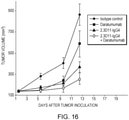
- the anti-CD47 antibody molecules disclosed herein display significant tumor growth inhibition in models for multiple myeloma, diffuse large B cell lymphoma (DLBCL), and Burkitt's lymphoma, as a single agent and in combination with an opsonizing antibody.
- the anti-CD47 antibody molecules disclosed herein can be used (alone or in combination with other agents or therapeutic modalities) to treat, prevent and/or diagnose disorders such as cancer and precancerous conditions.
- the CD47 antibodies described herein are useful in treating, delaying the progression of, preventing relapse of, or alleviating one or more symptoms of a cancer or a precancerous lesion, and are useful in treating hematological malignancies and/or tumors.
- the invention provides an isolated anti-CD47 antibody molecule, comprising: a heavy chain complementarity determining region 1 (HC CDR1) of the amino acid sequence set forth in SEQ ID NO: 7, a heavy chain complementarity determining region 2 (HC CDR2) of the amino acid sequence set forth in SEQ ID NO: 8, a heavy chain complementarity determining region 3 (HC CDR3) of the amino acid sequence set forth in SEQ ID NO: 9, a light chain complementarity determining region 1 (LC CDR1) of the amino acid sequence set forth in SEQ ID NO: 10, a light chain complementarity determining region 2 (LC CDR2) of the amino acid sequence set forth in SEQ ID NO: 11, and a light chain complementarity determining region 3 (LC CDR3) of the amino acid sequence set forth in SEQ ID NO: 12.
- HC CDR1 heavy chain complementarity determining region 1
- HC CDR2 heavy chain complementarity determining region 2
- LC CDR3 a heavy chain complementarity determining region 3
- the anti-CD47 antibody molecules described herein are capable of blocking the interaction between CD47 and its cognate SIRP ⁇ ligand, without causing significant, or detectable, hemagglutination of erythrocytes, e . g ., human erythrocytes.
- the antibody molecules cause less hemagglutination of human erythrocytes than a reference anti-CD47 antibody, or cause less than 90%, 80%, 70%, 60%, 50%, 40%, 30%, 20%, or 10% or less hemagglutination of human erythrocytes relative to a reference anti-CD47 antibody.
- Exemplary reference antibodies include B6H12, MABL, BRIC126, and CC2C6.
- the anti-CD47 antibody molecules described herein cause a potent blocking of the interaction between CD47 and SIRP ⁇ without causing a significant level of hemagglutination of erythrocytes, as well as potent anti-cancer activity.
- the anti-CD47 antibody molecules described block at least 40%, at least 50%, at least 55%, at least 60%, at least 65%, at least 70%, at least 75%, at least 80%, at least 85%, at least 90%, at least 95%, at least 99% of the interaction between CD47 and SIRP ⁇ as compared to the level of interaction between CD47 and SIRP ⁇ in the absence of the anti-CD47 antibody molecules described herein.
- the antibody molecules also cause less hemagglutination of human erythrocytes than a reference anti-CD47 antibody, or cause less than 90%, 80%, 70%, 60%, 50%, 40%, 30%, 20%, or 10% or less hemagglutination of human erythrocytes relative to a reference anti-CD47 antibody.
- exemplary reference antibodies include B6H12, MABL, BRIC126, and CC2C6.
- the anti-CD47 antibody molecules described herein do not phagocytose red blood cells to a significant or detectable level.
- the anti-CD47 antibody molecules have reduced (e.g., 10%, 20%, 30%, 40%, 50%, 60%, 70%, 80%, or 90% reduced) phagocytic activity towards red blood cells relative to a reference anti-CD47 antibody, e . g ., as determined by a phagocytosis assay described herein.
- exemplary reference antibodies include B6H12, MABL, BRIC126, and CC2C6.
- the anti-CD47 antibody molecules described herein enhance macrophage activity.
- the antibody molecules enhance the phagocytic activity of a macrophage, e . g ., an unpolarized macrophage, or an M1 or M2 polarized macrophage.
- the phagocytic activity is enhanced, e . g ., 1%, 5%, 10%, 20%, 30%, 40%, 50%, 60%, 70%, 80%, or 90%, relative to a macrophage in the absence of an anti-CD47 antibody molecule described herein.
- the anti-CD47 antibody molecules described herein enhance macrophage phagocytic activity towards a cancer cell, e.g., an AML cell.
- the phagocytic activity is enhanced, e . g ., 1%, 5%, 10%, 20%, 30%, 40%, 50%, 60%, 70%, 80%, or 90%, relative to a macrophage in the absence of an anti-CD47 antibody molecule described herein.
- the anti-CD47 antibody molecules described herein when used in combination with an opsonizing antibody (e . g ., one or more of, an anti-CD 19 antibody, an anti-CD20 antibody, an anti-CD38 antibody, or an anti-HER2/neu receptor antibody) enhance the anti-tumor effect of the combination, relative to the anti-tumor effect of each antibody individually.
- an opsonizing antibody e.g ., one or more of, an anti-CD 19 antibody, an anti-CD20 antibody, an anti-CD38 antibody, or an anti-HER2/neu receptor antibody
- enhance the anti-tumor effect of the combination relative to the anti-tumor effect of each antibody individually.
- the anti-tumor effect of the combination is enhanced, e.g., 10%, 20%, 30%, 40%, 50%, 60%, 70%, 80%, or 90% or higher, relative to the activity of either the anti-CD47 antibody molecule or the opsonizing antibody individually.
- an antibody molecule of the disclosure comprises one or both of (a) and (b), wherein (a) and (b) are as follows:
- the antibody molecule described herein comprises (a)(i) and (b)(i).
- the antibody molecule of the invention comprises (a)(ii) and (b)(ii).
- the antibody molecule described herein comprises (a)(iii) and (b)(iii).
- the antibody molecule of the invention comprises (a)(iv) and (b)(iv).
- the antibody molecule of the invention comprises (a)(v) and (b)(v).
- the antibody molecule of the invention comprises (a)(vi) and (b)(vi).
- the antibody molecule competes for binding to CD47 with an antibody described herein, e . g ., competes for binding with the antibody 2.3D11, discussed hereinbelow.
- the antibody molecule described herein binds the same or an overlapping epitope on CD47 as an antibody described herein, e.g., the antibody 2.3D11.
- the anti-CD47 antibody molecule is a bispecific antibody molecule.
- the bispecific antibody molecule can comprise a first binding specificity to CD47, e.g., an antibody that binds CD47 as described herein, and a second binding specificity.
- the second binding specificity can be imparted via a binding domain obtained from an opsonizing antibody, e . g ., an antibody that binds CD19, CD20, CD38, or HER2/neu receptor.
- variable region sequences of the antibodies described herein can be linked to a variety of constant region sequences.
- the anti-CD47 antibody molecule can have a wild-type heavy chain constant region (Fc).
- the anti-CD47 antibody molecule can have a mutated form of a heavy chain constant region.
- the heavy chain constant region is chosen from, e.g., a heavy chain constant region of an IgG1, IgG2, IgG3, IgG4, IgM, IgAl, IgA2, IgD, and IgE; preferably, chosen from, e.g., a heavy chain constant region of IgG1, IgG2, IgG3, and IgG4.
- the anti-CD47 antibody molecule has an IgG1 heavy chain constant region, e.g., a wild-type or mutant IgG1 heavy chain constant region.
- the anti-CD47 antibody molecule has an IgG4 heavy chain constant region, e.g., a wild-type or mutant IgG4 heavy chain constant region.
- the IgG4 heavy chain constant region comprises one or both of the substitutions, serine to proline at position 228 (S228P) and leucine to glutamate at position 235 (L235E), e . g ., according to EU numbering.
- the anti-CD47 antibody molecule has a light chain constant region chosen from, e.g., the light chain constant regions of kappa or lambda.
- the invention also provides compositions comprising an anti-CD47 antibody molecule of the invention and at least one pharmaceutically acceptable carrier or diluent.
- the composition comprises an isolated anti-CD47 antibody molecule, comprising: a heavy chain complementarity determining region 1 (HC CDR1) of the amino acid sequence set forth in SEQ ID NO: 7, a heavy chain complementarity determining region 2 (HC CDR2) of the amino acid sequence set forth in SEQ ID NO: 8, a heavy chain complementarity determining region 3 (HC CDR3) of the amino acid sequence set forth in SEQ ID NO: 9; and a light chain complementarity determining region 1 (LC CDR1) of the amino acid sequence set forth in SEQ ID NO: 10, a light chain complementarity determining region 2 (LC CDR2) of the amino acid sequence set forth in SEQ ID NO: 11, and a light chain complementarity determining region 3 (LC CDR3) of the amino acid sequence set forth in SEQ ID NO: 12, and at least one pharmaceutically acceptable carrier or diluent.
- the isolated anti-CD47 antibody molecules disclosed herein comprise a heavy chain variable region (VH) of the amino acid sequence set forth in SEQ ID NO: 4, or a sequence substantially identical (e.g., at least 85%, 90%, 92%, 95%, 97%, 98%, or 99% identical) to SEQ ID NO: 4; and a light chain variable region (VL) of the amino acid sequence set forth in SEQ ID NO: 6, or a sequence substantially identical (e.g., at least 85%, 90%, 92%, 95%, 97%, 98%, or 99% identical) to SEQ ID NO: 6.
- VH heavy chain variable region
- VL light chain variable region
- the composition comprises an isolated anti-CD47 antibody molecule having a heavy chain variable region (VH) of the amino acid sequence set forth in SEQ ID NO: 4, or a sequence substantially identical (e.g., at least 85%, 90%, 92%, 95%, 97%, 98%, or 99% identical) to SEQ ID NO: 4; and a light chain variable region (VL) of the amino acid sequence set forth in SEQ ID NO: 6, or a sequence substantially identical (e.g., at least 85%, 90%, 92%, 95%, 97%, 98%, or 99% identical) to SEQ ID NO: 6, and at least one pharmaceutically acceptable carrier or diluent.
- VH heavy chain variable region
- VL light chain variable region
- the isolated anti-CD47 antibody molecule comprises: a heavy chain of the amino acid sequence set forth in SEQ ID NO: 15, or a sequence substantially identical (e.g., at least 85%, 90%, 92%, 95%, 97%, 98%, or 99% identical) to SEQ ID NO: 15; and a light chain of the amino acid sequence set forth in SEQ ID NO: 16, or a sequence substantially identical (e.g., at least 85%, 90%, 92%, 95%, 97%, 98%, or 99% identical) to SEQ ID NO: 16.
- the composition comprises an isolated anti-CD47 antibody molecule comprising: a heavy chain of the amino acid sequence set forth in SEQ ID NO: 15, or a sequence substantially identical (e.g., at least 85%, 90%, 92%, 95%, 97%, or 98%, 99% identical) to SEQ ID NO: 15; and a light chain of the amino acid sequence set forth in SEQ ID NO: 16, or a sequence substantially identical (e.g., at least 85%, 90%, 92%, 95%, 97%, 98%, or 99% identical) to SEQ ID NO: 16, and at least one pharmaceutically acceptable carrier or diluent.
- an anti-CD47 antibody molecule comprising a substantially identical heavy chain and/or light chain sequence to a reference SEQ ID NO (e.g., the heavy chain of SEQ ID NO: 15 or the light chain of SEQ ID NO: 16) comprises one, two, or three VH CDRs, and/or one, two, or three VL CDRs, having an amino acid sequence that is identical to the corresponding reference CDR sequence.
- a reference SEQ ID NO e.g., the heavy chain of SEQ ID NO: 15 or the light chain of SEQ ID NO: 16
- the disclosure provides a method of treating (or preventing) cancer in a subject, the method comprising administering an anti-CD47 antibody molecule or a composition comprising an isolated anti-CD47 antibody molecule to the subject.
- the invention provides a method of treating (or preventing) cancer in a subject, the method comprising: administering an anti-CD47 antibody molecule described herein, or a composition comprising an isolated anti-CD47 antibody molecule described herein, to the subject.
- the anti-CD47 antibody molecule comprises: a heavy chain complementarity determining region 1 (HC CDR1) of the amino acid sequence set forth in SEQ ID NO: 7, a heavy chain complementarity determining region 2 (HC CDR2) of the amino acid sequence set forth in SEQ ID NO: 8, a heavy chain complementarity determining region 3 (HC CDR3) of the amino acid sequence set forth in SEQ ID NO: 9; and a light chain complementarity determining region 1 (LC CDR1) of the amino acid sequence set forth in SEQ ID NO: 10, a light chain complementarity determining region 2 (LC CDR2) of the amino acid sequence set forth in SEQ ID NO: 11, and a light chain complementarity determining region 3 (LC CDR3) of the amino acid sequence set forth in SEQ ID NO: 12.
- HC CDR1 heavy chain complementarity determining region 1
- HC CDR2 heavy chain complementarity determining region 2
- HC CDR3 HC CDR3
- a composition e . g ., a composition comprising an anti-CD47 antibody described herein, is administered by a mode selected from the group consisting of: parenteral, subcutaneous, intramuscular, intravenous, intra-articular, intra-abdominal, intracapsular, intracartilaginous, intracavitary, intracelial, intracolic, intracervical, intragastric, intrahepatic, intramyocardial, intraosteal, intrapelvic, intraperitoneal, intrapleural, intraprostatic, intrapulmonary, intrarectal, intraspinal, intrasynovial, rectal, buccal, sublingual, intranasal, and transdermal delivery.
- the composition is administered subcutaneously.
- the composition is administered intravenously.
- an anti-CD47 antibody molecule for example, an anti-CD47 antibody described herein or a composition comprising an anti-CD47 antibody molecule or a composition comprising an anti-CD47 antibody described herein, is administered in combination with a chemotherapeutic agent or a second therapeutic antibody molecule.
- an anti-CD47 antibody molecule or composition e . g ., an anti-CD47 antibody molecule or composition described herein, is administered in combination with an opsonizing antibody.
- the opsonizing antibody can facilitate phagocytosis or antibody dependent cellular cytotoxicity (ADCC), or both, of a target cell, e.g., a cancer cell.
- ADCC antibody dependent cellular cytotoxicity
- the antigen binding portion of the opsonizing antibody binds to a target antigen, whereas the Fc portion of the opsonizing antibody binds to an Fc receptor on a phagocyte.
- the antigen binding portion of the opsonizing antibody binds to a target antigen, whereas the Fc portion of the opsonizing antibody binds to an immune effector cell, e.g., via its Fc domain, thus triggering target cell lysis by the bound effector cell (e . g ., monocytes, neutrophils and natural killer cells).
- the opsonizing antibody is an anti-CD20 antibody molecule, for example, rituximab. In certain embodiments, the opsonizing antibody is an anti-CD19 antibody molecule. In certain embodiments, the opsonizing antibody is an anti-CD38 antibody molecule. In certain embodiments, the opsonizing antibody is an anti-HER2/neu receptor antibody molecule.
- the antibody molecules can be used to treat a hematological cancer, for example, a hematological cancer selected from the group consisting of: acute lymphoblastic leukemia (ALL), acute myelogenous leukemia (AML), Non-Hodgkin lymphoma (e.g., diffuse large B cell lymphoma, chronic lymphocytic leukemia, mantle cell lymphoma, B lymphoblastic leukemia/lymphoma, and Burkitt's lymphoma), B-lymphoblastic leukemia/lymphoma; B-cell chronic lymphocytic leukemia/small lymphocytic lymphoma, chronic lymphocytic leukemia (CLL), e .
- ALL acute lymphoblastic leukemia
- AML acute myelogenous leukemia
- Non-Hodgkin lymphoma e.g., diffuse large B cell lymphoma, chronic lymphocytic leukemia, mantle cell lymphoma,
- CML chronic myelocytic leukemia
- follicular lymphoma multiple myeloma, myelofibrosis, polycythemia vera
- MGUS monoclonal gammopathy of unknown significance
- MDS myelodysplastic syndrome
- immunoblastic large cell lymphoma precursor B-lymphoblastic lymphoma and anaplastic large cell lymphoma.
- the cancer is a hematological cancer chosen from multiple myeloma, diffuse large B cell lymphoma, AML, CLL, e . g ., transformed CLL, Richter's syndrome, or follicular lymphoma.
- the antibody molecules can be used to treat a solid tumor.
- the cancer is selected from the group consisting of lung ( e .
- non-small cell lung cancer small cell lung cancer
- pancreas breast, liver, ovary, testicle, kidney, bladder, spine, brain, cervix, endometrial, colon/rectum, anus, endometrium, esophagus, gallbladder, gastrointestinal tract, skin, prostate, pituitary, stomach, uterus, vagina, and thyroid.
- the solid tumor is N-methyl-D-aspartate receptor (NMDA receptor) positive teratoma.
- the cancer is a cancer associated with ascites selected from breast cancer, colon cancer, stomach cancer, pancreatic cancer, uterine cancer, and ovarian cancer.
- the cancer associated with ascites is an adenocarcinoma.
- the method of preventing a cancer comprises treating a precancerous condition or a condition associated with increased risk of developing cancer.
- precancerous conditions include plasma cell dyscrasias, including a monoclonal gammopathy of unknown significance (MGUS), which are associated with an increased risk for development of multiple myeloma and other hematologic malignancies.
- MGUS monoclonal gammopathy of unknown significance
- the invention provides one or more isolated nucleic acid molecules that encode at least a portion (for example, one of the heavy or light chain sequences) of the anti-CD47 antibody molecules of the invention.
- the nucleic acid molecule of the invention comprises a nucleic acid sequence encoding a heavy chain complementarity determining region 1 (HC CDR1) of the amino acid sequence set forth in SEQ ID NO: 7, a heavy chain complementarity determining region 2 (HC CDR2) of the amino acid sequence set forth in SEQ ID NO: 8, and a heavy chain complementarity determining region 3 (HC CDR3) of the amino acid sequence set forth in SEQ ID NO: 9, and a light chain complementarity determining region 1 (LC CDR1) of the amino acid sequence set forth in SEQ ID NO: 10, a light chain complementarity determining region 2 (LC CDR2) of the amino acid sequence set forth in SEQ ID NO: 11, and a light chain complementarity determining region 3 (LC CDR3) of the amino acid sequence set forth in SEQ ID NO: 12.
- HC CDR1 heavy chain complementarity determining region 1
- HC CDR2 heavy chain complementarity determining region 2
- HC CDR3 heavy chain complementarity determining region 3
- the one or more isolated nucleic acid molecules encode an anti-CD47 antibody molecule comprising: a heavy chain variable region (VH) of the amino acid sequence set forth in SEQ ID NO: 4, or a sequence substantially identical (e.g., at least 85%, 90%, 92%, 95%, 97%, 98%, or 99% identical) to SEQ ID NO: 4; and/or a light chain variable region (VL) of the amino acid sequence set forth in SEQ ID NO: 6, or a sequence substantially identical (e.g., at least 85%, 90%, 92%, 95%, 97%, 98%, or 99% identical) to SEQ ID NO: 6.
- VH heavy chain variable region
- VL light chain variable region
- the one or more isolated nucleic acid molecules encode an anti-CD47 antibody molecule comprising: a heavy chain of the amino acid sequence set forth in SEQ ID NO: 15, or a sequence substantially identical (e.g., at least 85%, 90%, 92%, 95%, 97%, 98%, or 99% identical) to SEQ ID NO: 15; and/or a light chain of the amino acid sequence set forth in SEQ ID NO: 16, or a sequence substantially identical (e.g., at least 85%, 90%, 92%, 95%, 97%, 98%, or 99% identical) to SEQ ID NO: 16.
- the one or more isolated nucleic acid molecules encode an anti-CD47 antibody molecule comprising: a heavy chain variable region (VH) of the amino acid sequence set forth in SEQ ID NO: 4, or a sequence substantially identical (e.g., at least 85%, 90%, 92%, 95%, 97%, 98%, or 99% identical) to SEQ ID NO: 4; and/or a light chain variable region (VL) of the amino acid sequence set forth in SEQ ID NO: 6, or a sequence substantially identical (e.g., at least 85%, 90%, 92%, 95%, 97%, 98%, or 99% identical) to SEQ ID NO: 6.
- VH heavy chain variable region
- VL light chain variable region
- the invention provides a vector comprising a nucleic acid molecule of the invention.
- the invention provides cells comprising one or more vectors of the invention.
- the invention relates to antibody molecules that specifically bind CD47, including human CD47, and modulate, e.g., block, inhibit, reduce, antagonize, neutralize or otherwise interfere with the interaction between CD47 and signal regulatory protein ⁇ (SIRP ⁇ ), without causing significant aggregation of cells, for example, hemagglutination of erythrocytes.
- CD47 antibodies e . g ., B6H12, MABL, BRIC126, and CC2C6 have been reported to cause hemagglutination of human erythrocytes ( e . g ., U.S. Patent No. 9,045,541 , Uno S, Kinoshita Y, Azuma Y et al.
- the aggregation of cells represents an important limitation of many therapeutic anti-CD47 antibodies.
- the anti-CD47 antibody molecules of the present disclosure including the 2.3D11 antibody molecule, avoid the undesirable effects of agglutination, for example hemagglutination, thereby increasing the efficacy of therapeutically targeting CD47, while maintaining the ability to block the interaction of CD47 with SIRP ⁇ , thereby promoting phagocytosis of cells expressing CD47.
- Enzymatic reactions and purification techniques are performed according to manufacturer's specifications or as commonly accomplished in the art or as described herein.
- the techniques and procedures described herein are generally performed according to conventional methods well known in the art and as described in various general and more specific references that are cited and discussed throughout the present specification. See e.g ., Sambrook et al. (1989) MOLECULAR CLONING: A LABORATORY MANUAL (2nd ed., Cold Spring Harbor Laboratory Press, Cold Spring Harbor, N.Y .).
- the nomenclatures utilized in connection with, and the laboratory procedures and techniques of, analytical chemistry, synthetic organic chemistry, and medicinal and pharmaceutical chemistry described herein are those well-known and commonly used in the art. Standard techniques are used for chemical syntheses, chemical analyses, pharmaceutical preparation, formulation, and delivery, and treatment of patients.
- CD47 also known as integrin-associated protein (IAP), ovarian cancer antigen OA3, Rh-related antigen and MER6, is a multi-spanning transmembrane receptor belonging to the immunoglobulin superfamily. CD47 expression and/or activity has been implicated in a number of diseases and disorders, e . g ., cancer. CD47 interacts with SIRP ⁇ (signal-regulatory-protein ⁇ ) on macrophages and thereby inhibits phagocytosis.
- SIRP ⁇ signal-regulatory-protein ⁇
- An amino acid sequence of an exemplary human CD47 protein is provided in SEQ ID NO: 1 (NCBI Reference Sequence: NP_001768.1).
- An mRNA sequence encoding an exemplary human CD47 protein is provided in SEQ ID NO: 2 (NCBI Reference Sequence: NM_001777).
- an antibody molecule refers to a polypeptide or combination of polypeptides that comprise sufficient sequence from an immunoglobulin heavy chain variable region and/or sufficient sequence from an immunoglobulin light chain variable region, to specifically bind to an antigen.
- the term comprises full length antibodies as well as fragments thereof, e.g ., Fab, F(ab') or F(ab') 2 fragments.
- an antibody molecule comprises heavy chain CDR1, CDR2, and CDR3 and light chain CDR1, CDR2, and CDR3 sequences.
- Antibody molecules include human, humanized, CDR-grafted antibodies and antigen binding fragments thereof.
- an antibody molecule comprises a protein that comprises at least one immunoglobulin variable region segment, e . g ., an amino acid sequence that provides an immunoglobulin variable domain or immunoglobulin variable domain sequence.
- the VH or VL chain of the antibody molecule can further include all or part of a heavy or light chain constant region, to thereby form a heavy or light immunoglobulin chain, respectively.
- the antibody molecule can be a typical tetramer of two heavy immunoglobulin chains and two light immunoglobulin chains where the two heavy chains are linked by optionally at least one disulfide bond and each pair of heavy and light chains are linked by a disulfide bond.
- An antibody molecule can comprise one or both of a heavy (or light) chain immunoglobulin variable region segment.
- a heavy (or light) chain immunoglobulin variable region segment refers to an entire heavy (or light) chain immunoglobulin variable region, or a fragment thereof, that is capable of binding antigen. The ability of a heavy or light chain segment to bind antigen is measured with the segment paired with a light or heavy chain, respectively.
- a heavy or light chain segment that is less than a full length variable region will, when paired with the appropriate chain, bind with an affinity that is at least 20, 30, 40, 50, 60, 70, 80, 90, or 95% of what is observed when the full length chain is paired with a light chain or heavy chain, respectively.
- An immunoglobulin variable region segment may differ from a reference or consensus sequence.
- to "differ,” means that a residue in the reference sequence or consensus sequence is replaced with either a different residue or an absent or inserted residue.
- compositions and methods of the present invention encompass polypeptides and nucleic acids having the sequences specified, or sequences substantially identical or similar thereto, e . g ., sequences at least 85%, 90%, 95% identical or higher to a specified sequence.
- substantially identical refers to a first amino acid sequence that contains a sufficient or minimum number of amino acid residues that are: i) identical to, or ii) conservative substitutions of aligned amino acid residues in a second amino acid sequence such that the first and second amino acid sequences can have a common structural domain and/or common functional activity.
- amino acid sequences that contain a common structural domain having at least about 85%, 90%, 91%, 92%, 93%, 94%, 95%, 96%, 97%, 98% or 99% identity to a reference sequence, e.g., a sequence provided herein.
- nucleotide sequence refers to a first nucleic acid sequence that contains a sufficient or minimum number of nucleotides that are identical to aligned nucleotides in a second nucleic acid sequence such that the first and second nucleotide sequences encode a polypeptide having common functional activity, or encode a common structural polypeptide domain or a common functional polypeptide activity.
- the term "functional variant” refers to polypeptides that have a substantially identical amino acid sequence to the naturally-occurring sequence, or are encoded by a substantially identical nucleotide sequence, and are capable of having one or more activities of the naturally-occurring sequence.
- amino acid residues or nucleotides at corresponding amino acid positions or nucleotide positions are then compared.
- a position in the first sequence is occupied by the same amino acid residue or nucleotide as the corresponding position in the second sequence, then the molecules are identical at that position (as used herein amino acid or nucleic acid “identity” is equivalent to amino acid or nucleic acid “homology”).
- the percent identity between the two sequences is a function of the number of identical positions shared by the sequences, taking into account the number of gaps, and the length of each gap, which need to be introduced for optimal alignment of the two sequences.
- the comparison of sequences and determination of percent identity between two sequences can be accomplished using a mathematical algorithm.
- the percent identity between two amino acid sequences is determined using the Needleman and Wunsch ((1970) J. MOL. BIOL. 48:444-453 ) algorithm which has been incorporated into the GAP program in the GCG software package (available at http://www.gcg.com), using either a Blosum 62 matrix or a PAM250 matrix, and a gap weight of 16, 14, 12, 10, 8, 6, or 4 and a length weight of 1, 2, 3, 4, 5, or 6.
- the percent identity between two nucleotide sequences is determined using the GAP program in the GCG software package (available at http://www.gcg.com), using a NWSgapdna.CMP matrix and a gap weight of 40, 50, 60, 70, or 80 and a length weight of 1, 2, 3, 4, 5, or 6.
- a particularly preferred set of parameters are a Blosum 62 scoring matrix with a gap penalty of 12, a gap extend penalty of 4, and a frameshift gap penalty of 5.
- the percent identity between two amino acid or nucleotide sequences can be determined using the algorithm of E. Meyers and W. Miller ((1989) CABIOS 4:11-17 ) which has been incorporated into the ALIGN program (version 2.0), using a PAM120 weight residue table, a gap length penalty of 12 and a gap penalty of 4.
- nucleic acid and protein sequences described herein can be used as a "query sequence" to perform a search against public databases to, for example, identify other family members or related sequences.
- Such searches can be performed using the NBLAST and XBLAST programs (version 2.0) of Altschul, et al. (1990) J. MOL. BIOL. 215:403-10 .
- Gapped BLAST can be utilized as described in Altschul et al. (1997) NUCLEIC ACIDS RES. 25:3389-3402 .
- the default parameters of the respective programs e . g ., XBLAST and NBLAST
- the default parameters of the respective programs e . g ., XBLAST and NBLAST
- molecules of the present invention may have additional conservative or non-essential amino acid substitutions, which do not have a substantial effect on their functions.
- An antibody molecule can comprise a heavy (H) chain variable region (abbreviated herein as VH), and a light (L) chain variable region (abbreviated herein as VL).
- an antibody comprises two heavy (H) chain variable regions and two light (L) chain variable regions or an antibody binding fragment thereof.
- the light chains of the immunoglobulin may be of types kappa or lambda.
- the antibody molecule is glycosylated.
- An antibody molecule can be functional for antibody-dependent cellular cytotoxicity and/or complement-mediated cytotoxicity, or may be non-functional for one or both of these activities.
- An antibody molecule can be an intact antibody or an antigen-binding fragment thereof.
- Antibody molecules include "antigen-binding fragments" of a full length antibody, e . g ., one or more fragments of a full-length antibody that retain the ability to specifically bind to a target antigen of interest.
- antigen binding fragments encompassed within the term "antigen-binding fragment" of a full length antibody include (i) a Fab fragment, a monovalent fragment consisting of the VL, VH, CL and CH1 domains; (ii) a F(ab') or F(ab') 2 fragment, a bivalent fragment including two Fab fragments linked by a disulfide bridge at the hinge region; (iii) an Fd fragment consisting of the VH and CH1 domains; (iv) an Fv fragment consisting of the VL and VH domains of a single arm of an antibody, (v) an scFv consisting of the VL and VH domains of a single arm of an antibody linked together via a polypeptide linker to produce
- an antibody refers to a polypeptide, e.g., a tetrameric or single chain polypeptide, comprising the structural and functional characteristics, particularly the antigen binding characteristics, of an immunoglobulin.
- a human antibody comprises two identical light chains and two identical heavy chains. Each chain comprises a variable region.
- variable heavy (VH) and variable light (VL) regions can be further subdivided into regions of hypervariability, termed “complementarity determining regions” ("CDR"), interspersed with regions that are more conserved, termed “framework regions” (FR).
- CDR complementarity determining regions
- Human antibodies have three VH CDRs and three VL CDRs, separated by framework regions FR1-FR4.
- the extent of the FRs and CDRs has been precisely defined ( Kabat, E.A., et al. (1991) SEQUENCES OF PROTEINS OF IMMUNOLOGICAL INTEREST, FIFTH EDITION, U.S. Department of Health and Human Services, NIH Publication No. 91-3242 ; and Chothia, C. et al.
- Each VH and VL is typically composed of three CDRs and four FRs, arranged from amino-terminus to carboxyl-terminus in the following order: FR1, CDR1, FR2, CDR2, FR3, CDR3, and FR4.
- the heavy and light immunoglobulin chains can be connected by disulfide bonds.
- the heavy chain constant region typically comprises three constant domains, CH1, CH2 and CH3.
- the light chain constant region typically comprises a CL domain.
- the variable region of the heavy and light chains contains a binding domain that interacts with an antigen.
- the constant regions of the antibodies typically mediate the binding of the antibody to host tissues or factors, including various cells of the immune system ( e . g ., effector cells) and the first component (Clq) of the classical complement system.
- the antibody molecule has a heavy chain constant region chosen from, e.g., the heavy chain constant regions of IgG1, IgG2, IgG3, IgG4, IgM, IgAl, IgA2, IgD, and IgE; particularly, chosen from, e.g., the (e.g., human) heavy chain constant regions of IgG1, IgG2, IgG3, and IgG4.
- the antibody molecule has a light chain constant region chosen from, e .g., the ( e . g ., human) light chain constant regions of kappa or lambda. The constant region can be altered, e .
- the antibody has effector function and can fix complement. In other embodiments the antibody does not recruit effector cells or fix complement. In another embodiment, the antibody has reduced or no ability to bind an Fc receptor. For example, it is an isotype or subtype, fragment or other mutant, which does not support binding to an Fc receptor, e.g., it has a mutagenized or deleted Fc receptor binding region.
- the CD47 antibody molecule described herein comprises an IgG4 constant region.
- the IgG4 constant region is a wild-type constant region.
- the IgG4 constant region comprises a mutation, e . g ., one or both of S228P and L235E, e.g., according to EU numbering ( Kabat, E.A., et al., supra ).
- the CD47 antibody molecule described herein comprises an IgG1 constant region.
- Antibodies with altered function e.g. altered affinity for an effector ligand, such as FcR on a cell, or the C1 component of complement can be produced by replacing at least one amino acid residue in the constant portion of the antibody with a different residue (e.g., EP 388,151 A1 , U.S. Pat. No. 5,624,821 and U.S. Pat. No. 5,648,260 ).
- a different residue e.g., EP 388,151 A1 , U.S. Pat. No. 5,624,821 and U.S. Pat. No. 5,648,260 .
- Similar types of alterations could be described which if applied to a murine, or other species immunoglobulin would reduce or eliminate these functions.
- immunoglobulin comprises various broad classes of polypeptides that can be distinguished biochemically. Those skilled in the art will appreciate that heavy chains are classified as gamma, mu, alpha, delta, or epsilon ( ⁇ , ⁇ , ⁇ , ⁇ , ⁇ ) with some subclasses among them ( e.g. , ⁇ 1- ⁇ 4). It is the nature of this chain that determines the "class” of the antibody as IgG, IgM, IgA IgD, or IgE, respectively.
- the immunoglobulin subclasses (isotypes) e . g ., IgG1, IgG2, IgG3, IgG4, IgAl, etc.
- Light chains are classified as either kappa or lambda ( ⁇ , ⁇ ). Each heavy chain class may be bound with either a kappa or lambda light chain.
- antibody molecule comprises intact monoclonal antibodies, polyclonal antibodies, single domain antibodies (e.g. , shark single domain antibodies (e.g. , IgNAR or fragments thereof)), multispecific antibodies (e . g ., bi-specific antibodies) formed from at least two intact antibodies, and antibody fragments so long as they exhibit the desired biological activity.
- single domain antibodies e.g. , shark single domain antibodies (e.g. , IgNAR or fragments thereof)
- multispecific antibodies e . g ., bi-specific antibodies formed from at least two intact antibodies, and antibody fragments so long as they exhibit the desired biological activity.
- Suitable antibodies include, but are not limited to, monoclonal, monospecific, polyclonal, polyspecific, human antibodies, primatized antibodies, chimeric antibodies, bi-specific antibodies, humanized antibodies, conjugated antibodies (e . g ., antibodies conjugated or fused to other proteins, radiolabels, or cytotoxins), Small Modular ImmunoPharmaceuticals ("SMIPs TM "), single chain antibodies, cameloid antibodies, and antibody fragments.
- SMIPs TM Small Modular ImmunoPharmaceuticals
- an antibody molecule is a humanized antibody.
- a humanized antibody refers to an immunoglobulin comprising a human framework region and one or more CDRs from a non-human, e . g ., mouse or rat, immunoglobulin.
- the immunoglobulin providing the CDRs is often referred to as the "donor” and the human immunoglobulin providing the framework often called the "acceptor," though in embodiments, no source or no process limitation is implied.
- a humanized antibody comprises a humanized light chain and a humanized heavy chain immunoglobulin.
- Immunoglobulin domain refers to a domain from the variable or constant domain of immunoglobulin molecules. Immunoglobulin domains typically contain two beta-sheets formed of about seven beta-strands, and a conserved disulfide bond (see, e.g., A. F. Williams and A. N. Barclay (1988) ANN. REV. IMMUNOL. 6:381-405 ).
- an "immunoglobulin variable domain sequence” refers to an amino acid sequence that can form the structure of an immunoglobulin variable domain.
- the sequence may include all or part of the amino acid sequence of a naturally-occurring variable domain.
- the sequence may omit one, two or more N- or C-terminal amino acids, internal amino acids, may include one or more insertions or additional terminal amino acids, or may include other alterations.
- a polypeptide that comprises an immunoglobulin variable domain sequence can associate with another immunoglobulin variable domain sequence to form a target binding structure (or "antigen binding site"), e.g., a structure that interacts with the target antigen.
- the antibody or antibody molecule can be derived from a mammal, e.g., a rodent, e.g., a mouse or rat, horse, pig, or goat. In certain embodiments, an antibody or antibody molecule is produced using a recombinant cell. In certain embodiments, an antibody or antibody molecule is a chimeric antibody, for example, from mouse, rat, horse, pig, or other species, bearing human constant and/or variable regions domains.
- the antibody molecule is a multi-specific antibody molecule, e.g., it comprises a plurality of immunoglobulin variable domains sequences, wherein a first immunoglobulin variable domain sequence of the plurality has binding specificity for a first epitope and a second immunoglobulin variable domain sequence of the plurality has binding specificity for a second, different epitope.
- the first and second epitopes are present on the same antigen, e.g., the same protein (or subunit of a multimeric protein).
- the first and second epitopes overlap.
- the first and second epitopes do not overlap.
- the first and second epitopes are on different antigens, e .
- a multi-specific antibody molecule comprises a third, fourth or fifth immunoglobulin variable domain.
- a multi-specific antibody molecule is a bispecific antibody molecule, a trispecific antibody molecule, or tetraspecific antibody molecule.
- a bispecific antibody is an antibody molecule capable of binding specifically to two antigens.
- a bispecific antibody molecule is characterized by a first immunoglobulin variable domain sequence which has binding specificity for a first epitope and a second immunoglobulin variable domain sequence that has binding specificity for a second, different epitope.
- the first and second epitopes can be on the same antigen, e.g., the same protein (or subunit of a multimeric protein).
- the first and second epitopes may or may not overlap.
- the first and second epitopes are on different antigens, e . g ., on different proteins (or different subunits of a multimeric protein).
- the bispecific antibody molecule may comprise a heavy chain variable domain sequence and a light chain variable domain sequence which together define an antigen binding site with binding specificity for a first epitope and a heavy chain variable domain sequence and a light chain variable domain sequence which together define an antigen binding site with binding specificity for a second epitope.
- a bispecific antibody molecule comprises a half antibody having binding specificity for a first epitope and a half antibody having binding specificity for a second epitope.
- the bispecific antibody molecule may comprises a half antibody, or fragment thereof, containing an antigen binding site having binding specificity for a first epitope and a half antibody, or fragment thereof, containing an antigen binding site having binding specificity for a second, different epitope.
- a bispecific antibody molecule comprises a scFv, or fragment thereof, have binding specificity for a first epitope and a scFv, or fragment thereof, have binding specificity for a second, different epitope.
- the first epitope is located on CD47 and the second epitope is located on CD19, CD20, CD38, or the HER2/neu receptor.
- the present disclosure provides isolated, recombinant and/or synthetic anti-CD47 human, primate, rodent, mammalian, chimeric, humanized and/or CDR-grafted antibodies as well as compositions and encoding nucleic acid molecules comprising at least one polynucleotide encoding at least a portion of one anti-CD47 antibody molecule.
- the present disclsoure further includes, but is not limited to, methods of making and using such nucleic acids and antibodies including diagnostic and therapeutic compositions, methods and devices.
- isolated protein or isolated antibody molecule referred to herein means a protein or antibody molecule, which by virtue of its origin or source of derivation (1) is not associated with proteins found in nature, (2) is free of other proteins from the same source, (3) is expressed by a cell from a different species, or (4) does not occur in nature.
- Exemplary antibody molecules of the invention include the 2.3D11 antibody having a variable heavy chain region (VH) and/or variable light (VL) chain region, heavy chain CDR1, CDR2, and CDR3and light chain CDR1, CDR2, and CDR3, and full heavy and light chains, as shown in the sequences below.
- VH variable heavy chain region
- VL variable light chain region
- antibody 2.3D11 is a novel antibody that is capable of interrupting the interaction between CD47 and SIRP ⁇ without inducing significant hemagglutination of erythrocytes.
- sequences of the individual heavy and light chain variable regions of the 2.3D11 antibody, and antibody molecules containing such variable region sequences are described below.
- VH Variable Heavy Chain
- VH Variable Heavy Chain without leader sequence: (SEQ ID NO: 4).
- VL Variable Light Chain
- leader sequence SEQ ID NO: 5
- VL Variable Light Chain
- VH Complementarity Determining Region 1 SINWWN (SEQ ID NO: 7).
- VH Complementarity Determining Region 2 (VH CDR2): EIYHSGSTNYNPSLKS (SEQ ID NO: 8).
- VH CDR3 VH Complementarity Determining Region 3 (VH CDR3): DGGIAVTDYYYYGLDV (SEQ ID NO: 9).
- VL Complementarity Determining Region 1 RASESVSSNLA (SEQ ID NO: 10).
- VL Complementarity Determining Region 2 (VL CDR2): GAFNRAT (SEQ ID NO: 11).
- VL Complementarity Determining Region 3 (VL CDR3): QQRSDWFT (SEQ ID NO: 12).
- FR1-FR4 Framework regions 1-4
- CDR1-CDR3 complementary determining regions 1-3
- FR1 -CDR1- FR2 -CDR2- FR3 -CDR3- FR4 - Constant region FR1 -CDR1- FR2 -CDR2- FR3 -CDR3- FR4 - Constant region
- FR1-FR4 Framework regions 1-4
- CDR1-CDR3 complementary determining regions 1-3
- FR1 -CDR1- FR2 -CDR2- FR3 -CDR3- FR4 -Constant region FR1 -CDR1- FR2 -CDR2- FR3 -CDR3- FR4 -Constant region
- an exemplary antibody of the disclosure comprises a heavy chain variable domain with complementary determining sequences CDR1-3 corresponding to residues 31-36, 51-66, and 99-114, respectively, of SEQ ID NO: 4.
- an exemplary antibody of the disclosure comprises a heavy chain variable domain with framework sequences FR1-FR4 corresponding to residues 1-30, 37-50, 67-98, and 115-125, respectively, of SEQ ID NO: 4.
- an exemplary antibody of the disclosure comprises a light chain variable domain with complementary determining sequences CDR1-3 corresponding to residues 24-34, 50-56, and 89-96, respectively, of SEQ ID NO: 6.
- an exemplary antibody of the disclosure comprises a light chain variable domain with framework sequences FR1-FR4 corresponding to residues 1-23, 35-49, 57-88, and 97-106, respectively, of SEQ ID NO: 6.
- a heavy chain variable region sequence for example, the VH sequence of SEQ ID NO: 4 may be covalently linked to a variety of heavy chain constant region sequences known in the art.
- a light chain variable region sequence for example, the VL of SEQ ID NO: 6, maybe be covalently linked to a variety of light chain constant region sequences known in the art.
- the heavy chain variable region sequence may be used with a heavy chain constant region sequence derived from an IgG1, IgG2, IgG3, or IgG4 molecule.
- the constant region of the heavy chain of the antibody is of human IgG1 isotype, having an amino acid sequence:
- the human IgG1 constant region is modified at amino acid Asn297 (Boxed) to prevent to glycosylation of the antibody, for example Asn297Ala (N297A).
- the constant region of the antibody is modified at amino acid Leu235 (Boxed) to alter Fc receptor interactions, for example Leu235Glu (L235E) or Leu235Ala (L235A).
- the constant region of the antibody is modified at amino acid Leu234 (Boxed) to alter Fc receptor interactions, e . g ., Leu234Ala (L234A).
- the constant region of the antibody is modified at amino acid Glu233 (Boxed), e .
- the constant region of the antibody is altered at both amino acid 234 and 235, for example Leu234Ala and Leu235Ala (L234A/L235A).
- the constant region of the antibody is altered at amino acids 233, 234, and 234, for example, Glu233Pro, Leu234Ala, and Leu235Ala (E233P L234A/L235A) ( Armour KL. et al. (1999) EUR. J. IMMUNOL. 29(8):2613-24 ). All residue numbers are according to EU numbering (Kabat, E.A., et al., supra).
- the constant region of the heavy chain of the antibody is of human IgG2 isotype, having an amino acid sequence:
- the human IgG2 constant region is modified at amino acid Asn297 (Boxed) to prevent to glycosylation of the antibody, e . g ., Asn297Ala (N297A), where the residue numbers are according to EU numbering (Kabat, E.A., et al., supra).
- the constant region of the heavy chain of the antibody is of human IgG3 isotype, having an amino acid sequence:
- the human IgG3 constant region is modified at amino acid Asn297 (Boxed) to prevent to glycosylation of the antibody, e . g ., Asn297Ala (N297A).
- the human IgG3 constant region is modified at amino acid Arg435 (Boxed) to extend the half-life, e . g ., Arg435H (R435H). All residue numbers are according to EU numbering (Kabat, E.A., et al., supra).
- the constant region of the heavy chain of the antibody is of human IgG4 isotype, having an amino acid sequence:
- the human IgG4 constant region is modified within the hinge region to prevent or reduce strand exchange, e . g ., in some embodiments human IgG4 constant region is modified at Ser228 (Boxed), e . g ., Ser228Pro (S228P). In other embodiments, the human IgG4 constant region is modified at amino acid Leu235 (Boxed) to alter Fc receptor interactions, e . g ., Leu235Glu (L235E). In some embodiments, the human IgG4 constant region is modified at both Ser228 and Leu335, e .
- the human IgG4 constant region is modified at amino acid Asn297 (Boxed) to prevent to glycosylation of the antibody, e . g ., Asn297Ala (N297A). All residue numbers are according to EU numbering (Kabat, E.A., et al., supra).
- the constant region of the heavy chain of the antibody is of human IgM isotype, having an amino acid sequence:
- the human IgG constant region is modified to enhance FcRn binding.
- Fc mutations that enhance binding to FcRn are Met252Tyr, Ser254Thr, Thr256Glu (M252Y, S254T, T256E, respectively) ( Dall'Acqua et al. (2006) J. BIOL. CHEM. 281(33): 23514-23524 ), or Met428Leu and Asn434Ser (M428L, N434S) ( Zalevsky et al. (2010) NATURE BIOTECH. 28(2): 157-159 ). All residue numbers are according to EU numbering (Kabat, E.A., et al., supra).
- the human IgG constant region is modified to alter antibody-dependent cellular cytotoxicity (ADCC) and/or complement-dependent cytotoxicity (CDC), e.g., the amino acid modifications described in Natsume et al. (2008) CANCER RES. 68(10): 3863-72 ; Idusogie et al. (2001) J. IMMUNOL. 166(4): 2571-5 ; Moore et al. (2010) MABS 2(2): 181-189 ; Lazar et al. (2006) PROC. NATL. ACAD. SCI. USA 103(11): 4005-4010 , Shields et al. (2001) J. BIOL. CHEM.
- ADCC antibody-dependent cellular cytotoxicity
- CDC complement-dependent cytotoxicity
- the human IgG constant region is modified to induce heterodimerization.
- a heavy chain having an amino acid modification within the CH3 domain at Thr366, e.g., a substitution with a more bulky amino acid, e.g., Try (T366W) is able to preferentially pair with a second heavy chain having a CH3 domain having amino acid modifications to less bulky amino acids at positions Thr366, Leu368, and Tyr407, e.g. , Ser, Ala and Val, respectively (T366S/L368A/Y407V).
- Heterodimerization via CH3 modifications can be further stabilized by the introduction of a disulfide bond, for example by changing Ser354 to Cys (S354C) and Y349 to Cys (Y349C) on opposite CH3 domains (see, Carter (2001) J. IMMUNOL. METHODS 248: 7-15 ).
- the constant region of the light chain of the antibody is a human kappa constant region having an amino acid sequence:
- the constant region of the light chain of the antibody is a human lambda constant region having an amino acid sequence:
- an exemplary antibody of the invention comprises a heavy chain variable domain of the 2.3D11 antibody and a human IgG1 heavy chain constant domain depicted as follows ( FR1 -CDR1- FR2 -CDR2- FR3 -CDR3- FR4 - Constant region; without the leader sequence):
- an exemplary antibody of the invention comprises a heavy chain variable domain of the 2.3D11 antibody and a human IgG4 heavy chain constant domain depicted as follows ( FR1 -CDR1- FR2 -CDR2- FR3 -CDR3- FR4 - Constant region ; without the leader sequence):
- an exemplary antibody of the invention comprises a heavy chain variable domain of the 2.3D11 antibody and a human IgG4 heavy chain constant domain with Ser228Pro and Leu235Glu substitutions depicted as follows ( FR1 -CDR1- FR2- CDR2- FR3 -CDR3- FR4 - Constant region ; without the leader sequence, mutated residues boxed):
- an exemplary antibody of the invention comprises a light chain variable domain of the 2.3D11 antibody and a human kappa constant domain depicted as follows ( FR1 -CDR1- FR2 -CDR2- FR3 -CDR3- FR4 - Constant region ; without the leader sequence):
- the anti-CD47 antibody molecule comprises one or both of (a) and (b), wherein (a) and (b) are as follows:
- the antibody molecule comprises: (a)(i) and any one of (b); (a)(ii) and any one of (b); (a)(iii) and any one of (b); (a)(iv) and any one of (b); (a)(v) and any one of (b); (a)(vi) and any one of (b); (a)(vii) and any one of (b); (b)(i) and any one of (a); (b)(ii) and any one of (a); (b)(iii) and any one of (a); (b)(iv) and any one of (a); (b)(v) and any one of (a); (b)(vi) and any one of (a); (b)(vii) and any one of (a).
- the antibody molecule comprises: (a)(i) and (b)(i); (a)(ii) and (b)(ii); (a)(iii) and (b)(iii); (a)(iv) and (b)(iv); (a)(v) and (b)(v); or (a)(vi) and (b)(vi).
- the anti-CD47 antibody having little or no hemagglutination activity includes one or more of the antibodies described herein, for example, the 2.3D11 antibody and variants thereof, as well as the antibodies known in the art to bind CD47 and disrupt the CD47-SIRP ⁇ interaction with little or no hemagglutination activity, including the antibodies described in U.S. Pat. No 9,045,541 , including, for example, the antibodies referred to as 2A1, 2A1-xi, AB6.12, AB6.12-IgG1, AB6.12-IgG4P and AB6.12-IgG4PE.
- antibody AB6.12 comprises the variable heavy chain sequence of SEQ ID NO: 11 and the variable light chain sequence of SEQ ID NO: 42 as set forth in Table 1 of U.S. Pat. No 9,045,541 (corresponding to SEQ ID NOs. 27 and 28, respectively, as disclosed herein).
- An additional exemplary antibody is the anti-CD47 antibody, 5F9G4, which comprises a variable heavy chain of SEQ ID NO: 29 and a variable light chain of SEQ ID NO: 30, and is described in Liu et al.(2016) PLoS ONE 10(9):e0137345 .
- the antibody molecules described herein may have minor variations in the amino acid sequences compared to a reference, and, for example, may have at least 80%, 90%, 95%, 96%, 97%, 98% or 99% identity relative to a reference sequence, for example, the heavy chain of SEQ ID NO: 15 or the light chain of SEQ ID NO: 16.
- the mutations may include conservative amino acid substitutions, which are substitutions that take place within a family of amino acids related in their side chains, for example, aspartic acid and glutamic acid.
- Antibody molecules of the present invention can be expressed in a modified form. For instance, a region of additional amino acids, particularly charged amino acids, can be added to the N-terminus of an antibody molecule to improve stability and persistence in the host cell, during purification, or during subsequent handling and storage. Also, peptide moieties can be added to an antibody molecule of the present invention to facilitate purification. Such regions can be removed prior to final preparation of an antibody molecule or at least one fragment thereof. Such methods are described in many standard laboratory manuals, such as Sambrook, supra; Ausubel, et al., ed., CURRENT PROTOCOLS IN MOLECULAR BIOLOGY, John Wiley & Sons, Inc., NY, N.Y. (1987-2001 ).
- the antibodies provided may be used in the generation of anti-idiotype antibodies thereto, as well as compositions comprising an anti-idiotype antibody molecule and encoding nucleic acid molecules comprising at least one polynucleotide encoding at least a portion of an anti-idiotype antibody molecule.
- the antibody molecules bind CD47 with an equilibrium binding constant of ⁇ 1 ⁇ M, e.g., ⁇ 100 nM, preferably ⁇ 10 nM, and more preferably ⁇ 1 nM, as measured using standard binding assays, for example, the BIACore-based binding assay.
- Antibody molecules of the present invention may be characterized relative to a reference anti-CD47 antibody, for example, B6H12, 2D3, MABL, CC2C6, or BRIC126.
- Antibody B6H12 is described, for example, in U.S. Pat. Nos. 5,057,604 and 9,017,675 , is commercially available from Abcam, PLC, Santa Cruz Biotechnology, Inc., and eBioscience, Inc., and comprises a heavy chain variable region of SEQ ID NO: 31 and a light chain variable region of SEQ ID NO: 32.
- Antibody MABL is described, for example, in Uno S, Kinoshita Y, Azuma Y et al. (2007) ONCOL. REP.
- Antibody CC2C6 is described, for example, in Martina Seiffert et al. (1997) BLOOD 94(11): 3633-3643 , and is commercially available from Santa Cruz Biotechnology, Inc.
- Antibody BRIC126 is described, for example, in Avent et al. (1988) BIOCHEM. J. 251: 499-505 .
- Antibody 2D3 is commercially available from eBioscience, Inc., and unlike the other reference antibodies does not interfere with the binding between CD47 and SIRP ⁇ .
- Nucleic acids of the present invention can be expressed in a host cell that contains endogenous DNA encoding an antibody molecule of the present invention. Such methods are well known in the art, e.g., as described in U.S. Pat. Nos. 5,580,734 , 5,641,670 , 5,733,746 , and 5,733,761 . Also see, e.g., Sambrook, et al., supra, and Ausubel, et al., supra. Those of ordinary skill in the art are knowledgeable in the numerous expression systems available for expression of a nucleic acid encoding a protein of the present invention. Illustrative of cell cultures useful for the production of the antibody molecules, specified portions or variants thereof, are mammalian cells.
- Mammalian cell systems often will be in the form of monolayers of cells although mammalian cell suspensions or bioreactors can also be used.
- a number of suitable host cell lines capable of expressing intact glycosylated proteins have been developed in the art, and include the COS-1 (e.g. , ATCC CRL 1650), COS-7 ( e.g. , ATCC CRL-1651), HEK293, BHK21 (e.g., ATCC CRL-10), CHO ( e.g. , ATCC CRL 1610) and BSC-1 (e.g.
- ATCC CRL-26 ATCC CRL-26 cell lines
- hep G2 cells hep G2 cells
- P3X63Ag8.653, SP2/0-Ag14 HeLa cells
- Other cells useful for production of nucleic acids or proteins of the present invention are known and/or available, for instance, from the American Type Culture Collection Catalogue of Cell Lines and hybridomas or other known or commercial sources.
- Expression vectors can include one or more of the following expression control sequences, such as, but not limited to an origin of replication; a promoter (e . g ., late or early SV40 promoters, the CMV promoter ( U.S. Pat. Nos. 5,168,062 ; 5,385,839 ), an HSV tk promoter, a pgk (phosphoglycerate kinase) promoter, an EF-1 alpha promoter ( U.S. Pat. No.
- At least one human immunoglobulin promoter at least one human immunoglobulin promoter; an enhancer, and/or processing information sites, such as ribosome binding sites, RNA splice sites, polyadenylation sites (e.g., an SV40 large T Ag poly A addition site), and transcriptional terminator sequences).
- an enhancer such as ribosome binding sites, RNA splice sites, polyadenylation sites (e.g., an SV40 large T Ag poly A addition site), and transcriptional terminator sequences).
- Expression vectors optionally include at least one selectable marker.
- markers include, e.g., but are not limited to, methotrexate (MTX), dihydrofolate reductase (DHFR, U.S. Pat. Nos. 4,399,216 ; 4,634,665 ; 4,656,134 ; 4,956,288 ; 5,149,636 ; 5,179,017 ), ampicillin, neomycin (G418), mycophenolic acid, or glutamine synthetase (GS, U.S. Pat. Nos.
- the nucleic acid insert should be operatively linked to an appropriate promoter.
- the expression constructs will further contain sites for transcription initiation, termination and, in the transcribed region, a ribosome binding site for translation.
- the coding portion of the mature transcripts expressed by the constructs will preferably include a translation initiating at the beginning and a termination codon (e.g., UAA, UGA or UAG) appropriately positioned at the end of the mRNA to be translated, with UAA and UAG preferred for mammalian or eukaryotic cell expression.
- polyadenlyation or transcription terminator sequences are typically incorporated into the vector.
- An example of a terminator sequence is the polyadenlyation sequence from the bovine growth hormone gene. Sequences for accurate splicing of the transcript can also be included.
- An example of a splicing sequence is the VP1 intron from SV40 ( Sprague, et al. (1983) J. VIROL. 45:773-781 ).
- gene sequences to control replication in the host cell can be incorporated into the vector, as known in the art.
- Antibody molecules described herein can be recovered and purified from recombinant cell cultures by well-known methods including, but not limited to, protein A purification, ammonium sulfate or ethanol precipitation, acid extraction, anion or cation exchange chromatography, phosphocellulose chromatography, hydrophobic interaction chromatography, affinity chromatography, hydroxylapatite chromatography and lectin chromatography.
- High performance liquid chromatography HPLC
- HPLC High performance liquid chromatography
- Antibody molecules described herein can include naturally purified products, products of chemical synthetic procedures, and products produced by recombinant techniques from a eukaryotic host, including, for example, yeast, higher plant, insect and mammalian cells. Depending upon the host employed in a recombinant production procedure, the antibody molecule of the present invention can be glycosylated or can be non-glycosylated, with glycosylated preferred. Such methods are described in many standard laboratory manuals, such as Sambrook, supra; Ausubel, supra, Colligan, Protein Science , supra.
- Nucleic acid molecules of the present invention can be in the form of RNA, such as mRNA, hnRNA, tRNA or any other form, or in the form of DNA, including, but not limited to, cDNA and genomic DNA obtained by cloning or produced synthetically, or any combinations thereof.
- the DNA can be triple-stranded, double-stranded or single-stranded, or any combination thereof. Any portion of at least one strand of the DNA or RNA can be the coding strand, also known as the sense strand, or it can be the non-coding strand, also referred to as the anti-sense strand.
- Isolated nucleic acid molecules of the present invention can include nucleic acid molecules comprising an open reading frame (ORF), optionally with one or more introns, e . g ., but not limited to, at least one specified portion of at least one CDR, as CDR1, CDR2 and/or CDR3 of at least one heavy chain (e.g., SEQ ID NOs: 7-9) or light chain (e.g., SEQ ID NOs: 10-12); nucleic acid molecules comprising the coding sequence for an anti-CD47 antibody molecule or variable region (e.g., SEQ ID NOs: 4 and 6); and nucleic acid molecules which comprise a nucleotide sequence substantially different from those described above but which, due to the degeneracy of the genetic code, still encode at least one anti-CD47 antibody molecule as described herein and/or as known in the art.
- ORF open reading frame
- nucleic acid molecule encoding a heavy chain variable domain of the 2.3D11 antibody and a human IgG1 heavy chain constant domain comprises SEQ ID NO: 35.
- a nucleic acid molecule encoding a heavy chain variable domain of the 2.3D11 antibody and a human IgG4 heavy chain constant domain comprises SEQ ID NO: 36.
- a nucleic acid molecule encoding a heavy chain variable domain of the 2.3D11 antibody and a human IgG4 heavy chain constant domain with Ser228Pro and Leu235Glu substitutions comprises SEQ ID NO: 37.
- a nucleic acid molecule encoding a light chain variable domain of the 2.3D11 antibody and a human kappa constant domain comprises SEQ ID NO: 38
- nucleic acid molecules of the present invention which comprise a nucleic acid encoding an anti-CD47 antibody molecule can include, but are not limited to, those encoding the amino acid sequence of an antibody fragment, by itself; the coding sequence for the entire antibody or a portion thereof; the coding sequence for an antibody, fragment or portion, as well as additional sequences, such as the coding sequence of at least one signal leader or fusion peptide, with or without the aforementioned additional coding sequences, such as at least one intron, together with additional, non-coding sequences, including but not limited to, non-coding 5' and 3' sequences, such as the transcribed, non-translated sequences that play a role in transcription, mRNA processing, including splicing and polyadenylation signals (for example-ribosome binding and stability of mRNA); an additional coding sequence that codes for additional amino acids, such as those that provide additional functionalities.
- the sequence encoding an antibody molecule can be fused to a marker sequence, such as
- the isolated nucleic acids of the present invention can be made using (a) recombinant methods, (b) synthetic techniques, (c) purification techniques, or combinations thereof, as well-known in the art.
- the nucleic acids can conveniently comprise sequences in addition to a polynucleotide of the present invention.
- a multi-cloning site comprising one or more endonuclease restriction sites can be inserted into the nucleic acid to aid in isolation of the polynucleotide.
- translatable sequences can be inserted to aid in the isolation of the translated polynucleotide of the present invention.
- a hexahistidine marker sequence provides a convenient means to purify the proteins of the present invention.
- the nucleic acid of the present invention-excluding the coding sequence- is optionally a vector, adapter, or linker for cloning and/or expression of a polynucleotide of the present invention. Additional sequences can be added to such cloning and/or expression sequences to optimize their function in cloning and/or expression, to aid in isolation of the polynucleotide, or to improve the introduction of the polynucleotide into a cell.
- Use of cloning vectors, expression vectors, adapters, and linkers is well known in the art. (See, e . g ., Ausubel, supra ; or Sambrook, supra )
- RNA, cDNA, genomic DNA, or any combination thereof can be obtained from biological sources using any number of cloning methodologies known to those of skill in the art.
- oligonucleotide probes that selectively hybridize, under stringent conditions, to the polynucleotides of the present invention are used to identify the desired sequence in a cDNA or genomic DNA library.
- the isolation of RNA, and construction of cDNA and genomic libraries, is well known to those of ordinary skill in the art. (See, e.g., Ausubel, supra; or Sambrook, supra )
- an antibody preferably is combined with a pharmaceutically acceptable carrier.
- pharmaceutically acceptable carrier means buffers, carriers, and excipients suitable for use in contact with the tissues of human beings and animals without excessive toxicity, irritation, allergic response, or other problem or complication, commensurate with a reasonable benefit/risk ratio.
- the carrier(s) should be “acceptable” in the sense of being compatible with the other ingredients of the formulations and not deleterious to the recipient.
- Pharmaceutically acceptable carriers include buffers, solvents, dispersion media, coatings, isotonic and absorption delaying agents, that are compatible with pharmaceutical administration. The use of such media and agents for pharmaceutically active substances is known in the art.
- antibody molecule compositions of the present invention can comprise at least one of any suitable excipients, such as, but not limited to, diluent, binder, stabilizer, buffers, salts, lipophilic solvents, preservative, or adjuvant.
- Pharmaceutically acceptable excipients are preferred.
- Non-limiting examples of, and methods of preparing such sterile solutions are well known in the art, such as, but not limited to, those described in Gennaro, Ed., REMINGTON'S PHARMACEUTICAL SCIENCES, 18th Edition, Mack Publishing Co. (Easton, Pa.) 1990 .
- Pharmaceutically acceptable carriers can be routinely selected that are suitable for the mode of administration, solubility and/or stability of the antibody molecule, fragment or variant composition as well known in the art or as described herein.
- compositions include but are not limited to proteins, peptides, amino acids, lipids, and carbohydrates (e . g ., sugars, including monosaccharides, di-, tri-, tetra-, and oligosaccharides; derivatized sugars such as alditols, aldonic acids, and esterified sugars; and polysaccharides or sugar polymers), which can be present singly or in combination, comprising alone or in combination 1-99.99% by weight or volume.
- Exemplary protein excipients include serum albumin such as human serum albumin (HSA), recombinant human albumin (rHA), gelatin, casein.
- amino acid/antibody molecule components which can also function in a buffering capacity, include alanine, glycine, arginine, betaine, histidine, glutamic acid, aspartic acid, cysteine, lysine, leucine, isoleucine, valine, methionine, phenylalanine, and aspartame,.
- Carbohydrate excipients suitable for use in the invention include, for example, monosaccharides such as fructose, maltose, galactose, glucose, D-mannose, and sorbose,; disaccharides, such as lactose, sucrose, trehalose, and cellobiose,; polysaccharides, such as raffinose, melezitose, maltodextrins, dextrans, and starches,; and alditols, such as mannitol, xylitol, maltitol, lactitol, xylitol sorbitol (glucitol), and myoinositol.
- Preferred carbohydrate excipients for use in the present invention are mannitol, trehalose, and raffinose.
- Antibody molecule compositions can also include a buffer or a pH adjusting agent; typically, the buffer is a salt prepared from an organic acid or base.
- Representative buffers include organic acid salts such as salts of citric acid, acetic acid, ascorbic acid, gluconic acid, carbonic acid, tartaric acid, succinic acid, or phthalic acid; Tris, tromethamine hydrochloride, or phosphate buffers.
- antibody molecule compositions of the invention can include polymeric excipients/additives such as polyvinylpyrrolidones, ficolls (a polymeric sugar), dextrates (e . g ., cyclodextrins, such as 2-hydroxypropyl- ⁇ -cyclodextrin), polyethylene glycols, flavoring agents, antimicrobial agents, sweeteners, antioxidants, antistatic agents, surfactants (e.g., polysorbates such as "TWEEN 20" and "TWEEN 80"), lipids (e.g., phospholipids, fatty acids), steroids (e.g., cholesterol), and chelating agents (e.g., EDTA).
- polymeric excipients/additives such as polyvinylpyrrolidones, ficolls (a polymeric sugar), dextrates (e . g ., cyclodextrins, such as 2-hydroxypropyl- ⁇ -cyclodextrin), polyethylene
- compositions comprising at least one anti-CD47 antibody molecule in a pharmaceutically acceptable formulation.
- Preserved formulations contain at least one known preservative or optionally selected from the group consisting of at least one phenol, m-cresol, p-cresol, o-cresol, chlorocresol, benzyl alcohol, phenylmercuric nitrite, phenoxyethanol, formaldehyde, chlorobutanol, magnesium chloride ( e .
- alkylparaben methyl, ethyl, propyl, butyl
- benzalkonium chloride benzethonium chloride, sodium dehydroacetate and thimerosal, or mixtures thereof in an aqueous diluent.
- Any suitable concentration or mixture can be used as known in the art, such as 0.001-5%, or any range or value therein, such as, but not limited to 0.001, 0.003, 0.005, 0.009, 0.01, 0.02, 0.03, 0.05, 0.09, 0.1, 0.2, 0.3, 0.4, 0.5, 0.6, 0.7, 0.8, 0.9, 1.0, 1.1, 1.2, 1.3, 1.4, 1.5, 1.6, 1.7, 1.8, 1.9, 2.0, 2.1, 2.2, 2.3, 2.4, 2.5, 2.6, 2.7, 2.8, 2.9, 3.0, 3.1, 3.2, 3.3, 3.4, 3.5, 3.6, 3.7, 3.8, 3.9, 4.0, 4.3, 4.5, 4.6, 4.7, 4.8, 4.9, or any range or value therein.
- Non-limiting examples include, no preservative, 0.1-2% m-cresol (e.g., 0.2, 0.3, 0.4, 0.5, 0.9, or 1.0%), 0.1-3% benzyl alcohol (e.g. , 0.5, 0.9, 1.1., 1.5, 1.9, 2.0, or 2.5%), 0.001-0.5% thimerosal (e.g., 0.005 or 0.01%), 0.001-2.0% phenol (e.g., 0.05, 0.25, 0.28, 0.5, 0.9, or 1.0%), 0.0005-1.0% alkylparaben(s) (e.g., 0.00075, 0.0009, 0.001, 0.002, 0.005, 0.0075, 0.009, 0.01, 0.02, 0.05, 0.075, 0.09, 0.1, 0.2, 0.3, 0.5, 0.75, 0.9, or 1.0%).
- 0.1-2% m-cresol e.g., 0.2, 0.3, 0.4, 0.5,
- compositions containing antibodies disclosed herein can be presented in a dosage unit form and can be prepared by any suitable method.
- a pharmaceutical composition should be formulated to be compatible with its intended route of administration. Examples of routes of administration are intravenous (IV), intradermal, inhalation, transdermal, topical, transmucosal, and rectal administration. A preferred route of administration for monoclonal antibodies is IV infusion.
- Useful formulations can be prepared by methods known in the pharmaceutical art. For example, see REMINGTON'S PHARMACEUTICAL SCIENCES (1990) supra.
- Formulation components suitable for parenteral administration include a sterile diluent such as water for injection, saline solution, fixed oils, polyethylene glycols, glycerine, propylene glycol or other synthetic solvents; antibacterial agents such as benzyl alcohol or methyl parabens; antioxidants such as ascorbic acid or sodium bisulfite; chelating agents such as EDTA; buffers such as acetates, citrates or phosphates; and agents for the adjustment of tonicity such as sodium chloride or dextrose.
- a sterile diluent such as water for injection, saline solution, fixed oils, polyethylene glycols, glycerine, propylene glycol or other synthetic solvents
- antibacterial agents such as benzyl alcohol or methyl parabens
- antioxidants such as ascorbic acid or sodium bisulfite
- chelating agents such as EDTA
- buffers such as acetates, citrates or phosphates
- suitable carriers include physiological saline, bacteriostatic water, Cremophor ELTM (BASF, Parsippany, NJ) or phosphate buffered saline (PBS).
- the carrier should be stable under the conditions of manufacture and storage, and should be preserved against microorganisms.
- the carrier can be a solvent or dispersion medium containing, for example, water, ethanol, polyol (for example, glycerol, propylene glycol, and liquid polyetheylene glycol), and suitable mixtures thereof.
- the pharmaceutically acceptable composition comprises the anti-CD47 antibody in 10 mM histidine, 280 mM sucrose, and 0.01% TWEEN 80 at pH 6.0
- compositions preferably are sterile. Sterilization can be accomplished by any suitable method, e . g ., filtration through sterile filtration membranes. Where the composition is lyophilized, filter sterilization can be conducted prior to or following lyophilization and reconstitution.
- compositions of this invention may be in a variety of forms. These include, for example, liquid, semi-solid and solid dosage forms, such as liquid solutions (e . g ., injectable and infusible solutions), dispersions or suspensions, and liposomes.
- liquid solutions e . g ., injectable and infusible solutions
- dispersions or suspensions e. g ., dispersions or suspensions, and liposomes.
- the preferred form depends on the intended mode of administration and therapeutic application. Typical preferred compositions are in the form of injectable or infusible solutions.
- the preferred mode of administration is parenteral ( e . g ., intravenous, subcutaneous, intraocular, intraperitoneal, intramuscular).
- the preparation is administered by intravenous infusion or injection.
- the preparation is administered by intramuscular or subcutaneous injection.
- parenteral administration and “administered parenterally” as used herein means modes of administration other than enteral and topical administration, usually by injection, and includes, without limitation, intravenous, intramuscular, subcutaneous, intraarterial, intrathecal, intracapsular, intraorbital, intravitreous, intracardiac, intradermal, intraperitoneal, transtracheal, inhaled, subcutaneous, subcuticular, intraarticular, subcapsular, subarachnoid, intraspinal, epidural and intrasternal injection and infusion.
- the present invention provides an article of manufacture, comprising packaging material and at least one vial comprising a solution of at least one anti-CD47 antibody molecule with the prescribed buffers and/or preservatives, optionally in an aqueous diluent.
- the aqueous diluent optionally further comprises a pharmaceutically acceptable preservative.
- Preservatives include those selected from the group consisting of phenol, m-cresol, p-cresol, o-cresol, chlorocresol, benzyl alcohol, alkylparaben (methyl, ethyl, propyl, butyl), benzalkonium chloride, benzethonium chloride, sodium dehydroacetate and thimerosal, or mixtures thereof.
- the concentration of preservative used in the formulation is a concentration sufficient to yield an anti-microbial effect. Such concentrations are dependent on the preservative selected and are readily determined by the skilled artisan.
- excipients e.g. isotonicity agents, buffers, antioxidants, preservative enhancers
- An isotonicity agent such as glycerin, is commonly used at known concentrations.
- a physiologically tolerated buffer is preferably added to provide improved pH control.
- the formulations can cover a wide range of pHs, such as from about pH 4.0 to about pH 10.0, from about pH 5.0 to about pH 9.0, or about pH 6.0 to about pH 8.0.
- additives such as a pharmaceutically acceptable solubilizers like TWEEN 20 (polyoxyethylene (20) sorbitan monolaurate), TWEEN 40 (polyoxyethylene (20) sorbitan monopalmitate), TWEEN 80 (polyoxyethylene (20) sorbitan monooleate), Pluronic F68 (polyoxyethylene polyoxypropylene block copolymers), and PEG (polyethylene glycol) or nonionic surfactants such as polysorbate 20 or 80 or poloxamer 184 or 188, Pluronic ® polyls, other block co-polymers, and chelators such as EDTA and EGTA can optionally be added to the formulations or compositions to reduce aggregation. These additives are particularly useful if a pump or plastic container is used to administer the formulation. The presence of pharmaceutically acceptable surfactant mitigates the propensity for the protein to aggregate.
- a pharmaceutically acceptable solubilizers like TWEEN 20 (polyoxyethylene (20) sorbitan monolau
- the disclosure provides methods of treating disorders associated with elevated levels of CD47 expression in certain cell types, for example, certain cancers, whose cells exhibit elevated levels of CD47 expression.
- the disclosure provides a method of treating a subject, for example, a subject with a cancer, in need thereof.
- the method comprises administering an effective amount of an anti-CD47 antibody or a composition comprising an anti-CD47 antibody to the subject in need thereof.
- the terms “subject” and “patient” refer to organisms to be treated by the methods of the present invention. Such organisms preferably include, but are not limited to, mammals ( e . g ., murines, simians, equines, bovines, porcines, canines, felines), and more preferably includes humans.
- mammals e . g ., murines, simians, equines, bovines, porcines, canines, felines
- the terms, "treat,” “treatment” and “treating” includes any effect, e . g ., lessening, reducing, modulating, ameliorating or eliminating, that results in the improvement of the condition, disease, disorder, or ameliorating a symptom thereof.
- an effective amount refers to the amount of a compound (e.g., an anti-CD47 antibody molecule) sufficient to effect beneficial or desired results.
- An effective amount can be administered in one or more administrations, applications or dosages and is not intended to be limited to a particular formulation or administration route.
- a therapeutically effective amount of active component is in the range of 0.1 mg/kg to 100 mg/kg, e.g., 1 mg/kg to 100 mg/kg, 1 mg/kg to 10 mg/kg.
- the dosage administered can vary depending upon known factors, such as the pharmacodynamic characteristics of the particular agent, and its mode and route of administration; the age, health, and weight of the recipient; the type and extent of disease or indication to be treated, the nature and extent of symptoms, kind of concurrent treatment, frequency of treatment, and the effect desired.
- the initial dosage can be increased beyond the upper level in order to rapidly achieve the desired blood-level or tissue-level. Alternatively, the initial dosage can be smaller than the optimum, and the daily dosage may be progressively increased during the course of treatment.
- Human dosage can be optimized, e . g ., in a conventional Phase I dose escalation study designed to run from 0.5 mg/kg to 20 mg/kg.
- Dosing frequency can vary, depending on factors such as route of administration, dosage amount, serum half-life of the antibody, and the disease being treated. Exemplary dosing frequencies are once per day, once per week and once every two weeks. Formulation of monoclonal antibody-based drugs is within ordinary skill in the art. In some embodiments, a monoclonal antibody is lyophilized, and then reconstituted in buffered saline, at the time of administration
- the present disclosure provides a method for treating cancer in a cell, tissue, organ, animal or patient.
- cancers include, but are not limited to, solid tumors, soft tissue tumors, hematopoietic tumors and metastatic lesions.
- hematopoietic tumors include, leukemia, acute leukemia, acute lymphoblastic leukemia (ALL), B-cell, T-cell or FAB ALL, acute myeloid leukemia (AML), chronic myelocytic leukemia (CML), chronic lymphocytic leukemia (CLL), e .
- transformed CLL diffuse large B-cell lymphomas (DLBCL), follicular lymphoma, hairy cell leukemia, myelodyplastic syndrome (MDS), a lymphoma, Hodgkin's disease, a malignant lymphoma, non-Hodgkin's lymphoma, Burkitt's lymphoma, multiple myeloma, or Richter's Syndrome (Richter's Transformation).
- solid tumors include malignancies, e .
- sarcomas g., sarcomas, adenocarcinomas, and carcinomas, of the various organ systems, such as those affecting head and neck (including pharynx), thyroid, lung (small cell or non-small cell lung carcinoma (NSCLC)), breast, lymphoid, gastrointestinal ( e .
- NSCLC non-small cell lung carcinoma
- the solid tumor is NMDA receptor positive teratoma.
- the cancer is chosen from breast cancer, colon cancer, pancreatic cancer (e . g ., pancreatic neuroendocrine tumors (PNETs) or pancreatic ductal adenocarcinoma (PDAC)), stomach, uterine cancer, or ovarian cancer.
- PNETs pancreatic neuroendocrine tumors
- PDAC pancreatic ductal adenocarcinoma
- the cancer is a cancer associated with ascites.
- Ascites is a symptom of many types of cancer and can also be caused by a number of conditions, such as advanced liver disease.
- the types of cancer that are likely to cause ascites are cancer of the breast, lung, large bowel (colon), stomach, pancreas, ovary, womb (endometrium) and the peritoneum.
- the cancer associated with ascites is chosen from breast cancer, colon cancer, pancreatic cancer, stomach, uterine cancer, or ovarian cancer.
- the cancer is associated with pleural effusions, e . g ., lung cancer.
- MDS Myelodysplastic syndrome
- e . g . preleukemia, refractory anemias, Ph-negative chronic myelocytic leukemia, chronic myelomonocytic leukemia, myeloid metaplasia
- Non-Hodgkin lymphoma e .
- B-lymphoblastic leukemia/lymphoma B-cell chronic lymphocytic leukemia/small lymphocytic lymphoma; B-cell prolymphocytic leukemia; Lymphoplasmacytic lymphoma; Splenic marginal zone B-cell lymphoma ( ⁇ villous lymphocytes); Hairy cell leukemia; Plasma cell myeloma/plasmacytoma; Extranodal marginal zone B-cell lymphoma of the MALT type; Nodal marginal zone B-cell lymphoma ( ⁇ monocytoid B cells); Follicular lymphoma; Mantle cell lymphoma; Diffuse large B-cell lymphomas; Burkitt's lymphoma; Precursor
- Anti CD47 antibodies including, e . g ., the antibody molecules described herein, can also be used to treat disorders associated with cancer, e . g ., cancer-induced encephalopathy
- Anti CD47 antibodies can also be used to treat inflammatory, autoimmune, fibrotic, fibroproliferative, atopic, or angiogenic disorders.
- inflammatory disorders include but are not limited to chronic obstructive pulmonary disease, asthma, rheumatoid arthritis, inflammatory bowel disease (including Crohn's disease and ulcerative colitis), multiple sclerosis, psoriasis, ischemia-reperfusion injuries, septic shock, age-related macular degeneration ( e .
- autoimmune diseases include but are not limited to asthma, rheumatoid arthritis, inflammatory bowel disease, multiple sclerosis, psoriasis, type I diabetes, systemic lupus erythematosus (SLE), Sjögren's syndrome, Hashimoto's thyroiditis, Graves' disease, Guillain-Barre syndrome, autoimmune hepatitis, and Myasthenia gravis.
- fibrotic diseases include but are not limited to scleroderma, liver fibrosis, pancreatic fibrosis, chronic obstructive pulmonary disease, diabetic nephropathy, sarcoidosis, idiopathic pulmonary fibrosis, cirrhosis, cystic fibrosis, neurofibromatosis, endometriosis, postoperative fibroids, and restenosis.
- atopic disease include but are not limited to atopic dermatitis, atopic asthma, and allergic rhinitis.
- compositions of the invention can be used in combination with other therapeutic agents and/or modalities.
- administered "in combination,” as used herein, is understood to mean that two (or more) different treatments are delivered to the subject during the course of the subject's affliction with the disorder, such that the effects of the treatments on the patient overlap at a point in time.
- the delivery of one treatment is still occurring when the delivery of the second begins, so that there is overlap in terms of administration. This is sometimes referred to herein as “simultaneous" or "concurrent delivery.”
- the delivery of one treatment ends before the delivery of the other treatment begins. In some embodiments of either case, the treatment is more effective because of combined administration.
- the second treatment is more effective, e.g., an equivalent effect is seen with less of the second treatment, or the second treatment reduces symptoms to a greater extent, than would be seen if the second treatment were administered in the absence of the first treatment, or the analogous situation is seen with the first treatment.
- delivery is such that the reduction in a symptom, or other parameter related to the disorder is greater than what would be observed with one treatment delivered in the absence of the other.
- the effect of the two treatments can be partially additive, wholly additive, or greater than additive.
- the delivery can be such that an effect of the first treatment delivered is still detectable when the second is delivered.
- the methods of the disclosure include administering to the subject an anti-CD47 molecule, e.g., an anti-CD47 antibody molecule described herein, e.g., a composition or preparation, described herein, in combination with one or more additional therapies, e . g ., surgery, radiation therapy, or administration of another therapeutic preparation.
- the additional therapy may include chemotherapy, e . g ., a cytotoxic agent.
- the additional therapy may include a targeted therapy, e.g. a tyrosine kinase inhibitor, a proteasome inhibitor, or a protease inhibitor.
- the additional therapy may include an anti-inflammatory, anti-angiogenic, anti-fibrotic, or anti-proliferative compound, e.g., a steroid, a biologic immunomodulator, a monoclonal antibody, an antibody fragment, an aptamer, an siRNA, an antisense molecule, a fusion protein, a cytokine, a cytokine receptor, a bronchodialator, a statin, an anti-inflammatory agent (e.g. methotrexate), or an NSAID.
- the additional therapy could include combining therapeutics of different classes.
- the polysaccharide preparation and the additional therapy can be administered simultaneously or sequentially.
- Exemplary cytotoxic agents that can be administered in combination with the polysaccharide preparation include antimicrotubule agents, topoisomerase inhibitors, antimetabolites, protein synthesis and degradation inhibitors, mitotic inhibitors, alkylating agents, platinating agents, inhibitors of nucleic acid synthesis, histone deacetylase inhibitors (HDAC inhibitors, e .
- HDAC inhibitors histone deacetylase inhibitors
- Vorinostat SAHA, MK0683
- entinostat MS-275
- panobinostat LH589
- TSA trichostatin A
- MCD0103 mocetinostat
- PXD101 romidepsin (FK228, depsipeptide)
- DNA methyltransferase inhibitors nitrogen mustards, nitrosoureas, ethylenimines, alkyl sulfonates, triazenes, folate analogs, nucleoside analogs, ribonucleotide reductase inhibitors, vinca alkaloids, taxanes, epothilones, intercalating agents, agents capable of interfering with a signal transduction pathway, agents that promote apoptosis and radiation, or antibody molecule conjugates that bind surface proteins to deliver a toxic agent.
- the cytotoxic agent that can be administered with a preparation described herein is a platinum-based agent (such as cisplatin), cyclophosphamide, dacarbazine, methotrexate, fluorouracil, gemcitabine, capecitabine, hydroxyurea, topotecan, irinotecan, azacytidine, vorinostat, ixabepilone, bortezomib, taxanes ( e .
- a platinum-based agent such as cisplatin
- cyclophosphamide dacarbazine
- methotrexate fluorouracil
- gemcitabine gemcitabine
- capecitabine capecitabine
- hydroxyurea topotecan
- irinotecan irinotecan
- azacytidine hydroxyurea
- vorinostat ixabepilone
- bortezomib taxanes
- paclitaxel or docetaxel cytochalasin B
- gramicidin D ethidium bromide
- emetine mitomycin
- etoposide ethidium bromide
- tenoposide vincristine
- vinblastine vinorelbine
- colchicin anthracyclines ( e .
- doxorubicin or epirubicin daunorubicin, dihydroxy anthracin dione, mitoxantrone, mithramycin, actinomycin D, adriamycin, 1-dehydrotestosterone, glucocorticoids, procaine, tetracaine, lidocaine, propranolol, puromycin, ricin, or maytansinoids.
- the methods of the disclosure include administering to the subject an anti-CD47 antibody molecule, e.g., an anti-CD47 antibody molecule described herein, in combination with an opsonizing antibody.
- an anti-CD47 antibody molecule e.g., an anti-CD47 antibody molecule described herein, in combination with an opsonizing antibody.
- the opsonizing antibody can facilitate phagocytosis or antibody dependent cellular cytotoxicity (ADCC), or both, of a target cell, e.g., a tumor cell.
- ADCC antibody dependent cellular cytotoxicity
- the antigen binding portion of the opsonizing antibody binds to a target antigen
- the Fc portion of the opsonizing antibody binds to an Fc receptor on a phagocyte.
- the antigen binding portion of the opsonizing antibody binds to a target antigen
- the Fc portion of the opsonizing antibody binds to an immune effector cell, e.g., via its Fc domain, thus triggering target cell lysis by the bound effector cell (e.g., monocytes, neutrophils and natural killer cells).
- the opsonizing antibody can include one or more of an anti-CD 19 antibody, an anti-CD20 antibody, an anti-CD38 antibody, an anti-HER2/neu receptor antibody, an anti-EGFR antibody, an anti-CD30 antibody, or an anti-CD33 antibody, either alone or in combination.
- the anti-CD47 antibody molecule e.g., an anti-CD47 antibody molecule described herein, may be administered to the subject in combination with a CD19 inhibitor.
- the CD19 inhibitor may be an antibody, a fragment or conjugate of an antibody, or a cell therapy.
- Exemplary anti-CD19 antibodies or fragments or conjugates thereof include but are not limited to blinatumomab, SAR3419 (Sanofi), MEDI-551 (Medlmmune LLC), Combotox, DT2219ARL (Masonic Cancer Center), MOR-208 (also called XmAb-5574; MorphoSys), XmAb-5871 (Xencor), MDX-1342 (Bristol-Myers Squibb), SGN-CD19A (Seattle Genetics), and AFM11 (Affimed Therapeutics).
- the anti-CD47 antibody molecule may be administered to the subject in combination with a CD19 inhibitor for the treatment of cancer, e.g., B-cell lymphomas and leukemias, e.g. acute lymphoblastic leukemia.
- a CD19 inhibitor for the treatment of cancer e.g., B-cell lymphomas and leukemias, e.g. acute lymphoblastic leukemia.
- the anti-CD47 antibody molecule may be administered to the subject in combination with a CD20 inhibitor.
- the CD20 inhibitor may be a small molecule, an antibody, a fragment or conjugate of an antibody, or a cell therapy.
- Exemplary anti-CD20 antibodies include but are not limited to rituximab, ofatumumab, ocrelizumab, veltuzumab, obinutuzumab, TRU-015 (Trubion Pharmaceuticals), ocaratuzumab, and Pro131921 (Genentech).
- an anti-CD47 antibody molecule may be administered to the subject in combination with a CD20 inhibitor for the treatment of cancer or a disorder associated with cancer, e . g ., non-Hodgkin's lymphoma, diffuse large B-cell lymphoma, chronic lymphocytic leukemia, NMDA receptor positive teratoma, or cancer-induced encephalopathy.
- a CD20 inhibitor for the treatment of an autoimmune disease, e . g ., rheumatoid arthritis or Myasthenia gravis.
- the anti-CD47 antibody molecule may be administered to the subject in combination with a CD38 inhibitor.
- the CD38 inhibitor may be a small molecule, an antibody, a fragment or conjugate of an antibody, or a cell therapy.
- One exemplary anti-CD38 antibody is daratumumab (Johnson & Johnson).
- the anti-CD47 antibody molecule may be administered to the subject in combination with a CD38 inhibitor for the treatment of cancer, e . g . multiple myeloma, B-cell lymphomas, T-cell lymphomas, and leukemias.
- the anti-CD47 antibody molecule e.g., an anti-CD47 antibody molecule described herein, may be administered to the subject in combination with a HER2/neu receptor inhibitor.
- the anti-HER2/neu receptor inhibitor may be an antibody, a fragment or conjugate of an antibody, or a cell therapy.
- One exemplary anti-HER2/neu receptor antibody is trastuzumab (Genentech).
- the anti-CD47 antibody molecule may be administered to the subject in combination with an anti-HER2/neu receptor antibody for the treatment of cancer, e.g., breast cancer, gastric cancer, e.g., stomach adenocarcinoma, ovarian cancer, lung adenocarcinoma, uterine cancer, salivary duct carcinomas, testicular germ cell tumors, and esophageal tumors.
- cancer e.g., breast cancer, gastric cancer, e.g., stomach adenocarcinoma, ovarian cancer, lung adenocarcinoma, uterine cancer, salivary duct carcinomas, testicular germ cell tumors, and esophageal tumors.
- compositions and kits are described as having, including, or comprising specific components, or where processes and methods are described as having, including, or comprising specific steps, it is contemplated that, additionally, there are compositions and kits of the present invention that consist essentially of, or consist of, the recited components, and that there are processes and methods according to the present disclosure that consist essentially of, or consist of, the recited processing and method steps.
- This example describes the production of anti-CD47 antibodies in mice.
- mice carrying a human immunoglobulin immune repertoire in place of the murine repertoire were immunized with soluble CD47-Fc fusion protein.
- Twenty-eight hybridomas expressing anti-CD47 monoclonal antibody molecules were isolated following fusion of splenocytes with a myeloma cell line, screening and cloning.
- Isolated hybridomas included hybridomas expressing antibody molecules referred to as 2.3D11, 4.2B4, 4.2C11, 4.1H12, 4.12E2, 2.15A5, 2.7B6, 2.12F6, 2.15E4, 2.3A9, 2.5E6, 2.6D3, 4.2C4, 2.3D3, 2.9F9, and 2.1D2.
- the isolated hybridomas expressed antibody molecules having both heavy and light chains with fully human variable domains and rat constant domains.
- Exemplary isolated anti-CD47 antibody 2.3D11 (hereafter referred to as "2.3D11") was sequenced and further characterized below.
- the heavy chain of the isolated 2.3D11 antibody has the following sequence (Leader sequence - FR1 -CDR1 -FR2- CDR2- FR3- CDR3 -FR4 - Constant region)
- the light chain of the isolated 2.3D11 antibody has the following sequence (Leader sequence - FR1 -CDR1- FR2 -CDR2- FR3 -CDR3 -FR4- Constant region):
- the constant regions of the heavy chain were replaced with heavy chain constant regions from human IgG1 (SEQ ID NO: 17), human IgG4 (SEQ ID NO: 20) or human IgG4 containing Ser228Pro and Leu235Glu substitutions (SEQ ID NO: 21), and the constant region of the light chain was replaced with a human kappa constant region (SEQ ID NO: 22) using conventional recombinant DNA techniques.
- the heavy chain of the 2.3D11 antibody comprising a human IgG1 heavy chain constant domain (hereinafter referred to as "2.3D11 IgG1") has the following sequence (FR1-CDR1- FR2 -CDR2- FR3 -CDR3- FR4 - Constant region; without the leader sequence):
- the heavy chain of the 2.3D11 antibody comprising a wild-type human IgG4 heavy chain constant domain (hereinafter referred to as "2.3D11 IgG4") has the following sequence ( FR1 -CDR1- FR2 -CDR2- FR3 -CDR3- FR4 - Constant region; without leader sequence):
- the heavy chain of the 2.3D11 antibody comprising a mutant human IgG4 heavy chain constant domain with Ser228Pro and Leu235Glu substitutions (hereinafter referred to as "2.3D11 IgG4mt") has the following sequence ( FR1 -CDR1- FR2 -CDR2- FR3 -CDR3- FR4-Constant region; without the leader sequence, mutated residues boxed):
- the light chain of the 2.3D11 antibody comprising a human kappa constant region has the following sequence ( FR1 -CDR1- FR2 -CDR2- FR3 -CDR3- FR4 - Constant region; without the leader sequence):
- the 2.3D11 antibody generated in Example 1 was tested in a set of in vitro assays to ascertain their biological characteristics and activities.
- the 2.3D11 antibody was found to potently inhibit the interaction between CD47 and SIRP ⁇ and enhance phagocytosis of tumor cells.
- 2.3D11 was found to cross compete with reference antibody B6H12 for binding to CD47, even though, unlike B6H12, 2.3D11 does not induce hemagglutination or red blood cell phagocytosis.
- SIRP ⁇ is a natural ligand of CD47.
- the ability of 2.3D11 to block the CD47-SIRP ⁇ interaction was measured using a flow cytometry based assay, wherein Jurkat cells, which express CD47, were incubated with an anti-CD47 antibody or a control monoclonal antibody (antibodies titrated 10 ⁇ g/ml-0.17ng/ml in 3 fold dilution series), washed and then incubated with SIRP ⁇ -Fc-bio (7.5 ⁇ g/ml; determined as ⁇ EC 70 from previous titration). SIRP ⁇ bound to the cells was detected using streptavidin-allophycocyanin (SA-APC). As shown in FIG. 1 , the 2.3D11 antibody potently blocked the CD47-SIRP ⁇ interaction.
- SA-APC streptavidin-allophycocyanin
- the anti-CD47 antibodies B6H12 and 2.3D11 mutually cross compete for (block) binding to CD47, suggesting there is overlap between the binding epitopes of the two antibodies.
- DU-145 a human prostate cancer cell line that expresses CD47 cells were pre-incubated with varying concentrations of purified anti-CD47 or control antibodies, washed and then stained with biotinylated versions of the antibodies to assess self- and cross-blocking ( FIGS. 2A-B ). Biotinylated versions of the antibodies were detected with streptavidin fluorescein isothiocyanate (SA-FITC).
- SA-FITC streptavidin fluorescein isothiocyanate
- Panc-1 pancreatic carcinoma cell line that expresses CD47 cells were co-incubated with B6H12 and increasing concentrations of unlabeled 2.3D11 ( FIG. 2C ). In both cases, 2.3D11 competed with B6H12 for binding to CD47, which indicates that the two antibodies bind overlapping epitopes.
- 2.3D11 binds to both human and cyno RBCs.
- CD47 is a cell surface receptor that is upregulated on tumor cells and is also thought to contribute to immune evasion through its interaction with its natural ligand SIRP ⁇ . Ligation of SIRP ⁇ on macrophages by CD47 results in decreased phagocytic activity. The effect of the 2.3D11 antibody on phagocytosis of target cells was assessed.
- effector cells primary human macrophages (CD14+ monocytes isolated from human peripheral blood and differentiated with M-CSF for 7 days)
- target cells carboxyfluorescein succinimidyl ester (CFSE)-labeled Jurkat or Raji cells
- CFSE carboxyfluorescein succinimidyl ester
- Phagocytosis was measured as CD14+CFSE+ events as a percent of the total CD14+ cells as measured by flow cytometry.
- Cytochalasin D which inhibits phagocytosis, was used as a control.
- FIGS. 4A-B and FIG. 5 the presence of 2.3D11 in co-cultures enhanced phagocytosis of target cells.
- 2.3D11 cooperates with the anti-CD20 antibody rituximab to promote Raji cell phagocytosis.
- opsonizing antibodies e . g ., anti-CD20 antibodies
- phagocytosis may be influenced by the level of CD47 expression on target cell.
- 2.3D11 increased phagocytosis of Raji tumor cell line targets with an EC 50 of ⁇ 300 ng/mL (data not shown).
- hemagglutinating capacity of 2.3D11 human RBCs were incubated with a dose range of anti-CD47 antibody, for example, 2.3D11, 4.2B4, 4.2C11, 4.1H12, 4.12E2, 2D3, B6H12, and AB6.12-IgG4PE, or control in a 96 well plate.
- a dose range of anti-CD47 antibody for example, 2.3D11, 4.2B4, 4.2C11, 4.1H12, 4.12E2, 2D3, B6H12, and AB6.12-IgG4PE, or control in a 96 well plate.
- Evidence of hemagglutination was demonstrated by the presence of non-settled RBCs, appearing as a haze compared to a punctate dot of non-hemagglutinated RBCs.
- antibody 2.3D11 did not exhibit hemagglutinating activity at any of the concentrations tested despite binding competition with B6H12 antibody, which is known to cause hemagglutination.
- phagocytosis assays similar to those described in section IV above were performed, using human or cyno RBC as targets at an effector:target ratio of 1:10. As shown in FIG. 9 , 2.3D11 had minimal effect on human and cyno RBC phagocytosis, in contrast to B6H12 which enhanced phagocytosis.
- phagocytosis mediated by 2.3D11 is preferential for tumor cells over normal leukocytes and RBC.
- the anti-tumor activity of 2.3D11 produced as either a wild-type human IgG4 ("2.3D11 IgG4") or S228P/L235E double mutant human IgG4 ("2.3D11 IgG4mt"), as described in Example 1, was evaluated in the Burkitt's lymphoma Raji xenograft model.
- mice Female CB.17 SCID mice were injected subcutaneously with 1 ⁇ 10 7 Raji B tumor cells in 50% Matrigel and treatment was started when tumors reached 100mm 3 .
- Isotype control, 2.3D11 IgG4 and 2.3D11 IgG4mt antibodies were injected intraperitoneally (i.p.) three times per week, for 3 weeks at the indicated doses.
- Rituximab was injected i.p. at 5mg/kg once a week for 3 weeks. Body weight and tumor volume were measured twice per week.
- the antitumor efficacy of 2.3D11 IgG4 and 2.3D11 IgG4mt were compared in the Raji model of Burkitt's lymphoma.
- both the 2.3D11 IgG4 and 2.3D11 IgG4mt antibodies demonstrated anti-tumor activity in this xenograft model.
- tumor growth inhibition (TGI) activity of the 2.3D11 IgG4 and 2.3D11 IgG4mt antibodies was 97% and 71%, respectively.
- the Raji model has been shown to be sensitive to rituximab, an anti-CD20 antibody used as a first line therapy for diffuse large B-cell lymphoma patients.
- the antitumor efficacy of 2.3D11 IgG4 (100 ⁇ g/mouse, t.i.w.) and 2.3D11 IgG4mt (200 ⁇ g/mouse, t.i.w.) in combination with rituximab (5mg/kg, q.w.) was assessed in the Raji model.
- the results for 2.3D11 IgG4mt at day 19 after the start of treatment are summarized in FIG. 10B .
- FIG. 10C summarizes the results for 2.3D11 IgG4 at day 19 after the start of treatment. The data show that 2.3D11 IgG4 is highly potent in a monotherapy setting, leading to tumor regression (from 124 mm 3 at the start of treatment to 47 mm 3 at day 19) and 96% TGI, similar to the results in the experiment described above but using only half the amount of 2.3D11 IgG4 antibody.
- 2.3D11 The activity of 2.3D11, produced in three different Fc formats, was evaluated in multiple assays.
- 2.3D11 was produced with wild-type human IgG4 ("2.3D11 IgG4") or S228P/L235E double mutant human IgG4 ("2.3D11 IgG4mt”) or wild type IgG1 ("2.3D11 IgG1").
- RBCs Human red blood cells
- CFSE Human red blood cells
- Labeled RBCs were cultured with day 7 human macrophages in the presence of a 2.3D11 antibody, isotype control, or anti-CD47 antibody B6H12 for two hours at a target-to-effector ratio of 10:1. After culture, cells were trypsinized and stained with anti-CD14-APC and analyzed by flow cytometry.
- Phagocytosis was quantitated as the percent of CD14+ events (macrophages) that were also CFSE+ and had therefore engulfed a target (events were gated on singlets). No significant difference was observed between the isotype controls or the 2.3D11 IgG1, 2.3D11IgG4 or 2.3D11IgG4mt antibodies, but B6H12 strongly induced RBC phagocytosis. Representative data is shown in FIG. 11 .
- M-CSF human macrophage colony-stimulating factor
- Phagocytosis assays were performed on day 7, as described above, using CFSE-labeled Jurkat cells as targets. The results are summarized in FIGS. 12A-12D , which demonstrate that the anti-CD47 antibody 2.3D11, regardless of Fc format, enhances phagocytosis by both M1 and M2 polarized macrophages.
- SCID-Beige mice were injected subcutaneously with 1 ⁇ 10 7 Raji B tumor cells in 50% Matrigel and treatment was started when tumor reached 100 mm 3 .
- Isotype control polyclonal human IgG
- 2.3D11 IgG4, 2.3D11 IgG4mt and 2.3D1 1IgG1 antibodies were injected intraperitoneally (i.p.) with 200 ⁇ g of antibody three times per week for 3 weeks. Body weight and tumor volume were measured twice per week.
- the 2.3D11 IgG1, 2.3D11 IgG4 and 2.3D11 IgG4mt anti-CD47 antibodies demonstrated anti-tumor activity in this xenograft model, but the 2.3D11 IgG4mt antibody showed significantly less tumor growth inhibition than either the 2.3D11 IgG4 or 2.3D11 IgG1 antibodies.
- This example shows that a 2.3D11 derived antibody acts synergistically with an anti-CD38 opsonizing antibody.
- M-CSF human macrophage colony-stimulating factor
- Phagocytosis was assessed by flow cytometry and reported as percent of macrophages that are CFSE-positive. The results are summarized in FIG. 15 , which shows that the combination of an anti-CD47 antibody with an anti-CD38 antibody synergistically enhances phagocytosis of multiple myeloma cells as compared to either antibody alone.
- the results presented herein demonstrate that the anti-CD47 antibody 2.3D11 induces robust tumor cell phagocytosis and tumor clearance both alone and in combination with opsonizing antibodies in preclinical models of multiple myeloma.
- This example describes the synergistic properties that can be observed when a 2.3D11 derived antibody is combined with an anti-CD38 opsonizing antibody in a murine model of multiple myeloma.
- mice 8-12 week old CB.17 SCID female mice (Charles River) were injected subcutaneously with 1 ⁇ 10 7 H929 tumor cells in 50% Matrigel in the right flank. Cell injection volume was 0.1 mL/mouse. When tumors reached an average size of 100 - 150 mm 3 , animals were randomized to control or treatment. Treatment groups included 2.3D11 IgG4 at 30 ⁇ g/mouse (injected intraperitoneally (i.p.) three times per week for 3 weeks), daratumumab at 10 ⁇ g/mouse (injected i.p. at a single dose), and a combination of the two antibodies. Tumor volumes were measured twice weekly with a caliper using the formula (length ⁇ width2 ⁇ 0.52). The results are show in FIG. 16 and demonstrate that anti-tumor activity of the combination of 2.3D11 IgG4 and daratumumab is greater than either single agent alone.
- This example describes enhanced phagocytosis of chronic lymphocytic leukemia (CLL) cells mediated by a 2.3D11 derived antibody.
- CLL chronic lymphocytic leukemia
- CD19+/CD5+ tumor cells from the peripheral blood of a CLL patient were CFSE labeled and co-cultured with differentiated human macrophages at a ratio of 2:1 for two hours, in the presence of antibody 2.3D11 IgG4, or isotype control (anti-DNP antibody with a hIgG4 constant region). Phagocytosis was assessed by flow cytometry, as described above, and reported as percent of CD14+macrophages that are CFSE-positive.
Landscapes
- Health & Medical Sciences (AREA)
- Chemical & Material Sciences (AREA)
- Immunology (AREA)
- Organic Chemistry (AREA)
- Life Sciences & Earth Sciences (AREA)
- Medicinal Chemistry (AREA)
- General Health & Medical Sciences (AREA)
- Biochemistry (AREA)
- Biophysics (AREA)
- Proteomics, Peptides & Aminoacids (AREA)
- Molecular Biology (AREA)
- Genetics & Genomics (AREA)
- Veterinary Medicine (AREA)
- Public Health (AREA)
- Animal Behavior & Ethology (AREA)
- Pharmacology & Pharmacy (AREA)
- Engineering & Computer Science (AREA)
- Nuclear Medicine, Radiotherapy & Molecular Imaging (AREA)
- Oncology (AREA)
- Chemical Kinetics & Catalysis (AREA)
- General Chemical & Material Sciences (AREA)
- Bioinformatics & Cheminformatics (AREA)
- Hematology (AREA)
- Microbiology (AREA)
- Mycology (AREA)
- Epidemiology (AREA)
- Endocrinology (AREA)
- Biomedical Technology (AREA)
- Peptides Or Proteins (AREA)
- Medicines Containing Antibodies Or Antigens For Use As Internal Diagnostic Agents (AREA)
- Medicines Containing Material From Animals Or Micro-Organisms (AREA)
- Preparation Of Compounds By Using Micro-Organisms (AREA)
- Micro-Organisms Or Cultivation Processes Thereof (AREA)
- Medicines That Contain Protein Lipid Enzymes And Other Medicines (AREA)
Description
- The invention relates generally to molecular biology, immunology and oncology, and, more particularly, the invention relates to antibodies that bind CD47.
- The transmembrane protein CD47, also known as integrin-associated protein (IAP), ovarian cancer antigen OA3, Rh-related antigen and MER6, is an immunoglobulin superfamily member involved in multiple cellular processes, including cell migration, adhesion and T cell function. CD47 was originally identified as a tumor antigen on human ovarian cancer and was subsequently shown to be expressed on multiple human tumor types, including both hematologic and solid tumors. The interaction between CD47 and signal regulatory protein alpha (SIRPα), an inhibitory protein expressed on macrophages, prevents phagocytosis of CD47-expressing cells. CD47 is expressed at low levels on virtually all non-malignant cells, and loss of expression or changes in membrane distribution can serve as markers of aged or damaged cells, particularly on red blood cells (RBC).
- However, high expression of CD47 on cancer cells blocks phagocytic uptake, subsequent antigen cross-presentation and T cell activation, which collectively contribute to tumor immune evasion. Certain human leukemias upregulate CD47 to evade macrophage killing (
U.S. Patent No. 8,562,997 ). In many hematologic cancers, high CD47 expression is believed to be associated with poor clinical outcomes, for example, Non-Hodgkin Lymphoma, Acute Lymphocytic Leukemia, etc. (U.S. Patent No. 9,045,541 WO2013/119714 describes monoclonal antibodies that recognize CD47, more specifically CD47 antibodies that do not cause a significant level of agglutination of cells. Overdijk et al. (MAbs. 2015 Mar-Apr; 7(2): 311-320) describe that phagocytosis is a fast, potent and clinically relevant mechanism of action that may contribute to the therapeutic activity of Daratumumab in multiple myeloma and potentially other hematological tumors. - Despite the advances made to date, there is still ongoing need for additional agents that block the CD47-SIRPα interaction for use in the treatment of various diseases, including cancers, that are associated with elevated levels of CD47 expression.
- Many CD47 antibodies developed to date have been reported to cause aggregation of cells, for example, hemagglutination of human erythrocytes (see,
U.S. Patent No. 9,045,541 - The invention is based, in part, on the development and characterization of a series of antibody molecules that bind with high affinity to human CD47, block the CD47-SIRPα interaction, and promote macrophage-mediated phagocytic clearance of CD47-expressing cancer cells while inducing little or no hemagglutination of red blood cells. The anti-CD47 antibody molecules disclosed herein display significant tumor growth inhibition in models for multiple myeloma, diffuse large B cell lymphoma (DLBCL), and Burkitt's lymphoma, as a single agent and in combination with an opsonizing antibody. The anti-CD47 antibody molecules disclosed herein can be used (alone or in combination with other agents or therapeutic modalities) to treat, prevent and/or diagnose disorders such as cancer and precancerous conditions. The CD47 antibodies described herein are useful in treating, delaying the progression of, preventing relapse of, or alleviating one or more symptoms of a cancer or a precancerous lesion, and are useful in treating hematological malignancies and/or tumors.
- The present invention is defined by the claims.
- In one aspect the invention provides an isolated anti-CD47 antibody molecule, comprising: a heavy chain complementarity determining region 1 (HC CDR1) of the amino acid sequence set forth in SEQ ID NO: 7, a heavy chain complementarity determining region 2 (HC CDR2) of the amino acid sequence set forth in SEQ ID NO: 8, a heavy chain complementarity determining region 3 (HC CDR3) of the amino acid sequence set forth in SEQ ID NO: 9, a light chain complementarity determining region 1 (LC CDR1) of the amino acid sequence set forth in SEQ ID NO: 10, a light chain complementarity determining region 2 (LC CDR2) of the amino acid sequence set forth in SEQ ID NO: 11, and a light chain complementarity determining region 3 (LC CDR3) of the amino acid sequence set forth in SEQ ID NO: 12.
- In certain embodiments, the anti-CD47 antibody molecules described herein are capable of blocking the interaction between CD47 and its cognate SIRPα ligand, without causing significant, or detectable, hemagglutination of erythrocytes, e.g., human erythrocytes. For example, the antibody molecules cause less hemagglutination of human erythrocytes than a reference anti-CD47 antibody, or cause less than 90%, 80%, 70%, 60%, 50%, 40%, 30%, 20%, or 10% or less hemagglutination of human erythrocytes relative to a reference anti-CD47 antibody. Exemplary reference antibodies include B6H12, MABL, BRIC126, and CC2C6.
- In one embodiment, the anti-CD47 antibody molecules described herein cause a potent blocking of the interaction between CD47 and SIRPα without causing a significant level of hemagglutination of erythrocytes, as well as potent anti-cancer activity. For example, the anti-CD47 antibody molecules described block at least 40%, at least 50%, at least 55%, at least 60%, at least 65%, at least 70%, at least 75%, at least 80%, at least 85%, at least 90%, at least 95%, at least 99% of the interaction between CD47 and SIRPα as compared to the level of interaction between CD47 and SIRPα in the absence of the anti-CD47 antibody molecules described herein. Optionally, the antibody molecules also cause less hemagglutination of human erythrocytes than a reference anti-CD47 antibody, or cause less than 90%, 80%, 70%, 60%, 50%, 40%, 30%, 20%, or 10% or less hemagglutination of human erythrocytes relative to a reference anti-CD47 antibody. Exemplary reference antibodies include B6H12, MABL, BRIC126, and CC2C6.
- In one embodiment, the anti-CD47 antibody molecules described herein do not phagocytose red blood cells to a significant or detectable level. In another embodiment, the anti-CD47 antibody molecules have reduced (e.g., 10%, 20%, 30%, 40%, 50%, 60%, 70%, 80%, or 90% reduced) phagocytic activity towards red blood cells relative to a reference anti-CD47 antibody, e.g., as determined by a phagocytosis assay described herein. Exemplary reference antibodies include B6H12, MABL, BRIC126, and CC2C6.
- In another embodiment, the anti-CD47 antibody molecules described herein enhance macrophage activity. For example, the antibody molecules enhance the phagocytic activity of a macrophage, e.g., an unpolarized macrophage, or an M1 or M2 polarized macrophage. In one embodiment, the phagocytic activity is enhanced, e.g., 1%, 5%, 10%, 20%, 30%, 40%, 50%, 60%, 70%, 80%, or 90%, relative to a macrophage in the absence of an anti-CD47 antibody molecule described herein.
- In one embodiment, the anti-CD47 antibody molecules described herein enhance macrophage phagocytic activity towards a cancer cell, e.g., an AML cell. In one embodiment, the phagocytic activity is enhanced, e.g., 1%, 5%, 10%, 20%, 30%, 40%, 50%, 60%, 70%, 80%, or 90%, relative to a macrophage in the absence of an anti-CD47 antibody molecule described herein.
- In one embodiment, the anti-CD47 antibody molecules described herein, when used in combination with an opsonizing antibody (e.g., one or more of, an anti-CD 19 antibody, an anti-CD20 antibody, an anti-CD38 antibody, or an anti-HER2/neu receptor antibody) enhance the anti-tumor effect of the combination, relative to the anti-tumor effect of each antibody individually. In another embodiment, the anti-tumor effect of the combination is enhanced, e.g., 10%, 20%, 30%, 40%, 50%, 60%, 70%, 80%, or 90% or higher, relative to the activity of either the anti-CD47 antibody molecule or the opsonizing antibody individually.
- In an embodiment, an antibody molecule of the disclosure comprises one or both of (a) and (b), wherein (a) and (b) are as follows:
- (a)(i) light chain CDR1, CDR2 and CDR3, e.g., Chothia or Kabat light chain CDRs, from SEQ ID NO: 16,
- (a)(ii) light chain CDR1 of SEQ ID NO: 10, light chain CDR2 of SEQ ID NO: 11, and light chain CDR3 of SEQ ID NO: 12,
- (a)(iii) light chain CDRs CDR1, CDR2 and CDR3, that collectively, differ by no more than 1, 2, 3, 4, 5, or 6 amino acid residues from the light chain CDRs of (a)(i) and (a)(ii);
- (a)(iv) a light chain variable region of SEQ ID NO: 6;
- (a)(v) an antigen binding fragment of SEQ ID NO: 6;
- (a)(vi) an amino acid sequence that differs by no more than 1, 2, 3, 4, 5, 6, 7, 8, 9, or 10, residues from the sequence of (a)(iv) or a)(v);
- (a)(vii) an amino acid sequence that is substantially identical (e.g., at least 85%, 90%, 92%, 95%, 97%, 98%, or 99% identical) to the sequence of (a)(iv) or (a)(v); and
- (b)(i) heavy chain CDR1, CDR2 and CDR3, e.g., Chothia or Kabat heavy chain CDRs, from SEQ ID NO: 15,
- (b)(ii) heavy chain CDR1 of SEQ ID NO: 7, heavy chain CDR2 of SEQ ID NO: 8, and heavy chain CDR3 of SEQ ID NO: 9,
- (b)(iii) heavy chain CDRs CDR1, CDR2 and CDR3, that collectively, differ by no more than 1, 2, 3, 4, 5, or 6 amino acid residues from the heavy chain CDRs of (b)(i) and (b)(ii);
- (b)(iv) a heavy chain variable region of SEQ ID NO: 4;
- (b)(v) an antigen binding fragment of SEQ ID NO: 4;
- (b)(vi) an amino acid sequence that differs by no more than 1, 2, 3, 4, 5, 6, 7, 8, 9, or 10, residues from the sequence of (b)(iv) or (b)(v); and
- (b)(vii) an amino acid sequence that is substantially identical (e.g., at least 85%, 90%, 92%, 95%, 97%, 98%, or 99% identical) to the sequence of (b)(iv) or (b)(v).
- In an embodiment, the antibody molecule described herein comprises (a)(i) and (b)(i).
- The antibody molecule of the invention comprises (a)(ii) and (b)(ii).
- In an embodiment, the antibody molecule described herein comprises (a)(iii) and (b)(iii).
- In an embodiment, the antibody molecule of the invention comprises (a)(iv) and (b)(iv).
- In an embodiment, the antibody molecule of the invention comprises (a)(v) and (b)(v).
- In an embodiment, the antibody molecule of the invention comprises (a)(vi) and (b)(vi).
- In an embodiment, the antibody molecule competes for binding to CD47 with an antibody described herein, e.g., competes for binding with the antibody 2.3D11, discussed hereinbelow.
- In an embodiment, the antibody molecule described herein binds the same or an overlapping epitope on CD47 as an antibody described herein, e.g., the antibody 2.3D11.
- In an embodiment, the anti-CD47 antibody molecule is a bispecific antibody molecule. For example, the bispecific antibody molecule can comprise a first binding specificity to CD47, e.g., an antibody that binds CD47 as described herein, and a second binding specificity. The second binding specificity can be imparted via a binding domain obtained from an opsonizing antibody, e.g., an antibody that binds CD19, CD20, CD38, or HER2/neu receptor.
- It is understood that the variable region sequences of the antibodies described herein can be linked to a variety of constant region sequences. For example, in one embodiment, the anti-CD47 antibody molecule can have a wild-type heavy chain constant region (Fc). In another embodiment, the anti-CD47 antibody molecule can have a mutated form of a heavy chain constant region. In one embodiment, the heavy chain constant region is chosen from, e.g., a heavy chain constant region of an IgG1, IgG2, IgG3, IgG4, IgM, IgAl, IgA2, IgD, and IgE; preferably, chosen from, e.g., a heavy chain constant region of IgG1, IgG2, IgG3, and IgG4. In one embodiment, the anti-CD47 antibody molecule has an IgG1 heavy chain constant region, e.g., a wild-type or mutant IgG1 heavy chain constant region. In another embodiment, the anti-CD47 antibody molecule has an IgG4 heavy chain constant region, e.g., a wild-type or mutant IgG4 heavy chain constant region. In one embodiment, the IgG4 heavy chain constant region comprises one or both of the substitutions, serine to proline at position 228 (S228P) and leucine to glutamate at position 235 (L235E), e.g., according to EU numbering.
- In another embodiment, the anti-CD47 antibody molecule has a light chain constant region chosen from, e.g., the light chain constant regions of kappa or lambda.
- In another aspect, the invention also provides compositions comprising an anti-CD47 antibody molecule of the invention and at least one pharmaceutically acceptable carrier or diluent. As such, the composition comprises an isolated anti-CD47 antibody molecule, comprising: a heavy chain complementarity determining region 1 (HC CDR1) of the amino acid sequence set forth in SEQ ID NO: 7, a heavy chain complementarity determining region 2 (HC CDR2) of the amino acid sequence set forth in SEQ ID NO: 8, a heavy chain complementarity determining region 3 (HC CDR3) of the amino acid sequence set forth in SEQ ID NO: 9; and a light chain complementarity determining region 1 (LC CDR1) of the amino acid sequence set forth in SEQ ID NO: 10, a light chain complementarity determining region 2 (LC CDR2) of the amino acid sequence set forth in SEQ ID NO: 11, and a light chain complementarity determining region 3 (LC CDR3) of the amino acid sequence set forth in SEQ ID NO: 12, and at least one pharmaceutically acceptable carrier or diluent.
- In one embodiment, the isolated anti-CD47 antibody molecules disclosed herein, comprise a heavy chain variable region (VH) of the amino acid sequence set forth in SEQ ID NO: 4, or a sequence substantially identical (e.g., at least 85%, 90%, 92%, 95%, 97%, 98%, or 99% identical) to SEQ ID NO: 4; and a light chain variable region (VL) of the amino acid sequence set forth in SEQ ID NO: 6, or a sequence substantially identical (e.g., at least 85%, 90%, 92%, 95%, 97%, 98%, or 99% identical) to SEQ ID NO: 6.
- In one embodiment, the composition comprises an isolated anti-CD47 antibody molecule having a heavy chain variable region (VH) of the amino acid sequence set forth in SEQ ID NO: 4, or a sequence substantially identical (e.g., at least 85%, 90%, 92%, 95%, 97%, 98%, or 99% identical) to SEQ ID NO: 4; and a light chain variable region (VL) of the amino acid sequence set forth in SEQ ID NO: 6, or a sequence substantially identical (e.g., at least 85%, 90%, 92%, 95%, 97%, 98%, or 99% identical) to SEQ ID NO: 6, and at least one pharmaceutically acceptable carrier or diluent.
- In one embodiment, the isolated anti-CD47 antibody molecule comprises: a heavy chain of the amino acid sequence set forth in SEQ ID NO: 15, or a sequence substantially identical (e.g., at least 85%, 90%, 92%, 95%, 97%, 98%, or 99% identical) to SEQ ID NO: 15; and a light chain of the amino acid sequence set forth in SEQ ID NO: 16, or a sequence substantially identical (e.g., at least 85%, 90%, 92%, 95%, 97%, 98%, or 99% identical) to SEQ ID NO: 16.
- In one embodiment, the composition comprises an isolated anti-CD47 antibody molecule comprising: a heavy chain of the amino acid sequence set forth in SEQ ID NO: 15, or a sequence substantially identical (e.g., at least 85%, 90%, 92%, 95%, 97%, or 98%, 99% identical) to SEQ ID NO: 15; and a light chain of the amino acid sequence set forth in SEQ ID NO: 16, or a sequence substantially identical (e.g., at least 85%, 90%, 92%, 95%, 97%, 98%, or 99% identical) to SEQ ID NO: 16, and at least one pharmaceutically acceptable carrier or diluent.
- In embodiments of any of the aforementioned antibody molecules or compositions, an anti-CD47 antibody molecule comprising a substantially identical heavy chain and/or light chain sequence to a reference SEQ ID NO (e.g., the heavy chain of SEQ ID NO: 15 or the light chain of SEQ ID NO: 16) comprises one, two, or three VH CDRs, and/or one, two, or three VL CDRs, having an amino acid sequence that is identical to the corresponding reference CDR sequence.
- In another aspect, the disclosure provides a method of treating (or preventing) cancer in a subject, the method comprising administering an anti-CD47 antibody molecule or a composition comprising an isolated anti-CD47 antibody molecule to the subject. For example, the invention provides a method of treating (or preventing) cancer in a subject, the method comprising: administering an anti-CD47 antibody molecule described herein, or a composition comprising an isolated anti-CD47 antibody molecule described herein, to the subject.
- In one embodiment, the anti-CD47 antibody molecule comprises: a heavy chain complementarity determining region 1 (HC CDR1) of the amino acid sequence set forth in SEQ ID NO: 7, a heavy chain complementarity determining region 2 (HC CDR2) of the amino acid sequence set forth in SEQ ID NO: 8, a heavy chain complementarity determining region 3 (HC CDR3) of the amino acid sequence set forth in SEQ ID NO: 9; and a light chain complementarity determining region 1 (LC CDR1) of the amino acid sequence set forth in SEQ ID NO: 10, a light chain complementarity determining region 2 (LC CDR2) of the amino acid sequence set forth in SEQ ID NO: 11, and a light chain complementarity determining region 3 (LC CDR3) of the amino acid sequence set forth in SEQ ID NO: 12.
- In certain embodiments, a composition, e.g., a composition comprising an anti-CD47 antibody described herein, is administered by a mode selected from the group consisting of: parenteral, subcutaneous, intramuscular, intravenous, intra-articular, intra-abdominal, intracapsular, intracartilaginous, intracavitary, intracelial, intracolic, intracervical, intragastric, intrahepatic, intramyocardial, intraosteal, intrapelvic, intraperitoneal, intrapleural, intraprostatic, intrapulmonary, intrarectal, intraspinal, intrasynovial, rectal, buccal, sublingual, intranasal, and transdermal delivery. In certain embodiments, the composition is administered subcutaneously. In certain embodiments, the composition is administered intravenously.
- In certain embodiments, an anti-CD47 antibody molecule, for example, an anti-CD47 antibody described herein or a composition comprising an anti-CD47 antibody molecule or a composition comprising an anti-CD47 antibody described herein, is administered in combination with a chemotherapeutic agent or a second therapeutic antibody molecule. For example, in one embodiment, an anti-CD47 antibody molecule or composition, e.g., an anti-CD47 antibody molecule or composition described herein, is administered in combination with an opsonizing antibody. Without wishing to be bound by theory, the opsonizing antibody can facilitate phagocytosis or antibody dependent cellular cytotoxicity (ADCC), or both, of a target cell, e.g., a cancer cell. In one embodiment, the antigen binding portion of the opsonizing antibody binds to a target antigen, whereas the Fc portion of the opsonizing antibody binds to an Fc receptor on a phagocyte. In other embodiments, the antigen binding portion of the opsonizing antibody binds to a target antigen, whereas the Fc portion of the opsonizing antibody binds to an immune effector cell, e.g., via its Fc domain, thus triggering target cell lysis by the bound effector cell (e.g., monocytes, neutrophils and natural killer cells).
- In certain embodiments, the opsonizing antibody is an anti-CD20 antibody molecule, for example, rituximab. In certain embodiments, the opsonizing antibody is an anti-CD19 antibody molecule. In certain embodiments, the opsonizing antibody is an anti-CD38 antibody molecule. In certain embodiments, the opsonizing antibody is an anti-HER2/neu receptor antibody molecule.
- In certain embodiments, the antibody molecules can be used to treat a hematological cancer, for example, a hematological cancer selected from the group consisting of: acute lymphoblastic leukemia (ALL), acute myelogenous leukemia (AML), Non-Hodgkin lymphoma (e.g., diffuse large B cell lymphoma, chronic lymphocytic leukemia, mantle cell lymphoma, B lymphoblastic leukemia/lymphoma, and Burkitt's lymphoma), B-lymphoblastic leukemia/lymphoma; B-cell chronic lymphocytic leukemia/small lymphocytic lymphoma, chronic lymphocytic leukemia (CLL), e.g., transformed CLL, Richter's syndrome, chronic myelocytic leukemia (CML), follicular lymphoma, multiple myeloma, myelofibrosis, polycythemia vera, cutaneous T-cell lymphoma, monoclonal gammopathy of unknown significance (MGUS), myelodysplastic syndrome (MDS), immunoblastic large cell lymphoma, precursor B-lymphoblastic lymphoma and anaplastic large cell lymphoma.
- In one embodiment, the cancer is a hematological cancer chosen from multiple myeloma, diffuse large B cell lymphoma, AML, CLL, e.g., transformed CLL, Richter's syndrome, or follicular lymphoma. In certain embodiments, the antibody molecules can be used to treat a solid tumor. In certain embodiments, the cancer is selected from the group consisting of lung (e.g., non-small cell lung cancer, small cell lung cancer), pancreas, breast, liver, ovary, testicle, kidney, bladder, spine, brain, cervix, endometrial, colon/rectum, anus, endometrium, esophagus, gallbladder, gastrointestinal tract, skin, prostate, pituitary, stomach, uterus, vagina, and thyroid. In certain embodiments, the solid tumor is N-methyl-D-aspartate receptor (NMDA receptor) positive teratoma. In certain embodiments, the cancer is a cancer associated with ascites selected from breast cancer, colon cancer, stomach cancer, pancreatic cancer, uterine cancer, and ovarian cancer. In one embodiment, the cancer associated with ascites is an adenocarcinoma.
- In certain embodiments, the method of preventing a cancer comprises treating a precancerous condition or a condition associated with increased risk of developing cancer. Exemplary precancerous conditions include plasma cell dyscrasias, including a monoclonal gammopathy of unknown significance (MGUS), which are associated with an increased risk for development of multiple myeloma and other hematologic malignancies.
- In another aspect, the invention provides one or more isolated nucleic acid molecules that encode at least a portion (for example, one of the heavy or light chain sequences) of the anti-CD47 antibody molecules of the invention.
- As such, the nucleic acid molecule of the invention comprises a nucleic acid sequence encoding a heavy chain complementarity determining region 1 (HC CDR1) of the amino acid sequence set forth in SEQ ID NO: 7, a heavy chain complementarity determining region 2 (HC CDR2) of the amino acid sequence set forth in SEQ ID NO: 8, and a heavy chain complementarity determining region 3 (HC CDR3) of the amino acid sequence set forth in SEQ ID NO: 9, and a light chain complementarity determining region 1 (LC CDR1) of the amino acid sequence set forth in SEQ ID NO: 10, a light chain complementarity determining region 2 (LC CDR2) of the amino acid sequence set forth in SEQ ID NO: 11, and a light chain complementarity determining region 3 (LC CDR3) of the amino acid sequence set forth in SEQ ID NO: 12.
- In certain embodiments, the one or more isolated nucleic acid molecules encode an anti-CD47 antibody molecule comprising: a heavy chain variable region (VH) of the amino acid sequence set forth in SEQ ID NO: 4, or a sequence substantially identical (e.g., at least 85%, 90%, 92%, 95%, 97%, 98%, or 99% identical) to SEQ ID NO: 4; and/or a light chain variable region (VL) of the amino acid sequence set forth in SEQ ID NO: 6, or a sequence substantially identical (e.g., at least 85%, 90%, 92%, 95%, 97%, 98%, or 99% identical) to SEQ ID NO: 6.
- In certain embodiments, the one or more isolated nucleic acid molecules encode an anti-CD47 antibody molecule comprising: a heavy chain of the amino acid sequence set forth in SEQ ID NO: 15, or a sequence substantially identical (e.g., at least 85%, 90%, 92%, 95%, 97%, 98%, or 99% identical) to SEQ ID NO: 15; and/or a light chain of the amino acid sequence set forth in SEQ ID NO: 16, or a sequence substantially identical (e.g., at least 85%, 90%, 92%, 95%, 97%, 98%, or 99% identical) to SEQ ID NO: 16.
- In certain embodiments, the one or more isolated nucleic acid molecules encode an anti-CD47 antibody molecule comprising: a heavy chain variable region (VH) of the amino acid sequence set forth in SEQ ID NO: 4, or a sequence substantially identical (e.g., at least 85%, 90%, 92%, 95%, 97%, 98%, or 99% identical) to SEQ ID NO: 4; and/or a light chain variable region (VL) of the amino acid sequence set forth in SEQ ID NO: 6, or a sequence substantially identical (e.g., at least 85%, 90%, 92%, 95%, 97%, 98%, or 99% identical) to SEQ ID NO: 6.
- In another aspect, the invention provides a vector comprising a nucleic acid molecule of the invention.
- In another aspect, the invention provides cells comprising one or more vectors of the invention.
-
-
FIG. 1 is a line graph depicting the binding of a biotinylated fusion protein of SIRPα (SIRPα-Fc-bio) to Jurkat cells in the presence of certain antibodies including the anti-CD47 antibodies 2D3, B6H12, AB6.12-IgG4PE, and 2.3D11, and a hIgG control. -
FIG. 2A is a line graph depicting the binding of B6H12-FITC to DU-145 cells pre-incubated with increasing concentrations of unlabeled antibodies 2.3D11, B6H12 or isotype control.FIG. 2B is a line graph depicting the binding of biotinylated 2.3D11 (2.3D11-bio) to DU-145 cells pre-incubated with increasing concentrations of unlabeled antibodies 2.3D11, B6H12 or isotype control. Binding of 2.3D11-bio was detecting using SA-FITC.FIG. 2C is a graph depicting the binding of antibody B6H12-FITC (18 µg/ml) to Panc-1 cells, co-incubated with or without unlabeled 2.3D11 antibody at 0.67, 2, 6 or 18 µg/ml. Staining levels are compared to binding of 18 µg/ml of isotype control antibody mouse IgG1-FITC (IC). -
FIG. 3A is a graph depicting the binding of the indicated anti-CD47 antibodies and mIgG1 control to human red blood cells.FIG. 3B is a graph depicting the binding of the indicated anti-CD47 antibodies and mIgG1 control to cynomolgus (cyno) red blood cells.FIG. 3C is a line graph depicting the binding of the indicated anti-CD47 antibodies and mIgG1 control to human red blood cells.FIG. 3D is a line graph depicting the binding of the indicated anti-CD47 antibodies and mIgG1 control to cyno red blood cells. -
FIG. 4A-B is a fluorescence activated cell sorting (FACS) dot plot depicting the level of phagocytosed target cells in the presence of control antibody polyclonal hIgG (FIG. 4A ) or the anti-CD47 antibody 2.3D11 (FIG. 4B ). Events shown are gated on CD14 and doublets are excluded.FIG 4C is a legend that identifies the sector corresponding to phagocytosed targets inFIG.4A and FIG. 4B . -
FIG. 5 is a bar chart depicting the percent of macrophages that have phagocytosed target Jurkat cells in the presence of a control antibodies (monoclonal murine IgG1; mIgG1 or polyclonal human IgG; hIgG) or the indicated anti-CD47 antibody at 1 µg/ml (open bars) or 10 µg/ml (closed bars). -
FIG. 6 is a bar chart depicting the percent of macrophages that have phagocytosed Raji target cells in the presence of control antibody (hIgG), B6H12, or 2.3D11 and either a control human IgG antibody or the anti-CD20 antibody rituximab. The anti-CD47 antibodies (B6H12, and 2.3D11) and the anti-CD20 antibodies were used at sub-optimal concentrations (0.3 µg/ml and 0.1 µg/ml, respectively) in order to observe cooperative effects. Isotype control antibody was used at matching concentrations. -
FIG. 7A is a bar chart depicting the percent of macrophages that have phagocytosed target Raji cells in the presence of control antibody or the indicated anti-CD47 antibody.FIG. 7B is a bar chart depicting the percent of macrophages that have phagocytosed Jurkat target cells in the presence of control antibody or the indicated anti-CD47 antibody. FIG. 7C is a line graph depicting the level of CD47 expression, as determined by 2.3D11 staining, on Raji, Jurkat, and DU-145 cells. Cells were incubated with the indicated concentrations of 2.3D11-bio and staining was detected with SA-FITC. -
FIG. 8 is a photograph of a 96 well plate depicting the hemagglutination of human red blood cells in the presence of a dose curve for each indicated anti-CD47 antibody or control. -
FIGS. 9A and 9B are bar charts depicting the percent of macrophages that have phagocytosed human red blood cells (FIG. 9A ) and cyno red blood cells (FIG. 9B ) in the presence of each of the indicated anti-CD47 antibodies or control. -
FIGS. 10A-C are line graphs summarizing the effects of the anti-CD47 antibodies 2.3D11 IgG4 or 2.3D11 IgG4mt, alone or in combination with rituximab, in the Raji lymphoma xenograft model.FIG. 10A shows the anti-tumor effects of the anti-CD47 antibodies in the Raji lymphoma xenograft model. Isotype control (filled circles) 2.3D11 IgG4mt (open diamonds) and 2.3D11 IgG4 (filled triangles) were dosed at 200 µg per mouse, t.i.w. for 3 weeks. Tumor volume measurement are presented as means +/- SEM (n=10).FIG. 10B shows the anti-tumor effects of 2.3D11 IgG4mt in combination with rituximab in the Raji lymphoma xenograft model. Isotype control (filled circles) and 2.3D11 IgG4mt (open diamonds) were dosed at 200µg t.i.w., rituximab (grey circles) was dosed at 5mg/kg q.w. and the 2.3D11 IgG4mt/rituximab combination (open squares) was dosed at 200 µg t.i.w. and 5 mg/kg q.w., respectively; all antibodies were dosed for three weeks. Tumor volume measurements are presented as mean +/- SEM (n=8).FIG. 10C shows the anti-tumor effects of 2.3D11 IgG4 in combination with rituximab in the Raji lymphoma xenograft model. Isotype control (filled circles) and 2.3D11 IgG4 (filled triangles) were dosed at 100 µg t.i.w., rituximab (grey circles) was dosed at 5 mg/kg q.w. and the 2.3D11 IgG4/rituximab combination (open squares) was dosed at 100 µg t.i.w. and 5 mg/kg q.w., respectively; all antibodies were dosed for three weeks. Tumor volume measurements are presented as mean +/- SEM (n=8). -
FIG. 11 . is a line graph showing the percent of CD14+ cells that were CFSE+ in a red blood cell phagocytosis assay. Human red blood cells were isolated from healthy donors and labeled with CFSE. RBC were cultured with day 7 human macrophages in the phagocytosis assay described in Example 4 at a target-to-effector ratio of 10:1. Representative data from one of three donors shown; filled squares indicates 2.3D11 IgG1, filled circles indicate 2.3D11 IgG4, filled triangles indicate 2.3D11 IgG4mt, grey circles indicate human IgG4 isotype control, open triangles indicate murine IgG1 isotype control, and closed small diamonds indicate B6H12. -
FIGs. 12A-12D are bar graphs showing the percent of CD14+ cells that were CFSE+ in a phagocytosis assay with polarized macrophages. Primary human monocytes were differentiated in media containing 100 ng/mL recombinant human macrophage colony-stimulating factor (M-CSF) for 6 days. On the sixth day, macrophages were replated in the presence of either M-CSF alone (FIG. 12A ), M-CSF plus interleukin-10 (IL-10), transforming growth factor β (TGFβ) and interleukin-4 (IL-4) (FIG. 12B ), M-CSF plus interferon γ and lipopolysaccharide (LPS) (FIG. 12C ), or M-CSF plus Dexamethasone (FIG. 12D ) overnight. Phagocytosis assays were performed on day 7, as described in Example 4, using CFSE-labeled Jurkat cells as targets. Antibody concentrations used are indicated by: open bars, 0.08 µg/mL; hatched bars, 0.4 µg/mL; closed bars, 2 µg/mL. -
FIG. 13 is a chart showing the percent of CD14+ cells that were CFSE+ in a phagocytosis assay of tumor cells. Primary human monocytes were differentiated in media containing 100 ng/mL recombinant human macrophage colony-stimulating factor (M-CSF) for 7 days. Frozen bone marrow samples from AML patients were thawed, labelled with CFSE and cultured with differentiated macrophages for 2 hours at a target-to-effector ratio of 1:1, in the presence of the indicated antibodies. Phagocytosis was quantitated as described in Example 4. Results from three independent experiments are pooled. Each datapoint shown is an individual donor. ∗ p ≤ 0.05; ∗∗ p ≤ 0.01 as measured by an upaired Student's t-Test. -
FIG. 14 is a graph showing tumor volume in the Raji lymphoma xenograft model after treatment with the anti-CD47 antibodies 2.3D11 IgG1, 2.3D11 IgG4, or 2.3D11 IgG4mt. SCID-Beige mice were implanted subcutaneously with Raji tumor cells and randomized when the tumors reached ~100 mm3 to receive the indicated antibodies at 200 µg/mouse t.i.w. for 3 weeks. Closed circles indicate human polyclonal IgG, open circles indicate 2.3D11 IgG4mt, grey filled circles indicate 2.3D11 IgG4, and striped circles indicate 2.3D11 IgG1. In the 2.3D11 IgG4mt arm, 2 tumors reached 2000 mm3 at day 38 and the mice were terminated, so average tumor volumes were not reported after this timepoint. -
FIG. 15 is a bar chart showing the percent of CD14+ cells that were CFSE+ in a phagocytosis assay of multiple myeloma cells. A primary multiple myeloma bone marrow sample was CFSE labelled and co-cultured with differentiated human macrophages at a ratio of 2:1, in the presence of 10 µg/mL isotype control (open bar), 10 µg/mL of 2.3D11 (black bar), anti-human CD38-hIgG1 (grey bar), or both (striped bar). Note that single-agent conditions were supplemented with 10 µg/mL of isotype control. -
FIG. 16 is a graph showing the decrease in tumor volume in mice treated with 2.3D11 IgG4 either alone or in combination with Daratumumab. CB. 17 SCID mice were implanted with H929 tumor cells. When tumors reached an average size of 100 - 150 mm3, animals were randomized to control or treatment arms. Filled circles indicate isotype control, filled squares indicate Daratumumab administered as a single dose at 10 µg/mouse, filled triangles indicate 2.3D11 IgG4 administered three times per week for 3 weeks at 30 µg/mouse, and filled diamonds indicate a combination of 2.3D11 IgG4 and Daratumumab at the monotherapy doses. -
FIG. 17 is a graph showing the percent of CD14+ cells that were CFSE+ in a phagocytosis assay of chronic lymphocytic leukemia (CLL) cells. CD19+/CD5+ tumor cells from the peripheral blood of a CLL patient were CFSE labelled and co-cultured with differentiated human macrophages at a ratio of 2:1, in the presence of different concentrations of 2.3D11 IgG4 (circles) and isotype control (triangles). - The invention relates to antibody molecules that specifically bind CD47, including human CD47, and modulate, e.g., block, inhibit, reduce, antagonize, neutralize or otherwise interfere with the interaction between CD47 and signal regulatory protein α (SIRPα), without causing significant aggregation of cells, for example, hemagglutination of erythrocytes. Many other CD47 antibodies, e.g., B6H12, MABL, BRIC126, and CC2C6, have been reported to cause hemagglutination of human erythrocytes (e.g.,
U.S. Patent No. 9,045,541 - Unless otherwise defined, scientific and technical terms used in connection with the present invention shall have the meanings that are commonly understood by those of ordinary skill in the art. Further, unless otherwise required by context, singular terms shall include pluralities and plural terms shall include the singular. Generally, nomenclatures utilized in connection with, and techniques of, cell and tissue culture, molecular biology, and protein and oligo- or polynucleotide chemistry and hybridization described herein are those well-known and commonly used in the art. Standard techniques are used for recombinant DNA, oligonucleotide synthesis, and tissue culture and transformation (e.g., electroporation, lipofection). Enzymatic reactions and purification techniques are performed according to manufacturer's specifications or as commonly accomplished in the art or as described herein. The techniques and procedures described herein are generally performed according to conventional methods well known in the art and as described in various general and more specific references that are cited and discussed throughout the present specification. See e.g., Sambrook et al. (1989) MOLECULAR CLONING: A LABORATORY MANUAL (2nd ed., Cold Spring Harbor Laboratory Press, Cold Spring Harbor, N.Y.). The nomenclatures utilized in connection with, and the laboratory procedures and techniques of, analytical chemistry, synthetic organic chemistry, and medicinal and pharmaceutical chemistry described herein are those well-known and commonly used in the art. Standard techniques are used for chemical syntheses, chemical analyses, pharmaceutical preparation, formulation, and delivery, and treatment of patients.
- CD47, also known as integrin-associated protein (IAP), ovarian cancer antigen OA3, Rh-related antigen and MER6, is a multi-spanning transmembrane receptor belonging to the immunoglobulin superfamily. CD47 expression and/or activity has been implicated in a number of diseases and disorders, e.g., cancer. CD47 interacts with SIRPα (signal-regulatory-protein α) on macrophages and thereby inhibits phagocytosis.
- An amino acid sequence of an exemplary human CD47 protein is provided in SEQ ID NO: 1 (NCBI Reference Sequence: NP_001768.1). An mRNA sequence encoding an exemplary human CD47 protein is provided in SEQ ID NO: 2 (NCBI Reference Sequence: NM_001777).
- As used herein, the term "antibody molecule" refers to a polypeptide or combination of polypeptides that comprise sufficient sequence from an immunoglobulin heavy chain variable region and/or sufficient sequence from an immunoglobulin light chain variable region, to specifically bind to an antigen. The term comprises full length antibodies as well as fragments thereof, e.g., Fab, F(ab') or F(ab')2 fragments. Typically, an antibody molecule comprises heavy chain CDR1, CDR2, and CDR3 and light chain CDR1, CDR2, and CDR3 sequences. Antibody molecules include human, humanized, CDR-grafted antibodies and antigen binding fragments thereof. In certain embodiments, an antibody molecule comprises a protein that comprises at least one immunoglobulin variable region segment, e.g., an amino acid sequence that provides an immunoglobulin variable domain or immunoglobulin variable domain sequence.
- The VH or VL chain of the antibody molecule can further include all or part of a heavy or light chain constant region, to thereby form a heavy or light immunoglobulin chain, respectively. The antibody molecule can be a typical tetramer of two heavy immunoglobulin chains and two light immunoglobulin chains where the two heavy chains are linked by optionally at least one disulfide bond and each pair of heavy and light chains are linked by a disulfide bond.
- An antibody molecule can comprise one or both of a heavy (or light) chain immunoglobulin variable region segment. As used herein, the term "heavy (or light) chain immunoglobulin variable region segment," refers to an entire heavy (or light) chain immunoglobulin variable region, or a fragment thereof, that is capable of binding antigen. The ability of a heavy or light chain segment to bind antigen is measured with the segment paired with a light or heavy chain, respectively. In certain embodiments, a heavy or light chain segment that is less than a full length variable region will, when paired with the appropriate chain, bind with an affinity that is at least 20, 30, 40, 50, 60, 70, 80, 90, or 95% of what is observed when the full length chain is paired with a light chain or heavy chain, respectively.
- An immunoglobulin variable region segment may differ from a reference or consensus sequence. As used herein, to "differ," means that a residue in the reference sequence or consensus sequence is replaced with either a different residue or an absent or inserted residue.
- The compositions and methods of the present invention encompass polypeptides and nucleic acids having the sequences specified, or sequences substantially identical or similar thereto, e.g., sequences at least 85%, 90%, 95% identical or higher to a specified sequence. In the context of an amino acid sequence, the term "substantially identical" as used herein refers to a first amino acid sequence that contains a sufficient or minimum number of amino acid residues that are: i) identical to, or ii) conservative substitutions of aligned amino acid residues in a second amino acid sequence such that the first and second amino acid sequences can have a common structural domain and/or common functional activity. For example, amino acid sequences that contain a common structural domain having at least about 85%, 90%, 91%, 92%, 93%, 94%, 95%, 96%, 97%, 98% or 99% identity to a reference sequence, e.g., a sequence provided herein.
- In the context of nucleotide sequence, the term "substantially identical" as used herein refers to a first nucleic acid sequence that contains a sufficient or minimum number of nucleotides that are identical to aligned nucleotides in a second nucleic acid sequence such that the first and second nucleotide sequences encode a polypeptide having common functional activity, or encode a common structural polypeptide domain or a common functional polypeptide activity. For example, nucleotide sequences having at least about 85%, 90%, 91%, 92%, 93%, 94%, 95%, 96%, 97%, 98% or 99% identity to a reference sequence, e.g., a sequence provided herein.
- The term "functional variant" refers to polypeptides that have a substantially identical amino acid sequence to the naturally-occurring sequence, or are encoded by a substantially identical nucleotide sequence, and are capable of having one or more activities of the naturally-occurring sequence.
- Calculations of homology or sequence identity between sequences (the terms are used interchangeably herein) are performed as follows. To determine the percent identity of two amino acid sequences, or of two nucleic acid sequences, the sequences are aligned for optimal comparison purposes (e.g., gaps can be introduced in one or both of a first and a second amino acid or nucleic acid sequence for optimal alignment and non-homologous sequences can be disregarded for comparison purposes). In a preferred embodiment, the length of a reference sequence aligned for comparison purposes is at least 30%, preferably at least 40%, more preferably at least 50% or 60%, and even more preferably at least 70%, 80%, 90%, or 100% of the length of the reference sequence. The amino acid residues or nucleotides at corresponding amino acid positions or nucleotide positions are then compared. When a position in the first sequence is occupied by the same amino acid residue or nucleotide as the corresponding position in the second sequence, then the molecules are identical at that position (as used herein amino acid or nucleic acid "identity" is equivalent to amino acid or nucleic acid "homology").
- The percent identity between the two sequences is a function of the number of identical positions shared by the sequences, taking into account the number of gaps, and the length of each gap, which need to be introduced for optimal alignment of the two sequences.
- The comparison of sequences and determination of percent identity between two sequences can be accomplished using a mathematical algorithm. In a preferred embodiment, the percent identity between two amino acid sequences is determined using the Needleman and Wunsch ((1970) J. MOL. BIOL. 48:444-453) algorithm which has been incorporated into the GAP program in the GCG software package (available at http://www.gcg.com), using either a Blosum 62 matrix or a PAM250 matrix, and a gap weight of 16, 14, 12, 10, 8, 6, or 4 and a length weight of 1, 2, 3, 4, 5, or 6. In yet another preferred embodiment, the percent identity between two nucleotide sequences is determined using the GAP program in the GCG software package (available at http://www.gcg.com), using a NWSgapdna.CMP matrix and a gap weight of 40, 50, 60, 70, or 80 and a length weight of 1, 2, 3, 4, 5, or 6. A particularly preferred set of parameters (and the one that should be used unless otherwise specified) are a Blosum 62 scoring matrix with a gap penalty of 12, a gap extend penalty of 4, and a frameshift gap penalty of 5.
- The percent identity between two amino acid or nucleotide sequences can be determined using the algorithm of E. Meyers and W. Miller ((1989) CABIOS 4:11-17) which has been incorporated into the ALIGN program (version 2.0), using a PAM120 weight residue table, a gap length penalty of 12 and a gap penalty of 4.
- The nucleic acid and protein sequences described herein can be used as a "query sequence" to perform a search against public databases to, for example, identify other family members or related sequences. Such searches can be performed using the NBLAST and XBLAST programs (version 2.0) of Altschul, et al. (1990) J. MOL. BIOL. 215:403-10. BLAST nucleotide searches can be performed with the NBLAST program, score = 100, wordlength = 12 to obtain nucleotide sequences homologous to a nucleic acid molecule of the invention. BLAST protein searches can be performed with the XBLAST program, score = 50, wordlength = 3 to obtain amino acid sequences homologous to protein molecules of the invention. To obtain gapped alignments for comparison purposes, Gapped BLAST can be utilized as described in Altschul et al. (1997) NUCLEIC ACIDS RES. 25:3389-3402. When utilizing BLAST and Gapped BLAST programs, the default parameters of the respective programs (e.g., XBLAST and NBLAST) can be used (available at http://www. ncbi.nlm.nih.gov).
- It is understood that the molecules of the present invention may have additional conservative or non-essential amino acid substitutions, which do not have a substantial effect on their functions.
- An antibody molecule can comprise a heavy (H) chain variable region (abbreviated herein as VH), and a light (L) chain variable region (abbreviated herein as VL). In another example, an antibody comprises two heavy (H) chain variable regions and two light (L) chain variable regions or an antibody binding fragment thereof. The light chains of the immunoglobulin may be of types kappa or lambda. In one embodiment, the antibody molecule is glycosylated. An antibody molecule can be functional for antibody-dependent cellular cytotoxicity and/or complement-mediated cytotoxicity, or may be non-functional for one or both of these activities. An antibody molecule can be an intact antibody or an antigen-binding fragment thereof.
- Antibody molecules include "antigen-binding fragments" of a full length antibody, e.g., one or more fragments of a full-length antibody that retain the ability to specifically bind to a target antigen of interest. Examples of antigen binding fragments encompassed within the term "antigen-binding fragment" of a full length antibody include (i) a Fab fragment, a monovalent fragment consisting of the VL, VH, CL and CH1 domains; (ii) a F(ab') or F(ab')2 fragment, a bivalent fragment including two Fab fragments linked by a disulfide bridge at the hinge region; (iii) an Fd fragment consisting of the VH and CH1 domains; (iv) an Fv fragment consisting of the VL and VH domains of a single arm of an antibody, (v) an scFv consisting of the VL and VH domains of a single arm of an antibody linked together via a polypeptide linker to produce a single chain Fv (scFv), (vi) a dAb fragment (Ward et al. (1989) NATURE 341:544-546), which consists of a VH domain; and (vii) an isolated complementarity determining region (CDR) that retains functionality.
- As used herein, an antibody refers to a polypeptide, e.g., a tetrameric or single chain polypeptide, comprising the structural and functional characteristics, particularly the antigen binding characteristics, of an immunoglobulin. Typically, a human antibody comprises two identical light chains and two identical heavy chains. Each chain comprises a variable region.
- The variable heavy (VH) and variable light (VL) regions can be further subdivided into regions of hypervariability, termed "complementarity determining regions" ("CDR"), interspersed with regions that are more conserved, termed "framework regions" (FR). Human antibodies have three VH CDRs and three VL CDRs, separated by framework regions FR1-FR4. The extent of the FRs and CDRs has been precisely defined (Kabat, E.A., et al. (1991) SEQUENCES OF PROTEINS OF IMMUNOLOGICAL INTEREST, FIFTH EDITION, U.S. Department of Health and Human Services, NIH Publication No. 91-3242; and Chothia, C. et al. (1987) J. MOL. BIOL. 196:901-917). Each VH and VL is typically composed of three CDRs and four FRs, arranged from amino-terminus to carboxyl-terminus in the following order: FR1, CDR1, FR2, CDR2, FR3, CDR3, and FR4.
- The heavy and light immunoglobulin chains can be connected by disulfide bonds. The heavy chain constant region typically comprises three constant domains, CH1, CH2 and CH3. The light chain constant region typically comprises a CL domain. The variable region of the heavy and light chains contains a binding domain that interacts with an antigen. The constant regions of the antibodies typically mediate the binding of the antibody to host tissues or factors, including various cells of the immune system (e.g., effector cells) and the first component (Clq) of the classical complement system.
- In yet other embodiments, the antibody molecule has a heavy chain constant region chosen from, e.g., the heavy chain constant regions of IgG1, IgG2, IgG3, IgG4, IgM, IgAl, IgA2, IgD, and IgE; particularly, chosen from, e.g., the (e.g., human) heavy chain constant regions of IgG1, IgG2, IgG3, and IgG4. In another embodiment, the antibody molecule has a light chain constant region chosen from, e.g., the (e.g., human) light chain constant regions of kappa or lambda. The constant region can be altered, e.g., mutated, to modify the properties of the antibody (e.g., to increase or decrease one or more of: Fc receptor binding, antibody glycosylation, the number of cysteine residues, effector cell function, and/or complement function). In one embodiment the antibody has effector function and can fix complement. In other embodiments the antibody does not recruit effector cells or fix complement. In another embodiment, the antibody has reduced or no ability to bind an Fc receptor. For example, it is an isotype or subtype, fragment or other mutant, which does not support binding to an Fc receptor, e.g., it has a mutagenized or deleted Fc receptor binding region.
- In one embodiment, the CD47 antibody molecule described herein comprises an IgG4 constant region. In one embodiment, the IgG4 constant region is a wild-type constant region. In another embodiment, the IgG4 constant region comprises a mutation, e.g., one or both of S228P and L235E, e.g., according to EU numbering (Kabat, E.A., et al., supra ). In one embodiment, the CD47 antibody molecule described herein comprises an IgG1 constant region.
- Methods for altering an antibody constant region are known in the art. Antibodies with altered function, e.g. altered affinity for an effector ligand, such as FcR on a cell, or the C1 component of complement can be produced by replacing at least one amino acid residue in the constant portion of the antibody with a different residue (e.g.,
EP 388,151 A1 U.S. Pat. No. 5,624,821 andU.S. Pat. No. 5,648,260 ). Similar types of alterations could be described which if applied to a murine, or other species immunoglobulin would reduce or eliminate these functions. - The term "immunoglobulin" comprises various broad classes of polypeptides that can be distinguished biochemically. Those skilled in the art will appreciate that heavy chains are classified as gamma, mu, alpha, delta, or epsilon (γ, µ, α, δ, ε) with some subclasses among them (e.g., γ1- γ4). It is the nature of this chain that determines the "class" of the antibody as IgG, IgM, IgA IgD, or IgE, respectively. The immunoglobulin subclasses (isotypes) e.g., IgG1, IgG2, IgG3, IgG4, IgAl, etc. are well characterized and are known to confer functional specialization. Modified versions of each of these classes and isotypes are readily discernable to the skilled artisan in view of the instant disclosure and, accordingly, are within the scope of the instant disclosure. All immunoglobulin classes fall within the scope of the present disclosure. Light chains are classified as either kappa or lambda (κ, λ). Each heavy chain class may be bound with either a kappa or lambda light chain.
- As used herein, the term antibody molecule comprises intact monoclonal antibodies, polyclonal antibodies, single domain antibodies (e.g., shark single domain antibodies (e.g., IgNAR or fragments thereof)), multispecific antibodies (e.g., bi-specific antibodies) formed from at least two intact antibodies, and antibody fragments so long as they exhibit the desired biological activity.
- Suitable antibodies include, but are not limited to, monoclonal, monospecific, polyclonal, polyspecific, human antibodies, primatized antibodies, chimeric antibodies, bi-specific antibodies, humanized antibodies, conjugated antibodies (e.g., antibodies conjugated or fused to other proteins, radiolabels, or cytotoxins), Small Modular ImmunoPharmaceuticals ("SMIPs™"), single chain antibodies, cameloid antibodies, and antibody fragments.
- In certain embodiments, an antibody molecule is a humanized antibody. A humanized antibody refers to an immunoglobulin comprising a human framework region and one or more CDRs from a non-human, e.g., mouse or rat, immunoglobulin. The immunoglobulin providing the CDRs is often referred to as the "donor" and the human immunoglobulin providing the framework often called the "acceptor," though in embodiments, no source or no process limitation is implied. Typically a humanized antibody comprises a humanized light chain and a humanized heavy chain immunoglobulin.
- An "immunoglobulin domain" refers to a domain from the variable or constant domain of immunoglobulin molecules. Immunoglobulin domains typically contain two beta-sheets formed of about seven beta-strands, and a conserved disulfide bond (see, e.g., A. F. Williams and A. N. Barclay (1988) ANN. REV. IMMUNOL. 6:381-405).
- As used herein, an "immunoglobulin variable domain sequence" refers to an amino acid sequence that can form the structure of an immunoglobulin variable domain. For example, the sequence may include all or part of the amino acid sequence of a naturally-occurring variable domain. For example, the sequence may omit one, two or more N- or C-terminal amino acids, internal amino acids, may include one or more insertions or additional terminal amino acids, or may include other alterations. In one embodiment, a polypeptide that comprises an immunoglobulin variable domain sequence can associate with another immunoglobulin variable domain sequence to form a target binding structure (or "antigen binding site"), e.g., a structure that interacts with the target antigen.
- The antibody or antibody molecule can be derived from a mammal, e.g., a rodent, e.g., a mouse or rat, horse, pig, or goat. In certain embodiments, an antibody or antibody molecule is produced using a recombinant cell. In certain embodiments, an antibody or antibody molecule is a chimeric antibody, for example, from mouse, rat, horse, pig, or other species, bearing human constant and/or variable regions domains.
- In certain embodiments the antibody molecule is a multi-specific antibody molecule, e.g., it comprises a plurality of immunoglobulin variable domains sequences, wherein a first immunoglobulin variable domain sequence of the plurality has binding specificity for a first epitope and a second immunoglobulin variable domain sequence of the plurality has binding specificity for a second, different epitope. In an embodiment, the first and second epitopes are present on the same antigen, e.g., the same protein (or subunit of a multimeric protein). In another embodiment, the first and second epitopes overlap. In an embodiment, the first and second epitopes do not overlap. In an embodiment, the first and second epitopes are on different antigens, e.g., on different proteins (or different subunits of a multimeric protein). In another embodiment, a multi-specific antibody molecule comprises a third, fourth or fifth immunoglobulin variable domain. In an embodiment, a multi-specific antibody molecule is a bispecific antibody molecule, a trispecific antibody molecule, or tetraspecific antibody molecule.
- A bispecific antibody is an antibody molecule capable of binding specifically to two antigens. A bispecific antibody molecule is characterized by a first immunoglobulin variable domain sequence which has binding specificity for a first epitope and a second immunoglobulin variable domain sequence that has binding specificity for a second, different epitope. The first and second epitopes can be on the same antigen, e.g., the same protein (or subunit of a multimeric protein). The first and second epitopes may or may not overlap. In certain embodiments, the first and second epitopes are on different antigens, e.g., on different proteins (or different subunits of a multimeric protein). The bispecific antibody molecule may comprise a heavy chain variable domain sequence and a light chain variable domain sequence which together define an antigen binding site with binding specificity for a first epitope and a heavy chain variable domain sequence and a light chain variable domain sequence which together define an antigen binding site with binding specificity for a second epitope. In one embodiment, a bispecific antibody molecule comprises a half antibody having binding specificity for a first epitope and a half antibody having binding specificity for a second epitope. The bispecific antibody molecule may comprises a half antibody, or fragment thereof, containing an antigen binding site having binding specificity for a first epitope and a half antibody, or fragment thereof, containing an antigen binding site having binding specificity for a second, different epitope. In one embodiment, a bispecific antibody molecule comprises a scFv, or fragment thereof, have binding specificity for a first epitope and a scFv, or fragment thereof, have binding specificity for a second, different epitope. In an embodiment, the first epitope is located on CD47 and the second epitope is located on CD19, CD20, CD38, or the HER2/neu receptor.
- The present disclosure provides isolated, recombinant and/or synthetic anti-CD47 human, primate, rodent, mammalian, chimeric, humanized and/or CDR-grafted antibodies as well as compositions and encoding nucleic acid molecules comprising at least one polynucleotide encoding at least a portion of one anti-CD47 antibody molecule. The present disclsoure further includes, but is not limited to, methods of making and using such nucleic acids and antibodies including diagnostic and therapeutic compositions, methods and devices.
- The terms "isolated protein" or "isolated antibody molecule" referred to herein means a protein or antibody molecule, which by virtue of its origin or source of derivation (1) is not associated with proteins found in nature, (2) is free of other proteins from the same source, (3) is expressed by a cell from a different species, or (4) does not occur in nature.
- Exemplary antibody molecules of the invention include the 2.3D11 antibody having a variable heavy chain region (VH) and/or variable light (VL) chain region, heavy chain CDR1, CDR2, and CDR3and light chain CDR1, CDR2, and CDR3, and full heavy and light chains, as shown in the sequences below.
- As shown in the Examples, it has been discovered that antibody 2.3D11 is a novel antibody that is capable of interrupting the interaction between CD47 and SIRPα without inducing significant hemagglutination of erythrocytes. The sequences of the individual heavy and light chain variable regions of the 2.3D11 antibody, and antibody molecules containing such variable region sequences are described below.
- Variable Heavy Chain (VH) with leader sequence:

- Variable Heavy Chain (VH) without leader sequence:(SEQ ID NO: 4).

- Variable Light Chain (VL) with leader sequence:(SEQ ID NO: 5).

- Variable Light Chain (VL) without leader sequence:

- VH Complementarity Determining Region 1 (VH CDR1):
SINWWN (SEQ ID NO: 7). - VH Complementarity Determining Region 2 (VH CDR2):
EIYHSGSTNYNPSLKS (SEQ ID NO: 8). - VH Complementarity Determining Region 3 (VH CDR3):
DGGIAVTDYYYYGLDV (SEQ ID NO: 9). - VL Complementarity Determining Region 1 (VL CDR1):
RASESVSSNLA (SEQ ID NO: 10). - VL Complementarity Determining Region 2 (VL CDR2):
GAFNRAT (SEQ ID NO: 11). - VL Complementarity Determining Region 3 (VL CDR3):
QQRSDWFT (SEQ ID NO: 12). - Full Heavy Chain Sequence without leader sequence, including an annotation of the framework regions 1-4 (FR1-FR4), complementary determining regions 1-3 (CDR1-CDR3) and constant region (FR1-CDR1-FR2-CDR2-FR3-CDR3-FR4-Constant region):

- Full Heavy Chain Sequence with leader sequence (Leader sequence-FR1-CDR1-FR2-CDR2-FR3-CDR3-FR4-Constant region):

- Full Light Chain Sequence without leader sequence including an annotation of the framework regions 1-4 (FR1-FR4), complementary determining regions 1-3 (CDR1-CDR3) and constant region (FR1-CDR1-FR2-CDR2-FR3-CDR3-FR4-Constant region):

- Full Light Chain Sequence with leader sequence: (Leader sequence-FR1-CDR1-FR2-CDR2-FR3-CDR3-FR4-Constant region):

- In certain embodiments, an exemplary antibody of the disclosure comprises a heavy chain variable domain with complementary determining sequences CDR1-3 corresponding to residues 31-36, 51-66, and 99-114, respectively, of SEQ ID NO: 4. In certain embodiments, an exemplary antibody of the disclosure comprises a heavy chain variable domain with framework sequences FR1-FR4 corresponding to residues 1-30, 37-50, 67-98, and 115-125, respectively,
of SEQ ID NO: 4. In certain embodiments, an exemplary antibody of the disclosure comprises a light chain variable domain with complementary determining sequences CDR1-3 corresponding to residues 24-34, 50-56, and 89-96, respectively, of SEQ ID NO: 6. In certain embodiments, an exemplary antibody of the disclosure comprises a light chain variable domain with framework sequences FR1-FR4 corresponding to residues 1-23, 35-49, 57-88, and 97-106, respectively, of SEQ ID NO: 6. - In certain embodiments, it is contemplated that a heavy chain variable region sequence, for example, the VH sequence of SEQ ID NO: 4, may be covalently linked to a variety of heavy chain constant region sequences known in the art. Similarly, it is contemplated that a light chain variable region sequence, for example, the VL of SEQ ID NO: 6, maybe be covalently linked to a variety of light chain constant region sequences known in the art. For example, the heavy chain variable region sequence may be used with a heavy chain constant region sequence derived from an IgG1, IgG2, IgG3, or IgG4 molecule.
- In certain embodiments, the constant region of the heavy chain of the antibody is of human IgG1 isotype, having an amino acid sequence:

- In certain embodiments, the human IgG1 constant region is modified at amino acid Asn297 (Boxed) to prevent to glycosylation of the antibody, for example Asn297Ala (N297A). In certain embodiments, the constant region of the antibody is modified at amino acid Leu235 (Boxed) to alter Fc receptor interactions, for example Leu235Glu (L235E) or Leu235Ala (L235A). In certain embodiments, the constant region of the antibody is modified at amino acid Leu234 (Boxed) to alter Fc receptor interactions, e.g., Leu234Ala (L234A). In certain embodiments, the constant region of the antibody is modified at amino acid Glu233 (Boxed), e.g., Glu233Pro (E233P). In some embodiments, the constant region of the antibody is altered
at both amino acid 234 and 235, for example Leu234Ala and Leu235Ala (L234A/L235A). In certain embodiments, the constant region of the antibody is altered at amino acids 233, 234, and 234, for example, Glu233Pro, Leu234Ala, and Leu235Ala (E233P L234A/L235A) (Armour KL. et al. (1999) EUR. J. IMMUNOL. 29(8):2613-24). All residue numbers are according to EU numbering (Kabat, E.A., et al., supra). - In certain embodiments, the constant region of the heavy chain of the antibody is of human IgG2 isotype, having an amino acid sequence:


- In certain embodiments, the human IgG2 constant region is modified at amino acid Asn297 (Boxed) to prevent to glycosylation of the antibody, e.g., Asn297Ala (N297A), where the residue numbers are according to EU numbering (Kabat, E.A., et al., supra).
- In certain embodiments, the constant region of the heavy chain of the antibody is of human IgG3 isotype, having an amino acid sequence:

- In certain embodiments, the human IgG3 constant region is modified at amino acid Asn297 (Boxed) to prevent to glycosylation of the antibody, e.g., Asn297Ala (N297A). In some embodiments, the human IgG3 constant region is modified at amino acid Arg435 (Boxed) to extend the half-life, e.g., Arg435H (R435H). All residue numbers are according to EU numbering (Kabat, E.A., et al., supra).
- In certain embodiments, the constant region of the heavy chain of the antibody is of human IgG4 isotype, having an amino acid sequence:

- In certain embodiments, the human IgG4 constant region is modified within the hinge region to prevent or reduce strand exchange, e.g., in some embodiments human IgG4 constant region is modified at Ser228 (Boxed), e.g., Ser228Pro (S228P). In other embodiments, the human IgG4 constant region is modified at amino acid Leu235 (Boxed) to alter Fc receptor interactions, e.g., Leu235Glu (L235E). In some embodiments, the human IgG4 constant region is modified at both Ser228 and Leu335, e.g., Ser228Pro and Leu235Glu (S228P/L235E), and comprises the amino acid sequence of SEQ ID NO: 21. In some embodiments, the human IgG4 constant region is modified at amino acid Asn297 (Boxed) to prevent to glycosylation of the antibody, e.g., Asn297Ala (N297A). All residue numbers are according to EU numbering (Kabat, E.A., et al., supra).
- In certain embodiments, the constant region of the heavy chain of the antibody is of human IgM isotype, having an amino acid sequence:

- In certain embodiments, the human IgG constant region is modified to enhance FcRn binding. Examples of Fc mutations that enhance binding to FcRn are Met252Tyr, Ser254Thr, Thr256Glu (M252Y, S254T, T256E, respectively) (Dall'Acqua et al. (2006) J. BIOL. CHEM. 281(33): 23514-23524), or Met428Leu and Asn434Ser (M428L, N434S) (Zalevsky et al. (2010) NATURE BIOTECH. 28(2): 157-159). All residue numbers are according to EU numbering (Kabat, E.A., et al., supra).
- In some embodiments, the human IgG constant region is modified to alter antibody-dependent cellular cytotoxicity (ADCC) and/or complement-dependent cytotoxicity (CDC), e.g., the amino acid modifications described in Natsume et al. (2008) CANCER RES. 68(10): 3863-72; Idusogie et al. (2001) J. IMMUNOL. 166(4): 2571-5; Moore et al. (2010) MABS 2(2): 181-189; Lazar et al. (2006) PROC. NATL. ACAD. SCI. USA 103(11): 4005-4010, Shields et al. (2001) J. BIOL. CHEM. 276(9): 6591-6604; Stavenhagen et al. (2007) CANCER RES. 67(18): 8882-8890; Stavenhagen et al. (2008) ADVAN. ENZYME REGUL. 48: 152-164; Alegre et al. (1992) J. IMMUNOL. 148: 3461-3468.
- In some embodiments, the human IgG constant region is modified to induce heterodimerization. For example, a heavy chain having an amino acid modification within the CH3 domain at Thr366, e.g., a substitution with a more bulky amino acid, e.g., Try (T366W), is able to preferentially pair with a second heavy chain having a CH3 domain having amino acid modifications to less bulky amino acids at positions Thr366, Leu368, and Tyr407, e.g., Ser, Ala and Val, respectively (T366S/L368A/Y407V). Heterodimerization via CH3 modifications can be further stabilized by the introduction of a disulfide bond, for example by changing Ser354 to Cys (S354C) and Y349 to Cys (Y349C) on opposite CH3 domains (see, Carter (2001) J. IMMUNOL. METHODS 248: 7-15).
- In certain embodiments, the constant region of the light chain of the antibody is a human kappa constant region having an amino acid sequence:

- In certain embodiments, the constant region of the light chain of the antibody is a human lambda constant region having an amino acid sequence:

- In certain embodiments, an exemplary antibody of the invention comprises a heavy chain variable domain of the 2.3D11 antibody and a human IgG1 heavy chain constant domain depicted as follows (FR1-CDR1-FR2-CDR2-FR3-CDR3-FR4-Constant region; without the leader sequence):


- In certain embodiments, an exemplary antibody of the invention comprises a heavy chain variable domain of the 2.3D11 antibody and a human IgG4 heavy chain constant domain depicted as follows (FR1-CDR1-FR2-CDR2-FR3-CDR3-FR4-Constant region; without the leader sequence):

- In certain embodiments, an exemplary antibody of the invention comprises a heavy chain variable domain of the 2.3D11 antibody and a human IgG4 heavy chain constant domain with Ser228Pro and Leu235Glu substitutions depicted as follows (FR1-CDR1-FR2-CDR2-FR3-CDR3-FR4-Constant region; without the leader sequence, mutated residues boxed):

- In certain embodiments, an exemplary antibody of the invention comprises a light chain variable domain of the 2.3D11 antibody and a human kappa constant domain depicted as follows (FR1-CDR1-FR2-CDR2-FR3-CDR3-FR4-Constant region; without the leader sequence):

- In certain embodiments, the anti-CD47 antibody molecule comprises one or both of (a) and (b), wherein (a) and (b) are as follows:
- (a)(i) light chain CDR1, CDR2 and CDR3, e.g., Chothia or Kabat light chain CDRs, from SEQ ID NO: 16,
- (a)(ii) light chain CDR1 of SEQ ID NO: 10, light chain CDR2 of SEQ ID NO: 11, and light chain CDR3 of SEQ ID NO: 12,
- (a)(iii) light chain CDRs CDR1, CDR2 and CDR3, that collectively, differ by no more than 1, 2, 3, 4, 5, or 6 amino acid residues from the light chain CDRs of (a)(i) and (a)(ii);
- (a)(iv) a light chain variable region of SEQ ID NO: 6;
- (a)(v) an antigen binding fragment of SEQ ID NO: 6;
- (a)(vi) an amino acid sequence that differs by no more than 1, 2, 3, 4, 5, 6, 7, 8, 9, or 10, residues from the sequence of (a)(iv) or a)(v);
- (a)(vii) an amino acid sequence that is substantially identical (e.g., at least 85%, 90%, 92%, 95%, 97%, 98%, or 99% identical) to the sequence of (a)(iv) or (a)(v); and
- (b)(i) heavy chain CDR1, CDR2 and CDR3, e.g., Chothia or Kabat heavy chain CDRs, from SEQ ID NO: 15,
- (b)(ii) heavy chain CDR1 of SEQ ID NO: 7, heavy chain CDR2 of SEQ ID NO: 8, and heavy chain CDR3 of SEQ ID NO: 9,
- (b)(iii) heavy chain CDRs CDR1, CDR2 and CDR3, that collectively, differ by no more than 1, 2, 3, 4, 5, or 6 amino acid residues from the heavy chain CDRs of (b)(i) and (b)(ii);
- (b)(iv) a heavy chain variable region of SEQ ID NO: 4;
- (b)(v) an antigen binding fragment of SEQ ID NO: 4;
- (b)(vi) an amino acid sequence that differs by no more than 1, 2, 3, 4, 5, 6, 7, 8, 9, or 10, residues from the sequence of (b)(iv) or (b)(v); and
- (b)(vii) an amino acid sequence that is substantially identical (e.g., at least 85%, 90%, 92%, 95%, 97%, 98%, or 99% identical) to the sequence of (b)(iv) or (b)(v).
- In certain configurations, the antibody molecule comprises: (a)(i) and any one of (b); (a)(ii) and any one of (b); (a)(iii) and any one of (b); (a)(iv) and any one of (b); (a)(v) and any one of (b); (a)(vi) and any one of (b); (a)(vii) and any one of (b); (b)(i) and any one of (a); (b)(ii) and any one of (a); (b)(iii) and any one of (a); (b)(iv) and any one of (a); (b)(v) and any one of (a); (b)(vi) and any one of (a); (b)(vii) and any one of (a). In certain configurations, the antibody molecule comprises: (a)(i) and (b)(i); (a)(ii) and (b)(ii); (a)(iii) and (b)(iii); (a)(iv) and (b)(iv); (a)(v) and (b)(v); or (a)(vi) and (b)(vi).
- It is contemplated that, with respect to certain of the uses, for example, therapeutic interventions described herein, the anti-CD47 antibody having little or no hemagglutination activity includes one or more of the antibodies described herein, for example, the 2.3D11 antibody and variants thereof, as well as the antibodies known in the art to bind CD47 and disrupt the CD47-SIRPα interaction with little or no hemagglutination activity, including the antibodies described in
U.S. Pat. No 9,045,541 U.S. Pat. No 9,045,541 - The antibody molecules described herein may have minor variations in the amino acid sequences compared to a reference, and, for example, may have at least 80%, 90%, 95%, 96%, 97%, 98% or 99% identity relative to a reference sequence, for example, the heavy chain of SEQ ID NO: 15 or the light chain of SEQ ID NO: 16. The mutations may include conservative amino acid substitutions, which are substitutions that take place within a family of amino acids related in their side chains, for example, aspartic acid and glutamic acid.
- Antibody molecules of the present invention can be expressed in a modified form. For instance, a region of additional amino acids, particularly charged amino acids, can be added to the N-terminus of an antibody molecule to improve stability and persistence in the host cell, during purification, or during subsequent handling and storage. Also, peptide moieties can be added to an antibody molecule of the present invention to facilitate purification. Such regions can be removed prior to final preparation of an antibody molecule or at least one fragment thereof. Such methods are described in many standard laboratory manuals, such as Sambrook, supra; Ausubel, et al., ed., CURRENT PROTOCOLS IN MOLECULAR BIOLOGY, John Wiley & Sons, Inc., NY, N.Y. (1987-2001).
- It is contemplated that the antibodies provided may be used in the generation of anti-idiotype antibodies thereto, as well as compositions comprising an anti-idiotype antibody molecule and encoding nucleic acid molecules comprising at least one polynucleotide encoding at least a portion of an anti-idiotype antibody molecule.
- The antibody molecules bind CD47 with an equilibrium binding constant of ≤ 1 µM, e.g., ≤ 100 nM, preferably ≤ 10 nM, and more preferably ≤ 1 nM, as measured using standard binding assays, for example, the BIACore-based binding assay.
- Antibody molecules of the present invention may be characterized relative to a reference anti-CD47 antibody, for example, B6H12, 2D3, MABL, CC2C6, or BRIC126. Antibody B6H12 is described, for example, in
U.S. Pat. Nos. 5,057,604 and9,017,675 - Nucleic acids of the present invention can be expressed in a host cell that contains endogenous DNA encoding an antibody molecule of the present invention. Such methods are well known in the art, e.g., as described in
U.S. Pat. Nos. 5,580,734 ,5,641,670 ,5,733,746 , and5,733,761 . Also see, e.g., Sambrook, et al., supra, and Ausubel, et al., supra. Those of ordinary skill in the art are knowledgeable in the numerous expression systems available for expression of a nucleic acid encoding a protein of the present invention. Illustrative of cell cultures useful for the production of the antibody molecules, specified portions or variants thereof, are mammalian cells. Mammalian cell systems often will be in the form of monolayers of cells although mammalian cell suspensions or bioreactors can also be used. A number of suitable host cell lines capable of expressing intact glycosylated proteins have been developed in the art, and include the COS-1 (e.g., ATCC CRL 1650), COS-7 (e.g., ATCC CRL-1651), HEK293, BHK21 (e.g., ATCC CRL-10), CHO (e.g., ATCC CRL 1610) and BSC-1 (e.g., ATCC CRL-26) cell lines, hep G2 cells, P3X63Ag8.653, SP2/0-Ag14, HeLa cells, which are readily available from, for example, American Type Culture Collection, Manassas, VA. Yeast and bacterial host cells may also be used and are well known to those of skill in the art. Other cells useful for production of nucleic acids or proteins of the present invention are known and/or available, for instance, from the American Type Culture Collection Catalogue of Cell Lines and hybridomas or other known or commercial sources. - Expression vectors can include one or more of the following expression control sequences, such as, but not limited to an origin of replication; a promoter (e.g., late or early SV40 promoters, the CMV promoter (
U.S. Pat. Nos. 5,168,062 ;5,385,839 ), an HSV tk promoter, a pgk (phosphoglycerate kinase) promoter, an EF-1 alpha promoter (U.S. Pat. No. 5,266,491 ), at least one human immunoglobulin promoter; an enhancer, and/or processing information sites, such as ribosome binding sites, RNA splice sites, polyadenylation sites (e.g., an SV40 large T Ag poly A addition site), and transcriptional terminator sequences). See, e.g., Ausubel et al., supra; Sambrook, et al., supra. - Expression vectors optionally include at least one selectable marker. Such markers include, e.g., but are not limited to, methotrexate (MTX), dihydrofolate reductase (DHFR,
U.S. Pat. Nos. 4,399,216 ;4,634,665 ;4,656,134 ;4,956,288 ;5,149,636 ;5,179,017 ), ampicillin, neomycin (G418), mycophenolic acid, or glutamine synthetase (GS,U.S. Pat. Nos. 5,122,464 ;5,770,359 ; and5,827,739 ), resistance for eukaryotic cell culture, and tetracycline or ampicillin resistance genes for culturing in E. coli and other bacteria or prokaryotes. Appropriate culture media and conditions for the above-described host cells are known in the art. Suitable vectors will be readily apparent to the skilled artisan. Introduction of a vector construct into a host cell can be effected by calcium phosphate transfection, DEAE-dextran mediated transfection, cationic lipid-mediated transfection, electroporation, transduction, infection or other known methods. Such methods are described in the art, such as Sambrook, supra; Ausubel, supra. - The nucleic acid insert should be operatively linked to an appropriate promoter. The expression constructs will further contain sites for transcription initiation, termination and, in the transcribed region, a ribosome binding site for translation. The coding portion of the mature transcripts expressed by the constructs will preferably include a translation initiating at the beginning and a termination codon (e.g., UAA, UGA or UAG) appropriately positioned at the end of the mRNA to be translated, with UAA and UAG preferred for mammalian or eukaryotic cell expression.
- When eukaryotic host cells are employed, polyadenlyation or transcription terminator sequences are typically incorporated into the vector. An example of a terminator sequence is the polyadenlyation sequence from the bovine growth hormone gene. Sequences for accurate splicing of the transcript can also be included. An example of a splicing sequence is the VP1 intron from SV40 (Sprague, et al. (1983) J. VIROL. 45:773-781). Additionally, gene sequences to control replication in the host cell can be incorporated into the vector, as known in the art.
- Antibody molecules described herein can be recovered and purified from recombinant cell cultures by well-known methods including, but not limited to, protein A purification, ammonium sulfate or ethanol precipitation, acid extraction, anion or cation exchange chromatography, phosphocellulose chromatography, hydrophobic interaction chromatography, affinity chromatography, hydroxylapatite chromatography and lectin chromatography. High performance liquid chromatography (HPLC) can also be employed for purification. See, e.g., Colligan, Current Protocols in Immunology, or Current Protocols in Protein Science, John Wiley & Sons, New York, N.Y., (1997-2001).
- Antibody molecules described herein can include naturally purified products, products of chemical synthetic procedures, and products produced by recombinant techniques from a eukaryotic host, including, for example, yeast, higher plant, insect and mammalian cells. Depending upon the host employed in a recombinant production procedure, the antibody molecule of the present invention can be glycosylated or can be non-glycosylated, with glycosylated preferred. Such methods are described in many standard laboratory manuals, such as Sambrook, supra; Ausubel, supra, Colligan, Protein Science, supra.
- Nucleic acid molecules of the present invention can be in the form of RNA, such as mRNA, hnRNA, tRNA or any other form, or in the form of DNA, including, but not limited to, cDNA and genomic DNA obtained by cloning or produced synthetically, or any combinations thereof. The DNA can be triple-stranded, double-stranded or single-stranded, or any combination thereof. Any portion of at least one strand of the DNA or RNA can be the coding strand, also known as the sense strand, or it can be the non-coding strand, also referred to as the anti-sense strand.
- Isolated nucleic acid molecules of the present invention can include nucleic acid molecules comprising an open reading frame (ORF), optionally with one or more introns, e.g., but not limited to, at least one specified portion of at least one CDR, as CDR1, CDR2 and/or CDR3 of at least one heavy chain (e.g., SEQ ID NOs: 7-9) or light chain (e.g., SEQ ID NOs: 10-12); nucleic acid molecules comprising the coding sequence for an anti-CD47 antibody molecule or variable region (e.g., SEQ ID NOs: 4 and 6); and nucleic acid molecules which comprise a nucleotide sequence substantially different from those described above but which, due to the degeneracy of the genetic code, still encode at least one anti-CD47 antibody molecule as described herein and/or as known in the art. Given that the genetic code is well known in the art, it is routine for one skilled in the art to generate such degenerate nucleic acid variants that code for specific anti-CD47 antibody molecules of the present invention. See, e.g., Ausubel, et al., supra, and such nucleic acid variants are included in the present invention. In certain embodiments, a nucleic acid molecule encoding a heavy chain variable domain of the 2.3D11 antibody and a human IgG1 heavy chain constant domain comprises SEQ ID NO: 35. In certain embodiments, a nucleic acid molecule encoding a heavy chain variable domain of the 2.3D11 antibody and a human IgG4 heavy chain constant domain comprises SEQ ID NO: 36. In certain embodiments, a nucleic acid molecule encoding a heavy chain variable domain of the 2.3D11 antibody and a human IgG4 heavy chain constant domain with Ser228Pro and Leu235Glu substitutions comprises SEQ ID NO: 37. In certain embodiments, a nucleic acid molecule encoding a light chain variable domain of the 2.3D11 antibody and a human kappa constant domain comprises SEQ ID NO: 38
- As indicated herein, nucleic acid molecules of the present invention which comprise a nucleic acid encoding an anti-CD47 antibody molecule can include, but are not limited to, those encoding the amino acid sequence of an antibody fragment, by itself; the coding sequence for the entire antibody or a portion thereof; the coding sequence for an antibody, fragment or portion, as well as additional sequences, such as the coding sequence of at least one signal leader or fusion peptide, with or without the aforementioned additional coding sequences, such as at least one intron, together with additional, non-coding sequences, including but not limited to, non-coding 5' and 3' sequences, such as the transcribed, non-translated sequences that play a role in transcription, mRNA processing, including splicing and polyadenylation signals (for example-ribosome binding and stability of mRNA); an additional coding sequence that codes for additional amino acids, such as those that provide additional functionalities. Thus, the sequence encoding an antibody molecule can be fused to a marker sequence, such as a sequence encoding a peptide that facilitates purification of the fused antibody molecule comprising an antibody molecule fragment or portion.
- The isolated nucleic acids of the present invention can be made using (a) recombinant methods, (b) synthetic techniques, (c) purification techniques, or combinations thereof, as well-known in the art. The nucleic acids can conveniently comprise sequences in addition to a polynucleotide of the present invention. For example, a multi-cloning site comprising one or more endonuclease restriction sites can be inserted into the nucleic acid to aid in isolation of the polynucleotide. Also, translatable sequences can be inserted to aid in the isolation of the translated polynucleotide of the present invention. For example, a hexahistidine marker sequence provides a convenient means to purify the proteins of the present invention. The nucleic acid of the present invention-excluding the coding sequence-is optionally a vector, adapter, or linker for cloning and/or expression of a polynucleotide of the present invention. Additional sequences can be added to such cloning and/or expression sequences to optimize their function in cloning and/or expression, to aid in isolation of the polynucleotide, or to improve the introduction of the polynucleotide into a cell. Use of cloning vectors, expression vectors, adapters, and linkers is well known in the art. (See, e.g., Ausubel, supra; or Sambrook, supra)
- The isolated nucleic acid compositions of this invention, such as RNA, cDNA, genomic DNA, or any combination thereof, can be obtained from biological sources using any number of cloning methodologies known to those of skill in the art. In some embodiments, oligonucleotide probes that selectively hybridize, under stringent conditions, to the polynucleotides of the present invention are used to identify the desired sequence in a cDNA or genomic DNA library. The isolation of RNA, and construction of cDNA and genomic libraries, is well known to those of ordinary skill in the art. (See, e.g., Ausubel, supra; or Sambrook, supra)
- For therapeutic use, an antibody preferably is combined with a pharmaceutically acceptable carrier. As used herein, "pharmaceutically acceptable carrier" means buffers, carriers, and excipients suitable for use in contact with the tissues of human beings and animals without excessive toxicity, irritation, allergic response, or other problem or complication, commensurate with a reasonable benefit/risk ratio. The carrier(s) should be "acceptable" in the sense of being compatible with the other ingredients of the formulations and not deleterious to the recipient. Pharmaceutically acceptable carriers include buffers, solvents, dispersion media, coatings, isotonic and absorption delaying agents, that are compatible with pharmaceutical administration. The use of such media and agents for pharmaceutically active substances is known in the art.
- Accordingly, antibody molecule compositions of the present invention can comprise at least one of any suitable excipients, such as, but not limited to, diluent, binder, stabilizer, buffers, salts, lipophilic solvents, preservative, or adjuvant. Pharmaceutically acceptable excipients are preferred. Non-limiting examples of, and methods of preparing such sterile solutions are well known in the art, such as, but not limited to, those described in Gennaro, Ed., REMINGTON'S PHARMACEUTICAL SCIENCES, 18th Edition, Mack Publishing Co. (Easton, Pa.) 1990. Pharmaceutically acceptable carriers can be routinely selected that are suitable for the mode of administration, solubility and/or stability of the antibody molecule, fragment or variant composition as well known in the art or as described herein.
- Pharmaceutical excipients and additives useful in the present composition include but are not limited to proteins, peptides, amino acids, lipids, and carbohydrates (e.g., sugars, including monosaccharides, di-, tri-, tetra-, and oligosaccharides; derivatized sugars such as alditols, aldonic acids, and esterified sugars; and polysaccharides or sugar polymers), which can be present singly or in combination, comprising alone or in combination 1-99.99% by weight or volume. Exemplary protein excipients include serum albumin such as human serum albumin (HSA), recombinant human albumin (rHA), gelatin, casein. Representative amino acid/antibody molecule components, which can also function in a buffering capacity, include alanine, glycine, arginine, betaine, histidine, glutamic acid, aspartic acid, cysteine, lysine, leucine, isoleucine, valine, methionine, phenylalanine, and aspartame,.
- Carbohydrate excipients suitable for use in the invention include, for example, monosaccharides such as fructose, maltose, galactose, glucose, D-mannose, and sorbose,; disaccharides, such as lactose, sucrose, trehalose, and cellobiose,; polysaccharides, such as raffinose, melezitose, maltodextrins, dextrans, and starches,; and alditols, such as mannitol, xylitol, maltitol, lactitol, xylitol sorbitol (glucitol), and myoinositol. Preferred carbohydrate excipients for use in the present invention are mannitol, trehalose, and raffinose.
- Antibody molecule compositions can also include a buffer or a pH adjusting agent; typically, the buffer is a salt prepared from an organic acid or base. Representative buffers include organic acid salts such as salts of citric acid, acetic acid, ascorbic acid, gluconic acid, carbonic acid, tartaric acid, succinic acid, or phthalic acid; Tris, tromethamine hydrochloride, or phosphate buffers.
- Additionally, antibody molecule compositions of the invention can include polymeric excipients/additives such as polyvinylpyrrolidones, ficolls (a polymeric sugar), dextrates (e.g., cyclodextrins, such as 2-hydroxypropyl-β-cyclodextrin), polyethylene glycols, flavoring agents, antimicrobial agents, sweeteners, antioxidants, antistatic agents, surfactants (e.g., polysorbates such as "
TWEEN 20" and "TWEEN 80"), lipids (e.g., phospholipids, fatty acids), steroids (e.g., cholesterol), and chelating agents (e.g., EDTA). - These and additional known pharmaceutical excipients and/or additives suitable for use in the antibody molecule compositions according to the invention are known in the art, e.g., as listed in "REMINGTON: THE SCIENCE & PRACTICE OF PHARMACY", 19th ed., Williams & Williams, (1995), and in the "PHYSICIAN'S DESK REFERENCE", 52nd ed., Medical Economics, Montvale, N.J. (1998). Preferred carrier or excipient materials are carbohydrates (e.g., saccharides and alditols) and buffers (e.g., citrate) or polymeric agents.
- The present invention provides for stable compositions, comprising at least one anti-CD47 antibody molecule in a pharmaceutically acceptable formulation. Preserved formulations contain at least one known preservative or optionally selected from the group consisting of at least one phenol, m-cresol, p-cresol, o-cresol, chlorocresol, benzyl alcohol, phenylmercuric nitrite, phenoxyethanol, formaldehyde, chlorobutanol, magnesium chloride (e.g., hexahydrate), alkylparaben (methyl, ethyl, propyl, butyl), benzalkonium chloride, benzethonium chloride, sodium dehydroacetate and thimerosal, or mixtures thereof in an aqueous diluent. Any suitable concentration or mixture can be used as known in the art, such as 0.001-5%, or any range or value therein, such as, but not limited to 0.001, 0.003, 0.005, 0.009, 0.01, 0.02, 0.03, 0.05, 0.09, 0.1, 0.2, 0.3, 0.4, 0.5, 0.6, 0.7, 0.8, 0.9, 1.0, 1.1, 1.2, 1.3, 1.4, 1.5, 1.6, 1.7, 1.8, 1.9, 2.0, 2.1, 2.2, 2.3, 2.4, 2.5, 2.6, 2.7, 2.8, 2.9, 3.0, 3.1, 3.2, 3.3, 3.4, 3.5, 3.6, 3.7, 3.8, 3.9, 4.0, 4.3, 4.5, 4.6, 4.7, 4.8, 4.9, or any range or value therein. Non-limiting examples include, no preservative, 0.1-2% m-cresol (e.g., 0.2, 0.3, 0.4, 0.5, 0.9, or 1.0%), 0.1-3% benzyl alcohol (e.g., 0.5, 0.9, 1.1., 1.5, 1.9, 2.0, or 2.5%), 0.001-0.5% thimerosal (e.g., 0.005 or 0.01%), 0.001-2.0% phenol (e.g., 0.05, 0.25, 0.28, 0.5, 0.9, or 1.0%), 0.0005-1.0% alkylparaben(s) (e.g., 0.00075, 0.0009, 0.001, 0.002, 0.005, 0.0075, 0.009, 0.01, 0.02, 0.05, 0.075, 0.09, 0.1, 0.2, 0.3, 0.5, 0.75, 0.9, or 1.0%).
- Pharmaceutical compositions containing antibodies disclosed herein can be presented in a dosage unit form and can be prepared by any suitable method. A pharmaceutical composition should be formulated to be compatible with its intended route of administration. Examples of routes of administration are intravenous (IV), intradermal, inhalation, transdermal, topical, transmucosal, and rectal administration. A preferred route of administration for monoclonal antibodies is IV infusion. Useful formulations can be prepared by methods known in the pharmaceutical art. For example, see REMINGTON'S PHARMACEUTICAL SCIENCES (1990) supra. Formulation components suitable for parenteral administration include a sterile diluent such as water for injection, saline solution, fixed oils, polyethylene glycols, glycerine, propylene glycol or other synthetic solvents; antibacterial agents such as benzyl alcohol or methyl parabens; antioxidants such as ascorbic acid or sodium bisulfite; chelating agents such as EDTA; buffers such as acetates, citrates or phosphates; and agents for the adjustment of tonicity such as sodium chloride or dextrose.
- For intravenous administration, suitable carriers include physiological saline, bacteriostatic water, Cremophor ELTM (BASF, Parsippany, NJ) or phosphate buffered saline (PBS). The carrier should be stable under the conditions of manufacture and storage, and should be preserved against microorganisms. The carrier can be a solvent or dispersion medium containing, for example, water, ethanol, polyol (for example, glycerol, propylene glycol, and liquid polyetheylene glycol), and suitable mixtures thereof.
- In certain embodiments, the pharmaceutically acceptable composition comprises the anti-CD47 antibody in 10 mM histidine, 280 mM sucrose, and 0.01
% TWEEN 80 at pH 6.0 - Pharmaceutical formulations preferably are sterile. Sterilization can be accomplished by any suitable method, e.g., filtration through sterile filtration membranes. Where the composition is lyophilized, filter sterilization can be conducted prior to or following lyophilization and reconstitution.
- The compositions of this invention may be in a variety of forms. These include, for example, liquid, semi-solid and solid dosage forms, such as liquid solutions (e.g., injectable and infusible solutions), dispersions or suspensions, and liposomes. The preferred form depends on the intended mode of administration and therapeutic application. Typical preferred compositions are in the form of injectable or infusible solutions. The preferred mode of administration is parenteral (e.g., intravenous, subcutaneous, intraocular, intraperitoneal, intramuscular). In a preferred embodiment, the preparation is administered by intravenous infusion or injection. In another preferred embodiment, the preparation is administered by intramuscular or subcutaneous injection.
- The phrases "parenteral administration" and "administered parenterally" as used herein means modes of administration other than enteral and topical administration, usually by injection, and includes, without limitation, intravenous, intramuscular, subcutaneous, intraarterial, intrathecal, intracapsular, intraorbital, intravitreous, intracardiac, intradermal, intraperitoneal, transtracheal, inhaled, subcutaneous, subcuticular, intraarticular, subcapsular, subarachnoid, intraspinal, epidural and intrasternal injection and infusion.
- The present invention provides an article of manufacture, comprising packaging material and at least one vial comprising a solution of at least one anti-CD47 antibody molecule with the prescribed buffers and/or preservatives, optionally in an aqueous diluent. The aqueous diluent optionally further comprises a pharmaceutically acceptable preservative. Preservatives include those selected from the group consisting of phenol, m-cresol, p-cresol, o-cresol, chlorocresol, benzyl alcohol, alkylparaben (methyl, ethyl, propyl, butyl), benzalkonium chloride, benzethonium chloride, sodium dehydroacetate and thimerosal, or mixtures thereof. The concentration of preservative used in the formulation is a concentration sufficient to yield an anti-microbial effect. Such concentrations are dependent on the preservative selected and are readily determined by the skilled artisan.
- Other excipients, e.g. isotonicity agents, buffers, antioxidants, preservative enhancers, can be optionally and preferably added to the diluent. An isotonicity agent, such as glycerin, is commonly used at known concentrations. A physiologically tolerated buffer is preferably added to provide improved pH control. The formulations can cover a wide range of pHs, such as from about pH 4.0 to about pH 10.0, from about pH 5.0 to about pH 9.0, or about pH 6.0 to about pH 8.0.
- Other additives, such as a pharmaceutically acceptable solubilizers like TWEEN 20 (polyoxyethylene (20) sorbitan monolaurate), TWEEN 40 (polyoxyethylene (20) sorbitan monopalmitate), TWEEN 80 (polyoxyethylene (20) sorbitan monooleate), Pluronic F68 (polyoxyethylene polyoxypropylene block copolymers), and PEG (polyethylene glycol) or nonionic surfactants such as
polysorbate - In addition, the disclosure provides methods of treating disorders associated with elevated levels of CD47 expression in certain cell types, for example, certain cancers, whose cells exhibit elevated levels of CD47 expression. As a result, the disclosure provides a method of treating a subject, for example, a subject with a cancer, in need thereof. The method comprises administering an effective amount of an anti-CD47 antibody or a composition comprising an anti-CD47 antibody to the subject in need thereof.
- As used herein, the terms "subject" and "patient" refer to organisms to be treated by the methods of the present invention. Such organisms preferably include, but are not limited to, mammals (e.g., murines, simians, equines, bovines, porcines, canines, felines), and more preferably includes humans. As used herein, the terms, "treat," "treatment" and "treating" includes any effect, e.g., lessening, reducing, modulating, ameliorating or eliminating, that results in the improvement of the condition, disease, disorder, or ameliorating a symptom thereof.
- As used herein, the term "effective amount" refers to the amount of a compound (e.g., an anti-CD47 antibody molecule) sufficient to effect beneficial or desired results. An effective amount can be administered in one or more administrations, applications or dosages and is not intended to be limited to a particular formulation or administration route. Generally, a therapeutically effective amount of active component is in the range of 0.1 mg/kg to 100 mg/kg, e.g., 1 mg/kg to 100 mg/kg, 1 mg/kg to 10 mg/kg. The dosage administered can vary depending upon known factors, such as the pharmacodynamic characteristics of the particular agent, and its mode and route of administration; the age, health, and weight of the recipient; the type and extent of disease or indication to be treated, the nature and extent of symptoms, kind of concurrent treatment, frequency of treatment, and the effect desired. The initial dosage can be increased beyond the upper level in order to rapidly achieve the desired blood-level or tissue-level. Alternatively, the initial dosage can be smaller than the optimum, and the daily dosage may be progressively increased during the course of treatment. Human dosage can be optimized, e.g., in a conventional Phase I dose escalation study designed to run from 0.5 mg/kg to 20 mg/kg. Dosing frequency can vary, depending on factors such as route of administration, dosage amount, serum half-life of the antibody, and the disease being treated. Exemplary dosing frequencies are once per day, once per week and once every two weeks. Formulation of monoclonal antibody-based drugs is within ordinary skill in the art. In some embodiments, a monoclonal antibody is lyophilized, and then reconstituted in buffered saline, at the time of administration
- The present disclosure provides a method for treating cancer in a cell, tissue, organ, animal or patient. Examples of cancers include, but are not limited to, solid tumors, soft tissue tumors, hematopoietic tumors and metastatic lesions. Examples of hematopoietic tumors include, leukemia, acute leukemia, acute lymphoblastic leukemia (ALL), B-cell, T-cell or FAB ALL, acute myeloid leukemia (AML), chronic myelocytic leukemia (CML), chronic lymphocytic leukemia (CLL), e.g., transformed CLL, diffuse large B-cell lymphomas (DLBCL), follicular lymphoma, hairy cell leukemia, myelodyplastic syndrome (MDS), a lymphoma, Hodgkin's disease, a malignant lymphoma, non-Hodgkin's lymphoma, Burkitt's lymphoma, multiple myeloma, or Richter's Syndrome (Richter's Transformation). Examples of solid tumors include malignancies, e.g., sarcomas, adenocarcinomas, and carcinomas, of the various organ systems, such as those affecting head and neck (including pharynx), thyroid, lung (small cell or non-small cell lung carcinoma (NSCLC)), breast, lymphoid, gastrointestinal (e.g., oral, esophageal, stomach, liver, pancreas, small intestine, colon and rectum, anal canal), genitals and genitourinary tract (e.g., renal, urothelial, bladder, ovarian, uterine, cervical, endometrial, prostate, testicular), CNS (e.g., neural or glial cells, e.g., neuroblastoma or glioma), or skin (e.g., melanoma). In certain embodiments, the solid tumor is NMDA receptor positive teratoma. In certain embodiments, the cancer is chosen from breast cancer, colon cancer, pancreatic cancer (e.g., pancreatic neuroendocrine tumors (PNETs) or pancreatic ductal adenocarcinoma (PDAC)), stomach, uterine cancer, or ovarian cancer.
- In one embodiment, the cancer is a cancer associated with ascites. Ascites is a symptom of many types of cancer and can also be caused by a number of conditions, such as advanced liver disease. The types of cancer that are likely to cause ascites are cancer of the breast, lung, large bowel (colon), stomach, pancreas, ovary, womb (endometrium) and the peritoneum. In some embodiments, the cancer associated with ascites is chosen from breast cancer, colon cancer, pancreatic cancer, stomach, uterine cancer, or ovarian cancer. In some embodiments, the cancer is associated with pleural effusions, e.g., lung cancer.
- Additional hematological cancers include, Myelodysplastic syndrome (MDS) (e.g., preleukemia, refractory anemias, Ph-negative chronic myelocytic leukemia, chronic myelomonocytic leukemia, myeloid metaplasia), Non-Hodgkin lymphoma (e.g., diffuse large B cell lymphoma, chronic lymphocytic leukemia, mantle cell lymphoma, B lymphoblastic leukemia/lymphoma, peripheral T cell lymphoma and Burkitt's lymphoma), B-lymphoblastic leukemia/lymphoma; B-cell chronic lymphocytic leukemia/small lymphocytic lymphoma; B-cell prolymphocytic leukemia; Lymphoplasmacytic lymphoma; Splenic marginal zone B-cell lymphoma (±villous lymphocytes); Hairy cell leukemia; Plasma cell myeloma/plasmacytoma; Extranodal marginal zone B-cell lymphoma of the MALT type; Nodal marginal zone B-cell lymphoma (±monocytoid B cells); Follicular lymphoma; Mantle cell lymphoma; Diffuse large B-cell lymphomas; Burkitt's lymphoma; Precursor T-lymphoblastic lymphoma/leukemia; T-cell prolymphocytic leukemia; T-cell granular lymphocytic leukemia; Aggressive NK cell leukemia; Adult T-cell lymphoma/leukemia (HTLV 1-positive); Extranodal NK/T-cell lymphoma, nasal type; Enteropathy-type T-cell lymphoma; Hepatosplenic γ-δ T-cell lymphoma; Subcutaneous panniculitis-like T-cell lymphoma; Mycosis fungoides/Sezary syndrome; Anaplastic large cell lymphoma, T/null cell, primary cutaneous type; Anaplastic large cell lymphoma, T-/null-cell, primary systemic type; Peripheral T-cell lymphoma, not otherwise characterized; Angioimmunoblastic T-cell lymphoma, chronic lymphocytic leukemia (CLL), chronic myelocytic leukemia (CML), multiple myeloma, polycythemia vera or myelofibrosis, cutaneous T-cell lymphoma, small lymphocytic lymphoma (SLL), marginal zone lymphoma, CNS lymphoma, immunoblastic large cell lymphoma, and precursor B-lymphoblastic lymphoma.
- Anti CD47 antibodies, including, e.g., the antibody molecules described herein, can also be used to treat disorders associated with cancer, e.g., cancer-induced encephalopathy
- Anti CD47 antibodies, including, e.g., the antibody molecules described herein, can also be used to treat inflammatory, autoimmune, fibrotic, fibroproliferative, atopic, or angiogenic disorders. Examples of inflammatory disorders include but are not limited to chronic obstructive pulmonary disease, asthma, rheumatoid arthritis, inflammatory bowel disease (including Crohn's disease and ulcerative colitis), multiple sclerosis, psoriasis, ischemia-reperfusion injuries, septic shock, age-related macular degeneration (e.g., wet age-related macular degeneration), atherosclerosis, Alzheimer's disease, Parkinson's disease, cardiovascular disease, vasculitis, type I and II diabetes, metabolic syndrome, diabetic retinopathy, restenosis. Examples of autoimmune diseases include but are not limited to asthma, rheumatoid arthritis, inflammatory bowel disease, multiple sclerosis, psoriasis, type I diabetes, systemic lupus erythematosus (SLE), Sjögren's syndrome, Hashimoto's thyroiditis, Graves' disease, Guillain-Barre syndrome, autoimmune hepatitis, and Myasthenia gravis. Examples of fibrotic diseases include but are not limited to scleroderma, liver fibrosis, pancreatic fibrosis, chronic obstructive pulmonary disease, diabetic nephropathy, sarcoidosis, idiopathic pulmonary fibrosis, cirrhosis, cystic fibrosis, neurofibromatosis, endometriosis, postoperative fibroids, and restenosis. Examples of atopic disease include but are not limited to atopic dermatitis, atopic asthma, and allergic rhinitis.
- The methods described herein and compositions of the invention can be used in combination with other therapeutic agents and/or modalities. The term administered "in combination," as used herein, is understood to mean that two (or more) different treatments are delivered to the subject during the course of the subject's affliction with the disorder, such that the effects of the treatments on the patient overlap at a point in time. In certain embodiments, the delivery of one treatment is still occurring when the delivery of the second begins, so that there is overlap in terms of administration. This is sometimes referred to herein as "simultaneous" or "concurrent delivery." In other embodiments, the delivery of one treatment ends before the delivery of the other treatment begins. In some embodiments of either case, the treatment is more effective because of combined administration. For example, the second treatment is more effective, e.g., an equivalent effect is seen with less of the second treatment, or the second treatment reduces symptoms to a greater extent, than would be seen if the second treatment were administered in the absence of the first treatment, or the analogous situation is seen with the first treatment. In some embodiments, delivery is such that the reduction in a symptom, or other parameter related to the disorder is greater than what would be observed with one treatment delivered in the absence of the other. The effect of the two treatments can be partially additive, wholly additive, or greater than additive. The delivery can be such that an effect of the first treatment delivered is still detectable when the second is delivered.
- In one embodiment, the methods of the disclosure include administering to the subject an anti-CD47 molecule, e.g., an anti-CD47 antibody molecule described herein, e.g., a composition or preparation, described herein, in combination with one or more additional therapies, e.g., surgery, radiation therapy, or administration of another therapeutic preparation. In one embodiment, the additional therapy may include chemotherapy, e.g., a cytotoxic agent. In one embodiment the additional therapy may include a targeted therapy, e.g. a tyrosine kinase inhibitor, a proteasome inhibitor, or a protease inhibitor. In one embodiment, the additional therapy may include an anti-inflammatory, anti-angiogenic, anti-fibrotic, or anti-proliferative compound, e.g., a steroid, a biologic immunomodulator, a monoclonal antibody, an antibody fragment, an aptamer, an siRNA, an antisense molecule, a fusion protein, a cytokine, a cytokine receptor, a bronchodialator, a statin, an anti-inflammatory agent (e.g. methotrexate), or an NSAID. In another embodiment, the additional therapy could include combining therapeutics of different classes. The polysaccharide preparation and the additional therapy can be administered simultaneously or sequentially.
- Exemplary cytotoxic agents that can be administered in combination with the polysaccharide preparation include antimicrotubule agents, topoisomerase inhibitors, antimetabolites, protein synthesis and degradation inhibitors, mitotic inhibitors, alkylating agents, platinating agents, inhibitors of nucleic acid synthesis, histone deacetylase inhibitors (HDAC inhibitors, e.g., vorinostat (SAHA, MK0683), entinostat (MS-275), panobinostat (LBH589), trichostatin A (TSA), mocetinostat (MGCD0103), belinostat (PXD101), romidepsin (FK228, depsipeptide)), DNA methyltransferase inhibitors, nitrogen mustards, nitrosoureas, ethylenimines, alkyl sulfonates, triazenes, folate analogs, nucleoside analogs, ribonucleotide reductase inhibitors, vinca alkaloids, taxanes, epothilones, intercalating agents, agents capable of interfering with a signal transduction pathway, agents that promote apoptosis and radiation, or antibody molecule conjugates that bind surface proteins to deliver a toxic agent. In one embodiment, the cytotoxic agent that can be administered with a preparation described herein is a platinum-based agent (such as cisplatin), cyclophosphamide, dacarbazine, methotrexate, fluorouracil, gemcitabine, capecitabine, hydroxyurea, topotecan, irinotecan, azacytidine, vorinostat, ixabepilone, bortezomib, taxanes (e.g., paclitaxel or docetaxel), cytochalasin B, gramicidin D, ethidium bromide, emetine, mitomycin, etoposide, tenoposide, vincristine, vinblastine, vinorelbine, colchicin, anthracyclines (e.g., doxorubicin or epirubicin) daunorubicin, dihydroxy anthracin dione, mitoxantrone, mithramycin, actinomycin D, adriamycin, 1-dehydrotestosterone, glucocorticoids, procaine, tetracaine, lidocaine, propranolol, puromycin, ricin, or maytansinoids.
- In one embodiment, the methods of the disclosure include administering to the subject an anti-CD47 antibody molecule, e.g., an anti-CD47 antibody molecule described herein, in combination with an opsonizing antibody.
- In embodiments, the opsonizing antibody can facilitate phagocytosis or antibody dependent cellular cytotoxicity (ADCC), or both, of a target cell, e.g., a tumor cell. In one embodiment, the antigen binding portion of the opsonizing antibody binds to a target antigen, whereas the Fc portion of the opsonizing antibody binds to an Fc receptor on a phagocyte. In other embodiments, the antigen binding portion of the opsonizing antibody binds to a target antigen, whereas the Fc portion of the opsonizing antibody binds to an immune effector cell, e.g., via its Fc domain, thus triggering target cell lysis by the bound effector cell (e.g., monocytes, neutrophils and natural killer cells). In one embodiment, the opsonizing antibody can include one or more of an anti-CD 19 antibody, an anti-CD20 antibody, an anti-CD38 antibody, an anti-HER2/neu receptor antibody, an anti-EGFR antibody, an anti-CD30 antibody, or an anti-CD33 antibody, either alone or in combination.
- The anti-CD47 antibody molecule, e.g., an anti-CD47 antibody molecule described herein, may be administered to the subject in combination with a CD19 inhibitor. The CD19 inhibitor may be an antibody, a fragment or conjugate of an antibody, or a cell therapy. Exemplary anti-CD19 antibodies or fragments or conjugates thereof include but are not limited to blinatumomab, SAR3419 (Sanofi), MEDI-551 (Medlmmune LLC), Combotox, DT2219ARL (Masonic Cancer Center), MOR-208 (also called XmAb-5574; MorphoSys), XmAb-5871 (Xencor), MDX-1342 (Bristol-Myers Squibb), SGN-CD19A (Seattle Genetics), and AFM11 (Affimed Therapeutics). In certain embodiments, the anti-CD47 antibody molecule may be administered to the subject in combination with a CD19 inhibitor for the treatment of cancer, e.g., B-cell lymphomas and leukemias, e.g. acute lymphoblastic leukemia.
- The anti-CD47 antibody molecule, e.g., an anti-CD47 antibody molecule described herein, may be administered to the subject in combination with a CD20 inhibitor. The CD20 inhibitor may be a small molecule, an antibody, a fragment or conjugate of an antibody, or a cell therapy. Exemplary anti-CD20 antibodies include but are not limited to rituximab, ofatumumab, ocrelizumab, veltuzumab, obinutuzumab, TRU-015 (Trubion Pharmaceuticals), ocaratuzumab, and Pro131921 (Genentech). In certain embodiments, an anti-CD47 antibody molecule may be administered to the subject in combination with a CD20 inhibitor for the treatment of cancer or a disorder associated with cancer, e.g., non-Hodgkin's lymphoma, diffuse large B-cell lymphoma, chronic lymphocytic leukemia, NMDA receptor positive teratoma, or cancer-induced encephalopathy. In certain embodiments, an anti-CD47 antibody molecule may be administered to the subject in combination with a CD20 inhibitor for the treatment of an autoimmune disease, e.g., rheumatoid arthritis or Myasthenia gravis.
- The anti-CD47 antibody molecule, e.g., an anti-CD47 antibody molecule described herein, may be administered to the subject in combination with a CD38 inhibitor. The CD38 inhibitor may be a small molecule, an antibody, a fragment or conjugate of an antibody, or a cell therapy. One exemplary anti-CD38 antibody is daratumumab (Johnson & Johnson). In certain embodiments, the anti-CD47 antibody molecule may be administered to the subject in combination with a CD38 inhibitor for the treatment of cancer, e.g. multiple myeloma, B-cell lymphomas, T-cell lymphomas, and leukemias.
- The anti-CD47 antibody molecule, e.g., an anti-CD47 antibody molecule described herein, may be administered to the subject in combination with a HER2/neu receptor inhibitor. The anti-HER2/neu receptor inhibitor may be an antibody, a fragment or conjugate of an antibody, or a cell therapy. One exemplary anti-HER2/neu receptor antibody is trastuzumab (Genentech). In certain embodiments, the anti-CD47 antibody molecule may be administered to the subject in combination with an anti-HER2/neu receptor antibody for the treatment of cancer, e.g., breast cancer, gastric cancer, e.g., stomach adenocarcinoma, ovarian cancer, lung adenocarcinoma, uterine cancer, salivary duct carcinomas, testicular germ cell tumors, and esophageal tumors.
- Throughout the description, where compositions and kits are described as having, including, or comprising specific components, or where processes and methods are described as having, including, or comprising specific steps, it is contemplated that, additionally, there are compositions and kits of the present invention that consist essentially of, or consist of, the recited components, and that there are processes and methods according to the present disclosure that consist essentially of, or consist of, the recited processing and method steps.
- Practice of the invention will be more fully understood from the foregoing examples, which are presented herein for illustrative purposes only, and should not be construed as limiting the invention in any way.
- This example describes the production of anti-CD47 antibodies in mice.
- Genetically engineered mice carrying a human immunoglobulin immune repertoire in place of the murine repertoire (Harbour Antibodies BV) were immunized with soluble CD47-Fc fusion protein. Twenty-eight hybridomas expressing anti-CD47 monoclonal antibody molecules were isolated following fusion of splenocytes with a myeloma cell line, screening and cloning. Isolated hybridomas included hybridomas expressing antibody molecules referred to as 2.3D11, 4.2B4, 4.2C11, 4.1H12, 4.12E2, 2.15A5, 2.7B6, 2.12F6, 2.15E4, 2.3A9, 2.5E6, 2.6D3, 4.2C4, 2.3D3, 2.9F9, and 2.1D2. The isolated hybridomas expressed antibody molecules having both heavy and light chains with fully human variable domains and rat constant domains.
- Exemplary isolated anti-CD47 antibody 2.3D11 (hereafter referred to as "2.3D11") was sequenced and further characterized below.
- The heavy chain of the isolated 2.3D11 antibody has the following sequence (Leader sequence-FR1-CDR1-FR2-CDR2-FR3-CDR3-FR4-Constant region)

- The light chain of the isolated 2.3D11 antibody has the following sequence (Leader sequence-FR1-CDR1-FR2-CDR2-FR3-CDR3-FR4- Constant region):

- Once isolated, the constant regions of the heavy chain were replaced with heavy chain constant regions from human IgG1 (SEQ ID NO: 17), human IgG4 (SEQ ID NO: 20) or human IgG4 containing Ser228Pro and Leu235Glu substitutions (SEQ ID NO: 21), and the constant region of the light chain was replaced with a human kappa constant region (SEQ ID NO: 22) using conventional recombinant DNA techniques.
- The heavy chain of the 2.3D11 antibody comprising a human IgG1 heavy chain constant domain (hereinafter referred to as "2.3D11 IgG1") has the following sequence (FR1-CDR1-FR2-CDR2-FR3-CDR3-FR4-Constant region; without the leader sequence):


- The heavy chain of the 2.3D11 antibody comprising a wild-type human IgG4 heavy chain constant domain (hereinafter referred to as "2.3D11 IgG4") has the following sequence (FR1-CDR1-FR2-CDR2-FR3-CDR3-FR4-Constant region; without leader sequence):

- The heavy chain of the 2.3D11 antibody comprising a mutant human IgG4 heavy chain constant domain with Ser228Pro and Leu235Glu substitutions (hereinafter referred to as "2.3D11 IgG4mt") has the following sequence (FR1-CDR1-FR2-CDR2-FR3-CDR3-FR4-Constant region; without the leader sequence, mutated residues boxed):

- The light chain of the 2.3D11 antibody comprising a human kappa constant region has the following sequence (FR1-CDR1-FR2-CDR2-FR3-CDR3-FR4-Constant region; without the leader sequence):

- The 2.3D11 antibody generated in Example 1 was tested in a set of in vitro assays to ascertain their biological characteristics and activities. The 2.3D11 antibody was found to potently inhibit the interaction between CD47 and SIRPα and enhance phagocytosis of tumor cells. Surprisingly and unexpectedly, 2.3D11 was found to cross compete with reference antibody B6H12 for binding to CD47, even though, unlike B6H12, 2.3D11 does not induce hemagglutination or red blood cell phagocytosis.
- SIRPα is a natural ligand of CD47. The ability of 2.3D11 to block the CD47-SIRPα interaction was measured using a flow cytometry based assay, wherein Jurkat cells, which express CD47, were incubated with an anti-CD47 antibody or a control monoclonal antibody (antibodies titrated 10µg/ml-0.17ng/ml in 3 fold dilution series), washed and then incubated with SIRPα-Fc-bio (7.5µg/ml; determined as ~EC70 from previous titration). SIRPα bound to the cells was detected using streptavidin-allophycocyanin (SA-APC). As shown in
FIG. 1 , the 2.3D11 antibody potently blocked the CD47-SIRPα interaction. - As shown in
FIGS. 2A-C , the anti-CD47 antibodies B6H12 and 2.3D11 mutually cross compete for (block) binding to CD47, suggesting there is overlap between the binding epitopes of the two antibodies. - Two approaches were used to study their cross competition for CD47.
- First, DU-145 (a human prostate cancer cell line that expresses CD47) cells were pre-incubated with varying concentrations of purified anti-CD47 or control antibodies, washed and then stained with biotinylated versions of the antibodies to assess self- and cross-blocking (
FIGS. 2A-B ). Biotinylated versions of the antibodies were detected with streptavidin fluorescein isothiocyanate (SA-FITC). Second, Panc-1 (pancreatic carcinoma cell line that expresses CD47) cells were co-incubated with B6H12 and increasing concentrations of unlabeled 2.3D11 (FIG. 2C ). In both cases, 2.3D11 competed with B6H12 for binding to CD47, which indicates that the two antibodies bind overlapping epitopes. - The ability of 2.3D11 to bind to cynomolgus (cyno) monkey CD47 was assessed. Briefly, human and cyno red blood cells (RBCs) were isolated and reacted with a dilution series of each antibody, and analyzed by flow cytometry. As shown in
FIG. 3A-D , 2.3D11 binds to both human and cyno RBCs. - CD47 is a cell surface receptor that is upregulated on tumor cells and is also thought to contribute to immune evasion through its interaction with its natural ligand SIRPα. Ligation of SIRPα on macrophages by CD47 results in decreased phagocytic activity. The effect of the 2.3D11 antibody on phagocytosis of target cells was assessed.
- Briefly, effector cells (primary human macrophages (CD14+ monocytes isolated from human peripheral blood and differentiated with M-CSF for 7 days)), were co-cultured with target cells (carboxyfluorescein succinimidyl ester (CFSE)-labeled Jurkat or Raji cells), at ratios between 1:1 and 1:4 (effector:target), for 2 hours in the presence of anti-CD47 antibodies or isotype control. Phagocytosis was measured as CD14+CFSE+ events as a percent of the total CD14+ cells as measured by flow cytometry. Cytochalasin D, which inhibits phagocytosis, was used as a control. As shown in
FIGS. 4A-B andFIG. 5 , the presence of 2.3D11 in co-cultures enhanced phagocytosis of target cells. - Further, as shown in
FIG. 6 , 2.3D11 cooperates with the anti-CD20 antibody rituximab to promote Raji cell phagocytosis. These results suggest that tumor cell phagocytosis can be enhanced in the presence of opsonizing antibodies (e.g., anti-CD20 antibodies) when coadministered with 2.3D11. Additionally, as shown inFIGS. 7A -C, phagocytosis may be influenced by the level of CD47 expression on target cell. 2.3D11 increased phagocytosis of Raji tumor cell line targets with an EC50 of ~300 ng/mL (data not shown). - To evaluate the hemagglutinating capacity of 2.3D11, human RBCs were incubated with a dose range of anti-CD47 antibody, for example, 2.3D11, 4.2B4, 4.2C11, 4.1H12, 4.12E2, 2D3, B6H12, and AB6.12-IgG4PE, or control in a 96 well plate. Evidence of hemagglutination was demonstrated by the presence of non-settled RBCs, appearing as a haze compared to a punctate dot of non-hemagglutinated RBCs.
- Unexpectedly, as shown in
FIG. 8 , antibody 2.3D11 did not exhibit hemagglutinating activity at any of the concentrations tested despite binding competition with B6H12 antibody, which is known to cause hemagglutination. - To evaluate whether binding of 2.3D11 to RBC leads to increased phagocytic uptake by macrophages, phagocytosis assays similar to those described in section IV above were performed, using human or cyno RBC as targets at an effector:target ratio of 1:10. As shown in
FIG. 9 , 2.3D11 had minimal effect on human and cyno RBC phagocytosis, in contrast to B6H12 which enhanced phagocytosis. - In summary, increased phagocytosis mediated by 2.3D11 is preferential for tumor cells over normal leukocytes and RBC.
- The anti-tumor activity of 2.3D11, produced as either a wild-type human IgG4 ("2.3D11 IgG4") or S228P/L235E double mutant human IgG4 ("2.3D11 IgG4mt"), as described in Example 1, was evaluated in the Burkitt's lymphoma Raji xenograft model.
- Female CB.17 SCID mice were injected subcutaneously with 1×10⁷ Raji B tumor cells in 50% Matrigel and treatment was started when tumors reached 100mm3. Isotype control, 2.3D11 IgG4 and 2.3D11 IgG4mt antibodies were injected intraperitoneally (i.p.) three times per week, for 3 weeks at the indicated doses. Rituximab was injected i.p. at 5mg/kg once a week for 3 weeks. Body weight and tumor volume were measured twice per week.
- The antitumor efficacy of 2.3D11 IgG4 and 2.3D11 IgG4mt (200 µg/mouse, t.i.w.) were compared in the Raji model of Burkitt's lymphoma. As shown in
FIG. 10A , both the 2.3D11 IgG4 and 2.3D11 IgG4mt antibodies demonstrated anti-tumor activity in this xenograft model. At the time the isotype control group reached 2000 mm3 (day 24), tumor growth inhibition (TGI) activity of the 2.3D11 IgG4 and 2.3D11 IgG4mt antibodies was 97% and 71%, respectively. - In the Raji xenograft model, the anti-tumor activity of 2.3D11 derivatives was at least partially dependent on macrophages, as depletion of macrophages via clodronate administration led to reduced tumor growth inhibition. Tumor-associated macrophage (TAM) numbers and polarization status were also modulated by 2.3D11 derivative treatment (data not shown).
- The Raji model has been shown to be sensitive to rituximab, an anti-CD20 antibody used as a first line therapy for diffuse large B-cell lymphoma patients. The antitumor efficacy of 2.3D11 IgG4 (100 µg/mouse, t.i.w.) and 2.3D11 IgG4mt (200 µg/mouse, t.i.w.) in combination with rituximab (5mg/kg, q.w.) was assessed in the Raji model. The results for 2.3D11 IgG4mt at
day 19 after the start of treatment are summarized inFIG. 10B . TGI activity of 2.3D11 IgG4mt antibody alone was 51% and rituximab TGI was 67%. When combined, 2.3D11 IgG4mt and rituximab achieved 96% TGI, indicating synergistic improvement of tumor growth inhibition by the combined antibodies.FIG. 10C summarizes the results for 2.3D11 IgG4 atday 19 after the start of treatment. The data show that 2.3D11 IgG4 is highly potent in a monotherapy setting, leading to tumor regression (from 124 mm3 at the start of treatment to 47 mm3 at day 19) and 96% TGI, similar to the results in the experiment described above but using only half the amount of 2.3D11 IgG4 antibody. The high potency of the 2.3D11 IgG4 makes it difficult to assess the possible additional effect of the combination with rituximab. However, it is noteworthy that at an earlier time point, day 12, the 2.3D11 IgG4 arm had only 1 tumor-free mouse, whereas the combination arm had 5 tumor free mice. In all the experiments described above, no body weight loss was reported. - In summary, 2.3D11 administration led to profound tumor growth inhibition in a model of Burkitt's lymphoma as a single agent and in combination with an opsonizing antibody.
- The activity of 2.3D11, produced in three different Fc formats, was evaluated in multiple assays. 2.3D11 was produced with wild-type human IgG4 ("2.3D11 IgG4") or S228P/L235E double mutant human IgG4 ("2.3D11 IgG4mt") or wild type IgG1 ("2.3D11 IgG1").
- Human red blood cells (RBCs) were isolated from healthy donors and labeled with CFSE. Labeled RBCs were cultured with day 7 human macrophages in the presence of a 2.3D11 antibody, isotype control, or anti-CD47 antibody B6H12 for two hours at a target-to-effector ratio of 10:1. After culture, cells were trypsinized and stained with anti-CD14-APC and analyzed by flow cytometry.
- Phagocytosis was quantitated as the percent of CD14+ events (macrophages) that were also CFSE+ and had therefore engulfed a target (events were gated on singlets). No significant difference was observed between the isotype controls or the 2.3D11 IgG1, 2.3D11IgG4 or 2.3D11IgG4mt antibodies, but B6H12 strongly induced RBC phagocytosis. Representative data is shown in
FIG. 11 . - Primary human monocytes were differentiated in 100 ng/mL recombinant human macrophage colony-stimulating factor (M-CSF) for 6 days. On the sixth day, macrophages were replated in the presence of either (A) M-CSF alone, producing unpolarized macrophage, (B) M-CSF plus interleukin-10 (IL-10), transforming growth factor β (TGFβ) and interleukin-4 (IL-4), polarizing the macrophage to the M2 phenotype, (C) M-CSF plus interferon γ and lipopolysaccharide (LPS), polarizing the macrophage to the M1 phenotype, or (D) M-CSF plus dexamethasone (Dex), polarizing the macrophage to a strong M2 phenotype, overnight.
- Phagocytosis assays were performed on day 7, as described above, using CFSE-labeled Jurkat cells as targets. The results are summarized in
FIGS. 12A-12D , which demonstrate that the anti-CD47 antibody 2.3D11, regardless of Fc format, enhances phagocytosis by both M1 and M2 polarized macrophages. - Primary human monocytes were differentiated in 100 ng/mL recombinant human macrophage colony-stimulating factor (M-CSF) for 7 days. Frozen bone marrow samples from AML patients or healthy donors were thawed, labelled with CFSE and cultured with differentiated macrophages for 2 hours at a target-to-effector ratio of 1:1, in the presence of either 10 or 5 µg/mL of the indicated antibodies. Phagocytosis was quantitated as described above. The results are summarized in
FIG. 13 , which demonstrate that both the 2.3D11 IgG1 and 2.3D11 IgG4 anti-CD47 antibodies stimulate phagocytosis of bone marrow cells from AML patients. - SCID-Beige mice were injected subcutaneously with 1×10⁷ Raji B tumor cells in 50% Matrigel and treatment was started when tumor reached 100 mm3. Isotype control (polyclonal human IgG), 2.3D11 IgG4, 2.3D11 IgG4mt and 2.3D1 1IgG1 antibodies were injected intraperitoneally (i.p.) with 200 µg of antibody three times per week for 3 weeks. Body weight and tumor volume were measured twice per week.
- As shown in
FIG. 14 , the 2.3D11 IgG1, 2.3D11 IgG4 and 2.3D11 IgG4mt anti-CD47 antibodies demonstrated anti-tumor activity in this xenograft model, but the 2.3D11 IgG4mt antibody showed significantly less tumor growth inhibition than either the 2.3D11 IgG4 or 2.3D11 IgG1 antibodies. - This example shows that a 2.3D11 derived antibody acts synergistically with an anti-CD38 opsonizing antibody.
- Primary human monocytes were differentiated in 100 ng/mL recombinant human macrophage colony-stimulating factor (M-CSF) for 7 days. A primary multiple myeloma bone marrow sample was CFSE labeled and co-cultured with differentiated human macrophages at a ratio of 2:1, in the presence of 10 µg/mL of antibody 2.3D11 IgG4, an antihuman CD38-hIgG1 antibody (MAB 1135, G&P Biosciences), or both (single-agent conditions were supplemented with 10 µg/mL of isotype control).
- Phagocytosis was assessed by flow cytometry and reported as percent of macrophages that are CFSE-positive. The results are summarized in
FIG. 15 , which shows that the combination of an anti-CD47 antibody with an anti-CD38 antibody synergistically enhances phagocytosis of multiple myeloma cells as compared to either antibody alone. - In summary, the results presented herein demonstrate that the anti-CD47 antibody 2.3D11 induces robust tumor cell phagocytosis and tumor clearance both alone and in combination with opsonizing antibodies in preclinical models of multiple myeloma.
- This example describes the synergistic properties that can be observed when a 2.3D11 derived antibody is combined with an anti-CD38 opsonizing antibody in a murine model of multiple myeloma.
- 8-12 week old CB.17 SCID female mice (Charles River) were injected subcutaneously with 1×10⁷ H929 tumor cells in 50% Matrigel in the right flank. Cell injection volume was 0.1 mL/mouse. When tumors reached an average size of 100 - 150 mm3, animals were randomized to control or treatment. Treatment groups included 2.3D11 IgG4 at 30 µg/mouse (injected intraperitoneally (i.p.) three times per week for 3 weeks), daratumumab at 10 µg/mouse (injected i.p. at a single dose), and a combination of the two antibodies. Tumor volumes were measured twice weekly with a caliper using the formula (length ∗ width2 ∗ 0.52). The results are show in
FIG. 16 and demonstrate that anti-tumor activity of the combination of 2.3D11 IgG4 and daratumumab is greater than either single agent alone. - This example describes enhanced phagocytosis of chronic lymphocytic leukemia (CLL) cells mediated by a 2.3D11 derived antibody.
- Primary human monocytes were differentiated in 100 ng/mL recombinant human macrophage colony-stimulating factor (M-CSF) for 7 days. CD19+/CD5+ tumor cells from the peripheral blood of a CLL patient were CFSE labeled and co-cultured with differentiated human macrophages at a ratio of 2:1 for two hours, in the presence of antibody 2.3D11 IgG4, or isotype control (anti-DNP antibody with a hIgG4 constant region). Phagocytosis was assessed by flow cytometry, as described above, and reported as percent of CD14+macrophages that are CFSE-positive.
- The results are summarized in
FIG. 17 , which demonstrate the ability of 2.3D11 IgG4 to significantly boost the phagocytosis of primary CLL cells by macrophages in vitro. These data suggest that different stages of CLL may respond to 2.3D11 IgG4 treatment. -
- <110> Erasmus University Medical Center Surface Oncology, Inc.
- <120> ANTI-CD47 ANTIBODIES AND METHODS OF USE
- <130> SFO-001PC
- <160> 38
- <170> PatentIn version 3.5
- <210> 1
<211> 323
<212> PRT
<213> Homo sapiens - <400> 1
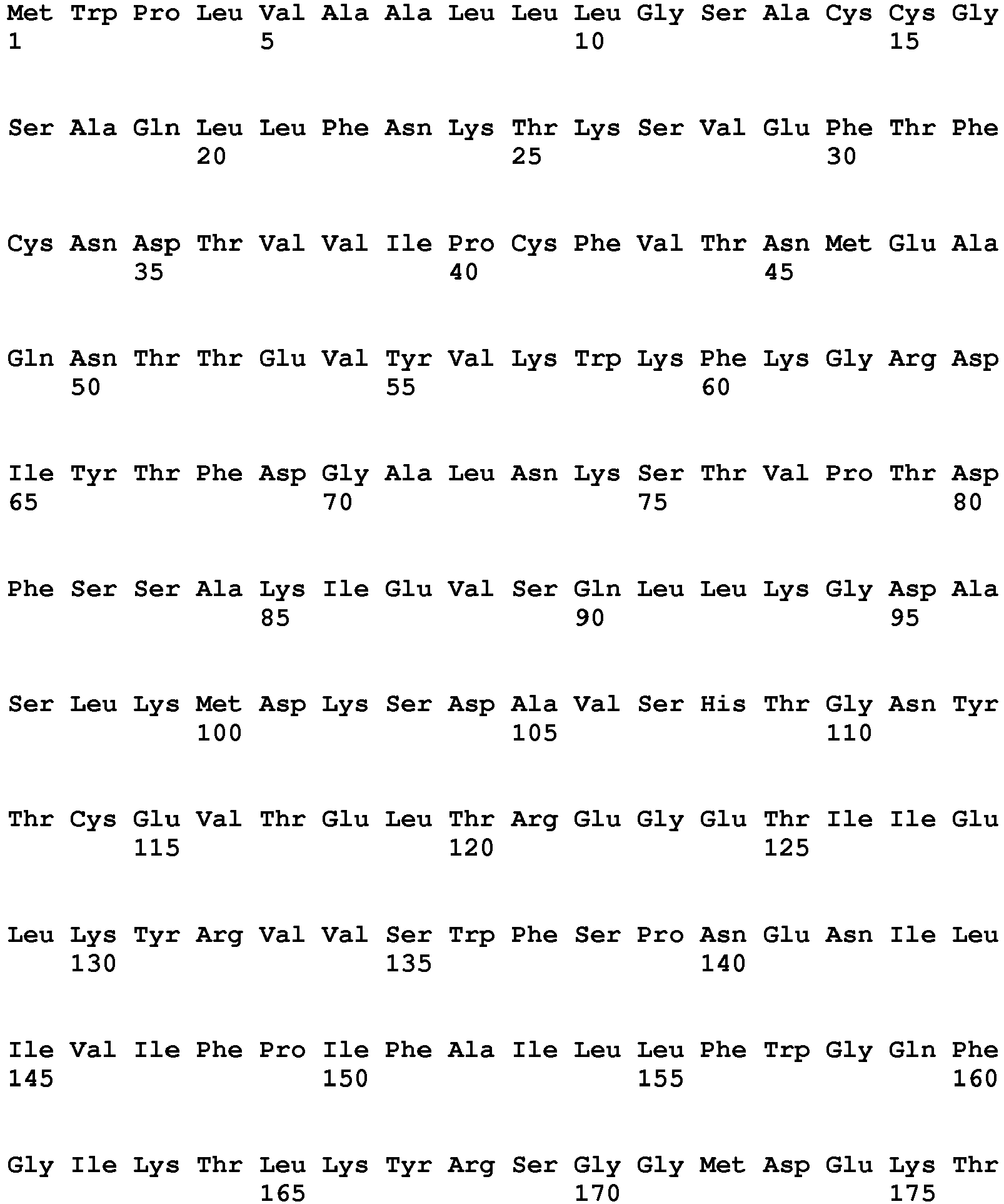

- <210> 2
<211> 5346
<212> DNA
<213> Homo sapiens - <400> 2
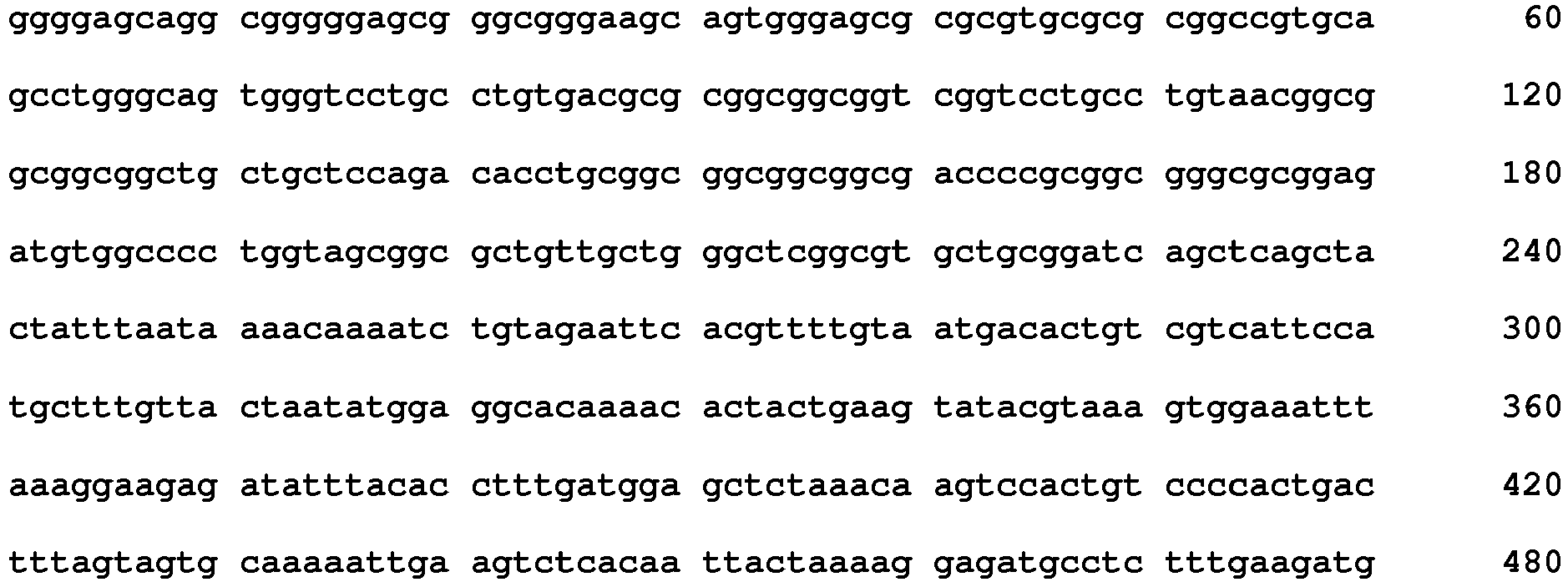


- <210> 3
<211> 144
<212> PRT
<213> Artificial Sequence - <220>
<223> 2.3D11 Heavy Chain Variable Region (With Leader Sequence) - <400> 3


- <210> 4
<211> 125
<212> PRT
<213> Artificial Sequence - <220>
<223> 2.3D11 Light Chain Variable Region (With Leader Sequence) - <400> 4

- <210> 5
<211> 126
<212> PRT
<213> Artificial Sequence - <220>
<223> 2.3D11 Light Chain Variable Region (With Leader Sequence) - <400> 5

- <210> 6
<211> 106
<212> PRT
<213> Artificial Sequence - <220>
<223> 2.3D11 Light Chain Variable Region (Without Leader Sequence) - <400> 6


- <210> 7
<211> 6
<212> PRT
<213> Artificial Sequence - <220>
<223> 2.3D11 Heavy Chain CDR1 - <400> 7

- <210> 8
<211> 16
<212> PRT
<213> Artificial Sequence - <220>
<223> 2.3D11 Heavy Chain CDR2 - <400> 8

- <210> 9
<211> 16
<212> PRT
<213> Artificial Sequence - <220>
<223> 2.3D11 Heavy Chain CDR3 - <400> 9

- <210> 10
<211> 11
<212> PRT
<213> Artificial Sequence - <220>
<223> 2.3D11 Light Chain CDR1 - <400> 10

- <210> 11
<211> 7
<212> PRT
<213> Artificial Sequence - <220>
<223> 2.3D11 Light Chain CDR2 - <400> 11

- <210> 12
<211> 8
<212> PRT
<213> Artificial Sequence - <220>
<223> 2.3D11 Light Chain CDR3 - <400> 12

- <210> 13
<211> 469
<212> PRT
<213> Artificial Sequence - <220>
<223> 2.3D11 Heavy Chain (With Leader Sequence) - <400> 13


- <210> 14
<211> 233
<212> PRT
<213> Artificial Sequence - <220>
<223> 2.3D11 Light Chain (With Leader Sequence) - <400> 14


- <210> 15
<211> 450
<212> PRT
<213> Artificial Sequence - <220>
<223> 2.3D11 Heavy Chain (Without Leader Sequence) - <400> 15


- <210> 16
<211> 213
<212> PRT
<213> Artificial Sequence - <220>
<223> 2.3D11 Light Chain (Without Leader Sequence) - <400> 16


- <210> 17
<211> 330
<212> PRT
<213> Homo sapiens - <400> 17


- <210> 18
<211> 326
<212> PRT
<213> Homo sapiens - <400> 18


- <210> 19
<211> 377
<212> PRT
<213> Homo sapiens - <400> 19


- <210> 20
<211> 327
<212> PRT
<213> Homo sapiens - <400> 20


- <210> 21
<211> 327
<212> PRT
<213> Artificial Sequence - <220>
<223> Mutated IgG4 Constant Region (S228P/L235E) - <400> 21


- <210> 22
<211> 106
<212> PRT
<213> Homo sapiens - <400> 22

- <210> 23
<211> 455
<212> PRT
<213> Artificial Sequence - <220>
<223> 2.3D11 IgG1 Heavy Chain (Without Leader Sequence) - <400> 23


- <210> 24
<211> 452
<212> PRT
<213> Artificial Sequence - <220>
<223> 2.3D11 IgG4 Heavy Chain (Without Leader Sequence) - <400> 24


- <210> 25
<211> 452
<212> PRT
<213> Artificial Sequence - <220>
<223> 2.3D11 IgG4mt Heavy Chain (Without Leader Sequence) - <400> 25


- <210> 26
<211> 212
<212> PRT
<213> Artificial Sequence - <220>
<223> 2.3D11 Kappa Light Chain - <400> 26

- <210> 27
<211> 118
<212> PRT
<213> Artificial Sequence - <220>
<223> AB6.12-IgG4PE Heavy Chain Variable Region - <400> 27

- <210> 28
<211> 107
<212> PRT
<213> Artificial Sequence - <220>
<223> AB6.12-IgG4PE Light Chain Variable Region - <400> 28


- <210> 29
<211> 117
<212> PRT
<213> Artificial Sequence - <220>
<223> 5F9G4 Heavy Chain Variable Region - <400> 29

- <210> 30
<211> 112
<212> PRT
<213> Artificial Sequence - <220>
<223> 5F9G4 Light Chain Variable Region - <400> 30

- <210> 31
<211> 118
<212> PRT
<213> Artificial Sequence - <220>
<223> B6H12 Heavy Chain Variable Region - <400> 31


- <210> 32
<211> 107
<212> PRT
<213> Artificial Sequence - <220>
<223> B6H12 Light Chain Variable Region - <400> 32

- <210> 33
<211> 452
<212> PRT
<213> Homo sapiens - <400> 33


- <210> 34
<211> 105
<212> PRT
<213> Homo sapiens - <400> 34


- <210> 35
<211> 1465
<212> DNA
<213> Artificial Sequence - <220>
<223> 2.3D11 IgG1 Heavy Chain - <400> 35


- <210> 36
<211> 1456
<212> DNA
<213> Artificial Sequence - <220>
<223> 2.3D11 IgG4 Heavy Chain - <400> 36


- <210> 37
<211> 1456
<212> DNA
<213> Artificial Sequence - <220>
<223> 2.3D11 IgG4mt Heavy Chain - <400> 37


- <210> 38
<211> 736
<212> DNA
<213> Artificial Sequence - <220>
<223> 2.3D11 Kappa Light Chain - <400> 38

Claims (15)
- An isolated anti-CD47 antibody molecule, comprising a heavy chain complementarity determining region 1 (HC CDR1) of the amino acid sequence set forth in SEQ ID NO: 7, a heavy chain complementarity determining region 2 (HC CDR2) of the amino acid sequence set forth in SEQ ID NO: 8, a heavy chain complementarity determining region 3 (HC CDR3) of the amino acid sequence set forth in SEQ ID NO: 9, a light chain complementarity determining region 1 (LC CDR1) of the amino acid sequence set forth in SEQ ID NO: 10, a light chain complementarity determining region 2 (LC CDR2) of the amino acid sequence set forth in SEQ ID NO: 11, and a light chain complementarity determining region 3 (LC CDR3) of the amino acid sequence set forth in SEQ ID NO: 12.
- The isolated anti-CD47 antibody molecule according to claim 1, comprising a heavy chain variable region (VH) of the amino acid sequence set forth in SEQ ID NO: 4 and a light chain variable region (VL) of the amino acid sequence set forth in SEQ ID NO: 6.
- The isolated anti-CD47 antibody molecule of claim 1 or claim 2, comprising:(i) a wild type human IgG1 heavy chain constant region;(ii) a mutant IgG1 heavy chain constant region, optionally wherein the mutant IgG1 heavy chain constant region comprises a substitution at Glu233, Leu234, Leu235, or Asn297, optionally an E233P substitution, an L234A or L234E substitution, an L235A substitution, or an N297A substitution, numbering according to EU numbering;(iii) a wild type human IgG4 heavy chain constant region;(iv) a mutant IgG4 heavy chain constant region optionally, wherein the mutant IgG4 heavy chain constant region comprises a substitution at Ser228, Leu235, or Asn297, , optionally an S228P substitution an L235E substitution, or an N297A substitution, numbering according to EU numbering; and/or(v) a human kappa constant region.
- The isolated anti-CD47 antibody molecule according to any preceding claim, comprisinga heavy chain of the amino acid sequence set forth in SEQ ID NO: 15, SEQ ID NO: 23, SEQ ID NO: 24, or SEQ ID NO: 25, and a light chain of the amino acid sequence set forth in SEQ ID NO: 16 or SEQ ID NO: 26.
- The isolated anti-CD47 antibody molecule according to any one of the preceding claims, comprising:(i) a heavy chain of the amino acid sequence set forth in SEQ ID NO: 15, and a light chain of the amino acid sequence set forth in SEQ ID NO: 16;(ii) a heavy chain of the amino acid sequence set forth in SEQ ID NO: 23, and a light chain of the amino acid sequence set forth in SEQ ID NO: 26;(iii) a heavy chain of the amino acid sequence set forth in SEQ ID NO: 24, and a light chain of the amino acid sequence set forth in SEQ ID NO: 26; or(iv) a heavy chain of the amino acid sequence set forth in SEQ ID NO: 25, and a light chain of the amino acid sequence set forth in SEQ ID NO: 26.
- The isolated anti-CD47 molecule according to claim 1 or 2, wherein the antibody molecule is an antibody fragment, optionally a Fab, F(ab') or F(ab')2 fragment.
- The isolated anti-CD47 antibody molecule according to any one of the preceding claims, wherein the antibody molecule inhibits the interaction between human CD47 and SIRPa, and does not cause significant hemagglutination of human erythrocytes relative to a reference monoclonal antibody that specifically binds human CD47 and causes hemagglutination of human erythrocytes.
- A composition comprising an isolated anti-CD47 antibody molecule according to any preceding claim, and at least one pharmaceutically acceptable carrier or diluent.
- An isolated nucleic acid molecule encoding an anti-CD47 antibody molecule according to any of claims 1 to 7.
- A vector comprising a nucleic acid molecule of claim 9.
- A host cell comprising a vector of claim 10.
- An isolated anti-CD47 antibody molecule according to any of claims 1 to 7 or a composition according to claim 8 for use in a method of treating (or preventing) cancer in a subject in need thereof, the method comprising administering the isolated anti-CD47 antibody or composition to the subject.
- The isolated anti-CD47 antibody molecule or composition for use according to claim 12, wherein said antibody or composition is administered by parenteral, subcutaneous, intramuscular, intravenous, intraarticular, intraabdominal, intracapsular, intracartilaginous, intracavitary, intracelial, intracolic, intracervical, intragastric, intrahepatic, intramyocardial, intraosteal, intrapelvic, intraperitoneal, intrapleural, intraprostatic, intrapulmonary, intrarectal, intraspinal, intrasynovial, rectal, buccal, sublingual, intranasal, or transdermal delivery; preferably wherein the composition is administered subcutaneously or is administered intravenously.
- The isolated anti-CD47 antibody molecule or composition for use according to any one of claims 12-13, wherein the composition is administered in combination with:(i) a chemotherapeutic agent or therapeutic antibody molecule: or(ii) an opsonizing antibody molecule; optionally wherein the opsonizing antibody molecule is an anti-CD 19 antibody molecule, an anti-CD20 antibody molecule optionally wherein the anti-CD20 antibody molecule is rituximab, an anti-Her2/neu antibody molecule, an anti-EGFR antibody molecule, an anti-CD30 antibody molecule, an anti-CD33 antibody molecule or an anti-CD38 antibody molecule.
- The isolated anti-CD47 antibody molecule or composition for use according to any one of claims 12-14, wherein the cancer is a hematological cancer; optionally:(i) wherein the hematological cancer is selected from the group consisting of: acute lymphoblastic leukemia (ALL), T-ALL, B-ALL, acute myelogenous leukemia (AML), Non-Hodgkin lymphoma (e.g., diffuse large B cell lymphoma, chronic lymphocytic leukemia, e.g., transformed CLL, mantle cell lymphoma, B lymphoblastic leukemia/lymphoma, peripheral T-cell lymphoma and Burkitt's lymphoma), B-lymphoblastic leukemia/lymphoma; B-cell chronic lymphocytic leukemia/small lymphocytic lymphoma, chronic lymphocytic leukemia (CLL), chronic myelocytic leukemia (CML), Burkitt's lymphoma, follicular lymphoma, SLL, marginal zone lymphoma, CNS lymphoma, Richter's Syndrome, multiple myeloma, myelofibrosis, polycythemia vera, cutaneous T-cell lymphoma, MGUS, myelodysplastic syndrome (MDS), immunoblastic large cell lymphoma, precursor B-lymphoblastic lymphoma and anaplastic large cell lymphoma;(ii) wherein the hematological cancer is selected from the group consisting of: acute lymphoblastic leukemia (ALL), acute myelogenous leukemia (AML), Non-Hodgkin lymphoma (e.g., diffuse large B cell lymphoma, chronic lymphocytic leukemia, e.g., transformed CLL, mantle cell lymphoma, B lymphoblastic leukemia/lymphoma, and Burkitt's lymphoma), B-lymphoblastic leukemia/lymphoma; B-cell chronic lymphocytic leukemia/small lymphocytic lymphoma, chronic lymphocytic leukemia (CLL), chronic myelocytic leukemia (CML), Burkitt's lymphoma, follicular lymphoma, Richter's Syndrome, and multiple myeloma; or(iii) wherein the hematological cancer is acute myelogenous leukemia (AML), diffuse large B cell lymphoma (DLBCL) or Burkitt's lymphoma;or wherein the cancer is a solid tumor; optionally:(i) wherein the cancer is a cancer of a tissue selected from the group consisting of: lung (e.g., non-small cell lung cancer, small cell lung cancer), pancreas, breast, liver, ovary, testicle, kidney, bladder, spine, brain, cervix, endometrium, colon/rectum, anus, esophagus, gallbladder, gastrointestinal tract, skin, prostate, pituitary, stomach, uterus, vagina, and thyroid;(ii) wherein the cancer is associated with ascites, and optionally is selected from the group consisting of an adenocarcinoma of the ovary, adenocarcinoma of the uterus, adenocarcinoma of the breast, adenocarcinoma of the colon, adenocarcinoma of the stomach and adenocarcinoma of the pancreas; or(iii) wherein the cancer is selected from the group consisting of: pancreatic cancer, ovarian cancer, breast cancer, stomach cancer, colon cancer, prostate cancer, and uterine cancer.
Applications Claiming Priority (3)
| Application Number | Priority Date | Filing Date | Title |
|---|---|---|---|
| US201562221446P | 2015-09-21 | 2015-09-21 | |
| US201662371047P | 2016-08-04 | 2016-08-04 | |
| PCT/US2016/052878 WO2017053423A1 (en) | 2015-09-21 | 2016-09-21 | Anti-cd47 antibodies and methods of use |
Publications (2)
| Publication Number | Publication Date |
|---|---|
| EP3353209A1 EP3353209A1 (en) | 2018-08-01 |
| EP3353209B1 true EP3353209B1 (en) | 2022-03-16 |
Family
ID=57043027
Family Applications (1)
| Application Number | Title | Priority Date | Filing Date |
|---|---|---|---|
| EP16774791.4A Active EP3353209B1 (en) | 2015-09-21 | 2016-09-21 | Anti-cd47 antibodies and methods of use |
Country Status (11)
| Country | Link |
|---|---|
| US (5) | US9650441B2 (en) |
| EP (1) | EP3353209B1 (en) |
| JP (1) | JP2018535692A (en) |
| CN (1) | CN108290948B (en) |
| AU (1) | AU2016326423A1 (en) |
| CA (1) | CA2999277A1 (en) |
| GB (1) | GB2558131B (en) |
| HK (2) | HK1257309A1 (en) |
| IL (1) | IL258257A (en) |
| NZ (1) | NZ741324A (en) |
| WO (1) | WO2017053423A1 (en) |
Families Citing this family (109)
| Publication number | Priority date | Publication date | Assignee | Title |
|---|---|---|---|---|
| WO2016109415A1 (en) | 2014-12-30 | 2016-07-07 | Celgene Corporation | Anti-cd47 antibodies and uses thereof |
| HK1257309A1 (en) | 2015-09-21 | 2019-10-18 | Erasmus University Medical Center | Anti-cd47 antibodies and methods of use |
| US11560433B2 (en) | 2016-05-27 | 2023-01-24 | Albert Einstein College Of Medicine | Methods of treatment by targeting VCAM1 and MAEA |
| EP3481862A4 (en) * | 2016-07-06 | 2020-08-12 | Celgene Corporation | Antibodies with low immunogenicity and uses thereof |
| US11618784B2 (en) | 2016-07-19 | 2023-04-04 | Teva Pharmaceuticals Australia Pty Ltd. | Anti-CD47 combination therapy |
| EP3411071A4 (en) | 2016-10-20 | 2019-08-28 | I-Mab | NOVEL MONOCLONAL ANTIBODIES ANTI-CD 47 AND USES THEREOF |
| WO2018075960A1 (en) | 2016-10-21 | 2018-04-26 | Tioma Therapeutics, Inc. | Therapeutic cd47 antibodies |
| US11779631B2 (en) | 2016-11-03 | 2023-10-10 | Pfizer Inc. | CD47 blockade therapy by HDAC inhibitors |
| CA3042581A1 (en) * | 2016-11-03 | 2018-05-11 | Trillium Therapeutics Inc. | Enhancement of cd47 blockade therapy by proteasome inhibitors |
| GB201700621D0 (en) | 2017-01-13 | 2017-03-01 | Guest Ryan Dominic | Method,device and kit for the aseptic isolation,enrichment and stabilsation of cells from mammalian solid tissue |
| US20190309066A1 (en) * | 2017-03-22 | 2019-10-10 | Arch Oncology, Inc. | Combination therapy for the treatment of solid and hematological cancers |
| KR20190133198A (en) * | 2017-03-27 | 2019-12-02 | 셀진 코포레이션 | Methods and Compositions for Reducing Immunogenicity |
| SG11201908772TA (en) | 2017-03-31 | 2019-10-30 | Genmab Holding B V | Bispecific anti-cd37 antibodies, monoclonal anti-cd37 antibodies and methods of use thereof |
| KR102808275B1 (en) | 2017-04-14 | 2025-05-20 | 탈락 테라퓨틱스, 인크. | Immunomodulatory polynucleotides, antibody conjugates thereof, and methods of use thereof |
| WO2018236904A1 (en) | 2017-06-19 | 2018-12-27 | Surface Oncology, Inc. | Combination of anti-cd47 antibodies and cell death-inducing agents, and uses thereof |
| CN109096395B (en) * | 2017-06-20 | 2022-06-24 | 华兰生物工程股份有限公司 | Blocking type CD47 nano antibody and application thereof |
| PL3642242T3 (en) * | 2017-06-21 | 2024-05-27 | The Board Of Trustees Of The Leland Stanford Junior University | Dosing parameters for cd47 targeting therapies to hematologic malignancies |
| EP3747437A1 (en) | 2017-07-24 | 2020-12-09 | Stichting Het Nederlands Kanker Instituut- Antoni van Leeuwenhoek Ziekenhuis | Treating pathological conditions by direct and indirect targeting of sirpa - cd47 interaction |
| US11401329B2 (en) * | 2017-08-02 | 2022-08-02 | Phanes Therapeutics, Inc. | Anti-CD47 antibodies and uses thereof |
| CN109422811A (en) * | 2017-08-29 | 2019-03-05 | 信达生物制药(苏州)有限公司 | Anti-CD47 antibody and use thereof |
| CN108503708B (en) * | 2017-09-01 | 2021-07-30 | 北京智仁美博生物科技有限公司 | Anti-human CD47 antibody and use thereof |
| EA039662B1 (en) | 2017-10-03 | 2022-02-24 | Закрытое Акционерное Общество "Биокад" | Antibodies specific to cd47 and pd-l1 |
| WO2019090355A1 (en) * | 2017-11-06 | 2019-05-09 | Children's National Medical Center | Cells expressing antibodies and methods of treatment using the same |
| EP3541941A4 (en) * | 2017-11-10 | 2019-12-25 | I-Mab Biopharma US Limited | Fusion proteins containing cd47 antibodies and cytokines |
| TWI831759B (en) | 2017-12-01 | 2024-02-11 | 美商思進公司 | Cd47 antibodies and uses thereof for treating cancer |
| AU2019206438B2 (en) | 2018-01-12 | 2023-12-07 | Aurigene Oncology Limited | 1,2,4-oxadiazole compounds as inhibitors of CD47 signalling pathways |
| CA3093603A1 (en) * | 2018-03-13 | 2019-09-19 | Trillium Therapeutics Inc. | Cd47 blockade therapy and cd38 antibody |
| CN110305212A (en) * | 2018-03-27 | 2019-10-08 | 信达生物制药(苏州)有限公司 | Anti-cd 47 antibody and application thereof |
| GB201804860D0 (en) | 2018-03-27 | 2018-05-09 | Ultrahuman Two Ltd | CD47 Binding agents |
| WO2019200357A1 (en) * | 2018-04-12 | 2019-10-17 | Surface Oncology, Inc. | Biomarker for cd47 targeting therapeutics and uses therefor |
| CN110538321B (en) * | 2018-05-29 | 2023-03-10 | 江苏恒瑞医药股份有限公司 | CD47 antibody pharmaceutical composition and application thereof |
| CN110577597B (en) * | 2018-06-11 | 2021-10-22 | 康诺亚生物医药科技(成都)有限公司 | An antibody that blocks the interaction of CD47 and SIRPα |
| WO2019241732A1 (en) * | 2018-06-15 | 2019-12-19 | Accurus Biosciences, Inc. | Blocking antibodies against cd47 and methods of use thereof |
| WO2020009725A1 (en) * | 2018-07-05 | 2020-01-09 | Trican Biotechnology Co., Ltd | Human anti-cd47 antibodies and uses thereof |
| WO2020043188A1 (en) | 2018-08-31 | 2020-03-05 | 南京圣和药业股份有限公司 | Anti-cd47 antibody and application thereof |
| WO2020072445A1 (en) * | 2018-10-01 | 2020-04-09 | Verastem, Inc. | Combination therapies |
| US12331320B2 (en) | 2018-10-10 | 2025-06-17 | The Research Foundation For The State University Of New York | Genome edited cancer cell vaccines |
| CA3118326A1 (en) | 2018-10-29 | 2020-05-07 | Umc Utrecht Holding B.V. | Iga mediated killing of aberrant cells by cd47- sirpalpha checkpoint inhibition of neutrophils |
| CN113260632A (en) * | 2018-10-29 | 2021-08-13 | 蒂嘉特克斯公司 | Compositions and methods comprising IgA antibody constructs |
| JP7623279B2 (en) | 2018-11-08 | 2025-01-28 | オーリジーン オンコロジー リミテッド | Combining small molecule CD47 inhibitors with other anticancer drugs |
| CN109224079B (en) * | 2018-11-26 | 2020-08-04 | 中国药科大学 | Medicinal use of DNA methyltransferase inhibitor combined with anti-CD47 antibody for the preparation of anti-tumor drugs |
| JP2022521624A (en) * | 2019-02-26 | 2022-04-11 | イノベント バイオロジックス (スウツォウ) カンパニー,リミテッド | Preparation containing anti-CD47 antibody, its preparation method and use |
| TW202104260A (en) | 2019-04-05 | 2021-02-01 | 美商西建公司 | Engineering of an antibody for tumor-selective binding of cd47 |
| WO2020215012A1 (en) * | 2019-04-18 | 2020-10-22 | Qlsf Biotherapeutics Inc. | Antibodies that target human cd47 |
| US20200400662A1 (en) | 2019-06-07 | 2020-12-24 | ALX Oncology Inc. | Methods and reagents for reducing the interference of drugs that bind cd47 in serological assays |
| CN112206320B (en) * | 2019-07-12 | 2025-02-25 | 鲁南制药集团股份有限公司 | A CD47 monoclonal antibody freeze-dried powder preparation and its preparation process |
| AU2020315598B2 (en) | 2019-07-16 | 2024-12-12 | Gilead Sciences, Inc. | HIV vaccines and methods of making and using |
| US20220324971A1 (en) * | 2019-09-03 | 2022-10-13 | Akeso Biopharma, Inc | Anti-cd47 monoclonal antibody and use thereof |
| KR102902719B1 (en) | 2019-10-18 | 2025-12-24 | 포티 세븐, 엘엘씨 | Combination therapy for treating myelodysplastic syndromes and acute myeloid leukemia |
| CA3158622A1 (en) * | 2019-10-23 | 2021-04-29 | Arch Oncology, Inc. | Combination therapy for the treatment of solid and hematological cancers |
| AU2020372522B2 (en) * | 2019-10-25 | 2024-08-15 | WuXi Biologics Ireland Limited | Novel anti-CD47 antibodies and uses thereof |
| CA3153636A1 (en) | 2019-10-31 | 2021-05-06 | Forty Seven, Inc. | Anti-cd47 and anti-cd20 based treatment of blood cancer |
| MX2022006787A (en) * | 2019-12-05 | 2022-07-19 | Sorrento Therapeutics Inc | Compositions and methods comprising an anti-cd47 antibody in combination with a tumor targeting antibody. |
| KR20220119439A (en) | 2019-12-20 | 2022-08-29 | 인스틸 바이오 유케이 리미티드 | Apparatus and method for isolating tumor-infiltrating lymphocytes and uses thereof |
| EP4445902A3 (en) | 2019-12-24 | 2024-12-18 | Carna Biosciences, Inc. | Diacylglycerol kinase modulating compounds |
| WO2021139687A1 (en) * | 2020-01-09 | 2021-07-15 | 信达生物制药(苏州)有限公司 | Application of combination of anti-cd47 antibody and anti-cd20 antibody in preparation of drugs for preventing or treating tumors |
| CN117964757A (en) | 2020-02-14 | 2024-05-03 | 吉利德科学公司 | Antibodies and fusion proteins binding to CCR8 and uses thereof |
| US20230097658A1 (en) * | 2020-02-27 | 2023-03-30 | Fred Hutchinson Cancer Research Center | Tunable extended release hydrogels |
| US11920136B2 (en) | 2020-02-28 | 2024-03-05 | Tallac Therapeutics, Inc. | Transglutaminase-mediated conjugation |
| CN111454359B (en) * | 2020-03-23 | 2021-06-29 | 倍而达药业(苏州)有限公司 | CD47 antibody or immunologically active fragment thereof and application |
| WO2021191870A1 (en) | 2020-03-27 | 2021-09-30 | Dcprime B.V. | Ex vivo use of modified cells of leukemic origin for enhancing the efficacy of adoptive cell therapy |
| TWI869582B (en) * | 2020-04-10 | 2025-01-11 | 大陸商和記黃埔醫藥(上海)有限公司 | Anti-cd47 antibody and uses thereof |
| CN119930821B (en) * | 2020-04-17 | 2025-11-21 | 鲁南制药集团股份有限公司 | Anti-CD 47 monoclonal antibodies |
| IL296576A (en) * | 2020-04-23 | 2022-11-01 | Alpha Beta Holdings Llc | Compounds and methods for treating cancer |
| EP4168449A1 (en) * | 2020-06-22 | 2023-04-26 | MorphoSys AG | Anti-tumor combination therapy comprising anti-cd19 antibody and polypeptides blocking the sirpa-cd47 innate immune checkpoint |
| KR20230033647A (en) | 2020-06-30 | 2023-03-08 | 멘두스 비.브이. | Use of leukemia-derived cells in ovarian cancer vaccines |
| WO2022007947A1 (en) * | 2020-07-10 | 2022-01-13 | 信达生物制药(苏州)有限公司 | Combination of anti-cd47 antibody or antigen binding fragment thereof and dna methyltransferase inhibitor and use thereof |
| US12338292B2 (en) * | 2020-09-18 | 2025-06-24 | IGI Therapeutics SA | CD47-CD38 bispecific antibodies |
| US20220196651A1 (en) | 2020-12-06 | 2022-06-23 | ALX Oncology Inc. | Multimers for reducing the interference of drugs that bind cd47 in serological assays |
| EP4262828A1 (en) | 2020-12-18 | 2023-10-25 | Instil Bio (Uk) Limited | Tumor infiltrating lymphocytes and anti-cd47 therapeutics |
| US12071481B2 (en) | 2020-12-23 | 2024-08-27 | D-10 Therapeutics, Inc. | Anti-CD47 antibodies and uses thereof |
| US20240076412A1 (en) * | 2021-01-05 | 2024-03-07 | National Institute Of Biological Sciences, Beijing | A bispecific antibody targeting gpc3 and cd47 |
| WO2022190058A1 (en) | 2021-03-12 | 2022-09-15 | Dcprime B.V. | Methods of vaccination and use of cd47 blockade |
| EP4322937A1 (en) | 2021-04-14 | 2024-02-21 | Institut National de la Santé et de la Recherche Médicale (INSERM) | New method to improve the anti-tumoral activity of macrophages |
| TW202302145A (en) | 2021-04-14 | 2023-01-16 | 美商基利科學股份有限公司 | Co-inhibition of cd47/sirpα binding and nedd8-activating enzyme e1 regulatory subunit for the treatment of cancer |
| EP4359415A1 (en) | 2021-06-23 | 2024-05-01 | Gilead Sciences, Inc. | Diacylglyercol kinase modulating compounds |
| WO2022271650A1 (en) | 2021-06-23 | 2022-12-29 | Gilead Sciences, Inc. | Diacylglyercol kinase modulating compounds |
| WO2022271659A1 (en) | 2021-06-23 | 2022-12-29 | Gilead Sciences, Inc. | Diacylglyercol kinase modulating compounds |
| US11932634B2 (en) | 2021-06-23 | 2024-03-19 | Gilead Sciences, Inc. | Diacylglycerol kinase modulating compounds |
| CN117881698A (en) * | 2021-06-30 | 2024-04-12 | 创新生物有限公司 | Humanized antibody specific to CD47 and pharmaceutical composition containing the same for preventing or treating CD47-related diseases |
| AU2022375782B2 (en) | 2021-10-28 | 2026-02-26 | Gilead Sciences, Inc. | Pyridizin-3(2h)-one derivatives |
| AU2022376954B2 (en) | 2021-10-29 | 2026-04-23 | Gilead Sciences, Inc. | Cd73 compounds |
| CA3237577A1 (en) | 2021-12-22 | 2023-06-29 | Gilead Sciences, Inc. | Ikaros zinc finger family degraders and uses thereof |
| AU2022419982B2 (en) | 2021-12-22 | 2026-04-16 | Gilead Sciences, Inc. | Ikaros zinc finger family degraders and uses thereof |
| TW202340168A (en) | 2022-01-28 | 2023-10-16 | 美商基利科學股份有限公司 | Parp7 inhibitors |
| EP4493554A1 (en) | 2022-03-17 | 2025-01-22 | Gilead Sciences, Inc. | Ikaros zinc finger family degraders and uses thereof |
| WO2023183817A1 (en) | 2022-03-24 | 2023-09-28 | Gilead Sciences, Inc. | Combination therapy for treating trop-2 expressing cancers |
| AU2023239488A1 (en) * | 2022-03-25 | 2024-11-14 | WuXi Biologics Ireland Limited | Anti-her2/anti-cd47 molecules and uses thereof |
| TWI876305B (en) | 2022-04-05 | 2025-03-11 | 美商基利科學股份有限公司 | Combination therapy for treating colorectal cancer |
| CR20240451A (en) | 2022-04-21 | 2024-12-04 | Gilead Sciences Inc | Kras g12d modulating compounds |
| PE20250758A1 (en) | 2022-07-01 | 2025-03-13 | Gilead Sciences Inc | CD73 COMPOUNDS |
| KR20250036855A (en) | 2022-07-12 | 2025-03-14 | 길리애드 사이언시즈, 인코포레이티드 | HIV immunogenic polypeptides and vaccines, and uses thereof |
| WO2024064668A1 (en) | 2022-09-21 | 2024-03-28 | Gilead Sciences, Inc. | FOCAL IONIZING RADIATION AND CD47/SIRPα DISRUPTION ANTICANCER COMBINATION THERAPY |
| WO2024121311A1 (en) * | 2022-12-07 | 2024-06-13 | Ichnos Sciences SA | Cd47/cd38 bispecific antibodies and methods of use to treat leukemia |
| CN120225509A (en) | 2022-12-22 | 2025-06-27 | 吉利德科学公司 | PRMT5 inhibitors and uses thereof |
| WO2024138144A1 (en) * | 2022-12-22 | 2024-06-27 | The Medical College Of Wisconsin, Inc. | Compositions that target cd138 and cd3 and methods of making and using the same |
| AU2024252725A1 (en) | 2023-04-11 | 2025-11-06 | Gilead Sciences, Inc. | Kras modulating compounds |
| PE20260121A1 (en) | 2023-04-21 | 2026-01-16 | Gilead Sciences Inc | PRMT5 INHIBITORS AND THEIR USES |
| AU2024306338A1 (en) | 2023-06-30 | 2026-01-08 | Gilead Sciences, Inc. | Kras modulating compounds |
| WO2025024309A2 (en) * | 2023-07-21 | 2025-01-30 | The Board Of Trustees Of The Leland Stanford Junior University | Modulation of myeloid fcυ receptor depletion |
| WO2025024811A1 (en) | 2023-07-26 | 2025-01-30 | Gilead Sciences, Inc. | Parp7 inhibitors |
| KR20260046403A (en) | 2023-07-26 | 2026-04-07 | 길리애드 사이언시즈, 인코포레이티드 | PARP7 inhibitor |
| US20250101042A1 (en) | 2023-09-08 | 2025-03-27 | Gilead Sciences, Inc. | Kras g12d modulating compounds |
| AU2024337913A1 (en) | 2023-09-08 | 2026-03-26 | Gilead Sciences, Inc. | Pyrimidine-containing polycyclic derivatives as kras g12d modulating compounds |
| US20250154172A1 (en) | 2023-11-03 | 2025-05-15 | Gilead Sciences, Inc. | Prmt5 inhibitors and uses thereof |
| WO2025137640A1 (en) | 2023-12-22 | 2025-06-26 | Gilead Sciences, Inc. | Azaspiro wrn inhibitors |
| WO2025245003A1 (en) | 2024-05-21 | 2025-11-27 | Gilead Sciences, Inc. | Prmt5 inhibitors and uses thereof |
| WO2026039365A1 (en) | 2024-08-12 | 2026-02-19 | Gilead Sciences, Inc. | Kras modulating compounds |
| WO2026089992A1 (en) | 2024-10-21 | 2026-04-30 | Gilead Sciences, Inc. | Prmt5 inhibitors and uses thereof |
Family Cites Families (40)
| Publication number | Priority date | Publication date | Assignee | Title |
|---|---|---|---|---|
| US4634665A (en) | 1980-02-25 | 1987-01-06 | The Trustees Of Columbia University In The City Of New York | Processes for inserting DNA into eucaryotic cells and for producing proteinaceous materials |
| US4399216A (en) | 1980-02-25 | 1983-08-16 | The Trustees Of Columbia University | Processes for inserting DNA into eucaryotic cells and for producing proteinaceous materials |
| US5179017A (en) | 1980-02-25 | 1993-01-12 | The Trustees Of Columbia University In The City Of New York | Processes for inserting DNA into eucaryotic cells and for producing proteinaceous materials |
| US4656134A (en) | 1982-01-11 | 1987-04-07 | Board Of Trustees Of Leland Stanford Jr. University | Gene amplification in eukaryotic cells |
| US5149636A (en) | 1982-03-15 | 1992-09-22 | Trustees Of Columbia University In The City Of New York | Method for introducing cloned, amplifiable genes into eucaryotic cells and for producing proteinaceous products |
| US5168062A (en) | 1985-01-30 | 1992-12-01 | University Of Iowa Research Foundation | Transfer vectors and microorganisms containing human cytomegalovirus immediate-early promoter-regulatory DNA sequence |
| GB8601597D0 (en) | 1986-01-23 | 1986-02-26 | Wilson R H | Nucleotide sequences |
| EP0307434B2 (en) | 1987-03-18 | 1998-07-29 | Scotgen Biopharmaceuticals, Inc. | Altered antibodies |
| US4956288A (en) | 1988-04-22 | 1990-09-11 | Biogen, Inc. | Method for producing cells containing stably integrated foreign DNA at a high copy number, the cells produced by this method, and the use of these cells to produce the polypeptides coded for by the foreign DNA |
| US5057604A (en) | 1988-08-03 | 1991-10-15 | Washington University | Novel monoclonal antibodies |
| GB8905669D0 (en) | 1989-03-13 | 1989-04-26 | Celltech Ltd | Modified antibodies |
| US5266491A (en) | 1989-03-14 | 1993-11-30 | Mochida Pharmaceutical Co., Ltd. | DNA fragment and expression plasmid containing the DNA fragment |
| US5580734A (en) | 1990-07-13 | 1996-12-03 | Transkaryotic Therapies, Inc. | Method of producing a physical map contigous DNA sequences |
| US5968502A (en) | 1991-11-05 | 1999-10-19 | Transkaryotic Therapies, Inc. | Protein production and protein delivery |
| US5641670A (en) | 1991-11-05 | 1997-06-24 | Transkaryotic Therapies, Inc. | Protein production and protein delivery |
| US5888751A (en) | 1997-07-15 | 1999-03-30 | Ludwig Institute For Cancer Research | Method for diagnosis and treating cancers, and methods for identifying pathogenic markers in a sample of normal cells |
| CA2226962A1 (en) | 1998-02-16 | 1999-08-16 | Marie Sarfati | Use of binding agents to cd47 and its ligands in the treatment or the prophylaxis of various inflammatory, autoimmune and allergic diseases and in the treatment of graft rejection |
| WO2000053634A1 (en) | 1999-03-10 | 2000-09-14 | Chugai Seiyaku Kabushiki Kaisha | Single-stranded fv inducing apoptosis |
| US7696325B2 (en) | 1999-03-10 | 2010-04-13 | Chugai Seiyaku Kabushiki Kaisha | Polypeptide inducing apoptosis |
| GB9930706D0 (en) | 1999-12-24 | 2000-02-16 | Medical Res Council | Composition for inhibiting macrophage activity |
| US20050118164A1 (en) | 2001-03-09 | 2005-06-02 | William Herman | Targeted ligands |
| US20040213792A1 (en) | 2003-04-24 | 2004-10-28 | Clemmons David R. | Method for inhibiting cellular activation by insulin-like growth factor-1 |
| CA2545166A1 (en) | 2003-11-11 | 2005-05-19 | Chugai Seiyaku Kabushiki Kaisha | Humanized anti-cd47 antibody |
| JP2009521206A (en) | 2005-04-22 | 2009-06-04 | モルフォテック、インク. | Antibodies internalized into folate receptor alpha positive cells with immune effector activity |
| WO2007033221A2 (en) | 2005-09-13 | 2007-03-22 | The General Hospital Corporation | Methods and compositions for inhibition of immune responses |
| US7514229B2 (en) | 2005-09-29 | 2009-04-07 | The Board Of Trustees Of The Leland Stanford Junior University | Methods for diagnosing and evaluating treatment of blood disorders |
| PT2242512T (en) | 2008-01-15 | 2016-07-18 | Univ Leland Stanford Junior | METHODS FOR MANIPULATING FAGOCYTOSIS MEDIATED BY CD47 |
| EP2111869A1 (en) | 2008-04-23 | 2009-10-28 | Stichting Sanquin Bloedvoorziening | Compositions and methods to enhance the immune system |
| EP4311863A3 (en) | 2009-05-15 | 2024-04-10 | University Health Network | Compositions and methods for treating hematologic cancers targeting the sirp alpha- cd47 interaction |
| US8758750B2 (en) | 2009-09-15 | 2014-06-24 | The Board Of Trustees Of The Leland Stanford Junior University | Synergistic anti-CD47 therapy for hematologic cancers |
| EP4349868A3 (en) | 2010-05-14 | 2024-08-28 | The Board of Trustees of the Leland Stanford Junior University | Humanized and chimeric monoclonal antibodies to cd47 |
| EA034778B1 (en) | 2012-02-06 | 2020-03-19 | Инхибркс, Инк. | Cd47 antibodies and methods of use thereof |
| RU2015122228A (en) | 2012-12-12 | 2017-01-19 | Васкулокс Инк. | Therapeutic antibodies to CD47 |
| WO2014121093A1 (en) | 2013-01-31 | 2014-08-07 | Thomas Jefferson University | Fusion proteins that facilitate cancer cell destruction |
| JP2016507555A (en) | 2013-02-06 | 2016-03-10 | インヒブルクス エルピー | Non-platelet and non-erythrocyte-reducing CD47 antibodies and methods of use thereof |
| CN112245586A (en) | 2013-03-15 | 2021-01-22 | 小利兰·斯坦福大学托管委员会 | Methods for achieving therapeutically effective doses of anti-CD 47 agents |
| EP2992089B1 (en) | 2013-04-29 | 2021-09-08 | The Board of Trustees of the Leland Stanford Junior University | Use of anti-cd47 agents to enhance immunization |
| US9945870B2 (en) | 2013-05-17 | 2018-04-17 | The Board Of Trustees Of The Leland Stanford Junior University | Methods for determining responsiveness to an anti-CD47 agent |
| EP3046627B1 (en) | 2013-09-18 | 2019-10-23 | The Board of Trustees of the Leland Stanford Junior University | Modulation of efferocytosis pathways for treatment of atherosclerotic disease |
| HK1257309A1 (en) | 2015-09-21 | 2019-10-18 | Erasmus University Medical Center | Anti-cd47 antibodies and methods of use |
-
2016
- 2016-09-21 HK HK18116460.7A patent/HK1257309A1/en unknown
- 2016-09-21 GB GB1806466.7A patent/GB2558131B/en active Active
- 2016-09-21 AU AU2016326423A patent/AU2016326423A1/en not_active Abandoned
- 2016-09-21 EP EP16774791.4A patent/EP3353209B1/en active Active
- 2016-09-21 JP JP2018534492A patent/JP2018535692A/en not_active Ceased
- 2016-09-21 WO PCT/US2016/052878 patent/WO2017053423A1/en not_active Ceased
- 2016-09-21 US US15/271,861 patent/US9650441B2/en active Active
- 2016-09-21 CA CA2999277A patent/CA2999277A1/en not_active Abandoned
- 2016-09-21 NZ NZ741324A patent/NZ741324A/en unknown
- 2016-09-21 CN CN201680060500.1A patent/CN108290948B/en active Active
- 2016-09-21 HK HK18116461.6A patent/HK1257310A1/en unknown
-
2017
- 2017-03-29 US US15/473,206 patent/US9803016B2/en active Active
- 2017-09-21 US US15/712,010 patent/US10570201B2/en active Active
- 2017-09-21 US US15/711,971 patent/US10442858B2/en not_active Expired - Fee Related
-
2018
- 2018-03-20 IL IL258257A patent/IL258257A/en unknown
-
2020
- 2020-01-16 US US16/744,733 patent/US20200291114A1/en not_active Abandoned
Non-Patent Citations (1)
| Title |
|---|
| None * |
Also Published As
| Publication number | Publication date |
|---|---|
| CN108290948B (en) | 2021-10-29 |
| WO2017053423A1 (en) | 2017-03-30 |
| HK1257309A1 (en) | 2019-10-18 |
| US20180105591A1 (en) | 2018-04-19 |
| US20200291114A1 (en) | 2020-09-17 |
| CN108290948A (en) | 2018-07-17 |
| IL258257A (en) | 2018-05-31 |
| AU2016326423A1 (en) | 2018-04-26 |
| US20170081407A1 (en) | 2017-03-23 |
| NZ741324A (en) | 2021-09-24 |
| EP3353209A1 (en) | 2018-08-01 |
| US20170204181A1 (en) | 2017-07-20 |
| GB201806466D0 (en) | 2018-06-06 |
| US9803016B2 (en) | 2017-10-31 |
| GB2558131A (en) | 2018-07-04 |
| US10570201B2 (en) | 2020-02-25 |
| HK1257310A1 (en) | 2019-10-18 |
| US10442858B2 (en) | 2019-10-15 |
| GB2558131B (en) | 2021-05-19 |
| CA2999277A1 (en) | 2017-03-30 |
| US9650441B2 (en) | 2017-05-16 |
| US20180201677A1 (en) | 2018-07-19 |
| JP2018535692A (en) | 2018-12-06 |
Similar Documents
| Publication | Publication Date | Title |
|---|---|---|
| US10570201B2 (en) | Anti-CD47 antibodies and methods of use | |
| JP7391845B2 (en) | CD47 antibodies and their use to treat cancer | |
| CN114751983A (en) | HER3 antigen binding molecule | |
| CN114269389B (en) | Antibody drug conjugates targeting claudin 18.2 | |
| CN107921122A (en) | Antibody therapeutics that bind to CD38 | |
| JP2024026170A (en) | Compositions and methods for treating cancer | |
| KR20210062026A (en) | Anti-TNFRSF9 antibody and uses thereof | |
| WO2022242758A1 (en) | Anti-cd73 antibody and use thereof | |
| KR20200124701A (en) | Anti-PD-1 antibody and uses thereof | |
| CN113227142A (en) | anti-PD-1 antibodies and uses thereof | |
| US20250270323A1 (en) | Hhla2 binding agents with novel activity | |
| JP7832689B2 (en) | PD-1 polypeptide variant | |
| JP2020508636A (en) | IFN-γ-induced regulatory T cell converting anti-cancer (IRTCA) antibody and use thereof | |
| CN119698431A (en) | New anti-VISTA antibody formulations | |
| JP7772432B2 (en) | Anti-CD40 x CLDN18.2 bispecific antibodies and uses thereof | |
| RU2782462C1 (en) | New antibody against ccr8 | |
| HK40092141A (en) | Antibody-drug conjugates targeting claudin 18.2 | |
| HK40090814A (en) | Antibody drug conjugates targeting claudin 18.2 | |
| HK40050386A (en) | Anti-pd-1 antibodies and uses thereof | |
| HK40052624B (en) | Treatment and prevention of cancer using her3 antigen-binding molecules | |
| HK1253584B (en) | Antibody therapeutics that bind cd38 | |
| HK40007669A (en) | IFN-γ-INDUCIBLE REGULATORY T CELL CONVERTIBLE ANTI-CANCER (IRTCA) ANTIBODY AND USES THEREOF |
Legal Events
| Date | Code | Title | Description |
|---|---|---|---|
| STAA | Information on the status of an ep patent application or granted ep patent |
Free format text: STATUS: THE INTERNATIONAL PUBLICATION HAS BEEN MADE |
|
| PUAI | Public reference made under article 153(3) epc to a published international application that has entered the european phase |
Free format text: ORIGINAL CODE: 0009012 |
|
| STAA | Information on the status of an ep patent application or granted ep patent |
Free format text: STATUS: REQUEST FOR EXAMINATION WAS MADE |
|
| 17P | Request for examination filed |
Effective date: 20180420 |
|
| AK | Designated contracting states |
Kind code of ref document: A1 Designated state(s): AL AT BE BG CH CY CZ DE DK EE ES FI FR GB GR HR HU IE IS IT LI LT LU LV MC MK MT NL NO PL PT RO RS SE SI SK SM TR |
|
| AX | Request for extension of the european patent |
Extension state: BA ME |
|
| DAV | Request for validation of the european patent (deleted) | ||
| DAX | Request for extension of the european patent (deleted) | ||
| STAA | Information on the status of an ep patent application or granted ep patent |
Free format text: STATUS: EXAMINATION IS IN PROGRESS |
|
| 17Q | First examination report despatched |
Effective date: 20190909 |
|
| REG | Reference to a national code |
Ref country code: HK Ref legal event code: DE Ref document number: 1257310 Country of ref document: HK |
|
| RAP1 | Party data changed (applicant data changed or rights of an application transferred) |
Owner name: SURFACE ONCOLOGY, INC. Owner name: ERASMUS UNIVERSITY MEDICAL CENTER ROTTERDAM |
|
| REG | Reference to a national code |
Ref country code: DE Ref legal event code: R079 Ref document number: 602016070078 Country of ref document: DE Free format text: PREVIOUS MAIN CLASS: C07K0016280000 Ipc: A61P0035020000 |
|
| GRAP | Despatch of communication of intention to grant a patent |
Free format text: ORIGINAL CODE: EPIDOSNIGR1 |
|
| STAA | Information on the status of an ep patent application or granted ep patent |
Free format text: STATUS: GRANT OF PATENT IS INTENDED |
|
| RIC1 | Information provided on ipc code assigned before grant |
Ipc: A61K 39/00 20060101ALI20210820BHEP Ipc: A61P 35/00 20060101ALI20210820BHEP Ipc: C07K 16/28 20060101ALI20210820BHEP Ipc: A61P 35/02 20060101AFI20210820BHEP |
|
| INTG | Intention to grant announced |
Effective date: 20210910 |
|
| GRAS | Grant fee paid |
Free format text: ORIGINAL CODE: EPIDOSNIGR3 |
|
| GRAA | (expected) grant |
Free format text: ORIGINAL CODE: 0009210 |
|
| STAA | Information on the status of an ep patent application or granted ep patent |
Free format text: STATUS: THE PATENT HAS BEEN GRANTED |
|
| RAP1 | Party data changed (applicant data changed or rights of an application transferred) |
Owner name: ERASMUS UNIVERSITY MEDICAL CENTER ROTTERDAM |
|
| AK | Designated contracting states |
Kind code of ref document: B1 Designated state(s): AL AT BE BG CH CY CZ DE DK EE ES FI FR GR HR HU IE IS IT LI LT LU LV MC MK MT NL NO PL PT RO RS SE SI SK SM TR |
|
| RBV | Designated contracting states (corrected) |
Designated state(s): AL AT BE BG CH CY CZ DE DK EE ES FI FR GR HR HU IE IS IT LI LT LU LV MC MK MT NL NO PL PT RO RS SE SI SK SM TR |
|
| REG | Reference to a national code |
Ref country code: CH Ref legal event code: EP |
|
| REG | Reference to a national code |
Ref country code: DE Ref legal event code: R096 Ref document number: 602016070078 Country of ref document: DE |
|
| REG | Reference to a national code |
Ref country code: IE Ref legal event code: FG4D |
|
| REG | Reference to a national code |
Ref country code: AT Ref legal event code: REF Ref document number: 1475467 Country of ref document: AT Kind code of ref document: T Effective date: 20220415 |
|
| REG | Reference to a national code |
Ref country code: LT Ref legal event code: MG9D |
|
| REG | Reference to a national code |
Ref country code: NL Ref legal event code: MP Effective date: 20220316 |
|
| PG25 | Lapsed in a contracting state [announced via postgrant information from national office to epo] |
Ref country code: SE Free format text: LAPSE BECAUSE OF FAILURE TO SUBMIT A TRANSLATION OF THE DESCRIPTION OR TO PAY THE FEE WITHIN THE PRESCRIBED TIME-LIMIT Effective date: 20220316 Ref country code: RS Free format text: LAPSE BECAUSE OF FAILURE TO SUBMIT A TRANSLATION OF THE DESCRIPTION OR TO PAY THE FEE WITHIN THE PRESCRIBED TIME-LIMIT Effective date: 20220316 Ref country code: NO Free format text: LAPSE BECAUSE OF FAILURE TO SUBMIT A TRANSLATION OF THE DESCRIPTION OR TO PAY THE FEE WITHIN THE PRESCRIBED TIME-LIMIT Effective date: 20220616 Ref country code: LT Free format text: LAPSE BECAUSE OF FAILURE TO SUBMIT A TRANSLATION OF THE DESCRIPTION OR TO PAY THE FEE WITHIN THE PRESCRIBED TIME-LIMIT Effective date: 20220316 Ref country code: HR Free format text: LAPSE BECAUSE OF FAILURE TO SUBMIT A TRANSLATION OF THE DESCRIPTION OR TO PAY THE FEE WITHIN THE PRESCRIBED TIME-LIMIT Effective date: 20220316 Ref country code: BG Free format text: LAPSE BECAUSE OF FAILURE TO SUBMIT A TRANSLATION OF THE DESCRIPTION OR TO PAY THE FEE WITHIN THE PRESCRIBED TIME-LIMIT Effective date: 20220616 |
|
| REG | Reference to a national code |
Ref country code: AT Ref legal event code: MK05 Ref document number: 1475467 Country of ref document: AT Kind code of ref document: T Effective date: 20220316 |
|
| PG25 | Lapsed in a contracting state [announced via postgrant information from national office to epo] |
Ref country code: LV Free format text: LAPSE BECAUSE OF FAILURE TO SUBMIT A TRANSLATION OF THE DESCRIPTION OR TO PAY THE FEE WITHIN THE PRESCRIBED TIME-LIMIT Effective date: 20220316 Ref country code: GR Free format text: LAPSE BECAUSE OF FAILURE TO SUBMIT A TRANSLATION OF THE DESCRIPTION OR TO PAY THE FEE WITHIN THE PRESCRIBED TIME-LIMIT Effective date: 20220617 Ref country code: FI Free format text: LAPSE BECAUSE OF FAILURE TO SUBMIT A TRANSLATION OF THE DESCRIPTION OR TO PAY THE FEE WITHIN THE PRESCRIBED TIME-LIMIT Effective date: 20220316 |
|
| PG25 | Lapsed in a contracting state [announced via postgrant information from national office to epo] |
Ref country code: NL Free format text: LAPSE BECAUSE OF FAILURE TO SUBMIT A TRANSLATION OF THE DESCRIPTION OR TO PAY THE FEE WITHIN THE PRESCRIBED TIME-LIMIT Effective date: 20220316 |
|
| PG25 | Lapsed in a contracting state [announced via postgrant information from national office to epo] |
Ref country code: SM Free format text: LAPSE BECAUSE OF FAILURE TO SUBMIT A TRANSLATION OF THE DESCRIPTION OR TO PAY THE FEE WITHIN THE PRESCRIBED TIME-LIMIT Effective date: 20220316 Ref country code: SK Free format text: LAPSE BECAUSE OF FAILURE TO SUBMIT A TRANSLATION OF THE DESCRIPTION OR TO PAY THE FEE WITHIN THE PRESCRIBED TIME-LIMIT Effective date: 20220316 Ref country code: RO Free format text: LAPSE BECAUSE OF FAILURE TO SUBMIT A TRANSLATION OF THE DESCRIPTION OR TO PAY THE FEE WITHIN THE PRESCRIBED TIME-LIMIT Effective date: 20220316 Ref country code: PT Free format text: LAPSE BECAUSE OF FAILURE TO SUBMIT A TRANSLATION OF THE DESCRIPTION OR TO PAY THE FEE WITHIN THE PRESCRIBED TIME-LIMIT Effective date: 20220718 Ref country code: ES Free format text: LAPSE BECAUSE OF FAILURE TO SUBMIT A TRANSLATION OF THE DESCRIPTION OR TO PAY THE FEE WITHIN THE PRESCRIBED TIME-LIMIT Effective date: 20220316 Ref country code: EE Free format text: LAPSE BECAUSE OF FAILURE TO SUBMIT A TRANSLATION OF THE DESCRIPTION OR TO PAY THE FEE WITHIN THE PRESCRIBED TIME-LIMIT Effective date: 20220316 Ref country code: CZ Free format text: LAPSE BECAUSE OF FAILURE TO SUBMIT A TRANSLATION OF THE DESCRIPTION OR TO PAY THE FEE WITHIN THE PRESCRIBED TIME-LIMIT Effective date: 20220316 Ref country code: AT Free format text: LAPSE BECAUSE OF FAILURE TO SUBMIT A TRANSLATION OF THE DESCRIPTION OR TO PAY THE FEE WITHIN THE PRESCRIBED TIME-LIMIT Effective date: 20220316 |
|
| PG25 | Lapsed in a contracting state [announced via postgrant information from national office to epo] |
Ref country code: PL Free format text: LAPSE BECAUSE OF FAILURE TO SUBMIT A TRANSLATION OF THE DESCRIPTION OR TO PAY THE FEE WITHIN THE PRESCRIBED TIME-LIMIT Effective date: 20220316 Ref country code: IS Free format text: LAPSE BECAUSE OF FAILURE TO SUBMIT A TRANSLATION OF THE DESCRIPTION OR TO PAY THE FEE WITHIN THE PRESCRIBED TIME-LIMIT Effective date: 20220716 Ref country code: AL Free format text: LAPSE BECAUSE OF FAILURE TO SUBMIT A TRANSLATION OF THE DESCRIPTION OR TO PAY THE FEE WITHIN THE PRESCRIBED TIME-LIMIT Effective date: 20220316 |
|
| REG | Reference to a national code |
Ref country code: DE Ref legal event code: R097 Ref document number: 602016070078 Country of ref document: DE |
|
| PLBE | No opposition filed within time limit |
Free format text: ORIGINAL CODE: 0009261 |
|
| STAA | Information on the status of an ep patent application or granted ep patent |
Free format text: STATUS: NO OPPOSITION FILED WITHIN TIME LIMIT |
|
| PG25 | Lapsed in a contracting state [announced via postgrant information from national office to epo] |
Ref country code: DK Free format text: LAPSE BECAUSE OF FAILURE TO SUBMIT A TRANSLATION OF THE DESCRIPTION OR TO PAY THE FEE WITHIN THE PRESCRIBED TIME-LIMIT Effective date: 20220316 |
|
| 26N | No opposition filed |
Effective date: 20221219 |
|
| PG25 | Lapsed in a contracting state [announced via postgrant information from national office to epo] |
Ref country code: SI Free format text: LAPSE BECAUSE OF FAILURE TO SUBMIT A TRANSLATION OF THE DESCRIPTION OR TO PAY THE FEE WITHIN THE PRESCRIBED TIME-LIMIT Effective date: 20220316 |
|
| PG25 | Lapsed in a contracting state [announced via postgrant information from national office to epo] |
Ref country code: MC Free format text: LAPSE BECAUSE OF FAILURE TO SUBMIT A TRANSLATION OF THE DESCRIPTION OR TO PAY THE FEE WITHIN THE PRESCRIBED TIME-LIMIT Effective date: 20220316 |
|
| REG | Reference to a national code |
Ref country code: CH Ref legal event code: PL |
|
| REG | Reference to a national code |
Ref country code: BE Ref legal event code: MM Effective date: 20220930 |
|
| P01 | Opt-out of the competence of the unified patent court (upc) registered |
Effective date: 20230519 |
|
| PG25 | Lapsed in a contracting state [announced via postgrant information from national office to epo] |
Ref country code: LU Free format text: LAPSE BECAUSE OF NON-PAYMENT OF DUE FEES Effective date: 20220921 |
|
| PG25 | Lapsed in a contracting state [announced via postgrant information from national office to epo] |
Ref country code: LI Free format text: LAPSE BECAUSE OF NON-PAYMENT OF DUE FEES Effective date: 20220930 Ref country code: IT Free format text: LAPSE BECAUSE OF FAILURE TO SUBMIT A TRANSLATION OF THE DESCRIPTION OR TO PAY THE FEE WITHIN THE PRESCRIBED TIME-LIMIT Effective date: 20220316 Ref country code: IE Free format text: LAPSE BECAUSE OF NON-PAYMENT OF DUE FEES Effective date: 20220921 Ref country code: CH Free format text: LAPSE BECAUSE OF NON-PAYMENT OF DUE FEES Effective date: 20220930 |
|
| PG25 | Lapsed in a contracting state [announced via postgrant information from national office to epo] |
Ref country code: BE Free format text: LAPSE BECAUSE OF NON-PAYMENT OF DUE FEES Effective date: 20220930 |
|
| PG25 | Lapsed in a contracting state [announced via postgrant information from national office to epo] |
Ref country code: HU Free format text: LAPSE BECAUSE OF FAILURE TO SUBMIT A TRANSLATION OF THE DESCRIPTION OR TO PAY THE FEE WITHIN THE PRESCRIBED TIME-LIMIT; INVALID AB INITIO Effective date: 20160921 |
|
| PG25 | Lapsed in a contracting state [announced via postgrant information from national office to epo] |
Ref country code: CY Free format text: LAPSE BECAUSE OF FAILURE TO SUBMIT A TRANSLATION OF THE DESCRIPTION OR TO PAY THE FEE WITHIN THE PRESCRIBED TIME-LIMIT Effective date: 20220316 |
|
| PG25 | Lapsed in a contracting state [announced via postgrant information from national office to epo] |
Ref country code: MK Free format text: LAPSE BECAUSE OF FAILURE TO SUBMIT A TRANSLATION OF THE DESCRIPTION OR TO PAY THE FEE WITHIN THE PRESCRIBED TIME-LIMIT Effective date: 20220316 |
|
| PG25 | Lapsed in a contracting state [announced via postgrant information from national office to epo] |
Ref country code: MT Free format text: LAPSE BECAUSE OF FAILURE TO SUBMIT A TRANSLATION OF THE DESCRIPTION OR TO PAY THE FEE WITHIN THE PRESCRIBED TIME-LIMIT Effective date: 20220316 |
|
| PGFP | Annual fee paid to national office [announced via postgrant information from national office to epo] |
Ref country code: DE Payment date: 20250919 Year of fee payment: 10 |
|
| PGFP | Annual fee paid to national office [announced via postgrant information from national office to epo] |
Ref country code: FR Payment date: 20250716 Year of fee payment: 10 |
|
| PG25 | Lapsed in a contracting state [announced via postgrant information from national office to epo] |
Ref country code: TR Free format text: LAPSE BECAUSE OF FAILURE TO SUBMIT A TRANSLATION OF THE DESCRIPTION OR TO PAY THE FEE WITHIN THE PRESCRIBED TIME-LIMIT Effective date: 20220316 |
|
| REG | Reference to a national code |
Ref country code: HK Ref legal event code: WD Ref document number: 1257310 Country of ref document: HK |