EP3352109A1 - Systems and methods for generating and managing composite digital identities - Google Patents
Systems and methods for generating and managing composite digital identities Download PDFInfo
- Publication number
- EP3352109A1 EP3352109A1 EP18150743.5A EP18150743A EP3352109A1 EP 3352109 A1 EP3352109 A1 EP 3352109A1 EP 18150743 A EP18150743 A EP 18150743A EP 3352109 A1 EP3352109 A1 EP 3352109A1
- Authority
- EP
- European Patent Office
- Prior art keywords
- entity
- transaction
- composite
- verification message
- identity
- Prior art date
- Legal status (The legal status is an assumption and is not a legal conclusion. Google has not performed a legal analysis and makes no representation as to the accuracy of the status listed.)
- Ceased
Links
Images


Classifications
-
- G—PHYSICS
- G06—COMPUTING OR CALCULATING; COUNTING
- G06F—ELECTRIC DIGITAL DATA PROCESSING
- G06F21/00—Security arrangements for protecting computers, components thereof, programs or data against unauthorised activity
- G06F21/30—Authentication, i.e. establishing the identity or authorisation of security principals
- G06F21/31—User authentication
- G06F21/316—User authentication by observing the pattern of computer usage, e.g. typical user behaviour
-
- G—PHYSICS
- G06—COMPUTING OR CALCULATING; COUNTING
- G06F—ELECTRIC DIGITAL DATA PROCESSING
- G06F16/00—Information retrieval; Database structures therefor; File system structures therefor
- G06F16/90—Details of database functions independent of the retrieved data types
- G06F16/95—Retrieval from the web
- G06F16/955—Retrieval from the web using information identifiers, e.g. uniform resource locators [URL]
-
- G—PHYSICS
- G06—COMPUTING OR CALCULATING; COUNTING
- G06F—ELECTRIC DIGITAL DATA PROCESSING
- G06F21/00—Security arrangements for protecting computers, components thereof, programs or data against unauthorised activity
- G06F21/60—Protecting data
- G06F21/602—Providing cryptographic facilities or services
-
- H—ELECTRICITY
- H04—ELECTRIC COMMUNICATION TECHNIQUE
- H04L—TRANSMISSION OF DIGITAL INFORMATION, e.g. TELEGRAPHIC COMMUNICATION
- H04L9/00—Cryptographic mechanisms or cryptographic arrangements for secret or secure communications; Network security protocols
- H04L9/32—Cryptographic mechanisms or cryptographic arrangements for secret or secure communications; Network security protocols including means for verifying the identity or authority of a user of the system or for message authentication, e.g. authorization, entity authentication, data integrity or data verification, non-repudiation, key authentication or verification of credentials
- H04L9/321—Cryptographic mechanisms or cryptographic arrangements for secret or secure communications; Network security protocols including means for verifying the identity or authority of a user of the system or for message authentication, e.g. authorization, entity authentication, data integrity or data verification, non-repudiation, key authentication or verification of credentials involving a third party or a trusted authority
- H04L9/3213—Cryptographic mechanisms or cryptographic arrangements for secret or secure communications; Network security protocols including means for verifying the identity or authority of a user of the system or for message authentication, e.g. authorization, entity authentication, data integrity or data verification, non-repudiation, key authentication or verification of credentials involving a third party or a trusted authority using tickets or tokens, e.g. Kerberos
Definitions
- the disclosure herein generally relates to digital telecommunications, and, more particularly, to systems and methods for generating and managing composite digital identities.
- Another technology to provide authentication is through the application of behavioral methods.
- the user behavior history can be stored and the stored information can be used for further authentication of the user. If it is a financial transaction, the transaction history of the particular user can be stored and used further.
- the anomalous activity of the device has been detected through behavioral fingerprints, which holds the data related to the user like data collected from the social network, user input, the data provided by GPS, accelerometers, microphones, cameras, timers, touch panels or other indications or combinations of the above said behavioral data.
- a processor implemented method comprising, receiving a request comprising an identifier associated with an entity from an identity seeker, wherein the request comprises a context associated with a transaction being initiated by the entity; Identifying, from one or more encrypted tokens stored in a database, an encrypted token corresponding to the identifier; decrypting the encrypted token to obtain a context matrix; performing an analysis on the context matrix with respect to the request comprising the context associated with the transaction being initiated by the entity; determining an activity status associated with the transaction based on the analysis being performed; based on the determined activity status; performing one of: a) Obtaining a verification message from the entity, wherein the verification message pertains to the transaction being performed by the entity, and generating a composite provisional digital identity of the entity, specific to the transaction based on the verification message; or b) Generating a
- the entity is one of person, service or device.
- the step of obtaining a verification message from the entity, and generating a composite provisional digital identity of the entity specific to the transaction based on the verification message is performed when the determined activity status is an unusual activity status.
- the context matrix is updated based on the unusual activity status.
- the context matrix comprises one or more attributes corresponding to one or more transactions being performed by the entity, and wherein the one or more attributes comprises location, time, consumption, subscription, association, and device.
- the composite provisional digital identity is generated using one or more registered identifiers stored in the database.
- a system comprising a memory storing instructions; one or more communication interfaces; and one or more hardware processors coupled to the memory using the one or more communication interfaces, wherein the one or more hardware processors are configured by the instructions to: receive a request comprising an identifier associated with an entity from an identity seeker, wherein the request comprises a context associated with a transaction being initiated by the entity; Identify from one or more encrypted tokens stored a database, an encrypted token corresponding to the identifier; decrypt the encrypted token to obtain a context matrix; perform an analysis on the context matrix with respect to the request comprising the context associated with the transaction being initiated by the entity; determine an activity status associated with the transaction based on the analysis being performed; based on the determined activity status; performing one of: a) Obtaining a verification message from the entity, wherein the verification message pertains to the transaction being performed by the entity, and generating a composite provisional digital identity of the entity , specific to the transaction based on the verification message; or b)
- the entity is one of person, service or device.
- the step of obtaining a verification message from the entity, and generating a composite provisional digital identity of the entity specific to the transaction based on the verification message is performed when the determined activity status is an unusual activity status.
- context matrix is updated based on said unusual activity status.
- the context matrix comprises one or more attributes corresponding to one or more transactions being performed by the entity, and wherein the one or more attributes comprises location, time, consumption, subscription, association, and device.
- the composite provisional digital identity is generated using one or more registered identifiers stored in the database.
- any block diagram herein represent conceptual views of illustrative systems embodying the principles of the present subject matter.
- any flow charts, flow diagrams, state transition diagrams, pseudo code, and the like represent various processes which may be substantially represented in computer readable medium and so executed by a computing device or processor, whether or not such computing device or processor is explicitly shown.
- FIGS. 1 through FIG 3 where similar reference characters denote corresponding features consistently throughout the figures, there are shown preferred embodiments and these embodiments are described in the context of the following exemplary system and/or method.
- FIG. 1 is a block diagram of a system for composite digital identity management 100 according to an embodiment of the present disclosure.
- the system 100 comprises a memory 102, a hardware processor 104, and an input/output (I/O) interface 106.
- I/O input/output
- the memory 102 further includes one or more functional modules 108.
- the memory 102, the hardware processor 104, the input/output (I/O) interface 106, and/or the 108 modules may be coupled by a system bus or a similar mechanism.
- the memory 102 may store instructions, any number of pieces of information, and data, used by a computer system, for example the system 100 to implement the functions of the system 100.
- the memory 102 may include for example, volatile memory and/or non-volatile memory. Examples of volatile memory may include, but are not limited to volatile random access memory (RAM).
- the non-volatile memory may additionally or alternatively comprise an electrically erasable programmable read only memory (EEPROM), flash memory, hard drive, or the like.
- EEPROM electrically erasable programmable read only memory
- Some examples of the volatile memory includes, but are not limited to, random access memory, dynamic random access memory, static random access memory, and the like.
- non-volatile memory includes, but are not limited to, hard disks, magnetic tapes, optical disks, programmable read only memory, erasable programmable read only memory, electrically erasable programmable read only memory, flash memory, and the like.
- the memory 102 may be configured to store information, data, applications, instructions or the like for enabling the system 100 to carry out various functions in accordance with various example embodiments.
- the memory 102 may be configured to store instructions which when executed by the hardware processor 104 causes the system 100 to behave in a manner as described in various embodiments.
- the memory 102 stores the functional modules and related information.
- the hardware processor 104 may be implemented as one or more microprocessors, microcomputers, microcontrollers, digital signal processors, central processing units, state machines, logic circuitries, and/or any devices that manipulate signals based on operational instructions. Further, the hardware processor 104 may comprise a multi-core architecture. Among other capabilities, the hardware processor 104 is configured to fetch and execute computer-readable instructions or modules stored in the memory 102. The hardware processor 104 may include circuitry implementing, among others, audio and logic functions associated with the communication.
- the hardware processor 104 may include, but are not limited to, one or more digital signal processors (DSPs), one or more microprocessor, one or more special-purpose computer chips, one or more field-programmable gate arrays (FPGAs), one or more application-specific integrated circuits (ASICs), one or more computer(s), various analog to digital converters, digital to analog converters, and/or other support circuits.
- DSPs digital signal processors
- microprocessor one or more special-purpose computer chips
- FPGAs field-programmable gate arrays
- ASICs application-specific integrated circuits
- computer(s) various analog to digital converters, digital to analog converters, and/or other support circuits.
- the hardware processor 104 thus may also include the functionality to encode messages and/or data or information.
- the hardware processor 104 may include, among others a clock, an arithmetic logic unit (ALU) and logic gates configured to support operation of the hardware processor 104. Further, the hardware processor 104 may include functionality to execute one or more software programs, which may be stored in the memory 102 or otherwise accessible to the hardware processor 104.
- ALU arithmetic logic unit
- FIG. 2 is a flow diagram illustrating a processor implemented method managing composite digital identity using system 100 of FIG. 1 , according to the embodiments as disclosed herein.
- the system receives a request comprising an identifier associated with an entity from an identity seeker, wherein the request comprises a context associated with a transaction being initiated by the entity.
- Step 204 from one or more encrypted tokens stored in a database associated with an identity custodian, an encrypted token corresponding to said identifier are identified.
- the encrypted token is decrypted to obtain a context matrix.
- Context graph is represented by an ontology model.
- Context matrix illustrates a graphical representation comprising consumption, subscription, association, device along the X-axis and location and time along y-axis.
- Consumption comprises the values for Location, Experience, Behavior, Usage; and Subscription comprises values for complaints, services, interactions, payments, demographic; and Association comprises Household, Social, communities, Influence; and Device comprises the set represented by Mobile, I-Pad, Tablet, Television.
- location may include but limited to information pertaining to geography, city, and place of said digital identity.
- time along y-axis may include but not limited to morning, afternoon, evening, night, late night.
- Context Graph aggregates entity personas and contextual intelligence.
- the usage of context graph features real-time analytics and heuristics to generate the right offer to the customer at the right context. This can be used to steer a company's customer engagement strategy.
- Identity Seeker is an interested entity which requires identity of the entity at play, which in a specific context is the Identity Provider from the identity custodian for purposes of transactions or engagement.
- an interested entity is a retailer
- the identity provider is the customer
- the Identity custodian is UUID or banks which have performed the action of "Know Your Customer” (KYC).
- KYC Know Your Customer
- the entity in the value chain can be a service, device, or person.
- Identity Custodian maintains the relationship with the identity seeker and identity provider.
- Identity provider is the entity that has a unique id, attached to this unique id are transactions. The transactions include but are not limited to service delivery, engagement, material transactions like buying a service or product/selling a service or product.
- a key observation from the method of generating a composite identity is as follows: when a request for an identity is made, a token is created which represents the composite identity of the said entity. It is this token that is exchanged. The token merely confirms the identity of the identity provider to the identity seeker and does not expose the personas which go in to the creation or definition of identity.
- Step 208 analysis is performed on the context matrix with respect to said request comprising said context associated with said transaction being initiated by said entity.
- activity status associated with the said transaction is determined.
- Step 212 if the activity status is found to be an unusual activity status, then the process moves to Step 214a involving obtaining a verification message from the entity in question.
- the identity seeker may verify with the entity in question, i.e. the identity provider, if a transaction, say for example, a banking transaction involving money transferred to a retailer account at a specific time was indeed initiated by the identity provider.
- the identity provider responds to the verification message by either confirming or denying the said action. If the verification message is positive, or in other words, if the identity provider confirms the verification message then the context is updated in Step 216b.
- Step 212 if the activity status is found to be a usual activity status; or in other words, unusual activity status is determined to be "NO", then Step 216 is performed. In Step 216, composite provisional digital identity is generated. In Step 218, the composite provisional digital identity of the entity thus generated is sent for authorizing the transaction.
- the composite provisional digital identity driven by personas It is a combination of multiple identities including but not limited to a device, a service, or a person.
- Personas in this technical context represents a behavioral characteristic
- these personas are dynamic entities which are continuously generated and enriched for people, services and devices that represent the behaviors respectively.
- These personas are in turn associated to a person, service and devices respectively as a composite identity.
- the composite identity will have associated personas and meta-attributes. Meta attributes describe when personas are active and can be used as an identifier, and under what context.
- the identity seeker merely authenticates the token of the entity or the identity provider. It is the identity provider which determines whether token can be automatically exchanged or a next level authentication is required. Further, the entity in question or the identity provider can also protect tokens representing its composite digital identity with end user agreements that mandate under what specific conditions and context the tokens are seamless exchanged. Besides that in certain scenarios, tokens are given a lifecycle to indicate how long the particular identity is valid. This is to ensure the identity is not perpetual and is consistently relevant. Furthermore, if the persona active in the composite identity is consistent with the context in which the identity seeker has invoked, the identity is seamlessly provided in the form of tokens.
- Table 1 herein below provides details on the list of analytical requirements to identify the subscription pattern of a customer present in a context matrix.
- Table 1 Details related to list of analytical requirements to identify the subscription pattern of a customer.
- Outcome Get details on Uptake Rate and Revenue Earned Analytics Requirements ID SUB_003 Location Analytics Requirement Location based payment preferences Description Identify the preferences of payment.
- the data - internet usage pattern corresponding to consumption parameter is characterized in Table 2 provided herein below.
- Table 2 Details related to list of analytical requirements to identify the consumption pattern of a customer, more specifically corresponding to data-internet usage pattern.
- Analytics Requirements ID CUS_002 Location Analytics Requirement Type of content Description Identify the type of content viewed e.g. Movies, games, sports etc.
- Outcome Get the set of attributes for classifying the usage e.g. Movies, Games, etc.
- Analytics Requirements ID CUS_003 Location Analytics Requirement Duration of consumption Description Identify the duration taken by user in each type of content, and the frequency Outcome Get the details on the content being consumed, and the frequency on which the content is being watched
- Analytics Requirements ID CUS_004 Location Analytics Requirement Time of consumption Description Time during which the content is being consumed Outcome Get the details about the time during which the content is being consumed. Example: Time of the day, Special occasions, Weekend, Public Holiday etc. Also determine the sampling frequency every hour, twice in a day etc...
- the TV - viewing pattern corresponding to consumption parameter is characterized in Table - 3 provided herein below.
- Table 3 Details related to list of analytical requirements to identify the consumption pattern of a customer, more specifically corresponding to TV-viewing pattern.
- Analytics Requirements ID CUS_007 Location Analytics Requirement Channels viewed Description List of channels viewed Outcome List of channels viewed during time of the day, public holidays and the like, with the details that identify the category of channel sports, cartoon, movie etc.
- the corresponding Location parameter is characterized in Table - 4 provided herein below.
- Table - 4 Details related to list of analytical requirements to identify location pattern of a customer.
- Analytics LOC_002 Requirements ID Location Analytics Requirement List of Non streaming /Streaming websites viewed (URL) Description List of websites or URLs the customer has viewed at each location.
- the Identity provider when an identification is requested, the Identity provider is expected to expose the identity to the Identity Seeker without any explicit authentication. In one embodiment, if the context of the request is different as evidenced from the personas active within the composite index, the identity provider would go in for manual authentication. Authentication in this scenario can be a person key in credentials, or a service going through an elaborate key exchange mechanism or a device exposing its security certificates.
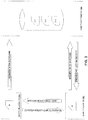
- FIG. 3 is an indicative diagram representing the interaction between various constituent entities in the said system viz. Identity Seeker, Identity Provider and Identity Custodian according to the embodiments as disclosed herein.
- An Identity Seeker - IS (302) initiates a request comprising an identifier associated with an entity. This request comprises a context associated with a transaction being initiated by the entity, or the Identity Provider -IP (306).
- the Identity Custodian IC- (304) contains a database with encrypted tokens (ET1, ET2, ET3,....,ETn).
- the Identity Custodian IC- (304) identifies an encrypted token stored in a database corresponding to the identifier.
- the encrypted token thus identified with reference to the entity in a specific context is decrypted to obtain a context matrix. Analysis is performed on the context matrix thus obtained and an activity status is determined. The activity is verified with the Identity Provider-IP (306). It is determined whether it is a usual activity or an unusual activity. If it is a usual activity, then the Identity Provider-IP (306) confirms such verification message to the Identity Seeker-IS (302) and the composite provisional digital identity (CPDI) is generated and the transaction authorized. On the other hand, if it is an unusual activity, then the Identity Provider-IP (306) denies the verification message thus resulting in updating the context matrix. In one embodiment, the Identity Provider-IP (306) registers with the Identity Custodian-IC (304). The above cited interactions are indicative and representative and not exhaustive so as to cover all the scenarios. These examples are presented herein for purposes of illustration, and not limitation.
- the hardware device can be any kind of device which can be programmed including e.g. any kind of computer like a server or a personal computer, or the like, or any combination thereof.
- the device may also include means which could be e.g. hardware means like e.g. an application-specific integrated circuit (ASIC), a field-programmable gate array (FPGA), or a combination of hardware and software means, e.g.
- ASIC application-specific integrated circuit
- FPGA field-programmable gate array
- the means can include both hardware means and software means.
- the method embodiments described herein could be implemented in hardware and software.
- the device may also include software means.
- the embodiments may be implemented on different hardware devices, e.g. using a plurality of CPUs.
- the embodiments herein can comprise hardware and software elements.
- the embodiments that are implemented in software include but are not limited to, firmware, resident software, microcode, etc.
- the functions performed by various modules described herein may be implemented in other modules or combinations of other modules.
- a computer-usable or computer readable medium can be any apparatus that can comprise, store, communicate, propagate, or transport the program for use by or in connection with the instruction execution system, apparatus, or device.
- the medium can be an electronic, magnetic, optical, electromagnetic, infrared, or semiconductor system (or apparatus or device) or a propagation medium.
- Examples of a computer-readable medium include a semiconductor or solid state memory, magnetic tape, a removable computer diskette, a random access memory (RAM), a read-only memory (ROM), a rigid magnetic disk and an optical disk.
- Current examples of optical disks include compact disk-read only memory (CD-ROM), compact disk-read/write (CD-R/W), BLU-RAY, and DVD.
- a data processing system suitable for storing and/or executing program code will include at least one processor coupled directly or indirectly to memory elements through a system bus.
- the memory elements can include local memory employed during actual execution of the program code, bulk storage, and cache memories which provide temporary storage of at least some program code in order to reduce the number of times code must be retrieved from bulk storage during execution.
- I/O devices can be coupled to the system either directly or through intervening I/O controllers.
- Network adapters may also be coupled to the system to enable the data processing system to become coupled to other data processing systems or remote printers or storage devices through intervening private or public networks. Modems, cable modem and Ethernet cards are just a few of the currently available types of network adapters.
- I/O devices can be coupled to the system either directly or through intervening I/O controllers.
- Network adapters may also be coupled to the system to enable the data processing system to become coupled to other data processing systems or remote printers or storage devices through intervening private or public networks. Modems, cable modem and Ethernet cards are just a few of the currently available types of network adapters.
- a representative hardware environment for practicing the embodiments may include a hardware configuration of an information handling/computer system in accordance with the embodiments herein.
- the system herein comprises at least one processor or central processing unit (CPU).
- the CPUs are interconnected via system bus to various devices such as a random access memory (RAM), read-only memory (ROM), and an input/output (I/O) adapter.
- RAM random access memory
- ROM read-only memory
- I/O input/output
- the I/O adapter can connect to peripheral devices, such as disk units and tape drives, or other program storage devices that are readable by the system.
- the system can read the inventive instructions on the program storage devices and follow these instructions to execute the methodology of the embodiments herein.
- the system further includes a user interface adapter that connects a keyboard, mouse, speaker, microphone, and/or other user interface devices such as a touch screen device (not shown) to the bus to gather user input.
- a communication adapter connects the bus to a data processing network
- a display adapter connects the bus to a display device which may be embodied as an output device such as a monitor, printer, or transmitter, for example.
Landscapes
- Engineering & Computer Science (AREA)
- Theoretical Computer Science (AREA)
- Computer Security & Cryptography (AREA)
- General Engineering & Computer Science (AREA)
- Computer Hardware Design (AREA)
- Physics & Mathematics (AREA)
- General Physics & Mathematics (AREA)
- Databases & Information Systems (AREA)
- General Health & Medical Sciences (AREA)
- Software Systems (AREA)
- Health & Medical Sciences (AREA)
- Social Psychology (AREA)
- Data Mining & Analysis (AREA)
- Computer Networks & Wireless Communication (AREA)
- Signal Processing (AREA)
- Bioethics (AREA)
- Management, Administration, Business Operations System, And Electronic Commerce (AREA)
- Financial Or Insurance-Related Operations Such As Payment And Settlement (AREA)
Abstract

Description
- This patent application claims priority to India Patent Application
201721002310, filed on January 20, 2017 - The disclosure herein generally relates to digital telecommunications, and, more particularly, to systems and methods for generating and managing composite digital identities.
- In a hyper connected world characterized by widespread or habitual use of devices that have Internet connectivity there is a confluence of internet of people, devices and knowledge. Intensive authentication is crucial in such an eco-system. As there exists connectivity of people, services and devices, all entities of the hyper connected world require digital identity of its own.
- Various technologies are existing to provide authentication to the user or device. One such technique is to provide authentication through credentials. However, such credential based authentication is not sufficient to provide authentication covering all scenarios. Moreover, these credentials can be easily hacked thereby increasing the vulnerability of authentication system.
- Another technology to provide authentication is through the application of behavioral methods. During an operation, the user behavior history can be stored and the stored information can be used for further authentication of the user. If it is a financial transaction, the transaction history of the particular user can be stored and used further. In another case, the anomalous activity of the device has been detected through behavioral fingerprints, which holds the data related to the user like data collected from the social network, user input, the data provided by GPS, accelerometers, microphones, cameras, timers, touch panels or other indications or combinations of the above said behavioral data.
- The following presents a simplified summary of some embodiments of the disclosure in order to provide a basic understanding of the embodiments. This summary is not an extensive overview of the embodiments. It is not intended to identify key/critical elements of the embodiments or to delineate the scope of the embodiments. Its sole purpose is to present some embodiments in a simplified form as a prelude to the more detailed description that is presented below.
- Embodiments of the present disclosure present technological improvements as solutions to one or more of the above-mentioned technical problems recognized by the inventors in conventional systems. For example, in one aspect, a processor implemented method is provided. The method comprising, receiving a request comprising an identifier associated with an entity from an identity seeker, wherein the request comprises a context associated with a transaction being initiated by the entity; Identifying, from one or more encrypted tokens stored in a database, an encrypted token corresponding to the identifier; decrypting the encrypted token to obtain a context matrix; performing an analysis on the context matrix with respect to the request comprising the context associated with the transaction being initiated by the entity; determining an activity status associated with the transaction based on the analysis being performed; based on the determined activity status; performing one of: a) Obtaining a verification message from the entity, wherein the verification message pertains to the transaction being performed by the entity, and generating a composite provisional digital identity of the entity, specific to the transaction based on the verification message; or b) Generating a composite provisional digital identity of the entity specific to the transaction; and sending the composite provisional digital identity of the entity for authorizing the transaction. In one embodiment, the entity is one of person, service or device. In one embodiment, the step of obtaining a verification message from the entity, and generating a composite provisional digital identity of the entity specific to the transaction based on the verification message is performed when the determined activity status is an unusual activity status. In one embodiment, the context matrix is updated based on the unusual activity status. In one embodiment, the context matrix comprises one or more attributes corresponding to one or more transactions being performed by the entity, and wherein the one or more attributes comprises location, time, consumption, subscription, association, and device. In one embodiment, the composite provisional digital identity is generated using one or more registered identifiers stored in the database.
- In another aspect a computer implemented system is provided. A system comprising a memory storing instructions; one or more communication interfaces; and one or more hardware processors coupled to the memory using the one or more communication interfaces, wherein the one or more hardware processors are configured by the instructions to: receive a request comprising an identifier associated with an entity from an identity seeker, wherein the request comprises a context associated with a transaction being initiated by the entity; Identify from one or more encrypted tokens stored a database, an encrypted token corresponding to the identifier; decrypt the encrypted token to obtain a context matrix; perform an analysis on the context matrix with respect to the request comprising the context associated with the transaction being initiated by the entity; determine an activity status associated with the transaction based on the analysis being performed; based on the determined activity status; performing one of: a) Obtaining a verification message from the entity, wherein the verification message pertains to the transaction being performed by the entity, and generating a composite provisional digital identity of the entity , specific to the transaction based on the verification message; or b) Generating a composite provisional digital identity of the entity specific to the transaction; and send the composite provisional digital identity of the entity for authorizing the transaction. In one embodiment, the entity is one of person, service or device. In one embodiment, the step of obtaining a verification message from the entity, and generating a composite provisional digital identity of the entity specific to the transaction based on the verification message is performed when the determined activity status is an unusual activity status. In one embodiment, context matrix is updated based on said unusual activity status. In one embodiment, the context matrix comprises one or more attributes corresponding to one or more transactions being performed by the entity, and wherein the one or more attributes comprises location, time, consumption, subscription, association, and device. In one embodiment, the composite provisional digital identity is generated using one or more registered identifiers stored in the database.
- It is to be understood that both the foregoing general description and the following detailed description are exemplary and explanatory only and are not restrictive of the invention, as claimed.
- It should be appreciated by those skilled in the art that any block diagram herein represent conceptual views of illustrative systems embodying the principles of the present subject matter. Similarly, it will be appreciated that any flow charts, flow diagrams, state transition diagrams, pseudo code, and the like represent various processes which may be substantially represented in computer readable medium and so executed by a computing device or processor, whether or not such computing device or processor is explicitly shown.
- The accompanying drawings, which are incorporated in and constitute a part of this disclosure, illustrate exemplary embodiments and, together with the description, serve to explain the disclosed principles:
-
FIG. 1 illustrates an exemplary block diagram of a system for managing composite digital identity in accordance with an embodiment of the present disclosure. -
FIG. 2 is a flow diagram illustrating a processor implemented method using the system ofFIG. 1 according to an embodiment of the present disclosure. -
FIG. 3 is a diagram depicting the interaction between various constituent entities in the said system viz. Identity Seeker, Identity Provider and Identity Custodian according to an embodiment of the present disclosure. - The embodiments herein and the various features and advantageous details thereof are explained more fully with reference to the non-limiting embodiments that are illustrated in the accompanying drawings and detailed in the following description. The examples used herein are intended merely to facilitate an understanding of ways in which the embodiments herein may be practiced and to further enable those of skill in the art to practice the embodiments herein. Accordingly, the examples should not be construed as limiting the scope of the embodiments herein.
- The words "comprising," "having," "containing," and "including," and other forms thereof, are intended to be equivalent in meaning and be open ended in that an item or items following any one of these words is not meant to be an exhaustive listing of such item or items, or meant to be limited to only the listed item or items.
- It must also be noted that as used herein and in the appended claims, the singular forms "a," "an," and "the" include plural references unless the context clearly dictates otherwise. Although any systems and methods similar or equivalent to those described herein can be used in the practice or testing of embodiments of the present disclosure, the preferred, systems and methods are now described.
- Some embodiments of this disclosure, illustrating all its features, will now be discussed in detail. The disclosed embodiments are merely exemplary of the disclosure, which may be embodied in various forms.
- Before setting forth the detailed explanation, it is noted that all of the discussion below, regardless of the particular implementation being described, is exemplary in nature, rather than limiting.
- Referring now to the drawings, and more particularly to
FIGS. 1 through FIG 3 , where similar reference characters denote corresponding features consistently throughout the figures, there are shown preferred embodiments and these embodiments are described in the context of the following exemplary system and/or method. -
FIG. 1 is a block diagram of a system for compositedigital identity management 100 according to an embodiment of the present disclosure. Thesystem 100 comprises amemory 102, ahardware processor 104, and an input/output (I/O)interface 106. Although the exemplary block diagram and the associated description refers to a memory and a hardware processor, it may be understood that one or more memory units and one or more hardware processors may be comprised in the coveringarray generation system 100. Thememory 102 further includes one or more functional modules 108. Thememory 102, thehardware processor 104, the input/output (I/O)interface 106, and/or the 108 modules may be coupled by a system bus or a similar mechanism. - The
memory 102, may store instructions, any number of pieces of information, and data, used by a computer system, for example thesystem 100 to implement the functions of thesystem 100. Thememory 102 may include for example, volatile memory and/or non-volatile memory. Examples of volatile memory may include, but are not limited to volatile random access memory (RAM). The non-volatile memory may additionally or alternatively comprise an electrically erasable programmable read only memory (EEPROM), flash memory, hard drive, or the like. Some examples of the volatile memory includes, but are not limited to, random access memory, dynamic random access memory, static random access memory, and the like. Some example of the non-volatile memory includes, but are not limited to, hard disks, magnetic tapes, optical disks, programmable read only memory, erasable programmable read only memory, electrically erasable programmable read only memory, flash memory, and the like. Thememory 102 may be configured to store information, data, applications, instructions or the like for enabling thesystem 100 to carry out various functions in accordance with various example embodiments. - Additionally or alternatively, the
memory 102 may be configured to store instructions which when executed by thehardware processor 104 causes thesystem 100 to behave in a manner as described in various embodiments. Thememory 102 stores the functional modules and related information. - The
hardware processor 104 may be implemented as one or more microprocessors, microcomputers, microcontrollers, digital signal processors, central processing units, state machines, logic circuitries, and/or any devices that manipulate signals based on operational instructions. Further, thehardware processor 104 may comprise a multi-core architecture. Among other capabilities, thehardware processor 104 is configured to fetch and execute computer-readable instructions or modules stored in thememory 102. Thehardware processor 104 may include circuitry implementing, among others, audio and logic functions associated with the communication. For example, thehardware processor 104 may include, but are not limited to, one or more digital signal processors (DSPs), one or more microprocessor, one or more special-purpose computer chips, one or more field-programmable gate arrays (FPGAs), one or more application-specific integrated circuits (ASICs), one or more computer(s), various analog to digital converters, digital to analog converters, and/or other support circuits. - The
hardware processor 104 thus may also include the functionality to encode messages and/or data or information. Thehardware processor 104 may include, among others a clock, an arithmetic logic unit (ALU) and logic gates configured to support operation of thehardware processor 104. Further, thehardware processor 104 may include functionality to execute one or more software programs, which may be stored in thememory 102 or otherwise accessible to thehardware processor 104. -
FIG. 2 , with reference toFIG. 1 , is a flow diagram illustrating a processor implemented method managing composite digitalidentity using system 100 ofFIG. 1 , according to the embodiments as disclosed herein. The steps of the method of the present disclosure will now be explained with reference to the components of thesystem 100 as depicted inFIG. 1 . Instep 202, the system receives a request comprising an identifier associated with an entity from an identity seeker, wherein the request comprises a context associated with a transaction being initiated by the entity. InStep 204, from one or more encrypted tokens stored in a database associated with an identity custodian, an encrypted token corresponding to said identifier are identified. InStep 206, the encrypted token is decrypted to obtain a context matrix. - In the present disclosure, the expressions "context matrix" and "context graph" may be used interchangeably.
- The Context graph is represented by an ontology model. Context matrix illustrates a graphical representation comprising consumption, subscription, association, device along the X-axis and location and time along y-axis. Further, Consumption comprises the values for Location, Experience, Behavior, Usage; and Subscription comprises values for complaints, services, interactions, payments, demographic; and Association comprises Household, Social, Communities, Influence; and Device comprises the set represented by Mobile, I-Pad, Tablet, Television. Furthermore, location may include but limited to information pertaining to geography, city, and place of said digital identity. Similarly time along y-axis may include but not limited to morning, afternoon, evening, night, late night. Context Graph aggregates entity personas and contextual intelligence. In one embodiment, the usage of context graph features real-time analytics and heuristics to generate the right offer to the customer at the right context. This can be used to steer a company's customer engagement strategy.
- Tokenization is important as this enables only the relevant portion of identity is exposed to the requestor for validation. Identity Seeker is an interested entity which requires identity of the entity at play, which in a specific context is the Identity Provider from the identity custodian for purposes of transactions or engagement. In one example embodiment, an interested entity is a retailer, the identity provider is the customer and the Identity custodian is UUID or banks which have performed the action of "Know Your Customer" (KYC). The entity in the value chain can be a service, device, or person. Further, Identity Custodian maintains the relationship with the identity seeker and identity provider. Furthermore, Identity provider is the entity that has a unique id, attached to this unique id are transactions. The transactions include but are not limited to service delivery, engagement, material transactions like buying a service or product/selling a service or product.
- A key observation from the method of generating a composite identity is as follows: when a request for an identity is made, a token is created which represents the composite identity of the said entity. It is this token that is exchanged. The token merely confirms the identity of the identity provider to the identity seeker and does not expose the personas which go in to the creation or definition of identity.
- In
Step 208, analysis is performed on the context matrix with respect to said request comprising said context associated with said transaction being initiated by said entity. InStep 210, activity status associated with the said transaction is determined. InStep 212, if the activity status is found to be an unusual activity status, then the process moves to Step 214a involving obtaining a verification message from the entity in question. In one example embodiment, the identity seeker may verify with the entity in question, i.e. the identity provider, if a transaction, say for example, a banking transaction involving money transferred to a retailer account at a specific time was indeed initiated by the identity provider. The identity provider responds to the verification message by either confirming or denying the said action. If the verification message is positive, or in other words, if the identity provider confirms the verification message then the context is updated in Step 216b. - In
Step 212, if the activity status is found to be a usual activity status; or in other words, unusual activity status is determined to be "NO", then Step 216 is performed. InStep 216, composite provisional digital identity is generated. InStep 218, the composite provisional digital identity of the entity thus generated is sent for authorizing the transaction. - The composite provisional digital identity driven by personas. It is a combination of multiple identities including but not limited to a device, a service, or a person. Personas in this technical context represents a behavioral characteristic, Further, these personas are dynamic entities which are continuously generated and enriched for people, services and devices that represent the behaviors respectively. These personas are in turn associated to a person, service and devices respectively as a composite identity. The composite identity will have associated personas and meta-attributes. Meta attributes describe when personas are active and can be used as an identifier, and under what context.
- It is to be highlighted that the identity seeker merely authenticates the token of the entity or the identity provider. It is the identity provider which determines whether token can be automatically exchanged or a next level authentication is required. Further, the entity in question or the identity provider can also protect tokens representing its composite digital identity with end user agreements that mandate under what specific conditions and context the tokens are seamless exchanged. Besides that in certain scenarios, tokens are given a lifecycle to indicate how long the particular identity is valid. This is to ensure the identity is not perpetual and is consistently relevant. Furthermore, if the persona active in the composite identity is consistent with the context in which the identity seeker has invoked, the identity is seamlessly provided in the form of tokens.
- In one embodiment, Table 1 herein below provides details on the list of analytical requirements to identify the subscription pattern of a customer present in a context matrix.
Table 1: Details related to list of analytical requirements to identify the subscription pattern of a customer. Analytics Requirements ID SUB_001 Location Analytics Requirement Location based Subscription (Wi Fi, Speed Boost etc.) Description Identify the location from which Telco Products are subscribed. Outcome Products Subscribed and Corresponding location Analytics Requirements ID SUB_002 Location Analytics Requirement Location based offer uptake Description Identify the success rate of location based marketing offer. Outcome Get details on Uptake Rate and Revenue Earned Analytics Requirements ID SUB_003 Location Analytics Requirement Location based payment preferences Description Identify the preferences of payment. Outcome Payment options identified based on location Analytics Requirements ID SUB 004 Location Analytics Requirement Location based device in use Description Identify the device capabilities and location details. Outcome Insight details on device capabilities and to assess the scope for introducing new products. Analytics Requirements ID SUB_005 Location Analytics Requirement Seasonal Subscription Description Identify the details about the seasonal subscription customer uptake. Outcome Get the details about the location and time during which the products are being subscribed. For list of special occasions, public holiday and event details refer the geographical calendars. Example: Time of the day, Special occasions, Weekend, Public Holiday, Events, Shows etc. - Similarly, in another embodiment, the data - internet usage pattern corresponding to consumption parameter is characterized in Table 2 provided herein below.
Table 2: Details related to list of analytical requirements to identify the consumption pattern of a customer, more specifically corresponding to data-internet usage pattern. Analytics Requirements ID CUS_001 Location Analytics List of Non streaming /Streaming websites Requirement viewed (URL) Description Identify the list of websites or URL's the customer has viewed. Outcome Get the frequency in which the customer visited each websites, identify the category of website (Online shopping, games, Social, etc.) Analytics Requirements ID CUS_002 Location Analytics Requirement Type of content Description Identify the type of content viewed e.g. Movies, games, sports etc. Outcome Get the set of attributes for classifying the usage e.g. Movies, Games, etc. Analytics Requirements ID CUS_003 Location Analytics Requirement Duration of consumption Description Identify the duration taken by user in each type of content, and the frequency Outcome Get the details on the content being consumed, and the frequency on which the content is being watched Analytics Requirements ID CUS_004 Location Analytics Requirement Time of consumption Description Time during which the content is being consumed Outcome Get the details about the time during which the content is being consumed. Example: Time of the day, Special occasions, Weekend, Public Holiday etc. Also determine the sampling frequency every hour, twice in a day etc... Analytics Requirements ID CUS_005 Location Analytics Requirement Devices used for Consumption Description List of devices used to consume the content. Outcome Get the different kind of devices used to consume the content like Mobile, tab, laptop, desktop, set top box, gaming console etc. Analytics Requirements ID CUS_006 Location Analytics Bandwidth need of customer - Derived Requirement Description Derive the Bandwidth need of the customer base on attributes like Volume , Time, Duration etc. and arrive at a better consumption plan Outcome Based on the bandwidth needs of the Customer, decide the probability of Cross sell, upsell opportunities. - Furthermore, in yet another embodiment, the TV - viewing pattern corresponding to consumption parameter is characterized in Table - 3 provided herein below.
Table 3: Details related to list of analytical requirements to identify the consumption pattern of a customer, more specifically corresponding to TV-viewing pattern. Analytics Requirements ID CUS_007 Location Analytics Requirement Channels viewed Description List of channels viewed Outcome List of channels viewed during time of the day, public holidays and the like, with the details that identify the category of channel sports, cartoon, movie etc. Analytics Requirements ID CUS_008 Location Analytics Requirement Frequency of surfing channels Description List of frequently surfed channels. Outcome Get the frequency in which the customer surf channels Analytics Requirements ID CUS_009 Location Analytics Requirement Program viewed duration Description Identify the duration taken by user in each channel Outcome Get the duration of consumption for each of the programs. Use the Genre information to classify the customer as movie buff, sports person, etc... Analytics Requirements ID CUS010 Location Analytics Requirement Devices used for Consumption Description Get the list of device used to view the content Outcome Get the different kind of devices used to consume the content like Mobile, tab, laptop, desktop, set top box, etc... Analytics Requirements ID CUS_011 Location Analytics Requirement VOD consumption Description List of VOD titles viewed Outcome Get the list of VOD titles viewed and their type. - Furthermore, in yet another embodiment, the corresponding Location parameter is characterized in Table - 4 provided herein below.
Table - 4: Details related to list of analytical requirements to identify location pattern of a customer. Analytics Requirements ID LOC_001 Location Analytics Requirement Customer presence at a point in time Description Identify the customers presence at a specific place ,time and frequency Outcome Get the details about the place like mall, stadium, theatre and the like, along with time and frequency of visits Analytics LOC_002 Requirements ID Location Analytics Requirement List of Non streaming /Streaming websites viewed (URL) Description List of websites or URLs the customer has viewed at each location. Outcome Get the different locations and frequency of customers' availability in a location and the frequency in which the customer visited each websites, identify the category of website (Online shopping, games, Social, etc.) Analytics Requirements ID LOC_003 Location Analytics Requirement Type of content Description Identify the type of content viewed e.g. Movies, games, sports etc. at each location Outcome Get the set of attributes for classifying the usage e.g. Movies, Games, etc. Analytics Requirements ID LOC_004 Location Analytics Duration of consumption Requirement Description Identify the duration taken by user in each type of content, and the frequency at each location. Outcome Get the details on the content being consumed, and the frequency on which the content is being watched Analytics Requirements ID LOC_005 Location Analytics Requirement Time of consumption Description Location and Time during which the content is being consumed Outcome Get the details about the location and time during which the content is being consumed. Example: Time of the day, Special occasions, Weekend, Public Holiday etc. Location: Home, work, travel etc. Also determine the sampling frequency every hour, twice in a day etc. Analytics Requirements ID LOC_006 Location Analytics Bandwidth need of customer - Derived Requirement Description Derive the Bandwidth need of the customer base on attributes like location, Volume , Time, Duration etc. and arrive at a better consumption plan Outcome Based on the bandwidth needs of the Customer, decide the probability of Cross sell, upsell opportunities. - In an embodiment of the present disclosure, when an identification is requested, the Identity provider is expected to expose the identity to the Identity Seeker without any explicit authentication. In one embodiment, if the context of the request is different as evidenced from the personas active within the composite index, the identity provider would go in for manual authentication. Authentication in this scenario can be a person key in credentials, or a service going through an elaborate key exchange mechanism or a device exposing its security certificates.
-
FIG. 3 , with reference toFIG. 2 , is an indicative diagram representing the interaction between various constituent entities in the said system viz. Identity Seeker, Identity Provider and Identity Custodian according to the embodiments as disclosed herein. An Identity Seeker - IS (302) initiates a request comprising an identifier associated with an entity. This request comprises a context associated with a transaction being initiated by the entity, or the Identity Provider -IP (306). The Identity Custodian IC- (304) contains a database with encrypted tokens (ET1, ET2, ET3,....,ETn). The Identity Custodian IC- (304) identifies an encrypted token stored in a database corresponding to the identifier. The encrypted token thus identified with reference to the entity in a specific context is decrypted to obtain a context matrix. Analysis is performed on the context matrix thus obtained and an activity status is determined. The activity is verified with the Identity Provider-IP (306). It is determined whether it is a usual activity or an unusual activity. If it is a usual activity, then the Identity Provider-IP (306) confirms such verification message to the Identity Seeker-IS (302) and the composite provisional digital identity (CPDI) is generated and the transaction authorized. On the other hand, if it is an unusual activity, then the Identity Provider-IP (306) denies the verification message thus resulting in updating the context matrix. In one embodiment, the Identity Provider-IP (306) registers with the Identity Custodian-IC (304). The above cited interactions are indicative and representative and not exhaustive so as to cover all the scenarios. These examples are presented herein for purposes of illustration, and not limitation. - The written description describes the subject matter herein to enable any person skilled in the art to make and use the embodiments. The scope of the subject matter embodiments is defined by the claims and may include other modifications that occur to those skilled in the art. Such other modifications are intended to be within the scope of the claims if they have similar elements that do not differ from the literal language of the claims or if they include equivalent elements with insubstantial differences from the literal language of the claims.
- It is to be understood that the scope of the protection is extended to such a program and in addition to a computer-readable means having a message therein; such computer-readable storage means contain program-code means for implementation of one or more steps of the method, when the program runs on a server or mobile device or any suitable programmable device. The hardware device can be any kind of device which can be programmed including e.g. any kind of computer like a server or a personal computer, or the like, or any combination thereof. The device may also include means which could be e.g. hardware means like e.g. an application-specific integrated circuit (ASIC), a field-programmable gate array (FPGA), or a combination of hardware and software means, e.g. an ASIC and an FPGA, or at least one microprocessor and at least one memory with software modules located therein. Thus, the means can include both hardware means and software means. The method embodiments described herein could be implemented in hardware and software. The device may also include software means. Alternatively, the embodiments may be implemented on different hardware devices, e.g. using a plurality of CPUs.
- The embodiments herein can comprise hardware and software elements. The embodiments that are implemented in software include but are not limited to, firmware, resident software, microcode, etc. The functions performed by various modules described herein may be implemented in other modules or combinations of other modules. For the purposes of this description, a computer-usable or computer readable medium can be any apparatus that can comprise, store, communicate, propagate, or transport the program for use by or in connection with the instruction execution system, apparatus, or device.
- The medium can be an electronic, magnetic, optical, electromagnetic, infrared, or semiconductor system (or apparatus or device) or a propagation medium. Examples of a computer-readable medium include a semiconductor or solid state memory, magnetic tape, a removable computer diskette, a random access memory (RAM), a read-only memory (ROM), a rigid magnetic disk and an optical disk. Current examples of optical disks include compact disk-read only memory (CD-ROM), compact disk-read/write (CD-R/W), BLU-RAY, and DVD.
- A data processing system suitable for storing and/or executing program code will include at least one processor coupled directly or indirectly to memory elements through a system bus. The memory elements can include local memory employed during actual execution of the program code, bulk storage, and cache memories which provide temporary storage of at least some program code in order to reduce the number of times code must be retrieved from bulk storage during execution.
- Input/output (I/O) devices (including but not limited to keyboards, displays, pointing devices, etc.) can be coupled to the system either directly or through intervening I/O controllers. Network adapters may also be coupled to the system to enable the data processing system to become coupled to other data processing systems or remote printers or storage devices through intervening private or public networks. Modems, cable modem and Ethernet cards are just a few of the currently available types of network adapters.
- Input/output (I/O) devices (including but not limited to keyboards, displays, pointing devices, etc.) can be coupled to the system either directly or through intervening I/O controllers. Network adapters may also be coupled to the system to enable the data processing system to become coupled to other data processing systems or remote printers or storage devices through intervening private or public networks. Modems, cable modem and Ethernet cards are just a few of the currently available types of network adapters.
- A representative hardware environment for practicing the embodiments may include a hardware configuration of an information handling/computer system in accordance with the embodiments herein. The system herein comprises at least one processor or central processing unit (CPU). The CPUs are interconnected via system bus to various devices such as a random access memory (RAM), read-only memory (ROM), and an input/output (I/O) adapter. The I/O adapter can connect to peripheral devices, such as disk units and tape drives, or other program storage devices that are readable by the system. The system can read the inventive instructions on the program storage devices and follow these instructions to execute the methodology of the embodiments herein.
- The system further includes a user interface adapter that connects a keyboard, mouse, speaker, microphone, and/or other user interface devices such as a touch screen device (not shown) to the bus to gather user input. Additionally, a communication adapter connects the bus to a data processing network, and a display adapter connects the bus to a display device which may be embodied as an output device such as a monitor, printer, or transmitter, for example.
- The preceding description has been presented with reference to various embodiments. Users having ordinary skill in the art and technology to which this application pertains will appreciate that alterations and changes in the described structures and methods of operation can be practiced without meaningfully departing from the principle, spirit and scope.
Claims (15)
- A processor implemented method comprising:receiving a request comprising an identifier associated with an entity from an identity seeker, wherein said request comprises a context associated with a transaction being initiated by said entity;Identifying, from one or more encrypted tokens stored in a database, an encrypted token corresponding to said identifier;decrypting said encrypted token to obtain a context matrix; performing an analysis on said context matrix with respect to said request comprising said context associated with said transaction being initiated by said entity;determining an activity status associated with said transaction based on said analysis being performed;based on said determined activity status; performing one of:a) Obtaining a verification message from said entity, wherein said verification message pertains to said transaction being performed by said entity, and generating a composite provisional digital identity of said entity , specific to said transaction based on said verification message; orb) Generating a composite provisional digital identity of said entity specific to said transaction; andsending said composite provisional digital identity of said entity for authorizing said transaction.
- The method according to claim 1, wherein entity is one of person, service or device.
- The method according to claim 1, wherein the step of obtaining a verification message from said entity, and generating a composite provisional digital identity of said entity specific to said transaction based on said verification message is performed when said determined activity status is an unusual activity status.
- The method according to claim 3, further comprising updating said context matrix based on said unusual activity status.
- The method according to claim 1, wherein said context matrix comprises one or more attributes corresponding to one or more transactions being performed by said entity, and wherein said one or more attributes comprises location, time, consumption, subscription, association, and device.
- The method according to claim 1, wherein said composite provisional digital identity is generated using one or more registered identifiers stored in said database.
- A system comprising:a memory storing instructions;one or more communication interfaces; andone or more hardware processors coupled to said memory using said one or more communication interfaces, wherein said one or more hardware processors are configured by said instructions to:receive a request comprising an identifier associated with an entity from an identity seeker, wherein said request comprises a context associated with a transaction being initiated by said entity;identify from one or more encrypted tokens stored a database, an encrypted token corresponding to said identifier;decrypt said encrypted token to obtain a context matrix;perform an analysis on said context matrix with respect to said request comprising said context associated with said transaction being initiated by said entity;determine an activity status associated with said transaction based on said analysis being performed;based on said determined activity status; performing one of:a) Obtaining a verification message from said entity, wherein said verification message pertains to said transaction being performed by said entity, and generating a composite provisional digital identity of said entity, specific to said transaction based on said verification message; orb) Generating a composite provisional digital identity of said entity specific to said transaction; andsend said composite provisional digital identity of said entity for authorizing said transaction.
- The system according to claim 7, wherein entity is one of person, service or device.
- The system according to claim 7, wherein the step of obtaining a verification message from said entity, and generating a composite provisional digital identity of said entity specific to said transaction based on said verification message is performed when said determined activity status is an unusual activity status.
- The system according to claim 9, wherein said context matrix is updated based on said unusual activity status.
- The system according to claim 7, wherein said context matrix comprises one or more attributes corresponding to one or more transactions being performed by said entity, and wherein said one or more attributes comprises location, time, consumption, subscription, association, and device.
- The system according to claim 7, wherein said composite provisional digital identity is generated using one or more registered identifiers stored in said database.
- The non-transitory computer-readable medium having embodied thereon a computer program for executing a processor implemented method comprising;receiving a request comprising an identifier associated with an entity from an identity seeker, wherein said request comprises a context associated with a transaction being initiated by said entity;
identifying, from one or more encrypted tokens stored in a database, an encrypted token corresponding to said identifier;
decrypting said encrypted token to obtain a context matrix;
performing an analysis on said context matrix with respect to said request comprising said context associated with said transaction being initiated by said entity;
determining an activity status associated with said transaction based on said analysis being performed;
based on said determined activity status; performing one of:a) Obtaining a verification message from said entity, wherein said verification message pertains to said transaction being performed by said entity, and generating a composite provisional digital identity of said entity , specific to said transaction based on said verification message; orb) Generating a composite provisional digital identity of said entity specific to said transaction; andsending said composite provisional digital identity of said entity for authorizing said transaction. - The one or more non-transitory machine readable information storage mediums of claim 13, wherein entity is one of person, service or device.
- The one or more non-transitory machine readable information storage mediums of claim 13, wherein the step of obtaining a verification message from said entity, and generating a composite provisional digital identity of said entity specific to said transaction based on said verification message is performed when said determined activity status is an unusual activity status.
Applications Claiming Priority (1)
| Application Number | Priority Date | Filing Date | Title |
|---|---|---|---|
| IN201721002310 | 2017-01-20 |
Publications (1)
| Publication Number | Publication Date |
|---|---|
| EP3352109A1 true EP3352109A1 (en) | 2018-07-25 |
Family
ID=60990646
Family Applications (1)
| Application Number | Title | Priority Date | Filing Date |
|---|---|---|---|
| EP18150743.5A Ceased EP3352109A1 (en) | 2017-01-20 | 2018-01-09 | Systems and methods for generating and managing composite digital identities |
Country Status (2)
| Country | Link |
|---|---|
| US (1) | US10922392B2 (en) |
| EP (1) | EP3352109A1 (en) |
Families Citing this family (2)
| Publication number | Priority date | Publication date | Assignee | Title |
|---|---|---|---|---|
| US11615463B2 (en) * | 2018-08-01 | 2023-03-28 | Appfolio, Inc. | Artificial intelligence based digital leasing assistant |
| US10749885B1 (en) * | 2019-07-18 | 2020-08-18 | Cyberark Software Ltd. | Agentless management and control of network sessions |
Citations (5)
| Publication number | Priority date | Publication date | Assignee | Title |
|---|---|---|---|---|
| US20080319904A1 (en) * | 2007-06-25 | 2008-12-25 | Mark Carlson | Seeding challenges for payment transactions |
| US20150032618A1 (en) * | 2013-07-23 | 2015-01-29 | Yi Hung Lin | Anti-fraud system and its method for on-line transaction with credit card |
| US20150089568A1 (en) * | 2013-09-26 | 2015-03-26 | Wave Systems Corp. | Device identification scoring |
| US20160071107A1 (en) * | 2013-05-14 | 2016-03-10 | Touch Networks Australia Pty Ltd | Method of processing a transaction request |
| US20160110528A1 (en) * | 2014-10-15 | 2016-04-21 | Qualcomm Incorporated | Methods and Systems for Using Behavioral Analysis Towards Efficient Continuous Authentication |
Family Cites Families (13)
| Publication number | Priority date | Publication date | Assignee | Title |
|---|---|---|---|---|
| US8966245B2 (en) | 2004-01-30 | 2015-02-24 | Microsoft Technology Licensing, Inc. | System and method for assigning quality to cryptographic identities used in a digital transaction |
| US20110167479A1 (en) * | 2010-01-07 | 2011-07-07 | Oracle International Corporation | Enforcement of policies on context-based authorization |
| US8601602B1 (en) | 2010-08-31 | 2013-12-03 | Google Inc. | Enhanced multi-factor authentication |
| US8447983B1 (en) * | 2011-02-01 | 2013-05-21 | Target Brands, Inc. | Token exchange |
| CA2835349C (en) * | 2011-02-15 | 2017-02-28 | Research In Motion Limited | System and method for identity management for mobile devices |
| BR112014025965A2 (en) * | 2012-04-18 | 2018-05-08 | Bbp Tecnologia Desenvolvimento De Sist Ltda | system and method for verification and authentication of data and identity |
| US9372972B2 (en) * | 2012-06-29 | 2016-06-21 | Id Dataweb, Inc. | System and method for establishing and monetizing trusted identities in cyberspace with personal data service and user console |
| US9003556B2 (en) * | 2013-02-28 | 2015-04-07 | Facebook, Inc. | Techniques for in-app user data authorization |
| US20150161360A1 (en) * | 2013-12-06 | 2015-06-11 | Microsoft Corporation | Mobile Device Generated Sharing of Cloud Media Collections |
| US9942043B2 (en) * | 2014-04-23 | 2018-04-10 | Visa International Service Association | Token security on a communication device |
| US9953151B2 (en) * | 2015-02-03 | 2018-04-24 | Chon Hock LEOW | System and method identifying a user to an associated device |
| US11308485B2 (en) * | 2016-07-15 | 2022-04-19 | Paypal, Inc. | Processing a transaction using electronic tokens |
| US11283748B2 (en) * | 2015-08-31 | 2022-03-22 | Micro Focus Llc | Message based information technology service management |
-
2018
- 2018-01-09 EP EP18150743.5A patent/EP3352109A1/en not_active Ceased
- 2018-01-10 US US15/867,149 patent/US10922392B2/en active Active
Patent Citations (5)
| Publication number | Priority date | Publication date | Assignee | Title |
|---|---|---|---|---|
| US20080319904A1 (en) * | 2007-06-25 | 2008-12-25 | Mark Carlson | Seeding challenges for payment transactions |
| US20160071107A1 (en) * | 2013-05-14 | 2016-03-10 | Touch Networks Australia Pty Ltd | Method of processing a transaction request |
| US20150032618A1 (en) * | 2013-07-23 | 2015-01-29 | Yi Hung Lin | Anti-fraud system and its method for on-line transaction with credit card |
| US20150089568A1 (en) * | 2013-09-26 | 2015-03-26 | Wave Systems Corp. | Device identification scoring |
| US20160110528A1 (en) * | 2014-10-15 | 2016-04-21 | Qualcomm Incorporated | Methods and Systems for Using Behavioral Analysis Towards Efficient Continuous Authentication |
Also Published As
| Publication number | Publication date |
|---|---|
| US20180225434A1 (en) | 2018-08-09 |
| US10922392B2 (en) | 2021-02-16 |
Similar Documents
| Publication | Publication Date | Title |
|---|---|---|
| US20250307458A1 (en) | User consent framework | |
| US10812460B2 (en) | Validation system utilizing dynamic authentication | |
| US9674151B2 (en) | Repackaging demographic data with anonymous identifier | |
| CN106056402B (en) | System and method for sharing content on third-party mobile application | |
| US11606217B2 (en) | Secure sharing of credential information | |
| US20160335679A1 (en) | Authorization and termination of the binding of social account interactions to a master agnostic identity | |
| CA2861656C (en) | User authentication and authorization using personas | |
| CA2944031C (en) | Client-side integration framework of services | |
| KR102271786B1 (en) | Accelerated training of personal daemons | |
| US20200273070A1 (en) | Systems and methods for leveraging social queuing to identify and prevent ticket purchaser simulation | |
| US20140245461A1 (en) | Techniques for in-app user data authorization | |
| US9466035B2 (en) | Systems and methods for leveraging social queuing to facilitate event ticket distribution | |
| KR20190119773A (en) | Online contents funding system and method based upon matching with contents creator and investor | |
| US11121859B1 (en) | Efficient incremental consensus for block commit in blockchain network | |
| US20240086897A1 (en) | Hybrid organizational system for data management and tracking | |
| US20230269098A1 (en) | Secure sharing of credential information | |
| Lavranou et al. | Unraveling the complexity of mobile application permissions: Strategies to enhance users’ privacy education | |
| US10832258B2 (en) | Bounty tracking for referral | |
| US20150373144A1 (en) | Personal Daemon Interaction through Escalating Disclosure | |
| US10922392B2 (en) | Systems and methods for generating and managing composite digital identities | |
| US20160203512A1 (en) | Systems and methods for leveraging social queuing to simulate ticket purchaser behavior | |
| Nguyen et al. | IBM MobileFirst in Action for mGovernment and Citizen Mobile Services | |
| Amid | Your Spotify Wrapped Year in Review-Data Privacy Edition | |
| US20250342496A1 (en) | Multi-purpose interactive social platform and method of using the same | |
| Rajapaksha | User Perception for Usability and Security on New Technology and Online User Privacy in Real-Time Bidding |
Legal Events
| Date | Code | Title | Description |
|---|---|---|---|
| PUAI | Public reference made under article 153(3) epc to a published international application that has entered the european phase |
Free format text: ORIGINAL CODE: 0009012 |
|
| STAA | Information on the status of an ep patent application or granted ep patent |
Free format text: STATUS: THE APPLICATION HAS BEEN PUBLISHED |
|
| AK | Designated contracting states |
Kind code of ref document: A1 Designated state(s): AL AT BE BG CH CY CZ DE DK EE ES FI FR GB GR HR HU IE IS IT LI LT LU LV MC MK MT NL NO PL PT RO RS SE SI SK SM TR |
|
| AX | Request for extension of the european patent |
Extension state: BA ME |
|
| STAA | Information on the status of an ep patent application or granted ep patent |
Free format text: STATUS: REQUEST FOR EXAMINATION WAS MADE |
|
| 17P | Request for examination filed |
Effective date: 20190125 |
|
| RBV | Designated contracting states (corrected) |
Designated state(s): AL AT BE BG CH CY CZ DE DK EE ES FI FR GB GR HR HU IE IS IT LI LT LU LV MC MK MT NL NO PL PT RO RS SE SI SK SM TR |
|
| STAA | Information on the status of an ep patent application or granted ep patent |
Free format text: STATUS: EXAMINATION IS IN PROGRESS |
|
| 17Q | First examination report despatched |
Effective date: 20200403 |
|
| STAA | Information on the status of an ep patent application or granted ep patent |
Free format text: STATUS: THE APPLICATION HAS BEEN REFUSED |
|
| 18R | Application refused |
Effective date: 20220517 |