EP3350731B1 - Systems and methods for patient-specific imaging and modeling of drug delivery - Google Patents
Systems and methods for patient-specific imaging and modeling of drug delivery Download PDFInfo
- Publication number
- EP3350731B1 EP3350731B1 EP16779220.9A EP16779220A EP3350731B1 EP 3350731 B1 EP3350731 B1 EP 3350731B1 EP 16779220 A EP16779220 A EP 16779220A EP 3350731 B1 EP3350731 B1 EP 3350731B1
- Authority
- EP
- European Patent Office
- Prior art keywords
- drug
- target tissue
- patient
- drug delivery
- locations
- Prior art date
- Legal status (The legal status is an assumption and is not a legal conclusion. Google has not performed a legal analysis and makes no representation as to the accuracy of the status listed.)
- Active
Links
Images



Classifications
-
- G—PHYSICS
- G16—INFORMATION AND COMMUNICATION TECHNOLOGY [ICT] SPECIALLY ADAPTED FOR SPECIFIC APPLICATION FIELDS
- G16C—COMPUTATIONAL CHEMISTRY; CHEMOINFORMATICS; COMPUTATIONAL MATERIALS SCIENCE
- G16C20/00—Chemoinformatics, i.e. ICT specially adapted for the handling of physicochemical or structural data of chemical particles, elements, compounds or mixtures
- G16C20/30—Prediction of properties of chemical compounds, compositions or mixtures
-
- G—PHYSICS
- G16—INFORMATION AND COMMUNICATION TECHNOLOGY [ICT] SPECIALLY ADAPTED FOR SPECIFIC APPLICATION FIELDS
- G16H—HEALTHCARE INFORMATICS, i.e. INFORMATION AND COMMUNICATION TECHNOLOGY [ICT] SPECIALLY ADAPTED FOR THE HANDLING OR PROCESSING OF MEDICAL OR HEALTHCARE DATA
- G16H50/00—ICT specially adapted for medical diagnosis, medical simulation or medical data mining; ICT specially adapted for detecting, monitoring or modelling epidemics or pandemics
- G16H50/50—ICT specially adapted for medical diagnosis, medical simulation or medical data mining; ICT specially adapted for detecting, monitoring or modelling epidemics or pandemics for simulation or modelling of medical disorders
-
- A—HUMAN NECESSITIES
- A61—MEDICAL OR VETERINARY SCIENCE; HYGIENE
- A61B—DIAGNOSIS; SURGERY; IDENTIFICATION
- A61B5/00—Measuring for diagnostic purposes; Identification of persons
- A61B5/48—Other medical applications
- A61B5/4848—Monitoring or testing the effects of treatment, e.g. of medication
-
- G—PHYSICS
- G16—INFORMATION AND COMMUNICATION TECHNOLOGY [ICT] SPECIALLY ADAPTED FOR SPECIFIC APPLICATION FIELDS
- G16H—HEALTHCARE INFORMATICS, i.e. INFORMATION AND COMMUNICATION TECHNOLOGY [ICT] SPECIALLY ADAPTED FOR THE HANDLING OR PROCESSING OF MEDICAL OR HEALTHCARE DATA
- G16H20/00—ICT specially adapted for therapies or health-improving plans, e.g. for handling prescriptions, for steering therapy or for monitoring patient compliance
- G16H20/10—ICT specially adapted for therapies or health-improving plans, e.g. for handling prescriptions, for steering therapy or for monitoring patient compliance relating to drugs or medications, e.g. for ensuring correct administration to patients
Definitions
- Various embodiments of the present disclosure relate generally to drug delivery assessment, treatment planning, and related methods. More specifically, particular embodiments of the present disclosure relate to systems and methods for patient-specific imaging and modeling of drug delivery, e.g., for chemotherapy.
- Chemotherapy is one form of cancer treatment in which patients are given one or more drugs as part of a standardized regimen.
- the efficacy of chemotherapy may be influenced by the effectiveness of drug delivery to target organs in patients.
- the effectiveness of drug delivery may be shaped by factors including, but not limited to, the drug amount, drug concentration, administration location, frequency of dosage, type of therapy, and/or patient characteristics. For example, determining the optimal dose of drug agent may be important since over-dosing can cause serious side effects due to drug toxicity, and under-dosing can lead to reduced effectiveness of therapy.
- Coronary artery disease is a common ailment that may cause blood vessels supplying blood to the heart to develop lesions, such as a stenosis (abnormal narrowing of a blood vessel).
- stenosis abnormal narrowing of a blood vessel.
- thrombosis thrombosis
- Other circulatory conditions can affect blood flow characteristics along with drug delivery patterns.
- One of the treatments for coronary artery disease, percutaneous coronary intervention involves treating the stenotic (narrowed) coronary arteries of the heart. While percutaneous coronary intervention runs the risk of generating a reappearance of stenosis (restenosis), an effective delivery of drug agents for percutaneous coronary intervention can help reduce restenosis rates.
- restenosis restenosis
- Document US 2009/210209 A1 discloses a generalized drug delivery model with body compartments based on knowledge of typical human physiology.
- Document US 2012022843 A1 generates patient-specific anatomical models from medical imaging data, but rather in the context of estimating fluid structure interactions based on simulated blood flow.
- Document US 8 315 812 B2 teaches using patient-specific blood flow models for blood flow estimation to various tissue regions for monitoring effects of various patient states including those induced by medication.
- systems and methods are disclosed for providing personalized chemotherapy and drug delivery by using computational fluid dynamics and/or machine learning from a vascular anatomical model.
- the present invention provides a computer-implemented method of estimating drug delivery at a target tissue as set out in appended claim 1.
- the present invention further provides a corresponding system for estimating drug delivery at a target tissue as set out in appended claim 7.
- the present invention still further provides in appended claim 8 a non-transitory computer readable medium for use on a computer system containing computer-executable programming instructions for estimating drug delivery at a target tissue according to the method.
- the efficacy of chemotherapy may be influenced by the effectiveness of drug delivery to target organs in patients.
- patient may refer to any individual or person for whom the effectiveness of drug delivery is being assessed, or any individual or person associated with the drug delivery assessment of one or more individuals. Determining the optimal dose of drug agent may be important; however, inter-patient variation in drug handling and a lack of accurate methods may pose challenges for determining the optimal dose.
- a personalized approach by monitoring drug levels in blood plasma and adjusting dose can minimize toxicities and help to improve treatment outcomes of chemotherapy.
- effective delivery of drug agents for percutaneous coronary intervention can help reduce restenosis rates.
- assessing the effectiveness of drug delivery can help clinicians determine treatment strategies for patients by evaluating drug delivery patterns along with convection, diffusion, and/or metabolism rates throughout the circulatory system based on the flow characteristics.
- the present disclosure describes systems and methods for providing personalized chemotherapy and drug delivery modeling using computational fluid dynamics and medical imaging with machine learning from a vascular/anatomical model. While the following embodiments may be directed to brain tumor and coronary lesions, the same system and method could be applied to creating patient-specific models of chemotherapy and drug delivery in other oncological diseases, including breast cancer, prostate cancer, liver cancer, colon cancer, lung cancer, and/or cervical cancer. Furthermore, the framework could be extended to assess patient-specific models of implantable drug delivery devices, including nanoparticles and hydrogels. In some cases, a "particle” may refer to a small unit of drug (e.g., molecule) that may be released into the patient's blood stream or transported to the target tissue.
- drug e.g., molecule
- FIG. 1 provides depicts an overview of a system and network of the current disclosure
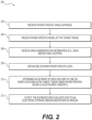
- FIG. 2 illustrates a general implementation of a method for estimating drug delivery in the target tissue
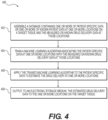
- FIG. 3 and FIG. 4 illustrate step 210 within method 200 disclosed in FIG. 2 , in more detail
- FIG. 5 and 6 expand the general implementation of FIG. 2 into a personalized chemotherapy and drug delivery system and method.
- FIG. 1 depicts a block diagram of an exemplary system 100 and network for providing personalized chemotherapy and drug delivery, according to an exemplary embodiment.
- FIG. 1 depicts a plurality of physicians 102 and third party providers 104, any of whom may be connected to an electronic network 101, such as the Internet, through one or more computers, servers, and/or handheld mobile devices.
- Physicians 102 and/or third party providers 104 may create or otherwise obtain images of one or more patients' anatomy.
- the physicians 102 and/or third party providers 104 may also obtain any combination of patient-specific data, such as medical image characteristics, anatomical characteristics, perfusion territories, blood supply to the target tissue, blood flow characteristics, patient characteristics, disease burden characteristics, and/or electromechanical measurements.
- Server systems 106 may include storage devices for storing images and data received from physicians 102 and/or third party providers 104. Server systems 106 may also include processing devices for processing images and data stored in the storage devices.
- “electronic storage devices” or “electronic storage media” may include, but are not limited to, a hard drive, network drive, cloud drive, mobile phone, tablet, or the like that may or may not be affixed to a display screen.
- FIG. 2 depicts a general implementation of an exemplary method 200 for estimating drug delivery at a target tissue, useable in embodiments of the invention.
- One or more steps of method 200 may be performed by a processor of server systems 106.
- step 202 may include receiving a patient specific vascular anatomical model in an electronic storage medium of the server system 106.
- receiving the patient-specific anatomical model may include either generating the patient-specific anatomical model at the server system 106, or receiving one over an electronic network (e.g., electronic network 100).
- the patient specific vascular anatomical model may include, but is not limited to, the patient's cerebrovascular system, cardiovascular system, and/or the vasculature perfusing the breasts, prostate, liver, colon, lung, and/or cervix.
- the vascular anatomical model may be derived from images of the person acquired using one or more available imaging or scanning modalities (e.g., computed tomography (CT) scans, magnetic resonance (MR) imaging, micro-computed tomography ( ⁇ CT) scans, micro-magnetic resonance ( ⁇ MR) imaging, dual energy computed tomography scans, ultrasound imaging, single photon emission computed tomography (SPECT) scans, or positron emission tomography (PET) scans).
- CT computed tomography
- MR magnetic resonance
- ⁇ CT micro-computed tomography
- ⁇ MR micro-magnetic resonance
- PET positron emission tomography
- the vascular anatomical model may be obtained through segmentation of an imaging study
- Step 204 may include receiving a patient specific model of the target tissue in an electronic storage medium.
- a target tissue may refer to the tissue and/or organ in which the blood supply and/or drug delivery data may be estimated.
- the target tissue may be found in an organ afflicted with cancerous growth, including, but not limited to the brain, one or more breasts, the prostate, liver, colon, lung, and/or cervix.
- the target tissue may be found in vasculature affected with thrombosis, including but not limited to the coronary, aortic, or cerebrovascular systems, peripheral vasculature perfusing one or more muscles, renal vasculature supplying the kidney, and/or visceral vasculature supplying the bowels, liver, and/or spleen.
- the patient specific model of the target tissue may be obtained through segmentation of an imaging study, including, but not limited to, images obtained from one or more said available imaging or scanning modalities.
- Step 206 may include receiving patient-specific drug administration information.
- drug administration information may include one or more drug administration locations and the respective drug amounts inserted at the one or more drug administration locations.
- drug administration information may include the administered drug concentration, administration frequency, administration time, type of therapy, and/or one or more routes of drug administration, with said routes including, but not limited to, oral administration, intravenous administration, or direct administration into the tumor and/or lesion.
- Step 208 may include receiving or calculating one or more elements of patient-specific data.
- the one or more patient-specific data elements may be extracted from the patient specific vascular anatomical model and/or patient specific model of a target tissue.
- the patient-specific data may include, but are not limited to an estimate of one or more anatomical characteristics of the vessel model and/or target tissue model, for example, size (volume, surface area, mass, etc.), shape, tortuosity, length, thickness, number and length of branches, network topology, etc.
- the patient-specific data may include, but are not limited to an estimate of the supplied blood to each area of the target tissue under one or more physiological states, and/or one or more blood flow characteristics, for example, fractional flow reserve (FFR), flow magnitude and direction, etc.
- FFR fractional flow reserve
- the blood flow characteristics may be determined through several means, for instance, invasive measurement (e.g., through invasive FFR, thrombolysis in myocardial infarction (TIMI), microspheres, etc.), calculation using a blood flow simulation (e.g., a 3D or 1D fluid simulation model, calculation, transluminal attenuation flow encoding (TAFE), etc.), calculation using imaging characteristics (e.g., transluminal arterial gradient (TAG), corrected coronary opacification (CCO), etc.) and/or calculation using a machine learning estimation of blood supply based on anatomical or imaging features.
- invasive measurement e.g., through invasive FFR, thrombolysis in myocardial infarction (TIMI), microspheres, etc.
- a blood flow simulation e.g., a 3D or 1D fluid simulation model, calculation, transluminal attenuation flow encoding (TAFE), etc.
- imaging characteristics e.g., transluminal arterial gradient (TAG), corrected
- the patient-specific data may include, but are not limited to an estimate of the perfusion or diffusion territories of the target tissue related to the vascular model. This estimate may be determined, for instance, using a nearest-neighbor (Voronoi) approach to assigning locations in the target tissue to the closest supplying vessel in the vascular model, a microvascular estimation technique calculation from an anatomical model, including constrained constructive optimization.
- a nearest-neighbor Voronoi
- the patient-specific data may include, but are not limited to an estimate of the perfusion or diffusion territories of the drug delivery device related to the release of particles into the blood flow.
- the estimate of the perfusion or diffusion territories may be determined by an exemplary method of using a thermodynamic model and mass transport models, including energy conservation or Fick's Laws of Diffusion, to simulate drug release assuming ionic equilibrium.
- the estimate of the perfusion or diffusion territories may be determined by an exemplary method of using Multiphase Mixture Theory to simulate drug release driven by mechanical, chemical, or electrochemical potentials in response to shear, compression, or expansion flow.
- the patient-specific data may include drug delivery device characteristics, including but not limited to, device size, particle properties (e.g., size, concentration, molecular weight, etc.), hydrogel polymer material properties (e.g., elastic modulus, cross-link density, solubility, porosity, matrix swelling, etc.), and/or operating parameters (e.g., temperature, solvent quality, pH, charge density, etc.), etc.
- drug delivery device characteristics including but not limited to, device size, particle properties (e.g., size, concentration, molecular weight, etc.), hydrogel polymer material properties (e.g., elastic modulus, cross-link density, solubility, porosity, matrix swelling, etc.), and/or operating parameters (e.g., temperature, solvent quality, pH, charge density, etc.), etc.
- the patient-specific data may include, but are not limited to, medical images (e.g., a CT, MR, ⁇ CT, ⁇ MR, dual energy CT, ultrasound, PET, SPECT, etc.) in one or more physiological states (e.g., rest, stress, etc.) of the target tissue and/or vessels represented by the vascular model.
- Image characteristics of the target tissue or vessels may be received or calculated in one or more locations, including, but not limited to, local average intensities at one or more resolutions, differences of average intensities (e.g., calculated using wavelet bases such as Haar), texture characteristics (e.g., Haralick texture features), any standard image features, including histograms of gradients, SIFT, steerable filters, etc.
- patient-specific data may include, but are not limited to, patient characteristics, such as age, gender, smoking history, height, weight, body surface area (BSA), diabetic status, hypertensive status, ethnicity, family history, and/or genetic information.
- patient characteristics such as age, gender, smoking history, height, weight, body surface area (BSA), diabetic status, hypertensive status, ethnicity, family history, and/or genetic information.
- BSA body surface area
- the patient-specific data may include, but are not limited to, vascular or target tissue disease characteristics, including tumor size, degree of malignancy, location of tumor in the brain, tumor blood flow, oxygen transport, vascular endothelial growth factor distribution, extracellular pH, interstitial fluid pressure, interstitial fluid velocity, vascular permeability, tissue transport properties, angiogenic parameters (e.g., tumor blood volume), plaque burden, presence of adverse plaque characteristics (e.g., spotty calcification, low attenuation plaque, napkin ring sign, positive remodeling, thrombus formation, etc.), calcium score (patient-level or vessel-level), perfusion information, ejection fraction, wall motion, wall thickness, wall morphology, wall histology, etc.
- vascular or target tissue disease characteristics including tumor size, degree of malignancy, location of tumor in the brain, tumor blood flow, oxygen transport, vascular endothelial growth factor distribution, extracellular pH, interstitial fluid pressure, interstitial fluid velocity, vascular permeability, tissue transport properties, ang
- the patient-specific data may include, but are not limited to electromechanical measurements, including ECG measurements or invasive EP measurements.
- Step 210 may include determining one or more drug delivery data at one or more locations in the target tissue using one or more of the patient-specific data.
- the drug delivery data may include an estimate of drug delivery at one or more locations in the target tissue.
- the determination of drug delivery data may be performed by computational simulations of tumor vasculature hemodynamics (e.g., FIG. 3 ) and/or training a machine learning algorithm using a database of patients with known drug delivery (e.g. FIG. 4 ).
- Step 212 may include outputting the estimated drug delivery data to an electronic storage medium and/or a display medium.
- the drug delivery estimates may be displayed in greyscale or color, in 2D or 3D, overlaid on the anatomical model of the target tissue, and/or overlaid on an image of the target tissue.
- FIG. 3 depicts an exemplary implementation of method 300 for performing step 210 of FIG. 2 , which may include determining drug delivery data at one or more locations in the target tissue by performing computational simulations of tumor vasculature hemodynamics on patient-specific data.
- method 300 may include using Navier-Stokes equation, computational fluid dynamics (or approximations thereof), and or reaction-advection-diffusion equations to determine blood flow characteristics, and then using drug administration information and blood flow characteristics to estimate the transportation, spatial, and/or temporal distribution of the drug.
- drug administration information may refer to details regarding the administration of a drug or therapy to a patient, including, but not limited to, administered drug amount, administered drug concentration, administration location, administration frequency, route of drug administration, administration time, type of therapy, etc.
- One or more steps of method 300 may be performed by a processor of server systems 106.
- the drug delivery data in the one or more locations in the target tissue may be estimated or calculated from the transportation, spatial, and/or temporal distribution of the drug.
- the transportation, spatial, and/or temporal distribution of the drug may be used to train a machine learning algorithm for estimating or calculating the drug delivery data in the one or more locations in the target tissue.
- the method of FIG. 3 may be performed by server systems 106, based on patient-specific data received from physicians 102 and/or third party providers 104 over the electronic network 100.
- drug delivery data may refer to an estimate of the amount of drug delivered to the one or more locations in the target tissue, an estimate of the concentration of drug particles delivered to the one or more locations in the target tissue; the circulatory destination probability of the drug particles released at the drug delivery location to the target tissue, which may be defined as the ratio of the amount of drug particles reaching the target tissue with respect to the total number of released drug particles, the transportation, spatial, and/or temporal distribution of the drug, an estimate of the blood flow data; or a combination thereof.
- Step 302 may include computing the blood flow characteristics in the patient specific vascular anatomy.
- computing the blood flow data may include solving the Navier-Stokes equation, or a modified Navier-Stokes equation with Darcy's law term for a flow through a porous medium, numerically under the patient's physiologic conditions (e.g., hyperemic or rest state, interstitial fluid pressure, tumor growth state, etc.).
- the blood flow data may include the velocity field of blood flow in the heart, the coronary, cerebral, carotid vasculature, the aortic arch, or any other vascular network.
- the blood flow data may include the velocity field of venous circulation and/or micro-circulation, as well as arterial circulation.
- Step 304 may include inserting the drug amounts in the received one or more drug administration locations.
- the drug amounts may be administered virtually so as to simulate drug delivery.
- Step 306 may include determining the transportation, spatial, and/or temporal distribution of the drug particles.
- the size and amount of particles may be determined as a prescribed dosage of administered drug.
- varying mechanical and transport properties can be assigned to each of the three layers (e.g., intima, media, adventitia) in the vessel wall. Non-Newtonian rheological properties may also be considered for tumor microvasculature hemodynamics.
- Step 308 may include determining the drug delivery data in the one or more locations in the target tissue.
- the drug delivery data may be determined from the transportation, spatial, and/or temporal distribution of drug particles, as determined in step 306.
- the drug delivery data may be determined from training a machine learning algorithm that utilizes the transportation, spatial, and/or temporal distribution of drug particles (e.g., method 400).
- the drug delivery data may include the circulatory destination probability of drug molecules in the one or more locations. The circulatory destination probability may be computed from the ratio of the amount of particles reaching a location in the target tissue with respect to the total number of released particles.
- step 308 may be performed by a processor.
- Step 310 may include outputting the estimated drug delivery data to an electronic storage medium and/or display medium.
- the drug delivery data may include the transportation, spatial, and/or temporal distribution of the drug.
- the drug delivery estimates may be displayed in greyscale or color, in 2D or 3D, overlaid on the anatomical model of the target tissue, and/or overlaid on an image of the target tissue.
- FIG. 4 depicts an exemplary implementation of method 400 for performing step 210 of FIG. 2 , which may include determining drug delivery data at one or more locations in the target tissue by training a machine learning algorithm on patient-specific data. Alternately, method 400 may be performed subsequent to method 300 as a means to complete step 210 of FIG. 2 , which may include using computational simulations of tumor vasculature hemodynamics and training a machine learning algorithm on patient-specific data in order to determine drug delivery data.
- method 400 may include determining drug delivery data at one or more locations in the target tissue by training a machine learning algorithm on patient-specific data.
- the method of FIG. 4 may be performed by server systems 106, based on patient-specific data received from physicians 102 and/or third party providers 104 over the electronic network 100.
- One or more steps of method 400 may be performed by a processor.
- step 402 may include assembling a database containing one or more of the patient-specific data at one or more locations with the measured drug delivery data at those locations.
- step 402 may include assembling a database of patients with known patient-specific data and known drug delivery data.
- the one or more patient-specific data may include a numerical description of physiological or phenotypic parameters of the patient and/or a description of the local geometry and biophysical characteristics at one or more locations.
- the one or more patient-specific data may include blood flow data, transportation, spatial, and/or temporal distribution of drug particles, and/or circulatory destination probability of drug particles obtained from method 300.
- the measured or known drug delivery data at one or more locations may include, for example, one or more combinations of MR image, fluorodeoxyglucose positron emission tomography (FDG-PET) image, stress echo/MRI contractile reserve, multidetector CT, dual energy CT, ⁇ CT, ⁇ MR, etc.
- FDG-PET fluorodeoxyglucose positron emission tomography
- Step 404 may include training a machine algorithm to map the patient-specific data for one or more locations to the drug delivery data at those locations.
- the patient-specific data and drug delivery data may be obtained from a database of patients with known patient-specific data and known drug delivery data.
- the one or more patient-specific data may include a numerical description of physiological or phenotypic parameters of the patient and/or a description of the local geometry and biophysical characteristics at one or more locations.
- one or more patient-specific data may include blood flow data, transportation, spatial, and/or temporal distribution of drug particles, and/or circulatory destination probability of drug particles obtained from method 300.
- the machine learning algorithm may take many forms, for example, one or more algorithms implementing a multilayer perceptron, deep learning, support vector machines, random forests, k-nearest neighbors, Bayes networks, etc.
- Step 406 may include applying the trained machine learning algorithm to the new patient-specific data to estimate the drug delivery data at one or more locations in the target tissue.
- the machine learning algorithm would be trained with a database of patients with known patient-specific data and known drug delivery data, and will be applied to the patient-specific data of a new patient to estimate the drug delivery data at one or more locations of the new patient's body.
- step 408 may include outputting, to an electronic storage medium and/or display screen, the estimated drug delivery data at one or more locations in the target tissue.
- the drug delivery data may include the amount of drug delivered to one or more locations on the target tissue.
- the output drug delivery data may be displayed in greyscale or color in 2D or 3D, overlaid on the anatomical model of the target tissue, and/or overlaid on an image of the target tissue.
- one or more locations in the target tissue may be associated with a circulatory destination probability of drug particles, which may be defined as the ratio of the amount of drug particles reaching the target tissue with respect to the total number of released drug particles.
- one or more locations in the target tissue may be associated with the transportation, spatial, and/or temporal distribution of the drug delivered.
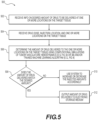
- FIG. 5 depicts an exemplary embodiment of method 500 for using the system and method described in method 200 to regulate drug administration until the amount of drug delivered matches, or falls within the range of, a desired drug delivery amount.
- One or more steps of method 500 may be performed using a processor of server systems 106.
- step 502 may include receiving information on the desired drug delivery data for one or more locations in the target tissue.
- step 502 may include receiving information on the desired amount of drug to be delivered to one or more locations on a tumor or lesion.
- Step 504 may include receiving patient-specific drug administration information.
- drug administration information may include one or more drug administration locations and the respective drug amounts inserted at the one or more drug administration locations.
- drug administration information may also include one or more of the administered drug concentration, administration frequency, administration time, type of therapy, and/or one or more routes of drug administration, with said routes including, but not limited to, oral administration, intravenous administration, or direct administration into the tumor and/or lesion.
- Step 506 may include determining the drug delivery data at one or more locations on the target tissue by using computed simulations of tumor vasculature hemodynamics (e.g., FIG. 3 ) and/or by applying a trained machine learning algorithm (e.g., FIG. 4 ). For example, step 506 may include determining the amount of drug delivered to the one or more locations on the target tissue. In one embodiment, step 506 may be performed by a processor.
- step 508 may include determining whether the drug delivery data at one or more locations on the target tissue matches, or falls within the range of, the desired drug delivery data at those locations. For example, step 508 may include determining whether the amount of drug delivered to a location on the target tissue matches the desired amount of drug to be delivered to that location. Step 508 may be performed by a processor.
- step 510 may include adjusting the drug administration accordingly, and repeating step 504. For example, if the amount of drug delivered is greater than the desired amount of drug to be delivered, then the administered amount may be decreased or maintained. In another example, if the amount of drug delivered is less than the desired amount of drug to be delivered, then the administered amount may be increased or maintained. In one embodiment, if the amount of drug delivered does not match or does not fall within the range of the desired amount of drug to be delivered, then factors other than the administration amount may be adjusted. These said factors may include, but are not limited to, the one or more locations of the drug administration, the drug concentration, the route of drug administration, the type of therapy, and/or the frequency of drug insertion, etc.
- step 512 may include outputting drug delivery data to an electronic storage medium and/or display medium.
- the drug delivery data may include the amount of drug delivered to one or more locations on the target tissue.
- the output drug delivery data may be displayed in greyscale or color in 2D or 3D, overlaid on the anatomical model of the target tissue, and/or overlaid on an image of the target tissue.
- FIG. 6 depicts an exemplary method 600 for using the system and method described in method 200 for simulating changes in tumor blood flow by assessing effectiveness of the drug delivery or therapy.
- One or more steps of method 600 may be performed using a processor of server systems 106.
- Step 602 may include receiving one or more medical images at a given time, t1.
- the one or more medical images may be from one or more available scanning modalities.
- the one or more medical images may be obtained using segmentation of an imaging study, including, but not limited to, images obtained from one or more said available imaging or scanning modalities.
- Step 604 may include receiving one or more medical images at a given time, t2.
- the one or more medical images may be from one or more available scanning modalities.
- the one or more medical images may be obtained using segmentation of an imaging study, including, but not limited to, images obtained from one or more said available imaging or scanning modalities.
- the segmentation of the images may be performed by a processor.
- Step 606 may include comparing the tumor, lesion, patient-specific data, and/or drug delivery data extracted from the one or more medical images from different times. For example, the comparison may include determining whether intensity gradients between medical images from different times have a difference that is within a predetermined threshold.
- Step 608 may include assessing the effectiveness of the current drug delivery system, subsequent to the comparison in step 606.
- an assessment on the effectiveness of the current drug delivery system may include determining the status change of the tumor or lesion.
- the status change of the tumor or lesion may be classified into one or more levels of progression and regression, and the effectiveness of the drug delivery system may be correlated with the level of regression in the tumor or lesion.
- the status change may be determined by comparing the images received at step 602 and step 604. Determining the status change of the tumor or lesion may also be aided by patient-specific data and/or drug delivery data.
- step 610 may include using the system described in method 200 to increase or maintain the drug administration amount, and then repeating step 602.
- step 610 may include adjusting factors other than the drug administration amount. These said factors may include, but are not limited to, the one or more locations of the drug administration, the drug concentration, the route of drug administration, the type of therapy, and/or the frequency of drug insertion, etc.
- step 612 may include using the system described in method 200 to maintain or decrease the drug administration amount, and then repeating step 602.
- step 612 may include adjusting factors other than the drug administration amount. These said factors may include, but are not limited to, the one or more locations of the drug administration, the drug concentration, the route of drug administration, the type of therapy, and/or the frequency of drug insertion, etc.
- step 614 may include outputting the one or more medical images, tumor or lesion status, and/or drug delivery data to an electronic storage medium and/or display.
- the one or more medical images, tumor or lesion status, and/or drug delivery data may be displayed in greyscale or color, in 2D or 3D, overlaid on the anatomical model of the target tissue, and/or overlaid on an image of the target tissue.
Landscapes
- Health & Medical Sciences (AREA)
- Engineering & Computer Science (AREA)
- Medical Informatics (AREA)
- Public Health (AREA)
- Life Sciences & Earth Sciences (AREA)
- General Health & Medical Sciences (AREA)
- Chemical & Material Sciences (AREA)
- Bioinformatics & Cheminformatics (AREA)
- Epidemiology (AREA)
- Primary Health Care (AREA)
- Biomedical Technology (AREA)
- Pathology (AREA)
- Data Mining & Analysis (AREA)
- Theoretical Computer Science (AREA)
- Medicinal Chemistry (AREA)
- Computing Systems (AREA)
- Bioinformatics & Computational Biology (AREA)
- Crystallography & Structural Chemistry (AREA)
- Databases & Information Systems (AREA)
- Heart & Thoracic Surgery (AREA)
- Veterinary Medicine (AREA)
- Animal Behavior & Ethology (AREA)
- Surgery (AREA)
- Molecular Biology (AREA)
- Physics & Mathematics (AREA)
- Biophysics (AREA)
- Medical Treatment And Welfare Office Work (AREA)
- Apparatus For Radiation Diagnosis (AREA)
- Measuring And Recording Apparatus For Diagnosis (AREA)
Description
- This application claims priority to
U.S. Provisional Application No. 62/219,490 filed September 16, 2015 - Various embodiments of the present disclosure relate generally to drug delivery assessment, treatment planning, and related methods. More specifically, particular embodiments of the present disclosure relate to systems and methods for patient-specific imaging and modeling of drug delivery, e.g., for chemotherapy.
- Cancer affects millions of people worldwide and is one of the most common causes of death. Chemotherapy is one form of cancer treatment in which patients are given one or more drugs as part of a standardized regimen. The efficacy of chemotherapy may be influenced by the effectiveness of drug delivery to target organs in patients. The effectiveness of drug delivery may be shaped by factors including, but not limited to, the drug amount, drug concentration, administration location, frequency of dosage, type of therapy, and/or patient characteristics. For example, determining the optimal dose of drug agent may be important since over-dosing can cause serious side effects due to drug toxicity, and under-dosing can lead to reduced effectiveness of therapy.
- Current methods of drug delivery, such as those using body surface area (BSA), are inaccurate because they do not account for inter-patient variations. For example, there is a fourfold to tenfold variation in cytotoxic drug clearance between individuals due to differing activity of drug elimination processes related to genetic and environmental factors. Thus, there is a desire for a drug delivery system and method that is personalized, in order to account for inter-patient variation, and accurate, in order to minimize toxicities and help to improve treatment outcomes of chemotherapy.
- Furthermore, having an effective personalized and accurate drug delivery system and method may also improve treatments of other ailments. Coronary artery disease is a common ailment that may cause blood vessels supplying blood to the heart to develop lesions, such as a stenosis (abnormal narrowing of a blood vessel). The presence or absence of stenosis, thrombosis and other circulatory conditions can affect blood flow characteristics along with drug delivery patterns. One of the treatments for coronary artery disease, percutaneous coronary intervention, involves treating the stenotic (narrowed) coronary arteries of the heart. While percutaneous coronary intervention runs the risk of generating a reappearance of stenosis (restenosis), an effective delivery of drug agents for percutaneous coronary intervention can help reduce restenosis rates. Thus, there is a desire for a system and method to assess the effectiveness of drug delivery by evaluating convection, diffusion, and/or metabolism rates throughout the circulatory system based on the blood flow characteristics.
- Document
US 2009/210209 A1 discloses a generalized drug delivery model with body compartments based on knowledge of typical human physiology. DocumentUS 2012022843 A1 generates patient-specific anatomical models from medical imaging data, but rather in the context of estimating fluid structure interactions based on simulated blood flow. DocumentUS 8 315 812 B2 teaches using patient-specific blood flow models for blood flow estimation to various tissue regions for monitoring effects of various patient states including those induced by medication. - The foregoing general description and the following detailed description are exemplary and explanatory only and are not restrictive of the disclosure.
- According to certain aspects of the present disclosure, systems and methods are disclosed for providing personalized chemotherapy and drug delivery by using computational fluid dynamics and/or machine learning from a vascular anatomical model.
- The present invention provides a computer-implemented method of estimating drug delivery at a target tissue as set out in appended claim 1.
- The present invention further provides a corresponding system for estimating drug delivery at a target tissue as set out in appended claim 7.
- The present invention still further provides in appended claim 8 a non-transitory computer readable medium for use on a computer system containing computer-executable programming instructions for estimating drug delivery at a target tissue according to the method.
- Additional objects and advantages of the disclosed embodiments will be set forth in part in the description that follows, and in part will be apparent from the description, or may be learned by practice of the disclosed embodiments. The objects and advantages on the disclosed embodiments will be realized and attained by means of the elements and combinations particularly pointed out in the appended claims.
- It is to be understood that both the foregoing general description and the following detailed description are exemplary and explanatory only and are not restrictive of the detailed embodiments, as claimed.
- The accompanying drawings, which are incorporated in and constitute a part of this specification, illustrate various exemplary embodiments, and together with the description, serve to explain the principles of the disclosed embodiments.
-
FIG. 1 is a block diagram of an exemplary system and network for providing personalized chemotherapy and drug delivery, according to an exemplary embodiment of the present disclosure. -
FIG. 2 is a block diagram of an exemplary method of estimating drug delivery at a target tissue, useable in embodiments of the invention. -
FIG. 3 is a block diagram of an exemplary method of determining drug delivery data at one or more locations in the target tissue, useable in embodiments of the invention, using patient-specific data using computational fluid dynamics. -
FIG. 4 is a block diagram of an exemplary method of determining drug delivery data at one or more locations in the target tissue, useable in embodiments of the invention, by training a machine learning algorithm using patient-specific data. -
FIG. 5 is a block diagram of an exemplary method, embodying the invention, of using the system and method described inmethod 200 to regulate drug administration until the actual drug delivery data matches, or falls within the range of, a desired drug delivery data. -
FIG. 6 is a block diagram of an exemplary method of using the system and method described inmethod 200 for simulating changes in drug delivery towards a target tissue by assessing the effectiveness of the drug delivery. - Reference will now be made in detail to the exemplary embodiments of the disclosure, examples of which are illustrated in the accompanying drawings. Wherever possible, the same reference numbers will be used throughout the drawings to refer to the same or like parts.
- The efficacy of chemotherapy may be influenced by the effectiveness of drug delivery to target organs in patients. For the purposes of the disclosure: "patient" may refer to any individual or person for whom the effectiveness of drug delivery is being assessed, or any individual or person associated with the drug delivery assessment of one or more individuals. Determining the optimal dose of drug agent may be important; however, inter-patient variation in drug handling and a lack of accurate methods may pose challenges for determining the optimal dose. A personalized approach by monitoring drug levels in blood plasma and adjusting dose can minimize toxicities and help to improve treatment outcomes of chemotherapy. Moreover, effective delivery of drug agents for percutaneous coronary intervention can help reduce restenosis rates.
- Given the potentially wide scope of this problem and utility, assessing the effectiveness of drug delivery can help clinicians determine treatment strategies for patients by evaluating drug delivery patterns along with convection, diffusion, and/or metabolism rates throughout the circulatory system based on the flow characteristics. The present disclosure describes systems and methods for providing personalized chemotherapy and drug delivery modeling using computational fluid dynamics and medical imaging with machine learning from a vascular/anatomical model. While the following embodiments may be directed to brain tumor and coronary lesions, the same system and method could be applied to creating patient-specific models of chemotherapy and drug delivery in other oncological diseases, including breast cancer, prostate cancer, liver cancer, colon cancer, lung cancer, and/or cervical cancer. Furthermore, the framework could be extended to assess patient-specific models of implantable drug delivery devices, including nanoparticles and hydrogels. In some cases, a "particle" may refer to a small unit of drug (e.g., molecule) that may be released into the patient's blood stream or transported to the target tissue.
- The steps described in the methods may be performed in any order, or in conjunction with any other step. It is also contemplated that one or more of the steps may be omitted for performing the methods described in the present disclosure. In general,
FIG. 1 provides depicts an overview of a system and network of the current disclosure;FIG. 2 illustrates a general implementation of a method for estimating drug delivery in the target tissue;FIG. 3 andFIG. 4 illustratestep 210 withinmethod 200 disclosed inFIG. 2 , in more detail; andFIG. 5 and6 expand the general implementation ofFIG. 2 into a personalized chemotherapy and drug delivery system and method. - Referring now to the figures,
FIG. 1 depicts a block diagram of anexemplary system 100 and network for providing personalized chemotherapy and drug delivery, according to an exemplary embodiment. Specifically,FIG. 1 depicts a plurality ofphysicians 102 andthird party providers 104, any of whom may be connected to an electronic network 101, such as the Internet, through one or more computers, servers, and/or handheld mobile devices.Physicians 102 and/orthird party providers 104 may create or otherwise obtain images of one or more patients' anatomy. Thephysicians 102 and/orthird party providers 104 may also obtain any combination of patient-specific data, such as medical image characteristics, anatomical characteristics, perfusion territories, blood supply to the target tissue, blood flow characteristics, patient characteristics, disease burden characteristics, and/or electromechanical measurements.Physicians 102 and/orthird party providers 104 may transmit the patient-specific data toserver systems 106 over the electronic network 101.Server systems 106 may include storage devices for storing images and data received fromphysicians 102 and/orthird party providers 104.Server systems 106 may also include processing devices for processing images and data stored in the storage devices. For purposes of disclosure, "electronic storage devices" or "electronic storage media" may include, but are not limited to, a hard drive, network drive, cloud drive, mobile phone, tablet, or the like that may or may not be affixed to a display screen. -
FIG. 2 depicts a general implementation of anexemplary method 200 for estimating drug delivery at a target tissue, useable in embodiments of the invention. One or more steps ofmethod 200 may be performed by a processor ofserver systems 106. In one implementation,step 202 may include receiving a patient specific vascular anatomical model in an electronic storage medium of theserver system 106. Specifically, receiving the patient-specific anatomical model may include either generating the patient-specific anatomical model at theserver system 106, or receiving one over an electronic network (e.g., electronic network 100). The patient specific vascular anatomical model may include, but is not limited to, the patient's cerebrovascular system, cardiovascular system, and/or the vasculature perfusing the breasts, prostate, liver, colon, lung, and/or cervix. In one implementation, the vascular anatomical model may be derived from images of the person acquired using one or more available imaging or scanning modalities (e.g., computed tomography (CT) scans, magnetic resonance (MR) imaging, micro-computed tomography (µCT) scans, micro-magnetic resonance (µMR) imaging, dual energy computed tomography scans, ultrasound imaging, single photon emission computed tomography (SPECT) scans, or positron emission tomography (PET) scans). The vascular anatomical model may be obtained through segmentation of an imaging study, including, but not limited to, images obtained from one or more said available imaging or scanning modalities. - Step 204 may include receiving a patient specific model of the target tissue in an electronic storage medium. For purposes of disclosure, a "target tissue" may refer to the tissue and/or organ in which the blood supply and/or drug delivery data may be estimated. In one implementation, the target tissue may be found in an organ afflicted with cancerous growth, including, but not limited to the brain, one or more breasts, the prostate, liver, colon, lung, and/or cervix. In one implementation, the target tissue may be found in vasculature affected with thrombosis, including but not limited to the coronary, aortic, or cerebrovascular systems, peripheral vasculature perfusing one or more muscles, renal vasculature supplying the kidney, and/or visceral vasculature supplying the bowels, liver, and/or spleen. In one implementation, the patient specific model of the target tissue may be obtained through segmentation of an imaging study, including, but not limited to, images obtained from one or more said available imaging or scanning modalities.
- Step 206 may include receiving patient-specific drug administration information. In one implementation, drug administration information may include one or more drug administration locations and the respective drug amounts inserted at the one or more drug administration locations. In another implementation, drug administration information may include the administered drug concentration, administration frequency, administration time, type of therapy, and/or one or more routes of drug administration, with said routes including, but not limited to, oral administration, intravenous administration, or direct administration into the tumor and/or lesion.
- Step 208 may include receiving or calculating one or more elements of patient-specific data. In one implementation, the one or more patient-specific data elements may be extracted from the patient specific vascular anatomical model and/or patient specific model of a target tissue. In one implementation, the patient-specific data may include, but are not limited to an estimate of one or more anatomical characteristics of the vessel model and/or target tissue model, for example, size (volume, surface area, mass, etc.), shape, tortuosity, length, thickness, number and length of branches, network topology, etc. In one implementation, the patient-specific data may include, but are not limited to an estimate of the supplied blood to each area of the target tissue under one or more physiological states, and/or one or more blood flow characteristics, for example, fractional flow reserve (FFR), flow magnitude and direction, etc. The blood flow characteristics may be determined through several means, for instance, invasive measurement (e.g., through invasive FFR, thrombolysis in myocardial infarction (TIMI), microspheres, etc.), calculation using a blood flow simulation (e.g., a 3D or 1D fluid simulation model, calculation, transluminal attenuation flow encoding (TAFE), etc.), calculation using imaging characteristics (e.g., transluminal arterial gradient (TAG), corrected coronary opacification (CCO), etc.) and/or calculation using a machine learning estimation of blood supply based on anatomical or imaging features.
- The patient-specific data may include, but are not limited to an estimate of the perfusion or diffusion territories of the target tissue related to the vascular model. This estimate may be determined, for instance, using a nearest-neighbor (Voronoi) approach to assigning locations in the target tissue to the closest supplying vessel in the vascular model, a microvascular estimation technique calculation from an anatomical model, including constrained constructive optimization.
- Furthermore, the patient-specific data may include, but are not limited to an estimate of the perfusion or diffusion territories of the drug delivery device related to the release of particles into the blood flow. The estimate of the perfusion or diffusion territories may be determined by an exemplary method of using a thermodynamic model and mass transport models, including energy conservation or Fick's Laws of Diffusion, to simulate drug release assuming ionic equilibrium. In one implementation, the estimate of the perfusion or diffusion territories may be determined by an exemplary method of using Multiphase Mixture Theory to simulate drug release driven by mechanical, chemical, or electrochemical potentials in response to shear, compression, or expansion flow.
- Furthermore, the patient-specific data may include drug delivery device characteristics, including but not limited to, device size, particle properties (e.g., size, concentration, molecular weight, etc.), hydrogel polymer material properties (e.g., elastic modulus, cross-link density, solubility, porosity, matrix swelling, etc.), and/or operating parameters (e.g., temperature, solvent quality, pH, charge density, etc.), etc.
- Furthermore, the patient-specific data may include, but are not limited to, medical images (e.g., a CT, MR, µCT, µMR, dual energy CT, ultrasound, PET, SPECT, etc.) in one or more physiological states (e.g., rest, stress, etc.) of the target tissue and/or vessels represented by the vascular model. Image characteristics of the target tissue or vessels may be received or calculated in one or more locations, including, but not limited to, local average intensities at one or more resolutions, differences of average intensities (e.g., calculated using wavelet bases such as Haar), texture characteristics (e.g., Haralick texture features), any standard image features, including histograms of gradients, SIFT, steerable filters, etc.
- Furthermore, the patient-specific data may include, but are not limited to, patient characteristics, such as age, gender, smoking history, height, weight, body surface area (BSA), diabetic status, hypertensive status, ethnicity, family history, and/or genetic information.
- Furthermore, the patient-specific data may include, but are not limited to, vascular or target tissue disease characteristics, including tumor size, degree of malignancy, location of tumor in the brain, tumor blood flow, oxygen transport, vascular endothelial growth factor distribution, extracellular pH, interstitial fluid pressure, interstitial fluid velocity, vascular permeability, tissue transport properties, angiogenic parameters (e.g., tumor blood volume), plaque burden, presence of adverse plaque characteristics (e.g., spotty calcification, low attenuation plaque, napkin ring sign, positive remodeling, thrombus formation, etc.), calcium score (patient-level or vessel-level), perfusion information, ejection fraction, wall motion, wall thickness, wall morphology, wall histology, etc.
- Furthermore, the patient-specific data may include, but are not limited to electromechanical measurements, including ECG measurements or invasive EP measurements.
- Step 210 may include determining one or more drug delivery data at one or more locations in the target tissue using one or more of the patient-specific data. In one implementation, the drug delivery data may include an estimate of drug delivery at one or more locations in the target tissue. The determination of drug delivery data may be performed by computational simulations of tumor vasculature hemodynamics (e.g.,
FIG. 3 ) and/or training a machine learning algorithm using a database of patients with known drug delivery (e.g.FIG. 4 ). - Step 212 may include outputting the estimated drug delivery data to an electronic storage medium and/or a display medium. In one implementation, the drug delivery estimates may be displayed in greyscale or color, in 2D or 3D, overlaid on the anatomical model of the target tissue, and/or overlaid on an image of the target tissue.
-
FIG. 3 depicts an exemplary implementation of method 300 for performingstep 210 ofFIG. 2 , which may include determining drug delivery data at one or more locations in the target tissue by performing computational simulations of tumor vasculature hemodynamics on patient-specific data. In one implementation, method 300 may include using Navier-Stokes equation, computational fluid dynamics (or approximations thereof), and or reaction-advection-diffusion equations to determine blood flow characteristics, and then using drug administration information and blood flow characteristics to estimate the transportation, spatial, and/or temporal distribution of the drug. For purposes of disclosure, "drug administration information" may refer to details regarding the administration of a drug or therapy to a patient, including, but not limited to, administered drug amount, administered drug concentration, administration location, administration frequency, route of drug administration, administration time, type of therapy, etc. One or more steps of method 300 may be performed by a processor ofserver systems 106. - In one implementation, the drug delivery data in the one or more locations in the target tissue may be estimated or calculated from the transportation, spatial, and/or temporal distribution of the drug. In another implementation, the transportation, spatial, and/or temporal distribution of the drug may be used to train a machine learning algorithm for estimating or calculating the drug delivery data in the one or more locations in the target tissue. The method of
FIG. 3 may be performed byserver systems 106, based on patient-specific data received fromphysicians 102 and/orthird party providers 104 over theelectronic network 100. For purposes of disclosure, "drug delivery data" may refer to an estimate of the amount of drug delivered to the one or more locations in the target tissue, an estimate of the concentration of drug particles delivered to the one or more locations in the target tissue; the circulatory destination probability of the drug particles released at the drug delivery location to the target tissue, which may be defined as the ratio of the amount of drug particles reaching the target tissue with respect to the total number of released drug particles, the transportation, spatial, and/or temporal distribution of the drug, an estimate of the blood flow data; or a combination thereof. - Step 302 may include computing the blood flow characteristics in the patient specific vascular anatomy. In one implementation, computing the blood flow data may include solving the Navier-Stokes equation, or a modified Navier-Stokes equation with Darcy's law term for a flow through a porous medium, numerically under the patient's physiologic conditions (e.g., hyperemic or rest state, interstitial fluid pressure, tumor growth state, etc.). In one implementation, the blood flow data may include the velocity field of blood flow in the heart, the coronary, cerebral, carotid vasculature, the aortic arch, or any other vascular network. In one implementation, the blood flow data may include the velocity field of venous circulation and/or micro-circulation, as well as arterial circulation.
- Step 304 may include inserting the drug amounts in the received one or more drug administration locations. In one implementation, the drug amounts may be administered virtually so as to simulate drug delivery.
- Step 306 may include determining the transportation, spatial, and/or temporal distribution of the drug particles. In one implementation, determining drug particle distribution may utilize an ordinary differential equation of a form characteristic of x ˙(t)=u(x,t); x(t0)=x0, using an appropriate numerical method, where u(x,t) may be the velocity field and x(t) may be the location of the particle at time t. The size and amount of particles may be determined as a prescribed dosage of administered drug. In another implementation, determining drug particle distribution may utilize an equation describing drug transport, which may be described as

- Step 308 may include determining the drug delivery data in the one or more locations in the target tissue. In one implementation, the drug delivery data may be determined from the transportation, spatial, and/or temporal distribution of drug particles, as determined in
step 306. In one implementation, the drug delivery data may be determined from training a machine learning algorithm that utilizes the transportation, spatial, and/or temporal distribution of drug particles (e.g., method 400). In one implementation, the drug delivery data may include the circulatory destination probability of drug molecules in the one or more locations. The circulatory destination probability may be computed from the ratio of the amount of particles reaching a location in the target tissue with respect to the total number of released particles. In one implementation,step 308 may be performed by a processor. - Step 310 may include outputting the estimated drug delivery data to an electronic storage medium and/or display medium. In one implementation, the drug delivery data may include the transportation, spatial, and/or temporal distribution of the drug. In one implementation, the drug delivery estimates may be displayed in greyscale or color, in 2D or 3D, overlaid on the anatomical model of the target tissue, and/or overlaid on an image of the target tissue.
-
FIG. 4 depicts an exemplary implementation ofmethod 400 for performingstep 210 ofFIG. 2 , which may include determining drug delivery data at one or more locations in the target tissue by training a machine learning algorithm on patient-specific data. Alternately,method 400 may be performed subsequent to method 300 as a means to completestep 210 ofFIG. 2 , which may include using computational simulations of tumor vasculature hemodynamics and training a machine learning algorithm on patient-specific data in order to determine drug delivery data. - In one implementation,
method 400 may include determining drug delivery data at one or more locations in the target tissue by training a machine learning algorithm on patient-specific data. The method ofFIG. 4 may be performed byserver systems 106, based on patient-specific data received fromphysicians 102 and/orthird party providers 104 over theelectronic network 100. One or more steps ofmethod 400 may be performed by a processor. - In one implementation,
step 402 may include assembling a database containing one or more of the patient-specific data at one or more locations with the measured drug delivery data at those locations. For example, step 402 may include assembling a database of patients with known patient-specific data and known drug delivery data. The one or more patient-specific data may include a numerical description of physiological or phenotypic parameters of the patient and/or a description of the local geometry and biophysical characteristics at one or more locations. In one implementation, the one or more patient-specific data may include blood flow data, transportation, spatial, and/or temporal distribution of drug particles, and/or circulatory destination probability of drug particles obtained from method 300. The measured or known drug delivery data at one or more locations may include, for example, one or more combinations of MR image, fluorodeoxyglucose positron emission tomography (FDG-PET) image, stress echo/MRI contractile reserve, multidetector CT, dual energy CT, µCT, µMR, etc. - Step 404 may include training a machine algorithm to map the patient-specific data for one or more locations to the drug delivery data at those locations. In one implementation, the patient-specific data and drug delivery data may be obtained from a database of patients with known patient-specific data and known drug delivery data. The one or more patient-specific data may include a numerical description of physiological or phenotypic parameters of the patient and/or a description of the local geometry and biophysical characteristics at one or more locations. Furthermore, one or more patient-specific data may include blood flow data, transportation, spatial, and/or temporal distribution of drug particles, and/or circulatory destination probability of drug particles obtained from method 300. The machine learning algorithm may take many forms, for example, one or more algorithms implementing a multilayer perceptron, deep learning, support vector machines, random forests, k-nearest neighbors, Bayes networks, etc.
- Step 406 may include applying the trained machine learning algorithm to the new patient-specific data to estimate the drug delivery data at one or more locations in the target tissue. In one implementation, the machine learning algorithm would be trained with a database of patients with known patient-specific data and known drug delivery data, and will be applied to the patient-specific data of a new patient to estimate the drug delivery data at one or more locations of the new patient's body.
- In one implementation,
step 408 may include outputting, to an electronic storage medium and/or display screen, the estimated drug delivery data at one or more locations in the target tissue. The drug delivery data may include the amount of drug delivered to one or more locations on the target tissue. The output drug delivery data may be displayed in greyscale or color in 2D or 3D, overlaid on the anatomical model of the target tissue, and/or overlaid on an image of the target tissue. In the output model, one or more locations in the target tissue may be associated with a circulatory destination probability of drug particles, which may be defined as the ratio of the amount of drug particles reaching the target tissue with respect to the total number of released drug particles. In one implementation, one or more locations in the target tissue may be associated with the transportation, spatial, and/or temporal distribution of the drug delivered. -
FIG. 5 depicts an exemplary embodiment ofmethod 500 for using the system and method described inmethod 200 to regulate drug administration until the amount of drug delivered matches, or falls within the range of, a desired drug delivery amount. One or more steps ofmethod 500 may be performed using a processor ofserver systems 106. - In one embodiment, step 502 may include receiving information on the desired drug delivery data for one or more locations in the target tissue. For example, step 502 may include receiving information on the desired amount of drug to be delivered to one or more locations on a tumor or lesion.
- Step 504 may include receiving patient-specific drug administration information. For example, drug administration information may include one or more drug administration locations and the respective drug amounts inserted at the one or more drug administration locations. In another example, drug administration information may also include one or more of the administered drug concentration, administration frequency, administration time, type of therapy, and/or one or more routes of drug administration, with said routes including, but not limited to, oral administration, intravenous administration, or direct administration into the tumor and/or lesion.
- Step 506 may include determining the drug delivery data at one or more locations on the target tissue by using computed simulations of tumor vasculature hemodynamics (e.g.,
FIG. 3 ) and/or by applying a trained machine learning algorithm (e.g.,FIG. 4 ). For example, step 506 may include determining the amount of drug delivered to the one or more locations on the target tissue. In one embodiment, step 506 may be performed by a processor. - In one embodiment, subsequent to step 506,
step 508 may include determining whether the drug delivery data at one or more locations on the target tissue matches, or falls within the range of, the desired drug delivery data at those locations. For example, step 508 may include determining whether the amount of drug delivered to a location on the target tissue matches the desired amount of drug to be delivered to that location. Step 508 may be performed by a processor. - If, subsequent to step 508, the actual drug delivery data does not match or does not fall within the range of the desired drug delivery data for one or more locations on a target tissue, then, in one embodiment, step 510 may include adjusting the drug administration accordingly, and repeating
step 504. For example, if the amount of drug delivered is greater than the desired amount of drug to be delivered, then the administered amount may be decreased or maintained. In another example, if the amount of drug delivered is less than the desired amount of drug to be delivered, then the administered amount may be increased or maintained. In one embodiment, if the amount of drug delivered does not match or does not fall within the range of the desired amount of drug to be delivered, then factors other than the administration amount may be adjusted. These said factors may include, but are not limited to, the one or more locations of the drug administration, the drug concentration, the route of drug administration, the type of therapy, and/or the frequency of drug insertion, etc. - If, subsequent to step 508, the amount of drug delivered matches or falls within the range of the desired amount of drug to be delivered, then, in one embodiment, step 512 may include outputting drug delivery data to an electronic storage medium and/or display medium. In one embodiment, the drug delivery data may include the amount of drug delivered to one or more locations on the target tissue. The output drug delivery data may be displayed in greyscale or color in 2D or 3D, overlaid on the anatomical model of the target tissue, and/or overlaid on an image of the target tissue.
-
FIG. 6 depicts anexemplary method 600 for using the system and method described inmethod 200 for simulating changes in tumor blood flow by assessing effectiveness of the drug delivery or therapy. One or more steps ofmethod 600 may be performed using a processor ofserver systems 106. - Step 602 may include receiving one or more medical images at a given time, t1. The one or more medical images may be from one or more available scanning modalities. In one implementation, the one or more medical images may be obtained using segmentation of an imaging study, including, but not limited to, images obtained from one or more said available imaging or scanning modalities.
- Step 604 may include receiving one or more medical images at a given time, t2. The one or more medical images may be from one or more available scanning modalities. In one implementation, the one or more medical images may be obtained using segmentation of an imaging study, including, but not limited to, images obtained from one or more said available imaging or scanning modalities. The segmentation of the images may be performed by a processor.
- Step 606 may include comparing the tumor, lesion, patient-specific data, and/or drug delivery data extracted from the one or more medical images from different times. For example, the comparison may include determining whether intensity gradients between medical images from different times have a difference that is within a predetermined threshold.
- Step 608 may include assessing the effectiveness of the current drug delivery system, subsequent to the comparison in
step 606. In one implementation, an assessment on the effectiveness of the current drug delivery system may include determining the status change of the tumor or lesion. For example, the status change of the tumor or lesion may be classified into one or more levels of progression and regression, and the effectiveness of the drug delivery system may be correlated with the level of regression in the tumor or lesion. The status change may be determined by comparing the images received atstep 602 andstep 604. Determining the status change of the tumor or lesion may also be aided by patient-specific data and/or drug delivery data. - If, subsequent to step 608, the current drug delivery system is deemed to be insufficiently effective, and/or the status of the tumor or lesion has progressed, then, in one implementation,
step 610 may include using the system described inmethod 200 to increase or maintain the drug administration amount, and then repeatingstep 602. In one implementation,step 610 may include adjusting factors other than the drug administration amount. These said factors may include, but are not limited to, the one or more locations of the drug administration, the drug concentration, the route of drug administration, the type of therapy, and/or the frequency of drug insertion, etc. - If, subsequent to step 608, the current drug delivery system is deemed to be effective, and/or the status of the tumor or lesion has regressed, then, in one implementation,
step 612 may include using the system described inmethod 200 to maintain or decrease the drug administration amount, and then repeatingstep 602. In one implementation,step 612 may include adjusting factors other than the drug administration amount. These said factors may include, but are not limited to, the one or more locations of the drug administration, the drug concentration, the route of drug administration, the type of therapy, and/or the frequency of drug insertion, etc. - In one implementation, subsequent to step 608,
step 614 may include outputting the one or more medical images, tumor or lesion status, and/or drug delivery data to an electronic storage medium and/or display. In one implementation, the one or more medical images, tumor or lesion status, and/or drug delivery data may be displayed in greyscale or color, in 2D or 3D, overlaid on the anatomical model of the target tissue, and/or overlaid on an image of the target tissue. - Other embodiments of the invention will be apparent to those skilled in the art from consideration of the specification and practice of the invention disclosed herein. It is intended that the specification and examples be considered as exemplary only, with the scope of the invention being indicated by the following claims.
Claims (8)
- A computer-implemented method of estimating drug delivery at a target tissue, the method comprising:receiving a patient-specific anatomical model of at least one vessel of the patient and a target tissue where a drug is to be supplied, the patient-specific anatomical model being derived from one or more images of the patient;receiving patient-specific information defining the administration of a drug;identifying one or more locations in the target tissue where drug delivery data will be estimated or measured;deriving patient-specific data from the patient specific anatomical model and/or the patient;determining one or more blood flow characteristics in a vascular network leading to the one or more locations in the target tissue where drug delivery data will be estimated or measured, using the patient-specific anatomical model and the patient-specific data;determining the transportation, spatial, and/or temporal distribution of the drug particles in one or more locations in the vascular network using the patient-specific information defining the administration of the drug;computing drug delivery data at the one or more locations in the target tissue using the transportation, spatial, and/or temporal distribution of the drug particles;receiving a desired drug delivery data at one or more locations in the target tissue;assessing the effectiveness of the current drug delivery system by comparing actual drug delivery data at the one or more locations in the target tissue with the desired drug delivery data at the one or more locations in the target tissue; andreconfiguring the drug administration so that said actual drug delivery data at the one or more locations in the target tissue matches or falls within range of the desired drug delivery data at the one or more locations in the target tissue;wherein the reconfiguring the drug administration includes systematically adjusting one or more of a drug amount, a drug concentration, a drug administration location, a drug administration frequency, a route of drug administration, an administration time, or a combination thereof, in order to increase the effectiveness of the current drug delivery system.
- The method of claim 1, wherein the patient-specific data includes: a vascular anatomical image characteristic; a target tissue image characteristic; an estimated perfusion territory in the target tissue; an estimated blood supply to the target tissue; an estimated blood flow data; a patient characteristic; a disease burden characteristic; an electromechanical measurement; or a combination thereof.
- The method of claim 1, wherein the drug delivery data includes, one or more of:an estimate of the amount of drug delivered to the one or more locations in the target tissue;an estimate of the concentration of drug particles delivered to the one or more locations in the target tissue;a circulatory destination probability of the drug particles released at the drug delivery location to the target tissue, the circulatory destination probability based on a ratio of the amount of drug particles reaching the target tissue with respect to the total number of released drug particles;the transportation, spatial, and/or temporal distribution of the drug;an estimate blood flow data; ora combination thereof.
- The method of claim 1, wherein the blood flow characteristics includes, one or more of,a velocity field of blood flow in the patient's vasculature,an estimated blood supply in the patient's vasculature, orany patient-specific hemodynamic characteristic that affects the distribution of drug particles along the vascular network.
- The method of claim 1, wherein the anatomical model includes, one or more of,vessels that supply blood to a diseased or cancerous tissue or organ, orvessels that supply blood to an area affected by a stenosis, orvessels that supply blood to an area affected by a thrombosis.
- The method of claim 1, wherein the target tissue is, one or more of:a tissue or organ affected with tumorous growth, including, one or more of, the brain, breast, prostate, cervix, lung, skin, colon, or stomach;a tissue or organ affected by a stenosis within the vascular and/or microvascular network; ora tissue or organ affected by a thrombosis within the vascular and/or microvascular network.
- A system for estimating drug delivery at a target tissue, the system comprising:a data storage device storing instructions for estimating drug delivery at a target tissue; anda processor configured to execute the instructions to perform a method according to any one of claims 1 to 6.
- A non-transitory computer readable medium for use on a computer system, containing computer-executable programming instructions for estimating drug delivery at a target tissue, when executed by the computer system, by a method according to any one of claims 1 to 6.
Applications Claiming Priority (2)
| Application Number | Priority Date | Filing Date | Title |
|---|---|---|---|
| US201562219490P | 2015-09-16 | 2015-09-16 | |
| PCT/US2016/052301 WO2017049197A1 (en) | 2015-09-16 | 2016-09-16 | Systems and methods for patient-specific imaging and modeling of drug delivery |
Publications (2)
| Publication Number | Publication Date |
|---|---|
| EP3350731A1 EP3350731A1 (en) | 2018-07-25 |
| EP3350731B1 true EP3350731B1 (en) | 2023-11-01 |
Family
ID=57124105
Family Applications (1)
| Application Number | Title | Priority Date | Filing Date |
|---|---|---|---|
| EP16779220.9A Active EP3350731B1 (en) | 2015-09-16 | 2016-09-16 | Systems and methods for patient-specific imaging and modeling of drug delivery |
Country Status (5)
| Country | Link |
|---|---|
| US (2) | US11120893B2 (en) |
| EP (1) | EP3350731B1 (en) |
| JP (2) | JP6642953B2 (en) |
| CA (1) | CA2996200A1 (en) |
| WO (1) | WO2017049197A1 (en) |
Families Citing this family (28)
| Publication number | Priority date | Publication date | Assignee | Title |
|---|---|---|---|---|
| WO2019002510A1 (en) | 2017-06-30 | 2019-01-03 | Koninklijke Philips N.V. | Machine learning spectral ffr-ct |
| US20200163642A1 (en) * | 2017-08-08 | 2020-05-28 | University Of Vermont And State Agricultural College | Methods for computational modeling to guide intratumoral therapy |
| CN111033635B (en) * | 2017-08-30 | 2024-01-30 | 皇家飞利浦有限公司 | Model and imaging data based coronary artery health state prediction |
| EP3349217B1 (en) * | 2017-09-20 | 2021-06-30 | Siemens Healthcare GmbH | Method and data processing unit for determining a patient-specific pharmacokinetic parameter |
| WO2019071087A1 (en) * | 2017-10-06 | 2019-04-11 | DigiM Solution LLC | System and method for computing drug controlled release performance using images |
| US10830713B2 (en) | 2017-11-20 | 2020-11-10 | DigiM Solution LLC | System and methods for computing physical properties of materials using imaging data |
| US11871995B2 (en) | 2017-12-18 | 2024-01-16 | Hemolens Diagnostics Sp. Z O.O. | Patient-specific modeling of hemodynamic parameters in coronary arteries |
| WO2019126372A1 (en) | 2017-12-20 | 2019-06-27 | Heartflow, Inc. | Systems and methods for performing computer-simulated evaluation of treatments on a target population |
| US12353989B2 (en) | 2018-09-28 | 2025-07-08 | Siemens Healthineers International Ag | Methods and systems for radiotherapy treatment planning using deep learning engines |
| US11475991B2 (en) | 2018-09-28 | 2022-10-18 | Varian Medical Systems International Ag | Methods and systems for adaptive radiotherapy treatment planning using deep learning engines |
| CN113423330B (en) | 2019-01-06 | 2025-07-15 | 科瓦诺斯股份有限公司 | Non-invasive determination of resting diastolic hemodynamic information |
| US10813612B2 (en) | 2019-01-25 | 2020-10-27 | Cleerly, Inc. | Systems and method of characterizing high risk plaques |
| US11541174B2 (en) * | 2019-07-19 | 2023-01-03 | Nexus Medical, Llc | Clinical assessment of an intravenous catheter site |
| US20220392065A1 (en) | 2020-01-07 | 2022-12-08 | Cleerly, Inc. | Systems, methods, and devices for medical image analysis, diagnosis, risk stratification, decision making and/or disease tracking |
| US11969280B2 (en) | 2020-01-07 | 2024-04-30 | Cleerly, Inc. | Systems, methods, and devices for medical image analysis, diagnosis, risk stratification, decision making and/or disease tracking |
| WO2021141921A1 (en) | 2020-01-07 | 2021-07-15 | Cleerly, Inc. | Systems, methods, and devices for medical image analysis, diagnosis, risk stratification, decision making and/or disease tracking |
| DE112021003110T5 (en) | 2020-06-04 | 2023-03-23 | Fujifilm Corporation | IMAGE GENERATING DEVICE, IMAGE GENERATING METHOD, IMAGE GENERATING PROGRAM, TRAINING DEVICE, LEARNING METHOD AND TRAINING PROGRAM |
| KR102497003B1 (en) * | 2020-11-30 | 2023-02-06 | 재단법인대구경북과학기술원 | Method and apparatus for evaluating drug |
| GB202101783D0 (en) * | 2021-02-09 | 2021-03-24 | Talking Medicines Ltd | Medicine evaluation system |
| JP2024529896A (en) * | 2021-07-16 | 2024-08-14 | エーアイキュー グローバル インコーポレイテッド | Disease treatment evaluation |
| WO2023046142A1 (en) * | 2021-09-26 | 2023-03-30 | Shanghai United Imaging Healthcare Co., Ltd. | Methods and systems for image processing |
| KR102900791B1 (en) * | 2021-12-10 | 2025-12-17 | 연세대학교 산학협력단 | Computer apparatus for generating excitation time map and generating method for excitation time map |
| US12440180B2 (en) | 2022-03-10 | 2025-10-14 | Cleerly, Inc. | Systems, devices, and methods for non-invasive image-based plaque analysis and risk determination |
| US20250143657A1 (en) | 2022-03-10 | 2025-05-08 | Cleerly, Inc. | Systems, devices, and methods for non-invasive image-based plaque analysis and risk determination |
| US12406365B2 (en) | 2022-03-10 | 2025-09-02 | Cleerly, Inc. | Systems, devices, and methods for non-invasive image-based plaque analysis and risk determination |
| US20250217981A1 (en) | 2022-03-10 | 2025-07-03 | Cleerly, Inc. | Systems, methods, and devices for image-based plaque analysis and risk determination |
| CN115101162A (en) * | 2022-06-16 | 2022-09-23 | 温州大学 | Thrombolysis efficiency prediction method and system based on biological fluid mechanics |
| KR102840320B1 (en) * | 2023-02-13 | 2025-08-01 | 주식회사 지오비전 | Therapeutic drug monitoring system for using joint multilayer perceptron model |
Citations (1)
| Publication number | Priority date | Publication date | Assignee | Title |
|---|---|---|---|---|
| US8315812B2 (en) * | 2010-08-12 | 2012-11-20 | Heartflow, Inc. | Method and system for patient-specific modeling of blood flow |
Family Cites Families (6)
| Publication number | Priority date | Publication date | Assignee | Title |
|---|---|---|---|---|
| DE10345836A1 (en) * | 2003-10-02 | 2005-04-21 | Bayer Technology Services Gmbh | Method for simulating the interaction of chemical substances with living organisms |
| US20060204951A1 (en) * | 2004-04-26 | 2006-09-14 | Judah Folkman | Platelet biomarkers for the detection of disease |
| US20090210209A1 (en) * | 2008-02-20 | 2009-08-20 | Irody Inc | Apparatus and method for simulating effects of substances |
| US8682626B2 (en) | 2010-07-21 | 2014-03-25 | Siemens Aktiengesellschaft | Method and system for comprehensive patient-specific modeling of the heart |
| JP5868052B2 (en) * | 2010-07-21 | 2016-02-24 | シーメンス アクチエンゲゼルシヤフトSiemens Aktiengesellschaft | Comprehensive patient-specific heart modeling method and system |
| US10325687B2 (en) | 2013-12-06 | 2019-06-18 | Bioverativ Therapeutics Inc. | Population pharmacokinetics tools and uses thereof |
-
2016
- 2016-09-16 US US15/267,671 patent/US11120893B2/en active Active
- 2016-09-16 WO PCT/US2016/052301 patent/WO2017049197A1/en not_active Ceased
- 2016-09-16 JP JP2018509546A patent/JP6642953B2/en active Active
- 2016-09-16 EP EP16779220.9A patent/EP3350731B1/en active Active
- 2016-09-16 CA CA2996200A patent/CA2996200A1/en active Pending
-
2019
- 2019-03-14 JP JP2019046976A patent/JP6786649B2/en active Active
-
2021
- 2021-08-11 US US17/399,704 patent/US20210375401A1/en active Pending
Patent Citations (1)
| Publication number | Priority date | Publication date | Assignee | Title |
|---|---|---|---|---|
| US8315812B2 (en) * | 2010-08-12 | 2012-11-20 | Heartflow, Inc. | Method and system for patient-specific modeling of blood flow |
Non-Patent Citations (1)
| Title |
|---|
| YALING LIU ET AL: "Computational Modeling of Nanoparticle Targeted Drug Delivery", REVIEWS IN NANOSCIENCE AND NANOTECHNOLOGY, vol. 1, no. 1, 1 March 2012 (2012-03-01), US, pages 66 - 83, XP055683531, ISSN: 2157-9369, DOI: 10.1166/rnn.2012.1014 * |
Also Published As
| Publication number | Publication date |
|---|---|
| JP2019114287A (en) | 2019-07-11 |
| JP6642953B2 (en) | 2020-02-12 |
| JP2018525748A (en) | 2018-09-06 |
| EP3350731A1 (en) | 2018-07-25 |
| CA2996200A1 (en) | 2017-03-23 |
| JP6786649B2 (en) | 2020-11-18 |
| US20170076062A1 (en) | 2017-03-16 |
| US11120893B2 (en) | 2021-09-14 |
| US20210375401A1 (en) | 2021-12-02 |
| WO2017049197A1 (en) | 2017-03-23 |
Similar Documents
| Publication | Publication Date | Title |
|---|---|---|
| US20210375401A1 (en) | Systems and methods for patient-specific imaging and modeling of drug delivery | |
| US20250025061A1 (en) | Systems and methods for processing images to analyze perfusion | |
| US12490905B2 (en) | Systems and methods for predicting tissue viability deficits from physiological, anatomical, and patient characteristics | |
| JP6923599B2 (en) | Systems and methods for assessing the severity of plaques and / or stenotic lesions using contrast agent distribution prediction and measurement | |
| JP6665240B2 (en) | System for modeling changes in patient-specific vessel geometry and boundary conditions and method of operation thereof | |
| US20180277254A1 (en) | Systems and methods for assessment of tissue function based on vascular disease | |
| JP2019114287A5 (en) | ||
| US10991465B2 (en) | Systems and methods for performing computer-simulated evaluation of treatments on a target population | |
| CN111033635B (en) | Model and imaging data based coronary artery health state prediction | |
| Brüning et al. | In-silico enhanced animal study of pulmonary artery pressure sensors: assessing hemodynamics using computational fluid dynamics | |
| Linninger | Image-based computational fluid dynamics for patient-specific therapy design and personalized medicine |
Legal Events
| Date | Code | Title | Description |
|---|---|---|---|
| STAA | Information on the status of an ep patent application or granted ep patent |
Free format text: STATUS: THE INTERNATIONAL PUBLICATION HAS BEEN MADE |
|
| PUAI | Public reference made under article 153(3) epc to a published international application that has entered the european phase |
Free format text: ORIGINAL CODE: 0009012 |
|
| STAA | Information on the status of an ep patent application or granted ep patent |
Free format text: STATUS: REQUEST FOR EXAMINATION WAS MADE |
|
| 17P | Request for examination filed |
Effective date: 20180416 |
|
| AK | Designated contracting states |
Kind code of ref document: A1 Designated state(s): AL AT BE BG CH CY CZ DE DK EE ES FI FR GB GR HR HU IE IS IT LI LT LU LV MC MK MT NL NO PL PT RO RS SE SI SK SM TR |
|
| AX | Request for extension of the european patent |
Extension state: BA ME |
|
| DAV | Request for validation of the european patent (deleted) | ||
| DAX | Request for extension of the european patent (deleted) | ||
| STAA | Information on the status of an ep patent application or granted ep patent |
Free format text: STATUS: EXAMINATION IS IN PROGRESS |
|
| 17Q | First examination report despatched |
Effective date: 20200414 |
|
| REG | Reference to a national code |
Ref legal event code: R079 Ref country code: DE Ref document number: 602016083854 Country of ref document: DE Free format text: PREVIOUS MAIN CLASS: G06F0019000000 Ipc: G16H0020100000 |
|
| RIC1 | Information provided on ipc code assigned before grant |
Ipc: G16H 50/50 20180101ALI20230427BHEP Ipc: G16H 20/10 20180101AFI20230427BHEP |
|
| GRAP | Despatch of communication of intention to grant a patent |
Free format text: ORIGINAL CODE: EPIDOSNIGR1 |
|
| STAA | Information on the status of an ep patent application or granted ep patent |
Free format text: STATUS: GRANT OF PATENT IS INTENDED |
|
| INTG | Intention to grant announced |
Effective date: 20230609 |
|
| GRAS | Grant fee paid |
Free format text: ORIGINAL CODE: EPIDOSNIGR3 |
|
| P01 | Opt-out of the competence of the unified patent court (upc) registered |
Effective date: 20230817 |
|
| GRAA | (expected) grant |
Free format text: ORIGINAL CODE: 0009210 |
|
| STAA | Information on the status of an ep patent application or granted ep patent |
Free format text: STATUS: THE PATENT HAS BEEN GRANTED |
|
| AK | Designated contracting states |
Kind code of ref document: B1 Designated state(s): AL AT BE BG CH CY CZ DE DK EE ES FI FR GB GR HR HU IE IS IT LI LT LU LV MC MK MT NL NO PL PT RO RS SE SI SK SM TR |
|
| REG | Reference to a national code |
Ref country code: GB Ref legal event code: FG4D |
|
| REG | Reference to a national code |
Ref country code: CH Ref legal event code: EP |
|
| REG | Reference to a national code |
Ref country code: IE Ref legal event code: FG4D |
|
| REG | Reference to a national code |
Ref country code: DE Ref legal event code: R096 Ref document number: 602016083854 Country of ref document: DE |
|
| REG | Reference to a national code |
Ref country code: NL Ref legal event code: FP |
|
| REG | Reference to a national code |
Ref country code: LT Ref legal event code: MG9D |
|
| PG25 | Lapsed in a contracting state [announced via postgrant information from national office to epo] |
Ref country code: GR Free format text: LAPSE BECAUSE OF FAILURE TO SUBMIT A TRANSLATION OF THE DESCRIPTION OR TO PAY THE FEE WITHIN THE PRESCRIBED TIME-LIMIT Effective date: 20240202 |
|
| PG25 | Lapsed in a contracting state [announced via postgrant information from national office to epo] |
Ref country code: IS Free format text: LAPSE BECAUSE OF FAILURE TO SUBMIT A TRANSLATION OF THE DESCRIPTION OR TO PAY THE FEE WITHIN THE PRESCRIBED TIME-LIMIT Effective date: 20240301 |
|
| PG25 | Lapsed in a contracting state [announced via postgrant information from national office to epo] |
Ref country code: LT Free format text: LAPSE BECAUSE OF FAILURE TO SUBMIT A TRANSLATION OF THE DESCRIPTION OR TO PAY THE FEE WITHIN THE PRESCRIBED TIME-LIMIT Effective date: 20231101 |
|
| REG | Reference to a national code |
Ref country code: AT Ref legal event code: MK05 Ref document number: 1628171 Country of ref document: AT Kind code of ref document: T Effective date: 20231101 |
|
| PG25 | Lapsed in a contracting state [announced via postgrant information from national office to epo] |
Ref country code: AT Free format text: LAPSE BECAUSE OF FAILURE TO SUBMIT A TRANSLATION OF THE DESCRIPTION OR TO PAY THE FEE WITHIN THE PRESCRIBED TIME-LIMIT Effective date: 20231101 |
|
| PG25 | Lapsed in a contracting state [announced via postgrant information from national office to epo] |
Ref country code: ES Free format text: LAPSE BECAUSE OF FAILURE TO SUBMIT A TRANSLATION OF THE DESCRIPTION OR TO PAY THE FEE WITHIN THE PRESCRIBED TIME-LIMIT Effective date: 20231101 |
|
| PG25 | Lapsed in a contracting state [announced via postgrant information from national office to epo] |
Ref country code: LT Free format text: LAPSE BECAUSE OF FAILURE TO SUBMIT A TRANSLATION OF THE DESCRIPTION OR TO PAY THE FEE WITHIN THE PRESCRIBED TIME-LIMIT Effective date: 20231101 Ref country code: IS Free format text: LAPSE BECAUSE OF FAILURE TO SUBMIT A TRANSLATION OF THE DESCRIPTION OR TO PAY THE FEE WITHIN THE PRESCRIBED TIME-LIMIT Effective date: 20240301 Ref country code: GR Free format text: LAPSE BECAUSE OF FAILURE TO SUBMIT A TRANSLATION OF THE DESCRIPTION OR TO PAY THE FEE WITHIN THE PRESCRIBED TIME-LIMIT Effective date: 20240202 Ref country code: ES Free format text: LAPSE BECAUSE OF FAILURE TO SUBMIT A TRANSLATION OF THE DESCRIPTION OR TO PAY THE FEE WITHIN THE PRESCRIBED TIME-LIMIT Effective date: 20231101 Ref country code: BG Free format text: LAPSE BECAUSE OF FAILURE TO SUBMIT A TRANSLATION OF THE DESCRIPTION OR TO PAY THE FEE WITHIN THE PRESCRIBED TIME-LIMIT Effective date: 20240201 Ref country code: AT Free format text: LAPSE BECAUSE OF FAILURE TO SUBMIT A TRANSLATION OF THE DESCRIPTION OR TO PAY THE FEE WITHIN THE PRESCRIBED TIME-LIMIT Effective date: 20231101 Ref country code: PT Free format text: LAPSE BECAUSE OF FAILURE TO SUBMIT A TRANSLATION OF THE DESCRIPTION OR TO PAY THE FEE WITHIN THE PRESCRIBED TIME-LIMIT Effective date: 20240301 |
|
| PG25 | Lapsed in a contracting state [announced via postgrant information from national office to epo] |
Ref country code: SE Free format text: LAPSE BECAUSE OF FAILURE TO SUBMIT A TRANSLATION OF THE DESCRIPTION OR TO PAY THE FEE WITHIN THE PRESCRIBED TIME-LIMIT Effective date: 20231101 Ref country code: RS Free format text: LAPSE BECAUSE OF FAILURE TO SUBMIT A TRANSLATION OF THE DESCRIPTION OR TO PAY THE FEE WITHIN THE PRESCRIBED TIME-LIMIT Effective date: 20231101 Ref country code: PL Free format text: LAPSE BECAUSE OF FAILURE TO SUBMIT A TRANSLATION OF THE DESCRIPTION OR TO PAY THE FEE WITHIN THE PRESCRIBED TIME-LIMIT Effective date: 20231101 Ref country code: NO Free format text: LAPSE BECAUSE OF FAILURE TO SUBMIT A TRANSLATION OF THE DESCRIPTION OR TO PAY THE FEE WITHIN THE PRESCRIBED TIME-LIMIT Effective date: 20240201 Ref country code: LV Free format text: LAPSE BECAUSE OF FAILURE TO SUBMIT A TRANSLATION OF THE DESCRIPTION OR TO PAY THE FEE WITHIN THE PRESCRIBED TIME-LIMIT Effective date: 20231101 Ref country code: HR Free format text: LAPSE BECAUSE OF FAILURE TO SUBMIT A TRANSLATION OF THE DESCRIPTION OR TO PAY THE FEE WITHIN THE PRESCRIBED TIME-LIMIT Effective date: 20231101 |
|
| PG25 | Lapsed in a contracting state [announced via postgrant information from national office to epo] |
Ref country code: DK Free format text: LAPSE BECAUSE OF FAILURE TO SUBMIT A TRANSLATION OF THE DESCRIPTION OR TO PAY THE FEE WITHIN THE PRESCRIBED TIME-LIMIT Effective date: 20231101 |
|
| PG25 | Lapsed in a contracting state [announced via postgrant information from national office to epo] |
Ref country code: CZ Free format text: LAPSE BECAUSE OF FAILURE TO SUBMIT A TRANSLATION OF THE DESCRIPTION OR TO PAY THE FEE WITHIN THE PRESCRIBED TIME-LIMIT Effective date: 20231101 |
|
| PG25 | Lapsed in a contracting state [announced via postgrant information from national office to epo] |
Ref country code: SK Free format text: LAPSE BECAUSE OF FAILURE TO SUBMIT A TRANSLATION OF THE DESCRIPTION OR TO PAY THE FEE WITHIN THE PRESCRIBED TIME-LIMIT Effective date: 20231101 |
|
| PG25 | Lapsed in a contracting state [announced via postgrant information from national office to epo] |
Ref country code: SM Free format text: LAPSE BECAUSE OF FAILURE TO SUBMIT A TRANSLATION OF THE DESCRIPTION OR TO PAY THE FEE WITHIN THE PRESCRIBED TIME-LIMIT Effective date: 20231101 Ref country code: SK Free format text: LAPSE BECAUSE OF FAILURE TO SUBMIT A TRANSLATION OF THE DESCRIPTION OR TO PAY THE FEE WITHIN THE PRESCRIBED TIME-LIMIT Effective date: 20231101 Ref country code: RO Free format text: LAPSE BECAUSE OF FAILURE TO SUBMIT A TRANSLATION OF THE DESCRIPTION OR TO PAY THE FEE WITHIN THE PRESCRIBED TIME-LIMIT Effective date: 20231101 Ref country code: IT Free format text: LAPSE BECAUSE OF FAILURE TO SUBMIT A TRANSLATION OF THE DESCRIPTION OR TO PAY THE FEE WITHIN THE PRESCRIBED TIME-LIMIT Effective date: 20231101 Ref country code: EE Free format text: LAPSE BECAUSE OF FAILURE TO SUBMIT A TRANSLATION OF THE DESCRIPTION OR TO PAY THE FEE WITHIN THE PRESCRIBED TIME-LIMIT Effective date: 20231101 Ref country code: DK Free format text: LAPSE BECAUSE OF FAILURE TO SUBMIT A TRANSLATION OF THE DESCRIPTION OR TO PAY THE FEE WITHIN THE PRESCRIBED TIME-LIMIT Effective date: 20231101 Ref country code: CZ Free format text: LAPSE BECAUSE OF FAILURE TO SUBMIT A TRANSLATION OF THE DESCRIPTION OR TO PAY THE FEE WITHIN THE PRESCRIBED TIME-LIMIT Effective date: 20231101 |
|
| REG | Reference to a national code |
Ref country code: DE Ref legal event code: R097 Ref document number: 602016083854 Country of ref document: DE |
|
| PLBE | No opposition filed within time limit |
Free format text: ORIGINAL CODE: 0009261 |
|
| STAA | Information on the status of an ep patent application or granted ep patent |
Free format text: STATUS: NO OPPOSITION FILED WITHIN TIME LIMIT |
|
| 26N | No opposition filed |
Effective date: 20240802 |
|
| PG25 | Lapsed in a contracting state [announced via postgrant information from national office to epo] |
Ref country code: SI Free format text: LAPSE BECAUSE OF FAILURE TO SUBMIT A TRANSLATION OF THE DESCRIPTION OR TO PAY THE FEE WITHIN THE PRESCRIBED TIME-LIMIT Effective date: 20231101 |
|
| PG25 | Lapsed in a contracting state [announced via postgrant information from national office to epo] |
Ref country code: SI Free format text: LAPSE BECAUSE OF FAILURE TO SUBMIT A TRANSLATION OF THE DESCRIPTION OR TO PAY THE FEE WITHIN THE PRESCRIBED TIME-LIMIT Effective date: 20231101 |
|
| PG25 | Lapsed in a contracting state [announced via postgrant information from national office to epo] |
Ref country code: MC Free format text: LAPSE BECAUSE OF FAILURE TO SUBMIT A TRANSLATION OF THE DESCRIPTION OR TO PAY THE FEE WITHIN THE PRESCRIBED TIME-LIMIT Effective date: 20231101 |
|
| REG | Reference to a national code |
Ref country code: CH Ref legal event code: PL |
|
| PG25 | Lapsed in a contracting state [announced via postgrant information from national office to epo] |
Ref country code: LU Free format text: LAPSE BECAUSE OF NON-PAYMENT OF DUE FEES Effective date: 20240916 |
|
| REG | Reference to a national code |
Ref country code: BE Ref legal event code: MM Effective date: 20240930 |
|
| PG25 | Lapsed in a contracting state [announced via postgrant information from national office to epo] |
Ref country code: BE Free format text: LAPSE BECAUSE OF NON-PAYMENT OF DUE FEES Effective date: 20240930 |
|
| PG25 | Lapsed in a contracting state [announced via postgrant information from national office to epo] |
Ref country code: CH Free format text: LAPSE BECAUSE OF NON-PAYMENT OF DUE FEES Effective date: 20240930 |
|
| PG25 | Lapsed in a contracting state [announced via postgrant information from national office to epo] |
Ref country code: IE Free format text: LAPSE BECAUSE OF NON-PAYMENT OF DUE FEES Effective date: 20240916 |
|
| PG25 | Lapsed in a contracting state [announced via postgrant information from national office to epo] |
Ref country code: FI Free format text: LAPSE BECAUSE OF FAILURE TO SUBMIT A TRANSLATION OF THE DESCRIPTION OR TO PAY THE FEE WITHIN THE PRESCRIBED TIME-LIMIT Effective date: 20231101 |
|
| PGFP | Annual fee paid to national office [announced via postgrant information from national office to epo] |
Ref country code: DE Payment date: 20250919 Year of fee payment: 10 |
|
| PGFP | Annual fee paid to national office [announced via postgrant information from national office to epo] |
Ref country code: NL Payment date: 20250918 Year of fee payment: 10 |
|
| PGFP | Annual fee paid to national office [announced via postgrant information from national office to epo] |
Ref country code: GB Payment date: 20250919 Year of fee payment: 10 |
|
| PGFP | Annual fee paid to national office [announced via postgrant information from national office to epo] |
Ref country code: FR Payment date: 20250922 Year of fee payment: 10 |
|
| PG25 | Lapsed in a contracting state [announced via postgrant information from national office to epo] |
Ref country code: CY Free format text: LAPSE BECAUSE OF FAILURE TO SUBMIT A TRANSLATION OF THE DESCRIPTION OR TO PAY THE FEE WITHIN THE PRESCRIBED TIME-LIMIT; INVALID AB INITIO Effective date: 20160916 |
|
| PG25 | Lapsed in a contracting state [announced via postgrant information from national office to epo] |
Ref country code: HU Free format text: LAPSE BECAUSE OF FAILURE TO SUBMIT A TRANSLATION OF THE DESCRIPTION OR TO PAY THE FEE WITHIN THE PRESCRIBED TIME-LIMIT; INVALID AB INITIO Effective date: 20160916 |
|
| PG25 | Lapsed in a contracting state [announced via postgrant information from national office to epo] |
Ref country code: TR Free format text: LAPSE BECAUSE OF FAILURE TO SUBMIT A TRANSLATION OF THE DESCRIPTION OR TO PAY THE FEE WITHIN THE PRESCRIBED TIME-LIMIT Effective date: 20231101 |