EP3349524A1 - Physical downlink control channel transmission method and apparatus - Google Patents
Physical downlink control channel transmission method and apparatus Download PDFInfo
- Publication number
- EP3349524A1 EP3349524A1 EP16843539.4A EP16843539A EP3349524A1 EP 3349524 A1 EP3349524 A1 EP 3349524A1 EP 16843539 A EP16843539 A EP 16843539A EP 3349524 A1 EP3349524 A1 EP 3349524A1
- Authority
- EP
- European Patent Office
- Prior art keywords
- candidate
- pdcch
- positions
- candidate temporal
- epdcch
- Prior art date
- Legal status (The legal status is an assumption and is not a legal conclusion. Google has not performed a legal analysis and makes no representation as to the accuracy of the status listed.)
- Granted
Links
Images


Classifications
-
- H—ELECTRICITY
- H04—ELECTRIC COMMUNICATION TECHNIQUE
- H04W—WIRELESS COMMUNICATION NETWORKS
- H04W72/00—Local resource management
- H04W72/20—Control channels or signalling for resource management
- H04W72/23—Control channels or signalling for resource management in the downlink direction of a wireless link, i.e. towards a terminal
-
- H—ELECTRICITY
- H04—ELECTRIC COMMUNICATION TECHNIQUE
- H04L—TRANSMISSION OF DIGITAL INFORMATION, e.g. TELEGRAPHIC COMMUNICATION
- H04L5/00—Arrangements affording multiple use of the transmission path
- H04L5/003—Arrangements for allocating sub-channels of the transmission path
- H04L5/0053—Allocation of signalling, i.e. of overhead other than pilot signals
-
- H—ELECTRICITY
- H04—ELECTRIC COMMUNICATION TECHNIQUE
- H04W—WIRELESS COMMUNICATION NETWORKS
- H04W72/00—Local resource management
- H04W72/04—Wireless resource allocation
- H04W72/044—Wireless resource allocation based on the type of the allocated resource
-
- H—ELECTRICITY
- H04—ELECTRIC COMMUNICATION TECHNIQUE
- H04W—WIRELESS COMMUNICATION NETWORKS
- H04W72/00—Local resource management
- H04W72/04—Wireless resource allocation
- H04W72/044—Wireless resource allocation based on the type of the allocated resource
- H04W72/0446—Resources in time domain, e.g. slots or frames
-
- H—ELECTRICITY
- H04—ELECTRIC COMMUNICATION TECHNIQUE
- H04W—WIRELESS COMMUNICATION NETWORKS
- H04W72/00—Local resource management
- H04W72/04—Wireless resource allocation
- H04W72/044—Wireless resource allocation based on the type of the allocated resource
- H04W72/0453—Resources in frequency domain, e.g. a carrier in FDMA
-
- H—ELECTRICITY
- H04—ELECTRIC COMMUNICATION TECHNIQUE
- H04W—WIRELESS COMMUNICATION NETWORKS
- H04W16/00—Network planning, e.g. coverage or traffic planning tools; Network deployment, e.g. resource partitioning or cells structures
- H04W16/14—Spectrum sharing arrangements between different networks
-
- H—ELECTRICITY
- H04—ELECTRIC COMMUNICATION TECHNIQUE
- H04W—WIRELESS COMMUNICATION NETWORKS
- H04W74/00—Wireless channel access
- H04W74/08—Non-scheduled access, e.g. ALOHA
- H04W74/0808—Non-scheduled access, e.g. ALOHA using carrier sensing, e.g. carrier sense multiple access [CSMA]
Definitions
- the present invention relates to the field of communications, and particularly to a method and apparatus for transmitting a physical downlink control channel.
- the unlicensed spectrum resources can be shared by various wireless communication systems, e.g., Bluetooth, WiFi (Wireless Fidelity), etc., through preempting the resources.
- Sharing of the unlicensed spectrum resources between Long Term Evolution-Unlicensed (LTE-U) systems deployed by different operators, and between an LTE-U system and a WiFi or another wireless communication system has been studied as a focus and a difficulty.
- the wireless communication systems shall coexist in a fair mode, where an unlicensed frequency band operates as a secondary carrier with the assistance of a primary carrier in a licensed frequency band.
- the Listen Before Talk (LBT) is a general contention access mode in the LTE-U system.
- An 802.11 system operates with a channel access mechanism which is referred to as the Carrier Sense Multiple Access/Collision Avoidance (CSMA/CA) mechanism, and the WiFi system preempts a resource over an unlicensed frequency spectrum as illustrated in Fig.1 , where the particular process is as follows: firstly the WiFi system listens to a channel, and when the channel has been idle for a period of time reaching a Distributed channel access Inter-Frame Space (DIFS), it determines that the current channel is an idle channel; and then respective stations waiting for an access to the channel enter a random backoff stage, so that the stations can be avoided from colliding with each other over the same resource.
- DIFS Distributed channel access Inter-Frame Space
- none of the stations can occupy any unlicensed spectrum resource for a long period of time, but each station shall release its occupied unlicensed spectrum resource after some period of time elapses, or an upper limit of the amount of transmitted data is reached, so that the resource can be preempted by another system.
- CCA Clear Channel Assessment
- FBE Frame Based Equipment
- LBE Load Based Equipment
- a period of time for which, and a start point at which the channel is occupied by each transmission are varying, so extended CCA detection is performed before the channel is accessed.
- N a random factor generated according to a size q of a Contention Window (CW)
- CW Contention Window
- the channel will not be accessed until the channel has been idle for a period of time which is N times a CCA period of time (i.e., q) and the channel is idle, then data transmission procedure is initiated; and the channel can be occupied for a largest length of time, which is 13 milliseconds (ms).
- CW Contention Window
- q Contention Window
- q CCA period of time
- ms milliseconds
- LBT category 3 As currently studied in the 3GPP, two LBT categories are defined as the LBT category 3 and the LBT category 4 respectively for transmission by the load-based equipment.
- There is a fixed contention window for the LBT category 3 and the ESTI LBE option B belongs to the LBT category 3; and the ESTI LBE option B is modified into the LBT category 4, and the load-based LBT is applied to the LBT category 4, and a contention window thereof is extended exponentially, or configured semi-statically. Since the contention window is extended exponentially in the WiFi system operating with the CSMA/CA access mechanism, in order to enable the LTE-U to coexist with the WiFi system in a fair mode, the LBT category 4 shall be applied at least to downlink transmission in the LTE-U system as required in the 3GPP.
- downlink control information is carried in a Physical Downlink Control Channel (PDCCH), and the number of resources for the PDCCH in carrier aggregation is relatively stable, and can be indicated semi-statically via higher-layer signaling, so a start position of a Physical Downlink Shared Channel (PDSCH) can be determined by decoding the PDCCH.
- the PDCCH is shared by multiple users, and terminals need to search for their control signaling throughout a control area under a certain rule.
- PDCCH resources there are generally two categories of PDCCH resources to be detected blindly, where one category includes PDCCH resources in a common search space, and the other category includes PDCCH resources in a User Equipment (UE) specific search space; and there are different aggregation levels of a Control Channel Element (CCE), and also different numbers of corresponding channel resources, in each search space particularly as depicted in Table 1.
- Table 1 Search space The number of PDCCH resources
- Type Aggregation level The number of CCEs UE specific 1 6 6 2 12 6 4 8 2 8 16 2 Common 4 16 4 8 16 2
- the aggregation level of CCEs is 4, and the number of PDCCH resources to be detected blindly is 4; or the aggregation level of CCEs is 8, and the number of PDCCH resources to be detected blindly is 2.
- DCI Downlink Control Information
- the aggregation level of CCEs can be 1,2, 4, or 8, and the corresponding numbers of PDCCH resources to be detected blindly at the respective aggregation levels of CCEs are ⁇ 6, 6, 2, 2 ⁇ respectively.
- a signal is transmitted in the unit of a 1ms sub-frame in the LTE system.
- the LBT mechanism must be applied to downlink transmission in the LTE-U system, so it is very likely for a start point of time, at which an LTE-U signal is transmitted, to be any position in a channel access sub-frame instead of a start boundary of the sub-frame due to the factor of a contention access.
- the first sub-frame structure is referred to as a partial sub-frame, that is, a part of Orthogonal Frequency Division Multiplex (OFDM) symbols in the channel access sub-frame is a separate Transmission Time Interval (TTI) of less than 1ms; and the other sub-frame structure is referred to as a floating sub-frame, that is, a part of OFDM symbols in a sub-frame, and a part of OFDM symbols in an adjacent sub-frame succeeding thereto constitute an integral TTI with the length of time, which is 1ms.
- TTI Transmission Time Interval
- Embodiments of the invention provide a method and apparatus for transmitting a physical downlink control channel so as to transmit a start position of a PDSCH by transmitting the PDCCH, without transmitting any initial signal, or any signaling indicating the start position of the PDSCH.
- An embodiment of the invention provides a method for transmitting a physical downlink control channel, the method including: determining, by a terminal, a PDCCH/ePDCCH, to carry Downlink Control Information, DCI, in a radio frame in an unlicensed frequency band according to each candidate temporal position in a set of candidate temporal positions, and a set of candidate PDCCH/ePDCCH resource positions corresponding to the each candidate temporal position; and receiving, by the terminal, the DCI in the determined PDCCH/ePDCCH.
- the method before the terminal determines the PDCCH/ePDCCH, to carry the DCI, in the radio frame, the method further includes: receiving, by the terminal, the set of candidate temporal positions, and sets of candidate PDCCH/ePDCCH resource positions corresponding respectively to respective candidate temporal positions in the set of candidate temporal positions, transmitted by a base station.
- the set of candidate temporal positions, and the sets of candidate PDCCH/ePDCCH resource positions corresponding respectively to the respective candidate temporal positions in the set of candidate temporal positions are prescribed between the terminal and the base station.
- determining, by the terminal, the PDCCH/ePDCCH, to carry the DCI, in the radio frame according to the each candidate temporal position, and the set of candidate PDCCH/ePDCCH resource positions corresponding to the each candidate temporal position includes: detecting, by the terminal, blindly at each candidate PDCCH/ePDCCH resource position in each set of candidate PDCCH/ePDCCH resource positions, so as to determine the PDCCH/ePDCCH, to carry the DCI, in the radio frame.
- a sum of numbers of candidate PDCCH/ePDCCH resource positions in respective sets of candidate PDCCH/ePDCCH resource positions corresponding respectively to the respective candidate temporal positions in the set of candidate temporal positions is not greater than a preset value.
- An embodiment of the invention provides a method for transmitting a physical downlink control channel, the method including: determining, by a base station, a candidate temporal position at which a PDCCH/ePDCCH is transmitted in an unlicensed frequency band, according to a set of candidate temporal positions, wherein each candidate temporal position in the set of candidate temporal positions corresponds to a set of candidate PDCCH/ePDCCH resource positions; and selecting, by the base station, a candidate PDCCH/ePDCCH resource position from a set of candidate PDCCH/ePDCCH resource positions corresponding to the determined candidate temporal position, and transmitting the PDCCH/ePDCCH at the determined candidate temporal position in the radio frame according to the selected candidate PDCCH/ePDCCH resource position.
- determining, by the base station, the candidate temporal position at which the PDCCH/ePDCCH is transmitted in the unlicensed frequency band, according to the set of candidate temporal positions includes: selecting, by the base station, a candidate temporal position from the set of candidate temporal positions according to a start temporal position at which a channel is accessed, after accessing the channel in the unlicensed frequency band, wherein the PDCCH/ePDCCH is to be transmitted at the selected candidate temporal position; or selecting, by the base station, a candidate temporal position from the set of candidate temporal positions, determining the start temporal position at which the channel is accessed in the unlicensed frequency band, according to the selected candidate temporal position, and determining that the PDCCH/ePDCCH is to be transmitted at the selected candidate temporal position.
- the set of candidate temporal positions, and sets of candidate PDCCH/ePDCCH resource positions corresponding respectively to respective candidate temporal positions in the set of candidate temporal positions are prescribed between the base station and a terminal.
- the method before the base station determines the candidate temporal position at which the PDCCH/ePDCCH is transmitted in the unlicensed frequency band, according to the set of candidate temporal positions, the method further includes: determining, by the base station, the set of candidate temporal positions, and allocating, for the respective candidate temporal positions in the set of candidate temporal positions, their corresponding sets of candidate PDCCH/ePDCCH resource positions.
- the method further includes: transmitting, by the base station, the set of candidate temporal positions, and the sets of candidate PDCCH/ePDCCH resource positions corresponding respectively to the respective candidate temporal positions in the set of candidate temporal positions to the terminal.
- a sum of numbers of candidate PDCCH/ePDCCH resource positions in respective sets of candidate PDCCH/ePDCCH resource positions corresponding respectively to the respective candidate temporal positions in the set of candidate temporal positions is not greater than a preset value.
- An embodiment of the invention provides a terminal including: a determining module configured to determine a PDCCH/ePDCCH, to carry Downlink Control Information, DCI, in a radio frame in an unlicensed frequency band according to each candidate temporal position in a set of candidate temporal positions, and a set of candidate PDCCH/ePDCCH resource positions corresponding to the each candidate temporal position; and a receiving module configured to receive the DCI in the determined PDCCH/ePDCCH.
- a determining module configured to determine a PDCCH/ePDCCH, to carry Downlink Control Information, DCI, in a radio frame in an unlicensed frequency band according to each candidate temporal position in a set of candidate temporal positions, and a set of candidate PDCCH/ePDCCH resource positions corresponding to the each candidate temporal position
- DCI Downlink Control Information
- the receiving module is further configured to: receive the set of candidate temporal positions, and sets of candidate PDCCH/ePDCCH resource positions corresponding respectively to respective candidate temporal positions in the set of candidate temporal positions, transmitted by a base station.
- the set of candidate temporal positions, and sets of candidate PDCCH/ePDCCH resource positions corresponding respectively to the respective candidate temporal positions in the set of candidate temporal positions are prescribed between the terminal and the base station.
- the determining module is configured to: detect blindly at each candidate PDCCH/ePDCCH resource position in each set of candidate PDCCH/ePDCCH resource positions, so as to determine the PDCCH/ePDCCH, to carry the DCI, in the radio frame.
- a sum of numbers of candidate PDCCH/ePDCCH resource positions in respective sets of candidate PDCCH/ePDCCH resource positions corresponding respectively to the respective candidate temporal positions in the set of candidate temporal positions is not greater than a preset value.
- An embodiment of the invention provides a base station including: a first processing module configured to determine a candidate temporal position at which a PDCCH/ePDCCH is transmitted in an unlicensed frequency band, according to a set of candidate temporal positions, wherein each candidate temporal position in the set of candidate temporal positions corresponds to a set of candidate PDCCH/ePDCCH resource positions; and a second processing module configured to select a candidate PDCCH/ePDCCH resource position from a set of candidate PDCCH/ePDCCH resource positions corresponding to the determined candidate temporal position, and to transmit the PDCCH/ePDCCH at the determined candidate temporal position in the radio frame according to the selected candidate PDCCH/ePDCCH resource position.
- the first processing module is configured to: select a candidate temporal position from the set of candidate temporal positions according to a start temporal position at which a channel is accessed, after accessing the channel in the unlicensed frequency band, wherein the PDCCH/ePDCCH is to be transmitted at the selected candidate temporal position; or select a candidate temporal position from the set of candidate temporal positions, to determine the start temporal position at which the channel is accessed in the unlicensed frequency band, according to the selected candidate temporal position, and to determine that the PDCCH/ePDCCH is to be transmitted at the selected candidate temporal position.
- the set of candidate temporal positions, and sets of candidate PDCCH/ePDCCH resource positions corresponding respectively to respective candidate temporal positions in the set of candidate temporal positions are prescribed between the base station and a terminal.
- the first processing module is further configured to: before the candidate temporal position at which the PDCCH/ePDCCH is transmitted in the unlicensed frequency band is determined according to the set of candidate temporal positions, determine the set of candidate temporal positions, and allocate, for the respective candidate temporal positions in the set of candidate temporal positions, their corresponding sets of candidate PDCCH/ePDCCH resource positions.
- the base station further includes a transmitting module configured to: transmit the set of candidate temporal positions, and the sets of candidate PDCCH/ePDCCH resource positions corresponding respectively to the respective candidate temporal positions in the set of candidate temporal positions to the terminal.
- a sum of numbers of candidate PDCCH/ePDCCH resource positions in respective sets of candidate PDCCH/ePDCCH resource positions corresponding respectively to the respective candidate temporal positions in the set of candidate temporal positions is not greater than a preset value.
- the base station and the terminal prescribe the set of candidate temporal positions at which the PDCCH is transmitted in the unlicensed frequency band, and the sets of candidate PDCCH/ePDCCH resource positions corresponding respectively to the respective candidate temporal positions in the set of candidate temporal positions, and the base station transmits the PDCCH at a prescribed candidate temporal position, and candidate PDCCH/ePDCCH resource positions corresponding to the prescribed candidate temporal position; and the terminal detects blindly the PDCCH/ePDCCH at prescribed candidate temporal positions, and candidate PDCCH/ePDCCH resource positions corresponding to the prescribed candidate temporal positions, so that a start position of a PDSCH can be determined according to the detected PDCCH without transmitting any initial signal or any signaling indicating the start position of the PDSCH.
- a flow of a method for transmitting a PDCCH/ePDCCH by a terminal can be as follows.
- the terminal determines a PDCCH/ePDCCH, to carry DCI, in a radio frame in an unlicensed frequency band according to each candidate temporal position in a set of candidate temporal positions, and a set of candidate PDCCH/ePDCCH resource positions corresponding to the each candidate temporal position.
- the set of candidate temporal positions includes a plurality of candidate temporal positions and each candidate temporal position specifies start time at which a base station can transmit the PDCCH/ePDCCH in the radio frame in the unlicensed frequency band. That is, the set of candidate temporal positions specifies a set of start time at which the base station can transmit the PDCCH/ePDCCH in the radio frame in the unlicensed frequency band.
- respective candidate temporal positions in the set of candidate temporal positions may be consecutive OFDM symbols or discrete OFDM symbols, and the candidate temporal positions may be any positions in the radio sub-frame, which are allowed in a protocol.
- the set of candidate temporal positions is ⁇ 2, 4 ⁇ , that is, the base station can transmit DCI at a start position of the PDCCH/ePDCCH, which is the second OFDM symbol or the fourth OFDM symbol in the radio sub-frame, and it shall be noted that this has been described only by way of an example, but there may be a number of instances for the set of candidate temporal positions, which will not be enumerated here.
- the set of candidate temporal positions, and the set of candidate PDCCH/ePDCCH resource positions corresponding to each candidate temporal position can be obtained in the following two approaches.
- the terminal receives the set of candidate temporal positions, and sets of candidate PDCCH/ePDCCH resource positions corresponding respectively to respective candidate temporal positions in the set of candidate temporal positions, transmitted by the base station.
- the terminal receives the set of candidate temporal positions, and the sets of candidate PDCCH/ePDCCH resource positions corresponding respectively to the respective candidate temporal positions in the set of candidate temporal positions, transmitted by the base station in a licensed frequency band.
- the set of candidate temporal positions, and the sets of candidate PDCCH/ePDCCH resource positions corresponding respectively to the respective candidate temporal positions in the set of candidate temporal positions are prescribed between the terminal and the base station.
- the set of candidate temporal positions, and the sets of candidate PDCCH/ePDCCH resource positions corresponding respectively to the respective candidate temporal positions in the set of candidate temporal positions are prescribed between the terminal and the base station in a protocol, or configured respectively on the terminal and the base station.
- the sum of the numbers of candidate PDCCH/ePDCCH resource positions in the respective sets of candidate PDCCH/ePDCCH resource positions corresponding respectively to the respective candidate temporal positions in the set of candidate temporal positions is not greater than a preset value.
- the preset value can be determined as a result of simulation of a system, and according to the complexity of the corresponding system, or the preset value can be determined according to the number of all the possible candidate PDCCH/ePDCCH resource positions at respective aggregation levels, for example, the preset value is less than or equal to the total sum of the respective numbers of possible candidate PDCCH/ePDCCH resource positions at the respective aggregation levels.
- the terminal performs the following process for each candidate temporal position in the set of candidate temporal positions: the terminal detects blindly at each candidate PDCCH/ePDCCH resource position in the set of candidate PDCCH/ePDCCH resource positions corresponding to the candidate temporal position until the PDCCH/ePDCCH carrying the downlink control information is detected.
- the terminal detects blindly at each candidate PDCCH/ePDCCH resource position for a number of times determined according to the number of possible lengths of DCI formats, for example, if there are two DCI formats with different lengths, then the terminal will blindly detect twice at each candidate PDCCH/ePDCCH resource position.
- the terminal receives the DCI in the determined PDCCH/ePDCCH.
- an embodiment of the invention provides a corresponding solution at the base station side, and as illustrated in Fig.4 , a flow of a method for transmitting a PDCCH/ePDCCH by a base station is as follows.
- the base station determines a candidate temporal position at which a PDCCH/ePDCCH is transmitted in an unlicensed frequency band, according to a set of candidate temporal positions, where each candidate temporal position in the set of candidate temporal positions corresponds to a set of candidate PDCCH/ePDCCH resource positions.
- the set of candidate temporal positions includes a plurality of candidate temporal positions
- each candidate temporal position specifies start time at which the base station can transmit a PDCCH/ePDCCH in a radio frame in the unlicensed frequency band
- the set of candidate temporal positions specifies a set of start time at which the base station can transmit the PDCCH/ePDCCH in the radio frame in the unlicensed frequency band.
- the respective candidate temporal positions in the set of candidate temporal positions may be consecutive OFDM symbols or discrete OFDM symbols, and the candidate temporal positions may be any positions in the radio sub-frame, which are allowed in a protocol.
- the base station determines the candidate temporal position at which the PDCCH/ePDCCH is transmitted in the unlicensed frequency band, according to the set of candidate temporal positions in the following two approaches without any limitation thereto.
- the base station selects a candidate temporal position from the set of candidate temporal positions according to a start temporal position at which a channel is accessed, after accessing the channel in the unlicensed frequency band, where the PDCCH/ePDCCH is to be transmitted at the selected candidate temporal position.
- the base station selects a candidate temporal position from the set of candidate temporal positions, determines the start temporal position at which the channel is accessed in the unlicensed frequency band, according to the selected candidate temporal position, and determines that the PDCCH/ePDCCH is to be transmitted at the selected candidate temporal position.
- the base station when the base station accesses a channel in the unlicensed frequency band through LBT, it selects only some candidate temporal position in the set of candidate temporal positions as a start position at which the channel is accessed; or when the base station accesses a channel in the unlicensed frequency band through LBT, it selects a non-boundary position of a preceding OFDM symbol to an OFDM symbol, where some candidate temporal position in the set of candidate temporal positions is located, to access the channel, where a reservation signal can be transmitted in a set of positions starting with the non-boundary position of the preceding OFDM symbol until the boundary between the preceding OFDM symbol, and the succeeding OFDM symbol to the preceding OFDM symbol.
- the base station will access the PDCCH/ePDCCH, and transmit the DCI only in the second OFDM symbol or the fourth OFDM symbol in the radio sub-frame in the unlicensed frequency band.
- the set of candidate temporal positions, and the set of candidate PDCCH/ePDCCH resource positions corresponding to each candidate temporal position can be obtained in the following two approaches.
- the set of candidate temporal positions, and sets of candidate PDCCH/ePDCCH resource positions corresponding respectively to the respective candidate temporal positions in the set of candidate temporal positions are prescribed between the base station and the terminal.
- the base station determines the set of candidate temporal positions, and allocates, for the respective candidate temporal positions in the set of candidate temporal positions, their corresponding sets of candidate PDCCH/ePDCCH resource positions.
- the base station determines the set of candidate temporal positions, and allocates, for the respective candidate temporal positions in the set of candidate temporal positions, their corresponding sets of candidate PDCCH/ePDCCH resource positions, it transmits the set of candidate temporal positions, and the sets of candidate PDCCH/ePDCCH resource positions corresponding respectively to the respective candidate temporal positions in the set of candidate temporal positions to the terminal.
- the base station transmits the set of candidate temporal positions, and the sets of candidate PDCCH/ePDCCH resource positions corresponding respectively to the respective candidate temporal positions in the set of candidate temporal positions to the terminal in a licensed frequency band.
- the sum of the numbers of candidate PDCCH/ePDCCH resource positions in the respective sets of candidate PDCCH/ePDCCH resource positions corresponding respectively to the respective candidate temporal positions in the set of candidate temporal positions is not greater than a preset value.
- the number of candidate PDCCH/ePDCCH resource positions corresponding to each candidate temporal position is limited, so that the number of times for which the terminal detects blindly can be limited to thereby lower the complexity of blind detection, and an overhead.
- the base station selects a candidate PDCCH/ePDCCH resource position from a set of candidate PDCCH/ePDCCH resource positions corresponding to the determined candidate temporal position, and transmits the PDCCH/ePDCCH at the determined candidate temporal position in the radio frame according to the selected candidate PDCCH/ePDCCH resource position.
- the terminal since a conclusion in the ongoing 3GPP study is that broadcast information or the like is not transmitted over an unlicensed carrier, so there is no common search space for a PDCCH/ePDCCH over the unlicensed carrier, and if the existing LTE protocol is still applied, that is, there are two DCI formats with different lengths, then the terminal will detect blindly in a specific search space for not greater than 32 times, that is, the sum of the numbers of time for which the terminal detects blindly at the candidate PDCCH/ePDCCH resource positions corresponding to the respective candidate temporal positions in the set of candidate temporal positions is not greater than 32 times.
- Table 2 depicts a relationship between the numbers of members in respective sets of candidate PDCCH/ePDCCH resource positions corresponding respectively to respective candidate temporal positions, and the numbers of times, for which the terminal detects blindly, corresponding to the respective candidate temporal positions, at respective aggregation levels in the case that there are two candidate temporal positions.
- Table 2 Type of search space CCE aggregation level The number of times for which the terminal detects blindly The number of members in a set of candidate PDCCH/ePDCCH resource positions Total number Position 1 Position 2 Position 1 Position 2 UE specific 1 12 6 6 3 3 2 12 6 6 3 3 4 4 2 2 2 2 8 4 2 2 2 2 2
- Fig.5 illustrates a schematic structural diagram of transmitting a control channel in a partial sub-frame structure with an TTI less than 1ms, where the base station transmits a PDCCH/ePDCCH and a PDSCH after accessing the channel at some candidate temporal position in the radio sub-frame n, and the terminal detects blindly at respective candidate PDCCH/ePDCCH resource positions corresponding to the candidate temporal position until the PDCCH/ePDCCH is parsed correctly, and then the terminal can determine a start position of the PDSCH to thereby decode the PDSCH in the partial sub-frame.
- Fig.6 illustrates a schematic structural diagram of transmitting a control channel in a floating sub-frame structure with an TTI equal to 1ms, where the base station transmits a PDCCH/ePDCCH and a PDSCH after accessing the channel at some candidate temporal position in the radio sub-frame n, and the terminal detects blindly at respective candidate PDCCH/ePDCCH resource positions corresponding to the candidate temporal position until the PDCCH/ePDCCH is parsed correctly, and then the terminal can determine a start position of the PDSCH to thereby decode the TTI with the length of 1ms in the radio sub-frame n and the radio sub-frame n+1.
- an embodiment of the invention further provides a terminal, and reference can be made to the description of the embodiment of the method above for a particular implementation of the terminal, so a repeated description thereof will be omitted; and as illustrated in Fig.7 , the terminal generally includes following modules.
- a determining module 701 configured to determine a PDCCH/ePDCCH, to carry DCI, in a radio frame in an unlicensed frequency band according to each candidate temporal position in a set of candidate temporal positions, and a set of candidate PDCCH/ePDCCH resource positions corresponding to the each candidate temporal position.
- a receiving module 702 configured to receive the downlink control information in the determined PDCCH/ePDCCH.
- the receiving module 702 is further configured to: receive the set of candidate temporal positions, and sets of candidate PDCCH/ePDCCH resource positions corresponding respectively to respective candidate temporal positions in the set of candidate temporal positions, transmitted by a base station.
- the set of candidate temporal positions, and the sets of candidate PDCCH/ePDCCH resource positions corresponding respectively to the respective candidate temporal positions in the set of candidate temporal positions are prescribed between the terminal and a base station.
- the determining module 701 is configured to: detect blindly at each candidate PDCCH/ePDCCH resource position in each set of candidate PDCCH/ePDCCH resource positions, so as to determine the PDCCH/ePDCCH, to carry the DCI, in the radio frame.
- the sum of the numbers of candidate PDCCH/ePDCCH resource positions in respective sets of candidate PDCCH/ePDCCH resource positions corresponding respectively to the respective candidate temporal positions in the set of candidate temporal positions is not greater than a preset value.
- an embodiment of the invention further provides a base station, and reference can be made to the description of the embodiment of the method above for a particular implementation of the base station, so a repeated description thereof will be omitted; and as illustrated in Fig.8 , the base station generally includes following modules.
- a first processing module 801 configured to determine a candidate temporal position at which a PDCCH/ePDCCH is transmitted in an unlicensed frequency band, according to a set of candidate temporal positions, where each candidate temporal position in the set of candidate temporal positions corresponds to a set of candidate PDCCH/ePDCCH resource positions.
- a second processing module 802 configured to select a candidate PDCCH/ePDCCH resource position from a set of candidate PDCCH/ePDCCH resource positions corresponding to the determined candidate temporal position, and to transmit the PDCCH/ePDCCH at the determined candidate temporal position in the radio frame according to the selected candidate PDCCH/ePDCCH resource position.
- the first processing module 801 is configured to: select a candidate temporal position from the set of candidate temporal positions according to a start temporal position at which a channel is accessed, after accessing the channel in the unlicensed frequency band, where the PDCCH/ePDCCH is to be transmitted at the selected candidate temporal position; or select a candidate temporal position from the set of candidate temporal positions, to determine the start temporal position at which the channel is accessed in the unlicensed frequency band, according to the selected candidate temporal position, and to determine that the PDCCH/ePDCCH is to be transmitted at the selected candidate temporal position.
- the set of candidate temporal positions, and sets of candidate PDCCH/ePDCCH resource positions corresponding respectively to respective candidate temporal positions in the set of candidate temporal positions are prescribed between the base station and a terminal.
- the first processing module 801 is further configured to: before the candidate temporal position at which the PDCCH/ePDCCH is transmitted in the unlicensed frequency band is determined according to the set of candidate temporal positions, determine the set of candidate temporal positions, and allocate, for the respective candidate temporal positions in the set of candidate temporal positions, their corresponding sets of candidate PDCCH/ePDCCH resource positions.
- the base station further includes a transmitting module 803 configured to: transmit the set of candidate temporal positions, and the sets of candidate PDCCH/ePDCCH resource positions corresponding respectively to the respective candidate temporal positions in the set of candidate temporal positions to the terminal.
- a transmitting module 803 configured to: transmit the set of candidate temporal positions, and the sets of candidate PDCCH/ePDCCH resource positions corresponding respectively to the respective candidate temporal positions in the set of candidate temporal positions to the terminal.
- the sum of the numbers of candidate PDCCH/ePDCCH resource positions in the respective sets of candidate PDCCH/ePDCCH resource positions corresponding respectively to the respective candidate temporal positions in the set of candidate temporal positions is not greater than a preset value.
- the terminal generally includes a processor 901, a memory 902, and a transceiver 903, where the transceiver 903 is configured to be controlled by the processor 901 to receive and transmit data, preset programs are stored in the memory 902, and the processor 901 is configured to read and execute the programs in the memory 902 to: determine a PDCCH/ePDCCH, to carry DCI, in a radio frame in an unlicensed frequency band according to each candidate temporal position in a set of candidate temporal positions, and a set of candidate PDCCH/ePDCCH resource positions corresponding to the each candidate temporal position; and instruct the transceiver 903 to receive the downlink control information in the determined PDCCH/ePDCCH.
- the processor 901 is further configured to receive the set of candidate temporal positions, and sets of candidate PDCCH/ePDCCH resource positions corresponding respectively to respective candidate temporal positions in the set of candidate temporal positions, transmitted by a base station through the transceiver 903.
- the set of candidate temporal positions, and the sets of candidate PDCCH/ePDCCH resource positions corresponding respectively to the respective candidate temporal positions in the set of candidate temporal positions are prescribed between the terminal and the base station.
- the processor 901 is configured to detect blindly at each candidate PDCCH/ePDCCH resource position in each set of candidate PDCCH/ePDCCH resource positions, so as to determine the PDCCH/ePDCCH, to carry the DCI, in the radio frame.
- the sum of the numbers of candidate PDCCH/ePDCCH resource positions in respective sets of candidate PDCCH/ePDCCH resource positions corresponding respectively to the respective candidate temporal positions in the set of candidate temporal positions is not greater than a preset value.
- the bus architecture can include any number of interconnecting buses and bridges to particularly link together various circuits including one or more processors represented by the processor, and one or more memories represented by the memory.
- the bus architecture can further link together various other circuits, e.g., peripheral devices, manostats, power management circuits, etc., all of which are well known in the art, so a further description thereof will be omitted in this context.
- the bus interface serves as an interface.
- the transceiver can be a number of elements including a transmitter and a receiver, which are units for communication with various other devices over a transmission medium.
- the processor is responsible for managing the bus architecture and performing normal processes, and the memory can store data for use by the processor in performing the operations.
- the base station generally includes a processor 1001, a memory 1002, and a transceiver 1003, where the transceiver 1003 is configured to be controlled by the processor 1001 to receive and transmit data, preset programs are stored in the memory 1002, and the processor 1001 is configured to read and execute the programs in the memory 1002 to: determine a candidate temporal position at which a PDCCH/ePDCCH is transmitted in an unlicensed frequency band, according to a set of candidate temporal positions, where each candidate temporal position in the set of candidate temporal positions corresponds to a set of candidate PDCCH/ePDCCH resource positions; and select a candidate PDCCH/ePDCCH resource position from the set of candidate PDCCH/ePDCCH resource positions corresponding to the determined candidate temporal position
- the processor 1001 is configured to select a candidate temporal position from the set of candidate temporal positions according to a start temporal position at which a channel is accessed, after accessing the channel in the unlicensed frequency band, where the PDCCH/ePDCCH is to be transmitted at the selected candidate temporal position; or the processor 1001 is configured to select a candidate temporal position from the set of candidate temporal positions, to determine the start temporal position at which the channel is accessed in the unlicensed frequency band, according to the selected candidate temporal position, and to determine that the PDCCH/ePDCCH is to be transmitted at the selected candidate temporal position.
- the set of candidate temporal positions, and sets of candidate PDCCH/ePDCCH resource positions corresponding respectively to respective candidate temporal positions in the set of candidate temporal positions are prescribed between the base station and a terminal.
- the processor 1001 is further configured, before the candidate temporal position at which the PDCCH/ePDCCH is transmitted in the unlicensed frequency band is determined according to the set of candidate temporal positions, to determine the set of candidate temporal positions, and to allocate, for the respective candidate temporal positions in the set of candidate temporal positions, their corresponding sets of candidate PDCCH/ePDCCH resource positions.
- the processor 1001 is further configured to transmit the set of candidate temporal positions, and the sets of candidate PDCCH/ePDCCH resource positions corresponding respectively to the respective candidate temporal positions in the set of candidate temporal positions to the terminal through the transceiver 1003.
- the sum of the numbers of candidate PDCCH/ePDCCH resource positions in the respective sets of candidate PDCCH/ePDCCH resource positions corresponding respectively to the respective candidate temporal positions in the set of candidate temporal positions is not greater than a preset value.
- the bus architecture can include any number of interconnecting buses and bridges to particularly link together various circuits including one or more processors represented by the processor, and one or more memories represented by the memory.
- the bus architecture can further link together various other circuits, e.g., peripheral devices, manostats, power management circuits, etc., all of which are well known in the art, so a further description thereof will be omitted in this context.
- the bus interface serves as an interface.
- the transceiver can be a number of elements including a transmitter and a receiver, which are units for communication with various other devices over a transmission medium.
- the processor is responsible for managing the bus architecture and performing normal processes, and the memory can store data for use by the processor in performing the operations.
- the base station and the terminal prescribe the set of candidate temporal positions at which the PDCCH is transmitted in the unlicensed frequency band, and the sets of candidate PDCCH/ePDCCH resource positions corresponding respectively to the respective candidate temporal positions in the set of candidate temporal positions, and the base station transmits the PDCCH at a prescribed candidate temporal position, and candidate PDCCH/ePDCCH resource positions corresponding to the prescribed candidate temporal position; and the terminal detects blindly the PDCCH/ePDCCH at prescribed candidate temporal positions, and candidate PDCCH/ePDCCH resource positions corresponding to the prescribed candidate temporal positions, so that a start position of the PDSCH can be determined according to the detected PDCCH without transmitting any initial signal or any signaling indicating the start position of the PDSCH.
- the embodiments of the invention can be embodied as a method, a system or a computer program product. Therefore the invention can be embodied in the form of an all-hardware embodiment, an all-software embodiment or an embodiment of software and hardware in combination. Furthermore the invention can be embodied in the form of a computer program product embodied in one or more computer useable storage mediums (including but not limited to a disk memory, an optical memory, etc.) in which computer useable program codes are contained.
- These computer program instructions can also be stored into a computer readable memory capable of directing the computer or the other programmable data processing device to operate in a specific manner so that the instructions stored in the computer readable memory create an article of manufacture including instruction means which perform the functions specified in the flow(s) of the flow chart and/or the block(s) of the block diagram.
- These computer program instructions can also be loaded onto the computer or the other programmable data processing device so that a series of operational operations are performed on the computer or the other programmable data processing device to create a computer implemented process so that the instructions executed on the computer or the other programmable device provide operations for performing the functions specified in the flow(s) of the flow chart and/or the block(s) of the block diagram.
Landscapes
- Engineering & Computer Science (AREA)
- Signal Processing (AREA)
- Computer Networks & Wireless Communication (AREA)
- Mobile Radio Communication Systems (AREA)
Abstract
Description
- This application claims the benefit of Chinese Patent Application No.
201510580546.3 - The present invention relates to the field of communications, and particularly to a method and apparatus for transmitting a physical downlink control channel.
- There is no particular application system planned over any unlicensed spectrum, so the unlicensed spectrum resources can be shared by various wireless communication systems, e.g., Bluetooth, WiFi (Wireless Fidelity), etc., through preempting the resources. Sharing of the unlicensed spectrum resources between Long Term Evolution-Unlicensed (LTE-U) systems deployed by different operators, and between an LTE-U system and a WiFi or another wireless communication system has been studied as a focus and a difficulty. As specified by the 3GPP, the wireless communication systems shall coexist in a fair mode, where an unlicensed frequency band operates as a secondary carrier with the assistance of a primary carrier in a licensed frequency band. The Listen Before Talk (LBT) is a general contention access mode in the LTE-U system.
- An 802.11 system operates with a channel access mechanism which is referred to as the Carrier Sense Multiple Access/Collision Avoidance (CSMA/CA) mechanism, and the WiFi system preempts a resource over an unlicensed frequency spectrum as illustrated in
Fig.1 , where the particular process is as follows: firstly the WiFi system listens to a channel, and when the channel has been idle for a period of time reaching a Distributed channel access Inter-Frame Space (DIFS), it determines that the current channel is an idle channel; and then respective stations waiting for an access to the channel enter a random backoff stage, so that the stations can be avoided from colliding with each other over the same resource. For the sake of fairness, none of the stations can occupy any unlicensed spectrum resource for a long period of time, but each station shall release its occupied unlicensed spectrum resource after some period of time elapses, or an upper limit of the amount of transmitted data is reached, so that the resource can be preempted by another system. - In order to provide a flexible, fair, and adaptive channel access mechanism, the LBT technology is required in Europe to be applied in the unlicensed frequency bands of 5150 to 5350MHz, and 5470 to 5725MHz. Clear Channel Assessment (CCA) determines whether there is a signal being currently transmitted over the channel, as a result of energy detection to thereby determine whether the channel is occupied. Equipment in an unlicensed frequency band is categorized in the European Telecommunications Standards Institute (ETSI) standard into frame-based and load-based equipment corresponding respectively to two access mechanisms: Frame Based Equipment (FBE) and Load Based Equipment (LBE), where the LBE access mechanism is similar to the CSMA/CA mechanism of the WiFi system.
- In the LBE channel access mechanism, a period of time for which, and a start point at which the channel is occupied by each transmission are varying, so extended CCA detection is performed before the channel is accessed. Where firstly a random factor N is generated according to a size q of a Contention Window (CW), and the channel will not be accessed until the channel has been idle for a period of time which is N times a CCA period of time (i.e., q) and the channel is idle, then data transmission procedure is initiated; and the channel can be occupied for a largest length of time, which is 13 milliseconds (ms). There are two options A and B for the LBE, where there is a fixed contention window of the option B, and this is a general LBE form; and
Fig.2 illustrates a schematic diagram of a channel access mechanism for the ESTI LBE option B. - As currently studied in the 3GPP, two LBT categories are defined as the
LBT category 3 and theLBT category 4 respectively for transmission by the load-based equipment. There is a fixed contention window for theLBT category 3, and the ESTI LBE option B belongs to theLBT category 3; and the ESTI LBE option B is modified into theLBT category 4, and the load-based LBT is applied to theLBT category 4, and a contention window thereof is extended exponentially, or configured semi-statically. Since the contention window is extended exponentially in the WiFi system operating with the CSMA/CA access mechanism, in order to enable the LTE-U to coexist with the WiFi system in a fair mode, theLBT category 4 shall be applied at least to downlink transmission in the LTE-U system as required in the 3GPP. - In the LTE system, downlink control information is carried in a Physical Downlink Control Channel (PDCCH), and the number of resources for the PDCCH in carrier aggregation is relatively stable, and can be indicated semi-statically via higher-layer signaling, so a start position of a Physical Downlink Shared Channel (PDSCH) can be determined by decoding the PDCCH. The PDCCH is shared by multiple users, and terminals need to search for their control signaling throughout a control area under a certain rule. There are generally two categories of PDCCH resources to be detected blindly, where one category includes PDCCH resources in a common search space, and the other category includes PDCCH resources in a User Equipment (UE) specific search space; and there are different aggregation levels of a Control Channel Element (CCE), and also different numbers of corresponding channel resources, in each search space particularly as depicted in Table 1.
Table 1 Search space The number of PDCCH resources Type Aggregation level The number of CCEs UE specific 1 6 6 2 12 6 4 8 2 8 16 2 Common 4 16 4 8 16 2 - In the common search space, the aggregation level of CCEs is 4, and the number of PDCCH resources to be detected blindly is 4; or the aggregation level of CCEs is 8, and the number of PDCCH resources to be detected blindly is 2. For example, if there are only two Downlink Control Information (DCI) formats with different lengths to be detected blindly in the common search space, a terminal will detect blindly in the PDCCH common search space for a
number 2*(4+2)=12 of times. - In the terminal specific search space, the aggregation level of CCEs can be 1,2, 4, or 8, and the corresponding numbers of PDCCH resources to be detected blindly at the respective aggregation levels of CCEs are {6, 6, 2, 2} respectively. For example, if there are also only two DCI formats with different lengths to be detected blindly in the terminal specific search space, where one of the DCI formats is dependent upon a transmission mode in which the terminal currently operates (see Section 36.213 for details thereof), the terminal will detect blindly in the terminal specific common search space for a
number 2*(6+6+2+2) =32 of times. - As can be apparent from the structure of an LTE frame, a signal is transmitted in the unit of a 1ms sub-frame in the LTE system. However the LBT mechanism must be applied to downlink transmission in the LTE-U system, so it is very likely for a start point of time, at which an LTE-U signal is transmitted, to be any position in a channel access sub-frame instead of a start boundary of the sub-frame due to the factor of a contention access. Two sub-frame structures are currently supported in the standard, where the first sub-frame structure is referred to as a partial sub-frame, that is, a part of Orthogonal Frequency Division Multiplex (OFDM) symbols in the channel access sub-frame is a separate Transmission Time Interval (TTI) of less than 1ms; and the other sub-frame structure is referred to as a floating sub-frame, that is, a part of OFDM symbols in a sub-frame, and a part of OFDM symbols in an adjacent sub-frame succeeding thereto constitute an integral TTI with the length of time, which is 1ms. Accordingly there is a PDCCH/ePDCCH transmission mode over an unlicensed carrier apparently distinguished from a PDCCH/ePDCCH transmission mode in a licensed frequency band; no matter it is a partial sub-frame or a floating sub-frame.
- There has been absent so far a solution to indicate a start position of a PDSCH by transmitting a PDCCH, without transmitting any initial signal, or any signaling indicating the start position of the PDSCH, in the case that an unlicensed frequency band is preempted with a random access.
- Embodiments of the invention provide a method and apparatus for transmitting a physical downlink control channel so as to transmit a start position of a PDSCH by transmitting the PDCCH, without transmitting any initial signal, or any signaling indicating the start position of the PDSCH.
- Particular technical solutions according to the embodiments of the invention are as follows.
- An embodiment of the invention provides a method for transmitting a physical downlink control channel, the method including: determining, by a terminal, a PDCCH/ePDCCH, to carry Downlink Control Information, DCI, in a radio frame in an unlicensed frequency band according to each candidate temporal position in a set of candidate temporal positions, and a set of candidate PDCCH/ePDCCH resource positions corresponding to the each candidate temporal position; and receiving, by the terminal, the DCI in the determined PDCCH/ePDCCH.
- In an implementation, before the terminal determines the PDCCH/ePDCCH, to carry the DCI, in the radio frame, the method further includes: receiving, by the terminal, the set of candidate temporal positions, and sets of candidate PDCCH/ePDCCH resource positions corresponding respectively to respective candidate temporal positions in the set of candidate temporal positions, transmitted by a base station.
- In an implementation, the set of candidate temporal positions, and the sets of candidate PDCCH/ePDCCH resource positions corresponding respectively to the respective candidate temporal positions in the set of candidate temporal positions are prescribed between the terminal and the base station.
- In an implementation, determining, by the terminal, the PDCCH/ePDCCH, to carry the DCI, in the radio frame according to the each candidate temporal position, and the set of candidate PDCCH/ePDCCH resource positions corresponding to the each candidate temporal position includes: detecting, by the terminal, blindly at each candidate PDCCH/ePDCCH resource position in each set of candidate PDCCH/ePDCCH resource positions, so as to determine the PDCCH/ePDCCH, to carry the DCI, in the radio frame.
- In an implementation, a sum of numbers of candidate PDCCH/ePDCCH resource positions in respective sets of candidate PDCCH/ePDCCH resource positions corresponding respectively to the respective candidate temporal positions in the set of candidate temporal positions is not greater than a preset value.
- An embodiment of the invention provides a method for transmitting a physical downlink control channel, the method including: determining, by a base station, a candidate temporal position at which a PDCCH/ePDCCH is transmitted in an unlicensed frequency band, according to a set of candidate temporal positions, wherein each candidate temporal position in the set of candidate temporal positions corresponds to a set of candidate PDCCH/ePDCCH resource positions; and selecting, by the base station, a candidate PDCCH/ePDCCH resource position from a set of candidate PDCCH/ePDCCH resource positions corresponding to the determined candidate temporal position, and transmitting the PDCCH/ePDCCH at the determined candidate temporal position in the radio frame according to the selected candidate PDCCH/ePDCCH resource position.
- In an implementation, determining, by the base station, the candidate temporal position at which the PDCCH/ePDCCH is transmitted in the unlicensed frequency band, according to the set of candidate temporal positions includes: selecting, by the base station, a candidate temporal position from the set of candidate temporal positions according to a start temporal position at which a channel is accessed, after accessing the channel in the unlicensed frequency band, wherein the PDCCH/ePDCCH is to be transmitted at the selected candidate temporal position; or selecting, by the base station, a candidate temporal position from the set of candidate temporal positions, determining the start temporal position at which the channel is accessed in the unlicensed frequency band, according to the selected candidate temporal position, and determining that the PDCCH/ePDCCH is to be transmitted at the selected candidate temporal position.
- In an implementation, the set of candidate temporal positions, and sets of candidate PDCCH/ePDCCH resource positions corresponding respectively to respective candidate temporal positions in the set of candidate temporal positions are prescribed between the base station and a terminal.
- In an implementation, before the base station determines the candidate temporal position at which the PDCCH/ePDCCH is transmitted in the unlicensed frequency band, according to the set of candidate temporal positions, the method further includes: determining, by the base station, the set of candidate temporal positions, and allocating, for the respective candidate temporal positions in the set of candidate temporal positions, their corresponding sets of candidate PDCCH/ePDCCH resource positions.
- In an implementation, after the base station determines the set of candidate temporal positions, and allocates, for the respective candidate temporal positions in the set of candidate temporal positions, their corresponding sets of candidate PDCCH/ePDCCH resource positions, the method further includes: transmitting, by the base station, the set of candidate temporal positions, and the sets of candidate PDCCH/ePDCCH resource positions corresponding respectively to the respective candidate temporal positions in the set of candidate temporal positions to the terminal.
- In an implementation, a sum of numbers of candidate PDCCH/ePDCCH resource positions in respective sets of candidate PDCCH/ePDCCH resource positions corresponding respectively to the respective candidate temporal positions in the set of candidate temporal positions is not greater than a preset value.
- An embodiment of the invention provides a terminal including: a determining module configured to determine a PDCCH/ePDCCH, to carry Downlink Control Information, DCI, in a radio frame in an unlicensed frequency band according to each candidate temporal position in a set of candidate temporal positions, and a set of candidate PDCCH/ePDCCH resource positions corresponding to the each candidate temporal position; and a receiving module configured to receive the DCI in the determined PDCCH/ePDCCH.
- In an implementation, the receiving module is further configured to: receive the set of candidate temporal positions, and sets of candidate PDCCH/ePDCCH resource positions corresponding respectively to respective candidate temporal positions in the set of candidate temporal positions, transmitted by a base station.
- In an implementation, the set of candidate temporal positions, and sets of candidate PDCCH/ePDCCH resource positions corresponding respectively to the respective candidate temporal positions in the set of candidate temporal positions are prescribed between the terminal and the base station.
- In an implementation, the determining module is configured to: detect blindly at each candidate PDCCH/ePDCCH resource position in each set of candidate PDCCH/ePDCCH resource positions, so as to determine the PDCCH/ePDCCH, to carry the DCI, in the radio frame.
- In an implementation, a sum of numbers of candidate PDCCH/ePDCCH resource positions in respective sets of candidate PDCCH/ePDCCH resource positions corresponding respectively to the respective candidate temporal positions in the set of candidate temporal positions is not greater than a preset value.
- An embodiment of the invention provides a base station including: a first processing module configured to determine a candidate temporal position at which a PDCCH/ePDCCH is transmitted in an unlicensed frequency band, according to a set of candidate temporal positions, wherein each candidate temporal position in the set of candidate temporal positions corresponds to a set of candidate PDCCH/ePDCCH resource positions; and a second processing module configured to select a candidate PDCCH/ePDCCH resource position from a set of candidate PDCCH/ePDCCH resource positions corresponding to the determined candidate temporal position, and to transmit the PDCCH/ePDCCH at the determined candidate temporal position in the radio frame according to the selected candidate PDCCH/ePDCCH resource position.
- In an implementation, the first processing module is configured to: select a candidate temporal position from the set of candidate temporal positions according to a start temporal position at which a channel is accessed, after accessing the channel in the unlicensed frequency band, wherein the PDCCH/ePDCCH is to be transmitted at the selected candidate temporal position; or select a candidate temporal position from the set of candidate temporal positions, to determine the start temporal position at which the channel is accessed in the unlicensed frequency band, according to the selected candidate temporal position, and to determine that the PDCCH/ePDCCH is to be transmitted at the selected candidate temporal position.
- In an implementation, the set of candidate temporal positions, and sets of candidate PDCCH/ePDCCH resource positions corresponding respectively to respective candidate temporal positions in the set of candidate temporal positions are prescribed between the base station and a terminal.
- In an implementation, the first processing module is further configured to: before the candidate temporal position at which the PDCCH/ePDCCH is transmitted in the unlicensed frequency band is determined according to the set of candidate temporal positions, determine the set of candidate temporal positions, and allocate, for the respective candidate temporal positions in the set of candidate temporal positions, their corresponding sets of candidate PDCCH/ePDCCH resource positions.
- In an implementation, the base station further includes a transmitting module configured to: transmit the set of candidate temporal positions, and the sets of candidate PDCCH/ePDCCH resource positions corresponding respectively to the respective candidate temporal positions in the set of candidate temporal positions to the terminal.
- In an implementation, a sum of numbers of candidate PDCCH/ePDCCH resource positions in respective sets of candidate PDCCH/ePDCCH resource positions corresponding respectively to the respective candidate temporal positions in the set of candidate temporal positions is not greater than a preset value.
- With the technical solutions above, in the embodiments of the invention, the base station and the terminal prescribe the set of candidate temporal positions at which the PDCCH is transmitted in the unlicensed frequency band, and the sets of candidate PDCCH/ePDCCH resource positions corresponding respectively to the respective candidate temporal positions in the set of candidate temporal positions, and the base station transmits the PDCCH at a prescribed candidate temporal position, and candidate PDCCH/ePDCCH resource positions corresponding to the prescribed candidate temporal position; and the terminal detects blindly the PDCCH/ePDCCH at prescribed candidate temporal positions, and candidate PDCCH/ePDCCH resource positions corresponding to the prescribed candidate temporal positions, so that a start position of a PDSCH can be determined according to the detected PDCCH without transmitting any initial signal or any signaling indicating the start position of the PDSCH.
-
-
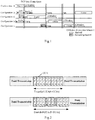
Fig.1 is a schematic diagram of a WiFi system preempting a resource in an unlicensed spectrum in the background; -
Fig.2 is a schematic diagram of a channel access mechanism for LBE option B in the background; -
Fig.3 is a schematic flow chart of a method for transmitting a PDCCH/ePDCCH by a terminal according to an embodiment of the invention; -
Fig.4 is a schematic flow chart of a method for transmitting a PDCCH/ePDCCH by a base station according to an embodiment of the invention; -
Fig.5 is a schematic diagram of transmitting a PDCCH/ePDCCH in a partial sub-frame structure according to an embodiment of the invention; -
Fig.6 is a schematic diagram of transmitting a PDCCH/ePDCCH in a floating sub-frame structure according to an embodiment of the invention; -
Fig.7 is a schematic structural diagram of a terminal according to an embodiment of the invention; -
Fig.8 is a schematic structural diagram of a base station according to an embodiment of the invention; -
Fig.9 is a schematic structural diagram of another UE according to an embodiment of the invention; and -
Fig.10 is a schematic structural diagram of another base station according to an embodiment of the invention. - In order to make the objects, technical solutions and advantages more apparent, the invention will be described below in further details, and apparently the embodiments as described are merely a part but not all of the embodiments of the invention. All the other embodiments which can occur to those ordinarily skilled in the art from the embodiments here of the invention without any inventive effort shall fall into the scope of the invention as claimed.
- In the following description, an implementation with cooperation of the network side and the terminal side will be described, but this will not suggest required cooperation of both the sides for an implementation, and in fact, problems existing respectively at the network side and the terminal side will also be addressed in the separate implementations at the network side and the terminal side, although a better technical effect can be achieved in the implementation with cooperation of both the sides.
- In an embodiment of the invention, as illustrated in
Fig.3 , a flow of a method for transmitting a PDCCH/ePDCCH by a terminal can be as follows. - In the
operation 301, the terminal determines a PDCCH/ePDCCH, to carry DCI, in a radio frame in an unlicensed frequency band according to each candidate temporal position in a set of candidate temporal positions, and a set of candidate PDCCH/ePDCCH resource positions corresponding to the each candidate temporal position. - Where the set of candidate temporal positions includes a plurality of candidate temporal positions and each candidate temporal position specifies start time at which a base station can transmit the PDCCH/ePDCCH in the radio frame in the unlicensed frequency band. That is, the set of candidate temporal positions specifies a set of start time at which the base station can transmit the PDCCH/ePDCCH in the radio frame in the unlicensed frequency band.
- In an implementation, respective candidate temporal positions in the set of candidate temporal positions may be consecutive OFDM symbols or discrete OFDM symbols, and the candidate temporal positions may be any positions in the radio sub-frame, which are allowed in a protocol.
- For example, the set of candidate temporal positions is {2, 4}, that is, the base station can transmit DCI at a start position of the PDCCH/ePDCCH, which is the second OFDM symbol or the fourth OFDM symbol in the radio sub-frame, and it shall be noted that this has been described only by way of an example, but there may be a number of instances for the set of candidate temporal positions, which will not be enumerated here.
- In an implementation, the set of candidate temporal positions, and the set of candidate PDCCH/ePDCCH resource positions corresponding to each candidate temporal position can be obtained in the following two approaches.
- In a first approach, the terminal receives the set of candidate temporal positions, and sets of candidate PDCCH/ePDCCH resource positions corresponding respectively to respective candidate temporal positions in the set of candidate temporal positions, transmitted by the base station.
- In an implementation, the terminal receives the set of candidate temporal positions, and the sets of candidate PDCCH/ePDCCH resource positions corresponding respectively to the respective candidate temporal positions in the set of candidate temporal positions, transmitted by the base station in a licensed frequency band.
- In a second approach, the set of candidate temporal positions, and the sets of candidate PDCCH/ePDCCH resource positions corresponding respectively to the respective candidate temporal positions in the set of candidate temporal positions are prescribed between the terminal and the base station.
- For example, the set of candidate temporal positions, and the sets of candidate PDCCH/ePDCCH resource positions corresponding respectively to the respective candidate temporal positions in the set of candidate temporal positions are prescribed between the terminal and the base station in a protocol, or configured respectively on the terminal and the base station.
- In an implementation, the sum of the numbers of candidate PDCCH/ePDCCH resource positions in the respective sets of candidate PDCCH/ePDCCH resource positions corresponding respectively to the respective candidate temporal positions in the set of candidate temporal positions is not greater than a preset value.
- In a particular implementation, the preset value can be determined as a result of simulation of a system, and according to the complexity of the corresponding system, or the preset value can be determined according to the number of all the possible candidate PDCCH/ePDCCH resource positions at respective aggregation levels, for example, the preset value is less than or equal to the total sum of the respective numbers of possible candidate PDCCH/ePDCCH resource positions at the respective aggregation levels.
- In an implementation, there may or may not be the same number of candidate PDCCH/ePDCCH resource positions in respective sets of candidate PDCCH/ePDCCH resource positions corresponding respectively to respective candidate temporal positions in the set of candidate temporal positions.
- In an implementation, the terminal performs the following process for each candidate temporal position in the set of candidate temporal positions: the terminal detects blindly at each candidate PDCCH/ePDCCH resource position in the set of candidate PDCCH/ePDCCH resource positions corresponding to the candidate temporal position until the PDCCH/ePDCCH carrying the downlink control information is detected.
- In a practical application, the terminal detects blindly at each candidate PDCCH/ePDCCH resource position for a number of times determined according to the number of possible lengths of DCI formats, for example, if there are two DCI formats with different lengths, then the terminal will blindly detect twice at each candidate PDCCH/ePDCCH resource position.
- In the
operation 302, the terminal receives the DCI in the determined PDCCH/ePDCCH. - Based upon the same inventive concept, an embodiment of the invention provides a corresponding solution at the base station side, and as illustrated in
Fig.4 , a flow of a method for transmitting a PDCCH/ePDCCH by a base station is as follows. - In the
operation 401, the base station determines a candidate temporal position at which a PDCCH/ePDCCH is transmitted in an unlicensed frequency band, according to a set of candidate temporal positions, where each candidate temporal position in the set of candidate temporal positions corresponds to a set of candidate PDCCH/ePDCCH resource positions. - Where the set of candidate temporal positions includes a plurality of candidate temporal positions, and each candidate temporal position specifies start time at which the base station can transmit a PDCCH/ePDCCH in a radio frame in the unlicensed frequency band, that is, the set of candidate temporal positions specifies a set of start time at which the base station can transmit the PDCCH/ePDCCH in the radio frame in the unlicensed frequency band.
- In an implementation, the respective candidate temporal positions in the set of candidate temporal positions may be consecutive OFDM symbols or discrete OFDM symbols, and the candidate temporal positions may be any positions in the radio sub-frame, which are allowed in a protocol.
- In an implementation, the base station determines the candidate temporal position at which the PDCCH/ePDCCH is transmitted in the unlicensed frequency band, according to the set of candidate temporal positions in the following two approaches without any limitation thereto.
- In a first approach, the base station selects a candidate temporal position from the set of candidate temporal positions according to a start temporal position at which a channel is accessed, after accessing the channel in the unlicensed frequency band, where the PDCCH/ePDCCH is to be transmitted at the selected candidate temporal position.
- In a second approach, the base station selects a candidate temporal position from the set of candidate temporal positions, determines the start temporal position at which the channel is accessed in the unlicensed frequency band, according to the selected candidate temporal position, and determines that the PDCCH/ePDCCH is to be transmitted at the selected candidate temporal position.
- In a particular implementation, when the base station accesses a channel in the unlicensed frequency band through LBT, it selects only some candidate temporal position in the set of candidate temporal positions as a start position at which the channel is accessed; or when the base station accesses a channel in the unlicensed frequency band through LBT, it selects a non-boundary position of a preceding OFDM symbol to an OFDM symbol, where some candidate temporal position in the set of candidate temporal positions is located, to access the channel, where a reservation signal can be transmitted in a set of positions starting with the non-boundary position of the preceding OFDM symbol until the boundary between the preceding OFDM symbol, and the succeeding OFDM symbol to the preceding OFDM symbol. For example, if the set of candidate temporal positions is {2, 4}, then the base station will access the PDCCH/ePDCCH, and transmit the DCI only in the second OFDM symbol or the fourth OFDM symbol in the radio sub-frame in the unlicensed frequency band.
- In an implementation, the set of candidate temporal positions, and the set of candidate PDCCH/ePDCCH resource positions corresponding to each candidate temporal position can be obtained in the following two approaches.
- In a first approach, the set of candidate temporal positions, and sets of candidate PDCCH/ePDCCH resource positions corresponding respectively to the respective candidate temporal positions in the set of candidate temporal positions are prescribed between the base station and the terminal.
- In a second approach, before the base station determines the start position at which the channel is accessed in the radio frame in the unlicensed frequency band according to the set of candidate temporal positions, the base station determines the set of candidate temporal positions, and allocates, for the respective candidate temporal positions in the set of candidate temporal positions, their corresponding sets of candidate PDCCH/ePDCCH resource positions.
- In the second approach, after the base station determines the set of candidate temporal positions, and allocates, for the respective candidate temporal positions in the set of candidate temporal positions, their corresponding sets of candidate PDCCH/ePDCCH resource positions, it transmits the set of candidate temporal positions, and the sets of candidate PDCCH/ePDCCH resource positions corresponding respectively to the respective candidate temporal positions in the set of candidate temporal positions to the terminal.
- In a particular implementation, the base station transmits the set of candidate temporal positions, and the sets of candidate PDCCH/ePDCCH resource positions corresponding respectively to the respective candidate temporal positions in the set of candidate temporal positions to the terminal in a licensed frequency band.
- In an implementation, the sum of the numbers of candidate PDCCH/ePDCCH resource positions in the respective sets of candidate PDCCH/ePDCCH resource positions corresponding respectively to the respective candidate temporal positions in the set of candidate temporal positions is not greater than a preset value. The number of candidate PDCCH/ePDCCH resource positions corresponding to each candidate temporal position is limited, so that the number of times for which the terminal detects blindly can be limited to thereby lower the complexity of blind detection, and an overhead.
- In an implementation, there may or may not be the same number of candidate PDCCH/ePDCCH resource positions in respective sets of candidate PDCCH/ePDCCH resource positions corresponding respectively to respective candidate temporal positions in the set of candidate temporal positions.
- In the
operation 402, the base station selects a candidate PDCCH/ePDCCH resource position from a set of candidate PDCCH/ePDCCH resource positions corresponding to the determined candidate temporal position, and transmits the PDCCH/ePDCCH at the determined candidate temporal position in the radio frame according to the selected candidate PDCCH/ePDCCH resource position. - In a particular implementation, since a conclusion in the ongoing 3GPP study is that broadcast information or the like is not transmitted over an unlicensed carrier, so there is no common search space for a PDCCH/ePDCCH over the unlicensed carrier, and if the existing LTE protocol is still applied, that is, there are two DCI formats with different lengths, then the terminal will detect blindly in a specific search space for not greater than 32 times, that is, the sum of the numbers of time for which the terminal detects blindly at the candidate PDCCH/ePDCCH resource positions corresponding to the respective candidate temporal positions in the set of candidate temporal positions is not greater than 32 times. Table 2 depicts a relationship between the numbers of members in respective sets of candidate PDCCH/ePDCCH resource positions corresponding respectively to respective candidate temporal positions, and the numbers of times, for which the terminal detects blindly, corresponding to the respective candidate temporal positions, at respective aggregation levels in the case that there are two candidate temporal positions.
Table 2 Type of search space CCE aggregation level The number of times for which the terminal detects blindly The number of members in a set of candidate PDCCH/ePDCCH resource positions Total number Position 1 Position 2Position 1Position 2UE specific 1 12 6 6 3 3 2 12 6 6 3 3 4 4 2 2 2 2 8 4 2 2 2 2 - In a particular embodiment,
Fig.5 illustrates a schematic structural diagram of transmitting a control channel in a partial sub-frame structure with an TTI less than 1ms, where the base station transmits a PDCCH/ePDCCH and a PDSCH after accessing the channel at some candidate temporal position in the radio sub-frame n, and the terminal detects blindly at respective candidate PDCCH/ePDCCH resource positions corresponding to the candidate temporal position until the PDCCH/ePDCCH is parsed correctly, and then the terminal can determine a start position of the PDSCH to thereby decode the PDSCH in the partial sub-frame. - In another particular embodiment,
Fig.6 illustrates a schematic structural diagram of transmitting a control channel in a floating sub-frame structure with an TTI equal to 1ms, where the base station transmits a PDCCH/ePDCCH and a PDSCH after accessing the channel at some candidate temporal position in the radio sub-frame n, and the terminal detects blindly at respective candidate PDCCH/ePDCCH resource positions corresponding to the candidate temporal position until the PDCCH/ePDCCH is parsed correctly, and then the terminal can determine a start position of the PDSCH to thereby decode the TTI with the length of 1ms in the radio sub-frame n and the radiosub-frame n+ 1. - Based upon the same inventive concept, an embodiment of the invention further provides a terminal, and reference can be made to the description of the embodiment of the method above for a particular implementation of the terminal, so a repeated description thereof will be omitted; and as illustrated in
Fig.7 , the terminal generally includes following modules. - A determining
module 701, configured to determine a PDCCH/ePDCCH, to carry DCI, in a radio frame in an unlicensed frequency band according to each candidate temporal position in a set of candidate temporal positions, and a set of candidate PDCCH/ePDCCH resource positions corresponding to the each candidate temporal position. - A receiving
module 702, configured to receive the downlink control information in the determined PDCCH/ePDCCH. - In a particular implementation, the receiving
module 702 is further configured to: receive the set of candidate temporal positions, and sets of candidate PDCCH/ePDCCH resource positions corresponding respectively to respective candidate temporal positions in the set of candidate temporal positions, transmitted by a base station. - In another particular implementation, the set of candidate temporal positions, and the sets of candidate PDCCH/ePDCCH resource positions corresponding respectively to the respective candidate temporal positions in the set of candidate temporal positions are prescribed between the terminal and a base station.
- Particularly the determining
module 701 is configured to: detect blindly at each candidate PDCCH/ePDCCH resource position in each set of candidate PDCCH/ePDCCH resource positions, so as to determine the PDCCH/ePDCCH, to carry the DCI, in the radio frame. - In an implementation, the sum of the numbers of candidate PDCCH/ePDCCH resource positions in respective sets of candidate PDCCH/ePDCCH resource positions corresponding respectively to the respective candidate temporal positions in the set of candidate temporal positions is not greater than a preset value.
- Based upon the same inventive concept, an embodiment of the invention further provides a base station, and reference can be made to the description of the embodiment of the method above for a particular implementation of the base station, so a repeated description thereof will be omitted; and as illustrated in
Fig.8 , the base station generally includes following modules. - A
first processing module 801, configured to determine a candidate temporal position at which a PDCCH/ePDCCH is transmitted in an unlicensed frequency band, according to a set of candidate temporal positions, where each candidate temporal position in the set of candidate temporal positions corresponds to a set of candidate PDCCH/ePDCCH resource positions. - A
second processing module 802, configured to select a candidate PDCCH/ePDCCH resource position from a set of candidate PDCCH/ePDCCH resource positions corresponding to the determined candidate temporal position, and to transmit the PDCCH/ePDCCH at the determined candidate temporal position in the radio frame according to the selected candidate PDCCH/ePDCCH resource position. - In an implementation, the
first processing module 801 is configured to: select a candidate temporal position from the set of candidate temporal positions according to a start temporal position at which a channel is accessed, after accessing the channel in the unlicensed frequency band, where the PDCCH/ePDCCH is to be transmitted at the selected candidate temporal position; or select a candidate temporal position from the set of candidate temporal positions, to determine the start temporal position at which the channel is accessed in the unlicensed frequency band, according to the selected candidate temporal position, and to determine that the PDCCH/ePDCCH is to be transmitted at the selected candidate temporal position. - In a particular implementation, the set of candidate temporal positions, and sets of candidate PDCCH/ePDCCH resource positions corresponding respectively to respective candidate temporal positions in the set of candidate temporal positions are prescribed between the base station and a terminal.
- In another particular implementation, the
first processing module 801 is further configured to: before the candidate temporal position at which the PDCCH/ePDCCH is transmitted in the unlicensed frequency band is determined according to the set of candidate temporal positions, determine the set of candidate temporal positions, and allocate, for the respective candidate temporal positions in the set of candidate temporal positions, their corresponding sets of candidate PDCCH/ePDCCH resource positions. - In a particular implementation, the base station further includes a
transmitting module 803 configured to: transmit the set of candidate temporal positions, and the sets of candidate PDCCH/ePDCCH resource positions corresponding respectively to the respective candidate temporal positions in the set of candidate temporal positions to the terminal. - In an implementation, the sum of the numbers of candidate PDCCH/ePDCCH resource positions in the respective sets of candidate PDCCH/ePDCCH resource positions corresponding respectively to the respective candidate temporal positions in the set of candidate temporal positions is not greater than a preset value.
- Based upon the same inventive concept, an embodiment of the invention further provides another terminal, and reference can be made to the description of the embodiment of the method above for a particular implementation of the terminal, so a repeated description thereof will be omitted; and as illustrated in
Fig.9 , the terminal generally includes aprocessor 901, a memory 902, and atransceiver 903, where thetransceiver 903 is configured to be controlled by theprocessor 901 to receive and transmit data, preset programs are stored in the memory 902, and theprocessor 901 is configured to read and execute the programs in the memory 902 to: determine a PDCCH/ePDCCH, to carry DCI, in a radio frame in an unlicensed frequency band according to each candidate temporal position in a set of candidate temporal positions, and a set of candidate PDCCH/ePDCCH resource positions corresponding to the each candidate temporal position; and instruct thetransceiver 903 to receive the downlink control information in the determined PDCCH/ePDCCH. - In a particular implementation, the
processor 901 is further configured to receive the set of candidate temporal positions, and sets of candidate PDCCH/ePDCCH resource positions corresponding respectively to respective candidate temporal positions in the set of candidate temporal positions, transmitted by a base station through thetransceiver 903. - In another particular implementation, the set of candidate temporal positions, and the sets of candidate PDCCH/ePDCCH resource positions corresponding respectively to the respective candidate temporal positions in the set of candidate temporal positions are prescribed between the terminal and the base station.
- Particularly the
processor 901 is configured to detect blindly at each candidate PDCCH/ePDCCH resource position in each set of candidate PDCCH/ePDCCH resource positions, so as to determine the PDCCH/ePDCCH, to carry the DCI, in the radio frame. - In an implementation, the sum of the numbers of candidate PDCCH/ePDCCH resource positions in respective sets of candidate PDCCH/ePDCCH resource positions corresponding respectively to the respective candidate temporal positions in the set of candidate temporal positions is not greater than a preset value.
- Here the bus architecture can include any number of interconnecting buses and bridges to particularly link together various circuits including one or more processors represented by the processor, and one or more memories represented by the memory. The bus architecture can further link together various other circuits, e.g., peripheral devices, manostats, power management circuits, etc., all of which are well known in the art, so a further description thereof will be omitted in this context. The bus interface serves as an interface. The transceiver can be a number of elements including a transmitter and a receiver, which are units for communication with various other devices over a transmission medium. The processor is responsible for managing the bus architecture and performing normal processes, and the memory can store data for use by the processor in performing the operations.
- Based upon the same inventive concept, an embodiment of the invention further provides another base station, and reference can be made to the description of the embodiment of the method above for a particular implementation of the base station, so a repeated description thereof will be omitted; and as illustrated in
Fig.10 , the base station generally includes aprocessor 1001, amemory 1002, and atransceiver 1003, where thetransceiver 1003 is configured to be controlled by theprocessor 1001 to receive and transmit data, preset programs are stored in thememory 1002, and theprocessor 1001 is configured to read and execute the programs in thememory 1002 to: determine a candidate temporal position at which a PDCCH/ePDCCH is transmitted in an unlicensed frequency band, according to a set of candidate temporal positions, where each candidate temporal position in the set of candidate temporal positions corresponds to a set of candidate PDCCH/ePDCCH resource positions; and select a candidate PDCCH/ePDCCH resource position from the set of candidate PDCCH/ePDCCH resource positions corresponding to the determined candidate temporal position, and to transmit the PDCCH/ePDCCH at the determined candidate temporal position in the radio frame according to the selected candidate PDCCH/ePDCCH resource position. - In an implementation, the
processor 1001 is configured to select a candidate temporal position from the set of candidate temporal positions according to a start temporal position at which a channel is accessed, after accessing the channel in the unlicensed frequency band, where the PDCCH/ePDCCH is to be transmitted at the selected candidate temporal position; or theprocessor 1001 is configured to select a candidate temporal position from the set of candidate temporal positions, to determine the start temporal position at which the channel is accessed in the unlicensed frequency band, according to the selected candidate temporal position, and to determine that the PDCCH/ePDCCH is to be transmitted at the selected candidate temporal position. - In a particular implementation, the set of candidate temporal positions, and sets of candidate PDCCH/ePDCCH resource positions corresponding respectively to respective candidate temporal positions in the set of candidate temporal positions are prescribed between the base station and a terminal.
- In another particular implementation, the
processor 1001 is further configured, before the candidate temporal position at which the PDCCH/ePDCCH is transmitted in the unlicensed frequency band is determined according to the set of candidate temporal positions, to determine the set of candidate temporal positions, and to allocate, for the respective candidate temporal positions in the set of candidate temporal positions, their corresponding sets of candidate PDCCH/ePDCCH resource positions. - In a particular implementation, the
processor 1001 is further configured to transmit the set of candidate temporal positions, and the sets of candidate PDCCH/ePDCCH resource positions corresponding respectively to the respective candidate temporal positions in the set of candidate temporal positions to the terminal through thetransceiver 1003. - In an implementation, the sum of the numbers of candidate PDCCH/ePDCCH resource positions in the respective sets of candidate PDCCH/ePDCCH resource positions corresponding respectively to the respective candidate temporal positions in the set of candidate temporal positions is not greater than a preset value.
- Here the bus architecture can include any number of interconnecting buses and bridges to particularly link together various circuits including one or more processors represented by the processor, and one or more memories represented by the memory. The bus architecture can further link together various other circuits, e.g., peripheral devices, manostats, power management circuits, etc., all of which are well known in the art, so a further description thereof will be omitted in this context. The bus interface serves as an interface. The transceiver can be a number of elements including a transmitter and a receiver, which are units for communication with various other devices over a transmission medium. The processor is responsible for managing the bus architecture and performing normal processes, and the memory can store data for use by the processor in performing the operations.
- With the technical solutions, in the embodiments of the invention, the base station and the terminal prescribe the set of candidate temporal positions at which the PDCCH is transmitted in the unlicensed frequency band, and the sets of candidate PDCCH/ePDCCH resource positions corresponding respectively to the respective candidate temporal positions in the set of candidate temporal positions, and the base station transmits the PDCCH at a prescribed candidate temporal position, and candidate PDCCH/ePDCCH resource positions corresponding to the prescribed candidate temporal position; and the terminal detects blindly the PDCCH/ePDCCH at prescribed candidate temporal positions, and candidate PDCCH/ePDCCH resource positions corresponding to the prescribed candidate temporal positions, so that a start position of the PDSCH can be determined according to the detected PDCCH without transmitting any initial signal or any signaling indicating the start position of the PDSCH.
- Those skilled in the art shall appreciate that the embodiments of the invention can be embodied as a method, a system or a computer program product. Therefore the invention can be embodied in the form of an all-hardware embodiment, an all-software embodiment or an embodiment of software and hardware in combination. Furthermore the invention can be embodied in the form of a computer program product embodied in one or more computer useable storage mediums (including but not limited to a disk memory, an optical memory, etc.) in which computer useable program codes are contained.
- The invention has been described in a flow chart and/or a block diagram of the method, the device (system) and the computer program product according to the embodiments of the invention. It shall be appreciated that respective flows and/or blocks in the flow chart and/or the block diagram and combinations of the flows and/or the blocks in the flow chart and/or the block diagram can be embodied in computer program instructions. These computer program instructions can be loaded onto a general-purpose computer, a specific-purpose computer, an embedded processor or a processor of another programmable data processing device to produce a machine so that the instructions executed on the computer or the processor of the other programmable data processing device create means for performing the functions specified in the flow(s) of the flow chart and/or the block(s) of the block diagram.
- These computer program instructions can also be stored into a computer readable memory capable of directing the computer or the other programmable data processing device to operate in a specific manner so that the instructions stored in the computer readable memory create an article of manufacture including instruction means which perform the functions specified in the flow(s) of the flow chart and/or the block(s) of the block diagram.
- These computer program instructions can also be loaded onto the computer or the other programmable data processing device so that a series of operational operations are performed on the computer or the other programmable data processing device to create a computer implemented process so that the instructions executed on the computer or the other programmable device provide operations for performing the functions specified in the flow(s) of the flow chart and/or the block(s) of the block diagram.
- Evidently those skilled in the art can make various modifications and variations to the invention without departing from the spirit and scope of the invention. Thus the invention is also intended to encompass these modifications and variations thereto so long as the modifications and variations come into the scope of the claims appended to the invention and their equivalents.
Claims (20)
- A method for transmitting a physical downlink control channel, the method comprising:determining, by a terminal, a Physical Downlink Control Channel/enhanced Physical Downlink Control Channel, PDCCH/ePDCCH, to carry Downlink Control Information, DCI, in a radio frame in an unlicensed frequency band according to each candidate temporal position in a set of candidate temporal positions, and a set of candidate PDCCH/ePDCCH resource positions corresponding to the each candidate temporal position; andreceiving, by the terminal, the DCI in the determined PDCCH/ePDCCH.
- The method according to claim 1, wherein the set of candidate temporal positions, and sets of candidate PDCCH/ePDCCH resource positions corresponding respectively to respective candidate temporal positions in the set of candidate temporal positions are notified by a base station to the terminal, or prescribed between the terminal and the base station.
- The method according to claim 1, wherein determining, by the terminal, the PDCCH/ePDCCH, to carry the DCI, in the radio frame according to the each candidate temporal position, and the set of candidate PDCCH/ePDCCH resource positions corresponding to the each candidate temporal position comprises:
detecting, by the terminal, blindly at each candidate PDCCH/ePDCCH resource position in each set of candidate PDCCH/ePDCCH resource positions, so as to determine the PDCCH/ePDCCH, to carry the DCI, in the radio frame. - The method according to any one of claims 1 to 3, wherein a sum of numbers of candidate PDCCH/ePDCCH resource positions in respective sets of candidate PDCCH/ePDCCH resource positions corresponding respectively to respective candidate temporal positions in the set of candidate temporal positions is not greater than a preset value.
- A method for transmitting a physical downlink control channel, the method comprising:determining, by a base station, a candidate temporal position at which a Physical Downlink Control Channel/enhanced Physical Downlink Control Channel, PDCCH/ePDCCH, is transmitted in an unlicensed frequency band, according to a set of candidate temporal positions, wherein each candidate temporal position in the set of candidate temporal positions corresponds to a set of candidate PDCCH/ePDCCH resource positions; andselecting, by the base station, a candidate PDCCH/ePDCCH resource position from a set of candidate PDCCH/ePDCCH resource positions corresponding to the determined candidate temporal position, and transmitting the PDCCH/ePDCCH at the determined candidate temporal position in the radio frame according to the selected candidate PDCCH/ePDCCH resource position.
- The method according to claim 5, wherein determining, by the base station, the candidate temporal position at which the PDCCH/ePDCCH is transmitted in the unlicensed frequency band, according to the set of candidate temporal positions comprises:selecting, by the base station, a candidate temporal position from the set of candidate temporal positions according to a start temporal position at which a channel is accessed, after accessing the channel in the unlicensed frequency band, wherein the PDCCH/ePDCCH is to be transmitted at the selected candidate temporal position; orselecting, by the base station, a candidate temporal position from the set of candidate temporal positions, determining the start temporal position at which the channel is accessed in the unlicensed frequency band, according to the selected candidate temporal position, and determining that the PDCCH/ePDCCH is to be transmitted at the selected candidate temporal position.
- The method according to claim 6, wherein the set of candidate temporal positions, and sets of candidate PDCCH/ePDCCH resource positions corresponding respectively to respective candidate temporal positions in the set of candidate temporal positions are prescribed between the base station and a terminal, or determined by the base station.
- The method according to claim 7, wherein after the base station determines the set of candidate temporal positions, and allocates, for the respective candidate temporal positions in the set of candidate temporal positions, their corresponding sets of candidate PDCCH/ePDCCH resource positions, the method further comprises:
transmitting, by the base station, the set of candidate temporal positions, and the sets of candidate PDCCH/ePDCCH resource positions corresponding respectively to the respective candidate temporal positions in the set of candidate temporal positions to the terminal. - The method according to any one of claims 5 to 8, wherein a sum of numbers of candidate PDCCH/ePDCCH resource positions in respective sets of candidate PDCCH/ePDCCH resource positions corresponding respectively to respective candidate temporal positions in the set of candidate temporal positions is not greater than a preset value.
- A terminal, comprising:a determining module configured to determine a Physical Downlink Control Channel/enhanced Physical Downlink Control Channel, PDCCH/ePDCCH, to carry Downlink Control Information, DCI, in a radio frame in an unlicensed frequency band according to each candidate temporal position in a set of candidate temporal positions, and a set of candidate PDCCH/ePDCCH resource positions corresponding to the each candidate temporal position; anda receiving module configured to receive the DCI in the determined PDCCH/ePDCCH.
- The terminal according to claim 10, wherein the receiving module is further configured to:
receive the set of candidate temporal positions, and sets of candidate PDCCH/ePDCCH resource positions corresponding respectively to respective candidate temporal positions in the set of candidate temporal positions, transmitted by a base station. - The terminal according to claim 10, wherein the set of candidate temporal positions, and sets of candidate PDCCH/ePDCCH resource positions corresponding respectively to respective candidate temporal positions in the set of candidate temporal positions are prescribed between the terminal and a base station.
- The terminal according to claim 10, wherein the determining module is configured to:
detect blindly at each candidate PDCCH/ePDCCH resource position in each set of candidate PDCCH/ePDCCH resource positions, so as to determine the PDCCH/ePDCCH, to carry the DCI, in the radio frame. - The terminal according to any one of claims 10 to 13, wherein a sum of numbers of candidate PDCCH/ePDCCH resource positions in respective sets of candidate PDCCH/ePDCCH resource positions corresponding respectively to respective candidate temporal positions in the set of candidate temporal positions is not greater than a preset value.
- Abase station, comprising:a first processing module configured to determine a candidate temporal position at which a Physical Downlink Control Channel/enhanced Physical Downlink Control Channel, PDCCH/ePDCCH, is transmitted in an unlicensed frequency band, according to a set of candidate temporal positions, wherein each candidate temporal position in the set of candidate temporal positions corresponds to a set of candidate PDCCH/ePDCCH resource positions; anda second processing module configured to select a candidate PDCCH/ePDCCH resource position from a set of candidate PDCCH/ePDCCH resource positions corresponding to the determined candidate temporal position, and to transmit the PDCCH/ePDCCH at the determined candidate temporal position in the radio frame according to the selected candidate PDCCH/ePDCCH resource position.
- The base station according to claim 15, wherein the first processing module is configured to:select a candidate temporal position from the set of candidate temporal positions according to a start temporal position at which a channel is accessed, after accessing the channel in the unlicensed frequency band, wherein the PDCCH/ePDCCH is to be transmitted at the selected candidate temporal position; orselect a candidate temporal position from the set of candidate temporal positions, to determine the start temporal position at which the channel is accessed in the unlicensed frequency band, according to the selected candidate temporal position, and to determine that the PDCCH/ePDCCH is to be transmitted at the selected candidate temporal position.
- The base station according to claim 16, wherein the set of candidate temporal positions, and sets of candidate PDCCH/ePDCCH resource positions corresponding respectively to respective candidate temporal positions in the set of candidate temporal positions are prescribed between the base station and a terminal.
- The base station according to claim 16, wherein the first processing module is further configured to:
before the candidate temporal position at which the PDCCH/ePDCCH is transmitted in the unlicensed frequency band is determined according to the set of candidate temporal positions, determine the set of candidate temporal positions, and allocate, for respective candidate temporal positions in the set of candidate temporal positions, their corresponding sets of candidate PDCCH/ePDCCH resource positions. - The base station according to claim 18, wherein the base station further comprises a transmitting module configured to:
transmit the set of candidate temporal positions, and the sets of candidate PDCCH/ePDCCH resource positions corresponding respectively to the respective candidate temporal positions in the set of candidate temporal positions to a terminal. - The base station according to any one of claims 15 to 19, wherein a sum of numbers of candidate PDCCH/ePDCCH resource positions in respective sets of candidate PDCCH/ePDCCH resource positions corresponding respectively to respective candidate temporal positions in the set of candidate temporal positions is not greater than a preset value.
Applications Claiming Priority (2)
| Application Number | Priority Date | Filing Date | Title |
|---|---|---|---|
| CN201510580546.3A CN106535333B (en) | 2015-09-11 | 2015-09-11 | A kind of physical downlink control channel transmission method and device |
| PCT/CN2016/093232 WO2017041601A1 (en) | 2015-09-11 | 2016-08-04 | Physical downlink control channel transmission method and apparatus |
Publications (3)
| Publication Number | Publication Date |
|---|---|
| EP3349524A1 true EP3349524A1 (en) | 2018-07-18 |
| EP3349524A4 EP3349524A4 (en) | 2018-08-15 |
| EP3349524B1 EP3349524B1 (en) | 2020-09-30 |
Family
ID=58240576
Family Applications (1)
| Application Number | Title | Priority Date | Filing Date |
|---|---|---|---|
| EP16843539.4A Active EP3349524B1 (en) | 2015-09-11 | 2016-08-04 | Physical downlink control channel transmission method and apparatus |
Country Status (6)
| Country | Link |
|---|---|
| US (1) | US10292149B2 (en) |
| EP (1) | EP3349524B1 (en) |
| JP (1) | JP6535813B2 (en) |
| KR (1) | KR102032884B1 (en) |
| CN (1) | CN106535333B (en) |
| WO (1) | WO2017041601A1 (en) |
Cited By (1)
| Publication number | Priority date | Publication date | Assignee | Title |
|---|---|---|---|---|
| US11758568B2 (en) | 2017-08-10 | 2023-09-12 | Guangdong Oppo Mobile Telecommunications Corp., Ltd. | Method and device for transmitting physical downlink control channel based on configuration information |
Families Citing this family (14)
| Publication number | Priority date | Publication date | Assignee | Title |
|---|---|---|---|---|
| MX2018013638A (en) | 2016-05-11 | 2019-03-01 | Ericsson Telefon Ab L M | Method and apparatus for control signal transmission. |
| US11601820B2 (en) | 2017-01-27 | 2023-03-07 | Qualcomm Incorporated | Broadcast control channel for shared spectrum |
| US10257831B2 (en) * | 2017-03-01 | 2019-04-09 | Alcatel Lucent | Adaptive allocation of temporal resources for massive multiple-input-multiple-output (MIMO) in unlicensed frequency bands |
| US10069575B1 (en) | 2017-03-01 | 2018-09-04 | Alcatel Lucent | Dynamic interference suppression for massive multiple-input-multiple-output (MIMO) in unlicensed frequency bands |
| CN107124753B (en) * | 2017-07-01 | 2020-06-02 | 国仪行云(合肥)教育科技有限公司 | Bidirectional communication method for wireless terminal |
| AU2017426623A1 (en) * | 2017-08-10 | 2020-01-16 | Guangdong Oppo Mobile Telecommunications Corp., Ltd. | Wireless communication method, network device, and terminal device |
| JP2021516894A (en) * | 2018-02-12 | 2021-07-08 | オッポ広東移動通信有限公司Guangdong Oppo Mobile Telecommunications Corp., Ltd. | Channel transmission methods, devices and computer storage media |
| CN110830205B (en) * | 2018-08-10 | 2020-10-09 | 展讯通信(上海)有限公司 | Method and device for monitoring and indicating PDCCH in unlicensed spectrum, storage medium, terminal, and base station |
| WO2020056687A1 (en) * | 2018-09-20 | 2020-03-26 | 北京小米移动软件有限公司 | Control instruction transmission method, base station, terminal, and storage medium |
| JP7379475B2 (en) * | 2018-09-27 | 2023-11-14 | ノキア テクノロジーズ オサケユイチア | Downlink control of unlicensed subbands |
| US11895659B2 (en) | 2018-09-28 | 2024-02-06 | Beijing Xiaomi Mobile Software Co., Ltd. | Control instruction transmission method, base station, terminal and storage medium |
| CN115499928A (en) * | 2019-01-11 | 2022-12-20 | 展讯通信(上海)有限公司 | An initial signal processing method, device and storage medium |
| PL3926995T3 (en) | 2019-03-29 | 2024-02-12 | Guangdong Oppo Mobile Telecommunications Corp., Ltd. | Resource configuration method, device, and storage medium |
| CN115941142A (en) * | 2021-09-30 | 2023-04-07 | 华为技术有限公司 | Communication method and device |
Family Cites Families (19)
| Publication number | Priority date | Publication date | Assignee | Title |
|---|---|---|---|---|
| WO2010053984A2 (en) | 2008-11-04 | 2010-05-14 | Nortel Networks Limited | Providing a downlink control structure in a first carrier to indicate control information in a second, different carrier |
| US9331826B2 (en) * | 2011-04-13 | 2016-05-03 | Lg Electronics Inc. | Method and apparatus for transmitting control information in a wireless communication system |
| EP2728775B1 (en) * | 2011-06-29 | 2021-03-03 | LG Electronics Inc. | Method and apparatus for receiving control information in wireless communication system |
| WO2013006194A1 (en) * | 2011-07-01 | 2013-01-10 | Intel Corporation | Structured codebook for uniform circular array (uca) |
| US8824415B2 (en) | 2011-08-15 | 2014-09-02 | Telefonaktiebolaget L M Ericsson (Publ) | Cross-scheduled random access order transmitting and receiving methods, devices and systems |
| WO2013027926A1 (en) * | 2011-08-19 | 2013-02-28 | 엘지전자 주식회사 | Method for base station transmitting downlink control channel in wireless communication system and apparatus for same |
| US9661621B2 (en) * | 2011-09-27 | 2017-05-23 | Lg Electronics Inc. | Method and device for obtaining control information in a wireless communication system |
| WO2013048567A1 (en) * | 2011-09-30 | 2013-04-04 | Intel Corporation | Methods to transport internet traffic over multiple wireless networks simultaneously |
| US9113463B2 (en) * | 2011-11-04 | 2015-08-18 | Qualcomm Incorporated | Resource management for enhanced PDCCH |
| CN102546134B (en) * | 2011-12-29 | 2015-07-22 | 电信科学技术研究院 | Method and device used for transmitting feedback information and based on enhanced PHICH (Physical HARQ Indicator Channel) |
| CN103249087B (en) * | 2012-02-10 | 2016-08-10 | 华为技术有限公司 | A kind of control channel resource transmission method, base station and subscriber equipment |
| WO2013131268A1 (en) * | 2012-03-08 | 2013-09-12 | Renesas Mobile Corporation | Apparatus and methods for pdcch reliability improvement to handle dl cc broken in unlicensed band |
| US9526091B2 (en) * | 2012-03-16 | 2016-12-20 | Intel Corporation | Method and apparatus for coordination of self-optimization functions in a wireless network |
| CN103312649B (en) * | 2012-03-16 | 2015-08-19 | 华为终端有限公司 | Transmit the method for Downlink Control Information, base station and subscriber equipment |
| US9544876B2 (en) * | 2012-03-16 | 2017-01-10 | Intel Corporation | Downlink control information (DCI) validation for enhanced physical downlink control channel (ePDCCH) |
| US9198181B2 (en) | 2012-03-19 | 2015-11-24 | Blackberry Limited | Enhanced common downlink control channels |
| US9445409B2 (en) * | 2012-03-21 | 2016-09-13 | Mediatek, Inc. | Method for search space configuration of enhanced physical downlink control channel |
| CN103716841A (en) * | 2012-09-29 | 2014-04-09 | 中兴通讯股份有限公司 | Information transmission method and device |
| CN111294190B (en) * | 2013-07-16 | 2024-01-19 | 华为技术有限公司 | Control information transmission method, user equipment and base station |
-
2015
- 2015-09-11 CN CN201510580546.3A patent/CN106535333B/en active Active
-
2016
- 2016-08-04 EP EP16843539.4A patent/EP3349524B1/en active Active
- 2016-08-04 KR KR1020187009822A patent/KR102032884B1/en active Active
- 2016-08-04 WO PCT/CN2016/093232 patent/WO2017041601A1/en not_active Ceased
- 2016-08-04 US US15/759,213 patent/US10292149B2/en active Active
- 2016-08-04 JP JP2018513278A patent/JP6535813B2/en active Active
Cited By (2)
| Publication number | Priority date | Publication date | Assignee | Title |
|---|---|---|---|---|
| US11758568B2 (en) | 2017-08-10 | 2023-09-12 | Guangdong Oppo Mobile Telecommunications Corp., Ltd. | Method and device for transmitting physical downlink control channel based on configuration information |
| US12574950B2 (en) | 2017-08-10 | 2026-03-10 | Guangdong Oppo Mobile Telecommunications Corp., Ltd. | Method for configuring resources for physical downlink control channel transmission, terminal device and network device |
Also Published As
| Publication number | Publication date |
|---|---|
| US20180255534A1 (en) | 2018-09-06 |
| CN106535333A (en) | 2017-03-22 |
| US10292149B2 (en) | 2019-05-14 |
| WO2017041601A1 (en) | 2017-03-16 |
| KR102032884B1 (en) | 2019-10-16 |
| KR20180050390A (en) | 2018-05-14 |
| JP2018530961A (en) | 2018-10-18 |
| JP6535813B2 (en) | 2019-06-26 |
| EP3349524A4 (en) | 2018-08-15 |
| CN106535333B (en) | 2019-12-13 |
| EP3349524B1 (en) | 2020-09-30 |
Similar Documents
| Publication | Publication Date | Title |
|---|---|---|
| US10292149B2 (en) | Physical downlink control channel transmission method and apparatus | |
| EP3355614B1 (en) | Uplink transmission resource scheduling method and device, and uplink transmission method and device | |
| US12185307B2 (en) | Methods and apparatuses for multiple PUSCH transmissions on unlicensed spectrum | |
| US20200037277A1 (en) | Downlink synchronization signal sending method and receiving method and device | |
| WO2020168946A1 (en) | Method for transmitting data and communication apparatus | |
| EP3820187A1 (en) | Unlicensed channel sharing method and device, storage medium, terminal and base station | |
| KR20160054854A (en) | Method for communcation in mobile communication system using unlicensed frequency band and apparatus therefor | |
| US12074811B2 (en) | Method and apparatus for performing fractional subframe transmission | |
| CN111294752A (en) | V2X transmission candidate resource determination method and device, storage medium, and user equipment | |
| WO2017121097A1 (en) | Method and device for indicating uplink subframe over unlicensed spectrum | |
| US10820350B2 (en) | Data transmission method and device | |
| EP3267613A1 (en) | Data transmission method, feedback information transmission method, and related device | |
| WO2016179820A1 (en) | Method for detecting signal of license exempt frequency spectrum channel, user equipment and base station | |
| US20200187204A1 (en) | Improved control channel monitoring | |
| US11611982B2 (en) | Multi-subframe scheduling method, device and terminal | |
| KR20180111921A (en) | Uplink data transmission method and related apparatus | |
| EP3482600B1 (en) | Method for facilitating clear channel assessment and radio unit | |
| CN115004826A (en) | System and method for resource allocation | |
| US10333666B2 (en) | Method and device for transmitting data | |
| WO2021098863A1 (en) | Methods for pdcch monitoring, user equipment, base station, and computer readable media | |
| WO2020118720A1 (en) | Data transmission method and device | |
| US12538352B2 (en) | Communication method and user equipment | |
| CN115152289A (en) | Apparatus and method for wireless channel access | |
| US11632761B2 (en) | Methods and devices of resource mapping for data transmission and of data receiving | |
| EP4618483A1 (en) | Sl communication method and apparatus, and device and storage medium |
Legal Events
| Date | Code | Title | Description |
|---|---|---|---|
| STAA | Information on the status of an ep patent application or granted ep patent |
Free format text: STATUS: THE INTERNATIONAL PUBLICATION HAS BEEN MADE |
|
| PUAI | Public reference made under article 153(3) epc to a published international application that has entered the european phase |
Free format text: ORIGINAL CODE: 0009012 |
|
| STAA | Information on the status of an ep patent application or granted ep patent |
Free format text: STATUS: REQUEST FOR EXAMINATION WAS MADE |
|
| REG | Reference to a national code |
Ref country code: DE Ref legal event code: R079 Ref document number: 602016045153 Country of ref document: DE Free format text: PREVIOUS MAIN CLASS: H04W0072040000 Ipc: H04L0005000000 |
|
| 17P | Request for examination filed |
Effective date: 20180410 |
|
| AK | Designated contracting states |
Kind code of ref document: A1 Designated state(s): AL AT BE BG CH CY CZ DE DK EE ES FI FR GB GR HR HU IE IS IT LI LT LU LV MC MK MT NL NO PL PT RO RS SE SI SK SM TR |
|
| AX | Request for extension of the european patent |
Extension state: BA ME |
|
| A4 | Supplementary search report drawn up and despatched |
Effective date: 20180718 |
|
| RIC1 | Information provided on ipc code assigned before grant |
Ipc: H04W 16/14 20090101ALI20180712BHEP Ipc: H04W 72/04 20090101ALI20180712BHEP Ipc: H04W 74/08 20090101ALI20180712BHEP Ipc: H04L 5/00 20060101AFI20180712BHEP |
|
| DAV | Request for validation of the european patent (deleted) | ||
| DAX | Request for extension of the european patent (deleted) | ||
| GRAP | Despatch of communication of intention to grant a patent |
Free format text: ORIGINAL CODE: EPIDOSNIGR1 |
|
| STAA | Information on the status of an ep patent application or granted ep patent |
Free format text: STATUS: GRANT OF PATENT IS INTENDED |
|
| INTG | Intention to grant announced |
Effective date: 20200515 |
|
| GRAS | Grant fee paid |
Free format text: ORIGINAL CODE: EPIDOSNIGR3 |
|
| GRAA | (expected) grant |
Free format text: ORIGINAL CODE: 0009210 |
|
| STAA | Information on the status of an ep patent application or granted ep patent |
Free format text: STATUS: THE PATENT HAS BEEN GRANTED |
|
| AK | Designated contracting states |
Kind code of ref document: B1 Designated state(s): AL AT BE BG CH CY CZ DE DK EE ES FI FR GB GR HR HU IE IS IT LI LT LU LV MC MK MT NL NO PL PT RO RS SE SI SK SM TR |
|
| REG | Reference to a national code |
Ref country code: CH Ref legal event code: EP Ref country code: GB Ref legal event code: FG4D |
|
| REG | Reference to a national code |
Ref country code: AT Ref legal event code: REF Ref document number: 1319906 Country of ref document: AT Kind code of ref document: T Effective date: 20201015 |
|
| REG | Reference to a national code |
Ref country code: DE Ref legal event code: R096 Ref document number: 602016045153 Country of ref document: DE |
|
| REG | Reference to a national code |
Ref country code: IE Ref legal event code: FG4D |
|
| PG25 | Lapsed in a contracting state [announced via postgrant information from national office to epo] |
Ref country code: FI Free format text: LAPSE BECAUSE OF FAILURE TO SUBMIT A TRANSLATION OF THE DESCRIPTION OR TO PAY THE FEE WITHIN THE PRESCRIBED TIME-LIMIT Effective date: 20200930 Ref country code: NO Free format text: LAPSE BECAUSE OF FAILURE TO SUBMIT A TRANSLATION OF THE DESCRIPTION OR TO PAY THE FEE WITHIN THE PRESCRIBED TIME-LIMIT Effective date: 20201230 Ref country code: GR Free format text: LAPSE BECAUSE OF FAILURE TO SUBMIT A TRANSLATION OF THE DESCRIPTION OR TO PAY THE FEE WITHIN THE PRESCRIBED TIME-LIMIT Effective date: 20201231 Ref country code: SE Free format text: LAPSE BECAUSE OF FAILURE TO SUBMIT A TRANSLATION OF THE DESCRIPTION OR TO PAY THE FEE WITHIN THE PRESCRIBED TIME-LIMIT Effective date: 20200930 Ref country code: BG Free format text: LAPSE BECAUSE OF FAILURE TO SUBMIT A TRANSLATION OF THE DESCRIPTION OR TO PAY THE FEE WITHIN THE PRESCRIBED TIME-LIMIT Effective date: 20201230 Ref country code: HR Free format text: LAPSE BECAUSE OF FAILURE TO SUBMIT A TRANSLATION OF THE DESCRIPTION OR TO PAY THE FEE WITHIN THE PRESCRIBED TIME-LIMIT Effective date: 20200930 |
|
| REG | Reference to a national code |
Ref country code: AT Ref legal event code: MK05 Ref document number: 1319906 Country of ref document: AT Kind code of ref document: T Effective date: 20200930 |
|
| PG25 | Lapsed in a contracting state [announced via postgrant information from national office to epo] |
Ref country code: RS Free format text: LAPSE BECAUSE OF FAILURE TO SUBMIT A TRANSLATION OF THE DESCRIPTION OR TO PAY THE FEE WITHIN THE PRESCRIBED TIME-LIMIT Effective date: 20200930 Ref country code: LV Free format text: LAPSE BECAUSE OF FAILURE TO SUBMIT A TRANSLATION OF THE DESCRIPTION OR TO PAY THE FEE WITHIN THE PRESCRIBED TIME-LIMIT Effective date: 20200930 |
|
| REG | Reference to a national code |
Ref country code: NL Ref legal event code: MP Effective date: 20200930 |
|
| REG | Reference to a national code |
Ref country code: LT Ref legal event code: MG4D |
|
| PG25 | Lapsed in a contracting state [announced via postgrant information from national office to epo] |
Ref country code: EE Free format text: LAPSE BECAUSE OF FAILURE TO SUBMIT A TRANSLATION OF THE DESCRIPTION OR TO PAY THE FEE WITHIN THE PRESCRIBED TIME-LIMIT Effective date: 20200930 Ref country code: SM Free format text: LAPSE BECAUSE OF FAILURE TO SUBMIT A TRANSLATION OF THE DESCRIPTION OR TO PAY THE FEE WITHIN THE PRESCRIBED TIME-LIMIT Effective date: 20200930 Ref country code: CZ Free format text: LAPSE BECAUSE OF FAILURE TO SUBMIT A TRANSLATION OF THE DESCRIPTION OR TO PAY THE FEE WITHIN THE PRESCRIBED TIME-LIMIT Effective date: 20200930 Ref country code: RO Free format text: LAPSE BECAUSE OF FAILURE TO SUBMIT A TRANSLATION OF THE DESCRIPTION OR TO PAY THE FEE WITHIN THE PRESCRIBED TIME-LIMIT Effective date: 20200930 Ref country code: PT Free format text: LAPSE BECAUSE OF FAILURE TO SUBMIT A TRANSLATION OF THE DESCRIPTION OR TO PAY THE FEE WITHIN THE PRESCRIBED TIME-LIMIT Effective date: 20210201 Ref country code: LT Free format text: LAPSE BECAUSE OF FAILURE TO SUBMIT A TRANSLATION OF THE DESCRIPTION OR TO PAY THE FEE WITHIN THE PRESCRIBED TIME-LIMIT Effective date: 20200930 |
|
| PG25 | Lapsed in a contracting state [announced via postgrant information from national office to epo] |
Ref country code: ES Free format text: LAPSE BECAUSE OF FAILURE TO SUBMIT A TRANSLATION OF THE DESCRIPTION OR TO PAY THE FEE WITHIN THE PRESCRIBED TIME-LIMIT Effective date: 20200930 Ref country code: AL Free format text: LAPSE BECAUSE OF FAILURE TO SUBMIT A TRANSLATION OF THE DESCRIPTION OR TO PAY THE FEE WITHIN THE PRESCRIBED TIME-LIMIT Effective date: 20200930 Ref country code: AT Free format text: LAPSE BECAUSE OF FAILURE TO SUBMIT A TRANSLATION OF THE DESCRIPTION OR TO PAY THE FEE WITHIN THE PRESCRIBED TIME-LIMIT Effective date: 20200930 Ref country code: PL Free format text: LAPSE BECAUSE OF FAILURE TO SUBMIT A TRANSLATION OF THE DESCRIPTION OR TO PAY THE FEE WITHIN THE PRESCRIBED TIME-LIMIT Effective date: 20200930 Ref country code: IS Free format text: LAPSE BECAUSE OF FAILURE TO SUBMIT A TRANSLATION OF THE DESCRIPTION OR TO PAY THE FEE WITHIN THE PRESCRIBED TIME-LIMIT Effective date: 20210130 |
|
| PG25 | Lapsed in a contracting state [announced via postgrant information from national office to epo] |
Ref country code: NL Free format text: LAPSE BECAUSE OF FAILURE TO SUBMIT A TRANSLATION OF THE DESCRIPTION OR TO PAY THE FEE WITHIN THE PRESCRIBED TIME-LIMIT Effective date: 20200930 Ref country code: SK Free format text: LAPSE BECAUSE OF FAILURE TO SUBMIT A TRANSLATION OF THE DESCRIPTION OR TO PAY THE FEE WITHIN THE PRESCRIBED TIME-LIMIT Effective date: 20200930 |
|
| REG | Reference to a national code |
Ref country code: DE Ref legal event code: R097 Ref document number: 602016045153 Country of ref document: DE |
|
| PLBE | No opposition filed within time limit |
Free format text: ORIGINAL CODE: 0009261 |
|
| STAA | Information on the status of an ep patent application or granted ep patent |
Free format text: STATUS: NO OPPOSITION FILED WITHIN TIME LIMIT |
|
| REG | Reference to a national code |
Ref country code: DE Ref legal event code: R081 Ref document number: 602016045153 Country of ref document: DE Owner name: DATANG MOBILE COMMUNICATIONS EQUIPMENT CO., LT, CN Free format text: FORMER OWNER: CHINA ACADEMY OF TELECOMMUNICATIONS TECHNOLOGY, BEIJING, CN |
|
| PG25 | Lapsed in a contracting state [announced via postgrant information from national office to epo] |
Ref country code: DK Free format text: LAPSE BECAUSE OF FAILURE TO SUBMIT A TRANSLATION OF THE DESCRIPTION OR TO PAY THE FEE WITHIN THE PRESCRIBED TIME-LIMIT Effective date: 20200930 |
|
| 26N | No opposition filed |
Effective date: 20210701 |
|
| PG25 | Lapsed in a contracting state [announced via postgrant information from national office to epo] |
Ref country code: IT Free format text: LAPSE BECAUSE OF FAILURE TO SUBMIT A TRANSLATION OF THE DESCRIPTION OR TO PAY THE FEE WITHIN THE PRESCRIBED TIME-LIMIT Effective date: 20200930 |
|
| REG | Reference to a national code |
Ref country code: GB Ref legal event code: 732E Free format text: REGISTERED BETWEEN 20211007 AND 20211013 |
|
| PG25 | Lapsed in a contracting state [announced via postgrant information from national office to epo] |
Ref country code: SI Free format text: LAPSE BECAUSE OF FAILURE TO SUBMIT A TRANSLATION OF THE DESCRIPTION OR TO PAY THE FEE WITHIN THE PRESCRIBED TIME-LIMIT Effective date: 20200930 |
|
| REG | Reference to a national code |
Ref country code: CH Ref legal event code: PL |
|
| PG25 | Lapsed in a contracting state [announced via postgrant information from national office to epo] |
Ref country code: MC Free format text: LAPSE BECAUSE OF FAILURE TO SUBMIT A TRANSLATION OF THE DESCRIPTION OR TO PAY THE FEE WITHIN THE PRESCRIBED TIME-LIMIT Effective date: 20200930 |
|
| REG | Reference to a national code |
Ref country code: BE Ref legal event code: MM Effective date: 20210831 |
|
| PG25 | Lapsed in a contracting state [announced via postgrant information from national office to epo] |
Ref country code: LI Free format text: LAPSE BECAUSE OF NON-PAYMENT OF DUE FEES Effective date: 20210831 Ref country code: CH Free format text: LAPSE BECAUSE OF NON-PAYMENT OF DUE FEES Effective date: 20210831 |
|
| PG25 | Lapsed in a contracting state [announced via postgrant information from national office to epo] |
Ref country code: IS Free format text: LAPSE BECAUSE OF FAILURE TO SUBMIT A TRANSLATION OF THE DESCRIPTION OR TO PAY THE FEE WITHIN THE PRESCRIBED TIME-LIMIT Effective date: 20210130 Ref country code: LU Free format text: LAPSE BECAUSE OF NON-PAYMENT OF DUE FEES Effective date: 20210804 |
|
| PG25 | Lapsed in a contracting state [announced via postgrant information from national office to epo] |
Ref country code: IE Free format text: LAPSE BECAUSE OF NON-PAYMENT OF DUE FEES Effective date: 20210804 Ref country code: BE Free format text: LAPSE BECAUSE OF NON-PAYMENT OF DUE FEES Effective date: 20210831 |
|
| PG25 | Lapsed in a contracting state [announced via postgrant information from national office to epo] |
Ref country code: HU Free format text: LAPSE BECAUSE OF FAILURE TO SUBMIT A TRANSLATION OF THE DESCRIPTION OR TO PAY THE FEE WITHIN THE PRESCRIBED TIME-LIMIT; INVALID AB INITIO Effective date: 20160804 |
|
| P01 | Opt-out of the competence of the unified patent court (upc) registered |
Effective date: 20230512 |
|
| PG25 | Lapsed in a contracting state [announced via postgrant information from national office to epo] |
Ref country code: CY Free format text: LAPSE BECAUSE OF FAILURE TO SUBMIT A TRANSLATION OF THE DESCRIPTION OR TO PAY THE FEE WITHIN THE PRESCRIBED TIME-LIMIT Effective date: 20200930 |
|
| PG25 | Lapsed in a contracting state [announced via postgrant information from national office to epo] |
Ref country code: MK Free format text: LAPSE BECAUSE OF FAILURE TO SUBMIT A TRANSLATION OF THE DESCRIPTION OR TO PAY THE FEE WITHIN THE PRESCRIBED TIME-LIMIT Effective date: 20200930 |
|
| PG25 | Lapsed in a contracting state [announced via postgrant information from national office to epo] |
Ref country code: MT Free format text: LAPSE BECAUSE OF FAILURE TO SUBMIT A TRANSLATION OF THE DESCRIPTION OR TO PAY THE FEE WITHIN THE PRESCRIBED TIME-LIMIT Effective date: 20200930 |
|
| PGFP | Annual fee paid to national office [announced via postgrant information from national office to epo] |
Ref country code: DE Payment date: 20250820 Year of fee payment: 10 |
|
| PGFP | Annual fee paid to national office [announced via postgrant information from national office to epo] |
Ref country code: GB Payment date: 20250821 Year of fee payment: 10 |
|
| PGFP | Annual fee paid to national office [announced via postgrant information from national office to epo] |
Ref country code: FR Payment date: 20250828 Year of fee payment: 10 |
|
| PG25 | Lapsed in a contracting state [announced via postgrant information from national office to epo] |
Ref country code: TR Free format text: LAPSE BECAUSE OF FAILURE TO SUBMIT A TRANSLATION OF THE DESCRIPTION OR TO PAY THE FEE WITHIN THE PRESCRIBED TIME-LIMIT Effective date: 20200930 |