EP3349472A1 - Cooperative provision of personalized user functions using shared and personal devices - Google Patents
Cooperative provision of personalized user functions using shared and personal devices Download PDFInfo
- Publication number
- EP3349472A1 EP3349472A1 EP18153387.8A EP18153387A EP3349472A1 EP 3349472 A1 EP3349472 A1 EP 3349472A1 EP 18153387 A EP18153387 A EP 18153387A EP 3349472 A1 EP3349472 A1 EP 3349472A1
- Authority
- EP
- European Patent Office
- Prior art keywords
- box device
- user
- gesture
- television
- picture
- Prior art date
- Legal status (The legal status is an assumption and is not a legal conclusion. Google has not performed a legal analysis and makes no representation as to the accuracy of the status listed.)
- Granted
Links
Images





Classifications
-
- H—ELECTRICITY
- H04—ELECTRIC COMMUNICATION TECHNIQUE
- H04N—PICTORIAL COMMUNICATION, e.g. TELEVISION
- H04N21/00—Selective content distribution, e.g. interactive television or video on demand [VOD]
- H04N21/40—Client devices specifically adapted for the reception of or interaction with content, e.g. set-top-box [STB]; Operations thereof
- H04N21/41—Structure of client; Structure of client peripherals
- H04N21/4104—Peripherals receiving signals from specially adapted client devices
- H04N21/4126—The peripheral being portable, e.g. PDAs or mobile phones
- H04N21/41265—The peripheral being portable, e.g. PDAs or mobile phones having a remote control device for bidirectional communication between the remote control device and client device
-
- H—ELECTRICITY
- H04—ELECTRIC COMMUNICATION TECHNIQUE
- H04N—PICTORIAL COMMUNICATION, e.g. TELEVISION
- H04N21/00—Selective content distribution, e.g. interactive television or video on demand [VOD]
- H04N21/40—Client devices specifically adapted for the reception of or interaction with content, e.g. set-top-box [STB]; Operations thereof
- H04N21/47—End-user applications
- H04N21/472—End-user interface for requesting content, additional data or services; End-user interface for interacting with content, e.g. for content reservation or setting reminders, for requesting event notification, for manipulating displayed content
-
- G—PHYSICS
- G06—COMPUTING OR CALCULATING; COUNTING
- G06F—ELECTRIC DIGITAL DATA PROCESSING
- G06F15/00—Digital computers in general; Data processing equipment in general
- G06F15/16—Combinations of two or more digital computers each having at least an arithmetic unit, a program unit and a register, e.g. for a simultaneous processing of several programs
-
- H—ELECTRICITY
- H04—ELECTRIC COMMUNICATION TECHNIQUE
- H04L—TRANSMISSION OF DIGITAL INFORMATION, e.g. TELEGRAPHIC COMMUNICATION
- H04L65/00—Network arrangements, protocols or services for supporting real-time applications in data packet communication
- H04L65/40—Support for services or applications
- H04L65/403—Arrangements for multi-party communication, e.g. for conferences
-
- H—ELECTRICITY
- H04—ELECTRIC COMMUNICATION TECHNIQUE
- H04N—PICTORIAL COMMUNICATION, e.g. TELEVISION
- H04N21/00—Selective content distribution, e.g. interactive television or video on demand [VOD]
- H04N21/40—Client devices specifically adapted for the reception of or interaction with content, e.g. set-top-box [STB]; Operations thereof
- H04N21/41—Structure of client; Structure of client peripherals
- H04N21/422—Input-only peripherals, i.e. input devices connected to specially adapted client devices, e.g. global positioning system [GPS]
- H04N21/4223—Cameras
-
- H—ELECTRICITY
- H04—ELECTRIC COMMUNICATION TECHNIQUE
- H04N—PICTORIAL COMMUNICATION, e.g. TELEVISION
- H04N21/00—Selective content distribution, e.g. interactive television or video on demand [VOD]
- H04N21/40—Client devices specifically adapted for the reception of or interaction with content, e.g. set-top-box [STB]; Operations thereof
- H04N21/43—Processing of content or additional data, e.g. demultiplexing additional data from a digital video stream; Elementary client operations, e.g. monitoring of home network or synchronising decoder's clock; Client middleware
- H04N21/431—Generation of visual interfaces for content selection or interaction; Content or additional data rendering
- H04N21/4312—Generation of visual interfaces for content selection or interaction; Content or additional data rendering involving specific graphical features, e.g. screen layout, special fonts or colors, blinking icons, highlights or animations
- H04N21/4316—Generation of visual interfaces for content selection or interaction; Content or additional data rendering involving specific graphical features, e.g. screen layout, special fonts or colors, blinking icons, highlights or animations for displaying supplemental content in a region of the screen, e.g. an advertisement in a separate window
-
- H—ELECTRICITY
- H04—ELECTRIC COMMUNICATION TECHNIQUE
- H04N—PICTORIAL COMMUNICATION, e.g. TELEVISION
- H04N21/00—Selective content distribution, e.g. interactive television or video on demand [VOD]
- H04N21/40—Client devices specifically adapted for the reception of or interaction with content, e.g. set-top-box [STB]; Operations thereof
- H04N21/43—Processing of content or additional data, e.g. demultiplexing additional data from a digital video stream; Elementary client operations, e.g. monitoring of home network or synchronising decoder's clock; Client middleware
- H04N21/44—Processing of video elementary streams, e.g. splicing a video clip retrieved from local storage with an incoming video stream or rendering scenes according to encoded video stream scene graphs
- H04N21/44008—Processing of video elementary streams, e.g. splicing a video clip retrieved from local storage with an incoming video stream or rendering scenes according to encoded video stream scene graphs involving operations for analysing video streams, e.g. detecting features or characteristics in the video stream
-
- H—ELECTRICITY
- H04—ELECTRIC COMMUNICATION TECHNIQUE
- H04N—PICTORIAL COMMUNICATION, e.g. TELEVISION
- H04N21/00—Selective content distribution, e.g. interactive television or video on demand [VOD]
- H04N21/40—Client devices specifically adapted for the reception of or interaction with content, e.g. set-top-box [STB]; Operations thereof
- H04N21/47—End-user applications
- H04N21/472—End-user interface for requesting content, additional data or services; End-user interface for interacting with content, e.g. for content reservation or setting reminders, for requesting event notification, for manipulating displayed content
- H04N21/47217—End-user interface for requesting content, additional data or services; End-user interface for interacting with content, e.g. for content reservation or setting reminders, for requesting event notification, for manipulating displayed content for controlling playback functions for recorded or on-demand content, e.g. using progress bars, mode or play-point indicators or bookmarks
-
- H—ELECTRICITY
- H04—ELECTRIC COMMUNICATION TECHNIQUE
- H04N—PICTORIAL COMMUNICATION, e.g. TELEVISION
- H04N21/00—Selective content distribution, e.g. interactive television or video on demand [VOD]
- H04N21/40—Client devices specifically adapted for the reception of or interaction with content, e.g. set-top-box [STB]; Operations thereof
- H04N21/47—End-user applications
- H04N21/478—Supplemental services, e.g. displaying phone caller identification, shopping application
-
- H—ELECTRICITY
- H04—ELECTRIC COMMUNICATION TECHNIQUE
- H04N—PICTORIAL COMMUNICATION, e.g. TELEVISION
- H04N21/00—Selective content distribution, e.g. interactive television or video on demand [VOD]
- H04N21/40—Client devices specifically adapted for the reception of or interaction with content, e.g. set-top-box [STB]; Operations thereof
- H04N21/47—End-user applications
- H04N21/485—End-user interface for client configuration
- H04N21/4854—End-user interface for client configuration for modifying image parameters, e.g. image brightness, contrast
-
- H—ELECTRICITY
- H04—ELECTRIC COMMUNICATION TECHNIQUE
- H04N—PICTORIAL COMMUNICATION, e.g. TELEVISION
- H04N21/00—Selective content distribution, e.g. interactive television or video on demand [VOD]
- H04N21/40—Client devices specifically adapted for the reception of or interaction with content, e.g. set-top-box [STB]; Operations thereof
- H04N21/47—End-user applications
- H04N21/485—End-user interface for client configuration
- H04N21/4858—End-user interface for client configuration for modifying screen layout parameters, e.g. fonts, size of the windows
-
- H—ELECTRICITY
- H04—ELECTRIC COMMUNICATION TECHNIQUE
- H04N—PICTORIAL COMMUNICATION, e.g. TELEVISION
- H04N5/00—Details of television systems
- H04N5/44—Receiver circuitry for the reception of television signals according to analogue transmission standards
- H04N5/445—Receiver circuitry for the reception of television signals according to analogue transmission standards for displaying additional information
Definitions
- This application is related to:
- This application relates to the technical fields of data processing, more specifically to methods and-apparatuses associated with cooperative provision of personalized user functions using shared and personal devices.
- a personal device (PD) method may include receiving, by a personal device of a user, a request to perform a user function to be cooperatively provided by the personal device and a shared device configured for use by multiple users; and cooperating with the shared device, by the personal device, to provide the requested user function personalized to the user of the personal device.
- phone refers to a “mobile phone” with rich functionalities beyond mobile telephony, such as, personal digital assistant (PDA), media player, cameras, touch screen, web browsers, Global Positioning System (GPS) navigation, WiFi, mobile broadband, and so forth.
- PDA personal digital assistant
- GPS Global Positioning System
- WiFi Wireless Fidelity
- mobile broadband mobile broadband
- mobile phone or variants thereof, including the claims, refers to mobile electronic device used to make mobile telephone calls across a wide geographic area, served by many public cells.
- arrangement 100 may include shared device (SD) 102 configured to provide a user function for use by multiple users, e.g., receive and render audio/visual (A/V) content 134, and personal device (PD) 1 12 configured to provide various personal functions, such as mobile telephony, for use by a user.
- SD 102 and PD 112 may be respectively configured with PD cooperation functions 152 and SD cooperation functions 162, to cooperate with each other to provide personalized user functions, to be described more fully below.
- examples of SD 102 may include a multiple device coupled combination of television 106 and set-top box 104, or a single device integrated combination of television 106 and set-top box 104, whereas, examples of PD 112 may include a smartphone or a tablet computer.
- television 106 may include a picture-in-picture (PIP) feature with one or more PIP 108
- set-top box 104 may include a digital image capture device 154, such as a camera.
- PD 1 12 may also include a digital image capture device 164, such as a camera.
- SD 102 may be configured to be coupled to, and selectively receive A/V content 134 from one or more A/V content sources (not shown), whereas PD 112 may be configured to be wirelessly 148 coupled to cellular communication service 136, via wireless wide area network (WW AN) 120.
- A/V content sources may include, but are not limited to, television programming broadcasters, cable operators, satellite television programming providers, digital video recorders (DVR), compact disc (CD) or digital video disc (DVD) players, or video cassette recorders (VCRs).
- CDMA Code Division Multiple Access
- EDGE Enhanced GPRS
- 3G or 4G service General Packet Radio Service
- SD 102 and PD 112 may be wirelessly 142 and 144 coupled with each other, via access point 1 10.
- access point 1 10 may further couple SD 102 and PD 1 12 to remote cloud computing/web servers 132, via one or more private or public networks, including e.g., the Internet 122.
- SD 102, PD 1 12 and access point 110 may form a local area network, such as a home network.
- Remote cloud computing/web servers 132 may include search services, such as Google® or Bing®, eCommerce sites, such as Amazon®, or social networking sites, such as Facebook® or MySpace®.
- SD 102 and PD 1 12 may be respectively configured to enable the devices to be wirelessly 146 coupled using personal and/or near field communication protocols.
- wireless couplings 142 and 144 may include WiFi connections, whereas wireless coupling 146 may include a Bluetooth connection.
- PD cooperation functions 152 and SVD cooperation functions 162 may communicate with each other in accordance with the Transmission Control Protocol (TCP), User Diagram Protocol or other message protocols.
- TCP Transmission Control Protocol
- User Diagram Protocol User Diagram Protocol
- SD 102 and PD 112 may have respectively associated identifiers.
- SD 102 may further include logical identifiers respectively identifying the main picture and the PIP 108.
- the identifiers may be respectively included in at least discovery communications transmitted by SD 102 and PD 1 12, to enable receivers of the communications, such as PD 1 12 and SD 102, to be able to discern the senders of the communications.
- FIG. 2 illustrates one example each of SD 102 and PD 112 in further detail, in accordance with various embodiments.
- SD 102 may include SD functions 151 and PD cooperation functions 152
- PD 112 may include PD functions 161 and SD cooperation functions 162.
- SD functions 151 may include one or more communication interfaces 202, having respective transceivers, and media player 204, having one or more A/V decoders.
- Communication interfaces 202, having respective transceivers may include, but are not limited to, a communication interface configured to receive A/V content from a television programming broadcaster, a cable operator, or a satellite programming provider, a communication interface configured to receive A/V content from a DVR, CD/DVD/Blu-ray player or a VCR, a communication interface configured to communicate with access point 1 10, and/or a communication interface configured to directly communicate with PD 112.
- Media player 204, having one or more A/V decoders may be configured to decode and render various A/V content streams.
- the various A V decoders may be configured to decode A/V content streams of various formats and/or encoding schemes.
- PD cooperation functions 152 may include a PD registration/association function 212, a PD video/image/data service 214 and a control by PD function 216. Further, PD cooperation functions 152 may include facial/gesture recognition function 218. PD registration/association function 212 may be configured to register SD 102 with a PD 112 or associate PD 1 12 with SD 102. In various embodiments, registration/association function 212 may be configured to register/associate SD 102 with a PD 112 by exchanging messages with identification and/or configurations. In alternate embodiments, registration/association function 212 may be configured to register/associate SD 102 with a PD 1 12, in cooperation with facial/gesture recognition service 218, using a facial recognition service.
- registration/association function 212 may be configured to maintain a map of the PD 1 12 with whom SD 102 is registered and/or associated.
- PD registration/association function 212 may be configured to register SD 102 with a PD 112 or associate SD 102 with a PD 112, at a PIP granularity level, to enable video streams rendered in the main picture and the PIP 108 to be logically associated with different PD 112.
- PD registration/association function 212 may be configured to maintain the earlier described SD 102 to PD 1 12 map at a PIP granularity level.
- PD registration/association function 212 may be further configured to maintain the map to include a current status of the user of the PD 1 12, e.g., whether the user is among the current users of SD 102.
- PD registration/association function 212 may be configured to update the status as the user becomes a current user of SD 102 (or one of the current users of SD 102), or ceases to be a current user of SD 102.
- PD video/image/data service 214 may be configured to enable SD 102 to exchange, with PD 1 12, video, image and/or data associated with a video stream being rendered on SD 102.
- the video, image and/or data associated with a video stream, provided to PD 1 12 by SD 102, may be captured by SD 102, or obtained from another third party.
- PD video/image/data service 214 may be configured to capture an image or a video clip from a video stream being rendered on SD 102 or to capture an image from a camera of SD 102.
- the captured image or video clip may be stored and/or provided to PD 1 12.
- PD video/image/data service 214 may be configured to provide the captured image or video clip from a video stream to a cloud computing server to identify the video stream, and/or to obtain metadata associated with the video stream.
- the metadata may be provided by the video stream creator/owner, distributor or associated advertisers.
- the metadata associated with the video stream may also be stored or provided to PD 1 12. Further, the viewing history may be stored on SD 102.
- Control by PD function 216 may be configured to accept controls from PD 1 12, and in response, control SD 102 accordingly, including, but is not limited to, controlling capturing of an image from a video stream being rendered on SD 102, or controlling rendering of a video stream on SD 102, such as stopping, pausing, forwarding or rewinding the video stream.
- Control by PD function 216 may also be configured to accept controls from PD 1 12, to adjust the rendering of a 3DTV video stream on SD 102, to control the quality of the 3DTV images rendered. Controls may include control of relative depth between the component images, control to reduce color and/or sharpness distortion of edges.
- Facial/Gesture Recognition service 218 may be configured to provide a number of facial recognition and/or gesture recognition services. Facial recognition services may include recognition of faces in a picture, including age, gender, ethnicity, and so forth. Facial recognition services may further include recognition of facial expressions, e.g., approved, disapproved, interested, disinterested, happy, sad, angry or at peace. Facial recognition may be based on one or more facial or biometric features.
- Gesture recognition services may include recognition of a number of hand gestures, including but are not limited to, a thumb up hand gesture denoting “like,” a thumb down hand gesture denoting “dislike,” two fingers moving away from each other denoting “enlarge,” two fingers moving towards each other denoting “shrink,” two fingers or two hands crossing each other denoting “swap.”
- PD registration/association function 212 may be configured to cooperate with facial/gesture recognition function 218 to effectuate registration of SD 102 or logical units of SD 102 (e.g., PIP 108, if SD 102 includes television 106 with PIP 108) with various PD 112, or association of various PD 112.
- association refers to a relationship between two entities, e.g., SD 102 and PD 1 12, whereas the term “registration” as used herein refers to an action of one entity with another entity, e.g., an "action” for the purpose of forming an "association” between the entities.
- registration refers to an action of one entity with another entity, e.g., an "action” for the purpose of forming an "association” between the entities.
- association may be formed unilaterally or bilaterally.
- SD 102 by virtue of its knowledge of a particular PD 112, such as its identification, may unilaterally consider the particular PD 1 12 be associated with the SD 102, without itself registering with the particular PD 112 or requiring the particular PD 112 to register with itself.
- SD 102 and/or PD 112 may explicitly identify themselves to each other ("register") to form the association.
- PD functions 161 may include one or more communication interfaces 222, having respective transceivers, media player 224, having one or more A/V decoders, input devices 226, and browser 228.
- Communication interfaces 222 may include a communication interface configured to communicate with a cellular
- Media player 224 having one or more A/V decoders, may be configured to decode and render various A V content streams.
- the various A/V decoders may be configured to decode A/V content streams of various formats and/or encoding schemes.
- Input devices 226 may be configured to enable a user of PD 1 12 to provide various user inputs.
- Input devices 226 may include a keyboard (real or virtual) to enable a user to provide textual input, and/or a cursor control device, such as a touch pad, a track ball, and so forth.
- input devices 226 include video and/or touch sensitive screen to enable a user to provide a gesture input.
- Gesture inputs may include the same or different hand gesture described earlier with respect to facial/gesture recognition service 218.
- Browser 228 may be configured to enable a user of PD 112 to access a remote search service, an e-commerce site or a social network on the Internet. Examples of a search service may include Google®, Bing® and so forth. An e-commerce site may include Amazon, Best Buy and so forth. Social network may include Facebook®, MySpace®, and so forth. Browser 228 may also be configured to enable the user of PD 1 12 to participate in a Special Interest Group (SIG) associated with the program of a video stream being rendered on SD 102. Such SIG may be pre-formed or dynamically formed based on current content being delivered by a content provider. Such SIG may also be geographically divided, or by PD device types.
- SIG Special Interest Group
- SD cooperation functions 162 may include a SD registration function 232, a SD video/data service 234, and a SD control function 236. SD cooperation functions 162 may further include facial/gesture recognition service 244.
- SD registration/association function 232 may be configured to register PD 1 12 with a SD 102, or associate SD 102 with PD 112.
- SD registration function 232 may be configured to register PD 112 with a SD 102, or associate SD 102 with PD 112, at a PIP granularity level, to enable video streams rendered in the main picture and the PIP 108 to be independently associated with the same or different PD 112.
- SD video/image/data service 2344 similar to PD video/image/data service 214 of SD 102, may be configured to exchange with SD 102, video, image and/or data associated with a video stream being rendered on SD 102.
- SD video/image/data service 234 may be configured to send and/or accept video, image and/or data to/from a cloud computing server.
- SD video/image/data service 234 may be configured to cooperate with browser 228 to effectuate the send and accept of video, image and/or data to/from a cloud computing server.
- SD Control 236 may be configured to provide controls to SD 102 to control SD 102. As described earlier, with respect to Control by PD 216 of SD 102, controls may include, but are not limited to, enlarging or shrinking a PIP 108, swapping video streams between the main picture and a PIP 108, stop, pause, fast forward or rewind a video stream. SD Control 236 may also be configured to provide controls to SD 102 to adjust the rendering of a 3DTV video stream on to control SD 102, to control its quality. Further, SD Control 236 may be configured to provide automatic video stream switching during commercials, and automatic switch backs, when the commercials are over.
- SD Control 236 may also be configured to provide controls to SD 102, to adjust the rendering of a 3DTV video stream on SD 102, to control the quality of the 3DTV images rendered. Controls may include control of relative depth between the component images, control to reduce color and/or sharpness distortion of edges.
- SD 102 and PD 112 were illustrated in Fig. 2 , with both devices respectively having facial/gesture recognition services 218 and 244, other embodiments may be practiced with only one or none of SD 102 and PD 1 12 having facial/gesture recognition service.
- video/image/data services 214 and 234, and facial/gesture recognition services 218 and 244 have been described as combined services, in alternate embodiments, the present disclosure may be practiced with one or both of these services sub-divided into separate services, e.g., video/image/data service sub-divided into separate video, image and data services, or facial/gesture recognition service sub-divided into separate facial, and gesture recognition services.
- PD cooperation function 152 and SD cooperation function 162 may cooperate to provide personalized user function by a user of PD 1 12.
- video/image/data services 214 and 234 may cooperate to enable an image frame from a video stream being rendered on SD 102 (e.g., in a main picture or a PIP 108 of a television) to be provided from SD 102 to PD 112.
- the image frame may be provided in response to a request by a user of PD 112 for cooperative user functions.
- the image frame may be an image frame rendered on SD 102 at substantially the time the request was made at PD 1 12.
- the time of request may be conveyed to service 214 by service 234.
- video/image/data service 234 may also cooperate with browser 228 to enable a received image frame to be provided to a search service to perform a search, based at least in part on the received image frame.
- video/image/data service 234 may also cooperate with browser 228 to enable a user of PD 112 to engage in an e-commerce transaction with an e-commerce site, where the e-commerce transaction is at least partially a result of the received image frame. More specifically, on seeing an item of interest in a video stream being rendered on SD 102, a user of PD 1 12 may request an image frame, and cause an image frame having the item be provided to PD 112, using services 214 and 234, as described earlier.
- the user may further cause a search of the item be performed, using browser 228.
- the user On locating the item for sale on an e- commerce site, the user may engage the e-commerce site in an e-commerce transaction to purchase the item.
- Figure 3 illustrates an example method of cooperative provision of personalized user functions using shared and personal devices, in accordance with various embodiments.
- method 300 may begin at block 302 and/or 304 with SD 102 and/or PD 1 12 register or associate with each other, to be described more fully below, with references to Fig. 4 .
- method 300 may be practiced with PD 1 12 registers itself with SD 102 or otherwise associates SD 102 to itself.
- method 300 may be practiced with SD 102 registers itself with PD 112 or otherwise associates PD 1 12 with itself.
- method 300 may be practiced with SD 102 and PD 112 register or otherwise associate themselves with each other.
- SD 102 and PD 1 12 may also exchange configuration information, as part of the registration process, to facilitate subsequent communications.
- SD 102 and PD 112 may exchange their respective capability information, such as, processing power, encoding/decoding schemes supported, messaging protocols supported, and so forth.
- SD 102 and/or PD 1 12 may also be configured, as part of the registration process, to cause required software and/or updates to be pushed to and/or installed on the other device.
- method 300 may proceed to block 306 where PD 112 may receive an indication or a selection from a user of PD 1 12 to have SD 102 and PD 1 12 cooperate to provide personalized user functions. From block 306, method 300 may proceed to block 308, where PD 112 may cooperate with SD 102 to facilitate cooperative provision of personalized user functions to the user.
- method 300 may proceed to block 310, then to block 312, and then back to block 310, where an image frame of a video stream being rendered on SD 102 may be requested, provided to, and rendered on PD 112.
- the image frame may be an image frame rendered on SD 102 at substantially the time the request was made on PD 1 12.
- method 300 may proceed back to block 308, where the user may perform various functions using the image frame, e.g., uploading the image frame to a social network or a cloud computing server, conduct a search based on the image frame or objects within, or conduct e-commerce transactions with an e-commerce site, resulted at least in part because of the image frame or objects within.
- method 300 may proceed from block 308 to block 324, wherein a user input to exit the cooperative provision of user function may be received. On receipt of such input, method 300 may terminate.
- method 300 may also include SD 102 and PD 1 12 cooperate to facilitating personalized video content consumption by the user of PD 112.
- Examples of such personalized video content consumption may include control of SD 102 from PD 1 12, via blocks 318 and 320.
- SD 102 and PD 112 may cooperate to support annotation of images and/or objects within the images associated with video content consumed using PD 1 12, storing the annotation back on SD 102, and subsequently retrieving the stored annotation, via blocks 314 and 316.
- SD 102 and PD 112 may also cooperate to support annotating the obtained image frames and/or objects within, analysis of historical video content consumption, user actions associated with the video content consumed, interactions/cooperation between SD 102 and PD 112, and provide personalized recommendations for other content consumption or user actions, via block 322.
- FIG. 4 illustrates various examples of facial recognition based methods of registration and/or association between the shared and personal devices, in accordance with various embodiments.
- method 400 may begin e.g., at block 402, with SD 102 (equipped with an image capturing device, such as, a camera) capturing pictures of its users.
- SD 102 may capture pictures of its users by capturing a picture of the space in front SD 102, and then analyze the picture (using e.g., facial/gesture recognition service 218) for faces of users.
- SD 102 (using e.g. registration/association function 212) may generate pictures of the new users.
- SD 102 may perform the capture and generate operations periodically, e.g., on power on, and therefore periodically on a time basis or on an event driven basis, e.g. on changing of the video stream being rendered or on changing of the genre of the video stream being rendered.
- method 400 may proceed to block 404, where SD 102, in response to detection of PD 1 12 or contact by PD 112, may send pictures of users of SD 102 to PD 1 12. From block 404, method 400 may proceed to block 406, where PD 112, for certain "manual" embodiments, may display the received pictures for a user of PD 112 to confirm whether one of the received pictures is a picture of the user of PD 1 12.
- PD 1 12, for certain "automated” embodiments, using e.g., facial/gesture recognition service 244 may compare the received pictures with a reference picture of the user of PD 1 12.
- the reference picture of the user of PD 112 may be previously provided to PD 1 12, or captured by PD 112 (for embodiments equipped with an image capture device, such as, a camera).
- method 400 may proceed to block 408, where PD 1 12, for the "manual" embodiments, may receive a selection of one of the received pictures from the user of PD 1 12, indicating the selected picture of the user of SD 102 corresponds to the user of PD 112. For the 'automated" embodiments, PD 1 12 may select one of the received pictures that substantially match the reference picture.
- method 400 may proceed to block 410, where PD 1 12 may associate itself with SD 102.
- PD 112 may send the selection info (provided by the user or by the comparison operation) to SD 102 to register itself with SD 102 (or a logical unit of SD 102, such as, a PIP 108 of a television 106 of SD 102).
- method 400 may proceed to block 412, where SD 102 may respond to the provided selection, and associate itself with PD 1 12, including, associating the user of the selected picture with PD 1 12.
- SD 112 also maintains a map of the various SD 102 it is associated with (such as a SD 102 at the primary residence, a SD 102 at the beach house, and so forth), in response, SD 102 may register itself with PD 1 12.
- method 400 may proceed to block 422 instead, where at block 422, SD 102 may contact an external source, e.g., a cloud computing server, to obtain identification and/or configuration information of PD 112, using the captured/generated pictures of its users. From block 422, method 400 may proceed to block 412, where SD 102 may associate itself with all PD 1 12 it was able to obtain at least identification information, including, respectively associating the user pictures with the PD 112 it was able to obtain identification information based on the user pictures.
- an external source e.g., a cloud computing server
- method 400 may also begin at block 432 instead, with PD 112, contacting an external source, e.g., a cloud computing server, to obtain identification and/or configuration information of SD 102. If successful, from block 432, PD 1 12 may proceed to block 410, where PD 112 associates SD 102 to itself. At block 410, PD 112, may register itself with SD 102. From block 410, method 400 may proceed to block 412, as described earlier.
- an external source e.g., a cloud computing server
- Figure 5 illustrates a user view of cooperative personalized user function provision by shared and personal devices, in accordance with various embodiments of the present disclosure.
- the example cooperative personalized user function provision 500 may present the user of PD 112 with the option, via, e.g., an icon displayed on PD 1 12, to launch SD cooperative functions 162.
- the user of PD 1 12 may be presented with the options of selecting SD registration/association function 232, or SD video/image/data service 234.
- the user of PD 1 12 may be further presented with the option of SD Control 236.
- various registration and/or association operations 508, as earlier described, may be performed.
- the user of PD 1 12 may be presented with the options of requesting 502 a video segment of a video stream being rendered on SD 102, or requesting 504 an image frame of a video stream being rendered on SD 102.
- the user of PD 1 12 may be presented with the option of playing/rendering 506 the video segment.
- the user of PD 112 may be presented with the option of upload 510 to upload the image to a social network or a cloud computing server, or browser 228 to submit a search to an online search service, subsequently to conduct an e-commerce transaction with an e-commerce site, or to participate in a SIG.
- the user of PD 112 may be provided with the gesture recognition function 516 to receive and accept gestures to control SD 102, e.g., to enlarge or shrink a PIP 108, to swap two video streams between the main picture and a PIP 108, or to stop, pause, fast forward or rewind a video stream being rendered on SD 102.
- Non-transitory computer-readable storage medium 802 may include a number of programming instructions 804.
- Programming instructions 804 may be configured to enable a SD 102 or a PD 1 12, in response to corresponding execution of the programming instructions by SD 102 or PD 1 12, to perform operations of the SD or PD portion of methods 300-400 earlier described with references to Figures 3 and 4 .
- the programming instructions may be disposed in two or more storage medium instead.
- FIG. 7 illustrates an example computer system suitable for use as a SD or a PD in accordance with various embodiments of the present disclosure.
- computing system 900 includes a number of processors or processor cores 902, and system memory 904.
- processors or processor cores may be considered synonymous, unless the context clearly requires otherwise.
- computing system 900 includes mass storage devices 906 (such as diskette, hard drive, compact disc read only memory (CD-ROM) and so forth), input/output devices 908 (such as display, keyboard, cursor control, touch pad, camera, and so forth) and communication interfaces 910 (such as, WiFi, Bluetooth, 3G/4G network interface cards, modems and so forth).
- the elements are coupled to each other via system bus 912, which represents one or more buses. In the case of multiple buses, they are bridged by one or more bus bridges (not shown).
- system memory 904 and mass storage 906 may be employed to store a working copy and a permanent copy of the programming instructions implementing the SD or PD portion of methods 300-400 earlier described with references to Figures 3 and 4 , that is PD cooperation function 152 or SD cooperation function 162, or portions thereof, herein collectively denoted as, computational logic 922.
- Computational logic 922 may further include programming instructions to practice or support SD functions 151 or PD functions 161, or portions thereof.
- the various components may be implemented by assembler instructions supported by processor(s) 902 or high-level languages, such as, for example, C, that can be compiled into such instructions.
- the permanent copy of the programming instructions may be placed into mass storage 906 in the factory, or in the field, through, for example, a distribution medium (not shown), such as a compact disc (CD), or through communication interface 910 (from a distribution server (not shown)). That is, one or more distribution media having an implementation of computational logic 922 may be employed to distribute computational logic 922 to program various computing devices.
- a distribution medium such as a compact disc (CD)
- CD compact disc
- communication interface 910 from a distribution server (not shown)
Landscapes
- Engineering & Computer Science (AREA)
- Multimedia (AREA)
- Signal Processing (AREA)
- Human Computer Interaction (AREA)
- Databases & Information Systems (AREA)
- Marketing (AREA)
- Business, Economics & Management (AREA)
- Computer Hardware Design (AREA)
- Theoretical Computer Science (AREA)
- Computer Networks & Wireless Communication (AREA)
- Software Systems (AREA)
- Physics & Mathematics (AREA)
- General Engineering & Computer Science (AREA)
- General Physics & Mathematics (AREA)
- User Interface Of Digital Computer (AREA)
- Information Transfer Between Computers (AREA)
- Two-Way Televisions, Distribution Of Moving Picture Or The Like (AREA)
Abstract
Description
- This application is related to:
- (1) Personalized Video Content Consumption Using Shared Video Device and
Personal Device, attorney docket 110466-182902 (client docket P39285PCT), and - (2) Annotation and/or Recommendation of Video Content Method and Apparatus, attorney docket 1 16536-182903 (client docket P38948PCT).
- Both contemporaneously filed with the present application.
- This application relates to the technical fields of data processing, more specifically to methods and-apparatuses associated with cooperative provision of personalized user functions using shared and personal devices.
- The background description provided herein is for the purpose of generally presenting the context of the disclosure. Unless otherwise indicated herein, the materials described in this section are not prior art to the claims in this application and are not admitted to be prior art by inclusion in this section.
- With advances in integrated circuit, computing, networking and other technologies, personal devices configured for use by a user, such as smartphones, tablet computers, and so forth, are increasingly popular. Concurrently, shared devices configured for use by multiple users, such as televisions, or set-top boxes coupled to television remain popular, in part, because of their increased functionalities, such as high-definition video, surround sound, and so forth. Currently, except perhaps for the use of a personal device as a conventional remote control to a shared device, there is little integration or cooperation between personal and shared devices.
- Embodiments of the present invention will be described by way of exemplary embodiments, but not limitations, illustrated in the accompanying drawings in which like references denote similar elements, and in which:
-
Figure 1 is a block diagram illustrating an example shared and personal devices usage arrangement; -
Figure 2 illustrates one example each of a shared device and a personal device in further detail; -
Figure 3 illustrates an example method of cooperative provision of personalized user functions using shared and personal devices; -
Figure 4 illustrates various examples of facial recognition based methods of registration and/or association between the shared and personal devices; -
Figure 5 illustrates a user view of cooperative provision of personalized user functions using shared and personal devices; -
Figure 6 illustrates a non-transitory computer-readable storage medium having instructions configured to practice all or selected aspects of the methods ofFigures 3-4 ; and -
Figure 7 illustrates an example computing environment suitable for use as a shared or personal device; all arranged in accordance with embodiments of the present disclosure. - Methods, apparatuses and storage medium associated with cooperative provision of personalized user functions using shared and personal devices are disclosed herein. In various embodiments, a personal device (PD) method may include receiving, by a personal device of a user, a request to perform a user function to be cooperatively provided by the personal device and a shared device configured for use by multiple users; and cooperating with the shared device, by the personal device, to provide the requested user function personalized to the user of the personal device.
- Various aspects of the illustrative embodiments will be described using terms commonly employed by those skilled in the art to convey the substance of their work to others skilled in the art. However, it will be apparent to those skilled in the art that alternate embodiments may be practiced with only some of the described aspects. For purposes of explanation, specific numbers, materials, and configurations are set forth in order to provide a thorough understanding of the illustrative embodiments. However, it will be apparent to one skilled in the art that alternate embodiments may be practiced without the specific details. In other instances, well- known features are omitted or simplified in order not to obscure the illustrative embodiments.
- Further, various operations will be described as multiple discrete operations, in turn, in a manner that is most helpful in understanding the illustrative embodiments; however, the order of description should not be construed as to imply that these operations are necessarily order dependent. In particular, these operations need not be performed in the order of presentation.
- The term "smartphone" as used herein, including the claims, refers to a "mobile phone" with rich functionalities beyond mobile telephony, such as, personal digital assistant (PDA), media player, cameras, touch screen, web browsers, Global Positioning System (GPS) navigation, WiFi, mobile broadband, and so forth. The term "mobile phone" or variants thereof, including the claims, refers to mobile electronic device used to make mobile telephone calls across a wide geographic area, served by many public cells.
- The phrase "in one embodiment" or "in an embodiment" is used repeatedly. The phrase generally does not refer to the same embodiment; however, it may. The terms "comprising," "having," and "including" are synonymous, unless the context dictates otherwise. The phrase "A/B" means "A or B". The phrase "A and/or B" means "(A), (B), or (A and B)". The phrase "at least one of A, B and C" means "(A), (B), (C), (A and B), (A and C), (B and C) or (A, B and C)". The phrase "a selected one of A or B," as used herein refers to "A" or "B," and does not in any way imply or require a "selection" operation to be performed.
- Referring now to
Figure 1 , wherein a block diagram illustrating an example shared and personal devices usage arrangement, in accordance with various embodiments. As illustrated,arrangement 100 may include shared device (SD) 102 configured to provide a user function for use by multiple users, e.g., receive and render audio/visual (A/V)content 134, and personal device (PD) 1 12 configured to provide various personal functions, such as mobile telephony, for use by a user. Further, SD 102 and PD 112 may be respectively configured withPD cooperation functions 152 andSD cooperation functions 162, to cooperate with each other to provide personalized user functions, to be described more fully below. Except for PD andSD cooperation functions television 106 and set-top box 104, or a single device integrated combination oftelevision 106 and set-top box 104, whereas, examples of PD 112 may include a smartphone or a tablet computer. In various embodiments,television 106 may include a picture-in-picture (PIP) feature with one ormore PIP 108, and set-top box 104 may include a digital image capture device 154, such as a camera. Likewise, PD 1 12 may also include a digitalimage capture device 164, such as a camera. - As illustrated, SD 102 may be configured to be coupled to, and selectively receive A/
V content 134 from one or more A/V content sources (not shown), whereas PD 112 may be configured to be wirelessly 148 coupled tocellular communication service 136, via wireless wide area network (WW AN) 120. Examples of A/V content sources may include, but are not limited to, television programming broadcasters, cable operators, satellite television programming providers, digital video recorders (DVR), compact disc (CD) or digital video disc (DVD) players, or video cassette recorders (VCRs).Cellular communication service 136 may be Code Division Multiple Access (CDMA) service, Enhanced GPRS (EDGE) service, 3G or 4G service (GPRS = General Packet Radio Service). - Still referring to
Figure 1 , in various embodiments,SD 102 andPD 112 may be wirelessly 142 and 144 coupled with each other, via access point 1 10. In turn, access point 1 10 may further couple SD 102 and PD 1 12 to remote cloud computing/web servers 132, via one or more private or public networks, including e.g., the Internet 122. In other words, SD 102, PD 1 12 andaccess point 110 may form a local area network, such as a home network. Remote cloud computing/web servers 132 may include search services, such as Google® or Bing®, eCommerce sites, such as Amazon®, or social networking sites, such as Facebook® or MySpace®. Further, in various embodiments, SD 102 and PD 1 12 may be respectively configured to enable the devices to be wirelessly 146 coupled using personal and/or near field communication protocols. In various embodiments,wireless couplings wireless coupling 146 may include a Bluetooth connection. In various embodiments,PD cooperation functions 152 and SVDcooperation functions 162 may communicate with each other in accordance with the Transmission Control Protocol (TCP), User Diagram Protocol or other message protocols. - In various embodiments,
SD 102 and PD 112 may have respectively associated identifiers. For the embodiments, where SD 102 includestelevision 106 withPIP 108, SD 102 may further include logical identifiers respectively identifying the main picture and thePIP 108. - Additionally, in various embodiments, the identifiers may be respectively included in at least discovery communications transmitted by
SD 102 and PD 1 12, to enable receivers of the communications, such as PD 1 12 andSD 102, to be able to discern the senders of the communications. -
Figure 2 illustrates one example each ofSD 102 andPD 112 in further detail, in accordance with various embodiments. As shown and described earlier, SD 102 may includeSD functions 151 andPD cooperation functions 152, whereas PD 112 may includePD functions 161 andSD cooperation functions 162. - In various embodiments,
SD functions 151 may include one or more communication interfaces 202, having respective transceivers, and media player 204, having one or more A/V decoders. Communication interfaces 202, having respective transceivers, may include, but are not limited to, a communication interface configured to receive A/V content from a television programming broadcaster, a cable operator, or a satellite programming provider, a communication interface configured to receive A/V content from a DVR, CD/DVD/Blu-ray player or a VCR, a communication interface configured to communicate with access point 1 10, and/or a communication interface configured to directly communicate withPD 112. Media player 204, having one or more A/V decoders, may be configured to decode and render various A/V content streams. The various A V decoders may be configured to decode A/V content streams of various formats and/or encoding schemes. - In various embodiments, PD cooperation functions 152 may include a PD registration/association function 212, a PD video/image/data service 214 and a control by PD function 216. Further, PD cooperation functions 152 may include facial/gesture recognition function 218. PD registration/association function 212 may be configured to register
SD 102 with aPD 112 or associate PD 1 12 withSD 102. In various embodiments, registration/association function 212 may be configured to register/associate SD 102 with aPD 112 by exchanging messages with identification and/or configurations. In alternate embodiments, registration/association function 212 may be configured to register/associate SD 102 with a PD 1 12, in cooperation with facial/gesture recognition service 218, using a facial recognition service. In various embodiments, registration/association function 212 may be configured to maintain a map of the PD 1 12 with whomSD 102 is registered and/or associated. For various set-top box 104 andtelevision 106 embodiments, wheretelevision 106 includes a PIP feature with one ormore PIP 108, PD registration/association function 212 may be configured to registerSD 102 with aPD 112 orassociate SD 102 with aPD 112, at a PIP granularity level, to enable video streams rendered in the main picture and thePIP 108 to be logically associated withdifferent PD 112. Further, PD registration/association function 212 may be configured to maintain the earlier describedSD 102 to PD 1 12 map at a PIP granularity level. In various embodiments, PD registration/association function 212 may be further configured to maintain the map to include a current status of the user of the PD 1 12, e.g., whether the user is among the current users ofSD 102. PD registration/association function 212 may be configured to update the status as the user becomes a current user of SD 102 (or one of the current users of SD 102), or ceases to be a current user ofSD 102. - PD video/image/data service 214 may be configured to enable
SD 102 to exchange, with PD 1 12, video, image and/or data associated with a video stream being rendered onSD 102. The video, image and/or data associated with a video stream, provided to PD 1 12 bySD 102, may be captured bySD 102, or obtained from another third party. In particular, PD video/image/data service 214 may be configured to capture an image or a video clip from a video stream being rendered onSD 102 or to capture an image from a camera ofSD 102. In addition to providing toPD 112, the captured image or video clip may be stored and/or provided to PD 1 12. - Further, PD video/image/data service 214 may be configured to provide the captured image or video clip from a video stream to a cloud computing server to identify the video stream, and/or to obtain metadata associated with the video stream. The metadata may be provided by the video stream creator/owner, distributor or associated advertisers. The metadata associated with the video stream may also be stored or provided to PD 1 12. Further, the viewing history may be stored on
SD 102. - Control by PD function 216 may be configured to accept controls from PD 1 12, and in response,
control SD 102 accordingly, including, but is not limited to, controlling capturing of an image from a video stream being rendered onSD 102, or controlling rendering of a video stream onSD 102, such as stopping, pausing, forwarding or rewinding the video stream. Control by PD function 216 may also be configured to accept controls from PD 1 12, to adjust the rendering of a 3DTV video stream onSD 102, to control the quality of the 3DTV images rendered. Controls may include control of relative depth between the component images, control to reduce color and/or sharpness distortion of edges. - Facial/Gesture Recognition service 218 may be configured to provide a number of facial recognition and/or gesture recognition services. Facial recognition services may include recognition of faces in a picture, including age, gender, ethnicity, and so forth. Facial recognition services may further include recognition of facial expressions, e.g., approved, disapproved, interested, disinterested, happy, sad, angry or at peace. Facial recognition may be based on one or more facial or biometric features. Gesture recognition services may include recognition of a number of hand gestures, including but are not limited to, a thumb up hand gesture denoting "like," a thumb down hand gesture denoting "dislike," two fingers moving away from each other denoting "enlarge," two fingers moving towards each other denoting "shrink," two fingers or two hands crossing each other denoting "swap."
- In various embodiments, PD registration/association function 212 may be configured to cooperate with facial/gesture recognition function 218 to effectuate registration of
SD 102 or logical units of SD 102 (e.g.,PIP 108, ifSD 102 includestelevision 106 with PIP 108) withvarious PD 112, or association ofvarious PD 112. - The term "association" as used herein refers to a relationship between two entities, e.g.,
SD 102 and PD 1 12, whereas the term "registration" as used herein refers to an action of one entity with another entity, e.g., an "action" for the purpose of forming an "association" between the entities. In other words, the present disclosure anticipates an "association" betweenSD 102 and PD 1 12 may be formed unilaterally or bilaterally. For example,SD 102, by virtue of its knowledge of aparticular PD 112, such as its identification, may unilaterally consider the particular PD 1 12 be associated with theSD 102, without itself registering with theparticular PD 112 or requiring theparticular PD 112 to register with itself. On the other hand,SD 102 and/orPD 112 may explicitly identify themselves to each other ("register") to form the association. - Continue to refer to
Fig. 2 , in various embodiments, PD functions 161 may include one or more communication interfaces 222, having respective transceivers, media player 224, having one or more A/V decoders, input devices 226, andbrowser 228. Communication interfaces 222 may include a communication interface configured to communicate with a cellular - communication service, a communication interface configured to communicate with access point 1 10, and/or a communication interface configured to directly communicate with
SD 102. Media player 224, having one or more A/V decoders, may be configured to decode and render various A V content streams. The various A/V decoders may be configured to decode A/V content streams of various formats and/or encoding schemes. - Input devices 226 may be configured to enable a user of PD 1 12 to provide various user inputs. Input devices 226 may include a keyboard (real or virtual) to enable a user to provide textual input, and/or a cursor control device, such as a touch pad, a track ball, and so forth. In various embodiments, input devices 226 include video and/or touch sensitive screen to enable a user to provide a gesture input. Gesture inputs may include the same or different hand gesture described earlier with respect to facial/gesture recognition service 218.
-
Browser 228 may be configured to enable a user ofPD 112 to access a remote search service, an e-commerce site or a social network on the Internet. Examples of a search service may include Google®, Bing® and so forth. An e-commerce site may include Amazon, Best Buy and so forth. Social network may include Facebook®, MySpace®, and so forth.Browser 228 may also be configured to enable the user of PD 1 12 to participate in a Special Interest Group (SIG) associated with the program of a video stream being rendered onSD 102. Such SIG may be pre-formed or dynamically formed based on current content being delivered by a content provider. Such SIG may also be geographically divided, or by PD device types. - In various embodiments, SD cooperation functions 162 may include a
SD registration function 232, a SD video/data service 234, and a SD control function 236. SD cooperation functions 162 may further include facial/gesture recognition service 244. - SD registration/
association function 232, similar to PD registration/association function 212 ofSD 102, may be configured to register PD 1 12 with aSD 102, orassociate SD 102 withPD 112. For various set-top box 104 andtelevision 106 embodiments, wheretelevision 106 includes a PIP feature,SD registration function 232 may be configured to registerPD 112 with aSD 102, orassociate SD 102 withPD 112, at a PIP granularity level, to enable video streams rendered in the main picture and thePIP 108 to be independently associated with the same ordifferent PD 112. - SD video/image/
data service 234, similar to PD video/image/data service 214 ofSD 102, may be configured to exchange withSD 102, video, image and/or data associated with a video stream being rendered onSD 102. Similarly, SD video/image/data service 234 may be configured to send and/or accept video, image and/or data to/from a cloud computing server. SD video/image/data service 234 may be configured to cooperate withbrowser 228 to effectuate the send and accept of video, image and/or data to/from a cloud computing server. - SD Control 236 may be configured to provide controls to
SD 102 to controlSD 102. As described earlier, with respect to Control by PD 216 ofSD 102, controls may include, but are not limited to, enlarging or shrinking aPIP 108, swapping video streams between the main picture and aPIP 108, stop, pause, fast forward or rewind a video stream. SD Control 236 may also be configured to provide controls toSD 102 to adjust the rendering of a 3DTV video stream on to controlSD 102, to control its quality. Further, SD Control 236 may be configured to provide automatic video stream switching during commercials, and automatic switch backs, when the commercials are over. SD Control 236 may also be configured to provide controls toSD 102, to adjust the rendering of a 3DTV video stream onSD 102, to control the quality of the 3DTV images rendered. Controls may include control of relative depth between the component images, control to reduce color and/or sharpness distortion of edges. - Before continuing with further description, it should be noted while embodiments of
SD 102 andPD 112 were illustrated inFig. 2 , with both devices respectively having facial/gesture recognition services 218 and 244, other embodiments may be practiced with only one or none ofSD 102 and PD 1 12 having facial/gesture recognition service. Similarly, while for ease of understanding, video/image/data services 214 and 234, and facial/gesture recognition services 218 and 244 have been described as combined services, in alternate embodiments, the present disclosure may be practiced with one or both of these services sub-divided into separate services, e.g., video/image/data service sub-divided into separate video, image and data services, or facial/gesture recognition service sub-divided into separate facial, and gesture recognition services. - Accordingly, on registration or association,
PD cooperation function 152 andSD cooperation function 162 may cooperate to provide personalized user function by a user of PD 1 12. For example, video/image/data services 214 and 234 may cooperate to enable an image frame from a video stream being rendered on SD 102 (e.g., in a main picture or aPIP 108 of a television) to be provided fromSD 102 toPD 112. The image frame may be provided in response to a request by a user ofPD 112 for cooperative user functions. The image frame may be an image frame rendered onSD 102 at substantially the time the request was made at PD 1 12. The time of request may be conveyed to service 214 byservice 234. - As another example, video/image/
data service 234 may also cooperate withbrowser 228 to enable a received image frame to be provided to a search service to perform a search, based at least in part on the received image frame. Similarly, video/image/data service 234 may also cooperate withbrowser 228 to enable a user ofPD 112 to engage in an e-commerce transaction with an e-commerce site, where the e-commerce transaction is at least partially a result of the received image frame. More specifically, on seeing an item of interest in a video stream being rendered onSD 102, a user of PD 1 12 may request an image frame, and cause an image frame having the item be provided toPD 112, usingservices 214 and 234, as described earlier. On receipt of the image frame, and after highlighted the item of interest, the user may further cause a search of the item be performed, usingbrowser 228. On locating the item for sale on an e- commerce site, the user may engage the e-commerce site in an e-commerce transaction to purchase the item. -
Figure 3 illustrates an example method of cooperative provision of personalized user functions using shared and personal devices, in accordance with various embodiments. As illustrated,method 300 may begin atblock 302 and/or 304 withSD 102 and/or PD 1 12 register or associate with each other, to be described more fully below, with references toFig. 4 . In various embodiments,method 300 may be practiced with PD 1 12 registers itself withSD 102 or otherwise associatesSD 102 to itself. In other embodiments,method 300 may be practiced withSD 102 registers itself withPD 112 or otherwise associates PD 1 12 with itself. In still other embodiments,method 300 may be practiced withSD 102 andPD 112 register or otherwise associate themselves with each other. - In various embodiments,
SD 102 and PD 1 12 may also exchange configuration information, as part of the registration process, to facilitate subsequent communications. For example,SD 102 andPD 112 may exchange their respective capability information, such as, processing power, encoding/decoding schemes supported, messaging protocols supported, and so forth. In various embodiments,SD 102 and/or PD 1 12 may also be configured, as part of the registration process, to cause required software and/or updates to be pushed to and/or installed on the other device. - On registration or association,
method 300 may proceed to block 306 wherePD 112 may receive an indication or a selection from a user of PD 1 12 to haveSD 102 and PD 1 12 cooperate to provide personalized user functions. From block 306,method 300 may proceed to block 308, wherePD 112 may cooperate withSD 102 to facilitate cooperative provision of personalized user functions to the user. - From
block 308,method 300 may proceed to block 310, then to block 312, and then back to block 310, where an image frame of a video stream being rendered onSD 102 may be requested, provided to, and rendered onPD 112. As described earlier, in various embodiments, the image frame may be an image frame rendered onSD 102 at substantially the time the request was made on PD 1 12. Fromblock 310,method 300 may proceed back to block 308, where the user may perform various functions using the image frame, e.g., uploading the image frame to a social network or a cloud computing server, conduct a search based on the image frame or objects within, or conduct e-commerce transactions with an e-commerce site, resulted at least in part because of the image frame or objects within. - Thereafter, the above described operations may be repeated, in response to various further user inputs. Eventually,
method 300 may proceed fromblock 308 to block 324, wherein a user input to exit the cooperative provision of user function may be received. On receipt of such input,method 300 may terminate. - In various embodiments, in addition to cooperative to provision of personalized user functions,
method 300 may also includeSD 102 and PD 1 12 cooperate to facilitating personalized video content consumption by the user ofPD 112. Examples of such personalized video content consumption may include control ofSD 102 from PD 1 12, viablocks SD 102 andPD 112 may cooperate to support annotation of images and/or objects within the images associated with video content consumed using PD 1 12, storing the annotation back onSD 102, and subsequently retrieving the stored annotation, viablocks SD 102 andPD 112 may also cooperate to support annotating the obtained image frames and/or objects within, analysis of historical video content consumption, user actions associated with the video content consumed, interactions/cooperation betweenSD 102 andPD 112, and provide personalized recommendations for other content consumption or user actions, viablock 322. These further support and features are subjects of the Related Applications. Refer to the Related Applications for further detail. -
Figure 4 illustrates various examples of facial recognition based methods of registration and/or association between the shared and personal devices, in accordance with various embodiments. As illustrated,method 400 may begin e.g., at block 402, with SD 102 (equipped with an image capturing device, such as, a camera) capturing pictures of its users. In various embodiments,SD 102 may capture pictures of its users by capturing a picture of the space infront SD 102, and then analyze the picture (using e.g., facial/gesture recognition service 218) for faces of users. On identifying new user faces, SD 102 (using e.g. registration/association function 212) may generate pictures of the new users.SD 102 may perform the capture and generate operations periodically, e.g., on power on, and therefore periodically on a time basis or on an event driven basis, e.g. on changing of the video stream being rendered or on changing of the genre of the video stream being rendered. - From block 402,
method 400 may proceed to block 404, whereSD 102, in response to detection of PD 1 12 or contact byPD 112, may send pictures of users ofSD 102 to PD 1 12. From block 404,method 400 may proceed to block 406, wherePD 112, for certain "manual" embodiments, may display the received pictures for a user ofPD 112 to confirm whether one of the received pictures is a picture of the user of PD 1 12. Alternatively, PD 1 12, for certain "automated" embodiments, using e.g., facial/gesture recognition service 244, may compare the received pictures with a reference picture of the user of PD 1 12. The reference picture of the user ofPD 112 may be previously provided to PD 1 12, or captured by PD 112 (for embodiments equipped with an image capture device, such as, a camera). - From block 406,
method 400 may proceed to block 408, where PD 1 12, for the "manual" embodiments, may receive a selection of one of the received pictures from the user of PD 1 12, indicating the selected picture of the user ofSD 102 corresponds to the user ofPD 112. For the 'automated" embodiments, PD 1 12 may select one of the received pictures that substantially match the reference picture. - From
block 408,method 400 may proceed to block 410, where PD 1 12 may associate itself withSD 102. In associating itself withSD 102,PD 112 may send the selection info (provided by the user or by the comparison operation) toSD 102 to register itself with SD 102 (or a logical unit ofSD 102, such as, aPIP 108 of atelevision 106 of SD 102). - From
block 410,method 400 may proceed to block 412, whereSD 102 may respond to the provided selection, and associate itself with PD 1 12, including, associating the user of the selected picture with PD 1 12. In various embodiments, wherePD 112 also maintains a map of thevarious SD 102 it is associated with (such as aSD 102 at the primary residence, aSD 102 at the beach house, and so forth), in response,SD 102 may register itself with PD 1 12. - In alternate embodiments, from block 404,
method 400 may proceed to block 422 instead, where atblock 422,SD 102 may contact an external source, e.g., a cloud computing server, to obtain identification and/or configuration information ofPD 112, using the captured/generated pictures of its users. Fromblock 422,method 400 may proceed to block 412, whereSD 102 may associate itself with all PD 1 12 it was able to obtain at least identification information, including, respectively associating the user pictures with thePD 112 it was able to obtain identification information based on the user pictures. - In alternate embodiments,
method 400 may also begin atblock 432 instead, withPD 112, contacting an external source, e.g., a cloud computing server, to obtain identification and/or configuration information ofSD 102. If successful, fromblock 432, PD 1 12 may proceed to block 410, wherePD 112associates SD 102 to itself. Atblock 410,PD 112, may register itself withSD 102. Fromblock 410,method 400 may proceed to block 412, as described earlier. -
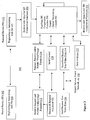
Figure 5 illustrates a user view of cooperative personalized user function provision by shared and personal devices, in accordance with various embodiments of the present disclosure. As illustrated, initially, the example cooperative personalizeduser function provision 500 may present the user ofPD 112 with the option, via, e.g., an icon displayed on PD 1 12, to launch SD cooperative functions 162. In response to the selection of the option, the user of PD 1 12 may be presented with the options of selecting SD registration/association function 232, or SD video/image/data service 234. In various embodiments, the user of PD 1 12 may be further presented with the option of SD Control 236. - On selection of SD registration/
association function 232, various registration and/orassociation operations 508, as earlier described, may be performed. On selection of the option of SD video/image/data service, the user of PD 1 12 may be presented with the options of requesting 502 a video segment of a video stream being rendered onSD 102, or requesting 504 an image frame of a video stream being rendered onSD 102. On selection of the option to request 502 a video segment of a video stream being rendered onSD 102, and receive, in response, the video segment, PD 1 12 (using e.g. media player 224), after making the request, the user of PD 1 12 may be presented with the option of playing/rendering 506 the video segment. On selection of the option to request 504 an image frame of a video stream being rendered onSD 102, and receive, in response, the image frame, after making the request, the user ofPD 112 may be presented with the option of upload 510 to upload the image to a social network or a cloud computing server, orbrowser 228 to submit a search to an online search service, subsequently to conduct an e-commerce transaction with an e-commerce site, or to participate in a SIG. - Additionally, in embodiments where the option of SD Control function 236 is provided, the user of
PD 112 may be provided with the gesture recognition function 516 to receive and accept gestures to controlSD 102, e.g., to enlarge or shrink aPIP 108, to swap two video streams between the main picture and aPIP 108, or to stop, pause, fast forward or rewind a video stream being rendered onSD 102. These features are the subjects of the Related Applications. For further details, refer to the Related Applications. -
Figure 6 illustrates a non-transitory computer-readable storage medium, in accordance with various embodiments of the present disclosure. As illustrated, non-transitory computer-readable storage medium 802 may include a number ofprogramming instructions 804. Programminginstructions 804 may be configured to enable aSD 102 or a PD 1 12, in response to corresponding execution of the programming instructions bySD 102 or PD 1 12, to perform operations of the SD or PD portion of methods 300-400 earlier described with references toFigures 3 and4 . In alternate embodiments, the programming instructions may be disposed in two or more storage medium instead. -
Figure 7 illustrates an example computer system suitable for use as a SD or a PD in accordance with various embodiments of the present disclosure. As shown,computing system 900 includes a number of processors orprocessor cores 902, andsystem memory 904. For the purpose of this application, including the claims, the terms "processor" and "processor cores" may be considered synonymous, unless the context clearly requires otherwise. Additionally,computing system 900 includes mass storage devices 906 (such as diskette, hard drive, compact disc read only memory (CD-ROM) and so forth), input/output devices 908 (such as display, keyboard, cursor control, touch pad, camera, and so forth) and communication interfaces 910 (such as, WiFi, Bluetooth, 3G/4G network interface cards, modems and so forth). The elements are coupled to each other viasystem bus 912, which represents one or more buses. In the case of multiple buses, they are bridged by one or more bus bridges (not shown). - Each of these elements performs its conventional functions known in the art. In particular,
system memory 904 andmass storage 906 may be employed to store a working copy and a permanent copy of the programming instructions implementing the SD or PD portion of methods 300-400 earlier described with references toFigures 3 and4 , that isPD cooperation function 152 orSD cooperation function 162, or portions thereof, herein collectively denoted as,computational logic 922.Computational logic 922 may further include programming instructions to practice or support SD functions 151 or PD functions 161, or portions thereof. The various components may be implemented by assembler instructions supported by processor(s) 902 or high-level languages, such as, for example, C, that can be compiled into such instructions. - The permanent copy of the programming instructions may be placed into
mass storage 906 in the factory, or in the field, through, for example, a distribution medium (not shown), such as a compact disc (CD), or through communication interface 910 (from a distribution server (not shown)). That is, one or more distribution media having an implementation ofcomputational logic 922 may be employed to distributecomputational logic 922 to program various computing devices. - The constitution of these elements 902-912 are known, and accordingly will not be further described.
- Although specific embodiments have been illustrated and described herein, it will be appreciated by those of ordinary skill in the art that a wide variety of alternate and/or equivalent implementations may be substituted for the specific embodiments shown and described, without departing from the scope of the embodiments of the present disclosure. This application is intended to cover any adaptations or variations of the embodiments discussed herein. Therefore, it is manifestly intended that the embodiments of the present disclosure be limited only by the claims and the equivalents thereof.
- Features of embodiments of different aspects of the invention:
- 1. A method comprising:
- receiving, by a personal device of a user, a request to perform a user function to be cooperatively provided by the personal device and a shared device configured for use by multiple users; and
- cooperating with the shared device, by the personal device, to provide the requested user function personalized to the user of the personal device.
- 2. The method of claim 1, wherein either
receiving comprises receiving, by a selected one of a smartphone or a tablet computer of a user, a request from the user to perform a user function cooperatively provided by the selected one of a smartphone or a tablet computer, and a shared device configured for use by multiple users; and wherein cooperating comprises cooperating, by the selected one of a smartphone or a tablet computer, with the shared device; or
receiving comprises receiving, by a personal device of a user, a request from the user to perform a user function cooperatively provided by the personal device, and a selected one of a television or a set-top box coupled to the television; and wherein cooperating comprises cooperating, by the personal device, with the selected one of a television or a set-top box coupled to the television. - 3. The method of claim 1, wherein receiving comprises receiving, by the personal device, a request to play or re-play a video segment of a video stream on the personal device, the video stream being rendered on the shared device; and wherein cooperating comprises:
- transmitting to the shared device, by the personal device, the request;
- receiving from the shared device, by the personal device, the requested video segment; and
- playing or re-playing, by the personal device, the video segment.
- 4. The method of claim 3, wherein the video stream comprises a video stream being rendered within a picture-in-picture of the shared device.
- 5. The method of claim 1, wherein receiving comprises receiving, by the personal device, a request for an image of a video stream being played on the shared device; and wherein cooperating comprises:
- transmitting to the shared device, by the personal device, the request;
- receiving from the shared device, by the personal device, the requested image; and displaying, by the personal device, the image.
- 6. The method of claim 5, further comprising either
uploading the image or an object within the image, by the personal device, to a social network or a cloud computing server;
submitting a search, by the personal device, to an online search service, to perform a search based at least in part on the image or an object within the image;
conducting an e-commerce transaction, by the personal device, with an online e- commerce site, the e-commerce transaction being resulted at least in part because of the image or an object within the image; or
facilitating the user, by the personal device, in selecting an object within the image, via recognition of a hand gesture of the user. - 7. A method comprising:
- receiving, by a shared device configured for use by multiple users, from a personal device of a user, a request from the user to perform a user function to be cooperatively provided by the personal device and the shared device; and
- cooperating, by the shared device, with the personal device to provide the requested user function personalized to the user of the personal device.
- 8. The method of claim 7, wherein either
receiving comprises receiving, by a selected one of one of a television or a set-top box coupled to the television configured for use by multiple users, from a personal device of a user, a request from the user to perform a user function cooperatively provided by the shared device and the personal device; and cooperating comprises cooperating, by the selected one of a television or a set-top box coupled to the television, with the personal device; or
receiving, by a shared device configured for user by multiple users, from a selected one of a smartphone or a tablet computer of user, a request from the user to perform a user function cooperatively provided by the shared device and the personal device; and cooperating comprises cooperating, by the shared device, with the selected one of a smartphone or a tablet computer. - 9. The method of claim 7, wherein receiving comprises receiving, by the shared device, a request to play or re-play a video segment of a video stream on the personal device, the video stream being rendered on the shared device; and wherein cooperating comprises:
- receiving, by the shared device, from the personal device, the request; and
- transmitting, by the shared device, to the personal device, the requested video segment.
- 10. The method of claim 9, wherein the video stream comprises a video stream being rendered within a picture-in-picture feature of the shared device.
- 11. The method of claim 7, wherein receiving comprises receiving, by the shared device, from the personal device, a request for an image of a video stream being played on the shared device; and wherein cooperating comprises:
- receiving, by the shared device, from the personal device, the request; and
- transmitting, by the shared device, to the personal device, the requested image.
- 12. The method of claim 1 1 , wherein transmitting comprises either
transmitting, by the shared device, to the personal device, the requested image, for use by the personal device to upload the image or an object within the image to a social network or a cloud computing server;
transmitting, by the shared device, to the personal device, the requested image, for use by the personal device to submit a search to an online search service to perform a search based at least in part on the image or an object within the image; or
transmitting, by the shared device, to the personal device, the requested image, for use by the personal device to conduct an e-commerce transaction with an online e-commerce site, the e- commerce transaction being resulted because of at least the image or an object within image. - 13. At least one computer-readable storage medium having instructions configured to cause a personal device of a user, in response to execution of the instructions by the personal device, to perform a selected one of the methods of claims 1-6.
- 14. An apparatus comprising :
- one or more shared device functions configured to provide a user function for a plurality of users; and
- one or more personal device cooperation functions operatively coupled with the one or more shared device functions, and configured to cooperate with a personal device of a user to provide user functions personalized to the user of the personal device.
- 15. The apparatus of claim 14, wherein the one or more shared device functions and the one or more personal device cooperation functions are further configured to perform a selected one of the methods of claims 8 - 12.
Claims (9)
- An apparatus capable of being used in association with a television, a camera, and at least one remote server, the apparatus being capable, when the apparatus is in operation, of communicating via an Internet network with the at least one remote server, the apparatus comprising:a box device for use in rendering, at least in part, streaming video content via the television, the streaming video content to be received by the box device from the at least one remote server via the Internet network, the box device comprising;at least one multi-core processor;storage to store instructions that are capable of being executed, at least in part, by the at least one multi-core processor, the instructions when executed, at least in part, by the at least one multi-core processor resulting in the box device being capable of performing operations comprising:wherein:performing user facial recognition-related processing, based at least in part, upon image data generated, at least in part, via image capture by the camera of an area that includes a current user of the box device, the user facial recognition-related processing being for use in identifying the current user of the box device from among a plurality of possible users of the box device;capturing, for upload via the at least one remote server to at least one social network, video clip data comprising at least a portion of the streaming video rendered via the television;in the operation of the apparatus, the image data is capable of being used in user gesture recognition processing and user facial expression analysis to be performed, at least in part, by the box device, the user gesture recognition processing to be used to determine, at least in part, at least one gesture input of the current user for use in controlling, at least in part, the box device, the user facial expression analysis to be used to determine, at least in part, at least one facial expression of the current user; andin the operation of the apparatus, the box device is capable of receiving, at least in part, the instructions, via wireless communication, for provision to the storage.
- The apparatus of claim 1, wherein:the at least one remote server comprises a cloud computing server, social networking server, and/or e-commerce server;the at least one facial expression comprises approved, disapproved, interested, disinterested, happy, sad, angry or at peace; and/orthe at least one gesture input comprises at least one hand gesture.
- The apparatus of claim 2, wherein:the at least one hand gesture comprises an enlarge gesture, a shrink gesture, a like gesture, a dislike gesture, or a swap gesture; and/orthe box device is capable of rendering via the television at least one picture-in-picture.
- The apparatus of claim 3, wherein:the box device is capable of changing size of the at least one picture-in-picture based at least in part upon user command;the box device and the television comprise mutually separate devices that are to be coupled together;the apparatus comprises the camera;the plurality of possible users comprises certain users associated with a registration function of the box device; and/orthe wireless communication is via a wireless communication interface of the box device.
- A method implemented, at least in part, using a box device, the box device being usable in association with a television, a camera, and at least one remote server, the box device being usable in rendering, at least in part, when the box device is in operation, streaming video content via the television, the streaming video content to be received by the box device from the at least one remote server via an Internet network, the method comprising:performing, at least in part by the box device, user facial recognition-related processing, based at least in part, upon image data generated, at least in part, via image capture by the camera of an area that includes a current user of the box device, the user facial recognition-related processing being for use in identifying the current user of the box device from among a plurality of possible users of the box device;capturing, at least in part by the box device, for upload via the at least one remote server to at least one social network, video clip data comprising at least a portion of the streaming video rendered via the television;
wherein:in the operation of the box device, the image data is capable of being used in user gesture recognition processing and user facial expression analysis to be performed, at least in part, by the box device, the user gesture recognition processing to be used to determine, at least in part, at least one gesture input of the current user for use in controlling, at least in part, the box device, the user facial expression analysis to be used to determine, at least in part, at least one facial expression of the current user; andin the operation of the box device, the box device is capable of receiving, at least in part, the instructions, via wireless communication. - The method of claim 5, wherein:the at least one remote server comprises a cloud computing server, social networking server, and/or e-commerce server;the at least one facial expression comprises approved, disapproved, interested, disinterested, happy, sad, angry or at peace; and/orthe at least one gesture input comprises at least one hand gesture.
- The method of claim 6, wherein:the at least one hand gesture comprises an enlarge gesture, a shrink gesture, a like gesture, a dislike gesture, or a swap gesture; and/orthe box device is capable of rendering via the television at least one picture-in-picture.
- The method of claim 7, wherein:the box device is capable of changing size of the at least one picture-in-picture based at least in part upon user command;the box device and the television comprise mutually separate devices that are to be coupled together;the plurality of possible users comprises certain users associated with a registration function of the box device; and/orthe wireless communication is via a wireless communication interface of the box device.
- At least one computer-readable storage medium storing instructions to implement a method or realize an apparatus as claimed in any preceding claim.
Priority Applications (1)
| Application Number | Priority Date | Filing Date | Title |
|---|---|---|---|
| EP18153387.8A EP3349472B1 (en) | 2011-09-12 | 2011-09-12 | Cooperative provision of personalized user functions using shared and personal devices |
Applications Claiming Priority (3)
| Application Number | Priority Date | Filing Date | Title |
|---|---|---|---|
| PCT/CN2011/001550 WO2013037084A1 (en) | 2011-09-12 | 2011-09-12 | Cooperative provision of personalized user functions using shared and personal devices |
| EP11872364.2A EP2756671B1 (en) | 2011-09-12 | 2011-09-12 | Cooperative provision of personalized user functions using shared and personal devices |
| EP18153387.8A EP3349472B1 (en) | 2011-09-12 | 2011-09-12 | Cooperative provision of personalized user functions using shared and personal devices |
Related Parent Applications (2)
| Application Number | Title | Priority Date | Filing Date |
|---|---|---|---|
| EP11872364.2A Division EP2756671B1 (en) | 2011-09-12 | 2011-09-12 | Cooperative provision of personalized user functions using shared and personal devices |
| EP11872364.2A Division-Into EP2756671B1 (en) | 2011-09-12 | 2011-09-12 | Cooperative provision of personalized user functions using shared and personal devices |
Publications (2)
| Publication Number | Publication Date |
|---|---|
| EP3349472A1 true EP3349472A1 (en) | 2018-07-18 |
| EP3349472B1 EP3349472B1 (en) | 2021-05-19 |
Family
ID=47882508
Family Applications (3)
| Application Number | Title | Priority Date | Filing Date |
|---|---|---|---|
| EP18153387.8A Active EP3349472B1 (en) | 2011-09-12 | 2011-09-12 | Cooperative provision of personalized user functions using shared and personal devices |
| EP11872364.2A Active EP2756671B1 (en) | 2011-09-12 | 2011-09-12 | Cooperative provision of personalized user functions using shared and personal devices |
| EP17201028.2A Ceased EP3328088A1 (en) | 2011-09-12 | 2011-09-12 | Cooperative provision of personalized user functions using shared and personal devices |
Family Applications After (2)
| Application Number | Title | Priority Date | Filing Date |
|---|---|---|---|
| EP11872364.2A Active EP2756671B1 (en) | 2011-09-12 | 2011-09-12 | Cooperative provision of personalized user functions using shared and personal devices |
| EP17201028.2A Ceased EP3328088A1 (en) | 2011-09-12 | 2011-09-12 | Cooperative provision of personalized user functions using shared and personal devices |
Country Status (7)
| Country | Link |
|---|---|
| US (3) | US20130346508A1 (en) |
| EP (3) | EP3349472B1 (en) |
| JP (1) | JP5818994B2 (en) |
| KR (4) | KR20150068488A (en) |
| CN (3) | CN107529082B (en) |
| TW (3) | TWI610180B (en) |
| WO (1) | WO2013037084A1 (en) |
Families Citing this family (12)
| Publication number | Priority date | Publication date | Assignee | Title |
|---|---|---|---|---|
| KR20150068488A (en) | 2011-09-12 | 2015-06-19 | 인텔 코포레이션 | Cooperative provision of personalized user functions using shared and personal devices |
| EP2798836A4 (en) | 2011-12-31 | 2015-08-05 | Intel Corp | CONTROL SYSTEM BASED ON CONTENT |
| US20130300823A1 (en) * | 2012-05-10 | 2013-11-14 | Jiun-Sian Chu | Stereo effect enhancement systems and methods |
| US9152313B2 (en) * | 2012-08-06 | 2015-10-06 | Shutterfly, Inc. | Unified picture access across devices |
| US9514100B2 (en) | 2012-10-08 | 2016-12-06 | Intel Corporation | Method, apparatus and system of screenshot grabbing and sharing |
| US9038142B2 (en) | 2013-02-05 | 2015-05-19 | Google Inc. | Authorization flow initiation using short-term wireless communication |
| US9143542B1 (en) * | 2013-06-05 | 2015-09-22 | Google Inc. | Media content collaboration |
| KR102420916B1 (en) * | 2015-08-05 | 2022-07-15 | 엘지전자 주식회사 | Display apparatus and method of controlling the smae |
| CN110390780A (en) | 2018-04-19 | 2019-10-29 | 鸿富锦精密电子(天津)有限公司 | System is deposited to meal |
| TWI668624B (en) * | 2018-04-19 | 2019-08-11 | 鴻佰科技股份有限公司 | Food depositing system |
| US11307667B2 (en) * | 2019-06-03 | 2022-04-19 | Arizona Board Of Regents On Behalf Of Arizona State University | Systems and methods for facilitating accessible virtual education |
| GB2586792B (en) | 2019-08-30 | 2022-08-17 | Samsung Electronics Co Ltd | Apparatus, method and computer program for determining configuration settings for a display apparatus |
Citations (7)
| Publication number | Priority date | Publication date | Assignee | Title |
|---|---|---|---|---|
| WO2002042909A1 (en) * | 2000-11-22 | 2002-05-30 | Koninklijke Philips Electronics N.V. | Method and apparatus for obtaining auditory and gestural feedback in a recommendation system |
| US20030001908A1 (en) * | 2001-06-29 | 2003-01-02 | Koninklijke Philips Electronics N.V. | Picture-in-picture repositioning and/or resizing based on speech and gesture control |
| US20070198532A1 (en) * | 2004-06-07 | 2007-08-23 | Jason Krikorian | Management of Shared Media Content |
| US20080320546A1 (en) * | 2007-06-19 | 2008-12-25 | Verizon Laboratories Inc. | Snapshot recognition for tv |
| GB2460219A (en) * | 2008-05-14 | 2009-11-25 | Samsung Electronics Co Ltd | Interaction between Audio/Visual Display Appliances and Mobile Devices |
| US20090320070A1 (en) * | 2006-07-31 | 2009-12-24 | Access Co., Ltd. | Electronic device, display system, display method, and program |
| US20100205628A1 (en) * | 2009-02-12 | 2010-08-12 | Davis Bruce L | Media processing methods and arrangements |
Family Cites Families (63)
| Publication number | Priority date | Publication date | Assignee | Title |
|---|---|---|---|---|
| JPH11196345A (en) | 1997-10-07 | 1999-07-21 | Masanobu Kujirada | Display system |
| CA2309459A1 (en) | 1999-06-10 | 2000-12-10 | International Business Machines Corporation | System for personalized field of view in a broadcast environment |
| US7953818B2 (en) | 2000-11-20 | 2011-05-31 | Flexiworld Technologies, Inc. | Output device and system for rendering digital content |
| US8869206B2 (en) * | 2002-12-10 | 2014-10-21 | Lg Electronics Inc. | Digital television and channel editing method thereof |
| US7122367B2 (en) * | 2003-06-03 | 2006-10-17 | Board Of Trustees Operating Michigan State University | Diacylglycerol acyltransferase genes, proteins, and uses thereof |
| KR20050083515A (en) * | 2004-02-23 | 2005-08-26 | 박선식 | Access control system and access control method using gesture recognition |
| US20100081375A1 (en) * | 2008-09-30 | 2010-04-01 | Apple Inc. | System and method for simplified control of electronic devices |
| US7647617B2 (en) * | 2004-11-16 | 2010-01-12 | Integra5 Communications, Inc. | Method for association between telephony and television network equipment |
| US20060141962A1 (en) | 2004-12-23 | 2006-06-29 | Sony Ericsson Mobile Communications Ab | Selecting/acquiring desired multimedia content |
| KR100703693B1 (en) | 2005-01-13 | 2007-04-05 | 삼성전자주식회사 | System and method for face recognition |
| JP4792247B2 (en) | 2005-06-29 | 2011-10-12 | Omo株式会社 | Content viewing system and content viewing method |
| JP2007034895A (en) * | 2005-07-29 | 2007-02-08 | Toshiba Corp | Information management apparatus, information management method, and information management system |
| US7558950B2 (en) * | 2005-10-27 | 2009-07-07 | Sony Ericsson Mobile Communications Ab | Methods of configuring an electronic device to be operable with an electronic apparatus based on automatic identification thereof and related devices |
| CN100459674C (en) * | 2005-11-24 | 2009-02-04 | 腾讯科技(深圳)有限公司 | A video communication screen display control device and method |
| WO2007119236A2 (en) | 2006-04-13 | 2007-10-25 | Yosef Mizrachi | Method and apparatus for providing gaming services and for handling video content |
| US7721207B2 (en) | 2006-05-31 | 2010-05-18 | Sony Ericsson Mobile Communications Ab | Camera based control |
| JP4754432B2 (en) * | 2006-08-08 | 2011-08-24 | 東日本電信電話株式会社 | Remote operation system, communication terminal, server device, and computer program |
| US20080066181A1 (en) * | 2006-09-07 | 2008-03-13 | Microsoft Corporation | DRM aspects of peer-to-peer digital content distribution |
| US20080133327A1 (en) * | 2006-09-14 | 2008-06-05 | Shah Ullah | Methods and systems for securing content played on mobile devices |
| TW200826631A (en) | 2006-12-07 | 2008-06-16 | Inventec Corp | An audio-visual playing device and system using a mobile communication device to control the channel switching, and a method thereof |
| US7559017B2 (en) * | 2006-12-22 | 2009-07-07 | Google Inc. | Annotation framework for video |
| US20090013309A1 (en) * | 2006-12-29 | 2009-01-08 | Mark Shavlik | Generation of Custom Software Applications |
| GB2447095B (en) | 2007-03-01 | 2010-07-28 | Sony Comp Entertainment Europe | Entertainment device and method |
| US20080295012A1 (en) * | 2007-05-23 | 2008-11-27 | Microsoft Corporation | Drag-and-drop abstraction |
| US20080301737A1 (en) * | 2007-05-31 | 2008-12-04 | Sony Ericsson Mobile Communications Ab | System and method for personalized television viewing triggered by a portable communication device |
| US8726194B2 (en) * | 2007-07-27 | 2014-05-13 | Qualcomm Incorporated | Item selection using enhanced control |
| US20090133090A1 (en) * | 2007-11-19 | 2009-05-21 | Verizon Data Services Inc. | Method and system of providing content management for a set-top box |
| CN103369391B (en) * | 2007-11-21 | 2016-12-28 | 高通股份有限公司 | The method and system of electronic equipment is controlled based on media preferences |
| AU2008335095B2 (en) * | 2007-12-10 | 2013-03-28 | Deluxe Media, Inc. | Method and system for use in coordinating multimedia devices |
| JP5458021B2 (en) * | 2007-12-21 | 2014-04-02 | コーニンクレッカ フィリップス エヌ ヴェ | Matched communication equipment |
| CN101557249B (en) * | 2008-04-07 | 2012-11-07 | 上海贝尔阿尔卡特股份有限公司 | Method and device for controlling cooperative transmission of downlink signal in wireless communication system |
| EP2120224A3 (en) * | 2008-05-14 | 2012-05-30 | Samsung Electronics Co., Ltd. | A method and communication system for controlling appliance device using a mobile device |
| US8150387B2 (en) * | 2008-06-02 | 2012-04-03 | At&T Intellectual Property I, L.P. | Smart phone as remote control device |
| US20100018857A1 (en) * | 2008-07-23 | 2010-01-28 | Seagate Technology Llc | Sputter cathode apparatus allowing thick magnetic targets |
| EP2172927A1 (en) * | 2008-10-02 | 2010-04-07 | Telefonaktiebolaget LM Ericsson (PUBL) | Method and computer program for operation of a multi-buffer graphics memory refresh, multi-buffer graphics memory arrangement and communication apparatus |
| US9160814B2 (en) * | 2008-11-10 | 2015-10-13 | Intel Corporation | Intuitive data transfer between connected devices |
| TW201019723A (en) * | 2008-11-11 | 2010-05-16 | Hong-Xing Weng | Multimedia broadcast system with split-screen functionality |
| US20100188579A1 (en) * | 2009-01-29 | 2010-07-29 | At&T Intellectual Property I, L.P. | System and Method to Control and Present a Picture-In-Picture (PIP) Window Based on Movement Data |
| US20100216441A1 (en) * | 2009-02-25 | 2010-08-26 | Bo Larsson | Method for photo tagging based on broadcast assisted face identification |
| JP5148534B2 (en) * | 2009-03-03 | 2013-02-20 | 株式会社東芝 | Communication server, apparatus, and session control method |
| US20140032722A1 (en) * | 2009-05-29 | 2014-01-30 | Adobe Systems Incorporated | Controlling Characteristics of Network Device Widgets through a Network Device |
| US9014685B2 (en) * | 2009-06-12 | 2015-04-21 | Microsoft Technology Licensing, Llc | Mobile device which automatically determines operating mode |
| US8262647B2 (en) * | 2009-07-29 | 2012-09-11 | Alcon Lensx, Inc. | Optical system for ophthalmic surgical laser |
| US8380225B2 (en) * | 2009-09-14 | 2013-02-19 | Microsoft Corporation | Content transfer involving a gesture |
| KR101732057B1 (en) * | 2009-11-02 | 2017-05-02 | 삼성전자주식회사 | Method and apparatus for providing user input back channel in AV system |
| KR101661232B1 (en) * | 2009-11-13 | 2016-09-30 | 삼성전자주식회사 | Method for providing contents to external apparatus |
| KR20110052997A (en) * | 2009-11-13 | 2011-05-19 | 삼성전자주식회사 | Display device and client terminal and control method thereof |
| KR101681321B1 (en) * | 2009-11-17 | 2016-11-30 | 엘지전자 주식회사 | Method for user authentication, video communication apparatus and display apparatus thereof |
| CN101764920B (en) * | 2009-12-02 | 2012-12-26 | 陈奎林 | Control system and method of home video equipment |
| WO2011084547A2 (en) * | 2009-12-16 | 2011-07-14 | Mozaik Multimedia, Inc. | Personalized and multiuser interactive content system and method |
| JP5434569B2 (en) * | 2009-12-22 | 2014-03-05 | ソニー株式会社 | Information processing apparatus and method, and program |
| US10027676B2 (en) * | 2010-01-04 | 2018-07-17 | Samsung Electronics Co., Ltd. | Method and system for multi-user, multi-device login and content access control and metering and blocking |
| CN101815162B (en) * | 2010-04-27 | 2012-12-05 | 四川长虹电器股份有限公司 | System for remote control of programs |
| CN101931629A (en) * | 2010-08-31 | 2010-12-29 | 深圳市同洲电子股份有限公司 | Method and system for playing television program at mobile terminal and digital television receiving terminal |
| US20120078725A1 (en) * | 2010-09-27 | 2012-03-29 | Infosys Technologies Limited | Method and system for contextual advertisement recommendation across multiple devices of content delivery |
| CN102026037A (en) * | 2010-11-25 | 2011-04-20 | Tcl集团股份有限公司 | TV interaction method and system based on widget and television |
| CN102098280A (en) * | 2010-12-03 | 2011-06-15 | 中国传媒大学 | Cross-media interaction system |
| CN102075728B (en) * | 2011-01-18 | 2015-08-12 | 中兴通讯股份有限公司 | The method and system of a kind of shared audio frequency and/or video |
| CN102098564A (en) * | 2011-03-04 | 2011-06-15 | 东莞市中珩电子科技有限公司 | A method for watching TV programs based on wi-fi |
| CN102118635A (en) * | 2011-03-09 | 2011-07-06 | 深圳市同洲电子股份有限公司 | Method, device and system for controlling time-shifted television by means of mobile terminal |
| KR101836403B1 (en) * | 2011-04-12 | 2018-04-19 | 엘지전자 주식회사 | Mobile terminal performing remote control fucntion for display device |
| AU2011376198B2 (en) * | 2011-09-01 | 2017-05-18 | Interdigital Ce Patent Holdings | Method for capturing video related content |
| KR20150068488A (en) | 2011-09-12 | 2015-06-19 | 인텔 코포레이션 | Cooperative provision of personalized user functions using shared and personal devices |
-
2011
- 2011-09-12 KR KR1020157013298A patent/KR20150068488A/en not_active Ceased
- 2011-09-12 CN CN201710712717.2A patent/CN107529082B/en active Active
- 2011-09-12 CN CN201710904253.5A patent/CN107979772B/en active Active
- 2011-09-12 WO PCT/CN2011/001550 patent/WO2013037084A1/en not_active Ceased
- 2011-09-12 EP EP18153387.8A patent/EP3349472B1/en active Active
- 2011-09-12 EP EP11872364.2A patent/EP2756671B1/en active Active
- 2011-09-12 US US13/995,488 patent/US20130346508A1/en not_active Abandoned
- 2011-09-12 EP EP17201028.2A patent/EP3328088A1/en not_active Ceased
- 2011-09-12 CN CN201180073398.6A patent/CN103765873B/en active Active
- 2011-09-12 JP JP2014528823A patent/JP5818994B2/en active Active
- 2011-09-12 KR KR1020177014277A patent/KR101828889B1/en active Active
- 2011-09-12 KR KR1020147006559A patent/KR101643238B1/en active Active
- 2011-09-12 KR KR1020177025266A patent/KR101942211B1/en active Active
-
2012
- 2012-08-31 TW TW101131834A patent/TWI610180B/en active
- 2012-08-31 TW TW106119341A patent/TWI630487B/en active
- 2012-08-31 TW TW106128286A patent/TWI628549B/en active
-
2017
- 2017-05-25 US US15/605,632 patent/US20170295392A1/en not_active Abandoned
- 2017-08-18 US US15/681,145 patent/US10419804B2/en active Active
Patent Citations (7)
| Publication number | Priority date | Publication date | Assignee | Title |
|---|---|---|---|---|
| WO2002042909A1 (en) * | 2000-11-22 | 2002-05-30 | Koninklijke Philips Electronics N.V. | Method and apparatus for obtaining auditory and gestural feedback in a recommendation system |
| US20030001908A1 (en) * | 2001-06-29 | 2003-01-02 | Koninklijke Philips Electronics N.V. | Picture-in-picture repositioning and/or resizing based on speech and gesture control |
| US20070198532A1 (en) * | 2004-06-07 | 2007-08-23 | Jason Krikorian | Management of Shared Media Content |
| US20090320070A1 (en) * | 2006-07-31 | 2009-12-24 | Access Co., Ltd. | Electronic device, display system, display method, and program |
| US20080320546A1 (en) * | 2007-06-19 | 2008-12-25 | Verizon Laboratories Inc. | Snapshot recognition for tv |
| GB2460219A (en) * | 2008-05-14 | 2009-11-25 | Samsung Electronics Co Ltd | Interaction between Audio/Visual Display Appliances and Mobile Devices |
| US20100205628A1 (en) * | 2009-02-12 | 2010-08-12 | Davis Bruce L | Media processing methods and arrangements |
Also Published As
| Publication number | Publication date |
|---|---|
| TWI630487B (en) | 2018-07-21 |
| CN107529082B (en) | 2021-02-26 |
| TW201738770A (en) | 2017-11-01 |
| WO2013037084A1 (en) | 2013-03-21 |
| KR20170105137A (en) | 2017-09-18 |
| CN103765873A (en) | 2014-04-30 |
| CN107979772A (en) | 2018-05-01 |
| KR20140054226A (en) | 2014-05-08 |
| US20130346508A1 (en) | 2013-12-26 |
| KR101643238B1 (en) | 2016-07-29 |
| US20170374404A1 (en) | 2017-12-28 |
| EP3328088A1 (en) | 2018-05-30 |
| KR101942211B1 (en) | 2019-01-24 |
| TWI610180B (en) | 2018-01-01 |
| CN103765873B (en) | 2018-04-06 |
| CN107529082A (en) | 2017-12-29 |
| KR20150068488A (en) | 2015-06-19 |
| US20170295392A1 (en) | 2017-10-12 |
| CN107979772B (en) | 2021-10-29 |
| TWI628549B (en) | 2018-07-01 |
| EP3349472B1 (en) | 2021-05-19 |
| KR20170062548A (en) | 2017-06-07 |
| TW201327202A (en) | 2013-07-01 |
| JP5818994B2 (en) | 2015-11-18 |
| TW201810066A (en) | 2018-03-16 |
| US10419804B2 (en) | 2019-09-17 |
| EP2756671A1 (en) | 2014-07-23 |
| EP2756671B1 (en) | 2019-05-22 |
| EP2756671A4 (en) | 2015-07-15 |
| KR101828889B1 (en) | 2018-02-13 |
| JP2014530517A (en) | 2014-11-17 |
Similar Documents
| Publication | Publication Date | Title |
|---|---|---|
| US10419804B2 (en) | Cooperative provision of personalized user functions using shared and personal devices | |
| US20130332834A1 (en) | Annotation and/or recommendation of video content method and apparatus | |
| CN103959803B (en) | Personalized Video Content Consumption Using Shared Video Devices and Personal Devices | |
| US10015557B2 (en) | Content-based control system |
Legal Events
| Date | Code | Title | Description |
|---|---|---|---|
| PUAI | Public reference made under article 153(3) epc to a published international application that has entered the european phase |
Free format text: ORIGINAL CODE: 0009012 |
|
| STAA | Information on the status of an ep patent application or granted ep patent |
Free format text: STATUS: REQUEST FOR EXAMINATION WAS MADE |
|
| 17P | Request for examination filed |
Effective date: 20180125 |
|
| AC | Divisional application: reference to earlier application |
Ref document number: 2756671 Country of ref document: EP Kind code of ref document: P |
|
| AK | Designated contracting states |
Kind code of ref document: A1 Designated state(s): AL AT BE BG CH CY CZ DE DK EE ES FI FR GB GR HR HU IE IS IT LI LT LU LV MC MK MT NL NO PL PT RO RS SE SI SK SM TR |
|
| STAA | Information on the status of an ep patent application or granted ep patent |
Free format text: STATUS: EXAMINATION IS IN PROGRESS |
|
| 17Q | First examination report despatched |
Effective date: 20190607 |
|
| GRAP | Despatch of communication of intention to grant a patent |
Free format text: ORIGINAL CODE: EPIDOSNIGR1 |
|
| STAA | Information on the status of an ep patent application or granted ep patent |
Free format text: STATUS: GRANT OF PATENT IS INTENDED |
|
| INTG | Intention to grant announced |
Effective date: 20201202 |
|
| GRAS | Grant fee paid |
Free format text: ORIGINAL CODE: EPIDOSNIGR3 |
|
| GRAA | (expected) grant |
Free format text: ORIGINAL CODE: 0009210 |
|
| STAA | Information on the status of an ep patent application or granted ep patent |
Free format text: STATUS: THE PATENT HAS BEEN GRANTED |
|
| AC | Divisional application: reference to earlier application |
Ref document number: 2756671 Country of ref document: EP Kind code of ref document: P |
|
| AK | Designated contracting states |
Kind code of ref document: B1 Designated state(s): AL AT BE BG CH CY CZ DE DK EE ES FI FR GB GR HR HU IE IS IT LI LT LU LV MC MK MT NL NO PL PT RO RS SE SI SK SM TR |
|
| REG | Reference to a national code |
Ref country code: GB Ref legal event code: FG4D |
|
| REG | Reference to a national code |
Ref country code: CH Ref legal event code: EP |
|
| REG | Reference to a national code |
Ref country code: DE Ref legal event code: R096 Ref document number: 602011070994 Country of ref document: DE |
|
| REG | Reference to a national code |
Ref country code: AT Ref legal event code: REF Ref document number: 1395146 Country of ref document: AT Kind code of ref document: T Effective date: 20210615 |
|
| REG | Reference to a national code |
Ref country code: IE Ref legal event code: FG4D |
|
| REG | Reference to a national code |
Ref country code: NL Ref legal event code: FP |
|
| REG | Reference to a national code |
Ref country code: LT Ref legal event code: MG9D |
|
| REG | Reference to a national code |
Ref country code: AT Ref legal event code: MK05 Ref document number: 1395146 Country of ref document: AT Kind code of ref document: T Effective date: 20210519 |
|
| PG25 | Lapsed in a contracting state [announced via postgrant information from national office to epo] |
Ref country code: HR Free format text: LAPSE BECAUSE OF FAILURE TO SUBMIT A TRANSLATION OF THE DESCRIPTION OR TO PAY THE FEE WITHIN THE PRESCRIBED TIME-LIMIT Effective date: 20210519 Ref country code: BG Free format text: LAPSE BECAUSE OF FAILURE TO SUBMIT A TRANSLATION OF THE DESCRIPTION OR TO PAY THE FEE WITHIN THE PRESCRIBED TIME-LIMIT Effective date: 20210819 Ref country code: AT Free format text: LAPSE BECAUSE OF FAILURE TO SUBMIT A TRANSLATION OF THE DESCRIPTION OR TO PAY THE FEE WITHIN THE PRESCRIBED TIME-LIMIT Effective date: 20210519 Ref country code: FI Free format text: LAPSE BECAUSE OF FAILURE TO SUBMIT A TRANSLATION OF THE DESCRIPTION OR TO PAY THE FEE WITHIN THE PRESCRIBED TIME-LIMIT Effective date: 20210519 Ref country code: LT Free format text: LAPSE BECAUSE OF FAILURE TO SUBMIT A TRANSLATION OF THE DESCRIPTION OR TO PAY THE FEE WITHIN THE PRESCRIBED TIME-LIMIT Effective date: 20210519 |
|
| PG25 | Lapsed in a contracting state [announced via postgrant information from national office to epo] |
Ref country code: GR Free format text: LAPSE BECAUSE OF FAILURE TO SUBMIT A TRANSLATION OF THE DESCRIPTION OR TO PAY THE FEE WITHIN THE PRESCRIBED TIME-LIMIT Effective date: 20210820 Ref country code: IS Free format text: LAPSE BECAUSE OF FAILURE TO SUBMIT A TRANSLATION OF THE DESCRIPTION OR TO PAY THE FEE WITHIN THE PRESCRIBED TIME-LIMIT Effective date: 20210919 Ref country code: SE Free format text: LAPSE BECAUSE OF FAILURE TO SUBMIT A TRANSLATION OF THE DESCRIPTION OR TO PAY THE FEE WITHIN THE PRESCRIBED TIME-LIMIT Effective date: 20210519 Ref country code: RS Free format text: LAPSE BECAUSE OF FAILURE TO SUBMIT A TRANSLATION OF THE DESCRIPTION OR TO PAY THE FEE WITHIN THE PRESCRIBED TIME-LIMIT Effective date: 20210519 Ref country code: PT Free format text: LAPSE BECAUSE OF FAILURE TO SUBMIT A TRANSLATION OF THE DESCRIPTION OR TO PAY THE FEE WITHIN THE PRESCRIBED TIME-LIMIT Effective date: 20210920 Ref country code: PL Free format text: LAPSE BECAUSE OF FAILURE TO SUBMIT A TRANSLATION OF THE DESCRIPTION OR TO PAY THE FEE WITHIN THE PRESCRIBED TIME-LIMIT Effective date: 20210519 Ref country code: NO Free format text: LAPSE BECAUSE OF FAILURE TO SUBMIT A TRANSLATION OF THE DESCRIPTION OR TO PAY THE FEE WITHIN THE PRESCRIBED TIME-LIMIT Effective date: 20210819 Ref country code: LV Free format text: LAPSE BECAUSE OF FAILURE TO SUBMIT A TRANSLATION OF THE DESCRIPTION OR TO PAY THE FEE WITHIN THE PRESCRIBED TIME-LIMIT Effective date: 20210519 |
|
| PG25 | Lapsed in a contracting state [announced via postgrant information from national office to epo] |
Ref country code: RO Free format text: LAPSE BECAUSE OF FAILURE TO SUBMIT A TRANSLATION OF THE DESCRIPTION OR TO PAY THE FEE WITHIN THE PRESCRIBED TIME-LIMIT Effective date: 20210519 Ref country code: CZ Free format text: LAPSE BECAUSE OF FAILURE TO SUBMIT A TRANSLATION OF THE DESCRIPTION OR TO PAY THE FEE WITHIN THE PRESCRIBED TIME-LIMIT Effective date: 20210519 Ref country code: DK Free format text: LAPSE BECAUSE OF FAILURE TO SUBMIT A TRANSLATION OF THE DESCRIPTION OR TO PAY THE FEE WITHIN THE PRESCRIBED TIME-LIMIT Effective date: 20210519 Ref country code: SM Free format text: LAPSE BECAUSE OF FAILURE TO SUBMIT A TRANSLATION OF THE DESCRIPTION OR TO PAY THE FEE WITHIN THE PRESCRIBED TIME-LIMIT Effective date: 20210519 Ref country code: SK Free format text: LAPSE BECAUSE OF FAILURE TO SUBMIT A TRANSLATION OF THE DESCRIPTION OR TO PAY THE FEE WITHIN THE PRESCRIBED TIME-LIMIT Effective date: 20210519 Ref country code: EE Free format text: LAPSE BECAUSE OF FAILURE TO SUBMIT A TRANSLATION OF THE DESCRIPTION OR TO PAY THE FEE WITHIN THE PRESCRIBED TIME-LIMIT Effective date: 20210519 Ref country code: ES Free format text: LAPSE BECAUSE OF FAILURE TO SUBMIT A TRANSLATION OF THE DESCRIPTION OR TO PAY THE FEE WITHIN THE PRESCRIBED TIME-LIMIT Effective date: 20210519 |
|
| REG | Reference to a national code |
Ref country code: DE Ref legal event code: R097 Ref document number: 602011070994 Country of ref document: DE |
|
| PLBE | No opposition filed within time limit |
Free format text: ORIGINAL CODE: 0009261 |
|
| STAA | Information on the status of an ep patent application or granted ep patent |
Free format text: STATUS: NO OPPOSITION FILED WITHIN TIME LIMIT |
|
| 26N | No opposition filed |
Effective date: 20220222 |
|
| REG | Reference to a national code |
Ref country code: CH Ref legal event code: PL |
|
| REG | Reference to a national code |
Ref country code: BE Ref legal event code: MM Effective date: 20210930 |
|
| PG25 | Lapsed in a contracting state [announced via postgrant information from national office to epo] |
Ref country code: IS Free format text: LAPSE BECAUSE OF FAILURE TO SUBMIT A TRANSLATION OF THE DESCRIPTION OR TO PAY THE FEE WITHIN THE PRESCRIBED TIME-LIMIT Effective date: 20210919 Ref country code: MC Free format text: LAPSE BECAUSE OF FAILURE TO SUBMIT A TRANSLATION OF THE DESCRIPTION OR TO PAY THE FEE WITHIN THE PRESCRIBED TIME-LIMIT Effective date: 20210519 Ref country code: AL Free format text: LAPSE BECAUSE OF FAILURE TO SUBMIT A TRANSLATION OF THE DESCRIPTION OR TO PAY THE FEE WITHIN THE PRESCRIBED TIME-LIMIT Effective date: 20210519 |
|
| PG25 | Lapsed in a contracting state [announced via postgrant information from national office to epo] |
Ref country code: LU Free format text: LAPSE BECAUSE OF NON-PAYMENT OF DUE FEES Effective date: 20210912 Ref country code: IT Free format text: LAPSE BECAUSE OF FAILURE TO SUBMIT A TRANSLATION OF THE DESCRIPTION OR TO PAY THE FEE WITHIN THE PRESCRIBED TIME-LIMIT Effective date: 20210519 Ref country code: IE Free format text: LAPSE BECAUSE OF NON-PAYMENT OF DUE FEES Effective date: 20210912 Ref country code: BE Free format text: LAPSE BECAUSE OF NON-PAYMENT OF DUE FEES Effective date: 20210930 |
|
| PG25 | Lapsed in a contracting state [announced via postgrant information from national office to epo] |
Ref country code: LI Free format text: LAPSE BECAUSE OF NON-PAYMENT OF DUE FEES Effective date: 20210930 Ref country code: CH Free format text: LAPSE BECAUSE OF NON-PAYMENT OF DUE FEES Effective date: 20210930 |
|
| PG25 | Lapsed in a contracting state [announced via postgrant information from national office to epo] |
Ref country code: HU Free format text: LAPSE BECAUSE OF FAILURE TO SUBMIT A TRANSLATION OF THE DESCRIPTION OR TO PAY THE FEE WITHIN THE PRESCRIBED TIME-LIMIT; INVALID AB INITIO Effective date: 20110912 Ref country code: CY Free format text: LAPSE BECAUSE OF FAILURE TO SUBMIT A TRANSLATION OF THE DESCRIPTION OR TO PAY THE FEE WITHIN THE PRESCRIBED TIME-LIMIT Effective date: 20210519 |
|
| P01 | Opt-out of the competence of the unified patent court (upc) registered |
Effective date: 20230518 |
|
| PG25 | Lapsed in a contracting state [announced via postgrant information from national office to epo] |
Ref country code: MK Free format text: LAPSE BECAUSE OF FAILURE TO SUBMIT A TRANSLATION OF THE DESCRIPTION OR TO PAY THE FEE WITHIN THE PRESCRIBED TIME-LIMIT Effective date: 20210519 |
|
| PG25 | Lapsed in a contracting state [announced via postgrant information from national office to epo] |
Ref country code: MT Free format text: LAPSE BECAUSE OF FAILURE TO SUBMIT A TRANSLATION OF THE DESCRIPTION OR TO PAY THE FEE WITHIN THE PRESCRIBED TIME-LIMIT Effective date: 20210519 |
|
| PGFP | Annual fee paid to national office [announced via postgrant information from national office to epo] |
Ref country code: NL Payment date: 20250704 Year of fee payment: 15 |
|
| PGFP | Annual fee paid to national office [announced via postgrant information from national office to epo] |
Ref country code: DE Payment date: 20250819 Year of fee payment: 15 |
|
| PGFP | Annual fee paid to national office [announced via postgrant information from national office to epo] |
Ref country code: GB Payment date: 20250821 Year of fee payment: 15 |
|
| PGFP | Annual fee paid to national office [announced via postgrant information from national office to epo] |
Ref country code: FR Payment date: 20250821 Year of fee payment: 15 |
|
| PG25 | Lapsed in a contracting state [announced via postgrant information from national office to epo] |
Ref country code: TR Free format text: LAPSE BECAUSE OF FAILURE TO SUBMIT A TRANSLATION OF THE DESCRIPTION OR TO PAY THE FEE WITHIN THE PRESCRIBED TIME-LIMIT Effective date: 20210519 |