EP3348256A1 - Microneedle array - Google Patents
Microneedle array Download PDFInfo
- Publication number
- EP3348256A1 EP3348256A1 EP16844378.6A EP16844378A EP3348256A1 EP 3348256 A1 EP3348256 A1 EP 3348256A1 EP 16844378 A EP16844378 A EP 16844378A EP 3348256 A1 EP3348256 A1 EP 3348256A1
- Authority
- EP
- European Patent Office
- Prior art keywords
- needle
- medicament
- water
- soluble polymer
- microneedle array
- Prior art date
- Legal status (The legal status is an assumption and is not a legal conclusion. Google has not performed a legal analysis and makes no representation as to the accuracy of the status listed.)
- Granted
Links
Images





Classifications
-
- A—HUMAN NECESSITIES
- A61—MEDICAL OR VETERINARY SCIENCE; HYGIENE
- A61K—PREPARATIONS FOR MEDICAL, DENTAL OR TOILETRY PURPOSES
- A61K9/00—Medicinal preparations characterised by special physical form
- A61K9/0012—Galenical forms characterised by the site of application
- A61K9/0019—Injectable compositions; Intramuscular, intravenous, arterial, subcutaneous administration; Compositions to be administered through the skin in an invasive manner
- A61K9/0021—Intradermal administration, e.g. through microneedle arrays or needleless injectors
-
- A—HUMAN NECESSITIES
- A61—MEDICAL OR VETERINARY SCIENCE; HYGIENE
- A61K—PREPARATIONS FOR MEDICAL, DENTAL OR TOILETRY PURPOSES
- A61K38/00—Medicinal preparations containing peptides
-
- A—HUMAN NECESSITIES
- A61—MEDICAL OR VETERINARY SCIENCE; HYGIENE
- A61K—PREPARATIONS FOR MEDICAL, DENTAL OR TOILETRY PURPOSES
- A61K38/00—Medicinal preparations containing peptides
- A61K38/16—Peptides having more than 20 amino acids; Gastrins; Somatostatins; Melanotropins; Derivatives thereof
- A61K38/17—Peptides having more than 20 amino acids; Gastrins; Somatostatins; Melanotropins; Derivatives thereof from animals; from humans
- A61K38/22—Hormones
- A61K38/27—Growth hormone [GH], i.e. somatotropin
-
- A—HUMAN NECESSITIES
- A61—MEDICAL OR VETERINARY SCIENCE; HYGIENE
- A61K—PREPARATIONS FOR MEDICAL, DENTAL OR TOILETRY PURPOSES
- A61K39/00—Medicinal preparations containing antigens or antibodies
-
- A—HUMAN NECESSITIES
- A61—MEDICAL OR VETERINARY SCIENCE; HYGIENE
- A61K—PREPARATIONS FOR MEDICAL, DENTAL OR TOILETRY PURPOSES
- A61K39/00—Medicinal preparations containing antigens or antibodies
- A61K39/12—Viral antigens
- A61K39/145—Orthomyxoviridae, e.g. influenza virus
-
- A—HUMAN NECESSITIES
- A61—MEDICAL OR VETERINARY SCIENCE; HYGIENE
- A61K—PREPARATIONS FOR MEDICAL, DENTAL OR TOILETRY PURPOSES
- A61K39/00—Medicinal preparations containing antigens or antibodies
- A61K39/39—Medicinal preparations containing antigens or antibodies characterised by the immunostimulating additives, e.g. chemical adjuvants
-
- A—HUMAN NECESSITIES
- A61—MEDICAL OR VETERINARY SCIENCE; HYGIENE
- A61K—PREPARATIONS FOR MEDICAL, DENTAL OR TOILETRY PURPOSES
- A61K47/00—Medicinal preparations characterised by the non-active ingredients used, e.g. carriers or inert additives; Targeting or modifying agents chemically bound to the active ingredient
- A61K47/06—Organic compounds, e.g. natural or synthetic hydrocarbons, polyolefins, mineral oil, petrolatum or ozokerite
- A61K47/26—Carbohydrates, e.g. sugar alcohols, amino sugars, nucleic acids, mono-, di- or oligo-saccharides; Derivatives thereof, e.g. polysorbates, sorbitan fatty acid esters or glycyrrhizin
-
- A—HUMAN NECESSITIES
- A61—MEDICAL OR VETERINARY SCIENCE; HYGIENE
- A61K—PREPARATIONS FOR MEDICAL, DENTAL OR TOILETRY PURPOSES
- A61K47/00—Medicinal preparations characterised by the non-active ingredients used, e.g. carriers or inert additives; Targeting or modifying agents chemically bound to the active ingredient
- A61K47/30—Macromolecular organic or inorganic compounds, e.g. inorganic polyphosphates
-
- A—HUMAN NECESSITIES
- A61—MEDICAL OR VETERINARY SCIENCE; HYGIENE
- A61K—PREPARATIONS FOR MEDICAL, DENTAL OR TOILETRY PURPOSES
- A61K47/00—Medicinal preparations characterised by the non-active ingredients used, e.g. carriers or inert additives; Targeting or modifying agents chemically bound to the active ingredient
- A61K47/30—Macromolecular organic or inorganic compounds, e.g. inorganic polyphosphates
- A61K47/36—Polysaccharides; Derivatives thereof, e.g. gums, starch, alginate, dextrin, hyaluronic acid, chitosan, inulin, agar or pectin
-
- A—HUMAN NECESSITIES
- A61—MEDICAL OR VETERINARY SCIENCE; HYGIENE
- A61K—PREPARATIONS FOR MEDICAL, DENTAL OR TOILETRY PURPOSES
- A61K9/00—Medicinal preparations characterised by special physical form
- A61K9/70—Web, sheet or filament bases ; Films; Fibres of the matrix type containing drug
- A61K9/7023—Transdermal patches and similar drug-containing composite devices, e.g. cataplasms
- A61K9/703—Transdermal patches and similar drug-containing composite devices, e.g. cataplasms characterised by shape or structure; Details concerning release liner or backing; Refillable patches; User-activated patches
-
- A—HUMAN NECESSITIES
- A61—MEDICAL OR VETERINARY SCIENCE; HYGIENE
- A61M—DEVICES FOR INTRODUCING MEDIA INTO, OR ONTO, THE BODY; DEVICES FOR TRANSDUCING BODY MEDIA OR FOR TAKING MEDIA FROM THE BODY; DEVICES FOR PRODUCING OR ENDING SLEEP OR STUPOR
- A61M37/00—Other apparatus for introducing media into the body; Percutany, i.e. introducing medicines into the body by diffusion through the skin
-
- A—HUMAN NECESSITIES
- A61—MEDICAL OR VETERINARY SCIENCE; HYGIENE
- A61M—DEVICES FOR INTRODUCING MEDIA INTO, OR ONTO, THE BODY; DEVICES FOR TRANSDUCING BODY MEDIA OR FOR TAKING MEDIA FROM THE BODY; DEVICES FOR PRODUCING OR ENDING SLEEP OR STUPOR
- A61M37/00—Other apparatus for introducing media into the body; Percutany, i.e. introducing medicines into the body by diffusion through the skin
- A61M37/0015—Other apparatus for introducing media into the body; Percutany, i.e. introducing medicines into the body by diffusion through the skin by using microneedles
-
- A—HUMAN NECESSITIES
- A61—MEDICAL OR VETERINARY SCIENCE; HYGIENE
- A61M—DEVICES FOR INTRODUCING MEDIA INTO, OR ONTO, THE BODY; DEVICES FOR TRANSDUCING BODY MEDIA OR FOR TAKING MEDIA FROM THE BODY; DEVICES FOR PRODUCING OR ENDING SLEEP OR STUPOR
- A61M37/00—Other apparatus for introducing media into the body; Percutany, i.e. introducing medicines into the body by diffusion through the skin
- A61M37/0015—Other apparatus for introducing media into the body; Percutany, i.e. introducing medicines into the body by diffusion through the skin by using microneedles
- A61M2037/0023—Drug applicators using microneedles
-
- A—HUMAN NECESSITIES
- A61—MEDICAL OR VETERINARY SCIENCE; HYGIENE
- A61M—DEVICES FOR INTRODUCING MEDIA INTO, OR ONTO, THE BODY; DEVICES FOR TRANSDUCING BODY MEDIA OR FOR TAKING MEDIA FROM THE BODY; DEVICES FOR PRODUCING OR ENDING SLEEP OR STUPOR
- A61M37/00—Other apparatus for introducing media into the body; Percutany, i.e. introducing medicines into the body by diffusion through the skin
- A61M37/0015—Other apparatus for introducing media into the body; Percutany, i.e. introducing medicines into the body by diffusion through the skin by using microneedles
- A61M2037/0053—Methods for producing microneedles
Definitions
- the present invention relates to a microneedle array.
- a method of administering a medicament to the surface of an organism such as the skin or the mucous membrane
- a method of adhering a liquid substance or a powdery substance to the surface of an organism may be exemplified.
- a method of administering the pharmaceuticals through an injection is selected.
- a method of administering a medicament used to administer an appropriate amount of medicament and achieve sufficient drug efficacy a method of injecting a medicament into the skin without pain by microneedles penetrating a horny barrier layer using a microneedle array in which microneedles (needle-like projections) which contain a medicament and have a high aspect ratio are formed has been attracting attention.
- a self-dissolving microneedle array that uses a substance having solubility in vivo as a base material has been reported.
- a medicament can be intradermally administered by allowing the base material to hold a medicament and the base material being self-dissolved during insertion of microneedles into the skin.
- Patent Document 1 describes a transdermal absorption sheet made of a polymer, including: a sheet portion; and a needle-like projection which contains a medicament and is formed on the surface of the sheet portion, in which the concentration of the medicament contained in the needle-like projection continuously decreases toward the root of the needle-like projection from the tip thereof; and a method of producing the same.
- Patent Document 2 describes a microneedle which is a pyramidal, prismatic, conical, or columnar fine needle, in which the main component material of the fine needle is a mixture of maltose and dextran or trehalose and contains a functional substance acting on the skin, and the main component material is dissolved so that the functional substance is supplied to the skin by the fine needle being inserted into the skin.
- Patent Document 3 describes a method of producing a microneedle sheet including: a step of filling a conical recess, which extends in a tapered shape by a first predetermined length from a first surface of a stamper toward a second surface facing the first surface, with a first microneedle raw material; and a step of forming a needle tip layer which extends only by a second predetermined length shorter than the first predetermined length by allowing the first microneedle raw material filling the recess to stand in an environment at a predetermined relative humidity and drying the first microneedle raw material, in which the predetermined relative humidity is in a range of 60% to 99%, and the solidification rate of the first microneedle raw material in the inner wall of the recess is suppressed.
- a method of injecting a medicament into the skin using a microneedle array has been attracting attention as a replacement of the method of administering a medicament through an injection, but this method using a microneedle array is difficult to obtain the same drug efficacy as the administration method through an injection.
- this method using a microneedle array is difficult to obtain the same drug efficacy as the administration method through an injection.
- it is difficult to obtain sufficient drug efficacy by stably administering a predetermined amount of medicament because the skin of the large animal is thicker than that of a small animal such as a mouse or a rat.
- JP2011-224332A , JP2005-154321A , and JP5587647B there is no description on the relationship among the distribution of drug contained in a needle, the puncture properties, the solubility, and the drug efficacy.
- An object of the present invention is to provide a microneedle array which includes a sheet and needles and is capable of achieving high drug efficacy.
- a microneedle array which includes a sheet portion and a plurality of needles present on the upper surface of the sheet portion and in which a tip portion of each needle is allowed to carry a medicament at a high concentration and the proportion of a water-soluble polymer in each needle is set such that the puncture properties to the skin become excellent, thereby completing the present invention.
- a microneedle array which includes a sheet portion and a plurality of needles present on the sheet portion and is capable of achieving high drug efficacy.
- the expression "containing a predetermined amount of medicament” means that a medicament having an amount enough to exhibit drug efficacy is contained in a case where the body surface is punctured.
- the expression “not containing a predetermined amount of medicament” means that a medicament having an amount enough to exhibit drug efficacy is not contained, and the range of the amount of the medicament covers from a case where the medicament is not contained at all to a case where the amount thereof is not enough to exhibit the drug efficacy.
- containing a predetermined amount of medicament is expressed as “containing a medicament” and "not containing a predetermined amount of medicament” is expressed as “not containing a medicament”.
- the puncture properties are improved by increasing the proportion of a water-soluble polymer in a needle and the drug efficacy is improved by increasing the proportion of a medicament in a needle tip region including a needle tip.
- the microneedle array of the present invention which has the above-described configuration, it is possible to achieve the same drug efficacy as in a case of the subcutaneous injection.
- the proportion of a water-soluble polymer in a needle is increased for the purpose of improving the puncture properties.
- the proportion of the medicament is decreased so that the drug efficacy cannot be sufficiently achieved.
- both of excellent puncture properties and high drug efficacy are achieved by increasing the proportion of the water-soluble polymer in the entire needle while increasing the proportion of the medicament in the needle tip region described above.
- excellent drug efficacy cannot be achieved even through the puncture properties and the solubility are excellent. That is, a factor other than the puncture properties and the solubility is suggested for exhibition of excellent drug efficacy. For example, it is expected that high drug efficacy is not exhibited in a case where a sufficient amount of medicament is not transferred into the blood.
- the microneedle array of the present invention is a microneedle array including: a sheet portion; and a plurality of needles present on an upper surface of the sheet portion, in which the needle contains a water-soluble polymer and a medicament, the water-soluble polymer occupies 50% by mass or greater of the total solid content of the needle, the water-soluble polymer and the medicament are present at a mass ratio of Formula 1, in a needle tip region which includes a needle tip of each needle and has a height corresponding to 20% of the total height of each needle, and the sheet portion contains a water-soluble polymer.
- water ⁇ soluble polymer : medicament 0.05 to 0.9 : 1
- the microneedle array of the present invention includes at least a sheet portion and needles and the medicament is carried by the needles in order to efficiently administer the medicament into the skin.
- the microneedle array of the present invention is a device in which a plurality of needles are arranged in an array on the upper surface side of the sheet portion. It is preferable that the needles are arranged on the upper surface side of the sheet portion.
- the needles may be directly arranged on the upper surface of the sheet portion or may be arranged on the upper surfaces of frustums disposed on the upper surface of the sheet portion.
- the sheet portion is a foundation for supporting needles and has a planar shape similar to the shape of a sheet portion 116 illustrated in Figs. 1 to 9 .
- the upper surface of the sheet portion indicates the surface on which a plurality of needles are arranged in an array.
- the area of the sheet portion is not particularly limited, but is preferably in a range of 0.005 to 1000 mm 2 , more preferably in a range of 0.05 to 500 mm 2 , and still more preferably in a range of 0.1 to 400 mm 2 .
- the thickness of the sheet portion is a distance between the surface in contact with frustums or needles and the surface on the opposite side.
- the thickness of the sheet portion is preferably in a range of 1 ⁇ m to 2000 ⁇ m, more preferably in a range of 3 ⁇ m to 1500 ⁇ m, and still more preferably in a range of 5 ⁇ m to 1000 ⁇ m.
- the sheet portion contains a water-soluble polymer.
- the sheet portion may be formed of a water-soluble polymer or may contain other additives (for example, disaccharides). Further, it is preferable that the sheet portion does not contain a medicament.
- the water-soluble polymer contained in the sheet portion is not particularly limited, and examples thereof include polysaccharides (such as hyaluronic acid, sodium hyaluronate, pullulan, dextran, dextrin, sodium chondroitin sulfate, carboxymethyl cellulose, hydroxypropyl cellulose, hydroxyethyl starch, hydroxypropyl methyl cellulose, polyvinylpyrrolidone, polyoxyethylene polyoxypropylene glycol, polyethylene glycol, and gum Arabic); and proteins (such as gelatin).
- polysaccharides such as hyaluronic acid, sodium hyaluronate, pullulan, dextran, dextrin, sodium chondroitin sulfate, carboxymethyl cellulose, hydroxypropyl cellulose, hydroxyethyl starch, hydroxypropyl methyl cellulose, polyvinylpyrrolidone, polyoxyethylene polyoxypropylene glycol, polyethylene glycol, and gum Arabic
- polysaccharides are preferable; hydroxyethyl starch, hydroxypropyl cellulose, hydroxypropyl methyl cellulose, pullulan, dextran, sodium chondroitin sulfate, sodium hyaluronate, carboxymethyl cellulose, polyvinylpyrrolidone, polyoxyethylene polyoxypropylene glycol, polyethylene glycol, and polyvinyl alcohol are more preferable; and chondroitin sulfate is particularly preferable.
- Disaccharides may be added to the sheet portion and examples of the disaccharides include sucrose, lactulose, lactose, maltose, trehalose, and cellobiose. Among these, sucrose, maltose, and trehalose are particularly preferable.
- the microneedle array is configured of a plurality of needles arranged in an array on the upper surface of the sheet portion.
- the needles have a projected structure with a tip, and the shape thereof is not limited to a needle shape having a sharp tip and may be a shape with a blunt tip.
- a needle examples include a conical shape, a polygonal pyramid shape (square pyramid shape or the like), and a spindle shape.
- a needle may have a shape of a needle 112 illustrated in Figs. 1 to 9 , in which the entire shape of the needle may be a conical shape, a polygonal pyramid shape (square pyramid shape or the like), or a shape of a structure in which the inclination (angle) of the side surface of the needle is continuously changed.
- a needle may have a multilayer structure with two or more layers, in which the inclination (angle) of the side surface of the needle is discontinuously changed.
- the needles are inserted into the skin and the upper surface or a part of the sheet portion is brought into contact with the skin.
- the height (length) of a needle indicates the length of a perpendicular line drawn from the tip of the needle to a frustum or the sheet portion (in a case where a frustum is not present).
- the height (length) of a needle is not particularly limited, but is preferably in a range of 50 ⁇ m to 3000 ⁇ m, more preferably in a range of 100 ⁇ m to 1500 ⁇ m, and still more preferably in a range of 100 ⁇ m to 1000 ⁇ m. It is preferable that the length of a needle is 50 ⁇ m or greater because a medicament can be percutaneously administered. Further, it is preferable that the length of a needle is 3000 ⁇ m or less because occurrence of pain resulting from the contact of needles with the nerve is prevented and bleeding can be avoided.
- the interface between a frustum (or a needle in a case where a frustum is not present) and the sheet portion is referred to as a base.
- the distance between a base of one needle and a point farthest from the base is preferably in a range of 50 ⁇ m to 2000 ⁇ m, more preferably in a range of 100 ⁇ m to 1500 ⁇ m, and still more preferably in a range of 200 ⁇ m to 1000 ⁇ m.
- the number of needles to be arranged in one microneedle array is preferably in a range of 1 to 2000, more preferably in a range of 3 to 1000, and still more preferably in a range of 5 to 500.
- the interval between needles indicates the distance between feet of each perpendicular line drawn from the tip of a needle to a frustum or the sheet portion (in the case where a frustum is not present).
- the interval between needles to be arranged indicates an average value obtained by acquiring the distance between a foot of a perpendicular line drawn from the tip of a needle to a frustum or the sheet portion (in the case where frustums are not present) and a foot of a perpendicular line drawn from the tip of a needle closest to the needle to a frustum or the sheet portion and averaging the values obtained from all needles.
- the interval between needles is preferably in a range of 0.1 mm to 10 mm, more preferably in a range of 0.2 mm to 5 mm, and still more preferably in a range of 0.3 mm to 3 mm.
- the needles contain a water-soluble polymer and a medicament.
- the water-soluble polymer is a biosoluble substance such that a human body is not damaged even in a case where needles remain in the skin.
- the water-soluble polymer contained in the needles is not particularly limited, and examples thereof include polysaccharides (such as hyaluronic acid, sodium hyaluronate, pullulan, dextran, dextrin, sodium chondroitin sulfate, carboxymethyl cellulose, hydroxypropyl cellulose, hydroxyethyl starch, hydroxypropyl methyl cellulose, polyvinylpyrrolidone, polyoxyethylene polyoxypropylene glycol, polyethylene glycol, and gum Arabic); and proteins (such as gelatin).
- polysaccharides such as hyaluronic acid, sodium hyaluronate, pullulan, dextran, dextrin, sodium chondroitin sulfate, carboxymethyl cellulose, hydroxypropyl cellulose, hydroxyethyl starch, hydroxypropyl methyl cellulose, polyvinylpyrrolidone, polyoxyethylene polyoxypropylene glycol, polyethylene glycol, and gum Arabic
- polysaccharides are preferable; hydroxyethyl starch, hydroxypropyl cellulose, hydroxypropyl methyl cellulose, pullulan, dextran, sodium chondroitin sulfate, sodium hyaluronate, carboxymethyl cellulose, polyvinylpyrrolidone, polyoxyethylene polyoxypropylene glycol, polyethylene glycol, and polyvinyl alcohol are more preferable; and hydroxyethyl starch is particularly preferable.
- polysaccharides typically with no charge are more preferable because polysaccharides are unlikely to be aggregated at the time of being mixed with a medicament.
- the water-soluble polymer contained in the needles may be the same as or different from the water-soluble polymer contained in the sheet portion.
- Disaccharides may be added to the needles (particularly, the needle tip region) and examples of the disaccharides include sucrose, lactulose, lactose, maltose, trehalose, and cellobiose. Among these, sucrose, maltose, and trehalose are preferable.
- the needles contain two or more water-soluble polymers, disaccharides, and a medicament.
- Two or more water-soluble polymers are not particularly limited, but a combination of hydroxyethyl starch and other water-soluble polymers is preferable.
- the content of the water-soluble polymer is 50% by mass or greater with respect to the total solid content of the needles.
- the content thereof is preferably 55% by mass or greater, more preferably 60% by mass or greater, and still more preferably 65% by mass or greater with respect to the total solid content of the needles.
- the upper limit thereof is not particularly limited, but the content of the water-soluble polymer is preferably 99% by mass or less, more preferably 95% by mass or less, and still more preferably 90% by mass or less with respect to the total solid content of the needles.
- the content of the water-soluble polymer is set to be 50% by mass or greater with respect to the total solid content of the needles, excellent puncture properties and excellent drug efficacy can be obtained.
- the proportion of the water-soluble polymer in the total solid content of the needles can be measured using the following method, but the method of measuring the proportion thereof is not particularly limited.
- a buffer solution a buffer solution suitable for dissolving the water-soluble polymer constituting the needles, such as phosphate buffered saline (PBS)
- PBS phosphate buffered saline
- the water-soluble polymer and the medicament are present at a mass ratio of Formula 1, in a needle tip region which includes a needle tip of each needle and has a height corresponding to 20% of the total height of each needle.
- water ⁇ soluble polymer : medicament 0.05 to 0.9 : 1
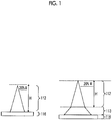
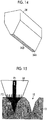
- the needle tip region is a partial region of a needle that includes a needle tip. As illustrated in Fig. 1 , the needle tip region is a region having a height corresponding to 20% of the total height of a needle.
- the left figure in Fig. 1 illustrates a case where the needle 112 is formed on the surface of the sheet portion 116.
- the right figure in Fig. 1 illustrates a case where a frustum 113 is formed on the surface of the sheet portion 116 and the needle 112 is formed on the upper surface of the frustum 113.
- H represents the height of the needle 112 (height of the entire needle).
- the region which includes the needle tip and has a height corresponding to 20% of the total height of the needle is shown as "20%”.
- the water-soluble polymer and the medicament are present preferably at a mass ratio of Formula 1A, more preferably at a mass ratio of Formula 1B, still more preferably at a mass ratio of Formula 1C, and even still more preferably at a mass ratio of Formula 1D.
- the needles contain a water-soluble polymer, disaccharides, and a medicament
- the water-soluble polymer, the disaccharides, and the medicament are present at a mass ratio of Formula 2 in the needle tip region which includes a needle tip and has a height corresponding to 20% of the total height of the needle.
- water ⁇ soluble polymer + disaccharides : medicament 0.5 to 5 : 1
- the water-soluble polymer, the disaccharides, and the medicament are present more preferably at a mass ratio of Formula 2A, more preferably at a mass ratio of Formula 2B, still more preferably at a mass ratio of Formula 2C, and particularly preferably at a mass ratio of Formula 2D.
- the mass ratio between the water-soluble polymer and the medicament in the needle tip region and the mass ratio among the water-soluble polymer, the disaccharides, and the medicament in the needle tip region can be measured using the following method, but the method thereof is not particularly limited.
- the needle tip region which includes the needle tip and has a height corresponding to 20% of the total height of the needle is cut in parallel with the sheet portion, and the cut needle tip region is dissolved in a buffer solution (a buffer solution suitable for dissolving the water-soluble polymer and medicament constituting the needles, such as phosphate buffered saline (PBS)).
- a buffer solution suitable for dissolving the water-soluble polymer and medicament constituting the needles such as phosphate buffered saline (PBS)
- PBS phosphate buffered saline
- the amounts of the water-soluble polymer and the disaccharides can be respectively measured according to a high performance liquid chromatography method by measuring the amount of medicament in the solution using an enzyme-linked immunosorbent assay (ELISA) method or the like.
- ELISA enzyme-linked immunosorbent assay
- the medicament indicates a substance that affects a human body. It is preferable that the medicament is selected from peptides (including peptide hormones or the like) or derivatives thereof, proteins, a nucleic acid, polysaccharides, vaccines, adjuvants, a pharmaceutical compound belonging to a water-soluble low molecular compound, or cosmetic ingredients.
- the molecular weight of the medicament is not particularly limited, but a medicament having a molecular weight of 500 or greater is preferable in a case of proteins.
- peptides or derivatives thereof and proteins include calcitonin, adrenocorticotropic hormone, parathyroid hormone (PTH), human PTH (1 ⁇ 34), insulin, exendin, secretin, oxytocin, angiotensin, ⁇ -endorphin, glucagon, vasopressin, somatostatin, gastrin, luteinizing hormone releasing hormone, enkephalin, neurotensin, atrial natriuretic peptide, growth hormone, growth hormone releasing hormone, bradykinin, substance P, dynorphin, thyroid stimulating hormone, prolactin, interferon, interleukin, granulocyte colony stimulating factor (G-CSF), glutathione peroxidase, superoxide dismutase, desmopressin, somatomedin, endothelin, and salts of these.
- PTH parathyroid hormone
- human PTH 1 ⁇ 34
- insulin exendin
- secretin secretin
- influenza antigen influenza vaccine
- HBs hepatitis B virus surface antigen
- HBe antigen hepatitis Be antigen
- Bacille de calmette et Gaerin (BCG) antigen measles antigen, rubella antigen, varicella antigen, yellow fever antigen, shingles antigen, rotavirus antigen
- influenza bacilli b type (Hib) antigen rabies antigen
- cholera antigen diphtheria antigen
- pertussis antigen tetanus antigen
- inactivated polio antigen Japanese encephalitis antigen
- human papilloma antigen and antigens obtained by mixing two to four types of these.
- the adjuvants include aluminum salts such as aluminum phosphate, aluminum chloride, and aluminum hydroxide, emulsions such as MF59 and AS03, liposomes, plant-derived components, a nucleic acid, biopolymers, cytokine, peptides, proteins, and sugar chains.
- the medicament at least one selected from the group consisting of peptide hormones, vaccines, and adjuvants is preferable.
- Growth hormone is particularly preferable as peptide hormones and influenza vaccine is particularly preferable as vaccines.
- the content of the medicament in all needles is not particularly limited, but is preferably in a range of 1 to 60% by mass, more preferably in a range of 1 to 50% by mass, and particularly preferably in a range of 1 to 45% by mass with respect to the mass of the solid content of needles.
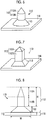
- Figs. 2 to 9 are partially enlarged views illustrating a microneedle 110 in the microneedle array.
- the microneedle array of the present invention is configured by the plurality of needles 112 being formed on the surface of the sheet portion 116 (in the figured, one needle 112 is shown on the sheet portion 116 or one frustum 113 and one needle 112 are shown on the sheet portion 116 and this is referred to as the microneedle 110).
- the needle 112 has a conical shape in Fig. 2A and the needle 112 has a square pyramid shape in Fig. 2B .
- H represents the height of the needle 112
- W represents the diameter (width) of the needle 112
- T represents the height (thickness) of the sheet portion 116.
- Figs. 3 and 4 illustrate microneedles 110, on which the frustum 113 and the needle 112 are formed and which have different shapes, formed on the surface of the sheet portion 116.
- the frustum 113 has a truncated conical shape and the needle 112 has a conical shape.
- the frustum 113 has a truncated square pyramid shape and the needle 112 has a square pyramid shape.
- the shape of the needle is not particularly limited.
- Fig. 5 is a cross-sectional view illustrating the microneedles 110 illustrated in Figs. 3 and 4 .
- H represents the height of the needle 112
- W represents the diameter (width) of the base
- T represents the height (thickness) of the sheet portion 116.
- the microneedle array of the present invention has a shape of the microneedle 110 of Fig. 5 other than the shape of the microneedle 110 in Fig. 2C .
- the volume of all needles becomes larger so that a greater amount of medicament can be concentrated on the tip of a needle when the microneedle array is produced.
- Figs. 6 and 7 illustrate microneedles 110 in different shapes.
- a first layer 112A of the needle illustrated in Fig. 6 has a conical shape and a second layer 112B of the needle in Fig. 6 has a columnar shape.
- the first layer 112A of the needle illustrated in Fig. 7 has a square pyramid shape and the second layer 112B of the needle in Fig. 7 has a square columnar shape.
- the shape of a needle is not limited to these shapes.
- Fig. 8 is a cross-sectional view illustrating the microneedles 110 illustrated in Figs. 6 and 7 .
- H represents the height of the needle 112
- W represents the diameter (width) of the base
- T represents the height (thickness) of the sheet portion 116.
- Fig. 9 is a cross-sectional view of a microneedle in another shape in which the inclination (angle) of the side surface of the needle 112 is continuously changed.
- H represents the height of the needle 112
- T represents the height (thickness) of the sheet portion 116.
- the microneedle array of the present invention it is preferable that needles are arranged at intervals of approximately 0.1 to 10 needles per 1 mm in a row. It is more preferable that the microneedle array has 1 to 10000 microneedles per 1 cm 2 . When the density of microneedles is set to 1 needle/cm 2 or greater, the microneedles can efficiently puncture the skin. When the density of the microneedles is set to 10000 needles/cm 2 or less, the microneedle array can sufficiently puncture the skin.
- the density of needles is preferably in a range of 10 to 5000 needles/cm 2 , more preferably in a range of 25 to 1000 needles/cm 2 , and particularly preferably in a range of 25 to 400 needles/cm 2 .
- the microneedle array of the present invention can be supplied in a sealed storage form together with a drying agent.
- a drying agent known drying agents (such as silica gel, calcined lime, calcium chloride, silica alumina, and a sheet-like drying agent) can be used.
- microneedle array of the present invention can be produced by the following method in conformity with the method described in, for example, JP2013-153866A or WO2014/077242A .
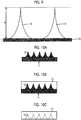
- Figs. 10A to 10C are process views illustrating a method of preparing a mold (die). As illustrated in Fig. 10A , first, an original plate is prepared used to prepare the mold. There are two methods for preparing an original plate 11.
- a Si substrate is coated with a photoresist, exposed, and then developed. Further, an array of shaped portions 12 having a conical shape (projection) is prepared on the surface of the original plate 11 by performing etching using reactive ion etching (RIE) or the like. In addition, when the etching such as RIE or the like is performed so as to form shaped portions having a conical shape on the surface of the original plate 11, the portions having a conical shape can be formed by performing etching in an oblique direction while the Si substrate rotate. According to the second method, an array of the shaped portions 12 having a square pyramid shape or the like is formed on the surface of the original plate 11 by performing processing on a metal substrate such as Ni using a cutting tool such as a diamond bit.
- RIE reactive ion etching
- a mold is prepared. Specifically, a mold 13 is prepared using the original plate 11 as illustrated in Fig. 10B . As the method of preparing the mold, four methods are considered.
- a silicone resin obtained by adding a curing agent to polydimethylsiloxane (PDMS, for example, SYLGARD 184 (registered trade mark, manufactured by Dow Corning Toray Co., Ltd.)) is poured into the original plate 11, subjected to a heat treatment at 100°C, cured, and peeled from the original plate 11.
- PDMS polydimethylsiloxane
- an ultraviolet (UV) cured resin which is cured by being irradiated with ultraviolet rays is poured into the original plate 11, irradiated with ultraviolet rays in a nitrogen atmosphere, and peeled off from the original plate 11.
- a solution obtained by dissolving a plastic resin such as polystyrene or polymethyl methacrylate (PMMA) in an organic solvent is poured into the original plate 11 coated with a peeling agent, dried so that the organic solvent is volatilized, and cured, and then peeled off from the original plate 11.
- a peeling agent such as polystyrene or polymethyl methacrylate (PMMA)
- PMMA polymethyl methacrylate
- the mold 13 formed by needle-like recesses 15, which have an inverted shape of the conical shape or the pyramid shape of the original plate 11, being two-dimensionally arranged is prepared.
- the mold 13 prepared in the above-described manner is illustrated in Fig. 10C .
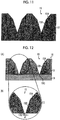
- Fig. 11 illustrates another preferred embodiment of the mold 13.
- the needle-like recess 15 includes a tapered inlet portion 15A which becomes narrower in a depth direction from the surface of the mold 13 and a tip recess 15B which becomes tapered in the depth direction.
- the inlet portion 15A has a tapered shape, the needle-like recess 15 is easily filled with the water-soluble polymer-dissolved solution.
- Fig. 12 illustrates a more preferred embodiment of a mold complex 18 at the time of producing the microneedle array.
- the (A) portion of Fig. 12 illustrates the mold complex 18.
- the (B) portion of Fig. 12 is a partially enlarged view of a portion enclosed by a circle in the (A) portion.
- the mold complex 18 includes the mold 13 having an air vent hole 15C formed on the tip (bottom) of the needle-like recess 15; and an air permeating sheet 19 which is bonded to the rear surface of the mold 13 and is formed of a material that permeates a gas and does not permeate a liquid.
- the air vent hole 15C is formed as a through-hole penetrating the rear surface of the mold 13.
- the rear surface of the mold 13 indicates the surface on a side on which the air vent hole 15C is formed.
- a diameter D (diameter) of the air vent hole 15C is preferably in a range of 1 to 50 ⁇ m. In a case where the diameter D of the air vent hole 15C is less than 1 ⁇ m, the air vent hole 15C cannot be sufficiently used as an air bend hole. Further, in a case where the diameter D of the air vent hole 15C is greater than 50 ⁇ m, the sharpness of the tip of a formed microneedle is damaged.
- an air permeating film (Poreflon (registered trade mart), FP-010, manufactured by Sumitomo Electric Industries, Ltd.) can be suitably used.
- an elastic material or a metal material can be used as the material used for the mold 13.
- an elastic material is preferable and a material having a high gas permeability is more preferable.
- the oxygen permeability which is a representative example of the gas permeability, is preferably 1 ⁇ 10 -12 (mL/s ⁇ m 2 ⁇ Pa) or greater and more preferably 1 ⁇ 10 -10 (mL/s ⁇ m 2 ⁇ Pa) or greater. Further, 1 mL is 10 -6 m 3 .
- Such materials include materials obtained by melting or dissolving, in a solvent, a silicone resin (for example, SYLGARD 184 (registered trade mark, manufactured by Dow Corning Toray Co., Ltd.) or KE-1310ST (product number, manufactured by Shin-Etsu chemical Co., Ltd.)), a UV curable resin, or a plastic resin (for example, polystyrene or polymethyl methacrylate (PMMA)).
- a silicone rubber-based material is preferable since the material has durability to transfer resulting from repetitive pressure and has excellent peeling properties with respect to a material.
- examples of the metal material include Ni, Cu, Cr, Mo, W, Ir, Tr, Fe, Co, MgO, Ti, Zr, Hf, V, Nb, Ta, ⁇ -aluminum oxide, zirconium oxide, stainless (for example, STAVAX (registered trademark) of Bohler-Uddeholm KK), and alloys thereof.
- the material of a frame 14 the same material as the material of the mold 13 can be used.
- a water-soluble polymer-dissolved solution containing a medicament used to form at least a part of a needle and a water-soluble polymer-dissolved solution used to form the sheet portion.
- water-soluble polymer is as described in the present specification above.
- Disaccharides may be mixed with both of the water-soluble polymer-dissolved solutions, and the type of disaccharides is as described in the present specification above.
- the concentration of the water-soluble polymer in any of the water-soluble polymer-dissolved solutions varies depending on the type of the water-soluble polymer to be used, and is preferably in a range of 1 to 50% by mass.
- a solvent used for dissolution may be a solvent other than hot water as long as the solvent has volatility, and methyl ethyl ketone (MEK) or alcohol can be used as the solvent.
- MEK methyl ethyl ketone
- the mold 13 having needle-like recesses 15 which are two-dimensionally arranged is disposed on a base 20.
- two sets of plural needle-like recesses 15 are formed such that 5 rows of needle-like recesses 15 and 5 columns of needle-like recesses 15 are two-dimensionally arranged.
- a liquid supply device 36 including a tank 30 which accommodates a water-soluble polymer-dissolved solution 22 containing a medicament; a pipe 32 which is connected with the tank; and a nozzle 34 which is connected with the tip of the pipe 32 is prepared.
- the case where 5 rows of needle-like recesses 15 and 5 columns of needle-like recesses 15 are two-dimensionally arranged is exemplified, but the number of the needle-like recesses 15 is not limited to 5 rows ⁇ 5 columns as long as the needle-like recesses are two-dimensionally arranged in a manner of M ⁇ N (M and N each independently represent an arbitrary integer of 1 or greater, preferably in a range of 2 to 30, more preferably in a range of 3 to 25, and still more preferably in a range of 3 to 20).
- Fig. 14 is a perspective view schematically illustrating the tip portion of the nozzle.
- the tip of the nozzle 34 includes a lip portion 34A which is a flat surface and an opening portion 34B having a slit shape.
- a plurality of needle-like recesses 15 forming one row can be concurrently filled with the water-soluble polymer-dissolved solution 22 containing a medicament because of the opening portion 34B having a slit shape.
- the size (the length and the width) of the opening portion 34B can be suitably selected according to the number of needle-like recesses 15 to be filled with the water-soluble polymer-dissolved solution at the same time.
- the length of the opening portion 34B is set to be large, a larger amount of needle-like recesses 15 can be filled with the polymer-dissolved solution 22 containing a medicament at the same time. In this manner, the productivity can be improved.
- an elastic material or a metal material can be used as the material used for the nozzle 34.
- examples thereof include TEFLON (registered trademark), stainless steel (steel special use stainless (SUS)), and titanium.
- the position of the opening portion 34B of the nozzle 34 is adjusted on the needle-like recesses 15.
- the lip portion 34A of the nozzle 34 is in contact with the surface of the mold 13.
- the water-soluble polymer-dissolved solution 22 containing a medicament is supplied to the mold 13 from a liquid supply device 36, and the water-soluble polymer-dissolved solution 22 containing a medicament fills the needle-like recesses 15 from the opening portion 34B of the nozzle 34.
- a plurality of needle-like recesses 15 forming one row can be concurrently filled with the water-soluble polymer-dissolved solution 22 containing a medicament.
- the present invention is not limited thereto, and the needle-like recesses 15 can be filled with the water-soluble polymer-dissolved solution one by one.
- the solution 22 containing a medicament can be suctioned by suctioning the solution from the rear surface of the mold 13, and the filling of the needle-like recesses 15 with the polymer-dissolved solution 22 containing a medicament can be promoted.
- the lip portion 34A of the nozzle 34 is brought into contact with the surface of the mold 13, the liquid supply device 36 is relatively moved in the length direction and the vertical direction of the opening portion 34B, and the nozzle 34 is moved to the needle-like recesses 15 which are not filled with the water-soluble polymer-dissolved solution 22 containing a medicament.
- the position of the opening portion 34B of the nozzle 34 is adjusted on the needle-like recesses 15, as illustrated in Fig. 13C .
- the example of moving the nozzle 34 has been described, but the mold 13 may be moved.
- the lip portion 34A of the nozzle 34 is brought into contact with the surface of the mold 13 and then the movement is made, the water-soluble polymer-dissolved solution 22 containing a medicament, which remains on the surface other than the needle-like recesses 15 of the mold 13 can be collected by the nozzle 34. It is possible to prevent the polymer-dissolved solution 22 containing a medicament from remaining on the surface other than the needle-like recesses 15 of the mold 13.
- the pressing pressure of the nozzle 34 against the mold 13 is set to be as small as possible during the movement. Further, in order to prevent the polymer-dissolved solution 22 containing a medicament from remaining on the surface other than the needle-like recesses 15 of the mold 13, it is preferable that at least one of the mold 13 or the nozzle 34 is formed of a flexible material which can be elastically deformed.
- (1) embodiment in which the needle-like recesses 15 are filled with the water-soluble polymer-dissolved solution 22 containing a medicament while the nozzle 34 is moved or (2) embodiment in which the nozzle 34 is temporarily stopped on the needle-like recesses 15 during the movement of the nozzle 34, the needle-like recesses 15 are filled with the polymer-dissolved solution 22 containing a medicament, and the nozzle 34 is moved again after the filling may be adopted.
- the lip portion 34A of the nozzle 34 is brought into the surface of the mold 13 between the filling process and the moving process.
- Fig. 15 is a partially enlarged view of the mold 13 and the tip of the nozzle 34 at the time of filling the needle-like recess 15 with the water-soluble polymer-dissolved solution 22 containing a medicament.
- the filling of the needle-like recess 15 with the water-soluble polymer-dissolved solution 22 containing a medicament can be promoted by applying a pressing force P1 into the nozzle 34.
- a pressing pressure P2 for bringing the nozzle 34 into contact with the surface of the mold 13 is set to be greater than or equal to the pressing force P1 applied into the nozzle 34.
- the pressing pressure P2 is set to be greater than or equal to the pressing force PI, it is possible to suppress leaking of the water-soluble polymer-dissolved solution 22 containing a medicament to the surface of the mold 13 from the needle-like recess 15.
- Fig. 16 is a partially enlarged view of the tip of the nozzle 34 and the mold 13 during the movement of the nozzle 34.
- a pressing pressure P3 of bringing the nozzle 34 into contact with the surface of the mold 13 is set to be smaller than the pressing pressure P2 of bringing the nozzle 34 into contact with the surface of the mold 13 during the filling.
- the pressing pressure P3 is set to be smaller than the pressing force P2
- the damage to the mold 13 is reduced and the deformation of the mold 13 due to compression is suppressed.
- the nozzle 34 is moved to the plurality of needle-like recesses 15 formed of 5 rows and 5 columns of needle-like recesses adjacent to the needle-like recesses filled with the solution.
- the nozzle 34 is moved to the plurality of needle-like recesses 15 formed of 5 rows and 5 columns of needle-like recesses adjacent to the needle-like recesses filled with the solution at the time of liquid supply.
- the supply of the water-soluble polymer-dissolved solution 22 containing a medicament is stopped. There is a distance between the needle-like recesses 15 in the fifth row and the needle-like recesses 15 in the next first row.
- the liquid pressure inside of the nozzle 34 is extremely high in some cases.
- the polymer-dissolved solution 22 containing a medicament supplied from the nozzle 34 occasionally flows out of the needle-like recesses 15 of the mold 13.
- it is preferable that the liquid pressure inside the nozzle 34 is detected and the supply of the polymer-dissolved solution 22 containing a medicament is stopped when it is determined that the liquid pressure is extremely high.
- the drying treatment is performed after the water-soluble polymer-dissolved solution containing a medicament is supplied to the needle-like recesses.
- the microneedle array of the present invention can be produced by performing a process of forming some needles by drying a mold for forming needles, filled with the first water-soluble polymer-dissolved solution containing a medicament; and a process of filling the upper surface of some needles formed in the above-described manner with the second water-soluble polymer-dissolved solution and drying the mold.
- the mold for forming needles, filled with the first water-soluble polymer-dissolved solution containing a medicament is dried under the condition in which the moisture content of the first water-soluble polymer-dissolved solution reaches 20% or less after 300 minutes from when 30 minutes elapse after the drying is started. Drying of the mold under the above-described conditions contributes to achieving the configuration in which "the water-soluble polymer and the medicament are present in the needle tip region at a mass ratio of Formula 1".
- drying is controlled such that the temperature is maintained at which the medicament does not lose its effect and the moisture content of the first water-soluble polymer-dissolved solution reaches 20% or less after at least 60 minutes elapse from the start of drying.
- arbitrary means capable of delaying the drying for example, the temperature, the humidity, the drying air volume, the use of a container, or the volume and/or the shape of the container can be selected.
- the mold for forming needles, filled with the first water-soluble polymer-dissolved solution containing a medicament can be dried in a state in which the mold is covered by a container or the mold is accommodated in a container.
- the temperature of drying is preferably in a range of 1°C to 45°C and more preferably in a range of 1°C to 40°C.
- the relative humidity of drying is preferably in a range of 10% to 95%, more preferably in a range of 20% to 95%, and still more preferably in a range of 30% to 95%.
- a first embodiment of a process of forming the sheet portion will be described with reference to Figs. 17A to 17D .
- the needle-like recesses 15 of the mold 13 are filled with the water-soluble polymer-dissolved solution 22 containing a medicament from the nozzle 34.
- a layer 120 containing a medicament in the needle-like recesses 15 is formed by drying and solidifying the polymer-dissolved solution 22 containing a medicament as illustrated in Fig. 17B .
- the mold 13 on which the layer 120 containing a medicament is formed is coated with the water-soluble polymer-dissolved solution 24 using a dispenser as illustrated in Fig. 17C .
- bar coating, spin coating, or spray coating can be applied.
- the microneedle array 1 including a plurality of needles 112, frustums 113, and the sheet portion 116 is formed by drying and solidifying the water-soluble polymer-dissolved solution 24 as illustrated in Fig. 17D .
- the first embodiment in order to promote the filling of the needle-like recesses 15 with the water-soluble polymer-dissolved solution 22 and the water-soluble polymer-dissolved solution 24 containing a medicament, it is preferable to apply a pressure from the surface of the mold 13 and perform suctioning from the rear surface of the mold 13 under reduced pressure.
- a second embodiment of a process will be described with reference to Figs. 18A to 18D .
- the needle-like recesses 15 of the mold 13 are filled with the polymer-dissolved solution 22 containing a medicament from the nozzle 34 as illustrated in Fig. 18A .
- the layer 120 containing a medicament is formed in the needle-like recesses 15 by drying and solidifying the water-soluble polymer-dissolved solution 22 containing a medicament.
- another support 29 is coated with the water-soluble polymer-dissolved solution 24 as illustrated in Fig. 18B .
- the support 29 is not limited, and examples of the support include polyethylene, polyethylene terephthalate, polycarbonate, polypropylene, an acrylic resin, triacetyl cellulose, and glass.
- the water-soluble polymer-dissolved solution 24 formed on the support 29 overlaps with the mold 13 having the layer 120 containing a medicament formed on the needle-like recesses 15 as illustrated in Fig. 18C .
- the needle-like recesses 15 are filled with the water-soluble polymer-dissolved solution 24. Since the layer containing a medicament is solidified, it is possible to prevent the medicament from being diffused in the water-soluble polymer-dissolved solution 24.
- the microneedle array 1 including a plurality of needles 112, frustums 113, and the sheet portion 116 is formed by drying and solidifying the water-soluble polymer-dissolved solution 24.
- a process of volatilizing the solvent in the polymer-dissolved solution may be exemplified.
- the method is not particularly limited, and a method of performing heating, blowing air, or decompression may be used.
- the drying treatment can be performed under the conditions of 1°C to 50°C for 1 to 72 hours.
- Examples of the method of blowing air include a method of blowing hot air at 0.1 to 10 m/sec. It is preferable that the drying temperature is set to a temperature at which the medicament in the polymer-dissolved solution 22 containing a medicament is not thermally deteriorated.
- a method of peeling the microneedle array from the mold 13 is not particularly limited. It is preferable that needle projections are not bent or broken at the time of peeling. Specifically, a sheet-like base material 40 on which a pressure sensitive adhesive layer is formed is attached to the microneedle array and then the base material 40 can be peeled off from the end portion such that the base material 40 is turned over as illustrated in Fig. 19 . However, the needle projections can be bent when this method is used. Therefore, as illustrated in Fig. 20 , a sucking disc (not illustrated) is disposed on the base material 40 on the microneedle array so that a method of vertically pulling the base material up while suctioning the base material with air can be applied. Further, the support 29 may be used as the base material 40.
- Fig. 21 illustrates the microneedle array 2 peeled from the mold 13.
- the microneedle array 2 includes the base material 40, the needles 112 formed on the base material 40, the frustums 113, and the sheet portion 116.
- At least the tip of the needle 112 has a conical shape or a polygonal pyramid shape, but the shape of the needle 112 is not limited thereto.
- the method of producing the microneedle array of the present invention is not particularly limited, but it is preferable that the microneedle array is obtained by a production method including (1) a step of producing a mold; (2) a step of preparing a medicament and a water-soluble polymer; (3) a step of filling the mold with the liquid obtained in the step (2) and forming an upper end portion of each needle; (4) a step of filling the mold with the water-soluble polymer and forming a lower end portion of each needle and a sheet portion; and (5) a step of peeling the microneedle array from the mold.
- An original plate 11 was prepared by arranging shaped portions 12 having a needle-like structure, on which a cone 52 with a diameter D2 of 300 ⁇ m and a height H2 of 500 ⁇ m was formed, as illustrated in Fig. 22 , on a truncated cone 50 having a bottom surface with a diameter D1 of 500 ⁇ m and having a height H1 of 150 ⁇ m on the surface of a smooth Ni plate in which each side had a length of 40 mm and performing grinding processing on 100 needles having a pitch L1 of 1000 ⁇ m and a square pyramid shape in a two-dimensional square array.
- the original plate 11 was covered by silicon rubber (SILASTIC MDX 4-4210, manufactured by Dow Corning Toray Co., Ltd.) to form a film having a thickness of 0.6 mm and the film was thermally cured in a state in which 50 ⁇ m of the conical tip of the original plate 11 protruded from the film surface and then peeled off.
- silicon rubber SILASTIC MDX 4-4210, manufactured by Dow Corning Toray Co., Ltd.
- the silicon rubber inverted product which had 10 rows and 10 columns of needle-like recesses that were two-dimensionally arranged and formed on the central portion and in which the portion other than the flat surface portion in which each side had a length of 30 mm was cut off was used as a mold.
- a surface on which the opening portion of a needle-like recess was wide was set to the surface of the mold and a surface having a through-hold (air vent hole) with a diameter of 30 ⁇ m was set to the rear surface of the mold.
- Chondroitin sulfate manufactured by Maruha Nichiro Corporation
- disaccharides sucrose
- the filling device includes an X-axis drive unit 61 and a Z-axis drive unit 62 which control relative position coordinates of a mold and a nozzle; a liquid supply device 64 (ultratrace determination dispenser SMP-III, manufactured by Musashi Engineering, Inc.) to which the nozzle 63 is attachable; a suction stand 65 which fixes a mold 69; a laser displacement meter 66 (HL-C201A, manufactured by Panasonic Corporation) which measures the shape of the mold surface; a load cell 67 (LCX-A-500N, manufactured by Kyowa Electronic Instruments Co., Ltd.) which measures the pressing pressure of the nozzle; and a control mechanism 68 which controls the Z-axis based on data of measured values of the surface shape and the pressing pressure.
- a liquid supply device 64 (ultratrace determination dispenser SMP-III, manufactured by Musashi Engineering, Inc.) to which the nozzle 63 is attachable
- a suction stand 65 which fixes a mold 69
- An air permeating film (Poreflon (registered trade mart), FP-010, manufactured by Sumitomo Electric Industries, Ltd.) in which each side had a length of 15 mm was placed on a horizontal suction stand, and the mold was disposed on the surface thereof such that the surface of the mold faced up.
- the air permeating film and the mold were fixed to a vacuum stand by performing decompression in the rear surface direction of the mold with a suction pressure of a gauge pressure of 90 kPa.
- a stainless steel (SUS) nozzle in a shape illustrated in Fig. 14 was prepared, and a slit-like opening portion having a length of 12 mm and a width of 0.2 mm was formed in the center of a lip portion having a length of 20 mm and a width of 2 mm.
- This nozzle was connected to a liquid supply device.
- the liquid supply device and the inside of the nozzle were filled with a 3 mL water-soluble polymer-dissolved solution containing a medicament.
- the nozzle was adjusted such that the opening portion was set to be in parallel with a plurality of needle-like recesses in the first row, formed on the surface of the mold.
- the nozzle was pressed to the mold at a pressure of 1.372 ⁇ 10 4 Pa (0.14 kgf/cm 2 ) in a position spaced by 2 mm in a direction opposite to the second row with respect to the first row.
- the water-soluble polymer-dissolved solution containing a medicament was allowed to be released from the opening portion at 0.15 ⁇ L/sec for 20 seconds in the liquid supply device while the nozzle was moved in the length direction and the vertical direction of the opening portion at 0.5 mm/sec in a state in which the nozzle was pressed and the Z axis was controlled such that the fluctuation in the pressing pressure was in a range of ⁇ 0.490 ⁇ 104 Pa (0.05 kgf/cm 2 ).
- the movement of the nozzle was stopped in a position spaced by 2 mm after the nozzle passed through the hole pattern of the plurality of needle-like recesses two-dimensionally arranged and then the nozzle was separated from the mold.
- the mold filled with the water-soluble polymer-dissolved solution containing a medicament was allowed to stand in a state of being covered by a container in an environment of a temperature of 23°C and a relative humidity of 45% and then dried. At this time, the water-soluble polymer-dissolved solution containing a medicament was gradually dried and the moisture content thereof was adjusted to 20% or less after 60 minutes elapsed.
- a support on which a hydrophilized plasma treatment was performed under the following conditions (used gas: O 2 , gas pressure: 13 Pa, high frequency (RF) powder: 100 W, irradiation time: 3 minutes, O 2 flow rate: SV250, target vacuum degree (CCG): 2.0 ⁇ 10 -4 Pa) using a polyethylene terephthalate (PET) sheet (175 ⁇ m) and a cloud remover (Victor Jvc, Ltd.) was used.
- the PET subjected to the treatment was coated with the water-soluble polymer-dissolved solution such that the front and rear surfaces had a film thickness of 75 ⁇ m.
- the mold filled with the polymer-dissolved solution containing a medicament was suctioned and fixed to the suction stand.
- the surface of the PET coated with the water-soluble polymer-dissolved solution was disposed to face the surface of the mold and the interval between the PET and the mold and the interval between the PET and the space on a side opposite to the mold were decompressed for 2 minutes.
- the PET coated with the water-soluble polymer-dissolved solution and the mold were bonded to each other by releasing the atmospheric pressure only in the interval between the PET and the space on a side opposite to the mold.
- the resultant formed by the PET and the mold being bonded to each other and being integrated with each other was dried after the state in which the PET was in contact with the mold was maintained for 10 minutes.
- the dried and solidified microneedle array was carefully peeled off from the mold to form a microneedle array containing human growth hormone.
- the microneedle array includes frustums and needles.
- the length of a needle is approximately 460 ⁇ m and the width of a base portion of a needle is approximately 270 ⁇ m.
- the frustum has a truncated cone structure, the height of the frustum is approximately 130 ⁇ m, the diameter of the upper bottom surface of the frustum is approximately 270 ⁇ m, and the diameter of the lower bottom surface of the frustum is approximately 460 ⁇ m.
- the thickness of the sheet portion is approximately 205 ⁇ m (the thickness of polyethylene terephthalate is approximately 175 ⁇ m).
- the number of needles is 100, the interval between needles is approximately 1 mm, and the needles are arranged in the square form.
- the interface between needles and frustums of the prepared microneedle array was cut in parallel with the sheet portion, and the needles were immersed in a buffer solution so as to be dissolved therein.
- the amount of hGH in the solution was measured using an enzyme-linked immunosorbent assay (ELISA) method, and the amount of HES, the amount of Suc, and the amount of chondroitin sulfate (CS) were respectively measured according to a high performance liquid chromatography method.
- the needle tip region including a needle tip of a needle and having a height corresponding to 20% of the total height of the needle was cut in parallel with the sheet portion, and the cut needle tip region was dissolved in a buffer solution.
- the amount of hGH in the solution was measured using an enzyme-linked immunosorbent assay (ELISA) method, and the amount of HES, the amount of Suc, and the amount of CS were respectively measured according to a high performance liquid chromatography method. In this manner, it was confirmed that the microneedle array listed in Table 2 was obtained.
- pig skin from which fat was removed and extracted was prepared by removing the fat with scissors.
- the prepared microneedles were sealed and dried together with a desiccant for 3 days or longer and opened in an environment of a temperature of 25°C and a relative humidity of 60%, and then the pig skin from which fat was removed and extracted was punctured by the microneedles within 5 minutes after the microneedles were opened. At this time, the number of needles that were able to puncture the skin was counted and the results of evaluation performed based on the following standard were listed in Table 2.
- the prepared microneedle array was dissolved in the above-described buffer solution and measured according to ELISA method.
- the recovery rate of the quantitative value of hGH actually measured in the microneedle array with respect to the theoretical value was used as an index of the solubility, and the results of the evaluation performed based on the following standard are listed in Table 2.
- the effects of the example were evaluated by performing a blood kinetics test.
- a mini pig (Gottingen mini-pig, male, 5 weeks old, approximately 10 kg) was purchased, and a test of administering hGH was performed. The hair on the back of a mini pig was removed under anesthesia, the back was punctured by the microneedle array for 10 minutes.
- BA relative bioavailability
- S. C subcutaneous injection
- Blood sampling over time was performed by collecting 0.5 mL of blood at each time of 5 minutes, 15 minutes, 20 minutes, 30 minutes, 45 minutes, 1 hour, 2 hours, 4 hours, and 6 hours through a catheter before and after the administration.
- the plasma solution was recovered from the collected blood and the amount of hGH in the plasma was measured according to an ELISA method.
- the amount of hGH in the blood was graphed, the area under the blood concentration-time curve (AUC) was calculated, and then relative bioavailability with respect to subcutaneous injection was calculated.
- AUC blood concentration-time curve
- a mold was prepared according to the same method as that for the human growth hormone (hGH)-containing microneedle array.
- the evaluation was performed according to the same method as that for the human growth hormone (hGH)-containing microneedle array.
- the evaluation was performed according to the same method as that for the human growth hormone (hGH)-containing microneedle array.
- the evaluation was performed according to the same method as that for the human growth hormone (hGH)-containing microneedle array.
- a mouse (Balb/c (CLEA Japan, Inc.), female, 7 weeks old) was purchased and a test for administering influenza vaccine to the mouse was performed after acclimation for 1 week.
- the hair on the back of the mouse was removed under anesthesia, the back was punctured by the microneedle array in a state in which the skin was stretched.
- S. C subcutaneous injection
- the mouse raised for 4 weeks was undergone laparotomy and the blood was collected from the posterior vena cava.
- the blood which was allowed to stand at room temperature was centrifuged, and the supernatant was collected to obtain the serum.
- the amount of antibody (IgG: immunoglobulin G) specific to the influenza contained in the obtained serum was measured according to the following technique.
- PBST Gibco PBS + 0.1% Tween (registered trademark)
- 100 ⁇ L/well of a sample obtained by being diluted approximately 10000 times with a diluent 50 mM Tris (pH of 8.0), 1% BSA, 0.1% Tween
- a diluent 50 mM Tris (pH of 8.0), 1% BSA, 0.1% Tween
- HRP horseradish peroxidase
- TMB 3,3',5,5'-tetramethylbenzidine
- the ratio of the amount of IgG antibody to be produced to the amount of IgG antibody to be produced in a case of subcutaneous injection was 90% or greater:
- the ratio of the amount of IgG antibody to be produced to the amount of IgG antibody to be produced in a case of subcutaneous injection was 70% or greater and less than 90%:
- the ratio of the amount of IgG antibody to be produced to the amount of IgG antibody to be produced in a case of subcutaneous injection was less than 70%:
- sucrose has been exemplified as disaccharides in the examples, but the same effects at the time of using sucrose can be expected from maltose and trehalose.
- Comparative Examples 1, 4, 6, and 9 since the amount of the water-soluble polymer in a needle was small, the strength of the entire needle was not able to be maintained so that the needle became soft. Further, in Comparative Examples 2 and 7, since the proportion of the water-soluble polymer in the tip portion was close to the concentration of the medicament, phase separation occurred and the tip portion became brittle. In Comparative Examples 3 and 8, since the base material did not contain a water-soluble polymer, the medicament was extremely condensed so that the solubility was significantly degraded.
- the microneedle array having the composition of the present application in which the entire needle and the needle tip portion are flexible and each needle is sufficiently dissolved in the skin after the skin is punctured so that the medicament can be released, becomes optimum.
Landscapes
- Health & Medical Sciences (AREA)
- Life Sciences & Earth Sciences (AREA)
- Chemical & Material Sciences (AREA)
- Veterinary Medicine (AREA)
- Public Health (AREA)
- General Health & Medical Sciences (AREA)
- Animal Behavior & Ethology (AREA)
- Medicinal Chemistry (AREA)
- Epidemiology (AREA)
- Pharmacology & Pharmacy (AREA)
- Engineering & Computer Science (AREA)
- Dermatology (AREA)
- Immunology (AREA)
- Bioinformatics & Cheminformatics (AREA)
- Mycology (AREA)
- Microbiology (AREA)
- General Chemical & Material Sciences (AREA)
- Chemical Kinetics & Catalysis (AREA)
- Medical Informatics (AREA)
- Hematology (AREA)
- Anesthesiology (AREA)
- Biomedical Technology (AREA)
- Heart & Thoracic Surgery (AREA)
- Endocrinology (AREA)
- Proteomics, Peptides & Aminoacids (AREA)
- Inorganic Chemistry (AREA)
- Molecular Biology (AREA)
- Biochemistry (AREA)
- Oil, Petroleum & Natural Gas (AREA)
- Virology (AREA)
- Zoology (AREA)
- Gastroenterology & Hepatology (AREA)
- Pulmonology (AREA)
- Media Introduction/Drainage Providing Device (AREA)
- Medicinal Preparation (AREA)
Abstract
Description
- The present invention relates to a microneedle array.
- As a method of administering a medicament to the surface of an organism such as the skin or the mucous membrane, a method of adhering a liquid substance or a powdery substance to the surface of an organism may be exemplified. Further, in biopharmaceuticals which have been attracting attention recently, since it is extremely difficult to enter a barrier layer through infiltration, a method of administering the pharmaceuticals through an injection is selected.
- Further, a method of administering a medicament used to administer an appropriate amount of medicament and achieve sufficient drug efficacy, a method of injecting a medicament into the skin without pain by microneedles penetrating a horny barrier layer using a microneedle array in which microneedles (needle-like projections) which contain a medicament and have a high aspect ratio are formed has been attracting attention. For example, a self-dissolving microneedle array that uses a substance having solubility in vivo as a base material has been reported. In the self-dissolving microneedle array, a medicament can be intradermally administered by allowing the base material to hold a medicament and the base material being self-dissolved during insertion of microneedles into the skin.
-
Patent Document 1 describes a transdermal absorption sheet made of a polymer, including: a sheet portion; and a needle-like projection which contains a medicament and is formed on the surface of the sheet portion, in which the concentration of the medicament contained in the needle-like projection continuously decreases toward the root of the needle-like projection from the tip thereof; and a method of producing the same. -
Patent Document 2 describes a microneedle which is a pyramidal, prismatic, conical, or columnar fine needle, in which the main component material of the fine needle is a mixture of maltose and dextran or trehalose and contains a functional substance acting on the skin, and the main component material is dissolved so that the functional substance is supplied to the skin by the fine needle being inserted into the skin. - Patent Document 3 describes a method of producing a microneedle sheet including: a step of filling a conical recess, which extends in a tapered shape by a first predetermined length from a first surface of a stamper toward a second surface facing the first surface, with a first microneedle raw material; and a step of forming a needle tip layer which extends only by a second predetermined length shorter than the first predetermined length by allowing the first microneedle raw material filling the recess to stand in an environment at a predetermined relative humidity and drying the first microneedle raw material, in which the predetermined relative humidity is in a range of 60% to 99%, and the solidification rate of the first microneedle raw material in the inner wall of the recess is suppressed.
-
-
Patent Document 1JP2011-224332A -
Patent Document 2JP2005-154321A - Patent Document 3
JP5587647B - In a case where the method of adhering a medicament which is a liquid substance or a powdery substance to the surface of an organism is used, since the region to which the medicament adheres is limited to the surface of the skin, the adhering medicament is occasionally removed due to perspiration or contact with foreign matter. Therefore, it is difficult to administer an appropriate amount of medicament. Further, according to such a method of using infiltration resulting from diffusion of the medicament, since the infiltration of the medicament is inhibited by a horny barrier layer, it is difficult to obtain sufficient drug efficacy. In addition, administration of the medicament through an injection is associated with pain or infection risk because the injection needs to be performed by medical workers.
- A method of injecting a medicament into the skin using a microneedle array has been attracting attention as a replacement of the method of administering a medicament through an injection, but this method using a microneedle array is difficult to obtain the same drug efficacy as the administration method through an injection. Particularly, in a case of a large animal assuming a human, it is difficult to obtain sufficient drug efficacy by stably administering a predetermined amount of medicament because the skin of the large animal is thicker than that of a small animal such as a mouse or a rat. In
JP2011-224332A JP2005-154321A JP5587647B - An object of the present invention is to provide a microneedle array which includes a sheet and needles and is capable of achieving high drug efficacy.
- As the result of intensive research conducted by the present inventors in order to solve the above-described problems, it was found that the same drug efficacy as in the case of subcutaneous injection can be obtained by administering a microneedle array which includes a sheet portion and a plurality of needles present on the upper surface of the sheet portion and in which a tip portion of each needle is allowed to carry a medicament at a high concentration and the proportion of a water-soluble polymer in each needle is set such that the puncture properties to the skin become excellent, thereby completing the present invention.
- In other words, according to the present invention, the following inventions are provided.
- (1) A microneedle array comprising: a sheet portion; and a plurality of needles present on an upper surface of the sheet portion, in which the needle contains a water-soluble polymer and a medicament, the water-
soluble polymer occupies 50% by mass or greater of the total solid content of the needle, the water-soluble polymer and the medicament are present at a mass ratio ofFormula 1, in a needle tip region which includes a needle tip of each needle and has a height corresponding to 20% of the total height of each needle, and the sheet portion contains a water-soluble polymer.
- (2) The microneedle array according to (1), in which the needle contains a water-soluble polymer, disaccharides, and a medicament, and the water-soluble polymer, the disaccharides, and the medicament are present at a mass ratio of
Formula 2, in the needle tip region which includes a needle tip of each needle and has a height corresponding to 20% of the total height of each needle.
- (3) The microneedle array according to (1) or (2), in which the disaccharides is at least one selected from the group consisting of sucrose, maltose, and trehalose.
- (4) The microneedle array according to any one of (1) to (3), in which the water-soluble polymer in the needle is at least one selected from the group consisting of hydroxyethyl starch, hydroxypropyl methyl cellulose, dextran, sodium chondroitin sulfate, sodium hyaluronate, carboxymethyl cellulose, polyvinylpyrrolidone, polyoxyethylene polyoxypropylene glycol, polyethylene glycol, polyvinyl alcohol, and pullulan.
- (5) The microneedle array according to any one of (1) to (4), in which the water-soluble polymer in the sheet portion is at least one selected from the group consisting of hydroxyethyl starch, hydroxypropyl methyl cellulose, dextran, sodium chondroitin sulfate, sodium hyaluronate, carboxymethyl cellulose, polyvinylpyrrolidone, polyoxyethylene polyoxypropylene glycol, polyethylene glycol, polyvinyl alcohol, and pullulan.
- (6) The microneedle array according to any one of (1) to (5), in which the medicament is at least one selected from the group consisting of peptide hormones, vaccines, and adjuvants.
- (7) The microneedle array according to any one of (1) to (6), in which the needle contains two or more water-soluble polymers, disaccharides, and a medicament.
- (8) A method of producing the microneedle array according to any one of (1) to (7), comprising: a step of forming some needles by drying a mold for forming needles, filled with a first water-soluble polymer-dissolved solution containing a medicament; and a step of filling the upper surface of some needles formed as described above with a second water-soluble polymer-dissolved solution and drying the surface.
- (9) The method according to (8), in which the mold for forming needles, filled with the first water-soluble polymer-dissolved solution containing a medicament is dried under a condition in which the moisture content of the first water-soluble polymer-dissolved solution reaches 20% or less after 30 to 300 minutes from the start of the drying.
- (10) The method according to (8) or (9), in which the mold for forming needles, filled with the first water-soluble polymer-dissolved solution containing a medicament, is dried in a state in which the mold is covered by a container or accommodated in a container.
- (11) The method according to any one of (7) to (9), in which the mole for forming needles, filled with the first water-soluble polymer-dissolved solution containing a medicament is dried under a temperature condition of 1°C to 40°C at a relative humidity of 30% to 95%.
- According to the present invention, it is possible to provide a microneedle array which includes a sheet portion and a plurality of needles present on the sheet portion and is capable of achieving high drug efficacy.
-
-
Fig. 1 is a view illustrating a needle tip region which includes a needle tip of each needle and has a height corresponding to 20% of the total height of each needle. -
Fig. 2A is a perspective view illustrating a conical microneedle,Fig. 2B is a perspective view illustrating a pyramidal microneedle, andFig. 2C is a cross-sectional view illustrating a conical and pyramidal microneedle. -
Fig. 3 is a perspective view illustrating a microneedle in another shape. -
Fig. 4 is a perspective view illustrating a microneedle in another shape. -
Fig. 5 is a cross-sectional view of the microneedles illustrated inFigs. 3 and 4 . -
Fig. 6 is a perspective view illustrating a microneedle in another shape. -
Fig. 7 is a perspective view illustrating a microneedle in another shape. -
Fig. 8 is a cross-sectional view of the microneedles illustrated inFigs. 6 and 7 . -
Fig. 9 is a cross-sectional view of a microneedle in another shape in which the inclination (angle) of the side surface of the needle is continuously changed. -
Figs. 10A to 10C are process views illustrating a method of producing a mold. -
Fig. 11 is an enlarged view of a mold. -
Fig. 12 is a cross-sectional view illustrating a mold in another shape. -
Figs. 13A to 13C are views schematically illustrating a process of filling the mold with a polymer-dissolved solution containing a medicament. -
Fig. 14 is a perspective view illustrating the tip of a nozzle. -
Fig. 15 is a partially enlarged view of the tip of the nozzle and the mold during filling. -
Fig. 16 is a partially enlarged view of the tip of the nozzle and the mold during transfer. -
Figs. 17A to 17D are views describing a step of forming another microneedle array. -
Figs. 18A to 18C are views describing a step of forming another microneedle array. -
Fig. 19 is a view describing a peeling step. -
Fig. 20 is a view describing another peeling step. -
Fig. 21 is a view describing a microneedle array. -
Figs. 22A and 22B are respectively a plan view and a side view of an original plate. -
Fig. 23 is a view schematically illustrating a filling device used in examples. - Hereinafter, embodiments of the present invention will be described in detail.
- In the present specification, the expression "containing a predetermined amount of medicament" means that a medicament having an amount enough to exhibit drug efficacy is contained in a case where the body surface is punctured. The expression "not containing a predetermined amount of medicament" means that a medicament having an amount enough to exhibit drug efficacy is not contained, and the range of the amount of the medicament covers from a case where the medicament is not contained at all to a case where the amount thereof is not enough to exhibit the drug efficacy.
- Hereinafter, "containing a predetermined amount of medicament" is expressed as "containing a medicament" and "not containing a predetermined amount of medicament" is expressed as "not containing a medicament".
- In a microneedle array of the present invention, the puncture properties are improved by increasing the proportion of a water-soluble polymer in a needle and the drug efficacy is improved by increasing the proportion of a medicament in a needle tip region including a needle tip. According to the microneedle array of the present invention which has the above-described configuration, it is possible to achieve the same drug efficacy as in a case of the subcutaneous injection. Typically, the proportion of a water-soluble polymer in a needle is increased for the purpose of improving the puncture properties. However, in a case where the proportion of the water-soluble polymer in a needle is increased, the proportion of the medicament is decreased so that the drug efficacy cannot be sufficiently achieved. In the present invention, distribution of the medicament is examined by dividing a needle into a needle tip region which includes a needle tip and has a height corresponding to 20% of the total height of the needle and a region other than the region described above. Further, in the present invention, both of excellent puncture properties and high drug efficacy are achieved by increasing the proportion of the water-soluble polymer in the entire needle while increasing the proportion of the medicament in the needle tip region described above. As shown in the comparative examples in the present specification, there is a case where excellent drug efficacy cannot be achieved even through the puncture properties and the solubility are excellent. That is, a factor other than the puncture properties and the solubility is suggested for exhibition of excellent drug efficacy. For example, it is expected that high drug efficacy is not exhibited in a case where a sufficient amount of medicament is not transferred into the blood.
- The achievement of high drug efficacy together with excellent puncture properties and excellent solubility by employing the above-described configuration of the present invention is an effect that cannot be expected at all from the past.
- The microneedle array of the present invention is a microneedle array including: a sheet portion; and a plurality of needles present on an upper surface of the sheet portion, in which the needle contains a water-soluble polymer and a medicament, the water-soluble polymer occupies 50% by mass or greater of the total solid content of the needle, the water-soluble polymer and the medicament are present at a mass ratio of
Formula 1, in a needle tip region which includes a needle tip of each needle and has a height corresponding to 20% of the total height of each needle, and the sheet portion contains a water-soluble polymer.
- In the present invention, plural means one or more.
- The microneedle array of the present invention includes at least a sheet portion and needles and the medicament is carried by the needles in order to efficiently administer the medicament into the skin.
- The microneedle array of the present invention is a device in which a plurality of needles are arranged in an array on the upper surface side of the sheet portion. It is preferable that the needles are arranged on the upper surface side of the sheet portion. The needles may be directly arranged on the upper surface of the sheet portion or may be arranged on the upper surfaces of frustums disposed on the upper surface of the sheet portion.
- The sheet portion is a foundation for supporting needles and has a planar shape similar to the shape of a
sheet portion 116 illustrated inFigs. 1 to 9 . At this time, the upper surface of the sheet portion indicates the surface on which a plurality of needles are arranged in an array. - The area of the sheet portion is not particularly limited, but is preferably in a range of 0.005 to 1000 mm2, more preferably in a range of 0.05 to 500 mm2, and still more preferably in a range of 0.1 to 400 mm2.
- The thickness of the sheet portion is a distance between the surface in contact with frustums or needles and the surface on the opposite side. The thickness of the sheet portion is preferably in a range of 1 µm to 2000 µm, more preferably in a range of 3 µm to 1500 µm, and still more preferably in a range of 5 µm to 1000 µm.
- The sheet portion contains a water-soluble polymer. The sheet portion may be formed of a water-soluble polymer or may contain other additives (for example, disaccharides). Further, it is preferable that the sheet portion does not contain a medicament.
- The water-soluble polymer contained in the sheet portion is not particularly limited, and examples thereof include polysaccharides (such as hyaluronic acid, sodium hyaluronate, pullulan, dextran, dextrin, sodium chondroitin sulfate, carboxymethyl cellulose, hydroxypropyl cellulose, hydroxyethyl starch, hydroxypropyl methyl cellulose, polyvinylpyrrolidone, polyoxyethylene polyoxypropylene glycol, polyethylene glycol, and gum Arabic); and proteins (such as gelatin). The above-described components may be used alone or in combination of two or more kinds thereof. Among these, polysaccharides are preferable; hydroxyethyl starch, hydroxypropyl cellulose, hydroxypropyl methyl cellulose, pullulan, dextran, sodium chondroitin sulfate, sodium hyaluronate, carboxymethyl cellulose, polyvinylpyrrolidone, polyoxyethylene polyoxypropylene glycol, polyethylene glycol, and polyvinyl alcohol are more preferable; and chondroitin sulfate is particularly preferable.
- Disaccharides may be added to the sheet portion and examples of the disaccharides include sucrose, lactulose, lactose, maltose, trehalose, and cellobiose. Among these, sucrose, maltose, and trehalose are particularly preferable.
- The microneedle array is configured of a plurality of needles arranged in an array on the upper surface of the sheet portion. The needles have a projected structure with a tip, and the shape thereof is not limited to a needle shape having a sharp tip and may be a shape with a blunt tip.
- Examples of the shape of a needle include a conical shape, a polygonal pyramid shape (square pyramid shape or the like), and a spindle shape. For example, a needle may have a shape of a
needle 112 illustrated inFigs. 1 to 9 , in which the entire shape of the needle may be a conical shape, a polygonal pyramid shape (square pyramid shape or the like), or a shape of a structure in which the inclination (angle) of the side surface of the needle is continuously changed. Further, a needle may have a multilayer structure with two or more layers, in which the inclination (angle) of the side surface of the needle is discontinuously changed. - In a case where the microneedle array of the present invention is applied to the skin, it is preferable that the needles are inserted into the skin and the upper surface or a part of the sheet portion is brought into contact with the skin.
- The height (length) of a needle indicates the length of a perpendicular line drawn from the tip of the needle to a frustum or the sheet portion (in a case where a frustum is not present). The height (length) of a needle is not particularly limited, but is preferably in a range of 50 µm to 3000 µm, more preferably in a range of 100 µm to 1500 µm, and still more preferably in a range of 100 µm to 1000 µm. It is preferable that the length of a needle is 50 µm or greater because a medicament can be percutaneously administered. Further, it is preferable that the length of a needle is 3000 µm or less because occurrence of pain resulting from the contact of needles with the nerve is prevented and bleeding can be avoided.
- The interface between a frustum (or a needle in a case where a frustum is not present) and the sheet portion is referred to as a base. The distance between a base of one needle and a point farthest from the base is preferably in a range of 50 µm to 2000 µm, more preferably in a range of 100 µm to 1500 µm, and still more preferably in a range of 200 µm to 1000 µm.
- The number of needles to be arranged in one microneedle array is preferably in a range of 1 to 2000, more preferably in a range of 3 to 1000, and still more preferably in a range of 5 to 500. In a case where one microneedle array includes two needles, the interval between needles indicates the distance between feet of each perpendicular line drawn from the tip of a needle to a frustum or the sheet portion (in the case where a frustum is not present). In a case where one microneedle array includes three or more needles, the interval between needles to be arranged indicates an average value obtained by acquiring the distance between a foot of a perpendicular line drawn from the tip of a needle to a frustum or the sheet portion (in the case where frustums are not present) and a foot of a perpendicular line drawn from the tip of a needle closest to the needle to a frustum or the sheet portion and averaging the values obtained from all needles. The interval between needles is preferably in a range of 0.1 mm to 10 mm, more preferably in a range of 0.2 mm to 5 mm, and still more preferably in a range of 0.3 mm to 3 mm.
- The needles contain a water-soluble polymer and a medicament.
- It is preferable that the water-soluble polymer is a biosoluble substance such that a human body is not damaged even in a case where needles remain in the skin.
- The water-soluble polymer contained in the needles is not particularly limited, and examples thereof include polysaccharides (such as hyaluronic acid, sodium hyaluronate, pullulan, dextran, dextrin, sodium chondroitin sulfate, carboxymethyl cellulose, hydroxypropyl cellulose, hydroxyethyl starch, hydroxypropyl methyl cellulose, polyvinylpyrrolidone, polyoxyethylene polyoxypropylene glycol, polyethylene glycol, and gum Arabic); and proteins (such as gelatin). The above-described components may be used alone or in combination of two or more kinds thereof. Among these, polysaccharides are preferable; hydroxyethyl starch, hydroxypropyl cellulose, hydroxypropyl methyl cellulose, pullulan, dextran, sodium chondroitin sulfate, sodium hyaluronate, carboxymethyl cellulose, polyvinylpyrrolidone, polyoxyethylene polyoxypropylene glycol, polyethylene glycol, and polyvinyl alcohol are more preferable; and hydroxyethyl starch is particularly preferable. Further, polysaccharides typically with no charge are more preferable because polysaccharides are unlikely to be aggregated at the time of being mixed with a medicament. The water-soluble polymer contained in the needles may be the same as or different from the water-soluble polymer contained in the sheet portion.
- Disaccharides may be added to the needles (particularly, the needle tip region) and examples of the disaccharides include sucrose, lactulose, lactose, maltose, trehalose, and cellobiose. Among these, sucrose, maltose, and trehalose are preferable.
- It is preferable that the needles contain two or more water-soluble polymers, disaccharides, and a medicament. Two or more water-soluble polymers are not particularly limited, but a combination of hydroxyethyl starch and other water-soluble polymers is preferable.
- In the present invention, the content of the water-soluble polymer is 50% by mass or greater with respect to the total solid content of the needles. The content thereof is preferably 55% by mass or greater, more preferably 60% by mass or greater, and still more preferably 65% by mass or greater with respect to the total solid content of the needles.
- The upper limit thereof is not particularly limited, but the content of the water-soluble polymer is preferably 99% by mass or less, more preferably 95% by mass or less, and still more preferably 90% by mass or less with respect to the total solid content of the needles.
- In a case where the content of the water-soluble polymer is set to be 50% by mass or greater with respect to the total solid content of the needles, excellent puncture properties and excellent drug efficacy can be obtained.
- The proportion of the water-soluble polymer in the total solid content of the needles can be measured using the following method, but the method of measuring the proportion thereof is not particularly limited. As an example of the measurement method, needles of a prepared microneedle array are cut, the needles are dissolved in a buffer solution (a buffer solution suitable for dissolving the water-soluble polymer constituting the needles, such as phosphate buffered saline (PBS)), and then the amount of the water-soluble polymer in the solution can be measured according to a high performance liquid chromatography method.
- In the present invention, the water-soluble polymer and the medicament are present at a mass ratio of
Formula 1, in a needle tip region which includes a needle tip of each needle and has a height corresponding to 20% of the total height of each needle.
- The needle tip region is a partial region of a needle that includes a needle tip. As illustrated in
Fig. 1 , the needle tip region is a region having a height corresponding to 20% of the total height of a needle. - The left figure in
Fig. 1 illustrates a case where theneedle 112 is formed on the surface of thesheet portion 116. The right figure inFig. 1 illustrates a case where afrustum 113 is formed on the surface of thesheet portion 116 and theneedle 112 is formed on the upper surface of thefrustum 113. In the figures, H represents the height of the needle 112 (height of the entire needle). InFig. 1 , the region which includes the needle tip and has a height corresponding to 20% of the total height of the needle is shown as "20%". - In a case where the water-soluble polymer and the medicament are present at a mass ratio of
Formula 1 in the needle tip region, excellent drug efficacy can be exhibited. - In the needle tip region, the water-soluble polymer and the medicament are present preferably at a mass ratio of Formula 1A, more preferably at a mass ratio of Formula 1B, still more preferably at a mass ratio of Formula 1C, and even still more preferably at a mass ratio of Formula 1D.


- Further, in a case where the needles contain a water-soluble polymer, disaccharides, and a medicament, it is preferable that the water-soluble polymer, the disaccharides, and the medicament are present at a mass ratio of
Formula 2 in the needle tip region which includes a needle tip and has a height corresponding to 20% of the total height of the needle.
- In a case where the water-soluble polymer, the disaccharides, and the medicament are present at a mass ratio of
Formula 2 in the needle tip region, excellent drug efficacy can be achieved through excellent puncture properties and excellent solubility. - In the needle tip region, the water-soluble polymer, the disaccharides, and the medicament are present more preferably at a mass ratio of Formula 2A, more preferably at a mass ratio of Formula 2B, still more preferably at a mass ratio of Formula 2C, and particularly preferably at a mass ratio of Formula 2D.



- The mass ratio between the water-soluble polymer and the medicament in the needle tip region and the mass ratio among the water-soluble polymer, the disaccharides, and the medicament in the needle tip region can be measured using the following method, but the method thereof is not particularly limited.
- As an example of the method of measuring the mass ratio, the needle tip region which includes the needle tip and has a height corresponding to 20% of the total height of the needle is cut in parallel with the sheet portion, and the cut needle tip region is dissolved in a buffer solution (a buffer solution suitable for dissolving the water-soluble polymer and medicament constituting the needles, such as phosphate buffered saline (PBS)). The amounts of the water-soluble polymer and the disaccharides can be respectively measured according to a high performance liquid chromatography method by measuring the amount of medicament in the solution using an enzyme-linked immunosorbent assay (ELISA) method or the like.
- The medicament indicates a substance that affects a human body. It is preferable that the medicament is selected from peptides (including peptide hormones or the like) or derivatives thereof, proteins, a nucleic acid, polysaccharides, vaccines, adjuvants, a pharmaceutical compound belonging to a water-soluble low molecular compound, or cosmetic ingredients. The molecular weight of the medicament is not particularly limited, but a medicament having a molecular weight of 500 or greater is preferable in a case of proteins.
- Examples of peptides or derivatives thereof and proteins include calcitonin, adrenocorticotropic hormone, parathyroid hormone (PTH), human PTH (1 → 34), insulin, exendin, secretin, oxytocin, angiotensin, β-endorphin, glucagon, vasopressin, somatostatin, gastrin, luteinizing hormone releasing hormone, enkephalin, neurotensin, atrial natriuretic peptide, growth hormone, growth hormone releasing hormone, bradykinin, substance P, dynorphin, thyroid stimulating hormone, prolactin, interferon, interleukin, granulocyte colony stimulating factor (G-CSF), glutathione peroxidase, superoxide dismutase, desmopressin, somatomedin, endothelin, and salts of these.
- Examples of the vaccines include influenza antigen (influenza vaccine), hepatitis B virus surface antigen (HBs) antigen, hepatitis Be antigen (HBe antigen), Bacille de calmette et Gaerin (BCG) antigen, measles antigen, rubella antigen, varicella antigen, yellow fever antigen, shingles antigen, rotavirus antigen, influenza bacilli b type (Hib) antigen, rabies antigen, cholera antigen, diphtheria antigen, pertussis antigen, tetanus antigen, inactivated polio antigen, Japanese encephalitis antigen, human papilloma antigen, and antigens obtained by mixing two to four types of these.
- Examples of the adjuvants include aluminum salts such as aluminum phosphate, aluminum chloride, and aluminum hydroxide, emulsions such as MF59 and AS03, liposomes, plant-derived components, a nucleic acid, biopolymers, cytokine, peptides, proteins, and sugar chains.
- Among these, as the medicament, at least one selected from the group consisting of peptide hormones, vaccines, and adjuvants is preferable. Growth hormone is particularly preferable as peptide hormones and influenza vaccine is particularly preferable as vaccines.
- The content of the medicament in all needles is not particularly limited, but is preferably in a range of 1 to 60% by mass, more preferably in a range of 1 to 50% by mass, and particularly preferably in a range of 1 to 45% by mass with respect to the mass of the solid content of needles.
- Hereinafter, preferred embodiments of the present invention will be described with reference to the accompanying drawings, but the present invention is not limited thereto.
-
Figs. 2 to 9 are partially enlarged views illustrating a microneedle 110 in the microneedle array. The microneedle array of the present invention is configured by the plurality ofneedles 112 being formed on the surface of the sheet portion 116 (in the figured, oneneedle 112 is shown on thesheet portion 116 or onefrustum 113 and oneneedle 112 are shown on thesheet portion 116 and this is referred to as the microneedle 110). - The
needle 112 has a conical shape inFig. 2A and theneedle 112 has a square pyramid shape inFig. 2B . InFig. 2C , H represents the height of theneedle 112, W represents the diameter (width) of theneedle 112, and T represents the height (thickness) of thesheet portion 116. -
Figs. 3 and 4 illustratemicroneedles 110, on which thefrustum 113 and theneedle 112 are formed and which have different shapes, formed on the surface of thesheet portion 116. InFig. 3 , thefrustum 113 has a truncated conical shape and theneedle 112 has a conical shape. InFig. 4 , thefrustum 113 has a truncated square pyramid shape and theneedle 112 has a square pyramid shape. However, the shape of the needle is not particularly limited. -
Fig. 5 is a cross-sectional view illustrating themicroneedles 110 illustrated inFigs. 3 and 4 . InFig. 5 , H represents the height of theneedle 112, W represents the diameter (width) of the base, and T represents the height (thickness) of thesheet portion 116. - It is preferable that the microneedle array of the present invention has a shape of the
microneedle 110 ofFig. 5 other than the shape of themicroneedle 110 inFig. 2C . With such a configuration, the volume of all needles becomes larger so that a greater amount of medicament can be concentrated on the tip of a needle when the microneedle array is produced. -
Figs. 6 and 7 illustratemicroneedles 110 in different shapes. - A
first layer 112A of the needle illustrated inFig. 6 has a conical shape and asecond layer 112B of the needle inFig. 6 has a columnar shape. Thefirst layer 112A of the needle illustrated inFig. 7 has a square pyramid shape and thesecond layer 112B of the needle inFig. 7 has a square columnar shape. However, the shape of a needle is not limited to these shapes. -
Fig. 8 is a cross-sectional view illustrating themicroneedles 110 illustrated inFigs. 6 and 7 . InFig. 8 , H represents the height of theneedle 112, W represents the diameter (width) of the base, and T represents the height (thickness) of thesheet portion 116. -
Fig. 9 is a cross-sectional view of a microneedle in another shape in which the inclination (angle) of the side surface of theneedle 112 is continuously changed. InFig. 9 , H represents the height of theneedle 112 and T represents the height (thickness) of thesheet portion 116. - In the microneedle array of the present invention, it is preferable that needles are arranged at intervals of approximately 0.1 to 10 needles per 1 mm in a row. It is more preferable that the microneedle array has 1 to 10000 microneedles per 1 cm2. When the density of microneedles is set to 1 needle/cm2 or greater, the microneedles can efficiently puncture the skin. When the density of the microneedles is set to 10000 needles/cm2 or less, the microneedle array can sufficiently puncture the skin. The density of needles is preferably in a range of 10 to 5000 needles/cm2, more preferably in a range of 25 to 1000 needles/cm2, and particularly preferably in a range of 25 to 400 needles/cm2.
- The microneedle array of the present invention can be supplied in a sealed storage form together with a drying agent. As the drying agent, known drying agents (such as silica gel, calcined lime, calcium chloride, silica alumina, and a sheet-like drying agent) can be used.
- The microneedle array of the present invention can be produced by the following method in conformity with the method described in, for example,
JP2013-153866A WO2014/077242A . -
Figs. 10A to 10C are process views illustrating a method of preparing a mold (die). As illustrated inFig. 10A , first, an original plate is prepared used to prepare the mold. There are two methods for preparing anoriginal plate 11. - According to the first method, a Si substrate is coated with a photoresist, exposed, and then developed. Further, an array of shaped
portions 12 having a conical shape (projection) is prepared on the surface of theoriginal plate 11 by performing etching using reactive ion etching (RIE) or the like. In addition, when the etching such as RIE or the like is performed so as to form shaped portions having a conical shape on the surface of theoriginal plate 11, the portions having a conical shape can be formed by performing etching in an oblique direction while the Si substrate rotate. According to the second method, an array of the shapedportions 12 having a square pyramid shape or the like is formed on the surface of theoriginal plate 11 by performing processing on a metal substrate such as Ni using a cutting tool such as a diamond bit. - Next, a mold is prepared. Specifically, a
mold 13 is prepared using theoriginal plate 11 as illustrated inFig. 10B . As the method of preparing the mold, four methods are considered. - According to the first method, a silicone resin obtained by adding a curing agent to polydimethylsiloxane (PDMS, for example, SYLGARD 184 (registered trade mark, manufactured by Dow Corning Toray Co., Ltd.)) is poured into the
original plate 11, subjected to a heat treatment at 100°C, cured, and peeled from theoriginal plate 11. According to the second method, an ultraviolet (UV) cured resin which is cured by being irradiated with ultraviolet rays is poured into theoriginal plate 11, irradiated with ultraviolet rays in a nitrogen atmosphere, and peeled off from theoriginal plate 11. According to the third method, a solution obtained by dissolving a plastic resin such as polystyrene or polymethyl methacrylate (PMMA) in an organic solvent is poured into theoriginal plate 11 coated with a peeling agent, dried so that the organic solvent is volatilized, and cured, and then peeled off from theoriginal plate 11. According to the fourth method, an inverted product is produced using Ni electroforming. - In this manner, the
mold 13 formed by needle-like recesses 15, which have an inverted shape of the conical shape or the pyramid shape of theoriginal plate 11, being two-dimensionally arranged is prepared. Themold 13 prepared in the above-described manner is illustrated inFig. 10C . -
Fig. 11 illustrates another preferred embodiment of themold 13. The needle-like recess 15 includes a taperedinlet portion 15A which becomes narrower in a depth direction from the surface of themold 13 and atip recess 15B which becomes tapered in the depth direction. When theinlet portion 15A has a tapered shape, the needle-like recess 15 is easily filled with the water-soluble polymer-dissolved solution. -
Fig. 12 illustrates a more preferred embodiment of amold complex 18 at the time of producing the microneedle array. The (A) portion ofFig. 12 illustrates themold complex 18. The (B) portion ofFig. 12 is a partially enlarged view of a portion enclosed by a circle in the (A) portion. - As illustrated in the (A) portion of
Fig. 12 , themold complex 18 includes themold 13 having anair vent hole 15C formed on the tip (bottom) of the needle-like recess 15; and anair permeating sheet 19 which is bonded to the rear surface of themold 13 and is formed of a material that permeates a gas and does not permeate a liquid. Theair vent hole 15C is formed as a through-hole penetrating the rear surface of themold 13. Here, the rear surface of themold 13 indicates the surface on a side on which theair vent hole 15C is formed. With this configuration, the tip of the needle-like recess 15 communicates with the air through theair vent hole 15C and theair permeating sheet 19. - When such a
mold complex 18 is used, only the air present in the needle-like recess 15 can be released from the needle-like recess 15 without permeation of the polymer-dissolved solution filling the needle-like recess 15. In this manner, the property of transferring the shape of the needle-like recess 15 to a polymer becomes excellent in the above-described manner and a sharper needle can be formed. - A diameter D (diameter) of the
air vent hole 15C is preferably in a range of 1 to 50 µm. In a case where the diameter D of theair vent hole 15C is less than 1 µm, theair vent hole 15C cannot be sufficiently used as an air bend hole. Further, in a case where the diameter D of theair vent hole 15C is greater than 50 µm, the sharpness of the tip of a formed microneedle is damaged. - As the
air permeating sheet 19 formed of a material that permeates a gas and does not permeate a liquid, for example, an air permeating film (Poreflon (registered trade mart), FP-010, manufactured by Sumitomo Electric Industries, Ltd.) can be suitably used. - As the material used for the
mold 13, an elastic material or a metal material can be used. Among these, an elastic material is preferable and a material having a high gas permeability is more preferable. The oxygen permeability, which is a representative example of the gas permeability, is preferably 1 × 10-12 (mL/s·m2·Pa) or greater and more preferably 1 × 10⁻¹⁰ (mL/s·m2·Pa) or greater. Further, 1 mL is 10-6 m3. When the gas permeability is in the above-described range, the air present in a recess of themold 13 can be released from the die and a microneedle array with less defects can be produced. Specific examples of such materials include materials obtained by melting or dissolving, in a solvent, a silicone resin (for example, SYLGARD 184 (registered trade mark, manufactured by Dow Corning Toray Co., Ltd.) or KE-1310ST (product number, manufactured by Shin-Etsu chemical Co., Ltd.)), a UV curable resin, or a plastic resin (for example, polystyrene or polymethyl methacrylate (PMMA)). Among these, a silicone rubber-based material is preferable since the material has durability to transfer resulting from repetitive pressure and has excellent peeling properties with respect to a material. Further, examples of the metal material include Ni, Cu, Cr, Mo, W, Ir, Tr, Fe, Co, MgO, Ti, Zr, Hf, V, Nb, Ta, α-aluminum oxide, zirconium oxide, stainless (for example, STAVAX (registered trademark) of Bohler-Uddeholm KK), and alloys thereof. As the material of a frame 14, the same material as the material of themold 13 can be used. - In the present invention, it is preferable to prepare a water-soluble polymer-dissolved solution containing a medicament used to form at least a part of a needle and a water-soluble polymer-dissolved solution used to form the sheet portion.
- The type of water-soluble polymer is as described in the present specification above.
- Disaccharides may be mixed with both of the water-soluble polymer-dissolved solutions, and the type of disaccharides is as described in the present specification above.
- The concentration of the water-soluble polymer in any of the water-soluble polymer-dissolved solutions varies depending on the type of the water-soluble polymer to be used, and is preferably in a range of 1 to 50% by mass. Further, a solvent used for dissolution may be a solvent other than hot water as long as the solvent has volatility, and methyl ethyl ketone (MEK) or alcohol can be used as the solvent.
- As illustrated in
Fig. 13A , themold 13 having needle-like recesses 15 which are two-dimensionally arranged is disposed on abase 20. In themold 13, two sets of plural needle-like recesses 15 are formed such that 5 rows of needle-like recesses 15 and 5 columns of needle-like recesses 15 are two-dimensionally arranged. Aliquid supply device 36 including atank 30 which accommodates a water-soluble polymer-dissolvedsolution 22 containing a medicament; apipe 32 which is connected with the tank; and anozzle 34 which is connected with the tip of thepipe 32 is prepared. Further, in the present example, the case where 5 rows of needle-like recesses 15 and 5 columns of needle-like recesses 15 are two-dimensionally arranged is exemplified, but the number of the needle-like recesses 15 is not limited to 5 rows × 5 columns as long as the needle-like recesses are two-dimensionally arranged in a manner of M × N (M and N each independently represent an arbitrary integer of 1 or greater, preferably in a range of 2 to 30, more preferably in a range of 3 to 25, and still more preferably in a range of 3 to 20). -
Fig. 14 is a perspective view schematically illustrating the tip portion of the nozzle. As illustrated inFig. 14 , the tip of thenozzle 34 includes alip portion 34A which is a flat surface and anopening portion 34B having a slit shape. For example, a plurality of needle-like recesses 15 forming one row can be concurrently filled with the water-soluble polymer-dissolvedsolution 22 containing a medicament because of theopening portion 34B having a slit shape. The size (the length and the width) of theopening portion 34B can be suitably selected according to the number of needle-like recesses 15 to be filled with the water-soluble polymer-dissolved solution at the same time. When the length of theopening portion 34B is set to be large, a larger amount of needle-like recesses 15 can be filled with the polymer-dissolvedsolution 22 containing a medicament at the same time. In this manner, the productivity can be improved. - As the material used for the
nozzle 34, an elastic material or a metal material can be used. Examples thereof include TEFLON (registered trademark), stainless steel (steel special use stainless (SUS)), and titanium. - As illustrated in
Fig. 13B , the position of theopening portion 34B of thenozzle 34 is adjusted on the needle-like recesses 15. Thelip portion 34A of thenozzle 34 is in contact with the surface of themold 13. The water-soluble polymer-dissolvedsolution 22 containing a medicament is supplied to themold 13 from aliquid supply device 36, and the water-soluble polymer-dissolvedsolution 22 containing a medicament fills the needle-like recesses 15 from theopening portion 34B of thenozzle 34. In the present embodiment, a plurality of needle-like recesses 15 forming one row can be concurrently filled with the water-soluble polymer-dissolvedsolution 22 containing a medicament. However, the present invention is not limited thereto, and the needle-like recesses 15 can be filled with the water-soluble polymer-dissolved solution one by one. - In a case where the
mold 13 is formed of a material having a gas permeability, thesolution 22 containing a medicament can be suctioned by suctioning the solution from the rear surface of themold 13, and the filling of the needle-like recesses 15 with the polymer-dissolvedsolution 22 containing a medicament can be promoted. - Next to the filling process of
Fig. 13B , as illustrated inFig. 13C , thelip portion 34A of thenozzle 34 is brought into contact with the surface of themold 13, theliquid supply device 36 is relatively moved in the length direction and the vertical direction of theopening portion 34B, and thenozzle 34 is moved to the needle-like recesses 15 which are not filled with the water-soluble polymer-dissolvedsolution 22 containing a medicament. The position of theopening portion 34B of thenozzle 34 is adjusted on the needle-like recesses 15, as illustrated inFig. 13C . In the present embodiment, the example of moving thenozzle 34 has been described, but themold 13 may be moved. - Since the
lip portion 34A of thenozzle 34 is brought into contact with the surface of themold 13 and then the movement is made, the water-soluble polymer-dissolvedsolution 22 containing a medicament, which remains on the surface other than the needle-like recesses 15 of themold 13 can be collected by thenozzle 34. It is possible to prevent the polymer-dissolvedsolution 22 containing a medicament from remaining on the surface other than the needle-like recesses 15 of themold 13. - In order to reduce the damage to the
mold 13 and suppress deformation due to compression of themold 13 as much as possible, it is preferable that the pressing pressure of thenozzle 34 against themold 13 is set to be as small as possible during the movement. Further, in order to prevent the polymer-dissolvedsolution 22 containing a medicament from remaining on the surface other than the needle-like recesses 15 of themold 13, it is preferable that at least one of themold 13 or thenozzle 34 is formed of a flexible material which can be elastically deformed. - By repeating the filling process of
Fig. 13B and the moving process ofFig. 13C ,5 rows and 5 columns of needle-like recesses 15 which are two dimensionally arranged are filled with the water-soluble polymer-dissolvedsolution 22 containing a medicament. When 5 rows and 5 columns of needle-like recesses 15 which are two dimensionally arranged are filled with the water-soluble polymer-dissolvedsolution 22 containing a medicament, theliquid supply device 36 is moved to 5 rows and 5 columns of two-dimensionally arranged needle-like recesses 15 which are adjacent to the needle-like recesses filled with the solution and then the filling process ofFig. 13B and the moving process ofFig. 13C are repeated. The 5 rows and 5 columns of two-dimensionally arranged needle-like recesses 15 which are adjacent to the needle-like recesses filled with the solution are filled with the water-soluble polymer-dissolvedsolution 22 containing a medicament. - For the above-described filling process and moving process, (1) embodiment in which the needle-
like recesses 15 are filled with the water-soluble polymer-dissolvedsolution 22 containing a medicament while thenozzle 34 is moved or (2) embodiment in which thenozzle 34 is temporarily stopped on the needle-like recesses 15 during the movement of thenozzle 34, the needle-like recesses 15 are filled with the polymer-dissolvedsolution 22 containing a medicament, and thenozzle 34 is moved again after the filling may be adopted. Thelip portion 34A of thenozzle 34 is brought into the surface of themold 13 between the filling process and the moving process. -
Fig. 15 is a partially enlarged view of themold 13 and the tip of thenozzle 34 at the time of filling the needle-like recess 15 with the water-soluble polymer-dissolvedsolution 22 containing a medicament. As illustrated inFig. 15 , the filling of the needle-like recess 15 with the water-soluble polymer-dissolvedsolution 22 containing a medicament can be promoted by applying a pressing force P1 into thenozzle 34. Further, when the needle-like recess 15 is filled with the water-soluble polymer-dissolvedsolution 22 containing a medicament, it is preferable that a pressing pressure P2 for bringing thenozzle 34 into contact with the surface of themold 13 is set to be greater than or equal to the pressing force P1 applied into thenozzle 34. When the pressing pressure P2 is set to be greater than or equal to the pressing force PI, it is possible to suppress leaking of the water-soluble polymer-dissolvedsolution 22 containing a medicament to the surface of themold 13 from the needle-like recess 15. -
Fig. 16 is a partially enlarged view of the tip of thenozzle 34 and themold 13 during the movement of thenozzle 34. When thenozzle 34 is relatively moved with respect to themold 13, it is preferable that a pressing pressure P3 of bringing thenozzle 34 into contact with the surface of themold 13 is set to be smaller than the pressing pressure P2 of bringing thenozzle 34 into contact with the surface of themold 13 during the filling. When the pressing pressure P3 is set to be smaller than the pressing force P2, the damage to themold 13 is reduced and the deformation of themold 13 due to compression is suppressed. - When the filling of the plurality of needle-
like recesses 15 formed of 5 rows and 5 columns of needle-like recesses is completed, thenozzle 34 is moved to the plurality of needle-like recesses 15 formed of 5 rows and 5 columns of needle-like recesses adjacent to the needle-like recesses filled with the solution. When thenozzle 34 is moved to the plurality of needle-like recesses 15 formed of 5 rows and 5 columns of needle-like recesses adjacent to the needle-like recesses filled with the solution at the time of liquid supply, it is preferable that the supply of the water-soluble polymer-dissolvedsolution 22 containing a medicament is stopped. There is a distance between the needle-like recesses 15 in the fifth row and the needle-like recesses 15 in the next first row. When the water-soluble polymer-dissolvedsolution 22 containing a medicament is continuously supplied during the movement of thenozzle 34 between the rows, the liquid pressure inside of thenozzle 34 is extremely high in some cases. As the result, the polymer-dissolvedsolution 22 containing a medicament supplied from thenozzle 34 occasionally flows out of the needle-like recesses 15 of themold 13. In order to prevent the solution from flowing out, it is preferable that the liquid pressure inside thenozzle 34 is detected and the supply of the polymer-dissolvedsolution 22 containing a medicament is stopped when it is determined that the liquid pressure is extremely high. - In the above, the method of supplying the polymer-dissolved solution containing a medicament using a dispenser that has a nozzle has been described, but bar coating, spin coating, or spray coating can be applied in addition to the coating with the dispenser.
- In the present invention, it is preferable that the drying treatment is performed after the water-soluble polymer-dissolved solution containing a medicament is supplied to the needle-like recesses.
- Preferably, the microneedle array of the present invention can be produced by performing a process of forming some needles by drying a mold for forming needles, filled with the first water-soluble polymer-dissolved solution containing a medicament; and a process of filling the upper surface of some needles formed in the above-described manner with the second water-soluble polymer-dissolved solution and drying the mold.
- It is preferable that the mold for forming needles, filled with the first water-soluble polymer-dissolved solution containing a medicament is dried under the condition in which the moisture content of the first water-soluble polymer-dissolved solution reaches 20% or less after 300 minutes from when 30 minutes elapse after the drying is started. Drying of the mold under the above-described conditions contributes to achieving the configuration in which "the water-soluble polymer and the medicament are present in the needle tip region at a mass ratio of
Formula 1". - It is particularly preferable that the drying is controlled such that the temperature is maintained at which the medicament does not lose its effect and the moisture content of the first water-soluble polymer-dissolved solution reaches 20% or less after at least 60 minutes elapse from the start of drying.
- As a method of controlling the above-described drying speed, arbitrary means capable of delaying the drying, for example, the temperature, the humidity, the drying air volume, the use of a container, or the volume and/or the shape of the container can be selected.
- Preferably, the mold for forming needles, filled with the first water-soluble polymer-dissolved solution containing a medicament can be dried in a state in which the mold is covered by a container or the mold is accommodated in a container.
- The temperature of drying is preferably in a range of 1°C to 45°C and more preferably in a range of 1°C to 40°C.
- The relative humidity of drying is preferably in a range of 10% to 95%, more preferably in a range of 20% to 95%, and still more preferably in a range of 30% to 95%.
- Several embodiments of a process of forming the sheet portion will be described.
- A first embodiment of a process of forming the sheet portion will be described with reference to
Figs. 17A to 17D . The needle-like recesses 15 of themold 13 are filled with the water-soluble polymer-dissolvedsolution 22 containing a medicament from thenozzle 34. Next, alayer 120 containing a medicament in the needle-like recesses 15 is formed by drying and solidifying the polymer-dissolvedsolution 22 containing a medicament as illustrated inFig. 17B . Subsequently, themold 13 on which thelayer 120 containing a medicament is formed is coated with the water-soluble polymer-dissolvedsolution 24 using a dispenser as illustrated inFig. 17C . In addition to the coating with the dispenser, bar coating, spin coating, or spray coating can be applied. Since thelayer 120 containing a medicament is solidified, it is possible to prevent the medicament from being diffused in the water-soluble polymer-dissolvedsolution 24. Next, themicroneedle array 1 including a plurality ofneedles 112,frustums 113, and thesheet portion 116 is formed by drying and solidifying the water-soluble polymer-dissolvedsolution 24 as illustrated inFig. 17D . - In the first embodiment, in order to promote the filling of the needle-
like recesses 15 with the water-soluble polymer-dissolvedsolution 22 and the water-soluble polymer-dissolvedsolution 24 containing a medicament, it is preferable to apply a pressure from the surface of themold 13 and perform suctioning from the rear surface of themold 13 under reduced pressure. - Subsequently, a second embodiment of a process will be described with reference to
Figs. 18A to 18D . The needle-like recesses 15 of themold 13 are filled with the polymer-dissolvedsolution 22 containing a medicament from thenozzle 34 as illustrated inFig. 18A . Next, similar toFig. 17B , thelayer 120 containing a medicament is formed in the needle-like recesses 15 by drying and solidifying the water-soluble polymer-dissolvedsolution 22 containing a medicament. Next, anothersupport 29 is coated with the water-soluble polymer-dissolvedsolution 24 as illustrated inFig. 18B . Thesupport 29 is not limited, and examples of the support include polyethylene, polyethylene terephthalate, polycarbonate, polypropylene, an acrylic resin, triacetyl cellulose, and glass. Subsequently, the water-soluble polymer-dissolvedsolution 24 formed on thesupport 29 overlaps with themold 13 having thelayer 120 containing a medicament formed on the needle-like recesses 15 as illustrated inFig. 18C . In this manner, the needle-like recesses 15 are filled with the water-soluble polymer-dissolvedsolution 24. Since the layer containing a medicament is solidified, it is possible to prevent the medicament from being diffused in the water-soluble polymer-dissolvedsolution 24. Next, themicroneedle array 1 including a plurality ofneedles 112,frustums 113, and thesheet portion 116 is formed by drying and solidifying the water-soluble polymer-dissolvedsolution 24. - In the second embodiment, in order to promote the filling of the needle-
like recesses 15 with the water-soluble polymer-dissolvedsolution 24, it is preferable to apply a pressure from the surface of themold 13 and perform decompressing and suctioning from the rear surface of themold 13. - As the method of drying the water-soluble polymer-dissolved
solution 24, a process of volatilizing the solvent in the polymer-dissolved solution may be exemplified. The method is not particularly limited, and a method of performing heating, blowing air, or decompression may be used. The drying treatment can be performed under the conditions of 1°C to 50°C for 1 to 72 hours. Examples of the method of blowing air include a method of blowing hot air at 0.1 to 10 m/sec. It is preferable that the drying temperature is set to a temperature at which the medicament in the polymer-dissolvedsolution 22 containing a medicament is not thermally deteriorated. - A method of peeling the microneedle array from the
mold 13 is not particularly limited. It is preferable that needle projections are not bent or broken at the time of peeling. Specifically, a sheet-like base material 40 on which a pressure sensitive adhesive layer is formed is attached to the microneedle array and then thebase material 40 can be peeled off from the end portion such that thebase material 40 is turned over as illustrated inFig. 19 . However, the needle projections can be bent when this method is used. Therefore, as illustrated inFig. 20 , a sucking disc (not illustrated) is disposed on thebase material 40 on the microneedle array so that a method of vertically pulling the base material up while suctioning the base material with air can be applied. Further, thesupport 29 may be used as thebase material 40. -
Fig. 21 illustrates themicroneedle array 2 peeled from themold 13. Themicroneedle array 2 includes thebase material 40, theneedles 112 formed on thebase material 40, thefrustums 113, and thesheet portion 116. At least the tip of theneedle 112 has a conical shape or a polygonal pyramid shape, but the shape of theneedle 112 is not limited thereto. - Hereinafter, the present invention will be described in detail with reference to examples. The materials, the amounts to be used, the ratios, the treatment contents, and the treatment procedures shown in the examples described below can be appropriately changed as long as they are within the gist of the present invention. Accordingly, the scope of the present invention should not be limitatively interpreted by the specific examples described below.
- The method of producing the microneedle array of the present invention is not particularly limited, but it is preferable that the microneedle array is obtained by a production method including (1) a step of producing a mold; (2) a step of preparing a medicament and a water-soluble polymer; (3) a step of filling the mold with the liquid obtained in the step (2) and forming an upper end portion of each needle; (4) a step of filling the mold with the water-soluble polymer and forming a lower end portion of each needle and a sheet portion; and (5) a step of peeling the microneedle array from the mold.
- An
original plate 11 was prepared by arranging shapedportions 12 having a needle-like structure, on which acone 52 with a diameter D2 of 300 µm and a height H2 of 500 µm was formed, as illustrated inFig. 22 , on atruncated cone 50 having a bottom surface with a diameter D1 of 500 µm and having a height H1 of 150 µm on the surface of a smooth Ni plate in which each side had a length of 40 mm and performing grinding processing on 100 needles having a pitch L1 of 1000 µm and a square pyramid shape in a two-dimensional square array. Theoriginal plate 11 was covered by silicon rubber (SILASTIC MDX 4-4210, manufactured by Dow Corning Toray Co., Ltd.) to form a film having a thickness of 0.6 mm and the film was thermally cured in a state in which 50 µm of the conical tip of theoriginal plate 11 protruded from the film surface and then peeled off. In this manner, an inverted product of the silicon rubber having a through-hole with a diameter of approximately 30 µm was prepared. The silicon rubber inverted product which had 10 rows and 10 columns of needle-like recesses that were two-dimensionally arranged and formed on the central portion and in which the portion other than the flat surface portion in which each side had a length of 30 mm was cut off was used as a mold. A surface on which the opening portion of a needle-like recess was wide was set to the surface of the mold and a surface having a through-hold (air vent hole) with a diameter of 30 µm was set to the rear surface of the mold. - After human growth hormone (hGH) (GENOTROPIN (registered trademark), Pfizer Inc.) was concentrated by a centrifugal ultrafiltration method, an aqueous solution formed by mixing the concentrated human growth hormone with hydroxyethyl starch (HES) (Fresenius Kabi) and sucrose (Suc) (Japanese Pharmacopoeia grade, Wako Pure Chemical Industries, Ltd.) was prepared to obtain a water-soluble polymer-dissolved solution containing a medicament. Each solution is as listed in the following table.
[Table 1] hGH HES Suc Comparative Example 1 50.00 mg/mL 50.00 mg/mL 0.00 mg/mL Comparative Example 2 50.00 mg/mL 50.00 mg/mL 0.00 mg/mL Comparative Example 3 50.00 mg/mL 0.00 mg/mL 0.00 mg/mL Comparative Example 4 50.00 mg/mL 25.00 mg/mL 0.00 mg/mL Comparative Example 5 50.00 mg/mL 100.00 mg/mL 100.00 mg/mL Example 1 50.00 mg/mL 45.00 mg/mL 0.00 mg/mL Example 2 50.00 mg/mL 2.50 mg/mL 0.00 mg/mL Example 3 50.00 mg/mL 25.00 mg/mL 0.00 mg/mL Example 4 50.00 mg/mL 25.00 mg/mL 12.50 mg/mL Example 5 15.00 mg/mL 7.50 mg/mL 67.50 mg/mL Example 6 15.00 mg/mL 7.50 mg/mL 75.00 mg/mL - Chondroitin sulfate (manufactured by Maruha Nichiro Corporation) and disaccharides (sucrose) were dissolved in water at an arbitrary concentration ratio so as to have the composition listed in Table 2 at the time of formation of a microneedle array to prepare a water-soluble polymer-dissolved solution forming a sheet portion.
- A filling device illustrated in
Fig. 23 was used. The filling device includes anX-axis drive unit 61 and a Z-axis drive unit 62 which control relative position coordinates of a mold and a nozzle; a liquid supply device 64 (ultratrace determination dispenser SMP-III, manufactured by Musashi Engineering, Inc.) to which thenozzle 63 is attachable; a suction stand 65 which fixes amold 69; a laser displacement meter 66 (HL-C201A, manufactured by Panasonic Corporation) which measures the shape of the mold surface; a load cell 67 (LCX-A-500N, manufactured by Kyowa Electronic Instruments Co., Ltd.) which measures the pressing pressure of the nozzle; and acontrol mechanism 68 which controls the Z-axis based on data of measured values of the surface shape and the pressing pressure. - An air permeating film (Poreflon (registered trade mart), FP-010, manufactured by Sumitomo Electric Industries, Ltd.) in which each side had a length of 15 mm was placed on a horizontal suction stand, and the mold was disposed on the surface thereof such that the surface of the mold faced up. The air permeating film and the mold were fixed to a vacuum stand by performing decompression in the rear surface direction of the mold with a suction pressure of a gauge pressure of 90 kPa.
- A stainless steel (SUS) nozzle in a shape illustrated in
Fig. 14 was prepared, and a slit-like opening portion having a length of 12 mm and a width of 0.2 mm was formed in the center of a lip portion having a length of 20 mm and a width of 2 mm. This nozzle was connected to a liquid supply device. The liquid supply device and the inside of the nozzle were filled with a 3 mL water-soluble polymer-dissolved solution containing a medicament. The nozzle was adjusted such that the opening portion was set to be in parallel with a plurality of needle-like recesses in the first row, formed on the surface of the mold. The nozzle was pressed to the mold at a pressure of 1.372 × 10⁴ Pa (0.14 kgf/cm2) in a position spaced by 2 mm in a direction opposite to the second row with respect to the first row. The water-soluble polymer-dissolved solution containing a medicament was allowed to be released from the opening portion at 0.15 µL/sec for 20 seconds in the liquid supply device while the nozzle was moved in the length direction and the vertical direction of the opening portion at 0.5 mm/sec in a state in which the nozzle was pressed and the Z axis was controlled such that the fluctuation in the pressing pressure was in a range of ± 0.490 × 10⁴ Pa (0.05 kgf/cm2). The movement of the nozzle was stopped in a position spaced by 2 mm after the nozzle passed through the hole pattern of the plurality of needle-like recesses two-dimensionally arranged and then the nozzle was separated from the mold. - The mold filled with the water-soluble polymer-dissolved solution containing a medicament was allowed to stand in a state of being covered by a container in an environment of a temperature of 23°C and a relative humidity of 45% and then dried. At this time, the water-soluble polymer-dissolved solution containing a medicament was gradually dried and the moisture content thereof was adjusted to 20% or less after 60 minutes elapsed.
- As a support of forming the sheet portion, a support on which a hydrophilized plasma treatment was performed under the following conditions (used gas: O2, gas pressure: 13 Pa, high frequency (RF) powder: 100 W, irradiation time: 3 minutes, O2 flow rate: SV250, target vacuum degree (CCG): 2.0 × 10⁻⁴ Pa) using a polyethylene terephthalate (PET) sheet (175 µm) and a cloud remover (Victor Jvc, Ltd.) was used. The PET subjected to the treatment was coated with the water-soluble polymer-dissolved solution such that the front and rear surfaces had a film thickness of 75 µm. Further, the mold filled with the polymer-dissolved solution containing a medicament was suctioned and fixed to the suction stand. The surface of the PET coated with the water-soluble polymer-dissolved solution was disposed to face the surface of the mold and the interval between the PET and the mold and the interval between the PET and the space on a side opposite to the mold were decompressed for 2 minutes. After the decompression, the PET coated with the water-soluble polymer-dissolved solution and the mold were bonded to each other by releasing the atmospheric pressure only in the interval between the PET and the space on a side opposite to the mold. The resultant formed by the PET and the mold being bonded to each other and being integrated with each other was dried after the state in which the PET was in contact with the mold was maintained for 10 minutes.
- The dried and solidified microneedle array was carefully peeled off from the mold to form a microneedle array containing human growth hormone. The microneedle array includes frustums and needles. The length of a needle is approximately 460 µm and the width of a base portion of a needle is approximately 270 µm. The frustum has a truncated cone structure, the height of the frustum is approximately 130 µm, the diameter of the upper bottom surface of the frustum is approximately 270 µm, and the diameter of the lower bottom surface of the frustum is approximately 460 µm. The thickness of the sheet portion is approximately 205 µm (the thickness of polyethylene terephthalate is approximately 175 µm). The number of needles is 100, the interval between needles is approximately 1 mm, and the needles are arranged in the square form.
- The interface between needles and frustums of the prepared microneedle array was cut in parallel with the sheet portion, and the needles were immersed in a buffer solution so as to be dissolved therein. The amount of hGH in the solution was measured using an enzyme-linked immunosorbent assay (ELISA) method, and the amount of HES, the amount of Suc, and the amount of chondroitin sulfate (CS) were respectively measured according to a high performance liquid chromatography method.
- Next, the needle tip region including a needle tip of a needle and having a height corresponding to 20% of the total height of the needle was cut in parallel with the sheet portion, and the cut needle tip region was dissolved in a buffer solution. The amount of hGH in the solution was measured using an enzyme-linked immunosorbent assay (ELISA) method, and the amount of HES, the amount of Suc, and the amount of CS were respectively measured according to a high performance liquid chromatography method. In this manner, it was confirmed that the microneedle array listed in Table 2 was obtained.
- After extracted pig skin (Yucatan Micropig Skin Set, Sinclair Bio Resources LLC) was purchased and thawed, pig skin from which fat was removed and extracted was prepared by removing the fat with scissors. The prepared microneedles were sealed and dried together with a desiccant for 3 days or longer and opened in an environment of a temperature of 25°C and a relative humidity of 60%, and then the pig skin from which fat was removed and extracted was punctured by the microneedles within 5 minutes after the microneedles were opened. At this time, the number of needles that were able to puncture the skin was counted and the results of evaluation performed based on the following standard were listed in Table 2.
- A case where the skin was punctured by 80% or greater of all needles in the microneedle array: A
- A case where the skin was punctured by 60% or greater and less than 80% of all needles in the microneedle array: B
- A case where the skin was punctured by less than 60% of all needles in the microneedle array: C
- The prepared microneedle array was dissolved in the above-described buffer solution and measured according to ELISA method. The recovery rate of the quantitative value of hGH actually measured in the microneedle array with respect to the theoretical value was used as an index of the solubility, and the results of the evaluation performed based on the following standard are listed in Table 2.
- A case where the recovery rate was 95% or greater: A
- A case where the recovery rate was 70% or greater and less than 95%: B
- A case where the recovery rate was less than 70%: C
- The effects of the example were evaluated by performing a blood kinetics test. A mini pig (Gottingen mini-pig, male, 5 weeks old, approximately 10 kg) was purchased, and a test of administering hGH was performed. The hair on the back of a mini pig was removed under anesthesia, the back was punctured by the microneedle array for 10 minutes. In order to evaluate relative bioavailability (BA) with respect to subcutaneous injection (S. C), the same amount of hGH as in target microneedles was subcutaneously injected to the mini pig under the same conditions as described above.
- Blood sampling over time was performed by collecting 0.5 mL of blood at each time of 5 minutes, 15 minutes, 20 minutes, 30 minutes, 45 minutes, 1 hour, 2 hours, 4 hours, and 6 hours through a catheter before and after the administration. The plasma solution was recovered from the collected blood and the amount of hGH in the plasma was measured according to an ELISA method. The amount of hGH in the blood was graphed, the area under the blood concentration-time curve (AUC) was calculated, and then relative bioavailability with respect to subcutaneous injection was calculated. The results of evaluation performed based on the following standard are listed in the table 2.
- A case where the relative bioavailability with respect to subcutaneous injection was 70% or greater: A
- A case where the relative bioavailability with respect to subcutaneous injection was less than 70%: C
[Table 2] Compositional ratio of needle tip portion Mass ratio of water-soluble polymer in needle Evaluation hGH Water-solub le polymer Disaccharides Puncture properties Solubility Drug efficacy Comparative Example 1 1 1 0 45% C B C Comparative Example 2 1 1 0 70% C B C Comparative Example 3 1 0 0 70% A C C Comparative Example 4 1 0.5 0 45% C B C Comparative Example 5 1 2 2 60% A B C Example 1 1 0.9 0 70% B B A Example 2 1 0.05 0 70% A B A Example 3 1 0.5 0 55% A B A Example 4 1 0.5 0.25 85% A A A Example 5 1 0.5 4.5 75% A A A Example 6 1 0.5 5 75% B A A - A mold was prepared according to the same method as that for the human growth hormone (hGH)-containing microneedle array.
- After seasonal three kinds of mixed influenza vaccines (Flu) (Denka Seiken Co., Ltd.) were concentrated by centrifugal ultrafiltration, an aqueous solution obtained by mixing hydroxyethyl starch (HES) (Fresenius Kabi) and sucrose (Suc) (Japanese Pharmacopoeia grade, Wako Pure Chemical Industries, Ltd.) was prepared. Each solution is as listed in the following table.
[Table 3] Flu HES Suc Comparative Example 6 6.66 mg/mL 6.66 mg/mL 0.00 mg/mL Comparative Example 7 6.66 mg/mL 6.66 mg/mL 0.00 mg/mL Comparative Example 8 6.66 mg/mL 0.00 mg/mL 0.00 mg/mL Comparative Example 9 6.66 mg/mL 3.33 mg/mL 0.00 mg/mL Example 7 6.66 mg/mL 5.99 mg/mL 0.00 mg/mL Example 8 6.66 mg/mL 0.33 mg/mL 0.00 mg/mL Example 9 6.66 mg/mL 3.33 mg/mL 0.00 mg/mL Example 10 6.66 mg/mL 3.33 mg/mL 3.33 mg/mL Example 11 6.66 mg/mL 3.33 mg/mL 29.97 mg/mL Example 12 6.66 mg/mL 3.33 mg/mL 33.30 mg/mL - Chondroitin sulfate (manufactured by Maruha Nichiro Corporation) and disaccharides (sucrose) were dissolved in water at an arbitrary concentration ratio so as to have the composition listed in Table 4 at the time of formation of a microneedle array to prepare a water-soluble polymer-dissolved solution forming a sheet portion
- The procedures were carried out according to the same method as that for the human growth hormone (hGH)-containing microneedle array.
- The procedures were carried out according to the same method as that for the human growth hormone (hGH)-containing microneedle array.
- The procedures were carried out according to the same method as that for the human growth hormone (hGH)-containing microneedle array.
- The evaluation was performed according to the same method as that for the human growth hormone (hGH)-containing microneedle array.
- The evaluation was performed according to the same method as that for the human growth hormone (hGH)-containing microneedle array.
- The evaluation was performed according to the same method as that for the human growth hormone (hGH)-containing microneedle array.
- A mouse (Balb/c (CLEA Japan, Inc.), female, 7 weeks old) was purchased and a test for administering influenza vaccine to the mouse was performed after acclimation for 1 week. The hair on the back of the mouse was removed under anesthesia, the back was punctured by the microneedle array in a state in which the skin was stretched. In order to evaluate the amount of antibody to be produced with respect to subcutaneous injection (S. C), the same amount of vaccine as in target microneedles was subcutaneously injected to the mouse under the same conditions as described above.
- After the administration, the mouse raised for 4 weeks was undergone laparotomy and the blood was collected from the posterior vena cava. The blood which was allowed to stand at room temperature was centrifuged, and the supernatant was collected to obtain the serum. The amount of antibody (IgG: immunoglobulin G) specific to the influenza contained in the obtained serum was measured according to the following technique.
- 50 µL/well of the administered three kinds of mixed vaccines were dispensed to NUNC immunoplate maxisorp (C bottom, 96 well) and allowed to stand at 4°C overnight with a seal. After the plate was allowed to stand, the plate was washed with PBST (Gibco phosphate buffered saline (PBS) + 0.1% Tween (registered trademark)) four times. Thereafter, 200 µL/well of a blocking solution (50 mM trishydroxymethyl aminomethane (Tris) (pH of 8.0), 1% bovine serum albumin (BSA)) was added dropwise to the plate, and the plate was allowed to stand at room temperature for 30 minutes. After the plate was allowed to stand, the plate was washed with PBST (Gibco PBS + 0.1% Tween (registered trademark)) four times. After the washing, 100 µL/well of a sample obtained by being diluted approximately 10000 times with a diluent (50 mM Tris (pH of 8.0), 1% BSA, 0.1% Tween) was added dropwise and the plate was allowed to stand at room temperature for 1 hour. After the plate was allowed to stand, the plate was washed with PBST (Gibco PBS + 0.1% Tween) four times.
- Next, 100 µL/well of horseradish peroxidase (HRP)-labeled anti-mouse IgG antibody (500 times) which was diluted with a diluent (50 mM Tris (pH of 8.0), 1% BSA, 0.1% Tween) was added dropwise, and the plate was allowed to stand at room temperature for 1 hour. After the plate was allowed to stand, the plate was washed with PBST (Gibco PBS + 0.1% Tween) four times in the same manner as described above.
- Further, as a substrate reaction, 100 µL/well of 3,3',5,5'-tetramethylbenzidine (TMB) was added dropwise and the plate was allowed to stand at room temperature for 15 minutes under light shielding conditions. Next, 100 µL/well of a stop solution (1 mol/L HCl) was added dropwise.
- After the dropwise addition, the absorbance (reference of 620 nm) at λ of 450 nm was measured, and the amount of IgG antibody to be produced was relatively evaluated using the magnitude of absorbance based on the following standard. The results thereof are listed in Table 4.
- The ratio of the amount of IgG antibody to be produced to the amount of IgG antibody to be produced in a case of subcutaneous injection was 90% or greater: A
- The ratio of the amount of IgG antibody to be produced to the amount of IgG antibody to be produced in a case of subcutaneous injection was 70% or greater and less than 90%: B
- The ratio of the amount of IgG antibody to be produced to the amount of IgG antibody to be produced in a case of subcutaneous injection was less than 70%: C
[Table 4] Compositional ratio of needle tip portion Mass ratio of water-soluble polymer in needle Evaluation Flu Water-soluble polymer Disaccharides Puncture properties Solubility Drug efficacy Comparative Example 6 1 1 0 45% C B C Comparative Example 7 1 1 0 80% C B C Comparative Example 8 1 0 0 80% A C C Comparative Example 9 1 0.5 0 45% C B C Example 7 1 0.9 0 80% B B B Example 8 1 0.05 0 80% A B B Example 9 1 0.5 0 55% A B B Example 10 1 0.5 0.5 80% A A A Example 11 1 0.5 4.5 80% A A A Example 12 1 0.5 5 80% B A B - From the results described above, it was understood that the drug efficacy was excellent in a case of the composition of each microneedle array of the examples compared to each group of the comparative examples. Particularly in a case where disaccharides were added as in Examples 4, 5, 10, and 11, the solubility of needles was unexpectedly improved and the medicament was able to be released from the needles of the microneedle array more effectively. However, in a case where the ratio of disaccharides to be added is extremely large as in Examples 6 and 12, the influence of moisture absorption due to humidity increases and the tip portion of each needle gradually becomes soft. Therefore, the puncture properties are slightly degraded. Further, sucrose has been exemplified as disaccharides in the examples, but the same effects at the time of using sucrose can be expected from maltose and trehalose. In Comparative Examples 1, 4, 6, and 9, since the amount of the water-soluble polymer in a needle was small, the strength of the entire needle was not able to be maintained so that the needle became soft. Further, in Comparative Examples 2 and 7, since the proportion of the water-soluble polymer in the tip portion was close to the concentration of the medicament, phase separation occurred and the tip portion became brittle. In Comparative Examples 3 and 8, since the base material did not contain a water-soluble polymer, the medicament was extremely condensed so that the solubility was significantly degraded. Further, in a case where the amount of the water-soluble polymer in the needle tip portion was excessive as in Comparative Example 5, a sufficient amount of medicament for exhibition of the drug efficacy was not able to be concentrated only on the needle tip portion, and thus the amount of medicament to be transferred to the blood at the time of administration was decreased. As described above, in order to obtain sufficient drug efficacy, the microneedle array having the composition of the present application, in which the entire needle and the needle tip portion are flexible and each needle is sufficiently dissolved in the skin after the skin is punctured so that the medicament can be released, becomes optimum.
-
- 1: microneedle array
- 2: microneedle array
- 110: microneedle
- 112: needle
- 113: frustum
- 116: sheet portion
- 120: layer containing medicament
- 122: layer which does not contain medicament
- W: diameter (width)
- H: height
- T: height (thickness)
- 11: original plate
- 12: shaped portion
- 13: mold
- 15: needle-like recess
- D: diameter (diameter)
- 18: mold complex
- 19: air permeating sheet
- 20: base
- 22: water-soluble polymer-dissolved solution containing medicament
- 24: water-soluble polymer-dissolved solution
- 29: support
- 30: tank
- 32: pipe
- 34: nozzle
- 34A: lip portion
- 34B: opening portion
- 36: liquid supply device
- P1: pressing force
- P2: pressing pressure
- P3: pressing pressure
- 40: base material
- 50: truncated cone
- 52: cone
- D1: diameter
- D2: diameter
- L1: pitch
- HI: height
- H2: height
- 61: X-axis drive unit
- 62: Z-axis drive unit
- 63: nozzle
- 64: liquid supply device
- 65: suction stand
- 66: laser displacement meter
- 67: load cell
- 68: control mechanism
- 69: mold
Claims (7)
- A microneedle array comprising:a sheet portion; anda plurality of needles present on an upper surface of the sheet portion,wherein the needle contains a water-soluble polymer and a medicament,the water-soluble polymer occupies 50% by mass or greater of the total solid content of the needle,the water-soluble polymer and the medicament are present at a mass ratio of Formula 1, in a needle tip region which includes a needle tip of each needle and has a height corresponding to 20% of the total height of each needle, andthe sheet portion contains a water-soluble polymer.Formula 1; water-soluble polymer:medicament = 0.05 to 0.9:1
- The microneedle array according to claim 1,wherein the needle contains a water-soluble polymer, disaccharides, and a medicament, andthe water-soluble polymer, the disaccharides, and the medicament are present at a mass ratio of Formula 2, in the needle tip region which includes a needle tip of each needle and has a height corresponding to 20% of the total height of each needle.

- The microneedle array according to claim 1 or 2,
wherein the disaccharides is at least one selected from the group consisting of sucrose, maltose, and trehalose. - The microneedle array according to any one of claims 1 to 3,
wherein the water-soluble polymer in the needle is at least one selected from the group consisting of hydroxyethyl starch, hydroxypropyl methyl starch, pullulan, dextran, sodium chondroitin sulfate, sodium hyaluronate, carboxymethyl cellulose, polyvinylpyrrolidone, polyoxyethylene polyoxypropylene glycol, polyethylene glycol, and polyvinyl alcohol. - The microneedle array according to any one of claims 1 to 4,
wherein the water-soluble polymer in the sheet portion is at least one selected from the group consisting of hydroxyethyl starch, hydroxypropyl methyl starch, pullulan, dextran, sodium chondroitin sulfate, sodium hyaluronate, carboxymethyl cellulose, polyvinylpyrrolidone, polyoxyethylene polyoxypropylene glycol, polyethylene glycol, and polyvinyl alcohol. - The microneedle array according to any one of claims 1 to 5,
wherein the medicament is at least one selected from the group consisting of peptide hormones, vaccines, and adjuvants. - The microneedle array according to any one of claims 1 to 6,
wherein the needle contains two or more water-soluble polymers, disaccharides, and a medicament.
Applications Claiming Priority (2)
| Application Number | Priority Date | Filing Date | Title |
|---|---|---|---|
| JP2015176346A JP2017051312A (en) | 2015-09-08 | 2015-09-08 | Microneedle array |
| PCT/JP2016/076271 WO2017043517A1 (en) | 2015-09-08 | 2016-09-07 | Microneedle array |
Publications (3)
| Publication Number | Publication Date |
|---|---|
| EP3348256A1 true EP3348256A1 (en) | 2018-07-18 |
| EP3348256A4 EP3348256A4 (en) | 2018-09-19 |
| EP3348256B1 EP3348256B1 (en) | 2020-10-21 |
Family
ID=58239787
Family Applications (1)
| Application Number | Title | Priority Date | Filing Date |
|---|---|---|---|
| EP16844378.6A Active EP3348256B1 (en) | 2015-09-08 | 2016-09-07 | Microneedle array |
Country Status (7)
| Country | Link |
|---|---|
| US (1) | US20180193256A1 (en) |
| EP (1) | EP3348256B1 (en) |
| JP (1) | JP2017051312A (en) |
| KR (1) | KR102071152B1 (en) |
| CN (1) | CN108024956A (en) |
| AU (1) | AU2016320947B2 (en) |
| WO (1) | WO2017043517A1 (en) |
Cited By (3)
| Publication number | Priority date | Publication date | Assignee | Title |
|---|---|---|---|---|
| EP3689411A1 (en) * | 2019-01-31 | 2020-08-05 | Fujifilm Corporation | Microneedle array and manufacturing method of same |
| WO2021081260A1 (en) | 2019-10-22 | 2021-04-29 | Georgia Tech Research Corporation | Methods for making microneedles using adjustment of component solubility in casting formulations |
| US12168053B2 (en) | 2017-11-10 | 2024-12-17 | Lts Lohmann Therapie-Systeme Ag | Microneedle system for applying a hepatitis vaccine |
Families Citing this family (21)
| Publication number | Priority date | Publication date | Assignee | Title |
|---|---|---|---|---|
| US10241109B2 (en) | 2013-11-08 | 2019-03-26 | Mcmaster University | Method of stabilizing molecules without refrigeration using water soluble polymers and applications thereof in performing chemical reactions |
| CA2981974C (en) | 2014-04-24 | 2023-06-20 | Georgia Tech Research Corporation | Microneedles and methods of manufacture thereof |
| KR101993706B1 (en) * | 2017-06-13 | 2019-06-28 | 기 수 한 | Stamp type apparatus for injecting fluid |
| KR102036921B1 (en) * | 2017-07-27 | 2019-10-28 | 주식회사 쿼드메디슨 | Micro-needles mamufacturing methof |
| CN111542309A (en) * | 2017-12-14 | 2020-08-14 | Lts勒曼治疗系统股份公司 | Microneedle array with active substance in salt form |
| CN108714273B (en) * | 2018-06-08 | 2021-02-05 | 广州蔻原生物科技有限责任公司 | Polymer microneedle preparation system and polymer microneedle preparation method |
| CN117797393B (en) * | 2018-07-10 | 2024-12-10 | 优微(珠海)生物科技有限公司 | A high-strength soluble microneedle |
| CN109199953B (en) * | 2018-10-22 | 2021-11-16 | 海南师范大学 | Noni enzyme eye mask and preparation method thereof |
| TW202103731A (en) * | 2019-02-27 | 2021-02-01 | 日商富士軟片股份有限公司 | Microneedle array and method for manufacturing microneedle array |
| KR102093235B1 (en) | 2019-03-20 | 2020-03-25 | 주식회사 쿼드메디슨 | Microneedles and methof of mamufacture |
| WO2020196810A1 (en) * | 2019-03-28 | 2020-10-01 | 富士フイルム株式会社 | Microneedle array containing influenza vaccine and method for producing microneedle array |
| TWI759712B (en) * | 2019-04-02 | 2022-04-01 | 寶齡富錦生技股份有限公司 | Microneedle device and method for making the same |
| CN111135451B (en) * | 2020-02-06 | 2025-09-09 | 上海缓释生物科技有限公司 | Hand-held nano-wafer massage leading-in beauty instrument |
| CN111349551B (en) * | 2020-03-06 | 2023-05-09 | 华中科技大学同济医学院附属协和医院 | Microneedle patch capable of extracting microorganisms in skin tissue fluid and preparation method thereof |
| JP2023523952A (en) | 2020-04-28 | 2023-06-08 | ティコナ・エルエルシー | microneedle assembly |
| CN112957607B (en) * | 2021-01-30 | 2023-08-04 | 上海应用技术大学 | A kind of microneedle transdermal patch and preparation method thereof |
| US20250121168A1 (en) | 2021-08-20 | 2025-04-17 | Cosmed Pharmaceutical Co., Ltd. | High-performance microneedle array |
| KR102791067B1 (en) * | 2021-12-14 | 2025-04-07 | 주식회사 지나인바이오 | 3 step micro needle patch |
| CN115738058B (en) * | 2022-10-28 | 2026-02-27 | 中科微针(北京)科技有限公司 | A microneedle to improve drug utilization |
| CN116159042B (en) * | 2023-03-02 | 2026-03-03 | 深圳中科欣扬生物科技有限公司 | SOD-containing patch for protecting bone joint and cartilage tissue |
| KR20250035949A (en) * | 2023-09-06 | 2025-03-13 | 주식회사 주빅 | A viscous composition for manufacturing growth hormone microneedle, growth hormone microneedle structure prepared using the same, microneedle patch including the microneedle structure, and microarray |
Family Cites Families (8)
| Publication number | Priority date | Publication date | Assignee | Title |
|---|---|---|---|---|
| JP2005154321A (en) | 2003-11-25 | 2005-06-16 | Nano Device & System Research Inc | Microneedle for ascorbic acid administration |
| JP2011224332A (en) | 2010-03-29 | 2011-11-10 | Fujifilm Corp | Skin absorption sheet and method for manufacturing the same |
| JP5587647B2 (en) | 2010-03-29 | 2014-09-10 | 東レエンジニアリング株式会社 | Manufacturing method of microneedle sheet |
| US9993423B2 (en) * | 2011-10-20 | 2018-06-12 | Cosmed Pharmaceutical Co., Ltd. | Microneedle deposition method |
| JP2013162982A (en) * | 2012-02-13 | 2013-08-22 | Fujifilm Corp | Method of manufacturing microneedle sheet |
| KR102281138B1 (en) * | 2012-02-17 | 2021-07-26 | 코스메드 파마소티컬 씨오 쩜 엘티디 | Microneedle of short-time dissolution type |
| JP6038173B2 (en) * | 2012-11-13 | 2016-12-07 | 富士フイルム株式会社 | Method for producing transdermal absorption sheet |
| CN105188569B (en) * | 2013-03-15 | 2020-11-20 | 考里安公司 | Microstructured arrays for delivery of active agents |
-
2015
- 2015-09-08 JP JP2015176346A patent/JP2017051312A/en active Pending
-
2016
- 2016-09-07 WO PCT/JP2016/076271 patent/WO2017043517A1/en not_active Ceased
- 2016-09-07 KR KR1020187006622A patent/KR102071152B1/en active Active
- 2016-09-07 AU AU2016320947A patent/AU2016320947B2/en not_active Ceased
- 2016-09-07 EP EP16844378.6A patent/EP3348256B1/en active Active
- 2016-09-07 CN CN201680052050.1A patent/CN108024956A/en active Pending
-
2018
- 2018-03-07 US US15/914,244 patent/US20180193256A1/en not_active Abandoned
Cited By (6)
| Publication number | Priority date | Publication date | Assignee | Title |
|---|---|---|---|---|
| US12168053B2 (en) | 2017-11-10 | 2024-12-17 | Lts Lohmann Therapie-Systeme Ag | Microneedle system for applying a hepatitis vaccine |
| EP3689411A1 (en) * | 2019-01-31 | 2020-08-05 | Fujifilm Corporation | Microneedle array and manufacturing method of same |
| US11197984B2 (en) | 2019-01-31 | 2021-12-14 | Fujifilm Corporation | Microneedle array and manufacturing method of same |
| WO2021081260A1 (en) | 2019-10-22 | 2021-04-29 | Georgia Tech Research Corporation | Methods for making microneedles using adjustment of component solubility in casting formulations |
| CN114761054A (en) * | 2019-10-22 | 2022-07-15 | 佐治亚科技研究公司 | Method for making microneedles using adjustment of component solubility in cast formulations |
| EP4048347A4 (en) * | 2019-10-22 | 2024-01-10 | Georgia Tech Research Corporation | Methods for making microneedles using adjustment of component solubility in casting formulations |
Also Published As
| Publication number | Publication date |
|---|---|
| AU2016320947B2 (en) | 2019-08-08 |
| KR20180038512A (en) | 2018-04-16 |
| WO2017043517A1 (en) | 2017-03-16 |
| AU2016320947A1 (en) | 2018-04-05 |
| CN108024956A (en) | 2018-05-11 |
| US20180193256A1 (en) | 2018-07-12 |
| EP3348256A4 (en) | 2018-09-19 |
| KR102071152B1 (en) | 2020-01-29 |
| JP2017051312A (en) | 2017-03-16 |
| EP3348256B1 (en) | 2020-10-21 |
Similar Documents
| Publication | Publication Date | Title |
|---|---|---|
| EP3348256B1 (en) | Microneedle array | |
| US20170296465A1 (en) | Microneedle array | |
| EP3466478B1 (en) | Microneedle array | |
| CA2686093C (en) | Solvent-cast microneedle arrays containing active | |
| US20200376247A1 (en) | Method of producing microneedle array | |
| JP2016030072A (en) | Microneedle array | |
| JP6778296B2 (en) | Microneedle array | |
| US20210378951A1 (en) | Microneedle array and method of producing microneedle array | |
| AU2014200648A1 (en) | Solvent-cast microneedle arrays containing active | |
| US20210121674A1 (en) | Japanese encephalitis vaccine-containing microneedle array | |
| JP2016067681A (en) | Microneedle array | |
| WO2017179613A1 (en) | Method for manufacturing microneedle array | |
| US20230201108A1 (en) | Japanese encephalitis preventive agent and japanese encephalitis vaccine agent |
Legal Events
| Date | Code | Title | Description |
|---|---|---|---|
| STAA | Information on the status of an ep patent application or granted ep patent |
Free format text: STATUS: THE INTERNATIONAL PUBLICATION HAS BEEN MADE |
|
| PUAI | Public reference made under article 153(3) epc to a published international application that has entered the european phase |
Free format text: ORIGINAL CODE: 0009012 |
|
| STAA | Information on the status of an ep patent application or granted ep patent |
Free format text: STATUS: REQUEST FOR EXAMINATION WAS MADE |
|
| 17P | Request for examination filed |
Effective date: 20180308 |
|
| AK | Designated contracting states |
Kind code of ref document: A1 Designated state(s): AL AT BE BG CH CY CZ DE DK EE ES FI FR GB GR HR HU IE IS IT LI LT LU LV MC MK MT NL NO PL PT RO RS SE SI SK SM TR |
|
| AX | Request for extension of the european patent |
Extension state: BA ME |
|
| A4 | Supplementary search report drawn up and despatched |
Effective date: 20180821 |
|
| RIC1 | Information provided on ipc code assigned before grant |
Ipc: A61K 47/26 20060101ALI20180813BHEP Ipc: A61K 39/39 20060101ALI20180813BHEP Ipc: A61K 39/00 20060101ALI20180813BHEP Ipc: A61K 47/36 20060101ALI20180813BHEP Ipc: A61M 37/00 20060101ALI20180813BHEP Ipc: A61K 9/00 20060101AFI20180813BHEP Ipc: A61K 38/00 20060101ALI20180813BHEP |
|
| DAV | Request for validation of the european patent (deleted) | ||
| DAX | Request for extension of the european patent (deleted) | ||
| GRAP | Despatch of communication of intention to grant a patent |
Free format text: ORIGINAL CODE: EPIDOSNIGR1 |
|
| STAA | Information on the status of an ep patent application or granted ep patent |
Free format text: STATUS: GRANT OF PATENT IS INTENDED |
|
| RIN1 | Information on inventor provided before grant (corrected) |
Inventor name: YOSHIDA, JUNYA Inventor name: OYAMADA, TAKAYOSHI Inventor name: KABATA, KOKI |
|
| INTG | Intention to grant announced |
Effective date: 20200323 |
|
| GRAS | Grant fee paid |
Free format text: ORIGINAL CODE: EPIDOSNIGR3 |
|
| RIN1 | Information on inventor provided before grant (corrected) |
Inventor name: YOSHIDA, JUNYA Inventor name: OYAMADA, TAKAYOSHI Inventor name: KABATA, KOKI |
|
| GRAA | (expected) grant |
Free format text: ORIGINAL CODE: 0009210 |
|
| STAA | Information on the status of an ep patent application or granted ep patent |
Free format text: STATUS: THE PATENT HAS BEEN GRANTED |
|
| RAP1 | Party data changed (applicant data changed or rights of an application transferred) |
Owner name: FUJIFILM CORPORATION |
|
| AK | Designated contracting states |
Kind code of ref document: B1 Designated state(s): AL AT BE BG CH CY CZ DE DK EE ES FI FR GB GR HR HU IE IS IT LI LT LU LV MC MK MT NL NO PL PT RO RS SE SI SK SM TR |
|
| REG | Reference to a national code |
Ref country code: GB Ref legal event code: FG4D |
|
| REG | Reference to a national code |
Ref country code: CH Ref legal event code: EP |
|
| REG | Reference to a national code |
Ref country code: IE Ref legal event code: FG4D |
|
| REG | Reference to a national code |
Ref country code: DE Ref legal event code: R096 Ref document number: 602016046430 Country of ref document: DE |
|
| REG | Reference to a national code |
Ref country code: AT Ref legal event code: REF Ref document number: 1325120 Country of ref document: AT Kind code of ref document: T Effective date: 20201115 |
|
| REG | Reference to a national code |
Ref country code: AT Ref legal event code: MK05 Ref document number: 1325120 Country of ref document: AT Kind code of ref document: T Effective date: 20201021 |
|
| REG | Reference to a national code |
Ref country code: NL Ref legal event code: MP Effective date: 20201021 |
|
| RAP4 | Party data changed (patent owner data changed or rights of a patent transferred) |
Owner name: FUJIFILM CORPORATION |
|
| PG25 | Lapsed in a contracting state [announced via postgrant information from national office to epo] |
Ref country code: NO Free format text: LAPSE BECAUSE OF FAILURE TO SUBMIT A TRANSLATION OF THE DESCRIPTION OR TO PAY THE FEE WITHIN THE PRESCRIBED TIME-LIMIT Effective date: 20210121 Ref country code: RS Free format text: LAPSE BECAUSE OF FAILURE TO SUBMIT A TRANSLATION OF THE DESCRIPTION OR TO PAY THE FEE WITHIN THE PRESCRIBED TIME-LIMIT Effective date: 20201021 Ref country code: PT Free format text: LAPSE BECAUSE OF FAILURE TO SUBMIT A TRANSLATION OF THE DESCRIPTION OR TO PAY THE FEE WITHIN THE PRESCRIBED TIME-LIMIT Effective date: 20210222 Ref country code: GR Free format text: LAPSE BECAUSE OF FAILURE TO SUBMIT A TRANSLATION OF THE DESCRIPTION OR TO PAY THE FEE WITHIN THE PRESCRIBED TIME-LIMIT Effective date: 20210122 Ref country code: FI Free format text: LAPSE BECAUSE OF FAILURE TO SUBMIT A TRANSLATION OF THE DESCRIPTION OR TO PAY THE FEE WITHIN THE PRESCRIBED TIME-LIMIT Effective date: 20201021 |
|
| REG | Reference to a national code |
Ref country code: LT Ref legal event code: MG4D |
|
| PG25 | Lapsed in a contracting state [announced via postgrant information from national office to epo] |
Ref country code: BG Free format text: LAPSE BECAUSE OF FAILURE TO SUBMIT A TRANSLATION OF THE DESCRIPTION OR TO PAY THE FEE WITHIN THE PRESCRIBED TIME-LIMIT Effective date: 20210121 Ref country code: LV Free format text: LAPSE BECAUSE OF FAILURE TO SUBMIT A TRANSLATION OF THE DESCRIPTION OR TO PAY THE FEE WITHIN THE PRESCRIBED TIME-LIMIT Effective date: 20201021 Ref country code: PL Free format text: LAPSE BECAUSE OF FAILURE TO SUBMIT A TRANSLATION OF THE DESCRIPTION OR TO PAY THE FEE WITHIN THE PRESCRIBED TIME-LIMIT Effective date: 20201021 Ref country code: IS Free format text: LAPSE BECAUSE OF FAILURE TO SUBMIT A TRANSLATION OF THE DESCRIPTION OR TO PAY THE FEE WITHIN THE PRESCRIBED TIME-LIMIT Effective date: 20210221 Ref country code: AT Free format text: LAPSE BECAUSE OF FAILURE TO SUBMIT A TRANSLATION OF THE DESCRIPTION OR TO PAY THE FEE WITHIN THE PRESCRIBED TIME-LIMIT Effective date: 20201021 Ref country code: ES Free format text: LAPSE BECAUSE OF FAILURE TO SUBMIT A TRANSLATION OF THE DESCRIPTION OR TO PAY THE FEE WITHIN THE PRESCRIBED TIME-LIMIT Effective date: 20201021 Ref country code: SE Free format text: LAPSE BECAUSE OF FAILURE TO SUBMIT A TRANSLATION OF THE DESCRIPTION OR TO PAY THE FEE WITHIN THE PRESCRIBED TIME-LIMIT Effective date: 20201021 |
|
| PG25 | Lapsed in a contracting state [announced via postgrant information from national office to epo] |
Ref country code: NL Free format text: LAPSE BECAUSE OF FAILURE TO SUBMIT A TRANSLATION OF THE DESCRIPTION OR TO PAY THE FEE WITHIN THE PRESCRIBED TIME-LIMIT Effective date: 20201021 Ref country code: HR Free format text: LAPSE BECAUSE OF FAILURE TO SUBMIT A TRANSLATION OF THE DESCRIPTION OR TO PAY THE FEE WITHIN THE PRESCRIBED TIME-LIMIT Effective date: 20201021 |
|
| REG | Reference to a national code |
Ref country code: DE Ref legal event code: R097 Ref document number: 602016046430 Country of ref document: DE |
|
| PG25 | Lapsed in a contracting state [announced via postgrant information from national office to epo] |
Ref country code: SK Free format text: LAPSE BECAUSE OF FAILURE TO SUBMIT A TRANSLATION OF THE DESCRIPTION OR TO PAY THE FEE WITHIN THE PRESCRIBED TIME-LIMIT Effective date: 20201021 Ref country code: RO Free format text: LAPSE BECAUSE OF FAILURE TO SUBMIT A TRANSLATION OF THE DESCRIPTION OR TO PAY THE FEE WITHIN THE PRESCRIBED TIME-LIMIT Effective date: 20201021 Ref country code: EE Free format text: LAPSE BECAUSE OF FAILURE TO SUBMIT A TRANSLATION OF THE DESCRIPTION OR TO PAY THE FEE WITHIN THE PRESCRIBED TIME-LIMIT Effective date: 20201021 Ref country code: CZ Free format text: LAPSE BECAUSE OF FAILURE TO SUBMIT A TRANSLATION OF THE DESCRIPTION OR TO PAY THE FEE WITHIN THE PRESCRIBED TIME-LIMIT Effective date: 20201021 Ref country code: SM Free format text: LAPSE BECAUSE OF FAILURE TO SUBMIT A TRANSLATION OF THE DESCRIPTION OR TO PAY THE FEE WITHIN THE PRESCRIBED TIME-LIMIT Effective date: 20201021 Ref country code: LT Free format text: LAPSE BECAUSE OF FAILURE TO SUBMIT A TRANSLATION OF THE DESCRIPTION OR TO PAY THE FEE WITHIN THE PRESCRIBED TIME-LIMIT Effective date: 20201021 |
|
| PLBE | No opposition filed within time limit |
Free format text: ORIGINAL CODE: 0009261 |
|
| STAA | Information on the status of an ep patent application or granted ep patent |
Free format text: STATUS: NO OPPOSITION FILED WITHIN TIME LIMIT |
|
| PG25 | Lapsed in a contracting state [announced via postgrant information from national office to epo] |
Ref country code: DK Free format text: LAPSE BECAUSE OF FAILURE TO SUBMIT A TRANSLATION OF THE DESCRIPTION OR TO PAY THE FEE WITHIN THE PRESCRIBED TIME-LIMIT Effective date: 20201021 |
|
| 26N | No opposition filed |
Effective date: 20210722 |
|
| PG25 | Lapsed in a contracting state [announced via postgrant information from national office to epo] |
Ref country code: IT Free format text: LAPSE BECAUSE OF FAILURE TO SUBMIT A TRANSLATION OF THE DESCRIPTION OR TO PAY THE FEE WITHIN THE PRESCRIBED TIME-LIMIT Effective date: 20201021 Ref country code: AL Free format text: LAPSE BECAUSE OF FAILURE TO SUBMIT A TRANSLATION OF THE DESCRIPTION OR TO PAY THE FEE WITHIN THE PRESCRIBED TIME-LIMIT Effective date: 20201021 |
|
| PG25 | Lapsed in a contracting state [announced via postgrant information from national office to epo] |
Ref country code: SI Free format text: LAPSE BECAUSE OF FAILURE TO SUBMIT A TRANSLATION OF THE DESCRIPTION OR TO PAY THE FEE WITHIN THE PRESCRIBED TIME-LIMIT Effective date: 20201021 |
|
| REG | Reference to a national code |
Ref country code: CH Ref legal event code: PL |
|
| REG | Reference to a national code |
Ref country code: BE Ref legal event code: MM Effective date: 20210930 |
|
| PG25 | Lapsed in a contracting state [announced via postgrant information from national office to epo] |
Ref country code: IS Free format text: LAPSE BECAUSE OF FAILURE TO SUBMIT A TRANSLATION OF THE DESCRIPTION OR TO PAY THE FEE WITHIN THE PRESCRIBED TIME-LIMIT Effective date: 20210221 Ref country code: MC Free format text: LAPSE BECAUSE OF FAILURE TO SUBMIT A TRANSLATION OF THE DESCRIPTION OR TO PAY THE FEE WITHIN THE PRESCRIBED TIME-LIMIT Effective date: 20201021 |
|
| PG25 | Lapsed in a contracting state [announced via postgrant information from national office to epo] |
Ref country code: LU Free format text: LAPSE BECAUSE OF NON-PAYMENT OF DUE FEES Effective date: 20210907 Ref country code: IE Free format text: LAPSE BECAUSE OF NON-PAYMENT OF DUE FEES Effective date: 20210907 Ref country code: BE Free format text: LAPSE BECAUSE OF NON-PAYMENT OF DUE FEES Effective date: 20210930 |
|
| PG25 | Lapsed in a contracting state [announced via postgrant information from national office to epo] |
Ref country code: LI Free format text: LAPSE BECAUSE OF NON-PAYMENT OF DUE FEES Effective date: 20210930 Ref country code: CH Free format text: LAPSE BECAUSE OF NON-PAYMENT OF DUE FEES Effective date: 20210930 |
|
| PG25 | Lapsed in a contracting state [announced via postgrant information from national office to epo] |
Ref country code: HU Free format text: LAPSE BECAUSE OF FAILURE TO SUBMIT A TRANSLATION OF THE DESCRIPTION OR TO PAY THE FEE WITHIN THE PRESCRIBED TIME-LIMIT; INVALID AB INITIO Effective date: 20160907 |
|
| P01 | Opt-out of the competence of the unified patent court (upc) registered |
Effective date: 20230515 |
|
| PG25 | Lapsed in a contracting state [announced via postgrant information from national office to epo] |
Ref country code: CY Free format text: LAPSE BECAUSE OF FAILURE TO SUBMIT A TRANSLATION OF THE DESCRIPTION OR TO PAY THE FEE WITHIN THE PRESCRIBED TIME-LIMIT Effective date: 20201021 |
|
| PG25 | Lapsed in a contracting state [announced via postgrant information from national office to epo] |
Ref country code: MK Free format text: LAPSE BECAUSE OF FAILURE TO SUBMIT A TRANSLATION OF THE DESCRIPTION OR TO PAY THE FEE WITHIN THE PRESCRIBED TIME-LIMIT Effective date: 20201021 |
|
| PG25 | Lapsed in a contracting state [announced via postgrant information from national office to epo] |
Ref country code: MT Free format text: LAPSE BECAUSE OF FAILURE TO SUBMIT A TRANSLATION OF THE DESCRIPTION OR TO PAY THE FEE WITHIN THE PRESCRIBED TIME-LIMIT Effective date: 20201021 |
|
| PGFP | Annual fee paid to national office [announced via postgrant information from national office to epo] |
Ref country code: DE Payment date: 20240730 Year of fee payment: 9 |
|
| PGFP | Annual fee paid to national office [announced via postgrant information from national office to epo] |
Ref country code: GB Payment date: 20240801 Year of fee payment: 9 |
|
| PGFP | Annual fee paid to national office [announced via postgrant information from national office to epo] |
Ref country code: FR Payment date: 20240808 Year of fee payment: 9 |
|
| PG25 | Lapsed in a contracting state [announced via postgrant information from national office to epo] |
Ref country code: TR Free format text: LAPSE BECAUSE OF FAILURE TO SUBMIT A TRANSLATION OF THE DESCRIPTION OR TO PAY THE FEE WITHIN THE PRESCRIBED TIME-LIMIT Effective date: 20201021 |