EP3346409A1 - Program, information processing apparatus and method - Google Patents
Program, information processing apparatus and method Download PDFInfo
- Publication number
- EP3346409A1 EP3346409A1 EP17207642.4A EP17207642A EP3346409A1 EP 3346409 A1 EP3346409 A1 EP 3346409A1 EP 17207642 A EP17207642 A EP 17207642A EP 3346409 A1 EP3346409 A1 EP 3346409A1
- Authority
- EP
- European Patent Office
- Prior art keywords
- program
- information
- similarity
- original
- target program
- Prior art date
- Legal status (The legal status is an assumption and is not a legal conclusion. Google has not performed a legal analysis and makes no representation as to the accuracy of the status listed.)
- Withdrawn
Links
Images


Classifications
-
- G—PHYSICS
- G06—COMPUTING OR CALCULATING; COUNTING
- G06F—ELECTRIC DIGITAL DATA PROCESSING
- G06F21/00—Security arrangements for protecting computers, components thereof, programs or data against unauthorised activity
- G06F21/50—Monitoring users, programs or devices to maintain the integrity of platforms, e.g. of processors, firmware or operating systems
- G06F21/55—Detecting local intrusion or implementing counter-measures
- G06F21/56—Computer malware detection or handling, e.g. anti-virus arrangements
- G06F21/566—Dynamic detection, i.e. detection performed at run-time, e.g. emulation, suspicious activities
-
- G—PHYSICS
- G06—COMPUTING OR CALCULATING; COUNTING
- G06F—ELECTRIC DIGITAL DATA PROCESSING
- G06F21/00—Security arrangements for protecting computers, components thereof, programs or data against unauthorised activity
- G06F21/50—Monitoring users, programs or devices to maintain the integrity of platforms, e.g. of processors, firmware or operating systems
- G06F21/55—Detecting local intrusion or implementing counter-measures
- G06F21/56—Computer malware detection or handling, e.g. anti-virus arrangements
- G06F21/562—Static detection
- G06F21/563—Static detection by source code analysis
-
- G—PHYSICS
- G06—COMPUTING OR CALCULATING; COUNTING
- G06F—ELECTRIC DIGITAL DATA PROCESSING
- G06F2221/00—Indexing scheme relating to security arrangements for protecting computers, components thereof, programs or data against unauthorised activity
- G06F2221/03—Indexing scheme relating to G06F21/50, monitoring users, programs or devices to maintain the integrity of platforms
- G06F2221/034—Test or assess a computer or a system
Definitions
- the executing unit 20 monitors read-out of the shared library group 203 at the time of execution of the application 202 such as the original program 11A or the target program 11B and acquires DLL read-out information 52 of a file group of the shared libraries read out from the shared library group 203.
- the executing unit 20 stores the acquired DLL read-out information 52 in the storing unit 50 together with the identifier (for example, program name) that indicates the original program 11A or the target program 11B and so forth.
- the identifier for example, program name
- the determining unit 30 determines the similarity between the original program 11A and the target program 11B based on the result of comparison between the code of the original program 11A and the code of the target program 11B and the result of comparison between information acquired at the time of execution of the original program 11A and information acquired at the time of execution of the target program 11B.
- a set including the files included in the DLL read-out information 52 of the original program 11A as elements and a set including the files included in the DLL read-out information 52 of the target program 11B as elements may be compared and the score that represents the similarity between the sets may be obtained.
- a Jaccard index exists.
- the determining unit 30 obtains the Jaccard index by regarding the number of elements of the OR of two sets as the denominator and regarding the number of elements of the AND of the two sets as the numerator.
- the result display area 304 is an area in which a score value 304a of the cosine similarity based on comparison between the API call information 51 of the original program 11A and the API call information 51 of the target program 11B is displayed.
- the score value 304a the user may easily come to know the cosine similarity between the contents of API calls at the time of execution of the original program 11A and the contents of API calls at the time of execution of the target program 11B.
Landscapes
- Engineering & Computer Science (AREA)
- Computer Security & Cryptography (AREA)
- Software Systems (AREA)
- Computer Hardware Design (AREA)
- General Engineering & Computer Science (AREA)
- Theoretical Computer Science (AREA)
- Virology (AREA)
- Health & Medical Sciences (AREA)
- Physics & Mathematics (AREA)
- General Physics & Mathematics (AREA)
- General Health & Medical Sciences (AREA)
- Stored Programmes (AREA)
- Information Retrieval, Db Structures And Fs Structures Therefor (AREA)
- Studio Devices (AREA)
- Details Of Audible-Bandwidth Transducers (AREA)
Abstract
Description
- The embodiments discussed herein are related to a program, an information processing apparatus and a method.
- There are conventional methods of detecting malware such as a computer virus, a worm, spyware, and the like that may be illicitly infectious to a device. In one of malware detection methods, an equality or a similarity of a behavior in terms of network address scanning is compared between software that performs an illicit process and software under judgment. In another method, a code is summarized and checked in terms of the equality to a code of malware. A literature of related techniques can be found, for example, in Japanese Patent No.
5083760 - The conventional techniques described above have a problem that it is difficult to detect a lot of various subspecies of malware that may occur from one piece of malware.
- For example, subspecies of malware can be relatively easily created from original malware by changing a part, such as an attack target, of the original malware, and thus a lot of various subspecies of malware occur. These subspecies of malware are each different in terms of code and attack targets, and thus it is difficult to detect them by making a comparison with original malware in terms of code or a behavior associated with network address scanning. Furthermore, to detect these subspecies of malware, all subspecies of malware have to be collected, which is not easy to achieve.
- In an aspect, it is an object to provide a similarity judgment program, a similarity judgment method, and an information processing apparatus, capable of easily detecting a lot of various subspecies of malware.
- According to an aspect of the invention, a program that causes an information processing apparatus to execute a process, the process includes executing a first program by using a system including a kernel of an operating system (OS) and shared libraries, acquiring first information on a first file group read out from the shared libraries, executing a second program by using the system, acquiring second information on a second file group read out from the shared libraries, executing similarity determination processing of determining similarity between the first program and the second program by comparing the first information and the second information that have been acquired, and outputting the similarity that has been determined.
- According to an aspect of the invention, it is possible to easily detect malware that may occur in a lot of various derivative forms.
-
-
FIG. 1 is a block diagram illustrating an example of a functional configuration of an information processing apparatus according to an embodiment; -
FIG. 2 is a diagram illustrating a system environment; -
FIG. 3 is a diagram illustrating API call information; -
FIG. 4 is a diagram illustrating DLL reading information; -
FIG. 5 is a diagram illustrating process information; -
FIG. 6 is a flow chart illustrating an example of an operation of an information processing apparatus according to an embodiment; -
FIG. 7 is a diagram illustrating a result output; and -
FIG. 8 is block diagram illustrating an example of a hardware configuration of an information processing apparatus according to an embodiment. - A similarity determination program, a similarity determination method, and an information processing apparatus according to embodiments will be described below with reference to the drawings. In the embodiments, a configuration having the same function is given the same symbol and overlapping description is omitted. It is to be noted that, the similarity determination program, the similarity determination method, and the information processing apparatus to be described in the following embodiments merely represent one example and do not limit the embodiments. Furthermore, the following respective embodiments may be combined as appropriate in such a range as not to cause contradiction.
-
FIG. 1 is a block diagram exemplifying a functional configuration of an information processing apparatus according to an embodiment. As illustrated inFIG. 1 , aninformation processing apparatus 1 is an apparatus that accepts anoriginal program 11A that is software that executes illicit processing, such as malware, and serves as the matching source and atarget program 11B that becomes a target of determination of whether or not thetarget program 11B is malware, and carries out matching to output the result of determination to a display or the like. A personal computer (PC) or the like may be applied to theinformation processing apparatus 1, for example, and theinformation processing apparatus 1 includes aninput unit 10, an executingunit 20, a determiningunit 30, anoutput unit 40, and astoring unit 50. - The
input unit 10 accepts input of data through reading of the data from a storage medium such as a semiconductor memory or a digital versatile disc (DVD) or communication with a communication network such as the Internet. For example, theinput unit 10 accepts input of theoriginal program 11A and thetarget program 11B. Theseoriginal program 11A andtarget program 11B are one example of a first program and a second program. Theinput unit 10 outputs theoriginal program 11A and thetarget program 11B that are accepted to the executingunit 20. Furthermore, theinput unit 10 stores theoriginal program 11A in thestoring unit 50. - The executing
unit 20 is one example of an acquiring unit. The executingunit 20 causes theoriginal program 11A and thetarget program 11B to be executed under a system environment of a given operating system (OS) and acquires various kinds of information at the time of the execution. -
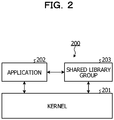
FIG. 2 is an explanatory diagram for explaining a system environment. As illustrated inFIG. 2 , asystem environment 200 that executes anapplication 202 such as theoriginal program 11A or thetarget program 11B includes akernel 201 that is the core of the OS and a sharedlibrary group 203 composed of various kinds of shared libraries such as a DLL. Thesystem environment 200 is provided by an OS on theinformation processing apparatus 1 or an OS on a virtual machine implemented by using a virtualization technique in theinformation processing apparatus 1, for example. It is to be noted that the type of OS may be any of types such as Linux (registered trademark) and Windows (registered trademark). - The executing
unit 20 monitors system calls at the time of execution of theapplication 202 such as theoriginal program 11A or thetarget program 11B and acquiresAPI call information 51 such as the type of API call that is called by communication with thekernel 201, the number of times of calling, and the order of calling. The executingunit 20 stores the acquiredAPI call information 51 in thestoring unit 50 together with an identifier (for example, program name) that indicates theoriginal program 11A or thetarget program 11B and so forth. -
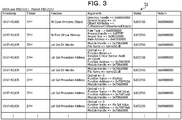
FIG. 3 is an explanatory diagram for explaining theAPI call information 51. As illustrated inFIG. 3 , theAPI call information 51 includes pieces of information such as "Timestamp," "Thread," "Function," "Arguments," "Status," and "Return" regarding API calls at the time of execution of theapplication 202. - "Timestamp" indicates the clock time of the API call, for example, the order of calling. "Thread" indicates the thread of the API call and the number of API calls of the same thread represents the number of times of calling. "Function" indicates the function called by the API call. "Arguments" indicates the arguments of the API call. "Status" indicates the states of the API call (for example, success/failure). "Return" indicates the return address of the API call.
- Furthermore, the executing
unit 20 monitors read-out of the sharedlibrary group 203 at the time of execution of theapplication 202 such as theoriginal program 11A or thetarget program 11B and acquires DLL read-outinformation 52 of a file group of the shared libraries read out from theshared library group 203. The executingunit 20 stores the acquired DLL read-out information 52 in thestoring unit 50 together with the identifier (for example, program name) that indicates theoriginal program 11A or thetarget program 11B and so forth. -
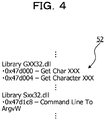
FIG. 4 is an explanatory diagram for explaining the DLL read-outinformation 52. As illustrated inFIG. 4 , the DLL read-out information 52 is a list of the file group ("GXX32.dll," "Sxx32.dll," ··· and so forth) read out from the sharedlibrary group 203 at the time of execution of theapplication 202. In the list in the DLL read-out information 52, the file group is described in order of read-out. - Furthermore, the executing
unit 20 monitors processes at the time of execution of theapplication 202 such as theoriginal program 11A or thetarget program 11B and acquiresprocess information 53 of the executed processes. The executingunit 20 stores the acquiredprocess information 53 in thestoring unit 50 together with the identifier (for example, program name) that indicates theoriginal program 11A or thetarget program 11B and so forth. -
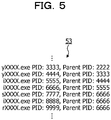
FIG. 5 is an explanatory diagram for explaining theprocess information 53. As illustrated inFIG. 5 , theprocess information 53 is a list of processes at the time of execution of theapplication 202. For example, theprocess information 53 includes the process name as the identifier of the process ("yXXXX.exe" or the like) and the process identifier (ID) ("PID: 3333" or the like) and information that indicates the parent process ("Parent PID: 2222" or the like) regarding each process at the time of the execution. - The determining
unit 30 determines the similarity between theoriginal program 11A and thetarget program 11B based on the result of comparison between the code of theoriginal program 11A and the code of thetarget program 11B and the result of comparison between information acquired at the time of execution of theoriginal program 11A and information acquired at the time of execution of thetarget program 11B. - For example, the determining
unit 30 carries out static analysis in which the similarity that represents the degree of similarity between codes is determined by comparing the code of theoriginal program 11A and the code of thetarget program 11B, and outputs the analysis result to theoutput unit 40. Furthermore, the determiningunit 30 carries out dynamic analysis in which the information acquired at the time of execution of theoriginal program 11A and the information acquired at the time of execution of thetarget program 11B are compared and the similarity between these pieces of information is determined, and outputs the analysis result to theoutput unit 40. - For example, the determining
unit 30 compares information on the API call type, the number of times of calling of the API call, or the order of calling of a first API call included in the API callinformation 51 of theoriginal program 11A and information on the API call type, the number of times of calling of the API call, or the order of calling of the first API call included in the API callinformation 51 of thetarget program 11B. Then, the determiningunit 30 calculates the similarity that represents the degree of similarity between these pieces of information by carrying out scoring based on consistency/inconsistency between these pieces of information. - For example, the change in subspecific malware from the original malware is only part of the malware, such as the attack target. Thus, the contents of the API calls of the subspecific malware are similar to those of the original malware. Therefore, pieces of subspecific malware that variously derive from the
original program 11A may be easily detected by obtaining the similarity between the API callinformation 51 of theoriginal program 11A that is the matching source and the API callinformation 51 of thetarget program 11B. As one example, if the similarity between the API callinformation 51 of theoriginal program 11A that is the matching source and the API callinformation 51 of thetarget program 11B is high (for example, equal to or higher than a given value), it may be determined that thetarget program 11B is malware. - Furthermore, the determining
unit 30 compares the DLL read-outinformation 52 of theoriginal program 11A and the DLL read-outinformation 52 of thetarget program 11B and carries out scoring based on consistency/inconsistency between these pieces of information. Thereby, the determiningunit 30 calculates the similarity that represents the degree of similarity between these pieces of information. - For example, the files of shared libraries read out by the original malware and the files of shared libraries read out by subspecific malware are similar to each other. Therefore, pieces of subspecific malware that variously derive from the
original program 11A may be easily detected by obtaining the similarity between the DLL read-outinformation 52 of theoriginal program 11A that is the matching source and the DLL read-outinformation 52 of thetarget program 11B. As one example, if the similarity between the DLL read-outinformation 52 of theoriginal program 11A that is the matching source and the DLL read-outinformation 52 of thetarget program 11B is high (for example, equal to or higher than a given value), it may be determined that thetarget program 11B is malware. - Furthermore, the determining
unit 30 may compare information obtained by summarizing the files included in the DLL read-outinformation 52 of pluraloriginal programs 11A as a characteristic and the DLL read-outinformation 52 of thetarget program 11B and output the similarity between the pluraloriginal programs 11A and thetarget program 11B. - For example, the determining
unit 30 tallies up the appearance frequency of the files included in the DLL read-outinformation 52 of the pluraloriginal programs 11A/appearance frequency of the files in the whole of the pluraloriginal programs 11A and so forth and obtains term frequency (TF)/inverse document frequency (IDF), contrast set mining, and so forth. Then, the determiningunit 30 compares the TF/IDF and the contrast set mining summarized from the DLL read-outinformation 52 of the pluraloriginal programs 11A and the DLL read-outinformation 52 of thetarget program 11B and outputs the similarity between the pluraloriginal programs 11A and thetarget program 11B. - The TF/IDF summarized from the DLL read-out
information 52 of the pluraloriginal programs 11A represents a characteristic unique to malware. Thus, calculation of the similarity with emphasis on what is characteristic of the malware may be carried out through comparison with the TF/IDF summarized from the DLL read-outinformation 52 of the pluraloriginal programs 11A. - Furthermore, the determining
unit 30 compares theprocess information 53 of theoriginal program 11A and theprocess information 53 of thetarget program 11B and carries out scoring based on consistency/inconsistency between these pieces of information. Thereby, the determiningunit 30 calculates the similarity that represents the degree of similarity between these pieces of information. - For example, the processes executed by the original malware and the processes executed by subspecific malware are similar to each other. Therefore, pieces of subspecific malware that variously derive from the
original program 11A may be easily detected by obtaining the similarity between theprocess information 53 of theoriginal program 11A that is the matching source and theprocess information 53 of thetarget program 11B. As one example, if the similarity between theprocess information 53 of theoriginal program 11A that is the matching source and theprocess information 53 of thetarget program 11B is high (for example, equal to or higher than a given value), it may be determined that thetarget program 11B is malware. - The
output unit 40 outputs the similarity between theoriginal program 11A and thetarget program 11B determined by the determiningunit 30 to a display, a file, or the like. By checking the output similarity, the user may discriminate whether or not thetarget program 11B is malware. - Furthermore, based on the result of comparison of plural
original programs 11A with thetarget program 11B, theoutput unit 40 ranks theoriginal programs 11A in decreasing order of the similarity (score). Subsequently, theoutput unit 40 rearranges theoriginal programs 11A in order of the score (decreasing order) and displays score values that represent the similarity to thetarget program 11B determined regarding eachoriginal program 11A. This allows the user to easily find theoriginal program 11A whose similarity to thetarget program 11B is high among the pluraloriginal programs 11A. - Moreover, based on the result of comparison of
plural target programs 11B with theoriginal program 11A, theoutput unit 40 ranks thetarget programs 11B in decreasing order of the similarity (score). Subsequently, theoutput unit 40 rearranges thetarget programs 11B in order of the score (decreasing order) and displays score values that represent the similarity to theoriginal program 11A determined regarding eachtarget program 11B. This allows the user to easily find thetarget program 11B whose similarity to theoriginal program 11A is high among theplural target programs 11B. It is to be noted that, in the present embodiment, description will be made by taking as an example the case in which theoriginal programs 11A are rearranged in order of the score to be displayed based on the result of comparison of the pluraloriginal programs 11A with thetarget program 11B. - The storing
unit 50 is a storing device such as a hard disk drive (HDD). The storingunit 50 stores theoriginal program 11A that serves as the matching source and the API callinformation 51, the DLL read-outinformation 52, and theprocess information 53 regarding each program. -
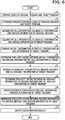
FIG. 6 is a flowchart illustrating an operation example of theinformation processing apparatus 1 according to the embodiment. It is to be noted that suppose that theoriginal program 11A has been input before start of the processing and theoriginal program 11A and the API callinformation 51, the DLL read-outinformation 52, and theprocess information 53 of theoriginal program 11A have been stored in the storing unit 50 (have been acquired). Furthermore, suppose that thetarget program 11B is input at the time of the start of the processing. - As illustrated in
FIG. 6 , when the processing is started, the determiningunit 30 reads out theoriginal program 11A from the storingunit 50 and compares the codes of the read-outoriginal program 11A and theinput target program 11B by using a differencing tool (for example, Diff) (S1). - Subsequently, the determining
unit 30 determines the similarity between the code of theoriginal program 11A and the code of thetarget program 11B from the comparison result of S1 (S2). For example, the determiningunit 30 obtains a score that represents the similarity about the code based on the amount of different part detected as the difference by the differencing tool. - Subsequently, the determining
unit 30 acquires the API callinformation 51, the DLL read-outinformation 52, and theprocess information 53 of theoriginal program 11A stored in the storing unit 50 (S3). - Subsequently, the executing
unit 20 executes theinput target program 11B and acquires the API callinformation 51, the DLL read-outinformation 52, and theprocess information 53 of thetarget program 11B (S4). The executingunit 20 stores the acquired API callinformation 51, DLL read-outinformation 52, andprocess information 53 of thetarget program 11B in the storingunit 50 and outputs the acquired API callinformation 51, DLL read-outinformation 52, andprocess information 53 to the determiningunit 30. - Next, the determining
unit 30 compares the API callinformation 51 of theoriginal program 11A and the API callinformation 51 of thetarget program 11B (S5). Subsequently, the determiningunit 30 determines the similarity (score) between the API callinformation 51 of theoriginal program 11A and the API callinformation 51 of thetarget program 11B by carrying out scoring based on consistency/inconsistency between these pieces of information (S6). - In the determination of the similarity in S6, the degree of similarity between an N-gram model based on the
API call information 51 of theoriginal program 11A and an N-gram model based on theAPI call information 51 of thetarget program 11B may be obtained as the score. - For example, the determining
unit 30 obtains information obtained by arranging API calls in order of calling (for example, sorting based on "Timestamp" inFIG. 3 ) based on theAPI call information 51 of theoriginal program 11A. Then, the determiningunit 30 sequentially obtains appearance frequency that represents how often a combination of N API calls appears to obtain the N-gram model based on theAPI call information 51 of theoriginal program 11A. - Similarly, the determining
unit 30 obtains information obtained by arranging API calls in order of calling based on theAPI call information 51 of thetarget program 11B. Then, the determiningunit 30 sequentially obtains appearance frequency that represents how often a combination of N API calls appears to obtain the N-gram model based on theAPI call information 51 of thetarget program 11B. Subsequently, the determiningunit 30 converts the degree of similarity between these N-gram models to the score to obtain the similarity. By obtaining the similarity between the N-gram model based on theAPI call information 51 of theoriginal program 11A and the N-gram model based on theAPI call information 51 of thetarget program 11B as above, the similarity when the order of calling of the API calls is considered may be obtained. - Furthermore, in the determination of the similarity in S6, the cosine similarity in a vector space between a vector based on the
API call information 51 of theoriginal program 11A and a vector based on theAPI call information 51 of thetarget program 11B may be obtained as the score. For example, the determiningunit 30 obtains a vector based on the API call type, the number of times of calling of the API call, the order of calling of the API call, or the like included in the API callinformation 51 of theoriginal program 11A. Furthermore, the determiningunit 30 obtains a vector based on the API call type, the number of times of calling of the API call, the order of calling of the API call, or the like included in the API callinformation 51 of thetarget program 11B. Subsequently, the determiningunit 30 obtains the cosine similarity between these vectors in the vector space. As above, the determiningunit 30 may obtain the score based on the cosine similarity. - Next, the determining
unit 30 compares the DLL read-outinformation 52 of theoriginal program 11A and the DLL read-outinformation 52 of thetarget program 11B (S7). Subsequently, the determiningunit 30 determines the similarity (score) between the DLL read-outinformation 52 of theoriginal program 11A and the DLL read-outinformation 52 of thetarget program 11B by carrying out scoring based on consistency/inconsistency between these pieces of information (S8). - In the determination of the similarity in S8, a set including the files included in the DLL read-out
information 52 of theoriginal program 11A as elements and a set including the files included in the DLL read-outinformation 52 of thetarget program 11B as elements may be compared and the score that represents the similarity between the sets may be obtained. As this score that represents the similarity between sets, a Jaccard index exists. For example, the determiningunit 30 obtains the Jaccard index by regarding the number of elements of the OR of two sets as the denominator and regarding the number of elements of the AND of the two sets as the numerator. - Furthermore, as the score that represents the similarity between sets, the similarity of the order in which files are read out (order of arrangement of the files) exists. For example, the score according to the consistent place of the order of read-out (order of arrangement) of files in sets may be obtained. Moreover, the determining
unit 30 may convert the degree of similarity between an N-gram model of information obtained by arranging the files included in the DLL read-outinformation 52 of theoriginal program 11A in order of read-out and an N-gram model of information obtained by arranging the files included in the DLL read-outinformation 52 of thetarget program 11B in order of read-out to the score to obtain the similarity. - As above, the determining
unit 30 may obtain the degree of similarity between the set of the files called from the sharedlibrary group 203 by theoriginal program 11A and the set of the files called from the sharedlibrary group 203 by thetarget program 11B. - Subsequently, the determining
unit 30 compares theprocess information 53 of theoriginal program 11A and theprocess information 53 of thetarget program 11B (S9). Next, the determiningunit 30 determines the similarity (score) between theprocess information 53 of theoriginal program 11A and theprocess information 53 of thetarget program 11B by carrying out scoring based on consistency/inconsistency between these pieces of information (S10). - In the determination of the similarity in S10, a set including the processes included in the
process information 53 of theoriginal program 11A as elements and a set including the processes included in theprocess information 53 of thetarget program 11B as elements may be compared and a Jaccard index that represents the similarity between the sets may be obtained as the score. As above, the determiningunit 30 may obtain the degree of similarity between the set of the processes executed by theoriginal program 11A and the set of the processes executed by thetarget program 11B. - Subsequently, the
output unit 40 outputs the determination results of the determination by the determiningunit 30 in S2, S6, S8, and S10, for example, the similarities between theoriginal program 11A and thetarget program 11B, to a display, a file, or the like (S11). -
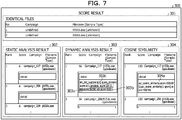
FIG. 7 is an explanatory diagram for explaining result output. As illustrated inFIG. 7 , theoutput unit 40 displays the determination results of the determination by the determiningunit 30 in S2, S6, S8, and S10 on adisplay screen 300. This allows the user to discriminate whether or not thetarget program 11B is malware. - For example, the
display screen 300 includes afile display area 301 and resultdisplay areas 302 to 304. Thefile display area 301 is an area in which theoriginal programs 11A are arranged in decreasing order of the similarity (score) to be displayed based on the result of comparison of the pluraloriginal programs 11A with thetarget program 11B. By thefile display area 301, the user may easily come to know theoriginal program 11A whose similarity to thetarget program 11B is high. - The
result display area 302 is an area in which the result of static analysis in which the degree of similarity between the codes of theoriginal program 11A and thetarget program 11B is analyzed is displayed. By theresult display area 302, the user may easily come to know the degree of similarity of the code between theoriginal program 11A and thetarget program 11B. - The
result display area 303 is an area in which the result of dynamic analysis based on comparison between at the time of execution of theoriginal program 11A and at the time of execution of thetarget program 11B is displayed. For example, theresult display area 303 has a score value 303a based on comparison between the API callinformation 51 of theoriginal program 11A and the API callinformation 51 of thetarget program 11B. By the score value 303a, the user may easily come to know the degree of similarity between the contents of API calls at the time of execution of theoriginal program 11A and the contents of API calls at the time of execution of thetarget program 11B. - Furthermore, the
result display area 303 has ascore value 303b based on comparison between the DLL read-outinformation 52 of theoriginal program 11A and the DLL read-outinformation 52 of thetarget program 11B. By thescore value 303b, the user may easily come to know the degree of similarity between the file group of shared libraries called at the time of execution of theoriginal program 11A and the file group of shared libraries called at the time of execution of thetarget program 11B. - Moreover, the
result display area 303 has ascore value 303c based on comparison between theprocess information 53 of theoriginal program 11A and theprocess information 53 of thetarget program 11B. By thescore value 303c, the user may easily come to know the degree of similarity between the processes at the time of execution of theoriginal program 11A and the processes at the time of execution of thetarget program 11B. - The
result display area 304 is an area in which ascore value 304a of the cosine similarity based on comparison between the API callinformation 51 of theoriginal program 11A and the API callinformation 51 of thetarget program 11B is displayed. By thescore value 304a, the user may easily come to know the cosine similarity between the contents of API calls at the time of execution of theoriginal program 11A and the contents of API calls at the time of execution of thetarget program 11B. - As described above, the
information processing apparatus 1 executes theoriginal program 11A under thesystem environment 200 and acquires the DLL read-outinformation 52 of the file group read out from the sharedlibrary group 203. Furthermore, theinformation processing apparatus 1 executes thetarget program 11B under thesystem environment 200 and acquires the DLL read-outinformation 52 of the file group read out from the sharedlibrary group 203. Moreover, theinformation processing apparatus 1 compares the DLL read-outinformation 52 of theoriginal program 11A and the DLL read-outinformation 52 of thetarget program 11B and determines the similarity between theoriginal program 11A and thetarget program 11B according to the comparison result to output the similarity. Therefore, the user may easily detect pieces of malware that variously derive from theoriginal program 11A without collecting all pieces of subspecific malware as theoriginal program 11A. - It is to be noted that the respective constituent elements of each piece of apparatus illustrated in the drawings do not need be configured as illustrated in the drawings physically. For example, concrete forms of distribution and integration of each of apparatus are not limited to the illustrated ones and all or part of each of apparatus may be configured to be distributed or integrated functionally or physically in an arbitrary unit according to various kinds of loads, the status of use, and so forth.
- Furthermore, all or an arbitrary part of various kinds of processing functions carried out in the
information processing apparatus 1 may be carried out on a central processing unit (CPU) (or microcomputer such as a micro processing unit (MPU) or a micro controller unit (MCU)). Moreover, it goes without saying that all or an arbitrary part of the various kinds of processing functions may be carried out on a program analyzed and executed by the CPU (or microcomputer such as an MPU or MCU) or on hardware based on wired logic. In addition, the various kinds of processing functions carried out in theinformation processing apparatus 1 may be executed by plural computers in cooperation based on cloud computing. - Incidentally, various kinds of processing explained in the above-described embodiment may be implemented by executing a program prepared in advance by a computer. Therefore, in the following, one example of a computer (hardware) that executes a program having similar functions to the above-described embodiment will be described.
FIG. 8 is a block diagram illustrating a hardware configuration example of theinformation processing apparatus 1 according to the embodiment. - As illustrated in
FIG. 8 , theinformation processing apparatus 1 includes aCPU 101 that executes various kinds of arithmetic processing, aninput device 102 that accepts data input, amonitor 103, and aspeaker 104. Furthermore, theinformation processing apparatus 1 includes amedium reading device 105 that reads a program and so forth from a storage medium, aninterface device 106 for coupling to various kinds of devices, and acommunication device 107 for communication coupling with external equipment by a wired or wireless measure. Moreover, theinformation processing apparatus 1 includes a random access memory (RAM) 108 that temporarily stores various kinds of information and ahard disk device 109. Furthermore, the respective units (101 to 109) in theinformation processing apparatus 1 are coupled to abus 110. - In the
hard disk device 109, aprogram 111 for executing various kinds of processing in theinput unit 10, the executingunit 20, the determiningunit 30, and theoutput unit 40 explained in the above-described embodiment is stored. Furthermore, various kinds of data 112 to which theprogram 111 refers are stored in thehard disk device 109. Theinput device 102 accepts input of operation information from an operator of theinformation processing apparatus 1, for example. Themonitor 103 displays various kinds of screens operated by the operator, for example. To theinterface device 106, a printing device and so forth are coupled, for example. Thecommunication device 107 is coupled to a communication network such as a local area network (LAN) and exchanges various kinds of information with external equipment through the communication network. - The
CPU 101 executes various kinds of processing by reading out theprogram 111 stored in thehard disk device 109 and loading theprogram 111 into theRAM 108 to execute the program. It is to be noted that theprogram 111 does not have to be stored in thehard disk device 109. For example, theprogram 111 stored in a storage medium readable by theinformation processing apparatus 1 may be read out and executed. To the storage medium readable by theinformation processing apparatus 1, portable recording media such as compact disc read-only memory (CD-ROM), DVD disc, and universal serial bus (USB) memory, semiconductor memories such as flash memory, hard disk drives, and so forth correspond, for example. Furthermore, theprogram 111 may be stored in a device coupled to a public line, the Internet, a LAN, or the like and theinformation processing apparatus 1 may read out theprogram 111 from this communication network and execute theprogram 111. -
- 1···Information processing apparatus
- 10···Input unit
- 11A···Original program
- 11B···Target program
- 20···Executing unit
- 30···Determining unit
- 40···Output unit
- 50···Storing unit
- 51···API call information
- 52···DLL read-out information
- 53···Process information
- 101···CPU
- 102···Input device
- 103···Monitor
- 104···Speaker
- 105···Medium reading device
- 106···Interface device
- 107···Communication device
- 108···RAM
- 109···Hard disk device
- 110···Bus
- 111···Program
- 112···Various kinds of data
- 200···System environment
- 201···Kernel
- 202···Application
- 203···Shared library group
- 300···Display screen
- 301···File display area
- 302 to 304···Result display areas
- 303a, 303b, 303c, 304c···Score value
Claims (6)
- A program that causes an information processing apparatus to execute a process, the process comprising:executing a first program by using a system including a kernel of an operating system (OS) and shared libraries;acquiring first information on a first file group read out from the shared libraries;executing a second program by using the system;acquiring second information on a second file group read out from the shared libraries;executing similarity determination processing of determining similarity between the first program and the second program by comparing the first information and the second information that have been acquired; andoutputting the similarity that has been determined.
- The program according to claim 1, wherein
in the similarity determination processing, a Jaccard index between a set including files included in the first file group as elements and a set including files included in the second file group as elements is determined as the similarity. - An information processing apparatus comprising:a memory; anda processor coupled to the memory and configured to:execute a first program by using a system including a kernel of an operating system (OS) and shared libraries,acquire first information on a first file group read out from the shared libraries,execute a second program by using the system,acquire second information on a second file group read out from the shared libraries,execute similarity determination processing of determining similarity between the first program and the second program by comparing the first information and the second information that have been acquired, andoutput the similarity that has been determined.
- The information processing apparatus according to claim 3, wherein in the similarity determination processing, a Jaccard index between a set including files included in the first file group as elements and a set including files included in the second file group as elements is determined as the similarity.
- A method executed by a computer, the method comprising:executing a first program by using a system including a kernel of an operating system (OS) and shared libraries;acquiring first information on a first file group read out from the shared libraries;executing a second program by using the system;acquiring second information on a second file group read out from the shared libraries;executing similarity determination processing of determining similarity between the first program and the second program by comparing the first information and the second information that have been acquired; andoutputting the similarity that has been determined.
- The method according to claim 5, wherein
in the similarity determination processing, a Jaccard index between a set including files included in the first file group as elements and a set including files included in the second file group as elements is determined as the similarity.
Applications Claiming Priority (1)
| Application Number | Priority Date | Filing Date | Title |
|---|---|---|---|
| JP2017000748A JP6866645B2 (en) | 2017-01-05 | 2017-01-05 | Similarity determination program, similarity determination method and information processing device |
Publications (1)
| Publication Number | Publication Date |
|---|---|
| EP3346409A1 true EP3346409A1 (en) | 2018-07-11 |
Family
ID=60781590
Family Applications (1)
| Application Number | Title | Priority Date | Filing Date |
|---|---|---|---|
| EP17207642.4A Withdrawn EP3346409A1 (en) | 2017-01-05 | 2017-12-15 | Program, information processing apparatus and method |
Country Status (4)
| Country | Link |
|---|---|
| US (1) | US11048799B2 (en) |
| EP (1) | EP3346409A1 (en) |
| JP (2) | JP6866645B2 (en) |
| SG (1) | SG10201710531VA (en) |
Families Citing this family (7)
| Publication number | Priority date | Publication date | Assignee | Title |
|---|---|---|---|---|
| US11146580B2 (en) * | 2018-09-28 | 2021-10-12 | Adobe Inc. | Script and command line exploitation detection |
| CN110139175B (en) * | 2019-05-25 | 2021-08-31 | 青岛农业大学 | A recording device that can prevent noise in film and television engineering |
| CN110856059A (en) * | 2019-11-28 | 2020-02-28 | 江苏盐西世纪教育产业项目开发有限公司 | Microphone mounting structure capable of being mounted quickly for auditorium |
| CN111698591B (en) * | 2020-06-23 | 2022-03-08 | 江西师范大学 | Music piece extraction equipment for field wind collection |
| US11914709B2 (en) | 2021-07-20 | 2024-02-27 | Bank Of America Corporation | Hybrid machine learning and knowledge graph approach for estimating and mitigating the spread of malicious software |
| US20220108182A1 (en) * | 2021-12-14 | 2022-04-07 | Intel Corporation | Methods and apparatus to train models for program synthesis |
| WO2024252832A1 (en) * | 2023-06-05 | 2024-12-12 | ソニーグループ株式会社 | Measurement device and measurement system |
Citations (2)
| Publication number | Priority date | Publication date | Assignee | Title |
|---|---|---|---|---|
| US20070240222A1 (en) * | 2006-04-06 | 2007-10-11 | George Tuvell | System and Method for Managing Malware Protection on Mobile Devices |
| JP5083760B2 (en) | 2007-08-03 | 2012-11-28 | 独立行政法人情報通信研究機構 | Malware similarity inspection method and apparatus |
Family Cites Families (50)
| Publication number | Priority date | Publication date | Assignee | Title |
|---|---|---|---|---|
| US7093239B1 (en) | 2000-07-14 | 2006-08-15 | Internet Security Systems, Inc. | Computer immune system and method for detecting unwanted code in a computer system |
| US7487544B2 (en) * | 2001-07-30 | 2009-02-03 | The Trustees Of Columbia University In The City Of New York | System and methods for detection of new malicious executables |
| US6792543B2 (en) * | 2001-08-01 | 2004-09-14 | Networks Associates Technology, Inc. | Virus scanning on thin client devices using programmable assembly language |
| US7000150B1 (en) | 2002-06-12 | 2006-02-14 | Microsoft Corporation | Platform for computer process monitoring |
| US7549164B2 (en) | 2003-06-11 | 2009-06-16 | Symantec Corporation | Intrustion protection system utilizing layers and triggers |
| US7185320B2 (en) | 2003-06-27 | 2007-02-27 | Hewlett-Packard Development Company, L.P. | System and method for processing breakpoint events in a child process generated by a parent process |
| US7415699B2 (en) | 2003-06-27 | 2008-08-19 | Hewlett-Packard Development Company, L.P. | Method and apparatus for controlling execution of a child process generated by a modified parent process |
| US7353498B2 (en) | 2004-04-29 | 2008-04-01 | Hewlett-Packard Development Company, L.P. | Multi-process debugger |
| US20050273858A1 (en) | 2004-06-07 | 2005-12-08 | Erez Zadok | Stackable file systems and methods thereof |
| US7735138B2 (en) * | 2005-01-14 | 2010-06-08 | Trend Micro Incorporated | Method and apparatus for performing antivirus tasks in a mobile wireless device |
| KR101193728B1 (en) | 2007-12-05 | 2012-10-22 | 시바우라 메카트로닉스 가부시키가이샤 | Feature analyzing apparatus |
| JP2010009269A (en) | 2008-06-26 | 2010-01-14 | Iwate Univ | Computer virus detection device, computer virus detection method and computer virus detection program |
| US20110041179A1 (en) * | 2009-08-11 | 2011-02-17 | F-Secure Oyj | Malware detection |
| KR101057432B1 (en) | 2010-02-23 | 2011-08-22 | 주식회사 이세정보 | Systems, methods, programs and recording media that detect and block harmful programs in real time through analysis of process behavior |
| JP2011258019A (en) | 2010-06-09 | 2011-12-22 | Nippon Telegr & Teleph Corp <Ntt> | Abnormality detection device, abnormality detection program and abnormality detection method |
| JP5437964B2 (en) | 2010-10-06 | 2014-03-12 | 日本電信電話株式会社 | Analysis method, analysis apparatus, and analysis program |
| US20120102569A1 (en) | 2010-10-21 | 2012-04-26 | F-Secure Corporation | Computer system analysis method and apparatus |
| US8555385B1 (en) | 2011-03-14 | 2013-10-08 | Symantec Corporation | Techniques for behavior based malware analysis |
| US9652616B1 (en) * | 2011-03-14 | 2017-05-16 | Symantec Corporation | Techniques for classifying non-process threats |
| US8806641B1 (en) * | 2011-11-15 | 2014-08-12 | Symantec Corporation | Systems and methods for detecting malware variants |
| US9558348B1 (en) | 2012-03-01 | 2017-01-31 | Mcafee, Inc. | Ranking software applications by combining reputation and code similarity |
| US9021589B2 (en) | 2012-06-05 | 2015-04-28 | Los Alamos National Security, Llc | Integrating multiple data sources for malware classification |
| JP6590481B2 (en) | 2012-12-07 | 2019-10-16 | キヤノン電子株式会社 | Virus intrusion route specifying device, virus intrusion route specifying method and program |
| US9448859B2 (en) | 2013-09-17 | 2016-09-20 | Qualcomm Incorporated | Exploiting hot application programming interfaces (APIs) and action patterns for efficient storage of API logs on mobile devices for behavioral analysis |
| US10666677B2 (en) | 2013-09-23 | 2020-05-26 | New York University | System, method and computer-accessible medium for deterrence of malware |
| JP6000465B2 (en) * | 2013-09-25 | 2016-09-28 | 三菱電機株式会社 | Process inspection apparatus, process inspection program, and process inspection method |
| US9489514B2 (en) | 2013-10-11 | 2016-11-08 | Verisign, Inc. | Classifying malware by order of network behavior artifacts |
| US10311233B2 (en) | 2013-12-26 | 2019-06-04 | Mcafee, Llc | Generic unpacking of program binaries |
| US20150205962A1 (en) | 2014-01-23 | 2015-07-23 | Cylent Systems, Inc. | Behavioral analytics driven host-based malicious behavior and data exfiltration disruption |
| US8930916B1 (en) | 2014-01-31 | 2015-01-06 | Cylance Inc. | Generation of API call graphs from static disassembly |
| JP6459289B2 (en) * | 2014-08-07 | 2019-01-30 | 日本電気株式会社 | Malware estimation apparatus, malware estimation method, and malware estimation program |
| US10043009B2 (en) * | 2014-09-24 | 2018-08-07 | Intel Corporation | Technologies for software basic block similarity analysis |
| US20160094564A1 (en) * | 2014-09-26 | 2016-03-31 | Mcafee, Inc | Taxonomic malware detection and mitigation |
| JP6282217B2 (en) | 2014-11-25 | 2018-02-21 | 株式会社日立システムズ | Anti-malware system and anti-malware method |
| EP3227820A1 (en) | 2014-12-05 | 2017-10-11 | Permissionbit | Methods and systems for encoding computer processes for malware deteection |
| CN105989283B (en) | 2015-02-06 | 2019-08-09 | 阿里巴巴集团控股有限公司 | A method and device for identifying virus variants |
| JP2016206950A (en) * | 2015-04-22 | 2016-12-08 | 日本電信電話株式会社 | Perusal training data output device for malware determination, malware determination system, malware determination method, and perusal training data output program for malware determination |
| US20160379136A1 (en) * | 2015-06-26 | 2016-12-29 | Qualcomm Incorporated | Methods and Systems for Automatic Extraction of Behavioral Features from Mobile Applications |
| US10230749B1 (en) * | 2016-02-29 | 2019-03-12 | Palo Alto Networks, Inc. | Automatically grouping malware based on artifacts |
| US10200390B2 (en) * | 2016-02-29 | 2019-02-05 | Palo Alto Networks, Inc. | Automatically determining whether malware samples are similar |
| US9917855B1 (en) | 2016-03-03 | 2018-03-13 | Trend Micro Incorporated | Mixed analysys-based virtual machine sandbox |
| US20170308701A1 (en) | 2016-04-22 | 2017-10-26 | Qualcomm Incorporated | Methods and Systems for Intelligently Detecting Malware and Attacks on Client Computing Devices and Corporate Networks |
| RU2634177C1 (en) | 2016-05-20 | 2017-10-24 | Акционерное общество "Лаборатория Касперского" | System and method for unwanted software detection |
| WO2018006241A1 (en) | 2016-07-04 | 2018-01-11 | Mcafee, Inc. | Method and apparatus to detect security vulnerabilities in web application |
| CN106599686B (en) * | 2016-10-12 | 2019-06-21 | 四川大学 | A Malware Clustering Method Based on TLSH Feature Representation |
| JP6104447B1 (en) | 2016-10-31 | 2017-03-29 | 株式会社ソリトンシステムズ | Program operation monitoring control device, distributed object generation management device, program, and program operation monitoring system |
| US9804952B1 (en) | 2016-11-07 | 2017-10-31 | Red Hat, Inc. | Application debugging in a restricted container environment |
| US10552609B2 (en) | 2016-12-30 | 2020-02-04 | Intel Corporation | Malicious object detection in a runtime environment |
| US10169586B2 (en) | 2016-12-31 | 2019-01-01 | Fortinet, Inc. | Ransomware detection and damage mitigation |
| US10645099B1 (en) | 2017-09-01 | 2020-05-05 | Ca, Inc. | Malware detection facilitated by copying a memory range from an emulator for analysis and signature generation |
-
2017
- 2017-01-05 JP JP2017000748A patent/JP6866645B2/en not_active Expired - Fee Related
- 2017-05-24 JP JP2017102323A patent/JP2018137716A/en active Pending
- 2017-12-14 US US15/841,466 patent/US11048799B2/en not_active Expired - Fee Related
- 2017-12-15 EP EP17207642.4A patent/EP3346409A1/en not_active Withdrawn
- 2017-12-18 SG SG10201710531VA patent/SG10201710531VA/en unknown
Patent Citations (2)
| Publication number | Priority date | Publication date | Assignee | Title |
|---|---|---|---|---|
| US20070240222A1 (en) * | 2006-04-06 | 2007-10-11 | George Tuvell | System and Method for Managing Malware Protection on Mobile Devices |
| JP5083760B2 (en) | 2007-08-03 | 2012-11-28 | 独立行政法人情報通信研究機構 | Malware similarity inspection method and apparatus |
Non-Patent Citations (5)
| Title |
|---|
| KONRAD RIECK ET AL: "Automatic analysis of malware behavior using machine learning", JOURNAL OF COMPUTER SECURITY, vol. 19, no. 4, 20 June 2011 (2011-06-20), NL, pages 639 - 668, XP055539492, ISSN: 0926-227X, DOI: 10.3233/JCS-2010-0410 * |
| MADHU K. SHANKARAPANI ET AL: "Malware detection using assembly and API call sequences", JOURNAL IN COMPUTER VIROLOGY, vol. 7, no. 2, 3 April 2010 (2010-04-03), Paris, pages 107 - 119, XP055472003, ISSN: 1772-9890, DOI: 10.1007/s11416-010-0141-5 * |
| PHILIPP TRINIUS ET AL: "A Malware Instruction Set for Behavior-Based Analysis", 31 December 2011 (2011-12-31), XP055156320, Retrieved from the Internet <URL:http://eprints.pascal-network.org/archive/00007694/01/2010-sicherheit.pdf> [retrieved on 20141202] * |
| QIAO YONG ET AL: "Analyzing Malware by Abstracting the Frequent Itemsets in API Call Sequences", 2013 12TH IEEE INTERNATIONAL CONFERENCE ON TRUST, SECURITY AND PRIVACY IN COMPUTING AND COMMUNICATIONS, IEEE, 16 July 2013 (2013-07-16), pages 265 - 270, XP032529512, DOI: 10.1109/TRUSTCOM.2013.36 * |
| YOUNGJOON KI ET AL: "A Novel Approach to Detect Malware Based on API Call Sequence Analysis", INTERNATIONAL JOURNAL OF DISTRIBUTED SENSOR NETWORKS, vol. 11, no. 6, 1 June 2015 (2015-06-01), pages 659101, XP055471986, ISSN: 1550-1477, DOI: 10.1155/2015/659101 * |
Also Published As
| Publication number | Publication date |
|---|---|
| US20180189492A1 (en) | 2018-07-05 |
| SG10201710531VA (en) | 2018-08-30 |
| JP6866645B2 (en) | 2021-04-28 |
| JP2018109909A (en) | 2018-07-12 |
| JP2018137716A (en) | 2018-08-30 |
| US11048799B2 (en) | 2021-06-29 |
Similar Documents
| Publication | Publication Date | Title |
|---|---|---|
| EP3346409A1 (en) | Program, information processing apparatus and method | |
| US9043915B2 (en) | System and method for detecting malicious executable files based on similarity of their resources | |
| US20110131551A1 (en) | Graphical user interface input element identification | |
| US11356467B2 (en) | Log analysis device, log analysis method, and log analysis program | |
| WO2017173925A1 (en) | Software management method and device, terminal, and storage medium | |
| US11036564B2 (en) | Non-transitory computer-readable storage medium, information processing apparatus and method for detecting malware | |
| US20180341769A1 (en) | Threat detection method and threat detection device | |
| JP6000465B2 (en) | Process inspection apparatus, process inspection program, and process inspection method | |
| TWI656453B (en) | Detection system and detection method | |
| US10114951B2 (en) | Virus signature matching method and apparatus | |
| US10129275B2 (en) | Information processing system and information processing method | |
| EP3346407A1 (en) | Malware detection through running process list monitoring | |
| CN112052150A (en) | Page loading time detection method, device, storage medium and device | |
| JP5952218B2 (en) | Information processing apparatus and information processing method | |
| JP5441043B2 (en) | Program, information processing apparatus, and information processing method | |
| CN108345471A (en) | Detection device handles the method and detection device of asynchronous event | |
| CN107742080B (en) | Vulnerability mining method and device for virtualized environment | |
| US12282674B2 (en) | Evidence collection guidance method and apparatus for file selection and computer-readable storage medium | |
| US10761840B2 (en) | Software analysis device, software analysis method, and recording medium | |
| EP4361909A1 (en) | Method and system for task recording using robotic process automation techchnology | |
| JP6386415B2 (en) | Log management method and log management system | |
| JP6527984B1 (en) | Difference data extraction device, difference data extraction program, and difference data extraction method | |
| US20170220339A1 (en) | Device, method, and program for visualizing dependent portions of program | |
| JP6919399B2 (en) | Judgment program, information processing device, and judgment method | |
| JP2014038467A (en) | Consistency destruction detection device, consistency destruction detection program, and consistency destruction detection method |
Legal Events
| Date | Code | Title | Description |
|---|---|---|---|
| PUAI | Public reference made under article 153(3) epc to a published international application that has entered the european phase |
Free format text: ORIGINAL CODE: 0009012 |
|
| STAA | Information on the status of an ep patent application or granted ep patent |
Free format text: STATUS: THE APPLICATION HAS BEEN PUBLISHED |
|
| AK | Designated contracting states |
Kind code of ref document: A1 Designated state(s): AL AT BE BG CH CY CZ DE DK EE ES FI FR GB GR HR HU IE IS IT LI LT LU LV MC MK MT NL NO PL PT RO RS SE SI SK SM TR |
|
| AX | Request for extension of the european patent |
Extension state: BA ME |
|
| STAA | Information on the status of an ep patent application or granted ep patent |
Free format text: STATUS: REQUEST FOR EXAMINATION WAS MADE |
|
| 17P | Request for examination filed |
Effective date: 20180813 |
|
| RBV | Designated contracting states (corrected) |
Designated state(s): AL AT BE BG CH CY CZ DE DK EE ES FI FR GB GR HR HU IE IS IT LI LT LU LV MC MK MT NL NO PL PT RO RS SE SI SK SM TR |
|
| STAA | Information on the status of an ep patent application or granted ep patent |
Free format text: STATUS: EXAMINATION IS IN PROGRESS |
|
| 17Q | First examination report despatched |
Effective date: 20190517 |
|
| STAA | Information on the status of an ep patent application or granted ep patent |
Free format text: STATUS: THE APPLICATION IS DEEMED TO BE WITHDRAWN |
|
| 18D | Application deemed to be withdrawn |
Effective date: 20211202 |