EP3346408A1 - Malware detection through api calls number, type and frequency analysis - Google Patents
Malware detection through api calls number, type and frequency analysis Download PDFInfo
- Publication number
- EP3346408A1 EP3346408A1 EP17208414.7A EP17208414A EP3346408A1 EP 3346408 A1 EP3346408 A1 EP 3346408A1 EP 17208414 A EP17208414 A EP 17208414A EP 3346408 A1 EP3346408 A1 EP 3346408A1
- Authority
- EP
- European Patent Office
- Prior art keywords
- information
- program
- api call
- judgment
- call
- Prior art date
- Legal status (The legal status is an assumption and is not a legal conclusion. Google has not performed a legal analysis and makes no representation as to the accuracy of the status listed.)
- Withdrawn
Links
Images




Classifications
-
- G—PHYSICS
- G06—COMPUTING OR CALCULATING; COUNTING
- G06F—ELECTRIC DIGITAL DATA PROCESSING
- G06F21/00—Security arrangements for protecting computers, components thereof, programs or data against unauthorised activity
- G06F21/50—Monitoring users, programs or devices to maintain the integrity of platforms, e.g. of processors, firmware or operating systems
- G06F21/55—Detecting local intrusion or implementing counter-measures
- G06F21/552—Detecting local intrusion or implementing counter-measures involving long-term monitoring or reporting
-
- G—PHYSICS
- G06—COMPUTING OR CALCULATING; COUNTING
- G06F—ELECTRIC DIGITAL DATA PROCESSING
- G06F9/00—Arrangements for program control, e.g. control units
- G06F9/06—Arrangements for program control, e.g. control units using stored programs, i.e. using an internal store of processing equipment to receive or retain programs
- G06F9/46—Multiprogramming arrangements
- G06F9/54—Interprogram communication
-
- G—PHYSICS
- G06—COMPUTING OR CALCULATING; COUNTING
- G06F—ELECTRIC DIGITAL DATA PROCESSING
- G06F21/00—Security arrangements for protecting computers, components thereof, programs or data against unauthorised activity
- G06F21/50—Monitoring users, programs or devices to maintain the integrity of platforms, e.g. of processors, firmware or operating systems
- G06F21/55—Detecting local intrusion or implementing counter-measures
- G06F21/56—Computer malware detection or handling, e.g. anti-virus arrangements
- G06F21/566—Dynamic detection, i.e. detection performed at run-time, e.g. emulation, suspicious activities
-
- G—PHYSICS
- G06—COMPUTING OR CALCULATING; COUNTING
- G06F—ELECTRIC DIGITAL DATA PROCESSING
- G06F11/00—Error detection; Error correction; Monitoring
- G06F11/36—Prevention of errors by analysis, debugging or testing of software
- G06F11/362—Debugging of software
- G06F11/3636—Debugging of software by tracing the execution of the program
-
- G—PHYSICS
- G06—COMPUTING OR CALCULATING; COUNTING
- G06F—ELECTRIC DIGITAL DATA PROCESSING
- G06F2221/00—Indexing scheme relating to security arrangements for protecting computers, components thereof, programs or data against unauthorised activity
- G06F2221/03—Indexing scheme relating to G06F21/50, monitoring users, programs or devices to maintain the integrity of platforms
- G06F2221/033—Test or assess software
Definitions
- the embodiments discussed herein are related to a program, an information processing apparatus and a method.
- malware detection methods there are conventional methods of detecting malware such as a computer virus, a worm, spyware, and the like that may be illicitly infectious to a device.
- malware detection methods an equality or a similarity of a behavior in terms of network address scanning is compared between software that performs an illicit process and software under judgment.
- a code is summarized and checked in terms of the equality to a code of malware.
- a literature of related techniques can be found, for example, in Japanese Patent No. 5083760 .
- the conventional techniques described above have a problem that it is difficult to detect a lot of various subspecies of malware that may occur from one piece of malware.
- subspecies of malware can be relatively easily created from original malware by changing a part, such as an attack target, of the original malware, and thus a lot of various subspecies of malware occur.
- These subspecies of malware are each different in terms of code and attack targets, and thus it is difficult to detect them by making a comparison with original malware in terms of code or a behavior associated with network address scanning.
- all subspecies of malware have to be collected, which is not easy to achieve.
- a program that causes an information processing apparatus to execute a process includes executing a first program using a system including a kernel of an operating system (OS), acquiring first information regarding a first Application Programming Interface (API) call in communication with the kernel in the execution of the first program, executing a second program using the system, acquiring second information regarding a second API call in communication with the kernel in the execution of the second program, executing a similarity judgment process in which a similarity between the first program and the second program is judged by comparing the acquired first information and the second information, and outputting the judged similarity, wherein the first information is information indicating at least one of a type of the first API call, the number of executions of the first API call, and a call order of the first API call, the second information includes a type of the second API call in a case where the first information includes the type of the first API call, the second information includes the number of executions of the second API call in a case where the first information includes the number of
- OS operating system
- API Application Programm
- FIG. 1 is a block diagram illustrating an example of a functional configuration of an information processing apparatus according to an embodiment
- an information processing apparatus 1 is an apparatus configured to accept an input of an original program 11A that is software such as malware configured to perform an illicit process and that is to be used as a reference in checking.
- the information processing apparatus 1 also accepts an input of a judgment-target program 11B that is a program to be subjected to a judgment as to whether the program is malware or not.
- the information processing apparatus 1 compare the judgment-target program 11B and the original program 11A, and outputs a judgment result to a display or the like.
- a PC Personal Computer
- the information processing apparatus 1 includes an input unit 10, an execution unit 20, a judgment unit 30, an output unit 40, and a storage unit 50.
- the input unit 10 accepts an input of data via reading the data from a storage medium such as a semiconductor memory, a DVD (Digital Versatile Disk), or the like or via communication using a communication network such as the Internet. More specifically, the input unit 10 accepts inputs of the original program 11A and the judgment-target program 11B.
- the original program 11A and the judgment-target program 11B are respectively examples of a first program and a second program.
- the input unit 10 outputs the accepted original program 11A and the accepted judgment-target program 11B to the execution unit 20. Furthermore, the input unit 10 stores the original program 11A in the storage unit 50.
- the execution unit 20 is an example of an acquisition unit.
- the execution unit 20 executes the original program 11A and the judgment-target program 11B under a system environment of a particular OS (Operating System) and acquires various kinds of information in the execution.
- OS Operating System
- FIG. 2 is a diagram illustrating a system environment; As illustrated in FIG. 2 , the system environment 200, which executes an application 202 such as the original program 11A, the judgment-target program 11B, or the like, includes a kernel 201 that is a core of the OS, and a shared library group 203 such as DLL (Dynamic Link Library).
- the system environment 200 is provided, for example, by an OS on the information processing apparatus 1 or an OS on a virtual machine realized in the information processing apparatus 1 using a virtual technique.
- the OS may be of any type such as Linux (registered trademark), Windows (registered trademark), or the like.
- the execution unit 20 monitors a system call during executing the application 202 such as the original program 11A, the judgment-target program 11B, or the like, and acquires API call information 51 such as the type of an API (Application Programming Interface) call called via a communication with the kernel 201, the number executions of the call, a calling order, or the like.
- the execution unit 20 stores, in the storage unit 50, the acquired API call information 51 together with identifiers (for example, program names) indicating the original program 11A and the judgment-target program 11B.
- FIG. 3 is a diagram illustrating the API call information 51.
- the API call information 51 includes information associated with API calls in execution of the application 202 in terms of "Timestamp”, “Thread”, “Function”, “Arguments”, “Status”, “Return”, etc.
- Timestamp indicates a time of an API call, that is, a call order.
- Thread indicates a thread of an API call, and the number of API calls for the same thread indicates the number of executions of the call.
- Force indicates a function called by an API call.
- Arguments indicates an argument of an API call.
- Status indicates a status (for example, in terms of success/failure) of an API call.
- Return indicates an address (a return value) to which an API call is to return.
- the execution unit 20 also monitors reading of the shared library group 203 during the execution of the application 202 such as the original program 11A, the judgment-target program 11B, or the like, and the execution unit 20 acquires DLL reading information 52 regarding a file group of a shared library read out from the shared library group 203.
- the execution unit 20 stores, in the storage unit 50, the acquired DLL reading information 52 together with identifiers (for example, program names) indicating the input original program 11A and the judgment-target program 11B.
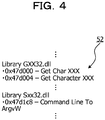
- FIG. 4 is a diagram illustrating the DLL reading information 52.
- the DLL reading information 52 is a list of a file group ("GXX32.dll”, “Sxx32.dll”,... etc.) read out from the shared library group 203 in the execution of the application 202.
- the execution unit 20 also monitors a process during the execution of the application 202 such as the original program 11A, the judgment-target program 11B, or the like, and acquires process information 53 regarding the executed process.
- the execution unit 20 stores, in the storage unit 50, the acquired process information 53 together with identifiers (for example, program names) indicating the input original program 11A and the judgment-target program 11B.
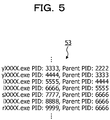
- FIG. 5 is a diagram illustrating the process information 53.
- the process information 53 is a list of processes in the execution of the application 202. More specifically, the process information 53 includes a process name (such as "yXXXX.exe”) and a process ID (such as "PID: 3333”) as process identifiers, and information indicating a parent process (such as "Parent PID: 2222") for each process in the execution.
- the judgment unit 30 judges a similarity between the original program 11A and the judgment-target program 11B based on a result of a comparison between a code of the original program 11A and a code of the judgment-target program 11B or a comparison between information acquired in the execution of the original program 11A and information acquired in the execution of the judgment-target program 11B.
- the judgment unit 30 performs a static analysis to judge the similarity indicating the degree of similarity between codes by comparing the code of the original program 11A and the code of the judgment-target program 11B, and the judgment unit 30 outputs an analysis result to the output unit 40.
- the judgment unit 30 also performs a dynamic analysis to judge the similarity between the information acquired in the execution of the original program 11A and the information acquired in the execution of the judgment-target program 11B by comparing them, and the judgment unit 30 outputs an analysis result to the output unit 40.
- the judgment unit 30 compares an API call type, the number of executions of the API call, a call order of the API call, a timestamp of the API call, a thread of the API call, an argument of the API call, information indicating a result of the API call in terms of success/failure, or information indicating a return value of the API call included in the API call information 51 regarding the original program 11A with an API call type, the number of executions of the API call, a call order of the API call, a timestamp of the API call, a thread of the API call, an argument of the API call, information indicating a result of the API call in terms of success/failure, or information indicating a return value of the API call included in the API call information 51 regarding the judgment-target program 11B.
- the judgment unit 30 calculates the similarity indicating the degree of similarity between the two pieces of information by performing scoring based on the equality/difference between the two pieces of information.
- a difference of subspecific malware from its original malware is limited to part of the malware such as an attack target, and thus a content of an API call is similar to that of the original malware. Therefore, by determining the similarity of the API call information 51 regarding the judgment-target program 11B with respect to the reference program, that is, the API call information 51 regarding the original program 11A, it is possible to easily detect a lot of various subspecies of malware that may occur from the original program 11A. For example, in a case where there is a high similarity (for example, higher than a predetermined value) between the API call information 51 regarding the judgment-target program 11B and the API call information 51 regarding the original program 11A which is the reference program, it can be determined that the judgment-target program 11B is malware.
- a high similarity for example, higher than a predetermined value
- the judgment unit 30 generates summary information indicating a result of summarizing features of part of all of the API call type, the number of executions of the API call, the call order of the API call, the timestamp of the API call, the thread of the API call, the argument of the API call, the information indicating a result of the API call in terms of success/failure, and the return value of the API call included in the API call information 51 regarding the plurality of original programs 11A.
- the summary information may be given by TF (Term Frequency)/IDF (Inverse Document Frequency) or contrast set mining obtained by an aggregation of a frequency of occurrence of a feature in a program or a frequency of occurrence of a feature over a plurality of programs.
- the judgment unit 30 compares TF/IDF obtained by the aggregation from the API call information 51 regarding the plurality of original programs 11A with information included in the API call information 51 regarding the judgment-target program 11B, and outputs the similarity between the plurality of original programs 11A and the judgment-target program 11B.
- the TF/IDF aggregated from the API call information 51 regarding the plurality of original programs 11A indicates a feature specific to malware. Therefore, based on the comparison with TF/IDF aggregated from the API call information 51 regarding the plurality of original programs 11A, it is possible to calculate the similarity in which the feature specific to the malware is emphasized.
- the judgment unit 30 compares the DLL reading information 52 regarding the judgment-target program 11B with the DLL reading information 52 regarding the original program 11A and performs scoring based on equality/difference between these pieces of information thereby calculating the similarity indicating the degree of similarity between these pieces of information.
- a file of a shared library read out by the original malware and a file of a shared library read out by subspecific malware are similar to each other. Therefore, by determining the similarity between the DLL reading information 52 regarding the judgment-target program 11B and the DLL reading information 52 regarding the original program 11A which the reference program, it is possible to easily detect a lot of various subspecies of malware that may occur from the original program 11A. For example, in a case where there is a high similarity (for example, higher than a predetermined value) between the DLL reading information 52 regarding the judgment-target program 11B and the DLL reading information 52 regarding the original program 11A which is the reference program, it can be determined that the judgment-target program 11B is malware.
- a high similarity for example, higher than a predetermined value
- the judgment unit 30 compares the process information 53 regarding the judgment-target program 11B with the process information 53 regarding the original program 11A and performs scoring based on equality/difference between these pieces of information thereby calculating the similarity indicating the degree of similarity between these pieces of information.
- a process executed by the original malware and a process executed by subspecific malware are similar to each other. Therefore, by determining the similarity between the process information 53 regarding the judgment-target program 11B and the process information 53 regarding the original program 11A which is the reference program, it is possible to easily detect a lot of various subspecies of malware that may occur from the original program 11A. For example, in a case where there is a high similarity (for example, higher than a predetermined value) between the process information 53 regarding the judgment-target program 11B and the process information 53 regarding the original program 11A which is the reference program, it can be determined that the judgment-target program 11B is malware.
- a high similarity for example, higher than a predetermined value
- the output unit 40 outputs the similarity, judged by the judgment unit 30, between the original program 11A and the judgment-target program 11B to a display, a file, or the like. A user is allowed to determine whether the judgment-target program 11B is malware or not by checking the output similarity.
- the output unit 40 ranks the original programs 11A in the descending order of the similarity (the score) based on a result of the comparison of the plurality of original programs 11A with the judgment-target program 11B. Thereafter, the output unit 40 sorts the original programs 11A in the descending order of the score, and displays the judged score indicating the similarity with respect to the judgment-target program 11B for each original program 11A. This makes it possible for a user to easily find an original program 11A having a high similarity to the judgment-target program 11B from the plurality of original programs 11A.
- the output unit 40 ranks judgment-target programs 11B in descending order of similarity (score) based on results of comparisons of a plurality of judgment-target programs 11B with the original program 11A.
- the output unit 40 sorts the judgment-target programs 11B in descending order of score, and displays scores indicating similarities determined for the respective judgment-target programs 11B with respect to the original program 11A. This allows a user to easily find a judgment-target program 11B with a high similarity with the original program 11A from a plurality of judgment-target programs 11B.
- the original programs 11A are sorted in the order of score and displayed.
- the storage unit 50 is a storage apparatus such as an HDD (Hard Disk Drive).
- the storage unit 50 stores the original program 11A that is the reference program and the API call information 51, the DLL reading information 52, and the process information 53 regarding each program.
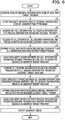
- FIG. 6 is a flow chart illustrating an example of an operation of the information processing apparatus 1 according to the embodiment. Note that it is assumed that the original program 11A has been input before the process is started, and the original program 11A and the API call information 51, the DLL reading information 52, and the process information 53 regarding the original program 11A have already been stored (acquired) in the storage unit 50. On the other hand, the judgment-target program 11B is input when the process is started.
- the judgment unit 30 reads out the original program 11A from the storage unit 50 and compares the code of the input judgment-target program 11B with the code of the read-out original program 11A by using a difference tool (for example, Diff) (S1).
- a difference tool for example, Diff
- the judgment unit 30 determines the similarity between the code of the judgment-target program 11B and the code of the original program 11A (S2). More specifically, the judgment unit 30 determines a score indicating the similarity between the codes based on the amount of difference detected by the difference tool.
- the judgment unit 30 acquires the API call information 51, the DLL reading information 52, and the process information 53 regarding the original program 11A stored in the storage unit 50 (S3).
- the execution unit 20 executes the input judgment-target program 11B and acquires the API call information 51, the DLL reading information 52, and the process information 53 regarding the judgment-target program 11B (S4).
- the execution unit 20 stores the acquired API call information 51, the DLL reading information 52, and the process information 53 regarding the judgment-target program 11B in the storage unit 50 and also outputs them to the judgment unit 30.
- the judgment unit 30 compares the API call information 51 regarding the judgment-target program 11B with the API call information 51 regarding the original program 11A (S5). Thereafter, the judgment unit 30 performs scoring based on equality/difference between these pieces of information and thereby judges the similarity (the score) between the API call information 51 regarding the judgment-target program 11B and the API call information 51 regarding the original program 11A (S6).
- the similarity degree between an N-gram model of the API call information 51 regarding the judgment-target program 11B and an N-gram model of the API call information 51 regarding the original program 11A may be determined as the score.
- the judgment unit 30 determines information indicating the order of occurrence of API calls (for example, obtained by sorting according to "Timestamp" in FIG. 3 ). Thereafter, the judgment unit 30 determines a frequency of occurrence indicating a frequency of occurrence of combinations of N API calls, sequentially for each combination, thereby obtaining an N-gram model based on the API call information 51 regarding the original program 11A.
- the judgment unit 30 determines information indicating the order of occurrence of API calls. Thereafter, the judgment unit 30 determines a frequency of occurrence indicating a frequency of occurrence of combinations of N API calls, sequentially for each combination, thereby obtaining an N-gram model based on the API call information 51 regarding the judgment-target program 11B. Thereafter, the judgment unit 30 determines the similarity by calculating the score indicating the similarity degree between the two N-gram models.
- the score may be given by an angle, a linear distance, or a cosine similarity, in a vector space, between a vector based on the API call information 51 regarding the original program 11A and a vector based on the judgment-target program 11B. More specifically, the judgment unit 30 determines a vector including, as components, the API call type, the number of executions of the API call, the call order of the API call, etc. included in the API call information 51 regarding the original program 11A. Furthermore, the judgment unit 30 determines a vector including, as components, the API call type, the number of executions of the API call, the call order of the API call, etc. included in the API call information 51 regarding the judgment-target program 11B.
- the judgment unit 30 determines an angle between the two vectors, a linear distance between tails of the two vectors, or a cosine similarity of the two vectors in the vector space under the condition that the tips of the two vectors are put such that they overlap each other.
- the judgment unit 30 may determine the score based on the angle, the linear distance, or the cosine similarity, in the vector space, between the vector based on the API call information 51 regarding the original program 11A and the vector based on the judgment-target program 11B.
- the judgment unit 30 compares the DLL reading information 52 regarding the judgment-target program 11B with the DLL reading information 52 regarding the original program 11A (S7). Thereafter, the judgment unit 30 performs scoring based on the equality/difference between the pieces of information, and thereby judges the similarity (the score) between the DLL reading information 52 regarding the judgment-target program 11B and the DLL reading information 52 regarding the original program 11A (S8).
- a set including as elements files included in the DLL reading information 52 regarding the judgment-target program 11B is compared with a set including as elements files included in the DLL reading information 52 regarding the original program 11A, and a Jaccard index indicating the similarity between the sets may be employed as the score. More specifically, the judgment unit 30 determines the Jaccard index whose denominator is given by the number of elements included in a result of an OR operation between the two sets and whose numerator is given by the number of elements included in a result of an AND operation between the two sets. As described above, the judgment unit 30 may determine the similarity degree between the set of files called from the shared library group 203 by the original program 11A and the set of files called from the shared library group 203 by the judgment-target program 11B.
- the judgment unit 30 compares the process information 53 regarding the judgment-target program 11B with the process information 53 regarding the original program 11A (S9). Thereafter, the judgment unit 30 performs scoring based on equality/difference between these pieces of information and thereby judges the similarity (the score) between the process information 53 regarding the judgment-target program 11B and the process information 53 regarding the original program 11A (S10).
- a set including as elements processes included in the process information 53 regarding the judgment-target program 11B may be compared with a set including as elements processes included in the process information 53 regarding the original program 11A, and a Jaccard index indicating the similarity between the sets may be employed as the score.
- the judgment unit 30 may determine the similarity degree between a set of processes executed by the judgment-target program 11B and a set of processes executed by the original program 11A.
- the output unit 40 outputs the result of the judgment made by the judgment unit 30 in S2, S6, S8, and S10, that is, the similarity between the judgment-target program 11B and the original program 11A to a display or a file (S11).
- FIG. 7 is a diagram illustrating a result output. As illustrated in FIG. 7 , the output unit 40 displays, on a display screen 300, the result of the judgment made by the judgment unit 30 in S2, S6, S8, and S10. This makes it possible for a user to determine whether the judgment-target program 11B is malware or not.
- the display screen 300 includes a file display area 301 and result display areas 302 to 304.
- the file display area 301 is an area in which a list of original programs 11A is displayed in the descending order of the similarity (the score) according to a result of comparison between the judgment-target program 11B and the plurality of original programs 11A.
- This file display area 301 allows a user to easily find original programs 11A with high similarities with respect to the judgment-target program 11B.
- the result display area 302 is an area in which a result of static analysis is displayed as to the similarity degree between the code of the judgment-target program 11B and codes of original programs 11A. This result display area 302 allows a user to easily know the similarity degree of the code between the original program 11A and the judgment-target program 11B.
- the result display area 303 is an area in which a result is displayed as to dynamic analysis based on a comparison between original programs 11A in execution and the judgment-target program 11B in execution. More specifically, the result display area 303 includes a score 303a based on the comparison between the API call information 51 regarding the original program 11A and the API call information 51 regarding the judgment-target program 11B. This score 303a allows a user to easily know the similarity degree between the content of the API call in the execution of the original program 11A and the content of the API call in the execution of the judgment-target program 11B.
- the result display area 303 also includes a score 303b based on the comparison between the DLL reading information 52 regarding the original program 11A and the DLL reading information 52 regarding the judgment-target program 11B.
- This score 303b allows a user to easily know the similarity degree between the file group of the shared library called in the execution of the original program 11A and the file group of the shared library called in the execution of the judgment-target program 11B.
- the result display area 303 also includes a score 303c based on the comparison between the process information 53 regarding the original program 11A and the process information 53 regarding the judgment-target program 11B. This score 303c allows a user to easily know the similarity degree between the process in the execution of the original program 11A and the process in the execution of the judgment-target program 11B.
- the result display area 304 is an area in which a score 304a is displayed as to the cosine similarity based on the comparison between the API call information 51 regarding the original program 11A and the API call information 51 regarding the judgment-target program 11B.
- This score 304a allows a user to easily know the cosine similarity between the content of the API call in the execution of the original program 11A and the content of the API call in the execution of the judgment-target program 11B.
- the information processing apparatus 1 executes the original program 11A under the system environment 200, and acquires API call information called in communication with the kernel 201 in terms of an API call type, the number of executions of the API call, or a call order of a first API call.
- the information processing apparatus 1 also executes the judgment-target program 11B under the system environment 200, and acquires API call information called in communication with the kernel 201 in terms of an API call type, the number of executions of the API call, or a call order of a first API call.
- the information processing apparatus 1 compares the API call information regarding the original program 11A the API call information regarding the judgment-target program 11B, and determines the similarity between the original program 11A and judgment-target program 11B based on a result of the comparison and outputs the determined similarity.
- a user is allowed to easily detect malware which may be one of a lot of various subspecies of malware created from the original program 11A without collecting all subspecies of malware as the original programs 11A.
- each apparatus illustrated in figures do not have to be physically configured as illustrated in the figures. That is, a specific configuration of each apparatus in terms of division or combination of elements is not limited to those illustrated in the figures, but all or part of the elements may be physically separated or combined in arbitrary units depending on various loads or usage situations.
- all or part of them may be executed on a CPU (or a microcomputer such as an MPU, an MCU (Micro Controller Unit), or the like).
- a CPU or a microcomputer such as an MPU, an MCU (Micro Controller Unit), or the like.
- all or part of them may be executed on a program interpreted and executed on a CPU (or a microcomputer such as an MPU, an MCU (Micro Controller Unit), or the like), or on wired logic hardware.
- they may be executed by a plurality of computers in cooperation by using cloud computing.
- FIG. 8 is block diagram illustrating an example of a hardware configuration of the information processing apparatus 1 according to an embodiment.
- an information processing apparatus 1 is an apparatus configured to a CPU 101 configured to execute various operations and processes, an input apparatus 102 configured to accept data input, a monitor 103, and a speaker 104.
- the information processing apparatus 1 also includes a medium reading apparatus 105 configured to read out a program or the like from a storage medium, an interface apparatus 106 for coupling to various apparatuses, and a communication apparatus 107 for coupling to an external device to perform wireless or wired communication.
- the information processing apparatus 1 further includes a RAM 108 configured to temporarily store various kinds of information, and a hard disk apparatus 109. Each unit (101 to 109) in the information processing apparatus 1 is coupled to a bus 110.
- the hard disk apparatus 109 stores a program 111 for executing various processes at the input unit 10, the execution unit 20, the judgment unit 30, and the output unit 40 described above with reference to the embodiments.
- the hard disk apparatus 109 also stores various kinds of data 112 to be referred to by the program 111.
- the input apparatus 102 accepts, for example, an input of operation information performed by an operator on the information processing apparatus 1.
- the monitor 103 displays, for example, various screens to be operated by an operator.
- the interface apparatus 106 is coupled, for example, to a printing apparatus or the like.
- the communication apparatus 107 is coupled to a communication network such as a LAN (Local Area Network) and thereby transmits and receives various kinds of information to and from an external device via the communication network.
- LAN Local Area Network
- the CPU 101 reads out the program 111 stored in the hard disk apparatus 109 and load the program 111 in the RAM 108, and the CPU 101 executes the program 111 loaded in the RAM 108 thereby achieving various processes.
- the program 111 may not be stored in the hard disk apparatus 109.
- the information processing apparatus 1 may read out the program 111 stored in a readable storage medium and may execute the program 111.
- the storage medium readable by the information processing apparatus for example, a CD-ROM or DVD disk, a portable storage medium such as USB (Universal Serial Bus) memory or a storage medium of a similar type, a semiconductor memory such as a flash memory, a hard disk drive or the like may be employed.
- the program 111 may be stored in an apparatus coupled to a public line, the Internet, a LAN, or the like, and the information processing apparatus 1 may read out the program 111 from the apparatus and execute the program 111.
Landscapes
- Engineering & Computer Science (AREA)
- Software Systems (AREA)
- Theoretical Computer Science (AREA)
- Computer Security & Cryptography (AREA)
- General Engineering & Computer Science (AREA)
- Computer Hardware Design (AREA)
- Physics & Mathematics (AREA)
- General Physics & Mathematics (AREA)
- Health & Medical Sciences (AREA)
- General Health & Medical Sciences (AREA)
- Virology (AREA)
- Stored Programmes (AREA)
Abstract
Description
- The embodiments discussed herein are related to a program, an information processing apparatus and a method.
- There are conventional methods of detecting malware such as a computer virus, a worm, spyware, and the like that may be illicitly infectious to a device. In one of malware detection methods, an equality or a similarity of a behavior in terms of network address scanning is compared between software that performs an illicit process and software under judgment. In another method, a code is summarized and checked in terms of the equality to a code of malware. A literature of related techniques can be found, for example, in Japanese Patent No.
5083760 - The conventional techniques described above have a problem that it is difficult to detect a lot of various subspecies of malware that may occur from one piece of malware.
- For example, subspecies of malware can be relatively easily created from original malware by changing a part, such as an attack target, of the original malware, and thus a lot of various subspecies of malware occur. These subspecies of malware are each different in terms of code and attack targets, and thus it is difficult to detect them by making a comparison with original malware in terms of code or a behavior associated with network address scanning. Furthermore, to detect these subspecies of malware, all subspecies of malware have to be collected, which is not easy to achieve.
- In an aspect, it is an object to provide a similarity judgment program, a similarity judgment method, and an information processing apparatus, capable of easily detecting a lot of various subspecies of malware.
- According to an aspect of the invention, a program that causes an information processing apparatus to execute a process, the process includes executing a first program using a system including a kernel of an operating system (OS), acquiring first information regarding a first Application Programming Interface (API) call in communication with the kernel in the execution of the first program, executing a second program using the system, acquiring second information regarding a second API call in communication with the kernel in the execution of the second program, executing a similarity judgment process in which a similarity between the first program and the second program is judged by comparing the acquired first information and the second information, and outputting the judged similarity, wherein the first information is information indicating at least one of a type of the first API call, the number of executions of the first API call, and a call order of the first API call, the second information includes a type of the second API call in a case where the first information includes the type of the first API call, the second information includes the number of executions of the second API call in a case where the first information includes the number of executions of the first API call, and the second information includes a call order of the second API call in case where the first information includes the call order of the first API call.
- According to an aspect of the invention, it is possible to easily detect malware that may occur in a lot of various derivative forms.
-
-
FIG. 1 is a block diagram illustrating an example of a functional configuration of an information processing apparatus according to an embodiment; -
FIG. 2 is a diagram illustrating a system environment; -
FIG. 3 is a diagram illustrating API call information; -
FIG. 4 is a diagram illustrating DLL reading information; -
FIG. 5 is a diagram illustrating process information; -
FIG. 6 is a flow chart illustrating an example of an operation of an information processing apparatus according to an embodiment; -
FIG. 7 is a diagram illustrating a result output; and -
FIG. 8 is block diagram illustrating an example of a hardware configuration of an information processing apparatus according to an embodiment. - Referring to drawings, a similarity judgment program, a similarity judgment method, and an information processing apparatus according to embodiments are described below. In the embodiments, elements having the same functions are assigned the same symbols, and duplicated descriptions thereof are omitted. Note that the similarity judgment program, the similarity judgment method, and the information processing apparatus described below with reference to embodiments are given by way of example but not limitation. Also note that the embodiments described below may be properly combined as long as inconsistency occurs.
-
FIG. 1 is a block diagram illustrating an example of a functional configuration of an information processing apparatus according to an embodiment; As illustrated inFIG. 1 , aninformation processing apparatus 1 is an apparatus configured to accept an input of anoriginal program 11A that is software such as malware configured to perform an illicit process and that is to be used as a reference in checking. Theinformation processing apparatus 1 also accepts an input of a judgment-target program 11B that is a program to be subjected to a judgment as to whether the program is malware or not. Theinformation processing apparatus 1 compare the judgment-target program 11B and theoriginal program 11A, and outputs a judgment result to a display or the like. As for theinformation processing apparatus 1, for example, a PC (Personal Computer) or the like may be used, and theinformation processing apparatus 1 includes aninput unit 10, anexecution unit 20, ajudgment unit 30, anoutput unit 40, and astorage unit 50. - The
input unit 10 accepts an input of data via reading the data from a storage medium such as a semiconductor memory, a DVD (Digital Versatile Disk), or the like or via communication using a communication network such as the Internet. More specifically, theinput unit 10 accepts inputs of theoriginal program 11A and the judgment-target program 11B. Theoriginal program 11A and the judgment-target program 11B are respectively examples of a first program and a second program. Theinput unit 10 outputs the acceptedoriginal program 11A and the accepted judgment-target program 11B to theexecution unit 20. Furthermore, theinput unit 10 stores theoriginal program 11A in thestorage unit 50. - The
execution unit 20 is an example of an acquisition unit. Theexecution unit 20 executes theoriginal program 11A and the judgment-target program 11B under a system environment of a particular OS (Operating System) and acquires various kinds of information in the execution. -
FIG. 2 is a diagram illustrating a system environment; As illustrated inFIG. 2 , thesystem environment 200, which executes anapplication 202 such as theoriginal program 11A, the judgment-target program 11B, or the like, includes akernel 201 that is a core of the OS, and a sharedlibrary group 203 such as DLL (Dynamic Link Library). Thesystem environment 200 is provided, for example, by an OS on theinformation processing apparatus 1 or an OS on a virtual machine realized in theinformation processing apparatus 1 using a virtual technique. Note that the OS may be of any type such as Linux (registered trademark), Windows (registered trademark), or the like. - The
execution unit 20 monitors a system call during executing theapplication 202 such as theoriginal program 11A, the judgment-target program 11B, or the like, and acquiresAPI call information 51 such as the type of an API (Application Programming Interface) call called via a communication with thekernel 201, the number executions of the call, a calling order, or the like. Theexecution unit 20 stores, in thestorage unit 50, the acquiredAPI call information 51 together with identifiers (for example, program names) indicating theoriginal program 11A and the judgment-target program 11B. -
FIG. 3 is a diagram illustrating theAPI call information 51. As illustrated inFIG. 3 , theAPI call information 51 includes information associated with API calls in execution of theapplication 202 in terms of "Timestamp", "Thread", "Function", "Arguments", "Status", "Return", etc. - "Timestamp" indicates a time of an API call, that is, a call order. "Thread" indicates a thread of an API call, and the number of API calls for the same thread indicates the number of executions of the call. "Function" indicates a function called by an API call. "Arguments" indicates an argument of an API call. "Status" indicates a status (for example, in terms of success/failure) of an API call. "Return" indicates an address (a return value) to which an API call is to return.
- The
execution unit 20 also monitors reading of the sharedlibrary group 203 during the execution of theapplication 202 such as theoriginal program 11A, the judgment-target program 11B, or the like, and theexecution unit 20 acquiresDLL reading information 52 regarding a file group of a shared library read out from the sharedlibrary group 203. Theexecution unit 20 stores, in thestorage unit 50, the acquiredDLL reading information 52 together with identifiers (for example, program names) indicating the inputoriginal program 11A and the judgment-target program 11B. -
FIG. 4 is a diagram illustrating theDLL reading information 52. As illustrated inFIG. 4 , theDLL reading information 52 is a list of a file group ("GXX32.dll", "Sxx32.dll",... etc.) read out from the sharedlibrary group 203 in the execution of theapplication 202. - The
execution unit 20 also monitors a process during the execution of theapplication 202 such as theoriginal program 11A, the judgment-target program 11B, or the like, and acquiresprocess information 53 regarding the executed process. Theexecution unit 20 stores, in thestorage unit 50, the acquiredprocess information 53 together with identifiers (for example, program names) indicating the inputoriginal program 11A and the judgment-target program 11B. -
FIG. 5 is a diagram illustrating theprocess information 53. As illustrated inFIG. 5 , theprocess information 53 is a list of processes in the execution of theapplication 202. More specifically, theprocess information 53 includes a process name (such as "yXXXX.exe") and a process ID (such as "PID: 3333") as process identifiers, and information indicating a parent process (such as "Parent PID: 2222") for each process in the execution. - The
judgment unit 30 judges a similarity between theoriginal program 11A and the judgment-target program 11B based on a result of a comparison between a code of theoriginal program 11A and a code of the judgment-target program 11B or a comparison between information acquired in the execution of theoriginal program 11A and information acquired in the execution of the judgment-target program 11B. - More specifically, the
judgment unit 30 performs a static analysis to judge the similarity indicating the degree of similarity between codes by comparing the code of theoriginal program 11A and the code of the judgment-target program 11B, and thejudgment unit 30 outputs an analysis result to theoutput unit 40. Thejudgment unit 30 also performs a dynamic analysis to judge the similarity between the information acquired in the execution of theoriginal program 11A and the information acquired in the execution of the judgment-target program 11B by comparing them, and thejudgment unit 30 outputs an analysis result to theoutput unit 40. - More specifically, the
judgment unit 30 compares an API call type, the number of executions of the API call, a call order of the API call, a timestamp of the API call, a thread of the API call, an argument of the API call, information indicating a result of the API call in terms of success/failure, or information indicating a return value of the API call included in the API callinformation 51 regarding theoriginal program 11A with an API call type, the number of executions of the API call, a call order of the API call, a timestamp of the API call, a thread of the API call, an argument of the API call, information indicating a result of the API call in terms of success/failure, or information indicating a return value of the API call included in the API callinformation 51 regarding the judgment-target program 11B. Thejudgment unit 30 then calculates the similarity indicating the degree of similarity between the two pieces of information by performing scoring based on the equality/difference between the two pieces of information. - For example, a difference of subspecific malware from its original malware is limited to part of the malware such as an attack target, and thus a content of an API call is similar to that of the original malware. Therefore, by determining the similarity of the API call
information 51 regarding the judgment-target program 11B with respect to the reference program, that is, the API callinformation 51 regarding theoriginal program 11A, it is possible to easily detect a lot of various subspecies of malware that may occur from theoriginal program 11A. For example, in a case where there is a high similarity (for example, higher than a predetermined value) between the API callinformation 51 regarding the judgment-target program 11B and the API callinformation 51 regarding theoriginal program 11A which is the reference program, it can be determined that the judgment-target program 11B is malware. - Furthermore, the
judgment unit 30 generates summary information indicating a result of summarizing features of part of all of the API call type, the number of executions of the API call, the call order of the API call, the timestamp of the API call, the thread of the API call, the argument of the API call, the information indicating a result of the API call in terms of success/failure, and the return value of the API call included in the API callinformation 51 regarding the plurality oforiginal programs 11A. More specifically, the summary information may be given by TF (Term Frequency)/IDF (Inverse Document Frequency) or contrast set mining obtained by an aggregation of a frequency of occurrence of a feature in a program or a frequency of occurrence of a feature over a plurality of programs. - The
judgment unit 30 compares TF/IDF obtained by the aggregation from the API callinformation 51 regarding the plurality oforiginal programs 11A with information included in the API callinformation 51 regarding the judgment-target program 11B, and outputs the similarity between the plurality oforiginal programs 11A and the judgment-target program 11B. The TF/IDF aggregated from the API callinformation 51 regarding the plurality oforiginal programs 11A indicates a feature specific to malware. Therefore, based on the comparison with TF/IDF aggregated from the API callinformation 51 regarding the plurality oforiginal programs 11A, it is possible to calculate the similarity in which the feature specific to the malware is emphasized. - Furthermore, the
judgment unit 30 compares theDLL reading information 52 regarding the judgment-target program 11B with theDLL reading information 52 regarding theoriginal program 11A and performs scoring based on equality/difference between these pieces of information thereby calculating the similarity indicating the degree of similarity between these pieces of information. - For example, a file of a shared library read out by the original malware and a file of a shared library read out by subspecific malware are similar to each other. Therefore, by determining the similarity between the
DLL reading information 52 regarding the judgment-target program 11B and theDLL reading information 52 regarding theoriginal program 11A which the reference program, it is possible to easily detect a lot of various subspecies of malware that may occur from theoriginal program 11A. For example, in a case where there is a high similarity (for example, higher than a predetermined value) between theDLL reading information 52 regarding the judgment-target program 11B and theDLL reading information 52 regarding theoriginal program 11A which is the reference program, it can be determined that the judgment-target program 11B is malware. - Furthermore, the
judgment unit 30 compares theprocess information 53 regarding the judgment-target program 11B with theprocess information 53 regarding theoriginal program 11A and performs scoring based on equality/difference between these pieces of information thereby calculating the similarity indicating the degree of similarity between these pieces of information. - For example, a process executed by the original malware and a process executed by subspecific malware are similar to each other. Therefore, by determining the similarity between the
process information 53 regarding the judgment-target program 11B and theprocess information 53 regarding theoriginal program 11A which is the reference program, it is possible to easily detect a lot of various subspecies of malware that may occur from theoriginal program 11A. For example, in a case where there is a high similarity (for example, higher than a predetermined value) between theprocess information 53 regarding the judgment-target program 11B and theprocess information 53 regarding theoriginal program 11A which is the reference program, it can be determined that the judgment-target program 11B is malware. - The
output unit 40 outputs the similarity, judged by thejudgment unit 30, between theoriginal program 11A and the judgment-target program 11B to a display, a file, or the like. A user is allowed to determine whether the judgment-target program 11B is malware or not by checking the output similarity. - The
output unit 40 ranks theoriginal programs 11A in the descending order of the similarity (the score) based on a result of the comparison of the plurality oforiginal programs 11A with the judgment-target program 11B. Thereafter, theoutput unit 40 sorts theoriginal programs 11A in the descending order of the score, and displays the judged score indicating the similarity with respect to the judgment-target program 11B for eachoriginal program 11A. This makes it possible for a user to easily find anoriginal program 11A having a high similarity to the judgment-target program 11B from the plurality oforiginal programs 11A. - Furthermore, the
output unit 40 ranks judgment-target programs 11B in descending order of similarity (score) based on results of comparisons of a plurality of judgment-target programs 11B with theoriginal program 11A. Theoutput unit 40 then sorts the judgment-target programs 11B in descending order of score, and displays scores indicating similarities determined for the respective judgment-target programs 11B with respect to theoriginal program 11A. This allows a user to easily find a judgment-target program 11B with a high similarity with theoriginal program 11A from a plurality of judgment-target programs 11B. In the present embodiment, by way of example, based on results of comparisons of a plurality oforiginal programs 11A with the judgment-target program 11B, theoriginal programs 11A are sorted in the order of score and displayed. - The
storage unit 50 is a storage apparatus such as an HDD (Hard Disk Drive). Thestorage unit 50 stores theoriginal program 11A that is the reference program and the API callinformation 51, theDLL reading information 52, and theprocess information 53 regarding each program. -
FIG. 6 is a flow chart illustrating an example of an operation of theinformation processing apparatus 1 according to the embodiment. Note that it is assumed that theoriginal program 11A has been input before the process is started, and theoriginal program 11A and the API callinformation 51, theDLL reading information 52, and theprocess information 53 regarding theoriginal program 11A have already been stored (acquired) in thestorage unit 50. On the other hand, the judgment-target program 11B is input when the process is started. - As illustrated in
FIG. 6 , when the process is started, thejudgment unit 30 reads out theoriginal program 11A from thestorage unit 50 and compares the code of the input judgment-target program 11B with the code of the read-outoriginal program 11A by using a difference tool (for example, Diff) (S1). - Thereafter, based on a result of the comparison in S1, the
judgment unit 30 determines the similarity between the code of the judgment-target program 11B and the code of theoriginal program 11A (S2). More specifically, thejudgment unit 30 determines a score indicating the similarity between the codes based on the amount of difference detected by the difference tool. - Thereafter, the
judgment unit 30 acquires the API callinformation 51, theDLL reading information 52, and theprocess information 53 regarding theoriginal program 11A stored in the storage unit 50 (S3). - Thereafter, the
execution unit 20 executes the input judgment-target program 11B and acquires the API callinformation 51, theDLL reading information 52, and theprocess information 53 regarding the judgment-target program 11B (S4). Theexecution unit 20 stores the acquired API callinformation 51, theDLL reading information 52, and theprocess information 53 regarding the judgment-target program 11B in thestorage unit 50 and also outputs them to thejudgment unit 30. - Thereafter, the
judgment unit 30 compares the API callinformation 51 regarding the judgment-target program 11B with the API callinformation 51 regarding theoriginal program 11A (S5). Thereafter, thejudgment unit 30 performs scoring based on equality/difference between these pieces of information and thereby judges the similarity (the score) between the API callinformation 51 regarding the judgment-target program 11B and the API callinformation 51 regarding theoriginal program 11A (S6). - In the judgment as to the similarity in S6, the similarity degree between an N-gram model of the API call
information 51 regarding the judgment-target program 11B and an N-gram model of the API callinformation 51 regarding theoriginal program 11A may be determined as the score. - More specifically, based on the
API call information 51 regarding theoriginal program 11A, thejudgment unit 30 determines information indicating the order of occurrence of API calls (for example, obtained by sorting according to "Timestamp" inFIG. 3 ). Thereafter, thejudgment unit 30 determines a frequency of occurrence indicating a frequency of occurrence of combinations of N API calls, sequentially for each combination, thereby obtaining an N-gram model based on theAPI call information 51 regarding theoriginal program 11A. - Similarly, based on the
API call information 51 regarding the judgment-target program 11B, thejudgment unit 30 determines information indicating the order of occurrence of API calls. Thereafter, thejudgment unit 30 determines a frequency of occurrence indicating a frequency of occurrence of combinations of N API calls, sequentially for each combination, thereby obtaining an N-gram model based on theAPI call information 51 regarding the judgment-target program 11B. Thereafter, thejudgment unit 30 determines the similarity by calculating the score indicating the similarity degree between the two N-gram models. As described above, by determining the similarity between the N-gram model of the API callinformation 51 regarding the judgment-target program 11B and the N-gram model of the API callinformation 51 regarding theoriginal program 11A, it is possible to obtain the similarity taking into account the call order of the API calls. - In the judgment as to the similarity in S6, the score may be given by an angle, a linear distance, or a cosine similarity, in a vector space, between a vector based on the
API call information 51 regarding theoriginal program 11A and a vector based on the judgment-target program 11B. More specifically, thejudgment unit 30 determines a vector including, as components, the API call type, the number of executions of the API call, the call order of the API call, etc. included in the API callinformation 51 regarding theoriginal program 11A. Furthermore, thejudgment unit 30 determines a vector including, as components, the API call type, the number of executions of the API call, the call order of the API call, etc. included in the API callinformation 51 regarding the judgment-target program 11B. Thejudgment unit 30 then determines an angle between the two vectors, a linear distance between tails of the two vectors, or a cosine similarity of the two vectors in the vector space under the condition that the tips of the two vectors are put such that they overlap each other. As described above, thejudgment unit 30 may determine the score based on the angle, the linear distance, or the cosine similarity, in the vector space, between the vector based on theAPI call information 51 regarding theoriginal program 11A and the vector based on the judgment-target program 11B. - Thereafter, the
judgment unit 30 compares theDLL reading information 52 regarding the judgment-target program 11B with theDLL reading information 52 regarding theoriginal program 11A (S7). Thereafter, thejudgment unit 30 performs scoring based on the equality/difference between the pieces of information, and thereby judges the similarity (the score) between theDLL reading information 52 regarding the judgment-target program 11B and theDLL reading information 52 regarding theoriginal program 11A (S8). - In the judgment as to the similarity in S8, a set including as elements files included in the
DLL reading information 52 regarding the judgment-target program 11B is compared with a set including as elements files included in theDLL reading information 52 regarding theoriginal program 11A, and a Jaccard index indicating the similarity between the sets may be employed as the score. More specifically, thejudgment unit 30 determines the Jaccard index whose denominator is given by the number of elements included in a result of an OR operation between the two sets and whose numerator is given by the number of elements included in a result of an AND operation between the two sets. As described above, thejudgment unit 30 may determine the similarity degree between the set of files called from the sharedlibrary group 203 by theoriginal program 11A and the set of files called from the sharedlibrary group 203 by the judgment-target program 11B. - Thereafter, the
judgment unit 30 compares theprocess information 53 regarding the judgment-target program 11B with theprocess information 53 regarding theoriginal program 11A (S9). Thereafter, thejudgment unit 30 performs scoring based on equality/difference between these pieces of information and thereby judges the similarity (the score) between theprocess information 53 regarding the judgment-target program 11B and theprocess information 53 regarding theoriginal program 11A (S10). - In the judgment as to the similarity in S10, a set including as elements processes included in the
process information 53 regarding the judgment-target program 11B may be compared with a set including as elements processes included in theprocess information 53 regarding theoriginal program 11A, and a Jaccard index indicating the similarity between the sets may be employed as the score. As described above, thejudgment unit 30 may determine the similarity degree between a set of processes executed by the judgment-target program 11B and a set of processes executed by theoriginal program 11A. - Thereafter, the
output unit 40 outputs the result of the judgment made by thejudgment unit 30 in S2, S6, S8, and S10, that is, the similarity between the judgment-target program 11B and theoriginal program 11A to a display or a file (S11). -
FIG. 7 is a diagram illustrating a result output. As illustrated inFIG. 7 , theoutput unit 40 displays, on adisplay screen 300, the result of the judgment made by thejudgment unit 30 in S2, S6, S8, and S10. This makes it possible for a user to determine whether the judgment-target program 11B is malware or not. - More specifically, the
display screen 300 includes afile display area 301 and resultdisplay areas 302 to 304. Thefile display area 301 is an area in which a list oforiginal programs 11A is displayed in the descending order of the similarity (the score) according to a result of comparison between the judgment-target program 11B and the plurality oforiginal programs 11A. Thisfile display area 301 allows a user to easily findoriginal programs 11A with high similarities with respect to the judgment-target program 11B. - The
result display area 302 is an area in which a result of static analysis is displayed as to the similarity degree between the code of the judgment-target program 11B and codes oforiginal programs 11A. Thisresult display area 302 allows a user to easily know the similarity degree of the code between theoriginal program 11A and the judgment-target program 11B. - The
result display area 303 is an area in which a result is displayed as to dynamic analysis based on a comparison betweenoriginal programs 11A in execution and the judgment-target program 11B in execution. More specifically, theresult display area 303 includes a score 303a based on the comparison between the API callinformation 51 regarding theoriginal program 11A and the API callinformation 51 regarding the judgment-target program 11B. This score 303a allows a user to easily know the similarity degree between the content of the API call in the execution of theoriginal program 11A and the content of the API call in the execution of the judgment-target program 11B. - The
result display area 303 also includes ascore 303b based on the comparison between theDLL reading information 52 regarding theoriginal program 11A and theDLL reading information 52 regarding the judgment-target program 11B. Thisscore 303b allows a user to easily know the similarity degree between the file group of the shared library called in the execution of theoriginal program 11A and the file group of the shared library called in the execution of the judgment-target program 11B. - The
result display area 303 also includes ascore 303c based on the comparison between theprocess information 53 regarding theoriginal program 11A and theprocess information 53 regarding the judgment-target program 11B. Thisscore 303c allows a user to easily know the similarity degree between the process in the execution of theoriginal program 11A and the process in the execution of the judgment-target program 11B. - The
result display area 304 is an area in which ascore 304a is displayed as to the cosine similarity based on the comparison between the API callinformation 51 regarding theoriginal program 11A and the API callinformation 51 regarding the judgment-target program 11B. Thisscore 304a allows a user to easily know the cosine similarity between the content of the API call in the execution of theoriginal program 11A and the content of the API call in the execution of the judgment-target program 11B. - As described above, the
information processing apparatus 1 executes theoriginal program 11A under thesystem environment 200, and acquires API call information called in communication with thekernel 201 in terms of an API call type, the number of executions of the API call, or a call order of a first API call. Theinformation processing apparatus 1 also executes the judgment-target program 11B under thesystem environment 200, and acquires API call information called in communication with thekernel 201 in terms of an API call type, the number of executions of the API call, or a call order of a first API call. Furthermore, theinformation processing apparatus 1 compares the API call information regarding theoriginal program 11A the API call information regarding the judgment-target program 11B, and determines the similarity between theoriginal program 11A and judgment-target program 11B based on a result of the comparison and outputs the determined similarity. Thus, a user is allowed to easily detect malware which may be one of a lot of various subspecies of malware created from theoriginal program 11A without collecting all subspecies of malware as theoriginal programs 11A. - Note that constituent elements of each apparatus illustrated in figures do not have to be physically configured as illustrated in the figures. That is, a specific configuration of each apparatus in terms of division or combination of elements is not limited to those illustrated in the figures, but all or part of the elements may be physically separated or combined in arbitrary units depending on various loads or usage situations.
- Regarding various processing functions performed by the
information processing apparatus 1, all or part of them may be executed on a CPU (or a microcomputer such as an MPU, an MCU (Micro Controller Unit), or the like). Regarding various processing functions, as a matter of course, all or part of them may be executed on a program interpreted and executed on a CPU (or a microcomputer such as an MPU, an MCU (Micro Controller Unit), or the like), or on wired logic hardware. Regarding various processing functions performed by theinformation processing apparatus 1, they may be executed by a plurality of computers in cooperation by using cloud computing. - Note that various processes described above with reference to the embodiments may be realized by executing a program prepared in advance on a computer. Thus, next, an example of a computer (hardware) is described below that executes a program to realize functions similar to the functions realized in the embodiments described above.
FIG. 8 is block diagram illustrating an example of a hardware configuration of theinformation processing apparatus 1 according to an embodiment. - As illustrated in
FIG. 8 , aninformation processing apparatus 1 is an apparatus configured to aCPU 101 configured to execute various operations and processes, aninput apparatus 102 configured to accept data input, amonitor 103, and aspeaker 104. Theinformation processing apparatus 1 also includes amedium reading apparatus 105 configured to read out a program or the like from a storage medium, aninterface apparatus 106 for coupling to various apparatuses, and acommunication apparatus 107 for coupling to an external device to perform wireless or wired communication. Theinformation processing apparatus 1 further includes aRAM 108 configured to temporarily store various kinds of information, and ahard disk apparatus 109. Each unit (101 to 109) in theinformation processing apparatus 1 is coupled to abus 110. - The
hard disk apparatus 109 stores aprogram 111 for executing various processes at theinput unit 10, theexecution unit 20, thejudgment unit 30, and theoutput unit 40 described above with reference to the embodiments. Thehard disk apparatus 109 also stores various kinds ofdata 112 to be referred to by theprogram 111. Theinput apparatus 102 accepts, for example, an input of operation information performed by an operator on theinformation processing apparatus 1. Themonitor 103 displays, for example, various screens to be operated by an operator. Theinterface apparatus 106 is coupled, for example, to a printing apparatus or the like. Thecommunication apparatus 107 is coupled to a communication network such as a LAN (Local Area Network) and thereby transmits and receives various kinds of information to and from an external device via the communication network. - The
CPU 101 reads out theprogram 111 stored in thehard disk apparatus 109 and load theprogram 111 in theRAM 108, and theCPU 101 executes theprogram 111 loaded in theRAM 108 thereby achieving various processes. Theprogram 111 may not be stored in thehard disk apparatus 109. For example, theinformation processing apparatus 1 may read out theprogram 111 stored in a readable storage medium and may execute theprogram 111. As for the storage medium readable by theinformation processing apparatus 1, for example, a CD-ROM or DVD disk, a portable storage medium such as USB (Universal Serial Bus) memory or a storage medium of a similar type, a semiconductor memory such as a flash memory, a hard disk drive or the like may be employed. Theprogram 111 may be stored in an apparatus coupled to a public line, the Internet, a LAN, or the like, and theinformation processing apparatus 1 may read out theprogram 111 from the apparatus and execute theprogram 111. -
- 1
- information processing apparatus
- 10
- input unit
- 11A
- original program
- 11B
- judgment-target program
- 20
- execution unit
- 30
- judgment unit
- 40
- output unit
- 50
- storage unit
- 51
- API call information
- 52
- DLL reading information
- 53
- process information
- 101
- CPU
- 102
- input apparatus
- 103
- monitor
- 104
- speaker
- 105
- medium reading apparatus
- 106
- interface apparatus
- 107
- communication apparatus
- 108
- RAM
- 109
- hard disk apparatus
- 110
- bus
- 111
- program
- 112
- various kinds of data
- 200
- system environment
- 201
- kernel
- 202
- application
- 203
- shared library group
- 300
- display screen
- 301
- file display area
- 302
- to 304 result display area
- 303a, 303b, 303c, 304a
- score
Claims (9)
- A program that causes an information processing apparatus to execute a process, the process comprising:executing a first program using a system including a kernel of an operating system (OS);acquiring first information regarding a first Application Programming Interface (API) call in communication with the kernel in the execution of the first program;executing a second program using the system;acquiring second information regarding a second API call in communication with the kernel in the execution of the second program;executing a similarity judgment process in which a similarity between the first program and the second program is judged by comparing the acquired first information and the second information; andoutputting the judged similarity,wherein the first information is information indicating at least one of a type of the first API call, the number of executions of the first API call, and a call order of the first API call,the second information includes a type of the second API call in a case where the first information includes the type of the first API call,the second information includes the number of executions of the second API call in a case where the first information includes the number of executions of the first API call, andthe second information includes a call order of the second API call in case where the first information includes the call order of the first API call.
- The program according to claim 1, wherein in the similarity judgment process, the judgment is made as to the similarity between an N-gram model in which the first API calls are described in the call order based on the first information and an N-gram model in which the second API calls are described in the call order based on the second information.
- The program according to claim 1, wherein in the similarity judgment process, the judgment is made as to a cosine similarity between a first vector based on the first information and a second vector based on the second information.
- An information processing apparatus comprising:a memory; anda processor coupled to the memory and configured to:executing a first program using a system including a kernel of an operating system (OS);acquiring first information regarding a first Application Programming Interface (API) call in communication with the kernel in the execution of the first program;executing a second program using the system;acquiring second information regarding a second API call in communication with the kernel in the execution of the second program;executing a similarity judgment process in which a similarity between the first program and the second program is judged by comparing the acquired first information and the second information; andoutputting the judged similarity,wherein the first information is information indicating at least one of a type of the first API call, the number of executions of the first API call, and a call order of the first API call,the second information includes a type of the second API call in a case where the first information includes the type of the first API call,the second information includes the number of executions of the second API call in a case where the first information includes the number of executions of the first API call, andthe second information includes a call order of the second API call in case where the first information includes the call order of the first API call.
- The information processing apparatus according to claim 4, wherein in the similarity judgment process, the judgment is made as to the similarity between an N-gram model in which the first API calls are described in the call order based on the first information and an N-gram model in which the second API calls are described in the call order based on the second information.
- The The information processing apparatus according to claim 4, wherein in the similarity judgment process, the judgment is made as to a cosine similarity between a first vector based on the first information and a second vector based on the second information.
- A method executed by a computer, the method comprising:executing a first program using a system including a kernel of an operating system (OS);acquiring first information regarding a first Application Programming Interface (API) call in communication with the kernel in the execution of the first program;executing a second program using the system;acquiring second information regarding a second API call in communication with the kernel in the execution of the second program;executing a similarity judgment process in which a similarity between the first program and the second program is judged by comparing the acquired first information and the second information; andoutputting the judged similarity,wherein the first information is information indicating at least one of a type of the first API call, the number of executions of the first API call, and a call order of the first API call,the second information includes a type of the second API call in a case where the first information includes the type of the first API call,the second information includes the number of executions of the second API call in a case where the first information includes the number of executions of the first API call, andthe second information includes a call order of the second API call in case where the first information includes the call order of the first API call.
- The method according to claim 7, wherein in the similarity judgment process, the judgment is made as to the similarity between an N-gram model in which the first API calls are described in the call order based on the first information and an N-gram model in which the second API calls are described in the call order based on the second information.
- The method according to claim 7, wherein in the similarity judgment process, the judgment is made as to a cosine similarity between a first vector based on the first information and a second vector based on the second information.
Applications Claiming Priority (1)
| Application Number | Priority Date | Filing Date | Title |
|---|---|---|---|
| JP2017000751A JP2018109910A (en) | 2017-01-05 | 2017-01-05 | Similarity determination program, similarity determination method, and information processing apparatus |
Publications (1)
| Publication Number | Publication Date |
|---|---|
| EP3346408A1 true EP3346408A1 (en) | 2018-07-11 |
Family
ID=60781718
Family Applications (1)
| Application Number | Title | Priority Date | Filing Date |
|---|---|---|---|
| EP17208414.7A Withdrawn EP3346408A1 (en) | 2017-01-05 | 2017-12-19 | Malware detection through api calls number, type and frequency analysis |
Country Status (4)
| Country | Link |
|---|---|
| US (1) | US11036564B2 (en) |
| EP (1) | EP3346408A1 (en) |
| JP (1) | JP2018109910A (en) |
| SG (1) | SG10201710656YA (en) |
Families Citing this family (4)
| Publication number | Priority date | Publication date | Assignee | Title |
|---|---|---|---|---|
| US11163620B2 (en) * | 2019-05-20 | 2021-11-02 | Fujitsu Limited | Predicting API endpoint descriptions from API documentation |
| US20230101198A1 (en) * | 2021-09-30 | 2023-03-30 | Cyberark Software Ltd. | Computer-implemented systems and methods for application identification and authentication |
| US20230094066A1 (en) * | 2021-09-30 | 2023-03-30 | Cyberark Software Ltd. | Computer-implemented systems and methods for application identification and authentication |
| CN117235686B (en) * | 2023-10-30 | 2024-01-30 | 杭州海康威视数字技术股份有限公司 | Data protection methods, devices and equipment |
Citations (2)
| Publication number | Priority date | Publication date | Assignee | Title |
|---|---|---|---|---|
| JP5083760B2 (en) | 2007-08-03 | 2012-11-28 | 独立行政法人情報通信研究機構 | Malware similarity inspection method and apparatus |
| WO2016090289A1 (en) * | 2014-12-05 | 2016-06-09 | Permissionbit | Methods and systems for encoding computer processes for malware deteection |
Family Cites Families (53)
| Publication number | Priority date | Publication date | Assignee | Title |
|---|---|---|---|---|
| US7093239B1 (en) | 2000-07-14 | 2006-08-15 | Internet Security Systems, Inc. | Computer immune system and method for detecting unwanted code in a computer system |
| US7487544B2 (en) | 2001-07-30 | 2009-02-03 | The Trustees Of Columbia University In The City Of New York | System and methods for detection of new malicious executables |
| US6792543B2 (en) | 2001-08-01 | 2004-09-14 | Networks Associates Technology, Inc. | Virus scanning on thin client devices using programmable assembly language |
| US7000150B1 (en) * | 2002-06-12 | 2006-02-14 | Microsoft Corporation | Platform for computer process monitoring |
| US7549164B2 (en) * | 2003-06-11 | 2009-06-16 | Symantec Corporation | Intrustion protection system utilizing layers and triggers |
| US7185320B2 (en) * | 2003-06-27 | 2007-02-27 | Hewlett-Packard Development Company, L.P. | System and method for processing breakpoint events in a child process generated by a parent process |
| US7415699B2 (en) * | 2003-06-27 | 2008-08-19 | Hewlett-Packard Development Company, L.P. | Method and apparatus for controlling execution of a child process generated by a modified parent process |
| US7353498B2 (en) * | 2004-04-29 | 2008-04-01 | Hewlett-Packard Development Company, L.P. | Multi-process debugger |
| US20050273858A1 (en) * | 2004-06-07 | 2005-12-08 | Erez Zadok | Stackable file systems and methods thereof |
| US7735138B2 (en) | 2005-01-14 | 2010-06-08 | Trend Micro Incorporated | Method and apparatus for performing antivirus tasks in a mobile wireless device |
| WO2007117574A2 (en) | 2006-04-06 | 2007-10-18 | Smobile Systems Inc. | Non-signature malware detection system and method for mobile platforms |
| KR101193728B1 (en) | 2007-12-05 | 2012-10-22 | 시바우라 메카트로닉스 가부시키가이샤 | Feature analyzing apparatus |
| JP2010009269A (en) | 2008-06-26 | 2010-01-14 | Iwate Univ | Computer virus detection device, computer virus detection method and computer virus detection program |
| US20110041179A1 (en) | 2009-08-11 | 2011-02-17 | F-Secure Oyj | Malware detection |
| KR101057432B1 (en) * | 2010-02-23 | 2011-08-22 | 주식회사 이세정보 | Systems, methods, programs and recording media that detect and block harmful programs in real time through analysis of process behavior |
| JP2011258019A (en) | 2010-06-09 | 2011-12-22 | Nippon Telegr & Teleph Corp <Ntt> | Abnormality detection device, abnormality detection program and abnormality detection method |
| JP5437964B2 (en) | 2010-10-06 | 2014-03-12 | 日本電信電話株式会社 | Analysis method, analysis apparatus, and analysis program |
| US20120102569A1 (en) | 2010-10-21 | 2012-04-26 | F-Secure Corporation | Computer system analysis method and apparatus |
| US9652616B1 (en) * | 2011-03-14 | 2017-05-16 | Symantec Corporation | Techniques for classifying non-process threats |
| US8555385B1 (en) * | 2011-03-14 | 2013-10-08 | Symantec Corporation | Techniques for behavior based malware analysis |
| JP5665188B2 (en) * | 2011-03-31 | 2015-02-04 | インターナショナル・ビジネス・マシーンズ・コーポレーションInternational Business Machines Corporation | System for inspecting information processing equipment to which software update is applied |
| US8806641B1 (en) | 2011-11-15 | 2014-08-12 | Symantec Corporation | Systems and methods for detecting malware variants |
| US9558348B1 (en) * | 2012-03-01 | 2017-01-31 | Mcafee, Inc. | Ranking software applications by combining reputation and code similarity |
| US9021589B2 (en) * | 2012-06-05 | 2015-04-28 | Los Alamos National Security, Llc | Integrating multiple data sources for malware classification |
| JP6590481B2 (en) * | 2012-12-07 | 2019-10-16 | キヤノン電子株式会社 | Virus intrusion route specifying device, virus intrusion route specifying method and program |
| US9448859B2 (en) * | 2013-09-17 | 2016-09-20 | Qualcomm Incorporated | Exploiting hot application programming interfaces (APIs) and action patterns for efficient storage of API logs on mobile devices for behavioral analysis |
| US10666677B2 (en) * | 2013-09-23 | 2020-05-26 | New York University | System, method and computer-accessible medium for deterrence of malware |
| JP6000465B2 (en) | 2013-09-25 | 2016-09-28 | 三菱電機株式会社 | Process inspection apparatus, process inspection program, and process inspection method |
| US9489514B2 (en) | 2013-10-11 | 2016-11-08 | Verisign, Inc. | Classifying malware by order of network behavior artifacts |
| US10311233B2 (en) * | 2013-12-26 | 2019-06-04 | Mcafee, Llc | Generic unpacking of program binaries |
| US20150205962A1 (en) * | 2014-01-23 | 2015-07-23 | Cylent Systems, Inc. | Behavioral analytics driven host-based malicious behavior and data exfiltration disruption |
| US8930916B1 (en) * | 2014-01-31 | 2015-01-06 | Cylance Inc. | Generation of API call graphs from static disassembly |
| JP6174520B2 (en) * | 2014-05-22 | 2017-08-02 | 日本電信電話株式会社 | Malignant communication pattern detection device, malignant communication pattern detection method, and malignant communication pattern detection program |
| JP6459289B2 (en) * | 2014-08-07 | 2019-01-30 | 日本電気株式会社 | Malware estimation apparatus, malware estimation method, and malware estimation program |
| KR101620931B1 (en) * | 2014-09-04 | 2016-05-13 | 한국전자통신연구원 | Similar malicious code retrieval apparatus and method based on malicious code feature information |
| US10043009B2 (en) | 2014-09-24 | 2018-08-07 | Intel Corporation | Technologies for software basic block similarity analysis |
| US20160094564A1 (en) | 2014-09-26 | 2016-03-31 | Mcafee, Inc | Taxonomic malware detection and mitigation |
| JP6282217B2 (en) | 2014-11-25 | 2018-02-21 | 株式会社日立システムズ | Anti-malware system and anti-malware method |
| CN105989283B (en) * | 2015-02-06 | 2019-08-09 | 阿里巴巴集团控股有限公司 | A method and device for identifying virus variants |
| JP2016206950A (en) * | 2015-04-22 | 2016-12-08 | 日本電信電話株式会社 | Perusal training data output device for malware determination, malware determination system, malware determination method, and perusal training data output program for malware determination |
| US20160379136A1 (en) * | 2015-06-26 | 2016-12-29 | Qualcomm Incorporated | Methods and Systems for Automatic Extraction of Behavioral Features from Mobile Applications |
| US10230749B1 (en) * | 2016-02-29 | 2019-03-12 | Palo Alto Networks, Inc. | Automatically grouping malware based on artifacts |
| US10200390B2 (en) * | 2016-02-29 | 2019-02-05 | Palo Alto Networks, Inc. | Automatically determining whether malware samples are similar |
| US9917855B1 (en) * | 2016-03-03 | 2018-03-13 | Trend Micro Incorporated | Mixed analysys-based virtual machine sandbox |
| US20170308701A1 (en) * | 2016-04-22 | 2017-10-26 | Qualcomm Incorporated | Methods and Systems for Intelligently Detecting Malware and Attacks on Client Computing Devices and Corporate Networks |
| RU2634177C1 (en) * | 2016-05-20 | 2017-10-24 | Акционерное общество "Лаборатория Касперского" | System and method for unwanted software detection |
| WO2018006241A1 (en) * | 2016-07-04 | 2018-01-11 | Mcafee, Inc. | Method and apparatus to detect security vulnerabilities in web application |
| CN106599686B (en) | 2016-10-12 | 2019-06-21 | 四川大学 | A Malware Clustering Method Based on TLSH Feature Representation |
| JP6104447B1 (en) * | 2016-10-31 | 2017-03-29 | 株式会社ソリトンシステムズ | Program operation monitoring control device, distributed object generation management device, program, and program operation monitoring system |
| US9804952B1 (en) * | 2016-11-07 | 2017-10-31 | Red Hat, Inc. | Application debugging in a restricted container environment |
| US10552609B2 (en) * | 2016-12-30 | 2020-02-04 | Intel Corporation | Malicious object detection in a runtime environment |
| US10169586B2 (en) * | 2016-12-31 | 2019-01-01 | Fortinet, Inc. | Ransomware detection and damage mitigation |
| US10645099B1 (en) * | 2017-09-01 | 2020-05-05 | Ca, Inc. | Malware detection facilitated by copying a memory range from an emulator for analysis and signature generation |
-
2017
- 2017-01-05 JP JP2017000751A patent/JP2018109910A/en active Pending
- 2017-12-15 US US15/844,189 patent/US11036564B2/en not_active Expired - Fee Related
- 2017-12-19 EP EP17208414.7A patent/EP3346408A1/en not_active Withdrawn
- 2017-12-21 SG SG10201710656YA patent/SG10201710656YA/en unknown
Patent Citations (2)
| Publication number | Priority date | Publication date | Assignee | Title |
|---|---|---|---|---|
| JP5083760B2 (en) | 2007-08-03 | 2012-11-28 | 独立行政法人情報通信研究機構 | Malware similarity inspection method and apparatus |
| WO2016090289A1 (en) * | 2014-12-05 | 2016-06-09 | Permissionbit | Methods and systems for encoding computer processes for malware deteection |
Non-Patent Citations (3)
| Title |
|---|
| CYNTHIA WAGNER ET AL: "Malware analysis with graph kernels and support vector machines", MALICIOUS AND UNWANTED SOFTWARE (MALWARE), 2009 4TH INTERNATIONAL CONFERENCE ON, IEEE, PISCATAWAY, NJ, USA, 13 October 2009 (2009-10-13), pages 63 - 68, XP031622253, ISBN: 978-1-4244-5786-1 * |
| JOZSEF HEGEDUS ET AL: "Methodology for Behavioral-based Malware Analysis and Detection Using Random Projections and K-Nearest Neighbors Classifiers", COMPUTATIONAL INTELLIGENCE AND SECURITY (CIS), 2011 SEVENTH INTERNATIONAL CONFERENCE ON, IEEE, 3 December 2011 (2011-12-03), pages 1016 - 1023, XP032094549, ISBN: 978-1-4577-2008-6, DOI: 10.1109/CIS.2011.227 * |
| YING-DAR LIN ET AL: "Three-Phase Detection and Classification for Android Malware Based on Common Behaviors", JOURNAL OF COMMUNICATIONS SOFTWARE AND SYSTEMS, vol. 12, no. 3, 3 September 2016 (2016-09-03), pages 157, XP055472014, ISSN: 1845-6421, DOI: 10.24138/jcomss.v12i3.80 * |
Also Published As
| Publication number | Publication date |
|---|---|
| JP2018109910A (en) | 2018-07-12 |
| US11036564B2 (en) | 2021-06-15 |
| US20180189116A1 (en) | 2018-07-05 |
| SG10201710656YA (en) | 2018-08-30 |
Similar Documents
| Publication | Publication Date | Title |
|---|---|---|
| US11048799B2 (en) | Dynamic malware analysis based on shared library call information | |
| US11880270B2 (en) | Pruning and prioritizing event data for analysis | |
| US9621571B2 (en) | Apparatus and method for searching for similar malicious code based on malicious code feature information | |
| US10346292B2 (en) | Software component recommendation based on multiple trace runs | |
| US9516055B1 (en) | Automatic malware signature extraction from runtime information | |
| EP3346408A1 (en) | Malware detection through api calls number, type and frequency analysis | |
| US11356467B2 (en) | Log analysis device, log analysis method, and log analysis program | |
| CN106471516A (en) | Malware determinant, Malware decision-making system, Malware decision method and program | |
| US10956151B2 (en) | Apparatus and method for identifying constituent parts of software binaries | |
| EP3346407A1 (en) | Malware detection through running process list monitoring | |
| US10733009B2 (en) | Information processing apparatus and information processing method | |
| CN110688658B (en) | Unknown virus infection tracing method, device and system | |
| US12001325B2 (en) | Test data generation apparatus, test data generation method and program | |
| CN108090352B (en) | Detection system and detection method | |
| US10114951B2 (en) | Virus signature matching method and apparatus | |
| JP2013222422A (en) | Program, information processing device, and information processing method | |
| US11698943B2 (en) | Mapping support apparatus, mapping support method and program | |
| CN108345471B (en) | Detection device method for processing asynchronous events and detection device | |
| KR102421394B1 (en) | Apparatus and method for detecting malicious code using tracing based on hardware and software | |
| US11783116B2 (en) | Resembling transition identifying apparatus, resembling transition identifying method and program | |
| CN115766279B (en) | Methods, devices, electronic equipment, and readable storage media for obtaining evidence of cyberattacks | |
| US10761840B2 (en) | Software analysis device, software analysis method, and recording medium | |
| JP6386415B2 (en) | Log management method and log management system | |
| CN107656854A (en) | The method for exporting the hardware check exceptional information of computer system | |
| JPWO2020065960A1 (en) | Information processing equipment, control methods, and programs |
Legal Events
| Date | Code | Title | Description |
|---|---|---|---|
| PUAI | Public reference made under article 153(3) epc to a published international application that has entered the european phase |
Free format text: ORIGINAL CODE: 0009012 |
|
| STAA | Information on the status of an ep patent application or granted ep patent |
Free format text: STATUS: THE APPLICATION HAS BEEN PUBLISHED |
|
| AK | Designated contracting states |
Kind code of ref document: A1 Designated state(s): AL AT BE BG CH CY CZ DE DK EE ES FI FR GB GR HR HU IE IS IT LI LT LU LV MC MK MT NL NO PL PT RO RS SE SI SK SM TR |
|
| AX | Request for extension of the european patent |
Extension state: BA ME |
|
| STAA | Information on the status of an ep patent application or granted ep patent |
Free format text: STATUS: REQUEST FOR EXAMINATION WAS MADE |
|
| 17P | Request for examination filed |
Effective date: 20181114 |
|
| RBV | Designated contracting states (corrected) |
Designated state(s): AL AT BE BG CH CY CZ DE DK EE ES FI FR GB GR HR HU IE IS IT LI LT LU LV MC MK MT NL NO PL PT RO RS SE SI SK SM TR |
|
| STAA | Information on the status of an ep patent application or granted ep patent |
Free format text: STATUS: EXAMINATION IS IN PROGRESS |
|
| 17Q | First examination report despatched |
Effective date: 20190605 |
|
| GRAP | Despatch of communication of intention to grant a patent |
Free format text: ORIGINAL CODE: EPIDOSNIGR1 |
|
| STAA | Information on the status of an ep patent application or granted ep patent |
Free format text: STATUS: GRANT OF PATENT IS INTENDED |
|
| INTG | Intention to grant announced |
Effective date: 20230330 |
|
| STAA | Information on the status of an ep patent application or granted ep patent |
Free format text: STATUS: THE APPLICATION IS DEEMED TO BE WITHDRAWN |
|
| 18D | Application deemed to be withdrawn |
Effective date: 20230810 |