EP3346116A1 - Performing a warm up of an exhaust gas aftertreatment system of an internal combustion engine - Google Patents
Performing a warm up of an exhaust gas aftertreatment system of an internal combustion engine Download PDFInfo
- Publication number
- EP3346116A1 EP3346116A1 EP17210494.5A EP17210494A EP3346116A1 EP 3346116 A1 EP3346116 A1 EP 3346116A1 EP 17210494 A EP17210494 A EP 17210494A EP 3346116 A1 EP3346116 A1 EP 3346116A1
- Authority
- EP
- European Patent Office
- Prior art keywords
- cylinders
- ats
- ice
- combustion engine
- warm
- Prior art date
- Legal status (The legal status is an assumption and is not a legal conclusion. Google has not performed a legal analysis and makes no representation as to the accuracy of the status listed.)
- Granted
Links
Images

Classifications
-
- F—MECHANICAL ENGINEERING; LIGHTING; HEATING; WEAPONS; BLASTING
- F02—COMBUSTION ENGINES; HOT-GAS OR COMBUSTION-PRODUCT ENGINE PLANTS
- F02D—CONTROLLING COMBUSTION ENGINES
- F02D41/00—Electrical control of supply of combustible mixture or its constituents
- F02D41/008—Controlling each cylinder individually
- F02D41/0087—Selective cylinder activation, i.e. partial cylinder operation
-
- F—MECHANICAL ENGINEERING; LIGHTING; HEATING; WEAPONS; BLASTING
- F01—MACHINES OR ENGINES IN GENERAL; ENGINE PLANTS IN GENERAL; STEAM ENGINES
- F01N—GAS-FLOW SILENCERS OR EXHAUST APPARATUS FOR MACHINES OR ENGINES IN GENERAL; GAS-FLOW SILENCERS OR EXHAUST APPARATUS FOR INTERNAL-COMBUSTION ENGINES
- F01N11/00—Monitoring or diagnostic devices for exhaust-gas treatment apparatus
-
- F—MECHANICAL ENGINEERING; LIGHTING; HEATING; WEAPONS; BLASTING
- F01—MACHINES OR ENGINES IN GENERAL; ENGINE PLANTS IN GENERAL; STEAM ENGINES
- F01N—GAS-FLOW SILENCERS OR EXHAUST APPARATUS FOR MACHINES OR ENGINES IN GENERAL; GAS-FLOW SILENCERS OR EXHAUST APPARATUS FOR INTERNAL-COMBUSTION ENGINES
- F01N3/00—Exhaust or silencing apparatus having means for purifying, rendering innocuous, or otherwise treating exhaust
- F01N3/08—Exhaust or silencing apparatus having means for purifying, rendering innocuous, or otherwise treating exhaust for rendering innocuous
- F01N3/10—Exhaust or silencing apparatus having means for purifying, rendering innocuous, or otherwise treating exhaust for rendering innocuous by thermal or catalytic conversion of noxious components of exhaust
- F01N3/18—Exhaust or silencing apparatus having means for purifying, rendering innocuous, or otherwise treating exhaust for rendering innocuous by thermal or catalytic conversion of noxious components of exhaust characterised by methods of operation; Control
- F01N3/20—Exhaust or silencing apparatus having means for purifying, rendering innocuous, or otherwise treating exhaust for rendering innocuous by thermal or catalytic conversion of noxious components of exhaust characterised by methods of operation; Control specially adapted for catalytic conversion
- F01N3/206—Adding periodically or continuously substances to exhaust gases for promoting purification, e.g. catalytic material in liquid form, NOx reducing agents
- F01N3/2066—Selective catalytic reduction [SCR]
-
- F—MECHANICAL ENGINEERING; LIGHTING; HEATING; WEAPONS; BLASTING
- F02—COMBUSTION ENGINES; HOT-GAS OR COMBUSTION-PRODUCT ENGINE PLANTS
- F02D—CONTROLLING COMBUSTION ENGINES
- F02D13/00—Controlling the engine output power by varying inlet or exhaust valve operating characteristics, e.g. timing
- F02D13/02—Controlling the engine output power by varying inlet or exhaust valve operating characteristics, e.g. timing during engine operation
- F02D13/06—Cutting-out cylinders
-
- F—MECHANICAL ENGINEERING; LIGHTING; HEATING; WEAPONS; BLASTING
- F02—COMBUSTION ENGINES; HOT-GAS OR COMBUSTION-PRODUCT ENGINE PLANTS
- F02D—CONTROLLING COMBUSTION ENGINES
- F02D41/00—Electrical control of supply of combustible mixture or its constituents
- F02D41/02—Circuit arrangements for generating control signals
- F02D41/021—Introducing corrections for particular conditions exterior to the engine
- F02D41/0235—Introducing corrections for particular conditions exterior to the engine in relation with the state of the exhaust gas treating apparatus
- F02D41/024—Introducing corrections for particular conditions exterior to the engine in relation with the state of the exhaust gas treating apparatus to increase temperature of the exhaust gas treating apparatus
- F02D41/0245—Introducing corrections for particular conditions exterior to the engine in relation with the state of the exhaust gas treating apparatus to increase temperature of the exhaust gas treating apparatus by increasing temperature of the exhaust gas leaving the engine
-
- F—MECHANICAL ENGINEERING; LIGHTING; HEATING; WEAPONS; BLASTING
- F02—COMBUSTION ENGINES; HOT-GAS OR COMBUSTION-PRODUCT ENGINE PLANTS
- F02M—SUPPLYING COMBUSTION ENGINES IN GENERAL WITH COMBUSTIBLE MIXTURES OR CONSTITUENTS THEREOF
- F02M26/00—Engine-pertinent apparatus for adding exhaust gases to combustion-air, main fuel or fuel-air mixture, e.g. by exhaust gas recirculation [EGR] systems
- F02M26/13—Arrangement or layout of EGR passages, e.g. in relation to specific engine parts or for incorporation of accessories
- F02M26/22—Arrangement or layout of EGR passages, e.g. in relation to specific engine parts or for incorporation of accessories with coolers in the recirculation passage
- F02M26/23—Layout, e.g. schematics
- F02M26/25—Layout, e.g. schematics with coolers having bypasses
-
- F—MECHANICAL ENGINEERING; LIGHTING; HEATING; WEAPONS; BLASTING
- F02—COMBUSTION ENGINES; HOT-GAS OR COMBUSTION-PRODUCT ENGINE PLANTS
- F02M—SUPPLYING COMBUSTION ENGINES IN GENERAL WITH COMBUSTIBLE MIXTURES OR CONSTITUENTS THEREOF
- F02M26/00—Engine-pertinent apparatus for adding exhaust gases to combustion-air, main fuel or fuel-air mixture, e.g. by exhaust gas recirculation [EGR] systems
- F02M26/13—Arrangement or layout of EGR passages, e.g. in relation to specific engine parts or for incorporation of accessories
- F02M26/22—Arrangement or layout of EGR passages, e.g. in relation to specific engine parts or for incorporation of accessories with coolers in the recirculation passage
- F02M26/33—Arrangement or layout of EGR passages, e.g. in relation to specific engine parts or for incorporation of accessories with coolers in the recirculation passage controlling the temperature of the recirculated gases
-
- F—MECHANICAL ENGINEERING; LIGHTING; HEATING; WEAPONS; BLASTING
- F01—MACHINES OR ENGINES IN GENERAL; ENGINE PLANTS IN GENERAL; STEAM ENGINES
- F01N—GAS-FLOW SILENCERS OR EXHAUST APPARATUS FOR MACHINES OR ENGINES IN GENERAL; GAS-FLOW SILENCERS OR EXHAUST APPARATUS FOR INTERNAL-COMBUSTION ENGINES
- F01N2550/00—Monitoring or diagnosing the deterioration of exhaust systems
- F01N2550/02—Catalytic activity of catalytic converters
-
- F—MECHANICAL ENGINEERING; LIGHTING; HEATING; WEAPONS; BLASTING
- F01—MACHINES OR ENGINES IN GENERAL; ENGINE PLANTS IN GENERAL; STEAM ENGINES
- F01N—GAS-FLOW SILENCERS OR EXHAUST APPARATUS FOR MACHINES OR ENGINES IN GENERAL; GAS-FLOW SILENCERS OR EXHAUST APPARATUS FOR INTERNAL-COMBUSTION ENGINES
- F01N2610/00—Adding substances to exhaust gases
- F01N2610/02—Adding substances to exhaust gases the substance being ammonia or urea
-
- F—MECHANICAL ENGINEERING; LIGHTING; HEATING; WEAPONS; BLASTING
- F02—COMBUSTION ENGINES; HOT-GAS OR COMBUSTION-PRODUCT ENGINE PLANTS
- F02D—CONTROLLING COMBUSTION ENGINES
- F02D13/00—Controlling the engine output power by varying inlet or exhaust valve operating characteristics, e.g. timing
- F02D13/02—Controlling the engine output power by varying inlet or exhaust valve operating characteristics, e.g. timing during engine operation
- F02D13/0269—Controlling the valves to perform a Miller-Atkinson cycle
-
- F—MECHANICAL ENGINEERING; LIGHTING; HEATING; WEAPONS; BLASTING
- F02—COMBUSTION ENGINES; HOT-GAS OR COMBUSTION-PRODUCT ENGINE PLANTS
- F02D—CONTROLLING COMBUSTION ENGINES
- F02D13/00—Controlling the engine output power by varying inlet or exhaust valve operating characteristics, e.g. timing
- F02D13/02—Controlling the engine output power by varying inlet or exhaust valve operating characteristics, e.g. timing during engine operation
- F02D13/04—Controlling the engine output power by varying inlet or exhaust valve operating characteristics, e.g. timing during engine operation using engine as brake
-
- F—MECHANICAL ENGINEERING; LIGHTING; HEATING; WEAPONS; BLASTING
- F02—COMBUSTION ENGINES; HOT-GAS OR COMBUSTION-PRODUCT ENGINE PLANTS
- F02D—CONTROLLING COMBUSTION ENGINES
- F02D41/00—Electrical control of supply of combustible mixture or its constituents
- F02D41/0002—Controlling intake air
- F02D2041/001—Controlling intake air for engines with variable valve actuation
- F02D2041/0012—Controlling intake air for engines with variable valve actuation with selective deactivation of cylinders
-
- F—MECHANICAL ENGINEERING; LIGHTING; HEATING; WEAPONS; BLASTING
- F02—COMBUSTION ENGINES; HOT-GAS OR COMBUSTION-PRODUCT ENGINE PLANTS
- F02D—CONTROLLING COMBUSTION ENGINES
- F02D2200/00—Input parameters for engine control
- F02D2200/02—Input parameters for engine control the parameters being related to the engine
- F02D2200/08—Exhaust gas treatment apparatus parameters
- F02D2200/0802—Temperature of the exhaust gas treatment apparatus
-
- F—MECHANICAL ENGINEERING; LIGHTING; HEATING; WEAPONS; BLASTING
- F02—COMBUSTION ENGINES; HOT-GAS OR COMBUSTION-PRODUCT ENGINE PLANTS
- F02D—CONTROLLING COMBUSTION ENGINES
- F02D41/00—Electrical control of supply of combustible mixture or its constituents
- F02D41/0002—Controlling intake air
- F02D41/0007—Controlling intake air for control of turbo-charged or super-charged engines
-
- F—MECHANICAL ENGINEERING; LIGHTING; HEATING; WEAPONS; BLASTING
- F02—COMBUSTION ENGINES; HOT-GAS OR COMBUSTION-PRODUCT ENGINE PLANTS
- F02D—CONTROLLING COMBUSTION ENGINES
- F02D41/00—Electrical control of supply of combustible mixture or its constituents
- F02D41/0025—Controlling engines characterised by use of non-liquid fuels, pluralities of fuels, or non-fuel substances added to the combustible mixtures
- F02D41/0047—Controlling exhaust gas recirculation [EGR]
- F02D41/005—Controlling exhaust gas recirculation [EGR] according to engine operating conditions
- F02D41/0055—Special engine operating conditions, e.g. for regeneration of exhaust gas treatment apparatus
-
- F—MECHANICAL ENGINEERING; LIGHTING; HEATING; WEAPONS; BLASTING
- F02—COMBUSTION ENGINES; HOT-GAS OR COMBUSTION-PRODUCT ENGINE PLANTS
- F02D—CONTROLLING COMBUSTION ENGINES
- F02D41/00—Electrical control of supply of combustible mixture or its constituents
- F02D41/02—Circuit arrangements for generating control signals
- F02D41/021—Introducing corrections for particular conditions exterior to the engine
- F02D41/0235—Introducing corrections for particular conditions exterior to the engine in relation with the state of the exhaust gas treating apparatus
- F02D41/024—Introducing corrections for particular conditions exterior to the engine in relation with the state of the exhaust gas treating apparatus to increase temperature of the exhaust gas treating apparatus
- F02D41/0255—Introducing corrections for particular conditions exterior to the engine in relation with the state of the exhaust gas treating apparatus to increase temperature of the exhaust gas treating apparatus to accelerate the warming-up of the exhaust gas treating apparatus at engine start
-
- F—MECHANICAL ENGINEERING; LIGHTING; HEATING; WEAPONS; BLASTING
- F02—COMBUSTION ENGINES; HOT-GAS OR COMBUSTION-PRODUCT ENGINE PLANTS
- F02D—CONTROLLING COMBUSTION ENGINES
- F02D41/00—Electrical control of supply of combustible mixture or its constituents
- F02D41/02—Circuit arrangements for generating control signals
- F02D41/04—Introducing corrections for particular operating conditions
- F02D41/12—Introducing corrections for particular operating conditions for deceleration
- F02D41/123—Introducing corrections for particular operating conditions for deceleration the fuel injection being cut-off
-
- Y—GENERAL TAGGING OF NEW TECHNOLOGICAL DEVELOPMENTS; GENERAL TAGGING OF CROSS-SECTIONAL TECHNOLOGIES SPANNING OVER SEVERAL SECTIONS OF THE IPC; TECHNICAL SUBJECTS COVERED BY FORMER USPC CROSS-REFERENCE ART COLLECTIONS [XRACs] AND DIGESTS
- Y02—TECHNOLOGIES OR APPLICATIONS FOR MITIGATION OR ADAPTATION AGAINST CLIMATE CHANGE
- Y02A—TECHNOLOGIES FOR ADAPTATION TO CLIMATE CHANGE
- Y02A50/00—TECHNOLOGIES FOR ADAPTATION TO CLIMATE CHANGE in human health protection, e.g. against extreme weather
- Y02A50/20—Air quality improvement or preservation, e.g. vehicle emission control or emission reduction by using catalytic converters
-
- Y—GENERAL TAGGING OF NEW TECHNOLOGICAL DEVELOPMENTS; GENERAL TAGGING OF CROSS-SECTIONAL TECHNOLOGIES SPANNING OVER SEVERAL SECTIONS OF THE IPC; TECHNICAL SUBJECTS COVERED BY FORMER USPC CROSS-REFERENCE ART COLLECTIONS [XRACs] AND DIGESTS
- Y02—TECHNOLOGIES OR APPLICATIONS FOR MITIGATION OR ADAPTATION AGAINST CLIMATE CHANGE
- Y02T—CLIMATE CHANGE MITIGATION TECHNOLOGIES RELATED TO TRANSPORTATION
- Y02T10/00—Road transport of goods or passengers
- Y02T10/10—Internal combustion engine [ICE] based vehicles
- Y02T10/12—Improving ICE efficiencies
-
- Y—GENERAL TAGGING OF NEW TECHNOLOGICAL DEVELOPMENTS; GENERAL TAGGING OF CROSS-SECTIONAL TECHNOLOGIES SPANNING OVER SEVERAL SECTIONS OF THE IPC; TECHNICAL SUBJECTS COVERED BY FORMER USPC CROSS-REFERENCE ART COLLECTIONS [XRACs] AND DIGESTS
- Y02—TECHNOLOGIES OR APPLICATIONS FOR MITIGATION OR ADAPTATION AGAINST CLIMATE CHANGE
- Y02T—CLIMATE CHANGE MITIGATION TECHNOLOGIES RELATED TO TRANSPORTATION
- Y02T10/00—Road transport of goods or passengers
- Y02T10/10—Internal combustion engine [ICE] based vehicles
- Y02T10/40—Engine management systems
Definitions
- the present invention relates to field of the methods and devices for operating an internal combustion engine having an after-treatment system arranged to treat exhaust gasses from the internal combustion engine.
- the after-treatment system may comprise a Selective catalytic reduction (SCR) for the reduction of the NOx emissions and/or a Diesel Particulate Filter (DPF) and/or an oxidation catalyst (DOC) and/or a cleanup catalyst (CUC).
- SCR Selective catalytic reduction
- DPF Diesel Particulate Filter
- DOC oxidation catalyst
- CRC cleanup catalyst
- the ATS In order for the ATS to correctly treat the exhaust gases, it must be heated up to the light-off temperature, usually 250°C, of the SCR catalyst.
- the DPF regeneration procedure needs to reach a minimum suitable temperature to function properly.
- these techniques lead to an increase of the ATS temperature.
- the engine ECUs are programmed to cause a fuel injection amount increasing from a normal amount until the ATS reaches the working temperature, for example through the so-called post injections.
- the aim is to reach a better ATS working temperature leading, in turn, to a better working condition of the overall system comprising the combustion engine and the ATS, during these heat-up periods, a high amount of fuel is burnt and additional pollution may be produced for both the high amount of fuel burnt and the low efficiency of the ATS.
- the main object of the present invention to provide a method for performing an after-treatment system warm up which overcomes the above problems/drawbacks.
- the aim is to vary the load and thus the working point of the internal combustion engine in a less dissipative way than in the known solutions.
- the main principle of the invention is to partition the internal combustion engine cylinders into two subsets, where a first subset is active or fired, while the second subset is operated according to an engine brake operation.
- the fired/active condition means that the respective fuel injectors inject fuel and the air-fuel mixture is burnt in the cylinders.
- the engine brake operation is well known in the field of heavy duty internal combustion engines in order to brake a vehicle provided with said internal combustion engines.
- Such kind of braking is advantageous for heavy duty trucks because permits the vehicle braking without mechanical wear of the conventional brakes.
- Such operation condition consists in compressing air in the engine cylinders and to release such air when the corresponding pistons are close to their top dead centers while the corresponding fuel injectors are prevented from injecting fuel in the cylinders.
- the subset of cylinders in braking mode is not fired. Indeed the two conditions fired/braked are mutually excluding.
- only a subset of cylinders is turned into engine brake operation while the remaining cylinders are fired.
- the driver can operate with low load /low speed and the vehicle does not force him to maintain certain speeds over highways as required for known DPF regeneration problems.
- the present invention is carried out as long as it is considered that the ATS should be heated, thus the activation of the present technique can be subjected to a deciding process.
- such deciding process is based on a temperature value sensed at or downstream the ATS component to be heated, such as the SCR.
- the technical effect achieved is that the fired cylinders working point is shifted to a higher load working point due to the contrasting effect achieved by the braked cylinders.
- the pumping work is converted into heating of the compressed and released air by the braked subset of cylinders. Such hot air is contributed to heat the ATS.
- second element does not imply the presence of a "first element”, first, second, etc. are used only for improving the clarity of the description and they should not be interpreted in a limiting way.
- Figure 1 discloses an internal combustion engine ICE comprising four cylinders CL. However, a different number of cylinders can be conceived. In addition, the cylinders can be distributed in a V configuration.
- the ICE comprises an inlet line IP and an exhaust line EP.
- a turbocharger TC is coupled with the ICE to boost the latter.
- the turbocharger TC comprises a turbine T, preferably of variable geometry type VTG, arranged on the exhaust line.
- the turbine drives a compressor C arranged on the inlet line IP.
- An air filter AF is arranged upstream the compressor and an intercooler IC is arranged downstream the compressor so that the fresh air sucked by the ambient is first filtered, then compressed and then cooled by the intercooler before entering in the engine head CH, see figure 2 .
- an after treatment system comprising at least a component needing to be heated to be operative for abating the pollutants contained in the exhaust gasses produced by the ICE.
- An electronic control unit ECU controls the internal combustion engine and preferably also the geometry of the turbine.
- the internal combustion engine has a valve train VT comprising a cam shaft CS commanding the swinging of a rocker arm RA, which pushes one or more valve stems VST, for example through a bridge BRD.
- the internal combustion engine is of the heavy duty type, preferably implementing a diesel cycle.
- the internal combustion engine compresses engine braking means, namely means for varying the valve opening timing.
- the exhaust valve (s) is commanded to open when a piston is close to its top dead center. In this way, the energy accumulated in the air compressed by the piston P is released in the ambient by avoiding the air from returning such energy as kinetic motion for the piston.
- the engine brake operation does not relate to simple pumping fresh air from the intake line to the exhaust line. Instead the piston compresses air and the latter is released suddenly, decompression, by maximizing the negative work offered by the braking operation.
- the opening of the exhaust valve is carried out at the top dead center or immediately after it, namely at the start of the expansion stroke.
- the sudden release of the compressed air is obtained through the activation of dedicated hump on a camshaft commanding the rocker arm RA or finger follower.
- the ICE cylinders define a first subset of cylinders FC, fired during the cold starting of the ICE, while the remaining cylinders define a second subset operated in engine brake mode during said cold starting of the ICE.
- a first subset of the ICE is operated in firing mode, thus the corresponding fuel injectors work normally, while the second half is in braking mode, thus the corresponding fuel injectors are prevented from injecting fuel in the corresponding cylinders.
- the braking effect achieved by the second subset of cylinders BC does not impact in a relevant way the drivers or vehicle power demand.
- valve trains of the two subset of cylinders can be controlled selectively. Therefore, "real" or “conventional” engine braking, namely when the vehicle needs to be braked, one or both the valve trains are commanded to implement an engine brake strategy, while all the injectors of both subsets are prevented to inject fuel in the respective cylinders.
- the subdivision between the two subsets can be varied as a function of the driving torque requested to the internal combustion engine.
- the requested driving torque increases an individual cylinder at a time switches from the braking mode to the fired mode. This offers a good driving handling of the vehicle.
- the driver does not realize that some cylinders are in braking mode operation.
- VTG boost on the basis of the boost map and not in terms of geometry position or equivalently in terms of effective flow section of the turbine.
- some of the fired cylinders valve train can be subjected to a timing variation according to Miller/Atkinson valve timing at least during ATS warm up strategy.
- Such timing variation leads to a volumetric efficiency reduction of the fired cylinders and results very advantageous for temperature hold after the present warm up strategy.
- the implementation of the Miller/Atkinson timing at least on one subset of the cylinders, can be carried out independently from the warm up operation when one subset of cylinders operates in braking mode while the other is fired.
- At least the first subset of cylinders intended to be fired during ATS warm up can have a valve train capable to switch through a "normal” timing and a “Miller/Atkinson” timing, implementing the latter during ATS warm up and for temperature hold after warm up.
- "normal" timing is meant that a compete and/or correct volumetric filling is obtained of a cylinder.
- the ICE could also offer a full engine brake, namely the valve trains of all the cylinders can be turned into the engine brake operation.
- the first subset of cylinders intended to be fired during ATS warm up can have a valve train capable to switch through a "normal” timing, an engine brake timing and a "Miller/Atkinson" timing, implementing the latter at least during ATS warm up.
- the intercooler IC is bypassed and the EGR valve EGRV is controlled in order recirculate hot uncooled exhaust gas not to dissipate heat in the ambient air.
- Hot EGR is also used as temperature hold method and if required in addition during the present warm up procedure or in a temperature hold after warm up procedure.
- the EGR control, beyond the NOx control can be managed in combination with the present warm up procedure and thus in combination with the above "Miller/Atkinson" timing.
- the engine load drops and the ATS temperature too, first the
- such "secondary strategies" Miller/Atkinson and/or uncooled EGR recirculation increase - are carried out when the temperature of the ATS ranges 30°C - 50°C over the light off temperature of the ATS components, that for the SCR is usually about 250°C.
- the partitioning of the internal combustion engine can be varied according to the circumstances. For example, half cylinders are fired and half cylinders are in braking mode. However, the partitioning can be varied according to the circumstances, either in a fixed predetermined way or in a dynamic way for example on the basis of the ATS temperature. For example a 6 cylinders engine could have 3 or 4 cylinder fired, while the remaining 3 or 2 are in engine brake mode, where 3 or 4 is selected on the basis of the ATS temperature and/or the driving torque requested to the combustion engine.
- each of the two subsets is not empty, thus a subset contains at least one cylinder and the other subset contains the remaining cylinders, thus the two subsets are mutually complementary in number.
Landscapes
- Engineering & Computer Science (AREA)
- Chemical & Material Sciences (AREA)
- Combustion & Propulsion (AREA)
- Mechanical Engineering (AREA)
- General Engineering & Computer Science (AREA)
- Chemical Kinetics & Catalysis (AREA)
- Health & Medical Sciences (AREA)
- Toxicology (AREA)
- Output Control And Ontrol Of Special Type Engine (AREA)
Abstract
Description
- This application claims priority from Italian Patent Application No. nr.
102016000130806 filed on December 23, 2016 - The present invention relates to field of the methods and devices for operating an internal combustion engine having an after-treatment system arranged to treat exhaust gasses from the internal combustion engine. The after-treatment system (ATS) may comprise a Selective catalytic reduction (SCR) for the reduction of the NOx emissions and/or a Diesel Particulate Filter (DPF) and/or an oxidation catalyst (DOC) and/or a cleanup catalyst (CUC).
- Internal combustion engines and diesel engines in particular, often include an after-treatment system for treating exhaust gas from the engine.
- In order for the ATS to correctly treat the exhaust gases, it must be heated up to the light-off temperature, usually 250°C, of the SCR catalyst.
- Similarly, the DPF regeneration procedure needs to reach a minimum suitable temperature to function properly. In general, these techniques lead to an increase of the ATS temperature.
- Therefore, the engine ECUs are programmed to cause a fuel injection amount increasing from a normal amount until the ATS reaches the working temperature, for example through the so-called post injections.
- Other techniques have been developed in order to heat up the ATS temperature, for example, by decreasing lambda via intake flap, or by increasing pumping work via exhaust flaps, or by shifting the start of injection SOI towards ATDC, namely after top dead center.
- A common result of any of these techniques is the dismissal of the optimal engine working point by increasing the backpressure at the exhaust line.
- The most implemented technique is based on a flap arranged on the exhaust line, suitable to increase the pumping losses. However, this solution is highly dissipative due to the huge amount of energy lost in pumping work.
- Despite, the aim is to reach a better ATS working temperature leading, in turn, to a better working condition of the overall system comprising the combustion engine and the ATS, during these heat-up periods, a high amount of fuel is burnt and additional pollution may be produced for both the high amount of fuel burnt and the low efficiency of the ATS.
- Emission regulations are becoming more and more rigid, thus also in the first phases of cold engine activation, the emissions should be reduced.
- Therefore, the main object of the present invention to provide a method for performing an after-treatment system warm up which overcomes the above problems/drawbacks.
- In particular, the aim is to vary the load and thus the working point of the internal combustion engine in a less dissipative way than in the known solutions.
- The main principle of the invention is to partition the internal combustion engine cylinders into two subsets, where a first subset is active or fired, while the second subset is operated according to an engine brake operation.
- The fired/active condition (or mode) means that the respective fuel injectors inject fuel and the air-fuel mixture is burnt in the cylinders.
- The engine brake operation is well known in the field of heavy duty internal combustion engines in order to brake a vehicle provided with said internal combustion engines. Such kind of braking is advantageous for heavy duty trucks because permits the vehicle braking without mechanical wear of the conventional brakes.
- Such operation condition consists in compressing air in the engine cylinders and to release such air when the corresponding pistons are close to their top dead centers while the corresponding fuel injectors are prevented from injecting fuel in the cylinders. Thus, the subset of cylinders in braking mode is not fired. Indeed the two conditions fired/braked are mutually excluding.
- According to the present invention, only a subset of cylinders is turned into engine brake operation while the remaining cylinders are fired.
- However, preferably, when the torque requested to the combustion engine exceeds the torque that the fired cylinders can offer, thus, the braked cylinders are switched in fired mode. Nevertheless, additional heating strategies, described below, are implemented.
- Thanks to the present invention, the driver can operate with low load /low speed and the vehicle does not force him to maintain certain speeds over highways as required for known DPF regeneration problems.
- The present invention is carried out as long as it is considered that the ATS should be heated, thus the activation of the present technique can be subjected to a deciding process.
- Preferably, such deciding process is based on a temperature value sensed at or downstream the ATS component to be heated, such as the SCR.
- The technical effect achieved is that the fired cylinders working point is shifted to a higher load working point due to the contrasting effect achieved by the braked cylinders.
- Also the pumping work is converted into heating of the compressed and released air by the braked subset of cylinders. Such hot air is contributed to heat the ATS.
- These and further objects are achieved by means of the attached claims, which describe preferred embodiments of the invention, forming an integral part of the present description.
- The invention will become fully clear from the following detailed description, given by way of a mere exemplifying and non limiting example, to be read with reference to the attached drawing figures, wherein:
-
Fig. 1 shows an internal combustion engine implementing the present strategy to warm up and ATS catalyst; -
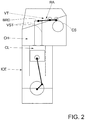
Fig. 2 shows a lateral view of the internal combustion engine offigure 1 . - The same reference numerals and letters in the figures designate the same or functionally equivalent parts.
- According to the present invention, the term "second element" does not imply the presence of a "first element", first, second, etc. are used only for improving the clarity of the description and they should not be interpreted in a limiting way.
-
Figure 1 discloses an internal combustion engine ICE comprising four cylinders CL. However, a different number of cylinders can be conceived. In addition, the cylinders can be distributed in a V configuration. - The ICE comprises an inlet line IP and an exhaust line EP. A turbocharger TC is coupled with the ICE to boost the latter.
- The turbocharger TC comprises a turbine T, preferably of variable geometry type VTG, arranged on the exhaust line.
- The turbine drives a compressor C arranged on the inlet line IP.
- An air filter AF is arranged upstream the compressor and an intercooler IC is arranged downstream the compressor so that the fresh air sucked by the ambient is first filtered, then compressed and then cooled by the intercooler before entering in the engine head CH, see
figure 2 . - Downstream the turbine is arranged an after treatment system comprising at least a component needing to be heated to be operative for abating the pollutants contained in the exhaust gasses produced by the ICE.
- An electronic control unit ECU controls the internal combustion engine and preferably also the geometry of the turbine.
- According to the present invention, the internal combustion engine has a valve train VT comprising a cam shaft CS commanding the swinging of a rocker arm RA, which pushes one or more valve stems VST, for example through a bridge BRD.
- Also a finger follower configuration can be conceived.
- In particular, the internal combustion engine is of the heavy duty type, preferably implementing a diesel cycle.
- The internal combustion engine compresses engine braking means, namely means for varying the valve opening timing.
- According to said braking operation of the engine, the exhaust valve (s) is commanded to open when a piston is close to its top dead center. In this way, the energy accumulated in the air compressed by the piston P is released in the ambient by avoiding the air from returning such energy as kinetic motion for the piston.
- In other words, the engine brake operation does not relate to simple pumping fresh air from the intake line to the exhaust line. Instead the piston compresses air and the latter is released suddenly, decompression, by maximizing the negative work offered by the braking operation.
- The opening of the exhaust valve is carried out at the top dead center or immediately after it, namely at the start of the expansion stroke.
- An example of engine brake operation is given in
EP1927735 orEP3004575 (B1 ). - The latter document discloses a so called "Two Stroke Engine Brake", due to the fact that the four stroke ICE behaves as a two stroke engine.
- The content of claim 1 of
EP3004575 (B1 ) is herewith incorporated by reference. - Generally, the sudden release of the compressed air is obtained through the activation of dedicated hump on a camshaft commanding the rocker arm RA or finger follower.
- According to the present invention, the ICE cylinders define a first subset of cylinders FC, fired during the cold starting of the ICE, while the remaining cylinders define a second subset operated in engine brake mode during said cold starting of the ICE.
- Therefore, a first subset of the ICE is operated in firing mode, thus the corresponding fuel injectors work normally, while the second half is in braking mode, thus the corresponding fuel injectors are prevented from injecting fuel in the corresponding cylinders.
- The braking effect achieved by the second subset of cylinders BC does not impact in a relevant way the drivers or vehicle power demand.
- It is clear that the valve trains of the two subset of cylinders can be controlled selectively. Therefore, "real" or "conventional" engine braking, namely when the vehicle needs to be braked, one or both the valve trains are commanded to implement an engine brake strategy, while all the injectors of both subsets are prevented to inject fuel in the respective cylinders.
- The subdivision between the two subsets can be varied as a function of the driving torque requested to the internal combustion engine. In other words, as the requested driving torque increases an individual cylinder at a time switches from the braking mode to the fired mode. This offers a good driving handling of the vehicle. Thus the driver does not realize that some cylinders are in braking mode operation.
- Thanks to the present invention, standard methods like SOI start of injection shift, see above, and throttling via exhaust or intake Flap can be avoided. However, the exhaust flap FP is still needed for the "real" or "conventional" engine brake operation mode at full braking power to control the turbocharger speed.
- Indeed, especially when a Two Stroke Brake is implemented, the present invention it is very powerful, the usually requested 250°C at the SCR can be achieved a low BMEP (Brake Mean Effective Pressure).
- During the present warm up strategy, it is preferable to control the VTG boost on the basis of the boost map and not in terms of geometry position or equivalently in terms of effective flow section of the turbine. According to a preferred embodiment, which combines with the previous ones, also some of the fired cylinders valve train can be subjected to a timing variation according to Miller/Atkinson valve timing at least during ATS warm up strategy.
- Such timing variation, as known, leads to a volumetric efficiency reduction of the fired cylinders and results very advantageous for temperature hold after the present warm up strategy. This means that, the implementation of the Miller/Atkinson timing, at least on one subset of the cylinders, can be carried out independently from the warm up operation when one subset of cylinders operates in braking mode while the other is fired.
- Thus, at least the first subset of cylinders intended to be fired during ATS warm up, can have a valve train capable to switch through a "normal" timing and a "Miller/Atkinson" timing, implementing the latter during ATS warm up and for temperature hold after warm up. With "normal" timing is meant that a compete and/or correct volumetric filling is obtained of a cylinder.
- However, the ICE could also offer a full engine brake, namely the valve trains of all the cylinders can be turned into the engine brake operation. Thus, the first subset of cylinders intended to be fired during ATS warm up, can have a valve train capable to switch through a "normal" timing, an engine brake timing and a "Miller/Atkinson" timing, implementing the latter at least during ATS warm up.
- According to another embodiment, which combines with the previous ones, the intercooler IC is bypassed and the EGR valve EGRV is controlled in order recirculate hot uncooled exhaust gas not to dissipate heat in the ambient air.
- Hot EGR is also used as temperature hold method and if required in addition during the present warm up procedure or in a temperature hold after warm up procedure.
- The EGR control, beyond the NOx control can be managed in combination with the present warm up procedure and thus in combination with the above "Miller/Atkinson" timing. Preferably, when the ATS is already working, but the engine load drops and the ATS temperature too, first the
- hot EGR recirculation or the
- Miller/Atkinson" timing
- Or both strategies are carried out. However, if the temperature of the ATS continues to drop, the engine restarts the warm up procedure with the first subset of cylinders fired and the second subset of cylinders braked.
- Preferably, such "secondary strategies" - Miller/Atkinson and/or uncooled EGR recirculation increase - are carried out when the temperature of the ATS ranges 30°C - 50°C over the light off temperature of the ATS components, that for the SCR is usually about 250°C.
- It should be clear that the partitioning of the internal combustion engine can be varied according to the circumstances. For example, half cylinders are fired and half cylinders are in braking mode. However, the partitioning can be varied according to the circumstances, either in a fixed predetermined way or in a dynamic way for example on the basis of the ATS temperature. For example a 6 cylinders engine could have 3 or 4 cylinder fired, while the remaining 3 or 2 are in engine brake mode, where 3 or 4 is selected on the basis of the ATS temperature and/or the driving torque requested to the combustion engine.
- Obviously, each of the two subsets is not empty, thus a subset contains at least one cylinder and the other subset contains the remaining cylinders, thus the two subsets are mutually complementary in number.
- Many changes, modifications, variations and other uses and applications of the subject invention will become apparent to those skilled in the art after considering the specification and the accompanying drawings which disclose preferred embodiments thereof. All such changes, modifications, variations and other uses and applications which do not depart from the scope of the invention are deemed to be covered by the appended claims.
- It should be understood that all the single features and/or embodiments can be combined between each other. In addition, the features disclosed in the prior art background are introduced only in order to better understand the invention and not as a declaration about the existence of known prior art.
- Further implementation details will not be described, as the man skilled in the art is able to carry out the invention starting from the teaching of the above description.
Claims (15)
- Method for performing a warm up of an After Treatment System (ATS) of an internal combustion engine (ICE), the internal combustion engine comprising an inlet line (IP) and an outlet line (EP) and said ATS is arranged on said outlet line, wherein the internal combustion engine (ICE) further comprises two or more cylinders and respective valve trains (VT), each valve train arranged to manage a valve opening timing, wherein said two or more cylinders are partitioned into a first and a second subsets (FC, BC) of cylinders, the method comprising the step to turn in fired more said first subset (FC) of cylinders and, at the same time, to turn in braking mode said second subset of cylinders (BC) as a response of an ATS warm up request.
- Method according to claim 1, wherein said subdivision between said first and said second subsets is function of a current ATS temperature.
- Method according to claim 1 or 2, wherein during said ATS warm up at least one of the valve trains of said first subset (FC) of cylinders is adjusted to carry out an Miller/Atkinson cycle.
- Method according to any of previous claims, wherein the internal combustion engine is provided with EGR (Exhaust Gas Recirculation) means suitable to redirect exhaust gasses from the outlet line (OP) to the inlet line (IL) and EGR cooling means to cool said redirected gasses and wherein said EGR cooling means comprises bypass means (EGRV) arranged to bypass said EGR cooling means as a response of said ATS warm up request.
- Method according to claim 4, wherein said EGR means are arranged to recirculate an amount of exhaust gasses on the basis of an operative parameter as a response of said ATS warm up request.
- Method according to claim 1 or 2, whereinsaid subdivision is also function of a driving torque requested to the ICE and wherein when a torque requested to the combustion engine exceeds a predetermined torque value, all the cylinders of the combustion engine are turn into fired mode.
- Method according to claim 6, wherein when the ATS temperature drops approaching said predetermined temperature threshold, the steps of claim 3 and/or claim 4 are carried out.
- Method according to claim 7, wherein, whether notwithstanding the implementation of the steps of claim 3 and/or claim 4 are implemented said ATS temperature reaches said predetermined temperature threshold, then the step of claim 1 is implemented.
- Internal combustion engine (ICE) comprising an inlet line (IP) and an outlet line (EP) and an after treatment system (ATS) arranged on said outlet line, wherein the ICE further comprises two or more cylinders and respective valve trains (VT), each valve train arranged to manage a valve opening timing, wherein said two or more cylinders are partitioned into a first and a second subsets (FC, BC) of cylinders, and wherein the ICE comprises control means (ECU) configured to turn in fired more said first subset (FC) of cylinders and, at the same time, to turn in braking mode said second subset of cylinders (BC) as a response of an ATS warm up request.
- ICE according to claim 8, wherein said subdivision between said first and said second subsets is function of a current ATS temperature.
- ICE according to claim 9 or 10, wherein said first subset (FC) of cylinders has a valve train (VT) suitable to implemented a first timing and a second timing wherein, according to said second timing, an amount of air introduced in the corresponding cylinder is lower that another amount of said first timing, and wherein said first subset (FC) of cylinders is fired according to said second timing as a response of said ATS warm up request.
- ICE according to any one of previous claims 9 11, further provided with EGR (Exhaust Gas Recirculation) means suitable to redirect exhaust gasses from the outlet line (OP) to the inlet line (IL) and EGR cooling means to cool said redirected gasses and wherein said EGR cooling means comprises bypass means arranged to bypass said EGR cooling means as a response of said ATS warm up request.
- ICE according to claim 12, wherein said EGR means are arranged to recirculate an amount of exhaust gasses on the basis of an operative parameter as a response of said ATS warm up request.
- ICE according to any of previous claims from 9 to 13, further comprising a turbocharger (TC) comprising a turbine (T) arranged on said outlet line and a compressor (C) arranged on said inlet line, wherein the turbine is arranged to drive in rotation said compressor.
- Heavy duty vehicle provided with an internal combustion engine (ICE) according to any of previous claims from 9 to 14.
Applications Claiming Priority (1)
| Application Number | Priority Date | Filing Date | Title |
|---|---|---|---|
| IT102016000130806A IT201600130806A1 (en) | 2016-12-23 | 2016-12-23 | METHOD TO PERFORM A HEATING OF A POST-TREATMENT SYSTEM OF AN INTERNAL COMBUSTION ENGINE AND THE INTERNAL COMBUSTION ENGINE PREPARED TO IMPLEMENT THE METHOD |
Publications (2)
| Publication Number | Publication Date |
|---|---|
| EP3346116A1 true EP3346116A1 (en) | 2018-07-11 |
| EP3346116B1 EP3346116B1 (en) | 2021-08-25 |
Family
ID=58545172
Family Applications (1)
| Application Number | Title | Priority Date | Filing Date |
|---|---|---|---|
| EP17210494.5A Active EP3346116B1 (en) | 2016-12-23 | 2017-12-22 | Performing a warm up of an exhaust gas aftertreatment system of an internal combustion engine |
Country Status (2)
| Country | Link |
|---|---|
| EP (1) | EP3346116B1 (en) |
| IT (1) | IT201600130806A1 (en) |
Cited By (4)
| Publication number | Priority date | Publication date | Assignee | Title |
|---|---|---|---|---|
| WO2021098959A1 (en) * | 2019-11-20 | 2021-05-27 | Volvo Truck Corporation | Method for controlling engine braking of an internal combustion engine |
| WO2021158508A1 (en) * | 2020-02-06 | 2021-08-12 | Cummins Inc. | Exhaust temperature controls for engine operation with cylinder deactivation |
| US11454179B2 (en) | 2020-08-11 | 2022-09-27 | Caterpillar Inc. | Engine brake control according to engine operating parameters |
| US11591980B2 (en) | 2018-12-20 | 2023-02-28 | Volvo Truck Corporation | Method for controlling the braking of a vehicle comprising a diesel engine |
Citations (10)
| Publication number | Priority date | Publication date | Assignee | Title |
|---|---|---|---|---|
| US20030089330A1 (en) * | 2001-11-14 | 2003-05-15 | Mitsubishi Denki Kabushiki Kaisha | Cylinder disabling control apparatus for a multi-cylinder engine |
| GB2394750A (en) * | 2002-10-29 | 2004-05-05 | Ford Global Tech Inc | I.c. engine using disabled cylinders to pump secondary air to exhaust emission after-treatment device |
| US20070089400A1 (en) * | 2005-10-21 | 2007-04-26 | Yiqun Huang | Fast warm-up of diesel aftertreatment system during cold start |
| US20070214772A1 (en) * | 2006-03-16 | 2007-09-20 | Cummins, Inc. | Increasing exhaust temperature for aftertreatment operation |
| EP1927735A1 (en) | 2006-11-28 | 2008-06-04 | Iveco S.p.A. | Decompression braking device in endothermic engines |
| EP2418369A1 (en) * | 2010-08-13 | 2012-02-15 | Nederlandse Organisatie voor toegepast -natuurwetenschappelijk onderzoek TNO | System for controlling exhaust gas temperature of an internal combustion engine with an exhaust gas after-treatment device and prime mover including same |
| EP2508737A1 (en) * | 2009-12-04 | 2012-10-10 | Toyota Jidosha Kabushiki Kaisha | Spark ignition type internal combustion engine |
| US20150135680A1 (en) * | 2013-11-21 | 2015-05-21 | Cummins Inc. | Thermal management for regenerating an aftertreatment device |
| EP3115581A1 (en) * | 2015-07-04 | 2017-01-11 | MAN Truck & Bus AG | Internal motor heating operation by increasing load |
| EP3004575B1 (en) | 2013-05-27 | 2017-12-13 | FPT Motorenforschung AG | System for performing an engine braking procedure based on decompression events for a 4-stroke cycle engine |
-
2016
- 2016-12-23 IT IT102016000130806A patent/IT201600130806A1/en unknown
-
2017
- 2017-12-22 EP EP17210494.5A patent/EP3346116B1/en active Active
Patent Citations (10)
| Publication number | Priority date | Publication date | Assignee | Title |
|---|---|---|---|---|
| US20030089330A1 (en) * | 2001-11-14 | 2003-05-15 | Mitsubishi Denki Kabushiki Kaisha | Cylinder disabling control apparatus for a multi-cylinder engine |
| GB2394750A (en) * | 2002-10-29 | 2004-05-05 | Ford Global Tech Inc | I.c. engine using disabled cylinders to pump secondary air to exhaust emission after-treatment device |
| US20070089400A1 (en) * | 2005-10-21 | 2007-04-26 | Yiqun Huang | Fast warm-up of diesel aftertreatment system during cold start |
| US20070214772A1 (en) * | 2006-03-16 | 2007-09-20 | Cummins, Inc. | Increasing exhaust temperature for aftertreatment operation |
| EP1927735A1 (en) | 2006-11-28 | 2008-06-04 | Iveco S.p.A. | Decompression braking device in endothermic engines |
| EP2508737A1 (en) * | 2009-12-04 | 2012-10-10 | Toyota Jidosha Kabushiki Kaisha | Spark ignition type internal combustion engine |
| EP2418369A1 (en) * | 2010-08-13 | 2012-02-15 | Nederlandse Organisatie voor toegepast -natuurwetenschappelijk onderzoek TNO | System for controlling exhaust gas temperature of an internal combustion engine with an exhaust gas after-treatment device and prime mover including same |
| EP3004575B1 (en) | 2013-05-27 | 2017-12-13 | FPT Motorenforschung AG | System for performing an engine braking procedure based on decompression events for a 4-stroke cycle engine |
| US20150135680A1 (en) * | 2013-11-21 | 2015-05-21 | Cummins Inc. | Thermal management for regenerating an aftertreatment device |
| EP3115581A1 (en) * | 2015-07-04 | 2017-01-11 | MAN Truck & Bus AG | Internal motor heating operation by increasing load |
Cited By (8)
| Publication number | Priority date | Publication date | Assignee | Title |
|---|---|---|---|---|
| US11591980B2 (en) | 2018-12-20 | 2023-02-28 | Volvo Truck Corporation | Method for controlling the braking of a vehicle comprising a diesel engine |
| WO2021098959A1 (en) * | 2019-11-20 | 2021-05-27 | Volvo Truck Corporation | Method for controlling engine braking of an internal combustion engine |
| WO2021158508A1 (en) * | 2020-02-06 | 2021-08-12 | Cummins Inc. | Exhaust temperature controls for engine operation with cylinder deactivation |
| CN115053057A (en) * | 2020-02-06 | 2022-09-13 | 卡明斯公司 | Exhaust temperature control of engine operation with cylinder deactivation |
| CN115053057B (en) * | 2020-02-06 | 2025-01-10 | 卡明斯公司 | Exhaust temperature control for engine operation with cylinder deactivated |
| EP4538520A3 (en) * | 2020-02-06 | 2025-07-09 | Cummins Inc. | Exhaust temperature controls for engine operation with cylinder deactivation |
| US12442341B2 (en) | 2020-02-06 | 2025-10-14 | Cummins Inc. | Exhaust temperature controls for engine operation with cylinder deactivation |
| US11454179B2 (en) | 2020-08-11 | 2022-09-27 | Caterpillar Inc. | Engine brake control according to engine operating parameters |
Also Published As
| Publication number | Publication date |
|---|---|
| EP3346116B1 (en) | 2021-08-25 |
| IT201600130806A1 (en) | 2018-06-23 |
Similar Documents
| Publication | Publication Date | Title |
|---|---|---|
| US9334784B2 (en) | Control device of diesel engine | |
| JP5703599B2 (en) | Exhaust gas purification system | |
| US7299623B2 (en) | Method for controlling exhaust gas temperature and space velocity during regeneration to protect temperature sensitive diesel engine components and aftertreatment devices | |
| RU2696155C2 (en) | Method (embodiments) and system for supercharge control | |
| CN109854391B (en) | Engine braking method for improving vehicle retarding | |
| CN104975963B (en) | For the method with cylinder deactivation and the turbocharged engine of variable valve timing | |
| EP3346116B1 (en) | Performing a warm up of an exhaust gas aftertreatment system of an internal combustion engine | |
| US11512653B2 (en) | Valve train with cylinder deactivation and compression release | |
| US7080511B1 (en) | Method for controlling engine air/fuel ratio | |
| US10947907B2 (en) | Variable engine braking for thermal management | |
| JP2013530329A (en) | Engine control device | |
| WO2005001253A2 (en) | System and method of gas recirculation in an internal combustion engine | |
| GB2507061A (en) | Method of two-stage turbocharger matching for supporting cylinder deactivation. | |
| US11008952B2 (en) | Vacuum and compression release braking in spark-ignited engines | |
| WO2006091374A2 (en) | Slectively by passing a dpf in hybrid hccii combustion engine | |
| CN101611220A (en) | Control devices for internal combustion engines | |
| WO2011155584A1 (en) | Exhaust pipe injection control device | |
| JP2009299623A (en) | Control device for internal combustion engine | |
| EP2438284B1 (en) | Method for operating an engine arrangement at startup | |
| CN114352426A (en) | engine control | |
| CN107642410B (en) | Internal combustion engine with exhaust-gas turbocharging device | |
| CN119301350A (en) | Air handling system and control for internal combustion engines operating on the Miller cycle | |
| GB2579032A (en) | Internal combustion engine system | |
| GB2545203A (en) | A method of operating an automotive system for powering a vehicle | |
| JP2009264328A (en) | Intake control device of internal combustion engine |
Legal Events
| Date | Code | Title | Description |
|---|---|---|---|
| PUAI | Public reference made under article 153(3) epc to a published international application that has entered the european phase |
Free format text: ORIGINAL CODE: 0009012 |
|
| STAA | Information on the status of an ep patent application or granted ep patent |
Free format text: STATUS: THE APPLICATION HAS BEEN PUBLISHED |
|
| AK | Designated contracting states |
Kind code of ref document: A1 Designated state(s): AL AT BE BG CH CY CZ DE DK EE ES FI FR GB GR HR HU IE IS IT LI LT LU LV MC MK MT NL NO PL PT RO RS SE SI SK SM TR |
|
| AX | Request for extension of the european patent |
Extension state: BA ME |
|
| STAA | Information on the status of an ep patent application or granted ep patent |
Free format text: STATUS: REQUEST FOR EXAMINATION WAS MADE |
|
| 17P | Request for examination filed |
Effective date: 20190110 |
|
| RBV | Designated contracting states (corrected) |
Designated state(s): AL AT BE BG CH CY CZ DE DK EE ES FI FR GB GR HR HU IE IS IT LI LT LU LV MC MK MT NL NO PL PT RO RS SE SI SK SM TR |
|
| STAA | Information on the status of an ep patent application or granted ep patent |
Free format text: STATUS: EXAMINATION IS IN PROGRESS |
|
| 17Q | First examination report despatched |
Effective date: 20200507 |
|
| GRAP | Despatch of communication of intention to grant a patent |
Free format text: ORIGINAL CODE: EPIDOSNIGR1 |
|
| STAA | Information on the status of an ep patent application or granted ep patent |
Free format text: STATUS: GRANT OF PATENT IS INTENDED |
|
| RIC1 | Information provided on ipc code assigned before grant |
Ipc: F02D 41/02 20060101ALI20210208BHEP Ipc: F01N 11/00 20060101ALI20210208BHEP Ipc: F02D 21/08 20060101ALI20210208BHEP Ipc: F02D 13/02 20060101ALI20210208BHEP Ipc: F02D 33/02 20060101AFI20210208BHEP Ipc: F02D 41/12 20060101ALN20210208BHEP Ipc: F01N 3/20 20060101ALI20210208BHEP Ipc: F02M 26/05 20160101ALI20210208BHEP Ipc: F02D 13/06 20060101ALI20210208BHEP Ipc: F02D 13/04 20060101ALN20210208BHEP Ipc: F02M 26/33 20160101ALI20210208BHEP Ipc: F02D 41/00 20060101ALI20210208BHEP Ipc: F02M 26/25 20160101ALI20210208BHEP |
|
| RIC1 | Information provided on ipc code assigned before grant |
Ipc: F01N 11/00 20060101ALI20210222BHEP Ipc: F02M 26/05 20160101ALI20210222BHEP Ipc: F01N 3/20 20060101ALI20210222BHEP Ipc: F02D 41/12 20060101ALN20210222BHEP Ipc: F02D 33/02 20060101AFI20210222BHEP Ipc: F02D 13/02 20060101ALI20210222BHEP Ipc: F02D 41/02 20060101ALI20210222BHEP Ipc: F02D 13/06 20060101ALI20210222BHEP Ipc: F02D 41/00 20060101ALI20210222BHEP Ipc: F02M 26/25 20160101ALI20210222BHEP Ipc: F02D 21/08 20060101ALI20210222BHEP Ipc: F02D 13/04 20060101ALN20210222BHEP Ipc: F02M 26/33 20160101ALI20210222BHEP |
|
| INTG | Intention to grant announced |
Effective date: 20210316 |
|
| GRAS | Grant fee paid |
Free format text: ORIGINAL CODE: EPIDOSNIGR3 |
|
| GRAA | (expected) grant |
Free format text: ORIGINAL CODE: 0009210 |
|
| STAA | Information on the status of an ep patent application or granted ep patent |
Free format text: STATUS: THE PATENT HAS BEEN GRANTED |
|
| AK | Designated contracting states |
Kind code of ref document: B1 Designated state(s): AL AT BE BG CH CY CZ DE DK EE ES FI FR GB GR HR HU IE IS IT LI LT LU LV MC MK MT NL NO PL PT RO RS SE SI SK SM TR |
|
| REG | Reference to a national code |
Ref country code: CH Ref legal event code: EP |
|
| REG | Reference to a national code |
Ref country code: IE Ref legal event code: FG4D Ref country code: AT Ref legal event code: REF Ref document number: 1424029 Country of ref document: AT Kind code of ref document: T Effective date: 20210915 |
|
| REG | Reference to a national code |
Ref country code: DE Ref legal event code: R096 Ref document number: 602017044641 Country of ref document: DE |
|
| REG | Reference to a national code |
Ref country code: LT Ref legal event code: MG9D |
|
| REG | Reference to a national code |
Ref country code: NL Ref legal event code: MP Effective date: 20210825 |
|
| REG | Reference to a national code |
Ref country code: AT Ref legal event code: MK05 Ref document number: 1424029 Country of ref document: AT Kind code of ref document: T Effective date: 20210825 |
|
| PG25 | Lapsed in a contracting state [announced via postgrant information from national office to epo] |
Ref country code: RS Free format text: LAPSE BECAUSE OF FAILURE TO SUBMIT A TRANSLATION OF THE DESCRIPTION OR TO PAY THE FEE WITHIN THE PRESCRIBED TIME-LIMIT Effective date: 20210825 Ref country code: SE Free format text: LAPSE BECAUSE OF FAILURE TO SUBMIT A TRANSLATION OF THE DESCRIPTION OR TO PAY THE FEE WITHIN THE PRESCRIBED TIME-LIMIT Effective date: 20210825 Ref country code: HR Free format text: LAPSE BECAUSE OF FAILURE TO SUBMIT A TRANSLATION OF THE DESCRIPTION OR TO PAY THE FEE WITHIN THE PRESCRIBED TIME-LIMIT Effective date: 20210825 Ref country code: BG Free format text: LAPSE BECAUSE OF FAILURE TO SUBMIT A TRANSLATION OF THE DESCRIPTION OR TO PAY THE FEE WITHIN THE PRESCRIBED TIME-LIMIT Effective date: 20211125 Ref country code: AT Free format text: LAPSE BECAUSE OF FAILURE TO SUBMIT A TRANSLATION OF THE DESCRIPTION OR TO PAY THE FEE WITHIN THE PRESCRIBED TIME-LIMIT Effective date: 20210825 Ref country code: LT Free format text: LAPSE BECAUSE OF FAILURE TO SUBMIT A TRANSLATION OF THE DESCRIPTION OR TO PAY THE FEE WITHIN THE PRESCRIBED TIME-LIMIT Effective date: 20210825 Ref country code: PT Free format text: LAPSE BECAUSE OF FAILURE TO SUBMIT A TRANSLATION OF THE DESCRIPTION OR TO PAY THE FEE WITHIN THE PRESCRIBED TIME-LIMIT Effective date: 20211227 Ref country code: NO Free format text: LAPSE BECAUSE OF FAILURE TO SUBMIT A TRANSLATION OF THE DESCRIPTION OR TO PAY THE FEE WITHIN THE PRESCRIBED TIME-LIMIT Effective date: 20211125 Ref country code: FI Free format text: LAPSE BECAUSE OF FAILURE TO SUBMIT A TRANSLATION OF THE DESCRIPTION OR TO PAY THE FEE WITHIN THE PRESCRIBED TIME-LIMIT Effective date: 20210825 Ref country code: ES Free format text: LAPSE BECAUSE OF FAILURE TO SUBMIT A TRANSLATION OF THE DESCRIPTION OR TO PAY THE FEE WITHIN THE PRESCRIBED TIME-LIMIT Effective date: 20210825 |
|
| PG25 | Lapsed in a contracting state [announced via postgrant information from national office to epo] |
Ref country code: PL Free format text: LAPSE BECAUSE OF FAILURE TO SUBMIT A TRANSLATION OF THE DESCRIPTION OR TO PAY THE FEE WITHIN THE PRESCRIBED TIME-LIMIT Effective date: 20210825 Ref country code: LV Free format text: LAPSE BECAUSE OF FAILURE TO SUBMIT A TRANSLATION OF THE DESCRIPTION OR TO PAY THE FEE WITHIN THE PRESCRIBED TIME-LIMIT Effective date: 20210825 Ref country code: GR Free format text: LAPSE BECAUSE OF FAILURE TO SUBMIT A TRANSLATION OF THE DESCRIPTION OR TO PAY THE FEE WITHIN THE PRESCRIBED TIME-LIMIT Effective date: 20211126 |
|
| PG25 | Lapsed in a contracting state [announced via postgrant information from national office to epo] |
Ref country code: NL Free format text: LAPSE BECAUSE OF FAILURE TO SUBMIT A TRANSLATION OF THE DESCRIPTION OR TO PAY THE FEE WITHIN THE PRESCRIBED TIME-LIMIT Effective date: 20210825 |
|
| PG25 | Lapsed in a contracting state [announced via postgrant information from national office to epo] |
Ref country code: DK Free format text: LAPSE BECAUSE OF FAILURE TO SUBMIT A TRANSLATION OF THE DESCRIPTION OR TO PAY THE FEE WITHIN THE PRESCRIBED TIME-LIMIT Effective date: 20210825 |
|
| REG | Reference to a national code |
Ref country code: DE Ref legal event code: R097 Ref document number: 602017044641 Country of ref document: DE |
|
| PG25 | Lapsed in a contracting state [announced via postgrant information from national office to epo] |
Ref country code: SM Free format text: LAPSE BECAUSE OF FAILURE TO SUBMIT A TRANSLATION OF THE DESCRIPTION OR TO PAY THE FEE WITHIN THE PRESCRIBED TIME-LIMIT Effective date: 20210825 Ref country code: SK Free format text: LAPSE BECAUSE OF FAILURE TO SUBMIT A TRANSLATION OF THE DESCRIPTION OR TO PAY THE FEE WITHIN THE PRESCRIBED TIME-LIMIT Effective date: 20210825 Ref country code: RO Free format text: LAPSE BECAUSE OF FAILURE TO SUBMIT A TRANSLATION OF THE DESCRIPTION OR TO PAY THE FEE WITHIN THE PRESCRIBED TIME-LIMIT Effective date: 20210825 Ref country code: EE Free format text: LAPSE BECAUSE OF FAILURE TO SUBMIT A TRANSLATION OF THE DESCRIPTION OR TO PAY THE FEE WITHIN THE PRESCRIBED TIME-LIMIT Effective date: 20210825 Ref country code: CZ Free format text: LAPSE BECAUSE OF FAILURE TO SUBMIT A TRANSLATION OF THE DESCRIPTION OR TO PAY THE FEE WITHIN THE PRESCRIBED TIME-LIMIT Effective date: 20210825 Ref country code: AL Free format text: LAPSE BECAUSE OF FAILURE TO SUBMIT A TRANSLATION OF THE DESCRIPTION OR TO PAY THE FEE WITHIN THE PRESCRIBED TIME-LIMIT Effective date: 20210825 |
|
| PLBE | No opposition filed within time limit |
Free format text: ORIGINAL CODE: 0009261 |
|
| STAA | Information on the status of an ep patent application or granted ep patent |
Free format text: STATUS: NO OPPOSITION FILED WITHIN TIME LIMIT |
|
| PG25 | Lapsed in a contracting state [announced via postgrant information from national office to epo] |
Ref country code: MC Free format text: LAPSE BECAUSE OF FAILURE TO SUBMIT A TRANSLATION OF THE DESCRIPTION OR TO PAY THE FEE WITHIN THE PRESCRIBED TIME-LIMIT Effective date: 20210825 |
|
| REG | Reference to a national code |
Ref country code: CH Ref legal event code: PL |
|
| 26N | No opposition filed |
Effective date: 20220527 |
|
| PG25 | Lapsed in a contracting state [announced via postgrant information from national office to epo] |
Ref country code: SI Free format text: LAPSE BECAUSE OF FAILURE TO SUBMIT A TRANSLATION OF THE DESCRIPTION OR TO PAY THE FEE WITHIN THE PRESCRIBED TIME-LIMIT Effective date: 20210825 |
|
| REG | Reference to a national code |
Ref country code: BE Ref legal event code: MM Effective date: 20211231 |
|
| PG25 | Lapsed in a contracting state [announced via postgrant information from national office to epo] |
Ref country code: LU Free format text: LAPSE BECAUSE OF NON-PAYMENT OF DUE FEES Effective date: 20211222 Ref country code: IE Free format text: LAPSE BECAUSE OF NON-PAYMENT OF DUE FEES Effective date: 20211222 |
|
| PG25 | Lapsed in a contracting state [announced via postgrant information from national office to epo] |
Ref country code: BE Free format text: LAPSE BECAUSE OF NON-PAYMENT OF DUE FEES Effective date: 20211231 |
|
| PG25 | Lapsed in a contracting state [announced via postgrant information from national office to epo] |
Ref country code: LI Free format text: LAPSE BECAUSE OF NON-PAYMENT OF DUE FEES Effective date: 20211231 Ref country code: CH Free format text: LAPSE BECAUSE OF NON-PAYMENT OF DUE FEES Effective date: 20211231 |
|
| PG25 | Lapsed in a contracting state [announced via postgrant information from national office to epo] |
Ref country code: HU Free format text: LAPSE BECAUSE OF FAILURE TO SUBMIT A TRANSLATION OF THE DESCRIPTION OR TO PAY THE FEE WITHIN THE PRESCRIBED TIME-LIMIT; INVALID AB INITIO Effective date: 20171222 |
|
| P01 | Opt-out of the competence of the unified patent court (upc) registered |
Effective date: 20230519 |
|
| PG25 | Lapsed in a contracting state [announced via postgrant information from national office to epo] |
Ref country code: CY Free format text: LAPSE BECAUSE OF FAILURE TO SUBMIT A TRANSLATION OF THE DESCRIPTION OR TO PAY THE FEE WITHIN THE PRESCRIBED TIME-LIMIT Effective date: 20210825 |
|
| PG25 | Lapsed in a contracting state [announced via postgrant information from national office to epo] |
Ref country code: MK Free format text: LAPSE BECAUSE OF FAILURE TO SUBMIT A TRANSLATION OF THE DESCRIPTION OR TO PAY THE FEE WITHIN THE PRESCRIBED TIME-LIMIT Effective date: 20210825 |
|
| PG25 | Lapsed in a contracting state [announced via postgrant information from national office to epo] |
Ref country code: MT Free format text: LAPSE BECAUSE OF FAILURE TO SUBMIT A TRANSLATION OF THE DESCRIPTION OR TO PAY THE FEE WITHIN THE PRESCRIBED TIME-LIMIT Effective date: 20210825 |
|
| PG25 | Lapsed in a contracting state [announced via postgrant information from national office to epo] |
Ref country code: TR Free format text: LAPSE BECAUSE OF FAILURE TO SUBMIT A TRANSLATION OF THE DESCRIPTION OR TO PAY THE FEE WITHIN THE PRESCRIBED TIME-LIMIT Effective date: 20210825 |
|
| PGFP | Annual fee paid to national office [announced via postgrant information from national office to epo] |
Ref country code: GB Payment date: 20251223 Year of fee payment: 9 |
|
| PGFP | Annual fee paid to national office [announced via postgrant information from national office to epo] |
Ref country code: IT Payment date: 20251119 Year of fee payment: 9 |
|
| PGFP | Annual fee paid to national office [announced via postgrant information from national office to epo] |
Ref country code: FR Payment date: 20251223 Year of fee payment: 9 |
|
| PGFP | Annual fee paid to national office [announced via postgrant information from national office to epo] |
Ref country code: DE Payment date: 20251229 Year of fee payment: 9 |