EP3345918A1 - Use of the cpcr regulator gene for obtaining new recombinant strains of bacillus thuringiensis with reduced sporulation capacity - Google Patents
Use of the cpcr regulator gene for obtaining new recombinant strains of bacillus thuringiensis with reduced sporulation capacity Download PDFInfo
- Publication number
- EP3345918A1 EP3345918A1 EP17305011.3A EP17305011A EP3345918A1 EP 3345918 A1 EP3345918 A1 EP 3345918A1 EP 17305011 A EP17305011 A EP 17305011A EP 3345918 A1 EP3345918 A1 EP 3345918A1
- Authority
- EP
- European Patent Office
- Prior art keywords
- sequence seq
- bacillus thuringiensis
- strain
- cpcr
- gene
- Prior art date
- Legal status (The legal status is an assumption and is not a legal conclusion. Google has not performed a legal analysis and makes no representation as to the accuracy of the status listed.)
- Withdrawn
Links
Images

Classifications
-
- C—CHEMISTRY; METALLURGY
- C07—ORGANIC CHEMISTRY
- C07K—PEPTIDES
- C07K14/00—Peptides having more than 20 amino acids; Gastrins; Somatostatins; Melanotropins; Derivatives thereof
- C07K14/195—Peptides having more than 20 amino acids; Gastrins; Somatostatins; Melanotropins; Derivatives thereof from bacteria
- C07K14/32—Peptides having more than 20 amino acids; Gastrins; Somatostatins; Melanotropins; Derivatives thereof from bacteria from Bacillus (G)
-
- A—HUMAN NECESSITIES
- A01—AGRICULTURE; FORESTRY; ANIMAL HUSBANDRY; HUNTING; TRAPPING; FISHING
- A01N—PRESERVATION OF BODIES OF HUMANS OR ANIMALS OR PLANTS OR PARTS THEREOF; BIOCIDES, e.g. AS DISINFECTANTS, AS PESTICIDES OR AS HERBICIDES; PEST REPELLANTS OR ATTRACTANTS; PLANT GROWTH REGULATORS
- A01N63/00—Biocides, pest repellants or attractants, or plant growth regulators containing microorganisms, viruses, microbial fungi, animals or substances produced by, or obtained from, microorganisms, viruses, microbial fungi or animals, e.g. enzymes or fermentates
- A01N63/50—Isolated enzymes; Isolated proteins
-
- C—CHEMISTRY; METALLURGY
- C07—ORGANIC CHEMISTRY
- C07K—PEPTIDES
- C07K14/00—Peptides having more than 20 amino acids; Gastrins; Somatostatins; Melanotropins; Derivatives thereof
- C07K14/195—Peptides having more than 20 amino acids; Gastrins; Somatostatins; Melanotropins; Derivatives thereof from bacteria
- C07K14/32—Peptides having more than 20 amino acids; Gastrins; Somatostatins; Melanotropins; Derivatives thereof from bacteria from Bacillus (G)
- C07K14/325—Bacillus thuringiensis crystal peptides, i.e. delta-endotoxins
-
- C—CHEMISTRY; METALLURGY
- C12—BIOCHEMISTRY; BEER; SPIRITS; WINE; VINEGAR; MICROBIOLOGY; ENZYMOLOGY; MUTATION OR GENETIC ENGINEERING
- C12N—MICROORGANISMS OR ENZYMES; COMPOSITIONS THEREOF; PROPAGATING, PRESERVING, OR MAINTAINING MICROORGANISMS; MUTATION OR GENETIC ENGINEERING; CULTURE MEDIA
- C12N1/00—Microorganisms; Compositions thereof; Processes of propagating, maintaining or preserving microorganisms or compositions thereof; Processes of preparing or isolating a composition containing a microorganism; Culture media therefor
- C12N1/20—Bacteria; Culture media therefor
-
- C—CHEMISTRY; METALLURGY
- C12—BIOCHEMISTRY; BEER; SPIRITS; WINE; VINEGAR; MICROBIOLOGY; ENZYMOLOGY; MUTATION OR GENETIC ENGINEERING
- C12N—MICROORGANISMS OR ENZYMES; COMPOSITIONS THEREOF; PROPAGATING, PRESERVING, OR MAINTAINING MICROORGANISMS; MUTATION OR GENETIC ENGINEERING; CULTURE MEDIA
- C12N15/00—Mutation or genetic engineering; DNA or RNA concerning genetic engineering, vectors, e.g. plasmids, or their isolation, preparation or purification; Use of hosts therefor
- C12N15/09—Recombinant DNA-technology
- C12N15/63—Introduction of foreign genetic material using vectors; Vectors; Use of hosts therefor; Regulation of expression
- C12N15/74—Vectors or expression systems specially adapted for prokaryotic hosts other than E. coli, e.g. Lactobacillus, Micromonospora
- C12N15/75—Vectors or expression systems specially adapted for prokaryotic hosts other than E. coli, e.g. Lactobacillus, Micromonospora for Bacillus
-
- C—CHEMISTRY; METALLURGY
- C12—BIOCHEMISTRY; BEER; SPIRITS; WINE; VINEGAR; MICROBIOLOGY; ENZYMOLOGY; MUTATION OR GENETIC ENGINEERING
- C12N—MICROORGANISMS OR ENZYMES; COMPOSITIONS THEREOF; PROPAGATING, PRESERVING, OR MAINTAINING MICROORGANISMS; MUTATION OR GENETIC ENGINEERING; CULTURE MEDIA
- C12N3/00—Spore forming or isolating processes
-
- C—CHEMISTRY; METALLURGY
- C12—BIOCHEMISTRY; BEER; SPIRITS; WINE; VINEGAR; MICROBIOLOGY; ENZYMOLOGY; MUTATION OR GENETIC ENGINEERING
- C12P—FERMENTATION OR ENZYME-USING PROCESSES TO SYNTHESISE A DESIRED CHEMICAL COMPOUND OR COMPOSITION OR TO SEPARATE OPTICAL ISOMERS FROM A RACEMIC MIXTURE
- C12P21/00—Preparation of peptides or proteins
- C12P21/02—Preparation of peptides or proteins having a known sequence of two or more amino acids, e.g. glutathione
Definitions
- the present invention relates to the use of a cpcR regulator gene for reducing the sporulation of a recombinant strain of Bacillus thuringiensis , a recombinant strain of Bacillus thuringiensis comprising the cpcR gene and uses thereof in particular as biopesticides.
- Bacillus species are rod-shaped, endospore-forming aerobic or anaerobic, Gram-positive bacteria. The many species of the genus are able to live in every natural environment. Only one endospore is formed per cell. The spores are resistant to heat, cold, radiation, dessiccation, and disinfectants. At the onset of the sporulation, secondary metabolites are produced by Bacillus sp.. These secondary metabolites may be: enzymes, antibiotics and insecticides.
- Bacillus larvae, Bacillus lentitmorbus, Bacillus popilliae, Bacillus sphaericus, and Bacillus thuringiensis are pathogens of specific groups of insects (Bacillus, Medical Microbiology). Thus, some bacillus are used as the active ingredients of insecticides.
- Bacillus thuringiensis is a bacterium present in soil, which produces spores and synthetize crystals releasing proteins which are toxic to insects and classified as Cry1, -2, -3, -4,..., according to their peptide sequences (Crickmore et al ., 1998). More particularly, Bt strains produce insecticidal crystals in the mother cell of sporulating bacteria which are used as biopesticides for controlling undesirable insects, such as Lepidoptera, Coleoptera and mosquitoes (Schnepf et al ., 1998). At the end of sporulation, the crystal is found alongside the spore. The promoters of genes encoding these crystal toxins are known.
- cry1, cry2, cry3, cry4 are for example the promoters controlling the expression of genes cry1, cry2, cry3, cry4 (Agaisse et al ., 1995; Deng et al ., 2014).
- the promoters of the cry1, cry2 and cry4 genes are recognized by RNA polymerases associated to the specific sigma factors, Sigma E or Sigma K; the promoters of the cry3 genes are recognized by RNA polymerase associated to the vegetative sigma factor, Sigma A.
- Cry toxins have specific activities against insect species of the orders Lepidoptera, Diptera, Coleoptera, Hymenoptera and against nematodes.
- insects ingest crystals their alkaline digestive tracts denature the crystals, making them soluble and thus amenable to being cut with proteases found in the insect gut, which liberate the toxin from the crystal (Schnepf et al ., 1998).
- the Cry toxin is then inserted into the insect gut cell membrane, paralyzing the digestive tract and forming a pore. The insect stops eating and starves to death (Schnepf et al ., 1998).
- Bt is successfully used as a biopesticide for more than 50 years (Bravo et al ., 2011 and Sanahuja et al ., 2011). However, the efficiency of these Bt-based biopesticides is assessed to only a few days on the leaf surface. Indeed, the chemistry of the leaf surface, proteases and sunlight contribute to the degradation of Cry proteins.
- LM1212 a Bt strain
- Transcriptional analysis suggested that the parasporal crystal phenotype results from a new type of cell differentiation associated with a novel regulation mode of cry gene expression (Deng et al ., 2015).
- all biopesticides known until now consist of a mixture of spores and crystals.
- cpcR crystal producing cells regulator
- the inventors have characterized this regulator gene and its nucleotide sequence, which comprises the sequence SEQ ID NO: 1.
- this CpcR regulator directs the expression of the cry gene promoters in Bacillus thuringiensis LM1212.
- the inventors have also shown that the use of this regulator allows the expression of heterologous cry genes, as the cry1Ab gene encoding a lepidopteran active toxin, and the production of crystal inclusions in non sporulating Bt cells.
- the introduction of the cpcR gene in a typical Bt strain drastically reduced its sporulation rate while maintaining or increasing the expression of cry genes.
- the results obtained by the inventors indicate that this expression system allows the production of insecticidal Cry proteins in a Spo - genetic background.
- the invention provides safer Bt-based biopesticides by preventing the dissemination of bacterial spores.
- the production and the stability of the Cry toxins in dedicated bacterial cells are improved since the toxins are protected from the environmental degradation, such as UV irradiation.
- the present invention relates to the use of the cpcR regulator gene of the sequence SEQ ID NO: 1 for reducing the sporulation of a recombinant strain of Bacillus thuringiensis.
- the nucleotide sequence SEQ ID NO: 1 is:
- Recombinant strain in the present invention means that one or more fragments of genes or one or more entire genes is/are inserted by genetic engineering, in a parental strain.
- Reducing the sporulation in the present invention means that the rate of sporulation of the recombinant strain of Bt of the invention is reduced at least 2 fold preferably at least 5 fold, more preferably at least 10 fold, even more preferably at least 15 fold compared to the sporulation rate of the parental Bt strain.
- the inventors determined a DNA fragment from LM1212, responsible for the activation of a promoter of a gene encoding a Cry protein in the LM1212. Then, they reduced this DNA fragment until identifying the gene responsible for this effect. After identification, the inventors validated that cpcR is responsible for a) the activation of cry gene expression in the LM1212 strain and b) the reduction of the sporulation rate. Finally, the inventors tested the use of the cpcR in a recombinant strain of Bt and obtained a reduction of the sporulation rate and an increase of the production of Cry1Ab. These results confirm the interest to use the cpcR gene in a recombinant strain of Bt and the use of this recombinant strain of Bt as new biopesticide.
- the cpcR regulator directs the expression of several promoters of genes encoding Cry and Cyt proteins, said promoters having the consensus sequence SEQ ID NO:2.
- the nucleotide sequence SEQ ID NO: 2 is:
- the promoter activated by CpcR is selected from the group consisting of: P 32 of the sequence SEQ ID NO: 3, P 41 of the sequence SEQ ID NO: 4, P 35 of the sequence SEQ ID NO: 5, P 45 of the sequence SEQ ID: 6.
- the promoter activated by CpcR is P 35 .
- genes encoding the proteins activated by CpcR in the LM1212 strain are preferably cry genes, more preferably cry32Va1, cry41Ca1, cry45Ba1, cry74Aa1, cry32Wa1 and cry35-like , even more preferably cry32Wa1 and cry35-like.
- genes encoding proteins, in particular toxins, produced by the recombinant strain of Bacillus thuringiensis are preferably cry genes or cyt genes.
- cry and cyt genes encoding toxins produced by the recombinant strain of the invention under the control of CpcR are:
- the genes encoding toxins produced by the recombinant strain of the invention under the control of CpcR are cry1, cry2, cry3, cry4, cry5, cry 6 cry8, cry9, cry11, cry14, cry21, cyt1 or cyt2 genes.
- the activity spectrum of the Cry and Cyt toxins against insect pests is described in: Van Frankenhuizen, K., et al ., 2009.
- the activity spectrum of the Cry toxins against nematodes is described in: Wei et al ., 2003.
- the toxin produced by the recombinant strain of the invention is Cry1Ab, a lepidopteran active toxin, encoded by the cry1Ab gene.
- the inventors showed that the expression of the cpcR gene allows the expression of heterologous cry genes, such as the cry1Ab gene, and the production of crystal inclusions in non-sporulating Bt cells.
- the present invention also relates to a recombinant strain of Bacillus thuringiensis , which is characterized in that it comprises:
- the main feature of this recombinant strain, in the present invention, is its reduced sporulation rate in comparison with the parental strain.
- this bacterium may be used living or dead. Indeed, the viability of the bacteria is not required to ensure the insecticidal or the nematicidal activity of this recombinant strain of Bacillus thuringiensis. Since CpcR negatively affects sporulation, the number of viable spores will be reduced or even abolished.
- the parental strain of Bacillus thuringiensis is the Bacillus thuringiensis kurstaki HD73 (type strain of the serotype 3a, 3b, 3c).
- the promoter present in the recombinant strain of Bacillus thuringiensis is selected from the group consisting of: P 32 of the sequence SEQ ID NO: 3, P 41 of the sequence SEQ ID NO: 4, P 35 of the sequence SEQ ID NO: 5, P 45 of the sequence SEQ ID: 6.
- the promoter present in the recombinant strain of Bacillus thuringiensis is P 35 .
- genes encoding the toxins in the recombinant strain of Bacillus thuringiensis are preferably cry or cyt genes, more preferably cry1, cry2, cry3, cry4, cry5, cry6, cry8, cry9, cry11, cry 14, cry 21, cyt1 or cyt2 genes , more preferably, cry1, cry2, cry3, cry8 or cry9 genes.
- the toxins produced by the recombinant strain of the invention are Cry1 and Cry2 toxins.
- the toxin produced by the recombinant strain of the invention is Cry1Ab, a lepidopteran active toxin, encoded by the cry1Ab gene.
- the present invention also relates to the use of the recombinant strain of Bacillus thuringiensis as described above as biopesticide.
- Biopesticide in the present invention refers to pesticides derived from natural materials, such as bacteria, for example, in the present invention.
- This general term “biopesticide” includes the term “biocide” which is more used in a context of controlling vectors, such as vectors that transmit pathogens responsible for mammalian diseases.
- the recombinant strain of Bacillus thuringiensis is used for protecting cultures.
- the "biopesticide” producing CpcR-regulated Cry proteins will be used for controlling crop pests, specifically lepidopteran insects such as those belonging to the families Tortricidae, Noctuidae and Pyralidae which damage crops like cotton, cabbage, corn, soybean, grapevine and any other extensive or gardener cultures.
- the toxins produced by the recombinant strain of the invention for protecting cultures are: Cry1, Cry2, Cry3, Cry 8 and Cry9 toxins.
- the recombinant strain of Bacillus thuringiensis is used to control vectors, especially vectors that transmit pathogens responsible for mammalian diseases, preferably human diseases, such as insect vectors, in particular mosquitoes or simuli.
- the recombinant strain of Bacillus thuringiensis will harbor CpcR-regulated cry genes encoding toxins specifically active against dipteran insects.
- the toxins produced by the recombinant strain of the invention in the use to control vectors are toxins belonging, for example, to the classes Cyt1, Cry4 and Cry11.
- the recombinant strain of Bacillus thuringiensis is used to control nematodes, especially those responsible for mammalian diseases, preferably human diseases.
- the recombinant strain of Bacillus thuringiensis will harbor CpcR-regulated cry genes encoding toxins specifically active against nematodes.
- the toxins produced by the recombinant strain of the invention in the use to control nematodes are toxins belonging, for example, to the classes Cry5, Cry6, Cry 14 and Cry21.
- the present invention also relates to a method for obtaining a recombinant strain of Bacillus thuringiensis as described above, comprising the steps of introducing in said strain both:
- the two steps of this method can be performed in the order as defined above or in the reverse order but also simultaneously by introducing a construct carrying the three cited elements.
- the parental strain of Bacillus thuringiensis is the Bacillus thuringiensis kurstaki HD73.
- the promoter having the sequence SEQ ID NO: 2 is selected from the group consisting of: P 32 of the sequence SEQ ID NO: 3, P 41 of the sequence SEQ ID NO: 4, P 35 of the sequence SEQ ID NO: 5, P 45 of the sequence SEQ ID: 6.
- said promoter is P 35 of sequence SEQ ID NO: 2.
- the genes encoding a toxin are cry1, cry2, cry3, cry 4, cry5, cry6, cry8, cry9, cry11, cry14, cry2 1 or cyt genes, more preferably cry1, cry2, cry3, cry8 or cry9 genes.
- the gene encoding a toxin is cry1Ab gene.
- the promoter which directs the transcription of the cpcR gene is any promoter functional in Bt.
- the choice of the more appropriate promoter may depend in particular on the type of expression (i.e. constitutive or inducible) that one wishes to obtain. Promoters may be constitutive promoters, i.e. promoters which are active in cells and under most environmental conditions, or cell specific promoters which are active only or mainly in certain cell types, and inducible promoters that are activated by physical or chemical stimuli.
- the genetic construction will be done on Bacillus plasmids based on the replicons pBC16, pHT315 or pHT73 and carrying a cry gene downstream from a CpcR-regulated promoter.
- the genetic construct can be introduced in a strain of Bacillus thuringiensis by electroporation (Lereclus et al ., 1989; Bone et al. 1989; Koehler et al. 1994; Mahillon et al ., 1999; Peng et al 2009), by using recombination procedure as previously described (Lereclus et al ., 1992), or by heterogramic conjugation (Trieu-Cuot et al ., 1987).
- EXAMPLE 1 CONSTRUCTION OF A BACILLUS THURINGIENSIS STRAIN TO SCREEN FOR THE REGULATOR OF THE EXPRESSION FROM THE P 35 PROMOTER
- the Bt strain kurstaki HD73 Cry is chosen to clone the LM1212 genes responsible for the activation of the P 35 promoter and for the negative effect on sporulation.
- thermosensitive plasmid pRN5101-AmyE-HD73::tet is first constructed following the same procedure as described in Verplaetse et al., 2015, except that the antibiotic resistance cassette confers resistance to tetracycline instead of spectinomycin and that the amyE flanking regions used for homologous recombination were amplified using Bt HD73 genomic DNA instead of Bt 407.
- a P 35' - lac Z transcriptional fusion is then cloned between the amy up and amy down fragments cloned from the kurstaki strain.
- the P 35 ' -lacZ fusion is then introduced at the amyE locus of the kurstaki HD73 chromosome by homologous recombination ( Figure 1 ).
- the resulting strain is designated HD73 Cry [amyE::P 35' - lacZ ].
- the DNA fragment ORF28-ORF32 from plasmid PLM248 of strain LM1212 is cloned into plasmid pHT304 (Arantes, O. et al., 1991) and the resulting plasmid is called pHT-1a.
- pHT-1a is then introduced into the Bt strain HD73 Cry [ amyE :: P 35 ' - lacZ ] and the recombinant clones are isolated on HCT plates (0.7% casein hydrolysate, 0.5% tryptone, 0.68% KH2 PO4, 0.012% MgSO4_7H2 O, 0.00022% MnSO4_4H2 0, 0.0014% ZnSO4_7H2 O, 0.008% ferric ammonium citrate, 0.018% CaCl2_4H2 O, 0.3% glucose, pH 7.2) (Lecadet et al ., 1980; Verplaetse et al ., 2016) containing yeast extract (0,05%), glucose 0.3% and X-Gal (100 ⁇ g / mL).
- the DNA region ORF28 to 32 is sub-cloned into the pHT304 plasmid and the resulting plasmids are transformed into the Bt strain HD73 Cry [ amyE :: P 35' - lacZ ] ( figure 2 ).
- ORF28 encoding a transcriptional regulator is sufficient to activate P 35 -directed transcription.
- this activity is obtained if a short DNA fragment located just upstream of the ORF29 is fused upstream from ORF28 (Fragment le, figure 2 ).
- ORF28 encodes a transcriptional regulator belonging to the family of response regulators, suggesting that it should act as a two-component system in association with a histidine kinase. Such a kinase may be encoded by ORF32.
- results show that ORF28 alone is able to activate the P 35 promoter. In silico analysis of these genes (ORF28 and 32) indicates that ORF28 is unique and is not found in the available sequences of the bacteria of the B. cereus group (about 100 genomes). In contrast, ORF32 is highly conserved among all the bacteria of the B. cereus group, including the LM1212.
- ORF28 may function as a response regulator activated by the histidine kinase naturally present in the kurstaki HD73 strain.
- pHT-1c which corresponds to the plasmid pHT304 carrying the gene ORF28 and a promoter region, is introduced in Bt strain HD73 Cry [ amyE ::P 35' -lacZ ].
- CpcR the regulator responsible for two functions: i) the activation of cry gene expression in the LM1212 strain, and ii) the reduction of the sporulation rate.
- ORF28 functions as a two-component system associated with a kinase existing in all the Bt strains. This gene is responsible for the specific phenotype of the LM1212 strain, which is to differentiate into crystal-producers or spore-formers.
- EXAMPLE 3 USE OF THE CPCR REGULATOR TO PRODUCE CRY1Ab IN NON-SPORULATING BT CELLS
- the inventors produced recombinant strains of Bt and analyzed the sporulation rate of this recombinant strain and the production of the toxin Cry1Ab.
Landscapes
- Life Sciences & Earth Sciences (AREA)
- Chemical & Material Sciences (AREA)
- Health & Medical Sciences (AREA)
- Organic Chemistry (AREA)
- Engineering & Computer Science (AREA)
- Genetics & Genomics (AREA)
- Zoology (AREA)
- Wood Science & Technology (AREA)
- General Health & Medical Sciences (AREA)
- Bioinformatics & Cheminformatics (AREA)
- Biotechnology (AREA)
- Biochemistry (AREA)
- General Engineering & Computer Science (AREA)
- Microbiology (AREA)
- Molecular Biology (AREA)
- Proteomics, Peptides & Aminoacids (AREA)
- Biomedical Technology (AREA)
- Biophysics (AREA)
- Medicinal Chemistry (AREA)
- Gastroenterology & Hepatology (AREA)
- Plant Pathology (AREA)
- Virology (AREA)
- Chemical Kinetics & Catalysis (AREA)
- General Chemical & Material Sciences (AREA)
- Physics & Mathematics (AREA)
- Crystallography & Structural Chemistry (AREA)
- Agronomy & Crop Science (AREA)
- Pest Control & Pesticides (AREA)
- Dentistry (AREA)
- Environmental Sciences (AREA)
- Tropical Medicine & Parasitology (AREA)
- Micro-Organisms Or Cultivation Processes Thereof (AREA)
- Peptides Or Proteins (AREA)
Abstract
The present invention relates to the use of a cpcR regulator gene, which directs the expression of promoters of genes encoding Cry proteins, for reducing the sporulation of a strain of Bacillus thuringiensis, new recombinant strains of Bacillus thuringiensis and uses thereof as biopesticide.
Description
- The present invention relates to the use of a cpcR regulator gene for reducing the sporulation of a recombinant strain of Bacillus thuringiensis, a recombinant strain of Bacillus thuringiensis comprising the cpcR gene and uses thereof in particular as biopesticides.
- Bacillus species are rod-shaped, endospore-forming aerobic or anaerobic, Gram-positive bacteria. The many species of the genus are able to live in every natural environment. Only one endospore is formed per cell. The spores are resistant to heat, cold, radiation, dessiccation, and disinfectants. At the onset of the sporulation, secondary metabolites are produced by Bacillus sp.. These secondary metabolites may be: enzymes, antibiotics and insecticides.
- Bacillus larvae, Bacillus lentitmorbus, Bacillus popilliae, Bacillus sphaericus, and Bacillus thuringiensis are pathogens of specific groups of insects (Bacillus, Medical Microbiology). Thus, some bacillus are used as the active ingredients of insecticides.
- Bacillus thuringiensis (Bt) is a bacterium present in soil, which produces spores and synthetize crystals releasing proteins which are toxic to insects and classified as Cry1, -2, -3, -4,..., according to their peptide sequences (Crickmore et al., 1998). More particularly, Bt strains produce insecticidal crystals in the mother cell of sporulating bacteria which are used as biopesticides for controlling undesirable insects, such as Lepidoptera, Coleoptera and mosquitoes (Schnepf et al., 1998). At the end of sporulation, the crystal is found alongside the spore. The promoters of genes encoding these crystal toxins are known. They are for example the promoters controlling the expression of genes cry1, cry2, cry3, cry4 (Agaisse et al., 1995; Deng et al., 2014). The promoters of the cry1, cry2 and cry4 genes are recognized by RNA polymerases associated to the specific sigma factors, Sigma E or Sigma K; the promoters of the cry3 genes are recognized by RNA polymerase associated to the vegetative sigma factor, Sigma A.
- Cry toxins have specific activities against insect species of the orders Lepidoptera, Diptera, Coleoptera, Hymenoptera and against nematodes. When insects ingest crystals, their alkaline digestive tracts denature the crystals, making them soluble and thus amenable to being cut with proteases found in the insect gut, which liberate the toxin from the crystal (Schnepf et al., 1998). The Cry toxin is then inserted into the insect gut cell membrane, paralyzing the digestive tract and forming a pore. The insect stops eating and starves to death (Schnepf et al., 1998).
- Bt is successfully used as a biopesticide for more than 50 years (Bravo et al., 2011 and Sanahuja et al., 2011). However, the efficiency of these Bt-based biopesticides is assessed to only a few days on the leaf surface. Indeed, the chemistry of the leaf surface, proteases and sunlight contribute to the degradation of Cry proteins.
- Today, all the Bt-based biopesticides used in the world consist of a mixture of spores and crystals. However, toxins present in crystals are rapidly destroyed because they are released in the external medium at the end of the sporulation process. Further, the dissemination of bacterial spores may be detrimental for Human and environment.
- It remains a need to provide safer Bt-based biopesticides wherein the stability of the Cry toxins is improved.
- In order to solve these problems, the inventors studied a Bt strain, called LM1212 that presents the unique ability to differentiate into crystal-producers or spore-formers. Transcriptional analysis suggested that the parasporal crystal phenotype results from a new type of cell differentiation associated with a novel regulation mode of cry gene expression (Deng et al., 2015). As specified above, all biopesticides known until now consist of a mixture of spores and crystals. The characterization of the unusual LM1212 strain, in which the crystal is not produced in the mother cell of sporulating cells, but only in a subpopulation of non-sporulating cells, expanded inventor's understanding of the parasporal crystal phenotype in Bt. Thereby, the inventors have identified surprisingly and unexpectedly a unique regulatory sequence gene present in this LM1212 and called "crystal producing cells regulator" (cpcR). They showed that the introduction of this cpcR gene in a typical Bt strain drastically allows to reduce sporulation rate.
- The inventors have characterized this regulator gene and its nucleotide sequence, which comprises the sequence SEQ ID NO: 1.
- Thus, this CpcR regulator directs the expression of the cry gene promoters in Bacillus thuringiensis LM1212.
- The inventors have also shown that the use of this regulator allows the expression of heterologous cry genes, as the cry1Ab gene encoding a lepidopteran active toxin, and the production of crystal inclusions in non sporulating Bt cells.
- Moreover, the introduction of the cpcR gene in a typical Bt strain drastically reduced its sporulation rate while maintaining or increasing the expression of cry genes. The results obtained by the inventors indicate that this expression system allows the production of insecticidal Cry proteins in a Spo- genetic background. Thus, the invention provides safer Bt-based biopesticides by preventing the dissemination of bacterial spores. Moreover, the production and the stability of the Cry toxins in dedicated bacterial cells are improved since the toxins are protected from the environmental degradation, such as UV irradiation.
- Accordingly, the present invention relates to the use of the cpcR regulator gene of the sequence SEQ ID NO: 1 for reducing the sporulation of a recombinant strain of Bacillus thuringiensis.
- The nucleotide sequence SEQ ID NO: 1 is:

- "Recombinant strain" in the present invention means that one or more fragments of genes or one or more entire genes is/are inserted by genetic engineering, in a parental strain.
- "Reducing the sporulation" in the present invention means that the rate of sporulation of the recombinant strain of Bt of the invention is reduced at least 2 fold preferably at least 5 fold, more preferably at least 10 fold, even more preferably at least 15 fold compared to the sporulation rate of the parental Bt strain.
- In order to characterize the cpcR regulator gene, first the inventors determined a DNA fragment from LM1212, responsible for the activation of a promoter of a gene encoding a Cry protein in the LM1212. Then, they reduced this DNA fragment until identifying the gene responsible for this effect. After identification, the inventors validated that cpcR is responsible for a) the activation of cry gene expression in the LM1212 strain and b) the reduction of the sporulation rate. Finally, the inventors tested the use of the cpcR in a recombinant strain of Bt and obtained a reduction of the sporulation rate and an increase of the production of Cry1Ab. These results confirm the interest to use the cpcR gene in a recombinant strain of Bt and the use of this recombinant strain of Bt as new biopesticide.
- The cpcR regulator directs the expression of several promoters of genes encoding Cry and Cyt proteins, said promoters having the consensus sequence SEQ ID NO:2.
- The nucleotide sequence SEQ ID NO: 2 is:
- X1TGAAX2AAAAX3X4X5X6CAX7X8AX9ATTTX10CX11TCX12X13X14X15X16TX 17X18AX19ATGTX20X21TX22GX23TAX24AX25TX26X27X27X29AX30X31TX32X33, with:
- X1=A or G; X2 =C or T; X3=A or T; X4=A, T or G; X5=A, C or T; X6=A or G; X7=C or T; X8=A or C X9=A, T or G; X10=A or C; X11= A or C; X12=A, C or T; X13=A, G or T; X14=A or C; X15=A, G or T; X16=A or G; X17=A or T; X18=A, C or T; X19=C or T; X20=A or C; X21=A, C or G; X22=A or T; X23= C or T; X24=G or T; X25=C or T; X26=G or T; X27=A or G; X28=A or T; X29=A, G or T; X30=C, G or T; X31=A or G; X32=A or G; X33=C or T.
- Preferably, the promoter activated by CpcR, is selected from the group consisting of: P32 of the sequence SEQ ID NO: 3, P41 of the sequence SEQ ID NO: 4, P35 of the sequence SEQ ID NO: 5, P45 of the sequence SEQ ID: 6.
- More preferably, the promoter activated by CpcR is P35.
- According to the invention, genes encoding the proteins activated by CpcR in the LM1212 strain, are preferably cry genes, more preferably cry32Va1, cry41Ca1, cry45Ba1, cry74Aa1, cry32Wa1 and cry35-like, even more preferably cry32Wa1 and cry35-like.
- According to the invention, genes encoding proteins, in particular toxins, produced by the recombinant strain of Bacillus thuringiensis are preferably cry genes or cyt genes.
- Preferably, the cry and cyt genes encoding toxins produced by the recombinant strain of the invention under the control of CpcR are:
- 1) cry genes encoding toxins active against crop pests, specifically lepidopteran and coleopteran insects. These cry genes belong for example to the classes cry1, cry2, cry3, cry8 or cry9.
- 2) cry genes encoding toxins active against insect vectors of human diseases, specifically dipteran insects as mosquitoes and simuli. These cry genes belong for example to the classes cry4 and cry11.
- 3) cry genes encoding toxins active against nematodes. These cry genes belong for example to the classes cry5, cry6, cry14 and cry21.
- 4) cyt genes encoding toxins active against insect vectors of human diseases, specifically dipteran insects as mosquitoes and simuli. These cyt genes belong for example to the classes cyt1 and cyt2.
- More preferably, the genes encoding toxins produced by the recombinant strain of the invention under the control of CpcR are cry1, cry2, cry3, cry4, cry5, cry 6 cry8, cry9, cry11, cry14, cry21, cyt1 or cyt2 genes.
- The activity spectrum of the Cry and Cyt toxins against insect pests is described in: Van Frankenhuizen, K., et al., 2009. The activity spectrum of the Cry toxins against nematodes is described in: Wei et al., 2003.
- More preferably, the toxin produced by the recombinant strain of the invention is Cry1Ab, a lepidopteran active toxin, encoded by the cry1Ab gene.
- The inventors showed that the expression of the cpcR gene allows the expression of heterologous cry genes, such as the cry1Ab gene, and the production of crystal inclusions in non-sporulating Bt cells.
- The present invention also relates to a recombinant strain of Bacillus thuringiensis, which is characterized in that it comprises:
- a) At least one gene encoding Cry and/or Cyt toxins,
- b) At least one promoter having the sequence SEQ ID NO: 2, allowing the expression of said at least one gene encoding Cry and/or Cyt toxins, and,
- c) A cpcR regulator gene of sequence SEQ ID NO: 1, which directs the expression of said at least one promoter.
- The main feature of this recombinant strain, in the present invention, is its reduced sporulation rate in comparison with the parental strain.
- According to the invention, this bacterium may be used living or dead. Indeed, the viability of the bacteria is not required to ensure the insecticidal or the nematicidal activity of this recombinant strain of Bacillus thuringiensis. Since CpcR negatively affects sporulation, the number of viable spores will be reduced or even abolished.
- Preferably, the parental strain of Bacillus thuringiensis is the Bacillus thuringiensis kurstaki HD73 (type strain of the serotype 3a, 3b, 3c).
- Preferably, the promoter present in the recombinant strain of Bacillus thuringiensis is selected from the group consisting of: P32 of the sequence SEQ ID NO: 3, P41 of the sequence SEQ ID NO: 4, P35 of the sequence SEQ ID NO: 5, P45 of the sequence SEQ ID: 6.
- More preferably, the promoter present in the recombinant strain of Bacillus thuringiensis is P35.
- According to the invention, genes encoding the toxins in the recombinant strain of Bacillus thuringiensis are preferably cry or cyt genes, more preferably cry1, cry2, cry3, cry4, cry5, cry6, cry8, cry9, cry11, cry 14, cry 21, cyt1 or cyt2 genes, more preferably, cry1, cry2, cry3, cry8 or cry9 genes.
- Preferably, the toxins produced by the recombinant strain of the invention are Cry1 and Cry2 toxins.
- More preferably, the toxin produced by the recombinant strain of the invention is Cry1Ab, a lepidopteran active toxin, encoded by the cry1Ab gene.
- The present invention also relates to the use of the recombinant strain of Bacillus thuringiensis as described above as biopesticide.
- "Biopesticide" in the present invention refers to pesticides derived from natural materials, such as bacteria, for example, in the present invention. This general term "biopesticide" includes the term "biocide" which is more used in a context of controlling vectors, such as vectors that transmit pathogens responsible for mammalian diseases.
- In a particular embodiment, the recombinant strain of Bacillus thuringiensis is used for protecting cultures. The "biopesticide" producing CpcR-regulated Cry proteins will be used for controlling crop pests, specifically lepidopteran insects such as those belonging to the families Tortricidae, Noctuidae and Pyralidae which damage crops like cotton, cabbage, corn, soybean, grapevine and any other extensive or gardener cultures.
- Preferably, the toxins produced by the recombinant strain of the invention for protecting cultures are: Cry1, Cry2, Cry3, Cry 8 and Cry9 toxins.
- In another particular embodiment, the recombinant strain of Bacillus thuringiensis is used to control vectors, especially vectors that transmit pathogens responsible for mammalian diseases, preferably human diseases, such as insect vectors, in particular mosquitoes or simuli. In such a particular embodiment, the recombinant strain of Bacillus thuringiensis will harbor CpcR-regulated cry genes encoding toxins specifically active against dipteran insects.
- Preferably, the toxins produced by the recombinant strain of the invention in the use to control vectors are toxins belonging, for example, to the classes Cyt1, Cry4 and Cry11.
- In another particular embodiment, the recombinant strain of Bacillus thuringiensis is used to control nematodes, especially those responsible for mammalian diseases, preferably human diseases. In such a particular embodiment, the recombinant strain of Bacillus thuringiensis will harbor CpcR-regulated cry genes encoding toxins specifically active against nematodes.
- Preferably, the toxins produced by the recombinant strain of the invention in the use to control nematodes are toxins belonging, for example, to the classes Cry5, Cry6, Cry 14 and Cry21.
- The present invention also relates to a method for obtaining a recombinant strain of Bacillus thuringiensis as described above, comprising the steps of introducing in said strain both:
- 1- a genetic construction comprising at least one gene encoding a toxin under the control of a promoter having the sequence SEQ ID NO: 2, and
- 2- an expression system comprising the CpcR regulator of the sequence SEQ ID NO: 1.
- The two steps of this method can be performed in the order as defined above or in the reverse order but also simultaneously by introducing a construct carrying the three cited elements.
- Preferably, the parental strain of Bacillus thuringiensis is the Bacillus thuringiensis kurstaki HD73.
- Preferably, the promoter having the sequence SEQ ID NO: 2 is selected from the group consisting of: P32 of the sequence SEQ ID NO: 3, P41 of the sequence SEQ ID NO: 4, P35 of the sequence SEQ ID NO: 5, P45 of the sequence SEQ ID: 6.
- More preferably, said promoter is P35 of sequence SEQ ID NO: 2.
- Preferably, the genes encoding a toxin are cry1, cry2, cry3, cry 4, cry5, cry6, cry8, cry9, cry11, cry14, cry21 or cyt genes, more preferably cry1, cry2, cry3, cry8 or cry9 genes.
- More preferably, the gene encoding a toxin is cry1Ab gene.
- The promoter which directs the transcription of the cpcR gene is any promoter functional in Bt. The choice of the more appropriate promoter may depend in particular on the type of expression (i.e. constitutive or inducible) that one wishes to obtain. Promoters may be constitutive promoters, i.e. promoters which are active in cells and under most environmental conditions, or cell specific promoters which are active only or mainly in certain cell types, and inducible promoters that are activated by physical or chemical stimuli.
- The genetic construction will be done on Bacillus plasmids based on the replicons pBC16, pHT315 or pHT73 and carrying a cry gene downstream from a CpcR-regulated promoter.
- The genetic construct can be introduced in a strain of Bacillus thuringiensis by electroporation (Lereclus et al., 1989; Bone et al. 1989; Koehler et al. 1994; Mahillon et al., 1999; Peng et al 2009), by using recombination procedure as previously described (Lereclus et al., 1992), or by heterogramic conjugation (Trieu-Cuot et al., 1987).
- In addition to the above features described, the invention further comprises other features which will emerge from the following description, which refers to examples illustrating the present invention, as well as to the appended figures.
-
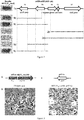
Figure 1 shows the construction of a Bacillus thuringiensis strain. -
Figure 2 shows the characterization of the LM1212 DNA fragment carrying the cpcR gene activating transcription from the P35 promoter. -
Figure 3 shows the expression of cry1Ab under the control of CpcR and P35 in a kurstaki strain. A) Plasmids pHT16-18ΩP35'-cry1Ab and pHT-1c. B) Phase-contrast microscopy of the strain kurstaki HD73 transformed with plasmids pHT16-18ΩP35'-cry1Ab and pHT-1c. The arrows indicate some crystal inclusions. -
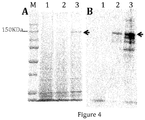
Figure 4 shows the analysis of a Cry1Ab toxin produced in a kurstaki strain under the control of CpcR and P35. A) SDS-Page. M corresponds to molecular weight markers. 1. 20 µL of crude extract from colonies of the strain kurstaki HD73 (pHT16-18, pHT304). 2. 20 µL of crude extract from colonies of the strain kurstaki HD73 (pHT16-18ΩP35'-cry1Ab, pHT304). 3. 20 µL of crude extract from colonies of the strain kurstaki HD73 (pHT16-18Ω35'-cry1Ab, pHT-1c). The crude extracts were prepared in the same way and the use of 20 µL of crude extract means that the same amount of each preparation is loaded on the SDS-Page. B) Western blotting oflanes - The previous results obtained by the inventors suggested that, in the LM1212 strain, a regulation system limits the production of toxins to the subpopulation of non-sporulating cells. Thus, to screen the LM1212 genes responsible for the regulation of the P35 promoter, the promoter directing the expression of the cry gene, the inventors introduced a reporting system into a Bacillus thuringiensis strain, as described thereafter.
- The Bt strain kurstaki HD73 Cry is chosen to clone the LM1212 genes responsible for the activation of the P35 promoter and for the negative effect on sporulation.
- The thermosensitive plasmid pRN5101-AmyE-HD73::tet is first constructed following the same procedure as described in Verplaetse et al., 2015, except that the antibiotic resistance cassette confers resistance to tetracycline instead of spectinomycin and that the amyE flanking regions used for homologous recombination were amplified using Bt HD73 genomic DNA instead of Bt 407. A P35'-lacZ transcriptional fusion is then cloned between the amy up and amy down fragments cloned from the kurstaki strain. The P 35' -lacZ fusion is then introduced at the amyE locus of the kurstaki HD73 chromosome by homologous recombination (
Figure 1 ). - The resulting strain is designated HD73 Cry [amyE::P35'-lacZ].
- The DNA fragment ORF28-ORF32 from plasmid PLM248 of strain LM1212 is cloned into plasmid pHT304 (Arantes, O. et al., 1991) and the resulting plasmid is called pHT-1a. pHT-1a is then introduced into the Bt strain HD73 Cry [amyE::P 35'-lacZ] and the recombinant clones are isolated on HCT plates (0.7% casein hydrolysate, 0.5% tryptone, 0.68% KH2 PO4, 0.012% MgSO4_7H2 O, 0.00022% MnSO4_4H2 0, 0.0014% ZnSO4_7H2 O, 0.008% ferric ammonium citrate, 0.018% CaCl2_4H2 O, 0.3% glucose, pH 7.2) (Lecadet et al., 1980; Verplaetse et al., 2016) containing yeast extract (0,05%), glucose 0.3% and X-Gal (100 µg / mL).
- The parental strain gives white colonies. In sharp contrast, the strain harboring plasmid pHT-1a gives blue colonies (
Figure 2 ). This result indicates that the genes responsible for the expression from the P35 promoter are located on the DNA fragment la corresponding to LM1212 ORF28 to 32. - The DNA region ORF28 to 32 is sub-cloned into the pHT304 plasmid and the resulting plasmids are transformed into the Bt strain HD73 Cry [amyE::P35' -lacZ] (
figure 2 ). - It appears that the ORF28 encoding a transcriptional regulator is sufficient to activate P35-directed transcription. However, this activity is obtained if a short DNA fragment located just upstream of the ORF29 is fused upstream from ORF28 (Fragment le,
figure 2 ). ORF28 encodes a transcriptional regulator belonging to the family of response regulators, suggesting that it should act as a two-component system in association with a histidine kinase. Such a kinase may be encoded by ORF32. However, results show that ORF28 alone is able to activate the P35 promoter. In silico analysis of these genes (ORF28 and 32) indicates that ORF28 is unique and is not found in the available sequences of the bacteria of the B. cereus group (about 100 genomes). In contrast, ORF32 is highly conserved among all the bacteria of the B. cereus group, including the LM1212. - Thus, ORF28 may function as a response regulator activated by the histidine kinase naturally present in the kurstaki HD73 strain.
- pHT-1c, which corresponds to the plasmid pHT304 carrying the gene ORF28 and a promoter region, is introduced in Bt strain HD73 Cry [amyE::P35' -lacZ].
- The introduction of pHT-1c in Bt strain HD73 Cry- [amyE::P 35'-lacZ] negatively affects sporulation by a 10-fold factor (Table 1).
Table 1. Effect of the DNA fragment 1 c carrying the cpcR gene on the sporulation of B. thuringiensis stain HD73. The results are the mean of two independent experiments. aThe bacteria were grown in liquid HCT medium (containing Yeast Extract 0.05% and Glucose 0.3%) at 30°C, 48 h after inoculation, aliquots were heated at 80°C for 12 mins. The cells were plated and CFUs corresponding to heat-resistant spores were then counted.Strains Heat-resistant spores (CFU/ml)a HD73 amyE::Pcry35-lacZ (pHT304) 5,25E+08 (±5,25E+07) HD73 amyE::Pcry35-lacZ (pHT304-1c) 4,99E+07 (±9,42E+06) - These data indicate that the gene corresponding to ORF28 encodes the regulator (designated as CpcR) responsible for two functions: i) the activation of cry gene expression in the LM1212 strain, and ii) the reduction of the sporulation rate.
- The results also suggest that ORF28 functions as a two-component system associated with a kinase existing in all the Bt strains. This gene is responsible for the specific phenotype of the LM1212 strain, which is to differentiate into crystal-producers or spore-formers.
- In order to validate the use of CpcR in a Bt strain for reducing its sporulation while maintaining toxin production, the inventors produced recombinant strains of Bt and analyzed the sporulation rate of this recombinant strain and the production of the toxin Cry1Ab.
-
- a) The cry1Ab gene, a typical sporulation-dependent cry gene is PCR amplified from strain kurstaki HD1 (the biopesticide kurstaki HD1 Dipel®) and is cloned downstream from the P35 promoter into plasmid pHT16-18 (Lereclus et al., 1992). The resulting plasmid, pHT16-18Ω P35'-cry1Ab (i.e. the plasmid pHT16-18 carrying the cry1Ab gene from the kurstaki HD1 Dipel® strain under the control of the P35 promoter) is transformed into Bt strain HD73 Cry-. The resulting strain was then transformed with the plasmid pHT-1c carrying the cpcR gene. The bacteria were plated on HCT agar plates for 48 h at 30°C and examined in phase-contrast microscopy (
Figure 3 ). - b) The proteins produced by these recombinant strains are analyzed by western blotting with antisera against the Cry1Ab toxin (
Figure 4 ). -
- a) The results show the production of typical crystal inclusion in non-sporulating cells of the kurstaki strain harboring plasmids pHT16-180ΩP35'-cry1Ab and pHT-1c. Moreover, the sporulation rate of the recombinant strain carrying pHT16-180ΩP35'-cry1Ab and pHT-1c is significantly lower than that of the wild-type strain.
- b) The production of Cry1Ab is strongly increased in the kurstaki strain harboring the cpcR gene and the P35' -cry1Ab fusion (Panels A and B, Lanes 3).
The faint band of Cry1Ab observed inlanes 2 results from a low CpcR-independent expression of cry1Ab. - These results show that the invention provides a new range of biopesticides by the way of production of insecticidal Cry toxins in non-sporulating Bt strains.
-
- Agaisse, H. et al., J. Bacteriol. 1995. 177: 6027-6032.
- Arantes, O. et al., Gene 1991. 108: 115-119.
- Bone, EJ. et al., FEMS Microbiol Lett. 1989. 49(2-3):171-177.
- Bravo A. et al., Insect Biochem Mol Biol. 2011. 41: 423 -43 1.
- Crickmore, N. et al., Microbiol. Mol. Biol. Rev. 1998. 62: 807-813.
- Deng, C. et al., Toxins 2014. 6: 2194-2209.
- Deng C. et al., The ISME Journal, 2015. 9: 286-296.
- Fromm et al., Nature 1990. 319:791-793.
- Koehler TM, et al. J Bacteriol. 1994. 176(3):586-595.
- Lecadet M et al., Microbiology. 1980. 121: 1: 203-212.
- Lereclus, D. et al., FEMS Microbiol. Lett. 1989. 60: 211-217.
- Lereclus, D. et al., Nature Biotechnology 1992. 10: 418-421.
- Lereclus, D. et al., Mol. Microbiol. 1992. 7: 35-46.
- Mahillon, J. et al., Eynard & Teissie (Eds.) Springer Lab. Manual 1999. 242-252.
- Peng, D. H., et al. J. Appl. Microbial. 2009. 106:1849-1858
- Sanahuja G. et al., Plant Biotechnol Journal. 2011. 9:283-300.
- Schnepf, E. et al., Microbiol. Mol. Biol. Rev. 1998. 62: 775-806.
- Trieu-Cuot, P. et al., FEMS Microbiol Lett 1987. 48: 289-294.
- Van Frankenhuizen, K. et al., J. Invertebr. Pathol. 2009. 101 : 1-16.
- Verplaetse, E. et al., MBio 2015. 6: e136008-15.
- Verplaetse E. et al., Res Microbiol. 2016. doi: 10.1016/j.resmic.2016.03.006.
- Wei J-Z. et al., PNAS 2003. 100(5):2760-2765.


Claims (14)
- Use of the cpcR regulator gene of the sequence SEQ ID NO: 1 for reducing the sporulation of a recombinant strain of Bacillus thuringiensis.
- The use of the cpcR gene as claimed in claim 1, wherein said CpcR regulator directs the expression of promoters of genes encoding Cry and Cyt proteins, said promoters having the sequence SEQ ID NO: 2 as follows:X1TGAAX2AAAAX3X4X5X6CAX7X8AX9ATTTX10CX11TCX12X13X14X15X16 TX17X18AX19ATGTX20X21TX22GX23TAX24AX25TX26X27X28X29AX30X31TX32 X33, with: X1=A or G; X2 =C or T; X3=A or T; X4=A, T or G; X5=A, C or T; X6=A or G; X7=C or T; X8=A or C X9=A, T or G; X10=A or C; X11= A or C; XF2=A, C or T; X13=A, G or T; X14=A or C; X15=A, G or T; X16=A or G; X17=A or T; X18=A, C or T; X19=C or T; X20=A or C;X21=A, C or G; X22=A or T; X23= C or T; X24=G or T; X25=C or T; X26=G or T; X27=A or G; X28=A or T; X29=A, G or T; X30=C, G or T; X31=A or G; X32=A or G; X33=C or T.
- The use of the cpcR gene as claimed in claim 2, characterized in that the promoter is selected from the group consisting of: P32 of the sequence SEQ ID NO: 3, P41 of the sequence SEQ ID NO: 4, P35 of the sequence SEQ ID NO: 5, P45 of the sequence SEQ ID NO: 6.
- The use of the cpcR gene as claimed in any one of claims 1 to 3, characterized in that the genes encoding toxins are cry genes or cyt genes.
- The use of the cpcR gene as claimed in any one of claims 1 to 4, characterized in that the strain of Bacillus comprises cry1, cry2, cry3, cry4, cry5, cry6, cry8, cry9, cry11, cry14, cry21, cyt1 or cyt2 genes.
- A recombinant strain of Bacillus thuringiensis characterized in that it comprises:a) At least one gene encoding Cry and/or Cyt toxins,b) At least one promoter having the sequence SEQ ID NO: 2, allowing the expression of said at least one gene encoding Cry and/or Cyt toxins, and,c) A cpcR regulator gene of sequence SEQ ID NO: 1, which directs the expression of said at least one promoter.
- The recombinant strain of Bacillus thuringiensis as claimed in claim 6, characterized in that the promoter is selected from the group consisting of: P32 of the sequence SEQ ID NO: 3, P41 of the sequence SEQ ID NO: 4, P35 of the sequence SEQ ID NO: 5, P45 of the sequence SEQ ID NO: 6.
- The recombinant strain of Bacillus thuringiensis as claimed in claim 6 or in claim 7, characterized in that the genes encoding toxins are cry genes or cyt genes.
- The recombinant strain of Bacillus thuringiensis as claimed in any one of claims 6 to 8, characterized in that the strain of Bacillus comprises cry1, cry2, cry3, cry4, cry5, cry6, cry8, cry9, cry14, cry21, cyt1 or cyt2 genes.
- Use of a recombinant strain of Bacillus thuringiensis as claimed in anyone of claims 6-9 as biopesticide.
- The use of the recombinant strain of Bacillus thuringiensis as claimed in claim 10 for protecting cultures.
- The use of the recombinant strain of Bacillus thuringiensis as claimed in claim 10 to control vectors, especially vectors that transmit pathogens responsible for mammalian diseases, such as insect vectors, in particular mosquitoes or simuli.
- The use of the recombinant strain of Bacillus thuringiensis as claimed in claim 10 to control nematodes, especially those responsible for mammalian diseases.
- A method for obtaining a recombinant strain of Bacillus thuringiensis, comprising the steps of introducing in said strain both:1- a genetic construction comprising at least one gene encoding a toxin under the control of a promoter having the sequence SEQ ID NO: 2, and2- an expression system comprising the CpcR regulator of the sequence SEQ ID NO: 1.
Priority Applications (10)
| Application Number | Priority Date | Filing Date | Title |
|---|---|---|---|
| EP17305011.3A EP3345918A1 (en) | 2017-01-05 | 2017-01-05 | Use of the cpcr regulator gene for obtaining new recombinant strains of bacillus thuringiensis with reduced sporulation capacity |
| CN201880005858.3A CN110225921B (en) | 2017-01-05 | 2018-01-05 | Use of CPCR regulatory genes in obtaining novel recombinant strains of Bacillus thuringiensis with reduced sporulation capacity |
| PT187011077T PT3565826T (en) | 2017-01-05 | 2018-01-05 | Use of the cpcr regulator gene for obtaining new recombinant strains of bacillus thuringiensis with reduced sporulation capacity |
| BR112019013600-2A BR112019013600A2 (en) | 2017-01-05 | 2018-01-05 | use of the cpcr regulatory gene to obtain new recombinant strains of bacillus thuringiensis with reduced sporulation capacity |
| PL18701107T PL3565826T3 (en) | 2017-01-05 | 2018-01-05 | Use of the cpcr regulator gene for obtaining new recombinant strains of bacillus thuringiensis with reduced sporulation capacity |
| EP18701107.7A EP3565826B1 (en) | 2017-01-05 | 2018-01-05 | Use of the cpcr regulator gene for obtaining new recombinant strains of bacillus thuringiensis with reduced sporulation capacity |
| ARP180100022A AR110813A1 (en) | 2017-01-05 | 2018-01-05 | OBTAINING BOMLLUS THURINGIENSIS RECOMBINANT VINTAGES WITH REDUCED SPORULATION CAPACITY |
| PCT/EP2018/050288 WO2018127569A1 (en) | 2017-01-05 | 2018-01-05 | Use of the cpcr regulator gene for obtaining new recombinant strains of bacillus thuringiensis with reduced sporulation capacity |
| US16/475,541 US20190327977A1 (en) | 2017-01-05 | 2018-01-05 | Use of the cpcr regulator gene for obtaining new recombinant strains of bacillus thuringiensis with reduced sporulation capacity |
| ES18701107T ES2879251T3 (en) | 2017-01-05 | 2018-01-05 | Use of the cpcR regulatory gene to obtain new recombinant Bacillus Thuringiensis strains with reduced sporulation capacity |
Applications Claiming Priority (1)
| Application Number | Priority Date | Filing Date | Title |
|---|---|---|---|
| EP17305011.3A EP3345918A1 (en) | 2017-01-05 | 2017-01-05 | Use of the cpcr regulator gene for obtaining new recombinant strains of bacillus thuringiensis with reduced sporulation capacity |
Publications (1)
| Publication Number | Publication Date |
|---|---|
| EP3345918A1 true EP3345918A1 (en) | 2018-07-11 |
Family
ID=58213043
Family Applications (2)
| Application Number | Title | Priority Date | Filing Date |
|---|---|---|---|
| EP17305011.3A Withdrawn EP3345918A1 (en) | 2017-01-05 | 2017-01-05 | Use of the cpcr regulator gene for obtaining new recombinant strains of bacillus thuringiensis with reduced sporulation capacity |
| EP18701107.7A Active EP3565826B1 (en) | 2017-01-05 | 2018-01-05 | Use of the cpcr regulator gene for obtaining new recombinant strains of bacillus thuringiensis with reduced sporulation capacity |
Family Applications After (1)
| Application Number | Title | Priority Date | Filing Date |
|---|---|---|---|
| EP18701107.7A Active EP3565826B1 (en) | 2017-01-05 | 2018-01-05 | Use of the cpcr regulator gene for obtaining new recombinant strains of bacillus thuringiensis with reduced sporulation capacity |
Country Status (9)
| Country | Link |
|---|---|
| US (1) | US20190327977A1 (en) |
| EP (2) | EP3345918A1 (en) |
| CN (1) | CN110225921B (en) |
| AR (1) | AR110813A1 (en) |
| BR (1) | BR112019013600A2 (en) |
| ES (1) | ES2879251T3 (en) |
| PL (1) | PL3565826T3 (en) |
| PT (1) | PT3565826T (en) |
| WO (1) | WO2018127569A1 (en) |
Cited By (1)
| Publication number | Priority date | Publication date | Assignee | Title |
|---|---|---|---|---|
| WO2023194259A1 (en) * | 2022-04-04 | 2023-10-12 | Institut National De Recherche Pour L'agriculture, L'alimentation Et L'environnement | Novel regulator vipr in bacillus strains |
Families Citing this family (1)
| Publication number | Priority date | Publication date | Assignee | Title |
|---|---|---|---|---|
| CN121006308A (en) * | 2019-12-18 | 2025-11-25 | 利文麦德生物技术股份责任有限公司 | Genetically modified Clostridium strains and their uses |
Family Cites Families (9)
| Publication number | Priority date | Publication date | Assignee | Title |
|---|---|---|---|---|
| CA1275954C (en) * | 1984-08-31 | 1990-11-06 | Hing Cheug Wong | 3'-expression enhancing fragments and method |
| JPH02504226A (en) * | 1988-03-22 | 1990-12-06 | アンステイテユ・パストウール | DNA sequences containing functional parts of the sacU locus and sacU↑h locus of Bacillus subtilis, vectors containing such sequences, and their use in protein production methods |
| US5602032A (en) * | 1989-11-17 | 1997-02-11 | Abbott Laboratories | Bacillus thuringiensis mutants which produce high yields of crystal delta-endotoxin |
| US5827515A (en) * | 1995-08-30 | 1998-10-27 | Sandoz Ltd. | Bacillus thuringiensis sporulation gene |
| FR2740472B1 (en) * | 1995-10-27 | 1998-01-16 | Pasteur Institut | NOVEL STRAINS OF BACILLUS THURINGIENSIS AND PESTICIDE COMPOSITION CONTAINING THEM |
| CN1528784A (en) * | 2003-09-26 | 2004-09-15 | 复旦大学 | Staphylococcus epidermidis regulatory signal polypeptide and encoded DNA |
| US7364728B2 (en) * | 2004-03-01 | 2008-04-29 | Phyllom Llc | Recombinant organisms producing insect toxins and methods for constructing same |
| US20060083726A1 (en) * | 2004-10-19 | 2006-04-20 | Her Majesty The Queen In Right Of Canada As Rep. By The Minister Of Agriculture & Agri-Food | Method for controlling insects of the order diptera using a Bacillus thuringiensis strain |
| TWI486126B (en) * | 2009-07-30 | 2015-06-01 | Taiwan Agricultural Chemicals And Toxic Substances Res Inst Council Of Agricult | Novel bacillus thuringiensis strain for inhibiting insect pests |
-
2017
- 2017-01-05 EP EP17305011.3A patent/EP3345918A1/en not_active Withdrawn
-
2018
- 2018-01-05 PT PT187011077T patent/PT3565826T/en unknown
- 2018-01-05 ES ES18701107T patent/ES2879251T3/en active Active
- 2018-01-05 EP EP18701107.7A patent/EP3565826B1/en active Active
- 2018-01-05 CN CN201880005858.3A patent/CN110225921B/en active Active
- 2018-01-05 WO PCT/EP2018/050288 patent/WO2018127569A1/en not_active Ceased
- 2018-01-05 BR BR112019013600-2A patent/BR112019013600A2/en not_active Application Discontinuation
- 2018-01-05 AR ARP180100022A patent/AR110813A1/en unknown
- 2018-01-05 PL PL18701107T patent/PL3565826T3/en unknown
- 2018-01-05 US US16/475,541 patent/US20190327977A1/en active Pending
Non-Patent Citations (29)
| Title |
|---|
| "Springer Lab. Manual", 1999, pages: 242 - 252 |
| AGAISSE, H. ET AL., J. BACTERIOL., vol. 177, 1995, pages 6027 - 6032 |
| ARANTES, O. ET AL., GENE, vol. 108, 1991, pages 115 - 119 |
| BONE, EJ. ET AL., FEMS MICROBIOL LETT., vol. 49, no. 2-3, 1989, pages 171 - 177 |
| BRAVO A. ET AL., INSECT BIOCHEM MOL BIOL., vol. 41, 2011, pages 423 - 431 |
| CHAO DENG ET AL: "Division of labour and terminal differentiation in a novel Bacillus thuringiensis strain", THE I S M E JOURNAL: MULTIDISCIPLINARY JOURNAL OF MICROBIAL ECOLOGY, vol. 9, no. 2, 1 August 2014 (2014-08-01), United Kingdom, pages 286 - 296, XP055370359, ISSN: 1751-7362, DOI: 10.1038/ismej.2014.122 * |
| CHAO DENG ET AL: "Regulation of cry Gene Expression in Bacillus thuringiensis", TOXINS, vol. 6, no. 7, 23 July 2014 (2014-07-23), pages 2194 - 2209, XP055368492, DOI: 10.3390/toxins6072194 * |
| CRICKMORE, N. ET AL., MICROBIOL. MOL. BIOL. REV., vol. 62, 1998, pages 807 - 813 |
| DENG C. ET AL., THE ISME JOURNAL., vol. 9, 2015, pages 286 - 296 |
| DENG, C. ET AL., TOXINS, vol. 6, 2014, pages 2194 - 2209 |
| FROMM ET AL., NATURE, vol. 319, 1990, pages 791 - 793 |
| GUIMING LIU ET AL: "Draft Genome Sequence of Bacillus thuringiensis Strain LM1212, Isolated from the Cadaver of an Oryctes gigas Larva in Madagascar", GENOME ANNOUNCEMENTS, vol. 2, no. 3, 29 May 2014 (2014-05-29), pages e00516 - 14, XP055370724, DOI: 10.1128/genomeA.00516-14 * |
| KOEHLER TM ET AL., J BACTERIOL., vol. 176, no. 3, 1994, pages 586 - 595 |
| LECADET M ET AL., MICROBIOLOGY, vol. 121, no. 1, 1980, pages 203 - 212 |
| LERECLUS, D. ET AL., FEMS MICROBIOL. LETT., vol. 60, 1989, pages 211 - 217 |
| LERECLUS, D. ET AL., MOL. MICROBIOL., vol. 7, 1992, pages 35 - 46 |
| LERECLUS, D. ET AL., NATURE BIOTECHNOLOGY, vol. 10, 1992, pages 418 - 421 |
| MARK DE BEEN: "Comparative analysis of two-component signal transduction systems of Bacillus cereus, Bacillus thuringiensis and Bacillus anthracis", MICROBIOLOGY, vol. 152, no. 10, 1 October 2006 (2006-10-01), GB, pages 3035 - 3048, XP055370700, ISSN: 1350-0872, DOI: 10.1099/mic.0.29137-0 * |
| PENG, D. H. ET AL., J. APPL. MICROBIOL., vol. 106, 2009, pages 1849 - 1858 |
| QINGYUN FAN ET AL: "Regulation of sporulation by two-component system YvcPQ in Bacillus thuringiensis", ACTA MICROBIOLOGICA SINICA, vol. 57, no. 1, 19 July 2016 (2016-07-19), pages 121 - 130, XP055371099, DOI: 10.13343/j.cnki.wsxb.20160209 * |
| SANAHUJA G. ET AL., PLANT BIOTECHNOL JOURNAL., vol. 9, 2011, pages 283 - 300 |
| SCHNEPF, E. ET AL., MICROBIOL. MOL. BIOL. REV., vol. 62, 1998, pages 775 - 806 |
| TRIEU-CUOT, P. ET AL., FEMS MICROBIOL LETT, vol. 48, 1987, pages 289 - 294 |
| VAN FRANKENHUIZEN, K. ET AL., J. INVERTEBR. PATHOL., vol. 101, 2009, pages 1 - 16 |
| VERPLAETSE E. ET AL., RES MICROBIOL., 2016 |
| VERPLAETSE, E. ET AL., MBIO, vol. 6, 2015, pages E136008 - 15 |
| WEI J-Z. ET AL., PNAS, vol. 100, no. 5, 2003, pages 2760 - 2765 |
| YAO WANG ET AL: "Effect of quorum sensing response regulator nprR deletion on expression of Cry protein in Bacillus thuringiensis", ACTA MICROBIOLOGICA SINICA, vol. 50, no. 11, 16 June 2010 (2010-06-16), pages 1550 - 1555, XP055371104, DOI: 10.13343/j.cnki.wsxb.2010.11.008 * |
| ZHI-RU SONG ET AL: "Identification of similar transcriptional regulatory mechanisms in multiple cry genes in Bacillus thuringiensis HD12", JOURNAL OF INTEGRATIVE AGRICULTURE, vol. 16, no. 1, 1 January 2017 (2017-01-01), AMSTERDAM, NL, pages 135 - 143, XP055370370, ISSN: 2095-3119, DOI: 10.1016/S2095-3119(16)61398-9 * |
Cited By (1)
| Publication number | Priority date | Publication date | Assignee | Title |
|---|---|---|---|---|
| WO2023194259A1 (en) * | 2022-04-04 | 2023-10-12 | Institut National De Recherche Pour L'agriculture, L'alimentation Et L'environnement | Novel regulator vipr in bacillus strains |
Also Published As
| Publication number | Publication date |
|---|---|
| WO2018127569A1 (en) | 2018-07-12 |
| EP3565826B1 (en) | 2021-04-14 |
| PL3565826T3 (en) | 2021-12-13 |
| CN110225921B (en) | 2024-02-09 |
| US20190327977A1 (en) | 2019-10-31 |
| PT3565826T (en) | 2021-07-02 |
| EP3565826A1 (en) | 2019-11-13 |
| ES2879251T3 (en) | 2021-11-22 |
| BR112019013600A2 (en) | 2020-02-04 |
| CN110225921A (en) | 2019-09-10 |
| AR110813A1 (en) | 2019-05-08 |
Similar Documents
| Publication | Publication Date | Title |
|---|---|---|
| Lampel et al. | Integrative cloning, expression, and stability of the cryIA (c) gene from Bacillus thuringiensis subsp. kurstaki in a recombinant strain of Clavibacter xyli subsp. cynodontis | |
| Schnepf et al. | Bacillus thuringiensis and its pesticidal crystal proteins | |
| Zhong et al. | Characterization of a Bacillus thuringiensis δ-endotoxin which is toxic to insects in three orders | |
| Wang et al. | Engineered Bacillus thuringiensis GO33A with broad insecticidal activity against lepidopteran and coleopteran pests | |
| Poncet et al. | Improvement of Bacillus sphaericus toxicity against dipteran larvae by integration, via homologous recombination, of the Cry11A toxin gene from Bacillus thuringiensis subsp. israelensis | |
| Theoduloz et al. | Expression of a Bacillus thuringiensis δ‐endotoxin cry1Ab gene in Bacillus subtilis and Bacillus licheniformis strains that naturally colonize the phylloplane of tomato plants (Lycopersicon esculentum, Mills) | |
| Swiecicka et al. | Novel isolate of Bacillus thuringiensis subsp. thuringiensis that produces a quasicuboidal crystal of Cry1Ab21 toxic to larvae of Trichoplusia ni | |
| Fischer et al. | Introduction of plasmid pC194 into Bacillus thuringiensis by protoplast transformation and plasmid transfer | |
| Hodgman et al. | Characterization of a Bacillus thuringiensis strain which is toxic to the housefly Musca domestica | |
| DE69232098T2 (en) | NEW KOLEOPTERENACTIVE ISOLAT FROM BACILLUS THURINGIENSIS AND GENES THAT ENCODE KOLEOPTERENACTIVE TOXINE | |
| EP3565826B1 (en) | Use of the cpcr regulator gene for obtaining new recombinant strains of bacillus thuringiensis with reduced sporulation capacity | |
| Rajamohan et al. | Molecular biology of bacteria for the biological control of insects | |
| Zhou et al. | Screening of cry-type promoters with strong activity and application in Cry protein encapsulation in a sigK mutant | |
| Hajime et al. | Identification of a promoter for the crystal protein-encoding gene cryIVB from Bacillus thuringiensis subsp. israelensis | |
| US6096306A (en) | Strains of Bacillus thuringiensis and pesticide composition containing them | |
| Xu et al. | Characteristics of the sigK Deletion Mutant from Bacillus thuringiensis var. israelensis Strain Bt-59: L. Xu et al. | |
| Chak et al. | Cloning and expression in Escherichia coli of an insecticidal crystal protein gene from Bacillus thuringiensis var. aizawai HD-133 | |
| HUT73739A (en) | Integrative dna segment compraising gene encoding insecticidal protein | |
| AU643800B2 (en) | Shuttle vector for recombinant bacillus thuringiensis strain development | |
| Liu et al. | Construction of a Bacillus thuringiensis engineered strain with high toxicity and broad pesticidal spectrum against coleopteran insects | |
| Sanchis | Genetic improvement of Bt strains and development of novel biopesticides | |
| RU2114909C1 (en) | Dna fragment corresponding to replication start region isolated from plasmid of microorganism bacillus thuringiensis hd73, expression vector of crystalline protein toxin b thuringiensis, method of preparing an exogeneous crystalline protein toxin of b thuringiensis in b thuringiensis cells and an insecticide agent containing b thuringiensis bacteria | |
| Yue et al. | Broadening the insecticidal spectrum of Lepidoptera‐specific Bacillus thuringiensis strains by chromosomal integration of cry3A | |
| AU711493B2 (en) | Improved production of insecticidal proteins | |
| Lereclus et al. | Toxin and virulence gene expression in Bacillus thuringiensis |
Legal Events
| Date | Code | Title | Description |
|---|---|---|---|
| PUAI | Public reference made under article 153(3) epc to a published international application that has entered the european phase |
Free format text: ORIGINAL CODE: 0009012 |
|
| AK | Designated contracting states |
Kind code of ref document: A1 Designated state(s): AL AT BE BG CH CY CZ DE DK EE ES FI FR GB GR HR HU IE IS IT LI LT LU LV MC MK MT NL NO PL PT RO RS SE SI SK SM TR |
|
| AX | Request for extension of the european patent |
Extension state: BA ME |
|
| STAA | Information on the status of an ep patent application or granted ep patent |
Free format text: STATUS: THE APPLICATION IS DEEMED TO BE WITHDRAWN |
|
| 18D | Application deemed to be withdrawn |
Effective date: 20190112 |