EP3344633B1 - Carbon dioxide sensing compounds - Google Patents
Carbon dioxide sensing compounds Download PDFInfo
- Publication number
- EP3344633B1 EP3344633B1 EP15763989.9A EP15763989A EP3344633B1 EP 3344633 B1 EP3344633 B1 EP 3344633B1 EP 15763989 A EP15763989 A EP 15763989A EP 3344633 B1 EP3344633 B1 EP 3344633B1
- Authority
- EP
- European Patent Office
- Prior art keywords
- substituted
- unsubstituted
- branched
- linear
- formula
- Prior art date
- Legal status (The legal status is an assumption and is not a legal conclusion. Google has not performed a legal analysis and makes no representation as to the accuracy of the status listed.)
- Not-in-force
Links
- CURLTUGMZLYLDI-UHFFFAOYSA-N Carbon dioxide Chemical compound O=C=O CURLTUGMZLYLDI-UHFFFAOYSA-N 0.000 title claims description 64
- 229910002092 carbon dioxide Inorganic materials 0.000 title claims description 50
- 239000001569 carbon dioxide Substances 0.000 title claims description 50
- 150000001875 compounds Chemical class 0.000 title claims description 21
- 125000000008 (C1-C10) alkyl group Chemical group 0.000 claims description 15
- -1 B3+ Chemical compound 0.000 claims description 11
- 125000000753 cycloalkyl group Chemical group 0.000 claims description 11
- 125000001072 heteroaryl group Chemical group 0.000 claims description 11
- 229910052760 oxygen Inorganic materials 0.000 claims description 9
- 125000000041 C6-C10 aryl group Chemical group 0.000 claims description 8
- 125000000392 cycloalkenyl group Chemical group 0.000 claims description 8
- 229910052717 sulfur Inorganic materials 0.000 claims description 8
- 125000000027 (C1-C10) alkoxy group Chemical group 0.000 claims description 7
- 125000006374 C2-C10 alkenyl group Chemical group 0.000 claims description 7
- 125000005865 C2-C10alkynyl group Chemical group 0.000 claims description 7
- 229910052757 nitrogen Inorganic materials 0.000 claims description 7
- 125000005842 heteroatom Chemical group 0.000 claims description 6
- 229910052698 phosphorus Inorganic materials 0.000 claims description 6
- 229910052711 selenium Inorganic materials 0.000 claims description 6
- 230000003287 optical effect Effects 0.000 claims description 5
- 239000003990 capacitor Substances 0.000 claims description 4
- 230000005669 field effect Effects 0.000 claims description 4
- 125000004432 carbon atom Chemical group C* 0.000 description 35
- 125000003277 amino group Chemical group 0.000 description 17
- 125000003118 aryl group Chemical group 0.000 description 9
- 239000002184 metal Substances 0.000 description 9
- 230000035945 sensitivity Effects 0.000 description 9
- 238000006467 substitution reaction Methods 0.000 description 9
- 125000000217 alkyl group Chemical group 0.000 description 8
- IEQIEDJGQAUEQZ-UHFFFAOYSA-N phthalocyanine Chemical compound N1C(N=C2C3=CC=CC=C3C(N=C3C4=CC=CC=C4C(=N4)N3)=N2)=C(C=CC=C2)C2=C1N=C1C2=CC=CC=C2C4=N1 IEQIEDJGQAUEQZ-UHFFFAOYSA-N 0.000 description 8
- 125000003342 alkenyl group Chemical group 0.000 description 7
- 125000000304 alkynyl group Chemical group 0.000 description 7
- 230000003993 interaction Effects 0.000 description 7
- 125000002723 alicyclic group Chemical group 0.000 description 6
- 238000006243 chemical reaction Methods 0.000 description 6
- 125000001931 aliphatic group Chemical group 0.000 description 5
- 125000003545 alkoxy group Chemical group 0.000 description 5
- CREMABGTGYGIQB-UHFFFAOYSA-N carbon carbon Chemical compound C.C CREMABGTGYGIQB-UHFFFAOYSA-N 0.000 description 5
- 239000011203 carbon fibre reinforced carbon Substances 0.000 description 5
- 239000000463 material Substances 0.000 description 5
- 230000004044 response Effects 0.000 description 5
- 125000006850 spacer group Chemical group 0.000 description 5
- KXDHJXZQYSOELW-UHFFFAOYSA-M Carbamate Chemical compound NC([O-])=O KXDHJXZQYSOELW-UHFFFAOYSA-M 0.000 description 4
- 239000002841 Lewis acid Substances 0.000 description 4
- 239000002879 Lewis base Substances 0.000 description 4
- 239000003570 air Substances 0.000 description 4
- 150000001338 aliphatic hydrocarbons Chemical class 0.000 description 4
- 150000001721 carbon Chemical group 0.000 description 4
- 229910052799 carbon Inorganic materials 0.000 description 4
- 150000007517 lewis acids Chemical class 0.000 description 4
- 150000007527 lewis bases Chemical class 0.000 description 4
- BVKZGUZCCUSVTD-UHFFFAOYSA-M Bicarbonate Chemical compound OC([O-])=O BVKZGUZCCUSVTD-UHFFFAOYSA-M 0.000 description 3
- RGSFGYAAUTVSQA-UHFFFAOYSA-N Cyclopentane Chemical compound C1CCCC1 RGSFGYAAUTVSQA-UHFFFAOYSA-N 0.000 description 3
- 125000004429 atom Chemical group 0.000 description 3
- 230000008859 change Effects 0.000 description 3
- HGCIXCUEYOPUTN-UHFFFAOYSA-N cyclohexene Chemical compound C1CCC=CC1 HGCIXCUEYOPUTN-UHFFFAOYSA-N 0.000 description 3
- 238000013461 design Methods 0.000 description 3
- 238000001514 detection method Methods 0.000 description 3
- 239000007789 gas Substances 0.000 description 3
- DMEGYFMYUHOHGS-UHFFFAOYSA-N heptamethylene Natural products C1CCCCCC1 DMEGYFMYUHOHGS-UHFFFAOYSA-N 0.000 description 3
- 238000000034 method Methods 0.000 description 3
- 125000004433 nitrogen atom Chemical group N* 0.000 description 3
- 239000001301 oxygen Substances 0.000 description 3
- 229920000642 polymer Polymers 0.000 description 3
- 239000000126 substance Substances 0.000 description 3
- MYMOFIZGZYHOMD-UHFFFAOYSA-N Dioxygen Chemical compound O=O MYMOFIZGZYHOMD-UHFFFAOYSA-N 0.000 description 2
- GWEVSGVZZGPLCZ-UHFFFAOYSA-N Titan oxide Chemical compound O=[Ti]=O GWEVSGVZZGPLCZ-UHFFFAOYSA-N 0.000 description 2
- HSFWRNGVRCDJHI-UHFFFAOYSA-N alpha-acetylene Natural products C#C HSFWRNGVRCDJHI-UHFFFAOYSA-N 0.000 description 2
- 150000001412 amines Chemical class 0.000 description 2
- 239000002585 base Substances 0.000 description 2
- 125000004369 butenyl group Chemical group C(=CCC)* 0.000 description 2
- 125000000480 butynyl group Chemical group [*]C#CC([H])([H])C([H])([H])[H] 0.000 description 2
- 230000021615 conjugation Effects 0.000 description 2
- MGNZXYYWBUKAII-UHFFFAOYSA-N cyclohexa-1,3-diene Chemical compound C1CC=CC=C1 MGNZXYYWBUKAII-UHFFFAOYSA-N 0.000 description 2
- ZSWFCLXCOIISFI-UHFFFAOYSA-N cyclopentadiene Chemical compound C1C=CC=C1 ZSWFCLXCOIISFI-UHFFFAOYSA-N 0.000 description 2
- LPIQUOYDBNQMRZ-UHFFFAOYSA-N cyclopentene Chemical compound C1CC=CC1 LPIQUOYDBNQMRZ-UHFFFAOYSA-N 0.000 description 2
- 230000000694 effects Effects 0.000 description 2
- 125000001495 ethyl group Chemical group [H]C([H])([H])C([H])([H])* 0.000 description 2
- 125000002534 ethynyl group Chemical group [H]C#C* 0.000 description 2
- 125000004051 hexyl group Chemical group [H]C([H])([H])C([H])([H])C([H])([H])C([H])([H])C([H])([H])C([H])([H])* 0.000 description 2
- 125000000959 isobutyl group Chemical group [H]C([H])([H])C([H])(C([H])([H])[H])C([H])([H])* 0.000 description 2
- 125000001449 isopropyl group Chemical group [H]C([H])([H])C([H])(*)C([H])([H])[H] 0.000 description 2
- 229910044991 metal oxide Inorganic materials 0.000 description 2
- 125000002496 methyl group Chemical group [H]C([H])([H])* 0.000 description 2
- 125000006574 non-aromatic ring group Chemical group 0.000 description 2
- 125000001147 pentyl group Chemical group C(CCCC)* 0.000 description 2
- 125000002924 primary amino group Chemical class [H]N([H])* 0.000 description 2
- 125000004368 propenyl group Chemical group C(=CC)* 0.000 description 2
- 125000002568 propynyl group Chemical group [*]C#CC([H])([H])[H] 0.000 description 2
- 125000000467 secondary amino group Chemical group [H]N([*:1])[*:2] 0.000 description 2
- 125000004434 sulfur atom Chemical group 0.000 description 2
- 125000000999 tert-butyl group Chemical group [H]C([H])([H])C(*)(C([H])([H])[H])C([H])([H])[H] 0.000 description 2
- 125000000391 vinyl group Chemical group [H]C([*])=C([H])[H] 0.000 description 2
- XLYOFNOQVPJJNP-UHFFFAOYSA-N water Substances O XLYOFNOQVPJJNP-UHFFFAOYSA-N 0.000 description 2
- 206010003497 Asphyxia Diseases 0.000 description 1
- 229910002929 BaSnO3 Inorganic materials 0.000 description 1
- OKTJSMMVPCPJKN-UHFFFAOYSA-N Carbon Chemical compound [C] OKTJSMMVPCPJKN-UHFFFAOYSA-N 0.000 description 1
- 239000004215 Carbon black (E152) Substances 0.000 description 1
- PMPVIKIVABFJJI-UHFFFAOYSA-N Cyclobutane Chemical compound C1CCC1 PMPVIKIVABFJJI-UHFFFAOYSA-N 0.000 description 1
- XDTMQSROBMDMFD-UHFFFAOYSA-N Cyclohexane Chemical compound C1CCCCC1 XDTMQSROBMDMFD-UHFFFAOYSA-N 0.000 description 1
- LVZWSLJZHVFIQJ-UHFFFAOYSA-N Cyclopropane Chemical compound C1CC1 LVZWSLJZHVFIQJ-UHFFFAOYSA-N 0.000 description 1
- 206010015946 Eye irritation Diseases 0.000 description 1
- 206010019233 Headaches Diseases 0.000 description 1
- 229920002873 Polyethylenimine Polymers 0.000 description 1
- XOLBLPGZBRYERU-UHFFFAOYSA-N SnO2 Inorganic materials O=[Sn]=O XOLBLPGZBRYERU-UHFFFAOYSA-N 0.000 description 1
- 206010043521 Throat irritation Diseases 0.000 description 1
- 238000010521 absorption reaction Methods 0.000 description 1
- 239000002253 acid Substances 0.000 description 1
- 238000010669 acid-base reaction Methods 0.000 description 1
- 239000012080 ambient air Substances 0.000 description 1
- 125000003710 aryl alkyl group Chemical group 0.000 description 1
- QVGXLLKOCUKJST-UHFFFAOYSA-N atomic oxygen Chemical compound [O] QVGXLLKOCUKJST-UHFFFAOYSA-N 0.000 description 1
- 239000008280 blood Substances 0.000 description 1
- 210000004369 blood Anatomy 0.000 description 1
- 125000000484 butyl group Chemical group [H]C([*])([H])C([H])([H])C([H])([H])C([H])([H])[H] 0.000 description 1
- 239000002041 carbon nanotube Substances 0.000 description 1
- 229910021393 carbon nanotube Inorganic materials 0.000 description 1
- 230000009918 complex formation Effects 0.000 description 1
- 239000002131 composite material Substances 0.000 description 1
- 239000000470 constituent Substances 0.000 description 1
- 239000000356 contaminant Substances 0.000 description 1
- 125000004122 cyclic group Chemical group 0.000 description 1
- ZXIJMRYMVAMXQP-UHFFFAOYSA-N cycloheptene Chemical compound C1CCC=CCC1 ZXIJMRYMVAMXQP-UHFFFAOYSA-N 0.000 description 1
- UVJHQYIOXKWHFD-UHFFFAOYSA-N cyclohexa-1,4-diene Chemical compound C1C=CCC=C1 UVJHQYIOXKWHFD-UHFFFAOYSA-N 0.000 description 1
- 238000011161 development Methods 0.000 description 1
- 230000008020 evaporation Effects 0.000 description 1
- 238000001704 evaporation Methods 0.000 description 1
- 206010016256 fatigue Diseases 0.000 description 1
- 125000001188 haloalkyl group Chemical group 0.000 description 1
- 231100000869 headache Toxicity 0.000 description 1
- 230000036541 health Effects 0.000 description 1
- 238000010438 heat treatment Methods 0.000 description 1
- 125000003187 heptyl group Chemical group [H]C([*])([H])C([H])([H])C([H])([H])C([H])([H])C([H])([H])C([H])([H])C([H])([H])[H] 0.000 description 1
- 125000004404 heteroalkyl group Chemical group 0.000 description 1
- 125000000623 heterocyclic group Chemical group 0.000 description 1
- 125000006038 hexenyl group Chemical group 0.000 description 1
- 229930195733 hydrocarbon Natural products 0.000 description 1
- 150000002430 hydrocarbons Chemical class 0.000 description 1
- 125000004435 hydrogen atom Chemical group [H]* 0.000 description 1
- 238000010348 incorporation Methods 0.000 description 1
- 150000002500 ions Chemical class 0.000 description 1
- 150000002678 macrocyclic compounds Chemical class 0.000 description 1
- 238000004519 manufacturing process Methods 0.000 description 1
- 238000005259 measurement Methods 0.000 description 1
- 150000004706 metal oxides Chemical class 0.000 description 1
- 125000004108 n-butyl group Chemical group [H]C([H])([H])C([H])([H])C([H])([H])C([H])([H])* 0.000 description 1
- 125000004123 n-propyl group Chemical group [H]C([H])([H])C([H])([H])C([H])([H])* 0.000 description 1
- 125000002347 octyl group Chemical group [H]C([*])([H])C([H])([H])C([H])([H])C([H])([H])C([H])([H])C([H])([H])C([H])([H])C([H])([H])[H] 0.000 description 1
- 150000002894 organic compounds Chemical class 0.000 description 1
- 229920000620 organic polymer Polymers 0.000 description 1
- 125000002255 pentenyl group Chemical group C(=CCCC)* 0.000 description 1
- 229920000767 polyaniline Polymers 0.000 description 1
- 229920000128 polypyrrole Polymers 0.000 description 1
- 229920001296 polysiloxane Polymers 0.000 description 1
- 229920000123 polythiophene Polymers 0.000 description 1
- 238000002360 preparation method Methods 0.000 description 1
- 230000008569 process Effects 0.000 description 1
- 125000001436 propyl group Chemical group [H]C([*])([H])C([H])([H])C([H])([H])[H] 0.000 description 1
- 238000003908 quality control method Methods 0.000 description 1
- 230000002441 reversible effect Effects 0.000 description 1
- 229920006395 saturated elastomer Polymers 0.000 description 1
- 125000002914 sec-butyl group Chemical group [H]C([H])([H])C([H])([H])C([H])(*)C([H])([H])[H] 0.000 description 1
- 239000004065 semiconductor Substances 0.000 description 1
- 239000011540 sensing material Substances 0.000 description 1
- 238000005476 soldering Methods 0.000 description 1
- 238000010129 solution processing Methods 0.000 description 1
- 238000009423 ventilation Methods 0.000 description 1
Images




Classifications
-
- C—CHEMISTRY; METALLURGY
- C07—ORGANIC CHEMISTRY
- C07D—HETEROCYCLIC COMPOUNDS
- C07D487/00—Heterocyclic compounds containing nitrogen atoms as the only ring hetero atoms in the condensed system, not provided for by groups C07D451/00 - C07D477/00
- C07D487/22—Heterocyclic compounds containing nitrogen atoms as the only ring hetero atoms in the condensed system, not provided for by groups C07D451/00 - C07D477/00 in which the condensed system contains four or more hetero rings
-
- G—PHYSICS
- G01—MEASURING; TESTING
- G01N—INVESTIGATING OR ANALYSING MATERIALS BY DETERMINING THEIR CHEMICAL OR PHYSICAL PROPERTIES
- G01N33/00—Investigating or analysing materials by specific methods not covered by groups G01N1/00 - G01N31/00
- G01N33/0004—Gaseous mixtures, e.g. polluted air
- G01N33/0009—General constructional details of gas analysers, e.g. portable test equipment
- G01N33/0027—General constructional details of gas analysers, e.g. portable test equipment concerning the detector
- G01N33/0036—General constructional details of gas analysers, e.g. portable test equipment concerning the detector specially adapted to detect a particular component
- G01N33/004—CO or CO2
Definitions
- the invention relates to carbon dioxide sensing compounds.
- present invention relates to said sensing compounds comprising a metal phthalocycanine.
- the invention relates to the tuning sensitivity of the metal phthalocyanine by incorporation of amine groups and spacers.
- Carbon dioxide (CO 2 ) is a normal constituent of exhaled breath, and is commonly measured as an indicator to evaluate whether adequate fresh outdoor air are being introduced into indoor air. If indoor CO 2 levels are more than 1,000 ppm, there is probably inadequate ventilation. Complaints such as headaches, fatigue, and eye and throat irritation may then become prevalent. CO 2 on its own is not responsible for the complaints; however, a high level of CO 2 may indicate that other contaminants in the building are also present at elevated levels and most likely to be responsible for occupant complaints.
- MPc Metal phthalocyanines
- a versatile aromatic macrocycles has been extensively studied and identified as a promising candidate for gas sensors. Compared to polymers, MPc shows less moisture interference and better tunability (i.e. various options and combinations for the central cavity M and substitution groups). Additionally, MPc has good processability, i.e. it can be easily processed in either evaporation or solution processing, while polymers can only be processed from solution.
- CO 2 sensor in consumer electronics (CE) for IAQ.
- CE consumer electronics
- reflow soldering is a necessary process in production of CE, which requires higher thermal stability of sensing layer (able to withstand up to 260°C heating in ambient air). The poor thermal stability of polymers thus hinder them as candidates in such applications.
- the documents CN 102 692 445 B and CN 101 196 489 A disclose metal phthalocyanines for the use as gas sensors.
- phthalocyanine a versatile aromatic macrocycle, as a promising carbon dioxide sensing compound.
- phthalocyanine has good processability, thermal stability, tunability, and high selectivity achievable by tuning its central cavity and substitution groups.
- amines are able to react with CO 2 and therefore affords a feasbile means for detecting/sensing CO 2 .
- present inventors have made use of this sensing capability and proposed incorporating amine groups into the MPc.
- Present inventors have further proposed to insert a spacer moiety to the amine groups.
- use of the compound of Formula (I) may include use as a sensing layer in various transducers like a chemiresistor, a capacitor, a field effect transistor (FET), an optical-based sensor, or a mass-based sensor.
- a sensing layer in various transducers like a chemiresistor, a capacitor, a field effect transistor (FET), an optical-based sensor, or a mass-based sensor.
- FET field effect transistor
- a sensor for detecting carbon dioxide comprises a compound of Formula (I) wherein:
- metal phthalocyanine demonstrates various advantages over other organic compounds as a carbon dioxide sensing material.
- metal phthalocyanine has good processability, thermal stability, tunability, and high selectivity achievable by tuning its central cavity and more particularly, its substitution groups.
- a metal phthalocyanine chemical platform for selective and sensitive CO 2 sensing.
- the sensitivity of MPc to CO 2 can be easily enhanced by modifying its substitution groups and the respective substitution number.
- functionalized MPc is a good candidate for CO 2 sensing layer. Changes caused by CO 2 interaction can be measured by means of a workfunction, capacitance, mass, absorption wavelengths etc. such that the resultant sensing layer is compatible with various transducers including but not limited to a chemiresistor, a capacitor, a field effect transistor (FET), an optical-based sensor, or a mass-based sensor.
- FET field effect transistor
- MPc can react directly and reversibly with CO 2 via the side chains, i.e. the substitution groups, which leads to higher sensitivity and selectivity. Furthermore, MPc offers a large material design space by affording the ability to change the functional substitution groups, which translates to a superior tunability.
- the nature of the reaction generating carbamate is Lewis interaction ( Fig. 2 ), i.e. CO 2 is a Lewis acid (LA) whereas the amine group is a Lewis base (LS).
- the nature of the reaction yielding bicarbonate is acid-base reaction, i.e. CO 2 is an acid and the amine group is a base.
- Lewis acid is a species that accepts an electron pair and has vacant orbitals.
- Lewis base is a species that donates an electron pair and has lone pair of electrons. When a Lewis base donates its lone pair of electrons to a Lewis acid, an acid-base complex or complex ion is formed.
- the interaction, and therefore detection, of carbon dioxide and the present metal phthalocyanine sensing compound is based on the reaction between the carbon dioxide and the amine groups substituted on the metal phthalocyanine.
- a stronger basicity in the amine group is preferred for the CO 2 sensing. This thus means that any interaction which reduces the basicity of the amine group (i.e. electron density on nitrogen atom) is likely to sacrifice on the sensitivity to CO 2 and should be avoided.
- a simple amine-functionalized MPc is one with amine groups directly linked to the MPc (Type 1 in Fig. 3 ).
- such compound has been found to show very weak or no response to CO 2 (i.e. below the detection limit of the detecting device) due to the conjugation between the aromatic ring and the amine group.
- the amine group donates its electron to the MPc aromatic system and reduces its electron density and hence basicity.
- a spacer moiety is deliberately introduced to the amine group to minimize the conjugation effect (Type 2 in Fig. 3 ).
- present invention therefore relates to a use of a compound of Formula (I) as a carbon dioxide sensor, wherein:
- the spacer moiety in the chemical moiety of Formula (II) is -X-Y-.
- aliphatic refers to a straight chain (i.e. linear) or branched chain hydrocarbon comprising at least one carbon atom.
- Aliphatics include alkyls, alkenyls, and alkynyls. In certain embodiments, aliphatics are optionally substituted, i.e. substituted or unsubstituted.
- optionally substituted or “substituted or unsubstituted” refers to a group in which none, one, or more than one of the hydrogen atoms have been replaced with one or more groups such as, but are not limited to, alkyl, heteroalkyl, haloalkyl, heteroholoalkyl, cycloalkyl, aryl, arylalkyl, heteroaryl, or non-aromatic heterocycle.
- Aliphatics include, but are not limited to, methyl, ethyl, propyl, isopropyl, butyl, isobutyl, tert-butyl, pentyl, hexyl, ethenyl, propenyl, butenyl, ethynyl, butynyl, propynyl, and the like, each of which may be optionally substituted.
- aliphatic is not intended to include cyclic groups.
- alkyl refers to a fully saturated aliphatic hydrocarbon.
- the alkyl may be linear or branched.
- alkyls are optionally substituted.
- an alkyl comprises 1 to 10 carbon atoms, for example 1 to 5 carbon atoms, wherein (whenever it appears herein in any of the definitions given below) a numerical range, such as “1 to 10" or “C 1 -C 10 ", refers to each integer in the given range, e.g.
- C 1 -C 10 alkyl means that an alkyl group comprising only 1 carbon atom, 2 carbon atoms, 3 carbon atoms, 4 carbon atoms, 5 carbon atoms, 6 carbon atoms, 7 carbon atoms, 8 carbon atoms, 9 carbon atoms, or 10 carbon atoms.
- alkyl groups include, but are not limited to, methyl, ethyl, n-propyl, isopropyl, n-butyl, isobutyl, sec-butyl, tert-butyl, tert-amyl, pentyl, hexyl, heptyl, octyl and the like.
- alkoxy refers to an aliphatic hydrocarbon having an alkyl-O- moiety.
- the alkoxy may be linear or branched.
- alkoxy groups are optionally substituted.
- the alkoxy comprises 1 to 10 carbon atoms, i.e. C 1 -C 10 alkoxy.
- alkoxy groups include, but are not limited to, methoxy, ethoxy, propoxy, butoxy and the like.
- alkenyl refers to an aliphatic hydrocarbon having one or more carbon-carbon double-bonds, such as two or three carbon-carbon double-bonds.
- the alkenyl may be linear or branched.
- alkenyls are optionally substituted, i.e. substituted or unsubstituted.
- an alkenyl comprises 2 to 10 carbon atoms.
- C 2 -C 10 alkenyl means that an alkenyl group comprising only 2 carbon atoms, 3 carbon atoms, 4 carbon atoms, 5 carbon atoms, 6 carbon atoms, 7 carbon atoms, 8 carbon atoms, 9 carbon atoms, or 10 carbon atoms.
- alkenyls include, but are not limited to, ethenyl, propenyl, butenyl, 1,4-butadienyl, pentenyl, hexenyl, 4-methylhex-1-enyl, 4-ethyl-2-methylhex-1-enyl and the like.
- alkynyl refers to an aliphatic hydrocarbon having one or more carbon-carbon triple-bonds, such as two or three carbon-carbon triple-bonds.
- the alkynyl may be linear or branched.
- alkynyls are optionally substituted, i.e. substituted or unsubstituted.
- an alkynyl comprises 2 to 10 carbon atoms.
- C 2 -C 10 alkynyl means that an alkynyl group comprising only 2 carbon atoms, 3 carbon atoms, 4 carbon atoms, 5 carbon atoms, 6 carbon atoms, 7 carbon atoms, 8 carbon atoms, 9 carbon atoms, or 10 carbon atoms.
- alkynyls include, but are not limited to, ethynyl, propynyl, butynyl, and the like.
- non-aromatic ring refers to a group comprising a covalently closed ring that is not aromatic.
- alicyclic refers to a group comprising a non-aromatic ring wherein each of the atoms forming the ring is a carbon atom. Alicyclic groups may be formed by three, four, five, six, seven, eight, nine, or more than nine carbon atoms. In certain embodiments, alicyclics are optionally substituted, i.e. substituted or unsubstituted. In certain embodiments, an alicyclic comprises one or more unsaturated bonds, such as one or more carbon-carbon double-bonds.
- Alicyclics include cycloalkyls and cycloalkenyls.
- R 2 may be a substituted or unsubstituted C 3 -C 10 cycloalkyl.
- R 2 may be a substituted or unsubstituted C 3 -C 10 cycloalkenyl.
- alicyclics include, but are not limited to, cyclopropane, cyclobutane, cyclopentane, cyclopentene, cyclopentadiene, cyclohexane, cyclohexene, 1,3-cyclohexadiene, 1,4-cyclohexadiene, cycloheptane, and cycloheptene.
- aryl refers to an aromatic ring wherein each of the atoms forming the ring is a carbon atom.
- Aryl rings may be formed by five, six, seven, eight, nine, or more than nine carbon atoms.
- Aryl groups may be optionally substituted.
- heteroaryl refers to an aromatic heterocycle. Heteroaryl rings may be formed by three, four, five, six, seven, eight, nine, or more than nine atoms. Heteroaryls may be optionally substituted.
- heteroaryl groups include, but are not limited to, aromatic C 3 -C 8 heterocyclic groups comprising one oxygen or sulfur atom or up to four nitrogen atoms, or a combination of one oxygen or sulfur atom and up to two nitrogen atoms, and their substituted as well as benzo- and pyrido-fused derivatives, for example, connected via one of the ring-forming carbon atoms.
- M may be any suitable metallic species that form the MPc.
- M may be, but is not limited to, selected from the group consisting of Cu 2+ , Mn 2+ , Mg 2+ , Ca 2+ , B 3+ , Fe 3+ , Al 3+ , Ga 3+ , In 3+ , Ce 3+ , Sc 3+ , Zr 4+ , Ti 4+ , Sn 4+ , and V 5+ .
- M may be Cu 2+ , Mn 2+ , Mg 2+ , or Ca 2+ .
- M is Cu 2+ .
- R 1 to R 16 are each the organic moiety of Formula (II). In other words, at most one of R 1 to R 16 is a H.
- adjoining amines allow both reaction paths (i.e. carbamate and bicarbonate) to occur. Accordingly, adjoining-amine-spacer substitution is introduced into the MPc to further enhance its sensitivity to CO 2 .
- At least the pair of R 2 and R 3 , or the pair of R 6 and R 7 , or the pair of R 10 and R 11 , or the pair of R 14 and R 15 is the organic moiety of Formula (II).
- R 2 , R 3 , R 6 , R 7 , R 10 , R 11 , R 14 , and R 15 are each the organic moiety of Formula (II) whereas all of R 1 , R 4 , R 5 , R 8 , R 9 , R 12 , R 13 , and R 16 are H.
- the organic moiety of Formula (II) is -O-(CH 2 ) n NH 2 , wherein n is an integer of between 1 and 10.
- the compound of Formula (I) is: where n is an integer of between 1 and 10, preferably between 1 and 8, more preferably between 1 and 6.
- the compound of Formula (I) is: where n is an integer of between 1 and 10, preferably between 1 and 8, more preferably between 1 and 6.
- use of the compound of Formula (I) may incude use as a sensing layer in various transducers like a chemiresistor, a capacitor, a field effect transistor (FET), an optical-based sensor, or a mass-based sensor.
- chemiresistor a capacitor
- FET field effect transistor
- optical-based sensor an optical-based sensor
- mass-based sensor a mass-based sensor
- a sensor for detecting carbon dioxide comprises a compound of Formula (I) wherein:
- n is between 1 and 6.
- Layer 1 has no spacer between the MPc and amine group.
- Layer 2 is an amine-spacer functionalized MPc.
- Layer 3 has adjoining-amine-spacer substitution.
- the Kelvin method was used. Gas measurement was carried out with synthetic air at RT with 50% RH (relative humidity) for CO 2 concentration from 400 ppm (background in atmosphere) up to 2,000 ppm. As shown in Fig. 5 , the work function delivered a distinct and reversible response to CO 2 (400 ppm up to 2,000 ppm) using Layer 3, and the sensitivity was higher than Layer 2, whereas for Layer 1, no response to CO 2 was detected.
Landscapes
- Chemical & Material Sciences (AREA)
- Organic Chemistry (AREA)
- Life Sciences & Earth Sciences (AREA)
- Engineering & Computer Science (AREA)
- Health & Medical Sciences (AREA)
- Physics & Mathematics (AREA)
- Food Science & Technology (AREA)
- Medicinal Chemistry (AREA)
- Combustion & Propulsion (AREA)
- Analytical Chemistry (AREA)
- Biochemistry (AREA)
- General Health & Medical Sciences (AREA)
- General Physics & Mathematics (AREA)
- Immunology (AREA)
- Pathology (AREA)
- Heterocyclic Carbon Compounds Containing A Hetero Ring Having Oxygen Or Sulfur (AREA)
- Investigating Or Analyzing Materials By The Use Of Fluid Adsorption Or Reactions (AREA)
Description
- The invention relates to carbon dioxide sensing compounds. In particular, present invention relates to said sensing compounds comprising a metal phthalocycanine. Furthermore, the invention relates to the tuning sensitivity of the metal phthalocyanine by incorporation of amine groups and spacers.
- Carbon dioxide (CO2) is a normal constituent of exhaled breath, and is commonly measured as an indicator to evaluate whether adequate fresh outdoor air are being introduced into indoor air. If indoor CO2 levels are more than 1,000 ppm, there is probably inadequate ventilation. Complaints such as headaches, fatigue, and eye and throat irritation may then become prevalent. CO2 on its own is not responsible for the complaints; however, a high level of CO2 may indicate that other contaminants in the building are also present at elevated levels and most likely to be responsible for occupant complaints.
- At even higher level, CO2 can cause asphyxiation as it replaces oxygen in the blood, so exposure to concentrations around 40,000 ppm is immediately dangerous to life and health. Therefore, more work is required concerning CO2 sensing and sensor development for indoor air quality control (IAQ).
- To this end, several materials has been proposed as a CO2 sensing layer. In one example, metal oxide semiconductors, such as BaSnO3, TiO2, CuO-SnO2, and perovskite, have been widely studied for CO2 sensing due to their low cost and simple preparation methods. However, these materials offen suffer from high power consumption and low selectivity. Although carbon nanotube and graphene-metal-oxide composite can be operated in relatively lower temperature, the selectivity is still unsolved.
- There are some reported organic polymer layers for CO2 detection, for example, polysiloxane, polythiophene, polypyrrole, polyethyleneimine, and polyaniline. However, the unsatisfying sensitivity, selectivity and life time impede most of them as appropriate candidates as CO2 sensing layers. Some sensing layers with small organic dye molecules integrated therein can also respond to CO2 indirectly by sensing a change in the pH. This method is mainly useful for optical senisng only, and shows inadequate sensitivity as well as excessive moisture interference.
- Metal phthalocyanines (MPc), a versatile aromatic macrocycles, has been extensively studied and identified as a promising candidate for gas sensors. Compared to polymers, MPc shows less moisture interference and better tunability (i.e. various options and combinations for the central cavity M and substitution groups). Additionally, MPc has good processability, i.e. it can be easily processed in either evaporation or solution processing, while polymers can only be processed from solution. There is an increasing market for CO2 sensor in consumer electronics (CE) for IAQ. In one case, reflow soldering is a necessary process in production of CE, which requires higher thermal stability of sensing layer (able to withstand up to 260°C heating in ambient air). The poor thermal stability of polymers thus hinder them as candidates in such applications.
The documentsCN 102 692 445 B andCN 101 196 489 A disclose metal phthalocyanines for the use as gas sensors. - Therefore, there remains a need to provide for alternative carbon dioxide sensing compounds that overcome, or at least alleviate, the above problems.
- Present inventors have herein identified phthalocyanine, a versatile aromatic macrocycle, as a promising carbon dioxide sensing compound. Compared to other organic macrocyclic compounds, phthalocyanine has good processability, thermal stability, tunability, and high selectivity achievable by tuning its central cavity and substitution groups. In particular, amines are able to react with CO2 and therefore affords a feasbile means for detecting/sensing
CO2. Accordingly, present inventors have made use of this sensing capability and proposed incorporating amine groups into the MPc. Present inventors have further proposed to insert a spacer moiety to the amine groups. - Thus, in accordance with one aspect of the invention, there is provided a use of a compound of Formula (I)

wherein: - M is any suitable metallic species; and
- each of R1 to R16 is independently a H or an organic moiety of Formula (II)
-X-Y-NR17R18 (II),
wherein:- X is a direct bond or a heteroatom selected from the group consisting of N, O, P, S, and Se;
- Y is a linear or branched, substituted or unsubstituted C1-C10 alkyl; linear or branched, substituted or unsubstituted C2-C10 alkenyl; linear or branched, substituted or unsubstituted C2-C10 alkynyl; linear or branched, substituted or unsubstituted C1-C10 alkoxy; substituted or unsubstituted C3-C10 cycloalkyl; substituted or unsubstituted C3-C10 cycloalkenyl; substituted or unsubstituted C6-C10 aryl; substituted or unsubstituted C3-C10 heteroaryl; and
- each of R17 and R18 is a H or a linear or branched, substituted or unsubstituted C1-C10 alkyl;
- with the proviso that not all of R1 to R16 are H.
- In various embodiments, use of the compound of Formula (I) may include use as a sensing layer in various transducers like a chemiresistor, a capacitor, a field effect transistor (FET), an optical-based sensor, or a mass-based sensor.
- In another aspect of the invention, a sensor for detecting carbon dioxide is disclosed. The sensor comprises a compound of Formula (I)

- M is any suitable metallic species; and
- each of R1 to R16 is independently a H or an organic moiety of Formula (II)
-X-Y-NR17R18 (II),
wherein:- X is a direct bond or a heteroatom selected from the group consisting of N, O, P, S, and Se;
- Y is a linear or branched, substituted or unsubstituted C1-C10 alkyl; linear or branched, substituted or unsubstituted C2-C10 alkenyl; linear or branched, substituted or unsubstituted C2-C10 alkynyl; linear or branched, substituted or unsubstituted C1-C10 alkoxy; substituted or unsubstituted C3-C10 cycloalkyl; substituted or unsubstituted C3-C10 cycloalkenyl; substituted or unsubstituted C6-C10 aryl; substituted or unsubstituted C3-C10 heteroaryl; and
- each of R17 and R18 is a H or a linear or branched, substituted or unsubstituted C1-C10 alkyl;
- with the proviso that not all of R1 to R16 are H.
- In the drawings, like reference characters generally refer to the same parts throughout the different views. The drawings are not necessarily drawn to scale, emphasis instead generally being placed upon illustrating the principles of various embodiments. In the following description, various embodiments of the invention are described with reference to the following drawings.
-
Fig. 1 shows two different reaction paths of CO2 with primary amine (R is H) and secondary amine group (R is not H). -
Fig. 2 illustrates the Lewis interaction between an amine-functionalized MPc and CO2. -
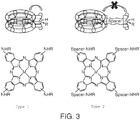
Fig. 3 illustrates the present amine-spacer-MPc concept. -
FIG. 4 shows various amine-functionalized MPc sensing layers illustrated in the example section. -
Fig. 5 shows the response comparison among various sensing layers to CO2 from 400 to 2,000 ppm for the various amine-functionaiized MPc sensing layers ofFig. 4 . For theLayer 1 sensing layer, no response to CO2 was detected. - The following detailed description refers to the accompanying drawings that show, by way of illustration, specific details and embodiments in which the invention may be practised. These embodiments are described in sufficient detail to enable those skilled in the art to practise the invention. Other embodiments may be utilized and chemical or structural changes may be made without departing from the scope of the invention. The various embodiments are not necessarily mutually exclusive, as some embodiments can be combined with one or more other embodiments to form new embodiments.
- As described in previous paragraphs, metal phthalocyanine (MPc) demonstrates various advantages over other organic compounds as a carbon dioxide sensing material. For example, metal phthalocyanine has good processability, thermal stability, tunability, and high selectivity achievable by tuning its central cavity and more particularly, its substitution groups.
- Accordingly, it is herein described a metal phthalocyanine chemical platform for selective and sensitive CO2 sensing. Utilizing the large design space of the MPc layer, the sensitivity of MPc to CO2 can be easily enhanced by modifying its substitution groups and the respective substitution number. Taking together the mentioned advantages of MPc over other materials, functionalized MPc is a good candidate for CO2 sensing layer. Changes caused by CO2 interaction can be measured by means of a workfunction, capacitance, mass, absorption wavelengths etc. such that the resultant sensing layer is compatible with various transducers including but not limited to a chemiresistor, a capacitor, a field effect transistor (FET), an optical-based sensor, or a mass-based sensor.
- Additionally, functionalized MPc can react directly and reversibly with CO2 via the side chains, i.e. the substitution groups, which leads to higher sensitivity and selectivity. Furthermore, MPc offers a large material design space by affording the ability to change the functional substitution groups, which translates to a superior tunability.
- It is known that primary amine group (-NH2) and secondary amine group (-NHR) react with CO2 in two different ways (
Fig. 1 ). On one hand, one amine group can form one bicarbonate in the presence of water. On the other hand, two amine groups can form a carbamate complex without water. The former is effective at higher temperature, while the latter starts at lower temperature, e.g. room temperature (RT). - The nature of the reaction generating carbamate is Lewis interaction (
Fig. 2 ), i.e. CO2 is a Lewis acid (LA) whereas the amine group is a Lewis base (LS). The nature of the reaction yielding bicarbonate is acid-base reaction, i.e. CO2 is an acid and the amine group is a base. For both reactions, the stronger the basicity of the amine group is, the stronger is the interaction with CO2 and hence, the CO2 sensitivity of the compound. Briefly, Lewis acid is a species that accepts an electron pair and has vacant orbitals. Lewis base is a species that donates an electron pair and has lone pair of electrons. When a Lewis base donates its lone pair of electrons to a Lewis acid, an acid-base complex or complex ion is formed. - The interaction, and therefore detection, of carbon dioxide and the present metal phthalocyanine sensing compound is based on the reaction between the carbon dioxide and the amine groups substituted on the metal phthalocyanine.
- A stronger basicity in the amine group is preferred for the CO2 sensing. This thus means that any interaction which reduces the basicity of the amine group (i.e. electron density on nitrogen atom) is likely to sacrifice on the sensitivity to CO2 and should be avoided. As an illustration, a simple amine-functionalized MPc is one with amine groups directly linked to the MPc (
Type 1 inFig. 3 ). However, such compound has been found to show very weak or no response to CO2 (i.e. below the detection limit of the detecting device) due to the conjugation between the aromatic ring and the amine group. In this case, the amine group donates its electron to the MPc aromatic system and reduces its electron density and hence basicity. To increase the interaction with CO2, a spacer moiety is deliberately introduced to the amine group to minimize the conjugation effect (Type 2 inFig. 3 ). - Based on the above design parameters, present invention therefore relates to a use of a compound of Formula (I)

wherein: - M is any suitable metallic species; and
- each of R1 to R16 is independently a H or an organic moiety of Formula (II)
-X-Y-NR17R18 (II),
wherein:- X is a direct bond or a heteroatom selected from the group consisting of N, O, P, S, and Se;
- Y is a linear or branched, substituted or unsubstituted C1-C10 alkyl; linear or branched, substituted or unsubstituted C2-C10 alkenyl; linear or branched, substituted or unsubstituted C2-C10 alkynyl; linear or branched, substituted or unsubstituted C1-C10 alkoxy; substituted or unsubstituted C3-C10 cycloalkyl; substituted or unsubstituted C3-C10 cycloalkenyl; substituted or unsubstituted C6-C10 aryl; substituted or unsubstituted C3-C10 heteroaryl; and
- each of R17 and R18 is a H or a linear or branched, substituted or unsubstituted C1-C10 alkyl;
- Accordingly, the spacer moiety in the chemical moiety of Formula (II) is -X-Y-.
- In present context, the term "aliphatic", alone or in combination, refers to a straight chain (i.e. linear) or branched chain hydrocarbon comprising at least one carbon atom. Aliphatics include alkyls, alkenyls, and alkynyls. In certain embodiments, aliphatics are optionally substituted, i.e. substituted or unsubstituted. The term "optionally substituted" or "substituted or unsubstituted" refers to a group in which none, one, or more than one of the hydrogen atoms have been replaced with one or more groups such as, but are not limited to, alkyl, heteroalkyl, haloalkyl, heteroholoalkyl, cycloalkyl, aryl, arylalkyl, heteroaryl, or non-aromatic heterocycle.
- Aliphatics include, but are not limited to, methyl, ethyl, propyl, isopropyl, butyl, isobutyl, tert-butyl, pentyl, hexyl, ethenyl, propenyl, butenyl, ethynyl, butynyl, propynyl, and the like, each of which may be optionally substituted. As used herein, aliphatic is not intended to include cyclic groups.
- In present context, the term "alkyl", alone or in combination, refers to a fully saturated aliphatic hydrocarbon. The alkyl may be linear or branched. In certain embodiments, alkyls are optionally substituted. In certain embodiments, an alkyl comprises 1 to 10 carbon atoms, for example 1 to 5 carbon atoms, wherein (whenever it appears herein in any of the definitions given below) a numerical range, such as "1 to 10" or "C1-C10", refers to each integer in the given range, e.g. "C1-C10 alkyl" means that an alkyl group comprising only 1 carbon atom, 2 carbon atoms, 3 carbon atoms, 4 carbon atoms, 5 carbon atoms, 6 carbon atoms, 7 carbon atoms, 8 carbon atoms, 9 carbon atoms, or 10 carbon atoms. Examples of alkyl groups include, but are not limited to, methyl, ethyl, n-propyl, isopropyl, n-butyl, isobutyl, sec-butyl, tert-butyl, tert-amyl, pentyl, hexyl, heptyl, octyl and the like.
- In present context, the term "alkoxy", alone or in combination, refers to an aliphatic hydrocarbon having an alkyl-O- moiety. The alkoxy may be linear or branched. In certain embodiments, alkoxy groups are optionally substituted. In various embodiments, the alkoxy comprises 1 to 10 carbon atoms, i.e. C1-C10 alkoxy. Examples of alkoxy groups include, but are not limited to, methoxy, ethoxy, propoxy, butoxy and the like.
- In present context, the term "alkenyl", alone or in combination, refers to an aliphatic hydrocarbon having one or more carbon-carbon double-bonds, such as two or three carbon-carbon double-bonds. The alkenyl may be linear or branched. In certain embodiments, alkenyls are optionally substituted, i.e. substituted or unsubstituted. In certain embodiments, an alkenyl comprises 2 to 10 carbon atoms. "C2-C10 alkenyl" means that an alkenyl group comprising only 2 carbon atoms, 3 carbon atoms, 4 carbon atoms, 5 carbon atoms, 6 carbon atoms, 7 carbon atoms, 8 carbon atoms, 9 carbon atoms, or 10 carbon atoms. Examples of alkenyls include, but are not limited to, ethenyl, propenyl, butenyl, 1,4-butadienyl, pentenyl, hexenyl, 4-methylhex-1-enyl, 4-ethyl-2-methylhex-1-enyl and the like.
- In present context, the term "alkynyl", alone or in combination, refers to an aliphatic hydrocarbon having one or more carbon-carbon triple-bonds, such as two or three carbon-carbon triple-bonds. The alkynyl may be linear or branched. In certain embodiments, alkynyls are optionally substituted, i.e. substituted or unsubstituted. In certain embodiments, an alkynyl comprises 2 to 10 carbon atoms. "C2-C10 alkynyl" means that an alkynyl group comprising only 2 carbon atoms, 3 carbon atoms, 4 carbon atoms, 5 carbon atoms, 6 carbon atoms, 7 carbon atoms, 8 carbon atoms, 9 carbon atoms, or 10 carbon atoms. Examples of alkynyls include, but are not limited to, ethynyl, propynyl, butynyl, and the like.
- In present context, the term "non-aromatic ring" refers to a group comprising a covalently closed ring that is not aromatic. The term "alicyclic" refers to a group comprising a non-aromatic ring wherein each of the atoms forming the ring is a carbon atom. Alicyclic groups may be formed by three, four, five, six, seven, eight, nine, or more than nine carbon atoms. In certain embodiments, alicyclics are optionally substituted, i.e. substituted or unsubstituted. In certain embodiments, an alicyclic comprises one or more unsaturated bonds, such as one or more carbon-carbon double-bonds. Alicyclics include cycloalkyls and cycloalkenyls. In various embodiments, R2 may be a substituted or unsubstituted C3-C10 cycloalkyl. In further embodiments, R2 may be a substituted or unsubstituted C3-C10 cycloalkenyl. Examples of alicyclics include, but are not limited to, cyclopropane, cyclobutane, cyclopentane, cyclopentene, cyclopentadiene, cyclohexane, cyclohexene, 1,3-cyclohexadiene, 1,4-cyclohexadiene, cycloheptane, and cycloheptene.
- In present context, the term "aryl" refers to an aromatic ring wherein each of the atoms forming the ring is a carbon atom. Aryl rings may be formed by five, six, seven, eight, nine, or more than nine carbon atoms. Aryl groups may be optionally substituted.
- In present context, the term "heteroaryl" refers to an aromatic heterocycle. Heteroaryl rings may be formed by three, four, five, six, seven, eight, nine, or more than nine atoms. Heteroaryls may be optionally substituted. Examples of heteroaryl groups include, but are not limited to, aromatic C3-C8 heterocyclic groups comprising one oxygen or sulfur atom or up to four nitrogen atoms, or a combination of one oxygen or sulfur atom and up to two nitrogen atoms, and their substituted as well as benzo- and pyrido-fused derivatives, for example, connected via one of the ring-forming carbon atoms.
- As mentioned in earlier paragraphs, M may be any suitable metallic species that form the MPc. For example, M may be, but is not limited to, selected from the group consisting of Cu2+, Mn2+, Mg2+, Ca2+, B3+, Fe3+, Al3+, Ga3+, In3+, Ce3+, Sc3+, Zr4+, Ti4+, Sn4+, and V5+.
- In various embodiments, M may be Cu2+, Mn2+, Mg2+, or Ca2+.
- In preferred embodiments, M is Cu2+.
- In various embodiments, two or more of R1 to R16 are each the organic moiety of Formula (II). In other words, at most one of R1 to R16 is a H.
- Since the carbamate complex formation requires two amine groups to be present (
Fig. 1 ), adjoining amines allow both reaction paths (i.e. carbamate and bicarbonate) to occur. Accordingly, adjoining-amine-spacer substitution is introduced into the MPc to further enhance its sensitivity to CO2. - Thus, in preferred embodiments, at least the pair of R2 and R3, or the pair of R6 and R7, or the pair of R10 and R11, or the pair of R14 and R15 is the organic moiety of Formula (II).
- More preferably, all of R2, R3, R6, R7, R10, R11, R14, and R15 are each the organic moiety of Formula (II) whereas all of R1, R4, R5, R8, R9, R12, R13, and R16 are H.
- In certain embodiments, in the organic moiety of Formula (II):
- X is an O;
- Y is a C1-C10 alkyl, C3-C10 cycloalkyl, or C6-C10 aryl; and
- both R17 and R18 are H.
- Preferably, the organic moiety of Formula (II) is -O-(CH2)nNH2, wherein n is an integer of between 1 and 10.
- In preferred embodiments, the compound of Formula (I) is:

- More preferably, the compound of Formula (I) is:

- In various embodiments, use of the compound of Formula (I) may incude use as a sensing layer in various transducers like a chemiresistor, a capacitor, a field effect transistor (FET), an optical-based sensor, or a mass-based sensor.
- In another aspect of the invention, a sensor for detecting carbon dioxide is disclosed. The sensor comprises a compound of Formula (I)

- M is any suitable metallic species; and
- each of R1 to R16 is independently a H or an organic moiety of Formula (II)
-X-Y-NR17R18 (II),
wherein:- X is a direct bond or a heteroatom selected from the group consisting of N, O, P, S, and Se;
- Y is a linear or branched, substituted or unsubstituted C1-C10 alkyl; linear or branched, substituted or unsubstituted C2-C10 alkenyl; linear or branched, substituted or unsubstituted C2-C10 alkynyl; linear or branched, substituted or unsubstituted C1-C10 alkoxy; substituted or unsubstituted C3-C10 cycloalkyl; substituted or unsubstituted C3-C10 cycloalkenyl; substituted or unsubstituted C6-C10 aryl; substituted or unsubstituted C3-C10 heteroaryl; and
- each of R17 and R18 is a H or a linear or branched, substituted or unsubstituted C1-C10 alkyl;
- with the proviso that not all of R1 to R16 are H.
- In order that the invention may be readily understood and put into practical effect, particular embodiments will now be described by way of the following non-limiting examples.
- In this example, the adjoining-amine-spacer-MPc concept is illustrated, where n is between 1 and 6.
- Three amine-functionalized MPc sensing layers are prepared (
Fig. 4 ).Layer 1 has no spacer between the MPc and amine group.Layer 2 is an amine-spacer functionalized MPc.Layer 3 has adjoining-amine-spacer substitution. - To read out the change of work function, the Kelvin method was used. Gas measurement was carried out with synthetic air at RT with 50% RH (relative humidity) for CO2 concentration from 400 ppm (background in atmosphere) up to 2,000 ppm. As shown in
Fig. 5 , the work function delivered a distinct and reversible response to CO2 (400 ppm up to 2,000 ppm) usingLayer 3, and the sensitivity was higher thanLayer 2, whereas forLayer 1, no response to CO2 was detected. - By "comprising" it is meant including, but not limited to, whatever follows the word "comprising". Thus, use of the term "comprising" indicates that the listed elements are required or mandatory, but that other elements are optional and may or may not be present.
- By "consisting of" is meant including, and limited to, whatever follows the phrase "consisting of". Thus, the phrase "consisting of" indicates that the listed elements are required or mandatory, and that no other elements may be present.
The inventions illustratively described herein may suitably be practiced in the absence of any element or elements, limitation or limitations, not specifically disclosed herein. Thus, for example, the terms "comprising", "including", "containing", etc. shall be read expansively and without limitation. - By "about" in relation to a given numerical value, such as for temperature and period of time, it is meant to include numerical values within 10% of the specified value.
- The invention has been described broadly and generically herein. Each of the narrower species and sub-generic groupings falling within the generic disclosure also form part of the invention. This includes the generic description of the invention with a proviso or negative limitation removing any subject matter from the genus, regardless of whether or not the excised material is specifically recited herein.
- Other embodiments are within the following claims and non- limiting examples. In addition, where features or aspects of the invention are described in terms of Markush groups, those skilled in the art will recognize that the invention is also thereby described in terms of any individual member or subgroup of members of the Markush group.
Claims (11)
- Use of a compound of Formula (I)

wherein:M is any suitable metallic species; andeach of R1 to R16 is independently a H or an organic moiety of Formula (II)
-X-Y-NR17R18 (II),
wherein:X is a direct bond or a heteroatom selected from the group consisting of N, O, P, S, and Se;Y is a linear or branched, substituted or unsubstituted C1-C10 alkyl; linear or branched, substituted or unsubstituted C2-C10 alkenyl; linear or branched, substituted or unsubstituted C2-C10 alkynyl; linear or branched, substituted or unsubstituted C1-C10 alkoxy; substituted or unsubstituted C3-C10 cycloalkyl; substituted or unsubstituted C3-C10 cycloalkenyl; substituted or unsubstituted C6-C10 aryl; substituted or unsubstituted C3-C10 heteroaryl; andeach of R17 and R18 is a H or a linear or branched, substituted or unsubstituted C1-C10 alkyl;with the proviso that not all of R1 to R16 are H. - Use of claim 1, wherein M is selected from the group consisting of Cu2+, Mn2+, Mg2+, Ca2+, B3+, Fe3+, Al3+, Ga3+, In3+, Ce3+, Sc3+, Zr4+, Ti4+, Sn4+, and V5+.
- Use of claim 1, wherein M is Cu2+.
- Use of claim 1, wherein two or more of R1 to R16 are each the organic moiety of Formula (II).
- Use of claim 1, wherein R2, R3, R6, R7, R10, R11, R14, and R15 are each the organic moiety of Formula (II).
- Use of claim 1, wherein in the organic moiety of Formula (II),X is an O;Y is a C1-C10 alkyl, C3-C10 cycloalkyl, or C6-C10 aryl; andboth R17 and R18 are H.
- Use of claim 1, wherein the organic moiety of Formula (II) is -O-(CH2)nNH2, wherein n is an integer of between 1 and 10.
- Use of claim 1, wherein the compound of Formula (I) is

- Use of claim 1, wherein the compound of Formula (I) is

- Use of claim 1, wherein the compound of Formula (I) is comprised as a sensing layer in a chemiresistor, a capacitor, a field effect transistor (FET), an optical-based sensor, or a mass-based sensor.
- A sensor for detecting carbon dioxide, the sensor comprising a compound of Formula (I)
 M is any suitable metallic species; andeach of R1 to R16 is independently a H or an organic moiety of Formula (II)
-X-Y-NR17R18 (II),
wherein:X is a direct bond or a heteroatom selected from the group consisting of N, O, P, S, and Se;Y is a linear or branched, substituted or unsubstituted C1-C10 alkyl; linear or branched, substituted or unsubstituted C2-C10 alkenyl; linear or branched, substituted or unsubstituted C2-C10 alkynyl; linear or branched, substituted or unsubstituted C1-C10 alkoxy; substituted or unsubstituted C3-C10 cycloalkyl; substituted or unsubstituted C3-C10 cycloalkenyl; substituted or unsubstituted C6-C10 aryl; substituted or unsubstituted C3-C10 heteroaryl; andeach of R17 and R18 is a H or a linear or branched, substituted or unsubstituted C1-C10 alkyl;with the proviso that not all of R1 to R16 are H.
Applications Claiming Priority (1)
| Application Number | Priority Date | Filing Date | Title |
|---|---|---|---|
| PCT/SG2015/050297 WO2017039528A1 (en) | 2015-09-03 | 2015-09-03 | Carbon dioxide sensing compounds |
Publications (2)
| Publication Number | Publication Date |
|---|---|
| EP3344633A1 EP3344633A1 (en) | 2018-07-11 |
| EP3344633B1 true EP3344633B1 (en) | 2019-07-03 |
Family
ID=54145973
Family Applications (1)
| Application Number | Title | Priority Date | Filing Date |
|---|---|---|---|
| EP15763989.9A Not-in-force EP3344633B1 (en) | 2015-09-03 | 2015-09-03 | Carbon dioxide sensing compounds |
Country Status (4)
| Country | Link |
|---|---|
| US (1) | US20180251469A1 (en) |
| EP (1) | EP3344633B1 (en) |
| CN (1) | CN107922438A (en) |
| WO (1) | WO2017039528A1 (en) |
Families Citing this family (1)
| Publication number | Priority date | Publication date | Assignee | Title |
|---|---|---|---|---|
| CN116023917B (en) * | 2021-10-26 | 2024-03-26 | 中国石油化工股份有限公司 | CO (carbon monoxide) 2 Responsive gel system, preparation method thereof and oil reservoir CO prevention 2 Leakage method |
Family Cites Families (7)
| Publication number | Priority date | Publication date | Assignee | Title |
|---|---|---|---|---|
| FR1332175A (en) * | 1961-06-20 | 1963-12-16 | ||
| DE19721399A1 (en) * | 1997-05-22 | 1998-11-26 | Basf Ag | Phthalocyanines and their use as labeling agents |
| CN101196489B (en) * | 2006-12-05 | 2012-06-06 | 哈尔滨理工大学 | Organic thin film triode sensor, its production method and usage |
| CN101138700A (en) * | 2007-06-22 | 2008-03-12 | 太原理工大学 | Three-phase ultrasound light-catalyzed reaction device and method for CO2 reduction thereof |
| CN102692445B (en) * | 2011-03-25 | 2015-07-22 | 中国科学院长春应用化学研究所 | Organic semiconductor gas sensor with organic heterojunction-containing gas-sensitive layer |
| CN102732912A (en) * | 2011-04-14 | 2012-10-17 | 索尼公司 | Modified electrode and method for electrocatalytic reduction of CO2 |
| CN103755713B (en) * | 2014-01-27 | 2015-08-12 | 福州大学 | A kind of eight sulfonic phthalocyanin and its preparation method and application |
-
2015
- 2015-09-03 US US15/757,081 patent/US20180251469A1/en not_active Abandoned
- 2015-09-03 CN CN201580082786.9A patent/CN107922438A/en active Pending
- 2015-09-03 EP EP15763989.9A patent/EP3344633B1/en not_active Not-in-force
- 2015-09-03 WO PCT/SG2015/050297 patent/WO2017039528A1/en not_active Ceased
Non-Patent Citations (1)
| Title |
|---|
| None * |
Also Published As
| Publication number | Publication date |
|---|---|
| US20180251469A1 (en) | 2018-09-06 |
| EP3344633A1 (en) | 2018-07-11 |
| WO2017039528A1 (en) | 2017-03-09 |
| CN107922438A (en) | 2018-04-17 |
Similar Documents
| Publication | Publication Date | Title |
|---|---|---|
| Das et al. | A multi-responsive carbazole-functionalized Zr (IV)-based metal-organic framework for selective sensing of Fe (III), cyanide and p-nitrophenol | |
| Prasad et al. | Metallo-tetraazaporphyrin based anion sensors: regulation of sensor characteristics through central metal ion coordination | |
| CN103635796B (en) | For determining the apparatus and method of Carbon Dioxide in Air content | |
| CN102659677B (en) | Fluorescent molecular probe for detecting sulfite ions through naked eyes and fluorescence ratio as well as synthesis and application thereof | |
| CA2086436A1 (en) | Biomimetic sensor that simulates human response to airborne toxins | |
| Lou et al. | Displacement method to develop highly sensitive and selective dual chemosensor towards sulfide anion | |
| KR101729181B1 (en) | amino acid based compound for selective detecting carbon dioxide, fluorescent chemosensor thereof and method for detecting carbon dioxide using the same | |
| CN110283173B (en) | Perylene bisimide compound and preparation method and application thereof | |
| US20180251469A1 (en) | Carbon Dioxide Sensing Compounds | |
| Liu et al. | Enhanced xylene-sensing property of hierarchical NiO/montmorillonite hetero-structures via In doping | |
| US20190072530A1 (en) | Phthalocyanine Compounds for Sensing Carbon Dioxide and Use | |
| Kim et al. | Hg2+-selective fluorogenic chemosensor derived from 8-Aminoquinoline | |
| KR101726060B1 (en) | A composition for detection of hydrogen chloride gas comprising dipyrrole derivatives and metal salts and a color conversion sensor comprising the same | |
| Saleh et al. | Novel zinc ion‐selective membrane electrode based on sulipride drug | |
| US8058074B2 (en) | 8-hydroxyquinoline acetamide compound, 8-hydroxy quinoline thioamide compound and use thereof | |
| KR20220110375A (en) | Fluorescent composition for hydrogen sulfide gas sensor | |
| KR102119011B1 (en) | A novel porphyrin derivatives having various substituents, composition for detecting cyanide ion conmprising the same and method for detecting cyanide ion using the same | |
| Jiang et al. | A resumable two-photon fluorescent chemodosimeter for Hg2+ in aqueous solution | |
| Mashhadizadeh et al. | Efficient Synthesis of a New Podand and Application as a Suitable Carrier for Silver Ion‐Selective Electrode | |
| Kumar et al. | Synthesis, Characterization and biological evaluation of niobium (v) complexes of coumarin based imines | |
| Mazloum Ardakani et al. | Determination of salicylate by selective poly (vinylchloride) membrane electrode based on N, N'-1, 4-butylene bis (3-methyl salicylidene iminato) copper (II) | |
| KR101239668B1 (en) | Thioamide compounds having selectivity for Oxone and method for monitoring Oxone using the same | |
| Lee et al. | Synthesis of azo-functionalized calix [4] arenes and its application to chloride-selective electrode as ionophores | |
| Khan et al. | Inorganic Nitrate Determination Employing Co (II) Complex Potentiometry | |
| Yu et al. | A rhodamine-based sensor for chromogenic detection of Cu2+ and fluorescent detection of Fe3+ |
Legal Events
| Date | Code | Title | Description |
|---|---|---|---|
| STAA | Information on the status of an ep patent application or granted ep patent |
Free format text: STATUS: THE INTERNATIONAL PUBLICATION HAS BEEN MADE |
|
| PUAI | Public reference made under article 153(3) epc to a published international application that has entered the european phase |
Free format text: ORIGINAL CODE: 0009012 |
|
| STAA | Information on the status of an ep patent application or granted ep patent |
Free format text: STATUS: REQUEST FOR EXAMINATION WAS MADE |
|
| 17P | Request for examination filed |
Effective date: 20180403 |
|
| AK | Designated contracting states |
Kind code of ref document: A1 Designated state(s): AL AT BE BG CH CY CZ DE DK EE ES FI FR GB GR HR HU IE IS IT LI LT LU LV MC MK MT NL NO PL PT RO RS SE SI SK SM TR |
|
| AX | Request for extension of the european patent |
Extension state: BA ME |
|
| DAV | Request for validation of the european patent (deleted) | ||
| DAX | Request for extension of the european patent (deleted) | ||
| GRAP | Despatch of communication of intention to grant a patent |
Free format text: ORIGINAL CODE: EPIDOSNIGR1 |
|
| STAA | Information on the status of an ep patent application or granted ep patent |
Free format text: STATUS: GRANT OF PATENT IS INTENDED |
|
| INTG | Intention to grant announced |
Effective date: 20190405 |
|
| GRAS | Grant fee paid |
Free format text: ORIGINAL CODE: EPIDOSNIGR3 |
|
| GRAA | (expected) grant |
Free format text: ORIGINAL CODE: 0009210 |
|
| STAA | Information on the status of an ep patent application or granted ep patent |
Free format text: STATUS: THE PATENT HAS BEEN GRANTED |
|
| AK | Designated contracting states |
Kind code of ref document: B1 Designated state(s): AL AT BE BG CH CY CZ DE DK EE ES FI FR GB GR HR HU IE IS IT LI LT LU LV MC MK MT NL NO PL PT RO RS SE SI SK SM TR |
|
| REG | Reference to a national code |
Ref country code: GB Ref legal event code: FG4D |
|
| REG | Reference to a national code |
Ref country code: CH Ref legal event code: EP Ref country code: AT Ref legal event code: REF Ref document number: 1150861 Country of ref document: AT Kind code of ref document: T Effective date: 20190715 |
|
| REG | Reference to a national code |
Ref country code: IE Ref legal event code: FG4D |
|
| REG | Reference to a national code |
Ref country code: DE Ref legal event code: R096 Ref document number: 602015033151 Country of ref document: DE |
|
| REG | Reference to a national code |
Ref country code: NL Ref legal event code: MP Effective date: 20190703 |
|
| REG | Reference to a national code |
Ref country code: LT Ref legal event code: MG4D |
|
| REG | Reference to a national code |
Ref country code: AT Ref legal event code: MK05 Ref document number: 1150861 Country of ref document: AT Kind code of ref document: T Effective date: 20190703 |
|
| PG25 | Lapsed in a contracting state [announced via postgrant information from national office to epo] |
Ref country code: HR Free format text: LAPSE BECAUSE OF FAILURE TO SUBMIT A TRANSLATION OF THE DESCRIPTION OR TO PAY THE FEE WITHIN THE PRESCRIBED TIME-LIMIT Effective date: 20190703 Ref country code: NL Free format text: LAPSE BECAUSE OF FAILURE TO SUBMIT A TRANSLATION OF THE DESCRIPTION OR TO PAY THE FEE WITHIN THE PRESCRIBED TIME-LIMIT Effective date: 20190703 Ref country code: BG Free format text: LAPSE BECAUSE OF FAILURE TO SUBMIT A TRANSLATION OF THE DESCRIPTION OR TO PAY THE FEE WITHIN THE PRESCRIBED TIME-LIMIT Effective date: 20191003 Ref country code: LT Free format text: LAPSE BECAUSE OF FAILURE TO SUBMIT A TRANSLATION OF THE DESCRIPTION OR TO PAY THE FEE WITHIN THE PRESCRIBED TIME-LIMIT Effective date: 20190703 Ref country code: PT Free format text: LAPSE BECAUSE OF FAILURE TO SUBMIT A TRANSLATION OF THE DESCRIPTION OR TO PAY THE FEE WITHIN THE PRESCRIBED TIME-LIMIT Effective date: 20191104 Ref country code: CZ Free format text: LAPSE BECAUSE OF FAILURE TO SUBMIT A TRANSLATION OF THE DESCRIPTION OR TO PAY THE FEE WITHIN THE PRESCRIBED TIME-LIMIT Effective date: 20190703 Ref country code: NO Free format text: LAPSE BECAUSE OF FAILURE TO SUBMIT A TRANSLATION OF THE DESCRIPTION OR TO PAY THE FEE WITHIN THE PRESCRIBED TIME-LIMIT Effective date: 20191003 Ref country code: AT Free format text: LAPSE BECAUSE OF FAILURE TO SUBMIT A TRANSLATION OF THE DESCRIPTION OR TO PAY THE FEE WITHIN THE PRESCRIBED TIME-LIMIT Effective date: 20190703 Ref country code: SE Free format text: LAPSE BECAUSE OF FAILURE TO SUBMIT A TRANSLATION OF THE DESCRIPTION OR TO PAY THE FEE WITHIN THE PRESCRIBED TIME-LIMIT Effective date: 20190703 Ref country code: FI Free format text: LAPSE BECAUSE OF FAILURE TO SUBMIT A TRANSLATION OF THE DESCRIPTION OR TO PAY THE FEE WITHIN THE PRESCRIBED TIME-LIMIT Effective date: 20190703 |
|
| PG25 | Lapsed in a contracting state [announced via postgrant information from national office to epo] |
Ref country code: RS Free format text: LAPSE BECAUSE OF FAILURE TO SUBMIT A TRANSLATION OF THE DESCRIPTION OR TO PAY THE FEE WITHIN THE PRESCRIBED TIME-LIMIT Effective date: 20190703 Ref country code: IS Free format text: LAPSE BECAUSE OF FAILURE TO SUBMIT A TRANSLATION OF THE DESCRIPTION OR TO PAY THE FEE WITHIN THE PRESCRIBED TIME-LIMIT Effective date: 20191103 Ref country code: AL Free format text: LAPSE BECAUSE OF FAILURE TO SUBMIT A TRANSLATION OF THE DESCRIPTION OR TO PAY THE FEE WITHIN THE PRESCRIBED TIME-LIMIT Effective date: 20190703 Ref country code: ES Free format text: LAPSE BECAUSE OF FAILURE TO SUBMIT A TRANSLATION OF THE DESCRIPTION OR TO PAY THE FEE WITHIN THE PRESCRIBED TIME-LIMIT Effective date: 20190703 Ref country code: GR Free format text: LAPSE BECAUSE OF FAILURE TO SUBMIT A TRANSLATION OF THE DESCRIPTION OR TO PAY THE FEE WITHIN THE PRESCRIBED TIME-LIMIT Effective date: 20191004 Ref country code: LV Free format text: LAPSE BECAUSE OF FAILURE TO SUBMIT A TRANSLATION OF THE DESCRIPTION OR TO PAY THE FEE WITHIN THE PRESCRIBED TIME-LIMIT Effective date: 20190703 |
|
| PG25 | Lapsed in a contracting state [announced via postgrant information from national office to epo] |
Ref country code: TR Free format text: LAPSE BECAUSE OF FAILURE TO SUBMIT A TRANSLATION OF THE DESCRIPTION OR TO PAY THE FEE WITHIN THE PRESCRIBED TIME-LIMIT Effective date: 20190703 |
|
| RAP2 | Party data changed (patent owner data changed or rights of a patent transferred) |
Owner name: ROBERT BOSCH GMBH |
|
| PG25 | Lapsed in a contracting state [announced via postgrant information from national office to epo] |
Ref country code: DK Free format text: LAPSE BECAUSE OF FAILURE TO SUBMIT A TRANSLATION OF THE DESCRIPTION OR TO PAY THE FEE WITHIN THE PRESCRIBED TIME-LIMIT Effective date: 20190703 Ref country code: EE Free format text: LAPSE BECAUSE OF FAILURE TO SUBMIT A TRANSLATION OF THE DESCRIPTION OR TO PAY THE FEE WITHIN THE PRESCRIBED TIME-LIMIT Effective date: 20190703 Ref country code: IT Free format text: LAPSE BECAUSE OF FAILURE TO SUBMIT A TRANSLATION OF THE DESCRIPTION OR TO PAY THE FEE WITHIN THE PRESCRIBED TIME-LIMIT Effective date: 20190703 Ref country code: RO Free format text: LAPSE BECAUSE OF FAILURE TO SUBMIT A TRANSLATION OF THE DESCRIPTION OR TO PAY THE FEE WITHIN THE PRESCRIBED TIME-LIMIT Effective date: 20190703 Ref country code: PL Free format text: LAPSE BECAUSE OF FAILURE TO SUBMIT A TRANSLATION OF THE DESCRIPTION OR TO PAY THE FEE WITHIN THE PRESCRIBED TIME-LIMIT Effective date: 20190703 |
|
| PG25 | Lapsed in a contracting state [announced via postgrant information from national office to epo] |
Ref country code: SM Free format text: LAPSE BECAUSE OF FAILURE TO SUBMIT A TRANSLATION OF THE DESCRIPTION OR TO PAY THE FEE WITHIN THE PRESCRIBED TIME-LIMIT Effective date: 20190703 Ref country code: SK Free format text: LAPSE BECAUSE OF FAILURE TO SUBMIT A TRANSLATION OF THE DESCRIPTION OR TO PAY THE FEE WITHIN THE PRESCRIBED TIME-LIMIT Effective date: 20190703 Ref country code: MC Free format text: LAPSE BECAUSE OF FAILURE TO SUBMIT A TRANSLATION OF THE DESCRIPTION OR TO PAY THE FEE WITHIN THE PRESCRIBED TIME-LIMIT Effective date: 20190703 Ref country code: IS Free format text: LAPSE BECAUSE OF FAILURE TO SUBMIT A TRANSLATION OF THE DESCRIPTION OR TO PAY THE FEE WITHIN THE PRESCRIBED TIME-LIMIT Effective date: 20200224 |
|
| REG | Reference to a national code |
Ref country code: CH Ref legal event code: PL |
|
| REG | Reference to a national code |
Ref country code: DE Ref legal event code: R097 Ref document number: 602015033151 Country of ref document: DE |
|
| PLBE | No opposition filed within time limit |
Free format text: ORIGINAL CODE: 0009261 |
|
| STAA | Information on the status of an ep patent application or granted ep patent |
Free format text: STATUS: NO OPPOSITION FILED WITHIN TIME LIMIT |
|
| PG2D | Information on lapse in contracting state deleted |
Ref country code: IS |
|
| PG25 | Lapsed in a contracting state [announced via postgrant information from national office to epo] |
Ref country code: LI Free format text: LAPSE BECAUSE OF NON-PAYMENT OF DUE FEES Effective date: 20190930 Ref country code: LU Free format text: LAPSE BECAUSE OF NON-PAYMENT OF DUE FEES Effective date: 20190903 Ref country code: CH Free format text: LAPSE BECAUSE OF NON-PAYMENT OF DUE FEES Effective date: 20190930 Ref country code: IE Free format text: LAPSE BECAUSE OF NON-PAYMENT OF DUE FEES Effective date: 20190903 |
|
| REG | Reference to a national code |
Ref country code: BE Ref legal event code: MM Effective date: 20190930 |
|
| 26N | No opposition filed |
Effective date: 20200603 |
|
| PG25 | Lapsed in a contracting state [announced via postgrant information from national office to epo] |
Ref country code: SI Free format text: LAPSE BECAUSE OF FAILURE TO SUBMIT A TRANSLATION OF THE DESCRIPTION OR TO PAY THE FEE WITHIN THE PRESCRIBED TIME-LIMIT Effective date: 20190703 Ref country code: BE Free format text: LAPSE BECAUSE OF NON-PAYMENT OF DUE FEES Effective date: 20190930 |
|
| PG25 | Lapsed in a contracting state [announced via postgrant information from national office to epo] |
Ref country code: FR Free format text: LAPSE BECAUSE OF NON-PAYMENT OF DUE FEES Effective date: 20190903 |
|
| PG25 | Lapsed in a contracting state [announced via postgrant information from national office to epo] |
Ref country code: CY Free format text: LAPSE BECAUSE OF FAILURE TO SUBMIT A TRANSLATION OF THE DESCRIPTION OR TO PAY THE FEE WITHIN THE PRESCRIBED TIME-LIMIT Effective date: 20190703 |
|
| PG25 | Lapsed in a contracting state [announced via postgrant information from national office to epo] |
Ref country code: MT Free format text: LAPSE BECAUSE OF FAILURE TO SUBMIT A TRANSLATION OF THE DESCRIPTION OR TO PAY THE FEE WITHIN THE PRESCRIBED TIME-LIMIT Effective date: 20190703 Ref country code: HU Free format text: LAPSE BECAUSE OF FAILURE TO SUBMIT A TRANSLATION OF THE DESCRIPTION OR TO PAY THE FEE WITHIN THE PRESCRIBED TIME-LIMIT; INVALID AB INITIO Effective date: 20150903 |
|
| PG25 | Lapsed in a contracting state [announced via postgrant information from national office to epo] |
Ref country code: MK Free format text: LAPSE BECAUSE OF FAILURE TO SUBMIT A TRANSLATION OF THE DESCRIPTION OR TO PAY THE FEE WITHIN THE PRESCRIBED TIME-LIMIT Effective date: 20190703 |
|
| PGFP | Annual fee paid to national office [announced via postgrant information from national office to epo] |
Ref country code: GB Payment date: 20220927 Year of fee payment: 8 |
|
| PGFP | Annual fee paid to national office [announced via postgrant information from national office to epo] |
Ref country code: DE Payment date: 20221125 Year of fee payment: 8 |
|
| REG | Reference to a national code |
Ref country code: DE Ref legal event code: R119 Ref document number: 602015033151 Country of ref document: DE |
|
| GBPC | Gb: european patent ceased through non-payment of renewal fee |
Effective date: 20230903 |
|
| PG25 | Lapsed in a contracting state [announced via postgrant information from national office to epo] |
Ref country code: GB Free format text: LAPSE BECAUSE OF NON-PAYMENT OF DUE FEES Effective date: 20230903 |
|
| PG25 | Lapsed in a contracting state [announced via postgrant information from national office to epo] |
Ref country code: GB Free format text: LAPSE BECAUSE OF NON-PAYMENT OF DUE FEES Effective date: 20230903 Ref country code: DE Free format text: LAPSE BECAUSE OF NON-PAYMENT OF DUE FEES Effective date: 20240403 |