EP3344054B1 - Whey preparation obtained by cavitation and uses thereof - Google Patents
Whey preparation obtained by cavitation and uses thereof Download PDFInfo
- Publication number
- EP3344054B1 EP3344054B1 EP16766332.7A EP16766332A EP3344054B1 EP 3344054 B1 EP3344054 B1 EP 3344054B1 EP 16766332 A EP16766332 A EP 16766332A EP 3344054 B1 EP3344054 B1 EP 3344054B1
- Authority
- EP
- European Patent Office
- Prior art keywords
- whey protein
- microparticulated
- ideal whey
- protein preparation
- ideal
- Prior art date
- Legal status (The legal status is an assumption and is not a legal conclusion. Google has not performed a legal analysis and makes no representation as to the accuracy of the status listed.)
- Active
Links
Images
Classifications
-
- A—HUMAN NECESSITIES
- A01—AGRICULTURE; FORESTRY; ANIMAL HUSBANDRY; HUNTING; TRAPPING; FISHING
- A01J—MANUFACTURE OF DAIRY PRODUCTS
- A01J11/00—Apparatus for treating milk
- A01J11/16—Homogenising milk
-
- A—HUMAN NECESSITIES
- A23—FOODS OR FOODSTUFFS; TREATMENT THEREOF, NOT COVERED BY OTHER CLASSES
- A23C—DAIRY PRODUCTS, e.g. MILK, BUTTER OR CHEESE; MILK OR CHEESE SUBSTITUTES; PREPARATION THEREOF
- A23C19/00—Cheese; Cheese preparations; Making thereof
- A23C19/02—Making cheese curd
- A23C19/05—Treating milk before coagulation; Separating whey from curd
- A23C19/053—Enrichment of milk with whey, whey components, substances recovered from separated whey, isolated or concentrated proteins from milk
-
- A—HUMAN NECESSITIES
- A23—FOODS OR FOODSTUFFS; TREATMENT THEREOF, NOT COVERED BY OTHER CLASSES
- A23C—DAIRY PRODUCTS, e.g. MILK, BUTTER OR CHEESE; MILK OR CHEESE SUBSTITUTES; PREPARATION THEREOF
- A23C21/00—Whey; Whey preparations
-
- A—HUMAN NECESSITIES
- A23—FOODS OR FOODSTUFFS; TREATMENT THEREOF, NOT COVERED BY OTHER CLASSES
- A23C—DAIRY PRODUCTS, e.g. MILK, BUTTER OR CHEESE; MILK OR CHEESE SUBSTITUTES; PREPARATION THEREOF
- A23C21/00—Whey; Whey preparations
- A23C21/06—Mixtures of whey with milk products or milk components
-
- A—HUMAN NECESSITIES
- A23—FOODS OR FOODSTUFFS; TREATMENT THEREOF, NOT COVERED BY OTHER CLASSES
- A23C—DAIRY PRODUCTS, e.g. MILK, BUTTER OR CHEESE; MILK OR CHEESE SUBSTITUTES; PREPARATION THEREOF
- A23C9/00—Milk preparations; Milk powder or milk powder preparations
-
- A—HUMAN NECESSITIES
- A23—FOODS OR FOODSTUFFS; TREATMENT THEREOF, NOT COVERED BY OTHER CLASSES
- A23C—DAIRY PRODUCTS, e.g. MILK, BUTTER OR CHEESE; MILK OR CHEESE SUBSTITUTES; PREPARATION THEREOF
- A23C9/00—Milk preparations; Milk powder or milk powder preparations
- A23C9/12—Fermented milk preparations; Treatment using microorganisms or enzymes
- A23C9/13—Fermented milk preparations; Treatment using microorganisms or enzymes using additives
- A23C9/1307—Milk products or derivatives; Fruit or vegetable juices; Sugars, sugar alcohols, sweeteners; Oligosaccharides; Organic acids or salts thereof or acidifying agents; Flavours, dyes or pigments; Inert or aerosol gases; Carbonation methods
-
- A—HUMAN NECESSITIES
- A23—FOODS OR FOODSTUFFS; TREATMENT THEREOF, NOT COVERED BY OTHER CLASSES
- A23C—DAIRY PRODUCTS, e.g. MILK, BUTTER OR CHEESE; MILK OR CHEESE SUBSTITUTES; PREPARATION THEREOF
- A23C9/00—Milk preparations; Milk powder or milk powder preparations
- A23C9/14—Milk preparations; Milk powder or milk powder preparations in which the chemical composition of the milk is modified by non-chemical treatment
- A23C9/142—Milk preparations; Milk powder or milk powder preparations in which the chemical composition of the milk is modified by non-chemical treatment by dialysis, reverse osmosis or ultrafiltration
- A23C9/1422—Milk preparations; Milk powder or milk powder preparations in which the chemical composition of the milk is modified by non-chemical treatment by dialysis, reverse osmosis or ultrafiltration by ultrafiltration, microfiltration or diafiltration of milk, e.g. for separating protein and lactose; Treatment of the UF permeate
-
- A—HUMAN NECESSITIES
- A23—FOODS OR FOODSTUFFS; TREATMENT THEREOF, NOT COVERED BY OTHER CLASSES
- A23J—PROTEIN COMPOSITIONS FOR FOODSTUFFS; WORKING-UP PROTEINS FOR FOODSTUFFS; PHOSPHATIDE COMPOSITIONS FOR FOODSTUFFS
- A23J1/00—Obtaining protein compositions for foodstuffs; Bulk opening of eggs and separation of yolks from whites
- A23J1/20—Obtaining protein compositions for foodstuffs; Bulk opening of eggs and separation of yolks from whites from milk, e.g. casein; from whey
- A23J1/205—Obtaining protein compositions for foodstuffs; Bulk opening of eggs and separation of yolks from whites from milk, e.g. casein; from whey from whey, e.g. lactalbumine
-
- A—HUMAN NECESSITIES
- A23—FOODS OR FOODSTUFFS; TREATMENT THEREOF, NOT COVERED BY OTHER CLASSES
- A23J—PROTEIN COMPOSITIONS FOR FOODSTUFFS; WORKING-UP PROTEINS FOR FOODSTUFFS; PHOSPHATIDE COMPOSITIONS FOR FOODSTUFFS
- A23J3/00—Working-up of proteins for foodstuffs
- A23J3/04—Animal proteins
- A23J3/08—Dairy proteins
-
- A—HUMAN NECESSITIES
- A23—FOODS OR FOODSTUFFS; TREATMENT THEREOF, NOT COVERED BY OTHER CLASSES
- A23J—PROTEIN COMPOSITIONS FOR FOODSTUFFS; WORKING-UP PROTEINS FOR FOODSTUFFS; PHOSPHATIDE COMPOSITIONS FOR FOODSTUFFS
- A23J3/00—Working-up of proteins for foodstuffs
- A23J3/04—Animal proteins
- A23J3/08—Dairy proteins
- A23J3/10—Casein
-
- A—HUMAN NECESSITIES
- A23—FOODS OR FOODSTUFFS; TREATMENT THEREOF, NOT COVERED BY OTHER CLASSES
- A23V—INDEXING SCHEME RELATING TO FOODS, FOODSTUFFS OR NON-ALCOHOLIC BEVERAGES AND LACTIC OR PROPIONIC ACID BACTERIA USED IN FOODSTUFFS OR FOOD PREPARATION
- A23V2250/00—Food ingredients
- A23V2250/54—Proteins
- A23V2250/542—Animal Protein
- A23V2250/5424—Dairy protein
- A23V2250/54252—Whey protein
-
- A—HUMAN NECESSITIES
- A23—FOODS OR FOODSTUFFS; TREATMENT THEREOF, NOT COVERED BY OTHER CLASSES
- A23V—INDEXING SCHEME RELATING TO FOODS, FOODSTUFFS OR NON-ALCOHOLIC BEVERAGES AND LACTIC OR PROPIONIC ACID BACTERIA USED IN FOODSTUFFS OR FOOD PREPARATION
- A23V2300/00—Processes
- A23V2300/08—Denaturation, e.g. denaturation of protein
-
- A—HUMAN NECESSITIES
- A23—FOODS OR FOODSTUFFS; TREATMENT THEREOF, NOT COVERED BY OTHER CLASSES
- A23V—INDEXING SCHEME RELATING TO FOODS, FOODSTUFFS OR NON-ALCOHOLIC BEVERAGES AND LACTIC OR PROPIONIC ACID BACTERIA USED IN FOODSTUFFS OR FOOD PREPARATION
- A23V2300/00—Processes
- A23V2300/24—Heat, thermal treatment
-
- A—HUMAN NECESSITIES
- A23—FOODS OR FOODSTUFFS; TREATMENT THEREOF, NOT COVERED BY OTHER CLASSES
- A23V—INDEXING SCHEME RELATING TO FOODS, FOODSTUFFS OR NON-ALCOHOLIC BEVERAGES AND LACTIC OR PROPIONIC ACID BACTERIA USED IN FOODSTUFFS OR FOOD PREPARATION
- A23V2300/00—Processes
- A23V2300/31—Mechanical treatment
-
- A—HUMAN NECESSITIES
- A23—FOODS OR FOODSTUFFS; TREATMENT THEREOF, NOT COVERED BY OTHER CLASSES
- A23V—INDEXING SCHEME RELATING TO FOODS, FOODSTUFFS OR NON-ALCOHOLIC BEVERAGES AND LACTIC OR PROPIONIC ACID BACTERIA USED IN FOODSTUFFS OR FOOD PREPARATION
- A23V2300/00—Processes
- A23V2300/34—Membrane process
Definitions
- the present invention relates to a process for microparticulating of ideal whey protein by cavitation.
- the present invention relates also to a cavitated microparticulated ideal whey protein preparation.
- the present invention relates to use of the microparticulated ideal whey protein preparation in dairy products and to a method for manufacturing dairy products using a microparticulated ideal whey protein preparation in the manufacture. Further, the present invention relates to a dairy product containing cavitated microparticulated ideal whey protein preparation.
- microparticulated whey protein is produced from a whey protein concentrate (WPC) solution by physically shearing the solution during heating using a scraped-surface heat exchanger.
- WPC whey protein concentrate
- Commercially available products such as LeanCreme TM (SPX Corporation, USA) and Simplesse (CP Kelco, USA) are used as a heat-stable whey protein and as a fat substitute in foods, such as cheeses, ice cream and beverages, for example.
- the problem related to these traditionally produced microparticulated whey protein products is that they do not produce a creamy texture and/or taste into acidified milk products.
- the present invention relates to a process for microparticulating of ideal whey protein by cavitation.
- the present invention relates also to cavitated microparticulated ideal whey protein preparation.
- the present invention relates to use of said microparticulated ideal whey protein preparation in dairy products.
- the present invention relates also to a method for manufacturing dairy products using said cavitated microparticulated ideal whey protein preparation.
- the present invention relates to a dairy product containing said microparticulated ideal whey protein.
- the microparticulated ideal whey protein of the present invention contains or comprises ⁇ -lactoglobulin ( ⁇ -LG) polymers having a size of > 200 kDa.
- the microparticulated ideal whey protein of the present invention has particle size of 1-200 ⁇ m.
- the taste of the microparticulated ideal whey protein is creamy and full-flavored. It is well suited for use in the manufacturing of milk based products and/or dairy products, especially acidified milk based and/or dairy products.
- the problem related to known microparticulated whey proteins produced by homogenizing preheated whey protein concentrate (WPC) at a high pressure and extruding then the whey proteins in acidic conditions, is that they do not produce a creamy texture and/or taste into milk based/dairy products, especially to acidified milk based/dairy products.
- WPC preheated whey protein concentrate
- the present invention is based on a finding that microparticulating ideal whey protein with a cavitator produced microparticulated ideal whey protein preparation having a creamy and thick texture.
- this microparticulated ideal whey protein preparation was used in the manufacture of yogurt, a creamy and thick yogurt, creamier and thicker than a reference yogurt produced without the microparticulated ideal whey protein product, was produced. Accordingly, it is possible to produce low-fat or fat-free acidified milk based products/dairy products, which have creamy taste and texture with the microparticulated ideal whey protein preparation of the present invention.
- the microparticulated ideal whey protein preparation can be used as such and/or as a fat substitute, for example, also in neutral dairy products as well as other foodstuffs.
- an ideal whey protein preparation which contains native whey proteins, was cavitated with APV-cavitator (SPX, USA) using the following operating values: 150-200 l/h, 50-60 Hz, cavitation time 10-60 s, the clearance of the cavitator 3 mm (radial), holes in four (1-4) lines.
- the ideal whey protein preparation was preheated to a temperature of 25-67°C and during the cavitation the temperature rose up to 73-93°C. After this, the microparticulated ideal whey protein was cooled to a temperature up to 10°C using a scraped-surface heat exchanger.
- microparticulated ideal whey protein preparation having particle size of 1-200 ⁇ m.
- the taste of the microparticulated ideal whey protein preparation was creamy and full-flavored.
- the present invention relates to a process for microparticulating of ideal whey protein by cavitation.
- the present invention also relates to an ideal whey protein preparation microparticulated by cavitation.
- the present invention relates to use of a cavitated microparticulated ideal whey protein preparation in a dairy product.
- the present invention relates to a dairy product containing cavitated microparticulated ideal whey protein.
- the ideal whey protein preparation used in the present invention contains whey proteins in their native form (i.e., ideal whey proteins) and ⁇ -caseins, ⁇ -lactoglobulin and ⁇ -lactalbumin ( ⁇ -La).
- the ideal whey protein preparation contains ⁇ -lactoglobulin about 5.0 to about 8.0 g/100 g.
- the ideal whey protein preparation contains ⁇ -lactoglobulin about 5.0 to about 6.0 g/100 g.
- the preparation contains ⁇ -lactoglobulin in an amount of about 5.5 g/100 g.
- the ideal whey protein preparation contains ⁇ -lactalbumin less than or at most about 2.0 g/100g.
- the ideal whey protein preparation contains ⁇ -lactalbumin about 1.0 to about 2.0 g/100g. In one embodiment, the preparation contains ⁇ -lactalbumin in an amount of about 1.8 g/100g. In one embodiment, the ideal whey preparation contains ⁇ -lactoglobulin, ⁇ -lactalbumin and casein in a ratio of 0.7/0.23/0.07 ⁇ -LG/ ⁇ -La/casein. In one embodiment, the ratio is 0.9/0.03/0.07 ⁇ -LG/ ⁇ -La/casein. The casein referred herein is mainly ⁇ -casein.
- the pH of the ideal whey protein preparation is in the range of 6.5-7. In one embodiment, the pH of the ideal whey protein preparation is about 6.7.
- the ideal whey protein preparation is obtained as a microfiltration permeate of a milk raw material.
- the microfiltration permeate can be further treated and/or concentrated by membrane filtration (ultrafiltration, reverse osmose, nanofiltration) and/or evaporation, for example.
- the term "an ideal whey protein preparation” refers to a microfiltration (MF) permeate obtained from microfiltration of a milk raw material.
- the term "an ideal whey protein preparation” is understood to encompass also a concentrated form of the MF permeate which is obtained, for example, as an ultrafiltration retentate from ultrafiltration of the MF permeate.
- the ideal whey protein preparation can be produced by a process which comprises the steps of:
- the ideal whey protein preparation can be in the form of a solution or in the form of an evaporate (concentrate) or in the form of a powder.
- the ideal whey protein preparation is in the form of a solution or in the form of a concentrate.
- the ideal whey protein preparation is in the form of a powder.
- the milk raw material may be, for instance, full-fat milk, cream, low-fat milk or skim milk, lactose-free or low-lactose milk, protease treated milk, recombined milk from milk powder, organic milk or a combination of these, or a dilution of any of these.
- Milk can originate from a cow, sheep, goat, camel, horse or any other animal producing milk suitable for nourishment.
- the milk raw material is skimmed milk.
- the milk raw material is low lactose or lactose-free milk.
- the milk raw material is low lactose or lactose-free skimmed milk.
- the ideal whey protein preparation can be prepared by microfiltrating skimmed milk and concentrating the obtained microfiltration permeate by ultrafiltration.
- Microfiltration of the skimmed milk is typically carried out at a temperature of about 2°C to about 55°C. In one embodiment, the microfiltration is carried out at about 10°C.
- Ultrafiltration is typically performed at about 5°C to about 55°C. In one embodiment, the ultrafiltration is carried at about 10°C.
- the ideal whey protein preparation contains ⁇ -casein, about 20% of the total protein, but it does not contain micellar casein monomers or any other byproducts from the cheese manufacture, i.e., it is free of caseinomacropeptides and thermally formed k-casein ⁇ -lactoglobulin complexes.
- the protein content of the ideal whey protein preparation can range from about 4% to about 90%. In an embodiment, the protein content of the preparation is about 9% and ⁇ -casein content is about 20% based on total protein. In another embodiment, the protein content of the preparation is about 16% and ⁇ -casein content is about 20% based on total protein.
- the ideal whey protein preparation contains more ⁇ -lactalbumin and ⁇ -lactoglobulins in total whey protein than whey protein concentrate (WPC) manufactured from cheese whey because the caseinomacropeptide fraction does not exist in the ideal whey protein preparation.
- the lactose content of the ideal whey protein preparation can be reduced, if desired.
- the lactose removal can be accomplished with methods known in the art, for example.
- the ideal whey protein preparation is in the form of an ideal whey protein solution, which contains about 7% whey protein, about 1.8% casein, about 2.3% lactose, about 0.47% ash, and the dry matter of the solution being about 12.2%.
- the ideal whey protein preparation is in the form of an ideal whey protein powder which contains about 88% whey protein, about 0% casein, about 0% lactose, about 3% ash, and the dry matter of the preparation being about 90%.
- ideal whey protein in powder form is used in the preparation of the microparticulated ideal whey protein preparation, optional steps of adding a suitable liquid and/or dissolving the powder, known by a skilled person, are included in the method of the present invention. Functional properties of whey proteins are better maintained when the drying step does not exist in the manufacturing process of the ideal whey protein preparation.
- ideal whey protein preparation is pleasant and clean due to the mild heat-treatment performed at temperature below 75°C, most typically at 72°C for 15 seconds. Additionally, ideal whey protein preparation does not carry any of the associated off-flavors because it is not derived from cheese production.
- the present invention relates to a process for producing a microparticulated ideal whey protein preparation by cavitation.
- the method comprises the steps of:
- the ideal whey protein preparation is preheated to the temperature of 25-67°C. In one embodiment, the ideal whey protein solution is preheated to a temperature of 48-67°C. In another embodiment, the ideal whey protein solution is preheated to a temperature of about 61-67°C. In the process of the invention, the temperature at the output of the cavitator is in the range of about 73-93°C.In one embodiment, the temperature at the output of the cavitator is in the range of about 77-93°C. In another embodiment, the temperature at the output of the cavitator is in the range of about 73-85°C. In one embodiment, the temperature at the output of the cavitator is the range of 77-85°C. In one embodiment, the ideal whey protein solution is preheated to a temperature of about 48-67°C and the temperature at the output of the cavitator is in the range of about 73-85°C.
- the frequency in the cavitator is in the range of about 50-60 Hz. In another embodiment, the frequency in the cavitator is in the range of about 52-56 Hz.
- the cavitation time is about 3-60 s. In another embodiment, the cavitation time is about 10-60 s. In one embodiment, the cavitation time is about 10-30 s. In one embodiment, the cavitation time is about 30-60 s. In one embodiment, the cavitation time is about 30 s.
- the temperature at the output of the cavitator and the cavitation frequency were important to the polymerization of the ideal whey protein, especially for the polymerization of the ⁇ -lactoglobulins.
- the microparticulated ideal whey protein is cooled to a temperature up to 10°C. In another embodiment, the microparticulated ideal whey protein is cooled to a temperature of about 4°C.
- the produced microparticulated ideal whey protein preparation is in the form of a solution.
- the method for producing a microparticulated ideal whey protein preparation further comprises an optional step of:
- the microparticulated ideal whey protein preparation in a solution or a concentrate form is dried and a microparticulated ideal whey protein in powder form is provided.
- the method of the present invention provides a microparticulated ideal whey protein preparation, wherein the whey proteins have a particle size of 1-200 ⁇ m,1-100 ⁇ m, 1-10 ⁇ m, 5-10 ⁇ m or 1-2 ⁇ m. In one embodiment, the whey proteins have a particle size of 1-10 ⁇ m.
- the microparticulated ideal whey protein preparation contains also ⁇ -caseins, ⁇ -lactoglobulin and ⁇ -lactalbumin ( ⁇ -La).
- the microparticulated ideal whey protein preparation contains ⁇ -casein, about 20 % of the total protein. It is free of caseinomacropeptides and thermally formed k-casein ⁇ -lactoglobulin complexes.
- the microparticulated ideal whey protein preparation contains ⁇ -lactoglobulin about 5.0 to about 8.0 g/100 g. In one embodiment, the ideal whey protein preparation contains ⁇ -lactoglobulin about 5.0 to about 6.0 g/100 g. In one embodiment, the preparation contains ⁇ -lactoglobulin in an amount of about 5.5 g/100 g. In one embodiment, the microparticulated ideal whey protein preparation contains ⁇ -lactalbumin less than or at most about 2.0 g/100g. In one embodiment, the ideal whey protein preparation contains ⁇ -lactalbumin about 1.0 to about 2.0 g/100g.
- the preparation contains ⁇ -lactalbumin in an amount of about 1.8 g/100g.
- the microparticulated ideal whey preparation contains ⁇ -lactoglobulin, ⁇ -lactalbumin and casein in a ratio of 0.7/0.23/0.07 ⁇ -LG/ ⁇ -La/casein. In one embodiment, the ratio is 0.9/0.03/0.07 ⁇ -LG / ⁇ -La/casein.
- the casein referred herein is mainly ⁇ -casein.
- the pH of the microparticulated ideal whey protein is in the range of 6.5-7. In one embodiment, the pH of the preparation is about 6.7.
- the protein content of the microparticulated ideal whey protein preparation can range from about 4% to about 90%. In an embodiment, the protein content of the preparation is about 9% and ⁇ -casein content is about 20% based on total protein. In another embodiment, the protein content of the preparation is about 16% and ⁇ -casein content is about 20% based on total protein.
- the ⁇ -lactoglobulin, or at least part of it, is in a polymerized form in the microparticulated ideal whey protein preparation of the present invention.
- the ⁇ -lactoglobulin polymers have a size of > 200 kDa. This is a unique feature in a microparticulated ideal whey protein preparation of the present invention.
- about 30% of ⁇ -lactoglobulins is in the polymerized form in the microparticulated ideal whey protein preparation. In one embodiment, at least 30% of ⁇ -lactoglobulins is in the polymerized form in the microparticulated ideal whey protein preparation. In one embodiment, at least 33% of ⁇ -lactoglobulins is in the polymerized form in the microparticulated ideal whey protein preparation. In one embodiment, about 50% of ⁇ -lactoglobulins is in the polymerized form in the microparticulated ideal whey protein preparation. In one embodiment, about 99% of ⁇ -lactoglobulins is in the polymerized form in the microparticulated ideal whey protein preparation.
- about 30% to about 99% of ⁇ -lactoglobulins is in the polymerized form in the microparticulated ideal whey protein preparation. In one embodiment, about 33% to about 99% of ⁇ -lactoglobulins is in the polymerized form in the microparticulated ideal whey protein preparation. In one embodiment, about 30% to about 50% of ⁇ -lactoglobulins is in the polymerized form in the microparticulated ideal whey protein preparation. In one embodiment, about 50% to about 99% of ⁇ -lactoglobulins is in the polymerized form in the microparticulated ideal whey protein preparation.
- the microparticulation of the ideal whey protein preparation is performed by cavitation.
- the ⁇ -lactoglobulin, or at least part of it, is in a polymerized form in the ideal whey protein preparation microparticulated by cavitation.
- the ⁇ -lactoglobulin polymers have a size of >200 kDa. This is a unique feature in a microparticulated ideal whey protein produced by cavitation, since no polymerization has been detected in microparticulated whey protein produced by traditional methods. In one embodiment, about 30% of ⁇ -lactoglobulins is in the polymerized form in the microparticulated ideal whey protein preparation produced by cavitation.
- At least 30% of ⁇ -lactoglobulins is in the polymerized form in the microparticulated ideal whey protein preparation produced by cavitation. In one embodiment, at least 33% of ⁇ -lactoglobulins is in the polymerized form in the microparticulated ideal whey protein preparation produced by cavitation. In one embodiment, about 50% of ⁇ -lactoglobulins is in the polymerized form in the microparticulated ideal whey protein preparation produced by cavitation. In one embodiment, about 99% of ⁇ -lactoglobulins is in the polymerized form in the microparticulated ideal whey protein preparation produced by cavitation.
- about 30% to about 99% of ⁇ -lactoglobulins is in the polymerized form in the microparticulated ideal whey protein preparation produced by cavitation. In one embodiment, about 33% to about 99% of ⁇ -lactoglobulins is in the polymerized form in the microparticulated ideal whey protein preparation produced by cavitation. In one embodiment, about 30% to about 50% of ⁇ -lactoglobulins is in the polymerized form in the microparticulated ideal whey protein preparation produced by cavitation. In one embodiment, about 50% to about 99% of ⁇ -lactoglobulins is in the polymerized form in the microparticulated ideal whey protein preparation produced by cavitation.
- the denaturation level of ⁇ -lactoglobulin is near 0%.
- the denaturation level of ⁇ -lactoglobulin is in the range of 90-95%. In one embodiment, the denaturation level of ⁇ -lactoglobulin is in the range of 92-94%.Thus the polymerization level of ⁇ -lactoglobulin in the ideal whey protein preparation microparticulated by cavitation is >33%.
- the pH of the microparticulated ideal whey protein preparation of the present invention is in the range of about 6.5-7. In one embodiment, the pH is about 6.7.
- the viscosity of microparticulated ideal whey protein preparation can be in the range of about 200 to about 4000mPas.
- the viscosity of microparticulated ideal whey protein preparation may be in the range of about 500 to about 2000mPas.
- the particle size of the microparticulated ideal whey proteins in the preparation may be in the range of about 1-200 ⁇ m,about 1-100 ⁇ m,about 1-10 ⁇ m, about 5-10 ⁇ m or about 1-2 ⁇ m.
- the microparticulated ideal whey proteins may have a particle size of 1-10 ⁇ m.
- the ideal whey protein preparation microparticulated by cavitation contains ⁇ -lactoglobulin polymers having a size of >200 kDa.
- the present invention is directed to a use of a microparticulated ideal whey protein preparation in the manufacture of dairy product.
- the texture of the product is thickened by the use the microparticulated ideal whey protein product in and/or during the manufacturing process of the dairy product.
- the microparticulated ideal whey protein product is used in the manufacture of an acidified dairy product.
- the microparticulated ideal whey protein product is added to the acidified mass in the manufacture of an acidified dairy product.
- the present invention relates to a method of producing a dairy product, wherein the method comprises a step of using a microparticulated ideal whey protein preparation in the method.
- the method of producing a dairy product comprises the steps of:
- the present invention is directed to a method of producing a neutral, non-acidified dairy product, wherein the method comprises a step of using a microparticulated ideal whey protein preparation in the method.
- the method of producing a dairy product comprises the steps of:
- the present invention is directed to a method of producing an acidified dairy product, wherein the method comprises a step of using a microparticulated ideal whey protein preparation in the method.
- the method of producing an acidified dairy product comprises the steps of:
- the method of producing a dairy product comprises the steps of:
- the method of producing a dairy product comprises the steps of:
- milk raw material may be milk derived from an animal, such as a cow or a goat, as such or treated in various ways. Milk may be treated by removing, for instance, protein, fat or lactose therefrom, as a result of which low-protein, fat-free, low-fat, lactose-free and/or low-lactose milk is obtained.
- raw material milk also refers to, for instance, pre-treated or untreated milks used in the production of yoghurt, viili and fermented milk.
- the milk raw material is skimmed milk.
- the optimum conditions for an economic, inexpensive and efficient production process are employed.
- conventional heat treatment methods such as pasteurization (heating for example at about 72°C for at least 15 seconds), ESL treatment (heating for example at about 130°C for 1 to 2 seconds), UHT treatment (heating for example at about 138°C for 2 to 4 seconds) or high temperature pasteurization (heating at 95°C for 5 minutes), are employed.
- treatments typical in the preparation of a dairy product such as homogenization, acidification and enzyme treatments, for example, are performed in a manner known in the field.
- the present invention also relates to a dairy product containing said microparticulated ideal whey protein preparation by cavitation. Further, the present invention relates to a dairy product produced by using said microparticulated ideal whey protein
- the term "dairy product" is intended to cover all consumable milk-based products that can be solid and/or jellied.
- the dairy product can be derived from, e.g., cow's milk, goat's milk, sheep's milk, skimmed milk, whole milk or milk recombined from powdered milk.
- the amount of the microparticulated ideal whey protein preparation in the dairy product is in the range of 1 to 99% based on the weight of the product. In one embodiment, the amount of the microparticulated ideal whey protein preparation in the dairy product is in the range of 10 to 50% based on the weight of the product. In another embodiment, the amount of the microparticulated ideal whey protein preparation in the milk based and/or dairy product is in the range of 20 to 30% based on the weight of the product.
- the dairy product is an acidified dairy product.
- the microparticulated ideal whey protein preparation of the invention is used in the manufacture of an acidified dairy product.
- the acidification conditions such as, starter culture(s), temperature, pH and time for the production of acidified milk products or ingredients are selected to meet the requirements of the final product. The selection of suitable conditions belongs to knowledge of a person skilled in the art.
- the dairy product could be produced by using the conventional acidification procedures of the dairy industry or alternatively, the product can be soured with a chemical acidifying agent.
- the neutral, non-acidified dairy product is selected from a pudding, a beverage/a drink and a protein drink.
- the acidified dairy product is a sour milk product and/or acidified fresh product.
- the acidified dairy product selected from yoghurt, quark, tvorog, skyr, Greek yogurt, sour milk, kefir viili, fermented cream, Smetana, sour cream, quark, cottage cheese and feta.
- the acidified dairy product refers to yogurt.
- the viscosity of a yogurt of the present invention is in the range of about 200 to about 4000 mPas.
- the viscosity of a yogurt of the present invention is about 500 to about 2000 mPas. In one embodiment, the viscosity of a yogurt of the present invention is about 1000 mPas.
- the acidified dairy product is a drinkable product, such as a drinkable yogurt, sour milk or kefir, for example.
- the viscosity of an acidified drinkable product is in the range of about 100 to about 250 mPas, depending on the type of the product.
- the product is a drinkable yogurt having viscosity in the range of about 150 to about 200 mPas. In one embodiment, the product is a drinkable yogurt having viscosity of about 200 mPas.
- the drinkable product is sour milk having viscosity in the range of about 100 to about 150 mPas. In one embodiment, the product is sour milk having viscosity of about 120 mPas.
- the texture of the product of the present invention is typically thicker than a reference product produced without the microparticulated ideal whey protein product.
- the yogurt is a set-type product, such as a set-type yogurt.
- the hardness of a set type product may be in the range of about 1000 - about 4000 g.mm.
- the hardness of a set type product may be in the range of about 2000 - about 3000 g.mm.
- the hardness of a set type product may be about 3000 g.mm.
- the microparticulated ideal whey protein product of the present invention can be used to substitute a thickening agent, such as pectin, guar gum, xanthan gum, gum arabic and gellan gum, for example in and/or during the manufacturing process of the dairy product.
- a thickening agent such as pectin, guar gum, xanthan gum, gum arabic and gellan gum
- the microparticulated ideal whey protein product is added to the acidified mass in the manufacture of the acidified dairy product in order to replace a thickener.
- the microparticulated ideal whey protein product is mixed with the other starting materials before the acidifying step in the manufacture of the acidified dairy product in order to replace a thickening agent.
- a thickening agent can be substituted partly or totally by the microparticulated ideal whey protein product of the present invention.
- microparticulated ideal whey protein preparation of the present invention did not cause any adverse tastes to the products or interfere with the conventional manufacturing processes.
- Ideal whey protein solution (protein 9%) was preheated to a temperature of 27°C and run through an APV cavitator (SPX, USA) using operating values 56.4 Hz and 200 l/h, lag-time 30 s.
- the counterpressure of the device was 2.5 bar, wherein the device was made to cavitate in a controlled way.
- the cavitator has a spinning cylinder which has holes in four lines and a clearance of 3 mm. During the cavitation the temperature rose up to 93°C.
- the spinning action generates friction internally in the liquid and the holes generate hydrodynamic cavitation.
- microparticulated ideal whey was cooled to a temperature of 4°C using a a scraped-surface heat exchanger.
- microparticulated ideal whey protein preparation having particle size of 1-200 m was achieved.
- the taste of the microparticulated ideal whey protein preparation was full-flavored.
- the reference yogurt was prepared from skimmed milk, which was pasteurized at 90°C for 5 minutes and then cooled to the temperature of about 42°C.
- the starter culture YF-L901 from Chr. Hansen (0.02%) was added and the raw material milk was acidified until the pH was 4.5. After the desired pH was reached, the mass was mixed and treated with YTRON rotor-stator mixer (30 Hz) and cooled to a temperature of about 20°C. The product was packed and cooled to a temperature of about 5°C in a cold storage.
- the yogurt was prepared from skimmed milk (72.2%) and the microparticulated ideal whey protein preparation of Example 1 (27.8%).
- the skimmed milk was pasteurized at 90°C for 5 minutes and then cooled to the temperature of about 42°C.
- the starter culture YF-L901 from Chr. Hansen (0.02%) was added and the raw material milk was acidified until the pH was 4.5. After the desired pH was reached, the mass was mixed and treated with YTRON rotor-stator mixer (30 Hz) and cooled to a temperature of about 20°C.
- the microparticulated ideal whey protein preparation was added and the product was packed and cooled to a temperature of about 5°C in a cold storage.
- the yogurt was full-flavored and creamy whereas the reference yogurt of Example 2 had a watery, not creamy, taste.
- the yogurt of the invention was about 5.3 times thicker than the reference yogurt. After one week of storage, the viscosity of the yogurt of the invention was 982 mPas, whereas the viscosity of the reference yogurt produced in Example 2 was 185 mPas. The richness/fullbodieness and smoothness of the yogurt of the invention as well as the difference in the thickness compared to the reference yogurt preserved during the 3-weeks storage period.
- the drinking yogurt was prepared from skimmed milk (60%) and the microparticulated ideal whey protein preparation of Example 1 (40%). Whey protein preparation replaced pectin addition in the process.
- the skimmed milk was pasteurized at 90°C for 5 minutes and then cooled to the temperature of about 42°C.
- the starter culture YO-MIX 410 from Danisco (0.02%) was added and the raw material milk was acidified until the pH was 4.5. After the desired pH was reached, the mass was mixed and treated with YTRON rotor-stator mixer (30 Hz) and cooled to a temperature of about 20°C.
- the microparticulated ideal whey protein preparation was added and the product was packed and cooled to a temperature of about 5°C in a cold storage.
- the drinking yogurt was full-flavored and creamy whereas normal drinking yogurt had a watery, not creamy, taste.
- the drinking yogurt of the invention was more full bodied than the reference dinking yogurt with pectin. After one week of storage, the viscosity of the drinking yogurt of the invention was 200 mPas, whereas the viscosity of the normal drinking yogurt is 100 mPas. The richness/fullbodieness and smoothness of the drinking yogurt of the invention as well as the difference in the thickness compared to the reference yogurt preserved during the 3-weeks storage period.
- the sour milk was prepared from skimmed milk (55%) and the microparticulated ideal whey protein preparation of Example 1 (45%).
- the skimmed milk was pasteurized at 90°C for 5 minutes and then cooled to the temperature of about 20°C.
- the mesophilic starter culture (0.02%) was added and the raw material milk was acidified until the pH was 4.5. After the desired pH was reached, the mass was mixed and treated with YTRON rotor-stator mixer (30 Hz) and cooled to a temperature of about 10°C.
- the microparticulated ideal whey protein preparation was added and the product was packed and cooled to a temperature of about 5°C in a cold storage.
- the sour milk was full-flavored and creamy compared to the normal sour milk.
- the sour milk of the invention was about 8 times thicker than the reference sour milk. After one week of storage, the viscosity of the sour milk of the invention was 120 mPas, whereas the viscosity of the normal sour milk is about 10-15 mPas.
- the richness/fullbodieness and smoothness of the sour milk of the invention as well as the difference in the thickness compared to the normal sour milk preserved during the 2-weeks storage period.
- the yogurt was prepared from skimmed milk (72.2%) and the microparticulated ideal whey protein preparation of Example 1 (27.8%).
- the skimmed milk and the microparticulated ideal whey protein preparation were mixed and pasteurized at 90°C for 5 minutes and then cooled to the temperature of about 42°C.
- the starter culture YF-L901 from Chr. Hansen (0.02%) was added and the raw material was acidified until the pH was 4.5. After the desired pH was reached, the mass was mixed and treated with YTRON-mixer (30 Hz) and cooled to a temperature of about 20°C.
- the product was packed and cooled to a temperature of about 5°C in a cold storage.
- the yogurt of the invention was creamy, whereas the reference yogurt of Example 2 had a watery, not creamy, taste.
- the yogurt of the invention was thicker than the reference yogurt of Example 2.
- the richness of the yogurt of the invention as well as the difference in the thickness compared to the reference yogurt preserved during the 3-weeks storage period.
- the yogurt was prepared from skimmed milk (72.2%) and the microparticulated ideal whey protein preparation of Example 1 (27.8%).
- the skimmed milk was pasteurized at 90°C for 5 minutes and then cooled to the temperature of about 42°C.
- the microparticulated ideal whey protein preparation and the starter culture YF-L901 from Chr. Hansen (0.02%) were added and the raw material was acidified until the pH was 4.5.
- the mass was mixed and treated with YTRON rotor-stator mixer (30 Hz) and cooled to a temperature of about 20°C.
- the product was packed and cooled to a temperature of about 5°C in a cold storage.
- the yogurt was full-flavored and creamy whereas the reference yogurt of Example 2 had a watery, not creamy, taste.
- the yogurt of the invention was thicker than the reference yogurt. After one week of storage, the viscosity of the yogurt of the invention was 982 mPas, whereas the viscosity of the reference yogurt was 185 mPas. The richness and smoothness of the yogurt of the invention as well as the difference in the thickness compared to the reference yogurt preserved during the 3-weeks storage period.
- Ideal whey protein solution (protein 9%) was preheated to a temperature of 61°C and run through an APV cavitator (SPX, USA) using operating values 52 Hz and 200 l/h, cavitation-time 30 s.
- the counterpressure of the device was 8 bar, wherein the device was made to cavitate in a controlled way.
- the cavitator has a spinning cylinder which has holes in four lines and a clearance of 3 mm. During the cavitation the temperature rose up to 78°C.
- the spinning action generates friction internally in the liquid and the holes generate hydrodynamic cavitation.
- microparticulated ideal whey was cooled to a temperature of 4°C using a scraped-surface heat exchanger.
- microparticulated ideal whey protein preparation having particle size of 1-200 ⁇ m was achieved.
- the taste of the microparticulated ideal whey protein preparation was full-flavored. Texture was smooth.
- the yogurt was prepared from skimmed milk (72.2%) and the microparticulated ideal whey protein preparation of Example 1 (27.8%).
- the skimmed milk and the microparticulated ideal whey protein preparation were mixed and pasteurized at 90°C for 5 minutes and then cooled to the temperature of about 42°C.
- the starter culture YF-L901 from Chr. Hansen (0.02%) was added and the raw material was packed to cups.
- the product was acidified at 42°C until the pH was 4.5. After the desired pH was reached, the product was cooled to a temperature of about 5°C.
- the yogurt of the invention was creamy and the hardness of the set-type yogurt was 3000 g.mm.
- Skim milk was microfiltered with polymeric microfiltration membranes of 800 kDa (Synder FR-3A-6338) at 10oC.
- the obtained microfiltration permeate was concentrated by ultrafiltration with an ultrafiltration membrane of 10 kDa (Koch HFK-131 6438-VYT) and with a concentration factor of 36 at 10oC to provide an ideal whey protein solution/preparation as an ultrafiltration retentate.
- the protein content of the ideal whey solution was 9%.
- ⁇ -casein content is about 20% based on total protein.
Landscapes
- Life Sciences & Earth Sciences (AREA)
- Chemical & Material Sciences (AREA)
- Engineering & Computer Science (AREA)
- Food Science & Technology (AREA)
- Polymers & Plastics (AREA)
- Biochemistry (AREA)
- Health & Medical Sciences (AREA)
- Nutrition Science (AREA)
- Zoology (AREA)
- Microbiology (AREA)
- Water Supply & Treatment (AREA)
- Animal Husbandry (AREA)
- Environmental Sciences (AREA)
- Dairy Products (AREA)
- Coloring Foods And Improving Nutritive Qualities (AREA)
- Medicines That Contain Protein Lipid Enzymes And Other Medicines (AREA)
Description
- The present invention relates to a process for microparticulating of ideal whey protein by cavitation. The present invention relates also to a cavitated microparticulated ideal whey protein preparation. In addition, the present invention relates to use of the microparticulated ideal whey protein preparation in dairy products and to a method for manufacturing dairy products using a microparticulated ideal whey protein preparation in the manufacture. Further, the present invention relates to a dairy product containing cavitated microparticulated ideal whey protein preparation.
- Typically microparticulated whey protein is produced from a whey protein concentrate (WPC) solution by physically shearing the solution during heating using a scraped-surface heat exchanger. Commercially available products such as LeanCreme™ (SPX Corporation, USA) and Simplesse (CP Kelco, USA) are used as a heat-stable whey protein and as a fat substitute in foods, such as cheeses, ice cream and beverages, for example. The problem related to these traditionally produced microparticulated whey protein products is that they do not produce a creamy texture and/or taste into acidified milk products.
- The present invention relates to a process for microparticulating of ideal whey protein by cavitation. The present invention relates also to cavitated microparticulated ideal whey protein preparation. In addition, the present invention relates to use of said microparticulated ideal whey protein preparation in dairy products. The present invention relates also to a method for manufacturing dairy products using said cavitated microparticulated ideal whey protein preparation. Further, the present invention relates to a dairy product containing said microparticulated ideal whey protein.
- The microparticulated ideal whey protein of the present invention contains or comprises β-lactoglobulin (β-LG) polymers having a size of > 200 kDa. The microparticulated ideal whey protein of the present invention has particle size of 1-200 µm. The taste of the microparticulated ideal whey protein is creamy and full-flavored. It is well suited for use in the manufacturing of milk based products and/or dairy products, especially acidified milk based and/or dairy products.
- The objects of the invention are achieved by methods/products and uses characterized by what is stated in the independent claims. The preferred embodiments of the invention are disclosed in the dependent claims.
-
-
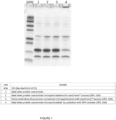
Figure 1 shows SDS-PAGE-results of different microparticulated whey proteins:- Line MW shows the bands of Bio-Rad #161-0373 -standard.
-
Line 1 shows the bands of an ideal whey protein concentrate. -
Line 2 shows the bands of an ideal whey protein concentrate microparticulated with LeanCreme™-process (SPX, USA). -
Line 3 shows the bands of a pasteurized ideal whey protein concentrate microparticulated with LeanCreme™-process (SPX, USA). -
Line 4 shows the bands of an ideal whey protein concentrate microparticulated by cavitation with APV-cavitator (SPX, USA).
-
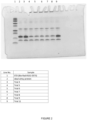
Figure 2 shows SDS-PAGE-results of different microparticulated ideal whey proteins.-
Line 1 shows the bands of Bio-Rad #161-0373 -standard. -
Line 2 shows the bands of an ideal whey protein. -
Line 3 shows the bands of an ideal whey protein concentrate microparticulated with APV-cavitator (SPX, USA and having β-LG denaturation degree of 79.8%. -
Line 4 shows the bands of an ideal whey protein concentrate microparticulated with APV-cavitator (SPX, USA) and having β-LG denaturation degree of 93.6%. -
Lines 5 and Line 6 show the bands of an ideal whey protein concentrate microparticulated by cavitation using APV-cavitator (SPX, USA) and having β-LG denaturation degree of 93.7%. -
Line 7 shows the bands of an ideal whey protein concentrate microparticulated by cavitation using APV-cavitator (SPX, USA) and having β-LG denaturation degree of 94.6%. -
Line 8 shows the bands of an ideal whey protein concentrate microparticulated by cavitation using APV-cavitator (SPX, USA) and having β-LG denaturation degree of 91.6%. -
Line 9 shows the bands of an ideal whey protein concentrate microparticulated by cavitation using APV-cavitator (SPX, USA) and having β-LG denaturation degree of 77.9%.
-
- The problem related to known microparticulated whey proteins produced by homogenizing preheated whey protein concentrate (WPC) at a high pressure and extruding then the whey proteins in acidic conditions, is that they do not produce a creamy texture and/or taste into milk based/dairy products, especially to acidified milk based/dairy products.
- The present invention is based on a finding that microparticulating ideal whey protein with a cavitator produced microparticulated ideal whey protein preparation having a creamy and thick texture. In addition, when this microparticulated ideal whey protein preparation was used in the manufacture of yogurt, a creamy and thick yogurt, creamier and thicker than a reference yogurt produced without the microparticulated ideal whey protein product, was produced. Accordingly, it is possible to produce low-fat or fat-free acidified milk based products/dairy products, which have creamy taste and texture with the microparticulated ideal whey protein preparation of the present invention. The microparticulated ideal whey protein preparation can be used as such and/or as a fat substitute, for example, also in neutral dairy products as well as other foodstuffs.
- In the method of the present invention, an ideal whey protein preparation, which contains native whey proteins, was cavitated with APV-cavitator (SPX, USA) using the following operating values: 150-200 l/h, 50-60 Hz, cavitation time 10-60 s, the clearance of the
cavitator 3 mm (radial), holes in four (1-4) lines. The ideal whey protein preparation was preheated to a temperature of 25-67°C and during the cavitation the temperature rose up to 73-93°C. After this, the microparticulated ideal whey protein was cooled to a temperature up to 10°C using a scraped-surface heat exchanger. - As a result of the cavitation procedure, a thick/viscous light brownish microparticulated ideal whey protein preparation having particle size of 1-200 µm, was achieved. The taste of the microparticulated ideal whey protein preparation was creamy and full-flavored. In addition, it was found that when the microparticulated ideal whey protein preparation was used in manufacturing yogurt, full-flavored, smooth and creamy yogurt with no wheying-off or syneresis during the storage was achieved.
- Accordingly, the present invention relates to a process for microparticulating of ideal whey protein by cavitation.The present invention also relates to an ideal whey protein preparation microparticulated by cavitation. In addition, the present invention relates to use of a cavitated microparticulated ideal whey protein preparation in a dairy product. Further, the present invention relates to a dairy product containing cavitated microparticulated ideal whey protein.
- The ideal whey protein preparation used in the present invention contains whey proteins in their native form (i.e., ideal whey proteins) and β-caseins, β-lactoglobulin and α-lactalbumin (α-La). In one embodiment, the ideal whey protein preparation contains β-lactoglobulin about 5.0 to about 8.0 g/100 g. In one embodiment, the ideal whey protein preparation contains β-lactoglobulin about 5.0 to about 6.0 g/100 g. In one embodiment, the preparation contains β-lactoglobulin in an amount of about 5.5 g/100 g. In one embodiment, the ideal whey protein preparation contains α-lactalbumin less than or at most about 2.0 g/100g. In one embodiment, the ideal whey protein preparation contains α-lactalbumin about 1.0 to about 2.0 g/100g. In one embodiment, the preparation contains α-lactalbumin in an amount of about 1.8 g/100g. In one embodiment, the ideal whey preparation contains β-lactoglobulin, α-lactalbumin and casein in a ratio of 0.7/0.23/0.07 β-LG/α-La/casein. In one embodiment, the ratio is 0.9/0.03/0.07 β-LG/α-La/casein. The casein referred herein is mainly β-casein. The pH of the ideal whey protein preparation is in the range of 6.5-7. In one embodiment, the pH of the ideal whey protein preparation is about 6.7. The ideal whey protein preparation is obtained as a microfiltration permeate of a milk raw material. The microfiltration permeate can be further treated and/or concentrated by membrane filtration (ultrafiltration, reverse osmose, nanofiltration) and/or evaporation, for example. The term "an ideal whey protein preparation" refers to a microfiltration (MF) permeate obtained from microfiltration of a milk raw material. The term "an ideal whey protein preparation" is understood to encompass also a concentrated form of the MF permeate which is obtained, for example, as an ultrafiltration retentate from ultrafiltration of the MF permeate.
- The ideal whey protein preparation can be produced by a process which comprises the steps of:
- subjecting a milk raw material to microfiltration to separate the ideal whey proteins as a microfiltration permeate and a casein concentrate as a microfiltration retentate,
- optionally subjecting at least a portion of the microfiltration permeate to ultrafiltration to provide an ultrafiltration permeate and an ideal whey protein concentrate as an ultrafiltration retentate,
- optionally evaporating at least a portion of the microfiltration permeate and/or the ultrafiltration retentate,
- optionally drying at least a portion of the microfiltration permeate and/or the ultrafiltration retentate, and/or the evaporate,
- providing the microfiltration permeate or the ultrafiltration retentate of the microfiltration permeate or the evaporated microfiltration permeate or the evaporated ultrafiltration retentate of the microfiltration permeate or the dried microfiltration permeate or the dried ultrafiltration retentate of the microfiltration permeate as the ideal whey protein preparation.
- Accordingly, in the present invention, the ideal whey protein preparation can be in the form of a solution or in the form of an evaporate (concentrate) or in the form of a powder. In one embodiment, the ideal whey protein preparation is in the form of a solution or in the form of a concentrate. In one embodiment, the ideal whey protein preparation is in the form of a powder.
- The milk raw material may be, for instance, full-fat milk, cream, low-fat milk or skim milk, lactose-free or low-lactose milk, protease treated milk, recombined milk from milk powder, organic milk or a combination of these, or a dilution of any of these. Milk can originate from a cow, sheep, goat, camel, horse or any other animal producing milk suitable for nourishment. In one embodiment, the milk raw material is skimmed milk. In another embodiment, the milk raw material is low lactose or lactose-free milk. In a further embodiment, the milk raw material is low lactose or lactose-free skimmed milk.
- In one embodiment, the ideal whey protein preparation can be prepared by microfiltrating skimmed milk and concentrating the obtained microfiltration permeate by ultrafiltration. Microfiltration of the skimmed milk is typically carried out at a temperature of about 2°C to about 55°C. In one embodiment, the microfiltration is carried out at about 10°C. Ultrafiltration is typically performed at about 5°C to about 55°C. In one embodiment, the ultrafiltration is carried at about 10°C.
- The ideal whey protein preparation contains β-casein, about 20% of the total protein, but it does not contain micellar casein monomers or any other byproducts from the cheese manufacture, i.e., it is free of caseinomacropeptides and thermally formed k-casein β-lactoglobulin complexes. The protein content of the ideal whey protein preparation can range from about 4% to about 90%. In an embodiment, the protein content of the preparation is about 9% and β-casein content is about 20% based on total protein. In another embodiment, the protein content of the preparation is about 16% and β-casein content is about 20% based on total protein. The ideal whey protein preparation contains more α-lactalbumin and β-lactoglobulins in total whey protein than whey protein concentrate (WPC) manufactured from cheese whey because the caseinomacropeptide fraction does not exist in the ideal whey protein preparation. The lactose content of the ideal whey protein preparation can be reduced, if desired. The lactose removal can be accomplished with methods known in the art, for example. In one embodiment, the ideal whey protein preparation is in the form of an ideal whey protein solution, which contains about 7% whey protein, about 1.8% casein, about 2.3% lactose, about 0.47% ash, and the dry matter of the solution being about 12.2%. In another embodiment, the ideal whey protein preparation is in the form of an ideal whey protein powder which contains about 88% whey protein, about 0% casein, about 0% lactose, about 3% ash, and the dry matter of the preparation being about 90%. When ideal whey protein in powder form is used in the preparation of the microparticulated ideal whey protein preparation, optional steps of adding a suitable liquid and/or dissolving the powder, known by a skilled person, are included in the method of the present invention. Functional properties of whey proteins are better maintained when the drying step does not exist in the manufacturing process of the ideal whey protein preparation. The taste of the ideal whey protein preparation is pleasant and clean due to the mild heat-treatment performed at temperature below 75°C, most typically at 72°C for 15 seconds. Additionally, ideal whey protein preparation does not carry any of the associated off-flavors because it is not derived from cheese production.
- The present invention relates to a process for producing a microparticulated ideal whey protein preparation by cavitation. In one embodiment, the method comprises the steps of:
- providing an ideal whey protein preparation,
- providing a cavitator,
- optionally preheating the ideal whey protein preparation,
- In one embodiment, the ideal whey protein preparation is preheated to the temperature of 25-67°C. In one embodiment, the ideal whey protein solution is preheated to a temperature of 48-67°C. In another embodiment, the ideal whey protein solution is preheated to a temperature of about 61-67°C. In the process of the invention, the temperature at the output of the cavitator is in the range of about 73-93°C.In one embodiment, the temperature at the output of the cavitator is in the range of about 77-93°C. In another embodiment, the temperature at the output of the cavitator is in the range of about 73-85°C. In one embodiment, the temperature at the output of the cavitator is the range of 77-85°C. In one embodiment, the ideal whey protein solution is preheated to a temperature of about 48-67°C and the temperature at the output of the cavitator is in the range of about 73-85°C.
- In the process of the invention the frequency in the cavitator is in the range of about 50-60 Hz. In another embodiment, the frequency in the cavitator is in the range of about 52-56 Hz.
- In the process of the invention the cavitation time is about 3-60 s. In another embodiment, the cavitation time is about 10-60 s. In one embodiment, the cavitation time is about 10-30 s. In one embodiment, the cavitation time is about 30-60 s. In one embodiment, the cavitation time is about 30 s.
- It was found in the present invention, that the temperature at the output of the cavitator and the cavitation frequency, for example, were important to the polymerization of the ideal whey protein, especially for the polymerization of the β-lactoglobulins.
- In one embodiment, the microparticulated ideal whey protein is cooled to a temperature up to 10°C. In another embodiment, the microparticulated ideal whey protein is cooled to a temperature of about 4°C.
- In one embodiment, the produced microparticulated ideal whey protein preparation is in the form of a solution. In this embodiment, the method for producing a microparticulated ideal whey protein preparation further comprises an optional step of:
- concentrating the microparticulated ideal whey protein solution to provide a microparticulated ideal whey protein concentrate.
- In one embodiment, the microparticulated ideal whey protein preparation in a solution or a concentrate form is dried and a microparticulated ideal whey protein in powder form is provided.
- The method of the present invention provides a microparticulated ideal whey protein preparation, wherein the whey proteins have a particle size of 1-200 µm,1-100 µm, 1-10 µm, 5-10 µm or 1-2 µm. In one embodiment, the whey proteins have a particle size of 1-10 µm. The microparticulated ideal whey protein preparation contains also β-caseins, β-lactoglobulin and α-lactalbumin (α-La). The microparticulated ideal whey protein preparation contains β-casein, about 20 % of the total protein. It is free of caseinomacropeptides and thermally formed k-casein β-lactoglobulin complexes. In one embodiment, the microparticulated ideal whey protein preparation contains β-lactoglobulin about 5.0 to about 8.0 g/100 g. In one embodiment, the ideal whey protein preparation contains β-lactoglobulin about 5.0 to about 6.0 g/100 g. In one embodiment, the preparation contains β-lactoglobulin in an amount of about 5.5 g/100 g. In one embodiment, the microparticulated ideal whey protein preparation contains α-lactalbumin less than or at most about 2.0 g/100g. In one embodiment, the ideal whey protein preparation contains α-lactalbumin about 1.0 to about 2.0 g/100g. In one embodiment, the preparation contains α-lactalbumin in an amount of about 1.8 g/100g. In one embodiment, the microparticulated ideal whey preparation contains β-lactoglobulin, α-lactalbumin and casein in a ratio of 0.7/0.23/0.07 β-LG/α-La/casein. In one embodiment, the ratio is 0.9/0.03/0.07 β-LG / α-La/casein. The casein referred herein is mainly β-casein. The pH of the microparticulated ideal whey protein is in the range of 6.5-7. In one embodiment, the pH of the preparation is about 6.7.
- The protein content of the microparticulated ideal whey protein preparation can range from about 4% to about 90%. In an embodiment, the protein content of the preparation is about 9% and β-casein content is about 20% based on total protein. In another embodiment, the protein content of the preparation is about 16% and β-casein content is about 20% based on total protein. The β-lactoglobulin, or at least part of it, is in a polymerized form in the microparticulated ideal whey protein preparation of the present invention. The β-lactoglobulin polymers have a size of > 200 kDa. This is a unique feature in a microparticulated ideal whey protein preparation of the present invention. In one embodiment, about 30% of β-lactoglobulins is in the polymerized form in the microparticulated ideal whey protein preparation. In one embodiment, at least 30% of β-lactoglobulins is in the polymerized form in the microparticulated ideal whey protein preparation. In one embodiment, at least 33% of β-lactoglobulins is in the polymerized form in the microparticulated ideal whey protein preparation. In one embodiment, about 50% of β-lactoglobulins is in the polymerized form in the microparticulated ideal whey protein preparation. In one embodiment, about 99% of β-lactoglobulins is in the polymerized form in the microparticulated ideal whey protein preparation. In one embodiment, about 30% to about 99% of β-lactoglobulins is in the polymerized form in the microparticulated ideal whey protein preparation. In one embodiment, about 33% to about 99% of β-lactoglobulins is in the polymerized form in the microparticulated ideal whey protein preparation. In one embodiment, about 30% to about 50% of β-lactoglobulins is in the polymerized form in the microparticulated ideal whey protein preparation. In one embodiment, about 50% to about 99% of β-lactoglobulins is in the polymerized form in the microparticulated ideal whey protein preparation.
- The microparticulation of the ideal whey protein preparation is performed by cavitation. The β-lactoglobulin, or at least part of it, is in a polymerized form in the ideal whey protein preparation microparticulated by cavitation. The β-lactoglobulin polymers have a size of >200 kDa. This is a unique feature in a microparticulated ideal whey protein produced by cavitation, since no polymerization has been detected in microparticulated whey protein produced by traditional methods. In one embodiment, about 30% of β-lactoglobulins is in the polymerized form in the microparticulated ideal whey protein preparation produced by cavitation. In one embodiment, at least 30% of β-lactoglobulins is in the polymerized form in the microparticulated ideal whey protein preparation produced by cavitation. In one embodiment, at least 33% of β-lactoglobulins is in the polymerized form in the microparticulated ideal whey protein preparation produced by cavitation. In one embodiment, about 50% of β-lactoglobulins is in the polymerized form in the microparticulated ideal whey protein preparation produced by cavitation. In one embodiment, about 99% of β-lactoglobulins is in the polymerized form in the microparticulated ideal whey protein preparation produced by cavitation. In one embodiment, about 30% to about 99% of β-lactoglobulins is in the polymerized form in the microparticulated ideal whey protein preparation produced by cavitation. In one embodiment, about 33% to about 99% of β-lactoglobulins is in the polymerized form in the microparticulated ideal whey protein preparation produced by cavitation. In one embodiment, about 30% to about 50% of β-lactoglobulins is in the polymerized form in the microparticulated ideal whey protein preparation produced by cavitation. In one embodiment, about 50% to about 99% of β-lactoglobulins is in the polymerized form in the microparticulated ideal whey protein preparation produced by cavitation.
- In the ideal whey protein, the denaturation level of β-lactoglobulin is near 0%. On the other hand, in the microparticulated ideal whey protein preparation of the present invention, the denaturation level of β-lactoglobulin is in the range of 90-95%. In one embodiment, the denaturation level of β-lactoglobulin is in the range of 92-94%.Thus the polymerization level of β-lactoglobulin in the ideal whey protein preparation microparticulated by cavitation is >33%. Without wishing to be bound to any theory, it seems that microparticulation of ideal whey protein by cavitation produces more fibrous form of protein compared to milk proteins in general, which is then metabolized more slowly in the gut system and its energy value is lower than that of normal milk protein.
- The pH of the microparticulated ideal whey protein preparation of the present invention is in the range of about 6.5-7. In one embodiment, the pH is about 6.7.
- The viscosity of microparticulated ideal whey protein preparation can be in the range of about 200 to about 4000mPas. The viscosity of microparticulated ideal whey protein preparation may be in the range of about 500 to about 2000mPas.
- The particle size of the microparticulated ideal whey proteins in the preparation may be in the range of about 1-200 µm,about 1-100 µm,about 1-10 µm, about 5-10 µm or about 1-2 µm. The microparticulated ideal whey proteins may have a particle size of 1-10µm.
- The ideal whey protein preparation microparticulated by cavitation contains β-lactoglobulin polymers having a size of >200 kDa.
- In addition, the present invention is directed to a use of a microparticulated ideal whey protein preparation in the manufacture of dairy product. In one embodiment, the texture of the product is thickened by the use the microparticulated ideal whey protein product in and/or during the manufacturing process of the dairy product. In one embodiment, the microparticulated ideal whey protein product is used in the manufacture of an acidified dairy product. In one embodiment, the microparticulated ideal whey protein product is added to the acidified mass in the manufacture of an acidified dairy product.
- Further, the present invention relates to a method of producing a dairy product, wherein the method comprises a step of using a microparticulated ideal whey protein preparation in the method.
- In one embodiment, the method of producing a dairy product comprises the steps of:
- providing a milk raw material and an ideal whey protein preparation microparticulated by cavitation,
- heat-treating and cooling the milk raw material,
- adding the microparticulated ideal whey protein preparation to the cooled milk raw material,
- optionally treating the material in a manner characteristic to the dairy product,
- optionally packing the product.
- In one embodiment, the present invention is directed to a method of producing a neutral, non-acidified dairy product, wherein the method comprises a step of using a microparticulated ideal whey protein preparation in the method.
- In a certain embodiment, the method of producing a dairy product comprises the steps of:
- providing a milk raw material and a microparticulated ideal whey preparation,
- heat-treating and cooling the milk raw material,
- adding the microparticulated ideal whey protein preparation to the cooled milk raw material,
- optionally treating the material in a manner characteristic to the dairy product,
- optionally packing the product.
- In one embodiment, the present invention is directed to a method of producing an acidified dairy product, wherein the method comprises a step of using a microparticulated ideal whey protein preparation in the method.
- In a certain embodiment, the method of producing an acidified dairy product comprises the steps of:
- providing a milk raw material and a microparticulated ideal whey protein preparation,
- heat-treating and cooling the milk raw material,
- acidifying the cooled milk raw material,
- adding the microparticulated ideal whey protein preparation to the acidified milk raw material,
- optionally packing the product.
- In another embodiment, the method of producing a dairy product comprises the steps of:
- providing a milk raw material and a microparticulated ideal whey protein preparation,
- heat-treating and cooling the milk raw material,
- adding the microparticulated ideal whey protein preparation and an acidifier to the cooled milk raw material,
- acidifying the obtained mixture,
- mixing the acidified mass,
- optionally packing the product.
- In a further embodiment, the method of producing a dairy product comprises the steps of:
- providing a milk raw material and a microparticulated ideal whey protein preparation,
- mixing the milk raw material and a microparticulated ideal whey protein preparation,
- heat-treating and cooling the mixture,
- acidifying the cooled mixture,
- mixing the acidified mass,
- optionally packing the product.
- In the present invention, milk raw material may be milk derived from an animal, such as a cow or a goat, as such or treated in various ways. Milk may be treated by removing, for instance, protein, fat or lactose therefrom, as a result of which low-protein, fat-free, low-fat, lactose-free and/or low-lactose milk is obtained. In this context, raw material milk also refers to, for instance, pre-treated or untreated milks used in the production of yoghurt, viili and fermented milk. In one embodiment, the milk raw material is skimmed milk.
- In the manufacture of the dairy product, the optimum conditions for an economic, inexpensive and efficient production process are employed. For example, conventional heat treatment methods such as pasteurization (heating for example at about 72°C for at least 15 seconds), ESL treatment (heating for example at about 130°C for 1 to 2 seconds), UHT treatment (heating for example at about 138°C for 2 to 4 seconds) or high temperature pasteurization (heating at 95°C for 5 minutes), are employed. In addition, treatments typical in the preparation of a dairy product, such as homogenization, acidification and enzyme treatments, for example, are performed in a manner known in the field.
- The present invention also relates to a dairy product containing said microparticulated ideal whey protein preparation by cavitation. Further, the present invention relates to a dairy product produced by using said microparticulated ideal whey protein
- In the present invention, the term "dairy product" is intended to cover all consumable milk-based products that can be solid and/or jellied. The dairy product can be derived from, e.g., cow's milk, goat's milk, sheep's milk, skimmed milk, whole milk or milk recombined from powdered milk.
- The amount of the microparticulated ideal whey protein preparation in the dairy product is in the range of 1 to 99% based on the weight of the product. In one embodiment, the amount of the microparticulated ideal whey protein preparation in the dairy product is in the range of 10 to 50% based on the weight of the product. In another embodiment, the amount of the microparticulated ideal whey protein preparation in the milk based and/or dairy product is in the range of 20 to 30% based on the weight of the product.
- In one embodiment, the dairy product is an acidified dairy product. In one embodiment of the invention, the microparticulated ideal whey protein preparation of the invention is used in the manufacture of an acidified dairy product. The acidification conditions such as, starter culture(s), temperature, pH and time for the production of acidified milk products or ingredients are selected to meet the requirements of the final product. The selection of suitable conditions belongs to knowledge of a person skilled in the art.
- The dairy product could be produced by using the conventional acidification procedures of the dairy industry or alternatively, the product can be soured with a chemical acidifying agent.
- In one embodiment, the neutral, non-acidified dairy product is selected from a pudding, a beverage/a drink and a protein drink. In one embodiment, the acidified dairy product is a sour milk product and/or acidified fresh product. In one embodiment, the acidified dairy product selected from yoghurt, quark, tvorog, skyr, Greek yogurt, sour milk, kefir viili, fermented cream, Smetana, sour cream, quark, cottage cheese and feta. In one embodiment, the acidified dairy product refers to yogurt. The viscosity of a yogurt of the present invention is in the range of about 200 to about 4000 mPas. In one embodiment, the viscosity of a yogurt of the present invention is about 500 to about 2000 mPas. In one embodiment, the viscosity of a yogurt of the present invention is about 1000 mPas. In one embodiment, the acidified dairy product is a drinkable product, such as a drinkable yogurt, sour milk or kefir, for example. The viscosity of an acidified drinkable product is in the range of about 100 to about 250 mPas, depending on the type of the product. In one embodiment, the product is a drinkable yogurt having viscosity in the range of about 150 to about 200 mPas. In one embodiment, the product is a drinkable yogurt having viscosity of about 200 mPas. In one embodiment, the drinkable product is sour milk having viscosity in the range of about 100 to about 150 mPas. In one embodiment, the product is sour milk having viscosity of about 120 mPas. The texture of the product of the present invention is typically thicker than a reference product produced without the microparticulated ideal whey protein product.
- In one embodiment, the yogurt is a set-type product, such as a set-type yogurt. The hardness of a set type product may be in the range of about 1000 - about 4000 g.mm. The hardness of a set type product may be in the range of about 2000 - about 3000 g.mm. The hardness of a set type product may be about 3000 g.mm.
- The microparticulated ideal whey protein product of the present invention can be used to substitute a thickening agent, such as pectin, guar gum, xanthan gum, gum arabic and gellan gum, for example in and/or during the manufacturing process of the dairy product. In one embodiment, the microparticulated ideal whey protein product is added to the acidified mass in the manufacture of the acidified dairy product in order to replace a thickener. In one embodiment, the microparticulated ideal whey protein product is mixed with the other starting materials before the acidifying step in the manufacture of the acidified dairy product in order to replace a thickening agent. A thickening agent can be substituted partly or totally by the microparticulated ideal whey protein product of the present invention.
- It was found that the microparticulated ideal whey protein preparation of the present invention did not cause any adverse tastes to the products or interfere with the conventional manufacturing processes.
- The following examples illustrate the present invention. The examples are not to be construed to limit the claims in any manner whatsoever.
- Ideal whey protein solution (
protein 9%) was preheated to a temperature of 27°C and run through an APV cavitator (SPX, USA) using operating values 56.4 Hz and 200 l/h, lag-time 30 s. The counterpressure of the device was 2.5 bar, wherein the device was made to cavitate in a controlled way. The cavitator has a spinning cylinder which has holes in four lines and a clearance of 3 mm. During the cavitation the temperature rose up to 93°C. - In the cavitator, the spinning action generates friction internally in the liquid and the holes generate hydrodynamic cavitation.
- After this, the microparticulated ideal whey was cooled to a temperature of 4°C using a a scraped-surface heat exchanger.
- As a result, a thick/viscous light brownish microparticulated ideal whey protein preparation having particle size of 1-200m was achieved. The taste of the microparticulated ideal whey protein preparation was full-flavored.

- Based on the results of SDS-PAGE, it can be seen that part of β-lactoglobulin has polymerized into polymers having a size of > 200 kDa (
Figure 1 ). This a unique feature in a microparticulated whey protein preparation produced by cavitation, since no polymerization has been detected in microparticulated whey protein produced by traditional methods. - The reference yogurt was prepared from skimmed milk, which was pasteurized at 90°C for 5 minutes and then cooled to the temperature of about 42°C. The starter culture YF-L901 from Chr. Hansen (0.02%) was added and the raw material milk was acidified until the pH was 4.5. After the desired pH was reached, the mass was mixed and treated with YTRON rotor-stator mixer (30 Hz) and cooled to a temperature of about 20°C. The product was packed and cooled to a temperature of about 5°C in a cold storage.
- The yogurt was prepared from skimmed milk (72.2%) and the microparticulated ideal whey protein preparation of Example 1 (27.8%). The skimmed milk was pasteurized at 90°C for 5 minutes and then cooled to the temperature of about 42°C. The starter culture YF-L901 from Chr. Hansen (0.02%) was added and the raw material milk was acidified until the pH was 4.5. After the desired pH was reached, the mass was mixed and treated with YTRON rotor-stator mixer (30 Hz) and cooled to a temperature of about 20°C. The microparticulated ideal whey protein preparation was added and the product was packed and cooled to a temperature of about 5°C in a cold storage.
- The yogurt was full-flavored and creamy whereas the reference yogurt of Example 2 had a watery, not creamy, taste.
- The yogurt of the invention was about 5.3 times thicker than the reference yogurt. After one week of storage, the viscosity of the yogurt of the invention was 982 mPas, whereas the viscosity of the reference yogurt produced in Example 2 was 185 mPas. The richness/fullbodieness and smoothness of the yogurt of the invention as well as the difference in the thickness compared to the reference yogurt preserved during the 3-weeks storage period.
- There were no wheying-off or syneresis during the storage in the yogurt of the invention.
- The drinking yogurt was prepared from skimmed milk (60%) and the microparticulated ideal whey protein preparation of Example 1 (40%). Whey protein preparation replaced pectin addition in the process. The skimmed milk was pasteurized at 90°C for 5 minutes and then cooled to the temperature of about 42°C. The starter culture YO-MIX 410 from Danisco (0.02%) was added and the raw material milk was acidified until the pH was 4.5. After the desired pH was reached, the mass was mixed and treated with YTRON rotor-stator mixer (30 Hz) and cooled to a temperature of about 20°C. The microparticulated ideal whey protein preparation was added and the product was packed and cooled to a temperature of about 5°C in a cold storage.
- The drinking yogurt was full-flavored and creamy whereas normal drinking yogurt had a watery, not creamy, taste.
- The drinking yogurt of the invention was more full bodied than the reference dinking yogurt with pectin. After one week of storage, the viscosity of the drinking yogurt of the invention was 200 mPas, whereas the viscosity of the normal drinking yogurt is 100 mPas. The richness/fullbodieness and smoothness of the drinking yogurt of the invention as well as the difference in the thickness compared to the reference yogurt preserved during the 3-weeks storage period.
- There were no wheying-off or syneresis during the storage in the drinking yogurt of the invention.
- The sour milk was prepared from skimmed milk (55%) and the microparticulated ideal whey protein preparation of Example 1 (45%). The skimmed milk was pasteurized at 90°C for 5 minutes and then cooled to the temperature of about 20°C. The mesophilic starter culture (0.02%) was added and the raw material milk was acidified until the pH was 4.5. After the desired pH was reached, the mass was mixed and treated with YTRON rotor-stator mixer (30 Hz) and cooled to a temperature of about 10°C. The microparticulated ideal whey protein preparation was added and the product was packed and cooled to a temperature of about 5°C in a cold storage.
- The sour milk was full-flavored and creamy compared to the normal sour milk.
- The sour milk of the invention was about 8 times thicker than the reference sour milk. After one week of storage, the viscosity of the sour milk of the invention was 120 mPas, whereas the viscosity of the normal sour milk is about 10-15 mPas. The richness/fullbodieness and smoothness of the sour milk of the invention as well as the difference in the thickness compared to the normal sour milk preserved during the 2-weeks storage period.
- There were no wheying-off or syneresis during the storage in the sour milk of the invention.
- The yogurt was prepared from skimmed milk (72.2%) and the microparticulated ideal whey protein preparation of Example 1 (27.8%). The skimmed milk and the microparticulated ideal whey protein preparation were mixed and pasteurized at 90°C for 5 minutes and then cooled to the temperature of about 42°C. The starter culture YF-L901 from Chr. Hansen (0.02%) was added and the raw material was acidified until the pH was 4.5. After the desired pH was reached, the mass was mixed and treated with YTRON-mixer (30 Hz) and cooled to a temperature of about 20°C. The product was packed and cooled to a temperature of about 5°C in a cold storage.
- The yogurt of the invention was creamy, whereas the reference yogurt of Example 2 had a watery, not creamy, taste. The yogurt of the invention was thicker than the reference yogurt of Example 2. The richness of the yogurt of the invention as well as the difference in the thickness compared to the reference yogurt preserved during the 3-weeks storage period.
- The yogurt was prepared from skimmed milk (72.2%) and the microparticulated ideal whey protein preparation of Example 1 (27.8%).
- The skimmed milk was pasteurized at 90°C for 5 minutes and then cooled to the temperature of about 42°C. The microparticulated ideal whey protein preparation and the starter culture YF-L901 from Chr. Hansen (0.02%) were added and the raw material was acidified until the pH was 4.5. After the desired pH was reached, the mass was mixed and treated with YTRON rotor-stator mixer (30 Hz) and cooled to a temperature of about 20°C. The product was packed and cooled to a temperature of about 5°C in a cold storage.
- The yogurt was full-flavored and creamy whereas the reference yogurt of Example 2 had a watery, not creamy, taste.
- The yogurt of the invention was thicker than the reference yogurt. After one week of storage, the viscosity of the yogurt of the invention was 982 mPas, whereas the viscosity of the reference yogurt was 185 mPas. The richness and smoothness of the yogurt of the invention as well as the difference in the thickness compared to the reference yogurt preserved during the 3-weeks storage period.
- Ideal whey protein solution (
protein 9%) was preheated to a temperature of 61°C and run through an APV cavitator (SPX, USA) using operating values 52 Hz and 200 l/h, cavitation-time 30 s. The counterpressure of the device was 8 bar, wherein the device was made to cavitate in a controlled way. The cavitator has a spinning cylinder which has holes in four lines and a clearance of 3 mm. During the cavitation the temperature rose up to 78°C. - In the cavitator, the spinning action generates friction internally in the liquid and the holes generate hydrodynamic cavitation.
- After this, the microparticulated ideal whey was cooled to a temperature of 4°C using a scraped-surface heat exchanger.
- As a result, a thick/viscous light brownish microparticulated ideal whey protein preparation having particle size of 1-200 µm was achieved. The taste of the microparticulated ideal whey protein preparation was full-flavored. Texture was smooth.
- Based on the results of SDS-PAGE, it can be seen that a part of β-lactoglobulin has polymerized into polymers having a size of > 200 kDa (
Figure 2 , line 8). Furthermore, the denaturation degree of β-lactoglobulin was 91.6%. - The yogurt was prepared from skimmed milk (72.2%) and the microparticulated ideal whey protein preparation of Example 1 (27.8%). The skimmed milk and the microparticulated ideal whey protein preparation were mixed and pasteurized at 90°C for 5 minutes and then cooled to the temperature of about 42°C. The starter culture YF-L901 from Chr. Hansen (0.02%) was added and the raw material was packed to cups. The product was acidified at 42°C until the pH was 4.5. After the desired pH was reached, the product was cooled to a temperature of about 5°C.
- The yogurt of the invention was creamy and the hardness of the set-type yogurt was 3000 g.mm. The richness of the yogurt of the invention as well as the hardness of the yogurt preserved during the 3-weeks storage period.
- Skim milk was microfiltered with polymeric microfiltration membranes of 800 kDa (Synder FR-3A-6338) at 10ºC. The obtained microfiltration permeate was concentrated by ultrafiltration with an ultrafiltration membrane of 10 kDa (Koch HFK-131 6438-VYT) and with a concentration factor of 36 at 10ºC to provide an ideal whey protein solution/preparation as an ultrafiltration retentate. The protein content of the ideal whey solution was 9%. β-casein content is about 20% based on total protein.
- It will be obvious to a person skilled in the art that, as the technology advances, the inventive concept can be implemented in various ways. The invention and its embodiments are not limited to the examples described above but may vary within the scope of the claims.
Claims (13)
- A process for producing a cavitated microparticulated ideal whey protein preparation comprising the steps of:- providing an ideal whey protein preparation which is a microfiltration permeate obtained from microfiltration of a milk raw material, or a concentrated form of the microfiltration permeate,- providing a cavitator,- optionally preheating the ideal whey protein preparation containing whey proteins in their native form and β-caseins, β-lactoglobulin and α-lactalbumin,- treating the optionally preheated ideal whey protein preparation with the cavitator for providing the cavitated microparticulated ideal whey protein preparation, wherein the cavitated microparticulated ideal whey protein preparation contains β-lactoglobulin polymers having a size of >200 kDa and a denaturation level in the range of 90-95%, wherein the cavitation is performed under the following conditions:- the temperature at the output of the cavitator is in the range of about 73-93°C,- the cavitation time is in the range of 3-60 s, and/or- the frequency in the cavitator is in the range of about 50-60 Hz.
- The process according to claim 1, wherein the method comprises the step of preheating the ideal whey protein preparation.
- The process according to claim 2, wherein the ideal whey protein preparation is preheated to the temperature of 25-67°C, preferably to the temperature of 48-67°C.
- The process according to any one of claims 1 to 3, wherein the the polymerization level of β-lactoglobulin in the preparation is at least 30%.
- A cavitated microparticulated ideal whey protein preparation, wherein the cavitated microparticulated ideal whey protein preparation contains microparticulated whey proteins and β-lactoglobulin polymers having a size of >200 kDa and a denaturation level in the range of 90-95%, wherein the ideal whey protein preparation is a microfiltration permeate obtained from microfiltration of a milk raw material, or a concentrated form of the microfiltration permeate, and the ideal whey protein preparation prior to cavitation contains whey proteins in their native form and β-caseins, β-lactoglobulin and α-lactalbumin.
- The cavitated microparticulated ideal whey protein preparation according to claim 5, wherein the polymerization level of β-lactoglobulin in the preparation is at least 30%.
- A use of the cavitated microparticulated ideal whey protein preparation according to any one of claims 5 to 6 in the manufacture of a dairy product.
- The use according to claim 7, wherein the product is an acidified dairy product.
- The use according to claim 7 or claim 8, wherein the texture of the product is thickened.
- A dairy product containing the cavitated microparticulated ideal whey protein preparation according to any one of claims 5 to 6.
- The product according to claim 10, wherein the amount of the cavitated microparticulated ideal whey protein preparation in the dairy product is in the range of 10 to 50% or 20 to 30% based on the weight of the product.
- The product according to claim 10 or claim 11. wherein the product is an acidified dairy product.
- A process for manufacturing a dairy product comprising the steps of:- providing a milk raw material and a cavitated microparticulated ideal whey protein preparation according to any one of claims 5 to 6,- heat-treating and cooling the milk raw material,- adding the microparticulated ideal whey protein preparation to cooled milk raw material,- optionally treating the material in a manner characteristic to the dairy product,- optionally packing the product.
Applications Claiming Priority (2)
| Application Number | Priority Date | Filing Date | Title |
|---|---|---|---|
| FI20155621A FI127870B (en) | 2015-08-31 | 2015-08-31 | Microparticulated ideal whey protein preparation, process for its preparation and its use |
| PCT/FI2016/050604 WO2017037345A1 (en) | 2015-08-31 | 2016-08-31 | Whey preparation obtained by cavitation and uses thereof |
Publications (3)
| Publication Number | Publication Date |
|---|---|
| EP3344054A1 EP3344054A1 (en) | 2018-07-11 |
| EP3344054C0 EP3344054C0 (en) | 2025-02-12 |
| EP3344054B1 true EP3344054B1 (en) | 2025-02-12 |
Family
ID=56936437
Family Applications (1)
| Application Number | Title | Priority Date | Filing Date |
|---|---|---|---|
| EP16766332.7A Active EP3344054B1 (en) | 2015-08-31 | 2016-08-31 | Whey preparation obtained by cavitation and uses thereof |
Country Status (7)
| Country | Link |
|---|---|
| US (3) | US10667539B2 (en) |
| EP (1) | EP3344054B1 (en) |
| ES (1) | ES3020235T3 (en) |
| FI (1) | FI127870B (en) |
| PL (1) | PL3344054T3 (en) |
| RU (1) | RU2706561C2 (en) |
| WO (1) | WO2017037345A1 (en) |
Families Citing this family (12)
| Publication number | Priority date | Publication date | Assignee | Title |
|---|---|---|---|---|
| CA3055986C (en) | 2017-03-31 | 2025-09-16 | J.R. Simplot Company | Potato protein powders |
| JP7246877B2 (en) * | 2018-08-08 | 2023-03-28 | 株式会社明治 | Method for producing liquid fermented milk |
| FR3088174B1 (en) | 2018-11-14 | 2021-09-24 | Ingredia | PROCESS FOR MANUFACTURING AN INGREDIENT INCLUDING THE COMBINATION OF AT LEAST THREE MILK PROTEINS, AND USE OF THE INGREDIENT OBTAINED |
| JP7378943B2 (en) * | 2019-03-11 | 2023-11-14 | 雪印メグミルク株式会社 | White mold type cheese and its production method |
| JP7701135B2 (en) * | 2019-05-14 | 2025-07-01 | 雪印メグミルク株式会社 | Fermented milk |
| FR3110051B1 (en) * | 2020-05-14 | 2025-06-27 | Groupe Lactalis | COMPOSITION OF FERMENTED FRESH CHEESE WITH HIGH PROTEIN CONTENT |
| CN114304369A (en) * | 2020-09-29 | 2022-04-12 | 内蒙古伊利实业集团股份有限公司 | Whey protein composition and preparation method and application thereof |
| GB2606123A (en) * | 2021-01-19 | 2022-11-02 | Intercontinental Great Brands Llc | A method for the manufacture of a cream cheese |
| GB2617097B (en) | 2022-03-29 | 2024-07-31 | Intercontinental Great Brands Llc | A method for the manufacture of a cream cheese |
| US12349701B2 (en) | 2023-01-13 | 2025-07-08 | Leprino Foods Company | Denatured milk proteins, methods of making, and protein fortified foods |
| FI20235738A1 (en) | 2023-06-26 | 2024-12-27 | Oddlygood Global Oy | Modification of plant-based dairy analogue |
| FI20236383A1 (en) * | 2023-12-18 | 2025-06-19 | Valio Ltd | Modified cheese milk for improving low fat cheese texture |
Citations (2)
| Publication number | Priority date | Publication date | Assignee | Title |
|---|---|---|---|---|
| US20110262608A1 (en) | 2008-12-22 | 2011-10-27 | Martin Burger | Method and device for producing a product by microgelling and/or microparticulation of a preparation |
| WO2015059248A1 (en) | 2013-10-23 | 2015-04-30 | Arla Foods Amba | High protein denatured whey protein composition, related products, method of production and uses thereof |
Family Cites Families (46)
| Publication number | Priority date | Publication date | Assignee | Title |
|---|---|---|---|---|
| US611035A (en) * | 1898-09-20 | Heel for footwear | ||
| US595029A (en) * | 1897-12-07 | Siphon-head | ||
| US2882025A (en) * | 1955-06-16 | 1959-04-14 | Carnation Co | Homogenizing valve |
| US3743523A (en) * | 1971-08-04 | 1973-07-03 | A Bodine | Method for the sonic treating of food material |
| US4734287A (en) * | 1986-06-20 | 1988-03-29 | John Labatt Limited | Protein product base |
| US4961953A (en) | 1986-06-20 | 1990-10-09 | John Labatt Limited/John Labatt Limitee | Fat emulating protein products and process |
| US4675194A (en) * | 1986-03-03 | 1987-06-23 | Reaction Technology, Inc. | Sonic process for converting proteinaceous raw materials in situ into semi-solid food products |
| US5096731A (en) * | 1989-06-16 | 1992-03-17 | John Labatt Limited/John Labatt Limitee | Reduced fat yogurt |
| US5217741A (en) | 1991-01-25 | 1993-06-08 | Snow Brand Milk Products Co., Ltd. | Solution containing whey protein, whey protein gel, whey protein powder and processed food product produced by using the same |
| US5366751A (en) | 1992-06-01 | 1994-11-22 | Pordy William T | Low fat, low cholesterol, and low calorie dairy creamer |
| WO1994013148A1 (en) * | 1992-12-11 | 1994-06-23 | Immunotec Research Corporation Ltd. | Process for producing an undernatured whey protein concentrate |
| EP0696426A1 (en) * | 1994-08-13 | 1996-02-14 | Societe Des Produits Nestle S.A. | Process for preparing a texture forming agent for milk products |
| US5601760A (en) | 1994-09-01 | 1997-02-11 | The Regents Of The University Of California, A California Corporation | Milk derived whey protein-based microencapsulating agents and a method of use |
| CA2259761C (en) * | 1998-01-21 | 2008-03-11 | Paul Paquin | A continuous process of dynamic high-pressure homogenization for the denaturation of proteins |
| US6261624B1 (en) | 1999-07-14 | 2001-07-17 | North Carolina State University | Thermal and PH stable protein thickening agent and method of making the same |
| US6605311B2 (en) * | 2000-06-22 | 2003-08-12 | The Procter & Gamble Company | Insoluble protein particles |
| WO2002060283A2 (en) * | 2001-01-30 | 2002-08-08 | Unilever N.V. | Food product comprising protein coated gas microbubbles |
| WO2002102174A1 (en) * | 2001-06-14 | 2002-12-27 | C.P. Kelco U.S., Inc. | Asceptic cream substitute |
| AU2002356758A1 (en) * | 2001-12-21 | 2003-07-09 | Unilever N.V. | Protein coated gas microbubbles |
| US6861080B2 (en) * | 2002-05-24 | 2005-03-01 | Kraft Foods Holdings, Inc. | Dairy products with reduced average particle size |
| US6824810B2 (en) * | 2002-10-01 | 2004-11-30 | The Procter & Gamble Co. | Creamer compositions and methods of making and using the same |
| US7018668B2 (en) * | 2003-02-06 | 2006-03-28 | Procter & Gamble Co. | Low fat creamer compositions |
| DE102004041770A1 (en) * | 2004-08-28 | 2006-03-02 | Tetra Laval Holdings & Finance S.A. | Device and method for microparticulation of filtration retentates |
| WO2006058538A1 (en) * | 2004-11-30 | 2006-06-08 | Cp Kelco Aps | Method for producing a denatured protein material |
| US7811620B2 (en) * | 2005-03-14 | 2010-10-12 | Leprino Foods Company | Method of making whey protein compounds |
| EP1968393B1 (en) * | 2005-12-21 | 2009-04-29 | Unilever N.V. | An aerated food product and a process for preparing the same |
| US20110278153A1 (en) * | 2006-03-16 | 2011-11-17 | Cavitus Pty Ltd | Viscosity reduction |
| US20090238885A1 (en) * | 2006-05-22 | 2009-09-24 | Nizo Food Research B.V. | Protein encapsulated particles |
| DE102006053017A1 (en) | 2006-11-10 | 2008-05-15 | Tetra Laval Holdings & Finance S.A. | Method and device for improving the taste of preserved milk |
| SE530577C2 (en) * | 2006-11-22 | 2008-07-08 | Tetra Laval Holdings & Finance | Method for treating a whey protein concentrate by microparticulation |
| US8430968B2 (en) * | 2008-01-22 | 2013-04-30 | Hydro Dynamics, Inc. | Method of extracting starches and sugar from biological material using controlled cavitation |
| EP2334424B1 (en) | 2008-07-29 | 2017-05-03 | Cavitus Pty Ltd | Method of viscosity reduction |
| US9005686B2 (en) * | 2009-05-14 | 2015-04-14 | Cavitus Pty Ltd | Density modification |
| RU2010103072A (en) * | 2010-01-29 | 2011-08-10 | Евгений Григорьевич Несмеянов (RU) | METHOD FOR PROCESSING MILK SERUM |
| US20120029165A1 (en) * | 2010-07-16 | 2012-02-02 | Etzel Mark R | Methods and Compositions Involving Whey Protein Isolates |
| WO2012081971A1 (en) | 2010-12-17 | 2012-06-21 | N.V. Nutricia | Whey protein composition with a reduced astringency |
| WO2012159033A1 (en) * | 2011-05-19 | 2012-11-22 | Ecologix Cavitation Systems, Llc | Apparatus for heating fluids |
| MY170876A (en) | 2011-11-02 | 2019-09-11 | Fonterra Cooperative Group Ltd | Dairy product and process |
| DK177609B1 (en) * | 2012-09-14 | 2013-12-02 | Spx Flow Technology Danmark As | Method for Continuously Reversing or Breaking an Oil-in-Water Emulsion by Hydrodynamic Cavitation |
| PL223346B1 (en) * | 2012-09-28 | 2016-10-31 | E K A D Innotech Spółka Z Ograniczoną Odpowiedzialnością | Method and device for sterilizing and homogenizing of liquid products |
| FI126703B (en) * | 2012-12-07 | 2017-04-13 | Valio Oy | Fermented milk-based products and processes for their preparation |
| RU2550253C2 (en) * | 2013-06-25 | 2015-05-10 | Татьяна Владимировна Шленская | Homogeneous milk product manufacture device and method for hydration of polar molecules of milk proteins amino acids in process of homogeneous milk product preparation |
| JP6830813B2 (en) | 2013-10-23 | 2021-02-17 | アーラ フーズ エエムビエArla Foods amba | High-protein fruit-flavored beverages, high-protein fruit and vegetable preparations, and related methods and foods |
| WO2015059245A1 (en) | 2013-10-23 | 2015-04-30 | Arla Foods Amba | Low alpha-lactalbumin, high protein, denatured whey protein compositions, products containing them, and uses thereof |
| CA2964846C (en) * | 2014-10-21 | 2020-10-27 | Yoplait France | Cavitated fermented dairy product |
| EA037181B1 (en) * | 2014-11-14 | 2021-02-16 | Арла Фудс Амба | Whey protein-based, high protein, yoghurt-like product, ingredient suitable for its production, and method of production |
-
2015
- 2015-08-31 FI FI20155621A patent/FI127870B/en active IP Right Grant
-
2016
- 2016-08-31 WO PCT/FI2016/050604 patent/WO2017037345A1/en not_active Ceased
- 2016-08-31 RU RU2018111397A patent/RU2706561C2/en active
- 2016-08-31 US US15/755,343 patent/US10667539B2/en active Active
- 2016-08-31 PL PL16766332.7T patent/PL3344054T3/en unknown
- 2016-08-31 EP EP16766332.7A patent/EP3344054B1/en active Active
- 2016-08-31 ES ES16766332T patent/ES3020235T3/en active Active
-
2020
- 2020-04-24 US US15/929,311 patent/US20200245633A1/en not_active Abandoned
-
2023
- 2023-06-23 US US18/213,439 patent/US12302919B2/en active Active
Patent Citations (2)
| Publication number | Priority date | Publication date | Assignee | Title |
|---|---|---|---|---|
| US20110262608A1 (en) | 2008-12-22 | 2011-10-27 | Martin Burger | Method and device for producing a product by microgelling and/or microparticulation of a preparation |
| WO2015059248A1 (en) | 2013-10-23 | 2015-04-30 | Arla Foods Amba | High protein denatured whey protein composition, related products, method of production and uses thereof |
Non-Patent Citations (3)
| Title |
|---|
| ANONYMOUS: "Cavitation Technology for Yoghurt Processing", 1 January 2015 (2015-01-01), XP093217708, Retrieved from the Internet <URL:https://www.spxflow.com/assets/pdf/apv-cavitation-technology-yoghurt-14017-01-05-2015-gb.pdf> |
| ANONYMOUS: "Instruction Manual Precision Plus Protein⢠Standards Unstained", INSTRUCTION MANUAL, BIO-RAD LABORATORIES, INC., 29 September 2010 (2010-09-29), pages 1 - 2, XP093336482, Retrieved from the Internet <URL:https://www.bio-rad.com/webroot/web/pdf/lsr/literature/Bulletin_4110023.pdf> |
| SEAN GALLAGHER: "SDS-Polyacrylamide Gel Electrophoresis (SDS PAGE)", CURRENT PROTOCOLS IN ESSENTIAL LABORATORY TECHNIQUES, no. Suppl. 6, 1 September 2012 (2012-09-01), XP009564103, ISSN: 1948-3430, ISBN: 978-0-470-94241-3, DOI: 10.1002/9780470089941.et0703s06 |
Also Published As
| Publication number | Publication date |
|---|---|
| RU2018111397A3 (en) | 2019-10-02 |
| WO2017037345A1 (en) | 2017-03-09 |
| EP3344054C0 (en) | 2025-02-12 |
| PL3344054T3 (en) | 2025-06-09 |
| EP3344054A1 (en) | 2018-07-11 |
| US10667539B2 (en) | 2020-06-02 |
| RU2706561C2 (en) | 2019-11-19 |
| US12302919B2 (en) | 2025-05-20 |
| US20200245633A1 (en) | 2020-08-06 |
| FI20155621A7 (en) | 2017-03-01 |
| US20230329265A1 (en) | 2023-10-19 |
| FI127870B (en) | 2019-04-15 |
| RU2018111397A (en) | 2019-10-02 |
| US20180249733A1 (en) | 2018-09-06 |
| ES3020235T3 (en) | 2025-05-22 |
Similar Documents
| Publication | Publication Date | Title |
|---|---|---|
| US12302919B2 (en) | Whey preparation obtained by cavitation and uses thereof | |
| DK2675280T3 (en) | Cheese and making the same | |
| JP7417483B2 (en) | Whey protein concentrate, acidified dairy products containing the concentrate and methods for producing them | |
| US20180014550A1 (en) | Method for preparing concentrated fermented milk products and fresh cheeses | |
| RU2703403C2 (en) | Method for production of a dairy product with reduced plasmin activity | |
| EP3125698A1 (en) | Protein products and methods for producing them | |
| JP3973691B2 (en) | Production of sterile milk for consumers | |
| US11464237B2 (en) | Product and process for its preparation | |
| US20220330568A1 (en) | Ideal whey protein concentrate, and a spoonable acidified milk product | |
| AU2012216967B2 (en) | Cheese and preparing the same | |
| WO2018185375A1 (en) | Products and methods for producing the same |
Legal Events
| Date | Code | Title | Description |
|---|---|---|---|
| STAA | Information on the status of an ep patent application or granted ep patent |
Free format text: STATUS: UNKNOWN |
|
| STAA | Information on the status of an ep patent application or granted ep patent |
Free format text: STATUS: THE INTERNATIONAL PUBLICATION HAS BEEN MADE |
|
| PUAI | Public reference made under article 153(3) epc to a published international application that has entered the european phase |
Free format text: ORIGINAL CODE: 0009012 |
|
| STAA | Information on the status of an ep patent application or granted ep patent |
Free format text: STATUS: REQUEST FOR EXAMINATION WAS MADE |
|
| 17P | Request for examination filed |
Effective date: 20180315 |
|
| AK | Designated contracting states |
Kind code of ref document: A1 Designated state(s): AL AT BE BG CH CY CZ DE DK EE ES FI FR GB GR HR HU IE IS IT LI LT LU LV MC MK MT NL NO PL PT RO RS SE SI SK SM TR |
|
| AX | Request for extension of the european patent |
Extension state: BA ME |
|
| DAV | Request for validation of the european patent (deleted) | ||
| DAX | Request for extension of the european patent (deleted) | ||
| STAA | Information on the status of an ep patent application or granted ep patent |
Free format text: STATUS: EXAMINATION IS IN PROGRESS |
|
| 17Q | First examination report despatched |
Effective date: 20200715 |
|
| GRAP | Despatch of communication of intention to grant a patent |
Free format text: ORIGINAL CODE: EPIDOSNIGR1 |
|
| STAA | Information on the status of an ep patent application or granted ep patent |
Free format text: STATUS: GRANT OF PATENT IS INTENDED |
|
| RIC1 | Information provided on ipc code assigned before grant |
Ipc: A23J 3/10 20060101ALI20240903BHEP Ipc: A23C 9/13 20060101ALI20240903BHEP Ipc: A23C 21/00 20060101AFI20240903BHEP |
|
| INTG | Intention to grant announced |
Effective date: 20240911 |
|
| GRAS | Grant fee paid |
Free format text: ORIGINAL CODE: EPIDOSNIGR3 |
|
| GRAA | (expected) grant |
Free format text: ORIGINAL CODE: 0009210 |
|
| STAA | Information on the status of an ep patent application or granted ep patent |
Free format text: STATUS: THE PATENT HAS BEEN GRANTED |
|
| AK | Designated contracting states |
Kind code of ref document: B1 Designated state(s): AL AT BE BG CH CY CZ DE DK EE ES FI FR GB GR HR HU IE IS IT LI LT LU LV MC MK MT NL NO PL PT RO RS SE SI SK SM TR |
|
| REG | Reference to a national code |
Ref country code: GB Ref legal event code: FG4D |
|
| REG | Reference to a national code |
Ref country code: CH Ref legal event code: EP |
|
| REG | Reference to a national code |
Ref country code: DE Ref legal event code: R096 Ref document number: 602016091195 Country of ref document: DE |
|
| REG | Reference to a national code |
Ref country code: IE Ref legal event code: FG4D |
|
| U01 | Request for unitary effect filed |
Effective date: 20250221 |
|
| U07 | Unitary effect registered |
Designated state(s): AT BE BG DE DK EE FI FR IT LT LU LV MT NL PT RO SE SI Effective date: 20250228 |
|
| REG | Reference to a national code |
Ref country code: ES Ref legal event code: FG2A Ref document number: 3020235 Country of ref document: ES Kind code of ref document: T3 Effective date: 20250522 |
|
| PG25 | Lapsed in a contracting state [announced via postgrant information from national office to epo] |
Ref country code: RS Free format text: LAPSE BECAUSE OF FAILURE TO SUBMIT A TRANSLATION OF THE DESCRIPTION OR TO PAY THE FEE WITHIN THE PRESCRIBED TIME-LIMIT Effective date: 20250512 |
|
| PG25 | Lapsed in a contracting state [announced via postgrant information from national office to epo] |
Ref country code: NO Free format text: LAPSE BECAUSE OF FAILURE TO SUBMIT A TRANSLATION OF THE DESCRIPTION OR TO PAY THE FEE WITHIN THE PRESCRIBED TIME-LIMIT Effective date: 20250512 Ref country code: IS Free format text: LAPSE BECAUSE OF FAILURE TO SUBMIT A TRANSLATION OF THE DESCRIPTION OR TO PAY THE FEE WITHIN THE PRESCRIBED TIME-LIMIT Effective date: 20250612 |
|
| PG25 | Lapsed in a contracting state [announced via postgrant information from national office to epo] |
Ref country code: HR Free format text: LAPSE BECAUSE OF FAILURE TO SUBMIT A TRANSLATION OF THE DESCRIPTION OR TO PAY THE FEE WITHIN THE PRESCRIBED TIME-LIMIT Effective date: 20250212 |
|
| PG25 | Lapsed in a contracting state [announced via postgrant information from national office to epo] |
Ref country code: GR Free format text: LAPSE BECAUSE OF FAILURE TO SUBMIT A TRANSLATION OF THE DESCRIPTION OR TO PAY THE FEE WITHIN THE PRESCRIBED TIME-LIMIT Effective date: 20250513 |
|
| U20 | Renewal fee for the european patent with unitary effect paid |
Year of fee payment: 10 Effective date: 20250827 |
|
| PG25 | Lapsed in a contracting state [announced via postgrant information from national office to epo] |
Ref country code: SM Free format text: LAPSE BECAUSE OF FAILURE TO SUBMIT A TRANSLATION OF THE DESCRIPTION OR TO PAY THE FEE WITHIN THE PRESCRIBED TIME-LIMIT Effective date: 20250212 |
|
| PGFP | Annual fee paid to national office [announced via postgrant information from national office to epo] |
Ref country code: ES Payment date: 20250926 Year of fee payment: 10 |
|
| PGFP | Annual fee paid to national office [announced via postgrant information from national office to epo] |
Ref country code: PL Payment date: 20250821 Year of fee payment: 10 |
|
| PGFP | Annual fee paid to national office [announced via postgrant information from national office to epo] |
Ref country code: GB Payment date: 20250821 Year of fee payment: 10 |
|
| PG25 | Lapsed in a contracting state [announced via postgrant information from national office to epo] |
Ref country code: CZ Free format text: LAPSE BECAUSE OF FAILURE TO SUBMIT A TRANSLATION OF THE DESCRIPTION OR TO PAY THE FEE WITHIN THE PRESCRIBED TIME-LIMIT Effective date: 20250212 |
|
| PG25 | Lapsed in a contracting state [announced via postgrant information from national office to epo] |
Ref country code: SK Free format text: LAPSE BECAUSE OF FAILURE TO SUBMIT A TRANSLATION OF THE DESCRIPTION OR TO PAY THE FEE WITHIN THE PRESCRIBED TIME-LIMIT Effective date: 20250212 |
|
| PLBI | Opposition filed |
Free format text: ORIGINAL CODE: 0009260 |
|
| REG | Reference to a national code |
Ref country code: CH Ref legal event code: L10 Free format text: ST27 STATUS EVENT CODE: U-0-0-L10-L00 (AS PROVIDED BY THE NATIONAL OFFICE) Effective date: 20251119 |
|
| PLAX | Notice of opposition and request to file observation + time limit sent |
Free format text: ORIGINAL CODE: EPIDOSNOBS2 |
|
| 26 | Opposition filed |
Opponent name: COMPAGNIE GERVAIS DANONE Effective date: 20251112 |
|
| REG | Reference to a national code |
Ref country code: CH Ref legal event code: H13 Free format text: ST27 STATUS EVENT CODE: U-0-0-H10-H13 (AS PROVIDED BY THE NATIONAL OFFICE) Effective date: 20260324 |
|
| PLBB | Reply of patent proprietor to notice(s) of opposition received |
Free format text: ORIGINAL CODE: EPIDOSNOBS3 |
|
| PG25 | Lapsed in a contracting state [announced via postgrant information from national office to epo] |
Ref country code: MC Free format text: LAPSE BECAUSE OF FAILURE TO SUBMIT A TRANSLATION OF THE DESCRIPTION OR TO PAY THE FEE WITHIN THE PRESCRIBED TIME-LIMIT Effective date: 20250212 |
|
| PG25 | Lapsed in a contracting state [announced via postgrant information from national office to epo] |
Ref country code: CH Free format text: LAPSE BECAUSE OF NON-PAYMENT OF DUE FEES Effective date: 20250831 |
|
| PG25 | Lapsed in a contracting state [announced via postgrant information from national office to epo] |
Ref country code: IE Free format text: LAPSE BECAUSE OF NON-PAYMENT OF DUE FEES Effective date: 20250831 |