EP3344004A1 - Communication method, mobile terminal and storage medium - Google Patents
Communication method, mobile terminal and storage medium Download PDFInfo
- Publication number
- EP3344004A1 EP3344004A1 EP17200534.0A EP17200534A EP3344004A1 EP 3344004 A1 EP3344004 A1 EP 3344004A1 EP 17200534 A EP17200534 A EP 17200534A EP 3344004 A1 EP3344004 A1 EP 3344004A1
- Authority
- EP
- European Patent Office
- Prior art keywords
- communication processor
- target application
- mobile terminal
- peripheral devices
- data processing
- Prior art date
- Legal status (The legal status is an assumption and is not a legal conclusion. Google has not performed a legal analysis and makes no representation as to the accuracy of the status listed.)
- Granted
Links
Images


Classifications
-
- H—ELECTRICITY
- H04—ELECTRIC COMMUNICATION TECHNIQUE
- H04M—TELEPHONIC COMMUNICATION
- H04M1/00—Substation equipment, e.g. for use by subscribers
- H04M1/72—Mobile telephones; Cordless telephones, i.e. devices for establishing wireless links to base stations without route selection
- H04M1/724—User interfaces specially adapted for cordless or mobile telephones
- H04M1/72403—User interfaces specially adapted for cordless or mobile telephones with means for local support of applications that increase the functionality
-
- H—ELECTRICITY
- H04—ELECTRIC COMMUNICATION TECHNIQUE
- H04W—WIRELESS COMMUNICATION NETWORKS
- H04W8/00—Network data management
- H04W8/22—Processing or transfer of terminal data, e.g. status or physical capabilities
-
- G—PHYSICS
- G06—COMPUTING OR CALCULATING; COUNTING
- G06F—ELECTRIC DIGITAL DATA PROCESSING
- G06F9/00—Arrangements for program control, e.g. control units
- G06F9/06—Arrangements for program control, e.g. control units using stored programs, i.e. using an internal store of processing equipment to receive or retain programs
- G06F9/46—Multiprogramming arrangements
- G06F9/50—Allocation of resources, e.g. of the central processing unit [CPU]
-
- H—ELECTRICITY
- H04—ELECTRIC COMMUNICATION TECHNIQUE
- H04M—TELEPHONIC COMMUNICATION
- H04M1/00—Substation equipment, e.g. for use by subscribers
- H04M1/72—Mobile telephones; Cordless telephones, i.e. devices for establishing wireless links to base stations without route selection
- H04M1/724—User interfaces specially adapted for cordless or mobile telephones
- H04M1/72448—User interfaces specially adapted for cordless or mobile telephones with means for adapting the functionality of the device according to specific conditions
-
- H—ELECTRICITY
- H04—ELECTRIC COMMUNICATION TECHNIQUE
- H04W—WIRELESS COMMUNICATION NETWORKS
- H04W4/00—Services specially adapted for wireless communication networks; Facilities therefor
- H04W4/18—Information format or content conversion, e.g. adaptation by the network of the transmitted or received information for the purpose of wireless delivery to users or terminals
-
- G—PHYSICS
- G06—COMPUTING OR CALCULATING; COUNTING
- G06F—ELECTRIC DIGITAL DATA PROCESSING
- G06F9/00—Arrangements for program control, e.g. control units
- G06F9/06—Arrangements for program control, e.g. control units using stored programs, i.e. using an internal store of processing equipment to receive or retain programs
- G06F9/46—Multiprogramming arrangements
- G06F9/54—Interprogram communication
-
- H—ELECTRICITY
- H04—ELECTRIC COMMUNICATION TECHNIQUE
- H04W—WIRELESS COMMUNICATION NETWORKS
- H04W72/00—Local resource management
- H04W72/02—Selection of wireless resources by user or terminal
-
- H—ELECTRICITY
- H04—ELECTRIC COMMUNICATION TECHNIQUE
- H04W—WIRELESS COMMUNICATION NETWORKS
- H04W88/00—Devices specially adapted for wireless communication networks, e.g. terminals, base stations or access point devices
- H04W88/02—Terminal devices
Definitions
- the disclosure relates to the technical field of electronic mobile terminal, and in particular to a communication method, a mobile terminal and storage medium.
- AP Application Processor
- RF Radio Frequency
- WIFI Wireless Fidelity
- power module and a memory module cannot be interconnected, and communications therebetween are transferred via the AP.
- this peripheral device when a certain peripheral device needs to communicate with another peripheral device, this peripheral device sends a communication message to an AP.
- the AP transmits the communication message to the peripheral device to be communicated. Communications between all peripheral devices are transferred via the AP, and therefore burdens on the AP are seriously increased.
- the embodiments of the disclosure provide a communication method, a mobile terminal, and storage medium.
- an embodiment of the disclosure discloses a communication method.
- the communication method is applied to a mobile terminal including an AP and at least one communication processor.
- Each of the at least one communication processor is connected to the AP, each of the at least one communication processor is capable of being connected to at least two peripheral devices of the mobile terminal, and the mobile terminal has installed thereon a target application.
- the method includes: determining at least two peripheral devices needed for a data processing task of the target application; allocating a customized communication processor to the at least two peripheral devices, the customized communication processor being one of the at least one communication processor included in the mobile terminal; and when the data processing task of the target application is detected, calling the customized communication processor to perform the data processing task of the target application.
- an embodiment of the disclosure discloses a mobile terminal.
- the mobile terminal includes an AP and at least one communication processor.
- Each of the at least one communication processor is connected to the AP, each of the at least one communication processor is capable of being connected to at least two peripheral devices of the mobile terminal, and the mobile terminal has installed thereon a target application.
- the mobile terminal includes: a memory configured to store readable instructions; and one or more processors configured to execute the readable instructions to implement one or more units.
- the one or more units include: a determination unit configured to determine at least two peripheral devices needed for a data processing task of the target application; an allocation unit configured to allocate a customized communication processor to the at least two peripheral devices, the customized communication processor being one of the at least one communication processor included in the mobile terminal; and a calling unit configured to call, when the data processing task of the target application is detected, the customized communication processor to perform the data processing task of the target application.
- an embodiment of the disclosure discloses a mobile terminal.
- the mobile terminal includes N communication processors, an AP, M peripheral devices and a bus.
- Each of the N communication processors is connected to the AP via the bus, and each of the N communication processors is capable of being connected to at least two peripheral devices of the M peripheral devices, N being a positive integer, and M being a positive integer greater than 2; and the at least two peripheral devices communicate with each other via one of the N communication processors.
- an embodiment of the disclosure discloses a mobile terminal.
- the mobile terminal includes: a processor, a memory, a communication interface and a communication bus.
- the processor, the memory and the communication interface are connected and perform communication with each other via the communication bus.
- the memory stores executable program codes.
- the communication interface is used for wireless communication.
- the processor is used to call the executable program codes in the memory to execute some or all operations described in any one of the methods according to the first aspect of the embodiment of the disclosure.
- an embodiment of the disclosure discloses a non-transitory computer-readable storage medium having stored thereon computer-executable instructions that when being executed by a processor, cause the processor to execute the communication method according to the first aspect.
- the communication method according to the embodiment of the disclosure may be applied to a mobile terminal including an AP and at least one communication processor.
- the at least one communication processor is connected to the AP.
- Each of the at least one communication processor is capable of being connected to at least two peripheral devices of the mobile terminal.
- the mobile terminal has installed thereon a target application.
- the mobile terminal determines at least two peripheral devices needed for a data processing task of the target application.
- the mobile terminal allocates a customized communication processor to the at least two peripheral devices.
- the mobile terminal calls the customized communication processor to perform the data processing task of the target application.
- at least two peripheral devices needed for the data processing task of the target application may perform communication on the basis of the customized communication processor, thereby eliminating a necessity of transferring communication through an AP, reducing load on the AP and improving the communication efficiency.
- the embodiments of the disclosure provide a communication method and a mobile terminal.
- At least some embodiments of the disclosure provide a communication method, applied to a mobile terminal comprising an Application Processor (AP) and at least one communication processor, each of the at least one communication processor being connected to the AP, each of the at least one communication processor capable of being connected to at least two peripheral devices of the mobile terminal, the mobile terminal having installed thereon a target application, the method comprising: determining at least two peripheral devices needed for a data processing task of the target application; allocating a customized communication processor to the at least two peripheral devices, the customized communication processor being one of the at least one communication processor comprised in the mobile terminal; and when the data processing task of the target application is detected, calling the customized communication processor to perform the data processing task of the target application.
- AP Application Processor
- the allocating a customized communication processor to the at least two peripheral devices comprises: determining a communication processor, with the lowest usage frequency, of the at least one communication processor; and determining the communication processor with the lowest usage frequency as a dedicated communication processor for the at least two peripheral devices needed for the data processing task of the target application, the dedicated communication processor dedicating to providing communication service for the at least two peripheral devices.
- the method further comprises: determining a high-frequency usage time period of the target application, wherein the determining the communication processor with the lowest usage frequency as a dedicated communication processor for the at least two peripheral devices needed for the data processing task of the target application comprises: determining the communication processor with the lowest usage frequency as a dedicated communication processor for the at least two peripheral devices needed for the data processing task of the target application within the high-frequency usage time period.
- the determining a high-frequency usage time period of the target application comprises: acquiring usage information about the target application within a predetermined time period; and determining the high-frequency usage time period of the target application on the basis of the usage information about the target application within the predetermined time period.
- the allocating a customized communication processor to the at least two peripheral devices comprises: selecting a target communication processor, the target communication processor being one of the at least one communication processor comprised in the mobile terminal; and determining the selected target communication processor as a preempted communication processor for at least two peripheral devices needed for the data processing task of the target application, the at least two peripheral devices of the target application having priority higher than that of other peripheral devices comprised in the mobile terminal in terms of using communication service of the preempted communication processor.
- the method further comprises: determining a high-frequency usage time period of the target application, wherein determining the selected target communication processor as a preempted communication processor for at least two peripheral devices needed for the data processing task of the target application comprises: determining the communication processor with the lowest usage frequency as a preempted communication processor for at least two peripheral devices needed for the data processing task of the target application within the high-frequency usage time period.
- the determining a high-frequency usage time period of the target application comprises: acquiring usage information about the target application within a predetermined time period; and determining the high-frequency usage time period of the target application on the basis of the usage information about the target application within the predetermined time period.
- the method further comprises: acquiring usage information about at least one application installed on the mobile terminal; and determining an application, of which the usage information is greater than a predetermined usage information threshold, as the target application, according to the usage information about at least one application installed on the mobile terminal.
- the usage information is a usage count of the at least one application within a predetermined time period, or a Central Processing Unit (CPU) occupancy during running of the at least one application.
- CPU Central Processing Unit
- At least some embodiments of the disclosure provide a mobile terminal, comprising an Application Processor (AP) and at least one communication processor, each of the at least one communication processor being connected to the AP, each of the at least one communication processor capable of being connected to at least two peripheral devices of the mobile terminal, the mobile terminal having installed thereon a target application, the mobile terminal further comprising: a determination unit configured to determine at least two peripheral devices needed for a data processing task of the target application; an allocation unit configured to allocate a customized communication processor to the at least two peripheral devices, the customized communication processor being one of the at least one communication processor comprised in the mobile terminal; and a calling unit configured to call, when the data processing task of the target application is detected, the customized communication processor to perform the data processing task of the target application.
- AP Application Processor
- the allocation unit is specifically configured to determine a communication processor, with the lowest usage frequency, of the at least one communication processor; and determine the communication processor with the lowest usage frequency as a dedicated communication processor for the at least two peripheral devices needed for the data processing task of the target application, the dedicated communication processor dedicating to providing communication service for the at least two peripheral devices.
- the mobile terminal further comprises a first learning unit configured to determine a high-frequency usage time period of the target application; and wherein the allocation unit is specifically configured to determine, when determining the communication processor with the lowest usage frequency as a dedicated communication processor for the at least two peripheral devices needed for the data processing task of the target application, the communication processor with the lowest usage frequency as a dedicated communication processor for the at least two peripheral devices needed for the data processing task of the target application within the high-frequency usage time period.
- the first learning unit is configured to acquire usage information about the target application within a predetermined time period; and determine a high-frequency usage time period of the target application on the basis of the usage information about the target application within the predetermined time period.
- the allocation unit is specifically configured to select a target communication processor, the target communication processor being one of the at least one communication processor comprised in the mobile terminal; and determine the selected target communication processor as a preempted communication processor for at least two peripheral devices needed for the data processing task of the target application, the at least two peripheral devices of the target application having priority higher than that of other peripheral devices comprised in the mobile terminal in terms of using communication service of the preempted communication processor.
- the mobile terminal further comprises a second learning unit configured to determine a high-frequency usage time period of the target application; and wherein the allocation unit is specifically configured to determine, when determining the selected target communication processor as a preempted communication processor for at least two peripheral devices needed for the data processing task of the target application, the communication processor with the lowest usage frequency as a preempted communication processor for at least two peripheral devices needed for the data processing task of the target application within the high-frequency usage time period.
- the second learning unit is configured to acquire usage information about the target application within a predetermined time period; and determine a high-frequency usage time period of the target application on the basis of the usage information about the target application within the predetermined time period.
- the mobile terminal further comprises a target application determination unit configured to acquire usage information about at least one application installed on the mobile terminal; and determine an application, of which the usage information is greater than a predetermined usage information threshold, as the target application, according to the usage information about at least one application installed on the mobile terminal.
- the usage information is a usage count of the at least one application within a predetermined time period, or a Central Processing Unit (CPU) occupancy during running of the at least one application.
- CPU Central Processing Unit
- At least some embodiments of the disclosure provide a mobile terminal, comprising N communication processors, an Application Processor (AP), M peripheral devices and a bus, wherein each of the N communication processors is connected to the AP via the bus, and each of the N communication processors is capable of being connected to at least two peripheral devices of the M peripheral devices, N being a positive integer, and M being a positive integer greater than 2; and the at least two peripheral devices communicate with each other via one of the N communication processors.
- AP Application Processor
- the mobile terminal includes: a processor, a memory, a communication interface and a communication bus.
- the processor, the memory and the communication interface are connected and perform communication with each other via the communication bus.
- the memory stores executable program codes.
- the communication interface is used for wireless communication.
- the processor is used to call the executable program codes in the memory to execute some or all operations described in any one of the methods according to the first aspect of the embodiment of the disclosure.
- At least some embodiments of the disclosure provide a non-transitory computer-readable storage medium having stored thereon computer-executable instructions that when being executed by a processor, cause the processor to execute the communication method according to the first aspect.
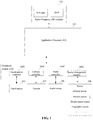
- FIG. 1 is a diagram illustrating a hardware architecture of a terminal in the related art.
- the hardware architecture in the related art includes an AP 110 and a peripheral system.
- the peripheral system includes a plurality of peripheral devices such as a touch screen (e.g., suspending touch screen) 102, a camera 104 (e.g., three-dimensional camera), an audio circuit 106, a sensor 108 and an RF module 112, as well as a touch screen controller 102C, a camera controller 104C, an audio controller 106C and a sensor management module 108C.
- Each of the peripheral devices is connected to the AP 110.
- this peripheral device sends a communication request to the AP 110.
- the AP 110 analyzes the communication request to determine a target peripheral device corresponding to the communication request.
- the AP 110 forwards the communication request to the target peripheral device for being processed.
- the communication request may be intended to acquire data from the target peripheral device, or to control the target peripheral device to perform corresponding operations and the like.
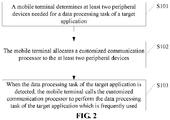
- FIG. 2 is a flowchart illustrating a communication method according to an embodiment of the disclosure.
- the communication method according to the embodiment of the disclosure is applied to a mobile terminal including an AP and at least one communication processor.
- the at least one communication processor is connected to the AP. Any one of the at least one communication processor is capable of being connected to at least two peripheral devices of the mobile terminal.
- the mobile terminal has installed thereon a target application.
- the communication method according to the embodiment of the disclosure includes the operations as illustrated in blocks S101 to S103.
- a mobile terminal determines at least two peripheral devices needed for a data processing task of the target application.
- the target application may be selected from a group consisting of various applications installed on the mobile terminal such as a WeChat application, iQIYI and a UC browser.
- the application may be predetermined by a user, or selected by the mobile terminal according to a predetermined policy.
- the predetermined policy may be, for example, to select a target application of which application usage information (e.g., count, frequency and duration) is greater than a predetermined parameter within a predetermined time period.
- the application determined according to the predetermined policy may be an application (e.g., the WeChat application) that is frequently used by a user.
- a specific implementations that the mobile terminal selects the target application is not uniquely limited in the embodiment of the disclosure.
- the mobile terminal may acquire usage information about at least one application installed on the mobile terminal. According to the usage information about at least one application installed on the mobile terminal, the mobile terminal may determine an application, of which the usage information is greater than a predetermined usage information threshold, as the target application.
- the usage information may be a usage count within a predetermined time period, or a Central Processing Unit (CPU) occupancy during running of the application.
- the target application may be an application of which the usage count within a predetermined time period is greater than a predetermined usage count threshold. Alternatively, the target application may be an application of which the CPU occupancy during running is greater than a CPU occupancy threshold.
- the peripheral device may include, but not limited to, an RF module, a WIFI module, a power supply, a memory, a camera, a touch screen, an audio playing module, a sensor and a display screen.
- the mobile terminal allocates a customized communication processor to the at least two peripheral devices.
- the customized communication processor is one of the at least one communication processor included in the mobile terminal.
- the customized communication processor allocated to the at least two peripheral devices by the mobile terminal may be a dedicated communication processor, or a preempted communication processor.
- the customized communication processor may be one of the at least one communication processor included in the mobile terminal.
- the dedicated communication processor dedicates to providing service for the at least two peripheral devices.
- the preempted communication processor preferentially provides communication service for at least two peripheral devices of the target application during running of the target application and other applications simultaneously.
- the at least two peripheral devices of the target application have priorities higher than the priorities of the peripheral devices of other applications of the mobile terminal.
- the mobile terminal allocates a customized communication processor to the peripheral device 1 and the peripheral device 2.
- the peripheral device 1 sends an access instruction to the peripheral device 2 via the customized communication processor.
- the access instruction may be a data instruction or a control instruction.
- the peripheral device 2 executes an operation corresponding to the access instruction.
- a communication processor, with the lowest usage frequency, of the at least one communication processor may be determined. Then, the communication processor with the lowest usage frequency may be determined as a dedicated communication processor for the at least two peripheral devices needed for the data processing task of the target application.
- usage information about the target application within a predetermined time period is acquired, and a high-frequency usage time period of the target application is determined on the basis of the usage information about the target application within the predetermined time period.
- the communication processor with the lowest usage frequency is determined as a dedicated communication processor for the at least two peripheral devices needed for the data processing task of the target application within the high-frequency usage time period.
- a target communication processor may be selected, which is one of the at least one communication processor included in the mobile terminal. Then, the selected target communication processor is determined as a preempted communication processor for at least two peripheral devices needed for the data processing task of the target application.
- usage information about the target application within a predetermined time period is acquired, and a high-frequency usage time period of the target application is determined on the basis of the usage information about the target application within the predetermined time period.
- the communication processor with the lowest usage frequency is determined as a preempted communication processor for at least two peripheral devices needed for the data processing task of the target application within the high-frequency usage time period.
- the mobile terminal calls the customized communication processor to perform the data processing task of the target application.
- the mobile terminal may include N communication processors, an AP, M peripheral devices and a bus.
- the N communication processors are connected to the AP via the bus.
- Each of the N communication processors is capable of being connected to at least two peripheral devices of the M peripheral devices.
- N is a positive integer
- M is a positive integer greater than 2.
- the at least two peripheral devices communicate with each other via one of the N communication processors.
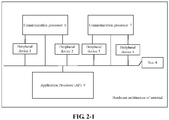
- FIG. 2-1 a new hardware architecture of the mobile terminal is illustrated with four peripheral devices. It will be understood that the four peripheral devices here are only taken as an example, and the quantity of the peripheral devices may be another number.
- a peripheral device 1 and a peripheral device 2 are connected to a communication processor 6.
- a peripheral device 3 and a peripheral device 4 are connected to a communication processor 7. Both the communication processor 6 and the communication processor 7 are connected with a bus 8.
- the peripheral device 1, the peripheral device 2, the peripheral device 3, the peripheral device 4 and an AP 9 are connected to the bus respectively.
- the communication method according to the embodiment of the disclosure may be applied to a mobile terminal including an AP and at least one communication processor.
- the at least one communication processor is connected to the AP.
- Each of the at least one communication processor is capable of being connected to at least two peripheral devices of the mobile terminal.
- the mobile terminal has installed thereon a target application.
- the mobile terminal determines at least two peripheral devices needed for a data processing task of the target application.
- the mobile terminal allocates a customized communication processor to the at least two peripheral devices.
- the mobile terminal calls the customized communication processor to perform the data processing task of the target application.
- at least two peripheral devices needed for the data processing task of the target application may perform communication on the basis of the customized communication processor, thereby eliminating a necessity of transferring communication through an AP, reducing load on the AP and improving the communication efficiency.
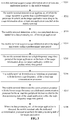
- FIG. 3 is a flowchart illustrating another communication method according to an embodiment of the disclosure.
- the communication method according to the embodiment of the disclosure is applied to a mobile terminal including an AP and at least one communication processor.
- the at least one communication processor is connected to the AP.
- Each of the at least one communication processor is capable of being connected to at least two peripheral devices of the mobile terminal.
- the mobile terminal has installed thereon a target application.
- the communication method according to the embodiment of the disclosure includes the operations as illustrated in blocks S201 to S203.
- the mobile terminal acquires usage information about at least one application installed on the mobile terminal.
- the mobile terminal determines an application, of which the usage information is greater than a predetermined usage information threshold, as the target application according to the usage information about at least one application installed on the mobile terminal.
- the mobile terminal determines at least two peripheral devices needed for a data processing task of the target application.
- the mobile terminal acquires usage information about the target application within a predetermined time period.
- the mobile terminal determines a high-frequency usage time period of the target application on the basis of the usage information about the target application within the predetermined time period.
- the mobile terminal determines a communication processor, with the lowest usage frequency, of the at least one communication processor.
- the mobile terminal determines the communication processor with the lowest usage frequency as a dedicated communication processor for the at least two peripheral devices needed for the data processing task of the target application within the high-frequency usage time period.
- the mobile terminal calls the dedicated communication processor to perform the data processing task of the target application.
- the communication method according to the embodiment of the disclosure is applied to a mobile terminal including an AP and at least one communication processor.
- the at least one communication processor is connected to the AP.
- Each of the at least one communication processor is capable of being connected to at least two peripheral devices of the mobile terminal.
- the mobile terminal has installed thereon a target application.
- the mobile terminal determines at least two peripheral devices needed for a data processing task of the target application.
- the mobile terminal allocates a customized communication processor to the at least two peripheral devices.
- the mobile terminal calls the customized communication processor to perform the data processing task of the target application.
- at least two peripheral devices needed for the data processing task of the target application may perform communication on the basis of the customized communication processor, thereby eliminating a necessity of transferring communication through an AP, reducing load on the AP and improving the communication efficiency.
- FIG. 4 is a flowchart illustrating another communication method according to an embodiment of the disclosure.
- the communication method according to the embodiment of the disclosure is applied to a mobile terminal including an AP and at least one communication processor.
- the at least one communication processor is connected to the AP.
- Each of the at least one communication processor is capable of being connected to at least two peripheral devices of the mobile terminal.
- the mobile terminal has installed thereon a target application.
- the communication method according to the embodiment of the disclosure includes the operations as illustrated in the following blocks.
- the mobile terminal acquires usage information about at least one application installed on the mobile terminal.
- the mobile terminal determines an application, of which the usage information is greater than a predetermined usage information threshold, as the target application according to the usage information about at least one application installed on the mobile terminal.
- the mobile terminal determines at least two peripheral devices needed for a data processing task of the target application.
- the mobile terminal acquires usage information about the target application within a predetermined time period.
- the mobile terminal determines a high-frequency usage time period of the target application on the basis of the usage information about the target application within the predetermined time period.
- the mobile terminal selects a target communication processor, which is one of the at least one communication processor included in the mobile terminal.
- the mobile terminal determines a communication processor with the lowest usage frequency as a preempted communication processor for at least two peripheral devices needed for the data processing task of the target application within the high-frequency usage time period.
- the communication method according to the embodiment of the disclosure is applied to a mobile terminal including an AP and at least one communication processor.
- the at least one communication processor is connected to the AP.
- Each of the at least one communication processor is capable of being connected to at least two peripheral devices of the mobile terminal.
- the mobile terminal has installed thereon a target application.
- the mobile terminal determines at least two peripheral devices needed for a data processing task of the target application.
- the mobile terminal allocates a customized communication processor to the at least two peripheral devices.
- the mobile terminal calls the customized communication processor to perform the data processing task of the target application.
- at least two peripheral devices needed for the data processing task of the target application may perform communication on the basis of the customized communication processor, thereby eliminating a necessity of transferring communication through an AP, reducing load on the AP and improving the communication efficiency.
- FIG. 5-1 is a diagram illustrating configuration of units of a mobile terminal according to an embodiment of the disclosure. As illustrated in FIG. 5-1 , the mobile terminal may include a determination unit 401, an allocation unit 402 and a calling unit 403.
- the determination unit 401 is configured to determine at least two peripheral devices needed for a data processing task of the target application.
- the allocation unit 402 is configured to allocate a customized communication processor to the at least two peripheral devices.
- the calling unit 403 is configured to call, when the data processing task of the target application is detected, the customized communication processor to perform the data processing task of the target application.
- FIG. 5-2 is a diagram illustrating configuration of units of another mobile terminal according to an embodiment of the disclosure.
- the mobile terminal may include the determination unit 401, the allocation unit 402 and the calling unit 403 in the embodiment corresponding to FIG. 5-1 .
- the allocation unit 402 may be configured to determinine a communication processor, with the lowest usage frequency, of the at least one communication processor.
- the allocation unit 402 may be configured to determine the communication processor with the lowest usage frequency as a dedicated communication processor for the at least two peripheral devices needed for the data processing task of the target application.
- the mobile terminal may further include a first learning unit 404.
- the first learning unit 404 may be configured to acquire usage information about the target application within a predetermined time period; and determine a high-frequency usage time period of the target application on the basis of the usage information about the target application within the predetermined time period.
- the allocation unit 402 is specifically configured to determine, when determining the communication processor with the lowest usage frequency as a dedicated communication processor for the at least two peripheral devices needed for the data processing task of the target application, the communication processor with the lowest usage frequency as a dedicated communication processor for the at least two peripheral devices needed for the data processing task of the target application within the high-frequency usage time period.
- the allocation unit 402 is specifically configured to select a target communication processor.
- the target communication processor is one of the at least one communication processor included in the mobile terminal.
- the allocation unit 402 may determine the selected target communication processor as a preempted communication processor for at least two peripheral devices needed for the data processing task of the target application.
- the mobile terminal may further include a second learning unit 405.
- the second learning unit 405 may be configured to acquire usage information about the target application within a predetermined time period; and determine a high-frequency usage time period of the target application on the basis of the usage information about the target application within the predetermined time period.
- the allocation unit 402 is specifically configured to determine the communication processor with the lowest usage frequency as a preempted communication processor for at least two peripheral devices needed for the data processing task of the target application within the high-frequency usage time period.
- the mobile terminal further includes a target application determination unit 406.
- the target application determination unit 406 may be configured to acquire usage information about at least one application installed on the mobile terminal; and determine an application, of which the usage information is greater than a predetermined usage information threshold, as the target application according to the usage information about at least one application installed on the mobile terminal.
- each unit may refer to description of relevant operations in the embodiments corresponding to FIG. 1 to FIG. 3 , and will not be elaborated herein.
- the mobile terminal described in the apparatus embodiment of the disclosure is presented in a form of function unit.
- the term "unit” used here should be interpreted as a meaning as wide as possible.
- An object for implementing functions described for each "unit” may be, for example, an Application Specific Integrated Circuit (ASIC), a single circuit, a processor (e.g. shared, dedicated or chip group) for executing one or more software or firmware programs and a memory, a combined logic circuit, and/or other appropriate components for providing and implementing the above-mentioned functions.
- ASIC Application Specific Integrated Circuit
- the function of determining, by the determination unit 401, at least two peripheral devices needed for the data processing task of the target application may be implemented by the mobile terminal as illustrated in FIG. 6 .
- a processor 101 may call executable program codes in a memory 102 to determine at least two peripheral devices needed for the data processing task of the target application
- the communication method according to the embodiment of the disclosure may be applied to a mobile terminal including an AP and at least one communication processor.
- the at least one communication processor is connected to the AP.
- Each of the at least one communication processor is capable of being connected to at least two peripheral devices of the mobile terminal.
- the mobile terminal has installed thereon a target application.
- the mobile terminal determines at least two peripheral devices needed for a data processing task of the target application.
- the mobile terminal allocates a customized communication processor to the at least two peripheral devices.
- the customized communication processor is called to perform the data processing task of the target application.
- at least two peripheral devices needed for the data processing task of the target application may perform communication on the basis of the customized communication processor, thereby eliminating a necessity of transferring communication through an AP, reducing load on the AP and improving the communication efficiency.
- the embodiment of the disclosure also provides another mobile terminal.
- the mobile terminal includes N communication processors and an AP.
- the N communication processors are connected to the AP.
- Each of the N communication processors is capable of being connected to at least two peripheral devices (e.g., communication interface) of the mobile terminal.
- N is a positive integer.
- the mobile terminal may include an AP 101, a memory 102, a communication interface 103, a communication processor 105 and a communication bus 104.
- the AP 101, the memory 102 and the communication interface 103 are connected and perform communication with each other via the communication bus 104.
- the AP 101 controls wireless communication with an external cellular network via the communication interface 103.
- the communication interface 103 includes, but is not limited to, an antenna, an amplifier, a transceiver, a coupler, a Low Noise Amplifier (LNA), a duplexer, etc.
- the memory 102 may include at least one of a Random Access Memory (RAM), a nonvolatile memory and an external memory.
- the memory 102 stores executable program codes.
- the executable program codes can guide the AP 101 to execute the communication method specifically disclosed in the method embodiment of the disclosure.
- the AP 101 is configured to determine at least two peripheral devices needed for a data processing task of the target application; and allocate a customized communication processor to the at least two peripheral devices.
- the AP 101 is configured to call the customized communication processor to perform the data processing task of the target application.
- the AP 101 is specifically configured to determine a communication processor, with the lowest usage frequency, of the at least one communication processor.
- the AP 101 is configured to determine the communication processor with the lowest usage frequency as a dedicated communication processor for the at least two peripheral devices needed for the data processing task of the target application.
- the AP 101 may also be configured to acquire usage information about the target application within a predetermined time period.
- the AP 101 determines a high-frequency usage time period of the target application on the basis of the usage information about the target application within the predetermined time period.
- the AP 101 is specifically configured to configure the communication processor with the lowest usage frequency as a dedicated communication processor for the at least two peripheral devices needed for the data processing task of the target application within the high-frequency usage time period.
- the AP 101 is specifically configured to select a target communication processor.
- the target communication processor is one of the at least one communication processor included in the mobile terminal.
- the AP 101 configures the selected target communication processor as a preempted communication processor for at least two peripheral devices needed for the data processing task of the target application.
- the AP 101 may also be configured to acquire usage information about the target application within a predetermined time period.
- the AP 101 may determine a high-frequency usage time period of the target application on the basis of the usage information about the target application within the predetermined time period.
- the AP 101 is specifically configured to determine the communication processor with the lowest usage frequency as a preempted communication processor for at least two peripheral devices needed for the data processing task of the target application within the high-frequency usage time period.
- the AP 101 may also be configured to acquire usage information about at least one application installed on the mobile terminal.
- the AP 101 may determine an application, of which the usage information is greater than a predetermined usage information threshold, as the target application according to the usage information about at least one application installed on the mobile terminal.
- the communication method according to the embodiment of the disclosure is applied to a mobile terminal including an AP and at least one communication processor.
- the at least one communication processor is connected to the AP.
- Each of the at least one communication processor is capable of being connected to at least two peripheral devices of the mobile terminal.
- the mobile terminal has installed thereon a target application.
- the mobile terminal determines at least two peripheral devices needed for a data processing task of the target application.
- the mobile terminal allocates a customized communication processor to the at least two peripheral devices.
- the mobile terminal calls the customized communication processor to perform the data processing task of the target application.
- at least two peripheral devices needed for the data processing task of the target application may perform communication on the basis of the customized communication processor, thereby eliminating a necessity of transferring communication through an AP, reducing load on the AP and improving the communication efficiency.
- the embodiments of the disclosure also provide another mobile terminal. As illustrated in FIG. 7 , for convenience of description, only parts associated with the embodiments of the disclosure are shown. For specific technical details that are not disclosed, reference may be made to parts of the method in the embodiments of the disclosure.
- the mobile terminal may be any of terminal devices including a mobile phone, a tablet computer, a Personal Digital Assistant (PDA), a Point of Sales (POS), an on-board computer and the like.
- PDA Personal Digital Assistant
- POS Point of Sales
- a mobile phone is taken as an example of the mobile terminal.
- FIG. 7 illustrates a partial structure diagram illustrating a mobile phone associated with a mobile terminal according to an embodiment of the disclosure.
- the mobile phone includes an RF circuit 910, a memory 920, an input unit 930, a display unit 940, a sensor 950, an audio circuit 960, a Wireless Fidelity (WiFi) module 970, a processor 980, a power supply 990, and other parts.
- RF circuit 910 As illustrated in FIG. 7 , the mobile phone includes an RF circuit 910, a memory 920, an input unit 930, a display unit 940, a sensor 950, an audio circuit 960, a Wireless Fidelity (WiFi) module 970, a processor 980, a power supply 990, and other parts.
- WiFi Wireless Fidelity
- the RF circuit 910 may be configured to receive and transmit information.
- the RF circuit 910 includes, but is not limited to, an antenna, at least one amplifier, a transceiver, a coupler, an LNA, a duplexer, etc.
- the RF circuit 910 may further communicate with other devices via wireless communication and a network.
- the wireless communication may use any of communication standards or protocols, including, but not limited to, a Global System of Mobile communication (GSM), General Packet Radio Service (GPRS), Code Division Multiple Access (CDMA), Wideband Code Division Multiple Access (WCDMA), Long Term Evolution (LTE), an E-mail, Short Messaging Service (SMS), etc.
- GSM Global System of Mobile communication
- GPRS General Packet Radio Service
- CDMA Code Division Multiple Access
- WCDMA Wideband Code Division Multiple Access
- LTE Long Term Evolution
- E-mail Short Messaging Service
- the memory 920 may be configured to store a software program and a module.
- the processor 980 executes various function APPs and data processing of the mobile phone by running the software program and the module stored in the memory 920.
- the memory 920 may mainly include a storage program region and a storage data region.
- the storage program region may store an operation system, an APP needed for at least one function (e.g., a program for releasing a dedicated memory resource), etc.
- the storage data region may store data (e.g., a preset duration) created according to use of the mobile phone.
- the memory 920 may include a high-speed RAM, and may further include a non-volatile memory such as a disk storage device, a flash device, or other non-volatile solid storage devices.
- the input unit 930 may be configured to receive input digital or character information and generate key signal input associated with user setting and functional control of the mobile phone.
- the input unit 930 may include a fingerprint recognition module 931 and other input devices 932.
- the fingerprint recognition module 931 may collect fingerprint data of a user thereon.
- the fingerprint recognition module 931 may include an optical fingerprint module, a capacitive fingerprint module and a radio frequency fingerprint module.
- the capacitive fingerprint module specifically include sensing electrodes (including an abnormal sensing electrode and a normal sending electrode) and a signal processing circuit (e.g., an amplifier circuit, a noise suppression circuit, an analog-to-digital conversion circuit, etc.) connected to the sensing electrodes.
- the input unit 930 may further include, in addition to the fingerprint recognition module 931, other input devices 932.
- the other input devices 932 may include, but are not limited to, one or more of a physical keyboard, a functional key (e.g., a volume control key and a switch key), a track ball, a mouse and an operating rod.
- the display unit 940 may be configured to display information input by the user or information provided for the user, and various menus of the mobile phone.
- the display unit 940 may include a display screen 941.
- the display screen 941 may be configured in a form of a Liquid Crystal Display (LCD), an Organic Light-Emitting Diode (OLED), etc.
- LCD Liquid Crystal Display
- OLED Organic Light-Emitting Diode
- the fingerprint recognition module 931 and the display screen 941 as two independent parts, implement input and function output function of the mobile phone in FIG. 7 respectively, the fingerprint recognition module 931 and the display screen 941 may be integrated to implement the input function and output function of the mobile phone in some embodiments.
- the mobile phone may further include at least one sensor 950 such as a light sensor, a motion sensor and other sensors.
- the light sensor may include an ambient light sensor and a proximity sensor.
- the ambient light sensor may adjust the luminance of the display screen 941 according to the brightness of ambient light.
- the proximity sensor may close the display screen 941 and/or backlight when the mobile phone is moved to the proximity of an ear.
- an accelerometer sensor may detect the magnitude of an accelerated speed in each of directions (generally, three-axis).
- the accelerometer may detect the amplitude and direction of a gravity while the mobile phone is static.
- the accelerometer sensor may be further configured to identify an APP of a mobile phone gesture (e.g., switching between a horizontal screen and a vertical screen, relevant games, and magnetometer gesture calibration), and implement vibration-identification-related functions (e.g., pedometer and knocking).
- a mobile phone gesture e.g., switching between a horizontal screen and a vertical screen, relevant games, and magnetometer gesture calibration
- vibration-identification-related functions e.g., pedometer and knocking.
- Other sensors such as a gyroscope sensor, a barometer sensor, a hygrometer sensor, a thermometer sensor and an infrared sensor configurable for the mobile phone will not be elaborated herein.
- the audio circuit 960, a loudspeaker 961 and a microphone 962 may provide an audio interface between the user and the mobile phone.
- the audio circuit 960 may transmit an electric signal converted from the received audio data to the loudspeaker 961.
- the loudspeaker 961 converts the electric signal into a sound signal for output.
- the microphone 962 converts a collected sound signal into an electric signal.
- the audio circuit 960 converts the received electric signal into audio data and then outputs the audio data to the processor 980 for processing.
- the audio data is transmitted to another mobile phone via the RF circuit 910, or the audio data is output to the memory 920 for further processing.
- WiFi belongs to a short-range wireless transmission technology.
- the mobile phone may assist the user in E-mail receiving and sending, webpage browsing, access to streaming media and the like by means of the WiFi module 970.
- the WiFi module provides a wireless wideband internet access for the user.
- FIG. 7 illustrates the WiFi module 970, it may be understood that the WiFi module 970 does not belong to necessary components of the mobile phone and can be totally omitted without changing the essence of the disclosure as required.
- the processor 980 is a control center of the mobile phone.
- the processor is configured to connect all parts of the whole mobile phone by utilizing various interfaces and lines, to run or execute the software program and/or the module stored in the memory 920, and to call data stored in the memory 820 to execute various functions and processing data of the mobile phone, so as to wholly monitor the mobile phone.
- the processor 980 may include one or more processing units.
- the processor 980 may be integrated with an application processor and a modulation-demodulation processor.
- the application processor mainly processes an operation system, a user interface, an application program and the like.
- the modulation-demodulation processor mainly processes wireless communication. It may be understood that the modulation-demodulation processor may not be integrated into the processor 980.
- the mobile phone may further include a power supply 990 (e.g., a battery) for supplying power to each component.
- a power supply 990 e.g., a battery
- the power supply may be connected with the logic of processor 980 via a power supply management system, so as to implement functions of charging, discharging and power consumption management by means of the power supply management system.
- the mobile phone may further include a camera, a Bluetooth module (not shown) and the like, which will not be elaborated herein.
- each method flow may be implemented on the basis of the structure of the mobile phone.
- the functions of various unit may be implemented on the basis of the structure of the mobile phone.
- the embodiments of the disclosure also provide a computer storage medium.
- the computer storage medium may store a program.
- the program when being executed by a processor, causes the processor to perform operations as illustrated in some or all blocks in any of communication methods in the abovementioned method embodiments.
- each of the abovementioned method embodiments is expressed as a series of action combinations.
- the disclosure is not limited by a described action sequence. That is because some operations shown in the blocks may be executed in other sequences or simultaneously according to the disclosure.
- a person skilled in the art will also understand that the embodiments described in the specification fall within preferable embodiments, and involved actions and modules may not be necessary for the disclosure.
- the disclosed apparatus may be implemented in another manner.
- the apparatus embodiment described above is only schematic.
- division of the units is only logic function division, and other division manners may be adopted during practical implementation.
- multiple units or components may be combined or integrated into another system, or some characteristics may be neglected or not executed.
- coupling or direct coupling or communication connection among the various displayed or discussed components may be indirect coupling or communication connection, implemented through some interfaces, of the device or the units, and may be electrical or adopt other forms.
- the abovementioned units described as separate parts may or may not be physically separated.
- the parts displayed as units may or may not be physical units, and namely may be located in the same place, or may be distributed to multiple network units. Part or all of the units may be selected to achieve the purpose of the solutions of the present embodiment according to a practical requirement.
- various function units in each embodiment of the disclosure may be integrated into a processing unit, or the various function units exist physically and independently, or two or more units may be integrated into a unit.
- the abovementioned integrated unit may be implemented in a form of hardware, or may be implemented in a form of software function unit.
- the integrated unit When being implemented in form of software function unit and sold or used as an independent product, the integrated unit may also be stored in a computer-readable storage medium.
- the computer software product is stored in a storage medium, and includes a plurality of instructions configured to enable a computer device (which may be a personal computer, a server, a network device or the like) to execute all or part of the method in each embodiment of the disclosure.
- the abovementioned memory includes various media capable of storing program codes, such as a USB disk, a Read-Only Memory (ROM), an RAM, a mobile hard disk, a magnetic disk or an optical disk.
- the program may be stored in a computer-readable memory, and the memory may include a flash disk, an ROM, an RAM, a magnetic disk or an optical disk.
Landscapes
- Engineering & Computer Science (AREA)
- Computer Networks & Wireless Communication (AREA)
- Signal Processing (AREA)
- Software Systems (AREA)
- Theoretical Computer Science (AREA)
- Human Computer Interaction (AREA)
- Databases & Information Systems (AREA)
- Physics & Mathematics (AREA)
- General Engineering & Computer Science (AREA)
- General Physics & Mathematics (AREA)
- Telephone Function (AREA)
- Mobile Radio Communication Systems (AREA)
Abstract
Description
- This application is filed based upon and claims priority to Chinese Patent Application No.
201611263317.X - The disclosure relates to the technical field of electronic mobile terminal, and in particular to a communication method, a mobile terminal and storage medium.
- At present, information communications among various peripheral devices inside a mobile terminal are transferred via an Application Processor (AP). For example, a Radio Frequency (RF) module, a Wireless Fidelity (WIFI) module, a power module and a memory module cannot be interconnected, and communications therebetween are transferred via the AP.
- For example, when a certain peripheral device needs to communicate with another peripheral device, this peripheral device sends a communication message to an AP. The AP transmits the communication message to the peripheral device to be communicated. Communications between all peripheral devices are transferred via the AP, and therefore burdens on the AP are seriously increased.
- The embodiments of the disclosure provide a communication method, a mobile terminal, and storage medium.
- According to a first aspect, an embodiment of the disclosure discloses a communication method. The communication method is applied to a mobile terminal including an AP and at least one communication processor. Each of the at least one communication processor is connected to the AP, each of the at least one communication processor is capable of being connected to at least two peripheral devices of the mobile terminal, and the mobile terminal has installed thereon a target application. The method includes: determining at least two peripheral devices needed for a data processing task of the target application; allocating a customized communication processor to the at least two peripheral devices, the customized communication processor being one of the at least one communication processor included in the mobile terminal; and when the data processing task of the target application is detected, calling the customized communication processor to perform the data processing task of the target application.
- According to a second aspect, an embodiment of the disclosure discloses a mobile terminal. The mobile terminal includes an AP and at least one communication processor. Each of the at least one communication processor is connected to the AP, each of the at least one communication processor is capable of being connected to at least two peripheral devices of the mobile terminal, and the mobile terminal has installed thereon a target application. The mobile terminal includes: a memory configured to store readable instructions; and one or more processors configured to execute the readable instructions to implement one or more units. The one or more units include: a determination unit configured to determine at least two peripheral devices needed for a data processing task of the target application; an allocation unit configured to allocate a customized communication processor to the at least two peripheral devices, the customized communication processor being one of the at least one communication processor included in the mobile terminal; and a calling unit configured to call, when the data processing task of the target application is detected, the customized communication processor to perform the data processing task of the target application.
- According to a third aspect, an embodiment of the disclosure discloses a mobile terminal. The mobile terminal includes N communication processors, an AP, M peripheral devices and a bus. Each of the N communication processors is connected to the AP via the bus, and each of the N communication processors is capable of being connected to at least two peripheral devices of the M peripheral devices, N being a positive integer, and M being a positive integer greater than 2; and the at least two peripheral devices communicate with each other via one of the N communication processors.
- According to a fourth aspect, an embodiment of the disclosure discloses a mobile terminal. The mobile terminal includes: a processor, a memory, a communication interface and a communication bus. The processor, the memory and the communication interface are connected and perform communication with each other via the communication bus. The memory stores executable program codes. The communication interface is used for wireless communication. The processor is used to call the executable program codes in the memory to execute some or all operations described in any one of the methods according to the first aspect of the embodiment of the disclosure.
- According to a fifth aspect, an embodiment of the disclosure discloses a non-transitory computer-readable storage medium having stored thereon computer-executable instructions that when being executed by a processor, cause the processor to execute the communication method according to the first aspect.
- It can be seen that the communication method according to the embodiment of the disclosure may be applied to a mobile terminal including an AP and at least one communication processor. The at least one communication processor is connected to the AP. Each of the at least one communication processor is capable of being connected to at least two peripheral devices of the mobile terminal. The mobile terminal has installed thereon a target application. The mobile terminal determines at least two peripheral devices needed for a data processing task of the target application. The mobile terminal allocates a customized communication processor to the at least two peripheral devices. When the data processing task of the target application is detected, the mobile terminal calls the customized communication processor to perform the data processing task of the target application. As such, at least two peripheral devices needed for the data processing task of the target application may perform communication on the basis of the customized communication processor, thereby eliminating a necessity of transferring communication through an AP, reducing load on the AP and improving the communication efficiency.
- In order to more clearly illustrate the technical solutions in the embodiments of the disclosure or the related art, accompanying drawings needing to be used in the descriptions of the embodiments or the related art will be simply described hereinbelow. Apparently, the drawings described hereinbelow are merely some embodiments of the disclosure. Without making creative works, a person of ordinary skill in the art may also obtain other drawings according to these drawings.
-
FIG. 1 is a diagram illustrating a hardware architecture of a mobile terminal in the related art. -
FIG. 2 is a flowchart illustrating a communication method according to an embodiment of the disclosure. -
FIG. 2-1 is a diagram illustrating a hardware architecture of a mobile terminal according to an embodiment of the disclosure. -
FIG. 3 is a flowchart illustrating another communication method according to an embodiment of the disclosure. -
FIG. 4 is a flowchart illustrating another communication method according to an embodiment of the disclosure. -
FIG. 5-1 is a diagram illustrating configuration of units of a mobile terminal according to an embodiment of the disclosure. -
FIG. 5-2 is a diagram illustrating configuration of units of another mobile terminal according to an embodiment of the disclosure. -
FIG. 6 is a structure diagram illustrating a mobile terminal according to an embodiment of the disclosure. -
FIG. 7 is a structure diagram illustrating another mobile terminal according to an embodiment of the disclosure. - In order to make a person skilled in the art better understand the solutions of the disclosure, the technical solutions in the embodiments of the disclosure will be clearly and completely described hereinbelow with reference to the drawings in the embodiments of the disclosure. It is apparent that the described embodiments are only a part of the embodiments of the disclosure, not all of the embodiments. On the basis of the embodiments of the disclosure, all other embodiments obtained on the premise of no creative work of a person skilled in the art should fall within the scope of protection of the disclosure.
- The terms "first", "second" and the like in specification and claims of the disclosure and the drawings are used for distinguishing different objects rather than describing a specific sequence. In addition, terms "include" and "have" and any inflexions thereof are intended to refer to non-exclusive inclusions. For example, processes, methods, systems, products or devices containing a series of operations or units are not limited to operations or units which have been already listed, and other operations or units which are not listed or are inherent to these processes, methods, products or devices are optionally included instead.
- Mentioning of "Embodiments" in the disclosure means that specific features, structures or characteristics described in the embodiments may be included in at least one embodiment of the disclosure. The phrase occurring at each position in the specification does not always refer to the same embodiment, or not an independent or alternative embodiment mutually exclusive to other embodiments. A person skilled in the art explicitly and implicitly understands that the embodiments described in the disclosure may be combined with other embodiments.
- The embodiments of the disclosure provide a communication method and a mobile terminal.
- At least some embodiments of the disclosure provide a communication method, applied to a mobile terminal comprising an Application Processor (AP) and at least one communication processor, each of the at least one communication processor being connected to the AP, each of the at least one communication processor capable of being connected to at least two peripheral devices of the mobile terminal, the mobile terminal having installed thereon a target application, the method comprising: determining at least two peripheral devices needed for a data processing task of the target application; allocating a customized communication processor to the at least two peripheral devices, the customized communication processor being one of the at least one communication processor comprised in the mobile terminal; and when the data processing task of the target application is detected, calling the customized communication processor to perform the data processing task of the target application.
- According to at least some embodiments, the allocating a customized communication processor to the at least two peripheral devices comprises: determining a communication processor, with the lowest usage frequency, of the at least one communication processor; and determining the communication processor with the lowest usage frequency as a dedicated communication processor for the at least two peripheral devices needed for the data processing task of the target application, the dedicated communication processor dedicating to providing communication service for the at least two peripheral devices.
- According to at least some embodiments, the method further comprises: determining a high-frequency usage time period of the target application, wherein the determining the communication processor with the lowest usage frequency as a dedicated communication processor for the at least two peripheral devices needed for the data processing task of the target application comprises: determining the communication processor with the lowest usage frequency as a dedicated communication processor for the at least two peripheral devices needed for the data processing task of the target application within the high-frequency usage time period.
- According to at least some embodiments, the determining a high-frequency usage time period of the target application comprises: acquiring usage information about the target application within a predetermined time period; and determining the high-frequency usage time period of the target application on the basis of the usage information about the target application within the predetermined time period.
- According to at least some embodiments, the allocating a customized communication processor to the at least two peripheral devices comprises: selecting a target communication processor, the target communication processor being one of the at least one communication processor comprised in the mobile terminal; and determining the selected target communication processor as a preempted communication processor for at least two peripheral devices needed for the data processing task of the target application, the at least two peripheral devices of the target application having priority higher than that of other peripheral devices comprised in the mobile terminal in terms of using communication service of the preempted communication processor.
- According to at least some embodiments, the method further comprises: determining a high-frequency usage time period of the target application, wherein determining the selected target communication processor as a preempted communication processor for at least two peripheral devices needed for the data processing task of the target application comprises: determining the communication processor with the lowest usage frequency as a preempted communication processor for at least two peripheral devices needed for the data processing task of the target application within the high-frequency usage time period.
- According to at least some embodiments, the determining a high-frequency usage time period of the target application comprises: acquiring usage information about the target application within a predetermined time period; and determining the high-frequency usage time period of the target application on the basis of the usage information about the target application within the predetermined time period.
- According to at least some embodiments, the method further comprises: acquiring usage information about at least one application installed on the mobile terminal; and determining an application, of which the usage information is greater than a predetermined usage information threshold, as the target application, according to the usage information about at least one application installed on the mobile terminal.
- According to at least some embodiments, the usage information is a usage count of the at least one application within a predetermined time period, or a Central Processing Unit (CPU) occupancy during running of the at least one application.
- At least some embodiments of the disclosure provide a mobile terminal, comprising an Application Processor (AP) and at least one communication processor, each of the at least one communication processor being connected to the AP, each of the at least one communication processor capable of being connected to at least two peripheral devices of the mobile terminal, the mobile terminal having installed thereon a target application, the mobile terminal further comprising: a determination unit configured to determine at least two peripheral devices needed for a data processing task of the target application; an allocation unit configured to allocate a customized communication processor to the at least two peripheral devices, the customized communication processor being one of the at least one communication processor comprised in the mobile terminal; and a calling unit configured to call, when the data processing task of the target application is detected, the customized communication processor to perform the data processing task of the target application.
- According to at least some embodiments, the allocation unit is specifically configured to determine a communication processor, with the lowest usage frequency, of the at least one communication processor; and determine the communication processor with the lowest usage frequency as a dedicated communication processor for the at least two peripheral devices needed for the data processing task of the target application, the dedicated communication processor dedicating to providing communication service for the at least two peripheral devices.
- According to at least some embodiments, the mobile terminal further comprises a first learning unit configured to determine a high-frequency usage time period of the target application; and wherein the allocation unit is specifically configured to determine, when determining the communication processor with the lowest usage frequency as a dedicated communication processor for the at least two peripheral devices needed for the data processing task of the target application, the communication processor with the lowest usage frequency as a dedicated communication processor for the at least two peripheral devices needed for the data processing task of the target application within the high-frequency usage time period.
- According to at least some embodiments, the first learning unit is configured to acquire usage information about the target application within a predetermined time period; and determine a high-frequency usage time period of the target application on the basis of the usage information about the target application within the predetermined time period.
- According to at least some embodiments, the allocation unit is specifically configured to select a target communication processor, the target communication processor being one of the at least one communication processor comprised in the mobile terminal; and determine the selected target communication processor as a preempted communication processor for at least two peripheral devices needed for the data processing task of the target application, the at least two peripheral devices of the target application having priority higher than that of other peripheral devices comprised in the mobile terminal in terms of using communication service of the preempted communication processor.
- According to at least some embodiments, the mobile terminal further comprises a second learning unit configured to determine a high-frequency usage time period of the target application; and wherein the allocation unit is specifically configured to determine, when determining the selected target communication processor as a preempted communication processor for at least two peripheral devices needed for the data processing task of the target application, the communication processor with the lowest usage frequency as a preempted communication processor for at least two peripheral devices needed for the data processing task of the target application within the high-frequency usage time period.
- According to at least some embodiments, the second learning unit is configured to acquire usage information about the target application within a predetermined time period; and determine a high-frequency usage time period of the target application on the basis of the usage information about the target application within the predetermined time period.
- According to at least some embodiments, the mobile terminal further comprises a target application determination unit configured to acquire usage information about at least one application installed on the mobile terminal; and determine an application, of which the usage information is greater than a predetermined usage information threshold, as the target application, according to the usage information about at least one application installed on the mobile terminal.
- According to at least some embodiments, the usage information is a usage count of the at least one application within a predetermined time period, or a Central Processing Unit (CPU) occupancy during running of the at least one application.
- At least some embodiments of the disclosure provide a mobile terminal, comprising N communication processors, an Application Processor (AP), M peripheral devices and a bus, wherein each of the N communication processors is connected to the AP via the bus, and each of the N communication processors is capable of being connected to at least two peripheral devices of the M peripheral devices, N being a positive integer, and M being a positive integer greater than 2; and the at least two peripheral devices communicate with each other via one of the N communication processors.
- At least some embodiments of the disclosure provide a mobile terminal. The mobile terminal includes: a processor, a memory, a communication interface and a communication bus. The processor, the memory and the communication interface are connected and perform communication with each other via the communication bus. The memory stores executable program codes. The communication interface is used for wireless communication. The processor is used to call the executable program codes in the memory to execute some or all operations described in any one of the methods according to the first aspect of the embodiment of the disclosure.
- At least some embodiments of the disclosure provide a non-transitory computer-readable storage medium having stored thereon computer-executable instructions that when being executed by a processor, cause the processor to execute the communication method according to the first aspect.
- In order to better understand a communication method and a mobile terminal disclosed in the embodiments of the disclosure, the communication method and the mobile terminal provided in the embodiments of the disclosure will be described in detail hereinbelow with reference to
FIG. 1 to FIG. 7 . -
FIG. 1 is a diagram illustrating a hardware architecture of a terminal in the related art. As illustrated inFIG. 1 , the hardware architecture in the related art includes anAP 110 and a peripheral system. The peripheral system includes a plurality of peripheral devices such as a touch screen (e.g., suspending touch screen) 102, a camera 104 (e.g., three-dimensional camera), anaudio circuit 106, asensor 108 and anRF module 112, as well as atouch screen controller 102C, acamera controller 104C, anaudio controller 106C and asensor management module 108C. - Each of the peripheral devices is connected to the
AP 110. When a certain peripheral device needs to communicate with another peripheral device, this peripheral device sends a communication request to theAP 110. TheAP 110 analyzes the communication request to determine a target peripheral device corresponding to the communication request. TheAP 110 forwards the communication request to the target peripheral device for being processed. Optionally, the communication request may be intended to acquire data from the target peripheral device, or to control the target peripheral device to perform corresponding operations and the like. - It can thus be seen that in the related art, communications between all peripheral devices need to be transferred via the
AP 110, thereby greatly increasing loads on theAP 110. -
FIG. 2 is a flowchart illustrating a communication method according to an embodiment of the disclosure. The communication method according to the embodiment of the disclosure is applied to a mobile terminal including an AP and at least one communication processor. The at least one communication processor is connected to the AP. Any one of the at least one communication processor is capable of being connected to at least two peripheral devices of the mobile terminal. The mobile terminal has installed thereon a target application. As illustrated inFIG. 2 , the communication method according to the embodiment of the disclosure includes the operations as illustrated in blocks S101 to S103. - In block S101, a mobile terminal determines at least two peripheral devices needed for a data processing task of the target application.
- Herein, the target application may be selected from a group consisting of various applications installed on the mobile terminal such as a WeChat application, iQIYI and a UC browser. The application may be predetermined by a user, or selected by the mobile terminal according to a predetermined policy. The predetermined policy may be, for example, to select a target application of which application usage information (e.g., count, frequency and duration) is greater than a predetermined parameter within a predetermined time period. The application determined according to the predetermined policy may be an application (e.g., the WeChat application) that is frequently used by a user. A specific implementations that the mobile terminal selects the target application is not uniquely limited in the embodiment of the disclosure.
- Here, the mobile terminal may acquire usage information about at least one application installed on the mobile terminal. According to the usage information about at least one application installed on the mobile terminal, the mobile terminal may determine an application, of which the usage information is greater than a predetermined usage information threshold, as the target application. Here, the usage information may be a usage count within a predetermined time period, or a Central Processing Unit (CPU) occupancy during running of the application. For example, the target application may be an application of which the usage count within a predetermined time period is greater than a predetermined usage count threshold. Alternatively, the target application may be an application of which the CPU occupancy during running is greater than a CPU occupancy threshold.
- The peripheral device may include, but not limited to, an RF module, a WIFI module, a power supply, a memory, a camera, a touch screen, an audio playing module, a sensor and a display screen.
- In block S102, the mobile terminal allocates a customized communication processor to the at least two peripheral devices. The customized communication processor is one of the at least one communication processor included in the mobile terminal.
- The customized communication processor allocated to the at least two peripheral devices by the mobile terminal may be a dedicated communication processor, or a preempted communication processor. The customized communication processor may be one of the at least one communication processor included in the mobile terminal. Here, the dedicated communication processor dedicates to providing service for the at least two peripheral devices. The preempted communication processor preferentially provides communication service for at least two peripheral devices of the target application during running of the target application and other applications simultaneously. In other word, in terms of using the communication service of the preempted communication processor, the at least two peripheral devices of the target application have priorities higher than the priorities of the peripheral devices of other applications of the mobile terminal. For example, when at least two peripheral devices needed for the data processing task of the target application include a
peripheral device 1 and aperipheral device 2, the mobile terminal allocates a customized communication processor to theperipheral device 1 and theperipheral device 2. Theperipheral device 1 sends an access instruction to theperipheral device 2 via the customized communication processor. The access instruction may be a data instruction or a control instruction. After receiving the access instruction, theperipheral device 2 executes an operation corresponding to the access instruction. - Specifically, as an alternative implementation, in a specific implementation manner of allocating the customized communication processor to the at least two peripheral devices, a communication processor, with the lowest usage frequency, of the at least one communication processor may be determined. Then, the communication processor with the lowest usage frequency may be determined as a dedicated communication processor for the at least two peripheral devices needed for the data processing task of the target application. Alternatively, usage information about the target application within a predetermined time period is acquired, and a high-frequency usage time period of the target application is determined on the basis of the usage information about the target application within the predetermined time period. The communication processor with the lowest usage frequency is determined as a dedicated communication processor for the at least two peripheral devices needed for the data processing task of the target application within the high-frequency usage time period.
- As an alternative implementation manner, in a specific implementation manner of allocating the customized communication processor to the at least two peripheral devices, a target communication processor may be selected, which is one of the at least one communication processor included in the mobile terminal. Then, the selected target communication processor is determined as a preempted communication processor for at least two peripheral devices needed for the data processing task of the target application. Alternatively, usage information about the target application within a predetermined time period is acquired, and a high-frequency usage time period of the target application is determined on the basis of the usage information about the target application within the predetermined time period. The communication processor with the lowest usage frequency is determined as a preempted communication processor for at least two peripheral devices needed for the data processing task of the target application within the high-frequency usage time period.
- In block S103, when the data processing task of the target application is detected, the mobile terminal calls the customized communication processor to perform the data processing task of the target application.
- The mobile terminal according to the embodiment of the disclosure may include N communication processors, an AP, M peripheral devices and a bus. The N communication processors are connected to the AP via the bus. Each of the N communication processors is capable of being connected to at least two peripheral devices of the M peripheral devices. N is a positive integer, and M is a positive integer greater than 2. Here, the at least two peripheral devices communicate with each other via one of the N communication processors. As illustrated in
FIG. 2-1 , a new hardware architecture of the mobile terminal is illustrated with four peripheral devices. It will be understood that the four peripheral devices here are only taken as an example, and the quantity of the peripheral devices may be another number. Aperipheral device 1 and aperipheral device 2 are connected to acommunication processor 6. Aperipheral device 3 and aperipheral device 4 are connected to acommunication processor 7. Both thecommunication processor 6 and thecommunication processor 7 are connected with a bus 8. Theperipheral device 1, theperipheral device 2, theperipheral device 3, theperipheral device 4 and anAP 9 are connected to the bus respectively. - It can be seen that the communication method according to the embodiment of the disclosure may be applied to a mobile terminal including an AP and at least one communication processor. The at least one communication processor is connected to the AP. Each of the at least one communication processor is capable of being connected to at least two peripheral devices of the mobile terminal. The mobile terminal has installed thereon a target application. The mobile terminal determines at least two peripheral devices needed for a data processing task of the target application. The mobile terminal allocates a customized communication processor to the at least two peripheral devices. When the data processing task of the target application is detected, the mobile terminal calls the customized communication processor to perform the data processing task of the target application. As such, at least two peripheral devices needed for the data processing task of the target application may perform communication on the basis of the customized communication processor, thereby eliminating a necessity of transferring communication through an AP, reducing load on the AP and improving the communication efficiency.
- On the basis of the embodiment as illustrated in
FIG. 2 , a communication method as illustrated inFIG. 3 is provided.FIG. 3 is a flowchart illustrating another communication method according to an embodiment of the disclosure. The communication method according to the embodiment of the disclosure is applied to a mobile terminal including an AP and at least one communication processor. The at least one communication processor is connected to the AP. Each of the at least one communication processor is capable of being connected to at least two peripheral devices of the mobile terminal. The mobile terminal has installed thereon a target application. As illustrated inFIG. 3 , the communication method according to the embodiment of the disclosure includes the operations as illustrated in blocks S201 to S203. - In block S201, the mobile terminal acquires usage information about at least one application installed on the mobile terminal.
- In block S202, the mobile terminal determines an application, of which the usage information is greater than a predetermined usage information threshold, as the target application according to the usage information about at least one application installed on the mobile terminal.
- In block S203, the mobile terminal determines at least two peripheral devices needed for a data processing task of the target application.
- In block S204, the mobile terminal acquires usage information about the target application within a predetermined time period.
- In block S205, the mobile terminal determines a high-frequency usage time period of the target application on the basis of the usage information about the target application within the predetermined time period.
- In block S206, the mobile terminal determines a communication processor, with the lowest usage frequency, of the at least one communication processor.
- In block S207, the mobile terminal determines the communication processor with the lowest usage frequency as a dedicated communication processor for the at least two peripheral devices needed for the data processing task of the target application within the high-frequency usage time period.
- In block S208, when the data processing task of the target application is detected, the mobile terminal calls the dedicated communication processor to perform the data processing task of the target application.
- It can be seen that the communication method according to the embodiment of the disclosure is applied to a mobile terminal including an AP and at least one communication processor. The at least one communication processor is connected to the AP. Each of the at least one communication processor is capable of being connected to at least two peripheral devices of the mobile terminal. The mobile terminal has installed thereon a target application. The mobile terminal determines at least two peripheral devices needed for a data processing task of the target application. The mobile terminal allocates a customized communication processor to the at least two peripheral devices. When the data processing task of the target application is detected, the mobile terminal calls the customized communication processor to perform the data processing task of the target application. As such, at least two peripheral devices needed for the data processing task of the target application may perform communication on the basis of the customized communication processor, thereby eliminating a necessity of transferring communication through an AP, reducing load on the AP and improving the communication efficiency.
- On the basis of the embodiment as illustrated in
FIG. 2 , another communication method as illustrated inFIG. 4 is provided.FIG. 4 is a flowchart illustrating another communication method according to an embodiment of the disclosure. The communication method according to the embodiment of the disclosure is applied to a mobile terminal including an AP and at least one communication processor. The at least one communication processor is connected to the AP. Each of the at least one communication processor is capable of being connected to at least two peripheral devices of the mobile terminal. The mobile terminal has installed thereon a target application. As illustrated inFIG. 4 , the communication method according to the embodiment of the disclosure includes the operations as illustrated in the following blocks. - In block S301, the mobile terminal acquires usage information about at least one application installed on the mobile terminal.
- In block S302, the mobile terminal determines an application, of which the usage information is greater than a predetermined usage information threshold, as the target application according to the usage information about at least one application installed on the mobile terminal.
- In block S303, the mobile terminal determines at least two peripheral devices needed for a data processing task of the target application.
- In block S304, the mobile terminal acquires usage information about the target application within a predetermined time period.
- In block S305, the mobile terminal determines a high-frequency usage time period of the target application on the basis of the usage information about the target application within the predetermined time period.
- In block S306, the mobile terminal selects a target communication processor, which is one of the at least one communication processor included in the mobile terminal.
- In block S307, the mobile terminal determines a communication processor with the lowest usage frequency as a preempted communication processor for at least two peripheral devices needed for the data processing task of the target application within the high-frequency usage time period.
- In block S308, when the data processing task of the target application is detected, the mobile terminal calls the preempted communication processor to perform the data processing task of the target application.
- It can be seen that the communication method according to the embodiment of the disclosure is applied to a mobile terminal including an AP and at least one communication processor. The at least one communication processor is connected to the AP. Each of the at least one communication processor is capable of being connected to at least two peripheral devices of the mobile terminal. The mobile terminal has installed thereon a target application. The mobile terminal determines at least two peripheral devices needed for a data processing task of the target application. The mobile terminal allocates a customized communication processor to the at least two peripheral devices. When the data processing task of the target application is detected, the mobile terminal calls the customized communication processor to perform the data processing task of the target application. As such, at least two peripheral devices needed for the data processing task of the target application may perform communication on the basis of the customized communication processor, thereby eliminating a necessity of transferring communication through an AP, reducing load on the AP and improving the communication efficiency.
- The apparatus embodiment of the disclosure is illustrated hereinbelow. The apparatus embodiment of the disclosure is used to execute the method implemented in the method embodiment of the disclosure. The mobile terminal includes an AP and at least one communication processor. The at least one communication processor is connected to the AP. Each of the at least one communication processor is capable of being connected to at least two peripheral devices of the mobile terminal. The mobile terminal has installed thereon a target application.
FIG. 5-1 is a diagram illustrating configuration of units of a mobile terminal according to an embodiment of the disclosure. As illustrated inFIG. 5-1 , the mobile terminal may include adetermination unit 401, anallocation unit 402 and acalling unit 403. - The
determination unit 401 is configured to determine at least two peripheral devices needed for a data processing task of the target application. - The
allocation unit 402 is configured to allocate a customized communication processor to the at least two peripheral devices. - The calling
unit 403 is configured to call, when the data processing task of the target application is detected, the customized communication processor to perform the data processing task of the target application. -
FIG. 5-2 is a diagram illustrating configuration of units of another mobile terminal according to an embodiment of the disclosure. As illustrated inFIG. 5-2 , the mobile terminal may include thedetermination unit 401, theallocation unit 402 and the callingunit 403 in the embodiment corresponding toFIG. 5-1 . - Optionally, the
allocation unit 402 may be configured to determinine a communication processor, with the lowest usage frequency, of the at least one communication processor. Theallocation unit 402 may be configured to determine the communication processor with the lowest usage frequency as a dedicated communication processor for the at least two peripheral devices needed for the data processing task of the target application. - Optionally, the mobile terminal may further include a
first learning unit 404. - The
first learning unit 404 may be configured to acquire usage information about the target application within a predetermined time period; and determine a high-frequency usage time period of the target application on the basis of the usage information about the target application within the predetermined time period. - The
allocation unit 402 is specifically configured to determine, when determining the communication processor with the lowest usage frequency as a dedicated communication processor for the at least two peripheral devices needed for the data processing task of the target application, the communication processor with the lowest usage frequency as a dedicated communication processor for the at least two peripheral devices needed for the data processing task of the target application within the high-frequency usage time period. - Optionally, the
allocation unit 402 is specifically configured to select a target communication processor. The target communication processor is one of the at least one communication processor included in the mobile terminal. Theallocation unit 402 may determine the selected target communication processor as a preempted communication processor for at least two peripheral devices needed for the data processing task of the target application. - Optionally, the mobile terminal may further include a
second learning unit 405. - The
second learning unit 405 may be configured to acquire usage information about the target application within a predetermined time period; and determine a high-frequency usage time period of the target application on the basis of the usage information about the target application within the predetermined time period. - In the process of determining the selected target communication processor as a preempted communication processor for at least two peripheral devices needed for the data processing task of the target application, the
allocation unit 402 is specifically configured to determine the communication processor with the lowest usage frequency as a preempted communication processor for at least two peripheral devices needed for the data processing task of the target application within the high-frequency usage time period. - Optionally, the mobile terminal further includes a target
application determination unit 406. - The target
application determination unit 406 may be configured to acquire usage information about at least one application installed on the mobile terminal; and determine an application, of which the usage information is greater than a predetermined usage information threshold, as the target application according to the usage information about at least one application installed on the mobile terminal. - Specifically, specific implementation of each unit may refer to description of relevant operations in the embodiments corresponding to
FIG. 1 to FIG. 3 , and will not be elaborated herein. - It is to be noted that the mobile terminal described in the apparatus embodiment of the disclosure is presented in a form of function unit. The term "unit" used here should be interpreted as a meaning as wide as possible. An object for implementing functions described for each "unit" may be, for example, an Application Specific Integrated Circuit (ASIC), a single circuit, a processor (e.g. shared, dedicated or chip group) for executing one or more software or firmware programs and a memory, a combined logic circuit, and/or other appropriate components for providing and implementing the above-mentioned functions.
- For example, the function of determining, by the
determination unit 401, at least two peripheral devices needed for the data processing task of the target application may be implemented by the mobile terminal as illustrated inFIG. 6 . Specifically, aprocessor 101 may call executable program codes in amemory 102 to determine at least two peripheral devices needed for the data processing task of the target application - It can be seen that the communication method according to the embodiment of the disclosure may be applied to a mobile terminal including an AP and at least one communication processor. The at least one communication processor is connected to the AP. Each of the at least one communication processor is capable of being connected to at least two peripheral devices of the mobile terminal. The mobile terminal has installed thereon a target application. The mobile terminal determines at least two peripheral devices needed for a data processing task of the target application. The mobile terminal allocates a customized communication processor to the at least two peripheral devices. When the data processing task of the target application is detected, the customized communication processor is called to perform the data processing task of the target application. As can be seen, at least two peripheral devices needed for the data processing task of the target application may perform communication on the basis of the customized communication processor, thereby eliminating a necessity of transferring communication through an AP, reducing load on the AP and improving the communication efficiency.
- The embodiment of the disclosure also provides another mobile terminal. The mobile terminal includes N communication processors and an AP. The N communication processors are connected to the AP. Each of the N communication processors is capable of being connected to at least two peripheral devices (e.g., communication interface) of the mobile terminal. N is a positive integer. As illustrated in
FIG. 7 , the mobile terminal may include anAP 101, amemory 102, acommunication interface 103, acommunication processor 105 and acommunication bus 104. TheAP 101, thememory 102 and thecommunication interface 103 are connected and perform communication with each other via thecommunication bus 104. TheAP 101 controls wireless communication with an external cellular network via thecommunication interface 103. Thecommunication interface 103 includes, but is not limited to, an antenna, an amplifier, a transceiver, a coupler, a Low Noise Amplifier (LNA), a duplexer, etc. Thememory 102 may include at least one of a Random Access Memory (RAM), a nonvolatile memory and an external memory. Thememory 102 stores executable program codes. The executable program codes can guide theAP 101 to execute the communication method specifically disclosed in the method embodiment of the disclosure. - The
AP 101 is configured to determine at least two peripheral devices needed for a data processing task of the target application; and allocate a customized communication processor to the at least two peripheral devices. When the data processing task of the target application is detected, theAP 101 is configured to call the customized communication processor to perform the data processing task of the target application. - Optionally, in the process of allocating the customized communication processor to the at least two peripheral devices, the
AP 101 is specifically configured to determine a communication processor, with the lowest usage frequency, of the at least one communication processor. TheAP 101 is configured to determine the communication processor with the lowest usage frequency as a dedicated communication processor for the at least two peripheral devices needed for the data processing task of the target application. - Optionally, the
AP 101 may also be configured to acquire usage information about the target application within a predetermined time period. TheAP 101 determines a high-frequency usage time period of the target application on the basis of the usage information about the target application within the predetermined time period. - In the process of determining the communication processor with the lowest usage frequency as a dedicated communication processor for the at least two peripheral devices needed for the data processing task of the target application, the
AP 101 is specifically configured to configure the communication processor with the lowest usage frequency as a dedicated communication processor for the at least two peripheral devices needed for the data processing task of the target application within the high-frequency usage time period. - Optionally, in the process of allocating the customized communication processor to the at least two peripheral devices, the
AP 101 is specifically configured to select a target communication processor. The target communication processor is one of the at least one communication processor included in the mobile terminal. TheAP 101 configures the selected target communication processor as a preempted communication processor for at least two peripheral devices needed for the data processing task of the target application. - Optionally, the
AP 101 may also be configured to acquire usage information about the target application within a predetermined time period. TheAP 101 may determine a high-frequency usage time period of the target application on the basis of the usage information about the target application within the predetermined time period. - In the process of determining the selected target communication processor as a preempted communication processor for at least two peripheral devices needed for the data processing task of the target application, the
AP 101 is specifically configured to determine the communication processor with the lowest usage frequency as a preempted communication processor for at least two peripheral devices needed for the data processing task of the target application within the high-frequency usage time period. - Optionally, the
AP 101 may also be configured to acquire usage information about at least one application installed on the mobile terminal. TheAP 101 may determine an application, of which the usage information is greater than a predetermined usage information threshold, as the target application according to the usage information about at least one application installed on the mobile terminal. - Specifically, for specific implementation of various units, reference may be made to description of relevant operations in the embodiments corresponding to
FIGs. 2 to 4 , and detailed description on the specific implementation of the various units will not be made herein. - It can be seen that the communication method according to the embodiment of the disclosure is applied to a mobile terminal including an AP and at least one communication processor. The at least one communication processor is connected to the AP. Each of the at least one communication processor is capable of being connected to at least two peripheral devices of the mobile terminal. The mobile terminal has installed thereon a target application. The mobile terminal determines at least two peripheral devices needed for a data processing task of the target application. The mobile terminal allocates a customized communication processor to the at least two peripheral devices. When the data processing task of the target application is detected, the mobile terminal calls the customized communication processor to perform the data processing task of the target application. As such, at least two peripheral devices needed for the data processing task of the target application may perform communication on the basis of the customized communication processor, thereby eliminating a necessity of transferring communication through an AP, reducing load on the AP and improving the communication efficiency.
- The embodiments of the disclosure also provide another mobile terminal. As illustrated in
FIG. 7 , for convenience of description, only parts associated with the embodiments of the disclosure are shown. For specific technical details that are not disclosed, reference may be made to parts of the method in the embodiments of the disclosure. The mobile terminal may be any of terminal devices including a mobile phone, a tablet computer, a Personal Digital Assistant (PDA), a Point of Sales (POS), an on-board computer and the like. A mobile phone is taken as an example of the mobile terminal. -
FIG. 7 illustrates a partial structure diagram illustrating a mobile phone associated with a mobile terminal according to an embodiment of the disclosure. As illustrated inFIG. 7 , the mobile phone includes anRF circuit 910, amemory 920, aninput unit 930, adisplay unit 940, asensor 950, anaudio circuit 960, a Wireless Fidelity (WiFi)module 970, aprocessor 980, apower supply 990, and other parts. A person skilled in the art may understand that a mobile phone structure illustrated inFIG. 7 is not intended to limit the mobile phone, and that the mobile phone may include parts more or fewer than those illustrated in the figure, or some parts may be combined, or the mobile phone may have different part arrangements. - Each component of the mobile phone will be specifically described below in conjunction with
FIG. 7 . - The
RF circuit 910 may be configured to receive and transmit information. Usually, theRF circuit 910 includes, but is not limited to, an antenna, at least one amplifier, a transceiver, a coupler, an LNA, a duplexer, etc. In addition, theRF circuit 910 may further communicate with other devices via wireless communication and a network. The wireless communication may use any of communication standards or protocols, including, but not limited to, a Global System of Mobile communication (GSM), General Packet Radio Service (GPRS), Code Division Multiple Access (CDMA), Wideband Code Division Multiple Access (WCDMA), Long Term Evolution (LTE), an E-mail, Short Messaging Service (SMS), etc. - The
memory 920 may be configured to store a software program and a module. Theprocessor 980 executes various function APPs and data processing of the mobile phone by running the software program and the module stored in thememory 920. Thememory 920 may mainly include a storage program region and a storage data region. The storage program region may store an operation system, an APP needed for at least one function (e.g., a program for releasing a dedicated memory resource), etc. The storage data region may store data (e.g., a preset duration) created according to use of the mobile phone. In addition, thememory 920 may include a high-speed RAM, and may further include a non-volatile memory such as a disk storage device, a flash device, or other non-volatile solid storage devices. - The
input unit 930 may be configured to receive input digital or character information and generate key signal input associated with user setting and functional control of the mobile phone. Specifically, theinput unit 930 may include afingerprint recognition module 931 andother input devices 932. Thefingerprint recognition module 931 may collect fingerprint data of a user thereon. Optionally, thefingerprint recognition module 931 may include an optical fingerprint module, a capacitive fingerprint module and a radio frequency fingerprint module. When the capacitive fingerprint module is taken as an example of thefingerprint recognition module 931, the capacitive fingerprint module specifically include sensing electrodes (including an abnormal sensing electrode and a normal sending electrode) and a signal processing circuit (e.g., an amplifier circuit, a noise suppression circuit, an analog-to-digital conversion circuit, etc.) connected to the sensing electrodes. Theinput unit 930 may further include, in addition to thefingerprint recognition module 931,other input devices 932. Specifically, theother input devices 932 may include, but are not limited to, one or more of a physical keyboard, a functional key (e.g., a volume control key and a switch key), a track ball, a mouse and an operating rod. - The
display unit 940 may be configured to display information input by the user or information provided for the user, and various menus of the mobile phone. Thedisplay unit 940 may include adisplay screen 941. Optionally, thedisplay screen 941 may be configured in a form of a Liquid Crystal Display (LCD), an Organic Light-Emitting Diode (OLED), etc. Although thefingerprint recognition module 931 and thedisplay screen 941, as two independent parts, implement input and function output function of the mobile phone inFIG. 7 respectively, thefingerprint recognition module 931 and thedisplay screen 941 may be integrated to implement the input function and output function of the mobile phone in some embodiments. - The mobile phone may further include at least one
sensor 950 such as a light sensor, a motion sensor and other sensors. Specifically, the light sensor may include an ambient light sensor and a proximity sensor. The ambient light sensor may adjust the luminance of thedisplay screen 941 according to the brightness of ambient light. The proximity sensor may close thedisplay screen 941 and/or backlight when the mobile phone is moved to the proximity of an ear. As one of the motion sensors, an accelerometer sensor may detect the magnitude of an accelerated speed in each of directions (generally, three-axis). The accelerometer may detect the amplitude and direction of a gravity while the mobile phone is static. The accelerometer sensor may be further configured to identify an APP of a mobile phone gesture (e.g., switching between a horizontal screen and a vertical screen, relevant games, and magnetometer gesture calibration), and implement vibration-identification-related functions (e.g., pedometer and knocking). Other sensors such as a gyroscope sensor, a barometer sensor, a hygrometer sensor, a thermometer sensor and an infrared sensor configurable for the mobile phone will not be elaborated herein. - The
audio circuit 960, aloudspeaker 961 and amicrophone 962 may provide an audio interface between the user and the mobile phone. Theaudio circuit 960 may transmit an electric signal converted from the received audio data to theloudspeaker 961. Theloudspeaker 961 converts the electric signal into a sound signal for output. Besides, themicrophone 962 converts a collected sound signal into an electric signal. Theaudio circuit 960 converts the received electric signal into audio data and then outputs the audio data to theprocessor 980 for processing. The audio data is transmitted to another mobile phone via theRF circuit 910, or the audio data is output to thememory 920 for further processing. - WiFi belongs to a short-range wireless transmission technology. The mobile phone may assist the user in E-mail receiving and sending, webpage browsing, access to streaming media and the like by means of the
WiFi module 970. The WiFi module provides a wireless wideband internet access for the user. AlthoughFIG. 7 illustrates theWiFi module 970, it may be understood that theWiFi module 970 does not belong to necessary components of the mobile phone and can be totally omitted without changing the essence of the disclosure as required. - The
processor 980 is a control center of the mobile phone. The processor is configured to connect all parts of the whole mobile phone by utilizing various interfaces and lines, to run or execute the software program and/or the module stored in thememory 920, and to call data stored in the memory 820 to execute various functions and processing data of the mobile phone, so as to wholly monitor the mobile phone. Alternatively, theprocessor 980 may include one or more processing units. Preferably, theprocessor 980 may be integrated with an application processor and a modulation-demodulation processor. The application processor mainly processes an operation system, a user interface, an application program and the like. The modulation-demodulation processor mainly processes wireless communication. It may be understood that the modulation-demodulation processor may not be integrated into theprocessor 980. - The mobile phone may further include a power supply 990 (e.g., a battery) for supplying power to each component. Preferably, the power supply may be connected with the logic of
processor 980 via a power supply management system, so as to implement functions of charging, discharging and power consumption management by means of the power supply management system. - The mobile phone may further include a camera, a Bluetooth module (not shown) and the like, which will not be elaborated herein.
- In the foregoing embodiments illustrated in
FIG. 2 ,FIG. 3 andFIG. 4 , each method flow may be implemented on the basis of the structure of the mobile phone. - In the foregoing embodiments illustrated in
FIG. 5 , the functions of various unit may be implemented on the basis of the structure of the mobile phone. - The embodiments of the disclosure also provide a computer storage medium. The computer storage medium may store a program. The program, when being executed by a processor, causes the processor to perform operations as illustrated in some or all blocks in any of communication methods in the abovementioned method embodiments.
- It is to be noted that for simplifying the description, each of the abovementioned method embodiments is expressed as a series of action combinations. However, a person skilled in the art will understand that the disclosure is not limited by a described action sequence. That is because some operations shown in the blocks may be executed in other sequences or simultaneously according to the disclosure. Secondly, a person skilled in the art will also understand that the embodiments described in the specification fall within preferable embodiments, and involved actions and modules may not be necessary for the disclosure.
- In the abovementioned embodiments, descriptions for each embodiment are emphasized respectively, and for parts which are not elaborated in a certain embodiment, reference may be made to relevant descriptions for other embodiments.
- In some embodiments provided by the present application, it should be understood that the disclosed apparatus may be implemented in another manner. For example, the apparatus embodiment described above is only schematic. For example, division of the units is only logic function division, and other division manners may be adopted during practical implementation. For example, multiple units or components may be combined or integrated into another system, or some characteristics may be neglected or not executed. In addition, coupling or direct coupling or communication connection among the various displayed or discussed components may be indirect coupling or communication connection, implemented through some interfaces, of the device or the units, and may be electrical or adopt other forms.
- The abovementioned units described as separate parts may or may not be physically separated. The parts displayed as units may or may not be physical units, and namely may be located in the same place, or may be distributed to multiple network units. Part or all of the units may be selected to achieve the purpose of the solutions of the present embodiment according to a practical requirement.
- In addition, various function units in each embodiment of the disclosure may be integrated into a processing unit, or the various function units exist physically and independently, or two or more units may be integrated into a unit. The abovementioned integrated unit may be implemented in a form of hardware, or may be implemented in a form of software function unit.
- When being implemented in form of software function unit and sold or used as an independent product, the integrated unit may also be stored in a computer-readable storage medium. Based on such an understanding, the technical solutions of the disclosure substantially or parts making contributions to the related art may be embodied in form of software product. The computer software product is stored in a storage medium, and includes a plurality of instructions configured to enable a computer device (which may be a personal computer, a server, a network device or the like) to execute all or part of the method in each embodiment of the disclosure. The abovementioned memory includes various media capable of storing program codes, such as a USB disk, a Read-Only Memory (ROM), an RAM, a mobile hard disk, a magnetic disk or an optical disk.
- A person of ordinary skill in the art can understand that all or some operations as illustrated in the blocks in each method in the abovementioned embodiments may be completed by instructing relevant hardware through a program. The program may be stored in a computer-readable memory, and the memory may include a flash disk, an ROM, an RAM, a magnetic disk or an optical disk.
- The above is detailed description for the embodiments of the disclosure. The principle and implementations of the disclosure are elaborated herein by adopting specific examples. The description for the abovementioned embodiments are only used to assist in understanding the method of the disclosure and the core idea thereof. Meanwhile, a person of ordinary skill in the art will change a specific implementation manner and an application scope according to the idea of the disclosure. To sum up, the contents of the present specification should not be interpreted as limitations to the disclosure.
Claims (15)
- A communication method, applied to a mobile terminal comprising an Application Processor, AP, and at least one communication processor, each of the at least one communication processor being connected to the AP, each of the at least one communication processor capable of being connected to at least two peripheral devices of the mobile terminal, the mobile terminal having installed thereon a target application, the method comprising:determining at least two peripheral devices needed for a data processing task of the target application (S101);allocating a customized communication processor to the at least two peripheral devices, the customized communication processor being one of the at least one communication processor comprised in the mobile terminal (S102); andwhen the data processing task of the target application is detected, calling the customized communication processor to perform the data processing task of the target application (S103).
- The method according to claim 1, wherein the allocating a customized communication processor to the at least two peripheral devices (S102) comprises:determining (S206) a communication processor, with the lowest usage frequency, of the at least one communication processor; anddetermining (S207) the communication processor with the lowest usage frequency as a dedicated communication processor for the at least two peripheral devices needed for the data processing task of the target application, the dedicated communication processor dedicating to providing communication service for the at least two peripheral devices.
- The method according to claim 2, further comprising:determining a high-frequency usage time period of the target application, whereinthe determining the communication processor with the lowest usage frequency as a dedicated communication processor for the at least two peripheral devices needed for the data processing task of the target application comprises:determining the communication processor with the lowest usage frequency as a dedicated communication processor for the at least two peripheral devices needed for the data processing task of the target application within the high-frequency usage time period.
- The method according to claim 3, wherein the determining a high-frequency usage time period of the target application comprises:acquiring usage information about the target application within a predetermined time period; anddetermining the high-frequency usage time period of the target application on the basis of the usage information about the target application within the predetermined time period.
- The method according to claim 1, wherein the allocating a customized communication processor to the at least two peripheral devices comprises:selecting a target communication processor, the target communication processor being one of the at least one communication processor comprised in the mobile terminal; anddetermining the selected target communication processor as a preempted communication processor for at least two peripheral devices needed for the data processing task of the target application, the at least two peripheral devices of the target application having priority higher than that of other peripheral devices comprised in the mobile terminal in terms of using communication service of the preempted communication processor.
- The method according to claim 2, further comprising:determining a high-frequency usage time period of the target application, whereindetermining the selected target communication processor as a preempted communication processor for at least two peripheral devices needed for the data processing task of the target application comprises:determining the communication processor with the lowest usage frequency as a preempted communication processor for at least two peripheral devices needed for the data processing task of the target application within the high-frequency usage time period.
- The method according to claim 6, wherein the determining a high-frequency usage time period of the target application comprises:acquiring usage information about the target application within a predetermined time period; anddetermining the high-frequency usage time period of the target application on the basis of the usage information about the target application within the predetermined time period.
- The method according to any one of claims 1-7, further comprising:acquiring usage information about at least one application installed on the mobile terminal; anddetermining an application, of which the usage information is greater than a predetermined usage information threshold, as the target application, according to the usage information about at least one application installed on the mobile terminal.
- The method according to claim 8, wherein the usage information is a usage count of the at least one application within a predetermined time period, or a Central Processing Unit, CPU, occupancy during running of the at least one application.
- A mobile terminal, comprising an Application Processor, AP, and at least one communication processor, each of the at least one communication processor being connected to the AP, each of the at least one communication processor capable of being connected to at least two peripheral devices of the mobile terminal, the mobile terminal having installed thereon a target application, the mobile terminal further comprising:a determination unit (401) configured to determine at least two peripheral devices needed for a data processing task of the target application;an allocation unit (402) configured to allocate a customized communication processor to the at least two peripheral devices, the customized communication processor being one of the at least one communication processor comprised in the mobile terminal; anda calling unit (403) configured to call, when the data processing task of the target application is detected, the customized communication processor to perform the data processing task of the target application.
- The mobile terminal according to claim 10, whereinthe allocation unit (402) is specifically configured to determine a communication processor, with the lowest usage frequency, of the at least one communication processor; and determine the communication processor with the lowest usage frequency as a dedicated communication processor for the at least two peripheral devices needed for the data processing task of the target application, the dedicated communication processor dedicating to providing communication service for the at least two peripheral devices.
- The mobile terminal according to claim 11, further comprising a first learning unit (404) configured to determine a high-frequency usage time period of the target application; andwherein the allocation unit (402) is specifically configured to determine, when determining the communication processor with the lowest usage frequency as a dedicated communication processor for the at least two peripheral devices needed for the data processing task of the target application, the communication processor with the lowest usage frequency as a dedicated communication processor for the at least two peripheral devices needed for the data processing task of the target application within the high-frequency usage time period.
- The mobile terminal according to claim 10, wherein the first learning unit (404) is configured to acquire usage information about the target application within a predetermined time period; and determine a high-frequency usage time period of the target application on the basis of the usage information about the target application within the predetermined time period.
- The mobile terminal according to claim 10, whereinthe allocation unit (402) is specifically configured to select a target communication processor, the target communication processor being one of the at least one communication processor comprised in the mobile terminal; and determine the selected target communication processor as a preempted communication processor for at least two peripheral devices needed for the data processing task of the target application, the at least two peripheral devices of the target application having priority higher than that of other peripheral devices comprised in the mobile terminal in terms of using communication service of the preempted communication processor.
- A non-transitory computer-readable storage medium having stored thereon computer-executable instructions that when being executed by a processor, cause the processor to execute the communication method according to any one of claims 1-9.
Applications Claiming Priority (1)
| Application Number | Priority Date | Filing Date | Title |
|---|---|---|---|
| CN201611263317.XA CN106791152B (en) | 2016-12-30 | 2016-12-30 | Communication method and mobile terminal |
Publications (2)
| Publication Number | Publication Date |
|---|---|
| EP3344004A1 true EP3344004A1 (en) | 2018-07-04 |
| EP3344004B1 EP3344004B1 (en) | 2019-06-26 |
Family
ID=58954075
Family Applications (1)
| Application Number | Title | Priority Date | Filing Date |
|---|---|---|---|
| EP17200534.0A Active EP3344004B1 (en) | 2016-12-30 | 2017-11-08 | Communication method, mobile terminal and storage medium |
Country Status (5)
| Country | Link |
|---|---|
| US (1) | US10455411B2 (en) |
| EP (1) | EP3344004B1 (en) |
| CN (1) | CN106791152B (en) |
| ES (1) | ES2738782T3 (en) |
| WO (1) | WO2018121262A1 (en) |
Families Citing this family (1)
| Publication number | Priority date | Publication date | Assignee | Title |
|---|---|---|---|---|
| CN106791152B (en) * | 2016-12-30 | 2019-08-27 | Oppo广东移动通信有限公司 | Communication method and mobile terminal |
Citations (4)
| Publication number | Priority date | Publication date | Assignee | Title |
|---|---|---|---|---|
| US20040166895A1 (en) * | 1993-08-31 | 2004-08-26 | Koenck Steven E. | Modular, portable data processing terminal for use in a communication network |
| US20090059899A1 (en) * | 2007-03-13 | 2009-03-05 | Gil Bendelac | Optimized packet processing architecture for battery powered mobile communication device |
| US20110287753A1 (en) * | 2010-05-18 | 2011-11-24 | Jinseok Choi | Mobile terminal and method for controlling the operation of the mobile terminal |
| WO2015021037A1 (en) * | 2013-08-07 | 2015-02-12 | Qualcomm Incorporated | Dynamic address negotiation for shared memory regions in heterogeneous muliprocessor systems |
Family Cites Families (39)
| Publication number | Priority date | Publication date | Assignee | Title |
|---|---|---|---|---|
| JP4542308B2 (en) * | 2002-12-16 | 2010-09-15 | 株式会社ソニー・コンピュータエンタテインメント | Signal processing device and information processing device |
| US7310724B2 (en) * | 2003-06-30 | 2007-12-18 | Intel Corporation | Parallel execution of enhanced EFI based BIOS drivers on a multi-processor or hyper-threading enabled platform |
| US7610061B2 (en) * | 2003-09-20 | 2009-10-27 | Samsung Electronics Co., Ltd. | Communication device and method having a common platform |
| US7444459B2 (en) * | 2006-12-12 | 2008-10-28 | Lsi Logic Corporation | Methods and systems for load balancing of virtual machines in clustered processors using storage related load information |
| US8205196B2 (en) * | 2008-04-08 | 2012-06-19 | Broadcom Corporation | Systems and methods for using operating system (OS) virtualisation for minimizing power consumption in mobile phones |
| CN101772202A (en) | 2008-12-31 | 2010-07-07 | 鸿富锦精密工业(深圳)有限公司 | Processor system and intelligent electronic equipment using same |
| US20100269122A1 (en) * | 2009-04-16 | 2010-10-21 | Benchmark Technology Group, Inc. | System and Method of Heuristic Event Detection |
| US8423717B2 (en) * | 2009-12-02 | 2013-04-16 | Honeywell International Inc. | Multi-core processing cache image management |
| TWM389358U (en) * | 2010-04-27 | 2010-09-21 | Exa Energy Technology Co Ltd | Battery |
| US9098333B1 (en) * | 2010-05-07 | 2015-08-04 | Ziften Technologies, Inc. | Monitoring computer process resource usage |
| US20120005602A1 (en) * | 2010-07-02 | 2012-01-05 | Nokia Corporation | Methods and apparatuses for facilitating task switching |
| WO2012023152A2 (en) * | 2010-08-19 | 2012-02-23 | Ineda Systems Pvt. Ltd | Multi-processor electronic systems |
| US8635630B2 (en) * | 2010-10-25 | 2014-01-21 | Microsoft Corporation | Application lifetime management |
| US9158592B2 (en) * | 2011-05-02 | 2015-10-13 | Green Hills Software, Inc. | System and method for time variant scheduling of affinity groups comprising processor core and address spaces on a synchronized multicore processor |
| KR101504137B1 (en) * | 2011-06-16 | 2015-03-24 | 엠파이어 테크놀로지 디벨롭먼트 엘엘씨 | Process management in a multi-core environment |
| US10248184B2 (en) * | 2011-11-09 | 2019-04-02 | Qualcomm Incorporated | Sensor API framework for cloud based applications |
| KR20130076973A (en) * | 2011-12-29 | 2013-07-09 | 삼성전자주식회사 | Application processor and system having the same |
| CN102779075B (en) * | 2012-06-28 | 2014-12-24 | 华为技术有限公司 | Method, device and system for scheduling in multiprocessor nuclear system |
| US9251308B2 (en) * | 2012-07-23 | 2016-02-02 | International Business Machines Corporation | Simulation method, system, and program |
| CN103813421A (en) * | 2012-11-08 | 2014-05-21 | 中兴通讯股份有限公司 | Intelligent mobile terminal electricity-saving method and intelligent mobile terminal |
| US10437591B2 (en) * | 2013-02-26 | 2019-10-08 | Qualcomm Incorporated | Executing an operating system on processors having different instruction set architectures |
| US9213626B2 (en) * | 2013-02-28 | 2015-12-15 | Hamilton Sundstrand Corporation | Configuration data based diagnostic data capture |
| CN104142907B (en) | 2013-05-10 | 2018-02-27 | 联想(北京)有限公司 | Enhanced processor, processing method and electronic equipment |
| JP6507169B2 (en) * | 2014-01-06 | 2019-04-24 | ジョンソン コントロールズ テクノロジー カンパニーJohnson Controls Technology Company | Vehicle with multiple user interface operating domains |
| JP6246603B2 (en) * | 2014-01-21 | 2017-12-13 | ルネサスエレクトロニクス株式会社 | Task scheduler mechanism, operating system, and multiprocessor system |
| US20150268993A1 (en) * | 2014-03-21 | 2015-09-24 | Qualcomm Incorporated | Method for Exploiting Parallelism in Nested Parallel Patterns in Task-based Systems |
| US9921988B2 (en) * | 2014-06-05 | 2018-03-20 | Microchip Technology Incorporated | Device and method to assign device pin functionality for multi-processor core devices |
| KR102356449B1 (en) * | 2015-05-13 | 2022-01-27 | 삼성전자주식회사 | Apparatus and method for providing additional information according to rotary input |
| US10120815B2 (en) * | 2015-06-18 | 2018-11-06 | Microchip Technology Incorporated | Configurable mailbox data buffer apparatus |
| CN105263182B (en) | 2015-09-17 | 2019-01-04 | 小米科技有限责任公司 | Apparatus control method, device and terminal |
| US9811389B2 (en) * | 2015-09-23 | 2017-11-07 | Intel Corporation | Task assignment for processor cores based on a statistical power and frequency model |
| US10248446B2 (en) * | 2015-09-30 | 2019-04-02 | International Business Machines Corporation | Recommending an asymmetric multiprocessor fabric link aggregation |
| US10078457B2 (en) * | 2016-01-13 | 2018-09-18 | International Business Machines Corporation | Managing a set of wear-leveling data using a set of bus traffic |
| CN109871717A (en) * | 2016-02-29 | 2019-06-11 | 华为技术有限公司 | A kind of data security transmission device and method |
| CN105700668B (en) * | 2016-03-04 | 2019-05-28 | 华为技术有限公司 | A method and terminal device for processing data collected by a touch screen |
| US10768920B2 (en) * | 2016-06-15 | 2020-09-08 | Microsoft Technology Licensing, Llc | Update coordination in a multi-tenant cloud computing environment |
| US9955428B1 (en) * | 2016-10-24 | 2018-04-24 | International Business Machines Corporation | Optimizing scheduled charging of battery enabled devices based on a predicted battery consumption factor for an area |
| US10481951B2 (en) * | 2016-11-15 | 2019-11-19 | Red Hat Israel, Ltd. | Multi-queue device assignment for application groups |
| CN106791152B (en) | 2016-12-30 | 2019-08-27 | Oppo广东移动通信有限公司 | Communication method and mobile terminal |
-
2016
- 2016-12-30 CN CN201611263317.XA patent/CN106791152B/en not_active Expired - Fee Related
-
2017
- 2017-11-08 ES ES17200534T patent/ES2738782T3/en active Active
- 2017-11-08 EP EP17200534.0A patent/EP3344004B1/en active Active
- 2017-11-09 US US15/808,606 patent/US10455411B2/en active Active
- 2017-12-13 WO PCT/CN2017/115890 patent/WO2018121262A1/en not_active Ceased
Patent Citations (4)
| Publication number | Priority date | Publication date | Assignee | Title |
|---|---|---|---|---|
| US20040166895A1 (en) * | 1993-08-31 | 2004-08-26 | Koenck Steven E. | Modular, portable data processing terminal for use in a communication network |
| US20090059899A1 (en) * | 2007-03-13 | 2009-03-05 | Gil Bendelac | Optimized packet processing architecture for battery powered mobile communication device |
| US20110287753A1 (en) * | 2010-05-18 | 2011-11-24 | Jinseok Choi | Mobile terminal and method for controlling the operation of the mobile terminal |
| WO2015021037A1 (en) * | 2013-08-07 | 2015-02-12 | Qualcomm Incorporated | Dynamic address negotiation for shared memory regions in heterogeneous muliprocessor systems |
Also Published As
| Publication number | Publication date |
|---|---|
| CN106791152A (en) | 2017-05-31 |
| EP3344004B1 (en) | 2019-06-26 |
| US20180192284A1 (en) | 2018-07-05 |
| CN106791152B (en) | 2019-08-27 |
| WO2018121262A1 (en) | 2018-07-05 |
| US10455411B2 (en) | 2019-10-22 |
| ES2738782T3 (en) | 2020-01-27 |
Similar Documents
| Publication | Publication Date | Title |
|---|---|---|
| US10365951B2 (en) | Hot application resource allocation method, mobile terminal and storage medium | |
| CN106371900B (en) | Data processing method and device for realizing asynchronous call | |
| US10296472B2 (en) | Method for setting universal serial bus (USB) interface of electronic device, and electronic device | |
| US10671437B2 (en) | Method for controlling application and related devices | |
| EP3471450B1 (en) | Network bandwidth management method, terminal and computer storage medium | |
| CN110569078B (en) | Method and device for preloading webpage-level program | |
| CN107391259A (en) | Method for processing resource and device, computer-readable recording medium, mobile terminal | |
| US10880728B2 (en) | Method for data migration and terminal device | |
| EP3407190A1 (en) | Process control method and related device | |
| EP3671451A1 (en) | Method of automatically releasing resource occupied by background process of terminal, storage medium and terminal | |
| EP3591524B1 (en) | Memory resource allocation method and terminal device | |
| EP3553693A1 (en) | Fingerprint recognition module, fingerprint recognition method, and related product | |
| CN107766139A (en) | Application management method and device | |
| EP3344003B1 (en) | Communication method and mobile terminal | |
| KR20190101983A (en) | Data transmission method and equipment | |
| EP3344004B1 (en) | Communication method, mobile terminal and storage medium | |
| CN111045737B (en) | Equipment identifier acquisition method, device, terminal equipment and storage medium | |
| WO2019072179A1 (en) | Application running control method and apparatus | |
| CN106095567B (en) | A method for allocating installation tasks and a mobile terminal | |
| CN106547400B (en) | Method, device and terminal for reporting information | |
| CN105302733B (en) | A kind of method and device of Memory Allocation | |
| CN106802828A (en) | Applied data processing method and device | |
| CN106354250B (en) | A kind of method, apparatus and terminal that meter step parameter is set | |
| CN105278967A (en) | Method, device, and system for updating system of mobile terminal | |
| CN106802829A (en) | Resource management method and device |
Legal Events
| Date | Code | Title | Description |
|---|---|---|---|
| PUAI | Public reference made under article 153(3) epc to a published international application that has entered the european phase |
Free format text: ORIGINAL CODE: 0009012 |
|
| STAA | Information on the status of an ep patent application or granted ep patent |
Free format text: STATUS: REQUEST FOR EXAMINATION WAS MADE |
|
| 17P | Request for examination filed |
Effective date: 20171108 |
|
| AK | Designated contracting states |
Kind code of ref document: A1 Designated state(s): AL AT BE BG CH CY CZ DE DK EE ES FI FR GB GR HR HU IE IS IT LI LT LU LV MC MK MT NL NO PL PT RO RS SE SI SK SM TR |
|
| AX | Request for extension of the european patent |
Extension state: BA ME |
|
| STAA | Information on the status of an ep patent application or granted ep patent |
Free format text: STATUS: EXAMINATION IS IN PROGRESS |
|
| 17Q | First examination report despatched |
Effective date: 20181023 |
|
| REG | Reference to a national code |
Ref country code: DE Ref legal event code: R079 Ref document number: 602017004840 Country of ref document: DE Free format text: PREVIOUS MAIN CLASS: H04W0088020000 Ipc: H04W0004180000 |
|
| GRAP | Despatch of communication of intention to grant a patent |
Free format text: ORIGINAL CODE: EPIDOSNIGR1 |
|
| STAA | Information on the status of an ep patent application or granted ep patent |
Free format text: STATUS: GRANT OF PATENT IS INTENDED |
|
| RIC1 | Information provided on ipc code assigned before grant |
Ipc: H04W 88/02 20090101ALI20190207BHEP Ipc: G06F 9/50 20060101ALI20190207BHEP Ipc: H04W 4/18 20090101AFI20190207BHEP |
|
| INTG | Intention to grant announced |
Effective date: 20190227 |
|
| GRAS | Grant fee paid |
Free format text: ORIGINAL CODE: EPIDOSNIGR3 |
|
| GRAA | (expected) grant |
Free format text: ORIGINAL CODE: 0009210 |
|
| STAA | Information on the status of an ep patent application or granted ep patent |
Free format text: STATUS: THE PATENT HAS BEEN GRANTED |
|
| AK | Designated contracting states |
Kind code of ref document: B1 Designated state(s): AL AT BE BG CH CY CZ DE DK EE ES FI FR GB GR HR HU IE IS IT LI LT LU LV MC MK MT NL NO PL PT RO RS SE SI SK SM TR |
|
| REG | Reference to a national code |
Ref country code: GB Ref legal event code: FG4D |
|
| REG | Reference to a national code |
Ref country code: CH Ref legal event code: EP |
|
| REG | Reference to a national code |
Ref country code: AT Ref legal event code: REF Ref document number: 1149737 Country of ref document: AT Kind code of ref document: T Effective date: 20190715 |
|
| REG | Reference to a national code |
Ref country code: DE Ref legal event code: R096 Ref document number: 602017004840 Country of ref document: DE |
|
| REG | Reference to a national code |
Ref country code: IE Ref legal event code: FG4D |
|
| REG | Reference to a national code |
Ref country code: NL Ref legal event code: FP |
|
| PG25 | Lapsed in a contracting state [announced via postgrant information from national office to epo] |
Ref country code: NO Free format text: LAPSE BECAUSE OF FAILURE TO SUBMIT A TRANSLATION OF THE DESCRIPTION OR TO PAY THE FEE WITHIN THE PRESCRIBED TIME-LIMIT Effective date: 20190926 Ref country code: FI Free format text: LAPSE BECAUSE OF FAILURE TO SUBMIT A TRANSLATION OF THE DESCRIPTION OR TO PAY THE FEE WITHIN THE PRESCRIBED TIME-LIMIT Effective date: 20190626 Ref country code: AL Free format text: LAPSE BECAUSE OF FAILURE TO SUBMIT A TRANSLATION OF THE DESCRIPTION OR TO PAY THE FEE WITHIN THE PRESCRIBED TIME-LIMIT Effective date: 20190626 Ref country code: SE Free format text: LAPSE BECAUSE OF FAILURE TO SUBMIT A TRANSLATION OF THE DESCRIPTION OR TO PAY THE FEE WITHIN THE PRESCRIBED TIME-LIMIT Effective date: 20190626 Ref country code: HR Free format text: LAPSE BECAUSE OF FAILURE TO SUBMIT A TRANSLATION OF THE DESCRIPTION OR TO PAY THE FEE WITHIN THE PRESCRIBED TIME-LIMIT Effective date: 20190626 Ref country code: LT Free format text: LAPSE BECAUSE OF FAILURE TO SUBMIT A TRANSLATION OF THE DESCRIPTION OR TO PAY THE FEE WITHIN THE PRESCRIBED TIME-LIMIT Effective date: 20190626 |
|
| REG | Reference to a national code |
Ref country code: LT Ref legal event code: MG4D |
|
| PG25 | Lapsed in a contracting state [announced via postgrant information from national office to epo] |
Ref country code: RS Free format text: LAPSE BECAUSE OF FAILURE TO SUBMIT A TRANSLATION OF THE DESCRIPTION OR TO PAY THE FEE WITHIN THE PRESCRIBED TIME-LIMIT Effective date: 20190626 Ref country code: BG Free format text: LAPSE BECAUSE OF FAILURE TO SUBMIT A TRANSLATION OF THE DESCRIPTION OR TO PAY THE FEE WITHIN THE PRESCRIBED TIME-LIMIT Effective date: 20190926 Ref country code: GR Free format text: LAPSE BECAUSE OF FAILURE TO SUBMIT A TRANSLATION OF THE DESCRIPTION OR TO PAY THE FEE WITHIN THE PRESCRIBED TIME-LIMIT Effective date: 20190927 Ref country code: LV Free format text: LAPSE BECAUSE OF FAILURE TO SUBMIT A TRANSLATION OF THE DESCRIPTION OR TO PAY THE FEE WITHIN THE PRESCRIBED TIME-LIMIT Effective date: 20190626 |
|
| RAP2 | Party data changed (patent owner data changed or rights of a patent transferred) |
Owner name: GUANGDONG OPPO MOBILE TELECOMMUNICATIONS CORP., LT |
|
| REG | Reference to a national code |
Ref country code: AT Ref legal event code: MK05 Ref document number: 1149737 Country of ref document: AT Kind code of ref document: T Effective date: 20190626 |
|
| REG | Reference to a national code |
Ref country code: ES Ref legal event code: FG2A Ref document number: 2738782 Country of ref document: ES Kind code of ref document: T3 Effective date: 20200127 |
|
| PG25 | Lapsed in a contracting state [announced via postgrant information from national office to epo] |
Ref country code: SK Free format text: LAPSE BECAUSE OF FAILURE TO SUBMIT A TRANSLATION OF THE DESCRIPTION OR TO PAY THE FEE WITHIN THE PRESCRIBED TIME-LIMIT Effective date: 20190626 Ref country code: RO Free format text: LAPSE BECAUSE OF FAILURE TO SUBMIT A TRANSLATION OF THE DESCRIPTION OR TO PAY THE FEE WITHIN THE PRESCRIBED TIME-LIMIT Effective date: 20190626 Ref country code: EE Free format text: LAPSE BECAUSE OF FAILURE TO SUBMIT A TRANSLATION OF THE DESCRIPTION OR TO PAY THE FEE WITHIN THE PRESCRIBED TIME-LIMIT Effective date: 20190626 Ref country code: CZ Free format text: LAPSE BECAUSE OF FAILURE TO SUBMIT A TRANSLATION OF THE DESCRIPTION OR TO PAY THE FEE WITHIN THE PRESCRIBED TIME-LIMIT Effective date: 20190626 Ref country code: AT Free format text: LAPSE BECAUSE OF FAILURE TO SUBMIT A TRANSLATION OF THE DESCRIPTION OR TO PAY THE FEE WITHIN THE PRESCRIBED TIME-LIMIT Effective date: 20190626 Ref country code: PT Free format text: LAPSE BECAUSE OF FAILURE TO SUBMIT A TRANSLATION OF THE DESCRIPTION OR TO PAY THE FEE WITHIN THE PRESCRIBED TIME-LIMIT Effective date: 20191028 |
|
| PG25 | Lapsed in a contracting state [announced via postgrant information from national office to epo] |
Ref country code: IS Free format text: LAPSE BECAUSE OF FAILURE TO SUBMIT A TRANSLATION OF THE DESCRIPTION OR TO PAY THE FEE WITHIN THE PRESCRIBED TIME-LIMIT Effective date: 20191026 Ref country code: SM Free format text: LAPSE BECAUSE OF FAILURE TO SUBMIT A TRANSLATION OF THE DESCRIPTION OR TO PAY THE FEE WITHIN THE PRESCRIBED TIME-LIMIT Effective date: 20190626 |
|
| PG25 | Lapsed in a contracting state [announced via postgrant information from national office to epo] |
Ref country code: TR Free format text: LAPSE BECAUSE OF FAILURE TO SUBMIT A TRANSLATION OF THE DESCRIPTION OR TO PAY THE FEE WITHIN THE PRESCRIBED TIME-LIMIT Effective date: 20190626 |
|
| PG25 | Lapsed in a contracting state [announced via postgrant information from national office to epo] |
Ref country code: PL Free format text: LAPSE BECAUSE OF FAILURE TO SUBMIT A TRANSLATION OF THE DESCRIPTION OR TO PAY THE FEE WITHIN THE PRESCRIBED TIME-LIMIT Effective date: 20190626 Ref country code: DK Free format text: LAPSE BECAUSE OF FAILURE TO SUBMIT A TRANSLATION OF THE DESCRIPTION OR TO PAY THE FEE WITHIN THE PRESCRIBED TIME-LIMIT Effective date: 20190626 |
|
| PG25 | Lapsed in a contracting state [announced via postgrant information from national office to epo] |
Ref country code: IS Free format text: LAPSE BECAUSE OF FAILURE TO SUBMIT A TRANSLATION OF THE DESCRIPTION OR TO PAY THE FEE WITHIN THE PRESCRIBED TIME-LIMIT Effective date: 20200320 |
|
| REG | Reference to a national code |
Ref country code: DE Ref legal event code: R097 Ref document number: 602017004840 Country of ref document: DE |
|
| PLBE | No opposition filed within time limit |
Free format text: ORIGINAL CODE: 0009261 |
|
| STAA | Information on the status of an ep patent application or granted ep patent |
Free format text: STATUS: NO OPPOSITION FILED WITHIN TIME LIMIT |
|
| PG2D | Information on lapse in contracting state deleted |
Ref country code: IS |
|
| PG25 | Lapsed in a contracting state [announced via postgrant information from national office to epo] |
Ref country code: MC Free format text: LAPSE BECAUSE OF FAILURE TO SUBMIT A TRANSLATION OF THE DESCRIPTION OR TO PAY THE FEE WITHIN THE PRESCRIBED TIME-LIMIT Effective date: 20190626 Ref country code: LU Free format text: LAPSE BECAUSE OF NON-PAYMENT OF DUE FEES Effective date: 20191108 |
|
| 26N | No opposition filed |
Effective date: 20200603 |
|
| REG | Reference to a national code |
Ref country code: BE Ref legal event code: MM Effective date: 20191130 |
|
| PG25 | Lapsed in a contracting state [announced via postgrant information from national office to epo] |
Ref country code: SI Free format text: LAPSE BECAUSE OF FAILURE TO SUBMIT A TRANSLATION OF THE DESCRIPTION OR TO PAY THE FEE WITHIN THE PRESCRIBED TIME-LIMIT Effective date: 20190626 |
|
| PG25 | Lapsed in a contracting state [announced via postgrant information from national office to epo] |
Ref country code: IE Free format text: LAPSE BECAUSE OF NON-PAYMENT OF DUE FEES Effective date: 20191108 |
|
| PG25 | Lapsed in a contracting state [announced via postgrant information from national office to epo] |
Ref country code: BE Free format text: LAPSE BECAUSE OF NON-PAYMENT OF DUE FEES Effective date: 20191130 |
|
| PG25 | Lapsed in a contracting state [announced via postgrant information from national office to epo] |
Ref country code: CY Free format text: LAPSE BECAUSE OF FAILURE TO SUBMIT A TRANSLATION OF THE DESCRIPTION OR TO PAY THE FEE WITHIN THE PRESCRIBED TIME-LIMIT Effective date: 20190626 |
|
| PG25 | Lapsed in a contracting state [announced via postgrant information from national office to epo] |
Ref country code: LI Free format text: LAPSE BECAUSE OF FAILURE TO SUBMIT A TRANSLATION OF THE DESCRIPTION OR TO PAY THE FEE WITHIN THE PRESCRIBED TIME-LIMIT Effective date: 20201130 Ref country code: CH Free format text: LAPSE BECAUSE OF FAILURE TO SUBMIT A TRANSLATION OF THE DESCRIPTION OR TO PAY THE FEE WITHIN THE PRESCRIBED TIME-LIMIT Effective date: 20201130 |
|
| REG | Reference to a national code |
Ref country code: CH Ref legal event code: PL |
|
| PG25 | Lapsed in a contracting state [announced via postgrant information from national office to epo] |
Ref country code: HU Free format text: LAPSE BECAUSE OF FAILURE TO SUBMIT A TRANSLATION OF THE DESCRIPTION OR TO PAY THE FEE WITHIN THE PRESCRIBED TIME-LIMIT; INVALID AB INITIO Effective date: 20171108 Ref country code: MT Free format text: LAPSE BECAUSE OF FAILURE TO SUBMIT A TRANSLATION OF THE DESCRIPTION OR TO PAY THE FEE WITHIN THE PRESCRIBED TIME-LIMIT Effective date: 20190626 |
|
| PG25 | Lapsed in a contracting state [announced via postgrant information from national office to epo] |
Ref country code: MK Free format text: LAPSE BECAUSE OF FAILURE TO SUBMIT A TRANSLATION OF THE DESCRIPTION OR TO PAY THE FEE WITHIN THE PRESCRIBED TIME-LIMIT Effective date: 20190626 |
|
| P01 | Opt-out of the competence of the unified patent court (upc) registered |
Effective date: 20230412 |
|
| PGFP | Annual fee paid to national office [announced via postgrant information from national office to epo] |
Ref country code: ES Payment date: 20231218 Year of fee payment: 7 |
|
| PGFP | Annual fee paid to national office [announced via postgrant information from national office to epo] |
Ref country code: IT Payment date: 20231110 Year of fee payment: 7 Ref country code: FR Payment date: 20231124 Year of fee payment: 7 |
|
| PG25 | Lapsed in a contracting state [announced via postgrant information from national office to epo] |
Ref country code: IT Free format text: LAPSE BECAUSE OF NON-PAYMENT OF DUE FEES Effective date: 20241108 |
|
| PG25 | Lapsed in a contracting state [announced via postgrant information from national office to epo] |
Ref country code: FR Free format text: LAPSE BECAUSE OF NON-PAYMENT OF DUE FEES Effective date: 20241130 |
|
| PGFP | Annual fee paid to national office [announced via postgrant information from national office to epo] |
Ref country code: NL Payment date: 20251127 Year of fee payment: 9 |
|
| REG | Reference to a national code |
Ref country code: ES Ref legal event code: FD2A Effective date: 20260102 |
|
| PGFP | Annual fee paid to national office [announced via postgrant information from national office to epo] |
Ref country code: DE Payment date: 20251124 Year of fee payment: 9 |
|
| PGFP | Annual fee paid to national office [announced via postgrant information from national office to epo] |
Ref country code: GB Payment date: 20251126 Year of fee payment: 9 |
|
| PG25 | Lapsed in a contracting state [announced via postgrant information from national office to epo] |
Ref country code: ES Free format text: LAPSE BECAUSE OF NON-PAYMENT OF DUE FEES Effective date: 20241109 |