EP3343817A1 - Fronthaul control device and operating method of fronthaul control device, program for controlling allocation of optical wavelength band, and computer-readable recording medium onto which program is recorded - Google Patents
Fronthaul control device and operating method of fronthaul control device, program for controlling allocation of optical wavelength band, and computer-readable recording medium onto which program is recorded Download PDFInfo
- Publication number
- EP3343817A1 EP3343817A1 EP16842081.8A EP16842081A EP3343817A1 EP 3343817 A1 EP3343817 A1 EP 3343817A1 EP 16842081 A EP16842081 A EP 16842081A EP 3343817 A1 EP3343817 A1 EP 3343817A1
- Authority
- EP
- European Patent Office
- Prior art keywords
- particular cell
- optical wavelength
- wavelength band
- frequency bandwidth
- center wavelength
- Prior art date
- Legal status (The legal status is an assumption and is not a legal conclusion. Google has not performed a legal analysis and makes no representation as to the accuracy of the status listed.)
- Granted
Links
Images

Classifications
-
- H—ELECTRICITY
- H04—ELECTRIC COMMUNICATION TECHNIQUE
- H04J—MULTIPLEX COMMUNICATION
- H04J14/00—Optical multiplex systems
- H04J14/02—Wavelength-division multiplex systems
- H04J14/0227—Operation, administration, maintenance or provisioning [OAMP] of WDM networks, e.g. media access, routing or wavelength allocation
- H04J14/0254—Optical medium access
- H04J14/0256—Optical medium access at the optical channel layer
- H04J14/0257—Wavelength assignment algorithms
-
- H—ELECTRICITY
- H04—ELECTRIC COMMUNICATION TECHNIQUE
- H04J—MULTIPLEX COMMUNICATION
- H04J14/00—Optical multiplex systems
- H04J14/02—Wavelength-division multiplex systems
- H04J14/0227—Operation, administration, maintenance or provisioning [OAMP] of WDM networks, e.g. media access, routing or wavelength allocation
- H04J14/0238—Wavelength allocation for communications one-to-many, e.g. multicasting wavelengths
-
- H—ELECTRICITY
- H04—ELECTRIC COMMUNICATION TECHNIQUE
- H04J—MULTIPLEX COMMUNICATION
- H04J3/00—Time-division multiplex systems
- H04J3/02—Details
- H04J3/14—Monitoring arrangements
-
- H—ELECTRICITY
- H04—ELECTRIC COMMUNICATION TECHNIQUE
- H04J—MULTIPLEX COMMUNICATION
- H04J2203/00—Aspects of optical multiplex systems other than those covered by H04J14/05 and H04J14/07
- H04J2203/0001—Provisions for broadband connections in integrated services digital network using frames of the Optical Transport Network [OTN] or using synchronous transfer mode [STM], e.g. SONET, SDH
- H04J2203/0064—Admission Control
- H04J2203/0067—Resource management and allocation
- H04J2203/0069—Channel allocation
Definitions
- the present disclosure relates to a technology for controlling allocation of an optical wavelength band. More specifically, the present disclosure relates to a fronthaul control device which can adjust a center wavelength of an optical signal to changeably control allocation of an optical wavelength band, and an operation method of the fronthaul control device.
- the capacity of the fronthaul is limited.
- the capacity of the fronthaul may be determined in proportion to a bandwidth and the number of antennas.
- a fronthaul is implemented on the basis of Wavelength Division Multiplexing (WDM).
- WDM Wavelength Division Multiplexing
- the fronthaul implemented on the basis of WDM is a Point-to-Multipoint (P2MP) fronthaul connecting a plurality of RUs with one DU by applying a WDM technology for dividing and transmitting through a plurality of wavelengths in optical communications to the fronthaul.
- P2MP Point-to-Multipoint
- a WDM-based fronthaul operates in a state where a center wavelength of the optical signal is fixed in order to standardize an optical transmitter/receiver and a multiplexer that gathers/divides a plurality of optical signals.
- the number of optical wavelength bands which can be actually utilized in a fronthaul may be limited.
- the present disclosure proposes a method by which allocation of an optical wavelength band can be changeably controlled by flexibly adjusting a center wavelength of an optical signal.
- An aspect to be achieved in the present disclosure is to provide a fronthaul control device which can adjust a center wavelength of an optical signal to changeably control allocation of an optical wavelength band, and an operation method of the fronthaul control device.
- a fronthaul control device of the present disclosure includes a bandwidth identification unit configured to identify a frequency bandwidth of a particular cell among a plurality of cells according to an optical wavelength data rate required for the particular cell; a center wavelength determination unit configured to determine a center wavelength for allocating the frequency bandwidth of the particular cell; and an optical wavelength band allocation unit configured to allocate an optical wavelength band to the particular cell on the basis of the center wavelength and the frequency bandwidth of the particular cell, wherein the center wavelength is determined such that the optical wavelength band allocated to the particular cell is adjacent to an optical wavelength band allocated to at least one of the other cells other than the particular cell among the plurality of cells.
- the bandwidth identification unit may be configured to identify that the frequency bandwidth of the particular cell becomes narrow when the particular cell is off or when at least one of a plurality of antennas related to the particular cell is off.
- the center wavelength determination unit may be configured to determine a center wavelength such that the optical wavelength band to be allocated to the particular cell is included in an optical wavelength band allowing use of an optical amplifier, when a distance between the particular cell and a toll center is equal to or greater than a predetermined value.
- a computer-readable recording medium includes a command to perform: identifying a frequency bandwidth of a particular cell among a plurality of cells according to an optical wavelength data rate required for the particular cell; determining a center wavelength for allocating the frequency bandwidth of the particular cell; and allocating an optical wavelength band to the particular cell on the basis of the center wavelength and the frequency bandwidth of the particular cell, wherein the center wavelength is determined such that an optical wavelength band allocated to the particular cell is adjacent to the optical wavelength band allocated to at least one of the other cells other than the particular cell among the plurality of cells.
- the identifying may include identifying that the frequency bandwidth of the particular cell becomes narrow when the particular cell is off or when at least one of a plurality of antennas related to the particular cell is off.
- the determining may include determining the center wavelength such that the optical wavelength band to be allocated to the particular cell is included in an optical wavelength band allowing use of an optical amplifier, when a distance between the particular cell and a toll center is equal to or greater than a predetermined value.
- allocation of an optical wavelength band is changeably controlled by flexibly adjusting a center wavelength of an optical signal. Therefore, the present disclosure can solve a problem that the number of optical wavelength bands which can be utilized in a fronthaul is limited.
- a communication environment to which the present disclosure is applied has a flexible fronthaul (hereinafter, a fronthaul) structure for implementing a Dynamic Cellular Network that dynamically adjusts the capacity of a cellular network depending on the traffic generated in the cellular network.
- a fronthaul for implementing a Dynamic Cellular Network that dynamically adjusts the capacity of a cellular network depending on the traffic generated in the cellular network.
- the communication environment to which the present disclosure is applied includes a plurality of cells C1-Cn including at least one base station 10, a self-diagnosing network device 100 (a Self-Organizing Network, hereinafter, a SON) configured to integrally control the plurality of cells C1-Cn, and a fronthaul control device 200 configured to changeably allocate optical wavelength bands of the plurality of cells C1-Cn in interworking with the SON 100.
- a self-diagnosing network device 100 a Self-Organizing Network, hereinafter, a SON
- a fronthaul control device 200 configured to changeably allocate optical wavelength bands of the plurality of cells C1-Cn in interworking with the SON 100.
- the base station 10 may be divided into a Digital Unit (DU) and a remote Radio Unit (RU). That is, the RU is arranged in each base station, and the DU is concentrated in a virtualized environment to be implemented in a DU toll center 300 (DU pool).
- DU Digital Unit
- RU remote Radio Unit
- a fronthaul is a wired optical link connecting a DU and a RU, and a fronthaul optical signal (hereinafter, an optical signal) is transmitted between the DU and the RU through the optical link.
- a conventional fronthaul is designed on an assumption that a data rate for transmission from a DU to a RU is constant, when an optical signal is transmitted through the fronthaul. Therefore, an optical wavelength band is allocated to each cell with a center wavelength of the optical signal being fixed as illustrated in (A) of FIG. 1 .
- a conventional fronthaul has a problem that the number of optical wavelength bands which can be actually utilized in the fronthaul is limited.
- a fronthaul according to the present disclosure changeably controls an optical wavelength band allocated to each cell by adjusting a center wavelength of an optical signal transmitted from a DU to a RU, as illustrated in (B) of FIG. 1 . Therefore, a bandwidth is saved, and thus the number of actually utilizable optical wavelength bands can be increased.
- the SON 100 integrally manages cell coverage and state of a plurality of cells C1-Cn included in a fronthaul structure.
- the SON 100 receives off-level information of the particular cell from the DU pool 300.
- the SON 100 When the SON 100 receives off-level information from the DU pool 300, the SON 100 calculates a frequency bandwidth of the particular cell according to an optical wavelength data rate required for the particular cell included in the off-level information.
- the off-level information may be defined as information minimally required for calculating a frequency bandwidth in an off-state, in order to determine an optical wavelength data rate required for a particular cell.
- the off-level information may include information about whether a control signal which should be transmitted to the particular cell exists, information about whether a minimum data transmission is continuously required, or the like.
- the SON 100 transfers a frequency bandwidth of the particular cell to the fronthaul control device 200.
- the above description includes that the SON 100 directly calculates a frequency bandwidth of the particular cell and then transfers the calculated frequency bandwidth.
- the SON 100 may transfer an optical wavelength data rate required for a particular cell included in off-level information to the fronthaul control device 200. Then the fronthaul control device 200 may calculate a frequency bandwidth of the particular cell.
- the DU pool 300 determines a particular cell by monitoring an activation state of a terminal included in the plurality of cells C1-Cn or an activation state of an antenna of a base station.
- the DU pool 300 monitors an activation state of terminals included in the plurality of cells C1-Cn and then determines whether each cell C1-Cn is ON or OFF.
- the DU pool 300 performs a function of monitoring an activation state of terminals included in the plurality of cells and then determining whether each cell is ON or OFF.
- the present disclosure is not limited thereto.
- the SON 100 also may equally perform said function.
- the DU pool 300 determines the cell to be an off-state cell, and then determines the off-state cell as a particular cell.
- the DU pool 300 determines the cell C2 to be in an off state, and then determines the off-state cell C2 as a particular cell.
- the DU pool 300 monitors an activation state of an antenna of base stations included in the plurality of cells C1-Cn and then determines whether each cell C1-Cn is ON or OFF.
- the antenna included in a base station is a Multiple Input and Multiple Output (MIMO) RF unit, and may include a plurality of antennas.
- MIMO Multiple Input and Multiple Output
- the DU pool 300 determines a cell including the off-state antenna, as a particular cell.
- the DU pool 300 determines the cell C2 including some off-state antennas to be in an off state, and then determines the off-state cell C2, as a particular cell.
- the DU pool 300 when determination of a particular cell is completed, the DU pool 300 generates off-level information on the particular cell in order to determine an optical wavelength data rate required for the particular cell, and then provides the information when the information is requested.
- a fronthaul control device 200 includes: a bandwidth identification unit 210 configured to identify a frequency bandwidth of a particular cell among a plurality of cells C1-Cn according to an optical wavelength data rate required for the particular cell; a center wavelength determination unit 220 configured to determine a center wavelength for allocating the frequency bandwidth of the particular cell; and an optical wavelength band allocation unit 230 configured to allocate an optical wavelength band of the particular cell on the basis of the center wavelength and the frequency bandwidth of the particular cell.
- the bandwidth identification unit 210 is configured to identify a frequency bandwidth of a particular cell among a plurality of cells C1-Cn according to an optical wavelength data rate required for the particular cell.
- the cell C2 is assumed to be a particular cell in the following description.
- the bandwidth identification unit 210 may be configured to receive a frequency bandwidth of the particular cell C2 calculated on the basis of off-level information of the particular cell C2 from the SON 100, when the particular cell C2 is off or when at least one of a plurality of antennas included in the particular cell C2 is off.
- the bandwidth identification unit 210 is configured to identify the frequency bandwidth from a frequency bandwidth of the particular cell C2 received from the SON 100.
- the bandwidth identification unit 210 may be configured to receive off-level infonnation of the particular cell C2 from the SON 100, when the particular cell C2 is off or when at least one of a plurality of antennas included in the particular cell C2 is off.
- the bandwidth identification unit 210 may be configured to calculate an optical wavelength data rate on the basis of the off-level information of the particular cell C2, and then directly calculate a frequency bandwidth of the particular cell C2 according to the calculated optical wavelength data rate.
- the bandwidth identification unit 210 is configured to directly calculate a frequency bandwidth of the particular cell C2 and then identify the calculated frequency bandwidth.
- the bandwidth identification unit 210 may be configured to identify that a frequency bandwidth of the particular cell C2 becomes narrow when the particular cell C2 is off or when at least one of a plurality of antennas related to the particular cell C2 is off.
- the bandwidth identification unit 210 may be configured to identify that a frequency bandwidth of the particular cell C2 in an OFF state becomes relatively narrower than a frequency bandwidth in a previous ON state.
- the center wavelength determination unit 220 is configured to determine a center wavelength for allocating the frequency bandwidth of the particular cell C2.
- a center wavelength is determined such that an optical wavelength band allocated to the particular cell C2 is adjacent to an optical wavelength band allocated to at least one of remaining cells C1 and C3-Cn.
- the center wavelength determination unit 220 is configured to identify an optical wavelength band previously allocated to the plurality of cells C1-Cn for an entire optical wavelength band.
- the optical wavelength band may be determined by a center wavelength and a frequency bandwidth.
- the center wavelength determination unit 220 is configured to determine a center wavelength of the particular cell C2 to be adjacent to one optical wavelength bands allocated to respective cells C1 and C3-Cn.
- a frequency bandwidth of the particular cell C2 may be identified to have become relatively narrow, as described above.
- a first optical wavelength band is allocated to the cell C1
- a second optical wavelength band is allocated to the cell C2
- a third to an n-th optical wavelength band are equally allocated to the remaining cells.
- the first optical wavelength band is determined by a center wavelength CP1 and a frequency bandwidth BW1
- the second optical wavelength band is determined by a center wavelength CP2 and a frequency bandwidth BW2.
- the remaining third to the n-th optical wavelength band are also determined by corresponding center wavelengths and frequency bandwidths, respectively.
- the center wavelength determination unit 220 determines a center wavelength CP2 of the particular cell C2 to be adjacent to one of optical wavelength bands previously allocated to respective cells C1 and C3-Cn.
- a center wavelength of the particular cell C2 is determined to be adjacent to a first optical wavelength band allocated to the cell C1.
- the center wavelength determination unit 220 is configured to calculate a half frequency bandwidth BW1/2 corresponding to a half of a frequency bandwidth BW1 from a center wavelength CP1 of the cell C1. Also, the center wavelength determination unit 220 is configured to calculate a half frequency bandwidth BW2'/2 corresponding to a half of a frequency bandwidth BW2' from a center wavelength CP2 of the particular cell C2.
- the center wavelength determination unit 220 is configured to determine, as a center wavelength CP2', a wavelength of the particular cell C2 when the half frequency bandwidth BW1/2 of the cell C1 and the half frequency bandwidth BW2'/2 of the particular cell C2 become adjacent to each other up to a maximum allowing range in which they do not overlap and thus interference does not occur.
- the center wavelength determination unit 220 may be configured to determine a center wavelength such that an optical wavelength band to be allocated to the particular cell C2 is included in an optical wavelength band allowing use of an optical amplifier, when the particular cell C2 is relatively distant from the DU pool 300 and thus a distance therebetween is equal to or greater than a predetermined value, unlike as illustrated in FIG. 1 .
- the center wavelength determination unit 220 determines a center wavelength within a bandwidth of an optical amplifier, in a case of a fronthaul link requiring a relatively long distance transmission and a high data rate transmission. In a case of a short distance transmission and a low data rate transmission, the center wavelength determination unit 220 may determine a center wavelength out of the bandwidth of an optical amplifier.
- center wavelengths of the remaining cells C1 and C3-Cn which are in an ON state are also newly determined, so that optical wavelength bands may be entirely re-allocated, as illustrated in FIG. 4 .
- a frequency bandwidth of a cell C2 becomes relatively narrow (BW2 to BW2')
- the cell C2 is then determined as a particular cell C2, and the remaining cells C1 and C3-Cn are maintained to have previously allocated frequency bandwidths BW1 and BW3-BWn.
- the center wavelength determination unit 220 may be configured to determine, as a center wavelength CP2', a wavelength of the particular cell C2 when the half frequency bandwidth BW1/2 of the cell C1 and the half frequency bandwidth BW2'/2 of the particular cell C2 become adjacent to each other up to a maximum allowing range in which they do not overlap and thus interference does not occur.
- a center wavelength of the particular cell C2 is adjusted from a center wavelength CP2 to a center wavelength CP2'.
- the center wavelength determination unit 220 is configured to calculate a half frequency bandwidth BW3/2 corresponding to a half of a frequency bandwidth BW3 from a center wavelength CP3 of the cell C3. Then, the center wavelength determination unit 220 is configured to determine, as a center wavelength CP3', a wavelength of the cell C3 when the half frequency bandwidth BW2'/2 of the particular cell C2 and the half frequency bandwidth BW3/2 of the cell C3 become adjacent to each other up to a maximum allowing range in which they do not overlap and thus interference does not occur.
- a center wavelength of the cell C3 is adjusted from a center wavelength CP3 to a center wavelength CP3'.
- the center wavelength determination unit 220 is configured to determine center wavelengths for allocating frequency bandwidths of the remaining cells C4-Cn by using the same method.
- a center wavelength of an optical signal is not fixed, and a center wavelength of an optical signal can be flexibly adjusted for a particular cell or all cells depending on an off-state cell or an off-state MIMO antenna.
- a center wavelength of an optical signal is flexibly adjusted so as to changeably control an optical wavelength band allocated to each cell. Therefore, the number of actually utilizable optical wavelength bands can be increased through saving of bandwidth.
- the optical wavelength band allocation unit 230 is configured to allocate an optical wavelength band of the particular cell on the basis of the frequency bandwidth and the center wavelength of the particular cell.
- an optical wavelength band is allocated to the particular cell C2 such that the optical wavelength band is adjacent to a first optical wavelength band allocated to the cell C1.
- the optical wavelength band allocation unit 230 allocates a second optical wavelength band of the particular cell C2 such that the second optical wavelength band of the particular cell C2 is adjacent to a first optical wavelength band allocated to the cell C1.
- the second optical wavelength band of the particular cell C2 has an identical half frequency bandwidth BW2'/2 with reference to the center wavelength CP2' of the particular cell C2.
- a wavelength information providing unit 240 When allocation of an optical wavelength band of a particular cell is completed, a wavelength information providing unit 240 generates wavelength allocation information for notifying of the completion of allocating an optical wavelength band of the particular cell. Then, the wavelength information providing unit 240 transmits the wavelength allocation information to a router, a fronthaul transmitter/receiver, etc. in the plurality of cells C1-Cn, so that routing can by performed.
- the wavelength allocation information may include information about an optical wavelength band of a particular cell to which allocation is completed, or information about optical wavelength bands allocated to all cells.
- FIGS. 5 and 6 An operation method according to an embodiment of the present disclosure will be described in detail with reference to FIGS. 5 and 6 .
- the following description will be made by using the reference numerals aforementioned in FIGS 1 to 4 .
- the DU pool 300 monitors an activation state of terminals included in the plurality of cells C1-Cn or an activation state of an antenna of a base station (S100).
- the DU pool 300 determines the off-state cell as a particular cell, or when it is determined that some antennas among antennas of a base station included in each cell C1-Cn are off, the DU pool 300 determines a cell including some off-state antennas, as a particular cell (S110).
- the DU pool 300 monitors an activation state of terminals included in the plurality of cells C1-Cn and then determines whether each cell C1-Cn is ON or OFF(S110).
- the DU pool 300 may determine the cell C2 to be in an off state.
- the DU pool 300 may determine the off-state cell C2 as a particular cell.
- the DU pool 300 monitors an activation state of an antenna of base stations included in the plurality of cells C1-Cn and then determines whether each cell C1-Cn is ON or OFF (S110).
- the DU pool 300 may determine the cell C2 including the some off-state antennas to be in an off state.
- the DU pool 300 may determine the off-state cell C2 as a particular cell.
- the DU pool 300 when determination of a particular cell is completed, the DU pool 300 generates off-level information on the particular cell, and then transfers the information to the SON 100 (S120 and S130).
- the off-level information may be defined as information minimally required for calculating a frequency bandwidth in an OFF-state, in order to determine an optical wavelength data rate required for a particular cell.
- the SON 100 receives the off-level information of the particular cell from the DU pool 300 and then determines a frequency bandwidth on the particular cell.
- the SON 100 calculates a frequency bandwidth of a particular cell according to an optical wavelength data rate required for the particular cell included in the off-level information, and then transfers the calculated frequency bandwidth to the fronthaul control device 200 (S140 and S150).
- the fronthaul control device 200 identifies a frequency bandwidth of the particular cell C2 (S160).
- the fronthaul control device 200 may identify that a frequency bandwidth of the particular cell C2 in an OFF state becomes relatively narrower than a frequency bandwidth in a previous ON state.
- the fronthaul control device 200 determines a center wavelength for allocating the frequency bandwidth of the particular cell C2 (S170).
- a center wavelength is determined such that an optical wavelength band allocated to the particular cell C2 is adjacent to an optical wavelength band allocated to at least one of the remaining cells C1 and C3-Cn.
- the fronthaul control device 200 identifies optical wavelength bands previously allocated to the plurality of cells C1-Cn among the entire optical wavelength band. Then, the optical wavelength band may be determined by a center wavelength and a frequency bandwidth.
- the fronthaul control device 200 determines a center wavelength of the particular cell C2 to be adjacent to some among optical wavelength bands allocated to respective cells C1 and C3-Cn, since a frequency bandwidth of the particular cell C2 is identified to have become relatively narrow in the above description.
- a first optical wavelength band is allocated to a cell C1
- a second optical wavelength band is allocated to a cell C2
- a third to an n-th optical wavelength band are equally allocated to the remaining cells.
- the first optical wavelength band is determined by a center wavelength CP 1 and a frequency bandwidth BW1
- the second optical wavelength band is determined by a center wavelength CP2 and a frequency bandwidth BW2.
- the remaining third to the n-th optical wavelength bands are also determined by corresponding center wavelengths and frequency bandwidths, respectively.
- the fronthaul control device 200 determines a center wavelength CP2 of the particular cell C2 to be adjacent to some of optical wavelength bands previously allocated to respective cells C1 and C3-Cn.
- the fronthaul control device 200 may determine a center wavelength allowing an optical wavelength band included in an optical wavelength band allowing use of an optical amplifier, to be allocated to the particular cell C2, when, unlike as illustrated in FIG. 1 , a distance between the particular cell C2 and the DU pool 300 is equal to or greater than a predetermined value.
- the fronthaul control device 200 allocates an optical wavelength band of the particular cell on the basis of the frequency bandwidth and the center wavelength of the particular cell (S180).
- the fronthaul control device 200 allocates a second optical wavelength band of the particular cell C2 such that the second optical wavelength band of the particular cell C2 is adjacent to a first optical wavelength band allocated to the cell C1.
- the second optical wavelength band of the particular cell C2 has an identical width gap with reference to the center wavelength CP2' of the particular cell C2.
- a fronthaul control device 200 receives a frequency bandwidth of the particular cell C2 calculated on the basis of off-level information of the particular cell C2 from the SON 100 (S200).
- the fronthaul control device 200 identifies that a frequency bandwidth of the particular cell C2 in an OFF state becomes relatively narrow (S210).
- the fronthaul control device 200 determines a center wavelength for allocating the frequency bandwidth of the particular cell C2 (S220).
- a center wavelength is determined such that an optical wavelength band allocated to the particular cell C2 is adjacent to an optical wavelength band allocated to at least one of remaining cells C1 and C3-Cn.
- the fronthaul control device 200 identifies optical wavelength bands previously allocated to the plurality of cells C1-Cn among the entire optical wavelength band (S221). Then, the optical wavelength band may be determined by a center wavelength and a frequency bandwidth.
- the center wavelength determination unit 220 determines a center wavelength of the particular cell C2 to be adjacent to some among optical wavelength bands allocated to respective cells C1 and C3-Cn, since a frequency bandwidth of the particular cell C2 is identified to have become relatively narrow.
- a center wavelength of the particular cell C2 is determined to be adjacent to a first optical wavelength band allocated to the cell C1.
- the fronthaul control device 200 calculates a half frequency bandwidth BW1/2 corresponding to a half of a frequency bandwidth BW1 from a center wavelength CP1 of the cell C1 (S222). Also, the center wavelength determination unit 220 calculates a half frequency bandwidth BW2'/2 corresponding to a half of a frequency bandwidth BW2' from a center wavelength CP2 of the particular cell C2 (S223).
- the fronthaul control device 200 determines, as a center wavelength CP2', a wavelength of the particular cell C2 when the half frequency bandwidth BW1/2 of the cell C1 and the half frequency bandwidth BW2'/2 of the particular cell C2 become adjacent to each other up to a maximum allowing range in which they do not overlap and thus interference does not occur (S224).
- the fronthaul control device 200 allocates an optical wavelength band of the particular cell on the basis of the frequency bandwidth BW2 and the center wavelength CP2' of the particular cell C2 (S230).
- the fronthaul control device 200 allocates, as a second optical wavelength band of the particular cell C2, a frequency bandwidth BW2' which is adjacent to a first optical wavelength band allocated to the cell C1 and maintains an identical half frequency bandwidth BW2'/2 with reference to the center wavelength CP2' of the particular cell C2.
- a center wavelength of an optical signal in a state where a center wavelength of an optical signal is not fixed, a center wavelength of an optical signal is flexibly adjusted depending on an off-state cell or an off-state antenna, so that an optical wavelength band allocated to each cell can be changeably controlled.
- a center wavelength of an optical signal is flexibly adjusted so as to changeably control an optical wavelength band. Accordingly, a bandwidth can be saved, whereby the number of optical wavelength bands which can be actually utilized in a fronthaul can be increased.
- a plurality of fronthauls for a base station can be implemented in a single optical fiber. Therefore, the present disclosure can overcome a limit of a fronthaul capacity and, further, can provide a flexible fronthaul architecture.
- Embodiments of the present disclosure may be implemented by a program command type that can be performed through various computer means, and may be stored in a computer readable medium.
- the computer readable medium may include a program command, a data file, a data structure, and the like independently or in combination.
- the program command recorded in the medium may be things specially designed and configured for the present disclosure, or things that are well known to and can be used by those skilled in the computer software related art.
- Examples of the computer-readable recording medium include magnetic media such as hard disks, floppy disks and magnetic tapes, optical media such as a Compact Disc Read-Only Memory (CD-ROM) and a Digital Versatile Disc (DVD), magneto-optical media such as floptical disks, and hardware devices such as a Read-Only Memory (ROM), a Random Access Memory (RAM) and a flash memory, which are specially configured to store and perform program commands.
- Examples of the program command include a machine language code generated by a compiler and a high-level language code executable by a computer through an interpreter and the like.
- the hardware device may be configured to operate as one or more software modules in order to perform operations of the present disclosure, and vice versa.
Landscapes
- Engineering & Computer Science (AREA)
- Computer Networks & Wireless Communication (AREA)
- Signal Processing (AREA)
- Optical Communication System (AREA)
Abstract
Description
- The present disclosure relates to a technology for controlling allocation of an optical wavelength band. More specifically, the present disclosure relates to a fronthaul control device which can adjust a center wavelength of an optical signal to changeably control allocation of an optical wavelength band, and an operation method of the fronthaul control device.
- Recently, according to the evolution (for example, LTE-A to 5G) of a wireless network, a wide bandwidth and a Multiple Input and Multiple Output (MIMO) technology has been introduced into a fronthaul for connecting a DU and RU.
- However, when a wide bandwidth and a Multiple Input and Multiple Output (MIMO) technology are introduced in a fronthaul, the capacity of the fronthaul is limited. The capacity of the fronthaul may be determined in proportion to a bandwidth and the number of antennas.
- In order to solve a problem of fronthaul capacity limitation, a fronthaul is implemented on the basis of Wavelength Division Multiplexing (WDM).
- The fronthaul implemented on the basis of WDM is a Point-to-Multipoint (P2MP) fronthaul connecting a plurality of RUs with one DU by applying a WDM technology for dividing and transmitting through a plurality of wavelengths in optical communications to the fronthaul.
- Meanwhile, a WDM-based fronthaul operates in a state where a center wavelength of the optical signal is fixed in order to standardize an optical transmitter/receiver and a multiplexer that gathers/divides a plurality of optical signals.
- Accordingly, the number of optical wavelength bands which can be actually utilized in a fronthaul may be limited.
- The present disclosure proposes a method by which allocation of an optical wavelength band can be changeably controlled by flexibly adjusting a center wavelength of an optical signal.
- An aspect to be achieved in the present disclosure is to provide a fronthaul control device which can adjust a center wavelength of an optical signal to changeably control allocation of an optical wavelength band, and an operation method of the fronthaul control device.
- According to an embodiment of the present disclosure, a fronthaul control device of the present disclosure includes a bandwidth identification unit configured to identify a frequency bandwidth of a particular cell among a plurality of cells according to an optical wavelength data rate required for the particular cell; a center wavelength determination unit configured to determine a center wavelength for allocating the frequency bandwidth of the particular cell; and an optical wavelength band allocation unit configured to allocate an optical wavelength band to the particular cell on the basis of the center wavelength and the frequency bandwidth of the particular cell, wherein the center wavelength is determined such that the optical wavelength band allocated to the particular cell is adjacent to an optical wavelength band allocated to at least one of the other cells other than the particular cell among the plurality of cells.
- Particularly, the bandwidth identification unit may be configured to identify that the frequency bandwidth of the particular cell becomes narrow when the particular cell is off or when at least one of a plurality of antennas related to the particular cell is off.
- Particularly, the center wavelength determination unit may be configured to determine a center wavelength such that the optical wavelength band to be allocated to the particular cell is included in an optical wavelength band allowing use of an optical amplifier, when a distance between the particular cell and a toll center is equal to or greater than a predetermined value.
- According to another embodiment of the present disclosure, a computer-readable recording medium according to the present disclosure includes a command to perform: identifying a frequency bandwidth of a particular cell among a plurality of cells according to an optical wavelength data rate required for the particular cell; determining a center wavelength for allocating the frequency bandwidth of the particular cell; and allocating an optical wavelength band to the particular cell on the basis of the center wavelength and the frequency bandwidth of the particular cell, wherein the center wavelength is determined such that an optical wavelength band allocated to the particular cell is adjacent to the optical wavelength band allocated to at least one of the other cells other than the particular cell among the plurality of cells.
- Particularly, the identifying may include identifying that the frequency bandwidth of the particular cell becomes narrow when the particular cell is off or when at least one of a plurality of antennas related to the particular cell is off.
- Particularly, the determining may include determining the center wavelength such that the optical wavelength band to be allocated to the particular cell is included in an optical wavelength band allowing use of an optical amplifier, when a distance between the particular cell and a toll center is equal to or greater than a predetermined value.
- According to the present disclosure, allocation of an optical wavelength band is changeably controlled by flexibly adjusting a center wavelength of an optical signal. Therefore, the present disclosure can solve a problem that the number of optical wavelength bands which can be utilized in a fronthaul is limited.
- The above and other aspects, features and advantages of the present disclosure will be more apparent from the following detailed description taken in conjunction with the accompanying drawings, in which:
-
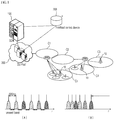
FIG. 1 is an exemplary diagram showing a communication environment to which the present disclosure is applied; -
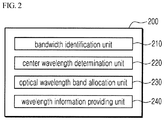
FIG. 2 is a block diagram showing a configuration of a fronthaul control device according to an embodiment of the present disclosure; -
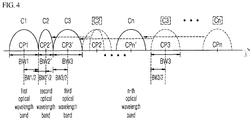
FIGS. 3 and4 are diagrams showing embodiments for determining a center wavelength in the present disclosure; -
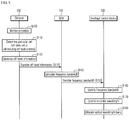
FIG. 5 is an exemplary diagram showing an operation of elements in a communication environment to which the present disclosure is applied; and -
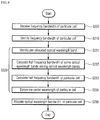
FIG. 6 is a flow diagram showing an operation method of a fronthaul control device according to an embodiment of the present disclosure. - Hereinafter, various embodiments of the present disclosure will be described with reference to the accompanying drawings.
- First of all, a communication environment to which the present disclosure is applied will be described with reference to
FIG. 1 . - As illustrated in
FIG. 1 , a communication environment to which the present disclosure is applied has a flexible fronthaul (hereinafter, a fronthaul) structure for implementing a Dynamic Cellular Network that dynamically adjusts the capacity of a cellular network depending on the traffic generated in the cellular network. - The communication environment to which the present disclosure is applied includes a plurality of cells C1-Cn including at least one
base station 10, a self-diagnosing network device 100 (a Self-Organizing Network, hereinafter, a SON) configured to integrally control the plurality of cells C1-Cn, and afronthaul control device 200 configured to changeably allocate optical wavelength bands of the plurality of cells C1-Cn in interworking with theSON 100. - The
base station 10 may be divided into a Digital Unit (DU) and a remote Radio Unit (RU). That is, the RU is arranged in each base station, and the DU is concentrated in a virtualized environment to be implemented in a DU toll center 300 (DU pool). - In the communication environment of the present disclosure as described above, a fronthaul is a wired optical link connecting a DU and a RU, and a fronthaul optical signal (hereinafter, an optical signal) is transmitted between the DU and the RU through the optical link.
- A conventional fronthaul is designed on an assumption that a data rate for transmission from a DU to a RU is constant, when an optical signal is transmitted through the fronthaul. Therefore, an optical wavelength band is allocated to each cell with a center wavelength of the optical signal being fixed as illustrated in (A) of
FIG. 1 . - Accordingly, a conventional fronthaul has a problem that the number of optical wavelength bands which can be actually utilized in the fronthaul is limited.
- However, a fronthaul according to the present disclosure changeably controls an optical wavelength band allocated to each cell by adjusting a center wavelength of an optical signal transmitted from a DU to a RU, as illustrated in (B) of
FIG. 1 . Therefore, a bandwidth is saved, and thus the number of actually utilizable optical wavelength bands can be increased. - Hereinafter, a method proposed in the present disclosure will be described in more detail.
- Referring
FIG. 1 , theSON 100 according to an embodiment of the present disclosure integrally manages cell coverage and state of a plurality of cells C1-Cn included in a fronthaul structure. - Particularly, when at least one cell which is off among the plurality of cells C1-Cn, or a cell including a base station having at least some antennas which are off among antennas of the base station is identified (hereinafter, the identified cell is referred to as "a particular cell"), the
SON 100 receives off-level information of the particular cell from theDU pool 300. - When the
SON 100 receives off-level information from theDU pool 300, theSON 100 calculates a frequency bandwidth of the particular cell according to an optical wavelength data rate required for the particular cell included in the off-level information. - The off-level information may be defined as information minimally required for calculating a frequency bandwidth in an off-state, in order to determine an optical wavelength data rate required for a particular cell. For example, the off-level information may include information about whether a control signal which should be transmitted to the particular cell exists, information about whether a minimum data transmission is continuously required, or the like.
- Then, the SON 100 transfers a frequency bandwidth of the particular cell to the
fronthaul control device 200. - Meanwhile, the above description includes that the
SON 100 directly calculates a frequency bandwidth of the particular cell and then transfers the calculated frequency bandwidth. However, theSON 100 may transfer an optical wavelength data rate required for a particular cell included in off-level information to thefronthaul control device 200. Then thefronthaul control device 200 may calculate a frequency bandwidth of the particular cell. - The
DU pool 300 determines a particular cell by monitoring an activation state of a terminal included in the plurality of cells C1-Cn or an activation state of an antenna of a base station. - More specifically, the
DU pool 300 monitors an activation state of terminals included in the plurality of cells C1-Cn and then determines whether each cell C1-Cn is ON or OFF. - Meanwhile, in the above description, the
DU pool 300 performs a function of monitoring an activation state of terminals included in the plurality of cells and then determining whether each cell is ON or OFF. However, the present disclosure is not limited thereto. The SON 100 also may equally perform said function. - When there is a cell with an activated terminal being equal to or smaller than a predetermined off-state determination threshold value among the plurality of cells C1-Cn, the
DU pool 300 determines the cell to be an off-state cell, and then determines the off-state cell as a particular cell. - For example, when an activation terminal among terminals included in the cell C2 is equal to or smaller than an off-state determination threshold value, the
DU pool 300 determines the cell C2 to be in an off state, and then determines the off-state cell C2 as a particular cell. - Also, the
DU pool 300 monitors an activation state of an antenna of base stations included in the plurality of cells C1-Cn and then determines whether each cell C1-Cn is ON or OFF. The antenna included in a base station is a Multiple Input and Multiple Output (MIMO) RF unit, and may include a plurality of antennas. - When some antennas among antennas of base stations included in the plurality of cells C1-Cn are determined to be in an off state, the
DU pool 300 determines a cell including the off-state antenna, as a particular cell. - For example, when some antennas among antennas of a base station included in the cell C2 is equal to or smaller than a predetermined off-state determination threshold value, the
DU pool 300 determines the cell C2 including some off-state antennas to be in an off state, and then determines the off-state cell C2, as a particular cell. - Then, when determination of a particular cell is completed, the
DU pool 300 generates off-level information on the particular cell in order to determine an optical wavelength data rate required for the particular cell, and then provides the information when the information is requested. - Hereinafter, a configuration of a fronthaul control device according to an embodiment of the present disclosure will be described in detail.
- Referring to
FIGS. 1 and2 , afronthaul control device 200 according to an embodiment of the present disclosure includes: abandwidth identification unit 210 configured to identify a frequency bandwidth of a particular cell among a plurality of cells C1-Cn according to an optical wavelength data rate required for the particular cell; a centerwavelength determination unit 220 configured to determine a center wavelength for allocating the frequency bandwidth of the particular cell; and an optical wavelengthband allocation unit 230 configured to allocate an optical wavelength band of the particular cell on the basis of the center wavelength and the frequency bandwidth of the particular cell. - The
bandwidth identification unit 210 is configured to identify a frequency bandwidth of a particular cell among a plurality of cells C1-Cn according to an optical wavelength data rate required for the particular cell. - For convenience of explanation, the cell C2 is assumed to be a particular cell in the following description.
- That is, the
bandwidth identification unit 210 may be configured to receive a frequency bandwidth of the particular cell C2 calculated on the basis of off-level information of the particular cell C2 from theSON 100, when the particular cell C2 is off or when at least one of a plurality of antennas included in the particular cell C2 is off. - Then, the
bandwidth identification unit 210 is configured to identify the frequency bandwidth from a frequency bandwidth of the particular cell C2 received from theSON 100. - Meanwhile, the
bandwidth identification unit 210 may be configured to receive off-level infonnation of the particular cell C2 from theSON 100, when the particular cell C2 is off or when at least one of a plurality of antennas included in the particular cell C2 is off. - Then, the
bandwidth identification unit 210 may be configured to calculate an optical wavelength data rate on the basis of the off-level information of the particular cell C2, and then directly calculate a frequency bandwidth of the particular cell C2 according to the calculated optical wavelength data rate. - Then, the
bandwidth identification unit 210 is configured to directly calculate a frequency bandwidth of the particular cell C2 and then identify the calculated frequency bandwidth. - Then, the
bandwidth identification unit 210 may be configured to identify that a frequency bandwidth of the particular cell C2 becomes narrow when the particular cell C2 is off or when at least one of a plurality of antennas related to the particular cell C2 is off. - In other words, the
bandwidth identification unit 210 may be configured to identify that a frequency bandwidth of the particular cell C2 in an OFF state becomes relatively narrower than a frequency bandwidth in a previous ON state. - The center
wavelength determination unit 220 is configured to determine a center wavelength for allocating the frequency bandwidth of the particular cell C2. - Then, a center wavelength is determined such that an optical wavelength band allocated to the particular cell C2 is adjacent to an optical wavelength band allocated to at least one of remaining cells C1 and C3-Cn.
- More specifically, the center
wavelength determination unit 220 is configured to identify an optical wavelength band previously allocated to the plurality of cells C1-Cn for an entire optical wavelength band. The optical wavelength band may be determined by a center wavelength and a frequency bandwidth. - Then, the center
wavelength determination unit 220 is configured to determine a center wavelength of the particular cell C2 to be adjacent to one optical wavelength bands allocated to respective cells C1 and C3-Cn. In this case, a frequency bandwidth of the particular cell C2 may be identified to have become relatively narrow, as described above. - For example, when it is assumed that optical wavelength bands are previously allocated to a plurality of cells C1-Cn as illustrated in
FIG. 3 , a first optical wavelength band is allocated to the cell C1, a second optical wavelength band is allocated to the cell C2, and a third to an n-th optical wavelength band are equally allocated to the remaining cells. - That is, the first optical wavelength band is determined by a center wavelength CP1 and a frequency bandwidth BW1, and the second optical wavelength band is determined by a center wavelength CP2 and a frequency bandwidth BW2. The remaining third to the n-th optical wavelength band are also determined by corresponding center wavelengths and frequency bandwidths, respectively.
- Then, when a frequency bandwidth of a cell C2 becomes relatively narrow (BW2 to BW2') and the cell C2 is then determined as a particular cell C2, the center
wavelength determination unit 220 determines a center wavelength CP2 of the particular cell C2 to be adjacent to one of optical wavelength bands previously allocated to respective cells C1 and C3-Cn. - For convenience of explanation, in the following description, a center wavelength of the particular cell C2 is determined to be adjacent to a first optical wavelength band allocated to the cell C1.
- That is, the center
wavelength determination unit 220 is configured to calculate a half frequency bandwidth BW1/2 corresponding to a half of a frequency bandwidth BW1 from a center wavelength CP1 of the cell C1. Also, the centerwavelength determination unit 220 is configured to calculate a half frequency bandwidth BW2'/2 corresponding to a half of a frequency bandwidth BW2' from a center wavelength CP2 of the particular cell C2. - Then, the center
wavelength determination unit 220 is configured to determine, as a center wavelength CP2', a wavelength of the particular cell C2 when the half frequency bandwidth BW1/2 of the cell C1 and the half frequency bandwidth BW2'/2 of the particular cell C2 become adjacent to each other up to a maximum allowing range in which they do not overlap and thus interference does not occur. - The center
wavelength determination unit 220 may be configured to determine a center wavelength such that an optical wavelength band to be allocated to the particular cell C2 is included in an optical wavelength band allowing use of an optical amplifier, when the particular cell C2 is relatively distant from theDU pool 300 and thus a distance therebetween is equal to or greater than a predetermined value, unlike as illustrated inFIG. 1 . - That is, the center
wavelength determination unit 220 determines a center wavelength within a bandwidth of an optical amplifier, in a case of a fronthaul link requiring a relatively long distance transmission and a high data rate transmission. In a case of a short distance transmission and a low data rate transmission, the centerwavelength determination unit 220 may determine a center wavelength out of the bandwidth of an optical amplifier. - For convenience of explanation, in the above description, it is determined that only a center wavelength of a particular cell with a frequency bandwidth becoming relatively narrow is adjacent to one of previously allocated optical wavelength bands.
- However, for another example, while a center wavelength of a particular cell is determined, center wavelengths of the remaining cells C1 and C3-Cn which are in an ON state are also newly determined, so that optical wavelength bands may be entirely re-allocated, as illustrated in
FIG. 4 . - More specifically, as illustrated in
FIG. 4 , it may be assumed that a frequency bandwidth of a cell C2 becomes relatively narrow (BW2 to BW2'), the cell C2 is then determined as a particular cell C2, and the remaining cells C1 and C3-Cn are maintained to have previously allocated frequency bandwidths BW1 and BW3-BWn. - Then, by the same method as described above, the center
wavelength determination unit 220 may be configured to determine, as a center wavelength CP2', a wavelength of the particular cell C2 when the half frequency bandwidth BW1/2 of the cell C1 and the half frequency bandwidth BW2'/2 of the particular cell C2 become adjacent to each other up to a maximum allowing range in which they do not overlap and thus interference does not occur. - That is, a center wavelength of the particular cell C2 is adjusted from a center wavelength CP2 to a center wavelength CP2'.
- Then, the center
wavelength determination unit 220 is configured to calculate a half frequency bandwidth BW3/2 corresponding to a half of a frequency bandwidth BW3 from a center wavelength CP3 of the cell C3. Then, the centerwavelength determination unit 220 is configured to determine, as a center wavelength CP3', a wavelength of the cell C3 when the half frequency bandwidth BW2'/2 of the particular cell C2 and the half frequency bandwidth BW3/2 of the cell C3 become adjacent to each other up to a maximum allowing range in which they do not overlap and thus interference does not occur. - That is, a center wavelength of the cell C3 is adjusted from a center wavelength CP3 to a center wavelength CP3'.
- Then, the center
wavelength determination unit 220 is configured to determine center wavelengths for allocating frequency bandwidths of the remaining cells C4-Cn by using the same method. - As described above, in the present disclosure, a center wavelength of an optical signal is not fixed, and a center wavelength of an optical signal can be flexibly adjusted for a particular cell or all cells depending on an off-state cell or an off-state MIMO antenna.
- Further, in the present disclosure, a center wavelength of an optical signal is flexibly adjusted so as to changeably control an optical wavelength band allocated to each cell. Therefore, the number of actually utilizable optical wavelength bands can be increased through saving of bandwidth.
- Also, referring to
FIGS. 2 and3 , the optical wavelengthband allocation unit 230 is configured to allocate an optical wavelength band of the particular cell on the basis of the frequency bandwidth and the center wavelength of the particular cell. - For convenience of explanation, in the following description, an optical wavelength band is allocated to the particular cell C2 such that the optical wavelength band is adjacent to a first optical wavelength band allocated to the cell C1.
- That is, when a frequency bandwidth of the particular cell C2 becomes narrow (BW2 to BW2') and a center wavelength is determined from a center wavelength CP2 to a center wavelength CP2', the optical wavelength
band allocation unit 230 allocates a second optical wavelength band of the particular cell C2 such that the second optical wavelength band of the particular cell C2 is adjacent to a first optical wavelength band allocated to the cell C1. In this case, the second optical wavelength band of the particular cell C2 has an identical half frequency bandwidth BW2'/2 with reference to the center wavelength CP2' of the particular cell C2. - When allocation of an optical wavelength band of a particular cell is completed, a wavelength
information providing unit 240 generates wavelength allocation information for notifying of the completion of allocating an optical wavelength band of the particular cell. Then, the wavelengthinformation providing unit 240 transmits the wavelength allocation information to a router, a fronthaul transmitter/receiver, etc. in the plurality of cells C1-Cn, so that routing can by performed. - The wavelength allocation information may include information about an optical wavelength band of a particular cell to which allocation is completed, or information about optical wavelength bands allocated to all cells.
- An operation method according to an embodiment of the present disclosure will be described in detail with reference to
FIGS. 5 and6 . For convenience for explanation, the following description will be made by using the reference numerals aforementioned inFIGS 1 to 4 . - Firstly, referring to
FIG. 5 , an operation of elements in a communication environment to which the present disclosure is applied will be explained in detail. - As illustrated in
FIG. 5 , theDU pool 300 according to an embodiment of the present disclosure monitors an activation state of terminals included in the plurality of cells C1-Cn or an activation state of an antenna of a base station (S100). - Then, when it is determined on the basis of a result obtained by the monitoring that some cells among the plurality of cells C1-Cn are off, the
DU pool 300 determines the off-state cell as a particular cell, or when it is determined that some antennas among antennas of a base station included in each cell C1-Cn are off, theDU pool 300 determines a cell including some off-state antennas, as a particular cell (S110). - More specifically, the
DU pool 300 monitors an activation state of terminals included in the plurality of cells C1-Cn and then determines whether each cell C1-Cn is ON or OFF(S110). - For example, when the monitoring result indicates that an activated terminal among terminals included in the cell C2 has a value equal to or smaller than a predetermined Off-state determination threshold value, the
DU pool 300 may determine the cell C2 to be in an off state. - Then, when the cell C2 is determined to be in an off state, the
DU pool 300 may determine the off-state cell C2 as a particular cell. - Also, the
DU pool 300 monitors an activation state of an antenna of base stations included in the plurality of cells C1-Cn and then determines whether each cell C1-Cn is ON or OFF (S110). - For example, when the monitoring result indicates that some antennas among antennas of a base station included in the cell C2 have a value equal to or smaller than a predetennined Off-state determination threshold value, the
DU pool 300 may determine the cell C2 including the some off-state antennas to be in an off state. - Then, when the cell C2 is determined to be in an off state, the
DU pool 300 may determine the off-state cell C2 as a particular cell. - Then, when determination of a particular cell is completed, the
DU pool 300 generates off-level information on the particular cell, and then transfers the information to the SON 100 (S120 and S130). - The off-level information may be defined as information minimally required for calculating a frequency bandwidth in an OFF-state, in order to determine an optical wavelength data rate required for a particular cell.
- The
SON 100 receives the off-level information of the particular cell from theDU pool 300 and then determines a frequency bandwidth on the particular cell. - That is, when the
SON 100 receives off-level information from theDU pool 300, theSON 100 calculates a frequency bandwidth of a particular cell according to an optical wavelength data rate required for the particular cell included in the off-level information, and then transfers the calculated frequency bandwidth to the fronthaul control device 200 (S140 and S150). - The
fronthaul control device 200 identifies a frequency bandwidth of the particular cell C2 (S160). - Then, the
fronthaul control device 200 may identify that a frequency bandwidth of the particular cell C2 in an OFF state becomes relatively narrower than a frequency bandwidth in a previous ON state. - The
fronthaul control device 200 determines a center wavelength for allocating the frequency bandwidth of the particular cell C2 (S170). - Then, a center wavelength is determined such that an optical wavelength band allocated to the particular cell C2 is adjacent to an optical wavelength band allocated to at least one of the remaining cells C1 and C3-Cn.
- More specifically, the
fronthaul control device 200 identifies optical wavelength bands previously allocated to the plurality of cells C1-Cn among the entire optical wavelength band. Then, the optical wavelength band may be determined by a center wavelength and a frequency bandwidth. - Then, the
fronthaul control device 200 determines a center wavelength of the particular cell C2 to be adjacent to some among optical wavelength bands allocated to respective cells C1 and C3-Cn, since a frequency bandwidth of the particular cell C2 is identified to have become relatively narrow in the above description. - For example, when it is assumed that optical wavelength bands are previously allocated to a plurality of cells C1-Cn as illustrated in
FIG. 3 , a first optical wavelength band is allocated to a cell C1, a second optical wavelength band is allocated to a cell C2, and a third to an n-th optical wavelength band are equally allocated to the remaining cells. - That is, the first optical wavelength band is determined by a center wavelength CP 1 and a frequency bandwidth BW1, and the second optical wavelength band is determined by a center wavelength CP2 and a frequency bandwidth BW2. The remaining third to the n-th optical wavelength bands are also determined by corresponding center wavelengths and frequency bandwidths, respectively.
- Then, when a frequency bandwidth of a cell C2 becomes relatively narrow (BW2 to BW2') and the cell C2 is then determined as a particular cell C2, the
fronthaul control device 200 determines a center wavelength CP2 of the particular cell C2 to be adjacent to some of optical wavelength bands previously allocated to respective cells C1 and C3-Cn. - The
fronthaul control device 200 may determine a center wavelength allowing an optical wavelength band included in an optical wavelength band allowing use of an optical amplifier, to be allocated to the particular cell C2, when, unlike as illustrated inFIG. 1 , a distance between the particular cell C2 and theDU pool 300 is equal to or greater than a predetermined value. - Then, the
fronthaul control device 200 allocates an optical wavelength band of the particular cell on the basis of the frequency bandwidth and the center wavelength of the particular cell (S180). - That is, as described above, when a frequency bandwidth of the particular cell C2 becomes narrow (BW2 to BW2') and a center wavelength is determined from a center wavelength CP2 to a center wavelength CP2', the
fronthaul control device 200 allocates a second optical wavelength band of the particular cell C2 such that the second optical wavelength band of the particular cell C2 is adjacent to a first optical wavelength band allocated to the cell C1. In this case, the second optical wavelength band of the particular cell C2 has an identical width gap with reference to the center wavelength CP2' of the particular cell C2. - Next, an operation method of a fronthaul control device according to an embodiment of the present disclosure will be described in more detail with reference to
FIG. 6 . - When the particular cell C2 is off or when at least one of a plurality of antennas included in the particular cell C2 are off, a
fronthaul control device 200 according to an embodiment of the present disclosure receives a frequency bandwidth of the particular cell C2 calculated on the basis of off-level information of the particular cell C2 from the SON 100 (S200). - Then, by comparing a frequency bandwidth of the particular cell C2, that is, a frequency bandwidth in an off state, with a frequency bandwidth in a previous ON state, the
fronthaul control device 200 identifies that a frequency bandwidth of the particular cell C2 in an OFF state becomes relatively narrow (S210). - Meanwhile, the
fronthaul control device 200 determines a center wavelength for allocating the frequency bandwidth of the particular cell C2 (S220). - Then, a center wavelength is determined such that an optical wavelength band allocated to the particular cell C2 is adjacent to an optical wavelength band allocated to at least one of remaining cells C1 and C3-Cn.
- More specifically, the
fronthaul control device 200 identifies optical wavelength bands previously allocated to the plurality of cells C1-Cn among the entire optical wavelength band (S221). Then, the optical wavelength band may be determined by a center wavelength and a frequency bandwidth. - Then, the center
wavelength determination unit 220 determines a center wavelength of the particular cell C2 to be adjacent to some among optical wavelength bands allocated to respective cells C1 and C3-Cn, since a frequency bandwidth of the particular cell C2 is identified to have become relatively narrow. - For convenience of explanation, in the following description, a center wavelength of the particular cell C2 is determined to be adjacent to a first optical wavelength band allocated to the cell C1.
- That is, the
fronthaul control device 200 calculates a half frequency bandwidth BW1/2 corresponding to a half of a frequency bandwidth BW1 from a center wavelength CP1 of the cell C1 (S222). Also, the centerwavelength determination unit 220 calculates a half frequency bandwidth BW2'/2 corresponding to a half of a frequency bandwidth BW2' from a center wavelength CP2 of the particular cell C2 (S223). - Then, the
fronthaul control device 200 determines, as a center wavelength CP2', a wavelength of the particular cell C2 when the half frequency bandwidth BW1/2 of the cell C1 and the half frequency bandwidth BW2'/2 of the particular cell C2 become adjacent to each other up to a maximum allowing range in which they do not overlap and thus interference does not occur (S224). - The
fronthaul control device 200 allocates an optical wavelength band of the particular cell on the basis of the frequency bandwidth BW2 and the center wavelength CP2' of the particular cell C2 (S230). - That is, as described above, when a frequency bandwidth of the particular cell C2 becomes narrow (BW2 to BW2') and a center wavelength is determined from a center wavelength CP2 to a center wavelength CP2', the
fronthaul control device 200 allocates, as a second optical wavelength band of the particular cell C2, a frequency bandwidth BW2' which is adjacent to a first optical wavelength band allocated to the cell C1 and maintains an identical half frequency bandwidth BW2'/2 with reference to the center wavelength CP2' of the particular cell C2. - As described above, according to an embodiment of the present disclosure, in a state where a center wavelength of an optical signal is not fixed, a center wavelength of an optical signal is flexibly adjusted depending on an off-state cell or an off-state antenna, so that an optical wavelength band allocated to each cell can be changeably controlled.
- Therefore, according to the present disclosure, a center wavelength of an optical signal is flexibly adjusted so as to changeably control an optical wavelength band. Accordingly, a bandwidth can be saved, whereby the number of optical wavelength bands which can be actually utilized in a fronthaul can be increased.
- In addition, according to the present disclosure, a plurality of fronthauls for a base station can be implemented in a single optical fiber. Therefore, the present disclosure can overcome a limit of a fronthaul capacity and, further, can provide a flexible fronthaul architecture.
- Embodiments of the present disclosure may be implemented by a program command type that can be performed through various computer means, and may be stored in a computer readable medium. The computer readable medium may include a program command, a data file, a data structure, and the like independently or in combination. The program command recorded in the medium may be things specially designed and configured for the present disclosure, or things that are well known to and can be used by those skilled in the computer software related art. Examples of the computer-readable recording medium include magnetic media such as hard disks, floppy disks and magnetic tapes, optical media such as a Compact Disc Read-Only Memory (CD-ROM) and a Digital Versatile Disc (DVD), magneto-optical media such as floptical disks, and hardware devices such as a Read-Only Memory (ROM), a Random Access Memory (RAM) and a flash memory, which are specially configured to store and perform program commands. Examples of the program command include a machine language code generated by a compiler and a high-level language code executable by a computer through an interpreter and the like. The hardware device may be configured to operate as one or more software modules in order to perform operations of the present disclosure, and vice versa.
- Although the present disclosure has been described in detail with reference to exemplary embodiments, the present disclosure is not limited thereto and the technical idea of the present disclosure covers a range in which anyone who has common knowledge in the technical field to which the present disclosure belongs can make various modifications and changes without departing from the substance of the present disclosure claimed by claims below.
Claims (7)
- A fronthaul control device comprising:a bandwidth identification unit configured to identify a frequency bandwidth of a particular cell among a plurality of cells according to an optical wavelength data rate required for the particular cell;a center wavelength determination unit configured to determine a center wavelength for allocating the frequency bandwidth of the particular cell; andan optical wavelength band allocation unit configured to allocate an optical wavelength band to the particular cell on the basis of the center wavelength and the frequency bandwidth of the particular cell,wherein the center wavelength is determined such that the optical wavelength band allocated to the particular cell is adjacent to an optical wavelength band allocated to at least one of other cells other than the particular cell among the plurality of cells.
- The fronthaul control device of claim 1, wherein the bandwidth identification unit is configured to identify that the frequency bandwidth of the particular cell becomes narrow when the particular cell is off or when at least one of a plurality of antennas related to the particular cell is off.
- The fronthaul control device of claim 1, wherein the center wavelength determination unit is configured to determine the center wavelength such that the optical wavelength band to be allocated to the particular cell is included in an optical wavelength band allowing use of an optical amplifier, when a distance between the particular cell and a toll center is equal to or greater than a predetermined value.
- A computer-readable recording medium comprising a command to perform:identifying a frequency bandwidth of a particular cell among a plurality of cells according to an optical wavelength data rate required for the particular cell;determining a center wavelength for allocating the frequency bandwidth of the particular cell; andallocating an optical wavelength band to the particular cell on the basis of the center wavelength and the frequency bandwidth of the particular cell,wherein the center wavelength is determined such that the optical wavelength band allocated to the particular cell is adjacent to an optical wavelength band allocated to at least one of other cells other than the particular cell among the plurality of cells.
- The computer-readable recording medium of claim 4, wherein the identifying comprises identifying that the frequency bandwidth of the particular cell becomes narrow when the particular cell is off or when at least one of a plurality of antennas related to the particular cell is off.
- The computer-readable recording medium of claim 4, wherein the determining comprises determining the center wavelength such that the optical wavelength band to be allocated to the particular cell is included in an optical wavelength band allowing use of an optical amplifier when a distance between the particular cell and a toll center is equal to or greater than a predetermined value.
- A program stored in a medium to perform:identifying a frequency bandwidth of a particular cell among a plurality of cells according to an optical wavelength data rate required for the particular cell;determining a center wavelength for allocating the frequency bandwidth of the particular cell; andallocating an optical wavelength band to the particular cell on the basis of the center wavelength and the frequency bandwidth of the particular cell,wherein the center wavelength is determined such that an optical wavelength band allocated to the particular cell is adjacent to an optical wavelength band allocated to at least one of other cells other than the particular cell among the plurality of cells.
Applications Claiming Priority (2)
| Application Number | Priority Date | Filing Date | Title |
|---|---|---|---|
| KR1020150121726A KR102232014B1 (en) | 2015-08-28 | 2015-08-28 | Apparatus and method for controlling fronthaul network, program for controlling allocation of optical band and recording media for the program |
| PCT/KR2016/005079 WO2017039115A1 (en) | 2015-08-28 | 2016-05-13 | Fronthaul control device and operating method of fronthaul control device, program for controlling allocation of optical wavelength band, and computer-readable recording medium onto which program is recorded |
Publications (3)
| Publication Number | Publication Date |
|---|---|
| EP3343817A1 true EP3343817A1 (en) | 2018-07-04 |
| EP3343817A4 EP3343817A4 (en) | 2019-04-24 |
| EP3343817B1 EP3343817B1 (en) | 2022-07-20 |
Family
ID=58188956
Family Applications (1)
| Application Number | Title | Priority Date | Filing Date |
|---|---|---|---|
| EP16842081.8A Active EP3343817B1 (en) | 2015-08-28 | 2016-05-13 | Fronthaul control device and operating method of fronthaul control device, program for controlling allocation of optical wavelength band, and computer-readable recording medium onto which program is recorded |
Country Status (7)
| Country | Link |
|---|---|
| US (1) | US10447421B2 (en) |
| EP (1) | EP3343817B1 (en) |
| JP (1) | JP6857171B2 (en) |
| KR (1) | KR102232014B1 (en) |
| CN (1) | CN107925504B (en) |
| ES (1) | ES2925016T3 (en) |
| WO (1) | WO2017039115A1 (en) |
Families Citing this family (6)
| Publication number | Priority date | Publication date | Assignee | Title |
|---|---|---|---|---|
| KR102066689B1 (en) * | 2017-05-08 | 2020-01-15 | 주식회사 케이티 | Methods for transmitting and receiving signaling messages based on fronthaul interface and apparatuses thereof |
| US10791527B2 (en) * | 2018-10-17 | 2020-09-29 | Samsung Electronics Co., Ltd. | Apparatus for signaling of control messages for fronthaul interface |
| CN111385053B (en) * | 2018-12-29 | 2022-11-08 | 中兴通讯股份有限公司 | Data transmitting and receiving, wavelength configuration method and device, wireless access system and storage medium |
| JP7196749B2 (en) * | 2019-04-12 | 2022-12-27 | 日本電信電話株式会社 | Multiplex transmission system and multiplex transmission method |
| CN112118068B (en) * | 2019-06-20 | 2022-10-21 | 中国移动通信有限公司研究院 | A state monitoring method, device, device and storage medium for a fronthaul network |
| CN113746551B (en) * | 2020-05-28 | 2023-03-28 | 中国电信股份有限公司 | Forward transmission system based on wavelength division multiplexing |
Family Cites Families (17)
| Publication number | Priority date | Publication date | Assignee | Title |
|---|---|---|---|---|
| JP3370949B2 (en) * | 1998-04-22 | 2003-01-27 | 日本電信電話株式会社 | Wavelength allocation method, transmission device using the method, and wavelength division multiplexing transmission system |
| JP3645746B2 (en) * | 1999-06-17 | 2005-05-11 | 日本電気株式会社 | Dynamic bandwidth control system for upstream bandwidth in optical communication networks |
| JP2003115822A (en) * | 2001-10-05 | 2003-04-18 | Nec Corp | WDM optical transmission system |
| JP3734762B2 (en) * | 2002-03-14 | 2006-01-11 | 富士通株式会社 | WDM equipment |
| JP2006345069A (en) * | 2005-06-07 | 2006-12-21 | Nippon Telegr & Teleph Corp <Ntt> | Wavelength reservation method for spare channel and optical transmission apparatus |
| JP4706556B2 (en) * | 2006-05-23 | 2011-06-22 | 沖電気工業株式会社 | Optical multiplex communication system and delay adjustment method |
| JP4697458B2 (en) * | 2006-08-07 | 2011-06-08 | Kddi株式会社 | Optical transmission system |
| JP5331968B2 (en) * | 2010-02-22 | 2013-10-30 | 日本電信電話株式会社 | Optical wireless access system and method |
| JP5435574B2 (en) * | 2010-03-17 | 2014-03-05 | 日本電信電話株式会社 | Distributed RoF-MIMO antenna system and cell forming method |
| EP2571184B1 (en) * | 2011-09-16 | 2017-02-22 | Alcatel Lucent | Allocation of spectral capacity in a wavelength-division multiplexing optical network |
| US8693953B2 (en) * | 2011-09-28 | 2014-04-08 | Verizon Patent And Licensing Inc. | Optimizing use of network resources by small cells and/or user devices of a venue |
| CN104205692B (en) * | 2012-03-01 | 2018-02-09 | 瑞典爱立信有限公司 | Change the spectral position of light path |
| KR20130113112A (en) * | 2012-04-05 | 2013-10-15 | 주식회사 케이티 | Method for scheduling radio bearer in wireless communicatoin system and apparatus thereof |
| JP6115364B2 (en) * | 2013-07-11 | 2017-04-19 | 富士通株式会社 | Optical transmission apparatus, optical transmission system, and optical transmission method |
| JP5938017B2 (en) * | 2013-07-25 | 2016-06-22 | 日本電信電話株式会社 | Optical subscriber system, dynamic wavelength band allocation method and program |
| JP6023103B2 (en) * | 2014-01-28 | 2016-11-09 | 日本電信電話株式会社 | Distributed wireless communication base station system and communication method |
| KR20150136433A (en) * | 2014-05-27 | 2015-12-07 | 한국전자통신연구원 | Apparatus and Method for Managing Multi Wavelength Resource of Seperated-Type Base Station Optical Link |
-
2015
- 2015-08-28 KR KR1020150121726A patent/KR102232014B1/en active Active
-
2016
- 2016-05-13 CN CN201680048092.8A patent/CN107925504B/en active Active
- 2016-05-13 JP JP2018510110A patent/JP6857171B2/en active Active
- 2016-05-13 WO PCT/KR2016/005079 patent/WO2017039115A1/en not_active Ceased
- 2016-05-13 ES ES16842081T patent/ES2925016T3/en active Active
- 2016-05-13 US US15/753,903 patent/US10447421B2/en active Active
- 2016-05-13 EP EP16842081.8A patent/EP3343817B1/en active Active
Also Published As
| Publication number | Publication date |
|---|---|
| US20180254846A1 (en) | 2018-09-06 |
| JP2018532296A (en) | 2018-11-01 |
| KR102232014B1 (en) | 2021-03-24 |
| US10447421B2 (en) | 2019-10-15 |
| EP3343817B1 (en) | 2022-07-20 |
| KR20170025378A (en) | 2017-03-08 |
| WO2017039115A1 (en) | 2017-03-09 |
| ES2925016T3 (en) | 2022-10-13 |
| EP3343817A4 (en) | 2019-04-24 |
| CN107925504A (en) | 2018-04-17 |
| JP6857171B2 (en) | 2021-04-14 |
| CN107925504B (en) | 2019-12-27 |
Similar Documents
| Publication | Publication Date | Title |
|---|---|---|
| EP3343817B1 (en) | Fronthaul control device and operating method of fronthaul control device, program for controlling allocation of optical wavelength band, and computer-readable recording medium onto which program is recorded | |
| CN108141891B (en) | Method for selecting coverage enhancement level, user equipment device | |
| US9532313B2 (en) | Uplink power control method and user equipment supporting both common and separate TPC commands | |
| EP1128573B1 (en) | Method for avoiding adjacent carrier frequency interference | |
| EP2238696B1 (en) | Method and device for adaptably controlling bandwidth of channel | |
| US10420115B2 (en) | Base station apparatus, and method and system for controlling full-duplex transmission | |
| US11265816B2 (en) | Beam based uplink (UL) power control | |
| CN105577338A (en) | Switching method and device for primary and secondary carriers in asymmetric uplink carrier aggregation | |
| US11528117B2 (en) | Base station capable of allocating channel-state report and method for allocating channel-state report | |
| EP4192056A1 (en) | Direct communication resource allocation method and apparatus | |
| EP4013153A1 (en) | Energy-saving method and device | |
| CN113767708B (en) | Competition window sizing feedback | |
| EP3925316B1 (en) | Power control parameters indication | |
| EP3163976B1 (en) | Base station apparatus, mobile station apparatus, radio communication system, communication control method of base station apparatus, and communication control method of mobile station apparatus | |
| KR102604940B1 (en) | Data transmission methods, devices and systems | |
| US12238528B2 (en) | Method, system, and apparatus for sharing dynamic frequency in mobile communication system | |
| EP3876566A1 (en) | Direct communication resource allocation method and apparatus | |
| US20250203642A1 (en) | Resource coexistence method and apparatus | |
| US20040180687A1 (en) | Uplink DPCCH transmission power control for terminal in soft handover | |
| KR100800915B1 (en) | Wireless Link Coverage Extension Method through Wireless Communication Resource Allocation Control | |
| WO2001074105A1 (en) | Radio communication system and channel allocation method in time division multiplex connection communication method | |
| KR102208316B1 (en) | Base station amd uplink scheduling method | |
| EP2337401A1 (en) | Apparatus for selecting data transmission base station | |
| KR20240096155A (en) | Base station device and resource allocation method performed in the device | |
| CN115767575A (en) | Power determination method, apparatus and storage medium |
Legal Events
| Date | Code | Title | Description |
|---|---|---|---|
| STAA | Information on the status of an ep patent application or granted ep patent |
Free format text: STATUS: THE INTERNATIONAL PUBLICATION HAS BEEN MADE |
|
| PUAI | Public reference made under article 153(3) epc to a published international application that has entered the european phase |
Free format text: ORIGINAL CODE: 0009012 |
|
| STAA | Information on the status of an ep patent application or granted ep patent |
Free format text: STATUS: REQUEST FOR EXAMINATION WAS MADE |
|
| 17P | Request for examination filed |
Effective date: 20180221 |
|
| AK | Designated contracting states |
Kind code of ref document: A1 Designated state(s): AL AT BE BG CH CY CZ DE DK EE ES FI FR GB GR HR HU IE IS IT LI LT LU LV MC MK MT NL NO PL PT RO RS SE SI SK SM TR |
|
| AX | Request for extension of the european patent |
Extension state: BA ME |
|
| DAV | Request for validation of the european patent (deleted) | ||
| DAX | Request for extension of the european patent (deleted) | ||
| A4 | Supplementary search report drawn up and despatched |
Effective date: 20190327 |
|
| RIC1 | Information provided on ipc code assigned before grant |
Ipc: H04J 14/02 20060101AFI20190321BHEP |
|
| STAA | Information on the status of an ep patent application or granted ep patent |
Free format text: STATUS: EXAMINATION IS IN PROGRESS |
|
| 17Q | First examination report despatched |
Effective date: 20210608 |
|
| GRAP | Despatch of communication of intention to grant a patent |
Free format text: ORIGINAL CODE: EPIDOSNIGR1 |
|
| STAA | Information on the status of an ep patent application or granted ep patent |
Free format text: STATUS: GRANT OF PATENT IS INTENDED |
|
| INTG | Intention to grant announced |
Effective date: 20220215 |
|
| GRAS | Grant fee paid |
Free format text: ORIGINAL CODE: EPIDOSNIGR3 |
|
| GRAA | (expected) grant |
Free format text: ORIGINAL CODE: 0009210 |
|
| STAA | Information on the status of an ep patent application or granted ep patent |
Free format text: STATUS: THE PATENT HAS BEEN GRANTED |
|
| AK | Designated contracting states |
Kind code of ref document: B1 Designated state(s): AL AT BE BG CH CY CZ DE DK EE ES FI FR GB GR HR HU IE IS IT LI LT LU LV MC MK MT NL NO PL PT RO RS SE SI SK SM TR |
|
| REG | Reference to a national code |
Ref country code: CH Ref legal event code: EP |
|
| REG | Reference to a national code |
Ref country code: DE Ref legal event code: R096 Ref document number: 602016073676 Country of ref document: DE |
|
| REG | Reference to a national code |
Ref country code: AT Ref legal event code: REF Ref document number: 1506239 Country of ref document: AT Kind code of ref document: T Effective date: 20220815 |
|
| REG | Reference to a national code |
Ref country code: IE Ref legal event code: FG4D |
|
| REG | Reference to a national code |
Ref country code: ES Ref legal event code: FG2A Ref document number: 2925016 Country of ref document: ES Kind code of ref document: T3 Effective date: 20221013 |
|
| REG | Reference to a national code |
Ref country code: LT Ref legal event code: MG9D |
|
| REG | Reference to a national code |
Ref country code: NL Ref legal event code: MP Effective date: 20220720 |
|
| PG25 | Lapsed in a contracting state [announced via postgrant information from national office to epo] |
Ref country code: SE Free format text: LAPSE BECAUSE OF FAILURE TO SUBMIT A TRANSLATION OF THE DESCRIPTION OR TO PAY THE FEE WITHIN THE PRESCRIBED TIME-LIMIT Effective date: 20220720 Ref country code: RS Free format text: LAPSE BECAUSE OF FAILURE TO SUBMIT A TRANSLATION OF THE DESCRIPTION OR TO PAY THE FEE WITHIN THE PRESCRIBED TIME-LIMIT Effective date: 20220720 Ref country code: PT Free format text: LAPSE BECAUSE OF FAILURE TO SUBMIT A TRANSLATION OF THE DESCRIPTION OR TO PAY THE FEE WITHIN THE PRESCRIBED TIME-LIMIT Effective date: 20221121 Ref country code: NO Free format text: LAPSE BECAUSE OF FAILURE TO SUBMIT A TRANSLATION OF THE DESCRIPTION OR TO PAY THE FEE WITHIN THE PRESCRIBED TIME-LIMIT Effective date: 20221020 Ref country code: NL Free format text: LAPSE BECAUSE OF FAILURE TO SUBMIT A TRANSLATION OF THE DESCRIPTION OR TO PAY THE FEE WITHIN THE PRESCRIBED TIME-LIMIT Effective date: 20220720 Ref country code: LV Free format text: LAPSE BECAUSE OF FAILURE TO SUBMIT A TRANSLATION OF THE DESCRIPTION OR TO PAY THE FEE WITHIN THE PRESCRIBED TIME-LIMIT Effective date: 20220720 Ref country code: LT Free format text: LAPSE BECAUSE OF FAILURE TO SUBMIT A TRANSLATION OF THE DESCRIPTION OR TO PAY THE FEE WITHIN THE PRESCRIBED TIME-LIMIT Effective date: 20220720 Ref country code: FI Free format text: LAPSE BECAUSE OF FAILURE TO SUBMIT A TRANSLATION OF THE DESCRIPTION OR TO PAY THE FEE WITHIN THE PRESCRIBED TIME-LIMIT Effective date: 20220720 |
|
| REG | Reference to a national code |
Ref country code: AT Ref legal event code: MK05 Ref document number: 1506239 Country of ref document: AT Kind code of ref document: T Effective date: 20220720 |
|
| PG25 | Lapsed in a contracting state [announced via postgrant information from national office to epo] |
Ref country code: PL Free format text: LAPSE BECAUSE OF FAILURE TO SUBMIT A TRANSLATION OF THE DESCRIPTION OR TO PAY THE FEE WITHIN THE PRESCRIBED TIME-LIMIT Effective date: 20220720 Ref country code: IS Free format text: LAPSE BECAUSE OF FAILURE TO SUBMIT A TRANSLATION OF THE DESCRIPTION OR TO PAY THE FEE WITHIN THE PRESCRIBED TIME-LIMIT Effective date: 20221120 Ref country code: HR Free format text: LAPSE BECAUSE OF FAILURE TO SUBMIT A TRANSLATION OF THE DESCRIPTION OR TO PAY THE FEE WITHIN THE PRESCRIBED TIME-LIMIT Effective date: 20220720 Ref country code: GR Free format text: LAPSE BECAUSE OF FAILURE TO SUBMIT A TRANSLATION OF THE DESCRIPTION OR TO PAY THE FEE WITHIN THE PRESCRIBED TIME-LIMIT Effective date: 20221021 |
|
| REG | Reference to a national code |
Ref country code: DE Ref legal event code: R097 Ref document number: 602016073676 Country of ref document: DE |
|
| PG25 | Lapsed in a contracting state [announced via postgrant information from national office to epo] |
Ref country code: SM Free format text: LAPSE BECAUSE OF FAILURE TO SUBMIT A TRANSLATION OF THE DESCRIPTION OR TO PAY THE FEE WITHIN THE PRESCRIBED TIME-LIMIT Effective date: 20220720 Ref country code: RO Free format text: LAPSE BECAUSE OF FAILURE TO SUBMIT A TRANSLATION OF THE DESCRIPTION OR TO PAY THE FEE WITHIN THE PRESCRIBED TIME-LIMIT Effective date: 20220720 Ref country code: DK Free format text: LAPSE BECAUSE OF FAILURE TO SUBMIT A TRANSLATION OF THE DESCRIPTION OR TO PAY THE FEE WITHIN THE PRESCRIBED TIME-LIMIT Effective date: 20220720 Ref country code: CZ Free format text: LAPSE BECAUSE OF FAILURE TO SUBMIT A TRANSLATION OF THE DESCRIPTION OR TO PAY THE FEE WITHIN THE PRESCRIBED TIME-LIMIT Effective date: 20220720 Ref country code: AT Free format text: LAPSE BECAUSE OF FAILURE TO SUBMIT A TRANSLATION OF THE DESCRIPTION OR TO PAY THE FEE WITHIN THE PRESCRIBED TIME-LIMIT Effective date: 20220720 |
|
| PLBE | No opposition filed within time limit |
Free format text: ORIGINAL CODE: 0009261 |
|
| STAA | Information on the status of an ep patent application or granted ep patent |
Free format text: STATUS: NO OPPOSITION FILED WITHIN TIME LIMIT |
|
| PG25 | Lapsed in a contracting state [announced via postgrant information from national office to epo] |
Ref country code: SK Free format text: LAPSE BECAUSE OF FAILURE TO SUBMIT A TRANSLATION OF THE DESCRIPTION OR TO PAY THE FEE WITHIN THE PRESCRIBED TIME-LIMIT Effective date: 20220720 Ref country code: EE Free format text: LAPSE BECAUSE OF FAILURE TO SUBMIT A TRANSLATION OF THE DESCRIPTION OR TO PAY THE FEE WITHIN THE PRESCRIBED TIME-LIMIT Effective date: 20220720 |
|
| 26N | No opposition filed |
Effective date: 20230421 |
|
| PG25 | Lapsed in a contracting state [announced via postgrant information from national office to epo] |
Ref country code: AL Free format text: LAPSE BECAUSE OF FAILURE TO SUBMIT A TRANSLATION OF THE DESCRIPTION OR TO PAY THE FEE WITHIN THE PRESCRIBED TIME-LIMIT Effective date: 20220720 |
|
| P01 | Opt-out of the competence of the unified patent court (upc) registered |
Effective date: 20230602 |
|
| PG25 | Lapsed in a contracting state [announced via postgrant information from national office to epo] |
Ref country code: SI Free format text: LAPSE BECAUSE OF FAILURE TO SUBMIT A TRANSLATION OF THE DESCRIPTION OR TO PAY THE FEE WITHIN THE PRESCRIBED TIME-LIMIT Effective date: 20220720 |
|
| REG | Reference to a national code |
Ref country code: CH Ref legal event code: PL |
|
| PG25 | Lapsed in a contracting state [announced via postgrant information from national office to epo] |
Ref country code: MC Free format text: LAPSE BECAUSE OF FAILURE TO SUBMIT A TRANSLATION OF THE DESCRIPTION OR TO PAY THE FEE WITHIN THE PRESCRIBED TIME-LIMIT Effective date: 20220720 |
|
| REG | Reference to a national code |
Ref country code: BE Ref legal event code: MM Effective date: 20230531 |
|
| PG25 | Lapsed in a contracting state [announced via postgrant information from national office to epo] |
Ref country code: MC Free format text: LAPSE BECAUSE OF FAILURE TO SUBMIT A TRANSLATION OF THE DESCRIPTION OR TO PAY THE FEE WITHIN THE PRESCRIBED TIME-LIMIT Effective date: 20220720 Ref country code: LU Free format text: LAPSE BECAUSE OF NON-PAYMENT OF DUE FEES Effective date: 20230513 Ref country code: LI Free format text: LAPSE BECAUSE OF NON-PAYMENT OF DUE FEES Effective date: 20230531 Ref country code: CH Free format text: LAPSE BECAUSE OF NON-PAYMENT OF DUE FEES Effective date: 20230531 |
|
| REG | Reference to a national code |
Ref country code: IE Ref legal event code: MM4A |
|
| PG25 | Lapsed in a contracting state [announced via postgrant information from national office to epo] |
Ref country code: IE Free format text: LAPSE BECAUSE OF NON-PAYMENT OF DUE FEES Effective date: 20230513 |
|
| PG25 | Lapsed in a contracting state [announced via postgrant information from national office to epo] |
Ref country code: IE Free format text: LAPSE BECAUSE OF NON-PAYMENT OF DUE FEES Effective date: 20230513 |
|
| PG25 | Lapsed in a contracting state [announced via postgrant information from national office to epo] |
Ref country code: BE Free format text: LAPSE BECAUSE OF NON-PAYMENT OF DUE FEES Effective date: 20230531 |
|
| PG25 | Lapsed in a contracting state [announced via postgrant information from national office to epo] |
Ref country code: BG Free format text: LAPSE BECAUSE OF FAILURE TO SUBMIT A TRANSLATION OF THE DESCRIPTION OR TO PAY THE FEE WITHIN THE PRESCRIBED TIME-LIMIT Effective date: 20220720 |
|
| PG25 | Lapsed in a contracting state [announced via postgrant information from national office to epo] |
Ref country code: BG Free format text: LAPSE BECAUSE OF FAILURE TO SUBMIT A TRANSLATION OF THE DESCRIPTION OR TO PAY THE FEE WITHIN THE PRESCRIBED TIME-LIMIT Effective date: 20220720 |
|
| PGFP | Annual fee paid to national office [announced via postgrant information from national office to epo] |
Ref country code: FR Payment date: 20250310 Year of fee payment: 10 |
|
| PGFP | Annual fee paid to national office [announced via postgrant information from national office to epo] |
Ref country code: GB Payment date: 20250320 Year of fee payment: 10 |
|
| PGFP | Annual fee paid to national office [announced via postgrant information from national office to epo] |
Ref country code: DE Payment date: 20250319 Year of fee payment: 10 |
|
| PGFP | Annual fee paid to national office [announced via postgrant information from national office to epo] |
Ref country code: ES Payment date: 20250605 Year of fee payment: 10 |
|
| PGFP | Annual fee paid to national office [announced via postgrant information from national office to epo] |
Ref country code: IT Payment date: 20250422 Year of fee payment: 10 |
|
| PG25 | Lapsed in a contracting state [announced via postgrant information from national office to epo] |
Ref country code: CY Free format text: LAPSE BECAUSE OF FAILURE TO SUBMIT A TRANSLATION OF THE DESCRIPTION OR TO PAY THE FEE WITHIN THE PRESCRIBED TIME-LIMIT; INVALID AB INITIO Effective date: 20160513 |
|
| PG25 | Lapsed in a contracting state [announced via postgrant information from national office to epo] |
Ref country code: HU Free format text: LAPSE BECAUSE OF FAILURE TO SUBMIT A TRANSLATION OF THE DESCRIPTION OR TO PAY THE FEE WITHIN THE PRESCRIBED TIME-LIMIT; INVALID AB INITIO Effective date: 20160513 |
|
| PG25 | Lapsed in a contracting state [announced via postgrant information from national office to epo] |
Ref country code: TR Free format text: LAPSE BECAUSE OF FAILURE TO SUBMIT A TRANSLATION OF THE DESCRIPTION OR TO PAY THE FEE WITHIN THE PRESCRIBED TIME-LIMIT Effective date: 20220720 |