EP3343727A1 - User privacy protection in wireless charging system - Google Patents
User privacy protection in wireless charging system Download PDFInfo
- Publication number
- EP3343727A1 EP3343727A1 EP16207491.8A EP16207491A EP3343727A1 EP 3343727 A1 EP3343727 A1 EP 3343727A1 EP 16207491 A EP16207491 A EP 16207491A EP 3343727 A1 EP3343727 A1 EP 3343727A1
- Authority
- EP
- European Patent Office
- Prior art keywords
- prx
- processing circuit
- authentication information
- wireless
- server
- Prior art date
- Legal status (The legal status is an assumption and is not a legal conclusion. Google has not performed a legal analysis and makes no representation as to the accuracy of the status listed.)
- Granted
Links
Images



Classifications
-
- H—ELECTRICITY
- H02—GENERATION; CONVERSION OR DISTRIBUTION OF ELECTRIC POWER
- H02J—ELECTRIC POWER NETWORKS; CIRCUIT ARRANGEMENTS OR SYSTEMS FOR SUPPLYING OR DISTRIBUTING ELECTRIC POWER; SYSTEMS FOR STORING ELECTRIC ENERGY
- H02J50/00—Circuit arrangements or systems for wireless supply or distribution of electric power
- H02J50/10—Circuit arrangements or systems for wireless supply or distribution of electric power using inductive coupling
-
- H—ELECTRICITY
- H02—GENERATION; CONVERSION OR DISTRIBUTION OF ELECTRIC POWER
- H02J—ELECTRIC POWER NETWORKS; CIRCUIT ARRANGEMENTS OR SYSTEMS FOR SUPPLYING OR DISTRIBUTING ELECTRIC POWER; SYSTEMS FOR STORING ELECTRIC ENERGY
- H02J50/00—Circuit arrangements or systems for wireless supply or distribution of electric power
- H02J50/20—Circuit arrangements or systems for wireless supply or distribution of electric power using microwaves or radio frequency waves
-
- H—ELECTRICITY
- H02—GENERATION; CONVERSION OR DISTRIBUTION OF ELECTRIC POWER
- H02J—ELECTRIC POWER NETWORKS; CIRCUIT ARRANGEMENTS OR SYSTEMS FOR SUPPLYING OR DISTRIBUTING ELECTRIC POWER; SYSTEMS FOR STORING ELECTRIC ENERGY
- H02J50/00—Circuit arrangements or systems for wireless supply or distribution of electric power
- H02J50/80—Circuit arrangements or systems for wireless supply or distribution of electric power involving the exchange of data, concerning supply or distribution of electric power, between transmitting devices and receiving devices
-
- H—ELECTRICITY
- H04—ELECTRIC COMMUNICATION TECHNIQUE
- H04B—TRANSMISSION
- H04B5/00—Near-field transmission systems, e.g. inductive or capacitive transmission systems
- H04B5/70—Near-field transmission systems, e.g. inductive or capacitive transmission systems specially adapted for specific purposes
- H04B5/79—Near-field transmission systems, e.g. inductive or capacitive transmission systems specially adapted for specific purposes for data transfer in combination with power transfer
-
- H—ELECTRICITY
- H02—GENERATION; CONVERSION OR DISTRIBUTION OF ELECTRIC POWER
- H02J—ELECTRIC POWER NETWORKS; CIRCUIT ARRANGEMENTS OR SYSTEMS FOR SUPPLYING OR DISTRIBUTING ELECTRIC POWER; SYSTEMS FOR STORING ELECTRIC ENERGY
- H02J7/00—Circuit arrangements for charging or discharging batteries or for supplying loads from batteries
- H02J7/40—Circuit arrangements for charging or discharging batteries or for supplying loads from batteries characterised by the exchange of charge or discharge related data
- H02J7/47—Arrangements for checking compatibility or authentication between one component, e.g. a battery or a battery charger, and another component, e.g. a power source
-
- H—ELECTRICITY
- H04—ELECTRIC COMMUNICATION TECHNIQUE
- H04B—TRANSMISSION
- H04B5/00—Near-field transmission systems, e.g. inductive or capacitive transmission systems
- H04B5/20—Near-field transmission systems, e.g. inductive or capacitive transmission systems characterised by the transmission technique; characterised by the transmission medium
- H04B5/24—Inductive coupling
- H04B5/26—Inductive coupling using coils
-
- H—ELECTRICITY
- H04—ELECTRIC COMMUNICATION TECHNIQUE
- H04B—TRANSMISSION
- H04B5/00—Near-field transmission systems, e.g. inductive or capacitive transmission systems
- H04B5/40—Near-field transmission systems, e.g. inductive or capacitive transmission systems characterised by components specially adapted for near-field transmission
- H04B5/45—Transponders
Definitions
- the present invention relates to a mobile apparatus and an accessory apparatus with wireless charging function, and more particularly, to a mobile apparatus and an accessory apparatus with wireless charging function capable of allowing a wireless power receiver (PRX) to communicate with a CPU of a mobile device.
- PRX wireless power receiver
- WPC Wireless Power Consortium
- AFA air fuel alliance
- PTX wireless power transmitter
- PRX wireless power receiver
- the PRX designed for a smart phone usually has no way to communicate with a CPU of the smart phone. It means, if the authentication is required, the PRX has to generate a reliable password by itself and sent it to the PTX.
- PRX wireless power receiver
- a mobile apparatus with wireless charging function comprises: a processing circuit and a wireless power receiver (PRX).
- the PRX is coupled to the processing circuit and wirelessly connected to a wireless power transmitter (PTX) of a wireless charger, for receiving a wireless power, wherein the PRX receives a first authentication request signal from the PTX and then sends a second authentication request signal to the processing circuit, and the processing circuit sends a second authentication information to the PRX, and the PRX sends a first authentication information to the PTX.
- PTX wireless power transmitter
- an accessory apparatus with wireless charging function comprises: a wireless power receiver (PRX).
- the PRX is coupled to a mobile apparatus and wirelessly connected to a wireless power transmitter (PTX) of a wireless charger, for receiving a wireless power, wherein the PRX receives a first authentication request signal from the PTX and then sends a second authentication request signal to the mobile apparatus, and the PRX further receives a second authentication information from the mobile apparatus and then sends a first authentication information to the PTX.
- PTX wireless power transmitter
- the remote management system and the remote management method for wireless charging disclosed by the present invention are capable of allowing a PRX to communicate with a CPU of a mobile device.
- FIG. 1 is a simplified block diagram of a mobile apparatus 100 with wireless charging function in accordance with a first example of the present invention, wherein the mobile apparatus 100 may be a mobile phone, a tablet, a personal digital assistant (PDA), a lap top computer, a digital camera, a music player, a game device, or any other device with a processor.
- FIG. 2 is a simplified diagram of a signal flow in in accordance with the first example of the present invention. As shown in FIG.
- the mobile apparatus 100 comprises: a processing circuit 110, a wireless power receiver (PRX) 120, and a communication circuit 130, wherein the processing circuit 110 may be a CPU and comprise a processor, a memory, and a communication circuit, and the PRX 120 may be a wireless power reception module defined by the Wireless Power Consortium (WPC) specification, which consists of a coil, an analog circuit (e.g. a rectifier) and a control IC.
- WPC Wireless Power Consortium
- the PRX 120 is coupled to the processing circuit 110 and wirelessly connected to a wireless power transmitter (PTX) 210 of a wireless charger 200, wherein the PTX 210 may be a wireless power transmission module defined by the WPC specification, which consists of a coil, an analog circuit (e.g.
- the wireless charger 200 may be a device which includes a wireless power transmission module or further includes other modules such as a BLE module or a LCD module.
- the wireless charger 200 may be a wireless charging pad.
- the PTX 210 may provide a wireless power to the PRX 120 to initiate an In-band communication so that the PTX 210 send a first authentication request signal R1 to the PRX 120 (i.e. the PRX 120 receives the wireless power and the first authentication request signal R1 from the PTX 210), wherein the In-band communication means the communication signal is attached on the wireless power signal.
- the In-band communication may be the Load Modulation and FSK defined in the WPC specification.
- the first authentication request signal R1 may be just a bit.
- the PRX 120 will send a second authentication request signal R2 to the processing circuit 110, wherein the second authentication request signal R2 may include a bit and an ID of the PRX 120.
- the communication circuit 130 is coupled to the processing circuit 110, and utilized for sending a third authentication request signal R3 to a first server 280, wherein the third authentication request signal R3 may include a bit, the ID of the PRX 120 and an ID of the mobile apparatus 100.
- the first server 280 will send a third authentication information A3 according to the third authentication request signal R3 to the communication circuit 130 of the mobile apparatus 100, wherein the third authentication information A3 may include a password, the ID of the PRX 120 and the ID of the mobile apparatus 100.
- the processing circuit 110 of the mobile apparatus 100 will send a second authentication information A2 to the PRX 120, wherein the second authentication information A2 may include the password and the ID of the PRX 120.
- the PRX 120 will send a first authentication information A1 to the PTX 210, wherein the first authentication information A1 may be only the password.
- the formats and encoding schemes of the first authentication request signal R1, the second authentication request signal R2, and the third authentication request signal R3 may be different according to different design requirement, and the formats and encoding schemes of the first authentication information A1, the second authentication information A2 and the third authentication information A3 also may be different according to different design requirement.
- the wireless charger 200 may further comprise a processing circuit 210.
- the processing circuit 210 may control the wireless charger 200 whether to keep or stop providing the wireless power, and in another example, the processing circuit 210 may adjust a power level of the wireless power according to the first authentication information A1. For example, the processing circuit 210 may determine to select a fast charging mode, a normal charging mode, or a slow charging mode for charging the different mobile apparatuses with different access authorities according to the first authentication information A1.
- the wireless charger 200 also may be integrated in a light device or an electronic device (such as a control device integrated in a car or a home appliance), and the processing circuit 110 can control the light device or the electronic device according to the first authentication information A1.
- the processing circuit 110 can control the light device or the electronic device to turn on or turn off.
- the wireless charger 200 may further comprise a communication circuit 230 for sending the first authentication information A1 to a second server 290, and the second server 290 will respond with a feedback signal S1 to the wireless charger 200.
- the second server 290 may respond with the feedback signal S1 to control the wireless charger 200 whether to keep or stop providing the wireless power, or adjust a power level of the wireless power according to the first authentication information A1.
- the second server 290 may respond with the feedback signal S1 to control the wireless charger 200 to determine to select a fast charging mode, a normal charging mode, or a slow charging mode for charging the different mobile apparatuses with different access authorities according to the first authentication information A1.
- the wireless charger 200 also may be integrated in a light device or an electronic device (such as a control device integrated in a car or a home appliance), and the second server 290 may respond with the feedback signal S1 to control the light device or the electronic device according to the first authentication information A1.
- the second server 290 may respond with the feedback signal S1 to control the light device or the electronic device to turn on or turn off.
- the first server 280 and the second server 290 may be one and the same, that is, the first server 280 and the second server 290 may be combined to one server according to different design requirement.
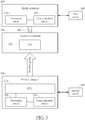
- FIG. 3 is a simplified block diagram of an accessory apparatus 300 with wireless charging function in accordance with a second example of the present invention.
- FIG. 4 is a simplified diagram of a signal flow in in accordance with the first example of the present invention.
- the accessory apparatus 300 comprises a wireless power receiver (PRX) 310, wherein the PRX 310 may be coupled to a mobile apparatus 400 via a connecting cable 450 such as a Micro-USB cable, a Lightening cable, or a USB type C cable, and the PRX 310 may be a wireless power reception module defined by the Wireless Power Consortium (WPC) specification, which consists of a coil, an analog circuit (e.g.
- WPC Wireless Power Consortium
- the PRX 310 may be coupled to a processing circuit 410 of the mobile apparatus 400 and wirelessly connected to a wireless power transmitter (PTX) 510 of a wireless charger 500, wherein the PTX 510 may be a wireless power transmission module defined by the WPC specification, which consists of a coil, an analog circuit (e.g. a matching circuit) and a control IC, and the processing circuit 410 may be a CPU and comprise a processor, a memory, and a communication circuit.
- the wireless charger 200 may be a device which includes a wireless power transmission module or further includes other modules such as a BLE module or a LCD module.
- the wireless charger 200 may be a wireless charging pad.
- the mobile apparatus 400 may be a mobile phone, a tablet, a personal digital assistant (PDA), a lap top computer, a digital camera, a music player, a game device, or any other device with a processor.
- PDA personal digital assistant
- the PTX 510 may provide a wireless power to the PRX 310 to initiate an In-band communication so that the PTX 510 send a first authentication request signal R1 to the PRX 310 (i.e. the PRX 310 receives the wireless power and the first authentication request signal R1 from the PTX 510), wherein the In-band communication means the communication signal is attached on the wireless power signal.
- the In-band communication may be the Load Modulation and FSK defined in the WPC specification.
- the first authentication request signal R1 may be just a bit.
- the PRX 310 will send a second authentication request signal R2 to the mobile apparatus 400 (or to the processing circuit 410 of mobile apparatus 400), wherein the second authentication request signal R2 may include a bit and an ID of the PRX 310.
- the communication circuit 430 is coupled to the processing circuit 410 as shown in FIG. 3 , and utilized for sending a third authentication request signal R3 to a first server 580, wherein the third authentication request signal R3 may include a bit, the ID of the PRX 310 and an ID of the mobile apparatus 400.
- the first server 580 will send a third authentication information A3 according to the third authentication request signal R3 to the communication circuit 430 of the mobile apparatus 400, wherein the third authentication information A3 may include a password, the ID of the PRX 310 and the ID of the mobile apparatus 400.
- the mobile apparatus 400 (or the processing circuit 410 of the mobile apparatus 400) will send a second authentication information A2 to the PRX 310, wherein the second authentication information A2 may include the password and the ID of the PRX 310.
- the PRX 310 will send a first authentication information A1 to the PTX 510, wherein the first authentication information A1 may be only the password.
- the formats and encoding schemes of the first authentication request signal R1, the second authentication request signal R2, and the third authentication request signal R3 may be different according to different design requirement, and the formats and encoding schemes of the first authentication information A1, the second authentication information A2 and the third authentication information A3 also may be different according to different design requirement.
- the wireless charger 500 may further comprise a processing circuit 510.
- the processing circuit 510 may control the wireless charger 500 whether to keep or stop providing the wireless power, and in another example, the processing circuit 510 may adjust a power level of the wireless power according to the first authentication information A1. For example, the processing circuit 510 may determine to select a fast charging mode, a normal charging mode, or a slow charging mode for charging the different mobile apparatuses with different access authorities according to the first authentication information A1.
- the wireless charger 500 also may be integrated in a light device or an electronic device (such as a control device integrated in a car or a home appliance), and the processing circuit 510 can control the light device or the electronic device according to the first authentication information A1.
- the processing circuit 510 can control the light device or the electronic device to turn on or turn off.
- the wireless charger 500 may further comprise a communication circuit 530 for sending the first authentication information A1 to a second server 590, and the second server 590 will respond with a feedback signal S1 to the wireless charger 500.
- the second server 590 may respond with the feedback signal S1 to control the wireless charger 500 whether to keep or stop providing the wireless power, or adjust a power level of the wireless power according to the first authentication information A1.
- the second server 590 may respond with the feedback signal S1 to control the wireless charger 500 to determine to select a fast charging mode, a normal charging mode, or a slow charging mode for charging the different mobile apparatuses with different access authorities according to the first authentication information A1.
- the wireless charger 500 also may be integrated in a light device or an electronic device (such as a control device integrated in a car or a home appliance), and the second server 590 may respond with the feedback signal S1 to control the light device or the electronic device according to the first authentication information A1.
- the second server 590 may respond with the feedback signal S1 to control the light device or the electronic device to turn on or turn off.
- the first server 580 and the second server 590 may be one and the same, that is, the first server 580 and the second server 590 may be combined to one server according to different design requirement.
- the remote management system and the remote management method for wireless charging disclosed by the present invention are capable of allowing a PRX to communicate with a CPU of a mobile device.
Landscapes
- Engineering & Computer Science (AREA)
- Computer Networks & Wireless Communication (AREA)
- Power Engineering (AREA)
- Signal Processing (AREA)
- Charge And Discharge Circuits For Batteries Or The Like (AREA)
- Telephone Function (AREA)
Abstract
Description
- The present invention relates to a mobile apparatus and an accessory apparatus with wireless charging function, and more particularly, to a mobile apparatus and an accessory apparatus with wireless charging function capable of allowing a wireless power receiver (PRX) to communicate with a CPU of a mobile device.
- Wireless Power Consortium (WPC) and air fuel alliance (AFA) are two leading organizations in the world for developing wireless charging standard. The document "The Qi Wireless Power Transfer System - Power Class 0 Specification" released in April 2016 describes the interaction between a wireless power transmitter (PTX) and a wireless power receiver (PRX). In commercial wireless power systems, the PRX designed for a smart phone usually has no way to communicate with a CPU of the smart phone. It means, if the authentication is required, the PRX has to generate a reliable password by itself and sent it to the PTX.
- It is therefore one of the objectives of the disclosure to provide a mobile apparatus with wireless charging function and an accessory apparatus with wireless charging function capable of allowing a wireless power receiver (PRX) to communicate with a CPU of a mobile device, so as to solve the problem mentioned above.
- In accordance with an example of the present invention, a mobile apparatus with wireless charging function is disclosed. The mobile apparatus comprises: a processing circuit and a wireless power receiver (PRX). The PRX is coupled to the processing circuit and wirelessly connected to a wireless power transmitter (PTX) of a wireless charger, for receiving a wireless power, wherein the PRX receives a first authentication request signal from the PTX and then sends a second authentication request signal to the processing circuit, and the processing circuit sends a second authentication information to the PRX, and the PRX sends a first authentication information to the PTX.
- In accordance with an example of the present invention, an accessory apparatus with wireless charging function is disclosed. The accessory apparatus comprises: a wireless power receiver (PRX). The PRX is coupled to a mobile apparatus and wirelessly connected to a wireless power transmitter (PTX) of a wireless charger, for receiving a wireless power, wherein the PRX receives a first authentication request signal from the PTX and then sends a second authentication request signal to the mobile apparatus, and the PRX further receives a second authentication information from the mobile apparatus and then sends a first authentication information to the PTX.
- Briefly summarized, the remote management system and the remote management method for wireless charging disclosed by the present invention are capable of allowing a PRX to communicate with a CPU of a mobile device.
- These and other objectives of the present invention will no doubt become obvious to those of ordinary skill in the art after reading the following detailed description of the preferred embodiment that is illustrated in the various figures and drawings.
-
-
FIG. 1 is a simplified block diagram of a mobile apparatus with wireless charging function in accordance with a first example of the present invention. -
FIG. 2 is a simplified diagram of a signal flow in in accordance with the first example inFIG. 1 of the present invention. -
FIG. 3 is a simplified block diagram of a mobile apparatus with wireless charging function in accordance with a second example of the present invention. -
FIG. 4 is a simplified diagram of a signal flow in in accordance with the second example inFIG. 3 of the present invention. - Certain terms are used throughout the description and following claims to refer to particular components. As one skilled in the art will appreciate, manufacturers may refer to a component by different names. This document does not intend to distinguish between components that differ in name but not function. In the following description and in the claims, the terms "include" and "comprise" are used in an open-ended fashion, and thus should be interpreted to mean "include, but not limited to". Also, the term "couple" is intended to mean either an indirect or direct electrical connection. Accordingly, if one device is coupled to another device, that connection may be through a direct electrical connection, or through an indirect electrical connection via other devices and connections. When a feature in the description and/or claims is described as doing something, for example the PRX receives a signal, then this comprises that the feature in question is also configured for doing that something.
- Please refer to
FIG. 1 andFIG. 2 together.FIG. 1 is a simplified block diagram of amobile apparatus 100 with wireless charging function in accordance with a first example of the present invention, wherein themobile apparatus 100 may be a mobile phone, a tablet, a personal digital assistant (PDA), a lap top computer, a digital camera, a music player, a game device, or any other device with a processor.FIG. 2 is a simplified diagram of a signal flow in in accordance with the first example of the present invention. As shown inFIG. 1 , themobile apparatus 100 comprises: aprocessing circuit 110, a wireless power receiver (PRX) 120, and acommunication circuit 130, wherein theprocessing circuit 110 may be a CPU and comprise a processor, a memory, and a communication circuit, and thePRX 120 may be a wireless power reception module defined by the Wireless Power Consortium (WPC) specification, which consists of a coil, an analog circuit (e.g. a rectifier) and a control IC. The PRX 120 is coupled to theprocessing circuit 110 and wirelessly connected to a wireless power transmitter (PTX) 210 of awireless charger 200, wherein the PTX 210 may be a wireless power transmission module defined by the WPC specification, which consists of a coil, an analog circuit (e.g. a matching circuit) and a control IC, and the PRX 120 may be coupled to theprocessing circuit 110 via abus 140. In addition, thewireless charger 200 may be a device which includes a wireless power transmission module or further includes other modules such as a BLE module or a LCD module. For example, thewireless charger 200 may be a wireless charging pad. - As shown in
FIG. 2 , The PTX 210 may provide a wireless power to thePRX 120 to initiate an In-band communication so that thePTX 210 send a first authentication request signal R1 to the PRX 120 (i.e. thePRX 120 receives the wireless power and the first authentication request signal R1 from the PTX 210), wherein the In-band communication means the communication signal is attached on the wireless power signal. For example, the In-band communication may be the Load Modulation and FSK defined in the WPC specification. In addition, the first authentication request signal R1 may be just a bit. Next, the PRX 120 will send a second authentication request signal R2 to theprocessing circuit 110, wherein the second authentication request signal R2 may include a bit and an ID of thePRX 120. - In addition, the
communication circuit 130 is coupled to theprocessing circuit 110, and utilized for sending a third authentication request signal R3 to afirst server 280, wherein the third authentication request signal R3 may include a bit, the ID of thePRX 120 and an ID of themobile apparatus 100. Next, thefirst server 280 will send a third authentication information A3 according to the third authentication request signal R3 to thecommunication circuit 130 of themobile apparatus 100, wherein the third authentication information A3 may include a password, the ID of thePRX 120 and the ID of themobile apparatus 100. Next, theprocessing circuit 110 of themobile apparatus 100 will send a second authentication information A2 to thePRX 120, wherein the second authentication information A2 may include the password and the ID of thePRX 120. Next, the PRX 120 will send a first authentication information A1 to thePTX 210, wherein the first authentication information A1 may be only the password. Please note that the formats and encoding schemes of the first authentication request signal R1, the second authentication request signal R2, and the third authentication request signal R3 may be different according to different design requirement, and the formats and encoding schemes of the first authentication information A1, the second authentication information A2 and the third authentication information A3 also may be different according to different design requirement. - In addition, the
wireless charger 200 may further comprise aprocessing circuit 210. In one example, theprocessing circuit 210 may control thewireless charger 200 whether to keep or stop providing the wireless power, and in another example, theprocessing circuit 210 may adjust a power level of the wireless power according to the first authentication information A1. For example, theprocessing circuit 210 may determine to select a fast charging mode, a normal charging mode, or a slow charging mode for charging the different mobile apparatuses with different access authorities according to the first authentication information A1. - In another example, the
wireless charger 200 also may be integrated in a light device or an electronic device (such as a control device integrated in a car or a home appliance), and theprocessing circuit 110 can control the light device or the electronic device according to the first authentication information A1. For example, theprocessing circuit 110 can control the light device or the electronic device to turn on or turn off. - In addition, if the
wireless charger 200 does not have a enough memory space for storing data corresponding to the first authentication information A1 for identifying the different mobile apparatuses with different access authorities, thewireless charger 200 may further comprise acommunication circuit 230 for sending the first authentication information A1 to asecond server 290, and thesecond server 290 will respond with a feedback signal S1 to thewireless charger 200. In one example, thesecond server 290 may respond with the feedback signal S1 to control thewireless charger 200 whether to keep or stop providing the wireless power, or adjust a power level of the wireless power according to the first authentication information A1. For example, thesecond server 290 may respond with the feedback signal S1 to control thewireless charger 200 to determine to select a fast charging mode, a normal charging mode, or a slow charging mode for charging the different mobile apparatuses with different access authorities according to the first authentication information A1. - In another example, the
wireless charger 200 also may be integrated in a light device or an electronic device (such as a control device integrated in a car or a home appliance), and thesecond server 290 may respond with the feedback signal S1 to control the light device or the electronic device according to the first authentication information A1. For example, thesecond server 290 may respond with the feedback signal S1 to control the light device or the electronic device to turn on or turn off. Please note that the above example is only for an illustrative purpose and is not meant to be a limitation of the present invention. For example, thefirst server 280 and thesecond server 290 may be one and the same, that is, thefirst server 280 and thesecond server 290 may be combined to one server according to different design requirement. - Please refer to
FIG. 3 andFIG. 4 together.FIG. 3 is a simplified block diagram of anaccessory apparatus 300 with wireless charging function in accordance with a second example of the present invention.FIG. 4 is a simplified diagram of a signal flow in in accordance with the first example of the present invention. As shown inFIG. 3 , theaccessory apparatus 300 comprises a wireless power receiver (PRX) 310, wherein the PRX 310 may be coupled to amobile apparatus 400 via a connectingcable 450 such as a Micro-USB cable, a Lightening cable, or a USB type C cable, and the PRX 310 may be a wireless power reception module defined by the Wireless Power Consortium (WPC) specification, which consists of a coil, an analog circuit (e.g. a rectifier) and a control IC. The PRX 310 may be coupled to aprocessing circuit 410 of themobile apparatus 400 and wirelessly connected to a wireless power transmitter (PTX) 510 of awireless charger 500, wherein the PTX 510 may be a wireless power transmission module defined by the WPC specification, which consists of a coil, an analog circuit (e.g. a matching circuit) and a control IC, and theprocessing circuit 410 may be a CPU and comprise a processor, a memory, and a communication circuit. In addition, thewireless charger 200 may be a device which includes a wireless power transmission module or further includes other modules such as a BLE module or a LCD module. For example, thewireless charger 200 may be a wireless charging pad. In addition, themobile apparatus 400 may be a mobile phone, a tablet, a personal digital assistant (PDA), a lap top computer, a digital camera, a music player, a game device, or any other device with a processor. - As shown in
FIG. 4 , ThePTX 510 may provide a wireless power to thePRX 310 to initiate an In-band communication so that thePTX 510 send a first authentication request signal R1 to the PRX 310 (i.e. thePRX 310 receives the wireless power and the first authentication request signal R1 from the PTX 510), wherein the In-band communication means the communication signal is attached on the wireless power signal. For example, the In-band communication may be the Load Modulation and FSK defined in the WPC specification. In addition, the first authentication request signal R1 may be just a bit. Next, thePRX 310 will send a second authentication request signal R2 to the mobile apparatus 400 (or to theprocessing circuit 410 of mobile apparatus 400), wherein the second authentication request signal R2 may include a bit and an ID of thePRX 310. - In addition, the
communication circuit 430 is coupled to theprocessing circuit 410 as shown inFIG. 3 , and utilized for sending a third authentication request signal R3 to afirst server 580, wherein the third authentication request signal R3 may include a bit, the ID of thePRX 310 and an ID of themobile apparatus 400. Next, thefirst server 580 will send a third authentication information A3 according to the third authentication request signal R3 to thecommunication circuit 430 of themobile apparatus 400, wherein the third authentication information A3 may include a password, the ID of thePRX 310 and the ID of themobile apparatus 400. Next, the mobile apparatus 400 (or theprocessing circuit 410 of the mobile apparatus 400) will send a second authentication information A2 to thePRX 310, wherein the second authentication information A2 may include the password and the ID of thePRX 310. Next, thePRX 310 will send a first authentication information A1 to thePTX 510, wherein the first authentication information A1 may be only the password. Please note that the formats and encoding schemes of the first authentication request signal R1, the second authentication request signal R2, and the third authentication request signal R3 may be different according to different design requirement, and the formats and encoding schemes of the first authentication information A1, the second authentication information A2 and the third authentication information A3 also may be different according to different design requirement. - In addition, the
wireless charger 500 may further comprise aprocessing circuit 510. In one example, theprocessing circuit 510 may control thewireless charger 500 whether to keep or stop providing the wireless power, and in another example, theprocessing circuit 510 may adjust a power level of the wireless power according to the first authentication information A1. For example, theprocessing circuit 510 may determine to select a fast charging mode, a normal charging mode, or a slow charging mode for charging the different mobile apparatuses with different access authorities according to the first authentication information A1. - In another example, the
wireless charger 500 also may be integrated in a light device or an electronic device (such as a control device integrated in a car or a home appliance), and theprocessing circuit 510 can control the light device or the electronic device according to the first authentication information A1. For example, theprocessing circuit 510 can control the light device or the electronic device to turn on or turn off. - In addition, if the
wireless charger 500 does not have a enough memory space for storing data corresponding to the first authentication information A1 for identifying the different mobile apparatuses with different access authorities, thewireless charger 500 may further comprise acommunication circuit 530 for sending the first authentication information A1 to asecond server 590, and thesecond server 590 will respond with a feedback signal S1 to thewireless charger 500. In one example, thesecond server 590 may respond with the feedback signal S1 to control thewireless charger 500 whether to keep or stop providing the wireless power, or adjust a power level of the wireless power according to the first authentication information A1. For example, thesecond server 590 may respond with the feedback signal S1 to control thewireless charger 500 to determine to select a fast charging mode, a normal charging mode, or a slow charging mode for charging the different mobile apparatuses with different access authorities according to the first authentication information A1. - In another example, the
wireless charger 500 also may be integrated in a light device or an electronic device (such as a control device integrated in a car or a home appliance), and thesecond server 590 may respond with the feedback signal S1 to control the light device or the electronic device according to the first authentication information A1. For example, thesecond server 590 may respond with the feedback signal S1 to control the light device or the electronic device to turn on or turn off. Please note that the above example is only for an illustrative purpose and is not meant to be a limitation of the present invention. For example, thefirst server 580 and thesecond server 590 may be one and the same, that is, thefirst server 580 and thesecond server 590 may be combined to one server according to different design requirement. - Briefly summarized, the remote management system and the remote management method for wireless charging disclosed by the present invention are capable of allowing a PRX to communicate with a CPU of a mobile device.
- Those skilled in the art will readily observe that numerous modifications and alterations of the device and method may be made while retaining the teachings of the invention. Accordingly, the above disclosure should be construed as limited only by the metes and bounds of the appended claims.
Claims (15)
- A mobile apparatus with wireless charging function, comprising:a processing circuit; anda wireless power receiver (PRX), coupled to the processing circuit and wirelessly connected to a wireless power transmitter (PTX) of a wireless charger, for receiving a wireless power, wherein the PRX receives a first authentication request signal from the PTX and then sends a second authentication request signal to the processing circuit, and the processing circuit sends a second authentication information to the PRX, and the PRX sends a first authentication information to the PTX.
- The mobile apparatus of claim 1, further comprising:a communication circuit, coupled to the processing circuit, for sending a third authentication request signal to a first server, wherein the first server sends a third authentication information according to the third authentication request signal to the communication circuit.
- The mobile apparatus of claim 1 or 2, wherein the wireless charger further comprises a processing circuit and the processing circuit controls the wireless charger whether to keep or stop providing the wireless power, or adjust a power level of the wireless power according to the first authentication information; and wherein the wireless charger is integrated in a light device or an electronic device, and the processing circuit controls the light device or the electronic device according to the first authentication information.
- The mobile apparatus according to any one of the preceding claims, wherein the wireless charger further comprises a communication circuit for sending the first authentication information to a second server, and the second server responds with a feedback signal to the wireless charger.
- The mobile apparatus of claim 4, wherein the second server responds with the feedback signal to control the wireless charger whether to keep or stop providing the wireless power, or adjust a power level of the wireless power according to the first authentication information; and wherein the wireless charger is integrated in a light device or an electronic device, and the second server responds with the feedback signal to control the light device or the electronic device according to the first authentication information.
- The mobile apparatus of claim 4, wherein the first server and the second server are one and the same.
- The mobile apparatus according to any one of the preceding claims, wherein the PRX is coupled to the processing circuit via a bus.
- The mobile apparatus according to any one of the preceding claims, wherein the processing circuit further comprises: a processor, a memory, and a communication circuit.
- An accessory apparatus with wireless charging function, comprising:a wireless power receiver (PRX), coupled to a processing circuit of a mobile apparatus and wirelessly connected to a wireless power transmitter (PTX) of a wireless charger, wherein the PTX provides a wireless power to the PRX to initiate an In-band communication so that the PTX send a first authentication request signal to the PRX, and the PRX sends a second authentication request signal to the processing circuit, and the processing circuit sends a second authentication information to the PRX, and the PRX sends a first authentication information to the PTX.
- The accessory apparatus of claim 9, wherein the mobile apparatus further comprises a communication circuit coupled to the processing circuit and utilized for sending a third authentication request signal to a first server, wherein the first server sends a third authentication information according to the third authentication request signal to the communication circuit.
- The accessory apparatus of claim 9 or 10, wherein the wireless charger further comprises a processing circuit and the processing circuit controls the wireless charger whether to keep or stop providing the wireless power, or adjust a power level of the wireless power according to the first authentication information; and wherein the wireless charger is integrated in a light device or an electronic device, and the processing circuit controls the light device or the electronic device according to the first authentication information.
- The accessory apparatus according to any one of the preceding claims 9 to 11, wherein the wireless charger further comprises a communication circuit for sending the first authentication information to a second server, and the second server responds with a feedback signal to the wireless charger.
- The accessory apparatus of claim 12, wherein the second server responds with the feedback signal to control the wireless charger whether to keep or stop providing the wireless power, or adjust a power level of the wireless power according to the first authentication information; and wherein the wireless charger is integrated in a light device or an electronic device, and the second server responds with the feedback signal to control the light device or the electronic device according to the first authentication information.
- The accessory apparatus of claim 12, wherein the first server and the second server are one and the same.
- The accessory apparatus according to any one of the preceding claims 9 to 14, wherein the PRX is coupled to the mobile apparatus via a connecting cable such as a Micro-USB cable, a Lightening cable, or a USB type C cable.
Priority Applications (2)
| Application Number | Priority Date | Filing Date | Title |
|---|---|---|---|
| US15/394,838 US10581273B2 (en) | 2016-12-30 | 2016-12-30 | Wireless charging receiver group authentication |
| EP16207491.8A EP3343727B1 (en) | 2016-12-30 | 2016-12-30 | User privacy protection in wireless charging system |
Applications Claiming Priority (2)
| Application Number | Priority Date | Filing Date | Title |
|---|---|---|---|
| US15/394,838 US10581273B2 (en) | 2016-12-30 | 2016-12-30 | Wireless charging receiver group authentication |
| EP16207491.8A EP3343727B1 (en) | 2016-12-30 | 2016-12-30 | User privacy protection in wireless charging system |
Publications (2)
| Publication Number | Publication Date |
|---|---|
| EP3343727A1 true EP3343727A1 (en) | 2018-07-04 |
| EP3343727B1 EP3343727B1 (en) | 2021-01-20 |
Family
ID=66813666
Family Applications (1)
| Application Number | Title | Priority Date | Filing Date |
|---|---|---|---|
| EP16207491.8A Active EP3343727B1 (en) | 2016-12-30 | 2016-12-30 | User privacy protection in wireless charging system |
Country Status (2)
| Country | Link |
|---|---|
| US (1) | US10581273B2 (en) |
| EP (1) | EP3343727B1 (en) |
Cited By (2)
| Publication number | Priority date | Publication date | Assignee | Title |
|---|---|---|---|---|
| WO2019208343A1 (en) * | 2018-04-27 | 2019-10-31 | キヤノン株式会社 | Power reception device, power transmission device, wireless power transmission system, method for controlling power reception device, method for controlling power transmission device, and program |
| WO2020168892A1 (en) * | 2019-02-22 | 2020-08-27 | 维沃移动通信有限公司 | Charging control circuit, terminal device and control method |
Families Citing this family (4)
| Publication number | Priority date | Publication date | Assignee | Title |
|---|---|---|---|---|
| CN107332590B (en) * | 2017-08-29 | 2021-01-01 | 北京小米移动软件有限公司 | Wireless charging method, transmitting terminal, receiving terminal and power management module |
| JP6906488B2 (en) * | 2018-09-05 | 2021-07-21 | 株式会社東芝 | Electronic devices and methods |
| US11336127B2 (en) * | 2019-08-15 | 2022-05-17 | Mediatek Singapore Pte. Ltd. | Calibration of foreign object detection in wireless power systems with authentication |
| US20230352986A1 (en) * | 2020-09-02 | 2023-11-02 | Lg Electronics Inc. | Wireless power transmission device, wireless power reception device, communication method by wireless power transmission device, and communication method by wireless power reception device |
Citations (3)
| Publication number | Priority date | Publication date | Assignee | Title |
|---|---|---|---|---|
| US20050215233A1 (en) * | 2004-03-23 | 2005-09-29 | Motorola, Inc. | System and method for authenticating wireless device with fixed station |
| US20100264746A1 (en) * | 2009-03-31 | 2010-10-21 | Fujitsu Limited | Wireless power transmitting system, power receiving station, power transmitting station, and recording medium |
| US20120326524A1 (en) * | 2010-04-19 | 2012-12-27 | Takaoki Matsumoto | Non-contact power transmission device |
Family Cites Families (2)
| Publication number | Priority date | Publication date | Assignee | Title |
|---|---|---|---|---|
| JP4650407B2 (en) * | 2006-12-12 | 2011-03-16 | ソニー株式会社 | Wireless processing system, wireless processing method, and wireless electronic device |
| KR101785456B1 (en) * | 2011-04-25 | 2017-11-06 | 엘지전자 주식회사 | Apparatus and system for providing wireless power charge service |
-
2016
- 2016-12-30 EP EP16207491.8A patent/EP3343727B1/en active Active
- 2016-12-30 US US15/394,838 patent/US10581273B2/en active Active
Patent Citations (3)
| Publication number | Priority date | Publication date | Assignee | Title |
|---|---|---|---|---|
| US20050215233A1 (en) * | 2004-03-23 | 2005-09-29 | Motorola, Inc. | System and method for authenticating wireless device with fixed station |
| US20100264746A1 (en) * | 2009-03-31 | 2010-10-21 | Fujitsu Limited | Wireless power transmitting system, power receiving station, power transmitting station, and recording medium |
| US20120326524A1 (en) * | 2010-04-19 | 2012-12-27 | Takaoki Matsumoto | Non-contact power transmission device |
Non-Patent Citations (2)
| Title |
|---|
| "System Description Wireless Power Transfer Volume I: Low Power Part 1: Interface Definition passage", 1 June 2013, SYSTEM DESCRIPTION WIRELESS POWER TRANSFER VOLUME I: LOW POWER PART 1: INTERFACE DEFINI,, PAGE(S) 1 - 186, XP007923140 * |
| THE QI WIRELESS POWER TRANSFER SYSTEM - POWER CLASS 0 SPECIFICATION, April 2016 (2016-04-01) |
Cited By (4)
| Publication number | Priority date | Publication date | Assignee | Title |
|---|---|---|---|---|
| WO2019208343A1 (en) * | 2018-04-27 | 2019-10-31 | キヤノン株式会社 | Power reception device, power transmission device, wireless power transmission system, method for controlling power reception device, method for controlling power transmission device, and program |
| US11837889B2 (en) | 2018-04-27 | 2023-12-05 | Canon Kabushiki Kaisha | Power receiving apparatus, power transmitting apparatus, control method of power receiving apparatus, control method of power transmitting apparatus, and non-transitory computer-readable storage medium |
| WO2020168892A1 (en) * | 2019-02-22 | 2020-08-27 | 维沃移动通信有限公司 | Charging control circuit, terminal device and control method |
| US12057725B2 (en) | 2019-02-22 | 2024-08-06 | Vivo Mobile Communication Co., Ltd. | Charging control circuit, terminal device, control method and computer-readable storage medium |
Also Published As
| Publication number | Publication date |
|---|---|
| US10581273B2 (en) | 2020-03-03 |
| EP3343727B1 (en) | 2021-01-20 |
| US20180191190A1 (en) | 2018-07-05 |
Similar Documents
| Publication | Publication Date | Title |
|---|---|---|
| US10581273B2 (en) | Wireless charging receiver group authentication | |
| EP2822142B1 (en) | Method for wireless charging authentication and related wireless charging system | |
| US8712324B2 (en) | Inductive signal transfer system for computing devices | |
| US10158992B2 (en) | Method and apparatus for controlling operations of electronic device | |
| US9847667B2 (en) | Method of handling wireless charging authentication | |
| EP3451492B1 (en) | Method, transmitter, receiver and power management apparatus for wireless charging | |
| CN112425030B (en) | Electronic device for controlling communication channel using wireless charging and operation method thereof | |
| US20190044393A1 (en) | Method of authentication | |
| KR102114404B1 (en) | Method and apparatus for wireless charging of an electronic device | |
| US11251655B2 (en) | Electronic device and method for controlling wireless charging | |
| US20060145660A1 (en) | Method and apparatus for near field communications | |
| KR20140023409A (en) | Wireless charging system and method of cotnrolligng the same | |
| KR102706914B1 (en) | Method for wireless charging and electronic device supporting the same | |
| US10312746B2 (en) | Power providing equipment, mobile device, operating method of mobile device | |
| US20140298447A1 (en) | Method for Enhancing Security of Portable Electronic Device and Related Wireless Charging System | |
| CN106981892A (en) | Power supply device and power receiving device in wireless charging system and charging controller thereof | |
| US9102285B2 (en) | Housing electronic components in automotive fuses | |
| JP2019197598A (en) | Systems and methods for low voltage secure digital (sd) interfaces | |
| KR20210035479A (en) | An electronic device for selectively using coils to support power sharing | |
| KR102001223B1 (en) | System and method for authorizing mobile terminal connecting to external device, and external device authorizing mobile terminal | |
| US20140273823A1 (en) | Nfc capability for smartphones and other devices | |
| JP2006287832A (en) | Communication terminal device | |
| KR20200069829A (en) | Device for Transferring and Receiving Wireless Power and the Method for Adjusting Power thereof | |
| WO2015186999A1 (en) | System and method for secured power source | |
| EP3343721A1 (en) | Wireless charging management system and method |
Legal Events
| Date | Code | Title | Description |
|---|---|---|---|
| PUAI | Public reference made under article 153(3) epc to a published international application that has entered the european phase |
Free format text: ORIGINAL CODE: 0009012 |
|
| STAA | Information on the status of an ep patent application or granted ep patent |
Free format text: STATUS: REQUEST FOR EXAMINATION WAS MADE |
|
| 17P | Request for examination filed |
Effective date: 20161230 |
|
| AK | Designated contracting states |
Kind code of ref document: A1 Designated state(s): AL AT BE BG CH CY CZ DE DK EE ES FI FR GB GR HR HU IE IS IT LI LT LU LV MC MK MT NL NO PL PT RO RS SE SI SK SM TR |
|
| AX | Request for extension of the european patent |
Extension state: BA ME |
|
| RBV | Designated contracting states (corrected) |
Designated state(s): AL AT BE BG CH CY CZ DE DK EE ES FI FR GB GR HR HU IE IS IT LI LT LU LV MC MK MT NL NO PL PT RO RS SE SI SK SM TR |
|
| R17P | Request for examination filed (corrected) |
Effective date: 20161230 |
|
| STAA | Information on the status of an ep patent application or granted ep patent |
Free format text: STATUS: EXAMINATION IS IN PROGRESS |
|
| 17Q | First examination report despatched |
Effective date: 20200319 |
|
| RIC1 | Information provided on ipc code assigned before grant |
Ipc: H02J 50/10 20160101ALI20200810BHEP Ipc: H02J 7/00 20060101ALN20200810BHEP Ipc: H02J 50/80 20160101ALI20200810BHEP Ipc: H04B 5/00 20060101ALI20200810BHEP Ipc: H02J 50/20 20160101ALI20200810BHEP Ipc: G06F 1/26 20060101ALI20200810BHEP Ipc: H02J 7/02 20160101AFI20200810BHEP |
|
| GRAP | Despatch of communication of intention to grant a patent |
Free format text: ORIGINAL CODE: EPIDOSNIGR1 |
|
| STAA | Information on the status of an ep patent application or granted ep patent |
Free format text: STATUS: GRANT OF PATENT IS INTENDED |
|
| RIC1 | Information provided on ipc code assigned before grant |
Ipc: H02J 7/02 20160101AFI20200907BHEP Ipc: G06F 1/26 20060101ALI20200907BHEP Ipc: H02J 7/00 20060101ALN20200907BHEP Ipc: H02J 50/80 20160101ALI20200907BHEP Ipc: H04B 5/00 20060101ALI20200907BHEP Ipc: H02J 50/20 20160101ALI20200907BHEP Ipc: H02J 50/10 20160101ALI20200907BHEP |
|
| RIC1 | Information provided on ipc code assigned before grant |
Ipc: H02J 7/02 20160101AFI20200924BHEP Ipc: G06F 1/26 20060101ALI20200924BHEP Ipc: H02J 7/00 20060101ALN20200924BHEP Ipc: H04B 5/00 20060101ALI20200924BHEP Ipc: H02J 50/20 20160101ALI20200924BHEP Ipc: H02J 50/80 20160101ALI20200924BHEP Ipc: H02J 50/10 20160101ALI20200924BHEP |
|
| INTG | Intention to grant announced |
Effective date: 20201009 |
|
| GRAS | Grant fee paid |
Free format text: ORIGINAL CODE: EPIDOSNIGR3 |
|
| GRAA | (expected) grant |
Free format text: ORIGINAL CODE: 0009210 |
|
| STAA | Information on the status of an ep patent application or granted ep patent |
Free format text: STATUS: THE PATENT HAS BEEN GRANTED |
|
| AK | Designated contracting states |
Kind code of ref document: B1 Designated state(s): AL AT BE BG CH CY CZ DE DK EE ES FI FR GB GR HR HU IE IS IT LI LT LU LV MC MK MT NL NO PL PT RO RS SE SI SK SM TR |
|
| REG | Reference to a national code |
Ref country code: GB Ref legal event code: FG4D |
|
| REG | Reference to a national code |
Ref country code: CH Ref legal event code: EP |
|
| REG | Reference to a national code |
Ref country code: DE Ref legal event code: R096 Ref document number: 602016051637 Country of ref document: DE |
|
| REG | Reference to a national code |
Ref country code: AT Ref legal event code: REF Ref document number: 1357188 Country of ref document: AT Kind code of ref document: T Effective date: 20210215 |
|
| REG | Reference to a national code |
Ref country code: IE Ref legal event code: FG4D |
|
| REG | Reference to a national code |
Ref country code: NL Ref legal event code: FP |
|
| REG | Reference to a national code |
Ref country code: LT Ref legal event code: MG9D |
|
| REG | Reference to a national code |
Ref country code: AT Ref legal event code: MK05 Ref document number: 1357188 Country of ref document: AT Kind code of ref document: T Effective date: 20210120 |
|
| PG25 | Lapsed in a contracting state [announced via postgrant information from national office to epo] |
Ref country code: GR Free format text: LAPSE BECAUSE OF FAILURE TO SUBMIT A TRANSLATION OF THE DESCRIPTION OR TO PAY THE FEE WITHIN THE PRESCRIBED TIME-LIMIT Effective date: 20210421 Ref country code: HR Free format text: LAPSE BECAUSE OF FAILURE TO SUBMIT A TRANSLATION OF THE DESCRIPTION OR TO PAY THE FEE WITHIN THE PRESCRIBED TIME-LIMIT Effective date: 20210120 Ref country code: FI Free format text: LAPSE BECAUSE OF FAILURE TO SUBMIT A TRANSLATION OF THE DESCRIPTION OR TO PAY THE FEE WITHIN THE PRESCRIBED TIME-LIMIT Effective date: 20210120 Ref country code: NO Free format text: LAPSE BECAUSE OF FAILURE TO SUBMIT A TRANSLATION OF THE DESCRIPTION OR TO PAY THE FEE WITHIN THE PRESCRIBED TIME-LIMIT Effective date: 20210420 Ref country code: PT Free format text: LAPSE BECAUSE OF FAILURE TO SUBMIT A TRANSLATION OF THE DESCRIPTION OR TO PAY THE FEE WITHIN THE PRESCRIBED TIME-LIMIT Effective date: 20210520 Ref country code: BG Free format text: LAPSE BECAUSE OF FAILURE TO SUBMIT A TRANSLATION OF THE DESCRIPTION OR TO PAY THE FEE WITHIN THE PRESCRIBED TIME-LIMIT Effective date: 20210420 Ref country code: LT Free format text: LAPSE BECAUSE OF FAILURE TO SUBMIT A TRANSLATION OF THE DESCRIPTION OR TO PAY THE FEE WITHIN THE PRESCRIBED TIME-LIMIT Effective date: 20210120 |
|
| PG25 | Lapsed in a contracting state [announced via postgrant information from national office to epo] |
Ref country code: AT Free format text: LAPSE BECAUSE OF FAILURE TO SUBMIT A TRANSLATION OF THE DESCRIPTION OR TO PAY THE FEE WITHIN THE PRESCRIBED TIME-LIMIT Effective date: 20210120 Ref country code: PL Free format text: LAPSE BECAUSE OF FAILURE TO SUBMIT A TRANSLATION OF THE DESCRIPTION OR TO PAY THE FEE WITHIN THE PRESCRIBED TIME-LIMIT Effective date: 20210120 Ref country code: LV Free format text: LAPSE BECAUSE OF FAILURE TO SUBMIT A TRANSLATION OF THE DESCRIPTION OR TO PAY THE FEE WITHIN THE PRESCRIBED TIME-LIMIT Effective date: 20210120 Ref country code: RS Free format text: LAPSE BECAUSE OF FAILURE TO SUBMIT A TRANSLATION OF THE DESCRIPTION OR TO PAY THE FEE WITHIN THE PRESCRIBED TIME-LIMIT Effective date: 20210120 Ref country code: SE Free format text: LAPSE BECAUSE OF FAILURE TO SUBMIT A TRANSLATION OF THE DESCRIPTION OR TO PAY THE FEE WITHIN THE PRESCRIBED TIME-LIMIT Effective date: 20210120 |
|
| PG25 | Lapsed in a contracting state [announced via postgrant information from national office to epo] |
Ref country code: IS Free format text: LAPSE BECAUSE OF FAILURE TO SUBMIT A TRANSLATION OF THE DESCRIPTION OR TO PAY THE FEE WITHIN THE PRESCRIBED TIME-LIMIT Effective date: 20210520 |
|
| REG | Reference to a national code |
Ref country code: DE Ref legal event code: R097 Ref document number: 602016051637 Country of ref document: DE |
|
| PG25 | Lapsed in a contracting state [announced via postgrant information from national office to epo] |
Ref country code: EE Free format text: LAPSE BECAUSE OF FAILURE TO SUBMIT A TRANSLATION OF THE DESCRIPTION OR TO PAY THE FEE WITHIN THE PRESCRIBED TIME-LIMIT Effective date: 20210120 Ref country code: CZ Free format text: LAPSE BECAUSE OF FAILURE TO SUBMIT A TRANSLATION OF THE DESCRIPTION OR TO PAY THE FEE WITHIN THE PRESCRIBED TIME-LIMIT Effective date: 20210120 Ref country code: SM Free format text: LAPSE BECAUSE OF FAILURE TO SUBMIT A TRANSLATION OF THE DESCRIPTION OR TO PAY THE FEE WITHIN THE PRESCRIBED TIME-LIMIT Effective date: 20210120 |
|
| PLBE | No opposition filed within time limit |
Free format text: ORIGINAL CODE: 0009261 |
|
| STAA | Information on the status of an ep patent application or granted ep patent |
Free format text: STATUS: NO OPPOSITION FILED WITHIN TIME LIMIT |
|
| PG25 | Lapsed in a contracting state [announced via postgrant information from national office to epo] |
Ref country code: SK Free format text: LAPSE BECAUSE OF FAILURE TO SUBMIT A TRANSLATION OF THE DESCRIPTION OR TO PAY THE FEE WITHIN THE PRESCRIBED TIME-LIMIT Effective date: 20210120 Ref country code: RO Free format text: LAPSE BECAUSE OF FAILURE TO SUBMIT A TRANSLATION OF THE DESCRIPTION OR TO PAY THE FEE WITHIN THE PRESCRIBED TIME-LIMIT Effective date: 20210120 Ref country code: DK Free format text: LAPSE BECAUSE OF FAILURE TO SUBMIT A TRANSLATION OF THE DESCRIPTION OR TO PAY THE FEE WITHIN THE PRESCRIBED TIME-LIMIT Effective date: 20210120 |
|
| 26N | No opposition filed |
Effective date: 20211021 |
|
| PG25 | Lapsed in a contracting state [announced via postgrant information from national office to epo] |
Ref country code: ES Free format text: LAPSE BECAUSE OF FAILURE TO SUBMIT A TRANSLATION OF THE DESCRIPTION OR TO PAY THE FEE WITHIN THE PRESCRIBED TIME-LIMIT Effective date: 20210120 Ref country code: AL Free format text: LAPSE BECAUSE OF FAILURE TO SUBMIT A TRANSLATION OF THE DESCRIPTION OR TO PAY THE FEE WITHIN THE PRESCRIBED TIME-LIMIT Effective date: 20210120 |
|
| PG25 | Lapsed in a contracting state [announced via postgrant information from national office to epo] |
Ref country code: SI Free format text: LAPSE BECAUSE OF FAILURE TO SUBMIT A TRANSLATION OF THE DESCRIPTION OR TO PAY THE FEE WITHIN THE PRESCRIBED TIME-LIMIT Effective date: 20210120 |
|
| PG25 | Lapsed in a contracting state [announced via postgrant information from national office to epo] |
Ref country code: IT Free format text: LAPSE BECAUSE OF FAILURE TO SUBMIT A TRANSLATION OF THE DESCRIPTION OR TO PAY THE FEE WITHIN THE PRESCRIBED TIME-LIMIT Effective date: 20210120 |
|
| PG25 | Lapsed in a contracting state [announced via postgrant information from national office to epo] |
Ref country code: IS Free format text: LAPSE BECAUSE OF FAILURE TO SUBMIT A TRANSLATION OF THE DESCRIPTION OR TO PAY THE FEE WITHIN THE PRESCRIBED TIME-LIMIT Effective date: 20210520 |
|
| PG25 | Lapsed in a contracting state [announced via postgrant information from national office to epo] |
Ref country code: MC Free format text: LAPSE BECAUSE OF FAILURE TO SUBMIT A TRANSLATION OF THE DESCRIPTION OR TO PAY THE FEE WITHIN THE PRESCRIBED TIME-LIMIT Effective date: 20210120 |
|
| REG | Reference to a national code |
Ref country code: CH Ref legal event code: PL |
|
| REG | Reference to a national code |
Ref country code: BE Ref legal event code: MM Effective date: 20211231 |
|
| PG25 | Lapsed in a contracting state [announced via postgrant information from national office to epo] |
Ref country code: LU Free format text: LAPSE BECAUSE OF NON-PAYMENT OF DUE FEES Effective date: 20211230 Ref country code: IE Free format text: LAPSE BECAUSE OF NON-PAYMENT OF DUE FEES Effective date: 20211230 |
|
| PG25 | Lapsed in a contracting state [announced via postgrant information from national office to epo] |
Ref country code: BE Free format text: LAPSE BECAUSE OF NON-PAYMENT OF DUE FEES Effective date: 20211231 |
|
| PG25 | Lapsed in a contracting state [announced via postgrant information from national office to epo] |
Ref country code: LI Free format text: LAPSE BECAUSE OF NON-PAYMENT OF DUE FEES Effective date: 20211231 Ref country code: CH Free format text: LAPSE BECAUSE OF NON-PAYMENT OF DUE FEES Effective date: 20211231 |
|
| REG | Reference to a national code |
Ref country code: DE Ref legal event code: R082 Ref document number: 602016051637 Country of ref document: DE Representative=s name: WAGNER & GEYER PARTNERSCHAFT MBB PATENT- UND R, DE |
|
| PG25 | Lapsed in a contracting state [announced via postgrant information from national office to epo] |
Ref country code: HU Free format text: LAPSE BECAUSE OF FAILURE TO SUBMIT A TRANSLATION OF THE DESCRIPTION OR TO PAY THE FEE WITHIN THE PRESCRIBED TIME-LIMIT; INVALID AB INITIO Effective date: 20161230 |
|
| PG25 | Lapsed in a contracting state [announced via postgrant information from national office to epo] |
Ref country code: CY Free format text: LAPSE BECAUSE OF FAILURE TO SUBMIT A TRANSLATION OF THE DESCRIPTION OR TO PAY THE FEE WITHIN THE PRESCRIBED TIME-LIMIT Effective date: 20210120 |
|
| P01 | Opt-out of the competence of the unified patent court (upc) registered |
Effective date: 20230602 |
|
| PG25 | Lapsed in a contracting state [announced via postgrant information from national office to epo] |
Ref country code: MK Free format text: LAPSE BECAUSE OF FAILURE TO SUBMIT A TRANSLATION OF THE DESCRIPTION OR TO PAY THE FEE WITHIN THE PRESCRIBED TIME-LIMIT Effective date: 20210120 |
|
| PG25 | Lapsed in a contracting state [announced via postgrant information from national office to epo] |
Ref country code: TR Free format text: LAPSE BECAUSE OF FAILURE TO SUBMIT A TRANSLATION OF THE DESCRIPTION OR TO PAY THE FEE WITHIN THE PRESCRIBED TIME-LIMIT Effective date: 20210120 |
|
| PG25 | Lapsed in a contracting state [announced via postgrant information from national office to epo] |
Ref country code: MT Free format text: LAPSE BECAUSE OF FAILURE TO SUBMIT A TRANSLATION OF THE DESCRIPTION OR TO PAY THE FEE WITHIN THE PRESCRIBED TIME-LIMIT Effective date: 20210120 |
|
| PGFP | Annual fee paid to national office [announced via postgrant information from national office to epo] |
Ref country code: NL Payment date: 20251112 Year of fee payment: 10 |
|
| PGFP | Annual fee paid to national office [announced via postgrant information from national office to epo] |
Ref country code: DE Payment date: 20251104 Year of fee payment: 10 |
|
| PGFP | Annual fee paid to national office [announced via postgrant information from national office to epo] |
Ref country code: GB Payment date: 20251114 Year of fee payment: 10 |
|
| PGFP | Annual fee paid to national office [announced via postgrant information from national office to epo] |
Ref country code: FR Payment date: 20251117 Year of fee payment: 10 |