EP3343216A1 - Analysis method for mycotoxins - Google Patents
Analysis method for mycotoxins Download PDFInfo
- Publication number
- EP3343216A1 EP3343216A1 EP15902925.5A EP15902925A EP3343216A1 EP 3343216 A1 EP3343216 A1 EP 3343216A1 EP 15902925 A EP15902925 A EP 15902925A EP 3343216 A1 EP3343216 A1 EP 3343216A1
- Authority
- EP
- European Patent Office
- Prior art keywords
- fluorescence detector
- column
- deoxynivalenol
- fluorescence
- detector
- Prior art date
- Legal status (The legal status is an assumption and is not a legal conclusion. Google has not performed a legal analysis and makes no representation as to the accuracy of the status listed.)
- Withdrawn
Links
Images

Classifications
-
- G—PHYSICS
- G01—MEASURING; TESTING
- G01N—INVESTIGATING OR ANALYSING MATERIALS BY DETERMINING THEIR CHEMICAL OR PHYSICAL PROPERTIES
- G01N30/00—Investigating or analysing materials by separation into components using adsorption, absorption or similar phenomena or using ion-exchange, e.g. chromatography or field flow fractionation
- G01N30/02—Column chromatography
- G01N30/62—Detectors specially adapted therefor
- G01N30/78—Detectors specially adapted therefor using more than one detector
-
- B—PERFORMING OPERATIONS; TRANSPORTING
- B01—PHYSICAL OR CHEMICAL PROCESSES OR APPARATUS IN GENERAL
- B01J—CHEMICAL OR PHYSICAL PROCESSES, e.g. CATALYSIS OR COLLOID CHEMISTRY; THEIR RELEVANT APPARATUS
- B01J20/00—Solid sorbent compositions or filter aid compositions; Sorbents for chromatography; Processes for preparing, regenerating or reactivating thereof
- B01J20/281—Sorbents specially adapted for preparative, analytical or investigative chromatography
- B01J20/286—Phases chemically bonded to a substrate, e.g. to silica or to polymers
- B01J20/287—Non-polar phases; Reversed phases
-
- G—PHYSICS
- G01—MEASURING; TESTING
- G01N—INVESTIGATING OR ANALYSING MATERIALS BY DETERMINING THEIR CHEMICAL OR PHYSICAL PROPERTIES
- G01N21/00—Investigating or analysing materials by the use of optical means, i.e. using sub-millimetre waves, infrared, visible or ultraviolet light
- G01N21/62—Systems in which the material investigated is excited whereby it emits light or causes a change in wavelength of the incident light
- G01N21/63—Systems in which the material investigated is excited whereby it emits light or causes a change in wavelength of the incident light optically excited
- G01N21/64—Fluorescence; Phosphorescence
-
- G—PHYSICS
- G01—MEASURING; TESTING
- G01N—INVESTIGATING OR ANALYSING MATERIALS BY DETERMINING THEIR CHEMICAL OR PHYSICAL PROPERTIES
- G01N30/00—Investigating or analysing materials by separation into components using adsorption, absorption or similar phenomena or using ion-exchange, e.g. chromatography or field flow fractionation
- G01N30/02—Column chromatography
- G01N30/62—Detectors specially adapted therefor
- G01N30/74—Optical detectors
-
- B—PERFORMING OPERATIONS; TRANSPORTING
- B01—PHYSICAL OR CHEMICAL PROCESSES OR APPARATUS IN GENERAL
- B01J—CHEMICAL OR PHYSICAL PROCESSES, e.g. CATALYSIS OR COLLOID CHEMISTRY; THEIR RELEVANT APPARATUS
- B01J20/00—Solid sorbent compositions or filter aid compositions; Sorbents for chromatography; Processes for preparing, regenerating or reactivating thereof
- B01J20/281—Sorbents specially adapted for preparative, analytical or investigative chromatography
- B01J20/292—Liquid sorbents
-
- G—PHYSICS
- G01—MEASURING; TESTING
- G01N—INVESTIGATING OR ANALYSING MATERIALS BY DETERMINING THEIR CHEMICAL OR PHYSICAL PROPERTIES
- G01N30/00—Investigating or analysing materials by separation into components using adsorption, absorption or similar phenomena or using ion-exchange, e.g. chromatography or field flow fractionation
- G01N30/02—Column chromatography
- G01N2030/022—Column chromatography characterised by the kind of separation mechanism
- G01N2030/027—Liquid chromatography
-
- G—PHYSICS
- G01—MEASURING; TESTING
- G01N—INVESTIGATING OR ANALYSING MATERIALS BY DETERMINING THEIR CHEMICAL OR PHYSICAL PROPERTIES
- G01N30/00—Investigating or analysing materials by separation into components using adsorption, absorption or similar phenomena or using ion-exchange, e.g. chromatography or field flow fractionation
- G01N30/02—Column chromatography
- G01N30/88—Integrated analysis systems specially adapted therefor, not covered by a single one of the groups G01N30/04 - G01N30/86
- G01N2030/8809—Integrated analysis systems specially adapted therefor, not covered by a single one of the groups G01N30/04 - G01N30/86 analysis specially adapted for the sample
- G01N2030/884—Integrated analysis systems specially adapted therefor, not covered by a single one of the groups G01N30/04 - G01N30/86 analysis specially adapted for the sample organic compounds
Definitions
- the present invention relates to an analysis method for mycotoxins produced in food, drink and the like.
- mycotoxins which are poisonous to humans and animals, are sometimes produced in food, drink and the like.
- Mycotoxins are compounds, among secondary metabolites produced by mold, that cause health damage to humans or animals, and various methods are proposed as analysis methods for mycotoxins (for example, see Patent Document 1).
- aflatoxin which is a type of mycotoxin, is known as one of substances that are most carcinogenic among natural substances, and is strictly regulated in many countries and regions around the world.
- mycotoxins such as ochratoxin, zearalenone, and trichothecene (deoxynivalenol, nivaleonol) may be produced in addition to four components (B1, B2, G1, G2) among five components (B1, B2, G1, G2, M1) of aflatoxin.
- the four components B1, B2, G1, G2 among the five components of aflatoxin are referred to as total aflatoxin.
- a separate analysis method is established for each of components of mycotoxin as mentioned above.
- a method of analyzing a liquid sample by using a high performance liquid chromatograph provided with a fluorescence detector or a mass spectrometer is announced by the Ministry of Health, Labour and Welfare and the Codex Alimentarius Commission.
- a method of analyzing a liquid sample by using a high performance liquid chromatograph provided with an ultraviolet spectrophotometer detector is likewise announced by the Ministry of Health, Labour and Welfare and the Codex Alimentarius Commission.
- Patent Document 1 JP 2015-25680 A
- the analysis methods for respective components of mycotoxin are performed under different conditions. Accordingly, in the case of performing an analysis of a plurality of types of components, the analysis has to be performed several times by changing the conditions, and the task is burdensome.
- the analysis method for each component of mycotoxin is a method which is capable of not only identification but also quantification of the component in a liquid sample. Accordingly, even in a case where it is enough if whether each component of mycotoxin is contained in the liquid sample or not is checked, a detailed analysis has to be performed to quantify each component, and there is a problem that the task takes a long time.
- the present invention has been made in view of the above circumstances, and has its object to provide an analysis method for mycotoxins which allows presence/absence of a plurality of components of mycotoxin in a liquid sample to be easily checked in a short time.
- presence/absence of a plurality of components (total aflatoxin and deoxynivalenol) of mycotoxin in a liquid sample may be checked in one analysis, in a short time and with ease.
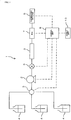
- FIG. 1 is a block diagram showing an example configuration of a liquid chromatograph 1 which is used in an analysis method according to an embodiment of the present invention.
- the liquid chromatograph 1 is a high performance liquid chromatograph (HPLC), and introduces a liquid sample into a column 3 while supplying a mobile phase into the column 3 by using a pump 2, and each component in the liquid sample is separated in the process of the liquid sample passing through the column 3.
- HPLC high performance liquid chromatograph
- the liquid chromatograph 1 includes a plurality of mobile phase containers 4, a mixer 5, an injector 6, a photodiode array detector (PDA) 7, a fluorescence detector 8, a control unit 9, and a display unit 10, for example.
- PDA photodiode array detector
- a buffer may be, but is not limited to, an aqueous solution of sodium phosphate, and can contain another phosphate, or can be a solution, other than phosphate, having a buffer function.
- organic solvents may be, but are not limited to, acetonitrile and methanol.
- three mobile phase containers 4 containing sodium phosphate buffer, acetonitrile, and methanol, respectively, are provided.
- the mobile phases contained in these mobile phase containers 4 are mixed at the mixer 5 at a set mixing ratio, and are delivered by the pump 2 to the column 3.
- the column 3 is a reverse phase column, and a C18 column which takes silica gel, the surface of which is modified by octadecylsilyl (ODS), as a stationary phase may be cited as an example, although this is not restrictive.
- the injector 6 injects a liquid sample as an analysis target into a mobile phase that is delivered from the pump 2 to the column 3, by using a micro-syringe or the like.
- Each component contained in the liquid sample is separated in the process of passing through the column 3 together with the mobile phase (separation step), and is detected by the PDA 7 and the fluorescence detector 8 provided on the downstream of the column 3 (detection step). In this manner, in the present embodiment, each separated component in a liquid sample is detected by two detectors 7, 8.
- the pump 2, the mixer 5, the injector 6, the PDA 7, and the fluorescence detector 8 are each electrically connected to the control unit 9.
- the control unit 9 controls the operation of the pump 2, the mixer 5, and the injector 6 based on set analysis conditions.
- a gradient analysis is performed by performing an analysis while changing the mixing ratio of a plurality of mobile phases at the mixer 5 over time.
- the control unit 9 causes detection results to be displayed on the display unit 10, based on detection signals from the PDA 7 and the fluorescence detector 8.
- the display unit 10 is a liquid crystal display, for example, and an operator is enabled to identify each component in the liquid sample based on the detection results displayed on the display unit 10 (identification step).
- Absorbance at respective wavelength may be obtained as a spectrum based on the detection signal from the PDA 7, and a temporal change in the spectrum may be obtained as three-dimensional data having time, wavelength, and absorbance as three axes. Accordingly, if a spectrum library is created in advance for a target component, the target component may be identified by determining the degree of coincidence between the spectrum library and a spectrum obtained by an analysis.
- the fluorescence detector 8 excites a component in the liquid sample by using excitation light at a specific excitation wavelength so as to cause the component to fluoresce, and detects fluorescence at a specific fluorescence wavelength.
- the excitation wavelength and the fluorescence wavelength can be switched, and a plurality of components at different excitation wavelengths and fluorescence wavelengths may be detected in one analysis by switching these wavelengths at appropriate timings.
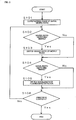
- FIG. 2 is a flowchart showing an example of a process by the control unit 9 during an analysis.
- the control unit 9 controls operation of each unit based on analysis conditions set in advance, and detection signals from the PDA 7 and the fluorescence detector 8 are thus acquired simultaneously in parallel.
- control unit 9 first causes the mobile phases in respective mobile phase containers 4 to be mixed at a mixing ratio which is set in advance as an initial mixing ratio, and causes the mixed liquid to be continuously supplied to the column 3 (step S101). Then, the control unit 9 monitors as to whether a timing for switching the mixing ratio of the mobile phases is reached or not (step S102), and as to whether a timing for switching the wavelengths of the fluorescence detector 8 is reached or not (step S104).
- step S102 when a timing set in advance as the timing for switching the mixing ratio of the mobile phases is reached (step S102: Yes), the control unit 9 switches to a mixing ratio set in advance as the mixing ratio at the timing (step S103). Accordingly, a mixed liquid mixed at the mixing ratio after switching is continuously supplied to the column 3 until the next timing for switching the mixing ratio of the mobile phases is reached.
- the control unit 9 switches the mixing ratio of the mobile phases at a plurality of timings. Specifically, every time the timing for switching the mixing ratio of the mobile phases is reached (step S102: Yes), the control unit 9 switches the mixing ratio (step S103), and causes the mobile phase to be supplied to the column 3 while increasing the mixing ratio of the organic solvent in the mixed liquid over time.
- step S104 when a timing set in advance as the timing for switching the excitation wavelength and the fluorescence wavelength of the fluorescence detector 8 is reached (step S104: Yes), the control unit 9 switches wavelengths (excitation wavelength and fluorescence wavelength) of the fluorescence detector 8 to wavelengths set in advance (step S105). Accordingly, components in the liquid sample are excited by excitation light at different wavelengths, and a component corresponding to a wavelength is caused to fluoresce, and also, the wavelength of fluorescence to be detected by the fluorescence detector 8 is switched so that the fluorescence may be detected.
- step S106 When the gradient analysis as described above is completed (step S106: Yes), chromatograms as detection results are displayed on the display unit 10 based on the detection signals from the PDA 7 and the fluorescence detector 8. A chromatogram based on the detection signal from the PDA 7 and a chromatogram based on the detection signal from the fluorescence detector 8 are separately displayed on the display unit 10, and an operator identifies each component in the liquid sample by using the chromatograms.
- the operator identifies deoxynivalenol in the liquid sample by using the chromatogram based on the detection signal from the PDA 7. Furthermore, the operator identifies total aflatoxin in the liquid sample by using the chromatogram based on the detection signal from the fluorescence detector 8.
- Identification of deoxynivalenol is performed by using a chromatogram at each wavelength based on the detection signal from the PDA 7, that is, three-dimensional data having time, wavelength, and absorbance as three axes. Specifically, a spectrum showing a relationship between a wavelength and absorbance at each peak is compared against a spectrum library for a target component (deoxynivalenol) created in advance and the degree of coincidence is determined, and whether a peak is the peak of the target component is determined based on the determined degree of coincidence. Spectra for other various components (nivaleonol, patulin, etc.) classified as mycotoxins, in addition to deoxynivalenol, are registered in the spectrum library.
- Identification of total aflatoxin is performed by determining presence/absence of a peak at a specific fluorescence wavelength which is detected by the fluorescence detector 8. Specifically, a retention time of each component of total aflatoxin determined from a standard sample and a retention time of each peak determined from a liquid sample which is an analysis target are compared against each other, and presence/absence of each component of total aflatoxin in the liquid sample is determined.
- Target components of screening are five components (B1, B2, G1, G2, M1) of aflatoxin, nivaleonol, deoxynivalenol, ochratoxin, zearalenone, and patulin.
- liquid chromatograph 1 "Nexera-i 3D” (product of Shimadzu Corporation) provided with the PDA 7 is used, and "RF-20Axs” (product of Shimadzu Corporation) is added as the fluorescence detector 8. Furthermore, as the column 3, “Shim-pack GIST' (product of Shimadzu Corporation), which is a reverse phase column, is used.
- the stationary phase in the column 3 is C18, and the length, the inner diameter, and the packing material particle diameter of the column 3 are 50 cm, 3.0 mm, and 2 ⁇ m, respectively.
- a sodium phosphate buffer, acetonitrile, and methanol are used as the mobile phases.
- the concentration of phosphoric acid is 20 mmol/L
- pH is 2.5.
- the flow rate of the mobile phase in the column 3 is 1.0 mL/min
- the temperature of the column 3 is 55°C
- the amount of injection of a liquid sample from the injector 6 is 5 ⁇ L.
- the temperature of the column 3 is set to a higher temperature than for a general analysis from the standpoint of reducing the analysis time, and is desirably set in the range of 50°C to 80°C, for example.
- a temporal change in the mixing ratio of each mobile phase in the gradient analysis is as follows.
- Wavelengths in two channels of 220 nm for nivaleonol and deoxynivalenol, and 276 nm for patulin are detected by the PDA 7.
- a period (0.00-4.29 min) when a fluorescence wavelength at 450 nm is detected at an excitation wavelength at 365 nm for the five components of aflatoxin is switched to a period (4.30-7.00 min) when a fluorescence wavelength at 465 nm is detected at an excitation wavelength at 320 nm for ochratoxin and zearalenone.
- FIG. 3A is a chromatogram obtained from detection signals of the fluorescence detector 8 in an Example.
- FIG. 3B is a chromatogram obtained from detection signals of the PDA 7 in the Example. These chromatograms are obtained by one analysis simultaneously in parallel, and peaks of different target components are present.
- Peaks of five components (AFB1, AFB2, AFG1, AFG2, AFM1) of aflatoxin, ochratoxin (OTA), and zearalenone (ZON) are present in the chromatogram in FIG. 3A .
- the total aflatoxin may be identified based on the detection signal from the fluorescence detector 8.
- the excitation wavelength and the fluorescence wavelength are switched at a timing T at 4.30 min.
- peaks of nivaleonol (NIV) and deoxynivalenol (DON) appear at a wavelength 220 nm
- a peak of patulin (PAT) appears at a wavelength 276 nm.
- deoxynivalenol may be identified based on the detection signal from the PDA 7.
- a long retention time component is identified based on the detection signal from the fluorescence detector 8 (see FIG. 3A ), and a short retention time component is identified based on the detection signal from a detector (PDA 7) other than the fluorescence detector 8 (see FIG. 3B ).
- the time until each target component is detected is 5 to 6 minutes, and screening can be performed in a short time.
- the embodiment above describes an analysis method for mycotoxins according to which total aflatoxin is identified based on a detection signal from the fluorescence detector 8, and deoxynivalenol is identified based on a detection signal from the PDA 7.
- a method is not restrictive, and deoxynivalenol may be identified based on a detection signal from a detector other than the PDA 7, for example.
- identification of total aflatoxin and deoxynivalenol may be performed not by a configuration which uses two detectors of the PDA 7 and the fluorescence detector 8, but based on detection signals from three or more detectors including the fluorescence detector 8.
- the order of arrangement of the detectors is not limited to the order shown in FIG. 1 .
Landscapes
- Chemical & Material Sciences (AREA)
- Analytical Chemistry (AREA)
- Health & Medical Sciences (AREA)
- Physics & Mathematics (AREA)
- Biochemistry (AREA)
- Life Sciences & Earth Sciences (AREA)
- General Health & Medical Sciences (AREA)
- General Physics & Mathematics (AREA)
- Immunology (AREA)
- Pathology (AREA)
- Nuclear Medicine, Radiotherapy & Molecular Imaging (AREA)
- Spectroscopy & Molecular Physics (AREA)
- Organic Chemistry (AREA)
- Chemical Kinetics & Catalysis (AREA)
- Investigating, Analyzing Materials By Fluorescence Or Luminescence (AREA)
Abstract
Description
- The present invention relates to an analysis method for mycotoxins produced in food, drink and the like.
- For example, mycotoxins, which are poisonous to humans and animals, are sometimes produced in food, drink and the like. Mycotoxins are compounds, among secondary metabolites produced by mold, that cause health damage to humans or animals, and various methods are proposed as analysis methods for mycotoxins (for example, see Patent Document 1). Particularly, aflatoxin, which is a type of mycotoxin, is known as one of substances that are most carcinogenic among natural substances, and is strictly regulated in many countries and regions around the world.
- With respect to grain such as wheat, mycotoxins such as ochratoxin, zearalenone, and trichothecene (deoxynivalenol, nivaleonol) may be produced in addition to four components (B1, B2, G1, G2) among five components (B1, B2, G1, G2, M1) of aflatoxin. The four components B1, B2, G1, G2 among the five components of aflatoxin are referred to as total aflatoxin.
- A separate analysis method is established for each of components of mycotoxin as mentioned above. For example, as an analysis method for total aflatoxin, a method of analyzing a liquid sample by using a high performance liquid chromatograph provided with a fluorescence detector or a mass spectrometer is announced by the Ministry of Health, Labour and Welfare and the Codex Alimentarius Commission. Furthermore, as an analysis method for deoxynivalenol, a method of analyzing a liquid sample by using a high performance liquid chromatograph provided with an ultraviolet spectrophotometer detector is likewise announced by the Ministry of Health, Labour and Welfare and the Codex Alimentarius Commission.
- Patent Document 1:
JP 2015-25680 A - The analysis methods for respective components of mycotoxin are performed under different conditions. Accordingly, in the case of performing an analysis of a plurality of types of components, the analysis has to be performed several times by changing the conditions, and the task is burdensome.
- Furthermore, the analysis method for each component of mycotoxin is a method which is capable of not only identification but also quantification of the component in a liquid sample. Accordingly, even in a case where it is enough if whether each component of mycotoxin is contained in the liquid sample or not is checked, a detailed analysis has to be performed to quantify each component, and there is a problem that the task takes a long time.
- The present invention has been made in view of the above circumstances, and has its object to provide an analysis method for mycotoxins which allows presence/absence of a plurality of components of mycotoxin in a liquid sample to be easily checked in a short time.
-
- (1) An analysis method for mycotoxins according to the present invention includes a separation step, a detection step, and an identification step. In the separation step, each component contained in a liquid sample is separated in a column. In the detection step, components separated in the separation step are detected by at least two detectors. In the identification step, each component is identified based on a detection result of the detection step. The at least two detectors include a fluorescence detector. In the identification step, total aflatoxin is identified based on a detection signal from the fluorescence detector, and deoxynivalenol is identified based on a detection signal from a detector other than the fluorescence detector.
According to such a configuration, identification of total aflatoxin and deoxynivalenol may be performed in one analysis based on the detection signals from the at least two detectors. Even if total aflatoxin content is low, total aflatoxin may be desirably identified based on the detection signal from the fluorescence detector, which is highly sensitive. Furthermore, deoxynivalenol may be separated from total aflatoxin, and may be desirably identified based on the detection signal from the detector other than the fluorescence detector
Presence/absence of a plurality of components (total aflatoxin and deoxynivalenol) of mycotoxin in a liquid sample may thus be checked in one analysis. Accordingly, compared to a case of performing a plurality of analyses by changing the conditions on a per component basis, presence/absence of a plurality of components of mycotoxin in a liquid sample may be easily checked in a short time. - (2) The at least two detectors may include a photodiode array detector. In this case, in the identification step, deoxynivalenol may be identified based on a detection signal from the photodiode array detector.
According to such a configuration, a relationship between a wavelength and absorbance may be obtained as a spectrum based on the detection signal from the photodiode array detector. Accordingly, by comparing the obtained spectrum against a spectrum library created in advance, various components such as deoxynivalenol may be desirably identified. - (3) In the detection step, a wavelength of fluorescence to be detected by the fluorescence detector may be switched at a timing set in advance.
According to such a configuration, total aflatoxin may be desirably identified by detecting fluorescence at a specific wavelength by the fluorescence detector, and also, a different component may be desirably detected based on a detection signal from the fluorescence detector by switching the wavelength of fluorescence to be detected by the fluorescence detector. Accordingly, presence/absence of a greater number of components in a liquid sample may be checked. - (4) In the separation step, a mixed liquid of a buffer and an organic solvent may be supplied as a mobile phase to the column.
According to such a configuration, because a mixed liquid of a buffer and an organic solvent is used as the mobile phase, total aflatoxin and deoxynivalenol may be desirably separated in the process of the liquid sample passing through the column. Accordingly, presence/absence of total aflatoxin and deoxynivalenol in the liquid sample may be checked with a higher accuracy. - (5) In the separation step, the mixed liquid may be supplied as the mobile phase to the column with a mixing ratio of the organic solvent in the mixed liquid being increased over time.
According to such a configuration, the mixing ratio of the organic solvent in the mixed liquid that is supplied to the column as the mobile phase is increased over time, and thus, total aflatoxin and deoxynivalenol may be even more desirably separated in the process of the liquid sample passing through the column. Accordingly, presence/absence of total aflatoxin and deoxynivalenol in the liquid sample may be checked with an even higher accuracy. - According to the present invention, presence/absence of a plurality of components (total aflatoxin and deoxynivalenol) of mycotoxin in a liquid sample may be checked in one analysis, in a short time and with ease.
-
-
FIG. 1 is a block diagram showing an example configuration of a liquid chromatograph which is used in an analysis method according to an embodiment of the present invention. -
FIG. 2 is a flowchart showing an example of a process by a control unit during an analysis. -
FIG. 3A is a chromatogram obtained from detection signals of a fluorescence detector in an Example. -
FIG. 3B is a chromatogram obtained from detection signals of a PDA in the Example. -
FIG. 1 is a block diagram showing an example configuration of aliquid chromatograph 1 which is used in an analysis method according to an embodiment of the present invention. Theliquid chromatograph 1 is a high performance liquid chromatograph (HPLC), and introduces a liquid sample into acolumn 3 while supplying a mobile phase into thecolumn 3 by using apump 2, and each component in the liquid sample is separated in the process of the liquid sample passing through thecolumn 3. - In addition to the
pump 2 and thecolumn 3 mentioned above, theliquid chromatograph 1 includes a plurality ofmobile phase containers 4, amixer 5, aninjector 6, a photodiode array detector (PDA) 7, afluorescence detector 8, acontrol unit 9, and adisplay unit 10, for example. - Different mobile phases are contained in the plurality of
mobile phase containers 4. As the mobile phases, buffers and organic solvents are used, for example. A buffer may be, but is not limited to, an aqueous solution of sodium phosphate, and can contain another phosphate, or can be a solution, other than phosphate, having a buffer function. Furthermore, organic solvents may be, but are not limited to, acetonitrile and methanol. - In this example, three
mobile phase containers 4 containing sodium phosphate buffer, acetonitrile, and methanol, respectively, are provided. The mobile phases contained in thesemobile phase containers 4 are mixed at themixer 5 at a set mixing ratio, and are delivered by thepump 2 to thecolumn 3. For example, thecolumn 3 is a reverse phase column, and a C18 column which takes silica gel, the surface of which is modified by octadecylsilyl (ODS), as a stationary phase may be cited as an example, although this is not restrictive. - The
injector 6 injects a liquid sample as an analysis target into a mobile phase that is delivered from thepump 2 to thecolumn 3, by using a micro-syringe or the like. Each component contained in the liquid sample is separated in the process of passing through thecolumn 3 together with the mobile phase (separation step), and is detected by thePDA 7 and thefluorescence detector 8 provided on the downstream of the column 3 (detection step). In this manner, in the present embodiment, each separated component in a liquid sample is detected by twodetectors - The
pump 2, themixer 5, theinjector 6, thePDA 7, and thefluorescence detector 8 are each electrically connected to thecontrol unit 9. Thecontrol unit 9 controls the operation of thepump 2, themixer 5, and theinjector 6 based on set analysis conditions. In the present embodiment, a gradient analysis is performed by performing an analysis while changing the mixing ratio of a plurality of mobile phases at themixer 5 over time. - The
control unit 9 causes detection results to be displayed on thedisplay unit 10, based on detection signals from thePDA 7 and thefluorescence detector 8. Thedisplay unit 10 is a liquid crystal display, for example, and an operator is enabled to identify each component in the liquid sample based on the detection results displayed on the display unit 10 (identification step). - Absorbance at respective wavelength may be obtained as a spectrum based on the detection signal from the
PDA 7, and a temporal change in the spectrum may be obtained as three-dimensional data having time, wavelength, and absorbance as three axes. Accordingly, if a spectrum library is created in advance for a target component, the target component may be identified by determining the degree of coincidence between the spectrum library and a spectrum obtained by an analysis. - The
fluorescence detector 8 excites a component in the liquid sample by using excitation light at a specific excitation wavelength so as to cause the component to fluoresce, and detects fluorescence at a specific fluorescence wavelength. The excitation wavelength and the fluorescence wavelength can be switched, and a plurality of components at different excitation wavelengths and fluorescence wavelengths may be detected in one analysis by switching these wavelengths at appropriate timings. -
FIG. 2 is a flowchart showing an example of a process by thecontrol unit 9 during an analysis. During an analysis, thecontrol unit 9 controls operation of each unit based on analysis conditions set in advance, and detection signals from thePDA 7 and thefluorescence detector 8 are thus acquired simultaneously in parallel. - During an analysis, the
control unit 9 first causes the mobile phases in respectivemobile phase containers 4 to be mixed at a mixing ratio which is set in advance as an initial mixing ratio, and causes the mixed liquid to be continuously supplied to the column 3 (step S101). Then, thecontrol unit 9 monitors as to whether a timing for switching the mixing ratio of the mobile phases is reached or not (step S102), and as to whether a timing for switching the wavelengths of thefluorescence detector 8 is reached or not (step S104). - Then, when a timing set in advance as the timing for switching the mixing ratio of the mobile phases is reached (step S102: Yes), the
control unit 9 switches to a mixing ratio set in advance as the mixing ratio at the timing (step S103). Accordingly, a mixed liquid mixed at the mixing ratio after switching is continuously supplied to thecolumn 3 until the next timing for switching the mixing ratio of the mobile phases is reached. - In the present embodiment, the
control unit 9 switches the mixing ratio of the mobile phases at a plurality of timings. Specifically, every time the timing for switching the mixing ratio of the mobile phases is reached (step S102: Yes), thecontrol unit 9 switches the mixing ratio (step S103), and causes the mobile phase to be supplied to thecolumn 3 while increasing the mixing ratio of the organic solvent in the mixed liquid over time. - On the other hand, when a timing set in advance as the timing for switching the excitation wavelength and the fluorescence wavelength of the
fluorescence detector 8 is reached (step S104: Yes), thecontrol unit 9 switches wavelengths (excitation wavelength and fluorescence wavelength) of thefluorescence detector 8 to wavelengths set in advance (step S105). Accordingly, components in the liquid sample are excited by excitation light at different wavelengths, and a component corresponding to a wavelength is caused to fluoresce, and also, the wavelength of fluorescence to be detected by thefluorescence detector 8 is switched so that the fluorescence may be detected. - When the gradient analysis as described above is completed (step S106: Yes), chromatograms as detection results are displayed on the
display unit 10 based on the detection signals from thePDA 7 and thefluorescence detector 8. A chromatogram based on the detection signal from thePDA 7 and a chromatogram based on the detection signal from thefluorescence detector 8 are separately displayed on thedisplay unit 10, and an operator identifies each component in the liquid sample by using the chromatograms. - At this time, the operator identifies deoxynivalenol in the liquid sample by using the chromatogram based on the detection signal from the
PDA 7. Furthermore, the operator identifies total aflatoxin in the liquid sample by using the chromatogram based on the detection signal from thefluorescence detector 8. - Identification of deoxynivalenol is performed by using a chromatogram at each wavelength based on the detection signal from the
PDA 7, that is, three-dimensional data having time, wavelength, and absorbance as three axes. Specifically, a spectrum showing a relationship between a wavelength and absorbance at each peak is compared against a spectrum library for a target component (deoxynivalenol) created in advance and the degree of coincidence is determined, and whether a peak is the peak of the target component is determined based on the determined degree of coincidence. Spectra for other various components (nivaleonol, patulin, etc.) classified as mycotoxins, in addition to deoxynivalenol, are registered in the spectrum library. - Identification of total aflatoxin is performed by determining presence/absence of a peak at a specific fluorescence wavelength which is detected by the
fluorescence detector 8. Specifically, a retention time of each component of total aflatoxin determined from a standard sample and a retention time of each peak determined from a liquid sample which is an analysis target are compared against each other, and presence/absence of each component of total aflatoxin in the liquid sample is determined. -
- (1) In the present embodiment, identification of total aflatoxin and deoxynivalenol may be performed in one analysis based on the detection signals from the
PDA 7 and thefluorescence detector 8. Even if total aflatoxin content is low, total aflatoxin may be desirably identified based on the detection signal from thefluorescence detector 8, which is highly sensitive. Furthermore, deoxynivalenol may be desirably identified by being separated from total aflatoxin, and by comparing a spectrum obtained based on the detection signal from thePDA 7 against the spectrum library which is created in advance.
Presence/absence of a plurality of components (total aflatoxin and deoxynivalenol) of mycotoxin in a liquid sample may thereby be checked in one analysis. Accordingly, compared to a case of performing a plurality of analyses by changing the conditions on a per component basis, presence/absence of a plurality of components of mycotoxin in a liquid sample may be easily checked in a short time. - (2) Furthermore, in the present embodiment, total aflatoxin may be desirably identified by detecting fluorescence at a specific wavelength by the
fluorescence detector 8, and also, another component such as zearalenone or ochratoxin may be desirably detected based on a detection signal from thefluorescence detector 8 by switching the wavelength of fluorescence to be detected by the fluorescence detector 8 (steps S104 and S105 inFIG. 2 ). Accordingly, presence/absence of a greater number of components in a liquid sample may be checked. - (3) Furthermore, in the present embodiment, because a mixed liquid of a buffer and an organic solvent is used as the mobile phase, total aflatoxin and deoxynivalenol may be desirably separated in the process of the liquid sample passing through the
column 3. Accordingly, presence/absence of total aflatoxin and deoxynivalenol in the liquid sample may be checked with a higher accuracy. - (4) Moreover, in the present embodiment, the mixing ratio of an organic solvent in a mixed liquid which is supplied to the
column 3 as the mobile phase is increased over time (steps S102 and S103 inFIG. 2 ), and thus, total aflatoxin and deoxynivalenol may be even more desirably separated in the process of the liquid sample passing through thecolumn 3. Accordingly, presence/absence of total aflatoxin and deoxynivalenol in the liquid sample may be checked with an even higher accuracy. - In the following, a result of performing screening of presence/absence of each component of mycotoxin in a liquid sample by the
liquid chromatograph 1 according to the embodiment described above is described. Target components of screening are five components (B1, B2, G1, G2, M1) of aflatoxin, nivaleonol, deoxynivalenol, ochratoxin, zearalenone, and patulin. - As the
liquid chromatograph 1, "Nexera-i 3D" (product of Shimadzu Corporation) provided with thePDA 7 is used, and "RF-20Axs" (product of Shimadzu Corporation) is added as thefluorescence detector 8. Furthermore, as thecolumn 3, "Shim-pack GIST' (product of Shimadzu Corporation), which is a reverse phase column, is used. The stationary phase in thecolumn 3 is C18, and the length, the inner diameter, and the packing material particle diameter of thecolumn 3 are 50 cm, 3.0 mm, and 2 µm, respectively. - As the mobile phases, a sodium phosphate buffer, acetonitrile, and methanol are used. With respect to the sodium phosphate buffer, the concentration of phosphoric acid is 20 mmol/L, and pH is 2.5. The flow rate of the mobile phase in the
column 3 is 1.0 mL/min, the temperature of thecolumn 3 is 55°C, and the amount of injection of a liquid sample from theinjector 6 is 5 µL. Additionally, the temperature of thecolumn 3 is set to a higher temperature than for a general analysis from the standpoint of reducing the analysis time, and is desirably set in the range of 50°C to 80°C, for example. - A temporal change in the mixing ratio of each mobile phase in the gradient analysis is as follows.
- Sodium phosphate buffer: 90% (0.00-0.50 min) → 70% (0.51 min) → 60% (2.65 min) → 50% (2.66-5.10 min) → 90% (5.11-7.00 min)
- Acetonitrile: 10% (0.00-0.50 min) → 15% (0.51-2.65 min) → 35% (2.66-5.10 min) → 10% (5.11-7.00 min)
- Methanol: 0% (0.00-0.50 min) → 15% (0.51 min) → 25% (2.65 min) → 15% (2.66-5.10 min) → 0% (5.11-7.00 min)
- Wavelengths in two channels of 220 nm for nivaleonol and deoxynivalenol, and 276 nm for patulin are detected by the
PDA 7. At thefluorescence detector 8, a period (0.00-4.29 min) when a fluorescence wavelength at 450 nm is detected at an excitation wavelength at 365 nm for the five components of aflatoxin is switched to a period (4.30-7.00 min) when a fluorescence wavelength at 465 nm is detected at an excitation wavelength at 320 nm for ochratoxin and zearalenone. -
FIG. 3A is a chromatogram obtained from detection signals of thefluorescence detector 8 in an Example.FIG. 3B is a chromatogram obtained from detection signals of thePDA 7 in the Example. These chromatograms are obtained by one analysis simultaneously in parallel, and peaks of different target components are present. - Peaks of five components (AFB1, AFB2, AFG1, AFG2, AFM1) of aflatoxin, ochratoxin (OTA), and zearalenone (ZON) are present in the chromatogram in
FIG. 3A . In this manner, the total aflatoxin may be identified based on the detection signal from thefluorescence detector 8. Additionally, in the chromatogram inFIG. 3A , the excitation wavelength and the fluorescence wavelength are switched at a timing T at 4.30 min. - Furthermore, in the chromatogram in
FIG. 3B , peaks of nivaleonol (NIV) and deoxynivalenol (DON) appear at a wavelength 220 nm, and a peak of patulin (PAT) appears at a wavelength 276 nm. In this manner, deoxynivalenol may be identified based on the detection signal from thePDA 7. - In the examples in
FIGS. 3A and 3B , a long retention time component is identified based on the detection signal from the fluorescence detector 8 (seeFIG. 3A ), and a short retention time component is identified based on the detection signal from a detector (PDA 7) other than the fluorescence detector 8 (seeFIG. 3B ). As shown inFIGS. 3A and 3B , the time until each target component is detected is 5 to 6 minutes, and screening can be performed in a short time. - The embodiment above describes an analysis method for mycotoxins according to which total aflatoxin is identified based on a detection signal from the
fluorescence detector 8, and deoxynivalenol is identified based on a detection signal from thePDA 7. However, such a method is not restrictive, and deoxynivalenol may be identified based on a detection signal from a detector other than thePDA 7, for example. Moreover, identification of total aflatoxin and deoxynivalenol may be performed not by a configuration which uses two detectors of thePDA 7 and thefluorescence detector 8, but based on detection signals from three or more detectors including thefluorescence detector 8. Moreover, the order of arrangement of the detectors is not limited to the order shown inFIG. 1 . -
- 1
- liquid chromatograph
- 2
- pump
- 3
- column
- 4
- mobile phase container
- 5
- mixer
- 6
- injector
- 7
- PDA (photodiode array detector)
- 8
- fluorescence detector
- 9
- control unit
- 10
- display unit
Claims (5)
- An analysis method for mycotoxins comprising:a separation step of separating, in a column, each component contained in a liquid sample;a detection step of detecting components separated in the separation step by at least two detectors; andan identification step of identifying each component based on a detection result of the detection step,
whereinthe at least two detectors include a fluorescence detector, andin the identification step, total aflatoxin is identified based on a detection signal from the fluorescence detector, and deoxynivalenol is identified based on a detection signal from a detector other than the fluorescence detector. - The analysis method for mycotoxins according to claim 1, wherein
the at least two detectors include a photodiode array detector, and
in the identification step, deoxynivalenol is identified based on a detection signal from the photodiode array detector. - The analysis method for mycotoxins according to claim 1, wherein, in the detection step, a wavelength of fluorescence to be detected by the fluorescence detector is switched at a timing set in advance.
- The analysis method for mycotoxins according to any one of claims 1 to 3, wherein, in the separation step, a mixed liquid of a buffer and an organic solvent is supplied as a mobile phase to the column.
- The analysis method for mycotoxins according to claim 4, wherein, in the separation step, the mixed liquid is supplied as the mobile phase to the column with a mixing ratio of the organic solvent in the mixed liquid being increased over time.
Applications Claiming Priority (1)
| Application Number | Priority Date | Filing Date | Title |
|---|---|---|---|
| PCT/JP2015/074523 WO2017037802A1 (en) | 2015-08-28 | 2015-08-28 | Analysis method for mycotoxins |
Publications (2)
| Publication Number | Publication Date |
|---|---|
| EP3343216A1 true EP3343216A1 (en) | 2018-07-04 |
| EP3343216A4 EP3343216A4 (en) | 2019-04-17 |
Family
ID=58188322
Family Applications (1)
| Application Number | Title | Priority Date | Filing Date |
|---|---|---|---|
| EP15902925.5A Withdrawn EP3343216A4 (en) | 2015-08-28 | 2015-08-28 | ANALYSIS METHOD FOR MYCOTOXINS |
Country Status (5)
| Country | Link |
|---|---|
| US (1) | US10690640B2 (en) |
| EP (1) | EP3343216A4 (en) |
| JP (1) | JP6566036B2 (en) |
| CN (2) | CN112505214A (en) |
| WO (1) | WO2017037802A1 (en) |
Families Citing this family (4)
| Publication number | Priority date | Publication date | Assignee | Title |
|---|---|---|---|---|
| CN112505214A (en) * | 2015-08-28 | 2021-03-16 | 株式会社岛津制作所 | Method for analyzing mycotoxins |
| CN109738410B (en) * | 2019-01-29 | 2021-11-12 | 依利特(苏州)分析仪器有限公司 | Automated device and method for detecting mycotoxins |
| CN113376135B (en) * | 2021-06-10 | 2022-08-02 | 上海市农业科学院 | Fluorescence sensing system and preparation method and application thereof |
| US20220395767A1 (en) * | 2021-06-15 | 2022-12-15 | Perkinelmer Health Sciences, Inc. | Enhancing lcms analyte signals |
Family Cites Families (18)
| Publication number | Priority date | Publication date | Assignee | Title |
|---|---|---|---|---|
| US5178832A (en) * | 1987-09-28 | 1993-01-12 | The Texas A&M University System | Selective immobilization and detection of mycotoxins in solution |
| JPH01244342A (en) * | 1988-03-26 | 1989-09-28 | Shimadzu Corp | liquid chromatograph |
| CA2438137A1 (en) * | 2001-02-13 | 2002-08-22 | Universiteit Gent | Device and method for detecting the presence of an analyte |
| JP2004233229A (en) * | 2003-01-31 | 2004-08-19 | Hitachi High-Technologies Corp | Liquid chromatograph |
| US20070048787A1 (en) * | 2005-08-26 | 2007-03-01 | Vicam, L.P. | Multi-analyte affinity column |
| ATE548093T1 (en) * | 2005-11-17 | 2012-03-15 | Waters Investments Ltd | MULTI-ANALYTE AFFINITY COLUMN FOR ANALYZING AFLATOXIN, FUMONISIN, OCHRATOXIN AND ZEARALENONE |
| EP1787700B1 (en) * | 2005-11-17 | 2012-03-07 | Waters Investments Limited | Multi-analyte affinity column for analyzing aflatoxin, ochratoxin , zearalenone and deoxynivalenol |
| CN102297902A (en) * | 2010-06-25 | 2011-12-28 | 中国医学科学院药用植物研究所 | Method for detecting nivalenol and deoxynivalenol (DON) toxins in traditional Chinese medicine |
| US9512461B1 (en) * | 2010-09-30 | 2016-12-06 | The United States Of America, As Represented By The Secretary Of Agriculture | Detection of aflatoxins and aflatoxic aspergilli in natural fungal bouquets |
| JP5807229B2 (en) * | 2011-04-12 | 2015-11-10 | 学校法人中部大学 | Mycotoxin screening method |
| JP5866944B2 (en) * | 2011-10-06 | 2016-02-24 | 東ソー株式会社 | Method for measuring cholesterol and vitamin E in lipoprotein, and measuring apparatus using the method |
| CN102507774B (en) * | 2011-10-31 | 2013-10-16 | 江苏省农业科学院 | Extracting, purification and detection method for nivalenol in grains |
| CN102401820A (en) * | 2011-11-21 | 2012-04-04 | 江苏省农业科学院 | Detection method of several mycotoxins in wheat |
| RU2514828C2 (en) * | 2012-07-11 | 2014-05-10 | Федеральное государственное бюджетное учреждение "Федеральный центр охраны здоровья животных" (ФГБУ "ВНИИЗЖ") | Method of determining mycotoxins in animal and vegetable products |
| JP2015025680A (en) | 2013-07-24 | 2015-02-05 | 株式会社島津製作所 | Separation method and separation device |
| CN104535664B (en) * | 2014-03-31 | 2016-03-16 | 中华人民共和国北京出入境检验检疫局 | A kind of method simultaneously detecting multiple mycotoxin in sesame paste |
| CN104707362A (en) * | 2015-01-05 | 2015-06-17 | 重庆出入境检验检疫局检验检疫技术中心 | Composite affinity column for purifying 3-acetyl deoxynivalenol, aflatoxin, ochratoxin A and zearalenone |
| CN112505214A (en) * | 2015-08-28 | 2021-03-16 | 株式会社岛津制作所 | Method for analyzing mycotoxins |
-
2015
- 2015-08-28 CN CN202011319001.4A patent/CN112505214A/en active Pending
- 2015-08-28 JP JP2017537068A patent/JP6566036B2/en active Active
- 2015-08-28 WO PCT/JP2015/074523 patent/WO2017037802A1/en not_active Ceased
- 2015-08-28 US US15/754,420 patent/US10690640B2/en active Active
- 2015-08-28 CN CN201580081957.6A patent/CN107923886A/en active Pending
- 2015-08-28 EP EP15902925.5A patent/EP3343216A4/en not_active Withdrawn
Also Published As
| Publication number | Publication date |
|---|---|
| JPWO2017037802A1 (en) | 2018-04-26 |
| EP3343216A4 (en) | 2019-04-17 |
| WO2017037802A1 (en) | 2017-03-09 |
| US10690640B2 (en) | 2020-06-23 |
| CN112505214A (en) | 2021-03-16 |
| US20180238844A1 (en) | 2018-08-23 |
| JP6566036B2 (en) | 2019-08-28 |
| CN107923886A (en) | 2018-04-17 |
Similar Documents
| Publication | Publication Date | Title |
|---|---|---|
| Kresse et al. | Simultaneous determination of pesticides, mycotoxins, and metabolites as well as other contaminants in cereals by LC-LC-MS/MS | |
| Arroyo-Manzanares et al. | Multiclass mycotoxin analysis in Silybum marianum by ultra high performance liquid chromatography–tandem mass spectrometry using a procedure based on QuEChERS and dispersive liquid–liquid microextraction | |
| Frenich et al. | Comprehensive analysis of toxics (pesticides, veterinary drugs and mycotoxins) in food by UHPLC-MS | |
| Chauveau-Duriot et al. | Simultaneous quantification of carotenoids, retinol, and tocopherols in forages, bovine plasma, and milk: validation of a novel UPLC method | |
| JP5804070B2 (en) | Chromatogram data processing apparatus and processing method | |
| Zhang et al. | Fast HPLC-DAD quantification of nine polyphenols in honey by using second-order calibration method based on trilinear decomposition algorithm | |
| US10184925B2 (en) | Preparative separation chromatograph system | |
| US10690640B2 (en) | Analysis method for mycotoxins | |
| Kucukkolbasi et al. | Simultaneous and accurate determination of water-and fat-soluble vitamins in multivitamin tablets by using an RP-HPLC method | |
| Mehl et al. | Validated screening method for 81 multiclass veterinary drug residues in food via online-coupling high-throughput planar solid-phase extraction to high-performance liquid chromatography–orbitrap tandem mass spectrometry | |
| KR20180047523A (en) | Method for Analyzing Contents of Pro-Vitamin A Carotenoids in Feedstuff by High Performance Liquid Chromatography | |
| Stoll et al. | Development of multiple heartcutting two-dimensional liquid chromatography with ion-pairing reversed-phase separations in both dimensions for analysis of impurities in therapeutic oligonucleotides | |
| Urvaka et al. | Rapid separation of all four tocopherol homologues in selected fruit seeds via supercritical fluid chromatography using a solid‐core c18 column | |
| CN107490632A (en) | The detector output valve of liquid chromatograph and liquid chromatograph changes bearing calibration | |
| US20140095082A1 (en) | Expanded linear range by use of two flow cell detectors with long and short path | |
| US10018603B2 (en) | Two-dimensional liquid chromatography system for heart-cut method | |
| Browne et al. | Simultaneous determination of serum retinol, tocopherols, and carotenoids by HPLC | |
| Lin et al. | Use of 4-chloro-3, 5-dinitrobenzotrifluoride (CNBF) derivatization and ultrahigh-performance liquid chromatography tandem mass spectrometry for the determination of 20 free amino acids in Chinese jujube date | |
| Pietroń et al. | Determination of five sulfonamides in medicated feedingstuffs by liquid chromatography with ultraviolet detection | |
| Wilson et al. | Chromatographic interferences potentially inflating the levels of Δ9-THC in Cannabis Sativa plant samples and possible solutions | |
| Diehm et al. | Micro simulated moving bed chromatography-mass spectrometry as a continuous on-line process analytical tool | |
| Li et al. | Determination of aflatoxins in animal feeds by liquid chromatography/tandem mass spectrometry with isotope dilution | |
| CN107110759B (en) | Determination of analytes in a sample matrix by solvent extraction | |
| US20200041472A1 (en) | Mass-directed separation | |
| Dinc et al. | Spectrophotometric multicomponent resolution of a tablet formulation containing lisinopril and hydrochlorothiazide by multivariate calibration methods |
Legal Events
| Date | Code | Title | Description |
|---|---|---|---|
| STAA | Information on the status of an ep patent application or granted ep patent |
Free format text: STATUS: THE INTERNATIONAL PUBLICATION HAS BEEN MADE |
|
| PUAI | Public reference made under article 153(3) epc to a published international application that has entered the european phase |
Free format text: ORIGINAL CODE: 0009012 |
|
| STAA | Information on the status of an ep patent application or granted ep patent |
Free format text: STATUS: REQUEST FOR EXAMINATION WAS MADE |
|
| 17P | Request for examination filed |
Effective date: 20180315 |
|
| AK | Designated contracting states |
Kind code of ref document: A1 Designated state(s): AL AT BE BG CH CY CZ DE DK EE ES FI FR GB GR HR HU IE IS IT LI LT LU LV MC MK MT NL NO PL PT RO RS SE SI SK SM TR |
|
| AX | Request for extension of the european patent |
Extension state: BA ME |
|
| DAV | Request for validation of the european patent (deleted) | ||
| DAX | Request for extension of the european patent (deleted) | ||
| A4 | Supplementary search report drawn up and despatched |
Effective date: 20190314 |
|
| RIC1 | Information provided on ipc code assigned before grant |
Ipc: G01N 30/78 20060101AFI20190308BHEP Ipc: G01N 21/64 20060101ALI20190308BHEP Ipc: G01N 30/74 20060101ALI20190308BHEP |
|
| STAA | Information on the status of an ep patent application or granted ep patent |
Free format text: STATUS: EXAMINATION IS IN PROGRESS |
|
| 17Q | First examination report despatched |
Effective date: 20210223 |
|
| STAA | Information on the status of an ep patent application or granted ep patent |
Free format text: STATUS: THE APPLICATION IS DEEMED TO BE WITHDRAWN |
|
| 18D | Application deemed to be withdrawn |
Effective date: 20230301 |