EP3342994A1 - Quantitative unidirectional oil-air lubrication system and method for four-stroke engine - Google Patents
Quantitative unidirectional oil-air lubrication system and method for four-stroke engine Download PDFInfo
- Publication number
- EP3342994A1 EP3342994A1 EP16893977.5A EP16893977A EP3342994A1 EP 3342994 A1 EP3342994 A1 EP 3342994A1 EP 16893977 A EP16893977 A EP 16893977A EP 3342994 A1 EP3342994 A1 EP 3342994A1
- Authority
- EP
- European Patent Office
- Prior art keywords
- quantitative
- oil
- lubricant
- orifice
- oil gas
- Prior art date
- Legal status (The legal status is an assumption and is not a legal conclusion. Google has not performed a legal analysis and makes no representation as to the accuracy of the status listed.)
- Granted
Links
Images



Classifications
-
- F—MECHANICAL ENGINEERING; LIGHTING; HEATING; WEAPONS; BLASTING
- F01—MACHINES OR ENGINES IN GENERAL; ENGINE PLANTS IN GENERAL; STEAM ENGINES
- F01M—LUBRICATING OF MACHINES OR ENGINES IN GENERAL; LUBRICATING INTERNAL COMBUSTION ENGINES; CRANKCASE VENTILATING
- F01M11/00—Component parts, details or accessories, not provided for in, or of interest apart from, groups F01M1/00 - F01M9/00
- F01M11/06—Means for keeping lubricant level constant or for accommodating movement or position of machines or engines
- F01M11/062—Accommodating movement or position of machines or engines, e.g. dry sumps
-
- F—MECHANICAL ENGINEERING; LIGHTING; HEATING; WEAPONS; BLASTING
- F01—MACHINES OR ENGINES IN GENERAL; ENGINE PLANTS IN GENERAL; STEAM ENGINES
- F01M—LUBRICATING OF MACHINES OR ENGINES IN GENERAL; LUBRICATING INTERNAL COMBUSTION ENGINES; CRANKCASE VENTILATING
- F01M1/00—Pressure lubrication
- F01M1/04—Pressure lubrication using pressure in working cylinder or crankcase to operate lubricant feeding devices
-
- F—MECHANICAL ENGINEERING; LIGHTING; HEATING; WEAPONS; BLASTING
- F01—MACHINES OR ENGINES IN GENERAL; ENGINE PLANTS IN GENERAL; STEAM ENGINES
- F01M—LUBRICATING OF MACHINES OR ENGINES IN GENERAL; LUBRICATING INTERNAL COMBUSTION ENGINES; CRANKCASE VENTILATING
- F01M1/00—Pressure lubrication
- F01M1/12—Closed-circuit lubricating systems not provided for in groups F01M1/02 - F01M1/10
-
- F—MECHANICAL ENGINEERING; LIGHTING; HEATING; WEAPONS; BLASTING
- F01—MACHINES OR ENGINES IN GENERAL; ENGINE PLANTS IN GENERAL; STEAM ENGINES
- F01M—LUBRICATING OF MACHINES OR ENGINES IN GENERAL; LUBRICATING INTERNAL COMBUSTION ENGINES; CRANKCASE VENTILATING
- F01M11/00—Component parts, details or accessories, not provided for in, or of interest apart from, groups F01M1/00 - F01M9/00
- F01M11/0004—Oilsumps
-
- F—MECHANICAL ENGINEERING; LIGHTING; HEATING; WEAPONS; BLASTING
- F01—MACHINES OR ENGINES IN GENERAL; ENGINE PLANTS IN GENERAL; STEAM ENGINES
- F01M—LUBRICATING OF MACHINES OR ENGINES IN GENERAL; LUBRICATING INTERNAL COMBUSTION ENGINES; CRANKCASE VENTILATING
- F01M11/00—Component parts, details or accessories, not provided for in, or of interest apart from, groups F01M1/00 - F01M9/00
- F01M11/06—Means for keeping lubricant level constant or for accommodating movement or position of machines or engines
-
- F—MECHANICAL ENGINEERING; LIGHTING; HEATING; WEAPONS; BLASTING
- F02—COMBUSTION ENGINES; HOT-GAS OR COMBUSTION-PRODUCT ENGINE PLANTS
- F02B—INTERNAL-COMBUSTION PISTON ENGINES; COMBUSTION ENGINES IN GENERAL
- F02B63/00—Adaptations of engines for driving pumps, hand-held tools or electric generators; Portable combinations of engines with engine-driven devices
- F02B63/04—Adaptations of engines for driving pumps, hand-held tools or electric generators; Portable combinations of engines with engine-driven devices for electric generators
-
- F—MECHANICAL ENGINEERING; LIGHTING; HEATING; WEAPONS; BLASTING
- F02—COMBUSTION ENGINES; HOT-GAS OR COMBUSTION-PRODUCT ENGINE PLANTS
- F02F—CYLINDERS, PISTONS OR CASINGS, FOR COMBUSTION ENGINES; ARRANGEMENTS OF SEALINGS IN COMBUSTION ENGINES
- F02F1/00—Cylinders; Cylinder heads
- F02F1/24—Cylinder heads
-
- F—MECHANICAL ENGINEERING; LIGHTING; HEATING; WEAPONS; BLASTING
- F02—COMBUSTION ENGINES; HOT-GAS OR COMBUSTION-PRODUCT ENGINE PLANTS
- F02F—CYLINDERS, PISTONS OR CASINGS, FOR COMBUSTION ENGINES; ARRANGEMENTS OF SEALINGS IN COMBUSTION ENGINES
- F02F1/00—Cylinders; Cylinder heads
- F02F1/24—Cylinder heads
- F02F1/42—Shape or arrangement of intake or exhaust channels in cylinder heads
- F02F1/4214—Shape or arrangement of intake or exhaust channels in cylinder heads specially adapted for four or more valves per cylinder
-
- F—MECHANICAL ENGINEERING; LIGHTING; HEATING; WEAPONS; BLASTING
- F02—COMBUSTION ENGINES; HOT-GAS OR COMBUSTION-PRODUCT ENGINE PLANTS
- F02F—CYLINDERS, PISTONS OR CASINGS, FOR COMBUSTION ENGINES; ARRANGEMENTS OF SEALINGS IN COMBUSTION ENGINES
- F02F7/00—Casings, e.g. crankcases
- F02F7/0065—Shape of casings for other machine parts and purposes, e.g. utilisation purposes, safety
-
- F—MECHANICAL ENGINEERING; LIGHTING; HEATING; WEAPONS; BLASTING
- F02—COMBUSTION ENGINES; HOT-GAS OR COMBUSTION-PRODUCT ENGINE PLANTS
- F02F—CYLINDERS, PISTONS OR CASINGS, FOR COMBUSTION ENGINES; ARRANGEMENTS OF SEALINGS IN COMBUSTION ENGINES
- F02F7/00—Casings, e.g. crankcases
- F02F7/0065—Shape of casings for other machine parts and purposes, e.g. utilisation purposes, safety
- F02F7/0073—Adaptations for fitting the engine, e.g. front-plates or bell-housings
- F02F2007/0075—Front covers
Definitions
- the present invention relates to a lubricant system and method for an engine.
- the technical problem to be solved is to provide a quantitative one-way oil gas lubricant system and method for a 4-stroke engine, to reduce the consumption rate of lubricant, and to prevent the filter cotton from being immersed by the lubricating oil when the tubes are connected into the air filters.
- a quantitative one-way oil gas lubricant system for a 4-stroke engine which comprises a preceding stage quantitative oil intake orifice that is connected to a lubricant case on a wall of a crankcase of the 4-stroke engine, and a final stage quantitative airflow orifice disposed at a cylinder cover.
- a one-way connected oil gas lubricant channel is disposed between the preceding stage quantitative oil intake orifice and the final stage quantitative airflow orifice.
- a distance between each side of an inner wall of the crankcase and a corresponding side of a rotating space of a crank is smaller than 2mm.
- a bulge part bulged to a center position of the crank along an axial direction is disposed on the two inner sides of the crankcase, which are corresponding to two sides of the crank along the axial direction.
- an inter-stage quantitative oil orifice is disposed between the crankcase and a cam box of the 4-stroke engine, and a diameter of the inter-stage quantitative oil orifice D 2 is ⁇ 3D 1 .
- the lubricant case has a U-shaped section that is perpendicular to the crankshaft.
- the crankcase is surrounded by the lubricant case, and the left and right sides of the crankcase are each disposed with a preceding quantitative oil intake orifice.
- the two preceding stage quantitative oil intake orifices are positioned at across point of two center lines, one of which is a forward-backward volume center line of the lubricant case, and the other of which is a forward-backward center line of the left and right side walls of the crankcase.
- the preceding quantitative oil intake orifice is positioned on across line of the volume center surface of the lubricant oil case and a case wall of the crankcase.
- oil-shielding ribs are disposed on an outer case wall of the crankcase, at two sides of the preceding quantitative oil intake orifice or surrounding the preceding quantitative oil intake orifice.
- the final stage quantitative airflow orifice is connected with a cylinder of the 4-stroke engine through a connection pipe.
- the lubricant oil sucked by the crankcase from the preceding quantitative oil intake orifice flows along the oil gas lubricant channel and lubricates the engine parts that the channel passes through in turns. Finally, a minute quantity of waste oil gas that flows out from the final stage quantitative airflow orifice is introduced into the cylinder and is to be burned completely.
- oil gas lubricant channel from the preceding quantitative oil intake orifice to the final stage quantitative airflow orifice, connects the crankcase, the cam box, the push rod channel and the upper rocker box in turns.
- D 1 K (the volume of the lubricant oil case- the power capacity of the engine)
- a blow-and-suck pressure that a pulse air current applies to the lubricant oil in the lubricant oil case is controlled so as to control a flow quality of the lubricant oil that flows from the lubricant oil case to the crankcase in a range of 1.5-2g/kw.h
- the unit of D 1 is mm
- the unit of the lubricant oil case and the power capacity of the 4-stroke engine is cm 3
- K may take the value from a range of 0.011-0.02.
- the diameter of the inter-stage quantitative oil orifice D 2 is controlled to be ⁇ 3D 1 so as to make sure that a pressure of the crankcase during operation is in a range of minus 0.003-0.008Mpa.
- the present invention further provides:
- the technical solution of the present invention by controlling the diameter of the preceding stage quantitative oil orifice D 1 and the diameter of the final stage quantitative airflow orifice D 3 , ensures that the pressure of the output end of the final stage quantitative gas orifice always be smaller than the pressure in the crankcase and ensures that the negative pressure be kept in a certain range.
- the diameter of the preceding quantitative oil intake orifice D 1 is used to control the pulse air current pressure and the oil droplet quantity
- the diameter of the final stage quantitative airflow orifice D 3 is designed to make sure that the lubricant oil in the machine flows out as little as possible
- the diameter of the preceding quantitative oil intake orifice D 1 and the diameter of the final stage quantitative airflow orifice D 3 may cooperate to control the supply quantity of the lubricant oil accurately, and no extra lubricant oil gas may flow out from the final stage quantitative airflow orifice, therefore, the quantitative and one-way lubricating is realized.
- the lubricant oil channel between the preceding stage quantitative oil intake orifice and the final stage quantitative airflow orifice has a one-way connection structure, and the cavities to be lubricated in each stage are connected with a single oil gas quantitative orifice, so no extras lubricant oil will flow out from the final stage quantitative airflow orifice and back to the lubricant oil case, and oil return channel, check valve or oil collector exists in the whole lubricant oil system. And the system is without any mechanism that is used to stir the lubricant oil to produce smog.
- the principle of the lubricant system in the present invention is different from the lubricant systems in the prior art.
- the lubricant system of the present invention has a stable function, a simple structure and a low price.
- crankcase is designed to ensure that the distance between the inner wall sides and the corresponding surface of the rotate space ⁇ 2mm. Therefore, no extra lubricant oil may remain in the crankcase, and the engine may be overturned in any certain angle.
- the 4-stroke engine in the state of the art is disposed with a crankcase 1, a lubricant case 2, a cam box 4, a push rod 5, an upper rocker box 6 and a cylinder, top of which is disposed with a cover 3.
- the lubricant case 2 when the engine is under a condition of being disposed horizontally, seen from directly in the front side, the lubricant case 2 has a U-shaped section that is perpendicular to the crankshaft.
- the crankcase 1 is surrounded by a lubricant case 2, and a U-shaped cavity of the lubricant case 2 is formed between the wall of the crankcase 11 and the wall of the lubricant case 2, the bottoms of the crankcase 1 and the lubricant case 2 are both circular arcs which bulge downward, and the right and left sides of the crankcase 1 and the lubricant case 2 are both shown as circular arcs which bulge outward.
- the pulsing oil gas lubricant system for a 4-stroke engine comprises preceding stage quantitative oil intake orifices on left and right walls of the crankcase 1, that is, the first preceding stage quantitative oil intake orifice 111 located at the left side wall of the crankcase 1 and the second preceding stage quantitative oil intake orifice 112 located at the right side wall of the crankcase.
- the two preceding stage quantitative oil intake orifices are positioned near the cross point of two center lines, one of which is forward-backward volume center line of the lubricant case, and the other of which is the forward-backward center line of the left and right side walls of the crankcase 1, and offset is allowed for the position of the orifices, for example, the distance with the cross point may be selected from the range of 0-20mm.
- the two preceding stage quantitative oil intake orifices are located at the positions that are no more than 50mm above the liquid level of the lubricant oil.
- the preferred design is to dispose it on the intersecting lines of the volume center surface of the lubricant case and the wall of the crankcase, and the more specific position on the line may be decided according to the shape of the lubricant case.
- the lubricant case 2 and the crankcase 1 are connected through the preceding stage quantitative oil intake orifices, and the cam box 4 is connected with the upper rocker box 6 with the push rod channel, and the cylinder cover 3 is disposed with a final stage quantitative airflow orifice 31 thereon, and the final stage quantitative airflow orifice 31 is connected with the upper rocker box 6.
- a one-way connected oil gas lubricant channel is formed between the preceding stage quantitative oil intake orifice and the final stage quantitative airflow orifice 31.
- the pulsing oil gas lubricant system for a 4-stroke engine of the present invention blows and sucks the lubricant oil in the lubricant case 2 with the pulse airflow produced by the up-and-down movement of the piston.
- the blow-and-suck pressure that the pulse gas applies to the lubricant oil in the lubricant case 2 may be controlled by changing the diameter of the preceding stage quantitative oil intake orifice D 1 , thereby the flow rate of the lubricant oil that flows from the lubricant case 2 to the crankcase 1 is controlled correspondingly.
- the diameter of the final stage quantitative airflow orifice D 3 is designed to make sure that the lubricant in the machine flows out as little as possible, while the power capacity is not affected.
- the output end pressure of the final stage quantitative airflow orifice 31 may be accurately controlled in the range of 0.01-0.03Mpa through the cooperative control to the preceding stage quantitative oil intake orifice D 1 and the diameter of the final stage quantitative airflow orifice D 3 , and as a result, the lubricant oil gas supply may be controlled accurately.
- inter-stage quantitative oil orifice 41 and the diameter of the inter-stage quantitative oil orifice D 2 is ⁇ 3D 1 .
- the inter-stage quantitative oil orifice 41 introduces the concept of hierarchical control.
- the traveling speed and the delivery capacity of the lubricant oil from the preceding stage quantitative oil intake orifice to the final stage quantitative airflow orifice may be controlled by controlling the diameter of the inter-stage quantitative oil orifice D 2 , thus realizing accurate control.
- the design of two preceding stage quantitative oil intake orifices is used to make sure that the preceding stage quantitative oil intake orifice may work no matter how the engine is overturned so as to satisfy the normal operation of the quantitative one-way oil gas lubricant system of a 4-stroke engine.
- FIG.1 when the engine is under the condition of being disposed horizontally, both of the first preceding stage quantitative oil intake orifice 111 and the second preceding stage quantitative oil intake orifice 112 work.
- FIG.2 when the engine is under a right-mounted condition, the second preceding stage quantitative oil intake orifice 112 works mainly.
- the first preceding stage quantitative oil intake orifice 111 works mainly.
- both of the first preceding stage quantitative oil intake orifice 111 and the second preceding stage quantitative oil intake orifice 112 work.
- oil-shielding ribs 113 are disposed on the left and right sides of the outer case wall of the crankcase 1 at the upper and lower sides of the preceding stage quantitative oil intake orifice.
- the preceding stage quantitative oil intake orifice is disposed between oil-shielding ribs 113 at the upper and lower sides. Due to the blocking function of the oil-shielding ribs 113, when the engine is overturned with a certain angle, even the lubricant oil on the case wall that is closely against the preceding stage quantitative oil intake orifice will not flow into the crankcase 1 through the preceding stage quantitative oil intake orifice.
- the oil-shielding ribs may be disposed around the circumference of the preceding stage quantitative oil intake orifice to get better oil-blocking effect.
- D 1 K(the volume of the lubricant oil case- the power capacity of the engine), wherein the unit of D 1 is mm, and the unit of the lubricant oil case and the power capacity of the 4-stroke engine is cm3, and K may take the value from the range of 0.011-0.02, and the value of K depends on the capacity, generally, K may be larger when the power capacity is large, and K may be smaller when the power capacity is small.
- the final stage quantitative airflow orifice 31 is connected to the cylinder through the communicating pipe 32, thus, even some part of lubricant oil flows out from the final stage quantitative airflow orifice 31, the remaining little waste oil gas may be introduced to the cylinder through the communicating pipe 32 so as to burn the remaining little waste oil gas fully to reduce the consumption of the lubricant oil and to reduce waste emissions. Finally, the requirement of quantitative one-way oil gas lubricating is achieved, no extra lubricant oil that has been lubricated parts will flow back to the lubricant oil case 2 from the crankcase 1 or other cavities.
- crankcase 1 in order to ensure the normal operation when the engine is overturned in any angles, another essential condition is required, that is, the crankcase 1 should be designed to make sure that the distance between each side of the inner wall of the crankcase and the corresponding side of the rotating space of the crank is smaller than 2mm.
- the crankcase 1 is disposed with a bulge part 12, to make sure that the distance between each side of the inner wall of crankcase and the corresponding side of the rotating space of the crank is smaller than 2mm, so as to make sure that no extra space in the crankcase 1 keeps lubricant oil from the lubricant oil case 2 in it when the engine is overturned with a certain angle, and except the quantitative lubricant oil flow through the parts that are to be lubricated in the crankcase 1, the remaining lubricant oil can only flow through the inter-stage quantitative oil orifice and continue flowing in a single direction to lubricate the cam box 4.
- the supply quantity of the lubricant oil gas and the flow velocity of the lubricant oil that flows in the oil gas lubricant channel may be controlled accurately to ensure the quantitative one-way lubricating.
- the oil gas channel connects the crankcase 1, the cam box 4, the push rod channel, the upper rocker box 6 in turns from the preceding quantitative oil intake orifice to the final quantitative airflow orifice, and very few waste oil gas that flows out from the final stage quantitative airflow orifice is introduced to the cylinder to be burned completed.
- the plunge moves up-and-down with a frequency of 0.01-0.002s to form a pulse air current.
- the pressure and velocity of the pulse air current is basically stable.
- the blow pressure and suck pressure that the pulse air current applies to the lubricant oil in the lubricant oil case is determined by controlling the diameter of the preceding stage quantitative oil intake orifice, and then the flow quantity of the lubricant oil gas that flows from the lubricant oil case 2 to the crankcase 1 is controlled. Under the above condition, the flow quantity is controlled in the range of 1.5-2g/kw.h.
- the inter-stage quantitative oil orifice 41 between the crankcase 1 and the cam box 4 is designed to satisfy the relation: the diameter of the inter-stage quantitative oil orifice D 2 is ⁇ 3D 1 .
- the pressure in the crankcase 1 is minus 0.003-0.008Mpa during operation, and the lubricant oil that enters into the cam box 4 is controlled to satisfy the lubricating for the cam and the timing gear, and additionally, the remained lubricant oil may satisfy the lubricating for the next lubricated part, that is, the parts in the upper rocker box 6.
- the very few remaining waste oil gas is introduced into the cylinder through the final stage quantitative airflow orifice 31 that is positioned on the top of the cover of the cylinder.
- the size of the final stage quantitative airflow orifice 31 is designed to make sure that the lubricant oil in the machine flows out as little as possible, and meanwhile, the power capacity of the machine will not be affected. Specifically, by controlling the diameter of the final stage quantitative airflow gas orifice, the oil between the final stage quantitative airflow orifice and the cylinder flows with the velocity of 3-5mm/s.
- the quantitative one-way oil gas lubricant system provided by the present invention may be used to install various tools installed with a 4-stroke engine, such as gasoline saw, pruning shears, grass trimmer, brush cutter, electric blower, lawn mower, electric generator, water pump, high pressure washer, universal small engine and so on.
- a 4-stroke engine such as gasoline saw, pruning shears, grass trimmer, brush cutter, electric blower, lawn mower, electric generator, water pump, high pressure washer, universal small engine and so on.
Landscapes
- Engineering & Computer Science (AREA)
- Mechanical Engineering (AREA)
- General Engineering & Computer Science (AREA)
- Chemical & Material Sciences (AREA)
- Combustion & Propulsion (AREA)
- Lubrication Of Internal Combustion Engines (AREA)
- Lubrication Details And Ventilation Of Internal Combustion Engines (AREA)
Abstract
Description
- The present invention relates to a lubricant system and method for an engine.
- Many patents relating to the lubricant system for an engine have been found in the foreign countries and domestic by far. Besides the essential engine parts structure of the 4-strokes engine, the information shows that the contents of these inventions mainly relate to the ideas of the lubricant system, which are designed for preventing the tubes from spraying oil and for ensuring sufficient lubrication during the overturn operation. Check valves, rotary valves, mixture needles, oil feeder channels, return oil channels, oil feeder pipes, oil return pipes etc. are designed for the former purpose, and all these designs follow the design ideas of "circulation lubricant system".
- Even though these designs are so complex, the former defects are still found in the tests to various types of foreign and domestic engines, that is, the lubricating oil will still spray from the tubes at a certain station during the overturning operation of the engine. Additionally, tubes from all types of engines are all connected into the air filters, therefore, even at normal stations, after the engines run for a period, the outgoing lubricating oil may immerse the filter cotton of the air filter, or even flow out of the housing. This proves that the design theory and the mechanical structure of "circulation lubricant system" should be improved.
- Therefore, in the lubricant system of the 4-strokes engine, how to satisfy the normal operation during freely overturning operation, reduce the lubricating consumption rate, and prevent the filter cotton from being immersed by the lubricating oil when the tubes are connected into the air filters, and find a solution having reliable performance, simple structures and reduced cost is a significant problem in the field.
- The technical problem to be solved is to provide a quantitative one-way oil gas lubricant system and method for a 4-stroke engine, to reduce the consumption rate of lubricant, and to prevent the filter cotton from being immersed by the lubricating oil when the tubes are connected into the air filters.
- In order to solve the above technical problems, the technical solution of the present invention is: a quantitative one-way oil gas lubricant system for a 4-stroke engine, which comprises a preceding stage quantitative oil intake orifice that is connected to a lubricant case on a wall of a crankcase of the 4-stroke engine, and a final stage quantitative airflow orifice disposed at a cylinder cover. A diameter of the preceding stage quantitative oil intake orifice D1 and a diameter of the final stage quantitative airflow orifice satisfy an equation: D1/D3=0.8-1.5. A one-way connected oil gas lubricant channel is disposed between the preceding stage quantitative oil intake orifice and the final stage quantitative airflow orifice.
- Preferably, the diameter D1 of said preceding stage quantitative oil intake orifice and the diameter D3 of said final stage quantitative airflow orifice satisfy an equation: D1/D3=1-1.2.
- Preferably, a relation between the diameter D1 of said preceding stage quantitative oil intake orifice, a volume of the lubricant case and an engine displacement satisfies the following equation: D1=K (the volume of the lubricant - the engine displacement), in which, the unit of D1 is mm, the unit of the volume of the lubricant case and the engine displacement is cm3, and a value range of K is 0.011-0.02.
- Preferably, a distance between each side of an inner wall of the crankcase and a corresponding side of a rotating space of a crank is smaller than 2mm.
- Preferably, a bulge part bulged to a center position of the crank along an axial direction, is disposed on the two inner sides of the crankcase, which are corresponding to two sides of the crank along the axial direction.
- Preferably, an inter-stage quantitative oil orifice is disposed between the crankcase and a cam box of the 4-stroke engine, and a diameter of the inter-stage quantitative oil orifice D2 is ≤3D1.
- Preferably, the lubricant case has a U-shaped section that is perpendicular to the crankshaft. The crankcase is surrounded by the lubricant case, and the left and right sides of the crankcase are each disposed with a preceding quantitative oil intake orifice. When the 4-stroke engine is under a condition of being disposed horizontally, the two preceding stage quantitative oil intake orifices are positioned at across point of two center lines, one of which is a forward-backward volume center line of the lubricant case, and the other of which is a forward-backward center line of the left and right side walls of the crankcase.
- Preferably, when the engine is under the condition of being disposed horizontally, the preceding quantitative oil intake orifice is positioned on across line of the volume center surface of the lubricant oil case and a case wall of the crankcase.
- Preferably, oil-shielding ribs are disposed on an outer case wall of the crankcase, at two sides of the preceding quantitative oil intake orifice or surrounding the preceding quantitative oil intake orifice.
- Preferably, the final stage quantitative airflow orifice is connected with a cylinder of the 4-stroke engine through a connection pipe.
- The present invention also provides a quantitative one-way oil gas lubricating method for the4-stroke engine, by controlling the diameter of the preceding quantitative oil intake orifice D1 and the diameter of the final stage quantitative airflow orifice D3 to satisfy the relation: D1/D3=0.8-1.5, so that a pressure of an output end of the final stage quantitative airflow orifice will always smaller than a pressure in the crankcase. The lubricant oil sucked by the crankcase from the preceding quantitative oil intake orifice flows along the oil gas lubricant channel and lubricates the engine parts that the channel passes through in turns. Finally, a minute quantity of waste oil gas that flows out from the final stage quantitative airflow orifice is introduced into the cylinder and is to be burned completely.
- Furthermore, the oil gas lubricant channel, from the preceding quantitative oil intake orifice to the final stage quantitative airflow orifice, connects the crankcase, the cam box, the push rod channel and the upper rocker box in turns.
- Furthermore, by controlling the diameter of the preceding quantitative oil intake orifice D1 and the volume of the lubricant oil case and the power capacity of the 4-stroke engine to satisfy an equation: D1=K (the volume of the lubricant oil case- the power capacity of the engine), a blow-and-suck pressure that a pulse air current applies to the lubricant oil in the lubricant oil case is controlled so as to control a flow quality of the lubricant oil that flows from the lubricant oil case to the crankcase in a range of 1.5-2g/kw.h, wherein the unit of D1 is mm, the unit of the lubricant oil case and the power capacity of the 4-stroke engine is cm3, and K may take the value from a range of 0.011-0.02.
- Furthermore, the diameter of the inter-stage quantitative oil orifice D2 is controlled to be ≤3D1so as to make sure that a pressure of the crankcase during operation is in a range of minus 0.003-0.008Mpa.
- In addition, the present invention further provides:
- a gasoline saw, which is disposed with the abovementioned quantitative one-way oil gas lubricant system;
- a pruning shear, which is disposed with the abovementioned quantitative one-way oil gas lubricant system;
- a grass trimmer, which is disposed with the abovementioned quantitative one-way oil gas lubricant system;
- a brush cutter, which is disposed with the abovementioned quantitative one-way oil gas lubricant system;
- an electric blower, which is disposed with the abovementioned quantitative one-way oil gas lubricant system;
- a lawn mower, which is disposed with the abovementioned quantitative one-way oil gas lubricant system;
- an electric generator, which is disposed with the abovementioned quantitative one-way oil gas lubricant system;
- a water pump, which is disposed with the abovementioned quantitative one-way oil gas lubricant system;
- a high pressure washer, which is disposed with the abovementioned quantitative one-way oil gas lubricant system; and
- a universal small engine, which is disposed with the abovementioned quantitative one-way oil gas lubricant system.
- The technical solution of the present invention, by controlling the diameter of the preceding stage quantitative oil orifice D1 and the diameter of the final stage quantitative airflow orifice D3, ensures that the pressure of the output end of the final stage quantitative gas orifice always be smaller than the pressure in the crankcase and ensures that the negative pressure be kept in a certain range. Since the diameter of the preceding quantitative oil intake orifice D1 is used to control the pulse air current pressure and the oil droplet quantity, and the diameter of the final stage quantitative airflow orifice D3 is designed to make sure that the lubricant oil in the machine flows out as little as possible, the diameter of the preceding quantitative oil intake orifice D1 and the diameter of the final stage quantitative airflow orifice D3 may cooperate to control the supply quantity of the lubricant oil accurately, and no extra lubricant oil gas may flow out from the final stage quantitative airflow orifice, therefore, the quantitative and one-way lubricating is realized.
- Furthermore, since the lubricant oil channel between the preceding stage quantitative oil intake orifice and the final stage quantitative airflow orifice has a one-way connection structure, and the cavities to be lubricated in each stage are connected with a single oil gas quantitative orifice, so no extras lubricant oil will flow out from the final stage quantitative airflow orifice and back to the lubricant oil case, and oil return channel, check valve or oil collector exists in the whole lubricant oil system. And the system is without any mechanism that is used to stir the lubricant oil to produce smog. For the above reasons, the principle of the lubricant system in the present invention is different from the lubricant systems in the prior art.
- Furthermore, the quantitative oil gas lubricates the next parts in turns; finally, a minute quantity of waste oil gas being remained is introduced to the cylinder directly and will be burned completely to reduce the consumption of the lubricant oil and the pollution, thus prevents the filter cotton from being immersed by the lubricating oil when the tubes are connected into the air filters, so as to reduce the pollution of the machine and the environment. The lubricant system of the present invention has a stable function, a simple structure and a low price.
- Additionally, the crankcase is designed to ensure that the distance between the inner wall sides and the corresponding surface of the rotate space≤2mm. Therefore, no extra lubricant oil may remain in the crankcase, and the engine may be overturned in any certain angle.
- Further description of the present invention may be described below combining with the figures and the specific embodiments.
-
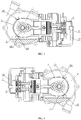
FIG. 1 shows the schematic diagram of the engine under a condition of being disposed horizontally; -
FIG.2 shows the schematic diagram of the engine under a right-mounted condition; -
FIG.3 shows the schematic diagram of the engine under a left-mounted condition; -
FIG.4 shows the schematic diagram of the engine under an inverted condition; -
FIG.5 shows the schematic diagram of the engine under a rear-mounted condition; -
FIG.6 shows the schematic diagram of the engine under a front-mounted condition. - As shown in the
FIGs.1-6 , the 4-stroke engine in the state of the art is disposed with acrankcase 1, alubricant case 2, acam box 4, apush rod 5, an upper rocker box 6 and a cylinder, top of which is disposed with acover 3. - As shown in the
FIG.1 , when the engine is under a condition of being disposed horizontally, seen from directly in the front side, thelubricant case 2 has a U-shaped section that is perpendicular to the crankshaft. Thecrankcase 1 is surrounded by alubricant case 2, and a U-shaped cavity of thelubricant case 2 is formed between the wall of thecrankcase 11 and the wall of thelubricant case 2, the bottoms of thecrankcase 1 and thelubricant case 2 are both circular arcs which bulge downward, and the right and left sides of thecrankcase 1 and thelubricant case 2 are both shown as circular arcs which bulge outward. - According to the present invention, the pulsing oil gas lubricant system for a 4-stroke engine comprises preceding stage quantitative oil intake orifices on left and right walls of the
crankcase 1, that is, the first preceding stage quantitativeoil intake orifice 111 located at the left side wall of thecrankcase 1 and the second preceding stage quantitativeoil intake orifice 112 located at the right side wall of the crankcase. When the engine is under the condition of being disposed horizontally, the two preceding stage quantitative oil intake orifices are positioned near the cross point of two center lines, one of which is forward-backward volume center line of the lubricant case, and the other of which is the forward-backward center line of the left and right side walls of thecrankcase 1, and offset is allowed for the position of the orifices, for example, the distance with the cross point may be selected from the range of 0-20mm. When the engine is under the condition of being disposed horizontally, the two preceding stage quantitative oil intake orifices are located at the positions that are no more than 50mm above the liquid level of the lubricant oil. Even if the shape of thelubricant case 2 changes, when the engine is under the condition of being disposed horizontally, for the preceding stage quantitative oil intake orifices, the preferred design is to dispose it on the intersecting lines of the volume center surface of the lubricant case and the wall of the crankcase, and the more specific position on the line may be decided according to the shape of the lubricant case. - The
lubricant case 2 and thecrankcase 1 are connected through the preceding stage quantitative oil intake orifices, and thecam box 4 is connected with the upper rocker box 6 with the push rod channel, and thecylinder cover 3 is disposed with a final stagequantitative airflow orifice 31 thereon, and the final stagequantitative airflow orifice 31 is connected with the upper rocker box 6. Thereby, a one-way connected oil gas lubricant channel is formed between the preceding stage quantitative oil intake orifice and the final stagequantitative airflow orifice 31. - The pulsing oil gas lubricant system for a 4-stroke engine of the present invention blows and sucks the lubricant oil in the
lubricant case 2 with the pulse airflow produced by the up-and-down movement of the piston. The diameter of the preceding stage quantitative oil intake orifice D1 and the diameter of the final stage quantitative airflow orifice D3 are controlled to satisfy the equation: D1/D3=0.8-1.5, more preferably, to satisfy the equation: D1/D3=1-1.2. The blow-and-suck pressure that the pulse gas applies to the lubricant oil in thelubricant case 2 may be controlled by changing the diameter of the preceding stage quantitative oil intake orifice D1, thereby the flow rate of the lubricant oil that flows from thelubricant case 2 to thecrankcase 1 is controlled correspondingly. The diameter of the final stage quantitative airflow orifice D3 is designed to make sure that the lubricant in the machine flows out as little as possible, while the power capacity is not affected. Thereby, due to the single one-way connected oil gas lubricant channel between the preceding stage quantitative oil intake orifice and the final stage quantitative airflow orifice, the output end pressure of the final stagequantitative airflow orifice 31 may be accurately controlled in the range of 0.01-0.03Mpa through the cooperative control to the preceding stage quantitative oil intake orifice D1 and the diameter of the final stage quantitative airflow orifice D3, and as a result, the lubricant oil gas supply may be controlled accurately. In this way, the parts at where the oil gas lubricant channel goes through are lubricated sufficiently, and no extra lubricant oil will flow out from the final stagequantitative airflow orifice 31, additionally, during the process that the lubricant oil gas goes from the preceding stage quantitative oil intake orifice on the crankcase wall to the final stagequantitative airflow orifice 31 on the cylinder cover, lubricated component stages are connected by a single gas oil orifice, thus forms a one-way connected oil gas lubricant channel, this ensures that no extra lubricant oil may flow back into thelubricant case 2 from thecrankcase 1 or other cavities, realizing the one-way quantitative lubricating. - Furthermore, as shown in the
FIG.5 , inter-stagequantitative oil orifice 41, and the diameter of the inter-stage quantitative oil orifice D2 is ≤3D1. The inter-stagequantitative oil orifice 41 introduces the concept of hierarchical control. When the preceding stage quantitative oil intake orifice D1 and the final stage quantitative airflow orifice D3 are determined, the traveling speed and the delivery capacity of the lubricant oil from the preceding stage quantitative oil intake orifice to the final stage quantitative airflow orifice may be controlled by controlling the diameter of the inter-stage quantitative oil orifice D2, thus realizing accurate control. - The design of two preceding stage quantitative oil intake orifices is used to make sure that the preceding stage quantitative oil intake orifice may work no matter how the engine is overturned so as to satisfy the normal operation of the quantitative one-way oil gas lubricant system of a 4-stroke engine. As shown in
FIG.1 , when the engine is under the condition of being disposed horizontally, both of the first preceding stage quantitativeoil intake orifice 111 and the second preceding stage quantitativeoil intake orifice 112 work. As shown inFIG.2 , when the engine is under a right-mounted condition, the second preceding stage quantitativeoil intake orifice 112 works mainly. As shown inFIG.3 , when the engine is under the left-mounted condition, the first preceding stage quantitativeoil intake orifice 111 works mainly. And as shown in theFIGs.4-6 , when the engine is under an inverted condition, or a rear-mounted condition, or a front-mounted condition, both of the first preceding stage quantitativeoil intake orifice 111 and the second preceding stage quantitativeoil intake orifice 112 work. - As shown in the
FIG.1 , oil-shieldingribs 113 are disposed on the left and right sides of the outer case wall of thecrankcase 1 at the upper and lower sides of the preceding stage quantitative oil intake orifice. The preceding stage quantitative oil intake orifice is disposed between oil-shieldingribs 113 at the upper and lower sides. Due to the blocking function of the oil-shieldingribs 113, when the engine is overturned with a certain angle, even the lubricant oil on the case wall that is closely against the preceding stage quantitative oil intake orifice will not flow into thecrankcase 1 through the preceding stage quantitative oil intake orifice. Alternatively, the oil-shielding ribs may be disposed around the circumference of the preceding stage quantitative oil intake orifice to get better oil-blocking effect. - Since the volume of the lubricant oil case and the power capacity of the engine may change, therefore, the diameter of the preceding stage quantitative oil intake orifice D1 and the volume of the lubricant oil case and the power capacity of the 4-stroke engine satisfy the following equation: D1=K(the volume of the lubricant oil case- the power capacity of the engine), wherein the unit of D1 is mm, and the unit of the lubricant oil case and the power capacity of the 4-stroke engine is cm3, and K may take the value from the range of 0.011-0.02, and the value of K depends on the capacity, generally, K may be larger when the power capacity is large, and K may be smaller when the power capacity is small.
- Finally, the final stage
quantitative airflow orifice 31 is connected to the cylinder through the communicatingpipe 32, thus, even some part of lubricant oil flows out from the final stagequantitative airflow orifice 31, the remaining little waste oil gas may be introduced to the cylinder through the communicatingpipe 32 so as to burn the remaining little waste oil gas fully to reduce the consumption of the lubricant oil and to reduce waste emissions. Finally, the requirement of quantitative one-way oil gas lubricating is achieved, no extra lubricant oil that has been lubricated parts will flow back to thelubricant oil case 2 from thecrankcase 1 or other cavities. - In addition, in order to ensure the normal operation when the engine is overturned in any angles, another essential condition is required, that is, the
crankcase 1 should be designed to make sure that the distance between each side of the inner wall of the crankcase and the corresponding side of the rotating space of the crank is smaller than 2mm. As shown inFIG.5 , thecrankcase 1 is disposed with abulge part 12, to make sure that the distance between each side of the inner wall of crankcase and the corresponding side of the rotating space of the crank is smaller than 2mm, so as to make sure that no extra space in thecrankcase 1 keeps lubricant oil from thelubricant oil case 2 in it when the engine is overturned with a certain angle, and except the quantitative lubricant oil flow through the parts that are to be lubricated in thecrankcase 1, the remaining lubricant oil can only flow through the inter-stage quantitative oil orifice and continue flowing in a single direction to lubricate thecam box 4. - The above-mentioned pulse oil gas lubricant system of the 4-stroke engine controls the supply quantity of the lubricant oil gas and the flow velocity of the lubricant oil that flows in the oil gas lubricant channel accurately by controlling the diameter of the preceding stage quantitative oil intake orifice D1 and the diameter of the final stage quantitative airflow orifice D3 to satisfy the equation: D1/D3=0.8-1.5 and controlling the diameter of the preceding stage quantitative oil intake orifice D1, the volume of the lubricant case and the engine displacement to satisfy the equation: D1=K (the volume of the lubricant - the engine displacement). Therefore, the supply quantity of the lubricant oil gas and the flow velocity of the lubricant oil that flows in the oil gas lubricant channel may be controlled accurately to ensure the quantitative one-way lubricating. The oil gas channel connects the
crankcase 1, thecam box 4, the push rod channel, the upper rocker box 6 in turns from the preceding quantitative oil intake orifice to the final quantitative airflow orifice, and very few waste oil gas that flows out from the final stage quantitative airflow orifice is introduced to the cylinder to be burned completed. - When the volume of the lubricant oil case and the power capacity of the engine is determined with a certain value, the plunge moves up-and-down with a frequency of 0.01-0.002s to form a pulse air current. The pressure and velocity of the pulse air current is basically stable. The blow pressure and suck pressure that the pulse air current applies to the lubricant oil in the lubricant oil case is determined by controlling the diameter of the preceding stage quantitative oil intake orifice, and then the flow quantity of the lubricant oil gas that flows from the
lubricant oil case 2 to thecrankcase 1 is controlled. Under the above condition, the flow quantity is controlled in the range of 1.5-2g/kw.h. - After the
crankcase 1 is lubricated, and then thecam box 4 is lubricated, and the inter-stagequantitative oil orifice 41 between thecrankcase 1 and thecam box 4 is designed to satisfy the relation: the diameter of the inter-stage quantitative oil orifice D2 is ≤3D1. The pressure in thecrankcase 1 is minus 0.003-0.008Mpa during operation, and the lubricant oil that enters into thecam box 4 is controlled to satisfy the lubricating for the cam and the timing gear, and additionally, the remained lubricant oil may satisfy the lubricating for the next lubricated part, that is, the parts in the upper rocker box 6. - After the upper rocker box 6 is lubricated, the very few remaining waste oil gas is introduced into the cylinder through the final stage
quantitative airflow orifice 31 that is positioned on the top of the cover of the cylinder. The size of the final stagequantitative airflow orifice 31 is designed to make sure that the lubricant oil in the machine flows out as little as possible, and meanwhile, the power capacity of the machine will not be affected. Specifically, by controlling the diameter of the final stage quantitative airflow gas orifice, the oil between the final stage quantitative airflow orifice and the cylinder flows with the velocity of 3-5mm/s. - The quantitative one-way oil gas lubricant system provided by the present invention may be used to install various tools installed with a 4-stroke engine, such as gasoline saw, pruning shears, grass trimmer, brush cutter, electric blower, lawn mower, electric generator, water pump, high pressure washer, universal small engine and so on. However, it is should be understood that the scope of protection is not limited to the listing above.
Claims (24)
- A quantitative one-way oil gas lubricant system for a 4-stroke engine, comprising:a preceding stage quantitative oil intake orifice that is connected to the lubricant case on a wall of the crankcase; anda final stage quantitative airflow orifice disposed at a cylinder cover of the cylinder, wherein a diameter of the preceding stage quantitative oil intake orifice D1 and a diameter of the final stage quantitative airflow orifice satisfy an equation: D1/D3=0.8-1.5, and a one-way connected oil gas lubricant channel is disposed between the preceding stage quantitative oil intake orifice and the final stage quantitative airflow orifice.
- The quantitative one-way oil gas lubricant system for the4-stroke engine of claim 1, wherein the diameter D1 of said preceding stage quantitative oil intake orifice and the diameter D3 of said final stage quantitative airflow orifice further satisfy an equation: D1/D3=1-1.2.
- The quantitative one-way oil gas lubricant system for the4-stroke engine of claim 1 or 2, wherein a relation between the diameter D1 of said preceding stage quantitative oil intake orifice, a volume of the lubricant case and an engine displacement satisfies an equation: D1=K (the volume of the lubricant - the engine displacement), in which, the unit of D1 is mm, the unit of the volume of the lubricant case and the engine displacement is cm3, and a value range of K is 0.011-0.02.
- The quantitative one-way oil gas lubricant system for the4-stroke engine of claim 3, wherein a distance between each side of an inner wall of the crankcase and a corresponding side of a rotating space of the crank is smaller than 2mm.
- The quantitative one-way oil gas lubricant system for a 4-stroke engine of claim 4, wherein a bulge part bulged to a center position of the crank along an axial direction, is disposed on two inner sides of the crankcase, which are corresponding to two side of the crank along the axial direction.
- The quantitative one-way oil gas lubricant system for the4-stroke engine of one of the claim 1-5, wherein an inter-stage quantitative oil orifice is disposed between the crankcase and the cam box, and a diameter of the inter-stage quantitative oil orifice D2 is ≤3D1.
- The quantitative one-way oil gas lubricant system for the4-stroke engine of claim 6, wherein the lubricant case has a U-shaped section perpendicular to the crankshaft, the crankcase is surrounded by the lubricant case, and the left and right sides of the crankcase are each disposed with a preceding quantitative oil intake orifice thereon, and when the 4-stroke engine is under a condition of being disposed horizontally, the two preceding stage quantitative oil intake orifices are positioned at across point of two center lines, one of which is a forward-backward volume center line of the lubricant case, and the other of which is a forward-backward center line of the left and right side walls of the crankcase.
- The quantitative one-way oil gas lubricant system for the4-stroke engine of claim 6, wherein when the 4-stroke engine is under a condition of being disposed horizontally, the preceding quantitative oil intake orifice is positioned on across line of a volume center surface of the lubricant oil case and a case wall of the crankcase.
- The quantitative one-way oil gas lubricant system for the4-stroke engine of claim 7, wherein oil-shielding ribs are disposed on an outer case wall of the crankcase, at two sides of the preceding quantitative oil intake orifice or surrounding the preceding quantitative oil intake orifice.
- The quantitative one-way oil gas lubricant system for the4-stroke engine of claim 6, wherein the final stage quantitative airflow orifice is connected with the cylinder through a connection pipe.
- A quantitative one-way oil gas lubricating method for the 4-stroke engine in one of the claim 1-10, comprising:controlling the diameter of the preceding quantitative oil intake orifice and the diameter of the final stage quantitative airflow orifice D3 to satisfy the relation: D1/D3=0.8-1.5, so that a pressure of an output end of the final stage quantitative airflow orifice is smaller than a pressure in the crankcase;enabling a lubricant oil sucked by the crankcase from the preceding quantitative oil intake orifice to flow along the oil gas lubricant channel and to lubricate parts of the 4-stroke engine that are passed through by the oil gas lubricant channel; andintroducing a minute quantity of waste oil gas that flows out from the final stage quantitative airflow orifice into a cylinder of the 4-stroke engine so as to be burned completely.
- The quantitative one-way oil gas lubricating method for the4-stroke engine of claim 11,wherein the oil gas lubricant channel, from the preceding quantitative oil intake orifice to the final stage quantitative airflow orifice, connects the crankcase, the cam box, a push rod channel and an upper rocker box of the 4-stroke engine in turns.
- The quantitative one-way oil gas lubricating method for the4-stroke engine of claim 11, further comprises:
controlling the diameter of the preceding quantitative oil intake orifice Di,avolume of the lubricant oil case and a power capacity of the 4-stroke engine to satisfy an equation: D1=K (the volume of the lubricant oil case- the power capacity of the engine), wherein a blow-and-suck pressure that a pulse air current applies to the lubricant oil in the lubricant oil case is controlled so as to control a flow quality of the lubricant oil that flows from the lubricant oil case to the crankcase in a range of 1.5-2g/kw.h, wherein the unit of D1 is mm, the unit of the lubricant oil case and the power capacity of the 4-stroke engine is cm3, and K is a value ranges from 0.011-0.02. - The quantitative one-way oil gas lubricating method for a 4-stroke engine of claim 11, further comprising:
controlling the diameter of the inter-stage quantitative oil orifice D2to be≤3D1, and controlling a pressure of the crankcase during operation to be in arange of minus 0.003-0.008Mpa. - A gasoline saw, which is disposed with the quantitative one-way oil gas lubricant system of one of the claim 1-10.
- A pruning shear, which is disposed with the quantitative one-way oil gas lubricant system of one of the claim 1-10.
- A grass trimmer, which is disposed with the quantitative one-way oil gas lubricant system of one of the claim 1-10.
- A brush cutter, which is disposed with the quantitative one-way oil gas lubricant system of one of the claim 1-10.
- An electric blower, which is disposed with the quantitative one-way oil gas lubricant system of one of the claim 1-10.
- A lawn mower, which is disposed with the quantitative one-way oil gas lubricant system of one of the claim 1-10.
- An electric generator, which is disposed with the quantitative one-way oil gas lubricant system of one of the claim 1-10.
- A water pump, which is disposed with the quantitative one-way oil gas lubricant system of one of the claim 1-10.
- A high pressure washer, which is disposed with the quantitative one-way oil gas lubricant system of one of the claim 1-10.
- A universal small engine, which is disposed with the quantitative one-way oil gas lubricant system of one of the claim 1-10.
Applications Claiming Priority (2)
| Application Number | Priority Date | Filing Date | Title |
|---|---|---|---|
| CN201610156567.7A CN105673132B (en) | 2016-03-18 | 2016-03-18 | A kind of quantitatively unidirectional oil gas lubricating system of four-stroke engine and method |
| PCT/CN2016/079099 WO2017156814A1 (en) | 2016-03-18 | 2016-04-12 | Quantitative unidirectional oil-air lubrication system and method for four-stroke engine |
Publications (3)
| Publication Number | Publication Date |
|---|---|
| EP3342994A1 true EP3342994A1 (en) | 2018-07-04 |
| EP3342994A4 EP3342994A4 (en) | 2019-04-24 |
| EP3342994B1 EP3342994B1 (en) | 2021-12-01 |
Family
ID=56310873
Family Applications (1)
| Application Number | Title | Priority Date | Filing Date |
|---|---|---|---|
| EP16893977.5A Not-in-force EP3342994B1 (en) | 2016-03-18 | 2016-04-12 | Quantitative unidirectional oil-air lubrication system and method for four-stroke engine |
Country Status (7)
| Country | Link |
|---|---|
| US (1) | US11300020B2 (en) |
| EP (1) | EP3342994B1 (en) |
| JP (1) | JP6823066B2 (en) |
| CN (1) | CN105673132B (en) |
| AU (1) | AU2016397609B2 (en) |
| CA (1) | CA3010490A1 (en) |
| WO (1) | WO2017156814A1 (en) |
Families Citing this family (7)
| Publication number | Priority date | Publication date | Assignee | Title |
|---|---|---|---|---|
| CN111148611A (en) * | 2017-09-15 | 2020-05-12 | 百乐帕斯托拉尔有限公司 | Portable wood sawing machine |
| CN108343486B (en) * | 2017-12-30 | 2024-04-09 | 浙江亚特电器股份有限公司 | Oil-gas lubrication system of four-stroke engine and tool equipment with four-stroke engine |
| DE102019118206A1 (en) * | 2018-07-06 | 2020-01-09 | Honda Motor Co., Ltd. | engine |
| CN109268101B (en) * | 2018-09-27 | 2024-04-09 | 浙江亚特电器股份有限公司 | A lubrication system for a four-stroke engine and a tool device with a four-stroke engine |
| CN112096840B (en) * | 2020-09-15 | 2022-08-12 | 马鞍山福永智能科技有限公司 | A rotary reducer for high-precision photothermal power generation |
| CN113074031B (en) * | 2021-03-25 | 2022-11-18 | 永康市南天工贸有限公司 | Lubricating system of engine, use method and garden equipment |
| CN114458412B (en) * | 2022-01-26 | 2023-10-17 | 浙江亚特电器股份有限公司 | A stir oily structure and engine for engine |
Family Cites Families (27)
| Publication number | Priority date | Publication date | Assignee | Title |
|---|---|---|---|---|
| JPS6117112U (en) * | 1984-07-04 | 1986-01-31 | 富士重工業株式会社 | Horizontally opposed engine crankcase |
| JPH08151914A (en) * | 1994-11-29 | 1996-06-11 | Ishikawajima Shibaura Mach Co Ltd | Four-cycle engine lubricating device |
| US5709185A (en) * | 1994-11-29 | 1998-01-20 | Ishikawajima-Shibaura Machinery Co., Ltd. | Lubricating system for four-stroke-cycle engine |
| JP3143777B2 (en) | 1996-03-19 | 2001-03-07 | 本田技研工業株式会社 | Work four-stroke engine |
| JPH10246106A (en) | 1997-03-03 | 1998-09-14 | Kioritz Corp | 4-cycle internal combustion engine |
| DK1267056T3 (en) * | 1999-01-25 | 2005-06-27 | Briggs & Stratton Corp | Four-stroke internal combustion engine |
| DE60031463T2 (en) * | 1999-01-25 | 2007-08-23 | Briggs & Stratton Corp., Wauwatosa | Four-stroke internal combustion engine |
| JP3839993B2 (en) | 1999-04-19 | 2006-11-01 | 株式会社共立 | 4-cycle internal combustion engine |
| GB0106514D0 (en) * | 2001-03-16 | 2001-05-02 | Perkins Engines Co Ltd | A cylinder block assembly |
| US6877494B2 (en) * | 2002-07-12 | 2005-04-12 | Pearson Motor Company Limited | Lightweight four-stroke engine |
| US7789077B2 (en) * | 2006-04-11 | 2010-09-07 | Honda Motor Co., Ltd. | Crankcase of internal combustion engine |
| CN200978692Y (en) * | 2006-11-15 | 2007-11-21 | 顾启华 | Mini rotary four-stroke gasoline engine |
| TWM325381U (en) * | 2007-06-08 | 2008-01-11 | Jenn Feng Ind Co Ltd | Lubricating device for four cycle engine |
| WO2008150222A1 (en) * | 2007-06-08 | 2008-12-11 | Husqvarna Ab | Lubrication system for a four-stroke engine |
| CA2754039C (en) | 2009-09-30 | 2017-10-31 | Hitachi Koki Co., Ltd. | Four-cycle engine, bush cutter and engine-driven tool having same |
| CN201635790U (en) * | 2010-01-08 | 2010-11-17 | 无锡力锦科技有限公司 | Portable-type four-stroke gasoline engine |
| US8490596B2 (en) * | 2010-11-29 | 2013-07-23 | Etg Limited | Vertical and horizontal engine |
| CN103321709B (en) * | 2012-06-15 | 2015-09-30 | 苏州科瓴精密机械科技有限公司 | The lubrication system of four stroke engine |
| JP2015007384A (en) * | 2013-06-25 | 2015-01-15 | ダイハツ工業株式会社 | Structure of oil pan |
| US20150000633A1 (en) * | 2013-07-01 | 2015-01-01 | Etg Limited | Vertical and Horizontal Engine |
| CN103993927B (en) * | 2014-04-28 | 2017-04-26 | 浙江亚特电器有限公司 | Engine pulse air-oil lubrication system and method |
| CN204082332U (en) * | 2014-09-29 | 2015-01-07 | 临沂三禾永佳动力有限公司 | Mini four-stroke gasoline engine |
| CN104389691A (en) * | 2014-10-15 | 2015-03-04 | 力帆实业(集团)股份有限公司 | Engine crankcase body oil-gas separation structure |
| CN104791048A (en) * | 2015-03-17 | 2015-07-22 | 浙江亚特电器有限公司 | Residual gas utilization device for engine lubricating system |
| CN104727897A (en) * | 2015-03-23 | 2015-06-24 | 力帆实业(集团)股份有限公司 | Oil cooling lubricating structure for external filter element of engine for tricycle |
| CN204783314U (en) * | 2015-07-10 | 2015-11-18 | 广州汽车集团股份有限公司 | Automobile engine's valve mechanism cover oil duct assembly |
| CN205503221U (en) * | 2016-03-18 | 2016-08-24 | 浙江亚特电器有限公司 | Four -stroke engine one -way air -oil lubrication system of ration and device that has this system |
-
2016
- 2016-03-18 CN CN201610156567.7A patent/CN105673132B/en active Active
- 2016-04-12 AU AU2016397609A patent/AU2016397609B2/en not_active Ceased
- 2016-04-12 JP JP2018530766A patent/JP6823066B2/en not_active Expired - Fee Related
- 2016-04-12 WO PCT/CN2016/079099 patent/WO2017156814A1/en not_active Ceased
- 2016-04-12 EP EP16893977.5A patent/EP3342994B1/en not_active Not-in-force
- 2016-04-12 CA CA3010490A patent/CA3010490A1/en not_active Abandoned
-
2018
- 2018-01-31 US US15/884,385 patent/US11300020B2/en active Active
Also Published As
| Publication number | Publication date |
|---|---|
| EP3342994A4 (en) | 2019-04-24 |
| US11300020B2 (en) | 2022-04-12 |
| WO2017156814A1 (en) | 2017-09-21 |
| US20180156085A1 (en) | 2018-06-07 |
| JP2019507839A (en) | 2019-03-22 |
| CA3010490A1 (en) | 2017-09-21 |
| AU2016397609B2 (en) | 2019-03-21 |
| CN105673132B (en) | 2017-07-07 |
| AU2016397609A1 (en) | 2018-07-19 |
| JP6823066B2 (en) | 2021-01-27 |
| EP3342994B1 (en) | 2021-12-01 |
| CN105673132A (en) | 2016-06-15 |
Similar Documents
| Publication | Publication Date | Title |
|---|---|---|
| EP3342994B1 (en) | Quantitative unidirectional oil-air lubrication system and method for four-stroke engine | |
| US5960764A (en) | Four-stroke internal combustion engine | |
| US6202613B1 (en) | Four-stroke cycle internal combustion engine | |
| US11808182B2 (en) | Internal combustion engine and oil treatment apparatus for use with the same | |
| CN113047923B (en) | Outboard engine and separated lubricating system thereof | |
| CN204082332U (en) | Mini four-stroke gasoline engine | |
| CN205503221U (en) | Four -stroke engine one -way air -oil lubrication system of ration and device that has this system | |
| CN203081524U (en) | Handheld engine oil lubricating system for four-stroke gasoline engine | |
| CN214887277U (en) | Outboard engine and separated type lubricating system thereof | |
| CN201635790U (en) | Portable-type four-stroke gasoline engine | |
| JP4798114B2 (en) | Oil lubrication device | |
| CN203783678U (en) | Four-stroke engine | |
| CN109268101A (en) | A kind of lubricating system of four-stroke engine and tool equipment with four-stroke engine | |
| CN103993927A (en) | Engine pulse air-oil lubrication system and method | |
| CN108343486B (en) | Oil-gas lubrication system of four-stroke engine and tool equipment with four-stroke engine | |
| CN201614952U (en) | Arbitrary overturn four-stroke engine | |
| CN203906034U (en) | Four-stroke engine | |
| CN219974597U (en) | Engine and vehicle | |
| WO2016066143A1 (en) | Lubrication system of four-stroke engine | |
| CN215890128U (en) | Engine lubrication system and garden tool | |
| CN203925648U (en) | A kind of engine impulse oil gas lubricating system | |
| CN215170382U (en) | Be used for abluent waste liquid drainage device of automobile engine carbon deposit fatlute | |
| CN101988402A (en) | Lubricating system for four-stroke engine with arbitrary rotation | |
| CN214577269U (en) | Lubricating oil way structure of diesel engine | |
| WO2014114214A1 (en) | Cam chamber of four-stroke engine |
Legal Events
| Date | Code | Title | Description |
|---|---|---|---|
| STAA | Information on the status of an ep patent application or granted ep patent |
Free format text: STATUS: THE INTERNATIONAL PUBLICATION HAS BEEN MADE |
|
| PUAI | Public reference made under article 153(3) epc to a published international application that has entered the european phase |
Free format text: ORIGINAL CODE: 0009012 |
|
| STAA | Information on the status of an ep patent application or granted ep patent |
Free format text: STATUS: REQUEST FOR EXAMINATION WAS MADE |
|
| 17P | Request for examination filed |
Effective date: 20180329 |
|
| AK | Designated contracting states |
Kind code of ref document: A1 Designated state(s): AL AT BE BG CH CY CZ DE DK EE ES FI FR GB GR HR HU IE IS IT LI LT LU LV MC MK MT NL NO PL PT RO RS SE SI SK SM TR |
|
| AX | Request for extension of the european patent |
Extension state: BA ME |
|
| A4 | Supplementary search report drawn up and despatched |
Effective date: 20190326 |
|
| RIC1 | Information provided on ipc code assigned before grant |
Ipc: F01M 11/06 20060101AFI20190320BHEP Ipc: F02B 63/02 20060101ALI20190320BHEP Ipc: F02F 1/42 20060101ALI20190320BHEP Ipc: F01M 1/12 20060101ALI20190320BHEP Ipc: F01M 1/04 20060101ALI20190320BHEP |
|
| DAV | Request for validation of the european patent (deleted) | ||
| DAX | Request for extension of the european patent (deleted) | ||
| GRAP | Despatch of communication of intention to grant a patent |
Free format text: ORIGINAL CODE: EPIDOSNIGR1 |
|
| STAA | Information on the status of an ep patent application or granted ep patent |
Free format text: STATUS: GRANT OF PATENT IS INTENDED |
|
| INTG | Intention to grant announced |
Effective date: 20210401 |
|
| GRAS | Grant fee paid |
Free format text: ORIGINAL CODE: EPIDOSNIGR3 |
|
| GRAA | (expected) grant |
Free format text: ORIGINAL CODE: 0009210 |
|
| STAA | Information on the status of an ep patent application or granted ep patent |
Free format text: STATUS: THE PATENT HAS BEEN GRANTED |
|
| AK | Designated contracting states |
Kind code of ref document: B1 Designated state(s): AL AT BE BG CH CY CZ DE DK EE ES FI FR GB GR HR HU IE IS IT LI LT LU LV MC MK MT NL NO PL PT RO RS SE SI SK SM TR |
|
| REG | Reference to a national code |
Ref country code: GB Ref legal event code: FG4D |
|
| REG | Reference to a national code |
Ref country code: AT Ref legal event code: REF Ref document number: 1451959 Country of ref document: AT Kind code of ref document: T Effective date: 20211215 Ref country code: CH Ref legal event code: EP |
|
| REG | Reference to a national code |
Ref country code: IE Ref legal event code: FG4D |
|
| REG | Reference to a national code |
Ref country code: DE Ref legal event code: R096 Ref document number: 602016067005 Country of ref document: DE |
|
| REG | Reference to a national code |
Ref country code: LT Ref legal event code: MG9D |
|
| REG | Reference to a national code |
Ref country code: NL Ref legal event code: MP Effective date: 20211201 |
|
| REG | Reference to a national code |
Ref country code: AT Ref legal event code: MK05 Ref document number: 1451959 Country of ref document: AT Kind code of ref document: T Effective date: 20211201 |
|
| PG25 | Lapsed in a contracting state [announced via postgrant information from national office to epo] |
Ref country code: RS Free format text: LAPSE BECAUSE OF FAILURE TO SUBMIT A TRANSLATION OF THE DESCRIPTION OR TO PAY THE FEE WITHIN THE PRESCRIBED TIME-LIMIT Effective date: 20211201 Ref country code: LT Free format text: LAPSE BECAUSE OF FAILURE TO SUBMIT A TRANSLATION OF THE DESCRIPTION OR TO PAY THE FEE WITHIN THE PRESCRIBED TIME-LIMIT Effective date: 20211201 Ref country code: FI Free format text: LAPSE BECAUSE OF FAILURE TO SUBMIT A TRANSLATION OF THE DESCRIPTION OR TO PAY THE FEE WITHIN THE PRESCRIBED TIME-LIMIT Effective date: 20211201 Ref country code: BG Free format text: LAPSE BECAUSE OF FAILURE TO SUBMIT A TRANSLATION OF THE DESCRIPTION OR TO PAY THE FEE WITHIN THE PRESCRIBED TIME-LIMIT Effective date: 20220301 Ref country code: AT Free format text: LAPSE BECAUSE OF FAILURE TO SUBMIT A TRANSLATION OF THE DESCRIPTION OR TO PAY THE FEE WITHIN THE PRESCRIBED TIME-LIMIT Effective date: 20211201 |
|
| PG25 | Lapsed in a contracting state [announced via postgrant information from national office to epo] |
Ref country code: SE Free format text: LAPSE BECAUSE OF FAILURE TO SUBMIT A TRANSLATION OF THE DESCRIPTION OR TO PAY THE FEE WITHIN THE PRESCRIBED TIME-LIMIT Effective date: 20211201 Ref country code: PL Free format text: LAPSE BECAUSE OF FAILURE TO SUBMIT A TRANSLATION OF THE DESCRIPTION OR TO PAY THE FEE WITHIN THE PRESCRIBED TIME-LIMIT Effective date: 20211201 Ref country code: NO Free format text: LAPSE BECAUSE OF FAILURE TO SUBMIT A TRANSLATION OF THE DESCRIPTION OR TO PAY THE FEE WITHIN THE PRESCRIBED TIME-LIMIT Effective date: 20220301 Ref country code: LV Free format text: LAPSE BECAUSE OF FAILURE TO SUBMIT A TRANSLATION OF THE DESCRIPTION OR TO PAY THE FEE WITHIN THE PRESCRIBED TIME-LIMIT Effective date: 20211201 Ref country code: HR Free format text: LAPSE BECAUSE OF FAILURE TO SUBMIT A TRANSLATION OF THE DESCRIPTION OR TO PAY THE FEE WITHIN THE PRESCRIBED TIME-LIMIT Effective date: 20211201 Ref country code: GR Free format text: LAPSE BECAUSE OF FAILURE TO SUBMIT A TRANSLATION OF THE DESCRIPTION OR TO PAY THE FEE WITHIN THE PRESCRIBED TIME-LIMIT Effective date: 20220302 Ref country code: ES Free format text: LAPSE BECAUSE OF FAILURE TO SUBMIT A TRANSLATION OF THE DESCRIPTION OR TO PAY THE FEE WITHIN THE PRESCRIBED TIME-LIMIT Effective date: 20211201 |
|
| PG25 | Lapsed in a contracting state [announced via postgrant information from national office to epo] |
Ref country code: NL Free format text: LAPSE BECAUSE OF FAILURE TO SUBMIT A TRANSLATION OF THE DESCRIPTION OR TO PAY THE FEE WITHIN THE PRESCRIBED TIME-LIMIT Effective date: 20211201 |
|
| PG25 | Lapsed in a contracting state [announced via postgrant information from national office to epo] |
Ref country code: SM Free format text: LAPSE BECAUSE OF FAILURE TO SUBMIT A TRANSLATION OF THE DESCRIPTION OR TO PAY THE FEE WITHIN THE PRESCRIBED TIME-LIMIT Effective date: 20211201 Ref country code: SK Free format text: LAPSE BECAUSE OF FAILURE TO SUBMIT A TRANSLATION OF THE DESCRIPTION OR TO PAY THE FEE WITHIN THE PRESCRIBED TIME-LIMIT Effective date: 20211201 Ref country code: RO Free format text: LAPSE BECAUSE OF FAILURE TO SUBMIT A TRANSLATION OF THE DESCRIPTION OR TO PAY THE FEE WITHIN THE PRESCRIBED TIME-LIMIT Effective date: 20211201 Ref country code: PT Free format text: LAPSE BECAUSE OF FAILURE TO SUBMIT A TRANSLATION OF THE DESCRIPTION OR TO PAY THE FEE WITHIN THE PRESCRIBED TIME-LIMIT Effective date: 20220401 Ref country code: EE Free format text: LAPSE BECAUSE OF FAILURE TO SUBMIT A TRANSLATION OF THE DESCRIPTION OR TO PAY THE FEE WITHIN THE PRESCRIBED TIME-LIMIT Effective date: 20211201 Ref country code: CZ Free format text: LAPSE BECAUSE OF FAILURE TO SUBMIT A TRANSLATION OF THE DESCRIPTION OR TO PAY THE FEE WITHIN THE PRESCRIBED TIME-LIMIT Effective date: 20211201 |
|
| REG | Reference to a national code |
Ref country code: DE Ref legal event code: R097 Ref document number: 602016067005 Country of ref document: DE |
|
| PG25 | Lapsed in a contracting state [announced via postgrant information from national office to epo] |
Ref country code: IS Free format text: LAPSE BECAUSE OF FAILURE TO SUBMIT A TRANSLATION OF THE DESCRIPTION OR TO PAY THE FEE WITHIN THE PRESCRIBED TIME-LIMIT Effective date: 20220401 |
|
| PLBE | No opposition filed within time limit |
Free format text: ORIGINAL CODE: 0009261 |
|
| STAA | Information on the status of an ep patent application or granted ep patent |
Free format text: STATUS: NO OPPOSITION FILED WITHIN TIME LIMIT |
|
| PG25 | Lapsed in a contracting state [announced via postgrant information from national office to epo] |
Ref country code: DK Free format text: LAPSE BECAUSE OF FAILURE TO SUBMIT A TRANSLATION OF THE DESCRIPTION OR TO PAY THE FEE WITHIN THE PRESCRIBED TIME-LIMIT Effective date: 20211201 Ref country code: AL Free format text: LAPSE BECAUSE OF FAILURE TO SUBMIT A TRANSLATION OF THE DESCRIPTION OR TO PAY THE FEE WITHIN THE PRESCRIBED TIME-LIMIT Effective date: 20211201 |
|
| 26N | No opposition filed |
Effective date: 20220902 |
|
| PG25 | Lapsed in a contracting state [announced via postgrant information from national office to epo] |
Ref country code: SI Free format text: LAPSE BECAUSE OF FAILURE TO SUBMIT A TRANSLATION OF THE DESCRIPTION OR TO PAY THE FEE WITHIN THE PRESCRIBED TIME-LIMIT Effective date: 20211201 |
|
| REG | Reference to a national code |
Ref country code: CH Ref legal event code: PL |
|
| REG | Reference to a national code |
Ref country code: BE Ref legal event code: MM Effective date: 20220430 |
|
| PG25 | Lapsed in a contracting state [announced via postgrant information from national office to epo] |
Ref country code: MC Free format text: LAPSE BECAUSE OF FAILURE TO SUBMIT A TRANSLATION OF THE DESCRIPTION OR TO PAY THE FEE WITHIN THE PRESCRIBED TIME-LIMIT Effective date: 20211201 Ref country code: LU Free format text: LAPSE BECAUSE OF NON-PAYMENT OF DUE FEES Effective date: 20220412 Ref country code: LI Free format text: LAPSE BECAUSE OF NON-PAYMENT OF DUE FEES Effective date: 20220430 Ref country code: CH Free format text: LAPSE BECAUSE OF NON-PAYMENT OF DUE FEES Effective date: 20220430 |
|
| PG25 | Lapsed in a contracting state [announced via postgrant information from national office to epo] |
Ref country code: BE Free format text: LAPSE BECAUSE OF NON-PAYMENT OF DUE FEES Effective date: 20220430 |
|
| PG25 | Lapsed in a contracting state [announced via postgrant information from national office to epo] |
Ref country code: IE Free format text: LAPSE BECAUSE OF NON-PAYMENT OF DUE FEES Effective date: 20220412 |
|
| PG25 | Lapsed in a contracting state [announced via postgrant information from national office to epo] |
Ref country code: IT Free format text: LAPSE BECAUSE OF FAILURE TO SUBMIT A TRANSLATION OF THE DESCRIPTION OR TO PAY THE FEE WITHIN THE PRESCRIBED TIME-LIMIT Effective date: 20211201 |
|
| PGFP | Annual fee paid to national office [announced via postgrant information from national office to epo] |
Ref country code: DE Payment date: 20230412 Year of fee payment: 8 Ref country code: FR Payment date: 20230425 Year of fee payment: 8 |
|
| PGFP | Annual fee paid to national office [announced via postgrant information from national office to epo] |
Ref country code: GB Payment date: 20230424 Year of fee payment: 8 |
|
| PG25 | Lapsed in a contracting state [announced via postgrant information from national office to epo] |
Ref country code: HU Free format text: LAPSE BECAUSE OF FAILURE TO SUBMIT A TRANSLATION OF THE DESCRIPTION OR TO PAY THE FEE WITHIN THE PRESCRIBED TIME-LIMIT; INVALID AB INITIO Effective date: 20160412 |
|
| PG25 | Lapsed in a contracting state [announced via postgrant information from national office to epo] |
Ref country code: MK Free format text: LAPSE BECAUSE OF FAILURE TO SUBMIT A TRANSLATION OF THE DESCRIPTION OR TO PAY THE FEE WITHIN THE PRESCRIBED TIME-LIMIT Effective date: 20211201 Ref country code: CY Free format text: LAPSE BECAUSE OF FAILURE TO SUBMIT A TRANSLATION OF THE DESCRIPTION OR TO PAY THE FEE WITHIN THE PRESCRIBED TIME-LIMIT Effective date: 20211201 |
|
| PG25 | Lapsed in a contracting state [announced via postgrant information from national office to epo] |
Ref country code: TR Free format text: LAPSE BECAUSE OF FAILURE TO SUBMIT A TRANSLATION OF THE DESCRIPTION OR TO PAY THE FEE WITHIN THE PRESCRIBED TIME-LIMIT Effective date: 20211201 |
|
| PG25 | Lapsed in a contracting state [announced via postgrant information from national office to epo] |
Ref country code: MT Free format text: LAPSE BECAUSE OF FAILURE TO SUBMIT A TRANSLATION OF THE DESCRIPTION OR TO PAY THE FEE WITHIN THE PRESCRIBED TIME-LIMIT Effective date: 20211201 |
|
| REG | Reference to a national code |
Ref country code: DE Ref legal event code: R119 Ref document number: 602016067005 Country of ref document: DE |
|
| GBPC | Gb: european patent ceased through non-payment of renewal fee |
Effective date: 20240412 |
|
| PG25 | Lapsed in a contracting state [announced via postgrant information from national office to epo] |
Ref country code: DE Free format text: LAPSE BECAUSE OF NON-PAYMENT OF DUE FEES Effective date: 20241105 |
|
| PG25 | Lapsed in a contracting state [announced via postgrant information from national office to epo] |
Ref country code: GB Free format text: LAPSE BECAUSE OF NON-PAYMENT OF DUE FEES Effective date: 20240412 |
|
| PG25 | Lapsed in a contracting state [announced via postgrant information from national office to epo] |
Ref country code: FR Free format text: LAPSE BECAUSE OF NON-PAYMENT OF DUE FEES Effective date: 20240430 |
|
| PG25 | Lapsed in a contracting state [announced via postgrant information from national office to epo] |
Ref country code: GB Free format text: LAPSE BECAUSE OF NON-PAYMENT OF DUE FEES Effective date: 20240412 Ref country code: FR Free format text: LAPSE BECAUSE OF NON-PAYMENT OF DUE FEES Effective date: 20240430 Ref country code: DE Free format text: LAPSE BECAUSE OF NON-PAYMENT OF DUE FEES Effective date: 20241105 |