EP3341491B1 - Methods for inactivation and extraction of acid-fast bacteria from liquid media for characterization and/or identification using mass spectrometry - Google Patents
Methods for inactivation and extraction of acid-fast bacteria from liquid media for characterization and/or identification using mass spectrometry Download PDFInfo
- Publication number
- EP3341491B1 EP3341491B1 EP16742562.8A EP16742562A EP3341491B1 EP 3341491 B1 EP3341491 B1 EP 3341491B1 EP 16742562 A EP16742562 A EP 16742562A EP 3341491 B1 EP3341491 B1 EP 3341491B1
- Authority
- EP
- European Patent Office
- Prior art keywords
- acid
- fast bacteria
- tube
- test sample
- suspension
- Prior art date
- Legal status (The legal status is an assumption and is not a legal conclusion. Google has not performed a legal analysis and makes no representation as to the accuracy of the status listed.)
- Active
Links
Images




Classifications
-
- C—CHEMISTRY; METALLURGY
- C12—BIOCHEMISTRY; BEER; SPIRITS; WINE; VINEGAR; MICROBIOLOGY; ENZYMOLOGY; MUTATION OR GENETIC ENGINEERING
- C12Q—MEASURING OR TESTING PROCESSES INVOLVING ENZYMES, NUCLEIC ACIDS OR MICROORGANISMS; COMPOSITIONS OR TEST PAPERS THEREFOR; PROCESSES OF PREPARING SUCH COMPOSITIONS; CONDITION-RESPONSIVE CONTROL IN MICROBIOLOGICAL OR ENZYMOLOGICAL PROCESSES
- C12Q1/00—Measuring or testing processes involving enzymes, nucleic acids or microorganisms; Compositions therefor; Processes of preparing such compositions
- C12Q1/02—Measuring or testing processes involving enzymes, nucleic acids or microorganisms; Compositions therefor; Processes of preparing such compositions involving viable microorganisms
- C12Q1/24—Methods of sampling, or inoculating or spreading a sample; Methods of physically isolating an intact microorganisms
-
- C—CHEMISTRY; METALLURGY
- C12—BIOCHEMISTRY; BEER; SPIRITS; WINE; VINEGAR; MICROBIOLOGY; ENZYMOLOGY; MUTATION OR GENETIC ENGINEERING
- C12M—APPARATUS FOR ENZYMOLOGY OR MICROBIOLOGY; APPARATUS FOR CULTURING MICROORGANISMS FOR PRODUCING BIOMASS, FOR GROWING CELLS OR FOR OBTAINING FERMENTATION OR METABOLIC PRODUCTS, i.e. BIOREACTORS OR FERMENTERS
- C12M47/00—Means for after-treatment of the produced biomass or of the fermentation or metabolic products, e.g. storage of biomass
- C12M47/02—Separating microorganisms from the culture medium; Concentration of biomass
-
- C—CHEMISTRY; METALLURGY
- C12—BIOCHEMISTRY; BEER; SPIRITS; WINE; VINEGAR; MICROBIOLOGY; ENZYMOLOGY; MUTATION OR GENETIC ENGINEERING
- C12N—MICROORGANISMS OR ENZYMES; COMPOSITIONS THEREOF; PROPAGATING, PRESERVING, OR MAINTAINING MICROORGANISMS; MUTATION OR GENETIC ENGINEERING; CULTURE MEDIA
- C12N1/00—Microorganisms; Compositions thereof; Processes of propagating, maintaining or preserving microorganisms or compositions thereof; Processes of preparing or isolating a composition containing a microorganism; Culture media therefor
- C12N1/02—Separating microorganisms from their culture media
-
- G—PHYSICS
- G01—MEASURING; TESTING
- G01N—INVESTIGATING OR ANALYSING MATERIALS BY DETERMINING THEIR CHEMICAL OR PHYSICAL PROPERTIES
- G01N33/00—Investigating or analysing materials by specific methods not covered by groups G01N1/00 - G01N31/00
- G01N33/48—Biological material, e.g. blood, urine; Haemocytometers
- G01N33/50—Chemical analysis of biological material, e.g. blood, urine; Testing involving biospecific ligand binding methods; Immunological testing
- G01N33/68—Chemical analysis of biological material, e.g. blood, urine; Testing involving biospecific ligand binding methods; Immunological testing involving proteins, peptides or amino acids
- G01N33/6803—General methods of protein analysis not limited to specific proteins or families of proteins
- G01N33/6848—Methods of protein analysis involving mass spectrometry
- G01N33/6851—Methods of protein analysis involving laser desorption ionisation mass spectrometry
-
- B—PERFORMING OPERATIONS; TRANSPORTING
- B01—PHYSICAL OR CHEMICAL PROCESSES OR APPARATUS IN GENERAL
- B01L—CHEMICAL OR PHYSICAL LABORATORY APPARATUS FOR GENERAL USE
- B01L3/00—Containers or dishes for laboratory use, e.g. laboratory glassware; Droppers
- B01L3/50—Containers for the purpose of retaining a material to be analysed, e.g. test tubes
- B01L3/502—Containers for the purpose of retaining a material to be analysed, e.g. test tubes with fluid transport, e.g. in multi-compartment structures
- B01L3/5021—Test tubes specially adapted for centrifugation purposes
-
- G—PHYSICS
- G01—MEASURING; TESTING
- G01N—INVESTIGATING OR ANALYSING MATERIALS BY DETERMINING THEIR CHEMICAL OR PHYSICAL PROPERTIES
- G01N2333/00—Assays involving biological materials from specific organisms or of a specific nature
- G01N2333/195—Assays involving biological materials from specific organisms or of a specific nature from bacteria
-
- G—PHYSICS
- G01—MEASURING; TESTING
- G01N—INVESTIGATING OR ANALYSING MATERIALS BY DETERMINING THEIR CHEMICAL OR PHYSICAL PROPERTIES
- G01N2333/00—Assays involving biological materials from specific organisms or of a specific nature
- G01N2333/195—Assays involving biological materials from specific organisms or of a specific nature from bacteria
- G01N2333/35—Assays involving biological materials from specific organisms or of a specific nature from bacteria from Mycobacteriaceae (F)
-
- G—PHYSICS
- G01—MEASURING; TESTING
- G01N—INVESTIGATING OR ANALYSING MATERIALS BY DETERMINING THEIR CHEMICAL OR PHYSICAL PROPERTIES
- G01N2333/00—Assays involving biological materials from specific organisms or of a specific nature
- G01N2333/195—Assays involving biological materials from specific organisms or of a specific nature from bacteria
- G01N2333/355—Assays involving biological materials from specific organisms or of a specific nature from bacteria from Nocardia (G)
Definitions
- the present invention relates to methods for the inactivation and extraction of acid-fast bacteria. such as Mycobacterium or Nocardia.
- the present invention is directed to a method for the rapid characterization and/or identification of Mycobacterium or Nocardia species grown in liquid media using mass spectrometry.
- Identifying microorganisms cultured in liquid media is particularly difficult because of the lower concentration of microorganisms in the sample container and because the liquid media may interfere with analytical methods such as mass spectrometry.
- Mass spectrometric methods have the potential to allow for identification of microorganisms very quickly, but may encounter interference from the many compounds present in liquid culture media and in clinical samples such as sputum, sterile body fluids, or combinations thereof.
- U.S. Patent No. 6,177,266 which discloses a method for the chemotaxonomic classification of bacteria with genus, species and strain specific biomarkers generated by matrix assisted laser desorption ionization time-of-flight mass spectrometry (MALDI-TOF-MS) analysis of either cellular protein extracts or whole cells.
- MALDI-TOF-MS matrix assisted laser desorption ionization time-of-flight mass spectrometry
- U.S. Patent No. 8,735,091 which discloses a method for the inactivation and extraction of acid-fast bacteria, such as Mycobacterium and Nocardia, from solid and liquid media.
- the '091 Patent does not recognize the difficulty associated with the protein extraction of acid-fast bacteria when grown in liquid media.
- the '091 Patent does not recognize the difficulty in securing a sufficient amount of biomass of microorganisms from liquid media for identification using mass spectrometry.
- the '091 Patent does not recognize the difficulty in removing the inactivating solution, which interferes with identification using mass spectrometry.
- the '091 Patent does not recognize the unexpected benefits of collection and retention of sufficient biomass of the acid fast bacteria for the inactivation and extraction in a tube having a specific size and/or shape. Finally, the '091 Patent does not address the difficulty of separating the pellet from liquid media to avoid interference for identification using mass spectrometry.
- the present invention is directed to a method for inactivation and extraction of acid-fast bacteria (e.g., Mycobacterium or Nocardia species) in a test sample, the method comprising the following sequential steps: (a) culturing a test sample containing acid-fast bacteria in a liquid culture and continuing to culture the test sample in the liquid culture for at least 24 hours after the test sample has tested positive for growth of the acid-fast bacteria and until a minimum concentration of 1.0x10 7 CFU/ml is present in the test sample culture; (b) transferring the test sample from the positive liquid culture to a first tube, wherein the first tube comprises a body having a volume of 5 mL, a first end to the body having an opening, and a second end to the body having a frustoconical portion ending in a concave tip; (c) centrifuging the first tube to pellet the acid-fast bacteria in the concave tip and subsequently decanting at least 90% of a first supernatant while retaining the pellet of
- the acid-fast bacteria (e.g., Mycobacterium or Nocardia ) pellet can be resuspended in step (d) in from about 50% to about 100% ethanol, for example, the pellet may be resuspended in about 70% ethanol.
- the method may comprise bead beating and/or vortexing the container in step (f) for about 1 minute to about 30 minutes.
- the beads are 0.5 mm glass beads.
- the subsequent incubation step (g) comprises an incubation for at least about 10 minutes. In another embodiment, the incubation in step (g) is at room temperature.
- the method may further comprise the following additional sequential steps as part of protein extraction: (h) transferring the suspension to a third tube and centrifuging the third tube to pellet the inactivated acid-fast bacteria and subsequently removing a second supernatant; and (i) resuspending the inactivated acid-fast bacteria pellet to generate a solution comprising the inactivated acid-fast bacteria.
- the supematant from step (i) can be applied directly, or as a water suspension, to a mass spectrometry slide or plate.
- the pellet in step (h) may be resuspended using from about 50% to about 90% formic acid, for example, the pellet may be resuspended using 70% formic acid, in step (i).
- acetonitrile may be added to obtain a final concentration of acetonitrile of from about 35% to about 65%, for example, to obtain a final concentration of about 50%.
- the pellet may be resuspended in 10 ⁇ L of formic acid in step (h) and 10 ⁇ L of acetonitrile can be added to the resuspended pellet in step (h).
- the suspension may be centrifuged to pellet cellular debris as shown in step (j)
- the method may further comprises the following additional sequential steps: (k) transferring an aliquot of the supernatant from step (j) to a mass spectrometry target slide and adding a matrix solution, and (l) identifying protein profiles of the inactivated acid-fast bacteria on the mass spectrometry slide by mass spectrometry to acquire one or more mass spectra of the acid-fast bacteria and characterizing and/or identifying said acid-fast bacteria in the test sample by comparison of the measured mass spectrum with one or more reference mass spectra.
- step 2 (k) comprises transferring an aliquot (e.g., 1 ⁇ L) of the test sample obtained from step (j) to a mass spectrometry slide or plate, allowing the aliquot to dry and subsequently adding a matrix.
- a matrix may be alpha-cyano-4-hydroxycinnamic acid (CHCA).
- CHCA alpha-cyano-4-hydroxycinnamic acid
- the acid-fast bacteria can be identified to the family, genus, species, strain level and/or group/complex using mass spectrometry, for example, MALDI-TOF mass spectrometry.
- the present assignee's VITEK ® MS system provides a platform for bacterial identification using a Matrix Assisted Laser Desorption Ionization - Time of Flight (MALDI-TOF) Mass Spectrometer to analyze the protein profile of a sample and match it to a database of known organism profiles. Samples are deposited onto a target slide, covered with a matrix (e.g., CHCA matrix ( ⁇ -cyano-4-hydroxy-cinamic acid matrix)), and then processed through the Mass Spectrometer.
- a matrix e.g., CHCA matrix ( ⁇ -cyano-4-hydroxy-cinamic acid matrix
- Most common clinically-relevant microorganism can be analyzed by depositing cells directly onto the VITEK ® MS target slide.
- the preparation of acid-fast bacteria (e.g., Mycobacterium or Nocardia) samples for analysis differs from the standard procedure in that an inactivation step is necessary in order to make the samples safe for handling outside of a Biosafety Level-3 (BSL-3/P3) environment.
- BSL-3/P3 Biosafety Level-3
- incubation in alcohol in conjunction with mechanical disruption provides an effective and rapid method for the inactivation of acid-fast bacteria.
- Alcohol exposure was shown to be effective when using a process involving an agitation or mechanical disruption step followed by subsequent inactivation step by incubating the disrupted sample in alcohol at room temperature for at least 5 minutes, or at least 10 minutes.
- the alcohol is ethanol.
- mechanical disruption is performed using a vortex or a Bead Beater (BioSpec. Bartlesville, OK), a homogenizer that disrupts cells by agitating a sealed micro centrifuge tube containing sample, extraction solution, and beads (e.g., tiny glass beads).
- the beads can be any known beads that can operate to disrupt cells in a container or microcentrifuge tube.
- the beads can be glass, ceramic, zirconia, silicon, metal, steel, tungsten carbide, gamet, sand, or sapphire beads.
- the bead can be from about 0.1 mm to about 1 mm in size, for example, about 0.5 mm in size.
- Additional processing steps can then be used to assist in extracting the cellular proteins from the inactivated cells in order to yield clear and consistent spectra.
- a treatment step in formic acid followed by exposure to acetonitrile can be used to extract and dissolve proteins for subsequent analysis (e.g., by mass spectrometry).
- the present invention provides methods for the inactivation, extraction. characterization, and/or identification of an unknown acid-fast bacterium in a test sample from liquid media.
- the present invention is also directed to a method for the rapid characterization and/or identification of acid-fast bacteria (e.g., Mycobacterium or Nocardia) in a test sample from liquid media using mass spectrometry.
- the rapid methods allow for characterization and/or identification of acid-fast bacteria more quickly than prior techniques, resulting in faster diagnoses and characterization/identification of test samples.
- the steps involved in the methods of the invention, from obtaining a sample to characterization/identification of acid-fast bacteria. can be carried out in a very short time frame to obtain clinically relevant actionable information.
- the methods of the invention can be carried out in less than about 120 minutes, e.g., in less than about 110, 100, 90, 80, 70, 60, 50, 40, 30, 20, 15, or 10 minutes.
- the rapidity of the methods of the invention represents an improvement over prior methods.
- samples are obtained from a subject (e.g., a patient) having or suspected of having an acid-fast bacterial infection.
- a subject e.g., a patient
- the term "acid-fast bacteria” is intended to encompass any acid-fast bacteria including, but not limited to, Mycobacterium and Actinomyces (including Nocardia, Rhodococcus. Gordonia, Tsukamurella and Dietzia ).
- mycobacteria or " Mycobacterium” is intended to encompass any known mycobacteria. including, but not limited to, rapid and slow-growing bacteria such as Mycobacterium tuberculosis, Mycobacterium bovis, Mycobacterium microti, Mycobacterium africanum, Mycobacterium canetti, Mycobacterium avium. Mycobacterium intracellulare, Mycobacterium scrofulaceum , Mycobacterium kansasii, Mycobacterium malmoense. Mycobacterium xenopi, Mycobacterium marinum, Mycobacterium simiae.
- Mycobacterium terrae Mycobacterium ulcerans, Mycobacterium abscessus , Mycobacterium fortuitum, Mycobacterium chelonae, Mycobacterium smegmatis, Mycobacterium alvei, Mycobacterium farcinogenes, Mycobacterium fortuitum ssp fortuitum, Mycobacteirum houstonense, Mycobacterium peregrinum.
- Mycobacterium genavense Mycobacterium haemophilum, Mycobacterium immunogenum, Mycobacterium lentiflavum, Mycobacterium mucogenicum, Mycobacterium szulgai, Mycobacterium tuberculosis complex and Mycobacterium gordotae.
- the rapid growers such as M. abscessus, M. fortuitum. M. chelonae, and M . smegmatis, can be identified in a short period of time, which assists in diagnosis and treatment.
- slow growing Mycobacterium species can also be inactivated and extracted quickly, and then identified in a short period of time, as shown in Figures 4-6 .
- Nocardia is intended to encompass any known Nocardia, including, but not limited to, Nocardia aerocolonigenes , Nocardia africana , Nocardia argentinensis , Nocardia asteroids, Nocardia blackwellii, Nocardia brasiliensis.
- Nocardia brevicatena Nocardia camea , Nocardia caviae , Nocardia cerradoensis , Nocardia corallina , Nocardia cyriacigeorgica, Nocardia rougevillei , Nocardia elegans.
- Nocardia farcinica Nocardia nrgiitansis, Nocardia nova, Nocardia opaca, Nocardia otitidis-cavarium , Nocardia paucivorans, Nocardia pseudobrasiliensis, Nocardia rubra, Nocardia seriolae, Nocardia transvelencesis, Nocardia uniformis, Nocardia vaccinii, and Nocardia veterana.
- characterization encompasses the broad categorization or classification of biological particles and/or the actual identification of a family, genus, species, and/or strain level or groups/complex of an acid-fast bacteria. Classification may comprise determination of phenotypic and/or morphologic characteristics for the acid-fast bacteria. For example, characterization of the bacteria may be accomplished based on observable differences. such as composition, shape, size, pigmentation, clustering, and/or metabolism.
- identification means determining to which family, genus, species, strain or group/complex of a previously unknown acid-fast bacteria (e.g., Mycobacterium or Nocardia ) belongs to. For example, identifying a previously unknown acid-fast bacteria to the family, genus, species, strain level, and/or groups/complex.
- a previously unknown acid-fast bacteria e.g., Mycobacterium or Nocardia
- the present invention is directed to a method for inactivation and extraction of acid-fast bacteria in a test sample, the method comprising the following sequential steps: (a) culturing a test sample containing acid-fast bacteria in a liquid culture and continuing to culture the test sample in the liquid culture for at least 24 hours after the test sample has tested positive for growth of the acid-fast bacteria and until a minimum concentration of 1.0x10 7 CFU/ml is present in the test sample culture; (b) transferring the test sample from the positive liquid culture to a first tube, wherein the first tube comprises a body having a volume of 5 mL, a first end to the body having an opening, and a second end to the body having a frustoconical portion ending in a concave tip; (c) centrifuging the first tube to pellet the acid-fast bacteria in the concave tip and subsequently decanting at least 90% of a first supernatant while retaining the pellet of acid-fast bacteria in the concave tip; (d) resuspending
- the liquid culture sample acquired may be from about 1 mL to about 5 mL. from about 1 mL to about 3 mL. or about 1, 2, 3, 4, or 5 mL.
- the sample taken from the positive liquid culture medium is about 3 mL. It has been found that a sample comprising at least about 3 mL from the liquid culture sample has sufficient microorganisms present to yield an accurate identification via mass spectrometry.
- the liquid culture containing acid-fast bacteria is a sample container that has tested positive for acid-fast bacteria.
- the sample container may culture a biological sample from a subject. If the subject is positive for acid-fast bacteria, the sample container is identified as positive via, e.g., a sensor in the container.
- the liquid culture sample is acquired at least about 24 hours after the sample container is identified as positive. In some embodiments, the liquid culture sample is acquired between about 24 hours and 72 hours after the sample container is identified as positive. In still further embodiments, the liquid culture sample is acquired later than 48 hours after the sample container is identified as positive.
- Allowing a sample container to continue to incubate after it has been identified as positive causes an increase in the population size of the microorganisms in the sample container.
- a minimum concentration of 1.0x10 7 CFU/mL is present in the sample as required biomass for acid-fast bacteria. In this way, the concentration of microorganisms in the liquid culture sample will be greater and the likelihood of an accurate identification via mass spectrometry increases. Further, some laboratories may have times during the day or week when sample containers cannot be evaluated.
- the instant method is flexible in the length of time that a sample container may be incubated after it has been identified as positive.
- the method of the invention includes centrifuging the sample in a tube having a body, a first end to the body having an opening, and a second end to the body having a frustoconical portion ending in a concave tip.
- a tube having a body, a first end to the body having an opening, and a second end to the body having a frustoconical portion ending in a concave tip.
- the tube 200 includes the body 202, the opening 204 at the first end of the body 202, and frustoconical portion 206 ending in a concave tip 208 at the second end of the body 202 along a longitudinal axis 210 of the tube 200.
- the body has a volume of 5 mL.
- the tube 200 includes a resealable cap 212 for securing the contents of the tube 200 which may be further secured via a safety lock.
- the resealable cap may be a screw cap.
- the screw cap seals the microorganism in the first tube to protect the user.
- the screw cap may form a hermetic seal to reduce the chance of infection.
- the resealable cap may be a snap fit cap and may include features so as an O-ring seal or a twist-lock.
- the angle of the frustoconical portion 206 from the longitudinal axis 210 is less than 45 degrees.
- the angle of the frustoconical portion 206 from the longitudinal axis can be about 30 degrees, about 25 degrees, about 20 degrees. about 15 degrees, about 10 degrees, or about 5 degrees.
- the angle of the frustoconical portion 206 relative to the longitudinal axis 210 assists in decanting supernatant from the tube while retaining a pelleted microorganism in the concave tip.
- the concave tip is configured to retain the pelleted microorganism while decanting supernatant (e.g., liquid media, etc.).
- the first tube is centrifuged for at least about 10 minutes.
- the first tube may be centrifuged for 5 minutes, 10 minutes, 15 minutes, etc.
- the first tube is centrifuged at 3,000 x g to generate a pellet at the bottom of the tube and a supernatant above the pellet.
- the first tube may be centrifuged at a faster or slower rate, as determined by one of skill in the art.
- a first supematant resulting from the centrifugation is decanted from the first tube, wherein the frustoconical portion ending in the concave tip is configured to retain the pellet of acid-fast bacteria in the concave tip.
- at least about 90% of the first supernatant is decanted. For example, 90%, 95%. 99%, or 99.9% of the supernatant is decanted from the first tube. Removal of the supernatant and retention of the pelleted microorganism is important for accurate identification of the microorganism using mass spectrometry.
- decanting includes blotting the first tube and/or inverting the first tube for a period of time so that the supernatant can exit the opening.
- the acid-fast bacteria pellet can be resuspended in step (d) in the first tube with from about 10 ⁇ L to about 1 mL of alcohol. or with about 50 ⁇ L to about 750 ⁇ L, with about 100 ⁇ L to about 500 ⁇ L, or with about 500 ⁇ L.
- the alcohol used for resuspending the pellet can be from about 50% to about 100% alcohol. from about 60% to about 90% alcohol, or about 50%. 60%, 70%, 80% or 90% alcohol.
- the alcohol is ethanol.
- the method includes transferring the suspension from the first tube to a second tube containing beads.
- the method includes agitating the suspension to break up clumps and/or disrupt acid-fast bacteria cells.
- the acid-fast bacteria test sample can be subjected to mechanical disruption using a vortex or a bead beater (e.g., Bead Beater, BioSpec, Bartlesville, OK), a homogenizer that disrupts cells by agitating a sealed micro centrifuge tube containing sample, extraction solution. and beads.
- the beads can be any known beads that can operate to disrupt cells in a container or microcentrifuge tube.
- the beads can be glass, ceramic, zirconia.
- the bead can be from about 0.1 mm to about 1 mm in size, for example, about 0.5 mm in size. In one embodiment, the beads are 0.5 mm glass beads.
- the tube is subjected to disruption by beating or vortexing the container in step (e) for about 1 minute to about 30 minutes, for about 5 minutes to about 20 minutes, for about 5 minutes to about 10 minutes, or for about 5 minutes or 10 minutes. In further embodiments. the tube is agitated using a vortex for a period of time. For example, the tube may be vortexed for at least about 15 minutes. In some embodiments, the tube is vortexed for 10 minutes, 15 minutes, 20 minutes, 30 minutes, or longer.
- the tube, and thus the acid-fast bacteria (e.g., Mycobacterium or Nocardia ) in the test sample are subjected to inactivation by incubating the container for at least 5 minutes or for at least 10 minutes.
- the incubation step (g) can be for at least 5 minutes to about 30 minutes, for about 10 minutes to about 20 minutes, or for 2 at least 5, 10, 15, 20, 25, or 30 minutes.
- the incubation step (g) is at room temperature.
- the incubation step (g) is at an elevated temperature, e.g., 30 degrees Celsius, 37 degrees Celsius, or 55 degrees Celsius.
- the present invention is directed to further steps for protein extraction of an acid-fast bacteria test sample.
- the acid-fast bacteria test sample subjected to the extraction steps of the present invention can be the test sample obtained from the previously described method for inactivation (i.e., the inactivated acid-fast bacteria test samples described above).
- the extraction method may comprise the following steps: (h) transferring the suspension to a third tube and centrifuging the third tube to pellet the inactivated acid-fast bacteria (e.g., Mycobacterium or Nocardia) and subsequently removing a second supernatant; and (i) resuspending the inactivated acid-fast bacteria pellet to generate a solution comprising the inactivated acid-fast bacteria.
- the inactivated acid-fast bacteria pellet is resuspended in formic acid and/or acetonitrile.
- the method further comprises centrifugation of the test sample in the container after step (i) to extract cellular protein (step (j)) and pellet cellular debris.
- the third tube can be centrifuged for 2 minutes at 16,000 x g.
- the pellet may be resuspended using from about 50% to about 100% formic acid, from about 60% to about 90% formic acid, or about 50%. 60%, 70%, 80%, 90% or 100% formic acid.
- acetonitrile is added to obtain a final concentration of from about 35% to about 65%, to obtain a final concentration of from about 40% to about 60%. or to obtain a final concentration of about 35%, 40%, 50%, 60%, or 65% acetonitrile.
- 100% acetonitrile is used for this step although other concentrations of acetonitrile may be used.
- the pellet may be resuspended in at least about 3, 5, or 10 ⁇ L of formic acid and at least 3, 5 or 10 ⁇ L of acetonitrile can be added to the resuspended pellet.
- the pellet may be resuspended using from about 3 ⁇ L to about 100 ⁇ L of formic acid, about 5 ⁇ L to about 80 ⁇ L formic acid, about 10 ⁇ L to about 50 ⁇ L of formic acid, or about 3, 5, 10, 15, 20, 25, 30, 40, 50, 60, 70, 80, 90 or 100 ⁇ L formic acid.
- At least about 3, 5 or 10 ⁇ L of acetonitrile are added to the resuspended pellet.
- acetonitrile for example, from about 3 ⁇ L to about 100 ⁇ L acetonitrile. from about 5 ⁇ L to about 80 ⁇ L acetonitrile, 10 ⁇ L to about 50 ⁇ L acetonitrile. or about 3. 5. 10, 15, 20, 25, 30, 40, 50, 60, 70, 80, 90 or 100 ⁇ L acetonitrile, may be added to the resuspended sample.
- the present disclosure also provides methods for characterization and/or identification of an unknown acid-fast bacteria (e.g., Mycobacterium or Nocardia) using mass spectrometry, e.g., using matrix assisted laser desorption ionization time-of-flight (MALDI-TOF mass spectrometry).
- an unknown acid-fast bacteria e.g., Mycobacterium or Nocardia
- mass spectrometry e.g., using matrix assisted laser desorption ionization time-of-flight (MALDI-TOF mass spectrometry.
- MALDI-TOF mass spectrometry matrix assisted laser desorption ionization time-of-flight
- the methods may further comprise the following additional steps: transferring an aliquot of the supernatant from step (k) to a mass spectrometry target slide and adding a matrix solution to the supernatant; and (l) identifying the protein profiles of the inactivated acid-fast bacteria in the third supernatant on the mass spectrometry slide by mass spectrometry to acquire one or more mass spectra of the acid-fast bacteria, and characterizing and/or identifying said acid-fast bacteria in the test sample by comparison of the measured one or more mass spectra with one or more reference mass spectra.
- the transferred aliquot can be from about 0.5 ⁇ L to about 2.5 ⁇ L, or about 1 ⁇ L.
- the aliquot is typically allowed to dry and subsequently a matrix solution is added.
- a matrix solution is added.
- the matrix is alpha-cyano-4-hydroxycinnamic acid (CHCA).
- the acid-fast bacteria e.g., Mycobacterium or Nocardia
- the family, genus, species, strain level or group/complex using, for example, MALDI-TOF mass spectrometry, as described further hereinbelow.
- the slide or plate is inserted into the mass spectrometer.
- the sample is introduced into the ionization chamber of the mass spectrometer.
- the sample is aligned with the system.
- the nitrogen laser is pulsed.
- the absorption of the laser energy by the matrix causes it to ablate from the plate's surface due to the high energy deposited.
- portions of the acid-fast bacteria cells e.g. proteins are also vaporized and ionized in the process.
- ions are accelerated to a known kinetic energy by the generation of an electrostatic field between the plate and the entrance to the mass spectrometer's flight tube. All singly charged ions. regardless of mass, will have the same kinetic energy at the entrance to the flight tube, but they will have velocities that are inversely proportional to their masses. From there, ions move down the flight tube towards the detector. and lighter ions will arrive before heavier ions (the flight tube is the mass/charge discriminator).
- the detector generates an electrical charge every time an ion impacts the detector.
- the output of the detector is digitized and the output displays mass/charge ratio on one axis and number of impacts on the other axis.
- the protein profile of the acid-fast bacteria on the slide or plate can be interrogated using any known mass spectrometry techniques, such as MALDI-TOF mass spectrometry.
- mass spectrometry techniques such as MALDI-TOF mass spectrometry.
- DESI desorption electrospray ionization
- GC mass spectrometry GC mass spectrometry
- LC mass spectrometry LC mass spectrometry
- ESI electrospray ionization
- SIFT Selected Ion Flow Tube
- control measurements are taken for known acid-fast bacteria, thus allowing for correlation of measured test data with characterization of the acid-fast bacteria of interest using various mathematical methods.
- the data from samples may be compared with the baseline or control measurements utilizing software systems. More particularly, the data may be analyzed by a number of multivariate analysis methods, such as, for example, General Discriminant Analysis (GDA), Partial Least Squares Discriminant Analysis (PLSDA). Partial Least Squares regression, Principal Component Analysis (PCA), Parallel Factor Analysis (PARAFAC), Neural Network Analysis (NNA), and/or Support Vector Machine (SVM). These methods may be used to classify unknown acid-fast bacteria (e.g..).
- GDA General Discriminant Analysis
- PLSDA Partial Least Squares Discriminant Analysis
- PCA Principal Component Analysis
- PARAFAC Parallel Factor Analysis
- NNA Neural Network Analysis
- SVM Support Vector Machine
- Mycobacterium or Nocardia of interest into relevant groups based on existing nomenclature, and/or into naturally occurring groups based on the organism's metabolism, pathogenicity and/or virulence.
- the one or more mass spectra can be input into the "SARAMIS" microorganism identification software (bioMérieux, Inc., St. Louis, MO) for analysis, and thus, for characterization and/or identification of the acid-fast bacteria.
- non-spectroscopic measurements from the detection system such as detection times and growth rates can be used to assist in the characterization and/or identification of acid-fast bacteria from the test sample.
- characterization and/or identification of the acid-fast bacteria in the test sample need not involve identification of an exact species. Characterization may encompass the broad categorization or classification of biological particles as well as the actual identification of a single species.
- identification means determining to which family, genus. species, strain level or group/complex a previously unknown acid-fast bacteria belongs to. For example, identifying a previously unknown acid-fast bacteria to the family. genus, species, strain level or group/complex.
- a method 100 for inactivation, extraction, and identification of acid-fast bacteria in a liquid test sample is provided.
- the present invention is directed to a method for inactivation and extraction of acid-fast bacteria in a test sample, the method comprising the following sequential steps: (a) culturing a test sample containing acid-fast bacteria in a liquid culture and continuing to culture the test sample in the liquid culture for at least 24 hours after the test sample has tested positive for growth of the acid-fast bacteria and until a minimum concentration of 1.0x10 7 CFU/ml is present in the test sample culture; (b) transferring the test sample from the positive liquid culture to a first tube, wherein the first tube comprises a body having a volume of 5 mL, a first end to the body having an opening, and a second end to the body having a frustoconical portion ending in a concave tip; (c) centrifuging the first tube to pellet the acid-fast bacteria in the concave tip and subsequently de
- the method further comprises (h) resuspending the inactivated acid-fast bacteria pellet to generate a solution comprising the inactivated acid-fast bacteria.(i) extracting cellular proteins from the solution comprising inactivated acid-fast bacteria and centrifuging the solution to pellet the cellular debris;(j) transferring an aliquot of a third supernatant from step (i) to a mass spectrometry target slide; and(k) identifying protein profiles of the inactivated acid-fast bacteria on the mass spectrometry slide using a mass spectroscopy instrument, optionally wherein said acid-fast bacteria sample is identified to the family, genus, species, strain level and/or group/complex.
- the method includes taking a 3.0 mL sample from a positive liquid culture between 24-72 hours post positive result.
- the volume of the sample assists in ensuring sufficient microorganisms are present in the sample to acquire an acceptable spectra using a mass spectrometry instrument.
- taking the sample from the positive liquid culture between 24 and 72 hours after a positive result increases the population size of the microorganisms in the liquid culture.
- the sample may be taken from the positive liquid culture in less than 24 hours. For example. see Figures 4-6 showing that many strains of Mycobacterium can be identified in as little as two hours post-positive.
- the sample is placed into a tube (i.e. a 5.0 mL tube) having a frustoconical portion ending in a concave tip. which is then centrifuged.
- a tube i.e. a 5.0 mL tube
- the tube can be centrifuged for 10 minutes at 3,000 x g to generate a pellet in the concave tip and a supernatant above the pellet.
- the supernatant is then discarded by decanting.
- the tube may be inverted and the supernatant poured off through the opening and then the tube blotted to remove excess liquid.
- the pellet is resuspended in alcohol.
- the pellet is resuspended in 500 ⁇ L 70% ethanol and the suspension is transferred to a second tube containing 0.5 mm glass beads, according to the invention
- the tube is bead beat and then incubated.
- the tube may be bead beat for 5 minutes and then incubated for 10 minutes.
- the combination of agitation and incubation inactivates the microorganism.
- the tube is vortexed and then incubated, such as vortexed for 15 minutes and then incubated for 10 minutes.
- the incubation may be at room temperature or may be at an elevated temperature.
- the inactivated acid-fast bacteria present in the tube after agitation and incubation are vortexed and the suspension is transferred to an empty tube.
- the suspension is centrifuged and the ethanol supernatant is removed, leaving the inactivated acid-fast bacteria pelleted in the tube.
- cellular proteins are extracted by the addition of 10 ⁇ L 70% formic acid and then the addition of 10 ⁇ L acetonitrile.
- the tube is vortexed after the addition of the formic acid and/or acetonitrile to pellet cellular debris.
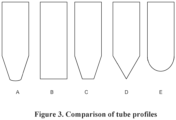
- tube A has a frustoconical portion ending in a concave tip. This profile is in contrast to tubes B, C, D, and E. Tube A has been found to both retain the pellet in the concave tip while decanting a large percentage of the supernatant to assist in identification of microorganisms using mass spectrometry. Tube B, for example, would not be appropriate for identification because some or all of the pellet would be lost during decanting of the supernatant. The tip of tube C is not designed to retain the pellet during decanting while reducing retention of the supematant.
- tube D may retain the pellet but would also retain fluid beneath the pellet in the angled tip.
- decanting tube A only 10-20 ⁇ L of media remained in the tube in one experiment, but decanting tube D resulted in 200-400 ⁇ L of media remaining in the tube after decanting.
- Tube E results in the loss of some or all of the pellet during the decanting step.
- tube A demonstrates significantly improved results in identifying microorganisms with a mass spectrometry instrument while addressing the difficulties of using liquid media.
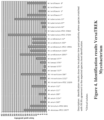
- FIG 4 identification results of multiple strains including ATCC and clinical isolates of Mycobacterium species incubated in a VersaTREK ® Automated Microbial Detection System are provided.
- twenty-eight different Mycobacterium strains were incubated in the VersaTREK ® Automated Microbial Detection System.
- Each strain was incubated in a sample container using the VersaTREK ® Automated Microbial Detection System, removed when the system indicated that the sample container was positive for microorganism growth, incubated for additional periods of time in the sample containers, and samples from the sample containers were intermittently treated via the method disclosed herein to inactivate and extract the proteins from Mycobacterium cells.
- the mycobacterial proteins were then analyzed via MALDI-TOF mass spectrometry to determine if the post-positive sample had sufficient biomass and lack of contamination to yield accurate mass spectra.
- the results shown in Figure 4 demonstrate that the method disclosed herein is able to inactivate and extract mycobacterial proteins in a short period of time after the system identifies the sample container as positive for microorganism growth, and accurately produce spectra that match with 99.9% agreement to the expected species level identification. All strains tested were correctly identified when processed within 36 hours post -positivity, and all but three of the strains were identified within 24 hours. Surprisingly, many of the strains, including high prevalence strains such as M. avium and M . intracellulare, had correct identification when processed within 12 hours post-positivity.
- Figure 5 shows identification results of various Mycobacterium strains incubated in a Bactec TM MGIT TM 960 Mycobacterial Detection System. Similar to Figure 4 .
- Figure 5 demonstrates that the method is capable of inactivating, extracting, and identifying mycobacterial proteins quickly post-positivity. For example. all but two of the strains had sample spectra that were a 99.9% match to the expected species level identification within 24 hours. The two remaining strains had 99.9% agreement to the expected species level identification within 40 hours. This rapid inactivation, extraction, and identification of mycobacterial proteins will impact the treatment of infections related to mycobacteria.
- kits for use with the method described in Figure 1 and elsewhere herein includes a first tube having a body. a first end to the body having an opening, and a second end to the body having a frustoconical portion ending in a concave tip, wherein the first tube has a volume of at least 5 mL; a solution of alcohol; a solution of formic acid; and a solution of acetonitrile.
- the kit may include 0.5 mm glass beads and/or blotting paper.
- the kit may include a stand for decanting the first tube or instructions to the method described herein and for which the kit is designed to be used.
- phrases such as “between X and Y” and “between about X and Y” should be interpreted to include X and Y.
- phrases such as “between about X and Y” mean “between about X and about Y.”
- phrases such as “from about X to Y” mean “from about X to about Y.”
Landscapes
- Life Sciences & Earth Sciences (AREA)
- Health & Medical Sciences (AREA)
- Engineering & Computer Science (AREA)
- Chemical & Material Sciences (AREA)
- Organic Chemistry (AREA)
- Bioinformatics & Cheminformatics (AREA)
- Zoology (AREA)
- Wood Science & Technology (AREA)
- Biotechnology (AREA)
- Genetics & Genomics (AREA)
- Molecular Biology (AREA)
- Biochemistry (AREA)
- General Health & Medical Sciences (AREA)
- Microbiology (AREA)
- Physics & Mathematics (AREA)
- Biomedical Technology (AREA)
- General Engineering & Computer Science (AREA)
- Proteomics, Peptides & Aminoacids (AREA)
- Immunology (AREA)
- Bioinformatics & Computational Biology (AREA)
- Analytical Chemistry (AREA)
- Pathology (AREA)
- Biophysics (AREA)
- Medicinal Chemistry (AREA)
- Hematology (AREA)
- Urology & Nephrology (AREA)
- Spectroscopy & Molecular Physics (AREA)
- Tropical Medicine & Parasitology (AREA)
- Virology (AREA)
- Sustainable Development (AREA)
- Cell Biology (AREA)
- Optics & Photonics (AREA)
- Food Science & Technology (AREA)
- General Physics & Mathematics (AREA)
- Other Investigation Or Analysis Of Materials By Electrical Means (AREA)
- Measuring Or Testing Involving Enzymes Or Micro-Organisms (AREA)
- Apparatus Associated With Microorganisms And Enzymes (AREA)
- Micro-Organisms Or Cultivation Processes Thereof (AREA)
Description
- The present invention relates to methods for the inactivation and extraction of acid-fast bacteria. such as Mycobacterium or Nocardia. In particular, the present invention is directed to a method for the rapid characterization and/or identification of Mycobacterium or Nocardia species grown in liquid media using mass spectrometry.
- Traditional automated phenotypic ID tests, such as the Vitek®, Phoenix™ and Microscan® systems, or manual phenotypic tests such as API require that microorganisms be in an appropriate growth phase and free of interfering media and blood products in order to provide robust results. These systems use colonies grown from the positive broth for 18-24 hours on plated media. However, in an effort to obtain faster results. some laboratories have reported using these systems with microorganisms isolated from clinical samples. Faster and more broadly specific tests are urgently needed in order to provide the physician with clinically relevant results.
- Identifying microorganisms cultured in liquid media is particularly difficult because of the lower concentration of microorganisms in the sample container and because the liquid media may interfere with analytical methods such as mass spectrometry.
- Mass spectrometric methods have the potential to allow for identification of microorganisms very quickly, but may encounter interference from the many compounds present in liquid culture media and in clinical samples such as sputum, sterile body fluids, or combinations thereof.
- Other methods for characterization and/or identification of microorganisms have been described, including:
-
U.S. Patent No. 6,177,266 , which discloses a method for the chemotaxonomic classification of bacteria with genus, species and strain specific biomarkers generated by matrix assisted laser desorption ionization time-of-flight mass spectrometry (MALDI-TOF-MS) analysis of either cellular protein extracts or whole cells. -
U.S. Patent No. 8,735,091 , which discloses a method for the inactivation and extraction of acid-fast bacteria, such as Mycobacterium and Nocardia, from solid and liquid media. The '091 Patent, however, does not recognize the difficulty associated with the protein extraction of acid-fast bacteria when grown in liquid media. In particular, the '091 Patent does not recognize the difficulty in securing a sufficient amount of biomass of microorganisms from liquid media for identification using mass spectrometry. Further, the '091 Patent does not recognize the difficulty in removing the inactivating solution, which interferes with identification using mass spectrometry. The '091 Patent does not recognize the unexpected benefits of collection and retention of sufficient biomass of the acid fast bacteria for the inactivation and extraction in a tube having a specific size and/or shape. Finally, the '091 Patent does not address the difficulty of separating the pellet from liquid media to avoid interference for identification using mass spectrometry. - Dunne et al. (J Clin Microbiol. 2014. 52. 3654-3659) describe the inactivation of acid-fast bacteria from plate cultures before mass spectrometry measurements.
- Buchan et al (J Clin Pathol. 2013. 141. 25-34) describe an inactivation method of mycobacteria comprising multiple work intensive steps.
- Thus, there remains a need in the art for efficient and rapid protocols for the inactivation and/or extraction of microorganisms from liquid media for subsequent analysis, characterization and/or identification by mass spectrometry. In particular. inactivation, or cell death, is often necessary for subsequent handling of acid-fast bacteria, such as Mycobacterium and Nocardia, outside a Biosafety Level-3 (BSL-3/P3) environment.
- In one aspect, the present invention is directed to a method for inactivation and extraction of acid-fast bacteria (e.g., Mycobacterium or Nocardia species) in a test sample, the method comprising the following sequential steps: (a) culturing a test sample containing acid-fast bacteria in a liquid culture and continuing to culture the test sample in the liquid culture for at least 24 hours after the test sample has tested positive for growth of the acid-fast bacteria and until a minimum concentration of 1.0x10⁷ CFU/ml is present in the test sample culture; (b) transferring the test sample from the positive liquid culture to a first tube, wherein the first tube comprises a body having a volume of 5 mL, a first end to the body having an opening, and a second end to the body having a frustoconical portion ending in a concave tip; (c) centrifuging the first tube to pellet the acid-fast bacteria in the concave tip and subsequently decanting at least 90% of a first supernatant while retaining the pellet of acid-fast bacteria in the concave tip; (d) resuspending the acid-fast bacteria pellet in alcohol, optionally ethanol, to generate a first suspension; (e) transferring the suspension from the first tube to a second tube containing beads to form a second suspension; (f) agitating the second tube to break up clumps and disrupt acid-fast bacteria cells in the second suspension; and (g) incubating the second suspension for at least 5 minutes to inactivate the acid-fast bacteria in the test sample to form an inactivated second suspension; optionally wherein said acid-fast bacteria is Mycobacterium or Nocardia.
- In one embodiment, the acid-fast bacteria (e.g., Mycobacterium or Nocardia) pellet can be resuspended in step (d) in from about 50% to about 100% ethanol, for example, the pellet may be resuspended in about 70% ethanol. The method may comprise bead beating and/or vortexing the container in step (f) for about 1 minute to about 30 minutes. In one embodiment, the beads are 0.5 mm glass beads. In one embodiment, the subsequent incubation step (g) comprises an incubation for at least about 10 minutes. In another embodiment, the incubation in step (g) is at room temperature.
- In another embodiment, the method may further comprise the following additional sequential steps as part of protein extraction: (h) transferring the suspension to a third tube and centrifuging the third tube to pellet the inactivated acid-fast bacteria and subsequently removing a second supernatant; and (i) resuspending the inactivated acid-fast bacteria pellet to generate a solution comprising the inactivated acid-fast bacteria. In some embodiments. the supematant from step (i) can be applied directly, or as a water suspension, to a mass spectrometry slide or plate.
- The pellet in step (h) may be resuspended using from about 50% to about 90% formic acid, for example, the pellet may be resuspended using 70% formic acid, in step (i). After resuspending the pellet, acetonitrile may be added to obtain a final concentration of acetonitrile of from about 35% to about 65%, for example, to obtain a final concentration of about 50%. In one embodiment. the pellet may be resuspended in 10 µL of formic acid in step (h) and 10 µL of acetonitrile can be added to the resuspended pellet in step (h). In some embodiments, the suspension may be centrifuged to pellet cellular debris as shown in step (j)
- In accordance with this embodiment, the method may further comprises the following additional sequential steps: (k) transferring an aliquot of the supernatant from step (j) to a mass spectrometry target slide and adding a matrix solution, and (l) identifying protein profiles of the inactivated acid-fast bacteria on the mass spectrometry slide by mass spectrometry to acquire one or more mass spectra of the acid-fast bacteria and characterizing and/or identifying said acid-fast bacteria in the test sample by comparison of the measured mass spectrum with one or more reference mass spectra. Optionally, step 2 (k) comprises transferring an aliquot (e.g., 1 µL) of the test sample obtained from step (j) to a mass spectrometry slide or plate, allowing the aliquot to dry and subsequently adding a matrix. Any known matrix may be used. for example. the matrix may be alpha-cyano-4-hydroxycinnamic acid (CHCA). In accordance with the present invention, the acid-fast bacteria can be identified to the family, genus, species, strain level and/or group/complex using mass spectrometry, for example, MALDI-TOF mass spectrometry.
- The method and kit of this disclosure will be described in conjunction with the appended drawings, in which:
-
Figure 1 shows a flow chart of a method for inactivation and extraction of acid-fast bacteria (e.g., Mycobacterium or Nocardia) from a liquid media, in accordance with an embodiment of the present invention. -
Figure 2 shows an example of a tube having a frustoconical portion ending in a concave tip, in accordance with an embodiment of the present invention. -
Figure 3 shows examples of tubes having different profiles, in accordance with an embodiment of the present invention. -
Figure 4 shows identification results of various Mycobacterium strains incubated in a VersaTREK® Automated Microbial Detection System. -
Figure 5 shows identification results of various Mycobacterium strains incubated in a Bactec™ MGIT™ 960 Mycobacterial Detection System. -
Figure 6 shows identification results of various Mycobacterium strains incubated in a BacT/ALERT® 3D instrument. - The present assignee's VITEK® MS system (bioMérieux, Inc., St. Louis, MO) provides a platform for bacterial identification using a Matrix Assisted Laser Desorption Ionization - Time of Flight (MALDI-TOF) Mass Spectrometer to analyze the protein profile of a sample and match it to a database of known organism profiles. Samples are deposited onto a target slide, covered with a matrix (e.g., CHCA matrix (α-cyano-4-hydroxy-cinamic acid matrix)), and then processed through the Mass Spectrometer.
- Most common clinically-relevant microorganism can be analyzed by depositing cells directly onto the VITEK® MS target slide. The preparation of acid-fast bacteria (e.g., Mycobacterium or Nocardia) samples for analysis differs from the standard procedure in that an inactivation step is necessary in order to make the samples safe for handling outside of a Biosafety Level-3 (BSL-3/P3) environment. Further, analyzing samples from liquid media results in challenges in securing adequate amounts of biomass as well as clearing inactivating solution that will interfere with identification.
- The present applicants have found that incubation in alcohol in conjunction with mechanical disruption provides an effective and rapid method for the inactivation of acid-fast bacteria. Alcohol exposure was shown to be effective when using a process involving an agitation or mechanical disruption step followed by subsequent inactivation step by incubating the disrupted sample in alcohol at room temperature for at least 5 minutes, or at least 10 minutes. In some embodiments, the alcohol is ethanol. In one embodiment, mechanical disruption is performed using a vortex or a Bead Beater (BioSpec. Bartlesville, OK), a homogenizer that disrupts cells by agitating a sealed micro centrifuge tube containing sample, extraction solution, and beads (e.g., tiny glass beads). Typically, the beads can be any known beads that can operate to disrupt cells in a container or microcentrifuge tube. For example, the beads can be glass, ceramic, zirconia, silicon, metal, steel, tungsten carbide, gamet, sand, or sapphire beads. In one embodiment, the bead can be from about 0.1 mm to about 1 mm in size, for example, about 0.5 mm in size.
- Additional processing steps can then be used to assist in extracting the cellular proteins from the inactivated cells in order to yield clear and consistent spectra. For example, a treatment step in formic acid followed by exposure to acetonitrile can be used to extract and dissolve proteins for subsequent analysis (e.g., by mass spectrometry).
- The present invention provides methods for the inactivation, extraction. characterization, and/or identification of an unknown acid-fast bacterium in a test sample from liquid media. The present invention is also directed to a method for the rapid characterization and/or identification of acid-fast bacteria (e.g., Mycobacterium or Nocardia) in a test sample from liquid media using mass spectrometry. The rapid methods allow for characterization and/or identification of acid-fast bacteria more quickly than prior techniques, resulting in faster diagnoses and characterization/identification of test samples. The steps involved in the methods of the invention, from obtaining a sample to characterization/identification of acid-fast bacteria. can be carried out in a very short time frame to obtain clinically relevant actionable information. In certain embodiments, the methods of the invention can be carried out in less than about 120 minutes, e.g., in less than about 110, 100, 90, 80, 70, 60, 50, 40, 30, 20, 15, or 10 minutes. The rapidity of the methods of the invention represents an improvement over prior methods.
- In one embodiment of the invention. samples are obtained from a subject (e.g., a patient) having or suspected of having an acid-fast bacterial infection. As used herein, the term "acid-fast bacteria" is intended to encompass any acid-fast bacteria including, but not limited to, Mycobacterium and Actinomyces (including Nocardia, Rhodococcus. Gordonia, Tsukamurella and Dietzia).
- As used herein, the term "mycobacteria" or "Mycobacterium" is intended to encompass any known mycobacteria. including, but not limited to, rapid and slow-growing bacteria such as Mycobacterium tuberculosis, Mycobacterium bovis, Mycobacterium microti, Mycobacterium africanum, Mycobacterium canetti, Mycobacterium avium. Mycobacterium intracellulare, Mycobacterium scrofulaceum, Mycobacterium kansasii, Mycobacterium malmoense. Mycobacterium xenopi, Mycobacterium marinum, Mycobacterium simiae. Mycobacterium terrae, Mycobacterium ulcerans, Mycobacterium abscessus, Mycobacterium fortuitum, Mycobacterium chelonae, Mycobacterium smegmatis, Mycobacterium alvei, Mycobacterium farcinogenes, Mycobacterium fortuitum ssp fortuitum, Mycobacteirum houstonense, Mycobacterium peregrinum. Mycobacterium porcinum, Mycobacterium senegalense. Mycobacterium genavense, Mycobacterium haemophilum, Mycobacterium immunogenum, Mycobacterium lentiflavum, Mycobacterium mucogenicum, Mycobacterium szulgai, Mycobacterium tuberculosis complex and Mycobacterium gordotae. In some embodiments, the rapid growers such as M. abscessus, M. fortuitum. M. chelonae, and M. smegmatis, can be identified in a short period of time, which assists in diagnosis and treatment. Unexpectedly, slow growing Mycobacterium species can also be inactivated and extracted quickly, and then identified in a short period of time, as shown in
Figures 4-6 . - As used herein, the term "Nocardia" is intended to encompass any known Nocardia, including, but not limited to, Nocardia aerocolonigenes, Nocardia africana, Nocardia argentinensis, Nocardia asteroids, Nocardia blackwellii, Nocardia brasiliensis. Nocardia brevicatena, Nocardia camea, Nocardia caviae, Nocardia cerradoensis, Nocardia corallina, Nocardia cyriacigeorgica, Nocardia dassonvillei, Nocardia elegans. Nocardia farcinica, Nocardia nrgiitansis, Nocardia nova, Nocardia opaca, Nocardia otitidis-cavarium, Nocardia paucivorans, Nocardia pseudobrasiliensis, Nocardia rubra, Nocardia seriolae, Nocardia transvelencesis, Nocardia uniformis, Nocardia vaccinii, and Nocardia veterana.
- As used herein, "characterization" encompasses the broad categorization or classification of biological particles and/or the actual identification of a family, genus, species, and/or strain level or groups/complex of an acid-fast bacteria. Classification may comprise determination of phenotypic and/or morphologic characteristics for the acid-fast bacteria. For example, characterization of the bacteria may be accomplished based on observable differences. such as composition, shape, size, pigmentation, clustering, and/or metabolism.
- As used herein "identification" means determining to which family, genus, species, strain or group/complex of a previously unknown acid-fast bacteria (e.g., Mycobacterium or Nocardia) belongs to. For example, identifying a previously unknown acid-fast bacteria to the family, genus, species, strain level, and/or groups/complex.
- The present invention is directed to a method for inactivation and extraction of acid-fast bacteria in a test sample, the method comprising the following sequential steps: (a) culturing a test sample containing acid-fast bacteria in a liquid culture and continuing to culture the test sample in the liquid culture for at least 24 hours after the test sample has tested positive for growth of the acid-fast bacteria and until a minimum concentration of 1.0x10⁷ CFU/ml is present in the test sample culture; (b) transferring the test sample from the positive liquid culture to a first tube, wherein the first tube comprises a body having a volume of 5 mL, a first end to the body having an opening, and a second end to the body having a frustoconical portion ending in a concave tip; (c) centrifuging the first tube to pellet the acid-fast bacteria in the concave tip and subsequently decanting at least 90% of a first supernatant while retaining the pellet of acid-fast bacteria in the concave tip; (d) resuspending the acid-fast bacteria pellet in alcohol, optionally ethanol, to generate a first suspension; (e) transferring the suspension from the first tube to a second tube containing beads to form a second suspension; (f) agitating the second tube to break up clumps and disrupt acid-fast bacteria cells in the second suspension; and (g) incubating the second suspension for at least 5 minutes to inactivate the acid-fast bacteria in the test sample to form an inactivated second suspension; optionally wherein said acid-fast bacteria is Mycobacterium or Nocardia.
- The liquid culture sample acquired may be from about 1 mL to about 5 mL. from about 1 mL to about 3 mL. or about 1, 2, 3, 4, or 5 mL. In an exemplary embodiment, the sample taken from the positive liquid culture medium is about 3 mL. It has been found that a sample comprising at least about 3 mL from the liquid culture sample has sufficient microorganisms present to yield an accurate identification via mass spectrometry.
- According to the invention, the liquid culture containing acid-fast bacteria is a sample container that has tested positive for acid-fast bacteria. For example. the sample container may culture a biological sample from a subject. If the subject is positive for acid-fast bacteria, the sample container is identified as positive via, e.g., a sensor in the container. According to the invention, the liquid culture sample is acquired at least about 24 hours after the sample container is identified as positive. In some embodiments, the liquid culture sample is acquired between about 24 hours and 72 hours after the sample container is identified as positive. In still further embodiments, the liquid culture sample is acquired later than 48 hours after the sample container is identified as positive. Allowing a sample container to continue to incubate after it has been identified as positive causes an increase in the population size of the microorganisms in the sample container. According to the invention, a minimum concentration of 1.0x10⁷ CFU/mL is present in the sample as required biomass for acid-fast bacteria. In this way, the concentration of microorganisms in the liquid culture sample will be greater and the likelihood of an accurate identification via mass spectrometry increases. Further, some laboratories may have times during the day or week when sample containers cannot be evaluated. The instant method is flexible in the length of time that a sample container may be incubated after it has been identified as positive.
- As discussed, the method of the invention includes centrifuging the sample in a tube having a body, a first end to the body having an opening, and a second end to the body having a frustoconical portion ending in a concave tip. Tuming briefly to
Figure 2 , an exemplary tube as described is shown. InFigure 2 , thetube 200 includes thebody 202, theopening 204 at the first end of thebody 202, andfrustoconical portion 206 ending in aconcave tip 208 at the second end of thebody 202 along alongitudinal axis 210 of thetube 200. According to the invention, the body has a volume of 5 mL. As used herein, "frustoconical" means the shape of the frustum of a cone. The frustum of a cone is the basal part of a cone formed by cutting off the top by a plane parallel to the base. In some embodiments, thetube 200 includes aresealable cap 212 for securing the contents of thetube 200 which may be further secured via a safety lock. In some embodiments. the resealable cap may be a screw cap. In this embodiment, the screw cap seals the microorganism in the first tube to protect the user. For example, the screw cap may form a hermetic seal to reduce the chance of infection. In further embodiments, the resealable cap may be a snap fit cap and may include features so as an O-ring seal or a twist-lock. - In some embodiments, the angle of the
frustoconical portion 206 from thelongitudinal axis 210 is less than 45 degrees. For example the angle of thefrustoconical portion 206 from the longitudinal axis can be about 30 degrees, about 25 degrees, about 20 degrees. about 15 degrees, about 10 degrees, or about 5 degrees. The angle of thefrustoconical portion 206 relative to thelongitudinal axis 210 assists in decanting supernatant from the tube while retaining a pelleted microorganism in the concave tip. In some embodiments, the concave tip is configured to retain the pelleted microorganism while decanting supernatant (e.g., liquid media, etc.). - In some embodiments. the first tube is centrifuged for at least about 10 minutes. For example, the first tube may be centrifuged for 5 minutes, 10 minutes, 15 minutes, etc. In an embodiment. the first tube is centrifuged at 3,000 x g to generate a pellet at the bottom of the tube and a supernatant above the pellet. The first tube may be centrifuged at a faster or slower rate, as determined by one of skill in the art.
- According to the invention, after centrifuging the sample in the first tube. a first supematant resulting from the centrifugation is decanted from the first tube, wherein the frustoconical portion ending in the concave tip is configured to retain the pellet of acid-fast bacteria in the concave tip. According to the invention, at least about 90% of the first supernatant is decanted. For example, 90%, 95%. 99%, or 99.9% of the supernatant is decanted from the first tube. Removal of the supernatant and retention of the pelleted microorganism is important for accurate identification of the microorganism using mass spectrometry. Removal of the supematant is important because excessive supernatant in the biological sample can interfere with the spectra produced using the mass spectrometer. Retention of the pelleted microorganism is important to ensure that sufficient microorganism is available for the mass spectrometer analysis. In some embodiments, decanting includes blotting the first tube and/or inverting the first tube for a period of time so that the supernatant can exit the opening.
- After the centrifugation step (c), the acid-fast bacteria pellet can be resuspended in step (d) in the first tube with from about 10 µL to about 1 mL of alcohol. or with about 50 µL to about 750 µL, with about 100 µL to about 500 µL, or with about 500 µL. The alcohol used for resuspending the pellet can be from about 50% to about 100% alcohol. from about 60% to about 90% alcohol, or about 50%. 60%, 70%, 80% or 90% alcohol. In an exemplary embodiment, the alcohol is ethanol.
- According to the invention, the method includes transferring the suspension from the first tube to a second tube containing beads. According to the invention, the method includes agitating the suspension to break up clumps and/or disrupt acid-fast bacteria cells. For example, the acid-fast bacteria test sample can be subjected to mechanical disruption using a vortex or a bead beater (e.g., Bead Beater, BioSpec, Bartlesville, OK), a homogenizer that disrupts cells by agitating a sealed micro centrifuge tube containing sample, extraction solution. and beads. Typically, the beads can be any known beads that can operate to disrupt cells in a container or microcentrifuge tube. For example, the beads can be glass, ceramic, zirconia. silicon, metal, steel, tungsten carbide, garnet, sand, or sapphire beads. In one embodiment, the bead can be from about 0.1 mm to about 1 mm in size, for example, about 0.5 mm in size. In one embodiment, the beads are 0.5 mm glass beads. Typically, the tube is subjected to disruption by beating or vortexing the container in step (e) for about 1 minute to about 30 minutes, for about 5 minutes to about 20 minutes, for about 5 minutes to about 10 minutes, or for about 5 minutes or 10 minutes. In further embodiments. the tube is agitated using a vortex for a period of time. For example, the tube may be vortexed for at least about 15 minutes. In some embodiments, the tube is vortexed for 10 minutes, 15 minutes, 20 minutes, 30 minutes, or longer.
- After the acid-fast bacteria in the test sample have been disrupted, the tube, and thus the acid-fast bacteria (e.g., Mycobacterium or Nocardia) in the test sample, are subjected to inactivation by incubating the container for at least 5 minutes or for at least 10 minutes. In another embodiment, the incubation step (g) can be for at least 5 minutes to about 30 minutes, for about 10 minutes to about 20 minutes, or for 2 at least 5, 10, 15, 20, 25, or 30 minutes. In one embodiment, the incubation step (g) is at room temperature. In another embodiment, the incubation step (g) is at an elevated temperature, e.g., 30 degrees Celsius, 37 degrees Celsius, or 55 degrees Celsius.
- In another aspect, the present invention is directed to further steps for protein extraction of an acid-fast bacteria test sample. In one embodiment, the acid-fast bacteria test sample subjected to the extraction steps of the present invention can be the test sample obtained from the previously described method for inactivation (i.e., the inactivated acid-fast bacteria test samples described above).
- The extraction method may comprise the following steps: (h) transferring the suspension to a third tube and centrifuging the third tube to pellet the inactivated acid-fast bacteria (e.g., Mycobacterium or Nocardia) and subsequently removing a second supernatant; and (i) resuspending the inactivated acid-fast bacteria pellet to generate a solution comprising the inactivated acid-fast bacteria. In some embodiments, the inactivated acid-fast bacteria pellet is resuspended in formic acid and/or acetonitrile. Optionally, the method further comprises centrifugation of the test sample in the container after step (i) to extract cellular protein (step (j)) and pellet cellular debris. For example, the third tube can be centrifuged for 2 minutes at 16,000 x g.
- In accordance with these embodiment, the pellet may be resuspended using from about 50% to about 100% formic acid, from about 60% to about 90% formic acid, or about 50%. 60%, 70%, 80%, 90% or 100% formic acid. In some embodiments, after resuspending the pellet acetonitrile is added to obtain a final concentration of from about 35% to about 65%, to obtain a final concentration of from about 40% to about 60%. or to obtain a final concentration of about 35%, 40%, 50%, 60%, or 65% acetonitrile. In one embodiment, 100% acetonitrile is used for this step although other concentrations of acetonitrile may be used.
- In one embodiment, the pellet may be resuspended in at least about 3, 5, or 10 µL of formic acid and at least 3, 5 or 10 µL of acetonitrile can be added to the resuspended pellet. In another embodiment. the pellet may be resuspended using from about 3 µL to about 100 µL of formic acid, about 5 µL to about 80 µL formic acid, about 10 µL to about 50 µL of formic acid, or about 3, 5, 10, 15, 20, 25, 30, 40, 50, 60, 70, 80, 90 or 100 µL formic acid. In another embodiment, after resuspending the pellet, at least about 3, 5 or 10 µL of acetonitrile are added to the resuspended pellet. For example, from about 3 µL to about 100 µL acetonitrile. from about 5 µL to about 80 µL acetonitrile, 10 µL to about 50 µL acetonitrile. or about 3. 5. 10, 15, 20, 25, 30, 40, 50, 60, 70, 80, 90 or 100 µL acetonitrile, may be added to the resuspended sample.
- The present disclosure also provides methods for characterization and/or identification of an unknown acid-fast bacteria (e.g., Mycobacterium or Nocardia) using mass spectrometry, e.g., using matrix assisted laser desorption ionization time-of-flight (MALDI-TOF mass spectrometry). In accordance with the present disclosure, the characterization and/or identification steps may follow the inactivation and extraction steps described above.
- In this aspect, the methods may further comprise the following additional steps: transferring an aliquot of the supernatant from step (k) to a mass spectrometry target slide and adding a matrix solution to the supernatant; and (l) identifying the protein profiles of the inactivated acid-fast bacteria in the third supernatant on the mass spectrometry slide by mass spectrometry to acquire one or more mass spectra of the acid-fast bacteria, and characterizing and/or identifying said acid-fast bacteria in the test sample by comparison of the measured one or more mass spectra with one or more reference mass spectra. Optionally, the transferred aliquot can be from about 0.5 µL to about 2.5 µL, or about 1 µL. As is well known in the art, the aliquot is typically allowed to dry and subsequently a matrix solution is added. In general, any known matrix in the art can be used. For example, in one embodiment, the matrix is alpha-cyano-4-hydroxycinnamic acid (CHCA). In accordance with the present invention, the acid-fast bacteria (e.g., Mycobacterium or Nocardia) can be identified to the family, genus, species, strain level or group/complex using, for example, MALDI-TOF mass spectrometry, as described further hereinbelow.
- After the mass spectrometry plate or slide has been prepared, the slide or plate is inserted into the mass spectrometer. After the time required to pump the sample down (i.e. remove atmospheric gases from the sample so that it is in an environment of 10-5 to 10-7 torr), the sample is introduced into the ionization chamber of the mass spectrometer. The sample is aligned with the system. When optimal alignment is achieved, the nitrogen laser is pulsed. The absorption of the laser energy by the matrix causes it to ablate from the plate's surface due to the high energy deposited. As a side effect, portions of the acid-fast bacteria cells (e.g. proteins) are also vaporized and ionized in the process. These ions are accelerated to a known kinetic energy by the generation of an electrostatic field between the plate and the entrance to the mass spectrometer's flight tube. All singly charged ions. regardless of mass, will have the same kinetic energy at the entrance to the flight tube, but they will have velocities that are inversely proportional to their masses. From there, ions move down the flight tube towards the detector. and lighter ions will arrive before heavier ions (the flight tube is the mass/charge discriminator). The detector generates an electrical charge every time an ion impacts the detector. The output of the detector is digitized and the output displays mass/charge ratio on one axis and number of impacts on the other axis. In one embodiments, the protein profile of the acid-fast bacteria on the slide or plate can be interrogated using any known mass spectrometry techniques, such as MALDI-TOF mass spectrometry. desorption electrospray ionization (DESI) mass spectrometry, GC mass spectrometry, LC mass spectrometry, electrospray ionization (ESI) mass spectrometry and Selected Ion Flow Tube (SIFT) spectrometry, or other mass spectrometry technique.
- In some aspects, control measurements are taken for known acid-fast bacteria, thus allowing for correlation of measured test data with characterization of the acid-fast bacteria of interest using various mathematical methods. For example, the data from samples may be compared with the baseline or control measurements utilizing software systems. More particularly, the data may be analyzed by a number of multivariate analysis methods, such as, for example, General Discriminant Analysis (GDA), Partial Least Squares Discriminant Analysis (PLSDA). Partial Least Squares regression, Principal Component Analysis (PCA), Parallel Factor Analysis (PARAFAC), Neural Network Analysis (NNA), and/or Support Vector Machine (SVM). These methods may be used to classify unknown acid-fast bacteria (e.g.. Mycobacterium or Nocardia) of interest into relevant groups based on existing nomenclature, and/or into naturally occurring groups based on the organism's metabolism, pathogenicity and/or virulence. In one embodiment, after acquisition of a one or more mass spectra for acid-fast bacteria, the one or more mass spectra can be input into the "SARAMIS" microorganism identification software (bioMérieux, Inc., St. Louis, MO) for analysis, and thus, for characterization and/or identification of the acid-fast bacteria.
- In yet another aspect, non-spectroscopic measurements from the detection system, such as detection times and growth rates can be used to assist in the characterization and/or identification of acid-fast bacteria from the test sample.
- In some aspects, characterization and/or identification of the acid-fast bacteria in the test sample need not involve identification of an exact species. Characterization may encompass the broad categorization or classification of biological particles as well as the actual identification of a single species. As used herein "identification" means determining to which family, genus. species, strain level or group/complex a previously unknown acid-fast bacteria belongs to. For example, identifying a previously unknown acid-fast bacteria to the family. genus, species, strain level or group/complex.
- Tuming now to
Figure 1 , in one aspect amethod 100 for inactivation, extraction, and identification of acid-fast bacteria in a liquid test sample is provided. The present invention is directed to a method for inactivation and extraction of acid-fast bacteria in a test sample, the method comprising the following sequential steps: (a) culturing a test sample containing acid-fast bacteria in a liquid culture and continuing to culture the test sample in the liquid culture for at least 24 hours after the test sample has tested positive for growth of the acid-fast bacteria and until a minimum concentration of 1.0x10⁷ CFU/ml is present in the test sample culture; (b) transferring the test sample from the positive liquid culture to a first tube, wherein the first tube comprises a body having a volume of 5 mL, a first end to the body having an opening, and a second end to the body having a frustoconical portion ending in a concave tip; (c) centrifuging the first tube to pellet the acid-fast bacteria in the concave tip and subsequently decanting at least 90% of a first supernatant while retaining the pellet of acid-fast bacteria in the concave tip; (d) resuspending the acid-fast bacteria pellet in alcohol, optionally ethanol, to generate a first suspension; (e) transferring the suspension from the first tube to a second tube containing beads to form a second suspension; (f) agitating the second tube to break up clumps and disrupt acid-fast bacteria cells in the second suspension; and (g) incubating the second suspension for at least 5 minutes to inactivate the acid-fast bacteria in the test sample to form an inactivated second suspension; optionally wherein said acid-fast bacteria is Mycobacterium or Nocardia. - In an embodiment, the method further comprises (h) resuspending the inactivated acid-fast bacteria pellet to generate a solution comprising the inactivated acid-fast bacteria.(i) extracting cellular proteins from the solution comprising inactivated acid-fast bacteria and centrifuging the solution to pellet the cellular debris;(j) transferring an aliquot of a third supernatant from step (i) to a mass spectrometry target slide; and(k) identifying protein profiles of the inactivated acid-fast bacteria on the mass spectrometry slide using a mass spectroscopy instrument, optionally wherein said acid-fast bacteria sample is identified to the family, genus, species, strain level and/or group/complex.
- Turning to block 102, in some embodiments the method includes taking a 3.0 mL sample from a positive liquid culture between 24-72 hours post positive result. As discussed, the volume of the sample assists in ensuring sufficient microorganisms are present in the sample to acquire an acceptable spectra using a mass spectrometry instrument. Similarly, taking the sample from the positive liquid culture between 24 and 72 hours after a positive result increases the population size of the microorganisms in the liquid culture. In some embodiments, the sample may be taken from the positive liquid culture in less than 24 hours. For example. see
Figures 4-6 showing that many strains of Mycobacterium can be identified in as little as two hours post-positive. - In
block 104, according to the invention, the sample is placed into a tube (i.e. a 5.0 mL tube) having a frustoconical portion ending in a concave tip. which is then centrifuged. For example, the tube can be centrifuged for 10 minutes at 3,000 x g to generate a pellet in the concave tip and a supernatant above the pellet. The supernatant is then discarded by decanting. For example. the tube may be inverted and the supernatant poured off through the opening and then the tube blotted to remove excess liquid. - In
block 106, the pellet is resuspended in alcohol. In some embodiments, the pellet is resuspended in 500 µL 70% ethanol and the suspension is transferred to a second tube containing 0.5 mm glass beads, according to the invention - In
block 108. in one embodiment the tube is bead beat and then incubated. For example, the tube may be bead beat for 5 minutes and then incubated for 10 minutes. The combination of agitation and incubation inactivates the microorganism. Alternatively, as shown inblock 110. in some embodiments the tube is vortexed and then incubated, such as vortexed for 15 minutes and then incubated for 10 minutes. As discussed, the incubation may be at room temperature or may be at an elevated temperature. - Tuming now to block 112. in some embodiments the inactivated acid-fast bacteria present in the tube after agitation and incubation are vortexed and the suspension is transferred to an empty tube. In
block 114, the suspension is centrifuged and the ethanol supernatant is removed, leaving the inactivated acid-fast bacteria pelleted in the tube. - In blocks 116 and 118, cellular proteins are extracted by the addition of 10 µL 70% formic acid and then the addition of 10 µL acetonitrile. In some embodiments, the tube is vortexed after the addition of the formic acid and/or acetonitrile to pellet cellular debris.
- In block 120, 1 µL of the suspension is inoculated onto a mass spectrometry target slide, matrix is added to the target slide in
block 122, and the microorganism is identified using MALDI-TOF mass spectrometry inblock 124. This method describes an unexpected improvement in identification of microorganisms from liquid media using specific steps that address the difficulties of conducting identification from liquid media. - Turning now to
Figure 3 , a comparison 300 of tube profiles is provided. As shown inFigure 3 , tube A has a frustoconical portion ending in a concave tip. This profile is in contrast to tubes B, C, D, and E. Tube A has been found to both retain the pellet in the concave tip while decanting a large percentage of the supernatant to assist in identification of microorganisms using mass spectrometry. Tube B, for example, would not be appropriate for identification because some or all of the pellet would be lost during decanting of the supernatant. The tip of tube C is not designed to retain the pellet during decanting while reducing retention of the supematant. Instead, supernatant will be retained underneath and around the pellet due to the shape of the tip. Similarly, tube D may retain the pellet but would also retain fluid beneath the pellet in the angled tip. For example, after decanting tube A, only 10-20 µL of media remained in the tube in one experiment, but decanting tube D resulted in 200-400 µL of media remaining in the tube after decanting. Tube E results in the loss of some or all of the pellet during the decanting step. Unexpectedly. tube A demonstrates significantly improved results in identifying microorganisms with a mass spectrometry instrument while addressing the difficulties of using liquid media. - In
Figure 4 , identification results of multiple strains including ATCC and clinical isolates of Mycobacterium species incubated in a VersaTREK® Automated Microbial Detection System are provided. In this Figure, twenty-eight different Mycobacterium strains were incubated in the VersaTREK® Automated Microbial Detection System. Each strain was incubated in a sample container using the VersaTREK® Automated Microbial Detection System, removed when the system indicated that the sample container was positive for microorganism growth, incubated for additional periods of time in the sample containers, and samples from the sample containers were intermittently treated via the method disclosed herein to inactivate and extract the proteins from Mycobacterium cells. The mycobacterial proteins were then analyzed via MALDI-TOF mass spectrometry to determine if the post-positive sample had sufficient biomass and lack of contamination to yield accurate mass spectra. The results shown inFigure 4 demonstrate that the method disclosed herein is able to inactivate and extract mycobacterial proteins in a short period of time after the system identifies the sample container as positive for microorganism growth, and accurately produce spectra that match with 99.9% agreement to the expected species level identification. All strains tested were correctly identified when processed within 36 hours post -positivity, and all but three of the strains were identified within 24 hours. Surprisingly, many of the strains, including high prevalence strains such as M. avium and M. intracellulare, had correct identification when processed within 12 hours post-positivity. -
Figure 5 shows identification results of various Mycobacterium strains incubated in a Bactec™ MGIT™ 960 Mycobacterial Detection System. Similar toFigure 4 .Figure 5 demonstrates that the method is capable of inactivating, extracting, and identifying mycobacterial proteins quickly post-positivity. For example. all but two of the strains had sample spectra that were a 99.9% match to the expected species level identification within 24 hours. The two remaining strains had 99.9% agreement to the expected species level identification within 40 hours. This rapid inactivation, extraction, and identification of mycobacterial proteins will impact the treatment of infections related to mycobacteria. - In
Figure 6 , identification results of various Mycobacterium strains incubated in a BacT/ALERT® 3D instrument are provided. Again, the samples are incubated in sample containers, the instrument determines when the sample is positive for microorganism growth, and samples are taken from the positive sample containers intermittently for testing via the disclosed method. In this example, all strains had sample spectra that were a 99.9% match to the expected species level identification within 24 hours. - In another aspect, a kit for use with the method described in
Figure 1 and elsewhere herein is provided. In some aspects, the kit includes a first tube having a body. a first end to the body having an opening, and a second end to the body having a frustoconical portion ending in a concave tip, wherein the first tube has a volume of at least 5 mL; a solution of alcohol; a solution of formic acid; and a solution of acetonitrile. In further embodiments, the kit may include 0.5 mm glass beads and/or blotting paper. Similarly, the kit may include a stand for decanting the first tube or instructions to the method described herein and for which the kit is designed to be used. - In the drawings, the thickness of lines. layers, features, components and/or regions may be exaggerated for clarity. In addition, the sequence of operations (or steps) is not limited to the order presented in the claims unless specifically indicated otherwise.
- The terminology used herein is for the purpose of describing particular embodiments only and is not intended to be limiting of the invention. As used herein, the singular forms "a", "an" and "the" are intended to include the plural forms as well, unless the context clearly indicates otherwise. It will be further understood that the terms "comprises" and/or "comprising," when used in this specification, specify the presence of stated features. steps, operations, elements, and/or components. but do not preclude the presence or addition of one or more other features, steps, operations, elements, components, and/or groups thereof. While the term "comprising" may be used herein, it should be understood that the objects referred to as "comprising" elements may also "consist of" or "consist essentially of" the elements. As used herein, the term "and/or" includes any and all combinations of one or more of the associated listed items. Like numbers refer to like elements throughout. As used herein, phrases such as "between X and Y" and "between about X and Y" should be interpreted to include X and Y. As used herein, phrases such as "between about X and Y" mean "between about X and about Y." As used herein, phrases such as "from about X to Y" mean "from about X to about Y."
- Unless otherwise defined, all terms (including technical and scientific terms) used herein have the same meaning as commonly understood by one of ordinary skill in the art to which this invention belongs. It will be further understood that terms, such as those defined in commonly used dictionaries, should be interpreted as having a meaning that is consistent with their meaning in the context of the specification and relevant art and should not be interpreted in an idealized or overly formal sense unless expressly so defined herein. Well-known functions or constructions may not be described in detail for brevity and/or clarity.
- The present invention is described in part with reference to flowchart illustrations and/or block diagrams of methods, apparatus (systems) and computer program products. It will be understood that each block of the flowchart illustrations and/or block diagrams, and combinations of blocks in the flowchart illustrations and/or block diagrams, can be implemented by computer program instructions. These computer program instructions may be provided to a processor of a general purpose computer, special purpose computer, or other programmable data processing apparatus to produce a machine. such that the instructions, which execute via the processor of the computer or other programmable data processing apparatus, create means for implementing the functions/acts specified in the flowchart and/or block diagram block or blocks.
- The flowcharts and block diagrams of certain of the figures herein illustrate exemplary architecture, functionality, and operation of possible implementations of embodiments of the present invention. It should be noted that in some alternative implementations, the steps noted in the blocks may occur out of the order noted in the figures. For example, two blocks shown in succession may in fact be executed substantially concurrently or the blocks may sometimes be executed in the reverse order or two or more blocks may be combined, depending upon the functionality involved.
Claims (9)
- A method for inactivation and extraction of acid-fast bacteria in a test sample, the method comprising the following sequential steps:(a) culturing a test sample containing acid-fast bacteria in a liquid culture and continuing to culture the test sample in the liquid culture for at least 24 hours after the test sample has tested positive for growth of the acid-fast bacteria and until a minimum concentration of 1.0x10⁷ CFU/ml is present in the test sample culture;(b) transferring the test sample from the positive liquid culture to a first tube, wherein the first tube comprises a body having a volume of 5 mL, a first end to the body having an opening, and a second end to the body having a frustoconical portion ending in a concave tip;(c) centrifuging the first tube to pellet the acid-fast bacteria in the concave tip and subsequently decanting at least 90% of a first supernatant while retaining the pellet of acid-fast bacteria in the concave tip;(d) resuspending the acid-fast bacteria pellet in alcohol, optionally ethanol, to generate a first suspension;(e) transferring the suspension from the first tube to a second tube containing beads to form a second suspension;(f) agitating the second tube to break up clumps and disrupt acid-fast bacteria cells in the second suspension; and(g) incubating the second suspension for at least 5 minutes to inactivate the acid-fast bacteria in the test sample to form an inactivated second suspension;optionally wherein said acid-fast bacteria is Mycobacterium or Nocardia.
- The method of claim 1, further comprising the following step:
(h) transferring the inactivated second suspension to a third tube and centrifuging the third tube to pellet the inactivated acid-fast bacteria and subsequently removing a second supernatant. - The method of claim 2, further comprising the following steps:(i) resuspending the inactivated acid-fast bacteria pellet to generate a solution comprising the inactivated acid-fast bacteria.(j) extracting cellular proteins from the solution comprising inactivated acid-fast bacteria and centrifuging the solution to pellet the cellular debris;(k) transferring an aliquot of a third supernatant from step (j) to a mass spectrometry target slide; and(l) identifying protein profiles of the inactivated acid-fast bacteria on the mass spectrometry slide using a mass spectroscopy instrument, optionally wherein said acid-fast bacteria sample is identified to the family, genus, species, strain level and/or group/complex.
- The method as claimed in claim 2, wherein the pellet in step (h) is re-suspended in formic acid, optionally wherein acetonitrile is added to the re-suspended inactivated acid-fast bacteria to a final concentration of from 35% to 65%.
- The method of any one of claims 3-4, further comprising interrogating the test sample on the slide by mass spectrometry to acquire one or more mass spectra of the acid-fast bacteria and characterizing and/or identifying said acid-fast bacteria in the test sample by comparison of the measured one or more mass spectra with one or more reference mass spectra,
wherein step (g) comprises incubating the suspension in alcohol - The method as claimed in any of claims 1-5, wherein step (f) comprises agitating the second tube using a bead beater or vortex and beads, wherein said beads are 0.5 mm glass beads.
- The method of any one of claims 1-6, wherein the method further comprises incubating the suspension in step (g) for at least 10 minutes at room temperature.
- The method of any one of claims 1-7, wherein in step (c) at least 99% of the first supernatant is removed.
- A method for inactivation and extraction of acid-fast bacteria in a test sample, the method comprising the following sequential steps:(a) culturing a test sample containing acid-fast bacteria in a liquid culture and continuing to culture the test sample in the liquid culture for between 24-72 hours after the test sample has tested positive for growth of the acid-fast bacteria and until a minimum concentration of 1.0x10⁷ CFU/ml is present in the test sample culture;(b) transferring a 3 mL test sample from the positive liquid culture to a first tube, wherein the first tube comprises a body having a volume of 5 mL, a first end to the body having an opening, and a second end to the body having a frustoconical portion ending in a concave tip;(c) centrifuging the first tube to pellet the acid-fast bacteria in the concave tip and subsequently decanting at least 90% of a first supernatant while retaining the pellet of acid-fast bacteria in the concave tip;(d) blotting the first tube to remove excess liquid;(e) resuspending the acid-fast bacteria pellet in alcohol, optionally ethanol, to generate a first suspension;(f) transferring the suspension from the first tube to a second tube containing beads to form a second suspension;(g) agitating the second tube to break up clumps and disrupt acid-fast bacteria cells in the second suspension; and(h) incubating the second suspension for at least 5 minutes to inactivate the acid-fast bacteria in the test sample to form an inactivated second suspension;optionally wherein said acid-fast bacteria is Mycobacterium or Nocardia.
Applications Claiming Priority (3)
| Application Number | Priority Date | Filing Date | Title |
|---|---|---|---|
| US201562209116P | 2015-08-24 | 2015-08-24 | |
| US201662306390P | 2016-03-10 | 2016-03-10 | |
| PCT/US2016/042537 WO2017034699A1 (en) | 2015-08-24 | 2016-07-15 | Methods for inactivation and extraction of acid-fast bacteria from liquid media for characterization and/or identification using mass spectrometry |
Publications (3)
| Publication Number | Publication Date |
|---|---|
| EP3341491A1 EP3341491A1 (en) | 2018-07-04 |
| EP3341491C0 EP3341491C0 (en) | 2025-07-02 |
| EP3341491B1 true EP3341491B1 (en) | 2025-07-02 |
Family
ID=56550414
Family Applications (1)
| Application Number | Title | Priority Date | Filing Date |
|---|---|---|---|
| EP16742562.8A Active EP3341491B1 (en) | 2015-08-24 | 2016-07-15 | Methods for inactivation and extraction of acid-fast bacteria from liquid media for characterization and/or identification using mass spectrometry |
Country Status (9)
| Country | Link |
|---|---|
| US (1) | US10626437B2 (en) |
| EP (1) | EP3341491B1 (en) |
| JP (2) | JP2018527925A (en) |
| CN (1) | CN108291247A (en) |
| AU (1) | AU2016312197B2 (en) |
| BR (1) | BR112018003746B1 (en) |
| CA (1) | CA2996498A1 (en) |
| ES (1) | ES3038448T3 (en) |
| WO (1) | WO2017034699A1 (en) |
Families Citing this family (3)
| Publication number | Priority date | Publication date | Assignee | Title |
|---|---|---|---|---|
| EP3647763B1 (en) * | 2018-10-29 | 2021-07-14 | FEI Company | A method of preparing a biological sample for study in an analysis device |
| CN117092199B (en) * | 2023-10-16 | 2024-01-26 | 成都泰莱医学检验实验室有限公司 | Method for time-of-flight mass spectrometry detection using tungsten carbide nanomaterial matrix |
| CN119552995B (en) * | 2025-02-05 | 2025-05-23 | 广州凯普医药科技有限公司 | A primer composition and its application |
Citations (1)
| Publication number | Priority date | Publication date | Assignee | Title |
|---|---|---|---|---|
| WO2013173466A1 (en) | 2012-05-17 | 2013-11-21 | Biomerieux, Inc. | Methods for inactivation and extraction of acid-fast bacteria for characterization and/or identification using mass spectrometry |
Family Cites Families (19)
| Publication number | Priority date | Publication date | Assignee | Title |
|---|---|---|---|---|
| US5253551A (en) * | 1990-07-12 | 1993-10-19 | Bio-Pias, Inc. | Centrifuge tube and centrifuge tube cap removing and installing tool and method |
| US6177266B1 (en) | 1996-04-29 | 2001-01-23 | The United States Of America As Represented By The Secretary Of The Army | Rapid identification of bacteria by mass spectrometry |
| US6723564B2 (en) | 1998-05-07 | 2004-04-20 | Sequenom, Inc. | IR MALDI mass spectrometry of nucleic acids using liquid matrices |
| US5948610A (en) | 1998-06-03 | 1999-09-07 | University Of Maryland At Baltimore County | Use of matrices comprising liquids and light absorbing particles for analysis of microorganisms by laser desorption mass spectrometry |
| US7020559B1 (en) | 1998-11-17 | 2006-03-28 | University Of Maryland | Methods for identifying and classifying organisms by mass spectrometry and database searching |
| US20020192676A1 (en) * | 2001-06-18 | 2002-12-19 | Madonna Angelo J. | Method for determining if a type of bacteria is present in a mixture |
| US6833249B2 (en) | 2002-03-22 | 2004-12-21 | Council Of Scientific And Industrial Research | Quick and sensitive method of quantifying mycolic acid to develop anti-microbial agents and a diagnostic kit thereof |
| EP1551376A4 (en) | 2002-08-12 | 2010-10-06 | Dynavax Tech Corp | IMMUNOMODULATORY COMPOSITIONS, THEIR METHODS OF PREPARATION AND USE |
| BR0316232A (en) | 2002-11-12 | 2005-10-04 | Becton Dickinson Co | Methods for determining sepsis status, predicting the onset of sepsis, and diagnosing systemic inflammatory response syndrome in an individual |
| DE102006021493B4 (en) | 2006-05-09 | 2010-04-01 | Bruker Daltonik Gmbh | Mass spectrometric measurement of microbial resistance |
| DE102007058516B4 (en) | 2007-11-23 | 2017-08-10 | Bruker Daltonik Gmbh | Identification of pathogens in body fluids |
| CN102124029A (en) | 2008-05-26 | 2011-07-13 | 泰里安诊断有限公司 | Method of diagnosis of infection by mycobacteria and reagents therefor |
| US8647835B2 (en) * | 2008-10-31 | 2014-02-11 | BIO MéRIEUX, INC. | Methods for separation, characterization and/or identification of microorganisms using spectroscopy |
| MX2011004108A (en) * | 2008-10-31 | 2011-08-15 | Bio Merieux Inc | Methods for separation, characterization, and/or identification of microorganisms using mass spectrometry. |
| WO2010096882A1 (en) | 2009-02-26 | 2010-09-02 | Tyrian Diagnostics Limited | Method of diagnosis of infection by mycobacteria and reagents therefor |
| WO2011058131A1 (en) * | 2009-11-12 | 2011-05-19 | Centre Hospitalier Universitaire Vaudois (Chuv) | Methods of producing a bacterial preparation |
| US20130309716A1 (en) | 2012-05-17 | 2013-11-21 | Biomerieux Inc. | Methods For Inactiviation And/or Extraction of A Fungus Test Sample For Characterization And/or Identification Using Mass Spectrometry |
| US9932620B2 (en) * | 2012-05-21 | 2018-04-03 | Celsis Ltd. | Methods, devices, and systems of detecting microorganisms |
| CN103308696B (en) * | 2013-05-30 | 2015-06-24 | 中国疾病预防控制中心传染病预防控制所 | Brucella rapid detection kit based on mass-spectrometric technique |
-
2016
- 2016-07-15 CN CN201680060904.0A patent/CN108291247A/en active Pending
- 2016-07-15 CA CA2996498A patent/CA2996498A1/en active Pending
- 2016-07-15 US US15/211,245 patent/US10626437B2/en active Active
- 2016-07-15 BR BR112018003746-0A patent/BR112018003746B1/en active IP Right Grant
- 2016-07-15 WO PCT/US2016/042537 patent/WO2017034699A1/en not_active Ceased
- 2016-07-15 AU AU2016312197A patent/AU2016312197B2/en active Active
- 2016-07-15 JP JP2018510063A patent/JP2018527925A/en active Pending
- 2016-07-15 EP EP16742562.8A patent/EP3341491B1/en active Active
- 2016-07-15 ES ES16742562T patent/ES3038448T3/en active Active
-
2021
- 2021-03-15 JP JP2021041681A patent/JP7055913B2/en active Active
Patent Citations (1)
| Publication number | Priority date | Publication date | Assignee | Title |
|---|---|---|---|---|
| WO2013173466A1 (en) | 2012-05-17 | 2013-11-21 | Biomerieux, Inc. | Methods for inactivation and extraction of acid-fast bacteria for characterization and/or identification using mass spectrometry |
Non-Patent Citations (19)
| Title |
|---|
| ANONYMOUS: "Front-matter", 1 January 1979 (1979-01-01), pages 1 - 6, XP055782444, Retrieved from the Internet <URL:https://science.sciencemag.org/content/sci/206/4417/local/front-matter.pdf> [retrieved on 20210305] * |
| ANONYMOUS: "MGIT TM Procedure Manual", FIND DIAGNOSTICS, 1 July 2006 (2006-07-01), XP093386591, Retrieved from the Internet <URL:https://www.finddx.org/wp-content/uploads/2023/02/20061101_rep_mgit_manual_FV_EN.pdf> |
| ANONYMOUS: "Technical Bulletin - Wizard Plus Minipreps DNA Purification System - INSTRUCTIONS FOR USE OF PRODUCTS A7100, A7500, A7510, A7141 AND A7211", PROMEGA, 1 January 2011 (2011-01-01), XP093386599, Retrieved from the Internet <URL:https://www.promega.com/-/media/files/resources/protocols/technical-bulletins/0/wizard-plus-minipreps-dna-purification-system-protocol.pdf> |
| ANONYMOUS: "The Missing Link", 1 January 2013 (2013-01-01), pages 1 - 6, XP055782257, Retrieved from the Internet <URL:https://www.eppendorf.com/product-media/doc/en_us/53359/Eppendorf_Consumables_Brochure_Tubes-50-mL-w-o-screw-cap-Missing-Link.pdf> [retrieved on 20210304] * |
| ANONYMOUS: "VersaTREK Myco Streptomycin, 7120-30", THERMO SCIENTIFIC, 4 March 2014 (2014-03-04), XP093386589, Retrieved from the Internet <URL:https://documents.thermofisher.com/TFS-Assets/MBD/Instructions/IFU_712030.pdf> |
| B. W. BUCHAN, K. M. RIEBE, M. TIMKE, M. KOSTRZEWA, N. A. LEDEBOER: "Comparison of MALDI-TOF MS With HPLC and Nucleic Acid Sequencing for the Identification of Mycobacterium Species in Cultures Using Solid Medium and Broth", AMERICAN JOURNAL OF CLINICAL PATHOLOGY, AMERICAN SOCIETY FOR CLINICAL PATHOLOGY, US, vol. 141, no. 1, 1 January 2014 (2014-01-01), US , pages 25 - 34, XP055315318, ISSN: 0002-9173, DOI: 10.1309/AJCPBPUBUDEW2OAG |
| D3 - 510(K) EQUIVALENCE FORM FOR THE BACTEC/ALERT SYSTEM |
| D4A - ENHANCED RESOLUTION VERSION OF THE POSTER ON PAGE 35 OF D41 |
| D5 - CONFERENCE PROGRAM FOR THE 2015 APHL, NATIONAL TB CONFERENCE IN ATLANTA, GA, SHOWING THAT THE CONFERENCE WHERE D4 WAS PRESENTED TOOK PLACE BETWEEN JUNE 8-9, 2015; |
| D6 - SCREENSHOT FROM THE APHL SITE, SHOWING THAT THE CONTENTS OF D4 WERE PUBLICLY AVAILABLE TO DOWNLOAD AS OF JULY 1, 2015 |
| D8 - "FOUR MINUTE MYCOBACTERIUM SPP SAMPLE PREPARATION PROCESS FOR MALDI-TOF IDENTIFICATION", POSTER NUMBER EV0463, ONIGMAN ET. AL., PRESENTED AT ECCMID 2015 |
| D8A - FINAL PROGRAM FOR ECCMID 2015, SHOWING THAT THE CONFERENCE TOOK PLACE BETWEEN APRIL 25-28, 2015. D8 CAN BE FOUND ON PAGE 218 OF D8A |
| MATHER CHERYL A., RIVERA SHEILA F., BUTLER-WU SUSAN M.: "Comparison of the Bruker Biotyper and Vitek MS Matrix-Assisted Laser Desorption Ionization–Time of Flight Mass Spectrometry Systems for Identification of Mycobacteria Using Simplified Protein Extraction Protocols", JOURNAL OF CLINICAL MICROBIOLOGY, AMERICAN SOCIETY FOR MICROBIOLOGY, US, vol. 52, no. 1, 1 January 2014 (2014-01-01), US , pages 130 - 138, XP093386587, ISSN: 0095-1137, DOI: 10.1128/jcm.01996-13 |
| MIKHAIL A. LIVSHITS, ELENA KHOMYAKOVA, EVGENIY G. EVTUSHENKO, VASSILI N. LAZAREV, NIKOLAY A. KULEMIN, SVETLANA E. SEMINA, EDWARD V: "Isolation of exosomes by differential centrifugation: Theoretical analysis of a commonly used protocol", SCIENTIFIC REPORTS, vol. 5, no. 1, 1 December 2015 (2015-12-01), XP055548581, DOI: 10.1038/srep17319 |
| QUINLAN PATRICIA, PHELAN ELAINE, DOYLE MAEVE: "Matrix-assisted laser desorption/ionisation time-of-flight (MALDI-TOF) mass spectrometry (MS) for the identification of mycobacteria from MBBacT ALERT 3D liquid cultures and Lowenstein–Jensen (LJ) solid cultures", JOURNAL OF CLINICAL PATHOLOGY, BMJ PUBLISHING GROUP, GB, vol. 68, no. 3, 1 March 2015 (2015-03-01), GB , pages 229 - 235, XP009566376, ISSN: 0021-9746, DOI: 10.1136/jclinpath-2014-202374 |
| RICKWOOD DAVID: "Centrifugation Techniques", ELS, JOHN WILEY & SONS, LTD, CHICHESTER, UK, Chichester, UK , XP093386600, ISBN: 978-0-470-01617-6, DOI: 10.1038/npg.els.0002704 |
| TANS-KERSTEN JULIE: "MALDI TOF for Identification of Mycobacteria", 2015 NATIONAL TB CONFERENCE ATLANTA, 1 January 2015 (2015-01-01), XP093386594 |
| W. M. DUNNE, K. DOING, E. MILLER, E. MORENO, M. BAGHLI, S. MAILLER, V. GIRARD, A. VAN BELKUM, P. DEOL: "Rapid Inactivation of Mycobacterium and Nocardia Species before Identification Using Matrix-Assisted Laser Desorption Ionization-Time of Flight Mass Spectrometry", JOURNAL OF CLINICAL MICROBIOLOGY, AMERICAN SOCIETY FOR MICROBIOLOGY, US, vol. 52, no. 10, 1 October 2014 (2014-10-01), US , pages 3654 - 3659, XP055315254, ISSN: 0095-1137, DOI: 10.1128/JCM.01728-14 |
| WEISS NATASCHA: "Applications of the Eppendorf 5.0 mL system", EPPENDORF; APPLICATION NOTE NO. 265, 1 June 2013 (2013-06-01), XP093386597, Retrieved from the Internet <URL:https://www.pipettes.com/pub/media/pdf/Eppendorf_Consumables_Tubes-50-mL_Applications-Eppendorf-5-mL-system.pdf> |
Also Published As
| Publication number | Publication date |
|---|---|
| US20170058316A1 (en) | 2017-03-02 |
| CN108291247A (en) | 2018-07-17 |
| BR112018003746B1 (en) | 2024-03-12 |
| BR112018003746A2 (en) | 2018-09-25 |
| EP3341491C0 (en) | 2025-07-02 |
| JP7055913B2 (en) | 2022-04-18 |
| US10626437B2 (en) | 2020-04-21 |
| ES3038448T3 (en) | 2025-10-13 |
| WO2017034699A1 (en) | 2017-03-02 |
| JP2018527925A (en) | 2018-09-27 |
| CA2996498A1 (en) | 2017-03-02 |
| AU2016312197A1 (en) | 2018-03-15 |
| JP2021097707A (en) | 2021-07-01 |
| EP3341491A1 (en) | 2018-07-04 |
| AU2016312197B2 (en) | 2022-08-18 |
Similar Documents
| Publication | Publication Date | Title |
|---|---|---|
| US8735091B2 (en) | Methods for inactivation and extraction of acid-fast bacteria for characterization and/or identification using mass spectrometry | |
| Bader | MALDI‐TOF‐MS‐based species identification and typing approaches in medical mycology | |
| Mather et al. | Comparison of the Bruker Biotyper and Vitek MS matrix-assisted laser desorption ionization–time of flight mass spectrometry systems for identification of mycobacteria using simplified protein extraction protocols | |
| Mediavilla-Gradolph et al. | Use of MALDI‐TOF MS for identification of nontuberculous Mycobacterium species isolated from clinical specimens | |
| JP7055913B2 (en) | A method for inactivating and extracting acid-fast bacilli derived from a liquid medium for characterization and / or identification using mass spectrometry. | |
| Hamprecht et al. | Performance of two MALDI-TOF MS systems for the identification of yeasts isolated from bloodstream infections and cerebrospinal fluids using a time-saving direct transfer protocol | |
| Bader | Fungal species identification by MALDI-ToF mass spectrometry | |
| Gray et al. | Rapid identification of Gram-negative organisms from blood culture bottles using a modified extraction method and MALDI-TOF mass spectrometry | |
| Kodana et al. | Utility of the MALDI-TOF MS method to identify nontuberculous mycobacteria | |
| Kok et al. | Current status of matrix-assisted laser desorption ionisation-time of flight mass spectrometry in the clinical microbiology laboratory | |
| La'Tonzia et al. | A novel protein extraction method for identification of mycobacteria using MALDI-ToF MS | |
| Kehrmann et al. | Performance of Vitek MS in identifying nontuberculous mycobacteria from MGIT liquid medium and Lowenstein–Jensen solid medium | |
| US20130309716A1 (en) | Methods For Inactiviation And/or Extraction of A Fungus Test Sample For Characterization And/or Identification Using Mass Spectrometry | |
| La'Tonzia et al. | A rapid, standardized protein extraction method using adaptive focused acoustics for identification of mycobacteria by MALDI-ToF MS | |
| WO2016066930A1 (en) | Method for identifying a microbe in a clinical sample and bank of mass spectra obtained by maldi-tof mass spectrometry | |
| Lin et al. | Rapid identification of Mycobacterium avium clinical isolates by matrix-assisted laser desorption/ionization time-of-flight mass spectrometry | |
| Song et al. | Substantial improvement in nontuberculous mycobacterial identification using ASTA MicroIDSys matrix-assisted laser desorption/ionization time-of-flight mass spectrometry with an upgraded database | |
| Theel | Matrix-assisted laser desorption ionization-time of flight mass spectrometry for the identification of bacterial and fungal isolates | |
| Gouriet et al. | Evaluation of a new extraction protocol for yeast identification by mass spectrometry | |
| Bernhard et al. | YOTL—a procedure for making auxiliary mass spectrum datasets for clinical routine identification of yeasts using the on-target-lysis method | |
| WO2024043304A1 (en) | Pretreatment method and mass spectrometry method | |
| Brunelli et al. | Use of Maldi-Tof Mass spectrometry in direct microorganism identification in clinical laboratories | |
| Montazeri et al. | Evaluation of Antibiotic Resistance in Mycobacterium tuberculosis Clinical Strains by Culture-Based Antibiogram, Target Gene Sequencing, and Matrix-Assisted Laser Desorption Ionization Time of Flight Mass Spectrometry (MALDI-TOF MS) Assay | |
| Åminne | Evaluation of preanalytic methods in order to shorten the processing time before identification of fungal microorganisms by the MALDI-TOF MS |
Legal Events
| Date | Code | Title | Description |
|---|---|---|---|
| STAA | Information on the status of an ep patent application or granted ep patent |
Free format text: STATUS: UNKNOWN |
|
| STAA | Information on the status of an ep patent application or granted ep patent |
Free format text: STATUS: THE INTERNATIONAL PUBLICATION HAS BEEN MADE |
|
| PUAI | Public reference made under article 153(3) epc to a published international application that has entered the european phase |
Free format text: ORIGINAL CODE: 0009012 |
|
| STAA | Information on the status of an ep patent application or granted ep patent |
Free format text: STATUS: REQUEST FOR EXAMINATION WAS MADE |
|
| 17P | Request for examination filed |
Effective date: 20180320 |
|
| AK | Designated contracting states |
Kind code of ref document: A1 Designated state(s): AL AT BE BG CH CY CZ DE DK EE ES FI FR GB GR HR HU IE IS IT LI LT LU LV MC MK MT NL NO PL PT RO RS SE SI SK SM TR |
|
| AX | Request for extension of the european patent |
Extension state: BA ME |
|
| DAV | Request for validation of the european patent (deleted) | ||
| DAX | Request for extension of the european patent (deleted) | ||
| STAA | Information on the status of an ep patent application or granted ep patent |
Free format text: STATUS: EXAMINATION IS IN PROGRESS |
|
| 17Q | First examination report despatched |
Effective date: 20200207 |
|
| RAP3 | Party data changed (applicant data changed or rights of an application transferred) |
Owner name: TOTTY, HEATHER Owner name: MORENO, ERIK Owner name: MILLER, ERIC Owner name: DEOL, PARAMPAL Owner name: BIOMERIEUX, INC. |
|
| RAP1 | Party data changed (applicant data changed or rights of an application transferred) |
Owner name: BIOMERIEUX, INC. |
|
| GRAP | Despatch of communication of intention to grant a patent |
Free format text: ORIGINAL CODE: EPIDOSNIGR1 |
|
| STAA | Information on the status of an ep patent application or granted ep patent |
Free format text: STATUS: GRANT OF PATENT IS INTENDED |
|
| INTG | Intention to grant announced |
Effective date: 20250128 |
|
| GRAS | Grant fee paid |
Free format text: ORIGINAL CODE: EPIDOSNIGR3 |
|
| GRAA | (expected) grant |
Free format text: ORIGINAL CODE: 0009210 |
|
| STAA | Information on the status of an ep patent application or granted ep patent |
Free format text: STATUS: THE PATENT HAS BEEN GRANTED |
|
| AK | Designated contracting states |
Kind code of ref document: B1 Designated state(s): AL AT BE BG CH CY CZ DE DK EE ES FI FR GB GR HR HU IE IS IT LI LT LU LV MC MK MT NL NO PL PT RO RS SE SI SK SM TR |
|
| RAP3 | Party data changed (applicant data changed or rights of an application transferred) |
Owner name: BIOMERIEUX, INC. |
|
| REG | Reference to a national code |
Ref country code: GB Ref legal event code: FG4D |
|
| REG | Reference to a national code |
Ref country code: CH Ref legal event code: EP |
|
| REG | Reference to a national code |
Ref country code: DE Ref legal event code: R096 Ref document number: 602016092752 Country of ref document: DE |
|
| REG | Reference to a national code |
Ref country code: IE Ref legal event code: FG4D |
|
| U01 | Request for unitary effect filed |
Effective date: 20250715 |
|
| U07 | Unitary effect registered |
Designated state(s): AT BE BG DE DK EE FI FR IT LT LU LV MT NL PT RO SE SI Effective date: 20250721 |
|
| U20 | Renewal fee for the european patent with unitary effect paid |
Year of fee payment: 10 Effective date: 20250728 |
|
| PGFP | Annual fee paid to national office [announced via postgrant information from national office to epo] |
Ref country code: ES Payment date: 20250901 Year of fee payment: 10 |
|
| REG | Reference to a national code |
Ref country code: ES Ref legal event code: FG2A Ref document number: 3038448 Country of ref document: ES Kind code of ref document: T3 Effective date: 20251013 |
|
| PGFP | Annual fee paid to national office [announced via postgrant information from national office to epo] |
Ref country code: GB Payment date: 20250827 Year of fee payment: 10 |
|
| PG25 | Lapsed in a contracting state [announced via postgrant information from national office to epo] |
Ref country code: IS Free format text: LAPSE BECAUSE OF FAILURE TO SUBMIT A TRANSLATION OF THE DESCRIPTION OR TO PAY THE FEE WITHIN THE PRESCRIBED TIME-LIMIT Effective date: 20251102 |
|
| PG25 | Lapsed in a contracting state [announced via postgrant information from national office to epo] |
Ref country code: NO Free format text: LAPSE BECAUSE OF FAILURE TO SUBMIT A TRANSLATION OF THE DESCRIPTION OR TO PAY THE FEE WITHIN THE PRESCRIBED TIME-LIMIT Effective date: 20251002 |
|
| PG25 | Lapsed in a contracting state [announced via postgrant information from national office to epo] |
Ref country code: HR Free format text: LAPSE BECAUSE OF FAILURE TO SUBMIT A TRANSLATION OF THE DESCRIPTION OR TO PAY THE FEE WITHIN THE PRESCRIBED TIME-LIMIT Effective date: 20250702 |
|
| PG25 | Lapsed in a contracting state [announced via postgrant information from national office to epo] |
Ref country code: GR Free format text: LAPSE BECAUSE OF FAILURE TO SUBMIT A TRANSLATION OF THE DESCRIPTION OR TO PAY THE FEE WITHIN THE PRESCRIBED TIME-LIMIT Effective date: 20251003 |
|
| PG25 | Lapsed in a contracting state [announced via postgrant information from national office to epo] |
Ref country code: CZ Free format text: LAPSE BECAUSE OF FAILURE TO SUBMIT A TRANSLATION OF THE DESCRIPTION OR TO PAY THE FEE WITHIN THE PRESCRIBED TIME-LIMIT Effective date: 20250702 |
|
| PG25 | Lapsed in a contracting state [announced via postgrant information from national office to epo] |
Ref country code: PL Free format text: LAPSE BECAUSE OF FAILURE TO SUBMIT A TRANSLATION OF THE DESCRIPTION OR TO PAY THE FEE WITHIN THE PRESCRIBED TIME-LIMIT Effective date: 20250702 |
|
| PG25 | Lapsed in a contracting state [announced via postgrant information from national office to epo] |
Ref country code: RS Free format text: LAPSE BECAUSE OF FAILURE TO SUBMIT A TRANSLATION OF THE DESCRIPTION OR TO PAY THE FEE WITHIN THE PRESCRIBED TIME-LIMIT Effective date: 20251002 |
|
| REG | Reference to a national code |
Ref country code: CH Ref legal event code: H13 Free format text: ST27 STATUS EVENT CODE: U-0-0-H10-H13 (AS PROVIDED BY THE NATIONAL OFFICE) Effective date: 20260224 |
|
| PG25 | Lapsed in a contracting state [announced via postgrant information from national office to epo] |
Ref country code: SM Free format text: LAPSE BECAUSE OF FAILURE TO SUBMIT A TRANSLATION OF THE DESCRIPTION OR TO PAY THE FEE WITHIN THE PRESCRIBED TIME-LIMIT Effective date: 20250702 |
|
| PLBI | Opposition filed |
Free format text: ORIGINAL CODE: 0009260 |
|
| REG | Reference to a national code |
Ref country code: CH Ref legal event code: L10 Free format text: ST27 STATUS EVENT CODE: U-0-0-L10-L00 (AS PROVIDED BY THE NATIONAL OFFICE) Effective date: 20260416 |
|
| PLAX | Notice of opposition and request to file observation + time limit sent |
Free format text: ORIGINAL CODE: EPIDOSNOBS2 |
|
| PG25 | Lapsed in a contracting state [announced via postgrant information from national office to epo] |
Ref country code: CH Free format text: LAPSE BECAUSE OF NON-PAYMENT OF DUE FEES Effective date: 20250731 |
|
| PG25 | Lapsed in a contracting state [announced via postgrant information from national office to epo] |
Ref country code: SK Free format text: LAPSE BECAUSE OF FAILURE TO SUBMIT A TRANSLATION OF THE DESCRIPTION OR TO PAY THE FEE WITHIN THE PRESCRIBED TIME-LIMIT Effective date: 20250702 |
|
| 26 | Opposition filed |
Opponent name: BRUKER DALTONICS GMBH & CO. KG Effective date: 20260402 |