EP3340655A1 - Hearing device with adaptive binaural auditory steering and related method - Google Patents
Hearing device with adaptive binaural auditory steering and related method Download PDFInfo
- Publication number
- EP3340655A1 EP3340655A1 EP17204290.5A EP17204290A EP3340655A1 EP 3340655 A1 EP3340655 A1 EP 3340655A1 EP 17204290 A EP17204290 A EP 17204290A EP 3340655 A1 EP3340655 A1 EP 3340655A1
- Authority
- EP
- European Patent Office
- Prior art keywords
- beamforming
- hearing device
- input signal
- distal
- microphone
- Prior art date
- Legal status (The legal status is an assumption and is not a legal conclusion. Google has not performed a legal analysis and makes no representation as to the accuracy of the status listed.)
- Ceased
Links
Images


Classifications
-
- H—ELECTRICITY
- H04—ELECTRIC COMMUNICATION TECHNIQUE
- H04R—LOUDSPEAKERS, MICROPHONES, GRAMOPHONE PICK-UPS OR LIKE ACOUSTIC ELECTROMECHANICAL TRANSDUCERS; ELECTRIC HEARING AIDS; PUBLIC ADDRESS SYSTEMS
- H04R25/00—Electric hearing aids
-
- H—ELECTRICITY
- H04—ELECTRIC COMMUNICATION TECHNIQUE
- H04R—LOUDSPEAKERS, MICROPHONES, GRAMOPHONE PICK-UPS OR LIKE ACOUSTIC ELECTROMECHANICAL TRANSDUCERS; ELECTRIC HEARING AIDS; PUBLIC ADDRESS SYSTEMS
- H04R25/00—Electric hearing aids
- H04R25/40—Arrangements for obtaining a desired directivity characteristic
- H04R25/407—Circuits for combining signals of a plurality of transducers
-
- H—ELECTRICITY
- H04—ELECTRIC COMMUNICATION TECHNIQUE
- H04R—LOUDSPEAKERS, MICROPHONES, GRAMOPHONE PICK-UPS OR LIKE ACOUSTIC ELECTROMECHANICAL TRANSDUCERS; ELECTRIC HEARING AIDS; PUBLIC ADDRESS SYSTEMS
- H04R25/00—Electric hearing aids
- H04R25/40—Arrangements for obtaining a desired directivity characteristic
- H04R25/405—Arrangements for obtaining a desired directivity characteristic by combining a plurality of transducers
-
- H—ELECTRICITY
- H04—ELECTRIC COMMUNICATION TECHNIQUE
- H04R—LOUDSPEAKERS, MICROPHONES, GRAMOPHONE PICK-UPS OR LIKE ACOUSTIC ELECTROMECHANICAL TRANSDUCERS; ELECTRIC HEARING AIDS; PUBLIC ADDRESS SYSTEMS
- H04R25/00—Electric hearing aids
- H04R25/55—Electric hearing aids using an external connection, either wireless or wired
- H04R25/552—Binaural
-
- H—ELECTRICITY
- H04—ELECTRIC COMMUNICATION TECHNIQUE
- H04R—LOUDSPEAKERS, MICROPHONES, GRAMOPHONE PICK-UPS OR LIKE ACOUSTIC ELECTROMECHANICAL TRANSDUCERS; ELECTRIC HEARING AIDS; PUBLIC ADDRESS SYSTEMS
- H04R25/00—Electric hearing aids
- H04R25/55—Electric hearing aids using an external connection, either wireless or wired
- H04R25/554—Electric hearing aids using an external connection, either wireless or wired using a wireless connection, e.g. between microphone and amplifier or using Tcoils
-
- H—ELECTRICITY
- H04—ELECTRIC COMMUNICATION TECHNIQUE
- H04R—LOUDSPEAKERS, MICROPHONES, GRAMOPHONE PICK-UPS OR LIKE ACOUSTIC ELECTROMECHANICAL TRANSDUCERS; ELECTRIC HEARING AIDS; PUBLIC ADDRESS SYSTEMS
- H04R2225/00—Details of deaf aids covered by H04R25/00, not provided for in any of its subgroups
- H04R2225/41—Detection or adaptation of hearing aid parameters or programs to listening situation, e.g. pub, forest
-
- H—ELECTRICITY
- H04—ELECTRIC COMMUNICATION TECHNIQUE
- H04R—LOUDSPEAKERS, MICROPHONES, GRAMOPHONE PICK-UPS OR LIKE ACOUSTIC ELECTROMECHANICAL TRANSDUCERS; ELECTRIC HEARING AIDS; PUBLIC ADDRESS SYSTEMS
- H04R2225/00—Details of deaf aids covered by H04R25/00, not provided for in any of its subgroups
- H04R2225/43—Signal processing in hearing aids to enhance the speech intelligibility
-
- H—ELECTRICITY
- H04—ELECTRIC COMMUNICATION TECHNIQUE
- H04R—LOUDSPEAKERS, MICROPHONES, GRAMOPHONE PICK-UPS OR LIKE ACOUSTIC ELECTROMECHANICAL TRANSDUCERS; ELECTRIC HEARING AIDS; PUBLIC ADDRESS SYSTEMS
- H04R2225/00—Details of deaf aids covered by H04R25/00, not provided for in any of its subgroups
- H04R2225/51—Aspects of antennas or their circuitry in or for hearing aids
-
- H—ELECTRICITY
- H04—ELECTRIC COMMUNICATION TECHNIQUE
- H04R—LOUDSPEAKERS, MICROPHONES, GRAMOPHONE PICK-UPS OR LIKE ACOUSTIC ELECTROMECHANICAL TRANSDUCERS; ELECTRIC HEARING AIDS; PUBLIC ADDRESS SYSTEMS
- H04R2430/00—Signal processing covered by H04R, not provided for in its groups
- H04R2430/20—Processing of the output signals of the acoustic transducers of an array for obtaining a desired directivity characteristic
-
- H—ELECTRICITY
- H04—ELECTRIC COMMUNICATION TECHNIQUE
- H04S—STEREOPHONIC SYSTEMS
- H04S2420/00—Techniques used stereophonic systems covered by H04S but not provided for in its groups
- H04S2420/01—Enhancing the perception of the sound image or of the spatial distribution using head related transfer functions [HRTF's] or equivalents thereof, e.g. interaural time difference [ITD] or interaural level difference [ILD]
Definitions
- the present disclosure relates to a hearing device with adaptive binaural auditory steering and a method of operating a hearing device in a binaural hearing system.
- acoustic filtering due to the head shadow effect and the binaural neural interaction plays an important part to enhance the speech of the focused talker while suppressing other interference.
- the brain also forms another sound image from two ears to monitor the other acoustic sources, which are suppressed by the binaural beamforming effects.
- the signals from the acoustic sources are spatially filtered by an extra stage, i.e. hearing aids, especially when the hearing aids applies higher order beamforming technologies to enhance the directivities.
- this kind of beamforming focuses only on improving the signal to noise ratio. This leads to the tunnel of directivity and the brain fails to synthesize sound images to perform the task of monitoring the surrounding acoustic events.
- a hearing device for a binaural hearing system comprising a transceiver module for communication with a distal hearing device of the binaural system, the transceiver module configured to receive and/or for provision of distal data received from the distal hearing device; a set of microphones comprising a first microphone and a second microphone for provision of a first microphone input signal and a second microphone input signal, respectively; a beamforming module connected to the first microphone and the second microphone for processing the first microphone input signal and the second microphone input signal; a processor configured to provide an electrical output signal based on an input signal from the beamforming module; a receiver for converting the electrical output signal to an audio output signal; and a beamforming controller connected to the beamforming module and the transceiver module.
- the beamforming controller is configured to determine a beamforming scheme, e.g. based on the distal data from the distal hearing device, the first microphone input signal, and/or the second microphone input signal.
- the beamforming controller may be configured to determine the beamforming scheme based on a zero-direction index, and the beamforming controller is configured to apply the beamforming scheme in the beamforming module.
- a binaural hearing system comprising a first hearing device and a second hearing device, wherein the first hearing device is a hearing device as described herein, and the second hearing device is a hearing device as described herein.
- a method of operating a hearing device in a binaural hearing system comprising receiving distal data from a distal hearing device; receiving an audio signal and converting the audio signal to a first microphone input signal and a second microphone input signal; determining a beamforming scheme, e.g. based on the distal data, the first microphone input signal, and/or the second microphone input signal, wherein the beamforming scheme is optionally based on a zero-direction index; and applying the beamforming scheme in a beamforming module of the hearing device.
- the present devices and methods provide improved binaural auditory steering strategy (BASS) for integrating acoustic, auditory processing and selective listening mechanisms.
- BASS binaural auditory steering strategy
- the present devices and methods form a highly focused directional microphone beam for the attended talker and at the same time forms a receiving pattern similar to omni microphone characteristic for other talkers on the side.
- the present disclosure integrates acoustical filtering, peripheral processing and central listening level to provide an improved hearing aids solution.
- the present disclosure provides an optimized beamforming to accommodate both selective/targeted listening and situational awareness.
- a hearing device for a binaural hearing system includes: a transceiver module for communication with a distal hearing device of the binaural system, the transceiver module configured to receive data from the distal hearing device; a set of microphones comprising a first microphone and a second microphone for provision of a first microphone input signal and a second microphone input signal, respectively; a beamforming module connected to the first microphone and the second microphone for processing the first microphone input signal and the second microphone input signal; a processor configured to provide an electrical output signal based on an input signal from the beamforming module; a receiver for converting the electrical output signal to an audio output signal; and a beamforming controller connected to the beamforming module and the transceiver module; wherein the beamforming controller is configured to determine a beamforming scheme based on the data from the distal hearing device, the first microphone input signal, and the second microphone input signal, wherein the beamforming controller is configured to determine the beamforming scheme based on a zero-direction index, and wherein the beamforming controller is configured to apply the beamforming
- the beamforming controller is configured to determine a proximal directivity pattern based on the first microphone input signal and the second microphone input signal, and wherein the transceiver is configured to transmit information regarding the proximal directivity pattern to the distal hearing device of the binaural hearing system.
- the beamforming controller is configured to determine a plurality of filter coefficient vectors, and wherein the beamforming controller is configured to apply the beamforming scheme in the beamforming module by applying the plurality of filter coefficient vectors in the beamforming module.
- the beamforming controller is configured to determine the beamforming scheme based on a first target function and a second target function, and wherein the beamforming controller is configured to determine the beamforming scheme by minimizing a cost function based on the zero-direction index, the first target function, and the second target function.
- the cost function comprises a weighted sum of error functions, wherein the error functions are based on the zero-direction index, the first target function, and the second target function, respectively.
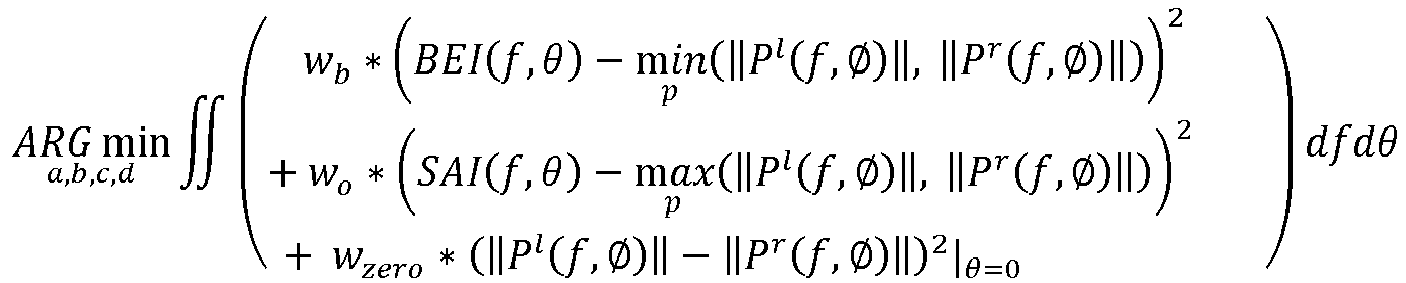
- the beamforming controller is configured to determine the beamforming scheme by minimizing a function given as: ARG min a , b , c , d ⁇ w b ⁇ BEI f ⁇ ⁇ m in p ⁇ P l f ⁇ ⁇ , ⁇ P r f ⁇ ⁇ 2 + w o ⁇ SAI f ⁇ ⁇ m ax p ⁇ P l f ⁇ ⁇ ⁇ P r f ⁇ ⁇ 2 + w zero ⁇ ⁇ P l f ⁇ ⁇ ⁇ P r f ⁇ ⁇ 2
- ⁇ 0 dfd ⁇
- BEI ( f, ⁇ ) is a first target function
- SAI ( f, ⁇ ) is a second target function
- P l ( f, ⁇ ) is a proximal directivity pattern associated with the hearing device
- P r ( f, ⁇ ) is a distal directivity pattern associated with the
- a method of operating a hearing device in a binaural hearing system includes: receiving data from a distal hearing device; receiving an audio signal and converting the audio signal to a first microphone input signal and a second microphone input signal; and determining a beamforming scheme based on the data, the first microphone input signal, and the second microphone input signal, wherein the beamforming scheme is based on a zero-direction index; and applying the beamforming scheme in a beamforming module of the hearing device.
- the method further includes: determining a proximal directivity pattern based on the first microphone input signal and the second microphone input signal; and transmitting information regarding the proximal directivity pattern to the distal hearing device.
- the method further includes determining a plurality of filter coefficient vectors, and wherein the beamforming scheme is applied in the beamforming module by applying the plurality of filter coefficient vectors in the beamforming module.
- the beamforming scheme is based on a first target function and a second target function, and wherein the act of determining the beamforming scheme comprises minimizing a cost function based on the zero-direction index, the first target function, and the second target function.
- the cost function comprises a weighted sum of error functions, wherein the error functions are based on the zero-direction index, the first target function, and the second target function, respectively.
- the act of determining the beamforming scheme comprises minimizing a function given as: ARG min a , b , c , d ⁇ w b ⁇ BEI f ⁇ ⁇ m in p ⁇ P l f ⁇ ⁇ , ⁇ P r f ⁇ ⁇ 2 + w o ⁇ SAI f ⁇ ⁇ m ax p ⁇ P l f ⁇ ⁇ , ⁇ P r f ⁇ ⁇ 2 + w zero ⁇ ⁇ P l f ⁇ ⁇ ⁇ ⁇ P r f ⁇ ⁇ 2
- ⁇ 0 dfd ⁇
- BEI ( f, ⁇ ) is a first target function
- SAI ( f, ⁇ ) is a second target function
- P l ( f, ⁇ ) is a proximal directivity pattern associated with the hearing device
- P r ( f, ⁇ ) is a distal directivity pattern associated with the
- a binaural hearing system comprising a first hearing device and a second hearing device, wherein one or each of the first hearing device and the second hearing device is the hearing device described herein.
- the binaural auditory steering strategy is the state of art in hearing aids design to integrate acoustical filtering, peripheral processing, and central listening level to provide a hearing aids solution.
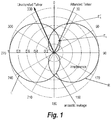
- BASS forms a highly focused beam for the attended talker and forms a receiving pattern similar to omni microphone characteristic for other talkers on the side such as illustrated in Fig. 1 . It is to be noted that the attended talker is positioned in the zero-direction.
- the present disclosure facilitates design of a solution to provide streaming of acoustic signals to the auditory system, one is directional and other is similar to omni-directionality like an open ear. Thereby is intended to preserve the spatial cues in the two audio streams for spatial unmasking benefits.
- the present disclosure relies on the auditory system to perform processing on the incoming streams to extract the attended messages and to monitor the unattended messages.
- the auditory system For speech intelligibility, if the targeted source is set at zero-degree azimuth (in front), and the interference noise is coming from other directions, the auditory system would pick up a signal with best signal to noise ratio among left and right signals. On the other hand, for situational awareness, the attended message is coming from any direction and the interfering source is situated in front of the listener. The auditory system would focus on a signal with best signal to noise ratio by picking up the signal with the larger power of the two. In both cases, the signal in the front contribute the same amount of power to both ears.
- the disclosed hearing devices and methods provide improved speech intelligibility and situational awareness at the same time by providing beamforming control to accommodate both human listening modes.
- the hearing device may be a hearing aid, e.g. of the behind-the-ear (BTE) type, in-the-ear (ITE) type, in-the-canal (ITC) type, receiver-in-canal (RIC) type or receiver-in-the-ear (RITE) type.
- the processor may be configured to compensate for hearing loss of a user.
- the hearing aid may be a binaural hearing aid.
- the hearing device comprises a transceiver module for communication (receive and/or transmit) with a distal hearing device of the binaural system.
- the transceiver module is configured for provision of distal data received from the distal hearing device.
- the transceiver module may comprise an antenna for converting one or more wireless input signals from the distal hearing device to an antenna output signal.
- the transceiver module optionally comprises a radio transceiver coupled to the antenna for converting the antenna output signal to a transceiver input signal, e.g. including distal data.
- the transceiver module may comprise a plurality of antennas and/or an antenna may be configured to be operate in one or a plurality of antenna modes.
- the transceiver module may be configured to transmit information regarding the proximal directivity pattern to the distal hearing device of the binaural hearing system
- the hearing device comprises a set of microphones.
- the set of microphones may comprise one or more microphones.
- the set of microphones comprises a first microphone for provision of a first microphone input signal and/or a second microphone for provision of a second microphone input signal.
- the set of microphones may comprise N microphones for provision of N microphone signals, wherein N is an integer in the range from 1 to 10. In one or more exemplary hearing devices, the number N of microphones is two, three, four, five or more.
- the set of microphones may comprise a third microphone for provision of a third microphone input signal.
- the hearing device comprises a beamforming module connected to the first microphone and the second microphone for processing the first microphone input signal and the second microphone input signal.
- the beamforming module operates according to a beamforming scheme.
- the beamforming module may comprise a first filter, such as a first FIR filter, and/or a second filter, such as a second FIR filter.
- the first filter processes the first microphone input signal
- the second filter processes the second microphone input signal.
- the filter output signals are summed to form a beamformed microphone input signal.
- the first FIR filter may include between 10 and 50 filter coefficients, such as in the range from 20 to 40 filter coefficients, e.g. 30 filter coefficients.
- the second FIR filter may include between 10 and 50 filter coefficients, such as in the range from 20 to 40 filter coefficients, e.g. 30 filter coefficients.
- the filter coefficients may be set or given by a filter coefficient vector, e.g. received or read from a beamforming controller, see below.
- the hearing device comprises a processor for processing one or more input signals, such as beamformed microphone input signal(s).
- the processor is configured to provide or provides an electrical output signal based on an input signal from the beamforming module.
- An input terminal of the processor is optionally connected to an output terminal of the beamforming module.
- the hearing device comprises a beamforming controller connected to the beamforming module and the transceiver module.
- the beamformer controller is connected to the first microphone and the second microphone for receiving the first microphone input signal and the second microphone input signal.
- the beamforming controller is configured to determine a beamforming scheme, optionally based on the distal data from the distal hearing device, the first microphone input signal, and/or the second microphone input signal.
- the beamforming controller may determine the beamforming scheme by obtaining a zero-direction index.
- to determine the beamforming scheme may comprise to obtain a zero-direction index.
- the beamforming scheme may be based on the zero-direction index.
- the beamforming controller is configured to apply the beamforming scheme in the beamforming module.
- the beamforming controller may be configured to determine a proximal directivity pattern based on the first microphone input signal and the second microphone input signal, include the proximal directivity pattern in proximal data, and transmit the proximal data to the distal hearing device of the binaural hearing system.
- the distal directivity data are determined in the distal hearing device.
- the beamforming controller may be configured to determine a plurality of filter coefficient vectors, such as two, three, four or more filter coefficient vectors.
- the beamforming controller may be configured to apply the beamforming scheme in the beamforming module by applying the plurality of filter coefficient vectors or at least some of the filter coefficient vectors in the beamforming module.
- the filter coefficient vectors may be FIR filter coefficient vectors, i.e. the beamforming module may comprise a FIR filter.
- the number of filter coefficient vectors determined by the beamforming controller is in the range from three to seven.
- a FIR filter coefficient vector may include between 10 and 50 filter coefficients, such as in the range from 20 to 40 filter coefficients, e.g. 30 filter coefficients.
- the beamforming controller may be configured to determine the beamforming scheme based on a first target function and/or a second target function.
- the beamforming controller may be configured to determine the beamforming scheme by minimizing a cost function.
- the beamforming controller may be configured to solve a minimization problem, e.g. based on a cost function.
- the cost function may be based on the zero-direction index.
- the cost function may be based on the first target function.
- the cost function may be based on the second target function. In one or more exemplary hearing devices, the cost function is based on the zero-direction index, the first target function, and the second target function.
- the cost function may comprise or be a weighted sum of error functions.
- the error functions may be based on the zero-direction index, the first target function, and the second target function, respectively.
- the cost function may comprise or be a sum or a weighted sum of at least two error functions selected from the group of a first error function based on the first target function, a second error function based on the second target function, and a third error function based on the zero-direction index.
- the beamforming controller may be configured to determine the beamforming scheme by minimizing a (cost) function.
- the function may be given as: ARG min a , b , c , d ⁇ w b ⁇ BEI f ⁇ ⁇ min p ⁇ P l f ⁇ ⁇ , ⁇ P r f ⁇ ⁇ 2 w o ⁇ SAI f ⁇ ⁇ max p ⁇ P l f ⁇ , ⁇ P r f ⁇ ⁇ 2 + w zero ⁇ ⁇ P l f ⁇ ⁇ ⁇ P r f ⁇ ⁇ 2
- ⁇ 0 dfd ⁇
- BEI ( f, ⁇ ) is a first target function
- SAI ( f, ⁇ ) is a second target function
- P l (f, ⁇ ) is a proximal directivity pattern of or associated with the hearing device
- P r ( f, ⁇ ) is a distal directivity
- the optimization parameters a, b, c, d are FIR filter coefficient vectors.
- the FIR filter coefficient vector a comprises filter coefficients of first FIR filter of the beamforming module for processing the first microphone input signal.
- the FIR filter coefficient vector b comprises filter coefficients of second FIR filter of the beamforming module for processing the second microphone input signal.
- FIR filter coefficient vectors c and d are filter coefficient vectors of the distal hearing device.
- the FIR filter coefficient vector c comprises filter coefficients of first FIR filter of the beamforming module of the distal hearing device for processing the first microphone input signal.
- the FIR filter coefficient vector d comprises filter coefficients of second FIR filter of the beamforming module of the distal hearing device for processing the second microphone input signal.
- the beamforming controller determines a first directivity pattern E k b and a second directivity pattern E k s .
- the first directivity pattern is also denoted Better Ear Mode directivity pattern
- the second directivity pattern is also denoted Situation Awareness Mode directivity pattern.
- the superscripts r and l are related to left and right ears, where l is used for the present (proximal) hearing device described herein, and r is used for the distal hearing device.
- the hearing device may naturally be configured as a right ear hearing device, where the superscripts r and l are to be switched.
- the superscripts b and s represent better ear pattern and situational awareness pattern, respectively.
- the method comprises receiving distal data from a distal hearing device.
- the distal data may comprise a distal directivity pattern of the distal hearing device.
- the method comprises receiving an audio signal and converting the audio signal to a first microphone input signal and a second microphone input signal, e.g. with a first microphone and a second microphone, respectively, of the hearing device.
- the method comprises determining a beamforming scheme.
- the beamforming scheme may be based on the distal data, the first microphone input signal, and/or the second microphone input signal. Determining the beamforming scheme optionally comprises obtaining a zero-direction index. The beamforming scheme may be based on the zero-direction index.
- the method comprises applying the beamforming scheme in a beamforming module of the hearing device.
- the method may comprise determining a proximal directivity pattern based on the first microphone input signal and the second microphone input signal.
- the method may comprise transmitting information regarding the proximal directivity pattern to the distal hearing device, e.g. by including the proximal directivity pattern in proximal data; and optionally transmitting the proximal data to the distal hearing device.
- the method may comprise determining a plurality of filter coefficient vectors, such as FIR filter coefficient vectors.
- applying the beamforming scheme in the beamforming module may comprise applying the plurality of filter coefficient vectors or at least some of the filter coefficient vectors in the beamforming module.
- determining the beamforming scheme may be based on a first target function and/or a second target function. Determining the beamforming scheme may comprise minimizing a cost function. In other words, determining the beamforming scheme may comprise solving a minimization problem.
- the cost function may be based on the zero-direction index.
- the cost function may be based on the first target function.
- the cost function may be based on the second target function. In one or more exemplary methods, the cost function is based on the zero-direction index, the first target function, and the second target function.
- the cost function may be a weighted sum of error functions.
- the error functions may be based on the zero-direction index, the first target function, and the second target function, respectively.
- the cost function may be a sum or a weighted sum of at least two error functions selected from the group of or at least comprising a first error function based on the first target function, a second error function based on the second target function, and a third error function based on the zero-direction index.
- determining the beamforming scheme may comprise minimizing a (cost) function.
- the function may be given as: ARG min a , b , c , d ⁇ w b ⁇ BEI f ⁇ ⁇ m in p ⁇ P l f ⁇ ⁇ ⁇ P r f ⁇ ⁇ 2 + w o ⁇ SAI f ⁇ ⁇ m ax p ⁇ P l f ⁇ ⁇ ⁇ P r f ⁇ ⁇ 2 + w zero ⁇ ⁇ P l f ⁇ ⁇ ⁇ P r f ⁇ ⁇ 2
- ⁇ 0 dfd ⁇
- BEI ( f, ⁇ ) is a first target function
- SAI ( f, ⁇ ) is a second target function
- P l ( f, ⁇ ) is a proximal directivity pattern of or associated with the hearing device
- P r ( f, ⁇ ) is a distal
- the optimization parameters a, b, c, d are FIR filter coefficient vectors.
- the FIR filter coefficient vector a comprises filter coefficients of first FIR filter of the beamforming module for processing the first microphone input signal.
- the FIR filter coefficient vector b comprises filter coefficients of second FIR filter of the beamforming module for processing the second microphone input signal.
- FIR filter coefficient vectors c and d are filter coefficients of the distal hearing device.
- the FIR filter coefficient vector c comprises filter coefficients of first FIR filter of the beamforming module of the distal hearing device for processing the first microphone input signal.
- the FIR filter coefficient vector d comprises filter coefficients of second FIR filter of the beamforming module of the distal hearing device for processing the second microphone input signal.
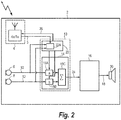
- Fig. 2 illustrates a hearing device.
- the hearing device 2 is configured for use in a binaural hearing system comprising a first hearing device and a second hearing device.
- the hearing device 2 (first/left hearing device of the binaural hearing system) comprises a transceiver module 4 for (wireless) communication with a distal/right hearing device (not shown in fig. 2 ) of the binaural system.
- the transceiver module 4 is configured for provision of distal data 5 received from the distal hearing device.
- the hearing device 2 comprises a set of microphones comprising a first microphone 6 and a second microphone 8 for provision of a first microphone input signal 10 and a second microphone input signal 12, respectively.
- the hearing device comprises a beamformer 13 including a beamforming module 14 connected to the first microphone 6 and the second microphone 8 for receiving and processing the first microphone input signal 10 and the second microphone input signal 12.
- the beamforming module comprises a first filter 15A and a second filter 15B.
- the first filter 15A processes the first microphone input signal 10 and the second filter 15B processes the second microphone input signal 12.
- the processed microphone input signals are summed in adder 15C to form beamformed microphone input signal 24.
- the first filter 15A has a transfer function denoted F bl ( f,a )
- the second filter 15B has a transfer function denoted F fl ( f,b ).
- the first filter 15A and the second filter 15B each has 30 filter coefficients.
- the hearing device 2 comprises a processor 16 for processing the beamformed microphone input signal 24 and providing an electrical output signal 18 based on an input signal from the beamforming module.
- the hearing device 2 comprises a receiver 20 for converting the electrical output signal to an audio output signal, and a beamforming controller 22 forming part of beamformer 13 and connected to the beamforming module 14 and the transceiver module 4.
- the transceiver unit 4 transmits distal data 5 to the beamforming controller and the beamforming controller 22 is connected to the first microphone 6 and the second microphone 8 for receiving microphone input signals 10, 12.
- the beamforming controller 22 is configured to determine, e.g. with determiner 22A, a beamforming scheme based on the distal data from the distal hearing device, the first microphone input signal, and the second microphone input signal.
- the beamforming scheme comprises four FIR filter coefficient vectors a, b, c, and d and the beamforming controller 22 is configured to determine the filter coefficient vectors a, b, c, d by minimizing a function given as: ARG min a , b , c , d ⁇ w b ⁇ BEI f ⁇ ⁇ m in p ⁇ P l f ⁇ ⁇ ⁇ P r f ⁇ ⁇ 2 + w o ⁇ SAI f ⁇ ⁇ m ax p ⁇ P l f ⁇ ⁇ ⁇ P r f ⁇ ⁇ 2 + w zero ⁇ ⁇ P l f ⁇ ⁇ ⁇ ⁇ P r f ⁇ ⁇ 2
- the optimization parameters a, b, c, d are FIR filter coefficient vectors.
- the FIR filter coefficient vector a comprises filter coefficients of first FIR filter 15A of the beamforming module for processing the first microphone input signal 10.
- the FIR filter coefficient vector b comprises filter coefficients of second FIR filter 15B of the beamforming module for processing the second microphone input signal 12.
- FIR filter coefficient vectors c and d are filter coefficients of the distal hearing device.
- the FIR filter coefficient vector c comprises filter coefficients of first FIR filter of the beamforming module of the distal hearing device for processing the first microphone input signal.
- the FIR filter coefficient vector d comprises filter coefficients of second FIR filter of the beamforming module of the distal hearing device for processing the second microphone input signal.
- the beamforming controller 22 applies the beamforming scheme in the beamforming module by applying the filter coefficient vectors a and b in the beamforming module by transmitting the filter coefficient vectors a and b to the beamforming module.
- the beamforming controller 22 is configured to determine a proximal directivity pattern based on the first microphone input signal and the second microphone input signal, include the proximal directivity pattern in proximal data, and transmit the proximal data 26 to the distal hearing device of the binaural hearing system via the transceiver unit 4.
- the distal hearing device can optimize the beamforming scheme of the distal hearing device such that the hearing devices in the binaural hearing system cooperate in forming an optimum beamforming in the binaural hearing system.
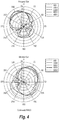
- Fig. 3 shows BASS directivity patterns for two hearing devices and Fig. 4 shows optimized BASS directivity patterns for two hearing devices. It is to be noted that in particular the directivity patterns at lower frequencies (500 and 1,000 Hz) of the monitor ear are changed in the optimized BASS beamforming scheme in Fig. 4 .
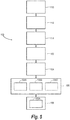
- Fig. 5 shows a flow chart of an exemplary method operating a hearing device, such as hearing device 2, in a binaural hearing system.
- the method 100 comprises receiving 102 distal data from a distal hearing device, e.g. via transceiver module 4, the distal data comprising a distal directivity pattern. Further, method 100 comprises receiving 104 an audio signal and converting the audio signal to a first microphone input signal and a second microphone input signal, e.g. with first microphone 6 and second microphone 8; The method 100 proceeds to determining 106 a beamforming scheme based on the distal data, the first microphone input signal, and the second microphone input signal, e.g. with beamforming controller 22.
- Determining 106 the beamforming scheme comprises obtaining 106A a zero-direction index, and the beamforming scheme is optionally based on the zero-direction index.
- the method 100 comprises applying 108 the beamforming scheme in a beamforming module, such as beamforming module 14, of the hearing device.
- the method 100 comprises determining 110 a proximal directivity pattern based on the first microphone input signal and the second microphone input signal, including 112 the proximal directivity pattern in proximal data; and transmitting 114 the proximal data to the distal hearing device, e.g. via transceiver module 4.
- the method 100 comprises, as part of determining 106 a beamforming scheme, determining 106B a plurality of filter coefficient vectors, and wherein applying 108 the beamforming scheme in the beamforming module comprises applying 108A the plurality of filter coefficient vectors in the beamforming module.
- Determining 106 the beamforming scheme is based on a first target function and a second target function, and determining 106 the beamforming scheme comprises minimizing 106C a cost function based on the zero-direction index, the first target function, and the second target function.
- the cost function is a weighted sum of error functions, wherein the error functions are based on the zero-direction index, the first target function, and the second target function, respectively.
- determining 106 the beamforming scheme comprises minimizing, e.g. as part of 106C, a function given as: ARG min a , b , c , d ⁇ w b ⁇ BEI f ⁇ ⁇ m in p ⁇ P l f ⁇ ⁇ ⁇ P r f ⁇ ⁇ 2 + w o ⁇ SAI f ⁇ ⁇ m ax p ⁇ P l f ⁇ ⁇ ⁇ P r f ⁇ ⁇ 2 + w zero ⁇ ⁇ P l f ⁇ ⁇ ⁇ P r f ⁇ ⁇ 2
- ⁇ 0 dfd ⁇
- BEI ( f, ⁇ ) is a first target function
- SAI ( f, ⁇ ) is a second target function
- P l ( f, ⁇ ) is a proximal directivity pattern of the hearing device
- P r ( f, ⁇ ) is a distal direct
- the optimization parameters are the filter coefficient vectors a, b, c, d.
- the filter coefficient vectors may each include between 10 and 50 filter coefficients, such as in the range from 20 to 40 filter coefficients, e.g. 30 filter coefficients.
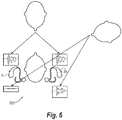
- Fig. 6 shows a binaural hearing system 200 comprising a first hearing device 2 and a second hearing device 2A, with the difference that first and second filters of hearing device 2A use the filter coefficient vectors c and d instead of filter coefficient vectors a and b as in hearing device 2, and the hearing aid 2A receives P l ( f, ⁇ ) as part of distal data 5 and transmits P r ( f , ⁇ ) as part of proximal data 26, see Fig. 7 .
- Fig. 7 shows an exemplary hearing device 2A being a second hearing device of binaural hearing system 200.
- the beamforming controller 22 of hearing device 2A transmits filter coefficient vectors c and d to the first filter 15A and the second filter 15B, respectively, of the hearing device.
Landscapes
- Engineering & Computer Science (AREA)
- Health & Medical Sciences (AREA)
- General Health & Medical Sciences (AREA)
- Neurosurgery (AREA)
- Otolaryngology (AREA)
- Physics & Mathematics (AREA)
- Acoustics & Sound (AREA)
- Signal Processing (AREA)
- Computer Networks & Wireless Communication (AREA)
- Circuit For Audible Band Transducer (AREA)
Abstract
Description
- The present disclosure relates to a hearing device with adaptive binaural auditory steering and a method of operating a hearing device in a binaural hearing system.
- In acoustic environments, it is natural for a normal listener to focus on one talker while monitoring other acoustic sources. An example hereof is other talkers in a cocktail party setting or other complex acoustic environment. In this regard, the acoustic filtering due to the head shadow effect and the binaural neural interaction plays an important part to enhance the speech of the focused talker while suppressing other interference. Moreover, the brain also forms another sound image from two ears to monitor the other acoustic sources, which are suppressed by the binaural beamforming effects.
- When people wear hearing aids, the signals from the acoustic sources are spatially filtered by an extra stage, i.e. hearing aids, especially when the hearing aids applies higher order beamforming technologies to enhance the directivities. Most of the time this kind of beamforming focuses only on improving the signal to noise ratio. This leads to the tunnel of directivity and the brain fails to synthesize sound images to perform the task of monitoring the surrounding acoustic events.
- Accordingly, there is a need for devices and methods overcoming or at least reducing the tunnel hearing effect.
- Thus, a hearing device for a binaural hearing system is disclosed, the hearing device comprising a transceiver module for communication with a distal hearing device of the binaural system, the transceiver module configured to receive and/or for provision of distal data received from the distal hearing device; a set of microphones comprising a first microphone and a second microphone for provision of a first microphone input signal and a second microphone input signal, respectively; a beamforming module connected to the first microphone and the second microphone for processing the first microphone input signal and the second microphone input signal; a processor configured to provide an electrical output signal based on an input signal from the beamforming module; a receiver for converting the electrical output signal to an audio output signal; and a beamforming controller connected to the beamforming module and the transceiver module. The beamforming controller is configured to determine a beamforming scheme, e.g. based on the distal data from the distal hearing device, the first microphone input signal, and/or the second microphone input signal. The beamforming controller may be configured to determine the beamforming scheme based on a zero-direction index, and the beamforming controller is configured to apply the beamforming scheme in the beamforming module.
- Also disclosed is a binaural hearing system comprising a first hearing device and a second hearing device, wherein the first hearing device is a hearing device as described herein, and the second hearing device is a hearing device as described herein.
- Further, a method of operating a hearing device in a binaural hearing system is provided, the method comprising receiving distal data from a distal hearing device; receiving an audio signal and converting the audio signal to a first microphone input signal and a second microphone input signal; determining a beamforming scheme, e.g. based on the distal data, the first microphone input signal, and/or the second microphone input signal, wherein the beamforming scheme is optionally based on a zero-direction index; and applying the beamforming scheme in a beamforming module of the hearing device.
- The present devices and methods provide improved binaural auditory steering strategy (BASS) for integrating acoustic, auditory processing and selective listening mechanisms. The present devices and methods form a highly focused directional microphone beam for the attended talker and at the same time forms a receiving pattern similar to omni microphone characteristic for other talkers on the side.
- The present disclosure integrates acoustical filtering, peripheral processing and central listening level to provide an improved hearing aids solution.
- The present disclosure provides an optimized beamforming to accommodate both selective/targeted listening and situational awareness.
- A hearing device for a binaural hearing system, includes: a transceiver module for communication with a distal hearing device of the binaural system, the transceiver module configured to receive data from the distal hearing device; a set of microphones comprising a first microphone and a second microphone for provision of a first microphone input signal and a second microphone input signal, respectively; a beamforming module connected to the first microphone and the second microphone for processing the first microphone input signal and the second microphone input signal; a processor configured to provide an electrical output signal based on an input signal from the beamforming module; a receiver for converting the electrical output signal to an audio output signal; and a beamforming controller connected to the beamforming module and the transceiver module; wherein the beamforming controller is configured to determine a beamforming scheme based on the data from the distal hearing device, the first microphone input signal, and the second microphone input signal, wherein the beamforming controller is configured to determine the beamforming scheme based on a zero-direction index, and wherein the beamforming controller is configured to apply the beamforming scheme in the beamforming module.
- Optionally, the beamforming controller is configured to determine a proximal directivity pattern based on the first microphone input signal and the second microphone input signal, and wherein the transceiver is configured to transmit information regarding the proximal directivity pattern to the distal hearing device of the binaural hearing system.
- Optionally, the beamforming controller is configured to determine a plurality of filter coefficient vectors, and wherein the beamforming controller is configured to apply the beamforming scheme in the beamforming module by applying the plurality of filter coefficient vectors in the beamforming module.
- Optionally, the beamforming controller is configured to determine the beamforming scheme based on a first target function and a second target function, and wherein the beamforming controller is configured to determine the beamforming scheme by minimizing a cost function based on the zero-direction index, the first target function, and the second target function.
- Optionally, the cost function comprises a weighted sum of error functions, wherein the error functions are based on the zero-direction index, the first target function, and the second target function, respectively.
- Optionally, the beamforming controller is configured to determine the beamforming scheme by minimizing a function given as:

- Optionally, the proximal directivity pattern is represented by Pl (f,φ), and wherein:

- A method of operating a hearing device in a binaural hearing system, includes: receiving data from a distal hearing device; receiving an audio signal and converting the audio signal to a first microphone input signal and a second microphone input signal; and determining a beamforming scheme based on the data, the first microphone input signal, and the second microphone input signal, wherein the beamforming scheme is based on a zero-direction index; and applying the beamforming scheme in a beamforming module of the hearing device.
- Optionally, the method further includes: determining a proximal directivity pattern based on the first microphone input signal and the second microphone input signal; and transmitting information regarding the proximal directivity pattern to the distal hearing device.
- Optionally, the method further includes determining a plurality of filter coefficient vectors, and wherein the beamforming scheme is applied in the beamforming module by applying the plurality of filter coefficient vectors in the beamforming module.
- Optionally, the beamforming scheme is based on a first target function and a second target function, and wherein the act of determining the beamforming scheme comprises minimizing a cost function based on the zero-direction index, the first target function, and the second target function.
- Optionally, the cost function comprises a weighted sum of error functions, wherein the error functions are based on the zero-direction index, the first target function, and the second target function, respectively.
- Optionally, the act of determining the beamforming scheme comprises minimizing a function given as:

- Optionally, the proximal directivity pattern is represented by P l (f,φ), and wherein

- A binaural hearing system comprising a first hearing device and a second hearing device, wherein one or each of the first hearing device and the second hearing device is the hearing device described herein.
- The above and other features and advantages will become readily apparent to those skilled in the art by the following detailed description of exemplary embodiments thereof with reference to the attached drawings, in which:
- Fig. 1
- illustrates directivity in an auditory system,
- Fig. 2
- schematically illustrates an exemplary hearing device,
- Fig. 3
- show directivity patterns for two hearing devices,
- Fig. 4
- show optimized directivity patterns for two hearing devices,
- Fig. 5
- is a flow diagram of an exemplary method,
- Fig. 6
- shows a binaural hearing system, and
- Fig. 7
- schematically illustrates an exemplary hearing device.
- Various exemplary embodiments and details are described hereinafter, with reference to the figures when relevant. It should be noted that the figures may or may not be drawn to scale and that elements of similar structures or functions are represented by like reference numerals throughout the figures. It should also be noted that the figures are only intended to facilitate the description of the embodiments. They are not intended as an exhaustive description of the invention or as a limitation on the scope of the invention. In addition, an illustrated embodiment needs not have all the aspects or advantages shown. An aspect or an advantage described in conjunction with a particular embodiment is not necessarily limited to that embodiment and can be practiced in any other embodiments even if not so illustrated, or if not so explicitly descri bed.
- The binaural auditory steering strategy (BASS) is the state of art in hearing aids design to integrate acoustical filtering, peripheral processing, and central listening level to provide a hearing aids solution. BASS forms a highly focused beam for the attended talker and forms a receiving pattern similar to omni microphone characteristic for other talkers on the side such as illustrated in
Fig. 1 . It is to be noted that the attended talker is positioned in the zero-direction. The present disclosure facilitates design of a solution to provide streaming of acoustic signals to the auditory system, one is directional and other is similar to omni-directionality like an open ear. Thereby is intended to preserve the spatial cues in the two audio streams for spatial unmasking benefits. The present disclosure relies on the auditory system to perform processing on the incoming streams to extract the attended messages and to monitor the unattended messages. - For speech intelligibility, if the targeted source is set at zero-degree azimuth (in front), and the interference noise is coming from other directions, the auditory system would pick up a signal with best signal to noise ratio among left and right signals. On the other hand, for situational awareness, the attended message is coming from any direction and the interfering source is situated in front of the listener. The auditory system would focus on a signal with best signal to noise ratio by picking up the signal with the larger power of the two. In both cases, the signal in the front contribute the same amount of power to both ears. We can express the idea in terms of the directivity of the auditory system as seen in
Fig. 1 , where two cardioids illustrate the directivity patterns L and R of a left hearing aid and a right hearing aid, respectively. - The disclosed hearing devices and methods provide improved speech intelligibility and situational awareness at the same time by providing beamforming control to accommodate both human listening modes.
- The hearing device may be a hearing aid, e.g. of the behind-the-ear (BTE) type, in-the-ear (ITE) type, in-the-canal (ITC) type, receiver-in-canal (RIC) type or receiver-in-the-ear (RITE) type. The processor may be configured to compensate for hearing loss of a user. The hearing aid may be a binaural hearing aid.
- The hearing device comprises a transceiver module for communication (receive and/or transmit) with a distal hearing device of the binaural system. The transceiver module is configured for provision of distal data received from the distal hearing device. The transceiver module may comprise an antenna for converting one or more wireless input signals from the distal hearing device to an antenna output signal. The transceiver module optionally comprises a radio transceiver coupled to the antenna for converting the antenna output signal to a transceiver input signal, e.g. including distal data. The transceiver module may comprise a plurality of antennas and/or an antenna may be configured to be operate in one or a plurality of antenna modes. The transceiver module may be configured to transmit information regarding the proximal directivity pattern to the distal hearing device of the binaural hearing system
The hearing device comprises a set of microphones. The set of microphones may comprise one or more microphones. The set of microphones comprises a first microphone for provision of a first microphone input signal and/or a second microphone for provision of a second microphone input signal. The set of microphones may comprise N microphones for provision of N microphone signals, wherein N is an integer in the range from 1 to 10. In one or more exemplary hearing devices, the number N of microphones is two, three, four, five or more. The set of microphones may comprise a third microphone for provision of a third microphone input signal. - The hearing device comprises a beamforming module connected to the first microphone and the second microphone for processing the first microphone input signal and the second microphone input signal. The beamforming module operates according to a beamforming scheme. The beamforming module may comprise a first filter, such as a first FIR filter, and/or a second filter, such as a second FIR filter. The first filter processes the first microphone input signal, and the second filter processes the second microphone input signal. The filter output signals are summed to form a beamformed microphone input signal. The first FIR filter may include between 10 and 50 filter coefficients, such as in the range from 20 to 40 filter coefficients, e.g. 30 filter coefficients. The second FIR filter may include between 10 and 50 filter coefficients, such as in the range from 20 to 40 filter coefficients, e.g. 30 filter coefficients. The filter coefficients may be set or given by a filter coefficient vector, e.g. received or read from a beamforming controller, see below.
- The hearing device comprises a processor for processing one or more input signals, such as beamformed microphone input signal(s). The processor is configured to provide or provides an electrical output signal based on an input signal from the beamforming module. An input terminal of the processor is optionally connected to an output terminal of the beamforming module.
- The hearing device comprises a beamforming controller connected to the beamforming module and the transceiver module. The beamformer controller is connected to the first microphone and the second microphone for receiving the first microphone input signal and the second microphone input signal. The beamforming controller is configured to determine a beamforming scheme, optionally based on the distal data from the distal hearing device, the first microphone input signal, and/or the second microphone input signal. The beamforming controller may determine the beamforming scheme by obtaining a zero-direction index. Thus, to determine the beamforming scheme may comprise to obtain a zero-direction index. The beamforming scheme may be based on the zero-direction index. The beamforming controller is configured to apply the beamforming scheme in the beamforming module.
- The beamforming controller may be configured to determine a proximal directivity pattern based on the first microphone input signal and the second microphone input signal, include the proximal directivity pattern in proximal data, and transmit the proximal data to the distal hearing device of the binaural hearing system. The proximal directivity pattern is also denoted or represented by Pl (f,φ) and may be given as

- The distal data comprises a distal directivity pattern, wherein the distal directivity pattern Pr (f,φ) is optionally given by

- The beamforming controller may be configured to determine a plurality of filter coefficient vectors, such as two, three, four or more filter coefficient vectors. The beamforming controller may be configured to apply the beamforming scheme in the beamforming module by applying the plurality of filter coefficient vectors or at least some of the filter coefficient vectors in the beamforming module. The filter coefficient vectors may be FIR filter coefficient vectors, i.e. the beamforming module may comprise a FIR filter. In one or more exemplary hearing devices, the number of filter coefficient vectors determined by the beamforming controller is in the range from three to seven. A FIR filter coefficient vector may include between 10 and 50 filter coefficients, such as in the range from 20 to 40 filter coefficients, e.g. 30 filter coefficients.
- The beamforming controller may be configured to determine the beamforming scheme based on a first target function and/or a second target function. The beamforming controller may be configured to determine the beamforming scheme by minimizing a cost function. In other words, the beamforming controller may be configured to solve a minimization problem, e.g. based on a cost function. The cost function may be based on the zero-direction index. The cost function may be based on the first target function. The cost function may be based on the second target function. In one or more exemplary hearing devices, the cost function is based on the zero-direction index, the first target function, and the second target function.
- The cost function may comprise or be a weighted sum of error functions. The error functions may be based on the zero-direction index, the first target function, and the second target function, respectively. The cost function may comprise or be a sum or a weighted sum of at least two error functions selected from the group of a first error function based on the first target function, a second error function based on the second target function, and a third error function based on the zero-direction index.
- The beamforming controller may be configured to determine the beamforming scheme by minimizing a (cost) function. The function may be given as:

- In one or more exemplary devices/methods, the weight wb is in the range from 0.1 to 3, such as in the range from 0.5 to 1.5, e.g. wb=1. In one or more exemplary devices/methods, the weight wzero is in the range from 0.1 to 3, such as in the range from 0.5 to 1.5, e.g. wzero=1. In one or more exemplary devices/methods, the weight wo is in the range from 0.01 to 1, such as in the range from 0.05 to 0.15, e.g. wo=0.1.
- The beamforming controller determines a first directivity pattern


- The first directivity pattern may be given as:

- The second directivity pattern may be given as:

- Index k is the directional index associated with the k'th azimuth angle θk [1:n] and θ 1 = 0. The superscripts r and l are related to left and right ears, where l is used for the present (proximal) hearing device described herein, and r is used for the distal hearing device. The hearing device may naturally be configured as a right ear hearing device, where the superscripts r and l are to be switched. The superscripts b and s represent better ear pattern and situational awareness pattern, respectively.
- The first target function, also denoted Better Ear Index BEI(f,θ) may be given as:


- The second target function, also denoted Situational Awareness Index SAI(f,θ) may be given as:


- The method comprises receiving distal data from a distal hearing device. The distal data may comprise a distal directivity pattern of the distal hearing device.
- The method comprises receiving an audio signal and converting the audio signal to a first microphone input signal and a second microphone input signal, e.g. with a first microphone and a second microphone, respectively, of the hearing device.
- Further the method comprises determining a beamforming scheme. The beamforming scheme may be based on the distal data, the first microphone input signal, and/or the second microphone input signal. Determining the beamforming scheme optionally comprises obtaining a zero-direction index. The beamforming scheme may be based on the zero-direction index. The method comprises applying the beamforming scheme in a beamforming module of the hearing device.
- The method may comprise determining a proximal directivity pattern based on the first microphone input signal and the second microphone input signal. The method may comprise transmitting information regarding the proximal directivity pattern to the distal hearing device, e.g. by including the proximal directivity pattern in proximal data; and optionally transmitting the proximal data to the distal hearing device.
- The proximal directivity pattern, Pl (f,φ) may be given as

- The method may comprise determining a plurality of filter coefficient vectors, such as FIR filter coefficient vectors. In the method, applying the beamforming scheme in the beamforming module may comprise applying the plurality of filter coefficient vectors or at least some of the filter coefficient vectors in the beamforming module.
- In the method, determining the beamforming scheme may be based on a first target function and/or a second target function. Determining the beamforming scheme may comprise minimizing a cost function. In other words, determining the beamforming scheme may comprise solving a minimization problem. The cost function may be based on the zero-direction index. The cost function may be based on the first target function. The cost function may be based on the second target function. In one or more exemplary methods, the cost function is based on the zero-direction index, the first target function, and the second target function.
- The cost function may be a weighted sum of error functions. The error functions may be based on the zero-direction index, the first target function, and the second target function, respectively. The cost function may be a sum or a weighted sum of at least two error functions selected from the group of or at least comprising a first error function based on the first target function, a second error function based on the second target function, and a third error function based on the zero-direction index.
- In the method, determining the beamforming scheme may comprise minimizing a (cost) function. The function may be given as:

-
Fig. 2 illustrates a hearing device. Thehearing device 2 is configured for use in a binaural hearing system comprising a first hearing device and a second hearing device. The hearing device 2 (first/left hearing device of the binaural hearing system) comprises a transceiver module 4 for (wireless) communication with a distal/right hearing device (not shown infig. 2 ) of the binaural system. The transceiver module 4 is configured for provision ofdistal data 5 received from the distal hearing device. Thehearing device 2 comprises a set of microphones comprising afirst microphone 6 and asecond microphone 8 for provision of a firstmicrophone input signal 10 and a secondmicrophone input signal 12, respectively. The hearing device comprises abeamformer 13 including abeamforming module 14 connected to thefirst microphone 6 and thesecond microphone 8 for receiving and processing the firstmicrophone input signal 10 and the secondmicrophone input signal 12. The beamforming module comprises afirst filter 15A and asecond filter 15B. Thefirst filter 15A processes the firstmicrophone input signal 10 and thesecond filter 15B processes the secondmicrophone input signal 12. The processed microphone input signals are summed inadder 15C to form beamformedmicrophone input signal 24. Thefirst filter 15A has a transfer function denoted Fbl (f,a), and thesecond filter 15B has a transfer function denoted Ffl (f,b). In the illustrated implementation, thefirst filter 15A and thesecond filter 15B each has 30 filter coefficients. - Further, the
hearing device 2 comprises aprocessor 16 for processing the beamformedmicrophone input signal 24 and providing anelectrical output signal 18 based on an input signal from the beamforming module. Thehearing device 2 comprises areceiver 20 for converting the electrical output signal to an audio output signal, and abeamforming controller 22 forming part ofbeamformer 13 and connected to thebeamforming module 14 and the transceiver module 4. The transceiver unit 4 transmitsdistal data 5 to the beamforming controller and thebeamforming controller 22 is connected to thefirst microphone 6 and thesecond microphone 8 for receiving microphone input signals 10, 12. - The
beamforming controller 22 is configured to determine, e.g. withdeterminer 22A, a beamforming scheme based on the distal data from the distal hearing device, the first microphone input signal, and the second microphone input signal. The beamforming scheme comprises four FIR filter coefficient vectors a, b, c, and d and thebeamforming controller 22 is configured to determine the filter coefficient vectors a, b, c, d by minimizing a function given as:
first FIR filter 15A of the beamforming module for processing the firstmicrophone input signal 10. The FIR filter coefficient vector b comprises filter coefficients ofsecond FIR filter 15B of the beamforming module for processing the secondmicrophone input signal 12. FIR filter coefficient vectors c and d are filter coefficients of the distal hearing device. The FIR filter coefficient vector c comprises filter coefficients of first FIR filter of the beamforming module of the distal hearing device for processing the first microphone input signal. The FIR filter coefficient vector d comprises filter coefficients of second FIR filter of the beamforming module of the distal hearing device for processing the second microphone input signal. - The proximal directivity patttern, Pl (f,φ) is given as

- The
beamforming controller 22 applies the beamforming scheme in the beamforming module by applying the filter coefficient vectors a and b in the beamforming module by transmitting the filter coefficient vectors a and b to the beamforming module. - Further, the
beamforming controller 22 is configured to determine a proximal directivity pattern based on the first microphone input signal and the second microphone input signal, include the proximal directivity pattern in proximal data, and transmit theproximal data 26 to the distal hearing device of the binaural hearing system via the transceiver unit 4. Thereby the distal hearing device can optimize the beamforming scheme of the distal hearing device such that the hearing devices in the binaural hearing system cooperate in forming an optimum beamforming in the binaural hearing system. -
Fig. 3 shows BASS directivity patterns for two hearing devices andFig. 4 shows optimized BASS directivity patterns for two hearing devices. It is to be noted that in particular the directivity patterns at lower frequencies (500 and 1,000 Hz) of the monitor ear are changed in the optimized BASS beamforming scheme inFig. 4 . -
Fig. 5 shows a flow chart of an exemplary method operating a hearing device, such as hearingdevice 2, in a binaural hearing system. Themethod 100 comprises receiving 102 distal data from a distal hearing device, e.g. via transceiver module 4, the distal data comprising a distal directivity pattern. Further,method 100 comprises receiving 104 an audio signal and converting the audio signal to a first microphone input signal and a second microphone input signal, e.g. withfirst microphone 6 andsecond microphone 8; Themethod 100 proceeds to determining 106 a beamforming scheme based on the distal data, the first microphone input signal, and the second microphone input signal, e.g. withbeamforming controller 22. Determining 106 the beamforming scheme comprises obtaining 106A a zero-direction index, and the beamforming scheme is optionally based on the zero-direction index. Themethod 100 comprises applying 108 the beamforming scheme in a beamforming module, such asbeamforming module 14, of the hearing device. Themethod 100 comprises determining 110 a proximal directivity pattern based on the first microphone input signal and the second microphone input signal, including 112 the proximal directivity pattern in proximal data; and transmitting 114 the proximal data to the distal hearing device, e.g. via transceiver module 4. - The
method 100 comprises, as part of determining 106 a beamforming scheme, determining 106B a plurality of filter coefficient vectors, and wherein applying 108 the beamforming scheme in the beamforming module comprises applying 108A the plurality of filter coefficient vectors in the beamforming module. Determining 106 the beamforming scheme is based on a first target function and a second target function, and determining 106 the beamforming scheme comprises minimizing 106C a cost function based on the zero-direction index, the first target function, and the second target function. In the illustratedmethod 100, the cost function is a weighted sum of error functions, wherein the error functions are based on the zero-direction index, the first target function, and the second target function, respectively. Further, determining 106 the beamforming scheme comprises minimizing, e.g. as part of 106C, a function given as:

-
Fig. 6 shows abinaural hearing system 200 comprising afirst hearing device 2 and asecond hearing device 2A, with the difference that first and second filters of hearingdevice 2A use the filter coefficient vectors c and d instead of filter coefficient vectors a and b as in hearingdevice 2, and thehearing aid 2A receives Pl (f,φ) as part ofdistal data 5 and transmits Pr (f,φ) as part ofproximal data 26, seeFig. 7 . -
Fig. 7 shows anexemplary hearing device 2A being a second hearing device ofbinaural hearing system 200. Thebeamforming controller 22 of hearingdevice 2A transmits filter coefficient vectors c and d to thefirst filter 15A and thesecond filter 15B, respectively, of the hearing device. - Although particular features have been shown and described, it will be understood that they are not intended to limit the claimed invention, and it will be made obvious to those skilled in the art that various changes and modifications may be made without departing from the spirit and scope of the claimed invention. The specification and drawings are, accordingly to be regarded in an illustrative rather than restrictive sense. The claimed invention is intended to cover all alternatives, modifications and equivalents.
-
- 2, 2A
- hearing device
- 4
- transceiver module
- 5
- distal data
- 6
- first microphone
- 8
- second microphone
- 10
- first microphone input signal
- 12
- second microphone input signal
- 13
- beamformer
- 14
- beamforming module
- 15A
- first filter
- 15B
- second filter
- 15C
- adder
- 16
- processor
- 18
- electrical output signal
- 20
- receiver
- 22
- beamforming controller
- 22A
- determiner
- 24
- beamformed microphone input signal
- 26
- proximal data
- 100
- method of operating a hearing device
- 102
- receiving distal data
- 104
- receiving and converting audio signal
- 106
- determining a beamforming scheme
- 106A
- obtaining a zero-direction index
- 106B
- determining a plurality of filter coefficient vectors
- 106C
- minimizing a cost function
- 108
- applying the beamforming scheme
- 108A
- applying the plurality of filter coefficient vectors
- 110
- determining a proximal directivity pattern
- 112
- including the proximal directivity pattern in proximal data
- 114
- transmitting the proximal data to the distal hearing device
- 200
- binaural hearing system
Claims (15)
- A hearing device for a binaural hearing system, the hearing device comprising:a transceiver module for communication with a distal hearing device of the binaural system, the transceiver module configured to receive data from the distal hearing device;a set of microphones comprising a first microphone and a second microphone for provision of a first microphone input signal and a second microphone input signal, respectively;a beamforming module connected to the first microphone and the second microphone for processing the first microphone input signal and the second microphone input signal;a processor configured to provide an electrical output signal based on an input signal from the beamforming module;a receiver for converting the electrical output signal to an audio output signal; anda beamforming controller connected to the beamforming module and the transceiver module,wherein the beamforming controller is configured to determine a beamforming scheme based on the data from the distal hearing device, the first microphone input signal, and the second microphone input signal, wherein the beamforming controller is configured to determine the beamforming scheme based on a zero-direction index, and wherein the beamforming controller is configured to apply the beamforming scheme in the beamforming module.
- Hearing device according to claim 1, wherein the beamforming controller is configured to determine a proximal directivity pattern based on the first microphone input signal and the second microphone input signal, and wherein the transceiver module is configured to transmit information regarding the proximal directivity pattern to the distal hearing device of the binaural hearing system.
- Hearing device according to any of claims 1-2, wherein the beamforming controller is configured to determine a plurality of filter coefficient vectors, and wherein the beamforming controller is configured to apply the beamforming scheme in the beamforming module by applying the plurality of filter coefficient vectors in the beamforming module.
- Hearing device according to any of claims 1-3, wherein the beamforming controller is configured to determine the beamforming scheme based on a first target function and a second target function, and wherein the beamforming controller is configured to determine the beamforming scheme by minimizing a cost function based on the zero-direction index, the first target function, and the second target function.
- Hearing device according to claim 4, wherein the cost function comprises a weighted sum of error functions, wherein the error functions are based on the zero-direction index, the first target function, and the second target function, respectively.
- Hearing device according to claim 5, wherein the beamforming controller is configured to determine the beamforming scheme by minimizing a function given as:

- Hearing device according to any of the preceding claims as dependent on claim 2, wherein the proximal directivity pattern is represented by Pl (f,φ), and wherein:

- Method of operating a hearing device in a binaural hearing system, the method comprising:receiving distal data from a distal hearing device;receiving an audio signal and converting the audio signal to a first microphone input signal and a second microphone input signal; anddetermining a beamforming scheme based on the distal data, the first microphone input signal, and the second microphone input signal, wherein the beamforming scheme is based on a zero-direction index; andapplying the beamforming scheme in a beamforming module of the hearing device.
- Method according to claim 8, wherein the method comprises:determining a proximal directivity pattern based on the first microphone input signal and the second microphone input signal; andtransmitting information regarding the proximal directivity pattern to the distal hearing device.
- Method according to any of claims 8-9, wherein the method comprises determining a plurality of filter coefficient vectors, and wherein the beamforming scheme is applied in the beamforming module by applying the plurality of filter coefficient vectors in the beamforming module.
- Method according to any of claims 8-10, wherein the beamforming scheme is based on a first target function and a second target function, and wherein the act of determining the beamforming scheme comprises minimizing a cost function based on the zero-direction index, the first target function, and the second target function.
- Method according to claim 11, wherein the cost function comprises a weighted sum of error functions, wherein the error functions are based on the zero-direction index, the first target function, and the second target function, respectively.
- Method according to claim 12, wherein the act of determining the beamforming scheme comprises minimizing a function given as:
- Method according to any of claims 8-13 as dependent on claim 9 or claim 13, wherein the proximal directivity pattern is represented by Pl (f,φ), and wherein

- Binaural hearing system comprising a first hearing device and a second hearing device, wherein one or each of the first hearing device and the second hearing device is a hearing device according to any of claims 1-7.
Applications Claiming Priority (1)
| Application Number | Priority Date | Filing Date | Title |
|---|---|---|---|
| US15/390,417 US10911877B2 (en) | 2016-12-23 | 2016-12-23 | Hearing device with adaptive binaural auditory steering and related method |
Publications (1)
| Publication Number | Publication Date |
|---|---|
| EP3340655A1 true EP3340655A1 (en) | 2018-06-27 |
Family
ID=60484262
Family Applications (1)
| Application Number | Title | Priority Date | Filing Date |
|---|---|---|---|
| EP17204290.5A Ceased EP3340655A1 (en) | 2016-12-23 | 2017-11-29 | Hearing device with adaptive binaural auditory steering and related method |
Country Status (4)
| Country | Link |
|---|---|
| US (1) | US10911877B2 (en) |
| EP (1) | EP3340655A1 (en) |
| JP (1) | JP2018113681A (en) |
| CN (1) | CN108243381B (en) |
Cited By (1)
| Publication number | Priority date | Publication date | Assignee | Title |
|---|---|---|---|---|
| CN111565347A (en) * | 2019-02-13 | 2020-08-21 | 西万拓私人有限公司 | Method and hearing system for operating a hearing system |
Families Citing this family (3)
| Publication number | Priority date | Publication date | Assignee | Title |
|---|---|---|---|---|
| US10715933B1 (en) * | 2019-06-04 | 2020-07-14 | Gn Hearing A/S | Bilateral hearing aid system comprising temporal decorrelation beamformers |
| EP3981172B1 (en) * | 2019-06-04 | 2024-09-18 | GN Hearing A/S | Bilateral hearing aid system comprising temporal decorrelation beamformers |
| WO2022248021A1 (en) * | 2021-05-25 | 2022-12-01 | Sivantos Pte. Ltd. | Method for operating a hearing system |
Citations (3)
| Publication number | Priority date | Publication date | Assignee | Title |
|---|---|---|---|---|
| US20110116666A1 (en) * | 2009-11-19 | 2011-05-19 | Gn Resound A/S | Hearing aid with beamforming capability |
| US8744101B1 (en) * | 2008-12-05 | 2014-06-03 | Starkey Laboratories, Inc. | System for controlling the primary lobe of a hearing instrument's directional sensitivity pattern |
| US20150230026A1 (en) * | 2014-02-10 | 2015-08-13 | Bose Corporation | Conversation Assistance System |
Family Cites Families (23)
| Publication number | Priority date | Publication date | Assignee | Title |
|---|---|---|---|---|
| US5651071A (en) * | 1993-09-17 | 1997-07-22 | Audiologic, Inc. | Noise reduction system for binaural hearing aid |
| WO2001097558A2 (en) * | 2000-06-13 | 2001-12-20 | Gn Resound Corporation | Fixed polar-pattern-based adaptive directionality systems |
| US7274794B1 (en) * | 2001-08-10 | 2007-09-25 | Sonic Innovations, Inc. | Sound processing system including forward filter that exhibits arbitrary directivity and gradient response in single wave sound environment |
| DE10327889B3 (en) * | 2003-06-20 | 2004-09-16 | Siemens Audiologische Technik Gmbh | Adjusting hearing aid with microphone system with variable directional characteristic involves adjusting directional characteristic depending on acoustic input signal frequency and hearing threshold |
| CA2538021C (en) * | 2003-09-19 | 2011-11-22 | Widex A/S | A method for controlling the directionality of the sound receiving characteristic of a hearing aid and a signal processing apparatus for a hearing aid |
| DK2897386T4 (en) * | 2006-03-03 | 2021-09-06 | Gn Hearing As | AUTOMATIC SWITCH BETWEEN AN OMNI DIRECTIONAL AND A DIRECTIONAL MICROPHONE MODE IN A HEARING AID |
| EP2088802B1 (en) * | 2008-02-07 | 2013-07-10 | Oticon A/S | Method of estimating weighting function of audio signals in a hearing aid |
| DK2262285T3 (en) * | 2009-06-02 | 2017-02-27 | Oticon As | Listening device providing improved location ready signals, its use and method |
| US9544700B2 (en) * | 2009-06-15 | 2017-01-10 | Earlens Corporation | Optically coupled active ossicular replacement prosthesis |
| JP5409786B2 (en) * | 2009-06-17 | 2014-02-05 | パナソニック株式会社 | Hearing aid |
| EP2360943B1 (en) * | 2009-12-29 | 2013-04-17 | GN Resound A/S | Beamforming in hearing aids |
| US8891777B2 (en) * | 2011-12-30 | 2014-11-18 | Gn Resound A/S | Hearing aid with signal enhancement |
| US9338561B2 (en) * | 2012-12-28 | 2016-05-10 | Gn Resound A/S | Hearing aid with improved localization |
| US10425747B2 (en) * | 2013-05-23 | 2019-09-24 | Gn Hearing A/S | Hearing aid with spatial signal enhancement |
| EP3005731B2 (en) * | 2013-06-03 | 2020-07-15 | Sonova AG | Method for operating a hearing device and a hearing device |
| EP2882203A1 (en) * | 2013-12-06 | 2015-06-10 | Oticon A/s | Hearing aid device for hands free communication |
| EP2928210A1 (en) * | 2014-04-03 | 2015-10-07 | Oticon A/s | A binaural hearing assistance system comprising binaural noise reduction |
| US9961456B2 (en) * | 2014-06-23 | 2018-05-01 | Gn Hearing A/S | Omni-directional perception in a binaural hearing aid system |
| US9432769B1 (en) * | 2014-07-30 | 2016-08-30 | Amazon Technologies, Inc. | Method and system for beam selection in microphone array beamformers |
| US10341785B2 (en) * | 2014-10-06 | 2019-07-02 | Oticon A/S | Hearing device comprising a low-latency sound source separation unit |
| US10181328B2 (en) * | 2014-10-21 | 2019-01-15 | Oticon A/S | Hearing system |
| EP3057337B1 (en) * | 2015-02-13 | 2020-03-25 | Oticon A/s | A hearing system comprising a separate microphone unit for picking up a users own voice |
| DK3236672T3 (en) * | 2016-04-08 | 2019-10-28 | Oticon As | HEARING DEVICE INCLUDING A RADIATION FORM FILTERING UNIT |
-
2016
- 2016-12-23 US US15/390,417 patent/US10911877B2/en active Active
-
2017
- 2017-11-29 EP EP17204290.5A patent/EP3340655A1/en not_active Ceased
- 2017-12-14 JP JP2017240013A patent/JP2018113681A/en active Pending
- 2017-12-22 CN CN201711406720.8A patent/CN108243381B/en not_active Expired - Fee Related
Patent Citations (3)
| Publication number | Priority date | Publication date | Assignee | Title |
|---|---|---|---|---|
| US8744101B1 (en) * | 2008-12-05 | 2014-06-03 | Starkey Laboratories, Inc. | System for controlling the primary lobe of a hearing instrument's directional sensitivity pattern |
| US20110116666A1 (en) * | 2009-11-19 | 2011-05-19 | Gn Resound A/S | Hearing aid with beamforming capability |
| US20150230026A1 (en) * | 2014-02-10 | 2015-08-13 | Bose Corporation | Conversation Assistance System |
Non-Patent Citations (3)
| Title |
|---|
| "Sound Capture and Processing: Practical Approaches", 17 August 2009, WILEY PUBLISHING, Chichester, ISBN: 978-0-470-31983-3, article TASHEV IVAN JELEV: "3.4.3 Directivity Pattern", pages: 74 - 75, XP055875413 * |
| MA CHANGXUE ET AL: "Binaural Auditory Steering Strategy: A Cupped Ear Study for Hearing Aid Design", AES CONVENTION 141; SEPTEMBER 2016, AES, 60 EAST 42ND STREET, ROOM 2520 NEW YORK 10165-2520, USA, 20 September 2016 (2016-09-20), XP040681014 * |
| NOAM R SHABTAI ET AL: "Generalized Spherical Array Beamforming for Binaural Speech Reproduction", IEEE/ACM TRANSACTIONS ON AUDIO, SPEECH, AND LANGUAGE PROCESSING, IEEE, USA, vol. 22, no. 1, 1 January 2014 (2014-01-01), pages 238 - 247, XP058045842, ISSN: 2329-9290, DOI: 10.1109/TASLP.2013.2290499 * |
Cited By (3)
| Publication number | Priority date | Publication date | Assignee | Title |
|---|---|---|---|---|
| CN111565347A (en) * | 2019-02-13 | 2020-08-21 | 西万拓私人有限公司 | Method and hearing system for operating a hearing system |
| US11153692B2 (en) | 2019-02-13 | 2021-10-19 | Sivantos Pte. Ltd. | Method for operating a hearing system and hearing system |
| CN111565347B (en) * | 2019-02-13 | 2021-12-21 | 西万拓私人有限公司 | Method and hearing system for operating a hearing system |
Also Published As
| Publication number | Publication date |
|---|---|
| US10911877B2 (en) | 2021-02-02 |
| CN108243381A (en) | 2018-07-03 |
| CN108243381B (en) | 2021-08-17 |
| JP2018113681A (en) | 2018-07-19 |
| US20180184214A1 (en) | 2018-06-28 |
Similar Documents
| Publication | Publication Date | Title |
|---|---|---|
| US10728677B2 (en) | Hearing device and a binaural hearing system comprising a binaural noise reduction system | |
| AU2008207437B2 (en) | Method of estimating weighting function of audio signals in a hearing aid | |
| EP3101919B1 (en) | A peer to peer hearing system | |
| US8532307B2 (en) | Method and system for providing binaural hearing assistance | |
| US10848880B2 (en) | Hearing device with adaptive sub-band beamforming and related method | |
| AU2007247117A1 (en) | Hearing system and method implementing binaural noise reduction preserving interaural transfer functions | |
| CN108694956B (en) | Hearing device with adaptive sub-band beamforming and related methods | |
| JP6783385B2 (en) | How the Binaural Hearing Aid System and Binaural Hearing Aid System work | |
| EP3306956B1 (en) | A binaural beamformer filtering unit, a hearing system and a hearing device | |
| EP3981172B1 (en) | Bilateral hearing aid system comprising temporal decorrelation beamformers | |
| EP3496423A1 (en) | Hearing device and method with intelligent steering | |
| US20250024210A1 (en) | Binaural hearing aid system and a hearing aid comprising own voice estimation | |
| US10911877B2 (en) | Hearing device with adaptive binaural auditory steering and related method | |
| US11617037B2 (en) | Hearing device with omnidirectional sensitivity | |
| EP3496424B1 (en) | Hearing device and method with flexible control of beamforming | |
| EP4277300A1 (en) | Hearing device with adaptive sub-band beamforming and related method |
Legal Events
| Date | Code | Title | Description |
|---|---|---|---|
| PUAI | Public reference made under article 153(3) epc to a published international application that has entered the european phase |
Free format text: ORIGINAL CODE: 0009012 |
|
| STAA | Information on the status of an ep patent application or granted ep patent |
Free format text: STATUS: THE APPLICATION HAS BEEN PUBLISHED |
|
| AK | Designated contracting states |
Kind code of ref document: A1 Designated state(s): AL AT BE BG CH CY CZ DE DK EE ES FI FR GB GR HR HU IE IS IT LI LT LU LV MC MK MT NL NO PL PT RO RS SE SI SK SM TR |
|
| AX | Request for extension of the european patent |
Extension state: BA ME |
|
| STAA | Information on the status of an ep patent application or granted ep patent |
Free format text: STATUS: REQUEST FOR EXAMINATION WAS MADE |
|
| 17P | Request for examination filed |
Effective date: 20181214 |
|
| RBV | Designated contracting states (corrected) |
Designated state(s): AL AT BE BG CH CY CZ DE DK EE ES FI FR GB GR HR HU IE IS IT LI LT LU LV MC MK MT NL NO PL PT RO RS SE SI SK SM TR |
|
| STAA | Information on the status of an ep patent application or granted ep patent |
Free format text: STATUS: EXAMINATION IS IN PROGRESS |
|
| 17Q | First examination report despatched |
Effective date: 20200710 |
|
| STAA | Information on the status of an ep patent application or granted ep patent |
Free format text: STATUS: THE APPLICATION HAS BEEN REFUSED |
|
| 18R | Application refused |
Effective date: 20220721 |