EP3339008A1 - Method for producing a polarizer and an optical lens - Google Patents
Method for producing a polarizer and an optical lens Download PDFInfo
- Publication number
- EP3339008A1 EP3339008A1 EP16205999.2A EP16205999A EP3339008A1 EP 3339008 A1 EP3339008 A1 EP 3339008A1 EP 16205999 A EP16205999 A EP 16205999A EP 3339008 A1 EP3339008 A1 EP 3339008A1
- Authority
- EP
- European Patent Office
- Prior art keywords
- polarizer
- polarizing
- agent
- based polymers
- polarization
- Prior art date
- Legal status (The legal status is an assumption and is not a legal conclusion. Google has not performed a legal analysis and makes no representation as to the accuracy of the status listed.)
- Withdrawn
Links
- 230000003287 optical effect Effects 0.000 title claims abstract description 60
- 238000004519 manufacturing process Methods 0.000 title claims abstract description 20
- 239000003795 chemical substances by application Substances 0.000 claims abstract description 130
- 230000010287 polarization Effects 0.000 claims abstract description 100
- 239000003638 chemical reducing agent Substances 0.000 claims abstract description 58
- 238000000034 method Methods 0.000 claims abstract description 55
- 239000000758 substrate Substances 0.000 claims abstract description 23
- 229920000642 polymer Polymers 0.000 claims description 63
- 239000000975 dye Substances 0.000 claims description 61
- 239000004372 Polyvinyl alcohol Substances 0.000 claims description 53
- 229920002451 polyvinyl alcohol Polymers 0.000 claims description 53
- 239000002904 solvent Substances 0.000 claims description 38
- 239000000203 mixture Substances 0.000 claims description 18
- -1 polyoxymethylene Polymers 0.000 claims description 17
- 150000003839 salts Chemical class 0.000 claims description 13
- JVBXVOWTABLYPX-UHFFFAOYSA-L sodium dithionite Chemical compound [Na+].[Na+].[O-]S(=O)S([O-])=O JVBXVOWTABLYPX-UHFFFAOYSA-L 0.000 claims description 9
- 229920002554 vinyl polymer Polymers 0.000 claims description 7
- LSNNMFCWUKXFEE-UHFFFAOYSA-M Bisulfite Chemical compound OS([O-])=O LSNNMFCWUKXFEE-UHFFFAOYSA-M 0.000 claims description 6
- PPBRXRYQALVLMV-UHFFFAOYSA-N Styrene Chemical compound C=CC1=CC=CC=C1 PPBRXRYQALVLMV-UHFFFAOYSA-N 0.000 claims description 6
- GRWZHXKQBITJKP-UHFFFAOYSA-L dithionite(2-) Chemical compound [O-]S(=O)S([O-])=O GRWZHXKQBITJKP-UHFFFAOYSA-L 0.000 claims description 6
- 150000004291 polyenes Chemical class 0.000 claims description 6
- 239000004417 polycarbonate Substances 0.000 claims description 5
- 229920000515 polycarbonate Polymers 0.000 claims description 5
- NIXOWILDQLNWCW-UHFFFAOYSA-M Acrylate Chemical compound [O-]C(=O)C=C NIXOWILDQLNWCW-UHFFFAOYSA-M 0.000 claims description 4
- AOPRFYAPABFRPU-UHFFFAOYSA-N amino(imino)methanesulfonic acid Chemical compound NC(=N)S(O)(=O)=O AOPRFYAPABFRPU-UHFFFAOYSA-N 0.000 claims description 4
- 239000004800 polyvinyl chloride Substances 0.000 claims description 4
- 229920000915 polyvinyl chloride Polymers 0.000 claims description 4
- 159000000000 sodium salts Chemical class 0.000 claims description 4
- BUUPQKDIAURBJP-UHFFFAOYSA-N sulfinic acid Chemical class OS=O BUUPQKDIAURBJP-UHFFFAOYSA-N 0.000 claims description 4
- 239000004593 Epoxy Substances 0.000 claims description 3
- CERQOIWHTDAKMF-UHFFFAOYSA-M Methacrylate Chemical compound CC(=C)C([O-])=O CERQOIWHTDAKMF-UHFFFAOYSA-M 0.000 claims description 3
- 229930040373 Paraformaldehyde Natural products 0.000 claims description 3
- 239000004696 Poly ether ether ketone Substances 0.000 claims description 3
- 239000004697 Polyetherimide Substances 0.000 claims description 3
- 239000004734 Polyphenylene sulfide Substances 0.000 claims description 3
- 150000001336 alkenes Chemical class 0.000 claims description 3
- 150000001408 amides Chemical class 0.000 claims description 3
- 239000000987 azo dye Substances 0.000 claims description 3
- 229920003174 cellulose-based polymer Polymers 0.000 claims description 3
- JRZJOMJEPLMPRA-UHFFFAOYSA-N olefin Natural products CCCCCCCC=C JRZJOMJEPLMPRA-UHFFFAOYSA-N 0.000 claims description 3
- 229920002492 poly(sulfone) Polymers 0.000 claims description 3
- 229920000728 polyester Polymers 0.000 claims description 3
- 229920002530 polyetherether ketone Polymers 0.000 claims description 3
- 229920001601 polyetherimide Polymers 0.000 claims description 3
- 229920006324 polyoxymethylene Polymers 0.000 claims description 3
- 229920000069 polyphenylene sulfide Polymers 0.000 claims description 3
- 229920002578 polythiourethane polymer Polymers 0.000 claims description 3
- HEZHYQDYRPUXNJ-UHFFFAOYSA-L potassium dithionite Chemical compound [K+].[K+].[O-]S(=O)S([O-])=O HEZHYQDYRPUXNJ-UHFFFAOYSA-L 0.000 claims description 3
- 125000000391 vinyl group Chemical group [H]C([*])=C([H])[H] 0.000 claims description 3
- PENRVBJTRIYHOA-UHFFFAOYSA-L zinc dithionite Chemical compound [Zn+2].[O-]S(=O)S([O-])=O PENRVBJTRIYHOA-UHFFFAOYSA-L 0.000 claims description 3
- NYYSPVRERVXMLJ-UHFFFAOYSA-N 4,4-difluorocyclohexan-1-one Chemical compound FC1(F)CCC(=O)CC1 NYYSPVRERVXMLJ-UHFFFAOYSA-N 0.000 claims description 2
- 239000004695 Polyether sulfone Substances 0.000 claims description 2
- DWAQJAXMDSEUJJ-UHFFFAOYSA-M Sodium bisulfite Chemical compound [Na+].OS([O-])=O DWAQJAXMDSEUJJ-UHFFFAOYSA-M 0.000 claims description 2
- HVMRYOLXIVYPES-UHFFFAOYSA-M calcium;oxidomethanesulfinate Chemical compound [Ca+2].[O-]CS([O-])=O HVMRYOLXIVYPES-UHFFFAOYSA-M 0.000 claims description 2
- 229940079826 hydrogen sulfite Drugs 0.000 claims description 2
- SBGKURINHGJRFN-UHFFFAOYSA-M hydroxymethanesulfinate Chemical compound OCS([O-])=O SBGKURINHGJRFN-UHFFFAOYSA-M 0.000 claims description 2
- 229920006393 polyether sulfone Polymers 0.000 claims description 2
- DJEHXEMURTVAOE-UHFFFAOYSA-M potassium bisulfite Chemical compound [K+].OS([O-])=O DJEHXEMURTVAOE-UHFFFAOYSA-M 0.000 claims description 2
- 229940099427 potassium bisulfite Drugs 0.000 claims description 2
- 235000010259 potassium hydrogen sulphite Nutrition 0.000 claims description 2
- 159000000001 potassium salts Chemical class 0.000 claims description 2
- BQCNIFVICGRPET-UHFFFAOYSA-M potassium;hydroxymethanesulfinate Chemical compound [K+].OCS([O-])=O BQCNIFVICGRPET-UHFFFAOYSA-M 0.000 claims description 2
- XWGJFPHUCFXLBL-UHFFFAOYSA-M rongalite Chemical compound [Na+].OCS([O-])=O XWGJFPHUCFXLBL-UHFFFAOYSA-M 0.000 claims description 2
- 235000010267 sodium hydrogen sulphite Nutrition 0.000 claims description 2
- 150000003452 sulfinic acid derivatives Chemical class 0.000 claims description 2
- 150000003455 sulfinic acids Chemical class 0.000 claims description 2
- 150000003458 sulfonic acid derivatives Chemical class 0.000 claims description 2
- CAAIULQYGCAMCD-UHFFFAOYSA-L zinc;hydroxymethanesulfinate Chemical compound [Zn+2].OCS([O-])=O.OCS([O-])=O CAAIULQYGCAMCD-UHFFFAOYSA-L 0.000 claims description 2
- 239000010410 layer Substances 0.000 description 98
- 235000019422 polyvinyl alcohol Nutrition 0.000 description 51
- 229940068984 polyvinyl alcohol Drugs 0.000 description 51
- 238000004061 bleaching Methods 0.000 description 33
- 238000002386 leaching Methods 0.000 description 27
- XLYOFNOQVPJJNP-UHFFFAOYSA-N water Substances O XLYOFNOQVPJJNP-UHFFFAOYSA-N 0.000 description 25
- 229920002284 Cellulose triacetate Polymers 0.000 description 17
- NNLVGZFZQQXQNW-ADJNRHBOSA-N [(2r,3r,4s,5r,6s)-4,5-diacetyloxy-3-[(2s,3r,4s,5r,6r)-3,4,5-triacetyloxy-6-(acetyloxymethyl)oxan-2-yl]oxy-6-[(2r,3r,4s,5r,6s)-4,5,6-triacetyloxy-2-(acetyloxymethyl)oxan-3-yl]oxyoxan-2-yl]methyl acetate Chemical compound O([C@@H]1O[C@@H]([C@H]([C@H](OC(C)=O)[C@H]1OC(C)=O)O[C@H]1[C@@H]([C@@H](OC(C)=O)[C@H](OC(C)=O)[C@@H](COC(C)=O)O1)OC(C)=O)COC(=O)C)[C@@H]1[C@@H](COC(C)=O)O[C@@H](OC(C)=O)[C@H](OC(C)=O)[C@H]1OC(C)=O NNLVGZFZQQXQNW-ADJNRHBOSA-N 0.000 description 17
- 239000000243 solution Substances 0.000 description 15
- 238000007654 immersion Methods 0.000 description 11
- 239000002356 single layer Substances 0.000 description 11
- CDBYLPFSWZWCQE-UHFFFAOYSA-L Sodium Carbonate Chemical compound [Na+].[Na+].[O-]C([O-])=O CDBYLPFSWZWCQE-UHFFFAOYSA-L 0.000 description 10
- ZCYVEMRRCGMTRW-UHFFFAOYSA-N 7553-56-2 Chemical compound [I] ZCYVEMRRCGMTRW-UHFFFAOYSA-N 0.000 description 8
- 239000011630 iodine Substances 0.000 description 8
- 229910052740 iodine Inorganic materials 0.000 description 8
- 239000005020 polyethylene terephthalate Substances 0.000 description 8
- 229920000139 polyethylene terephthalate Polymers 0.000 description 8
- 239000000463 material Substances 0.000 description 7
- 239000003960 organic solvent Substances 0.000 description 7
- 230000008569 process Effects 0.000 description 7
- 239000011877 solvent mixture Substances 0.000 description 7
- 239000000853 adhesive Substances 0.000 description 5
- 229920001577 copolymer Polymers 0.000 description 5
- VLFKFKCRUCJVNE-UHFFFAOYSA-L disodium 8-amino-7-[(4-nitrophenyl)diazenyl]-2-[[4-[4-[(4-oxidophenyl)diazenyl]phenyl]phenyl]diazenyl]-3,6-disulfonaphthalen-1-olate Chemical compound [Na+].[Na+].NC1=C(C(=CC2=CC(=C(C(=C12)O)N=NC1=CC=C(C=C1)C1=CC=C(C=C1)N=NC1=CC=C(C=C1)O)S(=O)(=O)[O-])S(=O)(=O)[O-])N=NC1=CC=C(C=C1)[N+](=O)[O-] VLFKFKCRUCJVNE-UHFFFAOYSA-L 0.000 description 5
- 239000000178 monomer Substances 0.000 description 5
- 238000006722 reduction reaction Methods 0.000 description 5
- 229910000029 sodium carbonate Inorganic materials 0.000 description 5
- 239000000654 additive Substances 0.000 description 4
- 229920006217 cellulose acetate butyrate Polymers 0.000 description 4
- 230000003247 decreasing effect Effects 0.000 description 4
- WOZVHXUHUFLZGK-UHFFFAOYSA-N dimethyl terephthalate Chemical compound COC(=O)C1=CC=C(C(=O)OC)C=C1 WOZVHXUHUFLZGK-UHFFFAOYSA-N 0.000 description 4
- 238000001746 injection moulding Methods 0.000 description 4
- 229920003229 poly(methyl methacrylate) Polymers 0.000 description 4
- 239000004926 polymethyl methacrylate Substances 0.000 description 4
- 230000002123 temporal effect Effects 0.000 description 4
- RTZKZFJDLAIYFH-UHFFFAOYSA-N Diethyl ether Chemical compound CCOCC RTZKZFJDLAIYFH-UHFFFAOYSA-N 0.000 description 3
- LFQSCWFLJHTTHZ-UHFFFAOYSA-N Ethanol Chemical compound CCO LFQSCWFLJHTTHZ-UHFFFAOYSA-N 0.000 description 3
- OKKJLVBELUTLKV-UHFFFAOYSA-N Methanol Chemical compound OC OKKJLVBELUTLKV-UHFFFAOYSA-N 0.000 description 3
- HEMHJVSKTPXQMS-UHFFFAOYSA-M Sodium hydroxide Chemical compound [OH-].[Na+] HEMHJVSKTPXQMS-UHFFFAOYSA-M 0.000 description 3
- 150000007514 bases Chemical class 0.000 description 3
- KGBXLFKZBHKPEV-UHFFFAOYSA-N boric acid Chemical compound OB(O)O KGBXLFKZBHKPEV-UHFFFAOYSA-N 0.000 description 3
- 239000004327 boric acid Substances 0.000 description 3
- 230000008859 change Effects 0.000 description 3
- 239000012530 fluid Substances 0.000 description 3
- 238000010030 laminating Methods 0.000 description 3
- 239000007788 liquid Substances 0.000 description 3
- 229920002635 polyurethane Polymers 0.000 description 3
- 239000004814 polyurethane Substances 0.000 description 3
- 239000011118 polyvinyl acetate Substances 0.000 description 3
- 229920002689 polyvinyl acetate Polymers 0.000 description 3
- 239000000126 substance Substances 0.000 description 3
- HEDRZPFGACZZDS-UHFFFAOYSA-N Chloroform Chemical compound ClC(Cl)Cl HEDRZPFGACZZDS-UHFFFAOYSA-N 0.000 description 2
- JOYRKODLDBILNP-UHFFFAOYSA-N Ethyl urethane Chemical compound CCOC(N)=O JOYRKODLDBILNP-UHFFFAOYSA-N 0.000 description 2
- LYCAIKOWRPUZTN-UHFFFAOYSA-N Ethylene glycol Chemical compound OCCO LYCAIKOWRPUZTN-UHFFFAOYSA-N 0.000 description 2
- WSFSSNUMVMOOMR-UHFFFAOYSA-N Formaldehyde Chemical compound O=C WSFSSNUMVMOOMR-UHFFFAOYSA-N 0.000 description 2
- 239000004831 Hot glue Substances 0.000 description 2
- KFZMGEQAYNKOFK-UHFFFAOYSA-N Isopropanol Chemical compound CC(C)O KFZMGEQAYNKOFK-UHFFFAOYSA-N 0.000 description 2
- BAPJBEWLBFYGME-UHFFFAOYSA-N Methyl acrylate Chemical compound COC(=O)C=C BAPJBEWLBFYGME-UHFFFAOYSA-N 0.000 description 2
- 239000004820 Pressure-sensitive adhesive Substances 0.000 description 2
- UFUQRRYHIHJMPB-DUCFOALUSA-L Sirius red 4B Chemical compound [Na+].[Na+].OS(=O)(=O)c1cc2cc(NC(=O)c3ccccc3)ccc2c([O-])c1\N=N\c1ccc(cc1)\N=N\c1ccc(cc1)S([O-])(=O)=O UFUQRRYHIHJMPB-DUCFOALUSA-L 0.000 description 2
- 229920007962 Styrene Methyl Methacrylate Polymers 0.000 description 2
- 229920000147 Styrene maleic anhydride Polymers 0.000 description 2
- 229920001893 acrylonitrile styrene Polymers 0.000 description 2
- 230000009471 action Effects 0.000 description 2
- 239000003513 alkali Substances 0.000 description 2
- 125000003118 aryl group Chemical group 0.000 description 2
- 239000007844 bleaching agent Substances 0.000 description 2
- MTAZNLWOLGHBHU-UHFFFAOYSA-N butadiene-styrene rubber Chemical compound C=CC=C.C=CC1=CC=CC=C1 MTAZNLWOLGHBHU-UHFFFAOYSA-N 0.000 description 2
- 238000005266 casting Methods 0.000 description 2
- ZBNARPCCDMHDDV-UHFFFAOYSA-N chembl1206040 Chemical compound C1=C(S(O)(=O)=O)C=C2C=C(S(O)(=O)=O)C(N=NC3=CC=C(C=C3C)C=3C=C(C(=CC=3)N=NC=3C(=CC4=CC(=CC(N)=C4C=3O)S(O)(=O)=O)S(O)(=O)=O)C)=C(O)C2=C1N ZBNARPCCDMHDDV-UHFFFAOYSA-N 0.000 description 2
- 150000001875 compounds Chemical class 0.000 description 2
- 230000001419 dependent effect Effects 0.000 description 2
- 239000004973 liquid crystal related substance Substances 0.000 description 2
- 229920000193 polymethacrylate Polymers 0.000 description 2
- SCUZVMOVTVSBLE-UHFFFAOYSA-N prop-2-enenitrile;styrene Chemical compound C=CC#N.C=CC1=CC=CC=C1 SCUZVMOVTVSBLE-UHFFFAOYSA-N 0.000 description 2
- BDERNNFJNOPAEC-UHFFFAOYSA-N propan-1-ol Chemical compound CCCO BDERNNFJNOPAEC-UHFFFAOYSA-N 0.000 description 2
- 239000011241 protective layer Substances 0.000 description 2
- 238000007493 shaping process Methods 0.000 description 2
- FIXVWFINKCQNFG-UHFFFAOYSA-M sodium;4-[(4-aminophenyl)diazenyl]benzenesulfonate Chemical compound [Na+].C1=CC(N)=CC=C1N=NC1=CC=C(S([O-])(=O)=O)C=C1 FIXVWFINKCQNFG-UHFFFAOYSA-M 0.000 description 2
- 229920001897 terpolymer Polymers 0.000 description 2
- 229920002803 thermoplastic polyurethane Polymers 0.000 description 2
- HYPHAZNETCAFJU-UHFFFAOYSA-N 2-propan-2-yloxypropane;toluene Chemical compound CC(C)OC(C)C.CC1=CC=CC=C1 HYPHAZNETCAFJU-UHFFFAOYSA-N 0.000 description 1
- PYSRRFNXTXNWCD-UHFFFAOYSA-N 3-(2-phenylethenyl)furan-2,5-dione Chemical compound O=C1OC(=O)C(C=CC=2C=CC=CC=2)=C1 PYSRRFNXTXNWCD-UHFFFAOYSA-N 0.000 description 1
- PTIWCWYYGIRDIZ-UHFFFAOYSA-K Durazol blue 4R Chemical compound [Na+].[Na+].[Na+].COc1cc(N=Nc2cc(cc3cc(cc(O)c23)S([O-])(=O)=O)S([O-])(=O)=O)c(C)cc1N=Nc1c(O)c2ccc(Nc3ccccc3)cc2cc1S([O-])(=O)=O PTIWCWYYGIRDIZ-UHFFFAOYSA-K 0.000 description 1
- VGGSQFUCUMXWEO-UHFFFAOYSA-N Ethene Chemical compound C=C VGGSQFUCUMXWEO-UHFFFAOYSA-N 0.000 description 1
- 239000005977 Ethylene Substances 0.000 description 1
- 229910004878 Na2S2O4 Inorganic materials 0.000 description 1
- 239000004677 Nylon Substances 0.000 description 1
- 239000004698 Polyethylene Substances 0.000 description 1
- 239000004743 Polypropylene Substances 0.000 description 1
- 239000004793 Polystyrene Substances 0.000 description 1
- 229920001328 Polyvinylidene chloride Polymers 0.000 description 1
- XTXRWKRVRITETP-UHFFFAOYSA-N Vinyl acetate Chemical compound CC(=O)OC=C XTXRWKRVRITETP-UHFFFAOYSA-N 0.000 description 1
- 239000002253 acid Substances 0.000 description 1
- 150000007513 acids Chemical class 0.000 description 1
- 229920006243 acrylic copolymer Polymers 0.000 description 1
- 239000004676 acrylonitrile butadiene styrene Substances 0.000 description 1
- 230000001070 adhesive effect Effects 0.000 description 1
- 239000012790 adhesive layer Substances 0.000 description 1
- 238000013019 agitation Methods 0.000 description 1
- 229910052783 alkali metal Inorganic materials 0.000 description 1
- 125000000217 alkyl group Chemical group 0.000 description 1
- 150000001412 amines Chemical class 0.000 description 1
- 150000003863 ammonium salts Chemical class 0.000 description 1
- PYKYMHQGRFAEBM-UHFFFAOYSA-N anthraquinone Natural products CCC(=O)c1c(O)c2C(=O)C3C(C=CC=C3O)C(=O)c2cc1CC(=O)OC PYKYMHQGRFAEBM-UHFFFAOYSA-N 0.000 description 1
- 239000007864 aqueous solution Substances 0.000 description 1
- 239000003125 aqueous solvent Substances 0.000 description 1
- 239000004760 aramid Substances 0.000 description 1
- 229920003235 aromatic polyamide Polymers 0.000 description 1
- 239000010426 asphalt Substances 0.000 description 1
- 239000002585 base Substances 0.000 description 1
- 230000008901 benefit Effects 0.000 description 1
- 230000015572 biosynthetic process Effects 0.000 description 1
- IISBACLAFKSPIT-UHFFFAOYSA-N bisphenol A Chemical class C=1C=C(O)C=CC=1C(C)(C)C1=CC=C(O)C=C1 IISBACLAFKSPIT-UHFFFAOYSA-N 0.000 description 1
- 238000004132 cross linking Methods 0.000 description 1
- 239000003431 cross linking reagent Substances 0.000 description 1
- 125000004122 cyclic group Chemical group 0.000 description 1
- 229920005994 diacetyl cellulose Polymers 0.000 description 1
- 229960004132 diethyl ether Drugs 0.000 description 1
- 238000007598 dipping method Methods 0.000 description 1
- POLCUAVZOMRGSN-UHFFFAOYSA-N dipropyl ether Chemical compound CCCOCCC POLCUAVZOMRGSN-UHFFFAOYSA-N 0.000 description 1
- PBOIUUROGJVVNC-UHFFFAOYSA-L disodium 2-hydroxy-5-[[4-[[2-methoxy-4-[(3-sulfonatophenyl)diazenyl]phenyl]carbamoylamino]phenyl]diazenyl]benzoate Chemical compound [Na+].[Na+].COc1cc(ccc1NC(=O)Nc1ccc(cc1)N=Nc1ccc(O)c(c1)C([O-])=O)N=Nc1cccc(c1)S([O-])(=O)=O PBOIUUROGJVVNC-UHFFFAOYSA-L 0.000 description 1
- OYUZMQYZGSMPII-UHFFFAOYSA-L disodium 4-hydroxy-7-[(5-hydroxy-6-phenyldiazenyl-7-sulfonatonaphthalen-2-yl)amino]-3-phenyldiazenylnaphthalene-2-sulfonate Chemical compound [Na+].[Na+].Oc1c(N=Nc2ccccc2)c(cc2cc(Nc3ccc4c(O)c(N=Nc5ccccc5)c(cc4c3)S([O-])(=O)=O)ccc12)S([O-])(=O)=O OYUZMQYZGSMPII-UHFFFAOYSA-L 0.000 description 1
- DSARWKALPGYFTA-UHFFFAOYSA-L disodium 4-hydroxy-7-[(5-hydroxy-6-phenyldiazenyl-7-sulfonatonaphthalen-2-yl)carbamoylamino]-3-phenyldiazenylnaphthalene-2-sulfonate Chemical compound [Na+].[Na+].[O-]S(=O)(=O)C1=CC2=CC(NC(=O)NC=3C=C4C=C(C(N=NC=5C=CC=CC=5)=C(O)C4=CC=3)S([O-])(=O)=O)=CC=C2C(O)=C1N=NC1=CC=CC=C1 DSARWKALPGYFTA-UHFFFAOYSA-L 0.000 description 1
- SLZCDQVDTBWJND-UHFFFAOYSA-L disodium 8-[[4-[4-[(4-ethoxyphenyl)diazenyl]-3-methylphenyl]-2-methylphenyl]diazenyl]-7-hydroxynaphthalene-1,3-disulfonate Chemical compound CCOC1=CC=C(C=C1)N=NC2=C(C=C(C=C2)C3=CC(=C(C=C3)N=NC4=C(C=CC5=CC(=CC(=C54)S(=O)(=O)O)S(=O)(=O)[O-])[O-])C)C.[Na+].[Na+] SLZCDQVDTBWJND-UHFFFAOYSA-L 0.000 description 1
- 239000002019 doping agent Substances 0.000 description 1
- 238000004043 dyeing Methods 0.000 description 1
- 230000000694 effects Effects 0.000 description 1
- 238000005516 engineering process Methods 0.000 description 1
- 230000004438 eyesight Effects 0.000 description 1
- 230000004313 glare Effects 0.000 description 1
- 239000003292 glue Substances 0.000 description 1
- 229910052736 halogen Inorganic materials 0.000 description 1
- 150000002367 halogens Chemical group 0.000 description 1
- WGCNASOHLSPBMP-UHFFFAOYSA-N hydroxyacetaldehyde Natural products OCC=O WGCNASOHLSPBMP-UHFFFAOYSA-N 0.000 description 1
- 150000003949 imides Chemical class 0.000 description 1
- 238000007641 inkjet printing Methods 0.000 description 1
- QTWZICCBKBYHDM-UHFFFAOYSA-N leucomethylene blue Chemical compound C1=C(N(C)C)C=C2SC3=CC(N(C)C)=CC=C3NC2=C1 QTWZICCBKBYHDM-UHFFFAOYSA-N 0.000 description 1
- ADFPJHOAARPYLP-UHFFFAOYSA-N methyl 2-methylprop-2-enoate;styrene Chemical compound COC(=O)C(C)=C.C=CC1=CC=CC=C1 ADFPJHOAARPYLP-UHFFFAOYSA-N 0.000 description 1
- 238000000465 moulding Methods 0.000 description 1
- 238000006386 neutralization reaction Methods 0.000 description 1
- 229920001778 nylon Polymers 0.000 description 1
- 239000007800 oxidant agent Substances 0.000 description 1
- HTPJPKXFBLUBPI-UHFFFAOYSA-I pentasodium 5-[[4-[[4-anilino-6-[[8-hydroxy-7-[[4-[(8-hydroxy-3,6-disulfonatonaphthalen-1-yl)diazenyl]-2-methoxy-5-methylphenyl]diazenyl]-3,6-disulfonatonaphthalen-1-yl]amino]-1,3,5-triazin-2-yl]amino]phenyl]diazenyl]-2-hydroxybenzoate Chemical compound [Na+].[Na+].[Na+].[Na+].[Na+].COc1cc(N=Nc2cc(cc3cc(cc(O)c23)S([O-])(=O)=O)S([O-])(=O)=O)c(C)cc1N=Nc1c(O)c2c(Nc3nc(Nc4ccccc4)nc(Nc4ccc(cc4)N=Nc4ccc(O)c(c4)C([O-])=O)n3)cc(cc2cc1S([O-])(=O)=O)S([O-])(=O)=O HTPJPKXFBLUBPI-UHFFFAOYSA-I 0.000 description 1
- 230000035699 permeability Effects 0.000 description 1
- 239000003504 photosensitizing agent Substances 0.000 description 1
- 229920003207 poly(ethylene-2,6-naphthalate) Polymers 0.000 description 1
- 229920002037 poly(vinyl butyral) polymer Polymers 0.000 description 1
- 229920000120 polyethyl acrylate Polymers 0.000 description 1
- 229920000573 polyethylene Polymers 0.000 description 1
- 239000011112 polyethylene naphthalate Substances 0.000 description 1
- 229920005644 polyethylene terephthalate glycol copolymer Polymers 0.000 description 1
- 239000011116 polymethylpentene Substances 0.000 description 1
- 229920000098 polyolefin Polymers 0.000 description 1
- 229920001155 polypropylene Polymers 0.000 description 1
- 229920002223 polystyrene Polymers 0.000 description 1
- 239000005033 polyvinylidene chloride Substances 0.000 description 1
- 230000001681 protective effect Effects 0.000 description 1
- 239000004576 sand Substances 0.000 description 1
- 238000007650 screen-printing Methods 0.000 description 1
- 150000003457 sulfones Chemical class 0.000 description 1
- 239000004094 surface-active agent Substances 0.000 description 1
- JQRFOMXXFJIGMQ-UHFFFAOYSA-J tetrasodium;3-[[4-[[4-[(4,8-disulfonatonaphthalen-2-yl)diazenyl]-2-methoxy-5-methylphenyl]carbamoylamino]-5-methoxy-2-methylphenyl]diazenyl]naphthalene-1,5-disulfonate Chemical compound [Na+].[Na+].[Na+].[Na+].C1=CC=C(S([O-])(=O)=O)C2=CC(N=NC3=C(C)C=C(C(=C3)OC)NC(=O)NC3=CC(C)=C(N=NC=4C=C5C(=CC=CC5=C(C=4)S([O-])(=O)=O)S([O-])(=O)=O)C=C3OC)=CC(S([O-])(=O)=O)=C21 JQRFOMXXFJIGMQ-UHFFFAOYSA-J 0.000 description 1
- WNQPPENQFWLADQ-UHFFFAOYSA-J tetrasodium;4-hydroxy-5-[[4-[[4-[(8-hydroxy-3,6-disulfonatonaphthalen-1-yl)diazenyl]-2-methoxy-5-methylphenyl]carbamoylamino]-5-methoxy-2-methylphenyl]diazenyl]naphthalene-2,7-disulfonate Chemical compound [Na+].[Na+].[Na+].[Na+].[O-]S(=O)(=O)C1=CC(O)=C2C(N=NC3=C(C)C=C(C(=C3)OC)NC(=O)NC3=CC(C)=C(N=NC=4C5=C(O)C=C(C=C5C=C(C=4)S([O-])(=O)=O)S([O-])(=O)=O)C=C3OC)=CC(S([O-])(=O)=O)=CC2=C1 WNQPPENQFWLADQ-UHFFFAOYSA-J 0.000 description 1
- DQZDXNOLPPLSFD-UHFFFAOYSA-J tetrasodium;7-[[4-[[4-[(6,8-disulfonatonaphthalen-2-yl)diazenyl]-2-methoxy-5-methylphenyl]carbamoylamino]-5-methoxy-2-methylphenyl]diazenyl]naphthalene-1,3-disulfonate Chemical compound [Na+].[Na+].[Na+].[Na+].C1=C(S([O-])(=O)=O)C=C(S([O-])(=O)=O)C2=CC(N=NC3=C(C)C=C(C(=C3)OC)NC(=O)NC3=CC(C)=C(N=NC=4C=C5C(=CC(=CC5=CC=4)S([O-])(=O)=O)S([O-])(=O)=O)C=C3OC)=CC=C21 DQZDXNOLPPLSFD-UHFFFAOYSA-J 0.000 description 1
- 150000003553 thiiranes Chemical class 0.000 description 1
- VRVDFJOCCWSFLI-UHFFFAOYSA-K trisodium 3-[[4-[(6-anilino-1-hydroxy-3-sulfonatonaphthalen-2-yl)diazenyl]-5-methoxy-2-methylphenyl]diazenyl]naphthalene-1,5-disulfonate Chemical compound [Na+].[Na+].[Na+].COc1cc(N=Nc2cc(c3cccc(c3c2)S([O-])(=O)=O)S([O-])(=O)=O)c(C)cc1N=Nc1c(O)c2ccc(Nc3ccccc3)cc2cc1S([O-])(=O)=O VRVDFJOCCWSFLI-UHFFFAOYSA-K 0.000 description 1
- UCVWVXRLJHYZLF-UHFFFAOYSA-K trisodium 5-[[4-[[4-[4-[(4-amino-9,10-dioxo-3-sulfonatoanthracen-1-yl)amino]-2-sulfonatoanilino]-6-anilino-1,3,5-triazin-2-yl]amino]phenyl]diazenyl]-2-hydroxybenzoate Chemical compound C1=CC=C(C=C1)NC2=NC(=NC(=N2)NC3=C(C=C(C=C3)NC4=CC(=C(C5=C4C(=O)C6=CC=CC=C6C5=O)N)S(=O)(=O)O)S(=O)(=O)[O-])NC7=CC=C(C=C7)N=NC8=CC(=C(C=C8)[O-])C(=O)[O-].[Na+].[Na+].[Na+] UCVWVXRLJHYZLF-UHFFFAOYSA-K 0.000 description 1
- 238000009281 ultraviolet germicidal irradiation Methods 0.000 description 1
Images


Classifications
-
- B—PERFORMING OPERATIONS; TRANSPORTING
- B29—WORKING OF PLASTICS; WORKING OF SUBSTANCES IN A PLASTIC STATE IN GENERAL
- B29D—PRODUCING PARTICULAR ARTICLES FROM PLASTICS OR FROM SUBSTANCES IN A PLASTIC STATE
- B29D11/00—Producing optical elements, e.g. lenses or prisms
- B29D11/00634—Production of filters
- B29D11/00644—Production of filters polarizing
-
- G—PHYSICS
- G02—OPTICS
- G02B—OPTICAL ELEMENTS, SYSTEMS OR APPARATUS
- G02B1/00—Optical elements characterised by the material of which they are made; Optical coatings for optical elements
- G02B1/08—Optical elements characterised by the material of which they are made; Optical coatings for optical elements made of polarising materials
-
- G—PHYSICS
- G02—OPTICS
- G02B—OPTICAL ELEMENTS, SYSTEMS OR APPARATUS
- G02B1/00—Optical elements characterised by the material of which they are made; Optical coatings for optical elements
- G02B1/10—Optical coatings produced by application to, or surface treatment of, optical elements
- G02B1/14—Protective coatings, e.g. hard coatings
-
- G—PHYSICS
- G02—OPTICS
- G02B—OPTICAL ELEMENTS, SYSTEMS OR APPARATUS
- G02B5/00—Optical elements other than lenses
- G02B5/30—Polarising elements
- G02B5/3025—Polarisers, i.e. arrangements capable of producing a definite output polarisation state from an unpolarised input state
- G02B5/3033—Polarisers, i.e. arrangements capable of producing a definite output polarisation state from an unpolarised input state in the form of a thin sheet or foil, e.g. Polaroid
-
- G—PHYSICS
- G02—OPTICS
- G02C—SPECTACLES; SUNGLASSES OR GOGGLES INSOFAR AS THEY HAVE THE SAME FEATURES AS SPECTACLES; CONTACT LENSES
- G02C7/00—Optical parts
- G02C7/10—Filters, e.g. for facilitating adaptation of the eyes to the dark; Sunglasses
- G02C7/105—Filters, e.g. for facilitating adaptation of the eyes to the dark; Sunglasses having inhomogeneously distributed colouring
-
- G—PHYSICS
- G02—OPTICS
- G02C—SPECTACLES; SUNGLASSES OR GOGGLES INSOFAR AS THEY HAVE THE SAME FEATURES AS SPECTACLES; CONTACT LENSES
- G02C7/00—Optical parts
- G02C7/12—Polarisers
Definitions
- the present invention relates to an optical lens, preferably a spectacle lens, comprising at least one polarizer having a stepped or continuous gradient of polarization and to a method for producing a polarizer having a stepped or continuous gradient of polarization as well as to a method for producing an optical lens comprising at least one polarizer having a stepped or continuous gradient of polarization.
- a polarizer is an optical filter that lets light waves of a specific polarization pass and blocks light waves of other polarizations.
- a polarizer can convert a beam of light of undefined or mixed polarization into a beam of well-defined polarization that is polarized light.
- the common types of polarizers are linear polarizers and circular polarizers.
- Polarizers are used in many optical techniques and instruments, and polarizing filters find applications in photography, liquid crystal display technology, optical lenses, such as spectacle lenses as, for example, sunglass lenses.
- Polarizers are often used with spectacles such as sunglasses in order to reduce glare which is induced, for example, by reflections of light of horizontal surfaces such as car windscreen, sand, water, snow, asphalt roads, etc., which reduces visibility.
- polarized displays are often used. Consequently, the light emitted from polarized displays is also filtered out by a polarizer arranged on a spectacle.
- spectacles are provided having a gradient of polarization, wherein the upper part of the spectacle has polarizing properties and the lower part of the spectacle does not have polarizing properties.
- a wearer can look into the distance through the upper part of the spectacle comprising a polarizer and at close range, for example, to the polarized display, through the lower part of the spectacle having no or reduced polarizing properties.
- Linear polarizers can be divided in two general categories namely absorptive polarizers where the unwanted polarization states are absorbed by a device and beam-splitting polarizers where the unpolarized beam is split into two beams with opposite polarization states.
- a well known absorptive polarizer is the so called "polaroid" invented in 1938 by Edwin H. Land and which is a polyvinyl alcohol (PVA) polymer impregnated with iodine.
- PVA polyvinyl alcohol
- the iodine dopant attaches to the PVA molecules and makes them conducting along the length of the chains.
- Light polarized parallel to the chains is absorbed, and light polarized perpendicular to the chains is transmitted.
- This PVA polymer impregnated with iodine is also called H-sheet polarizer.
- Another type of polaroid is the K-sheet polarizer, which consists of aligned polyvinylene chains.
- US 4,181,756 is directed to a process for increasing display brightness of liquid crystal displays on an alpha-numeric display by bleaching sections of a planar polarizer using screen-printing techniques.
- selected areas of the planar polarizer are screen-printed with a gel containing a substance which will bleach the polarizer dye.
- the gel contains an alkali-bleaching agent and must have a consistency making it silk-screenable to form an accurate pattern with clearly-defined edges.
- This method is used for bleaching a polarizer in place on an alpha-numeric display such that polarizing areas remain only over the transparent electrically-conductive portions of the display and are accurately registered therewith.
- the method according to US 4,181,756 does not allow to provide a polarizer having a stepped or continuous gradient of polarization. Moreover, this method does not allow treating polarizers which are not planar and have, e.g., a curved shape.
- US 2016/0299272 A1 is directed to a method for producing a polyvinyl alcohol-based polarizer dyed with at least one of iodine and dichroic dye.
- the polyvinyl-alcohol based film is crosslinked with a crosslinking agent being boric acid.
- the dyed and crosslinked polyvinyl alcohol-based polarizer is contacted with a bleaching solution containing a strong basic compound. Upon contact of the strong basic compound with the polarizing film, the crosslinking bond of the boric acid and polyvinyl alcohol is destroyed so that the iodine or dye is released.
- the method according to US 2016/0299272 A1 does not allow to provide a polarizer having a stepped or continuous gradient of polarization.
- the harsh conditions to be applied in the alkali-based bleaching process impair the dimensional stability of the polarizer which may lead to a distortion of the polarizer.
- US 2016/0299271 A1 discloses a method for manufacturing a polarizing element which includes locally bleached areas. This method comprises the formation of a mask layer including at least one punched area on one surface of the polarizing element. The polarizing element is subsequently partially bleached by immersing the partially masked element into a bleaching solution. The method according to US 2016/0299271 A1 does not allow to provide a polarizer having a stepped or continuous gradient of polarization.
- US 5,925,289 is directed to a method for making a synthetic dichroic light polarizer wherein a light polarizing sheet is irradiated with linearly polarized ultraviolet light at an intensity and duration sufficient to effect bleaching of the light-polarizing sheet.
- the bleaching can take from several minutes to several hours when employing the commonly used UV-irradiation sources.
- rate accelerating additives such as photosensitizers and photooxidizers are to be included into the polarizer material.
- the process of US 5,925,289 is complex.
- US 2008/0094549 A1 discloses a dye-type polarizing film or polarizing plate containing an azo compound or a salt thereof in a substrate of the polarizing film. US 2008/0094549 A1 does not disclose a process for bleaching of polarizing agents.
- US 2007/0052918 A1 discloses a pair of sunglasses having a polarized upper portion and a non-polarized lower portion.
- US 2015/0116658 A1 discloses a method for fabricating sunglasses wherein the front portion of polarized lenses are overlain with an optical retarder to depolarize impinging polarized light.
- the use of an additional retarder is cumbersome.
- US 2015/0253465 A1 discloses a method for providing sunglass lenses with a predetermined optical gradient wherein an oriented sheet is printed with dichroic dyes or iodine dyes in which the density of the deposited dye varies in a predetermined manner using ink jet printing. This method is technically complex.
- US 2015/0261011 A1 discloses a method and apparatus for preparing a gradient polarization sheet, wherein a web of molecular oriented material is conducted into a bath of dye that has dye molecules that associate with the molecularly oriented molecules in the web. The web is progressively immersed in the dye bath so that a transverse dye gradient is produced in the web that is a function of the residence time of the various portions of the web in the dye bath. This method is limited regarding the use of dye molecules which are to associate with the web material.
- EP 3 072 672 A1 discloses a method for producing a polarized eyewear wherein a polarizing film, comprising a substrate and a polarizing dye, is dipped into a solvent to dissolve polarizing agent from the polarizing film.
- a graded polarization may be produced by varying the depth of immersion during said dipping step.
- the solvent may be ultrasonically moved relative to the polarizing agent.
- An oxidizing agent may be added to the solvent to neutralize the polarizing agent.
- an optical lens preferably a spectacle lens, comprising at least one polarizer having a stepped or continuous gradient of polarization.
- the object underlying the present invention is solved by providing a method for producing a polarizer having a stepped or continuous gradient of polarization, said method comprising the following steps:
- the polarizing agent Prior to contacting the polarizer at least partially with said at least one reducing agent, the polarizing agent is preferably uniformly distributed in and/or on said substrate, i.e., the at least one polarizing agent is preferably uniformly distributed in said polarizer.
- the continuous or stepped gradient of polarization is created by the at least partial contact of the polarizer, in particular of the polarizing agent, with the at least one reducing agent. Due to the partial contact with the polarizer comprising at least one reducing agent, the polarizing agent is partially reduced, leading to a continuous or stepped gradient of polarization.
- the step of reducing the polarizing agent can also be designated as bleaching or bleaching step.
- said at least one reduced polarizer is removed to a large extent, still preferably substantially, from said polarizer.
- the removal of the reduced polarizing agent(s) from said polarizer can be effected simultaneously during the action of the at least one reducing agent on the polarizing agent(s) in step (b).
- the step of removing the reduced polarizing agent can also be designated as leaching or leaching step.
- the step of reducing partially the polarizing agent(s) and the step of removing the reduced polarizing agent(s) from the polarizer can also be effected subsequently, e.g., in separate steps.
- the chemical reduction of part of the polarizing agent(s) and the removal of the reduced polarized agent(s) from the polarizer are effected in a combined step or single step.
- the gradient of polarization is a continuous gradient of polarization.
- the gradient of polarization can also be a stepped gradient of polarization.
- the polarization is a linear polarization.
- the object of the present invention is also solved by providing a method for producing an optical lens, preferably a spectacle lens, further preferably a polarized spectacle lens, wherein a polarizer having a stepped or continuous gradient of polarization obtained according to the method of any one of claims 1 to 11 is arranged on or in an optical lens body, preferably a spectacle lens body.
- an optical lens preferably a spectacle lens, further preferably a polarized spectacle lens, comprising at least one polarizer having a stepped or continuous gradient of polarization, wherein said polarizer comprises at least one polarizing agent in or on a substrate wherein said at least one polarizing agent is present both as reduced polarizing agent and as unreduced polarizing agent in or on said substrate.
- the object of the invention is also solved by provision of a spectacle, preferably a polarized spectacle, e.g. sunglasses, comprising an optical lens according to any one of claims 13 to 15.
- a spectacle preferably a polarized spectacle, e.g. sunglasses, comprising an optical lens according to any one of claims 13 to 15.
- a polarizer comprising a substrate and at least one polarizing agent is contacted at least partially with a reducing agent.
- This at least one reducing agent is reactive with the at least one polarizing agent located in and/or on the substrate.
- the reducing agent leads to a chemical reduction of the at least one polarizing agent resulting in at least one reduced polarizing agent.
- reduced polarizing agent it is meant according to the invention that the polarizing agent is chemically reduced by a chemical reducing agent.
- the chemical reduction of the at least one polarizing agent alters properties of the at least one polarizing agent.
- said method further comprises in step (b) that
- the at least one reduced polarizing agent has a higher solubility in a solvent compared to an unreduced polarizing agent in said solvent.
- solvent means a single solvent or a plurality of solvents such as a solvent mixture, unless otherwise stated.
- solvent also means organic solvent(s), water, or aqueous solvent(s), i.e. a mixture of water and organic solvent or a mixture of water and a plurality of organic solvents.
- said solvent is water having preferably a temperature in range from 25°C to 75°C, further preferred from 40°C to 70°C, still further preferred from 50°C to 68°C, still further preferred from 60°C to 65°C, still further preferred from 61°C to 64°C.
- the reduced polarizing agent preferably reduced dichroic dye(s) have an increased solubility compared to the unreduced polarizing agent, wherein said increased solubility can be used to efficiently remove the reduced polarizing agent, preferably reduced dichroic dye(s), from the polarizer.
- the method of the present invention allows selectively removing reduced polarizing agent(s) from parts of a polarizer and, thus, to create a stepped or continuous gradient of polarization which can also be designated as graded polarization.
- the at least one reduced polarizing agent has less or no polarizing properties compared to an unreduced polarizing agent.
- the reduced dichroic dye can be a colorless, e.g., a leuco form.
- the at least one reduced polarizing agent such as reduced dichroic dye(s) has a higher solubility in a solvent compared to an unreduced polarizing agent in said solvent and additionally the at least one reduced polarizing agent, such as reduced dichroic dye(s), has less or no polarizing properties compared to an unreduced polarizing agent, such as unreduced dichroic dye(s). More preferably, the reduced polarizing agent, such as reduced dichroic dye(s), is colorless.
- the at least partially contacting of the at least one polarizer with the at least one reducing agent means preferably an at least partially spatial, temporal or spatio-temporal contact.
- contacting the at least one polarizer at least partially, preferably at least partially spatially, temporally or spatio-temporally, with at least one reducing agent is meant that the area or surface of the at least one polarizer is not contacted or treated uniformly with the at least one reducing agent but regionally differently and/or regionally with a different intensity.
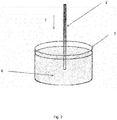
- the spatial or regional extension of the contact with the at least one reducing agent can be effected by varying the immersion depth of the polarizer, for example, into a fluid containing the at least one reducing agent.
- the polarizer can also be repeatedly immersed into the fluid with the at least one reducing agent wherein the immersion depth and/or duration is continuously or discontinuously increased or reduced so that different areas of the polarizer are contacted with the at least one reducing agent with an increasing or decreasing intensity, respectively.
- a stepped gradient of polarization can be created.
- a continuous gradient of polarization means that the gradient does not contain a discontinuous change of polarization.
- the gradient can be realized as a steep increase or a gentle increase.
- the gradient of the polarizer can be continuous from 0 % to 100 % polarization, preferably from 1% to 99 % polarization, further preferred from 5 % to 95 % polarization, further preferred from 10 % to 90 % polarization, still further preferred from 20 % to 85 % polarization, still further preferred from 25 % to 80 % polarization.
- 100 % polarization means that no polarizing agent is reduced
- 0 % polarization means that essentially all, preferably all, polarizing agent is reduced.
- the polarization is measured at the polarizer comprising the at least one polarization agent and the substrate.
- a stepped gradient of polarization means that the gradient contains a discontinuous change of polarization.
- a polarizer having a stepped gradient can mean that the polarizer has an area with no polarization and an area with polarization.
- a stepped gradient comprises three or more steps, preferably four or more steps, further preferred five or more steps with different levels of polarization.
- the gradient contains up to seven steps, preferably up to eight steps, further preferred up to nine steps, still further preferred up to ten steps with different levels of polarization.
- the polarizer may contain steps of polarization wherein the difference between adjoining steps amount to 20 %, 10 % or 5 % of polarization.
- the difference between adjoining steps amount to 10 % or 5 % of polarization.
- 100 % polarization means that no polarizing agent is reduced, and 0 % polarization means that essentially all, preferably all, polarizing agent is reduced.
- the polarization is measured with the polarizer comprising the at least one polarization agent and the substrate.
- the level of polarization can be measured with a polarimeter or ellipsometer known in the art.
- the intensity of action of the reducing agent on the polarizing agent can be increased or decreased, respectively. If the partial, preferably partially spatial, temporal or spatio-temporal, contact of the polarizer with the at least one reducing agent is increased, the amount of reduced polarizing agent(s) is increased. If the partial, preferably spatial, temporal or spatio-temporal, contact of the polarizer with the at least one reducing agent is decreased, the amount of reduced polarizing agent(s) is decreased.
- a stepped or continuous gradient of polarization in said polarizer can be specifically created.
- the at least one reducing agent preferably one reducing agent
- the at least one reducing agent is contained in a solvent or mixture of solvents.
- the solubility of the at least one reduced polarizing agent(s) may be increased compared to the respective solubility of the respective unreduced polarizing agent(s) in said solvent or solvent mixture.
- a stepped or continuous gradient of polarization in the polarizer is created by leaching the reduced polarizing agent(s) to a larger extent than the unreduced polarizing agent(s).
- the at least one reduced polarizing agent has less or no polarizing properties compared to an unreduced polarizing agent. That is to say, a stepped or continuous gradient of polarization can be produced in a similar way by contacting at least one polarizer at least partially, preferably partially spatially, temporally or spatio-temporally, with at least one reducing agent.
- the stepped or continuous gradient of polarization is produced by a respectively stepped or continuous gradient of bleached or colorless polarizing agent in said polarizer.
- the stepped or continuous gradient of polarization can also be produced by a combination of an increased leaching of the reduced polarizing agent as well as an increased bleaching.
- the method additionally comprises a step (c) of contacting said at least one polarizer obtained in step (b) with a solvent or solvent mixture and removing at least partially said at least one reduced polarizing agent from said at least one polarizer and providing a polarizer having a stepped or continuous gradient of polarization.
- the solvent can be water, an aqueous organic solvent or an organic solvent.
- the solvent is water having preferably a temperature in a range from 25°C to 75°C, further preferred from 40°C to 70°C, still further preferred from 50°C to 68°C, still further preferred from 60°C to 65°C, still further preferred from 61°C to 65°C.
- the organic solvent is preferably selected from the group consisting of methanol, ethanol, n-propanol, isopropanol, diethylether, di-n-propylether, diisopropylether toluene, chloroform, and mixtures thereof.
- other organic solvents can be used as well, provided that these solvents are capable to dissolve the reduced polarizing agent appropriately.
- the rate and extent of reducing or bleaching the polarizing agent(s), in particular dichroic dye(s), with the at least one reducing agent can be controlled by varying the type and concentration of the reducing agent(s), the temperature of the solvent, preferably water, and optionally of the pH.
- the reducing or bleaching can be effected at pH 7.
- a basic pH is selected, preferably in a range from pH 8 to 13, further preferred from pH 9 to 12, further preferred from pH 10 to 11.
- pH controlling agent sodium carbonate is particularly useful according to the invention.
- other basic compounds, such as NaOH or KOH may be used as well in order to control the pH.
- sodium dithionite is used as reducing agent and sodium carbonate as pH controlling agent.
- the rate and extent of leaching of the reduced polarizing agent(s), in particular the reduced dichroic dye(s), from the polarizer, preferably, polarizing film can be controlled by temperature of the solvent, preferably water, the pH of the solvent, as and/or by agitation of the solvent.
- the conditions of leaching are similar, preferably identical, to the conditions of bleaching.
- the rate of bleaching and/or leaching can be improved by adding additives such as surfactants, levelling additives, dye affinity additives, etc. to the solvent of bleaching step and/or leaching step.
- additives such as surfactants, levelling additives, dye affinity additives, etc.
- the leaching of the reduced polarizing agent(s), preferably reduced dichroic dye(s), can be effected before or after shaping the polarizer, particularly polarizing film, into a desired shape, for example, a curved shaped.
- the dissolving power of a solvent or solvent mixture used is larger for the reduced polarizing agent(s) compared to the unreduced polarizing agent(s).
- the dissolved amount of the reduced polarizing agent(s) is at least 1.5 times of the amount of the dissolved unreduced polarizing agent(s) in a solvent or solvent mixture.
- the dissolving power of the solvent regarding reduced polarizing agent(s) is at least 2.0 times, at least 2.5 times, at least 3.0 times, at least 3.5 times, at least 4.0 times, at least 4.5 times, at least 5.0 times, and most preferably at least 10.0 times of the dissolving power of said solvent or solvent mixture for the unreduced polarizing agent(s).
- the at least one polarizer is an element of area, preferably a polarizing film.
- the total thickness of the at least one polarizer, preferably polarizing film is preferably within a range of from 70 ⁇ m to 350 ⁇ m, preferably from 80 ⁇ m to 320 ⁇ m, further preferably from 85 ⁇ m to 300 ⁇ m and still further preferably from 90 ⁇ m to 290 ⁇ m.
- the at least polarizer, preferably polarizing film can be a monolayer or multilayer.
- the at least one polarizer can be laminated on one or both surfaces, i.e. upper and/or lower surface, of a transparent supporting layer.
- the at least one polarizer is preferably a multi-layer polarizing film.
- the polarizer preferably polarizing film, is a five-layer film having the following structure: "substrate containing a polarizing agent/adhesion layer/supporting layer/adhesion layer/ substrate containing a polarizing agent".
- the transparent supporting layer of the multi-layer polarizing element of area can provide additional mechanical stability to the polarizer.
- the increased mechanical stability is advantageous during the manufacture of the polarizing film, for example during handling, and for the further production of an optical lens, preferably a spectacle lens.
- the transparent supporting layer also improves significantly the dimensional stability regarding the bleaching and/or leaching using solvent and optionally also heat. Therefore, when leaching the at least one reduced polarizing agent, preferably reduced dichroic dye(s), with solvent, such as water having, e.g., a higher temperature, the polarizer laminated to said transparent supporting layer does not change its configuration or shape. For example, when the at least one polarizer laminated to said transparent supporting layer has a curved shape, the curved shape is maintained, also when contacting the polarizer with hot water for the leaching process.
- solvent such as water having, e.g., a higher temperature
- the transparent supporting layer can be laminated only on one surface or on both surfaces with a polarizer, preferably a polarizing film.
- the bleaching process i.e., the contacting of the polarizer with at least one reducing agent, can be effected under harsher conditions, e.g., in the presence of alkali compounds, without deforming the polarizer.
- the leaching process i.e., the contacting of the polarizer, comprising reduced polarizing agent(s), with solvent, can be effected under harsher conditions, such as under heat, movement, etc., without deforming the polarizer.
- the polarizer preferably polarizing film
- the supporting layer is arranged centrally wherein one polarizing film is applied on both surfaces of the supporting layer: "polarizing film/supporting layer/polarizing film”.
- the polarizer is or comprises a symmetrical multilayer structure having three layers.
- the polarizer preferably polarizing film
- the polarizer preferably polarizing film
- the supporting layer is arranged centrally wherein an adhesion layer is applied on each of the two surfaces of the supporting layer.
- a polarizing film is in turn arranged on each adhesion layer resulting in a five layer structure: "polarizing film/adhesion layer/supporting layer/adhesion layer/polarizing film”.
- a symmetrical multilayer structure has a superior dimensional stability during the bleaching and/or leaching step.
- the transparent supporting layer is selected from a transparent polymer, preferably from cellulose based polymers such as diacetylcellulose, triacetylcellulose (TAC) or cellulose acetate butyrate (CAB).
- cellulose based polymers such as diacetylcellulose, triacetylcellulose (TAC) or cellulose acetate butyrate (CAB).
- said transparent supporting layer comprises at least one transparent polymer selected from the group consisting of cellulose-based polymers, polycarbonate (PC) based polymers, polyester based polymers, acrylate-based polymers, methacrylate-based polymers, polythiourethane based polymers, vinyl-based polymers, styrene-based polymers, olefin-based polymers, amide-based polymers, polyether imide-based polymers, polysulfone-based polymers, polyether sulfone-based polymers, polyether ether ketone-based polymers, polyphenylene sulfide based polymers, polyoxymethylene-based polymers, epoxy-based polymers, combinations and mixtures thereof.
- transparent polymer selected from the group consisting of cellulose-based polymers, polycarbonate (PC) based polymers, polyester based polymers, acrylate-based polymers, methacrylate-based polymers, polythiourethane based polymers, vinyl-based polymers, s
- the transparent polymer may also be selected from the group consisting of polycarbonate (PC) based polymers; polyester based polymers such as polyethylene terephthalate (PET), polyethylene terephthalate glycol (PETG) and polyethylene naphthalate; dimethyl terephthalate (DMT); acrylate based polymers such as polymethacrylate (PMA), polyethylacrylate; methacrylate polymers such as polymethyl methacrylate (PMMA), polyethyl methylacrylate; thermoplastic urethane polymers (TPU); polythiourethane based polymers; vinyl based polymers such polyvinyl chloride, polyvinyl alcohol, polyvinylidene chloride, polyvinyl butyral; styrene based polymers such as polystyrene, styrene methylmethacrylate copolymers (SMMA), styrene maleic anhydride polymers (SMA), acrylonitrile-sty
- the at least one transparent supporting layer is selected from the group consisting of triacetyl cellulose (TAC), polycarbonate (PC), cellulose acetate butyrate (CAB), polymethyl methacrylate (PMMA), polyethylene terephthalate (PET) and combinations and mixtures thereof.
- TAC triacetyl cellulose
- PC polycarbonate
- CAB cellulose acetate butyrate
- PMMA polymethyl methacrylate
- PET polyethylene terephthalate
- the at least one transparent support layer is selected from the group consisting of TAC, PET, PC, and combinations and mixtures thereof.
- the transparent supporting layer is TAC.
- TAC has been shown to provide extraordinary dimensional stability to the at least one polarizer.
- the polarizer preferably polarizing film
- PVA polyvinyl alcohol
- stretched PVA layers comprise(s) stepped or continuous, preferably a continuous gradient of polarization, using preferably dichroic dye(s) as polarizing agent(s).
- the polarizer preferably polarizing film
- PVA polyvinyl alcohol
- stretched PVA layers comprise(s) stepped or continuous, preferably a continuous gradient of polarization, using preferably dichroic dye(s) as polarizing agent(s).
- the polarizer preferably polarizing film
- PVA-adhesive"-layer is an adhesion layer of PVA adhering the polarizing outermost PVA-layers and the supporting layer to each other.
- the polymers usable as transparent supporting layer have high optical clarity and bond well with polyvinyl alcohol-type polarizing layers.
- the at least one polarizer preferably polarizing film
- the at least one polarizing agent is selected from the group consisting of dichroic dye(s), iodine and combinations thereof.
- the dichroic dye(s) is/are at least one azo dye.
- Non-limiting examples include: C.I. Direct Blue 67, C.I. Direct Blue 90, C.I. Direct Blue 200, C.I. Direct Green 59, C.I. Direct Violet 48, C.I. Direct Red 39, C.I. Direct Red 81, C.I. Direct Red 83, C.I. Direct Red 89, C.I. Direct Orange 39, C.I. Direct Orange 72, C.I. Direct Yellow 34, C.I. Direct Green 26, C.I. Direct Green 27, C.I. Direct Green 28, C.I. Direct Green 51, C.I. Direct Black 170, and combinations and mixtures thereof.
- C.I. Direct Yellow 28, C.I. Direct Yellow 44, C.I. Direct Orange 26, C.I. Direct Orange 39, C.I. Direct Orange 107, C.I. Direct Red 20, C.I. Direct Red 31, C.I. Direct Red 79, C.I. Direct Red 81, C.I. Direct Red 247, C.I. Direct Green 80, C.I. Direct Green 59, and combinations and mixtures thereof, can be used.
- the aforementioned dye stuffs can be used as free acids, or alkali metal salts, for example, Na-salts, K-salts, Li-Salts, ammonium salts and salts of amines, and combinations thereof.
- said dichroic dye(s) is/are rendered substantially colorless, preferably colorless, when reducing said dichroic dye(s) with said at least one reducing agent in step (b) of the method of the invention.
- the reducing agent is selected from the group consisting of dithionite containing agents, e.g., salts of dithionite such as sodium dithionite, potassium dithionite, zinc dithionite; sulfinic acid derivatives such as formamidine sulfinic acid; salts of sulfinic acids such as sodium salts of sulfinic acid, potassium salts of sulfinic acid; salts of hydroxymethane sulfinate such as sodium hydroxymethane sulfinate, potassium hydroxymethane sulfinate; calcium hydroxymethane sulfinate, zinc hydroxymethane sulfinate; sulfonic acid derivatives, e.g., amino(imino)methanesulfonic acid, salts of sulfonic acid such as sodium salt of sulfonic acid; salts of hydrogen sulfite, such as sodium bisulfite, potassium bisulfite; and mixtures
- dithionite containing agents e.g., salts of dithionite such as sodium dithionite, potassium dithionite, zinc dithionite are used as reducing agent.
- dithionite containing agents e.g., salts of dithionite such as sodium dithionite, potassium dithionite, zinc dithionite are used as reducing agent.
- sodium dithionite is used as reducing agent.
- the aforementioned reducing agents are effective to reduce the polarizing agent, in particular the preferred dichroic dye(s), more preferably dichroic dye(s) comprising preferably at least one azo dye.
- the substrate of the polarizer preferably a polarizing film, consists of or comprises at least one polymer of the group consisting of polyvinyl alcohol or a derivative thereof, a polyene type obtained by dehydrochlorinating of a polyvinyl chloride or by dehydrating of polyvinyl alcohol to produce polyene, and mixtures and combinations thereof.
- the substrate of the polarizer is a stretched film, preferably a stretched PVA film.
- a polarizing film suitable for the present invention can be produced as follow.
- the substrate of polarizing film such as a stretched and oriented film of polyvinyl alcohol or a derivative thereof or a polyene type film obtained by dehydrochlorinating a polyvinyl chloride film or dehydrating a polyvinyl alcohol film to produce polyene, followed by orientation, is dyed or incorporated with iodine and/or a dichroic dye as a polarizing agent, thereby obtaining a polarizing film.
- Iodine-type polarizing films have a superior initial polarizing performance, but are weak against water and heat, and have a problem in endurance in case they are used for a long period of time in the state of high temperature and high humidity.
- the films can be treated with formalin or an aqueous solution containing boric acid or to additionally use a polymeric film of low moisture permeability as a protective film.
- the dye-type polarizing films which use dichromatic dye(s) as polarizing agent are better in moisture resistance and heat resistance compared to iodine-type polarizing films.
- dye-type polarizing films using dichromatic dye(s) as polarizing agent(s) are preferred as polarizers.
- a polarizer preferably a polarizing film having a stepped or continuous gradient of polarization obtained or obtainable according to the method of any one of claims 1 to 11 can be used in a method for producing an optical lens, preferably a spectacle lens, comprising the step of arranging a polarizer, preferably a polarizing film, having a stepped or continuous gradient of polarization, on or in an optical lens or optical lens body, preferably a spectacle lens, still further preferably a high refractive index spectacle lens.
- the optical lens according to the invention is preferably a polarizing spectacle lens having a continuous or stepped gradient of polarization.
- a high refractive index is preferably a refractive index of n>1.515, particularly preferably of n>1.520 and still particularly preferably of n>1.533.
- a high refractive index, polarized spectacle lens may have vision correction properties or not.
- the polarizer preferably a polarizing film, having a stepped or continuous gradient of polarization may be applied to one surface or both surfaces of an optical lens, preferably a spectacle lens.
- an adhesion layer is arranged between the optical lens body and the polarizer, preferably polarizing film.
- the adhesion layer preferably comprise a polyvinyl alcohol-type layer selected from the group consisting of polyvinyl alcohol (PVA), polyvinyl formal (PVF), polyvinyl acetate (PVAc), a saponified (ethylene/vinyl acetate) copolymer, and mixtures thereof.
- PVA polyvinyl alcohol
- PVF polyvinyl formal
- PVc polyvinyl acetate
- saponified (ethylene/vinyl acetate) copolymer and mixtures thereof.
- the adhesion layer is preferably a layer of PVA, which may have polarizing properties.
- An adhesion layer may either be a polarizing adhesion layer or a non-polarizing adhesion layer.
- the adhesion layer is a non-polarizing adhesion layer.
- a polyurethane adhesive such as thermal or UV curable glue, a hot melt adhesive (HMA), or a pressure sensitive adhesive (PAS) may be used as non-polarizing adhesion layer.
- HMA hot melt adhesive
- PAS pressure sensitive adhesive
- the adhesion layer may be UV-curable, heat curable or UV- and heat curable.
- the aforementioned adhesion layer(s) can be used to adhere the polarizer, preferably polarizing film, to the optical lens body, preferably of a spectacle lens.
- This/these adhesion layer(s) can also be used to adhere the polarizer(s), e.g., polarizing film(s) to a supporting layer within a multilayer polarizing film.
- adhesion layers may be of different chemical composition, e.g., a PVA layer and a PVAc layer. It is also possible to make use of a polarizing adhesion layer, which may also contain dichroic dye(s), and a non-polarizing adhesion layer within a multilayer polarizing film.
- the material of the optical lens body is preferably selected from the group consisting of polyurethanes, such as urethane and thiourethane polymers and copolymers, episulfides, halogen substituted derivatives of bisphenol-A, and aromatic (meth)acrylic copolymers.
- the optical lens body is made from a high refractive index material such as polyurethane, preferably a urethane or thiourethane polymer or copolymer.
- the method for producing an optical lens can comprise the step of injection molding of a liquid monomer into a lens casting assembly or lens mold, e.g., of an injecting molding machine.
- the polarizer preferably a polarizing film, having a stepped or continuous gradient of polarization can be arranged in that casting assembly or lens mold which is to be filled with the monomer to form the optical lens, preferably high refractive index optical lens.
- the optical lens of the invention can be produced by back injection molding. That is to say the polarizer, preferably a polarizing film, having a stepped or continuous gradient of polarization is arranged in a mold for an optical lens and the liquid monomer of the optical lens body is back injected in an injection molding machine.
- the polarizer, preferably polarizing film can be arranged in one half or in each of the two halves of the mold and in contact with the surface of each mold, respectively, and then the liquid monomer of the lens body is injected.
- the polarizer preferably polarizing film
- the polarizer is arranged within the mold so that the monomer injected into the mold by an injection molding process flows around the polarizing film, covering both sides of the polarizing film to completely fill the mold.
- the polarizer preferably a polarizing film, having a stepped or continuous gradient of polarization is arranged within the optical lens, i.e. not on one or both surface(s) of the optical lens body.
- the polarizer preferably polarizing film, having a stepped or continuous gradient of polarization can be arranged in a shaped form, for example a curved shape in the mold of the optical lens body.
- the polarizing film can be arranged in a curved shape within an optical lens body.
- the curved shape of the polarizer, preferably polarizing film can be harmonized with the curvature of the optical lens.
- a particular advantage of the present invention is that the method for producing a polarizer, preferably a polarizing film, having a stepped or continuous gradient of polarization, can be effected on a flat polarizer as well as on a curved polarizer.
- the polarizer preferably the polarizing film
- the polarizer is first shaped into the desired curve before contacting the curved polarizer, preferably curved polarizing film, at least partially with at least one reducing agent, i.e. before the bleaching step and/or leaching step.
- the shaping of the polarizer is carried out after the stepped or continuous gradient of polarization has been created, a distortion of the gradient may happen. Therefore, if the polarizer, preferably polarizing film, is to be used in a curved shape it is preferred to first shape the polarizer, preferably polarizing film, into the desired curvature and then to carry out the method of the invention, i.e. contacting the curved polarizer with at least one reducing agent, in order to avoid any distortion of the gradient.
- the inventive method can likewise be carried out by contacting the polarizer, arranged on one or both surfaces of the lens body, at least partially with at least one reducing agent as described above.
- the method as described above for creating a continuous or stepped gradient can be carried out respectively on a polarizer, preferably polarizing film, already arranged or attached to the surface of an optical lens body, particularly spectacle lens body.
- the polarizer preferably polarizing film
- the polarizer, preferably polarizing film can be arranged on one or both surfaces of an optical lens body.
- the polarizer, preferably polarizing film can also be arranged within an optical lens body, preferably in a curved shape which may harmonize with the curvature of the optical lens. It is of course possible to arrange a polarizer, preferably polarizing film, having a stepped or continuous gradient of polarization on one surface of the lens body and additionally to arrange a polarizer, preferably a polarizing film, having a stepped or continuous gradient of polarization, within said optical lens body.
- the polarizer preferably a polarizing film, having a stepped or continuous gradient of polarization is arranged on both surfaces of an optical lens body, wherein additionally a third polarizer, preferably polarizing film, having a stepped or continuous gradient of polarization is arranged with said optical lens body.
- the optical lens of the invention is preferably a spectacle lens. According to another embodiment of the invention, the optical lens is not a contact lens.
- the optical lens, preferably spectacle lens, preferably polarizing spectacle lens, of the invention is further characterized in that the polarizer comprises at least one polarizing agent in or on a substrate of said polarizer, wherein the at least one polarizing agent is present both as a reduced polarizing agent, preferably reduced dichroic dye(s), and as unreduced polarizing agent, preferably unreduced dichroic dye(s), in or on said substrate.
- the at least reduced polarizing agent, preferably dichroic dye(s), may only be present in a range of about 10 wt.-% to 0.01 wt.-%, such as 6 wt.-% to 0.05 wt.-%, or 4 wt.-% to 0.1 wt.-%, or 2 wt.-% to 0.5 wt.-%, based on the total weight of unreduced and reduced polarizing agent present in the polarizer, preferably polarizing film.
- the at least one reduced polarizing agent, preferably dichroic dye(s) may be still present due to incomplete removal, for example, when contacting the polarizer during or after the step of reducing of the at least one polarizing agent with a solvent.
- the at least one polarizing agent preferably dichroic dye(s) has less or no polarizing properties after chemical reduction, and is preferably colorless
- the colorless reduced polarizing agent, preferably reduced dichroic dye(s) may be present in a significant amount in the optical lens of the invention.
- the optical lens of the present invention is characterized by the method of producing the same.
- the invention is also directed to an optical lens, preferably a spectacle lens, obtainable or obtained by a method according to claim 12.
- the invention is also directed to a spectacle, preferably a polarized spectacle, comprising an optical lens according to any one of claims 13 to 15.
- the spectacle, preferably polarized spectacle, is preferably sunglasses.
- a PVA/TAC/PVA film was produced by laminating a stretched PVA layer (Triapex Co., Ltd, South Korea) having a thickness of 30 ⁇ m on a TAC-layer (Triapex Co., Ltd, South Korea) having a thickness of 240 ⁇ m each via an UV-curable adhesive layer (Triapex Co., Ltd, South Korea) having a thickness of 5 ⁇ m.
- the resulting five layer film had a total thickness of 310 ⁇ m.
- Each PVA layer was homogeneously dyed with the dichroic dye Direct Black 170 (Aakash Chemicals, USA) by immersing the PVA films completely into a dyeing solution.
- a polarizing five layer film obtained in Example 1 was cut into a sample of an octagonal shape having a maximum diameter of 110 mm, and then treated at a temperature of 63°C with a bleaching/leaching solution containing in 6l water 4g Na 2 S 2 O 4 at pH 9. The pH 9 was adjusted by adding KOH.
- the polarizing film was immersed with an increasing immersion depth of 600 mm/min into the bleaching/leaching solution. After 15 min the sample was completely withdrawn from the bleaching/leaching solution, washed with water and dried at a temperature of 20°C.
- the gradient of polarization was measured using a spectrophotometer (PerkinElmer, Inc., USA).
- the lightest point (bottom) showed a polarization of 47.14%, the center of 97.20%, and the top point a polarization of 98.48 % polarization.
- Fig. 3 shows the result (labelled with "test 5 15 min").
- a polarizing five layer film obtained in Example 1 was cut into a sample of an octagonal shape having a maximum diameter of 110 mm, and then treated at a temperature of 65°C with a bleaching/leaching solution containing in 6l water 5g amino(imino)methanesulfonic acid (Reduxin 796, Daykem s.r.l., Italy), 0.5 g levelling agent (Novalene 110, Daykem s.r.l., Italy), at pH 10.3.
- the pH 10.3 was adjusted by adding 25 g Na 2 CO 3 .
- the polarizing film was immersed with an increasing immersion depth of 10 mm/min into the bleaching/leaching solution. After 15 min the sample was completely withdrawn from the bleaching/leaching solution, washed with water and dried at a temperature of 20°C.
- the gradient of polarization was measured using a spectrophotometer (PerkinElmer, Inc., USA).
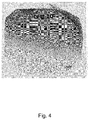
- the lightest point (bottom) showed a polarization of 15.27 %, the center of 86.97%, and the top point a polarization of 97.12 % polarization.
- Fig. 4 shows the result (labelled with "test 10").
Landscapes
- Physics & Mathematics (AREA)
- General Physics & Mathematics (AREA)
- Optics & Photonics (AREA)
- Health & Medical Sciences (AREA)
- Ophthalmology & Optometry (AREA)
- General Health & Medical Sciences (AREA)
- Engineering & Computer Science (AREA)
- Manufacturing & Machinery (AREA)
- Mechanical Engineering (AREA)
- Polarising Elements (AREA)
Abstract
A method for producing a polarizer (2) having a stepped or continuous gradient of polarization, said method comprising the following steps: (a) providing at least one polarizer (2) comprising a substrate and at least one polarizing agent, and (b) contacting said at least one polarizer (2) at least partially with at least one reducing agent (6), said at least one reducing agent (6) being reactive with said at least one polarizing agent to provide at least one reduced polarizing agent. A method for producing an optical lens (1), and to an optical lens (1).
Description
- The present invention relates to an optical lens, preferably a spectacle lens, comprising at least one polarizer having a stepped or continuous gradient of polarization and to a method for producing a polarizer having a stepped or continuous gradient of polarization as well as to a method for producing an optical lens comprising at least one polarizer having a stepped or continuous gradient of polarization.
- A polarizer is an optical filter that lets light waves of a specific polarization pass and blocks light waves of other polarizations. A polarizer can convert a beam of light of undefined or mixed polarization into a beam of well-defined polarization that is polarized light. The common types of polarizers are linear polarizers and circular polarizers. Polarizers are used in many optical techniques and instruments, and polarizing filters find applications in photography, liquid crystal display technology, optical lenses, such as spectacle lenses as, for example, sunglass lenses.
- Polarizers are often used with spectacles such as sunglasses in order to reduce glare which is induced, for example, by reflections of light of horizontal surfaces such as car windscreen, sand, water, snow, asphalt roads, etc., which reduces visibility. In cars, airplanes, etc., polarized displays are often used. Consequently, the light emitted from polarized displays is also filtered out by a polarizer arranged on a spectacle. In order to solve this problem, spectacles are provided having a gradient of polarization, wherein the upper part of the spectacle has polarizing properties and the lower part of the spectacle does not have polarizing properties. Thus, a wearer can look into the distance through the upper part of the spectacle comprising a polarizer and at close range, for example, to the polarized display, through the lower part of the spectacle having no or reduced polarizing properties.
- Linear polarizers can be divided in two general categories namely absorptive polarizers where the unwanted polarization states are absorbed by a device and beam-splitting polarizers where the unpolarized beam is split into two beams with opposite polarization states.
- A well known absorptive polarizer is the so called "polaroid" invented in 1938 by Edwin H. Land and which is a polyvinyl alcohol (PVA) polymer impregnated with iodine. During manufacture, the PVA polymer chains are stretched such that they form an array of aligned, linear molecules in the material. The iodine dopant attaches to the PVA molecules and makes them conducting along the length of the chains. Light polarized parallel to the chains is absorbed, and light polarized perpendicular to the chains is transmitted. This PVA polymer impregnated with iodine is also called H-sheet polarizer. Another type of polaroid is the K-sheet polarizer, which consists of aligned polyvinylene chains.
-
US 4,181,756 is directed to a process for increasing display brightness of liquid crystal displays on an alpha-numeric display by bleaching sections of a planar polarizer using screen-printing techniques. According to this method selected areas of the planar polarizer are screen-printed with a gel containing a substance which will bleach the polarizer dye. The gel contains an alkali-bleaching agent and must have a consistency making it silk-screenable to form an accurate pattern with clearly-defined edges. This method is used for bleaching a polarizer in place on an alpha-numeric display such that polarizing areas remain only over the transparent electrically-conductive portions of the display and are accurately registered therewith. - The method according to
US 4,181,756 does not allow to provide a polarizer having a stepped or continuous gradient of polarization. Moreover, this method does not allow treating polarizers which are not planar and have, e.g., a curved shape. -
US 2016/0299272 A1 is directed to a method for producing a polyvinyl alcohol-based polarizer dyed with at least one of iodine and dichroic dye. The polyvinyl-alcohol based film is crosslinked with a crosslinking agent being boric acid. The dyed and crosslinked polyvinyl alcohol-based polarizer is contacted with a bleaching solution containing a strong basic compound. Upon contact of the strong basic compound with the polarizing film, the crosslinking bond of the boric acid and polyvinyl alcohol is destroyed so that the iodine or dye is released. The method according toUS 2016/0299272 A1 does not allow to provide a polarizer having a stepped or continuous gradient of polarization. Moreover, the harsh conditions to be applied in the alkali-based bleaching process impair the dimensional stability of the polarizer which may lead to a distortion of the polarizer. -
US 2016/0299271 A1 discloses a method for manufacturing a polarizing element which includes locally bleached areas. This method comprises the formation of a mask layer including at least one punched area on one surface of the polarizing element. The polarizing element is subsequently partially bleached by immersing the partially masked element into a bleaching solution. The method according toUS 2016/0299271 A1 does not allow to provide a polarizer having a stepped or continuous gradient of polarization. -
US 5,925,289 is directed to a method for making a synthetic dichroic light polarizer wherein a light polarizing sheet is irradiated with linearly polarized ultraviolet light at an intensity and duration sufficient to effect bleaching of the light-polarizing sheet. Depending on the nature of the base polarizer material being treated, the bleaching can take from several minutes to several hours when employing the commonly used UV-irradiation sources. In order to improve the rate of bleaching, usually rate accelerating additives such as photosensitizers and photooxidizers are to be included into the polarizer material. The process ofUS 5,925,289 is complex. -
US 2008/0094549 A1 discloses a dye-type polarizing film or polarizing plate containing an azo compound or a salt thereof in a substrate of the polarizing film.US 2008/0094549 A1 does not disclose a process for bleaching of polarizing agents. -
US 2007/0052918 A1 discloses a pair of sunglasses having a polarized upper portion and a non-polarized lower portion. -
US 2015/0116658 A1 discloses a method for fabricating sunglasses wherein the front portion of polarized lenses are overlain with an optical retarder to depolarize impinging polarized light. The use of an additional retarder is cumbersome. -
US 2015/0253465 A1 discloses a method for providing sunglass lenses with a predetermined optical gradient wherein an oriented sheet is printed with dichroic dyes or iodine dyes in which the density of the deposited dye varies in a predetermined manner using ink jet printing. This method is technically complex. -
US 2015/0261011 A1 discloses a method and apparatus for preparing a gradient polarization sheet, wherein a web of molecular oriented material is conducted into a bath of dye that has dye molecules that associate with the molecularly oriented molecules in the web. The web is progressively immersed in the dye bath so that a transverse dye gradient is produced in the web that is a function of the residence time of the various portions of the web in the dye bath. This method is limited regarding the use of dye molecules which are to associate with the web material. -
EP 3 072 672 A1EP 3 072 672 A1 - It is an object of the present invention to provide a method for producing a polarizer having a stepped or continuous gradient of polarization.
- It is another object of the present invention to provide a method for producing an optical lens, preferably a polarized spectacle lens, wherein the optical lens comprises a polarizer having a stepped or continuous gradient of polarization.
- Moreover, it is an object of the present invention to provide an optical lens, preferably a spectacle lens, comprising at least one polarizer having a stepped or continuous gradient of polarization.
- The object underlying the present invention is solved by providing a method for producing a polarizer having a stepped or continuous gradient of polarization, said method comprising the following steps:
- (a) providing at least one polarizer comprising a substrate and at least one polarizing agent,
- (b) contacting said at least one polarizer at least partially with at least one reducing agent, said at least one reducing agent being reactive with said at least one polarizing agent to provide at least one reduced polarizing agent.
- Prior to contacting the polarizer at least partially with said at least one reducing agent, the polarizing agent is preferably uniformly distributed in and/or on said substrate, i.e., the at least one polarizing agent is preferably uniformly distributed in said polarizer.
- The continuous or stepped gradient of polarization is created by the at least partial contact of the polarizer, in particular of the polarizing agent, with the at least one reducing agent. Due to the partial contact with the polarizer comprising at least one reducing agent, the polarizing agent is partially reduced, leading to a continuous or stepped gradient of polarization. The step of reducing the polarizing agent can also be designated as bleaching or bleaching step.
- Preferably, said at least one reduced polarizer is removed to a large extent, still preferably substantially, from said polarizer. The removal of the reduced polarizing agent(s) from said polarizer can be effected simultaneously during the action of the at least one reducing agent on the polarizing agent(s) in step (b). The step of removing the reduced polarizing agent can also be designated as leaching or leaching step.
- Of course, the step of reducing partially the polarizing agent(s) and the step of removing the reduced polarizing agent(s) from the polarizer can also be effected subsequently, e.g., in separate steps. According to a preferred embodiment of the method of the invention, the chemical reduction of part of the polarizing agent(s) and the removal of the reduced polarized agent(s) from the polarizer are effected in a combined step or single step.
- According to a particular preferred embodiment the gradient of polarization is a continuous gradient of polarization.
- According to another preferred embodiment, the gradient of polarization can also be a stepped gradient of polarization.
- According to another preferred embodiment, the polarization is a linear polarization.
- Preferred embodiments of the method are recited in
dependent claims 2 through 11. - The object of the present invention is also solved by providing a method for producing an optical lens, preferably a spectacle lens, further preferably a polarized spectacle lens, wherein a polarizer having a stepped or continuous gradient of polarization obtained according to the method of any one of
claims 1 to 11 is arranged on or in an optical lens body, preferably a spectacle lens body. - The object of the present invention is also solved by providing an optical lens, preferably a spectacle lens, further preferably a polarized spectacle lens, comprising at least one polarizer having a stepped or continuous gradient of polarization, wherein said polarizer comprises at least one polarizing agent in or on a substrate wherein said at least one polarizing agent is present both as reduced polarizing agent and as unreduced polarizing agent in or on said substrate.
- Preferred embodiments of the optical lens are recited in
dependent claims 14 and 15. - The object of the invention is also solved by provision of a spectacle, preferably a polarized spectacle, e.g. sunglasses, comprising an optical lens according to any one of claims 13 to 15.
- According to the method of the invention a polarizer comprising a substrate and at least one polarizing agent is contacted at least partially with a reducing agent. This at least one reducing agent is reactive with the at least one polarizing agent located in and/or on the substrate. The reducing agent leads to a chemical reduction of the at least one polarizing agent resulting in at least one reduced polarizing agent.
- By "reduced polarizing agent" it is meant according to the invention that the polarizing agent is chemically reduced by a chemical reducing agent.
- The chemical reduction of the at least one polarizing agent alters properties of the at least one polarizing agent.
- According to another embodiment of the method of the present invention, said method further comprises in step (b) that
- (i) said at least one reduced polarizing agent has a higher solubility in a solvent compared to an unreduced polarizing agent in said solvent, and/or
- (ii) said at least one reduced polarizing agent has less or no polarizing properties compared to an unreduced polarizing agent.
- According to this preferred embodiment of the invention the at least one reduced polarizing agent has a higher solubility in a solvent compared to an unreduced polarizing agent in said solvent.
- The term "solvent" as used in the present inventions means a single solvent or a plurality of solvents such as a solvent mixture, unless otherwise stated. The term solvent also means organic solvent(s), water, or aqueous solvent(s), i.e. a mixture of water and organic solvent or a mixture of water and a plurality of organic solvents.
- According to a preferred embodiment, said solvent is water having preferably a temperature in range from 25°C to 75°C, further preferred from 40°C to 70°C, still further preferred from 50°C to 68°C, still further preferred from 60°C to 65°C, still further preferred from 61°C to 64°C.
- It turned out surprisingly that the reduced polarizing agent, preferably reduced dichroic dye(s), have an increased solubility compared to the unreduced polarizing agent, wherein said increased solubility can be used to efficiently remove the reduced polarizing agent, preferably reduced dichroic dye(s), from the polarizer. The method of the present invention allows selectively removing reduced polarizing agent(s) from parts of a polarizer and, thus, to create a stepped or continuous gradient of polarization which can also be designated as graded polarization.
- According to another embodiment of the invention the at least one reduced polarizing agent has less or no polarizing properties compared to an unreduced polarizing agent. If as polarizing agent a dichroic dye is used, the reduced dichroic dye can be a colorless, e.g., a leuco form.
- According to another embodiment of the invention the at least one reduced polarizing agent, such as reduced dichroic dye(s), has a higher solubility in a solvent compared to an unreduced polarizing agent in said solvent and additionally the at least one reduced polarizing agent, such as reduced dichroic dye(s), has less or no polarizing properties compared to an unreduced polarizing agent, such as unreduced dichroic dye(s). More preferably, the reduced polarizing agent, such as reduced dichroic dye(s), is colorless.
- According to a preferred embodiment of the invention, the at least partially contacting of the at least one polarizer with the at least one reducing agent means preferably an at least partially spatial, temporal or spatio-temporal contact.
- By contacting the at least one polarizer at least partially, preferably at least partially spatially, temporally or spatio-temporally, with at least one reducing agent is meant that the area or surface of the at least one polarizer is not contacted or treated uniformly with the at least one reducing agent but regionally differently and/or regionally with a different intensity.
- The spatial or regional extension of the contact with the at least one reducing agent can be effected by varying the immersion depth of the polarizer, for example, into a fluid containing the at least one reducing agent. The polarizer can also be repeatedly immersed into the fluid with the at least one reducing agent wherein the immersion depth and/or duration is continuously or discontinuously increased or reduced so that different areas of the polarizer are contacted with the at least one reducing agent with an increasing or decreasing intensity, respectively.
- When continuously varying the immersion depth and/or duration, a continuous gradient of polarization can be created.
- When discontinuously varying the immersion depth and/or duration, a stepped gradient of polarization can be created.
- A continuous gradient of polarization means that the gradient does not contain a discontinuous change of polarization. The gradient, however, can be realized as a steep increase or a gentle increase. The gradient of the polarizer can be continuous from 0 % to 100 % polarization, preferably from 1% to 99 % polarization, further preferred from 5 % to 95 % polarization, further preferred from 10 % to 90 % polarization, still further preferred from 20 % to 85 % polarization, still further preferred from 25 % to 80 % polarization. In this context 100 % polarization means that no polarizing agent is reduced, and 0 % polarization means that essentially all, preferably all, polarizing agent is reduced. The polarization is measured at the polarizer comprising the at least one polarization agent and the substrate.
- A stepped gradient of polarization means that the gradient contains a discontinuous change of polarization. A polarizer having a stepped gradient can mean that the polarizer has an area with no polarization and an area with polarization. According to a preferred embodiment of the invention a stepped gradient comprises three or more steps, preferably four or more steps, further preferred five or more steps with different levels of polarization. According to another embodiment of the invention the gradient contains up to seven steps, preferably up to eight steps, further preferred up to nine steps, still further preferred up to ten steps with different levels of polarization. For example, the polarizer may contain steps of polarization wherein the difference between adjoining steps amount to 20 %, 10 % or 5 % of polarization. According to a preferred embodiment the difference between adjoining steps amount to 10 % or 5 % of polarization. In this context 100 % polarization means that no polarizing agent is reduced, and 0 % polarization means that essentially all, preferably all, polarizing agent is reduced. The polarization is measured with the polarizer comprising the at least one polarization agent and the substrate.
- The level of polarization can be measured with a polarimeter or ellipsometer known in the art.
- By varying the immersion depth and/or immersion duration of the polarizer, e.g., into a fluid containing the at least one reducing agent, the intensity of action of the reducing agent on the polarizing agent can be increased or decreased, respectively. If the partial, preferably partially spatial, temporal or spatio-temporal, contact of the polarizer with the at least one reducing agent is increased, the amount of reduced polarizing agent(s) is increased. If the partial, preferably spatial, temporal or spatio-temporal, contact of the polarizer with the at least one reducing agent is decreased, the amount of reduced polarizing agent(s) is decreased.
- It is of course possible to combine area(s) having a continuous polarization with area(s) having a stepped polarization within a polarizer.
- That is to say, by varying the partial, preferably partially spatial, temporal or spatio-temporal, contact of the at least one polarizer with the at least one reducing agent, a stepped or continuous gradient of polarization in said polarizer can be specifically created.
- Preferably the at least one reducing agent, preferably one reducing agent, is contained in a solvent or mixture of solvents. By chemically reducing the at least one polarizing agent of the polarizer, comprising a substrate and at least one polarizing agent, the solubility of the at least one reduced polarizing agent(s) may be increased compared to the respective solubility of the respective unreduced polarizing agent(s) in said solvent or solvent mixture.
- By contacting said polarizer comprising unreduced polarizing agent(s) and reduced polarizing agent(s) with a solvent or solvent mixture, preferably water having preferably an increased temperature in a range between 25° and 75°C, once or repeatedly, a stepped or continuous gradient of polarization in the polarizer is created by leaching the reduced polarizing agent(s) to a larger extent than the unreduced polarizing agent(s).
- According to another embodiment of the invention, the at least one reduced polarizing agent has less or no polarizing properties compared to an unreduced polarizing agent. That is to say, a stepped or continuous gradient of polarization can be produced in a similar way by contacting at least one polarizer at least partially, preferably partially spatially, temporally or spatio-temporally, with at least one reducing agent. In this embodiment of the invention the stepped or continuous gradient of polarization is produced by a respectively stepped or continuous gradient of bleached or colorless polarizing agent in said polarizer.
- The stepped or continuous gradient of polarization can also be produced by a combination of an increased leaching of the reduced polarizing agent as well as an increased bleaching.
- According to another embodiment of the invention the method additionally comprises a step (c) of contacting said at least one polarizer obtained in step (b) with a solvent or solvent mixture and removing at least partially said at least one reduced polarizing agent from said at least one polarizer and providing a polarizer having a stepped or continuous gradient of polarization.
- The solvent can be water, an aqueous organic solvent or an organic solvent.
- According to a preferred embodiment the solvent is water having preferably a temperature in a range from 25°C to 75°C, further preferred from 40°C to 70°C, still further preferred from 50°C to 68°C, still further preferred from 60°C to 65°C, still further preferred from 61°C to 65°C.
- The organic solvent is preferably selected from the group consisting of methanol, ethanol, n-propanol, isopropanol, diethylether, di-n-propylether, diisopropylether toluene, chloroform, and mixtures thereof. Of course, other organic solvents can be used as well, provided that these solvents are capable to dissolve the reduced polarizing agent appropriately.
- The rate and extent of reducing or bleaching the polarizing agent(s), in particular dichroic dye(s), with the at least one reducing agent can be controlled by varying the type and concentration of the reducing agent(s), the temperature of the solvent, preferably water, and optionally of the pH. The reducing or bleaching can be effected at
pH 7. However, during the chemical reduction, preferably, a basic pH is selected, preferably in a range from pH 8 to 13, further preferred from pH 9 to 12, further preferred frompH 10 to 11. As pH controlling agent sodium carbonate is particularly useful according to the invention. Of course, other basic compounds, such as NaOH or KOH, may be used as well in order to control the pH. - According to a preferred embodiment of the invention sodium dithionite is used as reducing agent and sodium carbonate as pH controlling agent.
- The rate and extent of leaching of the reduced polarizing agent(s), in particular the reduced dichroic dye(s), from the polarizer, preferably, polarizing film, can be controlled by temperature of the solvent, preferably water, the pH of the solvent, as and/or by agitation of the solvent. According to a preferred embodiment of the invention, the conditions of leaching are similar, preferably identical, to the conditions of bleaching.
- The rate of bleaching and/or leaching can be improved by adding additives such as surfactants, levelling additives, dye affinity additives, etc. to the solvent of bleaching step and/or leaching step.
- The leaching of the reduced polarizing agent(s), preferably reduced dichroic dye(s), can be effected before or after shaping the polarizer, particularly polarizing film, into a desired shape, for example, a curved shaped.
- According to another embodiment of the invention the dissolving power of a solvent or solvent mixture used is larger for the reduced polarizing agent(s) compared to the unreduced polarizing agent(s). According to an embodiment of the invention, the dissolved amount of the reduced polarizing agent(s) is at least 1.5 times of the amount of the dissolved unreduced polarizing agent(s) in a solvent or solvent mixture. Preferably, the dissolving power of the solvent regarding reduced polarizing agent(s) is at least 2.0 times, at least 2.5 times, at least 3.0 times, at least 3.5 times, at least 4.0 times, at least 4.5 times, at least 5.0 times, and most preferably at least 10.0 times of the dissolving power of said solvent or solvent mixture for the unreduced polarizing agent(s).
- According to another embodiment of the invention the at least one polarizer is an element of area, preferably a polarizing film.
- The total thickness of the at least one polarizer, preferably polarizing film, is preferably within a range of from 70 µm to 350 µm, preferably from 80 µm to 320 µm, further preferably from 85 µm to 300 µm and still further preferably from 90 µm to 290 µm. The at least polarizer, preferably polarizing film, can be a monolayer or multilayer. The at least one polarizer can be laminated on one or both surfaces, i.e. upper and/or lower surface, of a transparent supporting layer.
- According to a preferred embodiment of the invention, the at least one polarizer is preferably a multi-layer polarizing film. According to an embodiment, the polarizer, preferably polarizing film, is a five-layer film having the following structure: "substrate containing a polarizing agent/adhesion layer/supporting layer/adhesion layer/ substrate containing a polarizing agent".
- The transparent supporting layer of the multi-layer polarizing element of area, preferably a polarizing film, can provide additional mechanical stability to the polarizer. The increased mechanical stability is advantageous during the manufacture of the polarizing film, for example during handling, and for the further production of an optical lens, preferably a spectacle lens.
- The transparent supporting layer also improves significantly the dimensional stability regarding the bleaching and/or leaching using solvent and optionally also heat. Therefore, when leaching the at least one reduced polarizing agent, preferably reduced dichroic dye(s), with solvent, such as water having, e.g., a higher temperature, the polarizer laminated to said transparent supporting layer does not change its configuration or shape. For example, when the at least one polarizer laminated to said transparent supporting layer has a curved shape, the curved shape is maintained, also when contacting the polarizer with hot water for the leaching process.
- The transparent supporting layer can be laminated only on one surface or on both surfaces with a polarizer, preferably a polarizing film.
- Due to the increased dimensional stability by laminating the polarizer, preferably polarizing film, on a transparent supporting layer, the bleaching process, i.e., the contacting of the polarizer with at least one reducing agent, can be effected under harsher conditions, e.g., in the presence of alkali compounds, without deforming the polarizer.
- Due to the increased dimensional stability by laminating the polarizer, preferably polarizing film, on a transparent supporting layer, also the leaching process, i.e., the contacting of the polarizer, comprising reduced polarizing agent(s), with solvent, can be effected under harsher conditions, such as under heat, movement, etc., without deforming the polarizer.
- According to a preferred embodiment of the invention the polarizer, preferably polarizing film, is or comprises a symmetrical multilayer structure. Preferably, the supporting layer is arranged centrally wherein one polarizing film is applied on both surfaces of the supporting layer: "polarizing film/supporting layer/polarizing film". According to this embodiment the polarizer is or comprises a symmetrical multilayer structure having three layers.
- The polarizer, preferably polarizing film, may be laminated to the transparent supporting layer using an adhesion layer between the polarizer and the transparent supporting layer. If the polarizer is self-adhesive, the polarizer may be directly laminated on one or both sides of a transparent supporting layer. According to another embodiment of the invention, the polarizer is laminated to one or both surfaces of the transparent supporting layer wherein between each polarizer and the supporting layer, preferably one adhesion layer, is located.
- According to another preferred embodiment of the invention the polarizer, preferably polarizing film, is or comprises a symmetrical multilayer structure of five layers. Preferably, the supporting layer is arranged centrally wherein an adhesion layer is applied on each of the two surfaces of the supporting layer. A polarizing film is in turn arranged on each adhesion layer resulting in a five layer structure: "polarizing film/adhesion layer/supporting layer/adhesion layer/polarizing film".
- A symmetrical multilayer structure has a superior dimensional stability during the bleaching and/or leaching step.
- The transparent supporting layer is selected from a transparent polymer, preferably from cellulose based polymers such as diacetylcellulose, triacetylcellulose (TAC) or cellulose acetate butyrate (CAB).
- According to another preferred embodiment of the invention, said transparent supporting layer comprises at least one transparent polymer selected from the group consisting of cellulose-based polymers, polycarbonate (PC) based polymers, polyester based polymers, acrylate-based polymers, methacrylate-based polymers, polythiourethane based polymers, vinyl-based polymers, styrene-based polymers, olefin-based polymers, amide-based polymers, polyether imide-based polymers, polysulfone-based polymers, polyether sulfone-based polymers, polyether ether ketone-based polymers, polyphenylene sulfide based polymers, polyoxymethylene-based polymers, epoxy-based polymers, combinations and mixtures thereof.
- The transparent polymer may also be selected from the group consisting of polycarbonate (PC) based polymers; polyester based polymers such as polyethylene terephthalate (PET), polyethylene terephthalate glycol (PETG) and polyethylene naphthalate; dimethyl terephthalate (DMT); acrylate based polymers such as polymethacrylate (PMA), polyethylacrylate; methacrylate polymers such as polymethyl methacrylate (PMMA), polyethyl methylacrylate; thermoplastic urethane polymers (TPU); polythiourethane based polymers; vinyl based polymers such polyvinyl chloride, polyvinyl alcohol, polyvinylidene chloride, polyvinyl butyral; styrene based polymers such as polystyrene, styrene methylmethacrylate copolymers (SMMA), styrene maleic anhydride polymers (SMA), acrylonitrile-styrene (ANS) copolymers, acrylonitrile butadiene styrene (ABS) terpolymers, (meth)acrylate butadiene styrene (MBS) terpolymers; olefin based polymers such as polyethylene, polypropylene, polymethylpentene (PMP), cyclic (COC) or norboraene structure-containing polyolefins, and ethylene-propylene copolymers; amide based polymers such as nylon and aromatic polyamides; imide based polymers; polyether imide based polymers; polysulfone based polymers; polyther sulfone based polymers; polyether ether ketone based polymers; polyphenylene sulfide based polymers; polyoxymethylene based polymers; and epoxy based polymers, or any blend thereof. In a preferred embodiment, the at least one transparent supporting layer is selected from the group consisting of triacetyl cellulose (TAC), polycarbonate (PC), cellulose acetate butyrate (CAB), polymethyl methacrylate (PMMA), polyethylene terephthalate (PET) and combinations and mixtures thereof.
- In a particularly preferred form, the at least one transparent support layer is selected from the group consisting of TAC, PET, PC, and combinations and mixtures thereof.
- According to a very preferred embodiment of the invention the transparent supporting layer is TAC. TAC has been shown to provide extraordinary dimensional stability to the at least one polarizer.
- According to a preferred embodiment of the invention the polarizer, preferably polarizing film, has the following multilayer structure: PVA/TAC/PVA, wherein one or both PVA layers (PVA: polyvinyl alcohol), preferably stretched PVA layers, comprise(s) stepped or continuous, preferably a continuous gradient of polarization, using preferably dichroic dye(s) as polarizing agent(s).
- According to a preferred embodiment of the invention the polarizer, preferably polarizing film, has the following symmetrical three layer structure: PVA/TAC/PVA, wherein both PVA layers (PVA: polyvinyl alcohol), preferably stretched PVA layers, comprise(s) stepped or continuous, preferably a continuous gradient of polarization, using preferably dichroic dye(s) as polarizing agent(s).
- According to another particularly preferred embodiment of the invention the polarizer, preferably polarizing film, has the following symmetrical five layer structure: "PVA/PVA-adhesive/TAC/PVA-adhesive/PVA", wherein the both outermost PVA layers (PVA: polyvinyl alcohol), preferably stretched PVA layers, comprise a stepped or continuous, preferably a continuous gradient of polarization, using preferably dichroic dye(s) as polarizing agent(s). The "PVA-adhesive"-layer is an adhesion layer of PVA adhering the polarizing outermost PVA-layers and the supporting layer to each other.
- Preferably, the polymers usable as transparent supporting layer have high optical clarity and bond well with polyvinyl alcohol-type polarizing layers.
- The at least one polarizer, preferably polarizing film, can also be laminated with protective layers as the outermost layers. These protective layers are preferably removable.
- According to another embodiment of the invention the at least one polarizing agent is selected from the group consisting of dichroic dye(s), iodine and combinations thereof.
- According to the preferred embodiment the dichroic dye(s) is/are at least one azo dye.
- Preferred dichroic dyes, according to the invention, comprise at least one of the functionally groups: an azo-compound bearing a functionally group R-N=N-R'-, wherein R and R'- can be independently from each other either aryl or alkyl; a naphtha compound or an anthraquinone compound. Non-limiting examples include: C.I. Direct Blue 67, C.I. Direct Blue 90, C.I. Direct Blue 200, C.I. Direct Green 59, C.I. Direct Violet 48, C.I. Direct Red 39, C.I. Direct Red 81, C.I. Direct Red 83, C.I. Direct Red 89, C.I. Direct Orange 39, C.I. Direct Orange 72, C.I. Direct Yellow 34, C.I. Direct Green 26, C.I. Direct Green 27, C.I. Direct Green 28, C.I. Direct Green 51, C.I. Direct Black 170, and combinations and mixtures thereof.
- According to another embodiment of the invention, C.I. Direct Yellow 28, C.I. Direct Yellow 44, C.I. Direct Orange 26, C.I. Direct Orange 39, C.I. Direct Orange 107, C.I. Direct Red 20, C.I. Direct Red 31, C.I. Direct Red 79, C.I. Direct Red 81, C.I. Direct Red 247, C.I. Direct Green 80, C.I. Direct Green 59, and combinations and mixtures thereof, can be used.
- The aforementioned dye stuffs can be used as free acids, or alkali metal salts, for example, Na-salts, K-salts, Li-Salts, ammonium salts and salts of amines, and combinations thereof.
- According to another embodiment of the invention said dichroic dye(s) is/are rendered substantially colorless, preferably colorless, when reducing said dichroic dye(s) with said at least one reducing agent in step (b) of the method of the invention.
- According to another embodiment of the invention, the reducing agent is selected from the group consisting of dithionite containing agents, e.g., salts of dithionite such as sodium dithionite, potassium dithionite, zinc dithionite; sulfinic acid derivatives such as formamidine sulfinic acid; salts of sulfinic acids such as sodium salts of sulfinic acid, potassium salts of sulfinic acid; salts of hydroxymethane sulfinate such as sodium hydroxymethane sulfinate, potassium hydroxymethane sulfinate; calcium hydroxymethane sulfinate, zinc hydroxymethane sulfinate; sulfonic acid derivatives, e.g., amino(imino)methanesulfonic acid, salts of sulfonic acid such as sodium salt of sulfonic acid; salts of hydrogen sulfite, such as sodium bisulfite, potassium bisulfite; and mixtures thereof.
- According to a preferred embodiment of the invention dithionite containing agents, e.g., salts of dithionite such as sodium dithionite, potassium dithionite, zinc dithionite are used as reducing agent. Particularly preferred, sodium dithionite is used as reducing agent.
- The aforementioned reducing agents are effective to reduce the polarizing agent, in particular the preferred dichroic dye(s), more preferably dichroic dye(s) comprising preferably at least one azo dye.
- According to another embodiment of the invention, the substrate of the polarizer, preferably a polarizing film, consists of or comprises at least one polymer of the group consisting of polyvinyl alcohol or a derivative thereof, a polyene type obtained by dehydrochlorinating of a polyvinyl chloride or by dehydrating of polyvinyl alcohol to produce polyene, and mixtures and combinations thereof. Preferably, the substrate of the polarizer is a stretched film, preferably a stretched PVA film.
- A polarizing film suitable for the present invention can be produced as follow. The substrate of polarizing film, such as a stretched and oriented film of polyvinyl alcohol or a derivative thereof or a polyene type film obtained by dehydrochlorinating a polyvinyl chloride film or dehydrating a polyvinyl alcohol film to produce polyene, followed by orientation, is dyed or incorporated with iodine and/or a dichroic dye as a polarizing agent, thereby obtaining a polarizing film. Iodine-type polarizing films have a superior initial polarizing performance, but are weak against water and heat, and have a problem in endurance in case they are used for a long period of time in the state of high temperature and high humidity. In order to improve the endurance, the films can be treated with formalin or an aqueous solution containing boric acid or to additionally use a polymeric film of low moisture permeability as a protective film.
- The dye-type polarizing films which use dichromatic dye(s) as polarizing agent are better in moisture resistance and heat resistance compared to iodine-type polarizing films.
- Therefore, dye-type polarizing films using dichromatic dye(s) as polarizing agent(s) are preferred as polarizers.
- A polarizer, preferably a polarizing film having a stepped or continuous gradient of polarization obtained or obtainable according to the method of any one of
claims 1 to 11 can be used in a method for producing an optical lens, preferably a spectacle lens, comprising the step of arranging a polarizer, preferably a polarizing film, having a stepped or continuous gradient of polarization, on or in an optical lens or optical lens body, preferably a spectacle lens, still further preferably a high refractive index spectacle lens. - The optical lens according to the invention is preferably a polarizing spectacle lens having a continuous or stepped gradient of polarization.
- A high refractive index is preferably a refractive index of n>1.515, particularly preferably of n>1.520 and still particularly preferably of n>1.533. A high refractive index, polarized spectacle lens may have vision correction properties or not.
- The polarizer, preferably a polarizing film, having a stepped or continuous gradient of polarization may be applied to one surface or both surfaces of an optical lens, preferably a spectacle lens. According to a preferred embodiment of the invention, an adhesion layer is arranged between the optical lens body and the polarizer, preferably polarizing film.
- The adhesion layer preferably comprise a polyvinyl alcohol-type layer selected from the group consisting of polyvinyl alcohol (PVA), polyvinyl formal (PVF), polyvinyl acetate (PVAc), a saponified (ethylene/vinyl acetate) copolymer, and mixtures thereof.
- The adhesion layer is preferably a layer of PVA, which may have polarizing properties.
- An adhesion layer may either be a polarizing adhesion layer or a non-polarizing adhesion layer.
- According to another embodiment of the invention, the adhesion layer is a non-polarizing adhesion layer. For example, a polyurethane adhesive such as thermal or UV curable glue, a hot melt adhesive (HMA), or a pressure sensitive adhesive (PAS) may be used as non-polarizing adhesion layer.
- The adhesion layer may be UV-curable, heat curable or UV- and heat curable.
- The aforementioned adhesion layer(s) can be used to adhere the polarizer, preferably polarizing film, to the optical lens body, preferably of a spectacle lens. This/these adhesion layer(s) can also be used to adhere the polarizer(s), e.g., polarizing film(s) to a supporting layer within a multilayer polarizing film.
- It is of course possible to make use of different types of adhesion layers within a multilayer polarizing film. The adhesion layers may be of different chemical composition, e.g., a PVA layer and a PVAc layer. It is also possible to make use of a polarizing adhesion layer, which may also contain dichroic dye(s), and a non-polarizing adhesion layer within a multilayer polarizing film.
- The material of the optical lens body is preferably selected from the group consisting of polyurethanes, such as urethane and thiourethane polymers and copolymers, episulfides, halogen substituted derivatives of bisphenol-A, and aromatic (meth)acrylic copolymers.
- In a preferred embodiment, the optical lens body is made from a high refractive index material such as polyurethane, preferably a urethane or thiourethane polymer or copolymer.
- The method for producing an optical lens, preferably a spectacle lens, still preferably a polarized spectacle lens, can comprise the step of injection molding of a liquid monomer into a lens casting assembly or lens mold, e.g., of an injecting molding machine.
- The polarizer, preferably a polarizing film, having a stepped or continuous gradient of polarization can be arranged in that casting assembly or lens mold which is to be filled with the monomer to form the optical lens, preferably high refractive index optical lens.
- If the polarizer, preferably polarizing film, is arranged on one or both surfaces of the optical lens, the optical lens of the invention can be produced by back injection molding. That is to say the polarizer, preferably a polarizing film, having a stepped or continuous gradient of polarization is arranged in a mold for an optical lens and the liquid monomer of the optical lens body is back injected in an injection molding machine. The polarizer, preferably polarizing film, can be arranged in one half or in each of the two halves of the mold and in contact with the surface of each mold, respectively, and then the liquid monomer of the lens body is injected.
- According to another embodiment of the invention, the polarizer, preferably polarizing film, is arranged within the mold so that the monomer injected into the mold by an injection molding process flows around the polarizing film, covering both sides of the polarizing film to completely fill the mold. In this embodiment of the inventive method, the polarizer, preferably a polarizing film, having a stepped or continuous gradient of polarization is arranged within the optical lens, i.e. not on one or both surface(s) of the optical lens body.
- The polarizer, preferably polarizing film, having a stepped or continuous gradient of polarization can be arranged in a shaped form, for example a curved shape in the mold of the optical lens body. When proceeding in this way, the polarizing film can be arranged in a curved shape within an optical lens body. The curved shape of the polarizer, preferably polarizing film, can be harmonized with the curvature of the optical lens.
- A particular advantage of the present invention is that the method for producing a polarizer, preferably a polarizing film, having a stepped or continuous gradient of polarization, can be effected on a flat polarizer as well as on a curved polarizer.
- According to a preferred embodiment of the invention, the polarizer, preferably the polarizing film, is first shaped into the desired curve before contacting the curved polarizer, preferably curved polarizing film, at least partially with at least one reducing agent, i.e. before the bleaching step and/or leaching step.
- If the shaping of the polarizer, preferably the polarizing film, is carried out after the stepped or continuous gradient of polarization has been created, a distortion of the gradient may happen. Therefore, if the polarizer, preferably polarizing film, is to be used in a curved shape it is preferred to first shape the polarizer, preferably polarizing film, into the desired curvature and then to carry out the method of the invention, i.e. contacting the curved polarizer with at least one reducing agent, in order to avoid any distortion of the gradient.
- If the polarizer, preferably polarizing film, is already arranged on the surface of the lens body, the inventive method can likewise be carried out by contacting the polarizer, arranged on one or both surfaces of the lens body, at least partially with at least one reducing agent as described above. The method as described above for creating a continuous or stepped gradient can be carried out respectively on a polarizer, preferably polarizing film, already arranged or attached to the surface of an optical lens body, particularly spectacle lens body.
- According to an embodiment of the invention, the polarizer, preferably polarizing film, can be arranged on one or both surfaces of an optical lens body. The polarizer, preferably polarizing film, can also be arranged within an optical lens body, preferably in a curved shape which may harmonize with the curvature of the optical lens. It is of course possible to arrange a polarizer, preferably polarizing film, having a stepped or continuous gradient of polarization on one surface of the lens body and additionally to arrange a polarizer, preferably a polarizing film, having a stepped or continuous gradient of polarization, within said optical lens body. According to another embodiment of the invention, the polarizer, preferably a polarizing film, having a stepped or continuous gradient of polarization is arranged on both surfaces of an optical lens body, wherein additionally a third polarizer, preferably polarizing film, having a stepped or continuous gradient of polarization is arranged with said optical lens body.
- The optical lens of the invention is preferably a spectacle lens. According to another embodiment of the invention, the optical lens is not a contact lens.
- The optical lens, preferably spectacle lens, preferably polarizing spectacle lens, of the invention is further characterized in that the polarizer comprises at least one polarizing agent in or on a substrate of said polarizer, wherein the at least one polarizing agent is present both as a reduced polarizing agent, preferably reduced dichroic dye(s), and as unreduced polarizing agent, preferably unreduced dichroic dye(s), in or on said substrate.
- The at least reduced polarizing agent, preferably dichroic dye(s), may only be present in a range of about 10 wt.-% to 0.01 wt.-%, such as 6 wt.-% to 0.05 wt.-%, or 4 wt.-% to 0.1 wt.-%, or 2 wt.-% to 0.5 wt.-%, based on the total weight of unreduced and reduced polarizing agent present in the polarizer, preferably polarizing film. The at least one reduced polarizing agent, preferably dichroic dye(s), may be still present due to incomplete removal, for example, when contacting the polarizer during or after the step of reducing of the at least one polarizing agent with a solvent.
- If the at least one polarizing agent, preferably dichroic dye(s), has less or no polarizing properties after chemical reduction, and is preferably colorless, the colorless reduced polarizing agent, preferably reduced dichroic dye(s), may be present in a significant amount in the optical lens of the invention.
- That is to say, the optical lens of the present invention is characterized by the method of producing the same.
- Therefore, the invention is also directed to an optical lens, preferably a spectacle lens, obtainable or obtained by a method according to claim 12.
- The invention is also directed to a spectacle, preferably a polarized spectacle, comprising an optical lens according to any one of claims 13 to 15. The spectacle, preferably polarized spectacle, is preferably sunglasses.
-
-
Figure 1 shows a polarizer which is amultilayer 1 made up of apolarized film 2 laminated to a supporting film 4 by anadhesion layer 3. The supporting layer 4 can be TAC or PET, preferably TAC. Theadhesion layer 3 can be a PVA film. Thepolarizing film 2 is a stretched PVA layer containing dichroic dye(s). Themultilayer 1 is immersed into acontainer 5 containing the bleaching and leaching solution, for example, 63°C hot water further containing a reducing agent such as sodium dithionite and a pH controlling agent such as sodium carbonate. Themultilayer 1 can be immersed with continuously increased immersion depth into the bleaching and leaching solution in the direction of thearrow 7. Although the direction of movement of themultilayer 1 is indicated by thearrow 7 to be perpendicular to the surface of the hot water containing a reducing agent, the direction of movement can also be inclined relative to the surface of the hot water containing a reducing agent. Themultilayer 1 can be removed from the bleaching and leaching solution at once or also continuously by removing themultilayer 1 by and by in the opposite direction ofarrow 7.
Although not shown inFig. 1 , most preferably the polarizer has a symmetrical multilayer structure of 5 layers: "polarizing film 2/adhesion layer 3/supporting layer 4/adhesion layer 3/polarizing film 2", wherein thepolarizing films 2 are preferably stretched polyvinyl layers containing dichroic dye(s), the adhesion layers 3 are preferably PVA, and the supporting film 4 is preferably TAC or PET, preferably TAC.
The longer and deeper themultilayer 1 or a multilayer structure of five layers (not shown) is immersed into the hot water containing a reducing agent, the more dichroic dye(s) is/are reduced and following this removed from the polarized film(s) 2. The respectively reduced dichroic dye(s) is/are removed continuously thus creating a continuous gradient of dichroic dye(s), i.e. a continuous gradient of polarization in the polarizing film(s) 2. -
Figure 2 shows a similar arrangement as inFig. 1 , wherein, however, the polarizer is a monolayer 2'. The monolayer 2' can be made up of a PVA layer containing dichroic dye(s). The monolayer 2' is immersed into acontainer 5 containing the bleaching and leaching solution, for example, 63°C hot water further containing a reducing agent such as sodium dithionite and a pH controlling agent such as sodium carbonate. The monolayer 2' can be immersed with continuously increased immersion depth into the bleaching and/or leaching solution in the direction of thearrow 7. Although the direction of movement of the monolayer 2'is indicated by thearrow 7 to be perpendicular to the surface of the hot water containing a reducing agent, the direction of movement can also be inclined relative to the surface of the hot water containing a reducing agent. The monolayer 2' can be removed from the bleaching and leaching solution at once or continuously by removing the monolayer 2' by and by in the opposite direction ofarrow 7.
The longer and deeper the monolayer 2' is immersed into the hot water containing a reducing agent, the more dichroic dye(s) is/are reduced and following this removed from the monolayer 2'. The respectively reduced dichroic dye(s) is/are removed continuously thus creating a continuous gradient of dichroic dye(s), i.e. a continuous gradient of polarization in the monolayer 2'. -
Figure 3 shows a photograph of a bleached/leached five-layer polarizer having the structure PVA/TAC/PVA, wherein between each PVA-TAC interface an adhesion layer is arranged. As reducing agent sodium dithionite was used. -
Figure 4 shows a photograph of a bleached/leached five-layer polarizer having the structure PVA/TAC/PVA, wherein between each PVA-TAC interface an adhesion layer is arranged. As reducing agent amino(imino)methanesulfonic acid was used. - A PVA/TAC/PVA film was produced by laminating a stretched PVA layer (Triapex Co., Ltd, South Korea) having a thickness of 30 µm on a TAC-layer (Triapex Co., Ltd, South Korea) having a thickness of 240 µm each via an UV-curable adhesive layer (Triapex Co., Ltd, South Korea) having a thickness of 5 µm. The resulting five layer film had a total thickness of 310 µm.
- Each PVA layer was homogeneously dyed with the dichroic dye Direct Black 170 (Aakash Chemicals, USA) by immersing the PVA films completely into a dyeing solution.
- A polarizing five layer film obtained in Example 1 was cut into a sample of an octagonal shape having a maximum diameter of 110 mm, and then treated at a temperature of 63°C with a bleaching/leaching solution containing in 6l water 4g Na2S2O4 at pH 9. The pH 9 was adjusted by adding KOH. The polarizing film was immersed with an increasing immersion depth of 600 mm/min into the bleaching/leaching solution. After 15 min the sample was completely withdrawn from the bleaching/leaching solution, washed with water and dried at a temperature of 20°C.
- The gradient of polarization was measured using a spectrophotometer (PerkinElmer, Inc., USA). The lightest point (bottom) showed a polarization of 47.14%, the center of 97.20%, and the top point a polarization of 98.48 % polarization.
Fig. 3 shows the result (labelled with "test 5 15 min"). - A polarizing five layer film obtained in Example 1 was cut into a sample of an octagonal shape having a maximum diameter of 110 mm, and then treated at a temperature of 65°C with a bleaching/leaching solution containing in 6l water 5g amino(imino)methanesulfonic acid (Reduxin 796, Daykem s.r.l., Italy), 0.5 g levelling agent (Novalene 110, Daykem s.r.l., Italy), at pH 10.3. The pH 10.3 was adjusted by adding 25 g Na2CO3. The polarizing film was immersed with an increasing immersion depth of 10 mm/min into the bleaching/leaching solution. After 15 min the sample was completely withdrawn from the bleaching/leaching solution, washed with water and dried at a temperature of 20°C.
- The gradient of polarization was measured using a spectrophotometer (PerkinElmer, Inc., USA). The lightest point (bottom) showed a polarization of 15.27 %, the center of 86.97%, and the top point a polarization of 97.12 % polarization.
Fig. 4 shows the result (labelled with "test 10").
Claims (15)
- Method for producing a polarizer having a stepped or continuous gradient of polarization, said method comprising the following steps:(a) providing at least one polarizer comprising a substrate and at least one polarizing agent,(b) contacting said at least one polarizer at least partially with at least one reducing agent, said at least one reducing agent being reactive with said at least one polarizing agent to provide at least one reduced polarizing agent.
- Method according to claim 1,
characterized in that,
in step (b)(i) said at least one reduced polarizing agent has a higher solubility in a solvent compared to an unreduced polarizing agent in said solvent, and/or(ii) said at least one reduced polarizing agent has less or no polarizing properties compared to an unreduced polarizing agent. - Method according to claim 1 or 2,
characterized in that,
said method further comprises the step of:(c) contacting said at least one polarizer obtained in step (b) with a solvent and removing at least partially said at least one reduced polarizing agent from said at least one polarizer and providing a polarizer having a stepped or continuous gradient of polarization. - Method according to any one of claims 1 to 3,
characterized in that,
said at least one polarizer is laminated to at least one side of at least one transparent supporting layer or said at least one polarizer is laminated to both sides of at least one transparent supporting layer. - Method according to any one of previous claims,
characterized in that,
said at least one polarizing agent is selected from the group consisting of dichroic dye(s) and mixtures thereof. - Method according to claim 5,
characterized in that,
said dichroic dye(s) is/are at least one azo dye. - Method according to any one of claims 5 or 6,
characterized in that,
said dichroic dye(s) is/are rendered colorless when reducing said dichroic dye(s) with said reducing agent in step (b). - Method according to any one of claims 1 to 7,
characterized in that,
said reducing agent is selected from the group consisting of dithionite containing agents, such as salts of dithionite such as sodium dithionite, potassium dithionite, zinc dithionite; sulfinic acid derivatives such as formamidine sulfinic acid; salts of sulfinic acids such as sodium salts of sulfinic acid, potassium salts of sulfinic acid; salts of hydroxymethane sulfinate such as sodium hydroxymethane sulfinate, potassium hydroxymethane sulfinate; calcium hydroxymethane sulfinate, zinc hydroxymethane sulfinate; sulfonic acid derivatives such as amino(imino)methanesulfonic acid, salts of sulfonic acid such as sodium salt of sulfonic acid; salts of hydrogen sulfite, such as sodium bisulfite, potassium bisulfite; and mixtures thereof. - Method according to any one of claims 1 to 8,
characterized in that,
said substrate consists of or comprises at least one polymer of the group consisting of polyvinyl alcohol or a derivative thereof, a polyene type obtained by dehydrochlorinating of a polyvinyl chloride or by dehydrating of polyvinyl alcohol to produce polyene, and mixtures and combinations thereof. - Method according to any one of previous claims,
characterized in that,
said at least one polarizer is a polarizing film. - Method according to any one of claims 4 to 10,
characterized in that,
said transparent supporting layer comprises at least one transparent polymer selected from the group consisting of cellulose based polymers, polycarbonate based polymers, polyester based polymers, acrylate based polymers, methacrylate based polymers, polythiourethane based polymers, vinyl based polymers, styrene based polymers, olefin based polymers, amide based polymers, polyether imide based polymers, polysulfone based polymers, polyether sulfone based polymers, polyether ether ketone based polymers, polyphenylene sulfide based polymers, polyoxymethylene based polymers, epoxy based polymers, combinations and mixtures thereof. - Method for producing an optical lens, preferably a spectacle lens,
characterized in that,
a polarizer having a stepped or continuous gradient of polarization obtained according to the method of any one of claims 1 to 11 is arranged on or in an optical lens, preferably a spectacle lens. - An optical lens, preferably a spectacle lens, comprising at least one polarizer having a stepped or continuous gradient of polarization,
characterized in that,
said polarizer comprises at least one polarizing agent in or on a substrate, wherein said at least one polarizing agent is present both as a reduced polarizing agent and as unreduced polarizing agent in or on said substrate. - An optical lens, preferably a spectacle lens according to claims 13 ,
characterized in that,
said at least one polarizer is laminated to at least one side of at least one transparent supporting layer or said at least one polarizer is laminated to both sides of at least one transparent supporting layer. - An optical lens according to claim 13 or 14,
characterized in that,
said reduced polarizing agent has less or no polarizing properties and is preferably colorless.
Priority Applications (1)
| Application Number | Priority Date | Filing Date | Title |
|---|---|---|---|
| EP16205999.2A EP3339008A1 (en) | 2016-12-21 | 2016-12-21 | Method for producing a polarizer and an optical lens |
Applications Claiming Priority (1)
| Application Number | Priority Date | Filing Date | Title |
|---|---|---|---|
| EP16205999.2A EP3339008A1 (en) | 2016-12-21 | 2016-12-21 | Method for producing a polarizer and an optical lens |
Publications (1)
| Publication Number | Publication Date |
|---|---|
| EP3339008A1 true EP3339008A1 (en) | 2018-06-27 |
Family
ID=57714426
Family Applications (1)
| Application Number | Title | Priority Date | Filing Date |
|---|---|---|---|
| EP16205999.2A Withdrawn EP3339008A1 (en) | 2016-12-21 | 2016-12-21 | Method for producing a polarizer and an optical lens |
Country Status (1)
| Country | Link |
|---|---|
| EP (1) | EP3339008A1 (en) |
Cited By (4)
| Publication number | Priority date | Publication date | Assignee | Title |
|---|---|---|---|---|
| CN113544578A (en) * | 2019-03-29 | 2021-10-22 | 豪雅镜片泰国有限公司 | Polarized lens and manufacturing method thereof |
| JPWO2022059662A1 (en) * | 2020-09-15 | 2022-03-24 | ||
| EP4147863A1 (en) * | 2021-09-10 | 2023-03-15 | Carl Zeiss Vision International GmbH | Method and composition for tinting a spectacle lens substrate |
| CN116507950A (en) * | 2020-09-15 | 2023-07-28 | 富士胶片株式会社 | Laminated body and image display device |
Citations (12)
| Publication number | Priority date | Publication date | Assignee | Title |
|---|---|---|---|---|
| US4181756A (en) | 1977-10-05 | 1980-01-01 | Fergason James L | Process for increasing display brightness of liquid crystal displays by bleaching polarizers using screen-printing techniques |
| US5244470A (en) * | 1989-09-20 | 1993-09-14 | Menicon Co., Ltd. | Method for marking a water-absorptive contact lens: dyeing dry lens with a mark using reduced vat dye and then making the dye insoluble |
| US5925289A (en) | 1997-06-20 | 1999-07-20 | Polaroid Corporation | Synthetic UV-bleached polarizer and method for the manufacture thereof |
| US20070052918A1 (en) | 2005-09-06 | 2007-03-08 | Tendler Robert K | Method and apparatus for viewing polarized displays |
| US20080094549A1 (en) | 2004-11-24 | 2008-04-24 | Yuichi Sadamitsu | Azo Compounds And Dye-Type Polarizing Films Or Plates Containing The Same |
| US20140362440A1 (en) * | 2012-01-05 | 2014-12-11 | Nitto Denko Corporation | Iodine-based polarizer, polarizing plate, optical film, and image display device |
| US20150116658A1 (en) | 2013-10-28 | 2015-04-30 | Giorgio Trapani | Method and apparatus for making polarized sunglasses |
| US20150253465A1 (en) | 2014-03-05 | 2015-09-10 | Giorgio Trapani | Method and apparatus for forming sunglass lenses with a predetermined gradient |
| US20150261011A1 (en) | 2014-03-17 | 2015-09-17 | Giorgio Trapani | Method and Apparatus for Preparing Gradient Polarization Sheet |
| EP3072672A1 (en) | 2015-03-26 | 2016-09-28 | Carl Zeiss Vision International GmbH | Method for producing a polarized eyewear |
| US20160299272A1 (en) | 2014-03-26 | 2016-10-13 | Lg Chem, Ltd. | Method for manufacturing polarizer having locally depolarized area, and polarizer, polarizing plate and image display device manufactured by using same |
| US20160313480A1 (en) * | 2014-06-30 | 2016-10-27 | Lg Chem, Ltd. | Method for producing polarizing plate and polarizing plate (as amended) |
-
2016
- 2016-12-21 EP EP16205999.2A patent/EP3339008A1/en not_active Withdrawn
Patent Citations (13)
| Publication number | Priority date | Publication date | Assignee | Title |
|---|---|---|---|---|
| US4181756A (en) | 1977-10-05 | 1980-01-01 | Fergason James L | Process for increasing display brightness of liquid crystal displays by bleaching polarizers using screen-printing techniques |
| US5244470A (en) * | 1989-09-20 | 1993-09-14 | Menicon Co., Ltd. | Method for marking a water-absorptive contact lens: dyeing dry lens with a mark using reduced vat dye and then making the dye insoluble |
| US5925289A (en) | 1997-06-20 | 1999-07-20 | Polaroid Corporation | Synthetic UV-bleached polarizer and method for the manufacture thereof |
| US20080094549A1 (en) | 2004-11-24 | 2008-04-24 | Yuichi Sadamitsu | Azo Compounds And Dye-Type Polarizing Films Or Plates Containing The Same |
| US20070052918A1 (en) | 2005-09-06 | 2007-03-08 | Tendler Robert K | Method and apparatus for viewing polarized displays |
| US20140362440A1 (en) * | 2012-01-05 | 2014-12-11 | Nitto Denko Corporation | Iodine-based polarizer, polarizing plate, optical film, and image display device |
| US20150116658A1 (en) | 2013-10-28 | 2015-04-30 | Giorgio Trapani | Method and apparatus for making polarized sunglasses |
| US20150253465A1 (en) | 2014-03-05 | 2015-09-10 | Giorgio Trapani | Method and apparatus for forming sunglass lenses with a predetermined gradient |
| US20150261011A1 (en) | 2014-03-17 | 2015-09-17 | Giorgio Trapani | Method and Apparatus for Preparing Gradient Polarization Sheet |
| US20160299272A1 (en) | 2014-03-26 | 2016-10-13 | Lg Chem, Ltd. | Method for manufacturing polarizer having locally depolarized area, and polarizer, polarizing plate and image display device manufactured by using same |
| US20160299271A1 (en) | 2014-03-26 | 2016-10-13 | Lg Chem, Ltd. | Methods for manufacturing polarizing element, polarizing element roll and single sheet type polarizing element having local bleaching areas (as amended) |
| US20160313480A1 (en) * | 2014-06-30 | 2016-10-27 | Lg Chem, Ltd. | Method for producing polarizing plate and polarizing plate (as amended) |
| EP3072672A1 (en) | 2015-03-26 | 2016-09-28 | Carl Zeiss Vision International GmbH | Method for producing a polarized eyewear |
Cited By (13)
| Publication number | Priority date | Publication date | Assignee | Title |
|---|---|---|---|---|
| EP3951485A4 (en) * | 2019-03-29 | 2023-01-11 | Hoya Lens Thailand Ltd. | POLARIZED LENS AND METHOD OF MANUFACTURING THEREOF |
| CN113544578A (en) * | 2019-03-29 | 2021-10-22 | 豪雅镜片泰国有限公司 | Polarized lens and manufacturing method thereof |
| CN116507950A (en) * | 2020-09-15 | 2023-07-28 | 富士胶片株式会社 | Laminated body and image display device |
| WO2022059662A1 (en) * | 2020-09-15 | 2022-03-24 | 富士フイルム株式会社 | Layered body and image display device |
| JPWO2022059662A1 (en) * | 2020-09-15 | 2022-03-24 | ||
| JP2024147628A (en) * | 2020-09-15 | 2024-10-16 | 富士フイルム株式会社 | Laminate and image display device |
| US12330394B2 (en) | 2020-09-15 | 2025-06-17 | Fujifilm Corporation | Laminate and image display device |
| JP7696911B2 (en) | 2020-09-15 | 2025-06-23 | 富士フイルム株式会社 | Laminate and image display device |
| EP4147863A1 (en) * | 2021-09-10 | 2023-03-15 | Carl Zeiss Vision International GmbH | Method and composition for tinting a spectacle lens substrate |
| WO2023036768A1 (en) | 2021-09-10 | 2023-03-16 | Carl Zeiss Vision International Gmbh | Method and composition for tinting a spectacle lens substrate |
| EP4375734A2 (en) | 2021-09-10 | 2024-05-29 | Carl Zeiss Vision International GmbH | Method for tinting a spectacle lens substrate and spectacle lens substrate |
| CN118342830A (en) * | 2021-09-10 | 2024-07-16 | 卡尔蔡司光学国际有限公司 | Methods and compositions for tinting ophthalmic lens substrates |
| US12090717B2 (en) | 2021-09-10 | 2024-09-17 | Carl Zeiss Vision International Gmbh | Method and composition for tinting a spectacle lens substrate |
Similar Documents
| Publication | Publication Date | Title |
|---|---|---|
| KR101234173B1 (en) | Method for producing a transparent optical element, an optical component involved into said method and the thus obtained optical element | |
| US11067834B2 (en) | High refractive index polarized spectacle lens | |
| KR101822728B1 (en) | Method for producing a polarized eyewear | |
| US8057716B2 (en) | Polarized lens and method of making polarized lens | |
| JP6362269B2 (en) | Colored low-polarizing film, colored low-polarizing sheet, lens, and production method thereof | |
| US20140252666A1 (en) | Method of fabricating a liquid crystal polymer film | |
| US11966050B2 (en) | Head-up display apparatus | |
| US11933979B2 (en) | Head-up display device | |
| KR101737175B1 (en) | Polarizing plate, image display device, and method of producing polarizing plate | |
| JP6216497B2 (en) | Polarizing plate with retardation layer | |
| KR101972191B1 (en) | Aromatic polycarbonate polarising lens | |
| JP2008276150A (en) | Optical laminated molding | |
| US20150049303A1 (en) | Photochromic Composite Lens | |
| ES3046665T3 (en) | Lens with color enhancement | |
| KR20200109124A (en) | The manufacturing method of high-refraction polarizing lens | |
| US20040105072A1 (en) | Polarizing plate and plastic optical article | |
| JP3852612B2 (en) | Manufacturing method of polarized light control lens | |
| JP2022122281A (en) | Manufacturing method of glass polarizing lens using polarizing film suitable for glass lens | |
| KR20100114388A (en) | Method for preparing polarizer, polarizer and polarizing plate comprising the same | |
| US20100128217A1 (en) | Polarized lens and production method thereof | |
| CA3176485A1 (en) | Polarized lens and method for providing a polarized lens | |
| JPS6289002A (en) | Production of dye type polarizing plate |
Legal Events
| Date | Code | Title | Description |
|---|---|---|---|
| PUAI | Public reference made under article 153(3) epc to a published international application that has entered the european phase |
Free format text: ORIGINAL CODE: 0009012 |
|
| STAA | Information on the status of an ep patent application or granted ep patent |
Free format text: STATUS: THE APPLICATION HAS BEEN PUBLISHED |
|
| AK | Designated contracting states |
Kind code of ref document: A1 Designated state(s): AL AT BE BG CH CY CZ DE DK EE ES FI FR GB GR HR HU IE IS IT LI LT LU LV MC MK MT NL NO PL PT RO RS SE SI SK SM TR |
|
| AX | Request for extension of the european patent |
Extension state: BA ME |
|
| STAA | Information on the status of an ep patent application or granted ep patent |
Free format text: STATUS: THE APPLICATION IS DEEMED TO BE WITHDRAWN |
|
| 18D | Application deemed to be withdrawn |
Effective date: 20190103 |