EP3337176A1 - Method, processing device, and computer system for video preview - Google Patents
Method, processing device, and computer system for video preview Download PDFInfo
- Publication number
- EP3337176A1 EP3337176A1 EP17206629.2A EP17206629A EP3337176A1 EP 3337176 A1 EP3337176 A1 EP 3337176A1 EP 17206629 A EP17206629 A EP 17206629A EP 3337176 A1 EP3337176 A1 EP 3337176A1
- Authority
- EP
- European Patent Office
- Prior art keywords
- video
- processing device
- mode
- preview
- screen
- Prior art date
- Legal status (The legal status is an assumption and is not a legal conclusion. Google has not performed a legal analysis and makes no representation as to the accuracy of the status listed.)
- Granted
Links
Images
Classifications
-
- H—ELECTRICITY
- H04—ELECTRIC COMMUNICATION TECHNIQUE
- H04N—PICTORIAL COMMUNICATION, e.g. TELEVISION
- H04N21/00—Selective content distribution, e.g. interactive television or video on demand [VOD]
- H04N21/40—Client devices specifically adapted for the reception of or interaction with content, e.g. set-top-box [STB]; Operations thereof
- H04N21/47—End-user applications
- H04N21/472—End-user interface for requesting content, additional data or services; End-user interface for interacting with content, e.g. for content reservation or setting reminders, for requesting event notification, for manipulating displayed content
- H04N21/47217—End-user interface for requesting content, additional data or services; End-user interface for interacting with content, e.g. for content reservation or setting reminders, for requesting event notification, for manipulating displayed content for controlling playback functions for recorded or on-demand content, e.g. using progress bars, mode or play-point indicators or bookmarks
-
- H—ELECTRICITY
- H04—ELECTRIC COMMUNICATION TECHNIQUE
- H04N—PICTORIAL COMMUNICATION, e.g. TELEVISION
- H04N13/00—Stereoscopic video systems; Multi-view video systems; Details thereof
- H04N13/30—Image reproducers
-
- H—ELECTRICITY
- H04—ELECTRIC COMMUNICATION TECHNIQUE
- H04N—PICTORIAL COMMUNICATION, e.g. TELEVISION
- H04N13/00—Stereoscopic video systems; Multi-view video systems; Details thereof
- H04N13/30—Image reproducers
- H04N13/398—Synchronisation thereof; Control thereof
-
- H—ELECTRICITY
- H04—ELECTRIC COMMUNICATION TECHNIQUE
- H04N—PICTORIAL COMMUNICATION, e.g. TELEVISION
- H04N21/00—Selective content distribution, e.g. interactive television or video on demand [VOD]
- H04N21/40—Client devices specifically adapted for the reception of or interaction with content, e.g. set-top-box [STB]; Operations thereof
- H04N21/43—Processing of content or additional data, e.g. demultiplexing additional data from a digital video stream; Elementary client operations, e.g. monitoring of home network or synchronising decoder's clock; Client middleware
- H04N21/44—Processing of video elementary streams, e.g. splicing a video clip retrieved from local storage with an incoming video stream or rendering scenes according to encoded video stream scene graphs
- H04N21/4402—Processing of video elementary streams, e.g. splicing a video clip retrieved from local storage with an incoming video stream or rendering scenes according to encoded video stream scene graphs involving reformatting operations of video signals for household redistribution, storage or real-time display
-
- H—ELECTRICITY
- H04—ELECTRIC COMMUNICATION TECHNIQUE
- H04N—PICTORIAL COMMUNICATION, e.g. TELEVISION
- H04N21/00—Selective content distribution, e.g. interactive television or video on demand [VOD]
- H04N21/40—Client devices specifically adapted for the reception of or interaction with content, e.g. set-top-box [STB]; Operations thereof
- H04N21/47—End-user applications
- H04N21/485—End-user interface for client configuration
- H04N21/4854—End-user interface for client configuration for modifying image parameters, e.g. image brightness, contrast
-
- H—ELECTRICITY
- H04—ELECTRIC COMMUNICATION TECHNIQUE
- H04N—PICTORIAL COMMUNICATION, e.g. TELEVISION
- H04N21/00—Selective content distribution, e.g. interactive television or video on demand [VOD]
- H04N21/80—Generation or processing of content or additional data by content creator independently of the distribution process; Content per se
- H04N21/81—Monomedia components thereof
- H04N21/816—Monomedia components thereof involving special video data, e.g 3D video
-
- H—ELECTRICITY
- H04—ELECTRIC COMMUNICATION TECHNIQUE
- H04N—PICTORIAL COMMUNICATION, e.g. TELEVISION
- H04N21/00—Selective content distribution, e.g. interactive television or video on demand [VOD]
- H04N21/80—Generation or processing of content or additional data by content creator independently of the distribution process; Content per se
- H04N21/81—Monomedia components thereof
- H04N21/8166—Monomedia components thereof involving executable data, e.g. software
- H04N21/8173—End-user applications, e.g. Web browser, game
-
- H—ELECTRICITY
- H04—ELECTRIC COMMUNICATION TECHNIQUE
- H04N—PICTORIAL COMMUNICATION, e.g. TELEVISION
- H04N21/00—Selective content distribution, e.g. interactive television or video on demand [VOD]
- H04N21/80—Generation or processing of content or additional data by content creator independently of the distribution process; Content per se
- H04N21/81—Monomedia components thereof
- H04N21/8166—Monomedia components thereof involving executable data, e.g. software
- H04N21/8193—Monomedia components thereof involving executable data, e.g. software dedicated tools, e.g. video decoder software or IPMP tool
-
- H—ELECTRICITY
- H04—ELECTRIC COMMUNICATION TECHNIQUE
- H04N—PICTORIAL COMMUNICATION, e.g. TELEVISION
- H04N13/00—Stereoscopic video systems; Multi-view video systems; Details thereof
- H04N13/10—Processing, recording or transmission of stereoscopic or multi-view image signals
- H04N13/106—Processing image signals
- H04N13/139—Format conversion, e.g. of frame-rate or size
-
- H—ELECTRICITY
- H04—ELECTRIC COMMUNICATION TECHNIQUE
- H04N—PICTORIAL COMMUNICATION, e.g. TELEVISION
- H04N2213/00—Details of stereoscopic systems
- H04N2213/007—Aspects relating to detection of stereoscopic image format, e.g. for adaptation to the display format
Definitions
- the disclosure relates to a video preview technique.
- Virtual reality creates an illusion of reality with realistic images, sounds, and other sensations that replicate a real environment or an imaginary setting.
- a virtual reality environment would offer a user immersion, navigation, and manipulation that simulate his physical presence in the real world or imaginary world.
- Current trends for virtual reality content revolve around the development of video games and movies.
- video playback applications which allow videos to be played in a virtual reality system have been created recently and have delivered a powerful immersive cinema experience with unlimited screen space and minimal distractions from the real world.
- videos may come in various different screen modes (e.g. flat screen, 180-degree, and 360-degree screen viewing modes) and different stereoscopic rendering techniques (e.g. monoscopic, side-by-side stereoscopic, and over-under stereoscopic modes).
- Video containers do not carry such metadata so the user needs to proceed through a trial-and-error process to determine the best viewing configuration. If a wrong video viewing mode is selected, video images would be distorted with visual artifacts and become unpleasant to view. The user would have to make another selection until the best one is found. The entire process can be extremely tedious and time-consuming and lead to user frustration.
- the method is applicable to a processing device and includes the following steps.
- a video file is received and decoded to obtain video frames.
- Each of the video frames is converted into texture data.
- Shading computations are performed on the texture data to respectively generate multiple render video outputs for video preview, where each of the shading computations corresponds to a different designated video viewing mode.
- the processing device includes a memory and at least one processor coupled to the memory.
- the memory is configured to store data.
- the processor is configured to receive a video file, decode the video file to obtain video frames, convert each of the video frames into texture data, and perform shading computations on the texture data to respectively generate multiple render video outputs for video preview, where each of the shading computations corresponds to a different designated video viewing mode.
- the method is applicable to a computer system having a screen, an input device, and a processing device connected to the screen and the input device, and the method includes the following steps.
- a video file is received and decoded to obtain video frames by the processing device.
- Each of the video frames is converted into texture data by the processing device.
- Shading computations are performed on the texture data by the processing device to respectively generate multiple render video outputs, where each of the shading computations corresponds to a different designated video viewing mode.
- the render video outputs are played in a preview interface on the screen in the virtual world by the processing device for user selection through the input device.
- the system includes a screen, an input device, and a processing device.
- the screen is configured to display contents.
- the input device is configured to receive inputs from a user.
- the processing device is connected to the screen and the input device and configured to receive a video file and decode the video file to obtain video frames, to convert each of the video frames into texture data and perform shading computations on the texture data to respectively generate multiple render video outputs, and to play the render video outputs in a preview interface on the screen in the virtual world for user selection through the input device, where each of the shading computations corresponds to a different designated video viewing mode.
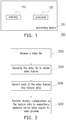
- FIG. 1 illustrates a schematic diagram of a proposed processing device for video preview in accordance with one of the exemplary embodiments of the disclosure. All components of the processing device and their configurations are first introduced in FIG. 1 . The functionalities of the components are disclosed in more detail in conjunction with FIG. 2 .
- an exemplary processing device 100 would include a memory 110 and at least one processor 120 coupled thereto.
- the processing device 100 may be a computing device with computing capability, such as a personal computer, a laptop computer, a workstation, a set-top box, a game console, and so forth.
- the memory 110 would include a data storage device in various forms of non-transitory, volatile, and non-volatile memories which would store buffered or permanent data as well as compiled programming codes used to execute functions of the processing device 100.
- the processor 120 may be one or more of a North Bridge, a South Bridge, a field programmable array (FPGA), a programmable logic device (PLD), an application specific integrated circuit (ASIC), or other similar device or a combination thereof.
- the processor may also be a central processing unit (CPU), a programmable general purpose or special purpose microprocessor, a digital signal processor (DSP), a graphics processing unit (GPU), or other similar device or a combination thereof.
- the processor 120 would be a combination of CPU and GPU.
- the CPU would perform basic arithmetic, logical, control, and input/output (I/O) operations specified by instructions of a computer program, while the GPU, often with a highly parallel processing architecture, would perform rapid computation primarily for the purpose of render images.
- FIG. 2 illustrates a flowchart of a proposed method for video preview in accordance with one of the exemplary embodiments of the disclosure. The steps of FIG. 2 could be implemented by the proposed processing device 100 as illustrated in FIG. 1 .
- the processor 120 of the processing device 100 would receive a video file (Step S202) and decode the video file to obtain video frames (Step S204).
- the processor 120 may receive a video file from the internet or other electronic devices via a communication interface either through wire or wireless transmission as known per se and decode the video file into a sequence of video frames based on any video decoding algorithm.
- the processor 120 would convert each of the video frames into texture data (Step S206).
- the texture data is a data structure having an array of texture element values associated with grid of cells, such as a bitmap.
- the bitmap is characterized by the width and the height of a video frame in pixels and the number of bits per pixel.
- the processor 120 may generate a bitmap for each YUV channel and the bitmaps are stored in the memory 110 as textures, and yet the disclosure is not limited in this regard.
- the processor 120 would perform shading computations on the texture data to respectively generate render video outputs for video preview (Step S208).
- a shader is a type of computer program that calculate rendering effects on graphics hardware with a high degree of flexibility. Shaders are widely used in video post-processing to produce infinite range of effects by manipulating the properties such as position, hue, saturation, brightness, and contrast of all pixels, vertices, and textures using shader algorithms as known per se.
- the processor 120 would identify possible video viewing modes, either supported by the processing device 100, popularly selected, or from a default list, and set them as designated video viewing modes, where each of the shading computations corresponds to a different designated video viewing mode.
- the processor 120 would perform the shader computation corresponding to each of the designated video viewing modes by altering the same texture data differently and render the altered texture data corresponding to each of the designated video viewing modes to generate the corresponding render video outputs for video preview. For example, after the processor 120 identifies that all the possible video viewing modes are monoscopic, side-by-side stereoscopic, and over-under stereoscopic modes, the render video outputs respectively in such three modes would be created for video preview.
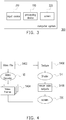
- FIG. 3 illustrates a schematic diagram of a proposed computer system for video preview in accordance with one of the exemplary embodiments of the disclosure. All components of the computer system and their configurations are first introduced in FIG. 3 . The functionalities of the components are disclosed in more detail in conjunction with FIG. 4 .
- an exemplary computer system 300 would include an input device 310, a screen 320, and the processing device 100 connected to the input device 310 and the screen 320.
- the computer system 300 may be a personal computer, a laptop computer, a workstation, a television system, a gaming system, a virtual reality system, an augmented reality system, a mixed reality system, and so forth.
- the input device 310 may be a handheld controller equipped with a motion sensor, a mouse, a joystick, a trackball, a touch pad, and/or buttons that permits the user to interact with the computer system 300.
- the screen 320 may be a liquid crystal display (LCD), a light-emitting diode (LED) display, an organic light-emitting diode (OLED) display such as a monitor and a head-mounted display (including goggles, visors, glasses, helmets with face shields, and the like).
- LCD liquid crystal display
- LED light-emitting diode
- OLED organic light-emitting diode
- the processing device 100 would receive a video file (Step S402) and use a video decoder VD to decode the video file into video frames (Step S404). Next, the processing device 100 would convert each of the video frames into texture data (Step S406). The processing device 100 would use a shader SH to perform shading computations on the texture data to respectively generate render video outputs for video preview (Step S408). In the same manner as described previously with respect to the exemplary embodiment in FIG. 2 , the detailed description of Step S402-S408 will not be repeated herein.
- Step S402 and Step S404 may be executed by a CPU, and Step S406 and S408 may be executed by a GPU for acceleration.
- the processing device 100 would play the render outputs on a preview interface on the screen 320 in the virtual world for user selection.
- the virtual world herein refers to a computer-based simulated environment such as a virtual reality environment with complete virtual immersion, an augmented reality environment with virtual objects layering on the real world, or a mixed reality environment with a merging of real and virtual worlds.
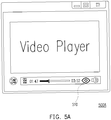
- the processing device 100 launches a video playback application in response to the user instruction to initiate video playback of a video file and displays a video player interface 500A on the screen 320 in the virtual world as illustrated in FIG. 5A in accordance with one of the exemplary embodiments of the disclosure.
- the video player interface 500A may include familiar features such as a playback screen, a scroll bar, a speaker control, a pause/resume control.
- the video player interface 500A may also include a mode preview option 510. The user would be able to select the mode preview option 510 through the input device 310 during or before video playback.
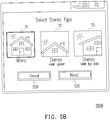
- the processing device 100 detects a selection operation being performed on the mode preview option 510, it would next display a preview interface 500B on the screen 320 as illustrated in FIG. 5B in accordance with one of the exemplary embodiments of the disclosure.
- the processing device 100 would play a list of render video outputs, respectively in a monoscopic mode T1, a side-by-side stereoscopic mode T2, and an over-under stereoscopic mode T3, as thumbnails on the preview interface 500B.
- the preview interface 500B enables the user to preview the effect of three possible video viewing modes, and each of which is associated with a mode selecting option.
- the preview interface 500B would also include a "Cancel” button 520 and a "Next” button 530.
- the "Cancel” button 520 would allow the user to dismiss the preview interface 500B
- the "Next” button 530 would allow the user to confirm the selected video viewing mode. Assume that the user selects the monoscopic mode T1 and clicks on the "Next” button 530. In response to such selection operation, the processing device 100 would play the video file in the monoscopic mode T1 on the screen 320.
- the method, the processing device, and the computer system provide a user interface with video preview capability by rendering a video in multiple video viewing modes. Multiple independent previews would be played concurrently on the user interface. The rendered video outputs would be concurrently played such that the user is able to select the best viewing mode in a simple and intuitive fashion.
Landscapes
- Engineering & Computer Science (AREA)
- Multimedia (AREA)
- Signal Processing (AREA)
- Human Computer Interaction (AREA)
- General Engineering & Computer Science (AREA)
- Software Systems (AREA)
- Databases & Information Systems (AREA)
- Testing, Inspecting, Measuring Of Stereoscopic Televisions And Televisions (AREA)
- Image Generation (AREA)
- Controls And Circuits For Display Device (AREA)
- Processing Or Creating Images (AREA)
Abstract
Description
- This application claims the priority benefit of
U.S. provisional application serial no. 62/434,426, filed on December 15, 2016 - The disclosure relates to a video preview technique.
- Virtual reality creates an illusion of reality with realistic images, sounds, and other sensations that replicate a real environment or an imaginary setting. A virtual reality environment would offer a user immersion, navigation, and manipulation that simulate his physical presence in the real world or imaginary world. Current trends for virtual reality content revolve around the development of video games and movies. In particular, several video playback applications which allow videos to be played in a virtual reality system have been created recently and have delivered a powerful immersive cinema experience with unlimited screen space and minimal distractions from the real world.
- However, videos may come in various different screen modes (e.g. flat screen, 180-degree, and 360-degree screen viewing modes) and different stereoscopic rendering techniques (e.g. monoscopic, side-by-side stereoscopic, and over-under stereoscopic modes). Video containers do not carry such metadata so the user needs to proceed through a trial-and-error process to determine the best viewing configuration. If a wrong video viewing mode is selected, video images would be distorted with visual artifacts and become unpleasant to view. The user would have to make another selection until the best one is found. The entire process can be extremely tedious and time-consuming and lead to user frustration.
- A method, a processing device, and a computer system for video preview are proposed, where the user is able to select the best video viewing mode in a simple and intuitive fashion.
- According to one of the exemplary embodiments, the method is applicable to a processing device and includes the following steps. A video file is received and decoded to obtain video frames. Each of the video frames is converted into texture data. Shading computations are performed on the texture data to respectively generate multiple render video outputs for video preview, where each of the shading computations corresponds to a different designated video viewing mode.
- According to one of the exemplary embodiments, the processing device includes a memory and at least one processor coupled to the memory. The memory is configured to store data. The processor is configured to receive a video file, decode the video file to obtain video frames, convert each of the video frames into texture data, and perform shading computations on the texture data to respectively generate multiple render video outputs for video preview, where each of the shading computations corresponds to a different designated video viewing mode.
- According to one of the exemplary embodiments, the method is applicable to a computer system having a screen, an input device, and a processing device connected to the screen and the input device, and the method includes the following steps. A video file is received and decoded to obtain video frames by the processing device. Each of the video frames is converted into texture data by the processing device. Shading computations are performed on the texture data by the processing device to respectively generate multiple render video outputs, where each of the shading computations corresponds to a different designated video viewing mode. The render video outputs are played in a preview interface on the screen in the virtual world by the processing device for user selection through the input device.
- According to one of the exemplary embodiments, the system includes a screen, an input device, and a processing device. The screen is configured to display contents. The input device is configured to receive inputs from a user. The processing device is connected to the screen and the input device and configured to receive a video file and decode the video file to obtain video frames, to convert each of the video frames into texture data and perform shading computations on the texture data to respectively generate multiple render video outputs, and to play the render video outputs in a preview interface on the screen in the virtual world for user selection through the input device, where each of the shading computations corresponds to a different designated video viewing mode.
- In order to make the aforementioned features and advantages of the present disclosure comprehensible, preferred embodiments accompanied with figures are described in detail below. It is to be understood that both the foregoing general description and the following detailed description are exemplary, and are intended to provide further explanation of the disclosure as claimed.
- It should be understood, however, that this summary may not contain all of the aspect and embodiments of the present disclosure and is therefore not meant to be limiting or restrictive in any manner. Also the present disclosure would include improvements and modifications which are obvious to one skilled in the art.
- The accompanying drawings are included to provide a further understanding of the disclosure, and are incorporated in and constitute a part of this specification. The drawings illustrate embodiments of the disclosure and, together with the description, serve to explain the principles of the disclosure.
-
FIG. 1 illustrates a schematic diagram of a proposed processing device for video preview in accordance with one of the exemplary embodiments of the disclosure. -
FIG. 2 illustrates a flowchart of a proposed method for video preview in accordance with one of the exemplary embodiments of the disclosure. -
FIG. 3 illustrates a schematic diagram of a proposed computer system for video preview in accordance with one of the exemplary embodiments of the disclosure. -
FIG. 4 illustrates a flowchart of a proposed method for video preview in accordance with one of the exemplary embodiments of the disclosure. -
FIG. 5A illustrates a video player interface in accordance with one of the exemplary embodiments of the disclosure. -
FIG. 5B illustrates a preview interface in accordance with one of the exemplary embodiments of the disclosure. - To make the above features and advantages of the application more comprehensible, several embodiments accompanied with drawings are described in detail as follows.
- Some embodiments of the disclosure will now be described more fully hereinafter with reference to the accompanying drawings, in which some, but not all embodiments of the application are shown. Indeed, various embodiments of the disclosure may be embodied in many different forms and should not be construed as limited to the embodiments set forth herein; rather, these embodiments are provided so that this disclosure will satisfy applicable legal requirements. Like reference numerals refer to like elements throughout.
-
FIG. 1 illustrates a schematic diagram of a proposed processing device for video preview in accordance with one of the exemplary embodiments of the disclosure. All components of the processing device and their configurations are first introduced inFIG. 1 . The functionalities of the components are disclosed in more detail in conjunction withFIG. 2 . - Referring to
FIG. 1 , anexemplary processing device 100 would include amemory 110 and at least oneprocessor 120 coupled thereto. Theprocessing device 100 may be a computing device with computing capability, such as a personal computer, a laptop computer, a workstation, a set-top box, a game console, and so forth. - The
memory 110 would include a data storage device in various forms of non-transitory, volatile, and non-volatile memories which would store buffered or permanent data as well as compiled programming codes used to execute functions of theprocessing device 100. - The
processor 120 may be one or more of a North Bridge, a South Bridge, a field programmable array (FPGA), a programmable logic device (PLD), an application specific integrated circuit (ASIC), or other similar device or a combination thereof. The processor may also be a central processing unit (CPU), a programmable general purpose or special purpose microprocessor, a digital signal processor (DSP), a graphics processing unit (GPU), or other similar device or a combination thereof. For illustrative purposes, theprocessor 120 would be a combination of CPU and GPU. The CPU would perform basic arithmetic, logical, control, and input/output (I/O) operations specified by instructions of a computer program, while the GPU, often with a highly parallel processing architecture, would perform rapid computation primarily for the purpose of render images. -
FIG. 2 illustrates a flowchart of a proposed method for video preview in accordance with one of the exemplary embodiments of the disclosure. The steps ofFIG. 2 could be implemented by the proposedprocessing device 100 as illustrated inFIG. 1 . - Referring to
FIG. 2 in conjunction withFIG. 1 , theprocessor 120 of theprocessing device 100 would receive a video file (Step S202) and decode the video file to obtain video frames (Step S204). Herein, theprocessor 120 may receive a video file from the internet or other electronic devices via a communication interface either through wire or wireless transmission as known per se and decode the video file into a sequence of video frames based on any video decoding algorithm. - Next, the
processor 120 would convert each of the video frames into texture data (Step S206). The texture data is a data structure having an array of texture element values associated with grid of cells, such as a bitmap. The bitmap is characterized by the width and the height of a video frame in pixels and the number of bits per pixel. For example, theprocessor 120 may generate a bitmap for each YUV channel and the bitmaps are stored in thememory 110 as textures, and yet the disclosure is not limited in this regard. - Next, the
processor 120 would perform shading computations on the texture data to respectively generate render video outputs for video preview (Step S208). A shader is a type of computer program that calculate rendering effects on graphics hardware with a high degree of flexibility. Shaders are widely used in video post-processing to produce infinite range of effects by manipulating the properties such as position, hue, saturation, brightness, and contrast of all pixels, vertices, and textures using shader algorithms as known per se. Hence, prior to the shading computations, theprocessor 120 would identify possible video viewing modes, either supported by theprocessing device 100, popularly selected, or from a default list, and set them as designated video viewing modes, where each of the shading computations corresponds to a different designated video viewing mode. Once all the designated video viewing modes are identified, theprocessor 120 would perform the shader computation corresponding to each of the designated video viewing modes by altering the same texture data differently and render the altered texture data corresponding to each of the designated video viewing modes to generate the corresponding render video outputs for video preview. For example, after theprocessor 120 identifies that all the possible video viewing modes are monoscopic, side-by-side stereoscopic, and over-under stereoscopic modes, the render video outputs respectively in such three modes would be created for video preview. -
FIG. 3 illustrates a schematic diagram of a proposed computer system for video preview in accordance with one of the exemplary embodiments of the disclosure. All components of the computer system and their configurations are first introduced inFIG. 3 . The functionalities of the components are disclosed in more detail in conjunction withFIG. 4 . - Referring to
FIG. 3 , anexemplary computer system 300 would include aninput device 310, ascreen 320, and theprocessing device 100 connected to theinput device 310 and thescreen 320. Thecomputer system 300 may be a personal computer, a laptop computer, a workstation, a television system, a gaming system, a virtual reality system, an augmented reality system, a mixed reality system, and so forth. - The
input device 310 may be a handheld controller equipped with a motion sensor, a mouse, a joystick, a trackball, a touch pad, and/or buttons that permits the user to interact with thecomputer system 300. - The
screen 320 may be a liquid crystal display (LCD), a light-emitting diode (LED) display, an organic light-emitting diode (OLED) display such as a monitor and a head-mounted display (including goggles, visors, glasses, helmets with face shields, and the like). -
FIG. 4 illustrates a proposed method for video preview in accordance with one of the exemplary embodiments of the disclosure. The steps ofFIG. 4 could be implemented by the proposedcomputer system 300 as illustrated inFIG. 3 . - Referring to
FIG. 4 in conjunction withFIG. 3 , theprocessing device 100 would receive a video file (Step S402) and use a video decoder VD to decode the video file into video frames (Step S404). Next, theprocessing device 100 would convert each of the video frames into texture data (Step S406). Theprocessing device 100 would use a shader SH to perform shading computations on the texture data to respectively generate render video outputs for video preview (Step S408). In the same manner as described previously with respect to the exemplary embodiment inFIG. 2 , the detailed description of Step S402-S408 will not be repeated herein. In the present exemplary embodiment, Step S402 and Step S404 may be executed by a CPU, and Step S406 and S408 may be executed by a GPU for acceleration. Next, theprocessing device 100 would play the render outputs on a preview interface on thescreen 320 in the virtual world for user selection. It should be noted that, the virtual world herein refers to a computer-based simulated environment such as a virtual reality environment with complete virtual immersion, an augmented reality environment with virtual objects layering on the real world, or a mixed reality environment with a merging of real and virtual worlds. - For better comprehension, assume the
processing device 100 launches a video playback application in response to the user instruction to initiate video playback of a video file and displays avideo player interface 500A on thescreen 320 in the virtual world as illustrated inFIG. 5A in accordance with one of the exemplary embodiments of the disclosure. Referring toFIG. 5A , thevideo player interface 500A may include familiar features such as a playback screen, a scroll bar, a speaker control, a pause/resume control. Specifically, thevideo player interface 500A may also include amode preview option 510. The user would be able to select themode preview option 510 through theinput device 310 during or before video playback. - Once the
processing device 100 detects a selection operation being performed on themode preview option 510, it would next display apreview interface 500B on thescreen 320 as illustrated inFIG. 5B in accordance with one of the exemplary embodiments of the disclosure. Referring toFIG. 5B , theprocessing device 100 would play a list of render video outputs, respectively in a monoscopic mode T1, a side-by-side stereoscopic mode T2, and an over-under stereoscopic mode T3, as thumbnails on thepreview interface 500B. Thepreview interface 500B enables the user to preview the effect of three possible video viewing modes, and each of which is associated with a mode selecting option. From the video preview, it would be visually obvious for the user to determine whether there exists distortion, undesirably flashes and artifacts as well as to determine whether only half view in the render video outputs T1-T3, and it is therefore intuitive for the user to discern the most suitable video viewing mode for the video file. - The
preview interface 500B would also include a "Cancel"button 520 and a "Next"button 530. The "Cancel"button 520 would allow the user to dismiss thepreview interface 500B, and the "Next"button 530 would allow the user to confirm the selected video viewing mode. Assume that the user selects the monoscopic mode T1 and clicks on the "Next"button 530. In response to such selection operation, theprocessing device 100 would play the video file in the monoscopic mode T1 on thescreen 320. - In view of the aforementioned descriptions, the method, the processing device, and the computer system, provide a user interface with video preview capability by rendering a video in multiple video viewing modes. Multiple independent previews would be played concurrently on the user interface. The rendered video outputs would be concurrently played such that the user is able to select the best viewing mode in a simple and intuitive fashion.
- No element, act, or instruction used in the detailed description of disclosed embodiments of the present application should be construed as absolutely critical or essential to the present disclosure unless explicitly described as such. Also, as used herein, each of the indefinite articles "a" and "an" could include more than one item. If only one item is intended, the terms "a single" or similar languages would be used. Furthermore, the terms "any of" followed by a listing of a plurality of items and/or a plurality of categories of items, as used herein, are intended to include "any of", "any combination of", "any multiple of", and/or "any combination of multiples of the items and/or the categories of items, individually or in conjunction with other items and/or other categories of items. Further, as used herein, the term "set" is intended to include any number of items, including zero. Further, as used herein, the term "number" is intended to include any number, including zero.
- It will be apparent to those skilled in the art that various modifications and variations can be made to the structure of the disclosed embodiments without departing from the scope or spirit of the disclosure. In view of the foregoing, it is intended that the disclosure cover modifications and variations of this disclosure provided they fall within the scope of the following claims and their equivalents.
Claims (15)
- A method for video preview, applicable to a processing device, comprising steps of:receiving a video file;decoding the video file to obtain a plurality of video frames;converting each of the video frames into texture data; andperforming a plurality of shading computations on the texture data to respectively generate a plurality of render video outputs for video preview, wherein each of the shading computations corresponds to a different designated video viewing mode.
- The method according to claim 1, wherein before the step of performing the shading computations on the texture data to respectively generate the render video outputs for video preview, the method further comprises steps of:identifying a plurality of possible video viewing modes supported by the processing device; andsetting the possible video viewing modes as the designated viewing modes.
- The method according to claim 1, wherein the step of performing the shading computations on the texture data to respectively generate the render video outputs for video preview comprises:performing the shading computation corresponding to each of the designated video viewing modes by altering the texture data differently; andrendering the altered texture data corresponding to each of the designated video viewing modes to generate the corresponding render video outputs for video preview.
- The method according to any one of the preceding claims 1 to 3, wherein the designated video viewing modes comprise monoscopic mode, side-by-side stereoscopic mode, and over-under stereoscopic mode.
- A method for video preview, applicable to a computer system having a screen, an input device, and a processing device connected to the screen and the input device, wherein the method comprises steps of:receiving a video file by the processing device;decoding the video file to obtain a plurality of video frames by the processing device;converting each of the video frames into texture data by the processing device;performing a plurality of shading computations on the texture data by the processing device to respectively generate a plurality of render video outputs, wherein each of the shading computations corresponds to a different video viewing mode; andplaying the render video outputs on a preview interface on the screen in a virtual world by the processing device for user selection through the input device.
- The method according to claim 5, wherein before the step of playing the render video outputs on the preview interface on the screen in the virtual world by the processing device, the method further comprises steps of:launching a video playback application and displaying a video player interface on the screen by the processing device, wherein the video player interface comprises a mode preview option;in response to a selection operation performed on the mode preview option, displaying the preview interface by the processing device.
- The method according to claim 5, wherein the step of playing the render video outputs on the preview interface on the screen in the virtual world by the processing device comprises:concurrently playing the render video outputs as thumbnails on the preview interface on the screen in the virtual world by the processing device; andassociating each of the render video outputs on the preview interface with a mode selecting option by the processing device.
- The method according to any one of the preceding claims 5 to 7, wherein after the step of playing the render video outputs on the preview interface on the screen in the virtual world by the processing device, the method further comprises steps of:in response to a selection operation performed on a first mode selecting option among the mode selecting options, playing the video frames in the video viewing mode corresponding to the first mode selecting option in the virtual world by the processing device.
- The method according to any one of the preceding claims 5 to 8, wherein the video viewing modes comprise monoscopic mode, side-by-side stereoscopic mode, and over-under stereoscopic mode.
- A computer system for video preview comprising:a screen (320), configured to display contents;an input device (310), configured to receive inputs from a user;a processing device (100), connected to the screen (320) and the input device (310), and configured to receive a video file and decode the video file to obtain a plurality of video frames, to convert each of the video frames into texture data and perform a plurality of shading computations on the texture data to respectively generate a plurality of render video outputs, and to play the render video outputs in a preview interface on the screen (320) in the virtual world for user selection through the input device (310), wherein each of the shading computations corresponds to a different designated video viewing mode.
- The computer system according to claim 10, wherein the processing device (100) is further configured to launch a video playback application and displaying a video player interface comprising a mode preview option on the screen (320), wherein the video player interface comprises a mode preview option and display the preview interface in response to a selection operation performed on the mode preview option.
- The computer system according to any one of the preceding claims 10 to 11, wherein the processing device (310) is configured to concurrently play the render video outputs as thumbnails in the preview interface on the screen (320) and associate each of the render video outputs in the preview interface with a mode selecting option.
- The computer system according to claim 12, wherein the processing device (320) is further configured to play the video frames in a first video viewing mode among the video viewing modes in response to the selection operation performed on the render video output corresponding to the first video viewing mode.
- The computer system according to any one of the preceding claims 10 to 13, wherein the video viewing modes comprise monoscopic mode, side-by-side stereoscopic mode, and over-under stereoscopic mode.
- The computer system according to any one of the preceding claims 10 to 14, wherein the screen is a head-mounted display.
Applications Claiming Priority (1)
| Application Number | Priority Date | Filing Date | Title |
|---|---|---|---|
| US201662434426P | 2016-12-15 | 2016-12-15 |
Publications (2)
| Publication Number | Publication Date |
|---|---|
| EP3337176A1 true EP3337176A1 (en) | 2018-06-20 |
| EP3337176B1 EP3337176B1 (en) | 2020-10-14 |
Family
ID=60888117
Family Applications (1)
| Application Number | Title | Priority Date | Filing Date |
|---|---|---|---|
| EP17206629.2A Active EP3337176B1 (en) | 2016-12-15 | 2017-12-12 | Method, processing device, and computer system for video preview |
Country Status (4)
| Country | Link |
|---|---|
| US (1) | US10674140B2 (en) |
| EP (1) | EP3337176B1 (en) |
| CN (1) | CN108235138B (en) |
| TW (1) | TWI669958B (en) |
Cited By (1)
| Publication number | Priority date | Publication date | Assignee | Title |
|---|---|---|---|---|
| CN111754607A (en) * | 2019-03-27 | 2020-10-09 | 北京小米移动软件有限公司 | Image processing method and apparatus, electronic device, and computer-readable storage medium |
Families Citing this family (5)
| Publication number | Priority date | Publication date | Assignee | Title |
|---|---|---|---|---|
| CN111754614B (en) * | 2020-06-30 | 2024-07-02 | 平安国际智慧城市科技股份有限公司 | VR-based video rendering method and device, electronic equipment and storage medium |
| CN114257852A (en) * | 2020-09-25 | 2022-03-29 | 华为技术有限公司 | Video preview method based on VR scene, electronic equipment and storage medium |
| US12323693B2 (en) | 2020-09-30 | 2025-06-03 | Sony Group Corporation | Information processing device, information processing method, and program with user interface control for connection setting modes |
| CN113747240B (en) | 2021-09-10 | 2023-04-07 | 荣耀终端有限公司 | Video processing method, apparatus and storage medium |
| CN116938901A (en) * | 2022-04-01 | 2023-10-24 | 中国移动通信有限公司研究院 | Data transmission method, device, electronic equipment and readable storage medium |
Citations (2)
| Publication number | Priority date | Publication date | Assignee | Title |
|---|---|---|---|---|
| US20110032328A1 (en) * | 2009-08-06 | 2011-02-10 | Qualcomm Incorporated | Transforming video data in accordance with human visual system feedback metrics |
| US20110032330A1 (en) * | 2009-06-05 | 2011-02-10 | Lg Electronics Inc. | Image display apparatus and method for operating the same |
Family Cites Families (15)
| Publication number | Priority date | Publication date | Assignee | Title |
|---|---|---|---|---|
| US4586038A (en) * | 1983-12-12 | 1986-04-29 | General Electric Company | True-perspective texture/shading processor |
| KR0182940B1 (en) * | 1995-11-28 | 1999-05-01 | 김광호 | Apparatus and method for coloring a designated part of the screen |
| US6121963A (en) * | 2000-01-26 | 2000-09-19 | Vrmetropolis.Com, Inc. | Virtual theater |
| US7992086B2 (en) * | 2006-06-30 | 2011-08-02 | Sharp Laboratories Of America, Inc. | System and method for adjusting a media-playing set |
| CN101320482B (en) * | 2008-07-08 | 2011-09-07 | 浙江大学 | Drafting method for virtual running athlete based on video texture |
| US8860781B2 (en) * | 2009-06-30 | 2014-10-14 | Qualcomm Incorporated | Texture compression in a video decoder for efficient 2D-3D rendering |
| US8413073B2 (en) | 2009-07-27 | 2013-04-02 | Lg Electronics Inc. | Providing user interface for three-dimensional display device |
| CN105530551B (en) * | 2009-10-16 | 2019-01-29 | Lg电子株式会社 | Indicate the method for 3D content and the device of processing signal |
| JP2011114863A (en) * | 2009-11-23 | 2011-06-09 | Samsung Electronics Co Ltd | Method for providing 3d image, method for converting 3d image, gui providing method, 3d display apparatus using the same, and system for providing 3d image |
| JP4742174B1 (en) * | 2010-04-20 | 2011-08-10 | 株式会社ソニー・コンピュータエンタテインメント | 3D video playback method and 3D video playback device |
| US8860785B2 (en) * | 2010-12-17 | 2014-10-14 | Microsoft Corporation | Stereo 3D video support in computing devices |
| US8891935B2 (en) * | 2011-01-04 | 2014-11-18 | Samsung Electronics Co., Ltd. | Multi-video rendering for enhancing user interface usability and user experience |
| US20120206450A1 (en) * | 2011-02-14 | 2012-08-16 | Htc Corporation | 3d format conversion systems and methods |
| KR20130137885A (en) | 2012-06-08 | 2013-12-18 | 삼성전자주식회사 | Display apparatus and mode selection method thereof |
| KR102459850B1 (en) * | 2015-12-03 | 2022-10-27 | 삼성전자주식회사 | Method and apparatus for processing 3-dimension image, and graphic processing unit |
-
2017
- 2017-12-12 EP EP17206629.2A patent/EP3337176B1/en active Active
- 2017-12-15 US US15/842,897 patent/US10674140B2/en active Active
- 2017-12-15 TW TW106144076A patent/TWI669958B/en active
- 2017-12-15 CN CN201711350700.3A patent/CN108235138B/en active Active
Patent Citations (2)
| Publication number | Priority date | Publication date | Assignee | Title |
|---|---|---|---|---|
| US20110032330A1 (en) * | 2009-06-05 | 2011-02-10 | Lg Electronics Inc. | Image display apparatus and method for operating the same |
| US20110032328A1 (en) * | 2009-08-06 | 2011-02-10 | Qualcomm Incorporated | Transforming video data in accordance with human visual system feedback metrics |
Cited By (1)
| Publication number | Priority date | Publication date | Assignee | Title |
|---|---|---|---|---|
| CN111754607A (en) * | 2019-03-27 | 2020-10-09 | 北京小米移动软件有限公司 | Image processing method and apparatus, electronic device, and computer-readable storage medium |
Also Published As
| Publication number | Publication date |
|---|---|
| CN108235138A (en) | 2018-06-29 |
| EP3337176B1 (en) | 2020-10-14 |
| CN108235138B (en) | 2020-10-27 |
| TW201824876A (en) | 2018-07-01 |
| US20180176550A1 (en) | 2018-06-21 |
| TWI669958B (en) | 2019-08-21 |
| US10674140B2 (en) | 2020-06-02 |
Similar Documents
| Publication | Publication Date | Title |
|---|---|---|
| EP3337176B1 (en) | Method, processing device, and computer system for video preview | |
| US20150310660A1 (en) | Computer graphics with enhanced depth effect | |
| US10016679B2 (en) | Multiple frame distributed rendering of interactive content | |
| US8754931B2 (en) | Video eyewear for smart phone games | |
| US7176919B2 (en) | Recirculating shade tree blender for a graphics system | |
| EP3340187A1 (en) | Device and method for generating dynamic virtual contents in mixed reality | |
| CN108292489A (en) | Information processing unit and image generating method | |
| US20130293547A1 (en) | Graphics rendering technique for autostereoscopic three dimensional display | |
| US20150213640A1 (en) | Hybrid virtual 3d rendering approach to stereovision | |
| US12400290B2 (en) | Method and system of efficient image rendering for near-eye light field displays | |
| WO2008035550A1 (en) | Image processing device, control method for image processing device and information recording medium | |
| US10818076B2 (en) | Immersive environment from video | |
| CN107749083A (en) | The method and apparatus of image shows | |
| US20250095249A1 (en) | Method, apparatus, device and medium for subtitle displaying | |
| US20140085331A1 (en) | Apparatus, method, and program product for selecting a finish | |
| TWI902734B (en) | Method and apparatus for rendering three-dimensional objects in an extended reality environment | |
| KR19980023727A (en) | Virtual Reality System for Displaying Panoramic Images | |
| WO2018086960A1 (en) | Method and device for transmitting data representative of an image | |
| US12524929B2 (en) | Content generation system and method | |
| CN119271044A (en) | Display method, extended reality device, storage medium and program product | |
| JP2022092740A (en) | Method and apparatus for rendering three-dimensional objects in xr environment | |
| CN116899215A (en) | Graphic rendering method, device, equipment and medium | |
| JP2007025861A (en) | Virtual reality system and method, and interpolated image generation apparatus and method |
Legal Events
| Date | Code | Title | Description |
|---|---|---|---|
| PUAI | Public reference made under article 153(3) epc to a published international application that has entered the european phase |
Free format text: ORIGINAL CODE: 0009012 |
|
| STAA | Information on the status of an ep patent application or granted ep patent |
Free format text: STATUS: REQUEST FOR EXAMINATION WAS MADE |
|
| 17P | Request for examination filed |
Effective date: 20171212 |
|
| AK | Designated contracting states |
Kind code of ref document: A1 Designated state(s): AL AT BE BG CH CY CZ DE DK EE ES FI FR GB GR HR HU IE IS IT LI LT LU LV MC MK MT NL NO PL PT RO RS SE SI SK SM TR |
|
| AX | Request for extension of the european patent |
Extension state: BA ME |
|
| RBV | Designated contracting states (corrected) |
Designated state(s): AL AT BE BG CH CY CZ DE DK EE ES FI FR GB GR HR HU IE IS IT LI LT LU LV MC MK MT NL NO PL PT RO RS SE SI SK SM TR |
|
| STAA | Information on the status of an ep patent application or granted ep patent |
Free format text: STATUS: EXAMINATION IS IN PROGRESS |
|
| 17Q | First examination report despatched |
Effective date: 20190326 |
|
| GRAP | Despatch of communication of intention to grant a patent |
Free format text: ORIGINAL CODE: EPIDOSNIGR1 |
|
| STAA | Information on the status of an ep patent application or granted ep patent |
Free format text: STATUS: GRANT OF PATENT IS INTENDED |
|
| INTG | Intention to grant announced |
Effective date: 20200616 |
|
| RIN1 | Information on inventor provided before grant (corrected) |
Inventor name: HSU, JO-WEI Inventor name: HUNT, ANDREW CHARLES Inventor name: CHEN, YIHSIU Inventor name: CHANG, YU-HSIEN Inventor name: BAMFORD, DREW |
|
| GRAS | Grant fee paid |
Free format text: ORIGINAL CODE: EPIDOSNIGR3 |
|
| GRAA | (expected) grant |
Free format text: ORIGINAL CODE: 0009210 |
|
| STAA | Information on the status of an ep patent application or granted ep patent |
Free format text: STATUS: THE PATENT HAS BEEN GRANTED |
|
| AK | Designated contracting states |
Kind code of ref document: B1 Designated state(s): AL AT BE BG CH CY CZ DE DK EE ES FI FR GB GR HR HU IE IS IT LI LT LU LV MC MK MT NL NO PL PT RO RS SE SI SK SM TR |
|
| REG | Reference to a national code |
Ref country code: GB Ref legal event code: FG4D |
|
| REG | Reference to a national code |
Ref country code: AT Ref legal event code: REF Ref document number: 1324726 Country of ref document: AT Kind code of ref document: T Effective date: 20201015 Ref country code: CH Ref legal event code: EP |
|
| REG | Reference to a national code |
Ref country code: DE Ref legal event code: R096 Ref document number: 602017025349 Country of ref document: DE |
|
| REG | Reference to a national code |
Ref country code: IE Ref legal event code: FG4D |
|
| REG | Reference to a national code |
Ref country code: NL Ref legal event code: FP |
|
| REG | Reference to a national code |
Ref country code: AT Ref legal event code: MK05 Ref document number: 1324726 Country of ref document: AT Kind code of ref document: T Effective date: 20201014 |
|
| PG25 | Lapsed in a contracting state [announced via postgrant information from national office to epo] |
Ref country code: GR Free format text: LAPSE BECAUSE OF FAILURE TO SUBMIT A TRANSLATION OF THE DESCRIPTION OR TO PAY THE FEE WITHIN THE PRESCRIBED TIME-LIMIT Effective date: 20210115 Ref country code: FI Free format text: LAPSE BECAUSE OF FAILURE TO SUBMIT A TRANSLATION OF THE DESCRIPTION OR TO PAY THE FEE WITHIN THE PRESCRIBED TIME-LIMIT Effective date: 20201014 Ref country code: NO Free format text: LAPSE BECAUSE OF FAILURE TO SUBMIT A TRANSLATION OF THE DESCRIPTION OR TO PAY THE FEE WITHIN THE PRESCRIBED TIME-LIMIT Effective date: 20210114 Ref country code: PT Free format text: LAPSE BECAUSE OF FAILURE TO SUBMIT A TRANSLATION OF THE DESCRIPTION OR TO PAY THE FEE WITHIN THE PRESCRIBED TIME-LIMIT Effective date: 20210215 Ref country code: RS Free format text: LAPSE BECAUSE OF FAILURE TO SUBMIT A TRANSLATION OF THE DESCRIPTION OR TO PAY THE FEE WITHIN THE PRESCRIBED TIME-LIMIT Effective date: 20201014 |
|
| REG | Reference to a national code |
Ref country code: LT Ref legal event code: MG4D |
|
| PG25 | Lapsed in a contracting state [announced via postgrant information from national office to epo] |
Ref country code: SE Free format text: LAPSE BECAUSE OF FAILURE TO SUBMIT A TRANSLATION OF THE DESCRIPTION OR TO PAY THE FEE WITHIN THE PRESCRIBED TIME-LIMIT Effective date: 20201014 Ref country code: LV Free format text: LAPSE BECAUSE OF FAILURE TO SUBMIT A TRANSLATION OF THE DESCRIPTION OR TO PAY THE FEE WITHIN THE PRESCRIBED TIME-LIMIT Effective date: 20201014 Ref country code: PL Free format text: LAPSE BECAUSE OF FAILURE TO SUBMIT A TRANSLATION OF THE DESCRIPTION OR TO PAY THE FEE WITHIN THE PRESCRIBED TIME-LIMIT Effective date: 20201014 Ref country code: IS Free format text: LAPSE BECAUSE OF FAILURE TO SUBMIT A TRANSLATION OF THE DESCRIPTION OR TO PAY THE FEE WITHIN THE PRESCRIBED TIME-LIMIT Effective date: 20210214 Ref country code: BG Free format text: LAPSE BECAUSE OF FAILURE TO SUBMIT A TRANSLATION OF THE DESCRIPTION OR TO PAY THE FEE WITHIN THE PRESCRIBED TIME-LIMIT Effective date: 20210114 Ref country code: AT Free format text: LAPSE BECAUSE OF FAILURE TO SUBMIT A TRANSLATION OF THE DESCRIPTION OR TO PAY THE FEE WITHIN THE PRESCRIBED TIME-LIMIT Effective date: 20201014 Ref country code: ES Free format text: LAPSE BECAUSE OF FAILURE TO SUBMIT A TRANSLATION OF THE DESCRIPTION OR TO PAY THE FEE WITHIN THE PRESCRIBED TIME-LIMIT Effective date: 20201014 |
|
| PG25 | Lapsed in a contracting state [announced via postgrant information from national office to epo] |
Ref country code: HR Free format text: LAPSE BECAUSE OF FAILURE TO SUBMIT A TRANSLATION OF THE DESCRIPTION OR TO PAY THE FEE WITHIN THE PRESCRIBED TIME-LIMIT Effective date: 20201014 |
|
| REG | Reference to a national code |
Ref country code: DE Ref legal event code: R097 Ref document number: 602017025349 Country of ref document: DE |
|
| PG25 | Lapsed in a contracting state [announced via postgrant information from national office to epo] |
Ref country code: RO Free format text: LAPSE BECAUSE OF FAILURE TO SUBMIT A TRANSLATION OF THE DESCRIPTION OR TO PAY THE FEE WITHIN THE PRESCRIBED TIME-LIMIT Effective date: 20201014 Ref country code: SK Free format text: LAPSE BECAUSE OF FAILURE TO SUBMIT A TRANSLATION OF THE DESCRIPTION OR TO PAY THE FEE WITHIN THE PRESCRIBED TIME-LIMIT Effective date: 20201014 Ref country code: SM Free format text: LAPSE BECAUSE OF FAILURE TO SUBMIT A TRANSLATION OF THE DESCRIPTION OR TO PAY THE FEE WITHIN THE PRESCRIBED TIME-LIMIT Effective date: 20201014 Ref country code: CZ Free format text: LAPSE BECAUSE OF FAILURE TO SUBMIT A TRANSLATION OF THE DESCRIPTION OR TO PAY THE FEE WITHIN THE PRESCRIBED TIME-LIMIT Effective date: 20201014 Ref country code: EE Free format text: LAPSE BECAUSE OF FAILURE TO SUBMIT A TRANSLATION OF THE DESCRIPTION OR TO PAY THE FEE WITHIN THE PRESCRIBED TIME-LIMIT Effective date: 20201014 Ref country code: LT Free format text: LAPSE BECAUSE OF FAILURE TO SUBMIT A TRANSLATION OF THE DESCRIPTION OR TO PAY THE FEE WITHIN THE PRESCRIBED TIME-LIMIT Effective date: 20201014 |
|
| REG | Reference to a national code |
Ref country code: CH Ref legal event code: PL |
|
| PLBE | No opposition filed within time limit |
Free format text: ORIGINAL CODE: 0009261 |
|
| STAA | Information on the status of an ep patent application or granted ep patent |
Free format text: STATUS: NO OPPOSITION FILED WITHIN TIME LIMIT |
|
| PG25 | Lapsed in a contracting state [announced via postgrant information from national office to epo] |
Ref country code: DK Free format text: LAPSE BECAUSE OF FAILURE TO SUBMIT A TRANSLATION OF THE DESCRIPTION OR TO PAY THE FEE WITHIN THE PRESCRIBED TIME-LIMIT Effective date: 20201014 Ref country code: MC Free format text: LAPSE BECAUSE OF FAILURE TO SUBMIT A TRANSLATION OF THE DESCRIPTION OR TO PAY THE FEE WITHIN THE PRESCRIBED TIME-LIMIT Effective date: 20201014 |
|
| REG | Reference to a national code |
Ref country code: BE Ref legal event code: MM Effective date: 20201231 |
|
| 26N | No opposition filed |
Effective date: 20210715 |
|
| PG25 | Lapsed in a contracting state [announced via postgrant information from national office to epo] |
Ref country code: AL Free format text: LAPSE BECAUSE OF FAILURE TO SUBMIT A TRANSLATION OF THE DESCRIPTION OR TO PAY THE FEE WITHIN THE PRESCRIBED TIME-LIMIT Effective date: 20201014 Ref country code: IE Free format text: LAPSE BECAUSE OF NON-PAYMENT OF DUE FEES Effective date: 20201212 Ref country code: LU Free format text: LAPSE BECAUSE OF NON-PAYMENT OF DUE FEES Effective date: 20201212 Ref country code: IT Free format text: LAPSE BECAUSE OF FAILURE TO SUBMIT A TRANSLATION OF THE DESCRIPTION OR TO PAY THE FEE WITHIN THE PRESCRIBED TIME-LIMIT Effective date: 20201014 |
|
| PG25 | Lapsed in a contracting state [announced via postgrant information from national office to epo] |
Ref country code: LI Free format text: LAPSE BECAUSE OF NON-PAYMENT OF DUE FEES Effective date: 20201231 Ref country code: SI Free format text: LAPSE BECAUSE OF FAILURE TO SUBMIT A TRANSLATION OF THE DESCRIPTION OR TO PAY THE FEE WITHIN THE PRESCRIBED TIME-LIMIT Effective date: 20201014 Ref country code: CH Free format text: LAPSE BECAUSE OF NON-PAYMENT OF DUE FEES Effective date: 20201231 |
|
| PG25 | Lapsed in a contracting state [announced via postgrant information from national office to epo] |
Ref country code: IS Free format text: LAPSE BECAUSE OF FAILURE TO SUBMIT A TRANSLATION OF THE DESCRIPTION OR TO PAY THE FEE WITHIN THE PRESCRIBED TIME-LIMIT Effective date: 20210214 Ref country code: TR Free format text: LAPSE BECAUSE OF FAILURE TO SUBMIT A TRANSLATION OF THE DESCRIPTION OR TO PAY THE FEE WITHIN THE PRESCRIBED TIME-LIMIT Effective date: 20201014 Ref country code: MT Free format text: LAPSE BECAUSE OF FAILURE TO SUBMIT A TRANSLATION OF THE DESCRIPTION OR TO PAY THE FEE WITHIN THE PRESCRIBED TIME-LIMIT Effective date: 20201014 Ref country code: CY Free format text: LAPSE BECAUSE OF FAILURE TO SUBMIT A TRANSLATION OF THE DESCRIPTION OR TO PAY THE FEE WITHIN THE PRESCRIBED TIME-LIMIT Effective date: 20201014 |
|
| PG25 | Lapsed in a contracting state [announced via postgrant information from national office to epo] |
Ref country code: MK Free format text: LAPSE BECAUSE OF FAILURE TO SUBMIT A TRANSLATION OF THE DESCRIPTION OR TO PAY THE FEE WITHIN THE PRESCRIBED TIME-LIMIT Effective date: 20201014 |
|
| PG25 | Lapsed in a contracting state [announced via postgrant information from national office to epo] |
Ref country code: BE Free format text: LAPSE BECAUSE OF NON-PAYMENT OF DUE FEES Effective date: 20201231 |
|
| REG | Reference to a national code |
Ref country code: DE Ref legal event code: R082 Ref document number: 602017025349 Country of ref document: DE Representative=s name: WAGNER & GEYER PARTNERSCHAFT MBB PATENT- UND R, DE |
|
| P01 | Opt-out of the competence of the unified patent court (upc) registered |
Effective date: 20230602 |
|
| PGFP | Annual fee paid to national office [announced via postgrant information from national office to epo] |
Ref country code: FR Payment date: 20250930 Year of fee payment: 9 |
|
| PGFP | Annual fee paid to national office [announced via postgrant information from national office to epo] |
Ref country code: NL Payment date: 20251003 Year of fee payment: 9 |
|
| PGFP | Annual fee paid to national office [announced via postgrant information from national office to epo] |
Ref country code: DE Payment date: 20250930 Year of fee payment: 9 |
|
| PGFP | Annual fee paid to national office [announced via postgrant information from national office to epo] |
Ref country code: GB Payment date: 20251001 Year of fee payment: 9 |