EP3336642A1 - Moving body, information processing device, moving body system, information processing method, and information processing program - Google Patents
Moving body, information processing device, moving body system, information processing method, and information processing program Download PDFInfo
- Publication number
- EP3336642A1 EP3336642A1 EP16836973.4A EP16836973A EP3336642A1 EP 3336642 A1 EP3336642 A1 EP 3336642A1 EP 16836973 A EP16836973 A EP 16836973A EP 3336642 A1 EP3336642 A1 EP 3336642A1
- Authority
- EP
- European Patent Office
- Prior art keywords
- information
- mobile body
- wireless communication
- route guidance
- user
- Prior art date
- Legal status (The legal status is an assumption and is not a legal conclusion. Google has not performed a legal analysis and makes no representation as to the accuracy of the status listed.)
- Granted
Links
Images




Classifications
-
- G—PHYSICS
- G05—CONTROLLING; REGULATING
- G05D—SYSTEMS FOR CONTROLLING OR REGULATING NON-ELECTRIC VARIABLES
- G05D1/00—Control of position, course, altitude or attitude of land, water, air or space vehicles, e.g. using automatic pilots
- G05D1/02—Control of position or course in two dimensions
- G05D1/021—Control of position or course in two dimensions specially adapted to land vehicles
- G05D1/0212—Control of position or course in two dimensions specially adapted to land vehicles with means for defining a desired trajectory
-
- G—PHYSICS
- G05—CONTROLLING; REGULATING
- G05D—SYSTEMS FOR CONTROLLING OR REGULATING NON-ELECTRIC VARIABLES
- G05D1/00—Control of position, course, altitude or attitude of land, water, air or space vehicles, e.g. using automatic pilots
- G05D1/20—Control system inputs
- G05D1/22—Command input arrangements
- G05D1/221—Remote-control arrangements
- G05D1/222—Remote-control arrangements operated by humans
- G05D1/224—Output arrangements on the remote controller, e.g. displays, haptics or speakers
- G05D1/2244—Optic
- G05D1/2245—Optic providing the operator with a purely computer-generated representation of the environment of the vehicle, e.g. virtual reality
- G05D1/2246—Optic providing the operator with a purely computer-generated representation of the environment of the vehicle, e.g. virtual reality displaying a map of the environment
-
- B—PERFORMING OPERATIONS; TRANSPORTING
- B25—HAND TOOLS; PORTABLE POWER-DRIVEN TOOLS; MANIPULATORS
- B25J—MANIPULATORS; CHAMBERS PROVIDED WITH MANIPULATION DEVICES
- B25J5/00—Manipulators mounted on wheels or on carriages
-
- G—PHYSICS
- G01—MEASURING; TESTING
- G01C—MEASURING DISTANCES, LEVELS OR BEARINGS; SURVEYING; NAVIGATION; GYROSCOPIC INSTRUMENTS; PHOTOGRAMMETRY OR VIDEOGRAMMETRY
- G01C21/00—Navigation; Navigational instruments not provided for in groups G01C1/00 - G01C19/00
- G01C21/26—Navigation; Navigational instruments not provided for in groups G01C1/00 - G01C19/00 specially adapted for navigation in a road network
-
- G—PHYSICS
- G05—CONTROLLING; REGULATING
- G05D—SYSTEMS FOR CONTROLLING OR REGULATING NON-ELECTRIC VARIABLES
- G05D1/00—Control of position, course, altitude or attitude of land, water, air or space vehicles, e.g. using automatic pilots
- G05D1/0011—Control of position, course, altitude or attitude of land, water, air or space vehicles, e.g. using automatic pilots associated with a remote control arrangement
- G05D1/0038—Control of position, course, altitude or attitude of land, water, air or space vehicles, e.g. using automatic pilots associated with a remote control arrangement by providing the operator with simple or augmented images from one or more cameras located onboard the vehicle, e.g. tele-operation
-
- G—PHYSICS
- G05—CONTROLLING; REGULATING
- G05D—SYSTEMS FOR CONTROLLING OR REGULATING NON-ELECTRIC VARIABLES
- G05D1/00—Control of position, course, altitude or attitude of land, water, air or space vehicles, e.g. using automatic pilots
- G05D1/02—Control of position or course in two dimensions
- G05D1/0202—Control of position or course in two dimensions specially adapted to aircraft
-
- G—PHYSICS
- G05—CONTROLLING; REGULATING
- G05D—SYSTEMS FOR CONTROLLING OR REGULATING NON-ELECTRIC VARIABLES
- G05D1/00—Control of position, course, altitude or attitude of land, water, air or space vehicles, e.g. using automatic pilots
- G05D1/02—Control of position or course in two dimensions
- G05D1/021—Control of position or course in two dimensions specially adapted to land vehicles
- G05D1/0231—Control of position or course in two dimensions specially adapted to land vehicles using optical position detecting means
- G05D1/0246—Control of position or course in two dimensions specially adapted to land vehicles using optical position detecting means using a video camera in combination with image processing means
-
- G—PHYSICS
- G05—CONTROLLING; REGULATING
- G05D—SYSTEMS FOR CONTROLLING OR REGULATING NON-ELECTRIC VARIABLES
- G05D1/00—Control of position, course, altitude or attitude of land, water, air or space vehicles, e.g. using automatic pilots
- G05D1/20—Control system inputs
- G05D1/22—Command input arrangements
- G05D1/221—Remote-control arrangements
- G05D1/222—Remote-control arrangements operated by humans
- G05D1/223—Command input arrangements on the remote controller, e.g. joysticks or touch screens
-
- G—PHYSICS
- G05—CONTROLLING; REGULATING
- G05D—SYSTEMS FOR CONTROLLING OR REGULATING NON-ELECTRIC VARIABLES
- G05D1/00—Control of position, course, altitude or attitude of land, water, air or space vehicles, e.g. using automatic pilots
- G05D1/20—Control system inputs
- G05D1/22—Command input arrangements
- G05D1/221—Remote-control arrangements
- G05D1/222—Remote-control arrangements operated by humans
- G05D1/224—Output arrangements on the remote controller, e.g. displays, haptics or speakers
- G05D1/2244—Optic
- G05D1/2247—Optic providing the operator with simple or augmented images from one or more cameras
-
- G—PHYSICS
- G05—CONTROLLING; REGULATING
- G05D—SYSTEMS FOR CONTROLLING OR REGULATING NON-ELECTRIC VARIABLES
- G05D1/00—Control of position, course, altitude or attitude of land, water, air or space vehicles, e.g. using automatic pilots
- G05D1/20—Control system inputs
- G05D1/22—Command input arrangements
- G05D1/228—Command input arrangements located on-board unmanned vehicles
-
- G—PHYSICS
- G05—CONTROLLING; REGULATING
- G05D—SYSTEMS FOR CONTROLLING OR REGULATING NON-ELECTRIC VARIABLES
- G05D1/00—Control of position, course, altitude or attitude of land, water, air or space vehicles, e.g. using automatic pilots
- G05D1/20—Control system inputs
- G05D1/24—Arrangements for determining position or orientation
- G05D1/247—Arrangements for determining position or orientation using signals provided by artificial sources external to the vehicle, e.g. navigation beacons
- G05D1/249—Arrangements for determining position or orientation using signals provided by artificial sources external to the vehicle, e.g. navigation beacons from positioning sensors located off-board the vehicle, e.g. from cameras
-
- G—PHYSICS
- G05—CONTROLLING; REGULATING
- G05D—SYSTEMS FOR CONTROLLING OR REGULATING NON-ELECTRIC VARIABLES
- G05D1/00—Control of position, course, altitude or attitude of land, water, air or space vehicles, e.g. using automatic pilots
- G05D1/60—Intended control result
- G05D1/646—Following a predefined trajectory, e.g. a line marked on the floor or a flight path
-
- G—PHYSICS
- G05—CONTROLLING; REGULATING
- G05D—SYSTEMS FOR CONTROLLING OR REGULATING NON-ELECTRIC VARIABLES
- G05D1/00—Control of position, course, altitude or attitude of land, water, air or space vehicles, e.g. using automatic pilots
- G05D1/60—Intended control result
- G05D1/69—Coordinated control of the position or course of two or more vehicles
-
- G—PHYSICS
- G05—CONTROLLING; REGULATING
- G05D—SYSTEMS FOR CONTROLLING OR REGULATING NON-ELECTRIC VARIABLES
- G05D1/00—Control of position, course, altitude or attitude of land, water, air or space vehicles, e.g. using automatic pilots
- G05D1/60—Intended control result
- G05D1/69—Coordinated control of the position or course of two or more vehicles
- G05D1/698—Control allocation
- G05D1/6987—Control allocation by centralised control off-board any of the vehicles
-
- G—PHYSICS
- G08—SIGNALLING
- G08G—TRAFFIC CONTROL SYSTEMS
- G08G1/00—Traffic control systems for road vehicles
- G08G1/09—Arrangements for giving variable traffic instructions
- G08G1/0962—Arrangements for giving variable traffic instructions having an indicator mounted inside the vehicle, e.g. giving voice messages
- G08G1/0968—Systems involving transmission of navigation instructions to the vehicle
-
- B—PERFORMING OPERATIONS; TRANSPORTING
- B64—AIRCRAFT; AVIATION; COSMONAUTICS
- B64U—UNMANNED AERIAL VEHICLES [UAV]; EQUIPMENT THEREFOR
- B64U10/00—Type of UAV
- B64U10/10—Rotorcrafts
- B64U10/13—Flying platforms
- B64U10/14—Flying platforms with four distinct rotor axes, e.g. quadcopters
-
- B—PERFORMING OPERATIONS; TRANSPORTING
- B64—AIRCRAFT; AVIATION; COSMONAUTICS
- B64U—UNMANNED AERIAL VEHICLES [UAV]; EQUIPMENT THEREFOR
- B64U2101/00—UAVs specially adapted for particular uses or applications
- B64U2101/30—UAVs specially adapted for particular uses or applications for imaging, photography or videography
-
- B—PERFORMING OPERATIONS; TRANSPORTING
- B64—AIRCRAFT; AVIATION; COSMONAUTICS
- B64U—UNMANNED AERIAL VEHICLES [UAV]; EQUIPMENT THEREFOR
- B64U2201/00—UAVs characterised by their flight controls
- B64U2201/10—UAVs characterised by their flight controls autonomous, i.e. by navigating independently from ground or air stations, e.g. by using inertial navigation systems [INS]
-
- B—PERFORMING OPERATIONS; TRANSPORTING
- B64—AIRCRAFT; AVIATION; COSMONAUTICS
- B64U—UNMANNED AERIAL VEHICLES [UAV]; EQUIPMENT THEREFOR
- B64U2201/00—UAVs characterised by their flight controls
- B64U2201/20—Remote controls
-
- G—PHYSICS
- G05—CONTROLLING; REGULATING
- G05D—SYSTEMS FOR CONTROLLING OR REGULATING NON-ELECTRIC VARIABLES
- G05D1/00—Control of position, course, altitude or attitude of land, water, air or space vehicles, e.g. using automatic pilots
- G05D1/02—Control of position or course in two dimensions
- G05D1/021—Control of position or course in two dimensions specially adapted to land vehicles
- G05D1/0268—Control of position or course in two dimensions specially adapted to land vehicles using internal positioning means
- G05D1/0274—Control of position or course in two dimensions specially adapted to land vehicles using internal positioning means using mapping information stored in a memory device
-
- G—PHYSICS
- G05—CONTROLLING; REGULATING
- G05D—SYSTEMS FOR CONTROLLING OR REGULATING NON-ELECTRIC VARIABLES
- G05D1/00—Control of position, course, altitude or attitude of land, water, air or space vehicles, e.g. using automatic pilots
- G05D1/02—Control of position or course in two dimensions
- G05D1/021—Control of position or course in two dimensions specially adapted to land vehicles
- G05D1/0276—Control of position or course in two dimensions specially adapted to land vehicles using signals provided by a source external to the vehicle
- G05D1/0278—Control of position or course in two dimensions specially adapted to land vehicles using signals provided by a source external to the vehicle using satellite positioning signals, e.g. GPS
-
- G—PHYSICS
- G05—CONTROLLING; REGULATING
- G05D—SYSTEMS FOR CONTROLLING OR REGULATING NON-ELECTRIC VARIABLES
- G05D1/00—Control of position, course, altitude or attitude of land, water, air or space vehicles, e.g. using automatic pilots
- G05D1/20—Control system inputs
- G05D1/24—Arrangements for determining position or orientation
- G05D1/246—Arrangements for determining position or orientation using environment maps, e.g. simultaneous localisation and mapping [SLAM]
-
- G—PHYSICS
- G05—CONTROLLING; REGULATING
- G05D—SYSTEMS FOR CONTROLLING OR REGULATING NON-ELECTRIC VARIABLES
- G05D1/00—Control of position, course, altitude or attitude of land, water, air or space vehicles, e.g. using automatic pilots
- G05D1/20—Control system inputs
- G05D1/24—Arrangements for determining position or orientation
- G05D1/247—Arrangements for determining position or orientation using signals provided by artificial sources external to the vehicle, e.g. navigation beacons
- G05D1/248—Arrangements for determining position or orientation using signals provided by artificial sources external to the vehicle, e.g. navigation beacons generated by satellites, e.g. GPS
-
- G—PHYSICS
- G05—CONTROLLING; REGULATING
- G05D—SYSTEMS FOR CONTROLLING OR REGULATING NON-ELECTRIC VARIABLES
- G05D2105/00—Specific applications of the controlled vehicles
- G05D2105/30—Specific applications of the controlled vehicles for social or care-giving applications
- G05D2105/34—Specific applications of the controlled vehicles for social or care-giving applications for telepresence or videoconferencing
-
- G—PHYSICS
- G05—CONTROLLING; REGULATING
- G05D—SYSTEMS FOR CONTROLLING OR REGULATING NON-ELECTRIC VARIABLES
- G05D2105/00—Specific applications of the controlled vehicles
- G05D2105/80—Specific applications of the controlled vehicles for information gathering, e.g. for academic research
- G05D2105/85—Specific applications of the controlled vehicles for information gathering, e.g. for academic research for patrolling or reconnaissance for police, security or military applications
-
- G—PHYSICS
- G05—CONTROLLING; REGULATING
- G05D—SYSTEMS FOR CONTROLLING OR REGULATING NON-ELECTRIC VARIABLES
- G05D2107/00—Specific environments of the controlled vehicles
- G05D2107/60—Open buildings, e.g. offices, hospitals, shopping areas or universities
- G05D2107/63—Offices, universities or schools
-
- G—PHYSICS
- G05—CONTROLLING; REGULATING
- G05D—SYSTEMS FOR CONTROLLING OR REGULATING NON-ELECTRIC VARIABLES
- G05D2109/00—Types of controlled vehicles
- G05D2109/10—Land vehicles
-
- G—PHYSICS
- G05—CONTROLLING; REGULATING
- G05D—SYSTEMS FOR CONTROLLING OR REGULATING NON-ELECTRIC VARIABLES
- G05D2109/00—Types of controlled vehicles
- G05D2109/20—Aircraft, e.g. drones
- G05D2109/25—Rotorcrafts
- G05D2109/254—Flying platforms, e.g. multicopters
-
- G—PHYSICS
- G06—COMPUTING OR CALCULATING; COUNTING
- G06V—IMAGE OR VIDEO RECOGNITION OR UNDERSTANDING
- G06V20/00—Scenes; Scene-specific elements
- G06V20/10—Terrestrial scenes
-
- H—ELECTRICITY
- H04—ELECTRIC COMMUNICATION TECHNIQUE
- H04N—PICTORIAL COMMUNICATION, e.g. TELEVISION
- H04N7/00—Television systems
- H04N7/14—Systems for two-way working
- H04N7/141—Systems for two-way working between two video terminals, e.g. videophone
-
- Y—GENERAL TAGGING OF NEW TECHNOLOGICAL DEVELOPMENTS; GENERAL TAGGING OF CROSS-SECTIONAL TECHNOLOGIES SPANNING OVER SEVERAL SECTIONS OF THE IPC; TECHNICAL SUBJECTS COVERED BY FORMER USPC CROSS-REFERENCE ART COLLECTIONS [XRACs] AND DIGESTS
- Y10—TECHNICAL SUBJECTS COVERED BY FORMER USPC
- Y10S—TECHNICAL SUBJECTS COVERED BY FORMER USPC CROSS-REFERENCE ART COLLECTIONS [XRACs] AND DIGESTS
- Y10S901/00—Robots
- Y10S901/01—Mobile robot
Definitions
- the present disclosure relates to a mobile body having an imaging unit and a movement mechanism and a mobile body system including such a mobile body and an information processor, and to an information processor, an information processing method, and an information processing program that are applied to such a mobile body system.
- Telepresence There is technology called “Telepresence” that makes it possible to create a situation that a user is virtually present at a remote site by remotely operating a mobile body (robot) present at the remote site by the user with use of an operation device (for example, an information processor such as a smartphone). Moreover, a robot to which this technology is applied is referred to as “Telepresence Robot”. These techniques have been disclosed in, for example, PTL 1, etc.
- a mobile body includes: an imaging unit; a movement mechanism that moves itself; a wireless communication unit that performs wireless communication; and an information generator that generates, on a basis of external information received from outside by the wireless communication unit, route guidance information for use in allowing the movement mechanism to move itself.
- a first information processing method includes: a first step of receiving external information from outside through wireless communication in a mobile body including an imaging unit and a movement mechanism; and a second step of generating route guidance information for use in moving the mobile body by the movement mechanism on a basis of the external information received in the first step.
- a first information processing program causes, when executed by a computer in a mobile body, the computer to implement: a first step of receiving external information from outside through wireless communication in the mobile body including an imaging unit and a movement mechanism; and a second step of generating route guidance information for use in moving the mobile body by the movement mechanism on a basis of the external information received in the first step.
- the route guidance information for use in moving the mobile body by the movement mechanism is generated on the basis of the external information received from outside in the mobile body. This makes it possible to easily create the route guidance information in the mobile body.
- An information processor includes: a wireless communication unit that performs wireless communication with a mobile body including an imaging unit and a movement mechanism; a user interface unit; a storage unit; and an information generator that generates route guidance information for use in moving the mobile body by the movement mechanism on a basis of one or more pieces of information out of received information received from the mobile body by the wireless communication unit, input information inputted by a user in the user interface unit, and held information held in the storage unit.
- a second information processing method includes: a first step of obtaining one or more pieces of information out of received information received from a mobile body including an imaging unit and a movement mechanism through wireless communication with the mobile body, input information inputted from a user in a user interface unit in an information processor, and held information held in a storage unit in the information processor; and a second step of generating route guidance information for use in moving the mobile body by the movement mechanism on a basis of the one or more pieces of information obtained in the first step.
- a second information processing program causes, when executed by a computer in an information processor, the computer to implement: a first step of obtaining one or more pieces of information out of received information received from a mobile body including an imaging unit and a movement mechanism through wireless communication with the mobile body, input information inputted from a user in a user interface unit in the information processor, and held information held in a storage unit in the information processor; and a second step of generating route guidance information for use in moving the mobile body by the movement mechanism on a basis of the one or more pieces of information obtained in the first step.
- the route guidance information for use in moving the mobile body by the movement mechanism is generated on the basis of one or more pieces of information out of the received information received from the mobile body, the input information inputted by the user, and the held information held in the storage unit. This makes it possible to easily create the route guidance information in the information processor.
- a mobile body system includes: a mobile body including an imaging unit, a first wireless communication unit, and a movement mechanism that moves itself; and an information processor including a second wireless communication unit, a user interface unit, and a storage unit, the second wireless communication unit that performs wireless communication with the mobile body.
- a first information generator in the mobile body and a second information generator in the information processor are provided.
- the first information generator generates first information as route guidance information for use in moving the mobile body by the movement mechanism on a basis of external information received from outside by the first wireless communication unit
- the second information generator generates second information as the route guidance information on a basis of one or more pieces of information out of received information received from the mobile body by the second wireless communication unit, input information inputted by a user in the user interface unit, and held information held in the storage unit.
- the first information generator that generates the first information as the route guidance information in the mobile body and the second information generator that generates the second information as the route guidance information in the information processor are provided. This makes it possible to easily create the foregoing route guidance information in one or both of the mobile body and the information processor.
- the foregoing route guidance information is generated on the basis of the foregoing external information, which makes it possible to easily create the route guidance information in the mobile body. This makes it possible to improve convenience of the user.
- the foregoing route guidance information is generated on the basis of one or more pieces of information out of the foregoing received information, the foregoing input information, and the foregoing held information, which makes it possible to easily create the route guidance information in the information processor. This makes it possible to improve convenience of the user.
- the foregoing first information generator and the foregoing second information generator are provided, which makes it possible to easily create the foregoing route guidance information in one or both of the mobile body and the information processor. This makes it possible to improve convenience of the user.
- effects are not necessarily limited to the effects described here, and may be one or more of effects described in the present disclosure.
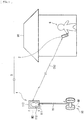
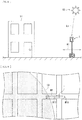
- FIG. 1 schematically illustrates a schematic configuration example of a mobile body system (mobile body system 3) according to an embodiment of the present disclosure.
- the mobile body system 3 includes a mobile body 1 serving as a so-called "Telepresence Robot" and an operation device (information processor) 2 for this mobile body 1.
- the operation device 2 is operated by a user 9 of the mobile body system 3 (the mobile body 1).
- the mobile body 1 and the operation device 2 each have a function of performing mutual communication (wireless communication C12 in this example), which allows for exchange (transmission and reception) of various kinds of information (data) between the mobile body 1 and the operation device 2.
- each of a first information processing method and a first information processing program according to embodiments of the present disclosure is embodied by the mobile body 1 according to the present embodiment.
- each of a second information processing method and a second information processing program according to embodiments of the present disclosure is embodied by the operation device 2 according to the present embodiment.
- the mobile body 1 is a robot that is allowed to move itself by a movement mechanism 10.
- the mobile body 1 includes, for example, the movement mechanism 10, a microphone 111, a display unit 112, an imaging unit 113, and a connection unit 19.
- the movement mechanism 10 is, for example, a mechanism that moves the mobile body 1 itself, as indicated by a dashed arrow M1 in FIG. 1 .
- the movement mechanism 10 includes two wheel mechanisms and a driving mechanism (such as a motor) that drives the wheel mechanisms. Accordingly, the mobile body 1 is movable forward and backward, for example (refer to the arrow M1).
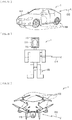
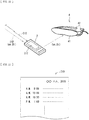
- any of other configurations may be used as the movement mechanism 10 in the mobile body 1, as illustrated in each of FIGs. 2A, 2B, and 2C . It is to be noted that this also applies to various modification examples, etc. to be described later.
- the movement mechanism 10A includes four wheel mechanisms and a driving mechanism that drives the wheel mechanisms.
- the mobile body 1 includes an automobile (a four-wheeled vehicle having an automatic operation function).
- a movement mechanism 10B includes a bipedal walking mechanism and a driving mechanism that drives the bipedal walking mechanism.
- the mobile body 1 includes a bipedal walking humanoid robot.
- a movement mechanism 10C includes a flying mechanism using four propellers and a driving mechanism for the propellers.
- the mobile body 1 includes an unmanned aerial vehicle.
- the mobile body 1 is not limited to the examples illustrated in FIGs. 2A, 2B, and 2C , and may include, for example, a two-wheeled vehicle, a three-wheeled vehicle, a quadrupedal walking animal-type robot, a flight vehicle using a jet engine, etc.
- the microphone 111 illustrated in FIG. 1 is a member that converts sound into an electric signal, and in this example, the microphone 111 is disposed in a frame region of the display unit 122 to be described later. Any of various types of microphones may be used as such a microphone 111.
- the display unit 112 is a member used to display various kinds of information, and is configured using a display by any of various kinds of systems (such as a liquid crystal display and an organic EL (Electro Luminescence) display).
- This display unit 112 is allowed to display, for example, a face of the user 9, etc., as illustrated in FIG. 1 .
- sound inputted to the microphone 111 is checked against information held in an external server (for example, an external server 8 to be described later) to display an image (such as the face of the user 9) linked to a person (such as the user 9) who utters the sound.
- an external server for example, an external server 8 to be described later
- the display unit 112 may be provided with the following height adjustment function, for example.
- face recognition processing may be performed on the basis of image information taken by the imaging unit 113 to be described later to automatically adjust a height of the display unit 112 in accordance with a position (height) of a recognized face (for example, refer to a dashed arrow M2 in FIG. 1 ).
- the imaging unit 113 is a member that performs an imaging operation to obtain captured image data Di to be described later.
- the imaging unit 113 is disposed in the frame region of the display unit 112 in this example.
- Such an imaging unit 113 is configured using, for example, a CCD (Charge Coupled Device) or CMOS (Complementary Metal Oxide Semiconductor) imaging element (image sensor), etc.
- connection unit 19 is a member that connects the movement mechanism 10 to the display unit 112, as illustrated in FIG. 1 , and includes a stick-like member extending in a vertical direction.
- the operation device 2 serves as an operation device (operation terminal) for the mobile body 1, as described above, and corresponds to a specific example of an "information processor" in the present disclosure.
- the operation device 2 is operated by, for example, the user 9, etc., at a residence 90.
- Such an operation device 2 includes, for example, a mobile device such as a smartphone, a mobile phone, and a dedicated terminal.
- FIG. 3 illustrates a block diagram of each of the mobile body 1 and the operation device 2 as the specific configuration example of the mobile body system 3.
- the mobile body 1 includes a storage unit 12, a wireless communication unit 13, a position detector 141, an anomaly detector 142, a battery 16, an information generator 17, and a controller 18, in addition to the movement mechanism 10, the microphone 111, the display unit 112, and the imaging unit 113 mentioned above in FIG. 1 .
- each of the electrical signal obtained by the microphone 111 and the captured image data Di obtained by the imaging unit 113 is inputted to the controller 18 to be described later, as illustrated in FIG. 3 .
- display image data to be used in the display unit 112 is supplied from the controller 18 to the display unit 112.
- the storage unit 12 is a portion that stores (holds) various kinds of data, and input-output processing of these data is performed between the storage unit 12 and the controller 18 on an as-needed basis.
- a storage unit 12 includes, for example, any of various kinds of recording media including a magnetic recording medium, an optical storage medium, and semiconductor memories such as a ROM (Read Only Memory) and a RAM (Random Access Memory).
- the wireless communication unit 13 has a function of performing wireless communication C12 with a wireless communication unit 23 to be described later in the operation device 2, as illustrated in FIG. 3 .
- This wireless communication unit 13 also has, for example, a function of performing wireless communication C18 with an external device (an external server 8 in this example) other than the operation device 2, as illustrated in FIG. 3 .
- external information 181 to be described later, etc. may be supplied from the external server 8 to the wireless communication unit 13 through the wireless communication C18.
- the wireless communication unit 13 corresponds to a specific example of a "first wireless communication unit" in the present disclosure.
- wireless communications C12 and C18 include communication systems such as wireless LAN (Local Area Network), Bluetooth (registered trademark), TransferJet (registered trademark), and NFC (Near Field Communication). Note that the wireless communications C12 and C18 may be performed with use of any other communication system without limiting to these communication systems.
- wireless LAN Local Area Network
- Bluetooth registered trademark
- TransferJet registered trademark
- NFC Near Field Communication
- the position detector 141 is a portion that detects whether the mobile body 1 is located in an area (for example, a wireless communication area 93 to be described later) where the wireless communication C12, the wireless communication C18, etc. are executable, as described in detail later. It is to be noted that such position detection is performed with use of, for example, a GPS (Global Positioning System) function.
- GPS Global Positioning System
- the anomaly detector 142 is a portion that compares a same point between the captured image data Di obtained at a present time by the imaging unit 113 and the captured image data Di obtained at a past time by the imaging unit 113 to detect a predetermined anomaly (presence or absence of an anomaly state) to be described later, as described in detail later.
- the battery 16 serves as a power source of the mobile body 1 (supplies electric power Pb to each block in the mobile body 1), and includes any of various system cells.
- a solar cell 160 that generates electric power with use of sunlight Ls is used as a cell included in the battery 16, as illustrated in FIG. 3 .
- the battery 16 may be configured using any other kind of cell (such as a primary cell and a secondary cell) without limiting to the foregoing cell. Specifically, for example, a lithium-ion cell, a fuel cell, etc. may be used.
- the information generator 17 is a portion that generates route guidance information Ir1 for use in moving the mobile body 1 by the movement mechanism 10, on the basis of external information received from outside (such as the operation device 2 or the external server 8) by the wireless communication unit 13, as described in detail later.
- the external information include inherent information (the external information 121) held in the operation device 2 and information (the external information 181) held in the external server 8.
- examples of the inherent information (the external information 121) in the operation device 2 include information (GPS information) regarding a GPS in the operation device 2, search history information in the operation device 2, etc., as described in detail later.
- the inherent information is not limited thereto, and may include other kinds of information to be described later. It is to be noted that an operation of generating the route guidance information Ir1 in the information generator 17 is described in detail later.
- the information generator 17 corresponds to a specific example of a “first information generator” in the present disclosure.
- the route guidance information Ir1 corresponds to a specific example of "first information” in the present disclosure.
- the controller 18 performs various kinds of control, processing, etc. in the mobile body 1. Specifically, the controller 18 performs control, etc. of operations in respective blocks (such as the movement mechanism 10, the microphone 111, the display unit 112, the imaging unit 113, the storage unit 12, the wireless communication unit 13, the position detector 141, the anomaly detector 142, the battery 16, and the information generator 17) in the mobile body 1, as illustrated in FIG. 3 . To give an example, the controller 18 has a function of performing control of an operation of moving the mobile body 1 by the movement mechanism 10 on the basis of a control signal CTL. Such a controller 18 includes, for example, a microcomputer or the like using a CPU (Central Processing Unit), a ROM, a RAM, etc. It is to be noted that a control operation, etc. in the controller 18 is described in detail later.
- CPU Central Processing Unit
- the controller 18 corresponds to a specific example of a "movement controller” in the present disclosure.
- the controller 18 and the information generator 17 correspond to specific examples of a "computer in a mobile body” in the present disclosure.
- the operation device 2 includes a user interface unit (information input-output unit) 21, a storage unit 22, the wireless communication unit 23, an information generator 27, and a controller 28, as illustrated in FIG. 3 .
- the user interface unit 21 includes an information input unit 211 and a display unit 212 in this example. Note that, the user interface unit 21 may be configured using any other member in addition to (or in place of) the information input unit 211 and the display unit 212.
- the information input unit 211 is a portion that receives various kinds of information (input information Ii) (a portion used to obtain the input information Ii) in accordance with an operation by the user 9.
- Such an information input unit 211 is configured using, for example, a predetermined keyboard, a predetermined button, a predetermined touch panel, etc.
- the display unit 212 is a member used to display various kinds of information, and is configured using a display by any of various kinds of systems. Specifically, for example, the route guidance information Ir1 generated in the foregoing information generator 17, route guidance information Ir2 generated in the information generator 27 to be described later, etc. are displayed on this display unit 212, as illustrated in FIG. 3 .
- the storage unit 22 is a portion that stores (holds) various kinds of data, and performs input-output processing of these data (for example, held information Ih to be described later) with the controller 28 on an as-needed basis.
- Such a storage unit 22 includes any of various kinds of recording media, as with the foregoing storage unit 12.
- the wireless communication unit 23 has a function of performing the wireless communication C12 with the foregoing wireless communication unit 13 in the mobile body 1, as illustrated in FIG. 3 . This makes it possible for the wireless communication unit 23 to receive the external information 112 from the mobile body 1 and transmit the external information 121 to the mobile body 1, as described above. It is to be noted that the wireless communication unit 23 corresponds to a specific example of a "second wireless communication unit" in the present disclosure.
- the information generator 27 is a portion that generates the route guidance information Ir2 for use in moving the mobile body 1 by the movement mechanism 10, on the basis of various kinds of information, as be described in detail later.
- the various kinds of information include one or more pieces of information out of received information (the external information 112) received from the mobile body 1 by the wireless communication unit 23, input information Ii inputted from the user 9 in the user interface unit 21 (the information input unit 211), and the held information Ih held in the storage unit 22, as illustrated in FIG. 3 .
- the route guidance information Ir2 is generated on the basis of the external information 112, the input information Ii, and the held information Ih.
- examples of the external information 121 include movement history information in the mobile body 1, as described in detail later.
- Examples of the input information Ii include search history information (history information of information search executed by an operation by the user 9) in the operation device 2, as described later.
- Examples of the held information Ih include information (GPS information) regarding the GPS in the operation device 2, as described later.
- the route guidance information Ir2 may be generated with use of any other kind of information to be described later without limiting to these kinds of information. It is to be noted that an operation of generating the route guidance information Ir2 in the information generator 27 is described in detail later.
- Such an information generator 27 corresponds to a specific example of a “second information generator” in the present disclosure.
- the route guidance information Ir2 corresponds to a specific example of "second information” in the present disclosure.
- the controller 28 performs various kinds of control, processing, etc. in the operation device 2. Specifically, the controller 28 performs control, etc. of operations in respective blocks (such as the user interface unit 21, the storage unit 22, the wireless communication unit 23, and the information generator 27) in the operation device 2, as illustrated in FIG. 3 . As with the foregoing controller 18, such a controller 28 includes, for example, a microcomputer or the like, as illustrated in FIG. 3 . It is to be noted that a control operation, etc. in the controller 28 is described in detail later.
- controller 28 and the information generator 27 correspond to specific examples of a "computer in an information processor" in the present disclosure.
- the user 9 performs a remote operation (an operation using the wireless communication C12) on the mobile body 1 present in a remote site with use of the operation device 2 to provide a situation that the user 9 is virtually present at the remote site, as illustrated in FIGs. 1 and 3 .
- a remote operation an operation using the wireless communication C12
- the mobile body 1 performs a movement operation in accordance with a predetermined route (refer to the dashed allow M1 in FIG. 1 ). This route is set (selected and determined) by the user 9 on the basis of the route guidance information generated by a technique described below.
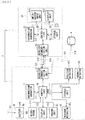
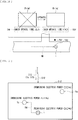
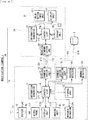
- FIG. 4 illustrates a flow chart of an operation example in the mobile body 1 and the operation device 2 in time sequence in a case where the route guidance information Ir1 is generated in the mobile body 1 (the information generator 17). It is to be noted that reference numerals attached beside some of steps in FIG. 4 each indicate a block (refer to FIG. 3 ) that mainly performs a processing operation in the step in the mobile body 1 or the operation device 2.
- predetermined software application software
- the user 9 performs a predetermined log-in operation (step S101 in FIG. 4 ).
- the user 9 performs a predetermined operation on the operation device 2 (for example, inputting of information such as a user name and a password in the information input unit 211) to perform such a log-in operation on the mobile body 1 from the operation device 2 with use of the wireless communication C12.
- a predetermined operation on the operation device 2 for example, inputting of information such as a user name and a password in the information input unit 211
- a response signal with respect to such a log-in operation is transmitted from the mobile body 1 to the operation device 2 with use of the wireless communication C12 (step S102).
- the user interface unit 21 (the information input unit 211 and the display unit 212) in the operation device 2 is used to set (select and determine) a move mode Mm (a mode used in a case where the mobile body 1 performs a movement operation) to be described later by the user 9 (step S103).
- mode setting information Im is information indicating the set move mode Mm, as described in detail later.
- the information generator 17 in the mobile body 1 obtains external information (various kinds of information to be described later) from outside of the mobile body 1 (step S105), as described in detail later. Specifically, in this example, the mobile body 1 receives the external information 121, the external information 181, etc. from the operation device 2, the external server 8, etc. with use of the wireless communication C12 and C18, etc. to obtain such external information. Thereafter, the information generator 17 generates the foregoing route guidance information Ir1 on the basis of the obtained (received) external information (step S106).
- the thus-generated route guidance information Ir1 is transmitted from the mobile body 1 to the operation device 2 with use of the wireless communication C12 (step S107).
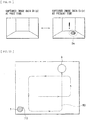
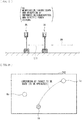
- the display unit 212 in the operation device 2 displays one or a plurality of route plans (two routes R1 and R2 in this example) for an actual movement operation in the mobile body 1 on the basis of the received route guidance information Ir1 (step S108), as illustrated in FIG. 7 .
- the route R1 in this example is a course from a start point Ps to an end point Pg1
- the route R2 is a course from the start point Ps to an end point Pg2 (refer to FIG. 7 ).
- the route guidance information Ir1 generated by the information generator 17 is provided to the user 9 through the wireless communication C12.
- the routes R1 and R2 are displayed while being superimposed on map information Imap to be described later. This makes the respective routes R1 and R2 to be easily understood by the user 9 (this makes it possible to figure out the respective routes R1 and R2 at first glance).
- a route (an actual movement route in the mobile body 1) is determined (selected) by the user 9 with use of the user interface unit 21 (the information input unit 211 and the display unit 212) in the operation device 2 (step S109). Specifically, in a case of the example illustrated in FIG. 7 , the user 9 selects one route from the foregoing routes R1 and R2 to determine the actual route. Thereafter, each of route information as the external information 121 and a movement instruction signal is transmitted from the operation device 2 to the mobile body 1 with use of the wireless communication C12 (step S110).
- This route information means information indicating the determined route.
- the movement instruction signal means a signal used to provide an instruction for movement to the movement mechanism 10 (the controller 18) of the mobile body 1.
- the mobile body 1 that has received the route information and the movement instruction signal starts its own movement operation on the basis of these pieces of information (step S111). Specifically, the movement mechanism 10 starts a movement operation in accordance with the control signal CTL supplied from the controller 18 to the movement mechanism 10. Accordingly, in the movement mechanism 10, the movement operation of the mobile body 1 is performed on the basis of the route determined by the user 9. Thus, the operations illustrated in FIG. 4 are completed.
- the route guidance information Ir1 for use in moving the mobile body 1 by the movement mechanism 10 is generated on the basis of the external information (such as the external information 121 and the external information 181) received from outside. This makes it possible to easily create the route guidance information Ir1 in the mobile body 1, as described later.
- operations from selection of the move mode Mm (step S103) to selection of the actual route (step S109) are performed after the log-in operation (step S101); however, respective operations may be performed in any other order without limiting to the foregoing order. Specifically, for example, operations from selection of the move mode Mm (step S103) to selection of the actual route (step S109) may be performed before the log-in operation (step S101).
- FIG. 5 illustrates a flow chart of an operation example in the mobile body 1 and the operation device 2 in time sequence in a case where the route guidance information Ir2 is generated in the operation device 2 (the information generator 27). It is to be noted that reference numerals attached beside some of steps in FIG. 5 each indicate a block (refer to FIG. 3 ) that mainly performs a processing operation in the step in the mobile body 1 or the operation device 2.
- predetermined software is downloaded in each of the operation device 2 and the mobile body 1, and thereafter, the user 9 performs a predetermined log-in operation (step S201 in FIG. 5 ) similarly to the foregoing step S101.
- a predetermined log-in operation step S201 in FIG. 5
- position information Ip at a present time of the mobile body 1 is transmitted from the mobile body 1 to the operation device 2 with use of the wireless communication C12 (step S202). It is to be noted that such position information Ip of the mobile body 1 may be stored in, for example, the external server 8 on an as-needed basis, and the position information Ip may be transmitted from the external server 8 to the operation device 2 via the mobile body 1.
- the user interface unit 21 (the information input unit 211 and the display unit 212) in the operation device 2 is used to set (select and determine) the foregoing move mode Mm by the user 9 (step S203).
- the information generator 27 in the operation device 2 obtains the foregoing various kinds of information (for example, the external information 112, the input information Ii, the held information Ih, etc.) (step S204), as described in detail later. Thereafter, the information generator 27 generates the foregoing route guidance information Ir2 on the basis of the various kinds of information obtained (step S205).
- the information generator 27 generates the foregoing route guidance information Ir2 on the basis of the various kinds of information obtained (step S205).
- the display unit 212 in the operation device 2 displays one or a plurality of route plans for an actual movement operation in the mobile body 1 on the basis of the generated route guidance information Ir2 (step S206) similarly to the foregoing step S108.
- the route guidance information Ir2 generated by the information generator 27 is provided to the user 9.
- a route is determined (selected) by the user 9 with use of the user interface unit 21 (the information input unit 211 and the display unit 212) in the operation device 2 (step S207) similarly to the foregoing step S109.
- each of the foregoing route information as the external information 121 and the foregoing movement instruction signal is transmitted from the operation device 2 to the mobile body 1 with use of the wireless communication C12 (step S208).
- the mobile body 1 that has received the route information and the movement instruction signal starts its own movement operation on the basis of these pieces of information (S209).
- the movement mechanism 10 starts the movement operation in accordance with the control signal CTL supplied from the controller 18 to the movement mechanism 10. Accordingly, in the movement mechanism 10, the movement operation of the mobile body 1 is performed on the basis of the route determined by the user 9. Thus, the operations illustrated in FIG. 5 are completed.
- the route guidance information Ir2 for use in moving the mobile body 1 by the movement mechanism 10 is generated on the basis of one or more pieces of information out of the external information 121 received from the mobile body 1, the input information Ii inputted from the user 9, and the held information Ih held in the storage unit 22. This makes it possible to easily create the route guidance information Ir2 in the operation device 2, as described later.
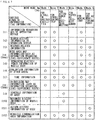
- FIG. 6 illustrates a summary of examples of correspondence relationships between kinds of the move modes Mm and various kinds of information to be applied in a correspondence table.
- a section indicated by "°" in FIG. 6 means a section where any of these correspondence relationships is present.
- the move mode Mm a plurality of kinds of modes (six kinds, i.e., the following "Mode 1" to "Mode 6" in this example as illustrated in FIG. 6 ) are provided. Note that, for example, other kinds of move modes Mm to be described later may be provided in addition to (or in place of) the six kinds.
- tags information mainly the following twelve kinds of information (It1 to It12) are used, as illustrated in FIG. 6 .
- these various kinds of information are used for generation of the route guidance information Ir1 and Ir2 in accordance with the move mode Mm set by a user.
- Information It1 regarding the GPS of the operation device 2 is position information, etc. of the operation device 2 obtained with use of the GPS function in the operation device 2. It is to be noted that the information It1 regarding the GPS of the operation device 2 may include movement history information (position information in time sequence) of the operation device 2.
- the search history information It2 in the operation device 2 is information of a history of searches of various kinds of information conducted by the user (search history information of the user 9 using the Internet) with use of the user interface unit 21 in the operation device 2.
- the search history information It2 may be also regarded as information (preference information) that reflects preference, interests, etc. of the user 9.
- Weather-related information It3 is information related to weather (information such as weather, temperature, humidity, an amount of sunlight, an amount of ultraviolet radiation, various kinds of advisories and warnings related to weather). It is to be noted that, for example, the weather-related information It3 of a region where the mobile body 1 is present at the point in time may be automatically obtained by a combination of the weather-related information It3 and the foregoing position information Ip of the mobile body 1.
- Wide area map information It4 is information indicating a wide area map.
- Examples of the wide area map information It4 may include information such as a road width, a gradient, a bending degree, and a congestion degree of each road (each route), information indicating presence or absence of a level difference in each route (information regarding a level-difference route) as illustrated in, for example, FIG. 7 mentioned above (reference numerals Pd1 and Pd2), and the like.
- Remaining electric power information It5 of the mobile body 1 is information indicating a remaining amount of electric power Pb stored in the battery 16 of the mobile body 1, and, for example, an indication of the remaining amount of the electric power Pb is expressed in percentage (%), as described later in FIG. 15 .
- Evaluation information It6 by other users is information indicating various kinds of evaluation contents by other users, and is obtained from, for example, a previously informed inquiry destination, etc. via a cloud platform (such as the external server 8).
- the evaluation information It6 may include evaluation on actually used movement routes in various kinds of facilities (such as a museum) by other users (such as whether the movement routes are satisfactory). In such a case, it is possible to use (reflect) the evaluation information It6 for generation of route suggestion information in a case where another user who subsequently logs in uses the mobile body system 3.
- Time information It7 is information indicating a time at the point (a present time). It is to be noted that, for example, in a case where the mobile body 1 is abroad (in a foreign country), the time information It7 in a region where the mobile body 1 is present at the point in time may be automatically obtained by a combination of the time information It7 and the foregoing position information Ip of the mobile body 1. Moreover, various kinds of time information regarding a location of the mobile body 1 (for example, time information regarding various kinds of facilities) may be also obtained.
- In-building map information It8 is information indicating a map inside any of various kinds of buildings such as various kinds of facilities mentioned above, offices, buildings to be guarded in the foregoing "Mode 4", and the like.
- Examples of the in-building map information It8 may include information such as a road width, a gradient, a bending degree, and a congestion degree, and presence or absence of a level difference in each route.
- Schedule information It9 of the user 9 is information indicating a schedule (for example, a hourly task schedule in one day, etc.) of the user 9 (for example, refer to FIG. 11 to be described later).
- Movement history information It10 of the mobile body 1 is information indicating a movement history of the mobile body 1, and is obtained with use of the GPS function in the mobile body 1.
- Action history information It11 of the user 9 is information indicating an action history of the user 9, and is obtained with use of, for example, the captured image data Di obtained in the mobile body 1, the GPS function in the mobile body 1, etc., as described in detail later. It is to be noted that the action history information It11 of the user 9 may be regarded as information indicating an action tendency of the user 9 (predicting future action).
- Wireless communication area information It12 is information indicating a range (region) of an area (a wireless communication area 93 to be described later) where the wireless communications C12 and C18, etc. used in the mobile body 1 are executable. It is to be noted that the wireless communication area information It12 in a region where the mobile body 1 is located at the point in time (a peripheral region of the position of the mobile body 1) may be automatically obtained by a combination of the wireless communication area information It12 and the foregoing position information Ip of the mobile body 1.
- examples of the foregoing external information 121 include the following information out of these various kinds of information (It1 to It12).
- the examples include the information It1 regarding the GPS of the operation device 2, the search history information It2, the weather-related information It3, the wide area map information It4, the evaluation information It6 by the other users, the time information It7, the in-building map information It8, the schedule information It9, the wireless communication area information It12, etc.
- each of these kinds of information corresponds to a specific example of "external information" in the present disclosure.
- the information It1 regarding the GPS of the operation device 2 correspond to specific examples of “inherent information (held in an operation device)" in the present disclosure. It is to be noted that these kinds of “external information” are obtained in, for example, the mobile body 1, and thereafter are held in the storage unit 12 in the mobile body 1.
- examples of the foregoing input information Ii in the operation device 2 include the search history information It2 and the foregoing mode setting information Im.
- each of these kinds of information corresponds to a specific example of "input information" in the present disclosure.
- Examples of the foregoing held information Ih in the operation device 2 include the information It1 regarding the GPS of the operation device 2, the search history information It2, and the schedule information It9. In other words, each of these kinds of information corresponds to a specific example of "held information" in the present disclosure.
- Examples of the foregoing external information 112 include the remaining electric power information It5 of the mobile body 1, the movement history information It10 of the mobile body 1, the action history information It11 of the user 9, and the foregoing position information Ip of the mobile body 1.
- each of these kinds of information corresponds to a specific example of "received information" in the present disclosure. It is to be noted that each of the input information Ii, the held information Ih, and the external information 112 is obtained in the operation device 2, and thereafter is held in the storage unit 22 in the operation device 2.
- This “Mode 1" is the move mode Mm used in a case where, in place of the user 9, the mobile body 1 strolls in any of various kinds of facilities.
- the route guidance information Ir1 or Ir2 is generated in the following manner in consideration of, for example, a case where a certain user 9 performs a log-in operation on the mobile body 1 mounted in an aquarium with use of the operation device 2 through the wireless communication C12. It is to be noted that in this case, for example, the user 9 receives a log-in ID (identification) and a password of the mobile body 1 mounted in the aquarium by e-mail, etc. on the basis of information of member registration previously conducted by the user 9.
- the user 9 first selects and determines the "Mode 1" from a plurality of kinds of move modes Mm with use of the operation device 2 as described above with reference to FIGs. 4 and 5 . It is to be noted that the "Mode 1" may be automatically selected with use of the position information Ip (such as being present in the aquarium) of the mobile body 1, etc.
- the information generator 17 in the mobile body 1 or the information generator 27 in the operation device 2 generates the route guidance information Ir1 or the route guidance information Ir2 on the basis of the foregoing examples of various kinds of information (It1 to It3, It5 to It8, and It12) applied to the "Mode 1".
- the route guidance information Ir1 or Ir2 is automatically generated with use of, for example, the following tag information.
- the route guidance information Ir1 or Ir2 is automatically generated in consideration of, for example, preference information of the user 9 obtained by the search history information It2, information regarding weather, temperature, etc. in a region around the aquarium obtained by the weather-related information It3, magnitude of the electric power Pb obtained by the remaining electric power information It5, evaluation by other users on respective spots in the aquarium obtained by the evaluation information It6, a closing time of the aquarium, a starting time of each event in the aquarium, etc. obtained on the basis of the time information It7, and the like.
- the display unit 212 of the operation device 2 displays route plans (two routes R1 and R2 in this example) on the basis of the generated route guidance information Ir1 or Ir2, and the in-building map information It8 (map information Imap in the aquarium in this example), as illustrated in FIG. 7 .
- the user 9 selects and determines one plan from the route plans with use of the operation device 2, as described above in FIGs. 4 and 5 .
- a movement operation of the mobile body 1 starts in accordance with the determined route (movement route).
- the information generator 17 or the information generator 27 desirably generates the route guidance information Ir1 or IR2 with consideration also given to the following points.
- the information generator 17 or 27 desirably generates the route guidance information Ir1 or Ir2 while avoiding a route having a level difference (a level difference route).
- the route R2 that is one of the routes R1 and R2 is generated with use of the in-building map information It8 (Imap) so as to avoid, for example, level difference regions indicated by reference numerals Pd1 and Pd2.
- the information generators 17 or 27 desirably generates the route guidance information Ir1 or IR2 with consideration also given to gradient magnitude, a road width, etc. in each route.
- the reason for this is that in a case of the mobile body 1 including any of such movement mechanisms 10, 10A, 10B, etc., also considering these kinds of information makes it possible to further improve convenience of the user 9, unlike a case of the mobile body 1 including the movement mechanism 10C (refer to FIG. 2C ) including a flying mechanism. In other words, this makes an actual movement operation of the mobile body 1 smooth, and prevents a malfunction caused by a fall, etc. of the mobile body 1.
- the controller 18 in the mobile body 1 desirably controls an operation of the movement mechanism 10 as follows. That is, the controller 18 controls the movement mechanism 10 with use of the position information Ip of the mobile body 1, the weather-related information It3, the time information It7, etc. mentioned above so as to cause the mobile body 1 to preferentially perform a movement operation outdoors (outside a building 91) during daylight hours when sunlight from the sun 92 is obtained. In such a case, it is possible to efficiently store electric power with use of the solar cell 160 in the movement operation during daylight hours, thereby suppressing shortage of the remaining amount of the electric power Pb in the mobile body 1.
- the controller 18 desirably controls the operation of the movement mechanism 10 as follows. That is, the controller 18 controls the movement mechanism 10 so as to cause the mobile body 1 to move to inside of the wireless communication area 93.
- the movement mechanism 10 is controlled so as to cause the mobile body 1 to start moving backward into the wireless communication area 93, as indicated by an arrow M11 in FIG. 9 .
- the movement mechanism 10 is controlled so as to cause the mobile body 1 to start U-turn movement into the wireless communication area 93, as indicated by an arrow M12 in FIG. 9 .
- the mobile body 1 itself to automatically avoid a situation that the wireless communications C12, C18, etc. with the mobile body 1 are not executable to make the mobile body 1 inoperable, which makes it possible to further improve convenience of the user 9.
- the route guidance information Ir1 or Ir2 may be automatically regenerated to be provided to the user 9 again.
- the controller 18 may control the movement mechanism 10 so as to cause the mobile body 1 to automatically stop its movement and so as to provide notification of such movement stop to the operation device 2 (the user 9). In such a case, it is possible to prevent the mobile body 1 from moving to outside of the wireless communication area 93.
- data of audio information regarding respective spots and respective events may be transmitted to the operation device 2 through, for example, the wireless communications C18 and C12, etc., and may be outputted to the user with use of a speaker, etc., in the operation device 2.
- This enhances realism as if the user 9 is actually being in the facilities, which makes it possible to further improve convenience.
- This “Mode 2" is the move mode Mm used in a case where, in place of the user 9, the mobile body 1 strolls during a trip to any of various regions (domestic or foreign regions).
- the route guidance information Ir2 or Ir2 is generated in the following manner in consideration of, for example, a case where a certain user 9 performs a log-in operation on the mobile body 1 mounted in a given region (domestic or foreign tourist spot) with use of the operation device 2 through the wireless communication C12. It is to be noted that, for example, the log-in operation herein is available on a membership registration basis or a chargeable basis.
- the user 9 first selects and determines the "Mode 2" from a plurality of kinds of move modes Mm with use of the operation device 2, as described above in FIGs. 4 and 5 . It is to be noted that the "Mode 2" may be automatically selected with use of the position information Ip of the mobile body 1, etc.
- the information generator 17 in the mobile body 1 or the information generator 27 in the operation device 2 generates the route guidance information Ir1 or the route guidance information Ir2 on the basis of the foregoing examples of various kinds of information (It1 to It8, and It12) applied to the "Mode 2".
- the route guidance information Ir1 or Ir2 is automatically generated with use of, for example, the following tag information.
- the route guidance information Ir1 or Ir2 is automatically generated in consideration of, for example, preference information of the user 9 obtained by the search history information It2, information regarding weather, temperature, etc. in a corresponding region obtained by the weather-related information It3, magnitude of the electric power Pb obtained by the remaining electric power information It5, evaluation by other users on respective spots in the region obtained by the evaluation information It6, a closing time of each of the spots, a starting time of each event in the region etc. obtained on the basis of the time information It7, and the like.
- this "Mode 2” information about whether the user 9 himself has actually been to a specific region obtained by the information It1 regarding the GPS of the operation device 2, the search history information It2, etc. is reference information useful to automatically generate the route guidance information Ir1 or Ir2.
- the display unit 212 of the operation device 2 displays route plans on the basis of the generated route guidance information Ir1 or Ir2, and the wide area map information It4 or the in-building map information It8 in a manner similar to the foregoing case of the "Mode 1".
- the user 9 selects and determines one plan from the route plans with use of the operation device 2, as described above in FIGs. 4 and 5 .
- a movement operation of the mobile body 1 starts in accordance with the determined route (movement route).
- the head mount display 4 includes a display unit 41 having a shape corresponding to a portion of right and left eyes of the user 9 and an ear-mounted portion having a shape corresponding to a portion of right and left ears of the user 9. Further, for example, it is possible to view, on the display unit 41, captured images in various regions obtained by the mobile body 1 on the basis of the captured image data Di transmitted from the mobile body 1 to the head mount display 4, and the like via the operation device 2, as illustrated in FIG. 10 .
- the captured images are desirably three-dimensional images (3D images).
- stereo audio data, etc. obtained by the microphone 111 of the mobile body 1 may be supplied to a speaker, etc. of the head mount display 4 via the operation device 2.
- the user 9 may use a fee payment function (such as a payment function using various kinds of electronic money) to pay a fee for such a virtual trip experiment service using the head mount display 4.
- a fee payment function such as a payment function using various kinds of electronic money
- This "Mode 3" is the move mode Mm used in a case where, in place of the user 9, the mobile body 1 attends a business meeting, a described above.
- the user 9 located in a remote site for example, a branch office, a business office, etc. separated by a distance or the residence 90 of the user 9, etc.
- a log-in operation on the mobile body 1 mounted in a company for example, a headquarter, etc.
- the route guidance information Ir1 or Ir2 is generated in the following manner It is to be noted that, for example, the log-in operation herein is available on a membership registration basis or a chargeable basis.
- the user 9 first selects and determines the "Mode 3" from a plurality of kinds of move modes Mm with use of the operation device 2, as described above in FIGs. 4 and 5 . It is to be noted that the "Mode 3" may be automatically selected with use of the position information Ip of the mobile body 1, etc.
- the information generator 17 in the mobile body 1 or the information generator 27 in the operation device 2 generates the route guidance information Ir1 or the route guidance information Ir2 on the basis of the foregoing examples of various kinds of information (It5, It7 to It10, and It12) applied to the "Mode 3".
- the route guidance information Ir1 or Ir2 is automatically generated with use of, for example, the following tag information.
- the route guidance information Ir1 or Ir2 is automatically generated in consideration of, for example, magnitude of electric power Pb obtained by the remaining electric power information It5, information regarding a present time obtained by the time information It7, a business schedule for the day of the user 9 (for example, time and place of a meeting to be attended, etc.) obtained by the schedule information It9, and the like.
- the controller 18 in the mobile body 1 controls the movement mechanism 10 so as to cause the mobile body 1 to automatically move in accordance with, for example, the preset schedule information It9 of the user 9.
- the display unit 212 of the operation device 2 displays route plans on the basis of the generated route guidance information Ir1 or Ir2, and the in-building map information It8 in a manner similar to the foregoing case of the "Mode 1".
- the user 9 selects and determines one plan from the route plans with use of the operation device 2, as described above in FIGs. 4 and 5 .
- a movement operation of the mobile body 1 starts in accordance with the determined route (movement route).
- the route guidance information Ir1 or Ir2 is automatically generated with use of, for example, useful information such as the schedule information It9 of the user 9, and the movement history information It10 of the mobile body 1, which achieves the following effect, for example. That is, for example, it is possible to easily obtain suitable route guidance information Ir1 or Ir2 without selecting whether or not to use complicated tag information, etc., thereby significantly improving convenience of the user 9.
- This “Mode 4" is the move mode Mm used in a case where, in place of the user 9, the mobile body 1 patrols in a building, etc. as a security guard. In other words, in the “Mode 4", the mobile body 1 serves as a security guard robot.
- the user 9 located in a remote site performs a log-in operation on the mobile body 1 mounted in a building to be guarded with use of the operation device 2 through the wireless communication C12 is considered.
- the route guidance information Ir2 or Ir2 is generated in the following manner. It is to be noted that, for example, the log-in operation herein is available on a membership registration basis or a chargeable basis.
- the user 9 first selects and determines the "Mode 4" from a plurality of kinds of move modes with use of the operation device 2. It is to be noted that the "Mode 4" may be automatically selected with use of the position information Ip of the mobile body 1, etc.
- the information generator 17 in the mobile body 1 or the information generator 27 in the operation device 2 generates the route guidance information Ir1 or the route guidance information Ir2 on the basis of the foregoing examples of various kinds of information (It5, It7, It8, and It12) applied to the "Mode 4".
- the route guidance information Ir1 or Ir2 is automatically generated with use of, for example, the following tag information.
- the route guidance information Ir1 or Ir2 is automatically generated in consideration of, for example, magnitude of the electric power Pb obtained by the remaining electric power information It5, information regarding a present time obtained by the time information It7, and the like.
- the display unit 212 of the operation device 2 displays route plans on the basis of the generated route guidance information Ir1 or Ir2, and the in-building map information It8 in a manner similar to the foregoing case of the "Mode 1".
- the user 9 selects and determines one plan from the route plans with use of the operation device 2, as described above in FIGs. 4 and 5 .
- a movement operation of the mobile body 1 starts in accordance with the determined route (movement route).
- the foregoing anomaly detector 142 in the mobile body 1 may detect an anomaly (presence or absence of an anomaly state) in a building under security in the following manner, for example.
- the anomaly detector 142 may compare a same point between captured image data Di(n) at the point in time (a present time) obtained by the imaging unit 113 and captured image data Di(p) at a past time obtained by the imaging unit 113 to detect such an anomaly.
- the anomaly detector 142 may compare a same point between captured image data Di(n) at the point in time (a present time) obtained by the imaging unit 113 and captured image data Di(p) at a past time obtained by the imaging unit 113 to detect such an anomaly.
- This “Mode 5" is the move mode Mm used in a case where, in place of the user 9, the mobile body 1 configured as a unmanned aerial vehicle (for example, refer to FIG. 2C mentioned above) takes an aerial tour.
- this "Mode 5" corresponds to an application in which the mobile body 1 as a unmanned aerial vehicle strolls in air in any of various kinds of facilities or during a trip in the "Mode 1" and the “Mode 2" mentioned above.
- the route guidance information Ir1 or IR2 is generated in the following manner in consideration of, for example, a case where a certain user 9 performs a log-in operation on the mobile body 1 mounted in any of the various kinds of facilities and various kinds of regions mentioned above with use of the operation device 2 through the wireless communication C12. It is to be noted that, for example, the log-in operation herein is available on a membership registration basis or a chargeable basis.
- the user 9 first selects and determines the "Mode 5" from a plurality of kinds of move modes Mm with use of the operation device 2, as described above in FIGs. 4 and 5 . It is to be noted that the "Mode 5" may be automatically selected with use of the position information Ip of the mobile body 1, etc.
- the information generator 17 in the mobile body 1 or the information generator 27 in the operation device 2 generates the route guidance information Ir1 or the route guidance information Ir2 on the basis of the foregoing examples of various kinds of information (It1 to It7, and It12) applied to the "Mode 5".
- the route guidance information Ir1 or Ir2 is automatically generated with use of, for example, the following tag information.
- the route guidance information Ir1 or Ir2 is automatically generated in consideration of, for example, preference information of the user 9 obtained by the search history information It2, information regarding weather, temperature, etc. in a corresponding region obtained by the weather-related information It3, magnitude of the electric power Pb obtained by the remaining electric power information It5, evaluation by other users obtained by the evaluation information It6, various kinds of times obtained on the basis of the time information It7, and the like.
- preference information of the user 9 obtained by the search history information It2 information regarding weather, temperature, etc. in a corresponding region obtained by the weather-related information It3, magnitude of the electric power Pb obtained by the remaining electric power information It5, evaluation by other users obtained by the evaluation information It6, various kinds of times obtained on the basis of the time information It7, and the like.
- information about whether the user 9 himself has actually been to a specific facility or region obtained by the information It1 regarding the GPS of the operation device 2, the search history information It2, etc. is reference information useful to automatically generate the route guidance information Ir1 or Ir2.
- the display unit 212 of the operation device 2 displays route plans on the basis of the generated route guidance information Ir1 or Ir2, and the wide area map information It4 in a manner similar to the foregoing case of the "Mode 1". Thereafter, the user 9 selects and determines one plan from the route plans with use of the operation device 2, as described above in FIGs. 4 and 5 . Thus, a movement operation of the mobile body 1 starts in accordance with the determined route (movement route).
- the user 9 may use the head mount display 4 in combination in a similar manner to the case of the foregoing "Mode 2" (refer to FIG. 10 ).
- This “Mode 6” is the move mode Mm used in a case where the mobile body 1 monitors (follows) the user 9, etc.
- the mobile body 1 serves as an monitoring robot.
- examples of a target to be monitored in this case include the user 9 himself, a family or a roommate of the user 9, etc., and specific examples thereof include an elderly person, a child, etc.
- a case where the target to be monitored is the user 9 himself is described below as an example.
- the route guidance information Ir2 or Ir2 is generated in the following manner. It is to be noted that, for example, the log-in operation herein is available on a membership registration basis or a chargeable basis.
- the user 9 first selects and determines the "Mode 6" from a plurality of kinds of move modes with use of the operation device 2, as described above in FIGs. 4 and 5 . It is to be noted that the "Mode 6" may be automatically selected with use of the position information Ip of the mobile body 1, etc.
- the information generator 17 in the mobile body 1 or the information generator 27 in the operation device 2 generates the route guidance information Ir1 or the route guidance information Ir2 on the basis of the foregoing examples of various kinds of information (It3 to It5, It7, It8, It11, and It12) applied to the "Mode 6".
- the route guidance information Ir1 or Ir2 is automatically generated with use of, for example, the following tag information.
- the route guidance information Ir1 or Ir2 is automatically generated in consideration of, for example, information regarding weather, temperature, etc. in a corresponding region obtained by the weather-related information It3, magnitude of the electric power Pb obtained by the remaining electric power information It5, various kinds of times obtained on the basis of the time information It7, and the like.
- action information regarding the user 9 obtained by the action history information of the user 9 is reference information useful to automatically generate the route guidance information Ir1 or Ir2.
- the information generators 17 or 27 it is desirable for the information generators 17 or 27 to generate the route guidance information Ir1 or Ir2 with consideration also given to the action history information It11 regarding the user 9 obtained during a standby state of the mobile body 1 (while a movement operation is not executed).
- monitoring the action of the user 9 in, for example, a building or a specific room by the imaging unit 113 of the mobile body 1 in the standby state allows the mobile body 1 to learn the action information regarding the user 9 and make action prediction.
- the display unit 212 of the operation device 2 displays route plans on the basis of the generated route guidance information Ir1 or Ir2, and the wide area map information It4 or the in-building map information It8 in a manner similar to the foregoing case of the "Mode 1".
- the user 9 selects and determines one plan from the route plans with use of the operation device 2, as described above in FIGs. 4 and 5 .
- a movement operation of the mobile body 1 starts in accordance with the determined route (movement route).
- the information generator 17 or the information generator 27 may automatically generate, in the following manner, the route guidance information Ir1 or Ir2 used in a case where the mobile body 1 automatically moves along a street in a city (refer to an arrow M1 in FIG. 14 ), as illustrated in FIG. 14 .
- the information generators 17 or 27 may generate the route guidance information Ir1 or Ir2 with use of, for example, the capture image data Di obtained by the imaging unit 113 of the mobile body 1, the position information Ip of the mobile body 1, and the map information Imap (It4) together with the various kinds of information (tag information) mentioned above.
- the following may be performed in a case where the captured image data Di, the position information Ip, and the map information Imap are stored together with the data update time information Idr regarding the captured image data Di in the external server 8, etc., while corresponding to the data update time information Idr. That is, the information generators 17 or 27 may automatically generate the route guidance information Ir1 or Ir2 with use of the data update time information Idr on a regular basis so as to automatically update the captured image data Di on a regular basis. For example, in the example in FIG.
- a predetermined update period (for example, about several years) has expired with reference to the data update time information Idr in the captured image data Di(p) obtained in a past time at a certain point Pdr in a city; therefore, the following occurs. That is, the information generators 17 or 27 generates the route guidance information Ir1 or Ir2 in consideration also given to such information to obtain route plans via the point Pdr. Thereafter, the controller 18 of the mobile body 1 controls the imaging unit 113 in addition to the movement mechanism 10 so as to obtain the captured image data Di(n) at a present time at the point Pdr and automatically update data. In such a case, it is possible to automatically update map data generated by images taken in the city at a regular basis with use of the mobile body 1 in place of the user 9, which makes it possible to further improve convenience of the user 9.
- the user interface unit 21 (the display unit 212) in the operation device 2 may output (supply) the following information to the user 9, as illustrated in FIG. 15 .
- the display unit 212 may output respective pieces of position information Ip of a plurality of mobile bodies 1 (three mobile bodies 1, 1a, and 1b in this example) to the user 9 on the basis of information received from outside (the external information 121 from each of mobile bodies 1, or the external information 181 from the external server 8, etc.)
- the display unit 212 displays, in addition to the position information Ip of the mobile body 1 as a target to be used (a target to be operated) by a certain user 9, the position information Ip of each of the other mobile bodies 1a and 1b located in a region around the mobile body 1 at the point in time together with the remaining electric power information It5 (remaining electric power expressed in percentage) of each of the mobile bodies 1, 1a, and 1b.
- the information generator 17 or the information generator 27 may generate the route guidance information Ir1 or Ir2 used for movement to allow the mobile bodies 1, 1a, and 1b to come closer to one another by a shortest route with use of the position information Ip of each of the plurality of mobile bodies 1, 1a, and 1b, as indicated by an arrow in FIG. 15 .
- the information generator 17 or 27 automatically generates the route guidance information Ir1 or Ir2 used for movement to allow the mobile body 1 to approach the mobile body 1b located near the mobile body 1 by a shortest route R4.
- the information generator 17 or 27 may generate the route guidance information Ir1 or Ir2 by the shortest route R4 in consideration also given to the remaining electric power information It5 of each of the foregoing mobile bodies 1, 1a, and 1b. In these cases, it is possible to further improve convenience of the user 9 in a case where various kinds of exchange with other mobile bodies are performed, or the like, as described above.
- the information generator 17 generates the route guidance information Ir1 on the basis of the external information 121 and 181 received from outside, which makes it possible to easily create the route guidance information Ir1 in the mobile body 1. This makes it possible to improve convenience of the user 9.
- the information generator 27 generates the route guidance information Ir2 on the basis of one or more pieces of information out of the external information 121 received from the mobile body 1, the input information Ii inputted by the user 9, and the held information Ih held in the storage unit 22, which makes it possible to easily create the route guidance information Ir2 in the operation device 2. This makes it possible to improve convenience of the user 9.
- these information generators 17 and 27 respectively generate the route guidance information Ir1 and Ir2 with use of a correspondence relationship between the mode setting information Im indicating the move mode Mm and various kinds of information (tag information) corresponding to each of the plurality of kinds of move modes Mm (for example, refer to FIG. 6 ), which makes it possible to achieve the following effect. That is, although reference information used for generation of the route guidance information Ir1 and Ir2 depends on intended use application of the mobile body 1, it is possible to automatically generate the route guidance information Ir1 and Ir2 suitable for various use applications (use cases) without setting, by the user 9, which information is a basis to generate the route guidance information Ir1 and Ir2.
- a first information processing method and a first information processing program according to each of these modification examples are embodied by a mobile body according to a corresponding one of the modification examples.
- a second information processing method and a second information processing program according to each of the modification examples are embodied by an operation device (information processor) according to a corresponding one of the modification examples. Accordingly, these methods and programs are also described below.
- FIG. 16 illustrates a block diagram of each of a mobile body (mobile body 1A) and an operation device (operation device 2A) according to the modification example 1 as a configuration example of a mobile body system (mobile body system 3A) according to the modification example 1.
- the mobile body system 3A according to the present modification example includes the mobile body 1A and the operation device 2A.
- the operation device 2A corresponds to a specific example of an "information processor" in the present disclosure.
- the mobile body 1A corresponds to the mobile body 1 described in the foregoing embodiment further including a communication operation unit 15, and other configurations of the mobile body 1A are similar to those in the mobile body 1.
- the communication operation unit 15 has a function (communication function) of performing various kinds of communication operations with mobile bodies other than the mobile body 1A with use of wireless communication, as described in detail later.
- the operation device 2A corresponds to the operation device 2 described in the foregoing embodiment provided with a controller 28A in place of the controller 28, and other configurations of the operation device 2A are similar to those of the operation device 2.
- the controller 28A corresponds to the controller 28 having a function (communication control function) of performing various kinds of control in the foregoing communication operations, and other configurations of the controller 28A are similar to those of the controller 28.
- the controller 28A supplies, with use of the wireless communication C12, a control signal for a communication operation in the communication operation unit 15 of the mobile body 1A on the basis of, for example, an instruction signal related to the communication operation inputted to the operation device 2A by the user 9.
- the controller 28A corresponds to a specific example of a "communication controller” in the present disclosure.
- the controller 28A and the information generator 27 correspond to specific examples of a "computer in a information processor" in the present disclosure.
- the communication operation with other mobile bodies is performed in accordance with communication control by the controller 28A in the following manner, for example. It is to be noted that a case where the mobile body 1A performs a predetermined communication operation with the other mobile body 1a illustrated in FIG. 15 mentioned above is described as an example.
- the communication operation unit 15 in the mobile body 1A may conduct, as such communication, negotiation with the other mobile body 1a to perform a predetermined operation.
- this "predetermined operation” include transmission and reception operation of various kinds of information, a conversation operation (chatting operation), and an electric power feeding operation (wired or wireless electric power feeding operation) with the other mobile body 1a, and the predetermined operation may include one or more of these operations.
- such mutual communication between such a mobile body 1A and the other mobile body 1A is performed through wireless communication C11 therebetween. It is possible to use any of various communication systems for the wireless communication C11 as with the foregoing wireless communication C12 and C18.
- a mutual communication operation between such mobile bodies may be performed with use of various SNS (Social Networking Service) functions.
- SNS Social Networking Service
- the mobile body 1A may receive electric power supply from the other mobile body 1a through contactless electric power feeding in accordance with a result of negotiation with the other mobile body 1a.
- the mobile body 1A may supply electric power to the other mobile body 1a through contactless electric power feeding in accordance with a request from the other mobile body 1a.
- the mobile body that supplies electric power may receive various kinds of points in return from the mobile body that receives the electric power.
- the electric power feeding operation is not limited to the wireless electric power feeding (contactless electric power feeding), and a wired electric power feeding operation (an electric power feeding operation through plug-in connection) may be adopted; however, it is expected that a plug-in work by the mobile bodies (robots) is difficult; therefore, it is said that using contactless electric power feeding is desirable.
- examples of the foregoing "predetermined operation” may include an operation of switching a mobile body to be used (to be operated) by the user 9.
- an operation in which any other mobile body located around a recommended site is recommended on the basis of information regarding the user 9 (the information It1 regarding the GPS of the operation device 2, the search history information It2 in the operation device 2, etc. mentioned above), and the mobile body to be used (to be operated) is switched to the other mobile body, or the like is assumed as this switching operation.
- the mobile body to be used (to be operated) by the user 9 is switched from the mobile body 1A to the mobile body 1a through a communication operation (negotiation) between the mobile bodies 1A and 1a.
- various kinds of communication operations are performed between a plurality of mobile bodies (the communication function is provided), which makes it possible to further improve convenience of the user 9.
- various kinds of events such as a secret party through the mobile bodies (in which conversation between the mobile bodies is not leaked to its surroundings) and a marriage hunting party using the mobile body 1A in place of the user 9 may be held with use of such various kinds of communication operations between the plurality of mobile bodies.
- FIG. 19 illustrates a block diagram of each of a mobile body (mobile body 1 or mobile body 1A) and an operation device (operation device 2B) according to the modification example 2 as a configuration example of a mobile body system (mobile body system 3B) according to the modification example 2.
- the mobile body system 3B according to the present modification example includes the mobile body 1 (or the mobile body 1A) and the operation device 2B.
- the operation device 2B corresponds to a specific example of an "information processor" in the present disclosure.
- the foregoing information generator 17 is provided in the mobile body 1 (or the mobile body 1A)
- the foregoing information generator 27 is not provided in the operation device 2B, as illustrated in FIG. 19 .
- FIG. 20 illustrates a block diagram of each of a mobile body (mobile body 1C) and an operation device (operation device 2 or operation device 2A) according to the modification example 3 as a configuration example of a mobile body system (mobile body system 3C) according to the modification example 3.
- the mobile body system 3C according to the present modification example includes the mobile body 1C and the operation device 2 (or the operation device 2A).
- the foregoing information generator 27 is provided in the operation device 2 (or the operation device 2A), the foregoing information generator 17 is not provided in the mobile body 1C, as illustrated in FIG. 20 .
- FIGs. 19 and 20 blocks other than the information generators 17 and 27 in the mobile bodies 1, 1A, and 1C and in the operation devices 2, 2A, and 2B are not illustrated for convenience of description.
- the information generator 17 is provided in the mobile body 1 or 1A, and the information generator 27 is provided in the operation device 2 or 2A.
- the information generator 17 in the mobile body 1, 1A, or 1C and the information generator 27 in the operation device 2, 2A, or 2B may be provided.
- at least one of the information generator 17 and the information generator 27 may be provided.
- At least one of the information generator 17 and the information generator 27 is provided, which makes it possible to easily create at least one of the route guidance information Ir1 and the route guidance information Ir2 in at least one of the mobile body and the operation device (the information processor). This makes it possible to improve convenience of the user 9.
- configuration examples of the mobile body and the operation device (information processor) in the mobile body system have been described in detail; however, configurations of the mobile body and the operation device are not limited to these configuration examples. Specifically, for example, a portion of any of these configurations may be replaced with another configuration, or another configuration may be further provided. Moreover, the shape, size, position, number, etc. of each of configurations are not limited to those in the foregoing embodiment, etc., and may be any shape, size, position, number, etc.
- the movement mechanism applied to the mobile body of the present disclosure, for example, at least one of the walking mechanism, the wheel mechanism, and the flying mechanism described in the foregoing embodiment, etc. may be included.
- the movement mechanism may be configured with use of any other mechanism.
- the technique of generating the route guidance information by the information generator is not limited to the technique described in the foregoing embodiment, etc., and the route guidance information may be generated with use of any other technique (any other information).
- the technique of controlling the operation of the movement mechanism by the controller is not limited to the technique described in the foregoing embodiment, etc., and the operation of the movement mechanism may be controlled with use of any other technique.
- route suggestion with use of the generated route guidance information is not limited to the technique described in the foregoing embodiment, etc., and route suggestion may be made to the user with use of, for example, an AR (Augmented Reality) function.
- AR Augmented Reality
- the technique of the communication operation and control of the communication operation are not limited to those described in the modification example 1, and communication operation and communication control may be performed with use of any other technique.
- the mobile body system including one mobile body and one operation device (information processor) as an example; however, the mobile body system is not limited to this example, and the mobile body system may be constructed by including a plurality of mobile bodies and a plurality of operation devices (information processors), for example.
- the processes described in the foregoing embodiment, etc. may be executed by hardware (circuitry) or software (a program).
- the software includes a group of programs used to execute respective functions by a computer. Each of the programs may be preinstalled into the foregoing computer and thereafter may be used, or each of the programs may be installed into the foregoing computer from a network or a recording medium and thereafter may be used.
- the present technology may have the following configurations.
Landscapes
- Engineering & Computer Science (AREA)
- Radar, Positioning & Navigation (AREA)
- Remote Sensing (AREA)
- Physics & Mathematics (AREA)
- General Physics & Mathematics (AREA)
- Automation & Control Theory (AREA)
- Aviation & Aerospace Engineering (AREA)
- Robotics (AREA)
- Mechanical Engineering (AREA)
- Multimedia (AREA)
- Computer Vision & Pattern Recognition (AREA)
- Electromagnetism (AREA)
- Navigation (AREA)
- Business, Economics & Management (AREA)
- Health & Medical Sciences (AREA)
- Artificial Intelligence (AREA)
- Evolutionary Computation (AREA)
- Game Theory and Decision Science (AREA)
- Medical Informatics (AREA)
- Traffic Control Systems (AREA)
- Control Of Position, Course, Altitude, Or Attitude Of Moving Bodies (AREA)
Abstract
Description
- The present disclosure relates to a mobile body having an imaging unit and a movement mechanism and a mobile body system including such a mobile body and an information processor, and to an information processor, an information processing method, and an information processing program that are applied to such a mobile body system.
- There is technology called "Telepresence" that makes it possible to create a situation that a user is virtually present at a remote site by remotely operating a mobile body (robot) present at the remote site by the user with use of an operation device (for example, an information processor such as a smartphone). Moreover, a robot to which this technology is applied is referred to as "Telepresence Robot". These techniques have been disclosed in, for example,
PTL 1, etc. -
- Incidentally, in general, it is demanded to improve user convenience in a system (mobile body system) using such a mobile body. Accordingly, it is desirable to propose techniques to improve user convenience.
- It is desirable to provide a mobile body, an information processor, a mobile body system, an information processing method, and an information processing program that make it possible to improve user convenience.
- A mobile body according to an embodiment of the present disclosure includes: an imaging unit; a movement mechanism that moves itself; a wireless communication unit that performs wireless communication; and an information generator that generates, on a basis of external information received from outside by the wireless communication unit, route guidance information for use in allowing the movement mechanism to move itself.
- A first information processing method according to an embodiment of the present disclosure includes: a first step of receiving external information from outside through wireless communication in a mobile body including an imaging unit and a movement mechanism; and a second step of generating route guidance information for use in moving the mobile body by the movement mechanism on a basis of the external information received in the first step.
- A first information processing program according to an embodiment of the present disclosure causes, when executed by a computer in a mobile body, the computer to implement: a first step of receiving external information from outside through wireless communication in the mobile body including an imaging unit and a movement mechanism; and a second step of generating route guidance information for use in moving the mobile body by the movement mechanism on a basis of the external information received in the first step.
- In the mobile body, the first information processing method, and the first information program according to the respective embodiments of the present disclosure, the route guidance information for use in moving the mobile body by the movement mechanism is generated on the basis of the external information received from outside in the mobile body. This makes it possible to easily create the route guidance information in the mobile body.
- An information processor according to an embodiment of the present disclosure includes: a wireless communication unit that performs wireless communication with a mobile body including an imaging unit and a movement mechanism; a user interface unit; a storage unit; and an information generator that generates route guidance information for use in moving the mobile body by the movement mechanism on a basis of one or more pieces of information out of received information received from the mobile body by the wireless communication unit, input information inputted by a user in the user interface unit, and held information held in the storage unit.
- A second information processing method according to an embodiment of the present disclosure includes: a first step of obtaining one or more pieces of information out of received information received from a mobile body including an imaging unit and a movement mechanism through wireless communication with the mobile body, input information inputted from a user in a user interface unit in an information processor, and held information held in a storage unit in the information processor; and a second step of generating route guidance information for use in moving the mobile body by the movement mechanism on a basis of the one or more pieces of information obtained in the first step.
- A second information processing program according to an embodiment of the present disclosure causes, when executed by a computer in an information processor, the computer to implement: a first step of obtaining one or more pieces of information out of received information received from a mobile body including an imaging unit and a movement mechanism through wireless communication with the mobile body, input information inputted from a user in a user interface unit in the information processor, and held information held in a storage unit in the information processor; and a second step of generating route guidance information for use in moving the mobile body by the movement mechanism on a basis of the one or more pieces of information obtained in the first step.
- In the information processor, the second information processing method, and the second information processing program according to the respective embodiments of the present disclosure, the route guidance information for use in moving the mobile body by the movement mechanism is generated on the basis of one or more pieces of information out of the received information received from the mobile body, the input information inputted by the user, and the held information held in the storage unit. This makes it possible to easily create the route guidance information in the information processor.
- A mobile body system according to an embodiment of the present disclosure includes: a mobile body including an imaging unit, a first wireless communication unit, and a movement mechanism that moves itself; and an information processor including a second wireless communication unit, a user interface unit, and a storage unit, the second wireless communication unit that performs wireless communication with the mobile body. One or both of a first information generator in the mobile body and a second information generator in the information processor are provided. The first information generator generates first information as route guidance information for use in moving the mobile body by the movement mechanism on a basis of external information received from outside by the first wireless communication unit, and the second information generator generates second information as the route guidance information on a basis of one or more pieces of information out of received information received from the mobile body by the second wireless communication unit, input information inputted by a user in the user interface unit, and held information held in the storage unit.
- In the mobile body system according to the embodiment of the present disclosure, one or both of the first information generator that generates the first information as the route guidance information in the mobile body and the second information generator that generates the second information as the route guidance information in the information processor are provided. This makes it possible to easily create the foregoing route guidance information in one or both of the mobile body and the information processor.
- According to the mobile body, the first information processing method, and the first information processing program of the respective embodiments of the disclosure, the foregoing route guidance information is generated on the basis of the foregoing external information, which makes it possible to easily create the route guidance information in the mobile body. This makes it possible to improve convenience of the user.
- According to the information processor, the second information processing method, and the second information processing program of the respective embodiments of the present disclosure, the foregoing route guidance information is generated on the basis of one or more pieces of information out of the foregoing received information, the foregoing input information, and the foregoing held information, which makes it possible to easily create the route guidance information in the information processor. This makes it possible to improve convenience of the user.
- According to the mobile body system of the embodiment of the present disclosure, one or both of the foregoing first information generator and the foregoing second information generator are provided, which makes it possible to easily create the foregoing route guidance information in one or both of the mobile body and the information processor. This makes it possible to improve convenience of the user.
- It is to be noted that effects are not necessarily limited to the effects described here, and may be one or more of effects described in the present disclosure.
-
- [
FIG. 1] FIG. 1 is a schematic view of a schematic configuration example of a mobile body system according to an embodiment of the present disclosure. - [
FIG. 2A] FIG. 2A is a schematic view of another schematic configuration example of a mobile body applied to the mobile body system illustrated inFIG. 1 . - [
FIG. 2B] FIG. 2B is a schematic view of another schematic configuration example of the mobile body applied to the mobile body system illustrated inFIG. 1 . - [
FIG. 2C] FIG. 2C is a schematic view of another schematic configuration example of the mobile body applied to the mobile body system illustrated inFIG. 1 . - [
FIG. 3] FIG. 3 is a block diagram illustrating a specific configuration example of the mobile body system illustrated inFIG. 1 . - [
FIG. 4] FIG. 4 is a flow chart illustrating an operation example in a case where route guidance information is generated in the mobile body illustrated inFIG. 3 . - [
FIG. 5] FIG. 5 is a flow chart illustrating an operation example in a case where route guidance information is generated in an operation device illustrated inFIG. 3 . - [
FIG. 6] FIG. 6 is a diagram illustrating an example of a correspondence relationship between kinds of move modes and various kinds of information to be applied. - [
FIG. 7] FIG. 7 is a schematic view of an example of a route plan corresponding to generated route guidance information. - [
FIG. 8] FIG. 8 is a schematic view of an example of an operation in a case of "Mode 1" illustrated inFIG. 6 . - [
FIG. 9] FIG. 9 is a schematic view of another example of the operation in the case of "Mode 1" illustrated inFIG. 6 . - [
FIG. 10] FIG. 10 is a schematic view of an application example in a case of "Mode 2" illustrated inFIG. 6 . - [
FIG. 11] FIG. 11 is a schematic view of an example of schedule information to be applied in a case of "Mode 3" illustrated inFIG. 6 . - [
FIG. 12] FIG. 12 is a schematic view of an example of an operation in a case of "Mode 4" illustrated inFIG. 6 . - [
FIG. 13] FIG. 13 is a schematic view of an example of an operation in a case of "Mode 6" illustrated inFIG. 6 . - [
FIG. 14] FIG. 14 is a schematic view of an example of an operation in a case of another move mode. - [
FIG. 15] FIG. 15 is a schematic view of another example of an operation in a case of another move mode. - [
FIG. 16] FIG. 16 is a block diagram illustrating a configuration example of a mobile body system according to a modification example 1. - [
FIG. 17] FIG. 17 is a schematic view of an example of a communication operation according to the modification example 1. - [
FIG. 18] FIG. 18 is a schematic view of another example of the communication operation according to the modification example 1. - [
FIG. 19] FIG. 19 is a block diagram illustrating a schematic configuration example of a mobile body system according to a modification example 2. - [
FIG. 20] FIG. 20 is a block diagram illustrating a schematic configuration example of a mobile body system according to a modification example 3. - In the following, some embodiments of the present disclosure are described in detail with reference to the drawings. It is to be noted that description is given in the following order.
-
- Modification Example 1 (an example in a case where a communication operation is performed between a plurality of mobile bodies)
- Modification Example 2 (an example in which the information generator is provided only in the mobile body)
- Modification Example 3 (an example in which the information generator is provided only in the information processor)
-
FIG. 1 schematically illustrates a schematic configuration example of a mobile body system (mobile body system 3) according to an embodiment of the present disclosure. Themobile body system 3 includes amobile body 1 serving as a so-called "Telepresence Robot" and an operation device (information processor) 2 for thismobile body 1. Theoperation device 2 is operated by auser 9 of the mobile body system 3 (the mobile body 1). Moreover, themobile body 1 and theoperation device 2 each have a function of performing mutual communication (wireless communication C12 in this example), which allows for exchange (transmission and reception) of various kinds of information (data) between themobile body 1 and theoperation device 2. - It is to be noted that each of a first information processing method and a first information processing program according to embodiments of the present disclosure is embodied by the
mobile body 1 according to the present embodiment. Moreover, each of a second information processing method and a second information processing program according to embodiments of the present disclosure is embodied by theoperation device 2 according to the present embodiment. Hence, these methods and programs are also described below. - The
mobile body 1 is a robot that is allowed to move itself by amovement mechanism 10. Themobile body 1 includes, for example, themovement mechanism 10, amicrophone 111, adisplay unit 112, animaging unit 113, and aconnection unit 19. - The
movement mechanism 10 is, for example, a mechanism that moves themobile body 1 itself, as indicated by a dashed arrow M1 inFIG. 1 . In this example, themovement mechanism 10 includes two wheel mechanisms and a driving mechanism (such as a motor) that drives the wheel mechanisms. Accordingly, themobile body 1 is movable forward and backward, for example (refer to the arrow M1). - Alternatively, for example, any of other configurations may be used as the
movement mechanism 10 in themobile body 1, as illustrated in each ofFIGs. 2A, 2B, and 2C . It is to be noted that this also applies to various modification examples, etc. to be described later. - Specifically, in an example of the
mobile body 1 illustrated inFIG. 2A , themovement mechanism 10A includes four wheel mechanisms and a driving mechanism that drives the wheel mechanisms. In other words, in the example inFIG. 2A , themobile body 1 includes an automobile (a four-wheeled vehicle having an automatic operation function). - In one example of the
mobile body 1 illustrated inFIG. 2B , amovement mechanism 10B includes a bipedal walking mechanism and a driving mechanism that drives the bipedal walking mechanism. In other words, in the example inFIG. 2B , themobile body 1 includes a bipedal walking humanoid robot. - In another example of the
mobile body 1 illustrated inFIG. 2C , amovement mechanism 10C includes a flying mechanism using four propellers and a driving mechanism for the propellers. In other words, in the example inFIG. 2C , themobile body 1 includes an unmanned aerial vehicle. - It is to be noted that the
mobile body 1 is not limited to the examples illustrated inFIGs. 2A, 2B, and 2C , and may include, for example, a two-wheeled vehicle, a three-wheeled vehicle, a quadrupedal walking animal-type robot, a flight vehicle using a jet engine, etc. - The
microphone 111 illustrated inFIG. 1 is a member that converts sound into an electric signal, and in this example, themicrophone 111 is disposed in a frame region of the display unit 122 to be described later. Any of various types of microphones may be used as such amicrophone 111. - The
display unit 112 is a member used to display various kinds of information, and is configured using a display by any of various kinds of systems (such as a liquid crystal display and an organic EL (Electro Luminescence) display). Thisdisplay unit 112 is allowed to display, for example, a face of theuser 9, etc., as illustrated inFIG. 1 . Specifically, for example, sound inputted to themicrophone 111 is checked against information held in an external server (for example, anexternal server 8 to be described later) to display an image (such as the face of the user 9) linked to a person (such as the user 9) who utters the sound. - It is to be noted that the
display unit 112 may be provided with the following height adjustment function, for example. In other words, face recognition processing may be performed on the basis of image information taken by theimaging unit 113 to be described later to automatically adjust a height of thedisplay unit 112 in accordance with a position (height) of a recognized face (for example, refer to a dashed arrow M2 inFIG. 1 ). - The
imaging unit 113 is a member that performs an imaging operation to obtain captured image data Di to be described later. Theimaging unit 113 is disposed in the frame region of thedisplay unit 112 in this example. Such animaging unit 113 is configured using, for example, a CCD (Charge Coupled Device) or CMOS (Complementary Metal Oxide Semiconductor) imaging element (image sensor), etc. - The
connection unit 19 is a member that connects themovement mechanism 10 to thedisplay unit 112, as illustrated inFIG. 1 , and includes a stick-like member extending in a vertical direction. - The
operation device 2 serves as an operation device (operation terminal) for themobile body 1, as described above, and corresponds to a specific example of an "information processor" in the present disclosure. Theoperation device 2 is operated by, for example, theuser 9, etc., at aresidence 90. Such anoperation device 2 includes, for example, a mobile device such as a smartphone, a mobile phone, and a dedicated terminal. - Next, description is given of a specific configuration example of such a
mobile body system 3 with reference toFIG. 3. FIG. 3 illustrates a block diagram of each of themobile body 1 and theoperation device 2 as the specific configuration example of themobile body system 3. - The
mobile body 1 includes astorage unit 12, awireless communication unit 13, aposition detector 141, ananomaly detector 142, abattery 16, aninformation generator 17, and acontroller 18, in addition to themovement mechanism 10, themicrophone 111, thedisplay unit 112, and theimaging unit 113 mentioned above inFIG. 1 . - It is to be noted that each of the electrical signal obtained by the
microphone 111 and the captured image data Di obtained by theimaging unit 113 is inputted to thecontroller 18 to be described later, as illustrated inFIG. 3 . Moreover, display image data to be used in thedisplay unit 112 is supplied from thecontroller 18 to thedisplay unit 112. - The
storage unit 12 is a portion that stores (holds) various kinds of data, and input-output processing of these data is performed between thestorage unit 12 and thecontroller 18 on an as-needed basis. Such astorage unit 12 includes, for example, any of various kinds of recording media including a magnetic recording medium, an optical storage medium, and semiconductor memories such as a ROM (Read Only Memory) and a RAM (Random Access Memory). - The
wireless communication unit 13 has a function of performing wireless communication C12 with awireless communication unit 23 to be described later in theoperation device 2, as illustrated inFIG. 3 . This makes it possible to perform wireless communication (wireless transmission and reception) of various kinds of information (for example,external information mobile body 1 and theoperation device 2. Thiswireless communication unit 13 also has, for example, a function of performing wireless communication C18 with an external device (anexternal server 8 in this example) other than theoperation device 2, as illustrated inFIG. 3 . In other words,external information 181 to be described later, etc. may be supplied from theexternal server 8 to thewireless communication unit 13 through the wireless communication C18. It is to be noted that thewireless communication unit 13 corresponds to a specific example of a "first wireless communication unit" in the present disclosure. - Herein, examples of such wireless communications C12 and C18 include communication systems such as wireless LAN (Local Area Network), Bluetooth (registered trademark), TransferJet (registered trademark), and NFC (Near Field Communication). Note that the wireless communications C12 and C18 may be performed with use of any other communication system without limiting to these communication systems.
- The
position detector 141 is a portion that detects whether themobile body 1 is located in an area (for example, awireless communication area 93 to be described later) where the wireless communication C12, the wireless communication C18, etc. are executable, as described in detail later. It is to be noted that such position detection is performed with use of, for example, a GPS (Global Positioning System) function. - The
anomaly detector 142 is a portion that compares a same point between the captured image data Di obtained at a present time by theimaging unit 113 and the captured image data Di obtained at a past time by theimaging unit 113 to detect a predetermined anomaly (presence or absence of an anomaly state) to be described later, as described in detail later. - The
battery 16 serves as a power source of the mobile body 1 (supplies electric power Pb to each block in the mobile body 1), and includes any of various system cells. In this example, asolar cell 160 that generates electric power with use of sunlight Ls is used as a cell included in thebattery 16, as illustrated inFIG. 3 . Note that thebattery 16 may be configured using any other kind of cell (such as a primary cell and a secondary cell) without limiting to the foregoing cell. Specifically, for example, a lithium-ion cell, a fuel cell, etc. may be used. - The
information generator 17 is a portion that generates route guidance information Ir1 for use in moving themobile body 1 by themovement mechanism 10, on the basis of external information received from outside (such as theoperation device 2 or the external server 8) by thewireless communication unit 13, as described in detail later. Examples of the external information include inherent information (the external information 121) held in theoperation device 2 and information (the external information 181) held in theexternal server 8. Moreover, examples of the inherent information (the external information 121) in theoperation device 2 include information (GPS information) regarding a GPS in theoperation device 2, search history information in theoperation device 2, etc., as described in detail later. However, the inherent information is not limited thereto, and may include other kinds of information to be described later. It is to be noted that an operation of generating the route guidance information Ir1 in theinformation generator 17 is described in detail later. - Herein, the
information generator 17 corresponds to a specific example of a "first information generator" in the present disclosure. Moreover, the route guidance information Ir1 corresponds to a specific example of "first information" in the present disclosure. - The
controller 18 performs various kinds of control, processing, etc. in themobile body 1. Specifically, thecontroller 18 performs control, etc. of operations in respective blocks (such as themovement mechanism 10, themicrophone 111, thedisplay unit 112, theimaging unit 113, thestorage unit 12, thewireless communication unit 13, theposition detector 141, theanomaly detector 142, thebattery 16, and the information generator 17) in themobile body 1, as illustrated inFIG. 3 . To give an example, thecontroller 18 has a function of performing control of an operation of moving themobile body 1 by themovement mechanism 10 on the basis of a control signal CTL. Such acontroller 18 includes, for example, a microcomputer or the like using a CPU (Central Processing Unit), a ROM, a RAM, etc. It is to be noted that a control operation, etc. in thecontroller 18 is described in detail later. - Herein, the
controller 18 corresponds to a specific example of a "movement controller" in the present disclosure. Moreover, thecontroller 18 and theinformation generator 17 correspond to specific examples of a "computer in a mobile body" in the present disclosure. - The
operation device 2 includes a user interface unit (information input-output unit) 21, astorage unit 22, thewireless communication unit 23, aninformation generator 27, and acontroller 28, as illustrated inFIG. 3 . - The
user interface unit 21 includes aninformation input unit 211 and adisplay unit 212 in this example. Note that, theuser interface unit 21 may be configured using any other member in addition to (or in place of) theinformation input unit 211 and thedisplay unit 212. - The
information input unit 211 is a portion that receives various kinds of information (input information Ii) (a portion used to obtain the input information Ii) in accordance with an operation by theuser 9. Such aninformation input unit 211 is configured using, for example, a predetermined keyboard, a predetermined button, a predetermined touch panel, etc. - The
display unit 212 is a member used to display various kinds of information, and is configured using a display by any of various kinds of systems. Specifically, for example, the route guidance information Ir1 generated in the foregoinginformation generator 17, route guidance information Ir2 generated in theinformation generator 27 to be described later, etc. are displayed on thisdisplay unit 212, as illustrated inFIG. 3 . - The
storage unit 22 is a portion that stores (holds) various kinds of data, and performs input-output processing of these data (for example, held information Ih to be described later) with thecontroller 28 on an as-needed basis. Such astorage unit 22 includes any of various kinds of recording media, as with the foregoingstorage unit 12. - The
wireless communication unit 23 has a function of performing the wireless communication C12 with the foregoingwireless communication unit 13 in themobile body 1, as illustrated inFIG. 3 . This makes it possible for thewireless communication unit 23 to receive theexternal information 112 from themobile body 1 and transmit theexternal information 121 to themobile body 1, as described above. It is to be noted that thewireless communication unit 23 corresponds to a specific example of a "second wireless communication unit" in the present disclosure. - The
information generator 27 is a portion that generates the route guidance information Ir2 for use in moving themobile body 1 by themovement mechanism 10, on the basis of various kinds of information, as be described in detail later. Examples of the various kinds of information include one or more pieces of information out of received information (the external information 112) received from themobile body 1 by thewireless communication unit 23, input information Ii inputted from theuser 9 in the user interface unit 21 (the information input unit 211), and the held information Ih held in thestorage unit 22, as illustrated inFIG. 3 . Moreover, in this example, the route guidance information Ir2 is generated on the basis of theexternal information 112, the input information Ii, and the held information Ih. - Herein, examples of the
external information 121 include movement history information in themobile body 1, as described in detail later. Examples of the input information Ii include search history information (history information of information search executed by an operation by the user 9) in theoperation device 2, as described later. Examples of the held information Ih include information (GPS information) regarding the GPS in theoperation device 2, as described later. However, the route guidance information Ir2 may be generated with use of any other kind of information to be described later without limiting to these kinds of information. It is to be noted that an operation of generating the route guidance information Ir2 in theinformation generator 27 is described in detail later. - Such an
information generator 27 corresponds to a specific example of a "second information generator" in the present disclosure. Moreover, the route guidance information Ir2 corresponds to a specific example of "second information" in the present disclosure. - The
controller 28 performs various kinds of control, processing, etc. in theoperation device 2. Specifically, thecontroller 28 performs control, etc. of operations in respective blocks (such as theuser interface unit 21, thestorage unit 22, thewireless communication unit 23, and the information generator 27) in theoperation device 2, as illustrated inFIG. 3 . As with the foregoingcontroller 18, such acontroller 28 includes, for example, a microcomputer or the like, as illustrated inFIG. 3 . It is to be noted that a control operation, etc. in thecontroller 28 is described in detail later. - Herein, the
controller 28 and theinformation generator 27 correspond to specific examples of a "computer in an information processor" in the present disclosure. - In the
mobile body system 3, for example, theuser 9 performs a remote operation (an operation using the wireless communication C12) on themobile body 1 present in a remote site with use of theoperation device 2 to provide a situation that theuser 9 is virtually present at the remote site, as illustrated inFIGs. 1 and3 . Specifically, for example, while the face, etc. of theuser 9 is displayed on thedisplay unit 112 of themobile body 1, themobile body 1 performs a movement operation in accordance with a predetermined route (refer to the dashed allow M1 inFIG. 1 ). This route is set (selected and determined) by theuser 9 on the basis of the route guidance information generated by a technique described below. - Next, description is given of an outline of an operation of generating route guidance information (the route guidance information Ir1 and Ir2) in the
mobile body system 3 with reference ofFIG. 4 ,FIG. 5 , etc. Specifically, a case of generation in the mobile body 1 (FIG. 4 ) and a case of generation in the operation device 2 (FIG. 5 ) are separately described in this order. -
FIG. 4 illustrates a flow chart of an operation example in themobile body 1 and theoperation device 2 in time sequence in a case where the route guidance information Ir1 is generated in the mobile body 1 (the information generator 17). It is to be noted that reference numerals attached beside some of steps inFIG. 4 each indicate a block (refer toFIG. 3 ) that mainly performs a processing operation in the step in themobile body 1 or theoperation device 2. - In this operation example, first, predetermined software (application software) is downloaded in each of the
operation device 2 and themobile body 1, and thereafter, theuser 9 performs a predetermined log-in operation (step S101 inFIG. 4 ). Specifically, theuser 9 performs a predetermined operation on the operation device 2 (for example, inputting of information such as a user name and a password in the information input unit 211) to perform such a log-in operation on themobile body 1 from theoperation device 2 with use of the wireless communication C12. This makes it possible to execute a remote operation on themobile body 1 with use of theoperation device 2. - Next, a response signal with respect to such a log-in operation is transmitted from the
mobile body 1 to theoperation device 2 with use of the wireless communication C12 (step S102). - Subsequently, for example, the user interface unit 21 (the
information input unit 211 and the display unit 212) in theoperation device 2 is used to set (select and determine) a move mode Mm (a mode used in a case where themobile body 1 performs a movement operation) to be described later by the user 9 (step S103). Thereafter, mode setting information Im to be described later is transmitted from theoperation device 2 to themobile body 1 with use of the wireless communication C12 (step S104). This mode setting information Im is information indicating the set move mode Mm, as described in detail later. - Next, the
information generator 17 in themobile body 1 obtains external information (various kinds of information to be described later) from outside of the mobile body 1 (step S105), as described in detail later. Specifically, in this example, themobile body 1 receives theexternal information 121, theexternal information 181, etc. from theoperation device 2, theexternal server 8, etc. with use of the wireless communication C12 and C18, etc. to obtain such external information. Thereafter, theinformation generator 17 generates the foregoing route guidance information Ir1 on the basis of the obtained (received) external information (step S106). - Thereafter, the thus-generated route guidance information Ir1 is transmitted from the
mobile body 1 to theoperation device 2 with use of the wireless communication C12 (step S107). - Subsequently, for example, the
display unit 212 in theoperation device 2 displays one or a plurality of route plans (two routes R1 and R2 in this example) for an actual movement operation in themobile body 1 on the basis of the received route guidance information Ir1 (step S108), as illustrated inFIG. 7 . It is to be noted that the route R1 in this example is a course from a start point Ps to an end point Pg1, and the route R2 is a course from the start point Ps to an end point Pg2 (refer toFIG. 7 ). Hence, the route guidance information Ir1 generated by theinformation generator 17 is provided to theuser 9 through the wireless communication C12. It is to be noted that in this example, the routes R1 and R2 are displayed while being superimposed on map information Imap to be described later. This makes the respective routes R1 and R2 to be easily understood by the user 9 (this makes it possible to figure out the respective routes R1 and R2 at first glance). - Subsequently, for example, a route (an actual movement route in the mobile body 1) is determined (selected) by the
user 9 with use of the user interface unit 21 (theinformation input unit 211 and the display unit 212) in the operation device 2 (step S109). Specifically, in a case of the example illustrated inFIG. 7 , theuser 9 selects one route from the foregoing routes R1 and R2 to determine the actual route. Thereafter, each of route information as theexternal information 121 and a movement instruction signal is transmitted from theoperation device 2 to themobile body 1 with use of the wireless communication C12 (step S110). This route information means information indicating the determined route. Moreover, the movement instruction signal means a signal used to provide an instruction for movement to the movement mechanism 10 (the controller 18) of themobile body 1. - Thereafter, the
mobile body 1 that has received the route information and the movement instruction signal starts its own movement operation on the basis of these pieces of information (step S111). Specifically, themovement mechanism 10 starts a movement operation in accordance with the control signal CTL supplied from thecontroller 18 to themovement mechanism 10. Accordingly, in themovement mechanism 10, the movement operation of themobile body 1 is performed on the basis of the route determined by theuser 9. Thus, the operations illustrated inFIG. 4 are completed. - As described above, in the
mobile body 1 according to the present embodiment, the route guidance information Ir1 for use in moving themobile body 1 by themovement mechanism 10 is generated on the basis of the external information (such as theexternal information 121 and the external information 181) received from outside. This makes it possible to easily create the route guidance information Ir1 in themobile body 1, as described later. - It is to be noted that in the operation example illustrated in
FIG. 4 , operations from selection of the move mode Mm (step S103) to selection of the actual route (step S109) are performed after the log-in operation (step S101); however, respective operations may be performed in any other order without limiting to the foregoing order. Specifically, for example, operations from selection of the move mode Mm (step S103) to selection of the actual route (step S109) may be performed before the log-in operation (step S101). -
FIG. 5 illustrates a flow chart of an operation example in themobile body 1 and theoperation device 2 in time sequence in a case where the route guidance information Ir2 is generated in the operation device 2 (the information generator 27). It is to be noted that reference numerals attached beside some of steps inFIG. 5 each indicate a block (refer toFIG. 3 ) that mainly performs a processing operation in the step in themobile body 1 or theoperation device 2. - In this operation example, first, predetermined software is downloaded in each of the
operation device 2 and themobile body 1, and thereafter, theuser 9 performs a predetermined log-in operation (step S201 inFIG. 5 ) similarly to the foregoing step S101. This makes it possible to execute a remote operation on themobile body 1 with use of theoperation device 2. - Next, as a response to such a log-in operation, position information Ip at a present time of the
mobile body 1 is transmitted from themobile body 1 to theoperation device 2 with use of the wireless communication C12 (step S202). It is to be noted that such position information Ip of themobile body 1 may be stored in, for example, theexternal server 8 on an as-needed basis, and the position information Ip may be transmitted from theexternal server 8 to theoperation device 2 via themobile body 1. - Subsequently, for example, the user interface unit 21 (the
information input unit 211 and the display unit 212) in theoperation device 2 is used to set (select and determine) the foregoing move mode Mm by the user 9 (step S203). - Next, the
information generator 27 in theoperation device 2 obtains the foregoing various kinds of information (for example, theexternal information 112, the input information Ii, the held information Ih, etc.) (step S204), as described in detail later. Thereafter, theinformation generator 27 generates the foregoing route guidance information Ir2 on the basis of the various kinds of information obtained (step S205). - Subsequently, the
display unit 212 in theoperation device 2 displays one or a plurality of route plans for an actual movement operation in themobile body 1 on the basis of the generated route guidance information Ir2 (step S206) similarly to the foregoing step S108. Hence, the route guidance information Ir2 generated by theinformation generator 27 is provided to theuser 9. - Next, for example, a route is determined (selected) by the
user 9 with use of the user interface unit 21 (theinformation input unit 211 and the display unit 212) in the operation device 2 (step S207) similarly to the foregoing step S109. Thereafter, each of the foregoing route information as theexternal information 121 and the foregoing movement instruction signal is transmitted from theoperation device 2 to themobile body 1 with use of the wireless communication C12 (step S208). - Thereafter, the
mobile body 1 that has received the route information and the movement instruction signal starts its own movement operation on the basis of these pieces of information (S209). Specifically, themovement mechanism 10 starts the movement operation in accordance with the control signal CTL supplied from thecontroller 18 to themovement mechanism 10. Accordingly, in themovement mechanism 10, the movement operation of themobile body 1 is performed on the basis of the route determined by theuser 9. Thus, the operations illustrated inFIG. 5 are completed. - As described above, in the
operation device 2 according to the present embodiment, the route guidance information Ir2 for use in moving themobile body 1 by themovement mechanism 10 is generated on the basis of one or more pieces of information out of theexternal information 121 received from themobile body 1, the input information Ii inputted from theuser 9, and the held information Ih held in thestorage unit 22. This makes it possible to easily create the route guidance information Ir2 in theoperation device 2, as described later. - Next, description is given of a specific operation of the
mobile body system 3 in each of move modes Mm with reference toFIGs. 8 to 15 in addition toFIGs. 6 and7 mentioned above. - First, description is given of a correspondence relationship example between the move modes Mm (mode setting information Im) and various kinds of information (tag information) with reference to
FIG. 6. FIG. 6 illustrates a summary of examples of correspondence relationships between kinds of the move modes Mm and various kinds of information to be applied in a correspondence table. A section indicated by "°" inFIG. 6 means a section where any of these correspondence relationships is present. - First, as the move mode Mm, a plurality of kinds of modes (six kinds, i.e., the following "
Mode 1" to "Mode 6" in this example as illustrated inFIG. 6 ) are provided. Note that, for example, other kinds of move modes Mm to be described later may be provided in addition to (or in place of) the six kinds. - "
Mode 1" ... Move mode Mm used in a case where, in place of theuser 9, themobile body 1 strolls in any of various kinds of facilities (for example, a museum, a zoo, an aquarium, etc.)
(Examples of various kinds of information to be applied: It1 to It3, It5 to It8, and It12) - "
Mode 2" ... Move mode Mm used in a case where, in place of theuser 9, themobile body 1 strolls during a trip to any of various regions (domestic or foreign regions)
(Examples of various kinds of information to be applied: It1 to It8, and It12) - "
Mode 3" ... Move mode Mm used in a case where, in place of theuser 9, themobile body 1 attends a business meeting
(Examples of various kinds of information to be applied: It5, It7 to It10, and It12) - "
Mode 4" ... Move mode Mm used in a case where, in place of theuser 9, themobile body 1 patrols in a building, etc. as a security guard
(Examples of various kinds of information to be applied: It5, It7, It8, and It12) - "
Mode 5" ... Move mode Mm used in a case where, in place of theuser 9, themobile body 1 configured as a unmanned aerial vehicle (for example, refer toFIG. 2C mentioned above) takes an aerial tour
(Examples of various kinds of information to be applied: It1 to It7, and It12) - "
Mode 6" ... Move mode Mm used in a case where themobile body 1 monitors (follows) theuser 9, etc. (themobile body 1 serves as a monitoring robot)
(Examples of various kinds of information to be applied: It3 to It5, It7, It8, It11, and It12) - Moreover, in this example, as various kinds of information (tag information), mainly the following twelve kinds of information (It1 to It12) are used, as illustrated in
FIG. 6 . In other words, these various kinds of information are used for generation of the route guidance information Ir1 and Ir2 in accordance with the move mode Mm set by a user. - Information It1 regarding the GPS of the
operation device 2 is position information, etc. of theoperation device 2 obtained with use of the GPS function in theoperation device 2. It is to be noted that the information It1 regarding the GPS of theoperation device 2 may include movement history information (position information in time sequence) of theoperation device 2. - The search history information It2 in the
operation device 2 is information of a history of searches of various kinds of information conducted by the user (search history information of theuser 9 using the Internet) with use of theuser interface unit 21 in theoperation device 2. In other words, the search history information It2 may be also regarded as information (preference information) that reflects preference, interests, etc. of theuser 9. - Weather-related information It3 is information related to weather (information such as weather, temperature, humidity, an amount of sunlight, an amount of ultraviolet radiation, various kinds of advisories and warnings related to weather). It is to be noted that, for example, the weather-related information It3 of a region where the
mobile body 1 is present at the point in time may be automatically obtained by a combination of the weather-related information It3 and the foregoing position information Ip of themobile body 1. - Wide area map information It4 (Imap) is information indicating a wide area map. Examples of the wide area map information It4 may include information such as a road width, a gradient, a bending degree, and a congestion degree of each road (each route), information indicating presence or absence of a level difference in each route (information regarding a level-difference route) as illustrated in, for example,
FIG. 7 mentioned above (reference numerals Pd1 and Pd2), and the like. - Remaining electric power information It5 of the
mobile body 1 is information indicating a remaining amount of electric power Pb stored in thebattery 16 of themobile body 1, and, for example, an indication of the remaining amount of the electric power Pb is expressed in percentage (%), as described later inFIG. 15 . - Evaluation information It6 by other users is information indicating various kinds of evaluation contents by other users, and is obtained from, for example, a previously informed inquiry destination, etc. via a cloud platform (such as the external server 8). Specifically, in a case of the foregoing "
Mode 1", for example, the evaluation information It6 may include evaluation on actually used movement routes in various kinds of facilities (such as a museum) by other users (such as whether the movement routes are satisfactory). In such a case, it is possible to use (reflect) the evaluation information It6 for generation of route suggestion information in a case where another user who subsequently logs in uses themobile body system 3. - Time information It7 is information indicating a time at the point (a present time). It is to be noted that, for example, in a case where the
mobile body 1 is abroad (in a foreign country), the time information It7 in a region where themobile body 1 is present at the point in time may be automatically obtained by a combination of the time information It7 and the foregoing position information Ip of themobile body 1. Moreover, various kinds of time information regarding a location of the mobile body 1 (for example, time information regarding various kinds of facilities) may be also obtained. - In-building map information It8 (Imap) is information indicating a map inside any of various kinds of buildings such as various kinds of facilities mentioned above, offices, buildings to be guarded in the foregoing "
Mode 4", and the like. Examples of the in-building map information It8 may include information such as a road width, a gradient, a bending degree, and a congestion degree, and presence or absence of a level difference in each route. - Schedule information It9 of the
user 9 is information indicating a schedule (for example, a hourly task schedule in one day, etc.) of the user 9 (for example, refer toFIG. 11 to be described later). - Movement history information It10 of the
mobile body 1 is information indicating a movement history of themobile body 1, and is obtained with use of the GPS function in themobile body 1. - Action history information It11 of the
user 9 is information indicating an action history of theuser 9, and is obtained with use of, for example, the captured image data Di obtained in themobile body 1, the GPS function in themobile body 1, etc., as described in detail later. It is to be noted that the action history information It11 of theuser 9 may be regarded as information indicating an action tendency of the user 9 (predicting future action). - Wireless communication area information It12 is information indicating a range (region) of an area (a
wireless communication area 93 to be described later) where the wireless communications C12 and C18, etc. used in themobile body 1 are executable. It is to be noted that the wireless communication area information It12 in a region where themobile body 1 is located at the point in time (a peripheral region of the position of the mobile body 1) may be automatically obtained by a combination of the wireless communication area information It12 and the foregoing position information Ip of themobile body 1. - Herein, examples of the foregoing external information 121 (or the external information 181) include the following information out of these various kinds of information (It1 to It12). The examples include the information It1 regarding the GPS of the
operation device 2, the search history information It2, the weather-related information It3, the wide area map information It4, the evaluation information It6 by the other users, the time information It7, the in-building map information It8, the schedule information It9, the wireless communication area information It12, etc. In other words, each of these kinds of information corresponds to a specific example of "external information" in the present disclosure. Moreover, the information It1 regarding the GPS of theoperation device 2, the search history information It2, and the schedule information It9 out of these kinds of "external information" correspond to specific examples of "inherent information (held in an operation device)" in the present disclosure. It is to be noted that these kinds of "external information" are obtained in, for example, themobile body 1, and thereafter are held in thestorage unit 12 in themobile body 1. - Moreover, examples of the foregoing input information Ii in the
operation device 2 include the search history information It2 and the foregoing mode setting information Im. In other words, each of these kinds of information corresponds to a specific example of "input information" in the present disclosure. Examples of the foregoing held information Ih in theoperation device 2 include the information It1 regarding the GPS of theoperation device 2, the search history information It2, and the schedule information It9. In other words, each of these kinds of information corresponds to a specific example of "held information" in the present disclosure. Examples of the foregoing external information 112 (received information in operation device 2) include the remaining electric power information It5 of themobile body 1, the movement history information It10 of themobile body 1, the action history information It11 of theuser 9, and the foregoing position information Ip of themobile body 1. In other words, each of these kinds of information corresponds to a specific example of "received information" in the present disclosure. It is to be noted that each of the input information Ii, the held information Ih, and theexternal information 112 is obtained in theoperation device 2, and thereafter is held in thestorage unit 22 in theoperation device 2. - Next, description is given of details of each of the move modes Mm ("
Mode 1" to "Mode 6") on the basis of such a correspondence relationship example between the move modes Mm and various kinds of information with reference toFIGs. 6 to 15 . - This "
Mode 1" is the move mode Mm used in a case where, in place of theuser 9, themobile body 1 strolls in any of various kinds of facilities. - Specifically, for example, the route guidance information Ir1 or Ir2 is generated in the following manner in consideration of, for example, a case where a
certain user 9 performs a log-in operation on themobile body 1 mounted in an aquarium with use of theoperation device 2 through the wireless communication C12. It is to be noted that in this case, for example, theuser 9 receives a log-in ID (identification) and a password of themobile body 1 mounted in the aquarium by e-mail, etc. on the basis of information of member registration previously conducted by theuser 9. - In this case, the
user 9 first selects and determines the "Mode 1" from a plurality of kinds of move modes Mm with use of theoperation device 2 as described above with reference toFIGs. 4 and5 . It is to be noted that the "Mode 1" may be automatically selected with use of the position information Ip (such as being present in the aquarium) of themobile body 1, etc. - Thereafter, the
information generator 17 in themobile body 1 or theinformation generator 27 in theoperation device 2 generates the route guidance information Ir1 or the route guidance information Ir2 on the basis of the foregoing examples of various kinds of information (It1 to It3, It5 to It8, and It12) applied to the "Mode 1". In other words, in the "Mode 1", the route guidance information Ir1 or Ir2 is automatically generated with use of, for example, the following tag information. - Information It1 regarding the GPS of the
operation device 2 - Search history information It2 in the
operation device 2 - Weather-related information It3
- Remaining electric power information It5 of the
mobile body 1 - Evaluation information It6 by other users
- Time information It7
- In-building map information It8
- Wireless communication area information It12
- Specifically, the route guidance information Ir1 or Ir2 is automatically generated in consideration of, for example, preference information of the
user 9 obtained by the search history information It2, information regarding weather, temperature, etc. in a region around the aquarium obtained by the weather-related information It3, magnitude of the electric power Pb obtained by the remaining electric power information It5, evaluation by other users on respective spots in the aquarium obtained by the evaluation information It6, a closing time of the aquarium, a starting time of each event in the aquarium, etc. obtained on the basis of the time information It7, and the like. - Thereafter, for example, the
display unit 212 of theoperation device 2 displays route plans (two routes R1 and R2 in this example) on the basis of the generated route guidance information Ir1 or Ir2, and the in-building map information It8 (map information Imap in the aquarium in this example), as illustrated inFIG. 7 . Thereafter, theuser 9 selects and determines one plan from the route plans with use of theoperation device 2, as described above inFIGs. 4 and5 . Thus, a movement operation of themobile body 1 starts in accordance with the determined route (movement route). - Herein, upon generation of the foregoing route guidance information Ir1 or Ir2, the
information generator 17 or theinformation generator 27 desirably generates the route guidance information Ir1 or IR2 with consideration also given to the following points. - Specifically, for example, in a case where the
mobile body 1 includesmovement mechanisms FIGs. 1 and2A ) and a walking mechanism (refer toFIG. 2B ), theinformation generator FIG. 7 , the route R2 that is one of the routes R1 and R2 is generated with use of the in-building map information It8 (Imap) so as to avoid, for example, level difference regions indicated by reference numerals Pd1 and Pd2. Moreover, theinformation generators mobile body 1 including any ofsuch movement mechanisms user 9, unlike a case of themobile body 1 including themovement mechanism 10C (refer toFIG. 2C ) including a flying mechanism. In other words, this makes an actual movement operation of themobile body 1 smooth, and prevents a malfunction caused by a fall, etc. of themobile body 1. - Moreover, for example, in a case where the
solar cell 160 is used as a power source of themobile body 1 as illustrated inFIG. 8 (refer toFIG. 3 ), thecontroller 18 in themobile body 1 desirably controls an operation of themovement mechanism 10 as follows. That is, thecontroller 18 controls themovement mechanism 10 with use of the position information Ip of themobile body 1, the weather-related information It3, the time information It7, etc. mentioned above so as to cause themobile body 1 to preferentially perform a movement operation outdoors (outside a building 91) during daylight hours when sunlight from thesun 92 is obtained. In such a case, it is possible to efficiently store electric power with use of thesolar cell 160 in the movement operation during daylight hours, thereby suppressing shortage of the remaining amount of the electric power Pb in themobile body 1. - Further, as illustrated in
FIG. 9 , for example, in a case where the foregoingposition detector 141 detects that themobile body 1 is not located in the wireless communication area 93 (has moved outside of the wireless communication area 93) (refer to an arrow M1 inFIG. 9 ), thecontroller 18 desirably controls the operation of themovement mechanism 10 as follows. That is, thecontroller 18 controls themovement mechanism 10 so as to cause themobile body 1 to move to inside of thewireless communication area 93. Specifically, for example, in a case where themovement mechanism 10 is of a backwardly runnable (backwardly moveable) type, for example, themovement mechanism 10 is controlled so as to cause themobile body 1 to start moving backward into thewireless communication area 93, as indicated by an arrow M11 inFIG. 9 . Moreover, for example, in a case where themovement mechanism 10 is of a type in which such backward movement is not possible, for example, themovement mechanism 10 is controlled so as to cause themobile body 1 to start U-turn movement into thewireless communication area 93, as indicated by an arrow M12 inFIG. 9 . In such cases, it is possible for themobile body 1 itself to automatically avoid a situation that the wireless communications C12, C18, etc. with themobile body 1 are not executable to make themobile body 1 inoperable, which makes it possible to further improve convenience of theuser 9. - It is to be noted that in a case where after that, the
mobile body 1 returns to inside of thewireless communication area 93, for example, the route guidance information Ir1 or Ir2 may be automatically regenerated to be provided to theuser 9 again. Moreover, in a case where themobile body 1 is about to move to outside of thewireless communication area 93, thecontroller 18 may control themovement mechanism 10 so as to cause themobile body 1 to automatically stop its movement and so as to provide notification of such movement stop to the operation device 2 (the user 9). In such a case, it is possible to prevent themobile body 1 from moving to outside of thewireless communication area 93. - As described above, in this "
Mode 1", only performing an operation (an operation of determining the move mode Mm and the movement route) on theoperation device 2 in hand makes it possible for theuser 9 to virtually stroll in any of various facilities with use of themobile body 1 while staying at hisresidence 90 as illustrated inFIG. 1 . In other words, theuser 9 does not need time, transportation fees, etc. that are necessary to actually travel to various facilities, and does not need to actually walk around in various facilities, which makes it possible to enjoy strolling as if actually being in the facilities without effort, fatigue, trouble, etc. It is to be noted that in a case where themobile body 1 moves in any of such various facilities, data of audio information regarding respective spots and respective events may be transmitted to theoperation device 2 through, for example, the wireless communications C18 and C12, etc., and may be outputted to the user with use of a speaker, etc., in theoperation device 2. This enhances realism as if theuser 9 is actually being in the facilities, which makes it possible to further improve convenience. - This "
Mode 2" is the move mode Mm used in a case where, in place of theuser 9, themobile body 1 strolls during a trip to any of various regions (domestic or foreign regions). - Specifically, for example, the route guidance information Ir2 or Ir2 is generated in the following manner in consideration of, for example, a case where a
certain user 9 performs a log-in operation on themobile body 1 mounted in a given region (domestic or foreign tourist spot) with use of theoperation device 2 through the wireless communication C12. It is to be noted that, for example, the log-in operation herein is available on a membership registration basis or a chargeable basis. - Even in this case, the
user 9 first selects and determines the "Mode 2" from a plurality of kinds of move modes Mm with use of theoperation device 2, as described above inFIGs. 4 and5 . It is to be noted that the "Mode 2" may be automatically selected with use of the position information Ip of themobile body 1, etc. - Thereafter, the
information generator 17 in themobile body 1 or theinformation generator 27 in theoperation device 2 generates the route guidance information Ir1 or the route guidance information Ir2 on the basis of the foregoing examples of various kinds of information (It1 to It8, and It12) applied to the "Mode 2". In other words, in the "Mode 2", the route guidance information Ir1 or Ir2 is automatically generated with use of, for example, the following tag information. - Information It1 regarding the GPS of the
operation device 2 - Search history information It2 in the
operation device 2 - Weather-related information It3
- wide area map information It4
- Remaining electric power information It5 of the
mobile body 1 - Evaluation information It6 by other users
- Time information It7
- In-building map information It8
- Wireless communication area information It12
- Specifically, the route guidance information Ir1 or Ir2 is automatically generated in consideration of, for example, preference information of the
user 9 obtained by the search history information It2, information regarding weather, temperature, etc. in a corresponding region obtained by the weather-related information It3, magnitude of the electric power Pb obtained by the remaining electric power information It5, evaluation by other users on respective spots in the region obtained by the evaluation information It6, a closing time of each of the spots, a starting time of each event in the region etc. obtained on the basis of the time information It7, and the like. Moreover, in this "Mode 2", information about whether theuser 9 himself has actually been to a specific region obtained by the information It1 regarding the GPS of theoperation device 2, the search history information It2, etc. is reference information useful to automatically generate the route guidance information Ir1 or Ir2. - It is to be noted that, thereafter, the
display unit 212 of theoperation device 2 displays route plans on the basis of the generated route guidance information Ir1 or Ir2, and the wide area map information It4 or the in-building map information It8 in a manner similar to the foregoing case of the "Mode 1". Thereafter, theuser 9 selects and determines one plan from the route plans with use of theoperation device 2, as described above inFIGs. 4 and5 . Thus, a movement operation of themobile body 1 starts in accordance with the determined route (movement route). - Herein, for example, in this "
Mode 2", using ahead mount display 4 in combination makes it possible for theuser 9 to enjoy a virtual trip with enhanced realism, as illustrated inFIG. 10 . Thehead mount display 4 includes adisplay unit 41 having a shape corresponding to a portion of right and left eyes of theuser 9 and an ear-mounted portion having a shape corresponding to a portion of right and left ears of theuser 9. Further, for example, it is possible to view, on thedisplay unit 41, captured images in various regions obtained by themobile body 1 on the basis of the captured image data Di transmitted from themobile body 1 to thehead mount display 4, and the like via theoperation device 2, as illustrated inFIG. 10 . In this case, in terms of enhancement of realism, the captured images are desirably three-dimensional images (3D images). Moreover, stereo audio data, etc. obtained by themicrophone 111 of themobile body 1 may be supplied to a speaker, etc. of thehead mount display 4 via theoperation device 2. It is to be noted that theuser 9 may use a fee payment function (such as a payment function using various kinds of electronic money) to pay a fee for such a virtual trip experiment service using thehead mount display 4. However, in consideration of a possibility of theft of themobile body 1 itself, it is desirable to make fee payment using such electronic money in the following manner. That is, for example, it may be said that theuser 9 desirably enters an identification number on theoperation device 2 in advance or a process of verifying theuser 9 is desirably performed with use of card authentication, biometric authentication, etc. - As described above, in this "
Mode 2", only performing an operation (an operation of determining the move mode Mm and the movement route) on theoperation device 2 in hand makes it possible for theuser 9 to virtually stroll (travel) in any of various domestic or foreign tourist spots with use of themobile body 1 while staying at hisresidence 90. In other words, theuser 9 does not need time, transportation fees, etc. necessary to actually go to any of various tourist spots, and does not need to actually walk around in various tourist spots, which makes it possible to enjoy sightseeing as if actually being in the tourist sites without effort, fatigue, trouble, etc. - This "
Mode 3" is the move mode Mm used in a case where, in place of theuser 9, themobile body 1 attends a business meeting, a described above. - Specifically, for example, a case where the
user 9 located in a remote site (for example, a branch office, a business office, etc. separated by a distance or theresidence 90 of theuser 9, etc.) performs a log-in operation on themobile body 1 mounted in a company (for example, a headquarter, etc.) where theuser 9 works for with use of theoperation device 2 through the wireless communication C12 is considered. In this case, for example, the route guidance information Ir1 or Ir2 is generated in the following manner It is to be noted that, for example, the log-in operation herein is available on a membership registration basis or a chargeable basis. - Even in this case, the
user 9 first selects and determines the "Mode 3" from a plurality of kinds of move modes Mm with use of theoperation device 2, as described above inFIGs. 4 and5 . It is to be noted that the "Mode 3" may be automatically selected with use of the position information Ip of themobile body 1, etc. - Thereafter, the
information generator 17 in themobile body 1 or theinformation generator 27 in theoperation device 2 generates the route guidance information Ir1 or the route guidance information Ir2 on the basis of the foregoing examples of various kinds of information (It5, It7 to It10, and It12) applied to the "Mode 3". In other words, in the "Mode 3", the route guidance information Ir1 or Ir2 is automatically generated with use of, for example, the following tag information. - Remaining electric power information It5 of the
mobile body 1 - Time information It7
- In-building map information It8
- Schedule information It9 of the user 9 (for example, refer to
FIG. 11 ) - Movement history information It10 of the
mobile body 1 - Wireless communication area information It12
- Specifically, the route guidance information Ir1 or Ir2 is automatically generated in consideration of, for example, magnitude of electric power Pb obtained by the remaining electric power information It5, information regarding a present time obtained by the time information It7, a business schedule for the day of the user 9 (for example, time and place of a meeting to be attended, etc.) obtained by the schedule information It9, and the like. In other words, the
controller 18 in themobile body 1 controls themovement mechanism 10 so as to cause themobile body 1 to automatically move in accordance with, for example, the preset schedule information It9 of theuser 9. - Moreover, in this "
Mode 3", information about a place of a meeting room to which themobile body 1 has been in the past obtained by the movement history information It10 of themobile body 1 is reference information that is useful to automatically generate the route guidance information Ir1 or Ir2. The reason for this is that in general, a place (such as a meeting room) where a meeting is held in a company is limited to some extent, and there is a tendency that the place is set while corresponding to a business schedule, etc. - It is to be noted that, thereafter, the
display unit 212 of theoperation device 2 displays route plans on the basis of the generated route guidance information Ir1 or Ir2, and the in-building map information It8 in a manner similar to the foregoing case of the "Mode 1". Thereafter, theuser 9 selects and determines one plan from the route plans with use of theoperation device 2, as described above inFIGs. 4 and5 . Thus, a movement operation of themobile body 1 starts in accordance with the determined route (movement route). - As described above, in this "
Mode 3", only performing an operation (an operation of determining the move mode Mm and the movement route) on theoperation device 2 in hand makes it possible for theuser 9 to virtually attend a business meeting with use of themobile body 1 while staying at a remote site (for example, a branch office, a business office, etc. or hisresidence 90, etc.). In other words, it is possible for theuser 9 to conduct a business operation in the meeting without needing time, transportation fees, etc. necessary to actually go to a meeting room. - Moreover, the route guidance information Ir1 or Ir2 is automatically generated with use of, for example, useful information such as the schedule information It9 of the
user 9, and the movement history information It10 of themobile body 1, which achieves the following effect, for example. That is, for example, it is possible to easily obtain suitable route guidance information Ir1 or Ir2 without selecting whether or not to use complicated tag information, etc., thereby significantly improving convenience of theuser 9. - This "
Mode 4" is the move mode Mm used in a case where, in place of theuser 9, themobile body 1 patrols in a building, etc. as a security guard. In other words, in the "Mode 4", themobile body 1 serves as a security guard robot. - Specifically, for example, a case where the
user 9 located in a remote site (for example, in a security company or a security guard room where theuser 9 works, or theresidence 90 of theuser 9, etc.) performs a log-in operation on themobile body 1 mounted in a building to be guarded with use of theoperation device 2 through the wireless communication C12 is considered. In this case, for example, the route guidance information Ir2 or Ir2 is generated in the following manner. It is to be noted that, for example, the log-in operation herein is available on a membership registration basis or a chargeable basis. - Even in this case, as described above in
FIGs. 4 and5 , theuser 9 first selects and determines the "Mode 4" from a plurality of kinds of move modes with use of theoperation device 2. It is to be noted that the "Mode 4" may be automatically selected with use of the position information Ip of themobile body 1, etc. - Thereafter, the
information generator 17 in themobile body 1 or theinformation generator 27 in theoperation device 2 generates the route guidance information Ir1 or the route guidance information Ir2 on the basis of the foregoing examples of various kinds of information (It5, It7, It8, and It12) applied to the "Mode 4". In other words, in the "Mode 4", the route guidance information Ir1 or Ir2 is automatically generated with use of, for example, the following tag information. - Remaining electric power information It5 of the
mobile body 1 - Time information It7
- In-building map information It8
- Wireless communication area information It12
- Specifically, the route guidance information Ir1 or Ir2 is automatically generated in consideration of, for example, magnitude of the electric power Pb obtained by the remaining electric power information It5, information regarding a present time obtained by the time information It7, and the like.
- It is to be noted that, thereafter, the
display unit 212 of theoperation device 2 displays route plans on the basis of the generated route guidance information Ir1 or Ir2, and the in-building map information It8 in a manner similar to the foregoing case of the "Mode 1". Thereafter, theuser 9 selects and determines one plan from the route plans with use of theoperation device 2, as described above inFIGs. 4 and5 . Thus, a movement operation of themobile body 1 starts in accordance with the determined route (movement route). - On this occasion, for example, as illustrated in
FIG. 12 , the foregoinganomaly detector 142 in themobile body 1 may detect an anomaly (presence or absence of an anomaly state) in a building under security in the following manner, for example. In other words, theanomaly detector 142 may compare a same point between captured image data Di(n) at the point in time (a present time) obtained by theimaging unit 113 and captured image data Di(p) at a past time obtained by theimaging unit 113 to detect such an anomaly. In other words, for example, in this example inFIG. 12 , as indicated by Da, an object that is not present in the captured image data Di(p) at the past time exists in the captured image data Di(n) at the present time, which causes theanomaly detector 142 to detect (determine) that the anomaly state occurs. It is to be noted that such a detection result is informed to theuser 9, etc. with use of theexternal information 112, etc. transmitted through the wireless communication C12. - As described above, in this "
Mode 4", only performing an operation (an operation of determining the move mode Mm and the movement route) on the operation device in hand makes it possible for theuser 9 to patrol (keep guard) in a building to be guarded with use of themobile body 1 while staying at a remote site (for example, in a security company or a security guard room, or theresidence 90, etc.). In other words, theuser 9 does not need time, transportation fees, etc. necessary to actually go to the building to be guarded, or does not need to actually walk around in the building, which makes it possible for theuser 9 to conduct a patrolling operation as if actually being in the site without effort, fatigue, trouble, etc. - This "
Mode 5" is the move mode Mm used in a case where, in place of theuser 9, themobile body 1 configured as a unmanned aerial vehicle (for example, refer toFIG. 2C mentioned above) takes an aerial tour. In other words, this "Mode 5" corresponds to an application in which themobile body 1 as a unmanned aerial vehicle strolls in air in any of various kinds of facilities or during a trip in the "Mode 1" and the "Mode 2" mentioned above. - Specifically, for example, the route guidance information Ir1 or IR2 is generated in the following manner in consideration of, for example, a case where a
certain user 9 performs a log-in operation on themobile body 1 mounted in any of the various kinds of facilities and various kinds of regions mentioned above with use of theoperation device 2 through the wireless communication C12. It is to be noted that, for example, the log-in operation herein is available on a membership registration basis or a chargeable basis. - Even in this case, the
user 9 first selects and determines the "Mode 5" from a plurality of kinds of move modes Mm with use of theoperation device 2, as described above inFIGs. 4 and5 . It is to be noted that the "Mode 5" may be automatically selected with use of the position information Ip of themobile body 1, etc. - Thereafter, the
information generator 17 in themobile body 1 or theinformation generator 27 in theoperation device 2 generates the route guidance information Ir1 or the route guidance information Ir2 on the basis of the foregoing examples of various kinds of information (It1 to It7, and It12) applied to the "Mode 5". In other words, in the "Mode 5", the route guidance information Ir1 or Ir2 is automatically generated with use of, for example, the following tag information. - Information It1 regarding the GPS of the
operation device 2 - Search history information It2 in the
operation device 2 - Weather-related information It3
- wide area map information It4
- Remaining electric power information It5 of the
mobile body 1 - Evaluation information It6 by other users
- Time information It7
- Wireless communication area information It12
- Specifically, the route guidance information Ir1 or Ir2 is automatically generated in consideration of, for example, preference information of the
user 9 obtained by the search history information It2, information regarding weather, temperature, etc. in a corresponding region obtained by the weather-related information It3, magnitude of the electric power Pb obtained by the remaining electric power information It5, evaluation by other users obtained by the evaluation information It6, various kinds of times obtained on the basis of the time information It7, and the like. Moreover, even in this "Mode 5", information about whether theuser 9 himself has actually been to a specific facility or region obtained by the information It1 regarding the GPS of theoperation device 2, the search history information It2, etc. is reference information useful to automatically generate the route guidance information Ir1 or Ir2. - It is to be noted that, thereafter, the
display unit 212 of theoperation device 2 displays route plans on the basis of the generated route guidance information Ir1 or Ir2, and the wide area map information It4 in a manner similar to the foregoing case of the "Mode 1". Thereafter, theuser 9 selects and determines one plan from the route plans with use of theoperation device 2, as described above inFIGs. 4 and5 . Thus, a movement operation of themobile body 1 starts in accordance with the determined route (movement route). - It is to be noted that even in this "
Mode 5", theuser 9 may use thehead mount display 4 in combination in a similar manner to the case of the foregoing "Mode 2" (refer toFIG. 10 ). - As described above, in this "
Mode 5", only performing an operation (an operation of determining the move mode Mm and the movement route) on theoperation device 2 in hand makes it possible for theuser 9 to virtually take an aerial tour in any of various kinds of facilities and various kinds of regions with use of themobile body 1 while staying at hisresidence 90. In other words, theuser 9 does not need time, transportation fees, etc. necessary to actually go to any of various facilities and various regions, and does not need to actually walk around in any of various facilities and various regions, which makes it possible to enjoy an aerial tour as if actually being in the site without effort, fatigue, trouble, etc. Moreover, for example, flying themobile body 1 as the unmanned aerial vehicle during a work break allows theuser 9 to make virtual experience as if theuser 9 himself flies in the sky, which makes it possible for theuser 9 to make a refreshing change. - This "
Mode 6" is the move mode Mm used in a case where themobile body 1 monitors (follows) theuser 9, etc. In other words, in this "Mode 6", themobile body 1 serves as an monitoring robot. It is to be noted that examples of a target to be monitored in this case include theuser 9 himself, a family or a roommate of theuser 9, etc., and specific examples thereof include an elderly person, a child, etc. A case where the target to be monitored is theuser 9 himself is described below as an example. - Specifically, for example, a case where the
user 9 performs a log-in operation on themobile body 1 mounted in a building where a person to be monitored lives with use of theoperation device 2 through the wireless communication C12 is considered. In this case, for example, the route guidance information Ir2 or Ir2 is generated in the following manner. It is to be noted that, for example, the log-in operation herein is available on a membership registration basis or a chargeable basis. - Even in this case, the
user 9 first selects and determines the "Mode 6" from a plurality of kinds of move modes with use of theoperation device 2, as described above inFIGs. 4 and5 . It is to be noted that the "Mode 6" may be automatically selected with use of the position information Ip of themobile body 1, etc. - Thereafter, the
information generator 17 in themobile body 1 or theinformation generator 27 in theoperation device 2 generates the route guidance information Ir1 or the route guidance information Ir2 on the basis of the foregoing examples of various kinds of information (It3 to It5, It7, It8, It11, and It12) applied to the "Mode 6". In other words, in the "Mode 6", the route guidance information Ir1 or Ir2 is automatically generated with use of, for example, the following tag information. - Weather-related information It3
- Wide area map information It4
- Remaining electric power information It5 of the
mobile body 1 - Time information It7
- In-building map information It8
- Action history information It11 of the
user 9 - Wireless communication area information It12
- Specifically, the route guidance information Ir1 or Ir2 is automatically generated in consideration of, for example, information regarding weather, temperature, etc. in a corresponding region obtained by the weather-related information It3, magnitude of the electric power Pb obtained by the remaining electric power information It5, various kinds of times obtained on the basis of the time information It7, and the like.
- Moreover, in this "
Mode 6", action information regarding theuser 9 obtained by the action history information of theuser 9 is reference information useful to automatically generate the route guidance information Ir1 or Ir2. - Specifically, for example, as illustrated in
FIG. 13 , it is desirable for theinformation generators user 9 obtained during a standby state of the mobile body 1 (while a movement operation is not executed). In other words, in this example, monitoring the action of the user 9 (refer to a route R3 inFIG. 13 ) in, for example, a building or a specific room by theimaging unit 113 of themobile body 1 in the standby state allows themobile body 1 to learn the action information regarding theuser 9 and make action prediction. In such a case, it is possible to obtain reference information useful to automatically generate the route guidance information Ir1 or Ir2 while effectively using the standby state of themobile body 1. - It is to be noted that, thereafter, the
display unit 212 of theoperation device 2 displays route plans on the basis of the generated route guidance information Ir1 or Ir2, and the wide area map information It4 or the in-building map information It8 in a manner similar to the foregoing case of the "Mode 1". Thereafter, theuser 9 selects and determines one plan from the route plans with use of theoperation device 2, as described above inFIGs. 4 and5 . Thus, a movement operation of themobile body 1 starts in accordance with the determined route (movement route). - As described above, in this "
Mode 6", only performing an operation (an operation of determining the move mode Mm and the movement route) on theoperation device 2 in hand makes it possible to monitor theuser 9 himself with use of themobile body 1. - It is to be noted that the following operation may be performed in the
mobile body system 3 in move modes Mm other than these "Mode 1" to "Mode 6". - That is, first, for example, the
information generator 17 or theinformation generator 27 may automatically generate, in the following manner, the route guidance information Ir1 or Ir2 used in a case where themobile body 1 automatically moves along a street in a city (refer to an arrow M1 inFIG. 14 ), as illustrated inFIG. 14 . In other words, theinformation generators imaging unit 113 of themobile body 1, the position information Ip of themobile body 1, and the map information Imap (It4) together with the various kinds of information (tag information) mentioned above. In such a case, it is possible to automatically generate map data generated by images taken in the city with use of themobile body 1 in place of theuser 9, thereby improving convenience of theuser 9. - Herein, as illustrated in
FIG. 14 , for example, the following may be performed in a case where the captured image data Di, the position information Ip, and the map information Imap are stored together with the data update time information Idr regarding the captured image data Di in theexternal server 8, etc., while corresponding to the data update time information Idr. That is, theinformation generators FIG. 14 , a predetermined update period (for example, about several years) has expired with reference to the data update time information Idr in the captured image data Di(p) obtained in a past time at a certain point Pdr in a city; therefore, the following occurs. That is, theinformation generators controller 18 of themobile body 1 controls theimaging unit 113 in addition to themovement mechanism 10 so as to obtain the captured image data Di(n) at a present time at the point Pdr and automatically update data. In such a case, it is possible to automatically update map data generated by images taken in the city at a regular basis with use of themobile body 1 in place of theuser 9, which makes it possible to further improve convenience of theuser 9. - Moreover, for example, the user interface unit 21 (the display unit 212) in the
operation device 2 may output (supply) the following information to theuser 9, as illustrated inFIG. 15 . In other words, thedisplay unit 212 may output respective pieces of position information Ip of a plurality of mobile bodies 1 (threemobile bodies user 9 on the basis of information received from outside (theexternal information 121 from each ofmobile bodies 1, or theexternal information 181 from theexternal server 8, etc.) It is to be noted that in this example, thedisplay unit 212 displays, in addition to the position information Ip of themobile body 1 as a target to be used (a target to be operated) by acertain user 9, the position information Ip of each of the othermobile bodies mobile body 1 at the point in time together with the remaining electric power information It5 (remaining electric power expressed in percentage) of each of themobile bodies user 9 is obtained in an obviously easily understandable manner, thereby improving convenience of theuser 9. It is to be noted that the respective foregoingmobile bodies - Herein, for example, the
information generator 17 or theinformation generator 27 may generate the route guidance information Ir1 or Ir2 used for movement to allow themobile bodies mobile bodies FIG. 15 . In this example, theinformation generator mobile body 1 to approach themobile body 1b located near themobile body 1 by a shortest route R4. It is to be noted that on this occasion, theinformation generator mobile bodies user 9 in a case where various kinds of exchange with other mobile bodies are performed, or the like, as described above. - It is to be noted that, in addition to these operations, for example, the following operation may be performed in the
mobile body system 3. - An area that is reachable by the
mobile body 1 with the remaining electric power Pb is displayed on a map. - An area where contactless electric power feeding is executable in the
mobile body 1 is displayed on a map. - Information regarding a congestion state (a degree of congestion) in a route plan, etc. obtained by the route guidance information Ir1 or Ir2 is obtained from the
external server 8, etc. and displayed on a map. - In the
mobile body 1 according to the present embodiment, theinformation generator 17 generates the route guidance information Ir1 on the basis of theexternal information mobile body 1. This makes it possible to improve convenience of theuser 9. - Moreover, in the
operation device 2 according to the present embodiment, theinformation generator 27 generates the route guidance information Ir2 on the basis of one or more pieces of information out of theexternal information 121 received from themobile body 1, the input information Ii inputted by theuser 9, and the held information Ih held in thestorage unit 22, which makes it possible to easily create the route guidance information Ir2 in theoperation device 2. This makes it possible to improve convenience of theuser 9. - Further, these
information generators FIG. 6 ), which makes it possible to achieve the following effect. That is, although reference information used for generation of the route guidance information Ir1 and Ir2 depends on intended use application of themobile body 1, it is possible to automatically generate the route guidance information Ir1 and Ir2 suitable for various use applications (use cases) without setting, by theuser 9, which information is a basis to generate the route guidance information Ir1 and Ir2. Specifically, it is only necessary for theuser 9 to set the move mode Mm with use of theoperation device 2, and it is possible to easily obtain suitable route guidance information Ir1 and Ir2 without selecting whether or not to use complicated tag information, etc., which makes it possible to significantly improve usability of themobile body system 3 for theuser 9. - Next, description is given of modification examples (modification examples 1 to 3) of the foregoing embodiment. It is to be noted that the same components are denoted by the same reference numerals, and description thereof is omitted as appropriate.
- Moreover, a first information processing method and a first information processing program according to each of these modification examples are embodied by a mobile body according to a corresponding one of the modification examples. Moreover, a second information processing method and a second information processing program according to each of the modification examples are embodied by an operation device (information processor) according to a corresponding one of the modification examples. Accordingly, these methods and programs are also described below.
-
FIG. 16 illustrates a block diagram of each of a mobile body (mobile body 1A) and an operation device (operation device 2A) according to the modification example 1 as a configuration example of a mobile body system (mobile body system 3A) according to the modification example 1. In other words, themobile body system 3A according to the present modification example includes themobile body 1A and theoperation device 2A. It is to be noted that theoperation device 2A corresponds to a specific example of an "information processor" in the present disclosure. - The
mobile body 1A corresponds to themobile body 1 described in the foregoing embodiment further including acommunication operation unit 15, and other configurations of themobile body 1A are similar to those in themobile body 1. Thecommunication operation unit 15 has a function (communication function) of performing various kinds of communication operations with mobile bodies other than themobile body 1A with use of wireless communication, as described in detail later. - The
operation device 2A corresponds to theoperation device 2 described in the foregoing embodiment provided with acontroller 28A in place of thecontroller 28, and other configurations of theoperation device 2A are similar to those of theoperation device 2. Thecontroller 28A corresponds to thecontroller 28 having a function (communication control function) of performing various kinds of control in the foregoing communication operations, and other configurations of thecontroller 28A are similar to those of thecontroller 28. Specifically, thecontroller 28A supplies, with use of the wireless communication C12, a control signal for a communication operation in thecommunication operation unit 15 of themobile body 1A on the basis of, for example, an instruction signal related to the communication operation inputted to theoperation device 2A by theuser 9. - Herein, the
controller 28A corresponds to a specific example of a "communication controller" in the present disclosure. Moreover, thecontroller 28A and theinformation generator 27 correspond to specific examples of a "computer in a information processor" in the present disclosure. - In the
communication operation unit 15 according to the present modification example, the communication operation with other mobile bodies is performed in accordance with communication control by thecontroller 28A in the following manner, for example. It is to be noted that a case where themobile body 1A performs a predetermined communication operation with the othermobile body 1a illustrated inFIG. 15 mentioned above is described as an example. - Specifically, first, for example, as illustrated in
FIG. 17 , thecommunication operation unit 15 in themobile body 1A may conduct, as such communication, negotiation with the othermobile body 1a to perform a predetermined operation. Herein, examples of this "predetermined operation" include transmission and reception operation of various kinds of information, a conversation operation (chatting operation), and an electric power feeding operation (wired or wireless electric power feeding operation) with the othermobile body 1a, and the predetermined operation may include one or more of these operations. It is to be noted that such mutual communication between such amobile body 1A and the othermobile body 1A is performed through wireless communication C11 therebetween. It is possible to use any of various communication systems for the wireless communication C11 as with the foregoing wireless communication C12 and C18. Moreover, a mutual communication operation between such mobile bodies may be performed with use of various SNS (Social Networking Service) functions. - Herein, in the case of the foregoing electric power feeding operation, for example, it is possible for the
mobile body 1A to receive electric power supply from the othermobile body 1a through contactless electric power feeding in accordance with a result of negotiation with the othermobile body 1a. Conversely, themobile body 1A may supply electric power to the othermobile body 1a through contactless electric power feeding in accordance with a request from the othermobile body 1a. It is to be noted that after such electric power supply is executed, as an example of workings, the mobile body that supplies electric power may receive various kinds of points in return from the mobile body that receives the electric power. In such a case, for example, in case of an emergency caused by shortage of electric power, etc., it is possible to mutually exchange electric power by conducting communication (negotiation) between a plurality of mobile bodies, which improves convenience of theuser 9. It is to be noted that the electric power feeding operation is not limited to the wireless electric power feeding (contactless electric power feeding), and a wired electric power feeding operation (an electric power feeding operation through plug-in connection) may be adopted; however, it is expected that a plug-in work by the mobile bodies (robots) is difficult; therefore, it is said that using contactless electric power feeding is desirable. - Moreover, as illustrated in
FIG. 18 , examples of the foregoing "predetermined operation" may include an operation of switching a mobile body to be used (to be operated) by theuser 9. For example, an operation in which any other mobile body located around a recommended site is recommended on the basis of information regarding the user 9 (the information It1 regarding the GPS of theoperation device 2, the search history information It2 in theoperation device 2, etc. mentioned above), and the mobile body to be used (to be operated) is switched to the other mobile body, or the like is assumed as this switching operation. In this example, the mobile body to be used (to be operated) by theuser 9 is switched from themobile body 1A to themobile body 1a through a communication operation (negotiation) between themobile bodies mobile body 1A, or the like, effort (time) necessary for themobile body 1A itself to move to the site is saved by the operation of switching the mobile body, which makes it possible to execute an efficient movement operation. This makes it possible to improve convenience of theuser 9. - As described above, in the present modification example, various kinds of communication operations are performed between a plurality of mobile bodies (the communication function is provided), which makes it possible to further improve convenience of the
user 9. It is to be noted that, in addition to the foregoing example, for example, various kinds of events such as a secret party through the mobile bodies (in which conversation between the mobile bodies is not leaked to its surroundings) and a marriage hunting party using themobile body 1A in place of theuser 9 may be held with use of such various kinds of communication operations between the plurality of mobile bodies. -
FIG. 19 illustrates a block diagram of each of a mobile body (mobile body 1 ormobile body 1A) and an operation device (operation device 2B) according to the modification example 2 as a configuration example of a mobile body system (mobile body system 3B) according to the modification example 2. In other words, themobile body system 3B according to the present modification example includes the mobile body 1 (or themobile body 1A) and theoperation device 2B. It is to be noted that theoperation device 2B corresponds to a specific example of an "information processor" in the present disclosure. - In the
mobile body system 3B according to the modification example 2, while the foregoinginformation generator 17 is provided in the mobile body 1 (or themobile body 1A), the foregoinginformation generator 27 is not provided in theoperation device 2B, as illustrated inFIG. 19 . -
FIG. 20 illustrates a block diagram of each of a mobile body (mobile body 1C) and an operation device (operation device 2 oroperation device 2A) according to the modification example 3 as a configuration example of a mobile body system (mobile body system 3C) according to the modification example 3. In other words, themobile body system 3C according to the present modification example includes themobile body 1C and the operation device 2 (or theoperation device 2A). - In the
mobile body system 3A according to the modification example 3, while the foregoinginformation generator 27 is provided in the operation device 2 (or theoperation device 2A), the foregoinginformation generator 17 is not provided in themobile body 1C, as illustrated inFIG. 20 . - It is to be noted that in
FIGs. 19 and 20 , blocks other than theinformation generators mobile bodies operation devices - Herein, in each of the
mobile body systems information generator 17 is provided in themobile body information generator 27 is provided in theoperation device information generator 17 in themobile body information generator 27 in theoperation device information generator 17 and theinformation generator 27 may be provided. - Even in these cases, effects similar to those in the embodiment and the modification example 1 are basically achievable. In other words, at least one of the
information generator 17 and theinformation generator 27 is provided, which makes it possible to easily create at least one of the route guidance information Ir1 and the route guidance information Ir2 in at least one of the mobile body and the operation device (the information processor). This makes it possible to improve convenience of theuser 9. - Although the technology of the present disclosure has been described above referring to some embodiments and modification examples, the present technology is not limited to these embodiments, etc., and may be modified in a variety of ways.
- For example, in the foregoing embodiment, etc., configuration examples of the mobile body and the operation device (information processor) in the mobile body system have been described in detail; however, configurations of the mobile body and the operation device are not limited to these configuration examples. Specifically, for example, a portion of any of these configurations may be replaced with another configuration, or another configuration may be further provided. Moreover, the shape, size, position, number, etc. of each of configurations are not limited to those in the foregoing embodiment, etc., and may be any shape, size, position, number, etc.
- More specifically, as the configuration of the movement mechanism applied to the mobile body of the present disclosure, for example, at least one of the walking mechanism, the wheel mechanism, and the flying mechanism described in the foregoing embodiment, etc. may be included. Alternatively, the movement mechanism may be configured with use of any other mechanism.
- Further, the technique of generating the route guidance information by the information generator is not limited to the technique described in the foregoing embodiment, etc., and the route guidance information may be generated with use of any other technique (any other information).
- Furthermore, the technique of controlling the operation of the movement mechanism by the controller is not limited to the technique described in the foregoing embodiment, etc., and the operation of the movement mechanism may be controlled with use of any other technique.
- In addition, the technique of route suggestion with use of the generated route guidance information (such as a method of displaying route plans) is not limited to the technique described in the foregoing embodiment, etc., and route suggestion may be made to the user with use of, for example, an AR (Augmented Reality) function.
- Moreover, the technique of the communication operation and control of the communication operation (communication control) are not limited to those described in the modification example 1, and communication operation and communication control may be performed with use of any other technique.
- Further, in the foregoing embodiment, etc., description has been given by referring to the mobile body system including one mobile body and one operation device (information processor) as an example; however, the mobile body system is not limited to this example, and the mobile body system may be constructed by including a plurality of mobile bodies and a plurality of operation devices (information processors), for example.
- In addition, the processes described in the foregoing embodiment, etc. may be executed by hardware (circuitry) or software (a program). In a case where the processes are executed by software, the software includes a group of programs used to execute respective functions by a computer. Each of the programs may be preinstalled into the foregoing computer and thereafter may be used, or each of the programs may be installed into the foregoing computer from a network or a recording medium and thereafter may be used.
- Moreover, various examples described above may be applied in any combination.
- It is to be noted that the effects described herein are merely exemplified and non-limiting, and effects achieved by the technology may be effects other than those described herein.
- Moreover, the present technology may have the following configurations.
- (1) A mobile body comprising:
- an imaging unit;
- a movement mechanism that moves itself;
- a wireless communication unit that performs wireless communication; and
- an information generator that generates, on a basis of external information received from outside by the wireless communication unit, route guidance information for use in allowing the movement mechanism to move itself.
- (2) The mobile body according to (1), in which the external information is inherent information held in an information processor as an operation device for the mobile body.
- (3) The mobile body according to (2), in which the inherent information includes one or both of information regarding a GPS and search history information in the information processor.
- (4) The mobile body according to any one of (1) to (3), in which
a plurality of kinds of move modes used for movement by the movement mechanism are provided, and
the external information is used in accordance with the move mode set by a user. - (5) The mobile body according to (4), in which the information generator generates the route guidance information with use of a correspondence relationship between mode setting information indicating the move mode and information including the external information corresponding to each of the plurality of kinds of move modes.
- (6) The mobile body according to (4) or (5), in which the information generator further uses movement history information in the mobile body to generate the route guidance information.
- (7) The mobile body according to any one of (1) to (6), in which the information generator further uses captured image data obtained by the imaging unit, position information of the mobile body, and map information to generate the route guidance information.
- (8) The mobile body according to (7), in which
the captured image data, the position information, and the map information are stored together with data update time information regarding the captured image data while corresponding to the data update time information, and
the information generator automatically generates the route guidance information on a regular basis with use of the data update time information to update the captured image data on a regular basis. - (9) The mobile body according to (7) or (8), further including an anomaly detector that compares a same point between the captured image data obtained at a present time and the captured image data obtained at a past time with use of the position information and the map information to detect an anomaly.
- (10) The mobile body according to any one of (1) to (9), further including a communication operation unit that performs communication with other mobile bodies with use of the wireless communication.
- (11) The mobile body according to (10), in which the communication operation unit performs, as the communication, negotiation with the other mobile bodies to perform a predetermined operation.
- (12) The mobile body according to (11), in which the predetermined operation includes one or more of information transmission-reception operation, a conversation operation, an electric power feeding operation, and a switching operation of the mobile body to be used by a user.
- (13) The mobile body according to any one of (1) to (12), further including a movement controller that controls a movement operation by the movement mechanism.
- (14) The mobile body according to (13), in which
a solar cell used as a power source of the mobile body is provided, and
the movement controller controls the movement mechanism to cause the mobile body to preferentially move outdoors during daylight hours. - (15) The mobile body according to (13) or (14), further including a position detector that detects whether the mobile body is located in an area where the wireless communication is executable,
in which the movement controller controls the movement mechanism to cause the mobile body to move to inside of the area in a case where the position detector detects that the mobile body is not located in the area. - (16) The mobile body according to any one of (13) to (15), in which the movement controller controls the movement mechanism to cause the mobile body to automatically move on a basis of preset schedule information.
- (17) The mobile body according to any one of (1) to (16), in which the information generator generates the route guidance information with consideration also given to action history information of a user obtained in a standby state of the mobile body.
- (18) The mobile body according to any one of (1) to (17), in which
one or more pieces of the route guidance information generated by the information generator are provided to a user through the wireless communication, and
the movement mechanism moves the mobile body on a basis of a route determined by the user. - (19) The mobile body according to any one of (1) to (18), in which the movement mechanism includes one or more of a walking mechanism, a wheel mechanism, and a flying mechanism.
- (20) The mobile body according to (19), in which
the movement mechanism includes one of the wheel mechanism and the walking mechanism, and
the information generator generates the route guidance information while avoiding a route having a level difference. - (21) An information processor including:
- a wireless communication unit that performs wireless communication with a mobile body including an imaging unit and a movement mechanism;
- a user interface unit;
- a storage unit; and
- an information generator that generates route guidance information for use in moving the mobile body by the movement mechanism on a basis of one or more pieces of information out of received information received from the mobile body by the wireless communication unit, input information inputted by a user in the user interface unit, and held information held in the storage unit.
- (22) The information processor according to (21), in which the information generator generates the route guidance information on a basis of the received information, the input information, and the held information.
- (23) The information processor according to (21) or (22), in which
the received information includes movement history information in the mobile body,
the input information includes search history information in the information processor, and
the held information includes information regarding a GPS in the information processor. - (24) The information processor according to any one of (21) to (23), in which the user interface unit outputs, to a user, each of position information of a plurality of the mobile bodies on a basis of the received information.
- (25) The information processor according to (24), in which the information generator uses each of the position information of the plurality of the mobile bodies to generate the route guidance information for use in allowing the mobile bodies to come closer to one another by a shortest route.
- (26) The information processor according to (25), in which the information generator generates the route guidance information by the shortest route in consideration of remaining electric power information of the mobile body as the received information.
- (27) The information processor according to any one of (24) to (26), further including a communication controller that controls a communication operation performed between the plurality of the mobile bodies with use of the wireless communication.
- (28) A mobile body system including:
- a mobile body including an imaging unit, a first wireless communication unit, and a movement mechanism that moves itself; and
- an information processor including a second wireless communication unit, a user interface unit, and a storage unit, the second wireless communication unit that performs wireless communication with the mobile body, in which
- one or both of a first information generator in the mobile body and a second information generator in the information processor are provided,
- the first information generator that generates first information as route guidance information for use in moving the mobile body by the movement mechanism on a basis of external information received from outside by the first wireless communication unit, and
- the second information generator that generates second information as the route guidance information on a basis of one or more pieces of information out of received information received from the mobile body by the second wireless communication unit, input information inputted by a user in the user interface unit, and held information held in the storage unit.
- (29) The mobile body system according to (28), in which
the first information generator is provided in the mobile body, and
the second information generator is provided in the information processor. - (30) An information processing method including:
- a first step of receiving external information from outside through wireless communication in a mobile body including an imaging unit and a movement mechanism; and
- a second step of generating route guidance information for use in moving the mobile body by the movement mechanism on a basis of the external information received in the first step.
- (31) An information processing method including:
- a first step of obtaining one or more pieces of information out of received information received from a mobile body including an imaging unit and a movement mechanism through wireless communication with the mobile body, input information inputted from a user in a user interface unit in an information processor, and held information held in a storage unit in the information processor; and
- a second step of generating route guidance information for use in moving the mobile body by the movement mechanism on a basis of the one or more pieces of information obtained in the first step.
- (32) An information processing program causing, when executed by a computer in a mobile body, the computer to implement:
- a first step of receiving external information from outside through wireless communication in the mobile body including an imaging unit and a movement mechanism; and
- a second step of generating route guidance information for use in moving the mobile body by the movement mechanism on a basis of the external information received in the first step.
- (33) An information processing program causing, when executed by a computer in an information processor, the computer to implement:
- a first step of obtaining one or more pieces of information out of received information received from a mobile body including an imaging unit and a movement mechanism through wireless communication with the mobile body, input information inputted from a user in a user interface unit in the information processor, and held information held in a storage unit in the information processor; and
- a second step of generating route guidance information for use in moving the mobile body by the movement mechanism on a basis of the one or more pieces of information obtained in the first step.
- The present application is based on and claims priority from Japanese Patent Application No.
2015-160051 - It should be understood by those skilled in the art that various modifications, combinations, sub-combinations and alterations may occur depending on design requirements and other factors insofar as they are within the scope of the appended claims or the equivalents thereof.
Claims (33)
- A mobile body comprising:an imaging unit;a movement mechanism that moves itself;a wireless communication unit that performs wireless communication; andan information generator that generates, on a basis of external information received from outside by the wireless communication unit, route guidance information for use in allowing the movement mechanism to move itself.
- The mobile body according to claim 1, wherein the external information is inherent information held in an information processor as an operation device for the mobile body.
- The mobile body according to claim 2, wherein the inherent information includes one or both of information regarding a GPS and search history information in the information processor.
- The mobile body according to claim 1, wherein
a plurality of kinds of move modes used for movement by the movement mechanism are provided, and
the external information is used in accordance with the move mode set by a user. - The mobile body according to claim 4, wherein the information generator generates the route guidance information with use of a correspondence relationship between mode setting information indicating the move mode and information including the external information corresponding to each of the plurality of kinds of move modes.
- The mobile body according to claim 4, wherein the information generator further uses movement history information in the mobile body to generate the route guidance information.
- The mobile body according to claim 1, wherein the information generator further uses captured image data obtained by the imaging unit, position information of the mobile body, and map information to generate the route guidance information.
- The mobile body according to claim 7, wherein
the captured image data, the position information, and the map information are stored together with data update time information regarding the captured image data while corresponding to the data update time information, and
the information generator automatically generates the route guidance information on a regular basis with use of the data update time information to update the captured image data on a regular basis. - The mobile body according to claim 7, further comprising an anomaly detector that compares a same point between the captured image data obtained at a present time and the captured image data obtained at a past time with use of the position information and the map information to detect an anomaly.
- The mobile body according to claim 1, further comprising a communication operation unit that performs communication with other mobile bodies with use of the wireless communication.
- The mobile body according to claim 10, wherein the communication operation unit performs, as the communication, negotiation with the other mobile bodies to perform a predetermined operation.
- The mobile body according to claim 11, wherein the predetermined operation includes one or more of information transmission-reception operation, a conversation operation, an electric power feeding operation, and a switching operation of the mobile body to be used by a user.
- The mobile body according to claim 1, further comprising a movement controller that controls a movement operation by the movement mechanism.
- The mobile body according to claim 13, wherein
a solar cell used as a power source of the mobile body is provided, and
the movement controller controls the movement mechanism to cause the mobile body to preferentially move outdoors during daylight hours. - The mobile body according to claim 13, further comprising a position detector that detects whether the mobile body is located in an area where the wireless communication is executable,
wherein the movement controller controls the movement mechanism to cause the mobile body to move to inside of the area in a case where the position detector detects that the mobile body is not located in the area. - The mobile body according to claim 13, wherein the movement controller controls the movement mechanism to cause the mobile body to automatically move on a basis of preset schedule information.
- The mobile body according to claim 1, wherein the information generator generates the route guidance information with consideration also given to action history information of a user obtained in a standby state of the mobile body.
- The mobile body according to claim 1, wherein
one or more pieces of the route guidance information generated by the information generator are provided to a user through the wireless communication, and
the movement mechanism moves the mobile body on a basis of a route determined by the user. - The mobile body according to claim 1, wherein the movement mechanism includes one or more of a walking mechanism, a wheel mechanism, and a flying mechanism.
- The mobile body according to claim 19, wherein
the movement mechanism includes one of the wheel mechanism and the walking mechanism, and
the information generator generates the route guidance information while avoiding a route having a level difference. - An information processor comprising:a wireless communication unit that performs wireless communication with a mobile body including an imaging unit and a movement mechanism;a user interface unit;a storage unit; andan information generator that generates route guidance information for use in moving the mobile body by the movement mechanism on a basis of one or more pieces of information out of received information received from the mobile body by the wireless communication unit, input information inputted by a user in the user interface unit, and held information held in the storage unit.
- The information processor according to claim 21, wherein the information generator generates the route guidance information on a basis of the received information, the input information, and the held information.
- The information processor according to claim 21, wherein
the received information includes movement history information in the mobile body,
the input information includes search history information in the information processor, and
the held information includes information regarding a GPS in the information processor. - The information processor according to claim 21, wherein the user interface unit outputs, to a user, each of position information of a plurality of the mobile bodies on a basis of the received information.
- The information processor according to claim 24, wherein the information generator uses each of the position information of the plurality of the mobile bodies to generate the route guidance information for use in allowing the mobile bodies to come closer to one another by a shortest route.
- The information processor according to claim 25, wherein the information generator generates the route guidance information by the shortest route in consideration of remaining electric power information of the mobile body as the received information.
- The information processor according to claim 24, further comprising a communication controller that controls a communication operation performed between the plurality of the mobile bodies with use of the wireless communication.
- A mobile body system comprising:a mobile body including an imaging unit, a first wireless communication unit, and a movement mechanism that moves itself; andan information processor including a second wireless communication unit, a user interface unit, and a storage unit, the second wireless communication unit that performs wireless communication with the mobile body, whereinone or both of a first information generator in the mobile body and a second information generator in the information processor are provided,the first information generator that generates first information as route guidance information for use in moving the mobile body by the movement mechanism on a basis of external information received from outside by the first wireless communication unit, andthe second information generator that generates second information as the route guidance information on a basis of one or more pieces of information out of received information received from the mobile body by the second wireless communication unit, input information inputted by a user in the user interface unit, and held information held in the storage unit.
- The mobile body system according to claim 28, wherein
the first information generator is provided in the mobile body, and
the second information generator is provided in the information processor. - An information processing method comprising:a first step of receiving external information from outside through wireless communication in a mobile body including an imaging unit and a movement mechanism; anda second step of generating route guidance information for use in moving the mobile body by the movement mechanism on a basis of the external information received in the first step.
- An information processing method comprising:a first step of obtaining one or more pieces of information out of received information received from a mobile body including an imaging unit and a movement mechanism through wireless communication with the mobile body, input information inputted from a user in a user interface unit in an information processor, and held information held in a storage unit in the information processor; anda second step of generating route guidance information for use in moving the mobile body by the movement mechanism on a basis of the one or more pieces of information obtained in the first step.
- An information processing program causing, when executed by a computer in a mobile body, the computer to implement:a first step of receiving external information from outside through wireless communication in the mobile body including an imaging unit and a movement mechanism; anda second step of generating route guidance information for use in moving the mobile body by the movement mechanism on a basis of the external information received in the first step.
- An information processing program causing, when executed by a computer in an information processor, the computer to implement:a first step of obtaining one or more pieces of information out of received information received from a mobile body including an imaging unit and a movement mechanism through wireless communication with the mobile body, input information inputted from a user in a user interface unit in the information processor, and held information held in a storage unit in the information processor; anda second step of generating route guidance information for use in moving the mobile body by the movement mechanism on a basis of the one or more pieces of information obtained in the first step.
Priority Applications (1)
| Application Number | Priority Date | Filing Date | Title |
|---|---|---|---|
| EP22188994.2A EP4130915A1 (en) | 2015-08-14 | 2016-08-02 | Information processing method, information processor, mobile body system and non-transitory computer-readable storage medium |
Applications Claiming Priority (2)
| Application Number | Priority Date | Filing Date | Title |
|---|---|---|---|
| JP2015160051 | 2015-08-14 | ||
| PCT/JP2016/072634 WO2017029982A1 (en) | 2015-08-14 | 2016-08-02 | Moving body, information processing device, moving body system, information processing method, and information processing program |
Related Child Applications (2)
| Application Number | Title | Priority Date | Filing Date |
|---|---|---|---|
| EP22188994.2A Division-Into EP4130915A1 (en) | 2015-08-14 | 2016-08-02 | Information processing method, information processor, mobile body system and non-transitory computer-readable storage medium |
| EP22188994.2A Division EP4130915A1 (en) | 2015-08-14 | 2016-08-02 | Information processing method, information processor, mobile body system and non-transitory computer-readable storage medium |
Publications (3)
| Publication Number | Publication Date |
|---|---|
| EP3336642A1 true EP3336642A1 (en) | 2018-06-20 |
| EP3336642A4 EP3336642A4 (en) | 2019-07-31 |
| EP3336642B1 EP3336642B1 (en) | 2022-09-28 |
Family
ID=58052189
Family Applications (2)
| Application Number | Title | Priority Date | Filing Date |
|---|---|---|---|
| EP16836973.4A Active EP3336642B1 (en) | 2015-08-14 | 2016-08-02 | Mobile body and mobile body system |
| EP22188994.2A Ceased EP4130915A1 (en) | 2015-08-14 | 2016-08-02 | Information processing method, information processor, mobile body system and non-transitory computer-readable storage medium |
Family Applications After (1)
| Application Number | Title | Priority Date | Filing Date |
|---|---|---|---|
| EP22188994.2A Ceased EP4130915A1 (en) | 2015-08-14 | 2016-08-02 | Information processing method, information processor, mobile body system and non-transitory computer-readable storage medium |
Country Status (4)
| Country | Link |
|---|---|
| US (4) | US10761533B2 (en) |
| EP (2) | EP3336642B1 (en) |
| JP (1) | JP6922737B2 (en) |
| WO (1) | WO2017029982A1 (en) |
Cited By (2)
| Publication number | Priority date | Publication date | Assignee | Title |
|---|---|---|---|---|
| US12097874B2 (en) | 2019-10-29 | 2024-09-24 | WHILL, Inc. | System in facility and electric mobility vehicle |
| US12343291B2 (en) | 2020-02-20 | 2025-07-01 | WHILL, Inc. | Electric mobility vehicle system in a facility |
Families Citing this family (17)
| Publication number | Priority date | Publication date | Assignee | Title |
|---|---|---|---|---|
| US10761533B2 (en) | 2015-08-14 | 2020-09-01 | Sony Corporation | Mobile body, information processor, mobile body system, information processing method, and information processing program |
| KR102544737B1 (en) * | 2016-08-30 | 2023-06-16 | 엘지전자 주식회사 | Robot cleaner and a system inlduing the same |
| US10410320B2 (en) | 2016-09-30 | 2019-09-10 | Sony Interactive Entertainment Inc. | Course profiling and sharing |
| US10357709B2 (en) | 2016-09-30 | 2019-07-23 | Sony Interactive Entertainment Inc. | Unmanned aerial vehicle movement via environmental airflow |
| US10679511B2 (en) | 2016-09-30 | 2020-06-09 | Sony Interactive Entertainment Inc. | Collision detection and avoidance |
| US10377484B2 (en) | 2016-09-30 | 2019-08-13 | Sony Interactive Entertainment Inc. | UAV positional anchors |
| US10416669B2 (en) | 2016-09-30 | 2019-09-17 | Sony Interactive Entertainment Inc. | Mechanical effects by way of software or real world engagement |
| US10850838B2 (en) | 2016-09-30 | 2020-12-01 | Sony Interactive Entertainment Inc. | UAV battery form factor and insertion/ejection methodologies |
| JP6740170B2 (en) * | 2017-04-25 | 2020-08-12 | Kddi株式会社 | Mobile body control system, program, and control method |
| US10365660B2 (en) * | 2017-10-31 | 2019-07-30 | Savioke, Inc. | Computer system and method for automated indoor surveying by robots |
| JP6719738B2 (en) * | 2018-06-19 | 2020-07-08 | 電源開発株式会社 | Autonomous mobile shooting control system and autonomous mobile body |
| JP7173436B2 (en) * | 2018-11-01 | 2022-11-16 | トヨタ自動車株式会社 | patrol system |
| US12124295B2 (en) * | 2020-04-30 | 2024-10-22 | Newpower, Inc. | Mount for a computing device |
| JP7562367B2 (en) * | 2020-10-21 | 2024-10-07 | avatarin株式会社 | Information processing device, information processing method, and storage medium |
| JP7547994B2 (en) * | 2020-12-22 | 2024-09-10 | トヨタ自動車株式会社 | Photographing system, photographing method and program thereof |
| CN220721406U (en) * | 2022-06-09 | 2024-04-05 | 影石创新科技股份有限公司 | Unmanned aerial vehicle |
| JP7639780B2 (en) | 2022-06-28 | 2025-03-05 | トヨタ自動車株式会社 | Pilot system, pilot method and program |
Family Cites Families (23)
| Publication number | Priority date | Publication date | Assignee | Title |
|---|---|---|---|---|
| JPH0783678A (en) * | 1993-09-13 | 1995-03-28 | Mazda Motor Corp | Car route guidance device |
| US20060116816A1 (en) * | 2004-12-01 | 2006-06-01 | Telenav, Inc. | Systems and methods for providing navigation guidance in pseudo-navigation/automatic direction indicator modes |
| JP2007233751A (en) | 2006-03-01 | 2007-09-13 | Toyota Motor Corp | Autonomous mobile device |
| EP2041516A2 (en) * | 2006-06-22 | 2009-04-01 | Roy Sandberg | Method and apparatus for robotic path planning, selection, and visualization |
| US8355818B2 (en) * | 2009-09-03 | 2013-01-15 | Battelle Energy Alliance, Llc | Robots, systems, and methods for hazard evaluation and visualization |
| JP4528295B2 (en) * | 2006-12-18 | 2010-08-18 | 株式会社日立製作所 | GUIDANCE ROBOT DEVICE AND GUIDANCE SYSTEM |
| WO2010044277A1 (en) | 2008-10-16 | 2010-04-22 | 株式会社テムザック | Mobile body navigating device |
| DE102010001579A1 (en) * | 2010-02-04 | 2011-08-04 | Robert Bosch GmbH, 70469 | Driver assistance system and method for driver assistance |
| US8725330B2 (en) * | 2010-06-02 | 2014-05-13 | Bryan Marc Failing | Increasing vehicle security |
| US9323250B2 (en) | 2011-01-28 | 2016-04-26 | Intouch Technologies, Inc. | Time-dependent navigation of telepresence robots |
| US9361021B2 (en) * | 2012-05-22 | 2016-06-07 | Irobot Corporation | Graphical user interfaces including touchpad driving interfaces for telemedicine devices |
| JP2013242777A (en) * | 2012-05-22 | 2013-12-05 | Tokyo Univ Of Agriculture & Technology | Plant cultivation method and plant cultivation system |
| JP5947644B2 (en) * | 2012-07-10 | 2016-07-06 | 株式会社Ihiエアロスペース | Unmanned mobile system |
| JP2014048842A (en) * | 2012-08-30 | 2014-03-17 | Brother Ind Ltd | Autonomous mobile device |
| JP6192958B2 (en) | 2013-03-19 | 2017-09-06 | 株式会社Ihiエアロスペース | Mobile environment map generation control device, mobile body, and mobile environment map generation method |
| JP6052045B2 (en) * | 2013-05-01 | 2016-12-27 | 村田機械株式会社 | Autonomous mobile |
| DE102013110864A1 (en) * | 2013-10-01 | 2015-04-02 | Volkswagen Aktiengesellschaft | Method for a driver assistance system of a vehicle |
| JP6239971B2 (en) * | 2013-12-25 | 2017-11-29 | 東芝ライフスタイル株式会社 | Running body and running body device |
| JP5927461B2 (en) | 2014-02-28 | 2016-06-01 | 株式会社サンセイアールアンドディ | Game machine |
| EP3246776B1 (en) * | 2014-05-30 | 2020-11-18 | SZ DJI Technology Co., Ltd. | Systems and methods for uav docking |
| JP6395835B2 (en) * | 2014-08-08 | 2018-09-26 | エスゼット ディージェイアイ テクノロジー カンパニー リミテッドSz Dji Technology Co.,Ltd | UAV battery power backup system and method |
| CN106068592B (en) * | 2014-08-08 | 2021-06-11 | 深圳市大疆创新科技有限公司 | Unmanned aerial vehicle battery replacement system and method |
| US10761533B2 (en) | 2015-08-14 | 2020-09-01 | Sony Corporation | Mobile body, information processor, mobile body system, information processing method, and information processing program |
-
2016
- 2016-08-02 US US15/750,951 patent/US10761533B2/en active Active
- 2016-08-02 WO PCT/JP2016/072634 patent/WO2017029982A1/en not_active Ceased
- 2016-08-02 JP JP2017535322A patent/JP6922737B2/en active Active
- 2016-08-02 EP EP16836973.4A patent/EP3336642B1/en active Active
- 2016-08-02 EP EP22188994.2A patent/EP4130915A1/en not_active Ceased
-
2020
- 2020-07-27 US US16/939,945 patent/US11409294B2/en active Active
-
2022
- 2022-06-16 US US17/842,589 patent/US11886192B2/en active Active
-
2023
- 2023-12-04 US US18/528,011 patent/US12298771B2/en active Active
Cited By (2)
| Publication number | Priority date | Publication date | Assignee | Title |
|---|---|---|---|---|
| US12097874B2 (en) | 2019-10-29 | 2024-09-24 | WHILL, Inc. | System in facility and electric mobility vehicle |
| US12343291B2 (en) | 2020-02-20 | 2025-07-01 | WHILL, Inc. | Electric mobility vehicle system in a facility |
Also Published As
| Publication number | Publication date |
|---|---|
| JP6922737B2 (en) | 2021-08-18 |
| US20210004008A1 (en) | 2021-01-07 |
| EP3336642B1 (en) | 2022-09-28 |
| US12298771B2 (en) | 2025-05-13 |
| US20180246514A1 (en) | 2018-08-30 |
| US11409294B2 (en) | 2022-08-09 |
| US10761533B2 (en) | 2020-09-01 |
| EP4130915A1 (en) | 2023-02-08 |
| JPWO2017029982A1 (en) | 2018-05-31 |
| WO2017029982A1 (en) | 2017-02-23 |
| US11886192B2 (en) | 2024-01-30 |
| US20220308587A1 (en) | 2022-09-29 |
| EP3336642A4 (en) | 2019-07-31 |
| US20240103517A1 (en) | 2024-03-28 |
Similar Documents
| Publication | Publication Date | Title |
|---|---|---|
| US12298771B2 (en) | Mobile body, information processor, mobile body system, information processing method, and information processing program | |
| US11745605B1 (en) | Autonomous data machines and systems | |
| US9616773B2 (en) | Detecting objects within a vehicle in connection with a service | |
| US20190278274A1 (en) | Autonomous mobile object, medicine delivery system, medicine delivery method using autonomous mobile object, and mobile object | |
| JP2019053751A (en) | Moving body calling system and dedicated device for moving body | |
| US20160235236A1 (en) | Smart postal box in support of autonomous delivery nodes | |
| US10225525B2 (en) | Information processing device, storage medium, and control method | |
| US20230419843A1 (en) | Unmanned aerial vehicle dispatching method, server, base station, system, and readable storage medium | |
| US12018947B2 (en) | Method for providing navigation service using mobile terminal, and mobile terminal | |
| EP4046096A1 (en) | Systems and methods for energy based autonomous vehicle control | |
| US10755582B2 (en) | Drone physical and data interface for enhanced distance coverage | |
| US11803196B2 (en) | Unmanned aerial vehicles and control thereof | |
| CN110971289B (en) | Control method, device and storage medium of unmanned aerial vehicle, and electronic device | |
| US20190242715A1 (en) | Mobile shop system and control method of mobile shop system | |
| JP6778847B1 (en) | Cargo port management system, cargo port management method, and program | |
| JP2020507160A (en) | Autonomous robot system | |
| JP2019028712A (en) | Aircraft guidance method, guidance device, and guidance system | |
| US20190262333A1 (en) | Sustained release buprenorphine microspheres (srbm) and methods of use thereof | |
| Nurmi et al. | Low‐cost support for search and rescue operations using off‐the‐shelf sensor technologies | |
| US20240367679A1 (en) | Systems and methods for mobile device movement | |
| US20230305571A1 (en) | Unmanned vehicle and information processing method | |
| CN106303014A (en) | A kind of flight control system and unmanned plane | |
| Kapitonov et al. | Robonomics as a blockchain-based platform for unmanned traffic management of mobile vehicles | |
| JP2019028713A (en) | Anonymization system | |
| Gunasundari et al. | Gesture controlled drone swarm system for violence detection using machine learning for women safety |
Legal Events
| Date | Code | Title | Description |
|---|---|---|---|
| STAA | Information on the status of an ep patent application or granted ep patent |
Free format text: STATUS: THE INTERNATIONAL PUBLICATION HAS BEEN MADE |
|
| PUAI | Public reference made under article 153(3) epc to a published international application that has entered the european phase |
Free format text: ORIGINAL CODE: 0009012 |
|
| STAA | Information on the status of an ep patent application or granted ep patent |
Free format text: STATUS: REQUEST FOR EXAMINATION WAS MADE |
|
| 17P | Request for examination filed |
Effective date: 20180207 |
|
| AK | Designated contracting states |
Kind code of ref document: A1 Designated state(s): AL AT BE BG CH CY CZ DE DK EE ES FI FR GB GR HR HU IE IS IT LI LT LU LV MC MK MT NL NO PL PT RO RS SE SI SK SM TR |
|
| AX | Request for extension of the european patent |
Extension state: BA ME |
|
| DAV | Request for validation of the european patent (deleted) | ||
| DAX | Request for extension of the european patent (deleted) | ||
| A4 | Supplementary search report drawn up and despatched |
Effective date: 20190627 |
|
| RIC1 | Information provided on ipc code assigned before grant |
Ipc: G05D 1/02 20060101ALI20190621BHEP Ipc: B25J 5/00 20060101ALI20190621BHEP Ipc: G08G 1/0968 20060101ALI20190621BHEP Ipc: G01C 21/26 20060101ALI20190621BHEP Ipc: G05D 1/00 20060101AFI20190621BHEP Ipc: G06K 9/00 20060101ALI20190621BHEP Ipc: B64C 39/02 20060101ALI20190621BHEP |
|
| STAA | Information on the status of an ep patent application or granted ep patent |
Free format text: STATUS: EXAMINATION IS IN PROGRESS |
|
| 17Q | First examination report despatched |
Effective date: 20200323 |
|
| RAP3 | Party data changed (applicant data changed or rights of an application transferred) |
Owner name: SONY GROUP CORPORATION |
|
| GRAP | Despatch of communication of intention to grant a patent |
Free format text: ORIGINAL CODE: EPIDOSNIGR1 |
|
| STAA | Information on the status of an ep patent application or granted ep patent |
Free format text: STATUS: GRANT OF PATENT IS INTENDED |
|
| INTG | Intention to grant announced |
Effective date: 20220405 |
|
| GRAS | Grant fee paid |
Free format text: ORIGINAL CODE: EPIDOSNIGR3 |
|
| GRAA | (expected) grant |
Free format text: ORIGINAL CODE: 0009210 |
|
| STAA | Information on the status of an ep patent application or granted ep patent |
Free format text: STATUS: THE PATENT HAS BEEN GRANTED |
|
| AK | Designated contracting states |
Kind code of ref document: B1 Designated state(s): AL AT BE BG CH CY CZ DE DK EE ES FI FR GB GR HR HU IE IS IT LI LT LU LV MC MK MT NL NO PL PT RO RS SE SI SK SM TR |
|
| REG | Reference to a national code |
Ref country code: GB Ref legal event code: FG4D |
|
| REG | Reference to a national code |
Ref country code: CH Ref legal event code: EP |
|
| REG | Reference to a national code |
Ref country code: AT Ref legal event code: REF Ref document number: 1521643 Country of ref document: AT Kind code of ref document: T Effective date: 20221015 |
|
| REG | Reference to a national code |
Ref country code: DE Ref legal event code: R096 Ref document number: 602016075324 Country of ref document: DE |
|
| REG | Reference to a national code |
Ref country code: IE Ref legal event code: FG4D |
|
| REG | Reference to a national code |
Ref country code: LT Ref legal event code: MG9D |
|
| PG25 | Lapsed in a contracting state [announced via postgrant information from national office to epo] |
Ref country code: SE Free format text: LAPSE BECAUSE OF FAILURE TO SUBMIT A TRANSLATION OF THE DESCRIPTION OR TO PAY THE FEE WITHIN THE PRESCRIBED TIME-LIMIT Effective date: 20220928 Ref country code: RS Free format text: LAPSE BECAUSE OF FAILURE TO SUBMIT A TRANSLATION OF THE DESCRIPTION OR TO PAY THE FEE WITHIN THE PRESCRIBED TIME-LIMIT Effective date: 20220928 Ref country code: NO Free format text: LAPSE BECAUSE OF FAILURE TO SUBMIT A TRANSLATION OF THE DESCRIPTION OR TO PAY THE FEE WITHIN THE PRESCRIBED TIME-LIMIT Effective date: 20221228 Ref country code: LV Free format text: LAPSE BECAUSE OF FAILURE TO SUBMIT A TRANSLATION OF THE DESCRIPTION OR TO PAY THE FEE WITHIN THE PRESCRIBED TIME-LIMIT Effective date: 20220928 Ref country code: LT Free format text: LAPSE BECAUSE OF FAILURE TO SUBMIT A TRANSLATION OF THE DESCRIPTION OR TO PAY THE FEE WITHIN THE PRESCRIBED TIME-LIMIT Effective date: 20220928 Ref country code: FI Free format text: LAPSE BECAUSE OF FAILURE TO SUBMIT A TRANSLATION OF THE DESCRIPTION OR TO PAY THE FEE WITHIN THE PRESCRIBED TIME-LIMIT Effective date: 20220928 |
|
| REG | Reference to a national code |
Ref country code: NL Ref legal event code: MP Effective date: 20220928 |
|
| REG | Reference to a national code |
Ref country code: AT Ref legal event code: MK05 Ref document number: 1521643 Country of ref document: AT Kind code of ref document: T Effective date: 20220928 |
|
| PG25 | Lapsed in a contracting state [announced via postgrant information from national office to epo] |
Ref country code: HR Free format text: LAPSE BECAUSE OF FAILURE TO SUBMIT A TRANSLATION OF THE DESCRIPTION OR TO PAY THE FEE WITHIN THE PRESCRIBED TIME-LIMIT Effective date: 20220928 Ref country code: GR Free format text: LAPSE BECAUSE OF FAILURE TO SUBMIT A TRANSLATION OF THE DESCRIPTION OR TO PAY THE FEE WITHIN THE PRESCRIBED TIME-LIMIT Effective date: 20221229 |
|
| PG25 | Lapsed in a contracting state [announced via postgrant information from national office to epo] |
Ref country code: SM Free format text: LAPSE BECAUSE OF FAILURE TO SUBMIT A TRANSLATION OF THE DESCRIPTION OR TO PAY THE FEE WITHIN THE PRESCRIBED TIME-LIMIT Effective date: 20220928 Ref country code: RO Free format text: LAPSE BECAUSE OF FAILURE TO SUBMIT A TRANSLATION OF THE DESCRIPTION OR TO PAY THE FEE WITHIN THE PRESCRIBED TIME-LIMIT Effective date: 20220928 Ref country code: PT Free format text: LAPSE BECAUSE OF FAILURE TO SUBMIT A TRANSLATION OF THE DESCRIPTION OR TO PAY THE FEE WITHIN THE PRESCRIBED TIME-LIMIT Effective date: 20230130 Ref country code: ES Free format text: LAPSE BECAUSE OF FAILURE TO SUBMIT A TRANSLATION OF THE DESCRIPTION OR TO PAY THE FEE WITHIN THE PRESCRIBED TIME-LIMIT Effective date: 20220928 Ref country code: CZ Free format text: LAPSE BECAUSE OF FAILURE TO SUBMIT A TRANSLATION OF THE DESCRIPTION OR TO PAY THE FEE WITHIN THE PRESCRIBED TIME-LIMIT Effective date: 20220928 Ref country code: AT Free format text: LAPSE BECAUSE OF FAILURE TO SUBMIT A TRANSLATION OF THE DESCRIPTION OR TO PAY THE FEE WITHIN THE PRESCRIBED TIME-LIMIT Effective date: 20220928 |
|
| PG25 | Lapsed in a contracting state [announced via postgrant information from national office to epo] |
Ref country code: SK Free format text: LAPSE BECAUSE OF FAILURE TO SUBMIT A TRANSLATION OF THE DESCRIPTION OR TO PAY THE FEE WITHIN THE PRESCRIBED TIME-LIMIT Effective date: 20220928 Ref country code: PL Free format text: LAPSE BECAUSE OF FAILURE TO SUBMIT A TRANSLATION OF THE DESCRIPTION OR TO PAY THE FEE WITHIN THE PRESCRIBED TIME-LIMIT Effective date: 20220928 Ref country code: IS Free format text: LAPSE BECAUSE OF FAILURE TO SUBMIT A TRANSLATION OF THE DESCRIPTION OR TO PAY THE FEE WITHIN THE PRESCRIBED TIME-LIMIT Effective date: 20230128 Ref country code: EE Free format text: LAPSE BECAUSE OF FAILURE TO SUBMIT A TRANSLATION OF THE DESCRIPTION OR TO PAY THE FEE WITHIN THE PRESCRIBED TIME-LIMIT Effective date: 20220928 |
|
| REG | Reference to a national code |
Ref country code: DE Ref legal event code: R097 Ref document number: 602016075324 Country of ref document: DE |
|
| PG25 | Lapsed in a contracting state [announced via postgrant information from national office to epo] |
Ref country code: NL Free format text: LAPSE BECAUSE OF FAILURE TO SUBMIT A TRANSLATION OF THE DESCRIPTION OR TO PAY THE FEE WITHIN THE PRESCRIBED TIME-LIMIT Effective date: 20220928 Ref country code: AL Free format text: LAPSE BECAUSE OF FAILURE TO SUBMIT A TRANSLATION OF THE DESCRIPTION OR TO PAY THE FEE WITHIN THE PRESCRIBED TIME-LIMIT Effective date: 20220928 |
|
| P01 | Opt-out of the competence of the unified patent court (upc) registered |
Effective date: 20230527 |
|
| PG25 | Lapsed in a contracting state [announced via postgrant information from national office to epo] |
Ref country code: DK Free format text: LAPSE BECAUSE OF FAILURE TO SUBMIT A TRANSLATION OF THE DESCRIPTION OR TO PAY THE FEE WITHIN THE PRESCRIBED TIME-LIMIT Effective date: 20220928 |
|
| PLBE | No opposition filed within time limit |
Free format text: ORIGINAL CODE: 0009261 |
|
| STAA | Information on the status of an ep patent application or granted ep patent |
Free format text: STATUS: NO OPPOSITION FILED WITHIN TIME LIMIT |
|
| 26N | No opposition filed |
Effective date: 20230629 |
|
| PG25 | Lapsed in a contracting state [announced via postgrant information from national office to epo] |
Ref country code: SI Free format text: LAPSE BECAUSE OF FAILURE TO SUBMIT A TRANSLATION OF THE DESCRIPTION OR TO PAY THE FEE WITHIN THE PRESCRIBED TIME-LIMIT Effective date: 20220928 |
|
| PG25 | Lapsed in a contracting state [announced via postgrant information from national office to epo] |
Ref country code: MC Free format text: LAPSE BECAUSE OF FAILURE TO SUBMIT A TRANSLATION OF THE DESCRIPTION OR TO PAY THE FEE WITHIN THE PRESCRIBED TIME-LIMIT Effective date: 20220928 |
|
| REG | Reference to a national code |
Ref country code: CH Ref legal event code: PL |
|
| PG25 | Lapsed in a contracting state [announced via postgrant information from national office to epo] |
Ref country code: MC Free format text: LAPSE BECAUSE OF FAILURE TO SUBMIT A TRANSLATION OF THE DESCRIPTION OR TO PAY THE FEE WITHIN THE PRESCRIBED TIME-LIMIT Effective date: 20220928 |
|
| PG25 | Lapsed in a contracting state [announced via postgrant information from national office to epo] |
Ref country code: LU Free format text: LAPSE BECAUSE OF NON-PAYMENT OF DUE FEES Effective date: 20230802 |
|
| GBPC | Gb: european patent ceased through non-payment of renewal fee |
Effective date: 20230802 |
|
| PG25 | Lapsed in a contracting state [announced via postgrant information from national office to epo] |
Ref country code: LU Free format text: LAPSE BECAUSE OF NON-PAYMENT OF DUE FEES Effective date: 20230802 Ref country code: CH Free format text: LAPSE BECAUSE OF NON-PAYMENT OF DUE FEES Effective date: 20230831 |
|
| REG | Reference to a national code |
Ref country code: BE Ref legal event code: MM Effective date: 20230831 |
|
| REG | Reference to a national code |
Ref country code: IE Ref legal event code: MM4A |
|
| PG25 | Lapsed in a contracting state [announced via postgrant information from national office to epo] |
Ref country code: IT Free format text: LAPSE BECAUSE OF FAILURE TO SUBMIT A TRANSLATION OF THE DESCRIPTION OR TO PAY THE FEE WITHIN THE PRESCRIBED TIME-LIMIT Effective date: 20220928 |
|
| PG25 | Lapsed in a contracting state [announced via postgrant information from national office to epo] |
Ref country code: IE Free format text: LAPSE BECAUSE OF NON-PAYMENT OF DUE FEES Effective date: 20230802 |
|
| PG25 | Lapsed in a contracting state [announced via postgrant information from national office to epo] |
Ref country code: GB Free format text: LAPSE BECAUSE OF NON-PAYMENT OF DUE FEES Effective date: 20230802 |
|
| PG25 | Lapsed in a contracting state [announced via postgrant information from national office to epo] |
Ref country code: IE Free format text: LAPSE BECAUSE OF NON-PAYMENT OF DUE FEES Effective date: 20230802 Ref country code: GB Free format text: LAPSE BECAUSE OF NON-PAYMENT OF DUE FEES Effective date: 20230802 |
|
| PG25 | Lapsed in a contracting state [announced via postgrant information from national office to epo] |
Ref country code: BE Free format text: LAPSE BECAUSE OF NON-PAYMENT OF DUE FEES Effective date: 20230831 |
|
| PGFP | Annual fee paid to national office [announced via postgrant information from national office to epo] |
Ref country code: DE Payment date: 20240723 Year of fee payment: 9 |
|
| PGFP | Annual fee paid to national office [announced via postgrant information from national office to epo] |
Ref country code: FR Payment date: 20240723 Year of fee payment: 9 |
|
| PG25 | Lapsed in a contracting state [announced via postgrant information from national office to epo] |
Ref country code: BG Free format text: LAPSE BECAUSE OF FAILURE TO SUBMIT A TRANSLATION OF THE DESCRIPTION OR TO PAY THE FEE WITHIN THE PRESCRIBED TIME-LIMIT Effective date: 20220928 |
|
| PG25 | Lapsed in a contracting state [announced via postgrant information from national office to epo] |
Ref country code: BG Free format text: LAPSE BECAUSE OF FAILURE TO SUBMIT A TRANSLATION OF THE DESCRIPTION OR TO PAY THE FEE WITHIN THE PRESCRIBED TIME-LIMIT Effective date: 20220928 |
|
| PG25 | Lapsed in a contracting state [announced via postgrant information from national office to epo] |
Ref country code: CY Free format text: LAPSE BECAUSE OF FAILURE TO SUBMIT A TRANSLATION OF THE DESCRIPTION OR TO PAY THE FEE WITHIN THE PRESCRIBED TIME-LIMIT; INVALID AB INITIO Effective date: 20160802 |
|
| PG25 | Lapsed in a contracting state [announced via postgrant information from national office to epo] |
Ref country code: HU Free format text: LAPSE BECAUSE OF FAILURE TO SUBMIT A TRANSLATION OF THE DESCRIPTION OR TO PAY THE FEE WITHIN THE PRESCRIBED TIME-LIMIT; INVALID AB INITIO Effective date: 20160802 |
|
| PG25 | Lapsed in a contracting state [announced via postgrant information from national office to epo] |
Ref country code: TR Free format text: LAPSE BECAUSE OF FAILURE TO SUBMIT A TRANSLATION OF THE DESCRIPTION OR TO PAY THE FEE WITHIN THE PRESCRIBED TIME-LIMIT Effective date: 20220928 |
|
| REG | Reference to a national code |
Ref country code: DE Ref legal event code: R119 Ref document number: 602016075324 Country of ref document: DE |