EP3335809A1 - Method for effectively utilizing energy in waste-incineration facility with ethanol production equipment - Google Patents
Method for effectively utilizing energy in waste-incineration facility with ethanol production equipment Download PDFInfo
- Publication number
- EP3335809A1 EP3335809A1 EP15900981.0A EP15900981A EP3335809A1 EP 3335809 A1 EP3335809 A1 EP 3335809A1 EP 15900981 A EP15900981 A EP 15900981A EP 3335809 A1 EP3335809 A1 EP 3335809A1
- Authority
- EP
- European Patent Office
- Prior art keywords
- ethanol production
- waste
- ethanol
- production equipment
- annexed
- Prior art date
- Legal status (The legal status is an assumption and is not a legal conclusion. Google has not performed a legal analysis and makes no representation as to the accuracy of the status listed.)
- Granted
Links
Images



Classifications
-
- B—PERFORMING OPERATIONS; TRANSPORTING
- B09—DISPOSAL OF SOLID WASTE; RECLAMATION OF CONTAMINATED SOIL
- B09B—DISPOSAL OF SOLID WASTE NOT OTHERWISE PROVIDED FOR
- B09B3/00—Destroying solid waste or transforming solid waste into something useful or harmless
- B09B3/60—Biochemical treatment, e.g. by using enzymes
-
- A—HUMAN NECESSITIES
- A61—MEDICAL OR VETERINARY SCIENCE; HYGIENE
- A61L—METHODS OR APPARATUS FOR STERILISING MATERIALS OR OBJECTS IN GENERAL; DISINFECTION, STERILISATION OR DEODORISATION OF AIR; CHEMICAL ASPECTS OF BANDAGES, DRESSINGS, ABSORBENT PADS OR SURGICAL ARTICLES; MATERIALS FOR BANDAGES, DRESSINGS, ABSORBENT PADS OR SURGICAL ARTICLES
- A61L11/00—Methods specially adapted for refuse
-
- A—HUMAN NECESSITIES
- A61—MEDICAL OR VETERINARY SCIENCE; HYGIENE
- A61L—METHODS OR APPARATUS FOR STERILISING MATERIALS OR OBJECTS IN GENERAL; DISINFECTION, STERILISATION OR DEODORISATION OF AIR; CHEMICAL ASPECTS OF BANDAGES, DRESSINGS, ABSORBENT PADS OR SURGICAL ARTICLES; MATERIALS FOR BANDAGES, DRESSINGS, ABSORBENT PADS OR SURGICAL ARTICLES
- A61L2/00—Disinfection or sterilisation of materials or objects, in general; Accessories therefor
- A61L2/02—Disinfection or sterilisation of materials or objects, in general; Accessories therefor using physical processes
- A61L2/04—Heat
-
- C—CHEMISTRY; METALLURGY
- C01—INORGANIC CHEMISTRY
- C01B—NON-METALLIC ELEMENTS; COMPOUNDS THEREOF; METALLOIDS OR COMPOUNDS THEREOF NOT COVERED BY SUBCLASS C01C
- C01B3/00—Hydrogen; Gaseous mixtures containing hydrogen; Separation of hydrogen from mixtures containing it; Purification of hydrogen; Reversible storage of hydrogen
- C01B3/02—Production of hydrogen; Production of gaseous mixtures containing hydrogen
- C01B3/22—Production of hydrogen; Production of gaseous mixtures containing hydrogen by decomposition of gaseous or liquid organic compounds
-
- C—CHEMISTRY; METALLURGY
- C01—INORGANIC CHEMISTRY
- C01B—NON-METALLIC ELEMENTS; COMPOUNDS THEREOF; METALLOIDS OR COMPOUNDS THEREOF NOT COVERED BY SUBCLASS C01C
- C01B3/00—Hydrogen; Gaseous mixtures containing hydrogen; Separation of hydrogen from mixtures containing it; Purification of hydrogen; Reversible storage of hydrogen
- C01B3/02—Production of hydrogen; Production of gaseous mixtures containing hydrogen
- C01B3/32—Production of hydrogen; Production of gaseous mixtures containing hydrogen by reaction of gaseous or liquid organic compounds with gasifying agents, e.g. water, carbon dioxide or air
- C01B3/34—Production of hydrogen; Production of gaseous mixtures containing hydrogen by reaction of gaseous or liquid organic compounds with gasifying agents, e.g. water, carbon dioxide or air by reaction of hydrocarbons with gasifying agents
- C01B3/38—Production of hydrogen; Production of gaseous mixtures containing hydrogen by reaction of gaseous or liquid organic compounds with gasifying agents, e.g. water, carbon dioxide or air by reaction of hydrocarbons with gasifying agents using catalysts
-
- C—CHEMISTRY; METALLURGY
- C12—BIOCHEMISTRY; BEER; SPIRITS; WINE; VINEGAR; MICROBIOLOGY; ENZYMOLOGY; MUTATION OR GENETIC ENGINEERING
- C12P—FERMENTATION OR ENZYME-USING PROCESSES TO SYNTHESISE A DESIRED CHEMICAL COMPOUND OR COMPOSITION OR TO SEPARATE OPTICAL ISOMERS FROM A RACEMIC MIXTURE
- C12P7/00—Preparation of oxygen-containing organic compounds
- C12P7/02—Preparation of oxygen-containing organic compounds containing a hydroxy group
- C12P7/04—Preparation of oxygen-containing organic compounds containing a hydroxy group acyclic
- C12P7/06—Ethanol, i.e. non-beverage
-
- Y—GENERAL TAGGING OF NEW TECHNOLOGICAL DEVELOPMENTS; GENERAL TAGGING OF CROSS-SECTIONAL TECHNOLOGIES SPANNING OVER SEVERAL SECTIONS OF THE IPC; TECHNICAL SUBJECTS COVERED BY FORMER USPC CROSS-REFERENCE ART COLLECTIONS [XRACs] AND DIGESTS
- Y02—TECHNOLOGIES OR APPLICATIONS FOR MITIGATION OR ADAPTATION AGAINST CLIMATE CHANGE
- Y02E—REDUCTION OF GREENHOUSE GAS [GHG] EMISSIONS, RELATED TO ENERGY GENERATION, TRANSMISSION OR DISTRIBUTION
- Y02E20/00—Combustion technologies with mitigation potential
- Y02E20/12—Heat utilisation in combustion or incineration of waste
-
- Y—GENERAL TAGGING OF NEW TECHNOLOGICAL DEVELOPMENTS; GENERAL TAGGING OF CROSS-SECTIONAL TECHNOLOGIES SPANNING OVER SEVERAL SECTIONS OF THE IPC; TECHNICAL SUBJECTS COVERED BY FORMER USPC CROSS-REFERENCE ART COLLECTIONS [XRACs] AND DIGESTS
- Y02—TECHNOLOGIES OR APPLICATIONS FOR MITIGATION OR ADAPTATION AGAINST CLIMATE CHANGE
- Y02E—REDUCTION OF GREENHOUSE GAS [GHG] EMISSIONS, RELATED TO ENERGY GENERATION, TRANSMISSION OR DISTRIBUTION
- Y02E50/00—Technologies for the production of fuel of non-fossil origin
- Y02E50/10—Biofuels, e.g. bio-diesel
-
- Y—GENERAL TAGGING OF NEW TECHNOLOGICAL DEVELOPMENTS; GENERAL TAGGING OF CROSS-SECTIONAL TECHNOLOGIES SPANNING OVER SEVERAL SECTIONS OF THE IPC; TECHNICAL SUBJECTS COVERED BY FORMER USPC CROSS-REFERENCE ART COLLECTIONS [XRACs] AND DIGESTS
- Y02—TECHNOLOGIES OR APPLICATIONS FOR MITIGATION OR ADAPTATION AGAINST CLIMATE CHANGE
- Y02E—REDUCTION OF GREENHOUSE GAS [GHG] EMISSIONS, RELATED TO ENERGY GENERATION, TRANSMISSION OR DISTRIBUTION
- Y02E50/00—Technologies for the production of fuel of non-fossil origin
- Y02E50/30—Fuel from waste, e.g. synthetic alcohol or diesel
-
- Y—GENERAL TAGGING OF NEW TECHNOLOGICAL DEVELOPMENTS; GENERAL TAGGING OF CROSS-SECTIONAL TECHNOLOGIES SPANNING OVER SEVERAL SECTIONS OF THE IPC; TECHNICAL SUBJECTS COVERED BY FORMER USPC CROSS-REFERENCE ART COLLECTIONS [XRACs] AND DIGESTS
- Y02—TECHNOLOGIES OR APPLICATIONS FOR MITIGATION OR ADAPTATION AGAINST CLIMATE CHANGE
- Y02P—CLIMATE CHANGE MITIGATION TECHNOLOGIES IN THE PRODUCTION OR PROCESSING OF GOODS
- Y02P20/00—Technologies relating to chemical industry
- Y02P20/10—Process efficiency
- Y02P20/129—Energy recovery, e.g. by cogeneration, H2recovery or pressure recovery turbines
-
- Y—GENERAL TAGGING OF NEW TECHNOLOGICAL DEVELOPMENTS; GENERAL TAGGING OF CROSS-SECTIONAL TECHNOLOGIES SPANNING OVER SEVERAL SECTIONS OF THE IPC; TECHNICAL SUBJECTS COVERED BY FORMER USPC CROSS-REFERENCE ART COLLECTIONS [XRACs] AND DIGESTS
- Y02—TECHNOLOGIES OR APPLICATIONS FOR MITIGATION OR ADAPTATION AGAINST CLIMATE CHANGE
- Y02W—CLIMATE CHANGE MITIGATION TECHNOLOGIES RELATED TO WASTEWATER TREATMENT OR WASTE MANAGEMENT
- Y02W10/00—Technologies for wastewater treatment
- Y02W10/30—Wastewater or sewage treatment systems using renewable energies
-
- Y—GENERAL TAGGING OF NEW TECHNOLOGICAL DEVELOPMENTS; GENERAL TAGGING OF CROSS-SECTIONAL TECHNOLOGIES SPANNING OVER SEVERAL SECTIONS OF THE IPC; TECHNICAL SUBJECTS COVERED BY FORMER USPC CROSS-REFERENCE ART COLLECTIONS [XRACs] AND DIGESTS
- Y02—TECHNOLOGIES OR APPLICATIONS FOR MITIGATION OR ADAPTATION AGAINST CLIMATE CHANGE
- Y02W—CLIMATE CHANGE MITIGATION TECHNOLOGIES RELATED TO WASTEWATER TREATMENT OR WASTE MANAGEMENT
- Y02W10/00—Technologies for wastewater treatment
- Y02W10/40—Valorisation of by-products of wastewater, sewage or sludge processing
-
- Y—GENERAL TAGGING OF NEW TECHNOLOGICAL DEVELOPMENTS; GENERAL TAGGING OF CROSS-SECTIONAL TECHNOLOGIES SPANNING OVER SEVERAL SECTIONS OF THE IPC; TECHNICAL SUBJECTS COVERED BY FORMER USPC CROSS-REFERENCE ART COLLECTIONS [XRACs] AND DIGESTS
- Y02—TECHNOLOGIES OR APPLICATIONS FOR MITIGATION OR ADAPTATION AGAINST CLIMATE CHANGE
- Y02W—CLIMATE CHANGE MITIGATION TECHNOLOGIES RELATED TO WASTEWATER TREATMENT OR WASTE MANAGEMENT
- Y02W30/00—Technologies for solid waste management
- Y02W30/20—Waste processing or separation
Definitions
- the present invention relates to a method for effectively utilizing energy generated in a waste-incineration facility annexed with an ethanol production equipment that produces ethanol by enzymatically saccharifying cellulose biomass containing mainly papers contained in municipal solid wastes i.e., "MSW" to monosaccharides as the constituent sugars, and further fermenting the monosaccharides.
- MSW enzymatically saccharifying cellulose biomass containing mainly papers contained in municipal solid wastes i.e., "MSW” to monosaccharides as the constituent sugars, and further fermenting the monosaccharides.
- the applicant has proposed a method for effectively utilizing energy in a waste-incineration facility annexed with an ethanol production equipment (PTL 1).
- PTL 1 ethanol production equipment
- Municipal solid wastes collected in the form of a mixture of various kinds of wastes are roughly shredded; the resulting roughly shredded matter is separated into light components having a small specific gravity (mainly containing papers and plastics) and heavy components containing a large amount of water and having a large specific gravity (mainly containing kitchen wastes, i.e., garbage) by a shredding sorter; the light components are pulped with water added thereto to defiber paper, from which plastics (which are not defibered) are separated; and ethanol is produced from the resulting pulp as a raw material slurry.
- a small specific gravity mainly containing papers and plastics
- heavy components containing a large amount of water and having a large specific gravity (mainly containing kitchen wastes, i.e., garbage)
- a shredding sorter the light components
- a boiler using waste heat generated from the waste-incineration facility and a steam turbine using steam generated in the boiler are annexed to the incineration facility, and the incineration waste heat, and the boiler steam generated from the boiler and/or the extracted steam generated from the steam turbine are utilized as a heat source for the yeast cultivation (at approximately 30°C), the saccharification and fermentation (at approximately 40°C), and the distillation (at approximately 80°C) in the ethanol production process, thereby decreasing the ethanol production cost and the CO 2 emission.
- PTLs 2 and 3 disclose the techniques of utilizing waste heat from a waste-incineration facility and a fuel cell as a heat source for a production process of a biogas or bioethanol.
- PTL 2 discloses in paragraphs [0026] to [0027] that waste heat generated from a waste-incineration facility is effectively utilized by feeding to a dry methane fermentation facility, and the utilization of waste heat is disclosed in Figs. 3 and 4 .
- PTL 3 discloses in paragraph [0049] that waste heat generated from a fuel cell is utilized as a heat source for distillation separation of alcohol components in a separation and recovery section, and utilized for keeping the heat of the fermentation section, and the utilization of waste heat is disclosed in Fig. 2 .
- NPL 1 is the academic journal publishing the article entitled “Production of hydrogen for fuel cells by reformation of biomass-derived ethanol", and discloses in Fig. 1 in page 146 that waste heat generated from a fuel cell and others is effectively utilized by feeding to an anaerobic digestion process and the like.
- NPL 1 Catalysis Today, 75 (2002), 145-155
- the non-ethanol raw material i.e., the foreign matters, such as plastics
- the dewatered product of the residue generated in the distillation step of the fermentation broth are assumed to be incinerated.
- the energy recovery rate in the case where 100 t/d of municipal solid wastes are treated by waste-incineration power generation is approximately 5.5% as described in Comparative Example 1 shown later, but the value is not satisfactory, and a further enhancement of the energy recovery rate is demanded.
- the present inventors have accumulated earnest investigations in view of the circumstances described above, and have completed a novel method for effectively utilizing energy in a waste-incineration facility annexed with an ethanol production equipment that is capable of achieving a further enhancement of the energy recovery rate in such a manner that the waste-incineration facility is annexed not only with an ethanol production equipment and a steam turbine for power generation, but also with a methane fermentation equipment, a gas engine, and a solid oxide fuel cell (which is hereinafter referred to as "SOFC”), so as to recover the energy, and the waste heat generated therefrom is utilized as heat sources in the process steps in the ethanol production equipment.
- SOFC solid oxide fuel cell
- the first invention is a method for effectively utilizing energy in a waste-incineration facility annexed with an ethanol production equipment that produces bioethanol from carbohydrates contained in biomass of municipal solid wastes, containing: an ethanol production step of mixing a part of heavy components containing garbage and wet papers with pulp separated from light components containing dry papers and plastics, all of which are obtained through a pretreatment of the municipal solid wastes, and fermenting the mixture; and a methane production step of fermenting a balance of the heavy components and/or a distillation residue generated in the ethanol production step.
- the national average value (which is in terms of wet weight percentage provisionally calculated from the Heisei 23rd (2011th) fiscal year data in the website of Ministry of the Environment) is 14.9% of kitchen wastes, 48.3% of papers, 9.5% of vegetation materials such as woods, none of cloths and leathers (cloths are included in papers, and leathers are included in plastics), 20.4% of plastics, and 7.0% of incombustible materials.
- composition of a certain city (which is in terms of wet weight percentage provisionally calculated from the Heisei 24th (2012th) fiscal year data from the business summary of the environmental policy bureau of the city) is 30.4% of kitchen wastes, 36.6% of papers, 5.5% of vegetation materials such as woods, 6.7% of cloths and leathers, 16.2% of plastics, and 4.6% of incombustible materials. There is a variation between them, which can be treated by the pretreatment.
- a coarse shredded matter coarsely shredded with a biaxial shredder is fed through a conveyer belt to a shredding sorter constituted by blades and a screen, and (fully) shredded with the blades rotating at a high speed, from which the plastics and the dry papers having a small specific gravity are recovered as light components with the force of wind caused by rotation, and the kitchen wastes and the wet papers having a size of the screen diameter or less and having a large specific gravity are recovered as heavy components.
- the fraction of the heavy components that is subjected to the ethanol production is referred to as a "part of the heavy components", and the other fraction thereof is referred to as a "balance of the heavy components".
- the kitchen wastes which constitute the most of the heavy components, contain carbohydrates, such as starch, lipids, proteins, and the like, and hydrolysis of the proteins with an enzyme (protease) provides amino acids as the essential nutritional factor of yeast, which cannot be used directly as a raw material of ethanol, but promote the propagation of yeast, resulting in decrease of the amount of the yeast added as compared to the case where only pulp is used as the raw material, which leads to reduction in cost.
- an enzyme prote
- the lower limit thereof is preferably 0.02, more preferably 0.05, and further preferably 0.10, and the upper limit thereof is preferably 0.50, more preferably 0.35, and further preferably 0.20, in terms of dry weight ratio with respect to the pulp assumed to be 1. Ethanol is produced from the mixture, but the mixing ratio is not limited to these ranges in all the cases.
- the biomass capable of constituting the raw material can be efficiently separated without the influence of the "variation in composition” and the "ratio of the heavy components and the light components" on the municipal solid wastes by the pretreatment, but such possibilities cannot be avoided that the municipal solid wastes contain an extremely large amount of the heavy components but the amount of the light components is small, or the municipal solid wastes are constituted only by the heavy components (particularly in foreign countries) .
- the heavy components i.e., the garbage
- the heavy components in addition to the wet papers, the heavy components are subjected to the ethanol production in the same manner except that amylase is added in addition to cellulase, and in the case where the heavy components contain a small amount of wet papers and starch, but is constituted mostly by lipids and proteins, the entire amount of the heavy components can be used as a raw material of the methane production.
- the ratio of the "part of the heavy components" subjected to the ethanol production and the "balance of the heavy components" subjected to the methane production is not important, and may not be determined to a particularly clear specific range, and thus it is one of the features that the "balance of the heavy components", which cannot be used as the raw material of ethanol, can be used as the raw material of the methane fermentation.
- waste heat obtained by dewatering and then incinerating at least one of residues among a residue formed in the ethanol production equipment and a residue formed in the methane fermentation step is used for heat sterilization of biomass and a tank in the ethanol production equipment.
- waste heat obtained by dewatering and then incinerating at least one of residues among a residue formed in the ethanol production equipment and a residue formed in the methane fermentation step is used as a heat source of at least one step among a culturing step, a saccharifying and fermenting step, and a distilling step in the ethanol production equipment.
- steam is formed by utilizing waste heat obtained by dewatering and then incinerating at least one of residues among a residue formed in the ethanol production equipment and a residue formed in the methane fermentation step, and electric power is recovered from the steam with a steam turbine.
- the waste-incineration facility in the first invention may be not only an incineration furnace of a stoker type, a fluidized bed type, a rotary kiln type, or the like, but also an conventional incineration facility of another type (associated with electric power generation), such as a gasification furnace, a melting furnace, and a gasification melting furnace combined with these.
- the second invention is the method for effectively utilizing energy in a waste-incineration facility annexed with an ethanol production equipment according to the first invention, wherein the method further contains an energy recovery step of using the methane as a driving source of a gas engine.
- engine waste heat discharged from the gas engine and/or waste heat obtained by dewatering and then incinerating at least one of residues among a residue formed in the ethanol production equipment and a residue formed in the methane fermentation step is used for heat sterilization of biomass and/or a fermentation tank in the ethanol production equipment.
- engine waste heat discharged from the gas engine and/or waste heat obtained by dewatering and then incinerating at least one of residues among a residue formed in the ethanol production equipment and a residue formed in the methane fermentation step is used as a heat source of at least one step among a culturing step, a saccharifying and fermenting step, and a distilling step in the ethanol production equipment.
- steam is formed by utilizing engine waste heat discharged from the gas engine and/or waste heat obtained by dewatering and then incinerating at least one of residues among a residue formed in the ethanol production equipment and a residue formed in the methane fermentation step, and electric power is recovered from the steam with a steam turbine.
- the third invention is the method for effectively utilizing energy in a waste-incineration facility annexed with an ethanol production equipment according to any one of the first and second inventions and preferred embodiments thereof, wherein the method further contains a reforming step of reforming hydrous ethanol steam generated in the ethanol production equipment, so as to form hydrogen gas; and a step of providing electric power with a fuel cell using the hydrogen gas as a hydrogen source.
- the hydrous ethanol preferably has an ethanol concentration of from 20 to 40% by weight, and more preferably from 25 to 35% by weight.
- the fourth invention is the method for effectively utilizing energy in a waste-incineration facility annexed with an ethanol production equipment according to any one of the first and second inventions and preferred embodiments thereof, wherein the method further contains a reforming step of reforming hydrous ethanol steam generated in the ethanol production equipment and methane obtained through the methane fermenting step separately or in a mixed state, so as to form hydrogen gas; and a step of providing electric power with a fuel cell using the hydrogen gas. It is preferred that the entire amount of the hydrous ethanol steam generated in the ethanol production equipment and/or the entire amount of the methane obtained through the methane fermenting step are preferably reformed.
- the hydrous ethanol preferably has an ethanol concentration of from 10 to 25% by weight, and more preferably from 15 to 20% by weight.
- the fuel cell may be a solid oxide fuel cell (SOFC), and also may be a polymer electrolyte fuel cell (PEFC), a phosphoric acid fuel cell (PAFC), a molten carbonate fuel cell (MCFC), or the like, and the hydrogen gas obtained in the reforming step may be applied to all types of fuel cells.
- SOFC solid oxide fuel cell
- PEFC polymer electrolyte fuel cell
- PAFC phosphoric acid fuel cell
- MCFC molten carbonate fuel cell
- the operating temperatures and the power generation efficiencies of the fuel cells are as shown in the following table, and the basis why the method of the invention is suitable for SOFC includes the two points, i.e.
- SOFC has a high power generation efficiency of from 50 to 70%, but this is merely a resultant but not a basis.
- Table a Comparison of four types of fuel cells PEFC Polymer electrolyte type PAFC Phosphoric acid type MCFC Molten carbonate type SOFC Solid oxide type Operation temperature (°C) 80-100 190-200 600-700 700-1,000 Power generation efficiency (%) 30-40 40-45 50-65 50-70
- a part of the heavy components containing garbage and wet papers obtained by the pretreatment of municipal solid wastes and/or the distillation residue generated in the ethanol production step can be subjected to methane fermentation to form methane.
- the residue obtained by removing ethanol by distillation from the broth contains lipids and proteins derived from garbage, which cannot be used directly as a raw material of ethanol, and also contains pulp that has not been enzymatically saccharified (i.e., carbohydrates), dead bodies of the yeast, or the like, and these materials are capable of constituting a methane fermentation substrate. Accordingly, the distillation residue and a part of the heavy components containing garbage and wet papers that are not subjected to the ethanol fermentation are subjected to the methane fermentation jointly, thereby achieving recovery of energy.
- the waste heat derived from the residue formed in the ethanol production equipment and/or the residue formed in the methane fermentation step may be used for heat sterilization of biomass and a tank in the ethanol production equipment, thereby achieving further recovery of energy.
- the waste heat derived from the residue formed in the ethanol production equipment and/or the residue formed in the methane fermentation step may be used as a heat source of at least one step among a culturing step, a saccharifying and fermenting step, and a distilling step in the ethanol production equipment, thereby achieving further recovery of energy.
- steam may be formed by utilizing the waste heat derived from the residue formed in the ethanol production equipment and/or the residue formed in the methane fermentation step, and electric power may be recovered from the steam with a steam turbine, thereby achieving further recovery of energy.
- the methane is used as a driving source of a gas engine, thereby achieving further recovery of energy (the power generation efficiency of the gas engine power generation is from 30 to 40%, and the waste heat is from 30 to 40%).
- engine waste heat discharged from the gas engine and/or waste heat derived from the residue formed in the ethanol production equipment and/or the residue formed in the methane fermentation step may be used for heat sterilization of biomass and a tank in the ethanol production equipment, thereby achieving the enhancement of the energy recovery rate.
- engine waste heat discharged from the gas engine and/or waste heat derived from the residue formed in the ethanol production equipment and/or the residue formed in the methane fermentation step may be used as a heat source of at least one step among a culturing step, a saccharifying and fermenting step, and a distilling step in the ethanol production equipment, thereby achieving further recovery of energy.
- steam may be formed by utilizing engine waste heat discharged from the gas engine and/or waste heat derived from the residue formed in the ethanol production equipment and/or the residue formed in the methane fermentation step, and electric power may be recovered from the steam with a steam turbine, thereby achieving further recovery of energy.
- hydrous ethanol steam generated in the ethanol production equipment is reformed, so as to form hydrogen gas, and electric power is provided with a fuel cell using the hydrogen gas, thereby achieving further recovery of energy.
- hydrous ethanol steam generated in the ethanol production equipment and methane obtained through the methane fermenting step are reformed, so as to form hydrogen gas, and electric power is provided with a fuel cell using the hydrogen gas, thereby achieving further recovery of energy.
- Comparative Example 1 (only waste-incineration power generation)
- Fig. 4 Municipal solid wastes discharged and recovered in a state where various kinds of wastes are mixed (100 t/d, 9,915 kJ/kg, 275 MWh) are placed in a waste-incineration facility and incinerated. Waste heat generated in the waste-incineration facility is converted to steam (359 t/d, 2,991 kJ/kg, 298 MWh) with a boiler, and a part of the steam is used as process steam, whereas the balance thereof is subjected to power generation with a steam turbine. A part (18 MWh) of the electric power (33.2 MWh) is used as captive power consumption, whereas the balance (15.2 MWh) thereof is subjected to electric power selling.
- waste heat generated in the waste-incineration facility is converted to steam (359 t/d, 2,991 kJ/kg, 298 MWh) with a boiler, and a part of the steam is used as process steam, whereas the balance thereof is subjected to power generation with a steam turbine.
- the compositional ratio of the municipal solid wastes of the certain city described above (in terms of wet weight percentage, 30.4% of kitchen wastes, 36.6% of papers, 5.5% of vegetation materials such as woods, 6.7% of cloths and leathers, 16.2% of plastics, and 4.6% of incombustible materials) is applied, and the energy recovery rates in Examples 1 to 3 shown below are also the provisional calculation results based on the ratio.
- Fig. 1 Municipal solid wastes discharged and recovered in a state where various kinds of wastes are mixed (100 t/d, 9,915 kJ/kg, 275 MWh) are coarsely shredded in a pretreatment step, and the resulting coarse shredded matter is separated into light components having a small specific gravity (mainly containing papers and plastics, 66.8 t/d, 13,753 kJ/kg, 255.2 MWh) and heavy components containing a large amount of water and having a large specific gravity (mainly containing kitchen wastes, i.e., garbage, 33.2 t/d) by a shredding sorter.
- a small specific gravity mainly containing papers and plastics, 66.8 t/d, 13,753 kJ/kg, 255.2 MWh
- heavy components containing a large amount of water and having a large specific gravity mainly containing kitchen wastes, i.e., garbage, 33.2 t/d
- the heavy components are divided into two parts, and a raw material slurry (containing 16% by weight of pulp and 5% by weight of the heavy components) is prepared from one part of the heavy components (22.2 t/d, 2,192 kJ/kg, 13.5 MWh) and paper waste pulp described later, and charged in the saccharifying and fermenting tank of the ethanol production equipment.
- yeast is preliminarily cultured and/or mainly cultured in advance, the yeast is added to the raw material slurry along with an enzyme (cellulase), thereby hydrolyzing cellulose to monosaccharides as the constituent sugars and fermenting the monosaccharides to form a broth having an ethanol concentration of 5% by volume.
- the broth (the lower limit of the ethanol concentration in profitability is 4.3% by weight) obtained through the saccharifying and fermenting reaction is concentrated by distillation to approximately 90% by weight, and then further concentrated to anhydrous ethanol of 99.5% by weight or more with a dewatering membrane or the like.
- the light components are subjected to a pulping treatment to defiber paper into fibers, from which plastics are removed, and the resulting paper waste pulp (109.2 t/d, 3,220 kJ/kg, 97.7 MWh) is used as a raw material of ethanol production along with the heavy components.
- the residue obtained by removing ethanol by distillation from the broth contains lipids and proteins derived from garbage, which cannot be used directly as a raw material of ethanol, and also contains pulp that has not been enzymatically saccharified (i.e., carbohydrates), dead bodies of the yeast, and the like, and these materials are capable of constituting a methane fermentation substrate.
- the distillation residue (124.7 t/d, 2,246 kJ/kg, 77.8 MWh) and the balance of the heavy components (mainly containing kitchen wastes, i.e., garbage) (i.e., the part that is not subjected to the ethanol production, 11.0 t/d, 2,192 kJ/kg, 6.7 MWh) are utilized as a methane fermentation resource by subjecting to methane fermentation.
- a gas engine is annexed to the methane fermentation equipment, and methane (11 km 3 /d, 19,705 kJ/kg, 60.2 MWh) in the biogas obtained in the methane fermentation equipment is used as a driving source of the gas engine. According to the configuration, further recovery of energy can be achieved (the gas engine power generation of 24 MWh, the power generation efficiency of from 30 to 40%, and the waste heat of 6 MWh, from 30 to 40%).
- the residue (24.6 t/d, 23,052 kJ/kg, 157.5 MWh, water content of 10%) discharged from the pulping step in the ethanol production equipment and the residue (54.5 t/d, 1,116 kJ/kg, 16.9 MWh, water content of 83%) discharged from the methane fermentation step are placed generally after subjecting to a dewatering treatment, and in the case where incineration is difficult to perform only with the residues, the municipal solid wastes are directly placed therein, followed by performing incineration of the wastes.
- the waste-incineration facility is annexed with a boiler using waste heat discharged from the facility and a steam turbine using steam generated in the boiler, the waste heat generated in the waste-incineration facility is converted to steam (224.2 t/d, 2,991 kJ/kg, 186.3 MWh) with the boiler, and a part of the steam is used as process steam, whereas the balance thereof is used for power generation (18.7 MWh) with the steam turbine.
- the boiler steam discharged from the boiler and/or the extracted steam discharged from the steam turbine are utilized as a heat source for the yeast cultivation (at approximately 30°C), the saccharification and fermentation (at approximately 40°C), and the distillation (at approximately 80°C) in the ethanol production equipment.
- hydrous ethanol steam having a concentration of 17% by weight obtained in the distillation step before concentrating to anhydrous ethanol in the ethanol production equipment and methane obtained by purifying the biogas obtained in the methane fermentation step (both in total amount) are fed to a reformer and reformed in a mixed state to generate hydrogen gas, and electric power is obtained with SOFC by using the resulting hydrogen gas.
- the waste heat of SOFC is 18.7 MWh, and the power generation amount thereof is 46.8 MWh.
- Example 2 the step of concentrating to anhydrous ethanol in the ethanol production equipment and the biogas power generation using methane obtained in the methane fermentation step are not performed.
- Example 2 The other configurations in Example 2 are the same as in Example 1.
- a half of the municipal solid wastes are fed to the ethanol production equipment, whereas the remaining half thereof are directly placed in the waste-incineration equipment of the waste-incineration facility and subjected to incineration.
- Hydrous ethanol steam having a concentration of 30% by weight obtained in the distillation step before concentrating to anhydrous ethanol in the ethanol production equipment is fed to a reformer and reformed to generate hydrogen gas, and electric power is obtained with SOFC by using the resulting hydrogen gas.
- the power generation amount of SOFC is 8.6 MWh
- the power generation amount of the steam turbine annexed to the waste-incineration equipment is 32.9 MWh
- the power generation amount of the gas engine is 12 MWh.
- Example 3 the step of concentrating to anhydrous ethanol in the ethanol production equipment is not performed.
- Example 3 The other configurations in Example 3 are the same as in Example 1.
- ethanol is produced by separating a raw material of ethanol from the remaining 50 t/d thereof, and plastics, which are not a raw material, and the distillation residue are incinerated.
- ethanol and methane are produced by separating a raw material of ethanol fermentation and a raw material of methane fermentation from 100 t/d of municipal solid wastes. Plastics, which are not a raw material, and the residue generated in the methane fermentation are incinerated. Accordingly, the absolute amount of the raw material of ethanol production is increased, and the production amount of ethanol is also increased.
- Example 1 in the total amount of the heavy components (33.2 t/d), 22.2 t/d is used as the raw material of ethanol production, whereas 11 t/d is used as a raw material of methane fermentation, and thereby the energy recovery rate is increased as compared to the case where the entire amount thereof is incinerated to perform waste-incineration power generation.
- Comparative Example 1 (only waste-incineration power generation) shown in Fig. 4 , only municipal solid wastes (100 t/d, 9,915 kJ/kg, 275 MWh) are placed in the waste-incineration facility.
- the waste heat generated in the waste-incineration facility is converted to steam (359 t/d, 2,991 kJ/kg, 298 MWh) with a boiler, and a part of the steam is used as process steam, whereas power generation (33.2 MWh) is performed with the balance thereof with a steam turbine.
- a part (18 MWh) of the electric power is used as captive power consumption, whereas the balance (15.2 MWh) thereof is subjected to electric power selling.
- Example 1 the ethanol production equipment and the methane fermentation equipment are annexed to the waste-incineration facility of Comparative Example 1) shown in Fig. 1 .
- the provisional calculation of the energy recovery rate calculated from the heat input of 275 MWh based on the municipal solid wastes as the denominator and the heat output of 51.4 MWh obtained by subtracting the electric power consumption of 24.7 MWh from the sum of the heat amount of 33.4 MWh of the (anhydrous) ethanol produced, the power generation amount of 18.7 MWh with the steam turbine annexed to the waste-incineration equipment, and the power generation amount of 24 MWh with the gas engine as the numerator is as follows. 33.4 + 24 + 18.7 ⁇ 24.7 / 275 ⁇ 100 18.7 %
- the energy recovery rate is smaller than that of Example 1 (18.7%), and the reason therefore is that the heat amount of 33.4 MWh of ethanol is converted to electric power at a power generation efficiency of 50%. However, the resulting power generation amount becomes maximum as described later.
- the method of the invention contributes to the reduction of CO 2 emission.
- Embodiments of the invention include a case where the hydrous ethanol steam generated in the ethanol production equipment is reformed to form hydrogen gas, and electric power is provided with SOFC by using the hydrogen gas, and a case where the hydrous ethanol steam generated in the ethanol production equipment and methane obtained in the methane fermentation step are reformed to form hydrogen gas, and electric power is provided with SOFC by using the hydrogen gas, and the effect of introduction of SOFC shown below is obtained in both the cases.
- ethanol is used as a vehicle fuel or a raw material of chemical products
- the broth obtained through the saccharifying and fermenting reaction (the lower limit of the ethanol concentration in profitability is 4.3% by weight) is concentrated by distillation to approximately 90% by weight, and then further concentrated to anhydrous ethanol of 99.5% by weight or more with a dewatering membrane or the like.
- the entire amount of the non-concentrated ethanol can be applied to a hydrogen source of SOFC power generation, which has a high power generation efficiency of 50%.
- the hydrous ethanol steam generated in the distillation step in the ethanol production equipment is fed to a reformer, and reformed to a hydrogen-containing gas. In this case, a large amount of water is required for the reformation.
- hydrous ethanol steam having an ethanol concentration of 17% by weight (a water concentration of 83% by weight) is required, and in the case where only ethanol is used, hydrous ethanol steam having an ethanol concentration of 30% by weight (a water concentration of 70% by weight) is required.
- the ethanol distilled liquid (having an ethanol concentration of approximately 50% by weight) obtained by the proof experiment was subjected to qualitative analysis for the selected organic components having boiling points around that of ethanol shown in Table 3, and the components that indicated the possible presence thereof were subjected to quantitative analysis.
- impurities including methanol, 1-propanol, 1-pentanol, and the like were mixed therein in a concentration of 1,000 mg/L or more as fermentation by-products other than ethanol formed through the fermentation.
- These impurities can be utilized as a hydrogen source of SOFC, and in the distillation, the removal of the impurities may be less carefully performed than the case where a fuel or a raw material for chemical products is to be produced.
- Example 1 shown in Fig. 1 what is treated in the waste-incineration equipment includes the residue discharged from the pulping step (the plastics having a water content of 10% by weight, 24.6 t/d, 23,052 kJ/kg, 157.5 MWh) and the residue discharged from the methane fermentation equipment (the dewatered cake obtained by dewatering the final digested liquid having a water content of 83% by weight, 54.5 t/d, 1,116 kJ/kg, 16.9 MWh).
- the residue discharged from the pulping step the plastics having a water content of 10% by weight, 24.6 t/d, 23,052 kJ/kg, 157.5 MWh
- the residue discharged from the methane fermentation equipment the dewatered cake obtained by dewatering the final digested liquid having a water content of 83% by weight, 54.5 t/d, 1,116 kJ/kg, 16.9 MWh).
- the provisional calculation is also based on the compositional ratio of municipal solid wastes of the certain city described above, in the case, for example, where municipal solid wastes having a smaller amount of plastics than the average are accepted, it may be expected that the heat amount per weight of the mixture of the residue discharged from the pulping step and the residue discharged from the methane fermentation equipment is decreased to make incineration difficult. As a measure therefore, a part of the municipal solid wastes (100 t/d) in Fig. 1 are added to the residues. Specifically, according to the aforementioned provisional calculation expression, the municipal solid wastes are supplied to make the heat amount per total weight of the mixture of a part of the municipal solid wastes and the residues reaching 1,900 kcal/kg.
- Ethanol is used as a substitute of gasoline, and the CO 2 emission unit converted to heat amount is used.
- Table 1-2 Reduction of CO 2 Emission Item Comparative Example 1
- Example 1 Unit CO 2 emission of processing method 419.928 460.509 kg-CO 2 /t CO 2 emission avoided 409.301 409.301 kg-CO 2 /t Increment of CO 2 emission by use of processing method 10.627 51.208 kg-CO 2 /t
- Ethanol production amount 0.000 57.650 L/t CO 2 emission per ethanol consumption rate 0.000 0.244 kg-CO 2 /t CO 2 emission rate as comparison 1.530 1.530 kg-CO 2 /t Reduction rate of CO 2 emission by ethanol production 0.0 84.0 %
Landscapes
- Chemical & Material Sciences (AREA)
- Organic Chemistry (AREA)
- Health & Medical Sciences (AREA)
- Chemical Kinetics & Catalysis (AREA)
- Engineering & Computer Science (AREA)
- Life Sciences & Earth Sciences (AREA)
- General Health & Medical Sciences (AREA)
- General Chemical & Material Sciences (AREA)
- Biochemistry (AREA)
- Inorganic Chemistry (AREA)
- Animal Behavior & Ethology (AREA)
- Public Health (AREA)
- Veterinary Medicine (AREA)
- Epidemiology (AREA)
- Combustion & Propulsion (AREA)
- Environmental & Geological Engineering (AREA)
- Wood Science & Technology (AREA)
- Zoology (AREA)
- Biotechnology (AREA)
- Bioinformatics & Cheminformatics (AREA)
- General Engineering & Computer Science (AREA)
- Genetics & Genomics (AREA)
- Microbiology (AREA)
- Processing Of Solid Wastes (AREA)
- Preparation Of Compounds By Using Micro-Organisms (AREA)
- Gasification And Melting Of Waste (AREA)
- Treatment Of Sludge (AREA)
- Hydrogen, Water And Hydrids (AREA)
- Organic Low-Molecular-Weight Compounds And Preparation Thereof (AREA)
Abstract
Description
- The present invention relates to a method for effectively utilizing energy generated in a waste-incineration facility annexed with an ethanol production equipment that produces ethanol by enzymatically saccharifying cellulose biomass containing mainly papers contained in municipal solid wastes i.e., "MSW" to monosaccharides as the constituent sugars, and further fermenting the monosaccharides.
- The applicant has proposed a method for effectively utilizing energy in a waste-incineration facility annexed with an ethanol production equipment (PTL 1). In this method, municipal solid wastes collected in the form of a mixture of various kinds of wastes are roughly shredded; the resulting roughly shredded matter is separated into light components having a small specific gravity (mainly containing papers and plastics) and heavy components containing a large amount of water and having a large specific gravity (mainly containing kitchen wastes, i.e., garbage) by a shredding sorter; the light components are pulped with water added thereto to defiber paper, from which plastics (which are not defibered) are separated; and ethanol is produced from the resulting pulp as a raw material slurry.
- A boiler using waste heat generated from the waste-incineration facility and a steam turbine using steam generated in the boiler are annexed to the incineration facility, and the incineration waste heat, and the boiler steam generated from the boiler and/or the extracted steam generated from the steam turbine are utilized as a heat source for the yeast cultivation (at approximately 30°C), the saccharification and fermentation (at approximately 40°C), and the distillation (at approximately 80°C) in the ethanol production process, thereby decreasing the ethanol production cost and the CO2 emission.
- The techniques of utilizing waste heat from a waste-incineration facility and a fuel cell as a heat source for a production process of a biogas or bioethanol have been known (see
PTLs 2 and 3, NPL 1, and the like). For example, PTL 2 discloses in paragraphs [0026] to [0027] that waste heat generated from a waste-incineration facility is effectively utilized by feeding to a dry methane fermentation facility, and the utilization of waste heat is disclosed inFigs. 3 and4 .PTL 3 discloses in paragraph [0049] that waste heat generated from a fuel cell is utilized as a heat source for distillation separation of alcohol components in a separation and recovery section, and utilized for keeping the heat of the fermentation section, and the utilization of waste heat is disclosed inFig. 2 . NPL 1 is the academic journal publishing the article entitled "Production of hydrogen for fuel cells by reformation of biomass-derived ethanol", and discloses inFig. 1 in page 146 that waste heat generated from a fuel cell and others is effectively utilized by feeding to an anaerobic digestion process and the like. -
- PTL 1:
JP-A-2010-246421 - PTL 2:
JP-A-2007-105614 - PTL 3:
JP-A-2009-219989 - NPL 1: Catalysis Today, 75 (2002), 145-155
- In the method disclosed in PTL 1, the non-ethanol raw material (i.e., the foreign matters, such as plastics) separated from papers by the mechanical separation and the pulping treatment in the ethanol production process, and the dewatered product of the residue generated in the distillation step of the fermentation broth are assumed to be incinerated. The energy recovery rate in the case where 100 t/d of municipal solid wastes are treated by waste-incineration power generation is approximately 5.5% as described in Comparative Example 1 shown later, but the value is not satisfactory, and a further enhancement of the energy recovery rate is demanded.
- In the methods of PTL 2,
PTL 3, and NPL 1, a satisfactory energy recovery rate cannot be obtained, and a further enhancement of the energy recovery rate is demanded. - The present inventors have accumulated earnest investigations in view of the circumstances described above, and have completed a novel method for effectively utilizing energy in a waste-incineration facility annexed with an ethanol production equipment that is capable of achieving a further enhancement of the energy recovery rate in such a manner that the waste-incineration facility is annexed not only with an ethanol production equipment and a steam turbine for power generation, but also with a methane fermentation equipment, a gas engine, and a solid oxide fuel cell (which is hereinafter referred to as "SOFC"), so as to recover the energy, and the waste heat generated therefrom is utilized as heat sources in the process steps in the ethanol production equipment.
- The first invention is a method for effectively utilizing energy in a waste-incineration facility annexed with an ethanol production equipment that produces bioethanol from carbohydrates contained in biomass of municipal solid wastes, containing: an ethanol production step of mixing a part of heavy components containing garbage and wet papers with pulp separated from light components containing dry papers and plastics, all of which are obtained through a pretreatment of the municipal solid wastes, and fermenting the mixture; and a methane production step of fermenting a balance of the heavy components and/or a distillation residue generated in the ethanol production step.
- As one example of the municipal solid waste compositions, the national average value (which is in terms of wet weight percentage provisionally calculated from the Heisei 23rd (2011th) fiscal year data in the website of Ministry of the Environment) is 14.9% of kitchen wastes, 48.3% of papers, 9.5% of vegetation materials such as woods, none of cloths and leathers (cloths are included in papers, and leathers are included in plastics), 20.4% of plastics, and 7.0% of incombustible materials. On the other hand, the composition of a certain city (which is in terms of wet weight percentage provisionally calculated from the Heisei 24th (2012th) fiscal year data from the business summary of the environmental policy bureau of the city) is 30.4% of kitchen wastes, 36.6% of papers, 5.5% of vegetation materials such as woods, 6.7% of cloths and leathers, 16.2% of plastics, and 4.6% of incombustible materials. There is a variation between them, which can be treated by the pretreatment. Specifically, a coarse shredded matter coarsely shredded with a biaxial shredder is fed through a conveyer belt to a shredding sorter constituted by blades and a screen, and (fully) shredded with the blades rotating at a high speed, from which the plastics and the dry papers having a small specific gravity are recovered as light components with the force of wind caused by rotation, and the kitchen wastes and the wet papers having a size of the screen diameter or less and having a large specific gravity are recovered as heavy components. From the former (i.e., the light components), only pulp is further separated and recovered by the pulping treatment, and thereby the biomass capable of being used as a raw material of ethanol and biogas can be efficiently separated without the influence of the "variation in composition" and the "ratio of the heavy components and the light components". In the following description, the fraction of the heavy components that is subjected to the ethanol production is referred to as a "part of the heavy components", and the other fraction thereof is referred to as a "balance of the heavy components".
- The kitchen wastes, which constitute the most of the heavy components, contain carbohydrates, such as starch, lipids, proteins, and the like, and hydrolysis of the proteins with an enzyme (protease) provides amino acids as the essential nutritional factor of yeast, which cannot be used directly as a raw material of ethanol, but promote the propagation of yeast, resulting in decrease of the amount of the yeast added as compared to the case where only pulp is used as the raw material, which leads to reduction in cost.
- For the mixing ratio of the "part of the heavy components" with respect to the pulp, derived by evaluating the minimum amount of the heavy components added that is required for promoting the propagation of the yeast, the lower limit thereof is preferably 0.02, more preferably 0.05, and further preferably 0.10, and the upper limit thereof is preferably 0.50, more preferably 0.35, and further preferably 0.20, in terms of dry weight ratio with respect to the pulp assumed to be 1. Ethanol is produced from the mixture, but the mixing ratio is not limited to these ranges in all the cases.
- In the invention, the biomass capable of constituting the raw material can be efficiently separated without the influence of the "variation in composition" and the "ratio of the heavy components and the light components" on the municipal solid wastes by the pretreatment, but such possibilities cannot be avoided that the municipal solid wastes contain an extremely large amount of the heavy components but the amount of the light components is small, or the municipal solid wastes are constituted only by the heavy components (particularly in foreign countries) . For example, in the case where the heavy components (i.e., the garbage) contain a large amount of starch, specifically noodles, rice, breads, and the like, in addition to the wet papers, the heavy components are subjected to the ethanol production in the same manner except that amylase is added in addition to cellulase, and in the case where the heavy components contain a small amount of wet papers and starch, but is constituted mostly by lipids and proteins, the entire amount of the heavy components can be used as a raw material of the methane production. Due to the possibilities that municipal solid wastes having these compositions are used as the raw material, the ratio of the "part of the heavy components" subjected to the ethanol production and the "balance of the heavy components" subjected to the methane production is not important, and may not be determined to a particularly clear specific range, and thus it is one of the features that the "balance of the heavy components", which cannot be used as the raw material of ethanol, can be used as the raw material of the methane fermentation.
- In the method for effectively utilizing energy in a waste-incineration facility annexed with an ethanol production equipment according to the first invention, it is preferred that waste heat obtained by dewatering and then incinerating at least one of residues among a residue formed in the ethanol production equipment and a residue formed in the methane fermentation step is used for heat sterilization of biomass and a tank in the ethanol production equipment.
- In the method for effectively utilizing energy in a waste-incineration facility annexed with an ethanol production equipment according to the first invention, it is preferred that waste heat obtained by dewatering and then incinerating at least one of residues among a residue formed in the ethanol production equipment and a residue formed in the methane fermentation step is used as a heat source of at least one step among a culturing step, a saccharifying and fermenting step, and a distilling step in the ethanol production equipment.
- In the method for effectively utilizing energy in a waste-incineration facility annexed with an ethanol production equipment according to the first invention, it is preferred that steam is formed by utilizing waste heat obtained by dewatering and then incinerating at least one of residues among a residue formed in the ethanol production equipment and a residue formed in the methane fermentation step, and electric power is recovered from the steam with a steam turbine.
- The waste-incineration facility in the first invention may be not only an incineration furnace of a stoker type, a fluidized bed type, a rotary kiln type, or the like, but also an conventional incineration facility of another type (associated with electric power generation), such as a gasification furnace, a melting furnace, and a gasification melting furnace combined with these.
- The second invention is the method for effectively utilizing energy in a waste-incineration facility annexed with an ethanol production equipment according to the first invention, wherein the method further contains an energy recovery step of using the methane as a driving source of a gas engine.
- In the method for effectively utilizing energy in a waste-incineration facility annexed with an ethanol production equipment according to the second invention, it is preferred that engine waste heat discharged from the gas engine and/or waste heat obtained by dewatering and then incinerating at least one of residues among a residue formed in the ethanol production equipment and a residue formed in the methane fermentation step is used for heat sterilization of biomass and/or a fermentation tank in the ethanol production equipment.
- In the method for effectively utilizing energy in a waste-incineration facility annexed with an ethanol production equipment according to the second invention, it is preferred that engine waste heat discharged from the gas engine and/or waste heat obtained by dewatering and then incinerating at least one of residues among a residue formed in the ethanol production equipment and a residue formed in the methane fermentation step is used as a heat source of at least one step among a culturing step, a saccharifying and fermenting step, and a distilling step in the ethanol production equipment.
- In the method for effectively utilizing energy in a waste-incineration facility annexed with an ethanol production equipment according to the second invention, it is preferred that steam is formed by utilizing engine waste heat discharged from the gas engine and/or waste heat obtained by dewatering and then incinerating at least one of residues among a residue formed in the ethanol production equipment and a residue formed in the methane fermentation step, and electric power is recovered from the steam with a steam turbine.
- The third invention is the method for effectively utilizing energy in a waste-incineration facility annexed with an ethanol production equipment according to any one of the first and second inventions and preferred embodiments thereof, wherein the method further contains a reforming step of reforming hydrous ethanol steam generated in the ethanol production equipment, so as to form hydrogen gas; and a step of providing electric power with a fuel cell using the hydrogen gas as a hydrogen source. The hydrous ethanol preferably has an ethanol concentration of from 20 to 40% by weight, and more preferably from 25 to 35% by weight.
- The fourth invention is the method for effectively utilizing energy in a waste-incineration facility annexed with an ethanol production equipment according to any one of the first and second inventions and preferred embodiments thereof, wherein the method further contains a reforming step of reforming hydrous ethanol steam generated in the ethanol production equipment and methane obtained through the methane fermenting step separately or in a mixed state, so as to form hydrogen gas; and a step of providing electric power with a fuel cell using the hydrogen gas. It is preferred that the entire amount of the hydrous ethanol steam generated in the ethanol production equipment and/or the entire amount of the methane obtained through the methane fermenting step are preferably reformed. In the fourth invention, the hydrous ethanol preferably has an ethanol concentration of from 10 to 25% by weight, and more preferably from 15 to 20% by weight.
- In the third and fourth inventions, the fuel cell may be a solid oxide fuel cell (SOFC), and also may be a polymer electrolyte fuel cell (PEFC), a phosphoric acid fuel cell (PAFC), a molten carbonate fuel cell (MCFC), or the like, and the hydrogen gas obtained in the reforming step may be applied to all types of fuel cells. The operating temperatures and the power generation efficiencies of the fuel cells are as shown in the following table, and the basis why the method of the invention is suitable for SOFC includes the two points, i.e. , waste heat at a high temperature can be obtained (utilization in the ethanol and methane production processes), and not only the hydrogen gas obtained by the reformation but also carbon monoxide gas can be utilized (carbon monoxide gas is an inhibitory factor in fuel cells other than SOFC). SOFC has a high power generation efficiency of from 50 to 70%, but this is merely a resultant but not a basis.
Table a Comparison of four types of fuel cells PEFC Polymer electrolyte type PAFC Phosphoric acid type MCFC Molten carbonate type SOFC Solid oxide type Operation temperature (°C) 80-100 190-200 600-700 700-1,000 Power generation efficiency (%) 30-40 40-45 50-65 50-70 - According to the first invention, in a waste-incineration facility annexed with an ethanol production equipment, a part of the heavy components containing garbage and wet papers obtained by the pretreatment of municipal solid wastes and/or the distillation residue generated in the ethanol production step can be subjected to methane fermentation to form methane.
- The residue obtained by removing ethanol by distillation from the broth contains lipids and proteins derived from garbage, which cannot be used directly as a raw material of ethanol, and also contains pulp that has not been enzymatically saccharified (i.e., carbohydrates), dead bodies of the yeast, or the like, and these materials are capable of constituting a methane fermentation substrate. Accordingly, the distillation residue and a part of the heavy components containing garbage and wet papers that are not subjected to the ethanol fermentation are subjected to the methane fermentation jointly, thereby achieving recovery of energy.
- In the first invention, the waste heat derived from the residue formed in the ethanol production equipment and/or the residue formed in the methane fermentation step may be used for heat sterilization of biomass and a tank in the ethanol production equipment, thereby achieving further recovery of energy.
- In the first invention, the waste heat derived from the residue formed in the ethanol production equipment and/or the residue formed in the methane fermentation step may be used as a heat source of at least one step among a culturing step, a saccharifying and fermenting step, and a distilling step in the ethanol production equipment, thereby achieving further recovery of energy.
- In the first invention, steam may be formed by utilizing the waste heat derived from the residue formed in the ethanol production equipment and/or the residue formed in the methane fermentation step, and electric power may be recovered from the steam with a steam turbine, thereby achieving further recovery of energy.
- According to the second invention, in the first invention, the methane is used as a driving source of a gas engine, thereby achieving further recovery of energy (the power generation efficiency of the gas engine power generation is from 30 to 40%, and the waste heat is from 30 to 40%).
- In the second invention, engine waste heat discharged from the gas engine and/or waste heat derived from the residue formed in the ethanol production equipment and/or the residue formed in the methane fermentation step may be used for heat sterilization of biomass and a tank in the ethanol production equipment, thereby achieving the enhancement of the energy recovery rate.
- In the second invention, engine waste heat discharged from the gas engine and/or waste heat derived from the residue formed in the ethanol production equipment and/or the residue formed in the methane fermentation step may be used as a heat source of at least one step among a culturing step, a saccharifying and fermenting step, and a distilling step in the ethanol production equipment, thereby achieving further recovery of energy.
- In the second invention, steam may be formed by utilizing engine waste heat discharged from the gas engine and/or waste heat derived from the residue formed in the ethanol production equipment and/or the residue formed in the methane fermentation step, and electric power may be recovered from the steam with a steam turbine, thereby achieving further recovery of energy.
- According to the third invention, hydrous ethanol steam generated in the ethanol production equipment is reformed, so as to form hydrogen gas, and electric power is provided with a fuel cell using the hydrogen gas, thereby achieving further recovery of energy.
- According to the fourth invention, hydrous ethanol steam generated in the ethanol production equipment and methane obtained through the methane fermenting step are reformed, so as to form hydrogen gas, and electric power is provided with a fuel cell using the hydrogen gas, thereby achieving further recovery of energy.
- According to the inventions as described above, a significant enhancement of the energy recovery rate can be achieved.
-
-
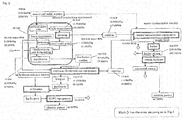
Fig. 1 is a flowsheet showing Example 1 of the invention. -
Fig. 2 is a flowsheet showing Example 2 of the invention. -
Fig. 3 is a flowsheet showing Example 3 of the invention. -
Fig. 4 is a flowsheet showing Comparative Example 1 as an conventional technique. - Examples specifically describing the invention and a comparative example showing an conventional technique will be shown below, but the invention is not limited to the examples. Comparative Example 1 (only waste-incineration power generation)
- In
Fig. 4 , municipal solid wastes discharged and recovered in a state where various kinds of wastes are mixed (100 t/d, 9,915 kJ/kg, 275 MWh) are placed in a waste-incineration facility and incinerated. Waste heat generated in the waste-incineration facility is converted to steam (359 t/d, 2,991 kJ/kg, 298 MWh) with a boiler, and a part of the steam is used as process steam, whereas the balance thereof is subjected to power generation with a steam turbine. A part (18 MWh) of the electric power (33.2 MWh) is used as captive power consumption, whereas the balance (15.2 MWh) thereof is subjected to electric power selling. - The provisional calculation of the energy recovery rate calculated from the heat input of 275 MWh based on the heat amount of 9,915 kJ/kg by the incineration of the municipal solid wastes (100 t/d) as the denominator and the heat output of 15.2 MWh obtained by subtracting the captive power consumption of 18 MWh from the power generation amount of 33.2 MWh obtained by subjecting the municipal solid waste to waste-incineration power generation as the numerator is as follows.

- In the provisional calculating, the compositional ratio of the municipal solid wastes of the certain city described above (in terms of wet weight percentage, 30.4% of kitchen wastes, 36.6% of papers, 5.5% of vegetation materials such as woods, 6.7% of cloths and leathers, 16.2% of plastics, and 4.6% of incombustible materials) is applied, and the energy recovery rates in Examples 1 to 3 shown below are also the provisional calculation results based on the ratio.
- In
Fig. 1 , municipal solid wastes discharged and recovered in a state where various kinds of wastes are mixed (100 t/d, 9,915 kJ/kg, 275 MWh) are coarsely shredded in a pretreatment step, and the resulting coarse shredded matter is separated into light components having a small specific gravity (mainly containing papers and plastics, 66.8 t/d, 13,753 kJ/kg, 255.2 MWh) and heavy components containing a large amount of water and having a large specific gravity (mainly containing kitchen wastes, i.e., garbage, 33.2 t/d) by a shredding sorter. - The heavy components are divided into two parts, and a raw material slurry (containing 16% by weight of pulp and 5% by weight of the heavy components) is prepared from one part of the heavy components (22.2 t/d, 2,192 kJ/kg, 13.5 MWh) and paper waste pulp described later, and charged in the saccharifying and fermenting tank of the ethanol production equipment.
- In the ethanol production equipment, yeast is preliminarily cultured and/or mainly cultured in advance, the yeast is added to the raw material slurry along with an enzyme (cellulase), thereby hydrolyzing cellulose to monosaccharides as the constituent sugars and fermenting the monosaccharides to form a broth having an ethanol concentration of 5% by volume. The broth (the lower limit of the ethanol concentration in profitability is 4.3% by weight) obtained through the saccharifying and fermenting reaction is concentrated by distillation to approximately 90% by weight, and then further concentrated to anhydrous ethanol of 99.5% by weight or more with a dewatering membrane or the like.
- The light components are subjected to a pulping treatment to defiber paper into fibers, from which plastics are removed, and the resulting paper waste pulp (109.2 t/d, 3,220 kJ/kg, 97.7 MWh) is used as a raw material of ethanol production along with the heavy components.
- As described above, in the ethanol production equipment, the residue obtained by removing ethanol by distillation from the broth contains lipids and proteins derived from garbage, which cannot be used directly as a raw material of ethanol, and also contains pulp that has not been enzymatically saccharified (i.e., carbohydrates), dead bodies of the yeast, and the like, and these materials are capable of constituting a methane fermentation substrate. Accordingly, the distillation residue (124.7 t/d, 2,246 kJ/kg, 77.8 MWh) and the balance of the heavy components (mainly containing kitchen wastes, i.e., garbage) (i.e., the part that is not subjected to the ethanol production, 11.0 t/d, 2,192 kJ/kg, 6.7 MWh) are utilized as a methane fermentation resource by subjecting to methane fermentation.
- Furthermore, a gas engine is annexed to the methane fermentation equipment, and methane (11 km3/d, 19,705 kJ/kg, 60.2 MWh) in the biogas obtained in the methane fermentation equipment is used as a driving source of the gas engine. According to the configuration, further recovery of energy can be achieved (the gas engine power generation of 24 MWh, the power generation efficiency of from 30 to 40%, and the waste heat of 6 MWh, from 30 to 40%).
- In the waste-incineration facility, the residue (24.6 t/d, 23,052 kJ/kg, 157.5 MWh, water content of 10%) discharged from the pulping step in the ethanol production equipment and the residue (54.5 t/d, 1,116 kJ/kg, 16.9 MWh, water content of 83%) discharged from the methane fermentation step are placed generally after subjecting to a dewatering treatment, and in the case where incineration is difficult to perform only with the residues, the municipal solid wastes are directly placed therein, followed by performing incineration of the wastes.
- The waste-incineration facility is annexed with a boiler using waste heat discharged from the facility and a steam turbine using steam generated in the boiler, the waste heat generated in the waste-incineration facility is converted to steam (224.2 t/d, 2,991 kJ/kg, 186.3 MWh) with the boiler, and a part of the steam is used as process steam, whereas the balance thereof is used for power generation (18.7 MWh) with the steam turbine. The boiler steam discharged from the boiler and/or the extracted steam discharged from the steam turbine are utilized as a heat source for the yeast cultivation (at approximately 30°C), the saccharification and fermentation (at approximately 40°C), and the distillation (at approximately 80°C) in the ethanol production equipment.
- In
Fig. 2 , hydrous ethanol steam having a concentration of 17% by weight obtained in the distillation step before concentrating to anhydrous ethanol in the ethanol production equipment and methane obtained by purifying the biogas obtained in the methane fermentation step (both in total amount) are fed to a reformer and reformed in a mixed state to generate hydrogen gas, and electric power is obtained with SOFC by using the resulting hydrogen gas. At this time, the waste heat of SOFC is 18.7 MWh, and the power generation amount thereof is 46.8 MWh. - In Example 2, the step of concentrating to anhydrous ethanol in the ethanol production equipment and the biogas power generation using methane obtained in the methane fermentation step are not performed.
- The other configurations in Example 2 are the same as in Example 1.
- In
Fig. 3 , a half of the municipal solid wastes are fed to the ethanol production equipment, whereas the remaining half thereof are directly placed in the waste-incineration equipment of the waste-incineration facility and subjected to incineration. - Hydrous ethanol steam having a concentration of 30% by weight obtained in the distillation step before concentrating to anhydrous ethanol in the ethanol production equipment is fed to a reformer and reformed to generate hydrogen gas, and electric power is obtained with SOFC by using the resulting hydrogen gas. The power generation amount of SOFC is 8.6 MWh, the power generation amount of the steam turbine annexed to the waste-incineration equipment is 32.9 MWh, and the power generation amount of the gas engine is 12 MWh.
- In Example 3, the step of concentrating to anhydrous ethanol in the ethanol production equipment is not performed.
- The other configurations in Example 3 are the same as in Example 1.
- The effects of the invention will be specifically described based on Examples and Comparative Example.
- In the method of PTL 1, for an incineration furnace having a scale of 100 t/d, 50 t/d of wastes are directly incinerated, ethanol is produced by separating a raw material of ethanol from the remaining 50 t/d thereof, and plastics, which are not a raw material, and the distillation residue are incinerated. In Example 1, ethanol and methane are produced by separating a raw material of ethanol fermentation and a raw material of methane fermentation from 100 t/d of municipal solid wastes. Plastics, which are not a raw material, and the residue generated in the methane fermentation are incinerated. Accordingly, the absolute amount of the raw material of ethanol production is increased, and the production amount of ethanol is also increased.
- In Example 1, in the total amount of the heavy components (33.2 t/d), 22.2 t/d is used as the raw material of ethanol production, whereas 11 t/d is used as a raw material of methane fermentation, and thereby the energy recovery rate is increased as compared to the case where the entire amount thereof is incinerated to perform waste-incineration power generation.
- The energy recovery rates in Comparative Example and Examples calculated from the heat output as the numerator and the heat input as the denominator are as follows.
- In Comparative Example 1 (only waste-incineration power generation) shown in
Fig. 4 , only municipal solid wastes (100 t/d, 9,915 kJ/kg, 275 MWh) are placed in the waste-incineration facility. The waste heat generated in the waste-incineration facility is converted to steam (359 t/d, 2,991 kJ/kg, 298 MWh) with a boiler, and a part of the steam is used as process steam, whereas power generation (33.2 MWh) is performed with the balance thereof with a steam turbine. A part (18 MWh) of the electric power is used as captive power consumption, whereas the balance (15.2 MWh) thereof is subjected to electric power selling. - In Comparative Example 1, the provisional calculation of the energy recovery rate calculated from the heat input of 275 MWh based on the heat amount of 9,915 kJ/kg of the municipal solid wastes (100 t/d) as the denominator and the heat output of 15.2 MWh obtained by subtracting the electric power consumption of 18 MWh from the power generation amount of 33.2 MWh obtained by the waste-incineration power generation as the numerator is as follows.

- In Example 1 (the ethanol production equipment and the methane fermentation equipment are annexed to the waste-incineration facility of Comparative Example 1) shown in
Fig. 1 , the provisional calculation of the energy recovery rate calculated from the heat input of 275 MWh based on the municipal solid wastes as the denominator and the heat output of 51.4 MWh obtained by subtracting the electric power consumption of 24.7 MWh from the sum of the heat amount of 33.4 MWh of the (anhydrous) ethanol produced, the power generation amount of 18.7 MWh with the steam turbine annexed to the waste-incineration equipment, and the power generation amount of 24 MWh with the gas engine as the numerator is as follows.
- It is assumed that ethanol is not converted to electric power but is used directly as a fuel or a chemical product.
- In Example 2 shown in
Fig. 2 , based on the same calculation as in Comparative Example 1 and Example 1, in the case where the hydrous ethanol steam obtained in the distillation step before concentrating to anhydrous ethanol in the ethanol production equipment and methane obtained in the methane fermentation step (both in total amount) are reformed separately or in a mixed state, so as to generate hydrogen gas, and the hydrogen gas is converted to electric power with SOFC, the provisional calculation of the energy recovery rate calculated from the heat input of 275 MWh by the municipal solid wastes as the denominator and the heat output of 40.8 MWh obtained by subtracting the electric power consumption of 24 .7 MWh from the sum of the electric power of 46.8 MWh with SOFC and the power generation amount of 18.7 MWh with the steam turbine annexed to the waste-incineration equipment as the numerator is as follows.
- The energy recovery rate is smaller than that of Example 1 (18.7%), and the reason therefore is that the heat amount of 33.4 MWh of ethanol is converted to electric power at a power generation efficiency of 50%. However, the resulting power generation amount becomes maximum as described later.
- In Example 3 shown in
Fig. 3 , in the case where the hydrous ethanol steam obtained in the distillation step before concentrating to anhydrous ethanol in the ethanol production equipment is reformed to generate hydrogen gas, and the hydrogen gas is converted to electric power with SOFC, the provisional calculation of the energy recovery rate calculated from the heat input of 275 MWh by the municipal solid wastes as the denominator and the heat output of 29.5 MWh obtained by subtracting the electric power consumption of 24.0 MWh from the sum of the electric power of 8.6 MWh with SOFC, the power generation amount of 32.9 MWh with the steam turbine annexed to the waste-incineration equipment, and the power generation amount of 12 MWh of the gas engine as the numerator is as follows.
- As described above, the provisionally calculated energy recovery rates obtained in Examples 1 to 3 exhibit significant enhancement as compared to that obtained in Comparative Example 1.
- In the case where only incineration of 100 t/d of municipal solid wastes is performed (which is hereinafter referred to as "incineration only"), provisionally calculated values of CO2 emission in Comparative Example 1, in which the waste-incineration power generation step is added to the "incineration only", and Example 1, in which the ethanol production step, the methane fermentation step, and the gas engine power generation step are added to Comparative Example 1, are shown in Table 1-1. As compared to the "incineration only", the CO2 emission in Example 1 is 140.277 kg-CO2/t per the municipal solid wastes, which results in a reduction of 93.795 kg-CO2/t per the municipal solid wastes from Comparative Example 1.
- The provisionally calculated results of the reduction rate of CO2 emission in the case where the CO2 emission of the "incineration only" (comparison) is assumed to be the "CO2 emission that is capable of being avoided" are shown in Table 1-2. In Example 1, the reduction rate of the CO2 emission is 84% in both the incineration power generation utilizing the municipal solid wastes and the ethanol production.
- As described above, the method of the invention contributes to the reduction of CO2 emission.
- Embodiments of the invention include a case where the hydrous ethanol steam generated in the ethanol production equipment is reformed to form hydrogen gas, and electric power is provided with SOFC by using the hydrogen gas, and a case where the hydrous ethanol steam generated in the ethanol production equipment and methane obtained in the methane fermentation step are reformed to form hydrogen gas, and electric power is provided with SOFC by using the hydrogen gas, and the effect of introduction of SOFC shown below is obtained in both the cases.
- In the case where ethanol is used as a vehicle fuel or a raw material of chemical products, it is a general procedure that the broth obtained through the saccharifying and fermenting reaction (the lower limit of the ethanol concentration in profitability is 4.3% by weight) is concentrated by distillation to approximately 90% by weight, and then further concentrated to anhydrous ethanol of 99.5% by weight or more with a dewatering membrane or the like.
- On the other hand, in the case where the power generation amount is to be maximized without applying ethanol to the aforementioned purpose, the entire amount of the non-concentrated ethanol can be applied to a hydrogen source of SOFC power generation, which has a high power generation efficiency of 50%. In this case, the hydrous ethanol steam generated in the distillation step in the ethanol production equipment is fed to a reformer, and reformed to a hydrogen-containing gas. In this case, a large amount of water is required for the reformation. In the case where methane obtained through purification of the entire amount of the biogas obtained through the methane fermentation step is also used as the hydrogen source, hydrous ethanol steam having an ethanol concentration of 17% by weight (a water concentration of 83% by weight) is required, and in the case where only ethanol is used, hydrous ethanol steam having an ethanol concentration of 30% by weight (a water concentration of 70% by weight) is required.
- In Example 2 (
Fig. 2 ), in the case where the ethanol (4.5 t/d, 33.4 MWh) produced in Example 1 (Fig. 1 ) is used as hydrous ethanol steam having a concentration of 17% by weight in the course of distillation, the biogas (11 km3/d, 60.2 MWh) in Example 1 (Fig. 1 ) is used as purified methane, and the entire amounts of both of them are applied to SOFC power generation, the maximum power generation amount of 46.8 MWh is obtained as shown in the following provisional calculation expression, and thus the maximization of the power generation amount is achieved.
- It is not necessary to provide anhydrous ethanol of 99.5% by weight or more, which is required for the case where ethanol is used as a vehicle fuel or a raw material of chemical products, and hydrous ethanol steam in the course of distillation can be applied, thereby reducing the cost for energy required for cooling and condensation after the distillation. For example, in the case where ethanol is used as a vehicle fuel or a raw material of chemical products, it is necessary to remove impurities to the standard value, and the domestic regulatory values of various components shown in Table 2 are established as the fuel grade ethanol standard JIS K2190 (it was confirmed that the product ethanol satisfied the fuel grade ethanol standard as shown in Table 2 by such a proof experiment that a part of ethanol that was actually produced from municipal solid wastes was made anhydrous, and analyzed for the components).
- In consideration of the possibility of the application to a raw material for chemical products, the ethanol distilled liquid (having an ethanol concentration of approximately 50% by weight) obtained by the proof experiment was subjected to qualitative analysis for the selected organic components having boiling points around that of ethanol shown in Table 3, and the components that indicated the possible presence thereof were subjected to quantitative analysis. As a result, as shown in Table 4, it was confirmed that impurities including methanol, 1-propanol, 1-pentanol, and the like were mixed therein in a concentration of 1,000 mg/L or more as fermentation by-products other than ethanol formed through the fermentation. These impurities can be utilized as a hydrogen source of SOFC, and in the distillation, the removal of the impurities may be less carefully performed than the case where a fuel or a raw material for chemical products is to be produced.
- In the case where the entire amount of methane obtained in the methane fermentation equipment is applied to SOFC as in Example 2 shown in
Fig. 2 , the gas engine and the related peripheral equipments become unnecessary, and the equipment cost therefore can be reduced. - In Example 1 shown in
Fig. 1 , what is treated in the waste-incineration equipment includes the residue discharged from the pulping step (the plastics having a water content of 10% by weight, 24.6 t/d, 23,052 kJ/kg, 157.5 MWh) and the residue discharged from the methane fermentation equipment (the dewatered cake obtained by dewatering the final digested liquid having a water content of 83% by weight, 54.5 t/d, 1,116 kJ/kg, 16.9 MWh). Although the latter residue contains a large amount of water, the mixture obtained by mixing both the residues can be incinerated, and while surely incinerating the mixture, waste heat generated therefrom can be utilized to provide electric power (18.7 MWh) through steam turbine power generation and waste heat (33.3 MWh) capable of being applied to the heat source for the ethanol production, as shown in the following provisional calculation expression.
- While the provisional calculation is also based on the compositional ratio of municipal solid wastes of the certain city described above, in the case, for example, where municipal solid wastes having a smaller amount of plastics than the average are accepted, it may be expected that the heat amount per weight of the mixture of the residue discharged from the pulping step and the residue discharged from the methane fermentation equipment is decreased to make incineration difficult. As a measure therefore, a part of the municipal solid wastes (100 t/d) in
Fig. 1 are added to the residues. Specifically, according to the aforementioned provisional calculation expression, the municipal solid wastes are supplied to make the heat amount per total weight of the mixture of a part of the municipal solid wastes and the residues reaching 1,900 kcal/kg.Table 1-1 Provisional calculation results of CO2 Emission (unit: kg-CO2/t-municipal solid wastes) Incineration only Comparative Example 1 Example 1 Ethanol production process - - 100 t/d Methane fermentation process - - 115 t/d Methane fermentation power generation - - 1,000 kWh Incineration process 50 t/d × 2 furnaces 50 t/d × 2 furnaces 40 t/d × 2 furnaces Incineration power generation - 2,080 kW 840 kW Input collection Installation of municipal solid wastes by vehicle 2.435 2.435 2.435 Treatment Incineration of plastics 296.314 296.314 296.314 Consumed electric power 95.642 106.269 141.567 Consumed fuel (for start up and shutdown of incineration furnace) 5.825 5.825 3.475 Consumed water and chemicals 8.367 8.367 15.926 Output Disposal Export of ash by vehicle 0.294 0.294 0.257 Landfill of ash 0.367 0.367 0.321 Discharge to sewage line 0.057 0.057 0.213 Subtotal 409.301 419.928 460.509 Output Supply Transport of ethanol by vehicle 0.000 0.000 0.080 Utilization of ethanol 0.000 0.000 -88.211 Power generation amount 0.000 -185.856 -232.101 Total 409.301 234.072 140.277 Note 1) The calculation is made with an assumption that the CO2 emission of the vehicle carrying the municipal solid wastes is 0.487 kg-CO2/km·vehicle, and the CO2 emission of the vehicle carrying the ash, ethanol, or RPF is 1.38 kg-CO2/km·vehicle.
Note 2) Ethanol is used as a substitute of gasoline, and the CO2 emission unit converted to heat amount is used.Table 1-2 Reduction of CO2 Emission Item Comparative Example 1 Example 1 Unit CO2 emission of processing method 419.928 460.509 kg-CO2/t CO2 emission avoided 409.301 409.301 kg-CO2/t Increment of CO2 emission by use of processing method 10.627 51.208 kg-CO2/t Ethanol production amount 0.000 57.650 L/t CO2 emission per ethanol consumption rate 0.000 0.244 kg-CO2/t CO2 emission rate as comparison 1.530 1.530 kg-CO2/t Reduction rate of CO2 emission by ethanol production 0.0 84.0 % Electric energy 334.875 418.200 kWh/t CO2 emission per electric power consumption rate 0.032 0.089 kg-CO2/kWh CO2 emission rate as comparison 0.555 0.555 kg-CO2/kWh Reduction rate of CO2 emission by incineration power generation 94.2 84.0 % Table 2 Standard of fuel grade ethanol Item JIS K2190 Product ethanol Appearance colorless or pale yellow transparent without suspended or floating matter colorless without suspended or floating matter Alcohol content (vol%) 99.5 or more 99.9 Methanol (g/L) 4.0 or less 1.2 Water content (wt%) 0.70 or less 0.07 Organic impurities (g/L) 10 or less < 10 Electroconductivity (mS/m) 500 or less < 500 Volatile component (mg/100 mL) 5.0 or less < 5 Copper (mg/kg) 0.10 or less 0.06 Acid degree (wt%) 0.0070 or less 0.0024 Sulfur content (mg/kg) 10 or less < 10 Table 3 Components applied to qualitative analysis based on results of quantitative analysis Peak No. Estimated component Boiling point (°C) 1 water 100 2 methanol 64 3 ethanol 78 4 2-propanol 82.4 5 acetone 56 6 1-propanol 97-98 7 2-butanol 99 8 ethyl acetate 77 9 isobutyl alcohol 108 10 butyl formate 105-107 11 1-butanol 117 12 acetal 103 13 1-pentanol 138 14 3-methyl-1-butanol 131.1 15 2-methyl-1-butanol 136-138 Table 4 Results of quantitative analysis Item Unit Value water % by weight 35.0 methanol mg/L 2,300 ethanol *1 g/L 570 ethanol *2 w/v% 60.2 2-propanol mg/L 99 acetone mg/L 17 1-propanol mg/L 1,400 2-butanol mg/L 23 ethyl acetate mg/L 200 isobutyl alcohol mg/L 580 butyl formate mg/L < 5 1-butanol mg/L 27 acetal mg/L < 5 1-pentanol mg/L 1,300 3-methyl-1-butanol mg/L < 5 2-methyl-1-butanol mg/L 630 *1: gas chromatography method
*2: alcohol meter
Claims (10)
- A method for effectively utilizing energy in a waste-incineration facility annexed with an ethanol production equipment that forms bioethanol from carbohydrates contained in biomass of municipal solid wastes, comprising: an ethanol production step of mixing a part of heavy components containing garbage and wet papers with pulp separated from light components containing dry papers and plastics, all of which are obtained through a pretreatment of the municipal solid wastes, and fermenting the mixture; and a methane production step of fermenting a balance of the heavy components and/or a distillation residue generated in the ethanol production step.
- The method for effectively utilizing energy in a waste-incineration facility annexed with an ethanol production equipment according to claim 1, wherein waste heat obtained by dewatering and then incinerating at least one of residues among a residue formed in the ethanol production step and a residue formed in the methane production step is used for heat sterilization of biomass and a tank in the ethanol production equipment.
- The method for effectively utilizing energy in a waste-incineration facility annexed with an ethanol production equipment according to claim 1 or 2, wherein waste heat obtained by dewatering and then incinerating at least one of residues among a residue formed in the ethanol production step and a residue formed in the methane production step is used as a heat source of at least one step among a culturing step, a saccharifying and fermenting step, and a distilling step in the ethanol production equipment.
- The method for effectively utilizing energy in a waste-incineration facility annexed with an ethanol production equipment according to any one of claims 1 to 3, wherein steam is formed by utilizing waste heat obtained by dewatering and then incinerating at least one of residues among a residue formed in the ethanol production step and a residue formed in the methane production step, and electric power is recovered from the steam with a steam turbine.
- The method for effectively utilizing energy in a waste-incineration facility annexed with an ethanol production equipment according to claim 1, wherein the method further comprises an energy recovery step of using the methane as a driving source of a gas engine.
- The method for effectively utilizing energy in a waste-incineration facility annexed with an ethanol production equipment according to claim 5, wherein engine waste heat discharged from the gas engine and/or waste heat obtained by dewatering and then incinerating at least one of residues among a residue formed in the ethanol production step and a residue formed in the methane production step is used for heat sterilization of biomass and/or a fermentation tank in the ethanol production equipment.
- The method for effectively utilizing energy in a waste-incineration facility annexed with an ethanol production equipment according to claim 5 or 6, wherein engine waste heat discharged from the gas engine and/or waste heat obtained by dewatering and then incinerating at least one of residues among a residue formed in the ethanol production step and a residue formed in the methane production step is used as a heat source of at least one step among a culturing step, a saccharifying and fermenting step, and a distilling step in the ethanol production equipment.
- The method for effectively utilizing energy in a waste-incineration facility annexed with an ethanol production equipment according to any one of claims 5 to 7, wherein steam is formed by utilizing engine waste heat discharged from the gas engine and/or waste heat obtained by dewatering and then incinerating at least one of residues among a residue formed in the ethanol production step and a residue formed in the methane production step, and electric power is recovered from the steam with a steam turbine.
- The method for effectively utilizing energy in a waste-incineration facility annexed with an ethanol production equipment according to any one of claims 1 to 8, wherein the method further comprises a reforming step of reforming hydrous ethanol steam in the course of distillation generated in the ethanol production step, so as to form hydrogen gas; and a step of providing electric power with a fuel cell using the hydrogen gas.
- The method for effectively utilizing energy in a waste-incineration facility annexed with an ethanol production equipment according to any one of claims 1 to 8, wherein the method further comprises a reforming step of reforming hydrous ethanol steam in the course of distillation generated in the ethanol production step and methane obtained through the methane production step separately or in a mixed state, so as to form hydrogen gas; and a step of providing electric power with a fuel cell using the hydrogen gas.
Applications Claiming Priority (1)
| Application Number | Priority Date | Filing Date | Title |
|---|---|---|---|
| PCT/JP2015/072628 WO2017026027A1 (en) | 2015-08-10 | 2015-08-10 | Method for effectively utilizing energy in waste-incineration facility with ethanol production equipment |
Publications (3)
| Publication Number | Publication Date |
|---|---|
| EP3335809A1 true EP3335809A1 (en) | 2018-06-20 |
| EP3335809A4 EP3335809A4 (en) | 2019-03-27 |
| EP3335809B1 EP3335809B1 (en) | 2020-05-27 |
Family
ID=57983205
Family Applications (1)
| Application Number | Title | Priority Date | Filing Date |
|---|---|---|---|
| EP15900981.0A Active EP3335809B1 (en) | 2015-08-10 | 2015-08-10 | Method for effectively utilizing energy in waste-incineration facility with ethanol production equipment |
Country Status (6)
| Country | Link |
|---|---|
| EP (1) | EP3335809B1 (en) |
| JP (1) | JPWO2017026027A1 (en) |
| CN (1) | CN107708882A (en) |
| MY (1) | MY188224A (en) |
| SG (1) | SG11201801062WA (en) |
| WO (1) | WO2017026027A1 (en) |
Cited By (1)
| Publication number | Priority date | Publication date | Assignee | Title |
|---|---|---|---|---|
| CN111340872A (en) * | 2020-02-28 | 2020-06-26 | 蒋天泽 | A system and method for analyzing and processing biomass solid waste |
Families Citing this family (6)
| Publication number | Priority date | Publication date | Assignee | Title |
|---|---|---|---|---|
| JP6661564B2 (en) * | 2017-03-14 | 2020-03-11 | 株式会社日立製作所 | Power generation system |
| JP6804371B2 (en) * | 2017-03-31 | 2020-12-23 | 三菱重工業株式会社 | How to operate a waste treatment plant and a waste treatment plant |
| JP6797776B2 (en) * | 2017-09-29 | 2020-12-09 | 三菱重工業株式会社 | How to operate a waste treatment plant and a waste treatment plant |
| CN109351751A (en) * | 2018-09-30 | 2019-02-19 | 山东国舜建设集团有限公司 | A kind of domestic waste composite highly effective recycling treatment process |
| CN111233290A (en) * | 2020-01-23 | 2020-06-05 | 重庆市渝西水务有限公司 | Sludge treatment system for sewage treatment plant |
| JP7708482B1 (en) * | 2025-04-07 | 2025-07-15 | 株式会社アルケー | Bioethanol production method and bioethanol production device |
Family Cites Families (17)
| Publication number | Priority date | Publication date | Assignee | Title |
|---|---|---|---|---|
| JPS5326768A (en) * | 1976-08-26 | 1978-03-13 | Mitsubishi Heavy Ind Ltd | Treating method for waste matter from living system |
| JPS5852955B2 (en) * | 1976-09-07 | 1983-11-26 | 三菱重工業株式会社 | How to compost municipal waste |
| JP2005211805A (en) * | 2004-01-30 | 2005-08-11 | Hitachi Kiden Kogyo Ltd | Ethanol production method in waste incineration facilities |
| JP4038577B2 (en) * | 2005-04-28 | 2008-01-30 | 国立大学法人 熊本大学 | Alcohol production system and alcohol production method |
| WO2007005954A1 (en) * | 2005-07-01 | 2007-01-11 | Purdue Research Foundation | Integrated thξrmochemical and biocatalytic energy production apparatus and method |
| ITRM20060102A1 (en) * | 2006-03-01 | 2007-09-02 | Cnr Consiglio Naz Delle Ricerche | MEMBRANE PROCEDURE FOR THE PRODUCTION OF REFORMING HYDROGEN OF ORGANIC COMPOUNDS IN PARTICULAR HYDROCARBONS OR ALCOHOLS |
| JP2008104452A (en) * | 2006-09-29 | 2008-05-08 | Kumamoto Univ | Alcohol production system and alcohol production method |
| CN101224427A (en) * | 2008-02-01 | 2008-07-23 | 汉能科技有限公司 | Catalyst for hydrogen production from methane vapor reforming and preparing method thereof |
| US20110165639A1 (en) * | 2008-08-15 | 2011-07-07 | Brijen Biotech, Llc | Refinery process to produce biofuels and bioenergy products from home and municipal solid waste |
| US20100105127A1 (en) * | 2008-10-24 | 2010-04-29 | Margin Consulting, Llc | Systems and methods for generating resources using wastes |
| CN101684480A (en) * | 2009-02-28 | 2010-03-31 | 才伟 | Novel technical method for producing fuel ethanol, biodiesel and the like through environment-friendly utilization of food waste |
| JP5552254B2 (en) * | 2009-04-13 | 2014-07-16 | 日立造船株式会社 | Method for producing cellulosic ethanol in refuse incineration facilities |
| FI20095691A0 (en) * | 2009-06-18 | 2009-06-18 | Valtion Teknillinen | Procedure for the production of waste-based traffic fuels and value-added products |
| JP2011050949A (en) * | 2009-08-04 | 2011-03-17 | Nippon Steel Engineering Co Ltd | Method for collecting and sorting garbage, device for collecting and sorting garbage |
| JP5564310B2 (en) * | 2010-03-31 | 2014-07-30 | 日立造船株式会社 | Method for saccharification and fermentation of waste-derived biomass material |
| CN102808000B (en) * | 2012-08-23 | 2014-06-25 | 辽宁科技大学 | Recycling grading utilization and carbon sequestration treatment method for municipal solid waste |
| CN103667361A (en) * | 2012-08-30 | 2014-03-26 | 通用电气公司 | Integrated process for producing alcohol through fermentation method and converting residue into fuel gas for electricity generation |
-
2015
- 2015-08-10 CN CN201580081033.6A patent/CN107708882A/en active Pending
- 2015-08-10 MY MYPI2018700485A patent/MY188224A/en unknown
- 2015-08-10 JP JP2017534051A patent/JPWO2017026027A1/en active Pending
- 2015-08-10 EP EP15900981.0A patent/EP3335809B1/en active Active
- 2015-08-10 SG SG11201801062WA patent/SG11201801062WA/en unknown
- 2015-08-10 WO PCT/JP2015/072628 patent/WO2017026027A1/en not_active Ceased
Cited By (1)
| Publication number | Priority date | Publication date | Assignee | Title |
|---|---|---|---|---|
| CN111340872A (en) * | 2020-02-28 | 2020-06-26 | 蒋天泽 | A system and method for analyzing and processing biomass solid waste |
Also Published As
| Publication number | Publication date |
|---|---|
| EP3335809A4 (en) | 2019-03-27 |
| SG11201801062WA (en) | 2018-03-28 |
| MY188224A (en) | 2021-11-24 |
| JPWO2017026027A1 (en) | 2018-05-31 |
| EP3335809B1 (en) | 2020-05-27 |
| CN107708882A (en) | 2018-02-16 |
| WO2017026027A1 (en) | 2017-02-16 |
Similar Documents
| Publication | Publication Date | Title |
|---|---|---|
| EP3335809B1 (en) | Method for effectively utilizing energy in waste-incineration facility with ethanol production equipment | |
| Keskin et al. | Biohydrogen production from solid wastes | |
| Lissens et al. | Thermal wet oxidation improves anaerobic biodegradability of raw and digested biowaste | |
| CA2953162C (en) | Process for using biogenic carbon dioxide derived from non-fossil organic material | |
| Li et al. | Thermophilic solid-state anaerobic digestion of alkaline-pretreated corn stover | |
| Mustafa et al. | Biogas from organic waste-a case study | |
| Prabhu et al. | A study of enhancing the biogas production in anaerobic digestion | |
| Wan et al. | Techno-economic evaluations for feasibility of sago-based biorefinery, Part 2: Integrated bioethanol production and energy systems | |
| Quintero et al. | Production of bioethanol from agroindustrial residues as feedstocks | |
| CA2998414C (en) | Wet oxidation of biomass | |
| Yin et al. | Fermentative hydrogen production from waste sludge solubilized by low-pressure wet oxidation treatment | |
| Zhou et al. | Effect of deep eutectic solvent pretreatment on biohydrogen production from corncob: pretreatment temperature and duration | |
| Ovchinnikova et al. | Bioprocessing of oat hulls to ethylene: Impact of dilute HNO3-or NaOH-pretreatment on process efficiency and sustainability | |
| Zhou et al. | Efficient biorefinery of waste activated sludge and vinegar residue into volatile fatty acids: effect of feedstock conditioning on performance and microbiology | |
| Loh et al. | Oil palm biomass value chain for biofuel development in Malaysia: part II | |
| Chen et al. | Effects of enzyme volumes on hydrolysis and fermentation for ethanol production from leftover cooked rice | |
| JP2018008203A (en) | Wet type methane fermentation system | |
| Kag et al. | Bioeconomy for sustainable bioenergy and biofuel generation | |
| Azizi et al. | Integrated acid-thermal and enzymatic hydrolysis of hardwood residues with anaerobic digestion: Effects on carbohydrate and biomethane recovery | |
| Alam et al. | Utilization of Agro-Waste as Carbon Source for Biohydrogen Production: Prospect and Challenges in Malaysia | |
| Gahlot et al. | Effect of digestate recirculation on anaerobic digestion performance | |
| Li et al. | Waste-to-biofuel and carbon footprints | |
| Jain et al. | Advancing Bioethanol: Exploring Feedstock Diversity, Production Pathways, and Environmental Implications | |
| Bai et al. | Bioaugmentation strategies for methane production from digestate-alkali pretreated biomass via anaerobic digestion | |
| Olivério et al. | The DSM-Dedini Sustainable Mill: a new concept in designing complete sugarcane mills. |
Legal Events
| Date | Code | Title | Description |
|---|---|---|---|
| STAA | Information on the status of an ep patent application or granted ep patent |
Free format text: STATUS: THE INTERNATIONAL PUBLICATION HAS BEEN MADE |
|
| PUAI | Public reference made under article 153(3) epc to a published international application that has entered the european phase |
Free format text: ORIGINAL CODE: 0009012 |
|
| STAA | Information on the status of an ep patent application or granted ep patent |
Free format text: STATUS: REQUEST FOR EXAMINATION WAS MADE |
|
| 17P | Request for examination filed |
Effective date: 20180226 |
|
| AK | Designated contracting states |
Kind code of ref document: A1 Designated state(s): AL AT BE BG CH CY CZ DE DK EE ES FI FR GB GR HR HU IE IS IT LI LT LU LV MC MK MT NL NO PL PT RO RS SE SI SK SM TR |
|
| AX | Request for extension of the european patent |
Extension state: BA ME |
|
| DAV | Request for validation of the european patent (deleted) | ||
| DAX | Request for extension of the european patent (deleted) | ||
| A4 | Supplementary search report drawn up and despatched |
Effective date: 20190227 |
|
| RIC1 | Information provided on ipc code assigned before grant |
Ipc: C01B 3/22 20060101ALI20190221BHEP Ipc: A61L 2/04 20060101ALI20190221BHEP Ipc: A61L 11/00 20060101ALI20190221BHEP Ipc: C01B 3/38 20060101ALI20190221BHEP Ipc: B09B 3/00 20060101AFI20190221BHEP Ipc: C12P 7/06 20060101ALI20190221BHEP Ipc: B09B 5/00 20060101ALI20190221BHEP |
|
| GRAP | Despatch of communication of intention to grant a patent |
Free format text: ORIGINAL CODE: EPIDOSNIGR1 |
|
| STAA | Information on the status of an ep patent application or granted ep patent |
Free format text: STATUS: GRANT OF PATENT IS INTENDED |
|
| RIC1 | Information provided on ipc code assigned before grant |
Ipc: C12P 7/06 20060101ALI20191212BHEP Ipc: B09B 3/00 20060101AFI20191212BHEP Ipc: A61L 11/00 20060101ALI20191212BHEP Ipc: B09B 5/00 20060101ALI20191212BHEP Ipc: C01B 3/22 20060101ALI20191212BHEP Ipc: C01B 3/38 20060101ALI20191212BHEP Ipc: A61L 2/04 20060101ALI20191212BHEP |
|
| INTG | Intention to grant announced |
Effective date: 20200108 |
|
| GRAS | Grant fee paid |
Free format text: ORIGINAL CODE: EPIDOSNIGR3 |
|
| GRAA | (expected) grant |
Free format text: ORIGINAL CODE: 0009210 |
|
| STAA | Information on the status of an ep patent application or granted ep patent |
Free format text: STATUS: THE PATENT HAS BEEN GRANTED |
|
| AK | Designated contracting states |
Kind code of ref document: B1 Designated state(s): AL AT BE BG CH CY CZ DE DK EE ES FI FR GB GR HR HU IE IS IT LI LT LU LV MC MK MT NL NO PL PT RO RS SE SI SK SM TR |
|
| REG | Reference to a national code |
Ref country code: GB Ref legal event code: FG4D |
|
| REG | Reference to a national code |
Ref country code: CH Ref legal event code: EP |
|
| REG | Reference to a national code |
Ref country code: DE Ref legal event code: R096 Ref document number: 602015053600 Country of ref document: DE |
|
| REG | Reference to a national code |
Ref country code: AT Ref legal event code: REF Ref document number: 1274017 Country of ref document: AT Kind code of ref document: T Effective date: 20200615 |
|
| REG | Reference to a national code |
Ref country code: LT Ref legal event code: MG4D |
|
| PG25 | Lapsed in a contracting state [announced via postgrant information from national office to epo] |
Ref country code: LT Free format text: LAPSE BECAUSE OF FAILURE TO SUBMIT A TRANSLATION OF THE DESCRIPTION OR TO PAY THE FEE WITHIN THE PRESCRIBED TIME-LIMIT Effective date: 20200527 Ref country code: GR Free format text: LAPSE BECAUSE OF FAILURE TO SUBMIT A TRANSLATION OF THE DESCRIPTION OR TO PAY THE FEE WITHIN THE PRESCRIBED TIME-LIMIT Effective date: 20200828 Ref country code: FI Free format text: LAPSE BECAUSE OF FAILURE TO SUBMIT A TRANSLATION OF THE DESCRIPTION OR TO PAY THE FEE WITHIN THE PRESCRIBED TIME-LIMIT Effective date: 20200527 Ref country code: NO Free format text: LAPSE BECAUSE OF FAILURE TO SUBMIT A TRANSLATION OF THE DESCRIPTION OR TO PAY THE FEE WITHIN THE PRESCRIBED TIME-LIMIT Effective date: 20200827 Ref country code: IS Free format text: LAPSE BECAUSE OF FAILURE TO SUBMIT A TRANSLATION OF THE DESCRIPTION OR TO PAY THE FEE WITHIN THE PRESCRIBED TIME-LIMIT Effective date: 20200927 Ref country code: SE Free format text: LAPSE BECAUSE OF FAILURE TO SUBMIT A TRANSLATION OF THE DESCRIPTION OR TO PAY THE FEE WITHIN THE PRESCRIBED TIME-LIMIT Effective date: 20200527 Ref country code: PT Free format text: LAPSE BECAUSE OF FAILURE TO SUBMIT A TRANSLATION OF THE DESCRIPTION OR TO PAY THE FEE WITHIN THE PRESCRIBED TIME-LIMIT Effective date: 20200928 |
|
| REG | Reference to a national code |
Ref country code: NL Ref legal event code: MP Effective date: 20200527 |
|
| PG25 | Lapsed in a contracting state [announced via postgrant information from national office to epo] |
Ref country code: HR Free format text: LAPSE BECAUSE OF FAILURE TO SUBMIT A TRANSLATION OF THE DESCRIPTION OR TO PAY THE FEE WITHIN THE PRESCRIBED TIME-LIMIT Effective date: 20200527 Ref country code: RS Free format text: LAPSE BECAUSE OF FAILURE TO SUBMIT A TRANSLATION OF THE DESCRIPTION OR TO PAY THE FEE WITHIN THE PRESCRIBED TIME-LIMIT Effective date: 20200527 Ref country code: LV Free format text: LAPSE BECAUSE OF FAILURE TO SUBMIT A TRANSLATION OF THE DESCRIPTION OR TO PAY THE FEE WITHIN THE PRESCRIBED TIME-LIMIT Effective date: 20200527 Ref country code: BG Free format text: LAPSE BECAUSE OF FAILURE TO SUBMIT A TRANSLATION OF THE DESCRIPTION OR TO PAY THE FEE WITHIN THE PRESCRIBED TIME-LIMIT Effective date: 20200827 |
|
| REG | Reference to a national code |
Ref country code: AT Ref legal event code: MK05 Ref document number: 1274017 Country of ref document: AT Kind code of ref document: T Effective date: 20200527 |
|
| PG25 | Lapsed in a contracting state [announced via postgrant information from national office to epo] |
Ref country code: AL Free format text: LAPSE BECAUSE OF FAILURE TO SUBMIT A TRANSLATION OF THE DESCRIPTION OR TO PAY THE FEE WITHIN THE PRESCRIBED TIME-LIMIT Effective date: 20200527 Ref country code: NL Free format text: LAPSE BECAUSE OF FAILURE TO SUBMIT A TRANSLATION OF THE DESCRIPTION OR TO PAY THE FEE WITHIN THE PRESCRIBED TIME-LIMIT Effective date: 20200527 |
|
| PG25 | Lapsed in a contracting state [announced via postgrant information from national office to epo] |
Ref country code: ES Free format text: LAPSE BECAUSE OF FAILURE TO SUBMIT A TRANSLATION OF THE DESCRIPTION OR TO PAY THE FEE WITHIN THE PRESCRIBED TIME-LIMIT Effective date: 20200527 Ref country code: CZ Free format text: LAPSE BECAUSE OF FAILURE TO SUBMIT A TRANSLATION OF THE DESCRIPTION OR TO PAY THE FEE WITHIN THE PRESCRIBED TIME-LIMIT Effective date: 20200527 Ref country code: IT Free format text: LAPSE BECAUSE OF FAILURE TO SUBMIT A TRANSLATION OF THE DESCRIPTION OR TO PAY THE FEE WITHIN THE PRESCRIBED TIME-LIMIT Effective date: 20200527 Ref country code: RO Free format text: LAPSE BECAUSE OF FAILURE TO SUBMIT A TRANSLATION OF THE DESCRIPTION OR TO PAY THE FEE WITHIN THE PRESCRIBED TIME-LIMIT Effective date: 20200527 Ref country code: AT Free format text: LAPSE BECAUSE OF FAILURE TO SUBMIT A TRANSLATION OF THE DESCRIPTION OR TO PAY THE FEE WITHIN THE PRESCRIBED TIME-LIMIT Effective date: 20200527 Ref country code: DK Free format text: LAPSE BECAUSE OF FAILURE TO SUBMIT A TRANSLATION OF THE DESCRIPTION OR TO PAY THE FEE WITHIN THE PRESCRIBED TIME-LIMIT Effective date: 20200527 Ref country code: EE Free format text: LAPSE BECAUSE OF FAILURE TO SUBMIT A TRANSLATION OF THE DESCRIPTION OR TO PAY THE FEE WITHIN THE PRESCRIBED TIME-LIMIT Effective date: 20200527 Ref country code: SM Free format text: LAPSE BECAUSE OF FAILURE TO SUBMIT A TRANSLATION OF THE DESCRIPTION OR TO PAY THE FEE WITHIN THE PRESCRIBED TIME-LIMIT Effective date: 20200527 |
|
| PG25 | Lapsed in a contracting state [announced via postgrant information from national office to epo] |
Ref country code: PL Free format text: LAPSE BECAUSE OF FAILURE TO SUBMIT A TRANSLATION OF THE DESCRIPTION OR TO PAY THE FEE WITHIN THE PRESCRIBED TIME-LIMIT Effective date: 20200527 Ref country code: SK Free format text: LAPSE BECAUSE OF FAILURE TO SUBMIT A TRANSLATION OF THE DESCRIPTION OR TO PAY THE FEE WITHIN THE PRESCRIBED TIME-LIMIT Effective date: 20200527 |
|
| REG | Reference to a national code |
Ref country code: DE Ref legal event code: R097 Ref document number: 602015053600 Country of ref document: DE |
|
| PG25 | Lapsed in a contracting state [announced via postgrant information from national office to epo] |
Ref country code: MC Free format text: LAPSE BECAUSE OF FAILURE TO SUBMIT A TRANSLATION OF THE DESCRIPTION OR TO PAY THE FEE WITHIN THE PRESCRIBED TIME-LIMIT Effective date: 20200527 |
|
| REG | Reference to a national code |
Ref country code: CH Ref legal event code: PL |
|
| PLBE | No opposition filed within time limit |
Free format text: ORIGINAL CODE: 0009261 |
|
| STAA | Information on the status of an ep patent application or granted ep patent |
Free format text: STATUS: NO OPPOSITION FILED WITHIN TIME LIMIT |
|
| PG25 | Lapsed in a contracting state [announced via postgrant information from national office to epo] |
Ref country code: CH Free format text: LAPSE BECAUSE OF NON-PAYMENT OF DUE FEES Effective date: 20200831 Ref country code: LU Free format text: LAPSE BECAUSE OF NON-PAYMENT OF DUE FEES Effective date: 20200810 Ref country code: LI Free format text: LAPSE BECAUSE OF NON-PAYMENT OF DUE FEES Effective date: 20200831 |
|
| 26N | No opposition filed |
Effective date: 20210302 |
|
| REG | Reference to a national code |
Ref country code: BE Ref legal event code: MM Effective date: 20200831 |
|
| PG25 | Lapsed in a contracting state [announced via postgrant information from national office to epo] |
Ref country code: SI Free format text: LAPSE BECAUSE OF FAILURE TO SUBMIT A TRANSLATION OF THE DESCRIPTION OR TO PAY THE FEE WITHIN THE PRESCRIBED TIME-LIMIT Effective date: 20200527 |
|
| PG25 | Lapsed in a contracting state [announced via postgrant information from national office to epo] |
Ref country code: IE Free format text: LAPSE BECAUSE OF NON-PAYMENT OF DUE FEES Effective date: 20200810 Ref country code: BE Free format text: LAPSE BECAUSE OF NON-PAYMENT OF DUE FEES Effective date: 20200831 |
|
| PG25 | Lapsed in a contracting state [announced via postgrant information from national office to epo] |
Ref country code: TR Free format text: LAPSE BECAUSE OF FAILURE TO SUBMIT A TRANSLATION OF THE DESCRIPTION OR TO PAY THE FEE WITHIN THE PRESCRIBED TIME-LIMIT Effective date: 20200527 Ref country code: MT Free format text: LAPSE BECAUSE OF FAILURE TO SUBMIT A TRANSLATION OF THE DESCRIPTION OR TO PAY THE FEE WITHIN THE PRESCRIBED TIME-LIMIT Effective date: 20200527 Ref country code: CY Free format text: LAPSE BECAUSE OF FAILURE TO SUBMIT A TRANSLATION OF THE DESCRIPTION OR TO PAY THE FEE WITHIN THE PRESCRIBED TIME-LIMIT Effective date: 20200527 |
|
| PG25 | Lapsed in a contracting state [announced via postgrant information from national office to epo] |
Ref country code: MK Free format text: LAPSE BECAUSE OF FAILURE TO SUBMIT A TRANSLATION OF THE DESCRIPTION OR TO PAY THE FEE WITHIN THE PRESCRIBED TIME-LIMIT Effective date: 20200527 |
|
| P01 | Opt-out of the competence of the unified patent court (upc) registered |
Effective date: 20230509 |
|
| PGFP | Annual fee paid to national office [announced via postgrant information from national office to epo] |
Ref country code: DE Payment date: 20250702 Year of fee payment: 11 |
|
| PGFP | Annual fee paid to national office [announced via postgrant information from national office to epo] |
Ref country code: GB Payment date: 20250703 Year of fee payment: 11 |
|
| PGFP | Annual fee paid to national office [announced via postgrant information from national office to epo] |
Ref country code: FR Payment date: 20250703 Year of fee payment: 11 |