EP3335785A1 - Self-healing microcapsules, process for the prepartion thereof, polymeric matrix and composite materials comprising the same - Google Patents
Self-healing microcapsules, process for the prepartion thereof, polymeric matrix and composite materials comprising the same Download PDFInfo
- Publication number
- EP3335785A1 EP3335785A1 EP16382598.7A EP16382598A EP3335785A1 EP 3335785 A1 EP3335785 A1 EP 3335785A1 EP 16382598 A EP16382598 A EP 16382598A EP 3335785 A1 EP3335785 A1 EP 3335785A1
- Authority
- EP
- European Patent Office
- Prior art keywords
- healing
- self
- agent
- microcapsules
- catalyst
- Prior art date
- Legal status (The legal status is an assumption and is not a legal conclusion. Google has not performed a legal analysis and makes no representation as to the accuracy of the status listed.)
- Granted
Links
Images


Classifications
-
- C—CHEMISTRY; METALLURGY
- C09—DYES; PAINTS; POLISHES; NATURAL RESINS; ADHESIVES; COMPOSITIONS NOT OTHERWISE PROVIDED FOR; APPLICATIONS OF MATERIALS NOT OTHERWISE PROVIDED FOR
- C09J—ADHESIVES; NON-MECHANICAL ASPECTS OF ADHESIVE PROCESSES IN GENERAL; ADHESIVE PROCESSES NOT PROVIDED FOR ELSEWHERE; USE OF MATERIALS AS ADHESIVES
- C09J11/00—Features of adhesives not provided for in group C09J9/00, e.g. additives
- C09J11/08—Macromolecular additives
-
- B—PERFORMING OPERATIONS; TRANSPORTING
- B01—PHYSICAL OR CHEMICAL PROCESSES OR APPARATUS IN GENERAL
- B01J—CHEMICAL OR PHYSICAL PROCESSES, e.g. CATALYSIS OR COLLOID CHEMISTRY; THEIR RELEVANT APPARATUS
- B01J13/00—Colloid chemistry, e.g. the production of colloidal materials or their solutions, not otherwise provided for; Making microcapsules or microballoons
- B01J13/02—Making microcapsules or microballoons
- B01J13/06—Making microcapsules or microballoons by phase separation
- B01J13/14—Polymerisation; cross-linking
- B01J13/18—In situ polymerisation with all reactants being present in the same phase
- B01J13/185—In situ polymerisation with all reactants being present in the same phase in an organic phase
-
- B—PERFORMING OPERATIONS; TRANSPORTING
- B29—WORKING OF PLASTICS; WORKING OF SUBSTANCES IN A PLASTIC STATE IN GENERAL
- B29C—SHAPING OR JOINING OF PLASTICS; SHAPING OF MATERIAL IN A PLASTIC STATE, NOT OTHERWISE PROVIDED FOR; AFTER-TREATMENT OF THE SHAPED PRODUCTS, e.g. REPAIRING
- B29C73/00—Repairing of articles made from plastics or substances in a plastic state, e.g. of articles shaped or produced by using techniques covered by this subclass or subclass B29D
- B29C73/16—Auto-repairing or self-sealing arrangements or agents
- B29C73/22—Auto-repairing or self-sealing arrangements or agents the article containing elements including a sealing composition, e.g. powder being liberated when the article is damaged
-
- C—CHEMISTRY; METALLURGY
- C09—DYES; PAINTS; POLISHES; NATURAL RESINS; ADHESIVES; COMPOSITIONS NOT OTHERWISE PROVIDED FOR; APPLICATIONS OF MATERIALS NOT OTHERWISE PROVIDED FOR
- C09J—ADHESIVES; NON-MECHANICAL ASPECTS OF ADHESIVE PROCESSES IN GENERAL; ADHESIVE PROCESSES NOT PROVIDED FOR ELSEWHERE; USE OF MATERIALS AS ADHESIVES
- C09J163/00—Adhesives based on epoxy resins; Adhesives based on derivatives of epoxy resins
-
- C—CHEMISTRY; METALLURGY
- C08—ORGANIC MACROMOLECULAR COMPOUNDS; THEIR PREPARATION OR CHEMICAL WORKING-UP; COMPOSITIONS BASED THEREON
- C08L—COMPOSITIONS OF MACROMOLECULAR COMPOUNDS
- C08L2207/00—Properties characterising the ingredient of the composition
- C08L2207/53—Core-shell polymer
-
- C—CHEMISTRY; METALLURGY
- C08—ORGANIC MACROMOLECULAR COMPOUNDS; THEIR PREPARATION OR CHEMICAL WORKING-UP; COMPOSITIONS BASED THEREON
- C08L—COMPOSITIONS OF MACROMOLECULAR COMPOUNDS
- C08L33/00—Compositions of homopolymers or copolymers of compounds having one or more unsaturated aliphatic radicals, each having only one carbon-to-carbon double bond, and only one being terminated by only one carboxyl radical, or of salts, anhydrides, esters, amides, imides or nitriles thereof; Compositions of derivatives of such polymers
- C08L33/04—Homopolymers or copolymers of esters
- C08L33/06—Homopolymers or copolymers of esters of esters containing only carbon, hydrogen and oxygen, which oxygen atoms are present only as part of the carboxyl radical
- C08L33/10—Homopolymers or copolymers of methacrylic acid esters
- C08L33/12—Homopolymers or copolymers of methyl methacrylate
Definitions
- the present invention relates to self-healing microcapsules, a process for the preparation thereof, a polymeric matrix and composite materials comprising the same.
- Self-healing polymers are a class of smart materials that have the capability to repair themselves when they are damaged without the need for detection or repair by manual intervention of any kind.
- microcapsules for compartmentalization of a healing agent was a key step towards the design of self-healing materials.
- Microcapsules have been used in applications of crack healing because they can be engineered to be ruptured by a propagating crack and can repair those cracks at the micron scale before they propagate to produce more significant damage. Furthermore, because of their size, microcapsules can be easily added to and suspended in the polymeric matrix by stirring prior to use of the matrix in a specific application. Also, the size of the capsules, shell wall thickness, and chemistry can all be customized for various applications, thus rendering the use of microcapsules amenable to both existing and emerging materials and applications.
- This self-healing system includes a material containing, for example, solid particles of Grubbs catalyst and capsules containing liquid dicyclopentadiene (DCPD) embedded in an epoxy matrix.
- DCPD liquid dicyclopentadiene
- US2009/036568 A discloses a self-healing material comprising a matrix, wherein a set of micro-pockets and a set of microcapsules are uniformly distributed and embedded in the matrix; each micro-pocket of the set of micro-pockets contains a liquid healing-agent; each microcapsule of the second set of microcapsules comprising a liquid selected from the group consisting of an oil, a perfluorated solvent, a hydrophobic ionic liquid, and mixtures thereof, and a catalyst dissolved or dispersed in the liquid and allowing the polymerization of the healing agent; being understood that when a crack is made in the matrix, at least one micro-pocket of the set of micro-pockets and one microcapsule of the set of microcapsules are broken to release and mix their content in the crack and thereby allow the polymerization of the healing agent in situ into a solid polymer that is bonded to the matrix and fills the crack to repair it.
- the healing-agent is contained in microcapsule
- CN10162024 A discloses a self-repairing fibre reinforced polymer matrix composite and a preparation method thereof.
- a double-capsule repairing system containing, respectively, epoxy resin pre-polymer and curing agent is evenly mixed into a resin matrix, then, the matrix curing agent and the catalyst are added to be evenly mixed, the obtained mixture is used for dipping fibre reinforcing material, and at last, the self-repairing fibre reinforced polymer matrix composite is obtained by solidifying and shaping.
- the self-repairing composite of the invention When the self-repairing composite of the invention generates cracks or fibre unsticking damage owing to heat, force, environment corrosion and the like during processing, storing and using process, cracks pass through a restorative capsule which cracks along with the matrix to release reacting substance and quickly polymerize, thus preventing crack from expanding, repairing crack damage, keeping the mechanical property of the composites and prolonging the service life thereof.
- the self-repairing composite prepared by the invention can automatically finish repairing cracks at the temperature of -50 to 250°C, and the repairing process totally needs no artificial intervention.
- One problem of the above described self-healing systems is the non-uniform distribution of the catalyst or curing agent (agglomeration problem), which makes it more difficult for the healing agent to enter into contact with the catalyst or curing agent and allow the repair.
- the problem to be solved by the present invention is the provision of a self-healing system with improved healing efficiency.
- the solution is based on that the present inventors have verified that by providing self-healing microcapsules comprising a liquid healing agent compartmentalized inside a polymeric shell of the microcapsule and a catalyst deposited on the surface of said polymeric shell significantly increases the healing efficiency of the polymeric matrix comprising said microcapsules.
- a first aspect of the invention relates to a self-healing microcapsule comprising: a) a polymeric shell; b) a healing-agent compartmentalized inside the polymeric shell; and c) a catalyst deposited on the surface of the polymeric shell.
- the invention in a second aspect, relates to a method for preparing the self-healing microcapsules as claimed in any of the claims 1 to 5, said method comprising the following steps; a) dispersing the catalyst in an aqueous phase; b) dispersing one or more water-insoluble monomers, oil-soluble initiator(s), and the healing agent in a continuous oil phase; and c) polymerizing the aqueous phase and the oil phase to form the self-healing microcapsules.
- the invention relates to a polymeric matrix comprising a plurality of self-healing microcapsules as claimed in any of the claims 1 to 5.
- the invention relates to a composite material comprising the polymeric matrix as claimed in claim 14.
- FIG. 1 illustrates the self-healing system according to the invention.
- the composite material (1) comprises a polymeric matrix (2), in which is incorporated a plurality of self-healing microcapsules (3).
- the polymeric matrix (2) is a continuous phase in a material, where the continuous phase includes a polymer.
- the polymeric matrix (2) can be an epoxy resin, or other polymeric systems, such as for example polyurethanes or acrylates.
- the polymeric matrix (2) is usually used as the matrix for bonding the long continuous fibres in composite materials.
- the self-healing microcapsules (3) comprise a polymeric shell (4), a polymerizable healing agent (5) compartmentalized inside of the polymeric shell (4) and a catalyst (6) deposited on the surface of the polymeric shell (4).
- the polymeric shell (4) of the microcapsule (3) is designed to be sufficiently rigid so that it does not break easily and can comprise the healing agent (5) inside.
- the polymeric shell (4) should be sufficiently adhered to the polymeric matrix (2) and easy to break, such that when a micro-crack (7) propagating across the polymeric matrix (2) ruptures the polymeric shell (4) realising the healing agent (5) comprised therein.
- the healing agent (5) enters into contact with the catalyst (6) located at the surface of the ruptured microcapsule (3).
- an external stimuli e.g. heat
- the catalyst (6) corresponds to the polymerizable healing-agent (5), i.e.
- the healing-agent (5) comprises a polymerizable compound such as a monomer or prepolymer, and may optionally comprise other ingredients, such as other monomers and/or prepolymers, stabilizers, solvents, viscosity modifiers such as polymers, odorants, colorant and dyes, blowing agents, antioxidants, and co-catalysts.
- the healing-agent (5) is capable of being liquefied.
- the polymeric shell (4) can be made of a variety of materials.
- the polymeric shell (4) comprises a monovinyl monomer selected from one or more of the following: styrene, methyl styrene, ethylene, propylene, methyl acrylate, ethyl acrylate, butyl acrylate, cyclohexyl acrylate, methyl methacrylate, ethyl methacrylate, hydroxyethyl methacrylate, glycidyl methacrylate, acrylic acid or derivatives thereof.
- the monovinyl monomer is methyl methacrylate, resulting in a self-healing microcapsule (3) with polymethyl methacrylate (PMMA) polymeric shell (4).
- the selection of a healing-agent (5) depends upon many factors such as its chemical and physical properties, and compatibility with the other materials.
- the healing-agent (5) from the broken microcapsule (3) should flow easily into the crack plane by capillary action, covering the maximum crack area to give a better strength to the damaged site.
- the healing agent (5) should have free flowing property, i.e. low viscosity in the matrix.
- healing-agent (5) any precursor insoluble in water, for example epoxy polymer, diglycidyl ether of bisphenol A (DGEBA), diglycidyl ether of bisphenol F (DGEBF), polyglycidyl ether of phenol-formaldehyde novolac, polyglycidyl ether of o-cresol-formaldehyde novolac, N,N,N',N',-tetraglycidyl methylenedianiline, bisphenol-A novolac, triglycidyl ether of trisphenol-methane, triglycidyl p-aminophenol, 3,4-epoxycyclohexylmethyl-3,4-epoxycyclohexane carboxylate, dicyclopendatiene (DCPD), siloxane,maleimide and mixtures thereof.
- the healing agent (5) is a diglycidyl ether of bisphenol A (DGEBA), diglycidyl ether of bisphenol F
- the catalyst (6) is scandium (III) triflate.
- the self-healing microcapsules of the present invention are prepared by suspension polymerization.
- a suspension polymerization one or more water-insoluble monomers containing oil-soluble initiator(s) are dispersed in a continuous oil phase.
- the polymerization takes place within the oil droplets suspended in an aqueous phase.
- monomer droplets are converted into polymer particles.
- the size of the microcapsules can range from 10 ⁇ m to mm depending upon many factors like stirring speed, core material, shell material, position of agitator etc.
- the average diameter of the self-healing microcapsules of the present invention is 200 ⁇ m.
- monomer oil phase is formed by mixing a monovinyl monomer, the healing agent (5), a solvent and an initiator.
- the monovinyl monomer can be selected from one or more material of the following: styrene, methyl styrene, ethylene, propylene, methyl acrylate, ethyl acrylate, butyl acrylate, cyclohexyl acrylate, methyl methacrylate, ethyl methacrylate, hydroxyethyl methacrylate, glycidyl methacrylate, acrylic acid and derivatives thereof.
- the monovinyl monomer is methyl methacrylate.
- the healing agent (5) is as describe above.
- the amount of the healing agent generally ranges from 10-40wt% related to the polymeric shell.
- a water insoluble solvent compatible with the healing agent is incorporated into the oil phase.
- suitable examples of such solvents include but are not limited to hydrocarbons, dodecane, hexadecane.
- the initiator used is an oil-soluble initiator which can be selected from the following: 2,2-azobisisoheptonitrile, 2,2'-azoisobutyronitrile, 2,2'-azoibis-(2-methylbutyronitrile), dimethyl 2,2-azobis(2methyl propionate) and other azo initiators, benzoyl peroxide, dilauroyl peroxide, ter-butyl peroxy-2-ethylhexanoate, ter-butyl peroxy diethyl acetate or tert-butylperoxy isobutyrate, etc.
- the amount of the initiator generally ranges from 0.5-20wt% of the monovinyl monomer.
- the suspension dispersant can be selected from barium sulfate, calcium sulfate, calcium phosphate, magnesium hydroxide, aluminium hydroxide, magnesium carbonate, calcium carbonate, aluminium oxide, titanium dioxide, polyvinyl alcohol, gelatine or methyl cellulose.
- the amount of suspension dispersant ranges from 0.1-20wt% related to the polymeric shell. In a preferred embodiment, the amount of suspension dispersant is 4.0wt% related to the polymeric shell.
- the catalyst (6) is as described above and is also incorporated within the aqueous phase. Due to its nature, it self-assembles at the liquid-liquid interface.
- both phases are transferred to a polymerization reactor equipped with reflux condenser, stirrer, sampling device and nitrogen inlet.
- the reactor is heated to a predetermined temperature, preferably to 60-95°C, and more preferably to 70°C.
- the stirring speed ranges from 100-1000 rpm.
- the time of the polymerization is between 2-20 hours, preferably 4-15 hours, and more preferably 5-6 hours.
- microcapsule suspension is filtered by filtration methods well-known in the art, such centrifugation filtration, vacuum filtration, pressure filtration and other filtration methods.
- the obtained self-healing microcapsules are dried.
- it includes a spray dryer, vacuum freeze dryer, vacuum dryer, etc.
- the self-healing microcapsules according to the present invention can be incorporated into polymeric matrixes by processes that are well known to the skilled person in the art, such as for example manual mixture or mechanical mixture.
- Composite materials comprising the polymeric matrixes with the self-healing microcapsules according to the invention incorporated therein are manufactured according to the well-known processes for manufacture of composite materials. Examples of such processes include manual lay-up, automated lay-up, spray-up, filament winding, pultrusion, resin transfer moulding.
- Self-healing microcapsules comprising low viscosity diglycidyl ether of bisphenol A (DGEBA; DERTM 321 supplied by Dow Chemical Company) as healing agent, compartmentalized inside a PMMA polymeric shell and scandium (III) triflate catalyst (supplied by Sigma-Aldrich) deposited on the surface of the polymeric shell.
- DGEBA low viscosity diglycidyl ether of bisphenol A
- DERTM 321 supplied by Dow Chemical Company
- 275g of aqueous phase is prepared by dissolving 1,35g of polyvinyl alcohol (PVA) in deionized water until the mixing becomes homogeneous and clear. 3,78g of Scandium (III) triflate are dissolved in the aqueous phase. The pH of the aqueous solution is adjusted to pH 7,0 with the help of a buffer solution.
- the oil phase is prepared by dissolving 9g of DGEBA and 0.6g of lauroyl peroxide in 6g of dodecane and 15g of methylmethacrylate (MMA). At room temperature the aqueous solution and the oil phase are poured into a 500mL doubled jacket reactor. The nitrogen flow is opened at a flow rate of 12-15 mL/min.
- the speed of the stirrer is adjusted to 500rpm.
- the thermostatic bath is heated up to 70°C.
- the solution is kept under continuous stirring during 5 hours at 70°C. Subsequently, the reaction is stopped by the incorporation of hydroquinone solution.
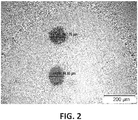
- a solution with microcapsules in suspension is obtained (see FIG. 2 ). This solution is then filtered and dried.
- microcapsules were incorporated into a polymeric matrix (hysol 9483, bicomponent epoxy adhesive system). 20wt% of microcapsules containing 30% of DGEBA and 20% of Dodecane were incorporated into the adhesive system part A and after getting a homogenous mixture part B was added. The lap shear strength was checked before and after applying healing cycles. The effect of incorporating the microcapsules in the specimens, as well as the healing efficiency were compared to a reference material.
- Two composite plates were adhesively bonded for an overlapping area of 12.5 ⁇ 25 mm 2 .
- the thickness of the adhesive layer was approximately 2 mm, which was controlled by inserting short Teflon TM wires of the same diameter inside the bonded area. The length and amount of Teflon TM wires used did not affect the adhesive property.
- a 1 hour at 80°C curing cycle was applied. Quasi-static tensile single lap-shear tests were performed on an Instron Universal machine with a 10 kN load cell at ambient conditions. All test specimens were located symmetrically in the grips; the long axis of the specimens coincided with the direction of the applied force through the centerline of the grip assembly.
- the load was applied at a constant rate of 1.3 mm/min and a typical load-displacement record of a tensile lap-shear test.
- the lap-shear strength was calculated by dividing the fracture load with the bonded area.
- At least 3-5 similar tests were conducted and the average result is reported for each individual group.
- Each specimen presented a broken bond. Both sides were joined and a healing cycle was applied, pressure was applied using clamps. The specimens were test again after the healing cycle under the same experimental conditions.
- a sample 6 (5 specimens) with microcapsules (comprising 20wt% of DGEBA) and 42wt% of Scandium (III) triflate incorporated within the epoxy adhesive, was developed for comparison. These samples were tested under the same experimental conditions.
- the healing system according to the invention has a significantly higher healing percentage and resistance after healing.
Landscapes
- Chemical & Material Sciences (AREA)
- Organic Chemistry (AREA)
- Engineering & Computer Science (AREA)
- Mechanical Engineering (AREA)
- Dispersion Chemistry (AREA)
- Chemical Kinetics & Catalysis (AREA)
- Epoxy Resins (AREA)
- Compositions Of Macromolecular Compounds (AREA)
- Manufacturing Of Micro-Capsules (AREA)
Abstract
Description
- The present invention relates to self-healing microcapsules, a process for the preparation thereof, a polymeric matrix and composite materials comprising the same.
- Self-healing polymers are a class of smart materials that have the capability to repair themselves when they are damaged without the need for detection or repair by manual intervention of any kind.
- The use of microcapsules for compartmentalization of a healing agent was a key step towards the design of self-healing materials.
- Microcapsules have been used in applications of crack healing because they can be engineered to be ruptured by a propagating crack and can repair those cracks at the micron scale before they propagate to produce more significant damage. Furthermore, because of their size, microcapsules can be easily added to and suspended in the polymeric matrix by stirring prior to use of the matrix in a specific application. Also, the size of the capsules, shell wall thickness, and chemistry can all be customized for various applications, thus rendering the use of microcapsules amenable to both existing and emerging materials and applications.
- A successful method of self-repairing cracks that has the potential for significantly increasing the longevity of materials has been described, for example, in
US2002/111434 . This self-healing system includes a material containing, for example, solid particles of Grubbs catalyst and capsules containing liquid dicyclopentadiene (DCPD) embedded in an epoxy matrix. When a crack propagates through the material, it ruptures the microcapsules and releases DCPD into the crack plane. The DCPD then mixes with the Grubbs catalyst, undergoes Ring Opening Metathesis Polymerization (ROMP), and cures to provide structural continuity where the crack had been. -
US2009/036568 A discloses a self-healing material comprising a matrix, wherein a set of micro-pockets and a set of microcapsules are uniformly distributed and embedded in the matrix; each micro-pocket of the set of micro-pockets contains a liquid healing-agent; each microcapsule of the second set of microcapsules comprising a liquid selected from the group consisting of an oil, a perfluorated solvent, a hydrophobic ionic liquid, and mixtures thereof, and a catalyst dissolved or dispersed in the liquid and allowing the polymerization of the healing agent; being understood that when a crack is made in the matrix, at least one micro-pocket of the set of micro-pockets and one microcapsule of the set of microcapsules are broken to release and mix their content in the crack and thereby allow the polymerization of the healing agent in situ into a solid polymer that is bonded to the matrix and fills the crack to repair it. Optionally, the healing-agent is contained in microcapsules and a corresponding catalyst for the healing-agent is embedded in the matrix. -
CN10162024 A discloses a self-repairing fibre reinforced polymer matrix composite and a preparation method thereof. In the method, a double-capsule repairing system containing, respectively, epoxy resin pre-polymer and curing agent is evenly mixed into a resin matrix, then, the matrix curing agent and the catalyst are added to be evenly mixed, the obtained mixture is used for dipping fibre reinforcing material, and at last, the self-repairing fibre reinforced polymer matrix composite is obtained by solidifying and shaping. When the self-repairing composite of the invention generates cracks or fibre unsticking damage owing to heat, force, environment corrosion and the like during processing, storing and using process, cracks pass through a restorative capsule which cracks along with the matrix to release reacting substance and quickly polymerize, thus preventing crack from expanding, repairing crack damage, keeping the mechanical property of the composites and prolonging the service life thereof. The self-repairing composite prepared by the invention can automatically finish repairing cracks at the temperature of -50 to 250°C, and the repairing process totally needs no artificial intervention. - One problem of the above described self-healing systems is the non-uniform distribution of the catalyst or curing agent (agglomeration problem), which makes it more difficult for the healing agent to enter into contact with the catalyst or curing agent and allow the repair.
- Thus, in spite of the variety of self-healing systems and chemistries, there is still a need for materials with improved self-healing efficiency.
- The problem to be solved by the present invention is the provision of a self-healing system with improved healing efficiency.
- The solution is based on that the present inventors have verified that by providing self-healing microcapsules comprising a liquid healing agent compartmentalized inside a polymeric shell of the microcapsule and a catalyst deposited on the surface of said polymeric shell significantly increases the healing efficiency of the polymeric matrix comprising said microcapsules.
- Accordingly, a first aspect of the invention relates to a self-healing microcapsule comprising: a) a polymeric shell; b) a healing-agent compartmentalized inside the polymeric shell; and c) a catalyst deposited on the surface of the polymeric shell.
- In a second aspect, the invention relates to a method for preparing the self-healing microcapsules as claimed in any of the
claims 1 to 5, said method comprising the following steps; a) dispersing the catalyst in an aqueous phase; b) dispersing one or more water-insoluble monomers, oil-soluble initiator(s), and the healing agent in a continuous oil phase; and c) polymerizing the aqueous phase and the oil phase to form the self-healing microcapsules. - In a third aspect, the invention relates to a polymeric matrix comprising a plurality of self-healing microcapsules as claimed in any of the
claims 1 to 5. - In a fourth aspect, the invention relates to a composite material comprising the polymeric matrix as claimed in claim 14.
- The following is a brief description of the drawings, which are presented for the purposes of illustrating the exemplary embodiments disclosed herein and not for the purposes of limiting the same.
-
FIG. 1 is a schematic illustration of the self-healing system according to the invention. -
FIG. 2 is a photographic image obtained by optical microscopy (OM) of the self-healing microcapsules according to the invention. -
FIG. 3 is a Scanning Electron Microscopy (SEM) with Energy Dispersive X-ray Spectroscopy (EDS) of the chemical composition of a self-healing microcapsule according to one embodiment of the present invention. -
FIG. 1 illustrates the self-healing system according to the invention. The composite material (1) comprises a polymeric matrix (2), in which is incorporated a plurality of self-healing microcapsules (3). The polymeric matrix (2) is a continuous phase in a material, where the continuous phase includes a polymer. The polymeric matrix (2) can be an epoxy resin, or other polymeric systems, such as for example polyurethanes or acrylates. The polymeric matrix (2) is usually used as the matrix for bonding the long continuous fibres in composite materials. The self-healing microcapsules (3) comprise a polymeric shell (4), a polymerizable healing agent (5) compartmentalized inside of the polymeric shell (4) and a catalyst (6) deposited on the surface of the polymeric shell (4). The polymeric shell (4) of the microcapsule (3) is designed to be sufficiently rigid so that it does not break easily and can comprise the healing agent (5) inside. At the same time, the polymeric shell (4) should be sufficiently adhered to the polymeric matrix (2) and easy to break, such that when a micro-crack (7) propagating across the polymeric matrix (2) ruptures the polymeric shell (4) realising the healing agent (5) comprised therein. Once released, the healing agent (5) enters into contact with the catalyst (6) located at the surface of the ruptured microcapsule (3). Through application of an external stimuli, e.g. heat, the healing agent is cured (8) and the micro-crack is repaired. The catalyst (6) corresponds to the polymerizable healing-agent (5), i.e. the corresponding catalyst (6) is capable of polymerizing the healing-agent (5). The healing-agent (5) comprises a polymerizable compound such as a monomer or prepolymer, and may optionally comprise other ingredients, such as other monomers and/or prepolymers, stabilizers, solvents, viscosity modifiers such as polymers, odorants, colorant and dyes, blowing agents, antioxidants, and co-catalysts. The healing-agent (5) is capable of being liquefied. - The polymeric shell (4) can be made of a variety of materials. According to a preferred embodiment of the invention, the polymeric shell (4) comprises a monovinyl monomer selected from one or more of the following: styrene, methyl styrene, ethylene, propylene, methyl acrylate, ethyl acrylate, butyl acrylate, cyclohexyl acrylate, methyl methacrylate, ethyl methacrylate, hydroxyethyl methacrylate, glycidyl methacrylate, acrylic acid or derivatives thereof. In a more preferred embodiment, the monovinyl monomer is methyl methacrylate, resulting in a self-healing microcapsule (3) with polymethyl methacrylate (PMMA) polymeric shell (4).
- The selection of a healing-agent (5) depends upon many factors such as its chemical and physical properties, and compatibility with the other materials. For the optimal healing process, the healing-agent (5) from the broken microcapsule (3) should flow easily into the crack plane by capillary action, covering the maximum crack area to give a better strength to the damaged site. In other words, the healing agent (5) should have free flowing property, i.e. low viscosity in the matrix. In principle, according to the present invention, it is possible to use as healing-agent (5) any precursor insoluble in water, for example epoxy polymer, diglycidyl ether of bisphenol A (DGEBA), diglycidyl ether of bisphenol F (DGEBF), polyglycidyl ether of phenol-formaldehyde novolac, polyglycidyl ether of o-cresol-formaldehyde novolac, N,N,N',N',-tetraglycidyl methylenedianiline, bisphenol-A novolac, triglycidyl ether of trisphenol-methane, triglycidyl p-aminophenol, 3,4-epoxycyclohexylmethyl-3,4-epoxycyclohexane carboxylate, dicyclopendatiene (DCPD), siloxane,maleimide and mixtures thereof. In a preferred embodiment of the invention, the healing agent (5) is a diglycidyl ether of bisphenol A (DGEBA).
- Examples of suitable catalysts (6) according to the invention include, but are not limited to: Lewis acids such as BF3, ZnCl2, SnCl4, FeCl3, and AlCl3, that have been known as cationic polymerization catalysts; BF3OEt2; lanthanide triflates Ln(OTf)3, wherein Ln = La, Ce, Pr, Nd, Sm, Eu, Gd, Tb, Dy, Ho, Er, Tm, Yb, Lu, and OTf = CF3SO3; pseudolanthanides Sc(III) and Y(III) triflates. In a preferred embodiment of the present invention, the catalyst (6) is scandium (III) triflate.
- The self-healing microcapsules of the present invention are prepared by suspension polymerization. In a suspension polymerization, one or more water-insoluble monomers containing oil-soluble initiator(s) are dispersed in a continuous oil phase. The polymerization takes place within the oil droplets suspended in an aqueous phase. Thus, monomer droplets are converted into polymer particles. The size of the microcapsules can range from 10 µm to mm depending upon many factors like stirring speed, core material, shell material, position of agitator etc. The average diameter of the self-healing microcapsules of the present invention is 200 µm.
- In general, monomer oil phase is formed by mixing a monovinyl monomer, the healing agent (5), a solvent and an initiator. The monovinyl monomer can be selected from one or more material of the following: styrene, methyl styrene, ethylene, propylene, methyl acrylate, ethyl acrylate, butyl acrylate, cyclohexyl acrylate, methyl methacrylate, ethyl methacrylate, hydroxyethyl methacrylate, glycidyl methacrylate, acrylic acid and derivatives thereof. In a preferred embodiment of the invention, the monovinyl monomer is methyl methacrylate.
- The healing agent (5) is as describe above. The amount of the healing agent generally ranges from 10-40wt% related to the polymeric shell.
- In order to reduce viscosity of the healing agent (5) a water insoluble solvent compatible with the healing agent is incorporated into the oil phase. Suitable examples of such solvents include but are not limited to hydrocarbons, dodecane, hexadecane.
- The initiator used is an oil-soluble initiator which can be selected from the following: 2,2-azobisisoheptonitrile, 2,2'-azoisobutyronitrile, 2,2'-azoibis-(2-methylbutyronitrile),
dimethyl 2,2-azobis(2methyl propionate) and other azo initiators, benzoyl peroxide, dilauroyl peroxide, ter-butyl peroxy-2-ethylhexanoate, ter-butyl peroxy diethyl acetate or tert-butylperoxy isobutyrate, etc. The amount of the initiator generally ranges from 0.5-20wt% of the monovinyl monomer. - To prepare the aqueous phase a dispersant is required. The suspension dispersant can be selected from barium sulfate, calcium sulfate, calcium phosphate, magnesium hydroxide, aluminium hydroxide, magnesium carbonate, calcium carbonate, aluminium oxide, titanium dioxide, polyvinyl alcohol, gelatine or methyl cellulose. The amount of suspension dispersant ranges from 0.1-20wt% related to the polymeric shell. In a preferred embodiment, the amount of suspension dispersant is 4.0wt% related to the polymeric shell.
- The catalyst (6) is as described above and is also incorporated within the aqueous phase. Due to its nature, it self-assembles at the liquid-liquid interface.
- Then, both phases are transferred to a polymerization reactor equipped with reflux condenser, stirrer, sampling device and nitrogen inlet. The reactor is heated to a predetermined temperature, preferably to 60-95°C, and more preferably to 70°C. The stirring speed ranges from 100-1000 rpm. The time of the polymerization is between 2-20 hours, preferably 4-15 hours, and more preferably 5-6 hours.
- Subsequently, the thus obtained microcapsule suspension is filtered by filtration methods well-known in the art, such centrifugation filtration, vacuum filtration, pressure filtration and other filtration methods.
- Finally, the obtained self-healing microcapsules are dried. In order to prevent the microcapsules from sticking to each during drying process, it includes a spray dryer, vacuum freeze dryer, vacuum dryer, etc.
- The self-healing microcapsules according to the present invention can be incorporated into polymeric matrixes by processes that are well known to the skilled person in the art, such as for example manual mixture or mechanical mixture.
- Composite materials comprising the polymeric matrixes with the self-healing microcapsules according to the invention incorporated therein are manufactured according to the well-known processes for manufacture of composite materials. Examples of such processes include manual lay-up, automated lay-up, spray-up, filament winding, pultrusion, resin transfer moulding.
- Self-healing microcapsules comprising low viscosity diglycidyl ether of bisphenol A (DGEBA; DER™ 321 supplied by Dow Chemical Company) as healing agent, compartmentalized inside a PMMA polymeric shell and scandium (III) triflate catalyst (supplied by Sigma-Aldrich) deposited on the surface of the polymeric shell.
- 275g of aqueous phase is prepared by dissolving 1,35g of polyvinyl alcohol (PVA) in deionized water until the mixing becomes homogeneous and clear. 3,78g of Scandium (III) triflate are dissolved in the aqueous phase. The pH of the aqueous solution is adjusted to
pH FIG. 2 ). This solution is then filtered and dried. - In order to analyse the microcapsules self-healing efficiency, the microcapsules were incorporated into a polymeric matrix (hysol 9483, bicomponent epoxy adhesive system). 20wt% of microcapsules containing 30% of DGEBA and 20% of Dodecane were incorporated into the adhesive system part A and after getting a homogenous mixture part B was added. The lap shear strength was checked before and after applying healing cycles. The effect of incorporating the microcapsules in the specimens, as well as the healing efficiency were compared to a reference material.
- The following describes in more detail the tests performed for determining the self-healing efficiency of the microcapsules according to the invention:
- Two composite plates were adhesively bonded for an overlapping area of 12.5 × 25 mm2. The thickness of the adhesive layer was approximately 2 mm, which was controlled by inserting short Teflon™ wires of the same diameter inside the bonded area. The length and amount of Teflon™ wires used did not affect the adhesive property. A 1 hour at 80°C curing cycle was applied. Quasi-static tensile single lap-shear tests were performed on an Instron Universal machine with a 10 kN load cell at ambient conditions. All test specimens were located symmetrically in the grips; the long axis of the specimens coincided with the direction of the applied force through the centerline of the grip assembly. The load was applied at a constant rate of 1.3 mm/min and a typical load-displacement record of a tensile lap-shear test. The lap-shear strength was calculated by dividing the fracture load with the bonded area. At least 3-5 similar tests were conducted and the average result is reported for each individual group. Each specimen presented a broken bond. Both sides were joined and a healing cycle was applied, pressure was applied using clamps. The specimens were test again after the healing cycle under the same experimental conditions. Finally, a sample 6 (5 specimens) with microcapsules (comprising 20wt% of DGEBA) and 42wt% of Scandium (III) triflate incorporated within the epoxy adhesive, was developed for comparison. These samples were tested under the same experimental conditions.
- Six different samples were prepared and tested:
- Sample 1: without self-healing microcapsules.
- Sample 2 (according to the invention): with 20wt% of microcapsules (30wt% DGEBA and 42wt% Scandium (III) triflate (ScT) - Healing cycle 24 hours at room temperature.
- Sample 3 (according to the invention): with 20wt% of microcapsules (30wt% DGEBA and 42wt% ScT) - Healing cycle 24h at 120°C.
- Sample 4 (according to the invention): with 20wt% of microcapsules (30wt% DGEBA and 42wt% ScT) - Healing cycle 2h at 75°C.
- Sample 5 (according to the invention): with 20wt% of microcapsules (30wt% DGEBA and 42wt% ScT) - Healing cycle 2h at 120°C.
- Sample 6 (comparative example): with 20wt% microcapsules (30wt% DGEBA) + 42wt% ScT incorporated in the polymeric matrix - Healing cycle 2h at 120°C.
- The results of the above described tests are summarized in following table 1.
Table 1: Results for microcapsules self-healing efficiency. Sample Adhesive system Microcapsules % Adhesive system Curing cycle Resistance before healing (MPa) Healing cycle Resistance after healing (MPa) Healing % Average result (MPa) 1.1 0 16,6 0 N/A N/A N/A 1.2 14 2.1 20 12,9 Room T N/A 2.2 15,2 2.3 12,6 3.1 20 11,2 24h at 120°C 5,3 47,3 42.5 3.2 13 4,9 37,7 3.3* 15 2,5 16,7 4.1* 20 15,2 2h at 75°C 0,8 5,3 15.2 4.2 1h at 80°C 10,9 1,5 13,8 4.3* Hysol 9483 12,7 4.4 13,5 2,1 15,6 4.5* 11,7 4.6 13 2,1 16,2 5.1 20 12,9 2h at 120°C 2,8 21,7 24.6 5.2 7,9 1,8 22,8 5.3 10,2 2,2 21,6 5.4 8,6 2,2 25,6 5.5 11,7 3,7 31,6 6.1 20+ScT matrix 13,2 2h at 120°C 0,7 5,3 3.1 6.2 11,9 0,3 2,7 6.3 12,3 0,9 7,6 6.4 10,4 No Repair 0,0 6.5 12,0 No Repair 0,0 *Sample that were not taken into account for the average due to experimental problems. - As shown in table 1, healing efficiency of test samples according to the invention, (samples 2.1 to 5.5) increased with the temperature and duration of the healing cycle. In particular, for healing cycles with the same duration, the healing efficiency of test samples increased with the applied temperature (see samples 4.1 to 5.5).
- Moreover, it can be observed that when compared to healing systems where the catalyst is incorporated into the matrix (sample 6.1 to 6.5), the healing system according to the invention (sample 5.1 to 5.5) has a significantly higher healing percentage and resistance after healing.
Claims (15)
- A self-healing mircrocapsule comprising:a) a polymeric shell;b) a healing-agent compartmentalized inside the polymeric shell; andc) a catalyst deposited on the surface of the polymeric shell.
- The self-healing microcapsule according to claim 1, wherein the polymeric shell comprises a monovinyl monomer selected from one or more of the following: styrene, methyl styrene, ethylene, propylene, methyl acrylate, ethyl acrylate, butyl acrylate, cyclohexyl acrylate, methyl methacrylate, ethyl methacrylate, hydroxyethyl methacrylate, glycidyl methacrylate, acrylic acid or derivatives thereof, preferably the monovinyl monomer is methyl methacrylate.
- The self-healing microcapsule according any of the claims 1 to 2, wherein the healing-agent is selected from epoxy polymer, diglycidyl ether of bisphenol A (DGEBA), diglycidyl ether of bisphenol F (DGEBF), polyglycidyl ether of phenol-formaldehyde novolac, polyglycidyl ether of o-cresol-formaldehyde novolac, N,N,N',N',-tetraglycidyl methylenedianiline, bisphenol-A novolac, triglycidyl ether of trisphenol-methane, triglycidyl p-aminophenol, 3,4-epoxycyclohexylmethyl-3,4-epoxycyclohexane carboxylate and mixtures thereof.
- The self-healing microcapsule according to any of the claims 1 to 3, wherein the catalyst is selected from BF3, ZnCl2, SnCl4, FeCl3, and AlCl3; BF3OEt2; lanthanide triflates Ln(OTf)3, wherein Ln = La, Ce, Pr, Nd, Sm, Eu, Gd, Tb, Dy, Ho, Er, Tm, Yb, Lu, and OTf = CF3SO3; pseudolanthanides Sc(III) and Y(III) triflates.
- The self-healing microcapsule according to any of claims 1 to 4, wherein the catalyst is scandium (III) triflate.
- A method for preparing a self-healing microcapsule according to any of the claims 1 to 5, wherein said method comprises the following steps:a) dispersing the catalyst in an aqueous phase;b) dispersing one or more water-insoluble monomers, oil-soluble initiator(s), and the healing agent in a continuous oil phase; andc) polymerizing the aqueous phase and the oil phase to form the self-healing microcapsules.
- The method according to claim 6, wherein the catalyst is selected from BF3, ZnCl2, SnCl4, FeCl3, and AlCl3; BF3OEt2; lanthanide triflates Ln(OTf)3, wherein Ln = La, Ce, Pr, Nd, Sm, Eu, Gd, Tb, Dy, Ho, Er, Tm, Yb, Lu, and OTf = CF3SO3; pseudolanthanides Sc(III) and Y(III) triflates.
- The method according to any of the claims 6 to 7, wherein the catalyst is scandium (III) triflate.
- The method according to any of the claims 6 to 8, wherein the one or more water-insoluble monomers is a monovinyl monomer selected from one or more of the following: styrene, methyl styrene, ethylene, propylene, methyl acrylate, ethyl acrylate, butyl acrylate, cyclohexyl acrylate, methyl methacrylate, ethyl methacrylate, hydroxyethyl methacrylate, glycidyl methacrylate, acrylic acid or derivatives thereof.
- The method according to any of the claims 6 to 9, wherein the healing-agent is selected from epoxy polymer, diglycidyl ether of bisphenol A (DGEBA), diglycidyl ether of bisphenol F (DGEBF), polyglycidyl ether of phenol-formaldehyde novolac, polyglycidyl ether of o-cresol-formaldehyde novolac, N,N,N',N',-tetraglycidyl methylenedianiline, bisphenol-A novolac, triglycidyl ether of trisphenol-methane, triglycidyl p-aminophenol, 3,4-epoxycyclohexylmethyl-3,4-epoxycyclohexane carboxylate and mixtures thereof.
- The method according to any of the claims 6 to 10, wherein the continuous oil phase further comprises a water insoluble solvent compatible with the healing agent.
- The method according to claim 11, wherein the water insoluble solvent compatible with the healing agent is selected from hydrocarbons, dodecane, and hexadecane.
- Method according to any of claims 6 to 12, wherein the polymerization occurs in a polymerization reactor at a temperature between 60 to 95°C, preferably at 70°C, for 2-20 hours, preferably 4-15 hours, more preferably 5-6 hours, and under a stirring speed of 100 to 1000 rpm.
- A polymeric matrix comprising a plurality of self-healing microcapsules according to any of the claims 1 to 5.
- A composite material comprising the polymeric matrix according to claim 14.
Priority Applications (5)
| Application Number | Priority Date | Filing Date | Title |
|---|---|---|---|
| EP16382598.7A EP3335785B1 (en) | 2016-12-13 | 2016-12-13 | Self-healing microcapsules, process for the prepartion thereof, polymeric matrix and composite materials comprising the same |
| ES16382598T ES2800057T3 (en) | 2016-12-13 | 2016-12-13 | Self-regenerating microcapsules, process for their preparation, polymeric matrix and composite materials that comprise them |
| PCT/EP2017/082704 WO2018109046A1 (en) | 2016-12-13 | 2017-12-13 | Self-healing microcapsules, process for the prepartion thereof, polymeric matrix and composite materials comprising the same |
| CN201780076161.0A CN110087764B (en) | 2016-12-13 | 2017-12-13 | Self-repairing microcapsule, preparation method thereof, polymer matrix containing self-repairing microcapsule and composite material |
| US16/468,096 US11319467B2 (en) | 2016-12-13 | 2017-12-13 | Self-healing microcapsules, process for the preparation thereof, polymeric matrix and composite materials comprising the same |
Applications Claiming Priority (1)
| Application Number | Priority Date | Filing Date | Title |
|---|---|---|---|
| EP16382598.7A EP3335785B1 (en) | 2016-12-13 | 2016-12-13 | Self-healing microcapsules, process for the prepartion thereof, polymeric matrix and composite materials comprising the same |
Publications (2)
| Publication Number | Publication Date |
|---|---|
| EP3335785A1 true EP3335785A1 (en) | 2018-06-20 |
| EP3335785B1 EP3335785B1 (en) | 2020-03-25 |
Family
ID=57821789
Family Applications (1)
| Application Number | Title | Priority Date | Filing Date |
|---|---|---|---|
| EP16382598.7A Active EP3335785B1 (en) | 2016-12-13 | 2016-12-13 | Self-healing microcapsules, process for the prepartion thereof, polymeric matrix and composite materials comprising the same |
Country Status (5)
| Country | Link |
|---|---|
| US (1) | US11319467B2 (en) |
| EP (1) | EP3335785B1 (en) |
| CN (1) | CN110087764B (en) |
| ES (1) | ES2800057T3 (en) |
| WO (1) | WO2018109046A1 (en) |
Cited By (2)
| Publication number | Priority date | Publication date | Assignee | Title |
|---|---|---|---|---|
| CN109651549A (en) * | 2018-11-21 | 2019-04-19 | 华东理工大学 | A kind of preparation method of the microcapsules for polymer porous material selfreparing |
| CN115160739A (en) * | 2022-08-10 | 2022-10-11 | 重庆大学 | Electrical damage self-repairing epoxy resin composite insulating material and preparation method thereof |
Families Citing this family (7)
| Publication number | Priority date | Publication date | Assignee | Title |
|---|---|---|---|---|
| MY207659A (en) * | 2020-04-01 | 2025-03-10 | Petroliam Nasional Berhad Petronas | Self-healing material |
| US11543322B2 (en) * | 2020-05-01 | 2023-01-03 | Globalfoundries U.S. Inc. | Crack identification in IC chip package using encapsulated liquid penetrant contrast agent |
| JP7790423B2 (en) * | 2021-03-12 | 2025-12-23 | ソニーグループ株式会社 | self-healing materials |
| CN115871283B (en) * | 2022-11-08 | 2023-08-04 | 锦美星灿新材料(安徽)有限公司 | A kind of self-healing INS film and preparation method thereof |
| CN116766807A (en) * | 2023-06-25 | 2023-09-19 | 湖南同丰艺达薄膜科技有限公司 | High-resistance decorative film and preparation method thereof |
| CN119161805B (en) * | 2024-10-11 | 2025-08-26 | 广东优贝科技股份有限公司 | Carnauba wax for automobiles and preparation method thereof |
| CN120319817A (en) * | 2025-04-14 | 2025-07-15 | 可川新材料技术(淮安)有限公司 | A positive electrode composite aluminum foil current collector and preparation method thereof |
Citations (6)
| Publication number | Priority date | Publication date | Assignee | Title |
|---|---|---|---|---|
| US6375872B1 (en) * | 1992-11-17 | 2002-04-23 | Moore Business Forms | Microencapsulated adhesive |
| US20020111434A1 (en) | 2001-02-13 | 2002-08-15 | White Scott R. | Multifunctional autonomically healing composite material |
| WO2004007608A2 (en) * | 2002-07-15 | 2004-01-22 | Motorola, Inc. | Self-healing polymer compositions |
| US20090036568A1 (en) | 2006-10-17 | 2009-02-05 | Philippe Merle | Self healing composite material and method of manufacturing same |
| EP2098918A2 (en) * | 2008-03-07 | 2009-09-09 | Xerox Corporation | Improved fuser and fixing members |
| CN101629024A (en) | 2009-08-04 | 2010-01-20 | 中山大学 | Self-repairing fiber reinforced polymer matrix composite and preparation method thereof |
Family Cites Families (8)
| Publication number | Priority date | Publication date | Assignee | Title |
|---|---|---|---|---|
| US7612152B2 (en) | 2005-05-06 | 2009-11-03 | The Board Of Trustees Of The University Of Illinois | Self-healing polymers |
| CN101062024B (en) | 2006-04-25 | 2012-11-07 | 刘祥华 | Pronin medicinal composition and its preparing method |
| CN101659719B (en) * | 2009-09-18 | 2011-03-30 | 中山大学 | A kind of room temperature self-healing thermoplastic polymer material and preparation method thereof |
| US20140178770A1 (en) * | 2012-02-07 | 2014-06-26 | Battelle Memorial Institute | Electrolytes for dendrite-free energy storage devices having high coulombic effciency |
| CN104624132B (en) * | 2013-11-07 | 2017-02-08 | 中国科学院化学研究所 | Epoxy resin self-repairing microcapsule and preparation method thereof |
| CN103694635B (en) | 2013-12-06 | 2016-05-18 | 中山大学 | A kind of epoxy resin based on microencapsulation and the quick Self-repair Composites of room temperature of super acids curing agent |
| US9975101B2 (en) * | 2015-05-26 | 2018-05-22 | Council Of Scientific And Industrial Research | Process for preparation of self healing microcapsules |
| US10166520B2 (en) * | 2017-03-29 | 2019-01-01 | International Business Machines Corporation | Catcapsules for self-healing applications |
-
2016
- 2016-12-13 ES ES16382598T patent/ES2800057T3/en active Active
- 2016-12-13 EP EP16382598.7A patent/EP3335785B1/en active Active
-
2017
- 2017-12-13 US US16/468,096 patent/US11319467B2/en active Active
- 2017-12-13 WO PCT/EP2017/082704 patent/WO2018109046A1/en not_active Ceased
- 2017-12-13 CN CN201780076161.0A patent/CN110087764B/en not_active Expired - Fee Related
Patent Citations (6)
| Publication number | Priority date | Publication date | Assignee | Title |
|---|---|---|---|---|
| US6375872B1 (en) * | 1992-11-17 | 2002-04-23 | Moore Business Forms | Microencapsulated adhesive |
| US20020111434A1 (en) | 2001-02-13 | 2002-08-15 | White Scott R. | Multifunctional autonomically healing composite material |
| WO2004007608A2 (en) * | 2002-07-15 | 2004-01-22 | Motorola, Inc. | Self-healing polymer compositions |
| US20090036568A1 (en) | 2006-10-17 | 2009-02-05 | Philippe Merle | Self healing composite material and method of manufacturing same |
| EP2098918A2 (en) * | 2008-03-07 | 2009-09-09 | Xerox Corporation | Improved fuser and fixing members |
| CN101629024A (en) | 2009-08-04 | 2010-01-20 | 中山大学 | Self-repairing fiber reinforced polymer matrix composite and preparation method thereof |
Non-Patent Citations (2)
| Title |
|---|
| DONG YU ZHU ET AL: "Thermo-molded self-healing thermoplastics containing multilayer microreactors", JOURNAL OF MATERIALS CHEMISTRY A: MATERIALS FOR ENERGY AND SUSTAINABILITY, vol. 1, no. 24, 10 April 2013 (2013-04-10), GB, pages 7191, XP055362285, ISSN: 2050-7488, DOI: 10.1039/c3ta11008g * |
| ZHU DONG YU ET AL: "Preparation and characterization of multilayered microcapsule-like microreactor for self-healing polymers", POLYMER, vol. 54, no. 16, 15 June 2013 (2013-06-15), pages 4227 - 4236, XP028671965, ISSN: 0032-3861, DOI: 10.1016/J.POLYMER.2013.06.014 * |
Cited By (2)
| Publication number | Priority date | Publication date | Assignee | Title |
|---|---|---|---|---|
| CN109651549A (en) * | 2018-11-21 | 2019-04-19 | 华东理工大学 | A kind of preparation method of the microcapsules for polymer porous material selfreparing |
| CN115160739A (en) * | 2022-08-10 | 2022-10-11 | 重庆大学 | Electrical damage self-repairing epoxy resin composite insulating material and preparation method thereof |
Also Published As
| Publication number | Publication date |
|---|---|
| EP3335785B1 (en) | 2020-03-25 |
| CN110087764B (en) | 2022-05-13 |
| US11319467B2 (en) | 2022-05-03 |
| US20190330499A1 (en) | 2019-10-31 |
| WO2018109046A1 (en) | 2018-06-21 |
| CN110087764A (en) | 2019-08-02 |
| ES2800057T3 (en) | 2020-12-23 |
Similar Documents
| Publication | Publication Date | Title |
|---|---|---|
| US11319467B2 (en) | Self-healing microcapsules, process for the preparation thereof, polymeric matrix and composite materials comprising the same | |
| Cho et al. | Polydimethylsiloxane‐based self‐healing materials | |
| Jones et al. | Self-healing thermoplastic-toughened epoxy | |
| US6518330B2 (en) | Multifunctional autonomically healing composite material | |
| Jones et al. | Full recovery of fiber/matrix interfacial bond strength using a microencapsulated solvent-based healing system | |
| DE69627715T2 (en) | A THERMOSTATOPLASTIC PRECURSOR FOR A PRESSURE-SENSITIVE ADHESIVE | |
| KR100249615B1 (en) | Pressure Sensitive Adhesive and Pressure Sensitive Adhesive Tape Containing Interpenetrating Polymer Networks | |
| RU2715709C2 (en) | Composition based on polymer obtained by multi-step polymerisation, method for production thereof, use thereof and composition thereof | |
| US8703285B2 (en) | Interfacial functionalization for self-healing composites | |
| CN105440692B (en) | A kind of microcapsule-type selfreparing silicone elastomer and preparation method thereof | |
| CN109913144A (en) | A kind of preparation method of SIS elastomer graft compound A and combinations thereof and foam double-faced adhesive band | |
| CN108329869A (en) | A kind of optics acrylic acid adhesive and film protective film and preparation method | |
| JP5717019B2 (en) | Adhesive composition and adhesive sheet using the same | |
| CN106833398A (en) | A kind of rapid curing acrylate pressure-sensitive adhesive and preparation method thereof | |
| CN110343469A (en) | Adhesive and preparation method thereof | |
| CN115636905A (en) | Liquid (meth) acrylic syrup, method for printing a fibrous substrate with the above syrup, and composite material obtained | |
| EP3335859B1 (en) | Friction stir welding method | |
| JP5531444B2 (en) | Reactive hot melt adhesive composition and method for producing the same | |
| CN115260968A (en) | Preparation method of UV-cured acrylate adhesive with specific structure | |
| JP4215341B2 (en) | Low shrinkage agent, thermosetting resin composition containing the same, and molded product thereof | |
| KR100468645B1 (en) | Two liquid type acrylic adhesive and manufacturing method thereof | |
| KR100476798B1 (en) | Thermosetting Pressure Sensitive Adhesive and Adhesive Sheets | |
| CN118812217B (en) | High-fluidity sustained-release in-situ polymerized gelling material for fissure repair and preparation method thereof | |
| Jones | Solvent-based self-healing approaches for fiber-reinforced composites | |
| KR100600552B1 (en) | Acrylic polymer particles for plastisols and preparation method thereof |
Legal Events
| Date | Code | Title | Description |
|---|---|---|---|
| PUAI | Public reference made under article 153(3) epc to a published international application that has entered the european phase |
Free format text: ORIGINAL CODE: 0009012 |
|
| STAA | Information on the status of an ep patent application or granted ep patent |
Free format text: STATUS: THE APPLICATION HAS BEEN PUBLISHED |
|
| AK | Designated contracting states |
Kind code of ref document: A1 Designated state(s): AL AT BE BG CH CY CZ DE DK EE ES FI FR GB GR HR HU IE IS IT LI LT LU LV MC MK MT NL NO PL PT RO RS SE SI SK SM TR |
|
| AX | Request for extension of the european patent |
Extension state: BA ME |
|
| RBV | Designated contracting states (corrected) |
Designated state(s): AL AT BE BG CH CY CZ DE DK EE ES FI FR GB GR HR HU IE IS IT LI LT LU LV MC MK MT NL NO PL PT RO RS SE SI SK SM TR |
|
| STAA | Information on the status of an ep patent application or granted ep patent |
Free format text: STATUS: REQUEST FOR EXAMINATION WAS MADE |
|
| STAA | Information on the status of an ep patent application or granted ep patent |
Free format text: STATUS: EXAMINATION IS IN PROGRESS |
|
| 17P | Request for examination filed |
Effective date: 20181218 |
|
| 17Q | First examination report despatched |
Effective date: 20190218 |
|
| REG | Reference to a national code |
Ref country code: DE Ref legal event code: R079 Ref document number: 602016032456 Country of ref document: DE Free format text: PREVIOUS MAIN CLASS: B01J0013020000 Ipc: B01J0013180000 |
|
| GRAP | Despatch of communication of intention to grant a patent |
Free format text: ORIGINAL CODE: EPIDOSNIGR1 |
|
| STAA | Information on the status of an ep patent application or granted ep patent |
Free format text: STATUS: GRANT OF PATENT IS INTENDED |
|
| RIC1 | Information provided on ipc code assigned before grant |
Ipc: B29C 73/22 20060101ALI20190924BHEP Ipc: C08L 63/00 20060101ALI20190924BHEP Ipc: B01J 13/18 20060101AFI20190924BHEP |
|
| INTG | Intention to grant announced |
Effective date: 20191016 |
|
| GRAS | Grant fee paid |
Free format text: ORIGINAL CODE: EPIDOSNIGR3 |
|
| GRAA | (expected) grant |
Free format text: ORIGINAL CODE: 0009210 |
|
| STAA | Information on the status of an ep patent application or granted ep patent |
Free format text: STATUS: THE PATENT HAS BEEN GRANTED |
|
| AK | Designated contracting states |
Kind code of ref document: B1 Designated state(s): AL AT BE BG CH CY CZ DE DK EE ES FI FR GB GR HR HU IE IS IT LI LT LU LV MC MK MT NL NO PL PT RO RS SE SI SK SM TR |
|
| REG | Reference to a national code |
Ref country code: GB Ref legal event code: FG4D |
|
| REG | Reference to a national code |
Ref country code: AT Ref legal event code: REF Ref document number: 1247939 Country of ref document: AT Kind code of ref document: T Effective date: 20200415 Ref country code: IE Ref legal event code: FG4D |
|
| REG | Reference to a national code |
Ref country code: DE Ref legal event code: R096 Ref document number: 602016032456 Country of ref document: DE |
|
| PG25 | Lapsed in a contracting state [announced via postgrant information from national office to epo] |
Ref country code: RS Free format text: LAPSE BECAUSE OF FAILURE TO SUBMIT A TRANSLATION OF THE DESCRIPTION OR TO PAY THE FEE WITHIN THE PRESCRIBED TIME-LIMIT Effective date: 20200325 Ref country code: NO Free format text: LAPSE BECAUSE OF FAILURE TO SUBMIT A TRANSLATION OF THE DESCRIPTION OR TO PAY THE FEE WITHIN THE PRESCRIBED TIME-LIMIT Effective date: 20200625 Ref country code: FI Free format text: LAPSE BECAUSE OF FAILURE TO SUBMIT A TRANSLATION OF THE DESCRIPTION OR TO PAY THE FEE WITHIN THE PRESCRIBED TIME-LIMIT Effective date: 20200325 |
|
| PG25 | Lapsed in a contracting state [announced via postgrant information from national office to epo] |
Ref country code: SE Free format text: LAPSE BECAUSE OF FAILURE TO SUBMIT A TRANSLATION OF THE DESCRIPTION OR TO PAY THE FEE WITHIN THE PRESCRIBED TIME-LIMIT Effective date: 20200325 Ref country code: LV Free format text: LAPSE BECAUSE OF FAILURE TO SUBMIT A TRANSLATION OF THE DESCRIPTION OR TO PAY THE FEE WITHIN THE PRESCRIBED TIME-LIMIT Effective date: 20200325 Ref country code: HR Free format text: LAPSE BECAUSE OF FAILURE TO SUBMIT A TRANSLATION OF THE DESCRIPTION OR TO PAY THE FEE WITHIN THE PRESCRIBED TIME-LIMIT Effective date: 20200325 Ref country code: GR Free format text: LAPSE BECAUSE OF FAILURE TO SUBMIT A TRANSLATION OF THE DESCRIPTION OR TO PAY THE FEE WITHIN THE PRESCRIBED TIME-LIMIT Effective date: 20200626 Ref country code: BG Free format text: LAPSE BECAUSE OF FAILURE TO SUBMIT A TRANSLATION OF THE DESCRIPTION OR TO PAY THE FEE WITHIN THE PRESCRIBED TIME-LIMIT Effective date: 20200625 |
|
| REG | Reference to a national code |
Ref country code: NL Ref legal event code: MP Effective date: 20200325 |
|
| REG | Reference to a national code |
Ref country code: LT Ref legal event code: MG4D |
|
| PG25 | Lapsed in a contracting state [announced via postgrant information from national office to epo] |
Ref country code: NL Free format text: LAPSE BECAUSE OF FAILURE TO SUBMIT A TRANSLATION OF THE DESCRIPTION OR TO PAY THE FEE WITHIN THE PRESCRIBED TIME-LIMIT Effective date: 20200325 |
|
| PG25 | Lapsed in a contracting state [announced via postgrant information from national office to epo] |
Ref country code: SM Free format text: LAPSE BECAUSE OF FAILURE TO SUBMIT A TRANSLATION OF THE DESCRIPTION OR TO PAY THE FEE WITHIN THE PRESCRIBED TIME-LIMIT Effective date: 20200325 Ref country code: EE Free format text: LAPSE BECAUSE OF FAILURE TO SUBMIT A TRANSLATION OF THE DESCRIPTION OR TO PAY THE FEE WITHIN THE PRESCRIBED TIME-LIMIT Effective date: 20200325 Ref country code: IS Free format text: LAPSE BECAUSE OF FAILURE TO SUBMIT A TRANSLATION OF THE DESCRIPTION OR TO PAY THE FEE WITHIN THE PRESCRIBED TIME-LIMIT Effective date: 20200725 Ref country code: RO Free format text: LAPSE BECAUSE OF FAILURE TO SUBMIT A TRANSLATION OF THE DESCRIPTION OR TO PAY THE FEE WITHIN THE PRESCRIBED TIME-LIMIT Effective date: 20200325 Ref country code: SK Free format text: LAPSE BECAUSE OF FAILURE TO SUBMIT A TRANSLATION OF THE DESCRIPTION OR TO PAY THE FEE WITHIN THE PRESCRIBED TIME-LIMIT Effective date: 20200325 Ref country code: PT Free format text: LAPSE BECAUSE OF FAILURE TO SUBMIT A TRANSLATION OF THE DESCRIPTION OR TO PAY THE FEE WITHIN THE PRESCRIBED TIME-LIMIT Effective date: 20200818 Ref country code: CZ Free format text: LAPSE BECAUSE OF FAILURE TO SUBMIT A TRANSLATION OF THE DESCRIPTION OR TO PAY THE FEE WITHIN THE PRESCRIBED TIME-LIMIT Effective date: 20200325 Ref country code: LT Free format text: LAPSE BECAUSE OF FAILURE TO SUBMIT A TRANSLATION OF THE DESCRIPTION OR TO PAY THE FEE WITHIN THE PRESCRIBED TIME-LIMIT Effective date: 20200325 |
|
| REG | Reference to a national code |
Ref country code: AT Ref legal event code: MK05 Ref document number: 1247939 Country of ref document: AT Kind code of ref document: T Effective date: 20200325 |
|
| REG | Reference to a national code |
Ref country code: ES Ref legal event code: FG2A Ref document number: 2800057 Country of ref document: ES Kind code of ref document: T3 Effective date: 20201223 |
|
| REG | Reference to a national code |
Ref country code: DE Ref legal event code: R097 Ref document number: 602016032456 Country of ref document: DE |
|
| PG25 | Lapsed in a contracting state [announced via postgrant information from national office to epo] |
Ref country code: DK Free format text: LAPSE BECAUSE OF FAILURE TO SUBMIT A TRANSLATION OF THE DESCRIPTION OR TO PAY THE FEE WITHIN THE PRESCRIBED TIME-LIMIT Effective date: 20200325 Ref country code: AT Free format text: LAPSE BECAUSE OF FAILURE TO SUBMIT A TRANSLATION OF THE DESCRIPTION OR TO PAY THE FEE WITHIN THE PRESCRIBED TIME-LIMIT Effective date: 20200325 |
|
| PLBE | No opposition filed within time limit |
Free format text: ORIGINAL CODE: 0009261 |
|
| STAA | Information on the status of an ep patent application or granted ep patent |
Free format text: STATUS: NO OPPOSITION FILED WITHIN TIME LIMIT |
|
| PG25 | Lapsed in a contracting state [announced via postgrant information from national office to epo] |
Ref country code: PL Free format text: LAPSE BECAUSE OF FAILURE TO SUBMIT A TRANSLATION OF THE DESCRIPTION OR TO PAY THE FEE WITHIN THE PRESCRIBED TIME-LIMIT Effective date: 20200325 |
|
| 26N | No opposition filed |
Effective date: 20210112 |
|
| PG25 | Lapsed in a contracting state [announced via postgrant information from national office to epo] |
Ref country code: SI Free format text: LAPSE BECAUSE OF FAILURE TO SUBMIT A TRANSLATION OF THE DESCRIPTION OR TO PAY THE FEE WITHIN THE PRESCRIBED TIME-LIMIT Effective date: 20200325 |
|
| REG | Reference to a national code |
Ref country code: CH Ref legal event code: PL |
|
| GBPC | Gb: european patent ceased through non-payment of renewal fee |
Effective date: 20201213 |
|
| PG25 | Lapsed in a contracting state [announced via postgrant information from national office to epo] |
Ref country code: MC Free format text: LAPSE BECAUSE OF FAILURE TO SUBMIT A TRANSLATION OF THE DESCRIPTION OR TO PAY THE FEE WITHIN THE PRESCRIBED TIME-LIMIT Effective date: 20200325 |
|
| REG | Reference to a national code |
Ref country code: BE Ref legal event code: MM Effective date: 20201231 |
|
| PG25 | Lapsed in a contracting state [announced via postgrant information from national office to epo] |
Ref country code: LU Free format text: LAPSE BECAUSE OF NON-PAYMENT OF DUE FEES Effective date: 20201213 Ref country code: IE Free format text: LAPSE BECAUSE OF NON-PAYMENT OF DUE FEES Effective date: 20201213 |
|
| PG25 | Lapsed in a contracting state [announced via postgrant information from national office to epo] |
Ref country code: CH Free format text: LAPSE BECAUSE OF NON-PAYMENT OF DUE FEES Effective date: 20201231 Ref country code: LI Free format text: LAPSE BECAUSE OF NON-PAYMENT OF DUE FEES Effective date: 20201231 Ref country code: GB Free format text: LAPSE BECAUSE OF NON-PAYMENT OF DUE FEES Effective date: 20201213 |
|
| PGFP | Annual fee paid to national office [announced via postgrant information from national office to epo] |
Ref country code: FR Payment date: 20211129 Year of fee payment: 6 Ref country code: DE Payment date: 20211227 Year of fee payment: 6 |
|
| PGFP | Annual fee paid to national office [announced via postgrant information from national office to epo] |
Ref country code: IT Payment date: 20211221 Year of fee payment: 6 |
|
| PG25 | Lapsed in a contracting state [announced via postgrant information from national office to epo] |
Ref country code: TR Free format text: LAPSE BECAUSE OF FAILURE TO SUBMIT A TRANSLATION OF THE DESCRIPTION OR TO PAY THE FEE WITHIN THE PRESCRIBED TIME-LIMIT Effective date: 20200325 Ref country code: MT Free format text: LAPSE BECAUSE OF FAILURE TO SUBMIT A TRANSLATION OF THE DESCRIPTION OR TO PAY THE FEE WITHIN THE PRESCRIBED TIME-LIMIT Effective date: 20200325 Ref country code: CY Free format text: LAPSE BECAUSE OF FAILURE TO SUBMIT A TRANSLATION OF THE DESCRIPTION OR TO PAY THE FEE WITHIN THE PRESCRIBED TIME-LIMIT Effective date: 20200325 |
|
| PGFP | Annual fee paid to national office [announced via postgrant information from national office to epo] |
Ref country code: ES Payment date: 20220103 Year of fee payment: 6 |
|
| PG25 | Lapsed in a contracting state [announced via postgrant information from national office to epo] |
Ref country code: MK Free format text: LAPSE BECAUSE OF FAILURE TO SUBMIT A TRANSLATION OF THE DESCRIPTION OR TO PAY THE FEE WITHIN THE PRESCRIBED TIME-LIMIT Effective date: 20200325 Ref country code: AL Free format text: LAPSE BECAUSE OF FAILURE TO SUBMIT A TRANSLATION OF THE DESCRIPTION OR TO PAY THE FEE WITHIN THE PRESCRIBED TIME-LIMIT Effective date: 20200325 |
|
| PG25 | Lapsed in a contracting state [announced via postgrant information from national office to epo] |
Ref country code: BE Free format text: LAPSE BECAUSE OF NON-PAYMENT OF DUE FEES Effective date: 20201231 |
|
| REG | Reference to a national code |
Ref country code: DE Ref legal event code: R119 Ref document number: 602016032456 Country of ref document: DE |
|
| P01 | Opt-out of the competence of the unified patent court (upc) registered |
Effective date: 20230526 |
|
| PG25 | Lapsed in a contracting state [announced via postgrant information from national office to epo] |
Ref country code: DE Free format text: LAPSE BECAUSE OF NON-PAYMENT OF DUE FEES Effective date: 20230701 |
|
| PG25 | Lapsed in a contracting state [announced via postgrant information from national office to epo] |
Ref country code: FR Free format text: LAPSE BECAUSE OF NON-PAYMENT OF DUE FEES Effective date: 20221231 |
|
| REG | Reference to a national code |
Ref country code: ES Ref legal event code: FD2A Effective date: 20240129 |
|
| PG25 | Lapsed in a contracting state [announced via postgrant information from national office to epo] |
Ref country code: IT Free format text: LAPSE BECAUSE OF NON-PAYMENT OF DUE FEES Effective date: 20221213 |
|
| PG25 | Lapsed in a contracting state [announced via postgrant information from national office to epo] |
Ref country code: ES Free format text: LAPSE BECAUSE OF NON-PAYMENT OF DUE FEES Effective date: 20221214 |
|
| PG25 | Lapsed in a contracting state [announced via postgrant information from national office to epo] |
Ref country code: ES Free format text: LAPSE BECAUSE OF NON-PAYMENT OF DUE FEES Effective date: 20221214 |
|
| PG25 | Lapsed in a contracting state [announced via postgrant information from national office to epo] |
Ref country code: IS Free format text: LAPSE BECAUSE OF NON-PAYMENT OF DUE FEES Effective date: 20200725 |