EP3335546A1 - Agricultural and horticultural material, and plant cultivation method which promote coloring in fruit - Google Patents
Agricultural and horticultural material, and plant cultivation method which promote coloring in fruit Download PDFInfo
- Publication number
- EP3335546A1 EP3335546A1 EP16835010.6A EP16835010A EP3335546A1 EP 3335546 A1 EP3335546 A1 EP 3335546A1 EP 16835010 A EP16835010 A EP 16835010A EP 3335546 A1 EP3335546 A1 EP 3335546A1
- Authority
- EP
- European Patent Office
- Prior art keywords
- fruit
- amino acid
- acid
- abscisic acid
- solution
- Prior art date
- Legal status (The legal status is an assumption and is not a legal conclusion. Google has not performed a legal analysis and makes no representation as to the accuracy of the status listed.)
- Granted
Links
Images


Classifications
-
- A—HUMAN NECESSITIES
- A01—AGRICULTURE; FORESTRY; ANIMAL HUSBANDRY; HUNTING; TRAPPING; FISHING
- A01N—PRESERVATION OF BODIES OF HUMANS OR ANIMALS OR PLANTS OR PARTS THEREOF; BIOCIDES, e.g. AS DISINFECTANTS, AS PESTICIDES OR AS HERBICIDES; PEST REPELLANTS OR ATTRACTANTS; PLANT GROWTH REGULATORS
- A01N37/00—Biocides, pest repellants or attractants, or plant growth regulators containing organic compounds containing a carbon atom having three bonds to hetero atoms with at the most two bonds to halogen, e.g. carboxylic acids
- A01N37/42—Biocides, pest repellants or attractants, or plant growth regulators containing organic compounds containing a carbon atom having three bonds to hetero atoms with at the most two bonds to halogen, e.g. carboxylic acids containing within the same carbon skeleton a carboxylic group or a thio analogue, or a derivative thereof, and a carbon atom having only two bonds to hetero atoms with at the most one bond to halogen, e.g. keto-carboxylic acids
-
- A—HUMAN NECESSITIES
- A01—AGRICULTURE; FORESTRY; ANIMAL HUSBANDRY; HUNTING; TRAPPING; FISHING
- A01G—HORTICULTURE; CULTIVATION OF VEGETABLES, FLOWERS, RICE, FRUIT, VINES, HOPS OR SEAWEED; FORESTRY; WATERING
- A01G17/00—Cultivation of hops, vines, fruit trees, or like trees
- A01G17/005—Cultivation methods
-
- A—HUMAN NECESSITIES
- A01—AGRICULTURE; FORESTRY; ANIMAL HUSBANDRY; HUNTING; TRAPPING; FISHING
- A01G—HORTICULTURE; CULTIVATION OF VEGETABLES, FLOWERS, RICE, FRUIT, VINES, HOPS OR SEAWEED; FORESTRY; WATERING
- A01G17/00—Cultivation of hops, vines, fruit trees, or like trees
- A01G17/02—Cultivation of hops or vines
-
- A—HUMAN NECESSITIES
- A01—AGRICULTURE; FORESTRY; ANIMAL HUSBANDRY; HUNTING; TRAPPING; FISHING
- A01G—HORTICULTURE; CULTIVATION OF VEGETABLES, FLOWERS, RICE, FRUIT, VINES, HOPS OR SEAWEED; FORESTRY; WATERING
- A01G22/00—Cultivation of specific crops or plants not otherwise provided for
- A01G22/05—Fruit crops, e.g. strawberries, tomatoes or cucumbers
-
- A—HUMAN NECESSITIES
- A01—AGRICULTURE; FORESTRY; ANIMAL HUSBANDRY; HUNTING; TRAPPING; FISHING
- A01G—HORTICULTURE; CULTIVATION OF VEGETABLES, FLOWERS, RICE, FRUIT, VINES, HOPS OR SEAWEED; FORESTRY; WATERING
- A01G7/00—Botany in general
- A01G7/06—Treatment of growing trees or plants, e.g. for preventing decay of wood, for tingeing flowers or wood, for prolonging the life of plants
-
- A—HUMAN NECESSITIES
- A01—AGRICULTURE; FORESTRY; ANIMAL HUSBANDRY; HUNTING; TRAPPING; FISHING
- A01N—PRESERVATION OF BODIES OF HUMANS OR ANIMALS OR PLANTS OR PARTS THEREOF; BIOCIDES, e.g. AS DISINFECTANTS, AS PESTICIDES OR AS HERBICIDES; PEST REPELLANTS OR ATTRACTANTS; PLANT GROWTH REGULATORS
- A01N25/00—Biocides, pest repellants or attractants, or plant growth regulators, characterised by their forms, or by their non-active ingredients or by their methods of application, e.g. seed treatment or sequential application; Substances for reducing the noxious effect of the active ingredients to organisms other than pests
- A01N25/02—Biocides, pest repellants or attractants, or plant growth regulators, characterised by their forms, or by their non-active ingredients or by their methods of application, e.g. seed treatment or sequential application; Substances for reducing the noxious effect of the active ingredients to organisms other than pests containing liquids as carriers, diluents or solvents
-
- A—HUMAN NECESSITIES
- A01—AGRICULTURE; FORESTRY; ANIMAL HUSBANDRY; HUNTING; TRAPPING; FISHING
- A01N—PRESERVATION OF BODIES OF HUMANS OR ANIMALS OR PLANTS OR PARTS THEREOF; BIOCIDES, e.g. AS DISINFECTANTS, AS PESTICIDES OR AS HERBICIDES; PEST REPELLANTS OR ATTRACTANTS; PLANT GROWTH REGULATORS
- A01N37/00—Biocides, pest repellants or attractants, or plant growth regulators containing organic compounds containing a carbon atom having three bonds to hetero atoms with at the most two bonds to halogen, e.g. carboxylic acids
- A01N37/44—Biocides, pest repellants or attractants, or plant growth regulators containing organic compounds containing a carbon atom having three bonds to hetero atoms with at the most two bonds to halogen, e.g. carboxylic acids containing at least one carboxylic group or a thio analogue, or a derivative thereof, and a nitrogen atom attached to the same carbon skeleton by a single or double bond, this nitrogen atom not being a member of a derivative or of a thio analogue of a carboxylic group, e.g. amino-carboxylic acids
-
- C—CHEMISTRY; METALLURGY
- C05—FERTILISERS; MANUFACTURE THEREOF
- C05F—ORGANIC FERTILISERS NOT COVERED BY SUBCLASSES C05B, C05C, e.g. FERTILISERS FROM WASTE OR REFUSE
- C05F11/00—Other organic fertilisers
- C05F11/10—Fertilisers containing plant vitamins or hormones
Definitions
- the present invention relates to an agricultural or horticultural material and a method for cultivating a plant. More precisely, the present invention relates to an agricultural or horticultural material that can promote coloring of fruits, and use thereof.
- Patent document 1 a flower bud sprouting promoter containing proline as an active ingredient
- Patent document 2 an agent for imparting high-temperature tolerance to a plant by a branched chain amino acid such as valine or leucine
- Patent document 3 a plant growth-promoting agent containing a liquefied fertilizer containing 18 kinds of amino acids
- Patent document 4 an agent for enhancing plant allelopathy effect and/or phytoalexin production containing an amino acid fermentation by-product or a nucleic acid fermentation by-product
- Non-patent document 1 It was also reported that hydroponics of tobacco plants in an aqueous solution containing glutamic acid, aspartic acid, and phenylalanine resulted in increased contents of amino acids, chlorophyll, and carotenoids in leaves (Non-patent document 1).
- Abscisic acid is a kind of plant hormone, and it is known to participate in dormancy, break dormancy, opening and closing of stomata, growth inhibition, growth suppression, and so forth.
- As applications thereof for agriculture there are known those for promotion of growth and coloring of fruits, and so forth, for example, those for promotion of coloring of fruits of grape, persimmon, and apple (Non-patent documents 4, 5, 6, and 7).
- abscisic acid is expensive as a material for agriculture, and it cannot be said that abscisic acid is practicable for obtaining sufficient coloring promotion effect.
- abscisic acid may provide coloring not synchronized with accumulation of saccharides or reduction of acids, or may induce falling of leaves, depending on the application concentration thereof or environment.
- An object of the present invention is to provide a method for promoting coloring of fruits, and an agricultural or horticultural material that can promote coloring of fruits.
- the inventors of the present invention conducted various researches in order to achieve the aforementioned object. As a result, they found that, if a specific amino acid and abscisic acid are applied to a fruit plant in combination, the action for increasing the anthocyanin content of fruits can be markedly improved compared with that obtainable with application of abscisic acid or the amino acid alone, and accomplished the present invention.
- the present invention is embodied as follows.
- An aspect of the present invention is a method for cultivating a fruit plant, which method comprises applying an amino acid selected from leucine, isoleucine, and phenylalanine, and abscisic acid to the fruit plant.
- Another aspect of the present invention is a method for producing a fruit, which method comprises applying an amino acid selected from leucine, isoleucine, and phenylalanine, and abscisic acid to a fruit plant, and collecting a fruit from the fruit plant.
- Another aspect of the present invention is a method for promoting coloring of a fruit, which method comprises applying an amino acid selected from leucine, isoleucine, and phenylalanine, and abscisic acid to a fruit plant.
- the fruit plant is not particularly limited so long as it is a fruit plant that bears a fruit that gets a color, it is preferably a fruit plant that bears a fruit containing an anthocyanin.
- the anthocyanin may consist of one kind of anthocyanin, or two or more kinds of anthocyanins.
- the term "fruit containing an anthocyanin" means a fruit of which color is characterized by the anthocyanin, or a fruit in which the anthocyanin is a main coloring matter of the fruit.
- the fruit containing an anthocyanin may be a fruit that mainly contains an anthocyanin in only one of pericarp (skin) and sarcocarp (flesh) of the fruit, or a fruit that contains an anthocyanin in both of pericarp and sarcocarp. Therefore, the term "coloring of a fruit” means coloring of either one or both of pericarp and sarcocarp.
- the term "fruit plant” includes both an arboreous plant and an herb plant.
- the type of the anthocyanin is not particularly limited, and examples include, for example, cyanidin-3-glucoside, malvidin-3-glucoside, delphinidin-3-glucoside, petunidin-3-glucoside, and so forth.
- Specific examples of the fruit plant include, for example, fruit plants belonging to the family Vitaceae or Rosaceae. More specific examples include grape, apple, peach, cherry, strawberry plants, and so forth.
- the varieties of these fruit plants are not particularly limited, examples include, for example, Cabernet Sauvignon, Merlot, Tempranillo, Pinot Noir, Syrah, Muscat Bailey A, Kyoho, Pione, Delaware, clone 21, Crimson seedless, Flame seedless, Red globe, and so forth for grape; Tsugaru, Fuji, and so forth for apple; Hakuho, Akatsuki, KawaNakajima white peach, Nikkawa Hakuho, and so forth for peach; Jabore, Satonishiki, Takasago, Napoleon, Benishuho, and so forth for cherry; and Amaou, Tochiotome, Sagahonoka, Diamond Berry, Sakihime, and so forth for strawberry.
- the fruit plant to which the present invention is applied may consist of one kind of fruit plant, or two or more kinds of fruit plants.
- abscisic acid for increasing anthocyanin content of grape becomes higher, when abscisic acid is used in combination with the aforementioned amino acid.
- the amino acid may consist of any one of leucine, isoleucine, and phenylalanine, or may consist of a mixture of any arbitrary two or three kinds of them. In the case of such a mixture, quantitative ratios of the amino acids may be arbitrarily determined. These amino acids are preferably L-amino acids. These amino acids may be in the form of a salt or derivative thereof.
- the amino acid may be purified or roughly purified, or may consist of a culture product (fermentation broth) or fermentation by-product containing the amino acid, or a fractionation product thereof containing the amino acid, so long as the effect of the present invention is not degraded.
- the amino acid may also consist of a protein decomposition product.
- abscisic acid may exist as several kinds of isomers, the naturally occurring type abscisic acid ((S)-(+)-abscisic acid) is preferred.
- Abscisic acid may be a salt thereof or a derivative thereof such as trifluoromethylated abscisic acid.
- Abscisic acid may also be an abscisic acid agonist having the abscisic acid activity such as pyrabactin, or an abscisic acid decomposition inhibitor such as P450 inhibitor.
- Abscisic acid can be obtained by, for example, fermentation or chemical synthesis.
- the amino acid and abscisic acid are usually applied as a solution to a fruit plant.
- the concentration of the amino acid at the time of the application is usually 0.2 mM to 100 mM, preferably 0.5 mM to 20 mM, more preferably 1 mM to 10 mM, further preferably 2 mM to 10 mM.
- these concentration ranges mean ranges of the total concentration of the amino acids.
- the concentration of abscisic acid at the time of the application is usually 0.1 ⁇ M to 10 mM, preferably 1 ⁇ M to 5 mM, more preferably 10 ⁇ M to 1 mM, further preferably 100 ⁇ M to 1 mM.
- the amino acid and abscisic acid may be in the form of a solution containing both of them, or in the forms of a solution containing the amino acid and a solution containing abscisic acid. In the latter case, both the solution containing the amino acid and the solution containing abscisic acid are applied to the fruit plant.
- An amino acid solution and an abscisic acid solution, and a solution containing abscisic acid and the amino acid may henceforth also be generically referred to as "ABA/AA solution(s)".
- the ABA/AA solution(s) is/are preferably applied to a leaf, trunk, stem, fruit surface, or rhizosphere, of a fruit plant.
- the ABA/AA solution(s) may be applied to two or more of these parts.
- the ABA/AA solution(s) may be applied to the whole or a part of any of these parts.
- the ABA/AA solution(s) when the ABA/AA solution(s) is/are applied to a leaf, it may be applied to only surface or back surface of the leaf, or may be applied to both sides.
- the ABA/AA solution(s) is/are applied to a fruit, it may be applied to the whole of a fruit surface, or a part of a fruit surface, for example, only the outside of a bunch when the fruit forms the bunch.
- ABA/AA solution(s) to soil is also included in the scope of "application to a fruit plant", so long as the amino acid and abscisic acid reach at least the rhizosphere.
- Examples of the application method include sprinkling to soil surface, irrigation into soil, plowing-in into soil, sprinkling or spreading on leaf surface or fruit of the fruit plant, addition to hydroponic solution, and so forth.
- sprinkling on a leaf surface or fruit is preferred.
- the term "sprinkling on a leaf surface” means that sprinkling on at least leaf surface is sufficient, and the solution may be sprinkled on another part in addition to a leaf surface. The same shall apply to a fruit.
- the sprinkling amount of the ABA/AA solution(s) is not particularly limited, it is usually 60 g/ha to 30,000 g/ha, preferably 150 g/ha to 600 g/ha, more preferably 300 g/ha to 3,000 g/ha, further preferably 600 g/ha to 3,000 g/ha, in terms of the amount of amino acid.
- these concentration ranges mean ranges of the total concentration of the amino acids.
- the amount of abscisic acid is usually 0.05 g/ha to 5,000 g/ha, preferably 0.5 g/ha to 2,000 g/ha, more preferably 5 g/ha to 2,000 g/ha, further preferably 10 g/ha to 2,000 g/ha.
- the ratio of the amounts of the amino acid and abscisic acid is not particularly limited.
- the ABA/AA solution(s) As for time of the application of the ABA/AA solution(s), it is preferably applied to a fruit plant after the fruit plant has born a fruit. After bearing of a fruit, the ABA/AA solution(s) is/are preferably applied before or after coloring of the fruit, or before and after coloring of the fruit. Especially in the case of grape, the ABA/AA solution(s) is/are preferably applied during the veraison period.
- the number of times of the application is not particularly limited, and the ABA/AA solution(s) may be applied once or two or more times. When the ABA/AA solution(s) consist(s) of separate amino acid solution and abscisic acid solution, these solutions may be applied simultaneously or separately. When these solutions are separately applied, it is preferred that the both solutions are applied within seven days.
- the sprinkling method is not particularly limited, but it is desirable that the agricultural or horticultural material spreads over the whole terrestrial part of a plant including a stem, leaf, and fruit, preferably over a leaf surface and/or fruit.
- the solution is manually sprinkled, the operation is desirably performed so that spray nozzle for the agricultural or horticultural material turns to the surface or back surface of a leaf.
- the sprinkling volume of the solution is desirably 100 L or larger, preferably 200 to 3,000 L, more preferably 300 to 2,000 L, per ha.
- electrostatic spraying machine or electrostatic spraying nozzle which promotes adhesion of sprayed liquid to plant bodies by using static electricity.
- the ABA/AA solution(s) When the ABA/AA solution(s) is/are sprinkled on a leaf surface and/or fruit, it may be sprinkled as a mixture with a fertilizer for foliar applications usually used in agriculture so long as the effect of the present invention is not degraded.
- a basal fertilizer and an additional fertilizer can be applied to the soil in an amount and by a method usually used in the corresponding area depending on the type of the plant.
- a preferred embodiment of the ABA/AA solution(s) is the agricultural or horticultural material of the present invention described below.
- the agricultural or horticultural material of the present invention contains an amino acid selected from leucine, isoleucine, and phenylalanine, and abscisic acid as active ingredients.
- amino acid and abscisic acid mentioned above for the aforementioned method of the present invention are also applied to the agricultural or horticultural material.
- the amino acid and abscisic acid may separately constitute the agricultural or horticultural material as a set, or they may be contained in the agricultural or horticultural material as a mixture thereof.
- Examples of the form of the agricultural or horticultural material include an agricultural or horticultural material consisting of an amino acid solution and an abscisic acid solution, an agricultural or horticultural material consisting of a solution containing the amino acid and abscisic acid, an agricultural or horticultural material consisting of powdered amino acid, powdered abscisic acid, and a solvent for dissolving them as an optional component, and so forth.
- the amino acid and abscisic acid are separately contained, they may be mixed at the time of use, or they may be separately applied to a fruit plant.
- the agricultural or horticultural material of the present invention may contain an arbitrary ingredient in addition to the aforementioned active ingredients, so long as the effect of the present invention is not degraded.
- an ingredient include stabilizer, carrier, pH adjustor, fertilizer component such as minerals for enhancing effect of fertilizer, agrochemical ingredient, binder, filler, and so forth.
- fertilizer component such as minerals for enhancing effect of fertilizer, agrochemical ingredient, binder, filler, and so forth.
- these ingredients those usually used for agricultural chemicals, fertilizers, and so forth can be used, so long as the effect of the present invention is not degraded.
- the agricultural or horticultural material may also contain an amino acid other than leucine, isoleucine, and phenylalanine.
- amino acids include those that reduce the fruit coloring-promoting action of abscisic acid
- low contents of such other amino acids in the agricultural or horticultural material are preferred, and it is more preferred that such other amino acids are not contained in the agricultural or horticultural material.
- the content of such other amino acids is preferably 10 mM or lower, more preferably 1 mM or lower, in terms of the concentration at the time of applying the agricultural or horticultural material to a fruit plant.
- the dosage form of the agricultural or horticultural material is not particularly limited so long as a solution applicable to a fruit plant can be prepared at the time of use, and the material may be in any form of use, such as solution, powder, granule, or emulsion.
- a spreading agent may be added in order to enhance spreading power of the agricultural or horticultural material on a leaf surface or fruit, and such an ingredient as surfactant may be added in order to enhance penetrating property into a plant of isoleucine.
- the spreading agent include, for example, Applauch BITM (Kao), Mix PowerTM (Syngenta Japan), SquashTM (MARUWA Biochemical), and so forth.
- the surfactant any of nonionic surfactants, anionic surfactants, cationic surfactants, and ampholytic surfactants can be used.
- Examples include polyoxyethylene alkyl ethers, polyoxyethylene alkyl aryl ethers, polyoxyethylene fatty acid esters, sorbitan fatty acid esters, polyoxyethylene sorbitan fatty acid esters, oxyethylene polymers, oxypropylene polymers, polyoxyethylene alkyl phosphoric acid esters, fatty acid salts, alkylsulfuric acid ester salts, alkylsulfonic acid salts, alkylarylsulfonic acid salts, alkylphosphoric acid salts, alkylphosphoric acid ester salts, polyoxyethylene alkylsulfuric acid esters, quaternary ammonium salts, oxyalkylamines, lecithin, saponin, and so forth.
- gelatin, casein, starch, agar, polyvinyl alcohol, sodium alginate, and so forth can be used as an auxiliary as required.
- the agricultural or horticultural material or a component thereof in the form of solid or powder may be dissolved or dispersed in a solvent such as water and alcohol.
- a solvent such as water and alcohol.
- the agricultural or horticultural material or a component thereof in the form of liquid may be diluted with a solvent such as water and alcohol.
- the alcohol include ethanol, methanol, isopropyl alcohol, and so forth.
- the concentration of leucine, isoleucine, and/or phenylalanine at the time of use of the agricultural or horticultural material is as described for the method of the present invention.
- the content of these amino acids in the agricultural or horticultural material is not particularly limited so long as these amino acids are applied as a solution of the prescribed concentration described above at the time of use.
- the content of these amino acids in the agricultural or horticultural material is, for example, 1% by weight or higher, preferably 50% by weight or higher, more preferably 70% by weight or higher, in terms of dry weight, and a content in such a range is preferred in view of evasion of harmful effect of impurities such as damage caused by salt, and actualization of the effects.
- the agricultural or horticultural material may be distributed in the form of solid or solution, when it is distributed in the form of solution, the concentration thereof is preferably 0.5 mM to the saturation concentration.
- the solubility in water of isoleucine is about 0.3 M (40.2 g/L (20°C), 41.2 g/L (50°C)), the same of phenylalanine is about 0.2 M (27 g/L (20°C), 40 g/L (50°C)), and the same of leucine is about 0.2 M (24 g/L (20°C), 29 g/L (50°C)).
- the concentration of abscisic acid at the time of use of the agricultural or horticultural material is also as described for the method of the present invention.
- the content of abscisic acid in the agricultural or horticultural material is not particularly limited so long as it can be applied as a solution of the prescribed concentration described above at the time of use.
- the concentration of abscisic acid is preferably 0.5 mM to the saturation concentration.
- amino acids are L-amino acids.
- the absorbance of the extract was measured at 530 nm, and the content of anthocyanin was quantified by using cyanidin-3-glucoside as a standard substance.
- the relative value of the content of anthocyanin accumulated in the callus of each amino acid treatment group was determined based on the content of anthocyanin extracted from the callus of the positive control treatment group, which was taken as 100%.
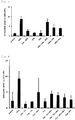
- Anthocyanin contained in pericarps was extracted with a mixed solution of water and acetone (1:2), and the anthocyanin content was measured in the same manner as described above. The results are shown in Fig. 1 . It was demonstrated that, if grape berries are treated with Ile, the anthocyanin content in pericarps increases.
- Example 1 Evaluation of coloring of grape provided by amino acid treatment
- each callus was freeze-dried and ground, and anthocyanin was extracted with a 1% HCl solution in MeOH.
- the absorbance of the extract was measured at 530 nm, and the content of anthocyanin was quantified by using cyanidin-3-glucoside as a standard substance, and shown in the graphs in terms of the content in dry weight (DW) of the callus.
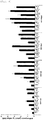
- the amounts of anthocyanin per 1 g dry weight of callus are shown in Figs. 2 to 5 .
- each callus was freeze-dried and ground, and anthocyanin was extracted with a 1% HCl solution in MeOH.
- the absorbance of the extract was measured at 530 nm, and the content of anthocyanin was quantified by using cyanidin-3-glucoside as a standard substance, and shown in the graph in terms of the content in dry weight (DW) of the callus.
- the amounts of anthocyanin per 1 g dry weight of callus are shown in Fig. 6 .
- the calluses were treated with a combination of ABA and isoleucine (Ile) or phenylalanine (Phe), the anthocyanin contents of the calluses markedly increased compared with that observed with the treatment with ABA alone. Furthermore, when the addition concentrations of ABA and the amino acids were increased, the amount of anthocyanin also increased.
- Example 3 Evaluation of coloring of Cabernet Sauvignon berries provided by amino acid treatment
- a 0.3 M sucrose culture solution containing 10 mM phenylalanine (Phe) and 1 mM abscisic acid (ABA) was infiltrated into a filter paper.
- Ci phenylalanine
- ABA abscisic acid
- the pericarps of berries were stripped and ground, and anthocyanin was extracted with a 1% HCl solution in MeOH.
- the absorbance of the extract was measured at 530 nm, and the content of anthocyanin was quantified by using cyanidin-3-glucoside as a standard substance, and shown in Fig. 7 in terms of the content in fresh pericarp weight (FW).
- FW fresh pericarp weight
- abscisic acid and a specific amino acid in combination, coloring of fruits can be further promoted compared with use of abscisic acid or the amino acid alone. According to the present invention, coloring-promoting effect comparable to that obtainable with abscisic acid alone can be attained with a smaller amount of abscisic acid.
- Amino acids are highly safe, and more inexpensive compared with abscisic acid, and provides fewer side reactions to plants.
Landscapes
- Life Sciences & Earth Sciences (AREA)
- Environmental Sciences (AREA)
- Botany (AREA)
- Engineering & Computer Science (AREA)
- Wood Science & Technology (AREA)
- General Health & Medical Sciences (AREA)
- Health & Medical Sciences (AREA)
- Zoology (AREA)
- Dentistry (AREA)
- Plant Pathology (AREA)
- Pest Control & Pesticides (AREA)
- Agronomy & Crop Science (AREA)
- Biodiversity & Conservation Biology (AREA)
- Forests & Forestry (AREA)
- Ecology (AREA)
- Organic Chemistry (AREA)
- Chemical & Material Sciences (AREA)
- Toxicology (AREA)
- Agricultural Chemicals And Associated Chemicals (AREA)
- Cultivation Of Plants (AREA)
Abstract
Description
- The present invention relates to an agricultural or horticultural material and a method for cultivating a plant. More precisely, the present invention relates to an agricultural or horticultural material that can promote coloring of fruits, and use thereof.
- In order to improve growth of crops and quality of fruits, chemical fertilizers, plant hormones, reflective sheets, and so forth are used, and turning of fruits and so forth are performed. However, there still remain problems concerning influences on environment, validity, secondary negative influence, workload, and cost. Amino acids are expected as ingredients of inexpensive agricultural or horticultural material providing fewer influences on the environment. For example, there are known a flower bud sprouting promoter containing proline as an active ingredient (Patent document 1), an agent for imparting high-temperature tolerance to a plant by a branched chain amino acid such as valine or leucine (Patent document 2), a plant growth-promoting agent containing a liquefied fertilizer containing 18 kinds of amino acids (Patent document 3), an agent for enhancing plant allelopathy effect and/or phytoalexin production containing an amino acid fermentation by-product or a nucleic acid fermentation by-product (Patent document 4), and so forth. It was also reported that hydroponics of tobacco plants in an aqueous solution containing glutamic acid, aspartic acid, and phenylalanine resulted in increased contents of amino acids, chlorophyll, and carotenoids in leaves (Non-patent document 1).
- As described above, techniques of using amino acids for agricultural or horticultural purposes are known. It was also reported that sprinkling of phenylalanine promoted to color grape (Non-patent documents 2 and 3). However, it cannot be said that the coloring-promoting effect thereof is sufficient.
- Abscisic acid is a kind of plant hormone, and it is known to participate in dormancy, break dormancy, opening and closing of stomata, growth inhibition, growth suppression, and so forth. As applications thereof for agriculture, there are known those for promotion of growth and coloring of fruits, and so forth, for example, those for promotion of coloring of fruits of grape, persimmon, and apple (Non-patent documents 4, 5, 6, and 7). However, abscisic acid is expensive as a material for agriculture, and it cannot be said that abscisic acid is practicable for obtaining sufficient coloring promotion effect. Also, there is a problem that abscisic acid may provide coloring not synchronized with accumulation of saccharides or reduction of acids, or may induce falling of leaves, depending on the application concentration thereof or environment.
-
- Patent document 1: Japanese Patent Laid-open (Kokai) No.
2003-48803 - Patent document 2: Japanese Patent Laid-open (Kokai) No.
2012-197249 - Patent document 3: South Korean Patent Laid-open No.
2013-107406 - Patent document 4: Japanese Patent Laid-open (Kokai) No.
2012-10694 -
- Non-patent document 1: Wu, X-P. et al., Scientia Agricultura Sinica, 2004, 37(3):357-361
- Non-patent document 2: El-Sayed, S.F. et al., Journal of Horticultural Science & Ornamental Plants, 2013, 5(3):218-226
- Non-patent document 3: Portu, J. et al., Food Chemistry, 2015, 180:171-180
- Non-patent document 4: Wasilewska, A. et al., Mol Plant, 2008, 1 (2) :198-217
- Non-patent document 5: Niikawa, T. et al., Horticultural Research (Japan), 2014, 13(3):267-274
- Non-patent document 6: Takos, A.M. et al., Plant Physiol., 2006, 142:1216-1232
- Non-patent document 7: Jeong, S.T. et al. Plant Science, 2004, 167:247-252
- An object of the present invention is to provide a method for promoting coloring of fruits, and an agricultural or horticultural material that can promote coloring of fruits.
- The inventors of the present invention conducted various researches in order to achieve the aforementioned object. As a result, they found that, if a specific amino acid and abscisic acid are applied to a fruit plant in combination, the action for increasing the anthocyanin content of fruits can be markedly improved compared with that obtainable with application of abscisic acid or the amino acid alone, and accomplished the present invention.
- That is, the present invention is embodied as follows.
- (1) A method for cultivating a fruit plant, the method comprising:
applying one or more kinds of amino acids selected from leucine, isoleucine, and phenylalanine, and abscisic acid to the fruit plant. - (2) The method mentioned above,
wherein the amino acid(s) and abscisic acid are applied to the fruit plant as a solution containing the amino acid(s) and abscisic acid, or as an amino acid solution and an abscisic acid solution,
wherein the application concentration of the amino acid(s) is 0.2 mM to 100 mM, and
wherein the application concentration of abscisic acid is 0.1 µM to 10 mM. - (3) The method mentioned above, wherein the amino acid(s) is/are L-amino acid(s).
- (4) The method mentioned above, wherein the fruit plant is a fruit plant that bears a fruit containing anthocyanin.
- (5) The method mentioned above, wherein the fruit plant consists of one or more kinds of fruit plants selected from Vitaceae and Rosaceae plants.
- (6) The method mentioned above, wherein the fruit plant consists of one or more kinds of fruit plants selected from grape, apple, peach, cherry, and strawberry plants.
- (7) The method mentioned above, wherein the amino acid(s) is/are applied as a solution containing:
- a purified product of the amino acid(s),
- a fermentation broth or fermentation by-product of the amino acid(s), or
- a fractionation product thereof containing the amino acid(s).
- (8) The method mentioned above, wherein the amino acid(s) and abscisic acid are sprinkled to a leaf, trunk, stem, fruit surface, or rhizosphere of the fruit plant.
- (9) A method for producing a fruit, the method comprising:
- applying one or more kinds of amino acids selected from leucine, isoleucine, and phenylalanine, and abscisic acid to a fruit plant; and
- collecting a fruit from the fruit plant.
- (10) The method mentioned above,
wherein the amino acid(s) and abscisic acid are applied to the fruit plant as a solution containing the amino acid(s) and abscisic acid, or as an amino acid solution and an abscisic acid solution,
wherein the application concentration of the amino acid(s) is 0.2 mM to 100 mM, and
wherein the application concentration of abscisic acid is 0.1 µM to 10 mM. - (11) An agricultural or horticultural material containing an amino acid selected from leucine, isoleucine, and phenylalanine, and abscisic acid as active ingredients.
- (12) The material mentioned above, which is applied to a fruit plant as a solution having an amino acid concentration of 0.2 mM to 100 mM, and an abscisic acid concentration of 0.1 µM to 10 mM.
-
- [
Fig. 1 ] A graph showing anthocyanin contents of grape berries (fruits of grape) on which isoleucine was sprinkled. - [
Fig. 2 ] A graph showing anthocyanin contents of grape calluses treated with an amino acid and/or abscisic acid. The vertical axis indicates the amount of anthocyanin (µmol/g callus dry weight, the same shall apply toFigs. 3 to 7 ). ABA, Ile, Phe, and Leu represent abscisic acid, isoleucine, phenylalanine, and leucine, respectively. The term "control" indicates the result of the control experiment. The symbol "+" indicates combined use. - [
Fig. 3 ] A graph showing anthocyanin contents of grape calluses treated with an amino acid and/or abscisic acid. Asn, Gln, and Arg represent asparagine, glutamine, and arginine, respectively. - [
Fig. 4 ] A graph showing anthocyanin contents of grape calluses treated with an amino acid and/or abscisic acid. Glu, Asp, Cys, and Trp represent glutamic acid, aspartic acid, cysteine, and tryptophan, respectively. - [
Fig. 5 ] A graph showing anthocyanin contents of grape calluses treated with an amino acid and/or abscisic acid. Val, Lys, Pro, Gly, Ser, Met, His, and Thr represent valine, lysine, proline, glycine, serine, methionine, histidine, and threonine, respectively. - [
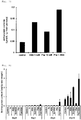
Fig. 6 ] A graph showing anthocyanin contents of grape calluses treated with an amino acid and/or abscisic acid. - [
Fig. 7 ] A graph showing anthocyanin contents of grape berries treated with an amino acid and/or abscisic acid. - [
Fig. 8 ] A graph showing anthocyanin contents of grape berries of which a bunch was treated with an amino acid and/or abscisic acid. The vertical axis indicates the amount of anthocyanin (mg/g fresh pericarp). Day0, Day1, Day3, and Day10 indicate results obtained 0, 1, 3, and 10 days after the start of the treatment with an amino acid and/or abscisic acid. - Hereafter, the present invention will be explained in detail.
- An aspect of the present invention is a method for cultivating a fruit plant, which method comprises applying an amino acid selected from leucine, isoleucine, and phenylalanine, and abscisic acid to the fruit plant.
- Another aspect of the present invention is a method for producing a fruit, which method comprises applying an amino acid selected from leucine, isoleucine, and phenylalanine, and abscisic acid to a fruit plant, and collecting a fruit from the fruit plant.
- Another aspect of the present invention is a method for promoting coloring of a fruit, which method comprises applying an amino acid selected from leucine, isoleucine, and phenylalanine, and abscisic acid to a fruit plant.
- Although the fruit plant is not particularly limited so long as it is a fruit plant that bears a fruit that gets a color, it is preferably a fruit plant that bears a fruit containing an anthocyanin. The anthocyanin may consist of one kind of anthocyanin, or two or more kinds of anthocyanins. The term "fruit containing an anthocyanin" means a fruit of which color is characterized by the anthocyanin, or a fruit in which the anthocyanin is a main coloring matter of the fruit. The fruit containing an anthocyanin may be a fruit that mainly contains an anthocyanin in only one of pericarp (skin) and sarcocarp (flesh) of the fruit, or a fruit that contains an anthocyanin in both of pericarp and sarcocarp. Therefore, the term "coloring of a fruit" means coloring of either one or both of pericarp and sarcocarp. In the present invention, the term "fruit plant" includes both an arboreous plant and an herb plant. The type of the anthocyanin is not particularly limited, and examples include, for example, cyanidin-3-glucoside, malvidin-3-glucoside, delphinidin-3-glucoside, petunidin-3-glucoside, and so forth. Specific examples of the fruit plant include, for example, fruit plants belonging to the family Vitaceae or Rosaceae. More specific examples include grape, apple, peach, cherry, strawberry plants, and so forth. Although the varieties of these fruit plants are not particularly limited, examples include, for example, Cabernet Sauvignon, Merlot, Tempranillo, Pinot Noir, Syrah, Muscat Bailey A, Kyoho, Pione, Delaware, clone 21, Crimson seedless, Flame seedless, Red globe, and so forth for grape; Tsugaru, Fuji, and so forth for apple; Hakuho, Akatsuki, KawaNakajima white peach, Nikkawa Hakuho, and so forth for peach; Jabore, Satonishiki, Takasago, Napoleon, Benishuho, and so forth for cherry; and Amaou, Tochiotome, Sagahonoka, Diamond Berry, Sakihime, and so forth for strawberry. The fruit plant to which the present invention is applied may consist of one kind of fruit plant, or two or more kinds of fruit plants.
- As described in the examples mentioned later, the action of abscisic acid for increasing anthocyanin content of grape becomes higher, when abscisic acid is used in combination with the aforementioned amino acid.
- The amino acid may consist of any one of leucine, isoleucine, and phenylalanine, or may consist of a mixture of any arbitrary two or three kinds of them. In the case of such a mixture, quantitative ratios of the amino acids may be arbitrarily determined. These amino acids are preferably L-amino acids. These amino acids may be in the form of a salt or derivative thereof. The amino acid may be purified or roughly purified, or may consist of a culture product (fermentation broth) or fermentation by-product containing the amino acid, or a fractionation product thereof containing the amino acid, so long as the effect of the present invention is not degraded. The amino acid may also consist of a protein decomposition product.
- Although abscisic acid may exist as several kinds of isomers, the naturally occurring type abscisic acid ((S)-(+)-abscisic acid) is preferred. Abscisic acid may be a salt thereof or a derivative thereof such as trifluoromethylated abscisic acid. Abscisic acid may also be an abscisic acid agonist having the abscisic acid activity such as pyrabactin, or an abscisic acid decomposition inhibitor such as P450 inhibitor. Abscisic acid can be obtained by, for example, fermentation or chemical synthesis.
- The amino acid and abscisic acid are usually applied as a solution to a fruit plant. The concentration of the amino acid at the time of the application is usually 0.2 mM to 100 mM, preferably 0.5 mM to 20 mM, more preferably 1 mM to 10 mM, further preferably 2 mM to 10 mM. When the amino acid consists of two or three kinds of amino acids, these concentration ranges mean ranges of the total concentration of the amino acids. The concentration of abscisic acid at the time of the application is usually 0.1 µM to 10 mM, preferably 1 µM to 5 mM, more preferably 10 µM to 1 mM, further preferably 100 µM to 1 mM.
- The amino acid and abscisic acid may be in the form of a solution containing both of them, or in the forms of a solution containing the amino acid and a solution containing abscisic acid. In the latter case, both the solution containing the amino acid and the solution containing abscisic acid are applied to the fruit plant. An amino acid solution and an abscisic acid solution, and a solution containing abscisic acid and the amino acid may henceforth also be generically referred to as "ABA/AA solution(s)".
- The ABA/AA solution(s) is/are preferably applied to a leaf, trunk, stem, fruit surface, or rhizosphere, of a fruit plant. The ABA/AA solution(s) may be applied to two or more of these parts. The ABA/AA solution(s) may be applied to the whole or a part of any of these parts. For example, when the ABA/AA solution(s) is/are applied to a leaf, it may be applied to only surface or back surface of the leaf, or may be applied to both sides. When the ABA/AA solution(s) is/are applied to a fruit, it may be applied to the whole of a fruit surface, or a part of a fruit surface, for example, only the outside of a bunch when the fruit forms the bunch. Application of the ABA/AA solution(s) to soil is also included in the scope of "application to a fruit plant", so long as the amino acid and abscisic acid reach at least the rhizosphere. Examples of the application method include sprinkling to soil surface, irrigation into soil, plowing-in into soil, sprinkling or spreading on leaf surface or fruit of the fruit plant, addition to hydroponic solution, and so forth. Among these, sprinkling on a leaf surface or fruit is preferred. The term "sprinkling on a leaf surface" means that sprinkling on at least leaf surface is sufficient, and the solution may be sprinkled on another part in addition to a leaf surface. The same shall apply to a fruit.
- Although the sprinkling amount of the ABA/AA solution(s) is not particularly limited, it is usually 60 g/ha to 30,000 g/ha, preferably 150 g/ha to 600 g/ha, more preferably 300 g/ha to 3,000 g/ha, further preferably 600 g/ha to 3,000 g/ha, in terms of the amount of amino acid. When the amino acid consists of two or three kinds of amino acids, these concentration ranges mean ranges of the total concentration of the amino acids.
- The amount of abscisic acid is usually 0.05 g/ha to 5,000 g/ha, preferably 0.5 g/ha to 2,000 g/ha, more preferably 5 g/ha to 2,000 g/ha, further preferably 10 g/ha to 2,000 g/ha.
- The ratio of the amounts of the amino acid and abscisic acid is not particularly limited.
- As for time of the application of the ABA/AA solution(s), it is preferably applied to a fruit plant after the fruit plant has born a fruit. After bearing of a fruit, the ABA/AA solution(s) is/are preferably applied before or after coloring of the fruit, or before and after coloring of the fruit. Especially in the case of grape, the ABA/AA solution(s) is/are preferably applied during the veraison period. The number of times of the application is not particularly limited, and the ABA/AA solution(s) may be applied once or two or more times. When the ABA/AA solution(s) consist(s) of separate amino acid solution and abscisic acid solution, these solutions may be applied simultaneously or separately. When these solutions are separately applied, it is preferred that the both solutions are applied within seven days.
- When the ABA/AA solution(s) is/are sprinkled, the sprinkling method is not particularly limited, but it is desirable that the agricultural or horticultural material spreads over the whole terrestrial part of a plant including a stem, leaf, and fruit, preferably over a leaf surface and/or fruit. When the solution is manually sprinkled, the operation is desirably performed so that spray nozzle for the agricultural or horticultural material turns to the surface or back surface of a leaf. When a boom sprayer is used, the sprinkling volume of the solution is desirably 100 L or larger, preferably 200 to 3,000 L, more preferably 300 to 2,000 L, per ha. There may also be used a so-called electrostatic spraying machine or electrostatic spraying nozzle, which promotes adhesion of sprayed liquid to plant bodies by using static electricity.
- When the ABA/AA solution(s) is/are sprinkled on a leaf surface and/or fruit, it may be sprinkled as a mixture with a fertilizer for foliar applications usually used in agriculture so long as the effect of the present invention is not degraded.
- When a plant is cultivated according to the method of the present invention, a basal fertilizer and an additional fertilizer can be applied to the soil in an amount and by a method usually used in the corresponding area depending on the type of the plant.
- A preferred embodiment of the ABA/AA solution(s) is the agricultural or horticultural material of the present invention described below.
- The agricultural or horticultural material of the present invention contains an amino acid selected from leucine, isoleucine, and phenylalanine, and abscisic acid as active ingredients. The descriptions for these amino acids and abscisic acid mentioned above for the aforementioned method of the present invention are also applied to the agricultural or horticultural material. The amino acid and abscisic acid may separately constitute the agricultural or horticultural material as a set, or they may be contained in the agricultural or horticultural material as a mixture thereof. Examples of the form of the agricultural or horticultural material include an agricultural or horticultural material consisting of an amino acid solution and an abscisic acid solution, an agricultural or horticultural material consisting of a solution containing the amino acid and abscisic acid, an agricultural or horticultural material consisting of powdered amino acid, powdered abscisic acid, and a solvent for dissolving them as an optional component, and so forth. When the amino acid and abscisic acid are separately contained, they may be mixed at the time of use, or they may be separately applied to a fruit plant.
- The agricultural or horticultural material of the present invention may contain an arbitrary ingredient in addition to the aforementioned active ingredients, so long as the effect of the present invention is not degraded. Examples of such an ingredient include stabilizer, carrier, pH adjustor, fertilizer component such as minerals for enhancing effect of fertilizer, agrochemical ingredient, binder, filler, and so forth. As these ingredients, those usually used for agricultural chemicals, fertilizers, and so forth can be used, so long as the effect of the present invention is not degraded.
- The agricultural or horticultural material may also contain an amino acid other than leucine, isoleucine, and phenylalanine. However, since such other amino acids include those that reduce the fruit coloring-promoting action of abscisic acid, low contents of such other amino acids in the agricultural or horticultural material are preferred, and it is more preferred that such other amino acids are not contained in the agricultural or horticultural material. For example, the content of such other amino acids is preferably 10 mM or lower, more preferably 1 mM or lower, in terms of the concentration at the time of applying the agricultural or horticultural material to a fruit plant.
- The dosage form of the agricultural or horticultural material is not particularly limited so long as a solution applicable to a fruit plant can be prepared at the time of use, and the material may be in any form of use, such as solution, powder, granule, or emulsion.
- As described above, when the agricultural or horticultural material of the present invention is sprinkled on a plant, it is preferably sprinkled on a leaf surface and/or fruit. A spreading agent may be added in order to enhance spreading power of the agricultural or horticultural material on a leaf surface or fruit, and such an ingredient as surfactant may be added in order to enhance penetrating property into a plant of isoleucine. Examples of the spreading agent include, for example, Applauch BI™ (Kao), Mix Power™ (Syngenta Japan), Squash™ (MARUWA Biochemical), and so forth. As the surfactant, any of nonionic surfactants, anionic surfactants, cationic surfactants, and ampholytic surfactants can be used. Examples include polyoxyethylene alkyl ethers, polyoxyethylene alkyl aryl ethers, polyoxyethylene fatty acid esters, sorbitan fatty acid esters, polyoxyethylene sorbitan fatty acid esters, oxyethylene polymers, oxypropylene polymers, polyoxyethylene alkyl phosphoric acid esters, fatty acid salts, alkylsulfuric acid ester salts, alkylsulfonic acid salts, alkylarylsulfonic acid salts, alkylphosphoric acid salts, alkylphosphoric acid ester salts, polyoxyethylene alkylsulfuric acid esters, quaternary ammonium salts, oxyalkylamines, lecithin, saponin, and so forth. In addition, gelatin, casein, starch, agar, polyvinyl alcohol, sodium alginate, and so forth can be used as an auxiliary as required.
- At the time of use, the agricultural or horticultural material or a component thereof in the form of solid or powder may be dissolved or dispersed in a solvent such as water and alcohol. Also, the agricultural or horticultural material or a component thereof in the form of liquid may be diluted with a solvent such as water and alcohol. Examples of the alcohol include ethanol, methanol, isopropyl alcohol, and so forth.
- The concentration of leucine, isoleucine, and/or phenylalanine at the time of use of the agricultural or horticultural material is as described for the method of the present invention. The content of these amino acids in the agricultural or horticultural material is not particularly limited so long as these amino acids are applied as a solution of the prescribed concentration described above at the time of use. The content of these amino acids in the agricultural or horticultural material is, for example, 1% by weight or higher, preferably 50% by weight or higher, more preferably 70% by weight or higher, in terms of dry weight, and a content in such a range is preferred in view of evasion of harmful effect of impurities such as damage caused by salt, and actualization of the effects. Although the agricultural or horticultural material may be distributed in the form of solid or solution, when it is distributed in the form of solution, the concentration thereof is preferably 0.5 mM to the saturation concentration. The solubility in water of isoleucine is about 0.3 M (40.2 g/L (20°C), 41.2 g/L (50°C)), the same of phenylalanine is about 0.2 M (27 g/L (20°C), 40 g/L (50°C)), and the same of leucine is about 0.2 M (24 g/L (20°C), 29 g/L (50°C)).
- The concentration of abscisic acid at the time of use of the agricultural or horticultural material is also as described for the method of the present invention. The content of abscisic acid in the agricultural or horticultural material is not particularly limited so long as it can be applied as a solution of the prescribed concentration described above at the time of use. When the agricultural or horticultural material is in the form of solution, the concentration of abscisic acid is preferably 0.5 mM to the saturation concentration.
- Hereafter, the present invention will be more specifically explained with reference to examples. In the examples, amino acids are L-amino acids.
- Cells of a cell line derived from European grape (Vitis vinifera L.) possessed by RIKEN BioResource Center (VR, management number RPC00003) were subcultured on MS agar medium. The subcultured VR calluses were each transferred to MS agar medium containing 5 mM of each amino acid solution, and cultured. As a positive control, 100 µM abscisic acid (ABA) was used, for which coloring-promoting effect is known. Five days after the transfer, each callus was freeze-dried and ground, and anthocyanin was extracted with a 1% HCl solution in MeOH. The absorbance of the extract was measured at 530 nm, and the content of anthocyanin was quantified by using cyanidin-3-glucoside as a standard substance. The relative value of the content of anthocyanin accumulated in the callus of each amino acid treatment group was determined based on the content of anthocyanin extracted from the callus of the positive control treatment group, which was taken as 100%.
- The results are shown in Table 1. The callus treated with isoleucine (Ile) showed the highest anthocyanin content.
Table 1: Analysis of anthocyanin contents in grape calluses treated with various amino acids Amino acid Pro Ile Asp Glu Ser Asn Gln Gly His Arg Relative content of anthocyanin 27% 76% 11% 4% 38% 38% 18% 23% 29% 9% Amino acid Val Met Ala Trp Phe Cys Leu Thr Lys Try Relative content of anthocyanin 6% 42% 7% 4% 40% 6% 30% 35% 15% 0% - For the experiment, Cabernet Sauvignon grape plants cultivated in a test farm and having entered into the veraison period were used. Eight bunches of grapes on each of two grape plants, 16 bunches of grapes in total, were selected for each test group, and on these bunches of grapes, about 6.25 mL per bunch of 0.1% Applauch BI (Kao, control), 1 g/L of abscisic acid (ABA) + 0.1% Applauch BI (positive control), or 10 mM isoleucine (Ile) + 0.1% Applauch BI was sprinkled. As samples, 4 bunches for each test group were collected 4 times. Anthocyanin contained in pericarps was extracted with a mixed solution of water and acetone (1:2), and the anthocyanin content was measured in the same manner as described above. The results are shown in
Fig. 1 . It was demonstrated that, if grape berries are treated with Ile, the anthocyanin content in pericarps increases. - As described above, correlation of the coloring-promoting effect observed for the grape cultured cells and the coloring-promoting effect for grape berries on trees was demonstrated.
- Cells of a cell line derived from grape (Vitis vinifera L.) possessed by RIKEN BioResource Center (VR, management number RPC00003) were subcultured on MS agar medium. The VR calluses were each transferred to MS agar medium containing 5 mM of each amino acid, or 100 µM abscisic acid (ABA), or 5 mM of each amino acid and 100 µM ABA (abscisic acid), and cultured. The culture was performed at 25°C with 16 hours of light irradiation in one day.
- After 5 days, each callus was freeze-dried and ground, and anthocyanin was extracted with a 1% HCl solution in MeOH. The absorbance of the extract was measured at 530 nm, and the content of anthocyanin was quantified by using cyanidin-3-glucoside as a standard substance, and shown in the graphs in terms of the content in dry weight (DW) of the callus. The amounts of anthocyanin per 1 g dry weight of callus are shown in
Figs. 2 to 5 . When the calluses were treated with a combination of ABA and isoleucine (Ile), phenylalanine (Phe), or leucine (Leu), the anthocyanin contents of the calluses markedly increased compared with that observed with the treatment with ABA alone. - Cells of a cell line derived from grape (Vitis vinifera L.) possessed by RIKEN BioResource Center (VR, management number RPC00003) were subcultured on MS agar medium. The VR calluses were each transferred to MS agar medium containing 0 to 5 mM of phenylalanine (Phe) or isoleucine (Ile) in combination with 0 to 100 µM abscisic acid (ABA), and cultured. The culture was performed at 25°C with 16 hours of light irradiation in one day.
- After 5 days, each callus was freeze-dried and ground, and anthocyanin was extracted with a 1% HCl solution in MeOH. The absorbance of the extract was measured at 530 nm, and the content of anthocyanin was quantified by using cyanidin-3-glucoside as a standard substance, and shown in the graph in terms of the content in dry weight (DW) of the callus. The amounts of anthocyanin per 1 g dry weight of callus are shown in
Fig. 6 . When the calluses were treated with a combination of ABA and isoleucine (Ile) or phenylalanine (Phe), the anthocyanin contents of the calluses markedly increased compared with that observed with the treatment with ABA alone. Furthermore, when the addition concentrations of ABA and the amino acids were increased, the amount of anthocyanin also increased. - A 0.3 M sucrose culture solution containing 10 mM phenylalanine (Phe) and 1 mM abscisic acid (ABA) was infiltrated into a filter paper. Cabernet sauvignon berries before entering into the veraison period (fruit maturing starting period) were placed on the surface of the filter paper, and cultured. The culture was performed at 25°C with 16 hours of light irradiation in one day.
- After 5 days, the pericarps of berries were stripped and ground, and anthocyanin was extracted with a 1% HCl solution in MeOH. The absorbance of the extract was measured at 530 nm, and the content of anthocyanin was quantified by using cyanidin-3-glucoside as a standard substance, and shown in
Fig. 7 in terms of the content in fresh pericarp weight (FW). As a result of the treatment with a combination of ABA and phenylalanine (Phe), the anthocyanin content in the pericarp markedly increased compared with that observed with the treatment with ABA alone. - As described above, the coloring-promoting effect obtained in the grape cultured cells and the coloring-promoting effect obtained in berries correlated. On the basis of these results and the result of Reference Example 1, it is considered that the effect obtained in Examples 1 and 2 can be similarly obtained on fruit plants.
- For the experiment, Cabernet Sauvignon plants cultivated in a test farm and having entered into the veraison period were used. The grape plants were divided into three sections, and the experiment was performed in triplicate. Six treatment groups were randomly set for the grape plants of each section. On the fruit bunches of each treatment group, control, 10 mM isoleucine (Ile), 0.1 g/L (378 µM) abscisic acid (ABA), 10 mM isoleucine + 0.1 g/L abscisic acid (Ile+ABA), 10 mM phenylalanine (Phe), or 10 mM phenylalanine + 0.1 g/L abscisic acid (Phe+ABA), each containing 0.1% Applauch BI (Kao), was sprinkled. These solutions each were sprinkled in such a volume that the berries were sufficiently wetted. After 0, 1, 3, and 10 days from the start of the sprinkling, the bunches of each treatment group were harvested, anthocyanin was extracted from the pericarps of the berries (fruit balls) with a mixed solution of water and acetone (1:2), and the anthocyanin content was measured. The results are shown in
Fig. 8 . When the berries on the fruit plants were treated with the combination of Phe and ABA, the anthocyanin content in the pericarps increased compared with that obtained with the treatment with ABA alone. - By using abscisic acid and a specific amino acid in combination, coloring of fruits can be further promoted compared with use of abscisic acid or the amino acid alone. According to the present invention, coloring-promoting effect comparable to that obtainable with abscisic acid alone can be attained with a smaller amount of abscisic acid. Amino acids are highly safe, and more inexpensive compared with abscisic acid, and provides fewer side reactions to plants.
Claims (12)
- A method for cultivating a fruit plant, the method comprising:
applying one or more kinds of amino acids selected from leucine, isoleucine, and phenylalanine, and abscisic acid to the fruit plant. - The method according to claim 1,
wherein the amino acid(s) and abscisic acid are applied to the fruit plant as a solution containing the amino acid(s) and abscisic acid, or as an amino acid solution and an abscisic acid solution,
wherein the application concentration of the amino acid(s) is 0.2 mM to 100 mM, and
wherein the application concentration of abscisic acid is 0.1 µM to 10 mM. - The method according to claim 1, wherein the amino acid(s) is/are L-amino acid(s).
- The method according to any one of claims 1 to 3, wherein the fruit plant is a fruit plant that bears a fruit containing anthocyanin.
- The method according to any one of claims 1 to 4, wherein the fruit plant consists of one or more kinds of fruit plants selected from Vitaceae and Rosaceae plants.
- The method according to claim 5, wherein the fruit plant consists of one or more kinds of fruit plants selected from grape, apple, peach, cherry, and strawberry plants.
- The method according to any one of claims 1 to 6, wherein the amino acid(s) is/are applied as a solution containing:a purified product of the amino acid(s),a fermentation broth or fermentation by-product of the amino acid(s), ora fractionation product thereof containing the amino acid(s).
- The method according to any one of claims 1 to 7, wherein the amino acid(s) and abscisic acid are sprinkled to a leaf, trunk, stem, fruit surface, or rhizosphere of the fruit plant.
- A method for producing a fruit, the method comprising:applying one or more kinds of amino acids selected from leucine, isoleucine, and phenylalanine, and abscisic acid to a fruit plant; andcollecting a fruit from the fruit plant.
- The method according to claim 9,
wherein the amino acid(s) and abscisic acid are applied to the fruit plant as a solution containing the amino acid(s) and abscisic acid, or as an amino acid solution and an abscisic acid solution,
wherein the application concentration of the amino acid(s) is 0.2 mM to 100 mM, and
wherein the application concentration of abscisic acid is 0.1 µM to 10 mM. - An agricultural or horticultural material containing one or more kinds of amino acids selected from leucine, isoleucine, and phenylalanine, and abscisic acid as active ingredients.
- The material according to claim 11, which is applied to a fruit plant as a solution having an amino acid concentration of 0.2 mM to 100 mM, and an abscisic acid concentration of 0.1 µM to 10 mM.
Priority Applications (1)
| Application Number | Priority Date | Filing Date | Title |
|---|---|---|---|
| PL16835010T PL3335546T3 (en) | 2015-08-11 | 2016-08-01 | Plant cultivation method which promotes coloring in fruit |
Applications Claiming Priority (2)
| Application Number | Priority Date | Filing Date | Title |
|---|---|---|---|
| JP2015158971 | 2015-08-11 | ||
| PCT/JP2016/072499 WO2017026313A1 (en) | 2015-08-11 | 2016-08-01 | Agricultural and horticultural material, and plant cultivation method which promote coloring in fruit |
Publications (3)
| Publication Number | Publication Date |
|---|---|
| EP3335546A1 true EP3335546A1 (en) | 2018-06-20 |
| EP3335546A4 EP3335546A4 (en) | 2019-03-13 |
| EP3335546B1 EP3335546B1 (en) | 2020-12-16 |
Family
ID=57983496
Family Applications (1)
| Application Number | Title | Priority Date | Filing Date |
|---|---|---|---|
| EP16835010.6A Active EP3335546B1 (en) | 2015-08-11 | 2016-08-01 | Plant cultivation method which promotes coloring in fruit |
Country Status (7)
| Country | Link |
|---|---|
| US (1) | US10568324B2 (en) |
| EP (1) | EP3335546B1 (en) |
| JP (1) | JP6812974B2 (en) |
| CL (2) | CL2018000373A1 (en) |
| ES (1) | ES2861058T3 (en) |
| PL (1) | PL3335546T3 (en) |
| WO (1) | WO2017026313A1 (en) |
Cited By (1)
| Publication number | Priority date | Publication date | Assignee | Title |
|---|---|---|---|---|
| CN107836269A (en) * | 2017-11-21 | 2018-03-27 | 广西焕耘电子商务有限公司 | A kind of tea oil tree implantation methods |
Families Citing this family (15)
| Publication number | Priority date | Publication date | Assignee | Title |
|---|---|---|---|---|
| CN116679845A (en) | 2017-02-06 | 2023-09-01 | 平蛙实验室股份公司 | touch sensing device |
| EP3676694A4 (en) | 2017-09-01 | 2021-06-09 | FlatFrog Laboratories AB | Improved optical component |
| US11567610B2 (en) | 2018-03-05 | 2023-01-31 | Flatfrog Laboratories Ab | Detection line broadening |
| JP7329506B2 (en) | 2018-05-11 | 2023-08-18 | 株式会社カネカ | Method for cultivating plants and coloring promoter for grape berries |
| CN108718937A (en) * | 2018-06-05 | 2018-11-02 | 江西农业大学 | A method of reducing oxidative stress induction Anthocyanin accumulation |
| CN108934680A (en) * | 2018-06-15 | 2018-12-07 | 铜陵市恒兴化工有限责任公司 | A kind of cultural method of Chinese parasol tree |
| WO2020080992A1 (en) | 2018-10-20 | 2020-04-23 | Flatfrog Laboratories Ab | Frame for a touch-sensitive device and tool therefor |
| CN109438033A (en) * | 2018-11-13 | 2019-03-08 | 安丘市孚元植物营养技术有限公司 | One planting fruit-trees applies bar fertilizer and its manufacture craft |
| US12056316B2 (en) | 2019-11-25 | 2024-08-06 | Flatfrog Laboratories Ab | Touch-sensing apparatus |
| EP4100822A4 (en) | 2020-02-08 | 2024-02-28 | FlatFrog Laboratories AB | TOUCH DEVICE WITH LOW LATENCY INTERACTIONS |
| JP2023106651A (en) | 2020-06-17 | 2023-08-02 | 味の素株式会社 | Method for inducing environmental stress tolerance in plant |
| CN112616538B (en) * | 2020-12-14 | 2023-04-28 | 蔡锡攀 | Ecological green orange anthocyanin-absorbing planting method |
| CN117136970A (en) * | 2023-08-30 | 2023-12-01 | 烟台凯多海洋生物研究院有限公司 | Application of a colorant with Trichoderma viride metabolites as active ingredients in promoting fruit coloring |
| CN118047640A (en) * | 2024-01-15 | 2024-05-17 | 中国热带农业科学院热带作物品种资源研究所 | Amino acid foliar fertilizer for increasing capsaicin content in crops, preparation method and application thereof |
| JP2025134221A (en) * | 2024-03-04 | 2025-09-17 | 国立大学法人東海国立大学機構 | Method for promoting polyphenol biosynthesis |
Family Cites Families (13)
| Publication number | Priority date | Publication date | Assignee | Title |
|---|---|---|---|---|
| JPS62215503A (en) * | 1986-03-18 | 1987-09-22 | Kyowa Hakko Kogyo Co Ltd | Improvement in quality of grape |
| JPH02270802A (en) * | 1989-04-12 | 1990-11-05 | Kyowa Hakko Kogyo Co Ltd | Method for promoting coloring of grape |
| JPH0463599A (en) * | 1990-06-29 | 1992-02-28 | Tonen Corp | Production of betacyanin-type natural red pigment |
| JP2003048803A (en) | 2001-08-02 | 2003-02-21 | Ajinomoto Co Inc | Flower bud sprouting promoter |
| CL2008000248A1 (en) | 2007-01-31 | 2008-10-17 | Valent Biosciences Corp | METHOD TO MODIFY THE SENSORY CHARACTERISTICS OF THE BLACK GRAPE BERRY AND OF THE WINE THAT IT INCLUDES TO APPLY ABSCISICAL ACID OR ITS SALTS TO GRAPES AFTER THE FRUIT TO CUAJADO. |
| AU2008325103B2 (en) * | 2007-11-08 | 2014-03-27 | Valent Biosciences Corporation | Synergistic combination to improve grape color and to alter sensory characteristics of wine |
| ES2485990T3 (en) | 2008-01-11 | 2014-08-14 | Ajinomoto Co., Inc. | Use of disease resistance enhancer for plants and control procedure of a plant disease using the same |
| CN101352165B (en) * | 2008-05-26 | 2011-06-15 | 辽宁石油化工大学 | Formulation and formulating method for promoting coloring of Nanguo pear fruit |
| CL2008003567A1 (en) | 2008-11-28 | 2010-01-15 | Valent Biosciences Corp | Method to improve the development of the color of red grapes and alter sensory characteristics of the wine which includes applying 88 to 292 mg / grapevine of s-abscisic acid or its salts and 88 to 292 mg / ethephon grape to red grapes after curdling . |
| JP2012010694A (en) | 2010-06-01 | 2012-01-19 | Ajinomoto Co Inc | Agent for enhancing allelopathy effect and/or phytoalexin production of plant |
| JP2012197249A (en) | 2011-03-22 | 2012-10-18 | Ajinomoto Co Inc | Agricultural and horticultural agent for imparting high-temperature stress resistance and method for imparting high-temperature stress resistance by using the same |
| KR101441005B1 (en) | 2012-03-22 | 2014-09-17 | 주식회사 푸르네 | Plant growth promotion liquid fertilizer and their manufacturing method |
| ES2784866T3 (en) * | 2014-02-28 | 2020-10-01 | Ajinomoto Kk | Agricultural and horticultural composition and procedure for growing plants |
-
2016
- 2016-08-01 EP EP16835010.6A patent/EP3335546B1/en active Active
- 2016-08-01 JP JP2017534188A patent/JP6812974B2/en active Active
- 2016-08-01 ES ES16835010T patent/ES2861058T3/en active Active
- 2016-08-01 PL PL16835010T patent/PL3335546T3/en unknown
- 2016-08-01 WO PCT/JP2016/072499 patent/WO2017026313A1/en not_active Ceased
-
2018
- 2018-02-09 US US15/892,825 patent/US10568324B2/en active Active
- 2018-02-09 CL CL2018000373A patent/CL2018000373A1/en unknown
-
2019
- 2019-09-03 CL CL2019002526A patent/CL2019002526A1/en unknown
Cited By (1)
| Publication number | Priority date | Publication date | Assignee | Title |
|---|---|---|---|---|
| CN107836269A (en) * | 2017-11-21 | 2018-03-27 | 广西焕耘电子商务有限公司 | A kind of tea oil tree implantation methods |
Also Published As
| Publication number | Publication date |
|---|---|
| ES2861058T3 (en) | 2021-10-05 |
| EP3335546B1 (en) | 2020-12-16 |
| CL2019002526A1 (en) | 2019-11-15 |
| US10568324B2 (en) | 2020-02-25 |
| PL3335546T3 (en) | 2021-08-23 |
| JP6812974B2 (en) | 2021-01-13 |
| JPWO2017026313A1 (en) | 2018-05-31 |
| CL2018000373A1 (en) | 2018-07-13 |
| EP3335546A4 (en) | 2019-03-13 |
| WO2017026313A1 (en) | 2017-02-16 |
| US20180168153A1 (en) | 2018-06-21 |
Similar Documents
| Publication | Publication Date | Title |
|---|---|---|
| EP3335546B1 (en) | Plant cultivation method which promotes coloring in fruit | |
| JP6997621B2 (en) | Concentrated extract of algae, its production method and its use in agriculture | |
| JP6798601B2 (en) | Agricultural and horticultural compositions and plant cultivation methods | |
| Gholamreza et al. | Prolonged water deficit stress and methyl jasmonate-mediated changes in metabolite profile, flavonoid concentrations and antioxidant activity in peppermint (Mentha× piperita L.) | |
| Abdel-Salam | Effect of foliar application of salicylic acid and micronutrients on the berries quality of “Bez El Naka” local grape cultivar | |
| KR101590548B1 (en) | Fertilizer composition for improving fruit quality and thinning of fruit | |
| JP2021035362A (en) | Plant functional component content improver and manufacturing method of plant functional component content improver | |
| US20230078125A1 (en) | Emulsion in Water for Preventing and Treating Yellow Shoot of Citrus Fruit Tree, Preparation Method and Application Method | |
| Krajnc et al. | Seaweed extract elicits the metabolic responses in leaves and enhances growth of Pelargonium cuttings | |
| Saadatfar et al. | Improving biochemical traits, oleo-gum yield and compositions of asafoetida (Ferula assa-foetida L.) essential oil using 24-epibrassinolide in Kerman natural habitats (Iran) | |
| Nazarideljou | Biomass and volatile compounds of rose-scented geranium under various elicitors and cultivation systems | |
| JP5372368B2 (en) | Method for cultivating plants with improved antioxidant function | |
| Lakshmi et al. | Foliar application of Ascophyllum nodosum on improvement of photosynthesis, fruit setting percentage, yield and quality of tomato (Solanum lycopersicum L.). | |
| RU2677030C2 (en) | Biological active synergetic composition | |
| WO2023210047A1 (en) | Nodule activity accelerator | |
| Ahmed et al. | Behaviour of Superior grapevines to foliar application of some vitamins and amino acids‟ | |
| Abdulkadhim et al. | Effectiveness of brassinolide and dry yeast extract spraying on growth parameters and the chemical content of the grape seedlings | |
| Sharma et al. | Triacontanol: a versatile plant growth regulator in overcoming abiotic stresses-a review. | |
| WO2020250241A1 (en) | Bud break composition | |
| JP7688450B2 (en) | Environmental stress resistance enhancer | |
| Yu et al. | Changes in flavonoids concentration of Hawthorn (Crataegus pinnatifida) in response to exogenous amino acids | |
| CN105409999A (en) | Topramezone, nicosulfuron and atrazine compounded dispersible oil-based suspension agent and preparation method thereof | |
| OA18724A (en) | Concentrated extract of algae, production method thereof and use of same in agriculture [Extrait d'algues concentré, procédé de préparation et ses utilisations en agriculture]. |
Legal Events
| Date | Code | Title | Description |
|---|---|---|---|
| STAA | Information on the status of an ep patent application or granted ep patent |
Free format text: STATUS: THE INTERNATIONAL PUBLICATION HAS BEEN MADE |
|
| PUAI | Public reference made under article 153(3) epc to a published international application that has entered the european phase |
Free format text: ORIGINAL CODE: 0009012 |
|
| STAA | Information on the status of an ep patent application or granted ep patent |
Free format text: STATUS: REQUEST FOR EXAMINATION WAS MADE |
|
| 17P | Request for examination filed |
Effective date: 20180312 |
|
| AK | Designated contracting states |
Kind code of ref document: A1 Designated state(s): AL AT BE BG CH CY CZ DE DK EE ES FI FR GB GR HR HU IE IS IT LI LT LU LV MC MK MT NL NO PL PT RO RS SE SI SK SM TR |
|
| AX | Request for extension of the european patent |
Extension state: BA ME |
|
| DAV | Request for validation of the european patent (deleted) | ||
| DAX | Request for extension of the european patent (deleted) | ||
| RIC1 | Information provided on ipc code assigned before grant |
Ipc: A01N 25/02 20060101ALI20190128BHEP Ipc: A01P 21/00 20060101ALI20190128BHEP Ipc: A01N 37/42 20060101ALI20190128BHEP Ipc: A01N 37/44 20060101ALI20190128BHEP Ipc: A01G 7/06 20060101AFI20190128BHEP Ipc: C05F 11/10 20060101ALI20190128BHEP |
|
| A4 | Supplementary search report drawn up and despatched |
Effective date: 20190207 |
|
| STAA | Information on the status of an ep patent application or granted ep patent |
Free format text: STATUS: EXAMINATION IS IN PROGRESS |
|
| 17Q | First examination report despatched |
Effective date: 20200103 |
|
| GRAP | Despatch of communication of intention to grant a patent |
Free format text: ORIGINAL CODE: EPIDOSNIGR1 |
|
| STAA | Information on the status of an ep patent application or granted ep patent |
Free format text: STATUS: GRANT OF PATENT IS INTENDED |
|
| INTG | Intention to grant announced |
Effective date: 20200626 |
|
| GRAS | Grant fee paid |
Free format text: ORIGINAL CODE: EPIDOSNIGR3 |
|
| GRAA | (expected) grant |
Free format text: ORIGINAL CODE: 0009210 |
|
| STAA | Information on the status of an ep patent application or granted ep patent |
Free format text: STATUS: THE PATENT HAS BEEN GRANTED |
|
| AK | Designated contracting states |
Kind code of ref document: B1 Designated state(s): AL AT BE BG CH CY CZ DE DK EE ES FI FR GB GR HR HU IE IS IT LI LT LU LV MC MK MT NL NO PL PT RO RS SE SI SK SM TR |
|
| REG | Reference to a national code |
Ref country code: GB Ref legal event code: FG4D |
|
| REG | Reference to a national code |
Ref country code: IE Ref legal event code: FG4D |
|
| REG | Reference to a national code |
Ref country code: DE Ref legal event code: R096 Ref document number: 602016049993 Country of ref document: DE |
|
| REG | Reference to a national code |
Ref country code: AT Ref legal event code: REF Ref document number: 1344719 Country of ref document: AT Kind code of ref document: T Effective date: 20210115 |
|
| PG25 | Lapsed in a contracting state [announced via postgrant information from national office to epo] |
Ref country code: FI Free format text: LAPSE BECAUSE OF FAILURE TO SUBMIT A TRANSLATION OF THE DESCRIPTION OR TO PAY THE FEE WITHIN THE PRESCRIBED TIME-LIMIT Effective date: 20201216 Ref country code: GR Free format text: LAPSE BECAUSE OF FAILURE TO SUBMIT A TRANSLATION OF THE DESCRIPTION OR TO PAY THE FEE WITHIN THE PRESCRIBED TIME-LIMIT Effective date: 20210317 Ref country code: NO Free format text: LAPSE BECAUSE OF FAILURE TO SUBMIT A TRANSLATION OF THE DESCRIPTION OR TO PAY THE FEE WITHIN THE PRESCRIBED TIME-LIMIT Effective date: 20210316 Ref country code: RS Free format text: LAPSE BECAUSE OF FAILURE TO SUBMIT A TRANSLATION OF THE DESCRIPTION OR TO PAY THE FEE WITHIN THE PRESCRIBED TIME-LIMIT Effective date: 20201216 |
|
| REG | Reference to a national code |
Ref country code: AT Ref legal event code: MK05 Ref document number: 1344719 Country of ref document: AT Kind code of ref document: T Effective date: 20201216 |
|
| REG | Reference to a national code |
Ref country code: NL Ref legal event code: MP Effective date: 20201216 |
|
| PG25 | Lapsed in a contracting state [announced via postgrant information from national office to epo] |
Ref country code: BG Free format text: LAPSE BECAUSE OF FAILURE TO SUBMIT A TRANSLATION OF THE DESCRIPTION OR TO PAY THE FEE WITHIN THE PRESCRIBED TIME-LIMIT Effective date: 20210316 Ref country code: LV Free format text: LAPSE BECAUSE OF FAILURE TO SUBMIT A TRANSLATION OF THE DESCRIPTION OR TO PAY THE FEE WITHIN THE PRESCRIBED TIME-LIMIT Effective date: 20201216 Ref country code: SE Free format text: LAPSE BECAUSE OF FAILURE TO SUBMIT A TRANSLATION OF THE DESCRIPTION OR TO PAY THE FEE WITHIN THE PRESCRIBED TIME-LIMIT Effective date: 20201216 |
|
| PG25 | Lapsed in a contracting state [announced via postgrant information from national office to epo] |
Ref country code: NL Free format text: LAPSE BECAUSE OF FAILURE TO SUBMIT A TRANSLATION OF THE DESCRIPTION OR TO PAY THE FEE WITHIN THE PRESCRIBED TIME-LIMIT Effective date: 20201216 Ref country code: HR Free format text: LAPSE BECAUSE OF FAILURE TO SUBMIT A TRANSLATION OF THE DESCRIPTION OR TO PAY THE FEE WITHIN THE PRESCRIBED TIME-LIMIT Effective date: 20201216 |
|
| REG | Reference to a national code |
Ref country code: LT Ref legal event code: MG9D |
|
| PG25 | Lapsed in a contracting state [announced via postgrant information from national office to epo] |
Ref country code: SK Free format text: LAPSE BECAUSE OF FAILURE TO SUBMIT A TRANSLATION OF THE DESCRIPTION OR TO PAY THE FEE WITHIN THE PRESCRIBED TIME-LIMIT Effective date: 20201216 Ref country code: PT Free format text: LAPSE BECAUSE OF FAILURE TO SUBMIT A TRANSLATION OF THE DESCRIPTION OR TO PAY THE FEE WITHIN THE PRESCRIBED TIME-LIMIT Effective date: 20210416 Ref country code: RO Free format text: LAPSE BECAUSE OF FAILURE TO SUBMIT A TRANSLATION OF THE DESCRIPTION OR TO PAY THE FEE WITHIN THE PRESCRIBED TIME-LIMIT Effective date: 20201216 Ref country code: SM Free format text: LAPSE BECAUSE OF FAILURE TO SUBMIT A TRANSLATION OF THE DESCRIPTION OR TO PAY THE FEE WITHIN THE PRESCRIBED TIME-LIMIT Effective date: 20201216 Ref country code: LT Free format text: LAPSE BECAUSE OF FAILURE TO SUBMIT A TRANSLATION OF THE DESCRIPTION OR TO PAY THE FEE WITHIN THE PRESCRIBED TIME-LIMIT Effective date: 20201216 Ref country code: EE Free format text: LAPSE BECAUSE OF FAILURE TO SUBMIT A TRANSLATION OF THE DESCRIPTION OR TO PAY THE FEE WITHIN THE PRESCRIBED TIME-LIMIT Effective date: 20201216 Ref country code: CZ Free format text: LAPSE BECAUSE OF FAILURE TO SUBMIT A TRANSLATION OF THE DESCRIPTION OR TO PAY THE FEE WITHIN THE PRESCRIBED TIME-LIMIT Effective date: 20201216 |
|
| PG25 | Lapsed in a contracting state [announced via postgrant information from national office to epo] |
Ref country code: AT Free format text: LAPSE BECAUSE OF FAILURE TO SUBMIT A TRANSLATION OF THE DESCRIPTION OR TO PAY THE FEE WITHIN THE PRESCRIBED TIME-LIMIT Effective date: 20201216 |
|
| REG | Reference to a national code |
Ref country code: DE Ref legal event code: R097 Ref document number: 602016049993 Country of ref document: DE |
|
| PG25 | Lapsed in a contracting state [announced via postgrant information from national office to epo] |
Ref country code: IS Free format text: LAPSE BECAUSE OF FAILURE TO SUBMIT A TRANSLATION OF THE DESCRIPTION OR TO PAY THE FEE WITHIN THE PRESCRIBED TIME-LIMIT Effective date: 20210416 |
|
| PLBE | No opposition filed within time limit |
Free format text: ORIGINAL CODE: 0009261 |
|
| STAA | Information on the status of an ep patent application or granted ep patent |
Free format text: STATUS: NO OPPOSITION FILED WITHIN TIME LIMIT |
|
| PG25 | Lapsed in a contracting state [announced via postgrant information from national office to epo] |
Ref country code: AL Free format text: LAPSE BECAUSE OF FAILURE TO SUBMIT A TRANSLATION OF THE DESCRIPTION OR TO PAY THE FEE WITHIN THE PRESCRIBED TIME-LIMIT Effective date: 20201216 |
|
| 26N | No opposition filed |
Effective date: 20210917 |
|
| PG25 | Lapsed in a contracting state [announced via postgrant information from national office to epo] |
Ref country code: DK Free format text: LAPSE BECAUSE OF FAILURE TO SUBMIT A TRANSLATION OF THE DESCRIPTION OR TO PAY THE FEE WITHIN THE PRESCRIBED TIME-LIMIT Effective date: 20201216 |
|
| PG25 | Lapsed in a contracting state [announced via postgrant information from national office to epo] |
Ref country code: SI Free format text: LAPSE BECAUSE OF FAILURE TO SUBMIT A TRANSLATION OF THE DESCRIPTION OR TO PAY THE FEE WITHIN THE PRESCRIBED TIME-LIMIT Effective date: 20201216 |
|
| REG | Reference to a national code |
Ref country code: DE Ref legal event code: R119 Ref document number: 602016049993 Country of ref document: DE |
|
| REG | Reference to a national code |
Ref country code: CH Ref legal event code: PL |
|
| PG25 | Lapsed in a contracting state [announced via postgrant information from national office to epo] |
Ref country code: MC Free format text: LAPSE BECAUSE OF FAILURE TO SUBMIT A TRANSLATION OF THE DESCRIPTION OR TO PAY THE FEE WITHIN THE PRESCRIBED TIME-LIMIT Effective date: 20201216 |
|
| REG | Reference to a national code |
Ref country code: BE Ref legal event code: MM Effective date: 20210831 |
|
| GBPC | Gb: european patent ceased through non-payment of renewal fee |
Effective date: 20210801 |
|
| PG25 | Lapsed in a contracting state [announced via postgrant information from national office to epo] |
Ref country code: LI Free format text: LAPSE BECAUSE OF NON-PAYMENT OF DUE FEES Effective date: 20210831 Ref country code: CH Free format text: LAPSE BECAUSE OF NON-PAYMENT OF DUE FEES Effective date: 20210831 |
|
| PG25 | Lapsed in a contracting state [announced via postgrant information from national office to epo] |
Ref country code: IS Free format text: LAPSE BECAUSE OF FAILURE TO SUBMIT A TRANSLATION OF THE DESCRIPTION OR TO PAY THE FEE WITHIN THE PRESCRIBED TIME-LIMIT Effective date: 20210416 Ref country code: LU Free format text: LAPSE BECAUSE OF NON-PAYMENT OF DUE FEES Effective date: 20210801 |
|
| PG25 | Lapsed in a contracting state [announced via postgrant information from national office to epo] |
Ref country code: IE Free format text: LAPSE BECAUSE OF NON-PAYMENT OF DUE FEES Effective date: 20210801 Ref country code: GB Free format text: LAPSE BECAUSE OF NON-PAYMENT OF DUE FEES Effective date: 20210801 Ref country code: DE Free format text: LAPSE BECAUSE OF NON-PAYMENT OF DUE FEES Effective date: 20220301 Ref country code: BE Free format text: LAPSE BECAUSE OF NON-PAYMENT OF DUE FEES Effective date: 20210831 |
|
| PG25 | Lapsed in a contracting state [announced via postgrant information from national office to epo] |
Ref country code: HU Free format text: LAPSE BECAUSE OF FAILURE TO SUBMIT A TRANSLATION OF THE DESCRIPTION OR TO PAY THE FEE WITHIN THE PRESCRIBED TIME-LIMIT; INVALID AB INITIO Effective date: 20160801 |
|
| P01 | Opt-out of the competence of the unified patent court (upc) registered |
Effective date: 20230512 |
|
| PG25 | Lapsed in a contracting state [announced via postgrant information from national office to epo] |
Ref country code: CY Free format text: LAPSE BECAUSE OF FAILURE TO SUBMIT A TRANSLATION OF THE DESCRIPTION OR TO PAY THE FEE WITHIN THE PRESCRIBED TIME-LIMIT Effective date: 20201216 |
|
| PG25 | Lapsed in a contracting state [announced via postgrant information from national office to epo] |
Ref country code: MK Free format text: LAPSE BECAUSE OF FAILURE TO SUBMIT A TRANSLATION OF THE DESCRIPTION OR TO PAY THE FEE WITHIN THE PRESCRIBED TIME-LIMIT Effective date: 20201216 |
|
| PG25 | Lapsed in a contracting state [announced via postgrant information from national office to epo] |
Ref country code: MT Free format text: LAPSE BECAUSE OF FAILURE TO SUBMIT A TRANSLATION OF THE DESCRIPTION OR TO PAY THE FEE WITHIN THE PRESCRIBED TIME-LIMIT Effective date: 20201216 |
|
| PGFP | Annual fee paid to national office [announced via postgrant information from national office to epo] |
Ref country code: ES Payment date: 20250926 Year of fee payment: 10 |
|
| PGFP | Annual fee paid to national office [announced via postgrant information from national office to epo] |
Ref country code: PL Payment date: 20250724 Year of fee payment: 10 Ref country code: IT Payment date: 20250825 Year of fee payment: 10 |
|
| PGFP | Annual fee paid to national office [announced via postgrant information from national office to epo] |
Ref country code: FR Payment date: 20250828 Year of fee payment: 10 |
|
| PG25 | Lapsed in a contracting state [announced via postgrant information from national office to epo] |
Ref country code: TR Free format text: LAPSE BECAUSE OF FAILURE TO SUBMIT A TRANSLATION OF THE DESCRIPTION OR TO PAY THE FEE WITHIN THE PRESCRIBED TIME-LIMIT Effective date: 20201216 |