EP3334189A1 - Method for hearing system communication and related devices - Google Patents
Method for hearing system communication and related devices Download PDFInfo
- Publication number
- EP3334189A1 EP3334189A1 EP16202919.3A EP16202919A EP3334189A1 EP 3334189 A1 EP3334189 A1 EP 3334189A1 EP 16202919 A EP16202919 A EP 16202919A EP 3334189 A1 EP3334189 A1 EP 3334189A1
- Authority
- EP
- European Patent Office
- Prior art keywords
- hearing device
- output
- security scheme
- hearing
- device data
- Prior art date
- Legal status (The legal status is an assumption and is not a legal conclusion. Google has not performed a legal analysis and makes no representation as to the accuracy of the status listed.)
- Granted
Links
Images


Classifications
-
- H—ELECTRICITY
- H04—ELECTRIC COMMUNICATION TECHNIQUE
- H04W—WIRELESS COMMUNICATION NETWORKS
- H04W12/00—Security arrangements; Authentication; Protecting privacy or anonymity
- H04W12/03—Protecting confidentiality, e.g. by encryption
- H04W12/033—Protecting confidentiality, e.g. by encryption of the user plane, e.g. user's traffic
-
- H—ELECTRICITY
- H04—ELECTRIC COMMUNICATION TECHNIQUE
- H04R—LOUDSPEAKERS, MICROPHONES, GRAMOPHONE PICK-UPS OR LIKE ACOUSTIC ELECTROMECHANICAL TRANSDUCERS; ELECTRIC HEARING AIDS; PUBLIC ADDRESS SYSTEMS
- H04R25/00—Electric hearing aids
- H04R25/70—Adaptation of deaf aid to hearing loss, e.g. initial electronic fitting
-
- G—PHYSICS
- G06—COMPUTING OR CALCULATING; COUNTING
- G06F—ELECTRIC DIGITAL DATA PROCESSING
- G06F21/00—Security arrangements for protecting computers, components thereof, programs or data against unauthorised activity
- G06F21/30—Authentication, i.e. establishing the identity or authorisation of security principals
- G06F21/44—Program or device authentication
-
- G—PHYSICS
- G06—COMPUTING OR CALCULATING; COUNTING
- G06F—ELECTRIC DIGITAL DATA PROCESSING
- G06F21/00—Security arrangements for protecting computers, components thereof, programs or data against unauthorised activity
- G06F21/60—Protecting data
- G06F21/64—Protecting data integrity, e.g. using checksums, certificates or signatures
-
- G—PHYSICS
- G16—INFORMATION AND COMMUNICATION TECHNOLOGY [ICT] SPECIALLY ADAPTED FOR SPECIFIC APPLICATION FIELDS
- G16H—HEALTHCARE INFORMATICS, i.e. INFORMATION AND COMMUNICATION TECHNOLOGY [ICT] SPECIALLY ADAPTED FOR THE HANDLING OR PROCESSING OF MEDICAL OR HEALTHCARE DATA
- G16H40/00—ICT specially adapted for the management or administration of healthcare resources or facilities; ICT specially adapted for the management or operation of medical equipment or devices
- G16H40/60—ICT specially adapted for the management or administration of healthcare resources or facilities; ICT specially adapted for the management or operation of medical equipment or devices for the operation of medical equipment or devices
- G16H40/67—ICT specially adapted for the management or administration of healthcare resources or facilities; ICT specially adapted for the management or operation of medical equipment or devices for the operation of medical equipment or devices for remote operation
-
- H—ELECTRICITY
- H04—ELECTRIC COMMUNICATION TECHNIQUE
- H04L—TRANSMISSION OF DIGITAL INFORMATION, e.g. TELEGRAPHIC COMMUNICATION
- H04L9/00—Cryptographic mechanisms or cryptographic arrangements for secret or secure communications; Network security protocols
- H04L9/06—Cryptographic mechanisms or cryptographic arrangements for secret or secure communications; Network security protocols the encryption apparatus using shift registers or memories for block-wise or stream coding, e.g. DES systems or RC4; Hash functions; Pseudorandom sequence generators
- H04L9/0618—Block ciphers, i.e. encrypting groups of characters of a plain text message using fixed encryption transformation
-
- H—ELECTRICITY
- H04—ELECTRIC COMMUNICATION TECHNIQUE
- H04L—TRANSMISSION OF DIGITAL INFORMATION, e.g. TELEGRAPHIC COMMUNICATION
- H04L9/00—Cryptographic mechanisms or cryptographic arrangements for secret or secure communications; Network security protocols
- H04L9/14—Cryptographic mechanisms or cryptographic arrangements for secret or secure communications; Network security protocols using a plurality of keys or algorithms
- H04L9/16—Cryptographic mechanisms or cryptographic arrangements for secret or secure communications; Network security protocols using a plurality of keys or algorithms the keys or algorithms being changed during operation
-
- H—ELECTRICITY
- H04—ELECTRIC COMMUNICATION TECHNIQUE
- H04L—TRANSMISSION OF DIGITAL INFORMATION, e.g. TELEGRAPHIC COMMUNICATION
- H04L9/00—Cryptographic mechanisms or cryptographic arrangements for secret or secure communications; Network security protocols
- H04L9/32—Cryptographic mechanisms or cryptographic arrangements for secret or secure communications; Network security protocols including means for verifying the identity or authority of a user of the system or for message authentication, e.g. authorization, entity authentication, data integrity or data verification, non-repudiation, key authentication or verification of credentials
- H04L9/3247—Cryptographic mechanisms or cryptographic arrangements for secret or secure communications; Network security protocols including means for verifying the identity or authority of a user of the system or for message authentication, e.g. authorization, entity authentication, data integrity or data verification, non-repudiation, key authentication or verification of credentials involving digital signatures
-
- H—ELECTRICITY
- H04—ELECTRIC COMMUNICATION TECHNIQUE
- H04L—TRANSMISSION OF DIGITAL INFORMATION, e.g. TELEGRAPHIC COMMUNICATION
- H04L2209/00—Additional information or applications relating to cryptographic mechanisms or cryptographic arrangements for secret or secure communication H04L9/00
- H04L2209/80—Wireless
-
- H—ELECTRICITY
- H04—ELECTRIC COMMUNICATION TECHNIQUE
- H04L—TRANSMISSION OF DIGITAL INFORMATION, e.g. TELEGRAPHIC COMMUNICATION
- H04L2209/00—Additional information or applications relating to cryptographic mechanisms or cryptographic arrangements for secret or secure communication H04L9/00
- H04L2209/88—Medical equipments
-
- H—ELECTRICITY
- H04—ELECTRIC COMMUNICATION TECHNIQUE
- H04L—TRANSMISSION OF DIGITAL INFORMATION, e.g. TELEGRAPHIC COMMUNICATION
- H04L63/00—Network architectures or network communication protocols for network security
- H04L63/04—Network architectures or network communication protocols for network security for providing a confidential data exchange among entities communicating through data packet networks
- H04L63/0428—Network architectures or network communication protocols for network security for providing a confidential data exchange among entities communicating through data packet networks wherein the data content is protected, e.g. by encrypting or encapsulating the payload
-
- H—ELECTRICITY
- H04—ELECTRIC COMMUNICATION TECHNIQUE
- H04R—LOUDSPEAKERS, MICROPHONES, GRAMOPHONE PICK-UPS OR LIKE ACOUSTIC ELECTROMECHANICAL TRANSDUCERS; ELECTRIC HEARING AIDS; PUBLIC ADDRESS SYSTEMS
- H04R2225/00—Details of deaf aids covered by H04R25/00, not provided for in any of its subgroups
- H04R2225/55—Communication between hearing aids and external devices via a network for data exchange
-
- H—ELECTRICITY
- H04—ELECTRIC COMMUNICATION TECHNIQUE
- H04W—WIRELESS COMMUNICATION NETWORKS
- H04W12/00—Security arrangements; Authentication; Protecting privacy or anonymity
- H04W12/10—Integrity
- H04W12/106—Packet or message integrity
-
- H—ELECTRICITY
- H04—ELECTRIC COMMUNICATION TECHNIQUE
- H04W—WIRELESS COMMUNICATION NETWORKS
- H04W12/00—Security arrangements; Authentication; Protecting privacy or anonymity
- H04W12/30—Security of mobile devices; Security of mobile applications
- H04W12/33—Security of mobile devices; Security of mobile applications using wearable devices, e.g. using a smartwatch or smart-glasses
Definitions
- the present disclosure relates to communication in a hearing system comprising a server device and a hearing device system, wherein the hearing device system comprises a hearing device and a user accessory device.
- the present disclosure relates to methods and devices for communication in a hearing system.
- Wireless communication to and from different entities of a hearing system has been increasing in continuation of the developments within wireless communication technology.
- the new technologies entail new challenges for the hearing aid manufacturers in order to secure communication in a hearing system.
- Wireless communication interfaces of a hearing system desirably use an open standard-based interface.
- this poses many challenges in terms of security.
- a hearing device is a very small device with strict constraints in terms of computational power, memory space etc.
- a method for hearing system communication in a hearing system comprising a server device and a hearing device system comprising a hearing device and a user accessory device with a user application installed thereon.
- the method comprises: obtaining hearing device data for the hearing device in the server device; securing, e.g. encrypting and/or digitally signing, the hearing device data, e.g. using a first security scheme to obtain a first output; securing, e.g. encrypting and/or digitally signing, the first output, e.g. using a second security scheme to obtain a second output, wherein the second security scheme is optionally different from the first security scheme; transmitting the second output to the user application; validating, e.g.
- the method may comprise transmitting the first output to the hearing device if validating the second output is successful.
- the method may comprise not transmitting the first output to the hearing device if validating the second output fails.
- a server device for communication in a hearing system comprising the server device and a hearing device system comprising a hearing device and a user accessory device with a user application installed thereon is disclosed.
- the server device comprises a processing unit configured to: obtain hearing device data for the hearing device; secure, e.g. encrypt and/or digitally sign, the hearing device data using a first security scheme to obtain a first output; secure, e.g. encrypt and/or digitally sign, the first output using a second security scheme to obtain a second output, wherein the second security scheme is different from the first security scheme; and transmit the second output to the user application.
- a method for hearing system communication in a hearing system comprising a server device and a hearing device system comprising a hearing device and a user accessory device with a user application installed thereon is provided.
- the method comprises: obtaining hearing device data for the hearing device in the server device; securing, e.g. encrypting and/or digitally signing, the hearing device data, e.g. using a second security scheme to obtain a second output; transmitting the second output to the user application; validating, e.g. decrypting and/or verifying, the second output in the user application, e.g. using the second security scheme to obtain the hearing device data; securing, e.g. encrypting and/or digitally signing, the hearing device data, e.g.
- the method may comprise transmitting the first output to the hearing device if validating the second output is successful.
- the method may comprise not transmitting the first output to the hearing device if validating the second output fails.
- a user application for communication in a hearing system comprising a server device and a hearing device system comprising a hearing device and a user accessory device with the user application installed thereon
- the user application is configured to: receive a second output from the server device; validate , e.g. decrypt and/or verify, the second output in the user application using a second security scheme to obtain hearing device data; secure, e.g. encrypt and/or digitally sign, the hearing device data using a first security scheme to obtain a first output, wherein the first security scheme is different from the second security scheme; and transmit the first output to the hearing device.
- the present disclosure relates to improved security in hearing system communication.
- the hearing system comprises a server device and a hearing device system.
- the hearing device system comprises a hearing device and a user accessory device having a user application installed thereon.
- the server device may be controlled by the hearing device manufacturer.
- the server device may be a distributed server device, i.e. a server device with distributed processors.
- the methods, user application and server device disclosed herein enables hearing system communication that is robust against security threats, vulnerabilities and attacks by implementing appropriate safeguards and countermeasures, such as security mechanisms, to protect against threats and attacks.
- the present disclosure relates to hearing system communication that is robust against replay attacks, unauthorized access, battery exhaustion attacks, and man-in-the-middle attacks.
- the user accessory device comprises a memory unit and an interface respectively connected to a processing unit.
- the memory unit may include removable and non-removable data storage units including, but not limited to, Read Only Memory (ROM), Random Access Memory (RAM), etc.
- the memory unit has a user application stored thereon.
- the user application may be a hearing device application, e.g. configured to wirelessly communicate with the hearing device, such as to control and/or configure the hearing device.
- the interface comprises an antenna and a wireless transceiver, e.g. configured for wireless communication at frequencies in the range from 2.4 to 2.5 GHz.
- the interface may be configured for communication, such as wireless communication, with the hearing device comprising an antenna and a wireless transceiver.
- the present disclosure relates to hearing system communication between entities of a hearing system.
- the user accessory device forms an accessory device to the hearing device.
- the user accessory device is typically paired or otherwise wirelessly coupled to the hearing device.
- the hearing device may be a hearing aid, e.g. of the behind-the-ear (BTE) type, in-the-ear (ITE) type, in-the-canal (ITC) type, receiver-in-canal (RIC) type or receiver-in-the-ear (RITE) type.
- BTE behind-the-ear
- ITE in-the-ear
- ITC in-the-canal
- RIC receiver-in-canal
- RITE receiver-in-the-ear
- the hearing device system is in possession of and controlled by the hearing device user.
- the user accessory device may be a smartphone, a smartwatch or a tablet computer.
- One or more exemplary methods comprise obtaining hearing device data for the hearing device in the server device.
- the hearing device data may comprise firmware or firmware updates.
- the hearing device data may comprise hearing device settings for the hearing device.
- the hearing device data may comprise a hearing device identifier, one or more key identifiers, one or more addresses and/or address identifiers.
- obtaining hearing device data for the hearing device in the server device may comprise receiving hearing device data from a fitting device, e.g. located at a hearing device dispenser.
- obtaining hearing device data for the hearing device in the server device may comprise retrieving hearing device data from a memory, e.g. a database, of the server device.
- One or more exemplary methods comprise securing the hearing device data, e.g. using a first security scheme to obtain a first output.
- the first output may be or comprise a first cipher text being the result of an encryption.
- One or more exemplary methods comprise securing the hearing device data, e.g. using a second security scheme to obtain a second output.
- Securing hearing device data may comprise encrypting the hearing device data with a key (first key in first security scheme or second key in second security scheme) to obtain a cipher text (first cipher text in first security scheme or second cipher text in second security scheme).
- the cipher text obtained by encrypting may be included in the output.
- Securing hearing device data may comprise digitally signing the hearing device data.
- the digital signature obtained by digitally signing may be included in the output.
- Securing the hearing device data using a first security scheme may comprise digitally signing the hearing device data to obtain a first digital signature as at least a part of the first output.
- the first security scheme may be applied in the server device or in the user application.
- the second security scheme may be applied in the server device. Applying the first security scheme (encrypting and/or digitally signing) in the server device may be advantageous in that the user application does not need to hold encryption keys or any other information about the first security scheme. Further, the hearing device data are encrypted all the way from the server device to the hearing device. Thus, a more secure hearing system communication is provided, since generally the user application is considered less secure than the server device. Further, the required processing power in hearing system communication is reduced for the user application.
- a security scheme such as the first security scheme and/or the second security scheme, may comprise a key, a set of keys or other keying material.
- a key has a key length.
- a scheme may comprise a primary key, e.g. used for securing hearing device data/first output, and a secondary key, e.g. used for validating first output/second output.
- the primary key may be a private (signature) or public (encryption) key.
- the secondary key may be a private (decryption) or public (verify signature) key.
- encrypting hearing device data/first output may be based on a primary key being a public key.
- decrypting first output and/or second output may be based on a secondary key being a private key.
- a security scheme may comprise an encryption algorithm, e.g. a symmetric or asymmetric encryption algorithm, such as Triple DES, RSA, Blowfish, Twofish, Advanced Encryption Standard (AES), and Elliptic Curve Cryptography.
- digitally signing hearing device data/first output may be based on a primary key being a private key.
- verifying first output and/or second output may be based on a secondary key being a public key.
- securing the hearing device data using a second security scheme may comprise digitally signing the hearing device data to obtain a second digital signature as at least a part of the second output.
- the second security scheme comprises a second key having a second key length
- securing the hearing device data using a second security scheme may comprise encrypting the hearing device data with the second encryption key to obtain a second cipher text as at least a part of the second output.
- the hearing device data comprises a hearing device data integrity indicator
- the method comprising verifying, in the hearing device, the hearing device data based on the hearing device data integrity indicator and operating the hearing device according to the hearing device data if the hearing device data are verified.
- One or more exemplary methods may comprise securing the first output using a second security scheme to obtain a second output, e.g. in the server device.
- the second security scheme is optionally different from the first security scheme.
- a scheme, such as the second security scheme, may be different from another scheme, such as the first security scheme, by using keys having different key lengths.
- a security scheme may be different from another security scheme if different key lengths are used and/or different keys/key pairs are used.
- a scheme may be different from another scheme if different encryption algorithms are used in the two schemes.
- a security scheme may be different from another security scheme if different common secrets are used, i.e. if the first security scheme uses a first common secret and the second security scheme uses a second common secret different from the first common secret. It is an important advantage of the present disclosure that a high server-to-user app security level can be applied in the communication between the server device and the user application/user accessory device, while a power-efficient and/or memory-efficient security level can be applied in the communication between the user application/accessory device and the hearing device.
- the first security scheme may be more complex than the second security scheme i.e. the first security scheme requires more computational power/memory resources to perform than the second security scheme. In one or more exemplary methods/devices, the first security scheme may be less complex than the second security scheme i.e. the first security scheme may less computational power/memory resources to perform than the second security scheme.
- One or more exemplary methods comprise transmitting the second output to the user application, e.g. from the server device.
- the second output may be or comprise a second cipher text being the result of an encryption.
- One or more exemplary methods comprise validating the second output in the user application using the second security scheme, e.g. to obtain the first output or the hearing device data.
- Validating the second output may comprise decrypting a second cipher text of the second output and/or verifying a second digital signature of the second output.
- One or more exemplary methods comprise transmitting the first output to the hearing device, e.g. from the user application.
- One or more exemplary methods comprises receiving and validating the first output in the hearing device using the first security scheme to obtain the hearing device data.
- Validating the first output may comprise decrypting a first cipher text of the first output and/or verifying a first digital signature of the first output.
- One or more exemplary methods comprise operating the hearing device according to the hearing device data, optionally if validating the first output succeeds or is successful.
- Operating the hearing device according to the hearing device data may comprise storing at least a part of the hearing device in memory of the hearing device.
- the first security scheme may comprise a first encryption key having a first key length.
- securing the hearing device data using a first security scheme may comprise encrypting the hearing device data with the first encryption key to obtain a first cipher text as at least a part of the first output.
- the second security scheme may comprise a second encryption key having a second key length.
- securing the hearing device data or the first output using a second security scheme to obtain a second output may comprise encrypting the hearing device data or the first output with the second encryption key to obtain a second cipher text as at least a part of the second output.
- the first key length may be shorter or larger than the second key length, also denoted N2.
- the first key length N1 is less than 0.6*N2.
- the first key length is in the range from 50 to 140 bits, such as 128 bits.
- the second key length N2 is larger than 100 bits, such as in the range from 128 to 300 bits, such as 128 bits, 192 bits or 256 bits.
- Securing the hearing device data using a first security scheme may comprise digitally signing the hearing device data to obtain a first digital signature as at least a part of the first output.
- Securing the first output using a second security scheme may comprise digitally signing the first output to obtain a second digital signature as at least a part of the second output.
- the first security scheme may comprise or be based on a first common secret, and securing the hearing device data and validating the first output is optionally based on the first common secret.
- the first common secret may be based on a hearing device identifier of the hearing device.
- the second security scheme may comprise or be based on a second common secret. Securing the hearing device data or the first output and validating the second output is optionally based on the second common secret.
- the second common secret may be based on the hearing device identifier of the hearing device.
- the first security scheme may comprise a first primary key and a first secondary key.
- the second security scheme may comprise a second primary key and a second secondary key.
- the second secondary key may be different from the second primary key. Securing the hearing device data or the first output may be based on the second primary key and validating the second output may be based on the second secondary key.
- the first security scheme may comprise a first encryption algorithm, and securing the hearing device data using a first security scheme to obtain a first output optionally comprises applying the first encryption algorithm to the hearing device data.
- the first encryption algorithm may be symmetric, e.g. based on the first common secret.
- the first encryption algorithm is the Advanced Encryption Standard (AES), such as a 128-bit or 196-bit AES.
- the second security scheme may comprise a second encryption algorithm optionally different from the first encryption algorithm, and securing the hearing device data or the first output using a second security scheme to obtain a second output optionally comprises applying the second encryption algorithm to the hearing device data or the first output.
- the second encryption algorithm may be symmetric, e.g. based on the second common secret.
- the second encryption algorithm is the Advanced Encryption Standard (AES), such as a 192-bit AES or a 256-bit AES.
- AES Advanced Encryption Standard
- the hearing device data may comprise a hearing device data integrity indicator indicative of hearing device integrity.
- the hearing device data integrity indicator may be a checksum/hash function.
- the hearing device data may comprise a digital signature.
- the method may comprise verifying the hearing device data, e.g. based on the hearing device data integrity indicator and/or the digital signature of the hearing device data, and operating the hearing device according to the hearing device data, optionally if the hearing device data are verified.
- Operating the hearing device according to the hearing device data may comprise storing the hearing device data or at least a part thereof in a memory of the hearing device.
- Fig. 1 shows an exemplary hearing system.
- the hearing system 2 comprises a server device 4 and a hearing device system 6 comprising a hearing device 8 and a user accessory device 10.
- the user accessory device 10 is a smartphone configured to wirelessly communicate with the hearing device 8.
- a user application 12 is installed on the user accessory device 10. The user application may be for controlling the hearing device 8 and/or assisting a hearing device user wearing/using the hearing device 8.
- the user application 12 is configured to transfer hearing device data, such as firmware and/or hearing device settings, to the hearing device.
- the server device 4 and/or the user application 12 may be configured to perform any or some acts of the methods disclosed herein.
- the hearing device 8 may be configured to compensate for hearing loss of a user of the hearing device 8.
- the hearing device 8 is configured to communicate with the user accessory device 10/user application 12, e.g. using a wireless and/or wired first communication link 20.
- the first communication link 20 may be a single hop communication link or a multi-hop communication link.
- the first communication link 20 may be carried over a short-range communication system, such as Bluetooth, Bluetooth low energy, IEEE 802.11 and/or Zigbee.
- the first communication link 20 may be carried over a short-range communication system per a proprietary protocol.
- the hearing device data are secured in the server device using the second security scheme and the first security scheme is then applied to hearing device data in the user application (being the result of validating the second output using the second security scheme in the user application).
- the user accessory device 10/user application 12 is configured to connect to the server device 4 over a network, such as the Internet and/or a mobile phone network, via a second communication link 22.
- the server device 4 may be controlled by the hearing device manufacturer.
- the hearing device 8 comprises an antenna 24 and a radio transceiver 26 coupled to the antenna 24 for receiving/transmitting wireless communication including first communication link 20.
- the hearing device 8 comprises a set of microphones comprising a first microphone 28 and optionally a second microphone 30 for provision of respective first and second microphone input signals.
- the hearing device 8 may be a single-microphone hearing device.
- the hearing device 8 comprises a memory unit (not shown) connected to the processor, wherein hearing device data, e.g. hearing device settings and/or firmware are stored in the memory unit.
- the hearing device 8 comprises a processor 32 connected to the transceiver 26 and microphones 28, 30 for receiving and processing input signals.
- the processor 32 is configured to compensate for a hearing loss of a user based on hearing device settings and to provide an electrical output signal based on the input signals.
- a receiver 34 converts the electrical output signal to an audio output signal to be directed towards an eardrum of the hearing device user.
- the user accessory device 10 comprises a processing unit 36, a memory unit 38, an interface 40.
- the user application 12 is installed in the memory unit 38 of the user accessory device 10 and is configured to receive a second output from the server device; validate the second output in the user application using a second security scheme to obtain hearing device data or first output. If the validation with the second security scheme provides hearing device data, the user application is configured to secure the hearing device data using a first security scheme to obtain a first output, wherein the first security scheme is different from the second security scheme. On the other hand, if the hearing device data have already been secured in the server device using a first security scheme, the output of the validation with the second security scheme corresponds to or at least comprises the first output. Subsequently, the user application is configured to transmit the first output to the hearing device.
- Fig. 2 shows an exemplary method for hearing system communication in a hearing system.
- the method 100 comprises obtaining 102 hearing device data for the hearing device in the server device.
- the hearing device data may comprise firmware and/or hearing device settings for the hearing device in question.
- the method 100 comprises securing 104, e.g. digitally signing and/or encrypting, the hearing device data using a first security scheme to obtain a first output in the server device 4; securing 106, e.g.
- Fig. 3 shows an exemplary method for hearing system communication in a hearing system.
- the method 200 comprises: obtaining 202 hearing device data for the hearing device in the server device; securing 204 in the server device 4 the hearing device data using a second security scheme to obtain a second output; 206 transmitting the second output from the server device 4 to the user application 12 of the accessory device 10; validating 208 the second output in the user application 12 using the second security scheme to obtain the hearing device data; securing 210 by the user application 12 the hearing device data using a first security scheme to obtain a first output, wherein the first security scheme is different from the second security scheme; transmitting 212 the first output from the user application 12 to the hearing device; receiving and validating 214 the first output in the hearing device using the first security scheme to obtain the hearing device data; and operating 216 the hearing device according to the hearing device data.
- Operating 216 the hearing device according to the hearing device data may comprise storing hearing device data or at least parts thereof in memory of the hearing device if validating the first output is successful
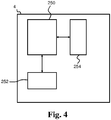
- Fig. 4 shows an exemplary server device 4 for communication in a hearing system comprising the server device and a hearing device system comprising a hearing device and a user accessory device with a user application installed thereon.
- the server device 4 comprises a processing unit 250, e.g. comprising one or more processors, a memory unit 252, e.g. comprising a database, and an interface 254.
- the processing unit 250 is configured to obtain hearing device data for the hearing device, e.g. from the memory unit 252 and/or via the interface 254 from e.g.
- a fitting device secure the hearing device data using a first security scheme to obtain a first output; secure the first output using a second security scheme to obtain a second output, wherein the second security scheme is different from the first security scheme; and transmit the second output to the user application.
- first, second, third and fourth does not imply any particular order, but are included to identify individual elements.
- first, second, etc. does not denote any order or importance, but rather the terms first, second, etc. are used to distinguish one element from another.
- first and second are used here and elsewhere for labelling purposes only and are not intended to denote any specific spatial or temporal ordering.
- labelling of a first element does not imply the presence of a second element and vice versa.
Landscapes
- Engineering & Computer Science (AREA)
- Computer Security & Cryptography (AREA)
- Signal Processing (AREA)
- Computer Networks & Wireless Communication (AREA)
- Health & Medical Sciences (AREA)
- Theoretical Computer Science (AREA)
- General Engineering & Computer Science (AREA)
- Computer Hardware Design (AREA)
- General Health & Medical Sciences (AREA)
- Physics & Mathematics (AREA)
- Software Systems (AREA)
- Biomedical Technology (AREA)
- General Physics & Mathematics (AREA)
- Computing Systems (AREA)
- Neurosurgery (AREA)
- Otolaryngology (AREA)
- Acoustics & Sound (AREA)
- Business, Economics & Management (AREA)
- Medical Informatics (AREA)
- Epidemiology (AREA)
- General Business, Economics & Management (AREA)
- Public Health (AREA)
- Primary Health Care (AREA)
- Bioethics (AREA)
- Telephone Function (AREA)
- Storage Device Security (AREA)
- Telephonic Communication Services (AREA)
- Mobile Radio Communication Systems (AREA)
Abstract
Description
- The present disclosure relates to communication in a hearing system comprising a server device and a hearing device system, wherein the hearing device system comprises a hearing device and a user accessory device. In particular, the present disclosure relates to methods and devices for communication in a hearing system.
- Wireless communication to and from different entities of a hearing system has been increasing in continuation of the developments within wireless communication technology. However, the new technologies entail new challenges for the hearing aid manufacturers in order to secure communication in a hearing system. Wireless communication interfaces of a hearing system desirably use an open standard-based interface. However, this poses many challenges in terms of security. Further, a hearing device is a very small device with strict constraints in terms of computational power, memory space etc.
- There is a need for apparatus, devices and methods for providing improved and effective security for hearing system communication. Further, there is a need for devices and methods reducing the risk of hearing device data being compromised by a third (unauthorized) party.
- Accordingly, a method for hearing system communication in a hearing system comprising a server device and a hearing device system comprising a hearing device and a user accessory device with a user application installed thereon is provided. The method comprises: obtaining hearing device data for the hearing device in the server device; securing, e.g. encrypting and/or digitally signing, the hearing device data, e.g. using a first security scheme to obtain a first output; securing, e.g. encrypting and/or digitally signing, the first output, e.g. using a second security scheme to obtain a second output, wherein the second security scheme is optionally different from the first security scheme; transmitting the second output to the user application; validating, e.g. decrypting and/or verifying, the second output in the user application, e.g. using the second security scheme to obtain the first output; transmitting the first output to the hearing device; receiving and validating, e.g. decrypting and/or verifying, the first output in the hearing device, e.g. using the first security scheme to obtain the hearing device data; and optionally operating the hearing device according to the hearing device data. The method may comprise transmitting the first output to the hearing device if validating the second output is successful. The method may comprise not transmitting the first output to the hearing device if validating the second output fails.
- A server device for communication in a hearing system comprising the server device and a hearing device system comprising a hearing device and a user accessory device with a user application installed thereon is disclosed. The server device comprises a processing unit configured to: obtain hearing device data for the hearing device; secure, e.g. encrypt and/or digitally sign, the hearing device data using a first security scheme to obtain a first output; secure, e.g. encrypt and/or digitally sign, the first output using a second security scheme to obtain a second output, wherein the second security scheme is different from the first security scheme; and transmit the second output to the user application.
- Further, a method for hearing system communication in a hearing system comprising a server device and a hearing device system comprising a hearing device and a user accessory device with a user application installed thereon is provided. The method comprises: obtaining hearing device data for the hearing device in the server device; securing, e.g. encrypting and/or digitally signing, the hearing device data, e.g. using a second security scheme to obtain a second output; transmitting the second output to the user application; validating, e.g. decrypting and/or verifying, the second output in the user application, e.g. using the second security scheme to obtain the hearing device data; securing, e.g. encrypting and/or digitally signing, the hearing device data, e.g. using a first security scheme to obtain a first output, wherein the first security scheme is optionally different from the second security scheme; transmitting the first output to the hearing device; receiving and validating, e.g. decrypting and/or verifying, the first output in the hearing device, e.g. using the first security scheme to obtain the hearing device data; and optionally operating the hearing device according to the hearing device data. The method may comprise transmitting the first output to the hearing device if validating the second output is successful. The method may comprise not transmitting the first output to the hearing device if validating the second output fails.
- Also, a user application for communication in a hearing system comprising a server device and a hearing device system comprising a hearing device and a user accessory device with the user application installed thereon is provided, wherein the user application is configured to: receive a second output from the server device; validate , e.g. decrypt and/or verify, the second output in the user application using a second security scheme to obtain hearing device data; secure, e.g. encrypt and/or digitally sign, the hearing device data using a first security scheme to obtain a first output, wherein the first security scheme is different from the second security scheme; and transmit the first output to the hearing device.
- It is an important advantage of the present disclosure that secure hearing system communication is provided while at the same time considering the limited computational power of a hearing device. Thus, effective and secure hearing system communication is provided.
- The above and other features and advantages of the present invention will become readily apparent to those skilled in the art by the following detailed description of exemplary embodiments thereof with reference to the attached drawings, in which:
- Fig. 1
- schematically illustrates a hearing system,
- Fig. 2
- is a flow diagram of an exemplary method,
- Fig. 3
- is a flow diagram of an exemplary method, and
- Fig. 4
- schematically illustrates an exemplary server device.
- Various exemplary embodiments and details are described hereinafter, with reference to the figures when relevant. It should be noted that the figures may or may not be drawn to scale and that elements of similar structures or functions are represented by like reference numerals throughout the figures. It should also be noted that the figures are only intended to facilitate the description of the embodiments. They are not intended as an exhaustive description of the invention or as a limitation on the scope of the invention. In addition, an illustrated embodiment needs not have all the aspects or advantages shown. An aspect or an advantage described in conjunction with a particular embodiment is not necessarily limited to that embodiment and can be practiced in any other embodiments even if not so illustrated, or if not so explicitly described.
- The present disclosure relates to improved security in hearing system communication. The hearing system comprises a server device and a hearing device system. The hearing device system comprises a hearing device and a user accessory device having a user application installed thereon. The server device may be controlled by the hearing device manufacturer. The server device may be a distributed server device, i.e. a server device with distributed processors. Namely, the methods, user application and server device disclosed herein enables hearing system communication that is robust against security threats, vulnerabilities and attacks by implementing appropriate safeguards and countermeasures, such as security mechanisms, to protect against threats and attacks. The present disclosure relates to hearing system communication that is robust against replay attacks, unauthorized access, battery exhaustion attacks, and man-in-the-middle attacks.
- The user accessory device comprises a memory unit and an interface respectively connected to a processing unit. The memory unit may include removable and non-removable data storage units including, but not limited to, Read Only Memory (ROM), Random Access Memory (RAM), etc. The memory unit has a user application stored thereon. The user application may be a hearing device application, e.g. configured to wirelessly communicate with the hearing device, such as to control and/or configure the hearing device. The interface comprises an antenna and a wireless transceiver, e.g. configured for wireless communication at frequencies in the range from 2.4 to 2.5 GHz. The interface may be configured for communication, such as wireless communication, with the hearing device comprising an antenna and a wireless transceiver.
- The present disclosure relates to hearing system communication between entities of a hearing system. The user accessory device forms an accessory device to the hearing device. The user accessory device is typically paired or otherwise wirelessly coupled to the hearing device. The hearing device may be a hearing aid, e.g. of the behind-the-ear (BTE) type, in-the-ear (ITE) type, in-the-canal (ITC) type, receiver-in-canal (RIC) type or receiver-in-the-ear (RITE) type. Typically, the hearing device system is in possession of and controlled by the hearing device user. The user accessory device may be a smartphone, a smartwatch or a tablet computer.
- One or more exemplary methods comprise obtaining hearing device data for the hearing device in the server device. The hearing device data may comprise firmware or firmware updates. The hearing device data may comprise hearing device settings for the hearing device. The hearing device data may comprise a hearing device identifier, one or more key identifiers, one or more addresses and/or address identifiers. In one or more exemplary methods, obtaining hearing device data for the hearing device in the server device may comprise receiving hearing device data from a fitting device, e.g. located at a hearing device dispenser. In one or more exemplary methods, obtaining hearing device data for the hearing device in the server device may comprise retrieving hearing device data from a memory, e.g. a database, of the server device.
- One or more exemplary methods comprise securing the hearing device data, e.g. using a first security scheme to obtain a first output. The first output may be or comprise a first cipher text being the result of an encryption. One or more exemplary methods comprise securing the hearing device data, e.g. using a second security scheme to obtain a second output. Securing hearing device data may comprise encrypting the hearing device data with a key (first key in first security scheme or second key in second security scheme) to obtain a cipher text (first cipher text in first security scheme or second cipher text in second security scheme). The cipher text obtained by encrypting may be included in the output. Securing hearing device data may comprise digitally signing the hearing device data. The digital signature obtained by digitally signing may be included in the output. Securing the hearing device data using a first security scheme may comprise digitally signing the hearing device data to obtain a first digital signature as at least a part of the first output.
- The first security scheme (encrypting and/or digitally signing) may be applied in the server device or in the user application. The second security scheme (encrypting and/or digitally signing) may be applied in the server device. Applying the first security scheme (encrypting and/or digitally signing) in the server device may be advantageous in that the user application does not need to hold encryption keys or any other information about the first security scheme. Further, the hearing device data are encrypted all the way from the server device to the hearing device. Thus, a more secure hearing system communication is provided, since generally the user application is considered less secure than the server device. Further, the required processing power in hearing system communication is reduced for the user application.
- A security scheme, such as the first security scheme and/or the second security scheme, may comprise a key, a set of keys or other keying material. A key has a key length. A scheme may comprise a primary key, e.g. used for securing hearing device data/first output, and a secondary key, e.g. used for validating first output/second output. The primary key may be a private (signature) or public (encryption) key. The secondary key may be a private (decryption) or public (verify signature) key.
- For example, as a part of securing hearing device data and/or first output, encrypting hearing device data/first output may be based on a primary key being a public key. Further, as a part of validating first output and/or second output, decrypting first output and/or second output (the result of the encryption) may be based on a secondary key being a private key. A security scheme may comprise an encryption algorithm, e.g. a symmetric or asymmetric encryption algorithm, such as Triple DES, RSA, Blowfish, Twofish, Advanced Encryption Standard (AES), and Elliptic Curve Cryptography.
- For example, as a part of securing hearing device data and/or first output, digitally signing hearing device data/first output may be based on a primary key being a private key. Further, as a part of validating first output and/or second output, verifying first output and/or second output (the result of digitally signing) may be based on a secondary key being a public key.
- In one or more exemplary methods, securing the hearing device data using a second security scheme may comprise digitally signing the hearing device data to obtain a second digital signature as at least a part of the second output.
- In one or more exemplary methods, the second security scheme comprises a second key having a second key length, and securing the hearing device data using a second security scheme may comprise encrypting the hearing device data with the second encryption key to obtain a second cipher text as at least a part of the second output.
- In one or more exemplary methods, the hearing device data comprises a hearing device data integrity indicator, the method comprising verifying, in the hearing device, the hearing device data based on the hearing device data integrity indicator and operating the hearing device according to the hearing device data if the hearing device data are verified.
- One or more exemplary methods may comprise securing the first output using a second security scheme to obtain a second output, e.g. in the server device. The second security scheme is optionally different from the first security scheme.
- A scheme, such as the second security scheme, may be different from another scheme, such as the first security scheme, by using keys having different key lengths.
- A security scheme may be different from another security scheme if different key lengths are used and/or different keys/key pairs are used. A scheme may be different from another scheme if different encryption algorithms are used in the two schemes. A security scheme may be different from another security scheme if different common secrets are used, i.e. if the first security scheme uses a first common secret and the second security scheme uses a second common secret different from the first common secret. It is an important advantage of the present disclosure that a high server-to-user app security level can be applied in the communication between the server device and the user application/user accessory device, while a power-efficient and/or memory-efficient security level can be applied in the communication between the user application/accessory device and the hearing device. In one or more exemplary methods/devices, the first security scheme may be more complex than the second security scheme i.e. the first security scheme requires more computational power/memory resources to perform than the second security scheme. In one or more exemplary methods/devices, the first security scheme may be less complex than the second security scheme i.e. the first security scheme may less computational power/memory resources to perform than the second security scheme.
- One or more exemplary methods comprise transmitting the second output to the user application, e.g. from the server device. The second output may be or comprise a second cipher text being the result of an encryption.
- One or more exemplary methods comprise validating the second output in the user application using the second security scheme, e.g. to obtain the first output or the hearing device data. Validating the second output may comprise decrypting a second cipher text of the second output and/or verifying a second digital signature of the second output.
- One or more exemplary methods comprise transmitting the first output to the hearing device, e.g. from the user application.
- One or more exemplary methods comprises receiving and validating the first output in the hearing device using the first security scheme to obtain the hearing device data. Validating the first output may comprise decrypting a first cipher text of the first output and/or verifying a first digital signature of the first output.
- One or more exemplary methods comprise operating the hearing device according to the hearing device data, optionally if validating the first output succeeds or is successful. Operating the hearing device according to the hearing device data may comprise storing at least a part of the hearing device in memory of the hearing device.
- The first security scheme may comprise a first encryption key having a first key length. Thus, securing the hearing device data using a first security scheme may comprise encrypting the hearing device data with the first encryption key to obtain a first cipher text as at least a part of the first output.
- The second security scheme may comprise a second encryption key having a second key length. Thus, securing the hearing device data or the first output using a second security scheme to obtain a second output may comprise encrypting the hearing device data or the first output with the second encryption key to obtain a second cipher text as at least a part of the second output.
- The first key length, also denoted N1, may be shorter or larger than the second key length, also denoted N2. In one or more exemplary methods, the first key length N1 is less than 0.6*N2. In one or more exemplary methods, e.g. where the first security scheme is a symmetric scheme, the first key length is in the range from 50 to 140 bits, such as 128 bits. In one or more exemplary methods, e.g. where the second security scheme is a symmetric scheme, the second key length N2 is larger than 100 bits, such as in the range from 128 to 300 bits, such as 128 bits, 192 bits or 256 bits.
- Securing the hearing device data using a first security scheme may comprise digitally signing the hearing device data to obtain a first digital signature as at least a part of the first output.
- Securing the first output using a second security scheme may comprise digitally signing the first output to obtain a second digital signature as at least a part of the second output.
- The first security scheme may comprise or be based on a first common secret, and securing the hearing device data and validating the first output is optionally based on the first common secret. The first common secret may be based on a hearing device identifier of the hearing device.
- The second security scheme may comprise or be based on a second common secret. Securing the hearing device data or the first output and validating the second output is optionally based on the second common secret. The second common secret may be based on the hearing device identifier of the hearing device.
- The first security scheme may comprise a first primary key and a first secondary key. The first secondary key may be different from the first primary key. Securing the hearing device data may based on the first primary key and validating the first output may be based on the first secondary key.
- The second security scheme may comprise a second primary key and a second secondary key. The second secondary key may be different from the second primary key. Securing the hearing device data or the first output may be based on the second primary key and validating the second output may be based on the second secondary key.
- The first security scheme may comprise a first encryption algorithm, and securing the hearing device data using a first security scheme to obtain a first output optionally comprises applying the first encryption algorithm to the hearing device data. The first encryption algorithm may be symmetric, e.g. based on the first common secret. In one or more exemplary methods, the first encryption algorithm is the Advanced Encryption Standard (AES), such as a 128-bit or 196-bit AES.
- The second security scheme may comprise a second encryption algorithm optionally different from the first encryption algorithm, and securing the hearing device data or the first output using a second security scheme to obtain a second output optionally comprises applying the second encryption algorithm to the hearing device data or the first output. The second encryption algorithm may be symmetric, e.g. based on the second common secret. In one or more exemplary methods, the second encryption algorithm is the Advanced Encryption Standard (AES), such as a 192-bit AES or a 256-bit AES.
- The hearing device data may comprise a hearing device data integrity indicator indicative of hearing device integrity. The hearing device data integrity indicator may be a checksum/hash function. The hearing device data may comprise a digital signature. The method may comprise verifying the hearing device data, e.g. based on the hearing device data integrity indicator and/or the digital signature of the hearing device data, and operating the hearing device according to the hearing device data, optionally if the hearing device data are verified.
- Operating the hearing device according to the hearing device data may comprise storing the hearing device data or at least a part thereof in a memory of the hearing device.
- The figures are schematic and simplified for clarity, and they merely show details which are essential to the understanding of the invention, while other details have been left out. Throughout, the same reference numerals are used for identical or corresponding parts.
-
Fig. 1 shows an exemplary hearing system. Thehearing system 2 comprises aserver device 4 and ahearing device system 6 comprising ahearing device 8 and auser accessory device 10. Theuser accessory device 10 is a smartphone configured to wirelessly communicate with thehearing device 8. Auser application 12 is installed on theuser accessory device 10. The user application may be for controlling thehearing device 8 and/or assisting a hearing device user wearing/using thehearing device 8. In one or more exemplary user applications, theuser application 12 is configured to transfer hearing device data, such as firmware and/or hearing device settings, to the hearing device. - The
server device 4 and/or theuser application 12 may be configured to perform any or some acts of the methods disclosed herein. Thehearing device 8 may be configured to compensate for hearing loss of a user of thehearing device 8. Thehearing device 8 is configured to communicate with theuser accessory device 10/user application 12, e.g. using a wireless and/or wiredfirst communication link 20. Thefirst communication link 20 may be a single hop communication link or a multi-hop communication link. Thefirst communication link 20 may be carried over a short-range communication system, such as Bluetooth, Bluetooth low energy, IEEE 802.11 and/or Zigbee. Thefirst communication link 20 may be carried over a short-range communication system per a proprietary protocol. - In an exemplary hearing system, the hearing device data are secured in the server device using the second security scheme and the first security scheme is then applied to hearing device data in the user application (being the result of validating the second output using the second security scheme in the user application).
- The
user accessory device 10/user application 12 is configured to connect to theserver device 4 over a network, such as the Internet and/or a mobile phone network, via asecond communication link 22. Theserver device 4 may be controlled by the hearing device manufacturer. Thehearing device 8 comprises anantenna 24 and aradio transceiver 26 coupled to theantenna 24 for receiving/transmitting wireless communication includingfirst communication link 20. Thehearing device 8 comprises a set of microphones comprising afirst microphone 28 and optionally asecond microphone 30 for provision of respective first and second microphone input signals. Thehearing device 8 may be a single-microphone hearing device. Thehearing device 8 comprises a memory unit (not shown) connected to the processor, wherein hearing device data, e.g. hearing device settings and/or firmware are stored in the memory unit. - The
hearing device 8 comprises aprocessor 32 connected to thetransceiver 26 andmicrophones processor 32 is configured to compensate for a hearing loss of a user based on hearing device settings and to provide an electrical output signal based on the input signals. Areceiver 34 converts the electrical output signal to an audio output signal to be directed towards an eardrum of the hearing device user. - The
user accessory device 10 comprises aprocessing unit 36, amemory unit 38, aninterface 40. Theuser application 12 is installed in thememory unit 38 of theuser accessory device 10 and is configured to receive a second output from the server device; validate the second output in the user application using a second security scheme to obtain hearing device data or first output. If the validation with the second security scheme provides hearing device data, the user application is configured to secure the hearing device data using a first security scheme to obtain a first output, wherein the first security scheme is different from the second security scheme. On the other hand, if the hearing device data have already been secured in the server device using a first security scheme, the output of the validation with the second security scheme corresponds to or at least comprises the first output. Subsequently, the user application is configured to transmit the first output to the hearing device. -
Fig. 2 shows an exemplary method for hearing system communication in a hearing system. Themethod 100 comprises obtaining 102 hearing device data for the hearing device in the server device. The hearing device data may comprise firmware and/or hearing device settings for the hearing device in question. Themethod 100 comprises securing 104, e.g. digitally signing and/or encrypting, the hearing device data using a first security scheme to obtain a first output in theserver device 4; securing 106, e.g. digitally signing and/or encrypting, the first output using a second security scheme to obtain a second output in theserver device 4, wherein the second security scheme is different from the first security scheme; transmitting 108 the second output from theserver device 4 to theuser application 12 of theaccessory device 10; validating 110 the second output in the user application using the second security scheme to obtain the first output; transmitting 112 the first output from theuser application 12 of theaccessory device 10 to the hearing device; receiving and validating 114 the first output in the hearing device using the first security scheme to obtain the hearing device data; and operating 116 the hearing device according to the hearing device data. Operating 116 the hearing device according to the hearing device data may comprise storing hearing device data or at least parts thereof in memory of the hearing device if validating the first output is successful. -
Fig. 3 shows an exemplary method for hearing system communication in a hearing system. Themethod 200 comprises: obtaining 202 hearing device data for the hearing device in the server device; securing 204 in theserver device 4 the hearing device data using a second security scheme to obtain a second output; 206 transmitting the second output from theserver device 4 to theuser application 12 of theaccessory device 10; validating 208 the second output in theuser application 12 using the second security scheme to obtain the hearing device data; securing 210 by theuser application 12 the hearing device data using a first security scheme to obtain a first output, wherein the first security scheme is different from the second security scheme; transmitting 212 the first output from theuser application 12 to the hearing device; receiving and validating 214 the first output in the hearing device using the first security scheme to obtain the hearing device data; and operating 216 the hearing device according to the hearing device data. Operating 216 the hearing device according to the hearing device data may comprise storing hearing device data or at least parts thereof in memory of the hearing device if validating the first output is successful. -
Fig. 4 shows anexemplary server device 4 for communication in a hearing system comprising the server device and a hearing device system comprising a hearing device and a user accessory device with a user application installed thereon. Theserver device 4 comprises aprocessing unit 250, e.g. comprising one or more processors, amemory unit 252, e.g. comprising a database, and aninterface 254. Theprocessing unit 250 is configured to obtain hearing device data for the hearing device, e.g. from thememory unit 252 and/or via theinterface 254 from e.g. a fitting device; secure the hearing device data using a first security scheme to obtain a first output; secure the first output using a second security scheme to obtain a second output, wherein the second security scheme is different from the first security scheme; and transmit the second output to the user application. - The use of the terms "first", "second", "third" and "fourth", etc. does not imply any particular order, but are included to identify individual elements. Moreover, the use of the terms first, second, etc. does not denote any order or importance, but rather the terms first, second, etc. are used to distinguish one element from another. Note that the words first and second are used here and elsewhere for labelling purposes only and are not intended to denote any specific spatial or temporal ordering. Furthermore, the labelling of a first element does not imply the presence of a second element and vice versa.
- Although particular features have been shown and described, it will be understood that they are not intended to limit the claimed invention, and it will be made obvious to those skilled in the art that various changes and modifications may be made without departing from the spirit and scope of the claimed invention. The specification and drawings are, accordingly to be regarded in an illustrative rather than restrictive sense. The claimed invention is intended to cover all alternatives, modifications and equivalents.
-
- 2
- hearing system
- 4
- server device
- 6
- hearing device system
- 8
- hearing device
- 10
- user accessory device
- 12
- user application
- 20
- first communication link
- 22
- second communication link
- 24
- antenna
- 26
- radio transceiver
- 28
- first microphone
- 30
- second microphone
- 32
- processor
- 34
- receiver
- 36
- processing unit
- 38
- memory unit
- 40
- interface
- 100
- method for hearing system communication in a hearing system
- 102
- obtain
- 104
- secure
- 106
- secure
- 108
- transmit
- 110
- validate
- 112
- transmit
- 114
- receive and validate
- 116
- operate hearing device
- 200
- method for hearing system communication in a hearing system
- 202
- obtain
- 204
- secure
- 206
- transmit
- 208
- validate
- 210
- secure
- 212
- transmit
- 214
- receive and validate
- 216
- operate hearing device
- 250
- processing unit
- 252
- memory unit
- 254
- interface
Claims (15)
- A method for hearing system communication in a hearing system comprising a server device and a hearing device system comprising a hearing device and a user accessory device with a user application installed thereon, the method comprising:- obtaining hearing device data for the hearing device in the server device;- securing the hearing device data using a first security scheme to obtain a first output;- securing the first output using a second security scheme to obtain a second output, wherein the second security scheme is different from the first security scheme;- transmitting the second output to the user application;- validating the second output in the user application using the second security scheme to obtain the first output;- transmitting the first output to the hearing device;- receiving and validating the first output in the hearing device using the first security scheme to obtain the hearing device data; and- operating the hearing device according to the hearing device data.
- Method according to claim 1, wherein the first security scheme comprises a first key having a first key length, and wherein securing the hearing device data using a first security scheme comprises encrypting the hearing device data with the first key to obtain a first cipher text as at least a part of the first output.
- Method according to any of claims 1-2, wherein securing the hearing device data using a first security scheme comprises digitally signing the hearing device data to obtain a first digital signature as at least a part of the first output.
- Method according to any of claims 1-3, wherein securing the first output using a second security scheme comprises digitally signing the first output to obtain a second digital signature as at least a part of the second output.
- Method according to any of claims 1-4, wherein the second security scheme comprises a second key having a second key length, and wherein securing the first output using a second security scheme comprises encrypting the first output with the second key to obtain a second cipher text as at least a part of the second output
- Method according to claim 5 as dependent on claim 2, wherein the first key length is shorter than the second key length.
- Method according to any of claims 1-6, wherein the hearing device data comprises a hearing device data integrity indicator, the method comprising verifying, in the hearing device, the hearing device data based on the hearing device data integrity indicator and operating the hearing device according to the hearing device data if the hearing device data are verified.
- Method according to any of claims 1-7, wherein the first security scheme comprises or is based on a first common secret, and wherein securing the hearing device data and validating the first output is based on the first common secret.
- Method according to any of claims 1-7, wherein the first security scheme comprises a first primary key and a first secondary key, wherein the first secondary key is different from the first primary key, and wherein securing the hearing device data is based on the first primary key and validating the first output is based on the first secondary key.
- Method according to any of claims 1-9, wherein the second security scheme comprises or is based on a second common secret, and wherein securing the first output and validating the second output is based on the second common secret.
- Method according to any of claims 1-9, wherein the second security scheme comprises a second primary key and a second secondary key, wherein the second secondary key is different from the second primary key, and wherein securing the first output is based on the second primary key and validating the second output is based on the second secondary key.
- Server device for communication in a hearing system comprising the server device and a hearing device system comprising a hearing device and a user accessory device with a user application installed thereon, wherein the server device comprises a processing unit configured to:- obtain hearing device data for the hearing device;- secure the hearing device data using a first security scheme to obtain a first output;- secure the first output using a second security scheme to obtain a second output, wherein the second security scheme is different from the first security scheme; and- transmit the second output to the user application.
- A method for hearing system communication in a hearing system comprising a server device and a hearing device system comprising a hearing device and a user accessory device with a user application installed thereon, the method comprising:- obtaining hearing device data for the hearing device in the server device;- securing the hearing device data using a second security scheme to obtain a second output;- transmitting the second output to the user application;- validating the second output in the user application using the second security scheme to obtain the hearing device data;- securing the hearing device data using a first security scheme to obtain a first output, wherein the first security scheme is different from the second security scheme;- transmitting the first output to the hearing device;- receiving and validating the first output in the hearing device using the first security scheme to obtain the hearing device data; and- operating the hearing device according to the hearing device data.
- Method according to claim 13, wherein the first security scheme comprises a first key having a first key length, and wherein securing the hearing device data using a first security scheme comprises encrypting the hearing device data with the first key to obtain a first cipher text as at least a part of the first output.
- User application for communication in a hearing system comprising a server device and a hearing device system comprising a hearing device and a user accessory device with the user application installed thereon, wherein the user application is configured to:- receive a second output from the server device;- validate the second output using a second security scheme to obtain hearing device data;- secure the hearing device data using a first security scheme to obtain a first output, wherein the first security scheme is different from the second security scheme; and- transmit the first output to the hearing device.
Priority Applications (6)
| Application Number | Priority Date | Filing Date | Title |
|---|---|---|---|
| DK16202919.3T DK3334189T3 (en) | 2016-12-08 | 2016-12-08 | METHOD FOR HEARING SYSTEM COMMUNICATION AND RELATED DEVICES |
| EP16202919.3A EP3334189B1 (en) | 2016-12-08 | 2016-12-08 | Method for hearing system communication and related devices |
| CN201711120783.7A CN108183883B (en) | 2016-12-08 | 2017-11-14 | Method for hearing system communication and related device |
| US15/811,678 US10952070B2 (en) | 2016-12-08 | 2017-11-14 | Method for hearing system communication and related devices |
| JP2017232954A JP2018129793A (en) | 2016-12-08 | 2017-12-04 | Hearing system communication method and related apparatus |
| US16/953,306 US11863974B2 (en) | 2016-12-08 | 2020-11-19 | Method for hearing system communication and related devices |
Applications Claiming Priority (1)
| Application Number | Priority Date | Filing Date | Title |
|---|---|---|---|
| EP16202919.3A EP3334189B1 (en) | 2016-12-08 | 2016-12-08 | Method for hearing system communication and related devices |
Publications (2)
| Publication Number | Publication Date |
|---|---|
| EP3334189A1 true EP3334189A1 (en) | 2018-06-13 |
| EP3334189B1 EP3334189B1 (en) | 2022-07-27 |
Family
ID=57530573
Family Applications (1)
| Application Number | Title | Priority Date | Filing Date |
|---|---|---|---|
| EP16202919.3A Active EP3334189B1 (en) | 2016-12-08 | 2016-12-08 | Method for hearing system communication and related devices |
Country Status (5)
| Country | Link |
|---|---|
| US (2) | US10952070B2 (en) |
| EP (1) | EP3334189B1 (en) |
| JP (1) | JP2018129793A (en) |
| CN (1) | CN108183883B (en) |
| DK (1) | DK3334189T3 (en) |
Cited By (1)
| Publication number | Priority date | Publication date | Assignee | Title |
|---|---|---|---|---|
| WO2021048341A1 (en) * | 2019-09-13 | 2021-03-18 | Dencrypt A/S | Methods and devices for secure data communication |
Families Citing this family (4)
| Publication number | Priority date | Publication date | Assignee | Title |
|---|---|---|---|---|
| WO2018033196A1 (en) | 2016-08-15 | 2018-02-22 | Widex A/S | A programmable hearing assistive device |
| US11140139B2 (en) * | 2018-11-21 | 2021-10-05 | Microsoft Technology Licensing, Llc | Adaptive decoder selection for cryptographic key generation |
| DK3703390T3 (en) * | 2019-02-27 | 2024-02-05 | Sonova Ag | DISTRIBUTION OF SOFTWARE BETWEEN HEARING DEVICES |
| EP3846498A1 (en) * | 2020-01-06 | 2021-07-07 | GN Hearing A/S | Hearing device with secure remote fitting while allowing secure user control, hearing system, and related methods |
Citations (4)
| Publication number | Priority date | Publication date | Assignee | Title |
|---|---|---|---|---|
| GB2411554A (en) * | 2004-02-24 | 2005-08-31 | Toshiba Res Europ Ltd | Selecting encryption methods for secure transmission |
| US20100174909A1 (en) * | 2009-01-05 | 2010-07-08 | Memory Experts International Inc. | Data authentication using plural electronic keys |
| US20140211973A1 (en) * | 2013-01-28 | 2014-07-31 | Starkey Laboratories, Inc. | Location based assistance using hearing instruments |
| EP3032857A1 (en) * | 2014-12-12 | 2016-06-15 | GN Resound A/S | Hearing device with communication protection and related method |
Family Cites Families (8)
| Publication number | Priority date | Publication date | Assignee | Title |
|---|---|---|---|---|
| US20070052672A1 (en) * | 2005-09-08 | 2007-03-08 | Swisscom Mobile Ag | Communication device, system and method |
| EP2629847B1 (en) * | 2010-10-19 | 2017-11-22 | Cochlear Limited | Relay interface for connecting an implanted medical device to an external electronics device |
| AU2010366105B2 (en) * | 2010-12-22 | 2015-03-05 | Widex A/S | Method and sytem for wireless communication between a telephone and a hearing aid |
| JP5909669B2 (en) * | 2012-02-08 | 2016-04-27 | パナソニックIpマネジメント株式会社 | Hearing aid, hearing aid fitting system, and hearing aid fitting method |
| JP2015233173A (en) * | 2014-06-09 | 2015-12-24 | Necエンジニアリング株式会社 | Communication system, communication device, and communication method |
| DK3221807T3 (en) * | 2014-11-20 | 2020-08-24 | Widex As | HEARING AID USER ACCOUNT MANAGEMENT |
| US9608807B2 (en) * | 2014-12-12 | 2017-03-28 | Gn Hearing A/S | Hearing device with communication protection and related method |
| US10104522B2 (en) * | 2015-07-02 | 2018-10-16 | Gn Hearing A/S | Hearing device and method of hearing device communication |
-
2016
- 2016-12-08 DK DK16202919.3T patent/DK3334189T3/en active
- 2016-12-08 EP EP16202919.3A patent/EP3334189B1/en active Active
-
2017
- 2017-11-14 US US15/811,678 patent/US10952070B2/en active Active
- 2017-11-14 CN CN201711120783.7A patent/CN108183883B/en active Active
- 2017-12-04 JP JP2017232954A patent/JP2018129793A/en active Pending
-
2020
- 2020-11-19 US US16/953,306 patent/US11863974B2/en active Active
Patent Citations (4)
| Publication number | Priority date | Publication date | Assignee | Title |
|---|---|---|---|---|
| GB2411554A (en) * | 2004-02-24 | 2005-08-31 | Toshiba Res Europ Ltd | Selecting encryption methods for secure transmission |
| US20100174909A1 (en) * | 2009-01-05 | 2010-07-08 | Memory Experts International Inc. | Data authentication using plural electronic keys |
| US20140211973A1 (en) * | 2013-01-28 | 2014-07-31 | Starkey Laboratories, Inc. | Location based assistance using hearing instruments |
| EP3032857A1 (en) * | 2014-12-12 | 2016-06-15 | GN Resound A/S | Hearing device with communication protection and related method |
Cited By (2)
| Publication number | Priority date | Publication date | Assignee | Title |
|---|---|---|---|---|
| WO2021048341A1 (en) * | 2019-09-13 | 2021-03-18 | Dencrypt A/S | Methods and devices for secure data communication |
| US12160500B2 (en) | 2019-09-13 | 2024-12-03 | Dencrypt A/S | Methods and devices for secure data communication |
Also Published As
| Publication number | Publication date |
|---|---|
| CN108183883B (en) | 2022-04-19 |
| DK3334189T3 (en) | 2022-10-31 |
| US20180167368A1 (en) | 2018-06-14 |
| EP3334189B1 (en) | 2022-07-27 |
| US11863974B2 (en) | 2024-01-02 |
| JP2018129793A (en) | 2018-08-16 |
| CN108183883A (en) | 2018-06-19 |
| US20210076199A1 (en) | 2021-03-11 |
| US10952070B2 (en) | 2021-03-16 |
Similar Documents
| Publication | Publication Date | Title |
|---|---|---|
| US11863974B2 (en) | Method for hearing system communication and related devices | |
| US12026245B2 (en) | Hearing device system, devices and method of creating a trusted bond between a hearing device and a user application | |
| US11399243B2 (en) | Fitting devices, server devices and methods of remote configuration of a hearing device | |
| US12363544B2 (en) | Hearing device system, devices and method of creating a trusted bond between a hearing device and a user application | |
| CN108184200A (en) | The method of hearing system and retrieval hearing devices data | |
| US10856088B2 (en) | Hearing devices, user accessory devices and method for updating a hearing device configuration | |
| US12231858B2 (en) | Hearing device with remote fitting, hearing system, and related methods |
Legal Events
| Date | Code | Title | Description |
|---|---|---|---|
| PUAI | Public reference made under article 153(3) epc to a published international application that has entered the european phase |
Free format text: ORIGINAL CODE: 0009012 |
|
| STAA | Information on the status of an ep patent application or granted ep patent |
Free format text: STATUS: THE APPLICATION HAS BEEN PUBLISHED |
|
| AK | Designated contracting states |
Kind code of ref document: A1 Designated state(s): AL AT BE BG CH CY CZ DE DK EE ES FI FR GB GR HR HU IE IS IT LI LT LU LV MC MK MT NL NO PL PT RO RS SE SI SK SM TR |
|
| AX | Request for extension of the european patent |
Extension state: BA ME |
|
| STAA | Information on the status of an ep patent application or granted ep patent |
Free format text: STATUS: REQUEST FOR EXAMINATION WAS MADE |
|
| 17P | Request for examination filed |
Effective date: 20181213 |
|
| RBV | Designated contracting states (corrected) |
Designated state(s): AL AT BE BG CH CY CZ DE DK EE ES FI FR GB GR HR HU IE IS IT LI LT LU LV MC MK MT NL NO PL PT RO RS SE SI SK SM TR |
|
| STAA | Information on the status of an ep patent application or granted ep patent |
Free format text: STATUS: EXAMINATION IS IN PROGRESS |
|
| 17Q | First examination report despatched |
Effective date: 20190403 |
|
| GRAP | Despatch of communication of intention to grant a patent |
Free format text: ORIGINAL CODE: EPIDOSNIGR1 |
|
| STAA | Information on the status of an ep patent application or granted ep patent |
Free format text: STATUS: GRANT OF PATENT IS INTENDED |
|
| RIC1 | Information provided on ipc code assigned before grant |
Ipc: H04W 12/033 20210101ALI20220119BHEP Ipc: H04R 25/00 20060101AFI20220119BHEP |
|
| INTG | Intention to grant announced |
Effective date: 20220207 |
|
| GRAS | Grant fee paid |
Free format text: ORIGINAL CODE: EPIDOSNIGR3 |
|
| GRAA | (expected) grant |
Free format text: ORIGINAL CODE: 0009210 |
|
| STAA | Information on the status of an ep patent application or granted ep patent |
Free format text: STATUS: THE PATENT HAS BEEN GRANTED |
|
| AK | Designated contracting states |
Kind code of ref document: B1 Designated state(s): AL AT BE BG CH CY CZ DE DK EE ES FI FR GB GR HR HU IE IS IT LI LT LU LV MC MK MT NL NO PL PT RO RS SE SI SK SM TR |
|
| REG | Reference to a national code |
Ref country code: CH Ref legal event code: EP |
|
| REG | Reference to a national code |
Ref country code: AT Ref legal event code: REF Ref document number: 1507906 Country of ref document: AT Kind code of ref document: T Effective date: 20220815 |
|
| REG | Reference to a national code |
Ref country code: DE Ref legal event code: R096 Ref document number: 602016073756 Country of ref document: DE |
|
| REG | Reference to a national code |
Ref country code: IE Ref legal event code: FG4D |
|
| REG | Reference to a national code |
Ref country code: DK Ref legal event code: T3 Effective date: 20221024 |
|
| REG | Reference to a national code |
Ref country code: LT Ref legal event code: MG9D |
|
| REG | Reference to a national code |
Ref country code: NL Ref legal event code: MP Effective date: 20220727 |
|
| PG25 | Lapsed in a contracting state [announced via postgrant information from national office to epo] |
Ref country code: SE Free format text: LAPSE BECAUSE OF FAILURE TO SUBMIT A TRANSLATION OF THE DESCRIPTION OR TO PAY THE FEE WITHIN THE PRESCRIBED TIME-LIMIT Effective date: 20220727 Ref country code: RS Free format text: LAPSE BECAUSE OF FAILURE TO SUBMIT A TRANSLATION OF THE DESCRIPTION OR TO PAY THE FEE WITHIN THE PRESCRIBED TIME-LIMIT Effective date: 20220727 Ref country code: PT Free format text: LAPSE BECAUSE OF FAILURE TO SUBMIT A TRANSLATION OF THE DESCRIPTION OR TO PAY THE FEE WITHIN THE PRESCRIBED TIME-LIMIT Effective date: 20221128 Ref country code: NO Free format text: LAPSE BECAUSE OF FAILURE TO SUBMIT A TRANSLATION OF THE DESCRIPTION OR TO PAY THE FEE WITHIN THE PRESCRIBED TIME-LIMIT Effective date: 20221027 Ref country code: NL Free format text: LAPSE BECAUSE OF FAILURE TO SUBMIT A TRANSLATION OF THE DESCRIPTION OR TO PAY THE FEE WITHIN THE PRESCRIBED TIME-LIMIT Effective date: 20220727 Ref country code: LV Free format text: LAPSE BECAUSE OF FAILURE TO SUBMIT A TRANSLATION OF THE DESCRIPTION OR TO PAY THE FEE WITHIN THE PRESCRIBED TIME-LIMIT Effective date: 20220727 Ref country code: LT Free format text: LAPSE BECAUSE OF FAILURE TO SUBMIT A TRANSLATION OF THE DESCRIPTION OR TO PAY THE FEE WITHIN THE PRESCRIBED TIME-LIMIT Effective date: 20220727 Ref country code: FI Free format text: LAPSE BECAUSE OF FAILURE TO SUBMIT A TRANSLATION OF THE DESCRIPTION OR TO PAY THE FEE WITHIN THE PRESCRIBED TIME-LIMIT Effective date: 20220727 Ref country code: ES Free format text: LAPSE BECAUSE OF FAILURE TO SUBMIT A TRANSLATION OF THE DESCRIPTION OR TO PAY THE FEE WITHIN THE PRESCRIBED TIME-LIMIT Effective date: 20220727 |
|
| REG | Reference to a national code |
Ref country code: AT Ref legal event code: MK05 Ref document number: 1507906 Country of ref document: AT Kind code of ref document: T Effective date: 20220727 |
|
| PG25 | Lapsed in a contracting state [announced via postgrant information from national office to epo] |
Ref country code: PL Free format text: LAPSE BECAUSE OF FAILURE TO SUBMIT A TRANSLATION OF THE DESCRIPTION OR TO PAY THE FEE WITHIN THE PRESCRIBED TIME-LIMIT Effective date: 20220727 Ref country code: IS Free format text: LAPSE BECAUSE OF FAILURE TO SUBMIT A TRANSLATION OF THE DESCRIPTION OR TO PAY THE FEE WITHIN THE PRESCRIBED TIME-LIMIT Effective date: 20221127 Ref country code: HR Free format text: LAPSE BECAUSE OF FAILURE TO SUBMIT A TRANSLATION OF THE DESCRIPTION OR TO PAY THE FEE WITHIN THE PRESCRIBED TIME-LIMIT Effective date: 20220727 Ref country code: GR Free format text: LAPSE BECAUSE OF FAILURE TO SUBMIT A TRANSLATION OF THE DESCRIPTION OR TO PAY THE FEE WITHIN THE PRESCRIBED TIME-LIMIT Effective date: 20221028 |
|
| PG25 | Lapsed in a contracting state [announced via postgrant information from national office to epo] |
Ref country code: SM Free format text: LAPSE BECAUSE OF FAILURE TO SUBMIT A TRANSLATION OF THE DESCRIPTION OR TO PAY THE FEE WITHIN THE PRESCRIBED TIME-LIMIT Effective date: 20220727 Ref country code: RO Free format text: LAPSE BECAUSE OF FAILURE TO SUBMIT A TRANSLATION OF THE DESCRIPTION OR TO PAY THE FEE WITHIN THE PRESCRIBED TIME-LIMIT Effective date: 20220727 Ref country code: CZ Free format text: LAPSE BECAUSE OF FAILURE TO SUBMIT A TRANSLATION OF THE DESCRIPTION OR TO PAY THE FEE WITHIN THE PRESCRIBED TIME-LIMIT Effective date: 20220727 Ref country code: AT Free format text: LAPSE BECAUSE OF FAILURE TO SUBMIT A TRANSLATION OF THE DESCRIPTION OR TO PAY THE FEE WITHIN THE PRESCRIBED TIME-LIMIT Effective date: 20220727 |
|
| REG | Reference to a national code |
Ref country code: DE Ref legal event code: R097 Ref document number: 602016073756 Country of ref document: DE |
|
| PG25 | Lapsed in a contracting state [announced via postgrant information from national office to epo] |
Ref country code: SK Free format text: LAPSE BECAUSE OF FAILURE TO SUBMIT A TRANSLATION OF THE DESCRIPTION OR TO PAY THE FEE WITHIN THE PRESCRIBED TIME-LIMIT Effective date: 20220727 Ref country code: EE Free format text: LAPSE BECAUSE OF FAILURE TO SUBMIT A TRANSLATION OF THE DESCRIPTION OR TO PAY THE FEE WITHIN THE PRESCRIBED TIME-LIMIT Effective date: 20220727 |
|
| PLBE | No opposition filed within time limit |
Free format text: ORIGINAL CODE: 0009261 |
|
| STAA | Information on the status of an ep patent application or granted ep patent |
Free format text: STATUS: NO OPPOSITION FILED WITHIN TIME LIMIT |
|
| PG25 | Lapsed in a contracting state [announced via postgrant information from national office to epo] |
Ref country code: AL Free format text: LAPSE BECAUSE OF FAILURE TO SUBMIT A TRANSLATION OF THE DESCRIPTION OR TO PAY THE FEE WITHIN THE PRESCRIBED TIME-LIMIT Effective date: 20220727 |
|
| 26N | No opposition filed |
Effective date: 20230502 |
|
| P01 | Opt-out of the competence of the unified patent court (upc) registered |
Effective date: 20230525 |
|
| REG | Reference to a national code |
Ref country code: BE Ref legal event code: MM Effective date: 20221231 |
|
| PG25 | Lapsed in a contracting state [announced via postgrant information from national office to epo] |
Ref country code: SI Free format text: LAPSE BECAUSE OF FAILURE TO SUBMIT A TRANSLATION OF THE DESCRIPTION OR TO PAY THE FEE WITHIN THE PRESCRIBED TIME-LIMIT Effective date: 20220727 Ref country code: LU Free format text: LAPSE BECAUSE OF NON-PAYMENT OF DUE FEES Effective date: 20221208 |
|
| PG25 | Lapsed in a contracting state [announced via postgrant information from national office to epo] |
Ref country code: IE Free format text: LAPSE BECAUSE OF NON-PAYMENT OF DUE FEES Effective date: 20221208 |
|
| PG25 | Lapsed in a contracting state [announced via postgrant information from national office to epo] |
Ref country code: BE Free format text: LAPSE BECAUSE OF NON-PAYMENT OF DUE FEES Effective date: 20221231 |
|
| PG25 | Lapsed in a contracting state [announced via postgrant information from national office to epo] |
Ref country code: HU Free format text: LAPSE BECAUSE OF FAILURE TO SUBMIT A TRANSLATION OF THE DESCRIPTION OR TO PAY THE FEE WITHIN THE PRESCRIBED TIME-LIMIT; INVALID AB INITIO Effective date: 20161208 |
|
| PG25 | Lapsed in a contracting state [announced via postgrant information from national office to epo] |
Ref country code: CY Free format text: LAPSE BECAUSE OF FAILURE TO SUBMIT A TRANSLATION OF THE DESCRIPTION OR TO PAY THE FEE WITHIN THE PRESCRIBED TIME-LIMIT Effective date: 20220727 |
|
| PG25 | Lapsed in a contracting state [announced via postgrant information from national office to epo] |
Ref country code: MK Free format text: LAPSE BECAUSE OF FAILURE TO SUBMIT A TRANSLATION OF THE DESCRIPTION OR TO PAY THE FEE WITHIN THE PRESCRIBED TIME-LIMIT Effective date: 20220727 Ref country code: IT Free format text: LAPSE BECAUSE OF FAILURE TO SUBMIT A TRANSLATION OF THE DESCRIPTION OR TO PAY THE FEE WITHIN THE PRESCRIBED TIME-LIMIT Effective date: 20220727 |
|
| PG25 | Lapsed in a contracting state [announced via postgrant information from national office to epo] |
Ref country code: MC Free format text: LAPSE BECAUSE OF FAILURE TO SUBMIT A TRANSLATION OF THE DESCRIPTION OR TO PAY THE FEE WITHIN THE PRESCRIBED TIME-LIMIT Effective date: 20220727 |
|
| PG25 | Lapsed in a contracting state [announced via postgrant information from national office to epo] |
Ref country code: MC Free format text: LAPSE BECAUSE OF FAILURE TO SUBMIT A TRANSLATION OF THE DESCRIPTION OR TO PAY THE FEE WITHIN THE PRESCRIBED TIME-LIMIT Effective date: 20220727 |
|
| PG25 | Lapsed in a contracting state [announced via postgrant information from national office to epo] |
Ref country code: BG Free format text: LAPSE BECAUSE OF FAILURE TO SUBMIT A TRANSLATION OF THE DESCRIPTION OR TO PAY THE FEE WITHIN THE PRESCRIBED TIME-LIMIT Effective date: 20220727 |
|
| PG25 | Lapsed in a contracting state [announced via postgrant information from national office to epo] |
Ref country code: MT Free format text: LAPSE BECAUSE OF FAILURE TO SUBMIT A TRANSLATION OF THE DESCRIPTION OR TO PAY THE FEE WITHIN THE PRESCRIBED TIME-LIMIT Effective date: 20220727 |
|
| PG25 | Lapsed in a contracting state [announced via postgrant information from national office to epo] |
Ref country code: TR Free format text: LAPSE BECAUSE OF FAILURE TO SUBMIT A TRANSLATION OF THE DESCRIPTION OR TO PAY THE FEE WITHIN THE PRESCRIBED TIME-LIMIT Effective date: 20220727 |
|
| REG | Reference to a national code |
Ref country code: CH Ref legal event code: U11 Free format text: ST27 STATUS EVENT CODE: U-0-0-U10-U11 (AS PROVIDED BY THE NATIONAL OFFICE) Effective date: 20260101 |
|
| PGFP | Annual fee paid to national office [announced via postgrant information from national office to epo] |
Ref country code: GB Payment date: 20251219 Year of fee payment: 10 |
|
| PGFP | Annual fee paid to national office [announced via postgrant information from national office to epo] |
Ref country code: DK Payment date: 20251222 Year of fee payment: 10 |
|
| PGFP | Annual fee paid to national office [announced via postgrant information from national office to epo] |
Ref country code: FR Payment date: 20251211 Year of fee payment: 10 |
|
| PGFP | Annual fee paid to national office [announced via postgrant information from national office to epo] |
Ref country code: DE Payment date: 20251222 Year of fee payment: 10 |
|
| PGFP | Annual fee paid to national office [announced via postgrant information from national office to epo] |
Ref country code: CH Payment date: 20260101 Year of fee payment: 10 |