EP3334128B1 - A method for automatic determining at time of registration whether a domain name registration is likely to be intended for use for malicious activity or not - Google Patents
A method for automatic determining at time of registration whether a domain name registration is likely to be intended for use for malicious activity or not Download PDFInfo
- Publication number
- EP3334128B1 EP3334128B1 EP17162468.7A EP17162468A EP3334128B1 EP 3334128 B1 EP3334128 B1 EP 3334128B1 EP 17162468 A EP17162468 A EP 17162468A EP 3334128 B1 EP3334128 B1 EP 3334128B1
- Authority
- EP
- European Patent Office
- Prior art keywords
- domain name
- registration
- malicious
- registrations
- distance
- Prior art date
- Legal status (The legal status is an assumption and is not a legal conclusion. Google has not performed a legal analysis and makes no representation as to the accuracy of the status listed.)
- Active
Links
Images



Classifications
-
- H—ELECTRICITY
- H04—ELECTRIC COMMUNICATION TECHNIQUE
- H04L—TRANSMISSION OF DIGITAL INFORMATION, e.g. TELEGRAPHIC COMMUNICATION
- H04L61/00—Network arrangements, protocols or services for addressing or naming
- H04L61/30—Managing network names, e.g. use of aliases or nicknames
- H04L61/3015—Name registration, generation or assignment
- H04L61/302—Administrative registration, e.g. for domain names at internet corporation for assigned names and numbers [ICANN]
-
- G—PHYSICS
- G06—COMPUTING OR CALCULATING; COUNTING
- G06F—ELECTRIC DIGITAL DATA PROCESSING
- G06F21/00—Security arrangements for protecting computers, components thereof, programs or data against unauthorised activity
- G06F21/50—Monitoring users, programs or devices to maintain the integrity of platforms, e.g. of processors, firmware or operating systems
- G06F21/55—Detecting local intrusion or implementing counter-measures
- G06F21/554—Detecting local intrusion or implementing counter-measures involving event detection and direct action
-
- H—ELECTRICITY
- H04—ELECTRIC COMMUNICATION TECHNIQUE
- H04L—TRANSMISSION OF DIGITAL INFORMATION, e.g. TELEGRAPHIC COMMUNICATION
- H04L63/00—Network architectures or network communication protocols for network security
- H04L63/10—Network architectures or network communication protocols for network security for controlling access to devices or network resources
- H04L63/101—Access control lists [ACL]
-
- H—ELECTRICITY
- H04—ELECTRIC COMMUNICATION TECHNIQUE
- H04L—TRANSMISSION OF DIGITAL INFORMATION, e.g. TELEGRAPHIC COMMUNICATION
- H04L2463/00—Additional details relating to network architectures or network communication protocols for network security covered by H04L63/00
- H04L2463/144—Detection or countermeasures against botnets
Definitions
- the invention relates to methods for automatic determining at time of registration whether a domain name registration is likely to be intended for use for malicious activity or not, methods for tuning (training) said methods and use of said methods by a registry and/or blacklisting services and software related thereto.
- This invention provides a solution to the need to detect and thwart malicious domain registrations before the domain even becomes operational.
- the invention provides methods to enable engagement of the parties preoccupied with the registration procedure itself, as stopping a domain name at registration time requires engagement thereof, in particular the registries that are involved in the registration process of all domain names they manage. As such, they are capable of taking action at an early stage.
- a (thick) registry has access to the relevant registration data of all its domain registrations, across registrars and registrants, the invention makes use of such data, more in particular provides a particular data analysis for use in the above described methods.
- DNS Domain Name System
- domain names itself form a key cornerstone of the Internet's operation. Virtually all communication on the web requires the resolution of domain names to IP addresses. Malicious activities are no exception, and attackers constantly depend upon functioning domain names to execute their abusive operations.
- domain blacklisting Domain names are typically placed on blacklists (DNSBLs) when abusive activities have been reported using that domain name, such as phishing or spam.
- DNSBLs blacklists
- spam blacklists email receiving entities constantly query these services and then reject email messages when they originate from a blacklisted domain.
- DNSBLs such as Malware Domain List
- Botmasters deploy domain generation algorithms (DGAs) to frequently switch to new C&C domain names. This prevents domain takedowns from effectively disrupting their operation.
- DGAs domain generation algorithms
- future C&C domains are known in advance and these can thus be timely blacklisted.
- attackers are adopting non-deterministic algorithms that use, for instance, trending Twitter topics as a seed for their DGA. This prevents preemptive C&C domain registration or blacklisting.
- DNSBLs apart from DGA generated entries, DNSBLs only stop malicious domains after criminal activities have already taken place. Moreover, due to the limited cost of registering a domain name, cyber criminals abandon and move on to new domains at a very high rate. Furthermore, attackers switch between many registrars and resellers to further obscure their actions. These hit-and-run strategies allow attackers to effectively circumvent their operations from being interrupted by blacklists.
- Document US 2016/065597 A1 discloses a method for domain name scoring, which includes receiving a request to provide a reputation score for a domain name, calculating the reputation score of the domain name by finding a similarity with one of domain name clusters in a database.
- the reputation score indicates a probability that the given domain name is malicious.
- This invention provides (automated) methods to determine malicious domain registrations before the domain even becomes operational.
- the invention provides (automated) methods to stop a domain name at registration time (as part of the registration process) and/or perform extra checks (e.g. based on (automatically) requested information).
- the invention exploits the insight that long-running campaigns are responsible for a large majority of the malicious domain registrations.
- the invented (automated) methods are based on so-called supervised learning mechanisms that can predict malicious domain registrations, at registration time.
- the invention provides particular instantiations of such supervised learning mechanisms, in particular adapted based on the long-running campaign insight mentioned above.
- a similarity-based predictor is provided.
- a reputation-based predictor is provided. Particular combinations of those are also possible, more especially provides how different combinations of the two predictors can balance between false positives and false negatives, depending on the operational context.
- the invention builds on a profound study of the ecosystem of malicious domain registrations used to better understand how malicious actors operate to get hold of a large corpus of short-lived domain names.
- embodiments of the invention exploits explicitly that a large majority of the domain abuse can be attributed to a small set of malicious actors.
- the methods take into account the evidence that the malicious domain registration process is only partially automated: syndicates work along office hours and make human errors while registering domains. Note that about 18.41% of domains are not flagged as malicious by blacklisting services, while these domains can clearly be linked to other malicious domains. Either not all domains registered with malicious intent are being abused, or a significant fraction of malicious activity is not picked up by blacklisting services.
- Insights in the malicious domain registration process can strongly contribute to reduce the number of malicious domains by preventing domain registrations in the first place, or to limit the impact of the malicious activity by increasing the coverage on blacklisting services.
- the invention hence also provides methods for enhancing domain name blacklisting services.
- the invented methods are based on associating domains via registrant details and demonstrate that such approach significantly improves the identification of domains registered with malicious intent. This in the methods been exploited to prevent malicious domain registrations in the first place, or to increase the coverage of blacklisting services.
- the Domain Name System is one of the most visible technologies of the Internet, and users are putting direct trust in domain names while using Internet services. Malicious actors are constantly trying to abuse this trust, and are taking advantage of domain names to quickly locate and relocate their malicious activities around the globe. In particular, a continuous arms race is taking place between blacklisting services, and attackers that apply a fast-paced hit-and-run strategy (e.g. by using series of short-lived domains).
- the invention provides solutions to predict malicious behavior of (services operating behind) domain names, at the time they are being registered and hence before they become operational/do harm.
- the invention is based on and validated on real-world data that has been gathered while monitoring 14 months of domain registrations.
- This dataset consists of 824,121 new domain registrations; 2.5% have been flagged as malicious by blacklisting services.
- a manual retroactive analysis identified that 79.64% of these maliciously-flagged registrations can be attributed to 20 long-running campaigns.
- the invention provides methods suitable for a registry to successfully predict a large fraction of malicious registrations, already at registration time.
- online supervised learning techniques are employed that can be tailored with respect to precision and recall, depending on the operational needs and costs (e.g. the cost to handle false positives or false negatives).
- the invented predictors offer clear improvements on and complement existing abuse indicators, by monitoring or blocking malicious domain names before they can be misused to do actual harm.
- the proposed system operates on a daily basis in three phases. All registrations from the training time window prior to the current testing date are gathered.
- C the distance metric that is used by the clustering algorithm is applied to evaluate the similarity of new registrations to all of the previously established malicious clusters. When the distance is smaller than a certain threshold, the new registration is predicted to have been registered as part of the corresponding cluster.
- categorical features are characterized by a limited set of possible values.
- the distance in a binary fashion, 0 when two registrations' categorical feature have the same value and 1 when it differs.
- arrays of values e.g. name servers
- the last two features, the domain name's length and randomness score, are numeric.
- both numeric features are first standardized across the entire dataset of malicious registrations before their distance is calculated.
- agglomerative Clustering is an appropriate choice given its ability to work with any pairwise distances.
- Agglomerative clustering belongs to the family of hierarchical clustering algorithms and works by iteratively merging two clusters that are the closest to each other. In order to merge the most similar clusters, the algorithm must be able to determine the distance between clusters. For this purpose, we adopt the complete linkage criterion. Using this criterion, the distance between two clusters is equal to that of the most dissimilar instances of both clusters, promoting a high intra-cluster similarity.
- the output of the agglomerative clustering algorithm cannot be used without further processing.
- the algorithm will continue to iteratively merge clusters until only one large cluster remains which encompasses all malicious registrations. Therefore, a crucial point of the clustering phase is to determine an appropriate stopping criterion.
- we do not know the number of active pseudo-campaigns at this point we cannot configure the merging process to stop at a predefined number of clusters. Therefore, we establish a distance threshold at which further merging should be avoided to prevent polluting the clusters with non-related instances. We refer to this distance limit as the Maximum Merging Distance (MMD).
- MMD Maximum Merging Distance
- the distance from a new registration to a cluster is given by the greatest distance between that registration and any of the cluster's instances.
- the distance threshold that determines whether a registration is part of that cluster or not is predefined. This allows to stop determining the distance between a new registration and a cluster, as soon as we encounter an instance of that cluster that is farther away from the new registration than the threshold. At that point, we are certain that the distance to that cluster is at least greater that the threshold and the algorithm can continue with the next cluster.
- a set of input attributes was chosen, comparable to the one used by the similarity-based prediction.
- the non-categorical string attributes such as the registrant address were dropped. Instead, 'reputation scores' were added for the registrant, registrar, e-mail provider, name-servers configured for a registered domain name.
- the reputation scores were calculated over 4 different periods: 14 days, 30 days, 60 days and since the start of monitoring the blacklists, resulting in 16 new (albeit derived) classification attributes.
- the reputation scores are calculated as the percentage of registrations linked to a particular registrant, registrar, e-mail provider or nameserver, which were labelled as malicious in the ground truth data. In order to ensure that only knowledge available at the time of registration is used during classification, these reputation scores are calculated daily.
- the algorithm uses the training data to iteratively build an ordered list of if-then rules as prediction model by constructing partial decision trees in each iteration and using the 'best' leaf of the tree as a new rule.
- the resulting model is an ordered list of rules, combining inequalities with registration attributes by means of multiple AND-clauses.
- the algorithm iteratively generates simple uncombined inequalities, known as 'decision stumps' and uses the resulting prediction error to create better subsequent decision stumps.
- the result is a weighted list of 10 stumps per model, predicting the domain registration.
Landscapes
- Engineering & Computer Science (AREA)
- Computer Security & Cryptography (AREA)
- Computer Networks & Wireless Communication (AREA)
- Computer Hardware Design (AREA)
- General Engineering & Computer Science (AREA)
- Theoretical Computer Science (AREA)
- Software Systems (AREA)
- Signal Processing (AREA)
- Physics & Mathematics (AREA)
- General Physics & Mathematics (AREA)
- Computing Systems (AREA)
- Data Exchanges In Wide-Area Networks (AREA)
- Information Retrieval, Db Structures And Fs Structures Therefor (AREA)
Description
- The invention relates to methods for automatic determining at time of registration whether a domain name registration is likely to be intended for use for malicious activity or not, methods for tuning (training) said methods and use of said methods by a registry and/or blacklisting services and software related thereto.
- This invention provides a solution to the need to detect and thwart malicious domain registrations before the domain even becomes operational. The invention provides methods to enable engagement of the parties preoccupied with the registration procedure itself, as stopping a domain name at registration time requires engagement thereof, in particular the registries that are involved in the registration process of all domain names they manage. As such, they are capable of taking action at an early stage. Moreover, as a (thick) registry has access to the relevant registration data of all its domain registrations, across registrars and registrants, the invention makes use of such data, more in particular provides a particular data analysis for use in the above described methods.
- The Domain Name System (DNS) and domain names itself form a key cornerstone of the Internet's operation. Virtually all communication on the web requires the resolution of domain names to IP addresses. Malicious activities are no exception, and attackers constantly depend upon functioning domain names to execute their abusive operations.
- Consequently, blocking attacker-controlled domain names is an effective strategy to limit criminal activities. This is commonly achieved through domain blacklisting. Domain names are typically placed on blacklists (DNSBLs) when abusive activities have been reported using that domain name, such as phishing or spam. In the case of spam blacklists, email receiving entities constantly query these services and then reject email messages when they originate from a blacklisted domain.
- Other DNSBLs, such as Malware Domain List, list domains used for malware spreading and for botnet command and control servers. Botmasters deploy domain generation algorithms (DGAs) to frequently switch to new C&C domain names. This prevents domain takedowns from effectively disrupting their operation. When a botnet's DGA is reverse-engineered, future C&C domains are known in advance and these can thus be timely blacklisted. However, attackers are adopting non-deterministic algorithms that use, for instance, trending Twitter topics as a seed for their DGA. This prevents preemptive C&C domain registration or blacklisting.
- Essentially, apart from DGA generated entries, DNSBLs only stop malicious domains after criminal activities have already taken place. Moreover, due to the limited cost of registering a domain name, cyber criminals abandon and move on to new domains at a very high rate. Furthermore, attackers switch between many registrars and resellers to further obscure their actions. These hit-and-run strategies allow attackers to effectively circumvent their operations from being interrupted by blacklists.
- Document
US 2016/065597 A1 discloses a method for domain name scoring, which includes receiving a request to provide a reputation score for a domain name, calculating the reputation score of the domain name by finding a similarity with one of domain name clusters in a database. The reputation score indicates a probability that the given domain name is malicious. - The invention is defined in the independent claims. Further embodiments are defined in the dependent claims.
- This invention provides (automated) methods to determine malicious domain registrations before the domain even becomes operational.
- The invention provides (automated) methods to stop a domain name at registration time (as part of the registration process) and/or perform extra checks (e.g. based on (automatically) requested information).
- The invention exploits the insight that long-running campaigns are responsible for a large majority of the malicious domain registrations.
- The invented (automated) methods are based on so-called supervised learning mechanisms that can predict malicious domain registrations, at registration time. The invention provides particular instantiations of such supervised learning mechanisms, in particular adapted based on the long-running campaign insight mentioned above. A similarity-based predictor is provided. In a second further embodiment a reputation-based predictor is provided. Particular combinations of those are also possible, more especially provides how different combinations of the two predictors can balance between false positives and false negatives, depending on the operational context.
- The invention builds on a profound study of the ecosystem of malicious domain registrations used to better understand how malicious actors operate to get hold of a large corpus of short-lived domain names. In particular embodiments of the invention exploits explicitly that a large majority of the domain abuse can be attributed to a small set of malicious actors. Moreover the methods take into account the evidence that the malicious domain registration process is only partially automated: syndicates work along office hours and make human errors while registering domains. Note that about 18.41% of domains are not flagged as malicious by blacklisting services, while these domains can clearly be linked to other malicious domains. Either not all domains registered with malicious intent are being abused, or a significant fraction of malicious activity is not picked up by blacklisting services.
- Insights in the malicious domain registration process can strongly contribute to reduce the number of malicious domains by preventing domain registrations in the first place, or to limit the impact of the malicious activity by increasing the coverage on blacklisting services. In essence the invention hence also provides methods for enhancing domain name blacklisting services.
- The invented methods are based on associating domains via registrant details and demonstrate that such approach significantly improves the identification of domains registered with malicious intent. This in the methods been exploited to prevent malicious domain registrations in the first place, or to increase the coverage of blacklisting services.
- With specific reference now to the figures, it is stressed that the particulars shown are by way of example and for purposes of illustrative discussion of the different embodiments of the present invention only. They are presented in the cause of providing what is believed to be the most useful and readily description of the principles and conceptual aspects of the invention. In this regard no attempt is made to show structural details of the invention in more detail than is necessary for a fundamental understanding of the invention. The description taken with the drawings making apparent to those skilled in the art how the several forms of the invention may be embodied in practice.
-
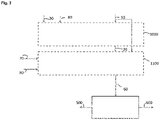
Fig. 1 : Schematic flowchart of the current invention -
Fig. 2 : Schematic flowchart of the current invention -
Fig. 3 : Schematic flowchart of the current invention -
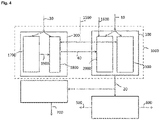
Fig. 4 : Schematic flowchart of the current invention -
Fig. 5 : Schematic flowchart of the current invention - The Domain Name System is one of the most visible technologies of the Internet, and users are putting direct trust in domain names while using Internet services. Malicious actors are constantly trying to abuse this trust, and are taking advantage of domain names to quickly locate and relocate their malicious activities around the globe. In particular, a continuous arms race is taking place between blacklisting services, and attackers that apply a fast-paced hit-and-run strategy (e.g. by using series of short-lived domains).
- The invention provides solutions to predict malicious behavior of (services operating behind) domain names, at the time they are being registered and hence before they become operational/do harm.
- The invention is based on and validated on real-world data that has been gathered while monitoring 14 months of domain registrations. This dataset consists of 824,121 new domain registrations; 2.5% have been flagged as malicious by blacklisting services. A manual retroactive analysis identified that 79.64% of these maliciously-flagged registrations can be attributed to 20 long-running campaigns.
- The invention provides methods suitable for a registry to successfully predict a large fraction of malicious registrations, already at registration time. In the various embodiments online supervised learning techniques are employed that can be tailored with respect to precision and recall, depending on the operational needs and costs (e.g. the cost to handle false positives or false negatives).
- By using an aggressive predictor, 74.70% of the malicious registrations can be predicted, at the cost of a false-positive rate of 1.84%. In another embodiment wherein the more conservative predictor is used, one is able to predict 56.93% of the malicious registrations with a very low false positive rate of 0.29%.
- In summary the invented predictors offer clear improvements on and complement existing abuse indicators, by monitoring or blocking malicious domain names before they can be misused to do actual harm.
- Exemplary embodiments are now further described:
Recall that our aim is to develop techniques to automatically predict, at registration time, whether a domain name will be used for malicious purposes. Two complementary strategies have been identified and developed in order to enable the classification of new domain name registrations as being benign or malicious. The first strategy aims to automatically cluster previous registrations into pseudo-campaigns by mainly focusing on similarities between malicious registrations' details. Similar malicious domain names are grouped into clusters and afterwards, new registrations can be predicted to have been registered as part of an existing malicious cluster. The second strategy is based on calculating reputation scores of registrants, registrars, email providers and name servers. These scores form the input to a binary classifier that learns to associate reputations with maliciousness. Considering the fact that these two strategies focus on different criteria, one can combine the outcomes of these complementary models to improve the performance of our predictions. Both approaches are designed to operate as online learners, by training and generating new prediction models on a daily basis. This ensures continuous adaptation to the changing strategies of intelligent attackers, contributing to a robust detection system. - As discussed before we reported that 79.64 of malicious registrations are part of larger and longer-running campaigns. The patterns and characteristics observed during this post-factum analysis reveal opportunities for automated and early campaign discovery. We propose a design that uses machine learning to fully autonomously cluster malicious registrations into pseudo-campaigns. We do not attempt to exactly recreate the campaigns identified but instead we leverage the perceived similarities that these malicious registrations share to form clusters. These clusters are then used to predict whether new instances are associated with ongoing malicious activity.
- The proposed system operates on a daily basis in three phases. All registrations from the training time window prior to the current testing date are gathered. (A) First, all benign registrations from the training set are filtered out using the blacklists. As a result, only registrations known to be malicious on the prediction date form the input of the clustering algorithm. (B) In this clustering algorithm, similar malicious registrations will be grouped together with the aim of representing pseudo-campaigns. The goal is to obtain a small set of dense clusters of associated malicious registrations during a given time window. The actual prediction is performed during the last phase: (C) the distance metric that is used by the clustering algorithm is applied to evaluate the similarity of new registrations to all of the previously established malicious clusters. When the distance is smaller than a certain threshold, the new registration is predicted to have been registered as part of the corresponding cluster.
- In order to group blacklisted registrations together into clusters, we have to be able to evaluate the similarity between two instances. To that extent, we use a metric that expresses the distance between two registrations, with a focus on assessing campaign associations. Once this distance metric is in place, we can compute the distance matrix of a set of malicious registrations that serves as the input for a clustering algorithm. When we revisit the features used to characterize campaigns, we find that most distinctive patterns are present in the registrant's contact details. Presumably, these artefacts are caused by automated registration tools used by malicious actors. For instance, if a registrar imposes specific formatting rules for an address field, patterns and repeated values might emerge while the tool attempts to adhere to the registrar's policy. Inspired by this insight, we include the distances between different fields of the registrant's contact details (e.g. address, phone number, etc.) as components of our distance metric. Naturally, these are string features that cannot be compared using a geometric function, nor is it desirable to compare them in a binary fashion as slightly different strings might share similar substrings or patterns. Therefore, we make use of the Levenshtein edit distance to assess their similarity. This distance between two strings is defined as the minimum number of single-character adjustments (insertions, deletions or substitutions) that are needed to transform one string into the other. The distance function thus preserves a notion of partial similarity and common characters in both strings. Since some registrations contain longer strings than others, we normalize each pairwise distance to the longest string to allow for proper comparison of different distances. A downside of the Levenshtein distance, is that it is computationally expensive. However, if many registrations contain the same string values, the performance can be significantly enhanced through caching techniques.
- Apart from string differences in contact details, we also include categorical features. In our distance metric, we use them to represent the distance between email providers, registrar, name servers and their geographical location. Categorical features are characterized by a limited set of possible values.
- For these features we define the distance in a binary fashion, 0 when two registrations' categorical feature have the same value and 1 when it differs. In some more complex scenario's, where arrays of values are used (e.g. name servers), we either set the distance to 0 if a minimum of one value matches with at least one other value from the other registration's array. Alternatively, we calculate the distance as the fraction of values that is shared between the two instances.
- The last two features, the domain name's length and randomness score, are numeric. Here, we calculate the euclidian distance between values of the different registrations. To account for differences in range and variations, both numeric features are first standardized across the entire dataset of malicious registrations before their distance is calculated.
- We calculate the total distance between two registrations by taking the weighted sum of the pairwise distance of each feature. Furthermore, each feature value pair requires a specific calculation according to the underlying data objects, as described above. Furthermore, we give a weight to certain features to influence their significance in the aggregated sum. The weights have been chosen, based an evaluation during the validation phase.
- Once we have established the distance metric between registrations, we compute the pairwise distance between all malicious registrations. From all pairwise registration distances, we construct a distance matrix, that serves as the input for the clustering algorithm.
- As we use a custom distance metric, agglomerative Clustering is an appropriate choice given its ability to work with any pairwise distances. Agglomerative clustering belongs to the family of hierarchical clustering algorithms and works by iteratively merging two clusters that are the closest to each other. In order to merge the most similar clusters, the algorithm must be able to determine the distance between clusters. For this purpose, we adopt the complete linkage criterion. Using this criterion, the distance between two clusters is equal to that of the most dissimilar instances of both clusters, promoting a high intra-cluster similarity.
- The output of the agglomerative clustering algorithm cannot be used without further processing. By default, the algorithm will continue to iteratively merge clusters until only one large cluster remains which encompasses all malicious registrations. Therefore, a crucial point of the clustering phase is to determine an appropriate stopping criterion. As we do not know the number of active pseudo-campaigns at this point, we cannot configure the merging process to stop at a predefined number of clusters. Therefore, we establish a distance threshold at which further merging should be avoided to prevent polluting the clusters with non-related instances. We refer to this distance limit as the Maximum Merging Distance (MMD). An appropriate MMD is determined through the evaluation of cluster homogeneity by using the data set and by empirical analysis on the validation set.
- Once we have established the malicious clusters of the past time window, we can predict whether new incoming registrations are part of them. To that extent, we use the same distance metric and clustering linkage criterion that were applied in the clustering algorithm. The distance between the new registration and each cluster is measured. The new registration can be regarded as a new cluster with a single instance. Thus, if the registration is closer to an existing cluster than the MMD, it is predicted as being part of that cluster and classified as malicious.
- During prediction, we can limit the comparison of new registrations to the most sizeable clusters. This promotes focus on the largest pseudo-campaigns and might positively impact false-positive predictions. We configure this through a parameter that specifies the percentage of malicious registrations that should be covered by the biggest clusters.
- As registries process thousands of new registrations every day, a system that aims to send out a warning at registration time should be able to produce a result very rapidly. Since measuring the distance between a new registration and a cluster involves expensive pairwise calculations with each instance in that cluster, this quickly becomes an long-running operation. To improve efficiency, we take advantage of the characteristics of complete linkage to avoid redundant calculations. More specifically, the distance from a new registration to a cluster is given by the greatest distance between that registration and any of the cluster's instances. Furthermore, the distance threshold that determines whether a registration is part of that cluster or not, is predefined. This allows to stop determining the distance between a new registration and a cluster, as soon as we encounter an instance of that cluster that is farther away from the new registration than the threshold. At that point, we are certain that the distance to that cluster is at least greater that the threshold and the algorithm can continue with the next cluster.
- Above a similarity-based approach to predicting maliciousness of domain registrations was proposed and developed. Intuitively, this approach matches the concept of malicious domain registrations that are registered as part of campaigns. This clustering technique makes solely use of malicious training data. Integrating another classification technique which also incorporates benign training data may thus bring additional knowledge to the overall prediction system. The combination of both approaches can therefore further increase the prediction performance in an ensemble learning setup.
- For the reputation-based prediction, a set of input attributes was chosen, comparable to the one used by the similarity-based prediction. However, the non-categorical string attributes, such as the registrant address were dropped. Instead, 'reputation scores' were added for the registrant, registrar, e-mail provider, name-servers configured for a registered domain name.
- The reputation scores were calculated over 4 different periods: 14 days, 30 days, 60 days and since the start of monitoring the blacklists, resulting in 16 new (albeit derived) classification attributes. The reputation scores are calculated as the percentage of registrations linked to a particular registrant, registrar, e-mail provider or nameserver, which were labelled as malicious in the ground truth data. In order to ensure that only knowledge available at the time of registration is used during classification, these reputation scores are calculated daily.
- In a first example the algorithm uses the training data to iteratively build an ordered list of if-then rules as prediction model by constructing partial decision trees in each iteration and using the 'best' leaf of the tree as a new rule. The resulting model is an ordered list of rules, combining inequalities with registration attributes by means of multiple AND-clauses.
- In a second example the algorithm iteratively generates simple uncombined inequalities, known as 'decision stumps' and uses the resulting prediction error to create better subsequent decision stumps. The result is a weighted list of 10 stumps per model, predicting the domain registration.
- Both classifiers have the additional advantage of producing models which are human readable and interpretable.
Claims (10)
- A method for automatic determining at time of registration whether a new domain name registration is likely to be intended for use for malicious activity or not, comprising the steps of:performing a method for automatic determining of the parameters of ar automated method for automatic determining at time of registration whether a domain name registration is likely to be intended for use for malicious activity or not and this solely based on registrant information, more preferably registrant contact information, of malicious domain name registrations, said method for automatic determining of the parameters comprising: (i) loading for a plurality of malicious domain name registrations ,the corresponding registrant information, more preferably registrant contact information; (ii) determining (200) via machine learning the parameters (40) of said automated method to determine with high likelihood whether a domain name registration is likely to be intended for use for malicious activity or not; andthereafter performing the steps of:(i) loading registrant information, more preferably registrant contact information, of said new domain name registration ; (ii) verifying (100), by use of said automated method, based on said parameters, said machine learned verification being solely based on said registrant infromation of said new domain name registration, the similarity of said domain name registration with said plurality of malicious domain name registrations, (iii) indicating (20) based thereon that said domain name registration is likely to be intended for use for malicious activity.
- The method of claim 1, wherein the determining the parameters via machine learning comprises computing (1700) a distance metric (1900) between registrations, said distance metric, in particular said distance metric being a sum of components related to the distance in the various fields of registrant contact information.
- The method of claim 1 or 2, wherein the verifying comprises computing (2000) a distance metric between said new domain name registration sand a pre-clustered set of the plurality of maliciou domain name registrations, in particular said distance metric being a sum of components related to the distance in the various fields of registrant contact information; and said indicating being based on comparing (2100) said distance with an inputted threshold .
- The method of claim 1, wherein the machine learning discovers long-running registration campaigns.
- The method of claim 4, wherein the machine learning is based on a clustering method, designed to cluster long-running registration campaigns.
- The method of claim 5, wherein the clustering comprises computing (1700) a distance metric (1900) between registrations, said distance metric, in particular said distance metric being a sum of components related to the distance in the various fields of registrant contact information.
- The method of claim 3 in combination with claim 5, comprising (i) inputting a first threshold parameter (1500) and (ii) clustering (1800) said loaded domain name registrations till said threshold is reached to thereby use a distance threshold at which merging of clusters in the method of clustering is stopped
- A method for registering a domain name by a registrar and/or registry or enhancing domain name blacklisting services, comprising: use of the method of any of the claims 1 to 7 in combination with of a second method for automatic determining at time of registration whether a new domain name registration is likely to be intended for use for malicious activity or not, said second method comprising the steps of:(i) loading for a plurality of both known malicious and benign domain name registrations the corresponding domain registration info (70) and information related to their malicious and benign use (80);(ii) determining (3000) reputation scores (110) from the corresponding domain registration info (70) and information related to their malicious and benign use (80), (iii) determining (3100), based on the corresponding domain registration info (70), and information related to their malicious and benign use (80) and reputation scores (110), via machine learning the parameters (90) of a second automated method to determine with high likelihood whether a domain name registration is likely to be intended for use for malicious activity or not, and thereafter performing the steps of:(i) using said second automated method to determine a reputation score of said new domain name registration and(ii) indicating (60) based thereon that said new domain name registration is likely to be intended for use for malicious activity, or, if determined therewith that the likelihood of use for malicious activity is low, automatic registering (500) of said domain name by the registrar and/or registry , or, if determined therewith that the likelihood of use for malicious activity is high, automatic providing (700) said domain name to said blacklisting services.
- The method of claim 8, wherein said indicating is based on a classifier.
- The method of claim 8 or 9, wherein the method (1000) of claims 1 to 3 is used before said second method for automatic determining at time of registration whether a domain name registration is likely to be intended for use for malicious activity or not.
Applications Claiming Priority (1)
| Application Number | Priority Date | Filing Date | Title |
|---|---|---|---|
| EP16203152 | 2016-12-09 |
Publications (2)
| Publication Number | Publication Date |
|---|---|
| EP3334128A1 EP3334128A1 (en) | 2018-06-13 |
| EP3334128B1 true EP3334128B1 (en) | 2022-11-09 |
Family
ID=57544259
Family Applications (1)
| Application Number | Title | Priority Date | Filing Date |
|---|---|---|---|
| EP17162468.7A Active EP3334128B1 (en) | 2016-12-09 | 2017-03-23 | A method for automatic determining at time of registration whether a domain name registration is likely to be intended for use for malicious activity or not |
Country Status (3)
| Country | Link |
|---|---|
| EP (1) | EP3334128B1 (en) |
| ES (1) | ES2937937T3 (en) |
| PL (1) | PL3334128T3 (en) |
Families Citing this family (2)
| Publication number | Priority date | Publication date | Assignee | Title |
|---|---|---|---|---|
| US20180227321A1 (en) * | 2017-02-05 | 2018-08-09 | International Business Machines Corporation | Reputation score for newly observed domain |
| CN112468444B (en) * | 2020-10-29 | 2023-05-16 | 中国互联网络信息中心 | Internet domain name abuse identification method and device, electronic equipment and storage medium |
Family Cites Families (5)
| Publication number | Priority date | Publication date | Assignee | Title |
|---|---|---|---|---|
| US8799465B2 (en) * | 2004-10-13 | 2014-08-05 | International Business Machines Corporation | Fake web addresses and hyperlinks |
| US8407791B2 (en) * | 2009-06-12 | 2013-03-26 | QinetiQ North America, Inc. | Integrated cyber network security system and method |
| US10742591B2 (en) * | 2011-07-06 | 2020-08-11 | Akamai Technologies Inc. | System for domain reputation scoring |
| US8949982B2 (en) * | 2011-12-30 | 2015-02-03 | Verisign, Inc. | Method for administering a top-level domain |
| US10185761B2 (en) * | 2015-08-07 | 2019-01-22 | Cisco Technology, Inc. | Domain classification based on domain name system (DNS) traffic |
-
2017
- 2017-03-23 EP EP17162468.7A patent/EP3334128B1/en active Active
- 2017-03-23 ES ES17162468T patent/ES2937937T3/en active Active
- 2017-03-23 PL PL17162468.7T patent/PL3334128T3/en unknown
Also Published As
| Publication number | Publication date |
|---|---|
| ES2937937T3 (en) | 2023-04-03 |
| EP3334128A1 (en) | 2018-06-13 |
| PL3334128T3 (en) | 2023-03-27 |
Similar Documents
| Publication | Publication Date | Title |
|---|---|---|
| US11757901B2 (en) | Malicious homoglyphic domain name detection and associated cyber security applications | |
| Li et al. | A machine learning framework for domain generation algorithm-based malware detection | |
| Nowroozi et al. | An adversarial attack analysis on malicious advertisement URL detection framework | |
| Rupa et al. | A machine learning driven threat intelligence system for malicious URL detection | |
| US20240340314A1 (en) | System for generating samples to generate machine learning models to facilitate detection of suspicious digital identifiers | |
| WO2019194787A1 (en) | Real-time entity anomaly detection | |
| Agarwal et al. | A novel approach for spam detection using natural language processing with AMALS models | |
| Kumar et al. | Enhanced domain generating algorithm detection based on deep neural networks | |
| Aiello et al. | Unsupervised learning and rule extraction for domain name server tunneling detection | |
| Tian et al. | Dom-bert: Detecting malicious domains with pre-training model | |
| Le Page et al. | Victim or attacker? A multi-dataset domain classification of phishing attacks | |
| Akande et al. | RF‐FLIDS: A Novel Hybrid Intrusion Detection Model for Enhanced Anomaly Detection in IoT Networks | |
| Sun et al. | Gambling domain name recognition via certificate and textual analysis | |
| Tavoli et al. | An efficient hybrid approach based on deep learning and stacking ensemble using the whale optimization algorithm for detecting attacks in IoT devices | |
| Weber et al. | Unsupervised clustering for identification of malicious domain campaigns | |
| EP3334128A1 (en) | A method for automatic determining at time of registration whether a domain name registration is likely to be intended for use for malicious activity or not | |
| Haddadi et al. | Malicious automatically generated domain name detection using stateful-SBB | |
| Kumar et al. | An efficient security testing for android application based on behavior and activities using improved pca and dnn-knn classifier | |
| Zhang et al. | URL based gateway side phishing detection method | |
| Magalhães et al. | Adopting machine learning to support the detection of malicious domain names | |
| Vishvakarma et al. | Detection of algorithmically generated domain names in botnets | |
| Marimuthu et al. | Intelligent antiphishing framework to detect phishing scam: A hybrid classification approach | |
| Javadi-Moghaddam et al. | Detecting phishing pages using the relief feature selection and multiple classifiers | |
| Joshi et al. | A survey of machine learning techniques in phishing detection | |
| Nagunwa | Fast Detection of Zero-Day Phishing Websites Using Machine Learning |
Legal Events
| Date | Code | Title | Description |
|---|---|---|---|
| PUAI | Public reference made under article 153(3) epc to a published international application that has entered the european phase |
Free format text: ORIGINAL CODE: 0009012 |
|
| STAA | Information on the status of an ep patent application or granted ep patent |
Free format text: STATUS: THE APPLICATION HAS BEEN PUBLISHED |
|
| AK | Designated contracting states |
Kind code of ref document: A1 Designated state(s): AL AT BE BG CH CY CZ DE DK EE ES FI FR GB GR HR HU IE IS IT LI LT LU LV MC MK MT NL NO PL PT RO RS SE SI SK SM TR |
|
| AX | Request for extension of the european patent |
Extension state: BA ME |
|
| STAA | Information on the status of an ep patent application or granted ep patent |
Free format text: STATUS: REQUEST FOR EXAMINATION WAS MADE |
|
| 17P | Request for examination filed |
Effective date: 20181213 |
|
| RBV | Designated contracting states (corrected) |
Designated state(s): AL AT BE BG CH CY CZ DE DK EE ES FI FR GB GR HR HU IE IS IT LI LT LU LV MC MK MT NL NO PL PT RO RS SE SI SK SM TR |
|
| RAP1 | Party data changed (applicant data changed or rights of an application transferred) |
Owner name: EURID VZW |
|
| STAA | Information on the status of an ep patent application or granted ep patent |
Free format text: STATUS: EXAMINATION IS IN PROGRESS |
|
| 17Q | First examination report despatched |
Effective date: 20200617 |
|
| REG | Reference to a national code |
Ref country code: DE Ref legal event code: R079 Ref document number: 602017063460 Country of ref document: DE Free format text: PREVIOUS MAIN CLASS: H04L0029120000 Ipc: H04L0061301500 |
|
| GRAP | Despatch of communication of intention to grant a patent |
Free format text: ORIGINAL CODE: EPIDOSNIGR1 |
|
| STAA | Information on the status of an ep patent application or granted ep patent |
Free format text: STATUS: GRANT OF PATENT IS INTENDED |
|
| RIC1 | Information provided on ipc code assigned before grant |
Ipc: G06F 21/55 20130101ALI20220510BHEP Ipc: H04L 9/40 20220101ALI20220510BHEP Ipc: H04L 61/3015 20220101AFI20220510BHEP |
|
| INTG | Intention to grant announced |
Effective date: 20220602 |
|
| GRAS | Grant fee paid |
Free format text: ORIGINAL CODE: EPIDOSNIGR3 |
|
| GRAA | (expected) grant |
Free format text: ORIGINAL CODE: 0009210 |
|
| STAA | Information on the status of an ep patent application or granted ep patent |
Free format text: STATUS: THE PATENT HAS BEEN GRANTED |
|
| AK | Designated contracting states |
Kind code of ref document: B1 Designated state(s): AL AT BE BG CH CY CZ DE DK EE ES FI FR GB GR HR HU IE IS IT LI LT LU LV MC MK MT NL NO PL PT RO RS SE SI SK SM TR |
|
| REG | Reference to a national code |
Ref country code: GB Ref legal event code: FG4D |
|
| REG | Reference to a national code |
Ref country code: CH Ref legal event code: EP Ref country code: AT Ref legal event code: REF Ref document number: 1531087 Country of ref document: AT Kind code of ref document: T Effective date: 20221115 |
|
| REG | Reference to a national code |
Ref country code: DE Ref legal event code: R096 Ref document number: 602017063460 Country of ref document: DE |
|
| REG | Reference to a national code |
Ref country code: IE Ref legal event code: FG4D |
|
| REG | Reference to a national code |
Ref country code: NL Ref legal event code: FP |
|
| REG | Reference to a national code |
Ref country code: LT Ref legal event code: MG9D |
|
| REG | Reference to a national code |
Ref country code: SE Ref legal event code: TRGR |
|
| REG | Reference to a national code |
Ref country code: ES Ref legal event code: FG2A Ref document number: 2937937 Country of ref document: ES Kind code of ref document: T3 Effective date: 20230403 |
|
| REG | Reference to a national code |
Ref country code: AT Ref legal event code: MK05 Ref document number: 1531087 Country of ref document: AT Kind code of ref document: T Effective date: 20221109 |
|
| PG25 | Lapsed in a contracting state [announced via postgrant information from national office to epo] |
Ref country code: PT Free format text: LAPSE BECAUSE OF FAILURE TO SUBMIT A TRANSLATION OF THE DESCRIPTION OR TO PAY THE FEE WITHIN THE PRESCRIBED TIME-LIMIT Effective date: 20230309 Ref country code: NO Free format text: LAPSE BECAUSE OF FAILURE TO SUBMIT A TRANSLATION OF THE DESCRIPTION OR TO PAY THE FEE WITHIN THE PRESCRIBED TIME-LIMIT Effective date: 20230209 Ref country code: LT Free format text: LAPSE BECAUSE OF FAILURE TO SUBMIT A TRANSLATION OF THE DESCRIPTION OR TO PAY THE FEE WITHIN THE PRESCRIBED TIME-LIMIT Effective date: 20221109 Ref country code: FI Free format text: LAPSE BECAUSE OF FAILURE TO SUBMIT A TRANSLATION OF THE DESCRIPTION OR TO PAY THE FEE WITHIN THE PRESCRIBED TIME-LIMIT Effective date: 20221109 Ref country code: AT Free format text: LAPSE BECAUSE OF FAILURE TO SUBMIT A TRANSLATION OF THE DESCRIPTION OR TO PAY THE FEE WITHIN THE PRESCRIBED TIME-LIMIT Effective date: 20221109 |
|
| PG25 | Lapsed in a contracting state [announced via postgrant information from national office to epo] |
Ref country code: RS Free format text: LAPSE BECAUSE OF FAILURE TO SUBMIT A TRANSLATION OF THE DESCRIPTION OR TO PAY THE FEE WITHIN THE PRESCRIBED TIME-LIMIT Effective date: 20221109 Ref country code: LV Free format text: LAPSE BECAUSE OF FAILURE TO SUBMIT A TRANSLATION OF THE DESCRIPTION OR TO PAY THE FEE WITHIN THE PRESCRIBED TIME-LIMIT Effective date: 20221109 Ref country code: IS Free format text: LAPSE BECAUSE OF FAILURE TO SUBMIT A TRANSLATION OF THE DESCRIPTION OR TO PAY THE FEE WITHIN THE PRESCRIBED TIME-LIMIT Effective date: 20230309 Ref country code: HR Free format text: LAPSE BECAUSE OF FAILURE TO SUBMIT A TRANSLATION OF THE DESCRIPTION OR TO PAY THE FEE WITHIN THE PRESCRIBED TIME-LIMIT Effective date: 20221109 Ref country code: GR Free format text: LAPSE BECAUSE OF FAILURE TO SUBMIT A TRANSLATION OF THE DESCRIPTION OR TO PAY THE FEE WITHIN THE PRESCRIBED TIME-LIMIT Effective date: 20230210 |
|
| PG25 | Lapsed in a contracting state [announced via postgrant information from national office to epo] |
Ref country code: SM Free format text: LAPSE BECAUSE OF FAILURE TO SUBMIT A TRANSLATION OF THE DESCRIPTION OR TO PAY THE FEE WITHIN THE PRESCRIBED TIME-LIMIT Effective date: 20221109 Ref country code: RO Free format text: LAPSE BECAUSE OF FAILURE TO SUBMIT A TRANSLATION OF THE DESCRIPTION OR TO PAY THE FEE WITHIN THE PRESCRIBED TIME-LIMIT Effective date: 20221109 Ref country code: EE Free format text: LAPSE BECAUSE OF FAILURE TO SUBMIT A TRANSLATION OF THE DESCRIPTION OR TO PAY THE FEE WITHIN THE PRESCRIBED TIME-LIMIT Effective date: 20221109 Ref country code: DK Free format text: LAPSE BECAUSE OF FAILURE TO SUBMIT A TRANSLATION OF THE DESCRIPTION OR TO PAY THE FEE WITHIN THE PRESCRIBED TIME-LIMIT Effective date: 20221109 |
|
| REG | Reference to a national code |
Ref country code: DE Ref legal event code: R097 Ref document number: 602017063460 Country of ref document: DE |
|
| PG25 | Lapsed in a contracting state [announced via postgrant information from national office to epo] |
Ref country code: SK Free format text: LAPSE BECAUSE OF FAILURE TO SUBMIT A TRANSLATION OF THE DESCRIPTION OR TO PAY THE FEE WITHIN THE PRESCRIBED TIME-LIMIT Effective date: 20221109 Ref country code: AL Free format text: LAPSE BECAUSE OF FAILURE TO SUBMIT A TRANSLATION OF THE DESCRIPTION OR TO PAY THE FEE WITHIN THE PRESCRIBED TIME-LIMIT Effective date: 20221109 |
|
| PLBE | No opposition filed within time limit |
Free format text: ORIGINAL CODE: 0009261 |
|
| STAA | Information on the status of an ep patent application or granted ep patent |
Free format text: STATUS: NO OPPOSITION FILED WITHIN TIME LIMIT |
|
| 26N | No opposition filed |
Effective date: 20230810 |
|
| PG25 | Lapsed in a contracting state [announced via postgrant information from national office to epo] |
Ref country code: MC Free format text: LAPSE BECAUSE OF FAILURE TO SUBMIT A TRANSLATION OF THE DESCRIPTION OR TO PAY THE FEE WITHIN THE PRESCRIBED TIME-LIMIT Effective date: 20221109 |
|
| REG | Reference to a national code |
Ref country code: CH Ref legal event code: PL |
|
| PG25 | Lapsed in a contracting state [announced via postgrant information from national office to epo] |
Ref country code: SI Free format text: LAPSE BECAUSE OF FAILURE TO SUBMIT A TRANSLATION OF THE DESCRIPTION OR TO PAY THE FEE WITHIN THE PRESCRIBED TIME-LIMIT Effective date: 20221109 |
|
| PG25 | Lapsed in a contracting state [announced via postgrant information from national office to epo] |
Ref country code: LI Free format text: LAPSE BECAUSE OF NON-PAYMENT OF DUE FEES Effective date: 20230331 Ref country code: CH Free format text: LAPSE BECAUSE OF NON-PAYMENT OF DUE FEES Effective date: 20230331 |
|
| PG25 | Lapsed in a contracting state [announced via postgrant information from national office to epo] |
Ref country code: BG Free format text: LAPSE BECAUSE OF FAILURE TO SUBMIT A TRANSLATION OF THE DESCRIPTION OR TO PAY THE FEE WITHIN THE PRESCRIBED TIME-LIMIT Effective date: 20221109 |
|
| PG25 | Lapsed in a contracting state [announced via postgrant information from national office to epo] |
Ref country code: BG Free format text: LAPSE BECAUSE OF FAILURE TO SUBMIT A TRANSLATION OF THE DESCRIPTION OR TO PAY THE FEE WITHIN THE PRESCRIBED TIME-LIMIT Effective date: 20221109 |
|
| PGFP | Annual fee paid to national office [announced via postgrant information from national office to epo] |
Ref country code: ES Payment date: 20250401 Year of fee payment: 9 |
|
| PG25 | Lapsed in a contracting state [announced via postgrant information from national office to epo] |
Ref country code: CY Free format text: LAPSE BECAUSE OF FAILURE TO SUBMIT A TRANSLATION OF THE DESCRIPTION OR TO PAY THE FEE WITHIN THE PRESCRIBED TIME-LIMIT; INVALID AB INITIO Effective date: 20170323 |
|
| PG25 | Lapsed in a contracting state [announced via postgrant information from national office to epo] |
Ref country code: HU Free format text: LAPSE BECAUSE OF FAILURE TO SUBMIT A TRANSLATION OF THE DESCRIPTION OR TO PAY THE FEE WITHIN THE PRESCRIBED TIME-LIMIT; INVALID AB INITIO Effective date: 20170323 |
|
| PG25 | Lapsed in a contracting state [announced via postgrant information from national office to epo] |
Ref country code: TR Free format text: LAPSE BECAUSE OF FAILURE TO SUBMIT A TRANSLATION OF THE DESCRIPTION OR TO PAY THE FEE WITHIN THE PRESCRIBED TIME-LIMIT Effective date: 20221109 |
|
| PGFP | Annual fee paid to national office [announced via postgrant information from national office to epo] |
Ref country code: SE Payment date: 20260327 Year of fee payment: 10 |
|
| PGFP | Annual fee paid to national office [announced via postgrant information from national office to epo] |
Ref country code: GB Payment date: 20260327 Year of fee payment: 10 |
|
| PGFP | Annual fee paid to national office [announced via postgrant information from national office to epo] |
Ref country code: DE Payment date: 20260327 Year of fee payment: 10 Ref country code: IE Payment date: 20260327 Year of fee payment: 10 |
|
| PGFP | Annual fee paid to national office [announced via postgrant information from national office to epo] |
Ref country code: LU Payment date: 20260327 Year of fee payment: 10 Ref country code: IT Payment date: 20260319 Year of fee payment: 10 Ref country code: BE Payment date: 20260327 Year of fee payment: 10 |
|
| PGFP | Annual fee paid to national office [announced via postgrant information from national office to epo] |
Ref country code: NL Payment date: 20260326 Year of fee payment: 10 |
|
| PGFP | Annual fee paid to national office [announced via postgrant information from national office to epo] |
Ref country code: FR Payment date: 20260325 Year of fee payment: 10 |
|
| PGFP | Annual fee paid to national office [announced via postgrant information from national office to epo] |
Ref country code: CZ Payment date: 20260310 Year of fee payment: 10 |
|
| PGFP | Annual fee paid to national office [announced via postgrant information from national office to epo] |
Ref country code: PL Payment date: 20260305 Year of fee payment: 10 |