EP3333851A1 - Automated object and activity tracking in a live video feed - Google Patents
Automated object and activity tracking in a live video feed Download PDFInfo
- Publication number
- EP3333851A1 EP3333851A1 EP17203852.3A EP17203852A EP3333851A1 EP 3333851 A1 EP3333851 A1 EP 3333851A1 EP 17203852 A EP17203852 A EP 17203852A EP 3333851 A1 EP3333851 A1 EP 3333851A1
- Authority
- EP
- European Patent Office
- Prior art keywords
- activities
- live video
- objects
- video feed
- interest
- Prior art date
- Legal status (The legal status is an assumption and is not a legal conclusion. Google has not performed a legal analysis and makes no representation as to the accuracy of the status listed.)
- Granted
Links
Images


Classifications
-
- G—PHYSICS
- G11—INFORMATION STORAGE
- G11B—INFORMATION STORAGE BASED ON RELATIVE MOVEMENT BETWEEN RECORD CARRIER AND TRANSDUCER
- G11B27/00—Editing; Indexing; Addressing; Timing or synchronising; Monitoring; Measuring tape travel
- G11B27/02—Editing, e.g. varying the order of information signals recorded on, or reproduced from, record carriers
- G11B27/031—Electronic editing of digitised analogue information signals, e.g. audio or video signals
-
- G—PHYSICS
- G06—COMPUTING OR CALCULATING; COUNTING
- G06F—ELECTRIC DIGITAL DATA PROCESSING
- G06F16/00—Information retrieval; Database structures therefor; File system structures therefor
- G06F16/90—Details of database functions independent of the retrieved data types
- G06F16/95—Retrieval from the web
- G06F16/953—Querying, e.g. by the use of web search engines
- G06F16/9535—Search customisation based on user profiles and personalisation
-
- G—PHYSICS
- G06—COMPUTING OR CALCULATING; COUNTING
- G06F—ELECTRIC DIGITAL DATA PROCESSING
- G06F16/00—Information retrieval; Database structures therefor; File system structures therefor
- G06F16/30—Information retrieval; Database structures therefor; File system structures therefor of unstructured textual data
- G06F16/33—Querying
- G06F16/3331—Query processing
- G06F16/334—Query execution
- G06F16/3344—Query execution using natural language analysis
-
- G—PHYSICS
- G06—COMPUTING OR CALCULATING; COUNTING
- G06F—ELECTRIC DIGITAL DATA PROCESSING
- G06F40/00—Handling natural language data
- G06F40/40—Processing or translation of natural language
-
- G—PHYSICS
- G06—COMPUTING OR CALCULATING; COUNTING
- G06V—IMAGE OR VIDEO RECOGNITION OR UNDERSTANDING
- G06V20/00—Scenes; Scene-specific elements
- G06V20/40—Scenes; Scene-specific elements in video content
- G06V20/41—Higher-level, semantic clustering, classification or understanding of video scenes, e.g. detection, labelling or Markovian modelling of sport events or news items
-
- G—PHYSICS
- G06—COMPUTING OR CALCULATING; COUNTING
- G06V—IMAGE OR VIDEO RECOGNITION OR UNDERSTANDING
- G06V20/00—Scenes; Scene-specific elements
- G06V20/50—Context or environment of the image
- G06V20/52—Surveillance or monitoring of activities, e.g. for recognising suspicious objects
-
- G—PHYSICS
- G08—SIGNALLING
- G08B—SIGNALLING SYSTEMS, e.g. PERSONAL CALLING SYSTEMS; ORDER TELEGRAPHS; ALARM SYSTEMS
- G08B13/00—Burglar, theft or intruder alarms
- G08B13/18—Actuation by interference with heat, light, or radiation of shorter wavelength; Actuation by intruding sources of heat, light, or radiation of shorter wavelength
- G08B13/189—Actuation by interference with heat, light, or radiation of shorter wavelength; Actuation by intruding sources of heat, light, or radiation of shorter wavelength using passive radiation detection systems
- G08B13/194—Actuation by interference with heat, light, or radiation of shorter wavelength; Actuation by intruding sources of heat, light, or radiation of shorter wavelength using passive radiation detection systems using image scanning and comparing systems
- G08B13/196—Actuation by interference with heat, light, or radiation of shorter wavelength; Actuation by intruding sources of heat, light, or radiation of shorter wavelength using passive radiation detection systems using image scanning and comparing systems using television cameras
- G08B13/19602—Image analysis to detect motion of the intruder, e.g. by frame subtraction
- G08B13/19613—Recognition of a predetermined image pattern or behaviour pattern indicating theft or intrusion
-
- G—PHYSICS
- G08—SIGNALLING
- G08B—SIGNALLING SYSTEMS, e.g. PERSONAL CALLING SYSTEMS; ORDER TELEGRAPHS; ALARM SYSTEMS
- G08B13/00—Burglar, theft or intruder alarms
- G08B13/18—Actuation by interference with heat, light, or radiation of shorter wavelength; Actuation by intruding sources of heat, light, or radiation of shorter wavelength
- G08B13/189—Actuation by interference with heat, light, or radiation of shorter wavelength; Actuation by intruding sources of heat, light, or radiation of shorter wavelength using passive radiation detection systems
- G08B13/194—Actuation by interference with heat, light, or radiation of shorter wavelength; Actuation by intruding sources of heat, light, or radiation of shorter wavelength using passive radiation detection systems using image scanning and comparing systems
- G08B13/196—Actuation by interference with heat, light, or radiation of shorter wavelength; Actuation by intruding sources of heat, light, or radiation of shorter wavelength using passive radiation detection systems using image scanning and comparing systems using television cameras
- G08B13/19678—User interface
- G08B13/19691—Signalling events for better perception by user, e.g. indicating alarms by making display brighter, adding text, creating a sound
-
- G—PHYSICS
- G10—MUSICAL INSTRUMENTS; ACOUSTICS
- G10L—SPEECH ANALYSIS TECHNIQUES OR SPEECH SYNTHESIS; SPEECH RECOGNITION; SPEECH OR VOICE PROCESSING TECHNIQUES; SPEECH OR AUDIO CODING OR DECODING
- G10L13/00—Speech synthesis; Text to speech systems
- G10L13/08—Text analysis or generation of parameters for speech synthesis out of text, e.g. grapheme to phoneme translation, prosody generation or stress or intonation determination
-
- G—PHYSICS
- G11—INFORMATION STORAGE
- G11B—INFORMATION STORAGE BASED ON RELATIVE MOVEMENT BETWEEN RECORD CARRIER AND TRANSDUCER
- G11B27/00—Editing; Indexing; Addressing; Timing or synchronising; Monitoring; Measuring tape travel
- G11B27/10—Indexing; Addressing; Timing or synchronising; Measuring tape travel
- G11B27/19—Indexing; Addressing; Timing or synchronising; Measuring tape travel by using information detectable on the record carrier
- G11B27/28—Indexing; Addressing; Timing or synchronising; Measuring tape travel by using information detectable on the record carrier by using information signals recorded by the same method as the main recording
-
- H—ELECTRICITY
- H04—ELECTRIC COMMUNICATION TECHNIQUE
- H04N—PICTORIAL COMMUNICATION, e.g. TELEVISION
- H04N21/00—Selective content distribution, e.g. interactive television or video on demand [VOD]
- H04N21/40—Client devices specifically adapted for the reception of or interaction with content, e.g. set-top-box [STB]; Operations thereof
- H04N21/43—Processing of content or additional data, e.g. demultiplexing additional data from a digital video stream; Elementary client operations, e.g. monitoring of home network or synchronising decoder's clock; Client middleware
- H04N21/44—Processing of video elementary streams, e.g. splicing a video clip retrieved from local storage with an incoming video stream or rendering scenes according to encoded video stream scene graphs
- H04N21/44008—Processing of video elementary streams, e.g. splicing a video clip retrieved from local storage with an incoming video stream or rendering scenes according to encoded video stream scene graphs involving operations for analysing video streams, e.g. detecting features or characteristics in the video stream
-
- H—ELECTRICITY
- H04—ELECTRIC COMMUNICATION TECHNIQUE
- H04N—PICTORIAL COMMUNICATION, e.g. TELEVISION
- H04N21/00—Selective content distribution, e.g. interactive television or video on demand [VOD]
- H04N21/80—Generation or processing of content or additional data by content creator independently of the distribution process; Content per se
- H04N21/83—Generation or processing of protective or descriptive data associated with content; Content structuring
- H04N21/84—Generation or processing of descriptive data, e.g. content descriptors
-
- H—ELECTRICITY
- H04—ELECTRIC COMMUNICATION TECHNIQUE
- H04N—PICTORIAL COMMUNICATION, e.g. TELEVISION
- H04N21/00—Selective content distribution, e.g. interactive television or video on demand [VOD]
- H04N21/80—Generation or processing of content or additional data by content creator independently of the distribution process; Content per se
- H04N21/85—Assembly of content; Generation of multimedia applications
- H04N21/854—Content authoring
- H04N21/8549—Creating video summaries, e.g. movie trailer
-
- G—PHYSICS
- G06—COMPUTING OR CALCULATING; COUNTING
- G06V—IMAGE OR VIDEO RECOGNITION OR UNDERSTANDING
- G06V20/00—Scenes; Scene-specific elements
- G06V20/40—Scenes; Scene-specific elements in video content
- G06V20/44—Event detection
Definitions
- the present disclosure relates generally to object and activity tracking and, in particular, to tracking and describing a storyline of objects and activities within a live video feed.
- Example implementations of the present disclosure are directed to an improved apparatus, method and computer-readable storage medium for automated object and activity tracking in a live video feed.
- a method for automated object and activity tracking in a live video feed. The method comprises receiving a live video feed. The method also comprises processing the live video feed to identify a plurality of objects and activities therein, and to generate natural language text that describes a storyline of the live video feed using the plurality of objects and activities so identified. The live video feed is processed using computer vision, natural language processing and machine learning, and a catalog of identifiable objects and activities. The method also comprises outputting the natural language text audibly or visually with a display of the live video feed.
- the method further comprises maintaining the catalog of identifiable objects and activities using the machine learning, including updating corresponding objects and activities in the catalog with attributes of at least some of the plurality of objects and activities.
- the method further comprises receiving user input specifying an object of interest or an activity of interest, processing the live video feed to further identify the object of interest or the activity of interest in the plurality of objects and activities, and spatiotemporally tracking the object of interest in the live video feed, or generating an alert to indicate identification of the activity of interest in the live video feed.
- generating the natural language text includes filtering the natural language text and thereby the storyline to relate only to the object of interest or the activity of interest.
- processing the live video feed further includes generating a corresponding database of information describing the plurality of objects and activities, and the method further comprises receiving user input specifying a request for information regarding at least one object or activity of the plurality of objects and activities.
- the method comprises querying the database based on the request, and generating and outputting for display, natural language text responsive to the request.
- processing the live video feed to identify the plurality of objects and activities includes predicting a future outcome of interest based on identification of at least two predefined objects or activities from the plurality of objects and activities, and generating an alert to indicate the future outcome of interest so predicted.
- predicting the future outcome of interest includes identifying at least one of the at least two predefined objects or activities within a current frame of the live video, and another of the at least two predefined objects or activities within the current frame or a subsequent frame of the live video.
- an apparatus for automated object and activity tracking in a live video feed.
- the apparatus comprises a processor and a memory storing executable instructions that, in response to execution by the processor, cause the apparatus to implement a number of subsystems, such as a receiver, identifier, and text generator that are configured to at least perform the method of any preceding example implementation, or any combination thereof.
- a computer-readable storage medium for automated object and activity tracking in a live video feed.
- the computer-readable storage medium is non-transitory and has computer-readable program code portions stored therein that, in response to execution by a processor, cause an apparatus to at least perform the method of any preceding example implementation, or any combination thereof.
- Example implementations of the present disclosure are generally directed to object and activity tracking and, in particular, to tracking and describing a storyline of objects and activities within a live video feed.
- Example implementations will be primarily described in conjunction with applications for video surveillance and analytic systems. It should be understood, however, that example implementations may be utilized in conjunction with a variety of other applications, such as other applications within the aerospace industry and outside of the aerospace industry.
- Example implementations of the present disclosure are more particularly directed to a system configured to receive video feed (e.g., via a video camera), and trained to automatically recognize various objects and activities present in the video feed, using a combination of computer vision, natural language processing, and machine learning models.
- the system is configured receive user input or queries specified by a human operator and, in response, infer the objects or activities of interest to the human. Further based on the user queries, the system is configured to automatically focus its identification process on the objects and activities of interest for tracking and alert purposes.
- the system also generates real-time comprehensible storylines that describe the observed or identified objects and activities by tracking their spatiotemporal relations across multiple frames of the video feed.
- Figure 1 illustrates a system 100 for automated object and activity tracking in a live video feed, which may simply be referred to as the "system" herein.
- the system is configured to perform a number of different functions or operations, either automatically, under direct operator control, or some combination of thereof.
- the system is configured to perform one or more of its functions or operations automatically, that is, without being directly controlled by an operator. Additionally or alternatively, in some examples, the system is configured to perform one or more of its functions or operations under direct operator control.
- the system 100 is configured to perform various functions or operations to track objects and activities within a live video feed, and generate a storyline describing the objects and activities.
- the system is configured to receive and process a live video feed.
- the system is configured to process the live video feed to identify a plurality of objects and activities therein, and to generate natural language text that describes a storyline of the live video feed using the plurality of objects and activities so identified.
- the live video feed is processed using computer vision, natural language processing and machine learning, and a catalog of identifiable objects and activities.
- the system is then configured to output the natural language text audibly or visually with a display of the live video feed.
- the system 100 may include one or more of each of a number of different subsystems (each an individual system) coupled to one another for performing one or more functions or operations.
- the system includes a receiver 102, identifier 104, and text generator 106 coupled to one another.
- the receiver, identifier or text generator may instead be separate from but in communication with the system.
- the system may include one or more additional or alternative subsystems than those shown in Figure 1 .
- the receiver 102, identifier 104 and text generator 106 are configured to perform respective functions or operations of the system 100.
- the receiver is configured to receive a live video feed.
- a user specifies the source of the live video for receipt by either a live stream link or a video file.
- the identifier is configured to process the live video feed to identify a plurality of objects and activities therein.
- the receiver and text generator may be operatively coupled to each other to function as a video-to-text (or captioning) engine, and the identifier and text generator may be operatively coupled to each other to function as an end-to-end query and response engine.
- the receiver functions as an initial processing unit, which receives a live video stream or video file as input and splits the live video into individual image frames.
- the receiver 102 is configured to extract frames from video at a rapid pace.
- the pace at which the videos frames are extracted is relevant to an allowable data transmission bandwidth of the system.
- the identifier 104 then identifies or recognizes different regions and objects of interest within the frame.
- the text generator 106 produces one or more natural language text strings describing the different regions and objects of interest within the frame that are recognizable by the system. The text strings are then fed into a query engine of the identifier to determine the best matching answer or response for user-initiated queries.
- the live video feed is processed using computer vision, natural language processing and machine learning, and a catalog of identifiable objects and activities.
- identifier 104 and text generator 106 are utilized, they require a one-time training process.
- the inputs to the training process consist of a set of video frames and corresponding captions in which each image-caption pair constitutes one training instance which, in some examples, a large number of domain-appropriate training instances are prepared by a human expert.
- the training instances are used to tune the weights of the neural networks, using a backpropagation algorithm, for example.
- the identifier 104 is trained by machine learning techniques, such as deep learning neural networks or other suitable methods, to automatically detect attributes of objects and activities.
- the identifier may also be trained with both visual features and linguistic inputs, such as texts, speeches, and the like, such that it becomes capable of automatically interpreting and describing, in real-time, video scenes in linguistic outputs (e.g., text and speech).
- the system is configured to maintain the catalog of identifiable objects and activities using the machine learning. This may include, for example, updating the corresponding objects and activities in the catalog with attributes of at least some of the plurality of objects and activities.
- the training process includes each extracted frame being processed using a neural network (e.g., a convolutional neural network) that produces a matrix of appearance features for different regions of the frame.
- a neural network e.g., a convolutional neural network
- the matrix is passed into another convolutional neural network that selects a predetermined number of frame regions (regions of interest) which may be specified based on the user input, and outputs three matrices containing coordinates for the selected regions (four per region).
- the convolutional neural network also outputs a probability for each region that indicates the likelihood that the corresponding region is of interest, and a set of features for each region, respectively.
- the features for the regions of interest are then passed into a pair of fully connected neural network layers that produce a compact, fixed-sized encoding of the features for each region which result in a stacked matrix.
- the stacked matrix is passed into a language model that is constructed from a recurrent neural network (e.g., Long Short Term Memory Network (LSTM)).
- LSTM Long Short Term Memory Network
- the visual features for the frame regions are input into the recurrent neural network and a token (e.g., a word) is sampled.
- the sampled token is then input into the LSTM and another token is sampled, and this process continuously loops until an end token is produced.
- the series of sampled words form sentential descriptions, or captions, of the regions.
- the identifier 104 is configured to detect and recognize object and activities (e.g., humans and objects) that have been previous identified.
- the identifier is also configured to analyze the spatial distances between the objects and activities within the regions of interest, match those object and activities with the natural language text descriptions that it have been previously sampled, and output sentential descriptions that are determined to be best matching with the regions of interest.
- the sequential descriptions, along with the coordinates of the corresponding regions of interest are stored in memory for use in providing responses to queries received by the human user.
- only generated descriptions, which correspond to frames that significantly differ from the previous frame will be stored in memory. For example, if a description is not sufficiently different from a description generated from the previous frame it will be rejected and not stored in memory.
- a separate engine is configured to assess the difference image between successive frames and only processes frames that are sufficiently different from the previous frame.
- only a predetermined number of descriptions are stored in memory such that when the memory becomes full, the oldest descriptions are purged from the memory to allocate storage space for newer descriptions.
- each sentential description is given an identification number and stored in memory with others previously generated descriptions.
- the entire set of descriptions are converted into fixed-size memory vectors which is computed by embedding each description in a continuous space. These steps form an embedding matrix that represents the entire set.
- the sequential descriptions are then written to the memory up to a fixed buffer size, which can be predefined by a default setting or by the user from the system graphical user interface (GUI).
- GUI graphical user interface
- Figure 2 illustrates a suitable example of an identifier 200 that may in some examples correspond to the identifier 104 of Figure 1 .
- the identifier includes a query engine 202, tracker 204, alert engine 206, predictor 208 and database 210 coupled to one another for performing one or more functions or operations to process and analyze the live video feed.
- the query engine is configured to receive user input that specifies an object of interest or an activity of interest, and process the live video feed to further identify the object of interest or the activity of interest in the plurality of objects and activities.
- the tracker is configured to spatiotemporally track the object of interest in the live video feed.
- the tracker is configured to track the spatial and temporal information for each of the plurality of objects and activities within the catalog independent of the object or activity being of interest.
- the alert engine is configured to generate an alert to indicate identification of the activity of interest in the live video feed.
- the identifier 200 is configured to process the live video feed to generate a corresponding database 210 of information that describes the plurality of objects and activities.
- the query engine 202 is configured to receive user input that specifies a request for information regarding at least one object or activity of the plurality of objects and activities, and query the database based on the request. For example, the user can submit a query that includes open-ended, free-form, natural language questions about the live video feed. These questions may further indicate where the identifier 200 should focus the analytical and recognition resources of the system. Based on this specified analysis, the system can generate a natural language answer or a warning message that is relevant to the user's questions or interests.
- the user input is further utilized as a means to train the identifier 200 for automated recognition of objects and activities of interest to the user.
- the query engine is trained based on combinations of user input and corresponding responses such that upon receiving a user input, the query engine is configured to infer the correct response as opposed to querying the database based on the request.
- the identifier 200 is configured to process the live video feed to predict a future outcome.
- the predictor 208 is configured to predict a future outcome of interest based on identification of at least two predefined objects or activities from the plurality of objects and activities. This may include, for example, identifying at least one of the at least two predefined objects or activities within a current frame of the live video, and another of the at least two predefined objects or activities within the current frame or a subsequent frame of the live video.
- the alert engine 206 is configured to generate an alert to indicate the future outcome of interest so predicted.
- the alert engine may rapidly transmit warning messages to users through interfaces such as electronic mail, graphical user interfaces of the display and the like.
- a human user queries a question q, and selects objects or activities of interest by clicking on the objects or activities of interest with a mouse. The user may also specify a duration of interest.
- the query engine then embeds the query and other inputs into another matrix B.
- the question is defined by an internal state vector.
- a match is performed between the internal state vector and the memory of the stored i th description, m i , by taking the inner product followed by a multinomial logistic regression (e.g., softmax regression).
- a multinomial logistic regression e.g., softmax regression
- a multi-step mechanism is applied in which the continuous representation is processed by multiple computational hops to determine answers that best match the set of inputs given by the user.
- the system is trained by backpropagation to perform the computational steps automatically.
- the number of step computations are supported by stacking multiple layers of memory embedding matrix and another corresponding matrix. These layers are formed such that the sum of the output and the input, from the query, forms the next layer of input.
- the system then predicts the best match answer.
- This final prediction is generated by the sum of an output vector and the input query internal state through a computed attention weight matrix and a multinomial logistic regression (e.g., softmax regression).
- the attention weight matrix is formed during training process, such as a backpropagation algorithm, as described above.
- system learns from sufficient domain-specific training data to that the system will provide answers that are relevant to the user's specific domains.
- the text generator 106 may then be configured to generate natural language text that describes a storyline of the live video feed, and output the natural language text audibly or visually with a display of the live video feed.
- Figure 3 illustrates an exemplary video feed 302 and display 304 with corresponding natural language text that describes the storyline of the live video feed.
- the text generator is configured to filter the natural language text and thereby the storyline to relate only to the object of interest or the activity of interest.
- the text generator 106 is configured to generate and output for display, natural language text responsive to the request.
- the text generator is further configured to generate a text log in which the natural language text that describes the storyline or the live video feed, or is more particularly responsive to a user request, is logged into searchable formats for rapid retrieval purposes during subsequent user request.
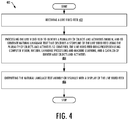
- Figure 4 illustrates a flowchart including various operations of a method 400 for automated object and activity tracking in a live video feed.
- the method includes receiving a live video feed.
- the method also includes processing the live video feed to identify a plurality of objects and activities therein, and to generate natural language text that describes a storyline of the live video feed using the plurality of objects and activities so identified, as shown in block 404.
- the live video feed is processed using computer vision, natural language processing and machine learning, and a catalog of identifiable objects and activities.
- the method also includes outputting the natural language text audibly or visually with a display of the live video feed, as shown in block 406.
- the system 100 and its subsystems and/or components including the receiver 102, identifier 104 and text generator 106 may be implemented by various means.
- the identifier 200 and its respective subsystems and/or components may be implemented by various means.
- Means for implementing the systems, subsystems and their respective elements may include hardware, alone or under direction of one or more computer programs from a computer-readable storage medium.
- one or more apparatuses may be provided that are configured to function as or otherwise implement the systems, subsystems, tools and respective elements shown and described herein.
- the respective apparatuses may be connected to or otherwise in communication with one another in a number of different manners, such as directly or indirectly via a wired or wireless network or the like.
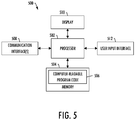
- Figure 5 illustrates an apparatus 500 according to some example implementations of the present disclosure.
- an apparatus of example implementations of the present disclosure may comprise, include or be embodied in one or more fixed or portable electronic devices. Examples of suitable electronic devices include a smartphone, tablet computer, laptop computer, desktop computer, workstation computer, server computer or the like.
- the apparatus may include one or more of each of a number of components such as, for example, a processor 502 (e.g., processor unit) connected to a memory 504 (e.g., storage device).
- a processor 502 e.g., processor unit
- memory 504 e.g., storage device
- the processor 502 is generally any piece of computer hardware that is capable of processing information such as, for example, data, computer programs and/or other suitable electronic information.
- the processor is composed of a collection of electronic circuits some of which may be packaged as an integrated circuit or multiple interconnected integrated circuits (an integrated circuit at times more commonly referred to as a "chip").
- the processor may be configured to execute computer programs, which may be stored onboard the processor or otherwise stored in the memory 504 (of the same or another apparatus).
- the processor 502 may be a number of processors, a multi-processor core or some other type of processor, depending on the particular implementation. Further, the processor may be implemented using a number of heterogeneous processor systems in which a main processor is present with one or more secondary processors on a single chip. As another illustrative example, the processor may be a symmetric multi-processor system containing multiple processors of the same type. In yet another example, the processor may be embodied as or otherwise include one or more application-specific integrated circuits (ASICs), field-programmable gate arrays (FPGAs) or the like. Thus, although the processor may be capable of executing a computer program to perform one or more functions, the processor of various examples may be capable of performing one or more functions without the aid of a computer program.
- ASICs application-specific integrated circuits
- FPGAs field-programmable gate arrays
- the memory 504 is generally any piece of computer hardware that is capable of storing information such as, for example, data, computer programs (e.g., computer-readable program code 506 ) and/or other suitable information either on a temporary basis and/or a permanent basis.
- the memory may include volatile and/or non-volatile memory, and may be fixed or removable. Examples of suitable memory include random access memory (RAM), read-only memory (ROM), a hard drive, a flash memory, a thumb drive, a removable computer diskette, an optical disk, a magnetic tape or some combination of the above.
- Optical disks may include compact disk - read only memory (CD-ROM), compact disk - read/write (CD-R/W), DVD or the like.
- the memory may be referred to as a computer-readable storage medium.
- the computer-readable storage medium is a non-transitory device capable of storing information, and is distinguishable from computer-readable transmission media such as electronic transitory signals capable of carrying information from one location to another.
- Computer-readable medium as described herein may generally refer to a computer-readable storage medium or computer-readable transmission medium.
- the processor may also be connected to one or more interfaces 508 for displaying, transmitting and/or receiving information.
- the interfaces may include a communications interface (e.g., communications unit) and/or one or more user interfaces.
- the communications interface may be configured to transmit and/or receive information, such as to and/or from other apparatus(es), network(s) or the like.
- the communications interface may be configured to transmit and/or receive information by physical (wired) and/or wireless communications links. Examples of suitable communication interfaces include a network interface controller (NIC), wireless NIC (WNIC) or the like.
- NIC network interface controller
- WNIC wireless NIC
- the user interfaces may include a display 510 and/or one or more user input interfaces 512 (e.g., input/output unit).
- the display may be configured to present or otherwise display information to a user, suitable examples of which include a liquid crystal display (LCD), light-emitting diode display (LED), plasma display panel (PDP) or the like.
- LCD liquid crystal display
- LED light-emitting diode display
- PDP plasma display panel
- the user input interfaces 512 may be wired or wireless, and may be configured to receive information from a user into the apparatus, such as for processing, storage and/or display. Suitable examples of user input interfaces include a microphone, image or video capture device, keyboard or keypad, joystick, touch-sensitive surface (separate from or integrated into a touchscreen), biometric sensor or the like.
- the user interfaces may further include one or more interfaces for communicating with peripherals such as printers, scanners or the like.
- program code instructions may be stored in memory, and executed by a processor, to implement functions of the systems, subsystems and their respective elements described herein.
- any suitable program code instructions may be loaded onto a computer or other programmable apparatus from a computer-readable storage medium to produce a particular machine, such that the particular machine becomes a means for implementing the functions specified herein.
- These program code instructions may also be stored in a computer-readable storage medium that can direct a computer, a processor or other programmable apparatus to function in a particular manner to thereby generate a particular machine or particular article of manufacture.
- the instructions stored in the computer-readable storage medium may produce an article of manufacture, where the article of manufacture becomes a means for implementing functions described herein.
- the program code instructions may be retrieved from a computer-readable storage medium and loaded into a computer, processor or other programmable apparatus to configure the computer, processor or other programmable apparatus to execute operations to be performed on or by the computer, processor or other programmable apparatus.
- Retrieval, loading and execution of the program code instructions may be performed sequentially such that one instruction is retrieved, loaded and executed at a time. In some example implementations, retrieval, loading and/or execution may be performed in parallel such that multiple instructions are retrieved, loaded, and/or executed together. Execution of the program code instructions may produce a computer-implemented process such that the instructions executed by the computer, processor or other programmable apparatus provide operations for implementing functions described herein.
- an apparatus 500 may include a processor 502 and a computer-readable storage medium or memory 504 coupled to the processor, where the processor is configured to execute computer-readable program code 506 stored in the memory. It will also be understood that one or more functions, and combinations of functions, may be implemented by special purpose hardware-based computer systems and/or processors which perform the specified functions, or combinations of special purpose hardware and program code instructions.
Landscapes
- Engineering & Computer Science (AREA)
- Physics & Mathematics (AREA)
- Multimedia (AREA)
- Theoretical Computer Science (AREA)
- General Physics & Mathematics (AREA)
- Computational Linguistics (AREA)
- Databases & Information Systems (AREA)
- Signal Processing (AREA)
- General Engineering & Computer Science (AREA)
- Human Computer Interaction (AREA)
- Audiology, Speech & Language Pathology (AREA)
- Health & Medical Sciences (AREA)
- Artificial Intelligence (AREA)
- Data Mining & Analysis (AREA)
- Software Systems (AREA)
- Computer Vision & Pattern Recognition (AREA)
- Acoustics & Sound (AREA)
- General Health & Medical Sciences (AREA)
- Computer Security & Cryptography (AREA)
- Image Analysis (AREA)
- User Interface Of Digital Computer (AREA)
- Closed-Circuit Television Systems (AREA)
Abstract
Description
- The present disclosure relates generally to object and activity tracking and, in particular, to tracking and describing a storyline of objects and activities within a live video feed.
- Currently, there is an increasing demand for more sophisticated video surveillance systems. This demand is primarily motivated by organizations looking to use surveillance videos to not only enhance security capabilities, but also to increase situational awareness for improving their business operations. For example, retailers and customer-facing branch network operators utilize insights from videos to optimize their operations and better understand customer behaviors. In another example, airports, train stations and other mass transit operators monitor videos to facilitate human traffic flow, detect operational incidents, and use predictive modeling to optimize their operations.
- With this rapid increase in the installation of video surveillance systems, existing teams of operators for the surveillance systems are unable to efficiently process and maintain the vast quantity of video data that is being generated, which may lead to a substantial amount of unseen video footage. As a result, most video surveillance installations are only used for forensic and evidential purposes after the fact. To maximize insights relevant to the video surveillance footage, human analysts are heavily utilized to monitor videos for activities such as suspicious behavior, object recognition, traffic monitoring, incident detection, face matching, safety alerts, anomaly detection, and crowd counting. This manual use of video processing is effectively inefficient and error prone.
- Therefore, it may be desirable to have a system and method that take into account at least some of the issues discussed above, as well as possibly other issues.
- Example implementations of the present disclosure are directed to an improved apparatus, method and computer-readable storage medium for automated object and activity tracking in a live video feed. In some example implementations, a method is provided for automated object and activity tracking in a live video feed. The method comprises receiving a live video feed. The method also comprises processing the live video feed to identify a plurality of objects and activities therein, and to generate natural language text that describes a storyline of the live video feed using the plurality of objects and activities so identified. The live video feed is processed using computer vision, natural language processing and machine learning, and a catalog of identifiable objects and activities. The method also comprises outputting the natural language text audibly or visually with a display of the live video feed.
- In some example implementations of the method of the preceding or any subsequent example implementation, or any combination thereof, the method further comprises maintaining the catalog of identifiable objects and activities using the machine learning, including updating corresponding objects and activities in the catalog with attributes of at least some of the plurality of objects and activities.
- In some example implementations of the method of any preceding or any subsequent example implementation, or any combination thereof, the method further comprises receiving user input specifying an object of interest or an activity of interest, processing the live video feed to further identify the object of interest or the activity of interest in the plurality of objects and activities, and spatiotemporally tracking the object of interest in the live video feed, or generating an alert to indicate identification of the activity of interest in the live video feed.
- In some example implementations of the method of any preceding or any subsequent example implementation, or any combination thereof, generating the natural language text includes filtering the natural language text and thereby the storyline to relate only to the object of interest or the activity of interest.
- In some example implementations of the method of any preceding or any subsequent example implementation, or any combination thereof, processing the live video feed further includes generating a corresponding database of information describing the plurality of objects and activities, and the method further comprises receiving user input specifying a request for information regarding at least one object or activity of the plurality of objects and activities. In response thereto, the method comprises querying the database based on the request, and generating and outputting for display, natural language text responsive to the request.
- In some example implementations of the method of any preceding or any subsequent example implementation, or any combination thereof, processing the live video feed to identify the plurality of objects and activities includes predicting a future outcome of interest based on identification of at least two predefined objects or activities from the plurality of objects and activities, and generating an alert to indicate the future outcome of interest so predicted.
- In some example implementations of the method of any preceding or any subsequent example implementation, or any combination thereof, predicting the future outcome of interest includes identifying at least one of the at least two predefined objects or activities within a current frame of the live video, and another of the at least two predefined objects or activities within the current frame or a subsequent frame of the live video.
- In some example implementations, an apparatus is provided for automated object and activity tracking in a live video feed. The apparatus comprises a processor and a memory storing executable instructions that, in response to execution by the processor, cause the apparatus to implement a number of subsystems, such as a receiver, identifier, and text generator that are configured to at least perform the method of any preceding example implementation, or any combination thereof.
- In some example implementations, a computer-readable storage medium is provided for automated object and activity tracking in a live video feed. The computer-readable storage medium is non-transitory and has computer-readable program code portions stored therein that, in response to execution by a processor, cause an apparatus to at least perform the method of any preceding example implementation, or any combination thereof.
- These and other features, aspects, and advantages of the present disclosure will be apparent from a reading of the following detailed description together with the accompanying drawings, which are briefly described below. The present disclosure includes any combination of two, three, four or more features or elements set forth in this disclosure, regardless of whether such features or elements are expressly combined or otherwise recited in a specific example implementation described herein. This disclosure is intended to be read holistically such that any separable features or elements of the disclosure, in any of its aspects and example implementations, should be viewed as intended, namely to be combinable, unless the context of the disclosure clearly dictates otherwise.
- It will therefore be appreciated that this Brief Summary is provided merely for purposes of summarizing some example implementations so as to provide a basic understanding of some aspects of the disclosure. Accordingly, it will be appreciated that the above described example implementations are merely examples and should not be construed to narrow the scope or spirit of the disclosure in any way. Other example implementations, aspects and advantages will become apparent from the following detailed description taken in conjunction with the accompanying drawings which illustrate, by way of example, the principles of some described example implementations.
- Having thus described example implementations of the disclosure in general terms, reference will now be made to the accompanying drawings, which are not necessarily drawn to scale, and wherein:
-
Figure 1 is an illustration of a system for automated object and activity tracking in a live video feed, according to example implementations of the present disclosure; -
Figure 2 illustrates a suitable identifier ofFigure 1 , according to some example implementations; -
Figure 3 illustrates a suitable live video feed and corresponding text display, according to some example implementations; -
Figure 4 is a flow diagram illustrating various operations of a method for automated object and activity tracking in a live video feed, in accordance with an example implementation; andFigure 5 illustrates an apparatus according to some example implementations. - Some implementations of the present disclosure will now be described more fully hereinafter with reference to the accompanying drawings, in which some, but not all implementations of the disclosure are shown. Indeed, various implementations of the disclosure may be embodied in many different forms and should not be construed as limited to the implementations set forth herein; rather, these example implementations are provided so that this disclosure will be thorough and complete, and will fully convey the scope of the disclosure to those skilled in the art. For example, unless otherwise indicated, reference to something as being a first, second or the like should not be construed to imply a particular order. Also, for example, reference may be made herein to quantitative measures, values, relationships or the like. Unless otherwise stated, any one or more if not all of these may be absolute or approximate to account for acceptable variations that may occur, such as those due to engineering tolerances or the like. Like reference numerals refer to like elements throughout.
- Example implementations of the present disclosure are generally directed to object and activity tracking and, in particular, to tracking and describing a storyline of objects and activities within a live video feed. Example implementations will be primarily described in conjunction with applications for video surveillance and analytic systems. It should be understood, however, that example implementations may be utilized in conjunction with a variety of other applications, such as other applications within the aerospace industry and outside of the aerospace industry.
- Example implementations of the present disclosure are more particularly directed to a system configured to receive video feed (e.g., via a video camera), and trained to automatically recognize various objects and activities present in the video feed, using a combination of computer vision, natural language processing, and machine learning models. The system is configured receive user input or queries specified by a human operator and, in response, infer the objects or activities of interest to the human. Further based on the user queries, the system is configured to automatically focus its identification process on the objects and activities of interest for tracking and alert purposes. The system also generates real-time comprehensible storylines that describe the observed or identified objects and activities by tracking their spatiotemporal relations across multiple frames of the video feed.
-
Figure 1 illustrates asystem 100 for automated object and activity tracking in a live video feed, which may simply be referred to as the "system" herein. The system is configured to perform a number of different functions or operations, either automatically, under direct operator control, or some combination of thereof. In some examples, the system is configured to perform one or more of its functions or operations automatically, that is, without being directly controlled by an operator. Additionally or alternatively, in some examples, the system is configured to perform one or more of its functions or operations under direct operator control. - In accordance with example implementations of the present disclosure, the
system 100 is configured to perform various functions or operations to track objects and activities within a live video feed, and generate a storyline describing the objects and activities. In some example implementations, the system is configured to receive and process a live video feed. In these example implementations, the system is configured to process the live video feed to identify a plurality of objects and activities therein, and to generate natural language text that describes a storyline of the live video feed using the plurality of objects and activities so identified. The live video feed is processed using computer vision, natural language processing and machine learning, and a catalog of identifiable objects and activities. - The system is then configured to output the natural language text audibly or visually with a display of the live video feed.
- The
system 100 may include one or more of each of a number of different subsystems (each an individual system) coupled to one another for performing one or more functions or operations. As shown inFigure 1 , in some examples, the system includes areceiver 102,identifier 104, andtext generator 106 coupled to one another. Although shown as part of the system, the receiver, identifier or text generator may instead be separate from but in communication with the system. It should also be understood that either of the subsystems may function or operate as a separate system without regard to others of the subsystems. And further, it should be understood that the system may include one or more additional or alternative subsystems than those shown inFigure 1 . - As explained in greater detail below, the
receiver 102,identifier 104 andtext generator 106 are configured to perform respective functions or operations of thesystem 100. In some implementations, the receiver is configured to receive a live video feed. In some examples, a user specifies the source of the live video for receipt by either a live stream link or a video file. The identifier is configured to process the live video feed to identify a plurality of objects and activities therein. As discussed herein the receiver and text generator may be operatively coupled to each other to function as a video-to-text (or captioning) engine, and the identifier and text generator may be operatively coupled to each other to function as an end-to-end query and response engine. The receiver functions as an initial processing unit, which receives a live video stream or video file as input and splits the live video into individual image frames. - To initially process a live video feed, the
receiver 102 is configured to extract frames from video at a rapid pace. In some examples, the pace at which the videos frames are extracted is relevant to an allowable data transmission bandwidth of the system. Theidentifier 104 then identifies or recognizes different regions and objects of interest within the frame. Upon identification, thetext generator 106 produces one or more natural language text strings describing the different regions and objects of interest within the frame that are recognizable by the system. The text strings are then fed into a query engine of the identifier to determine the best matching answer or response for user-initiated queries. - As indicated above, the live video feed is processed using computer vision, natural language processing and machine learning, and a catalog of identifiable objects and activities. Before the
identifier 104 andtext generator 106 are utilized, they require a one-time training process. The inputs to the training process consist of a set of video frames and corresponding captions in which each image-caption pair constitutes one training instance which, in some examples, a large number of domain-appropriate training instances are prepared by a human expert. - The training instances are used to tune the weights of the neural networks, using a backpropagation algorithm, for example. In some implementations, the
identifier 104 is trained by machine learning techniques, such as deep learning neural networks or other suitable methods, to automatically detect attributes of objects and activities. The identifier may also be trained with both visual features and linguistic inputs, such as texts, speeches, and the like, such that it becomes capable of automatically interpreting and describing, in real-time, video scenes in linguistic outputs (e.g., text and speech). For training purposes, in some examples, the system is configured to maintain the catalog of identifiable objects and activities using the machine learning. This may include, for example, updating the corresponding objects and activities in the catalog with attributes of at least some of the plurality of objects and activities. - In some examples, the training process includes each extracted frame being processed using a neural network (e.g., a convolutional neural network) that produces a matrix of appearance features for different regions of the frame. In these examples, the matrix is passed into another convolutional neural network that selects a predetermined number of frame regions (regions of interest) which may be specified based on the user input, and outputs three matrices containing coordinates for the selected regions (four per region). The convolutional neural network also outputs a probability for each region that indicates the likelihood that the corresponding region is of interest, and a set of features for each region, respectively. The features for the regions of interest are then passed into a pair of fully connected neural network layers that produce a compact, fixed-sized encoding of the features for each region which result in a stacked matrix. The stacked matrix is passed into a language model that is constructed from a recurrent neural network (e.g., Long Short Term Memory Network (LSTM)).
- Further in these examples, the visual features for the frame regions are input into the recurrent neural network and a token (e.g., a word) is sampled. The sampled token is then input into the LSTM and another token is sampled, and this process continuously loops until an end token is produced. The series of sampled words form sentential descriptions, or captions, of the regions. In a more particular example, the
identifier 104 is configured to detect and recognize object and activities (e.g., humans and objects) that have been previous identified. The identifier is also configured to analyze the spatial distances between the objects and activities within the regions of interest, match those object and activities with the natural language text descriptions that it have been previously sampled, and output sentential descriptions that are determined to be best matching with the regions of interest. - The sequential descriptions, along with the coordinates of the corresponding regions of interest are stored in memory for use in providing responses to queries received by the human user. However, only generated descriptions, which correspond to frames that significantly differ from the previous frame, will be stored in memory. For example, if a description is not sufficiently different from a description generated from the previous frame it will be rejected and not stored in memory. In some alternative examples, a separate engine is configured to assess the difference image between successive frames and only processes frames that are sufficiently different from the previous frame. Furthermore, only a predetermined number of descriptions are stored in memory such that when the memory becomes full, the oldest descriptions are purged from the memory to allocate storage space for newer descriptions.
- In some examples, each sentential description is given an identification number and stored in memory with others previously generated descriptions. The entire set of descriptions are converted into fixed-size memory vectors which is computed by embedding each description in a continuous space. These steps form an embedding matrix that represents the entire set. The sequential descriptions are then written to the memory up to a fixed buffer size, which can be predefined by a default setting or by the user from the system graphical user interface (GUI).
-
Figure 2 illustrates a suitable example of anidentifier 200 that may in some examples correspond to theidentifier 104 ofFigure 1 . As shown, in some implementations, the identifier includes aquery engine 202,tracker 204,alert engine 206,predictor 208 anddatabase 210 coupled to one another for performing one or more functions or operations to process and analyze the live video feed. In some examples, the query engine is configured to receive user input that specifies an object of interest or an activity of interest, and process the live video feed to further identify the object of interest or the activity of interest in the plurality of objects and activities. In these examples, the tracker is configured to spatiotemporally track the object of interest in the live video feed. In some examples, the tracker is configured to track the spatial and temporal information for each of the plurality of objects and activities within the catalog independent of the object or activity being of interest. Further in the examples, the alert engine is configured to generate an alert to indicate identification of the activity of interest in the live video feed. - In some examples, the
identifier 200 is configured to process the live video feed to generate acorresponding database 210 of information that describes the plurality of objects and activities. In these examples, thequery engine 202 is configured to receive user input that specifies a request for information regarding at least one object or activity of the plurality of objects and activities, and query the database based on the request. For example, the user can submit a query that includes open-ended, free-form, natural language questions about the live video feed. These questions may further indicate where theidentifier 200 should focus the analytical and recognition resources of the system. Based on this specified analysis, the system can generate a natural language answer or a warning message that is relevant to the user's questions or interests. In some examples, the user input is further utilized as a means to train theidentifier 200 for automated recognition of objects and activities of interest to the user. For instance, in one example, the query engine is trained based on combinations of user input and corresponding responses such that upon receiving a user input, the query engine is configured to infer the correct response as opposed to querying the database based on the request. - In some examples, the
identifier 200 is configured to process the live video feed to predict a future outcome. In particular, thepredictor 208 is configured to predict a future outcome of interest based on identification of at least two predefined objects or activities from the plurality of objects and activities. This may include, for example, identifying at least one of the at least two predefined objects or activities within a current frame of the live video, and another of the at least two predefined objects or activities within the current frame or a subsequent frame of the live video. In response, thealert engine 206 is configured to generate an alert to indicate the future outcome of interest so predicted. For example, in response to detecting or predicting any suspicious behavior or anomalies that are relevant to the plurality of objects and activities identified within the live video, the alert engine may rapidly transmit warning messages to users through interfaces such as electronic mail, graphical user interfaces of the display and the like. - In a more particular example, a human user queries a question q, and selects objects or activities of interest by clicking on the objects or activities of interest with a mouse. The user may also specify a duration of interest. The query engine then embeds the query and other inputs into another matrix B. In this matrix, the question is defined by an internal state vector. A match is performed between the internal state vector and the memory of the stored i th description, mi , by taking the inner product followed by a multinomial logistic regression (e.g., softmax regression). These steps form a continuous representation for both the sequential description x and q in the probability form, pi , which is also considered as the probability of match formed over the descriptions.
- Further, in these examples, a multi-step mechanism is applied in which the continuous representation is processed by multiple computational hops to determine answers that best match the set of inputs given by the user. In some examples, the system is trained by backpropagation to perform the computational steps automatically. The number of step computations are supported by stacking multiple layers of memory embedding matrix and another corresponding matrix. These layers are formed such that the sum of the output and the input, from the query, forms the next layer of input. The system then predicts the best match answer. This final prediction is generated by the sum of an output vector and the input query internal state through a computed attention weight matrix and a multinomial logistic regression (e.g., softmax regression). The attention weight matrix is formed during training process, such as a backpropagation algorithm, as described above. In some examples, system learns from sufficient domain-specific training data to that the system will provide answers that are relevant to the user's specific domains.
- Referring again to
Figure 1 , using the plurality of objects and activities identified by theidentifier 104, thetext generator 106 may then be configured to generate natural language text that describes a storyline of the live video feed, and output the natural language text audibly or visually with a display of the live video feed.Figure 3 illustrates anexemplary video feed 302 and display 304 with corresponding natural language text that describes the storyline of the live video feed. In some examples, the text generator is configured to filter the natural language text and thereby the storyline to relate only to the object of interest or the activity of interest. In some examples in which thequery engine 202 is configured to receive user input that specifies a request for information regarding at least one object or activity of the plurality of objects and activities, and query the database based on the request, thetext generator 106 is configured to generate and output for display, natural language text responsive to the request. In some implementations, the text generator is further configured to generate a text log in which the natural language text that describes the storyline or the live video feed, or is more particularly responsive to a user request, is logged into searchable formats for rapid retrieval purposes during subsequent user request. -
Figure 4 illustrates a flowchart including various operations of amethod 400 for automated object and activity tracking in a live video feed. As shown atblock 402, the method includes receiving a live video feed. The method also includes processing the live video feed to identify a plurality of objects and activities therein, and to generate natural language text that describes a storyline of the live video feed using the plurality of objects and activities so identified, as shown in block 404. The live video feed is processed using computer vision, natural language processing and machine learning, and a catalog of identifiable objects and activities. The method also includes outputting the natural language text audibly or visually with a display of the live video feed, as shown inblock 406. - According to some example implementations of the present disclosure, the
system 100 and its subsystems and/or components including thereceiver 102,identifier 104 andtext generator 106 may be implemented by various means. Similarly, theidentifier 200 and its respective subsystems and/or components may be implemented by various means. Means for implementing the systems, subsystems and their respective elements may include hardware, alone or under direction of one or more computer programs from a computer-readable storage medium. - In some examples, one or more apparatuses may be provided that are configured to function as or otherwise implement the systems, subsystems, tools and respective elements shown and described herein. In examples involving more than one apparatus, the respective apparatuses may be connected to or otherwise in communication with one another in a number of different manners, such as directly or indirectly via a wired or wireless network or the like.
-
Figure 5 illustrates anapparatus 500 according to some example implementations of the present disclosure. Generally, an apparatus of example implementations of the present disclosure may comprise, include or be embodied in one or more fixed or portable electronic devices. Examples of suitable electronic devices include a smartphone, tablet computer, laptop computer, desktop computer, workstation computer, server computer or the like. The apparatus may include one or more of each of a number of components such as, for example, a processor 502 (e.g., processor unit) connected to a memory 504 (e.g., storage device). - The
processor 502 is generally any piece of computer hardware that is capable of processing information such as, for example, data, computer programs and/or other suitable electronic information. The processor is composed of a collection of electronic circuits some of which may be packaged as an integrated circuit or multiple interconnected integrated circuits (an integrated circuit at times more commonly referred to as a "chip"). The processor may be configured to execute computer programs, which may be stored onboard the processor or otherwise stored in the memory 504 (of the same or another apparatus). - The
processor 502 may be a number of processors, a multi-processor core or some other type of processor, depending on the particular implementation. Further, the processor may be implemented using a number of heterogeneous processor systems in which a main processor is present with one or more secondary processors on a single chip. As another illustrative example, the processor may be a symmetric multi-processor system containing multiple processors of the same type. In yet another example, the processor may be embodied as or otherwise include one or more application-specific integrated circuits (ASICs), field-programmable gate arrays (FPGAs) or the like. Thus, although the processor may be capable of executing a computer program to perform one or more functions, the processor of various examples may be capable of performing one or more functions without the aid of a computer program. - The
memory 504 is generally any piece of computer hardware that is capable of storing information such as, for example, data, computer programs (e.g., computer-readable program code 506) and/or other suitable information either on a temporary basis and/or a permanent basis. The memory may include volatile and/or non-volatile memory, and may be fixed or removable. Examples of suitable memory include random access memory (RAM), read-only memory (ROM), a hard drive, a flash memory, a thumb drive, a removable computer diskette, an optical disk, a magnetic tape or some combination of the above. Optical disks may include compact disk - read only memory (CD-ROM), compact disk - read/write (CD-R/W), DVD or the like. In various instances, the memory may be referred to as a computer-readable storage medium. The computer-readable storage medium is a non-transitory device capable of storing information, and is distinguishable from computer-readable transmission media such as electronic transitory signals capable of carrying information from one location to another. Computer-readable medium as described herein may generally refer to a computer-readable storage medium or computer-readable transmission medium. - In addition to the memory, the processor may also be connected to one or
more interfaces 508 for displaying, transmitting and/or receiving information. The interfaces may include a communications interface (e.g., communications unit) and/or one or more user interfaces. The communications interface may be configured to transmit and/or receive information, such as to and/or from other apparatus(es), network(s) or the like. The communications interface may be configured to transmit and/or receive information by physical (wired) and/or wireless communications links. Examples of suitable communication interfaces include a network interface controller (NIC), wireless NIC (WNIC) or the like. - The user interfaces may include a display 510 and/or one or more user input interfaces 512 (e.g., input/output unit). The display may be configured to present or otherwise display information to a user, suitable examples of which include a liquid crystal display (LCD), light-emitting diode display (LED), plasma display panel (PDP) or the like.
- The user input interfaces 512 may be wired or wireless, and may be configured to receive information from a user into the apparatus, such as for processing, storage and/or display. Suitable examples of user input interfaces include a microphone, image or video capture device, keyboard or keypad, joystick, touch-sensitive surface (separate from or integrated into a touchscreen), biometric sensor or the like. The user interfaces may further include one or more interfaces for communicating with peripherals such as printers, scanners or the like.
- As indicated above, program code instructions may be stored in memory, and executed by a processor, to implement functions of the systems, subsystems and their respective elements described herein. As will be appreciated, any suitable program code instructions may be loaded onto a computer or other programmable apparatus from a computer-readable storage medium to produce a particular machine, such that the particular machine becomes a means for implementing the functions specified herein. These program code instructions may also be stored in a computer-readable storage medium that can direct a computer, a processor or other programmable apparatus to function in a particular manner to thereby generate a particular machine or particular article of manufacture. The instructions stored in the computer-readable storage medium may produce an article of manufacture, where the article of manufacture becomes a means for implementing functions described herein. The program code instructions may be retrieved from a computer-readable storage medium and loaded into a computer, processor or other programmable apparatus to configure the computer, processor or other programmable apparatus to execute operations to be performed on or by the computer, processor or other programmable apparatus.
- Retrieval, loading and execution of the program code instructions may be performed sequentially such that one instruction is retrieved, loaded and executed at a time. In some example implementations, retrieval, loading and/or execution may be performed in parallel such that multiple instructions are retrieved, loaded, and/or executed together. Execution of the program code instructions may produce a computer-implemented process such that the instructions executed by the computer, processor or other programmable apparatus provide operations for implementing functions described herein.
- Execution of instructions by a processor, or storage of instructions in a computer-readable storage medium, supports combinations of operations for performing the specified functions. In this manner, an
apparatus 500 may include aprocessor 502 and a computer-readable storage medium ormemory 504 coupled to the processor, where the processor is configured to execute computer-readable program code 506 stored in the memory. It will also be understood that one or more functions, and combinations of functions, may be implemented by special purpose hardware-based computer systems and/or processors which perform the specified functions, or combinations of special purpose hardware and program code instructions. - Further, the disclosure comprises embodiments according to the following clauses:
-
Clause 1. An apparatus for automated object and activity tracking in a live video feed, the apparatus comprising a processor and a memory storing executable instructions that, in response to execution by the processor, cause the apparatus to at least:- receive a live video feed;
- process the live video feed to identify a plurality of objects and activities therein, and to generate natural language text that describes a storyline of the live video feed using the plurality of objects and activities so identified, wherein the live video feed is processed using computer vision, natural language processing and machine learning, and a catalog of identifiable objects and activities; and
- output the natural language text audibly or visually with a display of the live video feed.
-
Clause 2. The apparatus ofClause 1, wherein the memory stores further executable instructions that, in response to execution by the processor, cause the apparatus to maintain the catalog of identifiable objects and activities using the machine learning, including the apparatus being caused to update corresponding objects and activities in the catalog with attributes of at least some of the plurality of objects and activities. -
Clause 3. The apparatus of any one of Clauses 1-2, wherein the memory stores further executable instructions that, in response to execution by the processor, cause the apparatus to at least:- receive user input specifying an object of interest or an activity of interest;
- process the live video feed to further identify the object of interest or the activity of interest in the plurality of objects and activities; and
- spatiotemporally track the object of interest in the live video feed, or generate an alert to indicate identification of the activity of interest in the live video feed.
-
Clause 4. The apparatus ofClause 3, wherein the apparatus that generates the natural language text filters the natural language text and thereby the storyline to relate only to the object of interest or the activity of interest. -
Clause 5. The apparatus of any one of Clauses 1-4, wherein the apparatus that processes the live video feed further includes the apparatus being caused to generate a corresponding database of information describing the plurality of objects and activities, and the memory stores further executable instructions that, in response to execution by the processor, cause the apparatus to at least:- receive user input specifying a request for information regarding at least one object or activity of the plurality of objects and activities; and in response thereto,
- query the database based on the request; and
- generate and output for display, natural language text responsive to the request.
-
Clause 6. The apparatus of any one of Clauses 1-5, wherein the apparatus being caused to process the live video feed to identify the plurality of objects and activities includes being caused to at least:- predict a future outcome of interest based on identification of at least two predefined objects or activities from the plurality of objects and activities; and
- generate an alert to indicate the future outcome of interest so predicted.
-
Clause 7. The apparatus ofClause 6, wherein the apparatus being caused to predict the future outcome of interest includes being caused to at least identify at least one of the at least two predefined objects or activities within a current frame of the live video, and another of the at least two predefined objects or activities within the current frame or a subsequent frame of the live video. -
Clause 8. A method for automated object and activity tracking in a live video feed, the method comprising:- receiving a live video feed;
- processing the live video feed to identify a plurality of objects and activities therein, and to generate natural language text that describes a storyline of the live video feed using the plurality of objects and activities so identified, wherein the live video feed is processed using computer vision, natural language processing and machine learning, and a catalog of identifiable objects and activities; and
- outputting the natural language text audibly or visually with a display of the live video feed.
-
Clause 9. The method ofClause 8 further comprising maintaining the catalog of identifiable objects and activities using the machine learning, including updating corresponding objects and activities in the catalog with attributes of at least some of the plurality of objects and activities. - Clause 10. The method of any one of Clauses 8-9 further comprising:
- receiving user input specifying an object of interest or an activity of interest;
- processing the live video feed to further identify the object of interest or the activity of interest in the plurality of objects and activities; and
- spatiotemporally tracking the object of interest in the live video feed, or generating an alert to indicate identification of the activity of interest in the live video feed.
-
Clause 11. The method of Clause 10, wherein generating the natural language text includes filtering the natural language text and thereby the storyline to relate only to the object of interest or the activity of interest. - Clause 12. The method of any one of Clauses 8-11, wherein processing the live video feed further includes generating a corresponding database of information describing the plurality of objects and activities, and the method further comprising:
- receiving user input specifying a request for information regarding at least one object or activity of the plurality of objects and activities; and in response thereto,
- querying the database based on the request; and
- generating and output for display, natural language text responsive to the request.
- Clause 13. The method of any one of Clauses 8-12, wherein processing the live video feed to identify the plurality of objects and activities includes:
- predicting a future outcome of interest based on identification of at least two predefined objects or activities from the plurality of objects and activities; and
- generating an alert to indicate the future outcome of interest so predicted.
- Clause 14. The method of Clause 13, wherein predicting the future outcome of interest includes identifying at least one of the at least two predefined objects or activities within a current frame of the live video, and another of the at least two predefined objects or activities within the current frame or a subsequent frame of the live video.
- Clause 15. A computer-readable storage medium for automated object and activity tracking in a live video feed, the computer-readable storage medium having computer-readable program code stored therein that, in response to execution by a processor, cause an apparatus to at least:
- receive a live video feed;
- process the live video feed to identify a plurality of objects and activities therein, and to generate natural language text that describes a storyline of the live video feed using the plurality of objects and activities so identified, wherein the live video feed is processed using computer vision, natural language processing and machine learning, and a catalog of identifiable objects and activities; and
- output the natural language text audibly or visually with a display of the live video feed.
- Clause 16. The computer readable storage medium of Clause 15 having computer-readable program code stored therein that, in response to execution by a processor, causes the apparatus to further at least maintain the catalog of identifiable objects and activities using the machine learning, including the apparatus being caused to update corresponding objects and activities in the catalog with attributes of at least some of the plurality of objects and activities.
- Clause 17. The computer readable storage medium of any one of Clauses 15-16 having computer-readable program code stored therein that, in response to execution by a processor, causes the apparatus to further at least:
- receive user input specifying an object of interest or an activity of interest;
- process the live video feed to further identify the object of interest or the activity of interest in the plurality of objects and activities; and
- spatiotemporally track the object of interest in the live video feed, or generate an alert to indicate identification of the activity of interest in the live video feed.
- Clause 18. The computer readable storage medium of any one of Clauses 15-17, wherein the apparatus being caused to generate the natural language text includes being caused to filter the natural language text and thereby the storyline to relate only to the object of interest or the activity of interest.
- Clause 19. The computer readable storage medium of any one of Clauses 15-18, wherein the apparatus being caused to process the live video feed further includes the apparatus being caused to generate a corresponding database of information describing the plurality of objects and activities, and the computer readable storage medium having computer-readable program code stored therein that, in response to execution by a processor, causes the apparatus to further at least:
- receive user input specifying a request for information regarding at least one object or activity of the plurality of objects and activities; and in response thereto,
- query the database based on the request; and
- generate and output for display, natural language text responsive to the request.
- Clause 20. The computer readable storage medium of any one of Clauses 15-19, wherein the apparatus being caused to process the live video feed to identify the plurality of objects and activities includes being caused to at least:
- predict a future outcome of interest based on identification of at least two predefined objects or activities from the plurality of objects and activities; and
- generate an alert to indicate the future outcome of interest so predicted.
- Clause 21. The computer readable storage medium of Clause 20, wherein the apparatus being caused to predict the future outcome of interest includes being caused to at least identify at least one of the at least two predefined objects or activities within a current frame of the live video, and another of the at least two predefined objects or activities within the current frame or a subsequent frame of the live video.
- Many modifications and other implementations of the disclosure set forth herein will come to mind to one skilled in the art to which the disclosure pertains having the benefit of the teachings presented in the foregoing description and the associated drawings. Therefore, it is to be understood that the disclosure is not to be limited to the specific implementations disclosed and that modifications and other implementations are intended to be included within the scope of the appended claims. Moreover, although the foregoing description and the associated drawings describe example implementations in the context of certain example combinations of elements and/or functions, it should be appreciated that different combinations of elements and/or functions may be provided by alternative implementations without departing from the scope of the appended claims. In this regard, for example, different combinations of elements and/or functions than those explicitly described above are also contemplated as may be set forth in some of the appended claims. Although specific terms are employed herein, they are used in a generic and descriptive sense only and not for purposes of limitation.
- Many modifications and other implementations of the disclosure set forth herein will come to mind to one skilled in the art to which the disclosure pertains having the benefit of the teachings presented in the foregoing description and the associated drawings. Therefore, it is to be understood that the disclosure is not to be limited to the specific implementations disclosed and that modifications and other implementations are intended to be included within the scope of the appended claims. Moreover, although the foregoing description and the associated drawings describe example implementations in the context of certain example combinations of elements and/or functions, it should be appreciated that different combinations of elements and/or functions may be provided by alternative implementations without departing from the scope of the appended claims. In this regard, for example, different combinations of elements and/or functions than those explicitly described above are also contemplated as may be set forth in some of the appended claims. Although specific terms are employed herein, they are used in a generic and descriptive sense only and not for purposes of limitation.
Claims (15)
- An apparatus for automated object and activity tracking in a live video feed (500), the apparatus (500) comprising a processor (502) and a memory (504) storing executable instructions that, in response to execution by the processor (502), cause the apparatus (500) to at least:receive a live video feed;process the live video feed to identify a plurality of objects and activities therein, and to generate natural language text that describes a storyline of the live video feed using the plurality of objects and activities so identified, wherein the live video feed is processed using computer vision, natural language processing and machine learning, and a catalog of identifiable objects and activities; andoutput the natural language text audibly or visually with a display of the live video feed.
- The apparatus of Claim 1, wherein the memory (504) stores further executable instructions that, in response to execution by the processor (502), cause the apparatus (500) to maintain the catalog of identifiable objects and activities using the machine learning, including the apparatus (500) being caused to update corresponding objects and activities in the catalog with attributes of at least some of the plurality of objects and activities.
- The apparatus of any one of Claims 1-2, wherein the memory (504) stores further executable instructions that, in response to execution by the processor (502), cause the apparatus (500) to at least:receive user input specifying an object of interest or an activity of interest;process the live video feed to further identify the object of interest or the activity of interest in the plurality of objects and activities; andspatiotemporally track the object of interest in the live video feed, or generate an alert to indicate identification of the activity of interest in the live video feed.
- The apparatus of Claim 3, wherein the apparatus that generates the natural language text filters the natural language text and thereby the storyline to relate only to the object of interest or the activity of interest.
- The apparatus of any one of Claims 1-4, wherein the apparatus that processes the live video feed further includes the apparatus being caused to generate a corresponding database of information describing the plurality of objects and activities, and the memory (504) stores further executable instructions that, in response to execution by the processor (502), cause the apparatus to at least:receive user input specifying a request for information regarding at least one object or activity of the plurality of objects and activities; and in response thereto,query the database based on the request; andgenerate and output for display, natural language text responsive to the request.
- The apparatus of any one of Claims 1-5, wherein the apparatus being caused to process the live video feed to identify the plurality of objects and activities includes being caused to at least:predict a future outcome of interest based on identification of at least two predefined objects or activities from the plurality of objects and activities; andgenerate an alert to indicate the future outcome of interest so predicted.
- The apparatus of Claim 6, wherein the apparatus being caused to predict the future outcome of interest includes being caused to at least identify at least one of the at least two predefined objects or activities within a current frame of the live video, and another of the at least two predefined objects or activities within the current frame or a subsequent frame of the live video.
- A method for automated object and activity tracking in a live video feed (400), the method comprising:receiving a live video feed (402);processing the live video feed to identify a plurality of objects and activities therein, and to generate natural language text that describes a storyline of the live video feed using the plurality of objects and activities so identified, wherein the live video feed is processed using computer vision, natural language processing and machine learning, and a catalog of identifiable objects and activities (404); andoutputting the natural language text audibly or visually with a display of the live video feed (406).
- The method of Claim 8 further comprising maintaining the catalog of identifiable objects and activities using the machine learning, including updating corresponding objects and activities in the catalog with attributes of at least some of the plurality of objects and activities.
- The method of any one of Claims 8-9 further comprising:receiving user input specifying an object of interest or an activity of interest;processing the live video feed to further identify the object of interest or the activity of interest in the plurality of objects and activities; andspatiotemporally tracking the object of interest in the live video feed, or generating an alert to indicate identification of the activity of interest in the live video feed.
- The method of Claim 10, wherein generating the natural language text includes filtering the natural language text and thereby the storyline to relate only to the object of interest or the activity of interest.
- The method of any one of Claims 8-11, wherein processing the live video feed further includes generating a corresponding database of information describing the plurality of objects and activities, and the method further comprising:receiving user input specifying a request for information regarding at least one object or activity of the plurality of objects and activities; and in response thereto,querying the database based on the request; andgenerating and output for display, natural language text responsive to the request.
- The method of any one of Claims 8-12, wherein processing the live video feed to identify the plurality of objects and activities includes:predicting a future outcome of interest based on identification of at least two predefined objects or activities from the plurality of objects and activities; andgenerating an alert to indicate the future outcome of interest so predicted.
- The method of Claim 13, wherein predicting the future outcome of interest includes identifying at least one of the at least two predefined objects or activities within a current frame of the live video, and another of the at least two predefined objects or activities within the current frame or a subsequent frame of the live video.
- A computer-readable storage medium (504) for automated object and activity tracking in a live video feed, the computer-readable storage medium (504) having computer-readable program code (506) stored therein that, in response to execution by a processor (502), cause an apparatus to at least:receive a live video feed;process the live video feed to identify a plurality of objects and activities therein, and to generate natural language text that describes a storyline of the live video feed using the plurality of objects and activities so identified, wherein the live video feed is processed using computer vision, natural language processing and machine learning, and a catalog of identifiable objects and activities; andoutput the natural language text audibly or visually with a display of the live video feed.
Applications Claiming Priority (1)
| Application Number | Priority Date | Filing Date | Title |
|---|---|---|---|
| US15/374,463 US10607463B2 (en) | 2016-12-09 | 2016-12-09 | Automated object and activity tracking in a live video feed |
Publications (2)
| Publication Number | Publication Date |
|---|---|
| EP3333851A1 true EP3333851A1 (en) | 2018-06-13 |
| EP3333851B1 EP3333851B1 (en) | 2024-04-24 |
Family
ID=60515141
Family Applications (1)
| Application Number | Title | Priority Date | Filing Date |
|---|---|---|---|
| EP17203852.3A Active EP3333851B1 (en) | 2016-12-09 | 2017-11-27 | Automated object and activity tracking in a live video feed |
Country Status (4)
| Country | Link |
|---|---|
| US (1) | US10607463B2 (en) |
| EP (1) | EP3333851B1 (en) |
| JP (1) | JP7136546B2 (en) |
| CN (1) | CN108228705B (en) |
Cited By (2)
| Publication number | Priority date | Publication date | Assignee | Title |
|---|---|---|---|---|
| CN110087025A (en) * | 2019-03-18 | 2019-08-02 | 视联动力信息技术股份有限公司 | A kind of directory verfification method and apparatus |
| CN111063194A (en) * | 2020-01-13 | 2020-04-24 | 兰州理工大学 | A traffic flow forecasting method |
Families Citing this family (24)
| Publication number | Priority date | Publication date | Assignee | Title |
|---|---|---|---|---|
| US10217001B2 (en) * | 2016-04-14 | 2019-02-26 | KickView Corporation | Video object data storage and processing system |
| US10560660B2 (en) | 2017-01-04 | 2020-02-11 | Intel Corporation | Rectilinear viewport extraction from a region of a wide field of view using messaging in video transmission |
| KR102692670B1 (en) * | 2017-01-04 | 2024-08-06 | 삼성전자주식회사 | Voice recognizing method and voice recognizing appratus |
| WO2018176017A1 (en) * | 2017-03-24 | 2018-09-27 | Revealit Corporation | Method, system, and apparatus for identifying and revealing selected objects from video |
| CN108986186B (en) * | 2018-08-14 | 2023-05-05 | 山东师范大学 | Method and system for converting text into video |
| US11322136B2 (en) * | 2019-01-09 | 2022-05-03 | Samsung Electronics Co., Ltd. | System and method for multi-spoken language detection |
| US10733457B1 (en) | 2019-03-11 | 2020-08-04 | Wipro Limited | Method and system for predicting in real-time one or more potential threats in video surveillance |
| US11328510B2 (en) * | 2019-03-19 | 2022-05-10 | The Boeing Company | Intelligent video analysis |
| US12340506B2 (en) | 2019-04-30 | 2025-06-24 | The Trustees Of Dartmouth College | System and method for attention-based classification of high-resolution microscopy images |
| US11580869B2 (en) * | 2019-09-23 | 2023-02-14 | Revealit Corporation | Computer-implemented interfaces for identifying and revealing selected objects from video |
| US20230082953A1 (en) * | 2020-02-28 | 2023-03-16 | Twenty Billion Beurons Gmbh | System and Method for Real-Time Interaction and Coaching |
| CN111538862B (en) * | 2020-05-15 | 2023-06-20 | 北京百度网讯科技有限公司 | Method and device for explaining video |
| US11356792B2 (en) * | 2020-06-24 | 2022-06-07 | International Business Machines Corporation | Selecting a primary source of text to speech based on posture |
| US11776319B2 (en) | 2020-07-14 | 2023-10-03 | Fotonation Limited | Methods and systems to predict activity in a sequence of images |
| CA3098755A1 (en) * | 2020-11-09 | 2022-05-09 | Pleora Technologies Inc. | Artificial intelligence functionality deployment system and method and system and method using same |
| US11943184B2 (en) * | 2021-01-21 | 2024-03-26 | Samsung Electronics Co., Ltd. | Device and method for providing notification message related to content |
| US12430508B2 (en) * | 2021-10-29 | 2025-09-30 | Manyworlds, Inc. | Semantic-based navigation of temporally sequenced content |
| US12566876B2 (en) * | 2023-03-30 | 2026-03-03 | Zoom Communications, Inc. | Protecting sensitive information shared to a video conference |
| US20250104422A1 (en) * | 2023-09-26 | 2025-03-27 | Matroid, Inc. | Question Response Generation using Language Models and Live Stream Video Data |
| US20250157234A1 (en) * | 2023-11-09 | 2025-05-15 | Snap Inc. | Automated image captioning based on computer vision and natural language processing |
| JP2025131169A (en) * | 2024-02-28 | 2025-09-09 | アムニモ株式会社 | Information providing device, information providing method, and information providing program |
| US20250342759A1 (en) * | 2024-05-03 | 2025-11-06 | Gnanavel Shanmugam | System and method for detecting threat events and generating responses and metrics autonomously |
| US20260065655A1 (en) * | 2024-08-27 | 2026-03-05 | Leela AI, Inc. | Methods and systems for execution of improved learning systems for identification of components in time-based data streams |
| WO2026050366A1 (en) * | 2024-08-27 | 2026-03-05 | Resideo Llc | Systems and methods for secure storyline media |
Citations (4)
| Publication number | Priority date | Publication date | Assignee | Title |
|---|---|---|---|---|
| US20090087085A1 (en) * | 2007-09-27 | 2009-04-02 | John Eric Eaton | Tracker component for behavioral recognition system |
| WO2009079809A1 (en) * | 2007-12-07 | 2009-07-02 | Multi Base Limited | Video surveillance system with object tracking and retrieval |
| WO2010117213A2 (en) * | 2009-04-10 | 2010-10-14 | Samsung Electronics Co., Ltd. | Apparatus and method for providing information related to broadcasting programs |
| US20110052000A1 (en) * | 2009-08-31 | 2011-03-03 | Wesley Kenneth Cobb | Detecting anomalous trajectories in a video surveillance system |
Family Cites Families (17)
| Publication number | Priority date | Publication date | Assignee | Title |
|---|---|---|---|---|
| US10360685B2 (en) * | 2007-05-24 | 2019-07-23 | Pillar Vision Corporation | Stereoscopic image capture with performance outcome prediction in sporting environments |
| JP2004280376A (en) * | 2003-03-14 | 2004-10-07 | Japan Science & Technology Agency | Subject action recognition method and apparatus |
| US8515751B2 (en) * | 2011-09-28 | 2013-08-20 | Google Inc. | Selective feedback for text recognition systems |
| US9349066B2 (en) * | 2012-01-06 | 2016-05-24 | Qualcomm Incorporated | Object tracking and processing |
| US9336456B2 (en) * | 2012-01-25 | 2016-05-10 | Bruno Delean | Systems, methods and computer program products for identifying objects in video data |
| US20140328570A1 (en) * | 2013-01-09 | 2014-11-06 | Sri International | Identifying, describing, and sharing salient events in images and videos |
| US20130332450A1 (en) * | 2012-06-11 | 2013-12-12 | International Business Machines Corporation | System and Method for Automatically Detecting and Interactively Displaying Information About Entities, Activities, and Events from Multiple-Modality Natural Language Sources |
| US10573037B2 (en) * | 2012-12-20 | 2020-02-25 | Sri International | Method and apparatus for mentoring via an augmented reality assistant |
| EP2720172A1 (en) * | 2012-10-12 | 2014-04-16 | Nederlandse Organisatie voor toegepast -natuurwetenschappelijk onderzoek TNO | Video access system and method based on action type detection |
| US9418059B1 (en) * | 2013-02-28 | 2016-08-16 | The Boeing Company | Methods and systems for processing natural language for machine learning |
| WO2015103615A1 (en) * | 2014-01-06 | 2015-07-09 | Yyesit, Llc | Method and apparatus of surveillance system |
| US20150248917A1 (en) * | 2014-02-28 | 2015-09-03 | Second Spectrum, Inc. | System and method for performing spatio-temporal analysis of sporting events |
| US10521671B2 (en) * | 2014-02-28 | 2019-12-31 | Second Spectrum, Inc. | Methods and systems of spatiotemporal pattern recognition for video content development |
| JP2015176227A (en) * | 2014-03-13 | 2015-10-05 | 富士通株式会社 | Monitoring method, monitoring device, and monitoring program |
| US9451335B2 (en) * | 2014-04-29 | 2016-09-20 | At&T Intellectual Property I, Lp | Method and apparatus for augmenting media content |
| KR102337209B1 (en) * | 2015-02-06 | 2021-12-09 | 삼성전자주식회사 | Method for notifying environmental context information, electronic apparatus and storage medium |
| BR102016007265B1 (en) * | 2016-04-01 | 2022-11-16 | Samsung Eletrônica da Amazônia Ltda. | MULTIMODAL AND REAL-TIME METHOD FOR FILTERING SENSITIVE CONTENT |
-
2016
- 2016-12-09 US US15/374,463 patent/US10607463B2/en active Active
-
2017
- 2017-10-16 JP JP2017200211A patent/JP7136546B2/en active Active
- 2017-11-21 CN CN201711171113.8A patent/CN108228705B/en active Active
- 2017-11-27 EP EP17203852.3A patent/EP3333851B1/en active Active
Patent Citations (4)
| Publication number | Priority date | Publication date | Assignee | Title |
|---|---|---|---|---|
| US20090087085A1 (en) * | 2007-09-27 | 2009-04-02 | John Eric Eaton | Tracker component for behavioral recognition system |
| WO2009079809A1 (en) * | 2007-12-07 | 2009-07-02 | Multi Base Limited | Video surveillance system with object tracking and retrieval |
| WO2010117213A2 (en) * | 2009-04-10 | 2010-10-14 | Samsung Electronics Co., Ltd. | Apparatus and method for providing information related to broadcasting programs |
| US20110052000A1 (en) * | 2009-08-31 | 2011-03-03 | Wesley Kenneth Cobb | Detecting anomalous trajectories in a video surveillance system |
Cited By (2)
| Publication number | Priority date | Publication date | Assignee | Title |
|---|---|---|---|---|
| CN110087025A (en) * | 2019-03-18 | 2019-08-02 | 视联动力信息技术股份有限公司 | A kind of directory verfification method and apparatus |
| CN111063194A (en) * | 2020-01-13 | 2020-04-24 | 兰州理工大学 | A traffic flow forecasting method |
Also Published As
| Publication number | Publication date |
|---|---|
| CN108228705A (en) | 2018-06-29 |
| CN108228705B (en) | 2023-07-11 |
| US20180165934A1 (en) | 2018-06-14 |
| US10607463B2 (en) | 2020-03-31 |
| JP7136546B2 (en) | 2022-09-13 |
| JP2018117338A (en) | 2018-07-26 |
| EP3333851B1 (en) | 2024-04-24 |
Similar Documents
| Publication | Publication Date | Title |
|---|---|---|
| EP3333851B1 (en) | Automated object and activity tracking in a live video feed | |
| US11068721B2 (en) | Automated object tracking in a video feed using machine learning | |
| US8898092B2 (en) | Leveraging user-to-tool interactions to automatically analyze defects in it services delivery | |
| US20250209156A1 (en) | Security threat mitigation | |
| US8620852B1 (en) | Systems, methods, and computer program products for predictive accuracy for strategic decision support | |
| JP2021528743A (en) | Time behavior analysis of network traffic | |
| CN120354943A (en) | Large model Agent intelligent decision method and system for fusing multi-mode data | |
| CN118627623A (en) | A multimodal fact-checking method based on causal inference | |
| CN120236172A (en) | Safety early warning method, system and storage medium based on multimodal data fusion | |
| Kukad et al. | Autonomous anomaly detection system for crime monitoring and alert generation | |
| KR20190108958A (en) | Method and Apparatus for Explicit Lyrics Classification Using Automated Explicit Lexicon Generation and Machine Learning | |
| Saranya Shree et al. | Prediction of fake instagram profiles using machine learning | |
| CN120781032A (en) | Quality inspection method, quality inspection device, electronic equipment, computer readable storage medium and program product | |
| Shi et al. | Caption-Guided Interpretable Video Anomaly Detection Based on Memory Similarity | |
| US12607994B2 (en) | Machine learning for detecting and modifying faulty controls | |
| CN118428375A (en) | A method and device for automatically sensing an emergency | |
| US12499746B2 (en) | Systems and methods for disturbance detection and identification based on disturbance analysis | |
| US20260044711A1 (en) | Systems and methods for generating action-oriented enterprise outputs based on spatial memory and multi-ai orchestration | |
| CN118797526B (en) | Event alarm method, device, terminal equipment and storage medium | |
| US20260093551A1 (en) | System and method for determining execution performance of generative artificial intelligence (ai) models | |
| KR102930974B1 (en) | Method and apparatus for analyzing video stream for detecting abnormal situation based on multimodal artificial intelligence model | |
| US12047252B2 (en) | Machine learning for detecting and modifying faulty controls | |
| US20250131026A1 (en) | Artificial intelligence-based method and system for generating and recommending microlearning content | |
| Luttrell et al. | Detection Is Not Enough: Toward Explainable Attribution and Characterization of Synthetically Generated Media | |
| Tu et al. | Prioritization Method for Crowdsourced Test Report by Integrating Text and Image Information |
Legal Events
| Date | Code | Title | Description |
|---|---|---|---|
| PUAI | Public reference made under article 153(3) epc to a published international application that has entered the european phase |
Free format text: ORIGINAL CODE: 0009012 |
|
| STAA | Information on the status of an ep patent application or granted ep patent |
Free format text: STATUS: REQUEST FOR EXAMINATION WAS MADE |
|
| 17P | Request for examination filed |
Effective date: 20171127 |
|
| AK | Designated contracting states |
Kind code of ref document: A1 Designated state(s): AL AT BE BG CH CY CZ DE DK EE ES FI FR GB GR HR HU IE IS IT LI LT LU LV MC MK MT NL NO PL PT RO RS SE SI SK SM TR |
|
| AX | Request for extension of the european patent |
Extension state: BA ME |
|
| STAA | Information on the status of an ep patent application or granted ep patent |
Free format text: STATUS: EXAMINATION IS IN PROGRESS |
|
| 17Q | First examination report despatched |
Effective date: 20210319 |
|
| RAP3 | Party data changed (applicant data changed or rights of an application transferred) |
Owner name: THE BOEING COMPANY |
|
| GRAP | Despatch of communication of intention to grant a patent |
Free format text: ORIGINAL CODE: EPIDOSNIGR1 |
|
| STAA | Information on the status of an ep patent application or granted ep patent |
Free format text: STATUS: GRANT OF PATENT IS INTENDED |
|
| RIC1 | Information provided on ipc code assigned before grant |
Ipc: G06V 20/52 20220101ALI20230510BHEP Ipc: G06V 20/40 20220101ALI20230510BHEP Ipc: G11B 27/031 20060101ALI20230510BHEP Ipc: G11B 27/28 20060101AFI20230510BHEP |
|
| INTG | Intention to grant announced |
Effective date: 20230605 |
|
| GRAJ | Information related to disapproval of communication of intention to grant by the applicant or resumption of examination proceedings by the epo deleted |
Free format text: ORIGINAL CODE: EPIDOSDIGR1 |
|
| STAA | Information on the status of an ep patent application or granted ep patent |
Free format text: STATUS: EXAMINATION IS IN PROGRESS |
|
| INTC | Intention to grant announced (deleted) | ||
| GRAP | Despatch of communication of intention to grant a patent |
Free format text: ORIGINAL CODE: EPIDOSNIGR1 |
|
| STAA | Information on the status of an ep patent application or granted ep patent |
Free format text: STATUS: GRANT OF PATENT IS INTENDED |
|
| INTG | Intention to grant announced |
Effective date: 20231121 |
|
| GRAS | Grant fee paid |
Free format text: ORIGINAL CODE: EPIDOSNIGR3 |
|
| GRAA | (expected) grant |
Free format text: ORIGINAL CODE: 0009210 |
|
| STAA | Information on the status of an ep patent application or granted ep patent |
Free format text: STATUS: THE PATENT HAS BEEN GRANTED |
|
| AK | Designated contracting states |
Kind code of ref document: B1 Designated state(s): AL AT BE BG CH CY CZ DE DK EE ES FI FR GB GR HR HU IE IS IT LI LT LU LV MC MK MT NL NO PL PT RO RS SE SI SK SM TR |
|
| REG | Reference to a national code |
Ref country code: GB Ref legal event code: FG4D |
|
| REG | Reference to a national code |
Ref country code: CH Ref legal event code: EP |
|
| P01 | Opt-out of the competence of the unified patent court (upc) registered |
Effective date: 20240402 |
|
| REG | Reference to a national code |
Ref country code: DE Ref legal event code: R096 Ref document number: 602017081238 Country of ref document: DE |
|
| REG | Reference to a national code |
Ref country code: IE Ref legal event code: FG4D |
|
| REG | Reference to a national code |
Ref country code: LT Ref legal event code: MG9D |
|
| REG | Reference to a national code |
Ref country code: NL Ref legal event code: MP Effective date: 20240424 |
|
| REG | Reference to a national code |
Ref country code: AT Ref legal event code: MK05 Ref document number: 1680524 Country of ref document: AT Kind code of ref document: T Effective date: 20240424 |
|
| PG25 | Lapsed in a contracting state [announced via postgrant information from national office to epo] |
Ref country code: NL Free format text: LAPSE BECAUSE OF FAILURE TO SUBMIT A TRANSLATION OF THE DESCRIPTION OR TO PAY THE FEE WITHIN THE PRESCRIBED TIME-LIMIT Effective date: 20240424 |
|
| PG25 | Lapsed in a contracting state [announced via postgrant information from national office to epo] |
Ref country code: NL Free format text: LAPSE BECAUSE OF FAILURE TO SUBMIT A TRANSLATION OF THE DESCRIPTION OR TO PAY THE FEE WITHIN THE PRESCRIBED TIME-LIMIT Effective date: 20240424 |
|
| PG25 | Lapsed in a contracting state [announced via postgrant information from national office to epo] |
Ref country code: IS Free format text: LAPSE BECAUSE OF FAILURE TO SUBMIT A TRANSLATION OF THE DESCRIPTION OR TO PAY THE FEE WITHIN THE PRESCRIBED TIME-LIMIT Effective date: 20240824 |
|
| PG25 | Lapsed in a contracting state [announced via postgrant information from national office to epo] |
Ref country code: BG Free format text: LAPSE BECAUSE OF FAILURE TO SUBMIT A TRANSLATION OF THE DESCRIPTION OR TO PAY THE FEE WITHIN THE PRESCRIBED TIME-LIMIT Effective date: 20240424 |
|
| PG25 | Lapsed in a contracting state [announced via postgrant information from national office to epo] |
Ref country code: FI Free format text: LAPSE BECAUSE OF FAILURE TO SUBMIT A TRANSLATION OF THE DESCRIPTION OR TO PAY THE FEE WITHIN THE PRESCRIBED TIME-LIMIT Effective date: 20240424 Ref country code: HR Free format text: LAPSE BECAUSE OF FAILURE TO SUBMIT A TRANSLATION OF THE DESCRIPTION OR TO PAY THE FEE WITHIN THE PRESCRIBED TIME-LIMIT Effective date: 20240424 |
|
| PG25 | Lapsed in a contracting state [announced via postgrant information from national office to epo] |
Ref country code: GR Free format text: LAPSE BECAUSE OF FAILURE TO SUBMIT A TRANSLATION OF THE DESCRIPTION OR TO PAY THE FEE WITHIN THE PRESCRIBED TIME-LIMIT Effective date: 20240725 |
|
| PG25 | Lapsed in a contracting state [announced via postgrant information from national office to epo] |
Ref country code: PT Free format text: LAPSE BECAUSE OF FAILURE TO SUBMIT A TRANSLATION OF THE DESCRIPTION OR TO PAY THE FEE WITHIN THE PRESCRIBED TIME-LIMIT Effective date: 20240826 |
|
| PG25 | Lapsed in a contracting state [announced via postgrant information from national office to epo] |
Ref country code: ES Free format text: LAPSE BECAUSE OF FAILURE TO SUBMIT A TRANSLATION OF THE DESCRIPTION OR TO PAY THE FEE WITHIN THE PRESCRIBED TIME-LIMIT Effective date: 20240424 |
|
| PG25 | Lapsed in a contracting state [announced via postgrant information from national office to epo] |
Ref country code: AT Free format text: LAPSE BECAUSE OF FAILURE TO SUBMIT A TRANSLATION OF THE DESCRIPTION OR TO PAY THE FEE WITHIN THE PRESCRIBED TIME-LIMIT Effective date: 20240424 |
|
| PG25 | Lapsed in a contracting state [announced via postgrant information from national office to epo] |
Ref country code: PL Free format text: LAPSE BECAUSE OF FAILURE TO SUBMIT A TRANSLATION OF THE DESCRIPTION OR TO PAY THE FEE WITHIN THE PRESCRIBED TIME-LIMIT Effective date: 20240424 |
|
| PG25 | Lapsed in a contracting state [announced via postgrant information from national office to epo] |
Ref country code: LV Free format text: LAPSE BECAUSE OF FAILURE TO SUBMIT A TRANSLATION OF THE DESCRIPTION OR TO PAY THE FEE WITHIN THE PRESCRIBED TIME-LIMIT Effective date: 20240424 |
|
| PG25 | Lapsed in a contracting state [announced via postgrant information from national office to epo] |
Ref country code: PT Free format text: LAPSE BECAUSE OF FAILURE TO SUBMIT A TRANSLATION OF THE DESCRIPTION OR TO PAY THE FEE WITHIN THE PRESCRIBED TIME-LIMIT Effective date: 20240826 Ref country code: PL Free format text: LAPSE BECAUSE OF FAILURE TO SUBMIT A TRANSLATION OF THE DESCRIPTION OR TO PAY THE FEE WITHIN THE PRESCRIBED TIME-LIMIT Effective date: 20240424 Ref country code: NO Free format text: LAPSE BECAUSE OF FAILURE TO SUBMIT A TRANSLATION OF THE DESCRIPTION OR TO PAY THE FEE WITHIN THE PRESCRIBED TIME-LIMIT Effective date: 20240724 Ref country code: LV Free format text: LAPSE BECAUSE OF FAILURE TO SUBMIT A TRANSLATION OF THE DESCRIPTION OR TO PAY THE FEE WITHIN THE PRESCRIBED TIME-LIMIT Effective date: 20240424 Ref country code: IS Free format text: LAPSE BECAUSE OF FAILURE TO SUBMIT A TRANSLATION OF THE DESCRIPTION OR TO PAY THE FEE WITHIN THE PRESCRIBED TIME-LIMIT Effective date: 20240824 Ref country code: HR Free format text: LAPSE BECAUSE OF FAILURE TO SUBMIT A TRANSLATION OF THE DESCRIPTION OR TO PAY THE FEE WITHIN THE PRESCRIBED TIME-LIMIT Effective date: 20240424 Ref country code: GR Free format text: LAPSE BECAUSE OF FAILURE TO SUBMIT A TRANSLATION OF THE DESCRIPTION OR TO PAY THE FEE WITHIN THE PRESCRIBED TIME-LIMIT Effective date: 20240725 Ref country code: FI Free format text: LAPSE BECAUSE OF FAILURE TO SUBMIT A TRANSLATION OF THE DESCRIPTION OR TO PAY THE FEE WITHIN THE PRESCRIBED TIME-LIMIT Effective date: 20240424 Ref country code: ES Free format text: LAPSE BECAUSE OF FAILURE TO SUBMIT A TRANSLATION OF THE DESCRIPTION OR TO PAY THE FEE WITHIN THE PRESCRIBED TIME-LIMIT Effective date: 20240424 Ref country code: BG Free format text: LAPSE BECAUSE OF FAILURE TO SUBMIT A TRANSLATION OF THE DESCRIPTION OR TO PAY THE FEE WITHIN THE PRESCRIBED TIME-LIMIT Effective date: 20240424 Ref country code: AT Free format text: LAPSE BECAUSE OF FAILURE TO SUBMIT A TRANSLATION OF THE DESCRIPTION OR TO PAY THE FEE WITHIN THE PRESCRIBED TIME-LIMIT Effective date: 20240424 Ref country code: RS Free format text: LAPSE BECAUSE OF FAILURE TO SUBMIT A TRANSLATION OF THE DESCRIPTION OR TO PAY THE FEE WITHIN THE PRESCRIBED TIME-LIMIT Effective date: 20240724 |
|
| PG25 | Lapsed in a contracting state [announced via postgrant information from national office to epo] |
Ref country code: DK Free format text: LAPSE BECAUSE OF FAILURE TO SUBMIT A TRANSLATION OF THE DESCRIPTION OR TO PAY THE FEE WITHIN THE PRESCRIBED TIME-LIMIT Effective date: 20240424 |
|
| PG25 | Lapsed in a contracting state [announced via postgrant information from national office to epo] |
Ref country code: EE Free format text: LAPSE BECAUSE OF FAILURE TO SUBMIT A TRANSLATION OF THE DESCRIPTION OR TO PAY THE FEE WITHIN THE PRESCRIBED TIME-LIMIT Effective date: 20240424 |
|
| PG25 | Lapsed in a contracting state [announced via postgrant information from national office to epo] |
Ref country code: CZ Free format text: LAPSE BECAUSE OF FAILURE TO SUBMIT A TRANSLATION OF THE DESCRIPTION OR TO PAY THE FEE WITHIN THE PRESCRIBED TIME-LIMIT Effective date: 20240424 |
|
| PG25 | Lapsed in a contracting state [announced via postgrant information from national office to epo] |
Ref country code: RO Free format text: LAPSE BECAUSE OF FAILURE TO SUBMIT A TRANSLATION OF THE DESCRIPTION OR TO PAY THE FEE WITHIN THE PRESCRIBED TIME-LIMIT Effective date: 20240424 Ref country code: SK Free format text: LAPSE BECAUSE OF FAILURE TO SUBMIT A TRANSLATION OF THE DESCRIPTION OR TO PAY THE FEE WITHIN THE PRESCRIBED TIME-LIMIT Effective date: 20240424 |
|
| REG | Reference to a national code |
Ref country code: DE Ref legal event code: R097 Ref document number: 602017081238 Country of ref document: DE |
|
| PG25 | Lapsed in a contracting state [announced via postgrant information from national office to epo] |
Ref country code: SM Free format text: LAPSE BECAUSE OF FAILURE TO SUBMIT A TRANSLATION OF THE DESCRIPTION OR TO PAY THE FEE WITHIN THE PRESCRIBED TIME-LIMIT Effective date: 20240424 |
|
| PG25 | Lapsed in a contracting state [announced via postgrant information from national office to epo] |
Ref country code: SM Free format text: LAPSE BECAUSE OF FAILURE TO SUBMIT A TRANSLATION OF THE DESCRIPTION OR TO PAY THE FEE WITHIN THE PRESCRIBED TIME-LIMIT Effective date: 20240424 Ref country code: SK Free format text: LAPSE BECAUSE OF FAILURE TO SUBMIT A TRANSLATION OF THE DESCRIPTION OR TO PAY THE FEE WITHIN THE PRESCRIBED TIME-LIMIT Effective date: 20240424 Ref country code: RO Free format text: LAPSE BECAUSE OF FAILURE TO SUBMIT A TRANSLATION OF THE DESCRIPTION OR TO PAY THE FEE WITHIN THE PRESCRIBED TIME-LIMIT Effective date: 20240424 Ref country code: EE Free format text: LAPSE BECAUSE OF FAILURE TO SUBMIT A TRANSLATION OF THE DESCRIPTION OR TO PAY THE FEE WITHIN THE PRESCRIBED TIME-LIMIT Effective date: 20240424 Ref country code: DK Free format text: LAPSE BECAUSE OF FAILURE TO SUBMIT A TRANSLATION OF THE DESCRIPTION OR TO PAY THE FEE WITHIN THE PRESCRIBED TIME-LIMIT Effective date: 20240424 Ref country code: CZ Free format text: LAPSE BECAUSE OF FAILURE TO SUBMIT A TRANSLATION OF THE DESCRIPTION OR TO PAY THE FEE WITHIN THE PRESCRIBED TIME-LIMIT Effective date: 20240424 |
|
| PLBE | No opposition filed within time limit |
Free format text: ORIGINAL CODE: 0009261 |
|
| STAA | Information on the status of an ep patent application or granted ep patent |
Free format text: STATUS: NO OPPOSITION FILED WITHIN TIME LIMIT |
|
| 26N | No opposition filed |
Effective date: 20250127 |
|
| PG25 | Lapsed in a contracting state [announced via postgrant information from national office to epo] |
Ref country code: SI Free format text: LAPSE BECAUSE OF FAILURE TO SUBMIT A TRANSLATION OF THE DESCRIPTION OR TO PAY THE FEE WITHIN THE PRESCRIBED TIME-LIMIT Effective date: 20240424 |
|
| REG | Reference to a national code |
Ref country code: CH Ref legal event code: PL |
|
| PG25 | Lapsed in a contracting state [announced via postgrant information from national office to epo] |
Ref country code: MC Free format text: LAPSE BECAUSE OF FAILURE TO SUBMIT A TRANSLATION OF THE DESCRIPTION OR TO PAY THE FEE WITHIN THE PRESCRIBED TIME-LIMIT Effective date: 20240424 |
|
| PG25 | Lapsed in a contracting state [announced via postgrant information from national office to epo] |
Ref country code: LU Free format text: LAPSE BECAUSE OF NON-PAYMENT OF DUE FEES Effective date: 20241127 |
|
| REG | Reference to a national code |
Ref country code: CH Ref legal event code: PL |
|
| PG25 | Lapsed in a contracting state [announced via postgrant information from national office to epo] |
Ref country code: CH Free format text: LAPSE BECAUSE OF NON-PAYMENT OF DUE FEES Effective date: 20241130 |
|
| REG | Reference to a national code |
Ref country code: BE Ref legal event code: MM Effective date: 20241130 |
|
| PG25 | Lapsed in a contracting state [announced via postgrant information from national office to epo] |
Ref country code: SE Free format text: LAPSE BECAUSE OF FAILURE TO SUBMIT A TRANSLATION OF THE DESCRIPTION OR TO PAY THE FEE WITHIN THE PRESCRIBED TIME-LIMIT Effective date: 20240424 |
|
| PG25 | Lapsed in a contracting state [announced via postgrant information from national office to epo] |
Ref country code: BE Free format text: LAPSE BECAUSE OF NON-PAYMENT OF DUE FEES Effective date: 20241130 |
|
| PG25 | Lapsed in a contracting state [announced via postgrant information from national office to epo] |
Ref country code: IE Free format text: LAPSE BECAUSE OF NON-PAYMENT OF DUE FEES Effective date: 20241127 |
|
| PGFP | Annual fee paid to national office [announced via postgrant information from national office to epo] |
Ref country code: DE Payment date: 20251128 Year of fee payment: 9 |
|
| PGFP | Annual fee paid to national office [announced via postgrant information from national office to epo] |
Ref country code: GB Payment date: 20251127 Year of fee payment: 9 |
|
| PGFP | Annual fee paid to national office [announced via postgrant information from national office to epo] |
Ref country code: FR Payment date: 20251125 Year of fee payment: 9 |
|
| PG25 | Lapsed in a contracting state [announced via postgrant information from national office to epo] |
Ref country code: IT Free format text: LAPSE BECAUSE OF FAILURE TO SUBMIT A TRANSLATION OF THE DESCRIPTION OR TO PAY THE FEE WITHIN THE PRESCRIBED TIME-LIMIT Effective date: 20240424 |
|
| PG25 | Lapsed in a contracting state [announced via postgrant information from national office to epo] |
Ref country code: HU Free format text: LAPSE BECAUSE OF FAILURE TO SUBMIT A TRANSLATION OF THE DESCRIPTION OR TO PAY THE FEE WITHIN THE PRESCRIBED TIME-LIMIT; INVALID AB INITIO Effective date: 20171127 |
|
| PG25 | Lapsed in a contracting state [announced via postgrant information from national office to epo] |
Ref country code: CY Free format text: LAPSE BECAUSE OF FAILURE TO SUBMIT A TRANSLATION OF THE DESCRIPTION OR TO PAY THE FEE WITHIN THE PRESCRIBED TIME-LIMIT; INVALID AB INITIO Effective date: 20171127 |