EP3333732B1 - Managing storage quotas in a shared storage system - Google Patents
Managing storage quotas in a shared storage system Download PDFInfo
- Publication number
- EP3333732B1 EP3333732B1 EP17206518.7A EP17206518A EP3333732B1 EP 3333732 B1 EP3333732 B1 EP 3333732B1 EP 17206518 A EP17206518 A EP 17206518A EP 3333732 B1 EP3333732 B1 EP 3333732B1
- Authority
- EP
- European Patent Office
- Prior art keywords
- file system
- quota
- filesystem
- size
- system object
- Prior art date
- Legal status (The legal status is an assumption and is not a legal conclusion. Google has not performed a legal analysis and makes no representation as to the accuracy of the status listed.)
- Active
Links
Images



Classifications
-
- G—PHYSICS
- G06—COMPUTING OR CALCULATING; COUNTING
- G06F—ELECTRIC DIGITAL DATA PROCESSING
- G06F16/00—Information retrieval; Database structures therefor; File system structures therefor
- G06F16/10—File systems; File servers
- G06F16/11—File system administration, e.g. details of archiving or snapshots
- G06F16/122—File system administration, e.g. details of archiving or snapshots using management policies
-
- G—PHYSICS
- G06—COMPUTING OR CALCULATING; COUNTING
- G06F—ELECTRIC DIGITAL DATA PROCESSING
- G06F16/00—Information retrieval; Database structures therefor; File system structures therefor
- G06F16/20—Information retrieval; Database structures therefor; File system structures therefor of structured data, e.g. relational data
- G06F16/23—Updating
- G06F16/2365—Ensuring data consistency and integrity
-
- G—PHYSICS
- G06—COMPUTING OR CALCULATING; COUNTING
- G06F—ELECTRIC DIGITAL DATA PROCESSING
- G06F16/00—Information retrieval; Database structures therefor; File system structures therefor
- G06F16/10—File systems; File servers
- G06F16/13—File access structures, e.g. distributed indices
-
- G—PHYSICS
- G06—COMPUTING OR CALCULATING; COUNTING
- G06F—ELECTRIC DIGITAL DATA PROCESSING
- G06F16/00—Information retrieval; Database structures therefor; File system structures therefor
- G06F16/10—File systems; File servers
- G06F16/17—Details of further file system functions
- G06F16/1727—Details of free space management performed by the file system
-
- G—PHYSICS
- G06—COMPUTING OR CALCULATING; COUNTING
- G06F—ELECTRIC DIGITAL DATA PROCESSING
- G06F16/00—Information retrieval; Database structures therefor; File system structures therefor
- G06F16/10—File systems; File servers
- G06F16/17—Details of further file system functions
- G06F16/176—Support for shared access to files; File sharing support
Definitions
- the described technology is directed to the field of filesystems.
- Enterprise filesystems can store large volumes of data on behalf of large numbers of users. These filesystems can have thousands of accounts, each account storing any amount of data. Enterprises, businesses, and individuals alike now use large scale filesystems to store data that is remotely accessible via a network, such as a cloud based storage environment. Such filesystems are often accessible via closed (e.g., enterprise) and open (e.g., Internet) networks and allow concurrent access via multiple client devices. Furthermore, the amount of data stored for a particular account may grow or shrink without notice. US2013/227236 describes an approach to storage allocation in which resources of an address space are managed in dynamically sized ranges, extents, sets, and/or blocks.
- the address space may be divided into regions, each corresponding to a different, respective allocation granularity.
- the regions may be configured to reduce the metadata overhead needed to identify free address blocks (and/or maintain address block allocations), while facilitating efficient use of the address space for differently sized data structures.
- the invention provides a method for managing a file system in a shared storage system over a network as set forth in claim 1.
- the invention also provides a computer readable non-transitory storage media that stores instructions for managing a file system in a shared storage system over a network as set forth in claim 6.
- the invention also provides a system for managing a file system in a shared storage system over a network as set forth in claim 11.
- Users such as account administrators, account holders, and/or storage system managers, benefit from being able to limit the amount of storage that consumers can use at any one time. For example, if a system administrator has allotted 10GB of storage space in a shared file system with a capacity of 1000GB to each of 100 users (i.e., a 10GB quota per user), the system administrator may benefit from preventing each user from going over their allotted 10GB. In this manner, the system administrator can ensure that each user has access to the amount of storage space that has been allotted to them and that one or more users are not unfairly or inappropriately taking up more than their fair share of storage space.
- the system administrator may benefit from preventing the group of 100 users, as a whole, from going over the 1000GB capacity of the shared file system.
- the system administrator can ensure that the group does not violate any system wide restrictions on usage of storage space, such as a system wide 1000 GB quota, which may, for example, result in higher costs, degradation of service, and so on.
- the demand for scalable storage resources and the ability to provide rapid access to content stored thereby is a key concern to end-users.
- the ability to impose limits or quotas on the usage of this storage space is a concern to filesystem users, managers, and providers.
- a facility for managing filesystem object storage quotas i.e., size limits
- the facility enables users to establish, modify, and remove quotas on directories and files within a filesystem.
- each quota acts as a soft limit on the size of the associated filesystem object, including any child objects of the filesystem object.
- a quota on a directory acts as a limit on the size of the contents of that directory and all of its subdirectories.
- the facility leverages the aggregation techniques described in, for example, U.S. Provisional Application No.
- the facility maintains each quota enforcement status using an enforcement (or enforcing) bit.
- an enforcement bit can bet set for any filesystem object that is directly or indirectly subject to a quota.
- every descendent of the violating directory can be marked to indicate that it is subject to a quota that is currently being enforced.
- the enforcement bit for a filesystem object indicates whether the filesystem (or any of its ancestors) is currently in violation of its associated quota.
- the enforcement bit is stored in metadata or an inode associated with the corresponding filesystem object.
- the facility is enforcing an associated quota and, therefore, the facility will deny any requests to increase the size of any file and/or directory that impacted by the quota. For example, the facility will prevent attempts to 1) add metadata to an "enforcing" file or directory, 2) create new directories or files within an “enforcing” directory, 3) hard link files to an "enforcing" directory, 4) write additional information to a file within an "enforcing" directory, and so on.
- the facility can, however, allow modifications that do not increase the size of the data subject to the quota, such as writes that decrease the size of a file or directory and/or writes that do not change the size of a file or directory.
- the enforcement bit is not set (e.g., equal to false or '0')
- the facility is not enforcing any associated quota and, therefore, the corresponding filesystem object is not subject to any quota that is currently being violated and, therefore, the facility will allow requests to increase the size of any file and/or directory that effects the quota.
- the facility uses a system "epoch" counter to manage quotas.
- Each system epoch represents a period of time in which the facility can determine that the enforcement status of any file or directory within the quota system has not changed.
- the facility increments the system epoch counter to establish a new system epoch.
- the facility increments the system epoch counter to establish a new system epoch.
- the facility When a requested modification to a filesystem object that is not enforcing causes the filesystem object to surpass its quota, the facility allows the modification but registers a "quota event.” Similarly, when a requested modification to a filesystem object that is enforcing causes the filesystem object to go under its quota, the facility allows also registers a "quota event”. The facility registers these "quota events” by incrementing the system "epoch" counter.
- the facility increments the system epoch counter in response to other events, such as any changes to a quota, including creating a quota, updating a quota, deleting a quota, increasing a quota, decreasing a quota, and so on; moving a directory from one directory to another directory (so that it has a new parent directory), etc.
- the facility maintains, for each filesystem object subject to a quota, an indication of an epoch during which the enforcement status of the filesystem object was last determined to have changed. For example, if the size of an enforcing directory drops below its quota during "epoch 2," the facility stores an indication of "epoch 2" in association with the directory (e.g., in an inode or other metadata associated with the directory) and increments the current epoch to 3. Maintaining epoch values for individual filesystem objects enables the facility to determine whether enforcement bits for individual quotas can be trusted. Accordingly, the facility can maintain quotas for individual filesystem objects without needing to traverse the entire filesystem to determine whether any filesystem objects are in violation of the quota, thereby providing a substantial improvement over conventional quota management systems.
- the filesystem updates filesystem object epoch information based on the current state of the filesystem object during reconciliation. For example, if, during reconciliation, the facility determines that the aggregate size of a filesystem object is larger than its quota and the filesystem object is not enforcing, the facility can adjust system and object epoch values accordingly.
- Aggregate reconciliation is further discussed in, for example, U.S. Non-Provisional Application No. 14/595,043 entitled "FILESYSTEM HIERARCHICAL AGGREGATE METRICS,” filed on January 12, 2015 and U.S. Non-Provisional Application No. 14/859,114, entitled FILESYSTEM HIERARCHICAL CAPACITY QUANTITY AND AGGREGATE METRICS, filed on September 18, 2015 .
- the epoch information enables the facility to quickly and easily determine whether quota enforcement information associated with a particular filesystem object is up to date. This is especially useful when adding information to the filesystem. If the filesystem receives a request to add information to a filesystem object that is not enforcing, the facility can allow the operation unless the epoch associated with the filesystem object (i.e., the most recent epoch during which the enforcement bit was changed for the filesystem object) is different from the current epoch. This is because if these two values are the same, the facility can trust that no filesystem object has changed its associated quota enforcement status at least since the filesystem object to be modified was last updated.
- the epoch associated with the filesystem object i.e., the most recent epoch during which the enforcement bit was changed for the filesystem object
- the filesystem would (1) allow the write, (2) set the enforcing bit of each of the directories that are now in violation of its quota, (3) set the epoch of the directory or directories that are now in violation of the quota to "3"-the current epoch-, and (4) increment the system epoch counter to "4.”
- the /usr1 directory and the /usr1/dir1 directories were enforcing (i.e., had their enforcement bits set) and a requested write to a file with the path /usr1/dir1/file1 during epoch "20" would put either the /usr1 directory or the /usr
- the facility notifies or alerts users when a quota is violated or is close to being violated.
- the facility may send a message (e.g., email, SMS message, system message) to an end user or system administrator when the size of a filesystem object reaches a predetermined percentage of its quota (e.g., 33%, 50%, 75%, 90%, 95%).
- individual quotas may have different notification percentages stored in, for example, metadata or an inode associated with a corresponding filesystem object. For example, "/usr1/dir1" may have a notification percentage of 80% while "/usr1" has a notification percentage of 95%.
- the notifications may occur during aggregate reconciliation.
- the notification may be transmitted over a wireless communication channel to a wireless device associated with a particular user or users (e.g., a system administrator, an owner of an account whose quota has been violated, etc.) based upon an address or addresses associated with the particular user or users.
- the notification may be used to activate a user application to cause the notification to display on a remote user computer system and to enable connection, via a link or other identifier in the notification, to the quota management facility over the Internet when the wireless device is connected (e.g., locally) to the remote user computer system and the remote user computer system comes online.
- the facility provides reports for any number of quotas in the quota management system, such as a percentage of the quota currently being used by the corresponding filesystem objects.
- the facility aggregates quota values for directory, quota enforcement bits, and so on and store these aggregations in metadata or an inode for a directory.
- an aggregated quota enforcement bit can be used to indicate whether any subdirectories of a given directory (the directory associated with the aggregated value) are enforcing their quota.
- an aggregated quota value may provide an indication of the subdirectory of the given directory with the highest percentage of its quota used, the unused percentage, the lowest net amount of unused quota space, and so on.
- the facility may employ quota templates, which establish default quota values for newly created filesystem objects subject to the quota template (e.g., newly created directories under a parent directory assigned to a particular quota template). For example, a user may establish a quota template for the root directory that specifies that any new subdirectory of the root directory will be created with a quota of a specified value (e.g., 1GB, 5GB, 100GB, 1TB, 50TB, and so on); a specified percentage of the root directory's quota (e.g., 10%, 20%, 50%, and so on); a specified percentage of the root directory's unused quota; and so on.
- the facility may track a count of the number of quotas that are currently being violated to further minimize processing. For example, if the count is currently 0 then the facility could bypass checking whether any quotas are currently violated.
- the disclosed technology offers several benefits over other techniques for managing quotas in a shared storage system, such as a shared filesystem.
- the system In other quota management systems, the system must traverse a user's entire filesystem when changes are made to ensure that the user has not surpassed the user's quota. This traversal can take up valuable resources in the corresponding system, thereby delaying the execution of other operations in the filesystems.
- other quota management systems "slow down" a user's ability to perform filesystem operations as the user approaches the user's quota to ensure that the quota management system has sufficient time to confirm that the user will not violate the user's quota if a particular operation is performed.
- the quota management system may only allow a user to perform one write operation per traversal of the filesystem to ensure that the user has not (or will not) violate the user's quota.
- the installation and use of the disclosed quota management facility in contrast, enables an organization or other party to create, manage, and enforce quotas within a storage system without necessarily requiring traversal of a user's portion of a storage system and without slowing down a user's access to the storage system, even as the user approaches the user's quota.
- the disclosed facility improves the ability of computers to maximize the usefulness of a shared storage system to users hile simultaneously managing quotas within the storage system.
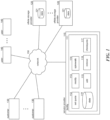
- FIG. 1 is a block diagram illustrating an environment in which the facility may operate in accordance with some embodiments of the disclosed technology.
- the environment 100 includes service provider 110, offsite storage providers 120, customers 130, users 140, and network 150.
- Service provider 110 provides the facility for analyzing and visualizing trends within a filesystem and is comprised of facility 111, which includes set quota component 112, modify component 113, spinewalk component 114, add component 115, remove component 116, checkquota component 117, and data store 118.
- Set quota component 112 is invoked by the component to set or remove a quota for a filesystem object.
- Modify component 113 is invoked by the facility to modify a filesystem object in accordance with the quota management techniques described herein.
- Spinewalk component 114 is invoked by the modify component to test whether any of the filesystem object in a path string are enforcing their respective quotas.
- Add component 115 is invoked by modify component 113 to add information to a file system subject to the quota management system described herein.
- Remove component 116 is invoked by modify component 113 to remove information to a file system subject to the quota management system described herein.
- Checkquota component 117 is invoked by a reconciliation component to update quota information for filesystem objects subject to the disclosed quota management system.
- data store 118 may include additional stores, such as remote or distributed storage systems, and so on. Offsite storage providers 120 offer storage space for the filesystem and are comprised of data store 121.
- the facility is configured to manage quotas for distributed and non-distributed filesystems.
- Customers 130 represent the filesystem accountholders and may include individuals, organizations, system administrators, and so on. These customers may have established relationships with the service provider 110 and/or offsite storage providers 120 and may interact with their corresponding filesystems directly or via network 150.
- Users 140 represent the users that interact with the filesystem, either directly or via network 150.
- the computing devices on which the facility is implemented may include a central processing unit, memory, input devices (e.g., keyboard and pointing devices), output devices (e.g., display devices), and storage devices (e.g., disk drives), such as computer-readable storage media.
- Computer-readable storage media include, for example, tangible media such as hard drives, CD-ROMs, DVD-ROMS, and memories such as ROM, RAM, and Compact Flash memories that can store instructions and other storage media.
- the phrase "computer-readable storage medium" does not include propagating, transitory signals and should not be interpreted as propagating, transitory signals.
- the instructions, data structures, and message structures may be stored or transmitted via a data transmission medium, such as a signal on a communications link and may be encrypted.
- data transmission medium should not be interpreted as computer-readable storage media.
- Various communications links may be used, such as the Internet, a local area network, a wide area network, a point-to-point dial-up connection, a cell phone network, and so on and may be encrypted.
- Embodiments of the facility may be implemented in and used with various operating environments that include personal computers, server computers, handheld or laptop devices, multiprocessor systems, microprocessor-based systems, programmable consumer electronics, digital cameras, network PCs, minicomputers, mainframe computers, computing environments that include any of the above systems or devices, and so on.
- the facility may be described in the general context of computer-executable instructions, such as program modules, executed by one or more computers or other devices. Further, such functions correspond to modules, which are software, hardware, firmware, or any combination thereof. Multiple functions can be performed in one or more modules as desired, and the embodiments described are merely examples.
- a digital signal processor, ASIC, microprocessor, or any other type of processor operating on a system such as a personal computer, server computer, supercomputing system, router, or any other device capable of processing data including network interconnection devices executes the software.
- any logic illustrated in the Figures may be altered in a variety of ways. For example, the order of the logic may be rearranged, sublogic may be performed in parallel, illustrated logic may be omitted, other logic may be included, etc.
- the functionality of the program modules may be combined or distributed as desired in various embodiments.
- While computer systems configured as described above are typically used to support the operation of the facility, those skilled in the art will appreciate that the facility may be implemented using devices of various types and configurations, and having various components. Furthermore, while various embodiments are described in terms of the environment described above, those skilled in the art will appreciate that the facility may be implemented in a variety of other environments including a single, monolithic computer system, as well as various other combinations of computer systems or similar devices connected in various ways.
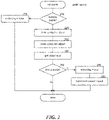
- Figure 2 is a flow diagram illustrating the processing of a set quota component in accordance with some embodiments of the disclosed technology.
- the set quota component is invoked by the facility to set or remove a quota for an individual filesystem object.
- the component receives a "path" string to the filesystem object and a "quota" value to be assigned to the filesystem object.
- the receipt of a special quota value such as a negative quota value or a separate flag may be used to indicate that the quota is to be removed.
- decision block 210 if the quota is being removed then the component continues at block 215, else the component continues at block 220.
- the component clears the enforcing bit for the corresponding filesystem object (i.e., the filesystem object corresponding to the retrieved path string) by, for example, clearing or setting the enforcing bit to false.
- the component stores the received quota value in association with the filesystem object. For example, the component may store the quota value in a table referenced via the filesystem object, in an inode object associated with the filesystem object, and so on.
- the component stores the current system epoch counter value in association with the filesystem object. For example, the component may store the current system epoch counter value in a table referenced via the filesystem object, in an inode object associated with the filesystem object, and so on.
- the component retrieves the current size of the filesystem object. For example, if the filesystem object is a directory the component may retrieve the size of the filesystem object from an aggregate value of the filesystem object stored in metadata or an inode associated with the filesystem object.
- decision block 250 if the retrieved size of the filesystem object is greater than or equal to the quota value then the component continues at block 255, else processing of the component completes.
- block 255 the component sets the enforcing bit for the filesystem object by, for example, setting the enforcing bit to true.
- the component increments the system epoch counter and then completes.
- a means for setting a quota for a filesystem object comprises one or more computers or processors configured to carry out an algorithm disclosed in Figure 2 and this paragraph in the order described therein.
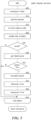
- Figure 3 is a flow diagram illustrating the processing of a modify component in accordance with some embodiments of the disclosed technology.
- the modify component is invoked by the facility in response to a request to modify (e.g., write or delete) a filesystem object in accordance with the quota management techniques described herein.
- the component receives a "path" string identifying the filesystem object to be modified.
- the component determines the net size of the modification.
- the modification is to add 10GB to a directory, then the net size of the modification is +10GB; if the modification is to delete 5GB from a directory, then the net size of the modification is -5GB; if the modification is to replace 100MB of data with 20MB, then the net size of the modification is -80MB.
- decision block 320 if the determined net size is greater than 0 (i.e., if the modification would increase the size of the filesystem object), then the component continues at block 330, else the component continues at decision block 325. In decision block 325, the component invokes a remove component for the filesystem object.
- the remove component returns a value of true, indicating that the invocation of the remove component created a new epoch, then the component continues at block 370, else the component completes.
- the component retrieves the current system epoch counter.
- the component retrieves the object epoch for the filesystem object. For example, the component may access an inode or metadata associated with the filesystem object to retrieve the object epoch for the filesystem object.
- the component continues at decision block 360, else the component continues at decision block 355.
- the component invokes a spinewalk component for the filesystem object to determine whether any filesystem objects in the path of the filesystem object have already violated their quotas. If the spinewalk component returns a value of true, indicating that at least one quota of the filesystem objects is being enforced, then the component continues at block 380, else the component continues at decision block 360. In block 380 the component rejects the request to modify the filesystem object and then completes. In decision block 360, the component invokes an add component for the filesystem object. If the add component returns a value of true, indicating that the invocation of the add component created a new epoch, then the component continues at block 370, else the component completes.
- a means for performing a modification of a filesystem object comprises one or more computers or processors configured to carry out an algorithm disclosed in Figure 3 and this paragraph, in some cases in the order described therein.
- FIG. 4 is a flow diagram illustrating the processing of a spinewalk component in accordance with some embodiments of the disclosed technology.
- the spinewalk component is invoked by the modify component to test whether any of the filesystem objects in a path string are subject to a quota that is currently being enforced.
- the component receives a "path" string to the filesystem object.
- the component initializes a spine-enforcing variable to false.
- the spine-enforcing variable is used to determine whether any filesystem objects in the path are currently enforcing its associated quota.
- the component loops through each of the filesystem objects in the received path, starting with the highest filesystem object (e.g., at the root directory) to determine whether it is subject to any quota that is currently being violated (i.e., that is currently being enforced).
- decision block 430 if the currently-selected filesystem object is enforcing, then the component continues at block 440, else the component continues at block 450.
- block 440 the component sets the spine-enforcing variable to true and then continues at block 450.
- the component selects the next filesystem object of the path, if there are any remaining, and then loops back to block 420 to test the next filesystem object.
- a means for performing a spinewalk of a filesystem object comprises one or more computers or processors configured to carry out an algorithm disclosed in Figure 4 and this paragraph in the order described therein.
- Figure 5 is a flow diagram illustrating the processing of an add component in accordance with some embodiments of the disclosed technology.
- the add component is invoked by a modify component to add information to a filesystem subject to the quota management system described herein in response to a request to modify a filesystem object.
- the component receives a "path" string to the filesystem object, a "net size” value corresponding to the net size of the information to be added to the filesystem, and an indication of the requested modification.
- the component initializes a newepoch variable to false.
- the component performs the modification request (e.g., performs the requested write or writes to the filesystem object).
- the component loops through each filesystem object in the path to update size information for the selected filesystem object and to determine whether the modification will cause the selected filesystem object to violate its quota.
- the component selects the next filesystem object in the path, starting with the filesystem object that is the target of the modification request (i.e., the filesystem object identified by the received path string).
- the component updates the size of the currently-selected filesystem object based on, for example, the net size of the requested modification. For example, if the currently-selected filesystem object is a directory, then the component updates an aggregate size of the currently-selected filesystem object by adding the netsize value to the current aggregate value.
- the component may skip block 520 if, for example, the filesystem object is a file with no aggregated values.
- decision block 525 if the currently-selected filesystem object has its own quota, then the component continues at block 530, else the component continues at block 555.
- the component retrieves the quota for the currently-selected filesystem object.
- decision block 535 if the retrieved quota is less than the updated size of the currently-selected filesystem object (i.e., if the modification caused the currently-selected filesystem object to violate its quota), then the component continues at block 540, else the component continues at block 555.
- a means for increasing the size of a filesystem object in accordance with the quota management system comprises one or more computers or processors configured to carry out an algorithm disclosed in Figure 5 and this paragraph in the order described therein.
- Figure 6 is a flow diagram illustrating the processing of a remove component in accordance with some embodiments of the disclosed technology.
- the remove component is invoked by a modify component to remove (or maintain the size of) information from a filesystem subject to the quota management system described herein in response to a request to modify a filesystem object.
- the component receives a "path" string to the filesystem object, a "net size” value corresponding to the net size of the information to be added to the filesystem, and an indication of the requested modification.
- the component initializes a newepoch variable to false.
- the component performs the modification request (e.g., performs the requested write or writes to the filesystem object).
- the component loops through each filesystem object in the path to update size information for the selected filesystem object and to determine whether the modification will cause a filesystem object that is currently enforcing (i.e., that is current in violation of its quota) to come into compliance with the quota (i.e., drop under its quota).
- the component selects the next filesystem object in the path, starting with the filesystem object that is the target of the modification request (i.e., the filesystem object identified by the received path string).
- the component updates the size of the currently-selected filesystem object based on, for example, the net size of the requested modification.
- the component updates an aggregate size of the currently-selected filesystem object by adding the received netsize value to the current aggregate value of the currently-selected filesystem object.
- the component continues at block 630, else the component continues at block 655.
- the component retrieves the quota for the currently-selected filesystem object.
- decision block 635 if the retrieved quota is greater than the updated size of the currently-selected filesystem object (i.e., if the modification caused the currently-selected filesystem object to come into compliance with its quota), then the component continues at block 640, else the component continues at block 655.
- the component sets the object epoch of the currently-selected filesystem object to the current system epoch counter value.
- the component clears the enforcing bit for the currently-selected filesystem object (i.e., sets the enforcing bit to false).
- block 650 the component sets the newepoch variable to true.
- a means for decreasing the size of a filesystem object in accordance with the quota management system comprises one or more computers or processors configured to carry out an algorithm disclosed in Figure 6 and this paragraph in the order described therein.
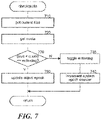
- Figure 7 is a flow diagram illustrating the processing of a checkquota component in accordance with some embodiments of the disclosed technology.
- the checkquota component is invoked by a reconciliation component of the filesystem during aggregate reconciliation for filesystem objects that have a quota.
- the component updates quota information for filesystem objects subject to the disclosed quota management system.
- the component retrieves the current size of the filesystem object.
- the component retrieves the quota for the filesystem object.
- decision block 730 if the boolean value (current size > quota) is equal to the enforcing bit for the filesystem object, then the component continues at block 735, else the component continues at block 750.
- a means for performing quota reconciliation comprises one or more computers or processors configured to carry out an algorithm disclosed in Figure 7 and this paragraph in the order described therein.
Landscapes
- Engineering & Computer Science (AREA)
- Theoretical Computer Science (AREA)
- Data Mining & Analysis (AREA)
- Databases & Information Systems (AREA)
- Physics & Mathematics (AREA)
- General Engineering & Computer Science (AREA)
- General Physics & Mathematics (AREA)
- Computer Security & Cryptography (AREA)
- Information Retrieval, Db Structures And Fs Structures Therefor (AREA)
Description
- The described technology is directed to the field of filesystems.
- Enterprise filesystems can store large volumes of data on behalf of large numbers of users. These filesystems can have thousands of accounts, each account storing any amount of data. Enterprises, businesses, and individuals alike now use large scale filesystems to store data that is remotely accessible via a network, such as a cloud based storage environment. Such filesystems are often accessible via closed (e.g., enterprise) and open (e.g., Internet) networks and allow concurrent access via multiple client devices. Furthermore, the amount of data stored for a particular account may grow or shrink without notice.
US2013/227236 describes an approach to storage allocation in which resources of an address space are managed in dynamically sized ranges, extents, sets, and/or blocks. The address space may be divided into regions, each corresponding to a different, respective allocation granularity. The regions may be configured to reduce the metadata overhead needed to identify free address blocks (and/or maintain address block allocations), while facilitating efficient use of the address space for differently sized data structures. - The invention provides a method for managing a file system in a shared storage system over a network as set forth in claim 1. The invention also provides a computer readable non-transitory storage media that stores instructions for managing a file system in a shared storage system over a network as set forth in claim 6. The invention also provides a system for managing a file system in a shared storage system over a network as set forth in claim 11.
-
-
Figure 1 is a block diagram illustrating an environment in which the facility may operate. -
Figure 2 is a flow diagram illustrating the processing of a set quota component. -
Figure 3 is a flow diagram illustrating the processing of a modify component. -
Figure 4 is a flow diagram illustrating the processing of a spinewalk component. -
Figure 5 is a flow diagram illustrating the processing of an add component. -
Figure 6 is a flow diagram illustrating the processing of an add component. -
Figure 7 is a flow diagram illustrating the processing of a checkquota component. - Users, such as account administrators, account holders, and/or storage system managers, benefit from being able to limit the amount of storage that consumers can use at any one time. For example, if a system administrator has allotted 10GB of storage space in a shared file system with a capacity of 1000GB to each of 100 users (i.e., a 10GB quota per user), the system administrator may benefit from preventing each user from going over their allotted 10GB. In this manner, the system administrator can ensure that each user has access to the amount of storage space that has been allotted to them and that one or more users are not unfairly or inappropriately taking up more than their fair share of storage space. As another example, even if the system administrator is not concerned with individual users surpassing 10GB of storage usage, the system administrator may benefit from preventing the group of 100 users, as a whole, from going over the 1000GB capacity of the shared file system. In this manner, the system administrator can ensure that the group does not violate any system wide restrictions on usage of storage space, such as a system wide 1000 GB quota, which may, for example, result in higher costs, degradation of service, and so on. The demand for scalable storage resources and the ability to provide rapid access to content stored thereby is a key concern to end-users. Furthermore, the ability to impose limits or quotas on the usage of this storage space is a concern to filesystem users, managers, and providers.
- A facility for managing filesystem object storage quotas (i.e., size limits) in a storage environment is disclosed. The facility enables users to establish, modify, and remove quotas on directories and files within a filesystem. In the disclosed facility, each quota acts as a soft limit on the size of the associated filesystem object, including any child objects of the filesystem object. For example, a quota on a directory acts as a limit on the size of the contents of that directory and all of its subdirectories. The facility leverages the aggregation techniques described in, for example,
U.S. Provisional Application No. 62/181,111 entitled "FILESYSTEM HIERARCHICAL CAPACITY QUANTITY AND AGGREGATE METRICS," filed on June 17, 2015 U.S. Provisional Application No. 61/982,926 entitled DATA STORAGE SYSTEM," filed on April 23, 2014 U.S. Provisional Application No. 61/982,931 entitled "DATA STORAGE SYSTEM," filed on April 23, 2014 U.S. Non-Provisional Application No. 14/595,043 entitled "FILESYSTEM HIERARCHICAL AGGREGATE METRICS," filed on January 12, 2015 U.S. Non-Provisional Application No. 14/859,114, entitled FILESYSTEM HIERARCHICAL CAPACITY QUANTITY AND AGGREGATE METRICS, filed on September 18, 2015 - In some embodiments, the facility maintains each quota enforcement status using an enforcement (or enforcing) bit. Furthermore, because a filesystem object without its own quota can be subject to the quota of an ancestor filesystem object (e.g., a parent directory), an enforcement bit can bet set for any filesystem object that is directly or indirectly subject to a quota. Thus, if a directory that has a quota is currently violating its quota, every descendent of the violating directory can be marked to indicate that it is subject to a quota that is currently being enforced. In this manner, the enforcement bit for a filesystem object indicates whether the filesystem (or any of its ancestors) is currently in violation of its associated quota. In some embodiments, the enforcement bit is stored in metadata or an inode associated with the corresponding filesystem object. When the enforcement bit for a quota is set (e.g., equal to true or '1'), the facility is enforcing an associated quota and, therefore, the facility will deny any requests to increase the size of any file and/or directory that impacted by the quota. For example, the facility will prevent attempts to 1) add metadata to an "enforcing" file or directory, 2) create new directories or files within an "enforcing" directory, 3) hard link files to an "enforcing" directory, 4) write additional information to a file within an "enforcing" directory, and so on. The facility can, however, allow modifications that do not increase the size of the data subject to the quota, such as writes that decrease the size of a file or directory and/or writes that do not change the size of a file or directory. When the enforcement bit is not set (e.g., equal to false or '0'), the facility is not enforcing any associated quota and, therefore, the corresponding filesystem object is not subject to any quota that is currently being violated and, therefore, the facility will allow requests to increase the size of any file and/or directory that effects the quota.
- The facility uses a system "epoch" counter to manage quotas. Each system epoch represents a period of time in which the facility can determine that the enforcement status of any file or directory within the quota system has not changed. Thus, when an operation occurs that will cause a non-enforcing filesystem object to surpass its quota, the facility, among other things, increments the system epoch counter to establish a new system epoch. Similarly, when an operation occurs that will cause an enforcing filesystem object to drop below its quota, the facility, among other things, increments the system epoch counter to establish a new system epoch. When a requested modification to a filesystem object that is not enforcing causes the filesystem object to surpass its quota, the facility allows the modification but registers a "quota event." Similarly, when a requested modification to a filesystem object that is enforcing causes the filesystem object to go under its quota, the facility allows also registers a "quota event". The facility registers these "quota events" by incrementing the system "epoch" counter. In addition to events that cause a filesystem object to go over or under its quota, in some embodiments the facility increments the system epoch counter in response to other events, such as any changes to a quota, including creating a quota, updating a quota, deleting a quota, increasing a quota, decreasing a quota, and so on; moving a directory from one directory to another directory (so that it has a new parent directory), etc.
- In addition to the system epoch, the facility maintains, for each filesystem object subject to a quota, an indication of an epoch during which the enforcement status of the filesystem object was last determined to have changed. For example, if the size of an enforcing directory drops below its quota during "epoch 2," the facility stores an indication of "epoch 2" in association with the directory (e.g., in an inode or other metadata associated with the directory) and increments the current epoch to 3. Maintaining epoch values for individual filesystem objects enables the facility to determine whether enforcement bits for individual quotas can be trusted. Accordingly, the facility can maintain quotas for individual filesystem objects without needing to traverse the entire filesystem to determine whether any filesystem objects are in violation of the quota, thereby providing a substantial improvement over conventional quota management systems.
- In some embodiments, during aggregate reconciliation, the filesystem updates filesystem object epoch information based on the current state of the filesystem object during reconciliation. For example, if, during reconciliation, the facility determines that the aggregate size of a filesystem object is larger than its quota and the filesystem object is not enforcing, the facility can adjust system and object epoch values accordingly. Aggregate reconciliation is further discussed in, for example,
U.S. Non-Provisional Application No. 14/595,043 entitled "FILESYSTEM HIERARCHICAL AGGREGATE METRICS," filed on January 12, 2015 U.S. Non-Provisional Application No. 14/859,114, entitled FILESYSTEM HIERARCHICAL CAPACITY QUANTITY AND AGGREGATE METRICS, filed on September 18, 2015 - The epoch information enables the facility to quickly and easily determine whether quota enforcement information associated with a particular filesystem object is up to date. This is especially useful when adding information to the filesystem. If the filesystem receives a request to add information to a filesystem object that is not enforcing, the facility can allow the operation unless the epoch associated with the filesystem object (i.e., the most recent epoch during which the enforcement bit was changed for the filesystem object) is different from the current epoch. This is because if these two values are the same, the facility can trust that no filesystem object has changed its associated quota enforcement status at least since the filesystem object to be modified was last updated.
- For example, if none of the filesystem objects in the system are enforcing and a requested write to a file with the path /usr1/dir1/file1 and a size of 100GB during epoch "3" would put either the /usr1 directory or the /usr1/dir1 directory over its quota, then the filesystem would (1) allow the write, (2) set the enforcing bit of each of the directories that are now in violation of its quota, (3) set the epoch of the directory or directories that are now in violation of the quota to "3"-the current epoch-, and (4) increment the system epoch counter to "4." Similarly, if the /usr1 directory and the /usr1/dir1 directories were enforcing (i.e., had their enforcement bits set) and a requested write to a file with the path /usr1/dir1/file1 during epoch "20" would put either the /usr1 directory or the /usr1/dir1 directory under its quota, then the filesystem would (1) allow the write, (2) clear the enforcing bit of each of the directories that are no longer in violation of its quota, (3) set the epoch of the directory or directories that are no longer in violation of the quota to "21"-the current epoch-, and (4) increment the system epoch counter to "22." Because the disclosed file system maintains aggregate metrics for individual directories, the facility need not necessarily traverse an entire file structure to determine the size of a directory.
- In some embodiments, the facility notifies or alerts users when a quota is violated or is close to being violated. For example, the facility may send a message (e.g., email, SMS message, system message) to an end user or system administrator when the size of a filesystem object reaches a predetermined percentage of its quota (e.g., 33%, 50%, 75%, 90%, 95%). In some embodiments, individual quotas may have different notification percentages stored in, for example, metadata or an inode associated with a corresponding filesystem object. For example, "/usr1/dir1" may have a notification percentage of 80% while "/usr1" has a notification percentage of 95%. Furthermore, the notifications may occur during aggregate reconciliation. In some cases the notification may be transmitted over a wireless communication channel to a wireless device associated with a particular user or users (e.g., a system administrator, an owner of an account whose quota has been violated, etc.) based upon an address or addresses associated with the particular user or users. The notification may be used to activate a user application to cause the notification to display on a remote user computer system and to enable connection, via a link or other identifier in the notification, to the quota management facility over the Internet when the wireless device is connected (e.g., locally) to the remote user computer system and the remote user computer system comes online.
- Additionally, in some embodiments the facility provides reports for any number of quotas in the quota management system, such as a percentage of the quota currently being used by the corresponding filesystem objects. In some cases, the facility aggregates quota values for directory, quota enforcement bits, and so on and store these aggregations in metadata or an inode for a directory. For example, an aggregated quota enforcement bit can be used to indicate whether any subdirectories of a given directory (the directory associated with the aggregated value) are enforcing their quota. As another example, an aggregated quota value may provide an indication of the subdirectory of the given directory with the highest percentage of its quota used, the unused percentage, the lowest net amount of unused quota space, and so on.
- In some cases, the facility may employ quota templates, which establish default quota values for newly created filesystem objects subject to the quota template (e.g., newly created directories under a parent directory assigned to a particular quota template). For example, a user may establish a quota template for the root directory that specifies that any new subdirectory of the root directory will be created with a quota of a specified value (e.g., 1GB, 5GB, 100GB, 1TB, 50TB, and so on); a specified percentage of the root directory's quota (e.g., 10%, 20%, 50%, and so on); a specified percentage of the root directory's unused quota; and so on. In some embodiments, the facility may track a count of the number of quotas that are currently being violated to further minimize processing. For example, if the count is currently 0 then the facility could bypass checking whether any quotas are currently violated.
- The disclosed technology offers several benefits over other techniques for managing quotas in a shared storage system, such as a shared filesystem. In other quota management systems, the system must traverse a user's entire filesystem when changes are made to ensure that the user has not surpassed the user's quota. This traversal can take up valuable resources in the corresponding system, thereby delaying the execution of other operations in the filesystems. In some cases, other quota management systems "slow down" a user's ability to perform filesystem operations as the user approaches the user's quota to ensure that the quota management system has sufficient time to confirm that the user will not violate the user's quota if a particular operation is performed. For example, the quota management system may only allow a user to perform one write operation per traversal of the filesystem to ensure that the user has not (or will not) violate the user's quota. The installation and use of the disclosed quota management facility, in contrast, enables an organization or other party to create, manage, and enforce quotas within a storage system without necessarily requiring traversal of a user's portion of a storage system and without slowing down a user's access to the storage system, even as the user approaches the user's quota. Thus, the disclosed facility improves the ability of computers to maximize the usefulness of a shared storage system to users hile simultaneously managing quotas within the storage system.
-
Figure 1 is a block diagram illustrating an environment in which the facility may operate in accordance with some embodiments of the disclosed technology. The environment 100 includesservice provider 110,offsite storage providers 120,customers 130,users 140, andnetwork 150.Service provider 110 provides the facility for analyzing and visualizing trends within a filesystem and is comprised offacility 111, which includes setquota component 112, modifycomponent 113,spinewalk component 114, addcomponent 115, removecomponent 116,checkquota component 117, and data store 118. Setquota component 112 is invoked by the component to set or remove a quota for a filesystem object. Modifycomponent 113 is invoked by the facility to modify a filesystem object in accordance with the quota management techniques described herein.Spinewalk component 114 is invoked by the modify component to test whether any of the filesystem object in a path string are enforcing their respective quotas. Addcomponent 115 is invoked by modifycomponent 113 to add information to a file system subject to the quota management system described herein. Removecomponent 116 is invoked by modifycomponent 113 to remove information to a file system subject to the quota management system described herein.Checkquota component 117 is invoked by a reconciliation component to update quota information for filesystem objects subject to the disclosed quota management system. In some embodiments, data store 118 may include additional stores, such as remote or distributed storage systems, and so on.Offsite storage providers 120 offer storage space for the filesystem and are comprised ofdata store 121. Accordingly, in various embodiments, the facility is configured to manage quotas for distributed and non-distributed filesystems.Customers 130 represent the filesystem accountholders and may include individuals, organizations, system administrators, and so on. These customers may have established relationships with theservice provider 110 and/oroffsite storage providers 120 and may interact with their corresponding filesystems directly or vianetwork 150.Users 140 represent the users that interact with the filesystem, either directly or vianetwork 150. - The computing devices on which the facility is implemented may include a central processing unit, memory, input devices (e.g., keyboard and pointing devices), output devices (e.g., display devices), and storage devices (e.g., disk drives), such as computer-readable storage media. Computer-readable storage media include, for example, tangible media such as hard drives, CD-ROMs, DVD-ROMS, and memories such as ROM, RAM, and Compact Flash memories that can store instructions and other storage media. The phrase "computer-readable storage medium" does not include propagating, transitory signals and should not be interpreted as propagating, transitory signals. In addition, the instructions, data structures, and message structures may be stored or transmitted via a data transmission medium, such as a signal on a communications link and may be encrypted. The term "data transmission medium" should not be interpreted as computer-readable storage media. Various communications links may be used, such as the Internet, a local area network, a wide area network, a point-to-point dial-up connection, a cell phone network, and so on and may be encrypted.
- Embodiments of the facility may be implemented in and used with various operating environments that include personal computers, server computers, handheld or laptop devices, multiprocessor systems, microprocessor-based systems, programmable consumer electronics, digital cameras, network PCs, minicomputers, mainframe computers, computing environments that include any of the above systems or devices, and so on.
- The facility may be described in the general context of computer-executable instructions, such as program modules, executed by one or more computers or other devices. Further, such functions correspond to modules, which are software, hardware, firmware, or any combination thereof. Multiple functions can be performed in one or more modules as desired, and the embodiments described are merely examples. A digital signal processor, ASIC, microprocessor, or any other type of processor operating on a system, such as a personal computer, server computer, supercomputing system, router, or any other device capable of processing data including network interconnection devices executes the software. Those skilled in the art will appreciate that any logic illustrated in the Figures (e.g., flow diagrams), may be altered in a variety of ways. For example, the order of the logic may be rearranged, sublogic may be performed in parallel, illustrated logic may be omitted, other logic may be included, etc. Typically, the functionality of the program modules may be combined or distributed as desired in various embodiments.
- While computer systems configured as described above are typically used to support the operation of the facility, those skilled in the art will appreciate that the facility may be implemented using devices of various types and configurations, and having various components. Furthermore, while various embodiments are described in terms of the environment described above, those skilled in the art will appreciate that the facility may be implemented in a variety of other environments including a single, monolithic computer system, as well as various other combinations of computer systems or similar devices connected in various ways.
-
Figure 2 is a flow diagram illustrating the processing of a set quota component in accordance with some embodiments of the disclosed technology. The set quota component is invoked by the facility to set or remove a quota for an individual filesystem object. In this example, the component receives a "path" string to the filesystem object and a "quota" value to be assigned to the filesystem object. In some embodiments, the receipt of a special quota value such as a negative quota value or a separate flag may be used to indicate that the quota is to be removed. Indecision block 210, if the quota is being removed then the component continues atblock 215, else the component continues atblock 220. Inblock 215, the component clears the enforcing bit for the corresponding filesystem object (i.e., the filesystem object corresponding to the retrieved path string) by, for example, clearing or setting the enforcing bit to false. Inblock 220, the component stores the received quota value in association with the filesystem object. For example, the component may store the quota value in a table referenced via the filesystem object, in an inode object associated with the filesystem object, and so on. Inblock 230, the component stores the current system epoch counter value in association with the filesystem object. For example, the component may store the current system epoch counter value in a table referenced via the filesystem object, in an inode object associated with the filesystem object, and so on. Inblock 240, the component retrieves the current size of the filesystem object. For example, if the filesystem object is a directory the component may retrieve the size of the filesystem object from an aggregate value of the filesystem object stored in metadata or an inode associated with the filesystem object. Indecision block 250, if the retrieved size of the filesystem object is greater than or equal to the quota value then the component continues atblock 255, else processing of the component completes. Inblock 255, the component sets the enforcing bit for the filesystem object by, for example, setting the enforcing bit to true. Inblock 260, the component increments the system epoch counter and then completes. In some embodiments, a means for setting a quota for a filesystem object comprises one or more computers or processors configured to carry out an algorithm disclosed inFigure 2 and this paragraph in the order described therein. -
Figure 3 is a flow diagram illustrating the processing of a modify component in accordance with some embodiments of the disclosed technology. The modify component is invoked by the facility in response to a request to modify (e.g., write or delete) a filesystem object in accordance with the quota management techniques described herein. In this example, the component receives a "path" string identifying the filesystem object to be modified. Inblock 310, the component determines the net size of the modification. For example, if the modification is to add 10GB to a directory, then the net size of the modification is +10GB; if the modification is to delete 5GB from a directory, then the net size of the modification is -5GB; if the modification is to replace 100MB of data with 20MB, then the net size of the modification is -80MB. Indecision block 320, if the determined net size is greater than 0 (i.e., if the modification would increase the size of the filesystem object), then the component continues atblock 330, else the component continues atdecision block 325. Indecision block 325, the component invokes a remove component for the filesystem object. If the remove component returns a value of true, indicating that the invocation of the remove component created a new epoch, then the component continues atblock 370, else the component completes. Inblock 330, the component retrieves the current system epoch counter. Inblock 340, the component retrieves the object epoch for the filesystem object. For example, the component may access an inode or metadata associated with the filesystem object to retrieve the object epoch for the filesystem object. Inblock 350, if the current system epoch counter is equal to the retrieved object epoch, the component continues atdecision block 360, else the component continues atdecision block 355. Indecision block 355, the component invokes a spinewalk component for the filesystem object to determine whether any filesystem objects in the path of the filesystem object have already violated their quotas. If the spinewalk component returns a value of true, indicating that at least one quota of the filesystem objects is being enforced, then the component continues atblock 380, else the component continues atdecision block 360. Inblock 380 the component rejects the request to modify the filesystem object and then completes. Indecision block 360, the component invokes an add component for the filesystem object. If the add component returns a value of true, indicating that the invocation of the add component created a new epoch, then the component continues atblock 370, else the component completes. Inblock 370, the component increments the system epoch and then completes. In some embodiments, a means for performing a modification of a filesystem object comprises one or more computers or processors configured to carry out an algorithm disclosed inFigure 3 and this paragraph, in some cases in the order described therein. -
Figure 4 is a flow diagram illustrating the processing of a spinewalk component in accordance with some embodiments of the disclosed technology. The spinewalk component is invoked by the modify component to test whether any of the filesystem objects in a path string are subject to a quota that is currently being enforced. In this example, the component receives a "path" string to the filesystem object. Inblock 410, the component initializes a spine-enforcing variable to false. The spine-enforcing variable is used to determine whether any filesystem objects in the path are currently enforcing its associated quota. In blocks 420-450, the component loops through each of the filesystem objects in the received path, starting with the highest filesystem object (e.g., at the root directory) to determine whether it is subject to any quota that is currently being violated (i.e., that is currently being enforced). Indecision block 430, if the currently-selected filesystem object is enforcing, then the component continues atblock 440, else the component continues atblock 450. Inblock 440, the component sets the spine-enforcing variable to true and then continues atblock 450. Inblock 450, the component selects the next filesystem object of the path, if there are any remaining, and then loops back to block 420 to test the next filesystem object. If there are no filesystem objects of the path left to be processed then the component returns the spine-enforcing variable. For example, if the component received the path "/usr1/dir1/dir2/file1," the component would check each of the file filesystem objects represented by the path (i.e., "/" (the root directory), "/usr1/," "/usr1/dir1/," "/usr1/dir1/dir2/," and "/usr1/dir1/dir2/file1,") to determine whether any of these filesystem objects are currently in violation of a quota. In some embodiments, a means for performing a spinewalk of a filesystem object comprises one or more computers or processors configured to carry out an algorithm disclosed inFigure 4 and this paragraph in the order described therein. -
Figure 5 is a flow diagram illustrating the processing of an add component in accordance with some embodiments of the disclosed technology. The add component is invoked by a modify component to add information to a filesystem subject to the quota management system described herein in response to a request to modify a filesystem object. In this example, the component receives a "path" string to the filesystem object, a "net size" value corresponding to the net size of the information to be added to the filesystem, and an indication of the requested modification. Inblock 505, the component initializes a newepoch variable to false. In block 510, the component performs the modification request (e.g., performs the requested write or writes to the filesystem object). In blocks 515-555, the component loops through each filesystem object in the path to update size information for the selected filesystem object and to determine whether the modification will cause the selected filesystem object to violate its quota. Inblock 515, the component selects the next filesystem object in the path, starting with the filesystem object that is the target of the modification request (i.e., the filesystem object identified by the received path string). Inblock 520, the component updates the size of the currently-selected filesystem object based on, for example, the net size of the requested modification. For example, if the currently-selected filesystem object is a directory, then the component updates an aggregate size of the currently-selected filesystem object by adding the netsize value to the current aggregate value. In some cases, the component may skip block 520 if, for example, the filesystem object is a file with no aggregated values. Indecision block 525, if the currently-selected filesystem object has its own quota, then the component continues atblock 530, else the component continues atblock 555. Inblock 530, the component retrieves the quota for the currently-selected filesystem object. Indecision block 535, if the retrieved quota is less than the updated size of the currently-selected filesystem object (i.e., if the modification caused the currently-selected filesystem object to violate its quota), then the component continues atblock 540, else the component continues atblock 555. Inblock 540, the component sets the object epoch of the currently-selected filesystem object to the current system epoch counter value. Inblock 545, the component sets the enforcing bit for the currently-selected filesystem object to true. Inblock 550, the component sets the newepoch variable to true. Inblock 555, the component selects the next filesystem object in the path, if there are any remaining, and then loops back to block 515 to update size information for the next filesystem object and to determine whether the modification has caused it to violate its quota. If no filesystem objects in the path are left to be processed, then the component returns the newepoch variable. In some embodiments, a means for increasing the size of a filesystem object in accordance with the quota management system comprises one or more computers or processors configured to carry out an algorithm disclosed inFigure 5 and this paragraph in the order described therein. -
Figure 6 is a flow diagram illustrating the processing of a remove component in accordance with some embodiments of the disclosed technology. The remove component is invoked by a modify component to remove (or maintain the size of) information from a filesystem subject to the quota management system described herein in response to a request to modify a filesystem object. In this example, the component receives a "path" string to the filesystem object, a "net size" value corresponding to the net size of the information to be added to the filesystem, and an indication of the requested modification. Inblock 605, the component initializes a newepoch variable to false. Inblock 610, the component performs the modification request (e.g., performs the requested write or writes to the filesystem object). In blocks 615-655, the component loops through each filesystem object in the path to update size information for the selected filesystem object and to determine whether the modification will cause a filesystem object that is currently enforcing (i.e., that is current in violation of its quota) to come into compliance with the quota (i.e., drop under its quota). Inblock 615, the component selects the next filesystem object in the path, starting with the filesystem object that is the target of the modification request (i.e., the filesystem object identified by the received path string). Inblock 620, the component updates the size of the currently-selected filesystem object based on, for example, the net size of the requested modification. For example, if the currently-selected filesystem object is a directory, then the component updates an aggregate size of the currently-selected filesystem object by adding the received netsize value to the current aggregate value of the currently-selected filesystem object. Indecision block 625, if the currently-selected filesystem object is currently enforcing (e.g., has an enforcing bit equal to true), then the component continues atblock 630, else the component continues atblock 655. Inblock 630, the component retrieves the quota for the currently-selected filesystem object. Indecision block 635, if the retrieved quota is greater than the updated size of the currently-selected filesystem object (i.e., if the modification caused the currently-selected filesystem object to come into compliance with its quota), then the component continues atblock 640, else the component continues atblock 655. Inblock 640, the component sets the object epoch of the currently-selected filesystem object to the current system epoch counter value. Inblock 645, the component clears the enforcing bit for the currently-selected filesystem object (i.e., sets the enforcing bit to false). Inblock 650, the component sets the newepoch variable to true. Inblock 655, the component selects the next filesystem object in the path, if there are any remaining, and then loops back to block 615 to update size information for the next filesystem object and to determine whether the modification has caused it to come into compliance with its quota (if it is currently enforcing). If no filesystem objects in the path are left to be processed, then the component returns the newepoch variable. In some embodiments, a means for decreasing the size of a filesystem object in accordance with the quota management system comprises one or more computers or processors configured to carry out an algorithm disclosed inFigure 6 and this paragraph in the order described therein. -
Figure 7 is a flow diagram illustrating the processing of a checkquota component in accordance with some embodiments of the disclosed technology. The checkquota component is invoked by a reconciliation component of the filesystem during aggregate reconciliation for filesystem objects that have a quota. The component updates quota information for filesystem objects subject to the disclosed quota management system. Inblock 710, the component retrieves the current size of the filesystem object. Inblock 720, the component retrieves the quota for the filesystem object. Indecision block 730, if the boolean value (current size > quota) is equal to the enforcing bit for the filesystem object, then the component continues atblock 735, else the component continues atblock 750. Inblock 735, the component toggles the enforcing bit (i.e., if the enforcing bit is set the component clears it and if the enforcing bit is cleared it sets it). Inblock 740, the component increments the system epoch counter. Inblock 750, the component updates the filesystem object epoch value to the current system epoch counter value. In some embodiments, a means for performing quota reconciliation comprises one or more computers or processors configured to carry out an algorithm disclosed inFigure 7 and this paragraph in the order described therein. - From the foregoing, it will be appreciated that specific embodiments of the invention have been described herein for purposes of illustration, but that various modifications may be made without deviating from the scope of the invention. Accordingly, the invention is not limited except as by the appended claims.
Claims (12)
- A method for managing a file system in a shared storage system over a network, wherein instructions stored in a memory are executed by one or more processors to perform actions, comprising:providing a plurality of filesystem objects associated with one or more directories or files in the file system;characterised in that the method further comprises:for each of the plurality of filesystem objects:storing a quota value in association with the filesystem object (220);storing an indication of a current epoch value of a system epoch counter in association with the file system object (230);determining a size of the filesystem object (240);determining whether the size of the filesystem object is greater than the quota value received for the filesystem object (250); andincrementing the system epoch counter (260) if the size of the filesystem object is greater than the quota value received for the filesystem object;the method further comprising:
in response to subsequently receiving a request to modify a first file system object, performing actions, including:comparing a current system epoch value to the epoch value previously associated with the first file system object (350);when the comparison is equal, allowing an increase or a decrease in a size of the first file system object (360);when the comparison is unequal and one of the first file system object or one or more parent objects of the first file system object are enforcing a quota, disallowing the modification to the size of the first file system object (380); andwhen the comparison is unequal and the one of the first file system object or the one or more parent objects of the first file system object are unenforcing the quota, allowing the modification in the size of the first file system object (360). - The method of Claim 1, wherein in response to receiving the request to modify the first file system object, performing further actions, including:when the comparison is unequal and one of the first file system object or one or more parent objects of the first file system object are enforcing an overage quota, disallowing the increase in the size of the first file object; andwhen the comparison is unequal and the of the first file system object or the one or more parent objects of the first file system object are enforcing an underage quota, disallowing the decrease in the size of the first file object.
- The method of Claim 1, further comprising:
in response to determining that the size of the first file system object relative to the quota exceeds a predetermined percentage value, notifying a user associated with the filesystem object. - The method of Claim 1, further comprising storing the quota in a data structure that includes a quota value, an enforcing bit, and an epoch value associated with the first file system object.
- The method of Claim 1, further comprising determining the size of the first file system object based on an aggregate value from an inode of the first file system object.
- A computer readable non-transitory storage media that stores instructions for managing a file system in a shared storage system over a network, wherein execution of the instructions by one or more processors performs actions, comprising:providing a plurality of filesystem objects associated with one or more directories or files in the file system;characterised in that the actions further comprise:for each of the plurality of filesystem objects:storing a quota value in association with the filesystem object (220);storing an indication of a current epoch value of a system epoch counter in association with the file system object (230);determining a size of the filesystem object (240);determining whether the size of the filesystem object is greater than the quota value received for the filesystem object (250); andincrementing the system epoch counter (260) if the size of the filesystem object is greater than the quota value received for the filesystem object;the actions further comprising:
in response to subsequently receiving a request to modify a first file system object, performing actions, including:comparing a current system epoch value to the epoch value previously associated with the first file system object (350);when the comparison is equal, allowing an increase or a decrease in a size of the first file system object (360);when the comparison is unequal and one of the first file system object or one or more parent objects of the first file system object are enforcing a quota, disallowing the modification to the size of the first file system object (380); andwhen the comparison is unequal and the one of the first file system object or the one or more parent objects of the first file system object are unenforcing the quota, allowing the modification in the size of the first file system object (360). - The media of Claim 6, wherein in response to receiving the request to modify the first file system object, performing further actions, including:when the comparison is unequal and one of the first file system object or one or more parent objects of the first file system object are enforcing an overage quota, disallowing the increase in the size of the first file object; andwhen the comparison is unequal and the of the first file system object or the one or more parent objects of the first file system object are enforcing an underage quota, disallowing the decrease in the size of the first file object.
- The media of Claim 6, further comprising:
in response to determining that the size of the first file system object relative to the quota exceeds a predetermined percentage value, notifying a user associated with the filesystem object. - The media of Claim 6, further comprising storing the quota in a data structure that includes a quota value, an enforcing bit, and an epoch value associated with the first file system object.
- The media of Claim 6, further comprising determining the size of the first file system object based on an aggregate value from an inode of the first file system object.
- A system for managing a file system in a shared storage system (118,121) over a network (150), comprising:a transceiver for communicating over the network (150);a memory for storing instructions; andone or more processors that execute the instructions to perform actions, comprising:
providing a plurality of filesystem objects associated with one or more directories or files in the file system (118,121);characterised in that the actions further comprise:
for each of the plurality of filesystem objects:storing a quota value in association with the filesystem object (220);storing an indication of a current epoch value of a system epoch counter in association with the file system object (230);determining a size of the filesystem object (240);determining whether the size of the filesystem object is greater than the quota value received for the filesystem object (250); andincrementing the system epoch counter (260) if the size of the filesystem object is greater than the quota value received for the filesystem object;the actions further comprising:
in response to subsequently receiving a request to modify a first file system object, performing actions, including:comparing a current system epoch value to the epoch value previously associated with the first file system object (350);when the comparison is equal, allowing an increase or a decrease in a size of the first file system object (360);when the comparison is unequal and one of the first file system object or one or more parent objects of the first file system object are enforcing a quota, disallowing the modification to the size of the first file system object (380); andwhen the comparison is unequal and the one of the first file system object or the one or more parent objects of the first file system object are unenforcing the quota, allowing the modification in the size of the first file system object (360). - The system of Claim 11, wherein in response to receiving the request to modify the first file system object, performing further actions, including:when the comparison is unequal and one of the first file system object or one or more parent objects of the first file system object are enforcing an overage quota, disallowing the increase in the size of the first file object; andwhen the comparison is unequal and the of the first file system object or the one or more parent objects of the first file system object are enforcing an underage quota, disallowing the decrease in the size of the first file object.
Applications Claiming Priority (3)
| Application Number | Priority Date | Filing Date | Title |
|---|---|---|---|
| US201662432554P | 2016-12-09 | 2016-12-09 | |
| US201762446261P | 2017-01-13 | 2017-01-13 | |
| US15/474,047 US10095729B2 (en) | 2016-12-09 | 2017-03-30 | Managing storage quotas in a shared storage system |
Publications (2)
| Publication Number | Publication Date |
|---|---|
| EP3333732A1 EP3333732A1 (en) | 2018-06-13 |
| EP3333732B1 true EP3333732B1 (en) | 2023-03-08 |
Family
ID=60673143
Family Applications (1)
| Application Number | Title | Priority Date | Filing Date |
|---|---|---|---|
| EP17206518.7A Active EP3333732B1 (en) | 2016-12-09 | 2017-12-11 | Managing storage quotas in a shared storage system |
Country Status (2)
| Country | Link |
|---|---|
| US (2) | US10095729B2 (en) |
| EP (1) | EP3333732B1 (en) |
Cited By (10)
| Publication number | Priority date | Publication date | Assignee | Title |
|---|---|---|---|---|
| US11921677B1 (en) | 2023-11-07 | 2024-03-05 | Qumulo, Inc. | Sharing namespaces across file system clusters |
| US11934660B1 (en) | 2023-11-07 | 2024-03-19 | Qumulo, Inc. | Tiered data storage with ephemeral and persistent tiers |
| US11966592B1 (en) | 2022-11-29 | 2024-04-23 | Qumulo, Inc. | In-place erasure code transcoding for distributed file systems |
| US12222903B1 (en) | 2024-08-09 | 2025-02-11 | Qumulo, Inc. | Global namespaces for distributed file systems |
| US12292853B1 (en) | 2023-11-06 | 2025-05-06 | Qumulo, Inc. | Object-based storage with garbage collection and data consolidation |
| US12346290B2 (en) | 2022-07-13 | 2025-07-01 | Qumulo, Inc. | Workload allocation for file system maintenance |
| US12443568B1 (en) | 2024-11-12 | 2025-10-14 | Qumulo, Inc. | Verifying performance characteristics of network infrastructure for file systems |
| US12481625B1 (en) | 2024-11-12 | 2025-11-25 | Qumulo, Inc. | Integrating file system operations with network infrastructure |
| US12585563B1 (en) | 2025-12-01 | 2026-03-24 | Qumulo, Inc. | Caching for object stores |
| US12619582B1 (en) | 2025-12-02 | 2026-05-05 | Qumulo, Inc. | Managing file system transaction dependencies |
Families Citing this family (3)
| Publication number | Priority date | Publication date | Assignee | Title |
|---|---|---|---|---|
| US10983949B2 (en) * | 2016-02-29 | 2021-04-20 | Red Hat, Inc. | File system quota versioning |
| CN111258952B (en) * | 2020-01-08 | 2023-10-13 | 北京小米松果电子有限公司 | Data storage control method, device and storage medium |
| CN114879908B (en) * | 2022-04-29 | 2026-01-30 | 济南浪潮数据技术有限公司 | A quota management method for shared directories and related components |
Citations (1)
| Publication number | Priority date | Publication date | Assignee | Title |
|---|---|---|---|---|
| US20130227236A1 (en) * | 2011-03-18 | 2013-08-29 | Fusion-Io, Inc. | Systems and methods for storage allocation |
Family Cites Families (257)
| Publication number | Priority date | Publication date | Assignee | Title |
|---|---|---|---|---|
| JP2691081B2 (en) | 1990-05-16 | 1997-12-17 | インターナショナル・ビジネス・マシーンズ・コーポレイション | Computer network |
| US5165031A (en) | 1990-05-16 | 1992-11-17 | International Business Machines Corporation | Coordinated handling of error codes and information describing errors in a commit procedure |
| US5319773A (en) | 1990-05-16 | 1994-06-07 | International Business Machines Corporation | Asynchronous resynchronization of a commit procedure |
| US5442561A (en) | 1992-05-12 | 1995-08-15 | Nippon Telegraph And Telephone Corporation | Production management system and its application method |
| US5410719A (en) | 1992-05-27 | 1995-04-25 | Hewlett-Packard Company | Field compositor for merging data and including cells each receiving three control and two data inputs and generating one control and one data output therefrom |
| US5963962A (en) | 1995-05-31 | 1999-10-05 | Network Appliance, Inc. | Write anywhere file-system layout |
| US6772435B1 (en) | 1996-04-15 | 2004-08-03 | Nds Limited | Digital video broadcast system |
| US7912856B2 (en) | 1998-06-29 | 2011-03-22 | Sonicwall, Inc. | Adaptive encryption |
| US5953719A (en) | 1997-09-15 | 1999-09-14 | International Business Machines Corporation | Heterogeneous database system with dynamic commit procedure control |
| US6038563A (en) | 1997-10-31 | 2000-03-14 | Sun Microsystems, Inc. | System and method for restricting database access to managed object information using a permissions table that specifies access rights corresponding to user access rights to the managed objects |
| US6128628A (en) | 1998-02-27 | 2000-10-03 | Mci Communication Corporation | Meta data processing for converting performance data into a generic format |
| US6457130B2 (en) | 1998-03-03 | 2002-09-24 | Network Appliance, Inc. | File access control in a multi-protocol file server |
| US6385641B1 (en) | 1998-06-05 | 2002-05-07 | The Regents Of The University Of California | Adaptive prefetching for computer network and web browsing with a graphic user interface |
| US20020099691A1 (en) | 1998-06-24 | 2002-07-25 | Michael Dean Lore | Method and apparatus for aggregation of data in a database management system |
| US6415283B1 (en) | 1998-10-13 | 2002-07-02 | Orack Corporation | Methods and apparatus for determining focal points of clusters in a tree structure |
| US6163774A (en) | 1999-05-24 | 2000-12-19 | Platinum Technology Ip, Inc. | Method and apparatus for simplified and flexible selection of aggregate and cross product levels for a data warehouse |
| US6496944B1 (en) | 1999-10-06 | 2002-12-17 | International Business Machines Corporation | Method for database assisted file system restore |
| US6560615B1 (en) | 1999-12-17 | 2003-05-06 | Novell, Inc. | Method and apparatus for implementing a highly efficient, robust modified files list (MFL) for a storage system volume |
| US6874130B1 (en) | 2000-02-17 | 2005-03-29 | International Business Machines Corporation | Copy/move graphical user interface apparatus and method |
| US6529998B1 (en) | 2000-11-03 | 2003-03-04 | Emc Corporation | Adaptive prefetching of data from a disk |
| US7660902B2 (en) | 2000-11-20 | 2010-02-09 | Rsa Security, Inc. | Dynamic file access control and management |
| US20020065835A1 (en) * | 2000-11-27 | 2002-05-30 | Naoya Fujisaki | File system assigning a specific attribute to a file, a file management method assigning a specific attribute to a file, and a storage medium on which is recorded a program for managing files |
| US6965936B1 (en) | 2000-12-06 | 2005-11-15 | Novell, Inc. | Method for detecting and resolving a partition condition in a cluster |
| US20020083073A1 (en) | 2000-12-22 | 2002-06-27 | Vaidya Neelam N. | Managing a layered hierarchical data set |
| US7039642B1 (en) | 2001-05-04 | 2006-05-02 | Microsoft Corporation | Decision-theoretic methods for identifying relevant substructures of a hierarchical file structure to enhance the efficiency of document access, browsing, and storage |
| US7139811B2 (en) | 2001-08-01 | 2006-11-21 | Actona Technologies Ltd. | Double-proxy remote data access system |
| US7685126B2 (en) | 2001-08-03 | 2010-03-23 | Isilon Systems, Inc. | System and methods for providing a distributed file system utilizing metadata to track information about data stored throughout the system |
| US8660869B2 (en) | 2001-10-11 | 2014-02-25 | Adobe Systems Incorporated | System, method, and computer program product for processing and visualization of information |
| US7043468B2 (en) | 2002-01-31 | 2006-05-09 | Hewlett-Packard Development Company, L.P. | Method and system for measuring the quality of a hierarchy |
| JP2003271457A (en) | 2002-03-14 | 2003-09-26 | Sanyo Electric Co Ltd | Data storage device |
| US6993539B2 (en) | 2002-03-19 | 2006-01-31 | Network Appliance, Inc. | System and method for determining changes in two snapshots and for transmitting changes to destination snapshot |
| US6965903B1 (en) | 2002-05-07 | 2005-11-15 | Oracle International Corporation | Techniques for managing hierarchical data with link attributes in a relational database |
| US8417678B2 (en) | 2002-07-30 | 2013-04-09 | Storediq, Inc. | System, method and apparatus for enterprise policy management |
| US7610329B2 (en) | 2002-07-30 | 2009-10-27 | Storediq, Inc. | Method and apparatus for managing file systems and file-based data storage |
| US8612404B2 (en) | 2002-07-30 | 2013-12-17 | Stored Iq, Inc. | Harvesting file system metsdata |
| US6934822B2 (en) | 2002-08-06 | 2005-08-23 | Emc Corporation | Organization of multiple snapshot copies in a data storage system |
| US7363346B2 (en) | 2002-09-07 | 2008-04-22 | Appistry, Inc. | Reliably storing information across multiple computers such as in a hive of computers |
| US7213040B1 (en) * | 2002-10-29 | 2007-05-01 | Novell, Inc. | Apparatus for policy based storage of file data and meta-data changes over time |
| US7937421B2 (en) | 2002-11-14 | 2011-05-03 | Emc Corporation | Systems and methods for restriping files in a distributed file system |
| US8121978B2 (en) | 2002-11-15 | 2012-02-21 | Sybase, Inc. | Database system providing improved methods for data replication |
| US7299478B2 (en) | 2003-03-28 | 2007-11-20 | Sbc Knowledge Ventures, L.P. | Integration service and domain object for telecommunications operational support |
| US7320009B1 (en) | 2003-03-28 | 2008-01-15 | Novell, Inc. | Methods and systems for file replication utilizing differences between versions of files |
| US7401092B2 (en) | 2003-06-26 | 2008-07-15 | Standbysoft Llc | Method and apparatus for exchanging sub-hierarchical structures within a hierarchical file system |
| US20050015674A1 (en) | 2003-07-01 | 2005-01-20 | International Business Machines Corporation | Method, apparatus, and program for converting, administering, and maintaining access control lists between differing filesystem types |
| US7836029B2 (en) | 2003-07-08 | 2010-11-16 | Pillar Data Systems, Inc. | Systems and methods of searching for and determining modified blocks in a file system |
| US7379954B2 (en) | 2003-07-08 | 2008-05-27 | Pillar Data Systems, Inc. | Management of file system snapshots |
| ATE522873T1 (en) | 2003-07-18 | 2011-09-15 | Sap Ag | METHOD AND COMPUTER SYSTEM FOR COMPILED INFORMATION |
| US7398285B2 (en) | 2003-07-30 | 2008-07-08 | International Business Machines Corporation | Apparatus and system for asynchronous replication of a hierarchically-indexed data store |
| US8776050B2 (en) | 2003-08-20 | 2014-07-08 | Oracle International Corporation | Distributed virtual machine monitor for managing multiple virtual resources across multiple physical nodes |
| US7555504B2 (en) | 2003-09-23 | 2009-06-30 | Emc Corporation | Maintenance of a file version set including read-only and read-write snapshot copies of a production file |
| US7428691B2 (en) | 2003-11-12 | 2008-09-23 | Norman Ken Ouchi | Data recovery from multiple failed data blocks and storage units |
| JP4516306B2 (en) | 2003-11-28 | 2010-08-04 | 株式会社日立製作所 | How to collect storage network performance information |
| US7360069B2 (en) * | 2004-01-13 | 2008-04-15 | Hewlett-Packard Development Company, L.P. | Systems and methods for executing across at least one memory barrier employing speculative fills |
| WO2005078606A2 (en) | 2004-02-11 | 2005-08-25 | Storage Technology Corporation | Clustered hierarchical file services |
| US9104673B2 (en) | 2004-02-12 | 2015-08-11 | International Business Machines Corporation | Method for supporting multiple filesystem implementations |
| US7966293B1 (en) | 2004-03-09 | 2011-06-21 | Netapp, Inc. | System and method for indexing a backup using persistent consistency point images |
| US20050223019A1 (en) | 2004-03-31 | 2005-10-06 | Microsoft Corporation | Block-level sampling in statistics estimation |
| US8108429B2 (en) | 2004-05-07 | 2012-01-31 | Quest Software, Inc. | System for moving real-time data events across a plurality of devices in a network for simultaneous data protection, replication, and access services |
| US20060004890A1 (en) | 2004-06-10 | 2006-01-05 | International Business Machines Corporation | Methods and systems for providing directory services for file systems |
| WO2006029032A2 (en) | 2004-09-03 | 2006-03-16 | Red Hat, Inc. | Methods, systems, and computer program products for implementing single-node and cluster snapshots |
| US20060089982A1 (en) | 2004-10-26 | 2006-04-27 | International Business Machines Corporation | Method, system, and computer program product for capacity planning by function |
| US7313654B2 (en) | 2004-10-27 | 2007-12-25 | Xiv Ltd | Method for differential discarding of cached data in distributed storage systems |
| US8429192B2 (en) | 2004-12-02 | 2013-04-23 | International Business Machines Corporation | System and method for supporting a plurality of access control list types for a file system in an operating system |
| US7757056B1 (en) | 2005-03-16 | 2010-07-13 | Netapp, Inc. | System and method for efficiently calculating storage required to split a clone volume |
| US7844701B2 (en) | 2005-08-01 | 2010-11-30 | Network Appliance, Inc. | Rule-based performance analysis of storage appliances |
| US7933870B1 (en) | 2005-10-12 | 2011-04-26 | Adobe Systems Incorporated | Managing file information |
| US7860908B2 (en) | 2005-10-20 | 2010-12-28 | International Business Machines Corporation | Computer method for handling private process state in a stacking file system |
| US8949455B2 (en) | 2005-11-21 | 2015-02-03 | Oracle International Corporation | Path-caching mechanism to improve performance of path-related operations in a repository |
| US7606844B2 (en) | 2005-12-19 | 2009-10-20 | Commvault Systems, Inc. | System and method for performing replication copy storage operations |
| US7636743B2 (en) | 2005-12-19 | 2009-12-22 | Commvault Systems, Inc. | Pathname translation in a data replication system |
| US7962709B2 (en) | 2005-12-19 | 2011-06-14 | Commvault Systems, Inc. | Network redirector systems and methods for performing data replication |
| US20070174429A1 (en) | 2006-01-24 | 2007-07-26 | Citrix Systems, Inc. | Methods and servers for establishing a connection between a client system and a virtual machine hosting a requested computing environment |
| US7506011B2 (en) | 2006-07-26 | 2009-03-17 | International Business Machines Corporation | System and apparatus for optimally trading off the replication overhead and consistency level in distributed applications |
| US7680836B2 (en) | 2006-08-18 | 2010-03-16 | Isilon Systems, Inc. | Systems and methods for a snapshot of data |
| US7882071B2 (en) | 2006-08-18 | 2011-02-01 | Isilon Systems, Inc. | Systems and methods for a snapshot of data |
| US9479341B2 (en) | 2006-08-22 | 2016-10-25 | Centurylink Intellectual Property Llc | System and method for initiating diagnostics on a packet network node |
| US7680996B2 (en) | 2006-09-28 | 2010-03-16 | Paragon Software GmbH | Method and system for shrinking a set of data using a differential snapshot, a watch-list structure along with identifying and retaining updated blocks |
| US7693876B2 (en) | 2007-01-24 | 2010-04-06 | Netapp, Inc. | Monitoring usage rate patterns in storage resources |
| US7594138B2 (en) | 2007-01-31 | 2009-09-22 | International Business Machines Corporation | System and method of error recovery for backup applications |
| US8504775B2 (en) | 2007-03-12 | 2013-08-06 | Citrix Systems, Inc | Systems and methods of prefreshening cached objects based on user's current web page |
| US8364648B1 (en) | 2007-04-09 | 2013-01-29 | Quest Software, Inc. | Recovering a database to any point-in-time in the past with guaranteed data consistency |
| US8584046B2 (en) | 2007-04-09 | 2013-11-12 | Microsoft Corporation | Visualizing differences in similarity metrics of hierarchies |
| US20080256474A1 (en) | 2007-04-16 | 2008-10-16 | Al Chakra | Interactive Progress Bar |
| US20080270469A1 (en) | 2007-04-26 | 2008-10-30 | Microsoft Corporation | Business metrics aggregated by custom hierarchy |
| US8001481B2 (en) | 2007-04-30 | 2011-08-16 | International Business Machines Corporation | Implementation of an interactive progress bar in a test application environment |
| US20080282244A1 (en) | 2007-05-07 | 2008-11-13 | Microsoft Corporation | Distributed transactional deadlock detection |
| US7975109B2 (en) * | 2007-05-30 | 2011-07-05 | Schooner Information Technology, Inc. | System including a fine-grained memory and a less-fine-grained memory |
| US8156164B2 (en) | 2007-07-11 | 2012-04-10 | International Business Machines Corporation | Concurrent directory update in a cluster file system |
| US8504733B1 (en) | 2007-07-31 | 2013-08-06 | Hewlett-Packard Development Company, L.P. | Subtree for an aggregation system |
| JP4977565B2 (en) | 2007-09-18 | 2012-07-18 | 株式会社日立製作所 | An access controller that controls access to files using an access control list |
| US8046378B1 (en) * | 2007-09-26 | 2011-10-25 | Network Appliance, Inc. | Universal quota entry identification |
| US20090138500A1 (en) | 2007-10-12 | 2009-05-28 | Yuan Zhiqiang | Method of compact display combined with property-table-view for a complex relational data structure |
| US8296312B1 (en) | 2008-01-14 | 2012-10-23 | Netapp, Inc. | Search and update of attributes in file systems |
| US8255631B2 (en) | 2008-02-01 | 2012-08-28 | International Business Machines Corporation | Priority-based prefetch requests scheduling and throttling |
| US20090222509A1 (en) | 2008-02-29 | 2009-09-03 | Chao King | System and Method for Sharing Storage Devices over a Network |
| US20090240539A1 (en) | 2008-03-21 | 2009-09-24 | Microsoft Corporation | Machine learning system for a task brokerage system |
| US9215620B2 (en) | 2008-05-05 | 2015-12-15 | Cisco Technology, Inc. | Distributed bi-directional flow control in wireless mesh networks |
| US8027827B2 (en) | 2008-05-08 | 2011-09-27 | International Business Machines Corporation | Device, system, and method of storage controller having simulated volumes |
| US8046385B2 (en) | 2008-06-20 | 2011-10-25 | Ab Initio Technology Llc | Data quality tracking |
| US8782655B2 (en) | 2008-07-01 | 2014-07-15 | Hewlett-Packard Development Company, L.P. | Controlling computing resource consumption |
| JP5205164B2 (en) | 2008-07-29 | 2013-06-05 | 株式会社日立製作所 | File system management apparatus and method |
| US8108364B2 (en) * | 2008-08-06 | 2012-01-31 | International Business Machines Corporation | Representation of system clock changes in time based file systems |
| US8515911B1 (en) | 2009-01-06 | 2013-08-20 | Emc Corporation | Methods and apparatus for managing multiple point in time copies in a file system |
| WO2010090745A1 (en) | 2009-02-06 | 2010-08-12 | Osr Open Systems Resources, Inc. | Methods and systems for data storage |
| US20100241668A1 (en) | 2009-03-17 | 2010-09-23 | Microsoft Corporation | Local Computer Account Management at Domain Level |
| US8661447B1 (en) | 2009-03-23 | 2014-02-25 | Symantec Corporation | Method and apparatus for managing execution of a plurality of computer tasks based on availability of computer resources |
| US8117388B2 (en) | 2009-04-30 | 2012-02-14 | Netapp, Inc. | Data distribution through capacity leveling in a striped file system |
| US8677279B2 (en) | 2009-05-06 | 2014-03-18 | Business Objects Software Limited | Visual hierarchy explorer |
| US20110039622A1 (en) | 2009-08-12 | 2011-02-17 | 3 Legged Dog, Inc. | Interactive system and method for digital artifact relocation and activation |
| WO2011023134A1 (en) | 2009-08-28 | 2011-03-03 | Beijing Innovation Works Technology Company Limited | Method and system for managing distributed storage system through virtual file system |
| US9235595B2 (en) | 2009-10-02 | 2016-01-12 | Symantec Corporation | Storage replication systems and methods |
| US20110126197A1 (en) | 2009-11-25 | 2011-05-26 | Novell, Inc. | System and method for controlling cloud and virtualized data centers in an intelligent workload management system |
| US8595446B2 (en) | 2009-11-25 | 2013-11-26 | Oracle America, Inc. | System and method for performing dynamic mixed mode read validation in a software transactional memory |
| US8838644B2 (en) | 2009-11-25 | 2014-09-16 | International Business Machines Corporation | Extensible access control list framework |
| US8849876B2 (en) * | 2009-12-28 | 2014-09-30 | Wenguang Wang | Methods and apparatuses to optimize updates in a file system based on birth time |
| US8875143B2 (en) | 2009-12-31 | 2014-10-28 | Bmc Software, Inc. | Utility-optimized scheduling of time-sensitive tasks in a resource-constrained environment |
| US20110196900A1 (en) * | 2010-02-09 | 2011-08-11 | Alexandre Drobychev | Storage of Data In A Distributed Storage System |
| US9058334B2 (en) | 2010-02-11 | 2015-06-16 | Emc Corporation | Parallel file system processing |
| US8434088B2 (en) | 2010-02-18 | 2013-04-30 | International Business Machines Corporation | Optimized capacity planning |
| US20140372607A1 (en) | 2010-03-15 | 2014-12-18 | Cleversafe, Inc. | Adjusting allocation of dispersed storage network resources |
| US9158653B2 (en) | 2010-03-21 | 2015-10-13 | Hewlett-Packard Development Company, L.P. | Determining impact of virtual storage backup jobs |
| US8417897B2 (en) | 2010-03-31 | 2013-04-09 | Oracle International Corporation | System and method for providing locale-based optimizations in a transactional memory |
| US8423733B1 (en) * | 2010-04-02 | 2013-04-16 | Symantec Corporation | Single-copy implicit sharing among clones |
| US8463825B1 (en) | 2010-04-27 | 2013-06-11 | Tintri Inc. | Hybrid file system for virtual machine storage |
| US9811532B2 (en) | 2010-05-03 | 2017-11-07 | Panzura, Inc. | Executing a cloud command for a distributed filesystem |
| US8589347B2 (en) | 2010-05-28 | 2013-11-19 | Commvault Systems, Inc. | Systems and methods for performing data replication |
| US20120036463A1 (en) | 2010-08-06 | 2012-02-09 | Krakovsky Dmitri I | Metric navigator |
| US9182923B2 (en) | 2010-08-31 | 2015-11-10 | Nec Corporation | Controlling throughput of processing units associated with different load types in storage system |
| US8612395B2 (en) * | 2010-09-14 | 2013-12-17 | Hitachi, Ltd. | Server apparatus and control method of the same |
| US8612488B1 (en) | 2010-09-15 | 2013-12-17 | Symantec Corporation | Efficient method for relocating shared memory |
| WO2012049707A1 (en) * | 2010-10-13 | 2012-04-19 | Hitachi, Ltd. | Storage apparatus and file system management method |
| US9098472B2 (en) | 2010-12-08 | 2015-08-04 | Microsoft Technology Licensing, Llc | Visual cues based on file type |
| US9244975B2 (en) | 2010-12-16 | 2016-01-26 | The George Washington University | Just-in-time analytics on large file systems |
| US9244976B1 (en) | 2010-12-16 | 2016-01-26 | The George Washington University and Board of Regents | Just-in-time analytics on large file systems and hidden databases |
| WO2012100087A2 (en) | 2011-01-19 | 2012-07-26 | Fusion-Io, Inc. | Apparatus, system, and method for managing out-of-service conditions |
| US8510597B2 (en) | 2011-02-08 | 2013-08-13 | Wisconsin Alumni Research Foundation | Providing restartable file systems within computing devices |
| EP2686764A4 (en) | 2011-03-17 | 2015-06-03 | Hewlett Packard Development Co | Data source analytics |
| US8806154B1 (en) | 2011-05-06 | 2014-08-12 | Chelsio Communications, Inc. | Thin provisioning row snapshot with reference count map |
| US9141528B2 (en) | 2011-05-17 | 2015-09-22 | Sandisk Technologies Inc. | Tracking and handling of super-hot data in non-volatile memory systems |
| US8433683B2 (en) | 2011-06-08 | 2013-04-30 | Oracle International Corporation | Systems and methods of data replication of a file system |
| US8972694B1 (en) | 2012-03-26 | 2015-03-03 | Emc Corporation | Dynamic storage allocation with virtually provisioned devices |
| US8868797B1 (en) | 2012-03-30 | 2014-10-21 | Emc Corporation | Techniques for automated discovery of storage devices and their performance characteristics |
| US8838931B1 (en) | 2012-03-30 | 2014-09-16 | Emc Corporation | Techniques for automated discovery and performing storage optimizations on a component external to a data storage system |
| US9047017B1 (en) | 2011-12-20 | 2015-06-02 | Emc Corporation | Techniques for automated evaluation and movement of data between storage tiers |
| US8713270B2 (en) | 2011-09-21 | 2014-04-29 | Microsoft Corporation | Efficient file system metadata scanning using scoped snapshots |
| US10019451B2 (en) * | 2011-09-29 | 2018-07-10 | Quantum Corporation | Path lookup in a hierarchical file system |
| US9081829B2 (en) | 2011-10-05 | 2015-07-14 | Cumulus Systems Incorporated | System for organizing and fast searching of massive amounts of data |
| US9514154B2 (en) | 2011-10-27 | 2016-12-06 | International Business Machines Corporation | Virtual file system interface for communicating changes of metadata in a data storage system |
| CN102508619B (en) | 2011-11-21 | 2014-09-17 | 华为数字技术(成都)有限公司 | Memory system, and method and system for controlling service quality of memory system |
| US9417889B2 (en) | 2011-12-29 | 2016-08-16 | Vmware, Inc. | Fast provisioning of a centralized virtual desktop using linked clones with overlaid centralized virtual desktop layers |
| JP5798503B2 (en) | 2012-01-31 | 2015-10-21 | 株式会社日立ソリューションズ | File list generation method and system, file list generation device, and program |
| US9992155B2 (en) | 2012-03-29 | 2018-06-05 | Hitachi Vantara Corporation | DNS alias synchronization in replication topology |
| US8838887B1 (en) | 2012-03-30 | 2014-09-16 | Emc Corporation | Drive partitioning for automated storage tiering |
| US8645323B2 (en) | 2012-04-10 | 2014-02-04 | International Business Machines Corporation | Large volume data replication using job replication |
| US9143379B1 (en) | 2012-05-01 | 2015-09-22 | Time Warner Cable Enterprises Llc | Power fluctuation detection and analysis |
| US9027024B2 (en) | 2012-05-09 | 2015-05-05 | Rackspace Us, Inc. | Market-based virtual machine allocation |
| US10474691B2 (en) | 2012-05-25 | 2019-11-12 | Dell Products, Lp | Micro-staging device and method for micro-staging |
| US9031911B2 (en) | 2012-06-05 | 2015-05-12 | International Business Machines Corporation | Preserving past states of file system nodes |
| US9430542B2 (en) | 2012-06-05 | 2016-08-30 | International Business Machines Corporation | User initiated replication in a synchronized object replication system |
| US8972350B2 (en) | 2012-06-05 | 2015-03-03 | International Business Machines Corporation | Preserving a state using snapshots with selective tuple versioning |
| US9317511B2 (en) | 2012-06-19 | 2016-04-19 | Infinidat Ltd. | System and method for managing filesystem objects |
| US9141633B1 (en) | 2012-06-27 | 2015-09-22 | Emc Corporation | Special markers to optimize access control list (ACL) data for deduplication |
| US9060252B2 (en) | 2012-07-31 | 2015-06-16 | International Business Machines Corporation | Rate adaptive transmission of wireless broadcast packets |
| US8768977B2 (en) | 2012-07-31 | 2014-07-01 | Hewlett-Packard Development Company, L.P. | Data management using writeable snapshots in multi-versioned distributed B-trees |
| US9026765B1 (en) | 2012-09-11 | 2015-05-05 | Emc Corporation | Performing write operations in a multi-tiered storage environment |
| US9767499B2 (en) | 2012-09-28 | 2017-09-19 | Oracle International Corporation | Supply chain orchestration system with configure-to-order item matching |
| US10489295B2 (en) | 2012-10-08 | 2019-11-26 | Sandisk Technologies Llc | Systems and methods for managing cache pre-fetch |
| US8856471B2 (en) | 2012-12-05 | 2014-10-07 | Infinidat Ltd. | System, method and a non-transitory computer readable medium for creating a warranted snapshot |
| CN103870317B (en) | 2012-12-10 | 2017-07-21 | 中兴通讯股份有限公司 | Method for scheduling task and system in cloud computing |
| US8924364B1 (en) * | 2012-12-14 | 2014-12-30 | Emc Corporation | Efficient management of file system quota trees |
| US20140181441A1 (en) | 2012-12-21 | 2014-06-26 | Commvault Systems, Inc. | Identifying files for multiple secondary copy operations using data obtained during backup of primary storage |
| CN103914389B (en) | 2012-12-31 | 2018-06-15 | 伊姆西公司 | For managing the method and apparatus of storage space |
| US20140237193A1 (en) | 2013-02-19 | 2014-08-21 | Lsi Corporation | Cache window management |
| US9342256B2 (en) | 2013-03-14 | 2016-05-17 | SanDisk Technologies, Inc. | Epoch based storage management for a storage device |
| US10275255B2 (en) | 2013-03-15 | 2019-04-30 | Intel Corporation | Method for dependency broadcasting through a source organized source view data structure |
| US8984058B2 (en) | 2013-03-15 | 2015-03-17 | Appsense Limited | Pre-fetching remote resources |
| US10311028B2 (en) | 2013-05-16 | 2019-06-04 | Oracle International Corporation | Method and apparatus for replication size estimation and progress monitoring |
| US9171145B2 (en) | 2013-05-24 | 2015-10-27 | Symantec Corporation | Protecting cryptographic secrets using file system attributes |
| US20140373032A1 (en) | 2013-06-12 | 2014-12-18 | Microsoft Corporation | Prefetching content for service-connected applications |
| US9213706B2 (en) | 2013-06-13 | 2015-12-15 | DataGravity, Inc. | Live restore for a data intelligent storage system |
| US10102079B2 (en) | 2013-06-13 | 2018-10-16 | Hytrust, Inc. | Triggering discovery points based on change |
| US8849764B1 (en) | 2013-06-13 | 2014-09-30 | DataGravity, Inc. | System and method of data intelligent storage |
| US9547836B2 (en) | 2013-06-28 | 2017-01-17 | Verizon Patent And Licensing Inc. | Method and apparatus for scheduling media processing jobs on multiple processors to maximize processor utilization |
| US10445667B2 (en) | 2013-08-23 | 2019-10-15 | Verint Americas Inc. | System and method of work assignment management |
| US9430354B2 (en) | 2013-08-30 | 2016-08-30 | Citrix Systems, Inc. | Aggregation of metrics for tracking electronic computing resources based on user class hierarchy |
| US9313274B2 (en) | 2013-09-05 | 2016-04-12 | Google Inc. | Isolating clients of distributed storage systems |
| US9336406B2 (en) | 2013-11-14 | 2016-05-10 | Futurewei Technologies, Inc. | Multiprotocol access control list with guaranteed protocol compliance |
| US10444990B2 (en) | 2013-11-22 | 2019-10-15 | Sap Se | Fast restart of applications using shared memory |
| US9460402B2 (en) | 2013-12-27 | 2016-10-04 | International Business Machines Corporation | Condensing hierarchical data |
| US9411814B2 (en) | 2014-01-06 | 2016-08-09 | Dropbox, Inc. | Predictive caching and fetch priority |
| KR20150088442A (en) | 2014-01-24 | 2015-08-03 | 한국전자통신연구원 | Method for managing distributed files based on information centric network and apparatus therefor |
| WO2015110171A1 (en) | 2014-01-24 | 2015-07-30 | Hitachi Data Systems Engineering UK Limited | Method, system and computer program product for replicating file system objects from a source file system to a target file system and for de-cloning snapshot-files in a file system |
| US9558226B2 (en) * | 2014-02-17 | 2017-01-31 | International Business Machines Corporation | Storage quota management |
| US9798596B2 (en) | 2014-02-27 | 2017-10-24 | Commvault Systems, Inc. | Automatic alert escalation for an information management system |
| US9779127B2 (en) | 2014-03-31 | 2017-10-03 | Wal-Mart Stores, Inc. | Integrating database management system and external cache |
| US10459892B2 (en) * | 2014-04-23 | 2019-10-29 | Qumulo, Inc. | Filesystem hierarchical aggregate metrics |
| US9753782B2 (en) | 2014-04-24 | 2017-09-05 | Empire Technology Development Llc | Resource consumption optimization |
| US9098377B1 (en) | 2014-05-30 | 2015-08-04 | Semmle Limited | Aggregating source code metric values |
| US9501487B1 (en) | 2014-06-30 | 2016-11-22 | Emc Corporation | Change tree incremental backup |
| US9720947B2 (en) | 2014-08-04 | 2017-08-01 | Cohesity, Inc. | Backup operations in a tree-based distributed file system |
| US9785377B2 (en) | 2014-11-05 | 2017-10-10 | Seagate Technology Llc | Tracking hot areas of disk drive |
| US9448731B2 (en) | 2014-11-14 | 2016-09-20 | Commvault Systems, Inc. | Unified snapshot storage management |
| CN104407989B (en) | 2014-11-25 | 2019-02-12 | 上海兆芯集成电路有限公司 | Cache memory with uniform tags and sliced data |
| US9817764B2 (en) | 2014-12-14 | 2017-11-14 | Via Alliance Semiconductor Co., Ltd | Multiple data prefetchers that defer to one another based on prefetch effectiveness by memory access type |
| US9836480B2 (en) | 2015-01-12 | 2017-12-05 | Qumulo, Inc. | Filesystem capacity and performance metrics and visualizations |
| US9600193B2 (en) | 2015-02-04 | 2017-03-21 | Delphix Corporation | Replicating snapshots from a source storage system to a target storage system |
| US10013433B2 (en) | 2015-02-24 | 2018-07-03 | Canon Kabushiki Kaisha | Virtual file system |
| US10678663B1 (en) | 2015-03-30 | 2020-06-09 | EMC IP Holding Company LLC | Synchronizing storage devices outside of disabled write windows |
| US10140185B1 (en) * | 2015-03-31 | 2018-11-27 | Maginatics Llc | Epoch based snapshot summary |
| US20160306810A1 (en) | 2015-04-15 | 2016-10-20 | Futurewei Technologies, Inc. | Big data statistics at data-block level |
| US9904598B2 (en) | 2015-04-21 | 2018-02-27 | Commvault Systems, Inc. | Content-independent and database management system-independent synthetic full backup of a database based on snapshot technology |
| US10404708B2 (en) | 2015-06-03 | 2019-09-03 | Secure Circle, Llc | System for secure file access |
| US10222983B2 (en) | 2015-06-10 | 2019-03-05 | Hitachi, Ltd. | Storage management computer and management method of storage apparatus |
| CN104935657A (en) | 2015-06-15 | 2015-09-23 | 清华大学深圳研究生院 | Method for actively pushing information and embedded node operating system |
| US9547560B1 (en) | 2015-06-26 | 2017-01-17 | Amazon Technologies, Inc. | Amortized snapshots |
| US10725708B2 (en) | 2015-07-31 | 2020-07-28 | International Business Machines Corporation | Replication of versions of an object from a source storage to a target storage |
| US9778923B2 (en) | 2015-08-12 | 2017-10-03 | Oracle International Corporation | Peoplesoft cloud manager |
| US10108552B2 (en) | 2015-08-21 | 2018-10-23 | International Business Machines Corporation | Using cache lists for processors to determine tracks to demote from a cache |
| US10339101B1 (en) | 2015-09-11 | 2019-07-02 | Cohesity, Inc. | Distributed write journals that support fast snapshotting for a distributed file system |
| US10263879B2 (en) | 2015-09-14 | 2019-04-16 | International Business Machines Corporation | I/O stack modeling for problem diagnosis and optimization |
| US9747171B2 (en) | 2015-09-16 | 2017-08-29 | International Business Machines Corporation | Point-in-time copy restore |
| US10514986B2 (en) | 2015-09-30 | 2019-12-24 | Commvault Systems, Inc. | Dynamic triggering of block-level backups based on block change thresholds and corresponding file identities in a data storage management system |
| US10002039B2 (en) | 2015-10-29 | 2018-06-19 | At&T Intellectual Property I, L.P. | Predicting the reliability of large scale storage systems |
| US10942813B2 (en) | 2015-10-30 | 2021-03-09 | Netapp, Inc. | Cloud object data layout (CODL) |
| US10326836B2 (en) | 2015-12-08 | 2019-06-18 | Pure Storage, Inc. | Partially replicating a snapshot between storage systems |
| US10275493B1 (en) | 2016-01-18 | 2019-04-30 | OmniSci, Inc. | System and method for executing queries on multi-graphics processing unit systems |
| US10706608B2 (en) | 2016-01-19 | 2020-07-07 | Nvidia Corporation | Tree traversal with backtracking in constant time |
| US20170286455A1 (en) | 2016-03-31 | 2017-10-05 | Splunk Inc. | Technology Add-On Packages Controlling a Data Input and Query System |
| CN109073350B (en) | 2016-04-29 | 2021-07-02 | 思科技术公司 | Predictive aggregation and caching of application performance data |
| KR20170130011A (en) | 2016-05-17 | 2017-11-28 | 삼성전자주식회사 | Server device including cache memory and operating method thereof |
| US20170344598A1 (en) | 2016-05-27 | 2017-11-30 | International Business Machines Corporation | De-Duplication Optimized Platform for Object Grouping |
| US10657459B2 (en) | 2016-05-31 | 2020-05-19 | International Business Machines Corporation | Coordinated version control system, method, and recording medium for parameter sensitive applications |
| US10447779B2 (en) | 2016-06-21 | 2019-10-15 | Sap Se | Synchronizing document replication in distributed systems |
| US20180040029A1 (en) | 2016-08-03 | 2018-02-08 | Facebook, Inc. | Creative score for online content |
| CN106407040B (en) | 2016-09-05 | 2019-05-24 | 华为技术有限公司 | Method and system for remote data replication |
| US10318494B2 (en) * | 2016-10-07 | 2019-06-11 | Qumulo, Inc. | Analyzing and visualizing trends in the use and consumption of data in a shared storage system |
| US10042578B2 (en) | 2016-11-08 | 2018-08-07 | International Business Machines Corporation | Extent migration in multi-tier storage systems |
| US10261868B2 (en) | 2016-11-17 | 2019-04-16 | International Business Machines Corporation | Using a forward log storage and backward log storage to recover a storage to a forward or backward point-in-time |
| US9753932B1 (en) | 2017-02-10 | 2017-09-05 | Qumulo, Inc. | Space accounting for storage system snapshots |
| US10423609B1 (en) | 2017-03-29 | 2019-09-24 | Amazon Technologies, Inc. | Consistent snapshot points in a distributed storage service |
| US10469501B2 (en) | 2017-03-31 | 2019-11-05 | Hewlett Packard Enterprise Development Lp | Multi-protocol access control lists |
| US10318401B2 (en) | 2017-04-20 | 2019-06-11 | Qumulo, Inc. | Triggering the increased collection and distribution of monitoring information in a distributed processing system |
| US10552046B2 (en) | 2017-04-27 | 2020-02-04 | International Business Machines Corporation | Automatic tiering of storage using dynamic grouping |
| US10452501B2 (en) | 2017-06-15 | 2019-10-22 | International Business Machines Corporation | Copying data from mirrored storage to auxiliary storage arrays co-located with primary storage arrays |
| US10754557B2 (en) | 2017-09-26 | 2020-08-25 | Seagate Technology Llc | Data storage system with asynchronous data replication |
| US11720813B2 (en) | 2017-09-29 | 2023-08-08 | Oracle International Corporation | Machine learning platform for dynamic model selection |
| US10705882B2 (en) | 2017-12-21 | 2020-07-07 | Cisco Technology, Inc. | System and method for resource placement across clouds for data intensive workloads |
| US10437509B1 (en) | 2018-04-27 | 2019-10-08 | EMC IP Holding Company LLC | Creating consistent snapshots on synchronously replicated storage resources |
| US10725827B2 (en) | 2018-06-14 | 2020-07-28 | Accenture Global Solutions Limited | Artificial intelligence based virtual automated assistance |
| US11562086B2 (en) | 2018-06-27 | 2023-01-24 | International Business Machines Corporation | Filesystem view separation for data confidentiality and integrity using lattice-based security domains |
| US10860217B2 (en) | 2018-07-23 | 2020-12-08 | Reduxio Systems Ltd. | System and method of management of multi-tier storage systems |
| US10936240B2 (en) | 2018-12-04 | 2021-03-02 | International Business Machines Corporation | Using merged snapshots to increase operational efficiency for network caching based disaster recovery |
| US10534758B1 (en) | 2018-12-20 | 2020-01-14 | Qumulo, Inc. | File system cache tiers |
| US10474635B1 (en) | 2018-12-21 | 2019-11-12 | Qumulo, Inc. | Dynamic evaluation and selection of file system pre-fetch policy |
| US11379411B2 (en) | 2019-01-07 | 2022-07-05 | Vast Data Ltd. | System and method for replicating file systems in remote object storages |
| US11080257B2 (en) | 2019-05-13 | 2021-08-03 | Snowflake Inc. | Journaled tables in database systems |
| US10725977B1 (en) | 2019-10-21 | 2020-07-28 | Qumulo, Inc. | Managing file system state during replication jobs |
-
2017
- 2017-03-30 US US15/474,047 patent/US10095729B2/en active Active
- 2017-12-11 EP EP17206518.7A patent/EP3333732B1/en active Active
-
2018
- 2018-10-04 US US16/152,277 patent/US11256682B2/en active Active
Patent Citations (1)
| Publication number | Priority date | Publication date | Assignee | Title |
|---|---|---|---|---|
| US20130227236A1 (en) * | 2011-03-18 | 2013-08-29 | Fusion-Io, Inc. | Systems and methods for storage allocation |
Cited By (13)
| Publication number | Priority date | Publication date | Assignee | Title |
|---|---|---|---|---|
| US12346290B2 (en) | 2022-07-13 | 2025-07-01 | Qumulo, Inc. | Workload allocation for file system maintenance |
| US11966592B1 (en) | 2022-11-29 | 2024-04-23 | Qumulo, Inc. | In-place erasure code transcoding for distributed file systems |
| US12443559B2 (en) | 2023-11-06 | 2025-10-14 | Qumulo, Inc. | Object-based storage with garbage collection and data consolidation |
| US12292853B1 (en) | 2023-11-06 | 2025-05-06 | Qumulo, Inc. | Object-based storage with garbage collection and data consolidation |
| US12019875B1 (en) | 2023-11-07 | 2024-06-25 | Qumulo, Inc. | Tiered data storage with ephemeral and persistent tiers |
| US12038877B1 (en) | 2023-11-07 | 2024-07-16 | Qumulo, Inc. | Sharing namespaces across file system clusters |
| US11934660B1 (en) | 2023-11-07 | 2024-03-19 | Qumulo, Inc. | Tiered data storage with ephemeral and persistent tiers |
| US11921677B1 (en) | 2023-11-07 | 2024-03-05 | Qumulo, Inc. | Sharing namespaces across file system clusters |
| US12222903B1 (en) | 2024-08-09 | 2025-02-11 | Qumulo, Inc. | Global namespaces for distributed file systems |
| US12443568B1 (en) | 2024-11-12 | 2025-10-14 | Qumulo, Inc. | Verifying performance characteristics of network infrastructure for file systems |
| US12481625B1 (en) | 2024-11-12 | 2025-11-25 | Qumulo, Inc. | Integrating file system operations with network infrastructure |
| US12585563B1 (en) | 2025-12-01 | 2026-03-24 | Qumulo, Inc. | Caching for object stores |
| US12619582B1 (en) | 2025-12-02 | 2026-05-05 | Qumulo, Inc. | Managing file system transaction dependencies |
Also Published As
| Publication number | Publication date |
|---|---|
| US11256682B2 (en) | 2022-02-22 |
| US20190243818A1 (en) | 2019-08-08 |
| US10095729B2 (en) | 2018-10-09 |
| US20180165321A1 (en) | 2018-06-14 |
| EP3333732A1 (en) | 2018-06-13 |
Similar Documents
| Publication | Publication Date | Title |
|---|---|---|
| US11256682B2 (en) | Managing storage quotas in a shared storage system | |
| US12393607B2 (en) | System and method for implementing a scalable data storage service | |
| US11392497B1 (en) | Low latency access to data sets using shared data set portions | |
| CN103959264B (en) | Using deduplication in a storage cloud to manage immutable redundant files | |
| US10831715B2 (en) | Selective downloading of shared content items in a constrained synchronization system | |
| US9740436B2 (en) | Elastic file system management in storage cloud environments | |
| US11550713B1 (en) | Garbage collection in distributed systems using life cycled storage roots | |
| US9519653B2 (en) | Techniques for efficiently enforcing resource quotas in a multi-tenant cloud storage system | |
| US10423356B2 (en) | Monitoring storage systems | |
| US12585631B1 (en) | Distributed license management for a data limited application | |
| US11593270B1 (en) | Fast distributed caching using erasure coded object parts | |
| US10223506B2 (en) | Self-destructing files in an object storage system | |
| US10108672B2 (en) | Stream-based object storage solution for real-time applications | |
| US11126506B2 (en) | Systems and methods for predictive data protection | |
| CN103988199A (en) | Removal of data remanence in deduplicated storage clouds | |
| US9792231B1 (en) | Computer system for managing I/O metric information by identifying one or more outliers and comparing set of aggregated I/O metrics | |
| KR101916240B1 (en) | Storage constrained synchronization of shared content items | |
| US9563638B2 (en) | Selective downloading of shared content items in a constrained synchronization system | |
| US10754556B2 (en) | Prioritization of virtual volumes to take offline in a thin provisioning system | |
| CN109002730A (en) | A kind of file system directories right management method, device, equipment and storage medium | |
| US20190109901A1 (en) | Initiator aware data migration | |
| EP1938560B1 (en) | High performance file fragment cache | |
| US9893972B1 (en) | Managing I/O requests | |
| US8788545B2 (en) | Calculating state of cryptographic objects and generating search filter for querying cryptographic objects | |
| US11340964B2 (en) | Systems and methods for efficient management of advanced functions in software defined storage systems |
Legal Events
| Date | Code | Title | Description |
|---|---|---|---|
| PUAI | Public reference made under article 153(3) epc to a published international application that has entered the european phase |
Free format text: ORIGINAL CODE: 0009012 |
|
| STAA | Information on the status of an ep patent application or granted ep patent |
Free format text: STATUS: THE APPLICATION HAS BEEN PUBLISHED |
|
| AK | Designated contracting states |
Kind code of ref document: A1 Designated state(s): AL AT BE BG CH CY CZ DE DK EE ES FI FR GB GR HR HU IE IS IT LI LT LU LV MC MK MT NL NO PL PT RO RS SE SI SK SM TR |
|
| AX | Request for extension of the european patent |
Extension state: BA ME |
|
| STAA | Information on the status of an ep patent application or granted ep patent |
Free format text: STATUS: REQUEST FOR EXAMINATION WAS MADE |
|
| 17P | Request for examination filed |
Effective date: 20181213 |
|
| RBV | Designated contracting states (corrected) |
Designated state(s): AL AT BE BG CH CY CZ DE DK EE ES FI FR GB GR HR HU IE IS IT LI LT LU LV MC MK MT NL NO PL PT RO RS SE SI SK SM TR |
|
| STAA | Information on the status of an ep patent application or granted ep patent |
Free format text: STATUS: EXAMINATION IS IN PROGRESS |
|
| 17Q | First examination report despatched |
Effective date: 20210223 |
|
| REG | Reference to a national code |
Ref country code: DE Ref legal event code: R079 Ref document number: 602017066578 Country of ref document: DE Free format text: PREVIOUS MAIN CLASS: G06F0017300000 Ipc: G06F0016110000 |
|
| GRAP | Despatch of communication of intention to grant a patent |
Free format text: ORIGINAL CODE: EPIDOSNIGR1 |
|
| STAA | Information on the status of an ep patent application or granted ep patent |
Free format text: STATUS: GRANT OF PATENT IS INTENDED |
|
| RIC1 | Information provided on ipc code assigned before grant |
Ipc: G06F 16/17 20190101ALI20220909BHEP Ipc: G06F 16/11 20190101AFI20220909BHEP |
|
| INTG | Intention to grant announced |
Effective date: 20220930 |
|
| GRAS | Grant fee paid |
Free format text: ORIGINAL CODE: EPIDOSNIGR3 |
|
| GRAA | (expected) grant |
Free format text: ORIGINAL CODE: 0009210 |
|
| STAA | Information on the status of an ep patent application or granted ep patent |
Free format text: STATUS: THE PATENT HAS BEEN GRANTED |
|
| AK | Designated contracting states |
Kind code of ref document: B1 Designated state(s): AL AT BE BG CH CY CZ DE DK EE ES FI FR GB GR HR HU IE IS IT LI LT LU LV MC MK MT NL NO PL PT RO RS SE SI SK SM TR |
|
| REG | Reference to a national code |
Ref country code: GB Ref legal event code: FG4D |
|
| REG | Reference to a national code |
Ref country code: CH Ref legal event code: EP Ref country code: AT Ref legal event code: REF Ref document number: 1553070 Country of ref document: AT Kind code of ref document: T Effective date: 20230315 |
|
| REG | Reference to a national code |
Ref country code: DE Ref legal event code: R096 Ref document number: 602017066578 Country of ref document: DE |
|
| REG | Reference to a national code |
Ref country code: IE Ref legal event code: FG4D |
|
| REG | Reference to a national code |
Ref country code: NL Ref legal event code: FP |
|
| REG | Reference to a national code |
Ref country code: SE Ref legal event code: TRGR |
|
| P01 | Opt-out of the competence of the unified patent court (upc) registered |
Effective date: 20230514 |
|
| REG | Reference to a national code |
Ref country code: LT Ref legal event code: MG9D |
|
| PG25 | Lapsed in a contracting state [announced via postgrant information from national office to epo] |
Ref country code: RS Free format text: LAPSE BECAUSE OF FAILURE TO SUBMIT A TRANSLATION OF THE DESCRIPTION OR TO PAY THE FEE WITHIN THE PRESCRIBED TIME-LIMIT Effective date: 20230308 Ref country code: NO Free format text: LAPSE BECAUSE OF FAILURE TO SUBMIT A TRANSLATION OF THE DESCRIPTION OR TO PAY THE FEE WITHIN THE PRESCRIBED TIME-LIMIT Effective date: 20230608 Ref country code: LV Free format text: LAPSE BECAUSE OF FAILURE TO SUBMIT A TRANSLATION OF THE DESCRIPTION OR TO PAY THE FEE WITHIN THE PRESCRIBED TIME-LIMIT Effective date: 20230308 Ref country code: LT Free format text: LAPSE BECAUSE OF FAILURE TO SUBMIT A TRANSLATION OF THE DESCRIPTION OR TO PAY THE FEE WITHIN THE PRESCRIBED TIME-LIMIT Effective date: 20230308 Ref country code: HR Free format text: LAPSE BECAUSE OF FAILURE TO SUBMIT A TRANSLATION OF THE DESCRIPTION OR TO PAY THE FEE WITHIN THE PRESCRIBED TIME-LIMIT Effective date: 20230308 Ref country code: ES Free format text: LAPSE BECAUSE OF FAILURE TO SUBMIT A TRANSLATION OF THE DESCRIPTION OR TO PAY THE FEE WITHIN THE PRESCRIBED TIME-LIMIT Effective date: 20230308 |
|
| REG | Reference to a national code |
Ref country code: AT Ref legal event code: MK05 Ref document number: 1553070 Country of ref document: AT Kind code of ref document: T Effective date: 20230308 |
|
| PG25 | Lapsed in a contracting state [announced via postgrant information from national office to epo] |
Ref country code: GR Free format text: LAPSE BECAUSE OF FAILURE TO SUBMIT A TRANSLATION OF THE DESCRIPTION OR TO PAY THE FEE WITHIN THE PRESCRIBED TIME-LIMIT Effective date: 20230609 Ref country code: FI Free format text: LAPSE BECAUSE OF FAILURE TO SUBMIT A TRANSLATION OF THE DESCRIPTION OR TO PAY THE FEE WITHIN THE PRESCRIBED TIME-LIMIT Effective date: 20230308 |
|
| PG25 | Lapsed in a contracting state [announced via postgrant information from national office to epo] |
Ref country code: SM Free format text: LAPSE BECAUSE OF FAILURE TO SUBMIT A TRANSLATION OF THE DESCRIPTION OR TO PAY THE FEE WITHIN THE PRESCRIBED TIME-LIMIT Effective date: 20230308 Ref country code: RO Free format text: LAPSE BECAUSE OF FAILURE TO SUBMIT A TRANSLATION OF THE DESCRIPTION OR TO PAY THE FEE WITHIN THE PRESCRIBED TIME-LIMIT Effective date: 20230308 Ref country code: PT Free format text: LAPSE BECAUSE OF FAILURE TO SUBMIT A TRANSLATION OF THE DESCRIPTION OR TO PAY THE FEE WITHIN THE PRESCRIBED TIME-LIMIT Effective date: 20230710 Ref country code: EE Free format text: LAPSE BECAUSE OF FAILURE TO SUBMIT A TRANSLATION OF THE DESCRIPTION OR TO PAY THE FEE WITHIN THE PRESCRIBED TIME-LIMIT Effective date: 20230308 Ref country code: CZ Free format text: LAPSE BECAUSE OF FAILURE TO SUBMIT A TRANSLATION OF THE DESCRIPTION OR TO PAY THE FEE WITHIN THE PRESCRIBED TIME-LIMIT Effective date: 20230308 Ref country code: AT Free format text: LAPSE BECAUSE OF FAILURE TO SUBMIT A TRANSLATION OF THE DESCRIPTION OR TO PAY THE FEE WITHIN THE PRESCRIBED TIME-LIMIT Effective date: 20230308 |
|
| PG25 | Lapsed in a contracting state [announced via postgrant information from national office to epo] |
Ref country code: SK Free format text: LAPSE BECAUSE OF FAILURE TO SUBMIT A TRANSLATION OF THE DESCRIPTION OR TO PAY THE FEE WITHIN THE PRESCRIBED TIME-LIMIT Effective date: 20230308 Ref country code: PL Free format text: LAPSE BECAUSE OF FAILURE TO SUBMIT A TRANSLATION OF THE DESCRIPTION OR TO PAY THE FEE WITHIN THE PRESCRIBED TIME-LIMIT Effective date: 20230308 Ref country code: IS Free format text: LAPSE BECAUSE OF FAILURE TO SUBMIT A TRANSLATION OF THE DESCRIPTION OR TO PAY THE FEE WITHIN THE PRESCRIBED TIME-LIMIT Effective date: 20230708 |
|
| REG | Reference to a national code |
Ref country code: DE Ref legal event code: R097 Ref document number: 602017066578 Country of ref document: DE |
|
| PLBE | No opposition filed within time limit |
Free format text: ORIGINAL CODE: 0009261 |
|
| STAA | Information on the status of an ep patent application or granted ep patent |
Free format text: STATUS: NO OPPOSITION FILED WITHIN TIME LIMIT |
|
| PG25 | Lapsed in a contracting state [announced via postgrant information from national office to epo] |
Ref country code: SI Free format text: LAPSE BECAUSE OF FAILURE TO SUBMIT A TRANSLATION OF THE DESCRIPTION OR TO PAY THE FEE WITHIN THE PRESCRIBED TIME-LIMIT Effective date: 20230308 Ref country code: DK Free format text: LAPSE BECAUSE OF FAILURE TO SUBMIT A TRANSLATION OF THE DESCRIPTION OR TO PAY THE FEE WITHIN THE PRESCRIBED TIME-LIMIT Effective date: 20230308 |
|
| 26N | No opposition filed |
Effective date: 20231211 |
|
| REG | Reference to a national code |
Ref country code: CH Ref legal event code: PL |
|
| PG25 | Lapsed in a contracting state [announced via postgrant information from national office to epo] |
Ref country code: LU Free format text: LAPSE BECAUSE OF NON-PAYMENT OF DUE FEES Effective date: 20231211 |
|
| PG25 | Lapsed in a contracting state [announced via postgrant information from national office to epo] |
Ref country code: MC Free format text: LAPSE BECAUSE OF FAILURE TO SUBMIT A TRANSLATION OF THE DESCRIPTION OR TO PAY THE FEE WITHIN THE PRESCRIBED TIME-LIMIT Effective date: 20230308 |
|
| REG | Reference to a national code |
Ref country code: BE Ref legal event code: MM Effective date: 20231231 |
|
| PG25 | Lapsed in a contracting state [announced via postgrant information from national office to epo] |
Ref country code: MC Free format text: LAPSE BECAUSE OF FAILURE TO SUBMIT A TRANSLATION OF THE DESCRIPTION OR TO PAY THE FEE WITHIN THE PRESCRIBED TIME-LIMIT Effective date: 20230308 Ref country code: LU Free format text: LAPSE BECAUSE OF NON-PAYMENT OF DUE FEES Effective date: 20231211 |
|
| PG25 | Lapsed in a contracting state [announced via postgrant information from national office to epo] |
Ref country code: BE Free format text: LAPSE BECAUSE OF NON-PAYMENT OF DUE FEES Effective date: 20231231 |
|
| PG25 | Lapsed in a contracting state [announced via postgrant information from national office to epo] |
Ref country code: CH Free format text: LAPSE BECAUSE OF NON-PAYMENT OF DUE FEES Effective date: 20231231 |
|
| PG25 | Lapsed in a contracting state [announced via postgrant information from national office to epo] |
Ref country code: CH Free format text: LAPSE BECAUSE OF NON-PAYMENT OF DUE FEES Effective date: 20231231 Ref country code: BE Free format text: LAPSE BECAUSE OF NON-PAYMENT OF DUE FEES Effective date: 20231231 |
|
| PG25 | Lapsed in a contracting state [announced via postgrant information from national office to epo] |
Ref country code: BG Free format text: LAPSE BECAUSE OF FAILURE TO SUBMIT A TRANSLATION OF THE DESCRIPTION OR TO PAY THE FEE WITHIN THE PRESCRIBED TIME-LIMIT Effective date: 20230308 |
|
| PG25 | Lapsed in a contracting state [announced via postgrant information from national office to epo] |
Ref country code: BG Free format text: LAPSE BECAUSE OF FAILURE TO SUBMIT A TRANSLATION OF THE DESCRIPTION OR TO PAY THE FEE WITHIN THE PRESCRIBED TIME-LIMIT Effective date: 20230308 |
|
| PG25 | Lapsed in a contracting state [announced via postgrant information from national office to epo] |
Ref country code: CY Free format text: LAPSE BECAUSE OF FAILURE TO SUBMIT A TRANSLATION OF THE DESCRIPTION OR TO PAY THE FEE WITHIN THE PRESCRIBED TIME-LIMIT; INVALID AB INITIO Effective date: 20171211 |
|
| PG25 | Lapsed in a contracting state [announced via postgrant information from national office to epo] |
Ref country code: HU Free format text: LAPSE BECAUSE OF FAILURE TO SUBMIT A TRANSLATION OF THE DESCRIPTION OR TO PAY THE FEE WITHIN THE PRESCRIBED TIME-LIMIT; INVALID AB INITIO Effective date: 20171211 |
|
| PG25 | Lapsed in a contracting state [announced via postgrant information from national office to epo] |
Ref country code: TR Free format text: LAPSE BECAUSE OF FAILURE TO SUBMIT A TRANSLATION OF THE DESCRIPTION OR TO PAY THE FEE WITHIN THE PRESCRIBED TIME-LIMIT Effective date: 20230308 |
|
| PGFP | Annual fee paid to national office [announced via postgrant information from national office to epo] |
Ref country code: NL Payment date: 20251126 Year of fee payment: 9 |
|
| PGFP | Annual fee paid to national office [announced via postgrant information from national office to epo] |
Ref country code: DE Payment date: 20251111 Year of fee payment: 9 |
|
| PGFP | Annual fee paid to national office [announced via postgrant information from national office to epo] |
Ref country code: GB Payment date: 20251113 Year of fee payment: 9 |
|
| PGFP | Annual fee paid to national office [announced via postgrant information from national office to epo] |
Ref country code: IT Payment date: 20251126 Year of fee payment: 9 |
|
| PGFP | Annual fee paid to national office [announced via postgrant information from national office to epo] |
Ref country code: FR Payment date: 20251124 Year of fee payment: 9 |
|
| PGFP | Annual fee paid to national office [announced via postgrant information from national office to epo] |
Ref country code: SE Payment date: 20251126 Year of fee payment: 9 |
|
| PGFP | Annual fee paid to national office [announced via postgrant information from national office to epo] |
Ref country code: IE Payment date: 20251126 Year of fee payment: 9 |