EP3330974A1 - System and method for physiological monitoring - Google Patents
System and method for physiological monitoring Download PDFInfo
- Publication number
- EP3330974A1 EP3330974A1 EP17204417.4A EP17204417A EP3330974A1 EP 3330974 A1 EP3330974 A1 EP 3330974A1 EP 17204417 A EP17204417 A EP 17204417A EP 3330974 A1 EP3330974 A1 EP 3330974A1
- Authority
- EP
- European Patent Office
- Prior art keywords
- features
- feature
- maximum
- physiological signal
- clean
- Prior art date
- Legal status (The legal status is an assumption and is not a legal conclusion. Google has not performed a legal analysis and makes no representation as to the accuracy of the status listed.)
- Granted
Links
Images


Classifications
-
- A—HUMAN NECESSITIES
- A61—MEDICAL OR VETERINARY SCIENCE; HYGIENE
- A61B—DIAGNOSIS; SURGERY; IDENTIFICATION
- A61B5/00—Measuring for diagnostic purposes; Identification of persons
- A61B5/02—Detecting, measuring or recording for evaluating the cardiovascular system, e.g. pulse, heart rate, blood pressure or blood flow
- A61B5/024—Measuring pulse rate or heart rate
- A61B5/02405—Determining heart rate variability
-
- G—PHYSICS
- G16—INFORMATION AND COMMUNICATION TECHNOLOGY [ICT] SPECIALLY ADAPTED FOR SPECIFIC APPLICATION FIELDS
- G16H—HEALTHCARE INFORMATICS, i.e. INFORMATION AND COMMUNICATION TECHNOLOGY [ICT] SPECIALLY ADAPTED FOR THE HANDLING OR PROCESSING OF MEDICAL OR HEALTHCARE DATA
- G16H50/00—ICT specially adapted for medical diagnosis, medical simulation or medical data mining; ICT specially adapted for detecting, monitoring or modelling epidemics or pandemics
- G16H50/20—ICT specially adapted for medical diagnosis, medical simulation or medical data mining; ICT specially adapted for detecting, monitoring or modelling epidemics or pandemics for computer-aided diagnosis, e.g. based on medical expert systems
-
- A—HUMAN NECESSITIES
- A61—MEDICAL OR VETERINARY SCIENCE; HYGIENE
- A61B—DIAGNOSIS; SURGERY; IDENTIFICATION
- A61B34/00—Computer-aided surgery; Manipulators or robots specially adapted for use in surgery
- A61B34/10—Computer-aided planning, simulation or modelling of surgical operations
-
- A—HUMAN NECESSITIES
- A61—MEDICAL OR VETERINARY SCIENCE; HYGIENE
- A61B—DIAGNOSIS; SURGERY; IDENTIFICATION
- A61B5/00—Measuring for diagnostic purposes; Identification of persons
- A61B5/02—Detecting, measuring or recording for evaluating the cardiovascular system, e.g. pulse, heart rate, blood pressure or blood flow
- A61B5/024—Measuring pulse rate or heart rate
- A61B5/02444—Details of sensor
-
- A—HUMAN NECESSITIES
- A61—MEDICAL OR VETERINARY SCIENCE; HYGIENE
- A61B—DIAGNOSIS; SURGERY; IDENTIFICATION
- A61B7/00—Instruments for auscultation
- A61B7/02—Stethoscopes
- A61B7/04—Electric stethoscopes
-
- G—PHYSICS
- G06—COMPUTING OR CALCULATING; COUNTING
- G06F—ELECTRIC DIGITAL DATA PROCESSING
- G06F16/00—Information retrieval; Database structures therefor; File system structures therefor
- G06F16/70—Information retrieval; Database structures therefor; File system structures therefor of video data
- G06F16/78—Retrieval characterised by using metadata, e.g. metadata not derived from the content or metadata generated manually
- G06F16/783—Retrieval characterised by using metadata, e.g. metadata not derived from the content or metadata generated manually using metadata automatically derived from the content
- G06F16/7834—Retrieval characterised by using metadata, e.g. metadata not derived from the content or metadata generated manually using metadata automatically derived from the content using audio features
-
- H—ELECTRICITY
- H04—ELECTRIC COMMUNICATION TECHNIQUE
- H04R—LOUDSPEAKERS, MICROPHONES, GRAMOPHONE PICK-UPS OR LIKE ACOUSTIC ELECTROMECHANICAL TRANSDUCERS; ELECTRIC HEARING AIDS; PUBLIC ADDRESS SYSTEMS
- H04R29/00—Monitoring arrangements; Testing arrangements
Definitions
- the present disclosure in general relates to physiological monitoring, and more particularly to feature set optimization for classification of physiological signal.
- Healthcare data is quite rich and often contains human survival related information. Analysing healthcare data is of prime importance, particularly considering the immense potential of saving human life and improving quality of life. An important insight that plays a prominent role in healthcare analytics is anomaly detection. For instance, healthcare analytics can provide insights regarding health of a subject's heart by proactive monitoring of cardiac health. The automated healthcare analytics is based on selection of features corresponding to healthcare related data for building robust classification models. Providing relevant features as input to the classification models can improve model interpretation, robustness, accuracy, speeds up the learning process, reduces the cost of storage and increases generalization capability of the analytics models.
- the features are ranked in order of closeness to satisfy feature selection criteria for selecting features.
- the ranking may not provide a list of most useful features.
- the conventional techniques lack focus on the definite feature sets which provides a maximum probability of predicting accurate outcome.
- extensive human intervention is required, thereby rendering the feature selection process cumbersome and inefficient.
- currently automated healthcare analytics for proactive cardiac health monitoring faces certain challenges, particularly for example in Phonocardiogram (PCG) signals based proactive cardiac health monitoring.
- the PCG signals frequently includes varying levels of corruption/noise due to presence of multiple noise sources such as motion artefacts, ambient noise.
- a processor-implemented method for physiological monitoring includes identifying a clean physiological signal training set from an input physiological signal based on a Dynamic Time Warping (DTW) of a plurality of segments associated with the physiological signal, via one or more hardware processors. Further, the method includes extracting an optimal feature set from the clean physiological signal training set, based on a Maximum Consistency and Maximum Dominance (MCMD) property associated with the optimal feature set, via the one or more hardware processors.
- DTW Dynamic Time Warping
- MCMD Maximum Consistency and Maximum Dominance
- the MCMD property strictly optimizes on an objective function associated with conditional likelihood maximization over a plurality of selection parameters so that diverse properties of the plurality of selection parameters are captured in optimizing the objective function. Furthermore, the method includes classifying the input physiological signal into normal signal components and abnormal signal components using the optimal feature set, via the one or more hardware processors.
- a system for physiological monitoring includes one or more memories storing instructions; and one or more hardware processors coupled to the one or more memories.
- the one or more hardware processors are configured by said instructions to identify a clean physiological signal training set from an input physiological signal based on a Dynamic Time Warping (DTW) of a plurality of segments associated with the physiological signal.
- DTW Dynamic Time Warping
- one or more hardware processors are configured by said instructions to extract an optimal features set from the clean physiological signal training set based on a Maximum Consistency and Maximum Dominance (MCMD) property that derives the optimal feature set.
- MCMD Maximum Consistency and Maximum Dominance
- the MCMD property strictly optimizes on an objective function associated with conditional likelihood maximization over a plurality of feature selection parameters so that diverse properties of the plurality of feature selection parameters are captured in optimizing the objective function.
- the one or more hardware processors are configured by said instructions to classify the input physiological signal into normal signal components and abnormal signal components using the optimal feature set.
- a non-transitory computer-readable medium having embodied thereon a computer program for executing a method for physiological monitoring includes identifying a clean physiological signal training set from an input physiological signal based on a Dynamic Time Warping (DTW) of a plurality of segments associated with the physiological signal, via one or more hardware processors. Further, the method includes extracting an optimal feature set from the clean physiological signal segment training set based on a Maximum Consistency and Maximum Dominance (MCMD) property derived from the optimal feature set, via the one or more hardware processors.
- DTW Dynamic Time Warping
- MCMD Maximum Consistency and Maximum Dominance
- the MCMD property strictly optimizes on an objective function associated with conditional likelihood maximization over a plurality of feature selection parameters so that diverse properties of the plurality of feature selection parameters are captured in optimizing the objective function. Furthermore, the method includes classifying the input physiological signal into normal signal components and abnormal signal components using the optimal feature set, via the one or more hardware processors.
- Auscultation based heart sound/ Phonocardiogram (PCG) analysis is a basic test performed by healthcare providers to evaluate heart condition of a subject. Changes in heart sounds and murmurs may occur prior to other cardiovascular symptoms. Hence, cardiac anomalous condition detection can be performed by using one or more acoustic signals, such as PCG signals.
- PCG signals for cardiac event detection gives low accuracy.
- One of the primary causes for said low accuracy is attributed to presence of noise in PCG signals.
- sources such as external noise source, respiration of the subject, and so on corrupt the PCG signal.
- higher false alarms in PCG signal analysis is attributed to the failure to identify noisy PCG.
- Conventional classification techniques indicate cardiac abnormality detection from the PCG signals ignoring the impact of noise.
- Another challenge with utilizing the PCG signals for physiological monitoring is to find an optimal feature set.
- the optimal feature set is relative to certain criterion. For different types of criteria or feature selection parameters, different optimal feature set is obtained.
- obtaining an optimal feature set of classification of the PCG signals is challenging.
- Various embodiments of the present disclosure provide method and system that may facilitate in effective classification of physiological signals such that the above mentioned disadvantages of the conventional physiological signal monitoring and classification systems can be negated.
- the disclosed system denoises the PCG signal before performing the classification, thereby eliminating artefacts and false-positives from the PCG signal.
- the system differentiates between noisy and clean PCG signals, and subsequently denoises the PCG signal.
- the disclosed system eliminates dependency of optimal feature set to a single feature selection criteria or parameter function, and ensures generalized feature selection criteria/ parameter.
- the disclosed system identifies most consistent, as well as important feature set from an array of criteria/ parameter functions for performing the classification.
- the system incorporates a filter approach, called as called Maximum Consistency Maximum Dominance (MCMD), for optimal feature selection.
- the MCMD property strictly optimizes on an objective function associated with conditional likelihood maximization over a plurality of feature selection parameter so that diverse properties of the plurality of feature selection parameter are captured in optimizing the objective function.
- the system and method facilitates in identification of cardiac abnormality from PCG signals with a high accuracy of approximately more than 85%. It will be worth mentioning that the disclosed method operates in an automatic manner, i.e. without any human-in-loop. A detailed description of the above described system for physiological monitoring is presented with respect to illustrations represented with reference to FIGS. 1 through 7 .
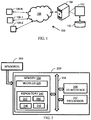
- FIG. 1 illustrates a network environment 100 implementing a system 102 for physiological monitoring, according to an embodiment of the present subject matter.
- the system 102 receives sensor data from one or more sensors that are capable of monitoring subject's physiological health. Examples of the one or more sensors include, but are not limited to, Smartphone inbuilt sensors, digital stethoscope, and acoustic sensor.
- the system 102 automatically processes the sensor data to perform analysis of the subject's physiological health, and presents result of said analysis on a configurable user interface.
- the system 102 may be embodied in a computing device, for instance a computing device 104.
- system 102 may also be implemented in a variety of computing systems, such as a laptop computer, a desktop computer, a notebook, a workstation, a cloud-based computing environment and the like. In one implementation, the system 102 may be implemented in a cloud-based environment. It will be understood that the system 102 may be accessed by multiple users through one or more user devices 106-1, 106-2... 106-N, collectively referred to as user devices 106 hereinafter, or applications residing on the user devices 106.
- Examples of the user devices 106 may include, but are not limited to, a portable computer, a personal digital assistant, a handheld device, a Smartphone, a Tablet Computer, a workstation and the like.
- the user devices 106 are communicatively coupled to the system 102 through a network 108.
- the users of the user-devices 106 may include one or more of the subjects, subject's caregivers, doctors, and so on.
- the network 108 may be a wireless or a wired network, or a combination thereof.
- the network 108 can be implemented as a computer network, as one of the different types of networks, such as virtual private network (VPN), intranet, local area network (LAN), wide area network (WAN), the internet, and such.
- the network 106 may either be a dedicated network or a shared network, which represents an association of the different types of networks that use a variety of protocols, for example, Hypertext Transfer Protocol (HTTP), Transmission Control Protocol/Internet Protocol (TCP/IP), and Wireless Application Protocol (WAP), to communicate with each other.
- the network 108 may include a variety of network devices, including routers, bridges, servers, computing devices, storage devices. The network devices within the network 108 may interact with the system 102 through communication links.
- the system 102 may be implemented in the computing device 104.
- Examples of the computing device 104 may include, but are not limited to, a hand-held device, a laptop or other portable computer, a tablet computer, a mobile phone, a PDA, a smartphone, and a desktop computer.
- the system 102 may also be implemented in a workstation, a server, and a network server.
- the system 102 may be coupled to a data repository, for example, a repository 112.
- the repository 112 may store data processed, received, and generated by the system 102.
- the data repository 112 may be embodied within the system 102. The components and functionalities of the system 102 are described further in detail with reference to FIG. 2 .
- FIG. 2 illustrates a block diagram of a system performing feature set optimization for audio signal classification 200, in accordance with an example embodiment.
- the feature set optimization for audio signal classification system 200 (hereinafter referred to as system 200) may be an example of the system 102 ( FIG. 1 ).
- the system 200 may be embodied in, or is in direct communication with the system, for example the system 102 ( FIG. 1 ).
- the system 200 includes or is otherwise in communication with one or more hardware processors such as a processor 202, at least one memory such as a memory 204, and an I/O interface 206.
- the processor 202, memory 204, and the I/O interface 206 may be coupled by a system bus such as a system bus 208 or a similar mechanism.
- the hardware processor 202 may be implemented as one or more microprocessors, microcomputers, microcontrollers, digital signal processors, central processing units, state machines, logic circuitries, and/or any devices that manipulate signals based on operational instructions.
- the at least one processor 202 is configured to fetch and execute computer-readable instructions stored in the memory 204.
- the I/O interface 206 may include a variety of software and hardware interfaces, for example, a web interface, a graphical user interface, and the like
- the interfaces 206 may include a variety of software and hardware interfaces, for example, interfaces for peripheral device(s), such as a keyboard, a mouse, an external memory, a camera device, and a printer. Further, the interfaces 206 may enable the system 102 to communicate with other devices, such as web servers and external databases.
- the interfaces 206 can facilitate multiple communications within a wide variety of networks and protocol types, including wired networks, for example, local area network (LAN), cable, etc., and wireless networks, such as Wireless LAN (WLAN), cellular, or satellite.
- the interfaces 206 may include one or more ports for connecting a number of computing systems with one another or to another server computer.
- the I/O interface 206 may include one or more ports for connecting a number of devices to one another or to another server.
- the memory 204 may include any computer-readable medium known in the art including, for example, volatile memory, such as static random access memory (SRAM) and dynamic random access memory (DRAM), and/or non-volatile memory, such as read only memory (ROM), erasable programmable ROM, flash memories, hard disks, optical disks, and magnetic tapes.
- volatile memory such as static random access memory (SRAM) and dynamic random access memory (DRAM)
- non-volatile memory such as read only memory (ROM), erasable programmable ROM, flash memories, hard disks, optical disks, and magnetic tapes.
- the memory 204 includes a plurality of modules 220 and a repository 240 for storing data processed, received, and generated by one or more of the modules 220.
- the modules 220 may include routines, programs, objects, components, data structures, and so on, which perform particular tasks or implement particular abstract data types. Additionally, the other modules 220 may include programs or coded instructions that supplement applications and functions of the system 200.
- the repository 240 includes a system database 242 and other data 244.
- the other data 244 may include data generated as a result of the execution of one or more modules in the modules 220.
- the repository 240 may include a sensor data 246 and a training data 248.
- the sensor data 246 may be obtained from one or more sensors 260 employed for physiological sensing of a subject.
- the training data 248 may be obtained based on training of a classifier for physiological monitoring of, for instance, heart condition of the subject. The details of the sensor data and the training data are explained further in the description below.
- the memory for example the memory 204 and the computer program code configured to, with the hardware processor for example the processor 202, cause the system 200 to perform various functions described herein under.
- the system 200 is caused to monitor physiological signals, such as PCG signals received from the subject.
- physiological signals such as PCG signals received from the subject.
- the physiological signals imbibe properties of audio signals, and may be referred to as audio input signals. Accordingly, the terms 'physiological signals' and 'audio input signals' may be used interchangeably throughout the description.
- the system 200 is caused to identify at least one clean audio signal segment from an input audio signal.
- the system 200 is caused to segments the input audio signal into a plurality of segments.
- the system 200 then identifies a clean template segment from the plurality of segments.
- the clean template segment is associated with noise less than a pre-computed threshold value of noise in the input audio signal.
- the system 200 then applies DTW to the plurality of segments and calculates DTW distance for each of the plurality of segments. DTW distance measures the intrinsic dissimilarity between the clean segments and the noisy audio segments. It is a semi-supervised technique.
- the system 200 selects one or more segments from the plurality of segments as the clean audio signal segments based on a comparison of the DTW distance of the plurality of segments with the DTW distance of the clean template segment.
- identifying the clean audio signal segment from an input audio signal is explained hereunder by taking PCG signal as example of the input audio signal.
- the system 200 is caused to identify clean PCG signal segments from the PCG signal, by identifying and isolating clean PCG segments ⁇ i C ′ from noisy PCG segments ⁇ i N ′ .
- the system 200 identifies the noisy segments ⁇ i N ′ and the amount of noisy segments in a PCG signal based on the Dynamic Time Warping (DTW) of the plurality of segments associated with the input audio signal.
- DTW facilitates in identifying whether the PCG signal is a noisy or clean.
- DTW distance measures the intrinsic dissimilarity between the clean segments ⁇ i C ′ and the noisy segments ⁇ i N ′ .
- f s sampling frequency
- HR ideal ideal human heart rate.
- the system 200 applies DTW to the PCG signal and computes DTW distance for the plurality of PCG segments.
- the system 200 compares the DTW distance of the plurality of segments with the DTW distance of the clean template segment
- Those one or more segments of the PCG signal having the DTW distance greater than the precomputed threshold DTW distance of the template segment may be categorized as noisy physiological PCG segments, while the PCG signal segments having the DTW distance less than or equal to the DTW distance of the ideal segment may be categorized as clean physiological PCG segments.
- the system 200 may eliminate noisy PCG segments, and store the clean PCG signal segments for further processing.
- the system 200 computes the most probable segment length l p of P from the filtered segment series ⁇ ' i .
- a DBSCAN method may be employed to find the highly likely segment distance set l p from the set of segment length set l i .
- the system 200 is caused to extract a set of optimal features from the clean audio signal segments (for instance, the clean PCG signal segments).
- the system 200 extracts the set of optimal feature from the clean audio signal segments based on Maximum Consistency and Maximum Dominance (MCMD) attributes associated with the optimal feature set.
- MCMD attributes provides the optimal feature set that optimizes the objective function of conditional likelihood maximization.
- MCMD strictly optimizes on the objective function (conditional likelihood maximization) over different feature selection parameter like minimum Redundancy Maximum Relevance (mRMR), Mutual Information Feature Selection (MIFS), Conditional Infomax Feature Extraction (CIFE), Interaction Capping (ICAP), Conditional Redundancy (CONDRED), Joint Mutual Information (JMI), CMIM, Double Input Symmetrical Relevance (DISR) such that diverse properties of different feature selection parameter are captured.
- mRMR Minimum Redundancy Maximum Relevance
- MIFS Mutual Information Feature Selection
- CIFE Conditional Infomax Feature Extraction
- ICAP Interaction Capping
- CONDRED Conditional Redundancy
- JMI Joint Mutual Information
- CMIM Double Input Symmetrical Relevance
- the system 200 is caused to identify a plurality of features from the clean audio segments.
- 'F' may be an initial feature set containing the plurality of features of the clean audio segments.
- the plurality of features include, but are not limited to, temporal, wavelet and spectral domains like kurtosis, wavelet co-efficient, PCG R-peak to R-peak duration,
- the system 200 selects the optimal feature set from the initial feature set that maximizes the probability of predictive accuracy outcome.
- the system 200 assigns a rank to each of the plurality features based on a plurality of feature selection parameter.
- the system 200 calculates, for a plurality of feature pairs selected from the plurality of features, a plurality of rank-distances between corresponding ranks.
- a rank-distance of the plurality of rank-distances between features of a feature pair of the plurality of feature pairs is defined by Manhattan distance.
- the system 200 identifies a set of maximum consistent features from the plurality of features based on a comparison of the rank-distances of the plurality of rank-distances with a consistency threshold.
- the system 200 identifies the set of maximum consistent features by selecting the consistency threshold, and identifying the features in the maximum consistent features having rank-distance less than or equal to the consistency threshold for more than half of the plurality of selection parameters.
- the consistency threshold is less than or equal to a number of selection parameters.
- the system 200 identifies a set of maximum dominance features from the set of maximum consistent features based on a comparison of the ranks of the plurality of Manhattan distances with a dominance threshold.
- the system 200 identifies the set of maximum dominance features from the set of maximum consistent feature set by selecting the dominance threshold, and identifies the set of maximum dominance features as the features having the ranks greater than the dominance threshold from the set of maximum consistent feature.
- the dominance threshold is less than or equal to number of features in the initial feature set.
- the optimal feature set or the set of MCMD features is a subset of the plurality of feature, the set of maximum consistent features and the set of maximum dominance features, and is present in both the set of maximum consistent features and the set of maximum dominance features.
- the optimal feature set is identified from the plurality of features based on a determination of feature set that is consistently ranked with ranks greater than the ranks associated with the dominance threshold for the plurality of feature selection parameters.
- ⁇ ⁇ 1 , ⁇ 2 , ..., ⁇ z ⁇ be the z number of features of the given data set D
- Feature Selection parameter or Criteria J ⁇ ⁇ ICAP , JMI, DISR, CONDRED, mRMR, MIFS, CIFE, CMIM ⁇ , where ⁇ is the set of all the feature selection criteria available.
- Feature selection method ⁇ selects Q, Q C ⁇ , where p be the cardinality of Q, p ⁇ z, following the MCMD criteria: MC property : max U Q , C
- J , U ⁇ ⁇ 1 , ⁇ 2 ... ⁇ p C
- ⁇ ⁇ 1 , ⁇ 2 ,.... ⁇ p ⁇ ( C ) represents the consistency between feature subset Q and the target class label C, over the conditional likelihood probability I(x;y) for a large set of feature selection criteria/parameter J(ICAP, JMI, DISR, CONDRED, mRMR, MIFS, CIFE, CMIM).
- MD property max V Q , C
- J , V ⁇ ⁇ 1 , ⁇ 2 ... ⁇ p ′ C
- ⁇ ( ⁇ 1, ⁇ 2... ⁇ p') (C) represents the dominance between feature subset Q and the target class label C, over the conditional likelihood probability I(x;y) for a large set of feature selection criteria/parameter J(ICAP, JMI, DISR, CONDRED, mRMR, MIFS, CIFE, CMIM).
- ⁇ i ⁇ Q MCMD ⁇ 2 ⁇ Q MCMD .
- the objective of MCMD is to find Q, ⁇ j ⁇ Q for which both eqn. 1 and 2 are satisfied.
- MCMD property achieves Pareto-optimality so that no other criterion in J achieves both higher dominance and consistency than Q, which means Q performs better in terms of efficacy than any of ⁇ j for a given classifier.
- u, v be the dominance and consistency threshold respectively, where u is defined as a specific given positive real number ⁇ z such that each of the features in Maximum Dominance (MD) feature set Q MD satisfies that its rank is ⁇ u for majority of the feature selection criteria/parameter, i.e. all the features in Q MD has rank ⁇ u in at least [ j / 2 ] number of feature selection criteria/parameter in J.
- MD Maximum Dominance
- ⁇ 1 satisfies MD property
- Consistency threshold v is defined as a specific given positive real number ⁇ j such that each of the features in Maximum Consistency (MC) feature set QMC satisfies that its rank-distance r is ⁇ v for majority of the feature selection criteria, i.e. all the features in QMC has r ⁇ v in at least [ j /2] number of feature selection criteria in J, where rank-distance is the Minkowski distance of order 1 (Manhattan distance) between the ranks of selection criteria.
- the system 200 is caused to classify the input audio signal into normal signal components and abnormal signal components using the MCMD features.
- the classification of the physiological audio signal using MCMD feature set may be done as follows: (i) Training a classifier with training data set and (ii) Classifying the input physiological audio signal as normal or abnormal by using the trained classifier.
- the selected optimal MCMD features are input to a non-linear Support Vector Machine (SVM) classifier with radial basis function (RBF) kernel.
- SVM Support Vector Machine
- RBF radial basis function
- the SVM classifier classifies the abnormalities in PCG signal automatically.
- the classifier can be utilized for identification of cardiac abnormality of a subject.
- the physiological audio signal is described to include the PCG signal.
- the PCG signal is considered as only an example of the physiological audio signal for the brevity of the description, however in alternative embodiments, the examples of physiological audio signal may include various other such signal such as heart sound and so on.
- the system The PCG signal of the subject undergoing the test is collected and given to the system 200.
- the system 200 identifies the noisy PCG segments using DTW algorithm and discards it.
- the clean PCG signal segments are given to the MCMD feature selection module and the optimal MCMD features are selected.
- the selected optimal MCMD features are input to a non-linear Support Vector Machine (SVM) classifier with radial basis function kernel.
- SVM Support Vector Machine
- FIG. 3 illustrates a flow-diagram of a method 300 for physiological monitoring, in accordance with example embodiment.
- the method 300 may be described in the general context of computer executable instructions.
- computer executable instructions can include routines, programs, objects, components, data structures, procedures, modules, functions, etc., that perform particular functions or implement particular abstract data types.
- the method 300 may also be practiced in a distributed computing environment where functions are performed by remote processing devices that are linked through a communication network.
- the order in which the method 300 is described is not intended to be construed as a limitation, and any number of the described method blocks can be combined in any order to implement the method 300, or an alternative method.
- the method 300 can be implemented in any suitable hardware, software, firmware, or combination thereof.
- the method 300 depicted in the flow chart may be executed by a system, for example, the system 200 of FIG. 2 .
- the system 200 may be embodied in a computing device, for example, the computing device 110 ( FIG. 1 ).
- the system may receive an input physiological signal from one or more sensors, via one or more hardware processors such as the processor 202.
- the input physiological signal may include physiological audio signals obtained from a subject.
- the method 300 includes, identifying at least one clean physiological signal segment from an input physiological signal based on a Dynamic Time Warping (DTW) of a plurality of segments associated with the physiological signal.
- identifying the clean physiological signal segment includes segmenting the input physiological signal into a plurality of segments, and identifying a clean template segment from the plurality of segments.
- the clean template segment is associated with a noise level less than a pre-computed threshold level of noise in the input physiological signal.
- DTW is applied to the plurality of segments and a DTW distance is calculated for each of the plurality of segments. At least one segment is selected from the plurality of segments as the at least one clean physiological signal segment based on a comparison of the DTW distance of the plurality of segments with the DTW distance of the clean template segment.
- the method 300 includes, extracting an optimal features set from the a clean physiological signal training set based on a Maximum Consistency and Maximum Dominance (MCMD) property associated with the optimal feature set, via the one or more hardware processors such as the processor 202.
- MCMD Maximum Consistency and Maximum Dominance
- the MCMD property of the optimal feature set strictly optimizes on the objective function (conditional likelihood maximization) over different selection criteria like mRMR, MIFS, CIFE, ICAP, CONDRED, JMI, CMIM, DISR such that diverse properties of different feature selection criteria are captured.
- extracting the optimal features set from the at least one clean audio signal segment includes identifying a plurality of features associated with the at least one clean physiological segment, and a plurality of feature selection parameters, and assigning rank to each of the plurality features based on the plurality of feature selection parameters. For a plurality of feature pairs selected from the plurality of features, a plurality of rank-distances between corresponding ranks are calculated.
- rank-distance of the plurality of rank-distances between features of a feature pair of the plurality of feature pairs defined by Manhattan distance.
- a set of maximum consistent features is identified from the plurality of features based on a comparison of the rank-distances of the plurality of rank-distances with a consistency threshold.
- a set of maximum dominance features is identified from the set of maximum consistent features based on a comparison of the rank-distances of the plurality of rank-distances with a dominance threshold.
- the optimal feature set or the set of MCMD features is a subset of the plurality of feature, the set of maximum consistent features and the set of maximum dominance features, and is present in both the set of maximum consistent features and the set of maximum dominance features.
- the optimal feature set is identified from the plurality of features based on a determination of feature set that is consistently ranked with ranks greater than the ranks associated with the dominance threshold for the plurality of feature selection parameters.
- the method 300 includes, classifying the input physiological signal into normal signal components and abnormal signal components using the optimal features set, via the one or more hardware processors such as the processor 202.
- the classification of the physiological audio signal using the optimal features set may be done as follows: (i) Training a classifier with training data set and (ii) Classifying the input physiological audio signal as normal or abnormal by using the trained classifier.
- the selected optimal MCMD features are input to a non-linear Support Vector Machine (SVM) classifier with radial basis function (RBF) kernel.
- SVM Support Vector Machine
- RBF radial basis function
- the disclosed physiological monitoring system 200 is tested with publicly available large PCG database.
- Classical feature selection methods like CMIM were selected along with handpicked methods to compare with the accuracy of the the disclosed system.
- the handpicked features included selected feature set from temporal, wavelet and spectral domains.
- Accuracy of identifying the noisy PCG signals from an example data set is 84% as shown in FIG. 6.
- the ranks calculated for the features of the initial feature set using the feature selection parameters of ' Z ' is shown in FIG. 4 .
- the hardware device can be any kind of device which can be programmed including e.g. any kind of computer like a server or a personal computer, or the like, or any combination thereof.
- the device may also include means which could be e.g. hardware means like e.g. an application-specific integrated circuit (ASIC), a field-programmable gate array (FPGA), or a combination of hardware and software means, e.g.
- ASIC application-specific integrated circuit
- FPGA field-programmable gate array
- the means can include both hardware means and software means.
- the method embodiments described herein could be implemented in hardware and software.
- the device may also include software means.
- the embodiments may be implemented on different hardware devices, e.g. using a plurality of CPUs.
- the embodiments herein can comprise hardware and software elements.
- the embodiments that are implemented in software include but are not limited to, firmware, resident software, microcode, etc.
- the functions performed by various modules described herein may be implemented in other modules or combinations of other modules.
- a computer-usable or computer readable medium can be any apparatus that can comprise, store, communicate, propagate, or transport the program for use by or in connection with the instruction execution system, apparatus, or device.
- a computer-readable storage medium refers to any type of physical memory on which information or data readable by a processor may be stored.
- a computer-readable storage medium may store instructions for execution by one or more processors, including instructions for causing the processor(s) to perform steps or stages consistent with the embodiments described herein.
- the term "computer-readable medium” should be understood to include tangible items and exclude carrier waves and transient signals, i.e., are non-transitory. Examples include random access memory (RAM), read-only memory (ROM), volatile memory, non-volatile memory, hard drives, CD ROMs, DVDs, flash drives, disks, and any other known physical storage media.
Landscapes
- Health & Medical Sciences (AREA)
- Engineering & Computer Science (AREA)
- Life Sciences & Earth Sciences (AREA)
- Biomedical Technology (AREA)
- Medical Informatics (AREA)
- Public Health (AREA)
- Physics & Mathematics (AREA)
- General Health & Medical Sciences (AREA)
- Surgery (AREA)
- Cardiology (AREA)
- Animal Behavior & Ethology (AREA)
- Molecular Biology (AREA)
- Veterinary Medicine (AREA)
- Heart & Thoracic Surgery (AREA)
- Pathology (AREA)
- Acoustics & Sound (AREA)
- Multimedia (AREA)
- Library & Information Science (AREA)
- Data Mining & Analysis (AREA)
- Databases & Information Systems (AREA)
- Theoretical Computer Science (AREA)
- Biophysics (AREA)
- Physiology (AREA)
- General Physics & Mathematics (AREA)
- Epidemiology (AREA)
- Primary Health Care (AREA)
- General Engineering & Computer Science (AREA)
- Robotics (AREA)
- Nuclear Medicine, Radiotherapy & Molecular Imaging (AREA)
- Measuring And Recording Apparatus For Diagnosis (AREA)
Abstract
Description
- The present application claims priority to Indian provisional specification (Title: Feature set optimization for audio signal classification) No. (
201621041324 - The present disclosure in general relates to physiological monitoring, and more particularly to feature set optimization for classification of physiological signal.
- Healthcare data is quite rich and often contains human survival related information. Analysing healthcare data is of prime importance, particularly considering the immense potential of saving human life and improving quality of life. An important insight that plays a prominent role in healthcare analytics is anomaly detection. For instance, healthcare analytics can provide insights regarding health of a subject's heart by proactive monitoring of cardiac health. The automated healthcare analytics is based on selection of features corresponding to healthcare related data for building robust classification models. Providing relevant features as input to the classification models can improve model interpretation, robustness, accuracy, speeds up the learning process, reduces the cost of storage and increases generalization capability of the analytics models.
- In conventional feature selection methods, the features are ranked in order of closeness to satisfy feature selection criteria for selecting features. However, in certain scenarios, the ranking may not provide a list of most useful features. Moreover, the conventional techniques lack focus on the definite feature sets which provides a maximum probability of predicting accurate outcome. Also, in most of the conventional techniques, extensive human intervention is required, thereby rendering the feature selection process cumbersome and inefficient. In addition, currently automated healthcare analytics for proactive cardiac health monitoring faces certain challenges, particularly for example in Phonocardiogram (PCG) signals based proactive cardiac health monitoring. For instance, the PCG signals frequently includes varying levels of corruption/noise due to presence of multiple noise sources such as motion artefacts, ambient noise.
- Embodiments of the present disclosure present technological improvements as solutions to one or more of the above-mentioned technical problems recognized by the inventors in conventional systems. For example, in one embodiment, a processor-implemented method for physiological monitoring is provided. The method includes identifying a clean physiological signal training set from an input physiological signal based on a Dynamic Time Warping (DTW) of a plurality of segments associated with the physiological signal, via one or more hardware processors. Further, the method includes extracting an optimal feature set from the clean physiological signal training set, based on a Maximum Consistency and Maximum Dominance (MCMD) property associated with the optimal feature set, via the one or more hardware processors. The MCMD property strictly optimizes on an objective function associated with conditional likelihood maximization over a plurality of selection parameters so that diverse properties of the plurality of selection parameters are captured in optimizing the objective function. Furthermore, the method includes classifying the input physiological signal into normal signal components and abnormal signal components using the optimal feature set, via the one or more hardware processors.
- In another embodiment, a system for physiological monitoring is provided. The system includes one or more memories storing instructions; and one or more hardware processors coupled to the one or more memories. The one or more hardware processors are configured by said instructions to identify a clean physiological signal training set from an input physiological signal based on a Dynamic Time Warping (DTW) of a plurality of segments associated with the physiological signal. Further, one or more hardware processors are configured by said instructions to extract an optimal features set from the clean physiological signal training set based on a Maximum Consistency and Maximum Dominance (MCMD) property that derives the optimal feature set. The MCMD property strictly optimizes on an objective function associated with conditional likelihood maximization over a plurality of feature selection parameters so that diverse properties of the plurality of feature selection parameters are captured in optimizing the objective function. Furthermore the one or more hardware processors are configured by said instructions to classify the input physiological signal into normal signal components and abnormal signal components using the optimal feature set.
- In yet another embodiment, a non-transitory computer-readable medium having embodied thereon a computer program for executing a method for physiological monitoring is provided. The method includes identifying a clean physiological signal training set from an input physiological signal based on a Dynamic Time Warping (DTW) of a plurality of segments associated with the physiological signal, via one or more hardware processors. Further, the method includes extracting an optimal feature set from the clean physiological signal segment training set based on a Maximum Consistency and Maximum Dominance (MCMD) property derived from the optimal feature set, via the one or more hardware processors. The MCMD property strictly optimizes on an objective function associated with conditional likelihood maximization over a plurality of feature selection parameters so that diverse properties of the plurality of feature selection parameters are captured in optimizing the objective function. Furthermore, the method includes classifying the input physiological signal into normal signal components and abnormal signal components using the optimal feature set, via the one or more hardware processors.
- It is to be understood that both the foregoing general description and the following detailed description are exemplary and explanatory only and are not restrictive of the invention, as claimed.
- The accompanying drawings, which are incorporated in and constitute a part of this disclosure, illustrate exemplary embodiments and, together with the description, serve to explain the disclosed principles.
-
FIG. 1 illustrates a networking environment implementing physiological monitoring according to some embodiments of the present disclosure. -
FIG. 2 illustrates a block diagram of physiological monitoring according to some embodiments of the present disclosure. -
FIG. 3 illustrates an example process flow for physiological monitoring according to some embodiments of the present disclosure. -
FIG. 4 illustrates an example graph showing ranking of features calculated using various ranking methods according to some embodiments of the present disclosure. -
FIG. 5 illustrates an example graph showing accuracy of noisy and clean signal classification using Dynamic Time Warping (DTW) according to some embodiments of the present disclosure. - Exemplary embodiments are described with reference to the accompanying drawings. In the figures, the left-most digit(s) of a reference number identifies the figure in which the reference number first appears. Wherever convenient, the same reference numbers are used throughout the drawings to refer to the same or like parts. While examples and features of disclosed principles are described herein, modifications, adaptations, and other implementations are possible without departing from the spirit and scope of the disclosed embodiments. It is intended that the following detailed description be considered as exemplary only, with the true scope and spirit being indicated by the following claims.
- Auscultation based heart sound/ Phonocardiogram (PCG) analysis is a basic test performed by healthcare providers to evaluate heart condition of a subject. Changes in heart sounds and murmurs may occur prior to other cardiovascular symptoms. Hence, cardiac anomalous condition detection can be performed by using one or more acoustic signals, such as PCG signals.
- Conventionally, analysis of PCG signals for cardiac event detection gives low accuracy. One of the primary causes for said low accuracy is attributed to presence of noise in PCG signals. For instance, sources such as external noise source, respiration of the subject, and so on corrupt the PCG signal. Especially in practical setup, higher false alarms in PCG signal analysis is attributed to the failure to identify noisy PCG. Conventional classification techniques indicate cardiac abnormality detection from the PCG signals ignoring the impact of noise. Another challenge with utilizing the PCG signals for physiological monitoring is to find an optimal feature set. The optimal feature set is relative to certain criterion. For different types of criteria or feature selection parameters, different optimal feature set is obtained. However, obtaining an optimal feature set of classification of the PCG signals is challenging.
- Various embodiments of the present disclosure provide method and system that may facilitate in effective classification of physiological signals such that the above mentioned disadvantages of the conventional physiological signal monitoring and classification systems can be negated. For example, the disclosed system denoises the PCG signal before performing the classification, thereby eliminating artefacts and false-positives from the PCG signal. In an embodiment, the system differentiates between noisy and clean PCG signals, and subsequently denoises the PCG signal.
- Additionally, the disclosed system eliminates dependency of optimal feature set to a single feature selection criteria or parameter function, and ensures generalized feature selection criteria/ parameter. In particular, the disclosed system identifies most consistent, as well as important feature set from an array of criteria/ parameter functions for performing the classification. In an embodiment, the system incorporates a filter approach, called as called Maximum Consistency Maximum Dominance (MCMD), for optimal feature selection. MCMD is maximally supreme in their consistency property to clearly identify the target class C = {normal; abnormal}, as will be described later in the description. The MCMD property strictly optimizes on an objective function associated with conditional likelihood maximization over a plurality of feature selection parameter so that diverse properties of the plurality of feature selection parameter are captured in optimizing the objective function.
- Due to the above mentioned embodiments, the system and method facilitates in identification of cardiac abnormality from PCG signals with a high accuracy of approximately more than 85%. It will be worth mentioning that the disclosed method operates in an automatic manner, i.e. without any human-in-loop. A detailed description of the above described system for physiological monitoring is presented with respect to illustrations represented with reference to
FIGS. 1 through 7 . - The method(s) and system(s) for physiological monitoring are further described in conjunction with the following figures. It should be noted that the description and figures merely illustrate the principles of the present subject matter. It will thus be appreciated that those skilled in the art will be able to devise various arrangements that, although not explicitly described or shown herein, embody the principles of the present subject matter and are included within its spirit and scope. Furthermore, all examples recited herein are principally intended expressly to be only for pedagogical purposes to aid the reader in understanding the principles of the present subject matter and the concepts contributed by the inventor(s) to furthering the art, and are to be construed as being without limitation to such specifically recited examples and conditions. Moreover, all statements herein reciting principles, aspects, and embodiments of the present subject matter, as well as specific examples thereof, are intended to encompass equivalents thereof.
-
FIG. 1 illustrates anetwork environment 100 implementing asystem 102 for physiological monitoring, according to an embodiment of the present subject matter. In an embodiment, thesystem 102 receives sensor data from one or more sensors that are capable of monitoring subject's physiological health. Examples of the one or more sensors include, but are not limited to, Smartphone inbuilt sensors, digital stethoscope, and acoustic sensor. Thesystem 102 automatically processes the sensor data to perform analysis of the subject's physiological health, and presents result of said analysis on a configurable user interface. Thesystem 102 may be embodied in a computing device, for instance acomputing device 104. - Although the present disclosure is explained considering that the
system 102 is implemented on a server, it may be understood that thesystem 102 may also be implemented in a variety of computing systems, such as a laptop computer, a desktop computer, a notebook, a workstation, a cloud-based computing environment and the like. In one implementation, thesystem 102 may be implemented in a cloud-based environment. It will be understood that thesystem 102 may be accessed by multiple users through one or more user devices 106-1, 106-2... 106-N, collectively referred to asuser devices 106 hereinafter, or applications residing on theuser devices 106. Examples of theuser devices 106 may include, but are not limited to, a portable computer, a personal digital assistant, a handheld device, a Smartphone, a Tablet Computer, a workstation and the like. Theuser devices 106 are communicatively coupled to thesystem 102 through anetwork 108. Herein, the users of the user-devices 106 may include one or more of the subjects, subject's caregivers, doctors, and so on. - In an embodiment, the
network 108 may be a wireless or a wired network, or a combination thereof. In an example, thenetwork 108 can be implemented as a computer network, as one of the different types of networks, such as virtual private network (VPN), intranet, local area network (LAN), wide area network (WAN), the internet, and such. Thenetwork 106 may either be a dedicated network or a shared network, which represents an association of the different types of networks that use a variety of protocols, for example, Hypertext Transfer Protocol (HTTP), Transmission Control Protocol/Internet Protocol (TCP/IP), and Wireless Application Protocol (WAP), to communicate with each other. Further, thenetwork 108 may include a variety of network devices, including routers, bridges, servers, computing devices, storage devices. The network devices within thenetwork 108 may interact with thesystem 102 through communication links. - As discussed above, the
system 102 may be implemented in thecomputing device 104. Examples of thecomputing device 104 may include, but are not limited to, a hand-held device, a laptop or other portable computer, a tablet computer, a mobile phone, a PDA, a smartphone, and a desktop computer. Thesystem 102 may also be implemented in a workstation, a server, and a network server. In an embodiment, thesystem 102 may be coupled to a data repository, for example, arepository 112. Therepository 112 may store data processed, received, and generated by thesystem 102. In an alternate embodiment, thedata repository 112 may be embodied within thesystem 102. The components and functionalities of thesystem 102 are described further in detail with reference toFIG. 2 . -
FIG. 2 illustrates a block diagram of a system performing feature set optimization foraudio signal classification 200, in accordance with an example embodiment. The feature set optimization for audio signal classification system 200 (hereinafter referred to as system 200) may be an example of the system 102 (FIG. 1 ). In an example embodiment, thesystem 200 may be embodied in, or is in direct communication with the system, for example the system 102 (FIG. 1 ). Thesystem 200 includes or is otherwise in communication with one or more hardware processors such as aprocessor 202, at least one memory such as amemory 204, and an I/O interface 206. Theprocessor 202,memory 204, and the I/O interface 206 may be coupled by a system bus such as asystem bus 208 or a similar mechanism. - The
hardware processor 202 may be implemented as one or more microprocessors, microcomputers, microcontrollers, digital signal processors, central processing units, state machines, logic circuitries, and/or any devices that manipulate signals based on operational instructions. Among other capabilities, the at least oneprocessor 202 is configured to fetch and execute computer-readable instructions stored in thememory 204. - The I/
O interface 206 may include a variety of software and hardware interfaces, for example, a web interface, a graphical user interface, and the like Theinterfaces 206 may include a variety of software and hardware interfaces, for example, interfaces for peripheral device(s), such as a keyboard, a mouse, an external memory, a camera device, and a printer. Further, theinterfaces 206 may enable thesystem 102 to communicate with other devices, such as web servers and external databases. Theinterfaces 206 can facilitate multiple communications within a wide variety of networks and protocol types, including wired networks, for example, local area network (LAN), cable, etc., and wireless networks, such as Wireless LAN (WLAN), cellular, or satellite. For the purpose, theinterfaces 206 may include one or more ports for connecting a number of computing systems with one another or to another server computer. The I/O interface 206 may include one or more ports for connecting a number of devices to one another or to another server. - The
memory 204 may include any computer-readable medium known in the art including, for example, volatile memory, such as static random access memory (SRAM) and dynamic random access memory (DRAM), and/or non-volatile memory, such as read only memory (ROM), erasable programmable ROM, flash memories, hard disks, optical disks, and magnetic tapes. In an embodiment, thememory 204 includes a plurality ofmodules 220 and arepository 240 for storing data processed, received, and generated by one or more of themodules 220. Themodules 220 may include routines, programs, objects, components, data structures, and so on, which perform particular tasks or implement particular abstract data types. Additionally, theother modules 220 may include programs or coded instructions that supplement applications and functions of thesystem 200. Therepository 240, amongst other things, includes asystem database 242 andother data 244. Theother data 244 may include data generated as a result of the execution of one or more modules in themodules 220. Additionally, therepository 240 may include asensor data 246 and atraining data 248. Thesensor data 246 may be obtained from one ormore sensors 260 employed for physiological sensing of a subject. Thetraining data 248 may be obtained based on training of a classifier for physiological monitoring of, for instance, heart condition of the subject. The details of the sensor data and the training data are explained further in the description below. - Herein, the memory for example the
memory 204 and the computer program code configured to, with the hardware processor for example theprocessor 202, cause thesystem 200 to perform various functions described herein under. - As discussed above, for physiological monitoring of a subject, the
system 200 is caused to monitor physiological signals, such as PCG signals received from the subject. Herein, the physiological signals imbibe properties of audio signals, and may be referred to as audio input signals. Accordingly, the terms 'physiological signals' and 'audio input signals' may be used interchangeably throughout the description. - In an embodiment, the
system 200 is caused to identify at least one clean audio signal segment from an input audio signal. In an embodiment, to identify the clean audio signal, thesystem 200 is caused to segments the input audio signal into a plurality of segments. Thesystem 200 then identifies a clean template segment from the plurality of segments. The clean template segment is associated with noise less than a pre-computed threshold value of noise in the input audio signal. Thesystem 200 then applies DTW to the plurality of segments and calculates DTW distance for each of the plurality of segments. DTW distance measures the intrinsic dissimilarity between the clean segments and the noisy audio segments. It is a semi-supervised technique. Thesystem 200 then selects one or more segments from the plurality of segments as the clean audio signal segments based on a comparison of the DTW distance of the plurality of segments with the DTW distance of the clean template segment. For further clarity, an example of identifying the clean audio signal segment from an input audio signal is explained hereunder by taking PCG signal as example of the input audio signal. - A PCG signal consists of time-series segments, as defined below:

i.e. Ψi := [S1; Systole; S2; Diastole]i - The
system 200 is caused to identify clean PCG signal segments from the PCG signal, by identifying and isolating clean PCG segments

system 200 identifies the noisy segments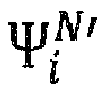


- The system identifies a clean template segment, T:


HRideal is ideal human heart rate. - The
system 200 applies DTW to the PCG signal and computes DTW distance for the plurality of PCG segments. Thesystem 200 compares the DTW distance of the plurality of segments with the DTW distance of the clean template segment - Those one or more segments of the PCG signal having the DTW distance greater than the precomputed threshold DTW distance of the template segment may be categorized as noisy physiological PCG segments, while the PCG signal segments having the DTW distance less than or equal to the DTW distance of the ideal segment may be categorized as clean physiological PCG segments. The
system 200 may eliminate noisy PCG segments, and store the clean PCG signal segments for further processing. In an embodiment, in order to counter non-linearity in segment lengths, thesystem 200 computes the most probable segment length lp of P from the filtered segment series Ψ'i. In an example embodiment, a DBSCAN method may be employed to find the highly likely segment distance set lp from the set of segment length set li . DTW distance may be computed between template T and each of the segments Ψ'i = {ω 1, ω 2 .... ωlp }i, i∀ K - The
system 200 is caused to extract a set of optimal features from the clean audio signal segments (for instance, the clean PCG signal segments). Thesystem 200 extracts the set of optimal feature from the clean audio signal segments based on Maximum Consistency and Maximum Dominance (MCMD) attributes associated with the optimal feature set. As will be appreciated from later description herein, MCMD attributes provides the optimal feature set that optimizes the objective function of conditional likelihood maximization. MCMD strictly optimizes on the objective function (conditional likelihood maximization) over different feature selection parameter like minimum Redundancy Maximum Relevance (mRMR), Mutual Information Feature Selection (MIFS), Conditional Infomax Feature Extraction (CIFE), Interaction Capping (ICAP), Conditional Redundancy (CONDRED), Joint Mutual Information (JMI), CMIM, Double Input Symmetrical Relevance (DISR) such that diverse properties of different feature selection parameter are captured. - In order to extract the MCMD attributes from the clean audio signal segments, the
system 200 is caused to identify a plurality of features from the clean audio segments. For example, 'F' may be an initial feature set containing the plurality of features of the clean audio segments. Examples of the plurality of features include, but are not limited to, temporal, wavelet and spectral domains like kurtosis, wavelet co-efficient, PCG R-peak to R-peak duration, Thesystem 200 selects the optimal feature set from the initial feature set that maximizes the probability of predictive accuracy outcome. To select the optimal features set, thesystem 200 assigns a rank to each of the plurality features based on a plurality of feature selection parameter. Thesystem 200 calculates, for a plurality of feature pairs selected from the plurality of features, a plurality of rank-distances between corresponding ranks. In an embodiment, a rank-distance of the plurality of rank-distances between features of a feature pair of the plurality of feature pairs is defined by Manhattan distance. Thesystem 200 identifies a set of maximum consistent features from the plurality of features based on a comparison of the rank-distances of the plurality of rank-distances with a consistency threshold. - In an embodiment, the
system 200 identifies the set of maximum consistent features by selecting the consistency threshold, and identifying the features in the maximum consistent features having rank-distance less than or equal to the consistency threshold for more than half of the plurality of selection parameters. Herein, the consistency threshold is less than or equal to a number of selection parameters. - The
system 200 identifies a set of maximum dominance features from the set of maximum consistent features based on a comparison of the ranks of the plurality of Manhattan distances with a dominance threshold. In an embodiment, thesystem 200 identifies the set of maximum dominance features from the set of maximum consistent feature set by selecting the dominance threshold, and identifies the set of maximum dominance features as the features having the ranks greater than the dominance threshold from the set of maximum consistent feature. Herein, the dominance threshold is less than or equal to number of features in the initial feature set. The optimal feature set or the set of MCMD features is a subset of the plurality of feature, the set of maximum consistent features and the set of maximum dominance features, and is present in both the set of maximum consistent features and the set of maximum dominance features. In an embodiment, the optimal feature set is identified from the plurality of features based on a determination of feature set that is consistently ranked with ranks greater than the ranks associated with the dominance threshold for the plurality of feature selection parameters. - An example of the selection of the optimal feature set based on the MCMD attributes is described further in detail below.
- In the present example, let Θ = {θ1, θ2, ..., θz} be the z number of features of the given data set D, and
Feature Selection parameter or Criteria J⊂Υ={ICAP, JMI, DISR, CONDRED, mRMR, MIFS, CIFE, CMIM},
where Υ is the set of all the feature selection criteria available. - Feature selection method Υ selects Q, Q C Θ, where p be the cardinality of Q, p ≤ z, following the MCMD criteria:


- From the above example, θi ∈ QMCMD ; θ 2 ∉ QMCMD. For each J, each of the features in Θ has unique ranks up to z, i.e. Θ transforms to a vector of dimension j, where j be the total number of feature selection criteria/parameter in J, Θ → Θ j ,

- Let u, v be the dominance and consistency threshold respectively, where u is defined as a specific given positive real number ≤ z such that each of the features in Maximum Dominance (MD) feature set QMD satisfies that its rank is ≤ u for majority of the feature selection criteria/parameter, i.e. all the features in QMD has rank ≤ u in at least [j/2] number of feature selection criteria/parameter in J. For example, rank of θl be


- Consistency threshold v is defined as a specific given positive real number ≤ j such that each of the features in Maximum Consistency (MC) feature set QMC satisfies that its rank-distance r is ≤ v for majority of the feature selection criteria, i.e. all the features in QMC has r ≤ v in at least [j/2] number of feature selection criteria in J, where rank-distance is the Minkowski distance of order 1 (Manhattan distance) between the ranks of selection criteria. For example, rank-distance θ1 between ICAP-JMI feature selection criteria is 4 as


- The
system 200 is caused to classify the input audio signal into normal signal components and abnormal signal components using the MCMD features. In an embodiment, the classification of the physiological audio signal using MCMD feature set may be done as follows: (i) Training a classifier with training data set and (ii) Classifying the input physiological audio signal as normal or abnormal by using the trained classifier. For example, the selected optimal MCMD features are input to a non-linear Support Vector Machine (SVM) classifier with radial basis function (RBF) kernel. The SVM classifier classifies the abnormalities in PCG signal automatically. In an embodiment, the classifier can be utilized for identification of cardiac abnormality of a subject. - In an exemplary embodiment, the physiological audio signal is described to include the PCG signal. Herein, it will be noted that the PCG signal is considered as only an example of the physiological audio signal for the brevity of the description, however in alternative embodiments, the examples of physiological audio signal may include various other such signal such as heart sound and so on.
- In an embodiment, the system The PCG signal of the subject undergoing the test is collected and given to the
system 200. Thesystem 200 identifies the noisy PCG segments using DTW algorithm and discards it. The clean PCG signal segments are given to the MCMD feature selection module and the optimal MCMD features are selected. The selected optimal MCMD features are input to a non-linear Support Vector Machine (SVM) classifier with radial basis function kernel. The SVM classifier classifies the abnormalities in PCG signal automatically. -
FIG. 3 illustrates a flow-diagram of amethod 300 for physiological monitoring, in accordance with example embodiment. Themethod 300 may be described in the general context of computer executable instructions. Generally, computer executable instructions can include routines, programs, objects, components, data structures, procedures, modules, functions, etc., that perform particular functions or implement particular abstract data types. Themethod 300 may also be practiced in a distributed computing environment where functions are performed by remote processing devices that are linked through a communication network. The order in which themethod 300 is described is not intended to be construed as a limitation, and any number of the described method blocks can be combined in any order to implement themethod 300, or an alternative method. Furthermore, themethod 300 can be implemented in any suitable hardware, software, firmware, or combination thereof. In an embodiment, themethod 300 depicted in the flow chart may be executed by a system, for example, thesystem 200 ofFIG. 2 . In an example embodiment, thesystem 200 may be embodied in a computing device, for example, the computing device 110 (FIG. 1 ). - In an embodiment, the system may receive an input physiological signal from one or more sensors, via one or more hardware processors such as the
processor 202. The input physiological signal may include physiological audio signals obtained from a subject. At 302, themethod 300 includes, identifying at least one clean physiological signal segment from an input physiological signal based on a Dynamic Time Warping (DTW) of a plurality of segments associated with the physiological signal. In an embodiment, identifying the clean physiological signal segment includes segmenting the input physiological signal into a plurality of segments, and identifying a clean template segment from the plurality of segments. The clean template segment is associated with a noise level less than a pre-computed threshold level of noise in the input physiological signal. DTW is applied to the plurality of segments and a DTW distance is calculated for each of the plurality of segments. At least one segment is selected from the plurality of segments as the at least one clean physiological signal segment based on a comparison of the DTW distance of the plurality of segments with the DTW distance of the clean template segment. - At 304, the
method 300 includes, extracting an optimal features set from the a clean physiological signal training set based on a Maximum Consistency and Maximum Dominance (MCMD) property associated with the optimal feature set, via the one or more hardware processors such as theprocessor 202. As described previously, the MCMD property of the optimal feature set strictly optimizes on the objective function (conditional likelihood maximization) over different selection criteria like mRMR, MIFS, CIFE, ICAP, CONDRED, JMI, CMIM, DISR such that diverse properties of different feature selection criteria are captured. MCMD achieves Pareto-optimality so that no other criterion inachieves both higher dominance and consistency than , which means
 performs better in terms of efficacy than any of Θ j for a given classifier. In an embodiment, extracting the optimal features set from the at least one clean audio signal segment includes identifying a plurality of features associated with the at least one clean physiological segment, and a plurality of feature selection parameters, and assigning rank to each of the plurality features based on the plurality of feature selection parameters. For a plurality of feature pairs selected from the plurality of features, a plurality of rank-distances between corresponding ranks are calculated. In an embodiment, rank-distance of the plurality of rank-distances between features of a feature pair of the plurality of feature pairs defined by Manhattan distance. A set of maximum consistent features is identified from the plurality of features based on a comparison of the rank-distances of the plurality of rank-distances with a consistency threshold. Further, a set of maximum dominance features is identified from the set of maximum consistent features based on a comparison of the rank-distances of the plurality of rank-distances with a dominance threshold. The optimal feature set or the set of MCMD features is a subset of the plurality of feature, the set of maximum consistent features and the set of maximum dominance features, and is present in both the set of maximum consistent features and the set of maximum dominance features. In an embodiment, the optimal feature set is identified from the plurality of features based on a determination of feature set that is consistently ranked with ranks greater than the ranks associated with the dominance threshold for the plurality of feature selection parameters.
- At 306, the
method 300 includes, classifying the input physiological signal into normal signal components and abnormal signal components using the optimal features set, via the one or more hardware processors such as theprocessor 202. In an embodiment, the classification of the physiological audio signal using the optimal features set (or the MCMD feature set) may be done as follows: (i) Training a classifier with training data set and (ii) Classifying the input physiological audio signal as normal or abnormal by using the trained classifier. For example, the selected optimal MCMD features are input to a non-linear Support Vector Machine (SVM) classifier with radial basis function (RBF) kernel. The SVM classifier classifies the abnormalities in PCG signal automatically. - In an example embodiment, the disclosed
physiological monitoring system 200 is tested with publicly available large PCG database. Classical feature selection methods like CMIM were selected along with handpicked methods to compare with the accuracy of the the disclosed system. The handpicked features included selected feature set from temporal, wavelet and spectral domains. Accuracy of identifying the noisy PCG signals from an example data set (for instance a Physionet Challenge 2016 data set) is 84% as shown in FIG. 6. As an example, 54 exhaustive features 'F' = {f1, f2, ..., f54} from temporal, spectral and wavelet domains are selected, the value of u is taken as 20 and the value of v is taken as 3. The ranks calculated for the features of the initial feature set using the feature selection parameters of 'Z' is shown inFIG. 4 . - It is shown that 7 features satisfy MCMD property i.e θi ∈ QMCMD , i = {27; 33; 34; 36; 39; 43; 54} as depicted in
FIG. 4 ., Fv, v represents feature. InFIG. 5 , the performance efficacy of our disclosed system is represented on the total datasets consisting of separate Training (Normal#716, Abnormal#312) and Testing (Normal#1772, Abnormal#353). following the protocol ofFIG. 4 . Two important observations that can be derived from the experimental results are: 1. Denoising ensures better performance. Around 10% accuracy gain is achieved through denoising. 2. MCMD feature selection outperforms CMIM or handpicked feature selection by more than 6%. - It is to be understood that the scope of the protection is extended to such a program and in addition to a computer-readable means having a message therein; such computer-readable storage means contain program-code means for implementation of one or more steps of the method, when the program runs on a server or mobile device or any suitable programmable device. The hardware device can be any kind of device which can be programmed including e.g. any kind of computer like a server or a personal computer, or the like, or any combination thereof. The device may also include means which could be e.g. hardware means like e.g. an application-specific integrated circuit (ASIC), a field-programmable gate array (FPGA), or a combination of hardware and software means, e.g. an ASIC and an FPGA, or at least one microprocessor and at least one memory with software modules located therein. Thus, the means can include both hardware means and software means. The method embodiments described herein could be implemented in hardware and software. The device may also include software means. Alternatively, the embodiments may be implemented on different hardware devices, e.g. using a plurality of CPUs.
- The embodiments herein can comprise hardware and software elements. The embodiments that are implemented in software include but are not limited to, firmware, resident software, microcode, etc. The functions performed by various modules described herein may be implemented in other modules or combinations of other modules. For the purposes of this description, a computer-usable or computer readable medium can be any apparatus that can comprise, store, communicate, propagate, or transport the program for use by or in connection with the instruction execution system, apparatus, or device.
- The illustrated steps are set out to explain the exemplary embodiments shown, and it should be anticipated that ongoing technological development will change the manner in which particular functions are performed. These examples are presented herein for purposes of illustration, and not limitation. Further, the boundaries of the functional building blocks have been arbitrarily defined herein for the convenience of the description. Alternative boundaries can be defined so long as the specified functions and relationships thereof are appropriately performed. Alternatives (including equivalents, extensions, variations, deviations, etc., of those described herein) will be apparent to persons skilled in the relevant art(s) based on the teachings contained herein. Such alternatives fall within the scope and spirit of the disclosed embodiments. Also, the words "comprising," "having," "containing," and "including," and other similar forms are intended to be equivalent in meaning and be open ended in that an item or items following any one of these words is not meant to be an exhaustive listing of such item or items, or meant to be limited to only the listed item or items. It must also be noted that as used herein and in the appended claims, the singular forms "a," "an," and "the" include plural references unless the context clearly dictates otherwise.
- Furthermore, one or more computer-readable storage media may be utilized in implementing embodiments consistent with the present disclosure. A computer-readable storage medium refers to any type of physical memory on which information or data readable by a processor may be stored. Thus, a computer-readable storage medium may store instructions for execution by one or more processors, including instructions for causing the processor(s) to perform steps or stages consistent with the embodiments described herein. The term "computer-readable medium" should be understood to include tangible items and exclude carrier waves and transient signals, i.e., are non-transitory. Examples include random access memory (RAM), read-only memory (ROM), volatile memory, non-volatile memory, hard drives, CD ROMs, DVDs, flash drives, disks, and any other known physical storage media.
- It is intended that the disclosure and examples be considered as exemplary only, with a true scope and spirit of disclosed embodiments being indicated by the following claims.
Claims (15)
- A processor-implemented method for physiological monitoring, the method comprising:identifying a clean physiological signal training set from an input physiological signal based on a Dynamic Time Warping (DTW) of a plurality of segments associated with the physiological signal, via one or more hardware processors, wherein the input physiological signal comprises physiological audio signals obtained from a subject;extracting an optimal feature set from the clean physiological signal training set based on a Maximum Consistency and Maximum Dominance (MCMD) property associated with the optimal feature set, via the one or more hardware processors, the MCMD property of the optimal feature set strictly optimizes on an objective function associated with conditional likelihood maximization over a plurality of feature selection parameters so that diverse properties of the plurality of feature selection parameters are captured; andclassifying the input physiological signal into normal signal components and abnormal signal components using the optimal features set, via the one or more hardware processors.
- The method as claimed in claim 1, wherein identifying the clean physiological signal training set comprises:segmenting the input physiological signal into a plurality of segments;identifying a clean template segment from the plurality of segments, the clean template segment associated with a noise level less than a pre-computed threshold level of noise in the input physiological signal;applying DTW to the plurality of segments to calculate DTW distance for each of the plurality of segments; andselecting at least one segment from the plurality of segments as a clean physiological signal segment of the clean physiological signal training set based on a comparison of the DTW distance of the plurality of segments with the DTW distance of the clean template segment.
- The method as claimed in claim 1, wherein extracting the optimal features set from the at least one clean audio signal segment comprises:identifying a plurality of features associated with the clean physiological training set, and a plurality of feature selection parameters;assigning rank to each of the plurality features based on the plurality of feature selection parameters;calculating, for a plurality of feature pairs selected from the plurality of features, a plurality of rank-distances between corresponding ranks, a rank-distance of the plurality of rank-distances between features of a feature pair of the plurality of feature pairs defined by Manhattan distance;identifying a set of maximum consistent features from the plurality of features based on a comparison of the rank-distances of the plurality of rank-distances with a consistency threshold; andidentifying a set of maximum dominance features from the set of maximum consistent features based on a comparison of the rank-distances of the plurality of rank-distances with a dominance threshold.
- The method as claimed in claim 4, wherein the plurality of feature selection parameters comprises minimum Redundancy Maximum Relevance (mRMR) parameter, Conditional Mutual Information Maximization (CMIM) parameter, Interaction Capping (ICAP) parameter, Mutual Information Feature Selection [MIFS) parameter, Joint Mutual Information (JMI) parameter, Conditional Infomax Feature Extraction (CIFE) parameter, Double Input Symmetrical Relevance (DISR) parameter, and Conditional Redundancy (CONDRED) parameter.
- The method as claimed in claim 4, wherein identifying the set of maximum consistent features comprises:selecting the consistency threshold, wherein the consistency threshold is less than or equal to a number of feature selection parameters; andidentifying the set of maximum consistent features as features in the maximum consistent features that have corresponding rank-distance less than or equal to the consistency threshold for more than half of the plurality of feature selection parameters.
- The method as claimed in claim 5, wherein identifying the set of maximum dominance features from the set of maximum consistent feature set comprises:selecting the dominance threshold, wherein the dominance threshold is less than or equal to number of features in the plurality of features; andidentifying, from the set of maximum consistent features, the set of maximum dominance features as features having the rank-distance greater than the dominance threshold.
- The method as claimed in claim 6, further comprising identifying the optimal feature set from the plurality of features based on a determination of feature set that is consistently ranked with ranks greater than the ranks associated with the dominance threshold for the plurality of feature selection parameters.
- A system for physiological monitoring, the system comprising:one or more memories storing instructions; andone or more hardware processors coupled to the one or more memories, wherein said one or more hardware processors are configured by said instructions to:identify a clean physiological signal training set from an input physiological signal based on a Dynamic Time Warping (DTW) of a plurality of segments associated with the physiological signal, wherein the input physiological signal comprises physiological audio signals obtained from a subject;extract an optimal feature set from the clean physiological signal training set based on a Maximum Consistency and Maximum Dominance (MCMD) property associated with the optimal feature set, the MCMD property of the optimal feature set strictly optimizes on an objective function associated with conditional likelihood maximization over a plurality of selection parameters so that diverse properties of the plurality of feature selection parameters are captured; andclassify the input physiological signal into normal signal components and abnormal signal components using the optimal features set.
- The system as claimed in claim 8, wherein to identify the clean physiological signal training set, the one or more hardware processors are further configured by the instructions to:segment the input physiological signal into a plurality of segments;identify a clean template segment from the plurality of segments, the clean template segment associated with a noise level less than a pre-computed threshold level of noise in the input physiological signal;apply DTW to the plurality of segments to calculate DTW distance for each of the plurality of segments; andselect at least one segment from the plurality of segments as a clean physiological signal segment of the clean physiological signal training set based on a comparison of the DTW distance of the plurality of segments with the DTW distance of the clean template segment.
- The system as claimed in claim 8, wherein to extract the optimal features set from the at least one clean audio signal segment, the one or more hardware processors are further configured by the instructions to:identify a plurality of features associated with the clean physiological of the training set, and a plurality of feature selection parameters;assign rank to each of the plurality features based on the plurality of feature selection parameters;calculate, for a plurality of feature pairs selected from the plurality of features, a plurality of rank-distances between corresponding ranks, a rank-distance of the plurality of rank-distances between features of a feature pair of the plurality of feature pairs defined by Manhattan distance;identify a set of maximum consistent features from the plurality of features based on a comparison of the rank-distances of the plurality of rank-distances with a consistency threshold; andidentify a set of maximum dominance features from the set of maximum consistent features based on a comparison of the rank-distances of the plurality of rank-distances with a dominance threshold.
- The system as claimed in claim 10, wherein the plurality of feature selection parameters comprises minimum Redundancy Maximum Relevance (mRMR) parameter, Conditional Mutual Information Maximization (CMIM) parameter, Interaction Capping (ICAP) parameter, Mutual Information Feature Selection [MIFS) parameter, Joint Mutual Information (JMI) parameter, Conditional Infomax Feature Extraction (CIFE) parameter, Double Input Symmetrical Relevance (DISR) parameter, and Conditional Redundancy (CONDRED) parameter
- The system as claimed in claim 11, wherein to identify the set of maximum consistent features, the one or more hardware processors are further configured by the instructions to:select the consistency threshold, wherein the consistency threshold is less than or equal to a number of feature selection parameters; andidentify the set of maximum consistent features as features in the maximum consistent features having corresponding rank-distance less than or equal to the consistency threshold for more than half of the plurality of feature selection parameters.
- The system as claimed in claim 12, wherein to identify the set of maximum dominance features from the set of maximum consistent feature set, the one or more hardware processors are further configured by the instructions to:select the dominance threshold, wherein the dominance threshold is less than or equal to number of features in the plurality of features; andidentify the set of maximum dominance features as features having the ranks greater than the dominance threshold from the set of maximum consistent features.
- The system as claimed in claim 13, wherein the one or more hardware processors are further configured by the instructions to identify the optimal feature set from the plurality of features based on a determination of feature set that is consistently ranked with ranks greater than the ranks associated with the dominance threshold for the plurality of feature selection parameters.
- A non-transitory computer-readable medium having embodied thereon a computer program for executing a method for physiological monitoring, the method comprising:identifying a clean physiological signal training set from an input physiological signal based on a Dynamic Time Warping (DTW) of a plurality of segments associated with the physiological signal, via one or more hardware processors;extracting an optimal feature set from the clean physiological signal training set based on a Maximum Consistency and Maximum Dominance (MCMD) property associated with the optimal feature set, via the one or more hardware processors, the MCMD property of the optimal feature set strictly optimizes on an objective function associated with conditional likelihood maximization over a plurality of feature selection parameters so that diverse properties of the plurality of feature selection parameters are captured; andclassifying the input physiological signal into normal signal components and abnormal signal components using the optimal features set, via the one or more hardware processors.
Applications Claiming Priority (1)
| Application Number | Priority Date | Filing Date | Title |
|---|---|---|---|
| IN201621041324 | 2016-12-02 |
Publications (3)
| Publication Number | Publication Date |
|---|---|
| EP3330974A1 true EP3330974A1 (en) | 2018-06-06 |
| EP3330974B1 EP3330974B1 (en) | 2023-08-02 |
| EP3330974C0 EP3330974C0 (en) | 2023-08-02 |
Family
ID=60654644
Family Applications (1)
| Application Number | Title | Priority Date | Filing Date |
|---|---|---|---|
| EP17204417.4A Active EP3330974B1 (en) | 2016-12-02 | 2017-11-29 | System and method for physiological monitoring |
Country Status (2)
| Country | Link |
|---|---|
| US (1) | US11589760B2 (en) |
| EP (1) | EP3330974B1 (en) |
Cited By (1)
| Publication number | Priority date | Publication date | Assignee | Title |
|---|---|---|---|---|
| US12629100B2 (en) | 2023-06-21 | 2026-05-19 | Cornell University | Classifying biomedical acoustics based on image representation |
Families Citing this family (4)
| Publication number | Priority date | Publication date | Assignee | Title |
|---|---|---|---|---|
| CN110731762B (en) * | 2019-09-18 | 2022-02-08 | 平安科技(深圳)有限公司 | Method, device, computer system and readable storage medium for preprocessing pulse wave based on similarity |
| CN110942104B (en) * | 2019-12-06 | 2023-08-25 | 中南大学 | Mixed feature selection method and system for foam flotation working condition identification process |
| CN112017695A (en) * | 2020-03-04 | 2020-12-01 | 上海交通大学医学院附属上海儿童医学中心 | System and method for automatically identifying physiological sound |
| CN112057066A (en) * | 2020-09-03 | 2020-12-11 | 青岛歌尔智能传感器有限公司 | Heart rate detection method, wearable device and computer storage medium |
Family Cites Families (1)
| Publication number | Priority date | Publication date | Assignee | Title |
|---|---|---|---|---|
| US20140207764A1 (en) | 2013-01-21 | 2014-07-24 | International Business Machines Corporation | Dynamic feature selection with max-relevancy and minimum redundancy criteria |
-
2017
- 2017-11-29 EP EP17204417.4A patent/EP3330974B1/en active Active
- 2017-12-01 US US15/828,540 patent/US11589760B2/en active Active
Non-Patent Citations (2)
| Title |
|---|
| PURI CHETANYA ET AL: "Classification of normal and abnormal heart sound recordings through robust feature selection", 2016 COMPUTING IN CARDIOLOGY CONFERENCE (CINC), CCAL, 11 September 2016 (2016-09-11), pages 1125 - 1128, XP033071391 * |
| UKIL ARIJIT ET AL: "Cardiac condition monitoring through photoplethysmogram signal denoising using wearables: Can we detect coronary artery disease with higher performance efficacy?", 2016 COMPUTING IN CARDIOLOGY CONFERENCE (CINC), CCAL, 11 September 2016 (2016-09-11), pages 281 - 284, XP033071204 * |
Cited By (1)
| Publication number | Priority date | Publication date | Assignee | Title |
|---|---|---|---|---|
| US12629100B2 (en) | 2023-06-21 | 2026-05-19 | Cornell University | Classifying biomedical acoustics based on image representation |
Also Published As
| Publication number | Publication date |
|---|---|
| US20180153419A1 (en) | 2018-06-07 |
| EP3330974B1 (en) | 2023-08-02 |
| US11589760B2 (en) | 2023-02-28 |
| EP3330974C0 (en) | 2023-08-02 |
Similar Documents
| Publication | Publication Date | Title |
|---|---|---|
| JP6688821B2 (en) | Signal analysis system and method for feature extraction and interpretation thereof | |
| US11494415B2 (en) | Method and system for joint selection of a feature subset-classifier pair for a classification task | |
| EP3424432B1 (en) | Systems and methods for detecting pulmonary abnormalities using lung sounds | |
| US10504036B2 (en) | Optimizing performance of event detection by sensor data analytics | |
| US20240105289A1 (en) | Clinical endpoint adjudication system and method | |
| Tschannen et al. | Heart sound classification using deep structured features | |
| EP3444724B1 (en) | Method and system for health monitoring and fault signature identification | |
| EP2854053B1 (en) | Defect prediction method and device | |
| US10575786B2 (en) | System and method for photoplethysmogram (PPG) signal quality assessment | |
| EP3312765B1 (en) | Anomaly detection by self-learning of sensor signals | |
| US11354339B2 (en) | Method and system for clustering users using cognitive stress report for classifying stress levels | |
| US11589760B2 (en) | System and method for physiological monitoring and feature set optimization for classification of physiological signal | |
| US20240411898A1 (en) | Machine learned model for generating opinionated threat assessments of security vulnerabilities | |
| US10776621B2 (en) | System and method for signal analysis | |
| Xia et al. | Process monitoring based on improved recursive PCA methods by adaptive extracting principal components | |
| Sundaram et al. | Denoising algorithm for subtle anomaly detection | |
| CN119095534A (en) | Beat reclassification | |
| EP4147633A1 (en) | A method and a system for determining quality of photoplethysmogram (ppg) signal | |
| US12353200B2 (en) | System and method for monitoring complex structures | |
| Wilson et al. | Quantitative EEG Decomposition and Silver Howl Optimization for Multi-Stage Autism Spectrum Disorder Classification | |
| Zheng et al. | Adaptive decomposition and feature identification of milling chatter signals based on ITSLWOA-VMD-MPE | |
| Shireesha et al. | Predicting Chronic Kidney Disease Using Machine Learning | |
| Kale et al. | An Overview of Cardiac Disease Diagnosis using Machine Learning Algorithms | |
| WO2023136812A1 (en) | Automatic feature generation and its application in intrusion detection | |
| Guerrero-Aranda et al. | Automated Detection of Interictal Epileptiform Discharges in Scalp Eeg Using a Convolutional Autoencoder and Kolmogorov-Arnold Network |
Legal Events
| Date | Code | Title | Description |
|---|---|---|---|
| PUAI | Public reference made under article 153(3) epc to a published international application that has entered the european phase |
Free format text: ORIGINAL CODE: 0009012 |
|
| STAA | Information on the status of an ep patent application or granted ep patent |
Free format text: STATUS: THE APPLICATION HAS BEEN PUBLISHED |
|
| AK | Designated contracting states |
Kind code of ref document: A1 Designated state(s): AL AT BE BG CH CY CZ DE DK EE ES FI FR GB GR HR HU IE IS IT LI LT LU LV MC MK MT NL NO PL PT RO RS SE SI SK SM TR |
|
| AX | Request for extension of the european patent |
Extension state: BA ME |
|
| STAA | Information on the status of an ep patent application or granted ep patent |
Free format text: STATUS: REQUEST FOR EXAMINATION WAS MADE |
|
| 17P | Request for examination filed |
Effective date: 20181206 |
|
| RBV | Designated contracting states (corrected) |
Designated state(s): AL AT BE BG CH CY CZ DE DK EE ES FI FR GB GR HR HU IE IS IT LI LT LU LV MC MK MT NL NO PL PT RO RS SE SI SK SM TR |
|
| STAA | Information on the status of an ep patent application or granted ep patent |
Free format text: STATUS: EXAMINATION IS IN PROGRESS |
|
| 17Q | First examination report despatched |
Effective date: 20190401 |
|
| GRAP | Despatch of communication of intention to grant a patent |
Free format text: ORIGINAL CODE: EPIDOSNIGR1 |
|
| STAA | Information on the status of an ep patent application or granted ep patent |
Free format text: STATUS: GRANT OF PATENT IS INTENDED |
|
| RIC1 | Information provided on ipc code assigned before grant |
Ipc: H04R 29/00 20060101ALN20230117BHEP Ipc: G06F 16/783 20190101ALI20230117BHEP Ipc: A61B 7/04 20060101ALI20230117BHEP Ipc: G16H 50/20 20180101AFI20230117BHEP |
|
| INTG | Intention to grant announced |
Effective date: 20230213 |
|
| GRAS | Grant fee paid |
Free format text: ORIGINAL CODE: EPIDOSNIGR3 |
|
| GRAA | (expected) grant |
Free format text: ORIGINAL CODE: 0009210 |
|
| STAA | Information on the status of an ep patent application or granted ep patent |
Free format text: STATUS: THE PATENT HAS BEEN GRANTED |
|
| AK | Designated contracting states |
Kind code of ref document: B1 Designated state(s): AL AT BE BG CH CY CZ DE DK EE ES FI FR GB GR HR HU IE IS IT LI LT LU LV MC MK MT NL NO PL PT RO RS SE SI SK SM TR |
|
| REG | Reference to a national code |
Ref country code: GB Ref legal event code: FG4D |
|
| REG | Reference to a national code |
Ref country code: CH Ref legal event code: EP |
|
| REG | Reference to a national code |
Ref country code: DE Ref legal event code: R096 Ref document number: 602017072066 Country of ref document: DE |
|
| REG | Reference to a national code |
Ref country code: IE Ref legal event code: FG4D |
|
| U01 | Request for unitary effect filed |
Effective date: 20230831 |
|
| U07 | Unitary effect registered |
Designated state(s): AT BE BG DE DK EE FI FR IT LT LU LV MT NL PT SE SI Effective date: 20230907 |
|
| U20 | Renewal fee for the european patent with unitary effect paid |
Year of fee payment: 7 Effective date: 20231124 |
|
| PG25 | Lapsed in a contracting state [announced via postgrant information from national office to epo] |
Ref country code: GR Free format text: LAPSE BECAUSE OF FAILURE TO SUBMIT A TRANSLATION OF THE DESCRIPTION OR TO PAY THE FEE WITHIN THE PRESCRIBED TIME-LIMIT Effective date: 20231103 |
|
| PG25 | Lapsed in a contracting state [announced via postgrant information from national office to epo] |
Ref country code: IS Free format text: LAPSE BECAUSE OF FAILURE TO SUBMIT A TRANSLATION OF THE DESCRIPTION OR TO PAY THE FEE WITHIN THE PRESCRIBED TIME-LIMIT Effective date: 20231202 |
|
| PG25 | Lapsed in a contracting state [announced via postgrant information from national office to epo] |
Ref country code: RS Free format text: LAPSE BECAUSE OF FAILURE TO SUBMIT A TRANSLATION OF THE DESCRIPTION OR TO PAY THE FEE WITHIN THE PRESCRIBED TIME-LIMIT Effective date: 20230802 Ref country code: NO Free format text: LAPSE BECAUSE OF FAILURE TO SUBMIT A TRANSLATION OF THE DESCRIPTION OR TO PAY THE FEE WITHIN THE PRESCRIBED TIME-LIMIT Effective date: 20231102 Ref country code: IS Free format text: LAPSE BECAUSE OF FAILURE TO SUBMIT A TRANSLATION OF THE DESCRIPTION OR TO PAY THE FEE WITHIN THE PRESCRIBED TIME-LIMIT Effective date: 20231202 Ref country code: HR Free format text: LAPSE BECAUSE OF FAILURE TO SUBMIT A TRANSLATION OF THE DESCRIPTION OR TO PAY THE FEE WITHIN THE PRESCRIBED TIME-LIMIT Effective date: 20230802 Ref country code: GR Free format text: LAPSE BECAUSE OF FAILURE TO SUBMIT A TRANSLATION OF THE DESCRIPTION OR TO PAY THE FEE WITHIN THE PRESCRIBED TIME-LIMIT Effective date: 20231103 |
|
| PG25 | Lapsed in a contracting state [announced via postgrant information from national office to epo] |
Ref country code: PL Free format text: LAPSE BECAUSE OF FAILURE TO SUBMIT A TRANSLATION OF THE DESCRIPTION OR TO PAY THE FEE WITHIN THE PRESCRIBED TIME-LIMIT Effective date: 20230802 |
|
| PG25 | Lapsed in a contracting state [announced via postgrant information from national office to epo] |
Ref country code: ES Free format text: LAPSE BECAUSE OF FAILURE TO SUBMIT A TRANSLATION OF THE DESCRIPTION OR TO PAY THE FEE WITHIN THE PRESCRIBED TIME-LIMIT Effective date: 20230802 |
|
| PG25 | Lapsed in a contracting state [announced via postgrant information from national office to epo] |
Ref country code: SM Free format text: LAPSE BECAUSE OF FAILURE TO SUBMIT A TRANSLATION OF THE DESCRIPTION OR TO PAY THE FEE WITHIN THE PRESCRIBED TIME-LIMIT Effective date: 20230802 Ref country code: RO Free format text: LAPSE BECAUSE OF FAILURE TO SUBMIT A TRANSLATION OF THE DESCRIPTION OR TO PAY THE FEE WITHIN THE PRESCRIBED TIME-LIMIT Effective date: 20230802 Ref country code: ES Free format text: LAPSE BECAUSE OF FAILURE TO SUBMIT A TRANSLATION OF THE DESCRIPTION OR TO PAY THE FEE WITHIN THE PRESCRIBED TIME-LIMIT Effective date: 20230802 Ref country code: CZ Free format text: LAPSE BECAUSE OF FAILURE TO SUBMIT A TRANSLATION OF THE DESCRIPTION OR TO PAY THE FEE WITHIN THE PRESCRIBED TIME-LIMIT Effective date: 20230802 Ref country code: SK Free format text: LAPSE BECAUSE OF FAILURE TO SUBMIT A TRANSLATION OF THE DESCRIPTION OR TO PAY THE FEE WITHIN THE PRESCRIBED TIME-LIMIT Effective date: 20230802 |
|
| REG | Reference to a national code |
Ref country code: DE Ref legal event code: R097 Ref document number: 602017072066 Country of ref document: DE |
|
| PLBE | No opposition filed within time limit |
Free format text: ORIGINAL CODE: 0009261 |
|
| STAA | Information on the status of an ep patent application or granted ep patent |
Free format text: STATUS: NO OPPOSITION FILED WITHIN TIME LIMIT |
|
| PG25 | Lapsed in a contracting state [announced via postgrant information from national office to epo] |
Ref country code: MC Free format text: LAPSE BECAUSE OF FAILURE TO SUBMIT A TRANSLATION OF THE DESCRIPTION OR TO PAY THE FEE WITHIN THE PRESCRIBED TIME-LIMIT Effective date: 20230802 |
|
| 26N | No opposition filed |
Effective date: 20240503 |
|
| PG25 | Lapsed in a contracting state [announced via postgrant information from national office to epo] |
Ref country code: MC Free format text: LAPSE BECAUSE OF FAILURE TO SUBMIT A TRANSLATION OF THE DESCRIPTION OR TO PAY THE FEE WITHIN THE PRESCRIBED TIME-LIMIT Effective date: 20230802 |
|
| REG | Reference to a national code |
Ref country code: IE Ref legal event code: MM4A |
|
| PG25 | Lapsed in a contracting state [announced via postgrant information from national office to epo] |
Ref country code: IE Free format text: LAPSE BECAUSE OF NON-PAYMENT OF DUE FEES Effective date: 20231129 |
|
| PG25 | Lapsed in a contracting state [announced via postgrant information from national office to epo] |
Ref country code: IE Free format text: LAPSE BECAUSE OF NON-PAYMENT OF DUE FEES Effective date: 20231129 |
|
| U20 | Renewal fee for the european patent with unitary effect paid |
Year of fee payment: 8 Effective date: 20241127 |
|
| PG25 | Lapsed in a contracting state [announced via postgrant information from national office to epo] |
Ref country code: CY Free format text: LAPSE BECAUSE OF FAILURE TO SUBMIT A TRANSLATION OF THE DESCRIPTION OR TO PAY THE FEE WITHIN THE PRESCRIBED TIME-LIMIT; INVALID AB INITIO Effective date: 20171129 |
|
| PG25 | Lapsed in a contracting state [announced via postgrant information from national office to epo] |
Ref country code: HU Free format text: LAPSE BECAUSE OF FAILURE TO SUBMIT A TRANSLATION OF THE DESCRIPTION OR TO PAY THE FEE WITHIN THE PRESCRIBED TIME-LIMIT; INVALID AB INITIO Effective date: 20171129 |
|
| REG | Reference to a national code |
Ref country code: CH Ref legal event code: U11 Free format text: ST27 STATUS EVENT CODE: U-0-0-U10-U11 (AS PROVIDED BY THE NATIONAL OFFICE) Effective date: 20251201 |
|
| PG25 | Lapsed in a contracting state [announced via postgrant information from national office to epo] |
Ref country code: TR Free format text: LAPSE BECAUSE OF FAILURE TO SUBMIT A TRANSLATION OF THE DESCRIPTION OR TO PAY THE FEE WITHIN THE PRESCRIBED TIME-LIMIT Effective date: 20230802 |
|
| U20 | Renewal fee for the european patent with unitary effect paid |
Year of fee payment: 9 Effective date: 20251126 |
|
| PGFP | Annual fee paid to national office [announced via postgrant information from national office to epo] |
Ref country code: GB Payment date: 20251125 Year of fee payment: 9 |
|
| PGFP | Annual fee paid to national office [announced via postgrant information from national office to epo] |
Ref country code: CH Payment date: 20251201 Year of fee payment: 9 |