EP3330962A1 - Method and device for identifying time information from voice information - Google Patents
Method and device for identifying time information from voice information Download PDFInfo
- Publication number
- EP3330962A1 EP3330962A1 EP16832145.3A EP16832145A EP3330962A1 EP 3330962 A1 EP3330962 A1 EP 3330962A1 EP 16832145 A EP16832145 A EP 16832145A EP 3330962 A1 EP3330962 A1 EP 3330962A1
- Authority
- EP
- European Patent Office
- Prior art keywords
- time
- feature
- field
- week
- data
- Prior art date
- Legal status (The legal status is an assumption and is not a legal conclusion. Google has not performed a legal analysis and makes no representation as to the accuracy of the status listed.)
- Granted
Links
Images



Classifications
-
- G—PHYSICS
- G06—COMPUTING OR CALCULATING; COUNTING
- G06F—ELECTRIC DIGITAL DATA PROCESSING
- G06F40/00—Handling natural language data
- G06F40/30—Semantic analysis
-
- G—PHYSICS
- G06—COMPUTING OR CALCULATING; COUNTING
- G06F—ELECTRIC DIGITAL DATA PROCESSING
- G06F16/00—Information retrieval; Database structures therefor; File system structures therefor
-
- G—PHYSICS
- G10—MUSICAL INSTRUMENTS; ACOUSTICS
- G10L—SPEECH ANALYSIS TECHNIQUES OR SPEECH SYNTHESIS; SPEECH RECOGNITION; SPEECH OR VOICE PROCESSING TECHNIQUES; SPEECH OR AUDIO CODING OR DECODING
- G10L15/00—Speech recognition
- G10L15/22—Procedures used during a speech recognition process, e.g. man-machine dialogue
-
- G—PHYSICS
- G10—MUSICAL INSTRUMENTS; ACOUSTICS
- G10L—SPEECH ANALYSIS TECHNIQUES OR SPEECH SYNTHESIS; SPEECH RECOGNITION; SPEECH OR VOICE PROCESSING TECHNIQUES; SPEECH OR AUDIO CODING OR DECODING
- G10L15/00—Speech recognition
- G10L15/26—Speech to text systems
-
- G—PHYSICS
- G10—MUSICAL INSTRUMENTS; ACOUSTICS
- G10L—SPEECH ANALYSIS TECHNIQUES OR SPEECH SYNTHESIS; SPEECH RECOGNITION; SPEECH OR VOICE PROCESSING TECHNIQUES; SPEECH OR AUDIO CODING OR DECODING
- G10L15/00—Speech recognition
- G10L15/22—Procedures used during a speech recognition process, e.g. man-machine dialogue
- G10L2015/223—Execution procedure of a spoken command
-
- G—PHYSICS
- G10—MUSICAL INSTRUMENTS; ACOUSTICS
- G10L—SPEECH ANALYSIS TECHNIQUES OR SPEECH SYNTHESIS; SPEECH RECOGNITION; SPEECH OR VOICE PROCESSING TECHNIQUES; SPEECH OR AUDIO CODING OR DECODING
- G10L15/00—Speech recognition
- G10L15/22—Procedures used during a speech recognition process, e.g. man-machine dialogue
- G10L2015/226—Procedures used during a speech recognition process, e.g. man-machine dialogue using non-speech characteristics
- G10L2015/228—Procedures used during a speech recognition process, e.g. man-machine dialogue using non-speech characteristics of application context
Definitions
- This application relates to the field of voice recognition technologies, and in particular, to a method and device for recognizing time information from speech data.
- voice recognition is combined to a terminal application, to achieve a search query function or an operating function through voice interaction, for example, querying weather and flight information, searching tasty foods around, making a call, setting a remainder, adjusting the clock, or playing music.
- a voice instruction usually carries time information, for example, reminding to have a meeting at 10 a.m. on May 5, querying flights from Shenzhen to Beijing on next Monday, or setting an alarm at 8 a.m. tomorrow.
- Embodiments of this application disclose a method and device for recognizing time information from speech data.
- program code When modifying or adding a key recognition word of a voice instruction, program code does not need to be modified or recoded, and therefore the operability is strong.
- a method for recognizing time information from speech data including the following steps:
- a device for recognizing time information from speech data including:
- a time feature that may possibly occur in speech data is placed in a corresponding category of configuration file, and the configuration files of all categories are in one-to-one correspondence to all fields in intermediate data.
- a matching time feature is searched and identified from one of the configuration files, and a time identifier corresponding to the matching time feature is obtained from the configuration file.
- the corresponding time identifier that is obtained is assigned to a corresponding field in the intermediate data, and exact time data is generated according to content of this field. In this way, all key time features to be matched are placed in a respective configuration file.
- a recognition program only needs to extract a time identifier corresponding to the time feature from the configuration file, and obtains the extract time data by converting an intermediate file. Therefore, program code is much more readable, effectively avoiding lengthy program code. Only the configuration file needs to be modified so as to modify or add a time feature, without modifying and recoding the program code. This simplifies a process of modifying the recognition program, and facilitates maintenance for the program code.
- time information in a voice instruction is recognized in a hard coding manner.
- various keywords are coded in program code, and the keywords in the voice instruction are converted into corresponding time parameters after being recognized, so as to generate corresponding time.
- the hard coding manner needs to add all time keywords into the code.
- FIG. 1 is a master diagram of a terminal at which a device for recognizing time information from speech data is located in accordance with some embodiments.
- the terminal may be a mobile phone, a pad, or a computer, and may include: at least one processor 101, for example, a CPU, at least one network interface 104, a user interface 103, a memory 105, and at least one communications bus 102.
- the communications bus 102 is configured to achieve connections and communications between these components.
- the user interface 103 may include a display and a keyboard, and may further include standard wired interface and radio interface.
- the network interface 104 may include standard wired interface and radio interface (for example, a WiFi interface).
- the memory 105 may be a high-speed RAM memory, or may be a non-volatile memory, for example, at least one magnetic disk memory.
- the memory 105 may also be at least one storage device that is located far away from the foregoing processor 101.
- the memory 105 as computer storage medium, may include an operating system, a network communication module, a user interface module, and a program for recognizing time information from speech data.
- the speech data may be natural speech data, for example, speech data in a natural language expressed by people.
- the network interface 104 is mainly configured to be connected to a server or another terminal, so as to perform data communications with the server or the other terminal.
- the user interface 103 is mainly configured to receive a user instruction, and interact with the user.
- the processor 101 may be configured to invoke the program that is stored in the memory 105 and that is for recognizing time information from speech data, and perform the following steps:
- the fields in the intermediate data may be: fields corresponding to the foregoing configuration files.
- the processor 101 may further perform the following operations in addition to invoke the program that is stored in the memory 105 and that is for recognizing time information from speech data:
- the processor 101 may further perform the following operations in addition to invoke the program that is stored in the memory 105 and that is for recognizing time information from speech data:
- the processor 101 may further perform the following operations in addition to invoke the program that is stored in the memory 105 and that is for recognizing time information from speech data:
- the processor 101 may further perform the following operations in addition to invoke the program that is stored in the memory 105 and that is for recognizing time information from speech data:
- the processor 101 may further perform the following operations in addition to invoke the program that is stored in the memory 105 and that is for recognizing time information from speech data:
- a time feature that may possibly occur in text information in the speech data is placed in a corresponding category of configuration file, and the configuration files of all categories are in one-to-one correspondence to all fields in intermediate data.
- a matching time feature is searched from the configuration file, and a time identifier corresponding to the matching time feature is obtained.
- the corresponding time identifier is assigned to a corresponding field in the intermediate data, and exact time data is generated according to content of this field. In this way, all key time features to be matched are placed in a respective configuration file.
- a recognition program only needs to extract a time identifier corresponding to the time feature from the configuration file, and obtains the extract time data by converting an intermediate file. Therefore, program code is much more readable, effectively avoiding lengthy program code. Only the configuration file needs to be modified so as to modify or add a time feature, without modifying and recoding the program code. This simplifies a process of modifying the recognition program, and facilitates maintenance for the program code.
- FIG. 2 is a flowchart of a first embodiment of a method for recognizing time information from speech data in accordance with some embodiments.
- the method for recognizing time information from speech data includes the following steps:
- the terminal carrier in accordance with some embodiments may be a mobile phone, a pad, or a computer connected with a microphone.
- the terminal collects the speech data of the user by using voice collection devices such as a rheomicrophone or a microphone.
- the time information may be information that is contained in the collected speech data, and that is coded in a voice format for describing time.
- a terminal system includes a common voice recognition program.
- the text information corresponding to the speech data is obtained through the voice recognition program, and then the content of the speech data is converted into a standard format in a manner described in this embodiment, so as to generate an operable control instruction.
- the content of the speech data is not limited. This embodiment uses recognizing the time information in the speech data as an example, and recognition and conversion of other content may also use the solution of this embodiment.
- Step S20 Recognize at least one time feature matching the text information, and search at least one configuration file according to the matching time feature, to obtain a corresponding time identifier.
- the time feature may be information that is contained in the text information, and that is coded in a text format for describing time.
- multiple configuration files are provided, where each configuration file corresponds to a category.
- a week configuration file includes days of the week and a time feature for each day of the week;
- a day configuration file includes a time feature of a date;
- a month configuration file includes a time feature of month;
- a hour configuration file includes a time feature of each hour of the day.
- This embodiment matches content of the text information of the speech data with the time feature of each configuration file, to obtain the matching time feature.
- the text information of the speech data is "reminding me to have a meeting at half past two p.m. on May 8", then a time feature of "May” is matched in the month configuration file for the month of May, a time feature of "8” is matched in the date configuration file for the date the 8th day of the month, a time feature of "p.m.” is matched in a morning/afternoon configuration file as the latter half of the day, a time feature of "two” is matched in the hour configuration file for hour “two” of a listing of hours of the day, and a time feature of "half past” is matched in a minute configuration file for 30 minutes past the hour.
- time features may further be divided into absolute time features and relative time features. For example, half past ten, the tenth day of a month, January 1, the fifth day of lunar new year, Friday, the Father's Day, the National Day, and the New Year's Eve would not change as the current time changes, and therefore are all absolute time features. 30 minutes later, February 14 of next year, the third day of next month, next Wednesday, and the day after tomorrow all need to use the current time as reference, and therefore are relative time features because specific time corresponding to the time features also changes if the current time changes.
- Each time feature corresponds to one time identifier, as shown in FIG. 10 .
- “May” in the month configuration file corresponds to a time identifier 5
- "8th day” in the date configuration file corresponds to a time identifier 8.
- the corresponding time identifiers are also the same. For example, in FIG. 10
- the time features of "half past” and “:30" in the minute configuration file "min” have the same meaning, and the corresponding time identifiers are both 30 (30 minutes past the hour).
- the time identifier may be information that is contained in the configuration file, and that is coded in a text format for describing time. Both the time feature and the time identifier may be information coded in a text format. It can be seen from the above that a difference between the time feature and the time identifier may be that the two describe time in different manners.
- Step S30 Assign the corresponding time identifier to a field that is in intermediate data and that corresponds to a configuration file in which the matching time feature is located.
- intermediate data is further provided, where the intermediate data includes multiple fields, and each field corresponds to one configuration file.
- the terminal assigns the time identifier corresponding to the time feature to a field corresponding to the configuration file in which the matching time feature is located.
- the configuration file in which the time feature of "May” is located is the month configuration file month.
- a corresponding field in the intermediate data is a month field month, where a variable of the month field is m, and a unit is "month”.
- the time identifier 5 corresponding to the time feature of "May” is assigned to the variable of the month field. That is, m is made to be equal to 5, and this field is "May" after being assigned.
- Step S40 Obtain, according to content of each field in the intermediate data, time data corresponding to the time information in the speech data.
- the terminal obtains exact time data according to the assigned fields in the intermediate data.
- the obtained time data includes absolute time and relative time.
- the absolute time includes specific time and specific date, and also includes lunar date and holidays, for example, the fifth day of the fifth lunar month, the Mid-Autumn Day, and the Father's Day.
- Relative date is an offset with respect to the current time. For example, if today is March 1, and content obtained according to an assigned field in the intermediate data is five days later, exact time converted by adding five days to the current date is March 6.
- a time feature that may possibly occur in text information of speech data is placed in a corresponding category of configuration file, and the configuration files of all categories are in one-to-one correspondence to all fields in intermediate data.
- a matching time feature is searched from the configuration file, and a time identifier corresponding to the matching time feature is obtained.
- the corresponding time identifier is assigned to a corresponding field in the intermediate data, and exact time data is generated according to content of this field.
- a recognition program only needs to extract a time identifier corresponding to the time feature from the configuration file, and obtains the extract time data by converting an intermediate file.
- program code is much more readable, effectively avoiding lengthy program code.
- Only the configuration file needs to be modified so as to modify or add a time feature, without modifying and recoding the program code. This simplifies a process of modifying the recognition program, and facilitates maintenance for the program code.
- FIG. 3 is a flowchart of a second embodiment of a method for recognizing time information from speech data in accordance with some embodiments. Modification of a configuration file in the method for recognizing time information from speech data includes the following steps:
- a new key time feature for voice recognition when a new key time feature for voice recognition is modified or added, it only needs to add the new time feature into the configuration file of the corresponding category, and provide a corresponding time identifier for the new time feature. If the configuration file includes the time feature having a meaning same to that of the new time feature, the time identifier corresponding to the new time feature is provided according to the time identifier of the time feature that has the same meaning. Otherwise, the new time identifier is set as the time identifier corresponding to the new time feature. In this embodiment, only the configuration file needs to be modified so as to modify or add time feature data, without modifying and recoding program code. This simplifies a process of modifying a recognition program, and facilitates maintenance for the program code.
- FIG. 4 is a flowchart of a third embodiment of a method for recognizing time information from speech data in accordance with some embodiments.
- This embodiment includes the steps in the embodiments shown in FG. 2, and step S20 further includes:
- the configuration file in this embodiment includes two tables. As shown in FIG. 11 , one is the time feature table, and the other one is the time identifier table.
- a time feature of a corresponding category of the configuration file is stored in the time feature table, and multiple time identifiers are preset in the time identifier table.
- a mapping relationship is respectively established between each time feature in the time feature table and the time identifiers in the time identifier table.
- a quantity of the time features may be smaller than or equal to a quantity of the time identifiers, and multiple time features may correspond to one time identifier.
- the added time feature When adding a time feature, the added time feature is placed in the time feature table, and whether the time feature table has an original time feature having a meaning same to that of the added time feature is searched. If the time feature table has an original time feature having a meaning same to that of the added time feature, a time identifier matching the original time feature having the meaning same is searched in the time identifier table, and a mapping relationship is established between a found time feature and the added time feature. If the time feature table does not have an original time feature having a meaning same to that of the added time feature, a new time identifier is established in the time identifier table, and a mapping relationship is established between the new time identifier and the new time feature. When searching the matching time feature, a time feature matching the text information is searched in the time feature table of each configuration file, and then the time identifier corresponding to the matching time feature is searched in the time identifier table of the matched configuration file.
- the configuration files of this embodiment respectively use a time feature table and a time identifier table to store the time features and the time identifiers, matching and searching are more convenient. Meanwhile, adding of the time features and the time identifiers are performed in respective tables, facilitating extensions of the time feature table and the time identifier table.
- the same time identifier needs to be repeated for multiple times in the configuration file.
- there is no need to write too much repeated data in the configuration file and only a mapping relationship between the two tables needs to be established. Both the time feature and the time identifier occur one time in the configuration file, thereby reducing a data volume in the configuration file, and preventing the configuration file from occupying too much storage space.
- FIG. 5 is a flowchart of a fourth embodiment of a method for recognizing time information from speech data in accordance with some embodiments. This embodiment includes the steps in the embodiments shown in FG. 2, and the following steps are further included before step S40:
- incomplete information usually occurs when collecting the speech data. For example, it is unclear whether "reminding me to have a meeting at 10 o'clock" refers to 10 a.m. or 10 p.m. In this case, this time needs to be preferentially recognized as a time in the future. In this case, sizes of the current time and a matching time feature of text information of the speech data may be compared to determine whether a time period in the speech data is consistent with the time period of the current time. For example, the current time is 9 a.m.
- the matching time feature is “10 o'clock” and is later than the current time, it is default that the “10 o'clock” in the speech data is 10 a.m., and an alarm is set as 10 a.m.
- the matching time feature "8 o'clock” is earlier than the current time, it is default that the "8 o'clock” in the speech data is 8 p.m., and the alarm is set as 8 p.m. In this way, a time conversion error caused by misunderstanding is avoided, helping to improve accuracy of recognizing time in the speech data.
- FIG. 6 is a flowchart of a fifth embodiment of a method for recognizing time information from speech data in accordance with some embodiments. This embodiment includes the steps in the embodiments shown in FG. 2, and the following steps are further included before step S40:
- a matching time feature is "Wednesday” and is later than the current time, it is default that the “Wednesday” in the speech data is this Wednesday, and an alarm is set as this Wednesday. If the day-of-week of the current time is Friday, the matching time feature "Wednesday” is earlier than the current time, it is default that the "Wednesday” in the speech data is next Wednesday, and the alarm is set as next Wednesday. In this way, a time conversion error caused by misunderstanding is avoided, helping to improve accuracy of recognizing time in the speech data.
- FIG. 7 is a flowchart of a sixth embodiment of a method for recognizing time information from speech data in accordance with some embodiments. This embodiment includes the steps in the embodiments shown in FG. 2, and the following steps are further included before step S40:
- some special situations may occur when collecting the speech data. People usually consider that an early morning time period belongs to a previous day, but actually the early morning time period belongs to a next day. For example, when the current time is 1 a.m. on a seventh day of a month, it is unclear whether speech data of "reminding me to have a meeting at 10 a.m. tomorrow" refers to 10 a.m. on the seventh day or 10 a.m. on the eighth day. In this case, the user may preset a time range, and it is default that the time range is an early morning time period. Therefore, it is default that a time within the early morning time period belongs to be a previous day.
- a preset time point is five o'clock, and then the preset early morning time period is from 0 a.m. to 5 a.m., and the current time is 1 a.m. (one o'clock in the morning) on the seventh day.
- the speech data of "reminding me to have a meeting at 10 a.m. tomorrow" refers to 10 a.m. on the seventh day, and an alarm is set as 10 a.m. on the seventh day. In this way, a time conversion error caused by misunderstanding is avoided, helping to improve accuracy of recognizing time in the speech data.
- FIG. 8 is a schematic diagram of modules of a first embodiment of a device for recognizing time information from speech data in accordance with some embodiments.
- the device for recognizing time information from speech data that is disclosed in this embodiment includes:
- the terminal carrier in accordance with some embodiments may be a mobile phone, a pad, or a computer connected with a microphone.
- the terminal collects the speech data of the user by using voice collection devices such as a rheomicrophone or a microphone.
- voice collection devices such as a rheomicrophone or a microphone.
- a terminal system includes a common voice recognition program.
- the text information corresponding to the speech data is obtained through the voice recognition program, and then the content of the speech data is converted into a standard format in a manner described in this embodiment, so as to generate an operable control instruction.
- the content of the speech data is not limited. This embodiment uses recognizing the time information in the speech data as an example, and recognition and conversion of other content may also use the solution of this embodiment.
- each configuration file corresponds to a category.
- a week configuration file includes day of week and a time feature of day of week; a day configuration file includes a time feature of date; a month configuration file includes a time feature of month; and a hour configuration file includes a time feature of time.
- This embodiment matches content of the text information of the speech data with the time feature of each configuration file, to obtain the matching time feature. For example, the text information of the speech data is "reminding me to have a meeting at half past two p.m.
- a time feature of "May” is matched in the month configuration file month
- a time feature of "8” is matched in the day configuration file day
- a time feature of "p.m.” is matched in a morning/afternoon configuration file halfday
- a time feature of "two” is matched in the hour configuration file hour
- a time feature of "half past” is matched in a minute configuration file min.
- time features may further be divided into absolute time features and relative time features. For example, half past ten, the tenth day of a month, January 1, the fifth day of lunar new year, Friday, the Father's Day, the National Day, and the New Year's Eve would not change as the current time changes, and therefore are all absolute time features. 30 minutes later, February 14 of next year, the third day of next month, next Wednesday, and the day after tomorrow all need to use the current time as reference, and therefore are relative time features because specific time corresponding to the time features also changes if the current time changes.
- each time feature corresponds to one time identifier, as shown in FIG. 10 .
- “May” in the month configuration file corresponds to a time identifier 5
- "8" in the day configuration file corresponds to a time identifier 8.
- the corresponding time identifiers are also the same.
- nine Chinese expressions of Sunday which are referred to as Sunday (Expression 1), Sunday (Expression 2), Sunday (Expression 3), Sunday (Expression 4), Sunday (Expression 5), Sunday (Expression 6), Sunday (Expression 7), Sunday (Expression 8), and Sunday (Expression 9), have the same meaning and all correspond to a time identifier 7.
- the time features of "half past" and ":30" in the minute configuration file min have the same meaning, and the corresponding time identifiers are both 30.
- intermediate data is further provided, where the intermediate data includes multiple fields, and each field corresponds to one configuration file.
- the terminal assigns the time identifier corresponding to the time feature to a field corresponding to the configuration file in which the matching time feature is located.
- the configuration file in which the time feature of "May” is located is the month configuration file month.
- a corresponding field in the intermediate data is a month field month, where a variable of the month field is m, and a unit is "month”.
- the time identifier 5 corresponding to the time feature of "May” is assigned to the variable of the month field. That is, m is made to be equal to 5, and this field is "May" after being assigned.
- the terminal obtains exact time data according to the assigned fields in the intermediate data.
- the obtained time data includes absolute time and relative time.
- the absolute time includes specific time and specific date, and also includes lunar date and holidays, for example, the fifth day of the fifth lunar month, the Mid-Autumn Day, and the Father's Day.
- Relative date is an offset with respect to the current time. For example, if today is March 1, and content obtained according to an assigned field in the intermediate data is five days later, exact time converted by adding five days to the current date is March 6.
- a time feature that may possibly occur in text information of speech data is placed in a corresponding category of configuration file, and the configuration files of all categories are in one-to-one correspondence to all fields in intermediate data.
- a matching time feature is searched from the configuration file, and a time identifier corresponding to the matching time feature is obtained.
- the corresponding time identifier is assigned to a corresponding field in the intermediate data, and exact time data is generated according to content of this field.
- a recognition program only needs to extract a time identifier corresponding to the time feature from the configuration file, and obtains the extract time data by converting an intermediate file.
- program code is much more readable, effectively avoiding lengthy program code.
- Only the configuration file needs to be modified so as to modify or add time feature data, without modifying and recoding the program code. This simplifies a process of modifying the recognition program, and facilitates maintenance for the program code.
- FIG. 9 is a schematic diagram of modules of a second embodiment of a device for recognizing time information from speech data in accordance with some embodiments.
- This embodiment includes the modules in the embodiments shown in FIG. 8 , and further includes a configuration modification module 150 that is configured to:
- a new key time feature for voice recognition when a new key time feature for voice recognition is modified or added, it only needs to add the new time feature into the configuration file of the corresponding category, and provide a corresponding time identifier for the new time feature. If the configuration file includes the time feature having a meaning same to that of the new time feature, the time identifier corresponding to the new time feature is provided according to the time identifier of the time feature that has the same meaning. Otherwise, the new time identifier is set as the time identifier corresponding to the new time feature. In this embodiment, only the configuration file needs to be modified so as to modify or add time feature data, without modifying and recoding program code. This simplifies a process of modifying a recognition program, and facilitates maintenance for the program code.
- configuration query module 120 is further configured to:
- the configuration file in this embodiment includes two tables. As shown in FIG. 11 , one is the time feature table, and the other one is the time identifier table.
- a time feature of a corresponding category of the configuration file is stored in the time feature table, and multiple time identifiers are preset in the time identifier table.
- a mapping relationship is respectively established between each time feature in the time feature table and the time identifiers in the time identifier table.
- a quantity of the time features may be smaller than or equal to a quantity of the time identifiers, and multiple time features may correspond to one time identifier.
- the added time feature When adding a time feature, the added time feature is placed in the time feature table, and whether the time feature table has an original time feature having a meaning same to that of the added time feature is searched. If the time feature table has an original time feature having a meaning same to that of the added time feature, a time identifier matching the original time feature having the meaning same is searched in the time identifier table, and a mapping relationship is established between a found time feature and the added time feature. If the time feature table does not have an original time feature having a meaning same to that of the added time feature, a new time identifier is established in the time identifier table, and a mapping relationship is established between the new time identifier and the new time feature. When searching the matching time feature, a time feature matching the text information is searched in the time feature table of each configuration file, and then the time identifier corresponding to the matching time feature is searched in the time identifier table of the matched configuration file.
- the configuration files of this embodiment respectively use a time feature table and a time identifier table to store the time features and the time identifiers, matching and searching are more convenient. Meanwhile, adding of the time features and the time identifiers are performed in respective tables, facilitating extensions of the time feature table and the time identifier table.
- the same time identifier needs to be repeated for multiple times in the configuration file.
- there is no need to write too much repeated data in the configuration file and only a mapping relationship between the two tables needs to be established. Both the time feature and the time identifier occur one time in the configuration file, thereby reducing a data volume in the configuration file, and preventing the configuration file from occupying too much storage space.
- intermediate assignment module 130 is further configured to:
- incomplete information usually occurs when collecting the speech data. For example, it is unclear whether "reminding me to have a meeting at 10 o'clock" refers to 10 a.m. or 10 p.m. In this case, this time needs to be preferentially recognized as a time in the future. In this case, sizes of the current time and a matching time feature of text information of the speech data may be compared to determine whether a time period in the speech data is consistent with the time period of the current time. For example, the current time is 9 a.m.
- the matching time feature is “10 o'clock” and is later than the current time, it is default that the “10 o'clock” in the speech data is 10 a.m., and an alarm is set as 10 a.m.
- the matching time feature "8 o'clock” is earlier than the current time, it is default that the "8 o'clock” in the speech data is 8 p.m., and the alarm is set as 8 p.m. In this way, a time conversion error caused by misunderstanding is avoided, helping to improve accuracy of recognizing time in the speech data.
- intermediate assignment module 130 is further configured to:
- a matching time feature is "Wednesday” and is later than the current time, it is default that the “Wednesday” in the speech data is this Wednesday, and an alarm is set as this Wednesday. If the day-of-week of the current time is Friday, the matching time feature "Wednesday” is earlier than the current time, it is default that the "Wednesday” in the speech data is next Wednesday, and the alarm is set as next Wednesday. In this way, a time conversion error caused by misunderstanding is avoided, helping to improve accuracy of recognizing time in the speech data.
- intermediate assignment module 130 is further configured to:
- some special situations may occur when collecting the speech data. People usually consider that an early morning time period belongs to a previous day, but actually the early morning time period belongs to a next day. For example, when the current time is 1 a.m. on a seventh day of a month, it is unclear whether speech data of "reminding me to have a meeting at 10 a.m. tomorrow" refers to 10 a.m. on the seventh day or 10 a.m. on the eighth day. In this case, the user may preset a time range, and it is default that the time range is an early morning time period. Therefore, it is default that a time within the early morning time period belongs to be a previous day.
- a preset time point is five o'clock, and then the preset early morning time period is from 0 a.m. to 5 a.m., and the current time is 1 a.m. (one o'clock in the morning) on the seventh day.
- the speech data of "reminding me to have a meeting at 10 a.m. tomorrow" refers to 10 a.m. on the seventh day, and an alarm is set as 10 a.m. on the seventh day. In this way, a time conversion error caused by misunderstanding is avoided, helping to improve accuracy of recognizing time in the speech data.
- the methods in the foregoing embodiments may be implemented by software in addition to a necessary universal hardware platform or by hardware only. In most circumstances, the former is an exemplary implementation. Based on such an understanding, the technical solutions of this application essentially or the part contributing to the existing technology may be implemented in a form of a software product.
- the computer software product is stored in a storage medium (such as a ROM/RAM, a magnetic disc, or an optical disc), and includes several instructions for instructing a terminal device (which may be a mobile phone, a computer, a server, a network device, or the like) to perform the methods described in the embodiments of this application.
Landscapes
- Engineering & Computer Science (AREA)
- Physics & Mathematics (AREA)
- Theoretical Computer Science (AREA)
- Audiology, Speech & Language Pathology (AREA)
- Health & Medical Sciences (AREA)
- Computational Linguistics (AREA)
- Multimedia (AREA)
- Human Computer Interaction (AREA)
- Acoustics & Sound (AREA)
- General Physics & Mathematics (AREA)
- General Engineering & Computer Science (AREA)
- Databases & Information Systems (AREA)
- Data Mining & Analysis (AREA)
- Artificial Intelligence (AREA)
- General Health & Medical Sciences (AREA)
- Telephonic Communication Services (AREA)
- Telephone Function (AREA)
- Management, Administration, Business Operations System, And Electronic Commerce (AREA)
Abstract
Description
- This application claims priority to Chinese Patent Application No.
201510465853.7 - This application relates to the field of voice recognition technologies, and in particular, to a method and device for recognizing time information from speech data.
- With development of the voice recognition technologies, voice recognition is combined to a terminal application, to achieve a search query function or an operating function through voice interaction, for example, querying weather and flight information, searching tasty foods around, making a call, setting a remainder, adjusting the clock, or playing music. When a user performs voice interaction with the terminal, a voice instruction usually carries time information, for example, reminding to have a meeting at 10 a.m. on May 5, querying flights from Shenzhen to Beijing on next Monday, or setting an alarm at 8 a.m. tomorrow.
- Embodiments of this application disclose a method and device for recognizing time information from speech data. When modifying or adding a key recognition word of a voice instruction, program code does not need to be modified or recoded, and therefore the operability is strong.
- In some embodiments, a method for recognizing time information from speech data, including the following steps:
- collecting speech data, and recognizing the speech data that contains time information, to obtain text information corresponding to the speech data;
- recognizing at least one time feature matching the text information, and searching at least one configuration file according to the matching time feature, to obtain a corresponding time identifier;
- assigning the corresponding time identifier to a field that is in intermediate data and that corresponds to a configuration file in which the matching time feature is located, the intermediate data including multiple fields, and each field being corresponding to the configuration file; and
- obtaining, according to content of each field in the intermediate data, time data corresponding to the time information in the speech data.
- In some embodiments, a device for recognizing time information from speech data, including:
- a voice collection module, configured to collect speech data, and recognize the speech data that contains time information, to obtain text information corresponding to the speech data;
- a configuration query module, configured to recognize at least one time feature matching the text information, and search at least one configuration file according to the matching time feature, to obtain a corresponding time identifier;
- an intermediate assignment module, configured to assign the corresponding time identifier to a field that is in intermediate data and that corresponds to a configuration file in which the matching time feature is located, the intermediate data including multiple fields, and each field being corresponding to the configuration file; and
- a time conversion module, configured to obtain, according to content of each field in the intermediate data, time data corresponding to the time information in the speech data.
- According to embodiments of this application, a time feature that may possibly occur in speech data is placed in a corresponding category of configuration file, and the configuration files of all categories are in one-to-one correspondence to all fields in intermediate data. When recognizing time information in the speech data, a matching time feature is searched and identified from one of the configuration files, and a time identifier corresponding to the matching time feature is obtained from the configuration file. The corresponding time identifier that is obtained is assigned to a corresponding field in the intermediate data, and exact time data is generated according to content of this field. In this way, all key time features to be matched are placed in a respective configuration file. A recognition program only needs to extract a time identifier corresponding to the time feature from the configuration file, and obtains the extract time data by converting an intermediate file. Therefore, program code is much more readable, effectively avoiding lengthy program code. Only the configuration file needs to be modified so as to modify or add a time feature, without modifying and recoding the program code. This simplifies a process of modifying the recognition program, and facilitates maintenance for the program code.
-
-
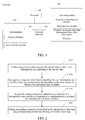
FIG. 1 is a master diagram of a terminal at which a device for recognizing time information from speech data is located in accordance with some embodiments; -
FIG. 2 is a flowchart of a first embodiment of a method for recognizing time information from speech data in accordance with some embodiments; -
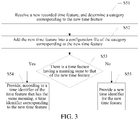
FIG. 3 is a flowchart of a second embodiment of a method for recognizing time information from speech data in accordance with some embodiments; -
FIG. 4 is a flowchart of a third embodiment of a method for recognizing time information from speech data in accordance with some embodiments; -
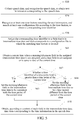
FIG. 5 is a flowchart of a fourth embodiment of a method for recognizing time information from speech data in accordance with some embodiments; -
FIG. 6 is a flowchart of a fifth embodiment of a method for recognizing time information from speech data in accordance with some embodiments; -
FIG. 7 is a flowchart of a sixth embodiment of a method for recognizing time information from speech data in accordance with some embodiments; -
FIG. 8 is a schematic diagram of modules of a first embodiment of a device for recognizing time information from speech data in accordance with some embodiments; -
FIG. 9 is a schematic diagram of modules of a second embodiment of a device for recognizing time information from speech data in accordance with some embodiments; -
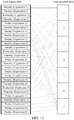
FIG. 10 is a schematic diagram of a first embodiment of a configuration file in accordance with some embodiments; and -
FIG. 11 is a schematic diagram of a second embodiment of a configuration file in accordance with some embodiments. - Implementation, functional features, and advantages of this application are further described with reference to the embodiments and the accompanying drawings.
- It should be understood that the specific embodiments described herein are merely intended to explain this application, but are not intended to limit this application.
- In an embodiment of this application, time information in a voice instruction is recognized in a hard coding manner. Specifically, various keywords are coded in program code, and the keywords in the voice instruction are converted into corresponding time parameters after being recognized, so as to generate corresponding time. However, the hard coding manner needs to add all time keywords into the code.
- Referring to
FIG. 1, FIG. 1 is a master diagram of a terminal at which a device for recognizing time information from speech data is located in accordance with some embodiments. The terminal may be a mobile phone, a pad, or a computer, and may include: at least oneprocessor 101, for example, a CPU, at least onenetwork interface 104, auser interface 103, amemory 105, and at least onecommunications bus 102. Thecommunications bus 102 is configured to achieve connections and communications between these components. Theuser interface 103 may include a display and a keyboard, and may further include standard wired interface and radio interface. Thenetwork interface 104 may include standard wired interface and radio interface (for example, a WiFi interface).Thememory 105 may be a high-speed RAM memory, or may be a non-volatile memory, for example, at least one magnetic disk memory. Thememory 105 may also be at least one storage device that is located far away from theforegoing processor 101. Thememory 105, as computer storage medium, may include an operating system, a network communication module, a user interface module, and a program for recognizing time information from speech data. In accordance with some embodiments, the speech data may be natural speech data, for example, speech data in a natural language expressed by people. - In the terminal at which the device for recognizing time information from speech data is located shown in
FIG. 1 , thenetwork interface 104 is mainly configured to be connected to a server or another terminal, so as to perform data communications with the server or the other terminal. Moreover, theuser interface 103 is mainly configured to receive a user instruction, and interact with the user. Theprocessor 101 may be configured to invoke the program that is stored in thememory 105 and that is for recognizing time information from speech data, and perform the following steps: - collecting the speech data by using the
user interface 103, and recognizing the speech data that contains the time information, to obtain text information corresponding to the speech data; - recognizing at least one time feature matching the text information, and searching at least one configuration file according to the matching time feature, to obtain a corresponding time identifier;
- assigning the corresponding time identifier to a field that is in intermediate data and that corresponds to a configuration file in which the matching time feature is located, the intermediate data including multiple fields, and each field being corresponding to a respective configuration file; and
- obtaining, according to content of each field in the intermediate data, time data corresponding to the time information in the speech data.
- In accordance with some embodiments, the fields in the intermediate data may be: fields corresponding to the foregoing configuration files.
- In an embodiment, the
processor 101 may further perform the following operations in addition to invoke the program that is stored in thememory 105 and that is for recognizing time information from speech data: - receiving a new recorded time feature by using the
user interface 103, and determining a category corresponding to the new time feature; - adding the new time feature into a corresponding configuration file of the category corresponding to the new time feature; and
- determining whether the configuration file of the corresponding category has a time feature having a meaning same to that of the new time feature;
- if yes, setting, according to a time identifier of the time feature that has the same meaning, a time identifier corresponding to the new time feature;
- if not, providing a new time identifier for the new time feature.
- In an embodiment, the
processor 101 may further perform the following operations in addition to invoke the program that is stored in thememory 105 and that is for recognizing time information from speech data: - searching for, in a time feature table in each configuration file, the at least one time feature matching the text information; and
- searching for, in a time identifier table in the configuration file in which the matching time feature is located, the time identifier corresponding to the matching time feature.
- In an embodiment, the
processor 101 may further perform the following operations in addition to invoke the program that is stored in thememory 105 and that is for recognizing time information from speech data: - obtaining a current time when a morning/afternoon field in the assigned intermediate data is not assigned, and a date field is not assigned or is same to date of the current time; and
- determining whether a time identifier of a time point field in the assigned intermediate data is greater than a time point of the current time;
- if yes, setting the morning/afternoon field in the intermediate data to be consistent with a time period of the current time;
- if not, setting the morning/afternoon field in the intermediate data to be contrary to the time period of the current time.
- In an embodiment, the
processor 101 may further perform the following operations in addition to invoke the program that is stored in thememory 105 and that is for recognizing time information from speech data: - obtaining a current time when a day-of-week field in the assigned intermediate data is assigned, and a this week/next week field is not assigned; and
- determining whether a time identifier of the day-of-week field in the assigned intermediate data is greater than day-of-week of the current time;
- if yes, setting the this week/next week field in the intermediate data as this week;
- if not, setting the this week/next week field in the intermediate data as next week.
- In an embodiment, the
processor 101 may further perform the following operations in addition to invoke the program that is stored in thememory 105 and that is for recognizing time information from speech data: - obtaining a current time when the matching time feature includes tomorrow; and
- assigning a date field in the intermediate data to be same to date of the current time when the current time is within a range from 0 a.m. to x a.m., where x is a preset time point.
- According to the device for recognizing time information from speech data and the terminal at which the device is located that are described in
FIG. 1 of this embodiment, a time feature that may possibly occur in text information in the speech data is placed in a corresponding category of configuration file, and the configuration files of all categories are in one-to-one correspondence to all fields in intermediate data. When recognizing time information in the speech data, a matching time feature is searched from the configuration file, and a time identifier corresponding to the matching time feature is obtained. The corresponding time identifier is assigned to a corresponding field in the intermediate data, and exact time data is generated according to content of this field. In this way, all key time features to be matched are placed in a respective configuration file. A recognition program only needs to extract a time identifier corresponding to the time feature from the configuration file, and obtains the extract time data by converting an intermediate file. Therefore, program code is much more readable, effectively avoiding lengthy program code. Only the configuration file needs to be modified so as to modify or add a time feature, without modifying and recoding the program code. This simplifies a process of modifying the recognition program, and facilitates maintenance for the program code. - As shown in
FIG. 2, FIG. 2 is a flowchart of a first embodiment of a method for recognizing time information from speech data in accordance with some embodiments. The method for recognizing time information from speech data includes the following steps: - Step S10: Collect speech data, and recognize the speech data, to obtain text information corresponding to the speech data.
- The terminal carrier in accordance with some embodiments may be a mobile phone, a pad, or a computer connected with a microphone. When a user starts a voice collection function of the terminal, the terminal collects the speech data of the user by using voice collection devices such as a rheomicrophone or a microphone. In accordance with some embodiments, the time information may be information that is contained in the collected speech data, and that is coded in a voice format for describing time. In this embodiment, not only content of the speech data is recognized, but an operable control instruction for the speech data is obtained, so that the terminal performs a corresponding operation according to the control instruction. Therefore, a terminal system includes a common voice recognition program. The text information corresponding to the speech data is obtained through the voice recognition program, and then the content of the speech data is converted into a standard format in a manner described in this embodiment, so as to generate an operable control instruction. The content of the speech data is not limited. This embodiment uses recognizing the time information in the speech data as an example, and recognition and conversion of other content may also use the solution of this embodiment.
- Step S20: Recognize at least one time feature matching the text information, and search at least one configuration file according to the matching time feature, to obtain a corresponding time identifier.
- In accordance with some embodiments, the time feature may be information that is contained in the text information, and that is coded in a text format for describing time. In this embodiment, multiple configuration files are provided, where each configuration file corresponds to a category. For example, a week configuration file includes days of the week and a time feature for each day of the week; a day configuration file includes a time feature of a date; a month configuration file includes a time feature of month; and a hour configuration file includes a time feature of each hour of the day. There are multiple manners for recognizing the time feature in the text information. This embodiment matches content of the text information of the speech data with the time feature of each configuration file, to obtain the matching time feature. For example, the text information of the speech data is "reminding me to have a meeting at half past two p.m. on May 8", then a time feature of "May" is matched in the month configuration file for the month of May, a time feature of "8" is matched in the date configuration file for the date the 8th day of the month, a time feature of "p.m." is matched in a morning/afternoon configuration file as the latter half of the day, a time feature of "two" is matched in the hour configuration file for hour "two" of a listing of hours of the day, and a time feature of "half past" is matched in a minute configuration file for 30 minutes past the hour.
- In addition, the time features may further be divided into absolute time features and relative time features. For example, half past ten, the tenth day of a month, January 1, the fifth day of lunar new year, Friday, the Father's Day, the National Day, and the New Year's Eve would not change as the current time changes, and therefore are all absolute time features. 30 minutes later, February 14 of next year, the third day of next month, next Wednesday, and the day after tomorrow all need to use the current time as reference, and therefore are relative time features because specific time corresponding to the time features also changes if the current time changes.
- Multiple time features of this category are stored in the configuration file, and each time feature corresponds to one time identifier, as shown in
FIG. 10 . For example, "May" in the month configuration file corresponds to atime identifier 5, and "8th day" in the date configuration file corresponds to atime identifier 8. For multiple different time features in the same configuration file that have the same meaning, the corresponding time identifiers are also the same. For example, inFIG. 10 , nine Chinese expressions of Sunday, which are referred to as Sunday (Expression 1 "Zhouqi"), Sunday (Expression 2 "Zhouri"), Sunday (Expression 3 "Zhoutian"), Sunday (Expression 4 "Xingqiqi"), Sunday (Expression 5 "Xingqiri"), Sunday (Expression 6 "Xingqitian"), Sunday (Expression 7 "Libaiqi"), Sunday (Expression 8 "Libairi"), and Sunday (Expression 9 "Libaitian"), have the same meaning (Sunday) and all correspond to a time identifier 7 (the day seven of the week that starts from Monday). In the foregoing embodiments, the time features of "half past" and ":30" in the minute configuration file "min" have the same meaning, and the corresponding time identifiers are both 30 (30 minutes past the hour). In accordance with some embodiments, the time identifier may be information that is contained in the configuration file, and that is coded in a text format for describing time. Both the time feature and the time identifier may be information coded in a text format. It can be seen from the above that a difference between the time feature and the time identifier may be that the two describe time in different manners. - Step S30: Assign the corresponding time identifier to a field that is in intermediate data and that corresponds to a configuration file in which the matching time feature is located.
- In this embodiment, intermediate data is further provided, where the intermediate data includes multiple fields, and each field corresponds to one configuration file. After finding the time feature matching the text information, the terminal assigns the time identifier corresponding to the time feature to a field corresponding to the configuration file in which the matching time feature is located. For example, the configuration file in which the time feature of "May" is located is the month configuration file month. A corresponding field in the intermediate data is a month field month, where a variable of the month field is m, and a unit is "month". The
time identifier 5 corresponding to the time feature of "May" is assigned to the variable of the month field. That is, m is made to be equal to 5, and this field is "May" after being assigned. - Step S40: Obtain, according to content of each field in the intermediate data, time data corresponding to the time information in the speech data.
- After the time identifiers corresponding to all matching time features in the text information of the speech data are assigned to corresponding fields in the intermediate data, the terminal obtains exact time data according to the assigned fields in the intermediate data. The obtained time data includes absolute time and relative time. The absolute time includes specific time and specific date, and also includes lunar date and holidays, for example, the fifth day of the fifth lunar month, the Mid-Autumn Day, and the Father's Day. Relative date is an offset with respect to the current time. For example, if today is March 1, and content obtained according to an assigned field in the intermediate data is five days later, exact time converted by adding five days to the current date is March 6.
- According to this embodiment, a time feature that may possibly occur in text information of speech data is placed in a corresponding category of configuration file, and the configuration files of all categories are in one-to-one correspondence to all fields in intermediate data. When recognizing time information in the speech data, a matching time feature is searched from the configuration file, and a time identifier corresponding to the matching time feature is obtained. The corresponding time identifier is assigned to a corresponding field in the intermediate data, and exact time data is generated according to content of this field. In this way, all key time features to be matched are placed in a respective configuration file. A recognition program only needs to extract a time identifier corresponding to the time feature from the configuration file, and obtains the extract time data by converting an intermediate file. Therefore, program code is much more readable, effectively avoiding lengthy program code. Only the configuration file needs to be modified so as to modify or add a time feature, without modifying and recoding the program code. This simplifies a process of modifying the recognition program, and facilitates maintenance for the program code.
- As shown in
FIG. 3, FIG. 3 is a flowchart of a second embodiment of a method for recognizing time information from speech data in accordance with some embodiments. Modification of a configuration file in the method for recognizing time information from speech data includes the following steps: - Step S51: Receive a new recorded time feature, and determine a category corresponding to the new time feature.
- Step S52: Add the new time feature into a configuration file of the category corresponding to the new time feature.
- Step S53: Determine whether the configuration file of the corresponding category has a time feature having a meaning same to that of the new time feature, if yes, perform step S54, and if not, perform step S55.
- Step S54: Provide, according to a time identifier of the time feature that has the same meaning, a time identifier corresponding to the new time feature.
- Step S55: Provide a new time identifier for the new time feature.
- In this embodiment, when a new key time feature for voice recognition is modified or added, it only needs to add the new time feature into the configuration file of the corresponding category, and provide a corresponding time identifier for the new time feature. If the configuration file includes the time feature having a meaning same to that of the new time feature, the time identifier corresponding to the new time feature is provided according to the time identifier of the time feature that has the same meaning. Otherwise, the new time identifier is set as the time identifier corresponding to the new time feature. In this embodiment, only the configuration file needs to be modified so as to modify or add time feature data, without modifying and recoding program code. This simplifies a process of modifying a recognition program, and facilitates maintenance for the program code.
- As shown in
FIG. 4, FIG. 4 is a flowchart of a third embodiment of a method for recognizing time information from speech data in accordance with some embodiments. This embodiment includes the steps in the embodiments shown in FG. 2, and step S20 further includes: - Step S21: Search, in a time feature table in each configuration file, at least one time feature matching the text information.
- Step S22: Search, in a time identifier table in a configuration file in which the matching time feature is located, a time identifier corresponding to the matching time feature.
- The configuration file in this embodiment includes two tables. As shown in
FIG. 11 , one is the time feature table, and the other one is the time identifier table. When establishing the configuration file, a time feature of a corresponding category of the configuration file is stored in the time feature table, and multiple time identifiers are preset in the time identifier table. A mapping relationship is respectively established between each time feature in the time feature table and the time identifiers in the time identifier table. A quantity of the time features may be smaller than or equal to a quantity of the time identifiers, and multiple time features may correspond to one time identifier. When adding a time feature, the added time feature is placed in the time feature table, and whether the time feature table has an original time feature having a meaning same to that of the added time feature is searched. If the time feature table has an original time feature having a meaning same to that of the added time feature, a time identifier matching the original time feature having the meaning same is searched in the time identifier table, and a mapping relationship is established between a found time feature and the added time feature. If the time feature table does not have an original time feature having a meaning same to that of the added time feature, a new time identifier is established in the time identifier table, and a mapping relationship is established between the new time identifier and the new time feature. When searching the matching time feature, a time feature matching the text information is searched in the time feature table of each configuration file, and then the time identifier corresponding to the matching time feature is searched in the time identifier table of the matched configuration file. - Because the configuration files of this embodiment respectively use a time feature table and a time identifier table to store the time features and the time identifiers, matching and searching are more convenient. Meanwhile, adding of the time features and the time identifiers are performed in respective tables, facilitating extensions of the time feature table and the time identifier table. In addition, when multiple time features correspond to one time identifier, in the embodiment shown in
FIG. 10 , the same time identifier needs to be repeated for multiple times in the configuration file. However, in the embodiment shown inFIG. 11 , there is no need to write too much repeated data in the configuration file, and only a mapping relationship between the two tables needs to be established. Both the time feature and the time identifier occur one time in the configuration file, thereby reducing a data volume in the configuration file, and preventing the configuration file from occupying too much storage space. - As shown in
FIG. 5, FIG. 5 is a flowchart of a fourth embodiment of a method for recognizing time information from speech data in accordance with some embodiments. This embodiment includes the steps in the embodiments shown in FG. 2, and the following steps are further included before step S40: - Step S61: Obtain a current time when a morning/afternoon field in the assigned intermediate data is not assigned, and a date field is not assigned or is same to date of the current time.
- Step S62: Determine whether a time identifier of a time point field in the assigned intermediate data is greater than a time point of the current time, if yes, perform step S63, and if not, perform step S64.
- Step S63: Set the morning/afternoon field in the intermediate data to be consistent with the time period of the current time.
- Step S64: Set the morning/afternoon field in the intermediate data to be a time period different from the time period of the current time. For example, the time period of the current time is morning, and then the intermediate data is set as an afternoon field.
- In this embodiment, incomplete information usually occurs when collecting the speech data. For example, it is unclear whether "reminding me to have a meeting at 10 o'clock" refers to 10 a.m. or 10 p.m. In this case, this time needs to be preferentially recognized as a time in the future. In this case, sizes of the current time and a matching time feature of text information of the speech data may be compared to determine whether a time period in the speech data is consistent with the time period of the current time. For example, the current time is 9 a.m. When the text information of the speech data is "reminding me to have a meeting at 10 o'clock", the matching time feature is "10 o'clock" and is later than the current time, it is default that the "10 o'clock" in the speech data is 10 a.m., and an alarm is set as 10 a.m. If the text information of the speech data is "reminding me to have a meeting at 8 o'clock", the matching time feature "8 o'clock" is earlier than the current time, it is default that the "8 o'clock" in the speech data is 8 p.m., and the alarm is set as 8 p.m. In this way, a time conversion error caused by misunderstanding is avoided, helping to improve accuracy of recognizing time in the speech data.
- As shown in
FIG. 6, FIG. 6 is a flowchart of a fifth embodiment of a method for recognizing time information from speech data in accordance with some embodiments. This embodiment includes the steps in the embodiments shown in FG. 2, and the following steps are further included before step S40: - Step S71: Obtain a current time when a day-of-week field in the assigned intermediate data is assigned, and a this week/next week field is not assigned.
- Step S72: Determine whether a time identifier of the day-of-week field in the assigned intermediate data is greater than day-of-week of the current time, if yes, perform step S73, and if not, perform step S74.
- Step S74: Set the this week/next week field in the intermediate data as this week.
- Step S73: Set the this week/next week field in the intermediate data as next week.
- Regarding incomplete information in this embodiment, such as "reminding me to have a meeting on Wednesday", it is unclear whether the Wednesday refers to this Wednesday or next Wednesday. In this case, the time also needs to be preferentially recognized as a time in the future. In this case, sizes of the current time and a matching time feature of text information of the speech data may be compared to determine whether day-of-week in the speech data is consistent with the day-of-week of the current time. For example, the day-of-week of the current time is Monday. When the text information of the speech data is "reminding me to have a meeting on Wednesday", a matching time feature is "Wednesday" and is later than the current time, it is default that the "Wednesday" in the speech data is this Wednesday, and an alarm is set as this Wednesday. If the day-of-week of the current time is Friday, the matching time feature "Wednesday" is earlier than the current time, it is default that the "Wednesday" in the speech data is next Wednesday, and the alarm is set as next Wednesday. In this way, a time conversion error caused by misunderstanding is avoided, helping to improve accuracy of recognizing time in the speech data.
- As shown in
FIG. 7, FIG. 7 is a flowchart of a sixth embodiment of a method for recognizing time information from speech data in accordance with some embodiments. This embodiment includes the steps in the embodiments shown in FG. 2, and the following steps are further included before step S40: - Step S81: Obtain a current time when the matching time feature includes tomorrow.
- Step S82: Assign a date field in the intermediate data to be same to date of the current time when the current time is within a range from 0 a.m. to x a.m., where x is a preset time point.
- In this embodiment, some special situations may occur when collecting the speech data. People usually consider that an early morning time period belongs to a previous day, but actually the early morning time period belongs to a next day. For example, when the current time is 1 a.m. on a seventh day of a month, it is unclear whether speech data of "reminding me to have a meeting at 10 a.m. tomorrow" refers to 10 a.m. on the seventh day or 10 a.m. on the eighth day. In this case, the user may preset a time range, and it is default that the time range is an early morning time period. Therefore, it is default that a time within the early morning time period belongs to be a previous day. For example, a preset time point is five o'clock, and then the preset early morning time period is from 0 a.m. to 5 a.m., and the current time is 1 a.m. (one o'clock in the morning) on the seventh day. Within this range, the speech data of "reminding me to have a meeting at 10 a.m. tomorrow" refers to 10 a.m. on the seventh day, and an alarm is set as 10 a.m. on the seventh day. In this way, a time conversion error caused by misunderstanding is avoided, helping to improve accuracy of recognizing time in the speech data.
- As shown in
FIG. 8, FIG. 8 is a schematic diagram of modules of a first embodiment of a device for recognizing time information from speech data in accordance with some embodiments. The device for recognizing time information from speech data that is disclosed in this embodiment includes: - a
voice collection module 110, configured to collect speech data, and recognize the speech data, to obtain text information corresponding to the speech data; - a
configuration query module 120, configured to recognize at least one time feature matching the text information, and search at least one configuration file according to the matching time feature, to obtain a corresponding time identifier; - an
intermediate assignment module 130, configured to assign the corresponding time identifier to a field that is in intermediate data and that corresponds to a configuration file in which the matching time feature is located; and - a
time conversion module 140, configured to obtain, according to content of each field in the intermediate data, time data corresponding to the time information in the speech data. - The terminal carrier in accordance with some embodiments may be a mobile phone, a pad, or a computer connected with a microphone. When a user starts a voice collection function of the terminal, the terminal collects the speech data of the user by using voice collection devices such as a rheomicrophone or a microphone. In this embodiment, not only content of the speech data is recognized, but an operable control instruction for the speech data is obtained, so that the terminal performs a corresponding operation according to the control instruction. Therefore, a terminal system includes a common voice recognition program. The text information corresponding to the speech data is obtained through the voice recognition program, and then the content of the speech data is converted into a standard format in a manner described in this embodiment, so as to generate an operable control instruction. The content of the speech data is not limited. This embodiment uses recognizing the time information in the speech data as an example, and recognition and conversion of other content may also use the solution of this embodiment.
- In this embodiment, multiple configuration files are provided, where each configuration file corresponds to a category. For example, a week configuration file includes day of week and a time feature of day of week; a day configuration file includes a time feature of date; a month configuration file includes a time feature of month; and a hour configuration file includes a time feature of time. There are multiple manners for recognizing the time feature in the text information. This embodiment matches content of the text information of the speech data with the time feature of each configuration file, to obtain the matching time feature. For example, the text information of the speech data is "reminding me to have a meeting at half past two p.m. on May 8", then a time feature of "May" is matched in the month configuration file month, a time feature of "8" is matched in the day configuration file day, a time feature of "p.m." is matched in a morning/afternoon configuration file halfday, a time feature of "two" is matched in the hour configuration file hour, and a time feature of "half past" is matched in a minute configuration file min.
- In addition, the time features may further be divided into absolute time features and relative time features. For example, half past ten, the tenth day of a month, January 1, the fifth day of lunar new year, Friday, the Father's Day, the National Day, and the New Year's Eve would not change as the current time changes, and therefore are all absolute time features. 30 minutes later, February 14 of next year, the third day of next month, next Wednesday, and the day after tomorrow all need to use the current time as reference, and therefore are relative time features because specific time corresponding to the time features also changes if the current time changes.
- Multiple time features of this category are stored in the configuration file, and each time feature corresponds to one time identifier, as shown in
FIG. 10 . For example, "May" in the month configuration file corresponds to atime identifier 5, and "8" in the day configuration file corresponds to atime identifier 8. For multiple time features that have the same meaning, the corresponding time identifiers are also the same. For example, inFIG. 10 , nine Chinese expressions of Sunday, which are referred to as Sunday (Expression 1), Sunday (Expression 2), Sunday (Expression 3), Sunday (Expression 4), Sunday (Expression 5), Sunday (Expression 6), Sunday (Expression 7), Sunday (Expression 8), and Sunday (Expression 9), have the same meaning and all correspond to atime identifier 7. In the foregoing embodiments, the time features of "half past" and ":30" in the minute configuration file min have the same meaning, and the corresponding time identifiers are both 30. - In this embodiment, intermediate data is further provided, where the intermediate data includes multiple fields, and each field corresponds to one configuration file. After finding the time feature matching the text information, the terminal assigns the time identifier corresponding to the time feature to a field corresponding to the configuration file in which the matching time feature is located. For example, the configuration file in which the time feature of "May" is located is the month configuration file month. A corresponding field in the intermediate data is a month field month, where a variable of the month field is m, and a unit is "month". The
time identifier 5 corresponding to the time feature of "May" is assigned to the variable of the month field. That is, m is made to be equal to 5, and this field is "May" after being assigned. - After the time identifiers corresponding to all matching time features in the text information of the speech data are assigned to corresponding fields in the intermediate data, the terminal obtains exact time data according to the assigned fields in the intermediate data. The obtained time data includes absolute time and relative time. The absolute time includes specific time and specific date, and also includes lunar date and holidays, for example, the fifth day of the fifth lunar month, the Mid-Autumn Day, and the Father's Day. Relative date is an offset with respect to the current time. For example, if today is March 1, and content obtained according to an assigned field in the intermediate data is five days later, exact time converted by adding five days to the current date is March 6.
- According to this embodiment, a time feature that may possibly occur in text information of speech data is placed in a corresponding category of configuration file, and the configuration files of all categories are in one-to-one correspondence to all fields in intermediate data. When recognizing time information in the speech data, a matching time feature is searched from the configuration file, and a time identifier corresponding to the matching time feature is obtained. The corresponding time identifier is assigned to a corresponding field in the intermediate data, and exact time data is generated according to content of this field. In this way, all key time features to be matched are placed in a respective configuration file. A recognition program only needs to extract a time identifier corresponding to the time feature from the configuration file, and obtains the extract time data by converting an intermediate file. Therefore, program code is much more readable, effectively avoiding lengthy program code. Only the configuration file needs to be modified so as to modify or add time feature data, without modifying and recoding the program code. This simplifies a process of modifying the recognition program, and facilitates maintenance for the program code.
- As shown in
FIG. 9, FIG. 9 is a schematic diagram of modules of a second embodiment of a device for recognizing time information from speech data in accordance with some embodiments. This embodiment includes the modules in the embodiments shown inFIG. 8 , and further includes aconfiguration modification module 150 that is configured to: - receive a new recorded time feature, and determine a category corresponding to the new time feature;
- add the new time feature into a configuration file of the category corresponding to the new time feature; and
- determine whether the configuration file of the corresponding category has a time feature having a meaning same to that of the new time feature;
- if yes, set, according to a time identifier of the time feature that has the same meaning, a time identifier corresponding to the new time feature;
- if not, provide a new time identifier for the new time feature.
- In this embodiment, when a new key time feature for voice recognition is modified or added, it only needs to add the new time feature into the configuration file of the corresponding category, and provide a corresponding time identifier for the new time feature. If the configuration file includes the time feature having a meaning same to that of the new time feature, the time identifier corresponding to the new time feature is provided according to the time identifier of the time feature that has the same meaning. Otherwise, the new time identifier is set as the time identifier corresponding to the new time feature. In this embodiment, only the configuration file needs to be modified so as to modify or add time feature data, without modifying and recoding program code. This simplifies a process of modifying a recognition program, and facilitates maintenance for the program code.
- Further, the
configuration query module 120 is further configured to: - search, in a time feature table in each configuration file, the at least one time feature matching the text information; and
- search, in a time identifier table in the configuration file in which the matching time feature is located, the time identifier corresponding to the matching time feature.
- The configuration file in this embodiment includes two tables. As shown in
FIG. 11 , one is the time feature table, and the other one is the time identifier table. When establishing the configuration file, a time feature of a corresponding category of the configuration file is stored in the time feature table, and multiple time identifiers are preset in the time identifier table. A mapping relationship is respectively established between each time feature in the time feature table and the time identifiers in the time identifier table. A quantity of the time features may be smaller than or equal to a quantity of the time identifiers, and multiple time features may correspond to one time identifier. When adding a time feature, the added time feature is placed in the time feature table, and whether the time feature table has an original time feature having a meaning same to that of the added time feature is searched. If the time feature table has an original time feature having a meaning same to that of the added time feature, a time identifier matching the original time feature having the meaning same is searched in the time identifier table, and a mapping relationship is established between a found time feature and the added time feature. If the time feature table does not have an original time feature having a meaning same to that of the added time feature, a new time identifier is established in the time identifier table, and a mapping relationship is established between the new time identifier and the new time feature. When searching the matching time feature, a time feature matching the text information is searched in the time feature table of each configuration file, and then the time identifier corresponding to the matching time feature is searched in the time identifier table of the matched configuration file. - Because the configuration files of this embodiment respectively use a time feature table and a time identifier table to store the time features and the time identifiers, matching and searching are more convenient. Meanwhile, adding of the time features and the time identifiers are performed in respective tables, facilitating extensions of the time feature table and the time identifier table. In addition, when multiple time features correspond to one time identifier, in the embodiment shown in
FIG. 10 , the same time identifier needs to be repeated for multiple times in the configuration file. However, in the embodiment shown inFIG. 11 , there is no need to write too much repeated data in the configuration file, and only a mapping relationship between the two tables needs to be established. Both the time feature and the time identifier occur one time in the configuration file, thereby reducing a data volume in the configuration file, and preventing the configuration file from occupying too much storage space. - Further, the
intermediate assignment module 130 is further configured to: - obtain a current time when a morning/afternoon field in the assigned intermediate data is not assigned, and a date field is not assigned or is same to date of the current time; and
- determine whether a time identifier of a time point field in the assigned intermediate data is greater than a time point of the current time;
- if yes, set the morning/afternoon field in the intermediate data to be consistent with a time period of the current time;
- if not, set the morning/afternoon field in the intermediate data to be contrary to the time period of the current time.
- In this embodiment, incomplete information usually occurs when collecting the speech data. For example, it is unclear whether "reminding me to have a meeting at 10 o'clock" refers to 10 a.m. or 10 p.m. In this case, this time needs to be preferentially recognized as a time in the future. In this case, sizes of the current time and a matching time feature of text information of the speech data may be compared to determine whether a time period in the speech data is consistent with the time period of the current time. For example, the current time is 9 a.m. When the text information of the speech data is "reminding me to have a meeting at 10 o'clock", the matching time feature is "10 o'clock" and is later than the current time, it is default that the "10 o'clock" in the speech data is 10 a.m., and an alarm is set as 10 a.m. If the text information of the speech data is "reminding me to have a meeting at 8 o'clock", the matching time feature "8 o'clock" is earlier than the current time, it is default that the "8 o'clock" in the speech data is 8 p.m., and the alarm is set as 8 p.m. In this way, a time conversion error caused by misunderstanding is avoided, helping to improve accuracy of recognizing time in the speech data.
- Further, the
intermediate assignment module 130 is further configured to: - obtain a current time when a day-of-week field in the assigned intermediate data is assigned, and a this week/next week field is not assigned; and
- determine whether a time identifier of the day-of-week field in the assigned intermediate data is greater than day-of-week of the current time;
- if yes, set the this week/next week field in the intermediate data as this week;
- if not, set the this week/next week field in the intermediate data as next week.
- Regarding incomplete information in this embodiment, such as "reminding me to have a meeting on Wednesday", it is unclear whether the Wednesday refers to this Wednesday or next Wednesday. In this case, the time also needs to be preferentially recognized as a time in the future. In this case, sizes of the current time and a matching time feature of text information of the speech data may be compared to determine whether day-of-week in the speech data is consistent with the day-of-week of the current time. For example, the day-of-week of the current time is Monday. When the text information of the speech data is "reminding me to have a meeting on Wednesday", a matching time feature is "Wednesday" and is later than the current time, it is default that the "Wednesday" in the speech data is this Wednesday, and an alarm is set as this Wednesday. If the day-of-week of the current time is Friday, the matching time feature "Wednesday" is earlier than the current time, it is default that the "Wednesday" in the speech data is next Wednesday, and the alarm is set as next Wednesday. In this way, a time conversion error caused by misunderstanding is avoided, helping to improve accuracy of recognizing time in the speech data.
- Further, the
intermediate assignment module 130 is further configured to: - obtain a current time when the matching time feature includes tomorrow; and
- assign a date field in the intermediate data to be same to date of the current time when the current time is within a range from 0 a.m. to x a.m., where x is a preset time point.
- In this embodiment, some special situations may occur when collecting the speech data. People usually consider that an early morning time period belongs to a previous day, but actually the early morning time period belongs to a next day. For example, when the current time is 1 a.m. on a seventh day of a month, it is unclear whether speech data of "reminding me to have a meeting at 10 a.m. tomorrow" refers to 10 a.m. on the seventh day or 10 a.m. on the eighth day. In this case, the user may preset a time range, and it is default that the time range is an early morning time period. Therefore, it is default that a time within the early morning time period belongs to be a previous day. For example, a preset time point is five o'clock, and then the preset early morning time period is from 0 a.m. to 5 a.m., and the current time is 1 a.m. (one o'clock in the morning) on the seventh day. Within this range, the speech data of "reminding me to have a meeting at 10 a.m. tomorrow" refers to 10 a.m. on the seventh day, and an alarm is set as 10 a.m. on the seventh day. In this way, a time conversion error caused by misunderstanding is avoided, helping to improve accuracy of recognizing time in the speech data.
- In should be noted that in this specification, the terms "include", "comprise", or any variants thereof are intended to cover a non-exclusive inclusion. Therefore, in the context of a process, a method, an article, or a device that includes a series of elements, the process, method, object, article, or device not only includes such elements, but also includes other elements not specified expressly, or may include inherent elements of the process, method, article, or device. Unless otherwise specified, an element limited by "include a/an..." does not exclude other same elements existing in the process, the method, the article, or the device that includes the element.
- The sequence numbers of the foregoing embodiments of this application are merely for the convenience of description, and do not imply the preference among the embodiments.
- Based on the foregoing descriptions of the implementations, a person skilled in the art may clearly understand that the methods in the foregoing embodiments may be implemented by software in addition to a necessary universal hardware platform or by hardware only. In most circumstances, the former is an exemplary implementation. Based on such an understanding, the technical solutions of this application essentially or the part contributing to the existing technology may be implemented in a form of a software product. The computer software product is stored in a storage medium (such as a ROM/RAM, a magnetic disc, or an optical disc), and includes several instructions for instructing a terminal device (which may be a mobile phone, a computer, a server, a network device, or the like) to perform the methods described in the embodiments of this application.
- The foregoing descriptions are merely preferred embodiments of this application but are not intended to limit the patent scope of this application. Any equivalent modifications made to the structures or processes based on the content of the specification and the accompanying drawings of this application for direct or indirect use in other relevant technical fields shall also be encompassed in the patent protection scope of this application.
Claims (12)
- A method for recognizing time information from speech data, comprising the following steps:collecting speech data, recognizing the speech data that contains time information, and obtaining text information corresponding to the speech data;identifying at least a first time feature matching the text information;searching within a respective configuration file corresponding to the first time feature to obtain a corresponding time identifier for the first time feature;assigning the corresponding time identifier to a field that is in intermediate data and that corresponds to the respective configuration file in which the first time feature is located, the intermediate data comprising multiple fields, and each field being corresponding to a respective configuration file of a plurality of configuration files; andobtaining, according to content of one or more fields in the intermediate data, time data corresponding to the time information contained in the speech data.
- The method for recognizing time information from speech data according to claim 1, further comprising:receiving a new recorded time feature, and determining a category corresponding to the new time feature;adding the new time feature into a respective configuration file of the category corresponding to the new time feature;determining whether the respective configuration file of the corresponding category has a time feature having the same meaning as that of the new time feature;if yes, setting, according to a time identifier of the time feature that has the same meaning, a time identifier corresponding to the new time feature; andif not, providing a new time identifier for the new time feature.
- The method for recognizing time information from speech data according to claim 1, wherein identifying at least the first time feature matching the text information, and searching within a respective configuration file corresponding to the first time feature to obtain a corresponding time identifier for the first time feature comprises:searching, in a time feature table in each configuration file of the plurality of configuration files, for a time feature that matches the text information; andsearching, in a time identifier table in the respective configuration file in which the first time feature is located, the time identifier corresponding to the first time feature.
- The method for recognizing time information from speech data according to any one of claims 1 to 3, wherein before obtaining, according to content of one or more fields in the intermediate data, time data corresponding to the time information in the voice information, the method further comprises:obtaining a current time in accordance with a determination that a morning/afternoon field in the intermediate data does not have an assigned value, and that a date field does not have an assigned value or is assigned the same date as a current date; anddetermining whether a time identifier of a time point field in the intermediate data is later than a time point of the current time;in accordance with a determination that the time identifier of the time point field in the intermediate data is later than the time point of the current time, setting the morning/afternoon field in the intermediate data to be a morning/afternoon value that is consistent with the current time; andin accordance with a determination that the time identifier of the time point field in the intermediate data is earlier than the time point of the current time, setting the morning/afternoon field in the intermediate data to be a morning/afternoon value that is different from a morning/afternoon value consistent with the current time.
- The method for recognizing time information from speech data according to any one of claims 1 to 3, wherein before obtaining, according to content of one or more fields in the intermediate data, time data corresponding to the time information contained in the speech data, the method further comprises:obtaining a current time in accordance with a determination that a day-of-week field in the intermediate data has an assigned value, and that a this-week/next-week field does not have an assigned value;determining whether a time identifier of the day-of-week field in the intermediate data is later than a day-of-week value of the current time;in accordance with a determination that the time identifier of the day-of-week field in the intermediate time data is later than the day-of-week value of the current time, setting the value of the this-week/next-week field in the intermediate data as this week; andin accordance with a determination that the time identifier of the day-of-week field in the intermediate time data is earlier than the day-of-week value of the current time, setting the value of the this-week/next-week field in the intermediate date as the next week.
- The method for recognizing time information from voice information according to any one of claims 1 to 3, wherein before the step of the obtaining, according to content of each field in the intermediate data, time data corresponding to the time information in the voice information, the method further comprises:obtaining a current time when the matching time feature comprises tomorrow; andassigning a date field in the intermediate data to be same to date of the current time when the current time is within a range from 0 a.m. to x a.m., wherein x is a preset time point.
- A device for recognizing time information from voice information, comprising:a voice collection module, configured to speech data, recognize the speech data that contains time information, and obtaining text information corresponding to the speech data;a configuration query module, configured to identify at least a first time feature matching the text information, search within a respective configuration file corresponding to the first time feature to obtain a corresponding time identifier for the first time feature;an intermediate assignment module, configured to assign the corresponding time identifier to a field that is in intermediate data and that corresponds to the respective configuration file in which the first time feature is located, the intermediate data comprising multiple fields, and each field being corresponding to a respective configuration file of a plurality of configuration files; anda time conversion module, configured to obtain, according to content of one or more fields in the intermediate data, time data corresponding to the time information contained in the speech data.
- The device for recognizing time information from voice information according to claim 7, further comprising a configuration modification module that is configured to:receive a new recorded time feature, and determining a category corresponding to the new time feature;add the new time feature into a respective configuration file of the category corresponding to the new time feature;determine whether the respective configuration file of the corresponding category has a time feature having the same meaning as that of the new time feature;if yes, set, according to a time identifier of the time feature that has the same meaning, a time identifier corresponding to the new time feature; andif not, provide a new time identifier for the new time feature.
- The device for recognizing time information from voice information according to claim 7, wherein the configuration query module is further configured to:search, in a time feature table in each configuration file of the plurality of configuration files, for a time feature that matches the text information; andsearch, in a time identifier table in the respective configuration file in which the first time feature is located, the time identifier corresponding to the first time feature.
- The device for recognizing time information from voice information according to any one of claims 7 to 9, wherein the intermediate assignment module is further configured to:obtain a current time in accordance with a determination that a morning/afternoon field in the intermediate data does not have an assigned value, and that a date field does not have an assigned value or is assigned the same date as a current date; anddetermine whether a time identifier of a time point field in the intermediate data is later than a time point of the current time;in accordance with a determination that the time identifier of the time point field in the intermediate data is later than the time point of the current time, set the morning/afternoon field in the intermediate data to be a morning/afternoon value that is consistent with the current time; andin accordance with a determination that the time identifier of the time point field in the intermediate data is earlier than the time point of the current time, set the morning/afternoon field in the intermediate data to be a morning/afternoon value that is different from a morning/afternoon value consistent with the current time.
- The device for recognizing time information from voice information according to any one of claims 7 to 9, wherein the intermediate assignment module is further configured to:obtain a current time in accordance with a determination that a day-of-week field in the intermediate data has an assigned value, and that a this-week/next-week field does not have an assigned value; anddetermine whether a time identifier of the day-of-week field in the intermediate data is later than a day-of-week value of the current time;in accordance with a determination that the time identifier of the day-of-week field in the intermediate time data is later than the day-of-week value of the current time, set the value of the this-week/next-week field in the intermediate data as this week; andin accordance with a determination that the time identifier of the day-of-week field in the intermediate time data is earlier than the day-of-week value of the current time, set the value of the this-week/next-week field in the intermediate date as the next week.
- The device for recognizing time information from voice information according to any one of claims 7 to 9, wherein the intermediate assignment module is further configured to:obtain a current time when the matching time feature comprises tomorrow; andassign a date field in the intermediate data to be same to date of the current time when the current time is within a range from 0 a.m. to x a.m., wherein x is a preset time point.
Applications Claiming Priority (2)
| Application Number | Priority Date | Filing Date | Title |
|---|---|---|---|
| CN201510465853.7A CN106409295B (en) | 2015-07-31 | 2015-07-31 | Method and device for recognizing time information from natural voice information |
| PCT/CN2016/086125 WO2017020657A1 (en) | 2015-07-31 | 2016-06-17 | Method and device for identifying time information from voice information |
Publications (3)
| Publication Number | Publication Date |
|---|---|
| EP3330962A1 true EP3330962A1 (en) | 2018-06-06 |
| EP3330962A4 EP3330962A4 (en) | 2018-08-08 |
| EP3330962B1 EP3330962B1 (en) | 2021-02-24 |
Family
ID=57942393
Family Applications (1)
| Application Number | Title | Priority Date | Filing Date |
|---|---|---|---|
| EP16832145.3A Active EP3330962B1 (en) | 2015-07-31 | 2016-06-17 | Method and device for identifying time information from voice information |
Country Status (6)
| Country | Link |
|---|---|
| US (1) | US10249302B2 (en) |
| EP (1) | EP3330962B1 (en) |
| JP (1) | JP6667931B2 (en) |
| KR (1) | KR102046728B1 (en) |
| CN (1) | CN106409295B (en) |
| WO (1) | WO2017020657A1 (en) |
Families Citing this family (13)
| Publication number | Priority date | Publication date | Assignee | Title |
|---|---|---|---|---|
| CN107179714B (en) * | 2017-05-17 | 2020-06-05 | 广东美的制冷设备有限公司 | Time interval identification method and device based on equipment control |
| CN107423950B (en) * | 2017-07-07 | 2021-07-23 | 北京小米移动软件有限公司 | Alarm clock setting method and device |
| WO2019041343A1 (en) * | 2017-09-04 | 2019-03-07 | 深圳传音通讯有限公司 | Alarm setting method, user terminal, and electronic device |
| CN107679823A (en) * | 2017-09-06 | 2018-02-09 | 珠海市魅族科技有限公司 | A kind of alarm clock prompting method, device, computer installation and computer-readable recording medium |
| CN108597504A (en) * | 2018-04-04 | 2018-09-28 | 上海思依暄机器人科技股份有限公司 | A kind of speech analysis method, apparatus and robot |
| CN108965588A (en) * | 2018-06-27 | 2018-12-07 | 维沃移动通信有限公司 | A kind of information cuing method and mobile terminal |
| CN109241271B (en) * | 2018-08-30 | 2021-09-17 | 天津做票君机器人科技有限公司 | Method for identifying draft due date in natural language by draft transaction robot |
| US11727245B2 (en) * | 2019-01-15 | 2023-08-15 | Fmr Llc | Automated masking of confidential information in unstructured computer text using artificial intelligence |
| CN110047489A (en) * | 2019-04-04 | 2019-07-23 | 科讯嘉联信息技术有限公司 | A kind of household electrical appliances apply to install the method and system that the time is applied to install in scene intelligent typing |
| CN110619873A (en) * | 2019-08-16 | 2019-12-27 | 北京小米移动软件有限公司 | Audio processing method, device and storage medium |
| WO2024076139A1 (en) * | 2022-10-06 | 2024-04-11 | 삼성전자 주식회사 | Electronic device and method for processing user utterance in electronic device |
| US20240169165A1 (en) * | 2022-11-17 | 2024-05-23 | Samsung Electronics Co., Ltd. | Automatically Generating Annotated Ground-Truth Corpus for Training NLU Model |
| CN117725908B (en) * | 2024-02-07 | 2024-05-24 | 青岛海尔科技有限公司 | Time analysis method, device and equipment in natural language processing |
Family Cites Families (29)
| Publication number | Priority date | Publication date | Assignee | Title |
|---|---|---|---|---|
| JPH0668797B2 (en) * | 1984-05-15 | 1994-08-31 | オムロン株式会社 | Electronic cash register |
| US6658455B1 (en) * | 1999-12-30 | 2003-12-02 | At&T Corp. | Method and system for an enhanced network and customer premise equipment personal directory |
| JP2002023783A (en) * | 2000-07-13 | 2002-01-25 | Fujitsu Ltd | Dialogue processing system |
| JP2002215592A (en) * | 2001-01-19 | 2002-08-02 | Just Syst Corp | Date and time determining device, date and time determining method, and recording medium |
| US7366979B2 (en) * | 2001-03-09 | 2008-04-29 | Copernicus Investments, Llc | Method and apparatus for annotating a document |
| US7246063B2 (en) * | 2002-02-15 | 2007-07-17 | Sap Aktiengesellschaft | Adapting a user interface for voice control |
| CN1663249A (en) * | 2002-06-24 | 2005-08-31 | 松下电器产业株式会社 | Metadata generating device, its generating method, and retrieval device |
| US20040260561A1 (en) * | 2003-01-10 | 2004-12-23 | Joseph Enterprises, Inc. | Voice-activated programmable remote control |
| US20090119062A1 (en) * | 2007-11-01 | 2009-05-07 | Timetracking Buddy Llc | Time Tracking Methods and Systems |
| CN101246687A (en) * | 2008-03-20 | 2008-08-20 | 北京航空航天大学 | An intelligent voice interaction system and interaction method |
| JP5353346B2 (en) * | 2009-03-19 | 2013-11-27 | カシオ計算機株式会社 | Schedule management apparatus and schedule management program |
| US20100318398A1 (en) * | 2009-06-15 | 2010-12-16 | Xerox Corporation | Natural language interface for collaborative event scheduling |
| CN101609445A (en) * | 2009-07-16 | 2009-12-23 | 复旦大学 | Key Subtopic Extraction Method Based on Time Information |
| US8190420B2 (en) * | 2009-08-04 | 2012-05-29 | Autonomy Corporation Ltd. | Automatic spoken language identification based on phoneme sequence patterns |
| CN102023995B (en) * | 2009-09-22 | 2013-01-30 | 株式会社理光 | Speech retrieval apparatus and speech retrieval method |
| US9922332B2 (en) * | 2009-12-09 | 2018-03-20 | Robert Sant'Anselmo | Digital signatory and time stamping notary service for documents and objects |
| US8880406B2 (en) * | 2011-03-28 | 2014-11-04 | Epic Systems Corporation | Automatic determination of and response to a topic of a conversation |
| CN102207845A (en) * | 2011-05-25 | 2011-10-05 | 盛乐信息技术(上海)有限公司 | Device and method for managing schedule in voice manner |
| CN102956231B (en) * | 2011-08-23 | 2014-12-31 | 上海交通大学 | Voice key information recording device and method based on semi-automatic correction |
| US8914285B2 (en) * | 2012-07-17 | 2014-12-16 | Nice-Systems Ltd | Predicting a sales success probability score from a distance vector between speech of a customer and speech of an organization representative |
| US9172747B2 (en) * | 2013-02-25 | 2015-10-27 | Artificial Solutions Iberia SL | System and methods for virtual assistant networks |
| CN104023269A (en) * | 2013-03-01 | 2014-09-03 | 联想(北京)有限公司 | Event reminding method and electronic equipment |
| US11074409B2 (en) * | 2013-04-10 | 2021-07-27 | Ruslan SHIGABUTDINOV | Systems and methods for processing input streams of calendar applications |
| CN104123937B (en) * | 2013-04-28 | 2016-02-24 | 腾讯科技(深圳)有限公司 | Remind method to set up, device and system |
| CN103390229A (en) * | 2013-07-23 | 2013-11-13 | 宇龙计算机通信科技(深圳)有限公司 | Schedule reminding method and device |
| CN103886093A (en) * | 2014-04-03 | 2014-06-25 | 江苏物联网研究发展中心 | Method for processing synonyms of electronic commerce search engine |
| CN104008476A (en) * | 2014-05-09 | 2014-08-27 | 北京奇虎科技有限公司 | Reminding method and device for time-class information |
| CN104021787A (en) * | 2014-06-13 | 2014-09-03 | 中国民航信息网络股份有限公司 | Air ticket searching system and method based on voice recognition |
| US20160070580A1 (en) * | 2014-09-09 | 2016-03-10 | Microsoft Technology Licensing, Llc | Digital personal assistant remote invocation |
-
2015
- 2015-07-31 CN CN201510465853.7A patent/CN106409295B/en active Active
-
2016
- 2016-06-17 EP EP16832145.3A patent/EP3330962B1/en active Active
- 2016-06-17 KR KR1020187000743A patent/KR102046728B1/en active Active
- 2016-06-17 JP JP2018504856A patent/JP6667931B2/en active Active
- 2016-06-17 WO PCT/CN2016/086125 patent/WO2017020657A1/en not_active Ceased
-
2017
- 2017-09-07 US US15/698,423 patent/US10249302B2/en active Active
Also Published As
| Publication number | Publication date |
|---|---|
| WO2017020657A1 (en) | 2017-02-09 |
| CN106409295A (en) | 2017-02-15 |
| JP6667931B2 (en) | 2020-03-18 |
| KR20180016554A (en) | 2018-02-14 |
| JP2018527611A (en) | 2018-09-20 |
| EP3330962A4 (en) | 2018-08-08 |
| CN106409295B (en) | 2020-06-16 |
| US20170372702A1 (en) | 2017-12-28 |
| US10249302B2 (en) | 2019-04-02 |
| KR102046728B1 (en) | 2019-11-19 |
| EP3330962B1 (en) | 2021-02-24 |
Similar Documents
| Publication | Publication Date | Title |
|---|---|---|
| EP3330962A1 (en) | Method and device for identifying time information from voice information | |
| US11682380B2 (en) | Systems and methods for crowdsourced actions and commands | |
| CN113051362A (en) | Data query method and device and server | |
| CN108132768A (en) | The processing method of phonetic entry, terminal and network server | |
| EP3648032A1 (en) | Information inputting method, information inputting device, and information inputting system | |
| CN106782526A (en) | Sound control method and device | |
| CN106020953A (en) | Method and device for establishing schedule in electronic calendar | |
| CN111078701B (en) | Data extraction method and device based on relational database | |
| CN104978045B (en) | A kind of Chinese character input method and device | |
| CN107465599A (en) | Schedule method to set up and device in a kind of instant messaging | |
| CN110515951A (en) | A BOM standardization method, system, electronic equipment and storage medium | |
| CN108628988A (en) | A kind of clothing matching recommends method, apparatus, Intelligent clothes cabinet and storage medium | |
| JP2015060391A (en) | Server device, terminal device, program, system, and method for providing information in response to input of data by user | |
| CN109065045A (en) | Audio recognition method, device, electronic equipment and computer readable storage medium | |
| CN109190119B (en) | Time extraction method and device, storage medium and electronic device | |
| CN104202458A (en) | Method and intelligent terminal for automatically storing contact information | |
| CN110797014A (en) | A kind of speech recognition method, device and computer storage medium | |
| CN106850923B (en) | contact information display method, system and equipment | |
| CN102890801A (en) | Method and device for text prompting | |
| CN107316185B (en) | Method and system for establishing detection process in LIMS (laser induced mechanical breakdown spectroscopy) system | |
| CN109816423A (en) | Product programming method and server based on speech recognition | |
| CN103474063B (en) | Voice identification system and method | |
| CN104796497A (en) | Information push method and information push system based on predefined location block tag | |
| CN111563359A (en) | Time identification method, device and related equipment | |
| CN106649698B (en) | Information processing method and information processing device |
Legal Events
| Date | Code | Title | Description |
|---|---|---|---|
| STAA | Information on the status of an ep patent application or granted ep patent |
Free format text: STATUS: THE INTERNATIONAL PUBLICATION HAS BEEN MADE |
|
| PUAI | Public reference made under article 153(3) epc to a published international application that has entered the european phase |
Free format text: ORIGINAL CODE: 0009012 |
|
| STAA | Information on the status of an ep patent application or granted ep patent |
Free format text: STATUS: REQUEST FOR EXAMINATION WAS MADE |
|
| 17P | Request for examination filed |
Effective date: 20180115 |
|
| AK | Designated contracting states |
Kind code of ref document: A1 Designated state(s): AL AT BE BG CH CY CZ DE DK EE ES FI FR GB GR HR HU IE IS IT LI LT LU LV MC MK MT NL NO PL PT RO RS SE SI SK SM TR |
|
| AX | Request for extension of the european patent |
Extension state: BA ME |
|
| A4 | Supplementary search report drawn up and despatched |
Effective date: 20180706 |
|
| RIC1 | Information provided on ipc code assigned before grant |
Ipc: G06F 17/27 20060101ALI20180702BHEP Ipc: G10L 15/22 20060101AFI20180702BHEP |
|
| DAV | Request for validation of the european patent (deleted) | ||
| DAX | Request for extension of the european patent (deleted) | ||
| REG | Reference to a national code |
Ref country code: DE Ref legal event code: R079 Ref document number: 602016053279 Country of ref document: DE Free format text: PREVIOUS MAIN CLASS: G10L0015260000 Ipc: G10L0015220000 |
|
| GRAP | Despatch of communication of intention to grant a patent |
Free format text: ORIGINAL CODE: EPIDOSNIGR1 |
|
| STAA | Information on the status of an ep patent application or granted ep patent |
Free format text: STATUS: GRANT OF PATENT IS INTENDED |
|
| RIC1 | Information provided on ipc code assigned before grant |
Ipc: G06F 40/30 20200101ALI20201008BHEP Ipc: G10L 15/22 20060101AFI20201008BHEP |
|
| INTG | Intention to grant announced |
Effective date: 20201102 |
|
| GRAS | Grant fee paid |
Free format text: ORIGINAL CODE: EPIDOSNIGR3 |
|
| GRAA | (expected) grant |
Free format text: ORIGINAL CODE: 0009210 |
|
| STAA | Information on the status of an ep patent application or granted ep patent |
Free format text: STATUS: THE PATENT HAS BEEN GRANTED |
|
| AK | Designated contracting states |
Kind code of ref document: B1 Designated state(s): AL AT BE BG CH CY CZ DE DK EE ES FI FR GB GR HR HU IE IS IT LI LT LU LV MC MK MT NL NO PL PT RO RS SE SI SK SM TR |
|
| REG | Reference to a national code |
Ref country code: CH Ref legal event code: EP |
|
| REG | Reference to a national code |
Ref country code: AT Ref legal event code: REF Ref document number: 1365499 Country of ref document: AT Kind code of ref document: T Effective date: 20210315 |
|
| REG | Reference to a national code |
Ref country code: IE Ref legal event code: FG4D |
|
| REG | Reference to a national code |
Ref country code: DE Ref legal event code: R096 Ref document number: 602016053279 Country of ref document: DE |
|
| REG | Reference to a national code |
Ref country code: LT Ref legal event code: MG9D |
|
| REG | Reference to a national code |
Ref country code: NL Ref legal event code: MP Effective date: 20210224 |
|
| PG25 | Lapsed in a contracting state [announced via postgrant information from national office to epo] |
Ref country code: GR Free format text: LAPSE BECAUSE OF FAILURE TO SUBMIT A TRANSLATION OF THE DESCRIPTION OR TO PAY THE FEE WITHIN THE PRESCRIBED TIME-LIMIT Effective date: 20210525 Ref country code: HR Free format text: LAPSE BECAUSE OF FAILURE TO SUBMIT A TRANSLATION OF THE DESCRIPTION OR TO PAY THE FEE WITHIN THE PRESCRIBED TIME-LIMIT Effective date: 20210224 Ref country code: FI Free format text: LAPSE BECAUSE OF FAILURE TO SUBMIT A TRANSLATION OF THE DESCRIPTION OR TO PAY THE FEE WITHIN THE PRESCRIBED TIME-LIMIT Effective date: 20210224 Ref country code: NO Free format text: LAPSE BECAUSE OF FAILURE TO SUBMIT A TRANSLATION OF THE DESCRIPTION OR TO PAY THE FEE WITHIN THE PRESCRIBED TIME-LIMIT Effective date: 20210524 Ref country code: PT Free format text: LAPSE BECAUSE OF FAILURE TO SUBMIT A TRANSLATION OF THE DESCRIPTION OR TO PAY THE FEE WITHIN THE PRESCRIBED TIME-LIMIT Effective date: 20210624 Ref country code: LT Free format text: LAPSE BECAUSE OF FAILURE TO SUBMIT A TRANSLATION OF THE DESCRIPTION OR TO PAY THE FEE WITHIN THE PRESCRIBED TIME-LIMIT Effective date: 20210224 Ref country code: BG Free format text: LAPSE BECAUSE OF FAILURE TO SUBMIT A TRANSLATION OF THE DESCRIPTION OR TO PAY THE FEE WITHIN THE PRESCRIBED TIME-LIMIT Effective date: 20210524 |
|
| REG | Reference to a national code |
Ref country code: AT Ref legal event code: MK05 Ref document number: 1365499 Country of ref document: AT Kind code of ref document: T Effective date: 20210224 |
|
| PG25 | Lapsed in a contracting state [announced via postgrant information from national office to epo] |
Ref country code: SE Free format text: LAPSE BECAUSE OF FAILURE TO SUBMIT A TRANSLATION OF THE DESCRIPTION OR TO PAY THE FEE WITHIN THE PRESCRIBED TIME-LIMIT Effective date: 20210224 Ref country code: NL Free format text: LAPSE BECAUSE OF FAILURE TO SUBMIT A TRANSLATION OF THE DESCRIPTION OR TO PAY THE FEE WITHIN THE PRESCRIBED TIME-LIMIT Effective date: 20210224 Ref country code: LV Free format text: LAPSE BECAUSE OF FAILURE TO SUBMIT A TRANSLATION OF THE DESCRIPTION OR TO PAY THE FEE WITHIN THE PRESCRIBED TIME-LIMIT Effective date: 20210224 Ref country code: PL Free format text: LAPSE BECAUSE OF FAILURE TO SUBMIT A TRANSLATION OF THE DESCRIPTION OR TO PAY THE FEE WITHIN THE PRESCRIBED TIME-LIMIT Effective date: 20210224 Ref country code: RS Free format text: LAPSE BECAUSE OF FAILURE TO SUBMIT A TRANSLATION OF THE DESCRIPTION OR TO PAY THE FEE WITHIN THE PRESCRIBED TIME-LIMIT Effective date: 20210224 |
|
| PG25 | Lapsed in a contracting state [announced via postgrant information from national office to epo] |
Ref country code: IS Free format text: LAPSE BECAUSE OF FAILURE TO SUBMIT A TRANSLATION OF THE DESCRIPTION OR TO PAY THE FEE WITHIN THE PRESCRIBED TIME-LIMIT Effective date: 20210624 |
|
| PG25 | Lapsed in a contracting state [announced via postgrant information from national office to epo] |
Ref country code: SM Free format text: LAPSE BECAUSE OF FAILURE TO SUBMIT A TRANSLATION OF THE DESCRIPTION OR TO PAY THE FEE WITHIN THE PRESCRIBED TIME-LIMIT Effective date: 20210224 Ref country code: AT Free format text: LAPSE BECAUSE OF FAILURE TO SUBMIT A TRANSLATION OF THE DESCRIPTION OR TO PAY THE FEE WITHIN THE PRESCRIBED TIME-LIMIT Effective date: 20210224 Ref country code: EE Free format text: LAPSE BECAUSE OF FAILURE TO SUBMIT A TRANSLATION OF THE DESCRIPTION OR TO PAY THE FEE WITHIN THE PRESCRIBED TIME-LIMIT Effective date: 20210224 Ref country code: CZ Free format text: LAPSE BECAUSE OF FAILURE TO SUBMIT A TRANSLATION OF THE DESCRIPTION OR TO PAY THE FEE WITHIN THE PRESCRIBED TIME-LIMIT Effective date: 20210224 |
|
| REG | Reference to a national code |
Ref country code: DE Ref legal event code: R097 Ref document number: 602016053279 Country of ref document: DE |
|
| PG25 | Lapsed in a contracting state [announced via postgrant information from national office to epo] |
Ref country code: SK Free format text: LAPSE BECAUSE OF FAILURE TO SUBMIT A TRANSLATION OF THE DESCRIPTION OR TO PAY THE FEE WITHIN THE PRESCRIBED TIME-LIMIT Effective date: 20210224 Ref country code: RO Free format text: LAPSE BECAUSE OF FAILURE TO SUBMIT A TRANSLATION OF THE DESCRIPTION OR TO PAY THE FEE WITHIN THE PRESCRIBED TIME-LIMIT Effective date: 20210224 Ref country code: DK Free format text: LAPSE BECAUSE OF FAILURE TO SUBMIT A TRANSLATION OF THE DESCRIPTION OR TO PAY THE FEE WITHIN THE PRESCRIBED TIME-LIMIT Effective date: 20210224 |
|
| PLBE | No opposition filed within time limit |
Free format text: ORIGINAL CODE: 0009261 |
|
| STAA | Information on the status of an ep patent application or granted ep patent |
Free format text: STATUS: NO OPPOSITION FILED WITHIN TIME LIMIT |
|
| PG25 | Lapsed in a contracting state [announced via postgrant information from national office to epo] |
Ref country code: ES Free format text: LAPSE BECAUSE OF FAILURE TO SUBMIT A TRANSLATION OF THE DESCRIPTION OR TO PAY THE FEE WITHIN THE PRESCRIBED TIME-LIMIT Effective date: 20210224 Ref country code: AL Free format text: LAPSE BECAUSE OF FAILURE TO SUBMIT A TRANSLATION OF THE DESCRIPTION OR TO PAY THE FEE WITHIN THE PRESCRIBED TIME-LIMIT Effective date: 20210224 Ref country code: MC Free format text: LAPSE BECAUSE OF FAILURE TO SUBMIT A TRANSLATION OF THE DESCRIPTION OR TO PAY THE FEE WITHIN THE PRESCRIBED TIME-LIMIT Effective date: 20210224 |
|
| REG | Reference to a national code |
Ref country code: CH Ref legal event code: PL |
|
| 26N | No opposition filed |
Effective date: 20211125 |
|
| PG25 | Lapsed in a contracting state [announced via postgrant information from national office to epo] |
Ref country code: SI Free format text: LAPSE BECAUSE OF FAILURE TO SUBMIT A TRANSLATION OF THE DESCRIPTION OR TO PAY THE FEE WITHIN THE PRESCRIBED TIME-LIMIT Effective date: 20210224 |
|
| REG | Reference to a national code |
Ref country code: BE Ref legal event code: MM Effective date: 20210630 |
|
| PG25 | Lapsed in a contracting state [announced via postgrant information from national office to epo] |
Ref country code: LU Free format text: LAPSE BECAUSE OF NON-PAYMENT OF DUE FEES Effective date: 20210617 |
|
| PG25 | Lapsed in a contracting state [announced via postgrant information from national office to epo] |
Ref country code: LI Free format text: LAPSE BECAUSE OF NON-PAYMENT OF DUE FEES Effective date: 20210630 Ref country code: IT Free format text: LAPSE BECAUSE OF FAILURE TO SUBMIT A TRANSLATION OF THE DESCRIPTION OR TO PAY THE FEE WITHIN THE PRESCRIBED TIME-LIMIT Effective date: 20210224 Ref country code: IE Free format text: LAPSE BECAUSE OF NON-PAYMENT OF DUE FEES Effective date: 20210617 Ref country code: CH Free format text: LAPSE BECAUSE OF NON-PAYMENT OF DUE FEES Effective date: 20210630 |
|
| PG25 | Lapsed in a contracting state [announced via postgrant information from national office to epo] |
Ref country code: IS Free format text: LAPSE BECAUSE OF FAILURE TO SUBMIT A TRANSLATION OF THE DESCRIPTION OR TO PAY THE FEE WITHIN THE PRESCRIBED TIME-LIMIT Effective date: 20210624 |
|
| PG25 | Lapsed in a contracting state [announced via postgrant information from national office to epo] |
Ref country code: BE Free format text: LAPSE BECAUSE OF NON-PAYMENT OF DUE FEES Effective date: 20210630 |
|
| PG25 | Lapsed in a contracting state [announced via postgrant information from national office to epo] |
Ref country code: CY Free format text: LAPSE BECAUSE OF FAILURE TO SUBMIT A TRANSLATION OF THE DESCRIPTION OR TO PAY THE FEE WITHIN THE PRESCRIBED TIME-LIMIT Effective date: 20210224 |
|
| PG25 | Lapsed in a contracting state [announced via postgrant information from national office to epo] |
Ref country code: HU Free format text: LAPSE BECAUSE OF FAILURE TO SUBMIT A TRANSLATION OF THE DESCRIPTION OR TO PAY THE FEE WITHIN THE PRESCRIBED TIME-LIMIT; INVALID AB INITIO Effective date: 20160617 |
|
| PG25 | Lapsed in a contracting state [announced via postgrant information from national office to epo] |
Ref country code: MK Free format text: LAPSE BECAUSE OF FAILURE TO SUBMIT A TRANSLATION OF THE DESCRIPTION OR TO PAY THE FEE WITHIN THE PRESCRIBED TIME-LIMIT Effective date: 20210224 |
|
| PG25 | Lapsed in a contracting state [announced via postgrant information from national office to epo] |
Ref country code: MT Free format text: LAPSE BECAUSE OF FAILURE TO SUBMIT A TRANSLATION OF THE DESCRIPTION OR TO PAY THE FEE WITHIN THE PRESCRIBED TIME-LIMIT Effective date: 20210224 |
|
| PGFP | Annual fee paid to national office [announced via postgrant information from national office to epo] |
Ref country code: DE Payment date: 20250618 Year of fee payment: 10 |
|
| PGFP | Annual fee paid to national office [announced via postgrant information from national office to epo] |
Ref country code: GB Payment date: 20250620 Year of fee payment: 10 |
|
| PGFP | Annual fee paid to national office [announced via postgrant information from national office to epo] |
Ref country code: FR Payment date: 20250613 Year of fee payment: 10 |
|
| PG25 | Lapsed in a contracting state [announced via postgrant information from national office to epo] |
Ref country code: TR Free format text: LAPSE BECAUSE OF FAILURE TO SUBMIT A TRANSLATION OF THE DESCRIPTION OR TO PAY THE FEE WITHIN THE PRESCRIBED TIME-LIMIT Effective date: 20210224 |