EP3330913A1 - Method and device for controlling the access and configuration to point of sail peripherals - Google Patents
Method and device for controlling the access and configuration to point of sail peripherals Download PDFInfo
- Publication number
- EP3330913A1 EP3330913A1 EP16201358.5A EP16201358A EP3330913A1 EP 3330913 A1 EP3330913 A1 EP 3330913A1 EP 16201358 A EP16201358 A EP 16201358A EP 3330913 A1 EP3330913 A1 EP 3330913A1
- Authority
- EP
- European Patent Office
- Prior art keywords
- pos
- transaction
- pos system
- peripheral
- peripheral devices
- Prior art date
- Legal status (The legal status is an assumption and is not a legal conclusion. Google has not performed a legal analysis and makes no representation as to the accuracy of the status listed.)
- Granted
Links
Images

Classifications
-
- G—PHYSICS
- G06—COMPUTING OR CALCULATING; COUNTING
- G06Q—INFORMATION AND COMMUNICATION TECHNOLOGY [ICT] SPECIALLY ADAPTED FOR ADMINISTRATIVE, COMMERCIAL, FINANCIAL, MANAGERIAL OR SUPERVISORY PURPOSES; SYSTEMS OR METHODS SPECIALLY ADAPTED FOR ADMINISTRATIVE, COMMERCIAL, FINANCIAL, MANAGERIAL OR SUPERVISORY PURPOSES, NOT OTHERWISE PROVIDED FOR
- G06Q20/00—Payment architectures, schemes or protocols
- G06Q20/08—Payment architectures
- G06Q20/20—Point-of-sale [POS] network systems
- G06Q20/204—Point-of-sale [POS] network systems comprising interface for record bearing medium or carrier for electronic funds transfer or payment credit
-
- G—PHYSICS
- G06—COMPUTING OR CALCULATING; COUNTING
- G06Q—INFORMATION AND COMMUNICATION TECHNOLOGY [ICT] SPECIALLY ADAPTED FOR ADMINISTRATIVE, COMMERCIAL, FINANCIAL, MANAGERIAL OR SUPERVISORY PURPOSES; SYSTEMS OR METHODS SPECIALLY ADAPTED FOR ADMINISTRATIVE, COMMERCIAL, FINANCIAL, MANAGERIAL OR SUPERVISORY PURPOSES, NOT OTHERWISE PROVIDED FOR
- G06Q20/00—Payment architectures, schemes or protocols
- G06Q20/08—Payment architectures
- G06Q20/20—Point-of-sale [POS] network systems
- G06Q20/202—Interconnection or interaction of plural electronic cash registers [ECR] or to host computer, e.g. network details, transfer of information from host to ECR or from ECR to ECR
-
- G—PHYSICS
- G06—COMPUTING OR CALCULATING; COUNTING
- G06Q—INFORMATION AND COMMUNICATION TECHNOLOGY [ICT] SPECIALLY ADAPTED FOR ADMINISTRATIVE, COMMERCIAL, FINANCIAL, MANAGERIAL OR SUPERVISORY PURPOSES; SYSTEMS OR METHODS SPECIALLY ADAPTED FOR ADMINISTRATIVE, COMMERCIAL, FINANCIAL, MANAGERIAL OR SUPERVISORY PURPOSES, NOT OTHERWISE PROVIDED FOR
- G06Q20/00—Payment architectures, schemes or protocols
- G06Q20/08—Payment architectures
- G06Q20/20—Point-of-sale [POS] network systems
-
- G—PHYSICS
- G06—COMPUTING OR CALCULATING; COUNTING
- G06Q—INFORMATION AND COMMUNICATION TECHNOLOGY [ICT] SPECIALLY ADAPTED FOR ADMINISTRATIVE, COMMERCIAL, FINANCIAL, MANAGERIAL OR SUPERVISORY PURPOSES; SYSTEMS OR METHODS SPECIALLY ADAPTED FOR ADMINISTRATIVE, COMMERCIAL, FINANCIAL, MANAGERIAL OR SUPERVISORY PURPOSES, NOT OTHERWISE PROVIDED FOR
- G06Q20/00—Payment architectures, schemes or protocols
- G06Q20/08—Payment architectures
- G06Q20/20—Point-of-sale [POS] network systems
- G06Q20/206—Point-of-sale [POS] network systems comprising security or operator identification provisions, e.g. password entry
-
- G—PHYSICS
- G07—CHECKING-DEVICES
- G07G—REGISTERING THE RECEIPT OF CASH, VALUABLES, OR TOKENS
- G07G1/00—Cash registers
- G07G1/12—Cash registers electronically operated
- G07G1/14—Systems including one or more distant stations co-operating with a central processing unit
-
- H—ELECTRICITY
- H04—ELECTRIC COMMUNICATION TECHNIQUE
- H04L—TRANSMISSION OF DIGITAL INFORMATION, e.g. TELEGRAPHIC COMMUNICATION
- H04L12/00—Data switching networks
- H04L12/28—Data switching networks characterised by path configuration, e.g. LAN [Local Area Networks] or WAN [Wide Area Networks]
- H04L12/46—Interconnection of networks
- H04L12/4633—Interconnection of networks using encapsulation techniques, e.g. tunneling
Definitions
- FIG. 1-2 show the layers and the structure of retail system infrastructure from the POS to the enterprise resource planning (ERP).
- ERP enterprise resource planning
- the point sale (POS) or point of purchase (POP) is the time and place where a retail transaction is completed.
- the merchant would calculate the amount owed by the customer and indicate the amount, and may prepare an invoice for the customer (which may be a cash register printout), and indicate the options for the customer to make payment. It is also the point at which a customer makes a payment to the merchant in exchange for goods or after provision of a service.
- the merchant may issue a receipt for the transaction, which is usually printed, but is increasingly being dispensed with or sent electronically.
- the merchant may use any of a variety of aids available, such as weighing scales, bar code scanners, electronic and manual cash registers.
- aids such as weighing scales, bar code scanners, electronic and manual cash registers.
- EFT/POS terminals, touch screens and a variety of other hardware and software options are available.
- the point of sale is often referred to as the point of service because it is not just a point of sale but also a point of return or customer order.
- current POS terminal software may include additional features to cater for different functionality, such as inventory management, CRM, financials, or warehousing. Businesses are increasingly adopting POS systems and one of the most obvious and compelling reasons is that a POS system does away with the need for price tags. Selling prices are linked to the product code of an item when adding stock, so the cashier merely needs to scan this code to process a sale. If there is a price change, this can also be easily done through the inventory window. Other advantages include ability to implement various types of discounts, a loyalty scheme for customers and more efficient stock control.
- one approach is to provide services which allow extendibility, scalability, performance and security. This is done by a service framework which provides to customers and projects standardized public interfaces to the outside world and connect any enterprise application via its extendable adapter framework, thus making touch-point enterprise system agnostic and reducing touch-point customization to a minimum.
- the services provide real added value to retailers as it provides and exposes centralized business logic and domain data to all their systems, thus providing a consistent customer experience across all channels independent of the touch-point used.
- the services also reduce architecture complexity, point-to-point connectivity and allow projects to easily extend business functionality in an isolated and controlled manner reducing project risks and costs.
- peripheral devices which are in general connected to a POS can also be used in a flexible manner.
- the POS have several peripheral devices which are connected via serial cable/USB/Bluetooth/IrDA etc. to a mainboard which is very often a standard PC board on which a standard operating system is running.
- This operating system implements the POS functionality.
- the peripheral devices are normally exclusively assigned to the POS so that no sharing of the devices with other POS is possible.
- mobile POS or virtual POS that run on a tablet or any other mobile device it is from time to time necessary to connect to the peripheral devices of the local POS.
- the object of the invention is to improve the usability of the peripheral devices and the flexibility of their assignment.
- the problem is solved by an invention according to the claims.
- One aspect of the invention is a method for configuring a POS system, which needs when in use several peripheral devices to complete a transaction, using a device server at which all peripheral devices are registered and to be logically connected to a POS system, comprising the steps:
- a transaction is pending and the peripheral device is assigned to a POS system. If this is the case, a message is sent to the POS when another POS system is requesting the peripheral device.
- the device server sends a confirmation message to the POS system to which the peripheral device is assigned requesting a confirmation to release the device. In general this message is displayed on a monitor of the POS system, and the user is requested to allow that the peripheral device is transferred to another POS. When the user agrees the peripheral device is transferred.
- the peripheral device When no response to the confirmation message is sent for a predetermined time interval the peripheral device is removed from the POS system and assigned to the other POS system.
- the devices comprise one or more of the following:
- a device service that controls the communication to the device server and the peripheral devices and supports the assignment of the device server.
- the device service tunnels the communication between the device server and the peripheral devices, so that the POS system does not directly communicate with the connected peripheral devices but with the device service and the device server.
- POS peripherals can be also accessed through a web interface based on REST and web socket communication provided by the Device Service. It allows sharing these devices between the POS and web applications like Mobile POS.
- the POS peripherals are connected via UPOS except for the Fiscal printer and the Scale Transaction Module which are connected via OPOS, RFID or EFT, which are connected through the Device Service.
- the Scale Transaction Module is connected via Device Service, it is necessary that the POS printer is also connected through the Device Service.
- the sharing of POS peripherals with the mobile devices is in general only possible if the peripherals are connected via the Device Service.
- the leading system concept means that when a system, being it a stationary POS or a mobile device, is currently in the middle of a transaction, it will automatically decline an incoming request to use the peripheral that workstation or mobile device is using. Subsequently, if said system is not in the middle of a transaction, the request may be granted or denied by the operator currently using the requested peripheral. It is possible to configure that the request is automatically granted in case the currently connected system doesn't respond with X amount of seconds. Besides during a transaction, sharing is not possible when printing has been started, during an EFT payment and during the weighing of an item.
- the device server is able to offer the peripherals to the Mobile POS and the traditional POS.
- the business logic is implemented as plug-ins.
- This plug-in can be used by the POS and by the Mobile POS (or any other client such as the iSCAN Adapter) and use the same business logic, this has following advantages:
- the device server supports the Mobile POS and the traditional POS, for this, the following features have been implemented:
- the POS printer logic is refactored into plug-ins, the traditional POS can switch in the POS model to use the UDM connection or the Device Server.
- the POS connects to the device server, it will be able to share the printer with other clients configured to use also this device server.
- the traditional POS will be configured as leading system so that the printer is the most of the time assigned to the POS.
- the Scale Transaction Module has been integrated in the device server so that the use of scales is granted and to get information about the supported models and countries.
- the device server takes care only on the routing and the definition of the interface that the clients can use.
- the concrete implementation of the methods which indeed implies the transformation of the EFT messages to the concrete EFT protocol (e.g. OPI 7) is done in business logic components (plug-ins). These plug-ins can be easily modified or enhanced by the customizers to make adaptations to the existing protocol or to create a complete new protocol integration.
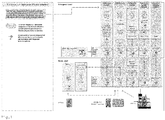
- Figure 1 shows a structure of the system comprising transaction domain, POS domain, promotion domain, customer/loyalty domain, inventory/ordering domain. These domains have different functionalities for different purposes. As it can be seen from figure 2 these domains are part of the integration and interaction level. This level is logically located between the back-end and the execution level. In the execution level the POS are located. The POS cover also web approaches, mobile POS, stationary POS and TPiSCAN devices. TPiSCAN are self-checkout devices which allow the customer to scan the products and to generate an invoice by himself without the support of any staff of the shop. All these units are connected to the POS domain. In this POS domain adapters are located which provide APIs to allow plug-ins to be implemented which can cover various POS types and their devices.
- FIG. 2 shows another representation of the different levels.
- the backend system comprises the ERP system wherein the integration and interaction level comprise an integration for the POS in the execution level, including the POS and its adapter especially also the device service.
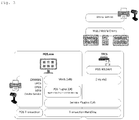
- FIG 3 shows on the one hand the POS and the servers running on the POS namely POS.exe.
- POS plug-ins on the POS implement the service on the POS which is connected to the device service.
- the transaction handling is also running on the POS which indicates that transaction is pending and that the peripheral devices cannot be used by other POS. This information is provided to the device service.
- Mobile clients which are for example web clients can then request from the device service the peripheral devices connected to the POS and controlled by the POS.exe.
- To provide an integrated approach which allows access to different devices from different clients several layers have to be implemented on the services running on the POS.
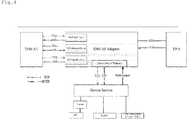
- Figure 4 shows the central device service to which the printer and the scale transaction module is connected.
- the POS/EFT is connected via tunnel to the device service.
- the device service is connected to a TPiSCAN in this configuration using a device service wrapper which is a layer using standard API.
- the device service wrapper is the service running on the TPiSCAN device which allows the connection to the device service.
- the device service allows the TPiSCAN to request for a printer or scale transaction module.
- These physical devices can be normally connected to an EFT/POS. By using a tunnel this devices can be transparently presented to the TPiSCAN. Transparently means in this context that it is not visible to which POS the physical devices are connected.
Landscapes
- Business, Economics & Management (AREA)
- Accounting & Taxation (AREA)
- Engineering & Computer Science (AREA)
- General Physics & Mathematics (AREA)
- Physics & Mathematics (AREA)
- Finance (AREA)
- Theoretical Computer Science (AREA)
- General Business, Economics & Management (AREA)
- Strategic Management (AREA)
- Computer Networks & Wireless Communication (AREA)
- Signal Processing (AREA)
- Computer Security & Cryptography (AREA)
- Development Economics (AREA)
- Economics (AREA)
- Cash Registers Or Receiving Machines (AREA)
- Management, Administration, Business Operations System, And Electronic Commerce (AREA)
Abstract
- before starting a transaction on the POS-System, requesting the peripheral devices from the device server to dedicate the devices to the POS-System;
- if the request is granted starting the transaction and informing the device server about the start of the transaction for blocking the access to the peripheral devices for another POS-Systems;
- when a request for peripheral device from another POS-System is received from the devices server, it is checked if a transaction is pending for the peripheral device and in case the transaction is pending the request is automatically declined and if no transaction is pending the device is assigned to the other POS-System.
Description
- In the retail field not only the Point of Sale (POS) devices play an important role but also the framework behind these devices as it can be derived from
Fig. 1-2 . TheFigures 1-2 show the layers and the structure of retail system infrastructure from the POS to the enterprise resource planning (ERP). - The point sale (POS) or point of purchase (POP) is the time and place where a retail transaction is completed. At the point of sale, the merchant would calculate the amount owed by the customer and indicate the amount, and may prepare an invoice for the customer (which may be a cash register printout), and indicate the options for the customer to make payment. It is also the point at which a customer makes a payment to the merchant in exchange for goods or after provision of a service. After receiving payment, the merchant may issue a receipt for the transaction, which is usually printed, but is increasingly being dispensed with or sent electronically.
- To calculate the amount owed by a customer, the merchant may use any of a variety of aids available, such as weighing scales, bar code scanners, electronic and manual cash registers. To make a payment, EFT/POS terminals, touch screens and a variety of other hardware and software options are available.
- The point of sale is often referred to as the point of service because it is not just a point of sale but also a point of return or customer order. Additionally, current POS terminal software may include additional features to cater for different functionality, such as inventory management, CRM, financials, or warehousing. Businesses are increasingly adopting POS systems and one of the most obvious and compelling reasons is that a POS system does away with the need for price tags. Selling prices are linked to the product code of an item when adding stock, so the cashier merely needs to scan this code to process a sale. If there is a price change, this can also be easily done through the inventory window. Other advantages include ability to implement various types of discounts, a loyalty scheme for customers and more efficient stock control.
- As it can be derived from the figures one approach is to provide services which allow extendibility, scalability, performance and security. This is done by a service framework which provides to customers and projects standardized public interfaces to the outside world and connect any enterprise application via its extendable adapter framework, thus making touch-point enterprise system agnostic and reducing touch-point customization to a minimum.
- The services provide real added value to retailers as it provides and exposes centralized business logic and domain data to all their systems, thus providing a consistent customer experience across all channels independent of the touch-point used.
- Next to the consistency, the services also reduce architecture complexity, point-to-point connectivity and allow projects to easily extend business functionality in an isolated and controlled manner reducing project risks and costs.
- Based on this full flexibility layer approach it is intended that the peripheral devices which are in general connected to a POS can also be used in a flexible manner. Normally the POS have several peripheral devices which are connected via serial cable/USB/Bluetooth/IrDA etc. to a mainboard which is very often a standard PC board on which a standard operating system is running. This operating system implements the POS functionality. The peripheral devices are normally exclusively assigned to the POS so that no sharing of the devices with other POS is possible. Especially for mobile POS or virtual POS that run on a tablet or any other mobile device it is from time to time necessary to connect to the peripheral devices of the local POS.
- The object of the invention is to improve the usability of the peripheral devices and the flexibility of their assignment.
The problem is solved by an invention according to the claims. - One aspect of the invention is a method for configuring a POS system, which needs when in use several peripheral devices to complete a transaction, using a device server at which all peripheral devices are registered and to be logically connected to a POS system, comprising the steps:
- before starting a transaction on the POS system, requesting the peripheral devices from the device server to dedicate the devices to the POS system;
- if the request is granted starting the transaction and informing the device server about the start of the transaction for blocking the access to the peripheral devices for another POS systems;
- when a request for a peripheral device from another POS system is received from the device server, it is checked if a transaction is pending for the peripheral device and in case the transaction is pending the request is automatically declined and if no transaction is pending the device is assigned to the other POS system.
- To allow a transfer of the devices to other POS it is checked wether a transaction is pending and the peripheral device is assigned to a POS system. If this is the case, a message is sent to the POS when another POS system is requesting the peripheral device. The device server sends a confirmation message to the POS system to which the peripheral device is assigned requesting a confirmation to release the device. In general this message is displayed on a monitor of the POS system, and the user is requested to allow that the peripheral device is transferred to another POS.
When the user agrees the peripheral device is transferred. - When no response to the confirmation message is sent for a predetermined time interval the peripheral device is removed from the POS system and assigned to the other POS system.
- The devices comprise one or more of the following:
- POS printer; Line display; Scale; Fiscal printer; Scanner; Cash drawer.
- To implement the tunneling the POS systems to which one or more peripheral devices are physically connected a device service is running that controls the communication to the device server and the peripheral devices and supports the assignment of the device server. The device service tunnels the communication between the device server and the peripheral devices, so that the POS system does not directly communicate with the connected peripheral devices but with the device service and the device server.
- In addition and in combination with the handling devices POS peripherals can be also accessed through a web interface based on REST and web socket communication provided by the Device Service. It allows sharing these devices between the POS and web applications like Mobile POS.
- According to the invention it is possible to access the following peripherals via the Device Service on POS:
- □ POS printer
- □ Fiscal printer
- □ Customer line display
- □ Scale Transaction Module (price calculating scale)
- □ EFT/POS device
- By default the POS peripherals are connected via UPOS except for the Fiscal printer and the Scale Transaction Module which are connected via OPOS, RFID or EFT, which are connected through the Device Service. When the Scale Transaction Module is connected via Device Service, it is necessary that the POS printer is also connected through the Device Service.
- The sharing of POS peripherals with the mobile devices is in general only possible if the peripherals are connected via the Device Service. To share the peripherals between stationary POS and mobile devices, the concept of "leading system" has been introduced. The leading system concept means that when a system, being it a stationary POS or a mobile device, is currently in the middle of a transaction, it will automatically decline an incoming request to use the peripheral that workstation or mobile device is using. Subsequently, if said system is not in the middle of a transaction, the request may be granted or denied by the operator currently using the requested peripheral. It is possible to configure that the request is automatically granted in case the currently connected system doesn't respond with X amount of seconds. Besides during a transaction, sharing is not possible when printing has been started, during an EFT payment and during the weighing of an item.
- The device server is able to offer the peripherals to the Mobile POS and the traditional POS.
- To avoid implementing the device integrations twice, one for the POS and again for the device server, the business logic is implemented as plug-ins. This plug-in can be used by the POS and by the Mobile POS (or any other client such as the iSCAN Adapter) and use the same business logic, this has following advantages:
- □ one point of configuration
- □ same output independent of the client platform
- □ reduced development effort
- The device server supports the Mobile POS and the traditional POS, for this, the following features have been implemented:
- □ New sharing concept. Leading system and new business rules introduced.
- □ New Plug-in concept. The POS and the Mobile POS shares the same implementation based on plug-ins. The same presentation is used and the same parameters are applied to all clients. No need for separate configurations.
- The POS printer logic is refactored into plug-ins, the traditional POS can switch in the POS model to use the UDM connection or the Device Server. When the POS connects to the device server, it will be able to share the printer with other clients configured to use also this device server. Usually the traditional POS will be configured as leading system so that the printer is the most of the time assigned to the POS.
- The Scale Transaction Module has been integrated in the device server so that the use of scales is granted and to get information about the supported models and countries.
- The device server takes care only on the routing and the definition of the interface that the clients can use. The concrete implementation of the methods, which indeed implies the transformation of the EFT messages to the concrete EFT protocol (e.g. OPI ...) is done in business logic components (plug-ins). These plug-ins can be easily modified or enhanced by the customizers to make adaptations to the existing protocol or to create a complete new protocol integration.
-
-
Fig.1 shows a representation of a layer structure of the invention, and the POS with its connection; -
Fig. 2 is an alternative representation of the layer structure; -
Fig. 3 shows a layer structure in the POS and the connection to the device service; -
Fig. 4 shows a detailed structure of the device service with the tunnel of an EFT/POS to provide the control of the devices to the device service. -
Figure 1 shows a structure of the system comprising transaction domain, POS domain, promotion domain, customer/loyalty domain, inventory/ordering domain. These domains have different functionalities for different purposes. As it can be seen fromfigure 2 these domains are part of the integration and interaction level. This level is logically located between the back-end and the execution level. In the execution level the POS are located. The POS cover also web approaches, mobile POS, stationary POS and TPiSCAN devices. TPiSCAN are self-checkout devices which allow the customer to scan the products and to generate an invoice by himself without the support of any staff of the shop. All these units are connected to the POS domain. In this POS domain adapters are located which provide APIs to allow plug-ins to be implemented which can cover various POS types and their devices. -
Figure 2 shows another representation of the different levels. The backend system comprises the ERP system wherein the integration and interaction level comprise an integration for the POS in the execution level, including the POS and its adapter especially also the device service. -
Figure 3 shows on the one hand the POS and the servers running on the POS namely POS.exe. POS plug-ins on the POS implement the service on the POS which is connected to the device service. As it can be derived fromFigure 3 the transaction handling is also running on the POS which indicates that transaction is pending and that the peripheral devices cannot be used by other POS. This information is provided to the device service. Mobile clients which are for example web clients can then request from the device service the peripheral devices connected to the POS and controlled by the POS.exe. To provide an integrated approach which allows access to different devices from different clients several layers have to be implemented on the services running on the POS. On the one hand there are service plug-ins, POS plug-ins and plug-ins to support legacy devices. Also there must be a connection to the device service. -
Figure 4 shows the central device service to which the printer and the scale transaction module is connected. The POS/EFT is connected via tunnel to the device service. The device service is connected to a TPiSCAN in this configuration using a device service wrapper which is a layer using standard API. The device service wrapper is the service running on the TPiSCAN device which allows the connection to the device service. The device service allows the TPiSCAN to request for a printer or scale transaction module. These physical devices can be normally connected to an EFT/POS. By using a tunnel this devices can be transparently presented to the TPiSCAN. Transparently means in this context that it is not visible to which POS the physical devices are connected.
To allow this central control of all peripheral devices plug-ins on the POS are stored and running that are responsible for controlling the access to the peripheral devices and which establish the connection to the central device service. In general tunneling of information is performed.
Claims (12)
- Method for configuring a POS system, which needs when in use several peripheral devices to complete a transaction, using a device server at which all peripheral devices are registered and to be logically connected to a POS system, comprising the steps:- before starting a transaction on the POS system, requesting the peripheral devices from the device server to assign the devices to the POS system;- if the request is granted starting the transaction and informing the device server about the start of the transaction for blocking the access to the peripheral devices for another POS systems;- when a request for peripheral device from another POS system is received from the device server, it is checked if a transaction is pending for the peripheral device and in case the transaction is pending the request is automatically declined and if no transaction is pending the device is assigned to the other POS system.
- The method according to claim 1, wherein when no transaction is pending and the peripheral device is assigned to a POS system and when another POS system is requesting the peripheral device the device server sends a confirmation message to the POS system to which the peripheral device is assigned requesting a confirmation to release the device and which is displayed on a monitor of the POS system, and requesting a response of the user.
- The method according to claim 2, when no response to the confirmation message is sent for a predetermined time interval the peripheral device is removed from the POS system and reassigned to the other POS system.
- The method according to any of the preceding claims wherein the devices comprise one or more of the following:POS printer; Line display; Scale; Fiscal printer; Scanner; Cash drawer.
- The method according to any of the preceding claims wherein on the POS systems to which one or more peripheral devices are physically connected a device service is running that controls the communication to the device server and the peripheral devices and supports the assignment of the device server.
- The method according to the preceding claim wherein the device service tunnels the communication between the device server and the peripheral devices, so that the POS system does not directly communicate with the connected peripheral devices but with the device service and the device server.
- System for configuring POS system, wherein the POS system needs when in use several peripheral devices to complete a transaction, comprising at least two POS, at least one using a device server at which all peripheral devices are registered and to be logically connected to a POS system, comprising a configuration that allows the following:- before starting a transaction on the POS system, requesting the peripheral devices from the device server to dedicate the devices to the POS system;- if the request is granted starting the transaction and informing the device server about the start of the transaction for blocking the access to the peripheral devices for another POS systems;- when a request for peripheral device from another POS system is received from the device server, it is checked if a transaction is pending for the peripheral device and in case the transaction is pending the request is automatically declined and if no transaction is pending the device is assigned to the other POS system.
- The System according to claim 7, wherein when no transaction is pending and the peripheral device is assigned to a POS system and when another POS system is requesting the peripheral device the device server is configured to send a confirmation message to the POS system to which the peripheral device is assigned requesting a confirmation to release the device and which is displayed on a monitor of the POS system, and requesting a response of the user.
- The System according to claim 8, when no response to the confirmation message is sent for a predetermined time interval the peripheral device is removed from the POS system and reassigned to the other POS system.
- The System according to any of the preceding system claims wherein the devices comprise one or more of the following: POS printer; Line display; Scale; Fiscal printer; Scanner; Cash drawer.
- The System according to any of the preceding system claims wherein on the POS systems to which one or more peripheral devices are physically connected a device service is running that controls the communication to the device server and the peripheral devices and supports the assignment of the device server.
- The System according to the preceding system claim wherein the device service tunnels the communication between the device server and the peripheral devices, so that the POS system does not directly communicate with the connected peripheral devices but with the device service and the device server.
Priority Applications (4)
| Application Number | Priority Date | Filing Date | Title |
|---|---|---|---|
| PL16201358T PL3330913T3 (en) | 2016-11-30 | 2016-11-30 | Method and device for controlling the access to and configuration of point of sale peripherals |
| EP16201358.5A EP3330913B1 (en) | 2016-11-30 | 2016-11-30 | Method and device for controlling the access to and configuration of point of sale peripherals |
| CN201711237922.4A CN108122104B (en) | 2016-11-30 | 2017-11-30 | Method and apparatus for controlling access and configuration of point-of-sale peripherals |
| US15/828,352 US11853989B2 (en) | 2016-11-30 | 2017-11-30 | Method and device for controlling the access and configuration to point of sale peripherals |
Applications Claiming Priority (1)
| Application Number | Priority Date | Filing Date | Title |
|---|---|---|---|
| EP16201358.5A EP3330913B1 (en) | 2016-11-30 | 2016-11-30 | Method and device for controlling the access to and configuration of point of sale peripherals |
Publications (2)
| Publication Number | Publication Date |
|---|---|
| EP3330913A1 true EP3330913A1 (en) | 2018-06-06 |
| EP3330913B1 EP3330913B1 (en) | 2021-05-05 |
Family
ID=57442550
Family Applications (1)
| Application Number | Title | Priority Date | Filing Date |
|---|---|---|---|
| EP16201358.5A Active EP3330913B1 (en) | 2016-11-30 | 2016-11-30 | Method and device for controlling the access to and configuration of point of sale peripherals |
Country Status (4)
| Country | Link |
|---|---|
| US (1) | US11853989B2 (en) |
| EP (1) | EP3330913B1 (en) |
| CN (1) | CN108122104B (en) |
| PL (1) | PL3330913T3 (en) |
Families Citing this family (2)
| Publication number | Priority date | Publication date | Assignee | Title |
|---|---|---|---|---|
| US11205164B1 (en) * | 2018-09-14 | 2021-12-21 | Stripe, Inc. | Systems and methods for reader device registration, use, and management |
| US12423668B2 (en) * | 2022-07-15 | 2025-09-23 | Shopify Inc. | System and method for pairing devices to establish device groups |
Citations (2)
| Publication number | Priority date | Publication date | Assignee | Title |
|---|---|---|---|---|
| US20030135418A1 (en) * | 2002-01-11 | 2003-07-17 | Swetank Shekhar | Point-of-sale (POS) systems that use a peripheral device for point-of-sale applications and methods of operating the same |
| US20140006189A1 (en) * | 2012-06-28 | 2014-01-02 | Seiko Epson Corporation | Data processing apparatus, pos system and control method of the pos system |
Family Cites Families (18)
| Publication number | Priority date | Publication date | Assignee | Title |
|---|---|---|---|---|
| US6141708A (en) * | 1998-06-15 | 2000-10-31 | Compaq Computer Corporation | Host bridge configured to mask a portion of peripheral devices coupled to a bus further downstream of the host bridge from a host processor |
| US7600673B2 (en) * | 1999-08-09 | 2009-10-13 | First Data Corporation | Systems and methods for performing transactions at a point-of-sale |
| JP2005208894A (en) * | 2004-01-22 | 2005-08-04 | Canon Inc | Peripheral device control method, control program, and device |
| JP2007158447A (en) * | 2005-11-30 | 2007-06-21 | Canon Inc | Wireless communication device |
| US7658323B2 (en) * | 2006-05-24 | 2010-02-09 | Sun Microsystems, Inc. | Point-of-service (POS) and POS application compatability |
| US7847959B2 (en) * | 2006-10-23 | 2010-12-07 | International Business Machines Corporation | Point of sale printers providing secure network tunneling |
| DE102007025989A1 (en) * | 2007-06-04 | 2008-12-11 | Fujitsu Siemens Computers Gmbh | Method for data transmission |
| JP5397162B2 (en) * | 2009-10-29 | 2014-01-22 | セイコーエプソン株式会社 | Printer driver and POS printer control method |
| WO2012033856A1 (en) * | 2010-09-07 | 2012-03-15 | Revel Systems, Inc. | Point of sale system |
| CN102143210B (en) * | 2010-12-30 | 2013-08-14 | 中国民航信息网络股份有限公司 | Multi-host platform system and method |
| US20120182939A1 (en) * | 2011-01-14 | 2012-07-19 | Qualcomm Incorporated | Telehealth wireless communication hub and service platform system |
| JP6028416B2 (en) * | 2012-06-28 | 2016-11-16 | セイコーエプソン株式会社 | Data processing apparatus and POS system |
| US11507950B2 (en) * | 2012-07-31 | 2022-11-22 | Worldpay, Llc | Systems and methods for secure normative intermediation of payments processing peripherals |
| US9344281B2 (en) * | 2012-08-31 | 2016-05-17 | Ncr Corporation | Detecting fraud using operational parameters for a peripheral |
| JP6149864B2 (en) * | 2012-10-11 | 2017-06-21 | セイコーエプソン株式会社 | Control system and information processing apparatus |
| KR101536069B1 (en) * | 2014-02-11 | 2015-07-13 | 주식회사 빅솔론 | Pos peripherals controlling device, mobile host device and method for controlling thereof |
| JP6390141B2 (en) * | 2014-04-07 | 2018-09-19 | スター精密株式会社 | Information processing apparatus control system using portable terminal, portable terminal, information processing apparatus control method, and control program |
| US9690719B2 (en) * | 2014-09-11 | 2017-06-27 | Nxp Usa, Inc. | Mechanism for managing access to at least one shared integrated peripheral of a processing unit and a method of operating thereof |
-
2016
- 2016-11-30 PL PL16201358T patent/PL3330913T3/en unknown
- 2016-11-30 EP EP16201358.5A patent/EP3330913B1/en active Active
-
2017
- 2017-11-30 US US15/828,352 patent/US11853989B2/en active Active
- 2017-11-30 CN CN201711237922.4A patent/CN108122104B/en active Active
Patent Citations (2)
| Publication number | Priority date | Publication date | Assignee | Title |
|---|---|---|---|---|
| US20030135418A1 (en) * | 2002-01-11 | 2003-07-17 | Swetank Shekhar | Point-of-sale (POS) systems that use a peripheral device for point-of-sale applications and methods of operating the same |
| US20140006189A1 (en) * | 2012-06-28 | 2014-01-02 | Seiko Epson Corporation | Data processing apparatus, pos system and control method of the pos system |
Also Published As
| Publication number | Publication date |
|---|---|
| EP3330913B1 (en) | 2021-05-05 |
| PL3330913T3 (en) | 2021-09-27 |
| CN108122104B (en) | 2024-03-19 |
| US11853989B2 (en) | 2023-12-26 |
| US20180150820A1 (en) | 2018-05-31 |
| CN108122104A (en) | 2018-06-05 |
Similar Documents
| Publication | Publication Date | Title |
|---|---|---|
| US12154088B2 (en) | Methods and apparatus for unified inventory and financial transaction management | |
| US12412163B2 (en) | Systems and methods for managing self check out services | |
| US6856964B1 (en) | System and methods for integrating a self-checkout system into an existing store system | |
| CA2770652A1 (en) | Enhanced multi-mode computing peripheral device | |
| US10755255B2 (en) | Standardizing point of sale services and leveraging instances of the PLU data | |
| JP7796911B2 (en) | User terminal and shopping support program | |
| JP7784480B2 (en) | Mobile terminal and information processing program | |
| KR20170101841A (en) | System for processing purchase orders | |
| US20170256133A1 (en) | Systems and methods for reconciliation of various lottery transactions | |
| CN114358839A (en) | Resource processing method, user side, server side, device and storage medium | |
| JP5747005B2 (en) | Device connection unit, product sales processing system and program | |
| US11853989B2 (en) | Method and device for controlling the access and configuration to point of sale peripherals | |
| TWM561866U (en) | Network shopping platform with a website provided for a terminal sales system | |
| JP7516152B2 (en) | Information processing device, payment processing system, and program | |
| US20230360502A1 (en) | Image based pos system for the fast food industry | |
| TW201933239A (en) | Online shopping platform with POS (Point of Sale) system provided by World Wide Web including an online shopping mall, a plurality of physical stores, and a plurality of shopping electronic devices | |
| JP2022163828A (en) | Information processing system, client device, and information processing program | |
| US20240177223A1 (en) | Information processing apparatus and order management system | |
| JP2018055507A (en) | Sales support device, sales support system, and sales support method | |
| JP7582714B2 (en) | System and method for transmitting receipt information using a mobile terminal | |
| TWM561867U (en) | Network shopping platform with an application program for a terminal sales system | |
| JP2025152264A (en) | Receipt management server and receipt management system | |
| JP6690284B2 (en) | Information processing apparatus, information processing system, control method, and program | |
| JP2025024731A (en) | Connection control device, pharmaceutical sales system, connection control method and connection control program | |
| CN112559396A (en) | Method for shared use of cashier peripherals |
Legal Events
| Date | Code | Title | Description |
|---|---|---|---|
| PUAI | Public reference made under article 153(3) epc to a published international application that has entered the european phase |
Free format text: ORIGINAL CODE: 0009012 |
|
| STAA | Information on the status of an ep patent application or granted ep patent |
Free format text: STATUS: EXAMINATION IS IN PROGRESS |
|
| 17P | Request for examination filed |
Effective date: 20170511 |
|
| AK | Designated contracting states |
Kind code of ref document: A1 Designated state(s): AL AT BE BG CH CY CZ DE DK EE ES FI FR GB GR HR HU IE IS IT LI LT LU LV MC MK MT NL NO PL PT RO RS SE SI SK SM TR |
|
| AX | Request for extension of the european patent |
Extension state: BA ME |
|
| RAP1 | Party data changed (applicant data changed or rights of an application transferred) |
Owner name: WINCOR NIXDORF INTERNATIONAL GMBH Owner name: DIEBOLD NIXDORF SP. Z O.O. |
|
| GRAP | Despatch of communication of intention to grant a patent |
Free format text: ORIGINAL CODE: EPIDOSNIGR1 |
|
| STAA | Information on the status of an ep patent application or granted ep patent |
Free format text: STATUS: GRANT OF PATENT IS INTENDED |
|
| INTG | Intention to grant announced |
Effective date: 20200526 |
|
| GRAS | Grant fee paid |
Free format text: ORIGINAL CODE: EPIDOSNIGR3 |
|
| RAP1 | Party data changed (applicant data changed or rights of an application transferred) |
Owner name: DIEBOLD NIXDORF SP. Z O.O. Owner name: WINCOR NIXDORF INTERNATIONAL GMBH |
|
| GRAA | (expected) grant |
Free format text: ORIGINAL CODE: 0009210 |
|
| STAA | Information on the status of an ep patent application or granted ep patent |
Free format text: STATUS: THE PATENT HAS BEEN GRANTED |
|
| RAP1 | Party data changed (applicant data changed or rights of an application transferred) |
Owner name: WINCOR NIXDORF INTERNATIONAL GMBH |
|
| AK | Designated contracting states |
Kind code of ref document: B1 Designated state(s): AL AT BE BG CH CY CZ DE DK EE ES FI FR GB GR HR HU IE IS IT LI LT LU LV MC MK MT NL NO PL PT RO RS SE SI SK SM TR |
|
| REG | Reference to a national code |
Ref country code: GB Ref legal event code: FG4D |
|
| REG | Reference to a national code |
Ref country code: CH Ref legal event code: EP |
|
| REG | Reference to a national code |
Ref country code: AT Ref legal event code: REF Ref document number: 1390745 Country of ref document: AT Kind code of ref document: T Effective date: 20210515 |
|
| REG | Reference to a national code |
Ref country code: IE Ref legal event code: FG4D |
|
| REG | Reference to a national code |
Ref country code: DE Ref legal event code: R096 Ref document number: 602016057282 Country of ref document: DE |
|
| REG | Reference to a national code |
Ref country code: LT Ref legal event code: MG9D |
|
| REG | Reference to a national code |
Ref country code: AT Ref legal event code: MK05 Ref document number: 1390745 Country of ref document: AT Kind code of ref document: T Effective date: 20210505 |
|
| PG25 | Lapsed in a contracting state [announced via postgrant information from national office to epo] |
Ref country code: HR Free format text: LAPSE BECAUSE OF FAILURE TO SUBMIT A TRANSLATION OF THE DESCRIPTION OR TO PAY THE FEE WITHIN THE PRESCRIBED TIME-LIMIT Effective date: 20210505 Ref country code: BG Free format text: LAPSE BECAUSE OF FAILURE TO SUBMIT A TRANSLATION OF THE DESCRIPTION OR TO PAY THE FEE WITHIN THE PRESCRIBED TIME-LIMIT Effective date: 20210805 Ref country code: AT Free format text: LAPSE BECAUSE OF FAILURE TO SUBMIT A TRANSLATION OF THE DESCRIPTION OR TO PAY THE FEE WITHIN THE PRESCRIBED TIME-LIMIT Effective date: 20210505 Ref country code: FI Free format text: LAPSE BECAUSE OF FAILURE TO SUBMIT A TRANSLATION OF THE DESCRIPTION OR TO PAY THE FEE WITHIN THE PRESCRIBED TIME-LIMIT Effective date: 20210505 Ref country code: LT Free format text: LAPSE BECAUSE OF FAILURE TO SUBMIT A TRANSLATION OF THE DESCRIPTION OR TO PAY THE FEE WITHIN THE PRESCRIBED TIME-LIMIT Effective date: 20210505 |
|
| PG25 | Lapsed in a contracting state [announced via postgrant information from national office to epo] |
Ref country code: LV Free format text: LAPSE BECAUSE OF FAILURE TO SUBMIT A TRANSLATION OF THE DESCRIPTION OR TO PAY THE FEE WITHIN THE PRESCRIBED TIME-LIMIT Effective date: 20210505 Ref country code: GR Free format text: LAPSE BECAUSE OF FAILURE TO SUBMIT A TRANSLATION OF THE DESCRIPTION OR TO PAY THE FEE WITHIN THE PRESCRIBED TIME-LIMIT Effective date: 20210806 Ref country code: IS Free format text: LAPSE BECAUSE OF FAILURE TO SUBMIT A TRANSLATION OF THE DESCRIPTION OR TO PAY THE FEE WITHIN THE PRESCRIBED TIME-LIMIT Effective date: 20210905 Ref country code: PT Free format text: LAPSE BECAUSE OF FAILURE TO SUBMIT A TRANSLATION OF THE DESCRIPTION OR TO PAY THE FEE WITHIN THE PRESCRIBED TIME-LIMIT Effective date: 20210906 Ref country code: NO Free format text: LAPSE BECAUSE OF FAILURE TO SUBMIT A TRANSLATION OF THE DESCRIPTION OR TO PAY THE FEE WITHIN THE PRESCRIBED TIME-LIMIT Effective date: 20210805 Ref country code: SE Free format text: LAPSE BECAUSE OF FAILURE TO SUBMIT A TRANSLATION OF THE DESCRIPTION OR TO PAY THE FEE WITHIN THE PRESCRIBED TIME-LIMIT Effective date: 20210505 Ref country code: RS Free format text: LAPSE BECAUSE OF FAILURE TO SUBMIT A TRANSLATION OF THE DESCRIPTION OR TO PAY THE FEE WITHIN THE PRESCRIBED TIME-LIMIT Effective date: 20210505 |
|
| REG | Reference to a national code |
Ref country code: NL Ref legal event code: MP Effective date: 20210505 |
|
| PG25 | Lapsed in a contracting state [announced via postgrant information from national office to epo] |
Ref country code: NL Free format text: LAPSE BECAUSE OF FAILURE TO SUBMIT A TRANSLATION OF THE DESCRIPTION OR TO PAY THE FEE WITHIN THE PRESCRIBED TIME-LIMIT Effective date: 20210505 |
|
| PG25 | Lapsed in a contracting state [announced via postgrant information from national office to epo] |
Ref country code: SM Free format text: LAPSE BECAUSE OF FAILURE TO SUBMIT A TRANSLATION OF THE DESCRIPTION OR TO PAY THE FEE WITHIN THE PRESCRIBED TIME-LIMIT Effective date: 20210505 Ref country code: SK Free format text: LAPSE BECAUSE OF FAILURE TO SUBMIT A TRANSLATION OF THE DESCRIPTION OR TO PAY THE FEE WITHIN THE PRESCRIBED TIME-LIMIT Effective date: 20210505 Ref country code: CZ Free format text: LAPSE BECAUSE OF FAILURE TO SUBMIT A TRANSLATION OF THE DESCRIPTION OR TO PAY THE FEE WITHIN THE PRESCRIBED TIME-LIMIT Effective date: 20210505 Ref country code: DK Free format text: LAPSE BECAUSE OF FAILURE TO SUBMIT A TRANSLATION OF THE DESCRIPTION OR TO PAY THE FEE WITHIN THE PRESCRIBED TIME-LIMIT Effective date: 20210505 Ref country code: EE Free format text: LAPSE BECAUSE OF FAILURE TO SUBMIT A TRANSLATION OF THE DESCRIPTION OR TO PAY THE FEE WITHIN THE PRESCRIBED TIME-LIMIT Effective date: 20210505 Ref country code: RO Free format text: LAPSE BECAUSE OF FAILURE TO SUBMIT A TRANSLATION OF THE DESCRIPTION OR TO PAY THE FEE WITHIN THE PRESCRIBED TIME-LIMIT Effective date: 20210505 Ref country code: ES Free format text: LAPSE BECAUSE OF FAILURE TO SUBMIT A TRANSLATION OF THE DESCRIPTION OR TO PAY THE FEE WITHIN THE PRESCRIBED TIME-LIMIT Effective date: 20210505 |
|
| REG | Reference to a national code |
Ref country code: DE Ref legal event code: R097 Ref document number: 602016057282 Country of ref document: DE |
|
| PLBE | No opposition filed within time limit |
Free format text: ORIGINAL CODE: 0009261 |
|
| STAA | Information on the status of an ep patent application or granted ep patent |
Free format text: STATUS: NO OPPOSITION FILED WITHIN TIME LIMIT |
|
| 26N | No opposition filed |
Effective date: 20220208 |
|
| PG25 | Lapsed in a contracting state [announced via postgrant information from national office to epo] |
Ref country code: IS Free format text: LAPSE BECAUSE OF FAILURE TO SUBMIT A TRANSLATION OF THE DESCRIPTION OR TO PAY THE FEE WITHIN THE PRESCRIBED TIME-LIMIT Effective date: 20210905 Ref country code: AL Free format text: LAPSE BECAUSE OF FAILURE TO SUBMIT A TRANSLATION OF THE DESCRIPTION OR TO PAY THE FEE WITHIN THE PRESCRIBED TIME-LIMIT Effective date: 20210505 |
|
| PG25 | Lapsed in a contracting state [announced via postgrant information from national office to epo] |
Ref country code: MC Free format text: LAPSE BECAUSE OF FAILURE TO SUBMIT A TRANSLATION OF THE DESCRIPTION OR TO PAY THE FEE WITHIN THE PRESCRIBED TIME-LIMIT Effective date: 20210505 |
|
| PG25 | Lapsed in a contracting state [announced via postgrant information from national office to epo] |
Ref country code: LU Free format text: LAPSE BECAUSE OF NON-PAYMENT OF DUE FEES Effective date: 20211130 Ref country code: IT Free format text: LAPSE BECAUSE OF FAILURE TO SUBMIT A TRANSLATION OF THE DESCRIPTION OR TO PAY THE FEE WITHIN THE PRESCRIBED TIME-LIMIT Effective date: 20210505 Ref country code: BE Free format text: LAPSE BECAUSE OF NON-PAYMENT OF DUE FEES Effective date: 20211130 |
|
| REG | Reference to a national code |
Ref country code: BE Ref legal event code: MM Effective date: 20211130 |
|
| PG25 | Lapsed in a contracting state [announced via postgrant information from national office to epo] |
Ref country code: IE Free format text: LAPSE BECAUSE OF NON-PAYMENT OF DUE FEES Effective date: 20211130 |
|
| REG | Reference to a national code |
Ref country code: GB Ref legal event code: 732E Free format text: REGISTERED BETWEEN 20230323 AND 20230329 |
|
| PG25 | Lapsed in a contracting state [announced via postgrant information from national office to epo] |
Ref country code: HU Free format text: LAPSE BECAUSE OF FAILURE TO SUBMIT A TRANSLATION OF THE DESCRIPTION OR TO PAY THE FEE WITHIN THE PRESCRIBED TIME-LIMIT; INVALID AB INITIO Effective date: 20161130 |
|
| REG | Reference to a national code |
Ref country code: GB Ref legal event code: 732E Free format text: REGISTERED BETWEEN 20230525 AND 20230601 |
|
| PG25 | Lapsed in a contracting state [announced via postgrant information from national office to epo] |
Ref country code: CY Free format text: LAPSE BECAUSE OF FAILURE TO SUBMIT A TRANSLATION OF THE DESCRIPTION OR TO PAY THE FEE WITHIN THE PRESCRIBED TIME-LIMIT Effective date: 20210505 |
|
| REG | Reference to a national code |
Ref country code: DE Ref legal event code: R081 Ref document number: 602016057282 Country of ref document: DE Owner name: DIEBOLD NIXDORF SYSTEMS GMBH, DE Free format text: FORMER OWNER: WINCOR NIXDORF INTERNATIONAL GMBH, 33106 PADERBORN, DE |
|
| PG25 | Lapsed in a contracting state [announced via postgrant information from national office to epo] |
Ref country code: MK Free format text: LAPSE BECAUSE OF FAILURE TO SUBMIT A TRANSLATION OF THE DESCRIPTION OR TO PAY THE FEE WITHIN THE PRESCRIBED TIME-LIMIT Effective date: 20210505 |
|
| PG25 | Lapsed in a contracting state [announced via postgrant information from national office to epo] |
Ref country code: TR Free format text: LAPSE BECAUSE OF FAILURE TO SUBMIT A TRANSLATION OF THE DESCRIPTION OR TO PAY THE FEE WITHIN THE PRESCRIBED TIME-LIMIT Effective date: 20210505 |
|
| PG25 | Lapsed in a contracting state [announced via postgrant information from national office to epo] |
Ref country code: MT Free format text: LAPSE BECAUSE OF FAILURE TO SUBMIT A TRANSLATION OF THE DESCRIPTION OR TO PAY THE FEE WITHIN THE PRESCRIBED TIME-LIMIT Effective date: 20210505 |
|
| REG | Reference to a national code |
Ref country code: CH Ref legal event code: U11 Free format text: ST27 STATUS EVENT CODE: U-0-0-U10-U11 (AS PROVIDED BY THE NATIONAL OFFICE) Effective date: 20251201 |
|
| PGFP | Annual fee paid to national office [announced via postgrant information from national office to epo] |
Ref country code: DE Payment date: 20251022 Year of fee payment: 10 |
|
| PGFP | Annual fee paid to national office [announced via postgrant information from national office to epo] |
Ref country code: GB Payment date: 20251023 Year of fee payment: 10 |
|
| PGFP | Annual fee paid to national office [announced via postgrant information from national office to epo] |
Ref country code: FR Payment date: 20251022 Year of fee payment: 10 |
|
| PGFP | Annual fee paid to national office [announced via postgrant information from national office to epo] |
Ref country code: CH Payment date: 20251201 Year of fee payment: 10 |
|
| PGFP | Annual fee paid to national office [announced via postgrant information from national office to epo] |
Ref country code: PL Payment date: 20251023 Year of fee payment: 10 |