EP3328869B1 - A compound for selective determination of free cysteine and a process for the preparation thereof - Google Patents
A compound for selective determination of free cysteine and a process for the preparation thereof Download PDFInfo
- Publication number
- EP3328869B1 EP3328869B1 EP16770096.2A EP16770096A EP3328869B1 EP 3328869 B1 EP3328869 B1 EP 3328869B1 EP 16770096 A EP16770096 A EP 16770096A EP 3328869 B1 EP3328869 B1 EP 3328869B1
- Authority
- EP
- European Patent Office
- Prior art keywords
- formula
- compound
- free cysteine
- detection
- ligand
- Prior art date
- Legal status (The legal status is an assumption and is not a legal conclusion. Google has not performed a legal analysis and makes no representation as to the accuracy of the status listed.)
- Not-in-force
Links
- XUJNEKJLAYXESH-REOHCLBHSA-N L-Cysteine Chemical compound SC[C@H](N)C(O)=O XUJNEKJLAYXESH-REOHCLBHSA-N 0.000 title claims description 66
- 238000000034 method Methods 0.000 title claims description 28
- 150000001875 compounds Chemical class 0.000 title claims description 22
- 230000008569 process Effects 0.000 title claims description 16
- 238000002360 preparation method Methods 0.000 title claims description 10
- YXFVVABEGXRONW-UHFFFAOYSA-N Toluene Chemical compound CC1=CC=CC=C1 YXFVVABEGXRONW-UHFFFAOYSA-N 0.000 claims description 34
- 238000001514 detection method Methods 0.000 claims description 32
- WEVYAHXRMPXWCK-UHFFFAOYSA-N Acetonitrile Chemical compound CC#N WEVYAHXRMPXWCK-UHFFFAOYSA-N 0.000 claims description 26
- 239000003446 ligand Substances 0.000 claims description 25
- JKMHFZQWWAIEOD-UHFFFAOYSA-N 2-[4-(2-hydroxyethyl)piperazin-1-yl]ethanesulfonic acid Chemical compound OCC[NH+]1CCN(CCS([O-])(=O)=O)CC1 JKMHFZQWWAIEOD-UHFFFAOYSA-N 0.000 claims description 22
- 239000007995 HEPES buffer Substances 0.000 claims description 21
- BBEAQIROQSPTKN-UHFFFAOYSA-N pyrene Chemical compound C1=CC=C2C=CC3=CC=CC4=CC=C1C2=C43 BBEAQIROQSPTKN-UHFFFAOYSA-N 0.000 claims description 15
- UFWIBTONFRDIAS-UHFFFAOYSA-N Naphthalene Chemical compound C1=CC=CC2=CC=CC=C21 UFWIBTONFRDIAS-UHFFFAOYSA-N 0.000 claims description 14
- RGHHSNMVTDWUBI-UHFFFAOYSA-N 4-hydroxybenzaldehyde Chemical compound OC1=CC=C(C=O)C=C1 RGHHSNMVTDWUBI-UHFFFAOYSA-N 0.000 claims description 10
- QTBSBXVTEAMEQO-UHFFFAOYSA-N Acetic acid Chemical compound CC(O)=O QTBSBXVTEAMEQO-UHFFFAOYSA-N 0.000 claims description 10
- NQRYJNQNLNOLGT-UHFFFAOYSA-N Piperidine Chemical compound C1CCNCC1 NQRYJNQNLNOLGT-UHFFFAOYSA-N 0.000 claims description 10
- 238000012360 testing method Methods 0.000 claims description 8
- GVEPBJHOBDJJJI-UHFFFAOYSA-N fluoranthrene Natural products C1=CC(C2=CC=CC=C22)=C3C2=CC=CC3=C1 GVEPBJHOBDJJJI-UHFFFAOYSA-N 0.000 claims description 7
- 125000001997 phenyl group Chemical group [H]C1=C([H])C([H])=C(*)C([H])=C1[H] 0.000 claims description 7
- 229960000583 acetic acid Drugs 0.000 claims description 5
- HFBMWMNUJJDEQZ-UHFFFAOYSA-N acryloyl chloride Chemical compound ClC(=O)C=C HFBMWMNUJJDEQZ-UHFFFAOYSA-N 0.000 claims description 5
- 239000012362 glacial acetic acid Substances 0.000 claims description 5
- 238000010992 reflux Methods 0.000 claims description 5
- 239000011550 stock solution Substances 0.000 claims description 5
- 238000009007 Diagnostic Kit Methods 0.000 claims description 4
- 239000012062 aqueous buffer Substances 0.000 claims description 4
- 239000000523 sample Substances 0.000 description 34
- 210000004027 cell Anatomy 0.000 description 28
- RWSXRVCMGQZWBV-WDSKDSINSA-N glutathione Chemical compound OC(=O)[C@@H](N)CCC(=O)N[C@@H](CS)C(=O)NCC(O)=O RWSXRVCMGQZWBV-WDSKDSINSA-N 0.000 description 28
- YMWUJEATGCHHMB-UHFFFAOYSA-N Dichloromethane Chemical compound ClCCl YMWUJEATGCHHMB-UHFFFAOYSA-N 0.000 description 21
- 235000018417 cysteine Nutrition 0.000 description 16
- XUJNEKJLAYXESH-UHFFFAOYSA-N cysteine Natural products SCC(N)C(O)=O XUJNEKJLAYXESH-UHFFFAOYSA-N 0.000 description 16
- PWKSKIMOESPYIA-BYPYZUCNSA-N L-N-acetyl-Cysteine Chemical compound CC(=O)N[C@@H](CS)C(O)=O PWKSKIMOESPYIA-BYPYZUCNSA-N 0.000 description 15
- FFFHZYDWPBMWHY-VKHMYHEASA-N L-homocysteine Chemical compound OC(=O)[C@@H](N)CCS FFFHZYDWPBMWHY-VKHMYHEASA-N 0.000 description 15
- 229960004308 acetylcysteine Drugs 0.000 description 15
- 229960003180 glutathione Drugs 0.000 description 14
- 239000002609 medium Substances 0.000 description 14
- VLKZOEOYAKHREP-UHFFFAOYSA-N n-Hexane Chemical compound CCCCCC VLKZOEOYAKHREP-UHFFFAOYSA-N 0.000 description 12
- 150000001413 amino acids Chemical class 0.000 description 10
- 239000000243 solution Substances 0.000 description 10
- ZMANZCXQSJIPKH-UHFFFAOYSA-N Triethylamine Chemical compound CCN(CC)CC ZMANZCXQSJIPKH-UHFFFAOYSA-N 0.000 description 9
- 230000004044 response Effects 0.000 description 9
- XEKOWRVHYACXOJ-UHFFFAOYSA-N Ethyl acetate Chemical compound CCOC(C)=O XEKOWRVHYACXOJ-UHFFFAOYSA-N 0.000 description 8
- PMZURENOXWZQFD-UHFFFAOYSA-L Sodium Sulfate Chemical compound [Na+].[Na+].[O-]S([O-])(=O)=O PMZURENOXWZQFD-UHFFFAOYSA-L 0.000 description 8
- HEDRZPFGACZZDS-MICDWDOJSA-N Trichloro(2H)methane Chemical compound [2H]C(Cl)(Cl)Cl HEDRZPFGACZZDS-MICDWDOJSA-N 0.000 description 8
- 239000012044 organic layer Substances 0.000 description 8
- 239000003153 chemical reaction reagent Substances 0.000 description 7
- KFZMGEQAYNKOFK-UHFFFAOYSA-N Isopropanol Chemical compound CC(C)O KFZMGEQAYNKOFK-UHFFFAOYSA-N 0.000 description 6
- VYPSYNLAJGMNEJ-UHFFFAOYSA-N Silicium dioxide Chemical compound O=[Si]=O VYPSYNLAJGMNEJ-UHFFFAOYSA-N 0.000 description 6
- 235000001014 amino acid Nutrition 0.000 description 6
- 229940024606 amino acid Drugs 0.000 description 6
- 230000015572 biosynthetic process Effects 0.000 description 6
- 230000000007 visual effect Effects 0.000 description 6
- 206010009944 Colon cancer Diseases 0.000 description 5
- 150000001299 aldehydes Chemical class 0.000 description 5
- 230000008859 change Effects 0.000 description 5
- 208000029742 colonic neoplasm Diseases 0.000 description 5
- 239000000203 mixture Substances 0.000 description 5
- 239000007787 solid Substances 0.000 description 5
- 238000003786 synthesis reaction Methods 0.000 description 5
- 108090000790 Enzymes Proteins 0.000 description 4
- 102000004190 Enzymes Human genes 0.000 description 4
- 230000005526 G1 to G0 transition Effects 0.000 description 4
- 238000004440 column chromatography Methods 0.000 description 4
- 231100000135 cytotoxicity Toxicity 0.000 description 4
- 230000003013 cytotoxicity Effects 0.000 description 4
- 235000019439 ethyl acetate Nutrition 0.000 description 4
- 238000012544 monitoring process Methods 0.000 description 4
- 210000002381 plasma Anatomy 0.000 description 4
- 239000000741 silica gel Substances 0.000 description 4
- 229910002027 silica gel Inorganic materials 0.000 description 4
- 229910052938 sodium sulfate Inorganic materials 0.000 description 4
- 235000011152 sodium sulphate Nutrition 0.000 description 4
- 239000002904 solvent Substances 0.000 description 4
- UCSJYZPVAKXKNQ-HZYVHMACSA-N streptomycin Chemical compound CN[C@H]1[C@H](O)[C@@H](O)[C@H](CO)O[C@H]1O[C@@H]1[C@](C=O)(O)[C@H](C)O[C@H]1O[C@@H]1[C@@H](NC(N)=N)[C@H](O)[C@@H](NC(N)=N)[C@H](O)[C@H]1O UCSJYZPVAKXKNQ-HZYVHMACSA-N 0.000 description 4
- 150000003573 thiols Chemical class 0.000 description 4
- XLYOFNOQVPJJNP-UHFFFAOYSA-N water Substances O XLYOFNOQVPJJNP-UHFFFAOYSA-N 0.000 description 4
- MFFMQGGZCLEMCI-UHFFFAOYSA-N 2,4-dimethyl-1h-pyrrole Chemical compound CC1=CNC(C)=C1 MFFMQGGZCLEMCI-UHFFFAOYSA-N 0.000 description 3
- PAPNRQCYSFBWDI-UHFFFAOYSA-N DMP Natural products CC1=CC=C(C)N1 PAPNRQCYSFBWDI-UHFFFAOYSA-N 0.000 description 3
- 108010024636 Glutathione Proteins 0.000 description 3
- -1 L only Chemical compound 0.000 description 3
- 239000013060 biological fluid Substances 0.000 description 3
- 230000003833 cell viability Effects 0.000 description 3
- 238000000338 in vitro Methods 0.000 description 3
- 239000012299 nitrogen atmosphere Substances 0.000 description 3
- 230000003287 optical effect Effects 0.000 description 3
- 235000018102 proteins Nutrition 0.000 description 3
- 108090000623 proteins and genes Proteins 0.000 description 3
- 102000004169 proteins and genes Human genes 0.000 description 3
- 239000011541 reaction mixture Substances 0.000 description 3
- 238000007363 ring formation reaction Methods 0.000 description 3
- 238000001644 13C nuclear magnetic resonance spectroscopy Methods 0.000 description 2
- 238000005160 1H NMR spectroscopy Methods 0.000 description 2
- NGNBDVOYPDDBFK-UHFFFAOYSA-N 2-[2,4-di(pentan-2-yl)phenoxy]acetyl chloride Chemical compound CCCC(C)C1=CC=C(OCC(Cl)=O)C(C(C)CCC)=C1 NGNBDVOYPDDBFK-UHFFFAOYSA-N 0.000 description 2
- AZKSAVLVSZKNRD-UHFFFAOYSA-M 3-(4,5-dimethylthiazol-2-yl)-2,5-diphenyltetrazolium bromide Chemical compound [Br-].S1C(C)=C(C)N=C1[N+]1=NC(C=2C=CC=CC=2)=NN1C1=CC=CC=C1 AZKSAVLVSZKNRD-UHFFFAOYSA-M 0.000 description 2
- 108700023418 Amidases Proteins 0.000 description 2
- 239000006144 Dulbecco’s modified Eagle's medium Substances 0.000 description 2
- DHMQDGOQFOQNFH-UHFFFAOYSA-N Glycine Chemical compound NCC(O)=O DHMQDGOQFOQNFH-UHFFFAOYSA-N 0.000 description 2
- HNDVDQJCIGZPNO-YFKPBYRVSA-N L-histidine Chemical compound OC(=O)[C@@H](N)CC1=CN=CN1 HNDVDQJCIGZPNO-YFKPBYRVSA-N 0.000 description 2
- 231100000002 MTT assay Toxicity 0.000 description 2
- 238000000134 MTT assay Methods 0.000 description 2
- 229930182555 Penicillin Natural products 0.000 description 2
- JGSARLDLIJGVTE-MBNYWOFBSA-N Penicillin G Chemical group N([C@H]1[C@H]2SC([C@@H](N2C1=O)C(O)=O)(C)C)C(=O)CC1=CC=CC=C1 JGSARLDLIJGVTE-MBNYWOFBSA-N 0.000 description 2
- 238000002835 absorbance Methods 0.000 description 2
- YRKCREAYFQTBPV-UHFFFAOYSA-N acetylacetone Chemical compound CC(=O)CC(C)=O YRKCREAYFQTBPV-UHFFFAOYSA-N 0.000 description 2
- 102000005922 amidase Human genes 0.000 description 2
- 239000003242 anti bacterial agent Substances 0.000 description 2
- 229940088710 antibiotic agent Drugs 0.000 description 2
- 239000012736 aqueous medium Substances 0.000 description 2
- 238000003556 assay Methods 0.000 description 2
- PASDCCFISLVPSO-UHFFFAOYSA-N benzoyl chloride Chemical group ClC(=O)C1=CC=CC=C1 PASDCCFISLVPSO-UHFFFAOYSA-N 0.000 description 2
- 230000001413 cellular effect Effects 0.000 description 2
- 238000001218 confocal laser scanning microscopy Methods 0.000 description 2
- 238000011161 development Methods 0.000 description 2
- 230000018109 developmental process Effects 0.000 description 2
- 201000010099 disease Diseases 0.000 description 2
- 208000037265 diseases, disorders, signs and symptoms Diseases 0.000 description 2
- 238000000295 emission spectrum Methods 0.000 description 2
- 230000002255 enzymatic effect Effects 0.000 description 2
- 230000005284 excitation Effects 0.000 description 2
- 238000002474 experimental method Methods 0.000 description 2
- 239000012909 foetal bovine serum Substances 0.000 description 2
- 238000004128 high performance liquid chromatography Methods 0.000 description 2
- HNDVDQJCIGZPNO-UHFFFAOYSA-N histidine Natural products OC(=O)C(N)CC1=CN=CN1 HNDVDQJCIGZPNO-UHFFFAOYSA-N 0.000 description 2
- 238000011534 incubation Methods 0.000 description 2
- 229940049954 penicillin Drugs 0.000 description 2
- BOLDJAUMGUJJKM-LSDHHAIUSA-N renifolin D Natural products CC(=C)[C@@H]1Cc2c(O)c(O)ccc2[C@H]1CC(=O)c3ccc(O)cc3O BOLDJAUMGUJJKM-LSDHHAIUSA-N 0.000 description 2
- 239000007858 starting material Substances 0.000 description 2
- 238000003756 stirring Methods 0.000 description 2
- 229960005322 streptomycin Drugs 0.000 description 2
- 125000001424 substituent group Chemical group 0.000 description 2
- 239000000758 substrate Substances 0.000 description 2
- 239000003826 tablet Substances 0.000 description 2
- 150000003536 tetrazoles Chemical class 0.000 description 2
- 230000036962 time dependent Effects 0.000 description 2
- 238000004448 titration Methods 0.000 description 2
- 125000003944 tolyl group Chemical group 0.000 description 2
- MTCFGRXMJLQNBG-REOHCLBHSA-N (2S)-2-Amino-3-hydroxypropansäure Chemical compound OC[C@H](N)C(O)=O MTCFGRXMJLQNBG-REOHCLBHSA-N 0.000 description 1
- OGYGFUAIIOPWQD-UHFFFAOYSA-N 1,3-thiazolidine Chemical compound C1CSCN1 OGYGFUAIIOPWQD-UHFFFAOYSA-N 0.000 description 1
- FWBHETKCLVMNFS-UHFFFAOYSA-N 4',6-Diamino-2-phenylindol Chemical compound C1=CC(C(=N)N)=CC=C1C1=CC2=CC=C(C(N)=N)C=C2N1 FWBHETKCLVMNFS-UHFFFAOYSA-N 0.000 description 1
- NQYHABDJTKJCJL-UHFFFAOYSA-N 4-(1h-imidazo[4,5-f][1,10]phenanthrolin-2-yl)benzaldehyde Chemical compound C1=CC(C=O)=CC=C1C1=NC(C2=CC=CN=C2C2=NC=CC=C22)=C2N1 NQYHABDJTKJCJL-UHFFFAOYSA-N 0.000 description 1
- ZZXHDGQNJQDNRV-UHFFFAOYSA-N 4-(6,11-dioxo-3h-naphtho[2,3-e]benzimidazol-2-yl)benzaldehyde Chemical compound C1=CC(C=O)=CC=C1C1=NC2=C(C(=O)C=3C(=CC=CC=3)C3=O)C3=CC=C2N1 ZZXHDGQNJQDNRV-UHFFFAOYSA-N 0.000 description 1
- 208000024827 Alzheimer disease Diseases 0.000 description 1
- 239000004475 Arginine Substances 0.000 description 1
- KZMGYPLQYOPHEL-UHFFFAOYSA-N Boron trifluoride etherate Chemical compound FB(F)F.CCOCC KZMGYPLQYOPHEL-UHFFFAOYSA-N 0.000 description 1
- 208000024172 Cardiovascular disease Diseases 0.000 description 1
- BWGNESOTFCXPMA-UHFFFAOYSA-N Dihydrogen disulfide Chemical compound SS BWGNESOTFCXPMA-UHFFFAOYSA-N 0.000 description 1
- WHUUTDBJXJRKMK-UHFFFAOYSA-N Glutamic acid Natural products OC(=O)C(N)CCC(O)=O WHUUTDBJXJRKMK-UHFFFAOYSA-N 0.000 description 1
- 239000004471 Glycine Substances 0.000 description 1
- ONIBWKKTOPOVIA-BYPYZUCNSA-N L-Proline Chemical compound OC(=O)[C@@H]1CCCN1 ONIBWKKTOPOVIA-BYPYZUCNSA-N 0.000 description 1
- QNAYBMKLOCPYGJ-REOHCLBHSA-N L-alanine Chemical compound C[C@H](N)C(O)=O QNAYBMKLOCPYGJ-REOHCLBHSA-N 0.000 description 1
- ODKSFYDXXFIFQN-BYPYZUCNSA-P L-argininium(2+) Chemical compound NC(=[NH2+])NCCC[C@H]([NH3+])C(O)=O ODKSFYDXXFIFQN-BYPYZUCNSA-P 0.000 description 1
- CKLJMWTZIZZHCS-REOHCLBHSA-N L-aspartic acid Chemical compound OC(=O)[C@@H](N)CC(O)=O CKLJMWTZIZZHCS-REOHCLBHSA-N 0.000 description 1
- WHUUTDBJXJRKMK-VKHMYHEASA-N L-glutamic acid Chemical compound OC(=O)[C@@H](N)CCC(O)=O WHUUTDBJXJRKMK-VKHMYHEASA-N 0.000 description 1
- ZDXPYRJPNDTMRX-VKHMYHEASA-N L-glutamine Chemical compound OC(=O)[C@@H](N)CCC(N)=O ZDXPYRJPNDTMRX-VKHMYHEASA-N 0.000 description 1
- AGPKZVBTJJNPAG-WHFBIAKZSA-N L-isoleucine Chemical compound CC[C@H](C)[C@H](N)C(O)=O AGPKZVBTJJNPAG-WHFBIAKZSA-N 0.000 description 1
- ROHFNLRQFUQHCH-YFKPBYRVSA-N L-leucine Chemical compound CC(C)C[C@H](N)C(O)=O ROHFNLRQFUQHCH-YFKPBYRVSA-N 0.000 description 1
- KDXKERNSBIXSRK-YFKPBYRVSA-N L-lysine Chemical compound NCCCC[C@H](N)C(O)=O KDXKERNSBIXSRK-YFKPBYRVSA-N 0.000 description 1
- FFEARJCKVFRZRR-BYPYZUCNSA-N L-methionine Chemical compound CSCC[C@H](N)C(O)=O FFEARJCKVFRZRR-BYPYZUCNSA-N 0.000 description 1
- COLNVLDHVKWLRT-QMMMGPOBSA-N L-phenylalanine Chemical compound OC(=O)[C@@H](N)CC1=CC=CC=C1 COLNVLDHVKWLRT-QMMMGPOBSA-N 0.000 description 1
- AYFVYJQAPQTCCC-GBXIJSLDSA-N L-threonine Chemical compound C[C@@H](O)[C@H](N)C(O)=O AYFVYJQAPQTCCC-GBXIJSLDSA-N 0.000 description 1
- OUYCCCASQSFEME-QMMMGPOBSA-N L-tyrosine Chemical compound OC(=O)[C@@H](N)CC1=CC=C(O)C=C1 OUYCCCASQSFEME-QMMMGPOBSA-N 0.000 description 1
- KZSNJWFQEVHDMF-BYPYZUCNSA-N L-valine Chemical compound CC(C)[C@H](N)C(O)=O KZSNJWFQEVHDMF-BYPYZUCNSA-N 0.000 description 1
- ROHFNLRQFUQHCH-UHFFFAOYSA-N Leucine Natural products CC(C)CC(N)C(O)=O ROHFNLRQFUQHCH-UHFFFAOYSA-N 0.000 description 1
- 206010067125 Liver injury Diseases 0.000 description 1
- KDXKERNSBIXSRK-UHFFFAOYSA-N Lysine Natural products NCCCCC(N)C(O)=O KDXKERNSBIXSRK-UHFFFAOYSA-N 0.000 description 1
- 239000004472 Lysine Substances 0.000 description 1
- 206010030113 Oedema Diseases 0.000 description 1
- ONIBWKKTOPOVIA-UHFFFAOYSA-N Proline Natural products OC(=O)C1CCCN1 ONIBWKKTOPOVIA-UHFFFAOYSA-N 0.000 description 1
- MTCFGRXMJLQNBG-UHFFFAOYSA-N Serine Natural products OCC(N)C(O)=O MTCFGRXMJLQNBG-UHFFFAOYSA-N 0.000 description 1
- FAPWRFPIFSIZLT-UHFFFAOYSA-M Sodium chloride Chemical compound [Na+].[Cl-] FAPWRFPIFSIZLT-UHFFFAOYSA-M 0.000 description 1
- AYFVYJQAPQTCCC-UHFFFAOYSA-N Threonine Natural products CC(O)C(N)C(O)=O AYFVYJQAPQTCCC-UHFFFAOYSA-N 0.000 description 1
- 239000004473 Threonine Substances 0.000 description 1
- DTQVDTLACAAQTR-UHFFFAOYSA-N Trifluoroacetic acid Chemical compound OC(=O)C(F)(F)F DTQVDTLACAAQTR-UHFFFAOYSA-N 0.000 description 1
- KZSNJWFQEVHDMF-UHFFFAOYSA-N Valine Natural products CC(C)C(N)C(O)=O KZSNJWFQEVHDMF-UHFFFAOYSA-N 0.000 description 1
- 201000004810 Vascular dementia Diseases 0.000 description 1
- 230000002159 abnormal effect Effects 0.000 description 1
- 235000004279 alanine Nutrition 0.000 description 1
- 125000003172 aldehyde group Chemical class 0.000 description 1
- 108010003977 aminoacylase I Proteins 0.000 description 1
- 125000005365 aminothiol group Chemical class 0.000 description 1
- 125000000129 anionic group Chemical group 0.000 description 1
- 239000003963 antioxidant agent Substances 0.000 description 1
- 230000003078 antioxidant effect Effects 0.000 description 1
- 239000007864 aqueous solution Substances 0.000 description 1
- ODKSFYDXXFIFQN-UHFFFAOYSA-N arginine Natural products OC(=O)C(N)CCCNC(N)=N ODKSFYDXXFIFQN-UHFFFAOYSA-N 0.000 description 1
- 235000003704 aspartic acid Nutrition 0.000 description 1
- IOJUPLGTWVMSFF-UHFFFAOYSA-N benzothiazole Chemical class C1=CC=C2SC=NC2=C1 IOJUPLGTWVMSFF-UHFFFAOYSA-N 0.000 description 1
- OQFSQFPPLPISGP-UHFFFAOYSA-N beta-carboxyaspartic acid Natural products OC(=O)C(N)C(C(O)=O)C(O)=O OQFSQFPPLPISGP-UHFFFAOYSA-N 0.000 description 1
- 230000004071 biological effect Effects 0.000 description 1
- 239000012490 blank solution Substances 0.000 description 1
- 238000011088 calibration curve Methods 0.000 description 1
- 230000032677 cell aging Effects 0.000 description 1
- 230000030833 cell death Effects 0.000 description 1
- CKFLKUKQCSXXBI-UHFFFAOYSA-N chembl1509336 Chemical compound COC1=CC=CC(C=2SC3=CC=CC=C3N=2)=C1O CKFLKUKQCSXXBI-UHFFFAOYSA-N 0.000 description 1
- 238000002512 chemotherapy Methods 0.000 description 1
- 238000003776 cleavage reaction Methods 0.000 description 1
- 230000008045 co-localization Effects 0.000 description 1
- 239000011248 coating agent Substances 0.000 description 1
- 238000000576 coating method Methods 0.000 description 1
- 238000003271 compound fluorescence assay Methods 0.000 description 1
- 230000007812 deficiency Effects 0.000 description 1
- 230000035614 depigmentation Effects 0.000 description 1
- 239000000975 dye Substances 0.000 description 1
- 230000000694 effects Effects 0.000 description 1
- 239000007938 effervescent tablet Substances 0.000 description 1
- 238000011156 evaluation Methods 0.000 description 1
- 238000001506 fluorescence spectroscopy Methods 0.000 description 1
- 239000011521 glass Substances 0.000 description 1
- 235000013922 glutamic acid Nutrition 0.000 description 1
- 239000004220 glutamic acid Substances 0.000 description 1
- ZDXPYRJPNDTMRX-UHFFFAOYSA-N glutamine Natural products OC(=O)C(N)CCC(N)=O ZDXPYRJPNDTMRX-UHFFFAOYSA-N 0.000 description 1
- 231100000234 hepatic damage Toxicity 0.000 description 1
- 230000005764 inhibitory process Effects 0.000 description 1
- AGPKZVBTJJNPAG-UHFFFAOYSA-N isoleucine Natural products CCC(C)C(N)C(O)=O AGPKZVBTJJNPAG-UHFFFAOYSA-N 0.000 description 1
- 229960000310 isoleucine Drugs 0.000 description 1
- 150000003951 lactams Chemical class 0.000 description 1
- 230000008818 liver damage Effects 0.000 description 1
- 238000005259 measurement Methods 0.000 description 1
- 229930182817 methionine Natural products 0.000 description 1
- 230000007935 neutral effect Effects 0.000 description 1
- 239000003973 paint Substances 0.000 description 1
- 230000008506 pathogenesis Effects 0.000 description 1
- COLNVLDHVKWLRT-UHFFFAOYSA-N phenylalanine Natural products OC(=O)C(N)CC1=CC=CC=C1 COLNVLDHVKWLRT-UHFFFAOYSA-N 0.000 description 1
- 239000008363 phosphate buffer Substances 0.000 description 1
- 230000004962 physiological condition Effects 0.000 description 1
- 239000002243 precursor Substances 0.000 description 1
- 125000002924 primary amino group Chemical group [H]N([H])* 0.000 description 1
- 230000009257 reactivity Effects 0.000 description 1
- 230000007017 scission Effects 0.000 description 1
- 239000000377 silicon dioxide Substances 0.000 description 1
- 206010040882 skin lesion Diseases 0.000 description 1
- 231100000444 skin lesion Toxicity 0.000 description 1
- 239000011780 sodium chloride Substances 0.000 description 1
- 230000003595 spectral effect Effects 0.000 description 1
- 238000001228 spectrum Methods 0.000 description 1
- 230000009897 systematic effect Effects 0.000 description 1
- AJZGFFKDLABHDD-UHFFFAOYSA-N thiazinane Chemical class C1CCSNC1 AJZGFFKDLABHDD-UHFFFAOYSA-N 0.000 description 1
- 150000003568 thioethers Chemical class 0.000 description 1
- OUYCCCASQSFEME-UHFFFAOYSA-N tyrosine Natural products OC(=O)C(N)CC1=CC=C(O)C=C1 OUYCCCASQSFEME-UHFFFAOYSA-N 0.000 description 1
- 239000004474 valine Substances 0.000 description 1
- 208000019553 vascular disease Diseases 0.000 description 1
Images



Classifications
-
- C—CHEMISTRY; METALLURGY
- C07—ORGANIC CHEMISTRY
- C07F—ACYCLIC, CARBOCYCLIC OR HETEROCYCLIC COMPOUNDS CONTAINING ELEMENTS OTHER THAN CARBON, HYDROGEN, HALOGEN, OXYGEN, NITROGEN, SULFUR, SELENIUM OR TELLURIUM
- C07F5/00—Compounds containing elements of Groups 3 or 13 of the Periodic Table
- C07F5/02—Boron compounds
- C07F5/022—Boron compounds without C-boron linkages
-
- G—PHYSICS
- G01—MEASURING; TESTING
- G01N—INVESTIGATING OR ANALYSING MATERIALS BY DETERMINING THEIR CHEMICAL OR PHYSICAL PROPERTIES
- G01N33/00—Investigating or analysing materials by specific methods not covered by groups G01N1/00 - G01N31/00
- G01N33/48—Biological material, e.g. blood, urine; Haemocytometers
- G01N33/50—Chemical analysis of biological material, e.g. blood, urine; Testing involving biospecific ligand binding methods; Immunological testing
- G01N33/68—Chemical analysis of biological material, e.g. blood, urine; Testing involving biospecific ligand binding methods; Immunological testing involving proteins, peptides or amino acids
- G01N33/6803—General methods of protein analysis not limited to specific proteins or families of proteins
- G01N33/6806—Determination of free amino acids
- G01N33/6812—Assays for specific amino acids
- G01N33/6815—Assays for specific amino acids containing sulfur, e.g. cysteine, cystine, methionine, homocysteine
Definitions
- the present invention relates to a compound of general formula (L) for selective determination of free cysteine and a process for the preparation thereof.
- R1 is selected from phenyl, toluene, naphthalene and pyrene.
- This aldehyde group can take part in cyclization reactions with ⁇ - or ⁇ -amino thiols to yield the corresponding thiazolidine and thiazinane derivatives, respectively.
- These two chemodosimetric reagents could be used for the quantitative detection of cysteine present in blood plasma by using a pre-column HPLC technique.
- probes for specific discrimination of biothiols are very rare in literature. Probes that give specific response with colour change as well as emission change are much needed. Especially those probes which allows real time monitoring without the aid of any instrumental techniques are highly recommended as for as the practical utility is concerned. There are no reports on detection of thiols using simple test strips. Particularly, a further challenge that is unaddressed in the art is that of a simple process for the determination of free cysteine.
- the main objective of present invention is to provide a novel ligand of formula (L) useful for the selective detection of free cysteine and process for the preparation thereof.
- Another objective of present invention is to provide a kit for the selective detection of free cysteine characterized in that the selectivity of novel ligand of formula (L) to cysteine is very high and a process for detection using the kit.
- Yet another objective of present invention is to provide a visual as well as fluorescence test for detection of cysteine using novel ligand of formula (L).
- the diagnostic kit comprises:
- Another embodiment of the present invention provides a method for selective detection of free cysteine using the diagnostic kit comprising;
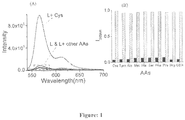
- Fig 1 shows that emission spectrum recorded for L (10 uM) and L+ AAS (200 uM) except Cys does not shows any prominent changes, only after addition cysteine (Cys), probe L shows a fluorescence turn on response at 583nm upon ⁇ ex at 530 nm under specified experimental condition. Further emission response of probe L towards Cys in presence of other AAs is also carried out under identical condition ( Fig 1 ).
- L is a selective fluorescence turn on probe for Cys in aqueous HEPES buffer medium. Probe L does not show emission changes in presence of Hcy, GSH, N-acetyl cysteine (NAC) as well as cysteine bound protein like BSA, upon ⁇ ex at 530 nm ( Fig 1 ). Thus L can specifically detect Cys, over other biothiols, NAC and cysteine bound protein.
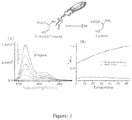
- time dependent fluorescence assay of probe L (10 uM) is carried out in presence of 5 eqv. of Cys, Hcy and GSH by monitoring emission changes at ⁇ em at 583 nm in aq. HEPES buffer-acetonitrile (9:1, v/v) at pH 7.2 medium ( Fig 2).
- Fig 2 reveals that emission intensity reaches maximum within 1 min after addition of 2 mM of Cys, whereas no prominent changes is observed for Hcy and GSH even after 40 min of incubation under identical condition.
- the fluorescence intensity of probe L is determined to be linearly proportional with Cys concentration and the detection limit of free cysteine by the fluorescence spectroscopy method is found to be 15 nM.
- Fig 3 indicates that with increase in acylase concentration, probe L gives fluorescence turn on response with fixed initial concentration of NAC and L.
- the probe L may be used for monitoring enzymatic generation of Cys.
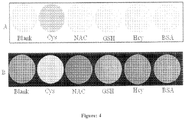
- probe L is used for the detection of free cysteine by a simple, convenient, selective and fast visual method in aqueous medium as well as biological fluids. Accordingly, a TLC plate is immersed into acetonitrile solution of probe L (5 ⁇ L) and dried. This TLC plate coated with probe L is exposed to aqueous solution of different analytes under identical condition. Upon addition of Cysteine solution a prominent change in fluorescence (green to reddish) using UV lamp with excitation at 365 nm and little colour (light pink to dark pink) are observed in TLC plate. In case of other analytes including Hcy, GSH, NAC, and BSA protein (contain terminal Cys residue) no detectable changes are induced.
- the probe L is tested for biological properties.
- the probe L is tested for cytotoxicity and at micro molar concentration of probe L used for cellular studies 85% of cell servility.
- the in vitro cytotoxicity of L on Hct116 cells are determined by conventional MTT (3-(4, 5-Dimethylthiazol-2-yl)-2, 5-diphenyltetrazolium bromide, a yellow tetrazole) assay.
- Hct116 colon cancer cells (7 ⁇ 10 3 ) are seeded in each well of a 96 well plate and cultured in a 37°C incubator supplied with 5% CO 2 .
- Cells are maintained in DMEM medium, supplemented with 10% Foetal Bovine Serum and 100 Units of Penicillin Streptomycin antibiotics. After 24 hours the cells are treated with different concentrations of the L in triplicates for 12 hours. After treatment cells are added with 0.5 ⁇ g/ml of MTT reagent. The plate is then incubated for 4 hours at 37°C. 100 ⁇ l of Isopropyl Alcohol is added to each well.
- BODIPY compound R' (30 mg, 0.07 mmol) was dissolved in 10 ml anhydrous dichloromethane. Then 100 uL of Et 3 N was added to the reaction mixture and allowed to stir for 10 mins at room temperature under N 2 atmosphere. 20 uL of acryloyl chloride was added to this and resulting mixture was stirred at room temperature until all the starting material was consumed monitored by TLC. Then water was added to it and organic layer was extracted using dichloromethane. The organic layer was collected and dried over anhydrous sodium sulphate and solvent was removed under reduced pressure.
- TLC test strips were prepared by coating 5 ⁇ M of probe solution in acetonitrile on silica TLC plates. 5 ⁇ l of Cys (1 ⁇ 10 -1 M) in 10 mM aq. HEPES buffer (pH 7) was added on it, dried and the visual as well as fluorescence colour changes were observed after 5 min. The same was repeated for Hcy, GSH and other analytes as well.
- Cipla made effervescent tablets of N-Acetyl-Cysteine were purchased from commercially available sources. Based on the quantity of NAC present in the tablet, 1 ⁇ 10 -1 M tablet solution was prepared in 10 mM aq. HEPES buffer solution (pH7). Enzyme solution was prepared according to the requirement by dissolving 1mg/ml in 10mM aq. HEPES buffer solution (pH7). A fixed concentration of NAC (200 equiv.) was added to the 10 ⁇ M probe in HEPES: ACN (9:1). Since 1mg of solid enzyme contains 3301 units of protein and 1 unit can hydrolyse 1 ⁇ M of substrate, accordingly enzyme concentration was varied with respect to the substrate concentration.
- Hct116 cells (3 ⁇ 10 5 ) (ATCC® CCL247TM) were seeded on cover slips placed in 6 well plates. After 24 hours, cells were treated with L (10 ⁇ M) for 30 minutes. Cells were then washed thrice with Phosphate Buffer Saline (1X PBS) and fixed with 4% PFA for 20 minutes and washed again with 1X PBS. Nail paint was used to seal the cover slips mounted on the glass slides. Images were acquired in Olympus Fluoview Microscope.
- Hct116 cells (Colon cancer cell) were determined by conventional MTT (3-(4, 5-Dimethylthiazol-2-yl)-2, 5-diphenyltetrazolium bromide, a yellow tetrazole) assay.
- Hct116 colon cancer cells (7 ⁇ 10 3 ) were seeded in each well of a 96 well plate and cultured in a 37°C incubator supplied with 5% CO 2 .
- Cells were maintained in DMEM medium, supplemented with 10% Foetal Bovine Serum and 100 Units of Penicillin Streptomycin antibiotics. After 24 hours the cells were treated with different concentrations of the L in triplicates for 12 hours.
Landscapes
- Life Sciences & Earth Sciences (AREA)
- Chemical & Material Sciences (AREA)
- Health & Medical Sciences (AREA)
- Engineering & Computer Science (AREA)
- Organic Chemistry (AREA)
- Molecular Biology (AREA)
- Biomedical Technology (AREA)
- Physics & Mathematics (AREA)
- Urology & Nephrology (AREA)
- Immunology (AREA)
- Hematology (AREA)
- Biotechnology (AREA)
- Food Science & Technology (AREA)
- Cell Biology (AREA)
- Biophysics (AREA)
- Bioinformatics & Computational Biology (AREA)
- Microbiology (AREA)
- Bioinformatics & Cheminformatics (AREA)
- Proteomics, Peptides & Aminoacids (AREA)
- Medicinal Chemistry (AREA)
- Analytical Chemistry (AREA)
- Biochemistry (AREA)
- General Health & Medical Sciences (AREA)
- General Physics & Mathematics (AREA)
- Pathology (AREA)
- Investigating Or Analysing Materials By The Use Of Chemical Reactions (AREA)
- Organic Low-Molecular-Weight Compounds And Preparation Thereof (AREA)
Description
- The present invention relates to a compound of general formula (L) for selective determination of free cysteine and a process for the preparation thereof.

- Biological thiols such as Cysteine (Cys), Homocysteine (Hcy) and Glutathione (GSH) play crucial roles in maintaining cellular antioxidant defence system. Among them cysteine plays many important roles in living systems. Cysteine is one of the three main precursors required for GSH synthesis. The deficiency of this compound causes many diseases such as slowed growth in children, depigmentation of hair, edema, liver damage, skin lesions, and weakness. An elevated level of Hcy is a risk factor for cardio-vascular disease, dementia and Alzheimer's disease. Abnormal levels of GSH is connected to many diseases such as HIV, cell death and aging. Thus, detection and discrimination of these thiol containing molecules are of great importance. Because of the similar structure and reactivity, distinction among biothiols is a challenging task. The respective concentration level of Cys and His in human plasma is typically 240-360 µM and 15-75 µM. Estimation of these amino thiols in human blood plasma is essential for understanding the role of these in the pathogenesis of vascular diseases.

- The past two decade has seen significant effort being devoted to the development of optical probes for the selective recognition of thiol containing amino acids. There are many strategies for sensing biothiols, based on Micheal addition, cyclization with aldehydes, disulfide cleavage and others.
- Das et al. (Chem.commun., 2014, 50, 9899-9902) discloses chemo dosimetric reagents for biothiol. A Cu (II)-complex based probe for detection of Cys and Histidine was reported.
- P Das et al. (Org. Biomol. Chem., 2013, 11, 6604-6614) reports a new and simple chemodosimetric probe L11 is utilized for the selective detection of biothiols in the presence of other relevant amino acids under physiological conditions (pH = 7.4). Furthermore, the studies with human blood plasma demonstrated the possibility of using this reagent for the quantitative optical detection of total biothiols in biological fluid. J.-H.Olivier discloses Borondipyrrolemethane dyes with pentane-2,4-dione anchors for different use.
- X Yang et al. (Angewandte Chemie International Edition, November 4, 2011, Volume 50, Issue 45, pages 10690-10693) reports a benzothiazole derivative used to detect cysteine (Cys) and homocysteine (Hcy) simultaneously in neutral media. The method involves thioether formation followed by cyclization to release 2-(2'-hydroxy-3'-methoxyphenyl) benzothiazole (HMBT) and a lactam.
- P Das et al. (Chemistry - A European Journal, November 26, 2012, Volume 18, Issue 48, pages 15382-15393) reports rationally designed and synthesized two new reagents L1 {(4-(1H-imidazo[4,5-f][1,10]phenanthrolin-2-yl)benzaldehyde)} and L2 {(4-(6,11-dioxo-6,11-dihydro-3H-anthra[1,2-d]imidazol-2-yl)benzaldehyde)}, each bearing a pendant aldehyde functionality. This aldehyde group can take part in cyclization reactions with β- or γ-amino thiols to yield the corresponding thiazolidine and thiazinane derivatives, respectively. These two chemodosimetric reagents could be used for the quantitative detection of cysteine present in blood plasma by using a pre-column HPLC technique.
- However, the development of probes for specific discrimination of biothiols is an unmet need in the art. Probes that are selective to any one of these amino biothiols are very rare in literature. Probes that give specific response with colour change as well as emission change are much needed. Especially those probes which allows real time monitoring without the aid of any instrumental techniques are highly recommended as for as the practical utility is concerned. There are no reports on detection of thiols using simple test strips. Particularly, a further challenge that is unaddressed in the art is that of a simple process for the determination of free cysteine.
- Therefore, there is need in the art to develop a reagent for selective detection of free cysteine, especially with a high degree of selectivity towards free cysteine. Accordingly, the inventors of present invention developed a novel ligand for the selective detection of free cysteine.
- The main objective of present invention is to provide a novel ligand of formula (L) useful for the selective detection of free cysteine and process for the preparation thereof.
- Another objective of present invention is to provide a kit for the selective detection of free cysteine characterized in that the selectivity of novel ligand of formula (L) to cysteine is very high and a process for detection using the kit.
- Yet another objective of present invention is to provide a visual as well as fluorescence test for detection of cysteine using novel ligand of formula (L).
- Accordingly, the present invention provides a compound of general formula (L) which is useful for the selective detection of free cysteine and process for the preparation thereof.
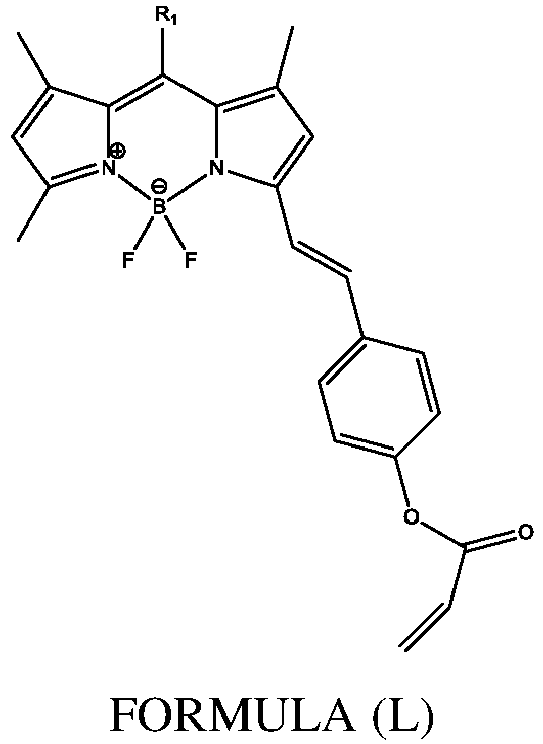


- In an aspect, the present invention provides a kit for the selective detection of free cysteine characterized in that the selectivity of novel ligand of formula (L) to cysteine is 100% and a process for detection using the kit.
- In another aspect, the present invention provides a visual as well as fluorescence test for detection of cysteine using novel ligands of formula (L).
-
- GSH: Glutathione
- Hcy: Homocysteine
- Cys: Cysteine
- NAC: N-Acetylcysteine
- AAs: Aminoacids
- Probe L: Novel ligand of formula (L)
- HEPES: (4-(2-hydroxyethyl)-1-piperazineethanesulfonic acid)
- BODIPY- Boron-dipyrromethene
- DCM- Dicholomethane
-
-
Fig 1 : (A) Change in emission spectrum (λex 530 nm) of L (10 uM) in presence and absence of different AAs (2 mM); (B) Emission response of L (10 uM) for Cys (200 uM) in presence of other amino acids (200 uM) in aq. HEPES buffer-acetonitrile medium at pH 7.2. Red bar indicates addition of Cys to the mixture and black bar represents emission response at 583nm in absence of Cys. -
Fig 2 : (A) Emission (λExt: 530 nm) spectral pattern for L (10 uM) in presence of varying [Cys] (0-2 mM); Inset: B-H plot obtain from systematic emission titration of L with Cys; (B) Time dependent studies of L (10 uM) in presence and absence of 5 eqv of Cys, Hcy and GSH in aq. HEPES-acetonitrile (ACN) (9:1, v/v) medium at pH 7.2. λExt /λem: 530/585 nm. -
Fig 3 : (A) Emission response of probe L (10uM) and NAC (2mM) with various concentration acylase enzyme, Each spectra was recorded after 20 min at 37°C at pH 7.2, λExt 530 nm; (B Emission intensity at 586nm of probe L with NAC in absence and presence of enzyme vs. time plot. -
Fig 4 : Visual (A) and Fluorescence (B) colour changes of probe L coated TLC plates in presence and absence of different analytes (Cys, NAC, GSH, Hcy and BSA). Fluorescence colour was recorded using UV lamp excitation at 365 nm. -
Fig 5 : Emission response of L (10 µM) in the absence and presence of various amino acids (200 mole equiv. each). (From 1-23, Cysteine, L only, Homocysteine, Glutathione, Histidine, Leucine, Methionine, Phenylalanine, Tryptophon, Tyrosine, Valine , Alanine, - Arginine, Glycine, Glutamine, Proline, Serine, Aspartic acid, Glutamic acid, Threonine, Isoleucine, Lysine). In 10 mM HEPES: CH3CN (9:1, v/v) at pH 7, λExt = 530 nm.
-
Fig 6 : Fluorescence intensity at 586 nm upon addition of Cys (0-150µM) in 10 mM HEPES: ACN (9:1,v/v )at pH7, λExt = 530 nm. -
Fig 7 : Change of emission intensity of probe L with pH. -
Fig 8 : MTT assay to determine the cell viability percentage in Hct116 colon cancer cells. -
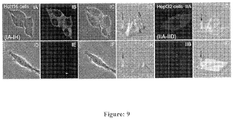
Fig 9 : (I) CLSM images of Hct116 cells (IA-IH), cells incubated with 1 µM of L, (IA): bright field images, (IB): dark field image and (IC): overlay images of (IA) & (IB); Cells pre-treated with 1 mM of NEM then incubated with 1 µM of L, (ID): bright field image, (IE): dark field image, (IF): overlay of (ID) & (IE). (IG) and (IH) were 3D intensity plot of (IB) & (IE) respectively; (II) CLSM images of live HepG2 cells: (IIA) & (IIB) dark field images of cells treated with 1 mM NEM, washed and then treated with (IIA) or without (IIB) 25 µM NAC for 1h, followed by incubation of 1 µM of L for 20 min and (IIC) & (IID) are respective 3D intensity profile plot of images (II)A & (II)B. (II)A & (II)C revealed the generation of Cys from NAC by aminoacylase-I present in HepG2 cells, λExt/λEm : 530/573 nm. -
Fig 9 : (A) Hct116 cells stained with 1 µM of L in presence of ER tracker green; (i) Intensity profile of ROIs across cells: red line represent intensity of L and green line indicate intensity for ER Tracker green; (B) co-localization experiment: Cells were co-stained with L, ER tracker green and DAPI; λExt/λEm: 530/573 nm. - For the purpose of this invention, the expression "probe L" and "novel ligand of formula (L)" are used interchangeably throughout the specification and both having the same meaning.
- The present invention provides a novel ligand of formula (L) which is useful for the selective detection of free cysteine and process for the preparation thereof. This probe L is used for the detection of free cysteine by a simple, convenient, selective and fast visual method in aqueous medium as well as biological fluids. The present invention also provides a kit for the selective detection of free cysteine characterized in that the selectivity of novel ligand of formula (L) to cysteine is 100% and a process for detection using the kit.
- Accordingly, the main embodiment of the present invention provides a compound for selective determination of free cysteine having general formula (L)


- Another embodiment of the present invention provides a novel ligand of formula (L) useful for the detection of free cysteine.


- In another embodiment of the present invention the compounds of formula (L) comprises:

- Another embodiment of the present invention provides a process for the preparation of compound of formula (L), comprising the steps of:
- (i) Refluxing boron-dipyrromethene (BODIPY) of formula R" with 4-hydroxybenzaldehyde, piperidine and glacial acetic acid in toluene to obtain compound of formula R';

- (ii) Reacting the compound of formula R' with acryloyl chloride in dichlotomethane (DCM) at room temperature to obtain ligand of formula (L)

- Another embodiment of the present invention provides a process for the synthesis of ligand of formula (L) comprising the steps of:
- a) Refluxing the reaction mixture comprising BODIPY of formula R", 4-hydroxybenzaldehyde, piperidine and glacial acetic acid in toluene for 3h at 110°C to obtain compound of formula (R').
- b) Reacting the compound of formula R' with acryloyl chloride in dicholomethane (DCM) at room temperature to obtain ligand of formula (L).
- In another embodiment of the present invention, a mixture of BODIPY(boron-dipyrromethene) (400 mg, 1.23 mmol), 4-hydroxybenzaldehyde (165mg, 1.35 mmol), 0.9 ml piperidine and 0.6 ml glacial acetic acid was reflux in 30 ml toluene in a Dean- Stark apparatus for 3h. Then water was added into it and crude organic layer was extracted with dichloromethane. The organic layer was collected and dried over anhydrous sodium sulphate and solvent was removed under reduced pressure. It was then subjected to column chromatography using silica gel (100-200 mesh) as stationary phase and 10% EtOAc in hexane as mobile phase to get compound R' as red solid.
- In yet another embodiment, BODIPY compound R' (30 mg, 0.07 mmol) was dissolved in 10 ml anhydrous dichloromethane in a 100 ml round bottom two neck flask. Then 100 uL of Et3N was added to the reaction mixture and allowed to stir for 10 mins at room temperature under N2 atmosphere. 20 uL of acryloyl chloride was added to this and resulting mixture was stirred at room temperature until all the starting material was consumed monitored by TLC. Then water was added to it and organic layer was extracted using dichloromethane. The organic layer was collected and dried over anhydrous sodium sulphate and solvent was removed under reduced pressure. It was then subjected to column chromatography using silica gel (100-200 mesh) as stationary phase and 5% EtOAc in hexane as mobile phase to get probe L as solid as 70% yield.
- In yet another embodiment, the present invention discloses the process for the synthesis for novel ligand of formula (L) is depicted in scheme 1 below;

- The BODIPY of formula R" is prepared by known methods comprising reacting aldehyde or acid chloride with 2, 4 dimethyl pyrrole. The aldehyde is used appropriately to obtain the BODIPY of formula R" wherein the substituent R represents toluene, naphthalene and pyrene. The acid chloride is selected from benzoyl chloride to obtain BODIPY of formula R" wherein the substituent R is phenyl.
- Accordingly, the process for preparation of BODIPY of formula R", wherein R represents toluene, naphthalene and pyrene comprises reacting the corresponding aldehyde with 2, 4 dimethyl pyrrole in presence of DDQ, Et3N:BF3 in presence of trifluroacetic acid and DCM.

- The process for preparation of BODIPY of formula R", wherein R is phenyl comprises reacting benzoyl chloride and 2, 4 dimethyl pyrrole in presence of triethylamine, BF3.OEt2 in dichloromethane under nitrogen atmosphere.

- Another embodiment of the present invention provides for a diagnostic kit for selective detection of free cysteine.
- In another embodiment of the present invention, the diagnostic kit comprises:
- (a) Ligand of Formula (L)
- (b) HEPES aqueous buffer medium
- (c) TLC Test strips
- (d) HEPES: acetonitrile medium
- (e) Instruction manual
- Another embodiment of the present invention provides a method for selective detection of free cysteine using the diagnostic kit comprising;
- (i) Dissolving 500µl of 1x 10⁻⁴ M of ligand of formula (L) in 4.5 ml of 10mM HEPES aqueous buffer medium of pH 7.2 to obtain 1x 10⁻⁵ M ligand concentration;
- (ii) preparing the stock solution of 1x 10⁻² M analytes in aqueous HEPES buffer medium at pH 7.2;
- (iii) TLC test strips; and
- (iv) performing the photo physical studies for detection of free cysteine in HEPES: acetonitrile medium (9: 1, v/v) at pH 7.2 as per the instruction manual.
- In another embodiment of the present invention the emission response of ligand L with various amino acids (AAs) as well as anionic analytes in aqueous buffer-acetonitrile (9:1, v/v) at pH 7.2 solution (
Fig 1 ) is studied.Fig 1 shows that emission spectrum recorded for L (10 uM) and L+ AAS (200 uM) except Cys does not shows any prominent changes, only after addition cysteine (Cys), probe L shows a fluorescence turn on response at 583nm upon λex at 530 nm under specified experimental condition. Further emission response of probe L towards Cys in presence of other AAs is also carried out under identical condition (Fig 1 ). These findings suggested L is a selective fluorescence turn on probe for Cys in aqueous HEPES buffer medium. Probe L does not show emission changes in presence of Hcy, GSH, N-acetyl cysteine (NAC) as well as cysteine bound protein like BSA, upon λex at 530 nm (Fig 1 ). Thus L can specifically detect Cys, over other biothiols, NAC and cysteine bound protein. - In another embodiment of the present invention time dependent fluorescence assay of probe L (10 uM) is carried out in presence of 5 eqv. of Cys, Hcy and GSH by monitoring emission changes at λem at 583 nm in aq. HEPES buffer-acetonitrile (9:1, v/v) at pH 7.2 medium (
Fig 2). Fig 2 reveals that emission intensity reaches maximum within 1 min after addition of 2 mM of Cys, whereas no prominent changes is observed for Hcy and GSH even after 40 min of incubation under identical condition. - In another embodiment of the present invention the fluorescence intensity of probe L is determined to be linearly proportional with Cys concentration and the detection limit of free cysteine by the fluorescence spectroscopy method is found to be 15 nM. The effect of pH towards probe L indicated ligand L is stable up to pH 9.
Fig 3 indicates that with increase in acylase concentration, probe L gives fluorescence turn on response with fixed initial concentration of NAC and L. The probe L may be used for monitoring enzymatic generation of Cys. - In another embodiment, probe L is used for the detection of free cysteine by a simple, convenient, selective and fast visual method in aqueous medium as well as biological fluids. Accordingly, a TLC plate is immersed into acetonitrile solution of probe L (5 µL) and dried. This TLC plate coated with probe L is exposed to aqueous solution of different analytes under identical condition. Upon addition of Cysteine solution a prominent change in fluorescence (green to reddish) using UV lamp with excitation at 365 nm and little colour (light pink to dark pink) are observed in TLC plate. In case of other analytes including Hcy, GSH, NAC, and BSA protein (contain terminal Cys residue) no detectable changes are induced.
- In another embodiment, the probe L is tested for biological properties. In a preferred embodiment, the probe L is tested for cytotoxicity and at micro molar concentration of probe L used for cellular studies 85% of cell servility. The in vitro cytotoxicity of L on Hct116 cells (Colon cancer cell) are determined by conventional MTT (3-(4, 5-Dimethylthiazol-2-yl)-2, 5-diphenyltetrazolium bromide, a yellow tetrazole) assay. Hct116 colon cancer cells (7 × 10³) are seeded in each well of a 96 well plate and cultured in a 37°C incubator supplied with 5% CO2. Cells are maintained in DMEM medium, supplemented with 10% Foetal Bovine Serum and 100 Units of Penicillin Streptomycin antibiotics. After 24 hours the cells are treated with different concentrations of the L in triplicates for 12 hours. After treatment cells are added with 0.5µg/ml of MTT reagent. The plate is then incubated for 4 hours at 37°C. 100 µl of Isopropyl Alcohol is added to each well.
- The following examples are given by way of illustration and therefore should not be construed to limit the scope of the present invention:
- A mixture of BODIPY(boron-dipyrromethene) (400 mg, 1.23 mmol), 4-hydroxybenzaldehyde (165mg, 1.35 mmol), 0.9 ml piperidine and 0.6 ml glacial acetic acid was reflux in 30 ml toluene in a Dean- Stark apparatus for 3h. Then water was added into it and crude organic layer was extracted with dichloromethane. The organic layer was collected and dried over anhydrous sodium sulphate and solvent was removed under reduced pressure. It was then subjected to column chromatography using silica gel (100-200 mesh) as stationary phase and 10% EtOAc in hexane as mobile phase to get compound R' as red solid. Yield: 56%; 1H NMR (500 MHz, CDCl3, J in Hz, δ ppm): 7.52 (1H, d, J = 16.5), 7.47 (5H, m), 7.3 (2H, d, J = 8), 7.18 (1H, d, J = 16), 6.83 (2H, d, J = 8.5), 6.58 (1H, s), 5.99 (1H, s), 5.4 (1H, s), 2.59 (3H, s), 1.42 (3H, s), 1.38 (3H,s); 13C NMR (125 MHz, CDCl3, δ ppm): 156.80, 154.68, 153.47, 142.74, 142.40, 140.08, 136.24, 135.13, 132.84, 131.68, 129.38, 129.22, 129.09, 128.93, 128.25, 121.14, 117.55, 116.90, 115.82, 14.69, 14.59, 14.32. HRMS (ESI): m/z calculated for C26H23BF2N2O [M+ H]: 429.1872, found 429.1943.
- In a 100 ml round bottom two neck flask BODIPY compound R' (30 mg, 0.07 mmol) was dissolved in 10 ml anhydrous dichloromethane. Then 100 uL of Et3N was added to the reaction mixture and allowed to stir for 10 mins at room temperature under N2 atmosphere. 20 uL of acryloyl chloride was added to this and resulting mixture was stirred at room temperature until all the starting material was consumed monitored by TLC. Then water was added to it and organic layer was extracted using dichloromethane. The organic layer was collected and dried over anhydrous sodium sulphate and solvent was removed under reduced pressure. It was then subjected to column chromatography using silica gel (100-200 mesh) as stationary phase and 5% EtOAc in hexane as mobile phase to get probe L as solid as 70% yield. 1H NMR (500 MHz, CDCl3, J in Hz, δ ppm) : 7.57 (1H, s), 7.53 (3H, d, J = 8.2), 7.41 (3H, d, J = 5.8), 7.25 - 7.21 (2H, m), 7.13 (1H, d, J = 16.3), 7.07 (2H, d, J =8.4), 6.56 (1H, s), 6.52 (1H, s), 6.25 (1H, dd, J =17.3, 10.5), 5.95 (2H, d, J = 11.1), 2.52 (3H, s), 1.35 (3H, s), 1.31 (3H, s); 13C NMR (125 MHz, CDCl3, δ ppm): 164.35, 155.92, 152.21, 150.90, 143.27, 142.34, 140.65, 135.03, 134.69, 134.39, 132.78, 132.05, 129.15, 129.01, 128.44, 128.14, 127.86, 121.88, 121.55, 119.41, 117.48, 14.79, 14.57, 14.42. HRMS (ESI): m/z calculated for C29H26BF2N2O2 [M + H]: 483.1977 found 483.2057.
- Stock solution of probe L (1 × 10⁻⁴ M) was prepared in HPLC grade acetonitrile. All the analytes stock solution (1 × 10⁻² M) was prepared in aqueous HEPES buffer medium at pH 7.2. 500 µL of this stock solution of probe L was added to 4.5 ml of HEPES (10 mM) aqueous buffer medium having solution pH 7.2 to make the effective ligand concentration of 1 × 10⁻⁵ M. This solution was used for all the photophysical studies. All the photo physical studies were performed in HEPES: acetonitrile medium (9: 1, v/v) at pH 7.2. The detection limit was calculated based on the fluorescence titration. To determine the S/N ratio, the emission intensity of L without Cys was measured 10 times and the standard deviation of blank measurements was determined. The detection limit (DL) of L for Cys was determined from the following equation:

- Where K = 2 or 3 (we took 3 in this case);
- Sb1 is the standard deviation of the blank solution;
- S is the slope of the calibration curve.
- From the graph we get slope = 4.99 x 10⁸, and Sb1 value is 2.49
- Thus using the formula we get the Detection Limit = 15x 10-9 M.
- TLC test strips were prepared by coating 5 µM of probe solution in acetonitrile on silica TLC plates. 5µl of Cys (1 × 10⁻¹M) in 10 mM aq. HEPES buffer (pH 7) was added on it, dried and the visual as well as fluorescence colour changes were observed after 5 min. The same was repeated for Hcy, GSH and other analytes as well.
- Cipla made effervescent tablets of N-Acetyl-Cysteine (mucinac 600) were purchased from commercially available sources. Based on the quantity of NAC present in the tablet, 1 × 10⁻¹M tablet solution was prepared in 10 mM aq. HEPES buffer solution (pH7). Enzyme solution was prepared according to the requirement by dissolving 1mg/ml in 10mM aq. HEPES buffer solution (pH7). A fixed concentration of NAC (200 equiv.) was added to the 10 µM probe in HEPES: ACN (9:1). Since 1mg of solid enzyme contains 3301 units of protein and 1 unit can hydrolyse 1 µM of substrate, accordingly enzyme concentration was varied with respect to the substrate concentration.
- Hct116 cells (3 × 10⁵) (ATCC® CCL247™) were seeded on cover slips placed in 6 well plates. After 24 hours, cells were treated with L (10 µM) for 30 minutes. Cells were then washed thrice with Phosphate Buffer Saline (1X PBS) and fixed with 4% PFA for 20 minutes and washed again with 1X PBS. Nail paint was used to seal the cover slips mounted on the glass slides. Images were acquired in Olympus Fluoview Microscope.
- The in vitro cytotoxicity of L on Hct116 cells (Colon cancer cell) were determined by conventional MTT (3-(4, 5-Dimethylthiazol-2-yl)-2, 5-diphenyltetrazolium bromide, a yellow tetrazole) assay. Hct116 colon cancer cells (7 × 10³) were seeded in each well of a 96 well plate and cultured in a 37°C incubator supplied with 5% CO2. Cells were maintained in DMEM medium, supplemented with 10% Foetal Bovine Serum and 100 Units of Penicillin Streptomycin antibiotics. After 24 hours the cells were treated with different concentrations of the L in triplicates for 12 hours. After treatment cells were added with 0.5µg/ml of MTT reagent. The plate was then incubated for 4 hours at 37°C. 100 µl of Isopropyl Alcohol was added to each well. Optical density was measured at 570 nm using Multiskan Go (Thermo Scientific) to find the concentration of the cell inhibition. IC50 value has been calculated to be 100µM.
The formula used for the calculation of the MTT assay for evaluation of the cell viability was as follows:
-
- a) Simple process of detection
- b) Selective determination of free cysteine
- c) This method is of much practical significance in real time monitoring as it could be done without the aid of any instruments.
Claims (4)
- A compound for selective determination of free cysteine having general formula (L)


- The compound as claimed in claim 1 wherein the compounds of formula (L) comprises:

- The process for the preparation of compound of formula (L) as claimed in claim 1,comprising the steps of:(iii) Refluxing boron-dipyrromethene (BODIPY) of formula R" with 4-hydroxybenzaldehyde, piperidine and glacial acetic acid in toluene to obtain compound of formula R';
 (iv) Reacting the compound of formula R' with acryloyl chloride in dichlotomethane (DCM) at room temperature to obtain ligand of formula (L)
- A method for selective detection of free cysteine using the diagnostic kit comprising;i. Dissolving 500 µl of 1 × 10⁻⁴ M of ligand of formula (L) in 4.5 ml of 10 mM HEPES aqueous buffer medium of pH 7.2 to obtain 1 × 10⁻⁵ M ligand concentration;ii. preparing the stock solution of 1 × 10⁻² M analytes in aqueous HEPES buffer medium at pH 7.2;iii. TLC test strips; andiv. performing the photo physical studies for detection of free cysteine in HEPES: acetonitrile medium (9: 1, v/v) at pH 7.2 as per the instruction manual.
Applications Claiming Priority (2)
| Application Number | Priority Date | Filing Date | Title |
|---|---|---|---|
| IN2354DE2015 | 2015-07-31 | ||
| PCT/IN2016/050254 WO2017021980A1 (en) | 2015-07-31 | 2016-07-29 | A compound for selective determination of free cysteine and a process for the preparation thereof |
Publications (2)
| Publication Number | Publication Date |
|---|---|
| EP3328869A1 EP3328869A1 (en) | 2018-06-06 |
| EP3328869B1 true EP3328869B1 (en) | 2019-06-19 |
Family
ID=56979620
Family Applications (1)
| Application Number | Title | Priority Date | Filing Date |
|---|---|---|---|
| EP16770096.2A Not-in-force EP3328869B1 (en) | 2015-07-31 | 2016-07-29 | A compound for selective determination of free cysteine and a process for the preparation thereof |
Country Status (3)
| Country | Link |
|---|---|
| US (1) | US10730891B2 (en) |
| EP (1) | EP3328869B1 (en) |
| WO (1) | WO2017021980A1 (en) |
Families Citing this family (2)
| Publication number | Priority date | Publication date | Assignee | Title |
|---|---|---|---|---|
| ES2726476A1 (en) * | 2018-04-04 | 2019-10-04 | Consejo Superior Investigacion | DYNAMIC COMBINATORY CHEMISTRY BASED ON PSEUDOPEPTIDES AND ITS USE FOR THE DETECTION OF CYSTEINE AND OTHER BIOTIOLS |
| CN109134441A (en) * | 2018-10-11 | 2019-01-04 | 贺州学院 | A kind of novel fluorescence probe and its preparation method and application detecting cysteine |
Family Cites Families (2)
| Publication number | Priority date | Publication date | Assignee | Title |
|---|---|---|---|---|
| US7244394B2 (en) * | 2002-10-03 | 2007-07-17 | Novartis Ag | Methods and kits for assays of analytes of interest in tears |
| US9412949B2 (en) * | 2008-12-23 | 2016-08-09 | Michigan Technological University | Fluorescent conjugated polymers with a bodipy-based backbone and uses thereof |
-
2016
- 2016-07-29 US US15/749,160 patent/US10730891B2/en not_active Expired - Fee Related
- 2016-07-29 EP EP16770096.2A patent/EP3328869B1/en not_active Not-in-force
- 2016-07-29 WO PCT/IN2016/050254 patent/WO2017021980A1/en not_active Ceased
Non-Patent Citations (1)
| Title |
|---|
| None * |
Also Published As
| Publication number | Publication date |
|---|---|
| US10730891B2 (en) | 2020-08-04 |
| WO2017021980A1 (en) | 2017-02-09 |
| US20180354975A1 (en) | 2018-12-13 |
| EP3328869A1 (en) | 2018-06-06 |
Similar Documents
| Publication | Publication Date | Title |
|---|---|---|
| Miao et al. | A new class of fast-response and highly selective fluorescent probes for visualizing peroxynitrite in live cells, subcellular organelles, and kidney tissue of diabetic rats | |
| Liu et al. | A triphenylamine as a fluorophore and maleimide as a bonding group selective turn-on fluorescent imaging probe for thiols | |
| Qu et al. | A maleimide-based thiol fluorescent probe and its application for bioimaging | |
| US9709572B2 (en) | Fluorescence detection of cysteine and homocysteine | |
| Ren et al. | Fluorescent probe for simultaneous discrimination of Cys/Hcy and GSH in pure aqueous media with a fast response under a single-wavelength excitation | |
| Wang et al. | A novel near-infrared styryl-BODIPY fluorescent probe for discrimination of GSH and its application in living cells | |
| EP2942352A1 (en) | ASYMMETRICAL Si RHODAMINE AND RHODOL SYNTHESIS | |
| Huo et al. | A turn-on green fluorescent thiol probe based on the 1, 2-addition reaction and its application for bioimaging | |
| EP3160971B1 (en) | Method for selective detection and estimation of histidine and cystein | |
| Gao et al. | BODIPY-based turn-on fluorescent probes for cysteine and homocysteine | |
| Chen et al. | Sensitivity evaluation of NBD-SCN towards cysteine/homocysteine and its bioimaging applications | |
| Liu et al. | A squaraine-based red emission off–on chemosensor for biothiols and its application in living cells imaging | |
| Liu et al. | A fast response and high sensitivity thiol fluorescent probe in living cells | |
| Yang et al. | A fluorescent dyad with large emission shift for discrimination of cysteine/homocysteine from glutathione and hydrogen sulfide and the application of bioimaging | |
| CN107602502B (en) | ESIPT type fluorescent probe for biological mercaptan detection and application | |
| Liu et al. | A fluorescence turn-on probe for cysteine and homocysteine based on thiol-triggered benzothiazolidine ring formation | |
| US11319331B2 (en) | Probe for selective detection of hypochlorous acid (HOCl) under physiological condition, and related methods | |
| Liu et al. | A cyanine-based colorimetric and fluorescent probe for highly selective sensing and bioimaging of phosphate ions | |
| Li et al. | A rapid-response and ratiometric fluorescent probe for nitric oxide: From the mitochondria to the nucleus in live cells | |
| Zhang et al. | A turn-on fluorescent probe based on 2, 4-dinitrosulfonyl functional group and its application for bioimaging | |
| Zhang et al. | A ratiometric fluorescent probe for sensitive and selective detection of hydrogen sulfide and its application for bioimaging | |
| Chen et al. | A novel cyanobiphenyl benzothiazole-based fluorescent probe for detection of biothiols with a large Stokes shift and its application in cell imaging | |
| Wang et al. | A novel reaction-based fluorescent turn-on probe for biothiols and its application in cell imaging | |
| Ma et al. | Dual-functional probes for sequential thiol and redox homeostasis sensing in live cells | |
| Li et al. | Fast detecting hypochlorous acid based on electron-withdrawing group promoted oxidation and its biological applications in cells and root tips of plants |
Legal Events
| Date | Code | Title | Description |
|---|---|---|---|
| STAA | Information on the status of an ep patent application or granted ep patent |
Free format text: STATUS: THE INTERNATIONAL PUBLICATION HAS BEEN MADE |
|
| PUAI | Public reference made under article 153(3) epc to a published international application that has entered the european phase |
Free format text: ORIGINAL CODE: 0009012 |
|
| STAA | Information on the status of an ep patent application or granted ep patent |
Free format text: STATUS: REQUEST FOR EXAMINATION WAS MADE |
|
| 17P | Request for examination filed |
Effective date: 20180216 |
|
| AK | Designated contracting states |
Kind code of ref document: A1 Designated state(s): AL AT BE BG CH CY CZ DE DK EE ES FI FR GB GR HR HU IE IS IT LI LT LU LV MC MK MT NL NO PL PT RO RS SE SI SK SM TR |
|
| AX | Request for extension of the european patent |
Extension state: BA ME |
|
| DAV | Request for validation of the european patent (deleted) | ||
| DAX | Request for extension of the european patent (deleted) | ||
| GRAP | Despatch of communication of intention to grant a patent |
Free format text: ORIGINAL CODE: EPIDOSNIGR1 |
|
| STAA | Information on the status of an ep patent application or granted ep patent |
Free format text: STATUS: GRANT OF PATENT IS INTENDED |
|
| INTG | Intention to grant announced |
Effective date: 20190201 |
|
| GRAS | Grant fee paid |
Free format text: ORIGINAL CODE: EPIDOSNIGR3 |
|
| GRAA | (expected) grant |
Free format text: ORIGINAL CODE: 0009210 |
|
| STAA | Information on the status of an ep patent application or granted ep patent |
Free format text: STATUS: THE PATENT HAS BEEN GRANTED |
|
| AK | Designated contracting states |
Kind code of ref document: B1 Designated state(s): AL AT BE BG CH CY CZ DE DK EE ES FI FR GB GR HR HU IE IS IT LI LT LU LV MC MK MT NL NO PL PT RO RS SE SI SK SM TR |
|
| REG | Reference to a national code |
Ref country code: GB Ref legal event code: FG4D |
|
| REG | Reference to a national code |
Ref country code: CH Ref legal event code: EP |
|
| REG | Reference to a national code |
Ref country code: IE Ref legal event code: FG4D |
|
| REG | Reference to a national code |
Ref country code: DE Ref legal event code: R096 Ref document number: 602016015682 Country of ref document: DE |
|
| REG | Reference to a national code |
Ref country code: AT Ref legal event code: REF Ref document number: 1145356 Country of ref document: AT Kind code of ref document: T Effective date: 20190715 |
|
| REG | Reference to a national code |
Ref country code: NL Ref legal event code: FP |
|
| PG25 | Lapsed in a contracting state [announced via postgrant information from national office to epo] |
Ref country code: LT Free format text: LAPSE BECAUSE OF FAILURE TO SUBMIT A TRANSLATION OF THE DESCRIPTION OR TO PAY THE FEE WITHIN THE PRESCRIBED TIME-LIMIT Effective date: 20190619 Ref country code: HR Free format text: LAPSE BECAUSE OF FAILURE TO SUBMIT A TRANSLATION OF THE DESCRIPTION OR TO PAY THE FEE WITHIN THE PRESCRIBED TIME-LIMIT Effective date: 20190619 Ref country code: AL Free format text: LAPSE BECAUSE OF FAILURE TO SUBMIT A TRANSLATION OF THE DESCRIPTION OR TO PAY THE FEE WITHIN THE PRESCRIBED TIME-LIMIT Effective date: 20190619 Ref country code: SE Free format text: LAPSE BECAUSE OF FAILURE TO SUBMIT A TRANSLATION OF THE DESCRIPTION OR TO PAY THE FEE WITHIN THE PRESCRIBED TIME-LIMIT Effective date: 20190619 Ref country code: FI Free format text: LAPSE BECAUSE OF FAILURE TO SUBMIT A TRANSLATION OF THE DESCRIPTION OR TO PAY THE FEE WITHIN THE PRESCRIBED TIME-LIMIT Effective date: 20190619 Ref country code: NO Free format text: LAPSE BECAUSE OF FAILURE TO SUBMIT A TRANSLATION OF THE DESCRIPTION OR TO PAY THE FEE WITHIN THE PRESCRIBED TIME-LIMIT Effective date: 20190919 |
|
| REG | Reference to a national code |
Ref country code: LT Ref legal event code: MG4D |
|
| PG25 | Lapsed in a contracting state [announced via postgrant information from national office to epo] |
Ref country code: BG Free format text: LAPSE BECAUSE OF FAILURE TO SUBMIT A TRANSLATION OF THE DESCRIPTION OR TO PAY THE FEE WITHIN THE PRESCRIBED TIME-LIMIT Effective date: 20190919 Ref country code: GR Free format text: LAPSE BECAUSE OF FAILURE TO SUBMIT A TRANSLATION OF THE DESCRIPTION OR TO PAY THE FEE WITHIN THE PRESCRIBED TIME-LIMIT Effective date: 20190920 Ref country code: RS Free format text: LAPSE BECAUSE OF FAILURE TO SUBMIT A TRANSLATION OF THE DESCRIPTION OR TO PAY THE FEE WITHIN THE PRESCRIBED TIME-LIMIT Effective date: 20190619 Ref country code: LV Free format text: LAPSE BECAUSE OF FAILURE TO SUBMIT A TRANSLATION OF THE DESCRIPTION OR TO PAY THE FEE WITHIN THE PRESCRIBED TIME-LIMIT Effective date: 20190619 |
|
| REG | Reference to a national code |
Ref country code: AT Ref legal event code: MK05 Ref document number: 1145356 Country of ref document: AT Kind code of ref document: T Effective date: 20190619 |
|
| PG25 | Lapsed in a contracting state [announced via postgrant information from national office to epo] |
Ref country code: AT Free format text: LAPSE BECAUSE OF FAILURE TO SUBMIT A TRANSLATION OF THE DESCRIPTION OR TO PAY THE FEE WITHIN THE PRESCRIBED TIME-LIMIT Effective date: 20190619 Ref country code: EE Free format text: LAPSE BECAUSE OF FAILURE TO SUBMIT A TRANSLATION OF THE DESCRIPTION OR TO PAY THE FEE WITHIN THE PRESCRIBED TIME-LIMIT Effective date: 20190619 Ref country code: PT Free format text: LAPSE BECAUSE OF FAILURE TO SUBMIT A TRANSLATION OF THE DESCRIPTION OR TO PAY THE FEE WITHIN THE PRESCRIBED TIME-LIMIT Effective date: 20191021 Ref country code: SK Free format text: LAPSE BECAUSE OF FAILURE TO SUBMIT A TRANSLATION OF THE DESCRIPTION OR TO PAY THE FEE WITHIN THE PRESCRIBED TIME-LIMIT Effective date: 20190619 Ref country code: RO Free format text: LAPSE BECAUSE OF FAILURE TO SUBMIT A TRANSLATION OF THE DESCRIPTION OR TO PAY THE FEE WITHIN THE PRESCRIBED TIME-LIMIT Effective date: 20190619 Ref country code: CZ Free format text: LAPSE BECAUSE OF FAILURE TO SUBMIT A TRANSLATION OF THE DESCRIPTION OR TO PAY THE FEE WITHIN THE PRESCRIBED TIME-LIMIT Effective date: 20190619 |
|
| PG25 | Lapsed in a contracting state [announced via postgrant information from national office to epo] |
Ref country code: ES Free format text: LAPSE BECAUSE OF FAILURE TO SUBMIT A TRANSLATION OF THE DESCRIPTION OR TO PAY THE FEE WITHIN THE PRESCRIBED TIME-LIMIT Effective date: 20190619 Ref country code: SM Free format text: LAPSE BECAUSE OF FAILURE TO SUBMIT A TRANSLATION OF THE DESCRIPTION OR TO PAY THE FEE WITHIN THE PRESCRIBED TIME-LIMIT Effective date: 20190619 Ref country code: IS Free format text: LAPSE BECAUSE OF FAILURE TO SUBMIT A TRANSLATION OF THE DESCRIPTION OR TO PAY THE FEE WITHIN THE PRESCRIBED TIME-LIMIT Effective date: 20191019 Ref country code: IT Free format text: LAPSE BECAUSE OF FAILURE TO SUBMIT A TRANSLATION OF THE DESCRIPTION OR TO PAY THE FEE WITHIN THE PRESCRIBED TIME-LIMIT Effective date: 20190619 |
|
| REG | Reference to a national code |
Ref country code: CH Ref legal event code: PL |
|
| PG25 | Lapsed in a contracting state [announced via postgrant information from national office to epo] |
Ref country code: MC Free format text: LAPSE BECAUSE OF FAILURE TO SUBMIT A TRANSLATION OF THE DESCRIPTION OR TO PAY THE FEE WITHIN THE PRESCRIBED TIME-LIMIT Effective date: 20190619 Ref country code: TR Free format text: LAPSE BECAUSE OF FAILURE TO SUBMIT A TRANSLATION OF THE DESCRIPTION OR TO PAY THE FEE WITHIN THE PRESCRIBED TIME-LIMIT Effective date: 20190619 |
|
| REG | Reference to a national code |
Ref country code: BE Ref legal event code: MM Effective date: 20190731 |
|
| PG25 | Lapsed in a contracting state [announced via postgrant information from national office to epo] |
Ref country code: DK Free format text: LAPSE BECAUSE OF FAILURE TO SUBMIT A TRANSLATION OF THE DESCRIPTION OR TO PAY THE FEE WITHIN THE PRESCRIBED TIME-LIMIT Effective date: 20190619 Ref country code: PL Free format text: LAPSE BECAUSE OF FAILURE TO SUBMIT A TRANSLATION OF THE DESCRIPTION OR TO PAY THE FEE WITHIN THE PRESCRIBED TIME-LIMIT Effective date: 20190619 |
|
| PG25 | Lapsed in a contracting state [announced via postgrant information from national office to epo] |
Ref country code: BE Free format text: LAPSE BECAUSE OF NON-PAYMENT OF DUE FEES Effective date: 20190731 Ref country code: IS Free format text: LAPSE BECAUSE OF FAILURE TO SUBMIT A TRANSLATION OF THE DESCRIPTION OR TO PAY THE FEE WITHIN THE PRESCRIBED TIME-LIMIT Effective date: 20200224 Ref country code: LU Free format text: LAPSE BECAUSE OF NON-PAYMENT OF DUE FEES Effective date: 20190729 Ref country code: CH Free format text: LAPSE BECAUSE OF NON-PAYMENT OF DUE FEES Effective date: 20190731 Ref country code: LI Free format text: LAPSE BECAUSE OF NON-PAYMENT OF DUE FEES Effective date: 20190731 |
|
| REG | Reference to a national code |
Ref country code: DE Ref legal event code: R097 Ref document number: 602016015682 Country of ref document: DE |
|
| PLBE | No opposition filed within time limit |
Free format text: ORIGINAL CODE: 0009261 |
|
| STAA | Information on the status of an ep patent application or granted ep patent |
Free format text: STATUS: NO OPPOSITION FILED WITHIN TIME LIMIT |
|
| PG2D | Information on lapse in contracting state deleted |
Ref country code: IS |
|
| PG25 | Lapsed in a contracting state [announced via postgrant information from national office to epo] |
Ref country code: FR Free format text: LAPSE BECAUSE OF NON-PAYMENT OF DUE FEES Effective date: 20190819 Ref country code: IE Free format text: LAPSE BECAUSE OF NON-PAYMENT OF DUE FEES Effective date: 20190729 |
|
| 26N | No opposition filed |
Effective date: 20200603 |
|
| PG25 | Lapsed in a contracting state [announced via postgrant information from national office to epo] |
Ref country code: SI Free format text: LAPSE BECAUSE OF FAILURE TO SUBMIT A TRANSLATION OF THE DESCRIPTION OR TO PAY THE FEE WITHIN THE PRESCRIBED TIME-LIMIT Effective date: 20190619 |
|
| PG25 | Lapsed in a contracting state [announced via postgrant information from national office to epo] |
Ref country code: CY Free format text: LAPSE BECAUSE OF FAILURE TO SUBMIT A TRANSLATION OF THE DESCRIPTION OR TO PAY THE FEE WITHIN THE PRESCRIBED TIME-LIMIT Effective date: 20190619 |
|
| PG25 | Lapsed in a contracting state [announced via postgrant information from national office to epo] |
Ref country code: MT Free format text: LAPSE BECAUSE OF FAILURE TO SUBMIT A TRANSLATION OF THE DESCRIPTION OR TO PAY THE FEE WITHIN THE PRESCRIBED TIME-LIMIT Effective date: 20190619 Ref country code: HU Free format text: LAPSE BECAUSE OF FAILURE TO SUBMIT A TRANSLATION OF THE DESCRIPTION OR TO PAY THE FEE WITHIN THE PRESCRIBED TIME-LIMIT; INVALID AB INITIO Effective date: 20160729 |
|
| PGFP | Annual fee paid to national office [announced via postgrant information from national office to epo] |
Ref country code: NL Payment date: 20210721 Year of fee payment: 6 |
|
| PGFP | Annual fee paid to national office [announced via postgrant information from national office to epo] |
Ref country code: GB Payment date: 20210720 Year of fee payment: 6 Ref country code: DE Payment date: 20210726 Year of fee payment: 6 |
|
| PG25 | Lapsed in a contracting state [announced via postgrant information from national office to epo] |
Ref country code: MK Free format text: LAPSE BECAUSE OF FAILURE TO SUBMIT A TRANSLATION OF THE DESCRIPTION OR TO PAY THE FEE WITHIN THE PRESCRIBED TIME-LIMIT Effective date: 20190619 |
|
| REG | Reference to a national code |
Ref country code: DE Ref legal event code: R119 Ref document number: 602016015682 Country of ref document: DE |
|
| REG | Reference to a national code |
Ref country code: NL Ref legal event code: MM Effective date: 20220801 |
|
| GBPC | Gb: european patent ceased through non-payment of renewal fee |
Effective date: 20220729 |
|
| PG25 | Lapsed in a contracting state [announced via postgrant information from national office to epo] |
Ref country code: GB Free format text: LAPSE BECAUSE OF NON-PAYMENT OF DUE FEES Effective date: 20220729 Ref country code: DE Free format text: LAPSE BECAUSE OF NON-PAYMENT OF DUE FEES Effective date: 20230201 |
|
| PG25 | Lapsed in a contracting state [announced via postgrant information from national office to epo] |
Ref country code: NL Free format text: LAPSE BECAUSE OF NON-PAYMENT OF DUE FEES Effective date: 20220801 |