EP3327603A1 - Method and device for calculating acid dissociation constant, and program - Google Patents
Method and device for calculating acid dissociation constant, and program Download PDFInfo
- Publication number
- EP3327603A1 EP3327603A1 EP15898886.5A EP15898886A EP3327603A1 EP 3327603 A1 EP3327603 A1 EP 3327603A1 EP 15898886 A EP15898886 A EP 15898886A EP 3327603 A1 EP3327603 A1 EP 3327603A1
- Authority
- EP
- European Patent Office
- Prior art keywords
- atom
- calculation
- hydrogen atom
- target molecule
- molecular orbital
- Prior art date
- Legal status (The legal status is an assumption and is not a legal conclusion. Google has not performed a legal analysis and makes no representation as to the accuracy of the status listed.)
- Granted
Links
Images



Classifications
-
- G—PHYSICS
- G16—INFORMATION AND COMMUNICATION TECHNOLOGY [ICT] SPECIALLY ADAPTED FOR SPECIFIC APPLICATION FIELDS
- G16C—COMPUTATIONAL CHEMISTRY; CHEMOINFORMATICS; COMPUTATIONAL MATERIALS SCIENCE
- G16C20/00—Chemoinformatics, i.e. ICT specially adapted for the handling of physicochemical or structural data of chemical particles, elements, compounds or mixtures
- G16C20/30—Prediction of properties of chemical compounds, compositions or mixtures
-
- G—PHYSICS
- G16—INFORMATION AND COMMUNICATION TECHNOLOGY [ICT] SPECIALLY ADAPTED FOR SPECIFIC APPLICATION FIELDS
- G16B—BIOINFORMATICS, i.e. INFORMATION AND COMMUNICATION TECHNOLOGY [ICT] SPECIALLY ADAPTED FOR GENETIC OR PROTEIN-RELATED DATA PROCESSING IN COMPUTATIONAL MOLECULAR BIOLOGY
- G16B99/00—Subject matter not provided for in other groups of this subclass
-
- G—PHYSICS
- G16—INFORMATION AND COMMUNICATION TECHNOLOGY [ICT] SPECIALLY ADAPTED FOR SPECIFIC APPLICATION FIELDS
- G16C—COMPUTATIONAL CHEMISTRY; CHEMOINFORMATICS; COMPUTATIONAL MATERIALS SCIENCE
- G16C20/00—Chemoinformatics, i.e. ICT specially adapted for the handling of physicochemical or structural data of chemical particles, elements, compounds or mixtures
- G16C20/90—Programming languages; Computing architectures; Database systems; Data warehousing
Definitions
- the embodiments discussed herein relate to a method for calculating an acid dissociation constant, a device for calculating an acid dissociation constant, and a program for calculating an acid dissociation constant.
- PKa is a constant representing an equilibrium state of acid dissociation (i.e., acidity), and is used as an index for determining the presence of protons (H + ) that are important in a chemical reaction performed in biomolecules. Accordingly, various estimation methods of pKa have been studied. The estimation methods are roughly classified into two types. One type of methods are methods based on the thermodynamic theory (see, for example, NPL 1). The other type of methods are methods where approximation of pKa is performed with a function using physical property values as variables (see, for example, NPL 2 and NPL 3).
- thermodynamic theory pKa is largely influenced by the number or positions of water molecules present around a target molecule, and moreover highly accurate calculation needs to be performed to obtain an excellent result. As a result, it is still impossible to estimate pKa at high speed. Accordingly, it is difficult to apply the method based on the thermodynamic theory for macromolecules or screening of a large volume of data.
- the present inventors proposed a technology associated with an estimation value of pKa, where the technology could be applied for macromolecules, screening of a large volume of data, and novel molecules synthesized (see, for example, PTL 1).
- the disclosed embodiments aim to solve the above-described various problems existing in the art, and to achieve the following object.
- the present disclosure has an object to provide a calculation method of an acid dissociation constant, a calculation device of an acid dissociation constant, and a program for calculating an acid dissociation constant, all of which is associated with an estimation value of pKa, can be applied for a macromolecule, screening of a large volume of data, and a novel molecule synthesized, and do not decrease accuracy in an estimation value even in calculation of amine.
- the disclosed calculation method of an acid dissociation constant is a method for calculating an acid dissociation constant in dissociation of a hydrogen atom from a calculation target molecule using a computer.
- the calculation method includes calculating the acid dissociation constant using a function that uses an index value determined based on electron density between two atoms in a calculation target molecule and a coefficient value determined based on types of two elements of a set of the two atoms, wherein, when the calculation target molecule includes at least one amino group and dissociation of a hydrogen atom from one amino group in the at least one amino group is calculated, the function further uses second electron density of a nitrogen atom in the one amino group where the second electron density is not related to a bond between the nitrogen atom and another atom, a bond distance between the nitrogen atom and the hydrogen atom, and molecular orbital energy of the calculation target molecule.
- the disclosed program is a program for executing a calculation method of an acid dissociation constant in dissociation of a hydrogen atom from a calculation target molecule, and the calculation method includes calculating the acid dissociation constant using a function that uses an index value determined based on electron density between two atoms in a calculation target molecule and a coefficient value determined based on types of two elements of a set of the two atoms, wherein, when the calculation target molecule includes at least one amino group and dissociation of the hydrogen atom from one amino group in the at least one amino group is calculated, the function further uses second electron density of a nitrogen atom in the one amino group where the second electron density is not related to a bond between the nitrogen atom and another atom, a bond distance between the nitrogen atom and the hydrogen atom, and molecular orbital energy of the calculation target molecule.
- the disclosed calculation device of an acid dissociation constant includes a memory unit.
- the calculation device is configured to calculate an acid dissociation constant in dissociation of a hydrogen atom from a calculation target molecule
- the memory unit includes, as data, an index value determined based on electron density between two atoms in a calculation target molecule and a coefficient value determined based on types of two elements of a set of the two atoms, and wherein, when the calculation target molecule includes at least one amino group and dissociation of a hydrogen atom from one amino group in the at least one amino group is calculated, the memory unit further includes second electron density of a nitrogen atom in the one amino group where the second electron density is not related to a bond between the nitrogen atom and another atom, a bond distance between the nitrogen atom and the hydrogen atom, and molecular orbital energy of the calculation target molecule.
- the disclosed calculation method of an acid dissociation constant can solve the above-described various problems existing in the art, can achieve the above-mentioned object, can be applied for macromolecules associated with estimation values of pKa and can be applied for screening of a large volume of data and novel molecules synthesized, and does not lower accuracy of estimation values even in calculation for amine.
- the disclosed program can solve the above-described various problems existing in the art, can achieve the above-mentioned object, can be applied for macromolecules associated with estimation values of pKa and can be applied for screening of a large volume of data and molecules newly synthesized, and does not lower accuracy of estimation values even in calculation for amine.
- the disclosed calculation device of an acid dissociation constant can solve the above-described various problems existing in the art, can achieve the above-mentioned object, can be applied for macromolecules associated with estimation values of pKa and can be applied for screening of a large volume of data and molecules newly synthesized, and does not lower accuracy of estimation values even in calculation for amine.
- FIG. 1 is a view for describing an acid dissociation constant pKa.
- pKa is a constant representing an equilibrium state of acid dissociation, and is represented by the following mathematical equation (1) and equilibrium equation (1).
- AH is an acid
- a - is a conjugate base of AH
- H + is a proton
- the pKa is an index determining the presence of a proton (H + ) that is important in a chemical reaction performed within a biomolecule.
- the present inventors have proposed a technology that is associated with an estimation value of pKa, and can be applied for a macromolecule, screening of a large volume of data, and a novel molecule synthesized (see, JP-A No. 2014-157020 ).
- a technology that is associated with an estimation value of pKa, and can be applied for a macromolecule, screening of a large volume of data, and a novel molecule synthesized (see, JP-A No. 2014-157020 ).
- the proposed technology associated with an acid dissociation constant pKa of a molecule high-speed and highly accurate estimation of pKa in proton dissociation from OH in oxoacid is realized by using an index based on electron density of a bond between atoms regardless of a type of the molecule.
- the present inventors have studied a cause for the above-mentioned problem. As a result, the present inventors have found that the pKa estimation accuracy is decreased by influences of (1) a change in reactivity due to a change in steric hindrance before and after proton dissociation of amine, and (2) a change in reactivity due to a change in resonance stabilization of an electron structure before and after proton dissociation of amine.
- the disclosed calculation method of an acid dissociation constant is performed using a computer.
- the calculation method of an acid dissociation constant calculates an acid dissociation constant in dissociation of a hydrogen atom from a calculation target molecule.
- Examples of the calculation target molecule include oxoacid and amine.
- a high-speed and highly accurate calculation can be performed not only on oxoacid and primary amine, but also secondary amine, tertiary amine, and aromatic amine.
- the disclosed program is a program for executing calculation of an acid dissociation constant in dissociation of a hydrogen atom from a calculation target molecule.
- the acid dissociation constant is calculated using a function.
- the function uses an index value and a coefficient value.
- the index value is determined based on electron density between two atoms of the calculation target molecule.
- the coefficient value is determined based on types of two elements of a set of the two atoms.
- the function further uses electron density, a bond distance, and molecular orbital energy.
- the electron density is second electron density [may be referred to as "electron density (D Nfree )" hereinafter] of a nitrogen atom of the one amino group, where the second electron density is not related to a bond between the nitrogen atom and another atom.
- the bond distance is a bond distance between the nitrogen atom and the hydrogen atom.
- the molecular orbital energy is molecular orbital energy of the calculation target molecule.
- a hydrogen atom that is a calculation target of an acid dissociation constant may be referred to as a "target proton.”
- the hydrogen atom in the one amino group corresponds to a target proton.
- the calculation device of an acid dissociation constant includes a memory unit.
- the memory unit includes the following data.
- the memory unit further includes the following data.
- FIG. 2 One example of the memory unit is illustrated in FIG. 2 .
- the memory unit illustrated in FIG. 2 includes the following data.
- the data of the memory unit is data used for calculating an acid dissociation constant of an amino group of amine.
- the bond index-contained data includes the following data.
- the bond index group-contained data includes the following data.
- QSPR is the abbreviation for quantitative structure property relationship
- the QSPR coefficient data is a coefficient related to a numerical quantity for determining a degree of contribution of the numerical quantity representing a structure in QSPR.
- calculation accuracy of an acid dissociation constant of amine can be increased with maintaining calculation accuracy of an acid dissociation constant of oxoacid, compared to the technology disclosed in JP-A No. 2014-157020 .
- the index value is determined based on electron density between two atoms of the calculation target molecule.
- the index value (B ab ) is determined by electron density matrix (D ij ) between the two atoms (a and b).
- the mathematical equation for the index value (B ab ) is represented by the following mathematical equation (2).
- B ab ⁇ i ⁇ a ⁇ j ⁇ b
- atomic pair a set of the two atoms may be referred to as an "atomic pair" hereinafter.
- the electron density matrix (D ij ) is obtained by determining electron density of the whole calculation target molecule.
- the index value may be set with all of sets of arbitrary selected two atoms (atomic pairs) of the calculation target molecule, and is preferably set with the following atomic pairs in order to accelerate calculation speed without lowing calculation accuracy.
- the atomic pairs are described with reference to FIG. 3 .
- the atom ⁇ X> (first atom) is an atom directly bonded to a target proton ⁇ H>.
- X is an oxygen atom (O).
- O oxygen atom
- N nitrogen atom
- the atom ⁇ Y> (second atom) is an atom directly bonded to the atom ⁇ X>, but is an atom other than a target proton ⁇ H>.
- electron density of the calculation target molecule can be determined by molecular orbital calculation.
- the molecular orbital calculation is not particularly limited and may be appropriately selected depending on the intended purpose.
- Examples of the molecular orbital calculation include molecular orbital calculation according to molecule orbital calculations according to a molecular orbital method.
- Examples of the molecular orbital calculations include nonempirical molecular orbital calculations (ab initio molecular orbital calculation), and semiempirical molecular orbital calculations.
- Examples of a methodology of the nonempirical molecular orbital calculation include the Hartree-Fock method, and the electron correlation method.
- Examples of a methodology of the semiempirical molecular orbital calculation include CNDO, INDO, AM1, and PM3.
- Examples of a program of the nonempirical molecular orbital calculation include Gaussian03, GAMESS, ABINIT-MP, and Protein DF.
- Examples of a program of the semiempirical molecular orbital calculation include MOPAC.
- the coefficient value is determined based on types of two elements of a set of the two atoms.
- the coefficient value is a numerical value used for weighting the index value.
- the coefficient value is determined based on preliminary calculation of pKa.
- coefficient value data (C) coefficient value data
- index value data (B) index value data
- the product of the index value and the coefficient value is preferably used. Specifically, weighting is preferably performed on the index value using the coefficient value.
- the calculation device of an acid dissociation constant preferably further includes a calculation unit configured to calculate an acid dissociation constant using the data in the memory unit, and a product of the index value and the coefficient value is preferably calculated in the calculation unit.
- the coefficient value is preferably set for each of the following sets.
- sets of the second atom are divided into groups based on types of elements constituting the atomic pairs. Then, a coefficient value is set for each group.
- the grouping is performed in the following manner.
- a set of a target proton and an atom directly bonded to the target proton forms one group itself.
- the pair type PT1 per se forms one group.
- the pair type PT2 is grouped by the number of types of an element of Y.
- the pair type PT3 is grouped by the number of types of an element of Y.
- a set of atoms in one group when a coefficient value is set may be referred to as an "element pair" hereinafter.
- the memory unit includes, for example, bond index-contained data (BD) for each of atomic pairs used for calculation.
- BD bond index-contained data
- Each bond index-contained data includes the following data corresponding to an atomic pair.
- the memory unit includes, for example, a bond index group-contained data (GD) per group.
- GD bond index group-contained data
- Each bond index group-contained data includes the following data corresponding to the group.
- bond index-contained data (BD) and the bond index group-contained data (GD) are included as a data structure, the faster calculation can be realized.
- weighting of the index value with the coefficient value is performed as follows.
- index value data (B) with coefficient value data (C) is represented as follows.
- the calculation target molecule includes at least one amino group and dissociation of the hydrogen atom in one amino group among the at least one amino group is calculated, the following second electron density [electron density (D Nfree )], a bond distance, and molecular orbital energy are further used in the function.
- the second electron density, the bond distance, and the molecular orbital energy form linear combination.
- a linear combination is preferably formed with the second electron density, the bond distance, and the molecular orbital energy in the calculation unit.
- the second electron density is electron density (D Nfree ) of a nitrogen atom of the one amino group and is electron density that is not related to bond between the nitrogen atom and another atom.
- the electron density (D Nfree ) is obtained in the following manner.
- Electron density (D all ) of the whole calculation target molecule is determined. Next, elements with which a nitrogen atom directly bonded to a target proton is associated are extracted from the obtained electron density (D all ). Next, an element associated with a bond between the nitrogen atom and another atom is excluded from the extracted elements. As a result, the electron density (D Nfree ) is obtained.
- D Nfree can be determined using the following mathematical equation (3).
- D Nfree ⁇ i , j ⁇ N D ij 2 ⁇ ⁇ X B NX
- D ij represents elements (electron density matrix) with which a nitrogen atom directly bonded to a target proton among the electron density
- i represents a line component of the electron density matrix and j represents a column component of the electron density matrix
- B represents an index value
- X represents another atom bonded to a nitrogen atom (N).
- the bond distance is a bond distance (R) between the nitrogen atom and the hydrogen atom (target proton).
- the bond distance can be determined by molecular orbital calculation.
- Molecular orbital of the molecular orbital energy (E mo ) is not particularly limited and may be appropriately selected depending on the intended purpose.
- the molecular orbital is preferably the highest occupied molecular orbital and the lowest unoccupied molecular orbital because the highest occupied molecular orbital and the lowest unoccupied molecular orbital are largely related to reactivity of the amine.
- a calculation method of the molecular orbital energy is not particularly limited and may be appropriately selected depending on the intended purpose.
- Examples of the calculation method include quantum mechanics (QM) calculations.
- Examples of the quantum mechanics calculations include molecule orbital calculations according to a molecular orbital method.
- Examples of the molecular orbital calculations include nonempirical molecular orbital calculations (ab initio molecular orbital calculation), and semiempirical molecular orbital calculations.
- Examples of a methodology and program of each calculation method includes the above-described methodologies and programs.
- At least one of heat of formation of the calculation target molecule, heat of formation of a molecule formed by releasing a target proton from the calculation target molecule may be referred to as "proton-released molecule” hereinafter), electron density (D Nfree ) of the proton-released molecule, and molecular orbital energy of the proton-released molecule is preferably further used because calculation accuracy is further improved.
- the above-mentioned parameters are preferably weighted with appropriately set coefficients.
- Examples of the function when the acid dissociation constant is calculated include the following function.
- a is a coefficient value
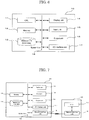
- FIG. 4 A flow chart of one example of the calculation method of an acid dissociation constant is depicted in FIG. 4 .
- the structure of the protonated amine is optimized.
- the optimization of the structure is performed according to a typical structure optimization calculation method. It is often a case that a bond length, a bond angle, a dihedral angle, etc., are chemically unnatural in the initial structure. Therefore, the structure optimization calculation is performed to correct the distortion of the structure of the molecule.
- the structure optimization calculation can be performed by using a typical molecular orbital calculation program.
- a molecular orbital calculation (MO) is performed to evaluate an electron state of a molecule and the following items are calculated.
- pKa is calculated using the QSPR method.
- pKa of amine illustrated in FIG. 5A is calculated.
- a number is provided to each atom.
- Such amine is protonated amine.
- Bond index group-contained data (GD) and bond index-contained data (BD) of the amine are generated. Specifically, the following processes ⁇ II-1>> to ⁇ II-5>> are performed.
- the atomic pair identification number (N) of the bond index-contained data (BD) is set in a manner that a different number is given per pair of the target proton ⁇ H1> and another atom. Similarly, a pair of the nitrogen atom ⁇ N1> directly bonded to the target proton ⁇ H1> and another atom is set in a manner that a different number is given per pair.
- the bond index-contained data (BD) is divided per atomic pair according to the atomic pair identification number (N).
- the atomic pair identification number (N) of the amine is set as follows.
- the bond index group identification number (G) of the bond index group-contained data (GD) and the bond index group identification number (G) of the bond index-contained data are set by grouping the atomic pairs classified by the atomic pair identification number (N). At the time of grouping, atomic pairs among the atomic pairs classified by the atomic pair identification number (N) are compared, and the atomic pairs having the identical elements constituting the atomic pair are set in the same group. However, the atomic pair of the target proton ⁇ H1> and the nitrogen atom ⁇ N1> directly bonded to the target proton ⁇ H1> is set as an independent group different from a pair of another nitrogen atom or a hydrogen atom.
- the bond index group-contained data (GD) can be classified into groups of atomic pairs by the bond index group identification number (G). Moreover, the bond index group identification number (G) is set as BD[N] ⁇ G in the data structure of the bond index-contained data (BD), and BD and GD[G] can be linked. As a result, the calculation speed is improved.
- the bond index group identification number (G) of the amine is set as follows.
- Index value data (B) is obtained based on the electron density of the result of the molecular orbital calculation of the amine. Each obtained index value data (B) is set to each BD[N] (BD[N] ⁇ B).
- BD[N] ⁇ G is as follows.
- a flag (F) of the atomic pair is set to each BD[N] (BD[N] ⁇ F).
- the atomic pair of the target proton ⁇ H1> and the nitrogen atom ⁇ N1> and other atomic pairs are classified by the flag.
- a sum of BD[N] ⁇ B is obtained per group of the atomic pairs and the result is set to GD[G] ⁇ B.
- the coefficient value data (C) for an element pair that is already set is set for an atomic pair GD[G] ⁇ C.
- Weighting of index value data (B) is performed with coefficient value data (C).
- Weighting of a bond distance (R) between a target proton ⁇ H1> and a nitrogen atom ⁇ N1> is performed with a coefficient C R for the bond distance (R).
- Weighting of electron density (Q 1N1 ) that is not related to a bond between a nitrogen atom and another atom is performed with a coefficient (C 1N1 ) for the electron density.
- E LUMO1 Weighting of molecular orbital energy (E LUMO1 ) of the lowest unoccupied molecular orbital is performed with a coefficient (C LUMO1 ) for molecular orbital energy.
- Weighting is optionally performed also on other data.
- Weighting of the heat of formation (E HoF1 ) of the amine is performed with a coefficient (C HoF1 ) associated with heat of formation.
- the pKa value is calculated using the data above.
- C 0 is a constant term of the equation of QSPR.
- FIG. 6 A structural example of the disclosed calculation device of an acid dissociation constant is illustrated in FIG. 6 .
- the calculation device 10 of an acid dissociation constant is composed by connecting CPU 11 (calculation unit), a memory 12, a memory unit 13, a display unit 14, an input unit 15, an output unit 16, an I/O interface unit 17, etc. via a system bus 18.
- the central processing unit (CPU) 11 is configured to perform calculation (e.g., four arithmetic operation, relational operation, etc.), and control of operations of hardware and software.
- the memory 12 is a memory, such as a random access memory (RAM), and a read only memory (ROM).
- the RAM is configured to store an operation system (OS) and application programs read from the ROM and the memory unit 13, and function as a main memory and work area of the CPU 11.
- OS operation system
- the memory 12 is a memory, such as a random access memory (RAM), and a read only memory (ROM).
- the RAM is configured to store an operation system (OS) and application programs read from the ROM and the memory unit 13, and function as a main memory and work area of the CPU 11.
- OS operation system
- the memory unit 13 is a device for storing various programs and data.
- the memory unit 13 is a hard disk.
- programs to be executed by the CPU 11, data required for executing the programs, and an OS are stored.
- the program is stored in the memory unit 13, loaded on the RAM (a main memory) of the memory 12, and executed by the CPU 11.
- the display unit 14 is a display device.
- the display unit is a display device, such as a CRT monitor, and a liquid crystal panel.
- the input unit 15 is an input device for various types of data. Examples of the input unit include a key board, and a pointing device (e.g., a mouse).
- the output unit 16 is an output device for various types of data.
- the output unit is a printer.
- the I/O interface unit 17 is an interface for connecting to various external devices.
- the I/O interface unit enables input and output of data of CD-ROMs, DVD-ROMs, MO disks, and USB memory sticks.
- FIG. 7 Another structural example of the disclosed calculation device of an acid dissociation constant is illustrated in FIG. 7 .
- FIG. 7 is a structural example of a cloud-type calculation device, where a CPU 11 is independent from a memory unit 13.
- a computer 30 storing therein the memory unit 13 and a computer 40 storing therein the CPU 11 are coupled with each other through network interface units 19 and 20.
- the network interface units 19 and 20 are hardware configured to communicate using the internet.
- FIG. 8 Yet another example of the disclosed calculation device of an acid dissociation constant is illustrated in FIG. 8 .
- FIG. 8 is a structural example of a cloud-type calculation device, where a memory unit 13 is independent from CPU 11.
- a computer 30 storing therein the CPU 11 and a computer 40 storing therein the memory unit 13 are coupled with each other through network interface units 19 and 20.
- Example and Comparative Examples below estimation values of pKa of 133 types of molecules whose measured values of pKa had been known were determined. Then, the correlation between the measured values and the estimation values was confirmed.
- FUJITSU Technical Computing Solution SCIGRESS available from FUJITSU LIMITED was used and a calculation value calculated by RM1 method (semi-empirical molecular orbital method) was used.
- FUJITSU Technical Computing Solution SCIGRESS available from FUJITSU LIMITED was used and a calculation value calculated by RM1 method (semi-empirical molecular orbital method) was used.
- Example 1 could perform estimation of high accuracy on amines compared to Comparative Examples 1 and 2.
Landscapes
- Engineering & Computer Science (AREA)
- Theoretical Computer Science (AREA)
- Computing Systems (AREA)
- Life Sciences & Earth Sciences (AREA)
- Bioinformatics & Cheminformatics (AREA)
- Bioinformatics & Computational Biology (AREA)
- Crystallography & Structural Chemistry (AREA)
- Chemical & Material Sciences (AREA)
- Medical Informatics (AREA)
- General Health & Medical Sciences (AREA)
- Spectroscopy & Molecular Physics (AREA)
- Health & Medical Sciences (AREA)
- Physics & Mathematics (AREA)
- Databases & Information Systems (AREA)
- Software Systems (AREA)
- Evolutionary Biology (AREA)
- Biotechnology (AREA)
- Management, Administration, Business Operations System, And Electronic Commerce (AREA)
Abstract
Description
- The embodiments discussed herein relate to a method for calculating an acid dissociation constant, a device for calculating an acid dissociation constant, and a program for calculating an acid dissociation constant.
- PKa is a constant representing an equilibrium state of acid dissociation (i.e., acidity), and is used as an index for determining the presence of protons (H+) that are important in a chemical reaction performed in biomolecules. Accordingly, various estimation methods of pKa have been studied. The estimation methods are roughly classified into two types. One type of methods are methods based on the thermodynamic theory (see, for example, NPL 1). The other type of methods are methods where approximation of pKa is performed with a function using physical property values as variables (see, for example, NPL 2 and NPL 3).
- According to the former method, calculation can be performed according to the theory. According to the latter method, basically high-speed estimation can be performed.
- According to the method based on the thermodynamic theory, however, pKa is largely influenced by the number or positions of water molecules present around a target molecule, and moreover highly accurate calculation needs to be performed to obtain an excellent result. As a result, it is still impossible to estimate pKa at high speed. Accordingly, it is difficult to apply the method based on the thermodynamic theory for macromolecules or screening of a large volume of data.
- Moreover, various physical properties values have been studied in the method where approximation of pKa is performed with a function using physical property values as variables, in order to realize highly accurate estimation. For example, there is a method where distances between charges or OH are used as variables associated with a hydrogen atom (H) dissociated as a proton and an oxygen atom (O) directly bonded to H. However, with such variables, a separate function formula is necessary depending on types of acid of a target molecule. Moreover, highly accurate results cannot be obtained with all of the function formulae.
- Therefore, it is difficult to apply the above-described method for a novel molecule synthesized.
- Therefore, the present inventors proposed a technology associated with an estimation value of pKa, where the technology could be applied for macromolecules, screening of a large volume of data, and novel molecules synthesized (see, for example, PTL 1).
- PTL 1: Japanese Patent Application Laid-Open (
JP-A) No. 2014-157020 -
- NPL 1: Junming Ho, Michelle L. Coote, "A universal approach for continuum solvent pKa calculations: are we there yet?" Theor Chem Acc, 2010, pp. 3-21
- NPL 2: Jahanbakhsh Ghasemi, Saadi Saaidpour, Steven D. Brown, "QSPR study for estimation of acidity constants of some aromatic acids derivatives using multiple linear regression (MLR) analysis", Journal of Molecular Structure, THEOCHEM, 2007, pp. 27-32
- NPL 3: Mario J. Citra, "ESTIMATING THE pKa OF PHENOLS, CARBOXYLIC ACIDS AND ALCOHOLS FROM SEMI-EMPIRICAL QUANTUM CHEMICAL METHODS", Chemosphere, 1999, Vol. 38, No. 1, pp. 191-206
- According to the technology of PTL 1), a highly accurate result of proton association from OH can be obtained regardless of a type of a molecule. However, pKa estimation accuracy decreases in case of proton dissociation from amine.
- The disclosed embodiments aim to solve the above-described various problems existing in the art, and to achieve the following object. Specifically, the present disclosure has an object to provide a calculation method of an acid dissociation constant, a calculation device of an acid dissociation constant, and a program for calculating an acid dissociation constant, all of which is associated with an estimation value of pKa, can be applied for a macromolecule, screening of a large volume of data, and a novel molecule synthesized, and do not decrease accuracy in an estimation value even in calculation of amine.
- Means for solving the above-described problems are as follows.
- The disclosed calculation method of an acid dissociation constant is a method for calculating an acid dissociation constant in dissociation of a hydrogen atom from a calculation target molecule using a computer. The calculation method includes calculating the acid dissociation constant using a function that uses an index value determined based on electron density between two atoms in a calculation target molecule and a coefficient value determined based on types of two elements of a set of the two atoms, wherein, when the calculation target molecule includes at least one amino group and dissociation of a hydrogen atom from one amino group in the at least one amino group is calculated, the function further uses second electron density of a nitrogen atom in the one amino group where the second electron density is not related to a bond between the nitrogen atom and another atom, a bond distance between the nitrogen atom and the hydrogen atom, and molecular orbital energy of the calculation target molecule.
- The disclosed program is a program for executing a calculation method of an acid dissociation constant in dissociation of a hydrogen atom from a calculation target molecule, and the calculation method includes calculating the acid dissociation constant using a function that uses an index value determined based on electron density between two atoms in a calculation target molecule and a coefficient value determined based on types of two elements of a set of the two atoms, wherein, when the calculation target molecule includes at least one amino group and dissociation of the hydrogen atom from one amino group in the at least one amino group is calculated, the function further uses second electron density of a nitrogen atom in the one amino group where the second electron density is not related to a bond between the nitrogen atom and another atom, a bond distance between the nitrogen atom and the hydrogen atom, and molecular orbital energy of the calculation target molecule.
- The disclosed calculation device of an acid dissociation constant includes a memory unit. The calculation device is configured to calculate an acid dissociation constant in dissociation of a hydrogen atom from a calculation target molecule, the memory unit includes, as data, an index value determined based on electron density between two atoms in a calculation target molecule and a coefficient value determined based on types of two elements of a set of the two atoms, and wherein, when the calculation target molecule includes at least one amino group and dissociation of a hydrogen atom from one amino group in the at least one amino group is calculated, the memory unit further includes second electron density of a nitrogen atom in the one amino group where the second electron density is not related to a bond between the nitrogen atom and another atom, a bond distance between the nitrogen atom and the hydrogen atom, and molecular orbital energy of the calculation target molecule.
- The disclosed calculation method of an acid dissociation constant can solve the above-described various problems existing in the art, can achieve the above-mentioned object, can be applied for macromolecules associated with estimation values of pKa and can be applied for screening of a large volume of data and novel molecules synthesized, and does not lower accuracy of estimation values even in calculation for amine.
- The disclosed program can solve the above-described various problems existing in the art, can achieve the above-mentioned object, can be applied for macromolecules associated with estimation values of pKa and can be applied for screening of a large volume of data and molecules newly synthesized, and does not lower accuracy of estimation values even in calculation for amine.
- The disclosed calculation device of an acid dissociation constant can solve the above-described various problems existing in the art, can achieve the above-mentioned object, can be applied for macromolecules associated with estimation values of pKa and can be applied for screening of a large volume of data and molecules newly synthesized, and does not lower accuracy of estimation values even in calculation for amine.
-
-
FIG. 1 is a view for describing an acid dissociation constant pKa. -
FIG. 2 is a view illustrating one example of a memory unit. -
FIG. 3 is a view for describing an atomic set. -
FIG. 4 is a flowchart describing one example of a calculation method of an acid dissociation constant. -
FIG. 5A illustrates amine (protonated amine) that is a calculation target in one example of a calculation method of an acid dissociation constant. -
FIG. 5B is amine (amine after deprotonation) that is a calculation target in one example of a calculation method of an acid dissociation constant. -
FIG. 6 is a structural example of the disclosed calculation device of an acid dissociation constant. -
FIG. 7 is another structural example of the disclosed calculation device of an acid dissociation constant. -
FIG. 8 is another structural example of the disclosed calculation device of an acid dissociation constant. -
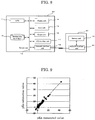
FIG. 9 is a graph depicting the results of Example 1. -
FIG. 10 is a graph depicting the results of Comparative Example 1. -
FIG. 11 is a graph depicting the results of Comparative Example 2. - First, as the related art, an estimation method of an acid dissociation constant pKa is described.
-
FIG. 1 is a view for describing an acid dissociation constant pKa. As illustrated inFIG. 1 , pKa is a constant representing an equilibrium state of acid dissociation, and is represented by the following mathematical equation (1) and equilibrium equation (1).
AH{aq} ↔ A- {aq} + H+ {aq} Equilibrium Equation (1)
- In the mathematical equation (1) and equilibrium equation (1), AH is an acid, A- is a conjugate base of AH, and H+ is a proton.
- The pKa is an index determining the presence of a proton (H+) that is important in a chemical reaction performed within a biomolecule.
- The present inventors have proposed a technology that is associated with an estimation value of pKa, and can be applied for a macromolecule, screening of a large volume of data, and a novel molecule synthesized (see,
JP-A No. 2014-157020 - However, the present inventors have continuously performed researches further and have found that the estimation accuracy of pKa lowers according to the above-described technology in case of proton dissociation of amine.
- The present inventors have studied a cause for the above-mentioned problem. As a result, the present inventors have found that the pKa estimation accuracy is decreased by influences of (1) a change in reactivity due to a change in steric hindrance before and after proton dissociation of amine, and (2) a change in reactivity due to a change in resonance stabilization of an electron structure before and after proton dissociation of amine.
- The present inventors have continuously performed studies based on the insights above and accomplished the disclosed technology.
(Calculation method of acid dissociation constant, calculation device of acid dissociation constant, and program) - The disclosed calculation method of an acid dissociation constant is performed using a computer.
- The calculation method of an acid dissociation constant calculates an acid dissociation constant in dissociation of a hydrogen atom from a calculation target molecule.
- Examples of the calculation target molecule include oxoacid and amine.
- According to the calculation method of an acid dissociation constant, a high-speed and highly accurate calculation can be performed not only on oxoacid and primary amine, but also secondary amine, tertiary amine, and aromatic amine.
- The disclosed program is a program for executing calculation of an acid dissociation constant in dissociation of a hydrogen atom from a calculation target molecule.
- According to the calculation method of an acid dissociation constant, the acid dissociation constant is calculated using a function.
- With the program, calculation of the acid dissociation constant is executed using a function.
- The function uses an index value and a coefficient value.
- The index value is determined based on electron density between two atoms of the calculation target molecule.
- The coefficient value is determined based on types of two elements of a set of the two atoms.
- When the calculation method of an acid dissociation constant uses the calculation target molecule including at least one amino group and calculates dissociation of the hydrogen atom in one amino group among the at least one amino group, the function further uses electron density, a bond distance, and molecular orbital energy.
- The electron density is second electron density [may be referred to as "electron density (DNfree)" hereinafter] of a nitrogen atom of the one amino group, where the second electron density is not related to a bond between the nitrogen atom and another atom.
- The bond distance is a bond distance between the nitrogen atom and the hydrogen atom.
- The molecular orbital energy is molecular orbital energy of the calculation target molecule.
- In the present specification, a hydrogen atom that is a calculation target of an acid dissociation constant may be referred to as a "target proton." The hydrogen atom in the one amino group corresponds to a target proton.
- The calculation device of an acid dissociation constant includes a memory unit.
- The memory unit includes the following data.
- The index value
- The coefficient value
- When the calculation target molecule includes at least one amino group and dissociation of the hydrogen atom in one amino group among the at least one amino group is calculated, moreover, the memory unit further includes the following data.
- The electron density (DNfree)
- The bond distance
- The molecular orbital energy
- One example of the memory unit is illustrated in
FIG. 2 . - The memory unit illustrated in
FIG. 2 includes the following data. The data of the memory unit is data used for calculating an acid dissociation constant of an amino group of amine. - Molecular structure data
- Electron density (Dall) of a molecule
- Electron density (DNfree)
- Bond index-contained data (BD)
- Bond index group-contained data (GD)
- Molecular orbital energy
- QSPR coefficient data
- pKa data
- The bond index-contained data (BD) includes the following data.
- Index value data (B)
- Atomic pair identification number (N)
- Bond index group identification number (G)
- Flag (F)
- The bond index group-contained data (GD) includes the following data.
- Bond index group identification number (G)
- Coefficient value data (C)
- Index value data (B)
- Note that, QSPR is the abbreviation for quantitative structure property relationship, and the QSPR coefficient data is a coefficient related to a numerical quantity for determining a degree of contribution of the numerical quantity representing a structure in QSPR.
- Other data is described later.
- Since the calculation method of an acid dissociation constant uses the electron density (DNfree), the bond distance, and the molecular orbital energy as variables of the function, calculation accuracy of an acid dissociation constant of amine can be increased with maintaining calculation accuracy of an acid dissociation constant of oxoacid, compared to the technology disclosed in
JP-A No. 2014-157020 - The index value is determined based on electron density between two atoms of the calculation target molecule.
- For example, the index value (Bab) is determined by electron density matrix (Dij) between the two atoms (a and b). For example, the mathematical equation for the index value (Bab) is represented by the following mathematical equation (2).

- Note that, a set of the two atoms may be referred to as an "atomic pair" hereinafter.
- When the data structure is described, moreover, the index value may be referred to as "index value data (B)."
- The electron density matrix (Dij) is obtained by determining electron density of the whole calculation target molecule.
- The index value may be set with all of sets of arbitrary selected two atoms (atomic pairs) of the calculation target molecule, and is preferably set with the following atomic pairs in order to accelerate calculation speed without lowing calculation accuracy.
- Set of the hydrogen atom and a first atom directly bonded to the hydrogen atom
- Set of the first atom and a second atom (excluding the hydrogen atom) directly bonded to the first atom
- Set of the hydrogen atom and the second atom
- The atomic pairs are described with reference to
FIG. 3 . - Set of a target proton <H> and an atom <X> directly bonded to the target proton <H>. Specifically, a set of a target proton <H> and an atom <X> (pair type PT1).
- Set of an atom <X> directly bonded to the target proton <H> and an atom <Y> directly bonded to the atom <X> but being other than the target proton <H>. Specifically, a set of an atom <X> and an atom <Y> (pair type PT2).
- Set of the target proton <H> and an atom <Y> directly bonded to the atom <X> but being other than the target proton <H>. Specifically, a set of a target proton <H> and an atom <Y> (pair type PT3).
- Note that, the atom <X> (first atom) is an atom directly bonded to a target proton <H>. When the calculation target molecule is oxoacid, for example, X is an oxygen atom (O). When the calculation target molecule is amine, X is a nitrogen atom (N).
- Moreover, the atom <Y> (second atom) is an atom directly bonded to the atom <X>, but is an atom other than a target proton <H>.
- Since a target proton, an atom (first atom) directly bonded to the target proton, and an atom (second atom) directly bonded to the atom are considered and a set of two atoms (atomic pair) is selected from the above-mentioned atoms when the index value is determined, and the index value is used for calculation, as described above, the faster calculation can be realized.
- For example, electron density of the calculation target molecule can be determined by molecular orbital calculation. The molecular orbital calculation is not particularly limited and may be appropriately selected depending on the intended purpose. Examples of the molecular orbital calculation include molecular orbital calculation according to molecule orbital calculations according to a molecular orbital method. Examples of the molecular orbital calculations include nonempirical molecular orbital calculations (ab initio molecular orbital calculation), and semiempirical molecular orbital calculations.
- Examples of a methodology of the nonempirical molecular orbital calculation include the Hartree-Fock method, and the electron correlation method.
- Examples of a methodology of the semiempirical molecular orbital calculation include CNDO, INDO, AM1, and PM3.
- Examples of a program of the nonempirical molecular orbital calculation include Gaussian03, GAMESS, ABINIT-MP, and Protein DF.
- Examples of a program of the semiempirical molecular orbital calculation include MOPAC.
- The coefficient value is determined based on types of two elements of a set of the two atoms.
- The coefficient value is a numerical value used for weighting the index value.
- For example, the coefficient value is determined based on preliminary calculation of pKa.
- Hereinafter, the coefficient value may be referred to as coefficient value data (C) and the index value may be referred to as index value data (B).
- In the function, the product of the index value and the coefficient value is preferably used. Specifically, weighting is preferably performed on the index value using the coefficient value.
- The calculation device of an acid dissociation constant preferably further includes a calculation unit configured to calculate an acid dissociation constant using the data in the memory unit, and a product of the index value and the coefficient value is preferably calculated in the calculation unit.
- The coefficient value is preferably set for each of the following sets.
- One set of the hydrogen atom and the first atom.
- Sets of the first atom and the second atom, and the number of the sets is the number of types of the second atom.
- Sets of the hydrogen atom and the second atom, and the number of the sets is the number of types of the second atom.
- For example, sets of the second atom (atomic pairs) are divided into groups based on types of elements constituting the atomic pairs. Then, a coefficient value is set for each group.
- For example, the grouping is performed in the following manner.
- A set of a target proton and an atom directly bonded to the target proton forms one group itself. Specifically, the pair type PT1 per se forms one group.
- The pair type PT2 is grouped by the number of types of an element of Y. The pair type PT3 is grouped by the number of types of an element of Y.
- Note that, a set of atoms in one group when a coefficient value is set may be referred to as an "element pair" hereinafter.
- The memory unit includes, for example, bond index-contained data (BD) for each of atomic pairs used for calculation.
- Each bond index-contained data (BD) includes the following data corresponding to an atomic pair.
- Index value data (B) set per atomic pair
- Atomic pair identification number (N) (a different number for each atomic pair) given to each atomic pair to identify the atomic pair
- Bond index group identification number (G) (a different number for each group) given to each group to identify the group formed with the types of elements constituting the atomic pair
- Flag (F) for classifying atomic pairs
- The memory unit includes, for example, a bond index group-contained data (GD) per group.
- Each bond index group-contained data (GD) includes the following data corresponding to the group.
- Bond index group identification number (G) (a different number for each group)
- Coefficient value data (C) set per element pair
- Index value data (B) corresponding to the atomic pairs belonging to the group
- Since the bond index-contained data (BD) and the bond index group-contained data (GD) are included as a data structure, the faster calculation can be realized.
- For example, weighting of the index value with the coefficient value is performed as follows.
- Bond index group-contained data (GD) belonging to the bond index group identification number (G) is represented as follows.

- Index value data (B) of bond index group-contained data (GD) belonging to bond index group identification number (G) is represented as follows.

- Bond index-contained data (BD) belonging to atomic pair identification number (N) is represented as follows.

- Index value data (B) of BD[N] is represented as follows.

- Flag (F) of BD[N] is represented as follows.

- Bond index group identification number (G) to which BD[N] belongs is represented as follows.

- Coefficient value data (C) belonging to bond index group identification number (G) is represented as follows.

- Index value data (B) of bond index group-contained data (GD) is determined as follows.

- Then, weighting of index value data (B) with coefficient value data (C) is represented as follows.

- When the calculation target molecule includes at least one amino group and dissociation of the hydrogen atom in one amino group among the at least one amino group is calculated, the following second electron density [electron density (DNfree)], a bond distance, and molecular orbital energy are further used in the function.
- In the function, the second electron density, the bond distance, and the molecular orbital energy form linear combination.
- In the calculation device of an acid dissociation constant, a linear combination is preferably formed with the second electron density, the bond distance, and the molecular orbital energy in the calculation unit.
- The second electron density is electron density (DNfree) of a nitrogen atom of the one amino group and is electron density that is not related to bond between the nitrogen atom and another atom.
- For example, the electron density (DNfree) is obtained in the following manner.
- Electron density (Dall) of the whole calculation target molecule is determined. Next, elements with which a nitrogen atom directly bonded to a target proton is associated are extracted from the obtained electron density (Dall). Next, an element associated with a bond between the nitrogen atom and another atom is excluded from the extracted elements. As a result, the electron density (DNfree) is obtained.
- For example, DNfree can be determined using the following mathematical equation (3).

- In the mathematical equation (3), Dij represents elements (electron density matrix) with which a nitrogen atom directly bonded to a target proton among the electron density, i represents a line component of the electron density matrix and j represents a column component of the electron density matrix, B represents an index value, and X represents another atom bonded to a nitrogen atom (N).
- The bond distance is a bond distance (R) between the nitrogen atom and the hydrogen atom (target proton).
- For example, the bond distance can be determined by molecular orbital calculation.
- Molecular orbital of the molecular orbital energy (Emo) is not particularly limited and may be appropriately selected depending on the intended purpose. The molecular orbital is preferably the highest occupied molecular orbital and the lowest unoccupied molecular orbital because the highest occupied molecular orbital and the lowest unoccupied molecular orbital are largely related to reactivity of the amine.
- A calculation method of the molecular orbital energy is not particularly limited and may be appropriately selected depending on the intended purpose. Examples of the calculation method include quantum mechanics (QM) calculations. Examples of the quantum mechanics calculations include molecule orbital calculations according to a molecular orbital method. Examples of the molecular orbital calculations include nonempirical molecular orbital calculations (ab initio molecular orbital calculation), and semiempirical molecular orbital calculations. Examples of a methodology and program of each calculation method includes the above-described methodologies and programs.
- In the calculation method of an acid dissociation constant, at least one of heat of formation of the calculation target molecule, heat of formation of a molecule formed by releasing a target proton from the calculation target molecule (may be referred to as "proton-released molecule" hereinafter), electron density (DNfree) of the proton-released molecule, and molecular orbital energy of the proton-released molecule is preferably further used because calculation accuracy is further improved.
- The above-mentioned parameters are preferably weighted with appropriately set coefficients.
- Examples of the function when the acid dissociation constant is calculated include the following function.
- In the following function, the bond distance (R), the molecular orbital energy (Emo), and the electron density (DNfree), each of which is weighted with an appropriate coefficient, form a linear combination.

- In the formula above, a is a coefficient value.
- A flow chart of one example of the calculation method of an acid dissociation constant is depicted in
FIG. 4 . - The calculation method according to the flow chart is explained hereinafter. In the flow chart, protonated amine is used as a calculation target molecule.
- First, a QSPR coefficient is set.
- Next, an initial structure of a protonated amine is set.
- Next, the structure of the protonated amine is optimized. The optimization of the structure is performed according to a typical structure optimization calculation method. It is often a case that a bond length, a bond angle, a dihedral angle, etc., are chemically unnatural in the initial structure. Therefore, the structure optimization calculation is performed to correct the distortion of the structure of the molecule. For example, the structure optimization calculation can be performed by using a typical molecular orbital calculation program.
- Next, a molecular orbital calculation (MO) is performed to evaluate an electron state of a molecule and the following items are calculated.
- Index value (B) per atomic pair
- Electron density (DNfree)
- Molecular orbital energy (EMO) (e.g., LUMO)
- Bond distance (R)
Next, weighting of the index value (B) is performed with a coefficient value (C). - (GD[G]→C*GD[G]→B)
- Next, pKa is calculated using the QSPR method.
- One example of the calculation method of an acid dissociation constant is described hereinafter.
- In the example, pKa of amine illustrated in
FIG. 5A is calculated. In the case where there are several identical elements in amine, a number is provided to each atom. Such amine is protonated amine. - As a preparation stage, a coefficient value is set for subjects below.
- Element pair
- Bond distance (R) between a target proton <H1> and a nitrogen atom <N1>
- Electron density (Q) of the nitrogen atom <N1>, where the electron density is not related to a bond between the nitrogen atom <N1> and another atom
- Molecular orbital energy of the amine
- Heat of formation before and after proton dissociation
- Molecular orbital calculation of the amine is performed.
- Bond index group-contained data (GD) and bond index-contained data (BD) of the amine are generated. Specifically, the following processes <<II-1>> to <<II-5>> are performed.
- The atomic pair identification number (N) of the bond index-contained data (BD) is set in a manner that a different number is given per pair of the target proton <H1> and another atom. Similarly, a pair of the nitrogen atom <N1> directly bonded to the target proton <H1> and another atom is set in a manner that a different number is given per pair. The bond index-contained data (BD) is divided per atomic pair according to the atomic pair identification number (N).
- The atomic pair identification number (N) of the amine is set as follows.
- N1-C:1
- N1-H1:2
- N1-H2:3
- N1-H3:4
- N1-N2:5
- H1-C:6
- H1-H2:7
- H1-H3:8
- H1-N2:9
- The bond index group identification number (G) of the bond index group-contained data (GD) and the bond index group identification number (G) of the bond index-contained data are set by grouping the atomic pairs classified by the atomic pair identification number (N). At the time of grouping, atomic pairs among the atomic pairs classified by the atomic pair identification number (N) are compared, and the atomic pairs having the identical elements constituting the atomic pair are set in the same group. However, the atomic pair of the target proton <H1> and the nitrogen atom <N1> directly bonded to the target proton <H1> is set as an independent group different from a pair of another nitrogen atom or a hydrogen atom.
- The bond index group-contained data (GD) can be classified into groups of atomic pairs by the bond index group identification number (G). Moreover, the bond index group identification number (G) is set as BD[N]→G in the data structure of the bond index-contained data (BD), and BD and GD[G] can be linked. As a result, the calculation speed is improved.
- The bond index group identification number (G) of the amine is set as follows.
- N1-H1:1
- N1-H:2
- N1-C:3
- N1-N:4
- H1-H:5
- H1-C:6
- H1-N:7
- Index value data (B) is obtained based on the electron density of the result of the molecular orbital calculation of the amine. Each obtained index value data (B) is set to each BD[N] (BD[N]→B).
- BD[1]→B=BN1-C
- BD[2]→B=BN1-H1
- BD[3]→B=BN1-H2
- BD[4]→B=BN1-H3
- BD[5]→B=BN1-N2
- BD[6]→B=BH1-C
- BD[7]→B=BH1-H2
- BD[8]→B=BH1-H3
- BD[9]→B=BH1-N2
- BD[N]→G is as follows.
- BD[1]→G=3
- BD[2]→G=1
- BD[3,4]→G=2
- BD[5]→G=4
- BD[6]→G=6
- BD[7,8]→G=5
- BD[9]→G=7
- Moreover, a flag (F) of the atomic pair is set to each BD[N] (BD[N]→F). The atomic pair of the target proton <H1> and the nitrogen atom <N1> and other atomic pairs are classified by the flag.
- BD[1,3,4,5,6,7,8,9]→F=2
- BD[2]→F=1
- A sum of BD[N]→B is obtained per group of the atomic pairs and the result is set to GD[G]→B.
- GD[1]→B=BD[2]→B
- GD[2]→B=BD[3]→B + BD[4]→B
- GD[3]→B=BD[1]→B
- GD[4]→B=BD[5]→B
- GD[5]→B=BD[7]→B + BD[8]→B
- GD[6]→B=BD[6]→B
- GD[7]→B=BD[9]→B
- The coefficient value data (C) for an element pair that is already set is set for an atomic pair GD[G]→C.
- Weighting of index value data (B) is performed with coefficient value data (C).
- GD[G]→B*GD[G]→C
- Weighting of a bond distance (R) between a target proton <H1> and a nitrogen atom <N1> is performed with a coefficient CR for the bond distance (R).
- •R*CR
- Weighting of electron density (Q1N1) that is not related to a bond between a nitrogen atom and another atom is performed with a coefficient (C1N1) for the electron density.
- Q1N1*C1N1
- Weighting of molecular orbital energy (ELUMO1) of the lowest unoccupied molecular orbital is performed with a coefficient (CLUMO1) for molecular orbital energy.
- ELUMO1*CLUMO1
- Weighting is optionally performed also on other data.
- Weighting of the heat of formation (EHoF1) of the amine is performed with a coefficient (CHoF1) associated with heat of formation.
- EHoF1*CHoF1
- In the molecule (Molecule 2 in
FIG. 5B ) after deprotonation of the amine, weighting of the electron density (Q2N1) of the nitrogen atom <N1> not related to the bond of the nitrogen atom <N1> and another atom is performed with a coefficient (C2N1) associated with electron density. - Q2N1*C2N1
- In Molecule 2, weighting of the molecular orbital energy (EHOMO2) of the highest occupied molecular orbital is performed with a coefficient (CHOMO2) associated with molecular orbital energy.
- EHOMO2*CHOMO2
- Weighting of heat of formation (EHoF2) of Molecule 2 is performed with a coefficient (CHoF2) relative to the heat of formation.
- EHoF2*CHoF2
- The pKa value is calculated using the data above.
- The mathematical equation using the data of <I> to <VI> is the following mathematical equation (4).

- Moreover, the mathematical equation to which the data of <VII> is further added is presented below. In the following mathematical equation (5), electron density (Q2N1) of a molecule after proton dissociation, molecular orbital energy, and heat of formation of the molecule before and after proton dissociation are considered. Therefore, calculation accuracy is further improved.

- In the mathematical equations (4) and (5), C0 is a constant term of the equation of QSPR.
- A structural example of the disclosed calculation device of an acid dissociation constant is illustrated in
FIG. 6 . - For example, the
calculation device 10 of an acid dissociation constant is composed by connecting CPU 11 (calculation unit), amemory 12, amemory unit 13, adisplay unit 14, aninput unit 15, anoutput unit 16, an I/O interface unit 17, etc. via asystem bus 18. - The central processing unit (CPU) 11 is configured to perform calculation (e.g., four arithmetic operation, relational operation, etc.), and control of operations of hardware and software.
- The
memory 12 is a memory, such as a random access memory (RAM), and a read only memory (ROM). The RAM is configured to store an operation system (OS) and application programs read from the ROM and thememory unit 13, and function as a main memory and work area of theCPU 11. - The
memory unit 13 is a device for storing various programs and data. For example, thememory unit 13 is a hard disk. In thememory unit 13, programs to be executed by theCPU 11, data required for executing the programs, and an OS are stored. - The program is stored in the
memory unit 13, loaded on the RAM (a main memory) of thememory 12, and executed by theCPU 11. - The
display unit 14 is a display device. For example, the display unit is a display device, such as a CRT monitor, and a liquid crystal panel. - The
input unit 15 is an input device for various types of data. Examples of the input unit include a key board, and a pointing device (e.g., a mouse). - The
output unit 16 is an output device for various types of data. For example, the output unit is a printer. - The I/
O interface unit 17 is an interface for connecting to various external devices. For example, the I/O interface unit enables input and output of data of CD-ROMs, DVD-ROMs, MO disks, and USB memory sticks. - Another structural example of the disclosed calculation device of an acid dissociation constant is illustrated in
FIG. 7 . - The structural example of
FIG. 7 is a structural example of a cloud-type calculation device, where aCPU 11 is independent from amemory unit 13. In the structural example, acomputer 30 storing therein thememory unit 13 and acomputer 40 storing therein theCPU 11 are coupled with each other throughnetwork interface units - The
network interface units - Yet another example of the disclosed calculation device of an acid dissociation constant is illustrated in
FIG. 8 . - The structural example of
FIG. 8 is a structural example of a cloud-type calculation device, where amemory unit 13 is independent fromCPU 11. In the structural example, acomputer 30 storing therein theCPU 11 and acomputer 40 storing therein thememory unit 13 are coupled with each other throughnetwork interface units - The disclosed technology is explained hereinafter, but Examples below shall not be construed as to limit the scope of the disclosed technology.
- In Example and Comparative Examples below, estimation values of pKa of 133 types of molecules whose measured values of pKa had been known were determined. Then, the correlation between the measured values and the estimation values was confirmed.
- An estimation value of pKa was determined using the disclosed technology. Then, correlation between the measured values and the estimation values were confirmed. The results are presented in Table 2 and
FIG. 9 . - Note that, for the calculation of the estimation value, FUJITSU Technical Computing Solution SCIGRESS available from FUJITSU LIMITED was used and a calculation value calculated by RM1 method (semi-empirical molecular orbital method) was used.
- The mathematical equation (4) was used for the calculation of the estimation value.
- An estimation value of pKa was determined by using marvin Sketch that was known to have high accuracy in pKa estimation and was available from ChemAxon. Then, correlation between the measured values and the estimation values were confirmed. The results are presented in Table 2 and
FIG. 10 . - An estimation value of pKa was determined using the technology disclosed in Japanese Patent Application Laid-Open (
JP-A) No. 2014-157020 FIG. 11 . - Note that, for the calculation of the estimation value, FUJITSU Technical Computing Solution SCIGRESS available from FUJITSU LIMITED was used and a calculation value calculated by RM1 method (semi-empirical molecular orbital method) was used.
- The 133 types of the molecules used in the pKa estimation calculations in Example 1, Comparative Example 1, and Comparative Example 2 are presented in Tables 1-1 to 1-23.
Table 1-1 Number pKa Name Structure (circle: dissociation point) 1 9.98 NH3C2H4NH2 
2 8.12 NH3NH2 
3 -0.88 NH3NH3 
4 5.97 NH3OH 
5 9.69 alanine 
6 9.69 allylamine 
Table 1-2 Number pKa Name Structure (circle: dissociation point) 7 8.78 allyldimethylamine 
8 10.11 allylmethylamine 
9 9.21 ammonia 
10 9.04 arginine 
11 12.48 arginine 
Table 1-3 Number pKa Name Structure (circle: dissociation point) 12 8.8 asparagine 
13 9.82 aspartic acid 
14 9.34 benzylamine 
15 9.68 benzylethylamine 
16 9.58 benzylmethylamine 
Table 1-4 Number pKa Name Structure (circle: dissociation point) 17 10.64 cyclohexylamine 
18 10.49 cyclohexylmethylamine 
19 2.97 DABCO 
20 8.82 DABCO 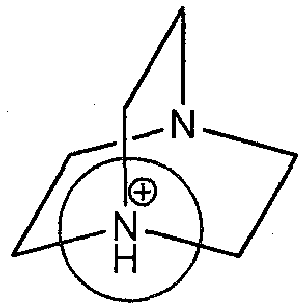
21 11.25 di-n-butylamine 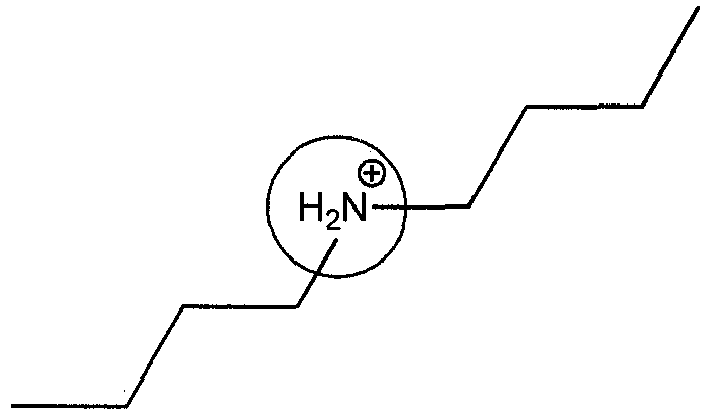
22 11 di-n-propylamine 
23 11.01 di-sec-butylamine 
Table 1-5 Number pKa Name Structure (circle: dissociation point) 24 9.29 diallylamine 
25 8.79 diallylmethylamine 
26 8.9 diethanolamine 
27 10.98 diethylamine 
28 10.5 di-isobutylamine 
29 11.05 di-isopropylamine 
30 9.91 dimethyl isobutylamine 
Table 1-6 Number pKa Name Structure (circle: dissociation point) 31 10.3 dimethyl isopropylamine 
32 10.02 dimethyl n-butylamine 
33 9.99 dimethyl n-propylamine 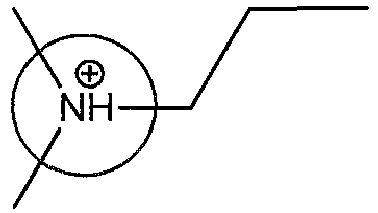
34 10.4 dimethyl sec-butylamine 
35 10.52 dimethyl t-butylamine 
36 10.64 dimethylamine 
37 9.99 dimethylethylamine 
38 9.5 ethanolamine 
39 10.63 ethylamine 
Table 1-7 Number pKa Name Structure (circle: dissociation point) 40 9.13 glutamine 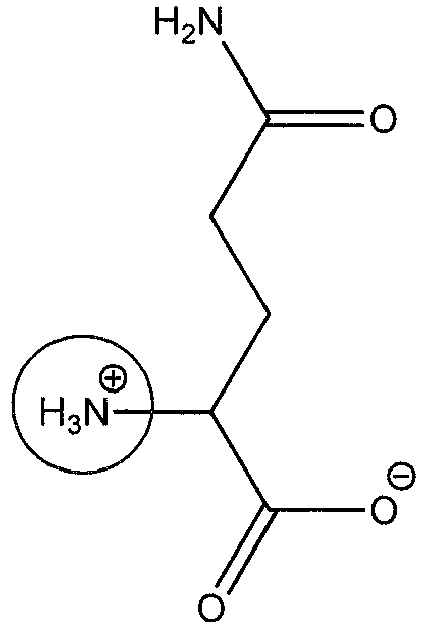
41 9.67 glutamic acid 
42 9.6 glycine 
43 9.17 histidine 
Table 1-8 Number pKa Name Structure (circle: dissociation point) 44 9.68 isoleusine 
45 10.63 isopropylamine 
46 9.6 leucine 
47 8.95 lysine 
Table 1-9 Number pKa Name Structure (circle: dissociation point) 48 10.53 lysine 
49 4.6 methoxyamine 
50 10.64 methylamine 
51 8.36 morpholine 
52 7.78 n-benzoylpiperazine 
53 10.59 n-butylamine 
54 8.28 n-carbethoxypiperazine 
Table 1-10 Number pKa Name Structure (circle: dissociation point) 55 5.96 n-methylhydroxylamine 
56 4.75 n-methylmethoxyamine 
57 10.53 n-propylamine 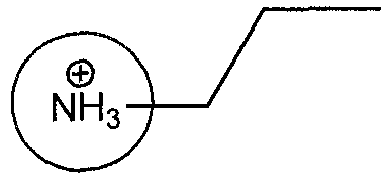
58 10.21 neo-pentylamine 
59 9.13 phenylalanine 
60 10.49 phenylamylamine 
Table 1-11 Number pKa Name Structure (circle: dissociation point) 61 10.4 phenylbutylamine 
62 9.83 phenylethylamine 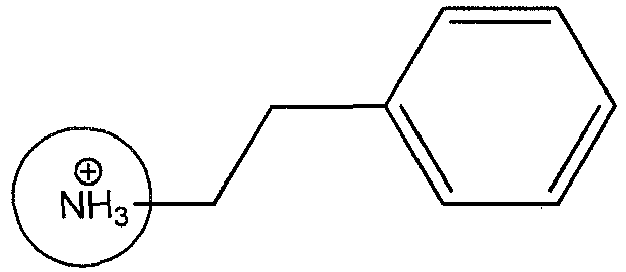
63 10.2 phenylpropylamine 
64 5.33 piperazine 
65 9.73 piperazine 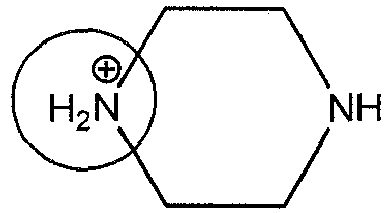
66 11.22 piperidine 
67 10.6 proline 
Table 1-12 Number pKa Name Structure (circle: dissociation point) 68 11.3 pyrrolidine 
69 44 pyrrolidine 
70 11 quinuclidine 
71 10.56 sec-butylamine 
72 9.15 serine 
73 10.55 t-butylamine 
74 11.23 t-butylcyclohexylamine 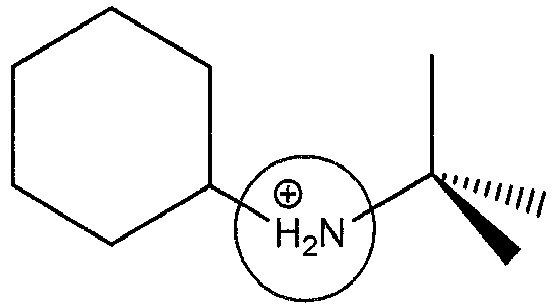
Table 1-13 Number pKa Name Structure (circle: dissociation point) 75 9.1 threonine 
76 10.89 tri-n-butylamine 
77 10.65 tri-n-propylamine 
78 8.31 triallylamine 
Table 1-14 Number pKa Name Structure (circle: dissociation point) 79 7.8 triethanolamine 
80 10.65 triethylamine 
81 9.76 trimethylamine 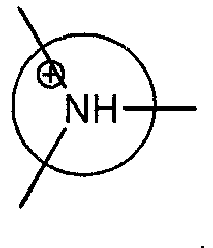
82 9.39 tryptophan 
83 9.11 tyrosine 
Table 1-15 Number pKa Name Structure (circle: dissociation point) 84 9.62 valine 
85 9.3 1,2,3-triazole 
86 2.2 1,2,4-triazole 
87 10.3 1,2,4-triazole 
88 3.39 1,8-naphthyridine 
89 3.92 1-naphtylamine 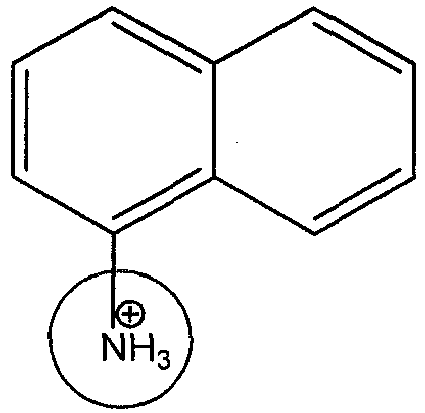
90 3.3 2-methoxypyridine 
Table 1-16 Number pKa Name Structure (circle: dissociation point) 91 6 2-methylpyridine 
92 4.16 2-naphthalamine 
93 -0.3 2-cyanopyridine 
94 -2.6 2-nitropyridine 
95 4.5 2-phenylpyridine 
96 4.9 3-methoxypyridine 
Table 1-17 Number pKa Name Structure (circle: dissociation point) 97 5.7 3-methylpyridine 
98 1.4 3-cyanopyridine 
99 0.6 3-nitropyridine 
100 4.8 3-phenylpyridine 
101 6.6 4-methoxypyridine 
102 6 4-methylpyridine 
Table 1-18 Number pKa Name Structure (circle: dissociation point) 103 1.9 4-cyanopyridine 
104 1.6 4-nitropyridine 
105 5.5 4-phenylpyridine 
106 5.15 5,6-benzoquinoline 
107 4.25 7,8-benzoquinoline 
Table 1-19 Number pKa Name Structure (circle: dissociation point) 108 0.78 Ph2NH2 
109 5.2 PhNHMe2 
110 5.6 acridine 
111 4.6 aniline 
112 16.4 benzimidazole 
113 5.05 benzoquinoline 
Table 1-20 Number pKa Name Structure (circle: dissociation point) 114 19.9 carbazole 
115 6 histidine 
116 6.9 imidazole 
117 14.4 imidazole 
118 21 indole 
119 4.9 indoline 
Table 1-21 Number pKa Name Structure (circle: dissociation point) 120 5.14 isoquinoline 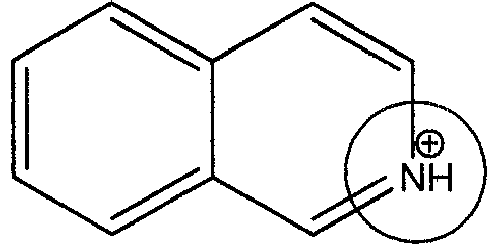
121 -3 isoxazole 
122 0.8 oxazole 
123 2.5 purine 
124 8.9 purine 
125 0.6 pyrazine 
126 19.8 pyrazole 
Table 1-22 Number pKa Name Structure (circle: dissociation point) 127 2.3 pyridazine 
128 5.2 pyridine 
129 1.3 pyrimidine 
130 23 pyrrole 
131 4.92 quinoline 
Table 1-23 Number pKa Name Structure (circle: dissociation point) 132 5 tetrahydroquinoline 
133 4.9 tetrazole 
Table 2 Correlation coefficient Standard error Ex. 1 0.96 1.0 Comp. Ex. 1 0.90 1.5 Comp. Ex. 2 0.86 1.9 - As it could be also confirmed from Table 2, it was confirmed that Example 1 could perform estimation of high accuracy on amines compared to Comparative Examples 1 and 2.
- Note that, the disclosed technology can also perform estimation on oxoacid as highly accurate as Comparative Example 2.
-
- 10: calculation device of acid dissociation constant
- 11: CPU
- 12: memory
- 13: memory unit
- 14: display unit
- 15: input unit
- 16: output unit
- 17: I/O interface unit
- 18: system bus
- 19: network interface unit
- 20: network interface unit
- 30: computer
- 40: computer
Claims (18)
- A calculation method of an acid dissociation constant, the calculation method comprising:
calculating the acid dissociation constant using a function that uses an index value determined based on electron density between two atoms in a calculation target molecule and a coefficient value determined based on types of two elements of a set of the two atoms,
wherein, when the calculation target molecule includes at least one amino group and dissociation of a hydrogen atom from one amino group in the at least one amino group is calculated,
the function further uses second electron density of a nitrogen atom in the one amino group where the second electron density is not related to a bond between the nitrogen atom and another atom,
a bond distance between the nitrogen atom and the hydrogen atom, and
molecular orbital energy of the calculation target molecule,
wherein the calculation method is a method for calculating an acid dissociation constant in dissociation of the hydrogen atom from the calculation target molecule using a computer. - The calculation method according to claim 1,
wherein the set of the two atoms with which the index value is set includes a set of the hydrogen atom and a first atom directly bonded to the hydrogen atom, a set of the first atom and a second atom (with the proviso that the hydrogen atom is excluded) directly bonded to the first atom, and a set of the hydrogen atom and the second atom. - The calculation method according to claim 2,
wherein the coefficient value is set for each of one set of the hydrogen atom and the first atom, sets of the first atom and the second atom where the number of the sets is the number of types of elements of the second atom, and sets of the hydrogen atom and the second atom where the number of the sets is the number of types of elements of the second atom. - The calculation method according to any one of claims 1 to 3,
wherein the product of the index value and the coefficient value is used in the function. - The calculation method according to any one of claims 1 to 4,
wherein the second electron density, the bond distance, and the molecular orbital energy form a linear combination in the function. - The calculation method according to any one of claims 1 to 5,
wherein the molecular orbital energy is energy of the highest occupied molecular orbital of the calculation target molecule or energy of the lowest unoccupied molecular orbital of the calculation target molecule. - A program for executing a calculation method of an acid dissociation constant in dissociation of a hydrogen atom from a calculation target molecule, the calculation method comprising:
calculating the acid dissociation constant using a function that uses an index value determined based on electron density between two atoms in a calculation target molecule and a coefficient value determined based on types of two elements of a set of the two atoms,
wherein, when the calculation target molecule includes at least one amino group and dissociation of the hydrogen atom from one amino group in the at least one amino group is calculated,
the function further uses second electron density of a nitrogen atom in the one amino group where the second electron density is not related to a bond between the nitrogen atom and another atom,
a bond distance between the nitrogen atom and the hydrogen atom, and
molecular orbital energy of the calculation target molecule. - The program according to claim 7,
wherein the set of the two atoms with which the index value is set includes a set of the hydrogen atom and a first atom directly bonded to the hydrogen atom, a set of the first atom and a second atom (with the proviso that the hydrogen atom is excluded) directly bonded to the first atom, and a set of the hydrogen atom and the second atom. - The program according to claim 8,
wherein the coefficient value is set for each of one set of the hydrogen atom and the first atom, sets of the first atom and the second atom where the number of the sets is the number of types of elements of the second atom, and sets of the hydrogen atom and the second atom where the number of the sets is the number of types of elements of the second atom. - The program according to any one of claims 7 to 9,
wherein the product of the index value and the coefficient value is used in the function. - The program according to any one of claims 7 to 10,
wherein the second electron density, the bond distance, and the molecular orbital energy form a linear combination in the function. - The program according to any one of claims 7 to 11,
wherein the molecular orbital energy is energy of the highest occupied molecular orbital of the calculation target molecule or energy of the lowest unoccupied molecular orbital of the calculation target molecule. - A calculation device of an acid dissociation constant, comprising:
a memory unit,
wherein the calculation device is configured to calculate an acid dissociation constant in dissociation of a hydrogen atom from a calculation target molecule,
the memory unit includes, as data, an index value determined based on electron density between two atoms in a calculation target molecule and a coefficient value determined based on types of two elements of a set of the two atoms, and
wherein, when the calculation target molecule includes at least one amino group and dissociation of a hydrogen atom from one amino group in the at least one amino group is calculated,
the memory unit further includes second electron density of a nitrogen atom in the one amino group where the second electron density is not related to a bond between the nitrogen atom and another atom,
a bond distance between the nitrogen atom and the hydrogen atom, and
molecular orbital energy of the calculation target molecule. - The calculation device according to claim 13,
wherein the set of the two atoms with which the index value is set includes a set of the hydrogen atom and a first atom directly bonded to the hydrogen atom, a set of the first atom and a second atom (with the proviso that the hydrogen atom is excluded) directly bonded to the first atom, and a set of the hydrogen atom and the second atom. - The calculation device according to claim 14,
wherein the coefficient value is set for each of one set of the hydrogen atom and the first atom, sets of the first atom and the second atom where the number of the sets is the number of types of elements of the second atom, and sets of the hydrogen atom and the second atom where the number of the sets is the number of types of elements of the second atom. - The calculation device according to any one of claims 13 to 15, further comprising a calculation unit configured to calculate an acid dissociation constant using the data of the memory unit,
wherein the product of the index value and the coefficient value is calculated in the calculation unit. - The calculation device according to claim 16,
wherein a linear combination is formed with the second electron density, the bond distance, and the molecular orbital energy in the calculation unit. - The calculation device according to any one of claims 13 to 17,
wherein the molecular orbital energy is energy of the highest occupied molecular orbital of the calculation target molecule or energy of the lowest unoccupied molecular orbital of the calculation target molecule.
Applications Claiming Priority (1)
| Application Number | Priority Date | Filing Date | Title |
|---|---|---|---|
| PCT/JP2015/070625 WO2017013726A1 (en) | 2015-07-17 | 2015-07-17 | Method and device for calculating acid dissociation constant, and program |
Publications (3)
| Publication Number | Publication Date |
|---|---|
| EP3327603A1 true EP3327603A1 (en) | 2018-05-30 |
| EP3327603A4 EP3327603A4 (en) | 2018-08-08 |
| EP3327603B1 EP3327603B1 (en) | 2021-08-11 |
Family
ID=57834123
Family Applications (1)
| Application Number | Title | Priority Date | Filing Date |
|---|---|---|---|
| EP15898886.5A Active EP3327603B1 (en) | 2015-07-17 | 2015-07-17 | Method and device for calculating acid dissociation constant, and program |
Country Status (4)
| Country | Link |
|---|---|
| US (1) | US11195597B2 (en) |
| EP (1) | EP3327603B1 (en) |
| JP (1) | JP6365779B2 (en) |
| WO (1) | WO2017013726A1 (en) |
Families Citing this family (4)
| Publication number | Priority date | Publication date | Assignee | Title |
|---|---|---|---|---|
| CN115602262A (en) * | 2021-07-08 | 2023-01-13 | 中国科学院上海药物研究所(Cn) | Prediction method, device and storage medium of dissociation constant |
| CN114067921B (en) * | 2021-10-28 | 2024-02-20 | 中国原子能科学研究院 | A method and device for determining acidity coefficient |
| WO2023102688A1 (en) * | 2021-12-06 | 2023-06-15 | 深圳晶泰科技有限公司 | Acidity coefficient determination method, apparatus and device, and computer-readable storage medium |
| CN114300056B (en) * | 2021-12-06 | 2024-09-13 | 深圳晶泰科技有限公司 | Acidity coefficient determination method, acidity coefficient determination device, acidity coefficient determination equipment and computer-readable storage medium |
Family Cites Families (3)
| Publication number | Priority date | Publication date | Assignee | Title |
|---|---|---|---|---|
| US7006921B1 (en) * | 1999-07-26 | 2006-02-28 | Li Xing | Method for accurately estimating pKa of molecules using atom type definitions and partial least squares |
| JP3747017B2 (en) * | 2002-08-22 | 2006-02-22 | 独立行政法人科学技術振興機構 | Acid dissociation constant measuring method and measuring apparatus |
| JP6089750B2 (en) * | 2013-02-14 | 2017-03-08 | 富士通株式会社 | Acid dissociation constant prediction apparatus and method |
-
2015
- 2015-07-17 WO PCT/JP2015/070625 patent/WO2017013726A1/en not_active Ceased
- 2015-07-17 JP JP2017529196A patent/JP6365779B2/en active Active
- 2015-07-17 EP EP15898886.5A patent/EP3327603B1/en active Active
-
2017
- 2017-12-29 US US15/858,438 patent/US11195597B2/en active Active
Also Published As
| Publication number | Publication date |
|---|---|
| EP3327603B1 (en) | 2021-08-11 |
| WO2017013726A1 (en) | 2017-01-26 |
| US11195597B2 (en) | 2021-12-07 |
| US20180121632A1 (en) | 2018-05-03 |
| JPWO2017013726A1 (en) | 2018-04-26 |
| JP6365779B2 (en) | 2018-08-01 |
| EP3327603A4 (en) | 2018-08-08 |
Similar Documents
| Publication | Publication Date | Title |
|---|---|---|
| Raczynska et al. | Enhanced basicity of push–pull nitrogen bases in the gas phase | |
| Horn et al. | Probing non-covalent interactions with a second generation energy decomposition analysis using absolutely localized molecular orbitals | |
| EP3327603B1 (en) | Method and device for calculating acid dissociation constant, and program | |
| Maksic et al. | Advances in determining the absolute proton affinities of neutral organic molecules in the gas phase and their interpretation: a theoretical account | |
| Mao et al. | Assessing ion–water interactions in the AMOEBA force field using energy decomposition analysis of electronic structure calculations | |
| Shishkina et al. | Noncovalent interactions in crystalline picolinic acid N-oxide: insights from experimental and theoretical charge density analysis | |
| Lunkenheimer et al. | Solvent effects on electronically excited states using the conductor-like screening model and the second-order correlated method ADC (2) | |
| Holmes et al. | Refining crystal structures with quadrupolar NMR and dispersion-corrected density functional theory | |
| Exner et al. | Toward the quantum chemical calculation of NMR chemical shifts of proteins. 3. Conformational sampling and explicit solvents model | |
| Mao et al. | Performance of the AMOEBA water model in the vicinity of QM solutes: a diagnosis using energy decomposition analysis | |
| Prasetyo et al. | Single-ion thermodynamics from first principles: Calculation of the absolute hydration free energy and single-electrode potential of aqueous Li+ using ab initio quantum mechanical/molecular mechanical molecular dynamics simulations | |
| Zaccheddu et al. | Anion− π and π− π Cooperative Interactions Regulating the Self-Assembly of Nitrate− Triazine− Triazine Complexes | |
| Gurinov et al. | How short is the strongest hydrogen bond in the proton-bound homodimers of pyridine derivatives? | |
| Hapka et al. | Second-order exchange-dispersion energy based on a multireference description of monomers | |
| Murphree et al. | Imidazolium compounds as internal exchange reporters for hydrogen/deuterium exchange by mass spectrometry | |
| Torras et al. | Determination of new Cu+, Cu2+, and Zn2+ Lennard-Jones ion parameters in acetonitrile | |
| Colherinhas et al. | On the calculation of magnetic properties of nucleic acids in liquid water with the sequential QM/MM method | |
| Ghassabi Kondalaji et al. | Comprehensive peptide ion structure studies using ion mobility techniques: part 1. An advanced protocol for molecular dynamics simulations and collision cross-section calculation | |
| Shimpi et al. | Physical binding energies using the electron localization function in 4-hydroxyphenylboronic acid co-crystals with aza donors | |
| Huang et al. | Cation Radicals of Hachimoji Nucleobases. Canonical Purine and Noncanonical Pyrimidine Forms Generated in the Gas Phase and Characterized by UV–Vis Photodissociation Action Spectroscopy | |
| Tabe et al. | Surface acidity of water probed by free energy calculation for trimethylamine protonation | |
| Neto et al. | Explicit aqueous solvation treatment of epinephrine from car–parrinello molecular dynamics: Effect of hydrogen bonding on the electronic absorption spectrum | |
| Liu et al. | Charge-Tagged Nucleosides in the Gas Phase: UV–Vis Action Spectroscopy and Structures of Cytidine Cations, Dications, and Cation Radicals | |
| Simón-Manso | Ion-Neutral collision cross section as a function of the static dipole polarizability and the ionization energy of the ion | |
| Wang et al. | Minimalist synthetic host with stacked guanidinium ions mimics the weakened hydration shells of protein–protein interaction interfaces |
Legal Events
| Date | Code | Title | Description |
|---|---|---|---|
| STAA | Information on the status of an ep patent application or granted ep patent |
Free format text: STATUS: THE INTERNATIONAL PUBLICATION HAS BEEN MADE |
|
| PUAI | Public reference made under article 153(3) epc to a published international application that has entered the european phase |
Free format text: ORIGINAL CODE: 0009012 |
|
| STAA | Information on the status of an ep patent application or granted ep patent |
Free format text: STATUS: REQUEST FOR EXAMINATION WAS MADE |
|
| 17P | Request for examination filed |
Effective date: 20171221 |
|
| AK | Designated contracting states |
Kind code of ref document: A1 Designated state(s): AL AT BE BG CH CY CZ DE DK EE ES FI FR GB GR HR HU IE IS IT LI LT LU LV MC MK MT NL NO PL PT RO RS SE SI SK SM TR |
|
| AX | Request for extension of the european patent |
Extension state: BA ME |
|
| A4 | Supplementary search report drawn up and despatched |
Effective date: 20180710 |
|
| RIC1 | Information provided on ipc code assigned before grant |
Ipc: G06F 19/10 20110101AFI20180704BHEP Ipc: G06F 19/00 20180101ALI20180704BHEP |
|
| DAV | Request for validation of the european patent (deleted) | ||
| DAX | Request for extension of the european patent (deleted) | ||
| STAA | Information on the status of an ep patent application or granted ep patent |
Free format text: STATUS: EXAMINATION IS IN PROGRESS |
|
| 17Q | First examination report despatched |
Effective date: 20200430 |
|
| REG | Reference to a national code |
Ref country code: DE Ref legal event code: R079 Ref document number: 602015072306 Country of ref document: DE Free format text: PREVIOUS MAIN CLASS: G06F0019100000 Ipc: G16C0020300000 |
|
| GRAP | Despatch of communication of intention to grant a patent |
Free format text: ORIGINAL CODE: EPIDOSNIGR1 |
|
| STAA | Information on the status of an ep patent application or granted ep patent |
Free format text: STATUS: GRANT OF PATENT IS INTENDED |
|
| RIC1 | Information provided on ipc code assigned before grant |
Ipc: G16B 99/00 20190101ALI20210212BHEP Ipc: G16C 20/30 20190101AFI20210212BHEP |
|
| INTG | Intention to grant announced |
Effective date: 20210305 |
|
| GRAS | Grant fee paid |
Free format text: ORIGINAL CODE: EPIDOSNIGR3 |
|
| GRAA | (expected) grant |
Free format text: ORIGINAL CODE: 0009210 |
|
| STAA | Information on the status of an ep patent application or granted ep patent |
Free format text: STATUS: THE PATENT HAS BEEN GRANTED |
|
| AK | Designated contracting states |
Kind code of ref document: B1 Designated state(s): AL AT BE BG CH CY CZ DE DK EE ES FI FR GB GR HR HU IE IS IT LI LT LU LV MC MK MT NL NO PL PT RO RS SE SI SK SM TR |
|
| REG | Reference to a national code |
Ref country code: CH Ref legal event code: EP |
|
| REG | Reference to a national code |
Ref country code: DE Ref legal event code: R096 Ref document number: 602015072306 Country of ref document: DE |
|
| REG | Reference to a national code |
Ref country code: IE Ref legal event code: FG4D Ref country code: AT Ref legal event code: REF Ref document number: 1420218 Country of ref document: AT Kind code of ref document: T Effective date: 20210915 |
|
| REG | Reference to a national code |
Ref country code: LT Ref legal event code: MG9D |
|
| REG | Reference to a national code |
Ref country code: NL Ref legal event code: MP Effective date: 20210811 |
|
| REG | Reference to a national code |
Ref country code: AT Ref legal event code: MK05 Ref document number: 1420218 Country of ref document: AT Kind code of ref document: T Effective date: 20210811 |
|
| PG25 | Lapsed in a contracting state [announced via postgrant information from national office to epo] |
Ref country code: HR Free format text: LAPSE BECAUSE OF FAILURE TO SUBMIT A TRANSLATION OF THE DESCRIPTION OR TO PAY THE FEE WITHIN THE PRESCRIBED TIME-LIMIT Effective date: 20210811 Ref country code: RS Free format text: LAPSE BECAUSE OF FAILURE TO SUBMIT A TRANSLATION OF THE DESCRIPTION OR TO PAY THE FEE WITHIN THE PRESCRIBED TIME-LIMIT Effective date: 20210811 Ref country code: SE Free format text: LAPSE BECAUSE OF FAILURE TO SUBMIT A TRANSLATION OF THE DESCRIPTION OR TO PAY THE FEE WITHIN THE PRESCRIBED TIME-LIMIT Effective date: 20210811 Ref country code: PT Free format text: LAPSE BECAUSE OF FAILURE TO SUBMIT A TRANSLATION OF THE DESCRIPTION OR TO PAY THE FEE WITHIN THE PRESCRIBED TIME-LIMIT Effective date: 20211213 Ref country code: NO Free format text: LAPSE BECAUSE OF FAILURE TO SUBMIT A TRANSLATION OF THE DESCRIPTION OR TO PAY THE FEE WITHIN THE PRESCRIBED TIME-LIMIT Effective date: 20211111 Ref country code: ES Free format text: LAPSE BECAUSE OF FAILURE TO SUBMIT A TRANSLATION OF THE DESCRIPTION OR TO PAY THE FEE WITHIN THE PRESCRIBED TIME-LIMIT Effective date: 20210811 Ref country code: FI Free format text: LAPSE BECAUSE OF FAILURE TO SUBMIT A TRANSLATION OF THE DESCRIPTION OR TO PAY THE FEE WITHIN THE PRESCRIBED TIME-LIMIT Effective date: 20210811 Ref country code: LT Free format text: LAPSE BECAUSE OF FAILURE TO SUBMIT A TRANSLATION OF THE DESCRIPTION OR TO PAY THE FEE WITHIN THE PRESCRIBED TIME-LIMIT Effective date: 20210811 Ref country code: AT Free format text: LAPSE BECAUSE OF FAILURE TO SUBMIT A TRANSLATION OF THE DESCRIPTION OR TO PAY THE FEE WITHIN THE PRESCRIBED TIME-LIMIT Effective date: 20210811 Ref country code: BG Free format text: LAPSE BECAUSE OF FAILURE TO SUBMIT A TRANSLATION OF THE DESCRIPTION OR TO PAY THE FEE WITHIN THE PRESCRIBED TIME-LIMIT Effective date: 20211111 |
|
| PG25 | Lapsed in a contracting state [announced via postgrant information from national office to epo] |
Ref country code: PL Free format text: LAPSE BECAUSE OF FAILURE TO SUBMIT A TRANSLATION OF THE DESCRIPTION OR TO PAY THE FEE WITHIN THE PRESCRIBED TIME-LIMIT Effective date: 20210811 Ref country code: LV Free format text: LAPSE BECAUSE OF FAILURE TO SUBMIT A TRANSLATION OF THE DESCRIPTION OR TO PAY THE FEE WITHIN THE PRESCRIBED TIME-LIMIT Effective date: 20210811 Ref country code: GR Free format text: LAPSE BECAUSE OF FAILURE TO SUBMIT A TRANSLATION OF THE DESCRIPTION OR TO PAY THE FEE WITHIN THE PRESCRIBED TIME-LIMIT Effective date: 20211112 |
|
| PG25 | Lapsed in a contracting state [announced via postgrant information from national office to epo] |
Ref country code: NL Free format text: LAPSE BECAUSE OF FAILURE TO SUBMIT A TRANSLATION OF THE DESCRIPTION OR TO PAY THE FEE WITHIN THE PRESCRIBED TIME-LIMIT Effective date: 20210811 |
|
| PG25 | Lapsed in a contracting state [announced via postgrant information from national office to epo] |
Ref country code: DK Free format text: LAPSE BECAUSE OF FAILURE TO SUBMIT A TRANSLATION OF THE DESCRIPTION OR TO PAY THE FEE WITHIN THE PRESCRIBED TIME-LIMIT Effective date: 20210811 |
|
| REG | Reference to a national code |
Ref country code: DE Ref legal event code: R097 Ref document number: 602015072306 Country of ref document: DE |
|
| PG25 | Lapsed in a contracting state [announced via postgrant information from national office to epo] |
Ref country code: SM Free format text: LAPSE BECAUSE OF FAILURE TO SUBMIT A TRANSLATION OF THE DESCRIPTION OR TO PAY THE FEE WITHIN THE PRESCRIBED TIME-LIMIT Effective date: 20210811 Ref country code: SK Free format text: LAPSE BECAUSE OF FAILURE TO SUBMIT A TRANSLATION OF THE DESCRIPTION OR TO PAY THE FEE WITHIN THE PRESCRIBED TIME-LIMIT Effective date: 20210811 Ref country code: RO Free format text: LAPSE BECAUSE OF FAILURE TO SUBMIT A TRANSLATION OF THE DESCRIPTION OR TO PAY THE FEE WITHIN THE PRESCRIBED TIME-LIMIT Effective date: 20210811 Ref country code: EE Free format text: LAPSE BECAUSE OF FAILURE TO SUBMIT A TRANSLATION OF THE DESCRIPTION OR TO PAY THE FEE WITHIN THE PRESCRIBED TIME-LIMIT Effective date: 20210811 Ref country code: CZ Free format text: LAPSE BECAUSE OF FAILURE TO SUBMIT A TRANSLATION OF THE DESCRIPTION OR TO PAY THE FEE WITHIN THE PRESCRIBED TIME-LIMIT Effective date: 20210811 Ref country code: AL Free format text: LAPSE BECAUSE OF FAILURE TO SUBMIT A TRANSLATION OF THE DESCRIPTION OR TO PAY THE FEE WITHIN THE PRESCRIBED TIME-LIMIT Effective date: 20210811 |
|
| PLBE | No opposition filed within time limit |
Free format text: ORIGINAL CODE: 0009261 |
|
| STAA | Information on the status of an ep patent application or granted ep patent |
Free format text: STATUS: NO OPPOSITION FILED WITHIN TIME LIMIT |
|
| 26N | No opposition filed |
Effective date: 20220512 |
|
| PG25 | Lapsed in a contracting state [announced via postgrant information from national office to epo] |
Ref country code: IT Free format text: LAPSE BECAUSE OF FAILURE TO SUBMIT A TRANSLATION OF THE DESCRIPTION OR TO PAY THE FEE WITHIN THE PRESCRIBED TIME-LIMIT Effective date: 20210811 |
|
| PG25 | Lapsed in a contracting state [announced via postgrant information from national office to epo] |
Ref country code: SI Free format text: LAPSE BECAUSE OF FAILURE TO SUBMIT A TRANSLATION OF THE DESCRIPTION OR TO PAY THE FEE WITHIN THE PRESCRIBED TIME-LIMIT Effective date: 20210811 |
|
| PG25 | Lapsed in a contracting state [announced via postgrant information from national office to epo] |
Ref country code: MC Free format text: LAPSE BECAUSE OF FAILURE TO SUBMIT A TRANSLATION OF THE DESCRIPTION OR TO PAY THE FEE WITHIN THE PRESCRIBED TIME-LIMIT Effective date: 20210811 |
|
| REG | Reference to a national code |
Ref country code: CH Ref legal event code: PL |
|
| REG | Reference to a national code |
Ref country code: BE Ref legal event code: MM Effective date: 20220731 |
|
| PG25 | Lapsed in a contracting state [announced via postgrant information from national office to epo] |
Ref country code: LU Free format text: LAPSE BECAUSE OF NON-PAYMENT OF DUE FEES Effective date: 20220717 Ref country code: LI Free format text: LAPSE BECAUSE OF NON-PAYMENT OF DUE FEES Effective date: 20220731 Ref country code: CH Free format text: LAPSE BECAUSE OF NON-PAYMENT OF DUE FEES Effective date: 20220731 |
|
| PG25 | Lapsed in a contracting state [announced via postgrant information from national office to epo] |
Ref country code: BE Free format text: LAPSE BECAUSE OF NON-PAYMENT OF DUE FEES Effective date: 20220731 |
|
| PG25 | Lapsed in a contracting state [announced via postgrant information from national office to epo] |
Ref country code: IE Free format text: LAPSE BECAUSE OF NON-PAYMENT OF DUE FEES Effective date: 20220717 |
|
| PG25 | Lapsed in a contracting state [announced via postgrant information from national office to epo] |
Ref country code: HU Free format text: LAPSE BECAUSE OF FAILURE TO SUBMIT A TRANSLATION OF THE DESCRIPTION OR TO PAY THE FEE WITHIN THE PRESCRIBED TIME-LIMIT; INVALID AB INITIO Effective date: 20150717 |
|
| PG25 | Lapsed in a contracting state [announced via postgrant information from national office to epo] |
Ref country code: MK Free format text: LAPSE BECAUSE OF FAILURE TO SUBMIT A TRANSLATION OF THE DESCRIPTION OR TO PAY THE FEE WITHIN THE PRESCRIBED TIME-LIMIT Effective date: 20210811 Ref country code: CY Free format text: LAPSE BECAUSE OF FAILURE TO SUBMIT A TRANSLATION OF THE DESCRIPTION OR TO PAY THE FEE WITHIN THE PRESCRIBED TIME-LIMIT Effective date: 20210811 |
|
| PG25 | Lapsed in a contracting state [announced via postgrant information from national office to epo] |
Ref country code: MT Free format text: LAPSE BECAUSE OF FAILURE TO SUBMIT A TRANSLATION OF THE DESCRIPTION OR TO PAY THE FEE WITHIN THE PRESCRIBED TIME-LIMIT Effective date: 20210811 |
|
| PGFP | Annual fee paid to national office [announced via postgrant information from national office to epo] |
Ref country code: GB Payment date: 20250619 Year of fee payment: 11 |
|
| PGFP | Annual fee paid to national office [announced via postgrant information from national office to epo] |
Ref country code: FR Payment date: 20250620 Year of fee payment: 11 |
|
| PGFP | Annual fee paid to national office [announced via postgrant information from national office to epo] |
Ref country code: DE Payment date: 20250620 Year of fee payment: 11 |
|
| PG25 | Lapsed in a contracting state [announced via postgrant information from national office to epo] |
Ref country code: TR Free format text: LAPSE BECAUSE OF FAILURE TO SUBMIT A TRANSLATION OF THE DESCRIPTION OR TO PAY THE FEE WITHIN THE PRESCRIBED TIME-LIMIT Effective date: 20210811 |