EP3326710B1 - Composite textile - Google Patents
Composite textile Download PDFInfo
- Publication number
- EP3326710B1 EP3326710B1 EP18150068.7A EP18150068A EP3326710B1 EP 3326710 B1 EP3326710 B1 EP 3326710B1 EP 18150068 A EP18150068 A EP 18150068A EP 3326710 B1 EP3326710 B1 EP 3326710B1
- Authority
- EP
- European Patent Office
- Prior art keywords
- fabric layer
- layer
- yarn
- membrane layer
- membrane
- Prior art date
- Legal status (The legal status is an assumption and is not a legal conclusion. Google has not performed a legal analysis and makes no representation as to the accuracy of the status listed.)
- Active
Links
Images




Classifications
-
- B—PERFORMING OPERATIONS; TRANSPORTING
- B32—LAYERED PRODUCTS
- B32B—LAYERED PRODUCTS, i.e. PRODUCTS BUILT-UP OF STRATA OF FLAT OR NON-FLAT, e.g. CELLULAR OR HONEYCOMB, FORM
- B32B27/00—Layered products comprising a layer of synthetic resin
- B32B27/40—Layered products comprising a layer of synthetic resin comprising polyurethanes
-
- B—PERFORMING OPERATIONS; TRANSPORTING
- B32—LAYERED PRODUCTS
- B32B—LAYERED PRODUCTS, i.e. PRODUCTS BUILT-UP OF STRATA OF FLAT OR NON-FLAT, e.g. CELLULAR OR HONEYCOMB, FORM
- B32B7/00—Layered products characterised by the relation between layers; Layered products characterised by the relative orientation of features between layers, or by the relative values of a measurable parameter between layers, i.e. products comprising layers having different physical, chemical or physicochemical properties; Layered products characterised by the interconnection of layers
- B32B7/02—Physical, chemical or physicochemical properties
- B32B7/027—Thermal properties
-
- B—PERFORMING OPERATIONS; TRANSPORTING
- B32—LAYERED PRODUCTS
- B32B—LAYERED PRODUCTS, i.e. PRODUCTS BUILT-UP OF STRATA OF FLAT OR NON-FLAT, e.g. CELLULAR OR HONEYCOMB, FORM
- B32B27/00—Layered products comprising a layer of synthetic resin
- B32B27/12—Layered products comprising a layer of synthetic resin next to a fibrous or filamentary layer
-
- B—PERFORMING OPERATIONS; TRANSPORTING
- B32—LAYERED PRODUCTS
- B32B—LAYERED PRODUCTS, i.e. PRODUCTS BUILT-UP OF STRATA OF FLAT OR NON-FLAT, e.g. CELLULAR OR HONEYCOMB, FORM
- B32B5/00—Layered products characterised by the non- homogeneity or physical structure, i.e. comprising a fibrous, filamentary, particulate or foam layer; Layered products characterised by having a layer differing constitutionally or physically in different parts
- B32B5/02—Layered products characterised by the non- homogeneity or physical structure, i.e. comprising a fibrous, filamentary, particulate or foam layer; Layered products characterised by having a layer differing constitutionally or physically in different parts characterised by structural features of a fibrous or filamentary layer
-
- B—PERFORMING OPERATIONS; TRANSPORTING
- B32—LAYERED PRODUCTS
- B32B—LAYERED PRODUCTS, i.e. PRODUCTS BUILT-UP OF STRATA OF FLAT OR NON-FLAT, e.g. CELLULAR OR HONEYCOMB, FORM
- B32B5/00—Layered products characterised by the non- homogeneity or physical structure, i.e. comprising a fibrous, filamentary, particulate or foam layer; Layered products characterised by having a layer differing constitutionally or physically in different parts
- B32B5/02—Layered products characterised by the non- homogeneity or physical structure, i.e. comprising a fibrous, filamentary, particulate or foam layer; Layered products characterised by having a layer differing constitutionally or physically in different parts characterised by structural features of a fibrous or filamentary layer
- B32B5/08—Layered products characterised by the non- homogeneity or physical structure, i.e. comprising a fibrous, filamentary, particulate or foam layer; Layered products characterised by having a layer differing constitutionally or physically in different parts characterised by structural features of a fibrous or filamentary layer the fibres or filaments of a layer being of different substances, e.g. conjugate fibres, mixture of different fibres
-
- B—PERFORMING OPERATIONS; TRANSPORTING
- B32—LAYERED PRODUCTS
- B32B—LAYERED PRODUCTS, i.e. PRODUCTS BUILT-UP OF STRATA OF FLAT OR NON-FLAT, e.g. CELLULAR OR HONEYCOMB, FORM
- B32B7/00—Layered products characterised by the relation between layers; Layered products characterised by the relative orientation of features between layers, or by the relative values of a measurable parameter between layers, i.e. products comprising layers having different physical, chemical or physicochemical properties; Layered products characterised by the interconnection of layers
- B32B7/02—Physical, chemical or physicochemical properties
- B32B7/022—Mechanical properties
-
- B—PERFORMING OPERATIONS; TRANSPORTING
- B32—LAYERED PRODUCTS
- B32B—LAYERED PRODUCTS, i.e. PRODUCTS BUILT-UP OF STRATA OF FLAT OR NON-FLAT, e.g. CELLULAR OR HONEYCOMB, FORM
- B32B2262/00—Composition or structural features of fibres which form a fibrous or filamentary layer or are present as additives
- B32B2262/02—Synthetic macromolecular fibres
- B32B2262/0207—Elastomeric fibres
- B32B2262/0215—Thermoplastic elastomer fibers
-
- B—PERFORMING OPERATIONS; TRANSPORTING
- B32—LAYERED PRODUCTS
- B32B—LAYERED PRODUCTS, i.e. PRODUCTS BUILT-UP OF STRATA OF FLAT OR NON-FLAT, e.g. CELLULAR OR HONEYCOMB, FORM
- B32B2274/00—Thermoplastic elastomer material
-
- B—PERFORMING OPERATIONS; TRANSPORTING
- B32—LAYERED PRODUCTS
- B32B—LAYERED PRODUCTS, i.e. PRODUCTS BUILT-UP OF STRATA OF FLAT OR NON-FLAT, e.g. CELLULAR OR HONEYCOMB, FORM
- B32B2305/00—Condition, form or state of the layers or laminate
- B32B2305/10—Fibres of continuous length
- B32B2305/18—Fabrics, textiles
-
- B—PERFORMING OPERATIONS; TRANSPORTING
- B32—LAYERED PRODUCTS
- B32B—LAYERED PRODUCTS, i.e. PRODUCTS BUILT-UP OF STRATA OF FLAT OR NON-FLAT, e.g. CELLULAR OR HONEYCOMB, FORM
- B32B2307/00—Properties of the layers or laminate
- B32B2307/50—Properties of the layers or laminate having particular mechanical properties
- B32B2307/536—Hardness
-
- B—PERFORMING OPERATIONS; TRANSPORTING
- B32—LAYERED PRODUCTS
- B32B—LAYERED PRODUCTS, i.e. PRODUCTS BUILT-UP OF STRATA OF FLAT OR NON-FLAT, e.g. CELLULAR OR HONEYCOMB, FORM
- B32B2307/00—Properties of the layers or laminate
- B32B2307/50—Properties of the layers or laminate having particular mechanical properties
- B32B2307/582—Tearability
- B32B2307/5825—Tear resistant
-
- B—PERFORMING OPERATIONS; TRANSPORTING
- B32—LAYERED PRODUCTS
- B32B—LAYERED PRODUCTS, i.e. PRODUCTS BUILT-UP OF STRATA OF FLAT OR NON-FLAT, e.g. CELLULAR OR HONEYCOMB, FORM
- B32B2307/00—Properties of the layers or laminate
- B32B2307/70—Other properties
- B32B2307/724—Permeability to gases, adsorption
- B32B2307/7242—Non-permeable
- B32B2307/7246—Water vapor barrier
-
- B—PERFORMING OPERATIONS; TRANSPORTING
- B32—LAYERED PRODUCTS
- B32B—LAYERED PRODUCTS, i.e. PRODUCTS BUILT-UP OF STRATA OF FLAT OR NON-FLAT, e.g. CELLULAR OR HONEYCOMB, FORM
- B32B2307/00—Properties of the layers or laminate
- B32B2307/70—Other properties
- B32B2307/726—Permeability to liquids, absorption
- B32B2307/7265—Non-permeable
-
- B—PERFORMING OPERATIONS; TRANSPORTING
- B32—LAYERED PRODUCTS
- B32B—LAYERED PRODUCTS, i.e. PRODUCTS BUILT-UP OF STRATA OF FLAT OR NON-FLAT, e.g. CELLULAR OR HONEYCOMB, FORM
- B32B2307/00—Properties of the layers or laminate
- B32B2307/70—Other properties
- B32B2307/732—Dimensional properties
-
- B—PERFORMING OPERATIONS; TRANSPORTING
- B32—LAYERED PRODUCTS
- B32B—LAYERED PRODUCTS, i.e. PRODUCTS BUILT-UP OF STRATA OF FLAT OR NON-FLAT, e.g. CELLULAR OR HONEYCOMB, FORM
- B32B2419/00—Buildings or parts thereof
- B32B2419/06—Roofs, roof membranes
-
- B—PERFORMING OPERATIONS; TRANSPORTING
- B32—LAYERED PRODUCTS
- B32B—LAYERED PRODUCTS, i.e. PRODUCTS BUILT-UP OF STRATA OF FLAT OR NON-FLAT, e.g. CELLULAR OR HONEYCOMB, FORM
- B32B37/00—Methods or apparatus for laminating, e.g. by curing or by ultrasonic bonding
- B32B37/06—Methods or apparatus for laminating, e.g. by curing or by ultrasonic bonding characterised by the heating method
Definitions
- the present invention relates to a method of textile surface processing, especially to the method of producing a composite textile by combining a fabric layer with a membrane layer.
- the present invention also relates to the composite textile.
- a conventional coating processing method comprises: placing a polymer-coating solution 70 in a tank 80, wherein the polymer-coating solution 70 is prepared by dissolving the polymers in an organic solvent; delivering a textile 51 with a delivery roller 90, and carrying the polymer-coating solution 70 with a carrying roller 91, allowing the polymer-coating solution 70 to be coated on the textile 51; evaporating the organic solvent of the polymer-coating solution 70 followed by maturation to form a coated-textile 50 with coating a polymer layer 71 on the textile 51.
- the strength of the coated-textile 50 cannot be enhanced.
- the organic solvent used in the conventional coating processing would extend the processing time to evaporate the organic solvent followed by maturation.
- part of the organic solvent remaining on the coated-textile 50 may be harmful to health and the environment.
- a conventional adhesive film processing method comprises: spot-coating a thermosol solution 62 on a surface of a textile 61, wherein the thermosol solution 62 is prepared by dissolving polymers in an organic solvent; sticking a film 63 on the surface of the textile 61 coated with the thermosol solution 62 followed by heating and pressing to form an adhesive film textile 60.
- the adhesive film textile 60 is composed of the textile 61, a thermosol layer 64 and the film 63, and the thermosol layer 64 is formed by the thermosol solution 62 spot-coated on the surface of the textile 61.
- the organic solvent used for dissolving the thermosol solution 62 may remain on the adhesive film textile 60, so the adhesive film textile 60 may be harmful to health and the environment. Besides, combination of the textile 61 and the film 63 is affected by the interaction between the thermosol layer 64 and the textile 61 as well as the film 63. Therefore, the textile 61 and the film 63 of the adhesive film textile 60 will be detached if the adhesion of the thermosol solution 64 decreases after use for a long time.
- the patent publication EP 0982431 A2 discloses a non-woven web, and polyolefins was extrusion-coated to one side of the non-woven web.
- the nonwoven web was made of polyethylene and / or polypropylene and / or polyethylene terephthalate and / or polyamide; however, all of the foresaid materials are not thermoplastic elastomers.
- patent publication US 2003/194547 A1 discloses a process for producing a composite structure comprising combining at least one first layer that has a first melting point with at least one second layer that has a second melting point lower than the first melting point; and applying heat to the at least one first layer and the at least one second layer so that the at least one second layer is at least partially melted to flow around the at least one first layer prior to resolidification to attach the at least one first layer to the at least one second layer.
- said US patent publication does not disclose any thermal and pressure conditions such as pre-heat temperature, hot-press temperature, or hot-press pressure, and heat and pressure may affect the quality of the composite structure.
- the first layer of said US patent publication is an expanded polytetrafluoroethylene beyond the elastic limit of the material to introduce permanent set or elongation to the fibrils, and the size of the pores of the first layer, which are micropores, may be in the range from about 0.01 microns (0.39 microinches) to about 10 microns (393.70 microinches) and in the range from about 0.3 microns (11.81 microinches) to about 5.0 microns (196.85 microinches).
- the thermoplastic material of said US patent publication is solidified by the hot roll calendering mechanism in a temperature range that extends from about 246.11 degrees Celsius (475 degrees Fahrenheit) to about 265.56 degrees Celsius (510 degrees Fahrenheit).
- the main objective of the invention is to provide a composite textile, and the composite textile comprises:
- the fourth surface of the first membrane layer is attached to the first surface of the first fabric layer, and parts of the fourth surface of the first membrane layer permeating into the multiple pores of the first fabric layer allow the first membrane layer to bind with the first fabric layer tightly, and enhance the strength of the composite textile.
- the composite textile further comprises a second fabric layer; wherein material of the second fabric layer comprises thermoplastic elastomer, thermoplastic polymer or a combination thereof.
- the melting point of the second fabric layer is higher than that of the first membrane layer.
- the second fabric layer comprises a fifth surface, a sixth surface and multiple pores. The multiple pores are distributed on the second fabric layer and connect the fifth surface and the sixth surface.
- the third surface of the first membrane layer is attached to the fifth surface of the second fabric layer, and parts of the third surface of the first membrane layer permeate into the multiple pores of the second fabric layer.
- the composite textile further comprises a second membrane layer; wherein material of the second membrane layer comprises thermoplastic elastomer, thermoplastic polymer or a combination thereof; wherein the melting point of the second membrane layer is lower than that of the first fabric layer; wherein the second membrane layer comprises a third surface and a fourth surface, and the fourth surface of the second membrane layer is attached to the second surface of the first fabric layer, and parts of the fourth surface of the second membrane layer permeate into the multiple pores of the first fabric layer.
- material of the second membrane layer comprises thermoplastic elastomer, thermoplastic polymer or a combination thereof; wherein the melting point of the second membrane layer is lower than that of the first fabric layer; wherein the second membrane layer comprises a third surface and a fourth surface, and the fourth surface of the second membrane layer is attached to the second surface of the first fabric layer, and parts of the fourth surface of the second membrane layer permeate into the multiple pores of the first fabric layer.
- the first fabric layer is formed by weaving with a yarn, wherein material of the yarn comprises thermoplastic elastomer or a combination of thermoplastic elastomer and thermoplastic polymer.
- weaving includes, but not limited to knitting, circular weaving, plain weaving or weaving.
- the yarn is formed by twisting with a first sub-yarn and a second sub-yarn, wherein material of the first sub-yarn includes thermoplastic elastomer, thermoplastic polymer or a combination thereof; wherein material of the second sub-yarn includes thermoplastic elastomer, thermoplastic polymer or a combination thereof; and at least one of the first sub-yarn and the second sub-yarn comprises thermoplastic elastomer.
- the material of the first sub-yarn is thermoplastic polymer
- the material of the second sub-yarn is thermoplastic elastomer; wherein based on the total weight of the yarn, the weight percentage of the second sub-yarn is between 10 wt% and 90 wt%.
- the first fabric layer is formed by weaving with a first yarn and a second yarn, wherein material of the first yarn comprises thermoplastic elastomer, thermoplastic polymer or a combination thereof; wherein material of the second yarn comprises thermoplastic elastomer, thermoplastic polymer or a combination thereof; and at least one of the first yarn and the second yarn comprises thermoplastic elastomer.
- the material of the first fabric layer is the combination of thermoplastic elastomer and thermoplastic polymer; wherein the thermoplastic polymer has the hardness between 85A and 90D.
- the material of the first fabric layer is the combination of thermoplastic elastomer and thermoplastic polymer; wherein the thermoplastic polymer has the melting point higher than or equal to 160°C and lower than or equal to 300°C.
- the material of the first membrane layer is the combination of thermoplastic elastomer and thermoplastic polymer; wherein the thermoplastic polymer has the hardness between 10A and 98A.
- the material of the first membrane layer is the combination of thermoplastic elastomer and thermoplastic polymer; wherein the thermoplastic polymer has the melting point of the thermoplastic polymer higher than or equal to 50°C and lower than or equal to 150°C.
- the thermoplastic polymer includes polyethylene terephthalate (PET), polymethylmethacrylate (PMMA), polyvinyl chloride (PVC), nylon, polycarbonate (PC), polyoxymethylene (POM), polyolefin (POF), polyacrylonitrile (PAN), polystyrene (PS), polysulfone, polyethersulfone, polyurethane (PU), or any combination thereof.
- PET polyethylene terephthalate
- PMMA polymethylmethacrylate
- PVC polyvinyl chloride
- nylon nylon
- PC polycarbonate
- POM polyoxymethylene
- POF polyolefin
- PAN polyacrylonitrile
- PS polystyrene
- PS polysulfone
- polyethersulfone polyethersulfone
- PU polyurethane
- thermoplastic elastomer is thermoplastic polyurethanes (TPU), thermoplastic olefin (TPO), thermoplastic polyamine (TPA), styrene-base thermoplastic elastomer (TPS), thermoplastic polyether ester elastomer (TPEE), thermoplastic rubber (TPR) or thermoplastic vulcanizate (TPV).
- TPU thermoplastic polyurethanes
- TPO thermoplastic olefin
- TSA thermoplastic polyamine
- TPS styrene-base thermoplastic elastomer
- TPEE thermoplastic polyether ester elastomer
- TPR thermoplastic rubber
- thermoplastic vulcanizate TPV
- the thickness of the first membrane layer is larger than or equal to 0.001 mm and smaller than or equal to 1 mm.
- the material of the first fabric layer is thermoplastic elastomer
- the material of the first membrane layer is thermoplastic elastomer
- the hardness and the melting point of the thermoplastic elastomer can be modified by adjusting the ratio of a soft segment and a hard segment of the thermoplastic elastomer. Percentage of the soft segment in the thermoplastic elastomer is between 20% and 80%, and percentage of the hard segment in the thermoplastic elastomer is between 80% and 20%.
- the material of the first fabric layer is the same as that of the membrane layer.
- the first fabric layer and the membrane layer comprise the same material, the first fabric layer can bind to the membrane layer more tightly, and the composite textile made by the first fabric layer and the membrane layer has better tearing strength.
- Example 1 Preparation of a composite textile
- Thermoplastic polyurethane with 85A hardness, 60:40 soft-segment/hard-segment ratio, 180°C melting point and 50,000 Da to 100,000 Da molecular weight was spun to form a yarn (300D/72F), and the yarn was tatted to form a fabric layer 11 with a size of 21 cm ⁇ 30 cm.
- the fabric layer 11 comprised a first surface 111, a second surface 112, and multiple pores 113.
- the first surface 111 was opposite to the second surface 112.
- the multiple pores 113 were distributed on the fabric layer 11, and each of the multiple pores 113 connected the first surface 111 and the second surface 112.
- Thermoplastic polyurethane with 98A hardness, 45:55 soft-segment/hard-segment ratio, 60°C melting point and 5,000 Da to 10,000 Da molecular weight was pressed out to form a membrane layer 12 by use of a film extrusion process.
- the membrane layer 12 was a plane with continuous phases, and a size of the membrane layer 12 was 21 cm ⁇ 30 cm, and the thickness of the membrane layer 12 was 0.025 mm.
- the membrane layer 12 comprised a third surface 121 and a fourth surface 122, and the third surface 121 was opposite to the fourth surface 122.
- the first surface 111 of the fabric layer 11 was attached to the fourth surface 122 of the membrane layer 12 to form a stacked structure 20.
- the stacked structure 20 was consisted of the fabric layer 11 and the membrane layer 12.
- the stacked structure 20 had an upper surface and a lower surface.
- the upper surface of the stacked structure 20 was the third surface 121 of the membrane layer 12, and the lower surface of the stacked structure 20 was the second surface 112 of the fabric layer 11.
- the first surface 111 of the fabric layer 11 was in contact with the fourth surface 122 of the membrane layer 12 to form an interface of the stacked structure 20.
- the upper surface and the lower surface of the stacked structure 20 were pre-heated at 60°C for 30 minutes, and then the upper surface and the lower surface of the stacked structure 20 were hot-pressed at 70°C hot-press temperature under 5 kg/cm 2 hot-press pressure for 5 minutes to form a combined structure.
- the combined structure was cooled down to room temperature to form a composite textile 10 ( Fig. 3 ).
- the fourth surface 122 of the membrane layer 12 was in the molten state, allowing the fourth surface 122 of the membrane layer 12 to penetrate from the first surface 111 of the fabric layer 11 into the multiple pores 113 of the fabric layer 11 to form the combined structure.
- the interface clearly existed in the stacked structure 20 before pre-heating and pre-pressing processes; however, the interface between the membrane layer 12 and the fabric layer 11 was unobvious after pre-heating and pre-pressing the stacked structure 20.
- the membrane layer 12 was able to bind with the fabric layer 11 tightly by penetrating parts of the membrane layer 12 into the multiple pores 113 of the fabric layer 11.
- the combined structure After hot-pressing, the combined structure had an upper surface and a lower surface.
- the upper surface of the combined structure was the third surface 121 of the membrane layer 12, and the lower surface of the combined structure was the second surface 112 of the fabric layer 11.
- an interface of the combined structure positioned between the first surface 111 of the fabric layer 11 and the fourth surface 122 of the membrane layer 12 was unobvious.
- the composite textile comprised the fabric layer 11 and the membrane layer 12.
- the fabric layer 11 had the first surface 111, the second surface 112, and the multiple pores 113.
- the first surface 111 was opposite to the second surface 112, and the multiple pores 113 were distributed on the fabric layer 11, and each of the multiple pores 113 connected the first surface 111 and the second surface 112.
- the membrane layer 12 had the third surface 121 and the fourth surface 122, and the third surface 121 was opposite to the fourth surface 122.
- the fourth surface 122 of the membrane layer 12 was attached to the first layer 111 of the fabric layer 11, and parts of the fourth surface 122 of the membrane layer 12 penetrated into the multiple pores 113 of the fabric layer 11. In other words, an interface of the composite textile 10 positioned between the fabric layer 11 and the membrane layer 12 was unobvious.
- the method of producing the composite textile 10 was performed by use of the fabric layer 11 and the membrane layer 12 respectively having specific melting points under pre-heating, hot-pressing and cooling processes. No organic solvent was used in the method; therefore, the problem of residual organic solvents in the composite textile 10 was avoided, and the period of waiting for evaporating the organic solvents and maturation could be saved.
- Example 2 A method of producing a composite textile in Example 2 was similar to that in Example 1. The differences between Example 2 and Example 1 were shown as follows. Thermoplastic olefin having 60D hardness, 35:65 soft-segment/hard-segment ratio, 150°C melting point and 60,000 Da to 80,000 Da molecular weight, as well as polypropylene having melting point 170°C and 300,000 Da to 400,000 Da were used in Example 2. The thermoplastic olefin was mixed with the polypropylene at a weight ratio of 1:2 to form a first polymer blend. The melting point of the first polymer blend was 160°C. The first polymer blend was spun to form a yarn (450D/144F), and then the yarn was tatted to form the fabric layer.
- Thermoplastic olefin with 80A hardness, 65:35 soft-segment/hard-segment ratio, 90°C melting point, and 30,000 Da to 50,000 Da molecular weight was pressed by a film extrusion process to form the membrane layer.
- the thickness of the membrane layer was 0.025 mm, and the pre-heat temperature, the hot-press temperature, and the hot-press pressure were respectively 90°C, 100°C and 5 kg/cm 2 .
- Example 3 A method of producing a composite textile in Example 3 was similar to that in Example 1. The differences between Example 3 and Example 1 were shown as follows. Thermoplastic polyamine having 60D hardness, 33:67 soft-segment/hard-segment ratio, 200°C melting point and 30,000 Da to 50,000 Da molecular weight was spun to form a first sub-yarn (150D/24F). Nylon 6 with melting point 255°C and 20,000 Da to 40,000 Da molecular weight was spun to form a second sub-yarn (150D/24F). A yarn (450D/72F) was formed by twisting the first sub-yarn with the second sub-yarn at a number ratio of 2:1. The yarn was tatted to form the fabric layer.
- Thermoplastic polyamine with 50D hardness, 40:60 soft-segment/hard-segment ratio, 130°C melting point, and 10,000 Da to 20,000 Da molecular weight was pressed by a film extrusion process to form the membrane layer.
- the thickness of the membrane layer was 0.025 mm, and the pre-heat temperature, the hot-press temperature, and the hot-press pressure were respectively 130°C, 140°C and 5 kg/cm 2 .
- Example 4 A method of producing a composite textile in Example 4 was similar to that in Example 1. The differences between Example 4 and Example 1 were shown as follows.
- the yarn comprises a first yarn and a second yarn.
- the first yarn (150D/24F) was formed by spinning polyethylene terephthalate (PET) with 260°C melting point and 20,000 Da to 25,000 Da.
- the second yarn (150D/24F) was formed by spinning nylon 66 with 265°C melting temperature and 20,000 Da to 30,000 Da.
- the first yarn was tatted with the second yarn at a number ratio of 1:2 to from the fabric layer.
- Thermoplastic polyether ester elastomer having 35D hardness, 47:53 soft-segment/hard-segment ratio, 150°C melting point and 30,000 Da to 40,000 Da molecular weight was pressed by a film extrusion process to form the membrane layer.
- the thickness of the membrane layer was 0.025 mm, and the pre-heat temperature, the hot-press temperature, and the hot-press pressure were respectively 150°C, 160°C and 10 kg/cm 2 .
- Example 5 A method of producing a composite textile in Example 5 was similar to that in Example 1. The differences between Example 5 and Example 1 were shown as follows.
- the yarn (300D/72F) was formed by spinning polyethylene terephthalate with 260°C melting point and 20,000 Da to 25,000 Da, and the yarn was tatted to from the fabric layer.
- Thermoplastic polyurethane having 98A hardness and 45:55 soft-segment/hard-segment ratio was mixed with thermoplastic olefin having 80A hardness and 65:35 soft-segment/hard-segment ratio at a weight ratio 1:2 to form a second polymer blend.
- the melting point and thickness of the second polymer blend were respectively 90°C and 90A hardness.
- the second polymer blend was pressed by a film extrusion process to form the membrane layer.
- the thickness of the membrane layer was 0.025 mm, the pre-heat temperature, the hot-press temperature, and the hot-press pressure were respectively 90°C, 100°C and 5 kg/cm 2 .
- the fabric layer 11 comprised a first surface 111A, a second surface 112A, and multiple pores 113A.
- the first surface 111A was opposite to the second surface 112A of the fabric layer 11A, and the multiple pores 113A were distributed on the fabric layer 11A, and each of the multiple pores 113A connected the first surface 111A and the second surface 112A.
- Thermoplastic polyurethane with 98A hardness, 45:55 soft-segment/hard-segment ratio, 60°C melting point and 5,000 Da to 10,000 Da molecular weight was pressed by use of a film extrusion process to be two membrane layers 12A.
- the two membrane layers 12A comprised a first membrane layer and a second membrane layer. Sizes of the first membrane layer and the second membrane layer were 21 cm ⁇ 30 cm, and the thicknesses of the first membrane layer and the second membrane layer were both 0.015 mm.
- the first membrane layer and the second membrane layer of the two membrane layers 12A comprised a third surface 121A and a fourth surface 122A, and the third surface 121A was opposite to the fourth surface 122A.
- the fourth surfaces 121A of the two membrane layers 12A were respectively attached to the first surface 111A and the second surface 112A of the fabric layer 11A to form a stacked structure.
- the stacked structure had an upper surface and a lower surface.
- the upper surface and the lower surface of the stacked structure were respectively the third surface 121A of each of the member layers 12A.
- the fourth surfaces 122A of the two membrane layers 12A were respectively in contact with the first surface 111A and the second surface 112A of the fabric layer 11A to respectively form a first interface and a second interface of the stacked structure.
- the upper surface and the lower surface of the stacked structure were pre-heated at 50°C for 30 minutes, and then the upper surface and the lower surface of the stacked structure were hot-pressed at 60°C hot-press temperature under 20 kg/cm 2 hot-press pressure for 5 minutes to form a combined structure.
- the combined structure was cooled down to room temperature to form a composite textile.
- the fourth surfaces 122A of the two membrane layers 12A were in the molten state, allowing the fourth surfaces 122A of the two membrane layers 12A respectively to penetrate from the first surface 111A and the second surface 112A of the fabric layer 11A into the multiple pores 113 of the fabric layer 11.
- the first interface and the second interface clearly existed in the stacked structure before pre-heating and pre-pressing processes; however, the interfaces between each of the two membrane layers 12A and the fabric layer 11A were unobvious after pre-heating and pre-pressing the stacked structure.
- each of the two membrane layers 12A was able to bind with the fabric layer 11A tightly by penetrating parts of the two membrane layers 12A into the multiple pores 113A of the fabric layer 11A.
- the combined structure had an upper surface and a lower surface.
- the upper surface and the lower surface of the combined structure were respectively the third surface 121A of the two membrane layers 12A.
- the first interface and the second interface of the combined structure were respectively formed between each of the fourth surface 122A of the membrane layers 12A and the first surface 111A and the second surface 112A of the combined structure. As mentioned above, the first interface and the second interface of the combined structure were unobvious.
- the composite textile comprised the fabric layer 11A and the two membrane layers 12A.
- the fabric layer 11A had the first surface 111A, the second surface 112A, and the multiple pores 113A.
- the first surface 111A was opposite to the second surface 112A, and the multiple pores 113A were distributed on the fabric layer 11A, and each of the multiple pores 113A connected the first surface 111A and the second surface 112A.
- the membrane layers 12A respectively had the third surface 121A and the fourth surface 122A, and the third surface 121A was opposite to the fourth surface 122A.
- the fourth surfaces 122A of the two membrane layers 12A were respectively attached to the first layer 111A and the second layer 112A of the fabric layer 11A, and parts of the fourth surface 122A of the two membrane layers 12A penetrated into the multiple pores 113A of the fabric layer 11A. In other words, an interface of the composite textile positioned between the fabric layer 11A and the two membrane layers 12A was unobvious.
- Example 7 A method of producing a composite textile in Example 7 was similar to that in Example 6. The differences between Example 7 and Example 6 were shown as follows. Thermoplastic polyurethane with 50D hardness, 50:50 soft-segment/hard-segment ratio, 190°C melting point and 50,000 Da to 100,000 Da molecular weight was spun to form a yarn (300D/36F), and the yarn was knitted to be the fabric layer. The thermoplastic polyurethane with 90A hardness, 57:43 soft-segment/hard-segment ratio, 85°C melting point, and 10,000 Da to 20,000 Da molecular weight was pressed by a film extrusion process to form the membrane layer. The thickness of the membrane layer was 0.01 mm, and the pre-heat temperature, the hot-press temperature, and the hot-press pressure were respectively 85°C, 100°C and 5 kg/cm 2 .
- Example 8 Preparation of a composite textile
- Nylon 66 with 260°C melting point and 20,000 Da to 25,000 Da molecular weight was spun to form a first yarn (150D/24F), and the first yarn was knitted to form a first fabric layer 13 with a size of 21 cm ⁇ 30 cm.
- the first fabric layer 13 comprised a first surface 131, a second surface 132, and multiple pores 133.
- the first surface 131 was opposite to the second surface 132 of the first fabric layer 13, and the multiple pores 133 were distributed on the fabric layer 13, and each of the multiple pores 133 connected the first surface 131 and the second surface 132.
- Thermoplastic polyurethane with 98A hardness, 45:55 soft-segment/hard-segment ratio, 60°C melting point and 5,000 Da to 10,000 Da molecular weight was pressed by use of a film extrusion process to form a membrane layer 14.
- a size of the membrane layer 14 was 21 cm ⁇ 30 cm, and the thickness of the membrane layer 14 was 0.025 mm.
- the membrane layer 14 comprised a third surface 141 and a fourth surface 142, and the third surface 141 was opposite to the fourth surface 142.
- Thermoplastic polyurethane with 95A hardness, 53:47 soft-segment/hard-segment ratio, 180°C melting point and 50,000 Da to 80,000 Da molecular weight was spun to form a second yarn, and the second yarn was knitted to form a second fabric layer 15 with a size of 21 cm ⁇ 30 cm.
- the second fabric layer 15 comprised a fifth surface 151, a sixth surface 152, and multiple pores 153.
- the fifth surface 151 was opposite to the sixth surface 152 of the second fabric layer 15, and the multiple pores 153 were distributed on the second fabric layer 15, and each of the multiple pores 153 connected the fifth surface 151 and the sixth surface 152.
- the first surface 131 of the first fabric layer 13 and the sixth surface 152 of the second fabric layer 15 were respectively attached to the third surface 141 and the fourth surface 142 of the membrane layer 14 to form a stacked structure.
- the stacked structure was consisted of the first fabric layer 13, the second fabric layer 15 and the membrane layer 14.
- the stacked structure had an upper surface and a lower surface.
- the upper surface of the stacked structure was the fifth surface 151 of the second fabric layer 15; the lower surface of the stacked structure was the second surface 132 of the first fabric layer 13.
- the first surface 131 of the first fabric layer 13 was in contact with the fourth surface 142 of the membrane layer 14 to form a first interface of the stacked structure.
- the sixth surface 152 of the second fabric layer 15 was in contact with the third surface 141 of the membrane layer 14 to form a second interface of the stacked structure.
- the upper surface and the lower surface of the stacked structure were pre-heated at 60°C for 30 minutes, and then the upper surface and the lower surface of the stacked structure were hot-pressed at 80°C hot-press temperature under 50 kg/cm 2 hot-press pressure for 5 minutes to form a combined structure.
- the combined structure was cooled down to room temperature to form a composite textile.
- the third surface 141 and the fourth surface 142 of the membrane layer14 were in the molten state, allowing the third surface 141 and the fourth surface 142 of the membrane layer14 respectively to be penetrated from the third surface 141 and the fourth surface 142 of the membrane layer 14 into the multiple pores 133 of the first fabric layer 13 and the multiple pores 153 of the second fabric layer 15.
- the first interface and the second interface clearly existed in the stacked structure before pre-heating and pre-pressing processes; however, the interfaces between the membrane layer14 and the first fabric layer 13, as well as between the membrane layer 14 and the second fabric layer 15 were unobvious after pre-heating and pre-pressing the stacked structure.
- the membrane layer 14 was able to bind with the first fabric layer 13 and the second fabric layer 15 tightly by penetrating parts of the membrane layer 14 into the multiple pores 133 of the first fabric layer 13 and the multiple pores 153 of the second fabric layer 15.
- the combined structure had an upper surface and a lower surface.
- the upper surface and the lower surface of the combined structure were respectively the fifth surface 151 of the second fabric layer 15 and the second surface 132 of the first fabric layer 13.
- the first interface was formed between the first surface 131 of the first fabric layer 13 and the fourth surface 142 of the membrane layer 14.
- the second interface of the combined structure was formed between the sixth surface 152 of the second fabric layer 15 and the third surface 141of the membrane layer 14. As mentioned above, the first interface and the second interface of the combined structure were unobvious.
- the composite textile comprised the first fabric layer 13, the second fabric layer 15, and the membrane layer 14.
- the first fabric layer 13 had the first surface 131, the second surface 132, and the multiple pores 133.
- the first surface 131 was opposite to the second surface 132, and the multiple pores 133 were distributed on the first fabric layer 13, and each of the multiple pores 133 connected the first surface 131 and the second surface 132 of the first fabric layer 13.
- the membrane layer14 had the third surface 141 and the fourth surface 142, and the third surface 141 was opposite to the fourth surface 142.
- the second fabric layer 15 had the fifth surface 151, the sixth surface 152, and the multiple pores 153.
- the fifth surface 151 was opposite to the sixth surface 152, and the multiple pores 153 were distributed on the second fabric layer 15, and each of the multiple pores 153 connected the fifth surface 151 and the sixth surface 152 of the second fabric layer 15.
- the third surface 141 and the fourth surface 142 of the membrane layer 14 were respectively attached to the sixth surface 152 of the second fabric layer 15 and the first surface 131 of the first fabric layer 13, and parts of the third surface 141 and the fourth surface 142 of the membrane layer 14 penetrated into the multiple pores 133, 153 of the first fabric layer 13 and the second fabric layer 15. In other words, an interface of the composite textile positioned between the first fabric layer 13 and the membrane layer14 was unobvious.
- Example 9 A method of producing a composite textile in Example 9 was similar to that in Example 8. The differences between Example 9 and Example 8 were shown as follows. Thermoplastic polyurethane with 64D hardness, 30:70 soft-segment/hard-segment ratio, 210°C melting point and 80,000 Da to 120,000 Da molecular weight was spun to form a first yarn (150D/36F) and a second yarn (150D/36F) respectively. The first yarn and the second yarn were respectively knitted to be the first fabric layer and the second fabric layer.
- thermoplastic polyurethane having 98A hardness and 45:55 soft-segment/hard-segment ratio was mixed with the styrene-based thermoplastic elastomer having 80A hardness and 65:35 soft-segment/hard-segment ratio at a weight ratio of 7:3 to form a fourth polymer blend.
- the melting point and the hardness of the fourth polymer blend were respectively 65°C and 95A.
- the fourth polymer blend was pressed by a film extrusion process to form the membrane layer.
- the thickness of the membrane layer was 0.3 mm, and the pre-heat temperature, the hot-press temperature, and the hot-press pressure were respectively 65°C, 85°C and 30 kg/cm 2 .
- Comparative example 1 Preparation of a coated textile
- Polyethylene terephthalate with 260°C melting point and 20,000 Da to 25,000 Da molecular weight was spun to form a yarn (300D/72F), and the yarn was tatted to form a textile with a size of 21 cm ⁇ 30 cm.
- Thermoplastic polyurethane with 64D hardness, 30:70 soft-segment/hard-segment ratio, 210°C melting point and 80,000 Da to 120,000 Da molecular weight was dissolved in butanone to form a polymer-coating solution.
- the polymer-coating solution was coated on the textile, and the textile was baked in the oven for 1 hour. The baked textile was cooled down to room temperature to form a coated textile.
- Comparative example 2 Preparation of an adhesive film textile
- Polyethylene terephthalate with 260°C melting point and 20,000 Da to 25,000 Da molecular weight was spun to form a yarn (300D/72F), and the yarn was tatted to form a textile with a size of 21 cm ⁇ 30 cm.
- a melted glue solution (comprising 30% butanone) was prepared. The melted glue solution was spotted on the surface of the textile.
- a membrane composed of thermoplastic polyurethane with 95A hardness, 53:47 soft-segment/hard-segment ratio, 160°C melting point and 50,000 Da to 80,000 Da molecular weight was attached to the surface of the textile to form a stacked structure. The stacked structure was heated and pressed under 130°C at 1 kg/cm 2 , and then the stacked structure was cooled down to room temperature to form the adhesive film textile.
- Assay 1 Assay of water vapor transmission rate
- the composite textiles prepared by Examples 1 to 9, the coated textile prepared by Comparative example 1 and the adhesive film textile prepared by Comparative example 2 were respectively assayed for water vapor transmission rate according to Japanese Industrial Standard L 1099A1 (JIS L 1099A1 ). Results of the assays were shown in Table 1.
- the composite textiles prepared by Examples 1 to 9, the coated textile prepared by Comparative example 1 and the adhesive film textile prepared by Comparative example 2 were respectively assayed for pressure tolerance of water according to Japanese Industrial Standard L 1092 (JIS L 1092 ). Results of the assays were shown in Table 1.
- Assay 3 Assay of tearing strength
- the composite textiles prepared by Examples 1 to 9, the coated textile prepared by Comparative example 1 and the adhesive film textile prepared by Comparative example 2 were respectively assayed for tearing strength according to International Organization for Standardization 13937 (ISO 13937). Results of the assays were shown in Table 1. Table 1 The water vapor transmission rate, pressure tolerance of water, and tearing strength of the composite textiles prepared by Examples 1 to 9, the coated textile prepared by Comparative example 1 and the adhesive film textile prepared by Comparative example 2 Sample No.
- Example 1 Water vapor transmission rate (g/m 2 /24 hours) Pressure tolerance of water (mm H 2 O) Tearing strength Vertical direction Cross direction
- Example 1 4,500 12,000 ⁇ 50 ⁇ 40
- Example 2 500 12,000 ⁇ 45 ⁇ 40
- Example 3 1,000 15,000 ⁇ 55 ⁇ 45
- Example 4 6,000 10,000 ⁇ 35 ⁇ 30
- Example 5 1,500 10,000 ⁇ 40 ⁇ 30
- Example 6 2,500 15,000 ⁇ 55 ⁇ 45
- Example 7 2,000 15,000 ⁇ 70 ⁇ 60
- Example 8 4,000 10,000 ⁇ 45 ⁇ 35
- Example 9 3,500 10,000 ⁇ 50 ⁇ 40 Comparative example 1 1,000 3,000 ⁇ 15 ⁇ 10 Comparative example 2 3,000 6,000 ⁇ 25 ⁇ 20
- the tearing strength of the composite textiles prepared by Examples 1 to 9 was better than that of the coated textile prepared by Comparative example 1 and the adhesive film textile prepared by Comparative example 2. The reason was that stronger binding strength between the fabric layer and the membrane layer of the composite textiles prepared by Examples 1 to 9 could provide better tearing strength.
- the composite textiles prepared by Examples 1 to 3 had better tearing strength than those prepared by Examples 4 and 5. The reason was that the same material prepared for the fabric layer and the membrane layer could provide stronger binding strength between the fabric layer and the membrane layer.
- the composite textiles prepared by Examples 6 and 7 had bi-membrane layers which were thicker than a single membrane layer, and the bi-membrane layers had better adhesive character to the fabric layer. Therefore, the composite textiles prepared by Examples 6 and 7 had better pressure tolerance of water and tearing strength than those prepared by Examples 1 to 5. Besides, as comparing Example 6 to 7, the composite textiles prepared by Example 6 had better tearing strength than that prepared by Example 7. The reason was that the composite textile prepared by Example 7 had the same material prepared for the fabric layer and the membrane layer which could provide stronger binding strength between the fabric layer and the membrane layer.
Landscapes
- Physics & Mathematics (AREA)
- Thermal Sciences (AREA)
- Engineering & Computer Science (AREA)
- Mechanical Engineering (AREA)
- Laminated Bodies (AREA)
- Materials For Medical Uses (AREA)
Description
- The present invention relates to a method of textile surface processing, especially to the method of producing a composite textile by combining a fabric layer with a membrane layer. The present invention also relates to the composite textile.
- With the process of textile technology, functions in strength and water-proofing of a textile can be enhanced by surface processing with polymer materials such as coating processing or adhesive film processing.
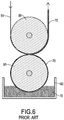
- With reference to
Figs. 6 and7 , a conventional coating processing method comprises: placing a polymer-coating solution 70 in atank 80, wherein the polymer-coating solution 70 is prepared by dissolving the polymers in an organic solvent; delivering atextile 51 with adelivery roller 90, and carrying the polymer-coating solution 70 with acarrying roller 91, allowing the polymer-coating solution 70 to be coated on thetextile 51; evaporating the organic solvent of the polymer-coating solution 70 followed by maturation to form a coated-textile 50 with coating apolymer layer 71 on thetextile 51. - With references to
Fig. 7A and 7B , for the reason that thepolymer layer 71 is merely coated on the surface of thetextile 51, the strength of the coated-textile 50 cannot be enhanced. Besides, the organic solvent used in the conventional coating processing would extend the processing time to evaporate the organic solvent followed by maturation. Furthermore, part of the organic solvent remaining on the coated-textile 50 may be harmful to health and the environment. - With references to
Figs. 8 and 9 , a conventional adhesive film processing method comprises: spot-coating athermosol solution 62 on a surface of atextile 61, wherein thethermosol solution 62 is prepared by dissolving polymers in an organic solvent; sticking afilm 63 on the surface of thetextile 61 coated with thethermosol solution 62 followed by heating and pressing to form anadhesive film textile 60. Theadhesive film textile 60 is composed of thetextile 61, athermosol layer 64 and thefilm 63, and thethermosol layer 64 is formed by thethermosol solution 62 spot-coated on the surface of thetextile 61. - The organic solvent used for dissolving the
thermosol solution 62 may remain on theadhesive film textile 60, so theadhesive film textile 60 may be harmful to health and the environment. Besides, combination of thetextile 61 and thefilm 63 is affected by the interaction between thethermosol layer 64 and thetextile 61 as well as thefilm 63. Therefore, thetextile 61 and thefilm 63 of theadhesive film textile 60 will be detached if the adhesion of thethermosol solution 64 decreases after use for a long time. - The patent publication
EP 0982431 A2 discloses a non-woven web, and polyolefins was extrusion-coated to one side of the non-woven web. The nonwoven web was made of polyethylene and / or polypropylene and / or polyethylene terephthalate and / or polyamide; however, all of the foresaid materials are not thermoplastic elastomers. - In addition, the patent publication
US 2003/194547 A1 discloses a process for producing a composite structure comprising combining at least one first layer that has a first melting point with at least one second layer that has a second melting point lower than the first melting point; and applying heat to the at least one first layer and the at least one second layer so that the at least one second layer is at least partially melted to flow around the at least one first layer prior to resolidification to attach the at least one first layer to the at least one second layer. However, said US patent publication does not disclose any thermal and pressure conditions such as pre-heat temperature, hot-press temperature, or hot-press pressure, and heat and pressure may affect the quality of the composite structure. Furthermore, the first layer of said US patent publication is an expanded polytetrafluoroethylene beyond the elastic limit of the material to introduce permanent set or elongation to the fibrils, and the size of the pores of the first layer, which are micropores, may be in the range from about 0.01 microns (0.39 microinches) to about 10 microns (393.70 microinches) and in the range from about 0.3 microns (11.81 microinches) to about 5.0 microns (196.85 microinches). Moreover, the thermoplastic material of said US patent publication is solidified by the hot roll calendering mechanism in a temperature range that extends from about 246.11 degrees Celsius (475 degrees Fahrenheit) to about 265.56 degrees Celsius (510 degrees Fahrenheit). - The main objective of the invention is to provide a composite textile, and the composite textile comprises:
- a first fabric layer which is formed by weaving, wherein material of the first fabric layer comprises thermoplastic elastomer or a combination of thermoplastic elastomer and thermoplastic polymer; wherein the first fabric layer comprises a first surface, a second surface and multiple pores; wherein the multiple pores are distributed on the first fabric layer and connect the first surface and the second surface; and
- a first membrane layer, wherein material of the first membrane layer comprises thermoplastic elastomer or a combination of thermoplastic elastomer and thermoplastic polymer, and the melting point of the first membrane layer is lower than the melting point of the first fabric layer; wherein the first membrane layer comprises a third surface and a fourth surface, and the fourth surface of the first membrane layer is attached to the first surface of the first fabric layer, and parts of the fourth surface of the first membrane layer permeate into the multiple pores of the first fabric layer.
- The fourth surface of the first membrane layer is attached to the first surface of the first fabric layer, and parts of the fourth surface of the first membrane layer permeating into the multiple pores of the first fabric layer allow the first membrane layer to bind with the first fabric layer tightly, and enhance the strength of the composite textile.
- Preferably, the composite textile further comprises a second fabric layer; wherein material of the second fabric layer comprises thermoplastic elastomer, thermoplastic polymer or a combination thereof. The melting point of the second fabric layer is higher than that of the first membrane layer. The second fabric layer comprises a fifth surface, a sixth surface and multiple pores. The multiple pores are distributed on the second fabric layer and connect the fifth surface and the sixth surface. The third surface of the first membrane layer is attached to the fifth surface of the second fabric layer, and parts of the third surface of the first membrane layer permeate into the multiple pores of the second fabric layer.
- Preferably, the composite textile further comprises a second membrane layer; wherein material of the second membrane layer comprises thermoplastic elastomer, thermoplastic polymer or a combination thereof; wherein the melting point of the second membrane layer is lower than that of the first fabric layer; wherein the second membrane layer comprises a third surface and a fourth surface, and the fourth surface of the second membrane layer is attached to the second surface of the first fabric layer, and parts of the fourth surface of the second membrane layer permeate into the multiple pores of the first fabric layer.
- Preferably, the first fabric layer is formed by weaving with a yarn, wherein material of the yarn comprises thermoplastic elastomer or a combination of thermoplastic elastomer and thermoplastic polymer.
- According to the present invention, the term "weaving" as used herein, includes, but not limited to knitting, circular weaving, plain weaving or weaving.
- Preferably, the yarn is formed by twisting with a first sub-yarn and a second sub-yarn, wherein material of the first sub-yarn includes thermoplastic elastomer, thermoplastic polymer or a combination thereof; wherein material of the second sub-yarn includes thermoplastic elastomer, thermoplastic polymer or a combination thereof; and at least one of the first sub-yarn and the second sub-yarn comprises thermoplastic elastomer.
- More preferably, the material of the first sub-yarn is thermoplastic polymer, and the material of the second sub-yarn is thermoplastic elastomer; wherein based on the total weight of the yarn, the weight percentage of the second sub-yarn is between 10 wt% and 90 wt%.
- Preferably, the first fabric layer is formed by weaving with a first yarn and a second yarn, wherein material of the first yarn comprises thermoplastic elastomer, thermoplastic polymer or a combination thereof; wherein material of the second yarn comprises thermoplastic elastomer, thermoplastic polymer or a combination thereof; and at least one of the first yarn and the second yarn comprises thermoplastic elastomer.
- Preferably, the material of the first fabric layer is the combination of thermoplastic elastomer and thermoplastic polymer; wherein the thermoplastic polymer has the hardness between 85A and 90D.
- Preferably, the material of the first fabric layer is the combination of thermoplastic elastomer and thermoplastic polymer; wherein the thermoplastic polymer has the melting point higher than or equal to 160°C and lower than or equal to 300°C.
- Preferably, the material of the first membrane layer is the combination of thermoplastic elastomer and thermoplastic polymer; wherein the thermoplastic polymer has the hardness between 10A and 98A.
- Preferably, the material of the first membrane layer is the combination of thermoplastic elastomer and thermoplastic polymer; wherein the thermoplastic polymer has the melting point of the thermoplastic polymer higher than or equal to 50°C and lower than or equal to 150°C.
- Preferably, the thermoplastic polymer includes polyethylene terephthalate (PET), polymethylmethacrylate (PMMA), polyvinyl chloride (PVC), nylon, polycarbonate (PC), polyoxymethylene (POM), polyolefin (POF), polyacrylonitrile (PAN), polystyrene (PS), polysulfone, polyethersulfone, polyurethane (PU), or any combination thereof.
- Preferably, the thermoplastic elastomer is thermoplastic polyurethanes (TPU), thermoplastic olefin (TPO), thermoplastic polyamine (TPA), styrene-base thermoplastic elastomer (TPS), thermoplastic polyether ester elastomer (TPEE), thermoplastic rubber (TPR) or thermoplastic vulcanizate (TPV).
- Preferably, the thickness of the first membrane layer is larger than or equal to 0.001 mm and smaller than or equal to 1 mm.
- Preferably, the material of the first fabric layer is thermoplastic elastomer, and the material of the first membrane layer is thermoplastic elastomer.
- Preferably, the hardness and the melting point of the thermoplastic elastomer can be modified by adjusting the ratio of a soft segment and a hard segment of the thermoplastic elastomer. Percentage of the soft segment in the thermoplastic elastomer is between 20% and 80%, and percentage of the hard segment in the thermoplastic elastomer is between 80% and 20%.
- More preferably, the material of the first fabric layer is the same as that of the membrane layer. For the reason that the first fabric layer and the membrane layer comprise the same material, the first fabric layer can bind to the membrane layer more tightly, and the composite textile made by the first fabric layer and the membrane layer has better tearing strength.
- Other objectives, advantages and novel features of the invention will become more apparent from the following detailed description when taken in conjunction with the accompanying drawings.
-
-
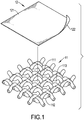
Fig. 1 is a perspective view of combination of a fabric layer and a membrane layer of Example 1 in accordance with the present invention; -
Fig. 2 is a cross section view of a stacked structure in Example 1; -
Fig. 3 is a cross section view of a composite textile in Example 1; -
Fig. 4 is a perspective view of combination of a fabric layer and a membrane layer of Example 6 in accordance with the present invention; -
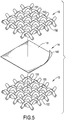
Fig. 5 is a perspective view of combination of a fabric layer and a membrane layer of Example 8 in accordance with the present invention; -
Fig. 6 shows processing of the conventional coated textile; -
Fig. 7A is a perspective view of the coated textile inFig. 6 ; -
Fig. 7B is an enlarged view of the polymer layer coated on the surface of the textile inFig. 6 . -
Fig. 8 shows processing of the conventional adhesive film textile; and -
Fig. 9 is a perspective view of the adhesive film textile inFig. 8 . - With references to
Figs. 1 and3 , a method of producing a composite textile in accordance with the present invention was shown as follows. - Thermoplastic polyurethane with 85A hardness, 60:40 soft-segment/hard-segment ratio, 180°C melting point and 50,000 Da to 100,000 Da molecular weight was spun to form a yarn (300D/72F), and the yarn was tatted to form a
fabric layer 11 with a size of 21 cm × 30 cm. Thefabric layer 11 comprised afirst surface 111, asecond surface 112, andmultiple pores 113. Thefirst surface 111 was opposite to thesecond surface 112. Themultiple pores 113 were distributed on thefabric layer 11, and each of themultiple pores 113 connected thefirst surface 111 and thesecond surface 112. Thermoplastic polyurethane with 98A hardness, 45:55 soft-segment/hard-segment ratio, 60°C melting point and 5,000 Da to 10,000 Da molecular weight was pressed out to form amembrane layer 12 by use of a film extrusion process. Themembrane layer 12 was a plane with continuous phases, and a size of themembrane layer 12 was 21 cm × 30 cm, and the thickness of themembrane layer 12 was 0.025 mm. Themembrane layer 12 comprised athird surface 121 and afourth surface 122, and thethird surface 121 was opposite to thefourth surface 122. - With reference to
Fig. 2 , thefirst surface 111 of thefabric layer 11 was attached to thefourth surface 122 of themembrane layer 12 to form astacked structure 20. The stackedstructure 20 was consisted of thefabric layer 11 and themembrane layer 12. The stackedstructure 20 had an upper surface and a lower surface. The upper surface of the stackedstructure 20 was thethird surface 121 of themembrane layer 12, and the lower surface of the stackedstructure 20 was thesecond surface 112 of thefabric layer 11. Thefirst surface 111 of thefabric layer 11 was in contact with thefourth surface 122 of themembrane layer 12 to form an interface of the stackedstructure 20. The upper surface and the lower surface of the stackedstructure 20 were pre-heated at 60°C for 30 minutes, and then the upper surface and the lower surface of the stackedstructure 20 were hot-pressed at 70°C hot-press temperature under 5 kg/cm2 hot-press pressure for 5 minutes to form a combined structure. The combined structure was cooled down to room temperature to form a composite textile 10 (Fig. 3 ). - For the reason that the pre-heated temperature was equal to the melting point of the thermoplastic polyurethane during pre-heating and hot-pressing processes of the stacked
structure 20, and the hot-press temperature was a little higher than the melting point of the thermoplastic polyurethane, thefourth surface 122 of themembrane layer 12 was in the molten state, allowing thefourth surface 122 of themembrane layer 12 to penetrate from thefirst surface 111 of thefabric layer 11 into themultiple pores 113 of thefabric layer 11 to form the combined structure. In other words, the interface clearly existed in the stackedstructure 20 before pre-heating and pre-pressing processes; however, the interface between themembrane layer 12 and thefabric layer 11 was unobvious after pre-heating and pre-pressing the stackedstructure 20. After cooling the combined structure to form thecomposite textile 10, themembrane layer 12 was able to bind with thefabric layer 11 tightly by penetrating parts of themembrane layer 12 into themultiple pores 113 of thefabric layer 11. - After hot-pressing, the combined structure had an upper surface and a lower surface. The upper surface of the combined structure was the
third surface 121 of themembrane layer 12, and the lower surface of the combined structure was thesecond surface 112 of thefabric layer 11. As mentioned above, an interface of the combined structure positioned between thefirst surface 111 of thefabric layer 11 and thefourth surface 122 of themembrane layer 12 was unobvious. - With references to
Figs. 1 and3 , the composite textile comprised thefabric layer 11 and themembrane layer 12. Thefabric layer 11 had thefirst surface 111, thesecond surface 112, and themultiple pores 113. Thefirst surface 111 was opposite to thesecond surface 112, and themultiple pores 113 were distributed on thefabric layer 11, and each of themultiple pores 113 connected thefirst surface 111 and thesecond surface 112. Themembrane layer 12 had thethird surface 121 and thefourth surface 122, and thethird surface 121 was opposite to thefourth surface 122. Thefourth surface 122 of themembrane layer 12 was attached to thefirst layer 111 of thefabric layer 11, and parts of thefourth surface 122 of themembrane layer 12 penetrated into themultiple pores 113 of thefabric layer 11. In other words, an interface of thecomposite textile 10 positioned between thefabric layer 11 and themembrane layer 12 was unobvious. - The method of producing the
composite textile 10 was performed by use of thefabric layer 11 and themembrane layer 12 respectively having specific melting points under pre-heating, hot-pressing and cooling processes. No organic solvent was used in the method; therefore, the problem of residual organic solvents in thecomposite textile 10 was avoided, and the period of waiting for evaporating the organic solvents and maturation could be saved. - A method of producing a composite textile in Example 2 was similar to that in Example 1. The differences between Example 2 and Example 1 were shown as follows. Thermoplastic olefin having 60D hardness, 35:65 soft-segment/hard-segment ratio, 150°C melting point and 60,000 Da to 80,000 Da molecular weight, as well as polypropylene having melting point 170°C and 300,000 Da to 400,000 Da were used in Example 2. The thermoplastic olefin was mixed with the polypropylene at a weight ratio of 1:2 to form a first polymer blend. The melting point of the first polymer blend was 160°C. The first polymer blend was spun to form a yarn (450D/144F), and then the yarn was tatted to form the fabric layer. Thermoplastic olefin with 80A hardness, 65:35 soft-segment/hard-segment ratio, 90°C melting point, and 30,000 Da to 50,000 Da molecular weight was pressed by a film extrusion process to form the membrane layer. The thickness of the membrane layer was 0.025 mm, and the pre-heat temperature, the hot-press temperature, and the hot-press pressure were respectively 90°C, 100°C and 5 kg/cm2.
- A method of producing a composite textile in Example 3 was similar to that in Example 1. The differences between Example 3 and Example 1 were shown as follows. Thermoplastic polyamine having 60D hardness, 33:67 soft-segment/hard-segment ratio, 200°C melting point and 30,000 Da to 50,000 Da molecular weight was spun to form a first sub-yarn (150D/24F). Nylon 6 with melting point 255°C and 20,000 Da to 40,000 Da molecular weight was spun to form a second sub-yarn (150D/24F). A yarn (450D/72F) was formed by twisting the first sub-yarn with the second sub-yarn at a number ratio of 2:1. The yarn was tatted to form the fabric layer. Thermoplastic polyamine with 50D hardness, 40:60 soft-segment/hard-segment ratio, 130°C melting point, and 10,000 Da to 20,000 Da molecular weight was pressed by a film extrusion process to form the membrane layer. The thickness of the membrane layer was 0.025 mm, and the pre-heat temperature, the hot-press temperature, and the hot-press pressure were respectively 130°C, 140°C and 5 kg/cm2.
- A method of producing a composite textile in Example 4 was similar to that in Example 1. The differences between Example 4 and Example 1 were shown as follows. The yarn comprises a first yarn and a second yarn. The first yarn (150D/24F) was formed by spinning polyethylene terephthalate (PET) with 260°C melting point and 20,000 Da to 25,000 Da. The second yarn (150D/24F) was formed by spinning nylon 66 with 265°C melting temperature and 20,000 Da to 30,000 Da. The first yarn was tatted with the second yarn at a number ratio of 1:2 to from the fabric layer. Thermoplastic polyether ester elastomer having 35D hardness, 47:53 soft-segment/hard-segment ratio, 150°C melting point and 30,000 Da to 40,000 Da molecular weight was pressed by a film extrusion process to form the membrane layer. The thickness of the membrane layer was 0.025 mm, and the pre-heat temperature, the hot-press temperature, and the hot-press pressure were respectively 150°C, 160°C and 10 kg/cm2.
- A method of producing a composite textile in Example 5 was similar to that in Example 1. The differences between Example 5 and Example 1 were shown as follows. The yarn (300D/72F) was formed by spinning polyethylene terephthalate with 260°C melting point and 20,000 Da to 25,000 Da, and the yarn was tatted to from the fabric layer. Thermoplastic polyurethane having 98A hardness and 45:55 soft-segment/hard-segment ratio was mixed with thermoplastic olefin having 80A hardness and 65:35 soft-segment/hard-segment ratio at a weight ratio 1:2 to form a second polymer blend. The melting point and thickness of the second polymer blend were respectively 90°C and 90A hardness. The second polymer blend was pressed by a film extrusion process to form the membrane layer. The thickness of the membrane layer was 0.025 mm, the pre-heat temperature, the hot-press temperature, and the hot-press pressure were respectively 90°C, 100°C and 5 kg/cm2.
- With references to
Fig.4 , a method of producing a composite textile in accordance with the present invention was shown as follows. - Polyethylene terephthalate with 260°C melting point and 20,000 Da to 25,000 Da molecular weight was spun to form a yarn (150D/72F), and the yarn was tatted to form a
fabric layer 11A with a size of 21 cm × 30 cm. Thefabric layer 11 comprised afirst surface 111A, asecond surface 112A, andmultiple pores 113A. Thefirst surface 111A was opposite to thesecond surface 112A of thefabric layer 11A, and themultiple pores 113A were distributed on thefabric layer 11A, and each of themultiple pores 113A connected thefirst surface 111A and thesecond surface 112A. Thermoplastic polyurethane with 98A hardness, 45:55 soft-segment/hard-segment ratio, 60°C melting point and 5,000 Da to 10,000 Da molecular weight was pressed by use of a film extrusion process to be twomembrane layers 12A. The twomembrane layers 12A comprised a first membrane layer and a second membrane layer. Sizes of the first membrane layer and the second membrane layer were 21 cm × 30 cm, and the thicknesses of the first membrane layer and the second membrane layer were both 0.015 mm. The first membrane layer and the second membrane layer of the twomembrane layers 12A comprised athird surface 121A and afourth surface 122A, and thethird surface 121A was opposite to thefourth surface 122A. - The
fourth surfaces 121A of the twomembrane layers 12A were respectively attached to thefirst surface 111A and thesecond surface 112A of thefabric layer 11A to form a stacked structure. The stacked structure had an upper surface and a lower surface. The upper surface and the lower surface of the stacked structure were respectively thethird surface 121A of each of the member layers 12A. Thefourth surfaces 122A of the twomembrane layers 12A were respectively in contact with thefirst surface 111A and thesecond surface 112A of thefabric layer 11A to respectively form a first interface and a second interface of the stacked structure. The upper surface and the lower surface of the stacked structure were pre-heated at 50°C for 30 minutes, and then the upper surface and the lower surface of the stacked structure were hot-pressed at 60°C hot-press temperature under 20 kg/cm2 hot-press pressure for 5 minutes to form a combined structure. The combined structure was cooled down to room temperature to form a composite textile. - For the reason that the pre-heated temperature was equal to the melting point of the thermoplastic polyurethane during pre-heating of the stacked structure and the hot-press temperature was a little higher than the melting point of the thermoplastic polyurethane during hot-pressing processes of the stacked structure, the
fourth surfaces 122A of the twomembrane layers 12A were in the molten state, allowing thefourth surfaces 122A of the twomembrane layers 12A respectively to penetrate from thefirst surface 111A and thesecond surface 112A of thefabric layer 11A into themultiple pores 113 of thefabric layer 11. In other words, the first interface and the second interface clearly existed in the stacked structure before pre-heating and pre-pressing processes; however, the interfaces between each of the twomembrane layers 12A and thefabric layer 11A were unobvious after pre-heating and pre-pressing the stacked structure. After cooling the combined structure to form thecomposite textile 10, each of the twomembrane layers 12A was able to bind with thefabric layer 11A tightly by penetrating parts of the twomembrane layers 12A into themultiple pores 113A of thefabric layer 11A. - The combined structure had an upper surface and a lower surface. The upper surface and the lower surface of the combined structure were respectively the
third surface 121A of the twomembrane layers 12A. The first interface and the second interface of the combined structure were respectively formed between each of thefourth surface 122A of the membrane layers 12A and thefirst surface 111A and thesecond surface 112A of the combined structure. As mentioned above, the first interface and the second interface of the combined structure were unobvious. - The composite textile comprised the
fabric layer 11A and the twomembrane layers 12A. Thefabric layer 11A had thefirst surface 111A, thesecond surface 112A, and themultiple pores 113A. Thefirst surface 111A was opposite to thesecond surface 112A, and themultiple pores 113A were distributed on thefabric layer 11A, and each of themultiple pores 113A connected thefirst surface 111A and thesecond surface 112A. The membrane layers 12A respectively had thethird surface 121A and thefourth surface 122A, and thethird surface 121A was opposite to thefourth surface 122A. Thefourth surfaces 122A of the twomembrane layers 12A were respectively attached to thefirst layer 111A and thesecond layer 112A of thefabric layer 11A, and parts of thefourth surface 122A of the twomembrane layers 12A penetrated into themultiple pores 113A of thefabric layer 11A. In other words, an interface of the composite textile positioned between thefabric layer 11A and the twomembrane layers 12A was unobvious. - A method of producing a composite textile in Example 7 was similar to that in Example 6. The differences between Example 7 and Example 6 were shown as follows. Thermoplastic polyurethane with 50D hardness, 50:50 soft-segment/hard-segment ratio, 190°C melting point and 50,000 Da to 100,000 Da molecular weight was spun to form a yarn (300D/36F), and the yarn was knitted to be the fabric layer. The thermoplastic polyurethane with 90A hardness, 57:43 soft-segment/hard-segment ratio, 85°C melting point, and 10,000 Da to 20,000 Da molecular weight was pressed by a film extrusion process to form the membrane layer. The thickness of the membrane layer was 0.01 mm, and the pre-heat temperature, the hot-press temperature, and the hot-press pressure were respectively 85°C, 100°C and 5 kg/cm2.
- With references to
Fig.5 , a method of producing a composite textile in accordance with the present invention was shown as follows. - Nylon 66 with 260°C melting point and 20,000 Da to 25,000 Da molecular weight was spun to form a first yarn (150D/24F), and the first yarn was knitted to form a
first fabric layer 13 with a size of 21 cm × 30 cm. Thefirst fabric layer 13 comprised afirst surface 131, asecond surface 132, andmultiple pores 133. Thefirst surface 131 was opposite to thesecond surface 132 of thefirst fabric layer 13, and themultiple pores 133 were distributed on thefabric layer 13, and each of themultiple pores 133 connected thefirst surface 131 and thesecond surface 132. Thermoplastic polyurethane with 98A hardness, 45:55 soft-segment/hard-segment ratio, 60°C melting point and 5,000 Da to 10,000 Da molecular weight was pressed by use of a film extrusion process to form amembrane layer 14. A size of themembrane layer 14 was 21 cm × 30 cm, and the thickness of themembrane layer 14 was 0.025 mm. Themembrane layer 14 comprised athird surface 141 and afourth surface 142, and thethird surface 141 was opposite to thefourth surface 142. Thermoplastic polyurethane with 95A hardness, 53:47 soft-segment/hard-segment ratio, 180°C melting point and 50,000 Da to 80,000 Da molecular weight was spun to form a second yarn, and the second yarn was knitted to form asecond fabric layer 15 with a size of 21 cm × 30 cm. Thesecond fabric layer 15 comprised afifth surface 151, asixth surface 152, andmultiple pores 153. Thefifth surface 151 was opposite to thesixth surface 152 of thesecond fabric layer 15, and themultiple pores 153 were distributed on thesecond fabric layer 15, and each of themultiple pores 153 connected thefifth surface 151 and thesixth surface 152. - The
first surface 131 of thefirst fabric layer 13 and thesixth surface 152 of thesecond fabric layer 15 were respectively attached to thethird surface 141 and thefourth surface 142 of themembrane layer 14 to form a stacked structure. The stacked structure was consisted of thefirst fabric layer 13, thesecond fabric layer 15 and themembrane layer 14. The stacked structure had an upper surface and a lower surface. The upper surface of the stacked structure was thefifth surface 151 of thesecond fabric layer 15; the lower surface of the stacked structure was thesecond surface 132 of thefirst fabric layer 13. Thefirst surface 131 of thefirst fabric layer 13 was in contact with thefourth surface 142 of themembrane layer 14 to form a first interface of the stacked structure. Thesixth surface 152 of thesecond fabric layer 15 was in contact with thethird surface 141 of themembrane layer 14 to form a second interface of the stacked structure. The upper surface and the lower surface of the stacked structure were pre-heated at 60°C for 30 minutes, and then the upper surface and the lower surface of the stacked structure were hot-pressed at 80°C hot-press temperature under 50 kg/cm2 hot-press pressure for 5 minutes to form a combined structure. The combined structure was cooled down to room temperature to form a composite textile. - For the reason that the pre-heated temperature was equal to the melting point of the thermoplastic polyurethane during pre-heating of the stacked structure and the hot press temperature was a little higher than the melting point of the thermoplastic polyurethane during hot-pressing processes of the stacked structure, the
third surface 141 and thefourth surface 142 of the membrane layer14 were in the molten state, allowing thethird surface 141 and thefourth surface 142 of the membrane layer14 respectively to be penetrated from thethird surface 141 and thefourth surface 142 of themembrane layer 14 into themultiple pores 133 of thefirst fabric layer 13 and themultiple pores 153 of thesecond fabric layer 15. In other words, the first interface and the second interface clearly existed in the stacked structure before pre-heating and pre-pressing processes; however, the interfaces between the membrane layer14 and thefirst fabric layer 13, as well as between themembrane layer 14 and thesecond fabric layer 15 were unobvious after pre-heating and pre-pressing the stacked structure. After cooling the combined structure to form thecomposite textile 10, themembrane layer 14 was able to bind with thefirst fabric layer 13 and thesecond fabric layer 15 tightly by penetrating parts of themembrane layer 14 into themultiple pores 133 of thefirst fabric layer 13 and themultiple pores 153 of thesecond fabric layer 15. - The combined structure had an upper surface and a lower surface. The upper surface and the lower surface of the combined structure were respectively the
fifth surface 151 of thesecond fabric layer 15 and thesecond surface 132 of thefirst fabric layer 13. The first interface was formed between thefirst surface 131 of thefirst fabric layer 13 and thefourth surface 142 of themembrane layer 14. The second interface of the combined structure was formed between thesixth surface 152 of thesecond fabric layer 15 and the third surface 141of themembrane layer 14. As mentioned above, the first interface and the second interface of the combined structure were unobvious. - The composite textile comprised the
first fabric layer 13, thesecond fabric layer 15, and themembrane layer 14. Thefirst fabric layer 13 had thefirst surface 131, thesecond surface 132, and themultiple pores 133. Thefirst surface 131 was opposite to thesecond surface 132, and themultiple pores 133 were distributed on thefirst fabric layer 13, and each of themultiple pores 133 connected thefirst surface 131 and thesecond surface 132 of thefirst fabric layer 13. The membrane layer14 had thethird surface 141 and thefourth surface 142, and thethird surface 141 was opposite to thefourth surface 142. Thesecond fabric layer 15 had thefifth surface 151, thesixth surface 152, and themultiple pores 153. Thefifth surface 151 was opposite to thesixth surface 152, and themultiple pores 153 were distributed on thesecond fabric layer 15, and each of themultiple pores 153 connected thefifth surface 151 and thesixth surface 152 of thesecond fabric layer 15. Thethird surface 141 and thefourth surface 142 of themembrane layer 14 were respectively attached to thesixth surface 152 of thesecond fabric layer 15 and thefirst surface 131 of thefirst fabric layer 13, and parts of thethird surface 141 and thefourth surface 142 of themembrane layer 14 penetrated into themultiple pores first fabric layer 13 and thesecond fabric layer 15. In other words, an interface of the composite textile positioned between thefirst fabric layer 13 and the membrane layer14 was unobvious. - A method of producing a composite textile in Example 9 was similar to that in Example 8. The differences between Example 9 and Example 8 were shown as follows. Thermoplastic polyurethane with 64D hardness, 30:70 soft-segment/hard-segment ratio, 210°C melting point and 80,000 Da to 120,000 Da molecular weight was spun to form a first yarn (150D/36F) and a second yarn (150D/36F) respectively. The first yarn and the second yarn were respectively knitted to be the first fabric layer and the second fabric layer. The thermoplastic polyurethane having 98A hardness and 45:55 soft-segment/hard-segment ratio was mixed with the styrene-based thermoplastic elastomer having 80A hardness and 65:35 soft-segment/hard-segment ratio at a weight ratio of 7:3 to form a fourth polymer blend. The melting point and the hardness of the fourth polymer blend were respectively 65°C and 95A.The fourth polymer blend was pressed by a film extrusion process to form the membrane layer. The thickness of the membrane layer was 0.3 mm, and the pre-heat temperature, the hot-press temperature, and the hot-press pressure were respectively 65°C, 85°C and 30 kg/cm2.
- Polyethylene terephthalate with 260°C melting point and 20,000 Da to 25,000 Da molecular weight was spun to form a yarn (300D/72F), and the yarn was tatted to form a textile with a size of 21 cm × 30 cm. Thermoplastic polyurethane with 64D hardness, 30:70 soft-segment/hard-segment ratio, 210°C melting point and 80,000 Da to 120,000 Da molecular weight was dissolved in butanone to form a polymer-coating solution. The polymer-coating solution was coated on the textile, and the textile was baked in the oven for 1 hour. The baked textile was cooled down to room temperature to form a coated textile.
- Polyethylene terephthalate with 260°C melting point and 20,000 Da to 25,000 Da molecular weight was spun to form a yarn (300D/72F), and the yarn was tatted to form a textile with a size of 21 cm × 30 cm. A melted glue solution (comprising 30% butanone) was prepared. The melted glue solution was spotted on the surface of the textile. A membrane composed of thermoplastic polyurethane with 95A hardness, 53:47 soft-segment/hard-segment ratio, 160°C melting point and 50,000 Da to 80,000 Da molecular weight was attached to the surface of the textile to form a stacked structure. The stacked structure was heated and pressed under 130°C at 1 kg/cm2, and then the stacked structure was cooled down to room temperature to form the adhesive film textile.
- The composite textiles prepared by Examples 1 to 9, the coated textile prepared by Comparative example 1 and the adhesive film textile prepared by Comparative example 2 were respectively assayed for water vapor transmission rate according to Japanese Industrial Standard L 1099A1 (JIS L 1099A1). Results of the assays were shown in Table 1.
- The composite textiles prepared by Examples 1 to 9, the coated textile prepared by Comparative example 1 and the adhesive film textile prepared by Comparative example 2 were respectively assayed for pressure tolerance of water according to Japanese Industrial Standard L 1092 (JIS L 1092). Results of the assays were shown in Table 1.
- The composite textiles prepared by Examples 1 to 9, the coated textile prepared by Comparative example 1 and the adhesive film textile prepared by Comparative example 2 were respectively assayed for tearing strength according to International Organization for Standardization 13937 (ISO 13937). Results of the assays were shown in Table 1.
Table 1 The water vapor transmission rate, pressure tolerance of water, and tearing strength of the composite textiles prepared by Examples 1 to 9, the coated textile prepared by Comparative example 1 and the adhesive film textile prepared by Comparative example 2 Sample No. Water vapor transmission rate (g/m2/24 hours) Pressure tolerance of water (mm H2O) Tearing strength Vertical direction Cross direction Example 1 4,500 12,000 ≥ 50 ≥ 40 Example 2 500 12,000 ≥ 45 ≥ 40 Example 3 1,000 15,000 ≥ 55 ≥ 45 Example 4 6,000 10,000 ≥ 35 ≥ 30 Example 5 1,500 10,000 ≥ 40 ≥ 30 Example 6 2,500 15,000 ≥ 55 ≥ 45 Example 7 2,000 15,000 ≥ 70 ≥ 60 Example 8 4,000 10,000 ≥ 45 ≥ 35 Example 9 3,500 10,000 ≥ 50 ≥ 40 Comparative example 1 1,000 3,000 ≥ 15 ≥ 10 Comparative example 2 3,000 6,000 ≥ 25 ≥ 20 - Results showed that the pressure tolerance of water of the composite textiles prepared by Examples 1 to 9 was better than that of the coated textile prepared by Comparative example 1 and the adhesive film textile prepared by Comparative example 2. The reason was that the composite textiles prepared by Examples 1 to 9 had completed structure to provide better pressure tolerance of water.
- The tearing strength of the composite textiles prepared by Examples 1 to 9 was better than that of the coated textile prepared by Comparative example 1 and the adhesive film textile prepared by Comparative example 2. The reason was that stronger binding strength between the fabric layer and the membrane layer of the composite textiles prepared by Examples 1 to 9 could provide better tearing strength.
- As comparing Examples 1 to 5, the composite textiles prepared by Examples 1 to 3 had better tearing strength than those prepared by Examples 4 and 5. The reason was that the same material prepared for the fabric layer and the membrane layer could provide stronger binding strength between the fabric layer and the membrane layer.
- As comparing Examples 1 to 7, the composite textiles prepared by Examples 6 and 7 had bi-membrane layers which were thicker than a single membrane layer, and the bi-membrane layers had better adhesive character to the fabric layer. Therefore, the composite textiles prepared by Examples 6 and 7 had better pressure tolerance of water and tearing strength than those prepared by Examples 1 to 5. Besides, as comparing Example 6 to 7, the composite textiles prepared by Example 6 had better tearing strength than that prepared by Example 7. The reason was that the composite textile prepared by Example 7 had the same material prepared for the fabric layer and the membrane layer which could provide stronger binding strength between the fabric layer and the membrane layer.
Claims (10)
- A composite textile (10) comprising:a first fabric layer (11A, 13) which is formed by weaving, wherein material of the first fabric layer (11A, 13) comprises thermoplastic elastomer or a combination of thermoplastic elastomer and thermoplastic polymer; wherein the first fabric layer (11A, 13) comprises a first surface (111A, 131), a second surface (112A, 132) and multiple pores (113A, 133); wherein the multiple pores (113A, 133) are distributed on the first fabric layer (11A, 13) and connect the first surface (111A, 131) and the second surface (112A, 132); anda first membrane layer (14), wherein material of the first membrane layer (14) comprises thermoplastic elastomer or a combination of thermoplastic elastomer and thermoplastic polymer, and the melting point of the first fabric layer (13) is higher than the melting point of the first membrane layer (14); wherein the first membrane layer (14) comprises a third surface (141) and a fourth surface (142), and the fourth surface (142) of the first membrane layer (14) is attached to the first surface (131) of the first fabric layer (13), and parts of the fourth surface (142) of the first membrane layer (14) permeate into the multiple pores (133) of the first fabric layer (13).
- The composite textile (10) as claimed in claim 1, wherein the composite textile (10) further comprises a second fabric layer (15); wherein material of the second fabric layer (15) comprises thermoplastic elastomer, thermoplastic polymer or a combination thereof; wherein the melting point of the second fabric layer (15) is higher than the melting point of the first membrane layer (14); wherein the second fabric layer (15) comprises a fifth surface (151), a sixth surface (152) and multiple pores (153); wherein the multiple pores (153) are distributed on the second fabric layer (15) and connect the fifth surface (151) and the sixth surface (152); wherein the third surface (141) of the first membrane layer (14) is attached to the fifth surface (151) of the second fabric layer (15), and parts of the third surface (141) of the first membrane layer (14) permeate into the multiple pores (153) of the second fabric layer (15).
- The composite textile (10) as claimed in claim 1, wherein the composite textile (10) further comprises a second membrane layer (12A); wherein material of the second membrane layer (12A) comprises thermoplastic elastomer, thermoplastic polymer or a combination thereof; wherein the melting point of the second membrane layer (12A) is lower than the melting point of the first fabric layer (11 A); wherein the second membrane layer (12A) comprises a third surface (121A) and a fourth surface (122A), and the fourth surface (122A) of the second membrane layer (12A) is attached to the second surface (112A) of the first fabric layer (11A), and parts of the fourth surface (122A) of the second membrane layer (12A) permeate into the multiple pores (113A) of the first fabric layer (11A).
- The composite textile (10) as claimed in claim 1, wherein the material of the first fabric layer (11A, 13) is the combination of thermoplastic elastomer and thermoplastic polymer; wherein the thermoplastic polymer of the first fabric layer (11A, 13) has the hardness between 85A and 90D and the melting point higher than or equal to 160°C and lower than or equal to 300°C; wherein the material of the first membrane layer (14) is the combination of thermoplastic elastomer and thermoplastic polymer; wherein the thermoplastic polymer of the first membrane layer has the hardness between 10A and 98A and the melting point higher than or equal to 50°C and lower than or equal to 150°C.
- The composite textile (10) as claimed in claim 1, wherein the thickness of the first membrane layer (14) is larger than or equal to 0.001 mm and smaller than or equal to 1 mm.
- The composite textile (10) as claimed in claim 1, wherein the material of the first fabric layer (11A, 13) is thermoplastic elastomer, and the material of the first membrane layer (14) is thermoplastic elastomer.
- The composite textile (10) as claimed in claim 1, wherein the first fabric layer is formed by weaving with a yarn, wherein material of the yarn comprises thermoplastic elastomer or a combination of thermoplastic elastomer and thermoplastic polymer.
- The composite textile (10) as claimed in claim 7, wherein the yarn is formed by twisting with a first sub-yarn and a second sub-yarn, wherein material of the first sub-yarn includes thermoplastic elastomer, thermoplastic polymer or a combination thereof; and wherein material of the second sub-yarn includes thermoplastic elastomer, thermoplastic polymer or a combination thereof; and at least one of the first sub-yarn and the second sub-yarn comprises thermoplastic elastomer.
- The composite textile (10) as claimed in claim 8, wherein the material of the first sub-yarn is thermoplastic polymer, and the material of the second sub-yarn is thermoplastic elastomer; wherein based on the total weight of the yarn, the weight percentage of the second sub-yarn is between 10 wt% and 90 wt%.
- The composite textile (10) as claimed in claim 1, wherein the first fabric layer is formed by weaving with a first yarn and a second yarn, wherein material of the first yarn comprises thermoplastic elastomer, thermoplastic polymer or a combination thereof; wherein material of the second yarn comprises thermoplastic elastomer, thermoplastic polymer or a combination thereof; and at least one of the first yarn and the second yarn comprises thermoplastic elastomer.
Priority Applications (4)
| Application Number | Priority Date | Filing Date | Title |
|---|---|---|---|
| PT181500687T PT3326710T (en) | 2016-03-04 | 2016-03-04 | Composite textile |
| ES18150068T ES2758429T3 (en) | 2016-03-04 | 2016-03-04 | Composite textile |
| EP18150068.7A EP3326710B1 (en) | 2016-03-04 | 2016-03-04 | Composite textile |
| PL18150068T PL3326710T3 (en) | 2016-03-04 | 2016-03-04 | Composite textile |
Applications Claiming Priority (2)
| Application Number | Priority Date | Filing Date | Title |
|---|---|---|---|
| EP18150068.7A EP3326710B1 (en) | 2016-03-04 | 2016-03-04 | Composite textile |
| EP16158693.8A EP3100849B1 (en) | 2016-03-04 | 2016-03-04 | Composite textile and method of producing same |
Related Parent Applications (2)
| Application Number | Title | Priority Date | Filing Date |
|---|---|---|---|
| EP16158693.8A Division-Into EP3100849B1 (en) | 2016-03-04 | 2016-03-04 | Composite textile and method of producing same |
| EP16158693.8A Division EP3100849B1 (en) | 2016-03-04 | 2016-03-04 | Composite textile and method of producing same |
Publications (2)
| Publication Number | Publication Date |
|---|---|
| EP3326710A1 EP3326710A1 (en) | 2018-05-30 |
| EP3326710B1 true EP3326710B1 (en) | 2019-09-18 |
Family
ID=55699334
Family Applications (2)
| Application Number | Title | Priority Date | Filing Date |
|---|---|---|---|
| EP16158693.8A Not-in-force EP3100849B1 (en) | 2016-03-04 | 2016-03-04 | Composite textile and method of producing same |
| EP18150068.7A Active EP3326710B1 (en) | 2016-03-04 | 2016-03-04 | Composite textile |
Family Applications Before (1)
| Application Number | Title | Priority Date | Filing Date |
|---|---|---|---|
| EP16158693.8A Not-in-force EP3100849B1 (en) | 2016-03-04 | 2016-03-04 | Composite textile and method of producing same |
Country Status (4)
| Country | Link |
|---|---|
| EP (2) | EP3100849B1 (en) |
| ES (2) | ES2682443T3 (en) |
| PL (1) | PL3326710T3 (en) |
| PT (1) | PT3326710T (en) |
Families Citing this family (2)
| Publication number | Priority date | Publication date | Assignee | Title |
|---|---|---|---|---|
| US11752702B2 (en) | 2017-09-01 | 2023-09-12 | Basf Se | Method for welding membranes |
| WO2023232272A1 (en) * | 2022-06-03 | 2023-12-07 | TMG - Tecidos Plastificados e Outros Revestimentos para a Indústria Automóvel, S.A. | Sheet containing a thermoplastic elastomer, preparation method and use |
Family Cites Families (7)
| Publication number | Priority date | Publication date | Assignee | Title |
|---|---|---|---|---|
| DE19838507C2 (en) * | 1998-08-25 | 2002-04-25 | Borealis Gmbh Schwechat Mannsw | Extrusion coated nonwoven webs |
| DE10145968B4 (en) * | 2001-09-18 | 2004-04-15 | Sartorius Ag | filtration membrane |
| US20030194547A1 (en) * | 2002-04-15 | 2003-10-16 | Fuhrmann Louis P. | Membrane composite structure and method of production |
| US20090133802A1 (en) * | 2007-11-28 | 2009-05-28 | Epstein Adam S | Welded Materials and Method For Making The Same |
| DE202008013246U1 (en) * | 2008-10-08 | 2009-01-02 | Fitz, Johannes | Textile fluorothermoplastic composite |
| US8506749B1 (en) * | 2010-01-27 | 2013-08-13 | Dartex Coatings, Inc. | Method of improving adhesive coverage to maximize waterproofness while maintaining breathability of adhesively laminated webs, and laminates produced thereby |
| EP2797749A4 (en) * | 2011-12-28 | 2015-06-24 | Lululemon Athletica Canada Inc | Exercise mat |
-
2016
- 2016-03-04 PL PL18150068T patent/PL3326710T3/en unknown
- 2016-03-04 EP EP16158693.8A patent/EP3100849B1/en not_active Not-in-force
- 2016-03-04 PT PT181500687T patent/PT3326710T/en unknown
- 2016-03-04 ES ES16158693.8T patent/ES2682443T3/en active Active
- 2016-03-04 EP EP18150068.7A patent/EP3326710B1/en active Active
- 2016-03-04 ES ES18150068T patent/ES2758429T3/en active Active
Non-Patent Citations (1)
| Title |
|---|
| None * |
Also Published As
| Publication number | Publication date |
|---|---|
| EP3100849B1 (en) | 2018-05-09 |
| EP3100849A1 (en) | 2016-12-07 |
| EP3326710A1 (en) | 2018-05-30 |
| ES2682443T3 (en) | 2018-09-20 |
| PL3326710T3 (en) | 2020-04-30 |
| PT3326710T (en) | 2019-11-19 |
| ES2758429T3 (en) | 2020-05-05 |
Similar Documents
| Publication | Publication Date | Title |
|---|---|---|
| US20210146672A1 (en) | Composite textile and method of producing same | |
| EP2846653B1 (en) | Thermo-fusible sheet material | |
| CN101563499B (en) | Composite material, particularly synthetic leather | |
| US20080182469A1 (en) | Moisture-permeable, waterproof and windproof laminated sheet, interlining using the same, and garment containing the interlining | |
| US20100041295A1 (en) | Laminate comprising film and web based on thermoplastic polyurethane | |
| US20050124256A1 (en) | Synthetic insulation with microporous membrane | |
| US7754292B2 (en) | Multilayer intermediate product for the preparation of artificial leather having a suede-like appearance and preparation method thereof | |
| EP3578360A1 (en) | Laminate, laminate precursor, and laminate production method | |
| US6645887B2 (en) | Durable waterproof breathable laminate | |
| EP2236662A1 (en) | Polymer mixture containing a prepolymer having isocyanate groups | |
| JP2010084252A (en) | Waterproof moisture-permeable laminate and waterproof moisture-permeable material using the same | |
| EP3100849B1 (en) | Composite textile and method of producing same | |
| EP1162305B1 (en) | Water vapor-permeable and waterproof material and method for manufacturing the same | |
| US20130288554A1 (en) | Laminated Composite Material and Method of Making Same | |
| KR102367362B1 (en) | manufacturing method of Artificial leather and artificial leather by using the same | |
| KR20170123814A (en) | Conjugate spinning non-woven fabric for waterproof breathable performance control in multi-layer structure | |
| US5897410A (en) | Composite product consisting of microfibrous material and a polymer film, useful for coating cold injection molding manufactured articles | |
| EP1493554B1 (en) | Composite material with plastic matrix, method for making it and use | |
| TWI663301B (en) | Composite fabric and manufacturing method thereof | |
| US20200346442A1 (en) | Multilayer substrate materials for application to textile fabrics | |
| EP1236567B1 (en) | Process for adhesive bonding copolyetherester film with copolyester | |
| EP3774322B1 (en) | Treated fabrics and methods of forming same | |
| TWM524789U (en) | Composite textile | |
| CN111253867B (en) | Bonding method | |
| CA1079170A (en) | Process for making soft leather-like product |
Legal Events
| Date | Code | Title | Description |
|---|---|---|---|
| PUAI | Public reference made under article 153(3) epc to a published international application that has entered the european phase |
Free format text: ORIGINAL CODE: 0009012 |
|
| STAA | Information on the status of an ep patent application or granted ep patent |
Free format text: STATUS: THE APPLICATION HAS BEEN PUBLISHED |
|
| AC | Divisional application: reference to earlier application |
Ref document number: 3100849 Country of ref document: EP Kind code of ref document: P |
|
| AK | Designated contracting states |
Kind code of ref document: A1 Designated state(s): AL AT BE BG CH CY CZ DE DK EE ES FI FR GB GR HR HU IE IS IT LI LT LU LV MC MK MT NL NO PL PT RO RS SE SI SK SM TR |
|
| STAA | Information on the status of an ep patent application or granted ep patent |
Free format text: STATUS: REQUEST FOR EXAMINATION WAS MADE |
|
| 17P | Request for examination filed |
Effective date: 20181009 |
|
| RBV | Designated contracting states (corrected) |
Designated state(s): AL AT BE BG CH CY CZ DE DK EE ES FI FR GB GR HR HU IE IS IT LI LT LU LV MC MK MT NL NO PL PT RO RS SE SI SK SM TR |
|
| RIC1 | Information provided on ipc code assigned before grant |
Ipc: B29D 99/00 20100101ALN20181127BHEP Ipc: B32B 37/06 20060101ALN20181127BHEP Ipc: B01D 69/02 20060101AFI20181127BHEP |
|
| RIC1 | Information provided on ipc code assigned before grant |
Ipc: B29D 99/00 20100101ALN20181204BHEP Ipc: B01D 69/02 20060101AFI20181204BHEP Ipc: B32B 37/06 20060101ALN20181204BHEP |
|
| REG | Reference to a national code |
Ref country code: DE Ref legal event code: R079 Ref document number: 602016021091 Country of ref document: DE Free format text: PREVIOUS MAIN CLASS: B01D0069020000 Ipc: B32B0005020000 |
|
| GRAP | Despatch of communication of intention to grant a patent |
Free format text: ORIGINAL CODE: EPIDOSNIGR1 |
|
| STAA | Information on the status of an ep patent application or granted ep patent |
Free format text: STATUS: GRANT OF PATENT IS INTENDED |
|
| RIC1 | Information provided on ipc code assigned before grant |
Ipc: B32B 37/06 20060101ALI20190411BHEP Ipc: B32B 5/02 20060101AFI20190411BHEP Ipc: B32B 7/02 20190101ALI20190411BHEP Ipc: B32B 5/08 20060101ALI20190411BHEP Ipc: B32B 27/40 20060101ALI20190411BHEP Ipc: B32B 27/12 20060101ALI20190411BHEP |
|
| INTG | Intention to grant announced |
Effective date: 20190506 |
|
| GRAS | Grant fee paid |
Free format text: ORIGINAL CODE: EPIDOSNIGR3 |
|
| GRAA | (expected) grant |
Free format text: ORIGINAL CODE: 0009210 |
|
| STAA | Information on the status of an ep patent application or granted ep patent |
Free format text: STATUS: THE PATENT HAS BEEN GRANTED |
|
| AC | Divisional application: reference to earlier application |
Ref document number: 3100849 Country of ref document: EP Kind code of ref document: P |
|
| AK | Designated contracting states |
Kind code of ref document: B1 Designated state(s): AL AT BE BG CH CY CZ DE DK EE ES FI FR GB GR HR HU IE IS IT LI LT LU LV MC MK MT NL NO PL PT RO RS SE SI SK SM TR |
|
| REG | Reference to a national code |
Ref country code: GB Ref legal event code: FG4D |
|
| REG | Reference to a national code |
Ref country code: CH Ref legal event code: EP |
|
| REG | Reference to a national code |
Ref country code: DE Ref legal event code: R096 Ref document number: 602016021091 Country of ref document: DE |
|
| REG | Reference to a national code |
Ref country code: AT Ref legal event code: REF Ref document number: 1180789 Country of ref document: AT Kind code of ref document: T Effective date: 20191015 |
|
| REG | Reference to a national code |
Ref country code: IE Ref legal event code: FG4D |
|
| REG | Reference to a national code |
Ref country code: PT Ref legal event code: SC4A Ref document number: 3326710 Country of ref document: PT Date of ref document: 20191119 Kind code of ref document: T Free format text: AVAILABILITY OF NATIONAL TRANSLATION Effective date: 20191108 |
|
| REG | Reference to a national code |
Ref country code: RO Ref legal event code: EPE |
|
| REG | Reference to a national code |
Ref country code: NL Ref legal event code: FP |
|
| PG25 | Lapsed in a contracting state [announced via postgrant information from national office to epo] |
Ref country code: HR Free format text: LAPSE BECAUSE OF FAILURE TO SUBMIT A TRANSLATION OF THE DESCRIPTION OR TO PAY THE FEE WITHIN THE PRESCRIBED TIME-LIMIT Effective date: 20190918 Ref country code: FI Free format text: LAPSE BECAUSE OF FAILURE TO SUBMIT A TRANSLATION OF THE DESCRIPTION OR TO PAY THE FEE WITHIN THE PRESCRIBED TIME-LIMIT Effective date: 20190918 Ref country code: LT Free format text: LAPSE BECAUSE OF FAILURE TO SUBMIT A TRANSLATION OF THE DESCRIPTION OR TO PAY THE FEE WITHIN THE PRESCRIBED TIME-LIMIT Effective date: 20190918 Ref country code: SE Free format text: LAPSE BECAUSE OF FAILURE TO SUBMIT A TRANSLATION OF THE DESCRIPTION OR TO PAY THE FEE WITHIN THE PRESCRIBED TIME-LIMIT Effective date: 20190918 Ref country code: NO Free format text: LAPSE BECAUSE OF FAILURE TO SUBMIT A TRANSLATION OF THE DESCRIPTION OR TO PAY THE FEE WITHIN THE PRESCRIBED TIME-LIMIT Effective date: 20191218 |
|
| REG | Reference to a national code |
Ref country code: LT Ref legal event code: MG4D |
|
| PG25 | Lapsed in a contracting state [announced via postgrant information from national office to epo] |
Ref country code: RS Free format text: LAPSE BECAUSE OF FAILURE TO SUBMIT A TRANSLATION OF THE DESCRIPTION OR TO PAY THE FEE WITHIN THE PRESCRIBED TIME-LIMIT Effective date: 20190918 Ref country code: AL Free format text: LAPSE BECAUSE OF FAILURE TO SUBMIT A TRANSLATION OF THE DESCRIPTION OR TO PAY THE FEE WITHIN THE PRESCRIBED TIME-LIMIT Effective date: 20190918 Ref country code: LV Free format text: LAPSE BECAUSE OF FAILURE TO SUBMIT A TRANSLATION OF THE DESCRIPTION OR TO PAY THE FEE WITHIN THE PRESCRIBED TIME-LIMIT Effective date: 20190918 Ref country code: GR Free format text: LAPSE BECAUSE OF FAILURE TO SUBMIT A TRANSLATION OF THE DESCRIPTION OR TO PAY THE FEE WITHIN THE PRESCRIBED TIME-LIMIT Effective date: 20191219 |
|
| PG25 | Lapsed in a contracting state [announced via postgrant information from national office to epo] |
Ref country code: EE Free format text: LAPSE BECAUSE OF FAILURE TO SUBMIT A TRANSLATION OF THE DESCRIPTION OR TO PAY THE FEE WITHIN THE PRESCRIBED TIME-LIMIT Effective date: 20190918 |
|
| PGFP | Annual fee paid to national office [announced via postgrant information from national office to epo] |
Ref country code: RO Payment date: 20200228 Year of fee payment: 5 Ref country code: BG Payment date: 20191121 Year of fee payment: 5 Ref country code: NL Payment date: 20200326 Year of fee payment: 5 |
|
| REG | Reference to a national code |
Ref country code: ES Ref legal event code: FG2A Ref document number: 2758429 Country of ref document: ES Kind code of ref document: T3 Effective date: 20200505 |
|
| PG25 | Lapsed in a contracting state [announced via postgrant information from national office to epo] |
Ref country code: SM Free format text: LAPSE BECAUSE OF FAILURE TO SUBMIT A TRANSLATION OF THE DESCRIPTION OR TO PAY THE FEE WITHIN THE PRESCRIBED TIME-LIMIT Effective date: 20190918 Ref country code: IS Free format text: LAPSE BECAUSE OF FAILURE TO SUBMIT A TRANSLATION OF THE DESCRIPTION OR TO PAY THE FEE WITHIN THE PRESCRIBED TIME-LIMIT Effective date: 20200224 Ref country code: SK Free format text: LAPSE BECAUSE OF FAILURE TO SUBMIT A TRANSLATION OF THE DESCRIPTION OR TO PAY THE FEE WITHIN THE PRESCRIBED TIME-LIMIT Effective date: 20190918 |
|
| PGFP | Annual fee paid to national office [announced via postgrant information from national office to epo] |
Ref country code: BE Payment date: 20200226 Year of fee payment: 5 Ref country code: CZ Payment date: 20200224 Year of fee payment: 5 |
|
| REG | Reference to a national code |
Ref country code: DE Ref legal event code: R097 Ref document number: 602016021091 Country of ref document: DE |
|
| PGFP | Annual fee paid to national office [announced via postgrant information from national office to epo] |
Ref country code: TR Payment date: 20200214 Year of fee payment: 5 |
|
| PLBE | No opposition filed within time limit |
Free format text: ORIGINAL CODE: 0009261 |
|
| STAA | Information on the status of an ep patent application or granted ep patent |
Free format text: STATUS: NO OPPOSITION FILED WITHIN TIME LIMIT |
|
| PG2D | Information on lapse in contracting state deleted |
Ref country code: IS |
|
| PG25 | Lapsed in a contracting state [announced via postgrant information from national office to epo] |
Ref country code: DK Free format text: LAPSE BECAUSE OF FAILURE TO SUBMIT A TRANSLATION OF THE DESCRIPTION OR TO PAY THE FEE WITHIN THE PRESCRIBED TIME-LIMIT Effective date: 20190918 Ref country code: IS Free format text: LAPSE BECAUSE OF FAILURE TO SUBMIT A TRANSLATION OF THE DESCRIPTION OR TO PAY THE FEE WITHIN THE PRESCRIBED TIME-LIMIT Effective date: 20200119 |
|
| 26N | No opposition filed |
Effective date: 20200619 |
|
| PG25 | Lapsed in a contracting state [announced via postgrant information from national office to epo] |
Ref country code: SI Free format text: LAPSE BECAUSE OF FAILURE TO SUBMIT A TRANSLATION OF THE DESCRIPTION OR TO PAY THE FEE WITHIN THE PRESCRIBED TIME-LIMIT Effective date: 20190918 |
|
| PGFP | Annual fee paid to national office [announced via postgrant information from national office to epo] |
Ref country code: PL Payment date: 20200228 Year of fee payment: 5 |
|
| PG25 | Lapsed in a contracting state [announced via postgrant information from national office to epo] |
Ref country code: MC Free format text: LAPSE BECAUSE OF FAILURE TO SUBMIT A TRANSLATION OF THE DESCRIPTION OR TO PAY THE FEE WITHIN THE PRESCRIBED TIME-LIMIT Effective date: 20190918 |
|
| REG | Reference to a national code |
Ref country code: CH Ref legal event code: PL |
|
| PG25 | Lapsed in a contracting state [announced via postgrant information from national office to epo] |
Ref country code: LU Free format text: LAPSE BECAUSE OF NON-PAYMENT OF DUE FEES Effective date: 20200304 |
|
| PG25 | Lapsed in a contracting state [announced via postgrant information from national office to epo] |
Ref country code: IE Free format text: LAPSE BECAUSE OF NON-PAYMENT OF DUE FEES Effective date: 20200304 Ref country code: CH Free format text: LAPSE BECAUSE OF NON-PAYMENT OF DUE FEES Effective date: 20200331 Ref country code: LI Free format text: LAPSE BECAUSE OF NON-PAYMENT OF DUE FEES Effective date: 20200331 |
|
| PG25 | Lapsed in a contracting state [announced via postgrant information from national office to epo] |
Ref country code: CZ Free format text: LAPSE BECAUSE OF NON-PAYMENT OF DUE FEES Effective date: 20210304 |
|
| REG | Reference to a national code |
Ref country code: NL Ref legal event code: MM Effective date: 20210401 |
|
| PG25 | Lapsed in a contracting state [announced via postgrant information from national office to epo] |
Ref country code: RO Free format text: LAPSE BECAUSE OF NON-PAYMENT OF DUE FEES Effective date: 20210304 |
|
| REG | Reference to a national code |
Ref country code: BE Ref legal event code: MM Effective date: 20210331 |
|
| PG25 | Lapsed in a contracting state [announced via postgrant information from national office to epo] |
Ref country code: NL Free format text: LAPSE BECAUSE OF NON-PAYMENT OF DUE FEES Effective date: 20210401 Ref country code: BG Free format text: LAPSE BECAUSE OF NON-PAYMENT OF DUE FEES Effective date: 20210930 |
|
| PGFP | Annual fee paid to national office [announced via postgrant information from national office to epo] |
Ref country code: PT Payment date: 20211222 Year of fee payment: 7 |
|
| REG | Reference to a national code |
Ref country code: AT Ref legal event code: MM01 Ref document number: 1180789 Country of ref document: AT Kind code of ref document: T Effective date: 20210304 |
|
| PG25 | Lapsed in a contracting state [announced via postgrant information from national office to epo] |
Ref country code: MT Free format text: LAPSE BECAUSE OF FAILURE TO SUBMIT A TRANSLATION OF THE DESCRIPTION OR TO PAY THE FEE WITHIN THE PRESCRIBED TIME-LIMIT Effective date: 20190918 Ref country code: CY Free format text: LAPSE BECAUSE OF FAILURE TO SUBMIT A TRANSLATION OF THE DESCRIPTION OR TO PAY THE FEE WITHIN THE PRESCRIBED TIME-LIMIT Effective date: 20190918 |
|
| PGFP | Annual fee paid to national office [announced via postgrant information from national office to epo] |
Ref country code: IT Payment date: 20211231 Year of fee payment: 7 Ref country code: FR Payment date: 20220127 Year of fee payment: 7 |
|
| PG25 | Lapsed in a contracting state [announced via postgrant information from national office to epo] |
Ref country code: MK Free format text: LAPSE BECAUSE OF FAILURE TO SUBMIT A TRANSLATION OF THE DESCRIPTION OR TO PAY THE FEE WITHIN THE PRESCRIBED TIME-LIMIT Effective date: 20190918 |
|
| PG25 | Lapsed in a contracting state [announced via postgrant information from national office to epo] |
Ref country code: BE Free format text: LAPSE BECAUSE OF NON-PAYMENT OF DUE FEES Effective date: 20210331 |
|
| PG25 | Lapsed in a contracting state [announced via postgrant information from national office to epo] |
Ref country code: AT Free format text: LAPSE BECAUSE OF NON-PAYMENT OF DUE FEES Effective date: 20210304 |
|
| PG25 | Lapsed in a contracting state [announced via postgrant information from national office to epo] |
Ref country code: PL Free format text: LAPSE BECAUSE OF NON-PAYMENT OF DUE FEES Effective date: 20210304 |
|
| PG25 | Lapsed in a contracting state [announced via postgrant information from national office to epo] |
Ref country code: PT Free format text: LAPSE BECAUSE OF NON-PAYMENT OF DUE FEES Effective date: 20230904 |
|
| PG25 | Lapsed in a contracting state [announced via postgrant information from national office to epo] |
Ref country code: FR Free format text: LAPSE BECAUSE OF NON-PAYMENT OF DUE FEES Effective date: 20230331 |
|
| PG25 | Lapsed in a contracting state [announced via postgrant information from national office to epo] |
Ref country code: IT Free format text: LAPSE BECAUSE OF NON-PAYMENT OF DUE FEES Effective date: 20230304 |
|
| PGFP | Annual fee paid to national office [announced via postgrant information from national office to epo] |
Ref country code: DE Payment date: 20240124 Year of fee payment: 9 Ref country code: GB Payment date: 20240124 Year of fee payment: 9 |
|
| PGFP | Annual fee paid to national office [announced via postgrant information from national office to epo] |
Ref country code: ES Payment date: 20240604 Year of fee payment: 9 |
|
| PG25 | Lapsed in a contracting state [announced via postgrant information from national office to epo] |
Ref country code: TR Free format text: LAPSE BECAUSE OF NON-PAYMENT OF DUE FEES Effective date: 20210304 |
|
| REG | Reference to a national code |
Ref country code: DE Ref legal event code: R119 Ref document number: 602016021091 Country of ref document: DE |
|
| GBPC | Gb: european patent ceased through non-payment of renewal fee |
Effective date: 20250304 |
|
| PG25 | Lapsed in a contracting state [announced via postgrant information from national office to epo] |
Ref country code: DE Free format text: LAPSE BECAUSE OF NON-PAYMENT OF DUE FEES Effective date: 20251001 |
|
| PG25 | Lapsed in a contracting state [announced via postgrant information from national office to epo] |
Ref country code: GB Free format text: LAPSE BECAUSE OF NON-PAYMENT OF DUE FEES Effective date: 20250304 |
|
| REG | Reference to a national code |
Ref country code: ES Ref legal event code: FD2A Effective date: 20260428 |
|
| PG25 | Lapsed in a contracting state [announced via postgrant information from national office to epo] |
Ref country code: ES Free format text: LAPSE BECAUSE OF NON-PAYMENT OF DUE FEES Effective date: 20250305 |