EP3326224B1 - Oxidized carbon blacks and applications for lead acid batteries - Google Patents
Oxidized carbon blacks and applications for lead acid batteries Download PDFInfo
- Publication number
- EP3326224B1 EP3326224B1 EP16741817.7A EP16741817A EP3326224B1 EP 3326224 B1 EP3326224 B1 EP 3326224B1 EP 16741817 A EP16741817 A EP 16741817A EP 3326224 B1 EP3326224 B1 EP 3326224B1
- Authority
- EP
- European Patent Office
- Prior art keywords
- carbon black
- oxidized carbon
- oxidized
- ranging
- determined
- Prior art date
- Legal status (The legal status is an assumption and is not a legal conclusion. Google has not performed a legal analysis and makes no representation as to the accuracy of the status listed.)
- Active
Links
Images
Classifications
-
- H—ELECTRICITY
- H01—ELECTRIC ELEMENTS
- H01M—PROCESSES OR MEANS, e.g. BATTERIES, FOR THE DIRECT CONVERSION OF CHEMICAL ENERGY INTO ELECTRICAL ENERGY
- H01M4/00—Electrodes
- H01M4/02—Electrodes composed of, or comprising, active material
- H01M4/36—Selection of substances as active materials, active masses, active liquids
- H01M4/58—Selection of substances as active materials, active masses, active liquids of inorganic compounds other than oxides or hydroxides, e.g. sulfides, selenides, tellurides, halogenides or LiCoFy; of polyanionic structures, e.g. phosphates, silicates or borates
- H01M4/583—Carbonaceous material, e.g. graphite-intercalation compounds or CFx
-
- C—CHEMISTRY; METALLURGY
- C09—DYES; PAINTS; POLISHES; NATURAL RESINS; ADHESIVES; COMPOSITIONS NOT OTHERWISE PROVIDED FOR; APPLICATIONS OF MATERIALS NOT OTHERWISE PROVIDED FOR
- C09C—TREATMENT OF INORGANIC MATERIALS, OTHER THAN FIBROUS FILLERS, TO ENHANCE THEIR PIGMENTING OR FILLING PROPERTIES ; PREPARATION OF CARBON BLACK ; PREPARATION OF INORGANIC MATERIALS WHICH ARE NO SINGLE CHEMICAL COMPOUNDS AND WHICH ARE MAINLY USED AS PIGMENTS OR FILLERS
- C09C1/00—Treatment of specific inorganic materials other than fibrous fillers; Preparation of carbon black
- C09C1/44—Carbon
- C09C1/48—Carbon black
- C09C1/56—Treatment of carbon black ; Purification
- C09C1/565—Treatment of carbon black ; Purification comprising an oxidative treatment with oxygen, ozone or oxygenated compounds, e.g. when such treatment occurs in a region of the furnace next to the carbon black generating reaction zone
-
- H—ELECTRICITY
- H01—ELECTRIC ELEMENTS
- H01M—PROCESSES OR MEANS, e.g. BATTERIES, FOR THE DIRECT CONVERSION OF CHEMICAL ENERGY INTO ELECTRICAL ENERGY
- H01M10/00—Secondary cells; Manufacture thereof
- H01M10/06—Lead-acid accumulators
-
- H—ELECTRICITY
- H01—ELECTRIC ELEMENTS
- H01M—PROCESSES OR MEANS, e.g. BATTERIES, FOR THE DIRECT CONVERSION OF CHEMICAL ENERGY INTO ELECTRICAL ENERGY
- H01M4/00—Electrodes
- H01M4/02—Electrodes composed of, or comprising, active material
- H01M4/14—Electrodes for lead-acid accumulators
-
- H—ELECTRICITY
- H01—ELECTRIC ELEMENTS
- H01M—PROCESSES OR MEANS, e.g. BATTERIES, FOR THE DIRECT CONVERSION OF CHEMICAL ENERGY INTO ELECTRICAL ENERGY
- H01M4/00—Electrodes
- H01M4/02—Electrodes composed of, or comprising, active material
- H01M4/36—Selection of substances as active materials, active masses, active liquids
- H01M4/48—Selection of substances as active materials, active masses, active liquids of inorganic oxides or hydroxides
- H01M4/56—Selection of substances as active materials, active masses, active liquids of inorganic oxides or hydroxides of lead
-
- H—ELECTRICITY
- H01—ELECTRIC ELEMENTS
- H01M—PROCESSES OR MEANS, e.g. BATTERIES, FOR THE DIRECT CONVERSION OF CHEMICAL ENERGY INTO ELECTRICAL ENERGY
- H01M4/00—Electrodes
- H01M4/02—Electrodes composed of, or comprising, active material
- H01M4/62—Selection of inactive substances as ingredients for active masses, e.g. binders, fillers
- H01M4/624—Electric conductive fillers
- H01M4/625—Carbon or graphite
-
- C—CHEMISTRY; METALLURGY
- C01—INORGANIC CHEMISTRY
- C01P—INDEXING SCHEME RELATING TO STRUCTURAL AND PHYSICAL ASPECTS OF SOLID INORGANIC COMPOUNDS
- C01P2006/00—Physical properties of inorganic compounds
- C01P2006/12—Surface area
-
- C—CHEMISTRY; METALLURGY
- C01—INORGANIC CHEMISTRY
- C01P—INDEXING SCHEME RELATING TO STRUCTURAL AND PHYSICAL ASPECTS OF SOLID INORGANIC COMPOUNDS
- C01P2006/00—Physical properties of inorganic compounds
- C01P2006/19—Oil-absorption capacity, e.g. DBP values
-
- C—CHEMISTRY; METALLURGY
- C01—INORGANIC CHEMISTRY
- C01P—INDEXING SCHEME RELATING TO STRUCTURAL AND PHYSICAL ASPECTS OF SOLID INORGANIC COMPOUNDS
- C01P2006/00—Physical properties of inorganic compounds
- C01P2006/40—Electric properties
-
- Y—GENERAL TAGGING OF NEW TECHNOLOGICAL DEVELOPMENTS; GENERAL TAGGING OF CROSS-SECTIONAL TECHNOLOGIES SPANNING OVER SEVERAL SECTIONS OF THE IPC; TECHNICAL SUBJECTS COVERED BY FORMER USPC CROSS-REFERENCE ART COLLECTIONS [XRACs] AND DIGESTS
- Y02—TECHNOLOGIES OR APPLICATIONS FOR MITIGATION OR ADAPTATION AGAINST CLIMATE CHANGE
- Y02E—REDUCTION OF GREENHOUSE GAS [GHG] EMISSIONS, RELATED TO ENERGY GENERATION, TRANSMISSION OR DISTRIBUTION
- Y02E60/00—Enabling technologies; Technologies with a potential or indirect contribution to GHG emissions mitigation
- Y02E60/10—Energy storage using batteries
Definitions
- oxidized carbon blacks which can be useful in electrode and lead acid battery applications.
- oxidized carbon black derived from a base carbon black, wherein the base carbon black has the following properties:
- oxidized carbon black derived from a base carbon black, wherein the base carbon black has the following properties:
- oxidized carbon black derived from a base carbon black, wherein the base carbon black has the following properties:
- oxidized carbon black derived from a base carbon black, wherein the base carbon black has the following properties:
- an electrode composition comprising:
- an electrode composition comprising:
- an electrode composition comprising:
- an electrode composition comprising:
- an electrode composition comprising:
- Electrodes comprising the oxidized carbon blacks or electrode compositions disclosed herein.
- Another embodiment provides a cell or lead acid battery comprising the electrodes disclosed herein.
- oxidized carbon blacks provide a high dynamic charge acceptance while reducing the water loss seen upon adding other carbon additives. Accordingly, disclosed herein are oxidized carbonaceous materials, which can be incorporated into electrodes for lead acid battery applications.
- the addition of carbon to a negative electrode plate can improve charge acceptance and cycle life of the lead acid battery.
- Charge acceptance and cycle life of lead acid batteries are limited by formation of large crystals of lead sulfate, which have a more thermodynamically favorable surface to volume ratio.
- the ability of the negative electrode to reverse the reduction of PbSO 4 back to lead is impaired, especially on the short time scales typically associated with rapid charge, and consequently the charge acceptance deteriorates.
- a carbonaceous material e.g. carbon black, graphite, activated carbon, or other forms of carbon such as graphenes or carbon nanotubes
- modify negative electrode morphology may result in elevated rate of water electrolysis and overall increased rate of water loss, especially in overcharge conditions. In one embodiment, this trade-off is mitigated to improve the benefit of carbon additives in improvement of charge acceptance and cycle life, e.g., by reducing water loss.
- oxygenized carbon black refers to carbon black having an appreciable number of oxygen atoms.
- the presence of oxygen atoms can be determined by a number of methods known in the art, such as volatile matter tests, oxygen content by inert gas fusion, or a total titratable acidic group content as determined by Boehm's titration method, as described in greater detail herein.
- the oxidized carbon black has a minimum volatile content. Volatile content of oxidized carbon black relates to the loss of material weight upon exposure to 950°C in the inert atmosphere and reported as wt.%.
- the oxidized carbon black has a volatile content of at least 5.5 wt.% relative to the total weight of the oxidized carbon black.
- the volatile content is determined by a volatile matter test at 950°C according to DIN 53552.
- the volatile content is at least 6 wt.%, at least 8 wt.%, at least 10 wt.%, at least 12 wt.%, at least 15 wt.%, at least 20 wt.% relative to the total weight of the oxidized carbon black.
- the volatile content ranges from 5.5 to 25 wt.%, e.g., from 8 to 25 wt.%, from 10 to 25 wt.%, from 12 to 25 wt.%, from 15 to 25 wt.%, from 20 to 25 wt.%, from 5.5 to 20 wt.%, from 8 to 20 wt.%, from 10 to 20 wt.%, from 12 to 20 wt.%, or from 15 to 20 wt.%, relative to the total weight of the oxidized carbon black.
- the oxidized carbon black has a minimum oxygen content, which can determined by any method known in the art.
- the oxidized carbon black has a total oxygen content of at least 3.5 wt.% relative to the total weight of the oxidized carbon black, as determined by inert gas fusion.
- Total oxygen content by inert gas fusion can be determined by exposing an oxidized carbon sample to very high temperatures (e.g., about 3000°C) under inert gas conditions. The oxygen in the sample reacts with carbon to form CO and CO 2 , which can be monitored by non-dispersive infrared technique. The total oxygen content is reported in weight percent relative to the total weight of the oxidized carbon.
- the total oxygen content is at least 3.7 wt.%, at least 4 wt.%, at least 4.2 wt.%, at least 4.3 wt.%, or at least 4.5 wt.% relative to the total weight of the oxidized carbon black.
- the total oxygen content ranges from 3.5 to 20 wt.%, e.g., from 3.7 to 20 wt.%, from 4 to 20 wt.%, from 4.2 to 20 wt.%, from 4.3 to 20 wt.%, or from 4.5 to 20 wt.% relative to the total weight of the oxidized carbon black.
- the oxidized carbon black has a minimum total titratable acidic group content as determined by Boehm's titration method.
- the Boehm titration method is a known in the art to measure the concentration of various surface acidic groups on oxidized carbons (see Boehm, H. P., Angew. Chem. 10, 669, (1964 ); Boehm, H.P., Carbon 32, 759 (1994 ); Goertzen, S.L., Carbon, 48, 1252 (2010 ); and Oickle, A.M., Carbon, 48, 3313 (2010 )).
- This method is based on acid-base titration of oxidized carbons with one or more bases, e.g., three bases of different strength: NaOH, Na 2 CO 3 , and NaHCO 3 , with the assumption that NaOH neutralizes surface carboxylic, lactonic, and phenolic groups of oxidized carbon, Na 2 CO 3 neutralizes surface carboxylic and lactonic groups, whereas NaHCO 3 neutralizes only surface carboxylic groups.
- the total titratable acidic group content is the sum of the content of carboxylic groups, lactone groups, and phenol groups as determined by Boehm's titration method.
- the total titratable acidic group content for oxidized carbon black results from titration with NaOH in accordance with Boehm's method.
- the total titratable acidic group content of oxidized carbon black by Boehm's titration method is determined on a surface area basis, where BET surface area of oxidized carbon black is used.
- the total titratable acidic group content e.g., sum of surface carboxylic, lactone and phenols groups
- the total titratable acidic group content is at least 0.5 nmol/m 2 as determined by Boehm's titration method, e.g., at least 0,7 nmol/m 2 , at least 1 ⁇ mol/m 2 , at least 1.1 nmol/m 2 , or at least 1.2 nmol/m 2 .
- the total titratable acidic group content by Boehm's titration method is determined on a weight basis, e.g., at least 0.5 mmol/g as determined by Boehm's titration method, e.g., at least 0.7 mmol/g, at least 1.1 mmol/g, at least 1.2 mmol/g, at least 1.3 mmol/g, at least 1.4 mmol/g, or at least 1.5 mmol/g.
- the oxidized carbon black has a concentration of surface carboxylic groups ranging from 0.15 mmol/g to 1.5 mmol/g, as determined by Boehm's titration method. In another embodiment, the oxidized carbon black has a concentration of surface carboxylic groups ranging from 0.1 ⁇ mol/m 2 to 1.2 nmol/m 2 , as determined by Boehm's titration method.
- oxidized blacks feature a surface having oxygen-containing groups such as one or more of phenols, lactones, carbonyls, carboxylic acids, anhydrides, ethers, and quinones.
- oxygen-containing groups such as one or more of phenols, lactones, carbonyls, carboxylic acids, anhydrides, ethers, and quinones.
- the extent of oxidation of carbon black can determine the surface concentration of such oxygen-containing groups.
- the carbon blacks disclosed herein can be oxidized by a variety of oxidizing agents known in the art.
- Oxidation of carbon black particles is known to increase the material volatile content and total oxygen content because of the formation of various surface carbon-oxygen groups. Most of these groups convert to CO and/or CO 2 upon exposure of the oxidized carbon black to elevated temperature (such as 950°C or higher) in the inert atmosphere. Some of the formed surface carbon-oxygen containing groups of oxidized carbon black are ionizable.
- the oxidized carbon blacks have a BET surface area ranging from 650 m 2 /g to 2100 m 2 /g, e.g., from 650 m 2 /g to 2000 m 2 /g, from 650 m 2 /g to 1800 m 2 /g, from 650 m 2 /g to 1600 m 2 /g, from 650 m 2 /g to 1500 m 2 /g, from 650 m 2 /g to 1450 m 2 /g, from 700 m 2 /g to 2100 m 2 /g, from 700 m 2 /g to 2000 m 2 /g, from 700 m 2 /g to 1800 m 2 /g, from 700 m 2 /g to 1600 m 2 /g, from 700 m 2 /g to 1500 m 2 /g, from 700 m 2 /g to 1450 m 2 /g, from 800 m 2 /g to 2100 m 2 /g,
- oxidized carbon blacks are particulate.
- carbon black or oxidized carbon black particles refers to the aggregate of primary particles and not to the primary particles themselves.
- the oxidized carbon blacks have an oil absorption number (OAN) ranging from 35 to 500 cm 3 /100 g, e.g., from 50 to 500 cm 3 /100 g, from 75 to 500 cm 3 /100 g, from 100 to 500 cm 3 /100 g, from 35 to 400 cm 3 /100 g, from 50 to 400 cm 3 /100 g, from 75 to 400 cm 3 /100 g, from 100 to 400 cm 3 /100 g, from 35 to 360 cm 3 /100 g, from 50 to 360 cm 3 /100 g, from 75 to 360 cm 3 /100 g, from 100 to 360 cm 3 /100 g, from 35 to 300 cm 3 /100 g, from 50 to 300 cm 3 /100 g, from 75 to 300 cm 3 /100 g, from 100 to 300 cm 3 /100 g, from 35 to 275 cm 3 /100 g, from 50 to 275 cm 3 /100 g, from 75 to 275 cm 3 g, from
- the oxidized carbon blacks have a surface area ranging from 650 to 1500 m 2 /g, e.g., from 650 to 1450 m 2 /g, from 700 to 1500 m 2 /g, or from 700 to 1450 m 2 /g, and an OAN ranging from 35 to 170 mL/100g, from 50 to 200 mL/100g, from 50 to 170 mL/100g, from 100 to 200 mL/100g, or from 100 to 170 mL/100g.
- the base carbon black has the following properties:
- the oxidized carbon blacks derived from such base carbon blacks can have a volatile content, a total oxygen content, or total titratable acidic group content having any of the values disclosed herein.
- an oxidized carbon black derived from a base carbon black refers to a product resulting from oxidizing a base carbon black that does not have an appreciable oxygen content, e.g., the base carbon black has a volatile content, a total oxygen content, or total titratable acidic group content less than the values disclosed herein.
- the base carbon black has at least one of the following properties: a volatile content less than 5.5 wt.% relative to the total weight of the base carbon black, as determined by weight loss at 950°C, a total oxygen content of less than 3.5 wt.% relative to the total weight of the base carbon black, a total titratable acidic group content of less than 0.5 nmol/m 2 , as determined by Boehm's titration method, and a total titratable acidic group content of less than 0.5 mmol/g, as determined by Boehm's titration method.
- the oxidized carbon black is derived from a base carbon black, in which the base carbon black has a BET surface area ranging from 650 m 2 /g to 2100 m 2 /g, e.g., from 650 m 2 /g to 2000 m 2 /g, from 650 m 2 /g to 1800 m 2 /g, from 650 m 2 /g to 1600 m 2 /g, from 650 m 2 /g to 1500 m 2 /g, from 650 m 2 /g to 1450 m 2 /g, from 700 m 2 /g to 2100 m 2 /g, from 700 m 2 /g to 2000 m 2 /g, from 700 m 2 /g to 1800 m 2 /g, from 700 m 2 /g to 1600 m 2 /g, from 700 m 2 /g to 1500 m 2 /g, from 700 m 2 /g to 1450 m 2 /g,
- the oxidized carbon blacks have a BET surface area lower than that of the base carbon blacks from which they are derived.
- the oxidized carbon black is derived from a base carbon black, in which the base carbon black has an oil absorption number (OAN) ranging from 35 to 500 cm 3 /100 g, e.g., from 50 to 500 cm 3 /100 g, from 75 to 500 cm 3 /100 g, from 100 to 500 cm 3 /100 g, from 35 to 400 cm 3 /100 g, from 50 to 400 cm 3 /100 g, from 75 to 400 cm 3 /100 g, from 100 to 400 cm 3 /100 g, from 35 to 360 cm 3 /100 g, from 50 to 360 cm 3 /100 g, from 75 to 360 cm 3 /100 g, from 100 to 360 cm 3 /100 g, from 35 to 300 cm 3 /100 g, from 50 to 300 cm 3 /100 g, from 75 to 300 cm 3 /100 g, from 100 to 300 cm 3 /100 g, from 35 to 275 cm 3 /100 g, from 50 to 275 cm
- the oxidized carbon black is derived from a base carbon black, in which the base carbon black has a surface area ranging from 650 to 1500 m 2 /g, e.g., from 650 to 1450 m 2 /g, from 700 to 1500 m 2 /g, or from 700 to 1450 m 2 /g, and an OAN ranging from 35 to 170 mL/100g, from 50 to 200 mL/100g, from 50 to 170 mL/100g, from 100 to 200 mL/100g, or from 100 to 170 mL/100g.
- the oxidized carbon black is derived from a base carbon black, in which the base carbon black has a primary particle size ranging from 8 to 50 nm, e.g., from 8 to 40 nm, from 8 to 30 nm, or from 8 to 20 nm.
- the oxidized carbon blacks have a primary particle size ranging from 8 to 50 nm, e.g., from 8 to 40 nm, from 8 to 30 nm, or from 8 to 20 nm.
- the oxidized carbon black has a pH of 6 or less, as determined by ASTM D1512.
- the pH of the resulting supernatant is typically lowered due to increasing acid or phenol groups.
- the oxidized carbon black has a pH ranging from 1.5-6 or a pH ranging from 2-6, as determined by ASTM D1512.
- the oxidized carbon black can also be characterized from surface energy analysis (SEP) by measuring the water vapor adsorption using a gravimetric instrument (dynamic water vapor sorption method). In this method, the sample is weighed in a humidity chamber and allowed to equilibrate at a series of step changes in relative humidity while recording the change in mass. The equilibrium mass increase as a function of relative humidity can be used to generate the vapor sorption isotherm.
- SEP surface energy analysis
- the spreading pressure is related to the surface energy of the solid and is indicative of the hydrophobic/hydrophilic properties of the solid, with a lower surface energy (SE) corresponding to a higher hydrophobicity.
- the oxidized carbon black has a surface energy of at least 25 mJ/m 2 , e.g., a surface energy ranging from 25 mJ/m 2 to 70 mJ/m 2 , from 25 mJ/m 2 to 60 mJ/m 2 , or from 25 mJ/m 2 to 50 mJ/m 2 .
- the crystallite size of the oxidized carbon black can be determined by Raman spectroscopy, e.g., by monitoring two major "resonance" bands of a Raman spectrum at about 1340 cm -1 and 1580 cm -1 , denoted as the "D" and "G” bands, respectively.
- the oxidized carbon black has a crystallite size (L a ) of at least 16 ⁇ , as determined by Raman spectroscopy. In another embodiment, the oxidized carbon black has a crystallite size (L a ) ranging from 1.6 nm to 2.3 nm (16 ⁇ to 23 ⁇ ), as determined by Raman spectroscopy.
- the conductivity index is dependent on the BET, OAN, and volatile content, which are described herein. The lower the BET and OAN, the lower the conductivity index and thus, the higher the resistance, whereas lower volatile content would lead to lower resistance of the oxidized carbon black.
- the oxidized carbon black has a conductivity index ranging from 10 to 75, from 15 to 75, from 20 to 75, from 25 to 75, 10 to 70, from 15 to 70, from 20 to 70, from 25 to 70, from 10 to 60, from 15 to 60, from 20 to 60, from 25 to 60, from 10 to 50, from 15 to 50, from 20 to 50, or from 25 to 50.
- the electrical resistance of the oxidized carbon black is characterized by its powder resistivity.
- the powder resistivity is obtained at a defined compression by methods known in the art.
- the oxidized carbon black has a powder resistivity of at least 0.2 ⁇ -cm or at least 0.25 ⁇ -cm, e.g., a powder resistivity ranging from 0.2 to 1.5 ⁇ -cm, from 0.2 to 1.4 ⁇ -cm, from 0.2 to 1.3 ⁇ -cm, from 0.2 to 1.2 ⁇ -cm, from 0.2 to 1.1 ⁇ -cm, from 0.3 to 1.5 ⁇ -cm, from 0.3 to 1.4 ⁇ -cm, from 0.3 to 1.3 ⁇ -cm, from 0.3 to 1.2 ⁇ -cm, or from 0.3 to 1.1 ⁇ -cm.
- the at least one agent comprises at least two or more agents, e.g., oxygen and ozone, etc.
- the oxidizing comprises subjecting the base carbon black to at least one agent that is mixed with air.
- an electrode composition can coat an electrode plate or current collector.
- the composition can be combined with other components to form electrodes for lead acid batteries. Accordingly, It is disclosed an electrode composition comprising:
- the electrode composition comprises:
- the electrode composition comprises:
- the electrode composition comprises:
- composition can further comprise one or more additional components as described herein, e.g., one or more of an organic molecule expander, BaSO 4 , and/or H 2 SO 4 .
- additional components e.g., one or more of an organic molecule expander, BaSO 4 , and/or H 2 SO 4 .
- the electrode composition comprises the oxidized carbon black having a BET surface area ranging
- the oxidized carbon blacks have a BET surface area ranging from 80 m 2 /g to 2100 m 2 /g, e.g., from 80 m 2 /g to 2000 m 2 /g, from 80 m 2 /g to 1800 m 2 /g, from 80 m 2 /g to 1600 m 2 /g, from 80 m 2 /g to 1500 m 2 /g, from 80 m 2 /g to 1450 m 2 /g, from 200 m 2 /g to 2100 m 2 /g, from 200 m 2 /g to 2000 m 2 /g, from 200 m 2 /g to 1800 m 2 /g, from 200 m 2 /g to 1600 m 2 /g, from 200 m 2 /g to 1500 m 2 /g, from 200 m 2 /g to 1450 m 2 /
- an electrode composition comprising an oxidized carbon black derived from a base carbon black, in which the base carbon black has a BET surface area ranging from 80 to 2100 m 2 /g and at least one lead-containing material.
- the oxidized carbon blacks derived from such base carbon blacks can have a volatile content, a total oxygen content, or a total titratable acidic group content having any of the values disclosed herein.
- the electrode composition comprises an oxidized carbon black derived from a base carbon black, in which the base carbon black has a BET surface area ranging from 80 m 2 /g to 2100 m 2 /g, e.g., from 80 m 2 /g to 2000 m 2 /g, from 80 m 2 /g to 1800 m 2 /g, from 80 m 2 /g to 1600 m 2 /g, from 80 m 2 /g to 1500 m 2 /g, from 80 m 2 /g to 1450 m 2 /g, from 200 m 2 /g to 2100 m 2 /g, from 200 m 2 /g to 2000 m 2 /g, from 200 m 2 /g to 1800 m 2 /g, from 200 m 2 /g to 1600 m 2 /g, from 200 m 2 /g to 1500 m 2 /g, from 200 m 2 /g to 1450 m 2 /g, from 300
- the electrode composition comprises the oxidized carbon black having an oil absorption number ranging from 35 to 500 cm 3 /100 g, e.g., from 50 to 500 cm 3 /100 g, from 75 to 500 cm 3 /100 g, from 100 to 500 cm 3 /100 g, from 35 to 400 cm 3 /100 g, from 50 to 400 cm 3 /100 g, from 75 to 400 cm 3 /100 g, from 100 to 400 cm 3 /100 g, from 35 to 360 cm 3 /100 g, from 50 to 360 cm 3 /100 g, from 75 to 360 cm 3 /100 g, from 100 to 360 cm 3 /100 g, from 35 to 300 cm 3 /100 g, from 50 to 300 cm 3 /100 g, from 75 to 300 cm 3 /100 g, from 100 to 300 cm 3 /100 g, from 35 to 275 cm 3 /100 g, from 50 to 275 cm 3 /100 g, from 75 to 275 cm 3 /100 g
- the electrode composition comprises the oxidized carbon black having a volatile content of at least 3 wt.% relative to the total weight of the oxidized carbon black, as determined by a volatile matter test at 950°C according to DIN 53552.
- the volatile content is at least 3.5 wt.%, at least 4 wt.%, at least 4.5 wt.%, at least 5 wt.%, at least 5.5 wt.%, at least 6 wt.%, at least 8 wt.%, at least 10 wt.%, at least 12 wt.%, at least 15 wt.%, at least 20 wt.% relative to the total weight of the oxidized carbon black.
- the volatile content ranges from 3 to 25 wt.%, e.g., from 3.5 to 25 wt.%, from 4 to 25 wt.%, from 5 to 25 wt.%, from 5.5 to 25 wt.%, from 6 to 25 wt.%, from 8 to 25 wt.%, from 10 to 25 wt.%, from 12 to 25 wt.%, from 15 to 25 wt.%, from 20 to 25 wt.%, from 3 to 20 wt.%, from 3.5 to 20 wt.%, from 4 to 20 wt.%, from 5 to 20 wt.%, from 5.5 to 20 wt.%, from 6 to 20 wt.%, from 8 to 20 wt.%, from 10 to 20 wt.%, from 12 to 20 wt.%, or from 15 to 20 wt.%, relative to the total weight of the oxidized carbon black.
- the at least one lead-containing material is selected from lead, PbO, leady oxide, Pb 3 O 4 , and PbSO 4 , hydroxides thereof, acids thereof, other polymetallic lead complexes thereof.
- the at least one lead-containing material can be leady oxide, which comprises primarily PbO and lead.
- PbSO 4 is generated in a reaction between the leady oxide and H 2 SO 4 .
- the oxidized carbon black is present in the composition in an amount (loading) ranging from 0.05% to 3% by weight, relative to the total weight of the composition, e.g., an amount ranging from 0. 05% to 2.5%, from 0. 05% to 2%, from 0. 05% to 1.5%, from 0. 05% to 1%, from 0.
- 0.1% to 3% from 0.1% to 2.5%, from 0.1% to 2%, from 0.1% to 1.5%, from 0.1% to 1%, from 0.1% to 0.5%, from 0.2% to 3%, from 0.2% to 2.5%, from 0.2% to 2%, from 0.2% to 1.5%, from 0.2% to 1% from 0.2% to 0.5%, from 0.5% to 3%, from 0.5% to 2.5%, from 0.5% to 2%, from 0.5% to 1.5%, from 0.5% to 1%, from 1% to 3%, from 1% to 2.5%, from 1% to 2%, from 1% to 1.5%, from 1.5% to 3%, from 1.5% to 2.5%, from 1.5% to 2%, from 2% to 3%, or from 2% to 2.5%, by weight, relative to the total weight of the composition.
- oxidized carbon blacks can be blended with other forms of carbon, including but not limited to carbon black, activated carbon, expanded graphite, graphene, few layer graphene, carbon nanotubes, carbon fibers, carbon nanofibers, and graphite, so long as the amount of oxidized carbon black is present in the amounts disclosed herein, e.g., ranging from 0.05 to 3 wt.% relative to the total weight of the composition.
- the composition can further comprise other components including one or more of least one organic molecule expander, H 2 SO 4 , and BaSO 4 .
- the electrode composition comprises at least the lead-containing material and oxidized carbon black interspersed (e.g., homogeneously interspersed) with each other, e.g., the oxidized carbon black and the lead-containing are particulate. It is disclosed that none of the components of the mixture are provided as layers or coatings.
- other components of the electrode composition e.g., BaSO 4 and/or H 2 SO 4
- Organic molecule expander as defined herein is a molecule capable of adsorbing or covalently bonding to the surface of a lead-containing species to form a porous network that prevents or substantially decreases the rate of formation of a smooth layer of PbSO 4 at the surface of the lead-containing species.
- the organic molecule expander has a molecular weight greater than 300 g/mol.
- Exemplary organic molecule expanders include lignosulfonates, lignins, wood flour, pulp, humic acid, and wood products, and derivatives or decomposition products thereof.
- the expander is selected from lignosulfonates, a molecule having a substantial portion that contains a lignin structure.
- Lignins are polymeric species comprising primarily phenyl propane groups with some number of methoxy, phenolic, sulfur (organic and inorganic), and carboxylic acid groups.
- lignosulfonates are lignin molecules that have been sulfonated.
- Typical lignosulfonates include the Borregard Lignotech products UP-393, UP-413, UP-414, UP-416, UP-417, M, D, VS-A (Vanisperse A), VS-HT, and the like.
- Other useful exemplary lignosulfonates are listed in, " Lead Acid Batteries", Pavlov, Elsevier Publishing, 2011 .
- the organic molecule expander is present in the electrode composition in an amount ranging from 0.1% to 1.5% by weight relative to the total weight of the composition, e.g., from 0.2% to 1.5% by weight, from 0.2% to 1% by weight, from 0.3% to 1.5% by weight, from 0.3% to 1% by weight, or from 0.3% to 0.8% by weight relative to the total weight of the composition.
- both the oxidized carbon black and the organic molecule expander are present in the electrode composition in an amount ranging from 0.1 to 5% by weight relative to the total weight of the composition, e.g., from 0.1% to 4%, from 0.1% to 3%, from 0.1% to 2%, from 0.1% to 1.5% by weight.
- the oxidized carbon black is present in an amount ranging from 0.2% to 1.5% by weight relative to the total weight of the composition, e.g., from 0.3% to 1.5% by weight
- the organic molecule expander is present in an amount ranging from 0.2% to 1.5% by weight, from 0.3% to 1.5% by weight, from 0.2% to 1% by weight, or from 0.3% to 1% by weight relative to the total weight of the composition.
- the method comprises combining the oxidized carbon black with the lead-containing material, expander, and optionally other components (e.g., BaSO 4 ) as a dry mixture with subsequent addition of sulfuric acid and/or water (either simultaneously or sequentially in any order) to this dry mixture.
- the method comprises combining a lead-containing material, an organic molecule expander, BaSO 4 , and subsequently sulfuric acid and/or water (either simultaneously or sequentially in any order), to form a slurry. Regardless of the method used, the result is an intermediate in the form of a paste or slurry that can be used to coat a substrate.
- the paste or slurry is deposited onto a substrate, e.g., an electrode plate or current collector, such as a grid and allowed to dry on the substrate to form the electrode.
- a substrate e.g., an electrode plate or current collector, such as a grid
- the grid is a metallic structures that come in a myriad of designs and shapes (e.g., punched or expanded from sheets), functioning as the solid permanent support for the active material.
- the grid also conducts electricity or electrons to and away from the active material.
- Grids can comprise pure metals (e.g., Pb) or alloys thereof.
- the components of those alloys can comprise Sb, Sn, Ca, Ag, among other metals described in " Lead Acid Batteries," Pavlov, Elsevier Publishing, 2011 .
- the paste intermediate is dried.
- the drying is achieved by a slow cure, such as under controlled humidity conditions and a moderate amount of heat (e.g., from 30°C to 80°C or from 35°C to 60°C) under controlled humidity, resulting in a porous solid.
- the curing step can then followed by a second heating step (drying) at an elevated temperature (e.g., from 50°C to 140°C or from 65°C to 95°C) at extremely low humidity, or even zero humidity.
- the composition is a monolith. Other pasting, curing, and formation procedures are described in " Lead Acid Batteries," Pavlov, Elsevier Publishing, 2011 .
- an electrode comprising the oxidized carbon blacks disclosed herein refers to an electrode plate coated with a composition comprising the oxidized carbon black.
- the electrode can be an anode.
- Another embodiment comprises a cell or lead acid battery comprising the electrode or composition disclosed herein, e.g., an electrode plate coated with a composition comprising the oxidized carbon black.
- the lead acid battery can further comprise an electrolyte comprising at least one electrolyte additive selected from zinc, sodium, and potassium ions. It is disclosed that the at least one electrolyte additive is present in the electrolyte in an amount ranging from 0.1 to 3 wt.%, relative to the total weight of the electrolyte.
- Controlling water loss is one consideration in the design of low-maintenance or maintenance-free lead acid batteries.
- Water loss in lead acid batteries largely occurs during charge and overcharge and typically results from evolution and/or grid corrosion of hydrogen on the negative plate and oxygen evolution on the positive plate.
- the addition of a carbonaceous material in the negative plates typically leads to increased water loss, the extent largely depending on the amount and type of carbon (e.g., surface area and morphology).
- a cell or battery comprising an electrode comprising the oxidized carbon blacks disclosed herein, e.g., an electrode plate coated with a composition comprising the oxidized carbon black disclosed herein, in which the cell or battery has reduced water loss (e.g., at least 10%) compared to a cell or battery having an electrode comprising the base carbon black.
- Water loss can be measured as weight loss after overcharging a battery at 14.4V for a period of time, e.g., at least 3, 4, or 6 weeks in a 60°C water bath.
- the extent of water loss can depend on factors inherent to the electrode material, e.g., surface area of the oxidized carbon black, and loading in the paste formulation, in addition to other factors such as the positive and negative plate potentials during (over)charge, and the presence of certain metal impurities in the acid electrolyte, grids, and other electrode components.
- a cell or battery having an electrode comprising the base carbon black typically results in increased water loss compared to a cell or battery without the base carbon black.
- the present composition when incorporated into an electrode for a cell and lead acid battery, reduces the level of water loss by at least 10%, at least 25%, at least 50%, at least 75%, or by at least 90%, compared to a cell or battery having an electrode comprising the base carbon black.
- the battery having an electrode comprising the oxidized carbon black achieves reduced water loss over a period of at least 3 weeks by at least 10% (e.g., at least 25%, at least 50%, at least 75%, or by at least 90%) compared to a battery having an electrode comprising the base carbon black.
- addition of carbon to the negative plate alters the electrode morphology. This alteration typically results in increased surface area of the negative plate A, which according to the equation (1), further results in an increased rate of hydrogen evolution and accelerated water loss.
- the increased surface area could result from the simple physical addition of carbon, which can be a high surface area component, or from an increased surface area of lead phase facilitated by addition of carbon particles to the negative plate.
- water loss mitigation could be achieved by modification of inherent activity of carbon after forming surface carbon-oxygen containing groups as the result of oxidation step.
- interaction between lead and carbon could be changed in the presence of carbon-oxygen surface groups on carbon black. This modification could be selectively aimed at reduction of electrochemically active surface area A , or at selective modification of inherent (electrocatalytic) activity of carbon surfaces for hydrogen evolution.
- an oxidized carbon black having at least one of the following properties:
- the oxidized carbon black has a surface area ranging from 650 to 1500 m 2 /g, e.g., from 650 to 1450 m 2 /g, from 700 to 1500 m 2 /g, or from 700 to 1450 m 2 /g.
- the oxidized carbon black has an OAN ranging from 35 to 170 mL/100g, from 50 to 200 mL/100g, from 50 to 170 mL/100g, from 100 to 200 mL/100g, or from 100 to 170 mL/100g.
- the oxidized carbon black has a conductivity index ranging from 10 to 70 or from 20 to 70.
- an oxidized carbon black having at least one of the following properties:
- the oxidized carbon black has a surface area ranging from 650 to 1500 m 2 /g, e.g., from 650 to 1450 m 2 /g, from 700 to 1500 m 2 /g, or from 700 to 1450 m 2 /g.
- the oxidized carbon black has an OAN ranging from 35 to 170 mL/100g, from 50 to 200 mL/100g, from 50 to 170 mL/100g, from 100 to 200 mL/100g, or from 100 to 170 mL/100g.
- This Example describes the preparation of oxidized carbon blacks from a hydrogen peroxide process ("Oxidized A").
- a 4L plow mixer (Processall, 4H/V Tilt-A-Mix® mixer) was loaded with 200 g PBXTM 51 carbon black (available from Cabot Corporation; BET surface area of 1540 m 2 /g and OAN of 160 mL/100 g). The temperature was set to 65°C. With plow turning, 300 g of 35 wt.% hydrogen peroxide (Fisher Scientific) was slowly added to the mixer. The product was mixed for 30 min at 65°C at 100 rpm and discharged on a Pyrex® tray. The material was placed in an oven and dried at 100°C for 2 hours.
- Example 1 The carbon black of Example 1 (50 g) was contacted with 50 mL of nitric acid (5 wt.% aqueous solution) in a centrifuge tube. The centrifuge tube was shaken to wet all of the carbon black followed by mixing for 1 minute with a vortex mixer. After 24 hours, the mixture was then centrifuged at 3000 rpm for 2 minutes. The supernatant was poured off and the centrifuge tube was refilled with nano-pure water to a volume of 50 mL as a water wash. The vortex mixer was used to break up the plug from the centrifugation step and partially disperse the carbon black into water. The mixture was then centrifuged at 3000 rpm for 2 minutes. The water washing step was repeated two additional times and the resulting sample was dried at 100°C overnight.
- nitric acid 5 wt.% aqueous solution
- This Example describes the preparation of oxidized carbon blacks with 70 wt.% nitric acid (samples "Oxidized C-F").
- Example 1 The carbon black of Example 1 (50 g) was placed in a teflon mixing cup (0.5 L). Nitric acid (70% strength, ACS reagent grade from Sigma Aldrich) was added drop-wise to the carbon black with mixing conducted with an overhead pin mixer at 20 rpm, where the nitric acid loading was varied to generate surface oxidized carbon blacks with various levels of surface oxidation.
- Nitric acid 50% strength, ACS reagent grade from Sigma Aldrich
- nitric acid loading was varied to generate surface oxidized carbon blacks with various levels of surface oxidation.
- “Oxidized C” was prepared with 49 g of nitric acid solution per 50 g of carbon black
- “Oxidized D” was prepared with 67 g of nitric acid per 50 g of carbon black
- “Oxidized E” was prepared with 81 g of nitric acid per 50 g carbon black.
- a carbon black having a BET surface area of 500 m 2 /g and an OAN 100 mL/100 g was subjected to a similar process with 50 g of nitric acid solution per 50 g of carbon black ("Oxidized F").
- This Example describes the characterization of the oxidized carbon black samples of Examples 1-3.
- BET surface area was determined according to ASTM-D6556.
- the pH was determined by dispersing a known amount of carbon black in water and measuring the pH of the aqueous phase using a pH probe (ASTM D1512).
- the oil adsorption number (OAN) was measured by a standard test method ASTM D2414.
- the volatile matter (volatile content) was determined at 950°C according to DIN 53552.
- the surface energy was measured by Dynamic Vapor Sorption with a Surface Measurement Systems DVS1 instrument (SMS Instruments, Monarch Beach, CA). Further details on the surface energy measurement can be found in PCT Publication No. WO 2006/124773 (e.g., paragraphs [0021] and [0022]).
- the carbon black to be analyzed (100 mg) was dried in an oven at 125° C for 30 minutes. After ensuring that the incubator in the Surface Measurement Systems DVSI instrument (supplied by SMS Instruments, Monarch Beach, California) had been stable at 25° C for 2 hours, sample cups were loaded in both the sample and reference chambers. The target RH was set to 0% for 10 minutes to dry the cups and to establish a stable mass baseline. After discharging static and taring the balance, approximately 8 mg of carbon black was added to the cup in the sample chamber. After sealing the sample chamber, the sample was allowed to equilibrate at 0% RH. After equilibration, the initial mass of the sample was recorded.
- the relative humidity of the nitrogen atmosphere was then increased sequentially to levels of approximately 5, 10, 20, 30, 40, 50, 60, 70, 78, 87, and 92% RH, with the system allowed to equilibrate for 20 minutes at each RH level.
- the mass of water adsorbed at each humidity level was recorded, from which water spreading pressure was calculated (see above). The measurement was done twice on two separate samples and the average value is reported.
- the crystallite size of carbon black can be by determined by Raman spectroscopy according to Gruber et al., "Raman studies of heat-treated carbon blacks," Carbon Vol. 32 (7), pp. 1377-1382, 1994 .
- the Raman spectrum of carbon includes two major “resonance" bands at about 1340 cm -1 and 1580 cm -1 , denoted as the “D” and “G” bands, respectively. It is generally considered that the D band is attributed to disordered sp 2 carbon and the G band to graphitic or "ordered” sp 2 carbon.
- L a 43.5 ⁇ area of G band / area of D band , in which L a is the crystallite size calculated in Angstroms.
- L a is the crystallite size calculated in Angstroms.
- the Total Oxygen content was determined by a standard inert gas fusion method using a LECO® TCH600 analyzer and reported in weight percent. Samples of carbon black were dried at 125°C for 1 hour prior to the analysis. The measurements were conducted in a nickel capsule using a LECO® crucible (model # 782-720). The sample was placed in an impulse furnace where the capsule containing the sample was first flushed with helium for about 20 seconds and then heated to 3000°C in the inert helium atmosphere. The evolved oxygen in forms of CO and CO 2 was determined by non-dispersive infrared gas analyzer. An oxygen standard (LECO 502-399 with 1.09 wt.% total oxygen) was used as a control for the measurements.
- the total titratable acidic group content on oxidized carbon black was determined by the Boehm titration method in which 0.3 grams of carbon black was separately equilibrated with 50 mL of aqueous solutions of NaOH, Na 2 CO 3 , NaHCO 3 bases in a 60 mL Nalgene bottle for 24 hours. Each mixture was then filtered using disposable 0.2 ⁇ m filters, and an excess quantity of HCI was added to a known quantity of the filtrate. Each solution was then boiled for 30 minutes to remove all adsorbed CO 2 . Then, each solution was "back" titrated with 0.05 M NaOH.
- the amount of the original base remaining was calculated by subtracting the original amount of hydrochloric acid added from the amount of sodium hydroxide used for the titration. Additional precautions were taken to minimize CO 2 contamination of the three bases. All dilutions of bases were handled in a nitrogen filled glove bag and the dilutions were made with water that had been boiled and degassed with nitrogen. Each base was assigned its own Metrohm dosing unit and these dosing units were filled then sealed inside the glove bag, thus, preventing any air exposure for the basic solutions.
- Boehm's titration The detailed procedure for Boehm's titration has been well described, for example see Goertzen, S.L., Carbon, 48, 1252 (2010 ); and Oickle, A.M., Carbon, 48, 3313 (2010 ).
- the amount of surface carboxylic acid, lactones and phenol groups of oxidized carbon black were calculated from titration results following Boehm's method (for example, see Boehm, H. P., Angew. Chem. 10, 669, (1964 ); Boehm, H.P., Carbon 32, 759 (1994 ).
- the total titratable acidic group content was calculated as a sum of carboxylic acid, lactone and phenols.
- the total titratable acidic group content is also equivalent to the amount of NaOH used for the neutralization of oxidized carbon black (determined as mmol of NaOH used for the neutralization of a given mass of oxidized carbon black with Boehm's method).
- the Boehm titration method shows a trend similar to the inert gas fusion method, in that the Oxidized A sample has the lowest total oxygen content of the oxidized carbon blacks tested herein, whether on a weight basis or surface area basis. A progressively higher level of surface acidic groups was observed, in line with the available volatile content data and total oxygen results for these samples.
- Oxidized F the normalization of the concentration of surface acidic group to material (BET) surface area showed very similar level of surface treatment as in the case of "Oxidized E" sample.
- Powder electrical resistivity measurements were conducted under compression by using a four probe setup. Procedures for carbon black and carbonaceous powders are described in J. Sanchez-Gonzales et al., Carbon 43 (2005), 741-747 , and A. Celzard et al., Carbon 40 (2002), 2801 ].
- powder samples were pre-dried at 125°C for 30 min.
- the samples were placed in a hollow HDPE cylindrical cells with inner diameter of 1.13 cm and weighed.
- Each sample was compressed between two brass pistons in the tube using a digital load cell press (Load Cell E-Z Press, International Crystal Laboratories).
- the compression pressure was regulated by applying the load up to 2000 lbs with increments of 100 lbs on the cell that was fixed vertically in the press. At every compression the voltage drop between two electrodes was measured (at source current of 1 mA, Keithley 2601A Source Meter) and electrical resistance was calculated. Measurements were conducted at several current values to make sure the conduction was ohmic.
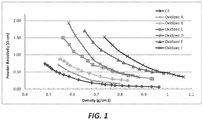
- FIG. 1 is a plot of powder resistivity versus density of the compressed powder in which resistivity decreased with increasing density.
- Table 3 below lists the results of the powder resistivity measurements as well as the conductivity index for the samples of Table 1. The powder resistivity values are listed at a density of 0.8 cm 3 /g. Table 3 Samples Conductivity Index Powder Resistivity at 0.8 cm 3 /g, ⁇ -cm CB 165 0.095 Oxidized A 83 0.15 Oxidized B 48 0.3 Oxidized C 38 0.46 Oxidized D 30 0.47 Oxidized E 28 0.83 Oxidized F 22 1.08
- This Example describes cyclic voltammetry (CV) measurements for samples Oxidized A-F compared with PBXTM 51 carbon black (“CB").
- a 5 wt.% solids slurry was prepared by mixing the carbon black or oxidized carbon black (0.45 g), with polyvinylenedifluoride (PVDF, 0.5 g of 10 wt.% solution in N-methylpyrolidinone (NMP)), and NMP (9 g) for 20 minutes in a THINKYTM ARE-310 planetary mixer.
- PVDF polyvinylenedifluoride
- NMP N-methylpyrolidinone
- the coated graphite rods were used as a working electrode in a three electrode jacketed electrochemical cell using uncoated graphite rod as counter electrode and standard calomel electrode (SCE) as a reference electrode.
- the cell temperature was maintained at 60°C by water circulation, and cyclic voltammetry (CV) experiments were conducted by scanning the working electrode at 10 mV/s from equilibrium potential to + 0.4V then -0.8V vs. SCE for 3 cycles.
- the plots were normalized to the capacitive current at +0.4V to allow a comparison of all the currents at the same electrochemical surface area. This eliminates the effect of variations in coating weight or BET specific surface area of the carbon blacks.
- Table 4 shows the values for current of hydrogen evolution reaction at -0.6 V vs. SCE for the third CV cycle (I HER, mA/mA) for samples Oxidized A-F compared against PBXTM 51 carbon black ("CB").
- Table 4 Samples Normalized I HER I HER at -0.6V vs. SCE, mA/mA CB 2.25 Oxidized A 2.23 Oxidized B 1.74 Oxidized C 1.57 Oxidized D 1.33 Oxidized E 1.32 Oxidized F 1.66
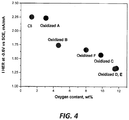
- FIG. 4 shows normalized I HER as a function of oxygen content. It can be seen that the hydrogen reduction current decreases with increasing oxygen content, indicative of decreasing hydrogen evolution. It would be expected that water loss would correspondingly decrease by incorporating oxidized carbon blacks of higher oxygen content.
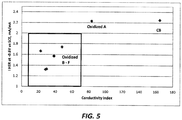
- FIG. 5 is a plot of the normalized I HER versus conductivity index (see Table 3). It can be seen that samples with higher oxygen content (samples Oxidized B-F) have a correspondingly smaller conductivity index value and generate a lower I HER FIG. 5 , which would be expected to reduce water loss. These samples occupy distinct quadrant, as indicated by the outlined area in Fig 5 .
- sample Oxidized A and control carbon black "CB” have a higher conductivity index and generate high hydrogen reduction current that are outside of the distinctly different quadrant defined for the samples with the low conductivity index and reduced water loss.
- Oxidized A and control carbon black "CB” samples would be expected to result in higher water loss.
- This Example describes the preparation of single cells containing the sample Oxidized B compared against PBXTM 51 carbon black (“CB”) and a control cell without any carbon black.
- the single cells were tested for overcharge, dynamic charge acceptance (DCA), and cold crank testing.
- Negative active mass (NAM) paste mixing was done at 1 kg scale.
- PbO (1 kg) was added into an Eirich EL1 mixer and mixed for 1 min, followed by the addition of sodium lignosulfonate (Vanisperse A, 2 g for 0.2 wt.%) and barium sulfate (8 g for 0.8 wt.%). All wt.% loading are vs. PbO.
- the carbon black (5 g for 0.5 wt.%), pre-wetted with 12g water, was then added to the mixer and mixed for 3 min, followed by the addition of water (140 mL) and additional mixing for 10 min.
- a positive electrode paste was made according to the same procedure but without carbon black, barium sulfate or sodium lignosulfonate.
- Electrodes were hand-pasted with 22 g wet paste on a 5.5 x 5 cm 2 Pb-Sn-Ca alloy grid (98.86% lead, 1.1% tin and 0.04% calcium). Electrodes were cured in a Tenney TR2C humidity controlled oven. The curing protocol was the same for positive and negative plates: 72 h at 35°C, 95% RH, followed by 24 h at 60°C, 10% RH. The NAM weight after curing was typically 20 g per plate.
- Cells were assembled by torch welding two negative and three positive plates together. Positive plates were wrapped in commercially available automotive polyethylene-rubber separator (Daramic DRCM-200A328). Electrode and separator stacks were inserted in polymethylmethacrylate cases and compressed with Nylon mesh shims. Case lids were screwed on with 2 mm diameter vent openings. Completed cells were 2V, 4.6 Ah nominal capacity, single cells.
- Formation was performed in case with 1.18 g/cc sulfuric acid (typically 85 mL).
- the formation algorithm included 9 charging steps, for a total duration of 65h and total capacity of 26.76 Ah.
- the electrolyte density target after formation was 1.28 g/cc.
- C20 is a low current discharge of 0.05 x Cn at 25°C
- cold crank is a high current discharge of 5xCn at -18°C.
- Cn is the nominal capacity.
- the cold crank test was performed by discharging fully charged cells with 5*Cn current at -18°C.
- the reported cold crank data (CCA) is the time to reach 1V, in seconds.
- the dynamic charge acceptance is the current measured after 5s of 2.4V charge at 25°C and 80% state-of-charge (SOC) reached by discharging the cell with Cn current.
- the data is reported in A/Ah, where Ah is the cell nominal capacity.
- Cn is the 1h discharge current based on cell nominal capacity.
- the electrolyte volume was readjusted with 1.28g/cc sulfuric acid.
- the cells were weighed and placed in a water bath heated to 60°C.
- the cell voltage was readjusted to 2.4V with 0.5A current and maintained at 2.4V for 3 weeks duration.
- Cell weight loss was measured weekly, and cell overcharge current was monitored during the entire test.
- Overcharge capacity of the cells was calculated by integrating the overcharge current over the overcharge time. Overcharge capacity data was collected over 3 weeks.
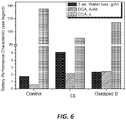
- improved dynamic charge acceptance and minimized water loss can be achieved by incorporating an oxidized carbon black having the disclosed particle morphologies and level of oxidation.
Landscapes
- Chemical & Material Sciences (AREA)
- Chemical Kinetics & Catalysis (AREA)
- Electrochemistry (AREA)
- General Chemical & Material Sciences (AREA)
- Inorganic Chemistry (AREA)
- Engineering & Computer Science (AREA)
- Manufacturing & Machinery (AREA)
- Organic Chemistry (AREA)
- Battery Electrode And Active Subsutance (AREA)
- Pigments, Carbon Blacks, Or Wood Stains (AREA)
- Developing Agents For Electrophotography (AREA)
Description
- This application claims priority under 35 U.S.C. § 119(e) to
U.S. Prov. App. Nos. 62/193,844, filed July 17, 2015 61/221,824, filed September 22, 2015 - Disclosed herein are oxidized carbon blacks, which can be useful in electrode and lead acid battery applications.
- There has been increasing use in the addition of carbonaceous materials to lead acid battery compositions (e.g., anode compositions). It is has been discovered that the carbon can improve charge acceptance and cycle life. However, the presence of carbon can result in increased water loss during high temperature overcharge conditions relevant for automotive applications and stationary applications under overcharge voltage. Accordingly, there is a continuing need to develop new additives for lead acid batteries that achieve suitable charge acceptance and cycle life while preventing increased water loss.
- It is disclosed an oxidized carbon black having the following properties:
- a BET surface area ranging from 650 to 2100 m2/g;
- an oil absorption number (OAN) ranging from 35 to 500 mL/100g; and
- a volatile content of at least 5.5 wt.% relative to the total weight of the oxidized carbon black, as determined by weight loss at 950°C.
- It is disclosed an oxidized carbon black having the following properties:
- a BET surface area ranging from 650 to 2100 m2/g;
- an oil absorption number (OAN) ranging from 35 to 500 mL/100g; and
- a total oxygen content of at least 3.5 wt.% relative to the total weight of the oxidized carbon black.
- It is disclosed an oxidized carbon black having the following properties:
- a BET surface area ranging from 650 to 2100 m2/g;
- an oil absorption number (OAN) ranging from 35 to 500 mL/100g; and
- a total titratable acidic group content of at least 0.5 nmol/m2, as determined by Boehm's titration method.
- It is disclosed an oxidized carbon black having the following properties:
- a BET surface area ranging from 650 to 2100 m2/g; and
- an oil absorption number (OAN) ranging from 35 to 500 mL/100g,
- a total titratable acidic group content of at least 0.5 mmol/g, as determined by Boehm's titration method.
- It is disclosed an oxidized carbon black derived from a base carbon black, wherein the base carbon black has the following properties:
- a BET surface area ranging from 650 to 2100 m2/g; and
- an oil absorption number (OAN) ranging from 35 to 500 mL/100g,
- wherein the oxidized carbon black has a volatile content of at least 5.5 wt.% relative to the total weight of the oxidized carbon black, as determined by weight loss at 950°C.
- It is disclosed an oxidized carbon black derived from a base carbon black, wherein the base carbon black has the following properties:
- a BET surface area ranging from 650 to 2100 m2/g; and
- an oil absorption number (OAN) ranging from 35 to 500 mL/100g,
- wherein the oxidized carbon black has a total oxygen content of at least 3.5 wt.% relative to the total weight of the oxidized carbon black.
- It is disclosed an oxidized carbon black derived from a base carbon black, wherein the base carbon black has the following properties:
- a BET surface area ranging from 650 to 2100 m2/g; and
- an oil absorption number (OAN) ranging from 35 to 500 mL/100g,
- wherein the oxidized carbon black has a total titratable acidic group content of at least 0.5 nmol/m2, as determined by Boehm's titration method.
- It is disclosed an oxidized carbon black derived from a base carbon black, wherein the base carbon black has the following properties:
- a BET surface area ranging from 650 to 2100 m2/g; and
- an oil absorption number (OAN) ranging from 35 to 500 mL/100g,
- wherein the oxidized carbon black has a total titratable acidic group content of at least 0.5 mmol/g, as determined by Boehm's titration method.
- It is disclosed an electrode composition comprising:
- the oxidized carbon black as disclosed herein; and
- at least one lead-containing material.
- It is disclosed an electrode composition comprising:
- an oxidized carbon black having a BET surface area ranging from 80 to 2100 m2/g, wherein the oxidized carbon black has a volatile content of at least 3 wt.% relative to the total weight of the oxidized carbon black, as determined by weight loss at 950°C; and
- at least one lead-containing material.
- It is disclosed an electrode composition comprising:
- an oxidized carbon black having a BET surface area ranging from 80 to 2100 m2/g, wherein the oxidized carbon black has a total oxygen content of at least 3.5 wt.% relative to the total weight of the oxidized carbon black; and
- at least one lead-containing material.
- It is disclosed an electrode composition comprising:
- an oxidized carbon black having a BET surface area ranging from 80 to 2100 m2/g, wherein the oxidized carbon black has a total titratable acidic group content of at least 0.5 nmol/m2, as determined by Boehm's titration method; and
- at least one lead-containing material.
- It is disclosed an electrode composition comprising:
- an oxidized carbon black having a BET surface area ranging from 80 to 2100 m2/g, wherein the oxidized carbon black has a total titratable acidic group content of at least 0.5 mmol/g, as determined by Boehm's titration method; and
- at least one lead-containing material.
- It is disclosed electrodes comprising the oxidized carbon blacks or electrode compositions disclosed herein. Another embodiment provides a cell or lead acid battery comprising the electrodes disclosed herein.
- It is disclosed a method of making an oxidized carbon black, comprising:
- oxidizing a base carbon black, in which the base carbon black has a BET surface area ranging from 650 to 2100 m2/g and an oil absorption number (OAN) ranging from 35 to 500 mL/100g;
- wherein the oxidized carbon black has at least one of the following properties:
- (a) a volatile content of at least 5.5 wt.% relative to the total weight of the oxidized carbon black, as determined by weight loss at 950°C;
- (b) a total oxygen content of at least 3.5 wt.% relative to the total weight of the oxidized carbon black;
- (c) a total titratable acidic group content of at least 0.5 nmol/m2, as determined by Boehm's titration method; and
- (d) a total titratable acidic group content of at least 0.5 mmol/g, as determined by Boehm's titration method.
-
-
FIG. 1 is a plot of powder resistivity (Ω-cm) versus density (g/cm3) for the samples of Example 4; -
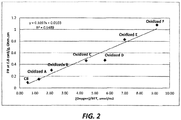
FIG. 2 is a plot of powder resistivity (Ω-cm) versus normalized oxygen content ([oxygen]/BET, nmol/m2) for the samples of Example 4; -
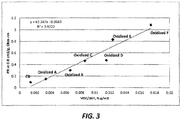
FIG. 3 is a plot of powder resistivity (Ω-cm) versus normalized volatile content, (volatile content/BET, % g/m2) for the samples of Example 4; -
FIG. 4 is a plot of normalized hydrogen evolution reaction current (I HER) in mA/mA at -0.6V (vs. SCE), versus oxygen content (wt.%) for the compositions of Example 5; -
FIG. 5 is a plot of normalized hydrogen evolution reaction current (I HER) in mA/mA at -0.6V (vs. SCE), versus conductivity index from Example 5; and -
FIG. 6 is a bar chart of dynamic charge acceptance (DCA), cold crank (CCA) and 3 wk. water loss results of Example 6 for lead acid batteries without carbon black (control), with 0.5 wt.% carbon black (CB) and 0.5 wt.% oxidized carbon black (sample "Oxidized B"). - It has been discovered that certain oxidized carbon blacks provide a high dynamic charge acceptance while reducing the water loss seen upon adding other carbon additives. Accordingly, disclosed herein are oxidized carbonaceous materials, which can be incorporated into electrodes for lead acid battery applications.
- In general, the addition of carbon to a negative electrode plate can improve charge acceptance and cycle life of the lead acid battery. Charge acceptance and cycle life of lead acid batteries are limited by formation of large crystals of lead sulfate, which have a more thermodynamically favorable surface to volume ratio. As the surface to volume ratio of the formed lead sulfate crystals declines, the ability of the negative electrode to reverse the reduction of PbSO4 back to lead is impaired, especially on the short time scales typically associated with rapid charge, and consequently the charge acceptance deteriorates. Formation of large lead sulfate crystals thus results in kinetic irreversibility in charge and discharge rates, a condition known as "sulfation." Excessive accumulation of kinetically irreversible lead sulfate crystals in turn results in deterioration of the negative plate/electrode structure, which can lead to premature failure and loss of cycle life.
- The addition of a carbonaceous material (e.g. carbon black, graphite, activated carbon, or other forms of carbon such as graphenes or carbon nanotubes) can result in modification of the negative electrode morphology to improve kinetic reversibility in formation and dissolution of formed lead sulfate crystals and preserved electrode stability during multiple cycles of charge and discharge, and thereby can improve charge acceptance and cycle life. However, modified negative electrode morphology may result in elevated rate of water electrolysis and overall increased rate of water loss, especially in overcharge conditions. In one embodiment, this trade-off is mitigated to improve the benefit of carbon additives in improvement of charge acceptance and cycle life, e.g., by reducing water loss.
- As disclosed herein, it was discovered that high DCA and reduced water loss can be achieved with oxidized carbon blacks having certain morphologies.
- Accordingly, It is disclosed an oxidized carbon black having the following properties:
- a BET surface area ranging from 650 to 2100 m2/g; and
- an oil absorption number (OAN) ranging from 35 to 500 mL/100g.
- As used herein, "oxidized carbon black" refers to carbon black having an appreciable number of oxygen atoms. The presence of oxygen atoms can be determined by a number of methods known in the art, such as volatile matter tests, oxygen content by inert gas fusion, or a total titratable acidic group content as determined by Boehm's titration method, as described in greater detail herein.
- It is disclosed the oxidized carbon black has a minimum volatile content. Volatile content of oxidized carbon black relates to the loss of material weight upon exposure to 950°C in the inert atmosphere and reported as wt.%.
- It is disclosed the oxidized carbon black has a volatile content of at least 5.5 wt.% relative to the total weight of the oxidized carbon black. In one embodiment, the volatile content is determined by a volatile matter test at 950°C according to DIN 53552. In one embodiment, the volatile content is at least 6 wt.%, at least 8 wt.%, at least 10 wt.%, at least 12 wt.%, at least 15 wt.%, at least 20 wt.% relative to the total weight of the oxidized carbon black. In one embodiment, the volatile content ranges from 5.5 to 25 wt.%, e.g., from 8 to 25 wt.%, from 10 to 25 wt.%, from 12 to 25 wt.%, from 15 to 25 wt.%, from 20 to 25 wt.%, from 5.5 to 20 wt.%, from 8 to 20 wt.%, from 10 to 20 wt.%, from 12 to 20 wt.%, or from 15 to 20 wt.%, relative to the total weight of the oxidized carbon black.
- It is disclosed the oxidized carbon black has a minimum oxygen content, which can determined by any method known in the art. In one embodiment, the oxidized carbon black has a total oxygen content of at least 3.5 wt.% relative to the total weight of the oxidized carbon black, as determined by inert gas fusion. Total oxygen content by inert gas fusion can be determined by exposing an oxidized carbon sample to very high temperatures (e.g., about 3000°C) under inert gas conditions. The oxygen in the sample reacts with carbon to form CO and CO2, which can be monitored by non-dispersive infrared technique. The total oxygen content is reported in weight percent relative to the total weight of the oxidized carbon. Various oxygen analyzers based on the inert gas fusion methods are known in the art and commercially available, for example a LECO® TCH600 analyzer. In one embodiment, the total oxygen content is at least 3.7 wt.%, at least 4 wt.%, at least 4.2 wt.%, at least 4.3 wt.%, or at least 4.5 wt.% relative to the total weight of the oxidized carbon black. In one embodiment, the total oxygen content ranges from 3.5 to 20 wt.%, e.g., from 3.7 to 20 wt.%, from 4 to 20 wt.%, from 4.2 to 20 wt.%, from 4.3 to 20 wt.%, or from 4.5 to 20 wt.% relative to the total weight of the oxidized carbon black.
- It is disclosed the oxidized carbon black has a minimum total titratable acidic group content as determined by Boehm's titration method. The Boehm titration method is a known in the art to measure the concentration of various surface acidic groups on oxidized carbons (see Boehm, H. P., Angew. Chem. 10, 669, (1964); Boehm, H.P., Carbon 32, 759 (1994); Goertzen, S.L., Carbon, 48, 1252 (2010); and Oickle, A.M., Carbon, 48, 3313 (2010)). This method is based on acid-base titration of oxidized carbons with one or more bases, e.g., three bases of different strength: NaOH, Na2CO3, and NaHCO3, with the assumption that NaOH neutralizes surface carboxylic, lactonic, and phenolic groups of oxidized carbon, Na2CO3 neutralizes surface carboxylic and lactonic groups, whereas NaHCO3 neutralizes only surface carboxylic groups. In one embodiment, the total titratable acidic group content is the sum of the content of carboxylic groups, lactone groups, and phenol groups as determined by Boehm's titration method. In one embodiment, the total titratable acidic group content for oxidized carbon black results from titration with NaOH in accordance with Boehm's method.
- It is disclosed that the total titratable acidic group content of oxidized carbon black by Boehm's titration method is determined on a surface area basis, where BET surface area of oxidized carbon black is used. In one embodiment, the total titratable acidic group content (e.g., sum of surface carboxylic, lactone and phenols groups) is at least 0.5 nmol/m2 as determined by Boehm's titration method, e.g., at least 0,7 nmol/m2, at least 1 µmol/m2, at least 1.1 nmol/m2, or at least 1.2 nmol/m2. In another embodiment, the total titratable acidic group content by Boehm's titration method is determined on a weight basis, e.g., at least 0.5 mmol/g as determined by Boehm's titration method, e.g., at least 0.7 mmol/g, at least 1.1 mmol/g, at least 1.2 mmol/g, at least 1.3 mmol/g, at least 1.4 mmol/g, or at least 1.5 mmol/g.
- It is disclosed the oxidized carbon black has a concentration of surface carboxylic groups ranging from 0.15 mmol/g to 1.5 mmol/g, as determined by Boehm's titration method. In another embodiment, the oxidized carbon black has a concentration of surface carboxylic groups ranging from 0.1 µmol/m2 to 1.2 nmol/m2, as determined by Boehm's titration method.
- Generally, oxidized blacks feature a surface having oxygen-containing groups such as one or more of phenols, lactones, carbonyls, carboxylic acids, anhydrides, ethers, and quinones. The extent of oxidation of carbon black can determine the surface concentration of such oxygen-containing groups. The carbon blacks disclosed herein can be oxidized by a variety of oxidizing agents known in the art. Exemplary oxidizing agents for carbon blacks include oxygen gas, ozone, nitrogen oxides (NxOy, where x = 1-2 and y = 1-4, e.g., NO, NO2, including mixtures with air), persulfates such as sodium, potassium, and ammonium persulfate, hypohalites such as sodium hypochlorite, halites, halates, or perhalates (such as sodium chlorite, sodium chlorate, or sodium perchlorate), oxidizing acids such as nitric acid, and transition metal-containing oxidants such as permanganate salts, osmium tetroxide, chromium oxides, ceric ammonium nitrates, and mixtures thereof, e.g., mixtures of gaseous oxidants such as oxygen and ozone.
- Oxidation of carbon black particles is known to increase the material volatile content and total oxygen content because of the formation of various surface carbon-oxygen groups. Most of these groups convert to CO and/or CO2 upon exposure of the oxidized carbon black to elevated temperature (such as 950°C or higher) in the inert atmosphere. Some of the formed surface carbon-oxygen containing groups of oxidized carbon black are ionizable.
- It is disclosed that the oxidized carbon blacks have a BET surface area ranging from 650 m2/g to 2100 m2/g, e.g., from 650 m2/g to 2000 m2/g, from 650 m2/g to 1800 m2/g, from 650 m2/g to 1600 m2/g, from 650 m2/g to 1500 m2/g, from 650 m2/g to 1450 m2/g, from 700 m2/g to 2100 m2/g, from 700 m2/g to 2000 m2/g, from 700 m2/g to 1800 m2/g, from 700 m2/g to 1600 m2/g, from 700 m2/g to 1500 m2/g, from 700 m2/g to 1450 m2/g, from 800 m2/g to 2100 m2/g, from 800 m2/g to 2000 m2/g, from 800 m2/g to 1800 m2/g, from 800 m2/g to 1600 m2/g, from 800 m2/g to 1500 m2/g, from 800 m2/g to 1450 m2/g, from 1000 m2/g to 2100 m2/g, from 1000 m2/g to 2000 m2/g, from 1000 m2/g to 1800 m2/g, from 1000 m2/g to 1600 m2/g, from 1000 m2/g to 1500 m2/g, from 1000 m2/g to 1450 m2/g, from 1200 m2/g to 2100 m2/g, from 1200 m2/g to 2000 m2/g, from 1200 m2/g to 1800 m2/g, from 1200 m2/g to 1600 m2/g, from 1200 m2/g to 1500 m2/g, or from 1200 m2/g to 1450 m2/g. BET (Brunauer, Emmett, and Teller) surface area can be determined according to ASTM-D6556. In one embodiment, the oxidized carbon blacks are particulate. In one embodiment, carbon black or oxidized carbon black particles refers to the aggregate of primary particles and not to the primary particles themselves.
- It is disclosed that the oxidized carbon blacks have an oil absorption number (OAN) ranging from 35 to 500 cm3/100 g, e.g., from 50 to 500 cm3/100 g, from 75 to 500 cm3/100 g, from 100 to 500 cm3/100 g, from 35 to 400 cm3/100 g, from 50 to 400 cm3/100 g, from 75 to 400 cm3/100 g, from 100 to 400 cm3/100 g, from 35 to 360 cm3/100 g, from 50 to 360 cm3/100 g, from 75 to 360 cm3/100 g, from 100 to 360 cm3/100 g, from 35 to 300 cm3/100 g, from 50 to 300 cm3/100 g, from 75 to 300 cm3/100 g, from 100 to 300 cm3/100 g, from 35 to 275 cm3/100 g, from 50 to 275 cm3/100 g, from 75 to 275 cm3/100 g, from 100 to 275 cm3/100 g, from 35 to 250 cm3/100 g, from 50 to 250 cm3/100 g, from 75 to 250 cm3/100 g, from 100 to 250 cm3/100 g, from 35 to 200 cm3/100 g, from 50 to 200 cm3/100 g, from 75 to 200 cm3/100 g, from 100 to 200 cm3/100 g, from 35 to 170 cm3/100 g, from 50 to 170 cm3/100 g, from 75 to 170 cm3/100 g, or from 100 to 170 cm3/100 g. OAN can be determined according to ASTM-D2414.
- It is disclosed that the oxidized carbon blacks have a surface area ranging from 650 to 1500 m2/g, e.g., from 650 to 1450 m2/g, from 700 to 1500 m2/g, or from 700 to 1450 m2/g, and an OAN ranging from 35 to 170 mL/100g, from 50 to 200 mL/100g, from 50 to 170 mL/100g, from 100 to 200 mL/100g, or from 100 to 170 mL/100g.
- It is disclosed an oxidized carbon black derived from a base carbon black. In one embodiment, the base carbon black has the following properties:
- a BET surface area ranging from 650 to 2100 m2/g; and
- an oil absorption number (OAN) ranging from 35 to 500 mL/100g.
- The oxidized carbon blacks derived from such base carbon blacks can have a volatile content, a total oxygen content, or total titratable acidic group content having any of the values disclosed herein. In one embodiment, "an oxidized carbon black derived from a base carbon black" refers to a product resulting from oxidizing a base carbon black that does not have an appreciable oxygen content, e.g., the base carbon black has a volatile content, a total oxygen content, or total titratable acidic group content less than the values disclosed herein. In one embodiment, the base carbon black has at least one of the following properties: a volatile content less than 5.5 wt.% relative to the total weight of the base carbon black, as determined by weight loss at 950°C, a total oxygen content of less than 3.5 wt.% relative to the total weight of the base carbon black, a total titratable acidic group content of less than 0.5 nmol/m2, as determined by Boehm's titration method, and a total titratable acidic group content of less than 0.5 mmol/g, as determined by Boehm's titration method.
- It is disclosed that the oxidized carbon black is derived from a base carbon black, in which the base carbon black has a BET surface area ranging from 650 m2/g to 2100 m2/g, e.g., from 650 m2/g to 2000 m2/g, from 650 m2/g to 1800 m2/g, from 650 m2/g to 1600 m2/g, from 650 m2/g to 1500 m2/g, from 650 m2/g to 1450 m2/g, from 700 m2/g to 2100 m2/g, from 700 m2/g to 2000 m2/g, from 700 m2/g to 1800 m2/g, from 700 m2/g to 1600 m2/g, from 700 m2/g to 1500 m2/g, from 700 m2/g to 1450 m2/g, from 800 m2/g to 2100 m2/g, from 800 m2/g to 2000 m2/g, from 800 m2/g to 1800 m2/g, from 800 m2/g to 1600 m2/g, from 800 m2/g to 1500 m2/g, from 800 m2/g to 1450 m2/g, from 1000 m2/g to 2100 m2/g, from 1000 m2/g to 2000 m2/g, from 1000 m2/g to 1800 m2/g, from 1000 m2/g to 1600 m2/g, from 1000 m2/g to 1500 m2/g, from 1000 m2/g to 1450 m2/g, from 1200 m2/g to 2100 m2/g, from 1200 m2/g to 2000 m2/g, from 1200 m2/g to 1800 m2/g, from 1200 m2/g to 1600 m2/g, from 1200 m2/g to 1500 m2/g, or from 1200 m2/g to 1450 m2/g. BET surface area can be determined according to ASTM-D6556.
- It is disclosed that the oxidized carbon blacks have a BET surface area lower than that of the base carbon blacks from which they are derived.
- In one embodiment, the oxidized carbon black is derived from a base carbon black, in which the base carbon black has an oil absorption number (OAN) ranging from 35 to 500 cm3/100 g, e.g., from 50 to 500 cm3/100 g, from 75 to 500 cm3/100 g, from 100 to 500 cm3/100 g, from 35 to 400 cm3/100 g, from 50 to 400 cm3/100 g, from 75 to 400 cm3/100 g, from 100 to 400 cm3/100 g, from 35 to 360 cm3/100 g, from 50 to 360 cm3/100 g, from 75 to 360 cm3/100 g, from 100 to 360 cm3/100 g, from 35 to 300 cm3/100 g, from 50 to 300 cm3/100 g, from 75 to 300 cm3/100 g, from 100 to 300 cm3/100 g, from 35 to 275 cm3/100 g, from 50 to 275 cm3/100 g, from 75 to 275 cm3/100 g, from 100 to 275 cm3/100 g, from 35 to 250 cm3/100 g, from 50 to 250 cm3/100 g, from 75 to 250 cm3/100 g, from 100 to 250 cm3/100 g, from 35 to 200 cm3/100 g, from 50 to 200 cm3/100 g, from 75 to 200 cm3/100 g, from 100 to 200 cm3/100 g, from 35 to 170 cm3/100 g, from 50 to 170 cm3/100 g, from 75 to 170 cm3/100 g, or from 100 to 170 cm3/100 g. OAN can be determined according to ASTM-D2414.
- It is disclosed that the oxidized carbon black is derived from a base carbon black, in which the base carbon black has a surface area ranging from 650 to 1500 m2/g, e.g., from 650 to 1450 m2/g, from 700 to 1500 m2/g, or from 700 to 1450 m2/g, and an OAN ranging from 35 to 170 mL/100g, from 50 to 200 mL/100g, from 50 to 170 mL/100g, from 100 to 200 mL/100g, or from 100 to 170 mL/100g.
- It is disclosed that the oxidized carbon black is derived from a base carbon black, in which the base carbon black has a primary particle size ranging from 8 to 50 nm, e.g., from 8 to 40 nm, from 8 to 30 nm, or from 8 to 20 nm. In one embodiment, the oxidized carbon blacks have a primary particle size ranging from 8 to 50 nm, e.g., from 8 to 40 nm, from 8 to 30 nm, or from 8 to 20 nm.
- It is disclosed that the oxidized carbon black has a pH of 6 or less, as determined by ASTM D1512. When oxidized carbon blacks are dispersed in water, the pH of the resulting supernatant is typically lowered due to increasing acid or phenol groups. In one embodiment, the oxidized carbon black has a pH ranging from 1.5-6 or a pH ranging from 2-6, as determined by ASTM D1512.
- The oxidized carbon black can also be characterized from surface energy analysis (SEP) by measuring the water vapor adsorption using a gravimetric instrument (dynamic water vapor sorption method). In this method, the sample is weighed in a humidity chamber and allowed to equilibrate at a series of step changes in relative humidity while recording the change in mass. The equilibrium mass increase as a function of relative humidity can be used to generate the vapor sorption isotherm. Spreading pressure (in mJ/m2) for a sample is calculated as πe/BET, in which:

- The crystallite size of the oxidized carbon black can be determined by Raman spectroscopy, e.g., by monitoring two major "resonance" bands of a Raman spectrum at about 1340 cm-1 and 1580 cm-1, denoted as the "D" and "G" bands, respectively. The crystallite size (La) can be calculated in Angstroms from the equation:

- It is disclosed that the oxidized carbon black has a crystallite size (La) of at least 16 Å, as determined by Raman spectroscopy. In another embodiment, the oxidized carbon black has a crystallite size (La) ranging from 1.6 nm to 2.3 nm (16 Å to 23 Å), as determined by Raman spectroscopy.
- It is disclosed that the resistance of oxidized carbon black is characterized by its conductivity index, defined according to the following equation (see
U.S. Pat. No, 6,820,738 ):
- It is disclosed that the oxidized carbon black has a conductivity index ranging from 10 to 75, from 15 to 75, from 20 to 75, from 25 to 75, 10 to 70, from 15 to 70, from 20 to 70, from 25 to 70, from 10 to 60, from 15 to 60, from 20 to 60, from 25 to 60, from 10 to 50, from 15 to 50, from 20 to 50, or from 25 to 50.
- It is disclosed that the electrical resistance of the oxidized carbon black is characterized by its powder resistivity. In one embodiment, the powder resistivity is obtained at a defined compression by methods known in the art. Powder volume electrical resistivity can calculated at a certain pressure using the following equation:
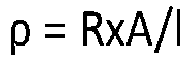
- It is disclosed that at a density of 0.8 cm3/g, the oxidized carbon black has a powder resistivity of at least 0.2 Ω-cm or at least 0.25 Ω-cm, e.g., a powder resistivity ranging from 0.2 to 1.5 Ω-cm, from 0.2 to 1.4 Ω-cm, from 0.2 to 1.3 Ω-cm, from 0.2 to 1.2 Ω-cm, from 0.2 to 1.1 Ω-cm, from 0.3 to 1.5 Ω-cm, from 0.3 to 1.4 Ω-cm, from 0.3 to 1.3 Ω-cm, from 0.3 to 1.2 Ω-cm, or from 0.3 to 1.1 Ω-cm.
- It is disclosed a method of making an oxidized carbon black, comprising:
- oxidizing a base carbon black, in which the base carbon black has a BET surface area ranging from 650 to 2100 m2/g and an oil absorption number (OAN) ranging from 35 to 500 mL/100g,
- wherein the oxidized carbon black has at least one of the following properties:
- (a) a volatile content of at least 5.5 wt.% relative to the total weight of the oxidized carbon black, as determined by weight loss at 950°C;
- (b) a total oxygen content of at least 3.5 wt.% relative to the total weight of the oxidized carbon black;
- (c) a total titratable acidic group content of at least 0.5 nmol/m2, as determined by Boehm's titration method; and
- (d) a total titratable acidic group content of at least 0.5 mmol/g, as determined by Boehm's titration method.
- It is disclosed that the oxidizing comprises subjecting the base carbon black to at least one agent selected from oxygen gas, ozone, nitrogen oxides of the formula NxOy where x = 1-2 and y = 1-4 (e.g., NO, NO2, including mixtures with air), persulfates such as sodium, potassium, and ammonium persulfate, hypohalites such as sodium hypochlorite, halites, halates, perhalates such as sodium chlorite, sodium chlorate, or sodium perchlorate, oxidizing acids such as nitric acid, and transition metal-containing oxidants such as permanganate salts, osmium tetroxide, chromium oxides, ceric ammonium nitrates. In one embodiment, the at least one agent comprises at least two or more agents, e.g., oxygen and ozone, etc. In another embodiment, the oxidizing comprises subjecting the base carbon black to at least one agent that is mixed with air.
- It is disclosed an electrode composition. The electrode composition can coat an electrode plate or current collector. The composition can be combined with other components to form electrodes for lead acid batteries. Accordingly, It is disclosed an electrode composition comprising:
- an oxidized carbon black having a BET surface area ranging from 80 to 2100 m2/g, wherein the oxidized carbon black has a volatile content of at least 3 wt.% relative to the total weight of the oxidized carbon black; and
- at least one lead-containing material.
- It is disclosed that the electrode composition comprises:
- an oxidized carbon black having a BET surface area ranging from 80 to 2100 m2/g, wherein the oxidized carbon black has a total oxygen content of at least 3.5 wt.% relative to the total weight of the oxidized carbon black; and
- at least one lead-containing material.
- It is disclosed that the electrode composition comprises:
- an oxidized carbon black having a BET surface area ranging from 80 to 2100 m2/g, wherein the oxidized carbon black has a total titratable acidic group content of at least 0.5 nmol/m2, as determined by Boehm's titration method; and
- at least one lead-containing material.
- It is disclosed that the electrode composition comprises:
- an oxidized carbon black having a BET surface area ranging from 80 to 2100 m2/g, wherein the oxidized carbon black has a total titratable acidic group content of at least 0.5 mmol/g, as determined by Boehm's titration method; and
- at least one lead-containing material.
- It is disclosed that the composition can further comprise one or more additional components as described herein, e.g., one or more of an organic molecule expander, BaSO4, and/or H2SO4.
- It is disclosed that the electrode composition comprises the oxidized carbon black having a BET surface area ranging In one embodiment, the oxidized carbon blacks have a BET surface area ranging from 80 m2/g to 2100 m2/g, e.g., from 80 m2/g to 2000 m2/g, from 80 m2/g to 1800 m2/g, from 80 m2/g to 1600 m2/g, from 80 m2/g to 1500 m2/g, from 80 m2/g to 1450 m2/g, from 200 m2/g to 2100 m2/g, from 200 m2/g to 2000 m2/g, from 200 m2/g to 1800 m2/g, from 200 m2/g to 1600 m2/g, from 200 m2/g to 1500 m2/g, from 200 m2/g to 1450 m2/g, from 300 m2/g to 2100 m2/g, from 300 m2/g to 2000 m2/g, from 300 m2/g to 1800 m2/g, from 300 m2/g to 1600 m2/g, from 300 m2/g to 1500 m2/g, from 300 m2/g to 1450 m2/g, from 400 m2/g to 2100 m2/g, from 400 m2/g to 2000 m2/g, from 400 m2/g to 1800 m2/g, from 400 m2/g to 1600 m2/g, from 400 m2/g to 1500 m2/g, from 400 m2/g to 1450 m2/g, from 500 m2/g to 2100 m2/g, from 500 m2/g to 2000 m2/g, from 500 m2/g to 1800 m2/g, from 500 m2/g to 1600 m2/g, from 500 m2/g to 1500 m2/g, from 500 m2/g to 1450 m2/g, from 600 m2/g to 2100 m2/g, from 600 m2/g to 2000 m2/g, from 600 m2/g to 1800 m2/g, from 600 m2/g to 1600 m2/g, from 600 m2/g to 1500 m2/g, from 600 m2/g to 1450 m2/g, from 650 m2/g to 2100 m2/g, 650 m2/g to 2000 m2/g, from 650 m2/g to 1800 m2/g, from 650 m2/g to 1600 m2/g, from 650 m2/g to 1500 m2/g, from 650 m2/g to 1450 m2/g, from 700 m2/g to 2100 m2/g, from 700 m2/g to 2000 m2/g, from 700 m2/g to 1800 m2/g, from 700 m2/g to 1600 m2/g, from 700 m2/g to 1500 m2/g, from 700 m2/g to 1450 m2/g, from 800 m2/g to 2100 m2/g, from 800 m2/g to 2000 m2/g, from 800 m2/g to 1800 m2/g, from 800 m2/g to 1600 m2/g, from 800 m2/g to 1500 m2/g, from 800 m2/g to 1450 m2/g, from 1000 m2/g to 2100 m2/g, from 1000 m2/g to 2000 m2/g, from 1000 m2/g to 1800 m2/g, from 1000 m2/g to 1600 m2/g, from 1000 m2/g to 1500 m2/g, from 1000 m2/g to 1450 m2/g, from 1200 m2/g to 2100 m2/g, from 1200 m2/g to 2000 m2/g, from 1200 m2/g to 1800 m2/g, from 1200 m2/g to 1600 m2/g, from 1200 m2/g to 1500 m2/g, or from 1200 m2/g to 1450 m2/g.
- It is disclosed an electrode composition comprising an oxidized carbon black derived from a base carbon black, in which the base carbon black has a BET surface area ranging from 80 to 2100 m2/g and at least one lead-containing material. The oxidized carbon blacks derived from such base carbon blacks can have a volatile content, a total oxygen content, or a total titratable acidic group content having any of the values disclosed herein.
- It is disclosed that the electrode composition comprises an oxidized carbon black derived from a base carbon black, in which the base carbon black has a BET surface area ranging from 80 m2/g to 2100 m2/g, e.g., from 80 m2/g to 2000 m2/g, from 80 m2/g to 1800 m2/g, from 80 m2/g to 1600 m2/g, from 80 m2/g to 1500 m2/g, from 80 m2/g to 1450 m2/g, from 200 m2/g to 2100 m2/g, from 200 m2/g to 2000 m2/g, from 200 m2/g to 1800 m2/g, from 200 m2/g to 1600 m2/g, from 200 m2/g to 1500 m2/g, from 200 m2/g to 1450 m2/g, from 300 m2/g to 2100 m2/g, from 300 m2/g to 2000 m2/g, from 300 m2/g to 1800 m2/g, from 300 m2/g to 1600 m2/g, from 300 m2/g to 1500 m2/g, from 300 m2/g to 1450 m2/g, from 400 m2/g to 2100 m2/g, from 400 m2/g to 2000 m2/g, from 400 m2/g to 1800 m2/g, from 400 m2/g to 1600 m2/g, from 400 m2/g to 1500 m2/g, from 400 m2/g to 1450 m2/g, from 500 m2/g to 2100 m2/g, from 500 m2/g to 2000 m2/g, from 500 m2/g to 1800 m2/g, from 500 m2/g to 1600 m2/g, from 500 m2/g to 1500 m2/g, from 500 m2/g to 1450 m2/g, from 600 m2/g to 2100 m2/g, from 600 m2/g to 2000 m2/g, from 600 m2/g to 1800 m2/g, from 600 m2/g to 1600 m2/g, from 600 m2/g to 1500 m2/g, from 600 m2/g to 1450 m2/g, from 650 m2/g to 2100 m2/g, 650 m2/g to 2000 m2/g, from 650 m2/g to 1800 m2/g, from 650 m2/g to 1600 m2/g, from 650 m2/g to 1500 m2/g, from 650 m2/g to 1450 m2/g, from 700 m2/g to 2100 m2/g, from 700 m2/g to 2000 m2/g, from 700 m2/g to 1800 m2/g, from 700 m2/g to 1600 m2/g, from 700 m2/g to 1500 m2/g, from 700 m2/g to 1450 m2/g, from 800 m2/g to 2100 m2/g, from 800 m2/g to 2000 m2/g, from 800 m2/g to 1800 m2/g, from 800 m2/g to 1600 m2/g, from 800 m2/g to 1500 m2/g, from 800 m2/g to 1450 m2/g, from 1000 m2/g to 2100 m2/g, from 1000 m2/g to 2000 m2/g, from 1000 m2/g to 1800 m2/g, from 1000 m2/g to 1600 m2/g, from 1000 m2/g to 1500 m2/g, from 1000 m2/g to 1450 m2/g, from 1200 m2/g to 2100 m2/g, from 1200 m2/g to 2000 m2/g, from 1200 m2/g to 1800 m2/g, from 1200 m2/g to 1600 m2/g, from 1200 m2/g to 1500 m2/g, or from 1200 m2/g to 1450 m2/g.
- It is disclosed that the electrode composition comprises the oxidized carbon black having an oil absorption number ranging from 35 to 500 cm3/100 g, e.g., from 50 to 500 cm3/100 g, from 75 to 500 cm3/100 g, from 100 to 500 cm3/100 g, from 35 to 400 cm3/100 g, from 50 to 400 cm3/100 g, from 75 to 400 cm3/100 g, from 100 to 400 cm3/100 g, from 35 to 360 cm3/100 g, from 50 to 360 cm3/100 g, from 75 to 360 cm3/100 g, from 100 to 360 cm3/100 g, from 35 to 300 cm3/100 g, from 50 to 300 cm3/100 g, from 75 to 300 cm3/100 g, from 100 to 300 cm3/100 g, from 35 to 275 cm3/100 g, from 50 to 275 cm3/100 g, from 75 to 275 cm3/100 g, from 100 to 275 cm3/100 g, from 35 to 250 cm3/100 g, from 50 to 250 cm3/100 g, from 75 to 250 cm3/100 g, from 100 to 250 cm3/100 g, from 35 to 200 cm3/100 g, from 50 to 200 cm3/100 g, from 75 to 200 cm3/100 g, from 100 to 200 cm3/100 g, from 35 to 170 cm3/100 g, from 50 to 170 cm3/100 g, from 75 to 170 cm3/100 g, or from 100 to 170 cm3/100 g.
- It is disclosed that the electrode composition comprises the oxidized carbon black having a volatile content of at least 3 wt.% relative to the total weight of the oxidized carbon black, as determined by a volatile matter test at 950°C according to DIN 53552. In one embodiment, the volatile content is at least 3.5 wt.%, at least 4 wt.%, at least 4.5 wt.%, at least 5 wt.%, at least 5.5 wt.%, at least 6 wt.%, at least 8 wt.%, at least 10 wt.%, at least 12 wt.%, at least 15 wt.%, at least 20 wt.% relative to the total weight of the oxidized carbon black. In one embodiment, the volatile content ranges from 3 to 25 wt.%, e.g., from 3.5 to 25 wt.%, from 4 to 25 wt.%, from 5 to 25 wt.%, from 5.5 to 25 wt.%, from 6 to 25 wt.%, from 8 to 25 wt.%, from 10 to 25 wt.%, from 12 to 25 wt.%, from 15 to 25 wt.%, from 20 to 25 wt.%, from 3 to 20 wt.%, from 3.5 to 20 wt.%, from 4 to 20 wt.%, from 5 to 20 wt.%, from 5.5 to 20 wt.%, from 6 to 20 wt.%, from 8 to 20 wt.%, from 10 to 20 wt.%, from 12 to 20 wt.%, or from 15 to 20 wt.%, relative to the total weight of the oxidized carbon black.
- It is disclosed that the at least one lead-containing material is selected from lead, PbO, leady oxide, Pb3O4, and PbSO4, hydroxides thereof, acids thereof, other polymetallic lead complexes thereof. In one embodiment, the at least one lead-containing material can be leady oxide, which comprises primarily PbO and lead. During manufacture of the electrode composition, PbSO4 is generated in a reaction between the leady oxide and H2SO4.
- It is disclosed that the oxidized carbon black is present in the composition in an amount (loading) ranging from 0.05% to 3% by weight, relative to the total weight of the composition, e.g., an amount ranging from 0. 05% to 2.5%, from 0. 05% to 2%, from 0. 05% to 1.5%, from 0. 05% to 1%, from 0. 05% to 0.5%, from 0.1% to 3%, from 0.1% to 2.5%, from 0.1% to 2%, from 0.1% to 1.5%, from 0.1% to 1%, from 0.1% to 0.5%, from 0.2% to 3%, from 0.2% to 2.5%, from 0.2% to 2%, from 0.2% to 1.5%, from 0.2% to 1% from 0.2% to 0.5%, from 0.5% to 3%, from 0.5% to 2.5%, from 0.5% to 2%, from 0.5% to 1.5%, from 0.5% to 1%, from 1% to 3%, from 1% to 2.5%, from 1% to 2%, from 1% to 1.5%, from 1.5% to 3%, from 1.5% to 2.5%, from 1.5% to 2%, from 2% to 3%, or from 2% to 2.5%, by weight, relative to the total weight of the composition.
- It is disclosed that oxidized carbon blacks can be blended with other forms of carbon, including but not limited to carbon black, activated carbon, expanded graphite, graphene, few layer graphene, carbon nanotubes, carbon fibers, carbon nanofibers, and graphite, so long as the amount of oxidized carbon black is present in the amounts disclosed herein, e.g., ranging from 0.05 to 3 wt.% relative to the total weight of the composition.
- The composition can further comprise other components including one or more of least one organic molecule expander, H2SO4, and BaSO4. In one embodiment, the electrode composition comprises at least the lead-containing material and oxidized carbon black interspersed (e.g., homogeneously interspersed) with each other, e.g., the oxidized carbon black and the lead-containing are particulate. It is disclosed that none of the components of the mixture are provided as layers or coatings. In one embodiment, other components of the electrode composition (e.g., BaSO4 and/or H2SO4) are homogeneously interspersed with the lead-containing material and oxidized carbon black.
- "Organic molecule expander" as defined herein is a molecule capable of adsorbing or covalently bonding to the surface of a lead-containing species to form a porous network that prevents or substantially decreases the rate of formation of a smooth layer of PbSO4 at the surface of the lead-containing species. In one embodiment, the organic molecule expander has a molecular weight greater than 300 g/mol. Exemplary organic molecule expanders include lignosulfonates, lignins, wood flour, pulp, humic acid, and wood products, and derivatives or decomposition products thereof. In one embodiment, the expander is selected from lignosulfonates, a molecule having a substantial portion that contains a lignin structure. Lignins are polymeric species comprising primarily phenyl propane groups with some number of methoxy, phenolic, sulfur (organic and inorganic), and carboxylic acid groups. Typically, lignosulfonates are lignin molecules that have been sulfonated. Typical lignosulfonates include the Borregard Lignotech products UP-393, UP-413, UP-414, UP-416, UP-417, M, D, VS-A (Vanisperse A), VS-HT, and the like. Other useful exemplary lignosulfonates are listed in, "Lead Acid Batteries", Pavlov, Elsevier Publishing, 2011.
- It is disclosed that the organic molecule expander is present in the electrode composition in an amount ranging from 0.1% to 1.5% by weight relative to the total weight of the composition, e.g., from 0.2% to 1.5% by weight, from 0.2% to 1% by weight, from 0.3% to 1.5% by weight, from 0.3% to 1% by weight, or from 0.3% to 0.8% by weight relative to the total weight of the composition.
- It is disclosed that both the oxidized carbon black and the organic molecule expander are present in the electrode composition in an amount ranging from 0.1 to 5% by weight relative to the total weight of the composition, e.g., from 0.1% to 4%, from 0.1% to 3%, from 0.1% to 2%, from 0.1% to 1.5% by weight. In another embodiment, the oxidized carbon black is present in an amount ranging from 0.2% to 1.5% by weight relative to the total weight of the composition, e.g., from 0.3% to 1.5% by weight, and the organic molecule expander is present in an amount ranging from 0.2% to 1.5% by weight, from 0.3% to 1.5% by weight, from 0.2% to 1% by weight, or from 0.3% to 1% by weight relative to the total weight of the composition.
- It is disclosed a method of making an electrode composition. In one embodiment, the method comprises combining the oxidized carbon black with the lead-containing material, expander, and optionally other components (e.g., BaSO4) as a dry mixture with subsequent addition of sulfuric acid and/or water (either simultaneously or sequentially in any order) to this dry mixture. In another embodiment, the method comprises combining a lead-containing material, an organic molecule expander, BaSO4, and subsequently sulfuric acid and/or water (either simultaneously or sequentially in any order), to form a slurry. Regardless of the method used, the result is an intermediate in the form of a paste or slurry that can be used to coat a substrate.
- It is disclosed that the paste or slurry is deposited onto a substrate, e.g., an electrode plate or current collector, such as a grid and allowed to dry on the substrate to form the electrode. In one embodiment, the grid is a metallic structures that come in a myriad of designs and shapes (e.g., punched or expanded from sheets), functioning as the solid permanent support for the active material. The grid also conducts electricity or electrons to and away from the active material. Grids can comprise pure metals (e.g., Pb) or alloys thereof. The components of those alloys can comprise Sb, Sn, Ca, Ag, among other metals described in "Lead Acid Batteries," Pavlov, Elsevier Publishing, 2011.
- It is disclosed that after deposition onto the substrate, the paste intermediate is dried. In one embodiment, the drying is achieved by a slow cure, such as under controlled humidity conditions and a moderate amount of heat (e.g., from 30°C to 80°C or from 35°C to 60°C) under controlled humidity, resulting in a porous solid. The curing step can then followed by a second heating step (drying) at an elevated temperature (e.g., from 50°C to 140°C or from 65°C to 95°C) at extremely low humidity, or even zero humidity. In one embodiment, the composition is a monolith. Other pasting, curing, and formation procedures are described in "Lead Acid Batteries," Pavlov, Elsevier Publishing, 2011.
- It is disclosed an electrode comprising the oxidized carbon blacks disclosed herein. In one embodiment, an electrode comprising the oxidized carbon black refers to an electrode plate coated with a composition comprising the oxidized carbon black. The electrode can be an anode. Another embodiment comprises a cell or lead acid battery comprising the electrode or composition disclosed herein, e.g., an electrode plate coated with a composition comprising the oxidized carbon black. The lead acid battery can further comprise an electrolyte comprising at least one electrolyte additive selected from zinc, sodium, and potassium ions. It is disclosed that the at least one electrolyte additive is present in the electrolyte in an amount ranging from 0.1 to 3 wt.%, relative to the total weight of the electrolyte.
- Controlling water loss is one consideration in the design of low-maintenance or maintenance-free lead acid batteries. Water loss in lead acid batteries largely occurs during charge and overcharge and typically results from evolution and/or grid corrosion of hydrogen on the negative plate and oxygen evolution on the positive plate. The addition of a carbonaceous material in the negative plates typically leads to increased water loss, the extent largely depending on the amount and type of carbon (e.g., surface area and morphology). In general terms, a relationship between the rate of hydrogen evolution and negative plate potential can be illustrated with the Butler-Vollmer equation:

- From equation (1), it can be seen that there are two material-specific parameters that affect the rate of hydrogen evolution: (i) material specific inherent activity of the electrode component toward the hydrogen evolution, as indicated by the exchange current density (i0), and (ii) morphological properties of the material that influence the (electrochemically active) surface area A. In the case of the negative electrodes containing carbonaceous materials, hydrogen evolution can occur on both the lead and carbon surface. Relative contributions of individual components will be determined by their intrinsic activity (that is combination of inherent catalytic activity and surface area) at a given electrode potential.
- It is disclosed a cell or battery comprising an electrode comprising the oxidized carbon blacks disclosed herein, e.g., an electrode plate coated with a composition comprising the oxidized carbon black disclosed herein, in which the cell or battery has reduced water loss (e.g., at least 10%) compared to a cell or battery having an electrode comprising the base carbon black. Water loss can be measured as weight loss after overcharging a battery at 14.4V for a period of time, e.g., at least 3, 4, or 6 weeks in a 60°C water bath. The extent of water loss can depend on factors inherent to the electrode material, e.g., surface area of the oxidized carbon black, and loading in the paste formulation, in addition to other factors such as the positive and negative plate potentials during (over)charge, and the presence of certain metal impurities in the acid electrolyte, grids, and other electrode components. A cell or battery having an electrode comprising the base carbon black typically results in increased water loss compared to a cell or battery without the base carbon black. The present composition, when incorporated into an electrode for a cell and lead acid battery, reduces the level of water loss by at least 10%, at least 25%, at least 50%, at least 75%, or by at least 90%, compared to a cell or battery having an electrode comprising the base carbon black. In one embodiment, the battery having an electrode comprising the oxidized carbon black achieves reduced water loss over a period of at least 3 weeks by at least 10% (e.g., at least 25%, at least 50%, at least 75%, or by at least 90%) compared to a battery having an electrode comprising the base carbon black.
- Without wishing to be bound by any theory, addition of carbon to the negative plate alters the electrode morphology. This alteration typically results in increased surface area of the negative plate A, which according to the equation (1), further results in an increased rate of hydrogen evolution and accelerated water loss. Without wishing to be bound by any theory, the increased surface area could result from the simple physical addition of carbon, which can be a high surface area component, or from an increased surface area of lead phase facilitated by addition of carbon particles to the negative plate. In the absence of other interactions (e.g., exchange current density (i0) of individual components does not change as a result of mixing), the total hydrogen evolution rate and concomitant water loss can be largely determined by the partition of total (electrochemically) active surface area A between two phases, lead and carbon. However, it is also possible that the particles formed by lead and carbon phase could have different inherent rate of hydrogen evolution. Mitigation of the water loss therefore could proceed through several different paths. Without wishing to be bound by any theory, water loss mitigation could be achieved by modification of inherent activity of carbon after forming surface carbon-oxygen containing groups as the result of oxidation step. Alternatively, interaction between lead and carbon could be changed in the presence of carbon-oxygen surface groups on carbon black. This modification could be selectively aimed at reduction of electrochemically active surface area A, or at selective modification of inherent (electrocatalytic) activity of carbon surfaces for hydrogen evolution.
- It is disclosed an oxidized carbon black having at least one of the following properties:
- (a) a volatile content of at least 5.5 wt.% relative to the total weight of the oxidized carbon black, as determined by weight loss at 950°C;
- (b) a total oxygen content of at least 3.5 wt.% relative to the total weight of the oxidized carbon black;
- (c) a total titratable acidic group content of at least 0.5 µmol/m2, as determined by Boehm's titration method; and
- (d) a total titratable acidic group content of at least 0.5 mmol/g, as determined by Boehm's titration method,
- It is disclosed that the oxidized carbon black has a surface area ranging from 650 to 1500 m2/g, e.g., from 650 to 1450 m2/g, from 700 to 1500 m2/g, or from 700 to 1450 m2/g. In one embodiment, the oxidized carbon black has an OAN ranging from 35 to 170 mL/100g, from 50 to 200 mL/100g, from 50 to 170 mL/100g, from 100 to 200 mL/100g, or from 100 to 170 mL/100g. In one embodiment, the oxidized carbon black has a conductivity index ranging from 10 to 70 or from 20 to 70.
- It is disclosed an oxidized carbon black having at least one of the following properties:
- (a) a volatile content of at least 5.5 wt.% relative to the total weight of the oxidized carbon black, as determined by weight loss at 950°C;
- (b) a total oxygen content of at least 3.5 wt.% relative to the total weight of the oxidized carbon black;
- (c) a total titratable acidic group content of at least 0.5 µmol/m2, as determined by Boehm's titration method; and
- (d) a total titratable acidic group content of at least 0.5 mmol/g, as determined by Boehm's titration method,
- It is disclosed that the oxidized carbon black has a surface area ranging from 650 to 1500 m2/g, e.g., from 650 to 1450 m2/g, from 700 to 1500 m2/g, or from 700 to 1450 m2/g. In one embodiment, the oxidized carbon black has an OAN ranging from 35 to 170 mL/100g, from 50 to 200 mL/100g, from 50 to 170 mL/100g, from 100 to 200 mL/100g, or from 100 to 170 mL/100g.
- This Example describes the preparation of oxidized carbon blacks from a hydrogen peroxide process ("Oxidized A").
- A 4L plow mixer (Processall, 4H/V Tilt-A-Mix® mixer) was loaded with 200 g PBX™ 51 carbon black (available from Cabot Corporation; BET surface area of 1540 m2/g and OAN of 160 mL/100 g). The temperature was set to 65°C. With plow turning, 300 g of 35 wt.% hydrogen peroxide (Fisher Scientific) was slowly added to the mixer. The product was mixed for 30 min at 65°C at 100 rpm and discharged on a Pyrex® tray. The material was placed in an oven and dried at 100°C for 2 hours.
- This Example describes the preparation of oxidized carbon blacks with 5 wt.% nitric acid (sample "Oxidized B").
- The carbon black of Example 1 (50 g) was contacted with 50 mL of nitric acid (5 wt.% aqueous solution) in a centrifuge tube. The centrifuge tube was shaken to wet all of the carbon black followed by mixing for 1 minute with a vortex mixer. After 24 hours, the mixture was then centrifuged at 3000 rpm for 2 minutes. The supernatant was poured off and the centrifuge tube was refilled with nano-pure water to a volume of 50 mL as a water wash. The vortex mixer was used to break up the plug from the centrifugation step and partially disperse the carbon black into water. The mixture was then centrifuged at 3000 rpm for 2 minutes. The water washing step was repeated two additional times and the resulting sample was dried at 100°C overnight.
- This Example describes the preparation of oxidized carbon blacks with 70 wt.% nitric acid (samples "Oxidized C-F").
- The carbon black of Example 1 (50 g) was placed in a teflon mixing cup (0.5 L). Nitric acid (70% strength, ACS reagent grade from Sigma Aldrich) was added drop-wise to the carbon black with mixing conducted with an overhead pin mixer at 20 rpm, where the nitric acid loading was varied to generate surface oxidized carbon blacks with various levels of surface oxidation. For example, "Oxidized C" was prepared with 49 g of nitric acid solution per 50 g of carbon black; "Oxidized D" was prepared with 67 g of nitric acid per 50 g of carbon black, and "Oxidized E" was prepared with 81 g of nitric acid per 50 g carbon black.
- A carbon black having a BET surface area of 500 m2/g and an
OAN 100 mL/100 g was subjected to a similar process with 50 g of nitric acid solution per 50 g of carbon black ("Oxidized F"). - After addition of nitric acid, mixing was continued for 30 min, after which the mixture was then carefully discharged onto a Pyrex® tray. The sample was placed in a 200°C oven for 2 hours. To test for residual nitrates to confirm full completion of the oxidation reaction, Soxhlet extraction was performed on 5 g of the resulting oxidized carbon black particles with water over a 16 h period, followed by ion chromatography analysis of the extract solution. Typically, the nitrate levels were below 250 ppm.
- This Example describes the characterization of the oxidized carbon black samples of Examples 1-3.
- BET surface area was determined according to ASTM-D6556. The pH was determined by dispersing a known amount of carbon black in water and measuring the pH of the aqueous phase using a pH probe (ASTM D1512). The oil adsorption number (OAN) was measured by a standard test method ASTM D2414. The volatile matter (volatile content) was determined at 950°C according to DIN 53552. The surface energy was measured by Dynamic Vapor Sorption with a Surface Measurement Systems DVS1 instrument (SMS Instruments, Monarch Beach, CA). Further details on the surface energy measurement can be found in
PCT Publication No. WO 2006/124773 (e.g., paragraphs [0021] and [0022]). - The carbon black to be analyzed (100 mg) was dried in an oven at 125° C for 30 minutes. After ensuring that the incubator in the Surface Measurement Systems DVSI instrument (supplied by SMS Instruments, Monarch Beach, California) had been stable at 25° C for 2 hours, sample cups were loaded in both the sample and reference chambers. The target RH was set to 0% for 10 minutes to dry the cups and to establish a stable mass baseline. After discharging static and taring the balance, approximately 8 mg of carbon black was added to the cup in the sample chamber. After sealing the sample chamber, the sample was allowed to equilibrate at 0% RH. After equilibration, the initial mass of the sample was recorded. The relative humidity of the nitrogen atmosphere was then increased sequentially to levels of approximately 5, 10, 20, 30, 40, 50, 60, 70, 78, 87, and 92% RH, with the system allowed to equilibrate for 20 minutes at each RH level. The mass of water adsorbed at each humidity level was recorded, from which water spreading pressure was calculated (see above). The measurement was done twice on two separate samples and the average value is reported.
- The crystallite size of carbon black (size of ordered domains of microcrystalline carbon black), can be by determined by Raman spectroscopy according to Gruber et al., "Raman studies of heat-treated carbon blacks," Carbon Vol. 32 (7), pp. 1377-1382, 1994. The Raman spectrum of carbon includes two major "resonance" bands at about 1340 cm-1 and 1580 cm-1, denoted as the "D" and "G" bands, respectively. It is generally considered that the D band is attributed to disordered sp2 carbon and the G band to graphitic or "ordered" sp2 carbon. Using an empirical approach, the ratio of the G/D bands and the crystallite size measured by X-ray diffraction (XRD) are highly correlated, and regression analysis gives the empirical relationship:

- The Total Oxygen content was determined by a standard inert gas fusion method using a LECO® TCH600 analyzer and reported in weight percent. Samples of carbon black were dried at 125°C for 1 hour prior to the analysis. The measurements were conducted in a nickel capsule using a LECO® crucible (model # 782-720). The sample was placed in an impulse furnace where the capsule containing the sample was first flushed with helium for about 20 seconds and then heated to 3000°C in the inert helium atmosphere. The evolved oxygen in forms of CO and CO2 was determined by non-dispersive infrared gas analyzer. An oxygen standard (LECO 502-399 with 1.09 wt.% total oxygen) was used as a control for the measurements.
- The data for samples Oxidized A-F compared with PBX™ 51 carbon black ("CB") is listed in Table 1 below.
Table 1 Samples BET, m2/g pH SEP, mJ/m2 La, Å Total Oxygen, wt.% Volatile Content, wt.% CB 1540 9.1 11.4 19 1.3 2.2 Oxidized A 1520 7.1 22.4 20 3.1 5.28 Oxidized B 1415 5.2 28.4 20 4.8 9.5 Oxidized C 1382 2.45 36.2 18 9.8 12 Oxidized D 1340 2.13 41.4 18 12.2 15.5 Oxidized E 1287 1.98 42.5 18 14.4 16 Oxidized F 560 2.4 55.1 19 8.2 9.8 - Carbon black samples with different levels of oxidation were prepared. The Oxidized A sample had the lowest oxygen content among the oxidized carbon black in the study. The samples oxidized with nitric acid showed pronounced changes in product pH, volatile content, total oxygen content, SEP and BET as a result of the surface oxidation. Finally, it can be seen that surface energy increases with increasing oxidation, which is consistent with the greater hydrophilicity of the oxidized carbon surface.
- The total titratable acidic group content on oxidized carbon black was determined by the Boehm titration method in which 0.3 grams of carbon black was separately equilibrated with 50 mL of aqueous solutions of NaOH, Na2CO3, NaHCO3 bases in a 60 mL Nalgene bottle for 24 hours. Each mixture was then filtered using disposable 0.2 µm filters, and an excess quantity of HCI was added to a known quantity of the filtrate. Each solution was then boiled for 30 minutes to remove all adsorbed CO2. Then, each solution was "back" titrated with 0.05 M NaOH. The amount of the original base remaining was calculated by subtracting the original amount of hydrochloric acid added from the amount of sodium hydroxide used for the titration. Additional precautions were taken to minimize CO2 contamination of the three bases. All dilutions of bases were handled in a nitrogen filled glove bag and the dilutions were made with water that had been boiled and degassed with nitrogen. Each base was assigned its own Metrohm dosing unit and these dosing units were filled then sealed inside the glove bag, thus, preventing any air exposure for the basic solutions. The detailed procedure for Boehm's titration has been well described, for example see Goertzen, S.L., Carbon, 48, 1252 (2010); and Oickle, A.M., Carbon, 48, 3313 (2010). The amount of surface carboxylic acid, lactones and phenol groups of oxidized carbon black were calculated from titration results following Boehm's method (for example, see Boehm, H. P., Angew. Chem. 10, 669, (1964); Boehm, H.P., Carbon 32, 759 (1994). The total titratable acidic group content was calculated as a sum of carboxylic acid, lactone and phenols. By definition, the total titratable acidic group content is also equivalent to the amount of NaOH used for the neutralization of oxidized carbon black (determined as mmol of NaOH used for the neutralization of a given mass of oxidized carbon black with Boehm's method).
- The content of functional groups for samples Oxidized A-F is reported in Table 2 as mmol/g and as µmol/m2 and compared against PBX™ 51 carbon black ("CB").
Table 2 Samples Carboxylic acids Lactones Phenols Total Titratable Acidic Group Content mmol/g µmol/m2 mmol/g µmol/m2 mmol/g µmol/m2 mmol/g µmol/m2 CB 0.04 0.026 0.07 0.046 0.03 0.02 0.15 0.097 Oxidized A 0.11 0.072 0.14 0.092 0.07 0.046 0.32 0.21 Oxidized C 0.70 0.51 0.56 0.41 0.40 0.29 1.67 1.21 Oxidized D 0.93 0.69 0.71 0.53 0.41 0.31 2.05 1.53 Oxidized E 1.11 0.86 0.76 0.59 0.46 0.36 2.34 1.82 Oxidized F 0.5 0.89 0.3 0.54 0.21 0.38 1.01 1.8 - The Boehm titration method shows a trend similar to the inert gas fusion method, in that the Oxidized A sample has the lowest total oxygen content of the oxidized carbon blacks tested herein, whether on a weight basis or surface area basis. A progressively higher level of surface acidic groups was observed, in line with the available volatile content data and total oxygen results for these samples. For "Oxidized F", the normalization of the concentration of surface acidic group to material (BET) surface area showed very similar level of surface treatment as in the case of "Oxidized E" sample.
- Powder electrical resistivity measurements were conducted under compression by using a four probe setup. Procedures for carbon black and carbonaceous powders are described in J. Sanchez-Gonzales et al., Carbon 43 (2005), 741-747, and A. Celzard et al., Carbon 40 (2002), 2801].
- Here the powder samples were pre-dried at 125°C for 30 min. The samples were placed in a hollow HDPE cylindrical cells with inner diameter of 1.13 cm and weighed. Each sample was compressed between two brass pistons in the tube using a digital load cell press (Load Cell E-Z Press, International Crystal Laboratories).
- The compression pressure was regulated by applying the load up to 2000 lbs with increments of 100 lbs on the cell that was fixed vertically in the press. At every compression the voltage drop between two electrodes was measured (at source current of 1 mA, Keithley 2601A Source Meter) and electrical resistance was calculated. Measurements were conducted at several current values to make sure the conduction was ohmic.
- Calculation of the density of the compressed powder with known mass requires the knowledge of its volume. A cathetometer was used to measure the displacement of the top piston at every pressure setting, which allowed to calculate the volume (V) of the compressed sample according to the following equation:

FIG. 1 is a plot of powder resistivity versus density of the compressed powder in which resistivity decreased with increasing density. - Table 3 below lists the results of the powder resistivity measurements as well as the conductivity index for the samples of Table 1. The powder resistivity values are listed at a density of 0.8 cm3/g.
Table 3 Samples Conductivity Index Powder Resistivity at 0.8 cm3/g, Ω-cm CB 165 0.095 Oxidized A 83 0.15 Oxidized B 48 0.3 Oxidized C 38 0.46 Oxidized D 30 0.47 Oxidized E 28 0.83 Oxidized F 22 1.08 - It can be seen that with increasing oxidation levels, the powder resistivity increases with concurrent decrease in the conductivity index. This trend is further illustrated in plots of powder resistivity (PR) versus normalized oxygen content (
FIG. 2 ), or normalized volatile content (FIG. 3 ). The normalized oxygen content data ofFIG. 2 was calculated from the total oxygen content/BET surface area data of Table 1 and reported in units of µmol/m2. The normalized volatile content ofFIG. 3 was calculated from the volatile content/BET surface area values of Table 1 and reported in units of % g/m2. In bothFIGs. 2 and3 , a fitted curve shows a linear relationship between powder resistivity as a function of either oxygen concentration and volatile content. The plots show that the powder resistivity increases with increasing the oxygen or volatile content of the carbon. - This Example describes cyclic voltammetry (CV) measurements for samples Oxidized A-F compared with PBX™ 51 carbon black ("CB").
- For each sample, a 5 wt.% solids slurry was prepared by mixing the carbon black or oxidized carbon black (0.45 g), with polyvinylenedifluoride (PVDF, 0.5 g of 10 wt.% solution in N-methylpyrolidinone (NMP)), and NMP (9 g) for 20 minutes in a THINKY™ ARE-310 planetary mixer. Graphite rods were coated with 40 µL of the slurry, resulting in a coating amount of 2.75 +/0.05 mg. Evaporating the NMP at 80°C for 1h resulted in a dry coating containing 90 wt.% carbon black, and 10 wt.% PVDF. The coated graphite rods were used as a working electrode in a three electrode jacketed electrochemical cell using uncoated graphite rod as counter electrode and standard calomel electrode (SCE) as a reference electrode. The cell temperature was maintained at 60°C by water circulation, and cyclic voltammetry (CV) experiments were conducted by scanning the working electrode at 10 mV/s from equilibrium potential to + 0.4V then -0.8V vs. SCE for 3 cycles. The plots were normalized to the capacitive current at +0.4V to allow a comparison of all the currents at the same electrochemical surface area. This eliminates the effect of variations in coating weight or BET specific surface area of the carbon blacks.
- Table 4 below shows the values for current of hydrogen evolution reaction at -0.6 V vs. SCE for the third CV cycle (I HER, mA/mA) for samples Oxidized A-F compared against PBX™ 51 carbon black ("CB").
Table 4 Samples Normalized I HER I HER at -0.6V vs. SCE, mA/mA CB 2.25 Oxidized A 2.23 Oxidized B 1.74 Oxidized C 1.57 Oxidized D 1.33 Oxidized E 1.32 Oxidized F 1.66 - The results of Table 4 are plotted in
FIG. 4 , which shows normalized I HER as a function of oxygen content. It can be seen that the hydrogen reduction current decreases with increasing oxygen content, indicative of decreasing hydrogen evolution. It would be expected that water loss would correspondingly decrease by incorporating oxidized carbon blacks of higher oxygen content. This is illustrated inFIG. 5 , which is a plot of the normalized I HER versus conductivity index (see Table 3). It can be seen that samples with higher oxygen content (samples Oxidized B-F) have a correspondingly smaller conductivity index value and generate a lower I HERFIG. 5 , which would be expected to reduce water loss. These samples occupy distinct quadrant, as indicated by the outlined area inFig 5 . In contrast, the samples with a lower oxygen content (sample Oxidized A and control carbon black "CB") have a higher conductivity index and generate high hydrogen reduction current that are outside of the distinctly different quadrant defined for the samples with the low conductivity index and reduced water loss. Thus Oxidized A and control carbon black "CB" samples would be expected to result in higher water loss. - This Example describes the preparation of single cells containing the sample Oxidized B compared against PBX™ 51 carbon black ("CB") and a control cell without any carbon black. The single cells were tested for overcharge, dynamic charge acceptance (DCA), and cold crank testing.
- Negative active mass (NAM) paste mixing was done at 1 kg scale. PbO (1 kg) was added into an Eirich EL1 mixer and mixed for 1 min, followed by the addition of sodium lignosulfonate (Vanisperse A, 2 g for 0.2 wt.%) and barium sulfate (8 g for 0.8 wt.%). All wt.% loading are vs. PbO. The carbon black (5 g for 0.5 wt.%), pre-wetted with 12g water, was then added to the mixer and mixed for 3 min, followed by the addition of water (140 mL) and additional mixing for 10 min. Finally, sulfuric acid (80 mL, 1.4 g/cm3) was added slowly over a 13 min period with the addition of extra water as needed to adjust consistency. The paste was then mixed for 25 min. A positive electrode paste was made according to the same procedure but without carbon black, barium sulfate or sodium lignosulfonate.
- Electrodes were hand-pasted with 22 g wet paste on a 5.5 x 5 cm2 Pb-Sn-Ca alloy grid (98.86% lead, 1.1% tin and 0.04% calcium). Electrodes were cured in a Tenney TR2C humidity controlled oven. The curing protocol was the same for positive and negative plates: 72 h at 35°C, 95% RH, followed by 24 h at 60°C, 10% RH. The NAM weight after curing was typically 20 g per plate.
- Cells were assembled by torch welding two negative and three positive plates together. Positive plates were wrapped in commercially available automotive polyethylene-rubber separator (Daramic DRCM-200A328). Electrode and separator stacks were inserted in polymethylmethacrylate cases and compressed with Nylon mesh shims. Case lids were screwed on with 2 mm diameter vent openings. Completed cells were 2V, 4.6 Ah nominal capacity, single cells.
- Formation was performed in case with 1.18 g/cc sulfuric acid (typically 85 mL). The formation algorithm included 9 charging steps, for a total duration of 65h and total capacity of 26.76 Ah. The electrolyte density target after formation was 1.28 g/cc.
- After formation, cells were pre-conditioned by the following sequence: full charge, C20 capacity, full charge, cold crank test, full charge, C20 capacity, full charge, and cold crank test. C20 is a low current discharge of 0.05 x Cn at 25°C, and cold crank is a high current discharge of 5xCn at -18°C. Cn is the nominal capacity. The cold crank test was performed by discharging fully charged cells with 5*Cn current at -18°C. The reported cold crank data (CCA) is the time to reach 1V, in seconds. The dynamic charge acceptance is the current measured after 5s of 2.4V charge at 25°C and 80% state-of-charge (SOC) reached by discharging the cell with Cn current. The data is reported in A/Ah, where Ah is the cell nominal capacity. Cn is the 1h discharge current based on cell nominal capacity.
- After pre-conditioning, the electrolyte volume was readjusted with 1.28g/cc sulfuric acid. The cells were weighed and placed in a water bath heated to 60°C. The cell voltage was readjusted to 2.4V with 0.5A current and maintained at 2.4V for 3 weeks duration. Cell weight loss was measured weekly, and cell overcharge current was monitored during the entire test. Overcharge capacity of the cells was calculated by integrating the overcharge current over the overcharge time. Overcharge capacity data was collected over 3 weeks.
- Data for single cells containing samples Oxidized A-F compared against PBX™ 51 carbon black ("CB") and a control (no carbon) is listed in Table 5.
Table 5 Samples Carbon wt.% Sodium Lignosulfonate, wt.% 3 wk. Water loss, g/ Ah 3 wk. overcharge capacity, Ah DCA, A/Ah (5s, 80% SOC) CCA, s Control 0 0.2 1.74 23.1 0.64 135 CB 0.5 0.2 5.14 99.81 2.18 89.9 CB 0.5 0.4 3.66 72.10 2.44 119.2 Oxidized B 0.5 0.2 2.36 83.44 2.46 114.0 Oxidized B 0.5 0.4 2.61 59.22 2.22 130.5 - It can be seen that the addition of carbon black to the negative electrode increases DCA compared to the cell containing no carbon black. However, the CCA decreases and the water loss increases, which is highly undesirable. In contrast, cells containing the disclosed oxidized carbon black results in increased DCA and CCA while reducing the 3 week overcharge capacity and 3 week water loss compared to the base carbon black-containing cells. These trends are illustrated in the bar plot of
FIG. 6 , which shows the results of DCA, CCA and 3 wk. water loss evolution of the batteries with and without carbon as a part of negative active material at constant concentration of sodium lignosulfonate of 0.2% . - As disclosed herein, improved dynamic charge acceptance and minimized water loss can be achieved by incorporating an oxidized carbon black having the disclosed particle morphologies and level of oxidation.
- The use of the terms "a" and "an" and "the" are to be construed to cover both the singular and the plural, unless otherwise indicated herein or clearly contradicted by context. The terms "comprising," "having," "including," and "containing" are to be construed as open-ended terms (i.e., meaning "including, but not limited to,") unless otherwise noted. Recitation of ranges of values herein are merely intended to serve as a shorthand method of referring individually to each separate value falling within the range, unless otherwise indicated herein, and each separate value is incorporated into the specification as if it were individually recited herein. All methods described herein can be performed in any suitable order unless otherwise indicated herein or otherwise clearly contradicted by context. The use of any and all examples, or exemplary language (e.g., "such as") provided herein, is intended merely to better illuminate the invention and does not pose a limitation on the scope of the invention unless otherwise claimed. No language in the specification should be construed as indicating any non-claimed element as essential to the practice of the invention.
Claims (13)
- An electrode composition comprising:
an oxidized carbon black having a BET surface area ranging from 80 to 2100 m2/g, wherein the oxidized carbon black has at least one of the following properties:(a) a volatile content of at least 3 wt.% relative to the total weight of the oxidized carbon black, as determined by weight loss at 950°C;(b) a total oxygen content of at least 3.5 wt.% relative to the total weight of the oxidized carbon black;(c) a total titratable acidic group content of at least 0.5 µmol/m2, as determined by Boehm's titration method; and(d) a total titratable acidic group content of at least 0.5 mmol/g, as determined by Boehm's titration method. - The electrode composition of claim 1, wherein the oxidized carbon black has an oil absorption number (OAN) ranging from 35 to 360 mL/100g.
- The electrode composition of claim 1 or 2, wherein the oxidized carbon black has a concentration of surface carboxylic groups ranging from 0.15 mmol/g to 1.5 mmol/g, as determined by Boehm's titration method.
- The electrode composition of any one of the preceding claims, wherein further comprising a lead-containing material selected from lead, PbO, leady oxide, Pb3O4, and PbSO4, hydroxides, acids, and metal complexes thereof.
- The electrode composition of any one of the preceding claims, further comprising at least one organic molecule expander.
- The electrode composition of any one of the preceding claims 1, further comprising BaSO4.
- The electrode composition of any one of the preceding claims, wherein the oxidized carbon black has a pH of 6 or less, as determined by ASTM D1512.
- The electrode composition of any one of the preceding claims, wherein the oxidized carbon black has a surface energy ranging from 25 mJ/m2 to 50 mJ/m2.
- The electrode composition of any one of the preceding claims, wherein the oxidized carbon black has a crystallite size (La) ranging from 1.6 nm to 2.3 nm (16 Å to 23 Å), as determined by Raman spectroscopy.
- The electrode composition of any one of the preceding claims 1, wherein the oxidized carbon black has a conductivity index ranging from 10 to 75, where the conductivity index is derived from the following equation:

- The electrode composition of any one of the preceding claims, wherein the oxidized carbon black has a powder resistivity of at least 0.2 Ω-cm.
- The electrode composition of any one of the preceding claims 1, wherein the oxidized carbon black is made by oxidizing a base carbon black having a BET surface area ranging from 650 to 2100 m2/g and an oil absorption number (OAN) ranging from 35 to 500 mL/100g by subjecting the base carbon black to at least one agent selected from oxygen gas, ozone, nitrogen oxides of the formula NxOy where x = 1-2 and y = 1-4, persulfates, hypohalites, perhalates, oxidizing acids, and transition metal-containing oxidants.
- An electrode comprising the composition of any one of the preceding claims.
Priority Applications (2)
| Application Number | Priority Date | Filing Date | Title |
|---|---|---|---|
| PL16741817T PL3326224T3 (en) | 2015-07-17 | 2016-07-15 | Oxidized carbon blacks and applications for lead acid batteries |
| EP19170896.5A EP3544097B1 (en) | 2015-07-17 | 2016-07-15 | Oxidized carbon blacks and applications for lead acid batteries |
Applications Claiming Priority (3)
| Application Number | Priority Date | Filing Date | Title |
|---|---|---|---|
| US201562193844P | 2015-07-17 | 2015-07-17 | |
| US201562221824P | 2015-09-22 | 2015-09-22 | |
| PCT/US2016/042500 WO2017015111A1 (en) | 2015-07-17 | 2016-07-15 | Oxidized carbon blacks and applications for lead acid batteries |
Related Child Applications (1)
| Application Number | Title | Priority Date | Filing Date |
|---|---|---|---|
| EP19170896.5A Division EP3544097B1 (en) | 2015-07-17 | 2016-07-15 | Oxidized carbon blacks and applications for lead acid batteries |
Publications (2)
| Publication Number | Publication Date |
|---|---|
| EP3326224A1 EP3326224A1 (en) | 2018-05-30 |
| EP3326224B1 true EP3326224B1 (en) | 2019-05-08 |
Family
ID=56507899
Family Applications (2)
| Application Number | Title | Priority Date | Filing Date |
|---|---|---|---|
| EP19170896.5A Revoked EP3544097B1 (en) | 2015-07-17 | 2016-07-15 | Oxidized carbon blacks and applications for lead acid batteries |
| EP16741817.7A Active EP3326224B1 (en) | 2015-07-17 | 2016-07-15 | Oxidized carbon blacks and applications for lead acid batteries |
Family Applications Before (1)
| Application Number | Title | Priority Date | Filing Date |
|---|---|---|---|
| EP19170896.5A Revoked EP3544097B1 (en) | 2015-07-17 | 2016-07-15 | Oxidized carbon blacks and applications for lead acid batteries |
Country Status (9)
| Country | Link |
|---|---|
| US (2) | US9923205B2 (en) |
| EP (2) | EP3544097B1 (en) |
| JP (1) | JP6666425B2 (en) |
| KR (1) | KR102079301B1 (en) |
| CN (1) | CN107949937B (en) |
| ES (1) | ES2741360T3 (en) |
| HU (1) | HUE044421T2 (en) |
| PL (1) | PL3326224T3 (en) |
| WO (1) | WO2017015111A1 (en) |
Families Citing this family (16)
| Publication number | Priority date | Publication date | Assignee | Title |
|---|---|---|---|---|
| WO2015056759A1 (en) * | 2013-10-17 | 2015-04-23 | 日本ケミコン株式会社 | Conductive carbon, electrode material including said carbon, electrode in which said electrode material is used, and electric storage device provided with said electrode |
| EP3544097B1 (en) | 2015-07-17 | 2021-04-28 | Cabot Corporation | Oxidized carbon blacks and applications for lead acid batteries |
| KR102477024B1 (en) * | 2017-12-27 | 2022-12-12 | 오씨아이 주식회사 | Method for preparing high resistivity carbon black and carbon black prepared thereby |
| JP7155599B2 (en) * | 2018-05-14 | 2022-10-19 | 日本ケミコン株式会社 | ELECTRODE, METHOD FOR MANUFACTURING THIS ELECTRODE, AND POWER STORAGE DEVICE INCLUDING THIS ELECTRODE |
| CN108493448B (en) * | 2018-05-18 | 2021-06-04 | 无锡德碳科技股份有限公司 | Lead-carbon battery negative electrode lead paste, preparation method thereof, lead-carbon battery negative electrode plate and lead-carbon battery |
| KR20210094075A (en) * | 2018-12-04 | 2021-07-28 | 캐보트 코포레이션 | Compositions, electrodes and lead acid batteries with improved low temperature performance |
| WO2021046009A1 (en) * | 2019-09-03 | 2021-03-11 | Celgard, Llc | Improved lead acid battery separators incorporating carbon, and improved batteries, systems, vehicles, and related methods |
| WO2021046373A1 (en) * | 2019-09-06 | 2021-03-11 | Cabot Corporation | Electrolyte additives for lead acid batteries |
| CN111082001B (en) * | 2019-11-29 | 2023-03-21 | 吉林省凯禹电化学储能技术发展有限公司 | Porous lead oxide-carbon composite material for negative electrode of lead-carbon battery and preparation method thereof |
| CN112133914A (en) * | 2020-04-09 | 2020-12-25 | 吉林省凯禹电化学储能技术发展有限公司 | Porous carbon-loaded ultra-small PbSO4Nano particle composite material, preparation thereof and application thereof in lead carbon battery anode |
| EP3960491A1 (en) * | 2020-08-27 | 2022-03-02 | Orion Engineered Carbons GmbH | Solid carbon black material, preparation thereof and compositions and articles containing the same |
| WO2022051109A1 (en) | 2020-09-01 | 2022-03-10 | Cabot Corporation | Dynamic charge acceptance in lead acid batteries |
| CN112467090B (en) * | 2020-11-06 | 2021-12-14 | 浙江天能汽车电池有限公司 | Curing and drying process for positive plate of start-stop storage battery and storage battery plate group |
| US20240059891A1 (en) | 2020-12-08 | 2024-02-22 | Zephyros, Inc. | Composition Comprising Silyl-Modified Prepolymer and Highly Structured Carbon Black |
| JP7717304B2 (en) * | 2023-06-30 | 2025-08-01 | 日鉄ケミカル&マテリアル株式会社 | Oxygen-treated carbon black, activated carbon black, carbon material for catalyst support in polymer electrolyte fuel cells, catalyst layer for polymer electrolyte fuel cells, and fuel cell |
| CN118398815B (en) * | 2024-04-22 | 2025-04-18 | 焦作市和兴化学工业有限公司 | Ultra-high structure, high specific surface carbon black based on high crystallinity and preparation method thereof, electrode slurry, and battery |
Citations (13)
| Publication number | Priority date | Publication date | Assignee | Title |
|---|---|---|---|---|
| US3361595A (en) | 1961-01-23 | 1968-01-02 | Leesona Corp | Process of making an improved fuel cell electrode |
| US6210831B1 (en) | 1997-12-19 | 2001-04-03 | Moltech Corporation | Cathodes comprising electroactive sulfur materials and secondary batteries using same |
| US20020160251A1 (en) | 2001-04-27 | 2002-10-31 | Hao Chang | Battery |
| US20040157107A1 (en) | 2002-05-21 | 2004-08-12 | Makoto Higami | Catalyst paste composition for electrode |
| US6820738B2 (en) | 2000-05-15 | 2004-11-23 | Fuji Xerox Co., Ltd. | Intermediate transfer member and image forming apparatus having the same |
| US20090155157A1 (en) | 2007-12-12 | 2009-06-18 | Evonik Degussa Gmbh | Process for aftertreating carbon black |
| US20090208751A1 (en) | 2008-02-19 | 2009-08-20 | Green Martin C | Mesoporous carbon black and processes for making same |
| US20100028773A1 (en) | 2007-03-05 | 2010-02-04 | Toyo Ink Mfg. Co., Ltd. | Composition for battery |
| US20120126182A1 (en) | 2010-11-24 | 2012-05-24 | U.S. Government as reperesented by the Secretary of the Army | Fluorinated carbon composite cathode for a high-energy lithium battery |
| US20120211703A1 (en) | 2009-11-02 | 2012-08-23 | Cabot Corporation | Lead-Acid Batteries and Pastes Therefor |
| US20120214000A1 (en) | 2009-11-02 | 2012-08-23 | Cabot Corporation | High surface area and low structure carbon blacks for energy storage applications |
| US20120251876A1 (en) | 2011-03-07 | 2012-10-04 | Exide Technologies | Energy storage devices comprising carbon-based additives and methods of making thereof |
| WO2017015111A1 (en) | 2015-07-17 | 2017-01-26 | Cabot Corporation | Oxidized carbon blacks and applications for lead acid batteries |
Family Cites Families (23)
| Publication number | Priority date | Publication date | Assignee | Title |
|---|---|---|---|---|
| US3023118A (en) | 1957-01-16 | 1962-02-27 | Etude Des Ind Du Petrole Au Po | Water-soluble carbon black and production thereof |
| US3509063A (en) | 1961-12-01 | 1970-04-28 | Chrysler Corp | Optically dense fluid and method of making the same |
| US3226244A (en) | 1961-12-15 | 1965-12-28 | Cabot Corp | Process for making high color carbon black pigments |
| CA1035988A (en) | 1973-11-02 | 1978-08-08 | Robert Mermelstein | Furnace black toner |
| US3988478A (en) | 1974-02-22 | 1976-10-26 | Cities Service Company | Carbon black |
| CA1037208A (en) | 1974-05-02 | 1978-08-29 | Eiji Maruyama | Black colouring agent |
| JPS5288307A (en) | 1976-01-20 | 1977-07-23 | Fuji Photo Film Co Ltd | Magnetic recording medium |
| US4118353A (en) | 1977-11-29 | 1978-10-03 | Exxon Research & Engineering Co. | Elastomeric compositions |
| JPS59191133A (en) | 1983-04-13 | 1984-10-30 | Fuji Photo Film Co Ltd | Magnetic recording medium |
| SE9501326D0 (en) * | 1995-04-10 | 1995-04-10 | Skega Ab | Process of vulcanization |
| KR100536796B1 (en) | 1996-12-26 | 2005-12-14 | 미쓰비시 가가꾸 가부시키가이샤 | Carbon black, process for producing the same, and aqueous dispersion and water-base ink both containing the same |
| JP2000340233A (en) | 1999-05-26 | 2000-12-08 | Tokai Carbon Co Ltd | Lead-acid battery additives |
| JP2005266327A (en) * | 2004-03-18 | 2005-09-29 | Fuji Xerox Co Ltd | Electrophotographic photoreceptor, its manufacturing method and image forming apparatus |
| JP2006133527A (en) * | 2004-11-05 | 2006-05-25 | Fuji Xerox Co Ltd | Electrifying member, and process cartridge and image forming apparatus using electrifying member |
| JP4984430B2 (en) | 2005-05-13 | 2012-07-25 | 新神戸電機株式会社 | Method for producing paste active material for negative electrode |
| US7722713B2 (en) | 2005-05-17 | 2010-05-25 | Cabot Corporation | Carbon blacks and polymers containing the same |
| SG186742A1 (en) * | 2010-06-30 | 2013-02-28 | Very Small Particle Company Ltd | Improved adhesion of active electrode materials to metal electrode substrates |
| GB2485330B (en) * | 2010-08-11 | 2015-04-15 | Univ Nottingham | Unequalisation of electrode capacitances for enhanced energy capacity in asymmetrical supercapacitors |
| KR101625781B1 (en) | 2011-12-22 | 2016-05-30 | 캐보트 코포레이션 | Carbon blacks and use in electrodes for lead acid batteries |
| US9150739B2 (en) | 2012-03-28 | 2015-10-06 | Cabot Corporation | Oxidized carbon blacks treated with polyetheramines and coating compositions comprising same |
| EP2852554B1 (en) | 2012-05-21 | 2017-12-20 | Imerys Graphite & Carbon Switzerland Ltd. | Surface-modified carbon hybrid particles, methods of making, and applications of the same |
| DE112013003520B4 (en) * | 2012-07-13 | 2020-08-06 | Cabot Corporation | Highly structured carbon black |
| JP6306836B2 (en) * | 2013-08-29 | 2018-04-04 | 株式会社キャタラー | Carbon materials for hybrid capacitors |
-
2016
- 2016-07-15 EP EP19170896.5A patent/EP3544097B1/en not_active Revoked
- 2016-07-15 PL PL16741817T patent/PL3326224T3/en unknown
- 2016-07-15 HU HUE16741817 patent/HUE044421T2/en unknown
- 2016-07-15 JP JP2018501914A patent/JP6666425B2/en active Active
- 2016-07-15 US US15/211,406 patent/US9923205B2/en active Active
- 2016-07-15 EP EP16741817.7A patent/EP3326224B1/en active Active
- 2016-07-15 CN CN201680051516.6A patent/CN107949937B/en active Active
- 2016-07-15 ES ES16741817T patent/ES2741360T3/en active Active
- 2016-07-15 WO PCT/US2016/042500 patent/WO2017015111A1/en not_active Ceased
- 2016-07-15 KR KR1020187004155A patent/KR102079301B1/en active Active
-
2018
- 2018-03-16 US US15/923,054 patent/US10468682B2/en active Active
Patent Citations (13)
| Publication number | Priority date | Publication date | Assignee | Title |
|---|---|---|---|---|
| US3361595A (en) | 1961-01-23 | 1968-01-02 | Leesona Corp | Process of making an improved fuel cell electrode |
| US6210831B1 (en) | 1997-12-19 | 2001-04-03 | Moltech Corporation | Cathodes comprising electroactive sulfur materials and secondary batteries using same |
| US6820738B2 (en) | 2000-05-15 | 2004-11-23 | Fuji Xerox Co., Ltd. | Intermediate transfer member and image forming apparatus having the same |
| US20020160251A1 (en) | 2001-04-27 | 2002-10-31 | Hao Chang | Battery |
| US20040157107A1 (en) | 2002-05-21 | 2004-08-12 | Makoto Higami | Catalyst paste composition for electrode |
| US20100028773A1 (en) | 2007-03-05 | 2010-02-04 | Toyo Ink Mfg. Co., Ltd. | Composition for battery |
| US20090155157A1 (en) | 2007-12-12 | 2009-06-18 | Evonik Degussa Gmbh | Process for aftertreating carbon black |
| US20090208751A1 (en) | 2008-02-19 | 2009-08-20 | Green Martin C | Mesoporous carbon black and processes for making same |
| US20120211703A1 (en) | 2009-11-02 | 2012-08-23 | Cabot Corporation | Lead-Acid Batteries and Pastes Therefor |
| US20120214000A1 (en) | 2009-11-02 | 2012-08-23 | Cabot Corporation | High surface area and low structure carbon blacks for energy storage applications |
| US20120126182A1 (en) | 2010-11-24 | 2012-05-24 | U.S. Government as reperesented by the Secretary of the Army | Fluorinated carbon composite cathode for a high-energy lithium battery |
| US20120251876A1 (en) | 2011-03-07 | 2012-10-04 | Exide Technologies | Energy storage devices comprising carbon-based additives and methods of making thereof |
| WO2017015111A1 (en) | 2015-07-17 | 2017-01-26 | Cabot Corporation | Oxidized carbon blacks and applications for lead acid batteries |
Non-Patent Citations (6)
| Title |
|---|
| ANONYMUS: "Brochure PBX51 Performance Carbon for VRLA Batteries", CARBON ADDITIVES, CABOT BATTERY MATERIALS, 1 January 2012 (2012-01-01), XP055687477 |
| ANONYMUS: "Cabot Carbon Blacks: Under the microscope", vol. 6, no. 12, 1 November 1953 (1953-11-01), XP055687483 |
| ANONYMUS: "Raven Blacks", BROCHURE OF COLUMBIAN CHEMICALS, 1 October 2006 (2006-10-01), XP055687481 |
| ANONYMUS: "Safety data sheet for PBX51 Carbon Black", CABOT, 29 January 2018 (2018-01-29), XP055687474 |
| ANONYMUS: "Specialty Carbon Blacks - Technical Data Asia Pacific", ORION ENGINEERED CARBONS GMBH, 1 January 2014 (2014-01-01), XP055687471 |
| D PAVLOV, ET AL: "Influence of expander components on the process at the negative plates of lead-acid cells on high-rate partial-state-of-charge cycling. Part II. Effect of carbon additives on the process of charge and discharge of negative plates", JOURNAL OF POWER SOURCES, vol. 195, 1 January 2010 (2010-01-01), pages 4444 - 4457, XP055687494 |
Also Published As
| Publication number | Publication date |
|---|---|
| ES2741360T3 (en) | 2020-02-10 |
| US9923205B2 (en) | 2018-03-20 |
| EP3544097A1 (en) | 2019-09-25 |
| CN107949937A (en) | 2018-04-20 |
| CN107949937B (en) | 2021-03-23 |
| WO2017015111A1 (en) | 2017-01-26 |
| US10468682B2 (en) | 2019-11-05 |
| JP2018522379A (en) | 2018-08-09 |
| EP3544097B1 (en) | 2021-04-28 |
| PL3326224T3 (en) | 2019-10-31 |
| KR20180029060A (en) | 2018-03-19 |
| US20160322634A1 (en) | 2016-11-03 |
| US20180205083A1 (en) | 2018-07-19 |
| HUE044421T2 (en) | 2019-10-28 |
| EP3326224A1 (en) | 2018-05-30 |
| KR102079301B1 (en) | 2020-02-19 |
| JP6666425B2 (en) | 2020-03-13 |
Similar Documents
| Publication | Publication Date | Title |
|---|---|---|
| EP3544097B1 (en) | Oxidized carbon blacks and applications for lead acid batteries | |
| Zang et al. | Yolk–shell N-doped carbon coated FeS2 nanocages as a high-performance anode for sodium-ion batteries | |
| Hou et al. | Pseudocapacitance-boosted ultrafast Na storage in a pie-like FeS@ C nanohybrid as an advanced anode material for sodium-ion full batteries | |
| Zhao et al. | Fabrication of layered Ti3C2 with an accordion-like structure as a potential cathode material for high performance lithium–sulfur batteries | |
| Zhang et al. | Effects of nitrogen doping on the structure and performance of carbon coated Na3V2 (PO4) 3 cathodes for sodium-ion batteries | |
| Zhang et al. | Integrating conductivity and active sites: Fe/Fe3C@ GNC as an trapping-catalyst interlayer and dendrite-free lithium host for the lithium–sulfur cell with outstanding rate performance | |
| Naoi et al. | Ultrafast charge–discharge characteristics of a nanosized core–shell structured LiFePO4 material for hybrid supercapacitor applications | |
| Yoon et al. | Polydopamine-assisted carbon nanotubes/Co3O4 composites for rechargeable Li-air batteries | |
| Shu et al. | Mesoporous boron-doped onion-like carbon as long-life oxygen electrode for sodium–oxygen batteries | |
| US10862109B2 (en) | Carbonaceous materials for lead acid batteries | |
| Halankar et al. | Optimization of lithium content in LiFePO4 for superior electrochemical performance: the role of impurities | |
| WO2016064532A1 (en) | Carbon additives for negative electrodes | |
| Saneifar et al. | Functionalization of the carbon additive of a high-voltage Li-ion cathode | |
| Zubair et al. | Polysulfide Binding to Several Nanoscale Magnéli Phases Synthesized in Carbon for Long‐Life Lithium–Sulfur Battery Cathodes | |
| JP2020145061A (en) | Electrolyte for potassium-ion batteries, potassium-ion batteries, electrolytes for potassium-ion capacitors, and potassium-ion capacitors | |
| Dos Reis et al. | Biomass-derived macroporous carbon–tin oxide composites as stable and high-capacity anodes for lithium-ion and sodium-ion batteries: experimental study and GFN1-xTB calculations | |
| Xie et al. | Effective anode materials for in situ Sn@ C nano-lamellar assembly with doped nanotubes in lithium-ion batteries | |
| Schneier et al. | Comparative characterization of silicon alloy anodes, containing single-wall or multi-wall carbon nanotubes | |
| Pan et al. | Gas free oxidation of NaCN for presodiating and stabilizing the anodic host of sodium-ion capacitors | |
| US20240413303A1 (en) | Electrochemically-active composite particles for lithium-ion batteries and methods thereof | |
| Ibadulla et al. | Preparation of a Ni3Sn2 alloy-type anode embedded in carbon nanofibers by electrospinning for lithium-ion batteries | |
| Sun et al. | Synergistic Enhancement of Reaction Kinetics in Li-S Batteries Via High-Entropy Oxides and 3d Conductive Networks | |
| Jang et al. | Dual-functional enhancement of argyrodite solid electrolytes with borohydride for high ionic conductivity and lithium metal compatibility via AgCl addition | |
| WO2021046373A1 (en) | Electrolyte additives for lead acid batteries | |
| Li et al. | Designing hierarchical D-SiOx@ NC/C@ CNTs/rGO composites via thermal disproportionation and interfacial reconstruction for high-performance lithium-ion batteries |
Legal Events
| Date | Code | Title | Description |
|---|---|---|---|
| STAA | Information on the status of an ep patent application or granted ep patent |
Free format text: STATUS: THE INTERNATIONAL PUBLICATION HAS BEEN MADE |
|
| PUAI | Public reference made under article 153(3) epc to a published international application that has entered the european phase |
Free format text: ORIGINAL CODE: 0009012 |
|
| STAA | Information on the status of an ep patent application or granted ep patent |
Free format text: STATUS: REQUEST FOR EXAMINATION WAS MADE |
|
| 17P | Request for examination filed |
Effective date: 20180208 |
|
| AK | Designated contracting states |
Kind code of ref document: A1 Designated state(s): AL AT BE BG CH CY CZ DE DK EE ES FI FR GB GR HR HU IE IS IT LI LT LU LV MC MK MT NL NO PL PT RO RS SE SI SK SM TR |
|
| AX | Request for extension of the european patent |
Extension state: BA ME |
|
| DAV | Request for validation of the european patent (deleted) | ||
| DAX | Request for extension of the european patent (deleted) | ||
| REG | Reference to a national code |
Ref country code: DE Ref legal event code: R079 Ref document number: 602016013736 Country of ref document: DE Free format text: PREVIOUS MAIN CLASS: H01M0004140000 Ipc: H01M0004583000 |
|
| GRAP | Despatch of communication of intention to grant a patent |
Free format text: ORIGINAL CODE: EPIDOSNIGR1 |
|
| STAA | Information on the status of an ep patent application or granted ep patent |
Free format text: STATUS: GRANT OF PATENT IS INTENDED |
|
| RIC1 | Information provided on ipc code assigned before grant |
Ipc: C09C 1/56 20060101ALI20181030BHEP Ipc: H01M 4/14 20060101ALI20181030BHEP Ipc: H01M 4/62 20060101ALI20181030BHEP Ipc: H01M 4/583 20100101AFI20181030BHEP Ipc: H01M 4/56 20060101ALI20181030BHEP |
|
| INTG | Intention to grant announced |
Effective date: 20181123 |
|
| GRAS | Grant fee paid |
Free format text: ORIGINAL CODE: EPIDOSNIGR3 |
|
| GRAA | (expected) grant |
Free format text: ORIGINAL CODE: 0009210 |
|
| STAA | Information on the status of an ep patent application or granted ep patent |
Free format text: STATUS: THE PATENT HAS BEEN GRANTED |
|
| AK | Designated contracting states |
Kind code of ref document: B1 Designated state(s): AL AT BE BG CH CY CZ DE DK EE ES FI FR GB GR HR HU IE IS IT LI LT LU LV MC MK MT NL NO PL PT RO RS SE SI SK SM TR |
|
| REG | Reference to a national code |
Ref country code: GB Ref legal event code: FG4D |
|
| REG | Reference to a national code |
Ref country code: CH Ref legal event code: EP Ref country code: AT Ref legal event code: REF Ref document number: 1131643 Country of ref document: AT Kind code of ref document: T Effective date: 20190515 |
|
| REG | Reference to a national code |
Ref country code: DE Ref legal event code: R096 Ref document number: 602016013736 Country of ref document: DE |
|
| REG | Reference to a national code |
Ref country code: IE Ref legal event code: FG4D |
|
| REG | Reference to a national code |
Ref country code: NL Ref legal event code: MP Effective date: 20190508 |
|
| REG | Reference to a national code |
Ref country code: LT Ref legal event code: MG4D |
|
| REG | Reference to a national code |
Ref country code: HU Ref legal event code: AG4A Ref document number: E044421 Country of ref document: HU |
|
| PG25 | Lapsed in a contracting state [announced via postgrant information from national office to epo] |
Ref country code: SE Free format text: LAPSE BECAUSE OF FAILURE TO SUBMIT A TRANSLATION OF THE DESCRIPTION OR TO PAY THE FEE WITHIN THE PRESCRIBED TIME-LIMIT Effective date: 20190508 Ref country code: LT Free format text: LAPSE BECAUSE OF FAILURE TO SUBMIT A TRANSLATION OF THE DESCRIPTION OR TO PAY THE FEE WITHIN THE PRESCRIBED TIME-LIMIT Effective date: 20190508 Ref country code: NL Free format text: LAPSE BECAUSE OF FAILURE TO SUBMIT A TRANSLATION OF THE DESCRIPTION OR TO PAY THE FEE WITHIN THE PRESCRIBED TIME-LIMIT Effective date: 20190508 Ref country code: PT Free format text: LAPSE BECAUSE OF FAILURE TO SUBMIT A TRANSLATION OF THE DESCRIPTION OR TO PAY THE FEE WITHIN THE PRESCRIBED TIME-LIMIT Effective date: 20190908 Ref country code: AL Free format text: LAPSE BECAUSE OF FAILURE TO SUBMIT A TRANSLATION OF THE DESCRIPTION OR TO PAY THE FEE WITHIN THE PRESCRIBED TIME-LIMIT Effective date: 20190508 Ref country code: NO Free format text: LAPSE BECAUSE OF FAILURE TO SUBMIT A TRANSLATION OF THE DESCRIPTION OR TO PAY THE FEE WITHIN THE PRESCRIBED TIME-LIMIT Effective date: 20190808 Ref country code: HR Free format text: LAPSE BECAUSE OF FAILURE TO SUBMIT A TRANSLATION OF THE DESCRIPTION OR TO PAY THE FEE WITHIN THE PRESCRIBED TIME-LIMIT Effective date: 20190508 Ref country code: FI Free format text: LAPSE BECAUSE OF FAILURE TO SUBMIT A TRANSLATION OF THE DESCRIPTION OR TO PAY THE FEE WITHIN THE PRESCRIBED TIME-LIMIT Effective date: 20190508 |
|
| PG25 | Lapsed in a contracting state [announced via postgrant information from national office to epo] |
Ref country code: GR Free format text: LAPSE BECAUSE OF FAILURE TO SUBMIT A TRANSLATION OF THE DESCRIPTION OR TO PAY THE FEE WITHIN THE PRESCRIBED TIME-LIMIT Effective date: 20190809 Ref country code: RS Free format text: LAPSE BECAUSE OF FAILURE TO SUBMIT A TRANSLATION OF THE DESCRIPTION OR TO PAY THE FEE WITHIN THE PRESCRIBED TIME-LIMIT Effective date: 20190508 Ref country code: LV Free format text: LAPSE BECAUSE OF FAILURE TO SUBMIT A TRANSLATION OF THE DESCRIPTION OR TO PAY THE FEE WITHIN THE PRESCRIBED TIME-LIMIT Effective date: 20190508 |
|
| REG | Reference to a national code |
Ref country code: AT Ref legal event code: MK05 Ref document number: 1131643 Country of ref document: AT Kind code of ref document: T Effective date: 20190508 |
|
| PG25 | Lapsed in a contracting state [announced via postgrant information from national office to epo] |
Ref country code: EE Free format text: LAPSE BECAUSE OF FAILURE TO SUBMIT A TRANSLATION OF THE DESCRIPTION OR TO PAY THE FEE WITHIN THE PRESCRIBED TIME-LIMIT Effective date: 20190508 Ref country code: AT Free format text: LAPSE BECAUSE OF FAILURE TO SUBMIT A TRANSLATION OF THE DESCRIPTION OR TO PAY THE FEE WITHIN THE PRESCRIBED TIME-LIMIT Effective date: 20190508 Ref country code: DK Free format text: LAPSE BECAUSE OF FAILURE TO SUBMIT A TRANSLATION OF THE DESCRIPTION OR TO PAY THE FEE WITHIN THE PRESCRIBED TIME-LIMIT Effective date: 20190508 Ref country code: SK Free format text: LAPSE BECAUSE OF FAILURE TO SUBMIT A TRANSLATION OF THE DESCRIPTION OR TO PAY THE FEE WITHIN THE PRESCRIBED TIME-LIMIT Effective date: 20190508 Ref country code: CZ Free format text: LAPSE BECAUSE OF FAILURE TO SUBMIT A TRANSLATION OF THE DESCRIPTION OR TO PAY THE FEE WITHIN THE PRESCRIBED TIME-LIMIT Effective date: 20190508 Ref country code: RO Free format text: LAPSE BECAUSE OF FAILURE TO SUBMIT A TRANSLATION OF THE DESCRIPTION OR TO PAY THE FEE WITHIN THE PRESCRIBED TIME-LIMIT Effective date: 20190508 |
|
| REG | Reference to a national code |
Ref country code: ES Ref legal event code: FG2A Ref document number: 2741360 Country of ref document: ES Kind code of ref document: T3 Effective date: 20200210 Ref country code: DE Ref legal event code: R026 Ref document number: 602016013736 Country of ref document: DE |
|
| PLBI | Opposition filed |
Free format text: ORIGINAL CODE: 0009260 |
|
| PLAX | Notice of opposition and request to file observation + time limit sent |
Free format text: ORIGINAL CODE: EPIDOSNOBS2 |
|
| PG25 | Lapsed in a contracting state [announced via postgrant information from national office to epo] |
Ref country code: MC Free format text: LAPSE BECAUSE OF FAILURE TO SUBMIT A TRANSLATION OF THE DESCRIPTION OR TO PAY THE FEE WITHIN THE PRESCRIBED TIME-LIMIT Effective date: 20190508 Ref country code: SM Free format text: LAPSE BECAUSE OF FAILURE TO SUBMIT A TRANSLATION OF THE DESCRIPTION OR TO PAY THE FEE WITHIN THE PRESCRIBED TIME-LIMIT Effective date: 20190508 |
|
| REG | Reference to a national code |
Ref country code: CH Ref legal event code: PL |
|
| 26 | Opposition filed |
Opponent name: ORION ENGINEERED CARBONS IP GMBH & CO. KG Effective date: 20200210 |
|
| REG | Reference to a national code |
Ref country code: BE Ref legal event code: MM Effective date: 20190731 |
|
| PG25 | Lapsed in a contracting state [announced via postgrant information from national office to epo] |
Ref country code: LI Free format text: LAPSE BECAUSE OF NON-PAYMENT OF DUE FEES Effective date: 20190731 Ref country code: CH Free format text: LAPSE BECAUSE OF NON-PAYMENT OF DUE FEES Effective date: 20190731 Ref country code: SI Free format text: LAPSE BECAUSE OF FAILURE TO SUBMIT A TRANSLATION OF THE DESCRIPTION OR TO PAY THE FEE WITHIN THE PRESCRIBED TIME-LIMIT Effective date: 20190508 Ref country code: BE Free format text: LAPSE BECAUSE OF NON-PAYMENT OF DUE FEES Effective date: 20190731 Ref country code: LU Free format text: LAPSE BECAUSE OF NON-PAYMENT OF DUE FEES Effective date: 20190715 |
|
| PLAF | Information modified related to communication of a notice of opposition and request to file observations + time limit |
Free format text: ORIGINAL CODE: EPIDOSCOBS2 |
|
| PG25 | Lapsed in a contracting state [announced via postgrant information from national office to epo] |
Ref country code: IE Free format text: LAPSE BECAUSE OF NON-PAYMENT OF DUE FEES Effective date: 20190715 |
|
| PLBB | Reply of patent proprietor to notice(s) of opposition received |
Free format text: ORIGINAL CODE: EPIDOSNOBS3 |
|
| GBPC | Gb: european patent ceased through non-payment of renewal fee |
Effective date: 20200715 |
|
| PG25 | Lapsed in a contracting state [announced via postgrant information from national office to epo] |
Ref country code: GB Free format text: LAPSE BECAUSE OF NON-PAYMENT OF DUE FEES Effective date: 20200715 |
|
| PG25 | Lapsed in a contracting state [announced via postgrant information from national office to epo] |
Ref country code: CY Free format text: LAPSE BECAUSE OF FAILURE TO SUBMIT A TRANSLATION OF THE DESCRIPTION OR TO PAY THE FEE WITHIN THE PRESCRIBED TIME-LIMIT Effective date: 20190508 |
|
| PG25 | Lapsed in a contracting state [announced via postgrant information from national office to epo] |
Ref country code: IS Free format text: LAPSE BECAUSE OF FAILURE TO SUBMIT A TRANSLATION OF THE DESCRIPTION OR TO PAY THE FEE WITHIN THE PRESCRIBED TIME-LIMIT Effective date: 20190908 |
|
| PG25 | Lapsed in a contracting state [announced via postgrant information from national office to epo] |
Ref country code: MT Free format text: LAPSE BECAUSE OF FAILURE TO SUBMIT A TRANSLATION OF THE DESCRIPTION OR TO PAY THE FEE WITHIN THE PRESCRIBED TIME-LIMIT Effective date: 20190508 |
|
| APBM | Appeal reference recorded |
Free format text: ORIGINAL CODE: EPIDOSNREFNO |
|
| APBP | Date of receipt of notice of appeal recorded |
Free format text: ORIGINAL CODE: EPIDOSNNOA2O |
|
| APAH | Appeal reference modified |
Free format text: ORIGINAL CODE: EPIDOSCREFNO |
|
| APAW | Appeal reference deleted |
Free format text: ORIGINAL CODE: EPIDOSDREFNO |
|
| APBQ | Date of receipt of statement of grounds of appeal recorded |
Free format text: ORIGINAL CODE: EPIDOSNNOA3O |
|
| APBQ | Date of receipt of statement of grounds of appeal recorded |
Free format text: ORIGINAL CODE: EPIDOSNNOA3O |
|
| PG25 | Lapsed in a contracting state [announced via postgrant information from national office to epo] |
Ref country code: MK Free format text: LAPSE BECAUSE OF FAILURE TO SUBMIT A TRANSLATION OF THE DESCRIPTION OR TO PAY THE FEE WITHIN THE PRESCRIBED TIME-LIMIT Effective date: 20190508 |
|
| P01 | Opt-out of the competence of the unified patent court (upc) registered |
Effective date: 20230530 |
|
| APBU | Appeal procedure closed |
Free format text: ORIGINAL CODE: EPIDOSNNOA9O |
|
| PGFP | Annual fee paid to national office [announced via postgrant information from national office to epo] |
Ref country code: TR Payment date: 20240627 Year of fee payment: 9 |
|
| PLAY | Examination report in opposition despatched + time limit |
Free format text: ORIGINAL CODE: EPIDOSNORE2 |
|
| PLBC | Reply to examination report in opposition received |
Free format text: ORIGINAL CODE: EPIDOSNORE3 |
|
| PLAP | Information related to despatch of examination report in opposition + time limit deleted |
Free format text: ORIGINAL CODE: EPIDOSDORE2 |
|
| PLAT | Information related to reply to examination report in opposition deleted |
Free format text: ORIGINAL CODE: EPIDOSDORE3 |
|
| PLAY | Examination report in opposition despatched + time limit |
Free format text: ORIGINAL CODE: EPIDOSNORE2 |
|
| PLBC | Reply to examination report in opposition received |
Free format text: ORIGINAL CODE: EPIDOSNORE3 |
|
| PLAY | Examination report in opposition despatched + time limit |
Free format text: ORIGINAL CODE: EPIDOSNORE2 |
|
| PLBC | Reply to examination report in opposition received |
Free format text: ORIGINAL CODE: EPIDOSNORE3 |
|
| PGFP | Annual fee paid to national office [announced via postgrant information from national office to epo] |
Ref country code: HU Payment date: 20250707 Year of fee payment: 10 |
|
| PGFP | Annual fee paid to national office [announced via postgrant information from national office to epo] |
Ref country code: ES Payment date: 20250814 Year of fee payment: 10 |
|
| PGFP | Annual fee paid to national office [announced via postgrant information from national office to epo] |
Ref country code: DE Payment date: 20250616 Year of fee payment: 10 |
|
| PGFP | Annual fee paid to national office [announced via postgrant information from national office to epo] |
Ref country code: IT Payment date: 20250715 Year of fee payment: 10 |
|
| PGFP | Annual fee paid to national office [announced via postgrant information from national office to epo] |
Ref country code: PL Payment date: 20260617 Year of fee payment: 11 |
|
| PGFP | Annual fee paid to national office [announced via postgrant information from national office to epo] |
Ref country code: FR Payment date: 20260618 Year of fee payment: 11 |
|
| PGFP | Annual fee paid to national office [announced via postgrant information from national office to epo] |
Ref country code: BG Payment date: 20260622 Year of fee payment: 11 |