EP3325407B1 - Highly aminated self-assembling functionalized mesoporous silica nanoparticles and method of synthesis - Google Patents
Highly aminated self-assembling functionalized mesoporous silica nanoparticles and method of synthesis Download PDFInfo
- Publication number
- EP3325407B1 EP3325407B1 EP16750400.0A EP16750400A EP3325407B1 EP 3325407 B1 EP3325407 B1 EP 3325407B1 EP 16750400 A EP16750400 A EP 16750400A EP 3325407 B1 EP3325407 B1 EP 3325407B1
- Authority
- EP
- European Patent Office
- Prior art keywords
- preferentially
- msnps
- silica precursor
- organotriethoxysilane
- surfactant
- Prior art date
- Legal status (The legal status is an assumption and is not a legal conclusion. Google has not performed a legal analysis and makes no representation as to the accuracy of the status listed.)
- Not-in-force
Links
Images


Classifications
-
- C—CHEMISTRY; METALLURGY
- C01—INORGANIC CHEMISTRY
- C01B—NON-METALLIC ELEMENTS; COMPOUNDS THEREOF; METALLOIDS OR COMPOUNDS THEREOF NOT COVERED BY SUBCLASS C01C
- C01B33/00—Silicon; Compounds thereof
- C01B33/113—Silicon oxides; Hydrates thereof
- C01B33/12—Silica; Hydrates thereof, e.g. lepidoic silicic acid
- C01B33/18—Preparation of finely divided silica neither in sol nor in gel form; After-treatment thereof
- C01B33/187—Preparation of finely divided silica neither in sol nor in gel form; After-treatment thereof by acidic treatment of silicates
- C01B33/193—Preparation of finely divided silica neither in sol nor in gel form; After-treatment thereof by acidic treatment of silicates of aqueous solutions of silicates
-
- C—CHEMISTRY; METALLURGY
- C01—INORGANIC CHEMISTRY
- C01B—NON-METALLIC ELEMENTS; COMPOUNDS THEREOF; METALLOIDS OR COMPOUNDS THEREOF NOT COVERED BY SUBCLASS C01C
- C01B37/00—Compounds having molecular sieve properties but not having base-exchange properties
- C01B37/02—Crystalline silica-polymorphs, e.g. silicalites dealuminated aluminosilicate zeolites
-
- B—PERFORMING OPERATIONS; TRANSPORTING
- B82—NANOTECHNOLOGY
- B82Y—SPECIFIC USES OR APPLICATIONS OF NANOSTRUCTURES; MEASUREMENT OR ANALYSIS OF NANOSTRUCTURES; MANUFACTURE OR TREATMENT OF NANOSTRUCTURES
- B82Y40/00—Manufacture or treatment of nanostructures
-
- B—PERFORMING OPERATIONS; TRANSPORTING
- B82—NANOTECHNOLOGY
- B82Y—SPECIFIC USES OR APPLICATIONS OF NANOSTRUCTURES; MEASUREMENT OR ANALYSIS OF NANOSTRUCTURES; MANUFACTURE OR TREATMENT OF NANOSTRUCTURES
- B82Y5/00—Nanobiotechnology or nanomedicine, e.g. protein engineering or drug delivery
-
- C—CHEMISTRY; METALLURGY
- C01—INORGANIC CHEMISTRY
- C01P—INDEXING SCHEME RELATING TO STRUCTURAL AND PHYSICAL ASPECTS OF SOLID INORGANIC COMPOUNDS
- C01P2004/00—Particle morphology
- C01P2004/60—Particles characterised by their size
- C01P2004/64—Nanometer sized, i.e. from 1-100 nanometer
-
- C—CHEMISTRY; METALLURGY
- C01—INORGANIC CHEMISTRY
- C01P—INDEXING SCHEME RELATING TO STRUCTURAL AND PHYSICAL ASPECTS OF SOLID INORGANIC COMPOUNDS
- C01P2006/00—Physical properties of inorganic compounds
- C01P2006/16—Pore diameter
Definitions
- the invention is directed to the field of synthesis of mesoporous silica nanomaterials adapted to be used as nanovector for the encapsulation and the delivery of materials.
- mesoporous silica nanomaterials allow different biomedical applications such as drug delivery, therapeutic imaging, and diagnosis.
- mesoporous silica nanoparticles (MSNPs) have been hugely studied as a vector for drug delivery applications.
- Mesoporous silica micro or nanoparticles are generally synthesized using template-assisted sol-gel methods.
- MSNPs such as, for example, a supported lipid bilayer (SLB)
- SLB supported lipid bilayer
- Bein and co-workers have reported the self-assembly of MSNPs, in particular functionalized MSNPs.
- the self-assembly is provided by mixing a surfactant, which is employed as structure-directing agent, a silica precursor, and an organotriethoxysilane, which will provide the functional moiety onto the external surface of the nanoparticles, in an alkaline aqueous media containing a polyalcohol, which is going to slow down the condensation rate of the silica species.
- the surfactant is cetyltrimethylammonium chloride (CTACI).
- the silica precursor is tetraethylorthosilicate (TEOS).
- the organotriethoxysilane is 3-aminopropyltriethoxysilane (APTES). It can also be, for example, phenyltriethoxysilane (PTES).
- APTES 3-aminopropyltriethoxysilane
- PTES phenyltriethoxysilane
- the polyalcohol is triethanolamine (TEA).
- the protocol provided by the Bein's research group requires the co-condensation of all of the above mentioned reagents to provide the self-assembly of the functionalized MSNPs.
- a first mixture of TEOS, CTACI, TEA in water is prepared and is co-condensed with a mixture of TEOS and the organotriethoxysilane.
- the second mixture comprising TEOS and the organotriethoxysilane, always contained 185 ⁇ mol of silane, namely 2% of the total amount of silane involved in the preparation of the MSNPs.
- the second mixture can be added onto the first mixture at different time, depending of the nanoparticle growth.
- ⁇ -potential experiments performed after 10 or 30 minutes of particle growth at a pH of 6 indicates a ⁇ -potential between 0 mV and 5 mV.
- the ⁇ -potential logically increases (up to 10 mV at a pH of 4 and up to more than 25mV at a pH of 2 after 30 minutes of particle growth).
- the co-condensation route was not performed, namely when the organotriethoxysilane (at a concentration equal to 2% of the total amount of silane involved in the preparation of the MSNPs) was added directly (without condensation with TEOS), the final nanoparticles obtained where either aggregated (in the case where APTES was used) or non-functionalized (in the case where PTES was used).
- organotriethoxysilane when used at this concentration, the pores and the channels of the nanoparticles in formation becomes blocked.
- the organotriethoxysilanes are hydrolysed forming oligosilicate anions which can subsequently reacts with the silica wall which is built during the nanoparticle growth.
- the invention has for technical problem to provide a synthesis of non-aggregated functionalized MSNPs with an enhanced yield of incorporation of the functional group.
- the main objective is to provide more functional groups onto the external surface of the MSNPs in order to be able to anchor a SLB with more stability by preserving the fact that those functionalized MSNPs are non-aggregated.
- the invention is directed to a method for self-assembling a mesoporous silica nanoparticle.
- Said method comprises the step of condensing a silica precursor, a surfactant and a condensation agent in a solvent. Then, the addition of an organotriethoxysilane is performed. Finally, there is the step of removing said surfactant. Said method is remarkable in that the portion of said organotriethoxysilane to said silica precursor is comprised between 5% and 15%.
- the portion of the organotriethoxysilane to said silica precursor is comprised between 6% and 14%, preferentially between 7% and 13%, more preferentially between 8% and 12%, even more preferentially between 9% and 11%.
- the portion of the organotriethoxysilane to said silica precursor is 10%.
- said silica precursor is tetraethyl orthosilicate
- said surfactant is cetyltrimethylammonium chloride
- said condensation agent is triethanolamine and/or said organotriethoxysilane is (3-aminoproplyl)triethoxysilane.
- the number of equivalents of the condensation agent relative to one equivalent of said silica precursor is comprised between 1.6 and 2.4, preferentially between 1.7 and 2.3, more preferentially between 1.8 and 2.2, even more preferentially between 1.9 and 2.1.
- the number of equivalents of the condensation agent relative to one equivalent of said silica precursor is 2.0.
- the number of equivalents of the surfactant relative to one equivalent of said silica precursor is comprised between 0.22 and 0.30, preferentially between 0.23 and 0.29, more preferentially between 0.24 and 0.28, even more preferentially between 0.25 and 0.27.
- the number of equivalents of the surfactant relative to one equivalent of said silica precursor is 0.26.
- said organotriethoxysilane is added between 10 minutes and 30 minutes, preferentially between 15 minutes and 25 minutes, more preferentially at 20 minutes.
- said step of removing said surfactant is a combination of a dialysis process and an extraction in hydrochloric acid.
- said dialysis process is repeated five times.
- said solvent is a mixture of milliQ water and ethanol.
- the number of equivalents of milliQ water relative to one equivalent of said silica precursor is comprised between 100 and 134 or between 217 and 251, preferentially between 105 and 129 or between 222 and 246, more preferentially between 110 and 124 or between 227 and 241, even more preferentially between 116 and 118 or between 233 and 235.
- the number of equivalents of milliQ water relative to one equivalent of said silica precursor is 117.35 or 234.7.
- the number of equivalents of ethanol relative to one equivalent of said silica precursor is comprised between 2 and 8 or between 9 and 14, preferentially between 3 and 7 or between 10 and 13, more preferentially between 4 and 6 or between 11 and 12.
- the number of equivalents of ethanol relative to one equivalent of said silica precursor is 5.88 or 11.76.
- said mesoporous silica nanoparticle is adapted for being incorporated within a supported lipid bilayer.
- the invention is further directed to a self-assembled mesoporous silica nanoparticle.
- Said self-assembled mesoporous silica nanoparticle comprises at least one silica precursor and at least one organotriethoxysilane.
- Said mesoporous silica nanoparticle is remarkable in that the portion of said organotriethoxysilane to said silica precursor is comprised between 5% and 15%.
- the portion of the organotriethoxysilane to said silica precursor is comprised between 6% and 14%, preferentially between 7% and 13%, more preferentially between 8% and 12%, even more preferentially between 9% and 11%.
- the portion of the organotriethoxysilane to said silica precursor is 10%.
- said silica precursor is tetraethyl orthosilicate and/or said organotriethoxysilane is (3-aminopropyl)triethoxysilane.
- said self-assembled mesoporous silica nanoparticle is incorporated within a supported lipid bilayer.
- the invention is particularly interesting in that it allows the synthesis of functionalized mesoporous silica nanoparticles which are non-aggregated and with a high level of functionalization on the external surface of said nanoparticles.
- These types of highly stable nanoparticles are suitable for being incorporated within a negatively charged supported lipid bilayer and therefore are further suitable for encapsulating an object (such as a drug, an active moiety).
- Biomedical applications such as drug delivery, therapeutic imaging and diagnosis can be envisioned.
- the self-assembling of the mesoporous structure was provided by a radial growth using tetraethyl orthosilicate (TEOS) as silica precursor, the surfactant cetyltrimethylammonium chloride solution (CTACI) as a pore template, and triethanolamine (TEA) as condensation agent.
- TEOS tetraethyl orthosilicate
- CTACI cetyltrimethylammonium chloride solution
- TAA triethanolamine
- MSNPs Smaller MSNPs have potential interest in the perspective to cross biological barriers such as the blood brain barrier.
- the size of MSNPs was decreased by diluting by two the reagents to get particles of a size around 35 nm. Decreasing concentrations of reactants slows down the condensation of the silica nuclei which can explain the smaller size of these MSNPs ( figures 3 and 4 ).
- MSNPs 35 nm A minor but still significant intra-particular aggregation of MSNPs 35 nm was observed during hydrodynamic size studies by using Nano Tracking Analysis (NTA) ( figure 5 ). Due to their smaller size, MSNPs of 35 nm tend to aggregate more in water than those of 55 nm.
- NTA Nano Tracking Analysis
- MSNPs Functionalization of MSNPs with amino moieties provides positively charged nanoparticles. Those positively charged nanoparticles (MSNPs+) will be used to be incorporated into negatively charged structures, such as negatively charged supported lipid bilayer.
- a high density of amino moieties is expected to reinforce electrostatic interaction between the negatively charged supported lipid bilayer and the MSNPs+.
- APTES (3-aminopropyl)triethoxysilane
- MSNPs+ 55 nm has been visualized by SEM and TEM analysis ( figure 6 and 7 ).
- MSNPs Specific surface and pore sizes were determined by Brunauer, Emmett and Teller (BET) measurements.
- BET Brunauer, Emmett and Teller
- the Barrett-Joyner-Halenda model calculated a high surface area of 935.5 m 2 /g ( figure 14 ), and pores size distribution of about 2.8 nm ( figures 15 ).
- X-ray Diffraction (XRD) analyses were performed to acquire crystallography insights of the NPs structure.
- the broad peak depicted in figure 16 is centered on 1.9° and can be attributed to the wormlike structure.
- the pore size calculated using the Bragg equation, is about 2.9 nm which is similar to the values calculated from the BET theory.
- the ⁇ -potential of MSNPs and MSNPs+ were investigated in different media: milliQ water, and HEPES buffer ( figure 17 ). These measurements have been made without performing any filtration or size exclusion prior to analysis. The size has been measured using NTA whereas ⁇ -potential has been measured by using Malvern Nano Zetasizer®. In milliQ water, at a pH value of 5.8, MSNPs+ have a charge of +26.47 mV. In comparison with the results obtained by the Bein's research group, for a similar value of pH, the ⁇ -potential of the MSNPs+ of the present invention is significatively higher.
- the ⁇ -potential of the Bein's nanoparticle is comprised between 0 mV and 5 mV.
- a further result indicates that at a pH value of 4.0, the ⁇ -potential measurement demonstrates a charge of +37 mV onto the MSNPs+.
- the size of MSNPs+ in water is about 99 nm ( figure 19 ) whereas the size of MSNPs in water is about 68 nm ( figure 18 ).
- CTACI Cetyltrimethylammonium chloride
- TEA Triethanolamine, tetraorthosilicate (TEOS), (3-aminopropyl)triethoxysilane (APTES) were purchased from Sigma-Aldrich Co. Ammonium acetate and Methanol were purchased from Biosolve.
- MSNPs 55mn Synthesis of 55 nm Mesoporous Silica Nanoparticles
- a stock solution was prepared by mixing 13.75 mL (762.8 mmol) of milliQ water, 2.23 mL (38.2 mmol) of absolute ethanol, and 2.23 mL (1.69 mmol) of 25% CTACI by stirring in Radleys Tech® carrousel for 10 minutes under argon atmosphere. Then, TEA (1.78 mL; 13.37 mmol) was added and mixed with stock solution until complete dissolution. Stock solution was heated at 60°C, and then TEOS (1.454 mL; 6.5 mmol) was added in drops over 2-3 minutes. The reaction was stirred for 2 hours, under argon atmosphere. The molar ratio of this reaction is: TEOS/CTACI/TEA/H 2 O/EtOH 1/0.26/2/117.35/5.88.
- the mesoporous silica nanoparticles which are formed display a wormhole-type matrix.
- MSNPs 35 nm Mesoporous Silica Nanoparticles
- the reagent mixture was diluted by two.
- Stock solution was prepared by mixing 27.5 mL (1.52 mol) of milliQ water, 4.46 mL (76.4 mmol) of absolute ethanol, and 2.23 mL (1.69 mmol) of 25 % CTACI in Radleys Tech® carrousel for 10 minutes under argon atmosphere. Then, the same synthesis process than the MSNPs 55 nm is applied with a molar ratio of: TEOS/CTACI/TEA/H2O/EtOH 1/0.26/2/234.7/11.76.
- the mesoporous silica nanoparticles which are formed display a wormhole-type matrix.
- the template extraction was performed by the combination of dialysis process and washing in hydrochloric acid.
- the NPs were washed in HCl/Ethanol (25 mL conc.HCl in 100 mL EtOH) solution follow by 20 minutes centrifugation at 45 000 g by Beckman TM Allegra® 64R. The NPs were washed five times in the extraction solution for 2 hours under sonication. And, one last washing was performed in water.
- the MSNPs and MSNPs+ samples were dried by lyophilization, to get 100mg of powder.
- the silica nanomaterials were characterized by X-ray diffraction (XRD) in Brüker D8 Discover® HR XRD.
- the MSNPs and MSNPs+ samples were evaporated by lyophilization, to get 100 mg of powder.
- the textural properties including the BET (Brunauer-Emmett-Teller) specific surface area (SBET), specific pore volume (Vp) and pore diameter (Dp), were determined from low-temperature N 2 adsorption-desorption measurements collected using an ASAP 2010 Micrometrics apparatus. Prior to the analysis, the samples were degased under vacuum at 150 °C until the static pressure was less than 6.6 ⁇ 10 -4 Pa.
- the specific surface area was calculated from the N 2 sorption isotherm using the BET equation and taking into account the cross-sectional area of a physically adsorbed N 2 molecule (0.1620 nm 2 ).
- the pore diameter and pore size distributions were calculated from the desorption branch of the isotherms using the Barrett-Joyner-Halenda (BJH) method.
- BJH Barrett-Joyner-Halenda
- Malvern Nano Zetasizer® measure the size and Zeta potential of NPs by using dynamic light scattering size (DLS). The analysis was performed with 0.1 mg/mL for each sample.
- Nanoparticles Tracking Analysis used a light scattering method which relates the rate of Brownian motion to particle size. This method allows direct and real time visualizing and analyzing of the NPs in liquids.
- NTA Nanoparticles Tracking Analysis
- NPs are illuminated by a focused laser beam and analyzed by the light scattered by each individual particle in the microscope onto the image sensor of a charge-coupled device (CCD) camera. The camera visualizes and records the frames of the particles in solution.
- CCD charge-coupled device
- the NTA software identifies and individually tracks the particles moving under Brownian motion. This measurement uses the temperature and the viscosity of the liquid to calculate particle size through the Stokes-Einstein equation.
- the Nanosight® analyses the particles with a size range from 30 to 1 ⁇ m. The samples were diluted at 0.01 mg/mL for analysis.
- NanoPlusGrids with a 15 nm Nitride monolayer were used as analysis support.
- One drop of each silica sample was deposited on a grid and fully dried before measurement.
- the shape, porosity and size of the nanoparticles were characterized by FEI Tecna ⁇ TM Transmission Electronic Microscopy (TEM) operating at 200 kV.
- TEM Transmission Electronic Microscopy
Landscapes
- Chemical & Material Sciences (AREA)
- Organic Chemistry (AREA)
- Inorganic Chemistry (AREA)
- Life Sciences & Earth Sciences (AREA)
- General Life Sciences & Earth Sciences (AREA)
- Geology (AREA)
- Silicon Compounds (AREA)
- Medicinal Preparation (AREA)
- Silicates, Zeolites, And Molecular Sieves (AREA)
Description
- The invention is directed to the field of synthesis of mesoporous silica nanomaterials adapted to be used as nanovector for the encapsulation and the delivery of materials.
- Mesoporous silica nanomaterials allow different biomedical applications such as drug delivery, therapeutic imaging, and diagnosis. In this context, mesoporous silica nanoparticles (MSNPs) have been hugely studied as a vector for drug delivery applications.
- Mesoporous silica micro or nanoparticles are generally synthesized using template-assisted sol-gel methods.
- In order to attach different structure around those MSNPs, such as, for example, a supported lipid bilayer (SLB), it is interesting to be able to functionalize the MSNPs with a reactive moiety which is on the external surface of the MSNPs, allowing subsequently further functionalization.
- Among different methods, Bein and co-workers (Chem. Mater., 2008, 20, 7207-7214) have reported the self-assembly of MSNPs, in particular functionalized MSNPs. The self-assembly is provided by mixing a surfactant, which is employed as structure-directing agent, a silica precursor, and an organotriethoxysilane, which will provide the functional moiety onto the external surface of the nanoparticles, in an alkaline aqueous media containing a polyalcohol, which is going to slow down the condensation rate of the silica species.
- The surfactant is cetyltrimethylammonium chloride (CTACI).
- The silica precursor is tetraethylorthosilicate (TEOS).
- The organotriethoxysilane is 3-aminopropyltriethoxysilane (APTES). It can also be, for example, phenyltriethoxysilane (PTES).
- The polyalcohol is triethanolamine (TEA).
- The protocol provided by the Bein's research group requires the co-condensation of all of the above mentioned reagents to provide the self-assembly of the functionalized MSNPs.
- Thus, a first mixture of TEOS, CTACI, TEA in water is prepared and is co-condensed with a mixture of TEOS and the organotriethoxysilane. The second mixture, comprising TEOS and the organotriethoxysilane, always contained 185 µmol of silane, namely 2% of the total amount of silane involved in the preparation of the MSNPs.
- The second mixture can be added onto the first mixture at different time, depending of the nanoparticle growth.
- By using this above co-condensation principle and such ratio, non-aggregated functionalized MSNPs were obtained. However, the yield of functionalized, namely the yield of organotriethoxysilane incorporated within the external surface of the nanoparticles is dependent of the starting concentration of organotriethoxysilane, which is always below 2% of the total amount of silane involved in the preparation of the MSNPs.
- The yield of the functionalization of the nanoparticles with the amino group (using subsequently APTES as organotriethoxysilane) was reported using ζ-potential measurements.
- ζ-potential experiments performed after 10 or 30 minutes of particle growth at a pH of 6 indicates a ζ-potential between 0 mV and 5 mV. At more acidic pH values, the ζ-potential logically increases (up to 10 mV at a pH of 4 and up to more than 25mV at a pH of 2 after 30 minutes of particle growth).
- When the co-condensation route was not performed, namely when the organotriethoxysilane (at a concentration equal to 2% of the total amount of silane involved in the preparation of the MSNPs) was added directly (without condensation with TEOS), the final nanoparticles obtained where either aggregated (in the case where APTES was used) or non-functionalized (in the case where PTES was used).
- Those results suggest that when the organotriethoxysilane is used at this concentration, the pores and the channels of the nanoparticles in formation becomes blocked. However, when co-condensation is previously performed, the organotriethoxysilanes are hydrolysed forming oligosilicate anions which can subsequently reacts with the silica wall which is built during the nanoparticle growth.
- The invention has for technical problem to provide a synthesis of non-aggregated functionalized MSNPs with an enhanced yield of incorporation of the functional group. The main objective is to provide more functional groups onto the external surface of the MSNPs in order to be able to anchor a SLB with more stability by preserving the fact that those functionalized MSNPs are non-aggregated.
- The invention is directed to a method for self-assembling a mesoporous silica nanoparticle. Said method comprises the step of condensing a silica precursor, a surfactant and a condensation agent in a solvent. Then, the addition of an organotriethoxysilane is performed. Finally, there is the step of removing said surfactant. Said method is remarkable in that the portion of said organotriethoxysilane to said silica precursor is comprised between 5% and 15%.
- According to one embodiment of the present invention, the portion of the organotriethoxysilane to said silica precursor is comprised between 6% and 14%, preferentially between 7% and 13%, more preferentially between 8% and 12%, even more preferentially between 9% and 11%.
- In one embodiment, the portion of the organotriethoxysilane to said silica precursor is 10%.
- In one embodiment, said silica precursor is tetraethyl orthosilicate, said surfactant is cetyltrimethylammonium chloride, said condensation agent is triethanolamine and/or said organotriethoxysilane is (3-aminoproplyl)triethoxysilane.
- In one embodiment, the number of equivalents of the condensation agent relative to one equivalent of said silica precursor is comprised between 1.6 and 2.4, preferentially between 1.7 and 2.3, more preferentially between 1.8 and 2.2, even more preferentially between 1.9 and 2.1.
- In one embodiment, the number of equivalents of the condensation agent relative to one equivalent of said silica precursor is 2.0.
- In one embodiment, the number of equivalents of the surfactant relative to one equivalent of said silica precursor is comprised between 0.22 and 0.30, preferentially between 0.23 and 0.29, more preferentially between 0.24 and 0.28, even more preferentially between 0.25 and 0.27.
- In one embodiment, the number of equivalents of the surfactant relative to one equivalent of said silica precursor is 0.26.
- In one embodiment, said organotriethoxysilane is added between 10 minutes and 30 minutes, preferentially between 15 minutes and 25 minutes, more preferentially at 20 minutes.
- In one embodiment, said step of removing said surfactant is a combination of a dialysis process and an extraction in hydrochloric acid.
- In one embodiment, said dialysis process is repeated five times.
- In one embodiment, said solvent is a mixture of milliQ water and ethanol.
- In one embodiment, the number of equivalents of milliQ water relative to one equivalent of said silica precursor is comprised between 100 and 134 or between 217 and 251, preferentially between 105 and 129 or between 222 and 246, more preferentially between 110 and 124 or between 227 and 241, even more preferentially between 116 and 118 or between 233 and 235.
- In one embodiment, the number of equivalents of milliQ water relative to one equivalent of said silica precursor is 117.35 or 234.7.
- In one embodiment, the number of equivalents of ethanol relative to one equivalent of said silica precursor is comprised between 2 and 8 or between 9 and 14, preferentially between 3 and 7 or between 10 and 13, more preferentially between 4 and 6 or between 11 and 12.
- In one embodiment, the number of equivalents of ethanol relative to one equivalent of said silica precursor is 5.88 or 11.76.
- In one embodiment, said mesoporous silica nanoparticle is adapted for being incorporated within a supported lipid bilayer.
- The invention is further directed to a self-assembled mesoporous silica nanoparticle. Said self-assembled mesoporous silica nanoparticle comprises at least one silica precursor and at least one organotriethoxysilane. Said mesoporous silica nanoparticle is remarkable in that the portion of said organotriethoxysilane to said silica precursor is comprised between 5% and 15%.
- In one embodiment, the portion of the organotriethoxysilane to said silica precursor is comprised between 6% and 14%, preferentially between 7% and 13%, more preferentially between 8% and 12%, even more preferentially between 9% and 11%.
- In one embodiment, the portion of the organotriethoxysilane to said silica precursor is 10%.
- In one embodiment, said silica precursor is tetraethyl orthosilicate and/or said organotriethoxysilane is (3-aminopropyl)triethoxysilane.
- In one embodiment, said self-assembled mesoporous silica nanoparticle is incorporated within a supported lipid bilayer.
- The invention is particularly interesting in that it allows the synthesis of functionalized mesoporous silica nanoparticles which are non-aggregated and with a high level of functionalization on the external surface of said nanoparticles. These types of highly stable nanoparticles are suitable for being incorporated within a negatively charged supported lipid bilayer and therefore are further suitable for encapsulating an object (such as a drug, an active moiety...). Biomedical applications such as drug delivery, therapeutic imaging and diagnosis can be envisioned.
-
-
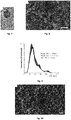
Figure 1 : SEM (Scanning Electron Microscope) picture of MSNPs, with a size of 53±6 nm (50 counts, scale bar = 50 nm). -
Figure 2 : TEM (Transmission Electron Microscope) picture of MSNPs, with a size of 53±6 nm (scale bar = 50 nm). -
Figure 3 : SEM picture of MSNPs, with a size of 35±6 nm (50 counts, scale bar = 35 nm). -
Figure 4 : TEM picture of MSNPs, with a size of 35±6 nm (scale bar = 35 nm). -
Figure 5 NTA (Nano Tracking Analysis) of MSNPs, with a size of 35±6 nm. -
Figure 6 : SEM picture of MSNPs+, with a size of 50.9±3.6 nm (50 counts, scale bar = 50 nm). -
Figure 7 : TEM picture of MSNPs+, with a size of 50.9±3.6 nm (scale bar = 50 nm). -
Figure 8 : SEM picture of MSNPs+, with a sized of 36.5±5 nm (50 counts, scale bar = 100 nm). -
Figure 9 : NTA analysis of MSNPs+, with a sized of 36.5±5 nm. -
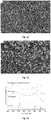
Figure 10 : SEM picture of purification in ammonium nitrate extraction of MSNPs showing the presence of CTACI template and the aggregation between the nanoparticles (scale bar = 200 nm). -
Figure 11 : SEM picture of MSNPs after the acid dialysis process (scale bar = 200 nm). -
Figure 12 : SEM picture of the MSNPs dispersed in water after total extraction (scale bar = 200 nm). -
Figure 13 : Diffuse-Reflectance IR Fourier Transform (DRIFT) spectrum of MSNPs+ before and after acid dialysis process, and after total extraction of the template via ultrasound in acid solution. -
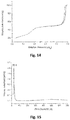
Figure 14 : Nitrogen adsorption of MSNPs, used for Barrett-Joyner-Halenda model determination. -
Figure 15 : Pore size distribution in volume of MSNPs. -
Figure 16 : XRD patterns of MSNPs and MSNPs+ after total extraction. -
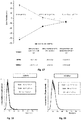
Figure 17 : ζ-potential table for MSNPs and MSNPs+ performed on a Malvern Instruments in water (pH 5.5). Data are mean ± SE and represent three independent experiments. -
Figure 18 : NTA analysis of MSNPs in milliQ water. -
Figure 19 : NTA analysis of MSNPs+ in milliQ water. - The self-assembling of the mesoporous structure was provided by a radial growth using tetraethyl orthosilicate (TEOS) as silica precursor, the surfactant cetyltrimethylammonium chloride solution (CTACI) as a pore template, and triethanolamine (TEA) as condensation agent.
- This synthesis formed non-aggregated MSNPs with a dry size of about 54 nm as shown by TEM and SEM pictures (
figures 1 and 2 ). - Smaller MSNPs have potential interest in the perspective to cross biological barriers such as the blood brain barrier. For this purpose, the size of MSNPs was decreased by diluting by two the reagents to get particles of a size around 35 nm. Decreasing concentrations of reactants slows down the condensation of the silica nuclei which can explain the smaller size of these MSNPs (
figures 3 and 4 ). - A minor but still significant intra-particular aggregation of MSNPs 35 nm was observed during hydrodynamic size studies by using Nano Tracking Analysis (NTA) (
figure 5 ). Due to their smaller size, MSNPs of 35 nm tend to aggregate more in water than those of 55 nm. - Functionalization of MSNPs with amino moieties provides positively charged nanoparticles. Those positively charged nanoparticles (MSNPs+) will be used to be incorporated into negatively charged structures, such as negatively charged supported lipid bilayer.
- A high density of amino moieties is expected to reinforce electrostatic interaction between the negatively charged supported lipid bilayer and the MSNPs+. To achieve such an amino coating, (3-aminopropyl)triethoxysilane (APTES) were added 20 minutes after the beginning of the MSNPs 55 and 35 nm synthesis. Due to the presence of the template CTACI which cloaks the pores, this process allows to functionalize the outer nanoparticle surface prior to the inner surface. However, a functionalization of the inner surface cannot be excluded due to the diffusion of APTES inside the nanoparticle.
- The size of MSNPs+ (55 nm) has been visualized by SEM and TEM analysis (
figure 6 and7 ). - A minor increase of size is observed compared to non-functionalized MSNPs. A similar amino coating process was developed for MSNPs of 35 nm. SEM characterization of MSNPs+ (35 nm) is shown in
figure 8 . The dry size of these particles does not significantly changes compared to the non-functionalized MSNPs of 35 nm. Nevertheless, in water, MSNPs+ (35 nm) tends to aggregate more than MSNPs (35 nm) as shown by the NTA analysis depicted infigure 9 . - In order to remove the template inside MSNPs+ and MSNPs, several extraction methods were tested. Template extraction based on acidic conditions and ionic competition was described to decrease particle aggregation compared to the template calcination. Some methods based either on ethanol/HCI extraction, acid dialysis or ammonium nitrate extraction were already published.
- Nevertheless, applying these approaches on our NPs failed to completely remove the template as shown by the SEM analysis (
figures 10 and11 ). - Successful combination of acid dialysis and extraction in ethanol/HCI was highly efficient as demonstrated on
figure 12 depicting a SEM picture of the MSNPs dispersed in water after total extraction. - Fourier Transform Infrared Spectroscopy (FTIR) performed on MSNPs+ (55 nm) samples confirmed these observations (
figure 13 ). The C-H stretching vibration between 2830-2970 cm-1 and the C-H bending vibration 1470 cm-1 of the CTACI template had disappeared after the total MSNPs+ extraction. Once the template is removed, the water bending peak at 1630 cm-1 increased due to the presence of hydrophilic silanol functions on the surface of MSNPs+. The possibility to remove the residual surfactant demonstrates that the pores of MSNPs+ are not cloaked by the APTES functionalization. In addition, SEM and TEM pictures of MSNPs+ showed a clear porosity of these structures (figures 6 and7 ). - Specific surface and pore sizes of MSNPs were determined by Brunauer, Emmett and Teller (BET) measurements. The Barrett-Joyner-Halenda model calculated a high surface area of 935.5 m2/g (
figure 14 ), and pores size distribution of about 2.8 nm (figures 15 ). - X-ray Diffraction (XRD) analyses were performed to acquire crystallography insights of the NPs structure. The broad peak depicted in
figure 16 is centered on 1.9° and can be attributed to the wormlike structure. The pore size calculated using the Bragg equation, is about 2.9 nm which is similar to the values calculated from the BET theory. - The ζ-potential of MSNPs and MSNPs+ were investigated in different media: milliQ water, and HEPES buffer (
figure 17 ). These measurements have been made without performing any filtration or size exclusion prior to analysis. The size has been measured using NTA whereas ζ-potential has been measured by using Malvern Nano Zetasizer®. In milliQ water, at a pH value of 5.8, MSNPs+ have a charge of +26.47 mV. In comparison with the results obtained by the Bein's research group, for a similar value of pH, the ζ-potential of the MSNPs+ of the present invention is significatively higher. Indeed, at a pH value of 6.0, the ζ-potential of the Bein's nanoparticle is comprised between 0 mV and 5 mV. This is a clear indication that the functionalization of the MSNPs by the organotriethoxysilane, i.e. (3-aminopropyl)triethoxysilane (APTES), resulting in MSNPs+, namely in nanoparticles bearing a reactive organic group at its external surface, proceeds in a more efficacious manner when the protocol according to present invention is followed. - A further result (not shown) indicates that at a pH value of 4.0, the ζ-potential measurement demonstrates a charge of +37 mV onto the MSNPs+.
- The size of MSNPs+ in water is about 99 nm (
figure 19 ) whereas the size of MSNPs in water is about 68 nm (figure 18 ). - Cetyltrimethylammonium chloride (CTACI), TEA: Triethanolamine, tetraorthosilicate (TEOS), (3-aminopropyl)triethoxysilane (APTES) were purchased from Sigma-Aldrich Co. Ammonium acetate and Methanol were purchased from Biosolve.
- A stock solution was prepared by mixing 13.75 mL (762.8 mmol) of milliQ water, 2.23 mL (38.2 mmol) of absolute ethanol, and 2.23 mL (1.69 mmol) of 25% CTACI by stirring in Radleys Tech® carrousel for 10 minutes under argon atmosphere. Then, TEA (1.78 mL; 13.37 mmol) was added and mixed with stock solution until complete dissolution. Stock solution was heated at 60°C, and then TEOS (1.454 mL; 6.5 mmol) was added in drops over 2-3 minutes. The reaction was stirred for 2 hours, under argon atmosphere. The molar ratio of this reaction is: TEOS/CTACI/TEA/H2O/EtOH 1/0.26/2/117.35/5.88.
- The mesoporous silica nanoparticles which are formed display a wormhole-type matrix.
- During this reaction, the reagent mixture was diluted by two. Stock solution was prepared by mixing 27.5 mL (1.52 mol) of milliQ water, 4.46 mL (76.4 mmol) of absolute ethanol, and 2.23 mL (1.69 mmol) of 25 % CTACI in Radleys Tech® carrousel for 10 minutes under argon atmosphere. Then, the same synthesis process than the MSNPs 55 nm is applied with a molar ratio of: TEOS/CTACI/TEA/H2O/EtOH 1/0.26/2/234.7/11.76.
- The mesoporous silica nanoparticles which are formed display a wormhole-type matrix.
- After 20 minutes of MSNPs 55 nm reaction, 150 µL of APTES (0.64 mmol) were added inside the solution. The reaction was stirred for 2 hours, under argon atmosphere. The molar ratio of this reaction is: TEOS/CTACI/TEA/H2O/EtOH/APTES 1/0.26/2/117.35/5.88/0.1.
- The template extraction was performed by the combination of dialysis process and washing in hydrochloric acid. For the dialysis process, 50 mL of mesoporous silica nanoparticles were transferred into a dialysis membrane composed of cellulose (Molecular Weigh Cut Off = 15 000 Da, Spectrum Labs)). Nanoparticles were washed during 24h against 1L of the mixture containing 3M acetic acid, and ethanol (1:1) to remove CTACI from inside nanoparticle pores. This process was repeated five times. To remove the residual surfactant, the NPs were washed in HCl/Ethanol (25 mL conc.HCl in 100 mL EtOH) solution follow by 20 minutes centrifugation at 45 000 g by Beckman TM Allegra® 64R. The NPs were washed five times in the extraction solution for 2 hours under sonication. And, one last washing was performed in water.
- The MSNPs and MSNPs+ samples were dried by lyophilization, to get 100mg of powder. The silica nanomaterials were characterized by X-ray diffraction (XRD) in Brüker D8 Discover® HR XRD. The pore size was calculated by the Bragg's law: nλ=2d sin θ (1) With n the order of diffraction (n=1), λ the diffracted wavelength (i.e. copper X-Ray source, λCopper = 1.54), d the grating space between atomic lattice planes, and θ the angle between the incident beam and the scattering planes.
- The MSNPs and MSNPs+ samples were evaporated by lyophilization, to get 100 mg of powder. The textural properties, including the BET (Brunauer-Emmett-Teller) specific surface area (SBET), specific pore volume (Vp) and pore diameter (Dp), were determined from low-temperature N2 adsorption-desorption measurements collected using an ASAP 2010 Micrometrics apparatus. Prior to the analysis, the samples were degased under vacuum at 150 °C until the static pressure was less than 6.6×10⁻⁴ Pa. The specific surface area was calculated from the N2 sorption isotherm using the BET equation and taking into account the cross-sectional area of a physically adsorbed N2 molecule (0.1620 nm2). The pore diameter and pore size distributions were calculated from the desorption branch of the isotherms using the Barrett-Joyner-Halenda (BJH) method.
- Malvern Nano Zetasizer® measure the size and Zeta potential of NPs by using dynamic light scattering size (DLS). The analysis was performed with 0.1 mg/mL for each sample.
- Nanoparticles Tracking Analysis (NTA) used a light scattering method which relates the rate of Brownian motion to particle size. This method allows direct and real time visualizing and analyzing of the NPs in liquids. During NTA measurement, NPs are illuminated by a focused laser beam and analyzed by the light scattered by each individual particle in the microscope onto the image sensor of a charge-coupled device (CCD) camera. The camera visualizes and records the frames of the particles in solution. The NTA software identifies and individually tracks the particles moving under Brownian motion. This measurement uses the temperature and the viscosity of the liquid to calculate particle size through the Stokes-Einstein equation. The Nanosight® analyses the particles with a size range from 30 to 1 µm. The samples were diluted at 0.01 mg/mL for analysis.
- Each sample was mixed with KBr in a weight ratio of 1.5:100. Samples were ground for 2 minutes and then pressed into a pellet under 450 kg.cm-3. The spectra are performed with FTIR Brüker VERTEX 70 equipped with an MCT detector via an Attenuated Total Reflection (ATR), and KBr background is substracted.
- One drop of each silica sample (MSNPs+ and MSNPs) was deposited on a copper support and dried for 3 hours. Pictures were acquired on a FEI HELIOS NanoLab 650™ scanning electron microscopy working at 2 kV.
- To ensure the relevant dispersion of MSNPs, NanoPlusGrids with a 15 nm Nitride monolayer were used as analysis support. One drop of each silica sample was deposited on a grid and fully dried before measurement. The shape, porosity and size of the nanoparticles were characterized by FEI Tecnaï™ Transmission Electronic Microscopy (TEM) operating at 200 kV.
Claims (15)
- Method for self-assembling a mesoporous silica nanoparticle, said method comprising the following stepsa. condensing a silica precursor, a surfactant and a condensation agent in a solvent;b. adding an organotriethoxysilane;c. finally, removing said surfactant;characterized in that the portion of said organotriethoxysilane to said silica precursor is comprised between 5% and 15%.
- Method according to claim 1, characterized in that said portion is comprised between 6% and 14%, preferentially between 7% and 13%, more preferentially between 8% and 12%, even more preferentially between 9% and 11%.
- Method according to any one of claims 1-2, characterized in that said portion is 10%.
- Method according to any one of claims 1-3, characterized in that said silica precursor is tetraethyl orthosilicate, said surfactant is cetyltrimethylammonium chloride, said condensation agent is triethanolamine and/or said organotriethoxysilane is (3-aminoproplyl)triethoxysilane.
- Method according to any one of claims 1-4, characterized in that the number of equivalents of the condensation agent relative to one equivalent of said silica precursor is comprised between 1.6 and 2.4, preferentially between 1.7 and 2.3, more preferentially between 1.8 and 2.2, even more preferentially between 1.9 and 2.1.
- Method according to any one of claims 1-5, characterized in that the number of equivalents of the condensation agent relative to one equivalent of said silica precursor is 2.0.
- Method according to any one of claims 1-6, characterized in that the number of equivalents of the surfactant relative to one equivalent of said silica precursor is comprised between 0.22 and 0.30, preferentially between 0.23 and 0.29, more preferentially between 0.24 and 0.28, even more preferentially between 0.25 and 0.27.
- Method according to any one of claims 1-7, characterized in that the number of equivalents of the surfactant relative to one equivalent of said silica precursor is 0.26.
- Method according to any one of claims 1-8, characterized in that said organotriethoxysilane is added between 10 minutes and 30 minutes, preferentially between 15 minutes and 25 minutes, more preferentially at 20 minutes.
- Method according to any one of claims 1-9, characterized in that said step of removing said surfactant is a combination of a dialysis process and an extraction in hydrochloric acid.
- Method according to claim 10, characterized in that said dialysis process is repeated five times.
- Method according to any one of claims 1-11, characterized in that said solvent is a mixture of milliQ water and ethanol.
- Method according to any one of claims 1-12, characterized in that the number of equivalents of milliQ water relative to one equivalent of said silica precursor is comprised between 100 and 134 or between 217 and 251, preferentially between 105 and 129 or between 222 and 246, more preferentially between 110 and 124 or between 227 and 241, even more preferentially between 116 and 118 or between 233 and 235.
- Method according to any one of claims 1-13, characterized in that the number of equivalents of ethanol relative to one equivalent of said silica precursor is comprised between 2 and 8 or between 9 and 14, preferentially between 3 and 7 or between 10 and 13, more preferentially between 4 and 6 or between 11 and 12.
- Method according to any one of claims 1-14, characterized in that said mesoporous silica nanoparticle is adapted for being incorporated within a supported lipid bilayer.
Applications Claiming Priority (2)
| Application Number | Priority Date | Filing Date | Title |
|---|---|---|---|
| LU92783A LU92783B1 (en) | 2015-07-22 | 2015-07-22 | Highly aminated self-assembling fuctionalized Mesoporous Silicia Nanoparticles and methods of synthesis |
| PCT/EP2016/067327 WO2017013182A1 (en) | 2015-07-22 | 2016-07-20 | Highly aminated self-assembling functionalized mesoporous silica nanoparticles and method of synthesis |
Publications (2)
| Publication Number | Publication Date |
|---|---|
| EP3325407A1 EP3325407A1 (en) | 2018-05-30 |
| EP3325407B1 true EP3325407B1 (en) | 2019-02-06 |
Family
ID=53785687
Family Applications (1)
| Application Number | Title | Priority Date | Filing Date |
|---|---|---|---|
| EP16750400.0A Not-in-force EP3325407B1 (en) | 2015-07-22 | 2016-07-20 | Highly aminated self-assembling functionalized mesoporous silica nanoparticles and method of synthesis |
Country Status (6)
| Country | Link |
|---|---|
| US (1) | US10457563B2 (en) |
| EP (1) | EP3325407B1 (en) |
| JP (1) | JP6912822B2 (en) |
| IL (1) | IL257031B (en) |
| LU (1) | LU92783B1 (en) |
| WO (1) | WO2017013182A1 (en) |
Families Citing this family (1)
| Publication number | Priority date | Publication date | Assignee | Title |
|---|---|---|---|---|
| JP7019148B2 (en) * | 2018-07-26 | 2022-02-15 | 学校法人福岡工業大学 | Composite gel synthesis method and composite gel |
Family Cites Families (11)
| Publication number | Priority date | Publication date | Assignee | Title |
|---|---|---|---|---|
| US5200058A (en) * | 1990-01-25 | 1993-04-06 | Mobil Oil Corp. | Catalytic conversion over modified synthetic mesoporous crystalline material |
| US5145816A (en) * | 1990-12-10 | 1992-09-08 | Mobil Oil Corporation | Method for functionalizing synthetic mesoporous crystalline material |
| TWI261046B (en) * | 2004-10-08 | 2006-09-01 | Ind Tech Res Inst | Resin composition with low dielectric constant filler for high frequency substrate |
| KR100940177B1 (en) * | 2005-06-07 | 2010-02-03 | 캐논 가부시끼가이샤 | Structures, porous bodies, sensors, and methods of manufacturing structures and detecting specimens |
| KR100828575B1 (en) * | 2007-01-22 | 2008-05-13 | 인하대학교 산학협력단 | Small plate-like silica with mesopores of short vertical channels |
| JP2010133048A (en) * | 2008-12-03 | 2010-06-17 | Kao Corp | Fiber-treating agent |
| FR2942622B1 (en) * | 2009-02-27 | 2011-05-13 | Commissariat Energie Atomique | PROCESS FOR THE PREPARATION OF POROUS SILICA PARTICLES, THE SAID PARTICLES AND THEIR USES |
| US10464811B2 (en) * | 2009-04-06 | 2019-11-05 | Nanyang Technological University | Method of forming a particulate porous metal oxide or metalloid oxide |
| CN103687590A (en) * | 2011-04-28 | 2014-03-26 | Stc·Unm公司 | Porous nanoparticle supported lipid bilayers (protocells) for targeted drug delivery and methods of use thereof |
| US20130177934A1 (en) * | 2011-12-15 | 2013-07-11 | Cornell University | Aminated Mesoporous Silica Nanoparticles, Methods of Making Same, and Uses Thereof |
| GB2507983A (en) * | 2012-11-15 | 2014-05-21 | Nanoscape Ag | Mesoporous silica particles and their use in drug delivery |
-
2015
- 2015-07-22 LU LU92783A patent/LU92783B1/en active IP Right Grant
-
2016
- 2016-07-20 JP JP2018501351A patent/JP6912822B2/en not_active Expired - Fee Related
- 2016-07-20 US US15/746,298 patent/US10457563B2/en active Active
- 2016-07-20 EP EP16750400.0A patent/EP3325407B1/en not_active Not-in-force
- 2016-07-20 WO PCT/EP2016/067327 patent/WO2017013182A1/en not_active Ceased
-
2018
- 2018-01-20 IL IL257031A patent/IL257031B/en active IP Right Grant
Non-Patent Citations (1)
| Title |
|---|
| None * |
Also Published As
| Publication number | Publication date |
|---|---|
| JP2018527278A (en) | 2018-09-20 |
| IL257031A (en) | 2018-03-29 |
| EP3325407A1 (en) | 2018-05-30 |
| US20180222754A1 (en) | 2018-08-09 |
| IL257031B (en) | 2019-08-29 |
| JP6912822B2 (en) | 2021-08-04 |
| WO2017013182A1 (en) | 2017-01-26 |
| US10457563B2 (en) | 2019-10-29 |
| LU92783B1 (en) | 2017-01-31 |
Similar Documents
| Publication | Publication Date | Title |
|---|---|---|
| US11213487B2 (en) | Negatively charged self-assembling supported lipid bilayer on mesoporous silica nanoparticles, method of synthesis and use as a nanovector | |
| Zhang et al. | Fabrication of mesoporous silica-coated CNTs and application in size-selective protein separation | |
| Liu et al. | A facile vesicle template route to multi-shelled mesoporous silica hollow nanospheres | |
| Idris et al. | Investigation on particle properties and extent of functionalization of silica nanoparticles | |
| Jambhrunkar et al. | Modulating in vitro release and solubility of griseofulvin using functionalized mesoporous silica nanoparticles | |
| Gu et al. | Organic–inorganic mesoporous nanocarriers integrated with biogenic ligands | |
| Sponchia et al. | Mesoporous silica nanoparticles with tunable pore size for tailored gold nanoparticles | |
| Liang et al. | One-step synthesis of golf ball-like thiol-functionalized silica particles | |
| CN115779102B (en) | Mesoporous silica nanomaterial coated with cerium oxide and preparation method and application thereof | |
| Pryazhnikov et al. | Surface-modified magnetic nanoscale materials: Preparation and study of their structure, composition, and properties | |
| Kang et al. | Effect of (3-aminopropyl) triethoxysilane on dissolution of silica nanoparticles synthesized via reverse micro emulsion | |
| US10457563B2 (en) | Highly aminated self-assembling functionalized mesoporous silica nanoparticles and method of synthesis | |
| Roik et al. | Mesoporous silica nanoparticles equipped with surface nanovalves for pH-controlled liberation of doxorubicin | |
| EP3470371A1 (en) | Method of controlling the morphology of mesoporous silica particles | |
| US11964253B2 (en) | Production method for core-shell porous silica particles | |
| Nguyen et al. | Synthesis and properties of porous ester-silica nanoparticles | |
| de ON Ribeiro et al. | Impact of heteroatom addition into mesoporous silica for water adsorption in the low partial pressure range | |
| Joguet et al. | Preparation of nanosized drug particles by the coating of inorganic cores: naproxen and ketoprofen on alumina | |
| JP7520024B2 (en) | Direct nanoemulsion method for the synthesis of spherical organosiloxane submicron/nanoparticles | |
| Khurana et al. | Synthesis of silica spherical to y-shape nanoparticles: a review with surface modifications and its characterization | |
| Kadali et al. | Assembling colloidal silica into porous hollow microspheres | |
| González-Martínez et al. | Hollow flower-like Cu2 (OH) 3Cl/Cu2O nanostructures and their efficient catalytical properties | |
| Ajayi et al. | Synthesis and morphological characterisation of mesoporous biosilica from oil palm male inflorescence | |
| Kobler | Thin films from porous nanoparticles | |
| Lee et al. | Altering Surface Charge of Silica Nanoparticles through Co-condensation of Choline Chloride and Tetraethyl Orthosilicate (TEOS) |
Legal Events
| Date | Code | Title | Description |
|---|---|---|---|
| STAA | Information on the status of an ep patent application or granted ep patent |
Free format text: STATUS: THE INTERNATIONAL PUBLICATION HAS BEEN MADE |
|
| PUAI | Public reference made under article 153(3) epc to a published international application that has entered the european phase |
Free format text: ORIGINAL CODE: 0009012 |
|
| STAA | Information on the status of an ep patent application or granted ep patent |
Free format text: STATUS: REQUEST FOR EXAMINATION WAS MADE |
|
| 17P | Request for examination filed |
Effective date: 20180219 |
|
| AK | Designated contracting states |
Kind code of ref document: A1 Designated state(s): AL AT BE BG CH CY CZ DE DK EE ES FI FR GB GR HR HU IE IS IT LI LT LU LV MC MK MT NL NO PL PT RO RS SE SI SK SM TR |
|
| AX | Request for extension of the european patent |
Extension state: BA ME |
|
| GRAP | Despatch of communication of intention to grant a patent |
Free format text: ORIGINAL CODE: EPIDOSNIGR1 |
|
| STAA | Information on the status of an ep patent application or granted ep patent |
Free format text: STATUS: GRANT OF PATENT IS INTENDED |
|
| DAX | Request for extension of the european patent (deleted) | ||
| INTG | Intention to grant announced |
Effective date: 20180808 |
|
| DAV | Request for validation of the european patent (deleted) | ||
| GRAS | Grant fee paid |
Free format text: ORIGINAL CODE: EPIDOSNIGR3 |
|
| GRAA | (expected) grant |
Free format text: ORIGINAL CODE: 0009210 |
|
| STAA | Information on the status of an ep patent application or granted ep patent |
Free format text: STATUS: THE PATENT HAS BEEN GRANTED |
|
| AK | Designated contracting states |
Kind code of ref document: B1 Designated state(s): AL AT BE BG CH CY CZ DE DK EE ES FI FR GB GR HR HU IE IS IT LI LT LU LV MC MK MT NL NO PL PT RO RS SE SI SK SM TR |
|
| REG | Reference to a national code |
Ref country code: GB Ref legal event code: FG4D |
|
| REG | Reference to a national code |
Ref country code: CH Ref legal event code: EP Ref country code: AT Ref legal event code: REF Ref document number: 1094778 Country of ref document: AT Kind code of ref document: T Effective date: 20190215 |
|
| REG | Reference to a national code |
Ref country code: IE Ref legal event code: FG4D |
|
| REG | Reference to a national code |
Ref country code: DE Ref legal event code: R096 Ref document number: 602016009847 Country of ref document: DE |
|
| REG | Reference to a national code |
Ref country code: CH Ref legal event code: NV Representative=s name: DR. ALEXANDER MILLER, LL.M. RECHTSANWALT (D), CH |
|
| REG | Reference to a national code |
Ref country code: NL Ref legal event code: FP |
|
| REG | Reference to a national code |
Ref country code: LT Ref legal event code: MG4D |
|
| PG25 | Lapsed in a contracting state [announced via postgrant information from national office to epo] |
Ref country code: PT Free format text: LAPSE BECAUSE OF FAILURE TO SUBMIT A TRANSLATION OF THE DESCRIPTION OR TO PAY THE FEE WITHIN THE PRESCRIBED TIME-LIMIT Effective date: 20190606 Ref country code: LT Free format text: LAPSE BECAUSE OF FAILURE TO SUBMIT A TRANSLATION OF THE DESCRIPTION OR TO PAY THE FEE WITHIN THE PRESCRIBED TIME-LIMIT Effective date: 20190206 Ref country code: FI Free format text: LAPSE BECAUSE OF FAILURE TO SUBMIT A TRANSLATION OF THE DESCRIPTION OR TO PAY THE FEE WITHIN THE PRESCRIBED TIME-LIMIT Effective date: 20190206 Ref country code: NO Free format text: LAPSE BECAUSE OF FAILURE TO SUBMIT A TRANSLATION OF THE DESCRIPTION OR TO PAY THE FEE WITHIN THE PRESCRIBED TIME-LIMIT Effective date: 20190506 Ref country code: SE Free format text: LAPSE BECAUSE OF FAILURE TO SUBMIT A TRANSLATION OF THE DESCRIPTION OR TO PAY THE FEE WITHIN THE PRESCRIBED TIME-LIMIT Effective date: 20190206 |
|
| REG | Reference to a national code |
Ref country code: AT Ref legal event code: MK05 Ref document number: 1094778 Country of ref document: AT Kind code of ref document: T Effective date: 20190206 |
|
| PG25 | Lapsed in a contracting state [announced via postgrant information from national office to epo] |
Ref country code: BG Free format text: LAPSE BECAUSE OF FAILURE TO SUBMIT A TRANSLATION OF THE DESCRIPTION OR TO PAY THE FEE WITHIN THE PRESCRIBED TIME-LIMIT Effective date: 20190506 Ref country code: IS Free format text: LAPSE BECAUSE OF FAILURE TO SUBMIT A TRANSLATION OF THE DESCRIPTION OR TO PAY THE FEE WITHIN THE PRESCRIBED TIME-LIMIT Effective date: 20190606 Ref country code: GR Free format text: LAPSE BECAUSE OF FAILURE TO SUBMIT A TRANSLATION OF THE DESCRIPTION OR TO PAY THE FEE WITHIN THE PRESCRIBED TIME-LIMIT Effective date: 20190507 Ref country code: RS Free format text: LAPSE BECAUSE OF FAILURE TO SUBMIT A TRANSLATION OF THE DESCRIPTION OR TO PAY THE FEE WITHIN THE PRESCRIBED TIME-LIMIT Effective date: 20190206 Ref country code: LV Free format text: LAPSE BECAUSE OF FAILURE TO SUBMIT A TRANSLATION OF THE DESCRIPTION OR TO PAY THE FEE WITHIN THE PRESCRIBED TIME-LIMIT Effective date: 20190206 Ref country code: HR Free format text: LAPSE BECAUSE OF FAILURE TO SUBMIT A TRANSLATION OF THE DESCRIPTION OR TO PAY THE FEE WITHIN THE PRESCRIBED TIME-LIMIT Effective date: 20190206 |
|
| PG25 | Lapsed in a contracting state [announced via postgrant information from national office to epo] |
Ref country code: IT Free format text: LAPSE BECAUSE OF FAILURE TO SUBMIT A TRANSLATION OF THE DESCRIPTION OR TO PAY THE FEE WITHIN THE PRESCRIBED TIME-LIMIT Effective date: 20190206 Ref country code: RO Free format text: LAPSE BECAUSE OF FAILURE TO SUBMIT A TRANSLATION OF THE DESCRIPTION OR TO PAY THE FEE WITHIN THE PRESCRIBED TIME-LIMIT Effective date: 20190206 Ref country code: SK Free format text: LAPSE BECAUSE OF FAILURE TO SUBMIT A TRANSLATION OF THE DESCRIPTION OR TO PAY THE FEE WITHIN THE PRESCRIBED TIME-LIMIT Effective date: 20190206 Ref country code: CZ Free format text: LAPSE BECAUSE OF FAILURE TO SUBMIT A TRANSLATION OF THE DESCRIPTION OR TO PAY THE FEE WITHIN THE PRESCRIBED TIME-LIMIT Effective date: 20190206 Ref country code: AL Free format text: LAPSE BECAUSE OF FAILURE TO SUBMIT A TRANSLATION OF THE DESCRIPTION OR TO PAY THE FEE WITHIN THE PRESCRIBED TIME-LIMIT Effective date: 20190206 Ref country code: DK Free format text: LAPSE BECAUSE OF FAILURE TO SUBMIT A TRANSLATION OF THE DESCRIPTION OR TO PAY THE FEE WITHIN THE PRESCRIBED TIME-LIMIT Effective date: 20190206 Ref country code: ES Free format text: LAPSE BECAUSE OF FAILURE TO SUBMIT A TRANSLATION OF THE DESCRIPTION OR TO PAY THE FEE WITHIN THE PRESCRIBED TIME-LIMIT Effective date: 20190206 Ref country code: EE Free format text: LAPSE BECAUSE OF FAILURE TO SUBMIT A TRANSLATION OF THE DESCRIPTION OR TO PAY THE FEE WITHIN THE PRESCRIBED TIME-LIMIT Effective date: 20190206 |
|
| REG | Reference to a national code |
Ref country code: DE Ref legal event code: R097 Ref document number: 602016009847 Country of ref document: DE |
|
| PG25 | Lapsed in a contracting state [announced via postgrant information from national office to epo] |
Ref country code: SM Free format text: LAPSE BECAUSE OF FAILURE TO SUBMIT A TRANSLATION OF THE DESCRIPTION OR TO PAY THE FEE WITHIN THE PRESCRIBED TIME-LIMIT Effective date: 20190206 Ref country code: PL Free format text: LAPSE BECAUSE OF FAILURE TO SUBMIT A TRANSLATION OF THE DESCRIPTION OR TO PAY THE FEE WITHIN THE PRESCRIBED TIME-LIMIT Effective date: 20190206 |
|
| PLBE | No opposition filed within time limit |
Free format text: ORIGINAL CODE: 0009261 |
|
| STAA | Information on the status of an ep patent application or granted ep patent |
Free format text: STATUS: NO OPPOSITION FILED WITHIN TIME LIMIT |
|
| PG25 | Lapsed in a contracting state [announced via postgrant information from national office to epo] |
Ref country code: AT Free format text: LAPSE BECAUSE OF FAILURE TO SUBMIT A TRANSLATION OF THE DESCRIPTION OR TO PAY THE FEE WITHIN THE PRESCRIBED TIME-LIMIT Effective date: 20190206 |
|
| 26N | No opposition filed |
Effective date: 20191107 |
|
| PG25 | Lapsed in a contracting state [announced via postgrant information from national office to epo] |
Ref country code: MC Free format text: LAPSE BECAUSE OF FAILURE TO SUBMIT A TRANSLATION OF THE DESCRIPTION OR TO PAY THE FEE WITHIN THE PRESCRIBED TIME-LIMIT Effective date: 20190206 |
|
| PG25 | Lapsed in a contracting state [announced via postgrant information from national office to epo] |
Ref country code: TR Free format text: LAPSE BECAUSE OF FAILURE TO SUBMIT A TRANSLATION OF THE DESCRIPTION OR TO PAY THE FEE WITHIN THE PRESCRIBED TIME-LIMIT Effective date: 20190206 |
|
| PG25 | Lapsed in a contracting state [announced via postgrant information from national office to epo] |
Ref country code: CY Free format text: LAPSE BECAUSE OF FAILURE TO SUBMIT A TRANSLATION OF THE DESCRIPTION OR TO PAY THE FEE WITHIN THE PRESCRIBED TIME-LIMIT Effective date: 20190206 |
|
| PG25 | Lapsed in a contracting state [announced via postgrant information from national office to epo] |
Ref country code: MT Free format text: LAPSE BECAUSE OF FAILURE TO SUBMIT A TRANSLATION OF THE DESCRIPTION OR TO PAY THE FEE WITHIN THE PRESCRIBED TIME-LIMIT Effective date: 20190206 Ref country code: HU Free format text: LAPSE BECAUSE OF FAILURE TO SUBMIT A TRANSLATION OF THE DESCRIPTION OR TO PAY THE FEE WITHIN THE PRESCRIBED TIME-LIMIT; INVALID AB INITIO Effective date: 20160720 |
|
| PGFP | Annual fee paid to national office [announced via postgrant information from national office to epo] |
Ref country code: NL Payment date: 20210727 Year of fee payment: 6 |
|
| PG25 | Lapsed in a contracting state [announced via postgrant information from national office to epo] |
Ref country code: SI Free format text: LAPSE BECAUSE OF FAILURE TO SUBMIT A TRANSLATION OF THE DESCRIPTION OR TO PAY THE FEE WITHIN THE PRESCRIBED TIME-LIMIT Effective date: 20190206 |
|
| PGFP | Annual fee paid to national office [announced via postgrant information from national office to epo] |
Ref country code: LU Payment date: 20210727 Year of fee payment: 6 Ref country code: FR Payment date: 20210727 Year of fee payment: 6 Ref country code: IE Payment date: 20210727 Year of fee payment: 6 Ref country code: CH Payment date: 20210902 Year of fee payment: 6 |
|
| PGFP | Annual fee paid to national office [announced via postgrant information from national office to epo] |
Ref country code: BE Payment date: 20210727 Year of fee payment: 6 Ref country code: GB Payment date: 20210727 Year of fee payment: 6 Ref country code: DE Payment date: 20210727 Year of fee payment: 6 |
|
| PG25 | Lapsed in a contracting state [announced via postgrant information from national office to epo] |
Ref country code: MK Free format text: LAPSE BECAUSE OF FAILURE TO SUBMIT A TRANSLATION OF THE DESCRIPTION OR TO PAY THE FEE WITHIN THE PRESCRIBED TIME-LIMIT Effective date: 20190206 |
|
| REG | Reference to a national code |
Ref country code: DE Ref legal event code: R119 Ref document number: 602016009847 Country of ref document: DE |
|
| REG | Reference to a national code |
Ref country code: CH Ref legal event code: PL |
|
| REG | Reference to a national code |
Ref country code: NL Ref legal event code: MM Effective date: 20220801 |
|
| GBPC | Gb: european patent ceased through non-payment of renewal fee |
Effective date: 20220720 |
|
| REG | Reference to a national code |
Ref country code: BE Ref legal event code: MM Effective date: 20220731 |
|
| PG25 | Lapsed in a contracting state [announced via postgrant information from national office to epo] |
Ref country code: LU Free format text: LAPSE BECAUSE OF NON-PAYMENT OF DUE FEES Effective date: 20220720 Ref country code: LI Free format text: LAPSE BECAUSE OF NON-PAYMENT OF DUE FEES Effective date: 20220731 Ref country code: FR Free format text: LAPSE BECAUSE OF NON-PAYMENT OF DUE FEES Effective date: 20220731 Ref country code: CH Free format text: LAPSE BECAUSE OF NON-PAYMENT OF DUE FEES Effective date: 20220731 |
|
| PG25 | Lapsed in a contracting state [announced via postgrant information from national office to epo] |
Ref country code: GB Free format text: LAPSE BECAUSE OF NON-PAYMENT OF DUE FEES Effective date: 20220720 Ref country code: DE Free format text: LAPSE BECAUSE OF NON-PAYMENT OF DUE FEES Effective date: 20230201 Ref country code: BE Free format text: LAPSE BECAUSE OF NON-PAYMENT OF DUE FEES Effective date: 20220731 |
|
| PG25 | Lapsed in a contracting state [announced via postgrant information from national office to epo] |
Ref country code: NL Free format text: LAPSE BECAUSE OF NON-PAYMENT OF DUE FEES Effective date: 20220801 |
|
| PG25 | Lapsed in a contracting state [announced via postgrant information from national office to epo] |
Ref country code: IE Free format text: LAPSE BECAUSE OF NON-PAYMENT OF DUE FEES Effective date: 20220720 |