EP3324678A1 - Cell reselection based on difference between current cell reselection time and cell reselection time in history ping-pong reselection record - Google Patents
Cell reselection based on difference between current cell reselection time and cell reselection time in history ping-pong reselection record Download PDFInfo
- Publication number
- EP3324678A1 EP3324678A1 EP17201961.4A EP17201961A EP3324678A1 EP 3324678 A1 EP3324678 A1 EP 3324678A1 EP 17201961 A EP17201961 A EP 17201961A EP 3324678 A1 EP3324678 A1 EP 3324678A1
- Authority
- EP
- European Patent Office
- Prior art keywords
- cell
- reselection
- ping
- history
- pong
- Prior art date
- Legal status (The legal status is an assumption and is not a legal conclusion. Google has not performed a legal analysis and makes no representation as to the accuracy of the status listed.)
- Granted
Links
Images




Classifications
-
- H—ELECTRICITY
- H04—ELECTRIC COMMUNICATION TECHNIQUE
- H04W—WIRELESS COMMUNICATION NETWORKS
- H04W36/00—Hand-off or reselection arrangements
- H04W36/04—Reselecting a cell layer in multi-layered cells
-
- H—ELECTRICITY
- H04—ELECTRIC COMMUNICATION TECHNIQUE
- H04W—WIRELESS COMMUNICATION NETWORKS
- H04W36/00—Hand-off or reselection arrangements
- H04W36/0005—Control or signalling for completing the hand-off
-
- H—ELECTRICITY
- H04—ELECTRIC COMMUNICATION TECHNIQUE
- H04W—WIRELESS COMMUNICATION NETWORKS
- H04W36/00—Hand-off or reselection arrangements
- H04W36/0005—Control or signalling for completing the hand-off
- H04W36/0055—Transmission or use of information for re-establishing the radio link
- H04W36/0058—Transmission of hand-off measurement information, e.g. measurement reports
-
- H—ELECTRICITY
- H04—ELECTRIC COMMUNICATION TECHNIQUE
- H04W—WIRELESS COMMUNICATION NETWORKS
- H04W36/00—Hand-off or reselection arrangements
- H04W36/0005—Control or signalling for completing the hand-off
- H04W36/0055—Transmission or use of information for re-establishing the radio link
- H04W36/0061—Transmission or use of information for re-establishing the radio link of neighbour cell information
-
- H—ELECTRICITY
- H04—ELECTRIC COMMUNICATION TECHNIQUE
- H04W—WIRELESS COMMUNICATION NETWORKS
- H04W36/00—Hand-off or reselection arrangements
- H04W36/0005—Control or signalling for completing the hand-off
- H04W36/0083—Determination of parameters used for hand-off, e.g. generation or modification of neighbour cell lists
- H04W36/00837—Determination of triggering parameters for hand-off
- H04W36/008375—Determination of triggering parameters for hand-off based on historical data
-
- H—ELECTRICITY
- H04—ELECTRIC COMMUNICATION TECHNIQUE
- H04W—WIRELESS COMMUNICATION NETWORKS
- H04W48/00—Access restriction; Network selection; Access point selection
- H04W48/18—Selecting a network or a communication service
-
- Y—GENERAL TAGGING OF NEW TECHNOLOGICAL DEVELOPMENTS; GENERAL TAGGING OF CROSS-SECTIONAL TECHNOLOGIES SPANNING OVER SEVERAL SECTIONS OF THE IPC; TECHNICAL SUBJECTS COVERED BY FORMER USPC CROSS-REFERENCE ART COLLECTIONS [XRACs] AND DIGESTS
- Y02—TECHNOLOGIES OR APPLICATIONS FOR MITIGATION OR ADAPTATION AGAINST CLIMATE CHANGE
- Y02D—CLIMATE CHANGE MITIGATION TECHNOLOGIES IN INFORMATION AND COMMUNICATION TECHNOLOGIES [ICT], I.E. INFORMATION AND COMMUNICATION TECHNOLOGIES AIMING AT THE REDUCTION OF THEIR OWN ENERGY USE
- Y02D30/00—Reducing energy consumption in communication networks
- Y02D30/70—Reducing energy consumption in communication networks in wireless communication networks
Definitions
- the present disclosure generally relates to the communication technical field, and more particularly, to a method and device for cell reselection.
- ping-pong reselection phenomenon often occurs during cell reselection due to improper configuration of network reselection parameters. For example, when a terminal is residing in a cell A, the terminal may select a cell B according to current cell reselection parameters. When the terminal is residing in the cell B, the terminal may select the cell A again according to the cell reselection parameters. Such frequent switching between two cells is referred to as the ping-pong reselection. The ping-pong reselection will result in high standby current of the terminal, and thereby influence the standby time of the terminal and user experience.
- Embodiments of the present disclosure provide a method and device for cell reselection.
- the technical solutions are as follows.
- a method for cell reselection including:
- the method further includes:
- the step of determining whether the neighboring cell meets the cell reselection condition upon residing in the current serving cell comprises:
- the obtaining the cell reselection parameter includes:
- the step of determining whether the neighboring cell meets the cell reselection condition according to the cell reselection parameter includes:
- the obtaining of the cell reselection information corresponding to the neighboring cell includes:
- the cell reselection information further includes at least one of:
- the step of determining whether the cell reselection information matches a history ping-pong reselection record includes:
- a device for cell reselection including:
- the device further includes:
- the first determination module includes:
- the first obtaining submodule includes:
- the determination submodule includes:
- the obtaining module includes:
- the cell reselection information further includes at least one of:
- the second determination module includes:
- a device for cell reselection including:
- the processor may be further configured to carry out further steps of the method for cell reselection as described herein.
- a computer program which, when being executed on a processor of a terminal device, performs any one of the above methods.
- modules are referred to in apparatus embodiments for carrying out various steps of the described method(s) it will be understood that these modules may be implemented in hardware, in software, or a combination of the two.
- the modules When implemented in hardware, the modules may be implemented as one or more hardware modules, such as one or more application specific integrated circuits.
- the modules When implemented in software, the modules may be implemented as one or more computer programs that are executed on one or more processors.
- a neighboring cell meets a cell reselection condition, by obtaining cell reselection information corresponding to the neighboring cell, whether the cell reselection information corresponding to the neighboring cell matches a pre-recorded history ping-pong reselection record can be determined; if the cell reselection information matches any one of the history ping-pong reselection records, it is indicated that if the neighboring cell is reselected, ping-pong reselection may occur, and thus it is needed to further determine whether a time difference between the current cell reselection time and the history cell reselection time corresponding to the one history ping-pong reselection record is greater than a preset time difference; if the time difference is greater than the preset time difference, it is indicated that even the current selection is a ping-pong reselection, the current selection is far from the previous ping-pong reselection
- the frequency for the ping-pong cell reselections can be effectively lowered, the consumption of the electricity energy of terminals due to the ping-pong reselections can be reduced, and thereby the standby time can be extended to some extent and terminal usage experience of users can be improved.
- ping-pong reselection phenomenon often occurs during cell reselection due to improper configuration of network reselection parameters. For example, when a terminal is residing in a cell A, the terminal may select a cell B according to current cell reselection parameters. When the terminal is residing in the cell B, the terminal may select the cell A again according to the cell reselection parameters. Such frequent switching between two cells is referred to as the ping-pong reselection. The ping-pong reselection will result in high standby current of the terminal, and thereby influence the standby time of the terminal and user experience.
- an embodiment of the present disclosure provides a method for cell reselection.
- the method can be applied in a cell reselection program, system or device, and can be performed by a terminal such as a mobile phone.
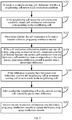
- Fig. 1 is a flowchart showing a method for cell reselection according to an exemplary embodiment.
- the method includes steps S101 to S105.
- step S101 if the terminal is residing in a current serving cell, whether a neighboring cell meets a cell reselection condition is determined.
- step S102 if the neighboring cell meets the cell reselection condition, cell reselection information corresponding to the neighboring cell is obtained.
- step S103 whether the cell reselection information matches a history ping-pong reselection record is determined.
- the cell reselection information includes at least a current cell reselection time, and each history ping-pong reselection record includes at least a history cell reselection time corresponding to the ping-pong reselection record.
- each history ping-pong reselection record may include not only the history cell reselection time corresponding to the history ping-pong reselection record, but also identification of a source cell before the reselection which is corresponding to the ping-pong reselection record, identification of a destination cell after the reselection which is corresponding to the ping-pong reselection record, and the reason for the reselection and the like. Rather, the cell reselection information may also include the above information.
- step S104 if the cell reselection information matches any one of history ping-pong reselection records, whether a difference between the current cell reselection time and the history cell reselection time corresponding to the one history ping-pong reselection record is greater than a preset time difference is determined.
- the cell reselection information matches any one of history ping-pong reselection records, it is indicated that if the neighboring cell is reselected, ping-pong reselection may occur. That is to say, if the neighboring cell is reselected, the current selection and a second cell reselection in any one ping-pong reselection record may form a ping-pong selection, or if the neighboring cell is reselected, according to the any one ping-pong reselection record, a previous serving cell may be reselected after the reselection of the neighboring cell and thereby a ping-pong reselection may occur.
- any one ping-pong record indicates a selection of a cell B when a terminal is residing in a cell A (this can be considered as the first cell reselection in the any one ping-pong reselection record), and a selection of the cell A when the terminal is residing in the cell B (this can be considered as the second cell reselection in the any one ping-pong reselection record).
- the neighboring cell B meets the cell reselection condition and the cell reselection information corresponding to the neighboring cell B matches the ping-pong reselection record
- the reselection of the cell B and the reselection of the cell A when the terminal is residing in the cell B may form a ping-pong reselection, or according to the any one ping-pong reselection record, if the cell B is reselected, the terminal may select the cell A again and thus ping-pong reselection may occur.
- the history ping-pong reselection records may include several most recent reselection records.
- the most recent reselection record may be taken as the comparison object.
- the ping-pong reselection records indicates a selection of the cell B when the terminal is residing in the cell A and a selection of the cell A when the terminal is residing in the cell B
- the time when the terminal re-residing in the cell A is contiguous to the time when the terminal is residing in the current serving cell in step S101, and the two times match each other
- the selection of the cell B when the terminal is residing in the cell A and the second cell reselection i.e., the selection of the cell A when the terminal is residing in the cell B
- the ping-pong reselection record form a ping-pong reselection.
- the history ping-pong reselection records may include various different ping-pong reselection records.
- the ping-pong reselection records may include a ping-pong reselection record which indicates a selection of the cell B when the terminal is residing in the cell A and a selection of the cell A (again) when the terminal is residing in the cell B, and a ping-pong reselection record which indicates a selection of a cell D when the terminal is residing in a cell C and a selection of the cell C (again) when the terminal is residing in the cell D, and so on.
- the preset time difference may be the shortest ping-pong reselection time interval during a ping-pong cell reselection procedure.
- the preset time difference may be the shortest time of the ping-pong reselection procedure which starts from the time point when the terminal resides in the cell A, through the time when the terminal switches from the cell A to the cell B and then switches from the cell B to the cell A.
- the preset time different time may be customized.
- the preset time different may be continuously increased.
- step S105 if the time difference between the current cell reselection time and the history cell reselection time corresponding to the one history ping-pong reselection record is greater than the preset time difference, the neighboring cell is reselected as a current serving cell so as to reside in the neighboring cell.
- a neighboring cell meets a cell reselection condition, by obtaining cell reselection information corresponding to the neighboring cell, whether the cell reselection information corresponding to the neighboring cell matches a pre-recorded history ping-pong reselection record can be determined; if the cell reselection information matches any one of the history ping-pong reselection records, it is indicated that if the neighboring cell is reselected, ping-pong reselection may occur, and thus it is needed to further determine whether a time difference between the current cell reselection time and the history cell reselection time corresponding to the one history ping-pong reselection record is greater than a preset time difference; if the time difference is greater than the preset time difference, it is indicated that even the current selection is a ping-pong reselection, the current selection is far from the previous ping-pong reselection time, and cannot be deemed as frequent
- the frequency for the ping-pong cell reselections can be effectively lowered, the consumption of the electricity energy of terminals due to the ping-pong reselections can be reduced, and thereby the standby time can be extended to some extent and terminal usage experience of users can be improved.
- the current cell reselection and the second cell reselection in the any one ping-pong reselection record may form a ping-pong reselection which occurs in a short time (from a previous ping-pong reselection), or according to the any one ping-pong reselection record, after the neighboring cell is reselected, the previous serving cell may be selected again, and thus continuous ping-pong reselections may occur within a short time period and consequently, electricity energy may be greatly consumed. Under such condition, the neighboring cell may not be reselected at the moment, and the terminal may continue to reside in the current serving cell.
- the steps in the above embodiment may be performed continuously, or periodically.
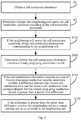
- Fig. 2 is a flowchart showing another method for cell reselection according to an exemplary embodiment.
- the above method in Fig. 1 may further include steps S201 and S202.
- step S201 after the neighboring cell is reselected as the current serving cell, the preset time difference is extended.
- step S202 the cell reselection information is recorded into the history ping-pong reselection records to update the history ping-pong reselection records.
- the preset time difference can be extended, so as to further avoid ping-pong cell reselections which repeatedly occur within a short time period. For example, each time after steps S101 to S104 are performed, if it is determined that the time difference between the current cell reselection time and the history cell reselection time corresponding to the one history ping-pong reselection record is greater than the preset time difference, the preset time difference may be extended up to two or three times of the old preset time difference.
- the history ping-pong reselection records can be updated, so that the history ping-pong reselection records can be enriched, which is helpful for subsequent determination of whether the cell reselection corresponding to the cell reselection information belongs to a ping-pong reselection according to the enriched history ping-pong reselection records.
- Fig. 3 is a flowchart showing another method for cell reselection according to an exemplary embodiment.
- the step S101 in Fig. 1 may include steps A1 and A2.
- step A1 a cell reselection parameter is obtained.
- step A2 whether the neighboring cell meets the cell reselection condition is determined according to the cell reselection parameter.
- a cell reselection parameter may be obtained automatically, and then whether the neighboring cell meets the cell reselection condition can be determined according to the cell reselection parameter.
- step A1 as shown in Fig. 3 may be implemented as follows:
- the reselection priority of the current serving cell and the minimum access level of the current serving cell may be carried in a message 3 in the system information sent from a base station of the current serving cell, and the reselection priority of the neighboring cell and the minimum access level of the neighboring cell may be carried in a message 5 in the system information sent from the base station of the current serving cell.
- the function of the minimum access level is to avoid access of a mobile station to a system under a very low receiving signal level (the communication quality after the access usually cannot ensure normal communication procedures), which may result in poor communication qualities provided to users and unnecessary wastes of wireless resources of networks.
- the receiving level of the mobile station needs to be greater than a threshold level, i.e., the minimum receiving level which allows the mobile station to access.
- step A1 as shown in Fig. 3 may be implemented as follows:
- the terminal may measure the signal quality of the current serving cell according to a paging message sent from the base station of the current serving cell or network signals. Similarly, the terminal may measure the signal quality of the neighboring cell in the same way.
- the step A2 shown in Fig. 3 may be implemented as follows:
- the neighboring cell is qualified for reselection. Then, if the reselection priority of the neighboring cell is higher than the reselection priority of the current serving cell, it is further indicated that the neighboring cell is better for the terminal to reside in than the current serving cell, and thus it can be determined that the neighboring cell meets the cell reselection condition.
- the preset condition may include: the current signal level of the current serving cell is lower than the minimum access level of the current serving cell and the reselection priority of the neighboring cell is lower than the reselection priority of the current serving cell.
- the current signal level of the current serving cell is lower than the minimum access level of the current serving cell, it is indicated that if the terminal continues to reside in the current serving cell, poor communication quality may be provided, which cannot meet communication requirements of users.
- the reselection priority of the neighboring cell is lower than the reselection priority of the current serving cell, it will be better for the terminal to reside in the neighboring cell than the current serving cell.
- the neighboring cell meets the cell reselection condition.
- the current signal level of the neighboring cell should be not lower than the minimum access level of the neighboring cell.
- the preset condition includes but not limited to the above conditions.
- the preset condition may further include that the reselection priority of the neighboring cell is higher than a preset reselection priority, that the current signal level of the neighboring cell is higher than a preset signal level, that the signal quality of the neighboring cell is higher than a preset signal quality, and the like.
- the obtaining of the cell reselection information corresponding to the neighboring cell in step S102 as shown in Fig. 1 may include:
- a target neighboring cell can be automatically identified among the at least two neighboring cells according to a reselection priority and/or a signal quality of individual ones of the at least two neighboring cells, and the cell reselection information corresponding to the target neighboring cell can be further obtained. Then, next determination can be performed. By doing so, ping-pong reselections within a short time period can be avoided.
- the cell reselection information further includes at least one of:
- the identification of the current serving cell may include an identity (i.e., cell ID) and a frequency of the current serving cell
- the identification of the neighboring cell may include an identity (i.e., cell ID) and a frequency of the neighboring cell
- the reason for the reselection may include a low cell reselection priority, a high minimum cell access level, a poor cell signal quality and the like.
- Each history ping-pong reselection record further includes at least one of:
- the identification of a source cell corresponding to each ping-pong reselection record may be identification of a cell which the terminal resides in before the first cell reselection in the ping-pong reselection record
- the identification of a destination cell corresponding to each ping-pong reselection record may be identification of a cell which the terminal resides in after the first cell reselection in the ping-pong reselection record.
- one ping-pong reselection record indicates that a terminal reselects a cell B when residing in a cell A, and then reselects the cell A when residing in the cell B (i.e., the terminal switches from the cell A to the cell B and then switches from the cell B to the cell A again).
- the terminal resides in the cell A before the first cell reselection, and thus the identification of the source cell corresponding to the ping-pong reselection record is the identification of the cell A.
- the terminal After the first cell reselection, the terminal resides in the cell B, and accordingly the identification of the destination cell corresponding to the ping-pong reselection record is the identification of the cell B.
- the reason for the cell reselection corresponding to the ping-pong reselection record may be the reason why the terminal selects the cell B when residing in the cell A (the reasons for two cell reselections during a ping-pong reselection are basically the same, and thus the reason for the cell reselection may also be the reason why the terminal selects the cell A when residing in the cell B), and the history cell reselection time corresponding to the ping-pong reselection record is the time for the terminal to switch from the cell A to the cell B.
- step S103 in Fig. 1 may be implemented as follows:
- the matching condition includes:
- the matching of the identification of the current serving cell and the identification of the source cell corresponding to the any one of the history ping-pong reselection records may include that the identification of the current serving cell is the same as the identification of the source cell corresponding to the any one of the history ping-pong reselection records, i.e., the ID (cell ID) and frequency of the current serving cell are the same as the ID and the frequency of the source cell corresponding to the any one of the history ping-pong reselection records, respectively.
- the matching of the identification of the neighboring cell and the identification of the destination cell corresponding to the any one of the history ping-pong reselection records may include that the identification of the neighboring cell is the same as the identification of the destination cell corresponding to the any one of the history ping-pong reselection records, i.e., the ID (cell ID) and frequency of the neighboring cell are the same as the ID and the frequency of the destination cell corresponding to the any one of the history ping-pong reselection records, respectively.
- the matching of the reason for the cell reselection and the reason for the cell reselection corresponding to the any one of the history ping-pong reselection records may refer to that the reason for the cell reselection is the same as the reason for the cell reselection corresponding to the any one of the history ping-pong reselection records.
- one ping-pong reselection record indicates that a terminal reselects a cell D when residing in a cell C, and then reselects the cell C when residing in the cell D (i.e., the terminal switches from the cell C to the cell D and then switches from the cell D to the cell C again).
- the identification (i.e., the ID) corresponding to the cell C is M, and the frequency corresponding to the cell C is N.
- the identification (i.e., the ID) corresponding to the cell D is P, and the frequency corresponding to the cell D is Q.
- the reason for the cell reselection corresponding to the ping-pong reselection record is that the reselection priority of the current cell is low.
- the source cell and the destination cell corresponding to the ping-pong reselection record are the cell C and the cell D, respectively.
- the current serving cell is the cell C having an ID of M and a frequency of N
- a neighboring cell is the cell D having an ID of P and a frequency of Q
- a reason for the cell reselection is that the cell C has a low reselection priority
- the cell reselection information corresponding to the cell C which the terminal currently resides in matches the ping-pong reselection record.
- an embodiment of the present disclosure further provides a device for cell reselection.
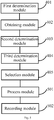
- Fig. 4 is a block diagram showing a device for cell reselection according to an exemplary embodiment.
- the device includes a first determination module 401, an obtaining module 402, a second determination module 403, a third determination module 404, and a selection module 405.
- the first determination module 401 is configured to, if reside in a current serving cell, determine whether a neighboring cell meets a cell reselection condition.
- the obtaining module 402 is configured to, if the neighboring cell meets the cell reselection condition, obtain cell reselection information corresponding to the neighboring cell.
- the second determination module 403 is configured to determine whether the cell reselection information matches a history ping-pong reselection record, wherein the cell reselection information includes at least a current cell reselection time, and each history ping-pong reselection record includes at least a history cell reselection time corresponding to the ping-pong reselection record.
- the third determination module 404 is configured to, if the cell reselection information matches any one of history ping-pong reselection records, determine whether a time difference between the current cell reselection time and the history cell reselection time corresponding to the one history ping-pong reselection record is greater than a preset time difference.
- the selection module 405 is configured to, if the time difference between the current cell reselection time and the history cell reselection time corresponding to the one history ping-pong reselection record is greater than the preset time difference, reselect the neighboring cell as a current serving cell so as to reside in the neighboring cell.
- Fig. 5 is a block diagram showing another device for cell reselection according to an exemplary embodiment.
- the device as shown in Fig. 4 may further include a process module 501 and a recording module 502.
- the process module 501 is configured to, after the neighboring cell is reselected as the current serving cell, extend the preset time difference.
- the recording module 502 is configured to record the cell reselection information into the history ping-pong reselection records to update the history ping-pong reselection records.
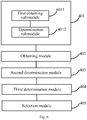
- Fig. 6 is a block diagram showing another device for cell reselection according to an exemplary embodiment.
- the first determination module 401 in Fig. 4 may include a first obtaining submodule 4011 and a determination submodule 4012.
- the first obtaining submodule 4011 is configured to obtain a cell reselection parameter.
- the determination submodule 4012 is configured to determine whether the neighboring cell meets the cell reselection condition according to the cell reselection parameter.
- the first obtaining submodule 4011 may include a receiving unit and/or a measurement unit.
- the receiving unit is configured to receive system information sent from a base station of the current serving cell, wherein the system information includes at least one of a reselection priority of the current serving cell, a minimum access level of the current serving cell, a reselection priority of the neighboring cell, and a minimum access level of the neighboring cell.
- the measurement unit is configured to measure signal qualities of the current serving cell and the neighboring cell, wherein each signal quality includes at least one of a current signal level, a reference signal receiving power and a reference signal receiving quality.
- the determination submodule 4012 may include a determination unit.
- the determination unit is configured to, if the cell reselection parameter meets a preset condition, determine that the neighboring cell meets the cell reselection condition.
- the preset condition includes:
- Fig. 7 is a block diagram showing another device for cell reselection according to an exemplary embodiment.
- the obtaining module 402 in Fig. 6 may include a first determination submodule 4021 and a second obtaining submodule 4022.
- the first determination submodule 4021 is configured to, if there exist at least two neighboring cells which meet the cell reselection condition, according to a reselection priority and/or a signal quality of individual ones of the at least two neighboring cells, determine a target neighboring cell among the at least two neighboring cells.
- the second obtaining submodule 4022 is configured to obtain the cell reselection information corresponding to the target neighboring cell.
- the cell reselection information further includes at least one of:
- Fig. 8 is a block diagram showing another device for cell reselection according to an exemplary embodiment.
- the second determination module 403 in Fig. 4 may include a second determination submodule 4031.
- the second determination submodule 4031 is configured to, if the cell reselection information and any one of the history ping-pong reselection records meet a matching condition, determine that the cell reselection information matches the any one of the history ping-pong reselection records.
- the matching condition includes:
- a device for cell reselection including:
- the processor is further configured to:
- the processor is configured to:
- the processor is configured to:
- the processor is further configured to:
- the processor is configured to:
- the cell reselection information further includes at least one of:
- the processor is configured to:
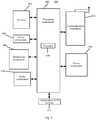
- Fig. 9 is a block diagram showing a device 900 for cell reselection according to an exemplary embodiment.
- the device may be applied in a terminal device.
- the device 900 may be a mobile phone, a computer, a digital broadcast terminal, a messaging device, a gaming console, a tablet, a medical device, exercise equipment, a personal digital assistant, and the like.
- the device 900 may include one or more of the following components: a processing component 902, a memory 904, a power component 906, a multimedia component 908, an audio component 910, an input/output (I/O) interface 912, a sensor component 914, and a communication component 916.
- the processing component 902 typically controls overall operations of the device 900, such as the operations associated with display, telephone calls, data communications, camera operations, and recording operations.
- the processing component 902 may include one or more processors 920 to execute instructions to perform all or part of the steps in the above described methods.
- the processing component 902 may include one or more modules which facilitate the interaction between the processing component 902 and other components.
- the processing component 902 may include a multimedia module to facilitate the interaction between the multimedia component 908 and the processing component 902.
- the memory 904 is configured to store various types of data to support the operation of the device 900. Examples of such data include instructions for any applications or methods operated on the device 900, contact data, phonebook data, messages, pictures, video, etc.
- the memory 904 may be implemented using any type of volatile or non-volatile memory devices, or a combination thereof, such as a static random access memory (SRAM), an electrically erasable programmable read-only memory (EEPROM), an erasable programmable read-only memory (EPROM), a programmable read-only memory (PROM), a read-only memory (ROM), a magnetic memory, a flash memory, a magnetic or optical disk.
- SRAM static random access memory
- EEPROM electrically erasable programmable read-only memory
- EPROM erasable programmable read-only memory
- PROM programmable read-only memory
- ROM read-only memory
- magnetic memory a magnetic memory
- flash memory a flash memory
- magnetic or optical disk a magnetic
- the power component 906 provides power to various components of the device 900.
- the power component 906 may include a power management system, one or more power sources, and any other components associated with the generation, management, and distribution of power in the device 900.
- the multimedia component 908 includes a screen providing an output interface between the device 900 and the user.
- the screen may include a liquid crystal display (LCD) and a touch panel (TP). If the screen includes the touch panel, the screen may be implemented as a touch screen to receive input signals from the user.
- the touch panel includes one or more touch sensors to sense touches, swipes, and gestures on the touch panel. The touch sensors may not only sense a boundary of a touch or swipe action, but also sense a period of time and a pressure associated with the touch or swipe action.
- the multimedia component 908 includes a front camera and/or a rear camera. The front camera and the rear camera may receive an external multimedia datum while the device 900 is in an operation mode, such as a photographing mode or a video mode. Each of the front camera and the rear camera may be a fixed optical lens system or have focus and optical zoom capability.
- the audio component 910 is configured to output and/or input audio signals.
- the audio component 910 includes a microphone ("MIC") configured to receive an external audio signal when the device 900 is in an operation mode, such as a call mode, a recording mode, and a voice recognition mode.
- the received audio signal may be further stored in the memory 904 or transmitted via the communication component 916.
- the audio component 910 further includes a speaker to output audio signals.
- the I/O interface 912 provides an interface between the processing component 902 and peripheral interface modules, such as a keyboard, a click wheel, buttons, and the like.
- the buttons may include, but are not limited to, a home button, a volume button, a starting button, and a locking button.
- the sensor component 914 includes one or more sensors to provide status assessments of various aspects of the device 900. For instance, the sensor component 914 may detect an open/closed status of the device 900, relative positioning of components, e.g., the display and the keypad, of the device 900, a change in position of the device 900 or a component of the device 900, a presence or absence of user contact with the device 900, an orientation or an acceleration/deceleration of the device 900, and a change in temperature of the device 900.
- the sensor component 914 may include a proximity sensor configured to detect the presence of nearby objects without any physical contact.
- the sensor component 914 may also include a light sensor, such as a CMOS or CCD image sensor, for use in imaging applications.
- the sensor component 914 may also include an accelerometer sensor, a gyroscope sensor, a magnetic sensor, a pressure sensor, or a temperature sensor.
- the communication component 916 is configured to facilitate communication, wired or wirelessly, between the device 900 and other devices.
- the device 900 can access a wireless network based on a communication standard, such as WiFi, 2G, or 3G, or a combination thereof.
- the communication component 916 receives a broadcast signal or broadcast associated information from an external broadcast management system via a broadcast channel.
- the communication component 916 further includes a near field communication (NFC) module to facilitate short-range communications.
- the NFC module may be implemented based on a radio frequency identification (RFID) technology, an infrared data association (IrDA) technology, an ultra-wideband (UWB) technology, a Bluetooth (BT) technology, and other technologies.
- RFID radio frequency identification
- IrDA infrared data association
- UWB ultra-wideband
- BT Bluetooth
- the device 900 may be implemented with one or more application specific integrated circuits (ASICs), digital signal processors (DSPs), digital signal processing devices (DSPDs), programmable logic devices (PLDs), field programmable gate arrays (FPGAs), controllers, micro-controllers, microprocessors, or other electronic components, for performing the above described methods.
- ASICs application specific integrated circuits
- DSPs digital signal processors
- DSPDs digital signal processing devices
- PLDs programmable logic devices
- FPGAs field programmable gate arrays
- controllers micro-controllers, microprocessors, or other electronic components, for performing the above described methods.
- non-transitory computer-readable storage medium including instructions, such as included in the memory 904, executable by the processor 920 in the device 900, for performing the above-described methods.
- the non-transitory computer-readable storage medium may be a ROM, a RAM, a CD-ROM, a magnetic tape, a floppy disc, an optical data storage device, and the like.
- Non-transitory computer-readable storage medium when instructions in the storage medium are executed by the processor in the above device 900, the device 900 is caused to perform a method for cell reselection, including:
- the method further includes:
- the determining whether the neighboring cell meets the cell reselection condition if residing in the current serving cell includes:
- the obtaining the cell reselection parameter includes:
- the determining whether the neighboring cell meets the cell reselection condition according to the cell reselection parameter includes:
- the obtaining of the cell reselection information corresponding to the neighboring cell includes:
- the cell reselection information further includes at least one of:
- the determining whether the cell reselection information matches a history ping-pong reselection record includes:
Landscapes
- Engineering & Computer Science (AREA)
- Computer Networks & Wireless Communication (AREA)
- Signal Processing (AREA)
- Mobile Radio Communication Systems (AREA)
Abstract
Description
- The present disclosure generally relates to the communication technical field, and more particularly, to a method and device for cell reselection.
- At present, ping-pong reselection phenomenon often occurs during cell reselection due to improper configuration of network reselection parameters. For example, when a terminal is residing in a cell A, the terminal may select a cell B according to current cell reselection parameters. When the terminal is residing in the cell B, the terminal may select the cell A again according to the cell reselection parameters. Such frequent switching between two cells is referred to as the ping-pong reselection. The ping-pong reselection will result in high standby current of the terminal, and thereby influence the standby time of the terminal and user experience.
- Embodiments of the present disclosure provide a method and device for cell reselection. The technical solutions are as follows.
- According to a first aspect of embodiments of the present disclosure, there is provided a method for cell reselection, including:
- upon a mobile terminal residing in a current serving cell, determining whether a neighboring cell meets a cell reselection condition;
- upon the neighboring cell meeting the cell reselection condition, obtaining cell reselection information corresponding to the neighboring cell;
- determining whether the cell reselection information matches a history ping-pong reselection record, wherein the cell reselection information includes at least a current cell reselection time, and each history ping-pong reselection record includes at least a history cell reselection time corresponding to the ping-pong reselection record;
- upon the cell reselection information matching any one of history ping-pong reselection records, determining whether a time difference between the current cell reselection time and the history cell reselection time corresponding to the one history ping-pong reselection record is greater than a preset time difference; and
- upon the difference between the current cell reselection time and the history cell reselection time corresponding to the one history ping-pong reselection record being greater than the preset time difference, reselecting the neighboring cell as a current serving cell so as to reside in the neighboring cell.
- Optionally, the method further includes:
- after reselecting the neighboring cell as the current serving cell, extending the preset time difference; and
- recording the cell reselection information into the history ping-pong reselection records to update the history ping-pong reselection records.
- Optionally, the step of determining whether the neighboring cell meets the cell reselection condition upon residing in the current serving cell, comprises:
- obtaining a cell reselection parameter; and
- determining whether the neighboring cell meets the cell reselection condition according to the cell reselection parameter.
- Optionally, the obtaining the cell reselection parameter, includes:
- receiving system information sent from a base station of the current serving cell, wherein the system information includes at least one of a reselection priority of the current serving cell, a minimum access level of the current serving cell, a reselection priority of the neighboring cell, and a minimum access level of the neighboring cell; and/or
- measuring signal qualities of the current serving cell and the neighboring cell, wherein each signal quality includes at least one of a current signal level, a reference signal receiving power and a reference signal receiving quality.
- Optionally, the step of determining whether the neighboring cell meets the cell reselection condition according to the cell reselection parameter, includes:
- upon the cell reselection parameter meeting a preset condition, determining that the neighboring cell meets the cell reselection condition,
- the preset condition includes:
- the current signal level of the neighboring cell is not lower than the minimum access level of the neighboring cell and the reselection priority of the neighboring cell is higher than the reselection priority of the current serving cell; or
- a signal level corresponding to the reference signal receiving power of the neighboring cell is not lower than the minimum access level of the neighboring cell and the reselection priority of the neighboring cell is higher than the reselection priority of the current serving cell; or
- the current signal level of the current serving cell is lower than the minimum access level of the current serving cell and the reselection priority of the neighboring cell is lower than the reselection priority of the current serving cell.
- Optionally, upon there being at least two neighboring cells which meet the cell reselection condition, the obtaining of the cell reselection information corresponding to the neighboring cell includes:
- according to a reselection priority and/or a signal quality of individual ones of the at least two neighboring cells, determining a target neighboring cell among the at least two neighboring cells; and
- obtaining the cell reselection information corresponding to the target neighboring cell.
- Optionally, the cell reselection information further includes at least one of:
- identification of the current serving cell, identification of the neighboring cell, and a reason for the cell reselection; and
- each history ping-pong reselection record further includes at least one of:
- identification of a source cell corresponding to the ping-pong reselection record, identification of a destination cell corresponding to the ping-pong reselection record, and a reason for the cell reselection corresponding to the ping-pong reselection record.
- Optionally, the step of determining whether the cell reselection information matches a history ping-pong reselection record, includes:
- upon the cell reselection information and any one of the history ping-pong reselection records meeting a matching condition, determining that the cell reselection information matches the any one of the history ping-pong reselection records;
- wherein the matching condition includes:
- the identification of the current serving cell matches the identification of the source cell corresponding to the any one of the history ping-pong reselection records;
- the identification of the neighboring cell matches the identification of the destination cell corresponding to the any one of the history ping-pong reselection records; and
- the reason for the cell reselection matches the reason for the cell reselection corresponding to the any one of the history ping-pong reselection records.
- According to a second aspect of embodiments of the present disclosure, there is provided a device for cell reselection, including:
- a first determination module configured to, upon a mobile terminal residing in a current serving cell, determine whether a neighboring cell meets a cell reselection condition;
- an obtaining module configured to, upon the neighboring cell meeting the cell reselection condition, obtain cell reselection information corresponding to the neighboring cell;
- a second determination module configured to determine whether the cell reselection information matches a history ping-pong reselection record, wherein the cell reselection information includes at least a current cell reselection time, and each history ping-pong reselection record includes at least a history cell reselection time corresponding to the ping-pong reselection record;
- a third determination module configured to, upon the cell reselection information matching any one of history ping-pong reselection records, determine whether a time difference between the current cell reselection time and the history cell reselection time corresponding to the one history ping-pong reselection record is greater than a preset time difference; and
- a selection module configured to, upon the time difference between the current cell reselection time and the history cell reselection time corresponding to the one history ping-pong reselection record being greater than the preset time difference, reselect the neighboring cell as a current serving cell so as to reside in the neighboring cell.
- Optionally, the device further includes:
- a process module configured to, after the neighboring cell is reselected as the current serving cell, extend the preset time difference; and
- a recording module configured to record the cell reselection information into the history ping-pong reselection records to update the history ping-pong reselection records.
- Optionally, the first determination module includes:
- a first obtaining submodule configured to obtain a cell reselection parameter; and
- a determination submodule configured to determine whether the neighboring cell meets the cell reselection condition according to the cell reselection parameter.
- Optionally, the first obtaining submodule includes:
- a receiving unit configured to receive system information sent from a base station of the current serving cell, wherein the system information includes at least one of a reselection priority of the current serving cell, a minimum access level of the current serving cell, a reselection priority of the neighboring cell, and a minimum access level of the neighboring cell; and/or
- a measurement unit configured to measure signal qualities of the current serving cell and the neighboring cell, wherein each signal quality includes at least one of a current signal level, a reference signal receiving power and a reference signal receiving quality.
- Optionally, the determination submodule includes:
- a determination unit configured to, upon the cell reselection parameter meeting a preset condition, determine that the neighboring cell meets the cell reselection condition;
- the preset condition includes:
- the current signal level of the neighboring cell is not lower than the minimum access level of the neighboring cell and the reselection priority of the neighboring cell is higher than the reselection priority of the current serving cell; or
- a signal level corresponding to the reference signal receiving power of the neighboring cell is not lower than the minimum access level of the neighboring cell and the reselection priority of the neighboring cell is higher than the reselection priority of the current serving cell; or
- the current signal level of the current serving cell is lower than the minimum access level of the current serving cell and the reselection priority of the neighboring cell is lower than the reselection priority of the current serving cell.
- Optionally, the obtaining module includes:
- a first determination submodule configured to, upon there being at least two neighboring cells which meet the cell reselection condition, according to a reselection priority and/or a signal quality of individual ones of the at least two neighboring cells, determine a target neighboring cell among the at least two neighboring cells; and
- a second obtaining submodule configured to obtain the cell reselection information corresponding to the target neighboring cell.
- Optionally, the cell reselection information further includes at least one of:
- identification of the current serving cell, identification of the neighboring cell, and a reason for the cell reselection; and
- each history ping-pong reselection record further includes at least one of:
- identification of a source cell corresponding to the ping-pong reselection record, identification of a destination cell corresponding to the ping-pong reselection record, and a reason for the cell reselection corresponding to the ping-pong reselection record.
- Optionally, the second determination module includes:
- a second determination submodule configured to, upon the cell reselection information and any one of the history ping-pong reselection records meeting a matching condition, determine that the cell reselection information matches the any one of the history ping-pong reselection records;
- the matching condition includes:
- the identification of the current serving cell matches the identification of the source cell corresponding to the any one of the history ping-pong reselection records;
- the identification of the neighboring cell matches the identification of the destination cell corresponding to the any one of the history ping-pong reselection records; and
- the reason for the cell reselection matches the reason for the cell reselection corresponding to the any one of the history ping-pong reselection records.
- According to a third aspect of embodiments of the present disclosure, there is provided a device for cell reselection, including:
- a processor; and
- a memory for storing instructions executable by the processor;
- wherein the processor is configured to:
- upon a mobile terminal residing in a current serving cell, determine whether a neighboring cell meets a cell reselection condition;
- upon the neighboring cell meeting the cell reselection condition, obtain cell reselection information corresponding to the neighboring cell;
- determine whether the cell reselection information matches a history ping-pong reselection record, wherein the cell reselection information includes at least a current cell reselection time, and each history ping-pong reselection record includes at least a history cell reselection time corresponding to the ping-pong reselection record;
- upon the cell reselection information matching any one of history ping-pong reselection records, determine whether a time difference between the current cell reselection time and the history cell reselection time corresponding to the one history ping-pong reselection record is greater than a preset time difference; and
- upon the difference between the current cell reselection time and the history cell reselection time corresponding to the one history ping-pong reselection record being greater than the preset time difference, reselect the neighboring cell as a current serving cell so as to reside in the neighboring cell.
- The processor may be further configured to carry out further steps of the method for cell reselection as described herein.
- According to a fourth aspect of the embodiment of the present disclosure, there is provided a computer program which, when being executed on a processor of a terminal device, performs any one of the above methods.
- Where functional modules are referred to in apparatus embodiments for carrying out various steps of the described method(s) it will be understood that these modules may be implemented in hardware, in software, or a combination of the two. When implemented in hardware, the modules may be implemented as one or more hardware modules, such as one or more application specific integrated circuits. When implemented in software, the modules may be implemented as one or more computer programs that are executed on one or more processors.
- The technical solutions provided by embodiments of the present disclosure may have the following advantageous effects.
- In the technical solutions provided by embodiments of the present disclosure, if a neighboring cell meets a cell reselection condition, by obtaining cell reselection information corresponding to the neighboring cell, whether the cell reselection information corresponding to the neighboring cell matches a pre-recorded history ping-pong reselection record can be determined; if the cell reselection information matches any one of the history ping-pong reselection records, it is indicated that if the neighboring cell is reselected, ping-pong reselection may occur, and thus it is needed to further determine whether a time difference between the current cell reselection time and the history cell reselection time corresponding to the one history ping-pong reselection record is greater than a preset time difference; if the time difference is greater than the preset time difference, it is indicated that even the current selection is a ping-pong reselection, the current selection is far from the previous ping-pong reselection time, and cannot be deemed as frequent ping-pong reselection and may not result in too much consumption of electricity energy, and thus the neighboring cell can be reselected as the current serving cell, and a terminal can reside in the neighboring cell to make the neighboring cell provide service to users. By such determination of whether the cell reselection information matches a history ping-pong reselection record and comparison of the cell reselection time difference, the frequency for the ping-pong cell reselections can be effectively lowered, the consumption of the electricity energy of terminals due to the ping-pong reselections can be reduced, and thereby the standby time can be extended to some extent and terminal usage experience of users can be improved.
- It is to be understood that both the foregoing general description and the following detailed description are exemplary only and are not restrictive of the present disclosure.
- The accompanying drawings, which are incorporated in and constitute a part of this specification, illustrate embodiments consistent with the present disclosure and, together with the description, serve to explain the principles of the present disclosure.
-
Fig. 1 is a flowchart showing a method for cell reselection according to an exemplary embodiment. -
Fig. 2 is a flowchart showing another method for cell reselection according to an exemplary embodiment. -
Fig. 3 is a flowchart showing another method for cell reselection according to an exemplary embodiment. -
Fig. 4 is a block diagram showing a device for cell reselection according to an exemplary embodiment. -
Fig. 5 is a block diagram showing another device for cell reselection according to an exemplary embodiment. -
Fig. 6 is a block diagram showing another device for cell reselection according to an exemplary embodiment. -
Fig. 7 is a block diagram showing another device for cell reselection according to an exemplary embodiment. -
Fig. 8 is a block diagram showing another device for cell reselection according to an exemplary embodiment. -
Fig. 9 is a block diagram applicable for a device for cell reselection according to an exemplary embodiment. - Reference will now be made in detail to exemplary embodiments, examples of which are illustrated in the accompanying drawings. The following description refers to the accompanying drawings in which the same numbers in different drawings represent the same or similar elements unless otherwise represented. The implementations set forth in the following description of exemplary embodiments do not represent all implementations consistent with the present disclosure. Instead, they are merely examples of devices and methods consistent with aspects related to the present disclosure as recited in the appended claims.
- At present, ping-pong reselection phenomenon often occurs during cell reselection due to improper configuration of network reselection parameters. For example, when a terminal is residing in a cell A, the terminal may select a cell B according to current cell reselection parameters. When the terminal is residing in the cell B, the terminal may select the cell A again according to the cell reselection parameters. Such frequent switching between two cells is referred to as the ping-pong reselection. The ping-pong reselection will result in high standby current of the terminal, and thereby influence the standby time of the terminal and user experience.
- In order to solve the above technical problem, an embodiment of the present disclosure provides a method for cell reselection. The method can be applied in a cell reselection program, system or device, and can be performed by a terminal such as a mobile phone.
-
Fig. 1 is a flowchart showing a method for cell reselection according to an exemplary embodiment. - As shown in
Fig. 1 , the method includes steps S101 to S105. - In step S101, if the terminal is residing in a current serving cell, whether a neighboring cell meets a cell reselection condition is determined.
- There may be one or more neighboring cells (usually six neighboring cells for a cellular network), and there may be one or more neighboring cells that meet a cell reselection condition.
- In step S102, if the neighboring cell meets the cell reselection condition, cell reselection information corresponding to the neighboring cell is obtained.
- In step S103, whether the cell reselection information matches a history ping-pong reselection record is determined. The cell reselection information includes at least a current cell reselection time, and each history ping-pong reselection record includes at least a history cell reselection time corresponding to the ping-pong reselection record.
- There may be one or more the history ping-pong reselection records, and each history ping-pong reselection record may include not only the history cell reselection time corresponding to the history ping-pong reselection record, but also identification of a source cell before the reselection which is corresponding to the ping-pong reselection record, identification of a destination cell after the reselection which is corresponding to the ping-pong reselection record, and the reason for the reselection and the like. Rather, the cell reselection information may also include the above information.
- In step S104, if the cell reselection information matches any one of history ping-pong reselection records, whether a difference between the current cell reselection time and the history cell reselection time corresponding to the one history ping-pong reselection record is greater than a preset time difference is determined.
- If the cell reselection information matches any one of history ping-pong reselection records, it is indicated that if the neighboring cell is reselected, ping-pong reselection may occur. That is to say, if the neighboring cell is reselected, the current selection and a second cell reselection in any one ping-pong reselection record may form a ping-pong selection, or if the neighboring cell is reselected, according to the any one ping-pong reselection record, a previous serving cell may be reselected after the reselection of the neighboring cell and thereby a ping-pong reselection may occur. For example, if the any one ping-pong record indicates a selection of a cell B when a terminal is residing in a cell A (this can be considered as the first cell reselection in the any one ping-pong reselection record), and a selection of the cell A when the terminal is residing in the cell B (this can be considered as the second cell reselection in the any one ping-pong reselection record). If the current serving cell is the cell A, the neighboring cell B meets the cell reselection condition and the cell reselection information corresponding to the neighboring cell B matches the ping-pong reselection record, the reselection of the cell B and the reselection of the cell A when the terminal is residing in the cell B may form a ping-pong reselection, or according to the any one ping-pong reselection record, if the cell B is reselected, the terminal may select the cell A again and thus ping-pong reselection may occur.
- In order to make the determination result of the ping-pong reselection more accurate, the history ping-pong reselection records may include several most recent reselection records. For example, the most recent reselection record may be taken as the comparison object. Thus, if the ping-pong reselection records indicates a selection of the cell B when the terminal is residing in the cell A and a selection of the cell A when the terminal is residing in the cell B, the time when the terminal re-residing in the cell A is contiguous to the time when the terminal is residing in the current serving cell in step S101, and the two times match each other, after the cell B is reselected, the selection of the cell B when the terminal is residing in the cell A and the second cell reselection (i.e., the selection of the cell A when the terminal is residing in the cell B) in the ping-pong reselection record form a ping-pong reselection.
- Further, the history ping-pong reselection records may include various different ping-pong reselection records. No matter how many kinds of ping-pong reselection records are included in the history ping-pong reselection records, the ping-pong reselection records may include a ping-pong reselection record which indicates a selection of the cell B when the terminal is residing in the cell A and a selection of the cell A (again) when the terminal is residing in the cell B, and a ping-pong reselection record which indicates a selection of a cell D when the terminal is residing in a cell C and a selection of the cell C (again) when the terminal is residing in the cell D, and so on.
- The preset time difference may be the shortest ping-pong reselection time interval during a ping-pong cell reselection procedure. For example, if the ping-pong reselection procedure is: the cell A-the cell B-the cell A, the preset time difference may be the shortest time of the ping-pong reselection procedure which starts from the time point when the terminal resides in the cell A, through the time when the terminal switches from the cell A to the cell B and then switches from the cell B to the cell A.
- Or, the preset time different time may be customized.
- Also, the preset time different may be continuously increased.
- In step S105, if the time difference between the current cell reselection time and the history cell reselection time corresponding to the one history ping-pong reselection record is greater than the preset time difference, the neighboring cell is reselected as a current serving cell so as to reside in the neighboring cell.
- In the embodiment, if a neighboring cell meets a cell reselection condition, by obtaining cell reselection information corresponding to the neighboring cell, whether the cell reselection information corresponding to the neighboring cell matches a pre-recorded history ping-pong reselection record can be determined; if the cell reselection information matches any one of the history ping-pong reselection records, it is indicated that if the neighboring cell is reselected, ping-pong reselection may occur, and thus it is needed to further determine whether a time difference between the current cell reselection time and the history cell reselection time corresponding to the one history ping-pong reselection record is greater than a preset time difference; if the time difference is greater than the preset time difference, it is indicated that even the current selection is a ping-pong reselection, the current selection is far from the previous ping-pong reselection time, and cannot be deemed as frequent ping-pong reselection and may not result in too much consumption of electricity energy, and thus the neighboring cell can be reselected as the current serving cell, and a terminal can reside in the neighboring cell to make the neighboring cell provide service to users. By such determination of whether the cell reselection information matches a history ping-pong reselection record and comparison of the cell reselection time difference, the frequency for the ping-pong cell reselections can be effectively lowered, the consumption of the electricity energy of terminals due to the ping-pong reselections can be reduced, and thereby the standby time can be extended to some extent and terminal usage experience of users can be improved.
- In addition, if the time difference between the current cell reselection time and the history cell reselection time corresponding to the one history ping-pong reselection record is not greater than the preset time difference, according to the above explanations, if the neighboring cell is reselected as the current serving cell, the current cell reselection and the second cell reselection in the any one ping-pong reselection record may form a ping-pong reselection which occurs in a short time (from a previous ping-pong reselection), or according to the any one ping-pong reselection record, after the neighboring cell is reselected, the previous serving cell may be selected again, and thus continuous ping-pong reselections may occur within a short time period and consequently, electricity energy may be greatly consumed. Under such condition, the neighboring cell may not be reselected at the moment, and the terminal may continue to reside in the current serving cell.
- The steps in the above embodiment may be performed continuously, or periodically.
-
Fig. 2 is a flowchart showing another method for cell reselection according to an exemplary embodiment. - As shown in
Fig. 2 , according to an embodiment, the above method inFig. 1 may further include steps S201 and S202. - In step S201, after the neighboring cell is reselected as the current serving cell, the preset time difference is extended.
- In step S202, the cell reselection information is recorded into the history ping-pong reselection records to update the history ping-pong reselection records.
- After the neighboring cell is reselected as the current serving cell, the preset time difference can be extended, so as to further avoid ping-pong cell reselections which repeatedly occur within a short time period. For example, each time after steps S101 to S104 are performed, if it is determined that the time difference between the current cell reselection time and the history cell reselection time corresponding to the one history ping-pong reselection record is greater than the preset time difference, the preset time difference may be extended up to two or three times of the old preset time difference.
- After the cell reselection information is recorded into the history ping-pong reselection records, the history ping-pong reselection records can be updated, so that the history ping-pong reselection records can be enriched, which is helpful for subsequent determination of whether the cell reselection corresponding to the cell reselection information belongs to a ping-pong reselection according to the enriched history ping-pong reselection records.
-
Fig. 3 is a flowchart showing another method for cell reselection according to an exemplary embodiment. - As shown in
Fig. 3 , according to an embodiment, the step S101 inFig. 1 may include steps A1 and A2. - In step A1, a cell reselection parameter is obtained.
- In step A2, whether the neighboring cell meets the cell reselection condition is determined according to the cell reselection parameter.
- In order to determine whether the neighboring cell meets the cell reselection condition, a cell reselection parameter may be obtained automatically, and then whether the neighboring cell meets the cell reselection condition can be determined according to the cell reselection parameter.
- According to an embodiment, the step A1 as shown in
Fig. 3 may be implemented as follows: - receiving system information sent from a base station of the current serving cell, wherein the system information includes at least one of a reselection priority of the current serving cell, a minimum access level of the current serving cell, a reselection priority of the neighboring cell, and a minimum access level of the neighboring cell, wherein different cells may have different minimum access levels.
- The reselection priority of the current serving cell and the minimum access level of the current serving cell may be carried in a message 3 in the system information sent from a base station of the current serving cell, and the reselection priority of the neighboring cell and the minimum access level of the neighboring cell may be carried in a message 5 in the system information sent from the base station of the current serving cell.
- The function of the minimum access level is to avoid access of a mobile station to a system under a very low receiving signal level (the communication quality after the access usually cannot ensure normal communication procedures), which may result in poor communication qualities provided to users and unnecessary wastes of wireless resources of networks. According to provisions of GSM system, if a mobile station needs to access a network, the receiving level of the mobile station needs to be greater than a threshold level, i.e., the minimum receiving level which allows the mobile station to access.
- Alternatively or additionally, step A1 as shown in
Fig. 3 may be implemented as follows: - measuring signal qualities of the current serving cell and the neighboring cell, wherein each signal quality includes at least one of a current signal level, a reference signal receiving power (RSRP) and a reference signal receiving quality (RSRQ).
- The terminal may measure the signal quality of the current serving cell according to a paging message sent from the base station of the current serving cell or network signals. Similarly, the terminal may measure the signal quality of the neighboring cell in the same way.
- According to an embodiment, the step A2 shown in
Fig. 3 may be implemented as follows: - if the cell reselection parameter meets a preset condition, determining that the neighboring cell meets the cell reselection condition;
- the preset condition may include:
- the current signal level of the neighboring cell is not lower than the minimum access level of the neighboring cell and the reselection priority of the neighboring cell is higher than the reselection priority of the current serving cell; or
- a signal level corresponding to the reference signal receiving power of the neighboring cell is not lower than the minimum access level of the neighboring cell and the reselection priority of the neighboring cell is higher than the reselection priority of the current serving cell.
- If the measured current signal level of the neighboring cell is not lower than the minimum access level of the neighboring cell or the signal level corresponding to the reference signal receiving power of the neighboring cell is not lower than the minimum access level of the neighboring cell, it is indicated that if the terminal resides in the neighboring cell, the communication quality will be good. Under such condition, the neighboring cell is qualified for reselection. Then, if the reselection priority of the neighboring cell is higher than the reselection priority of the current serving cell, it is further indicated that the neighboring cell is better for the terminal to reside in than the current serving cell, and thus it can be determined that the neighboring cell meets the cell reselection condition.
- Alternatively, the preset condition may include: the current signal level of the current serving cell is lower than the minimum access level of the current serving cell and the reselection priority of the neighboring cell is lower than the reselection priority of the current serving cell.
- If the current signal level of the current serving cell is lower than the minimum access level of the current serving cell, it is indicated that if the terminal continues to reside in the current serving cell, poor communication quality may be provided, which cannot meet communication requirements of users. Thus, even if the reselection priority of the neighboring cell is lower than the reselection priority of the current serving cell, it will be better for the terminal to reside in the neighboring cell than the current serving cell. Thus, under such condition, it can be determined that the neighboring cell meets the cell reselection condition. Also, under such condition, the current signal level of the neighboring cell should be not lower than the minimum access level of the neighboring cell.
- The preset condition includes but not limited to the above conditions. For example, the preset condition may further include that the reselection priority of the neighboring cell is higher than a preset reselection priority, that the current signal level of the neighboring cell is higher than a preset signal level, that the signal quality of the neighboring cell is higher than a preset signal quality, and the like.
- According to an embodiment, if there exist at least two neighboring cells which meet the cell reselection condition, the obtaining of the cell reselection information corresponding to the neighboring cell in step S102 as shown in
Fig. 1 may include: - according to a reselection priority and/or a signal quality of individual ones of the at least two neighboring cells, determining a target neighboring cell among the at least two neighboring cells (for example, the neighboring cell which has a higher reselection priority and/or a higher signal quality can be selected among the at least two neighboring cells as the target neighboring cell.); and
- obtaining the cell reselection information corresponding to the target neighboring cell.
- If there exist at least two neighboring cells which meet the cell reselection condition, a target neighboring cell can be automatically identified among the at least two neighboring cells according to a reselection priority and/or a signal quality of individual ones of the at least two neighboring cells, and the cell reselection information corresponding to the target neighboring cell can be further obtained. Then, next determination can be performed. By doing so, ping-pong reselections within a short time period can be avoided.
- According to an embodiment, the cell reselection information further includes at least one of:
- identification of the current serving cell, identification of the neighboring cell, and a reason for the cell reselection.
- The identification of the current serving cell may include an identity (i.e., cell ID) and a frequency of the current serving cell, the identification of the neighboring cell may include an identity (i.e., cell ID) and a frequency of the neighboring cell, and the reason for the reselection may include a low cell reselection priority, a high minimum cell access level, a poor cell signal quality and the like.
- Each history ping-pong reselection record further includes at least one of:
- identification of a source cell corresponding to the ping-pong reselection record, identification of a destination cell corresponding to the ping-pong reselection record, and a reason for the cell reselection corresponding to the ping-pong reselection record. The above information in each ping-pong reselection record may be record in a table form.
- The identification of a source cell corresponding to each ping-pong reselection record may be identification of a cell which the terminal resides in before the first cell reselection in the ping-pong reselection record, and the identification of a destination cell corresponding to each ping-pong reselection record may be identification of a cell which the terminal resides in after the first cell reselection in the ping-pong reselection record.
- For example, one ping-pong reselection record indicates that a terminal reselects a cell B when residing in a cell A, and then reselects the cell A when residing in the cell B (i.e., the terminal switches from the cell A to the cell B and then switches from the cell B to the cell A again). According to the ping-pong reselection record, the terminal resides in the cell A before the first cell reselection, and thus the identification of the source cell corresponding to the ping-pong reselection record is the identification of the cell A. After the first cell reselection, the terminal resides in the cell B, and accordingly the identification of the destination cell corresponding to the ping-pong reselection record is the identification of the cell B. The reason for the cell reselection corresponding to the ping-pong reselection record may be the reason why the terminal selects the cell B when residing in the cell A (the reasons for two cell reselections during a ping-pong reselection are basically the same, and thus the reason for the cell reselection may also be the reason why the terminal selects the cell A when residing in the cell B), and the history cell reselection time corresponding to the ping-pong reselection record is the time for the terminal to switch from the cell A to the cell B.
- According to an embodiment, step S103 in
Fig. 1 may be implemented as follows: - if the cell reselection information and any one of the history ping-pong reselection records meet a matching condition, determining that the cell reselection information matches the any one of the history ping-pong reselection records.
- The matching condition includes:
- the identification of the current serving cell matches the identification of the source cell corresponding to the any one of the history ping-pong reselection records;
- the identification of the neighboring cell matches the identification of the destination cell corresponding to the any one of the history ping-pong reselection records; and
- the reason for the cell reselection matches the reason for the cell reselection corresponding to the any one of the history ping-pong reselection records.
- The matching of the identification of the current serving cell and the identification of the source cell corresponding to the any one of the history ping-pong reselection records may include that the identification of the current serving cell is the same as the identification of the source cell corresponding to the any one of the history ping-pong reselection records, i.e., the ID (cell ID) and frequency of the current serving cell are the same as the ID and the frequency of the source cell corresponding to the any one of the history ping-pong reselection records, respectively.
- The matching of the identification of the neighboring cell and the identification of the destination cell corresponding to the any one of the history ping-pong reselection records may include that the identification of the neighboring cell is the same as the identification of the destination cell corresponding to the any one of the history ping-pong reselection records, i.e., the ID (cell ID) and frequency of the neighboring cell are the same as the ID and the frequency of the destination cell corresponding to the any one of the history ping-pong reselection records, respectively.
- The matching of the reason for the cell reselection and the reason for the cell reselection corresponding to the any one of the history ping-pong reselection records may refer to that the reason for the cell reselection is the same as the reason for the cell reselection corresponding to the any one of the history ping-pong reselection records.
- For example, one ping-pong reselection record indicates that a terminal reselects a cell D when residing in a cell C, and then reselects the cell C when residing in the cell D (i.e., the terminal switches from the cell C to the cell D and then switches from the cell D to the cell C again). The identification (i.e., the ID) corresponding to the cell C is M, and the frequency corresponding to the cell C is N. The identification (i.e., the ID) corresponding to the cell D is P, and the frequency corresponding to the cell D is Q. The reason for the cell reselection corresponding to the ping-pong reselection record is that the reselection priority of the current cell is low. Accordingly, the source cell and the destination cell corresponding to the ping-pong reselection record are the cell C and the cell D, respectively. Thus, if the current serving cell is the cell C having an ID of M and a frequency of N, a neighboring cell is the cell D having an ID of P and a frequency of Q, and a reason for the cell reselection is that the cell C has a low reselection priority, it is indicated that the cell reselection information corresponding to the cell C which the terminal currently resides in matches the ping-pong reselection record.
- Correspondingly to the above methods for cell reselection provided by embodiments of the present disclosure, an embodiment of the present disclosure further provides a device for cell reselection.
-
Fig. 4 is a block diagram showing a device for cell reselection according to an exemplary embodiment. - As shown in
Fig. 4 , the device includes afirst determination module 401, an obtainingmodule 402, asecond determination module 403, athird determination module 404, and aselection module 405. - The
first determination module 401 is configured to, if reside in a current serving cell, determine whether a neighboring cell meets a cell reselection condition. - The obtaining
module 402 is configured to, if the neighboring cell meets the cell reselection condition, obtain cell reselection information corresponding to the neighboring cell. - The
second determination module 403 is configured to determine whether the cell reselection information matches a history ping-pong reselection record, wherein the cell reselection information includes at least a current cell reselection time, and each history ping-pong reselection record includes at least a history cell reselection time corresponding to the ping-pong reselection record. - The
third determination module 404 is configured to, if the cell reselection information matches any one of history ping-pong reselection records, determine whether a time difference between the current cell reselection time and the history cell reselection time corresponding to the one history ping-pong reselection record is greater than a preset time difference. - The
selection module 405 is configured to, if the time difference between the current cell reselection time and the history cell reselection time corresponding to the one history ping-pong reselection record is greater than the preset time difference, reselect the neighboring cell as a current serving cell so as to reside in the neighboring cell. -
Fig. 5 is a block diagram showing another device for cell reselection according to an exemplary embodiment. - As shown in
Fig. 5 , according to an embodiment, the device as shown inFig. 4 may further include aprocess module 501 and arecording module 502. - The
process module 501 is configured to, after the neighboring cell is reselected as the current serving cell, extend the preset time difference. - The
recording module 502 is configured to record the cell reselection information into the history ping-pong reselection records to update the history ping-pong reselection records. -
Fig. 6 is a block diagram showing another device for cell reselection according to an exemplary embodiment. - As shown in
Fig. 6 , according to an embodiment, thefirst determination module 401 inFig. 4 may include a first obtainingsubmodule 4011 and adetermination submodule 4012. - The first obtaining
submodule 4011 is configured to obtain a cell reselection parameter. - The
determination submodule 4012 is configured to determine whether the neighboring cell meets the cell reselection condition according to the cell reselection parameter. - According to an embodiment, the first obtaining
submodule 4011 may include a receiving unit and/or a measurement unit. - The receiving unit is configured to receive system information sent from a base station of the current serving cell, wherein the system information includes at least one of a reselection priority of the current serving cell, a minimum access level of the current serving cell, a reselection priority of the neighboring cell, and a minimum access level of the neighboring cell.
- The measurement unit is configured to measure signal qualities of the current serving cell and the neighboring cell, wherein each signal quality includes at least one of a current signal level, a reference signal receiving power and a reference signal receiving quality.
- According to an embodiment, the
determination submodule 4012 may include a determination unit. - The determination unit is configured to, if the cell reselection parameter meets a preset condition, determine that the neighboring cell meets the cell reselection condition.
- The preset condition includes:
- the current signal level of the neighboring cell is not lower than the minimum access level of the neighboring cell and the reselection priority of the neighboring cell is higher than the reselection priority of the current serving cell; or
- a signal level corresponding to the reference signal receiving power of the neighboring cell is not lower than the minimum access level of the neighboring cell and the reselection priority of the neighboring cell is higher than the reselection priority of the current serving cell; or
- the current signal level of the current serving cell is lower than the minimum access level of the current serving cell and the reselection priority of the neighboring cell is lower than the reselection priority of the current serving cell.
-
Fig. 7 is a block diagram showing another device for cell reselection according to an exemplary embodiment. - As shown in
Fig. 7 , according to an embodiment, the obtainingmodule 402 inFig. 6 may include afirst determination submodule 4021 and a second obtainingsubmodule 4022. - The
first determination submodule 4021 is configured to, if there exist at least two neighboring cells which meet the cell reselection condition, according to a reselection priority and/or a signal quality of individual ones of the at least two neighboring cells, determine a target neighboring cell among the at least two neighboring cells. - The second obtaining
submodule 4022 is configured to obtain the cell reselection information corresponding to the target neighboring cell. - According to an embodiment, the cell reselection information further includes at least one of:
- identification of the current serving cell, identification of the neighboring cell, and a reason for the cell reselection.
- each history ping-pong reselection record further includes at least one of:
- identification of a source cell corresponding to the ping-pong reselection record, identification of a destination cell corresponding to the ping-pong reselection record, and a reason for the cell reselection corresponding to the ping-pong reselection record.
-
Fig. 8 is a block diagram showing another device for cell reselection according to an exemplary embodiment. - As shown in
Fig. 8 , according to an embodiment, thesecond determination module 403 inFig. 4 may include asecond determination submodule 4031. - The
second determination submodule 4031 is configured to, if the cell reselection information and any one of the history ping-pong reselection records meet a matching condition, determine that the cell reselection information matches the any one of the history ping-pong reselection records. - The matching condition includes:
- the identification of the current serving cell matches the identification of the source cell corresponding to the any one of the history ping-pong reselection records;
- the identification of the neighboring cell matches the identification of the destination cell corresponding to the any one of the history ping-pong reselection records; and
- the reason for the cell reselection matches the reason for the cell reselection corresponding to the any one of the history ping-pong reselection records.
- According to a third aspect of embodiments of the present disclosure, there is provided a device for cell reselection, including:
- a processor; and
- a memory for storing instructions executable by the processor;
- wherein the processor is configured to:
- if reside in a current serving cell, determine whether a neighboring cell meets a cell reselection condition;
- if the neighboring cell meets the cell reselection condition, obtain cell reselection information corresponding to the neighboring cell;
- determine whether the cell reselection information matches a history ping-pong reselection record, wherein the cell reselection information includes at least a current cell reselection time, and each history ping-pong reselection record includes at least a history cell reselection time corresponding to the ping-pong reselection record;
- if the cell reselection information matches any one of history ping-pong reselection records, determine whether a time difference between the current cell reselection time and the history cell reselection time corresponding to the one history ping-pong reselection record is greater than a preset time difference; and
- if the time difference between the current cell reselection time and the history cell reselection time corresponding to the one history ping-pong reselection record is greater than the preset time difference, reselect the neighboring cell as a current serving cell so as to reside in the neighboring cell.
- According to an embodiment, the processor is further configured to:
- after reselect the neighboring cell as the current serving cell, extend the preset time difference; and
- record the cell reselection information into the history ping-pong reselection records to update the history ping-pong reselection records.
- According to an embodiment, the processor is configured to:
- obtain a cell reselection parameter; and
- determine whether the neighboring cell meets the cell reselection condition according to the cell reselection parameter.
- According to an embodiment, the processor is configured to:
- receive system information sent from a base station of the current serving cell, wherein the system information includes at least one of a reselection priority of the current serving cell, a minimum access level of the current serving cell, a reselection priority of the neighboring cell, and a minimum access level of the neighboring cell; and/or
- measure signal qualities of the current serving cell and the neighboring cell, wherein each signal quality includes at least one of a current signal level, a reference signal receiving power and a reference signal receiving quality.
- According to an embodiment, the processor is further configured to:
- if the cell reselection parameter meets a preset condition, determine that the neighboring cell meets the cell reselection condition,
- wherein the preset condition includes:
- the current signal level of the neighboring cell is not lower than the minimum access level of the neighboring cell and the reselection priority of the neighboring cell is higher than the reselection priority of the current serving cell; or
- a signal level corresponding to the reference signal receiving power of the neighboring cell is not lower than the minimum access level of the neighboring cell and the reselection priority of the neighboring cell is higher than the reselection priority of the current serving cell; or
- the current signal level of the current serving cell is lower than the minimum access level of the current serving cell and the reselection priority of the neighboring cell is lower than the reselection priority of the current serving cell.
- According to an embodiment, the processor is configured to:
- if there exist at least two neighboring cells which meet the cell reselection condition, according to a reselection priority and/or a signal quality of individual ones of the at least two neighboring cells, determine a target neighboring cell among the at least two neighboring cells; and
- obtain the cell reselection information corresponding to the target neighboring cell.
- According to an embodiment, the cell reselection information further includes at least one of:
- identification of the current serving cell, identification of the neighboring cell, and a reason for the cell reselection; and
- each history ping-pong reselection record further includes at least one of:
- identification of a source cell corresponding to the ping-pong reselection record, identification of a destination cell corresponding to the ping-pong reselection record, and a reason for the cell reselection corresponding to the ping-pong reselection record.
- According to an embodiment, the processor is configured to:
- if the cell reselection information and any one of the history ping-pong reselection records meet a matching condition, determine that the cell reselection information matches the any one of the history ping-pong reselection records;
- the matching condition includes:
- the identification of the current serving cell matches the identification of the source cell corresponding to the any one of the history ping-pong reselection records;
- the identification of the neighboring cell matches the identification of the destination cell corresponding to the any one of the history ping-pong reselection records; and
- the reason for the cell reselection matches the reason for the cell reselection corresponding to the any one of the history ping-pong reselection records.
-
Fig. 9 is a block diagram showing adevice 900 for cell reselection according to an exemplary embodiment. The device may be applied in a terminal device. For example, thedevice 900 may be a mobile phone, a computer, a digital broadcast terminal, a messaging device, a gaming console, a tablet, a medical device, exercise equipment, a personal digital assistant, and the like. - The
device 900 may include one or more of the following components: aprocessing component 902, amemory 904, apower component 906, amultimedia component 908, anaudio component 910, an input/output (I/O)interface 912, asensor component 914, and acommunication component 916. - The
processing component 902 typically controls overall operations of thedevice 900, such as the operations associated with display, telephone calls, data communications, camera operations, and recording operations. Theprocessing component 902 may include one ormore processors 920 to execute instructions to perform all or part of the steps in the above described methods. Moreover, theprocessing component 902 may include one or more modules which facilitate the interaction between theprocessing component 902 and other components. For instance, theprocessing component 902 may include a multimedia module to facilitate the interaction between themultimedia component 908 and theprocessing component 902. - The
memory 904 is configured to store various types of data to support the operation of thedevice 900. Examples of such data include instructions for any applications or methods operated on thedevice 900, contact data, phonebook data, messages, pictures, video, etc. Thememory 904 may be implemented using any type of volatile or non-volatile memory devices, or a combination thereof, such as a static random access memory (SRAM), an electrically erasable programmable read-only memory (EEPROM), an erasable programmable read-only memory (EPROM), a programmable read-only memory (PROM), a read-only memory (ROM), a magnetic memory, a flash memory, a magnetic or optical disk. - The
power component 906 provides power to various components of thedevice 900. Thepower component 906 may include a power management system, one or more power sources, and any other components associated with the generation, management, and distribution of power in thedevice 900. - The
multimedia component 908 includes a screen providing an output interface between thedevice 900 and the user. In some embodiments, the screen may include a liquid crystal display (LCD) and a touch panel (TP). If the screen includes the touch panel, the screen may be implemented as a touch screen to receive input signals from the user. The touch panel includes one or more touch sensors to sense touches, swipes, and gestures on the touch panel. The touch sensors may not only sense a boundary of a touch or swipe action, but also sense a period of time and a pressure associated with the touch or swipe action. In some embodiments, themultimedia component 908 includes a front camera and/or a rear camera. The front camera and the rear camera may receive an external multimedia datum while thedevice 900 is in an operation mode, such as a photographing mode or a video mode. Each of the front camera and the rear camera may be a fixed optical lens system or have focus and optical zoom capability. - The
audio component 910 is configured to output and/or input audio signals. For example, theaudio component 910 includes a microphone ("MIC") configured to receive an external audio signal when thedevice 900 is in an operation mode, such as a call mode, a recording mode, and a voice recognition mode. The received audio signal may be further stored in thememory 904 or transmitted via thecommunication component 916. In some embodiments, theaudio component 910 further includes a speaker to output audio signals. - The I/
O interface 912 provides an interface between theprocessing component 902 and peripheral interface modules, such as a keyboard, a click wheel, buttons, and the like. The buttons may include, but are not limited to, a home button, a volume button, a starting button, and a locking button. - The
sensor component 914 includes one or more sensors to provide status assessments of various aspects of thedevice 900. For instance, thesensor component 914 may detect an open/closed status of thedevice 900, relative positioning of components, e.g., the display and the keypad, of thedevice 900, a change in position of thedevice 900 or a component of thedevice 900, a presence or absence of user contact with thedevice 900, an orientation or an acceleration/deceleration of thedevice 900, and a change in temperature of thedevice 900. Thesensor component 914 may include a proximity sensor configured to detect the presence of nearby objects without any physical contact. Thesensor component 914 may also include a light sensor, such as a CMOS or CCD image sensor, for use in imaging applications. In some embodiments, thesensor component 914 may also include an accelerometer sensor, a gyroscope sensor, a magnetic sensor, a pressure sensor, or a temperature sensor. - The
communication component 916 is configured to facilitate communication, wired or wirelessly, between thedevice 900 and other devices. Thedevice 900 can access a wireless network based on a communication standard, such as WiFi, 2G, or 3G, or a combination thereof. In one exemplary embodiment, thecommunication component 916 receives a broadcast signal or broadcast associated information from an external broadcast management system via a broadcast channel. In one exemplary embodiment, thecommunication component 916 further includes a near field communication (NFC) module to facilitate short-range communications. For example, the NFC module may be implemented based on a radio frequency identification (RFID) technology, an infrared data association (IrDA) technology, an ultra-wideband (UWB) technology, a Bluetooth (BT) technology, and other technologies. - In exemplary embodiments, the
device 900 may be implemented with one or more application specific integrated circuits (ASICs), digital signal processors (DSPs), digital signal processing devices (DSPDs), programmable logic devices (PLDs), field programmable gate arrays (FPGAs), controllers, micro-controllers, microprocessors, or other electronic components, for performing the above described methods. - In exemplary embodiments, there is also provided a non-transitory computer-readable storage medium including instructions, such as included in the
memory 904, executable by theprocessor 920 in thedevice 900, for performing the above-described methods. For example, the non-transitory computer-readable storage medium may be a ROM, a RAM, a CD-ROM, a magnetic tape, a floppy disc, an optical data storage device, and the like. - There is provided a non-transitory computer-readable storage medium, when instructions in the storage medium are executed by the processor in the
above device 900, thedevice 900 is caused to perform a method for cell reselection, including: - if residing in a current serving cell, determining whether a neighboring cell meets a cell reselection condition;
- if the neighboring cell meets the cell reselection condition, obtaining cell reselection information corresponding to the neighboring cell;
- determining whether the cell reselection information matches a history ping-pong reselection record, wherein the cell reselection information includes at least a current cell reselection time, and each history ping-pong reselection record includes at least a history cell reselection time corresponding to the ping-pong reselection record;
- if the cell reselection information matches any one of history ping-pong reselection records, determining whether a time difference between the current cell reselection time and the history cell reselection time corresponding to the one history ping-pong reselection record is greater than a preset time difference; and
- if the time difference between the current cell reselection time and the history cell reselection time corresponding to the one history ping-pong reselection record is greater than the preset time difference, reselecting the neighboring cell as a current serving cell so as to reside in the neighboring cell.
- According to an embodiment, the method further includes:
- after reselecting the neighboring cell as the current serving cell, extending the preset time difference; and
- recording the cell reselection information into the history ping-pong reselection records to update the history ping-pong reselection records.
- According to an embodiment, the determining whether the neighboring cell meets the cell reselection condition if residing in the current serving cell, includes:
- obtaining a cell reselection parameter; and
- determining whether the neighboring cell meets the cell reselection condition according to the cell reselection parameter.
- According to an embodiment, the obtaining the cell reselection parameter, includes:
- receiving system information sent from a base station of the current serving cell, wherein the system information includes at least one of a reselection priority of the current serving cell, a minimum access level of the current serving cell, a reselection priority of the neighboring cell, and a minimum access level of the neighboring cell; and/or
- measuring signal qualities of the current serving cell and the neighboring cell, wherein each signal quality includes at least one of a current signal level, a reference signal receiving power and a reference signal receiving quality.
- According to an embodiment, the determining whether the neighboring cell meets the cell reselection condition according to the cell reselection parameter, includes:
- if the cell reselection parameter meets a preset condition, determining that the neighboring cell meets the cell reselection condition,
- the preset condition includes:
- the current signal level of the neighboring cell is not lower than the minimum access level of the neighboring cell and the reselection priority of the neighboring cell is higher than the reselection priority of the current serving cell; or
- a signal level corresponding to the reference signal receiving power of the neighboring cell is not lower than the minimum access level of the neighboring cell and the reselection priority of the neighboring cell is higher than the reselection priority of the current serving cell; or
- the current signal level of the current serving cell is lower than the minimum access level of the current serving cell and the reselection priority of the neighboring cell is lower than the reselection priority of the current serving cell.
- According to an embodiment, if there exist at least two neighboring cells which meet the cell reselection condition, the obtaining of the cell reselection information corresponding to the neighboring cell includes:
- according to a reselection priority and/or a signal quality of individual ones of the at least two neighboring cells, determining a target neighboring cell among the at least two neighboring cells; and
- obtaining the cell reselection information corresponding to the target neighboring cell.
- According to an embodiment, the cell reselection information further includes at least one of:
- identification of the current serving cell, identification of the neighboring cell, and a reason for the cell reselection; and
- each history ping-pong reselection record further includes at least one of:
- identification of a source cell corresponding to the ping-pong reselection record, identification of a destination cell corresponding to the ping-pong reselection record, and a reason for the cell reselection corresponding to the ping-pong reselection record.
- According to an embodiment, the determining whether the cell reselection information matches a history ping-pong reselection record, includes:
- if the cell reselection information and any one of the history ping-pong reselection records meet a matching condition, determining that the cell reselection information matches the any one of the history ping-pong reselection records;
- the matching condition includes:
- the identification of the current serving cell matches the identification of the source cell corresponding to the any one of the history ping-pong reselection records;
- the identification of the neighboring cell matches the identification of the destination cell corresponding to the any one of the history ping-pong reselection records; and
- the reason for the cell reselection matches the reason for the cell reselection corresponding to the any one of the history ping-pong reselection records.
- Other embodiments of the invention will be apparent to those skilled in the art from consideration of the specification and practice of the invention disclosed here. This application is intended to cover any variations, uses, or adaptations of the invention following the general principles thereof and including such departures from the present disclosure as come within known or customary practice in the art. It is intended that the specification and examples be considered as exemplary only, with a true scope and spirit of the invention being indicated by the following claims.
- It will be appreciated that the present invention is not limited to the exact construction that has been described above and illustrated in the accompanying drawings.
Claims (16)
- A method for cell reselection, comprising:upon a mobile terminal residing in a current serving cell, determining (S101) whether a neighboring cell meets a cell reselection condition;upon the neighboring cell meeting the cell reselection condition, obtaining (S102) cell reselection information corresponding to the neighboring cell;determining (S103) whether the cell reselection information matches a history ping-pong reselection record, wherein the cell reselection information comprises at least a current cell reselection time, and each history ping-pong reselection record comprises at least a history cell reselection time corresponding to the ping-pong reselection record;upon the cell reselection information matching any one of history ping-pong reselection records, determining (S104) whether a time difference between the current cell reselection time and the history cell reselection time corresponding to the one history ping-pong reselection record is greater than a preset time difference; andupon the time difference between the current cell reselection time and the history cell reselection time corresponding to the one history ping-pong reselection record being greater than the preset time difference, reselecting (S105) the neighboring cell as a current serving cell so as to reside in the neighboring cell.
- The method according to claim 1, further comprising:after reselecting the neighboring cell as the current serving cell, extending (S201) the preset time difference; andrecording (S202) the cell reselection information into the history ping-pong reselection records to update the history ping-pong reselection records;orwherein the step of determining whether the neighboring cell meets the cell reselection condition if residing in the current serving cell, comprises:obtaining (A1) a cell reselection parameter; anddetermining (A2) whether the neighboring cell meets the cell reselection condition according to the cell reselection parameter.
- The method according to claim 2, wherein the step of obtaining the cell reselection parameter, comprises:receiving system information sent from a base station of the current serving cell, wherein the system information comprises at least one of a reselection priority of the current serving cell, a minimum access level of the current serving cell, a reselection priority of the neighboring cell, and a minimum access level of the neighboring cell; and/ormeasuring signal qualities of the current serving cell and the neighboring cell, wherein each signal quality comprises at least one of a current signal level, a reference signal receiving power and a reference signal receiving quality.
- The method according to claim 3, wherein the step of determining whether the neighboring cell meets the cell reselection condition according to the cell reselection parameter, comprises:upon the cell reselection parameter meeting a preset condition, determining that the neighboring cell meets the cell reselection condition,wherein the preset condition comprises:the current signal level of the neighboring cell being not lower than the minimum access level of the neighboring cell and the reselection priority of the neighboring cell being higher than the reselection priority of the current serving cell; ora signal level corresponding to the reference signal receiving power of the neighboring cell being not lower than the minimum access level of the neighboring cell and the reselection priority of the neighboring cell being higher than the reselection priority of the current serving cell; orthe current signal level of the current serving cell being lower than the minimum access level of the current serving cell and the reselection priority of the neighboring cell being lower than the reselection priority of the current serving cell.
- The method according to claim 3, wherein upon there being at least two neighboring cells which meet the cell reselection condition, the step of obtaining of the cell reselection information corresponding to the neighboring cell comprises:according to a reselection priority and/or a signal quality of individual ones of the at least two neighboring cells, determining a target neighboring cell among the at least two neighboring cells; andobtaining the cell reselection information corresponding to the target neighboring cell.
- The method according to any one of claims 1 to 5, wherein the cell reselection information further comprises at least one of:identification of the current serving cell; identification of the neighboring cell; and a reason for the cell reselection; andwherein each history ping-pong reselection record further comprises at least one of:identification of a source cell corresponding to the ping-pong reselection record; identification of a destination cell corresponding to the ping-pong reselection record; and a reason for the cell reselection corresponding to the ping-pong reselection record.
- The method according to claim 6, wherein the step of determining whether the cell reselection information matches a history ping-pong reselection record, comprises:upon the cell reselection information and any one of the history ping-pong reselection records meeting a matching condition, determining that the cell reselection information matches the any one of the history ping-pong reselection records;wherein the matching condition comprises:the identification of the current serving cell matches the identification of the source cell corresponding to the any one of the history ping-pong reselection records;the identification of the neighboring cell matches the identification of the destination cell corresponding to the any one of the history ping-pong reselection records; andthe reason for the cell reselection matches the reason for the cell reselection corresponding to the any one of the history ping-pong reselection records.
- A device for cell reselection, comprising:a first determination module (401) configured to, upon a mobile terminal residing in a current serving cell, determine whether a neighboring cell meets a cell reselection condition;an obtaining module (402) configured to, upon the neighboring cell meeting the cell reselection condition, obtain cell reselection information corresponding to the neighboring cell;a second determination module (403) configured to determine whether the cell reselection information matches a history ping-pong reselection record, wherein the cell reselection information comprises at least a current cell reselection time, and each history ping-pong reselection record comprises at least a history cell reselection time corresponding to the ping-pong reselection record;a third determination module (404) configured to, upon the cell reselection information matching any one of the history ping-pong reselection records, determine whether a time difference between the current cell reselection time and the history cell reselection time corresponding to the one history ping-pong reselection record is greater than a preset time difference; anda selection module (405) configured to, upon the time difference between the current cell reselection time and the history cell reselection time corresponding to the one history ping-pong reselection record being greater than the preset time difference, reselect the neighboring cell as a current serving cell so as to reside in the neighboring cell.
- The device according to claim 8, further comprising:a process module (501) configured to, after the neighboring cell is reselected as the current serving cell, extend the preset time difference; anda recording module (502) configured to record the cell reselection information into the history ping-pong reselection records to update the history ping-pong reselection records;orwherein the first determination module (401) comprises:a first obtaining submodule (4011) configured to obtain a cell reselection parameter; anda determination submodule (4012) configured to determine whether the neighboring cell meets the cell reselection condition according to the cell reselection parameter.
- The device according to claim 9, wherein the first obtaining submodule (4011) comprises:a receiving unit configured to receive system information sent from a base station of the current serving cell, wherein the system information comprises at least one of a reselection priority of the current serving cell, a minimum access level of the current serving cell, a reselection priority of the neighboring cell, and a minimum access level of the neighboring cell; and/ora measurement unit configured to measure signal qualities of the current serving cell and the neighboring cell, wherein each signal quality comprises at least one of a current signal level, a reference signal receiving power and a reference signal receiving quality.
- The device according to claim 10, wherein the determination submodule (4012) comprises:a determination unit configured to, upon the cell reselection parameter meeting a preset condition, determine that the neighboring cell meets the cell reselection condition;wherein the preset condition comprises:the current signal level of the neighboring cell being not lower than the minimum access level of the neighboring cell and the reselection priority of the neighboring cell being higher than the reselection priority of the current serving cell; ora signal level corresponding to the reference signal receiving power of the neighboring cell being not lower than the minimum access level of the neighboring cell and the reselection priority of the neighboring cell being higher than the reselection priority of the current serving cell; orthe current signal level of the current serving cell being lower than the minimum access level of the current serving cell and the reselection priority of the neighboring cell being lower than the reselection priority of the current serving cell.
- The device according to claim 10, wherein the obtaining module (402) comprises:a first determination submodule (4021) configured to, upon there being at least two neighboring cells which meet the cell reselection condition, according to a reselection priority and/or a signal quality of individual ones of the at least two neighboring cells, determine a target neighboring cell among the at least two neighboring cells; anda second obtaining submodule (4022) configured to obtain the cell reselection information corresponding to the target neighboring cell.
- The device according to any one of claims 8 to 12, wherein the cell reselection information further comprises at least one of:identification of the current serving cell, identification of the neighboring cell, and a reason for the cell reselection; andwherein each history ping-pong reselection record further comprises at least one of:identification of a source cell corresponding to the ping-pong reselection record, identification of a destination cell corresponding to the ping-pong reselection record, and a reason for the cell reselection corresponding to the ping-pong reselection record.
- The device according to claim 13, wherein the second determination module (403) comprises:a second determination submodule (4031) configured to, upon the cell reselection information and any one of the history ping-pong reselection records meeting a matching condition, determine that the cell reselection information matches the any one of the history ping-pong reselection records;wherein the matching condition comprises:the identification of the current serving cell matches the identification of the source cell corresponding to the any one of the history ping-pong reselection records;the identification of the neighboring cell matches the identification of the destination cell corresponding to the any one of the history ping-pong reselection records; andthe reason for the cell reselection matches the reason for the cell reselection corresponding to the any one of the history ping-pong reselection records.
- A device for cell reselection, comprising:a processor (902); anda memory (904) for storing instructions executable by the processor (902);wherein the processor is configured to carry out the method according to any of claims 1 to 7.
- A computer program, which when executing on a processor, performs a method according to any one of claims 1 to 7.
Applications Claiming Priority (1)
| Application Number | Priority Date | Filing Date | Title |
|---|---|---|---|
| CN201611027839.XA CN108093453B (en) | 2016-11-21 | 2016-11-21 | Cell reselection method and device |
Publications (2)
| Publication Number | Publication Date |
|---|---|
| EP3324678A1 true EP3324678A1 (en) | 2018-05-23 |
| EP3324678B1 EP3324678B1 (en) | 2019-11-13 |
Family
ID=60331476
Family Applications (1)
| Application Number | Title | Priority Date | Filing Date |
|---|---|---|---|
| EP17201961.4A Active EP3324678B1 (en) | 2016-11-21 | 2017-11-15 | Cell reselection based on difference between current cell reselection time and cell reselection time in history ping-pong reselection record |
Country Status (6)
| Country | Link |
|---|---|
| US (1) | US10375613B2 (en) |
| EP (1) | EP3324678B1 (en) |
| JP (1) | JP6596070B2 (en) |
| CN (1) | CN108093453B (en) |
| RU (1) | RU2681198C2 (en) |
| WO (1) | WO2018090424A1 (en) |
Cited By (2)
| Publication number | Priority date | Publication date | Assignee | Title |
|---|---|---|---|---|
| CN111510974A (en) * | 2020-04-21 | 2020-08-07 | 维沃移动通信有限公司 | Cell reselection method and electronic equipment |
| CN112055398A (en) * | 2020-09-11 | 2020-12-08 | 江西财经大学 | Mobile terminal cell residence method based on historical frequency points |
Families Citing this family (11)
| Publication number | Priority date | Publication date | Assignee | Title |
|---|---|---|---|---|
| CN113660704B (en) * | 2018-06-21 | 2022-11-25 | 展讯通信(上海)有限公司 | Cell reselection method and device and user equipment |
| CN109495943B (en) * | 2018-12-19 | 2021-11-30 | 深圳美图创新科技有限公司 | Cell reselection processing method and device |
| US11419170B2 (en) * | 2019-04-02 | 2022-08-16 | Qualcomm Incorporated | Radio access technology ping-pong reselection and registration avoidance |
| CN110418388B (en) * | 2019-08-22 | 2022-02-01 | 深圳市万普拉斯科技有限公司 | Cell reselection control method and device and mobile terminal |
| CN114223256B (en) * | 2019-10-25 | 2024-04-23 | 深圳市欢太科技有限公司 | Cell reselection control method, device, mobile terminal and storage medium |
| CN113645695B (en) * | 2020-04-27 | 2023-09-19 | 北京小米移动软件有限公司 | A method, device and storage medium for processing radio resource control link configuration signaling |
| CN115812325B (en) * | 2020-07-13 | 2025-12-16 | Oppo广东移动通信有限公司 | Method for avoiding repeated cell reselection, user equipment and storage medium |
| KR20230069660A (en) * | 2021-11-12 | 2023-05-19 | 삼성전자주식회사 | Electronic device and method for reselection a cell based on a priority in the electronic device |
| CN119278648A (en) * | 2022-02-04 | 2025-01-07 | 高通股份有限公司 | Ping-pong or redirection detection and avoidance |
| CN114501516B (en) * | 2022-02-14 | 2024-03-12 | 成都市以太节点科技有限公司 | Indoor test method and system for vehicle-ground wireless communication switching |
| CN115175262B (en) * | 2022-07-27 | 2023-04-21 | 上海移芯通信科技有限公司 | Cell reselection control method, system, terminal of Internet of things and storage medium |
Citations (4)
| Publication number | Priority date | Publication date | Assignee | Title |
|---|---|---|---|---|
| WO2006096036A1 (en) * | 2005-03-10 | 2006-09-14 | Samsung Electronics Co., Ltd. | Cell reselection method and apparatus for preventing ping-pong in a mobile communications system |
| WO2009004405A1 (en) * | 2007-06-29 | 2009-01-08 | Nokia Corporation | Avoiding ping-pong handovers |
| US20140274063A1 (en) * | 2013-03-15 | 2014-09-18 | Qualcomm Incorporated | System and method for mitigating ping-pong handovers and cell reselections |
| US20160007260A1 (en) * | 2013-03-04 | 2016-01-07 | Lg Electronics Inc. | Cell reselection method and user equipment therefor |
Family Cites Families (21)
| Publication number | Priority date | Publication date | Assignee | Title |
|---|---|---|---|---|
| US5603081A (en) * | 1993-11-01 | 1997-02-11 | Telefonaktiebolaget Lm Ericsson | Method for communicating in a wireless communication system |
| JP2004040338A (en) * | 2002-07-01 | 2004-02-05 | Toshiba Corp | Handover control circuit, handover control program, and mobile communication terminal device |
| DE102007038099A1 (en) * | 2007-08-13 | 2009-04-16 | T-Mobile International Ag | Method for avoiding ping-pong hand-over in mobile networks |
| GB2457653A (en) * | 2008-02-04 | 2009-08-26 | Nec Corp | User communications device which maintains and provides idle state cell/tracking area history |
| JP2010081543A (en) * | 2008-09-29 | 2010-04-08 | Kyocera Corp | Radio communication terminal and radio communication method |
| DE102009010563A1 (en) * | 2009-02-16 | 2010-08-26 | Matthias W. Engel | Device for the detection of analytes in body fluids |
| EP2425551B1 (en) * | 2009-04-28 | 2019-08-14 | Samsung Electronics Co., Ltd. | Method and apparatus for managing user equipment history information in wireless communication network |
| WO2011004828A1 (en) * | 2009-07-07 | 2011-01-13 | シャープ株式会社 | Cell reselecting method and mobile station device |
| CN101998563B (en) * | 2009-08-13 | 2013-02-27 | 中兴通讯股份有限公司 | Method for preventing pingpang handover between neighboring cells and evolved node B |
| CA2805037A1 (en) | 2010-07-14 | 2012-01-19 | Research In Motion Limited | Idle mode hybrid mobility procedures in a heterogeneous network |
| US8543113B2 (en) * | 2010-09-18 | 2013-09-24 | Palm, Inc. | Method and system for controlling cell reselections on a computing device |
| US20130033110A1 (en) * | 2011-01-24 | 2013-02-07 | Sunsun Lighting China Co., Ltd. | Power supply circuit with low-voltage control and producing method thereof |
| JP2013093732A (en) * | 2011-10-25 | 2013-05-16 | Fujitsu Ltd | Analyzer, analysis method, and analysis program |
| US9215638B2 (en) * | 2012-02-24 | 2015-12-15 | Qualcomm Incorporated | Method and system for regulating frequent cell reselections by idle-mode mobile devices |
| US9622137B2 (en) * | 2012-06-11 | 2017-04-11 | Telefonaktiebolaget Lm Ericsson (Publ) | Apparatus and method for selecting HO triggers |
| WO2014002321A1 (en) * | 2012-06-29 | 2014-01-03 | 日本電気株式会社 | Handover optimization system, handover optimization control device, and handover parameter adjustment device |
| JP2014024439A (en) | 2012-07-26 | 2014-02-06 | Sumitomo Wiring Syst Ltd | Electronic control device for vehicle |
| WO2014021671A1 (en) * | 2012-08-03 | 2014-02-06 | Lg Electronics Inc. | Method and apparatus for transmitting indication in wireless communication system |
| WO2014024439A1 (en) * | 2012-08-06 | 2014-02-13 | 日本電気株式会社 | Wireless communications control method and device, in wireless communications system |
| CN105208609B (en) * | 2014-06-27 | 2019-01-29 | 展讯通信(上海)有限公司 | Cell reselection method and device |
| WO2015018380A2 (en) * | 2014-07-03 | 2015-02-12 | Cspc Zhongqi Pharmaceutical Technology(Shijiazhuang)Co., Ltd. | Therapeutic nanoparticles and the preparation methods thereof |
-
2016
- 2016-11-21 CN CN201611027839.XA patent/CN108093453B/en active Active
- 2016-12-20 WO PCT/CN2016/110998 patent/WO2018090424A1/en not_active Ceased
- 2016-12-20 JP JP2017508974A patent/JP6596070B2/en active Active
- 2016-12-20 RU RU2017107838A patent/RU2681198C2/en active
-
2017
- 2017-06-29 US US15/636,866 patent/US10375613B2/en active Active
- 2017-11-15 EP EP17201961.4A patent/EP3324678B1/en active Active
Patent Citations (4)
| Publication number | Priority date | Publication date | Assignee | Title |
|---|---|---|---|---|
| WO2006096036A1 (en) * | 2005-03-10 | 2006-09-14 | Samsung Electronics Co., Ltd. | Cell reselection method and apparatus for preventing ping-pong in a mobile communications system |
| WO2009004405A1 (en) * | 2007-06-29 | 2009-01-08 | Nokia Corporation | Avoiding ping-pong handovers |
| US20160007260A1 (en) * | 2013-03-04 | 2016-01-07 | Lg Electronics Inc. | Cell reselection method and user equipment therefor |
| US20140274063A1 (en) * | 2013-03-15 | 2014-09-18 | Qualcomm Incorporated | System and method for mitigating ping-pong handovers and cell reselections |
Non-Patent Citations (1)
| Title |
|---|
| ALCATEL-LUCENT (RAPPORTEUR): "Report of email discussion [84#31][LTE/Het-Net] Mobility information upon IDLE->CONNECTED", vol. RAN WG2, no. Prague, Czech Republic; 20140210 - 20140214, 13 February 2014 (2014-02-13), XP050792131, Retrieved from the Internet <URL:http://www.3gpp.org/ftp/Meetings_3GPP_SYNC/RAN2/Docs/> [retrieved on 20140213] * |
Cited By (3)
| Publication number | Priority date | Publication date | Assignee | Title |
|---|---|---|---|---|
| CN111510974A (en) * | 2020-04-21 | 2020-08-07 | 维沃移动通信有限公司 | Cell reselection method and electronic equipment |
| CN112055398A (en) * | 2020-09-11 | 2020-12-08 | 江西财经大学 | Mobile terminal cell residence method based on historical frequency points |
| CN112055398B (en) * | 2020-09-11 | 2022-07-12 | 江西财经大学 | Mobile terminal cell residence method based on historical frequency points |
Also Published As
| Publication number | Publication date |
|---|---|
| WO2018090424A1 (en) | 2018-05-24 |
| RU2017107838A3 (en) | 2018-09-10 |
| EP3324678B1 (en) | 2019-11-13 |
| US10375613B2 (en) | 2019-08-06 |
| RU2017107838A (en) | 2018-09-10 |
| JP6596070B2 (en) | 2019-10-23 |
| JP2018537869A (en) | 2018-12-20 |
| RU2681198C2 (en) | 2019-03-05 |
| US20180146407A1 (en) | 2018-05-24 |
| CN108093453B (en) | 2020-03-03 |
| CN108093453A (en) | 2018-05-29 |
Similar Documents
| Publication | Publication Date | Title |
|---|---|---|
| EP3324678B1 (en) | Cell reselection based on difference between current cell reselection time and cell reselection time in history ping-pong reselection record | |
| CN107113673B (en) | Method, device and user equipment for cell handover | |
| US20230089127A1 (en) | Cell reselection method, cell reselection apparatus, and storage medium | |
| US10045286B2 (en) | Method and apparatus for selecting network | |
| EP4195778A1 (en) | Cell determination method and cell determination apparatus | |
| EP4258800A1 (en) | Connection establishment method and apparatus | |
| US12089101B2 (en) | Cell handover method and apparatus, handover configuration method and apparatus, and user equipment | |
| CN115442862A (en) | Cell switching method, device, electronic equipment and readable storage medium | |
| EP3634028A1 (en) | Mobility measurement method and device, and computer readable storage medium | |
| US11470540B2 (en) | Cell access method and cell access apparatus | |
| US20210250837A1 (en) | Cell reselection method and apparatus, and storage medium | |
| CN114531715B (en) | Network configuration method, network measurement method and device | |
| CN105142190A (en) | Network cell reselection method and device | |
| US12438628B2 (en) | Beam receiving method and apparatus, electronic device, and computer-readable storage medium | |
| US11382032B2 (en) | Cell access method and apparatus | |
| CN108496392B (en) | User equipment access control method and device | |
| CN116614851B (en) | Measurement methods, devices, storage media and terminals | |
| US12621759B2 (en) | Cell determination method and cell determination apparatus | |
| US11611915B2 (en) | Control method for reporting information, control device for reporting information and storage medium thereof | |
| US20240413663A1 (en) | Charging temperature rise adjustment method and apparatus, and storage medium | |
| WO2023221142A1 (en) | Reselection priority determination method and apparatus, and reselection priority configuration sending method and apparatus | |
| CN116489732A (en) | Network switching method, device, electronic equipment and storage medium | |
| CN116996949A (en) | Method, device and storage medium for switching communication network | |
| CN118695305A (en) | Cell determination method, device, terminal and medium |
Legal Events
| Date | Code | Title | Description |
|---|---|---|---|
| PUAI | Public reference made under article 153(3) epc to a published international application that has entered the european phase |
Free format text: ORIGINAL CODE: 0009012 |
|
| STAA | Information on the status of an ep patent application or granted ep patent |
Free format text: STATUS: THE APPLICATION HAS BEEN PUBLISHED |
|
| AK | Designated contracting states |
Kind code of ref document: A1 Designated state(s): AL AT BE BG CH CY CZ DE DK EE ES FI FR GB GR HR HU IE IS IT LI LT LU LV MC MK MT NL NO PL PT RO RS SE SI SK SM TR |
|
| AX | Request for extension of the european patent |
Extension state: BA ME |
|
| STAA | Information on the status of an ep patent application or granted ep patent |
Free format text: STATUS: REQUEST FOR EXAMINATION WAS MADE |
|
| 17P | Request for examination filed |
Effective date: 20181113 |
|
| RBV | Designated contracting states (corrected) |
Designated state(s): AL AT BE BG CH CY CZ DE DK EE ES FI FR GB GR HR HU IE IS IT LI LT LU LV MC MK MT NL NO PL PT RO RS SE SI SK SM TR |
|
| STAA | Information on the status of an ep patent application or granted ep patent |
Free format text: STATUS: EXAMINATION IS IN PROGRESS |
|
| 17Q | First examination report despatched |
Effective date: 20190222 |
|
| GRAP | Despatch of communication of intention to grant a patent |
Free format text: ORIGINAL CODE: EPIDOSNIGR1 |
|
| STAA | Information on the status of an ep patent application or granted ep patent |
Free format text: STATUS: GRANT OF PATENT IS INTENDED |
|
| RIC1 | Information provided on ipc code assigned before grant |
Ipc: H04W 36/00 20090101ALN20190502BHEP Ipc: H04W 36/24 20090101AFI20190502BHEP |
|
| RIC1 | Information provided on ipc code assigned before grant |
Ipc: H04W 36/00 20090101ALN20190521BHEP Ipc: H04W 36/24 20090101AFI20190521BHEP |
|
| INTG | Intention to grant announced |
Effective date: 20190605 |
|
| GRAS | Grant fee paid |
Free format text: ORIGINAL CODE: EPIDOSNIGR3 |
|
| GRAA | (expected) grant |
Free format text: ORIGINAL CODE: 0009210 |
|
| STAA | Information on the status of an ep patent application or granted ep patent |
Free format text: STATUS: THE PATENT HAS BEEN GRANTED |
|
| AK | Designated contracting states |
Kind code of ref document: B1 Designated state(s): AL AT BE BG CH CY CZ DE DK EE ES FI FR GB GR HR HU IE IS IT LI LT LU LV MC MK MT NL NO PL PT RO RS SE SI SK SM TR |
|
| REG | Reference to a national code |
Ref country code: CH Ref legal event code: EP Ref country code: AT Ref legal event code: REF Ref document number: 1203007 Country of ref document: AT Kind code of ref document: T Effective date: 20191115 |
|
| REG | Reference to a national code |
Ref country code: DE Ref legal event code: R096 Ref document number: 602017008643 Country of ref document: DE |
|
| REG | Reference to a national code |
Ref country code: IE Ref legal event code: FG4D |
|
| REG | Reference to a national code |
Ref country code: NL Ref legal event code: MP Effective date: 20191113 |
|
| REG | Reference to a national code |
Ref country code: LT Ref legal event code: MG4D |
|
| PG25 | Lapsed in a contracting state [announced via postgrant information from national office to epo] |
Ref country code: PT Free format text: LAPSE BECAUSE OF FAILURE TO SUBMIT A TRANSLATION OF THE DESCRIPTION OR TO PAY THE FEE WITHIN THE PRESCRIBED TIME-LIMIT Effective date: 20200313 Ref country code: LV Free format text: LAPSE BECAUSE OF FAILURE TO SUBMIT A TRANSLATION OF THE DESCRIPTION OR TO PAY THE FEE WITHIN THE PRESCRIBED TIME-LIMIT Effective date: 20191113 Ref country code: NL Free format text: LAPSE BECAUSE OF FAILURE TO SUBMIT A TRANSLATION OF THE DESCRIPTION OR TO PAY THE FEE WITHIN THE PRESCRIBED TIME-LIMIT Effective date: 20191113 Ref country code: PL Free format text: LAPSE BECAUSE OF FAILURE TO SUBMIT A TRANSLATION OF THE DESCRIPTION OR TO PAY THE FEE WITHIN THE PRESCRIBED TIME-LIMIT Effective date: 20191113 Ref country code: LT Free format text: LAPSE BECAUSE OF FAILURE TO SUBMIT A TRANSLATION OF THE DESCRIPTION OR TO PAY THE FEE WITHIN THE PRESCRIBED TIME-LIMIT Effective date: 20191113 Ref country code: NO Free format text: LAPSE BECAUSE OF FAILURE TO SUBMIT A TRANSLATION OF THE DESCRIPTION OR TO PAY THE FEE WITHIN THE PRESCRIBED TIME-LIMIT Effective date: 20200213 Ref country code: GR Free format text: LAPSE BECAUSE OF FAILURE TO SUBMIT A TRANSLATION OF THE DESCRIPTION OR TO PAY THE FEE WITHIN THE PRESCRIBED TIME-LIMIT Effective date: 20200214 Ref country code: BG Free format text: LAPSE BECAUSE OF FAILURE TO SUBMIT A TRANSLATION OF THE DESCRIPTION OR TO PAY THE FEE WITHIN THE PRESCRIBED TIME-LIMIT Effective date: 20200213 Ref country code: SE Free format text: LAPSE BECAUSE OF FAILURE TO SUBMIT A TRANSLATION OF THE DESCRIPTION OR TO PAY THE FEE WITHIN THE PRESCRIBED TIME-LIMIT Effective date: 20191113 Ref country code: FI Free format text: LAPSE BECAUSE OF FAILURE TO SUBMIT A TRANSLATION OF THE DESCRIPTION OR TO PAY THE FEE WITHIN THE PRESCRIBED TIME-LIMIT Effective date: 20191113 |
|
| PG25 | Lapsed in a contracting state [announced via postgrant information from national office to epo] |
Ref country code: RS Free format text: LAPSE BECAUSE OF FAILURE TO SUBMIT A TRANSLATION OF THE DESCRIPTION OR TO PAY THE FEE WITHIN THE PRESCRIBED TIME-LIMIT Effective date: 20191113 Ref country code: IS Free format text: LAPSE BECAUSE OF FAILURE TO SUBMIT A TRANSLATION OF THE DESCRIPTION OR TO PAY THE FEE WITHIN THE PRESCRIBED TIME-LIMIT Effective date: 20200313 Ref country code: HR Free format text: LAPSE BECAUSE OF FAILURE TO SUBMIT A TRANSLATION OF THE DESCRIPTION OR TO PAY THE FEE WITHIN THE PRESCRIBED TIME-LIMIT Effective date: 20191113 |
|
| PG25 | Lapsed in a contracting state [announced via postgrant information from national office to epo] |
Ref country code: AL Free format text: LAPSE BECAUSE OF FAILURE TO SUBMIT A TRANSLATION OF THE DESCRIPTION OR TO PAY THE FEE WITHIN THE PRESCRIBED TIME-LIMIT Effective date: 20191113 |
|
| PG25 | Lapsed in a contracting state [announced via postgrant information from national office to epo] |
Ref country code: EE Free format text: LAPSE BECAUSE OF FAILURE TO SUBMIT A TRANSLATION OF THE DESCRIPTION OR TO PAY THE FEE WITHIN THE PRESCRIBED TIME-LIMIT Effective date: 20191113 Ref country code: DK Free format text: LAPSE BECAUSE OF FAILURE TO SUBMIT A TRANSLATION OF THE DESCRIPTION OR TO PAY THE FEE WITHIN THE PRESCRIBED TIME-LIMIT Effective date: 20191113 Ref country code: ES Free format text: LAPSE BECAUSE OF FAILURE TO SUBMIT A TRANSLATION OF THE DESCRIPTION OR TO PAY THE FEE WITHIN THE PRESCRIBED TIME-LIMIT Effective date: 20191113 Ref country code: LU Free format text: LAPSE BECAUSE OF NON-PAYMENT OF DUE FEES Effective date: 20191115 Ref country code: RO Free format text: LAPSE BECAUSE OF FAILURE TO SUBMIT A TRANSLATION OF THE DESCRIPTION OR TO PAY THE FEE WITHIN THE PRESCRIBED TIME-LIMIT Effective date: 20191113 Ref country code: CZ Free format text: LAPSE BECAUSE OF FAILURE TO SUBMIT A TRANSLATION OF THE DESCRIPTION OR TO PAY THE FEE WITHIN THE PRESCRIBED TIME-LIMIT Effective date: 20191113 |
|
| REG | Reference to a national code |
Ref country code: DE Ref legal event code: R026 Ref document number: 602017008643 Country of ref document: DE |
|
| REG | Reference to a national code |
Ref country code: AT Ref legal event code: MK05 Ref document number: 1203007 Country of ref document: AT Kind code of ref document: T Effective date: 20191113 |
|
| PLBI | Opposition filed |
Free format text: ORIGINAL CODE: 0009260 |
|
| REG | Reference to a national code |
Ref country code: BE Ref legal event code: MM Effective date: 20191130 |
|
| PLAX | Notice of opposition and request to file observation + time limit sent |
Free format text: ORIGINAL CODE: EPIDOSNOBS2 |
|
| PG25 | Lapsed in a contracting state [announced via postgrant information from national office to epo] |
Ref country code: SM Free format text: LAPSE BECAUSE OF FAILURE TO SUBMIT A TRANSLATION OF THE DESCRIPTION OR TO PAY THE FEE WITHIN THE PRESCRIBED TIME-LIMIT Effective date: 20191113 Ref country code: SK Free format text: LAPSE BECAUSE OF FAILURE TO SUBMIT A TRANSLATION OF THE DESCRIPTION OR TO PAY THE FEE WITHIN THE PRESCRIBED TIME-LIMIT Effective date: 20191113 Ref country code: MC Free format text: LAPSE BECAUSE OF FAILURE TO SUBMIT A TRANSLATION OF THE DESCRIPTION OR TO PAY THE FEE WITHIN THE PRESCRIBED TIME-LIMIT Effective date: 20191113 |
|
| 26 | Opposition filed |
Opponent name: 3G LICENSING S.A. Effective date: 20200813 |
|
| PG25 | Lapsed in a contracting state [announced via postgrant information from national office to epo] |
Ref country code: IE Free format text: LAPSE BECAUSE OF NON-PAYMENT OF DUE FEES Effective date: 20191115 |
|
| PG25 | Lapsed in a contracting state [announced via postgrant information from national office to epo] |
Ref country code: SI Free format text: LAPSE BECAUSE OF FAILURE TO SUBMIT A TRANSLATION OF THE DESCRIPTION OR TO PAY THE FEE WITHIN THE PRESCRIBED TIME-LIMIT Effective date: 20191113 Ref country code: BE Free format text: LAPSE BECAUSE OF NON-PAYMENT OF DUE FEES Effective date: 20191130 Ref country code: AT Free format text: LAPSE BECAUSE OF FAILURE TO SUBMIT A TRANSLATION OF THE DESCRIPTION OR TO PAY THE FEE WITHIN THE PRESCRIBED TIME-LIMIT Effective date: 20191113 |
|
| PLBB | Reply of patent proprietor to notice(s) of opposition received |
Free format text: ORIGINAL CODE: EPIDOSNOBS3 |
|
| RAP2 | Party data changed (patent owner data changed or rights of a patent transferred) |
Owner name: BEIJING XIAOMI MOBILE SOFTWARE CO., LTD. |
|
| PG25 | Lapsed in a contracting state [announced via postgrant information from national office to epo] |
Ref country code: IT Free format text: LAPSE BECAUSE OF FAILURE TO SUBMIT A TRANSLATION OF THE DESCRIPTION OR TO PAY THE FEE WITHIN THE PRESCRIBED TIME-LIMIT Effective date: 20191113 |
|
| PG25 | Lapsed in a contracting state [announced via postgrant information from national office to epo] |
Ref country code: CY Free format text: LAPSE BECAUSE OF FAILURE TO SUBMIT A TRANSLATION OF THE DESCRIPTION OR TO PAY THE FEE WITHIN THE PRESCRIBED TIME-LIMIT Effective date: 20191113 |
|
| PLBP | Opposition withdrawn |
Free format text: ORIGINAL CODE: 0009264 |
|
| PLBD | Termination of opposition procedure: decision despatched |
Free format text: ORIGINAL CODE: EPIDOSNOPC1 |
|
| REG | Reference to a national code |
Ref country code: CH Ref legal event code: PL |
|
| REG | Reference to a national code |
Ref country code: DE Ref legal event code: R100 Ref document number: 602017008643 Country of ref document: DE |
|
| PG25 | Lapsed in a contracting state [announced via postgrant information from national office to epo] |
Ref country code: HU Free format text: LAPSE BECAUSE OF FAILURE TO SUBMIT A TRANSLATION OF THE DESCRIPTION OR TO PAY THE FEE WITHIN THE PRESCRIBED TIME-LIMIT; INVALID AB INITIO Effective date: 20171115 Ref country code: MT Free format text: LAPSE BECAUSE OF FAILURE TO SUBMIT A TRANSLATION OF THE DESCRIPTION OR TO PAY THE FEE WITHIN THE PRESCRIBED TIME-LIMIT Effective date: 20191113 |
|
| PG25 | Lapsed in a contracting state [announced via postgrant information from national office to epo] |
Ref country code: LI Free format text: LAPSE BECAUSE OF NON-PAYMENT OF DUE FEES Effective date: 20201130 Ref country code: CH Free format text: LAPSE BECAUSE OF NON-PAYMENT OF DUE FEES Effective date: 20201130 |
|
| PLBM | Termination of opposition procedure: date of legal effect published |
Free format text: ORIGINAL CODE: 0009276 |
|
| 27C | Opposition proceedings terminated |
Effective date: 20210709 |
|
| PG25 | Lapsed in a contracting state [announced via postgrant information from national office to epo] |
Ref country code: TR Free format text: LAPSE BECAUSE OF FAILURE TO SUBMIT A TRANSLATION OF THE DESCRIPTION OR TO PAY THE FEE WITHIN THE PRESCRIBED TIME-LIMIT Effective date: 20191113 |
|
| PG25 | Lapsed in a contracting state [announced via postgrant information from national office to epo] |
Ref country code: MK Free format text: LAPSE BECAUSE OF FAILURE TO SUBMIT A TRANSLATION OF THE DESCRIPTION OR TO PAY THE FEE WITHIN THE PRESCRIBED TIME-LIMIT Effective date: 20191113 |
|
| P01 | Opt-out of the competence of the unified patent court (upc) registered |
Effective date: 20230523 |
|
| PGFP | Annual fee paid to national office [announced via postgrant information from national office to epo] |
Ref country code: DE Payment date: 20251119 Year of fee payment: 9 |
|
| PGFP | Annual fee paid to national office [announced via postgrant information from national office to epo] |
Ref country code: GB Payment date: 20251121 Year of fee payment: 9 |
|
| PGFP | Annual fee paid to national office [announced via postgrant information from national office to epo] |
Ref country code: FR Payment date: 20251126 Year of fee payment: 9 |