EP3323808A1 - Novel method for producing 1-(acyloxy)alkyl carbamate derivative - Google Patents
Novel method for producing 1-(acyloxy)alkyl carbamate derivative Download PDFInfo
- Publication number
- EP3323808A1 EP3323808A1 EP16814478.0A EP16814478A EP3323808A1 EP 3323808 A1 EP3323808 A1 EP 3323808A1 EP 16814478 A EP16814478 A EP 16814478A EP 3323808 A1 EP3323808 A1 EP 3323808A1
- Authority
- EP
- European Patent Office
- Prior art keywords
- compound represented
- following formula
- alkyl group
- group
- production method
- Prior art date
- Legal status (The legal status is an assumption and is not a legal conclusion. Google has not performed a legal analysis and makes no representation as to the accuracy of the status listed.)
- Withdrawn
Links
- SNSKJWOMYHITPC-UHFFFAOYSA-N CC(C)C(OC(C)OC(OC(C(F)(F)F)C(F)(F)F)=O)=O Chemical compound CC(C)C(OC(C)OC(OC(C(F)(F)F)C(F)(F)F)=O)=O SNSKJWOMYHITPC-UHFFFAOYSA-N 0.000 description 1
- SNSKJWOMYHITPC-RXMQYKEDSA-N CC(C)C(O[C@@H](C)OC(OC(C(F)(F)F)C(F)(F)F)=O)=O Chemical compound CC(C)C(O[C@@H](C)OC(OC(C(F)(F)F)C(F)(F)F)=O)=O SNSKJWOMYHITPC-RXMQYKEDSA-N 0.000 description 1
- 0 CC(C)C(O[C@](C)OC(NCCC[C@](*)Cc1c[n]([C@]2CC[C@](C)CC2)cn1)=O)=O Chemical compound CC(C)C(O[C@](C)OC(NCCC[C@](*)Cc1c[n]([C@]2CC[C@](C)CC2)cn1)=O)=O 0.000 description 1
Images

Classifications
-
- C—CHEMISTRY; METALLURGY
- C07—ORGANIC CHEMISTRY
- C07D—HETEROCYCLIC COMPOUNDS
- C07D233/00—Heterocyclic compounds containing 1,3-diazole or hydrogenated 1,3-diazole rings, not condensed with other rings
- C07D233/54—Heterocyclic compounds containing 1,3-diazole or hydrogenated 1,3-diazole rings, not condensed with other rings having two double bonds between ring members or between ring members and non-ring members
- C07D233/64—Heterocyclic compounds containing 1,3-diazole or hydrogenated 1,3-diazole rings, not condensed with other rings having two double bonds between ring members or between ring members and non-ring members with substituted hydrocarbon radicals attached to ring carbon atoms, e.g. histidine
-
- C—CHEMISTRY; METALLURGY
- C07—ORGANIC CHEMISTRY
- C07B—GENERAL METHODS OF ORGANIC CHEMISTRY; APPARATUS THEREFOR
- C07B43/00—Formation or introduction of functional groups containing nitrogen
- C07B43/06—Formation or introduction of functional groups containing nitrogen of amide groups
-
- C—CHEMISTRY; METALLURGY
- C07—ORGANIC CHEMISTRY
- C07C—ACYCLIC OR CARBOCYCLIC COMPOUNDS
- C07C68/00—Preparation of esters of carbonic or haloformic acids
- C07C68/06—Preparation of esters of carbonic or haloformic acids from organic carbonates
-
- C—CHEMISTRY; METALLURGY
- C07—ORGANIC CHEMISTRY
- C07C—ACYCLIC OR CARBOCYCLIC COMPOUNDS
- C07C69/00—Esters of carboxylic acids; Esters of carbonic or haloformic acids
- C07C69/96—Esters of carbonic or haloformic acids
-
- C—CHEMISTRY; METALLURGY
- C12—BIOCHEMISTRY; BEER; SPIRITS; WINE; VINEGAR; MICROBIOLOGY; ENZYMOLOGY; MUTATION OR GENETIC ENGINEERING
- C12P—FERMENTATION OR ENZYME-USING PROCESSES TO SYNTHESISE A DESIRED CHEMICAL COMPOUND OR COMPOSITION OR TO SEPARATE OPTICAL ISOMERS FROM A RACEMIC MIXTURE
- C12P17/00—Preparation of heterocyclic carbon compounds with only O, N, S, Se or Te as ring hetero atoms
- C12P17/14—Nitrogen or oxygen as hetero atom and at least one other diverse hetero ring atom in the same ring
-
- C—CHEMISTRY; METALLURGY
- C12—BIOCHEMISTRY; BEER; SPIRITS; WINE; VINEGAR; MICROBIOLOGY; ENZYMOLOGY; MUTATION OR GENETIC ENGINEERING
- C12P—FERMENTATION OR ENZYME-USING PROCESSES TO SYNTHESISE A DESIRED CHEMICAL COMPOUND OR COMPOSITION OR TO SEPARATE OPTICAL ISOMERS FROM A RACEMIC MIXTURE
- C12P41/00—Processes using enzymes or microorganisms to separate optical isomers from a racemic mixture
-
- C—CHEMISTRY; METALLURGY
- C07—ORGANIC CHEMISTRY
- C07B—GENERAL METHODS OF ORGANIC CHEMISTRY; APPARATUS THEREFOR
- C07B2200/00—Indexing scheme relating to specific properties of organic compounds
- C07B2200/13—Crystalline forms, e.g. polymorphs
-
- C—CHEMISTRY; METALLURGY
- C07—ORGANIC CHEMISTRY
- C07B—GENERAL METHODS OF ORGANIC CHEMISTRY; APPARATUS THEREFOR
- C07B61/00—Other general methods
-
- C—CHEMISTRY; METALLURGY
- C12—BIOCHEMISTRY; BEER; SPIRITS; WINE; VINEGAR; MICROBIOLOGY; ENZYMOLOGY; MUTATION OR GENETIC ENGINEERING
- C12Y—ENZYMES
- C12Y301/00—Hydrolases acting on ester bonds (3.1)
- C12Y301/01—Carboxylic ester hydrolases (3.1.1)
- C12Y301/01003—Triacylglycerol lipase (3.1.1.3)
Definitions
- the present invention relates to a novel method for producing a 1-(acyloxy)alkyl carbamate derivative, and a fluorous alkyl carbonate derivative used in the method.
- Prodrug means a pharmaceutical product that is converted to an active ingredient as a result of a reaction with an enzyme, gastric acid, etc., in a living body. Preparation of such a prodrug from a pharmaceutical product is carried out for the purposes of: (1) improving absorbability into a body, (2) reducing side effects, (3) allowing it to act in a specific organ, (4) sustaining the action, and the like.
- 1-(Acyloxy)alkoxycarbonyl group has been used for conversion of various pharmaceutical molecules having an amino group or the like to prodrugs.
- a pharmaceutical molecule having an amino group is converted to a prodrug by introducing such a 1-(acyloxy)alkoxycarbonyl group, so that the pharmaceutical molecule is converted to a 1-(acyloxy)alkyl carbamate derivative (Non Patent Literatures 1 and 2).
- Patent Literature 1 discloses 1-(acyloxy)alkyl carbamate derivatives (Examples 20, 22, 23, 27, 28, 29, 30, 31, and 32 of Patent Literature 1) as prodrugs of compounds showing TAFIa inhibitory activity (Examples 15 and 40 of Patent Literature 1).
- Patent Literatures 2 to 8, etc. As methods of synthesizing 1-(acyloxy)alkyl carbamate derivatives, the methods disclosed in Patent Literatures 2 to 8, etc. are known. However, these methods have been disadvantageous in that they need multi-stage reaction steps, in that they provide a low yield, in that they generate by-products, which are hardly removed, etc.
- the present inventors have found that a 1-(acyloxy)alkyl carbamate derivative can be produced using a fluorous alkyl carbonate derivative.
- the inventors have found that fluorous alcohol generated as a by-product can be easily removed by a simple concentration operation, and that a good-quality 1-(acyloxy)alkyl carbamate derivative can be efficiently and simply produced.
- the present invention includes the following inventions.
- a method for efficiently and simply producing a good-quality 1-(acyloxy)alkyl carbamate derivative can be provided.
- Figure 1 is a view showing the results of a powder X-ray diffraction obtained by irradiation of crystals of a compound represented by formula (VII) with a copper K ⁇ ray.
- a "C 1 -C 4 alkyl group" in R 1 and R 2 means a linear or branched saturated hydrocarbon group having 1 to 4 carbon atoms. Examples thereof include a methyl group, an ethyl group, a propyl group, an isopropyl group, an n-butyl group, a sec-butyl group, and a tert-butyl group.
- a "C 1 -C 4 alkyl group" in R 1 is preferably a methyl group, an ethyl group, an isopropyl group or a tert-butyl group, more preferably an isopropyl group or a tert-butyl group, and most preferably an isopropyl group.
- a "C 3 -C 6 cycloalkyl group" in R 1 means a group consisting of a saturated hydrocarbon ring having 3 to 6 carbon atoms. Examples thereof include a cyclopropyl group, a cyclobutyl group, a cyclopentyl group, and a cyclohexyl group.
- a "C 3 -C 6 cycloalkyl group" in R 1 is preferably a cyclobutyl group, a cyclopentyl group or a cyclohexyl group, more preferably a cyclopentyl group or a cyclohexyl group, and most preferably a cyclohexyl group.
- the R 1 as a whole is preferably a methyl group, an ethyl group, an isopropyl group, a tert-butyl group or a cyclohexyl group, more preferably an isopropyl group, a tert-butyl group or a cyclohexyl group, and most preferably an isopropyl group.
- a "C 1 -C 4 alkyl group" in R 2 is preferably a methyl group, an ethyl group or an isopropyl group, more preferably a methyl group or an ethyl group, and most preferably a methyl group.
- the R 2 as a whole is preferably a hydrogen atom, a methyl group, an ethyl group or an isopropyl group, more preferably a hydrogen atom, a methyl group or an ethyl group, and most preferably a methyl group.
- a "fluorous alkyl group” in A means a C 2 -C 11 alkyl group, in which 40% or more of the hydrogen atoms are replaced by fluorine atoms.
- Examples thereof include a 2,2-difluoroethyl group, a 2,2,2-trifluoroethyl group, a 2,2,3,3,3-pentafluoro-1-propyl group, a 1,1,1,3,3,3-hexafluoro-2-propyl group, a 2,2,3,4,4,4-hexafluoro-1-butyl group, a 2,2,3,3,4,4,4-heptafluoro-1-butyl group, a nonafluoro-tert-butyl group, a 2,2,3,3,4,4,5,5-octafluoro-1-pentyl group, a 1H,1H-nonafluoro-1-pentyl group, a 1H,1H,2H,2H-nonafluoro
- Such a "fluorous alkyl group" in A is preferably a 2,2,2-trifluoroethyl group, a 2,2,3,3,3-pentafluoro-1-propyl group, a 1,1,1,3,3,3-hexafluoro-2-propyl group, a 2,2,3,4,4,4-hexafluoro-1-butyl group, a 2,2,3,3,4,4,4-heptafluoro-1-butyl group or a nonafluoro-tert-butyl group, more preferably a 2,2,2-trifluoroethyl group, a 2,2,3,3,3-pentafluoro-1-propyl group, a 1,1,1,3,3,3-hexafluoro-2-propyl group, a 2,2,3,4,4,4-hexafluoro-1-butyl group or a 2,2,3,3,4,4,4-heptafluoro-1-butyl group, and most preferably a 1,1,1,3,3,3
- the production method of the present invention can be carried out as follows.
- the present step is a step of allowing a compound represented by the formula (IV) [wherein R 1 represents a C 1 -C 4 alkyl group or a C 3 -C 6 cycloalkyl group, and R 2 represents a C 1 -C 4 alkyl group or a hydrogen atom] to come into contact with a compound represented by the formula (V) [wherein A represents a fluorous alkyl group (wherein the fluorous alkyl group represents a C 2 -C 11 alkyl group in which 40% or more of the hydrogen atoms are replaced by fluorine atoms)] to produce a compound represented by the formula (I) [wherein R 1 , R 2 and A are the same as defined above] (i.e., a fluorous alkyl carbonate derivative).
- the compound represented by the formula (IV) can be produced by the method described in Bioorg. Med. Chem. Lett., 7, pp. 1811-1816 (1997 ) or J. Med. Chem., 31, pp. 318-322 (1988 ), or a method equivalent thereto.
- the compound represented by the formula (V) is fluorous alcohol, and a commercially available product can be used.
- examples thereof include 2,2-difluoroethanol, 2,2,2-trifluoroethanol, 2,2,3,3,3-pentafluoro-1-propanol, 1,1,1,3,3,3-hexafluoro-2-propanol, 2,2,3,4,4,4-hexafluoro-1-butanol, 2,2,3,3,4,4,4-heptafluoro-1-butanol, nonafluoro-tert-butanol, 2,2,3,3,4,4,5,5-octafluoro-1-pentanol, 1H,1H-nonafluoro-1-pentanol, 1H,1H,2H,2H-nonafluoro-1-hexanol, 1H,1H,7H-dodecafluoro-1-heptanol, 1H,1H-tridecafluoro-1-heptan
- the compound represented by the formula (V) is preferably 2,2,2-trifluoroethanol, 2,2,3,3,3-pentafluoro-1-propanol, 1,1,1,3,3,3-hexafluoro-2-propanol, 2,2,3,4,4,4-hexafluoro-1-butanol, 2,2,3,3,4,4,4-heptafluoro-1-butanol or nonafluoro-tert-butanol, more preferably 2,2,2-trifluoroethanol, 2,2,3,3,3-pentafluoro-1-propanol, 1,1,1,3,3,3-hexafluoro-2-propanol, 2,2,3,4,4,4-hexafluoro-1-butanol or 2,2,3,3,4,4,4-heptafluoro-1-butanol, and most preferably 1,1,1,3,3,3-hexafluoro-2-propanol.
- the solvent used in the present step is not particularly limited, as long as it does not inhibit the reaction.
- examples thereof include acetonitrile, dichloromethane, chloroform, methanol, ethanol, diethyl ether, 1,2-dimethoxyethane, tetrahydrofuran, 1,4-dioxane, ethyl acetate, hexane, pentane, benzene, toluene, chlorobenzene, acetone, 2-butanone, N,N-dimethylformamide, N,N-dimethylacetamide, 1-methyl-2-pyrrolidone, dimethyl sulfoxide, water, and a mixed solvent thereof.
- the solvent used herein is preferably acetonitrile.
- the compound represented by the formula (V) is used in the present step in an amount of generally 1 to 10 equivalents, and preferably 1.5 to 4 equivalents, based on the amount of the compound represented by the formula (IV) .
- a base is preferably used in the present step.
- the base include triethylamine, tributylamine, diisopropylethylamine, N-methylmorpholine, N-methylpyrrolidine, N-methylpiperidine, pyridine, 2-methylpyridine, 2,6-dimethylpyridine, 4-dimethylaminopyridine, 1,4-diazabicyclo[2.2.2]octane, 1,8-diazabicyclo[5.4.0]undec-7-ene, and 1,5-diazabicyclo[4.3.0]undec-7-ene.
- the base used herein is preferably triethylamine.
- the base is used in an amount of generally 1 to 10 equivalents, and preferably 1 to 1.2 equivalents, based on the amount of the compound represented by the formula (IV).
- the reaction temperature applied in the present step is generally -40°C to 80°C, and preferably -10°C to 15°C.
- the reaction time applied in the present step is generally 1 hour to 72 hours, and preferably 2 hours to 6 hours.
- the present step is a step of allowing the compound represented by the formula (I) [wherein R 1 represents a C 1 -C 4 alkyl group or a C 3 -C 6 cycloalkyl group, R 2 represents a C 1 -C 4 alkyl group or a hydrogen atom, and A represents a fluorous alkyl group (wherein the fluorous alkyl group represents a C 2 -C 11 alkyl group in which 40% or more of the hydrogen atoms are replaced by fluorine atoms)] (i.e., a fluorous alkyl carbonate derivative) to come into contact with a compound represented by the formula (II) or a salt thereof, to produce a compound represented by the formula (III) [wherein R 1 and R 2 are the same as defined above] (i.e., a 1-(acyloxy)alkyl carbamate derivative) or a pharmacologically acceptable salt thereof.
- R 1 and R 2 are the same as defined above] (i.e.
- fluorous alcohol corresponding to A in the compound represented by the formula (I) is generated as a by-product.
- examples of such a compound include 2,2-difluoroethanol, 2,2,2-trifluoroethanol, 2,2,3,3,3-pentafluoro-1-propanol, 1,1,1,3,3,3-hexafluoro-2-propanol, 2,2,3,4,4,4-hexafluoro-1-butanol, 2,2,3,3,4,4,4-heptafluoro-1-butanol, nonafluoro-tert-butanol, 2,2,3,3,4,4,5,5-octafluoro-1-pentanol, 1H,1H-nonafluoro-1-pentanol, 1H,1H,2H,2H-nonafluoro-1-hexanol, 1H,1H,7H-dodecafluoro-1-heptanol, 1H,1H-trideca
- the compound represented by the formula (II) or a salt thereof can be produced by the method described in International Publication No. WO 2011/115064 or a method equivalent thereto (the compound represented by the formula (II) is described in Example 15, and a p-toluenesulfonate-anhydride of this compound is described in Example 40).
- the solvent used in the present step is not particularly limited, as long as it does not inhibit the reaction.
- examples thereof include acetonitrile, dichloromethane, chloroform, methanol, ethanol, diethyl ether, 1,2-dimethoxyethane, tetrahydrofuran, 1,4-dioxane, ethyl acetate, hexane, pentane, benzene, toluene, chlorobenzene, acetone, 2-butanone, N,N-dimethylformamide, N,N-dimethylacetamide, 1-methyl-2-pyrrolidone, dimethyl sulfoxide, water, and a mixed solvent thereof.
- the solvent used herein is preferably acetonitrile.
- the compound represented by the formula (I) is used in the present step in an amount of generally 1 to 15 equivalents, and preferably 1 to 1.5 equivalents, based on the amount of the compound represented by the formula (II).
- a base is preferably used in the present step.
- the base include triethylamine, tributylamine, diisopropylethylamine, N-methylmorpholine, N-methylpyrrolidine, N-methylpiperidine, pyridine, 2-methylpyridine, 2,6-dimethylpyridine, 4-dimethylaminopyridine, 1,4-diazabicyclo[2.2.2]octane, 1,8-diazabicyclo[5.4.0]undec-7-ene, and 1,5-diazabicyclo[4.3.0]non-7-ene.
- the base used herein is preferably triethylamine.
- the base is used in an amount of generally 1 to 10 equivalents, and preferably 1 to 2 equivalents, based on the amount of the compound represented by the formula (II).
- the compound represented by the formula (II) is an acid-addition salt formed with an acid
- the acid-addition salt include: hydrohalides such as hydrofluoride, hydrochloride, hydrobromide, and hydroiodide; inorganic acid salts such as nitrate, perchlorate, sulfate, and phosphate; lower alkanesulfonates such as methanesulfonate, trifluoromethanesulfonate, and ethanesulfonate; arylsulfonates such as benzenesulfonate and p-toluenesulfonate; organic acid salts such as acetate, malate, fumarate, succinate, citrate, tartrate, oxalate, and maleate; and amino acid salts such as ornitate, glutamate, and aspartate, and a preferred example is p-toluenesulfonate), an additional base other than the above described bases
- Examples of such an additional base include sodium hydroxide, potassium hydroxide, lithium hydroxide, calcium hydroxide, barium hydroxide, sodium carbonate, potassium carbonate, sodium hydrogen carbonate, potassium hydrogen carbonate, aqueous solutions thereof, and 1,8-diazabicyclo[5.4.0]undec-7-ene.
- Preferred examples include an aqueous solution of sodium hydroxide and 1,8-diazabicyclo[5.4.0]undec-7-ene.
- the base is used in an amount of generally 1 to 10 equivalents, and preferably 1 to 1.1 equivalents, based on the amount of the compound represented by the formula (II).
- the reaction temperature applied in the present step is generally -80°C to 40°C, and preferably -40°C to 20°C.
- the reaction time applied in the present step is generally 1 hour to 72 hours, and preferably 2 hours to 30 hours.
- the present step is a step of crystallizing crystals of a compound represented by the formula (VII) from a solution comprising a compound represented by the formula (X) (which corresponds to the compound represented by the formula (III), in which R 1 is an isopropyl group and R 2 is a methyl group) to produce a compound represented by the formula (VII) or a pharmacologically acceptable salt thereof.
- the crystals of the compound represented by the formula (VII) are characterized in that they show main peaks at diffraction angles (2 ⁇ ) of 5.2°, 10.5°, 15.8°, 26.5°, and 26.6° in a powder X-ray diffraction obtained by irradiation of the crystals with a copper K ⁇ ray.
- the diffraction angle (2 ⁇ ) used in the powder X-ray diffraction may have an error in the range of ⁇ 0.2°, it being understood that the value of the above described diffraction angle also includes numerical values in the aforementioned range. Accordingly, not only the crystals completely identical to the above described diffraction angles, but also crystals having main peaks at diffraction angles (2 ⁇ ) of 5.2 ⁇ 0.2°, 10.5 ⁇ 0.2°, 15.8 ⁇ 0.2°, 26.5 ⁇ 0.2°, and 26.6 ⁇ 0.2°, are considered to be the present crystals, and thus, these crystals are also included in the present invention.
- ⁇ 0.2° means a numerical value in the range of +0.2° to -0.2° with respect to a specific numerical value.
- 5.2 ⁇ 0.2° means a numerical value in the range of 5.0° to 5.4°.
- the solvent used in the present step is not particularly limited, as long as it does not inhibit crystallization of crystals of the compound represented by the formula (VII).
- the solvent is preferably an ethyl acetate solution.
- the crystals of the compound represented by the formula (VII) can be crystallized preferably under conditions of -20°C to 30°C, and more preferably under conditions of -5°C to 5°C.
- the present step can also be carried out by separating the compound represented by the formula (X) into a compound represented by the formula (VII) and a compound represented by the formula (IX), using optically active column chromatography.
- the production method of the present invention can also be carried out as follows.
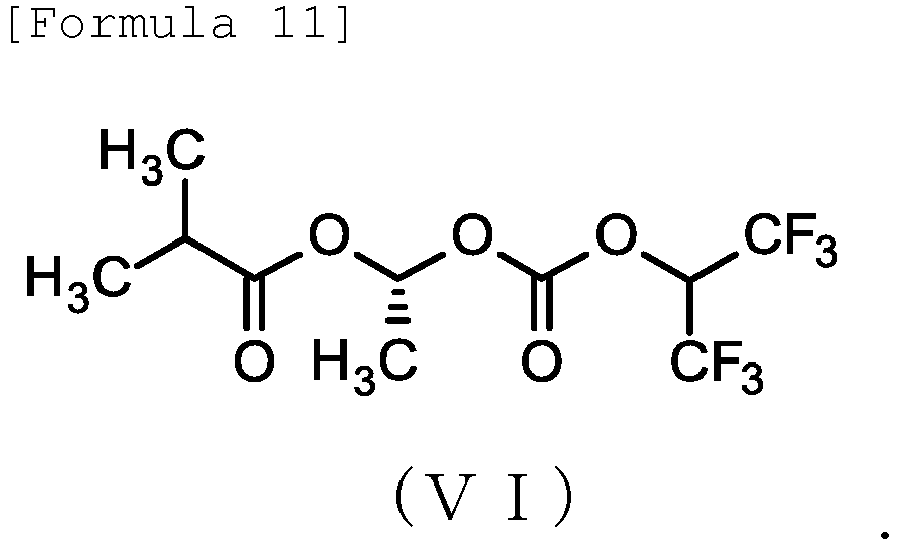
- the present step is a step of subjecting a compound represented by the formula (XI) to optical resolution to obtain a compound represented by the formula (VI) and a compound represented by the formula (VIII).
- Optical resolution can be carried out using optically active column chromatography.
- the compound represented by the formula (VI) can be obtained by performing optical resolution using an enzyme.
- optical resolution using an enzyme can be carried out by allowing the compound represented by the formula (XI) to react with an enzyme that selectively hydrolyzes the compound represented by the formula (VIII) in an inert solvent.
- the inert solvent used in the present step is not particularly limited, as long as it does not inhibit the reaction.
- the inert solvent is preferably a mixed solvent of a buffer and an organic solvent.
- the buffer include an acetate buffer, a phosphate buffer, a citrate buffer, a borate buffer, a tartrate buffer, and a Tris buffer.
- the inert solvent used herein is preferably a phosphate buffer, and more preferably a phosphate buffer.
- the organic solvent include: nitrile solvents such as acetonitrile; ether solvents such as diethyl ether, 1,2-dimethoxyethane, and tetrahydrofuran; saturated hydrocarbon solvents such as hexane and pentane; aromatic hydrocarbon solvents such as benzene, toluene, and chlorobenzene; ketone solvents such as acetone and 2-butanone; amide solvents such as N,N-dimethylformamide, N,N-dimethylacetamide, and 1-methyl-2-pyrrolidone; alcohol solvents such as methanol and ethanol; and sulfoxide solvents such as dimethyl sulfoxide.
- the organic solvent is preferably dimethyl sulfoxide.
- the enzyme used in the present step is not particularly limited, as long as it is an enzyme that selectively hydrolyzes the compound represented by the formula (VIII).
- Preferred examples of the enzyme include lipase derived from Candida antarctica (e.g., CHIRAZYME L-2,C3, CHIRAZYME L-2,C4, CHIRAZYME L-2,CA, and CHIRAZYME L-2,CB), lipase derived from Candida rugosa (e.g., lipase AY "Amano" 30), and lipase derived from Themomyces lanuginosus (e.g., CHIRAZYME L-8.1).
- Candida antarctica e.g., CHIRAZYME L-2,C3, CHIRAZYME L-2,C4, CHIRAZYME L-2,CA, and CHIRAZYME L-2,CB
- lipase derived from Candida rugosa e.g., lipase AY "Amano"
- the enzyme used herein is more preferably lipase derived from Candida antarctica, and even more preferably CHIRAZYME L-2,C4.
- the enzyme is used in the present step in an amount of generally 1/100 to 10 times, more preferably 1/50 to 1 time, and even more preferably 1/20 to 1/5 times greater than the mass of a mixture of the compound (1) and the compound (2).
- the reaction temperature applied in the present step is generally 0°C to 80°C, preferably 10°C to 65°C, and more preferably 10°C to 30°C.
- the reaction time applied in the present step is generally 1 hour to 120 hours, preferably 5 hours to 80 hours, and more preferably 10 hours to 60 hours.
- the present step is a step of allowing the compound represented by formula (VI) to come into contact with the compound represented by the formula (II) or a salt thereof to produce a compound represented by the formula (VII) or a pharmacologically acceptable salt thereof.
- the present step can be carried out by the same method as that in the step 2.
- the present step is a step of allowing the compound represented by formula (VIII) to come into contact with the compound represented by the formula (II) or a salt thereof to produce a compound represented by the formula (IX) or a pharmacologically acceptable salt thereof.
- the present step can be carried out by the same method as that in the step 2.
- the compounds represented by the formula (III), the formula (VII) and the formula (IX) can be converted to pharmacologically acceptable salts by allowing the compounds to react with an acid or a base existing in the reaction system, or by adding a suitable acid or base into the reaction system, as necessary, and then allowing the compounds to react with it.
- examples of acid-addition salts formed with acids can include: hydrohalides such as hydrofluoride, hydrochloride, hydrobromide, and hydroiodide; inorganic acid salts such as nitrate, perchlorate, sulfate, and phosphate; lower alkanesulfonates such as methanesulfonate, trifluoromethanesulfonate, and ethanesulfonate; arylsulfonates such as benzenesulfonate and p-toluenesulfonate; organic acid salts such as acetate, malate, fumarate, succinate, citrate, tartrate, oxalate, and maleate; and amino acid salts such as ornitate, glutamate, and aspartate.
- hydrohalides such as hydrofluoride, hydrochloride, hydrobromide, and hydroiodide
- inorganic acid salts such as nitrate, perchlorate, s
- examples of base-addition salts formed with bases can include: alkali metal salts such as sodium salts, potassium salts, and lithium salts; alkaline-earth metal salts such as calcium salts and magnesium salts; inorganic salts such as ammonium salts; organic amine salts such as dibenzylamine salts, morpholine salts, phenylglycine alkyl ester salts, ethylenediamine salts, N-methylglucamine salts, diethylamine salts, triethylamine salts, cyclohexylamine salts, dicyclohexylamine salts, N,N'-dibenzylethylenediamine salts, diethanolamine salts, N-benzyl-N-(2-phenylethoxy)amine salts, piperazine salts, tetramethylammonium salts, and tris(hydroxymethyl)aminomethane salts; and amino acid salts such as arginine salts.
- the compound represented by the formula (III) or a pharmacologically acceptable salt thereof may also be present in the form of a solvate, and such a solvate is also included in the compound represented by the formula (III) or a pharmacologically acceptable salt thereof.
- the solvate is not particularly limited, as long as it is a pharmacologically acceptable solvate.
- the solvate is preferably a hydrate, an ethanol solvate, etc., and is more preferably a hydrate.
- the products generated in the above described step 1 to step 6 can be isolated from the reaction mixture, as necessary, according to a conventional method, for example, (1) a method of directly concentrating the reaction solution, (2) a method comprising removing insoluble matters from the reaction mixture by filtration, and then concentrating the filtrate, (3) a method comprising adding water and a solvent immiscible with water (e.g., dichloromethane, diethyl ether, ethyl acetate, toluene, etc.) to the reaction solution, and then extracting a product, or (4) a method of collecting a crystallized or precipitated product by filtration.
- a solvent immiscible with water e.g., dichloromethane, diethyl ether, ethyl acetate, toluene, etc.
- the thus isolated product can be purified, as necessary, according to a conventional method, for example, vacuum distillation, atmospheric distillation, recrystallization, reprecipitation, or various types of chromatography. Otherwise, the product generated in each step can be used in the subsequent step without isolation or purification.
- the compounds represented by the formula (III), the formula (VII) and the formula (IX) obtained by the method of the present invention are useful as prodrugs of TAFIa inhibitors. Accordingly, the compounds represented by the formula (III), the formula (VII) and the formula (IX) can be used as therapeutic agents for myocardial infarction, angina pectoris, acute coronary syndrome, cerebral infarction, deep vein thrombosis, pulmonary embolism, peripheral arterial embolism, sepsis, disseminated intravascular coagulation syndrome, pulmonary fibrosis, etc.
- the compound represented by the formula (I) i.e., a fluorous alkyl carbonate derivative
- a fluorous alkyl carbonate derivative can also be used for the purpose of producing 1-(acyloxy)alkyl carbamate derivatives other than the compounds represented by the formula (III), the formula (VII) and the formula (IX).
- 1 H-NMR in the Examples means a "nuclear magnetic resonance spectrum”.
- the CDCl 3 inside the parentheses means deuterated chloroform that is a measurement solvent.
- TMS tetramethylsilane
- methyl tert-butyl ether (70 mL) and water (70 mL) were added to the reaction solution, and the obtained mixture was then stirred, followed by liquid separation.
- the organic layer was washed with water (70 mL), 10% saline (70 mL), and 3% sodium hydrogen carbonate 10% saline (70 mL). Thereafter, the organic layer was further washed with 3% sodium hydrogen carbonate 10% saline (70 mL) three times, and nitrophenol was removed.
- the organic layer was washed with 20% saline (70 mL), and was then concentrated under reduced pressure to approximately 10 mL.
- 1,8-diazabicyclo[5.4.0]undec-7-ene (490 g, 3.22 mol), triethylamine (652 g, 6.44 mol) and 1- ⁇ [(1,1,1,3,3,3-hexafluoro-2-propoxy)carbonyl]oxy ⁇ ethyl isobutyrate (1261 g, 3.87 mol) were added to the reaction solution, and the obtained mixture was then stirred at 0°C for 4 hours.
- the obtained crude crystals (500 g, 1.11 mol) were added to tetrahydrofuran (12.5 L), and the obtained mixture was then stirred at 43°C. Insoluble matters were removed by filtration, and were then washed with tetrahydrofuran (2.5 L).
- the obtained filtrate was concentrated under reduced pressure to 5 L, ethyl acetate (7.5 L) was then added thereto, and the obtained mixture was then concentrated under reduced pressure to 5 L.
- Ethyl acetate (7.5 L) was added to the residue, and the obtained mixture was concentrated under reduced pressure again to 5 L, and was then cooled to 0°C, followed by stirring for 1 hour.
- Powder X-ray diffraction involving irradiation with a copper K ⁇ ray was performed on crystals of the title compound. The results are shown in Table 1 and Figure 1 . Main peaks were observed at diffraction angles (2 ⁇ ) of 5.2°, 10.5°, 15.8°, 26.5°, and 26.6°.
- methyl tert-butyl ether 60 mL and hexane (150 mL) were added to the reaction mixture, and the enzyme was then removed by filtration.
- the enzyme was washed with a methyl tert-butyl ether/hexane solution (1 : 1, 60 mL), and the obtained mixed solution was subjected to liquid separation.
- Activated carbon (3.0 g) was added to the obtained organic layer, and the obtained mixture was then stirred at 20°C for 30 minutes. After that, the activated carbon was removed by filtration.
- the activated carbon was washed with a methyl tert-butyl ether/hexane solution (1 : 1, 60 mL), and water (150 mL) was then added thereto.
- a methyl tert-butyl ether/hexane solution (1 : 1, 60 mL)
- water 150 mL
- the aqueous layer was adjusted to pH 9.6, and the mixed solution was then subjected to liquid separation.
- the obtained organic layer was washed with water (300 mL) five times, and the obtained solution was then concentrated under reduced pressure to 30 mL, so as to obtain the title compound in the form of a mixed solution with hexane (HPLC quantification: 11.90 g, HPLC quantification yield: 39.7%, enantiomeric excess: 98.4%ee).
- methyl tert-butyl ether (60 mL) and hexane (150 mL) were added to the reaction mixture, and after liquid separation, the enzyme was removed by filtration.
- the enzyme was washed with a methyl tert-butyl ether/hexane solution (1 : 1, 60 mL), and the obtained filtrate was then washed with 20% saline (300 mL).
- the obtained solution was concentrated under reduced pressure to 30 mL.
- CHIRAZYME L-2,C4.1 (5.0 mg) was added to a phosphate buffer (0.5 M, pH 7.0, 2.5 mL), methyl tert-butyl ether (0.5 mL) was then added thereto, and 1- ⁇ [(1,1,1,3,3,3-hexafluoro-2-propyloxy)carbonyl]oxy ⁇ ethyl isobutyrate (50 mg, 0.153 mmol) as a racemate was then added thereto. The obtained mixture was stirred at room temperature overnight. After confirming the completion of the reaction, methyl tert-butyl ether (2.0 mL) was added to the reaction mixture, and the enzyme was then removed by filtration. The obtained mixed solution was subjected to liquid separation, and was then concentrated under reduced pressure, so as to obtain the title compound in the form of a concentrated and dried product (HPLC quantification yield: 38.4%, enantiomeric excess: 99.4%ee) .
- CHIRAZYME L-2,C3 (5.0 mg) was added to a phosphate buffer (0.5 M, pH 7.0, 2.5 mL), hexane (0.5 mL) was then added thereto, and 1- ⁇ [(1,1,1,3,3,3-hexafluoro-2-propyloxy)carbonyl]oxy ⁇ ethyl isobutyrate (50 mg, 0.153 mmol) as a racemate was then added thereto. The obtained mixture was stirred at room temperature overnight. After confirming the completion of the reaction, methyl tert-butyl ether (2.0 mL) was added to the reaction mixture, and the enzyme was then removed by filtration. The obtained mixed solution was subjected to liquid separation, and was then concentrated under reduced pressure, so as to obtain the title compound in the form of a concentrated and dried product (HPLC quantification yield: 33.4%, enantiomeric excess: 99.4%ee).
- CHIRAZYME L-2,CB (5.0 mg) was added to a phosphate buffer (0.5 M, pH 7.0, 2.5 mL), hexane (0.5 mL) was then added thereto, and 1- ⁇ [(1,1,1,3,3,3-hexafluoro-2-propyloxy)carbonyl]oxy ⁇ ethyl isobutyrate (50 mg, 0.153 mmol) as a racemate was then added thereto. The obtained mixture was stirred at room temperature overnight. After confirming the completion of the reaction, methyl tert-butyl ether (2.0 mL) was added to the reaction mixture, and the enzyme was then removed by filtration. The obtained mixed solution was subjected to liquid separation, and was then concentrated under reduced pressure, so as to obtain the title compound in the form of a concentrated and dried product (HPLC quantification yield: 16.2%, enantiomeric excess: 64.4%ee).
- CHIRAZYME L-8.1 (5.0 mg) was added to a phosphate buffer (0.5 M, pH 7.0, 2.5 mL), hexane (0.5 mL) was then added thereto, and 1- ⁇ [(1,1,1,3,3,3-hexafluoro-2-propyloxy)carbonyl]oxy ⁇ ethyl isobutyrate (50 mg, 0.153 mmol) as a racemate was then added thereto.
- the obtained mixture was stirred at room temperature overnight.
- methyl tert-butyl ether 2.0 mL was added to the reaction mixture, and the enzyme was then removed by filtration.
- the obtained mixed solution was subjected to liquid separation, and was then concentrated under reduced pressure, so as to obtain the title compound in the form of a concentrated and dried product (HPLC quantification yield: 45.3%, enantiomeric excess: 30.0%ee).
- Lipase AY "Amano" 30 (5.0 mg) was added to a phosphate buffer (0.5 M, pH 7.0, 2.5 mL), hexane (0.5 mL) was then added thereto, and 1- ⁇ [(1,1,1,3,3,3-hexafluoro-2-propyloxy)carbonyl]oxy ⁇ ethyl isobutyrate (50 mg, 0.153 mmol) as a racemate was then added thereto. The obtained mixture was stirred at room temperature overnight. After confirming the completion of the reaction, methyl tert-butyl ether (2.0 mL) was added to the reaction mixture, and the enzyme was then removed by filtration. The obtained mixed solution was subjected to liquid separation, and was then concentrated under reduced pressure, so as to obtain the title compound in the form of a concentrated and dried product (HPLC quantification yield: 41.3%, enantiomeric excess: 31.6%ee).
- Lipase AYS "Amano" (5.0 mg) was added to a phosphate buffer (0.5 M, pH 7.0, 2.5 mL), hexane (0.5 mL) was then added thereto, and 1- ⁇ [(1,1,1,3,3,3-hexafluoro-2-propyloxy)carbonyl]oxy ⁇ ethyl isobutyrate (50 mg, 0.153 mmol) as a racemate was then added thereto. The obtained mixture was stirred at room temperature overnight. After confirming the completion of the reaction, methyl tert-butyl ether (2.0 mL) was added to the reaction mixture, and the enzyme was then removed by filtration. The obtained mixed solution was subjected to liquid separation, and was then concentrated under reduced pressure, so as to obtain the title compound in the form of a concentrated and dried product (HPLC quantification yield: 41.6%, enantiomeric excess: 37.4%ee).
- Novozyme 435 (5.0 mg) was added to a phosphate buffer (0.5 M, pH 7.0, 2.5 mL), hexane (0.5 mL) was then added thereto, and 1- ⁇ [(1,1,1,3,3,3-hexafluoro-2-propyloxy)carbonyl]oxy ⁇ ethyl isobutyrate (50 mg, 0.153 mmol) as a racemate was then added thereto.
- the obtained mixture was stirred at room temperature overnight.
- methyl tert-butyl ether 2.0 mL was added to the reaction mixture, and the enzyme was then removed by filtration.
- the obtained mixed solution was subjected to liquid separation, and was then concentrated under reduced pressure, so as to obtain the title compound in the form of a concentrated and dried product (HPLC quantification yield: 41.1%, enantiomeric excess: 84.8%ee).
- Example 5 the optical purity of 1- ⁇ [(1,1,1,3,3,3-hexafluoro-2-propyloxy)carbonyl]oxy ⁇ ethyl isobutyrate was confirmed according HPLC under the following analysis conditions.
- the obtained organic layer was concentrated under reduced pressure to 50 mL, ethyl acetate (75 mL) was then added thereto, and the obtained mixture was then concentrated under reduced pressure to 50 mL.
- Ethyl acetate (75 mL) was added to the residue, and the obtained mixture was then concentrated under reduced pressure to 50 mL. Thereafter, the reaction mixture was cooled to 0°C, and was then stirred for 1 hour. Thereafter, the precipitated crystals were filtrated, and the crystals were washed with cold ethyl acetate (10 mL), followed by vacuum drying, to obtain the title compound in the form of white crystals (4.09 g, yield: 84.3%).
- 1,8-diazabicyclo[5.4.0]undec-7-ene (3.27 g, 21.48 mmol)
- triethylamine (4.35 g, 42.96 mmol)
- 1- ⁇ [(1,1,1,3,3,3-hexafluoro-2-propoxy)carbonyl]oxy ⁇ ethyl (S)-isobutyrate (8.41 g, 25.77 mmol) were added to the reaction solution, and the obtained mixture was then stirred at 0°C for 4 hours.
- a 1-(acyloxy)alkyl carbamate derivative can be produced using a fluorous alkyl carbonate derivative. It has been shown that fluorous alcohol generated as a byproduct can be easily removed by a simple concentration operation, and thus that a good-quality 1-(acyloxy)alkyl carbamate derivative can be efficiently and simply produced.
- the production method of the present invention and a fluorous alkyl carbonate derivative used in the method are useful for the production of a 1-(acyloxy)alkyl carbamate derivative.
Landscapes
- Chemical & Material Sciences (AREA)
- Organic Chemistry (AREA)
- Wood Science & Technology (AREA)
- Zoology (AREA)
- Life Sciences & Earth Sciences (AREA)
- Engineering & Computer Science (AREA)
- Biotechnology (AREA)
- Genetics & Genomics (AREA)
- Microbiology (AREA)
- Chemical Kinetics & Catalysis (AREA)
- General Chemical & Material Sciences (AREA)
- Health & Medical Sciences (AREA)
- Biochemistry (AREA)
- Bioinformatics & Cheminformatics (AREA)
- General Engineering & Computer Science (AREA)
- General Health & Medical Sciences (AREA)
- Analytical Chemistry (AREA)
- Organic Low-Molecular-Weight Compounds And Preparation Thereof (AREA)
- Pharmaceuticals Containing Other Organic And Inorganic Compounds (AREA)
- Preparation Of Compounds By Using Micro-Organisms (AREA)
Abstract
Description
- The present invention relates to a novel method for producing a 1-(acyloxy)alkyl carbamate derivative, and a fluorous alkyl carbonate derivative used in the method.
- Prodrug means a pharmaceutical product that is converted to an active ingredient as a result of a reaction with an enzyme, gastric acid, etc., in a living body. Preparation of such a prodrug from a pharmaceutical product is carried out for the purposes of: (1) improving absorbability into a body, (2) reducing side effects, (3) allowing it to act in a specific organ, (4) sustaining the action, and the like.
- 1-(Acyloxy)alkoxycarbonyl group has been used for conversion of various pharmaceutical molecules having an amino group or the like to prodrugs. A pharmaceutical molecule having an amino group is converted to a prodrug by introducing such a 1-(acyloxy)alkoxycarbonyl group, so that the pharmaceutical molecule is converted to a 1-(acyloxy)alkyl carbamate derivative (Non Patent Literatures 1 and 2).
- Patent Literature 1 discloses 1-(acyloxy)alkyl carbamate derivatives (Examples 20, 22, 23, 27, 28, 29, 30, 31, and 32 of Patent Literature 1) as prodrugs of compounds showing TAFIa inhibitory activity (Examples 15 and 40 of Patent Literature 1).
- As methods of synthesizing 1-(acyloxy)alkyl carbamate derivatives, the methods disclosed in Patent Literatures 2 to 8, etc. are known. However, these methods have been disadvantageous in that they need multi-stage reaction steps, in that they provide a low yield, in that they generate by-products, which are hardly removed, etc.
-
- Patent Literature 1: International Publication No.
WO 2011/115064 - Patent Literature 2:
U.S. Patent No. 4916230 - Patent Literature 3: International Publication No.
WO 03/077902 - Patent Literature 4: International Publication No.
WO 03/104184 - Patent Literature 5: International Publication No.
WO 2005/010011 - Patent Literature 6: International Publication No.
WO 2005/066122 - Patent Literature 7: International Publication No.
WO 2010/017504 - Patent Literature 8:
U.S. Patent Application Laid-Open No. 2014/0243544 -
- Non Patent Literature 1: Bioorg. Med. Chem. Lett., 7, pp. 1811-1816 (1997)
- Non Patent Literature 2: J. Med. Chem., 31, pp. 318-322 (1988)
- It is an object of the present invention to provide a method for efficiently and simply producing a 1-(acyloxy)alkyl carbamate derivative.
- The present inventors have found that a 1-(acyloxy)alkyl carbamate derivative can be produced using a fluorous alkyl carbonate derivative. The inventors have found that fluorous alcohol generated as a by-product can be easily removed by a simple concentration operation, and that a good-quality 1-(acyloxy)alkyl carbamate derivative can be efficiently and simply produced.
- Specifically, the present invention includes the following inventions.
- (1) A method for producing a compound represented by the following formula (III) or a pharmacologically acceptable salt thereof:

wherein the method comprises allowing a compound represented by the following formula (I):
to come into contact with a compound represented by the following formula (II) or a salt thereof:
- (2) The production method according to the above (1), wherein the fluorous alkyl group is a 1,1,1,3,3,3-hexafluoro-2-propyl group.
- (3) The production method according to the above (1) or (2), wherein R1 is an isopropyl group and R2 is a methyl group.
- (4) The production method according to the above (1), which is a method for producing a compound represented by the following formula (VII) or a pharmacologically acceptable salt thereof:


- (5) The production method according to the above (1), which is a method for producing a compound represented by the following formula (IX) or a pharmacologically acceptable salt thereof:


- (6) A compound represented by the following formula (I):

- (7) The compound according to the above (6), wherein the fluorous alkyl group is a 1,1,1,3,3,3-hexafluoro-2-propyl group.
- (8) The compound according to the above (6) or (7), wherein R1 is an isopropyl group and R2 is a methyl group.
- (9) The compound according to the above (6), which is represented by the following formula (VI):
- (10) The compound according to the above (6), which is represented by the following formula (VIII):

- (11) A method for producing a compound represented by the following formula (I):

wherein the method comprises allowing a compound represented by the following formula (IV):

- (12) The production method according to the above (11), wherein the fluorous alkyl group is a 1,1,1,3,3,3-hexafluoro-2-propyl group.
- (13) The production method according to the above (11) or (12), wherein R1 is an isopropyl group and R2 is a methyl group.
- (14) A method for producing a compound represented by the following formula (VI):


- (15) The production method according to the above (14), wherein the enzyme is lipase derived from Candida antarctica, lipase derived from Candida rugosa, or lipase derived from Themomyces lanuginosus.
- (16) The production method according to the above (15), wherein the enzyme is lipase derived from Candida antarctica.
- (17) The production method according to the above (16), wherein the enzyme is CHIRAZYME L-2,C4.
- (18) The production method according to any one of the above (14) to (17), wherein the inert solvent is a solvent comprising a buffer.
- (19) The production method according to any one of the above (14) to (17), wherein the inert solvent is a solvent comprising a phosphate buffer.
- (20) Crystals of a compound represented by the following formula (VII):


- (21) A method for producing a compound represented by the following formula (VII) or a pharmacologically acceptable salt thereof:


- (22) The production method according to the above (21), wherein the solution is a solution comprising ethyl acetate.
- (23) The production method according to the above (21) or (22), wherein the crystallization is carried out under conditions of -5°C to 5°C.
- (24) The production method according to any one of the above (21) to (23), which is carried out following the production method according to the above (3).
- According to the present invention, a method for efficiently and simply producing a good-quality 1-(acyloxy)alkyl carbamate derivative can be provided.
- [
Figure 1] Figure 1 is a view showing the results of a powder X-ray diffraction obtained by irradiation of crystals of a compound represented by formula (VII) with a copper Kα ray. - Hereinafter, the substituents used in the present description will be described.
- A "C1-C4 alkyl group" in R1 and R2 means a linear or branched saturated hydrocarbon group having 1 to 4 carbon atoms. Examples thereof include a methyl group, an ethyl group, a propyl group, an isopropyl group, an n-butyl group, a sec-butyl group, and a tert-butyl group.
- A "C1-C4 alkyl group" in R1 is preferably a methyl group, an ethyl group, an isopropyl group or a tert-butyl group, more preferably an isopropyl group or a tert-butyl group, and most preferably an isopropyl group.
- A "C3-C6 cycloalkyl group" in R1 means a group consisting of a saturated hydrocarbon ring having 3 to 6 carbon atoms. Examples thereof include a cyclopropyl group, a cyclobutyl group, a cyclopentyl group, and a cyclohexyl group.
- A "C3-C6 cycloalkyl group" in R1 is preferably a cyclobutyl group, a cyclopentyl group or a cyclohexyl group, more preferably a cyclopentyl group or a cyclohexyl group, and most preferably a cyclohexyl group.
- The R1 as a whole is preferably a methyl group, an ethyl group, an isopropyl group, a tert-butyl group or a cyclohexyl group, more preferably an isopropyl group, a tert-butyl group or a cyclohexyl group, and most preferably an isopropyl group.
- A "C1-C4 alkyl group" in R2 is preferably a methyl group, an ethyl group or an isopropyl group, more preferably a methyl group or an ethyl group, and most preferably a methyl group.
- The R2 as a whole is preferably a hydrogen atom, a methyl group, an ethyl group or an isopropyl group, more preferably a hydrogen atom, a methyl group or an ethyl group, and most preferably a methyl group.
- A "fluorous alkyl group" in A means a C2-C11 alkyl group, in which 40% or more of the hydrogen atoms are replaced by fluorine atoms. Examples thereof include a 2,2-difluoroethyl group, a 2,2,2-trifluoroethyl group, a 2,2,3,3,3-pentafluoro-1-propyl group, a 1,1,1,3,3,3-hexafluoro-2-propyl group, a 2,2,3,4,4,4-hexafluoro-1-butyl group, a 2,2,3,3,4,4,4-heptafluoro-1-butyl group, a nonafluoro-tert-butyl group, a 2,2,3,3,4,4,5,5-octafluoro-1-pentyl group, a 1H,1H-nonafluoro-1-pentyl group, a 1H,1H,2H,2H-nonafluoro-1-hexyl group, a 1H,1H,7H-dodecafluoro-1-heptyl group, a 1H,1H-tridecafluoro-1-heptyl group, a 1H,1H,2H,2H-tridecafluoro-1-n-octyl group, a 1H,1H-pentadecafluoro-1-octyl group, a 1H,1H,9H-hexadecafluoro-1-nonanyl group, a 1H,1H-heptadecafluoro-1-nonanyl group, a 1H,1H,2H,2H-heptadecafluoro-1-decanyl group, a 1H,1H-nonadecafluoro-1-decanyl group, and a 1H,1H,11H-eicosafluoro-1-undecanyl group.
- Such a "fluorous alkyl group" in A is preferably a 2,2,2-trifluoroethyl group, a 2,2,3,3,3-pentafluoro-1-propyl group, a 1,1,1,3,3,3-hexafluoro-2-propyl group, a 2,2,3,4,4,4-hexafluoro-1-butyl group, a 2,2,3,3,4,4,4-heptafluoro-1-butyl group or a nonafluoro-tert-butyl group, more preferably a 2,2,2-trifluoroethyl group, a 2,2,3,3,3-pentafluoro-1-propyl group, a 1,1,1,3,3,3-hexafluoro-2-propyl group, a 2,2,3,4,4,4-hexafluoro-1-butyl group or a 2,2,3,3,4,4,4-heptafluoro-1-butyl group, and most preferably a 1,1,1,3,3,3-hexafluoro-2-propyl group.
- The production method of the present invention can be carried out as follows.

- The present step is a step of allowing a compound represented by the formula (IV) [wherein R1 represents a C1-C4 alkyl group or a C3-C6 cycloalkyl group, and R2 represents a C1-C4 alkyl group or a hydrogen atom] to come into contact with a compound represented by the formula (V) [wherein A represents a fluorous alkyl group (wherein the fluorous alkyl group represents a C2-C11 alkyl group in which 40% or more of the hydrogen atoms are replaced by fluorine atoms)] to produce a compound represented by the formula (I) [wherein R1, R2 and A are the same as defined above] (i.e., a fluorous alkyl carbonate derivative).
- The compound represented by the formula (IV) can be produced by the method described in Bioorg. Med. Chem. Lett., 7, pp. 1811-1816 (1997) or J. Med. Chem., 31, pp. 318-322 (1988), or a method equivalent thereto.
- The compound represented by the formula (V) is fluorous alcohol, and a commercially available product can be used. Examples thereof include 2,2-difluoroethanol, 2,2,2-trifluoroethanol, 2,2,3,3,3-pentafluoro-1-propanol, 1,1,1,3,3,3-hexafluoro-2-propanol, 2,2,3,4,4,4-hexafluoro-1-butanol, 2,2,3,3,4,4,4-heptafluoro-1-butanol, nonafluoro-tert-butanol, 2,2,3,3,4,4,5,5-octafluoro-1-pentanol, 1H,1H-nonafluoro-1-pentanol, 1H,1H,2H,2H-nonafluoro-1-hexanol, 1H,1H,7H-dodecafluoro-1-heptanol, 1H,1H-tridecafluoro-1-heptanol, 1H,1H,2H,2H-tridecafluoro-1-n-octanol, 1H,1H-pentadecafluoro-1-octanol, 1H,1H,9H-hexadecafluoro-1-nonanol, 1H,1H-heptadecafluoro-1-nonanol, 1H,1H,2H,2H-heptadecafluoro-1-decanol, 1H,1H-nonadecafluoro-1-decanol, and 1H,1H,11H-eicosafluoro-1-undecanol. The compound represented by the formula (V) is preferably 2,2,2-trifluoroethanol, 2,2,3,3,3-pentafluoro-1-propanol, 1,1,1,3,3,3-hexafluoro-2-propanol, 2,2,3,4,4,4-hexafluoro-1-butanol, 2,2,3,3,4,4,4-heptafluoro-1-butanol or nonafluoro-tert-butanol, more preferably 2,2,2-trifluoroethanol, 2,2,3,3,3-pentafluoro-1-propanol, 1,1,1,3,3,3-hexafluoro-2-propanol, 2,2,3,4,4,4-hexafluoro-1-butanol or 2,2,3,3,4,4,4-heptafluoro-1-butanol, and most preferably 1,1,1,3,3,3-hexafluoro-2-propanol.
- The solvent used in the present step is not particularly limited, as long as it does not inhibit the reaction. Examples thereof include acetonitrile, dichloromethane, chloroform, methanol, ethanol, diethyl ether, 1,2-dimethoxyethane, tetrahydrofuran, 1,4-dioxane, ethyl acetate, hexane, pentane, benzene, toluene, chlorobenzene, acetone, 2-butanone, N,N-dimethylformamide, N,N-dimethylacetamide, 1-methyl-2-pyrrolidone, dimethyl sulfoxide, water, and a mixed solvent thereof. The solvent used herein is preferably acetonitrile.
- The compound represented by the formula (V) is used in the present step in an amount of generally 1 to 10 equivalents, and preferably 1.5 to 4 equivalents, based on the amount of the compound represented by the formula (IV) .
- A base is preferably used in the present step. Examples of the base include triethylamine, tributylamine, diisopropylethylamine, N-methylmorpholine, N-methylpyrrolidine, N-methylpiperidine, pyridine, 2-methylpyridine, 2,6-dimethylpyridine, 4-dimethylaminopyridine, 1,4-diazabicyclo[2.2.2]octane, 1,8-diazabicyclo[5.4.0]undec-7-ene, and 1,5-diazabicyclo[4.3.0]undec-7-ene. The base used herein is preferably triethylamine. The base is used in an amount of generally 1 to 10 equivalents, and preferably 1 to 1.2 equivalents, based on the amount of the compound represented by the formula (IV).
- The reaction temperature applied in the present step is generally -40°C to 80°C, and preferably -10°C to 15°C.
- The reaction time applied in the present step is generally 1 hour to 72 hours, and preferably 2 hours to 6 hours.
- The present step is a step of allowing the compound represented by the formula (I) [wherein R1 represents a C1-C4 alkyl group or a C3-C6 cycloalkyl group, R2 represents a C1-C4 alkyl group or a hydrogen atom, and A represents a fluorous alkyl group (wherein the fluorous alkyl group represents a C2-C11 alkyl group in which 40% or more of the hydrogen atoms are replaced by fluorine atoms)] (i.e., a fluorous alkyl carbonate derivative) to come into contact with a compound represented by the formula (II) or a salt thereof, to produce a compound represented by the formula (III) [wherein R1 and R2 are the same as defined above] (i.e., a 1-(acyloxy)alkyl carbamate derivative) or a pharmacologically acceptable salt thereof.
- According to the present step, fluorous alcohol corresponding to A in the compound represented by the formula (I) is generated as a by-product. Examples of such a compound include 2,2-difluoroethanol, 2,2,2-trifluoroethanol, 2,2,3,3,3-pentafluoro-1-propanol, 1,1,1,3,3,3-hexafluoro-2-propanol, 2,2,3,4,4,4-hexafluoro-1-butanol, 2,2,3,3,4,4,4-heptafluoro-1-butanol, nonafluoro-tert-butanol, 2,2,3,3,4,4,5,5-octafluoro-1-pentanol, 1H,1H-nonafluoro-1-pentanol, 1H,1H,2H,2H-nonafluoro-1-hexanol, 1H,1H,7H-dodecafluoro-1-heptanol, 1H,1H-tridecafluoro-1-heptanol, 1H,1H,2H,2H-tridecafluoro-1-n-octanol, 1H,1H-pentadecafluoro-1-octanol, 1H,1H,9H-hexadecafluoro-1-nonanol, 1H,1H-heptadecafluoro-1-nonanol, 1H,1H,2H,2H-heptadecafluoro-1-decanol, 1H,1H-nonadecafluoro-1-decanol, and 1H,1H,11H-eicosafluoro-1-undecanol. Since, in particular, fluorous alcohol having a C2-C6 alkyl group is a compound having a low boiling point, it can be easily removed by a simple concentration operation.
- The compound represented by the formula (II) or a salt thereof can be produced by the method described in International Publication No.
WO 2011/115064 or a method equivalent thereto (the compound represented by the formula (II) is described in Example 15, and a p-toluenesulfonate-anhydride of this compound is described in Example 40). - The solvent used in the present step is not particularly limited, as long as it does not inhibit the reaction. Examples thereof include acetonitrile, dichloromethane, chloroform, methanol, ethanol, diethyl ether, 1,2-dimethoxyethane, tetrahydrofuran, 1,4-dioxane, ethyl acetate, hexane, pentane, benzene, toluene, chlorobenzene, acetone, 2-butanone, N,N-dimethylformamide, N,N-dimethylacetamide, 1-methyl-2-pyrrolidone, dimethyl sulfoxide, water, and a mixed solvent thereof. The solvent used herein is preferably acetonitrile.
- The compound represented by the formula (I) is used in the present step in an amount of generally 1 to 15 equivalents, and preferably 1 to 1.5 equivalents, based on the amount of the compound represented by the formula (II).
- A base is preferably used in the present step. Examples of the base include triethylamine, tributylamine, diisopropylethylamine, N-methylmorpholine, N-methylpyrrolidine, N-methylpiperidine, pyridine, 2-methylpyridine, 2,6-dimethylpyridine, 4-dimethylaminopyridine, 1,4-diazabicyclo[2.2.2]octane, 1,8-diazabicyclo[5.4.0]undec-7-ene, and 1,5-diazabicyclo[4.3.0]non-7-ene. The base used herein is preferably triethylamine. The base is used in an amount of generally 1 to 10 equivalents, and preferably 1 to 2 equivalents, based on the amount of the compound represented by the formula (II).
- When the compound represented by the formula (II) is an acid-addition salt formed with an acid (wherein examples of the acid-addition salt include: hydrohalides such as hydrofluoride, hydrochloride, hydrobromide, and hydroiodide; inorganic acid salts such as nitrate, perchlorate, sulfate, and phosphate; lower alkanesulfonates such as methanesulfonate, trifluoromethanesulfonate, and ethanesulfonate; arylsulfonates such as benzenesulfonate and p-toluenesulfonate; organic acid salts such as acetate, malate, fumarate, succinate, citrate, tartrate, oxalate, and maleate; and amino acid salts such as ornitate, glutamate, and aspartate, and a preferred example is p-toluenesulfonate), an additional base other than the above described bases is preferably used. Examples of such an additional base include sodium hydroxide, potassium hydroxide, lithium hydroxide, calcium hydroxide, barium hydroxide, sodium carbonate, potassium carbonate, sodium hydrogen carbonate, potassium hydrogen carbonate, aqueous solutions thereof, and 1,8-diazabicyclo[5.4.0]undec-7-ene. Preferred examples include an aqueous solution of sodium hydroxide and 1,8-diazabicyclo[5.4.0]undec-7-ene. The base is used in an amount of generally 1 to 10 equivalents, and preferably 1 to 1.1 equivalents, based on the amount of the compound represented by the formula (II).
- The reaction temperature applied in the present step is generally -80°C to 40°C, and preferably -40°C to 20°C.
- The reaction time applied in the present step is generally 1 hour to 72 hours, and preferably 2 hours to 30 hours.
- The present step is a step of crystallizing crystals of a compound represented by the formula (VII) from a solution comprising a compound represented by the formula (X) (which corresponds to the compound represented by the formula (III), in which R1 is an isopropyl group and R2 is a methyl group) to produce a compound represented by the formula (VII) or a pharmacologically acceptable salt thereof. The crystals of the compound represented by the formula (VII) are characterized in that they show main peaks at diffraction angles (2θ) of 5.2°, 10.5°, 15.8°, 26.5°, and 26.6° in a powder X-ray diffraction obtained by irradiation of the crystals with a copper Kα ray. In general, the diffraction angle (2θ) used in the powder X-ray diffraction may have an error in the range of ± 0.2°, it being understood that the value of the above described diffraction angle also includes numerical values in the aforementioned range. Accordingly, not only the crystals completely identical to the above described diffraction angles, but also crystals having main peaks at diffraction angles (2θ) of 5.2 ± 0.2°, 10.5 ± 0.2°, 15.8 ± 0.2°, 26.5 ± 0.2°, and 26.6 ± 0.2°, are considered to be the present crystals, and thus, these crystals are also included in the present invention. In the present invention, "± 0.2°" means a numerical value in the range of +0.2° to -0.2° with respect to a specific numerical value. For example, "5.2 ± 0.2°" means a numerical value in the range of 5.0° to 5.4°.
- The solvent used in the present step is not particularly limited, as long as it does not inhibit crystallization of crystals of the compound represented by the formula (VII). The solvent is preferably an ethyl acetate solution. The crystals of the compound represented by the formula (VII) can be crystallized preferably under conditions of -20°C to 30°C, and more preferably under conditions of -5°C to 5°C.
- It is to be noted that the present step can also be carried out by separating the compound represented by the formula (X) into a compound represented by the formula (VII) and a compound represented by the formula (IX), using optically active column chromatography.
- Alternatively, the production method of the present invention can also be carried out as follows.

- The present step is a step of subjecting a compound represented by the formula (XI) to optical resolution to obtain a compound represented by the formula (VI) and a compound represented by the formula (VIII). Optical resolution can be carried out using optically active column chromatography.
- Moreover, the compound represented by the formula (VI) can be obtained by performing optical resolution using an enzyme. Such optical resolution using an enzyme can be carried out by allowing the compound represented by the formula (XI) to react with an enzyme that selectively hydrolyzes the compound represented by the formula (VIII) in an inert solvent. The inert solvent used in the present step is not particularly limited, as long as it does not inhibit the reaction. The inert solvent is preferably a mixed solvent of a buffer and an organic solvent. Examples of the buffer include an acetate buffer, a phosphate buffer, a citrate buffer, a borate buffer, a tartrate buffer, and a Tris buffer. The inert solvent used herein is preferably a phosphate buffer, and more preferably a phosphate buffer. Examples of the organic solvent include: nitrile solvents such as acetonitrile; ether solvents such as diethyl ether, 1,2-dimethoxyethane, and tetrahydrofuran; saturated hydrocarbon solvents such as hexane and pentane; aromatic hydrocarbon solvents such as benzene, toluene, and chlorobenzene; ketone solvents such as acetone and 2-butanone; amide solvents such as N,N-dimethylformamide, N,N-dimethylacetamide, and 1-methyl-2-pyrrolidone; alcohol solvents such as methanol and ethanol; and sulfoxide solvents such as dimethyl sulfoxide. The organic solvent is preferably dimethyl sulfoxide.
- The enzyme used in the present step is not particularly limited, as long as it is an enzyme that selectively hydrolyzes the compound represented by the formula (VIII). Preferred examples of the enzyme include lipase derived from Candida antarctica (e.g., CHIRAZYME L-2,C3, CHIRAZYME L-2,C4, CHIRAZYME L-2,CA, and CHIRAZYME L-2,CB), lipase derived from Candida rugosa (e.g., lipase AY "Amano" 30), and lipase derived from Themomyces lanuginosus (e.g., CHIRAZYME L-8.1). The enzyme used herein is more preferably lipase derived from Candida antarctica, and even more preferably CHIRAZYME L-2,C4. The enzyme is used in the present step in an amount of generally 1/100 to 10 times, more preferably 1/50 to 1 time, and even more preferably 1/20 to 1/5 times greater than the mass of a mixture of the compound (1) and the compound (2).
- The reaction temperature applied in the present step is generally 0°C to 80°C, preferably 10°C to 65°C, and more preferably 10°C to 30°C.
- The reaction time applied in the present step is generally 1 hour to 120 hours, preferably 5 hours to 80 hours, and more preferably 10 hours to 60 hours.
- The present step is a step of allowing the compound represented by formula (VI) to come into contact with the compound represented by the formula (II) or a salt thereof to produce a compound represented by the formula (VII) or a pharmacologically acceptable salt thereof. The present step can be carried out by the same method as that in the step 2.
- The present step is a step of allowing the compound represented by formula (VIII) to come into contact with the compound represented by the formula (II) or a salt thereof to produce a compound represented by the formula (IX) or a pharmacologically acceptable salt thereof. The present step can be carried out by the same method as that in the step 2.
- The compounds represented by the formula (III), the formula (VII) and the formula (IX) can be converted to pharmacologically acceptable salts by allowing the compounds to react with an acid or a base existing in the reaction system, or by adding a suitable acid or base into the reaction system, as necessary, and then allowing the compounds to react with it.
- Regarding the pharmacologically acceptable salts of the compounds represented by the formula (III), the formula (VII) and the formula (IX), examples of acid-addition salts formed with acids can include: hydrohalides such as hydrofluoride, hydrochloride, hydrobromide, and hydroiodide; inorganic acid salts such as nitrate, perchlorate, sulfate, and phosphate; lower alkanesulfonates such as methanesulfonate, trifluoromethanesulfonate, and ethanesulfonate; arylsulfonates such as benzenesulfonate and p-toluenesulfonate; organic acid salts such as acetate, malate, fumarate, succinate, citrate, tartrate, oxalate, and maleate; and amino acid salts such as ornitate, glutamate, and aspartate.
- In addition, examples of base-addition salts formed with bases can include: alkali metal salts such as sodium salts, potassium salts, and lithium salts; alkaline-earth metal salts such as calcium salts and magnesium salts; inorganic salts such as ammonium salts; organic amine salts such as dibenzylamine salts, morpholine salts, phenylglycine alkyl ester salts, ethylenediamine salts, N-methylglucamine salts, diethylamine salts, triethylamine salts, cyclohexylamine salts, dicyclohexylamine salts, N,N'-dibenzylethylenediamine salts, diethanolamine salts, N-benzyl-N-(2-phenylethoxy)amine salts, piperazine salts, tetramethylammonium salts, and tris(hydroxymethyl)aminomethane salts; and amino acid salts such as arginine salts.
- Furthermore, the compound represented by the formula (III) or a pharmacologically acceptable salt thereof may also be present in the form of a solvate, and such a solvate is also included in the compound represented by the formula (III) or a pharmacologically acceptable salt thereof. The solvate is not particularly limited, as long as it is a pharmacologically acceptable solvate. Specifically, the solvate is preferably a hydrate, an ethanol solvate, etc., and is more preferably a hydrate.
- After completion of the reaction, the products generated in the above described step 1 to step 6 can be isolated from the reaction mixture, as necessary, according to a conventional method, for example, (1) a method of directly concentrating the reaction solution, (2) a method comprising removing insoluble matters from the reaction mixture by filtration, and then concentrating the filtrate, (3) a method comprising adding water and a solvent immiscible with water (e.g., dichloromethane, diethyl ether, ethyl acetate, toluene, etc.) to the reaction solution, and then extracting a product, or (4) a method of collecting a crystallized or precipitated product by filtration. The thus isolated product can be purified, as necessary, according to a conventional method, for example, vacuum distillation, atmospheric distillation, recrystallization, reprecipitation, or various types of chromatography. Otherwise, the product generated in each step can be used in the subsequent step without isolation or purification.
- The compounds represented by the formula (III), the formula (VII) and the formula (IX) obtained by the method of the present invention are useful as prodrugs of TAFIa inhibitors. Accordingly, the compounds represented by the formula (III), the formula (VII) and the formula (IX) can be used as therapeutic agents for myocardial infarction, angina pectoris, acute coronary syndrome, cerebral infarction, deep vein thrombosis, pulmonary embolism, peripheral arterial embolism, sepsis, disseminated intravascular coagulation syndrome, pulmonary fibrosis, etc.
- It is to be noted that the compound represented by the formula (I) (i.e., a fluorous alkyl carbonate derivative) can also be used for the purpose of producing 1-(acyloxy)alkyl carbamate derivatives other than the compounds represented by the formula (III), the formula (VII) and the formula (IX).
- Hereinafter, the present invention will be specifically described in the following examples. However, these examples are not intended to limit the scope of the present invention.
- The symbol "1H-NMR" in the Examples means a "nuclear magnetic resonance spectrum". The CDCl3 inside the parentheses means deuterated chloroform that is a measurement solvent. As an internal standard, TMS (tetramethylsilane) was used. Multiplicity in 1H-NMR means s = singlet, d = doublet, t = triplet, q = quartet, hept = heptet, m = multiplet, and brs = broad singlet.
-

- A solution of 1-{[(4-nitrophenoxy)carbonyl]oxy}ethyl isobutyrate (Bioorg. Med. Chem. Lett., 7, pp. 1811-1816 (1997)) (7.0 g, 23.54 mmol) and 1,1,1,3,3,3-hexafluoro-2-propanol (11.87 g, 70.65 mmol) in acetonitrile (35 mL) solution was cooled to 0°C - 5°C, and triethylamine (3.42 mL, 24.72 mmol) was then added dropwise to the reaction solution. The mixed solution was stirred at the same temperature for 4 hours. After confirming the completion of the reaction, methyl tert-butyl ether (70 mL) and water (70 mL) were added to the reaction solution, and the obtained mixture was then stirred, followed by liquid separation. The organic layer was washed with water (70 mL), 10% saline (70 mL), and 3%
sodium hydrogen carbonate 10% saline (70 mL). Thereafter, the organic layer was further washed with 3%sodium hydrogen carbonate 10% saline (70 mL) three times, and nitrophenol was removed. The organic layer was washed with 20% saline (70 mL), and was then concentrated under reduced pressure to approximately 10 mL. The obtained residue was subjected to purification through distillation (degree of vacuum: 1 kPa, a fraction of 75°C - 80°C was fractionated), so as to obtain the title compound in the form of an oily substance (6.02 g, yield: 78.1%).
1H-NMR (CDCl3) δ: 6.82 (1H, q, J=5.5 Hz), 5.55 (1H, hept, J=5.5 Hz), 2.58 (1H, hept, J=7.0 Hz), 1.58 (3H, d, J=5.5 Hz), 1.18 (6H, d, J=7.0 Hz). - A solution of 1-{[(4-nitrophenoxy)carbonyl]oxy}ethyl isobutyrate (230 g, 774 mmol) and 1,1,1,3,3,3-hexafluoro-2-propanol (260 g, 1547 mmol) in acetonitrile (1150 mL) was cooled to 0°C - 5°C, and triethylamine (82.23 g, 812 mmol) was then added dropwise to the reaction solution. The mixed solution was stirred at the same temperature for 4 hours. After confirming the completion of the reaction, methyl tert-butyl ether (1150 mL) and n-hexane (1150 mL) at 0°C - 5°C were added to the reaction solution, and cold water (2300 mL) was also added thereto. The obtained mixture was stirred and was then subjected to liquid separation. The organic layer was washed with cold water (2300 mL) four times, and was then concentrated under reduced pressure to approximately 345 mL. The obtained residue was subjected to purification through distillation (degree of vacuum: 1.5 kPa, a fraction of 70°C - 82°C was fractionated), so as to obtain the title compound in the form of an oily substance (222.51 g, yield: 88.2%).
-

- A suspension of (2S)-5-amino-2-{[1-(trans-4-methylcyclohexyl)-1H-imidazol-4-yl]methyl}valeric acid-p-toluenesulfonate-anhydride (2.0 g, 4.30 mmol) in acetonitrile (20 mL) was cooled to -20°C. Thereafter, a 25% aqueous solution of sodium hydroxide (0.69 g, 4.30 mmol), triethylamine (1.19 mL, 8.60 mmol) and the 1-{[(1,1,1,3,3,3-hexafluoro-2-propoxy)carbonyl]oxy}ethyl isobutyrate (1.68 g, 5.15 mmol) obtained in Example 1 were added to the reaction solution, and the obtained mixture was then stirred at -20°C for 20 hours. Thereafter, concentrated hydrochloric acid (0.36 mL, 4.30 mmol) and ethyl acetate (30 mL) were added to the reaction solution, and 10% saline (20 mL) comprising concentrated hydrochloric acid (0.36 mL, 4.30 mmol) was then poured into the reaction solution. After completion of stirring, the aqueous layer was adjusted to pH 7.0 with concentrated hydrochloric acid, followed by liquid separation, and the organic layer was washed with 20% saline (20 mL) four times. The obtained organic layer was concentrated under reduced pressure to 14 mL, ethyl acetate (40 mL) was then added thereto, and the obtained mixture was then concentrated under reduced pressure to 14 mL. Ethyl acetate (40 mL) was added to the residue, and the obtained mixture was then concentrated under reduced pressure to 14 mL. Heptane (56 mL) was added dropwise to the reaction mixture, and the thus obtained mixture was then stirred at room temperature for 3 hours. Thereafter, the precipitated crystals were filtrated, and the crystals were then washed with heptane (6 mL), followed by vacuum drying, to obtain the title compound in the form of crystals (1.50 g, yield: 77.3%).
1H-NMR (CDCl3) δ: 7.60 (1H, d, J=1.0 Hz), 6.78 (1H, q, J=5.5 Hz), 6.74 (1H, s), 5.03 (1H, brs), 3.87-3.79 (1H, m), 3.22-3.10 (2H, m), 2.88 (1H, dd, J=15.0, 8.5 Hz), 2.78 (1H, dt, J=15.0, 3.5 Hz), 2.70-2.64 (1H, m), 2.53 (1H, tt, J=7.0, 7.0 Hz), 2.14-2.07 (2H, m), 1.90-1.84 (2H, m), 1.78-1.57 (5H, m), 1.49-1.41 (2H, m), 1.44 (1H, t, J=5.5 Hz), 1.15 (6H, d, J=7.0 Hz), 1.15-1.05 (2H, m), 0.96 (3H, d, J=6.5 Hz). -

- A suspension of (2S)-5-amino-2-{[1-(trans-4-methylcyclohexyl)-1H-imidazol-4-yl]methyl}valeric acid-p-toluenesulfonate-anhydride (1500 g, 3.22 mol) in acetonitrile (13.5 L) was cooled to -5°C. Thereafter, 1,8-diazabicyclo[5.4.0]undec-7-ene (490 g, 3.22 mol), triethylamine (652 g, 6.44 mol) and 1-{[(1,1,1,3,3,3-hexafluoro-2-propoxy)carbonyl]oxy}ethyl isobutyrate (1261 g, 3.87 mol) were added to the reaction solution, and the obtained mixture was then stirred at 0°C for 4 hours. Thereafter, concentrated hydrochloric acid (326 g, 3.22 mol) and ethyl acetate (13.5 L) were added to the reaction solution, and 20% saline (9 L) comprising concentrated hydrochloric acid (326 g, 3.22 mol) was then poured into the reaction solution. After completion of stirring, the aqueous layer was adjusted to pH 6.4 with concentrated hydrochloric acid, followed by liquid separation, and the organic layer was washed with 20% saline (9 L) five times. To the obtained organic layer, 20% saline (9 L) was added, and after completion of the stirring of the mixture, the aqueous layer was adjusted to pH 6.2 with concentrated hydrochloric acid, followed by liquid separation. The obtained organic layer was concentrated under reduced pressure to 6 L, ethyl acetate (18 L) was then added thereto, and the obtained mixture was then concentrated under reduced pressure to 6 L. Ethyl acetate (6 L) was added to the residue, and the obtained mixture was then concentrated under reduced pressure to 6 L. Ethyl acetate (6 L) was added dropwise to the reaction mixture, and the thus obtained mixture was cooled to 0°C and was then stirred for 1 hour. Thereafter, the precipitated crystals were filtrated, and the crystals were then washed with cold ethyl acetate (2.3 L), followed by vacuum drying, to obtain crude crystals in the form of white crystals (606 g, yield: 41.6%). The obtained crude crystals (500 g, 1.11 mol) were added to tetrahydrofuran (12.5 L), and the obtained mixture was then stirred at 43°C. Insoluble matters were removed by filtration, and were then washed with tetrahydrofuran (2.5 L). The obtained filtrate was concentrated under reduced pressure to 5 L, ethyl acetate (7.5 L) was then added thereto, and the obtained mixture was then concentrated under reduced pressure to 5 L. Ethyl acetate (7.5 L) was added to the residue, and the obtained mixture was concentrated under reduced pressure again to 5 L, and was then cooled to 0°C, followed by stirring for 1 hour. Thereafter, the precipitated crystals were filtrated, and the crystals were then washed with cold ethyl acetate (1 L), followed by vacuum drying, to obtain the title compound in the form of white crystals (467 g, yield from crude crystals: 93.3%). The absolute configuration of the title compound was confirmed by X-ray crystallography.
1H-NMR (CDCl3) δ: 7.58 (1H, d, J=1.5 Hz), 6.78 (1H, q, J=5.5 Hz), 6.74 (1H, s), 4.98 (1H, t, J=5.5 Hz), 3.84 (1H, tt, J=12.0, 4.0 Hz), 3.22-3.11 (2H, m), 2.86 (1H, dd, J=15.0, 8.5 Hz), 2.78 (1H, dt, J=15.0, 3.0 Hz), 2.70-2.64 (1H, m), 2.52 (1H, tt, J=7.0, 7.0 Hz), 2.14-2.07 (2H, m), 1.90-1.84 (2H, m), 1.78-1.57 (5H, m), 1.49-1.41 (2H, m), 1.44 (1H, d, J=7.0 Hz), 1.15 (6H, dd, J=6.5, 0.5 Hz), 1.15-1.05 (2H, m), 0.95 (3H, d, J=6.5 Hz). -
- Elemental analysis: based on C23H37N3O6
- Theoretical value: C, 61.18; H, 8.26; N, 9.31; O, 21.26
- Measured value: C, 60.92; H, 8.16; N, 9.35; O, 21.29
- Powder X-ray diffraction involving irradiation with a copper Kα ray was performed on crystals of the title compound. The results are shown in Table 1 and
Figure 1 . Main peaks were observed at diffraction angles (2θ) of 5.2°, 10.5°, 15.8°, 26.5°, and 26.6°.[Table 1] Diffraction angle 20 (°) Spacing d (Å) Relative intensity (%) 5.2 16.7 100.0 10.5 8.5 3.9 10.6 8.4 0.8 11.9 7.5 0.5 13.3 6.7 0.6 14.2 6.2 0.1 15.0 5.9 1.6 15.7 5.7 2.6 15.8 5.6 8.1 18.2 4.9 0.4 19.1 4.6 2.0 19.8 4.5 0.2 21.1 4.2 2.5 21.2 4.2 2.2 23.1 3.8 1.9 23.7 3.8 1.1 25.5 3.5 0.6 26.5 3.4 5.1 26.6 3.4 6.8 28.1 3.2 0.4 28.6 3.1 0.6 30.1 3.0 1.1 30.6 2.9 0.2 31.2 2.9 2.7 32.0 2.8 3.7 32.6 2.8 0.3 36.7 2.5 0.3 37.6 2.4 0.5 38.7 2.3 0.6 39.2 2.3 0.6 -


- 1-{[(1,1,1,3,3,3-Hexafluoro-2-propoxy)carbonyl]oxy}ethyl isobutyrate (99.3 g) as a racemate was fractionated using an HPLC optically active column (column: CHIRALCEL OJ-H, mobile phase: hexane/isopropanol = 98/2), so as to obtain 1-{[(1,1,1,3,3,3-hexafluoro-2-propoxy)carbonyl]oxy}ethyl (R)-isobutyrate (43.0 g, 43.3%) as a first peak, and 1-{[(1,1,1,3,3,3-hexafluoro-2-propoxy)carbonyl]oxy}ethyl (S)-isobutyrate (40.2 g, 40.5%) as a second peak.
1H-NMR (CDCl3) δ: 6.82 (1H, q, J=5.5 Hz), 5.55 (1H, hept, J=5.5 Hz), 2.58 (1H, hept, J=7.0 Hz), 1.58 (3H, d, J=5.5 Hz), 1.18 (6H, d, J=7.0 Hz). -
- 1-{[(1,1,1,3,3,3-Hexafluoro-2-propoxy)carbonyl]oxy}ethyl (R)-isobutyrate: [α]D 25 = +8.56 (c = 1.0, CHCl3)
- 1-{[(1,1,1,3,3,3-Hexafluoro-2-propoxy)carbonyl]oxy}ethyl (S)-isobutyrate: [α]D 25 = -8.43 (c = 1.0, CHCl3)
-
- 1-{[(1,1,1,3,3,3-Hexafluoro-2-propoxy)carbonyl]oxy}ethyl (R)-isobutyrate: 2980, 1786, 1756, 1386, 1366, 1300, 1258, 1233, 1200, 1111, 1052, 1005, 936, 899, 863, 780, 758, 709, 689, 518, and 479 cm-1.
- 1-{[(1,1, 1, 3, 3, 3-Hexafluoro-2-propoxy)carbonyl]oxy}ethyl (S)-isobutyrate: 2980, 1786, 1757, 1386, 1365, 1301, 1258, 1232, 1200, 1111, 1053, 1005, 936, 899, 863, 780, 758, 710, 689, 518, and 480 cm-1.
-

- A solution of potassium dihydrogen phosphate (13.5 g, 99.20 mmol) and potassium hydrogen phosphate (36.0 g, 206.67 mmol) in water (300 mL) was cooled to 20°C. Thereafter, CHIRAZYME L-2,C4 (3.0 g) was added to the reaction solution, methyl tert-butyl ether (90 mL) was then added thereto, and 1-{[(1,1,1,3,3,3-hexafluoro-2-propyloxy)carbonyl]oxy}ethyl isobutyrate (30.00 g, 91.97 mmol) as a racemate was then added thereto. The obtained mixture was stirred at the same temperature for 38 hours. Thereafter, after confirming the completion of the reaction, methyl tert-butyl ether (60 mL) and hexane (150 mL) were added to the reaction mixture, and the enzyme was then removed by filtration. The enzyme was washed with a methyl tert-butyl ether/hexane solution (1 : 1, 60 mL), and the obtained mixed solution was subjected to liquid separation. Activated carbon (3.0 g) was added to the obtained organic layer, and the obtained mixture was then stirred at 20°C for 30 minutes. After that, the activated carbon was removed by filtration. The activated carbon was washed with a methyl tert-butyl ether/hexane solution (1 : 1, 60 mL), and water (150 mL) was then added thereto. Using triethylamine, the aqueous layer was adjusted to pH 9.6, and the mixed solution was then subjected to liquid separation. The obtained organic layer was washed with water (300 mL) five times, and the obtained solution was then concentrated under reduced pressure to 30 mL, so as to obtain the title compound in the form of a mixed solution with hexane (HPLC quantification: 11.90 g, HPLC quantification yield: 39.7%, enantiomeric excess: 98.4%ee).
- A solution of potassium dihydrogen phosphate (14.4 g, 105.81 mmol) and potassium hydrogen phosphate (33.9 g, 194.62 mmol) in water (300 mL) was cooled to 20°C. Thereafter, CHIRAZYME L-2,C4 (3.0 g) was added to the reaction solution, methyl tert-butyl ether (90 mL) was then added thereto, and 1-{[(1,1,1,3,3,3-hexafluoro-2-propyloxy)carbonyl]oxy}ethyl isobutyrate (30.00 g, 91.97 mmol) as a racemate was then added thereto. The obtained mixture was stirred at the same temperature for 21 hours. Thereafter, after confirming the completion of the reaction, methyl tert-butyl ether (60 mL) and hexane (150 mL) were added to the reaction mixture, and after liquid separation, the enzyme was removed by filtration. The enzyme was washed with a methyl tert-butyl ether/hexane solution (1 : 1, 60 mL), and the obtained filtrate was then washed with 20% saline (300 mL). The obtained solution was concentrated under reduced pressure to 30 mL. The obtained residue was subjected to purification through distillation (degree of vacuum: 1.5 kPa, a fraction of 65°C - 55°C was fractionated), so as to obtain the title compound in the form of a colorless oily substance (9.28 g, yield: 30.9%, enantiomeric excess: 99.4%ee) .
1H-NMR (500M Hz, CDCl3) : δ 6.82 (1H, q, J=5.5 Hz), 5.55 (1H, hept, J=5.5 Hz), 2.58 (1H, hept, J=7.0 Hz), 1.59 (3H, d, J=5.5 Hz), 1.18 (6H, d, J=7.0 Hz). - CHIRAZYME L-2,C4.1 (5.0 mg) was added to a phosphate buffer (0.5 M, pH 7.0, 2.5 mL), methyl tert-butyl ether (0.5 mL) was then added thereto, and 1-{[(1,1,1,3,3,3-hexafluoro-2-propyloxy)carbonyl]oxy}ethyl isobutyrate (50 mg, 0.153 mmol) as a racemate was then added thereto. The obtained mixture was stirred at room temperature overnight. After confirming the completion of the reaction, methyl tert-butyl ether (2.0 mL) was added to the reaction mixture, and the enzyme was then removed by filtration. The obtained mixed solution was subjected to liquid separation, and was then concentrated under reduced pressure, so as to obtain the title compound in the form of a concentrated and dried product (HPLC quantification yield: 38.4%, enantiomeric excess: 99.4%ee) .
- CHIRAZYME L-2,C3 (5.0 mg) was added to a phosphate buffer (0.5 M, pH 7.0, 2.5 mL), hexane (0.5 mL) was then added thereto, and 1-{[(1,1,1,3,3,3-hexafluoro-2-propyloxy)carbonyl]oxy}ethyl isobutyrate (50 mg, 0.153 mmol) as a racemate was then added thereto. The obtained mixture was stirred at room temperature overnight. After confirming the completion of the reaction, methyl tert-butyl ether (2.0 mL) was added to the reaction mixture, and the enzyme was then removed by filtration. The obtained mixed solution was subjected to liquid separation, and was then concentrated under reduced pressure, so as to obtain the title compound in the form of a concentrated and dried product (HPLC quantification yield: 33.4%, enantiomeric excess: 99.4%ee).
- CHIRAZYME L-2,CB (5.0 mg) was added to a phosphate buffer (0.5 M, pH 7.0, 2.5 mL), hexane (0.5 mL) was then added thereto, and 1-{[(1,1,1,3,3,3-hexafluoro-2-propyloxy)carbonyl]oxy}ethyl isobutyrate (50 mg, 0.153 mmol) as a racemate was then added thereto. The obtained mixture was stirred at room temperature overnight. After confirming the completion of the reaction, methyl tert-butyl ether (2.0 mL) was added to the reaction mixture, and the enzyme was then removed by filtration. The obtained mixed solution was subjected to liquid separation, and was then concentrated under reduced pressure, so as to obtain the title compound in the form of a concentrated and dried product (HPLC quantification yield: 16.2%, enantiomeric excess: 64.4%ee).
- CHIRAZYME L-5,CA (5.0 mg) was added to a phosphate buffer (0.5 M, pH 7.0, 2.5 mL), hexane (0.5 mL) was then added thereto, and 1-{[(1,1,1,3,3,3-hexafluoro-2-propyloxy)carbonyl]oxy}ethyl isobutyrate (50 mg, 0.153 mmol) as a racemate was then added thereto. The obtained mixture was stirred at room temperature overnight. After confirming the completion of the reaction, methyl tert-butyl ether (2.0 mL) was added to the reaction mixture, and the enzyme was then removed by filtration. The obtained mixed solution was subjected to liquid separation, and was then concentrated under reduced pressure, so as to obtain the title compound in the form of a concentrated and dried product (HPLC quantification yield: 12.0%, enantiomeric excess: 66.4%ee).
- CHIRAZYME L-8.1 (5.0 mg) was added to a phosphate buffer (0.5 M, pH 7.0, 2.5 mL), hexane (0.5 mL) was then added thereto, and 1-{[(1,1,1,3,3,3-hexafluoro-2-propyloxy)carbonyl]oxy}ethyl isobutyrate (50 mg, 0.153 mmol) as a racemate was then added thereto. The obtained mixture was stirred at room temperature overnight. After confirming the completion of the reaction, methyl tert-butyl ether (2.0 mL) was added to the reaction mixture, and the enzyme was then removed by filtration. The obtained mixed solution was subjected to liquid separation, and was then concentrated under reduced pressure, so as to obtain the title compound in the form of a concentrated and dried product (HPLC quantification yield: 45.3%, enantiomeric excess: 30.0%ee).
- Lipase AY "Amano" 30 (5.0 mg) was added to a phosphate buffer (0.5 M, pH 7.0, 2.5 mL), hexane (0.5 mL) was then added thereto, and 1-{[(1,1,1,3,3,3-hexafluoro-2-propyloxy)carbonyl]oxy}ethyl isobutyrate (50 mg, 0.153 mmol) as a racemate was then added thereto. The obtained mixture was stirred at room temperature overnight. After confirming the completion of the reaction, methyl tert-butyl ether (2.0 mL) was added to the reaction mixture, and the enzyme was then removed by filtration. The obtained mixed solution was subjected to liquid separation, and was then concentrated under reduced pressure, so as to obtain the title compound in the form of a concentrated and dried product (HPLC quantification yield: 41.3%, enantiomeric excess: 31.6%ee).
- Lipase AYS "Amano" (5.0 mg) was added to a phosphate buffer (0.5 M, pH 7.0, 2.5 mL), hexane (0.5 mL) was then added thereto, and 1-{[(1,1,1,3,3,3-hexafluoro-2-propyloxy)carbonyl]oxy}ethyl isobutyrate (50 mg, 0.153 mmol) as a racemate was then added thereto. The obtained mixture was stirred at room temperature overnight. After confirming the completion of the reaction, methyl tert-butyl ether (2.0 mL) was added to the reaction mixture, and the enzyme was then removed by filtration. The obtained mixed solution was subjected to liquid separation, and was then concentrated under reduced pressure, so as to obtain the title compound in the form of a concentrated and dried product (HPLC quantification yield: 41.6%, enantiomeric excess: 37.4%ee).
- Novozyme 435 (5.0 mg) was added to a phosphate buffer (0.5 M, pH 7.0, 2.5 mL), hexane (0.5 mL) was then added thereto, and 1-{[(1,1,1,3,3,3-hexafluoro-2-propyloxy)carbonyl]oxy}ethyl isobutyrate (50 mg, 0.153 mmol) as a racemate was then added thereto. The obtained mixture was stirred at room temperature overnight. After confirming the completion of the reaction, methyl tert-butyl ether (2.0 mL) was added to the reaction mixture, and the enzyme was then removed by filtration. The obtained mixed solution was subjected to liquid separation, and was then concentrated under reduced pressure, so as to obtain the title compound in the form of a concentrated and dried product (HPLC quantification yield: 41.1%, enantiomeric excess: 84.8%ee).
- In Example 5, the optical purity of 1-{[(1,1,1,3,3,3-hexafluoro-2-propyloxy)carbonyl]oxy}ethyl isobutyrate was confirmed according HPLC under the following analysis conditions.
-
- Column: CHIRALPAK OJ-RH, 4.6 mm I.D. × 150 mm (5 µm)
- Mobile phase: (A) 0.1% TFA aq., (B) Acetonitrile = 52/48
- Column temperature: 38°C
- Flow rate: 1 mL/min
- Detection: UV 215 nm
- Analysis time: 8 min
- Diluent: MeCN
- Amount injected: 10 µL injection
- Retention time:
- 1-{[(1,1,1,3,3,3-hexafluoro-2-propyloxy)carbonyl]oxy}ethyl (R)-isobutyrate: 5.1 min
- 1-{[(1,1,1,3,3,3-hexafluoro-2-propyloxy)carbonyl]oxy}ethyl (S)-isobutyrate: 5.8 min
-


- A suspension of (2S)-5-amino-2-{[1-(trans-4-methylcyclohexyl)-1H-imidazol-4-yl]methyl}valeric acid-p-toluenesulfonate-anhydride (5.0 g, 10.74 mmol) in acetonitrile (45 mL) was cooled to 0°C. Thereafter, a 25% aqueous solution of sodium hydroxide (1.72 g, 10.74 mmol), triethylamine (2.17 mL, 21.48 mmol) and 1-{[(1,1,1,3,3,3-hexafluoro-2-propyloxy)carbonyl]oxy}ethyl (R)-isobutyrate (4.20 g, 12.89 mmol) were added to the reaction solution, and the obtained mixture was then stirred at 0°C for 20 hours. Thereafter, concentrated hydrochloric acid (1.09 g, 10.74 mmol) and a mixed solution of ethyl acetate and tetrahydrofuran (1 : 1, 60 mL) were added to the reaction solution, and 10% saline (30 mL) comprising concentrated hydrochloric acid (1.09 g, 10.74 mmol) was then poured into the mixture. After completion of stirring, the aqueous layer was adjusted to pH 6.8 with concentrated hydrochloric acid, followed by liquid separation. After that, the organic layer was washed with 20% saline (30 mL) six times. The obtained organic layer was concentrated under reduced pressure to 50 mL, ethyl acetate (75 mL) was then added thereto, and the obtained mixture was then concentrated under reduced pressure to 50 mL. Ethyl acetate (75 mL) was added to the residue, and the obtained mixture was then concentrated under reduced pressure to 50 mL. Thereafter, the reaction mixture was cooled to 0°C, and was then stirred for 1 hour. Thereafter, the precipitated crystals were filtrated, and the crystals were washed with cold ethyl acetate (10 mL), followed by vacuum drying, to obtain the title compound in the form of white crystals (4.09 g, yield: 84.3%).
1H-NMR (CDCl3) δ: 7.58 (1H, d, J=1.5 Hz), 6.78 (1H, q, J=5.5 Hz), 6.74 (1H, s), 4.98 (1H, t, J=5.5 Hz), 3.84 (1H, tt, J=12.0, 4.0 Hz), 3.22-3.11 (2H, m), 2.86 (1H, dd, J=15.0, 8.5 Hz), 2.78 (1H, dt, J=15.0, 3.0 Hz), 2.70-2.64 (1H, m), 2.52 (1H, tt, J=7.0, 7.0 Hz), 2.14-2.07 (2H, m), 1.90-1.84 (2H, m), 1.78-1.57 (5H, m), 1.49-1.41 (2H, m), 1.44 (1H, d, J=7.0 Hz), 1.15 (6H, dd, J=6.5, 0.5 Hz), 1.15-1.05 (2H, m), 0.95 (3H, d, J=6.5 Hz). -


- A suspension of (2S)-5-amino-2-{[1-(trans-4-methylcyclohexyl)-1H-imidazol-4-yl]methyl}valeric acid-p-toluenesulfonate-anhydride (10 g, 21.48 mmol) in acetonitrile (100 mL) was cooled to 0°C. Thereafter, 1,8-diazabicyclo[5.4.0]undec-7-ene (3.27 g, 21.48 mmol), triethylamine (4.35 g, 42.96 mmol) and 1-{[(1,1,1,3,3,3-hexafluoro-2-propoxy)carbonyl]oxy}ethyl (S)-isobutyrate (8.41 g, 25.77 mmol) were added to the reaction solution, and the obtained mixture was then stirred at 0°C for 4 hours. Thereafter, concentrated hydrochloric acid (2.18 g, 42.96 mmol) and ethyl acetate (100 mL) were added to the reaction solution, and 10% saline (100 mL) was then poured into the mixture. After completion of stirring, the aqueous layer was adjusted to pH 6.25 with concentrated hydrochloric acid, and was then subjected to liquid separation, followed by extraction with ethyl acetate (50 mL). The obtained organic layers were combined, and the combined organic layer was then washed with 20% saline (10 mL) four times. To the obtained organic layer, water (30 mL) was added, and after completion of stirring, the aqueous layer was adjusted to pH 6.3 with concentrated hydrochloric acid and was then subjected to liquid separation. The obtained organic layer was concentrated under reduced pressure to 20 mL, and ethyl acetate (100 mL) was then added thereto. The obtained mixture was concentrated under reduced pressure to 20 mL. Ethyl acetate (100 mL) was added to the residue, and the obtained mixture was then concentrated under reduced pressure to 20 mL. Thereafter, heptane (60 mL) was added dropwise to the residue, followed by concentrating and drying, to obtain the title compound in the form of an oily compound (crude yield: 12.30 g, content: 71.0%, HPLC yield: 90.0%).
1H-NMR (CDCl3) δ: 7.60 (1H, d, J=1.0 Hz), 6.80 (1H, s) 6.78 (1H, q, J=5.5 Hz), 5.02 (1H, t, J=5.5 Hz), 3.87 (1H, tt, J=12.0, 3.5 Hz), 3.19-3.14 (2H, m), 2.88 (1H, dd, J=16.0, 9.0 Hz), 2.76 (1H, dt, J=16.0, 3.5 Hz), 2.70-2.64 (1H, m), 2.54 (1H, tt, J=7.0, 7.0 Hz), 2.14-2.07 (2H, m), 1.90-1.84 (2H, m), 1.78-1.57 (5H, m), 1.49-1.41 (2H, m), 1.44 (1H, d, J=5.5 Hz), 1.15 (6H, d, J=7.0 Hz), 1.15-1.05 (2H, m), 0.96 (3H, d, J=6.5 Hz). - In Examples 6 and 7, the diastereomeric ratio of the product was confirmed according to HPLC under the following analysis conditions.
-
- Column: CHIRALPAK AD-H, 4.6 mm I.D. × 250 mm
- Mobile phase: n-hexane/ethanol/diethylamine/acetic acid = 65/35/0.1/0.1 (v/v)
- Column temperature: 40°C
- Flow rate: 1 mL/min
- Detection: UV 220 nm
- Analysis time: 15 min
- Diluent: ethanol
- Amount injected: 20 µL
- Retention time:
- (2S)-5-({[(1R)-1-(Isobutyryloxy)ethoxy]carbonyl}amino)2-{[1-(trans-4-methylcyclohexyl)-1H-imidazol-4-yl]methyl}valeric acid: 6.1 min
- (2S)-5-({[(1S)-1-(Isobutyryloxy)ethoxy]carbonyl}amino)2-{[1-(trans-4-methylcyclohexyl)-1H-imidazol-4-yl]methyl}valeric acid: 12.3 min
- According to the present invention, it has been shown that a 1-(acyloxy)alkyl carbamate derivative can be produced using a fluorous alkyl carbonate derivative. It has been shown that fluorous alcohol generated as a byproduct can be easily removed by a simple concentration operation, and thus that a good-quality 1-(acyloxy)alkyl carbamate derivative can be efficiently and simply produced. The production method of the present invention and a fluorous alkyl carbonate derivative used in the method are useful for the production of a 1-(acyloxy)alkyl carbamate derivative.
Claims (24)
- A method for producing a compound represented by the following formula (III) or a pharmacologically acceptable salt thereof:

wherein the method comprises allowing a compound represented by the following formula (I):
to come into contact with a compound represented by the following formula (II) or a salt thereof: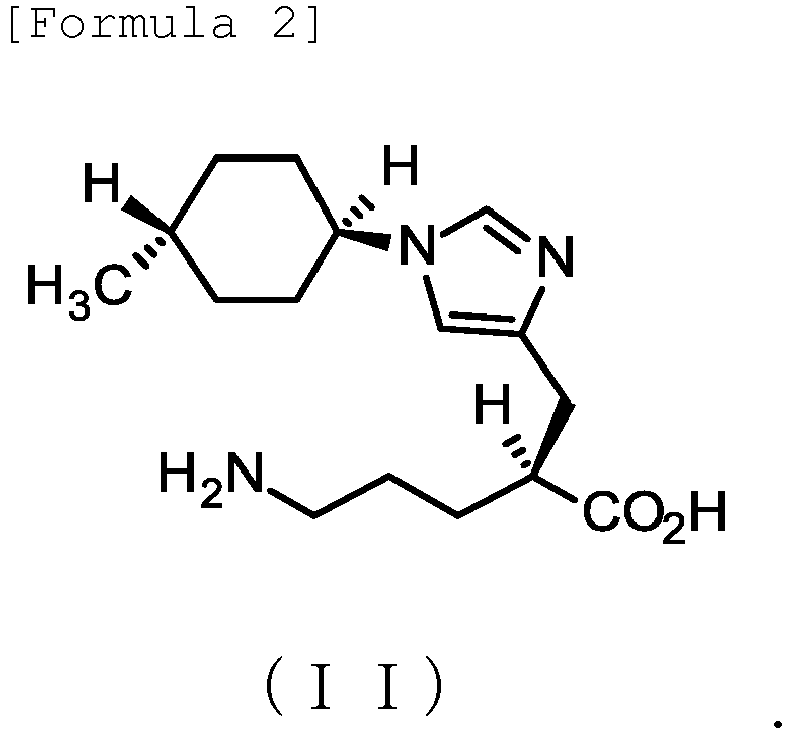
- The production method according to claim 1, wherein the fluorous alkyl group is a 1,1,1,3,3,3-hexafluoro-2-propyl group.
- The production method according to claim 1 or 2, wherein R1 is an isopropyl group and R2 is a methyl group.
- The production method according to claim 1, which is a method for producing a compound represented by the following formula (VII) or a pharmacologically acceptable salt thereof:


- The production method according to claim 1, which is a method for producing a compound represented by the following formula (IX) or a pharmacologically acceptable salt thereof:

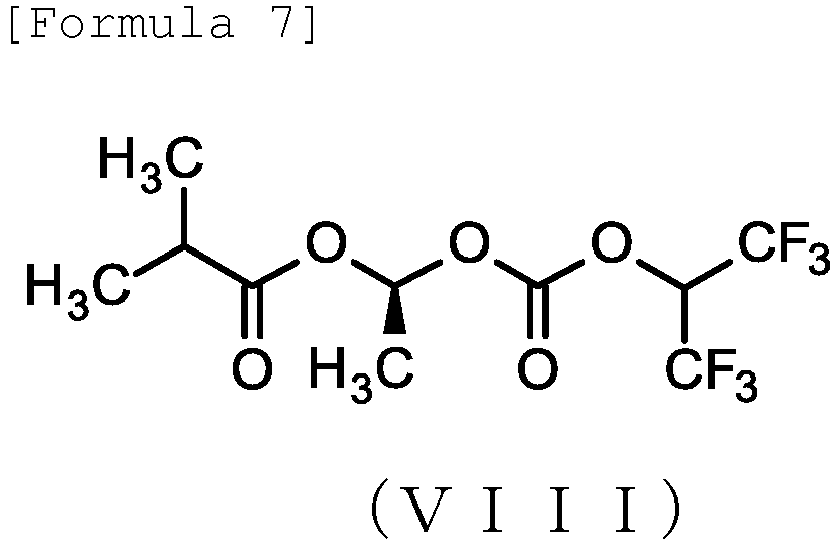


- A compound represented by the following formula (I):

- The compound according to claim 6, wherein the fluorous alkyl group is a 1,1,1,3,3,3-hexafluoro-2-propyl group.
- The compound according to claim 6 or 7, wherein R1 is an isopropyl group and R2 is a methyl group.
- The compound according to claim 6, which is represented by the following formula (VI):
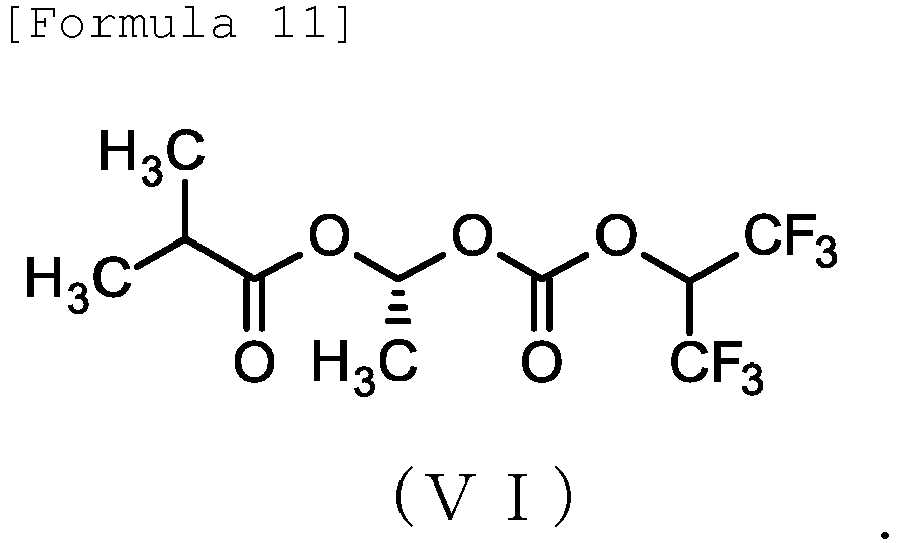
- The compound according to claim 6, which is represented by the following formula (VIII):

- A method for producing a compound represented by the following formula (I):


wherein the method comprises allowing a compound represented by the following formula (IV):
to come into contact with a compound represented by the following formula (V):
- The production method according to claim 11, wherein the fluorous alkyl group is a 1,1,1,3,3,3-hexafluoro-2-propyl group.
- The production method according to claim 11 or 12, wherein R1 is an isopropyl group and R2 is a methyl group.
- A method for producing a compound represented by the following formula (VI):


- The production method according to claim 14, wherein the enzyme is lipase derived from Candida antarctica, lipase derived from Candida rugosa, or lipase derived from Themomyces lanuginosus.
- The production method according to claim 15, wherein the enzyme is lipase derived from Candida antarctica.
- The production method according to claim 16, wherein the enzyme is CHIRAZYME L-2,C4.
- The production method according to any one of claims 14 to 17, wherein the inert solvent is a solvent comprising a buffer.
- The production method according to any one of claims 14 to 17, wherein the inert solvent is a solvent comprising a phosphate buffer.
- Crystals of a compound represented by the following formula (VII):

- A method for producing a compound represented by the following formula (VII) or a pharmacologically acceptable salt thereof:


- The production method according to claim 21, wherein the solution is a solution comprising ethyl acetate.
- The production method according to claim 21 or 22, wherein the crystallization is carried out under conditions of -5°C to 5°C.
- The production method according to any one of claims 21 to 23, which is carried out following the production method according to claim 3.
Applications Claiming Priority (2)
| Application Number | Priority Date | Filing Date | Title |
|---|---|---|---|
| JP2015129196 | 2015-06-26 | ||
| PCT/JP2016/068796 WO2016208709A1 (en) | 2015-06-26 | 2016-06-24 | Novel method for producing 1-(acyloxy)alkyl carbamate derivative |
Publications (2)
| Publication Number | Publication Date |
|---|---|
| EP3323808A1 true EP3323808A1 (en) | 2018-05-23 |
| EP3323808A4 EP3323808A4 (en) | 2018-11-07 |
Family
ID=57585072
Family Applications (1)
| Application Number | Title | Priority Date | Filing Date |
|---|---|---|---|
| EP16814478.0A Withdrawn EP3323808A4 (en) | 2015-06-26 | 2016-06-24 | Novel method for producing 1-(acyloxy)alkyl carbamate derivative |
Country Status (5)
| Country | Link |
|---|---|
| US (1) | US10308612B2 (en) |
| EP (1) | EP3323808A4 (en) |
| JP (1) | JPWO2016208709A1 (en) |
| TW (1) | TW201710241A (en) |
| WO (1) | WO2016208709A1 (en) |
Family Cites Families (8)
| Publication number | Priority date | Publication date | Assignee | Title |
|---|---|---|---|---|
| US4916230A (en) | 1984-07-02 | 1990-04-10 | Merck & Co., Inc. | Process for preparing novel N-(acyloxy-alkoxy)carbonyl derivatives useful as bioreversible prodrug moieties for primary and secondary amine functions in drugs |
| US6818787B2 (en) | 2001-06-11 | 2004-11-16 | Xenoport, Inc. | Prodrugs of GABA analogs, compositions and uses thereof |
| US6927036B2 (en) | 2002-02-19 | 2005-08-09 | Xero Port, Inc. | Methods for synthesis of prodrugs from 1-acyl-alkyl derivatives and compositions thereof |
| WO2005010011A2 (en) | 2003-07-15 | 2005-02-03 | Xenoport, Inc. | Methods of synthesis of acyloxyalkyl compounds |
| CA2551859C (en) | 2003-12-30 | 2011-10-04 | Xenoport, Inc. | Synthesis of acyloxyalkyl carbamate prodrugs and intermediates thereof |
| WO2010017504A1 (en) | 2008-08-07 | 2010-02-11 | Xenoport, Inc. | Methods of synthesizing 1-(acyloxy)-alkyl carbamate prodrugs |
| SG10201502026XA (en) | 2010-03-18 | 2015-05-28 | Daiichi Sankyo Co Ltd | Cycloalkyl-substituted imidazole derivative |
| EP2961730A2 (en) * | 2013-02-26 | 2016-01-06 | XenoPort, Inc. | Method of making 1-(acyloxy)-alkyl carbamate compounds |
-
2016
- 2016-06-24 JP JP2017524991A patent/JPWO2016208709A1/en active Pending
- 2016-06-24 TW TW105119933A patent/TW201710241A/en unknown
- 2016-06-24 WO PCT/JP2016/068796 patent/WO2016208709A1/en not_active Ceased
- 2016-06-24 US US15/739,361 patent/US10308612B2/en not_active Expired - Fee Related
- 2016-06-24 EP EP16814478.0A patent/EP3323808A4/en not_active Withdrawn
Also Published As
| Publication number | Publication date |
|---|---|
| WO2016208709A1 (en) | 2016-12-29 |
| US10308612B2 (en) | 2019-06-04 |
| EP3323808A4 (en) | 2018-11-07 |
| US20180170880A1 (en) | 2018-06-21 |
| JPWO2016208709A1 (en) | 2018-04-19 |
| TW201710241A (en) | 2017-03-16 |
Similar Documents
| Publication | Publication Date | Title |
|---|---|---|
| EP2407457A1 (en) | Process for producing diamine derivative | |
| US6187930B1 (en) | Resolution of amines | |
| EP3386955B1 (en) | Intermediates for the preparation of sacubitril and their preparation | |
| EP2368870A1 (en) | Process for producing optically active carboxylic acid | |
| EP3196193B1 (en) | Method for producing optically active valeric acid derivative | |
| US10435378B2 (en) | Processes for the preparation of pyrimidinylcyclopentane compounds | |
| US6090971A (en) | Resolution process for cyclohexylphenyl glycolic acid | |
| KR20080020613A (en) | Method of Dynamic Partitioning of (Substituted) (R)-or (S) -Mandelic Acid | |
| US10308612B2 (en) | Method for producing 1-(acyloxy)alkyl carbamate derivative | |
| EP2448916B1 (en) | Production of trans-4-aminocyclopent-2-ene-1-carboxylic acid derivatives | |
| EP3470399B1 (en) | Method for producing optically active valeric acid derivative | |
| JPH0649005A (en) | Simple method for producing vinylglycine (2-amino-3- butenoic acid) and simple method for dividing derivative | |
| EP2218788B1 (en) | Process for the preparation of optically active cyclopentenones | |
| FR2751332A1 (en) | OXOPYRROLOPYRROLE DERIVATIVES, PROCESS FOR THEIR PREPARATION, PHARMACEUTICAL COMPOSITIONS CONTAINING SAME AND USE THEREOF | |
| CN114989045B (en) | Intermediate for synthesizing Namactetvir and preparation method thereof and method for synthesizing Namactetvir | |
| EP4276101B1 (en) | Pyrrolopyridine derivative preparation method | |
| CA2707647A1 (en) | Novel 2-mercaptocyclopentanecarboxylic acid derivatives, process for their preparation and pharmaceutical compositions containing them | |
| JP4524845B2 (en) | Method for producing optically active allyl alcohol derivative having amino group, and optically active compound | |
| KR20060060730A (en) | Enzymatic Synthesis of Enantio Pure Intermediates by Cholesterol Esterases from Yeast | |
| KR20100117153A (en) | A method for preparing opically active 1-[2-[(4-chlorophenyl)-phenlymethoxy)-ethly]piperidine | |
| JPWO2002044136A1 (en) | Method for producing N-protected-β-amino alcohol and method for producing N-protected-β-aminoepoxide | |
| WO2001040498A1 (en) | Process for the production of optically active cyclohexene derivatives and intermediates therefor | |
| HK40007315A (en) | Method for producing optically active valeric acid derivative | |
| EP1489066A1 (en) | Process for production of optically active carboxylic acid | |
| JP2003183216A (en) | METHOD FOR PRODUCING CHIRAL alpha-HYDROXYCARBOXYLIC ACID |
Legal Events
| Date | Code | Title | Description |
|---|---|---|---|
| PUAI | Public reference made under article 153(3) epc to a published international application that has entered the european phase |
Free format text: ORIGINAL CODE: 0009012 |
|
| 17P | Request for examination filed |
Effective date: 20180110 |
|
| AK | Designated contracting states |
Kind code of ref document: A1 Designated state(s): AL AT BE BG CH CY CZ DE DK EE ES FI FR GB GR HR HU IE IS IT LI LT LU LV MC MK MT NL NO PL PT RO RS SE SI SK SM TR |
|
| AX | Request for extension of the european patent |
Extension state: BA ME |
|
| DAV | Request for validation of the european patent (deleted) | ||
| DAX | Request for extension of the european patent (deleted) | ||
| A4 | Supplementary search report drawn up and despatched |
Effective date: 20181008 |
|
| RIC1 | Information provided on ipc code assigned before grant |
Ipc: C07C 68/06 20060101ALI20181001BHEP Ipc: C12P 41/00 20060101ALI20181001BHEP Ipc: C07B 61/00 20060101ALI20181001BHEP Ipc: C07D 233/64 20060101AFI20181001BHEP Ipc: C07C 69/96 20060101ALI20181001BHEP |
|
| 17Q | First examination report despatched |
Effective date: 20200330 |
|
| STAA | Information on the status of an ep patent application or granted ep patent |
Free format text: STATUS: THE APPLICATION IS DEEMED TO BE WITHDRAWN |
|
| 18D | Application deemed to be withdrawn |
Effective date: 20200811 |