EP3323785A1 - Crystalline zeolites with eri/cha intergrowth framework type - Google Patents
Crystalline zeolites with eri/cha intergrowth framework type Download PDFInfo
- Publication number
- EP3323785A1 EP3323785A1 EP16199703.6A EP16199703A EP3323785A1 EP 3323785 A1 EP3323785 A1 EP 3323785A1 EP 16199703 A EP16199703 A EP 16199703A EP 3323785 A1 EP3323785 A1 EP 3323785A1
- Authority
- EP
- European Patent Office
- Prior art keywords
- zeolite
- eri
- framework type
- zeolites
- cha
- Prior art date
- Legal status (The legal status is an assumption and is not a legal conclusion. Google has not performed a legal analysis and makes no representation as to the accuracy of the status listed.)
- Withdrawn
Links
- 239000010457 zeolite Substances 0.000 title claims abstract description 235
- HNPSIPDUKPIQMN-UHFFFAOYSA-N dioxosilane;oxo(oxoalumanyloxy)alumane Chemical compound O=[Si]=O.O=[Al]O[Al]=O HNPSIPDUKPIQMN-UHFFFAOYSA-N 0.000 claims abstract description 167
- 229910021536 Zeolite Inorganic materials 0.000 claims abstract description 130
- VYPSYNLAJGMNEJ-UHFFFAOYSA-N Silicium dioxide Chemical compound O=[Si]=O VYPSYNLAJGMNEJ-UHFFFAOYSA-N 0.000 claims abstract description 71
- 239000010949 copper Substances 0.000 claims abstract description 47
- 238000000034 method Methods 0.000 claims abstract description 45
- 229910052802 copper Inorganic materials 0.000 claims abstract description 41
- -1 alkaline earth metal cations Chemical class 0.000 claims abstract description 34
- 239000000377 silicon dioxide Substances 0.000 claims abstract description 31
- RYGMFSIKBFXOCR-UHFFFAOYSA-N Copper Chemical compound [Cu] RYGMFSIKBFXOCR-UHFFFAOYSA-N 0.000 claims abstract description 28
- PNEYBMLMFCGWSK-UHFFFAOYSA-N aluminium oxide Inorganic materials [O-2].[O-2].[O-2].[Al+3].[Al+3] PNEYBMLMFCGWSK-UHFFFAOYSA-N 0.000 claims abstract description 28
- 239000011541 reaction mixture Substances 0.000 claims abstract description 26
- 239000012013 faujasite Substances 0.000 claims abstract description 21
- 229910052784 alkaline earth metal Inorganic materials 0.000 claims abstract description 15
- 239000003513 alkali Substances 0.000 claims abstract description 11
- 229950006187 hexamethonium bromide Drugs 0.000 claims abstract description 11
- 229910052751 metal Inorganic materials 0.000 claims abstract description 11
- 239000002184 metal Substances 0.000 claims abstract description 11
- 150000002739 metals Chemical class 0.000 claims abstract description 11
- FAPSXSAPXXJTOU-UHFFFAOYSA-L trimethyl-[6-(trimethylazaniumyl)hexyl]azanium;dibromide Chemical group [Br-].[Br-].C[N+](C)(C)CCCCCC[N+](C)(C)C FAPSXSAPXXJTOU-UHFFFAOYSA-L 0.000 claims abstract description 11
- XLYOFNOQVPJJNP-UHFFFAOYSA-M hydroxide Chemical compound [OH-] XLYOFNOQVPJJNP-UHFFFAOYSA-M 0.000 claims abstract description 10
- 238000010438 heat treatment Methods 0.000 claims abstract description 8
- CPELXLSAUQHCOX-UHFFFAOYSA-M Bromide Chemical compound [Br-] CPELXLSAUQHCOX-UHFFFAOYSA-M 0.000 claims abstract description 7
- 125000005210 alkyl ammonium group Chemical group 0.000 claims abstract description 5
- 239000000203 mixture Substances 0.000 claims description 44
- 229910000323 aluminium silicate Inorganic materials 0.000 claims description 38
- 239000000463 material Substances 0.000 claims description 30
- 229910052700 potassium Inorganic materials 0.000 claims description 24
- 229910052708 sodium Inorganic materials 0.000 claims description 24
- 239000011734 sodium Substances 0.000 claims description 24
- 239000011591 potassium Substances 0.000 claims description 17
- DGAQECJNVWCQMB-PUAWFVPOSA-M Ilexoside XXIX Chemical compound C[C@@H]1CC[C@@]2(CC[C@@]3(C(=CC[C@H]4[C@]3(CC[C@@H]5[C@@]4(CC[C@@H](C5(C)C)OS(=O)(=O)[O-])C)C)[C@@H]2[C@]1(C)O)C)C(=O)O[C@H]6[C@@H]([C@H]([C@@H]([C@H](O6)CO)O)O)O.[Na+] DGAQECJNVWCQMB-PUAWFVPOSA-M 0.000 claims description 14
- QGZKDVFQNNGYKY-UHFFFAOYSA-O Ammonium Chemical compound [NH4+] QGZKDVFQNNGYKY-UHFFFAOYSA-O 0.000 claims description 13
- 150000001768 cations Chemical class 0.000 claims description 13
- 229910052782 aluminium Inorganic materials 0.000 claims description 11
- ZLMJMSJWJFRBEC-UHFFFAOYSA-N Potassium Chemical compound [K] ZLMJMSJWJFRBEC-UHFFFAOYSA-N 0.000 claims description 10
- 150000003839 salts Chemical class 0.000 claims description 10
- 239000004411 aluminium Substances 0.000 claims description 9
- XAGFODPZIPBFFR-UHFFFAOYSA-N aluminium Chemical compound [Al] XAGFODPZIPBFFR-UHFFFAOYSA-N 0.000 claims description 9
- 150000001875 compounds Chemical class 0.000 claims description 9
- XMBWDFGMSWQBCA-UHFFFAOYSA-N hydrogen iodide Chemical compound I XMBWDFGMSWQBCA-UHFFFAOYSA-N 0.000 claims description 9
- 229910052791 calcium Inorganic materials 0.000 claims description 8
- 239000011575 calcium Substances 0.000 claims description 8
- 229910052744 lithium Inorganic materials 0.000 claims description 8
- 229910052712 strontium Inorganic materials 0.000 claims description 8
- OYPRJOBELJOOCE-UHFFFAOYSA-N Calcium Chemical compound [Ca] OYPRJOBELJOOCE-UHFFFAOYSA-N 0.000 claims description 7
- WHXSMMKQMYFTQS-UHFFFAOYSA-N Lithium Chemical compound [Li] WHXSMMKQMYFTQS-UHFFFAOYSA-N 0.000 claims description 7
- FYYHWMGAXLPEAU-UHFFFAOYSA-N Magnesium Chemical compound [Mg] FYYHWMGAXLPEAU-UHFFFAOYSA-N 0.000 claims description 7
- 229910052788 barium Inorganic materials 0.000 claims description 7
- 229910052792 caesium Inorganic materials 0.000 claims description 7
- TVFDJXOCXUVLDH-UHFFFAOYSA-N caesium atom Chemical compound [Cs] TVFDJXOCXUVLDH-UHFFFAOYSA-N 0.000 claims description 7
- 238000001354 calcination Methods 0.000 claims description 7
- 229910052749 magnesium Inorganic materials 0.000 claims description 7
- 239000011777 magnesium Substances 0.000 claims description 7
- 229910052701 rubidium Inorganic materials 0.000 claims description 7
- IGLNJRXAVVLDKE-UHFFFAOYSA-N rubidium atom Chemical compound [Rb] IGLNJRXAVVLDKE-UHFFFAOYSA-N 0.000 claims description 7
- CIOAGBVUUVVLOB-UHFFFAOYSA-N strontium atom Chemical compound [Sr] CIOAGBVUUVVLOB-UHFFFAOYSA-N 0.000 claims description 7
- VEXZGXHMUGYJMC-UHFFFAOYSA-M Chloride anion Chemical compound [Cl-] VEXZGXHMUGYJMC-UHFFFAOYSA-M 0.000 claims description 4
- 150000001342 alkaline earth metals Chemical class 0.000 claims description 4
- 125000000217 alkyl group Chemical group 0.000 claims description 4
- DSAJWYNOEDNPEQ-UHFFFAOYSA-N barium atom Chemical compound [Ba] DSAJWYNOEDNPEQ-UHFFFAOYSA-N 0.000 claims description 4
- 125000004432 carbon atom Chemical group C* 0.000 claims description 3
- 238000002360 preparation method Methods 0.000 abstract description 7
- 229910001514 alkali metal chloride Inorganic materials 0.000 abstract 1
- 229910001617 alkaline earth metal chloride Inorganic materials 0.000 abstract 1
- 239000002585 base Substances 0.000 abstract 1
- UNYSKUBLZGJSLV-UHFFFAOYSA-L calcium;1,3,5,2,4,6$l^{2}-trioxadisilaluminane 2,4-dioxide;dihydroxide;hexahydrate Chemical compound O.O.O.O.O.O.[OH-].[OH-].[Ca+2].O=[Si]1O[Al]O[Si](=O)O1.O=[Si]1O[Al]O[Si](=O)O1 UNYSKUBLZGJSLV-UHFFFAOYSA-L 0.000 description 77
- 229910052676 chabazite Inorganic materials 0.000 description 75
- 229910052675 erionite Inorganic materials 0.000 description 70
- 239000000243 solution Substances 0.000 description 52
- HEMHJVSKTPXQMS-UHFFFAOYSA-M Sodium hydroxide Chemical compound [OH-].[Na+] HEMHJVSKTPXQMS-UHFFFAOYSA-M 0.000 description 51
- 238000003756 stirring Methods 0.000 description 33
- XLYOFNOQVPJJNP-UHFFFAOYSA-N water Substances O XLYOFNOQVPJJNP-UHFFFAOYSA-N 0.000 description 25
- 229910001868 water Inorganic materials 0.000 description 24
- 239000011148 porous material Substances 0.000 description 23
- 239000003054 catalyst Substances 0.000 description 20
- 239000004743 Polypropylene Substances 0.000 description 18
- XEEYBQQBJWHFJM-UHFFFAOYSA-N Iron Chemical compound [Fe] XEEYBQQBJWHFJM-UHFFFAOYSA-N 0.000 description 17
- 229910052681 coesite Inorganic materials 0.000 description 17
- 229910052906 cristobalite Inorganic materials 0.000 description 17
- 229910052682 stishovite Inorganic materials 0.000 description 17
- 229910052905 tridymite Inorganic materials 0.000 description 17
- 229910052593 corundum Inorganic materials 0.000 description 16
- 239000013078 crystal Substances 0.000 description 16
- 229910001845 yogo sapphire Inorganic materials 0.000 description 16
- QPLDLSVMHZLSFG-UHFFFAOYSA-N Copper oxide Chemical compound [Cu]=O QPLDLSVMHZLSFG-UHFFFAOYSA-N 0.000 description 15
- 238000006243 chemical reaction Methods 0.000 description 15
- WCUXLLCKKVVCTQ-UHFFFAOYSA-M Potassium chloride Chemical compound [Cl-].[K+] WCUXLLCKKVVCTQ-UHFFFAOYSA-M 0.000 description 14
- 230000015572 biosynthetic process Effects 0.000 description 14
- 229910052742 iron Inorganic materials 0.000 description 12
- 208000012868 Overgrowth Diseases 0.000 description 11
- 238000002441 X-ray diffraction Methods 0.000 description 10
- 230000000052 comparative effect Effects 0.000 description 10
- 239000008367 deionised water Substances 0.000 description 10
- 229910021641 deionized water Inorganic materials 0.000 description 10
- 229950002932 hexamethonium Drugs 0.000 description 10
- 239000002808 molecular sieve Substances 0.000 description 10
- URGAHOPLAPQHLN-UHFFFAOYSA-N sodium aluminosilicate Chemical compound [Na+].[Al+3].[O-][Si]([O-])=O.[O-][Si]([O-])=O URGAHOPLAPQHLN-UHFFFAOYSA-N 0.000 description 10
- 238000003786 synthesis reaction Methods 0.000 description 10
- PYIHTIJNCRKDBV-UHFFFAOYSA-L trimethyl-[6-(trimethylazaniumyl)hexyl]azanium;dichloride Chemical compound [Cl-].[Cl-].C[N+](C)(C)CCCCCC[N+](C)(C)C PYIHTIJNCRKDBV-UHFFFAOYSA-L 0.000 description 10
- MWUXSHHQAYIFBG-UHFFFAOYSA-N nitrogen oxide Inorganic materials O=[N] MWUXSHHQAYIFBG-UHFFFAOYSA-N 0.000 description 9
- 239000003795 chemical substances by application Substances 0.000 description 8
- 238000001914 filtration Methods 0.000 description 8
- 230000003068 static effect Effects 0.000 description 8
- 229940073455 tetraethylammonium hydroxide Drugs 0.000 description 8
- LRGJRHZIDJQFCL-UHFFFAOYSA-M tetraethylazanium;hydroxide Chemical compound [OH-].CC[N+](CC)(CC)CC LRGJRHZIDJQFCL-UHFFFAOYSA-M 0.000 description 8
- 239000002178 crystalline material Substances 0.000 description 7
- 239000007789 gas Substances 0.000 description 7
- 239000007788 liquid Substances 0.000 description 7
- 239000001103 potassium chloride Substances 0.000 description 7
- 235000011164 potassium chloride Nutrition 0.000 description 7
- 239000012265 solid product Substances 0.000 description 7
- 229910052723 transition metal Inorganic materials 0.000 description 7
- 150000003624 transition metals Chemical class 0.000 description 7
- WOZZOSDBXABUFO-UHFFFAOYSA-N tri(butan-2-yloxy)alumane Chemical compound [Al+3].CCC(C)[O-].CCC(C)[O-].CCC(C)[O-] WOZZOSDBXABUFO-UHFFFAOYSA-N 0.000 description 7
- IJGRMHOSHXDMSA-UHFFFAOYSA-N Atomic nitrogen Chemical compound N#N IJGRMHOSHXDMSA-UHFFFAOYSA-N 0.000 description 6
- 238000004458 analytical method Methods 0.000 description 6
- 230000003197 catalytic effect Effects 0.000 description 6
- PBAYDYUZOSNJGU-UHFFFAOYSA-N chelidonic acid Natural products OC(=O)C1=CC(=O)C=C(C(O)=O)O1 PBAYDYUZOSNJGU-UHFFFAOYSA-N 0.000 description 6
- 239000012153 distilled water Substances 0.000 description 6
- 238000005406 washing Methods 0.000 description 6
- QGZKDVFQNNGYKY-UHFFFAOYSA-N Ammonia Chemical compound N QGZKDVFQNNGYKY-UHFFFAOYSA-N 0.000 description 5
- VHUUQVKOLVNVRT-UHFFFAOYSA-N Ammonium hydroxide Chemical compound [NH4+].[OH-] VHUUQVKOLVNVRT-UHFFFAOYSA-N 0.000 description 5
- 150000001450 anions Chemical class 0.000 description 5
- 239000007864 aqueous solution Substances 0.000 description 5
- 125000004429 atom Chemical group 0.000 description 5
- 238000005342 ion exchange Methods 0.000 description 5
- 239000000725 suspension Substances 0.000 description 5
- 238000012360 testing method Methods 0.000 description 5
- 229910052718 tin Inorganic materials 0.000 description 5
- NLXLAEXVIDQMFP-UHFFFAOYSA-N Ammonia chloride Chemical compound [NH4+].[Cl-] NLXLAEXVIDQMFP-UHFFFAOYSA-N 0.000 description 4
- 239000004215 Carbon black (E152) Substances 0.000 description 4
- 229910052684 Cerium Inorganic materials 0.000 description 4
- 239000012692 Fe precursor Substances 0.000 description 4
- FAPWRFPIFSIZLT-UHFFFAOYSA-M Sodium chloride Chemical compound [Na+].[Cl-] FAPWRFPIFSIZLT-UHFFFAOYSA-M 0.000 description 4
- 230000032683 aging Effects 0.000 description 4
- 229910052804 chromium Inorganic materials 0.000 description 4
- 238000002425 crystallisation Methods 0.000 description 4
- 230000008025 crystallization Effects 0.000 description 4
- 229930195733 hydrocarbon Natural products 0.000 description 4
- 150000002430 hydrocarbons Chemical class 0.000 description 4
- 229910052738 indium Inorganic materials 0.000 description 4
- 229910052748 manganese Inorganic materials 0.000 description 4
- 229910052759 nickel Inorganic materials 0.000 description 4
- 229910052710 silicon Inorganic materials 0.000 description 4
- FAGUFWYHJQFNRV-UHFFFAOYSA-N tetraethylenepentamine Chemical compound NCCNCCNCCNCCN FAGUFWYHJQFNRV-UHFFFAOYSA-N 0.000 description 4
- OKKJLVBELUTLKV-UHFFFAOYSA-N Methanol Chemical compound OC OKKJLVBELUTLKV-UHFFFAOYSA-N 0.000 description 3
- 150000004699 copper complex Chemical class 0.000 description 3
- 238000000024 high-resolution transmission electron micrograph Methods 0.000 description 3
- 150000002500 ions Chemical class 0.000 description 3
- 229910052741 iridium Inorganic materials 0.000 description 3
- 238000002156 mixing Methods 0.000 description 3
- 229910052757 nitrogen Inorganic materials 0.000 description 3
- 229910052763 palladium Inorganic materials 0.000 description 3
- 229910052698 phosphorus Inorganic materials 0.000 description 3
- 229910052697 platinum Inorganic materials 0.000 description 3
- 239000000843 powder Substances 0.000 description 3
- 229910052702 rhenium Inorganic materials 0.000 description 3
- 229910052703 rhodium Inorganic materials 0.000 description 3
- 229910052707 ruthenium Inorganic materials 0.000 description 3
- 229910052709 silver Inorganic materials 0.000 description 3
- 229910001220 stainless steel Inorganic materials 0.000 description 3
- 239000010935 stainless steel Substances 0.000 description 3
- 239000000126 substance Substances 0.000 description 3
- 229910052725 zinc Inorganic materials 0.000 description 3
- LFQSCWFLJHTTHZ-UHFFFAOYSA-N Ethanol Chemical compound CCO LFQSCWFLJHTTHZ-UHFFFAOYSA-N 0.000 description 2
- BPQQTUXANYXVAA-UHFFFAOYSA-N Orthosilicate Chemical compound [O-][Si]([O-])([O-])[O-] BPQQTUXANYXVAA-UHFFFAOYSA-N 0.000 description 2
- NBIIXXVUZAFLBC-UHFFFAOYSA-N Phosphoric acid Chemical compound OP(O)(O)=O NBIIXXVUZAFLBC-UHFFFAOYSA-N 0.000 description 2
- OAICVXFJPJFONN-UHFFFAOYSA-N Phosphorus Chemical compound [P] OAICVXFJPJFONN-UHFFFAOYSA-N 0.000 description 2
- BOTDANWDWHJENH-UHFFFAOYSA-N Tetraethyl orthosilicate Chemical compound CCO[Si](OCC)(OCC)OCC BOTDANWDWHJENH-UHFFFAOYSA-N 0.000 description 2
- 238000009825 accumulation Methods 0.000 description 2
- JLDSOYXADOWAKB-UHFFFAOYSA-N aluminium nitrate Chemical compound [Al+3].[O-][N+]([O-])=O.[O-][N+]([O-])=O.[O-][N+]([O-])=O JLDSOYXADOWAKB-UHFFFAOYSA-N 0.000 description 2
- 238000009835 boiling Methods 0.000 description 2
- 230000015556 catabolic process Effects 0.000 description 2
- 238000004517 catalytic hydrocracking Methods 0.000 description 2
- 238000010531 catalytic reduction reaction Methods 0.000 description 2
- 239000007795 chemical reaction product Substances 0.000 description 2
- 239000000470 constituent Substances 0.000 description 2
- 230000003247 decreasing effect Effects 0.000 description 2
- 238000006731 degradation reaction Methods 0.000 description 2
- 238000000407 epitaxy Methods 0.000 description 2
- 238000004231 fluid catalytic cracking Methods 0.000 description 2
- 238000001027 hydrothermal synthesis Methods 0.000 description 2
- 238000004519 manufacturing process Methods 0.000 description 2
- 125000002496 methyl group Chemical group [H]C([H])([H])* 0.000 description 2
- 229910000069 nitrogen hydride Inorganic materials 0.000 description 2
- 238000005580 one pot reaction Methods 0.000 description 2
- 239000002245 particle Substances 0.000 description 2
- 239000011574 phosphorus Substances 0.000 description 2
- 239000006069 physical mixture Substances 0.000 description 2
- 238000012958 reprocessing Methods 0.000 description 2
- 150000004760 silicates Chemical class 0.000 description 2
- 239000011780 sodium chloride Substances 0.000 description 2
- 241000894007 species Species 0.000 description 2
- LFQCEHFDDXELDD-UHFFFAOYSA-N tetramethyl orthosilicate Chemical compound CO[Si](OC)(OC)OC LFQCEHFDDXELDD-UHFFFAOYSA-N 0.000 description 2
- DLYUQMMRRRQYAE-UHFFFAOYSA-N tetraphosphorus decaoxide Chemical compound O1P(O2)(=O)OP3(=O)OP1(=O)OP2(=O)O3 DLYUQMMRRRQYAE-UHFFFAOYSA-N 0.000 description 2
- 229910052719 titanium Inorganic materials 0.000 description 2
- GHOKWGTUZJEAQD-ZETCQYMHSA-N (D)-(+)-Pantothenic acid Chemical compound OCC(C)(C)[C@@H](O)C(=O)NCCC(O)=O GHOKWGTUZJEAQD-ZETCQYMHSA-N 0.000 description 1
- OKTJSMMVPCPJKN-UHFFFAOYSA-N Carbon Chemical compound [C] OKTJSMMVPCPJKN-UHFFFAOYSA-N 0.000 description 1
- 239000005751 Copper oxide Substances 0.000 description 1
- 229910021575 Iron(II) bromide Inorganic materials 0.000 description 1
- 229910021577 Iron(II) chloride Inorganic materials 0.000 description 1
- 229910021578 Iron(III) chloride Inorganic materials 0.000 description 1
- 229910019142 PO4 Inorganic materials 0.000 description 1
- NPYPAHLBTDXSSS-UHFFFAOYSA-N Potassium ion Chemical compound [K+] NPYPAHLBTDXSSS-UHFFFAOYSA-N 0.000 description 1
- FKNQFGJONOIPTF-UHFFFAOYSA-N Sodium cation Chemical compound [Na+] FKNQFGJONOIPTF-UHFFFAOYSA-N 0.000 description 1
- 229910052783 alkali metal Inorganic materials 0.000 description 1
- AZDRQVAHHNSJOQ-UHFFFAOYSA-N alumane Chemical group [AlH3] AZDRQVAHHNSJOQ-UHFFFAOYSA-N 0.000 description 1
- WNROFYMDJYEPJX-UHFFFAOYSA-K aluminium hydroxide Chemical compound [OH-].[OH-].[OH-].[Al+3] WNROFYMDJYEPJX-UHFFFAOYSA-K 0.000 description 1
- 229910021502 aluminium hydroxide Inorganic materials 0.000 description 1
- 229910000147 aluminium phosphate Inorganic materials 0.000 description 1
- 229910000329 aluminium sulfate Inorganic materials 0.000 description 1
- DIZPMCHEQGEION-UHFFFAOYSA-H aluminium sulfate (anhydrous) Chemical compound [Al+3].[Al+3].[O-]S([O-])(=O)=O.[O-]S([O-])(=O)=O.[O-]S([O-])(=O)=O DIZPMCHEQGEION-UHFFFAOYSA-H 0.000 description 1
- 235000011128 aluminium sulphate Nutrition 0.000 description 1
- ANBBXQWFNXMHLD-UHFFFAOYSA-N aluminum;sodium;oxygen(2-) Chemical compound [O-2].[O-2].[Na+].[Al+3] ANBBXQWFNXMHLD-UHFFFAOYSA-N 0.000 description 1
- 150000001412 amines Chemical class 0.000 description 1
- 229910021529 ammonia Inorganic materials 0.000 description 1
- 235000019270 ammonium chloride Nutrition 0.000 description 1
- 150000003868 ammonium compounds Chemical class 0.000 description 1
- 239000000908 ammonium hydroxide Substances 0.000 description 1
- 150000003863 ammonium salts Chemical class 0.000 description 1
- 239000007900 aqueous suspension Substances 0.000 description 1
- 229910052796 boron Inorganic materials 0.000 description 1
- 229910052799 carbon Inorganic materials 0.000 description 1
- 238000012512 characterization method Methods 0.000 description 1
- 239000003153 chemical reaction reagent Substances 0.000 description 1
- 239000008119 colloidal silica Substances 0.000 description 1
- 238000009838 combustion analysis Methods 0.000 description 1
- 238000002485 combustion reaction Methods 0.000 description 1
- 239000008139 complexing agent Substances 0.000 description 1
- 229910000431 copper oxide Inorganic materials 0.000 description 1
- ARUVKPQLZAKDPS-UHFFFAOYSA-L copper(II) sulfate Chemical compound [Cu+2].[O-][S+2]([O-])([O-])[O-] ARUVKPQLZAKDPS-UHFFFAOYSA-L 0.000 description 1
- 229910000366 copper(II) sulfate Inorganic materials 0.000 description 1
- 125000002704 decyl group Chemical class [H]C([H])([H])C([H])([H])C([H])([H])C([H])([H])C([H])([H])C([H])([H])C([H])([H])C([H])([H])C([H])([H])C([H])([H])* 0.000 description 1
- 238000001514 detection method Methods 0.000 description 1
- 238000009826 distribution Methods 0.000 description 1
- 238000005265 energy consumption Methods 0.000 description 1
- 125000001495 ethyl group Chemical group [H]C([H])([H])C([H])([H])* 0.000 description 1
- 238000011156 evaluation Methods 0.000 description 1
- 239000012467 final product Substances 0.000 description 1
- 239000002803 fossil fuel Substances 0.000 description 1
- 229910052733 gallium Inorganic materials 0.000 description 1
- 229910052732 germanium Inorganic materials 0.000 description 1
- 229910001683 gmelinite Inorganic materials 0.000 description 1
- 125000003187 heptyl group Chemical class [H]C([*])([H])C([H])([H])C([H])([H])C([H])([H])C([H])([H])C([H])([H])C([H])([H])[H] 0.000 description 1
- 125000004051 hexyl group Chemical class [H]C([H])([H])C([H])([H])C([H])([H])C([H])([H])C([H])([H])C([H])([H])* 0.000 description 1
- 238000010335 hydrothermal treatment Methods 0.000 description 1
- 238000005470 impregnation Methods 0.000 description 1
- 238000010348 incorporation Methods 0.000 description 1
- 229910052500 inorganic mineral Inorganic materials 0.000 description 1
- NMCUIPGRVMDVDB-UHFFFAOYSA-L iron dichloride Chemical compound Cl[Fe]Cl NMCUIPGRVMDVDB-UHFFFAOYSA-L 0.000 description 1
- RBTARNINKXHZNM-UHFFFAOYSA-K iron trichloride Chemical compound Cl[Fe](Cl)Cl RBTARNINKXHZNM-UHFFFAOYSA-K 0.000 description 1
- BAUYGSIQEAFULO-UHFFFAOYSA-L iron(2+) sulfate (anhydrous) Chemical compound [Fe+2].[O-]S([O-])(=O)=O BAUYGSIQEAFULO-UHFFFAOYSA-L 0.000 description 1
- 229910000359 iron(II) sulfate Inorganic materials 0.000 description 1
- VCJMYUPGQJHHFU-UHFFFAOYSA-N iron(III) nitrate Inorganic materials [Fe+3].[O-][N+]([O-])=O.[O-][N+]([O-])=O.[O-][N+]([O-])=O VCJMYUPGQJHHFU-UHFFFAOYSA-N 0.000 description 1
- JEIPFZHSYJVQDO-UHFFFAOYSA-N iron(III) oxide Inorganic materials O=[Fe]O[Fe]=O JEIPFZHSYJVQDO-UHFFFAOYSA-N 0.000 description 1
- GYCHYNMREWYSKH-UHFFFAOYSA-L iron(ii) bromide Chemical compound [Fe+2].[Br-].[Br-] GYCHYNMREWYSKH-UHFFFAOYSA-L 0.000 description 1
- 125000001972 isopentyl group Chemical group [H]C([H])([H])C([H])(C([H])([H])[H])C([H])([H])C([H])([H])* 0.000 description 1
- 125000001449 isopropyl group Chemical group [H]C([H])([H])C([H])(*)C([H])([H])[H] 0.000 description 1
- 235000010755 mineral Nutrition 0.000 description 1
- 239000011707 mineral Substances 0.000 description 1
- 125000004108 n-butyl group Chemical group [H]C([H])([H])C([H])([H])C([H])([H])C([H])([H])* 0.000 description 1
- 125000000740 n-pentyl group Chemical group [H]C([H])([H])C([H])([H])C([H])([H])C([H])([H])C([H])([H])* 0.000 description 1
- 125000004123 n-propyl group Chemical group [H]C([H])([H])C([H])([H])C([H])([H])* 0.000 description 1
- 125000001400 nonyl group Chemical class [H]C([*])([H])C([H])([H])C([H])([H])C([H])([H])C([H])([H])C([H])([H])C([H])([H])C([H])([H])C([H])([H])[H] 0.000 description 1
- 125000002347 octyl group Chemical class [H]C([*])([H])C([H])([H])C([H])([H])C([H])([H])C([H])([H])C([H])([H])C([H])([H])C([H])([H])[H] 0.000 description 1
- 239000008188 pellet Substances 0.000 description 1
- 239000010452 phosphate Substances 0.000 description 1
- 229920001155 polypropylene Polymers 0.000 description 1
- 239000000047 product Substances 0.000 description 1
- 239000010453 quartz Substances 0.000 description 1
- 230000035484 reaction time Effects 0.000 description 1
- 238000010992 reflux Methods 0.000 description 1
- 238000005070 sampling Methods 0.000 description 1
- 125000002914 sec-butyl group Chemical group [H]C([H])([H])C([H])([H])C([H])(*)C([H])([H])[H] 0.000 description 1
- 238000005204 segregation Methods 0.000 description 1
- 238000000926 separation method Methods 0.000 description 1
- 239000010703 silicon Substances 0.000 description 1
- 229910052665 sodalite Inorganic materials 0.000 description 1
- 229910001388 sodium aluminate Inorganic materials 0.000 description 1
- 239000007787 solid Substances 0.000 description 1
- 239000011343 solid material Substances 0.000 description 1
- 238000001308 synthesis method Methods 0.000 description 1
- 230000002194 synthesizing effect Effects 0.000 description 1
- 238000005287 template synthesis Methods 0.000 description 1
- 238000002525 ultrasonication Methods 0.000 description 1
- 229910052727 yttrium Inorganic materials 0.000 description 1
- 229910052726 zirconium Inorganic materials 0.000 description 1
Images
Classifications
-
- C—CHEMISTRY; METALLURGY
- C01—INORGANIC CHEMISTRY
- C01B—NON-METALLIC ELEMENTS; COMPOUNDS THEREOF; METALLOIDS OR COMPOUNDS THEREOF NOT COVERED BY SUBCLASS C01C
- C01B39/00—Compounds having molecular sieve and base-exchange properties, e.g. crystalline zeolites; Their preparation; After-treatment, e.g. ion-exchange or dealumination
- C01B39/02—Crystalline aluminosilicate zeolites; Isomorphous compounds thereof; Direct preparation thereof; Preparation thereof starting from a reaction mixture containing a crystalline zeolite of another type, or from preformed reactants; After-treatment thereof
- C01B39/023—Preparation of physical mixtures or intergrowth products of zeolites chosen from group C01B39/04 or two or more of groups C01B39/14 - C01B39/48
-
- B—PERFORMING OPERATIONS; TRANSPORTING
- B01—PHYSICAL OR CHEMICAL PROCESSES OR APPARATUS IN GENERAL
- B01J—CHEMICAL OR PHYSICAL PROCESSES, e.g. CATALYSIS OR COLLOID CHEMISTRY; THEIR RELEVANT APPARATUS
- B01J29/00—Catalysts comprising molecular sieves
- B01J29/04—Catalysts comprising molecular sieves having base-exchange properties, e.g. crystalline zeolites
- B01J29/06—Crystalline aluminosilicate zeolites; Isomorphous compounds thereof
- B01J29/80—Mixtures of different zeolites
-
- B—PERFORMING OPERATIONS; TRANSPORTING
- B01—PHYSICAL OR CHEMICAL PROCESSES OR APPARATUS IN GENERAL
- B01D—SEPARATION
- B01D53/00—Separation of gases or vapours; Recovering vapours of volatile solvents from gases; Chemical or biological purification of waste gases, e.g. engine exhaust gases, smoke, fumes, flue gases, aerosols
-
- B—PERFORMING OPERATIONS; TRANSPORTING
- B01—PHYSICAL OR CHEMICAL PROCESSES OR APPARATUS IN GENERAL
- B01D—SEPARATION
- B01D53/00—Separation of gases or vapours; Recovering vapours of volatile solvents from gases; Chemical or biological purification of waste gases, e.g. engine exhaust gases, smoke, fumes, flue gases, aerosols
- B01D53/34—Chemical or biological purification of waste gases
- B01D53/92—Chemical or biological purification of waste gases of engine exhaust gases
- B01D53/94—Chemical or biological purification of waste gases of engine exhaust gases by catalytic processes
- B01D53/9404—Removing only nitrogen compounds
- B01D53/9409—Nitrogen oxides
- B01D53/9413—Processes characterised by a specific catalyst
- B01D53/9418—Processes characterised by a specific catalyst for removing nitrogen oxides by selective catalytic reduction [SCR] using a reducing agent in a lean exhaust gas
-
- B—PERFORMING OPERATIONS; TRANSPORTING
- B01—PHYSICAL OR CHEMICAL PROCESSES OR APPARATUS IN GENERAL
- B01J—CHEMICAL OR PHYSICAL PROCESSES, e.g. CATALYSIS OR COLLOID CHEMISTRY; THEIR RELEVANT APPARATUS
- B01J29/00—Catalysts comprising molecular sieves
- B01J29/04—Catalysts comprising molecular sieves having base-exchange properties, e.g. crystalline zeolites
- B01J29/06—Crystalline aluminosilicate zeolites; Isomorphous compounds thereof
- B01J29/064—Crystalline aluminosilicate zeolites; Isomorphous compounds thereof containing iron group metals, noble metals or copper
- B01J29/072—Iron group metals or copper
-
- B—PERFORMING OPERATIONS; TRANSPORTING
- B01—PHYSICAL OR CHEMICAL PROCESSES OR APPARATUS IN GENERAL
- B01J—CHEMICAL OR PHYSICAL PROCESSES, e.g. CATALYSIS OR COLLOID CHEMISTRY; THEIR RELEVANT APPARATUS
- B01J29/00—Catalysts comprising molecular sieves
- B01J29/04—Catalysts comprising molecular sieves having base-exchange properties, e.g. crystalline zeolites
- B01J29/06—Crystalline aluminosilicate zeolites; Isomorphous compounds thereof
- B01J29/08—Crystalline aluminosilicate zeolites; Isomorphous compounds thereof of the faujasite type, e.g. type X or Y
- B01J29/084—Y-type faujasite
-
- B—PERFORMING OPERATIONS; TRANSPORTING
- B01—PHYSICAL OR CHEMICAL PROCESSES OR APPARATUS IN GENERAL
- B01J—CHEMICAL OR PHYSICAL PROCESSES, e.g. CATALYSIS OR COLLOID CHEMISTRY; THEIR RELEVANT APPARATUS
- B01J29/00—Catalysts comprising molecular sieves
- B01J29/04—Catalysts comprising molecular sieves having base-exchange properties, e.g. crystalline zeolites
- B01J29/06—Crystalline aluminosilicate zeolites; Isomorphous compounds thereof
- B01J29/08—Crystalline aluminosilicate zeolites; Isomorphous compounds thereof of the faujasite type, e.g. type X or Y
- B01J29/10—Crystalline aluminosilicate zeolites; Isomorphous compounds thereof of the faujasite type, e.g. type X or Y containing iron group metals, noble metals or copper
- B01J29/14—Iron group metals or copper
- B01J29/146—Y-type faujasite
-
- B—PERFORMING OPERATIONS; TRANSPORTING
- B01—PHYSICAL OR CHEMICAL PROCESSES OR APPARATUS IN GENERAL
- B01J—CHEMICAL OR PHYSICAL PROCESSES, e.g. CATALYSIS OR COLLOID CHEMISTRY; THEIR RELEVANT APPARATUS
- B01J29/00—Catalysts comprising molecular sieves
- B01J29/04—Catalysts comprising molecular sieves having base-exchange properties, e.g. crystalline zeolites
- B01J29/06—Crystalline aluminosilicate zeolites; Isomorphous compounds thereof
- B01J29/50—Crystalline aluminosilicate zeolites; Isomorphous compounds thereof of the erionite or offretite type, e.g. zeolite T, as exemplified by patent document US2950952
- B01J29/52—Crystalline aluminosilicate zeolites; Isomorphous compounds thereof of the erionite or offretite type, e.g. zeolite T, as exemplified by patent document US2950952 containing iron group metals, noble metals or copper
- B01J29/56—Iron group metals or copper
-
- B—PERFORMING OPERATIONS; TRANSPORTING
- B01—PHYSICAL OR CHEMICAL PROCESSES OR APPARATUS IN GENERAL
- B01J—CHEMICAL OR PHYSICAL PROCESSES, e.g. CATALYSIS OR COLLOID CHEMISTRY; THEIR RELEVANT APPARATUS
- B01J29/00—Catalysts comprising molecular sieves
- B01J29/04—Catalysts comprising molecular sieves having base-exchange properties, e.g. crystalline zeolites
- B01J29/06—Crystalline aluminosilicate zeolites; Isomorphous compounds thereof
- B01J29/70—Crystalline aluminosilicate zeolites; Isomorphous compounds thereof of types characterised by their specific structure not provided for in groups B01J29/08 - B01J29/65
- B01J29/7015—CHA-type, e.g. Chabazite, LZ-218
-
- B—PERFORMING OPERATIONS; TRANSPORTING
- B01—PHYSICAL OR CHEMICAL PROCESSES OR APPARATUS IN GENERAL
- B01J—CHEMICAL OR PHYSICAL PROCESSES, e.g. CATALYSIS OR COLLOID CHEMISTRY; THEIR RELEVANT APPARATUS
- B01J29/00—Catalysts comprising molecular sieves
- B01J29/04—Catalysts comprising molecular sieves having base-exchange properties, e.g. crystalline zeolites
- B01J29/06—Crystalline aluminosilicate zeolites; Isomorphous compounds thereof
- B01J29/70—Crystalline aluminosilicate zeolites; Isomorphous compounds thereof of types characterised by their specific structure not provided for in groups B01J29/08 - B01J29/65
- B01J29/72—Crystalline aluminosilicate zeolites; Isomorphous compounds thereof of types characterised by their specific structure not provided for in groups B01J29/08 - B01J29/65 containing iron group metals, noble metals or copper
- B01J29/723—CHA-type, e.g. Chabazite, LZ-218
-
- B—PERFORMING OPERATIONS; TRANSPORTING
- B01—PHYSICAL OR CHEMICAL PROCESSES OR APPARATUS IN GENERAL
- B01J—CHEMICAL OR PHYSICAL PROCESSES, e.g. CATALYSIS OR COLLOID CHEMISTRY; THEIR RELEVANT APPARATUS
- B01J29/00—Catalysts comprising molecular sieves
- B01J29/04—Catalysts comprising molecular sieves having base-exchange properties, e.g. crystalline zeolites
- B01J29/06—Crystalline aluminosilicate zeolites; Isomorphous compounds thereof
- B01J29/70—Crystalline aluminosilicate zeolites; Isomorphous compounds thereof of types characterised by their specific structure not provided for in groups B01J29/08 - B01J29/65
- B01J29/72—Crystalline aluminosilicate zeolites; Isomorphous compounds thereof of types characterised by their specific structure not provided for in groups B01J29/08 - B01J29/65 containing iron group metals, noble metals or copper
- B01J29/76—Iron group metals or copper
- B01J29/763—CHA-type, e.g. Chabazite, LZ-218
-
- B—PERFORMING OPERATIONS; TRANSPORTING
- B01—PHYSICAL OR CHEMICAL PROCESSES OR APPARATUS IN GENERAL
- B01J—CHEMICAL OR PHYSICAL PROCESSES, e.g. CATALYSIS OR COLLOID CHEMISTRY; THEIR RELEVANT APPARATUS
- B01J37/00—Processes, in general, for preparing catalysts; Processes, in general, for activation of catalysts
- B01J37/0009—Use of binding agents; Moulding; Pressing; Powdering; Granulating; Addition of materials ameliorating the mechanical properties of the product catalyst
- B01J37/0018—Addition of a binding agent or of material, later completely removed among others as result of heat treatment, leaching or washing,(e.g. forming of pores; protective layer, desintegrating by heat)
-
- B—PERFORMING OPERATIONS; TRANSPORTING
- B01—PHYSICAL OR CHEMICAL PROCESSES OR APPARATUS IN GENERAL
- B01J—CHEMICAL OR PHYSICAL PROCESSES, e.g. CATALYSIS OR COLLOID CHEMISTRY; THEIR RELEVANT APPARATUS
- B01J37/00—Processes, in general, for preparing catalysts; Processes, in general, for activation of catalysts
- B01J37/02—Impregnation, coating or precipitation
- B01J37/03—Precipitation; Co-precipitation
- B01J37/031—Precipitation
-
- B—PERFORMING OPERATIONS; TRANSPORTING
- B01—PHYSICAL OR CHEMICAL PROCESSES OR APPARATUS IN GENERAL
- B01J—CHEMICAL OR PHYSICAL PROCESSES, e.g. CATALYSIS OR COLLOID CHEMISTRY; THEIR RELEVANT APPARATUS
- B01J37/00—Processes, in general, for preparing catalysts; Processes, in general, for activation of catalysts
- B01J37/04—Mixing
-
- B—PERFORMING OPERATIONS; TRANSPORTING
- B01—PHYSICAL OR CHEMICAL PROCESSES OR APPARATUS IN GENERAL
- B01J—CHEMICAL OR PHYSICAL PROCESSES, e.g. CATALYSIS OR COLLOID CHEMISTRY; THEIR RELEVANT APPARATUS
- B01J37/00—Processes, in general, for preparing catalysts; Processes, in general, for activation of catalysts
- B01J37/08—Heat treatment
-
- B—PERFORMING OPERATIONS; TRANSPORTING
- B01—PHYSICAL OR CHEMICAL PROCESSES OR APPARATUS IN GENERAL
- B01J—CHEMICAL OR PHYSICAL PROCESSES, e.g. CATALYSIS OR COLLOID CHEMISTRY; THEIR RELEVANT APPARATUS
- B01J37/00—Processes, in general, for preparing catalysts; Processes, in general, for activation of catalysts
- B01J37/30—Ion-exchange
-
- B—PERFORMING OPERATIONS; TRANSPORTING
- B01—PHYSICAL OR CHEMICAL PROCESSES OR APPARATUS IN GENERAL
- B01D—SEPARATION
- B01D2255/00—Catalysts
- B01D2255/50—Zeolites
-
- B—PERFORMING OPERATIONS; TRANSPORTING
- B01—PHYSICAL OR CHEMICAL PROCESSES OR APPARATUS IN GENERAL
- B01J—CHEMICAL OR PHYSICAL PROCESSES, e.g. CATALYSIS OR COLLOID CHEMISTRY; THEIR RELEVANT APPARATUS
- B01J29/00—Catalysts comprising molecular sieves
- B01J29/04—Catalysts comprising molecular sieves having base-exchange properties, e.g. crystalline zeolites
- B01J29/06—Crystalline aluminosilicate zeolites; Isomorphous compounds thereof
- B01J2029/062—Mixtures of different aluminosilicates
-
- B—PERFORMING OPERATIONS; TRANSPORTING
- B01—PHYSICAL OR CHEMICAL PROCESSES OR APPARATUS IN GENERAL
- B01J—CHEMICAL OR PHYSICAL PROCESSES, e.g. CATALYSIS OR COLLOID CHEMISTRY; THEIR RELEVANT APPARATUS
- B01J2229/00—Aspects of molecular sieve catalysts not covered by B01J29/00
- B01J2229/10—After treatment, characterised by the effect to be obtained
- B01J2229/18—After treatment, characterised by the effect to be obtained to introduce other elements into or onto the molecular sieve itself
-
- B—PERFORMING OPERATIONS; TRANSPORTING
- B01—PHYSICAL OR CHEMICAL PROCESSES OR APPARATUS IN GENERAL
- B01J—CHEMICAL OR PHYSICAL PROCESSES, e.g. CATALYSIS OR COLLOID CHEMISTRY; THEIR RELEVANT APPARATUS
- B01J2229/00—Aspects of molecular sieve catalysts not covered by B01J29/00
- B01J2229/10—After treatment, characterised by the effect to be obtained
- B01J2229/18—After treatment, characterised by the effect to be obtained to introduce other elements into or onto the molecular sieve itself
- B01J2229/186—After treatment, characterised by the effect to be obtained to introduce other elements into or onto the molecular sieve itself not in framework positions
Definitions
- the present invention relates to crystalline zeolites with an ERI/CHA intergrowth framework type and to a process for making said zeolites.
- the zeolites according to the present invention are suitable for selective catalytic reduction (SCR) of NO x .
- Zeolites are microporous aluminosilicate materials which have very regular pore structures and channels of molecular dimensions and which occur in numerous framework structures. They are classified by the Structure Commission of the International Zeolite Association (IZA) which defines respective framework types. The commission also assigns framework type codes consisting of three capital letters to all unique and confirmed framework topologies. For example, a widely used group of zeolites belongs to the erionite framework to which the code ERI has been assigned, and another widely used group belongs to the chabazite framework, encoded CHA. Zeolites can differ by framework type, as well as by chemical composition, atom distribution, crystal size and morphology.
- IZA Structure Commission of the International Zeolite Association
- zeolites with a large pore size have a maximum ring size of 12 tetrahedral atoms
- zeolites with a medium pore size have a maximum pore size of 10
- zeolites with a small pore size have a maximum pore size of 8 tetrahedral atoms.
- Well-known small-pore zeolites belong in particular to the AEI, CHA (chabazite), ERI (erionite), LEV (levyne) and KFI framework. Examples having a large pore size are zeolites of the faujasite (FAU) framework type.
- Zeolites play an important role as catalysts in the so-called Selective Catalytic Reduction (SCR) of nitrogen oxides with ammonia to form nitrogen and water, and in particular if cations like copper and iron are included in the zeolite pores.
- SCR Selective Catalytic Reduction
- the SCR process has been widely used to remediate exhaust gases which result from the combustion of fossil fuels, in particular from stationary power plants and from vehicles powered by diesel engines.
- zeolites occur in nature, zeolites intended for SCR or other industrial applications are usually manufactured via synthetic processes.
- zeolites are well-known ion exchangers. They can also be used as molecular sieves and as catalysts in a large variety of reactions. Well-known uses of zeolites include, for instance, fluid catalytic cracking, hydrocracking, hydrocarbon conversion reactions, reprocessing methods and heat accumulation.
- phase-pure zeolite frameworks used in a diversity of industrial applications are exceptions in the field of zeolite crystallization.
- the majority of zeolite crystallization conditions result in the formation of physical mixtures of different zeolite phases or intergrowth materials. Only when the synthesis parameters are finely tuned, a pure zeolite phase is obtained.
- Zeolites can be made by hydrothermal synthesis usually involving alkaline cations, such as Li, Na or K, earth alkaline cations, such as Ca or Sr, or quaternary ammonium cations. These cations will be present as extra-framework species necessary for, e.g. charge compensating tetrahedral aluminium atoms. If Cu or Fe loaded zeolites are envisaged, these cations normally need to be replaced with copper and/or iron cations by post-synthesis methods. This can be done by an additional synthesis step as for example described in WO 2011/073390 A2 and WO 2011/073398 A2 .
- WO 2009/141324 A1 relates to a hydrothermal process for the preparation of phosphor-free zeolitic materials having a CHA framework structure.
- an aqueous solution comprises tri- and/or tetravalent elements employed as framework elements and also all the Cu necessary for the preparation of the final Cu zeolite having a CHA framework structure.
- the trivalent element preferably is Al, and the tetravalent element preferably is selected from Si, Sn, Ti, Zr, Ge and a mixture of two or more thereof.
- WO 2015/084817 A1 discloses a transition-metal-CHA molecular sieve and a mixed-template synthesis for making it.
- the transition metal is preferably Cu or Fe.
- the reaction mixture for synthesizing the zeolite comprises of an alumina and a silica source, a transition-metal-amine organic templating agent, seed crystals, and a second organic templating agent, wherein each of the templating agents is suitable for forming a CHA framework structure.
- the second organic templating agent is a quaternary organic ammonium salt.
- EP 2 517 774 A2 discloses a zeolite catalyst for converting nitrogen oxides into nitrogen in an SCR, wherein the zeolite has the ERI framework type code and contains 0.01 to 20 weight percent of at least one transition metal selected from the group consisting of Cr, Ce, Mn, Fe, Co, Ni and Cu.
- the catalyst may additionally comprise another transition metal-containing small pore zeolite having the CHA framework type code.
- the SCR catalyst according to this invention shows a good thermal stability and good NO x conversion rates up to about 400 °C.
- EP 2 517 775 A2 belonging to the same family as EP 2 517 774 A2 , discloses a zeolite catalyst for converting nitrogen oxides into nitrogen in an SCR, wherein the zeolite is a small pore zeolite and has a framework code type selected from the group consisting of AFT, AFX, ATT, DDR, EAB, EPI, GIS, GOO, IHW, LTA, MER, OWE, PAU, PHI, RHO, RTH, SAV SIV, UEI, UFI, VNI and YUG and contains 0.1 to 10 weight percent of at least one transition metal selected from the group consisting of Cr, Mn, Fe, Co, Ce, Ni, Cu, Zn, Ga, Mo, Ru, Rh, Pd, Ag, In, Sn, Re, Ir and Pt.
- a framework code type selected from the group consisting of AFT, AFX, ATT, DDR, EAB, EPI, GIS, GOO, IHW, L
- EP 2 517 777 A2 which is yet another member of the same family to which also EP 2 517 774 A2 and EP 2 517 775 A2 belong, discloses a zeolite catalyst for an SCR comprising two or more zeolites having the CHA framework type and 0.01 to 20 weight percent of at least one transition metal selected from the group consisting of Cr, Mn, Fe, Co, Ce, Ni, Cu, Zn, Ga, Mo, Ru, Rh, Pd, Ag, In, Sn, Re, Ir and Pt.
- the thermal stability and the NO x conversion rates are comparable to the catalysts described in EP 2 517 774 A2 and EP 2 517 775 A2 , respectively.
- US 4,148,713 discloses aluminosilicate zeolites containing an outer aluminium-free shell.
- the outer shell is essentially SiO 2 that has crystallized on the zeolite surface in the ZSM-5 type configuration.
- US 4,394,251 discloses hydrocarbon conversion processes with crystalline silicates surrounded by an alumina containing isostructural shell.
- the crystalline silicates are preferably silicaceous analogues of intermediate pore size zeolites such as ZSM-5 and ZSM-11, and the outer shell comprises of a crystalline aluminosilicate.
- US 4,394,362 discloses crystalline silicate particles having an inner portion comprising an intermediate pore size crystalline silicate such as ZSM-5 or ZSM-11 which is substantially free of aluminium and an aluminium-containing isostructural outer shell.
- polytypism is a more common phenomenon in zeolite crystallization. It can be pictured as a stacking of different structurally uniform domains in each individual crystal, without any mismatch of bonds.
- the two, or more, types of domains can be structurally related, for example when they represent a different periodicity.
- MAZ/MOR ME Leonowicz and DEW Vaughan: "Proposed synthetic zeolite ECR-1 structure gives a new zeolite framework topology", Nature 1987, 329, 819-821 ) and the *BEA, a family of distorted zeolite materials ( MMJ Treacy and JM Newsam:"Two new three-dimensional twelve-ring zeolite frameworks of which zeolite beta is a disordered intergrowth", Nature 1988, 332, 249-251 ).
- the stacking pattern can then vary from a strict alternation to domain arrangements with no periodicity at all.
- ABC-6 zeolite family of materials polytypism as an intergrowth is well known.
- Materials belonging to the ABC-6 family are for example chabazite, offretite, erionite, gmelinite, sodalite and levynite.
- the structure of zeolite materials in the ABC-6 family can be represented as a stacking of layers containing planar six-rings (6Rs).
- the 6Rs in one layer can be connected to the next layers of 6Rs in different ways.
- the three different locations of the 6Rs in a layer can be given as A, B or C.
- the 6Rs in the different layers can be connected parallel to each other (position A) or by a shift (position B and C), resulting in different frameworks belonging to the ABC-6 family.
- offretite can be represented by three connecting layers with a stacking sequence of AAB, whereas the erionite contains 6 unique layers with a sequence of AABAAC.
- Zeolite T and ZSM-34 are the most common examples. Examples of materials that can make intergrowths with chabazite are zeolites with the GME and AEI framework type.
- intergrowth materials show special catalytic, sorptive or molecular separation properties compared to their phase pure endmembers. This can be seen for the ERI/OFF in catalytic dewaxing ( NY Chen, JL Schlenker, WE Garwood and GT Kokotailo: "TMA-Offretite. Relationship between Structural and Catalytic Properties", J Catal 1984, 86, 24-31 ) and for MFI/MEL intergrowth in the methanol to hydrocarbon conversion ( JM Thomas and GR Millward: “Direct, Real-space Determination of Intergrowths in ZSM-5/ZSM-11 Catalysts", J Chem Soc Chem Commun 1982, 1380-1383 ).
- the zeolites known so far and the processes for making them have several disadvantages.
- the thermal stability of some zeolites used as SCR catalysts is not sufficient in higher temperature ranges.
- the processes for making known zeolites involve several process steps including crystallization of the final product at about 150°C at high pressure which results in a high energy consumption.
- Some zeolites comprise copper, but the raw zeolites obtained by known processes mostly do not comprise copper. Desired CuO contents lie between 0.1 and 10 wt.-% of the zeolite. As a consequence, an ion exchange step to insert CuO in the zeolite is required.
- one-pot zeolite synthesis procedures exist, in which zeolite formation and CuO incorporation are combined.
- known one-pot processes comprise a copper content that is too high for practical application of said zeolite. Therefore, an ion exchange step to remove excess copper is required in many of the known processes.
- the processes of the prior art often require the use of expensive templates for the formation of small-pore zeolites.
- SAR Si/Al ratio
- This first object of the present invention is therefore achieved by crystalline aluminosilicate zeolites comprising an intergrowth of a CHA framework type material and an ERI framework type material.
- novel crystalline aluminosilicate zeolites according to the present invention and the process for making them are explained below, with the invention encompassing all the embodiments indicated below, both individually and in combination with one another.
- phase-pure zeolite refers to a zeolite that is composed of crystals having only one crystal structure, i.e. the crystals contain no other crystal structure.
- a crystal structure is a description of the ordered arrangement of atoms, ions, or molecules in a crystalline material. Ordered structures occur from the intrinsic nature of the constituent particles to form symmetric patterns that repeat along the principal directions of three-dimensional space in matter. A "crystal” therefore represents a solid material whose constituents are arranged in a crystal structure.
- a "crystalline substance" is composed of crystals.
- a “zeolite framework type”, also referred to as “framework type”, represents the corner-sharing network of tetrahedrally coordinated atoms.
- a "CHA framework type material” is a zeolitic material having a CHA framework type. The same applies, mutatis mutandis, for an "ERI framework type material”.
- An "intergrowth" of a zeolite comprises at least two different zeolite framework types or two different zeolite compositions of the same framework type.
- overgrowth represents a species of "intergrowth”
- intergrowth is the genus.
- the crystalline aluminosilicate zeolites according to the present invention are hereinafter referred to as "the zeolites or "the zeolites according to the present invention", respectively.
- the zeolites according to the present invention comprise an intergrowth of a CHA framework type and an ERI framework type.
- said intergrowth is an overgrowth.
- the terms "intergrowth” and "overgrowth” as used for the zeolites according to the present invention includes a) an ERI framework structure growing on top of a CHA framework structure, b) a CHA framework structure growing on top of an ERI framework structure and c) mixtures of a) and b).
- the ERI content of the zeolites ranges from 10 to 85 wt.-%, based on the total weight of ERI and CHA.
- the ERI content is in the range of between 25 and 80 wt.-%, even more preferably, the ERI content is in the range of between 50 to 80 wt.-%, and most preferably, the ERI content is in the range 40 and 60 wt.-%.
- the determination of the ERI and CHA contents, respectively, is based on the analysis of the XRD pattern by identifying the relative amount of ERI and CHA in the ERI/CHA intergrowth.
- the silica to alumina molar ratio of the zeolites ranges from 2 to 60, preferably 10 to 30, and even more preferably 10 to 20.
- the silica to alumina molar ratio is abbreviated as SAR.
- the zeolites comprise copper or a mixture of copper and iron in an amount of 0.1 to 10 wt.-%, preferably 1.5 to 6 wt.-%, even more preferably 1.5 to 3.5 wt.-%, calculated as the respective oxides CuO and Fe 2 O 3 and based on the total weight of the respective zeolite.
- the zeolites comprise 0.1 to 10 wt.-% copper, preferably 1.5 to 6 wt.-% Cu, even more preferably 1.5 to 3.5 wt.-% Cu, calculated as copper oxide CuO and based on the total weight of the respective zeolite.
- the copper to aluminium atomic ratio of the zeolites is in the range of between 0.002 to 0.5.
- the zeolites comprise one or more alkali or alkaline earth metal cations selected from the group consisting of lithium, sodium, potassium, rubidium, cesium, ammonium, magnesium, calcium, strontium, and barium cations. It is well known to the skilled person that the ammonium cation NH 4 + has very similar properties to heavier alkali metal cations. Therefore, the ammonium cation NH 4 + is considered an alkali cation in the present invention, which is in accordance with common practice.
- the alkali or alkaline earth metal cation is a sodium cation, a potassium cation, or a mixture of sodium and potassium cations.
- the one or more alkali or alkaline earth metal cations are present in an amount of 0.1 to 5.0 wt.-%, preferably 0.3 to 2.0 wt.-%, calculated as pure metals and based on the total weight of the zeolites. In case of ammonium cations, their content is calculated via combustion analysis that are well known to the skilled person.
- the crystalline aluminosilicate zeolites according to the present invention consist of an intergrowth of a CHA framework type material and an ERI framework type material.
- the crystalline aluminosilicate zeolites according to the present invention comprise an intergrowth of a CHA framework type material and an ERI framework type material, and, in addition, phase-pure ERI and/or CHA.
- the SAR ranges from 2 to 60, preferably 10 to 30, and even more preferably 10 to 20, as mentioned above.
- the zeolites of the present invention comprise and intergrowth of a CHA framework type and an ERI framework type and additionally comprise the following features:
- the zeolites of the present invention comprise and intergrowth of a CHA framework type and an ERI framework type and additionally comprise the following features:
- the zeolites of the present invention comprise and intergrowth of a CHA framework type and an ERI framework type and additionally comprise the following features:
- the object to provide a process for making the crystalline aluminosilicate zeolites according to the present invention comprises the following steps:
- the three components i.e. the zeolite of the faujasite framework type, Cu-TEPA and the at least one compound M(OH) can be mixed in any order. However, it is preferred to suspend the zeolite in an aqueous solution of the at least one compound M(OH) first and then to add a solution of Cu-TEPA.
- the at least one compound M(OH) and Cu-TEPA are used in step a) in the form of 0.5 to 2 M aqueous solutions.
- Zeolites of the faujasite network type are known and commercially available in a large variety under the name zeolite Y.
- zeolite Y a large amount of faujasites with different SARs are available which allows easy control of the SAR of the resulting copper-containing small pore zeolite.
- the zeolite of the faujasite framework type has a SAR in the range from 5 to 60.
- the copper content of the resulting copper-containing small-pore zeolite can be easily controlled via the amount of copper complex used in the inventive process.
- the copper content of the copper containing small-pore zeolite is 0.1 to 10 wt.-%, in particular 1.5 to 6 wt.-% and particularly preferably 1.5 to 3.5 wt.-%, calculated as CuO and based on the total weight of the copper containing small-pore zeolite.
- the copper complexing agent tetraethylenepentamine used in the inventive process is known and commercially available. Tetraethylenepentamine is also referred to as "TEPA".
- Tetraethylenepentamine is also referred to as "TEPA”.
- the corresponding copper complex Cu-TEPA can be manufactured in line with known processes, see for example the description "synthesis of Cu-TEPA" among the embodiments described below.
- the copper complex is used in amount of 0.0001 mole/wt Cu-TEPA/FAU zeolite to 0.0016 mole/wt Cu-TEPA/FAU zeolite.
- M is sodium, potassium, ammonium or a mixture thereof.
- M(OH) is NaOH, KOH, NHaOH or a mixture thereof.
- M(OH) is NaOH, NH 4 OH, or a mixture of both.
- step a) ensures that the faujasite framework type zeolite is transformed into a CHA framework type.
- M(OH) is used in an amount of 0.001 mole/wt M(OH)/FAU zeolite to 0.025 mole/wt M(OH)/FAU zeolite.
- the zeolite of the faujasite framework type, Cu-TEPA and the at least one compound M(OH) are stirred for 15 min at room temperature after mixing.
- the first reaction mixture obtained thereof may either be used immediately for mixing with the second reaction mixture, or it may be kept static at a temperature between room temperature and 150 °C, preferably 90 to 98 °C, for 36 to 60 h, preferably 48 h, before mixing it with the second reaction mixture.
- Suitable silica sources to be used in step b) of the process according to the present invention are commercially available stabilized silica sols and fumed silicas.
- a suitable commercially available silica source is, for instance, Ludox® AS-40.
- alkoxysilanes such as tetraethoxysilane (TEOS) and tetramethoxysilane (TMOS) can be used as silica sources.
- Suitable alumina sources are, for instance, aluminium-tri-sec-butoxide Al[O(CH)(CH 3 )C 2 H 5 ] 3 , aluminiumnitrate, aluminiumsulfate, sodium aluminate, aluminium powder and aluminium hydroxide.
- the amounts of the silica and the alumina source are chosen in a way that the calculated SAR of the starting composition ranges between 10 and 100, preferably between 50 and 80.
- the SAR in the synthesis and the SAR in the final zeolite are not necessarily identical, and he also knows how to choose SAR values in the synthesis in order to obtain a desired SAR in the final zeolite.
- the second reaction mixture according to step b) further comprises at least one salt AB or AB 2 , wherein the cation A is chosen from lithium, sodium, potassium, rubidium, cesium, ammonium, magnesium, calcium, strontium, and barium cations, and the anion B is chosen from chloride, bromide, iodide and hydroxide.
- cation A is chosen from lithium, sodium, potassium, rubidium, cesium, ammonium, magnesium, calcium, strontium, and barium cations
- the anion B is chosen from chloride, bromide, iodide and hydroxide.
- “At least one salt AB or AB 2" means that either only one salt is chosen, or it can be a mixture of two or more salts. In case two or more salts are used, at least two of them may either share the same cation (e.g. KBr and KCI) or the same anion (e.g.
- NaCl and KCI may deal with at least two salts having different cations and different anions (e.g. NaCl and KBr).
- the cation is chosen from Na and K
- the anion is chosen from chloride and bromide.
- the quaternary alkylammonium cation has the general formula [NR1 R2R3R4]+ wherein R1, R2, R3 and R4 represent, independently from one another, linear or branched alkyl groups having 1 to 10 carbon atoms.
- the linear or branched alkyl groups are selected from methyl, ethyl, n-propyl, isopropyl, 1-butyl, 2-butyl, tert.-butyl, 1-pentyl, 2-pentyl, 3-methyl-butyl, 2,2,-dimethyl-propyl as well as all isomers of hexyl, heptyl, octyl, nonyl, decyl.
- the quaternary alkylammonium salt is tetraethylammoniumhydroxide.
- Hexamethonium bromide, iodide or hydroxide is used to form ERI.
- the preparation of the second reaction mixture according to step b) is carried out as follows: the alumina source is added to an aqueous solution of the quaternary alkylammonium salt upon stirring at room temperature for 2 to 30 min. Then, the aqueous suspension of the silica source is added at room temperature within 5 to 15 minutes upon stirring. Afterwards, the hexamethonium bromide, iodide or hydroxide is added, followed by the addition of the at least one salt AB or AB 2 dissolved in deionized water.
- the solution is stirred for another 18 to 30 h, preferably 24 h, at room temperature, thereby forming a liquid gel.
- This gel is then aged for another 36 to 60 h, preferably 48 h, without stirring, at room temperature.
- the skilled person knows how to adjust the contents of the zeolite of the faujasite framework type, the at least one compound M(OH), Cu-TEPA, silica, alumina and the salt AB or AB 2 in order to obtain a zeolite with a desired SAR, alkali or alkaline earth metal and copper content. He can apply said knowledge without departing from the scope of the claims.
- step c) of the process of the present invention the two reaction mixtures obtained from steps a) and b), respectively, are mixed.
- the first reaction mixture may be added to the second one or vice versa, or the first and the second reaction mixture may be mixed concomitantly with one another.
- the second reaction mixture is added within 2 to 5 minutes at room temperature to the first reaction mixture.
- the resulting mixture is homogenized by stirring at room temperature for 10 to 20 minutes.
- the heating step d) is carried out at temperatures between 95 °C and 160 °C for 3 to 28 days under autogenous pressure. In one embodiment, the heating step is carried out at 95 °C for 21 days. In another embodiment, the heating step is carried out at 160 °C for 4 to 8 days.
- the skilled person knows that it is reasonable to combine higher temperatures with shorter reaction times and vice versa. He can make use of this knowledge without leaving the scope of protection of the claims.
- the solid product obtained by this heating step is then filtered off and washed with deionized water, and then dried at 50 to 80 °C, preferably 60 °C, for 8 to 16 h.
- the zeolite obtained from step d) may subsequently be calcined. It is advantageous to carry out the calcination at a temperature of 700 to 800 °C, preferably 740 to 760°C. Preferably, the oven is heated slowly, for instance at 0.5 to 2 °C/min. After the final calcination temperature of 740 to 760 °C is reached, it is held for 6 to 10 hours. Afterwards, the heating is switched off, and the zeolite is allowed to cool down to room temperature.
- the zeolite obtained after calcination may be ion-exchanged in order to reduce the amount of alkali, alkaline earth metal and copper cations.
- Ion-exchange methods are well known in the state of the art and may be applied without departing from the scope of the claims. Ion exchange may be achieved, for instance, by treatment with aqueous ammonium chloride solutions.
- the calcined zeolite is mixed with an aqueous NH 4 Cl solution and heated up to boiling point.
- the zeolite is recovered by filtration and washing with deionized water and then dried. Repeating this procedure for one or more times further reduces the content of alkali, alkaline earth metal and copper cations.
- the zeolites obtained by the process according to the present invention shall comprise a mixture of copper and iron
- said iron is preferably introduced after calcination.
- the introduction may be carried out by techniques well known in the prior art, e.g. by incipient wetness impregnation or by ion exchange techniques.
- appropriate iron precursors are dissolved in water and brought into contact with the zeolite according to the present invention.
- Appropriate iron precursors are Fe 2+ and Fe 3+ salts whose solubility in water is equal to or larger than 1 g per 100 g water.
- Suitable iron precursors are, for instance, FeSO 4 *7H 2 O, FeCl 2 *4H 2 O, FeBr 2 *6H 2 O, Fe(NO 3 ) 3 *9H 2 O, FeCl 3 *6H 2 O.
- a Fe 3+ salt is used as an iron precursor. After the introduction of Fe, the zeolite is washed, dried and calcined. This general procedure is also well-known in the art and can be applied without departing from the scope of the claims.
- the ERI/CHA intergrowths according to the present invention can be used for the preparation of SCR catalysts. Furthermore, they are suitable ion exchangers. They can also be used as molecular sieves and as catalysts in a large variety of reactions. Well-known uses of zeolites include, for instance, fluid catalytic cracking, hydrocracking, hydrocarbon conversion reactions, reprocessing methods and heat accumulation.
- Cu-tetraethylenepentamine complex (Cu-TEPA) was synthesized by adding 37.9 g tetraethylenepentamine (0.2 mole, Sigma-Aldrich) to a solution consisting of 50 g CuSO 4 *5H 2 O (0.2 mole, Sigma-Aldrich) and 200 g of H 2 O (1 M solution) at room temperature upon stirring. This solution continued stirring for 2 h at room temperature.
- Aluminosilicate solution 2 was prepared as follows: 0.28 g aluminium-tri-sec-butoxide (Fluka) was added upon stirring for 5 min at room temperature to 12.43 g tetraethylammonium hydroxide (35 wt.-%, Sigma-Aldrich) in a 60 mL PP bottle. This mixture was stirred mechanically for 10 minutes. To this solution, 5.46 g Ludox® AS-40 (Sigma-Aldrich) was added drop wise within 10 minutes at room temperature upon stirring and afterwards 1.65 g hexamethonium bromide (Acros) was added at once. Another 0.25 g of potassium chloride (LabChem) and 5.02 g of distilled water was added within 2 min.
- the final gel has the following molar ratios: SiO 2 / 0.015 Al 2 O 3 / 0.092 KCI / 0.81 TEAOH / 0.13 RBr / 25 H 2 0 where R is the hexamethonium organic template.
- This solution remained stirring for 24 h in the closed PP bottle at room temperature and forms a liquid gel.
- This gel was aged for another 48 h at room temperature without stirring.
- aluminosilicate solution 2 was added at once to aluminosilicate solution 1 at room temperature.
- the final gel has the following molar ratios: SiO 2 / 0.025 Al 2 O 3 / 0.39 NaOH / 0.041 KCI / 0.018 Cu-TEPA / 0.36 TEAOH / 0.0553 RBr / 30 H 2 0 where R is the hexamethonium organic template.
- the resulting mixture was homogenized by vigorous stirring for 15 minutes and afterwards transferred to a stainless steel autoclave. This mixture was heated for 168 h at 160 °C under dynamic conditions under autogenous pressure.
- the solid product was recovered by filtration and washing with 500 mL deionized water, and was dried at 60 °C for 8 to 16 h.
- the zeolite was calcined at 750 °C for 8 hours with a temperature ramp of 1 °C/min.
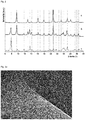
- the zeolite produced has an X-ray diffraction pattern as shown in Figure 2 with a SAR of 12.6 and 2.7 wt.-% CuO based on the total weight of the zeolite.
- the amount Na and K is 0.06 wt.-% and 0.25 wt.-%, respectively, calculated as pure metals and based on the total weight of the zeolite.
- the CHA content of the zeolite is 37 wt.-%, based on the total weight of ERI and CHA and is based on the analysis of the XRD pattern by identifying the relative amount of ERI and CHA in the ERI/CHA intergrowth.
- Table 1 shows the Bragg distance, the 2theta position and the relative intensities of the zeolite obtained in this Embodiment prior to calcination.
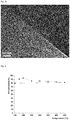
- Fig. 3 shows HRTEM images of the zeolite according to Embodiment 1 in two different magnifications.
- Table 1 Bragg distance D ( ⁇ ), 2theta position and relative intensities (I/I 0 ) of the reflections of the zeolite obtained in Embodiment 1 D ( ⁇ ) 2 ⁇ (°) I / I 0 D ( ⁇ ) 2 ⁇ (°) I / I 0 11.42 7.74 72 2.53 35.52 11 9.27 9.53 46 2.48 36.22 18 9.14 9.67 38 2.47 36.41 15 7.59 11.65 27 2.27 39.63 10 6.84 12.93 22 2.26 39.91 10 6.57 13.47 29 2.23 40.51 8 6.31 14.02 36 2.19 41.28 9 5.68 15.58 32 2.10 43.03 13 5.51 16.08 50 2.09 43.32 14 5.32 16.64 28 2.07 43.69 10 4.96 17.85 35 1.97 46.04 9 4.62 19.21 26 1.91 47.54 13 4.55 19.51 38 1.89 47.98 15 4.29 20.69 100 1.
- Aluminosilicate solution 2 was prepared as follows. 0.21 g aluminium-tri-sec-butoxide (Fluka) was added upon stirring for 5 min at room temperature to 9.32 g tetraethylammonium hydroxide (35 wt.-%, Sigma-Aldrich) in a 60 mL PP bottle. This mixture was stirred mechanically for 10 minutes. To this solution, 4.1 g Ludox AS-40 (Sigma-Aldrich) was added drop wise upon stirring within 10 min at room temperature and afterwards 1.24 g hexamethonium bromide (Acros) was added at once. Another 0.19 g of potassium chloride (LabChem) and 3.77 g of distilled water was added within 2 min.
- the final gel has the following molar ratios: SiO 2 / 0.015 Al 2 O 3 / 0.092 KCl / 0.81 TEAOH / 0.13 RBr / 25 H 2 0 where R is the hexamethonium organic template.
- This solution remained stirring for 24 h in the closed PP bottle at room temperature and forms a liquid gel.
- This gel was aged for another 48 h at room temperature without stirring.
- aluminosilicate solution 2 was added at once to aluminosilicate solution 1 at room temperature.
- the final gel has the following molar ratios: SiO 2 / 0.026 Al 2 O 3 / 0.44 NaOH / 0.034 KCI / 0.02 Cu-TEPA / 0.30 TEAOH / 0.047 RBr / 31 H 2 0 where R is the hexamethonium organic template.
- the resulting mixture was homogenized by vigorously stirring for 15 minutes and afterwards transferred to a stainless steel autoclave. This mixture was heated for 168 h at 160 °C under dynamic conditions and autogenous pressure.
- the solid product was recovered by filtration, washed with 500 mL deionized water, and dried at 60 °C for 8 to 16 h.
- the obtained zeolite has a SAR of 13.6 and 3.3 wt.-% CuO based on the total weight of the zeolite.
- the amount Na and K is 0.58 wt.-% and 1.0 wt.-%, respectively, calculated as pure metals and based on the total weight of the zeolite.
- the CHA content of the zeolite is 56 wt.-%, based on the total weight of ERI and CHA and is based on the analysis of the XRD pattern by identifying the relative amount of ERI and CHA in the ERI/CHA intergrowth.
- Aluminosilicate solution 2 was prepared as follows. 0.28 g aluminium-tri-sec-butoxide (Fluka) was added upon stirring to 12.43 g tetraethylammonium hydroxide (35 wt.-%, Sigma-Aldrich) in a 60 mL PP bottle. This mixture was stirred mechanically for 10 minutes. To this solution, 5.46 g Ludox AS-40 (Sigma-Aldrich) was added drop wise upon stirring for 5 min at room temperature and afterwards 1.65 g hexamethonium bromide (Acros) was added at once. Another 0.25 g of potassium chloride (LabChem) and 5.02 g of distilled water was added within 2 min.
- the final gel has the following molar ratios: SiO 2 / 0.015 Al 2 O 3 / 0.092 KCI / 0.81 TEAOH / 0.13 RBr / 25 H 2 0 where R is the hexamethonium organic template.
- This solution remained stirring for 24 h in the closed PP bottle at room temperature and forms a liquid gel.
- This gel was aged for another 48 h at room temperature without stirring.
- aluminosilicate solution 2 was added at once to aluminosilicate solution 1 at room temperature.
- the final gel has the following molar ratios: SiO 2 / 0.025 Al 2 O 3 / 0.39 NaOH / 0.041 KCI / 0.02 Cu-TEPA / 0.36 TEAOH / 0.055 RBr / 30 H 2 0 where R is the hexamethonium organic template.
- the resulting mixture was homogenized by vigorously stirring for 15 minutes and heated for 504 h at 95 °C under static conditions and autogenous pressure.
- the solid product was recovered by filtration and washing with 500 mL deionized water, and was dried at 60 °C for 8 to 16 h.
- the obtained zeolite has a SAR of 12.9 and 3.9 wt.-% CuO based on the total weight of the zeolite.
- the amount Na and K is 0.93 wt.-% and 1.7 wt.-%, respectively, calculated as pure metals and based on the total weight of the zeolite.
- the CHA content of the zeolite is 46 wt.-%, based on the total weight of ERI and CHA and is based on the analysis of the XRD pattern by identifying the relative amount of ERI and CHA in the ERI/CHA intergrowth.
- Aluminosilicate solution 2 was prepared as follows. 0.28 g aluminium-tri-sec-butoxide (Fluka) was added upon stirring to 12.43 g tetraethylammonium hydroxide (35 wt.-%, Sigma-Aldrich) in a 60 mL PP bottle. This mixture was stirred mechanically for 10 minutes. To this solution, 5.46 g Ludox AS-40 (Sigma-Aldrich) was added drop wise upon stirring within 5 min at room temperature and afterwards 1.65 g hexamethonium bromide (Acros) was added at once. Another 0.25 g of potassium chloride (LabChem) and 5.02 g of distilled water was added within 2 min.
- the final gel has the following molar ratios: SiO 2 / 0.015 Al 2 O 3 / 0.092 KCI / 0.81 TEAOH / 0.13 RBr / 25 H 2 0 where R is the hexamethonium organic template.
- This solution remained stirring for 24 h in the closed PP bottle at room temperature and forms a liquid gel.
- This gel was aged for another 48 h at room temperature without stirring.
- aluminosilicate solution 2 was added at once to aluminosilicate solution 1 at room temperature.
- the final gel has the following molar ratios: SiO 2 / 0.05 Al 2 O 3 / 0.22 NaOH / 0.20 NH 4 OH / 0.043 KCI / 0.019 Cu-TEPA / 0.38 TEAOH / 0.059 RBr / 32 H 2 0 where R is the hexamethonium organic template.
- the resulting mixture was homogenized by vigorously stirring for 15 minutes and afterwards transferred to a stainless steel autoclave. This mixture was heated for 168 h at 160 °C under static conditions and autogenous pressure.
- the solid product was recovered by filtration, washed with 500 mL deionized water, and dried at 60 °C for 8 to 16 h.
- the obtained zeolite has a SAR of 14.4 and 1.7 wt.-% CuO based on the total weight of the zeolite.
- the amount Na and K is 0.37 wt.-% and 2.1 wt.-%, respectively, calculated as pure metals and based on the total weight of the zeolite.
- the CHA content of the zeolite is 20 wt.-%, based on the total weight of ERI and CHA and is based on the analysis of the XRD pattern by identifying the relative amount of ERI and CHA in the ERI/CHA intergrowth.
- zeolite obtained as described in embodiment 4 is suspended in a 500 mL aqueous solution containing 0.5 M NH 4 Cl. This mixture is heated at boiling point for 4 hours under reflux condition upon stirring. The zeolite is recovered by filtration and washing with 1 L deionized water, and was dried at 60 °C for 8 to 16 h. Afterwards, this procedure is repeated two times. The amount Na and K was decreased to 0.03 wt.-% and 0.41 wt.-%, calculated as pure metals and based on the total weight of the zeolite. The Cu content was lowered to 0.19 wt.-%, calculated as CuO and based on the total weight of the zeolite.
- Catalyst pellets consisting of compressed zeolite powder obtained in Embodiment 1 are loaded in a quartz fixed bed tubular continuous flow reactor with on-line reaction product analysis.
- the catalyst first undergoes a pretreatment under simulated air flow conditions, i.e. 5 % O 2 and 95 % N 2 , at 450 °C, the highest temperature of the catalytic testing. After pretreatment, the catalyst temperature is decreased to 150 °C.
- a typical gas composition for NH 3 -SCR performance evaluation consists of 500 ppm NO, 450 ppm NH 3 , 5% O 2 , 2% CO 2 , 2.2% H 2 O.
- the gas hourly space velocity (GHSV) will be fixed at 30 000 h -1 , obtained with 0.5 cm 3 catalyst bed and a gas flow of 250 mL/min.
- the temperature will be stepwise increased from 150 to 450 °C with fixed temperature ramps, and 50 °C intervals. Isothermal periods of 60 to 120 minutes are foreseen before reaction product sampling at each temperature plateau. A return point to 150 °C enables detection of degradation of catalytic performance during the testing.
- Table 2 shows the NO x conversion for each temperature measured.
- Fig. 4 shows the graphical representation of the NO x conversion test.
- Table 2 NO x conversion of the zeolite powder obtained in Embodiment 1.
- the gas composition consisted of 500 ppm NO, 450 ppm NH 3 , 5% O 2 , 2% CO 2 , 2.2% H 2 O, and the gas hourly space velocity (GHSV) was fixed at 30 000 h-1, obtained with 0.5 cm3 catalyst bed and a gas flow of 250 mL/min.
- the bottom row of the table shows the NO x conversion at the return point of 150°C. The bottom row demonstrates that there was no degradation of catalytic performance during the testing as the NO x conversion did not decrease in comparison to the start.
- the final gel has the following molar ratios: SiO 2 / 0.015 Al 2 O 3 / 0.092 KCI / 0.81 TEAOH / 0.13 RBr / 25 H 2 0 where R is the hexamethonium organic template.
- This solution remained stirring for 24 h in the closed PP bottle at room temperature and forms a liquid gel.
- This mixture was heated for 168 h at 160 °C under dynamic conditions under autogenous pressure.
- the solid product was recovered by filtration and washing with 500 mL deionized water and was dried at 60 °C overnight.
- the zeolite produced has an X-ray diffraction pattern corresponding to crystalline material but not as an ERI framework type.
- the product obtained was a mixture of different zeolite frameworks.
- the final gel has the following molar ratios: SiO 2 / 0.015 Al 2 O 3 / 0.092 KCI / 0.81 TEAOH / 0.13 RBr / 25 H 2 0 where R is the hexamethonium organic template.
- This solution remained stirring for 24 h in the closed PP bottle at room temperature and forms a liquid gel.
- This mixture was heated for 336 h at 100 °C under dynamic conditions under autogenous pressure.
- the solid product was recovered by filtration and washing with 500 mL deionized water, and was dried at 60 °C for 8 to 16 h.
- the zeolite produced has an X-ray diffraction pattern corresponding to a pure ERI framework type.
- Table 2 shows the Bragg distances, the 2theta positions and the relative intensities of the zeolite obtained in Embodiment 1 after to calcination, i.e. the ERI/CHA zeolite according to the present invention, as well as the corresponding values of the CHA framework type zeolite according to Comparative Example 1, and of the ERI framework zeolite according to Comparative Example 3, respectively.
- ERI/CHA zeolite Some of the 20 values of the ERI/CHA zeolite according to Embodiment 1 are listed twice in the above table 3 because they correspond to 20 values of pure CHA and pure ERI, respectively. These 20 values are listed in table 4 Table 4: 20 values of the ERI/CHA intergrowth according to the present invention and the respective 20 values of pure CHA and pure ERI. 2 ⁇ ERI/CHA intergrowth (°) 2 ⁇ CHA (°) 2 ⁇ ERI (°) 14.08 14.21 14.04 19.31 19.39 19.17 20.75 20.84 20.71 28.41 28.59 28.31
Landscapes
- Chemical & Material Sciences (AREA)
- Engineering & Computer Science (AREA)
- Chemical Kinetics & Catalysis (AREA)
- Organic Chemistry (AREA)
- Materials Engineering (AREA)
- Crystallography & Structural Chemistry (AREA)
- Life Sciences & Earth Sciences (AREA)
- General Life Sciences & Earth Sciences (AREA)
- Geology (AREA)
- Oil, Petroleum & Natural Gas (AREA)
- Analytical Chemistry (AREA)
- General Chemical & Material Sciences (AREA)
- Health & Medical Sciences (AREA)
- Biomedical Technology (AREA)
- Environmental & Geological Engineering (AREA)
- Combustion & Propulsion (AREA)
- Inorganic Chemistry (AREA)
- Physics & Mathematics (AREA)
- Thermal Sciences (AREA)
- Catalysts (AREA)
- Silicates, Zeolites, And Molecular Sieves (AREA)
- Exhaust Gas After Treatment (AREA)
- Exhaust Gas Treatment By Means Of Catalyst (AREA)
Abstract
Description
- The present invention relates to crystalline zeolites with an ERI/CHA intergrowth framework type and to a process for making said zeolites. The zeolites according to the present invention are suitable for selective catalytic reduction (SCR) of NOx.
- Zeolites are microporous aluminosilicate materials which have very regular pore structures and channels of molecular dimensions and which occur in numerous framework structures. They are classified by the Structure Commission of the International Zeolite Association (IZA) which defines respective framework types. The commission also assigns framework type codes consisting of three capital letters to all unique and confirmed framework topologies. For example, a widely used group of zeolites belongs to the erionite framework to which the code ERI has been assigned, and another widely used group belongs to the chabazite framework, encoded CHA. Zeolites can differ by framework type, as well as by chemical composition, atom distribution, crystal size and morphology.
- It is common to classify zeolites according to their pore size which is defined by the ring size of the biggest pore aperture. Zeolites with a large pore size have a maximum ring size of 12 tetrahedral atoms, zeolites with a medium pore size have a maximum pore size of 10 and zeolites with a small pore size have a maximum pore size of 8 tetrahedral atoms. Well-known small-pore zeolites belong in particular to the AEI, CHA (chabazite), ERI (erionite), LEV (levyne) and KFI framework. Examples having a large pore size are zeolites of the faujasite (FAU) framework type.
- Zeolites play an important role as catalysts in the so-called Selective Catalytic Reduction (SCR) of nitrogen oxides with ammonia to form nitrogen and water, and in particular if cations like copper and iron are included in the zeolite pores. The SCR process has been widely used to remediate exhaust gases which result from the combustion of fossil fuels, in particular from stationary power plants and from vehicles powered by diesel engines. While zeolites occur in nature, zeolites intended for SCR or other industrial applications are usually manufactured via synthetic processes.
- Furthermore, zeolites are well-known ion exchangers. They can also be used as molecular sieves and as catalysts in a large variety of reactions. Well-known uses of zeolites include, for instance, fluid catalytic cracking, hydrocracking, hydrocarbon conversion reactions, reprocessing methods and heat accumulation.
- The phase-pure zeolite frameworks used in a diversity of industrial applications are exceptions in the field of zeolite crystallization. The majority of zeolite crystallization conditions result in the formation of physical mixtures of different zeolite phases or intergrowth materials. Only when the synthesis parameters are finely tuned, a pure zeolite phase is obtained.
- Zeolites can be made by hydrothermal synthesis usually involving alkaline cations, such as Li, Na or K, earth alkaline cations, such as Ca or Sr, or quaternary ammonium cations. These cations will be present as extra-framework species necessary for, e.g. charge compensating tetrahedral aluminium atoms. If Cu or Fe loaded zeolites are envisaged, these cations normally need to be replaced with copper and/or iron cations by post-synthesis methods. This can be done by an additional synthesis step as for example described in
WO 2011/073390 A2 andWO 2011/073398 A2 . - Also one-step synthesis processes for the production of Cu containing zeolites are already known. Examples for the preparation of Cu containing zeolites can be found, for instance, in
WO 2009/141324 A1 andWO 2015/084817 A1 . -
WO 2009/141324 A1 relates to a hydrothermal process for the preparation of phosphor-free zeolitic materials having a CHA framework structure. In said process, an aqueous solution comprises tri- and/or tetravalent elements employed as framework elements and also all the Cu necessary for the preparation of the final Cu zeolite having a CHA framework structure. The trivalent element preferably is Al, and the tetravalent element preferably is selected from Si, Sn, Ti, Zr, Ge and a mixture of two or more thereof. -
WO 2015/084817 A1 discloses a transition-metal-CHA molecular sieve and a mixed-template synthesis for making it. The transition metal is preferably Cu or Fe. The reaction mixture for synthesizing the zeolite comprises of an alumina and a silica source, a transition-metal-amine organic templating agent, seed crystals, and a second organic templating agent, wherein each of the templating agents is suitable for forming a CHA framework structure. The second organic templating agent is a quaternary organic ammonium salt. -
EP 2 517 774 A2 discloses a zeolite catalyst for converting nitrogen oxides into nitrogen in an SCR, wherein the zeolite has the ERI framework type code and contains 0.01 to 20 weight percent of at least one transition metal selected from the group consisting of Cr, Ce, Mn, Fe, Co, Ni and Cu. In some embodiments, the catalyst may additionally comprise another transition metal-containing small pore zeolite having the CHA framework type code. However, it deals with a physical mixture of ERI and CHA framework type zeolites, but not with an intergrowth. The SCR catalyst according to this invention shows a good thermal stability and good NOx conversion rates up to about 400 °C.EP 2 517 775 A2 , belonging to the same family asEP 2 517 774 A2 , discloses a zeolite catalyst for converting nitrogen oxides into nitrogen in an SCR, wherein the zeolite is a small pore zeolite and has a framework code type selected from the group consisting of AFT, AFX, ATT, DDR, EAB, EPI, GIS, GOO, IHW, LTA, MER, OWE, PAU, PHI, RHO, RTH, SAV SIV, UEI, UFI, VNI and YUG and contains 0.1 to 10 weight percent of at least one transition metal selected from the group consisting of Cr, Mn, Fe, Co, Ce, Ni, Cu, Zn, Ga, Mo, Ru, Rh, Pd, Ag, In, Sn, Re, Ir and Pt. These catalysts also show a good thermal stability and good NOx conversion rates up to about 400 °C.EP 2 517 777 A2 , which is yet another member of the same family to which alsoEP 2 517 774 A2 andEP 2 517 775 A2 belong, discloses a zeolite catalyst for an SCR comprising two or more zeolites having the CHA framework type and 0.01 to 20 weight percent of at least one transition metal selected from the group consisting of Cr, Mn, Fe, Co, Ce, Ni, Cu, Zn, Ga, Mo, Ru, Rh, Pd, Ag, In, Sn, Re, Ir and Pt. The thermal stability and the NOx conversion rates are comparable to the catalysts described inEP 2 517 774 A2 andEP 2 517 775 A2 , respectively. - Building on the classification proposed by Rao and Thomas, the different types of intergrowths relevant to zeolites are epitaxial and polytypical intergrowths, see CNR Rao and JM Thomas: "Intergrowth Structures: The Chemistry of Solid-Solid Interfaces", Acc Chem Res 1985, 13, 113-119. Epitaxy involves the oriented overgrowth of a zeolite crystal by a compositional or structurally different zeolite phase, whereas polytypism arises when individual sheets in a layered material are stacked in different sequences.
- There are some cases of epitaxy reported in literature. Examples are the structural overgrowth of zeolite X on zeolite A (E de Vos Burchart, JC Jansen, H van Bekkum: "Ordered overgrowth of zeolite X onto crystals of zeolite A", Zeolites 1989, 9, 423-435), zeolite P on zeolite A (Breck, Zeolite Molecular Sieves: Structure, Chemistry and Use, John Wiley & Sons, New York, 1974), or FAU/EMT overgrowth materials (AM Goossens, BH Wouters, PJ Grobet, V Buschmann, L Fiermans, JA Martens: "Synthesis and Characterization of Epitaxial FAU-on-EMT Zeolite Overgrowth Materials", Eur J Inorg Chem 2001, 1167-1181). A schematic overview of zeolites and their intergrowths as presented in Goossens et al., Eur J Inorg Chem 2001, 1167-1181, is shown in
Fig. 1 . - Within the ABC-6 material family, also known as the chabazite group, an OFF/LEV overgrowth exists (WS Wise and RW Tschernich: "The chemical compositions and origin of the zeolites offretite, erionite, and levyne", Am Mineral 1976, 61, 853-863).
- Examples of a compositional overgrowth can be found in the combination of ZSM-5 or ZSM-11 and silicalite-1:
US 4,148,713 discloses aluminosilicate zeolites containing an outer aluminium-free shell. The outer shell is essentially SiO2 that has crystallized on the zeolite surface in the ZSM-5 type configuration.US 4,394,251 discloses hydrocarbon conversion processes with crystalline silicates surrounded by an alumina containing isostructural shell. The crystalline silicates are preferably silicaceous analogues of intermediate pore size zeolites such as ZSM-5 and ZSM-11, and the outer shell comprises of a crystalline aluminosilicate.US 4,394,362 discloses crystalline silicate particles having an inner portion comprising an intermediate pore size crystalline silicate such as ZSM-5 or ZSM-11 which is substantially free of aluminium and an aluminium-containing isostructural outer shell. - As intergrowth, polytypism is a more common phenomenon in zeolite crystallization. It can be pictured as a stacking of different structurally uniform domains in each individual crystal, without any mismatch of bonds. The two, or more, types of domains can be structurally related, for example when they represent a different periodicity. This most often occurs as an alternative stacking of a common sheet, such as in FAU/EMT (MW Anderson, KS Pachis, F Prébin, SW Carr, O Terasaki, T Ohsuna and V Alfredsson: "Intergrowths of Cubic and Hexagonal Polytypes of Faujasitic Zeolites", J Chem Soc Chem Commun 1991, 1660-1664; and MMJ Treacy, DEW Vaughan, KG Strohmaier and JM Newsam, "Intergrowth Segregation in FAU-EMT Zeolite Materials", Proc R Soc Lond A - Math Phys Eng Sci , 1996, 452, 813-840) or MFI/MEL (JM Thomas and GR Millward: "Direct, Real-space Determination of Intergrowths in ZSM-5/ZSM-11 Catalysts", J Chem Soc Chem Commun 1982, 1380-1383; and GR Millward, S Ramdas and JM Thomas: "Evidence for Semi-regularly Ordered Sequences of Mirror and Inversion Symmetry Planes in ZSM-5/ZSM11 Shape-selective Zeolitic Catalysts", J Chem Soc Faraday Trans 1983, 79, 1075-1082). Sometimes they have substantially different structures such as in MAZ/MOR (ME Leonowicz and DEW Vaughan: "Proposed synthetic zeolite ECR-1 structure gives a new zeolite framework topology", Nature 1987, 329, 819-821) and the *BEA, a family of distorted zeolite materials (MMJ Treacy and JM Newsam:"Two new three-dimensional twelve-ring zeolite frameworks of which zeolite beta is a disordered intergrowth", Nature 1988, 332, 249-251). The stacking pattern can then vary from a strict alternation to domain arrangements with no periodicity at all.
- Specifically for the ABC-6 zeolite family of materials, polytypism as an intergrowth is well known. Materials belonging to the ABC-6 family are for example chabazite, offretite, erionite, gmelinite, sodalite and levynite. The structure of zeolite materials in the ABC-6 family can be represented as a stacking of layers containing planar six-rings (6Rs). The 6Rs in one layer can be connected to the next layers of 6Rs in different ways. The three different locations of the 6Rs in a layer can be given as A, B or C. The 6Rs in the different layers can be connected parallel to each other (position A) or by a shift (position B and C), resulting in different frameworks belonging to the ABC-6 family. For example, offretite can be represented by three connecting layers with a stacking sequence of AAB, whereas the erionite contains 6 unique layers with a sequence of AABAAC. A stacking fault between one of these layers, where the stacking sequence is slightly altered at some places, easily occurs and results in intergrowths of different framework types. An example where the AAB stacking sequence of OFF zeolite is randomly replaced by AABAAC, or vice versa, is called an ERI/OFF intergrowth with the ERI and OFF framework type the end members of the ingrowth series. Zeolite T and ZSM-34 are the most common examples. Examples of materials that can make intergrowths with chabazite are zeolites with the GME and AEI framework type. Within the ABC-6 family, other intergrowths are theoretically possible, such as an intergrowth of chabazite (AABBCC) and offretite (AAB). However, besides the above mentioned intergrowths of ERI/OFF and CHA with GME or AEI, no other intergrowths have been reported.
- Many of the intergrowth materials show special catalytic, sorptive or molecular separation properties compared to their phase pure endmembers. This can be seen for the ERI/OFF in catalytic dewaxing (NY Chen, JL Schlenker, WE Garwood and GT Kokotailo: "TMA-Offretite. Relationship between Structural and Catalytic Properties", J Catal 1984, 86, 24-31) and for MFI/MEL intergrowth in the methanol to hydrocarbon conversion (JM Thomas and GR Millward: "Direct, Real-space Determination of Intergrowths in ZSM-5/ZSM-11 Catalysts", J Chem Soc Chem Commun 1982, 1380-1383).
- Furthermore, several intergrowths based on chabazite and a second small-pore zeolite are known:
-
WO 2011/112949 A1 discloses one or more transition metal selected from Cr, Mn, Fe, Co, Ce, Ni, Cu, Zn, Ga, Mo, Ru, Rh, Pd, Ag, In, Sn, Re, Ir and Pt supported on a support. The support material has a molecular sieve having at least one intergrowth phase that has a least two different small-pore, three dimensional framework structures. Preferably, the first or second framework structure is selected from AEI, GME, AFX, AFT and LEV, and the other framework structure is CHA. The molecular sieves ofWO 2011/112949 A1 may be synthesized using a synthesis technique as disclosed inUS 6,334,994 B1 ,US 7,094,389 B2 ,US 2002/0165089 A1 andWO 2005/063623 A2 . -
US 6,334,994 B1 discloses a silico-alumino-phosphate intergrowth with AEI and CHA structures. It is manufactured from a mixture of SiO2, Al2O3 and P2O5 and an organic template material. Said mixture is manufactured by combining at least one portion of the Al-source and the P-source with water, the Si-source and the organic template material. The reagents can be added in different orders and quantities, and from different sources, but Al-isopropoxide, phosphoric acid, colloidal silica and tetraethylammonium hydroxide have proved to be particularly useful sources of Al, P, Si and organic template material, respectively. -
US 7,094,389 B2 andWO 2005/063623 A2 , both belonging to the same patent family, disclose a crystalline material substantially free of framework phosphorus and comprising both a CHA and an AEI framework type molecular sieve. The crystalline material, in its calcined, anhydrous form, further comprises oxides X2O3 and YO2. X is a trivalent element such as Al, B, Fe, In and/or Ga, and Y is a tetravalent element such as Si, Sn, Ti and/or Ge. The crystalline material is made by preparing a reaction mixture comprising a source of water and sources of the oxides X2O3 and YO2, maintaining said reaction mixture under conditions sufficient to form crystals of the crystalline material comprising stacking faults or at least one intergrown phase of a CHA framework type molecular sieve and an AEI framework type molecular sieve, and recovering the crystalline material thus obtained. Preferably, organic directing agents for directing the formation of a CHA and/or an AEI framework type are also added to the mixture. The directing agents can be organic amine or ammonium compounds. Furthermore, the reaction mixture may comprise seed crystals having an AEI, OFF, CHA or LEV framework type. -
US 2002/0165089 A1 relates to a silicoaluminophosphate molecular sieve comprising at least one intergrown phase having AEI and CHA framework types. These molecular sieves are prepared by submitting a mixture comprising a reactive source of silicon, a reactive source of aluminium and a reactive source of phosphorus in the presence of an organic structure directing agent to hydrothermal treatment under autogenous pressure. Preferably, the organic structure directing agent is a tetraethylammonium compound. - The zeolites known so far and the processes for making them have several disadvantages. For example, the thermal stability of some zeolites used as SCR catalysts is not sufficient in higher temperature ranges. Thus, there is a need for zeolites having a higher thermal stability. Furthermore, the processes for making known zeolites involve several process steps including crystallization of the final product at about 150°C at high pressure which results in a high energy consumption. Some zeolites comprise copper, but the raw zeolites obtained by known processes mostly do not comprise copper. Desired CuO contents lie between 0.1 and 10 wt.-% of the zeolite. As a consequence, an ion exchange step to insert CuO in the zeolite is required. On the other hand, one-pot zeolite synthesis procedures exist, in which zeolite formation and CuO incorporation are combined. However, known one-pot processes comprise a copper content that is too high for practical application of said zeolite. Therefore, an ion exchange step to remove excess copper is required in many of the known processes. Furthermore, the processes of the prior art often require the use of expensive templates for the formation of small-pore zeolites.
- It is therefore an object of the present invention to provide novel zeolites with an enhanced thermal stability and a process for making them, wherein the process is flexible in the sense that it allows to manufacture a wide variety of small-pore zeolites with respect to the content of transition metals, Si/Al ratio (SAR), and which does not require the use of expensive templates.
- The inventors of the present invention have now found that it is surprisingly possible to provide such novel zeolites with an enhanced thermal stability. This first object of the present invention is therefore achieved by crystalline aluminosilicate zeolites comprising an intergrowth of a CHA framework type material and an ERI framework type material.
- The novel crystalline aluminosilicate zeolites according to the present invention and the process for making them are explained below, with the invention encompassing all the embodiments indicated below, both individually and in combination with one another.
- As used in the present invention, the term "phase-pure zeolite" refers to a zeolite that is composed of crystals having only one crystal structure, i.e. the crystals contain no other crystal structure.
- A crystal structure is a description of the ordered arrangement of atoms, ions, or molecules in a crystalline material. Ordered structures occur from the intrinsic nature of the constituent particles to form symmetric patterns that repeat along the principal directions of three-dimensional space in matter. A "crystal" therefore represents a solid material whose constituents are arranged in a crystal structure.
- A "crystalline substance" is composed of crystals.
- A "zeolite framework type", also referred to as "framework type", represents the corner-sharing network of tetrahedrally coordinated atoms.
- A "CHA framework type material" is a zeolitic material having a CHA framework type. The same applies, mutatis mutandis, for an "ERI framework type material".
- An "intergrowth" of a zeolite comprises at least two different zeolite framework types or two different zeolite compositions of the same framework type.
- In an "overgrowth" zeolite, one framework structure grows on top of the other one. Thus, "overgrowth" represents a species of "intergrowth", and "intergrowth" is the genus.
- The crystalline aluminosilicate zeolites according to the present invention are hereinafter referred to as "the zeolites or "the zeolites according to the present invention", respectively.
- The zeolites according to the present invention comprise an intergrowth of a CHA framework type and an ERI framework type. In a preferred embodiment, said intergrowth is an overgrowth. The terms "intergrowth" and "overgrowth" as used for the zeolites according to the present invention includes a) an ERI framework structure growing on top of a CHA framework structure, b) a CHA framework structure growing on top of an ERI framework structure and c) mixtures of a) and b).
- In one embodiment of the present invention, the ERI content of the zeolites ranges from 10 to 85 wt.-%, based on the total weight of ERI and CHA. Preferably, the ERI content is in the range of between 25 and 80 wt.-%, even more preferably, the ERI content is in the range of between 50 to 80 wt.-%, and most preferably, the ERI content is in the
range - In one embodiment of the present invention, the silica to alumina molar ratio of the zeolites ranges from 2 to 60, preferably 10 to 30, and even more preferably 10 to 20. Hereinafter, the silica to alumina molar ratio is abbreviated as SAR.
- In one embodiment of the present invention, the zeolites comprise copper or a mixture of copper and iron in an amount of 0.1 to 10 wt.-%, preferably 1.5 to 6 wt.-%, even more preferably 1.5 to 3.5 wt.-%, calculated as the respective oxides CuO and Fe2O3 and based on the total weight of the respective zeolite.
- In a preferred embodiment of the present invention, the zeolites comprise 0.1 to 10 wt.-% copper, preferably 1.5 to 6 wt.-% Cu, even more preferably 1.5 to 3.5 wt.-% Cu, calculated as copper oxide CuO and based on the total weight of the respective zeolite.
- In one embodiment of the present invention, the copper to aluminium atomic ratio of the zeolites is in the range of between 0.002 to 0.5.
- In one embodiment of the present invention, the zeolites comprise one or more alkali or alkaline earth metal cations selected from the group consisting of lithium, sodium, potassium, rubidium, cesium, ammonium, magnesium, calcium, strontium, and barium cations. It is well known to the skilled person that the ammonium cation NH4 + has very similar properties to heavier alkali metal cations. Therefore, the ammonium cation NH4+ is considered an alkali cation in the present invention, which is in accordance with common practice. In a preferred embodiment, the alkali or alkaline earth metal cation is a sodium cation, a potassium cation, or a mixture of sodium and potassium cations. The one or more alkali or alkaline earth metal cations are present in an amount of 0.1 to 5.0 wt.-%, preferably 0.3 to 2.0 wt.-%, calculated as pure metals and based on the total weight of the zeolites. In case of ammonium cations, their content is calculated via combustion analysis that are well known to the skilled person.
- In one embodiment of the present invention, the crystalline aluminosilicate zeolites according to the present invention consist of an intergrowth of a CHA framework type material and an ERI framework type material.
- In another embodiment of the present invention, the crystalline aluminosilicate zeolites according to the present invention comprise an intergrowth of a CHA framework type material and an ERI framework type material, and, in addition, phase-pure ERI and/or CHA.
- In both of these embodiments, the SAR ranges from 2 to 60, preferably 10 to 30, and even more preferably 10 to 20, as mentioned above.
- In a preferred embodiment of the present invention, the zeolites of the present invention comprise and intergrowth of a CHA framework type and an ERI framework type and additionally comprise the following features:
- The ERI content of the zeolites ranges from 10 to 85 wt.-%, based on the total weight of ERI and CHA.
- The SAR ranges from 2 to 60.
- The zeolites comprise copper in an amount of 0.1 to 10 wt.-%, calculated as CuO.
- The copper to aluminium atomic ratio of the zeolites is in the range of between 0.002 to 0.5.
- The zeolites comprise sodium cations, potassium cations, or a mixture of sodium and potassium cations in an amount of 0.3 to 5 wt.-%, calculated as pure metals and based on the total weight of the zeolites.
- In another preferred embodiment of the present invention, the zeolites of the present invention comprise and intergrowth of a CHA framework type and an ERI framework type and additionally comprise the following features:
- The ERI content of the zeolites ranges from 10 to 85 wt.-%, based on the total weight of ERI and CHA.
- The SAR ranges from 10 to 30.
- The zeolites comprise copper in an amount of 0.1 to 10 wt.-%, calculated as CuO.
- The copper to aluminium atomic ratio of the zeolites is in the range of between 0.005 to 0.5.
- The zeolites comprise sodium cations, potassium cations, or a mixture of sodium and potassium cations in an amount of 0.3 to 5 wt.-%, calculated as pure metals and based on the total weight of the zeolites.
- In a preferred embodiment of the present invention, the zeolites of the present invention comprise and intergrowth of a CHA framework type and an ERI framework type and additionally comprise the following features:
- The ERI content of the zeolites ranges from 10 to 85 wt.-%, based on the total weight of ERI and CHA.
- The SAR ranges from 10 to 20.
- The zeolites comprise copper in an amount of 0.1 to 10 wt.-%, calculated as CuO.
- The copper to aluminium atomic ratio of the zeolites is in the range of between 0.005 to 0.5.
- The zeolites comprise sodium cations, potassium cations, or a mixture of sodium and potassium cations in an amount of 0.3 to 5 wt.-%, calculated as pure metals and based on the total weight of the zeolites.
- The object to provide a process for making the crystalline aluminosilicate zeolites according to the present invention comprises the following steps:
- a) preparing a first aqueous reaction mixture comprising a zeolite of the faujasite framework type, Cu-tetraethylenepentamine (Cu-TEPA) and at least one compound M(OH), wherein M is a sodium, potassium or ammonium cation or a mixture thereof,
- b) preparing a second aqueous reaction mixture comprising
- a silica source,
- an alumina source,
- at least one salt AB or AB2, wherein the cation A is chosen from lithium, sodium, potassium, rubidium, cesium, ammonium, magnesium, calcium, strontium, and barium and the anion B is chosen from chloride, bromide, iodide and hydroxide, and
- a quaternary alkylammonium salt having the general formula [NR1R2R3R4]+X-, wherein R1, R2, R3 and R4 represent, independently from one another, a linear or branched alkyl group having 1 to 10 carbon atoms and X- is chosen from bromide, iodide and hydroxide, and
- a hexamethonium bromide, iodide or hydroxide,
- c) combining the two aqueous reaction mixtures,
- d) heating the combination of the two aqueous reaction mixtures to form a crystalline aluminosilicate zeolite comprising
- an intergrowth of a CHA framework type material and an ERI framework type material, and
- cations chosen from lithium, sodium, potassium, rubidium, cesium, ammonium, magnesium, calcium, strontium and barium cations and mixtures thereof, and
- copper cations.
- In step a) of the process according to the present invention, the three components, i.e. the zeolite of the faujasite framework type, Cu-TEPA and the at least one compound M(OH) can be mixed in any order. However, it is preferred to suspend the zeolite in an aqueous solution of the at least one compound M(OH) first and then to add a solution of Cu-TEPA.
- Preferably, the at least one compound M(OH) and Cu-TEPA are used in step a) in the form of 0.5 to 2 M aqueous solutions.
- Zeolites of the faujasite network type are known and commercially available in a large variety under the name zeolite Y. In particular, a large amount of faujasites with different SARs are available which allows easy control of the SAR of the resulting copper-containing small pore zeolite.
- In embodiments of the inventive process, the zeolite of the faujasite framework type has a SAR in the range from 5 to 60.
- Likewise, the copper content of the resulting copper-containing small-pore zeolite can be easily controlled via the amount of copper complex used in the inventive process.
- In embodiments of the inventive process, the copper content of the copper containing small-pore zeolite is 0.1 to 10 wt.-%, in particular 1.5 to 6 wt.-% and particularly preferably 1.5 to 3.5 wt.-%, calculated as CuO and based on the total weight of the copper containing small-pore zeolite.
- The copper complexing agent tetraethylenepentamine used in the inventive process is known and commercially available. Tetraethylenepentamine is also referred to as "TEPA". The corresponding copper complex Cu-TEPA can be manufactured in line with known processes, see for example the description "synthesis of Cu-TEPA" among the embodiments described below.
- In embodiments of the inventive process, the copper complex is used in amount of 0.0001 mole/wt Cu-TEPA/FAU zeolite to 0.0016 mole/wt Cu-TEPA/FAU zeolite.
- In the compound M(OH) used in step a) of the process according to the present invention, M is sodium, potassium, ammonium or a mixture thereof. In other words, M(OH) is NaOH, KOH, NHaOH or a mixture thereof. Preferably, M(OH) is NaOH, NH4OH, or a mixture of both.
- The use of NaOH, KOH and/or NH4OH in combination with Cu-TEPA in step a) ensures that the faujasite framework type zeolite is transformed into a CHA framework type.
- In embodiments of the inventive process, M(OH) is used in an amount of 0.001 mole/wt M(OH)/FAU zeolite to 0.025 mole/wt M(OH)/FAU zeolite.
- The zeolite of the faujasite framework type, Cu-TEPA and the at least one compound M(OH) are stirred for 15 min at room temperature after mixing. The first reaction mixture obtained thereof may either be used immediately for mixing with the second reaction mixture, or it may be kept static at a temperature between room temperature and 150 °C, preferably 90 to 98 °C, for 36 to 60 h, preferably 48 h, before mixing it with the second reaction mixture.
- Suitable silica sources to be used in step b) of the process according to the present invention are commercially available stabilized silica sols and fumed silicas. A suitable commercially available silica source is, for instance, Ludox® AS-40. Furthermore, alkoxysilanes such as tetraethoxysilane (TEOS) and tetramethoxysilane (TMOS) can be used as silica sources.
- Suitable alumina sources are, for instance, aluminium-tri-sec-butoxide Al[O(CH)(CH3)C2H5]3, aluminiumnitrate, aluminiumsulfate, sodium aluminate, aluminium powder and aluminium hydroxide.
- In one embodiment, the amounts of the silica and the alumina source are chosen in a way that the calculated SAR of the starting composition ranges between 10 and 100, preferably between 50 and 80. The skilled person knows that the SAR in the synthesis and the SAR in the final zeolite are not necessarily identical, and he also knows how to choose SAR values in the synthesis in order to obtain a desired SAR in the final zeolite.
- The second reaction mixture according to step b) further comprises at least one salt AB or AB2, wherein the cation A is chosen from lithium, sodium, potassium, rubidium, cesium, ammonium, magnesium, calcium, strontium, and barium cations, and the anion B is chosen from chloride, bromide, iodide and hydroxide. "At least one salt AB or AB2" means that either only one salt is chosen, or it can be a mixture of two or more salts. In case two or more salts are used, at least two of them may either share the same cation (e.g. KBr and KCI) or the same anion (e.g. NaCl and KCI), or it may deal with at least two salts having different cations and different anions (e.g. NaCl and KBr). In a preferred embodiment, the cation is chosen from Na and K, and the anion is chosen from chloride and bromide.
- The quaternary alkylammonium cation has the general formula [NR1 R2R3R4]+ wherein R1, R2, R3 and R4 represent, independently from one another, linear or branched alkyl groups having 1 to 10 carbon atoms. The linear or branched alkyl groups are selected from methyl, ethyl, n-propyl, isopropyl, 1-butyl, 2-butyl, tert.-butyl, 1-pentyl, 2-pentyl, 3-methyl-butyl, 2,2,-dimethyl-propyl as well as all isomers of hexyl, heptyl, octyl, nonyl, decyl.
- Preferably, the quaternary alkylammonium salt is tetraethylammoniumhydroxide.
- Hexamethonium bromide, iodide or hydroxide is used to form ERI.
- In a preferred embodiment, the preparation of the second reaction mixture according to step b) is carried out as follows: the alumina source is added to an aqueous solution of the quaternary alkylammonium salt upon stirring at room temperature for 2 to 30 min. Then, the aqueous suspension of the silica source is added at room temperature within 5 to 15 minutes upon stirring. Afterwards, the hexamethonium bromide, iodide or hydroxide is added, followed by the addition of the at least one salt AB or AB2 dissolved in deionized water.
- Subsequently, the solution is stirred for another 18 to 30 h, preferably 24 h, at room temperature, thereby forming a liquid gel. This gel is then aged for another 36 to 60 h, preferably 48 h, without stirring, at room temperature.
- The skilled person knows how to adjust the contents of the zeolite of the faujasite framework type, the at least one compound M(OH), Cu-TEPA, silica, alumina and the salt AB or AB2 in order to obtain a zeolite with a desired SAR, alkali or alkaline earth metal and copper content. He can apply said knowledge without departing from the scope of the claims.
- According to step c) of the process of the present invention, the two reaction mixtures obtained from steps a) and b), respectively, are mixed. The first reaction mixture may be added to the second one or vice versa, or the first and the second reaction mixture may be mixed concomitantly with one another. In a preferred embodiment, the second reaction mixture is added within 2 to 5 minutes at room temperature to the first reaction mixture. The resulting mixture is homogenized by stirring at room temperature for 10 to 20 minutes.
- The heating step d) is carried out at temperatures between 95 °C and 160 °C for 3 to 28 days under autogenous pressure. In one embodiment, the heating step is carried out at 95 °C for 21 days. In another embodiment, the heating step is carried out at 160 °C for 4 to 8 days. The skilled person knows that it is reasonable to combine higher temperatures with shorter reaction times and vice versa. He can make use of this knowledge without leaving the scope of protection of the claims.
- The solid product obtained by this heating step is then filtered off and washed with deionized water, and then dried at 50 to 80 °C, preferably 60 °C, for 8 to 16 h.
- Optionally, the zeolite obtained from step d) may subsequently be calcined. It is advantageous to carry out the calcination at a temperature of 700 to 800 °C, preferably 740 to 760°C. Preferably, the oven is heated slowly, for instance at 0.5 to 2 °C/min. After the final calcination temperature of 740 to 760 °C is reached, it is held for 6 to 10 hours. Afterwards, the heating is switched off, and the zeolite is allowed to cool down to room temperature.
- Furthermore, the zeolite obtained after calcination may be ion-exchanged in order to reduce the amount of alkali, alkaline earth metal and copper cations. Ion-exchange methods are well known in the state of the art and may be applied without departing from the scope of the claims. Ion exchange may be achieved, for instance, by treatment with aqueous ammonium chloride solutions. The calcined zeolite is mixed with an aqueous NH4Cl solution and heated up to boiling point. The zeolite is recovered by filtration and washing with deionized water and then dried. Repeating this procedure for one or more times further reduces the content of alkali, alkaline earth metal and copper cations.
- If the zeolites obtained by the process according to the present invention shall comprise a mixture of copper and iron, said iron is preferably introduced after calcination. The introduction may be carried out by techniques well known in the prior art, e.g. by incipient wetness impregnation or by ion exchange techniques. In both cases, appropriate iron precursors are dissolved in water and brought into contact with the zeolite according to the present invention. Appropriate iron precursors are Fe2+ and Fe3+ salts whose solubility in water is equal to or larger than 1 g per 100 g water. Suitable iron precursors are, for instance, FeSO4*7H2O, FeCl2*4H2O, FeBr2*6H2O, Fe(NO3)3*9H2O, FeCl3*6H2O. Preferably, a Fe3+ salt is used as an iron precursor. After the introduction of Fe, the zeolite is washed, dried and calcined. This general procedure is also well-known in the art and can be applied without departing from the scope of the claims.
- The ERI/CHA intergrowths according to the present invention can be used for the preparation of SCR catalysts. Furthermore, they are suitable ion exchangers. They can also be used as molecular sieves and as catalysts in a large variety of reactions. Well-known uses of zeolites include, for instance, fluid catalytic cracking, hydrocracking, hydrocarbon conversion reactions, reprocessing methods and heat accumulation.
-
-
Fig. 1 is a schematic overview of zeolites and their intergrowths as presented in Goossens et al., Eur J Inorg Chem 2001, 1167-1181. -
Fig. 2 shows X-Ray diffraction patterns of the calcined ERI/CHA zeolite intergrowth obtained inEmbodiment 1, compared to zeolites with a pure CHA framework type according to Comparative Example 1 and a pure ERI framework type according to Comparative Example 3, respectively. -
Fig. 3 shows HRTEM images of the zeolite according toEmbodiment 1 in two different magnifications.Fig. 3a shows the smaller andFig. 3b the larger one of the magnifications. The TEM study was performed on the calcined samples. The crystals were dispersed in ethanol and treated by ultrasonication. A few droplets were put onto a holy carbon coated Cu grid. HRTEM images were made using a FEI Tecnai microscope operated at 200 kV. -
Fig. 4 shows the graphical representation of the NOx conversion test according to Embodiment 6. The solid line connects the measuring point at 450°C and the return point at 150°C. - The Cu-tetraethylenepentamine complex (Cu-TEPA) was synthesized by adding 37.9 g tetraethylenepentamine (0.2 mole, Sigma-Aldrich) to a solution consisting of 50 g CuSO4*5H2O (0.2 mole, Sigma-Aldrich) and 200 g of H2O (1 M solution) at room temperature upon stirring. This solution continued stirring for 2 h at room temperature.
- 3 g of zeolite Y with SAR = 30 (Si/Al = 15) (CBV-720, Zeolyst International) was suspended in 27 mL of a 1.2 M solution of sodium hydroxide at room temperature. To this solution 1.5 mL of a 1 M Cu-TEPA solution was added. The final gel has the following molar ratios: SiO2 / 0.033 Al2O3 / 0.033 Cu-TEPA / 0.70 NaOH / 34
H 20. This suspension was stirred for 15 min at room temperature and then kept static and heated at 95°C for 48 h in a closed polypropylene bottle (PP bottle) and is referred to asaluminosilicate solution 1. - Aluminosilicate solution 2 was prepared as follows: 0.28 g aluminium-tri-sec-butoxide (Fluka) was added upon stirring for 5 min at room temperature to 12.43 g tetraethylammonium hydroxide (35 wt.-%, Sigma-Aldrich) in a 60 mL PP bottle. This mixture was stirred mechanically for 10 minutes. To this solution, 5.46 g Ludox® AS-40 (Sigma-Aldrich) was added drop wise within 10 minutes at room temperature upon stirring and afterwards 1.65 g hexamethonium bromide (Acros) was added at once. Another 0.25 g of potassium chloride (LabChem) and 5.02 g of distilled water was added within 2 min. The final gel has the following molar ratios: SiO2 / 0.015 Al2O3 / 0.092 KCI / 0.81 TEAOH / 0.13 RBr / 25
H 20 where R is the hexamethonium organic template. This solution remained stirring for 24 h in the closed PP bottle at room temperature and forms a liquid gel. This gel was aged for another 48 h at room temperature without stirring. - After the aging step, aluminosilicate solution 2 was added at once to
aluminosilicate solution 1 at room temperature. The final gel has the following molar ratios: SiO2 / 0.025 Al2O3 / 0.39 NaOH / 0.041 KCI / 0.018 Cu-TEPA / 0.36 TEAOH / 0.0553 RBr / 30H 20 where R is the hexamethonium organic template. The resulting mixture was homogenized by vigorous stirring for 15 minutes and afterwards transferred to a stainless steel autoclave. This mixture was heated for 168 h at 160 °C under dynamic conditions under autogenous pressure. The solid product was recovered by filtration and washing with 500 mL deionized water, and was dried at 60 °C for 8 to 16 h. The zeolite was calcined at 750 °C for 8 hours with a temperature ramp of 1 °C/min. The zeolite produced has an X-ray diffraction pattern as shown inFigure 2 with a SAR of 12.6 and 2.7 wt.-% CuO based on the total weight of the zeolite. The amount Na and K is 0.06 wt.-% and 0.25 wt.-%, respectively, calculated as pure metals and based on the total weight of the zeolite. The CHA content of the zeolite is 37 wt.-%, based on the total weight of ERI and CHA and is based on the analysis of the XRD pattern by identifying the relative amount of ERI and CHA in the ERI/CHA intergrowth. - Table 1 shows the Bragg distance, the 2theta position and the relative intensities of the zeolite obtained in this Embodiment prior to calcination.
-
Fig. 3 shows HRTEM images of the zeolite according toEmbodiment 1 in two different magnifications.Table 1: Bragg distance D (Å), 2theta position and relative intensities (I/I0) of the reflections of the zeolite obtained in Embodiment 1 D (Å) 2θ (°) I/I0 D (Å) 2θ (°) I/I0 11.42 7.74 72 2.53 35.52 11 9.27 9.53 46 2.48 36.22 18 9.14 9.67 38 2.47 36.41 15 7.59 11.65 27 2.27 39.63 10 6.84 12.93 22 2.26 39.91 10 6.57 13.47 29 2.23 40.51 8 6.31 14.02 36 2.19 41.28 9 5.68 15.58 32 2.10 43.03 13 5.51 16.08 50 2.09 43.32 14 5.32 16.64 28 2.07 43.69 10 4.96 17.85 35 1.97 46.04 9 4.62 19.21 26 1.91 47.54 13 4.55 19.51 38 1.89 47.98 15 4.29 20.69 100 1.87 48.70 8 4.13 21.49 32 1.85 49.11 9 4.00 22.18 17 1.82 50.15 10 3.95 22.49 19 1.81 50.44 9 3.84 23.17 20 1.79 50.93 9 3.78 23.49 41 1.77 51.63 13 3.74 23.79 43 1.71 53.55 8 3.59 24.75 52 1.69 54.29 7 3.55 25.05 31 1.65 55.57 8 3.42 26.04 26 1.64 56.09 11 3.28 27.18 30 1.57 58.57 10 3.21 27.79 17 1.54 59.88 7 3.15 28.30 29 1.50 61.62 9 3.01 29.69 16 1.47 63.05 6 2.93 30.53 18 1.46 63.50 6 2.90 30.77 37 1.45 64.00 7 2.86 31.26 28 1.43 65.24 7 2.84 31.47 47 1.40 67.03 7 2.79 32.04 23 1.37 68.16 7 2.66 33.67 17 1.37 68.69 6 2.58 34.68 15 1.36 69.19 6 - 3 g of zeolite Y with SAR = 30 (Si/Al = 15) (CBV-720, Zeolyst International) was suspended in 27 mL of a 1.2 M solution of sodium hydroxide at room temperature. To this solution 1.5 mL of a 1 M Cu-TEPA solution was added. The final gel has the following molar ratios: SiO2 / 0.033 Al2O3 / 0.033 Cu-TEPA / 0.70 NaOH / 34
H 20. This suspension was stirred for 15 min and kept static and heated at 95°C for 48 h in a closed PP bottle and is referred to asaluminosilicate solution 1. - Aluminosilicate solution 2 was prepared as follows. 0.21 g aluminium-tri-sec-butoxide (Fluka) was added upon stirring for 5 min at room temperature to 9.32 g tetraethylammonium hydroxide (35 wt.-%, Sigma-Aldrich) in a 60 mL PP bottle. This mixture was stirred mechanically for 10 minutes. To this solution, 4.1 g Ludox AS-40 (Sigma-Aldrich) was added drop wise upon stirring within 10 min at room temperature and afterwards 1.24 g hexamethonium bromide (Acros) was added at once. Another 0.19 g of potassium chloride (LabChem) and 3.77 g of distilled water was added within 2 min. The final gel has the following molar ratios: SiO2 / 0.015 Al2O3 / 0.092 KCl / 0.81 TEAOH / 0.13 RBr / 25
H 20 where R is the hexamethonium organic template. This solution remained stirring for 24 h in the closed PP bottle at room temperature and forms a liquid gel. This gel was aged for another 48 h at room temperature without stirring. - After the aging step, aluminosilicate solution 2 was added at once to
aluminosilicate solution 1 at room temperature. The final gel has the following molar ratios: SiO2 / 0.026 Al2O3 / 0.44 NaOH / 0.034 KCI / 0.02 Cu-TEPA / 0.30 TEAOH / 0.047 RBr / 31H 20 where R is the hexamethonium organic template. The resulting mixture was homogenized by vigorously stirring for 15 minutes and afterwards transferred to a stainless steel autoclave. This mixture was heated for 168 h at 160 °C under dynamic conditions and autogenous pressure. The solid product was recovered by filtration, washed with 500 mL deionized water, and dried at 60 °C for 8 to 16 h. The obtained zeolite has a SAR of 13.6 and 3.3 wt.-% CuO based on the total weight of the zeolite. The amount Na and K is 0.58 wt.-% and 1.0 wt.-%, respectively, calculated as pure metals and based on the total weight of the zeolite. The CHA content of the zeolite is 56 wt.-%, based on the total weight of ERI and CHA and is based on the analysis of the XRD pattern by identifying the relative amount of ERI and CHA in the ERI/CHA intergrowth. - 3 g of zeolite Y with SAR = 30 (Si/Al = 15) (CBV-720, Zeolyst International) was suspended in 27 mL of a 1.2 M solution of sodium hydroxide at room temperature. To this solution 1.5 mL of a 1 M Cu-TEPA solution was added. The final gel has the following molar ratios : SiO2 / 0.033 Al2O3 / 0.033 Cu-TEPA / 0.70 NaOH / 34
H 20. This suspension was stirred for 15 min and kept static and heated at 95°C for 48 h in a closed PP bottle and is referred to asaluminosilicate solution 1. - Aluminosilicate solution 2 was prepared as follows. 0.28 g aluminium-tri-sec-butoxide (Fluka) was added upon stirring to 12.43 g tetraethylammonium hydroxide (35 wt.-%, Sigma-Aldrich) in a 60 mL PP bottle. This mixture was stirred mechanically for 10 minutes. To this solution, 5.46 g Ludox AS-40 (Sigma-Aldrich) was added drop wise upon stirring for 5 min at room temperature and afterwards 1.65 g hexamethonium bromide (Acros) was added at once. Another 0.25 g of potassium chloride (LabChem) and 5.02 g of distilled water was added within 2 min. The final gel has the following molar ratios: SiO2 / 0.015 Al2O3 / 0.092 KCI / 0.81 TEAOH / 0.13 RBr / 25
H 20 where R is the hexamethonium organic template. This solution remained stirring for 24 h in the closed PP bottle at room temperature and forms a liquid gel. This gel was aged for another 48 h at room temperature without stirring. - After the aging step, aluminosilicate solution 2 was added at once to
aluminosilicate solution 1 at room temperature. The final gel has the following molar ratios: SiO2 / 0.025 Al2O3 / 0.39 NaOH / 0.041 KCI / 0.02 Cu-TEPA / 0.36 TEAOH / 0.055 RBr / 30H 20 where R is the hexamethonium organic template. The resulting mixture was homogenized by vigorously stirring for 15 minutes and heated for 504 h at 95 °C under static conditions and autogenous pressure. The solid product was recovered by filtration and washing with 500 mL deionized water, and was dried at 60 °C for 8 to 16 h. The obtained zeolite has a SAR of 12.9 and 3.9 wt.-% CuO based on the total weight of the zeolite. The amount Na and K is 0.93 wt.-% and 1.7 wt.-%, respectively, calculated as pure metals and based on the total weight of the zeolite. The CHA content of the zeolite is 46 wt.-%, based on the total weight of ERI and CHA and is based on the analysis of the XRD pattern by identifying the relative amount of ERI and CHA in the ERI/CHA intergrowth. - 3 g of zeolite Y with SAR = 12 (Si/Al = 6) (CBV-712, Zeolyst International) was suspended at room temperature in a mixture of 14 mL of a 1.2 M solution of sodium hydroxide and 13 mL of a 1.2 M solution of ammonium hydroxide. To this solution 1.5 mL of a 1 M Cu-TEPA solution was added. The final gel has the following molar ratios: SiO2 / 0.083 Al2O3 / 0.036 Cu-TEPA / 0.41 NaOH / 0.38 NH4OH / 38
H 20. This suspension was stirred for 15 min and kept static and heated at 95°C for 48 h in a closed PP bottle and is referred to asaluminosilicate solution 1. - Aluminosilicate solution 2 was prepared as follows. 0.28 g aluminium-tri-sec-butoxide (Fluka) was added upon stirring to 12.43 g tetraethylammonium hydroxide (35 wt.-%, Sigma-Aldrich) in a 60 mL PP bottle. This mixture was stirred mechanically for 10 minutes. To this solution, 5.46 g Ludox AS-40 (Sigma-Aldrich) was added drop wise upon stirring within 5 min at room temperature and afterwards 1.65 g hexamethonium bromide (Acros) was added at once. Another 0.25 g of potassium chloride (LabChem) and 5.02 g of distilled water was added within 2 min. The final gel has the following molar ratios: SiO2 / 0.015 Al2O3 / 0.092 KCI / 0.81 TEAOH / 0.13 RBr / 25
H 20 where R is the hexamethonium organic template. This solution remained stirring for 24 h in the closed PP bottle at room temperature and forms a liquid gel. This gel was aged for another 48 h at room temperature without stirring. - After the aging step, aluminosilicate solution 2 was added at once to
aluminosilicate solution 1 at room temperature. The final gel has the following molar ratios: SiO2 / 0.05 Al2O3 / 0.22 NaOH / 0.20 NH4OH / 0.043 KCI / 0.019 Cu-TEPA / 0.38 TEAOH / 0.059 RBr / 32H 20 where R is the hexamethonium organic template. The resulting mixture was homogenized by vigorously stirring for 15 minutes and afterwards transferred to a stainless steel autoclave. This mixture was heated for 168 h at 160 °C under static conditions and autogenous pressure. The solid product was recovered by filtration, washed with 500 mL deionized water, and dried at 60 °C for 8 to 16 h. The obtained zeolite has a SAR of 14.4 and 1.7 wt.-% CuO based on the total weight of the zeolite. The amount Na and K is 0.37 wt.-% and 2.1 wt.-%, respectively, calculated as pure metals and based on the total weight of the zeolite. The CHA content of the zeolite is 20 wt.-%, based on the total weight of ERI and CHA and is based on the analysis of the XRD pattern by identifying the relative amount of ERI and CHA in the ERI/CHA intergrowth. - 5 g zeolite obtained as described in embodiment 4 is suspended in a 500 mL aqueous solution containing 0.5 M NH4Cl. This mixture is heated at boiling point for 4 hours under reflux condition upon stirring. The zeolite is recovered by filtration and washing with 1 L deionized water, and was dried at 60 °C for 8 to 16 h. Afterwards, this procedure is repeated two times. The amount Na and K was decreased to 0.03 wt.-% and 0.41 wt.-%, calculated as pure metals and based on the total weight of the zeolite. The Cu content was lowered to 0.19 wt.-%, calculated as CuO and based on the total weight of the zeolite.
- Catalyst pellets consisting of compressed zeolite powder obtained in
Embodiment 1 are loaded in a quartz fixed bed tubular continuous flow reactor with on-line reaction product analysis. The catalyst first undergoes a pretreatment under simulated air flow conditions, i.e. 5 % O2 and 95 % N2, at 450 °C, the highest temperature of the catalytic testing. After pretreatment, the catalyst temperature is decreased to 150 °C. A typical gas composition for NH3-SCR performance evaluation consists of 500 ppm NO, 450 ppm NH3, 5% O2, 2% CO2, 2.2% H2O. The gas hourly space velocity (GHSV) will be fixed at 30 000 h-1, obtained with 0.5 cm3 catalyst bed and a gas flow of 250 mL/min. The temperature will be stepwise increased from 150 to 450 °C with fixed temperature ramps, and 50 °C intervals. Isothermal periods of 60 to 120 minutes are foreseen before reaction product sampling at each temperature plateau. A return point to 150 °C enables detection of degradation of catalytic performance during the testing. - Table 2 shows the NOx conversion for each temperature measured.
-
Fig. 4 shows the graphical representation of the NOx conversion test.Table 2: NOx conversion of the zeolite powder obtained in Embodiment 1. The gas composition consisted of 500 ppm NO, 450 ppm NH3, 5% O2, 2% CO2, 2.2% H2O, and the gas hourly space velocity (GHSV) was fixed at 30 000 h-1, obtained with 0.5 cm3 catalyst bed and a gas flow of 250 mL/min. The bottom row of the table shows the NOx conversion at the return point of 150°C. The bottom row demonstrates that there was no degradation of catalytic performance during the testing as the NOx conversion did not decrease in comparison to the start. The start was also at 150°C, see top row, and the NOx conversion rates at the start and at the end (top and bottom row) were almost identical.Temperature (°C) NOx conversion (%) 150 79.4 175 90.9 200 93.8 250 85.9 300 85.6 350 84.7 400 83.0 450 82.0 150 79.9 - 3 g of zeolite Y with SAR = 30 (Si/Al = 15) (CBV-720, Zeolyst International) was suspended in 27 mL of a 1.2 M solution of sodium hydroxide at room temperature. To this solution 1.5 mL of a 1 M Cu-TEPA solution was added. The final gel has the following molar ratios: SiO2 / 0.033 Al2O3 / 0.033 Cu-TEPA / 0.70 NaOH / 34
H 20. This suspension was stirred for 15 min at room temperature and kept static and heated at 95°C for 456 h in a closed PP bottle. The zeolite produced has an X-ray diffraction pattern corresponding to a pure CHA framework type. - 0.28 g aluminium-tri-sec-butoxide (Fluka) was added upon stirring to 12.43 g tetraethylammonium hydroxide (35 wt.-%, Sigma-Aldrich) in a 60 mL PP bottle at room temperature. This mixture was stirred mechanically for 10 minutes. To this solution, 5.46 g Ludox AS-40 (Sigma-Aldrich) was added drop wise upon stirring within 5 min at room temperature and afterwards 1.65 g hexamethonium bromide (Acros) was added at once. Another 0.25 g of potassium chloride (LabChem) and 5.02 g of distilled water was added slowly. The final gel has the following molar ratios: SiO2 / 0.015 Al2O3 / 0.092 KCI / 0.81 TEAOH / 0.13 RBr / 25
H 20 where R is the hexamethonium organic template. This solution remained stirring for 24 h in the closed PP bottle at room temperature and forms a liquid gel. This mixture was heated for 168 h at 160 °C under dynamic conditions under autogenous pressure. The solid product was recovered by filtration and washing with 500 mL deionized water and was dried at 60 °C overnight. The zeolite produced has an X-ray diffraction pattern corresponding to crystalline material but not as an ERI framework type. The product obtained was a mixture of different zeolite frameworks. - 0.28 g aluminium-tri-sec-butoxide (Fluka) was added upon stirring to 12.43 g tetraethylammonium hydroxide (35 wt.-%, Sigma-Aldrich) in a 60 mL PP bottle at room temperature. This mixture was stirred mechanically for 10 minutes. To this solution, 5.46 g Ludox AS-40 (Sigma-Aldrich) was added drop wise upon stirring within 5 min at room temperature and afterwards 1.65 g hexamethonium bromide (Acros) was added at once. Another 0.25 g of potassium chloride (LabChem) and 5.02 g of distilled water was added slowly within 10 min at room temperature. The final gel has the following molar ratios: SiO2 / 0.015 Al2O3 / 0.092 KCI / 0.81 TEAOH / 0.13 RBr / 25
H 20 where R is the hexamethonium organic template. This solution remained stirring for 24 h in the closed PP bottle at room temperature and forms a liquid gel. This mixture was heated for 336 h at 100 °C under dynamic conditions under autogenous pressure. The solid product was recovered by filtration and washing with 500 mL deionized water, and was dried at 60 °C for 8 to 16 h. The zeolite produced has an X-ray diffraction pattern corresponding to a pure ERI framework type. - Table 2 shows the Bragg distances, the 2theta positions and the relative intensities of the zeolite obtained in
Embodiment 1 after to calcination, i.e. the ERI/CHA zeolite according to the present invention, as well as the corresponding values of the CHA framework type zeolite according to Comparative Example 1, and of the ERI framework zeolite according to Comparative Example 3, respectively.Table 3: Position and relative intensities of reflections of the calcined ERI/CHA zeolite according to Embodiment 1 compared to zeolites with pure ERI or CHA framework type as obtained in Comparative Examples 3 and 1, respectivelyERI/ CHA Embodiment 1CHA framework type Comparative Example 1 ERI framework type Comparative Example 3 2θ (°) I/I0 2θ (°) I/I0 2θ (°) I/I0 7.77 81 7.85 100 9.56 100 9.54 79 9.76 53 9.77 20 11.72 42 11.82 23 12.97 54 12.95 31 13.51 69 13.62 44 14.08 50 14.04 17 14.08 50 14.21 20 15.61 38 15.72 12 16.13 47 16.08 40 16.69 38 16.74 13 17.91 43 17.88 29 19.31 39 19.17 13 19.31 39 19.39 15 19.57 37 19.71 18 20.75 95 20.71 100 20.75 95 20.84 22 21.54 41 21.64 19 22.14 30 22.15 15 22.57 31 22.49 16 23.26 39 23.17 26 23.58 43 23.67 26 23.86 50 23.99 31 24.89 62 25.07 37 25.14 44 25.08 37 26.12 36 26.05 29 27.28 39 27.42 21 27.87 28 27.81 17 28.41 40 28.31 17 28.41 40 28.59 20 30.86 51 30.78 63 31.39 39 31.22 32 31.58 49 31.75 28 - Some of the 20 values of the ERI/CHA zeolite according to
Embodiment 1 are listed twice in the above table 3 because they correspond to 20 values of pure CHA and pure ERI, respectively. These 20 values are listed in table 4Table 4: 20 values of the ERI/CHA intergrowth according to the present invention and the respective 20 values of pure CHA and pure ERI. 2Θ ERI/CHA intergrowth (°) 2Θ CHA (°) 2Θ ERI (°) 14.08 14.21 14.04 19.31 19.39 19.17 20.75 20.84 20.71 28.41 28.59 28.31
Claims (11)
- Crystalline aluminosilicate zeolites comprising an intergrowth of a CHA framework type material and an ERI framework type material.
- Crystalline aluminosilicate zeolites according to claim 1, wherein the ERI content ranges from 10 to 85 wt.-%, based on the total weight of ERI and CHA combined.
- Crystalline aluminosilicate zeolites according to claim 1 or 2, wherein the silica to alumina molar ratio ranges from 2 to 60.
- Crystalline aluminosilicate zeolites according to any one of claims 1 to 3, wherein the zeolites comprise copper in an amount of 0.1 to 10 wt.-%, calculated as CuO and based in on the total weight of the respective zeolite.
- Crystalline aluminosilicate zeolites according to claim 4, wherein the copper to aluminium atomic ratio is in the range of between 0.002 to 0.5.
- Crystalline aluminosilicate zeolites according to any one of claims 1 to 5, wherein the zeolites comprise one or more alkali or alkaline earth metal cations selected from the group consisting of lithium, sodium, potassium, rubidium, cesium, ammonium, magnesium, calcium, strontium, and barium in an amount of 0.1 to 5.0 wt.-%, calculated as pure metals and based on the total weight of the zeolites.
- A process for making crystalline aluminosilicate zeolites according to any one of claim 1 to 7, comprising the following steps:a) preparing a first aqueous reaction mixture comprising a zeolite of the faujasite framework type, Cu-tetraethylenepentamine (Cu-TEPA) and at least one compound M(OH), wherein M is a sodium, potassium or ammonium cation or a mixture thereof,b) preparing a second aqueous reaction mixture comprising- a silica source,- an alumina source,- at least one salt AB or AB2, wherein A is chosen from lithium, sodium, potassium, rubidium, cesium, ammonium, magnesium, calcium, strontium, and barium and B is chosen from chloride, bromide, iodide and hydroxide, and- a quaternary alkylammonium salt having the general formula [NR1 R2R3R4]+X-, wherein R1, R2, R3 and R4 represent, independently from one another, a linear or branched alkyl group having 1 to 10 carbon atoms and X- is chosen from bromide, iodide and hydroxide, and- a hexamethonium bromide, iodide or hydroxide,c) combining the two aqueous reaction mixtures,d) heating the combination of the two aqueous reaction mixtures to form a crystalline aluminosilicate zeolite comprising- an intergrowth of a CHA framework type material and an ERI framework type material, and- at least one cation chosen from lithium, sodium, potassium, rubidium, cesium, ammonium, magnesium, calcium, strontium, and barium, and- copper cations.
- A process for making crystalline aluminosilicate zeolites according to claim 7,
wherein the Cu-TEPA in step a) is used in an amount of 0.0001 mole/wt Cu-TEPA / zeolite of the faujasite framework type to 0.0016 mole/wt Cu-TEPA / zeolite of the faujasite framework type. - A process for making crystalline aluminosilicate zeolites according to claim 7 or 8, wherein the compound M(OH) in step a) is used in an amount of 0.001 mole/wt M(OH) / zeolite of the faujasite framework type to 0.025 mole/wt M(OH) / zeolite of the faujasite framework type.
- A process for making crystalline aluminosilicate zeolites according to any of claims 7 to 9, wherein the zeolite obtained from step d) is subsequently calcined.
- A process for making crystalline aluminosilicate zeolites according to any of claims 7 to 10, wherein the zeolite obtained after calcination is ion-exchanged in order to reduce the amount of alkali, alkaline earth metal and copper cations.
Priority Applications (7)
| Application Number | Priority Date | Filing Date | Title |
|---|---|---|---|
| EP16199703.6A EP3323785A1 (en) | 2016-11-18 | 2016-11-18 | Crystalline zeolites with eri/cha intergrowth framework type |
| JP2019526547A JP7068301B2 (en) | 2016-11-18 | 2017-11-16 | Crystalline zeolite with ERI / CHA twink skeleton type |
| PCT/EP2017/079440 WO2018091583A1 (en) | 2016-11-18 | 2017-11-16 | Crystalline zeolites with eri/cha intergrowth framework type |
| KR1020197017545A KR20190086728A (en) | 2016-11-18 | 2017-11-16 | Crystalline zeolite with ERI / CHA intergrowth framework type |
| CN201780071260.XA CN109963811A (en) | 2016-11-18 | 2017-11-16 | Crystalline zeolite with ERI/CHA symbiotic framework type |
| EP17800829.8A EP3541748A1 (en) | 2016-11-18 | 2017-11-16 | Crystalline zeolites with eri/cha intergrowth framework type |
| US16/345,718 US11071970B2 (en) | 2016-11-18 | 2017-11-16 | Crystalline zeolites with ERI/CHA intergrowth framework type |
Applications Claiming Priority (1)
| Application Number | Priority Date | Filing Date | Title |
|---|---|---|---|
| EP16199703.6A EP3323785A1 (en) | 2016-11-18 | 2016-11-18 | Crystalline zeolites with eri/cha intergrowth framework type |
Publications (1)
| Publication Number | Publication Date |
|---|---|
| EP3323785A1 true EP3323785A1 (en) | 2018-05-23 |
Family
ID=57389246
Family Applications (2)
| Application Number | Title | Priority Date | Filing Date |
|---|---|---|---|
| EP16199703.6A Withdrawn EP3323785A1 (en) | 2016-11-18 | 2016-11-18 | Crystalline zeolites with eri/cha intergrowth framework type |
| EP17800829.8A Pending EP3541748A1 (en) | 2016-11-18 | 2017-11-16 | Crystalline zeolites with eri/cha intergrowth framework type |
Family Applications After (1)
| Application Number | Title | Priority Date | Filing Date |
|---|---|---|---|
| EP17800829.8A Pending EP3541748A1 (en) | 2016-11-18 | 2017-11-16 | Crystalline zeolites with eri/cha intergrowth framework type |
Country Status (6)
| Country | Link |
|---|---|
| US (1) | US11071970B2 (en) |
| EP (2) | EP3323785A1 (en) |
| JP (1) | JP7068301B2 (en) |
| KR (1) | KR20190086728A (en) |
| CN (1) | CN109963811A (en) |
| WO (1) | WO2018091583A1 (en) |
Cited By (3)
| Publication number | Priority date | Publication date | Assignee | Title |
|---|---|---|---|---|
| CN112771004A (en) * | 2018-11-30 | 2021-05-07 | 庄信万丰股份有限公司 | Incorporation of enhanced extra-framework metals into aluminosilicate zeolites |
| US11541378B2 (en) * | 2019-03-28 | 2023-01-03 | Johnson Matthey Public Limited Company | Molecular sieve intergrowths of cha and aft having an “sfw-GME tail,” methods of preparation and use |
| US12128389B2 (en) | 2019-08-02 | 2024-10-29 | Basf Mobile Emissions Catalysts Llc | Chabazite synthesis method including organic and inorganic structure directing agents and chabazite zeolite with flake-like morphology |
Families Citing this family (11)
| Publication number | Priority date | Publication date | Assignee | Title |
|---|---|---|---|---|
| JP7266577B2 (en) * | 2017-08-04 | 2023-04-28 | ビーエーエスエフ ソシエタス・ヨーロピア | A zeolitic material having a framework type CHA and containing a transition metal and one or more of potassium and cesium |
| KR102746625B1 (en) | 2018-05-14 | 2024-12-30 | 우미코레 아게 운트 코 카게 | Stable small pore zeolite |
| EP4061770A1 (en) * | 2019-11-19 | 2022-09-28 | BASF Corporation | Zeolite synthesis |
| CN112158857B (en) * | 2020-09-30 | 2021-11-23 | 中汽研(天津)汽车工程研究院有限公司 | CHA-OFF-ERI intergrowth structure molecular sieve, preparation method thereof, catalyst thereof and application of catalyst |
| US12428305B2 (en) * | 2021-02-09 | 2025-09-30 | Basf Mobile Emissions Catalysts Llc | Zeolite structure synthesized using mixtures of organic structure directing agents |
| ES2829385B2 (en) * | 2021-03-29 | 2021-09-29 | Massachusetts Inst Technology | SYNTHESIS OF THE CHA / AEI INTERGROWTH, SYNTHESIS PROCEDURE AND ITS USE IN CATALYTIC APPLICATIONS |
| CN113368892B (en) * | 2021-05-31 | 2022-09-06 | 东风商用车有限公司 | FAU type copper-iron composite base cc-SCR molecular sieve catalyst and preparation method thereof |
| ES2950057B2 (en) * | 2022-02-28 | 2024-04-18 | Univ Alicante | HYBRID ZEOLITIC MATERIAL, OBTAINING METHODS AND ASSOCIATED USES |
| CN114733564B (en) * | 2022-05-10 | 2023-06-23 | 中国科学院生态环境研究中心 | A kind of composite zeolite SCR catalyst and its preparation method and application |
| CN115318334B (en) * | 2022-09-13 | 2024-01-26 | 陕西煤业化工技术研究院有限责任公司 | A kind of M-CHA/M-MOR composite molecular sieve containing active metal and preparation method |
| KR102839426B1 (en) | 2022-11-01 | 2025-07-28 | 주식회사 에코앤드림 | Cu-CHA Zeolite Catalyst |
Citations (15)
| Publication number | Priority date | Publication date | Assignee | Title |
|---|---|---|---|---|
| US4148713A (en) | 1976-09-24 | 1979-04-10 | Mobil Oil Corporation | ZSM-5 particle containing aluminum-free shells on its surface |
| US4394362A (en) | 1981-04-28 | 1983-07-19 | Chevron Research Company | Crystalline silicate particle having an aluminum-containing outer shell |
| US4394251A (en) | 1981-04-28 | 1983-07-19 | Chevron Research Company | Hydrocarbon conversion with crystalline silicate particle having an aluminum-containing outer shell |
| US6334994B1 (en) | 1996-10-09 | 2002-01-01 | Norsk Hydro Asa | Microporous crystalline silico-alumino-phosphate composition, catalytic material comprising said composition and use of these for production of olefins from methanol |
| US20020165089A1 (en) | 2001-03-01 | 2002-11-07 | Janssen Marcel J.G. | Silicoaluminophosphate molecular sieve |
| WO2005063623A2 (en) | 2003-12-23 | 2005-07-14 | Exxonmobil Chemical Patents Inc. | Chabazite-containing molecular sieve, its synthesis and its use in the conversion of oxygenates to olefins |
| WO2009141324A1 (en) | 2008-05-21 | 2009-11-26 | Basf Se | Process for the direct synthesis of cu containing zeolites having cha structure |
| WO2011073390A2 (en) | 2009-12-18 | 2011-06-23 | Basf Corporation | Process for preparation of copper containing molecular sieves with the cha structure, catalysts, systems and methods |
| WO2011073398A2 (en) | 2009-12-18 | 2011-06-23 | Basf Corporation | Process of direct copper exchange into na+-form of chabazite molecular sieve, and catalysts, systems and methods |
| WO2011112949A1 (en) | 2010-03-11 | 2011-09-15 | Johnson Matthey Public Limited Company | DISORDERED MOLECULAR SIEVE SUPPORTS FOR THE SELECTIVE CATALYTIC REDUCTION OF NOx |
| EP2517777A2 (en) | 2007-04-26 | 2012-10-31 | Johnson Matthey Public Limited Company | Transition metal/cha-zeolite scr catalyst |
| WO2014090698A1 (en) * | 2012-12-12 | 2014-06-19 | Haldor Topsøe A/S | One-pot method for the synthesis of cu-ssz-13, the compound obtained by the method and use thereof |
| WO2015084817A1 (en) | 2013-12-02 | 2015-06-11 | Johnson Matthey Public Limited Company | Mixed template synthesis of high silica cu-cha |
| WO2016100105A2 (en) * | 2014-12-18 | 2016-06-23 | Uop Llc | Coherently grown composite aluminophosphate and silicoaluminophosphate molecular sieves |
| WO2016177924A1 (en) * | 2015-05-05 | 2016-11-10 | Consejo Superior De Investigaciones Cientificas (Csic) | Direct synthesis of cu-cha by means of combining a cu complex and tetraethylammonium and applications in catalysis |
Family Cites Families (9)
| Publication number | Priority date | Publication date | Assignee | Title |
|---|---|---|---|---|
| JP4197740B2 (en) | 1996-05-29 | 2008-12-17 | エクソンモービル・ケミカル・パテンツ・インク | Zeolite catalysts and uses for hydrocarbon conversion |
| JP2001354412A (en) | 2000-04-14 | 2001-12-25 | Tosoh Corp | Lithium-containing low silica faujasite having salt irreversibly incorporated, method for producing the same, and use thereof |
| US7344694B2 (en) | 2004-10-06 | 2008-03-18 | Uop Llc | UZM-12 and UZM-12HS: crystalline aluminosilicate zeolitic compositions and processes for preparing and using the compositions |
| JP5110954B2 (en) | 2007-05-09 | 2012-12-26 | エヌ・イーケムキャット株式会社 | Exhaust gas purification catalyst apparatus using selective reduction catalyst and exhaust gas purification method |
| GB2464478A (en) * | 2008-10-15 | 2010-04-21 | Johnson Matthey Plc | Aluminosilicate zeolite catalyst and use thereof in exhaust gas after-treatment |
| WO2010121257A1 (en) | 2009-04-17 | 2010-10-21 | Johnson Matthey Public Limited Company | Small pore molecular sieve supported copper catalysts durable against lean/rich aging for the reduction of nitrogen oxides |
| US9289756B2 (en) * | 2010-07-15 | 2016-03-22 | Basf Se | Copper containing ZSM-34, OFF and/or ERI zeolitic material for selective reduction of NOx |
| BR112013001031A2 (en) * | 2010-07-15 | 2016-05-24 | Basf Se | zeolitic material ophthalite (off) and / or erionite (eri), zsm-34 containing copper, catalyst, process for preparing it, use of catalyst, exhaust gas treatment system, and method for selectively reducing nitrogen oxides nox |
| US8101146B2 (en) | 2011-04-08 | 2012-01-24 | Johnson Matthey Public Limited Company | Catalysts for the reduction of ammonia emission from rich-burn exhaust |
-
2016
- 2016-11-18 EP EP16199703.6A patent/EP3323785A1/en not_active Withdrawn
-
2017
- 2017-11-16 CN CN201780071260.XA patent/CN109963811A/en active Pending
- 2017-11-16 KR KR1020197017545A patent/KR20190086728A/en not_active Abandoned
- 2017-11-16 EP EP17800829.8A patent/EP3541748A1/en active Pending
- 2017-11-16 US US16/345,718 patent/US11071970B2/en not_active Expired - Fee Related
- 2017-11-16 WO PCT/EP2017/079440 patent/WO2018091583A1/en not_active Ceased
- 2017-11-16 JP JP2019526547A patent/JP7068301B2/en not_active Expired - Fee Related
Patent Citations (18)
| Publication number | Priority date | Publication date | Assignee | Title |
|---|---|---|---|---|
| US4148713A (en) | 1976-09-24 | 1979-04-10 | Mobil Oil Corporation | ZSM-5 particle containing aluminum-free shells on its surface |
| US4394362A (en) | 1981-04-28 | 1983-07-19 | Chevron Research Company | Crystalline silicate particle having an aluminum-containing outer shell |
| US4394251A (en) | 1981-04-28 | 1983-07-19 | Chevron Research Company | Hydrocarbon conversion with crystalline silicate particle having an aluminum-containing outer shell |
| US6334994B1 (en) | 1996-10-09 | 2002-01-01 | Norsk Hydro Asa | Microporous crystalline silico-alumino-phosphate composition, catalytic material comprising said composition and use of these for production of olefins from methanol |
| US20020165089A1 (en) | 2001-03-01 | 2002-11-07 | Janssen Marcel J.G. | Silicoaluminophosphate molecular sieve |
| WO2005063623A2 (en) | 2003-12-23 | 2005-07-14 | Exxonmobil Chemical Patents Inc. | Chabazite-containing molecular sieve, its synthesis and its use in the conversion of oxygenates to olefins |
| US7094389B2 (en) | 2003-12-23 | 2006-08-22 | Exxonmobil Chemical Patents Inc. | Chabazite-containing molecular sieve, its synthesis and its use in the conversion of oxygenates to olefins |
| EP2517775A2 (en) | 2007-04-26 | 2012-10-31 | Johnson Matthey Public Limited Company | Transition metal/zeolite SCR catalysts |
| EP2517777A2 (en) | 2007-04-26 | 2012-10-31 | Johnson Matthey Public Limited Company | Transition metal/cha-zeolite scr catalyst |
| EP2517774A2 (en) | 2007-04-26 | 2012-10-31 | Johnson Matthey Public Limited Company | Transition metal/eri-zeolite scr catalyst |
| WO2009141324A1 (en) | 2008-05-21 | 2009-11-26 | Basf Se | Process for the direct synthesis of cu containing zeolites having cha structure |
| WO2011073390A2 (en) | 2009-12-18 | 2011-06-23 | Basf Corporation | Process for preparation of copper containing molecular sieves with the cha structure, catalysts, systems and methods |
| WO2011073398A2 (en) | 2009-12-18 | 2011-06-23 | Basf Corporation | Process of direct copper exchange into na+-form of chabazite molecular sieve, and catalysts, systems and methods |
| WO2011112949A1 (en) | 2010-03-11 | 2011-09-15 | Johnson Matthey Public Limited Company | DISORDERED MOLECULAR SIEVE SUPPORTS FOR THE SELECTIVE CATALYTIC REDUCTION OF NOx |
| WO2014090698A1 (en) * | 2012-12-12 | 2014-06-19 | Haldor Topsøe A/S | One-pot method for the synthesis of cu-ssz-13, the compound obtained by the method and use thereof |
| WO2015084817A1 (en) | 2013-12-02 | 2015-06-11 | Johnson Matthey Public Limited Company | Mixed template synthesis of high silica cu-cha |
| WO2016100105A2 (en) * | 2014-12-18 | 2016-06-23 | Uop Llc | Coherently grown composite aluminophosphate and silicoaluminophosphate molecular sieves |
| WO2016177924A1 (en) * | 2015-05-05 | 2016-11-10 | Consejo Superior De Investigaciones Cientificas (Csic) | Direct synthesis of cu-cha by means of combining a cu complex and tetraethylammonium and applications in catalysis |
Non-Patent Citations (13)
| Title |
|---|
| AM GOOSSENS; BH WOUTERS; PJ GROBET; V BUSCHMANN; L FIERMANS; JA MARTENS: "Synthesis and Characterization of Epitaxial FAU-on-EMT Zeolite Overgrowth Materials", EUR J INORG CHEM, 2001, pages 1167 - 1181, XP002293502, DOI: doi:10.1002/1099-0682(200105)2001:5<1167::AID-EJIC1167>3.3.CO;2-Q |
| BRECK: "Zeolite Molecular Sieves: Structure, Chemistry and Use", 1974, JOHN WILEY & SONS |
| CNR RAO; JM THOMAS: "Intergrowth Structures: The Chemistry of Solid-Solid Interfaces", ACC CHEM RES, vol. 13, 1985, pages 113 - 119 |
| E DE VOS BURCHART; JC JANSEN; H VAN BEKKUM: "Ordered overgrowth of zeolite X onto crystals of zeolite A", ZEOLITES, vol. 9, 1989, pages 423 - 435 |
| GOOSSENS ET AL., EUR J INORG CHEM, 2001, pages 1167 - 1181 |
| GR MILLWARD; S RAMDAS; JM THOMAS: "Evidence for Semi-regularly Ordered Sequences of Mirror and Inversion Symmetry Planes in ZSM-5/ZSM11 Shape-selective Zeolitic Catalysts", J CHEM SOC FARADAY TRANS, vol. 79, 1983, pages 1075 - 1082, XP001183948, DOI: doi:10.1039/f29837901075 |
| JM THOMAS; GR MILLWARD: "Direct, Real-space Determination of Intergrowths in ZSM-5/ZSM-11 Catalysts", J CHEM SOC CHEM COMMUN, 1982, pages 1380 - 1383 |
| ME LEONOWICZ; DEW VAUGHAN: "Proposed synthetic zeolite ECR-1 structure gives a new zeolite framework topology", NATURE, vol. 329, 1987, pages 819 - 821, XP001267871 |
| MMJ TREACY; DEW VAUGHAN; KG STROHMAIER; JM NEWSAM: "Intergrowth Segregation in FAU-EMT Zeolite Materials", PROC R SOC LOND A - MATH PHYS ENG SCI, vol. 452, 1996, pages 813 - 840, XP001204948 |
| MMJ TREACY; JM NEWSAM: "Two new three-dimensional twelve-ring zeolite frameworks of which zeolite beta is a disordered intergrowth", NATURE, vol. 332, 1988, pages 249 - 251 |
| MW ANDERSON; KS PACHIS; F PREBIN; SW CARR; O TERASAKI; T OHSUNA; V ALFREDSSON: "Intergrowths of Cubic and Hexagonal Polytypes of Faujasitic Zeolites", J CHEM SOC CHEM COMMUN, 1991, pages 1660 - 1664 |
| NY CHEN; JL SCHLENKER; WE GARWOOD; GT KOKOTAILO: "TMA-Offretite. Relationship between Structural and Catalytic Properties", J CATAL, vol. 86, 1984, pages 24 - 31, XP001105116, DOI: doi:10.1016/0021-9517(84)90344-0 |
| WS WISE; RW TSCHERNICH: "The chemical compositions and origin of the zeolites offretite, erionite, and levyne", AM MINERAL, vol. 61, 1976, pages 853 - 863 |
Cited By (3)
| Publication number | Priority date | Publication date | Assignee | Title |
|---|---|---|---|---|
| CN112771004A (en) * | 2018-11-30 | 2021-05-07 | 庄信万丰股份有限公司 | Incorporation of enhanced extra-framework metals into aluminosilicate zeolites |
| US11541378B2 (en) * | 2019-03-28 | 2023-01-03 | Johnson Matthey Public Limited Company | Molecular sieve intergrowths of cha and aft having an “sfw-GME tail,” methods of preparation and use |
| US12128389B2 (en) | 2019-08-02 | 2024-10-29 | Basf Mobile Emissions Catalysts Llc | Chabazite synthesis method including organic and inorganic structure directing agents and chabazite zeolite with flake-like morphology |
Also Published As
| Publication number | Publication date |
|---|---|
| US20190351399A1 (en) | 2019-11-21 |
| JP7068301B2 (en) | 2022-05-16 |
| WO2018091583A1 (en) | 2018-05-24 |
| CN109963811A (en) | 2019-07-02 |
| EP3541748A1 (en) | 2019-09-25 |
| US11071970B2 (en) | 2021-07-27 |
| JP2020513388A (en) | 2020-05-14 |
| KR20190086728A (en) | 2019-07-23 |
Similar Documents
| Publication | Publication Date | Title |
|---|---|---|
| EP3323785A1 (en) | Crystalline zeolites with eri/cha intergrowth framework type | |
| EP3793727B1 (en) | Stable small-pore zeolites | |
| CN107074569B (en) | AEI type zeolite, its production method and its use | |
| EP3164361B1 (en) | Method for making molecular sieve ssz-98 | |
| US20190168197A1 (en) | Synthetic Zeolite Comprising A Catalytic Metal | |
| CA3024570A1 (en) | A synthetic zeolite comprising a catalytic metal | |
| JP7085375B2 (en) | Method for synthesizing IZM-2 zeolite in the presence of template 1,6-bis (methylpiperidinium) hexanedihydroxydo | |
| US20110117007A1 (en) | Method for making mfi-type molecular sieves | |
| WO2003020641A1 (en) | Small crystallite zeolite cha | |
| CN108622915B (en) | Method for synthesizing IZM-2 zeolite in presence of template 1, 6-bis (methylpiperidinium) hexane dibromide | |
| CN104271240A (en) | Direct Synthesis of Cu-SAPO-34 | |
| CN106470944A (en) | Molecular sieve SSZ 98 | |
| CA3123721A1 (en) | Sinter resistant metal species in zeolites | |
| CN111542494A (en) | Aluminum-rich *MRE framework type molecular sieve | |
| CN108290747A (en) | The synthesis of molecular sieve SSZ-105 | |
| WO2020201756A1 (en) | Molecular sieve and preparation method | |
| US7867473B2 (en) | Process for preparation of a MEL-structural-type zeolite | |
| CN102712488B (en) | A new crystalline microporous material ITQ-40 | |
| JP6194352B2 (en) | ITQ-49 substance, its production method and its use | |
| JP5118482B2 (en) | UZM-16: crystalline aluminosilicate zeolitic material | |
| CN116670071A (en) | Synthesis of Chabazite Using Combinatorial Organic Templates | |
| JP2024540718A (en) | Method for producing an AEI zeolite material having defined morphology | |
| KR20230066353A (en) | Method for preparing zeolite having AFX framework structure and zeolite material produced | |
| Xu | Progress in Zeolites Science: A China Perspective | |
| WO2020164545A1 (en) | Aluminum-and Gallium Containing Zeolitic Material and Use Thereof in SCR |
Legal Events
| Date | Code | Title | Description |
|---|---|---|---|
| PUAI | Public reference made under article 153(3) epc to a published international application that has entered the european phase |
Free format text: ORIGINAL CODE: 0009012 |
|
| STAA | Information on the status of an ep patent application or granted ep patent |
Free format text: STATUS: THE APPLICATION HAS BEEN PUBLISHED |
|
| AK | Designated contracting states |
Kind code of ref document: A1 Designated state(s): AL AT BE BG CH CY CZ DE DK EE ES FI FR GB GR HR HU IE IS IT LI LT LU LV MC MK MT NL NO PL PT RO RS SE SI SK SM TR |
|
| AX | Request for extension of the european patent |
Extension state: BA ME |
|
| STAA | Information on the status of an ep patent application or granted ep patent |
Free format text: STATUS: REQUEST FOR EXAMINATION WAS MADE |
|
| 17P | Request for examination filed |
Effective date: 20181123 |
|
| RBV | Designated contracting states (corrected) |
Designated state(s): AL AT BE BG CH CY CZ DE DK EE ES FI FR GB GR HR HU IE IS IT LI LT LU LV MC MK MT NL NO PL PT RO RS SE SI SK SM TR |
|
| STAA | Information on the status of an ep patent application or granted ep patent |
Free format text: STATUS: THE APPLICATION HAS BEEN WITHDRAWN |
|
| 18W | Application withdrawn |
Effective date: 20190607 |