EP3320696B1 - System and method for feature management in a hearing aid - Google Patents
System and method for feature management in a hearing aid Download PDFInfo
- Publication number
- EP3320696B1 EP3320696B1 EP15738031.2A EP15738031A EP3320696B1 EP 3320696 B1 EP3320696 B1 EP 3320696B1 EP 15738031 A EP15738031 A EP 15738031A EP 3320696 B1 EP3320696 B1 EP 3320696B1
- Authority
- EP
- European Patent Office
- Prior art keywords
- hearing aid
- add
- program
- user
- communication device
- Prior art date
- Legal status (The legal status is an assumption and is not a legal conclusion. Google has not performed a legal analysis and makes no representation as to the accuracy of the status listed.)
- Active
Links
Images

Classifications
-
- H—ELECTRICITY
- H04—ELECTRIC COMMUNICATION TECHNIQUE
- H04R—LOUDSPEAKERS, MICROPHONES, GRAMOPHONE PICK-UPS OR LIKE ACOUSTIC ELECTROMECHANICAL TRANSDUCERS; ELECTRIC HEARING AIDS; PUBLIC ADDRESS SYSTEMS
- H04R25/00—Electric hearing aids
- H04R25/55—Electric hearing aids using an external connection, either wireless or wired
- H04R25/558—Remote control, e.g. of amplification, frequency
-
- H—ELECTRICITY
- H04—ELECTRIC COMMUNICATION TECHNIQUE
- H04L—TRANSMISSION OF DIGITAL INFORMATION, e.g. TELEGRAPHIC COMMUNICATION
- H04L63/00—Network architectures or network communication protocols for network security
- H04L63/08—Network architectures or network communication protocols for network security for authentication of entities
- H04L63/083—Network architectures or network communication protocols for network security for authentication of entities using passwords
-
- H—ELECTRICITY
- H04—ELECTRIC COMMUNICATION TECHNIQUE
- H04R—LOUDSPEAKERS, MICROPHONES, GRAMOPHONE PICK-UPS OR LIKE ACOUSTIC ELECTROMECHANICAL TRANSDUCERS; ELECTRIC HEARING AIDS; PUBLIC ADDRESS SYSTEMS
- H04R25/00—Electric hearing aids
- H04R25/30—Monitoring or testing of hearing aids, e.g. functioning, settings, battery power
- H04R25/305—Self-monitoring or self-testing
-
- H—ELECTRICITY
- H04—ELECTRIC COMMUNICATION TECHNIQUE
- H04R—LOUDSPEAKERS, MICROPHONES, GRAMOPHONE PICK-UPS OR LIKE ACOUSTIC ELECTROMECHANICAL TRANSDUCERS; ELECTRIC HEARING AIDS; PUBLIC ADDRESS SYSTEMS
- H04R25/00—Electric hearing aids
- H04R25/50—Customised settings for obtaining desired overall acoustical characteristics
- H04R25/505—Customised settings for obtaining desired overall acoustical characteristics using digital signal processing
-
- H—ELECTRICITY
- H04—ELECTRIC COMMUNICATION TECHNIQUE
- H04R—LOUDSPEAKERS, MICROPHONES, GRAMOPHONE PICK-UPS OR LIKE ACOUSTIC ELECTROMECHANICAL TRANSDUCERS; ELECTRIC HEARING AIDS; PUBLIC ADDRESS SYSTEMS
- H04R25/00—Electric hearing aids
- H04R25/55—Electric hearing aids using an external connection, either wireless or wired
- H04R25/554—Electric hearing aids using an external connection, either wireless or wired using a wireless connection, e.g. between microphone and amplifier or using Tcoils
-
- H—ELECTRICITY
- H04—ELECTRIC COMMUNICATION TECHNIQUE
- H04W—WIRELESS COMMUNICATION NETWORKS
- H04W12/00—Security arrangements; Authentication; Protecting privacy or anonymity
- H04W12/06—Authentication
-
- H—ELECTRICITY
- H04—ELECTRIC COMMUNICATION TECHNIQUE
- H04R—LOUDSPEAKERS, MICROPHONES, GRAMOPHONE PICK-UPS OR LIKE ACOUSTIC ELECTROMECHANICAL TRANSDUCERS; ELECTRIC HEARING AIDS; PUBLIC ADDRESS SYSTEMS
- H04R2225/00—Details of deaf aids covered by H04R25/00, not provided for in any of its subgroups
- H04R2225/39—Aspects relating to automatic logging of sound environment parameters and the performance of the hearing aid during use, e.g. histogram logging, or of user selected programs or settings in the hearing aid, e.g. usage logging
-
- H—ELECTRICITY
- H04—ELECTRIC COMMUNICATION TECHNIQUE
- H04R—LOUDSPEAKERS, MICROPHONES, GRAMOPHONE PICK-UPS OR LIKE ACOUSTIC ELECTROMECHANICAL TRANSDUCERS; ELECTRIC HEARING AIDS; PUBLIC ADDRESS SYSTEMS
- H04R2225/00—Details of deaf aids covered by H04R25/00, not provided for in any of its subgroups
- H04R2225/55—Communication between hearing aids and external devices via a network for data exchange
-
- H—ELECTRICITY
- H04—ELECTRIC COMMUNICATION TECHNIQUE
- H04R—LOUDSPEAKERS, MICROPHONES, GRAMOPHONE PICK-UPS OR LIKE ACOUSTIC ELECTROMECHANICAL TRANSDUCERS; ELECTRIC HEARING AIDS; PUBLIC ADDRESS SYSTEMS
- H04R25/00—Electric hearing aids
- H04R25/70—Adaptation of deaf aid to hearing loss, e.g. initial electronic fitting
Definitions
- the present invention relates to hearing aids.
- the invention more particularly, relates to a method for managing add-on programs for a hearing aid.
- the invention also relates to enabling and add-on programs in a hearing aid according to subscription.
- a hearing aid is an electroacoustic device typically worn in or behind the ear and being designed to amplify sound for the wearer, usually with the aim of making speech more intelligible, and to correct impaired hearing as measured by audiometry.
- hearing aids are considered medical devices, and a hearing healthcare professional or an audiologist identifies the customer needs during a consultancy session and writes data into the hearing aid when adjusting the settings for alleviating a hearing loss.
- WO 2007/098605 A1 discloses an improved hearing aid wherein the hearing aid includes a plurality of modules, each of the modules having the necessary firmware, hardware and software for enhancing at least one characteristic of the hearing aid, and wherein the modules can be productively activated and deactivated remotely such that upon activation, operating parameters associated with the particular model can be adjusted.
- the hearing aid thus reduces the number of models required permitting the specific tailoring of the hearing aid to the needs and requirements of the user.
- US 2013/308802 A1 which discloses systems, structures, and methods are provided to fit, program, or upgrade a hearing aid system to a patient.
- One embodiment includes the use of a mobile device to interact with the hearing aid system through a short-range network.
- the mobile device is also adapted to communicate with a server through a long-range wireless network.
- the server may reside on the Internet.
- US 8 767 986 B1 which discloses a hearing aid distribution and service plan based on periodic subscription serves a wide range of hearing aid users with various needs for functionality and considerations for financial or value.
- One or more codes are provided for each hearing aid to allow for fitting by an authorized professional and enablement of one or more specified functions for a specified period.
- the present hearing aid includes hearing assistance circuitry with a programming lock configured to receive an unlocking signal and a locking signal.
- a hearing aid fitting device for communicating with a hearing aid includes a user interface configured to receive a lock code enabling a lock functionality that allows the hearing aid to be unlocked for fitting and locked for preventing from the fitting.
- the present application includes variations of a method for subscription-based hearing aid distribution.
- WO 2016/078709 A1 which discloses a data system for handling user data for a hearing aid user and at least one hearing aid having a memory for storing personal settings for alleviating a hearing loss for the hearing aid user includes a remote server accessible by means of an Internet enabled computer device.
- a personal communication device is Internet enabled and is able to act as a gateway to the Internet for the at least one hearing aid.
- the user may create a user account on the remote server, enter personal information into the user account and store the entered personal information on the remote server, and enter the gateway information to the user account.
- the personal communication device and the at least one hearing aid are provided with respective transceivers for establishing a wireless connection under guidance of said application software.
- the least one hearing aid uploads the personal settings for alleviating the hearing loss via the gateway to the remote server for storing in the user account.
- the purpose of the invention is to provide a hearing aid managing system assisting the hearing aid user in customizing his hearing aid with add-on services in a way so the user pays for the services being valuable for him and may pass on services held less valuable to him.
- a hearing aid service system comprising an Internet enabled personal communication device and at least one hearing aid provided with respective transceivers for establishing a wireless connection, whereby the personal communication device becomes a gateway for said at least one hearing aid to a remote server accessible over the Internet.
- the at least one hearing aid includes a processor controlling the operation of the hearing aid, and a memory containing program code for at least one add-on program for the operation of the hearing aid.
- the remote server is managing user accounts for a plurality of hearing aid users, including managing subscription status for said at least one add-on program for the operation of said at least one hearing aid.
- the remote server creates a subscription status change event for the account upon change of the subscription status for said at least one add-on program.
- the remote server Upon the occurrence of the subscription status change event, the remote server sends a status change instruction to said at least one hearing aid for enabling or disabling one or more of said at least one add-on programs according to the change of the subscription status by using the personal communication device as gateway.
- the hearing aid receives the status change instruction from the remote server via the personal communication device acting as a gateway and enables or disables one or more of said at least one add-on programs according to the received status change instruction.
- the personal communication device presents a hearing aid control application software interface to the user and displays on the hearing aid control application software interface a notification for warning the user that the subscription on said at least one add-on program is approaching expiry.
- the user may have an opportunity to try an add-on program for a predetermined period of time as a free trial, and if he regards the test period as successful, he can easily start a subscription based on the add-on program and as easily discontinue the subscription again without having to show up in a traditional consultation at a hearing healthcare professional.
- a hearing aid comprising a transceiver for establishing a wireless connection with a personal communication device becoming a gateway to a remote server accessible over the Internet. Furthermore the hearing aid comprises a processor controlling the operation of the hearing aid, and a memory containing program code for at least one add-on program for the operation of the hearing aid.
- the processor is via the transceiver adapted to receive a status change instruction from the remote server using the personal communication device as gateway and enables or disables at least one add-on program according to the received status change instruction.
- a method for managing software programs in at least one hearing aid of a hearing aid service system comprises steps of managing, in said remote server, subscription status for at least one add-on program of said at least one hearing aid, creating, in said remote server, a subscription status change event for the account upon change of the subscription status for said at least one add-on programs, sending a status change instruction from the remote server using the personal communication device as gateway to said hearing aid upon the occurrence of the subscription status change event, enabling or disabling, in the hearing aid, one or more of said at least one add-on programs according to the status change instruction received from the remote server, presenting a hearing aid control application software interface to the user, and displaying on the hearing aid control application software interface a notification for warning the user that a subscription on said at least one add-on program is approaching expiry.
- a computer-readable storage medium having computer-executable instructions, which, when executed in an Internet enabled personal communication device is acting as a gateway between at least one hearing aid and a remote server accessible over the Internet, being adapted to receive a status change instruction from the remote server upon the occurrence of the subscription status change event, and to forward instructions to said at least one hearing aid for enabling or disabling one or more of said at least one add-on programs according to the change of the subscription status.
- an Internet enabled personal communication device for establishing a wireless connection to at least one hearing aid, and thereby becoming a gateway for said at least one hearing aid to a remote server accessible over the Internet.
- the personal communication device is adapted for displaying on a hearing aid control application software interface a notification for warning the user that the subscription on said at least one add-on program is going to expire.
- a server adapted to communicate with said at least one hearing aid of a hearing aid service system according to the first aspect via the Internet using a personal communication device as gateway.
- the server is adapted to manage user accounts for a plurality of hearing aid users, and this includes managing subscription status for at least one add-on program for the operation of said at least one hearing aid.
- the remote server creates a subscription status change event for the account upon change of the subscription status for said at least one add-on programs, and upon the occurrence of the subscription status change event, the remote server sends a status change instruction to said at least one hearing aid for enabling or disabling one or more of said at least one add-on programs according to the change of the subscription status by using the personal communication device as gateway.
- the remote server (25) sends a notification to the personal communication device (13) for warning the user that a subscription on said at least one add-on program is approaching expiry.
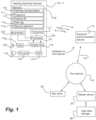
- FIG. 1 schematically illustrates a data management system according to a first embodiment of the invention.
- the settings of the hearing aid are set and adjusted by a hearing care professional according to a prescription.
- the prescription is provided by a hearing healthcare professional and is based on a hearing test, resulting in a so-called audiogram, of the performance of the hearing-impaired user's unaided hearing.
- the prescription is developed to reach a setting where the hearing aid will alleviate a hearing loss by amplifying sound at frequencies in those parts of the audible frequency range where the user suffers a hearing deficit.
- Hearing aids are often provided to a hearing impaired user as a set of binaural hearing aids 10, 11.
- the hearing aid 10, 11 comprises an input transducer 115 or microphone for picking up the acoustic sound and converting it into electric signals.
- the electric signals from the input transducer 115 are amplified in a pre-amp amplifier 116 and led to an Analog-to-Digital converter (ADC) 117 for converting the analog input signal into a digital signal.
- ADC Analog-to-Digital converter
- the digital output signal from the Analog-to-Digital converter 117 is fed to a digital filter 118 adapted for amplifying and conditioning of the processed signal according to a predetermined setting set by a hearing healthcare professional.
- the output from the digital filter 118 is fed to a Digital-to-Analog converter (DAC) 119 for converting the digital processed signal into an analog output signal for reproduction by an output transducer 120 or speaker.
- DAC Digital-to-Analog converter
- Preferably Delta-Sigma-conversion is applied in the Digital-to-Analog Conversion so the electrical output signal is formed as a one-bit digital data stream fed directly to the output transducer 120, i.e. the output converter is driven as a class D amplifier.
- the digital filter 118 may advantageously include a filter bank splitting up the signal into a plurality of filter bands (often in the range of 3-15 bands or channels) for being processed individually and subsequently combined into the output from the digital filter 118.
- a processor 121 monitors and controls the operation of the digital filter 118 according to the settings for alleviating a hearing loss by amplifying sound at frequencies in those parts of the audible frequency range where the user suffers a hearing deficit. These settings are provided by the hearing healthcare professional, and the settings are stored as a data file 110 in a part of a hearing aid memory 123.
- the hearing aid memory 123 is an Electrically Erasable Programmable Read-Only Memory (E2PROM), which is a non-volatile memory, i.e. the type of memory that retains its data when its power supply is switched off. It may be achieved that only authorized personnel may edit settings for alleviating a hearing loss by applying an appropriate data access control.
- E2PROM Electrically Erasable Programmable Read-Only Memory
- the hearing aid memory 123 furthermore includes memory space 111 for storing hearing aid programs or activation codes and parameters for activating one or more hearing aid programs provided as embedded software in the hearing aid 10, 11. As these parameters relate to up and down grading of hearing aid features, it is evident that the access to editing these parameters shall be limited by applying an appropriate data access control.
- the hearing aid memory 123 includes memory space 112 for storing Product ID, which may include manufacturer name, product type and serial number, and furthermore identification of the current firmware version. It is evident that an unauthorized person must not be able to change the manufacturer name, product type and serial number. This may be obtained by coding these data into the chip. Alternatively it may be achieved that only authorized personnel may edit Product ID data by applying an appropriate data access control.
- Product ID may include manufacturer name, product type and serial number, and furthermore identification of the current firmware version. It is evident that an unauthorized person must not be able to change the manufacturer name, product type and serial number. This may be obtained by coding these data into the chip. Alternatively it may be achieved that only authorized personnel may edit Product ID data by applying an appropriate data access control.
- the hearing aid memory 123 includes memory space 113 for storing log data for the hearing aid operation and acoustical environment, and memory space 114 for storing a security element, such as root certificates.
- the hearing aid 10, 11 generates log data automatically, and the data may be read out during a consultancy session by a hearing healthcare professional when adjusting the settings for alleviating a hearing loss, or by uploading to a central server when the manufacturer of the hearing aid 10, 11 prepares for a firmware update.
- the processor 121 is connected to and controls the operation of a transceiver 122.
- the transceiver 122 connects the hearing aid 10, 11 to a personal communication device 13 via a wireless connection 14, such as a per se known wireless communication standard like Bluetooth TM Low Energy or another appropriate protocol.
- Bluetooth TM Low Energy a per se known wireless communication standard like Bluetooth TM Low Energy or another appropriate protocol.
- the benefit of using Bluetooth TM Low Energy is that many different personal communication devices 13 like smartphones, hearing aid streamers, tablet PC's and laptops already support the standard, whereby the hearing aid 10, 11 may be paired with one of these personal communication devices 13 and use the personal communication device 13 as a gateway to the Internet.
- the power consumption for a transceiver 122 based upon Bluetooth TM Low Energy will be acceptable for a hearing aid design.
- the personal communication device 13 is Internet enabled, which means that the personal communication device 13 may access the Internet 16 via a connection 15.
- the connection 15 is preferably a wireless Internet connection, or a cellular data connection (e.g. WCDMA or LTE).
- the personal communication device 13 has the ability to download and launch application software from a remote server on the Internet, e. g. an app store 28.
- the personal communication device 13 will be able to access via the Internet 16 a master server 25 having user data storage 26 for maintaining and storing hearing aid user accounts.
- a non-volatile memory 124 e.g. an E2PROM memory or a flash memory, is used to store general chipset configuration parameters and individual user profile data.
- app is short for "application software” which is a set of one or more programs designed to carry out operations for a specific application. Application software cannot run on itself but is dependent on system software to execute.
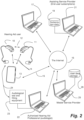
- Fig. 2 shows two hearing aids 10 and 11, and these are preferably provided as a set of binaural hearing aids having an inter-ear communication channel 12, advantageously based on a proprietary communication protocol or the Bluetooth TM Low Energy protocol, which is preferred for the communication between two hearing aids 10 and 11 and the personal communication device 13 - here shown as a smartphone.
- a proprietary communication protocol for the inter-ear communication channel 12 it is possible to optimize the inter-ear communication channel 12 with regard to power consumption, while by using the Bluetooth TM Low Energy protocol for the inter-ear communication channel 12, it is possible to reduce the number of radios required in the hearing aid.
- the two hearing aids 10 and 11 are illustrated as Behind-The-Ear hearing aids having customized ear plugs. However the invention is applicable for any type of hearing aid being able to communicate with the personal communication device 13 via the wireless connection 14.
- the hearing aid user may from a computer 17 via an appropriate Internet connection access the master server 25 having user data storage 26 for maintaining and storing hearing aid user accounts. Accessing user data stored on the master server 25 requires that the hearing aid user has the required access rights.
- Entities distributing the hearing aids from the manufacturing companies to the hearing impaired customer may, as assisting service providers dealing with e.g. end-user subscriptions from a computer 21 via an appropriate Internet connection, access the master server 25 having user data storage 26 for maintaining and storing hearing aid user accounts - or at least relevant parts of the hearing aid user accounts.
- the computer 21 is connected to a data storage 19 containing subscription data for a plurality of hearing impaired customers being customers at the entity.
- the entity may be a specialty store, a factory owned store, a supermarket, an Internet shop, a membership warehouse club, a discount store or the like. Accessing user data stored on the master server 25 requires that the entity representative has proper/appropriate access rights.
- authorized hearing healthcare professional or audiologists may from a computer 22 via an appropriate Internet connection access the master server 25 having user data storage 26 for maintaining and storing hearing aid user accounts. Accessing user data stored on the master server 25 requires that the authorized hearing healthcare professional has the appropriate access rights.
- the authorized hearing aid professionals have audiological test and fitting equipment 23 for measuring and estimating the hearing loss of the customer, and subsequently fitting a set of hearing aids 10, 11 compensating for the unique hearing loss of the customer. As the fitting process shall fulfil the customer's needs, the process will normally take place as an interactive and iterative process. Therefor the audiological test and fitting equipment 23 is adapted for wireless communication directly with hearing aids 10, 11 via a data link 24.
- the data link 24 may be provided by means of a proprietary communication protocol used for the inter-ear communication channel 12, or by means of the Bluetooth TM standard, e.g. according to Bluetooth TM Low Energy protocol, which is preferred for the communication between two hearing aids 10 and 11 and the personal communication device 13.
- step 40 of fig. 4 the user pairs a set of hearing aids 10, 11 to a personal communication device 13, and the pairing procedure according to Bluetooth TM Low Energy protocol is well known.
- the user may advantageously choose to use special hearing aid software running on the personal communication device 13 adapted to control the pairing - as shown in step 41 - and this software may either be embedded in the personal communication device 13 from the factory or be downloaded to the personal communication device 13 from the app store 28.
- the software app includes information about how to access (including the Internet address) the master server 25.
- the set of hearing aids 10, 11 identify themselves based upon information present in the product ID file 112 in the hearing aid memory.
- the software app running on the personal communication device 13 uploads in step 43 these data to the master server 25 based upon access information contained in the software app.
- the master server 25 becomes notified about that pairing has taken place between the set of hearing aids 10, 11 and the personal communication device 13, and the set of hearing aids 10, 11 is identified by manufacturer, hearing aid model, serial number, software or firmware version, and the personal communication device 13 is identified (phone number and/or IP address) as gateway for accessing the set of hearing aids 10, 11.
- the pairing is done by bringing the personal communication device 13 via the launched application software into a searching mode, in which the personal communication device searches for hearing aids 10, 11 in pairing mode.
- a hearing aid 10, 11 is brought into pairing mode for a period of time by switching the hearing aid 10, 11 on.
- the personal communication device 13 may list the hearing aids 10, 11 identified in pairing mode.
- the pairing preferably takes place by requesting the hearing aid 10, 11 to communicate a pairing code in an auditory communication, e.g. as an audio message, to the hearing aid user, and when the user has successfully entered the pairing code via a graphical user interface on the personal communication device 13, the pairing mode has been successfully completed.
- the set of hearing aids 10, 11 includes a second one, the pairing step is repeated for this one, too.
- the hearing aids 10, 11 provide an audio indication to the user when the hearing aid enters the pairing mode, and preferably also when the pairing mode has been successfully completed.
- the master server 25 Upon setting up a wireless connection between at least one hearing aid 10, 11 and the personal communication device 13 under guidance of application software, the master server 25 identifies in the user account the personal communication device 13 as a gateway for the hearing aid 10, 11 to the Internet 16. So far only the set of hearing aids 10, 11 and the personal communication device 13 are identified in an anonymous user account.
- the user creates a user account on the remote server 25 accessible over the Internet from the Internet enabled computer device 17, e.g. a laptop, tablet PC or a smartphone.
- the user enters a URL - preferably provided on the hearing aid sales package - into an appropriate browser window in order to create the account at the master service provider.
- the user may create a new account in step 45 and enter appropriate personal information in step 46.
- the kind of personal information included in the user account will later on be explained with reference to fig. 3 .
- the user is in step 47 invited to set credentials for the account, and these credentials may in one embodiment include a username and a password - both specified by the user. Now the account has been created, the user is allowed to log off, and later on log on again for complementing the account with additional data.
- the user is invited to identify a gateway to his hearing aids 10, 11.
- the personal communication device 13 serves this purpose, and the user may identify the personal communication device 13 by means of e.g. its phone number or IP-address.
- the remote server 25 contacts the personal communication device 13 in order to verify its role as a gateway. This contact may preferably be done via the software app running on the personal communication device 13, and when the user has verified the gateway data, the personal communication device 13 starts to upload data about the hearing aids 10, 11, such as serial number, software version and information about special hardware to the server 25. Normally the hearing aids 10, 11 have been fitted in order to alleviate the hearing loss of the hearing aid user, and as a part of the account set-up, the personal communication device 13 reads data from the hearing aids 10, 11, and in step 49 transfers data to the remote server 25 for storing settings for alleviating the hearing loss in conjunction with the user account comprising of a data set consisting of data fields 31-39.
- the remote server 25 when the hearing aids 10, 11 are online, will via the personal communication device 13 compare the settings for alleviating the hearing loss stored in the hearing aids 10, 11 and in the user data storage 26, and keep these settings synchronized.
- these data will be kept updated no matter whether the hearing aids 10, 11 have been updated in an off-line fitting process, or whether a new fine-tuning has been performed orchestrated by the remote server 25.
- the user is allowed to log off, and later on log on again for editing existing data in the account or for adding further data.
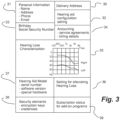
- the data set in a user account includes a personal information data field 31, which typically is the first data field filled out by the user when creating an account.
- the personal information includes name, address and additional contact data like phone number and e-mail address.
- a delivery address data field 30 defines the delivery address for hardware to be delivered to the hearing aid user. This hardware may include hearing aids returned from service, replacement hearing aids, batteries, wax guards, hearing aid drying boxes and other items ordered from the master service provider or the assisting service provider.
- the delivery address is specified by the owner of the account and may be identical to the home address identified in the personal information data field 31 or may identify a preferred supermarket in case the account is linked to a membership in a warehouse club.
- a social security data field 33 the user may enter his birthday information and social security number, which may be used by the social authorities in case these are committed to reimburse a part of the sales prize or subscription fees.
- Data settings for configuring a hearing aid 10, 11 may be stored in configuration data field 32. These data setting may be loaded into the non-volatile memory 124 in the hearing aid 10, 11 via the personal communication device 13 acting as gateway between the server 25 and the hearing aids 10, 11.
- the master service provider, the assisting service provider, and the authorized hearing aid professional may enter respective service agreements and the user may enter billing details, such as that an invoice is preferred or that an amount to be drawn from a specified credit card is preferred.
- the service agreements may refer to a specified fitting session, a hearing test, purchase of a specified set of hearing aids, subscription to a specified set of hearing aids, upgrade of an existing set of hearing aids, batteries, or replacement parts.
- the user has the right to approve the service agreements and enter billing details, while the service providers may enter service agreement details as price and conditions supported by one or more documents and use entered billing details for their own accounting.
- the accounting data field 34 will only contain one service agreement, and if several service agreements are initiated, supplementing accounting data fields 34 will be created. Only parties to a service agreement do have Data Retrieval Rights to these data fields 34.
- the authorized hearing aid professional may store the hearing loss characterization in a dedicated Hearing Loss Characterization data field 35, whereby the authorized hearing aid professional or another authorized hearing aid professional on a later point of time may assess changes in the hearing capability of the client.
- the authorized hearing aid professional sets the hearing aid compensation profile parameters in an interactive dialogue with the client by using the audiological test and fitting equipment 23 communicating directly with hearing aids 10, 11 via the wireless data link 24.
- the settings are stored in the data file 110 defining the hearing compensation profile in the hearing aid memory 123 in each of the hearing aids 10, 11.
- the hearing aid 10, 11 identifies a gateway to the Internet 16 via the personal communication device 13, it seeks to establish a secure connection to the master server 25 for transferring these data to the data field 36 for the settings of the hearing compensation profile for each of the hearing aids 10, 11.
- the hearing aids are programmed to automatically place a copy of settings of the hearing compensation profile for each of the hearing aids 10, 11 in an associated user account when the settings have been updated off-line (not using the personal communication device 13 as gateway) by means of fitting equipment 23.
- the data field 36 in which the hearing compensation profiles are stored, includes historical data for the hearing compensation profile settings.
- the user may request a previous setting if he for some reasons finds the current setting problematic in a specific sound environment or situation.
- the request of re-importing a previous setting may be initiated from an app on the personal communication device 13 acting as gateway.
- the master server 25 will be able to set up a secure connection to the hearing aids 10, 11 for loading settings of the hearing compensation profile into one or more of the hearing aids 10, 11.
- the trigger for doing such a push of settings may as mentioned be that the user has requested a previously used setting, or that the user has received one or more replacement hearing aids directly from factory, and that these new hearing aids once these are connected to the gateway shall be equipped with appropriate programs and equipped with the appropriate hearing compensation profile settings. This will make a replacement operation easier for the client, as the new hearing aids 10, 11 can be delivered by a postal or shipping company and the preparation and personalization of the hearing aids 10, 11 takes place online using a personal communication device 13 as a gateway.
- the authorized hearing aid professional has via his login Data Update Rights to the Hearing Loss Characterization data field 35 and the hearing compensation profile data field 36, while the owner of the account has Data Retrieval Rights to the Hearing Loss Characterization data field 35.
- the hearing aids 10, 11 are programmed to automatically upload identification details for the hearing aid to the master server 25 when the hearing aids 10, 11 are linked to a user account by means of the gateway formed by the personal communication device 13.
- These product ID data are read from the product ID file 112 in the hearing aid memory 123 and uploaded via the gateway and the Internet to the master server 25 and into data field 37 of the user account.
- a data field 38 containing security elements as credentials for access to one or more data fields in the hearing aid user account and secure keys for establishing a secure connection between the master server 25 and the hearing aids 10, 11.
- the remote server 25 is managing user accounts as explained with reference to fig. 3 , and for tracking the current subscription status for add-on features for the hearing aids 10, 11, and this subscription status is recorded and maintained in a data field 39.
- the term add-on feature or plug-in feature refers to a software component that adds a specific feature to an existing software application. When an application supports plug-ins, it enables customization. An example on such an add-on feature could be a program for tinnitus alleviation. Other examples could be hearing test programs for testing the hearing aid users hearing loss or training programs for improving speech intelligibility or to improve spatial hearing (ability to differentiate Inter-aural Level Differences (ILD)).
- the hearing aid user may activate or download the test or training programs, and the development or progress may be automatically up-loaded to the user account on the server 25, and a remote hearing healthcare professional may as a part of the subscription monitor the test and training progress via the user account.
- the hearing aid service system discussed with reference to fig. 1 and 2 pushes an offer relating to a new hearing aid feature to the personal communication device 13.
- This push or advertisement in step 320 in fig. 7 may be triggered by a market campaign at the service provider for a new feature or a feature valued by hearing aid users being in a similar life situation or environmental situation as the group of users targeted by the service provider pushing the offer.
- Fig. 6 shows an embodiment for the hearing aid control application software interface used in the Internet enabled personal communication device 13 according to the invention.
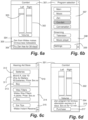
- the hearing aid control application software is illustrated in five schematic screenshots shown in fig. 6a - 6e for a touch screen display.
- the first screenshot shown in fig. 6a illustrates a so-called entry screen which is entered when the app is opened.
- the entry screen comprises a header 301 indicating the current operation between the hearing aids 10, 11 and the communication device 13.
- the header 301 indicates that the "comfort" program for the hearing aids 10, 11 is activated.
- a control area 302 for setting the volume for the sound output by the hearing aids 10, 11.
- the two columns refer to the left and the right hearing aid 10, 11, respectively.
- Each of the two columns has a bitmap level indicator 303, which can be operated individually by dragging the bitmap level indicator 303 by means of one finger or together by having contact to both bitmap level indicators 303 simultaneously.
- the personal communication device 13 advertises in step 321 the offer pushed from the server 25 in a dedicated service display area 304 positioned below the control area 302.
- the service provider may offer special services or hints to the hearing aid user.
- the dedicated service display area 304 may include an offer description 305 - here the user is offered a Zen TM program for tinnitus alleviation, and a selection element 306 for accepting a free trial.
- the selection element 306 will provide access to terms and conditions, and an assisted set-up of the Zen TM program.
- the second screenshot shown in fig. 6b illustrates a so-called program selection screen, in which the user may select between programs and audio sources available. This is indicated in the header 301.
- the user may e.g. enter the program selection screen from the entry screen by swiping his thumb across the display from left to right.
- Selectable programs are clustered in a program area 307
- selectable audio streaming sources are clustered in an audio streaming source area 308, and further settings are available in a setting area 309. Selections are made by touching one of the labelled controls. If one of the programs or streaming sources is selected or if the return area in the lower right corner is touched, the app entry screen shown in fig. 6a with the header 301 will reflect the selected program or streaming source.
- the third screenshot shown in fig. 6c illustrates a so-called hearing aid store screen, which may be entered by the user from the program selection screen by swiping his thumb across the display from left to right.
- a header 301 indicates that the user has entered the hearing aid store, and the products are clustered into a battery category, a wax filter category, and ear tip category, and further categories may be available by scrolling out of the screen in downwards direction.
- Each of the product categories (batteries, wax filters, ear tips etc.) has a dedicated product display area 310, 314 and 315 including a product offer description 311 in which the user is offered a priority sale offer for the category.
- the hearing aid store may offer mechanical replacement parts, add-on programs for the operation of the hearing aid, and test and training programs for use with the hearing aid.
- step 322 fig. 7
- the processor of the communication device 13 checks in step 323 whether the offer period has expired - if not, the communication device 13 continues to display the offer in the dedicated service display area 304. If the offer period has expired, the communication device 13 notifies the remote server 25 about this, and the server 25 may in step 320 push a new offer to be displayed in the dedicated service display area 304 of the communication device 13.
- the communication device 13 in step 322 detected that the user had accepted the offer by touching the selection element 306, the communication device 13 seeks a confirmation from the hearing aid user, and when the acceptance of the offer has been confirmed, the communication device 13 notifies the server 25 about the purchase order.
- the server 25 managing a plurality of hearing aid user accounts updates the subscription status for the add-on program offered to and accepted by the hearing aid user.
- the remote server 25 creates a subscription status change event for the accepted add-on program.
- a status change event will update the user account in step 324, and cause billing - if required - of the user for the new service, pushing a new offer in step 320 to be displayed in the dedicated service display area 304 of the communication device 13, activating or enabling in step 325 the temporary add-on program in the one or more hearing aid 10, 11 associated with the user account, updating the user interface of the app on the personal communication device 13 in step 326 in order to support the new add-on program, and starting of a timed subscription period in step 327.
- An expiry date for a timed free trial will be set in the server 25 similarly to an expiry date set for a subscription period without automatically renewal - normally just shorter. Reaching the expiry date will cause a status change event based upon the calendar data.
- an alert warning the hearing aid user about the approaching expiry date will be set, too.
- the remote server 25 sends a status change instruction to the hearing aid 10, 11 when the subscription status change event occurs for enabling or disabling the add-on program according to the change of the subscription status by using the personal communication device 13 as gateway.
- the processor 121 of the hearing aid 10, 11 receives the status change instruction, interprets the instructions and sets appropriate flags or stores required software programs in the non-volatile memory 124 of the hearing aid 10, 11, and/or in an appropriate memory of the personal communication unit 13 for providing the accepted add-on program functionality for the hearing aid user.
- the activation of the add-on program may also in step 326 include updating the user interface provided by the app shown in fig. 6a-e .
- the Zen TM program control is shown in the program area 307.
- the Zen TM program control will disappear from the program area 307 as a part of the disabling process.
- the hearing aid user will be able to access settings for controlling his preferences in terms of pitch, tempo and volume.
- the Zen TM program includes several Zen styles in order to avoid that the music program become monotone and annoying.
- the server 25 monitors in step 328 the status of the free trial period, and when the user has had the possibility to experience the add-on program for some time, the personal communication device 13 advertises in step 329 an offer to convert the free trial of the Zen TM program to a subscription on the same. For one month period of free trial, the converting offer may be advertised one week prior to expiry.
- the offer has been pushed from the server 25 and is displayed in the dedicated service display area 304 positioned below the control area 302 as shown in fig. 6d .
- the communication device 13 examines in step 330 whether the user accepts the displayed offer. If the user has not accepted the offer yet, the processor of the communication device 13 checks in step 332 whether the subscription period has expired - if not, the communication device 13 continues in step 329 to display the offer in the dedicated service display area 304. If the offer period in step 332 has expired, the communication device 13 notifies the remote server 25 about this, and the server 25 disables in step 333 the temporary add-on program in the one or more hearing aids 10, 11 associated with the user account, updating the user interface of the app on the personal communication device 13 by removing the controls for the temporary add-on program.
- a new offer may in step 320 be displayed in the dedicated service display area 304 of the communication device 13.
- step 330 detects that the user has accepted the displayed offer, this is communicated to the remote server 25, and in step 331, the server 25 detects, based on the user input to the communication device 13, whether the acceptance of the add-on program is directed towards a subscription that has to be renewed periodically, or a permanent purchase of the add-on program associated with the present set of hearing aids 10, 11. If a permanent purchase has been accepted, the server 25 enables the add-on program permanently in the hearing aids 10, 11 without setting expiry dates or counter, bills the user for the change of status for the add-on program, and prepares for a new offer to be displayed in step 320.
- the server 25 If a subscription has been accepted, the server 25 enables the add-on program in the hearing aids 10, 11 and sets an expiry date, bills the user for the change of status for the add-on program, and starts a timed period in step 327. Furthermore the server 25 prepares for a new offer to be displayed in step 320.
- the processor 121 e.g. upon reception of a notification that the subscription on the add-on program is going to expire in step 229, starts a counter in the hearing aid 10, 11 counting the number of switch off events since last connection to said remote server 25, and if the number in the counter exceeds a predefined threshold, the processor 121 disables said at least one add-on program.
- the fourth screenshot shown in fig. 6d illustrates the entry screen also shown in fig. 6a .
- the dedicated service display area 304 provides a sale offer to the hearing aid user, where the offer is based upon a 30 days free trial for the Zen TM program for tinnitus alleviation being close to expiration - only four days are left for the free trial period.
- the user accepts the sale offer, the fifth screenshot shown in fig. 6e is entered, and an extended explanation of the sales offer in shown in an item area 316 of the shopping basket.
- the user is here offered three controls - a first control 317 for cancelling the transaction, a second control 318 for continuing shopping by going back to the hearing aid store for adding further items to the shopping basket, and a third control 319 for completing the purchase and placing the order.
- An add-on program or a plug-in is a software component that adds a specific feature to an existing software application.
- the device software supports plug-ins, it enables customization.
- Plug-ins are well known from computing where they are used for adding new features such as hardware drivers, or the ability to utilize a new file type such as a new multimedia format.
- add-on programs or plug-ins may serve multiple purposes, e.g. to enable third-party developers to create abilities which extend an application, or to support easily adding new features or temporary features.
- This may enable customization of hearing aids, new distribution concepts for hearing aids where the hearing aid user subscribes to or leases a hearing service including periodical circulation of the hearing aids - the hearing aid user may then have access to two sets of hearing aids - one set in use and one set in service with the sets periodically swapped e.g. every second month.
- Zen TM program is a music program providing tinnitus relief.
- the music program is embedded into the hearing aids 10, 11, and may be enabled temporarily for a free trial period, for a subscription period for e.g. one year, or permanently for the lifetime of the hearing aid or for the hearing aid service.
- the music program helps tinnitus sufferers relax and makes tinnitus less noticeable.
- the music program is inspired by the relaxing effect of certain types of music, and is in the preferred embodiment based on what is known as fractal technology, by playing random, chime-like tones.
- the hearing care professional has been adjusting the Zen TM program according to the user preferences in terms of pitch, tempo and volume.
- Zen TM When activating Zen TM program, some parameters have to be set. As tinnitus is a pathological state, and the concept Zen TM requires knowledge about the tinnitus tone heard by the hearing aid user. For this purpose, the app installing the music program controls a tone generator allowing the hearing aid user to slowly sweep through the audible spectrum and identify the tone best fitting the tinnitus tone.
- an add-on program includes noise reduction of one or more specific sounds frequently occurring in the acoustic environment specific for the hearing aid user.
- This kind of characteristic sound may include traffic noise from e.g. trains, noise from air conditions, noise from wind mills, barking dogs etc.
- the noise reduction algorithm is thereby tailored to solve a specific noise issue specific for a group of people.
- the hearing aid user may via a free trial experience the effect of the add-on program and he may verify that the benefit he experiences justifies the additional cost when purchasing the add-on program.
Landscapes
- Engineering & Computer Science (AREA)
- Signal Processing (AREA)
- Computer Networks & Wireless Communication (AREA)
- Otolaryngology (AREA)
- Health & Medical Sciences (AREA)
- General Health & Medical Sciences (AREA)
- Neurosurgery (AREA)
- Physics & Mathematics (AREA)
- Acoustics & Sound (AREA)
- Computer Security & Cryptography (AREA)
- Computer Hardware Design (AREA)
- Computing Systems (AREA)
- General Engineering & Computer Science (AREA)
- Telephonic Communication Services (AREA)
Description
- The present invention relates to hearing aids. The invention, more particularly, relates to a method for managing add-on programs for a hearing aid. The invention also relates to enabling and add-on programs in a hearing aid according to subscription.
- A hearing aid is an electroacoustic device typically worn in or behind the ear and being designed to amplify sound for the wearer, usually with the aim of making speech more intelligible, and to correct impaired hearing as measured by audiometry. In some countries, hearing aids are considered medical devices, and a hearing healthcare professional or an audiologist identifies the customer needs during a consultancy session and writes data into the hearing aid when adjusting the settings for alleviating a hearing loss.
- Recently, hearing aids with wireless connectivity based on an open telecom protocol has reached market. Binaural hearing aids based on proprietary communication protocols have been on the market for decades. The Bluetooth connectivity is the most recent innovation in wireless interfacing for hearing instruments to audio sources such as TV streamers or mobile phones. Even though this is a major achievement, the customization of the hearing aids is still provided by the hearing healthcare professional, who provides a hearing aid with the configuration he recommends for the user, adds one or more add-on programs for the user and sets acclimatization when introducing new hearing system, e.g. like a transposer, for the customer. This means that the user has to take a lot of important decisions about the customization of a new hearing aid during the consultation with the hearing healthcare professional, and this will therefor often become an iterative procedure with multiple consultations.
- Prior art examples in this field are:
WO 2007/098605 A1 , which discloses an improved hearing aid wherein the hearing aid includes a plurality of modules, each of the modules having the necessary firmware, hardware and software for enhancing at least one characteristic of the hearing aid, and wherein the modules can be productively activated and deactivated remotely such that upon activation, operating parameters associated with the particular model can be adjusted. The hearing aid thus reduces the number of models required permitting the specific tailoring of the hearing aid to the needs and requirements of the user. -
US 2013/308802 A1 , which discloses systems, structures, and methods are provided to fit, program, or upgrade a hearing aid system to a patient. One embodiment includes the use of a mobile device to interact with the hearing aid system through a short-range network. The mobile device is also adapted to communicate with a server through a long-range wireless network. The server may reside on the Internet. -
US 8 767 986 B1 , which discloses a hearing aid distribution and service plan based on periodic subscription serves a wide range of hearing aid users with various needs for functionality and considerations for financial or value. One or more codes are provided for each hearing aid to allow for fitting by an authorized professional and enablement of one or more specified functions for a specified period. In various examples, the present hearing aid includes hearing assistance circuitry with a programming lock configured to receive an unlocking signal and a locking signal. In various examples, a hearing aid fitting device for communicating with a hearing aid includes a user interface configured to receive a lock code enabling a lock functionality that allows the hearing aid to be unlocked for fitting and locked for preventing from the fitting. The present application includes variations of a method for subscription-based hearing aid distribution. -
WO 2016/078709 A1 , which discloses a data system for handling user data for a hearing aid user and at least one hearing aid having a memory for storing personal settings for alleviating a hearing loss for the hearing aid user includes a remote server accessible by means of an Internet enabled computer device. A personal communication device is Internet enabled and is able to act as a gateway to the Internet for the at least one hearing aid. The user may create a user account on the remote server, enter personal information into the user account and store the entered personal information on the remote server, and enter the gateway information to the user account. The personal communication device and the at least one hearing aid are provided with respective transceivers for establishing a wireless connection under guidance of said application software. The least one hearing aid uploads the personal settings for alleviating the hearing loss via the gateway to the remote server for storing in the user account. - The purpose of the invention is to provide a hearing aid managing system assisting the hearing aid user in customizing his hearing aid with add-on services in a way so the user pays for the services being valuable for him and may pass on services held less valuable to him.
- This purpose is according to the invention achieved by a hearing aid service system comprising an Internet enabled personal communication device and at least one hearing aid provided with respective transceivers for establishing a wireless connection, whereby the personal communication device becomes a gateway for said at least one hearing aid to a remote server accessible over the Internet. The at least one hearing aid includes a processor controlling the operation of the hearing aid, and a memory containing program code for at least one add-on program for the operation of the hearing aid. The remote server is managing user accounts for a plurality of hearing aid users, including managing subscription status for said at least one add-on program for the operation of said at least one hearing aid. The remote server creates a subscription status change event for the account upon change of the subscription status for said at least one add-on program. Upon the occurrence of the subscription status change event, the remote server sends a status change instruction to said at least one hearing aid for enabling or disabling one or more of said at least one add-on programs according to the change of the subscription status by using the personal communication device as gateway. The hearing aid receives the status change instruction from the remote server via the personal communication device acting as a gateway and enables or disables one or more of said at least one add-on programs according to the received status change instruction. The personal communication device presents a hearing aid control application software interface to the user and displays on the hearing aid control application software interface a notification for warning the user that the subscription on said at least one add-on program is approaching expiry. Hereby, the user may have an opportunity to try an add-on program for a predetermined period of time as a free trial, and if he regards the test period as successful, he can easily start a subscription based on the add-on program and as easily discontinue the subscription again without having to show up in a traditional consultation at a hearing healthcare professional.
- As an example, there is provided a hearing aid comprising a transceiver for establishing a wireless connection with a personal communication device becoming a gateway to a remote server accessible over the Internet. Furthermore the hearing aid comprises a processor controlling the operation of the hearing aid, and a memory containing program code for at least one add-on program for the operation of the hearing aid. The processor is via the transceiver adapted to receive a status change instruction from the remote server using the personal communication device as gateway and enables or disables at least one add-on program according to the received status change instruction.
- According to a second aspect of the invention there is provided a method for managing software programs in at least one hearing aid of a hearing aid service system according to the first aspect. Furthermore, the method comprises steps of managing, in said remote server, subscription status for at least one add-on program of said at least one hearing aid, creating, in said remote server, a subscription status change event for the account upon change of the subscription status for said at least one add-on programs, sending a status change instruction from the remote server using the personal communication device as gateway to said hearing aid upon the occurrence of the subscription status change event, enabling or disabling, in the hearing aid, one or more of said at least one add-on programs according to the status change instruction received from the remote server, presenting a hearing aid control application software interface to the user, and displaying on the hearing aid control application software interface a notification for warning the user that a subscription on said at least one add-on program is approaching expiry.
- As an example, there is provided a computer-readable storage medium having computer-executable instructions, which, when executed in an Internet enabled personal communication device is acting as a gateway between at least one hearing aid and a remote server accessible over the Internet, being adapted to receive a status change instruction from the remote server upon the occurrence of the subscription status change event, and to forward instructions to said at least one hearing aid for enabling or disabling one or more of said at least one add-on programs according to the change of the subscription status.
- As an example, there is provided an Internet enabled personal communication device for establishing a wireless connection to at least one hearing aid, and thereby becoming a gateway for said at least one hearing aid to a remote server accessible over the Internet. The personal communication device is adapted for displaying on a hearing aid control application software interface a notification for warning the user that the subscription on said at least one add-on program is going to expire.
- According to a third aspect of the invention there is provided a server adapted to communicate with said at least one hearing aid of a hearing aid service system according to the first aspect via the Internet using a personal communication device as gateway. The server is adapted to manage user accounts for a plurality of hearing aid users, and this includes managing subscription status for at least one add-on program for the operation of said at least one hearing aid. The remote server creates a subscription status change event for the account upon change of the subscription status for said at least one add-on programs, and upon the occurrence of the subscription status change event, the remote server sends a status change instruction to said at least
one hearing aid for enabling or disabling one or more of said at least one add-on programs according to the change of the subscription status by using the personal communication device as gateway. The remote server (25) sends a notification to the personal communication device (13) for warning the user that a subscription on said at least one add-on program is approaching expiry. - The invention will be described in further detail with reference to preferred aspects and the accompanying drawing, in which:
-
fig. 1 illustrates schematically a data management system according to a first embodiment of the invention; -
fig. 2 illustrates schematically a data management system according to a second embodiment of the invention; -
fig. 3 illustrates schematically the data structure of a user account handled in the data management system according to an embodiment of the invention; -
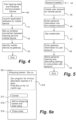
fig. 4 illustrates a flow chart for the pairing of a hearing aid and the personal communication device according to one aspect of the invention; -
fig. 5 illustrates a flow chart for the creation of a user account according to one aspect of the invention; -
fig. 6 illustrates an embodiment for the hearing aid control application software interface offering priority items for sale according to the invention; and -
fig. 7 illustrates a flow chart illustrating the method for offering add-on programs for sale in a hearing aid service system. - Reference is made to
fig. 1 , which schematically illustrates a data management system according to a first embodiment of the invention. Prior to use, the settings of the hearing aid are set and adjusted by a hearing care professional according to a prescription. The prescription is provided by a hearing healthcare professional and is based on a hearing test, resulting in a so-called audiogram, of the performance of the hearing-impaired user's unaided hearing. The prescription is developed to reach a setting where the hearing aid will alleviate a hearing loss by amplifying sound at frequencies in those parts of the audible frequency range where the user suffers a hearing deficit. - Hearing aids are often provided to a hearing impaired user as a set of
binaural hearing aids hearing aid input transducer 115 or microphone for picking up the acoustic sound and converting it into electric signals. The electric signals from theinput transducer 115 are amplified in apre-amp amplifier 116 and led to an Analog-to-Digital converter (ADC) 117 for converting the analog input signal into a digital signal. The digital output signal from the Analog-to-Digital converter 117 is fed to adigital filter 118 adapted for amplifying and conditioning of the processed signal according to a predetermined setting set by a hearing healthcare professional. The output from thedigital filter 118 is fed to a Digital-to-Analog converter (DAC) 119 for converting the digital processed signal into an analog output signal for reproduction by anoutput transducer 120 or speaker. Preferably Delta-Sigma-conversion is applied in the Digital-to-Analog Conversion so the electrical output signal is formed as a one-bit digital data stream fed directly to theoutput transducer 120, i.e. the output converter is driven as a class D amplifier. - The
digital filter 118 may advantageously include a filter bank splitting up the signal into a plurality of filter bands (often in the range of 3-15 bands or channels) for being processed individually and subsequently combined into the output from thedigital filter 118. Aprocessor 121 monitors and controls the operation of thedigital filter 118 according to the settings for alleviating a hearing loss by amplifying sound at frequencies in those parts of the audible frequency range where the user suffers a hearing deficit. These settings are provided by the hearing healthcare professional, and the settings are stored as adata file 110 in a part of a hearing aid memory 123. In an embodiment, the hearing aid memory 123 is an Electrically Erasable Programmable Read-Only Memory (E2PROM), which is a non-volatile memory, i.e. the type of memory that retains its data when its power supply is switched off. It may be achieved that only authorized personnel may edit settings for alleviating a hearing loss by applying an appropriate data access control. - The hearing aid memory 123 furthermore includes
memory space 111 for storing hearing aid programs or activation codes and parameters for activating one or more hearing aid programs provided as embedded software in thehearing aid - The hearing aid memory 123 includes
memory space 112 for storing Product ID, which may include manufacturer name, product type and serial number, and furthermore identification of the current firmware version. It is evident that an unauthorized person must not be able to change the manufacturer name, product type and serial number. This may be obtained by coding these data into the chip. Alternatively it may be achieved that only authorized personnel may edit Product ID data by applying an appropriate data access control. - Finally the hearing aid memory 123 includes
memory space 113 for storing log data for the hearing aid operation and acoustical environment, andmemory space 114 for storing a security element, such as root certificates. Thehearing aid hearing aid - The
processor 121 is connected to and controls the operation of atransceiver 122. Thetransceiver 122 connects thehearing aid personal communication device 13 via awireless connection 14, such as a per se known wireless communication standard like Bluetooth™ Low Energy or another appropriate protocol. The benefit of using Bluetooth™ Low Energy is that many differentpersonal communication devices 13 like smartphones, hearing aid streamers, tablet PC's and laptops already support the standard, whereby thehearing aid personal communication devices 13 and use thepersonal communication device 13 as a gateway to the Internet. On the same time the power consumption for atransceiver 122 based upon Bluetooth™ Low Energy will be acceptable for a hearing aid design. - The
personal communication device 13 according to the invention is Internet enabled, which means that thepersonal communication device 13 may access theInternet 16 via aconnection 15. Theconnection 15 is preferably a wireless Internet connection, or a cellular data connection (e.g. WCDMA or LTE). Advantageously, thepersonal communication device 13 has the ability to download and launch application software from a remote server on the Internet, e. g. anapp store 28. Furthermore, thepersonal communication device 13 will be able to access via the Internet 16 amaster server 25 havinguser data storage 26 for maintaining and storing hearing aid user accounts. - A
non-volatile memory 124, e.g. an E2PROM memory or a flash memory, is used to store general chipset configuration parameters and individual user profile data. - The term "app" is short for "application software" which is a set of one or more programs designed to carry out operations for a specific application. Application software cannot run on itself but is dependent on system software to execute.
-
Fig. 2 shows twohearing aids inter-ear communication channel 12, advantageously based on a proprietary communication protocol or the Bluetooth™ Low Energy protocol, which is preferred for the communication between twohearing aids inter-ear communication channel 12, it is possible to optimize theinter-ear communication channel 12 with regard to power consumption, while by using the Bluetooth™ Low Energy protocol for theinter-ear communication channel 12, it is possible to reduce the number of radios required in the hearing aid. The twohearing aids personal communication device 13 via thewireless connection 14. - Furthermore, the hearing aid user may from a
computer 17 via an appropriate Internet connection access themaster server 25 havinguser data storage 26 for maintaining and storing hearing aid user accounts. Accessing user data stored on themaster server 25 requires that the hearing aid user has the required access rights. - Entities distributing the hearing aids from the manufacturing companies to the hearing impaired customer may, as assisting service providers dealing with e.g. end-user subscriptions from a
computer 21 via an appropriate Internet connection, access themaster server 25 havinguser data storage 26 for maintaining and storing hearing aid user accounts - or at least relevant parts of the hearing aid user accounts. Thecomputer 21 is connected to adata storage 19 containing subscription data for a plurality of hearing impaired customers being customers at the entity. The entity may be a specialty store, a factory owned store, a supermarket, an Internet shop, a membership warehouse club, a discount store or the like. Accessing user data stored on themaster server 25 requires that the entity representative has proper/appropriate access rights. - Finally, authorized hearing healthcare professional or audiologists may from a
computer 22 via an appropriate Internet connection access themaster server 25 havinguser data storage 26 for maintaining and storing hearing aid user accounts. Accessing user data stored on themaster server 25 requires that the authorized hearing healthcare professional has the appropriate access rights. The authorized hearing aid professionals have audiological test andfitting equipment 23 for measuring and estimating the hearing loss of the customer, and subsequently fitting a set of hearingaids fitting equipment 23 is adapted for wireless communication directly with hearingaids data link 24. The data link 24 may be provided by means of a proprietary communication protocol used for theinter-ear communication channel 12, or by means of the Bluetooth™ standard, e.g. according to Bluetooth™ Low Energy protocol, which is preferred for the communication between twohearing aids personal communication device 13. - In
step 40 offig. 4 , the user pairs a set of hearingaids personal communication device 13, and the pairing procedure according to Bluetooth™ Low Energy protocol is well known. However, the user may advantageously choose to use special hearing aid software running on thepersonal communication device 13 adapted to control the pairing - as shown in step 41 - and this software may either be embedded in thepersonal communication device 13 from the factory or be downloaded to thepersonal communication device 13 from theapp store 28. The software app includes information about how to access (including the Internet address) themaster server 25. Upon pairing instep 42 of the set of hearingaids personal communication device 13, the set of hearingaids product ID file 112 in the hearing aid memory. The software app running on thepersonal communication device 13 uploads instep 43 these data to themaster server 25 based upon access information contained in the software app. Hereby themaster server 25 becomes notified about that pairing has taken place between the set of hearingaids personal communication device 13, and the set of hearingaids personal communication device 13 is identified (phone number and/or IP address) as gateway for accessing the set of hearingaids - Preferably, the pairing is done by bringing the
personal communication device 13 via the launched application software into a searching mode, in which the personal communication device searches for hearingaids hearing aid hearing aid personal communication device 13 may list the hearing aids 10, 11 identified in pairing mode. Then the pairing preferably takes place by requesting thehearing aid personal communication device 13, the pairing mode has been successfully completed. If the set of hearingaids - Upon setting up a wireless connection between at least one
hearing aid personal communication device 13 under guidance of application software, themaster server 25 identifies in the user account thepersonal communication device 13 as a gateway for thehearing aid Internet 16. So far only the set of hearingaids personal communication device 13 are identified in an anonymous user account. - Referring to
fig. 5 , it shall be explained how the user completes the account set-up. Starting atstep 44, the user creates a user account on theremote server 25 accessible over the Internet from the Internet enabledcomputer device 17, e.g. a laptop, tablet PC or a smartphone. The user enters a URL - preferably provided on the hearing aid sales package - into an appropriate browser window in order to create the account at the master service provider. In the web page opened, the user may create a new account instep 45 and enter appropriate personal information instep 46. The kind of personal information included in the user account will later on be explained with reference tofig. 3 . As a part of the account set up, the user is instep 47 invited to set credentials for the account, and these credentials may in one embodiment include a username and a password - both specified by the user. Now the account has been created, the user is allowed to log off, and later on log on again for complementing the account with additional data. During the account setup, instep 48 the user is invited to identify a gateway to his hearing aids 10, 11. Thepersonal communication device 13 serves this purpose, and the user may identify thepersonal communication device 13 by means of e.g. its phone number or IP-address. - Once the
personal communication device 13 has been identified as a gateway, theremote server 25 contacts thepersonal communication device 13 in order to verify its role as a gateway. This contact may preferably be done via the software app running on thepersonal communication device 13, and when the user has verified the gateway data, thepersonal communication device 13 starts to upload data about the hearing aids 10, 11, such as serial number, software version and information about special hardware to theserver 25. Normally the hearing aids 10, 11 have been fitted in order to alleviate the hearing loss of the hearing aid user, and as a part of the account set-up, thepersonal communication device 13 reads data from the hearing aids 10, 11, and instep 49 transfers data to theremote server 25 for storing settings for alleviating the hearing loss in conjunction with the user account comprising of a data set consisting of data fields 31-39. - Hereafter the
remote server 25, when the hearing aids 10, 11 are online, will via thepersonal communication device 13 compare the settings for alleviating the hearing loss stored in the hearing aids 10, 11 and in theuser data storage 26, and keep these settings synchronized. Hereby these data will be kept updated no matter whether the hearing aids 10, 11 have been updated in an off-line fitting process, or whether a new fine-tuning has been performed orchestrated by the remote server 25.The user is allowed to log off, and later on log on again for editing existing data in the account or for adding further data. - The data set in a user account includes a personal
information data field 31, which typically is the first data field filled out by the user when creating an account. The personal information includes name, address and additional contact data like phone number and e-mail address. A delivery address data field 30 defines the delivery address for hardware to be delivered to the hearing aid user. This hardware may include hearing aids returned from service, replacement hearing aids, batteries, wax guards, hearing aid drying boxes and other items ordered from the master service provider or the assisting service provider. The delivery address is specified by the owner of the account and may be identical to the home address identified in the personalinformation data field 31 or may identify a preferred supermarket in case the account is linked to a membership in a warehouse club. - In a social
security data field 33, the user may enter his birthday information and social security number, which may be used by the social authorities in case these are committed to reimburse a part of the sales prize or subscription fees. - Data settings for configuring a
hearing aid configuration data field 32. These data setting may be loaded into thenon-volatile memory 124 in thehearing aid personal communication device 13 acting as gateway between theserver 25 and the hearing aids 10, 11. - In an
accounting data field 34, the master service provider, the assisting service provider, and the authorized hearing aid professional may enter respective service agreements and the user may enter billing details, such as that an invoice is preferred or that an amount to be drawn from a specified credit card is preferred. The service agreements may refer to a specified fitting session, a hearing test, purchase of a specified set of hearing aids, subscription to a specified set of hearing aids, upgrade of an existing set of hearing aids, batteries, or replacement parts. The user has the right to approve the service agreements and enter billing details, while the service providers may enter service agreement details as price and conditions supported by one or more documents and use entered billing details for their own accounting. Theaccounting data field 34 will only contain one service agreement, and if several service agreements are initiated, supplementing accounting data fields 34 will be created. Only parties to a service agreement do have Data Retrieval Rights to these data fields 34. - When the authorized hearing healthcare professional or audiologist tests the hearing of a client, he obtains the results in an audiogram, which is a graph showing the hearing loss measured in decibels for standardized frequencies in Hertz. The threshold of hearing is plotted relative to a standardized curve that represents "normal" hearing, in dB (HL). According to the invention the authorized hearing aid professional may store the hearing loss characterization in a dedicated Hearing Loss
Characterization data field 35, whereby the authorized hearing aid professional or another authorized hearing aid professional on a later point of time may assess changes in the hearing capability of the client. - When the authorized hearing aid professional has determined the hearing loss of his client and an appropriate hearing aid has been chosen, the authorized hearing aid professional sets the hearing aid compensation profile parameters in an interactive dialogue with the client by using the audiological test and
fitting equipment 23 communicating directly with hearingaids wireless data link 24. Once the fitting has been completed, the settings are stored in the data file 110 defining the hearing compensation profile in the hearing aid memory 123 in each of the hearing aids 10, 11. Once the settings have been updated in thehearing aid hearing aid Internet 16 via thepersonal communication device 13, it seeks to establish a secure connection to themaster server 25 for transferring these data to thedata field 36 for the settings of the hearing compensation profile for each of the hearing aids 10, 11. The hearing aids are programmed to automatically place a copy of settings of the hearing compensation profile for each of the hearing aids 10, 11 in an associated user account when the settings have been updated off-line (not using thepersonal communication device 13 as gateway) by means offitting equipment 23. - Preferably, the
data field 36, in which the hearing compensation profiles are stored, includes historical data for the hearing compensation profile settings. Hereby the user may request a previous setting if he for some reasons finds the current setting problematic in a specific sound environment or situation. The request of re-importing a previous setting may be initiated from an app on thepersonal communication device 13 acting as gateway. - Also the
master server 25 will be able to set up a secure connection to the hearing aids 10, 11 for loading settings of the hearing compensation profile into one or more of the hearing aids 10, 11. The trigger for doing such a push of settings may as mentioned be that the user has requested a previously used setting, or that the user has received one or more replacement hearing aids directly from factory, and that these new hearing aids once these are connected to the gateway shall be equipped with appropriate programs and equipped with the appropriate hearing compensation profile settings. This will make a replacement operation easier for the client, as the new hearing aids 10, 11 can be delivered by a postal or shipping company and the preparation and personalization of the hearing aids 10, 11 takes place online using apersonal communication device 13 as a gateway. - The authorized hearing aid professional has via his login Data Update Rights to the Hearing Loss
Characterization data field 35 and the hearing compensationprofile data field 36, while the owner of the account has Data Retrieval Rights to the Hearing LossCharacterization data field 35. - Preferably, the hearing aids 10, 11 are programmed to automatically upload identification details for the hearing aid to the
master server 25 when the hearing aids 10, 11 are linked to a user account by means of the gateway formed by thepersonal communication device 13. These product ID data are read from theproduct ID file 112 in the hearing aid memory 123 and uploaded via the gateway and the Internet to themaster server 25 and intodata field 37 of the user account. - For each user account there is provided a
data field 38 containing security elements as credentials for access to one or more data fields in the hearing aid user account and secure keys for establishing a secure connection between themaster server 25 and the hearing aids 10, 11. - The
remote server 25 is managing user accounts as explained with reference tofig. 3 , and for tracking the current subscription status for add-on features for the hearing aids 10, 11, and this subscription status is recorded and maintained in adata field 39. The term add-on feature or plug-in feature refers to a software component that adds a specific feature to an existing software application. When an application supports plug-ins, it enables customization. An example on such an add-on feature could be a program for tinnitus alleviation. Other examples could be hearing test programs for testing the hearing aid users hearing loss or training programs for improving speech intelligibility or to improve spatial hearing (ability to differentiate Inter-aural Level Differences (ILD)). The hearing aid user may activate or download the test or training programs, and the development or progress may be automatically up-loaded to the user account on theserver 25, and a remote hearing healthcare professional may as a part of the subscription monitor the test and training progress via the user account. - Turning to
fig. 6 and7 , the hearing aid service system discussed with reference tofig. 1 and2 pushes an offer relating to a new hearing aid feature to thepersonal communication device 13. This push or advertisement instep 320 infig. 7 may be triggered by a market campaign at the service provider for a new feature or a feature valued by hearing aid users being in a similar life situation or environmental situation as the group of users targeted by the service provider pushing the offer. -
Fig. 6 shows an embodiment for the hearing aid control application software interface used in the Internet enabledpersonal communication device 13 according to the invention. The hearing aid control application software is illustrated in five schematic screenshots shown infig. 6a - 6e for a touch screen display. The first screenshot shown infig. 6a illustrates a so-called entry screen which is entered when the app is opened. - As seen here, the entry screen comprises a
header 301 indicating the current operation between the hearing aids 10, 11 and thecommunication device 13. Here theheader 301 indicates that the "comfort" program for the hearing aids 10, 11 is activated. Below theheader 301, there is provided acontrol area 302 for setting the volume for the sound output by the hearing aids 10, 11. The two columns refer to the left and theright hearing aid bitmap level indicator 303, which can be operated individually by dragging thebitmap level indicator 303 by means of one finger or together by having contact to bothbitmap level indicators 303 simultaneously. - Preferably, the
personal communication device 13 advertises instep 321 the offer pushed from theserver 25 in a dedicatedservice display area 304 positioned below thecontrol area 302. In the dedicatedservice display area 304, the service provider may offer special services or hints to the hearing aid user. As seen, the dedicatedservice display area 304 may include an offer description 305 - here the user is offered a Zen™ program for tinnitus alleviation, and aselection element 306 for accepting a free trial. Theselection element 306 will provide access to terms and conditions, and an assisted set-up of the Zen™ program. - The second screenshot shown in
fig. 6b illustrates a so-called program selection screen, in which the user may select between programs and audio sources available. This is indicated in theheader 301. The user may e.g. enter the program selection screen from the entry screen by swiping his thumb across the display from left to right. Selectable programs are clustered in aprogram area 307, selectable audio streaming sources are clustered in an audiostreaming source area 308, and further settings are available in asetting area 309. Selections are made by touching one of the labelled controls. If one of the programs or streaming sources is selected or if the return area in the lower right corner is touched, the app entry screen shown infig. 6a with theheader 301 will reflect the selected program or streaming source. - The third screenshot shown in
fig. 6c illustrates a so-called hearing aid store screen, which may be entered by the user from the program selection screen by swiping his thumb across the display from left to right. Aheader 301 indicates that the user has entered the hearing aid store, and the products are clustered into a battery category, a wax filter category, and ear tip category, and further categories may be available by scrolling out of the screen in downwards direction. Each of the product categories (batteries, wax filters, ear tips etc.) has a dedicatedproduct display area product offer description 311 in which the user is offered a priority sale offer for the category. For batteries, this offer may be accepted by touching aselection element 313 labelled "Buy", or further offers in the category may be accessed by touching aselection element 312 labelled "Batteries". The same is valid for other categories. The hearing aid store may offer mechanical replacement parts, add-on programs for the operation of the hearing aid, and test and training programs for use with the hearing aid. - When the
communication device 13 displays the screenshot shown infig. 6a , its processor examines in step 322 (fig. 7 ) whether the user accepts the displayed offer. If the user has not accepted the offer yet, the processor of thecommunication device 13 checks instep 323 whether the offer period has expired - if not, thecommunication device 13 continues to display the offer in the dedicatedservice display area 304. If the offer period has expired, thecommunication device 13 notifies theremote server 25 about this, and theserver 25 may instep 320 push a new offer to be displayed in the dedicatedservice display area 304 of thecommunication device 13. - In case the
communication device 13 instep 322 detected that the user had accepted the offer by touching theselection element 306, thecommunication device 13 seeks a confirmation from the hearing aid user, and when the acceptance of the offer has been confirmed, thecommunication device 13 notifies theserver 25 about the purchase order. Theserver 25 managing a plurality of hearing aid user accounts updates the subscription status for the add-on program offered to and accepted by the hearing aid user. Theremote server 25 creates a subscription status change event for the accepted add-on program. When the user accepts the offered add-on program, a status change event will update the user account instep 324, and cause billing - if required - of the user for the new service, pushing a new offer instep 320 to be displayed in the dedicatedservice display area 304 of thecommunication device 13, activating or enabling instep 325 the temporary add-on program in the one ormore hearing aid personal communication device 13 instep 326 in order to support the new add-on program, and starting of a timed subscription period instep 327. An expiry date for a timed free trial will be set in theserver 25 similarly to an expiry date set for a subscription period without automatically renewal - normally just shorter. Reaching the expiry date will cause a status change event based upon the calendar data. Preferably, an alert warning the hearing aid user about the approaching expiry date will be set, too. - Preferably, the
remote server 25 sends a status change instruction to thehearing aid personal communication device 13 as gateway. Theprocessor 121 of thehearing aid non-volatile memory 124 of thehearing aid personal communication unit 13 for providing the accepted add-on program functionality for the hearing aid user. - The activation of the add-on program may also in
step 326 include updating the user interface provided by the app shown infig. 6a-e . Infig. 6b , the Zen™ program control is shown in theprogram area 307. In case the free trial expires for the Zen™ program without entering a subsequent subscription, the Zen™ program control will disappear from theprogram area 307 as a part of the disabling process. When selecting the Zen™ program in the app, the hearing aid user will be able to access settings for controlling his preferences in terms of pitch, tempo and volume. The Zen™ program includes several Zen styles in order to avoid that the music program become monotone and annoying. - According to one embodiment of the invention, the
server 25 monitors instep 328 the status of the free trial period, and when the user has had the possibility to experience the add-on program for some time, thepersonal communication device 13 advertises instep 329 an offer to convert the free trial of the Zen™ program to a subscription on the same. For one month period of free trial, the converting offer may be advertised one week prior to expiry. The offer has been pushed from theserver 25 and is displayed in the dedicatedservice display area 304 positioned below thecontrol area 302 as shown infig. 6d . - The
communication device 13 examines instep 330 whether the user accepts the displayed offer. If the user has not accepted the offer yet, the processor of thecommunication device 13 checks instep 332 whether the subscription period has expired - if not, thecommunication device 13 continues instep 329 to display the offer in the dedicatedservice display area 304. If the offer period instep 332 has expired, thecommunication device 13 notifies theremote server 25 about this, and theserver 25 disables instep 333 the temporary add-on program in the one or more hearing aids 10, 11 associated with the user account, updating the user interface of the app on thepersonal communication device 13 by removing the controls for the temporary add-on program. Hereafter, a new offer may instep 320 be displayed in the dedicatedservice display area 304 of thecommunication device 13. - If the
communication device 13 instep 330 detects that the user has accepted the displayed offer, this is communicated to theremote server 25, and instep 331, theserver 25 detects, based on the user input to thecommunication device 13, whether the acceptance of the add-on program is directed towards a subscription that has to be renewed periodically, or a permanent purchase of the add-on program associated with the present set of hearingaids server 25 enables the add-on program permanently in the hearing aids 10, 11 without setting expiry dates or counter, bills the user for the change of status for the add-on program, and prepares for a new offer to be displayed instep 320. If a subscription has been accepted, theserver 25 enables the add-on program in the hearing aids 10, 11 and sets an expiry date, bills the user for the change of status for the add-on program, and starts a timed period instep 327. Furthermore theserver 25 prepares for a new offer to be displayed instep 320. - When enabling and disabling add-on programs over the Internet for Internet enabled hearing aids according to the invention, and when providing these add-on programs for a free trial period or on a subscription that has to be renewed periodically, there is a risk of unauthorized use in case the user accepts the offer and afterwards disconnects the
hearing aid - According to one aspect of the invention, the
processor 121, e.g. upon reception of a notification that the subscription on the add-on program is going to expire in step 229, starts a counter in thehearing aid remote server 25, and if the number in the counter exceeds a predefined threshold, theprocessor 121 disables said at least one add-on program. - The fourth screenshot shown in
fig. 6d illustrates the entry screen also shown infig. 6a . The difference is that the dedicatedservice display area 304 provides a sale offer to the hearing aid user, where the offer is based upon a 30 days free trial for the Zen™ program for tinnitus alleviation being close to expiration - only four days are left for the free trial period. The user accepts the sale offer, the fifth screenshot shown infig. 6e is entered, and an extended explanation of the sales offer in shown in anitem area 316 of the shopping basket. The user is here offered three controls - afirst control 317 for cancelling the transaction, asecond control 318 for continuing shopping by going back to the hearing aid store for adding further items to the shopping basket, and athird control 319 for completing the purchase and placing the order. - An add-on program or a plug-in is a software component that adds a specific feature to an existing software application. When the device software supports plug-ins, it enables customization. Plug-ins are well known from computing where they are used for adding new features such as hardware drivers, or the ability to utilize a new file type such as a new multimedia format. For hearings aids, add-on programs or plug-ins may serve multiple purposes, e.g. to enable third-party developers to create abilities which extend an application, or to support easily adding new features or temporary features. This may enable customization of hearing aids, new distribution concepts for hearing aids where the hearing aid user subscribes to or leases a hearing service including periodical circulation of the hearing aids - the hearing aid user may then have access to two sets of hearing aids - one set in use and one set in service with the sets periodically swapped e.g. every second month.
- As mentioned above, Zen™ program is a music program providing tinnitus relief. The music program is embedded into the hearing aids 10, 11, and may be enabled temporarily for a free trial period, for a subscription period for e.g. one year, or permanently for the lifetime of the hearing aid or for the hearing aid service. The music program helps tinnitus sufferers relax and makes tinnitus less noticeable. The music program is inspired by the relaxing effect of certain types of music, and is in the preferred embodiment based on what is known as fractal technology, by playing random, chime-like tones.
- Traditionally, the hearing care professional has been adjusting the Zen™ program according to the user preferences in terms of pitch, tempo and volume.
- When activating Zen™ program, some parameters have to be set. As tinnitus is a pathological state, and the concept Zen™ requires knowledge about the tinnitus tone heard by the hearing aid user. For this purpose, the app installing the music program controls a tone generator allowing the hearing aid user to slowly sweep through the audible spectrum and identify the tone best fitting the tinnitus tone.
- According a further embodiment of the invention, an add-on program includes noise reduction of one or more specific sounds frequently occurring in the acoustic environment specific for the hearing aid user. This kind of characteristic sound may include traffic noise from e.g. trains, noise from air conditions, noise from wind mills, barking dogs etc. The noise reduction algorithm is thereby tailored to solve a specific noise issue specific for a group of people. The hearing aid user may via a free trial experience the effect of the add-on program and he may verify that the benefit he experiences justifies the additional cost when purchasing the add-on program.
- Other add-on programs may include various locator programs e.g. including a speech tracer, firmware supporting certain accessories, an audibility extender or a speech enhancer.
Claims (12)
- A hearing aid service system comprising an Internet enabled personal communication device (13) and at least one hearing aid (10, 11) provided with respective transceivers for establishing a wireless connection, whereby the personal communication device (13) becomes a gateway for said at least one hearing aid (10, 11) to a remote server (25) accessible over the Internet (16);- wherein said at least one hearing aid (10, 11) includes a processor controlling the operation of the hearing aid, and a memory containing program code for at least one add-on program for the operation of the hearing aid;- wherein said remote server (25) is managing user accounts for a plurality of hearing aid users, including managing subscription status for said at least one add-on program for the operation of said at least one hearing aid (10, 11);- wherein the remote server (25) creates a subscription status change event for a user account upon change of the subscription status for said at least one add-on program;- wherein the remote server (25) upon the occurrence of the subscription status change event sends a status change instruction to said at least one hearing aid (10, 11) for enabling or disabling one or more of said at least one add-on program according to the change of the subscription status by using the personal communication device (13) as the gateway;wherein said at least one hearing aid (10, 11) is adapted:- to receive the status change instruction from said remote server (25) via the personal communication device (13) acting as the gateway between the remote server (25) and the hearing aid (10, 11); and- to enable or disable one or more of said at least one add-on programs according to the received status change instruction;wherein said personal communication device (13) is adapted:- to presenting a hearing aid control application software interface to the user; and- for displaying on the hearing aid control application software interface a notification for warning the user that a subscription on said at least one add-on program is approaching expiry.
- The hearing aid service system according to claim 1, wherein said personal communication device (13) is adapted for displaying on the hearing aid control application software interface adjacent to said warning notification a selection element associated with said at least one add-on program for the operation of the hearing aid.
- The hearing aid service system according to claim 2, wherein said personal communication device (13) is adapted to send, responsive to a user activation of the selection element, a purchase instruction concerning said at least one add-on program for the operation of the hearing aid to the remote server (25) for recording in the user account and for execution based on user data stored in the user account.
- The hearing aid service system according to claim 2, wherein said personal communication device (13), upon user activation of the selection element, is adapted to convert in said user account a free trial period for said at least one add-on program into a subscription on said at least one add-on program.
- The hearing aid service system according to claim 1, wherein said at least one hearing aid (10, 11) upon the reception of a notification that the subscription on said at least one add-on program is approaching expiry starts a counter counting the number of switch off events since last connection to said remote server (25), and wherein, if the number exceeds a predefined number, the at least one hearing aid disables said at least one add-on program.
- A method for managing software programs in at least one hearing aid (10, 11) of a hearing aid service system according to any of the preceding claims, wherein the method comprises the steps of:- managing, in the remote server (25) of the hearing aid service system, subscription status for at least one add-on program of said at least one hearing aid (10, 11);- creating, in said remote server (25), a subscription status change event for a user account upon change of the subscription status for said at least one add-on program;- sending a status change instruction from the remote server (25) using the personal communication device (13) of the hearing aid service system as a gateway to said hearing aid (10, 11) upon the occurrence of the subscription status change event;- enabling or disabling, in the hearing aid (10, 11), one or more of said at least one add-on program according to the status change instruction received from the remote server;- presenting a hearing aid control application software interface to the user; and- displaying on the hearing aid control application software interface a notification for warning the user that a subscription on said at least one add-on program is approaching expiry.
- A server (25) adapted to communicate with at least one hearing aid (10, 11) of a hearing aid service system according to any of the preceding claims 15 via the Internet (16) using a personal communication device (13) as a gateway,• wherein said server (25) is adapted to manage user accounts for a plurality of hearing aid users, including managing subscription status for at least one add-on program for the operation of said at least one hearing aid (10, 11);• wherein the remote server (25) creates a subscription status change event for a user account upon change of the subscription status for said at least one add-on program;• wherein the remote server (25) upon the occurrence of the subscription status change event sends a status change instruction to said at least one hearing aid (10, 11) for enabling or disabling one or more of said at least one add-on program according to the change of the subscription status by using the personal communication device (13) as the gateway; andwherein the remote server (25) is adapted to send a notification to the said personal communication device (13) for warning the user that a subscription on said at least one add-on program is approaching expiry.
- The server according to claim 7, and, responsive to a user activation of a selection element on the personal communication device (13), being adapted to receive a purchase instruction concerning said at least one add-on program for the operation of the hearing aid for recording in the user account and for execution based on user data stored in the user account.
- The server according to claim 7, wherein the remote server (25), upon reception of the purchase instruction, is adapted to bill the hearing aid user for the subscription order based upon billing information stored in the user account
- The server according to claim 7, wherein the remote server (25), upon reception of the purchase instruction, is adapted to update the hearing aid control application software interface with add-on control elements if required by said at least one add-on program.
- The server according to claim 7, wherein the remote server (25), if no purchase instruction concerning said at least one add-on program has been received within a predetermined deadline, sends a status change instruction to said at least one hearing aid (10, 11) for disabling one or more of said at least one add-on program.
- The server according to claim 7, and being adapted to also notify said at least one hearing aid (10, 11) that the subscription on said at least one add-on program is approaching expiry, when sending the notification to the said personal communication device (13) for warning the user that the subscription on said at least one add-on program is approaching expiry.
Applications Claiming Priority (1)
| Application Number | Priority Date | Filing Date | Title |
|---|---|---|---|
| PCT/EP2015/065680 WO2017005326A1 (en) | 2015-07-09 | 2015-07-09 | System and method for feature management in a hearing aid |
Publications (3)
| Publication Number | Publication Date |
|---|---|
| EP3320696A1 EP3320696A1 (en) | 2018-05-16 |
| EP3320696B1 true EP3320696B1 (en) | 2025-01-29 |
| EP3320696C0 EP3320696C0 (en) | 2025-01-29 |
Family
ID=53546601
Family Applications (1)
| Application Number | Title | Priority Date | Filing Date |
|---|---|---|---|
| EP15738031.2A Active EP3320696B1 (en) | 2015-07-09 | 2015-07-09 | System and method for feature management in a hearing aid |
Country Status (3)
| Country | Link |
|---|---|
| US (2) | US11323826B2 (en) |
| EP (1) | EP3320696B1 (en) |
| WO (1) | WO2017005326A1 (en) |
Families Citing this family (8)
| Publication number | Priority date | Publication date | Assignee | Title |
|---|---|---|---|---|
| US10687155B1 (en) * | 2019-08-14 | 2020-06-16 | Mimi Hearing Technologies GmbH | Systems and methods for providing personalized audio replay on a plurality of consumer devices |
| US10218817B2 (en) | 2015-04-28 | 2019-02-26 | Microsoft Technology Licensing, Llc | Digital rights list for device groups |
| US10348891B2 (en) | 2015-09-06 | 2019-07-09 | Deborah M. Manchester | System for real time, remote access to and adjustment of patient hearing aid with patient in normal life environment |
| US11330377B2 (en) | 2019-08-14 | 2022-05-10 | Mimi Hearing Technologies GmbH | Systems and methods for fitting a sound processing algorithm in a 2D space using interlinked parameters |
| US11178499B2 (en) * | 2020-04-19 | 2021-11-16 | Alpaca Group Holdings, LLC | Systems and methods for remote administration of hearing tests |
| US12217233B2 (en) | 2021-04-27 | 2025-02-04 | Gn Hearing A/S | Hearing device for subscription service |
| DE102022210361A1 (en) * | 2022-09-29 | 2024-04-04 | Sivantos Pte. Ltd. | System for operating a hearing device |
| EP4465659A1 (en) * | 2023-05-15 | 2024-11-20 | Sivantos Pte. Ltd. | Method for operating a hearing system |
Citations (6)
| Publication number | Priority date | Publication date | Assignee | Title |
|---|---|---|---|---|
| WO2007098605A1 (en) | 2006-03-02 | 2007-09-07 | Audio Controle | Hearing aid system |
| US20120140962A1 (en) | 2009-07-21 | 2012-06-07 | Phonak Ag | Deactivatable hearing device, corresponding hearing system and method for operating a hearing system |
| US20130308802A1 (en) | 2000-01-20 | 2013-11-21 | Starkey Laboratories, Inc. | Hearing aid systems |
| US8767986B1 (en) | 2010-04-12 | 2014-07-01 | Starkey Laboratories, Inc. | Method and apparatus for hearing aid subscription support |
| WO2015065988A1 (en) | 2013-10-28 | 2015-05-07 | Smith Clive L | Stethoscope and electronic device structure |
| WO2016078709A1 (en) * | 2014-11-20 | 2016-05-26 | Widex A/S | Hearing aid user account management |
Family Cites Families (31)
| Publication number | Priority date | Publication date | Assignee | Title |
|---|---|---|---|---|
| EP0794687A1 (en) | 1996-03-04 | 1997-09-10 | Siemens Audiologische Technik GmbH | Method and device for determining the function and the transfer characteristic of hearing aids |
| US6424722B1 (en) | 1997-01-13 | 2002-07-23 | Micro Ear Technology, Inc. | Portable system for programming hearing aids |
| US7787647B2 (en) | 1997-01-13 | 2010-08-31 | Micro Ear Technology, Inc. | Portable system for programming hearing aids |
| WO1998047314A2 (en) | 1997-04-16 | 1998-10-22 | Dspfactory Ltd. | Apparatus for and method of programming a digital hearing aid |
| DK199900017A (en) | 1999-01-08 | 2000-07-09 | Gn Resound As | Timed hearing aid |
| DE19916900C1 (en) * | 1999-04-14 | 2000-09-21 | Siemens Audiologische Technik | Programmable hearing aid |
| AU7470500A (en) | 1999-08-20 | 2001-03-19 | Douglas Hoag | System and method for online medical data management and training |
| DE19949604B4 (en) | 1999-10-14 | 2004-07-22 | Siemens Audiologische Technik Gmbh | Method for configuring the functional properties of a hearing aid |
| US7024000B1 (en) | 2000-06-07 | 2006-04-04 | Agere Systems Inc. | Adjustment of a hearing aid using a phone |
| US6785394B1 (en) | 2000-06-20 | 2004-08-31 | Gn Resound A/S | Time controlled hearing aid |
| WO2002035884A2 (en) | 2000-10-23 | 2002-05-02 | Audia Technology, Inc. | Method and system for remotely upgrading a hearing aid device |
| US7184759B2 (en) * | 2001-07-26 | 2007-02-27 | Kyocera Wireless Corp. | Modular software components for wireless communication devices |
| US6829363B2 (en) | 2002-05-16 | 2004-12-07 | Starkey Laboratories, Inc. | Hearing aid with time-varying performance |
| CA2462495A1 (en) | 2004-03-30 | 2005-09-30 | Dspfactory Ltd. | Method and system for protecting content in a programmable system |
| EP1473969A3 (en) | 2004-05-07 | 2005-02-16 | Phonak Ag | Method for deploying hearing instrument fitting software, and hearing instrument adapted therefor |
| US20080041656A1 (en) | 2004-06-15 | 2008-02-21 | Johnson & Johnson Consumer Companies Inc, | Low-Cost, Programmable, Time-Limited Hearing Health aid Apparatus, Method of Use, and System for Programming Same |
| CN101124849B (en) | 2005-01-17 | 2012-07-04 | 唯听助听器公司 | Device and method for operating hearing aid |
| US7729501B2 (en) * | 2005-04-08 | 2010-06-01 | Phonak Ag | Hearing device with anti-theft protection |
| US8189830B2 (en) | 2006-08-28 | 2012-05-29 | Apherma, Llc | Limited use hearing aid |
| DE102006047690B4 (en) | 2006-10-09 | 2018-01-25 | Sivantos Gmbh | Hearing aid for training auditory abilities |
| NZ578836A (en) | 2007-01-10 | 2012-08-31 | Peter Anthony Winkler | Application of an electric signal comprising a non-sinusoidal waveform having a pulse repetition rate in the range of 20Hz-100Hz to headphones for tinnitus treatment |
| WO2007045697A2 (en) | 2007-01-15 | 2007-04-26 | Phonak Ag | Method and system for manufacturing a hearing device with a customized feature set |
| EP2183928B1 (en) | 2007-09-05 | 2011-01-19 | Phonak AG | Method of individually fitting a hearing device or hearing aid |
| DK2327015T3 (en) * | 2008-09-26 | 2018-12-03 | Sonova Ag | WIRELESS UPDATE OF HEARING DEVICES |
| DE102010010764A1 (en) | 2010-03-09 | 2011-09-15 | Siemens Medical Instruments Pte. Ltd. | Hörtestverfahren |
| US8965017B2 (en) * | 2012-01-06 | 2015-02-24 | Audiotoniq, Inc. | System and method for automated hearing aid profile update |
| US9197972B2 (en) | 2013-07-08 | 2015-11-24 | Starkey Laboratories, Inc. | Dynamic negotiation and discovery of hearing aid features and capabilities by fitting software to provide forward and backward compatibility |
| US20150127532A1 (en) * | 2013-10-16 | 2015-05-07 | Boku, Inc. | Text subscription identifier to renew subscription |
| US8930067B1 (en) * | 2014-05-05 | 2015-01-06 | Nmtc, Inc. | System and method for a subscription-based diagnostic software service |
| US10667062B2 (en) * | 2015-08-14 | 2020-05-26 | Widex A/S | System and method for personalizing a hearing aid |
| EP3525487B1 (en) * | 2018-02-09 | 2020-09-16 | Widex A/S | A communication channel between a remote control and a hearing assistive device |
-
2015
- 2015-07-09 WO PCT/EP2015/065680 patent/WO2017005326A1/en not_active Ceased
- 2015-07-09 EP EP15738031.2A patent/EP3320696B1/en active Active
-
2018
- 2018-01-08 US US15/864,039 patent/US11323826B2/en active Active
-
2021
- 2021-04-22 US US17/237,483 patent/US12041421B2/en active Active
Patent Citations (6)
| Publication number | Priority date | Publication date | Assignee | Title |
|---|---|---|---|---|
| US20130308802A1 (en) | 2000-01-20 | 2013-11-21 | Starkey Laboratories, Inc. | Hearing aid systems |
| WO2007098605A1 (en) | 2006-03-02 | 2007-09-07 | Audio Controle | Hearing aid system |
| US20120140962A1 (en) | 2009-07-21 | 2012-06-07 | Phonak Ag | Deactivatable hearing device, corresponding hearing system and method for operating a hearing system |
| US8767986B1 (en) | 2010-04-12 | 2014-07-01 | Starkey Laboratories, Inc. | Method and apparatus for hearing aid subscription support |
| WO2015065988A1 (en) | 2013-10-28 | 2015-05-07 | Smith Clive L | Stethoscope and electronic device structure |
| WO2016078709A1 (en) * | 2014-11-20 | 2016-05-26 | Widex A/S | Hearing aid user account management |
Also Published As
| Publication number | Publication date |
|---|---|
| US11323826B2 (en) | 2022-05-03 |
| WO2017005326A1 (en) | 2017-01-12 |
| EP3320696C0 (en) | 2025-01-29 |
| US12041421B2 (en) | 2024-07-16 |
| EP3320696A1 (en) | 2018-05-16 |
| US20210306775A1 (en) | 2021-09-30 |
| US20180132046A1 (en) | 2018-05-10 |
Similar Documents
| Publication | Publication Date | Title |
|---|---|---|
| US12041421B2 (en) | System and method for feature management in a hearing aid | |
| US11399242B2 (en) | Granting access rights to a sub-set of the data set in a user account | |
| EP3221807B1 (en) | Hearing aid user account management | |
| EP3221808B1 (en) | Secure connection between internet server and hearing aid | |
| CA3003505C (en) | System and method for managing a customizable configuration in a hearing aid | |
| US11622210B2 (en) | System and method for personalizing a hearing aid | |
| US8767986B1 (en) | Method and apparatus for hearing aid subscription support | |
| CN105321064B (en) | A system and method for using a wireless communication device as a point-of-sale device | |
| US20120084210A1 (en) | Mobile device payment system | |
| US9913211B2 (en) | Global e-marketplace for mobile services | |
| US20080167027A1 (en) | Graphical user interface and method for mobile device activation | |
| US11197105B2 (en) | Visual communication of hearing aid patient-specific coded information | |
| CN112953779A (en) | Remote management system and method for automobile software function configuration | |
| CN109658219A (en) | Credit product configuration method, device, equipment and computer storage medium | |
| CN108370479A (en) | The method for operating hearing devices | |
| US20140081761A1 (en) | Method and system for real-time social gifting | |
| US20230084789A1 (en) | System, Device and Method for Executing a Digital Wallet Application | |
| US20140220930A1 (en) | Gifting prepaid data plans | |
| CN101860837A (en) | Service billing control method and device | |
| CN113168626A (en) | Post-transaction payment tip using modified transaction message fields | |
| US20210390526A1 (en) | Validating a transaction relating to an offer for a good or a service to a user | |
| JP4077750B2 (en) | Point management system | |
| WO2019234803A1 (en) | Service system, first terminal, processing method, and computer program | |
| CN106357589A (en) | Governable object processing method and governable object processing device |
Legal Events
| Date | Code | Title | Description |
|---|---|---|---|
| STAA | Information on the status of an ep patent application or granted ep patent |
Free format text: STATUS: THE INTERNATIONAL PUBLICATION HAS BEEN MADE |
|
| PUAI | Public reference made under article 153(3) epc to a published international application that has entered the european phase |
Free format text: ORIGINAL CODE: 0009012 |
|
| STAA | Information on the status of an ep patent application or granted ep patent |
Free format text: STATUS: REQUEST FOR EXAMINATION WAS MADE |
|
| 17P | Request for examination filed |
Effective date: 20180209 |
|
| AK | Designated contracting states |
Kind code of ref document: A1 Designated state(s): AL AT BE BG CH CY CZ DE DK EE ES FI FR GB GR HR HU IE IS IT LI LT LU LV MC MK MT NL NO PL PT RO RS SE SI SK SM TR |
|
| AX | Request for extension of the european patent |
Extension state: BA ME |
|
| DAV | Request for validation of the european patent (deleted) | ||
| DAX | Request for extension of the european patent (deleted) | ||
| STAA | Information on the status of an ep patent application or granted ep patent |
Free format text: STATUS: EXAMINATION IS IN PROGRESS |
|
| 17Q | First examination report despatched |
Effective date: 20200909 |
|
| RAP1 | Party data changed (applicant data changed or rights of an application transferred) |
Owner name: WIDEX A/S |
|
| GRAP | Despatch of communication of intention to grant a patent |
Free format text: ORIGINAL CODE: EPIDOSNIGR1 |
|
| STAA | Information on the status of an ep patent application or granted ep patent |
Free format text: STATUS: GRANT OF PATENT IS INTENDED |
|
| RIC1 | Information provided on ipc code assigned before grant |
Ipc: H04W 12/06 20090101ALI20241025BHEP Ipc: H04L 9/40 20220101ALI20241025BHEP Ipc: H04R 25/00 20060101AFI20241025BHEP |
|
| GRAS | Grant fee paid |
Free format text: ORIGINAL CODE: EPIDOSNIGR3 |
|
| GRAA | (expected) grant |
Free format text: ORIGINAL CODE: 0009210 |
|
| STAA | Information on the status of an ep patent application or granted ep patent |
Free format text: STATUS: THE PATENT HAS BEEN GRANTED |
|
| INTG | Intention to grant announced |
Effective date: 20241204 |
|
| AK | Designated contracting states |
Kind code of ref document: B1 Designated state(s): AL AT BE BG CH CY CZ DE DK EE ES FI FR GB GR HR HU IE IS IT LI LT LU LV MC MK MT NL NO PL PT RO RS SE SI SK SM TR |
|
| REG | Reference to a national code |
Ref country code: GB Ref legal event code: FG4D |
|
| REG | Reference to a national code |
Ref country code: CH Ref legal event code: EP |
|
| REG | Reference to a national code |
Ref country code: DE Ref legal event code: R096 Ref document number: 602015090939 Country of ref document: DE |
|
| REG | Reference to a national code |
Ref country code: IE Ref legal event code: FG4D |
|
| U01 | Request for unitary effect filed |
Effective date: 20250129 |
|
| U07 | Unitary effect registered |
Designated state(s): AT BE BG DE DK EE FI FR IT LT LU LV MT NL PT RO SE SI Effective date: 20250205 |
|
| PG25 | Lapsed in a contracting state [announced via postgrant information from national office to epo] |
Ref country code: RS Free format text: LAPSE BECAUSE OF FAILURE TO SUBMIT A TRANSLATION OF THE DESCRIPTION OR TO PAY THE FEE WITHIN THE PRESCRIBED TIME-LIMIT Effective date: 20250429 |
|
| PG25 | Lapsed in a contracting state [announced via postgrant information from national office to epo] |
Ref country code: PL Free format text: LAPSE BECAUSE OF FAILURE TO SUBMIT A TRANSLATION OF THE DESCRIPTION OR TO PAY THE FEE WITHIN THE PRESCRIBED TIME-LIMIT Effective date: 20250129 |
|
| PG25 | Lapsed in a contracting state [announced via postgrant information from national office to epo] |
Ref country code: ES Free format text: LAPSE BECAUSE OF FAILURE TO SUBMIT A TRANSLATION OF THE DESCRIPTION OR TO PAY THE FEE WITHIN THE PRESCRIBED TIME-LIMIT Effective date: 20250129 |
|
| PGFP | Annual fee paid to national office [announced via postgrant information from national office to epo] |
Ref country code: GB Payment date: 20250619 Year of fee payment: 11 |
|
| PG25 | Lapsed in a contracting state [announced via postgrant information from national office to epo] |
Ref country code: IS Free format text: LAPSE BECAUSE OF FAILURE TO SUBMIT A TRANSLATION OF THE DESCRIPTION OR TO PAY THE FEE WITHIN THE PRESCRIBED TIME-LIMIT Effective date: 20250529 Ref country code: NO Free format text: LAPSE BECAUSE OF FAILURE TO SUBMIT A TRANSLATION OF THE DESCRIPTION OR TO PAY THE FEE WITHIN THE PRESCRIBED TIME-LIMIT Effective date: 20250429 |
|
| PG25 | Lapsed in a contracting state [announced via postgrant information from national office to epo] |
Ref country code: HR Free format text: LAPSE BECAUSE OF FAILURE TO SUBMIT A TRANSLATION OF THE DESCRIPTION OR TO PAY THE FEE WITHIN THE PRESCRIBED TIME-LIMIT Effective date: 20250129 |
|
| PG25 | Lapsed in a contracting state [announced via postgrant information from national office to epo] |
Ref country code: GR Free format text: LAPSE BECAUSE OF FAILURE TO SUBMIT A TRANSLATION OF THE DESCRIPTION OR TO PAY THE FEE WITHIN THE PRESCRIBED TIME-LIMIT Effective date: 20250430 |
|
| U20 | Renewal fee for the european patent with unitary effect paid |
Year of fee payment: 11 Effective date: 20250620 |
|
| RAP4 | Party data changed (patent owner data changed or rights of a patent transferred) |
Owner name: WS AUDIOLOGY A/S |
|
| U1H | Name or address of the proprietor changed after the registration of the unitary effect |
Owner name: WS AUDIOLOGY A/S; DK |
|
| PG25 | Lapsed in a contracting state [announced via postgrant information from national office to epo] |
Ref country code: SM Free format text: LAPSE BECAUSE OF FAILURE TO SUBMIT A TRANSLATION OF THE DESCRIPTION OR TO PAY THE FEE WITHIN THE PRESCRIBED TIME-LIMIT Effective date: 20250129 |
|
| PGFP | Annual fee paid to national office [announced via postgrant information from national office to epo] |
Ref country code: CH Payment date: 20250801 Year of fee payment: 11 |
|
| PG25 | Lapsed in a contracting state [announced via postgrant information from national office to epo] |
Ref country code: CZ Free format text: LAPSE BECAUSE OF FAILURE TO SUBMIT A TRANSLATION OF THE DESCRIPTION OR TO PAY THE FEE WITHIN THE PRESCRIBED TIME-LIMIT Effective date: 20250129 |
|
| PG25 | Lapsed in a contracting state [announced via postgrant information from national office to epo] |
Ref country code: SK Free format text: LAPSE BECAUSE OF FAILURE TO SUBMIT A TRANSLATION OF THE DESCRIPTION OR TO PAY THE FEE WITHIN THE PRESCRIBED TIME-LIMIT Effective date: 20250129 |
|
| PLBI | Opposition filed |
Free format text: ORIGINAL CODE: 0009260 |
|
| REG | Reference to a national code |
Ref country code: CH Ref legal event code: L11 Free format text: ST27 STATUS EVENT CODE: U-0-0-L10-L11 (AS PROVIDED BY THE NATIONAL OFFICE) Effective date: 20251105 |
|
| PLAB | Opposition data, opponent's data or that of the opponent's representative modified |
Free format text: ORIGINAL CODE: 0009299OPPO |
|
| PLAX | Notice of opposition and request to file observation + time limit sent |
Free format text: ORIGINAL CODE: EPIDOSNOBS2 |
|
| REG | Reference to a national code |
Ref country code: CH Ref legal event code: L10 Free format text: ST27 STATUS EVENT CODE: U-0-0-L10-L00 (AS PROVIDED BY THE NATIONAL OFFICE) Effective date: 20251112 |
|
| 26 | Opposition filed |
Opponent name: OTICON A/S Effective date: 20251029 |
|
| R26 | Opposition filed (corrected) |
Opponent name: OTICON A/S Effective date: 20251029 |
|
| REG | Reference to a national code |
Ref country code: CH Ref legal event code: R18 Free format text: ST27 STATUS EVENT CODE: U-0-0-R10-R18 (AS PROVIDED BY THE NATIONAL OFFICE) Effective date: 20260204 |
|
| PLBB | Reply of patent proprietor to notice(s) of opposition received |
Free format text: ORIGINAL CODE: EPIDOSNOBS3 |