EP3319386A1 - Dynamic delay scheduling method and base station for voice data - Google Patents
Dynamic delay scheduling method and base station for voice data Download PDFInfo
- Publication number
- EP3319386A1 EP3319386A1 EP16816913.4A EP16816913A EP3319386A1 EP 3319386 A1 EP3319386 A1 EP 3319386A1 EP 16816913 A EP16816913 A EP 16816913A EP 3319386 A1 EP3319386 A1 EP 3319386A1
- Authority
- EP
- European Patent Office
- Prior art keywords
- scheduling
- voice data
- semi
- data packets
- dynamic delay
- Prior art date
- Legal status (The legal status is an assumption and is not a legal conclusion. Google has not performed a legal analysis and makes no representation as to the accuracy of the status listed.)
- Granted
Links
Images

Classifications
-
- H—ELECTRICITY
- H04—ELECTRIC COMMUNICATION TECHNIQUE
- H04W—WIRELESS COMMUNICATION NETWORKS
- H04W72/00—Local resource management
- H04W72/12—Wireless traffic scheduling
-
- H—ELECTRICITY
- H04—ELECTRIC COMMUNICATION TECHNIQUE
- H04W—WIRELESS COMMUNICATION NETWORKS
- H04W72/00—Local resource management
- H04W72/04—Wireless resource allocation
- H04W72/044—Wireless resource allocation based on the type of the allocated resource
-
- H—ELECTRICITY
- H04—ELECTRIC COMMUNICATION TECHNIQUE
- H04L—TRANSMISSION OF DIGITAL INFORMATION, e.g. TELEGRAPHIC COMMUNICATION
- H04L47/00—Traffic control in data switching networks
- H04L47/50—Queue scheduling
- H04L47/56—Queue scheduling implementing delay-aware scheduling
-
- H—ELECTRICITY
- H04—ELECTRIC COMMUNICATION TECHNIQUE
- H04L—TRANSMISSION OF DIGITAL INFORMATION, e.g. TELEGRAPHIC COMMUNICATION
- H04L49/00—Packet switching elements
- H04L49/90—Buffering arrangements
- H04L49/9023—Buffering arrangements for implementing a jitter-buffer
-
- H—ELECTRICITY
- H04—ELECTRIC COMMUNICATION TECHNIQUE
- H04L—TRANSMISSION OF DIGITAL INFORMATION, e.g. TELEGRAPHIC COMMUNICATION
- H04L69/00—Network arrangements, protocols or services independent of the application payload and not provided for in the other groups of this subclass
- H04L69/04—Protocols for data compression, e.g. ROHC
-
- H—ELECTRICITY
- H04—ELECTRIC COMMUNICATION TECHNIQUE
- H04W—WIRELESS COMMUNICATION NETWORKS
- H04W28/00—Network traffic management; Network resource management
- H04W28/02—Traffic management, e.g. flow control or congestion control
- H04W28/0231—Traffic management, e.g. flow control or congestion control based on communication conditions
- H04W28/0236—Traffic management, e.g. flow control or congestion control based on communication conditions radio quality, e.g. interference, losses or delay
-
- H—ELECTRICITY
- H04—ELECTRIC COMMUNICATION TECHNIQUE
- H04W—WIRELESS COMMUNICATION NETWORKS
- H04W28/00—Network traffic management; Network resource management
- H04W28/02—Traffic management, e.g. flow control or congestion control
- H04W28/0268—Traffic management, e.g. flow control or congestion control using specific QoS parameters for wireless networks, e.g. QoS class identifier [QCI] or guaranteed bit rate [GBR]
-
- H—ELECTRICITY
- H04—ELECTRIC COMMUNICATION TECHNIQUE
- H04W—WIRELESS COMMUNICATION NETWORKS
- H04W28/00—Network traffic management; Network resource management
- H04W28/02—Traffic management, e.g. flow control or congestion control
- H04W28/06—Optimizing the usage of the radio link, e.g. header compression, information sizing, discarding information
-
- H—ELECTRICITY
- H04—ELECTRIC COMMUNICATION TECHNIQUE
- H04W—WIRELESS COMMUNICATION NETWORKS
- H04W72/00—Local resource management
- H04W72/12—Wireless traffic scheduling
- H04W72/1263—Mapping of traffic onto schedule, e.g. scheduled allocation or multiplexing of flows
-
- H—ELECTRICITY
- H04—ELECTRIC COMMUNICATION TECHNIQUE
- H04W—WIRELESS COMMUNICATION NETWORKS
- H04W72/00—Local resource management
- H04W72/20—Control channels or signalling for resource management
- H04W72/21—Control channels or signalling for resource management in the uplink direction of a wireless link, i.e. towards the network
-
- H—ELECTRICITY
- H04—ELECTRIC COMMUNICATION TECHNIQUE
- H04W—WIRELESS COMMUNICATION NETWORKS
- H04W72/00—Local resource management
- H04W72/20—Control channels or signalling for resource management
- H04W72/23—Control channels or signalling for resource management in the downlink direction of a wireless link, i.e. towards a terminal
-
- H—ELECTRICITY
- H04—ELECTRIC COMMUNICATION TECHNIQUE
- H04W—WIRELESS COMMUNICATION NETWORKS
- H04W72/00—Local resource management
- H04W72/50—Allocation or scheduling criteria for wireless resources
- H04W72/51—Allocation or scheduling criteria for wireless resources based on terminal or device properties
-
- H—ELECTRICITY
- H04—ELECTRIC COMMUNICATION TECHNIQUE
- H04W—WIRELESS COMMUNICATION NETWORKS
- H04W88/00—Devices specially adapted for wireless communication networks, e.g. terminals, base stations or access point devices
- H04W88/08—Access point devices
Definitions
- the invention relates to a dynamic delay scheduling method and base station for voice data, and belongs to the technical field of communication.
- LTE Long Term Evolution
- VoIP Voice over LTE
- Dynamic scheduling is a universal scheduling method. For each basic unit of radio resource scheduling, Physical Resource Block (PRB), the scheduler may assign a resource according to a resource request of the User Equipment.
- Semi-persistent scheduling is a scheduling method aiming at real time services including VoLTE which may reduce signaling overhead and increase system capacity.
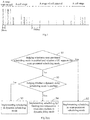
- the output rule of voice data packet is shown in Fig.1 .
- dynamic scheduling of other data services such as File Transfer Protocol (FTP) or User Datagram Protocol (UDP).
- FTP File Transfer Protocol
- UDP User Datagram Protocol
- a sampling packet will be produced in every 20ms when users are calling. Therefore, generation of the voice message of user is predicable.
- semi-persistent scheduling may be adopted to avoid performing dynamic scheduling each time, thereby improving the voice transmission capacity by about 20%.
- a background sound symbol will be produced in every 160ms, and there is no voice data scheduling.
- dynamic scheduling mode is adopted for scheduling, and determining whether the semi-persistent scheduling is enabled and whether the User Equipment (UE) supports the semi-persistent scheduling mode, if the semi-persistent scheduling mode is enabled and the UE supports the semi-persistent scheduling mode, then the UE will be configured for scheduling in semi-persistent scheduling mode; otherwise, dynamic scheduling mode will be used for scheduling.
- MCS uplink/downlink Modulation and Coding Scheme
- DCI Downlink Control Information
- the MCS level range of semi-persistent scheduling is 0 ⁇ 15, and DCI only needs to be issued each time when semi-persistent scheduling is activated or deactivated, so PDCCH overhead is small.
- the dynamic scheduling level is 28, and the size of source block scheduled is 11064, while the MCS level of semi-persistent scheduling is 15, and the size of the source block scheduled is 4264, which is almost 2.5 times of the source block size of semi-persistent scheduling. Therefore, dynamic scheduling and semi-persistent scheduling have their respective strengths and weaknesses. Dynamic scheduling may schedule a higher modulation and coding level, but PDCCH resource overhead is big.
- Semi-persistent scheduling has the least PDCCH resource overhead, but the maximum MCS level of scheduling is 15. Both dynamic scheduling mode and semi-persistent scheduling mode may be simply realized, but the flexibility is poor, the strengths of semi-persistent scheduling mode and dynamic scheduling mode can't be displayed simultaneously, and PDCCH resources can't be assigned rationally, which reduces the total capacity of the base station.
- the technical problem to be solved by the invention is how to reduce the resource overhead of control channel while improving the throughput of the base station.
- embodiments of the invention provide a dynamic delay scheduling method and base station for voice data with a higher modulation and coding level and smaller PDCCH resource overhead.
- an embodiment of the invention provides a dynamic delay scheduling method for voice data, which includes the following operations:
- the scheduling by binding two consecutive voice data packets in the dynamic delay scheduling mode includes:
- the attribute information of the voice data packets includes: sizes of the voice data packets, whether the voice data packets have header compression and coding formats of the voice data packets.
- the scheduling of the two voice data packets in the reserved buffer space includes:
- judging whether semi-persistent scheduling mode is enabled, and whether UE supports the semi-persistent scheduling mode further includes: scheduling, by a MAC layer, the voice data packet in the dynamic scheduling mode.
- an embodiment of the invention further provides a base station, which includes:
- the dynamic delay scheduling module includes:
- the scheduling sub-module includes:
- the attribute information of the voice data packets includes: sizes of the voice data packets, whether the voice data packets have header compression and coding formats of the voice data packets.
- the base station further includes: a dynamic scheduling module configured to schedule the voice data packets in dynamic scheduling mode through an MAC layer.
- a dynamic scheduling module configured to schedule the voice data packets in dynamic scheduling mode through an MAC layer.
- two voice data packets arriving consecutively are bound as a group of voice data and scheduled through one PDCCH, which not only reduces the overhead of PDCCH resource by half, but also maintains a higher modulation and coding level.
- the invention improves the flexibility of voice service scheduling and is conducive to the rational allocation of PDCCH resource, and may improve the user capacity of the base station.
- the invention relates to a dynamic delay scheduling method for voice data which includes the following operations.
- the semi-persistent scheduling mode may be adopted for scheduling when the semi-persistent scheduling mode is enabled and the UE supports the semi-persistent scheduling mode; otherwise, the dynamic delay scheduling mode will be adopted; and if the dynamic delay scheduling mode is not enabled either, the dynamic scheduling mode may be adopted for scheduling.
- the dynamic delay scheduling mode two voice data packets arriving consecutively are bound as a group of voice data and scheduled through one PDCCH, which not only reduces the overhead of PDCCH resource by half, but also maintains a higher modulation and coding level.
- the operation S4 includes the following operations.
- Packet Data Convergence Protocol acquires attribute information of the two voice data packets.
- An attribute information of a voice data packet includes: the size of the voice data packet, whether the voice data packet has header compression and coding format of the voice data packet, so as to reserve a buffer space with a certain size according to attribute information of the voice data packet.
- one type of attribute information of a voice data packet includes transmission through IPV4 protocol, having header compression, and narrow band transmission in code format; another type of attribute information of a voice data packet includes transmission through IPV6 protocol, having no header compression, and broadband transmission in code format.
- the preferred preset time interval is 40ms.
- the sampling time of one voice data packet is 20ms, and in the method, two voice data packets consecutive in time are bound for scheduling, so the preset time interval is 40ms.
- no more than two voice data packets may be acquired in the dynamic delay scheduling method for voice data, because acquisition of more than two voice data packets will cause too long time delay of the voice data packets and affect perception of the voice service.
- operation S404 includes the following operations.
- dynamic delay scheduling is classified into uplink dynamic delay scheduling and downlink dynamic delay scheduling.
- uplink dynamic delay scheduling what is scheduled is a voice data packet, so when the voice during uplink dynamic delay scheduling is under an activated state, whether there is uplink data with an LCG equal to 1 is determined to show that the data transmitted by the uplink channel is voice data; the buffer space with a size of two voice data packets is registered again to schedule the two voice data packets bound together.
- a QCI of the voice data packet in downlink dynamic delay scheduling is set to be 1, meaning that the data transmitted by the downlink channel is voice data.
- dynamic scheduling is adopted for scheduling of the voice data packets.
- the adoption of the dynamic delay scheduling method for voice data provided in the embodiment of the invention, two voice data packets arriving consecutively are bound together as a group of voice data to be scheduled through one PDCCH, which reduces the PDCCH resource overhead by half while maintaining a higher modulation and coding level.
- the invention improves the flexibility of voice service scheduling and is conducive to the rational allocation of channel resources, and may improve the user capacity of the base station.
- An embodiment of the invention further provides a base station, as shown in Fig.3 , which includes: a judging module configured to judge whether a semi-persistent scheduling mode is enabled, and whether a UE supports the semi-persistent scheduling mode; a semi-persistent scheduling module configured to implement scheduling in semi-persistent scheduling mode when the semi-persistent scheduling mode is enabled and the UE supports the semi-persistent scheduling mode; and a dynamic delay scheduling module configured to judge whether a dynamic delay scheduling mode is enabled when the semi-persistent scheduling mode is not enabled, if so, implement scheduling by binding two consecutive voice data packets in dynamic delay scheduling mode, otherwise, implement scheduling in dynamic scheduling mode.
- the semi-persistent scheduling mode may be adopted for scheduling when the semi-persistent scheduling mode is enabled and the UE supports the semi-persistent scheduling mode; otherwise, the dynamic delay scheduling mode will be adopted. If the dynamic delay scheduling mode is not enabled either, the dynamic scheduling mode may be adopted for scheduling.
- the dynamic delay scheduling mode When the dynamic delay scheduling mode is adopted, two voice data packets arriving consecutively are bound as a group of voice data and scheduled through one PDCCH, which not only reduces the overhead of PDCCH resource by half, but also maintains a higher modulation and coding level.
- the dynamic delay scheduling module includes: a first acquiring sub-module configured to acquire two voice data packets arriving consecutively in a preset time interval; a second acquiring sub-module configured to acquire attribute information of the two voice data packets acquired from the first acquiring sub-module and transmit the attribute information to a MAC layer; a reserving sub-module configured to reserve a buffer space with a certain size in a buffer according to the attribute information of two voice data packets acquired by the second acquiring sub-module; and a scheduling sub-module configured to schedule the two voice data packets in the reserved buffer space.
- Packet Data Convergence Protocol acquires attribute information of the two voice data packets.
- An attribute information of a voice data packet includes: the size of a voice data packet, whether the voice data packet has header compression and coding format of the voice data packet, so as to reserve a buffer space with a certain size according to attribute information of the voice data packet.
- the preferred preset time interval is 40ms.
- the sampling time of one voice data packet is 20ms, and in the method, two voice data packets consecutive in time are bound for scheduling, so the preset time interval is 40ms.
- no more than two voice data packets may be acquired in the dynamic delay scheduling method for voice data, because acquisition of more than two voice data packets will cause too long time delay of the voice data packets and affect perception of the voice service.
- the scheduling sub-module includes: an uplink dynamic delay scheduling sub-module configured to judge whether uplink data with an LCG equal to 1 exists during uplink dynamic delay scheduling, and if any, insert the uplink data to an uplink scheduling queue, and register an uplink reserved buffer space; and a downlink dynamic delay scheduling sub-module configured to judge whether downlink data with a QCI equal to 1 exists during downlink dynamic delay scheduling, and if any, insert the downlink data to a downlink scheduling queue, and register a downlink reserved buffer space.
- dynamic delay scheduling is classified into uplink dynamic delay scheduling and downlink dynamic delay scheduling.
- uplink dynamic delay scheduling what is scheduled is a voice data packet, so when the voice during uplink dynamic delay scheduling is under an activated state, whether there is uplink data with an LCG equal to 1 is determined to show that the data transmitted by the uplink channel is voice data; the buffer space with a size of two voice data packets is registered again to schedule the two voice data packets bound together; during downlink dynamic delay scheduling, a QCI of the voice data packet in downlink dynamic delay scheduling is set to be 1, meaning that the data transmitted by the downlink channel is voice data.
- the base station in the embodiment further includes: a dynamic scheduling module configured to schedule the voice data packets in dynamic scheduling mode through the MAC layer.
- dynamic scheduling is adopted for scheduling of the voice data packets.
- the adoption of the dynamic delay scheduling method and base station for voice data provided in the embodiment of the invention, two voice data packets arriving consecutively are bound together as a group of voice data to be scheduled through one PDCCH, which reduces the PDCCH resource overhead by half while maintaining a higher modulation and coding level.
- the invention improves the flexibility of voice service scheduling and is conducive to the rational allocation of channel resources, and may improve the user capacity of the base station.
- the embodiment of the invention may include a method, a system or a computer program product. Therefore, the embodiments of the invention may be represented with only hardware, or with only software, or with a combination of software and hardware. Besides, the embodiments of the invention may also adopt the computer program product performed on one or a plurality of computer useable memory mediums (including, but not limited to disk memory, CD-ROM, optical memory, and the like) which include a computer useable program code.
- computer useable memory mediums including, but not limited to disk memory, CD-ROM, optical memory, and the like
- the invention is described with reference to the flowchart and/or block diagram of the method, equipment (system) and computer program product of the embodiment.
- the computer program command may perform each flow and/or block of the flowchart and/or the block diagram, or the combination of each flow and/or block of the flowchart and/or the block diagram.
- a processor from the computer program commands to an all-purpose computer, dedicated computer, embedded processor or other programmable DHU (data handling unit) may be provided to produce a machine, so that the commands executed by the processor of a computer or other programmable DHUs may generate a device which is used to realize the specified functions of one or a plurality of flows of the flowchart and/or one or a plurality of blocks of the block diagram.
- These computer program commands may also be stored in a computer-readable memory which may guide the computer or other programmable DHUs to work in a specified way, so that the commands stored in the computer-readable memory may produce a product which includes the command device.
- the command device may realize the functions specified in one or a plurality of flows of the flowchart and/or one or a plurality of blocks of the block diagram.
- These computer program commands may also be loaded to a computer or other programmable DHUs, so that a series of operations may be executed by the computer or other programmable equipment to realize computer processing, and the command executed by the computer or other programmable equipment may provide the steps for realizing the functions in one or a plurality of flows of the flowchart and/or one or a plurality of blocks of the block diagram.
- orientation or position relationship indicated by the terms “up” or “down” and the like is the orientation or position relationship based on the figures, and is only used to describe the invention and simplify the description, instead of indicating or suggesting that the device or component mentioned shall have a specific orientation, or be constructed and operated in a specific orientation, so the terms shall not be apprehended as restriction of the invention.
- terms like “install”, “connect” and “link” shall be understood in a broad sense.
- a connection may be permanent connection or removable connection, or integrated connection, or mechanical connection, electrical connection, direct connection, or indirect connection through a medium, or interconnection between two components.
- the dynamic delay scheduling method and base station for voice data provided in the invention, two voice data packets arriving consecutively are bound together as a group of voice data to be scheduled through one PDCCH, which reduces the PDCCH resource overhead by half while maintaining a higher modulation and coding level.
- the invention improves the flexibility of voice service scheduling and is conducive to the rational allocation of channel resources, and may improve the user capacity of the base station, so the invention has industrial applicability.
Landscapes
- Engineering & Computer Science (AREA)
- Computer Networks & Wireless Communication (AREA)
- Signal Processing (AREA)
- Computer Security & Cryptography (AREA)
- Mobile Radio Communication Systems (AREA)
Abstract
Description
- The invention relates to a dynamic delay scheduling method and base station for voice data, and belongs to the technical field of communication.
- Long Term Evolution (LTE) is a kind of all-IP based radio communication technology, and has become the most powerful competitor of 4G standard with high-speed uplink/downlink data transmission rate, flexible bandwidth configuration, and simplified network architecture. LTE radio interface resources are commonly shared, and signaling and data compete for the commonly shared resources simultaneously for transmission. Currently, the radio resource scheduling schemes which may be used for Voice over LTE (VoLTE) include dynamic scheduling, semi-persistent scheduling and group scheduling, and the like. Dynamic scheduling is a universal scheduling method. For each basic unit of radio resource scheduling, Physical Resource Block (PRB), the scheduler may assign a resource according to a resource request of the User Equipment. Semi-persistent scheduling is a scheduling method aiming at real time services including VoLTE which may reduce signaling overhead and increase system capacity.
- The output rule of voice data packet is shown in
Fig.1 . In a stage with no call, no voice packet needs to be scheduled, so dynamic scheduling of other data services may be conducted, such as File Transfer Protocol (FTP) or User Datagram Protocol (UDP). In a call stage, a sampling packet will be produced in every 20ms when users are calling. Therefore, generation of the voice message of user is predicable. Under such circumstance, semi-persistent scheduling may be adopted to avoid performing dynamic scheduling each time, thereby improving the voice transmission capacity by about 20%. In a stage of call interval, theoretically, a background sound symbol will be produced in every 160ms, and there is no voice data scheduling. When a voice service starts, dynamic scheduling mode is adopted for scheduling, and determining whether the semi-persistent scheduling is enabled and whether the User Equipment (UE) supports the semi-persistent scheduling mode, if the semi-persistent scheduling mode is enabled and the UE supports the semi-persistent scheduling mode, then the UE will be configured for scheduling in semi-persistent scheduling mode; otherwise, dynamic scheduling mode will be used for scheduling. According to 3GPP specification, the level range of uplink/downlink Modulation and Coding Scheme (MCS) of dynamic scheduling is 0∼28; during each scheduling, Downlink Control Information (DCI) is issued, so resource overhead of Physical Downlink Control Channel (PDCCH) is big. The MCS level range of semi-persistent scheduling is 0∼15, and DCI only needs to be issued each time when semi-persistent scheduling is activated or deactivated, so PDCCH overhead is small. When the channel condition is very good, when 15 PRBs are scheduled, the dynamic scheduling level is 28, and the size of source block scheduled is 11064, while the MCS level of semi-persistent scheduling is 15, and the size of the source block scheduled is 4264, which is almost 2.5 times of the source block size of semi-persistent scheduling. Therefore, dynamic scheduling and semi-persistent scheduling have their respective strengths and weaknesses. Dynamic scheduling may schedule a higher modulation and coding level, but PDCCH resource overhead is big. Semi-persistent scheduling has the least PDCCH resource overhead, but the maximum MCS level of scheduling is 15. Both dynamic scheduling mode and semi-persistent scheduling mode may be simply realized, but the flexibility is poor, the strengths of semi-persistent scheduling mode and dynamic scheduling mode can't be displayed simultaneously, and PDCCH resources can't be assigned rationally, which reduces the total capacity of the base station. - The technical problem to be solved by the invention is how to reduce the resource overhead of control channel while improving the throughput of the base station.
- In order to realize the mentioned aim, embodiments of the invention provide a dynamic delay scheduling method and base station for voice data with a higher modulation and coding level and smaller PDCCH resource overhead.
- In an aspect, an embodiment of the invention provides a dynamic delay scheduling method for voice data, which includes the following operations:
- judging whether a semi-persistent scheduling mode is enabled, and whether a UE supports the semi-persistent scheduling mode;
- if the semi-persistent scheduling mode is enabled and the UE supports the semi-persistent scheduling mode, implementing scheduling in the semi-persistent scheduling mode; and
- if the semi-persistent scheduling mode is not enabled or the UE does not support the semi-persistent scheduling mode, judging whether a dynamic delay scheduling mode is enabled; if so, implementing scheduling by binding two consecutive voice data packets in the dynamic delay scheduling mode; otherwise, implementing scheduling in a dynamic scheduling mode.
- Preferably, the scheduling by binding two consecutive voice data packets in the dynamic delay scheduling mode includes:
- acquiring two voice data packets arriving consecutively in a preset time interval;
- acquiring attribute information of the two voice data packets and transmitting the attribute information to a Media Access Control (MAC) layer;
- reserving a buffer space with a certain size in a buffer according to the attribute information of the two voice data packets; and
- scheduling the two voice data packets in the reserved buffer space.
- Preferably, the attribute information of the voice data packets includes:
sizes of the voice data packets, whether the voice data packets have header compression and coding formats of the voice data packets. - Preferably, the scheduling of the two voice data packets in the reserved buffer space includes:
- during an uplink dynamic delay scheduling, judging whether the uplink data with an LCG equal to 1 exists; if any, inserting the uplink data to an uplink scheduling queue, and registering an uplink reserved buffer space; and
- during a downlink dynamic delay scheduling, judging whether the downlink data with a QCI equal to 1 exists; if any, inserting the downlink data to a downlink scheduling queue, and registering a downlink reserved buffer space.
- Preferably, judging whether semi-persistent scheduling mode is enabled, and whether UE supports the semi-persistent scheduling mode further includes:
scheduling, by a MAC layer, the voice data packet in the dynamic scheduling mode. - In another aspect, an embodiment of the invention further provides a base station, which includes:
- a judging module configured to judge whether a semi-persistent scheduling mode is enabled, and whether a UE supports the semi-persistent scheduling mode;
- a semi-persistent scheduling module configured to implement scheduling in the semi-persistent scheduling mode when the semi-persistent scheduling mode is enabled and the UE supports the semi-persistent scheduling mode; and
- a dynamic delay scheduling module configured to judge whether a dynamic delay scheduling mode is enabled when the semi-persistent scheduling mode is not enabled or when the UE does not support the semi-persistent scheduling mode, if so, implement scheduling by binding two consecutive voice data packets in the dynamic delay mode, otherwise, implement scheduling in a dynamic scheduling mode.
- Preferably, the dynamic delay scheduling module includes:
- a first acquiring sub-module configured to acquire two voice data packets arriving consecutively in a preset time interval;
- a second acquiring sub-module configured to acquire attribute information of the two voice data packets acquired from the first acquiring sub-module and transmit the attribute information to an MAC layer;
- a reserving sub-module configured to reserve a buffer space with a certain size in a buffer according to the attribute information of two voice data packets acquired by the second acquiring sub-module; and
- a scheduling sub-module configured to schedule the two voice data packets in the reserved buffer space.
- Preferably, the scheduling sub-module includes:
- an uplink dynamic delay scheduling sub-module configured to judge whether the uplink data with an LCG equal to 1 exists during uplink dynamic delay scheduling, and if any, insert the uplink data to an uplink scheduling queue, and register an uplink reserved buffer space; and
- a downlink dynamic delay scheduling sub-module configured to judge whether the downlink data with a QCI equal to 1 exists during downlink dynamic delay scheduling, and if any, insert the downlink data to a downlink scheduling queue, and register a downlink reserved buffer space.
- Preferably, the attribute information of the voice data packets includes:
sizes of the voice data packets, whether the voice data packets have header compression and coding formats of the voice data packets. - Preferably, the base station further includes:
a dynamic scheduling module configured to schedule the voice data packets in dynamic scheduling mode through an MAC layer. - By the adoption of the dynamic delay scheduling method and base station provided in the invention, two voice data packets arriving consecutively are bound as a group of voice data and scheduled through one PDCCH, which not only reduces the overhead of PDCCH resource by half, but also maintains a higher modulation and coding level. The invention improves the flexibility of voice service scheduling and is conducive to the rational allocation of PDCCH resource, and may improve the user capacity of the base station.
- By reference to the figures, characteristics and advantages of the invention may be more clearly understood. The figures are schematic and shall not be understood as any restriction to the invention.
-
Fig.1 is a schematic diagram of an output rule of the voice data packets in the prior art. -
Fig.2(a) to Fig.2(c) are flowcharts of a dynamic delay scheduling method of a first embodiment. -
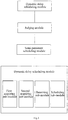
Fig.3 is a structure diagram of a dynamic delay scheduling base station in a second embodiment. - Embodiments of the invention will be further described below with reference to the figures and embodiments. The following embodiments are used for describing the invention instead of setting restriction to the scope of the invention.
- As shown in
Fig.2(a) , the invention relates to a dynamic delay scheduling method for voice data which includes the following operations. - S1: judging whether a semi-persistent scheduling mode is enabled and whether a UE supports the semi-persistent scheduling mode; if so, perform operation S2; otherwise, perform operation S3.
- S2: implementing scheduling in the semi-persistent scheduling mode.
- S3: judging whether a dynamic delay scheduling mode is enabled; if so, perform operation S4; otherwise, perform operation S5.
- S4: implementing scheduling by binding two consecutive voice data packets in the dynamic delay mode.
- S5: implementing scheduling in a dynamic scheduling mode.
- In the embodiment, the semi-persistent scheduling mode may be adopted for scheduling when the semi-persistent scheduling mode is enabled and the UE supports the semi-persistent scheduling mode; otherwise, the dynamic delay scheduling mode will be adopted; and if the dynamic delay scheduling mode is not enabled either, the dynamic scheduling mode may be adopted for scheduling. When the dynamic delay scheduling mode is adopted, two voice data packets arriving consecutively are bound as a group of voice data and scheduled through one PDCCH, which not only reduces the overhead of PDCCH resource by half, but also maintains a higher modulation and coding level.
- During a specific implementation, as shown in
Fig.2(b) , the operation S4 includes the following operations. - S401: acquiring two voice data packets arriving consecutively in a preset time interval.
- S402: acquiring attribute information of the two voice data packets and transmitting the attribute information to a Media Access Control (MAC) layer.
- S403: reserving a buffer space with a certain size in a buffer according to the attribute information of two voice data packets.
- S404: scheduling the two voice data packets in the reserved buffer space.
- Further, Packet Data Convergence Protocol (PDCP) acquires attribute information of the two voice data packets. An attribute information of a voice data packet includes: the size of the voice data packet, whether the voice data packet has header compression and coding format of the voice data packet, so as to reserve a buffer space with a certain size according to attribute information of the voice data packet. For example, one type of attribute information of a voice data packet includes transmission through IPV4 protocol, having header compression, and narrow band transmission in code format; another type of attribute information of a voice data packet includes transmission through IPV6 protocol, having no header compression, and broadband transmission in code format.
- Further, the preferred preset time interval is 40ms. The sampling time of one voice data packet is 20ms, and in the method, two voice data packets consecutive in time are bound for scheduling, so the preset time interval is 40ms. In the embodiment, no more than two voice data packets may be acquired in the dynamic delay scheduling method for voice data, because acquisition of more than two voice data packets will cause too long time delay of the voice data packets and affect perception of the voice service.
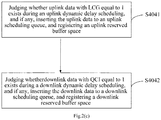
- In a specific implementation, as shown in
Fig.2(c) , operation S404 includes the following operations. - S4041: judging whether uplink data with a Logical Channel Group (LCG) equal to 1 exists during an uplink dynamic delay scheduling, and if any, inserting the uplink data to an uplink scheduling queue, and registering an uplink reserved buffer space.
- S4042: judging whether downlink data with a QCI (QoS Class Identifier) equal to 1 exists during a downlink dynamic delay scheduling, and if any, inserting the downlink data to a downlink scheduling queue, and registering a downlink reserved buffer space.
- Further, dynamic delay scheduling is classified into uplink dynamic delay scheduling and downlink dynamic delay scheduling. During uplink dynamic delay scheduling, what is scheduled is a voice data packet, so when the voice during uplink dynamic delay scheduling is under an activated state, whether there is uplink data with an LCG equal to 1 is determined to show that the data transmitted by the uplink channel is voice data; the buffer space with a size of two voice data packets is registered again to schedule the two voice data packets bound together. During downlink dynamic delay scheduling, a QCI of the voice data packet in downlink dynamic delay scheduling is set to be 1, meaning that the data transmitted by the downlink channel is voice data.
- In the embodiment, before operation S1, the following operations are included.
- S101: MAC layer schedules the voice data packet in dynamic scheduling mode, which is not shown in the figure.
- In a specific implementation, before judging whether the semi-persistent scheduling mode is enabled and whether the UE supports the semi-persistent scheduling mode, dynamic scheduling is adopted for scheduling of the voice data packets.
- In conclusion, by the adoption of the dynamic delay scheduling method for voice data provided in the embodiment of the invention, two voice data packets arriving consecutively are bound together as a group of voice data to be scheduled through one PDCCH, which reduces the PDCCH resource overhead by half while maintaining a higher modulation and coding level. The invention improves the flexibility of voice service scheduling and is conducive to the rational allocation of channel resources, and may improve the user capacity of the base station.
- An embodiment of the invention further provides a base station, as shown in
Fig.3 , which includes: a judging module configured to judge whether a semi-persistent scheduling mode is enabled, and whether a UE supports the semi-persistent scheduling mode; a semi-persistent scheduling module configured to implement scheduling in semi-persistent scheduling mode when the semi-persistent scheduling mode is enabled and the UE supports the semi-persistent scheduling mode; and a dynamic delay scheduling module configured to judge whether a dynamic delay scheduling mode is enabled when the semi-persistent scheduling mode is not enabled, if so, implement scheduling by binding two consecutive voice data packets in dynamic delay scheduling mode, otherwise, implement scheduling in dynamic scheduling mode. - In the embodiment, the semi-persistent scheduling mode may be adopted for scheduling when the semi-persistent scheduling mode is enabled and the UE supports the semi-persistent scheduling mode; otherwise, the dynamic delay scheduling mode will be adopted. If the dynamic delay scheduling mode is not enabled either, the dynamic scheduling mode may be adopted for scheduling. When the dynamic delay scheduling mode is adopted, two voice data packets arriving consecutively are bound as a group of voice data and scheduled through one PDCCH, which not only reduces the overhead of PDCCH resource by half, but also maintains a higher modulation and coding level.
- In a specific implementation, the dynamic delay scheduling module includes: a first acquiring sub-module configured to acquire two voice data packets arriving consecutively in a preset time interval; a second acquiring sub-module configured to acquire attribute information of the two voice data packets acquired from the first acquiring sub-module and transmit the attribute information to a MAC layer; a reserving sub-module configured to reserve a buffer space with a certain size in a buffer according to the attribute information of two voice data packets acquired by the second acquiring sub-module; and a scheduling sub-module configured to schedule the two voice data packets in the reserved buffer space.
- Further, Packet Data Convergence Protocol (PDCP) acquires attribute information of the two voice data packets. An attribute information of a voice data packet includes: the size of a voice data packet, whether the voice data packet has header compression and coding format of the voice data packet, so as to reserve a buffer space with a certain size according to attribute information of the voice data packet.
- Further, the preferred preset time interval is 40ms. The sampling time of one voice data packet is 20ms, and in the method, two voice data packets consecutive in time are bound for scheduling, so the preset time interval is 40ms. In the embodiment, no more than two voice data packets may be acquired in the dynamic delay scheduling method for voice data, because acquisition of more than two voice data packets will cause too long time delay of the voice data packets and affect perception of the voice service.
- In a specific implementation, the scheduling sub-module includes: an uplink dynamic delay scheduling sub-module configured to judge whether uplink data with an LCG equal to 1 exists during uplink dynamic delay scheduling, and if any, insert the uplink data to an uplink scheduling queue, and register an uplink reserved buffer space; and a downlink dynamic delay scheduling sub-module configured to judge whether downlink data with a QCI equal to 1 exists during downlink dynamic delay scheduling, and if any, insert the downlink data to a downlink scheduling queue, and register a downlink reserved buffer space.
- Further, dynamic delay scheduling is classified into uplink dynamic delay scheduling and downlink dynamic delay scheduling. During uplink dynamic delay scheduling, what is scheduled is a voice data packet, so when the voice during uplink dynamic delay scheduling is under an activated state, whether there is uplink data with an LCG equal to 1 is determined to show that the data transmitted by the uplink channel is voice data; the buffer space with a size of two voice data packets is registered again to schedule the two voice data packets bound together; during downlink dynamic delay scheduling, a QCI of the voice data packet in downlink dynamic delay scheduling is set to be 1, meaning that the data transmitted by the downlink channel is voice data.
- The base station in the embodiment further includes: a dynamic scheduling module configured to schedule the voice data packets in dynamic scheduling mode through the MAC layer.
- In a specific implementation, before judging whether the semi-persistent scheduling mode is enabled and whether the UE supports the semi-persistent scheduling mode, dynamic scheduling is adopted for scheduling of the voice data packets.
- In conclusion, by the adoption of the dynamic delay scheduling method and base station for voice data provided in the embodiment of the invention, two voice data packets arriving consecutively are bound together as a group of voice data to be scheduled through one PDCCH, which reduces the PDCCH resource overhead by half while maintaining a higher modulation and coding level. The invention improves the flexibility of voice service scheduling and is conducive to the rational allocation of channel resources, and may improve the user capacity of the base station.
- Those skilled in the art shall understand the embodiment of the invention may include a method, a system or a computer program product. Therefore, the embodiments of the invention may be represented with only hardware, or with only software, or with a combination of software and hardware. Besides, the embodiments of the invention may also adopt the computer program product performed on one or a plurality of computer useable memory mediums (including, but not limited to disk memory, CD-ROM, optical memory, and the like) which include a computer useable program code.
- The invention is described with reference to the flowchart and/or block diagram of the method, equipment (system) and computer program product of the embodiment. What needs to be understood is that the computer program command may perform each flow and/or block of the flowchart and/or the block diagram, or the combination of each flow and/or block of the flowchart and/or the block diagram. A processor from the computer program commands to an all-purpose computer, dedicated computer, embedded processor or other programmable DHU (data handling unit) may be provided to produce a machine, so that the commands executed by the processor of a computer or other programmable DHUs may generate a device which is used to realize the specified functions of one or a plurality of flows of the flowchart and/or one or a plurality of blocks of the block diagram.
- These computer program commands may also be stored in a computer-readable memory which may guide the computer or other programmable DHUs to work in a specified way, so that the commands stored in the computer-readable memory may produce a product which includes the command device. The command device may realize the functions specified in one or a plurality of flows of the flowchart and/or one or a plurality of blocks of the block diagram.
- These computer program commands may also be loaded to a computer or other programmable DHUs, so that a series of operations may be executed by the computer or other programmable equipment to realize computer processing, and the command executed by the computer or other programmable equipment may provide the steps for realizing the functions in one or a plurality of flows of the flowchart and/or one or a plurality of blocks of the block diagram.
- Finally, it shall be noted that the relational terms such as "a first and a second" hereof are only used to differentiate one entity or operation from another entity or operation, and may not specify or suggest that such relationship or sequence exists between these entities or operations. Besides, the term "include" or "comprise" or any other variants is non-exclusive, so that the process, method, object or equipment which include a series of elements may also include other elements not having been listed or the elements inherent to such process, method, object or equipment. Without further restriction, the element determinative by the phrase "include(s) a ..." in the process, method, object or equipment may also include other same elements. The orientation or position relationship indicated by the terms "up" or "down" and the like is the orientation or position relationship based on the figures, and is only used to describe the invention and simplify the description, instead of indicating or suggesting that the device or component mentioned shall have a specific orientation, or be constructed and operated in a specific orientation, so the terms shall not be apprehended as restriction of the invention. Unless otherwise specified or restricted, terms like "install", "connect" and "link" shall be understood in a broad sense. For example, a connection may be permanent connection or removable connection, or integrated connection, or mechanical connection, electrical connection, direct connection, or indirect connection through a medium, or interconnection between two components. Those skilled in the art may understand the specific meanings of the above terms in the invention according to specific circumstances.
- The specification provided in the invention describes a great deal of concrete details. However, what should be understood is that the embodiments of the invention may be carried out without these concrete details. Some cases do not display in detail the commonly known methods, structures and technologies, so as not to blur the understanding of the specification. Similarly, it shall be understood that in order to simplify the disclosure and help to understand one or more aspects of the invention, in the descriptions of the embodiments of the invention, characteristics of the invention have sometimes been grouped to a single embodiment, figure, or the descriptions thereon. However, the disclosed method shall not be interpreted to reflect the following intention: namely, more characteristics than the characteristics recorded clearly in each claim are required by the invention to be protected. More precisely, as reflected by the claims, the aspects of the invention are less than all characteristics of each single embodiment disclosed. Therefore, the claims following the detailed description of the embodiments of the invention are clearly integrated to the detailed description of the embodiments of the invention, and each claim is considered as an independent embodiment of the invention.
- The above embodiments are only used to describe the technical scheme of the invention, and do not constitute any restriction to the technical scheme. Although detailed descriptions are given to the invention by reference to the aforementioned embodiments, those skilled in the art shall understand that: the technical scheme recorded by the aforementioned embodiments may be modified, or the technical characteristics in part or whole may be replaced equivalently, such modification or replacement will not separate in essence the technical scheme from the scope of technical scheme of the embodiments of the invention, and shall be included in the scope of the claims and specification of the invention.
- In the dynamic delay scheduling method and base station for voice data provided in the invention, two voice data packets arriving consecutively are bound together as a group of voice data to be scheduled through one PDCCH, which reduces the PDCCH resource overhead by half while maintaining a higher modulation and coding level. The invention improves the flexibility of voice service scheduling and is conducive to the rational allocation of channel resources, and may improve the user capacity of the base station, so the invention has industrial applicability.
Claims (10)
- A dynamic delay scheduling method for voice data, comprising:judging whether a semi-persistent scheduling mode is enabled, and whether a User Equipment, UE, supports the semi-persistent scheduling mode;if the semi-persistent scheduling mode is enabled and the UE supports the semi-persistent scheduling mode, implementing scheduling in the semi-persistent scheduling mode; andif the semi-persistent scheduling mode is not enabled or the UE does not support the semi-persistent scheduling mode, judging whether a dynamic delay scheduling mode is enabled; if so, implementing scheduling by binding two consecutive voice data packets in the dynamic delay scheduling mode; otherwise, implementing scheduling in a dynamic scheduling mode.
- The dynamic delay scheduling method for voice data according to claim 1, wherein the scheduling by binding two consecutive voice data packets in the dynamic delay scheduling mode comprises:acquiring two voice data packets arriving consecutively in a preset time interval;acquiring attribute information of the two voice data packets and transmitting the attribute information to a Media Access Control, MAC, layer;reserving a buffer space with a certain size in a buffer according to the attribute information of the two voice data packets; andscheduling the two voice data packets in the reserved buffer space.
- The dynamic delay scheduling method for voice data according to claim 2, wherein the attribute information of the voice data packets comprises:sizes of the voice data packets, whether the voice data packets have header compression and coding formats of the voice data packets.
- The dynamic delay scheduling method for voice data according to claim 2, wherein the scheduling of the two voice data packets in the reserved buffer space comprises:during an uplink dynamic delay scheduling, judging whether uplink data with a Logical Channel Group, LCG, equal to 1 exists; if any, inserting the uplink data to an uplink scheduling queue, and registering an uplink reserved buffer space; andduring a downlink dynamic delay scheduling, judging whether downlink data with a QoS Class Identifier, QCI, equal to 1 exists; if any, inserting the downlink data to a downlink scheduling queue, and registering a downlink reserved buffer space.
- The dynamic delay scheduling method for voice data according to claim 1, wherein before judging whether the semi-persistent scheduling mode is enabled, and whether the UE supports the semi-persistent scheduling mode, the method further comprises:
scheduling, by a Media Access Control, MAC, layer, the voice data packets in the dynamic scheduling mode. - Abase station, comprising:a judging module configured to judge whether a semi-persistent scheduling mode is enabled, and whether a User Equipment, UE, supports the semi-persistent scheduling mode;a semi-persistent scheduling module configured to implement scheduling in the semi-persistent scheduling mode when the semi-persistent scheduling mode is enabled and the UE supports the semi-persistent scheduling mode; anda dynamic delay scheduling module configured to judge whether a dynamic delay scheduling mode is enabled when the semi-persistent scheduling mode is not enabled or when the UE does not support the semi-persistent scheduling mode, if so, implement scheduling by binding two consecutive voice data packets in the dynamic delay scheduling mode; otherwise, implement scheduling in a dynamic scheduling mode.
- The base station according to claim 6, wherein the dynamic delay scheduling module comprises:a first acquiring sub-module configured to acquire two voice data packets arriving consecutively in a preset time interval;a second acquiring sub-module configured to acquire attribute information of the two voice data packets acquired from the first acquiring sub-module and transmit the attribute information to a Media Access Control, MAC, layer;a reserving sub-module configured to reserve a buffer space with a certain size in a buffer according to the attribute information of two voice data packets acquired by the second acquiring sub-module; anda scheduling sub-module configured to schedule the two voice data packets in the reserved buffer space.
- The base station according to claim 7, wherein the scheduling sub-module comprises:an uplink dynamic delay scheduling sub-module configured to judging whether uplink data with a Logical Channel Group, LCG, equal to 1 exists during uplink dynamic delay scheduling, and if any, insert the uplink data to an uplink scheduling queue, and register an uplink reserved buffer space; anda downlink dynamic delay scheduling sub-module configured to judge whether downlink data with a QoS Class Identifier, QCI, equal to 1 exists during downlink dynamic delay scheduling, and if any, insert the downlink data to a downlink scheduling queue, and register a downlink reserved buffer space.
- The base station according to claim 6, where the attribute information of the voice data packets comprise:
sizes of the voice data packets, whether the voice data packets have header compression and coding formats of the voice data packets. - The base station according to claim 6, wherein the base station further comprises:
a dynamic scheduling module configured to schedule the voice data packets in dynamic scheduling mode through a Media Access Control, MAC, layer.
Applications Claiming Priority (2)
| Application Number | Priority Date | Filing Date | Title |
|---|---|---|---|
| CN201510377761.3A CN105142220B (en) | 2015-06-30 | 2015-06-30 | A kind of dynamic deferred dispatching method of voice data and base station |
| PCT/CN2016/071792 WO2017000548A1 (en) | 2015-06-30 | 2016-01-22 | Dynamic delay scheduling method and base station for voice data |
Publications (3)
| Publication Number | Publication Date |
|---|---|
| EP3319386A1 true EP3319386A1 (en) | 2018-05-09 |
| EP3319386A4 EP3319386A4 (en) | 2018-06-20 |
| EP3319386B1 EP3319386B1 (en) | 2020-07-08 |
Family
ID=54727390
Family Applications (1)
| Application Number | Title | Priority Date | Filing Date |
|---|---|---|---|
| EP16816913.4A Active EP3319386B1 (en) | 2015-06-30 | 2016-01-22 | Dynamic delay scheduling method and base station for voice data |
Country Status (6)
| Country | Link |
|---|---|
| US (1) | US10342025B2 (en) |
| EP (1) | EP3319386B1 (en) |
| JP (1) | JP6482689B2 (en) |
| KR (1) | KR101892503B1 (en) |
| CN (1) | CN105142220B (en) |
| WO (1) | WO2017000548A1 (en) |
Cited By (1)
| Publication number | Priority date | Publication date | Assignee | Title |
|---|---|---|---|---|
| EP3439407A4 (en) * | 2016-04-01 | 2019-10-30 | Sharp Kabushiki Kaisha | BASE STATION, USER EQUIPMENT, AND ASSOCIATED METHOD |
Families Citing this family (6)
| Publication number | Priority date | Publication date | Assignee | Title |
|---|---|---|---|---|
| CN105142220B (en) * | 2015-06-30 | 2018-05-22 | 大唐移动通信设备有限公司 | A kind of dynamic deferred dispatching method of voice data and base station |
| CN109479267B (en) * | 2016-08-12 | 2021-06-15 | 华为技术有限公司 | Semi-static transmission method and device |
| CN106358310B (en) * | 2016-08-29 | 2019-11-08 | 吉林大学 | Uplink dynamic scheduling optimization method for VoLTE service based on DRX cycle |
| CN109302750A (en) * | 2017-07-24 | 2019-02-01 | 中国移动通信集团广东有限公司 | Adjustment method, device, device and storage medium for adaptive convergence scheduling function |
| CN115088288B (en) * | 2021-01-14 | 2025-09-23 | 苹果公司 | Dynamic measurement gap operation |
| US12425371B2 (en) * | 2022-09-16 | 2025-09-23 | Cisco Technology, Inc. | System and method for providing SCHC-based edge firewalling |
Family Cites Families (27)
| Publication number | Priority date | Publication date | Assignee | Title |
|---|---|---|---|---|
| US7142563B1 (en) * | 2001-02-20 | 2006-11-28 | At&T Corp. | Service interface for QoS-driven HPNA networks |
| FR2893765A1 (en) * | 2005-11-21 | 2007-05-25 | St Microelectronics Sa | PHOTOSENSITIVE INTEGRATED CIRCUIT WITH REFLECTIVE LAYER AND CORRESPONDING MANUFACTURING METHOD |
| JP2007243239A (en) * | 2006-03-03 | 2007-09-20 | Sony Corp | Communication apparatus and communication method |
| WO2007114456A1 (en) * | 2006-03-29 | 2007-10-11 | Casio Computer Co., Ltd. | Server apparatus of computer system |
| GB2452013A (en) * | 2007-06-19 | 2009-02-25 | Nec Corp | Buffer status reporting from a mobile communications device |
| EP2028890B1 (en) * | 2007-08-12 | 2019-01-02 | LG Electronics Inc. | Handover method with link failure recovery, wireless device and base station for implementing such method |
| ES2553410T3 (en) * | 2007-08-13 | 2015-12-09 | Optis Cellular Technology, Llc | Procedure to transmit VoIP packets |
| US8081606B2 (en) * | 2008-01-31 | 2011-12-20 | Research In Motion Limited | Method and apparatus for allocation of an uplink resource |
| US8483146B2 (en) * | 2008-02-01 | 2013-07-09 | Lg Electronics Inc. | Method for performing efficient BSR procedure using SPS resource |
| US8532032B2 (en) * | 2008-03-18 | 2013-09-10 | Blackberry Limited | Dynamic scheduling overwriting of semi-persistent allocation in an uplink |
| EP2263411B1 (en) * | 2008-03-21 | 2017-01-04 | Telefonaktiebolaget LM Ericsson (publ) | Prohibiting unnecessary scheduling requests for uplink grants |
| US20090268693A1 (en) * | 2008-04-25 | 2009-10-29 | Nokia Corporation | Signaling part of semi-persistent configuration via downlink control channel |
| CN102308616B (en) * | 2009-02-03 | 2015-07-08 | 联想集团有限公司 | Method and apparatus for measuring active subscriber devices by quality of service category indicators |
| EP2237633A1 (en) * | 2009-04-03 | 2010-10-06 | Panasonic Corporation | Buffer status reporting in a mobile communication system |
| CN102014508B (en) * | 2009-09-04 | 2013-08-07 | 中兴通讯股份有限公司 | Method for reactivation of semi-static scheduling, and base station thereof |
| KR101590647B1 (en) | 2010-02-01 | 2016-02-01 | 삼성전자주식회사 | Uplink scheduling method based on semi-persistent resource allocation in mobile communication system and apparatus therefor |
| CN102244932B (en) * | 2010-05-12 | 2014-09-24 | 电信科学技术研究院 | Resource allocation method, system and device |
| CN102651662B (en) * | 2011-02-23 | 2015-04-08 | 华为技术有限公司 | Method and device for information transmission |
| CN102264039B (en) * | 2011-04-29 | 2013-12-11 | 电信科学技术研究院 | Method and device for implementing semi-continuous scheduling transmission |
| US20140161083A1 (en) | 2011-07-14 | 2014-06-12 | Nec Corporation | Resource allocation method, wireless communication system, base station, and program |
| JP5779053B2 (en) | 2011-09-09 | 2015-09-16 | 株式会社Nttドコモ | Base station, network device, and communication control method |
| EP2621242A1 (en) * | 2012-01-26 | 2013-07-31 | Panasonic Corporation | Improved discontinuous reception operation with additional wake up opportunities |
| CN102647718A (en) * | 2012-04-16 | 2012-08-22 | 北京大学 | Method for carrying out mixed resource distribution on voice over Internet protocol (VoIP) service |
| CN105935001B (en) * | 2014-01-30 | 2019-11-05 | 瑞典爱立信有限公司 | Redundancy dispatching information for direct communication |
| CN104244424B (en) * | 2014-09-30 | 2017-06-16 | 大唐移动通信设备有限公司 | A kind of distribution method of half-persistence scheduling resources and base station |
| CN104581970B (en) * | 2014-12-05 | 2018-05-29 | 大唐移动通信设备有限公司 | A kind of self-adapting dispatching method and equipment |
| CN105142220B (en) | 2015-06-30 | 2018-05-22 | 大唐移动通信设备有限公司 | A kind of dynamic deferred dispatching method of voice data and base station |
-
2015
- 2015-06-30 CN CN201510377761.3A patent/CN105142220B/en active Active
-
2016
- 2016-01-22 WO PCT/CN2016/071792 patent/WO2017000548A1/en not_active Ceased
- 2016-01-22 EP EP16816913.4A patent/EP3319386B1/en active Active
- 2016-01-22 KR KR1020187002968A patent/KR101892503B1/en active Active
- 2016-01-22 US US15/740,000 patent/US10342025B2/en active Active
- 2016-01-22 JP JP2017568106A patent/JP6482689B2/en active Active
Cited By (1)
| Publication number | Priority date | Publication date | Assignee | Title |
|---|---|---|---|---|
| EP3439407A4 (en) * | 2016-04-01 | 2019-10-30 | Sharp Kabushiki Kaisha | BASE STATION, USER EQUIPMENT, AND ASSOCIATED METHOD |
Also Published As
| Publication number | Publication date |
|---|---|
| WO2017000548A1 (en) | 2017-01-05 |
| US20180192427A1 (en) | 2018-07-05 |
| EP3319386A4 (en) | 2018-06-20 |
| KR101892503B1 (en) | 2018-08-28 |
| US10342025B2 (en) | 2019-07-02 |
| JP2018527783A (en) | 2018-09-20 |
| EP3319386B1 (en) | 2020-07-08 |
| KR20180018820A (en) | 2018-02-21 |
| JP6482689B2 (en) | 2019-03-13 |
| CN105142220B (en) | 2018-05-22 |
| CN105142220A (en) | 2015-12-09 |
Similar Documents
| Publication | Publication Date | Title |
|---|---|---|
| EP3319386B1 (en) | Dynamic delay scheduling method and base station for voice data | |
| US10736123B2 (en) | Resource scheduling method and apparatus | |
| CN110622618B (en) | Method and apparatus associated with direct communication in a radio access network | |
| US10638284B2 (en) | User apparatus, base station and notification method | |
| US20190159236A1 (en) | Resource scheduling method and apparatus | |
| RU2726952C1 (en) | Data transmission method and equipment | |
| JP6082121B2 (en) | Information transmission method, user apparatus and base station | |
| US20220279559A1 (en) | Telecommunications apparatus and methods | |
| US20100074200A1 (en) | Method and system for scheduling resource | |
| CN112567661A (en) | Method, system and apparatus for communicating data with different reliabilities | |
| CN110267339B (en) | A power configuration method, user equipment and base station | |
| JP2017536051A (en) | DRB mapping method and apparatus | |
| WO2013044985A1 (en) | Packet scheduling in communications | |
| CN111294140B (en) | Data transmission method and communication device | |
| US20250338284A1 (en) | Ofdm based wireless communication using flexible resources | |
| CN111436065A (en) | Method and device for sending data and instructing data to send | |
| CN102045841B (en) | Method, device and communication system for scheduling resources | |
| CN104303566B (en) | A kind of transmission method, system and terminal | |
| CN108141843B (en) | Data transmission method, user equipment and network equipment | |
| CN105792362A (en) | Wireless resource allocation method | |
| JP5297548B1 (en) | Base station and control method in mobile communication system | |
| CN108024341A (en) | A kind of dispatching method, terminal and base station | |
| CN107820216B (en) | Scheduling method and device based on SC-MTCH | |
| JP7533482B2 (en) | COMMUNICATIONS DEVICES, INFRASTRUCTURE EQUIPMENT AND METHODS | |
| US10938522B2 (en) | Low latency service feedback |
Legal Events
| Date | Code | Title | Description |
|---|---|---|---|
| STAA | Information on the status of an ep patent application or granted ep patent |
Free format text: STATUS: THE INTERNATIONAL PUBLICATION HAS BEEN MADE |
|
| PUAI | Public reference made under article 153(3) epc to a published international application that has entered the european phase |
Free format text: ORIGINAL CODE: 0009012 |
|
| STAA | Information on the status of an ep patent application or granted ep patent |
Free format text: STATUS: REQUEST FOR EXAMINATION WAS MADE |
|
| 17P | Request for examination filed |
Effective date: 20180108 |
|
| AK | Designated contracting states |
Kind code of ref document: A1 Designated state(s): AL AT BE BG CH CY CZ DE DK EE ES FI FR GB GR HR HU IE IS IT LI LT LU LV MC MK MT NL NO PL PT RO RS SE SI SK SM TR |
|
| AX | Request for extension of the european patent |
Extension state: BA ME |
|
| A4 | Supplementary search report drawn up and despatched |
Effective date: 20180518 |
|
| RIC1 | Information provided on ipc code assigned before grant |
Ipc: H04W 72/12 20090101ALI20180514BHEP Ipc: H04W 72/04 20090101AFI20180514BHEP |
|
| DAV | Request for validation of the european patent (deleted) | ||
| DAX | Request for extension of the european patent (deleted) | ||
| STAA | Information on the status of an ep patent application or granted ep patent |
Free format text: STATUS: EXAMINATION IS IN PROGRESS |
|
| 17Q | First examination report despatched |
Effective date: 20190409 |
|
| GRAP | Despatch of communication of intention to grant a patent |
Free format text: ORIGINAL CODE: EPIDOSNIGR1 |
|
| STAA | Information on the status of an ep patent application or granted ep patent |
Free format text: STATUS: GRANT OF PATENT IS INTENDED |
|
| INTG | Intention to grant announced |
Effective date: 20200228 |
|
| GRAS | Grant fee paid |
Free format text: ORIGINAL CODE: EPIDOSNIGR3 |
|
| GRAA | (expected) grant |
Free format text: ORIGINAL CODE: 0009210 |
|
| STAA | Information on the status of an ep patent application or granted ep patent |
Free format text: STATUS: THE PATENT HAS BEEN GRANTED |
|
| AK | Designated contracting states |
Kind code of ref document: B1 Designated state(s): AL AT BE BG CH CY CZ DE DK EE ES FI FR GB GR HR HU IE IS IT LI LT LU LV MC MK MT NL NO PL PT RO RS SE SI SK SM TR |
|
| REG | Reference to a national code |
Ref country code: AT Ref legal event code: REF Ref document number: 1289876 Country of ref document: AT Kind code of ref document: T Effective date: 20200715 Ref country code: CH Ref legal event code: EP |
|
| REG | Reference to a national code |
Ref country code: DE Ref legal event code: R096 Ref document number: 602016039674 Country of ref document: DE |
|
| REG | Reference to a national code |
Ref country code: IE Ref legal event code: FG4D |
|
| REG | Reference to a national code |
Ref country code: LT Ref legal event code: MG4D |
|
| REG | Reference to a national code |
Ref country code: AT Ref legal event code: MK05 Ref document number: 1289876 Country of ref document: AT Kind code of ref document: T Effective date: 20200708 |
|
| REG | Reference to a national code |
Ref country code: NL Ref legal event code: MP Effective date: 20200708 |
|
| PG25 | Lapsed in a contracting state [announced via postgrant information from national office to epo] |
Ref country code: AT Free format text: LAPSE BECAUSE OF FAILURE TO SUBMIT A TRANSLATION OF THE DESCRIPTION OR TO PAY THE FEE WITHIN THE PRESCRIBED TIME-LIMIT Effective date: 20200708 Ref country code: NO Free format text: LAPSE BECAUSE OF FAILURE TO SUBMIT A TRANSLATION OF THE DESCRIPTION OR TO PAY THE FEE WITHIN THE PRESCRIBED TIME-LIMIT Effective date: 20201008 Ref country code: GR Free format text: LAPSE BECAUSE OF FAILURE TO SUBMIT A TRANSLATION OF THE DESCRIPTION OR TO PAY THE FEE WITHIN THE PRESCRIBED TIME-LIMIT Effective date: 20201009 Ref country code: FI Free format text: LAPSE BECAUSE OF FAILURE TO SUBMIT A TRANSLATION OF THE DESCRIPTION OR TO PAY THE FEE WITHIN THE PRESCRIBED TIME-LIMIT Effective date: 20200708 Ref country code: SE Free format text: LAPSE BECAUSE OF FAILURE TO SUBMIT A TRANSLATION OF THE DESCRIPTION OR TO PAY THE FEE WITHIN THE PRESCRIBED TIME-LIMIT Effective date: 20200708 Ref country code: BG Free format text: LAPSE BECAUSE OF FAILURE TO SUBMIT A TRANSLATION OF THE DESCRIPTION OR TO PAY THE FEE WITHIN THE PRESCRIBED TIME-LIMIT Effective date: 20201008 Ref country code: LT Free format text: LAPSE BECAUSE OF FAILURE TO SUBMIT A TRANSLATION OF THE DESCRIPTION OR TO PAY THE FEE WITHIN THE PRESCRIBED TIME-LIMIT Effective date: 20200708 Ref country code: HR Free format text: LAPSE BECAUSE OF FAILURE TO SUBMIT A TRANSLATION OF THE DESCRIPTION OR TO PAY THE FEE WITHIN THE PRESCRIBED TIME-LIMIT Effective date: 20200708 Ref country code: PT Free format text: LAPSE BECAUSE OF FAILURE TO SUBMIT A TRANSLATION OF THE DESCRIPTION OR TO PAY THE FEE WITHIN THE PRESCRIBED TIME-LIMIT Effective date: 20201109 Ref country code: ES Free format text: LAPSE BECAUSE OF FAILURE TO SUBMIT A TRANSLATION OF THE DESCRIPTION OR TO PAY THE FEE WITHIN THE PRESCRIBED TIME-LIMIT Effective date: 20200708 |
|
| PG25 | Lapsed in a contracting state [announced via postgrant information from national office to epo] |
Ref country code: IS Free format text: LAPSE BECAUSE OF FAILURE TO SUBMIT A TRANSLATION OF THE DESCRIPTION OR TO PAY THE FEE WITHIN THE PRESCRIBED TIME-LIMIT Effective date: 20201108 Ref country code: PL Free format text: LAPSE BECAUSE OF FAILURE TO SUBMIT A TRANSLATION OF THE DESCRIPTION OR TO PAY THE FEE WITHIN THE PRESCRIBED TIME-LIMIT Effective date: 20200708 Ref country code: RS Free format text: LAPSE BECAUSE OF FAILURE TO SUBMIT A TRANSLATION OF THE DESCRIPTION OR TO PAY THE FEE WITHIN THE PRESCRIBED TIME-LIMIT Effective date: 20200708 Ref country code: LV Free format text: LAPSE BECAUSE OF FAILURE TO SUBMIT A TRANSLATION OF THE DESCRIPTION OR TO PAY THE FEE WITHIN THE PRESCRIBED TIME-LIMIT Effective date: 20200708 |
|
| PG25 | Lapsed in a contracting state [announced via postgrant information from national office to epo] |
Ref country code: NL Free format text: LAPSE BECAUSE OF FAILURE TO SUBMIT A TRANSLATION OF THE DESCRIPTION OR TO PAY THE FEE WITHIN THE PRESCRIBED TIME-LIMIT Effective date: 20200708 |
|
| REG | Reference to a national code |
Ref country code: DE Ref legal event code: R097 Ref document number: 602016039674 Country of ref document: DE |
|
| PG25 | Lapsed in a contracting state [announced via postgrant information from national office to epo] |
Ref country code: DK Free format text: LAPSE BECAUSE OF FAILURE TO SUBMIT A TRANSLATION OF THE DESCRIPTION OR TO PAY THE FEE WITHIN THE PRESCRIBED TIME-LIMIT Effective date: 20200708 Ref country code: CZ Free format text: LAPSE BECAUSE OF FAILURE TO SUBMIT A TRANSLATION OF THE DESCRIPTION OR TO PAY THE FEE WITHIN THE PRESCRIBED TIME-LIMIT Effective date: 20200708 Ref country code: RO Free format text: LAPSE BECAUSE OF FAILURE TO SUBMIT A TRANSLATION OF THE DESCRIPTION OR TO PAY THE FEE WITHIN THE PRESCRIBED TIME-LIMIT Effective date: 20200708 Ref country code: SM Free format text: LAPSE BECAUSE OF FAILURE TO SUBMIT A TRANSLATION OF THE DESCRIPTION OR TO PAY THE FEE WITHIN THE PRESCRIBED TIME-LIMIT Effective date: 20200708 Ref country code: EE Free format text: LAPSE BECAUSE OF FAILURE TO SUBMIT A TRANSLATION OF THE DESCRIPTION OR TO PAY THE FEE WITHIN THE PRESCRIBED TIME-LIMIT Effective date: 20200708 Ref country code: IT Free format text: LAPSE BECAUSE OF FAILURE TO SUBMIT A TRANSLATION OF THE DESCRIPTION OR TO PAY THE FEE WITHIN THE PRESCRIBED TIME-LIMIT Effective date: 20200708 |
|
| PLBE | No opposition filed within time limit |
Free format text: ORIGINAL CODE: 0009261 |
|
| STAA | Information on the status of an ep patent application or granted ep patent |
Free format text: STATUS: NO OPPOSITION FILED WITHIN TIME LIMIT |
|
| PG25 | Lapsed in a contracting state [announced via postgrant information from national office to epo] |
Ref country code: AL Free format text: LAPSE BECAUSE OF FAILURE TO SUBMIT A TRANSLATION OF THE DESCRIPTION OR TO PAY THE FEE WITHIN THE PRESCRIBED TIME-LIMIT Effective date: 20200708 |
|
| 26N | No opposition filed |
Effective date: 20210409 |
|
| PG25 | Lapsed in a contracting state [announced via postgrant information from national office to epo] |
Ref country code: SK Free format text: LAPSE BECAUSE OF FAILURE TO SUBMIT A TRANSLATION OF THE DESCRIPTION OR TO PAY THE FEE WITHIN THE PRESCRIBED TIME-LIMIT Effective date: 20200708 |
|
| PG25 | Lapsed in a contracting state [announced via postgrant information from national office to epo] |
Ref country code: SI Free format text: LAPSE BECAUSE OF FAILURE TO SUBMIT A TRANSLATION OF THE DESCRIPTION OR TO PAY THE FEE WITHIN THE PRESCRIBED TIME-LIMIT Effective date: 20200708 Ref country code: MC Free format text: LAPSE BECAUSE OF FAILURE TO SUBMIT A TRANSLATION OF THE DESCRIPTION OR TO PAY THE FEE WITHIN THE PRESCRIBED TIME-LIMIT Effective date: 20200708 |
|
| REG | Reference to a national code |
Ref country code: CH Ref legal event code: PL |
|
| PG25 | Lapsed in a contracting state [announced via postgrant information from national office to epo] |
Ref country code: LU Free format text: LAPSE BECAUSE OF NON-PAYMENT OF DUE FEES Effective date: 20210122 |
|
| REG | Reference to a national code |
Ref country code: BE Ref legal event code: MM Effective date: 20210131 |
|
| PG25 | Lapsed in a contracting state [announced via postgrant information from national office to epo] |
Ref country code: CH Free format text: LAPSE BECAUSE OF NON-PAYMENT OF DUE FEES Effective date: 20210131 Ref country code: LI Free format text: LAPSE BECAUSE OF NON-PAYMENT OF DUE FEES Effective date: 20210131 |
|
| PG25 | Lapsed in a contracting state [announced via postgrant information from national office to epo] |
Ref country code: IE Free format text: LAPSE BECAUSE OF NON-PAYMENT OF DUE FEES Effective date: 20210122 |
|
| PG25 | Lapsed in a contracting state [announced via postgrant information from national office to epo] |
Ref country code: BE Free format text: LAPSE BECAUSE OF NON-PAYMENT OF DUE FEES Effective date: 20210131 |
|
| PG25 | Lapsed in a contracting state [announced via postgrant information from national office to epo] |
Ref country code: CY Free format text: LAPSE BECAUSE OF FAILURE TO SUBMIT A TRANSLATION OF THE DESCRIPTION OR TO PAY THE FEE WITHIN THE PRESCRIBED TIME-LIMIT Effective date: 20200708 |
|
| PG25 | Lapsed in a contracting state [announced via postgrant information from national office to epo] |
Ref country code: HU Free format text: LAPSE BECAUSE OF FAILURE TO SUBMIT A TRANSLATION OF THE DESCRIPTION OR TO PAY THE FEE WITHIN THE PRESCRIBED TIME-LIMIT; INVALID AB INITIO Effective date: 20160122 |
|
| PG25 | Lapsed in a contracting state [announced via postgrant information from national office to epo] |
Ref country code: MK Free format text: LAPSE BECAUSE OF FAILURE TO SUBMIT A TRANSLATION OF THE DESCRIPTION OR TO PAY THE FEE WITHIN THE PRESCRIBED TIME-LIMIT Effective date: 20200708 |
|
| PG25 | Lapsed in a contracting state [announced via postgrant information from national office to epo] |
Ref country code: MT Free format text: LAPSE BECAUSE OF FAILURE TO SUBMIT A TRANSLATION OF THE DESCRIPTION OR TO PAY THE FEE WITHIN THE PRESCRIBED TIME-LIMIT Effective date: 20200708 |
|
| PG25 | Lapsed in a contracting state [announced via postgrant information from national office to epo] |
Ref country code: TR Free format text: LAPSE BECAUSE OF FAILURE TO SUBMIT A TRANSLATION OF THE DESCRIPTION OR TO PAY THE FEE WITHIN THE PRESCRIBED TIME-LIMIT Effective date: 20200708 |
|
| PGFP | Annual fee paid to national office [announced via postgrant information from national office to epo] |
Ref country code: GB Payment date: 20260123 Year of fee payment: 11 |
|
| PGFP | Annual fee paid to national office [announced via postgrant information from national office to epo] |
Ref country code: DE Payment date: 20260121 Year of fee payment: 11 |
|
| PGFP | Annual fee paid to national office [announced via postgrant information from national office to epo] |
Ref country code: FR Payment date: 20260123 Year of fee payment: 11 |