EP3319317A1 - Video encoding and decoding method and device - Google Patents
Video encoding and decoding method and device Download PDFInfo
- Publication number
- EP3319317A1 EP3319317A1 EP15899310.5A EP15899310A EP3319317A1 EP 3319317 A1 EP3319317 A1 EP 3319317A1 EP 15899310 A EP15899310 A EP 15899310A EP 3319317 A1 EP3319317 A1 EP 3319317A1
- Authority
- EP
- European Patent Office
- Prior art keywords
- image
- frame
- previous
- video sequence
- background
- Prior art date
- Legal status (The legal status is an assumption and is not a legal conclusion. Google has not performed a legal analysis and makes no representation as to the accuracy of the status listed.)
- Granted
Links
Images


Classifications
-
- H—ELECTRICITY
- H04—ELECTRIC COMMUNICATION TECHNIQUE
- H04N—PICTORIAL COMMUNICATION, e.g. TELEVISION
- H04N19/00—Methods or arrangements for coding, decoding, compressing or decompressing digital video signals
- H04N19/50—Methods or arrangements for coding, decoding, compressing or decompressing digital video signals using predictive coding
- H04N19/503—Methods or arrangements for coding, decoding, compressing or decompressing digital video signals using predictive coding involving temporal prediction
- H04N19/51—Motion estimation or motion compensation
- H04N19/58—Motion compensation with long-term prediction, i.e. the reference frame for a current frame not being the temporally closest one
-
- H—ELECTRICITY
- H04—ELECTRIC COMMUNICATION TECHNIQUE
- H04N—PICTORIAL COMMUNICATION, e.g. TELEVISION
- H04N19/00—Methods or arrangements for coding, decoding, compressing or decompressing digital video signals
- H04N19/10—Methods or arrangements for coding, decoding, compressing or decompressing digital video signals using adaptive coding
- H04N19/102—Methods or arrangements for coding, decoding, compressing or decompressing digital video signals using adaptive coding characterised by the element, parameter or selection affected or controlled by the adaptive coding
- H04N19/124—Quantisation
-
- H—ELECTRICITY
- H04—ELECTRIC COMMUNICATION TECHNIQUE
- H04N—PICTORIAL COMMUNICATION, e.g. TELEVISION
- H04N19/00—Methods or arrangements for coding, decoding, compressing or decompressing digital video signals
- H04N19/10—Methods or arrangements for coding, decoding, compressing or decompressing digital video signals using adaptive coding
- H04N19/134—Methods or arrangements for coding, decoding, compressing or decompressing digital video signals using adaptive coding characterised by the element, parameter or criterion affecting or controlling the adaptive coding
- H04N19/136—Incoming video signal characteristics or properties
- H04N19/137—Motion inside a coding unit, e.g. average field, frame or block difference
- H04N19/139—Analysis of motion vectors, e.g. their magnitude, direction, variance or reliability
-
- H—ELECTRICITY
- H04—ELECTRIC COMMUNICATION TECHNIQUE
- H04N—PICTORIAL COMMUNICATION, e.g. TELEVISION
- H04N19/00—Methods or arrangements for coding, decoding, compressing or decompressing digital video signals
- H04N19/10—Methods or arrangements for coding, decoding, compressing or decompressing digital video signals using adaptive coding
- H04N19/134—Methods or arrangements for coding, decoding, compressing or decompressing digital video signals using adaptive coding characterised by the element, parameter or criterion affecting or controlling the adaptive coding
- H04N19/136—Incoming video signal characteristics or properties
- H04N19/14—Coding unit complexity, e.g. amount of activity or edge presence estimation
-
- H—ELECTRICITY
- H04—ELECTRIC COMMUNICATION TECHNIQUE
- H04N—PICTORIAL COMMUNICATION, e.g. TELEVISION
- H04N19/00—Methods or arrangements for coding, decoding, compressing or decompressing digital video signals
- H04N19/10—Methods or arrangements for coding, decoding, compressing or decompressing digital video signals using adaptive coding
- H04N19/169—Methods or arrangements for coding, decoding, compressing or decompressing digital video signals using adaptive coding characterised by the coding unit, i.e. the structural portion or semantic portion of the video signal being the object or the subject of the adaptive coding
- H04N19/17—Methods or arrangements for coding, decoding, compressing or decompressing digital video signals using adaptive coding characterised by the coding unit, i.e. the structural portion or semantic portion of the video signal being the object or the subject of the adaptive coding the unit being an image region, e.g. an object
- H04N19/172—Methods or arrangements for coding, decoding, compressing or decompressing digital video signals using adaptive coding characterised by the coding unit, i.e. the structural portion or semantic portion of the video signal being the object or the subject of the adaptive coding the unit being an image region, e.g. an object the region being a picture, frame or field
-
- H—ELECTRICITY
- H04—ELECTRIC COMMUNICATION TECHNIQUE
- H04N—PICTORIAL COMMUNICATION, e.g. TELEVISION
- H04N19/00—Methods or arrangements for coding, decoding, compressing or decompressing digital video signals
- H04N19/10—Methods or arrangements for coding, decoding, compressing or decompressing digital video signals using adaptive coding
- H04N19/169—Methods or arrangements for coding, decoding, compressing or decompressing digital video signals using adaptive coding characterised by the coding unit, i.e. the structural portion or semantic portion of the video signal being the object or the subject of the adaptive coding
- H04N19/17—Methods or arrangements for coding, decoding, compressing or decompressing digital video signals using adaptive coding characterised by the coding unit, i.e. the structural portion or semantic portion of the video signal being the object or the subject of the adaptive coding the unit being an image region, e.g. an object
- H04N19/176—Methods or arrangements for coding, decoding, compressing or decompressing digital video signals using adaptive coding characterised by the coding unit, i.e. the structural portion or semantic portion of the video signal being the object or the subject of the adaptive coding the unit being an image region, e.g. an object the region being a block, e.g. a macroblock
-
- H—ELECTRICITY
- H04—ELECTRIC COMMUNICATION TECHNIQUE
- H04N—PICTORIAL COMMUNICATION, e.g. TELEVISION
- H04N19/00—Methods or arrangements for coding, decoding, compressing or decompressing digital video signals
- H04N19/10—Methods or arrangements for coding, decoding, compressing or decompressing digital video signals using adaptive coding
- H04N19/189—Methods or arrangements for coding, decoding, compressing or decompressing digital video signals using adaptive coding characterised by the adaptation method, adaptation tool or adaptation type used for the adaptive coding
- H04N19/192—Methods or arrangements for coding, decoding, compressing or decompressing digital video signals using adaptive coding characterised by the adaptation method, adaptation tool or adaptation type used for the adaptive coding the adaptation method, adaptation tool or adaptation type being iterative or recursive
Definitions
- the present invention relates to the field of communications technologies, and in particular, to a video encoding and decoding method and apparatus.
- a video is strongly time-correlated, that is, two adjacent frames of images have many similar image blocks. Therefore, in inter prediction of video encoding, for a current block, motion search is usually performed on a reconstructed frame, to find a block that matches the current block best as a reference block.
- a High Efficiency Video Coding (English full name: High efficiency video coding, HEVC for short) standard
- HEVC High efficiency video coding
- the short-term reference frame is generally a reconstructed frame relatively close to a current reference frame, and has a short-term characteristic of a current frame, for example, has a motion foreground of a shape similar to that of the current frame.
- the long-term reference frame may be a reconstructed frame relatively far away from the current frame, or may be a reference frame obtained by means of synthesis, and has a long-term characteristic of a video sequence segment, for example, has a background frame of the video sequence segment.
- the short-term reference frame is usually set by using a tiered quantization parameter (English full name: Quantization Parameter, QP for short), but there is no effective method for setting a QP for the long-term reference frame.
- Q P LT ⁇ 40 ⁇ e 0.09 ⁇ Q P inter ⁇ 4 If Q P inter > 40 If 20 ⁇ Q P inter ⁇ 40 If Q P inter ⁇ 20 where ⁇ ⁇ means a round down operation, QP LT is a QP used for encoding a background frame, and QP inter is a minimum QP for encoding a short-term reference frame: P-frame or B-frame. That is, when the background frame is encoded, the QP for encoding the background frame is obtained according to a quantization parameter for encoding the short-term reference frame: P-frame or B-frame.
- Embodiments of the present invention provide a video encoding and decoding method and apparatus, to effectively improve overall video encoding quality.
- a first aspect of the embodiments of the present invention provides a video encoding method, including:
- the determining, according to the first statistical characteristic, a quantization parameter QP used for encoding the first background frame includes:
- the first statistical characteristic includes a variance of K centroid values corresponding to K image blocks and an average coding distortion of K coding distortions corresponding to the K image blocks, where the K image blocks are image blocks located at same locations in all of the previous K frames of images, the variance of the K centroid values is a variance of a centroid value sequence constituted by the K centroid values, and the average coding distortion of the K coding distortions is an average value of a coding distortion sequence constituted by the K coding distortions.
- the K image blocks are the i th image blocks in all of the previous K frames of images, where i is a positive integer; and the obtaining a first statistical characteristic of previous K frames of images of the video sequence includes: performing iteration calculation according to an order from the second frame of image of the previous K frames of images to the K th frame of image of the previous K frames of images, to obtain the variance of the K centroid values corresponding to the i th image blocks in all of the previous K frames of images, and the average coding distortion of the K coding distortions corresponding to the i th image blocks in all of the previous K frames of images, where the iteration calculation includes:
- the determining whether the i th image block in the j th frame of image of the video sequence belongs to a background region includes:
- the calculating, according to B j,i , a variance of j centroid values corresponding to the i th image blocks in all of the previous j frames of images and an average coding distortion of j coding distortions corresponding to the i th image blocks in all of the previous j frames of images includes:
- the calculating, according to the first probability, the QP used for encoding the first background frame includes: calculating, by using the following formula, the QP used for encoding the first background frame:
- Q P i ⁇ max Q P mode ⁇ 3 log 2 K P i , Q P min , P i > P T Q P mode , P i ⁇ P T ,
- QP i is a QP used for encoding the i th image block in the first background frame
- P i is the probability that the i th image block in each of the (K+1) th frame of image of the video sequence to the (K+L) th frame of image of the video sequence uses the i th image block in the first background frame as a reference
- P T is a preset value
- QP min is a minimum QP value
- the calculating, according to the first probability, the QP used for encoding the first background frame includes: calculating, by using the following formula, the QP used for encoding the first background frame:
- Q P i ⁇ max Q P mode ⁇ 3 log 2 B K , i P i , Q P min , P i > P T Q P mode , P i ⁇ P T ,
- QP i is a QP used for encoding the i th image block in the first background frame
- P i is the probability that the i th image block in each of the (K+1) th frame of image of the video sequence to the (K+L) th frame of image of the video sequence uses the i th image block in the first background frame as a reference
- P T is a preset value
- QP min is a preset value
- the method further includes:
- a second aspect of the embodiments of the present invention provides a video decoding method, including:
- the method further includes:
- a third aspect of the embodiments of the present invention provides a video encoding apparatus, including:
- the second determining unit is configured to:
- the first statistical characteristic includes a variance of K centroid values corresponding to K image blocks and an average coding distortion of K coding distortions corresponding to the K image blocks, where the K image blocks are image blocks located at same locations in all of the previous K frames of images, the variance of the K centroid values is a variance of a centroid value sequence constituted by the K centroid values, and the average coding distortion of the K coding distortions is an average value of a coding distortion sequence constituted by the K coding distortions.
- the K image blocks are the i th image blocks in all of the previous K frames of images, where i is a positive integer; and the obtaining unit is configured to: perform iteration calculation according to an order from the second frame of image of the previous K frames of images to the K th frame of image of the previous K frames of images, to obtain the variance of the K centroid values corresponding to the i th image blocks in all of the previous K frames of images, and the average coding distortion of the K coding distortions corresponding to the i th image blocks in all of the previous K frames of images, where the iteration calculation includes:
- the obtaining unit is configured to: determine whether a horizontal component of a minimum motion vector in motion vectors of an image subblock of the i th image block in the j th frame of image is less than a first preset threshold, and whether a vertical component of the minimum motion vector is less than a second preset threshold; and when the horizontal component is less than the first preset threshold, and the vertical component is less than the second preset threshold, determine that the i th image block in the j th frame of image belongs to the background region; or when the horizontal component is not less than the first preset threshold or the vertical component is not less than the second preset threshold, determine that the i th image block in the j th frame of image does not belong to the background region.
- the obtaining unit is configured to: obtain a centroid value of the i th image block in the j th frame of image and a coding distortion of the i th image block in the j th frame of image; calculate, according to the centroid value of the i th image block in the j th frame of image and B j,i , the variance of the j centroid values corresponding to the i th image blocks in all of the previous j frames of images; and calculate, according to the coding distortion of the i th image block in the j th frame of image and B j,i , the average coding distortion of the j coding distortions corresponding to the i th image blocks in all of the previous j frames of images.
- the second determining unit is configured to calculate, by using the following formula, the QP used for encoding the first background frame:
- Q P i ⁇ max Q P mode ⁇ 3 log 2 K P i , Q P min , P i > P T Q P mode , P i ⁇ P T ,
- QP i is a QP used for encoding the i th image block in the first background frame
- P i is the probability that the i th image block in each of the (K+1) th frame of image of the video sequence to the (K+L) th frame of image of the video sequence uses the i th image block in the first background frame as a reference
- P T is a preset value
- QP min is a minimum QP value allowed by current encoding
- QP mode is a minimum value in Q
- the second determining unit is configured to calculate, by using the following formula, the QP used for encoding the first background frame:
- Q P i ⁇ max Q P mode ⁇ 3 log 2 B K , i P i , Q P min , P i > P T Q P mode , P i ⁇ P T ,
- QP i is a QP used for encoding the i th image block in the first background frame
- P i is the probability that the i th image block in each of the (K+1) th frame of image of the video sequence to the (K+L) th frame of image of the video sequence uses the i th image block in the first background frame as a reference
- P T is a preset value
- QP min is a minimum QP value allowed by current encoding
- QP mode is a minimum
- the first determining unit is configured to: perform iteration on the previous K frames of images by using the following formula, to obtain a target iteration pixel value that is calculated according to a pixel value of the K th frame of image, and use the target iteration pixel value as a pixel value of the first background frame:
- the obtaining unit is further configured to obtain a second statistical characteristic of the (K+1) th frame of image of the video sequence to the (K+L) th frame of image of the video sequence;
- the first determining unit is further configured to determine a second background frame, where the second background frame is used as a reference when encoding is performed on the (K+L+1) th frame of image of the video sequence to the (K+N) th frame of image of the video sequence, where N > L+1, and N is a positive integer;
- the second determining unit is further configured to: count a quantity of times that the i th image block in the first background frame is used as a reference block, where the locations of the K image blocks are corresponding to the location of the i th image block in the first background frame; calculate a probability prediction error according to the first
- a fourth aspect of the embodiments of the present invention provides a video decoding apparatus, including:
- the background frame decoding unit is further configured to decode a second background frame, where the second background frame is used as a reference when decoding is performed on the (K+L+1) th frame of image to the (K+N) th frame of image of the video sequence, where N > L+1, and N is a positive integer; and the image decoding unit is further configured to: use the second background frame, obtained by the background frame decoding unit, as a second long-term reference frame, and decode the (K+L+1) th frame of image to the (K+N) th frame of image of the video sequence.
- the first statistical characteristic of the previous K frames of images of the video sequence is obtained; the QP used for encoding the first background frame is determined according to the first statistical characteristic; the determined first background frame is encoded according to the QP used for encoding the first background frame, to obtain the first background long-term reference frame; and encoding is performed on the (K+1) th frame of image of the video sequence to the (K+L) th frame of image of the video sequence according to the first background long-term reference frame.
- the used quantization parameter for encoding the background long-term reference frame is determined according to the first statistical characteristic related to video content of the previous K frames of images. This improves overall video encoding quality.
- the embodiments of the present invention provide a video encoding and decoding method and apparatus, to improve overall video encoding quality.
- Moving Picture Experts Group (English full name: Moving Pictures Experts Group, MPEG for short) of the International Organization for Standardization (English full name: International Organization for Standardization, ISO for short) and the International Electrotechnical Commission (English full name: International Electrotechnical Commission, IEC for short)
- Video Coding Experts Group (English full name: Video Coding Experts Group, VCEG for short) of the International Telecommunication Union-Telecommunication standardization sector (English full name: International Telecommunication Union-Telecommunication standardization sector, ITU-T for short).
- the MPEG established in 1986, is specialized in formulating related standards in the multimedia field, which are mainly applied to storage, television broadcasting, streaming media over the Internet or a wireless network, or the like.
- the ITU-T mainly formulates video encoding standards in the field of real-time video communications, for example, applications such as a video call and a video conference.
- video encoding standards specific to various applications have been made internationally, mainly including: the MPEG-1 standard for VCD, the MPEG-2 standard for DVD and DVB, the H.261 standard and the H.263 standard for video conference, the MPEG-4 standard used for encoding objects of any shape, the newest internationally made H.264/AVC standard, and the HEVC standard.
- a video sequence includes a series of picture (English: picture) frames.
- the picture frame is further divided into slices (English: slice), and the slice is further divided into blocks (English: block).
- Video encoding is performed in unit of a block, and encoding processing may be performed row by row, starting from the left corner of a picture, from left to right and top to bottom.
- the short-term reference frame is generally a reconstructed frame relatively close to a current reference frame, and has a short-term characteristic of a current frame, for example, has a motion foreground of a shape similar to that of the current frame.
- the long-term reference frame may be a reconstructed frame relatively far away from the current frame, or may be a reference frame obtained by means of synthesis, and has a long-term characteristic of a video sequence segment, for example, has a background frame of the video sequence segment.
- YUV is a color encoding method (belonging to PAL) used by an European television system, and is a color space used in PAL and SECAM analogue color television standards.
- a three-tube color camera or a color CCD camera is usually used to capture an image.
- color separation, and respective amplification and correction are performed on an obtained color image signal to obtain an RGB image signal.
- the image signal is processed by a matrix transformation circuit to obtain a luminance signal Y and two color difference signals B-Y (that is, U) and R-Y (that is, V).
- a transmit end separately encodes the luminance signal and the two color difference signals, and sends the three signals on a same channel.
- Such a color representation method is a so-called YUV color space representation.
- An importance of the YUV color space is that the luminance signal Y is separated from the chrominance signals U and V in the color space representation.
- YUV luminance is separated from chrominance. Research has proved that human eyes are more sensitive to luminance than chrominance. Based on this principle, if chrominance information is reduced, human cannot perceive such a change by eyes.
- Y represents luminance (Luminance or Luma), that is, a gray scale value.
- U and V represent chrominance (Chrominance or Chroma), and are used to describe a video color and saturation and specify a color of a pixel.
- An I frame is also referred to as an intra picture (intra picture).
- the I frame is usually the first frame of each GOP. After being compressed appropriately, the I frame is used as a reference point for random access, and can be used as an image.
- some video frame sequences are compressed into the I frame
- some video frame sequences are compressed into a P frame
- some video frame sequences are compressed into a B frame.
- An I frame method is an intra-frame compression method, and is also referred to as a "key frame” compression method.
- the I frame method is a compression technology based on discrete cosine transform DCT (Discrete Cosine Transform), and this algorithm is similar to a JPEG compression algorithm. A compression ratio of 1/6 can be achieved by using I frame compression, without apparent compression traces.
- DCT Discrete Cosine Transform
- the I frame is an intra frame, and uses an intra-frame prediction method for compression coding. When decoding is performed, a complete image can be reconstructed by using only data in the I frame.
- the I frame can be generated without using another picture as a reference.
- the I frame is a reference frame for a P frame and a B frame (quality of the I frame directly affects quality of each frame following the I frame in a same group).
- the I frame is a basic frame (the first frame) of a frame group GOP, and there is only one I frame in the group. A motion vector does not need to be considered for the I frame.
- the I frame has a relatively large amount of data information.
- a P frame (P frame) is a forward-predicted frame.
- the P frame uses the I frame as a reference frame.
- a prediction value and a motion vector of "a point" of the P frame are found in the I frame; a prediction difference is calculated; and the prediction difference and the motion vector are transmitted together.
- a receive end finds, in the I frame, the prediction value of "the point” of the P frame according to the motion vector, and adds up the prediction value and the difference to obtain a reconstruction value of "the point" of the P frame, so as to obtain the complete P frame.
- the P frame is an encoding frame following the I frame.
- the P frame uses a motion compensation method to transmit a difference between the P frame and a frame previous to the P frame and a motion vector (a prediction error).
- a prediction error When decoding is performed, a complete P frame image can be reconstructed only by calculating a sum of the prediction value of the frame and the prediction error.
- Encoding of the P frame belongs to forward predictive inter-frame coding, and uses only a frame previous to the P frame as a reference.
- the P frame may be a reference frame of a P frame following this P frame, or may be a reference frame of a B frame previous to or following the P frame. As the P frame is a reference frame, diffusion of a decoding error may be caused.
- a compression ratio of the P frame is relatively high as the P frame transmits a difference.
- a B frame (B frame) is a bi-directional interpolated prediction frame.
- the B frame uses a frame previous to the B frame and a frame following the B frame as reference frames.
- a prediction value and two motion vectors of "a point" of the B frame are "found”; a prediction difference is calculated; and the prediction difference and the motion vectors are transmitted.
- a receive end “finds (calculates)" the prediction value between the two reference frames according to the motion vectors, and adds up the prediction value and the difference to obtain a reconstruction value of "the point" of the B frame, so that a complete B frame can be obtained.
- the B frame is predicted according to a frame previous to the B frame and a frame following the B frame.
- the B frame transmits a prediction error between the B frame and the frame previous to the B frame, a prediction error between the B frame and the frame following the B frame, and motion vectors.
- the B frame is a bi-directional predicted frame.
- the B frame has a highest compression ratio because the B frame reflects only a change status of a motion subject between the two reference frames, and prediction is relatively accurate.
- a video is strongly time-correlated, that is, two adjacent frames of images have many similar image blocks. Therefore, in inter prediction of video encoding, for a current block, motion search is usually performed on a reconstructed frame, to find a block that matches the current block best as a reference block. However, due to factors such as blocking, a light change, noise, and a camera movement, a relatively good reference block may not be found in a nearest frame of image for the current block. Therefore, a multi-reference frame coding technology is introduced. As shown in FIG. 1 , motion search is performed in previous k reference frames separately to find an image block with optimum encoding performance for an image block in the current frame.
- motion search is performed first from a previous reference frame, to find an optimum motion vector with a smallest rate distortion cost within a specific search range, and then motion search is performed on a next reference frame.
- a motion vector and a used reference frame can be finally determined only after motion search is performed on all reference frames.
- RDO Rate Distortion Optimization, rate distortion optimization
- the rate distortion optimization technology is restricted by a given bit rate condition, and expects to minimize a coding distortion by selecting an appropriate coding parameter according to the rate distortion optimization technology.
- J is usually referred to as a rate distortion cost RD cost
- ⁇ is referred to as a Lagrange multiplier, and is usually adjusted by adjusting a quantization parameter (Quantization Parameter, QP).
- QP Quantization Parameter
- QP factor is a constant related to an encoding mode, and is an important counter of determining video bitstream quality. As the QP is described in detail in both the H.264 protocol and the H.265/HEVC protocol, details are not repeated herein.
- a value of the QP directly determines whether a reconstructed frame is a low-bit-rate and high-distortion reconstructed frame or a high-bit-rate and low-distortion reconstructed frame. That is, the QP directly affects encoding effect.
- a video encoding method provided in an embodiment of the present invention is described first.
- the video encoding method provided in this embodiment of the present invention is executed by a video encoding apparatus.
- the video encoding apparatus may be any apparatus that needs to output and store a video, such as a mobile phone, a notebook computer, a tablet computer, a personal computer, or another device.
- an embodiment of a video encoding method in the embodiments of the present invention includes the following steps.
- the encoding when encoding is performed on the previous K frames of images of the video sequence, the encoding is performed according to a preconfigured short-term reference frame.
- the video sequence is a video sequence that is pre-obtained by a video encoding apparatus.
- the preconfigured short-term reference frame may be a default short-term reference frame in the HEVC standard.
- the first statistical characteristic may be a video image statistical characteristic of the previous K frames of images of the video sequence.
- the first statistical characteristic includes a variance of K centroid values corresponding to K image blocks and an average coding distortion of K coding distortions corresponding to the K image blocks.
- the K image blocks are image blocks located at same locations in all of the previous K frames of images.
- the variance of the K centroid values is a variance of a centroid value sequence constituted by the K centroid values
- the average coding distortion of the K coding distortions is an average value of a coding distortion sequence constituted by the K coding distortions.
- the first statistical characteristic may alternatively include a variance of centroid values at multiple locations and an average coding distortion corresponding to the multiple locations.
- Each location is corresponding to K image blocks at the location in each of the previous K frames of images.
- a variance of centroid values at each location is the variance of the K centroid values corresponding to the K image blocks corresponding to the location.
- an average coding distortion corresponding to each location is the average coding distortion of the K coding distortions corresponding to the K image blocks.
- the first statistical characteristic includes the variance of the K centroid values corresponding to the K image blocks corresponding to each location and the average coding distortion of the K image blocks corresponding to each location. This is not limited herein.
- the first background frame used as a long-term reference frame, is used as a reference when encoding is performed on the (K+1) th frame of image of the video sequence to the (K+L) th frame of image of the video sequence.
- the determining, according to the first statistical characteristic, a quantization parameter QP used for encoding the first background frame may include: calculating, according to the first statistical characteristic, a first probability that an image block in each of the (K+1) th frame of image of the video sequence to the (K+L) th frame of image of the video sequence uses the first background frame as a reference; and calculating, according to the first probability, the QP used for encoding the first background frame.
- the first statistical characteristic of the previous K frames of images of the video sequence is obtained; the QP used for encoding the first background frame is determined according to the first statistical characteristic; the determined first background frame is encoded according to the QP used for encoding the first background frame, to obtain the first background long-term reference frame; and encoding is performed on the (K+1) th frame of image of the video sequence to the (K+L) th frame of image of the video sequence according to the first background long-term reference frame.
- the used quantization parameter for encoding the background long-term reference frame is determined according to the first statistical characteristic related to video content of the previous K frames of images. This improves overall video encoding quality.
- the determining, according to the first statistical characteristic, a quantization parameter QP used for encoding the first background frame may include: calculating, according to the first statistical characteristic, a first probability that an image block in each of the (K+1) th frame of image of the video sequence to the (K+L) th frame of image of the video sequence uses the first background frame as a reference; and calculating, according to the first probability, the QP used for encoding the first background frame.
- an embodiment of a video encoding method in the embodiments of the present invention includes the following steps.
- K is a positive integer.
- the first statistical characteristic includes a variance of K centroid values corresponding to K image blocks and an average coding distortion of K coding distortions corresponding to the K image blocks.
- the K image blocks are the i th image blocks in all of the previous K frames of images, where i is a positive integer.
- the variance of the K centroid values is a variance of a centroid value sequence constituted by the K centroid values.
- the average coding distortion of the K coding distortions is an average value of a coding distortion sequence constituted by the K coding distortions.
- the determining whether the i th image block in the j th frame of the video sequence belongs to a background region may include:
- the first preset threshold and the second threshold may be the same or different.
- both the first preset threshold and the second preset threshold may be 1; or the first preset threshold may be 0.99, and the second preset threshold may be 1.01, or the like. This is not limited herein.
- the calculating, according to B j,i , a variance of j centroid values corresponding to the i th image blocks in all of the previous j frames of images and an average coding distortion of j coding distortions corresponding to the i th image blocks in all of the previous j frames of images may include:
- L is a positive integer.
- the first probability may be calculated by using the foregoing formula (14). This is not limited herein.
- a QP used for encoding the first background frame may include: calculating, by using the following formula (16), the QP used for encoding the first background frame. This is not limited herein.
- P T may be a preset value, for example, 0.05.
- QP min is the minimum QP value allowed by current encoding. For example, if the first background frame uses an I frame encoding mode, QP mode is a minimum QP value used by another I frame; and if the first background frame uses a P or B frame encoding mode, QP mode is a minimum value in QPs used by another P or B frame.
- the first probability that the image block in each of the (K+1) th frame of image of the video sequence to the (K+L) th frame of image of the video sequence uses the determined first background frame as a reference is estimated and calculated according to a first statistical characteristic of an encoded image sequence segment (the previous K frames of images).
- the QP used for encoding the first background frame is calculated according to the first probability.
- the first background frame is encoded according to the QP, to obtain the first background long-term reference frame used for encoding the (K+1) th frame of image of the video sequence to the (K+L) th frame of image of the video sequence.
- the first background long-term reference frame is obtained by means of encoding by using the quantization parameter that is determined according to the first statistical characteristic of the previous K frames of images, impact of a video content change is taken into full account. Therefore, not only overall encoding quality of the video sequence is effectively improved, but also a bit rate increase caused by encoding of the background long-term reference frame is reduced, so that overall encoding performance is improved.
- the method may further include:
- step 302. Iteration is performed on the (K+1) th frame of image to the (K+L) th frame of image of the video sequence by using the following formula (18) or (19), to obtain a target iteration pixel value that is calculated according to a pixel value of the (K+L) th frame of image, and the target iteration pixel value is used as a pixel value of the second background frame:
- the second probability P i ' that the (K+L+1) th frame of image to the (K+N) th frame of image of the video sequence uses the second background frame as a reference, reference may be made to a manner of calculating the first probability according to the first statistical characteristic in step 303. Details are not described herein again.
- the QP' used for encoding the second background frame is calculated according to the third probability P i ".
- the pixel value described in this embodiment of the present invention may include at least one of a luminance value Y, a chrominance value U, or a chrominance value V.
- the pixel value may be a pixel value including any one, two or three of Y, U, or V. This is not limited herein.
- the video decoding method provided in this embodiment of the present invention is executed by a video decoding apparatus.
- the video decoding apparatus may be any apparatus that needs to output and store a video, such as a mobile phone, a notebook computer, a tablet computer, a personal computer, or another device.
- an embodiment of a video decoding method in the embodiments of the present invention includes the following content.
- K is a positive integer.
- an encoder a video encoding apparatus
- a reference frame parameter set and a reference frame index are generated, so that a decoder can know, according to the reference frame parameter set and the reference frame index, that a short-term reference frame and a long-term reference frame are sequentially used for decoding.
- the decoder (the video decoding apparatus) decodes first a reference frame that the encoder writes first, for example, a default short-term reference frame in the HEVC standard.
- the previous K frames of images of the video sequence may be encoded according to a preconfigured short-term reference frame (for example, the default short-term reference frame in HEVC). Therefore, a short-term reference frame decoded from a video bitstream may be used to decode the previous K frames of images of the video sequence.
- a preconfigured short-term reference frame for example, the default short-term reference frame in HEVC.
- L is a positive integer.
- decoding is performed on the first background frame that the (K+1) th frame of image to the (K+L) th frame of image of the video sequence use as a reference.
- the first background frame is stored in a memory of the video decoding apparatus and used as a first long-term reference frame, but is not displayed.
- first background frame as a first long-term reference frame, and decode the (K+1) th frame of image to the (K+L) th frame of image of the video sequence, where L is a positive integer.
- the method further includes:
- the embodiment of the video encoding apparatus 500 provided in the embodiments of the present invention includes:
- the obtaining unit 501 obtains the first statistical characteristic of the previous K frames of images of the video sequence; the second determining unit 503 determines, according to the first statistical characteristic, the QP used for encoding the first background frame; the first encoding unit 504 encodes the determined first background frame according to the QP used for encoding the first background frame, to obtain the first background long-term reference frame; and the second encoding unit 505 encodes the (K+1) th frame of image of the video sequence to the (K+L) th frame of image of the video sequence according to the first background long-term reference frame.
- the used quantization parameter for encoding the background long-term reference frame is determined according to the first statistical characteristic related to video content of the previous K frames of images. This improves overall video encoding quality.
- the second determining unit 503 is configured to:
- the first statistical characteristic includes a variance of K centroid values corresponding to K image blocks and an average coding distortion of K coding distortions corresponding to the K image blocks.
- the K image blocks are the i th image blocks in all of the previous K frames of images, where i is a positive integer, the K image blocks are image blocks located at same locations in all of the previous K frames of images, the variance of the K centroid values is a variance of a centroid value sequence constituted by the K centroid values, and the average coding distortion of the K coding distortions is an average value of a coding distortion sequence constituted by the K coding distortions.
- the obtaining unit 501 is configured to: perform iteration calculation according to an order from the second frame of image of the previous K frames of images to the K th frame of image of the previous K frames of images, to obtain the variance of the K centroid values corresponding to the i th image blocks in all of the previous K frames of images, and the average coding distortion of the K coding distortions corresponding to the i th image blocks in all of the previous K frames of images, where the iteration calculation includes:
- the obtaining unit 501 is configured to: determine whether a horizontal component of a minimum motion vector in motion vectors of an image subblock of the i th image block in the j th frame of image is less than a first preset threshold, and whether a vertical component of the minimum motion vector is less than a second preset threshold; and when the horizontal component is less than the first preset threshold, and the vertical component is less than the second preset threshold, determine that the i th image block in the j th frame of image belongs to the background region; or when the horizontal component is not less than the first preset threshold or the vertical component is not less than the second preset threshold, determine that the i th image block in the j th frame of image does not belong to the background region.
- the obtaining unit 501 is configured to: obtain a centroid value of the i th image block in the j th frame of image and a coding distortion of the i th image block in the j th frame of image; calculate, according to the centroid value of the i th image block in the j th frame of image and B j,i , the variance of the j centroid values corresponding to the i th image blocks in all of the previous j frames of images; and calculate, according to the coding distortion of the i th image block in the j th frame of image and B j,i , the average coding distortion of the j coding distortions corresponding to the i th image blocks in all of the previous j frames of images.
- the obtaining unit 501 is configured to calculate, by using the foregoing formulas (9) and (10), the variance of the j centroid values corresponding to the i th image blocks in all of the previous j frames of images.
- the obtaining unit 501 is configured to calculate, by using the foregoing formula (11), the average coding distortion of the j coding distortions corresponding to the i th image blocks in all of the previous j frames of images.
- the second determining unit 503 is configured to calculate the first probability by using the foregoing formula (15).
- the second determining unit 503 is configured to calculate the first probability by using the foregoing formula (14).
- the second determining unit 503 is configured to calculate, by using the foregoing formula (16), the QP used for encoding the first background frame.
- the second determining unit 503 is configured to calculate, by using the foregoing formula (17), the QP used for encoding the first background frame.
- the first determining unit 502 is configured to perform iteration on the previous K frames of images by using the foregoing formula (13), to obtain a target iteration pixel value that is calculated according to a pixel value of the K th frame of image, and use the target iteration pixel value as a pixel value of the first background frame.
- the obtaining unit 501 is further configured to obtain a second statistical characteristic of the (K+1) th frame of image of the video sequence to the (K+L) th frame of image of the video sequence.
- the first determining unit 502 is further configured to determine a second background frame.
- the second background frame is used as a reference when encoding is performed on the (K+L+1) th frame of image of the video sequence to the (K+N) th frame of image of the video sequence, where N > L+1, and N is a positive integer.
- the second determining unit 503 is further configured to: count a quantity of times that the i th image block in the first background frame is used as a reference block, where locations of the K image blocks are corresponding to a location of the i th image block in the first background frame; calculate a probability prediction error according to the first probability and the quantity of times that the i th image block in the first background frame is used as a reference block; calculate, according to the second statistical characteristic obtained by the obtaining unit, a second probability that the (K+L+1) th frame of image to the (K+N) th frame of image of the video sequence use the second background frame as a reference, where the second background frame is determined by the first determining unit; calculate, according to the second probability and the probability prediction error, a third probability that each of the (K+L+1) th frame of image of the video sequence to the (K+N) th frame of image of the video sequence uses the second background frame as a reference; and calculate, according to the third probability, a QP used for
- the first encoding unit 504 is further configured to encode the second background frame according to the QP used for encoding the second background frame, to obtain a second background long-term reference frame, where the QP is determined by the second determining unit 503.
- the second encoding unit 505 is further configured to encode the (K+L+1) th frame of image of the video sequence to the (K+N) th frame of image of the video sequence according to the second background long-term reference frame obtained by the first encoding unit 504.
- the embodiment of the video encoding apparatus 600 provided in the embodiments of the present invention includes:
- the background frame decoding unit 602 is further configured to decode a second background frame.
- the second background frame is used as a reference when decoding is performed on the (K+L+1) th frame of image to the (K+N) th frame of image of the video sequence, where N > L+1, and N is a positive integer.
- the image decoding unit 601 is further configured to: use the second background frame, obtained by the background frame decoding unit 602, as a second long-term reference frame, and decode the (K+L+1) th frame of image to the (K+N) th frame of image of the video sequence.
- FIG. 7 is a schematic diagram of the video encoding apparatus 700 provided in this embodiment of the present invention.
- the video encoding apparatus 700 may include at least one bus 701, at least one processor 702 connected to the bus 701, and at least one memory 703 connected to the bus 701.
- the processor 702 invokes, by using the bus 701, code stored in the memory 703, so as to: obtain a first statistical characteristic of previous K frames of images of the video sequence, where K is a positive integer; determine a first background frame, where the first background frame is used as a reference when encoding is performed on the (K+1) th frame of image of the video sequence to the (K+L) th frame of image of the video sequence, where L is a positive integer; determine, according to the first statistical characteristic, a quantization parameter QP used for encoding the first background frame; encode the first background frame according to the QP used for encoding the first background frame, to obtain a first background long-term reference frame; and encode the (K+1) th frame of image of the video sequence to the (K+L) th frame of image of the video sequence according to the first background long-term reference frame.
- the processor 702 invokes, by using the bus 701, the code stored in the memory 703, so as to specifically calculate, according to the first statistical characteristic, a first probability that an image block in each of the (K+1) th frame of image of the video sequence to the (K+L) th frame of image of the video sequence uses the first background frame as a reference; and calculate, according to the first probability, the QP used for encoding the first background frame.
- the first statistical characteristic includes a variance of K centroid values corresponding to K image blocks and an average coding distortion of K coding distortions corresponding to the K image blocks.
- the K image blocks are image blocks located at same locations in all of the previous K frames of images.
- the variance of the K centroid values is a variance of a centroid value sequence constituted by the K centroid values.
- the average coding distortion of the K coding distortions is an average value of a coding distortion sequence constituted by the K coding distortions.
- the K image blocks are the i th image blocks in all of the previous K frames of images, where i is a positive integer.
- the processor 702 invokes, by using the bus 701, the code stored in the memory 703, so as to specifically: perform iteration calculation according to an order from the second frame of image of the previous K frames of images to the K th frame of image of the previous K frames of images, to obtain the variance of the K centroid values corresponding to the i th image blocks in all of the previous K frames of images, and the average coding distortion of the K coding distortions corresponding to the i th image blocks in all of the previous K frames of images, where the iteration calculation includes:
- the processor 702 invokes, by using the bus 701, the code stored in the memory 703, so as to:
- the processor 702 invokes, by using the bus 701, the code stored in the memory 703, so as to specifically:
- the processor 702 invokes, by using the bus 701, the code stored in the memory 703, so as to specifically: calculate, by using the foregoing formulas (9) and (10), the variance of the j centroid values corresponding to the i th image blocks in all of the previous j frames of images.
- the processor 702 invokes, by using the bus 701, the code stored in the memory 703, so as to specifically: calculate, by using the foregoing formula (11), the average coding distortion of the j coding distortions corresponding to the i th image blocks in all of the previous j frames of images.
- the processor 702 invokes, by using the bus 701, the code stored in the memory 703, so as to specifically: calculate the first probability by using the foregoing formula (15).
- the processor 702 invokes, by using the bus 701, the code stored in the memory 703, so as to specifically: calculate the first probability by using the foregoing formula (14).
- the processor 702 invokes, by using the bus 701, the code stored in the memory 703, so as to specifically: calculate, by using the foregoing formula (16), the QP used for encoding the first background frame.
- the processor 702 invokes, by using the bus 701, the code stored in the memory 703, so as to specifically: calculate, by using the foregoing formula (17), the QP used for encoding the first background frame.
- that the processor 702 invokes, by using the bus 701, the code stored in the memory 703, so as to specifically determine the first background frame includes: performing iteration on the previous K frames of images by using the foregoing formula (13), to obtain a target iteration pixel value that is calculated according to a pixel value of the K th frame of image, and using the target iteration pixel value as a pixel value of the first background frame.
- the processor 702 invokes, by using the bus 701, the code stored in the memory 703, so as to further specifically:
- the video encoding apparatus 700 may be any apparatus that needs to output and play a video, such as a notebook computer, a tablet computer, a personal computer, a mobile phone, or another device.
- FIG 9 is a schematic diagram of the video decoding apparatus 800 provided in this embodiment of the present invention.
- the video decoding apparatus 800 may include at least one bus 801, at least one processor 802 connected to the bus 801, and at least one memory 803 connected to the bus 901.
- the processor 802 invokes, by using the bus 801, code stored in the memory 803, so that the processor 802 is configured to: decode previous K frames of images of a video sequence, where K is a positive integer; decode a first background frame, where the first background frame is used as a reference when decoding is performed on the (K+1) th frame of image of the video sequence to the (K+L) th frame of image of the video sequence, where L is a positive integer; and use the first background frame as a first long-term reference frame, and decode the (K+1) th frame of image to the (K+L) th frame of image of the video sequence, where L is a positive integer.
- the method further includes: decoding a second background frame, where the second background frame is used as a reference when encoding is performed on the (K+L+1) th frame of image of the video sequence to the (K+N) th frame of image, where N > L+1, and N is a positive integer; and using the second background frame as a second long-term reference frame, and decoding the (K+L+1) th frame of image to the (K+N) th frame of image of the video sequence.
- the video decoding apparatus 800 may be any apparatus that needs to output and play a video, such as a notebook computer, a tablet computer, a personal computer, a mobile phone, or another device.
- An embodiment of the present invention further provides a computer storage medium.
- the computer storage medium may store a program, and when the program is executed, some or all steps of at least the video encoding method or the video decoding method recorded in the foregoing method embodiments are executed.
- the disclosed system, apparatus, and method may be implemented in other manners.
- the described apparatus embodiment is merely an example.
- the unit division is merely logical function division and may be other division in actual implementation.
- a plurality of units or components may be combined or integrated into another system, or some features may be ignored or not performed.
- the displayed or discussed mutual couplings or direct couplings or communication connections may be indirect couplings or communication connections between some interfaces, apparatuses, or units, and may be implemented in electrical, mechanical, or other forms.
- the units described as separate parts may or may not be physically separate. Parts displayed as units may or may not be physical units, and may be located in one position or may be distributed on a plurality of network units. Some or all of the units may be selected according to actual requirements to achieve the objectives of the solutions of the embodiments.
- functional units in the embodiments of the present invention may be integrated into one processing unit, or each of the units may exist alone physically, or two or more units are integrated into one unit.
- the integrated unit may be implemented in a form of hardware, or may be implemented in a form of a software functional unit.
- the integrated unit When the integrated unit is implemented in the form of a software functional unit and sold or used as an independent product, the integrated unit may be stored in a computer-readable storage medium. Based on such an understanding, the technical solutions of the present invention essentially, or the part contributing to the prior art, or all or some of the technical solutions may be implemented in the form of a software product.
- the computer software product is stored in a storage medium and includes several instructions for instructing a computer device (which may be a personal computer, a server, a network device, or the like) to perform all or some of the steps of the methods described in the embodiments of the present invention.
- the foregoing storage medium includes any medium that can store program code, such as a USB flash drive, a removable hard disk, a read-only memory (ROM, Read-Only Memory), a random access memory (RAM, Random Access Memory), a magnetic disk, or an optical disc.
- program code such as a USB flash drive, a removable hard disk, a read-only memory (ROM, Read-Only Memory), a random access memory (RAM, Random Access Memory), a magnetic disk, or an optical disc.
Landscapes
- Engineering & Computer Science (AREA)
- Multimedia (AREA)
- Signal Processing (AREA)
- Compression Or Coding Systems Of Tv Signals (AREA)
Abstract
Description
- The present invention relates to the field of communications technologies, and in particular, to a video encoding and decoding method and apparatus.
- With rapid development of the Internet and increasingly rich culture lives of people in both material and spiritual fields, there are growing application requirements for videos, especially high definition videos, in the Internet. However, a data amount of the high definition video is quite large. To ensure that the high definition video can be transmitted over the Internet with limited bandwidth, an issue of compression coding of the high definition video needs to be addressed first.
- A video is strongly time-correlated, that is, two adjacent frames of images have many similar image blocks. Therefore, in inter prediction of video encoding, for a current block, motion search is usually performed on a reconstructed frame, to find a block that matches the current block best as a reference block. In a High Efficiency Video Coding (English full name: High efficiency video coding, HEVC for short) standard, there are mainly two types of reference frames: a short-term reference frame and a long-term reference frame. The short-term reference frame is generally a reconstructed frame relatively close to a current reference frame, and has a short-term characteristic of a current frame, for example, has a motion foreground of a shape similar to that of the current frame. The long-term reference frame may be a reconstructed frame relatively far away from the current frame, or may be a reference frame obtained by means of synthesis, and has a long-term characteristic of a video sequence segment, for example, has a background frame of the video sequence segment.
- In HEVC, for low-latency configuration with a group of picture (English full name: Group of Picture, GOP for short) length being 4, currently, the short-term reference frame is usually set by using a tiered quantization parameter (English full name: Quantization Parameter, QP for short), but there is no effective method for setting a QP for the long-term reference frame.
- Currently, in a technology, corresponding encoding is performed on a background frame according to the following formula (1), to obtain a background long-term reference frame:

- In this technology, impact of a video content change is not taken into account when a quantization parameter used for encoding a background frame is determined, and the quantization parameter for encoding the background frame is determined according to only a range of the quantization parameter of the short-term reference frame. As a result, encoding quality is relatively poor when encoding is performed.
- Embodiments of the present invention provide a video encoding and decoding method and apparatus, to effectively improve overall video encoding quality.
- A first aspect of the embodiments of the present invention provides a video encoding method, including:
- obtaining a first statistical characteristic of previous K frames of images of a video sequence, where K is a positive integer;
- determining a first background frame, where the first background frame is used as a reference when encoding is performed on the (K+1)th frame of image of the video sequence to the (K+L)th frame of image of the video sequence, where L is a positive integer;
- determining, according to the first statistical characteristic, a quantization parameter QP used for encoding the first background frame;
- encoding the first background frame according to the QP, to obtain a first background long-term reference frame; and
- encoding the (K+1)th frame of image of the video sequence to the (K+L)th frame of image of the video sequence according to the first background long-term reference frame.
- With reference to the first aspect of the embodiments of the present invention, in a first possible implementation of the first aspect of the embodiments of the present invention,
the determining, according to the first statistical characteristic, a quantization parameter QP used for encoding the first background frame includes: - calculating, according to the first statistical characteristic, a first probability that an image block in each of the (K+1)th frame of image of the video sequence to the (K+L)th frame of image of the video sequence uses the first background frame as a reference; and
- calculating, according to the first probability, the QP used for encoding the first background frame.
- With reference to the first aspect or the first possible implementation of the first aspect of the embodiments of the present invention, in a second possible implementation of the first aspect of the embodiments of the present invention,
the first statistical characteristic includes a variance of K centroid values corresponding to K image blocks and an average coding distortion of K coding distortions corresponding to the K image blocks, where the K image blocks are image blocks located at same locations in all of the previous K frames of images, the variance of the K centroid values is a variance of a centroid value sequence constituted by the K centroid values, and the average coding distortion of the K coding distortions is an average value of a coding distortion sequence constituted by the K coding distortions. - With reference to the second possible implementation of the first aspect of the embodiments of the present invention, in a third possible implementation of the first aspect of the embodiments of the present invention,
the K image blocks are the ith image blocks in all of the previous K frames of images, where i is a positive integer; and
the obtaining a first statistical characteristic of previous K frames of images of the video sequence includes:
performing iteration calculation according to an order from the second frame of image of the previous K frames of images to the Kth frame of image of the previous K frames of images, to obtain the variance of the K centroid values corresponding to the ith image blocks in all of the previous K frames of images, and the average coding distortion of the K coding distortions corresponding to the ith image blocks in all of the previous K frames of images, where the iteration calculation includes: - determining whether the ith image block in the jth frame of image of the video sequence belongs to a background region; and
- when the ith image block in the jth frame of image of the video sequence belongs to the background region, obtaining, according to Bj,i = Bj-1,i+1, a quantity Bj,i that previous j image blocks belong to the background region, where the previous j image blocks are the ith image blocks in all of previous j frames of images of the video sequence; and calculating, according to Bj,i, a variance of j centroid values corresponding to the ith image blocks in all of the previous j frames of images and an average coding distortion of j coding distortions corresponding to the ith image blocks in all of the previous j frames of images, where K ≥ j ≥ 2, and when the ith image block in the first frame of image of the video sequence belongs to the background region, B1,i is 1, or when the ith image block in the first frame of image of the video sequence does not belong to the background region, B1,i is 0; or
- when the ith image block in the jth frame of image of the video sequence does not belong to the background region, obtaining, according to Bj,i = Bj-1,i, a quantity Bj,i that previous j image blocks belong to the background region, where the previous j image blocks are the ith image blocks in all of previous j frames of images, using a variance of j-1 centroid values corresponding to the ith image blocks in all of previous j-1 frames of images of the video sequence as a variance of j centroid values corresponding to the ith image blocks in all of the previous j frames of images, and using an average coding distortion of j-1 coding distortions corresponding to the ith image blocks in all of the previous j-1 frames of images of the video sequence as an average coding distortion of j coding distortions corresponding to the ith image blocks in all of the previous j frames of images of the video sequence, where when j is 2, the variance of the j-1 centroid values corresponding to the ith image blocks in all of the previous j-1 frames of images is a first preset value, and the average coding distortion of the j-1 coding distortions corresponding to the ith image blocks in all of the previous j-1 frames of images is a second preset value or a coding distortion of the first frame of image of the video sequence.
- With reference to the third possible implementation of the first aspect of the embodiments of the present invention, in a fourth possible implementation of the first aspect of the embodiments of the present invention,
the determining whether the ith image block in the jth frame of image of the video sequence belongs to a background region includes: - determining whether a horizontal component of a minimum motion vector in motion vectors of an image subblock of the ith image block in the jth frame of image is less than a first preset threshold, and whether a vertical component of the minimum motion vector is less than a second preset threshold; and
- when the horizontal component is less than the first preset threshold, and the vertical component is less than the second preset threshold, determining that the ith image block in the jth frame of image belongs to the background region; or
- when the horizontal component is not less than the first preset threshold or the vertical component is not less than the second preset threshold, determining that the ith image block in the jth frame of image does not belong to the background region.
- With reference to the third possible implementation of the first aspect or the fourth possible implementation of the first aspect of the embodiments of the present invention, in a fifth possible implementation of the first aspect of the embodiments of the present invention,
the calculating, according to Bj,i, a variance of j centroid values corresponding to the ith image blocks in all of the previous j frames of images and an average coding distortion of j coding distortions corresponding to the ith image blocks in all of the previous j frames of images includes: - obtaining a centroid value and a coding distortion of the ith image block in the jth frame of image;
- calculating, according to the centroid value of the ith image block in the jth frame of image and Bj,i, the variance of the j centroid values corresponding to the ith image blocks in all of the previous j frames of images; and
- calculating, according to the coding distortion of the ith image block in the jth frame of image and Bj,i, the average coding distortion of the j coding distortions corresponding to the ith image blocks in all of the previous j frames of images.
- With reference to the fifth possible implementation of the first aspect of the embodiments of the present invention, in a sixth possible implementation of the first aspect of the embodiments of the present invention,
the calculating, according to the centroid value of the ith image block in the jth frame of image and Bj,i, the variance of the j centroid values corresponding to the ith image blocks in all of the previous j frames of images includes:
calculating, by using the following formula, the variance of the j centroid values corresponding to the ith image blocks in all of the previous j frames of images:

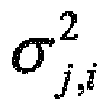

- With reference to the fifth possible implementation of the first aspect or the sixth possible implementation of the first aspect of the embodiments of the present invention, in a seventh possible implementation of the first aspect of the embodiments of the present invention,
the calculating, according to the coding distortion of the ith image block in the jth frame of image and Bj,i, the average coding distortion of the j coding distortions corresponding to the ith image blocks in all of the previous j frames of images includes:
calculating, by using the following formula, the average coding distortion of the j coding distortions corresponding to the ith image blocks in all of the previous j frames of images:


- With reference to the third possible implementation of the first aspect to the seventh possible implementation of the first aspect of the embodiments of the present invention, in an eighth possible implementation of the first aspect of the embodiments of the present invention,
the calculating, according to the first statistical characteristic, a first probability that an image block in each of the (K+1)th frame of image of the video sequence to the (K+L)th frame of image of the video sequence uses the first background frame as a reference includes:
calculating the first probability by using the following formula: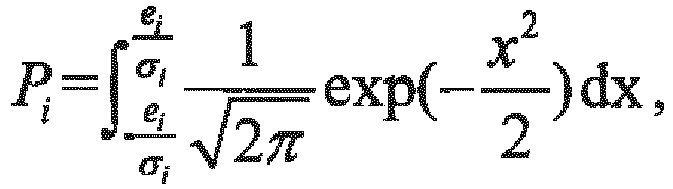


- With reference to the second possible implementation of the first aspect to the seventh possible implementation of the first aspect of the embodiments of the present invention, in a ninth possible implementation of the first aspect of the embodiments of the present invention,
the calculating, according to the first statistical characteristic, a first probability that an image block in each of the (K+1)th frame of image of the video sequence to the (K+L)th frame of image of the video sequence uses the first background frame as a reference includes:
calculating the first probability by using the following formula:


- With reference to the first possible implementation of the first aspect to the ninth possible implementation of the first aspect of the embodiments of the present invention, in a tenth possible implementation of the first aspect of the embodiments of the present invention,
the calculating, according to the first probability, the QP used for encoding the first background frame includes:
calculating, by using the following formula, the QP used for encoding the first background frame:
- With reference to the third possible implementation of the first aspect to the ninth possible implementation of the first aspect of the embodiments of the present invention, in a tenth possible implementation of the first aspect of the embodiments of the present invention,
the calculating, according to the first probability, the QP used for encoding the first background frame includes:
calculating, by using the following formula, the QP used for encoding the first background frame:
- With reference to the third possible implementation of the first aspect to the eleventh possible implementation of the first aspect of the embodiments of the present invention, in a twelfth possible implementation of the first aspect of the embodiments of the present invention,
the determining a first background frame includes:
performing iteration on the previous K frames of images by using the following formula, to obtain a target iteration pixel value that is calculated according to a pixel value of the Kth frame of image, and using the target iteration pixel value as a pixel value of the first background frame:
- With reference to the first possible implementation of the first aspect to the twelfth possible implementation of the first aspect of the embodiments of the present invention, in a thirteenth possible implementation of the first aspect of the embodiments of the present invention,
after the obtaining a first statistical characteristic of previous K frames of images of the video sequence, the method further includes: - obtaining a second statistical characteristic of the (K+1)th frame of image of the video sequence to the (K+L)th frame of image of the video sequence;
- determining a second background frame, where the second background frame is used as a reference when encoding is performed on the (K+L+1)th frame of image of the video sequence to the (K+N)th frame of image of the video sequence, where N > L+1, and N is a positive integer;
- counting a quantity of times that the ith image block in the first background frame is used as a reference block, where the locations of the K image blocks are corresponding to the location of the ith image block in the first background frame;
- calculating a probability prediction error according to the first probability and the quantity of times that the ith image block in the first background frame is used as a reference block;
- calculating, according to the second statistical characteristic, a second probability that the (K+L+1)th frame of image to the (K+N)th frame of image of the video sequence use the second background frame as a reference;
- calculating, according to the second probability and the probability prediction error, a third probability that each of the (K+L+1)th frame of image of the video sequence to the (K+N)th frame of image of the video sequence uses the second background frame as a reference;
- calculating, according to the third probability, a QP used for encoding the second background frame;
- encoding the second background frame according to the QP used for encoding the second background frame, to obtain a second background long-term reference frame; and
- encoding the (K+L+1)th frame of image of the video sequence to the (K+N)th frame of image of the video sequence according to the second background long-term reference frame.
- A second aspect of the embodiments of the present invention provides a video decoding method, including:
- decoding previous K frames of images of a video sequence, where K is a positive integer;
- decoding a first background frame, where the first background frame is used as a reference when decoding is performed on the (K+1)th frame of image of the video sequence to the (K+L)th frame of image of the video sequence, where L is a positive integer; and
- using the first background frame as a first long-term reference frame, and decoding the (K+1)th frame of image to the (K+L)th frame of image of the video sequence, where L is a positive integer.
- With reference to the second aspect of the embodiments of the present invention, in a first possible implementation of the second aspect of the embodiments of the present invention,
after the using the first background frame as a first long-term reference frame, and decoding the (K+1)th frame of image to the (K+L)th frame of image of the video sequence, the method further includes: - decoding a second background frame, where the second background frame is used as a reference when decoding is performed on the (K+L+1)th frame of image to the (K+N)th frame of image of the video sequence, where N > L+1, and N is a positive integer; and
- using the second background frame as a second long-term reference frame, and decoding the (K+L+1)th frame of image to the (K+N)th frame of image of the video sequence.
- A third aspect of the embodiments of the present invention provides a video encoding apparatus, including:
- an obtaining unit, configured to obtain a first statistical characteristic of previous K frames of images of a video sequence, where K is a positive integer;
- a first determining unit, configured to determine a first background frame, where the first background frame is used as a reference when encoding is performed on the (K+1)th frame of image of the video sequence to the (K+L)th frame of image of the video sequence, where L is a positive integer;
- a second determining unit, configured to determine, according to the first statistical characteristic obtained by the obtaining unit, a quantization parameter QP used for encoding the first background frame determined by the first determining unit;
- a first encoding unit, configured to encode the first background frame according to the QP determined by the second determining unit, to obtain a first background long-term reference frame; and
- a second encoding unit, configured to encode the (K+1)th frame of image of the video sequence to the (K+L)th frame of image of the video sequence according to the first background long-term reference frame obtained by the first encoding unit.
- With reference to the third aspect of the embodiments of the present invention, in a first possible implementation of the third aspect of the embodiments of the present invention,
the second determining unit is configured to: - calculate, according to the first statistical characteristic, a first probability that an image block in each of the (K+1)th frame of image of the video sequence to the (K+L)th frame of image of the video sequence uses the first background frame as a reference; and
- calculate, according to the first probability, the QP used for encoding the first background frame.
- With reference to the third aspect of the embodiments of the present invention or the first possible implementation of the third aspect, in a second possible implementation of the third aspect of the embodiments of the present invention,
the first statistical characteristic includes a variance of K centroid values corresponding to K image blocks and an average coding distortion of K coding distortions corresponding to the K image blocks, where the K image blocks are image blocks located at same locations in all of the previous K frames of images, the variance of the K centroid values is a variance of a centroid value sequence constituted by the K centroid values, and the average coding distortion of the K coding distortions is an average value of a coding distortion sequence constituted by the K coding distortions. - With reference to the second possible implementation of the third aspect of the embodiments of the present invention, in a third possible implementation of the third aspect of the embodiments of the present invention,
the K image blocks are the ith image blocks in all of the previous K frames of images, where i is a positive integer; and
the obtaining unit is configured to:
perform iteration calculation according to an order from the second frame of image of the previous K frames of images to the Kth frame of image of the previous K frames of images, to obtain the variance of the K centroid values corresponding to the ith image blocks in all of the previous K frames of images, and the average coding distortion of the K coding distortions corresponding to the ith image blocks in all of the previous K frames of images, where the iteration calculation includes: - determining whether the ith image block in the jth frame of image of the video sequence belongs to a background region; and
- when the ith image block in the ith frame of image of the video sequence belongs to the background region, obtaining, according to Bj,i = Bj-1,i+1, a quantity Bj,i that previous j image blocks belong to the background region, where the previous j image blocks are the ith image blocks in all of previous j frames of images of the video sequence; and calculating, according to Bj,i, a variance of j centroid values corresponding to the ith image blocks in all of the previous j frames of images and an average coding distortion of j coding distortions corresponding to the ith image blocks in all of the previous j frames of images, where K ≥ j ≥ 2, and when the ith image block in the first frame of image of the video sequence belongs to the background region, B1,i is 1, or when the ith image block in the first frame of image of the video sequence does not belong to the background region, B1,i is 0; or
- when the ith image block in the jth frame of image of the video sequence does not belong to the background region, obtaining, according to Bj,i = Bj-1,i, a quantity Bj,i that previous j image blocks belong to the background region, where the previous j image blocks are the ith image blocks in all of previous j frames of images, using a variance of j-1 centroid values corresponding to the ith image blocks in all of previous j-1 frames of images of the video sequence as a variance of j centroid values corresponding to the ith image blocks in all of the previous j frames of images, and using an average coding distortion of j-1 coding distortions corresponding to the ith image blocks in all of the previous j-1 frames of images of the video sequence as an average coding distortion of j coding distortions corresponding to the ith image blocks in all of the previous j frames of images of the video sequence, where when j is 2, the variance of the j-1 centroid values corresponding to the ith image blocks in all of the previous j-1 frames of images is a first preset value, and the average coding distortion of the j-1 coding distortions corresponding to the ith image blocks in all of the previous j-1 frames of images is a second preset value or a coding distortion of the first frame of image of the video sequence.
- With reference to the third possible implementation of the third aspect of the embodiments of the present invention, in a fourth possible implementation of the third aspect of the embodiments of the present invention,
the obtaining unit is configured to: determine whether a horizontal component of a minimum motion vector in motion vectors of an image subblock of the ith image block in the jth frame of image is less than a first preset threshold, and whether a vertical component of the minimum motion vector is less than a second preset threshold; and when the horizontal component is less than the first preset threshold, and the vertical component is less than the second preset threshold, determine that the ith image block in the jth frame of image belongs to the background region; or when the horizontal component is not less than the first preset threshold or the vertical component is not less than the second preset threshold, determine that the ith image block in the jth frame of image does not belong to the background region. - With reference to the third possible implementation of the third aspect or the fourth possible implementation of the third aspect of the embodiments of the present invention, in a fifth possible implementation of the third aspect of the embodiments of the present invention,
the obtaining unit is configured to: obtain a centroid value of the ith image block in the jth frame of image and a coding distortion of the ith image block in the jth frame of image; calculate, according to the centroid value of the ith image block in the jth frame of image and Bj,i, the variance of the j centroid values corresponding to the ith image blocks in all of the previous j frames of images; and calculate, according to the coding distortion of the ith image block in the jth frame of image and Bj,i, the average coding distortion of the j coding distortions corresponding to the ith image blocks in all of the previous j frames of images. - With reference to the fifth possible implementation of the third aspect of the embodiments of the present invention, in a sixth possible implementation of the third aspect of the embodiments of the present invention,
the obtaining unit is configured to calculate, by using the following formula, the variance of the j centroid values corresponding to the ith image blocks in all of the previous j frames of images:


- With reference to the fifth possible implementation of the third aspect or the sixth possible implementation of the third aspect of the embodiments of the present invention, in a seventh possible implementation of the third aspect of the embodiments of the present invention,
the obtaining unit is configured to calculate, by using the following formula, the average coding distortion of the j coding distortions corresponding to the ith image blocks in all of the previous j frames of images:

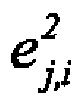

- With reference to the third possible implementation of the third aspect to the seventh possible implementation of the third aspect of the embodiments of the present invention, in an eighth possible implementation of the third aspect of the embodiments of the present invention,
the second determining unit is configured to calculate the first probability by using the following formula:


- With reference to the second possible implementation of the third aspect to the seventh possible implementation of the third aspect of the embodiments of the present invention, in a ninth possible implementation of the third aspect of the embodiments of the present invention,
the second determining unit is configured to calculate the first probability by using the following formula:


- With reference to the first possible implementation of the third aspect to the ninth possible implementation of the third aspect of the embodiments of the present invention, in a tenth possible implementation of the third aspect of the embodiments of the present invention,
the second determining unit is configured to calculate, by using the following formula, the QP used for encoding the first background frame:
- With reference to the third possible implementation of the third aspect to the ninth possible implementation of the third aspect of the embodiments of the present invention, in an eleventh possible implementation of the third aspect of the embodiments of the present invention,
the second determining unit is configured to calculate, by using the following formula, the QP used for encoding the first background frame:
- With reference to the third possible implementation of the third aspect to the eleventh possible implementation of the third aspect of the embodiments of the present invention, in a twelfth possible implementation of the third aspect of the embodiments of the present invention,
the first determining unit is configured to: perform iteration on the previous K frames of images by using the following formula, to obtain a target iteration pixel value that is calculated according to a pixel value of the Kth frame of image, and use the target iteration pixel value as a pixel value of the first background frame:
- With reference to the first possible implementation of the third aspect to the twelfth possible implementation of the third aspect of the embodiments of the present invention, in a thirteenth possible implementation of the third aspect of the embodiments of the present invention,
the obtaining unit is further configured to obtain a second statistical characteristic of the (K+1)th frame of image of the video sequence to the (K+L)th frame of image of the video sequence;
the first determining unit is further configured to determine a second background frame, where the second background frame is used as a reference when encoding is performed on the (K+L+1)th frame of image of the video sequence to the (K+N)th frame of image of the video sequence, where N > L+1, and N is a positive integer;
the second determining unit is further configured to: count a quantity of times that the ith image block in the first background frame is used as a reference block, where the locations of the K image blocks are corresponding to the location of the ith image block in the first background frame; calculate a probability prediction error according to the first probability and the quantity of times that the ith image block in the first background frame is used as a reference block; calculate, according to the second statistical characteristic obtained by the obtaining unit, a second probability that the (K+L+1)th frame of image to the (K+N)th frame of image of the video sequence use the second background frame as a reference, where the second background frame is determined by the first determining unit; calculate, according to the second probability and the probability prediction error, a third probability that each of the (K+L+1)th frame of image of the video sequence to the (K+N)th frame of image of the video sequence uses the second background frame as a reference; and calculate, according to the third probability, a QP used for encoding the second background frame;
the first encoding unit is further configured to encode the second background frame according to the QP used for encoding the second background frame, to obtain a second background long-term reference frame, where the QP is determined by the second determining unit; and
the second encoding unit is further configured to encode the (K+L+1)th frame of image of the video sequence to the (K+N)th frame of image of the video sequence according to the second background long-term reference frame obtained by the first encoding unit. - A fourth aspect of the embodiments of the present invention provides a video decoding apparatus, including:
- an image decoding unit, configured to decode previous K frames of images of a video sequence, where K is a positive integer; and
- a background frame decoding unit, configured to decode a first background frame, where the first background frame is used as a reference when decoding is performed on the (K+1)th frame of image of the video sequence to the (K+L)th frame of image of the video sequence, where L is a positive integer, where
- the image decoding unit is further configured to: use the first background frame, obtained by the background frame decoding unit, as a first long-term reference frame, and decode the (K+1)th frame of image to the (K+L)th frame of image of the video sequence, where L is a positive integer.
- With reference to the fourth aspect of the embodiments of the present invention, in a first possible implementation of the fourth aspect of the embodiments of the present invention,
the background frame decoding unit is further configured to decode a second background frame, where the second background frame is used as a reference when decoding is performed on the (K+L+1)th frame of image to the (K+N)th frame of image of the video sequence, where N > L+1, and N is a positive integer; and
the image decoding unit is further configured to: use the second background frame, obtained by the background frame decoding unit, as a second long-term reference frame, and decode the (K+L+1)th frame of image to the (K+N)th frame of image of the video sequence. - It can be learned from the foregoing technical solutions that the embodiments of the present invention have the following advantages:
- According to the embodiments of the present invention, the first statistical characteristic of the previous K frames of images of the video sequence is obtained; the QP used for encoding the first background frame is determined according to the first statistical characteristic; the determined first background frame is encoded according to the QP used for encoding the first background frame, to obtain the first background long-term reference frame; and encoding is performed on the (K+1)th frame of image of the video sequence to the (K+L)th frame of image of the video sequence according to the first background long-term reference frame. In the embodiments of the present invention, when encoding is performed on the (K+1)th frame of image of the video sequence to the (K+L)th frame of image of the video sequence, the used quantization parameter for encoding the background long-term reference frame is determined according to the first statistical characteristic related to video content of the previous K frames of images. This improves overall video encoding quality.
-
-
FIG. 1 is a schematic diagram of an embodiment of a video encoding method according to embodiments of the present invention; -
FIG. 2 is a schematic diagram of another embodiment of a video encoding method according to embodiments of the present invention; -
FIG. 3 is a schematic diagram of another embodiment of a video encoding method according to embodiments of the present invention; -
FIG 4 is a schematic diagram of an embodiment of a video decoding method according to embodiments of the present invention; -
FIG 5 is a schematic diagram of an embodiment of a video encoding apparatus according to embodiments of the present invention; -
FIG. 6 is a schematic diagram of an embodiment of a video decoding apparatus according to embodiments of the present invention; -
FIG. 7 is a schematic diagram of another embodiment of a video encoding apparatus according to embodiments of the present invention; and -
FIG. 8 is a schematic diagram of another embodiment of a video decoding apparatus according to embodiments of the present invention. - The embodiments of the present invention provide a video encoding and decoding method and apparatus, to improve overall video encoding quality.
- To make persons skilled in the art understand the technical solutions in the present invention better, the following clearly and completely describes the technical solutions in the embodiments of the present invention with reference to the accompanying drawings in the embodiments of the present invention. Apparently, the described embodiments are merely a part rather than all of the embodiments of the present invention. All other embodiments obtained by persons of ordinary skill in the art based on the embodiments of the present invention without creative efforts shall fall within the protection scope of the present invention.
- In the specification, claims, and accompanying drawings of the present invention, the terms "first", "second", and the like (if they exist) are intended to distinguish between similar objects but do not necessarily indicate a specific order or sequence. It should be understood that the data termed in such a way are interchangeable in proper circumstances, so that the embodiments described herein can be implemented in an order other than the order illustrated or described herein. Moreover, the terms "include", "contain", and any other variants mean to cover the non-exclusive inclusion, for example, a process, method, system, product, or device that includes a list of steps or units is not necessarily limited to those steps or units, but may include other steps or units not expressly listed or inherent to such a process, method, system, product, or device.
- The following first briefly describes some concepts that are possibly used in the embodiments of the present invention.
- At present, there are two international organizations specialized in formulating video encoding standards: the Moving Picture Experts Group (English full name: Moving Pictures Experts Group, MPEG for short) of the International Organization for Standardization (English full name: International Organization for Standardization, ISO for short) and the International Electrotechnical Commission (English full name: International Electrotechnical Commission, IEC for short), and the Video Coding Experts Group (English full name: Video Coding Experts Group, VCEG for short) of the International Telecommunication Union-Telecommunication standardization sector (English full name: International Telecommunication Union-Telecommunication standardization sector, ITU-T for short). The MPEG, established in 1986, is specialized in formulating related standards in the multimedia field, which are mainly applied to storage, television broadcasting, streaming media over the Internet or a wireless network, or the like. The ITU-T mainly formulates video encoding standards in the field of real-time video communications, for example, applications such as a video call and a video conference. In the past decades, video encoding standards specific to various applications have been made internationally, mainly including: the MPEG-1 standard for VCD, the MPEG-2 standard for DVD and DVB, the H.261 standard and the H.263 standard for video conference, the MPEG-4 standard used for encoding objects of any shape, the newest internationally made H.264/AVC standard, and the HEVC standard.
- In the HEVC standard, a video sequence includes a series of picture (English: picture) frames. The picture frame is further divided into slices (English: slice), and the slice is further divided into blocks (English: block). Video encoding is performed in unit of a block, and encoding processing may be performed row by row, starting from the left corner of a picture, from left to right and top to bottom.
- In the HEVC standard, there are two types of reference frames: a short-term reference frame and a long-term reference frame. The short-term reference frame is generally a reconstructed frame relatively close to a current reference frame, and has a short-term characteristic of a current frame, for example, has a motion foreground of a shape similar to that of the current frame. The long-term reference frame may be a reconstructed frame relatively far away from the current frame, or may be a reference frame obtained by means of synthesis, and has a long-term characteristic of a video sequence segment, for example, has a background frame of the video sequence segment.
- YUV: YUV is a color encoding method (belonging to PAL) used by an European television system, and is a color space used in PAL and SECAM analogue color television standards. In a modern color television system, a three-tube color camera or a color CCD camera is usually used to capture an image. Then, color separation, and respective amplification and correction are performed on an obtained color image signal to obtain an RGB image signal. Then the image signal is processed by a matrix transformation circuit to obtain a luminance signal Y and two color difference signals B-Y (that is, U) and R-Y (that is, V). Finally, a transmit end separately encodes the luminance signal and the two color difference signals, and sends the three signals on a same channel. Such a color representation method is a so-called YUV color space representation. An importance of the YUV color space is that the luminance signal Y is separated from the chrominance signals U and V in the color space representation.
- A principle of YUV is that luminance is separated from chrominance. Research has proved that human eyes are more sensitive to luminance than chrominance. Based on this principle, if chrominance information is reduced, human cannot perceive such a change by eyes. "Y" represents luminance (Luminance or Luma), that is, a gray scale value. "U" and "V" represent chrominance (Chrominance or Chroma), and are used to describe a video color and saturation and specify a color of a pixel.
- An I frame (I frame) is also referred to as an intra picture (intra picture). The I frame is usually the first frame of each GOP. After being compressed appropriately, the I frame is used as a reference point for random access, and can be used as an image. In an encoding process, some video frame sequences are compressed into the I frame, some video frame sequences are compressed into a P frame, and some video frame sequences are compressed into a B frame. An I frame method is an intra-frame compression method, and is also referred to as a "key frame" compression method. The I frame method is a compression technology based on discrete cosine transform DCT (Discrete Cosine Transform), and this algorithm is similar to a JPEG compression algorithm. A compression ratio of 1/6 can be achieved by using I frame compression, without apparent compression traces.
- Characteristics of the I frame: The I frame is an intra frame, and uses an intra-frame prediction method for compression coding. When decoding is performed, a complete image can be reconstructed by using only data in the I frame. The I frame can be generated without using another picture as a reference. The I frame is a reference frame for a P frame and a B frame (quality of the I frame directly affects quality of each frame following the I frame in a same group). The I frame is a basic frame (the first frame) of a frame group GOP, and there is only one I frame in the group. A motion vector does not need to be considered for the I frame. The I frame has a relatively large amount of data information.
- A P frame (P frame) is a forward-predicted frame.
- Prediction and reconstruction of the P frame: The P frame uses the I frame as a reference frame. A prediction value and a motion vector of "a point" of the P frame are found in the I frame; a prediction difference is calculated; and the prediction difference and the motion vector are transmitted together. A receive end finds, in the I frame, the prediction value of "the point" of the P frame according to the motion vector, and adds up the prediction value and the difference to obtain a reconstruction value of "the point" of the P frame, so as to obtain the complete P frame.
- Characteristics of the P frame: The P frame is an encoding frame following the I frame. The P frame uses a motion compensation method to transmit a difference between the P frame and a frame previous to the P frame and a motion vector (a prediction error). When decoding is performed, a complete P frame image can be reconstructed only by calculating a sum of the prediction value of the frame and the prediction error. Encoding of the P frame belongs to forward predictive inter-frame coding, and uses only a frame previous to the P frame as a reference. The P frame may be a reference frame of a P frame following this P frame, or may be a reference frame of a B frame previous to or following the P frame. As the P frame is a reference frame, diffusion of a decoding error may be caused. A compression ratio of the P frame is relatively high as the P frame transmits a difference.
- A B frame (B frame) is a bi-directional interpolated prediction frame.
- Prediction and reconstruction of the B frame: The B frame uses a frame previous to the B frame and a frame following the B frame as reference frames. A prediction value and two motion vectors of "a point" of the B frame are "found"; a prediction difference is calculated; and the prediction difference and the motion vectors are transmitted. A receive end "finds (calculates)" the prediction value between the two reference frames according to the motion vectors, and adds up the prediction value and the difference to obtain a reconstruction value of "the point" of the B frame, so that a complete B frame can be obtained.
- Characteristics of the B frame: The B frame is predicted according to a frame previous to the B frame and a frame following the B frame. The B frame transmits a prediction error between the B frame and the frame previous to the B frame, a prediction error between the B frame and the frame following the B frame, and motion vectors. The B frame is a bi-directional predicted frame. The B frame has a highest compression ratio because the B frame reflects only a change status of a motion subject between the two reference frames, and prediction is relatively accurate.
- The following describes some background technologies related to the present invention.
- A video is strongly time-correlated, that is, two adjacent frames of images have many similar image blocks. Therefore, in inter prediction of video encoding, for a current block, motion search is usually performed on a reconstructed frame, to find a block that matches the current block best as a reference block. However, due to factors such as blocking, a light change, noise, and a camera movement, a relatively good reference block may not be found in a nearest frame of image for the current block. Therefore, a multi-reference frame coding technology is introduced. As shown in
FIG. 1 , motion search is performed in previous k reference frames separately to find an image block with optimum encoding performance for an image block in the current frame. - In the multi-reference frame coding technology, during a search for a module that matches an image block best, motion search is performed first from a previous reference frame, to find an optimum motion vector with a smallest rate distortion cost within a specific search range, and then motion search is performed on a next reference frame. A motion vector and a used reference frame can be finally determined only after motion search is performed on all reference frames.
- In a video compression process, if a compression bit rate is excessively large, an image distortion is prone to occur. However, if the compression bit rate is excessively small, data bandwidth cannot be reduced to a threshold range allowed by a network or a computer. To address this issue, an RDO (Rate Distortion Optimization, rate distortion optimization) technology emerges. A key of the RDO technology is to find, by calculating an encoding cost for encoding an image block in different encoding modes, an appropriate balance between improving the compression bit rate and avoiding distortion, that is, ensuring both the compression bit rate and video quality.
- The rate distortion optimization technology is restricted by a given bit rate condition, and expects to minimize a coding distortion by selecting an appropriate coding parameter according to the rate distortion optimization technology. In all existing mainstream encoding frameworks, a Lagrange multiplier is used to transform a constrained problem into an unconstrained problem, that is, J in a minimization formula (2) is used to select an optimum mode.

- J is usually referred to as a rate distortion cost RD cost, and λ is referred to as a Lagrange multiplier, and is usually adjusted by adjusting a quantization parameter (Quantization Parameter, QP). λ and QP have the following relationship:

- QPfactor is a constant related to an encoding mode, and is an important counter of determining video bitstream quality. As the QP is described in detail in both the H.264 protocol and the H.265/HEVC protocol, details are not repeated herein.
- It can be learned that a value of the QP directly determines whether a reconstructed frame is a low-bit-rate and high-distortion reconstructed frame or a high-bit-rate and low-distortion reconstructed frame. That is, the QP directly affects encoding effect.
- The following describes the technical solutions of the embodiments of the present invention.
- A video encoding method provided in an embodiment of the present invention is described first. The video encoding method provided in this embodiment of the present invention is executed by a video encoding apparatus. The video encoding apparatus may be any apparatus that needs to output and store a video, such as a mobile phone, a notebook computer, a tablet computer, a personal computer, or another device.
- Referring to
FIG. 2 , an embodiment of a video encoding method in the embodiments of the present invention includes the following steps. - 201. Obtain a first statistical characteristic of previous K frames of images of a video sequence.
- In this embodiment, when encoding is performed on the previous K frames of images of the video sequence, the encoding is performed according to a preconfigured short-term reference frame. The video sequence is a video sequence that is pre-obtained by a video encoding apparatus. The preconfigured short-term reference frame may be a default short-term reference frame in the HEVC standard.
- K is a positive integer. The first statistical characteristic may be a video image statistical characteristic of the previous K frames of images of the video sequence. For example, the first statistical characteristic includes a variance of K centroid values corresponding to K image blocks and an average coding distortion of K coding distortions corresponding to the K image blocks. The K image blocks are image blocks located at same locations in all of the previous K frames of images. The variance of the K centroid values is a variance of a centroid value sequence constituted by the K centroid values, and the average coding distortion of the K coding distortions is an average value of a coding distortion sequence constituted by the K coding distortions. Certainly, the first statistical characteristic may alternatively include a variance of centroid values at multiple locations and an average coding distortion corresponding to the multiple locations. Each location is corresponding to K image blocks at the location in each of the previous K frames of images. In the variance of the centroid values at the multiple locations, a variance of centroid values at each location is the variance of the K centroid values corresponding to the K image blocks corresponding to the location. In the average coding distortion corresponding to the multiple locations, an average coding distortion corresponding to each location is the average coding distortion of the K coding distortions corresponding to the K image blocks. For example, the first statistical characteristic includes the variance of the K centroid values corresponding to the K image blocks corresponding to each location and the average coding distortion of the K image blocks corresponding to each location. This is not limited herein.
- 202. Determine a first background frame, where the first background frame is used as a reference when encoding is performed on the (K+1)th frame of image of the video sequence to the (K+L)th frame of image of the video sequence.
- L is a positive integer. The first background frame, used as a long-term reference frame, is used as a reference when encoding is performed on the (K+1)th frame of image of the video sequence to the (K+L)th frame of image of the video sequence.
- 203. Determine, according to the first statistical characteristic, a quantization parameter QP used for encoding the first background frame.
- Optionally, the determining, according to the first statistical characteristic, a quantization parameter QP used for encoding the first background frame may include: calculating, according to the first statistical characteristic, a first probability that an image block in each of the (K+1)th frame of image of the video sequence to the (K+L)th frame of image of the video sequence uses the first background frame as a reference; and calculating, according to the first probability, the QP used for encoding the first background frame.
- 204. Encode the first background frame according to the QP used for encoding the first background frame, to obtain a first background long-term reference frame.
- 205. Encode the (K+1)th frame of image of the video sequence to the (K+L)th frame of image of the video sequence according to the first background long-term reference frame.
- According to this embodiment of the present invention, the first statistical characteristic of the previous K frames of images of the video sequence is obtained; the QP used for encoding the first background frame is determined according to the first statistical characteristic; the determined first background frame is encoded according to the QP used for encoding the first background frame, to obtain the first background long-term reference frame; and encoding is performed on the (K+1)th frame of image of the video sequence to the (K+L)th frame of image of the video sequence according to the first background long-term reference frame. In this embodiment of the present invention, when encoding is performed on the (K+1)th frame of image of the video sequence to the (K+L)th frame of image of the video sequence, the used quantization parameter for encoding the background long-term reference frame is determined according to the first statistical characteristic related to video content of the previous K frames of images. This improves overall video encoding quality.
- In the embodiment shown in
FIG. 2 , the determining, according to the first statistical characteristic, a quantization parameter QP used for encoding the first background frame may include: calculating, according to the first statistical characteristic, a first probability that an image block in each of the (K+1)th frame of image of the video sequence to the (K+L)th frame of image of the video sequence uses the first background frame as a reference; and calculating, according to the first probability, the QP used for encoding the first background frame. There are multiple implementations of the video encoding method in this embodiment of the present invention. Descriptions are provided separately by using examples below. - Referring to
FIG. 3 , an embodiment of a video encoding method in the embodiments of the present invention includes the following steps. - 301. Obtain a first statistical characteristic of previous K frames of images of a video sequence.
- K is a positive integer.
- In this embodiment, the first statistical characteristic includes a variance of K centroid values corresponding to K image blocks and an average coding distortion of K coding distortions corresponding to the K image blocks. The K image blocks are the ith image blocks in all of the previous K frames of images, where i is a positive integer. The variance of the K centroid values is a variance of a centroid value sequence constituted by the K centroid values. The average coding distortion of the K coding distortions is an average value of a coding distortion sequence constituted by the K coding distortions.
- In this embodiment, there are multiple implementations of obtaining the first statistical characteristic of the previous K frames of images of the video sequence. Descriptions are provided separately below.
- (1) Obtaining the first statistical characteristic of the previous K frames of images of the video sequence may include:
- performing iteration calculation according to an order from the second frame of image of the previous K frames of images to the Kth frame of image of the previous K frames of images, to obtain the variance of the K centroid values corresponding to the ith image blocks in all of the previous K frames of images, and the average coding distortion of the K coding distortions corresponding to the ith image blocks in all of the previous K frames of images, where the iteration calculation includes:
- obtaining a centroid value and a coding distortion of the ith image block in the jth frame; and
- calculating, according to the centroid value and the coding distortion of the ith image block in the jth frame, a variance of j centroid values corresponding to the ith image blocks in all of previous j frames of images and an average coding distortion corresponding to j coding distortions corresponding to the ith image blocks in all of the previous j frames of images, where K ≥ j ≥ 2, j is a positive integer, a variance of a centroid value of the ith image block of a previous frame of image is 0, and an average coding distortion of the ith image block in the previous frame of image is a coding distortion of the ith image block in the first frame of image.
The obtaining a centroid value ωj,i and a coding distortion


The calculating, according to the centroid value and the coding distortion of the ith image block in the jth frame, a variance of j centroid values corresponding to the ith image blocks in all of previous j frames of images and an average coding distortion corresponding to j coding distortions corresponding to the ith image blocks in all of the previous j frames of images may be performed by using the following formulas (6), (7), and (8):


- (2) Obtaining the first statistical characteristic of the previous K frames of images of the video sequence may alternatively include:
performing iteration calculation according to an order from the second frame of image of the previous K frames of images to the Kth frame of image of the previous K frames of images, to obtain the variance of the K centroid values corresponding to the ith image blocks in all of the previous K frames of images, and the average coding distortion of the K coding distortions corresponding to the ith image blocks in all of the previous K frames of images, where the iteration calculation includes:- determining whether the ith image block in the jth frame of image of the video sequence belongs to a background region (that is, a region in which a motion is unobvious in an image);
- when the ith image block in the jth frame of image of the video sequence belongs to the background region, obtaining, according to Bj,i = Bj-1,i+1, a quantity Bj,i that previous j image blocks belong to the background region, where the previous j image blocks are the ith image blocks in all of previous j frames of images of the video sequence; and calculating, according to Bj,i, a variance of j centroid values corresponding to the ith image blocks in all of the previous j frames of images and an average coding distortion of j coding distortions corresponding to the ith image blocks in all of the previous j frames of images, where K ≥ j ≥ 2, j is a positive integer, and when the ith image block in the first frame of image of the video sequence belongs to the background region, B1,i is 1, or when the ith image block in the first frame of image of the video sequence does not belong to the background region, B1,i is 0; or
- when the ith image block in the jth frame of image of the video sequence does not belong to the background region, obtaining, according to Bj,i = Bj-1,i, a quantity Bj,i that previous j image blocks belong to the background region, where the previous j image blocks are the ith image blocks in all of previous j frames of images, using a variance of j-1 centroid values corresponding to the ith image blocks in all of previous j-1 frames of images of the video sequence as a variance of j centroid values corresponding to the ith image blocks in all of the previous j frames of images, and using an average coding distortion of j-1 coding distortions corresponding to the ith image blocks in all of the previous j-1 frames of images of the video sequence as an average coding distortion of j coding distortions corresponding to the ith image blocks in all of the previous j frames of images of the video sequence, where when j is 2, the variance of the j-1 centroid values corresponding to the ith image blocks in all of the previous j-1 frames of images is a first preset value (for example, 0), and the average coding distortion of the j-1 coding distortions corresponding to the ith image blocks in all of the previous j-1 frames of images is a second preset value or a coding distortion of the first frame of image of the video sequence.
- Optionally, the determining whether the ith image block in the jth frame of the video sequence belongs to a background region may include:
- determining whether a horizontal component of a minimum motion vector in motion vectors of an image subblock of the ith image block in the jth frame of image is less than a first preset threshold, and whether a vertical component of the minimum motion vector is less than a second preset threshold; and
- when the horizontal component is less than the first preset threshold, and the vertical component is less than the second preset threshold, determining that the ith image block in the jth frame of image belongs to the background region; or
- when the horizontal component is not less than the first preset threshold or the vertical component is not less than the second preset threshold, determining that the ith image block in the jth frame of image does not belong to the background region.
- Optionally, the first preset threshold and the second threshold may be the same or different. For example, both the first preset threshold and the second preset threshold may be 1; or the first preset threshold may be 0.99, and the second preset threshold may be 1.01, or the like. This is not limited herein.
- Optionally, the calculating, according to Bj,i, a variance of j centroid values corresponding to the ith image blocks in all of the previous j frames of images and an average coding distortion of j coding distortions corresponding to the ith image blocks in all of the previous j frames of images may include:
- obtaining a centroid value of the ith image block in the jth frame of image and a coding distortion of the ith image block in the jth frame of image;
- calculating, according to the centroid value of the ith image block in the jth frame of image and Bj,i, the variance of the j centroid values corresponding to the ith image blocks in all of the previous j frames of images; and
- calculating, according to the coding distortion of the ith image block in the jth frame of image and Bj,i, the average coding distortion of the j coding distortions corresponding to the ith image blocks in all of the previous j frames of images.
- Optionally, the calculating, according to the centroid value of the ith image block in the jth frame of image and Bj,i, the variance of the j centroid values corresponding to the ith image blocks in all of the previous j frames of images may include:
calculating, by using the following formulas (9) and (10), the variance of the j centroid values corresponding to the ith image blocks in all of the previous j frames of images:


- Optionally, the calculating, according to the coding distortion of the ith image block in the jth frame of image and Bj,i, the average coding distortion of the j coding distortions corresponding to the ith image blocks in all of the previous j frames of images may include:
calculating, by using the following formula (11), the average coding distortion of the j coding distortions corresponding to the ith image blocks in all of the previous j frames of images:


- 302. Determine a first background frame, where the first background frame is used as a reference when encoding is performed on the (K+1)th frame of image of the video sequence to the (K+L)th frame of image of the video sequence, where L is a positive integer.
- L is a positive integer.
- In this embodiment, there are multiple implementations of determining the first background frame. Descriptions are separately provided below.
- (1) Iteration is performed on the previous K frames of images by using the following formula (12), to obtain a target iteration pixel value that is calculated according to a pixel value of the Kth frame of image, and the target iteration pixel value is used as a pixel value of the first background frame:

- (2) When the first statistical characteristic of the previous K frames of images of the video sequence is obtained in manner (2) in
step 301, determining the first background frame may include:
performing iteration on the previous K frames of images by using the following formula (13), to obtain a target iteration pixel value that is calculated according to a pixel value of the Kth frame of image, and using the target iteration pixel value as a pixel value of the first background frame.
- 303. Calculate, according to the first statistical characteristic, a first probability that an image block in each of the (K+1)th frame of image of the video sequence to the (K+L)th frame of image of the video sequence uses the first background frame as a reference.
- In this embodiment, there are multiple implementations of calculating, according to the first statistical characteristic, the first probability that the image block in each of the (K+1)th frame of image of the video sequence to the (K+L)th frame of image of the video sequence uses the first background frame as a reference. Descriptions are separately provided below.
- (1) When the first statistical characteristic of the previous K frames of images of the video sequence is obtained in manner (1) in
step 301, the calculating, according to the first statistical characteristic, a first probability that an image block in each of the (K+1)th frame of image of the video sequence to the (K+L)th frame of image of the video sequence uses the first background frame as a reference may include:
calculating the first probability by using the following formula (14):


- (2) When the first statistical characteristic of the previous K frames of images of the video sequence is obtained in manner (2) in
step 301, the calculating, according to the first statistical characteristic, a first probability that an image block in each of the (K+1)th frame of image of the video sequence to the (K+L)th frame of image of the video sequence uses the first background frame as a reference may include:
calculating the first probability by using the following formula (15):

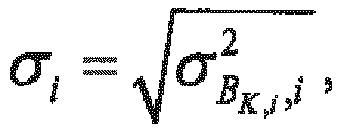


- Certainly, the first probability may be calculated by using the foregoing formula (14). This is not limited herein.
- 304. Calculate, according to the first probability, a QP used for encoding the first background frame.
- In this embodiment, there are also multiple implementations of calculating, according to the first probability, the QP used for encoding the first background frame. Descriptions are separately provided below.
- (1) When the first statistical characteristic of the previous K frames of images of the video sequence is obtained in manner (1) in
step 301, the calculating, according to the first probability, a QP used for encoding the first background frame may include:
calculating, by using the following formula (16), the QP used for encoding the first background frame:
- (2) When the first statistical characteristic of the previous K frames of images of the video sequence is obtained in manner (2) in
step 301, the calculating, according to the first probability, a QP used for encoding the first background frame may include:
calculating, by using the following formula (17), the QP used for encoding the first background frame:
- Certainly, in this case, the calculating, according to the first probability, a QP used for encoding the first background frame may include: calculating, by using the following formula (16), the QP used for encoding the first background frame. This is not limited herein.
- In this embodiment, PT may be a preset value, for example, 0.05. QP min is the minimum QP value allowed by current encoding. For example, if the first background frame uses an I frame encoding mode, QPmode is a minimum QP value used by another I frame; and if the first background frame uses a P or B frame encoding mode, QPmode is a minimum value in QPs used by another P or B frame.
- 305. Encode the first background frame according to the QP used for encoding the first background frame, to obtain a first background long-term reference frame.
- 306. Encode the (K+1)th frame of image of the video sequence to the (K+L)th frame of image of the video sequence according to the first background long-term reference frame.
- In this embodiment of the present invention, the first probability that the image block in each of the (K+1)th frame of image of the video sequence to the (K+L)th frame of image of the video sequence uses the determined first background frame as a reference is estimated and calculated according to a first statistical characteristic of an encoded image sequence segment (the previous K frames of images). The QP used for encoding the first background frame is calculated according to the first probability. The first background frame is encoded according to the QP, to obtain the first background long-term reference frame used for encoding the (K+1)th frame of image of the video sequence to the (K+L)th frame of image of the video sequence. As the first background long-term reference frame is obtained by means of encoding by using the quantization parameter that is determined according to the first statistical characteristic of the previous K frames of images, impact of a video content change is taken into full account. Therefore, not only overall encoding quality of the video sequence is effectively improved, but also a bit rate increase caused by encoding of the background long-term reference frame is reduced, so that overall encoding performance is improved.
- Based on the embodiment shown in
FIG. 2 orFIG. 3 , after the obtaining a first statistical characteristic of previous K frames of images of a video sequence, the method may further include: - obtaining a second statistical characteristic of the (K+1)th frame of image of the video sequence to the (K+L)th frame of image of the video sequence;
- determining a second background frame, where the second background frame is used as a reference when encoding is performed on the (K+L+1)th frame of image of the video sequence to the (K+N)th frame of image of the video sequence, where N > L+1, and N is a positive integer;
- counting a quantity of times that the ith image block in the first background frame is used as a reference block, where the locations of the K image blocks are corresponding to the location of the ith image block in the first background frame;
- calculating a probability prediction error according to the first probability and the quantity of times that the ith image block in the first background frame is used as a reference block;
- calculating, according to the second statistical characteristic, a second probability that the (K+L+1)th frame of image to the (K+N)th frame of image of the video sequence use the second background frame as a reference;
- calculating, according to the second probability and the probability prediction error, a third probability that each of the (K+L+1)th frame of image of the video sequence to the (K+N)th frame of image of the video sequence uses the second background frame as a reference;
- calculating, according to the third probability, a QP used for encoding the second background frame;
- encoding the second background frame according to the QP used for encoding the second background frame, to obtain a second background long-term reference frame; and
- encoding the (K+L+1)th frame of image of the video sequence to the (K+N)th frame of image of the video sequence according to the second background long-term reference frame.
- For a manner of obtaining the second statistical characteristic of the (K+1)th frame of image of the video sequence to the (K+L)th frame of image of the video sequence, reference may be made to a manner of obtaining the first statistical characteristic in
step 301. Details are not described herein again. - For a manner of determining the second background frame, reference may be made to a manner in
step 302. Iteration is performed on the (K+1)th frame of image to the (K+L)th frame of image of the video sequence by using the following formula (18) or (19), to obtain a target iteration pixel value that is calculated according to a pixel value of the (K+L)th frame of image, and the target iteration pixel value is used as a pixel value of the second background frame:

- Calculating the probability prediction error ΔPi according to the first probability Pi and the quantity of times Si that the ith image block in the first background frame is used as a reference block may be performed by using the following formula (20):

- For calculating, according to the second statistical characteristic, the second probability Pi ' that the (K+L+1)th frame of image to the (K+N)th frame of image of the video sequence uses the second background frame as a reference, reference may be made to a manner of calculating the first probability according to the first statistical characteristic in
step 303. Details are not described herein again. - Calculating, according to the second probability Pi ' and the probability prediction error ΔPi , the third probability Pi " that each of the (K+L+1)th frame of image of the video sequence to the (K+N)th frame of image of the video sequence uses the second background frame as a reference may be performed by using a fonnula Pi " = ΔPi + Pi'.
- The QP' used for encoding the second background frame is calculated according to the third probability Pi ". The QP' can be obtained by substituting Pi " = Pi into formula (16) or formula (17).
- In this case, for a manner of encoding the second background frame according to the QP used for encoding the second background frame, to obtain the second background long-term reference frame, and encoding the (K+L+1)th frame of image of the video sequence to the (K+N)th frame of image of the video sequence according to the second background long-term reference frame, reference may also be made to the embodiment shown in
FIG. 3 . Details are not described herein again. - It should be noted that, the pixel value described in this embodiment of the present invention may include at least one of a luminance value Y, a chrominance value U, or a chrominance value V. For example, the pixel value may be a pixel value including any one, two or three of Y, U, or V. This is not limited herein.
- The foregoing describes the embodiment of the video encoding method, and the following describes an embodiment of a video decoding method.
- The video decoding method provided in this embodiment of the present invention is executed by a video decoding apparatus. The video decoding apparatus may be any apparatus that needs to output and store a video, such as a mobile phone, a notebook computer, a tablet computer, a personal computer, or another device.
- Referring to
FIG. 4 , an embodiment of a video decoding method in the embodiments of the present invention includes the following content. - 401. Decode previous K frames of images of a video sequence.
- K is a positive integer.
- Generally, when an encoder (a video encoding apparatus) writes a reference frame into a video bitstream, a reference frame parameter set and a reference frame index are generated, so that a decoder can know, according to the reference frame parameter set and the reference frame index, that a short-term reference frame and a long-term reference frame are sequentially used for decoding. The decoder (the video decoding apparatus) decodes first a reference frame that the encoder writes first, for example, a default short-term reference frame in the HEVC standard.
- In this embodiment, the previous K frames of images of the video sequence may be encoded according to a preconfigured short-term reference frame (for example, the default short-term reference frame in HEVC). Therefore, a short-term reference frame decoded from a video bitstream may be used to decode the previous K frames of images of the video sequence.
- 402. Decode a first background frame, where the first background frame is used as a reference when encoding is performed on the (K+1)th frame of image of the video sequence to the (K+L)th frame of image of the video sequence.
- L is a positive integer.
- After encoding is performed on the previous K frames of images of the video sequence, decoding is performed on the first background frame that the (K+1)th frame of image to the (K+L)th frame of image of the video sequence use as a reference.
- In this embodiment, the first background frame is stored in a memory of the video decoding apparatus and used as a first long-term reference frame, but is not displayed.
- 403. Use the first background frame as a first long-term reference frame, and decode the (K+1)th frame of image to the (K+L)th frame of image of the video sequence, where L is a positive integer.
- In this embodiment of the present invention, as impact of a video content change is taken into full account for the encoder, encoding quality is improved, so that image decoding quality and decoding efficiency are high in video decoding in this embodiment of the present invention.
- Optionally, after the using the first background frame as a first long-term reference frame, and decoding the (K+1)th frame of image to the (K+L)th frame of image of the video sequence, the method further includes:
- decoding a second background frame, where the second background frame is used as a reference when decoding is performed on the (K+L+1)th frame of image to the (K+N)th frame of image of the video sequence, N > L+1, N is a positive integer, and similarly, the second background frame is also stored in the memory of the video decoding apparatus and used as a second long-term reference frame, but is not shown; and
- using the second background frame as the second long-term reference frame, and decoding the (K+L+1)th frame of image to the (K+N)th frame of image of the video sequence.
- The following describes an embodiment of a video encoding apparatus according to the embodiments of the present invention. Referring to
FIG. 5 , the embodiment of thevideo encoding apparatus 500 provided in the embodiments of the present invention includes: - an obtaining
unit 501, configured to obtain a first statistical characteristic of previous K frames of images of a video sequence, where K is a positive integer; - a first determining
unit 502, configured to determine a first background frame, where the first background frame is used as a reference when encoding is performed on the (K+1)th frame of image of the video sequence to the (K+L)th frame of image of the video sequence, where L is a positive integer; - a second determining
unit 503, configured to determine, according to the first statistical characteristic obtained by the obtainingunit 501, a quantization parameter QP used for encoding the first background frame determined by the first determining unit; - a
first encoding unit 504, configured to encode the first background frame according to the QP determined by the second determiningunit 503, to obtain a first background long-term reference frame; and - a
second encoding unit 505, configured to encode the (K+1)th frame of image of the video sequence to the (K+L)th frame of image of the video sequence according to the first background long-term reference frame obtained by thefirst encoding unit 504. - In this embodiment of the present invention, the obtaining
unit 501 obtains the first statistical characteristic of the previous K frames of images of the video sequence; the second determiningunit 503 determines, according to the first statistical characteristic, the QP used for encoding the first background frame; thefirst encoding unit 504 encodes the determined first background frame according to the QP used for encoding the first background frame, to obtain the first background long-term reference frame; and thesecond encoding unit 505 encodes the (K+1)th frame of image of the video sequence to the (K+L)th frame of image of the video sequence according to the first background long-term reference frame. In this embodiment of the present invention, when encoding is performed on the (K+1)th frame of image of the video sequence to the (K+L)th frame of image of the video sequence, the used quantization parameter for encoding the background long-term reference frame is determined according to the first statistical characteristic related to video content of the previous K frames of images. This improves overall video encoding quality. - In some embodiments of the present invention, the second determining
unit 503 is configured to: - calculate, according to the first statistical characteristic, a first probability that an image block in each of the (K+1)th frame of image of the video sequence to the (K+L)th frame of image of the video sequence uses the first background frame as a reference; and
- calculate, according to the first probability, the QP used for encoding the first background frame.
- In some embodiments of the present invention, the first statistical characteristic includes a variance of K centroid values corresponding to K image blocks and an average coding distortion of K coding distortions corresponding to the K image blocks.
- In some embodiments of the present invention, the K image blocks are the ith image blocks in all of the previous K frames of images, where i is a positive integer, the K image blocks are image blocks located at same locations in all of the previous K frames of images, the variance of the K centroid values is a variance of a centroid value sequence constituted by the K centroid values, and the average coding distortion of the K coding distortions is an average value of a coding distortion sequence constituted by the K coding distortions.
- The obtaining
unit 501 is configured to:
perform iteration calculation according to an order from the second frame of image of the previous K frames of images to the Kth frame of image of the previous K frames of images, to obtain the variance of the K centroid values corresponding to the ith image blocks in all of the previous K frames of images, and the average coding distortion of the K coding distortions corresponding to the ith image blocks in all of the previous K frames of images, where the iteration calculation includes: - determining whether the ith image block in the jth frame of image of the video sequence belongs to a background region; and
- when the ith image block in the jth frame of image of the video sequence belongs to the background region, obtaining, according to Bj,i = Bj-1,i+1, a quantity Bj,i that previous j image blocks belong to the background region, where the previous j image blocks are the ith image blocks in all of previous j frames of images of the video sequence; and calculating, according to Bj,i, a variance of j centroid values corresponding to the ith image blocks in all of the previous j frames of images and an average coding distortion of j coding distortions corresponding to the ith image blocks in all of the previous j frames of images, where K ≥ j ≥ 2, j is a positive integer, and when the ith image block in the first frame of image of the video sequence belongs to the background region, B1,i is 1, or when the ith image block in the first frame of image of the video sequence does not belong to the background region, B1,i is 0; or
- when the ith image block in the jth frame of image of the video sequence does not belong to the background region, obtaining, according to Bj,i = Bj-1,i, a quantity Bj,i that previous j image blocks belong to the background region, where the previous j image blocks are the ith image blocks in all of previous j frames of images, using a variance of j-1 centroid values corresponding to the ith image blocks in all of previous j-1 frames of images of the video sequence as a variance of j centroid values corresponding to the ith image blocks in all of the previous j frames of images, and using an average coding distortion of j-1 coding distortions corresponding to the ith image blocks in all of the previous j-1 frames of images of the video sequence as an average coding distortion of j coding distortions corresponding to the ith image blocks in all of the previous j frames of images of the video sequence, where when j is 2, the variance of the j-1 centroid values corresponding to the ith image blocks in all of the previous j-1 frames of images is a first preset value, and the average coding distortion of the j-1 coding distortions corresponding to the ith image blocks in all of the previous j-1 frames of images is a second preset value or a coding distortion of the first frame of image of the video sequence.
- In some embodiments of the present invention, the obtaining
unit 501 is configured to: determine whether a horizontal component of a minimum motion vector in motion vectors of an image subblock of the ith image block in the jth frame of image is less than a first preset threshold, and whether a vertical component of the minimum motion vector is less than a second preset threshold; and when the horizontal component is less than the first preset threshold, and the vertical component is less than the second preset threshold, determine that the ith image block in the jth frame of image belongs to the background region; or when the horizontal component is not less than the first preset threshold or the vertical component is not less than the second preset threshold, determine that the ith image block in the jth frame of image does not belong to the background region. - In some embodiments of the present invention, the obtaining
unit 501 is configured to: obtain a centroid value of the ith image block in the jth frame of image and a coding distortion of the ith image block in the jth frame of image; calculate, according to the centroid value of the ith image block in the jth frame of image and Bj,i, the variance of the j centroid values corresponding to the ith image blocks in all of the previous j frames of images; and calculate, according to the coding distortion of the ith image block in the jth frame of image and Bj,i, the average coding distortion of the j coding distortions corresponding to the ith image blocks in all of the previous j frames of images. - In some embodiments of the present invention, the obtaining
unit 501 is configured to calculate, by using the foregoing formulas (9) and (10), the variance of the j centroid values corresponding to the ith image blocks in all of the previous j frames of images. - In some embodiments of the present invention, the obtaining
unit 501 is configured to calculate, by using the foregoing formula (11), the average coding distortion of the j coding distortions corresponding to the ith image blocks in all of the previous j frames of images. - In some embodiments of the present invention, the second determining
unit 503 is configured to calculate the first probability by using the foregoing formula (15). - In some embodiments of the present invention, the second determining
unit 503 is configured to calculate the first probability by using the foregoing formula (14). - In some embodiments of the present invention, the second determining
unit 503 is configured to calculate, by using the foregoing formula (16), the QP used for encoding the first background frame. - In some embodiments of the present invention, the second determining
unit 503 is configured to calculate, by using the foregoing formula (17), the QP used for encoding the first background frame. - In some embodiments of the present invention, the first determining
unit 502 is configured to perform iteration on the previous K frames of images by using the foregoing formula (13), to obtain a target iteration pixel value that is calculated according to a pixel value of the Kth frame of image, and use the target iteration pixel value as a pixel value of the first background frame. - In some embodiments of the present invention, the obtaining
unit 501 is further configured to obtain a second statistical characteristic of the (K+1)th frame of image of the video sequence to the (K+L)th frame of image of the video sequence. - The first determining
unit 502 is further configured to determine a second background frame. The second background frame is used as a reference when encoding is performed on the (K+L+1)th frame of image of the video sequence to the (K+N)th frame of image of the video sequence, where N > L+1, and N is a positive integer. - The second determining
unit 503 is further configured to: count a quantity of times that the ith image block in the first background frame is used as a reference block, where locations of the K image blocks are corresponding to a location of the ith image block in the first background frame; calculate a probability prediction error according to the first probability and the quantity of times that the ith image block in the first background frame is used as a reference block; calculate, according to the second statistical characteristic obtained by the obtaining unit, a second probability that the (K+L+1)th frame of image to the (K+N)th frame of image of the video sequence use the second background frame as a reference, where the second background frame is determined by the first determining unit; calculate, according to the second probability and the probability prediction error, a third probability that each of the (K+L+1)th frame of image of the video sequence to the (K+N)th frame of image of the video sequence uses the second background frame as a reference; and calculate, according to the third probability, a QP used for encoding the second background frame. - The
first encoding unit 504 is further configured to encode the second background frame according to the QP used for encoding the second background frame, to obtain a second background long-term reference frame, where the QP is determined by the second determiningunit 503. - The
second encoding unit 505 is further configured to encode the (K+L+1)th frame of image of the video sequence to the (K+N)th frame of image of the video sequence according to the second background long-term reference frame obtained by thefirst encoding unit 504. - The following describes an embodiment of a video decoding apparatus according to the embodiments of the present invention. Referring to
FIG. 6 , the embodiment of thevideo encoding apparatus 600 provided in the embodiments of the present invention includes: - an
image decoding unit 601, configured to decode previous K frames of images of a video sequence, where K is a positive integer; and - a background
frame decoding unit 602, configured to decode a first background frame, where the first background frame is used as a reference when decoding is performed on the (K+1)th frame of image of the video sequence to the (K+L)th frame of image of the video sequence, where L is a positive integer, where - the
image decoding unit 601 is further configured to: use the first background frame, obtained by the backgroundframe decoding unit 602, as a first long-term reference frame, and decode the (K+1)th frame of image to the (K+L)th frame of image of the video sequence, where L is a positive integer. - In some embodiments of the present invention, the background
frame decoding unit 602 is further configured to decode a second background frame. The second background frame is used as a reference when decoding is performed on the (K+L+1)th frame of image to the (K+N)th frame of image of the video sequence, where N > L+1, and N is a positive integer. - The
image decoding unit 601 is further configured to: use the second background frame, obtained by the backgroundframe decoding unit 602, as a second long-term reference frame, and decode the (K+L+1)th frame of image to the (K+N)th frame of image of the video sequence. - The following describes a specific possible embodiment of a video encoding apparatus according to embodiments of the present invention. Referring to
FIG. 7, FIG. 7 is a schematic diagram of thevideo encoding apparatus 700 provided in this embodiment of the present invention. Thevideo encoding apparatus 700 may include at least onebus 701, at least oneprocessor 702 connected to thebus 701, and at least onememory 703 connected to thebus 701. - The
processor 702 invokes, by using thebus 701, code stored in thememory 703, so as to: obtain a first statistical characteristic of previous K frames of images of the video sequence, where K is a positive integer; determine a first background frame, where the first background frame is used as a reference when encoding is performed on the (K+1)th frame of image of the video sequence to the (K+L)th frame of image of the video sequence, where L is a positive integer; determine, according to the first statistical characteristic, a quantization parameter QP used for encoding the first background frame; encode the first background frame according to the QP used for encoding the first background frame, to obtain a first background long-term reference frame; and encode the (K+1)th frame of image of the video sequence to the (K+L)th frame of image of the video sequence according to the first background long-term reference frame. - In some embodiments of the present invention, the
processor 702 invokes, by using thebus 701, the code stored in thememory 703, so as to specifically calculate, according to the first statistical characteristic, a first probability that an image block in each of the (K+1)th frame of image of the video sequence to the (K+L)th frame of image of the video sequence uses the first background frame as a reference; and calculate, according to the first probability, the QP used for encoding the first background frame. - In some embodiments of the present invention, the first statistical characteristic includes a variance of K centroid values corresponding to K image blocks and an average coding distortion of K coding distortions corresponding to the K image blocks. The K image blocks are image blocks located at same locations in all of the previous K frames of images. The variance of the K centroid values is a variance of a centroid value sequence constituted by the K centroid values. The average coding distortion of the K coding distortions is an average value of a coding distortion sequence constituted by the K coding distortions.
- In some embodiments of the present invention, the K image blocks are the ith image blocks in all of the previous K frames of images, where i is a positive integer.
- The
processor 702 invokes, by using thebus 701, the code stored in thememory 703, so as to specifically:
perform iteration calculation according to an order from the second frame of image of the previous K frames of images to the Kth frame of image of the previous K frames of images, to obtain the variance of the K centroid values corresponding to the ith image blocks in all of the previous K frames of images, and the average coding distortion of the K coding distortions corresponding to the ith image blocks in all of the previous K frames of images, where the iteration calculation includes: - determining whether the ith image block in the jth frame of image of the video sequence belongs to a background region; and
- when the ith image block in the jth frame of image of the video sequence belongs to the background region, obtaining, according to Bj,i = Bj-1,i+1, a quantity Bj,i that previous j image blocks belong to the background region, where the previous j image blocks are the ith image blocks in all of previous j frames of images of the video sequence; and calculating, according to Bj,i, a variance of j centroid values corresponding to the ith image blocks in all of the previous j frames of images and an average coding distortion of j coding distortions corresponding to the ith image blocks in all of the previous j frames of images, where K ≥ j ≥ 2, j is a positive integer, and when the ith image block in the first frame of image of the video sequence belongs to the background region, B1,i is 1, or when the ith image block in the first frame of image of the video sequence does not belong to the background region, B1,i is 0; or
- when the ith image block in the jth frame of image of the video sequence does not belong to the background region, obtaining, according to Bj,i = Bj-i,i, a quantity Bj,i that previous j image blocks belong to the background region, where the previous j image blocks are the ith image blocks in all of previous j frames of images, using a variance of j-1 centroid values corresponding to the ith image blocks in all of previous j-1 frames of images of the video sequence as a variance of j centroid values corresponding to the ith image blocks in all of the previous j frames of images, and using an average coding distortion of j-1 coding distortions corresponding to the ith image blocks in all of the previous j-1 frames of images of the video sequence as an average coding distortion of j coding distortions corresponding to the ith image blocks in all of the previous j frames of images of the video sequence, where when j is 2, the variance of the j-1 centroid values corresponding to the ith image blocks in all of the previous j-1 frames of images is a first preset value, and the average coding distortion of the j-1 coding distortions corresponding to the ith image blocks in all of the previous j-1 frames of images is a second preset value or a coding distortion of the first frame of image of the video sequence.
- In some embodiments of the present invention, the
processor 702 invokes, by using thebus 701, the code stored in thememory 703, so as to: - determine whether a minimum motion vector in motion vectors of an image subblock of the ith image block in the jth frame of image meets the following condition: A horizontal component of the minimum motion vector is less than a first preset threshold, and a vertical component of the minimum motion vector is less than a second preset threshold; and
- when the horizontal component is less than the first preset threshold, and the vertical component is less than the second preset threshold, determine that the ith image block in the jth frame of image belongs to the background region; or
- when the horizontal component is not less than the first preset threshold or the vertical component is not less than the second preset threshold, determine that the ith image block in the jth frame of image does not belong to the background region.
- In some other embodiments of the present invention, the
processor 702 invokes, by using thebus 701, the code stored in thememory 703, so as to specifically: - obtain a centroid value of the ith image block in the jth frame of image and a coding distortion of the ith image block in the jth frame of image;
- calculate, according to the centroid value of the ith image block in the jth frame of image and Bj,i, the variance of the j centroid values corresponding to the ith image blocks in all of the previous j frames of images; and
- calculate, according to the coding distortion of the ith image block in the jth frame of image and Bj,i, the average coding distortion of the j coding distortions corresponding to the ith image blocks in all of the previous j frames of images.
- In some embodiments of the present invention, the
processor 702 invokes, by using thebus 701, the code stored in thememory 703, so as to specifically:
calculate, by using the foregoing formulas (9) and (10), the variance of the j centroid values corresponding to the ith image blocks in all of the previous j frames of images. - In some embodiments of the present invention, the
processor 702 invokes, by using thebus 701, the code stored in thememory 703, so as to specifically:
calculate, by using the foregoing formula (11), the average coding distortion of the j coding distortions corresponding to the ith image blocks in all of the previous j frames of images. - In some embodiments of the present invention, the
processor 702 invokes, by using thebus 701, the code stored in thememory 703, so as to specifically:
calculate the first probability by using the foregoing formula (15). - In some embodiments of the present invention, the
processor 702 invokes, by using thebus 701, the code stored in thememory 703, so as to specifically:
calculate the first probability by using the foregoing formula (14). - In some embodiments of the present invention, the
processor 702 invokes, by using thebus 701, the code stored in thememory 703, so as to specifically:
calculate, by using the foregoing formula (16), the QP used for encoding the first background frame. - In some embodiments of the present invention, the
processor 702 invokes, by using thebus 701, the code stored in thememory 703, so as to specifically:
calculate, by using the foregoing formula (17), the QP used for encoding the first background frame. - In some embodiments of the present invention, that the
processor 702 invokes, by using thebus 701, the code stored in thememory 703, so as to specifically determine the first background frame includes:
performing iteration on the previous K frames of images by using the foregoing formula (13), to obtain a target iteration pixel value that is calculated according to a pixel value of the Kth frame of image, and using the target iteration pixel value as a pixel value of the first background frame. - In some embodiments of the present invention, after the
processor 702 obtains the first statistical characteristic of the previous K frames of images of the video sequence, theprocessor 702 invokes, by using thebus 701, the code stored in thememory 703, so as to further specifically: - obtain a second statistical characteristic of the (K+1)th frame of image of the video sequence to the (K+L)th frame of image of the video sequence;
- determine a second background frame, where the second background frame is used as a reference when encoding is performed on the (K+L+1)th frame of image of the video sequence to the (K+N)th frame of image of the video sequence, where N > L+1, and N is a positive integer;
- count a quantity of times that the ith image block in the first background frame is used as a reference block, where locations of the K image blocks are corresponding to a location of the ith image block in the first background frame;
- calculate a probability prediction error according to the first probability and the quantity of times that the ith image block in the first background frame is used as a reference block;
- calculate, according to the second statistical characteristic, a second probability that the (K+L+1)th frame of image to the (K+N)th frame of image of the video sequence use the second background frame as a reference;
- calculate, according to the second probability and the probability prediction error, a third probability that each of the (K+L+1)th frame of image of the video sequence to the (K+N)th frame of image of the video sequence uses the second background frame as a reference;
- calculate, according to the third probability, a QP used for encoding the second background frame;
- encode the second background frame according to the QP used for encoding the second background frame, to obtain a second background long-term reference frame; and
- encode the (K+L+1)th frame of image of the video sequence to the (K+N)th frame of image of the video sequence according to the second background long-term reference frame.
- It can be understood that functions of functional modules of the
video encoding apparatus 700 in this embodiment can be specifically implemented according to the method in the foregoing method embodiments. For a specific implementation process, refer to related description in the foregoing method embodiments. Details are not described again herein. Thevideo encoding apparatus 700 may be any apparatus that needs to output and play a video, such as a notebook computer, a tablet computer, a personal computer, a mobile phone, or another device. - The following describes a specific possible embodiment of a video decoding apparatus according to embodiments of the present invention. Referring to
FIG. 8 , FIG 9 is a schematic diagram of thevideo decoding apparatus 800 provided in this embodiment of the present invention. Thevideo decoding apparatus 800 may include at least onebus 801, at least oneprocessor 802 connected to thebus 801, and at least onememory 803 connected to the bus 901. - The
processor 802 invokes, by using thebus 801, code stored in thememory 803, so that theprocessor 802 is configured to: decode previous K frames of images of a video sequence, where K is a positive integer; decode a first background frame, where the first background frame is used as a reference when decoding is performed on the (K+1)th frame of image of the video sequence to the (K+L)th frame of image of the video sequence, where L is a positive integer; and use the first background frame as a first long-term reference frame, and decode the (K+1)th frame of image to the (K+L)th frame of image of the video sequence, where L is a positive integer. - In some embodiments of the present invention, after the using the first background frame as a long-term reference frame, and decoding the (K+1)th frame of image to the (K+L)th frame of image of the video sequence, the method further includes: decoding a second background frame, where the second background frame is used as a reference when encoding is performed on the (K+L+1)th frame of image of the video sequence to the (K+N)th frame of image, where N > L+1, and N is a positive integer; and using the second background frame as a second long-term reference frame, and decoding the (K+L+1)th frame of image to the (K+N)th frame of image of the video sequence.
- It can be understood that functions of functional modules of the
video decoding apparatus 800 in this embodiment can be specifically implemented according to the method in the foregoing method embodiments. For a specific implementation process, refer to related description in the foregoing method embodiments. Details are not described again herein. The video decoding apparatus. 800 may be any apparatus that needs to output and play a video, such as a notebook computer, a tablet computer, a personal computer, a mobile phone, or another device. - It may be clearly understood by persons skilled in the art that, for ease of convenient and brief description, for a detailed working process of the foregoing system, apparatus, and unit, refer to a corresponding process in the foregoing method embodiments, and details are not described herein again.
- An embodiment of the present invention further provides a computer storage medium. The computer storage medium may store a program, and when the program is executed, some or all steps of at least the video encoding method or the video decoding method recorded in the foregoing method embodiments are executed.
- In the foregoing embodiments, the description of each embodiment has respective focuses. For a part that is not described in detail in an embodiment, refer to related description in other embodiments.
- In the several embodiments provided in this application, it should be understood that the disclosed system, apparatus, and method may be implemented in other manners. For example, the described apparatus embodiment is merely an example. For example, the unit division is merely logical function division and may be other division in actual implementation. For example, a plurality of units or components may be combined or integrated into another system, or some features may be ignored or not performed. In addition, the displayed or discussed mutual couplings or direct couplings or communication connections may be indirect couplings or communication connections between some interfaces, apparatuses, or units, and may be implemented in electrical, mechanical, or other forms.
- The units described as separate parts may or may not be physically separate. Parts displayed as units may or may not be physical units, and may be located in one position or may be distributed on a plurality of network units. Some or all of the units may be selected according to actual requirements to achieve the objectives of the solutions of the embodiments.
- In addition, functional units in the embodiments of the present invention may be integrated into one processing unit, or each of the units may exist alone physically, or two or more units are integrated into one unit. The integrated unit may be implemented in a form of hardware, or may be implemented in a form of a software functional unit.
- When the integrated unit is implemented in the form of a software functional unit and sold or used as an independent product, the integrated unit may be stored in a computer-readable storage medium. Based on such an understanding, the technical solutions of the present invention essentially, or the part contributing to the prior art, or all or some of the technical solutions may be implemented in the form of a software product. The computer software product is stored in a storage medium and includes several instructions for instructing a computer device (which may be a personal computer, a server, a network device, or the like) to perform all or some of the steps of the methods described in the embodiments of the present invention. The foregoing storage medium includes any medium that can store program code, such as a USB flash drive, a removable hard disk, a read-only memory (ROM, Read-Only Memory), a random access memory (RAM, Random Access Memory), a magnetic disk, or an optical disc.
- The foregoing embodiments are merely intended to describe the technical solutions of the present invention, but not to limit the present invention. Although the present invention is described in detail with reference to the foregoing embodiments, persons of ordinary skill in the art should understand that they may still make modifications to the technical solutions described in the foregoing embodiments or make equivalent replacements to some technical features thereof, without departing from the spirit and scope of the technical solutions of the embodiments of the present invention.
Claims (28)
- A video encoding method, wherein the method comprises:obtaining a first statistical characteristic of previous K frames of images of a video sequence, wherein K is a positive integer;determining a first background frame, wherein the first background frame is used as a reference when encoding is performed on the (K+1)th frame of image of the video sequence to the (K+L)th frame of image of the video sequence, wherein L is a positive integer;determining, according to the first statistical characteristic, a quantization parameter QP used for encoding the first background frame;encoding the first background frame according to the QP, to obtain a first background long-term reference frame; andencoding the (K+1)th frame of image of the video sequence to the (K+L)th frame of image of the video sequence according to the first background long-term reference frame.
- The method according to claim 1, wherein the determining, according to the first statistical characteristic, a quantization parameter QP used for encoding the first background frame comprises:calculating, according to the first statistical characteristic, a first probability that an image block in each of the (K+1)th frame of image of the video sequence to the (K+L)th frame of image of the video sequence uses the first background frame as a reference; andcalculating, according to the first probability, the QP used for encoding the first background frame.
- The method according to claim 1 or 2, wherein the first statistical characteristic comprises a variance of K centroid values corresponding to K image blocks and an average coding distortion of K coding distortions corresponding to the K image blocks, wherein the K image blocks are image blocks located at same locations in all of the previous K frames of images, the variance of the K centroid values is a variance of a centroid value sequence constituted by the K centroid values, and the average coding distortion of the K coding distortions is an average value of a coding distortion sequence constituted by the K coding distortions.
- The method according to claim 3, wherein
the K image blocks are the ith image blocks in all of the previous K frames of images, wherein i is a positive integer; and
the obtaining a first statistical characteristic of previous K frames of images of the video sequence comprises:
performing iteration calculation according to an order from the second frame of image of the previous K frames of images to the Kth frame of image of the previous K frames of images, to obtain the variance of the K centroid values corresponding to the ith image blocks in all of the previous K frames of images, and the average coding distortion of the K coding distortions corresponding to the ith image blocks in all of the previous K frames of images, wherein the iteration calculation comprises:determining whether the ith image block in the jth frame of image of the video sequence belongs to a background region; andwhen the ith image block in the jth frame of image of the video sequence belongs to the background region, obtaining, according to Bj,i = Bj-1,i+1, a quantity Bj,i of image blocks that are of previous j image blocks and that belong to the background region, wherein the previous j image blocks are the ith image blocks in all of previous j frames of images of the video sequence; and calculating, according to Bj,i, a variance of j centroid values corresponding to the ith image blocks in all of the previous j frames of images and an average coding distortion of j coding distortions corresponding to the ith image blocks in all of the previous j frames of images, wherein K ≥ j ≥ 2, and when the ith image block in the first frame of image of the video sequence belongs to the background region, B1,i is 1, or when the ith image block in the first frame of image of the video sequence does not belong to the background region, B1,i is 0; orwhen the ith image block in the jth frame of image of the video sequence does not belong to the background region, obtaining, according to Bj,i = Bj-1,i, a quantity Bj,i that previous j image blocks belong to the background region, wherein the previous j image blocks are the ith image blocks in all of previous j frames of images, using a variance of j-1 centroid values corresponding to the ith image blocks in all of previous j-1 frames of images of the video sequence as a variance of j centroid values corresponding to the ith image blocks in all of the previous j frames of images, and using an average coding distortion of j-1 coding distortions corresponding to the ith image blocks in all of the previous j-1 frames of images of the video sequence as an average coding distortion of j coding distortions corresponding to the ith image blocks in all of the previous j frames of images of the video sequence, wherein when j is 2, the variance of the j-1 centroid values corresponding to the ith image blocks in all of the previous j-1 frames of images is a first preset value, and the average coding distortion of the j-1 coding distortions corresponding to the ith image blocks in all of the previous j-1 frames of images is a second preset value or a coding distortion of the first frame of image of the video sequence. - The method according to claim 4, wherein
the determining whether the ith image block in the jth frame of image of the video sequence belongs to a background region comprises:determining whether a horizontal component of a minimum motion vector in motion vectors of an image subblock of the ith image block in the ith frame of image is less than a first preset threshold, and whether a vertical component of the minimum motion vector is less than a second preset threshold; andwhen the horizontal component is less than the first preset threshold, and the vertical component is less than the second preset threshold, determining that the ith image block in the jth frame of image belongs to the background region; orwhen the horizontal component is not less than the first preset threshold or the vertical component is not less than the second preset threshold, determining that the ith image block in the jth frame of image does not belong to the background region. - The method according to claim 4 or 5, wherein
the calculating, according to Bj,i, a variance of j centroid values corresponding to the ith image blocks in all of the previous j frames of images and an average coding distortion of j coding distortions corresponding to the ith image blocks in all of the previous j frames of images comprises:obtaining a centroid value and a coding distortion of the ith image block in the jth frame of image;calculating, according to the centroid value of the ith image block in the jth frame of image and Bj,i, the variance of the j centroid values corresponding to the ith image blocks in all of the previous j frames of images; andcalculating, according to the coding distortion of the ith image block in the jth frame of image and Bj,i, the average coding distortion of the j coding distortions corresponding to the ith image blocks in all of the previous j frames of images. - The method according to claim 6, wherein
the variance of the j centroid values corresponding to the ith image blocks in all of the previous j frames of images is calculated by using the following formula:


- The method according to claim 6 or 7, wherein
the average coding distortion of the j coding distortions corresponding to the ith image blocks in all of the previous j frames of images is calculated by using the following formula:


- The method according to any one of claims 4 to 8, wherein
the first probability is calculated by using the following formula:


- The method according to any one of claims 3 to 8, wherein
the first probability is calculated by using the following formula:


- The method according to any one of claims 2 to 10, wherein
the QP used for encoding the first background frame is calculated by using the following formula:
- The method according to any one of claims 4 to 10, wherein
the QP used for encoding the first background frame is calculated by using the following formula:
- The method according to any one of claims 4 to 12, wherein
the determining a first background frame comprises:
performing iteration on the previous K frames of images by using the following formula, to obtain a target iteration pixel value that is calculated according to a pixel value of the Kth frame of image, and using the target iteration pixel value as a pixel value of the first background frame:
- The method according to any one of claims 2 to 13, wherein after the obtaining a first statistical characteristic of previous K frames of images of the video sequence, the method further comprises:obtaining a second statistical characteristic of the (K+1)th frame of image of the video sequence to the (K+L)th frame of image of the video sequence;determining a second background frame, wherein the second background frame is used as a reference when encoding is performed on the (K+L+1)th frame of image of the video sequence to the (K+N)th frame of image of the video sequence, wherein N > L+1, and N is a positive integer;counting a quantity of times that the ith image block in the first background frame is used as a reference block, wherein the locations of the K image blocks are corresponding to the location of the ith image block in the first background frame;calculating a probability prediction error according to the first probability and the quantity of times that the ith image block in the first background frame is used as a reference block;calculating, according to the second statistical characteristic, a second probability that the (K+L+1)th frame of image to the (K+N)th frame of image of the video sequence use the second background frame as a reference;calculating, according to the second probability and the probability prediction error, a third probability that each of the (K+L+1)th frame of image of the video sequence to the (K+N)th frame of image of the video sequence uses the second background frame as a reference;calculating, according to the third probability, a QP used for encoding the second background frame;encoding the second background frame according to the QP used for encoding the second background frame, to obtain a second background long-term reference frame; andencoding the (K+L+1)th frame of image of the video sequence to the (K+N)th frame of image of the video sequence according to the second background long-term reference frame.
- A video encoding apparatus, comprising:an obtaining unit, configured to obtain a first statistical characteristic of previous K frames of images of a video sequence, wherein K is a positive integer;a first determining unit, configured to determine a first background frame, wherein the first background frame is used as a reference when encoding is performed on the (K+1)th frame of image of the video sequence to the (K+L)th frame of image of the video sequence, wherein L is a positive integer;a second determining unit, configured to determine, according to the first statistical characteristic obtained by the obtaining unit, a quantization parameter QP used for encoding the first background frame determined by the first determining unit;a first encoding unit, configured to encode the first background frame according to the QP determined by the second determining unit, to obtain a first background long-term reference frame; anda second encoding unit, configured to encode the (K+1)th frame of image of the video sequence to the (K+L)th frame of image of the video sequence according to the first background long-term reference frame obtained by the first encoding unit.
- The apparatus according to claim 15, wherein
the second determining unit is configured to:calculate, according to the first statistical characteristic, a first probability that an image block in each of the (K+1)th frame of image of the video sequence to the (K+L)th frame of image of the video sequence uses the first background frame as a reference; andcalculate, according to the first probability, the QP used for encoding the first background frame. - The apparatus according to claim 15 or 16, wherein
the first statistical characteristic comprises a variance of K centroid values corresponding to K image blocks and an average coding distortion of K coding distortions corresponding to the K image blocks, wherein the K image blocks are image blocks located at same locations in all of the previous K frames of images, the variance of the K centroid values is a variance of a centroid value sequence constituted by the K centroid values, and the average coding distortion of the K coding distortions is an average value of a coding distortion sequence constituted by the K coding distortions. - The apparatus according to claim 17, wherein
the K image blocks are the ith image blocks in all of the previous K frames of images, wherein i is a positive integer; and
the obtaining unit is configured to:
perform iteration calculation according to an order from the second frame of image of the previous K frames of images to the Kth frame of image of the previous K frames of images, to obtain the variance of the K centroid values corresponding to the ith image blocks in all of the previous K frames of images, and the average coding distortion of the K coding distortions corresponding to the ith image blocks in all of the previous K frames of images, wherein the iteration calculation comprises:determining whether the ith image block in the jth frame of image of the video sequence belongs to a background region; andwhen the ith image block in the jth frame of image of the video sequence belongs to the background region, obtaining, according to Bj,i = Bj-1,i+1, a quantity Bj,i that previous j image blocks belong to the background region, wherein the previous j image blocks are the ith image blocks in all of previous j frames of images of the video sequence; and calculating, according to Bj,i, a variance of j centroid values corresponding to the ith image blocks in all of the previous j frames of images and an average coding distortion of j coding distortions corresponding to the ith image blocks in all of the previous j frames of images, wherein K ≥ j ≥ 2, and when the ith image block in the first frame of image of the video sequence belongs to the background region, B1,i is 1, or when the ith image block in the first frame of image of the video sequence does not belong to the background region, B1,i is 0; orwhen the ith image block in the jth frame of image of the video sequence does not belong to the background region, obtaining, according to Bj,i = Bj-1,i, a quantity Bj,i that previous j image blocks belong to the background region, wherein the previous j image blocks are the ith image blocks in all of previous j frames of images, using a variance of j-1 centroid values corresponding to the ith image blocks in all of previous j-1 frames of images of the video sequence as a variance of j centroid values corresponding to the ith image blocks in all of the previous j frames of images, and using an average coding distortion of j-1 coding distortions corresponding to the ith image blocks in all of the previous j-1 frames of images of the video sequence as an average coding distortion of j coding distortions corresponding to the ith image blocks in all of the previous j frames of images of the video sequence, wherein when j is 2, the variance of the j-1 centroid values corresponding to the ith image blocks in all of the previous j-1 frames of images is a first preset value, and the average coding distortion of the j-1 coding distortions corresponding to the ith image blocks in all of the previous j-1 frames of images is a second preset value or a coding distortion of the first frame of image of the video sequence. - The apparatus according to claim 18, wherein
the obtaining unit is configured to: determine whether a horizontal component of a minimum motion vector in motion vectors of an image subblock of the ith image block in the jth frame of image is less than a first preset threshold, and whether a vertical component of the minimum motion vector is less than a second preset threshold; and when the horizontal component is less than the first preset threshold, and the vertical component is less than the second preset threshold, determine that the ith image block in the jth frame of image belongs to the background region; or when the horizontal component is not less than the first preset threshold or the vertical component is not less than the second preset threshold, determine that the ith image block in the jth frame of image does not belong to the background region. - The apparatus according to claim 18 or 19, wherein
the obtaining unit is configured to: obtain a centroid value and a coding distortion of the ith image block in the jth frame of image; calculate, according to the centroid value of the ith image block in the jth frame of image and Bj,i, the variance of the j centroid values corresponding to the ith image blocks in all of the previous j frames of images; and calculate, according to the coding distortion of the ith image block in the jth frame of image and Bj,i, the average coding distortion of the j coding distortions corresponding to the ith image blocks in all of the previous j frames of images. - The apparatus according to claim 20, wherein
the obtaining unit is configured to calculate, by using the following formula, the variance of the j centroid values corresponding to the ith image blocks in all of the previous j frames of images:


- The apparatus according to claim 20 or 21, wherein
the obtaining unit is configured to calculate, by using the following formula, the average coding distortion of the j coding distortions corresponding to the ith image blocks in all of the previous j frames of images:


- The apparatus according to any one of claims 18 to 22, wherein
the second determining unit is configured to calculate the first probability by using the following formula:


- The apparatus according to any one of claims 17 to 22, wherein
the second determining unit is configured to calculate the first probability by using the following formula:

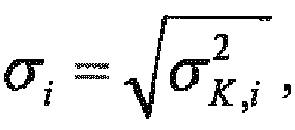


- The apparatus according to any one of claims 16 to 24, wherein
the second determining unit is configured to calculate, by using the following formula, the QP used for encoding the first background frame:
- The apparatus according to any one of claims 18 to 24, wherein
the second determining unit is configured to calculate, by using the following formula, the QP used for encoding the first background frame:
wherein QPi is a QP used for encoding the ith image block in the first background frame, Pi is the probability that the ith image block in each of the (K+1)th frame of image of the video sequence to the (K+L)th frame of image of the video sequence uses the ith image block in the first background frame as a reference, PT is a preset value, QP min is a minimum QP value allowed by current encoding, QPmode is a minimum value in QPs used by image frames that are in the previous K frames of images of the video sequence and that use a same encoding mode as the first background frame, and a location of the ith image block in each of the (K+1)th frame of image to the (K+L)th frame of image is corresponding to the location of the ith image block in the first background frame. - The apparatus according to any one of claims 18 to 26, wherein
the first determining unit is configured to: perform iteration on the previous K frames of images by using the following formula, to obtain a target iteration pixel value that is calculated according to a pixel value of the Kth frame of image, and use the target iteration pixel value as a pixel value of the first background frame:
- The apparatus according to any one of claims 16 to 27, wherein
the obtaining unit is further configured to obtain a second statistical characteristic of the (K+1)th frame of image of the video sequence to the (K+L)th frame of image of the video sequence;
the first determining unit is further configured to determine a second background frame, wherein the second background frame is used as a reference when encoding is performed on the (K+L+1)th frame of image of the video sequence to the (K+N)th frame of image of the video sequence, wherein N > L+1, and N is a positive integer;
the second determining unit is further configured to: count a quantity of times that the ith image block in the first background frame is used as a reference block, wherein the locations of the K image blocks are corresponding to the location of the ith image block in the first background frame; calculate a probability prediction error according to the first probability and the quantity of times that the ith image block in the first background frame is used as a reference block; calculate, according to the second statistical characteristic obtained by the obtaining unit, a second probability that the (K+L+1)th frame of image to the (K+N)th frame of image of the video sequence use the second background frame as a reference, wherein the second background frame is determined by the first determining unit; calculate, according to the second probability and the probability prediction error, a third probability that each of the (K+L+1)th frame of image of the video sequence to the (K+N)th frame of image of the video sequence uses the second background frame as a reference; and calculate, according to the third probability, a QP used for encoding the second background frame;
the first encoding unit is further configured to encode the second background frame according to the QP used for encoding the second background frame, to obtain a second background long-term reference frame, wherein the QP is determined by the second determining unit; and
the second encoding unit is further configured to encode the (K+L+1)th frame of image of the video sequence to the (K+N)th frame of image of the video sequence according to the second background long-term reference frame obtained by the first encoding unit.
Applications Claiming Priority (1)
| Application Number | Priority Date | Filing Date | Title |
|---|---|---|---|
| PCT/CN2015/085586 WO2017015958A1 (en) | 2015-07-30 | 2015-07-30 | Video encoding and decoding method and device |
Publications (3)
| Publication Number | Publication Date |
|---|---|
| EP3319317A4 EP3319317A4 (en) | 2018-05-09 |
| EP3319317A1 true EP3319317A1 (en) | 2018-05-09 |
| EP3319317B1 EP3319317B1 (en) | 2021-04-28 |
Family
ID=57884004
Family Applications (1)
| Application Number | Title | Priority Date | Filing Date |
|---|---|---|---|
| EP15899310.5A Active EP3319317B1 (en) | 2015-07-30 | 2015-07-30 | Video encoding and decoding method and device |
Country Status (4)
| Country | Link |
|---|---|
| US (1) | US10560719B2 (en) |
| EP (1) | EP3319317B1 (en) |
| CN (1) | CN107409211B (en) |
| WO (1) | WO2017015958A1 (en) |
Families Citing this family (5)
| Publication number | Priority date | Publication date | Assignee | Title |
|---|---|---|---|---|
| US10313686B2 (en) * | 2016-09-20 | 2019-06-04 | Gopro, Inc. | Apparatus and methods for compressing video content using adaptive projection selection |
| CN112954334A (en) | 2019-03-11 | 2021-06-11 | 杭州海康威视数字技术股份有限公司 | Encoding and decoding method, device and equipment |
| CN112822520B (en) * | 2020-12-31 | 2023-06-16 | 武汉球之道科技有限公司 | Server coding method for online event video |
| CN115941953A (en) * | 2022-12-07 | 2023-04-07 | 合肥海图微电子有限公司 | A FPGA-based video lossless compression method, system and electronic equipment |
| CN116055726B (en) * | 2023-02-03 | 2025-09-16 | 红河学院 | Low-delay layered video coding method, computer equipment and medium |
Family Cites Families (18)
| Publication number | Priority date | Publication date | Assignee | Title |
|---|---|---|---|---|
| US6055330A (en) * | 1996-10-09 | 2000-04-25 | The Trustees Of Columbia University In The City Of New York | Methods and apparatus for performing digital image and video segmentation and compression using 3-D depth information |
| US6490319B1 (en) * | 1999-06-22 | 2002-12-03 | Intel Corporation | Region of interest video coding |
| US6879723B1 (en) * | 1999-11-12 | 2005-04-12 | 8X8, Inc. | Method and apparatus for encoding frames of image data at a varying quality level |
| US7321624B1 (en) * | 2001-03-16 | 2008-01-22 | Objectvideo, Inc. | Bit-rate allocation system for object-based video encoding |
| EP1582064A4 (en) * | 2003-01-09 | 2009-07-29 | Univ California | VIDEO ENCODING METHODS AND DEVICES |
| US20070092148A1 (en) * | 2005-10-20 | 2007-04-26 | Ban Oliver K | Method and apparatus for digital image rudundancy removal by selective quantization |
| US7653130B2 (en) * | 2006-12-27 | 2010-01-26 | General Instrument Corporation | Method and apparatus for bit rate reduction in video telephony |
| JP5524063B2 (en) * | 2007-09-28 | 2014-06-18 | ドルビー ラボラトリーズ ライセンシング コーポレイション | Video information processing |
| WO2010057170A1 (en) * | 2008-11-17 | 2010-05-20 | Cernium Corporation | Analytics-modulated coding of surveillance video |
| EP2224745B1 (en) * | 2009-02-27 | 2019-11-06 | STMicroelectronics Srl | Temporal scalability in case of scene changes |
| CN103167283B (en) * | 2011-12-19 | 2016-03-02 | 华为技术有限公司 | A kind of method for video coding and equipment |
| US9681125B2 (en) * | 2011-12-29 | 2017-06-13 | Pelco, Inc | Method and system for video coding with noise filtering |
| CN102595135B (en) * | 2012-02-24 | 2013-03-27 | 中国科学技术大学 | Method and device for scalable video coding |
| GB2501495B (en) * | 2012-04-24 | 2015-07-08 | Canon Kk | Methods for encoding and decoding an image with competition of coding modes, and corresponding devices |
| CN102665077A (en) * | 2012-05-03 | 2012-09-12 | 北京大学 | Rapid and efficient encoding-transcoding method based on macro block classification |
| US9565440B2 (en) | 2013-06-25 | 2017-02-07 | Vixs Systems Inc. | Quantization parameter adjustment based on sum of variance and estimated picture encoding cost |
| US9584814B2 (en) * | 2014-05-15 | 2017-02-28 | Intel Corporation | Content adaptive background foreground segmentation for video coding |
| US10070142B2 (en) * | 2014-11-11 | 2018-09-04 | Cisco Technology, Inc. | Continuous generation of non-displayed reference frame in video encoding and decoding |
-
2015
- 2015-07-30 EP EP15899310.5A patent/EP3319317B1/en active Active
- 2015-07-30 WO PCT/CN2015/085586 patent/WO2017015958A1/en not_active Ceased
- 2015-07-30 CN CN201580077248.0A patent/CN107409211B/en active Active
-
2018
- 2018-01-29 US US15/882,346 patent/US10560719B2/en active Active
Also Published As
| Publication number | Publication date |
|---|---|
| US20180152728A1 (en) | 2018-05-31 |
| CN107409211B (en) | 2019-10-22 |
| EP3319317B1 (en) | 2021-04-28 |
| CN107409211A (en) | 2017-11-28 |
| WO2017015958A1 (en) | 2017-02-02 |
| US10560719B2 (en) | 2020-02-11 |
| EP3319317A4 (en) | 2018-05-09 |
Similar Documents
| Publication | Publication Date | Title |
|---|---|---|
| US20250317597A1 (en) | Representing motion vectors in an encoded bitstream | |
| US20240414356A1 (en) | Selection of motion vector precision | |
| US20250175604A1 (en) | Systems, Methods, and Media for Transcoding Video Data Using Metadata | |
| CN116456101B (en) | Image encoding method, image decoding method and related devices | |
| US9838718B2 (en) | Secondary boundary filtering for video coding | |
| US12457334B2 (en) | Encoding and decoding methods and apparatuses for enhancement layer | |
| US20100296579A1 (en) | Adaptive picture type decision for video coding | |
| US10574989B2 (en) | Temporal local activity for quantization parameter (QP) offset for video coding | |
| US10560719B2 (en) | Video encoding and decoding method and apparatus | |
| IL280228B2 (en) | Video encoder, video decoder, and corresponding encoding and decoding methods | |
| US9942560B2 (en) | Encoding screen capture data | |
| KR20230169986A (en) | Intra prediction method and device based on multiple DIMD modes | |
| WO2021185257A1 (en) | Image coding method, image decoding method and related apparatuses | |
| KR102724946B1 (en) | Image decoding method using chroma quantization parameter, and apparatus therefor | |
| KR20240112882A (en) | DIMD mode based intra prediction method and device | |
| CN111758255A (en) | Position-dependent spatially varying transforms for video codecs | |
| WO2024093994A1 (en) | Encoding and decoding method and apparatus | |
| KR20230175203A (en) | Intra prediction method and device using secondary MPM list | |
| US9544598B2 (en) | Methods and apparatus for pruning decision optimization in example-based data pruning compression | |
| US20240422320A1 (en) | Encoding method and apparatus, and decoding method and apparatus | |
| CN115914648A (en) | Video image processing method and device | |
| US20250045871A1 (en) | Picture processing method and apparatus | |
| WO2024188102A1 (en) | Coding method and decoding method, and apparatus |
Legal Events
| Date | Code | Title | Description |
|---|---|---|---|
| STAA | Information on the status of an ep patent application or granted ep patent |
Free format text: STATUS: THE INTERNATIONAL PUBLICATION HAS BEEN MADE |
|
| PUAI | Public reference made under article 153(3) epc to a published international application that has entered the european phase |
Free format text: ORIGINAL CODE: 0009012 |
|
| STAA | Information on the status of an ep patent application or granted ep patent |
Free format text: STATUS: REQUEST FOR EXAMINATION WAS MADE |
|
| 17P | Request for examination filed |
Effective date: 20180201 |
|
| A4 | Supplementary search report drawn up and despatched |
Effective date: 20180320 |
|
| AK | Designated contracting states |
Kind code of ref document: A1 Designated state(s): AL AT BE BG CH CY CZ DE DK EE ES FI FR GB GR HR HU IE IS IT LI LT LU LV MC MK MT NL NO PL PT RO RS SE SI SK SM TR |
|
| AX | Request for extension of the european patent |
Extension state: BA ME |
|
| RIN1 | Information on inventor provided before grant (corrected) |
Inventor name: LI, HOUQIANG Inventor name: LI, LI Inventor name: CHEN, FANGDONG Inventor name: LIN, SIXIN |
|
| DAV | Request for validation of the european patent (deleted) | ||
| DAX | Request for extension of the european patent (deleted) | ||
| STAA | Information on the status of an ep patent application or granted ep patent |
Free format text: STATUS: EXAMINATION IS IN PROGRESS |
|
| 17Q | First examination report despatched |
Effective date: 20190321 |
|
| GRAP | Despatch of communication of intention to grant a patent |
Free format text: ORIGINAL CODE: EPIDOSNIGR1 |
|
| STAA | Information on the status of an ep patent application or granted ep patent |
Free format text: STATUS: GRANT OF PATENT IS INTENDED |
|
| INTG | Intention to grant announced |
Effective date: 20201127 |
|
| GRAS | Grant fee paid |
Free format text: ORIGINAL CODE: EPIDOSNIGR3 |
|
| GRAA | (expected) grant |
Free format text: ORIGINAL CODE: 0009210 |
|
| STAA | Information on the status of an ep patent application or granted ep patent |
Free format text: STATUS: THE PATENT HAS BEEN GRANTED |
|
| AK | Designated contracting states |
Kind code of ref document: B1 Designated state(s): AL AT BE BG CH CY CZ DE DK EE ES FI FR GB GR HR HU IE IS IT LI LT LU LV MC MK MT NL NO PL PT RO RS SE SI SK SM TR |
|
| REG | Reference to a national code |
Ref country code: GB Ref legal event code: FG4D |
|
| REG | Reference to a national code |
Ref country code: CH Ref legal event code: EP |
|
| REG | Reference to a national code |
Ref country code: DE Ref legal event code: R096 Ref document number: 602015068825 Country of ref document: DE |
|
| REG | Reference to a national code |
Ref country code: AT Ref legal event code: REF Ref document number: 1388466 Country of ref document: AT Kind code of ref document: T Effective date: 20210515 |
|
| REG | Reference to a national code |
Ref country code: IE Ref legal event code: FG4D |
|
| REG | Reference to a national code |
Ref country code: LT Ref legal event code: MG9D |
|
| REG | Reference to a national code |
Ref country code: AT Ref legal event code: MK05 Ref document number: 1388466 Country of ref document: AT Kind code of ref document: T Effective date: 20210428 |
|
| PG25 | Lapsed in a contracting state [announced via postgrant information from national office to epo] |
Ref country code: LT Free format text: LAPSE BECAUSE OF FAILURE TO SUBMIT A TRANSLATION OF THE DESCRIPTION OR TO PAY THE FEE WITHIN THE PRESCRIBED TIME-LIMIT Effective date: 20210428 Ref country code: NL Free format text: LAPSE BECAUSE OF FAILURE TO SUBMIT A TRANSLATION OF THE DESCRIPTION OR TO PAY THE FEE WITHIN THE PRESCRIBED TIME-LIMIT Effective date: 20210428 Ref country code: FI Free format text: LAPSE BECAUSE OF FAILURE TO SUBMIT A TRANSLATION OF THE DESCRIPTION OR TO PAY THE FEE WITHIN THE PRESCRIBED TIME-LIMIT Effective date: 20210428 Ref country code: HR Free format text: LAPSE BECAUSE OF FAILURE TO SUBMIT A TRANSLATION OF THE DESCRIPTION OR TO PAY THE FEE WITHIN THE PRESCRIBED TIME-LIMIT Effective date: 20210428 Ref country code: BG Free format text: LAPSE BECAUSE OF FAILURE TO SUBMIT A TRANSLATION OF THE DESCRIPTION OR TO PAY THE FEE WITHIN THE PRESCRIBED TIME-LIMIT Effective date: 20210728 Ref country code: AT Free format text: LAPSE BECAUSE OF FAILURE TO SUBMIT A TRANSLATION OF THE DESCRIPTION OR TO PAY THE FEE WITHIN THE PRESCRIBED TIME-LIMIT Effective date: 20210428 |
|
| PG25 | Lapsed in a contracting state [announced via postgrant information from national office to epo] |
Ref country code: RS Free format text: LAPSE BECAUSE OF FAILURE TO SUBMIT A TRANSLATION OF THE DESCRIPTION OR TO PAY THE FEE WITHIN THE PRESCRIBED TIME-LIMIT Effective date: 20210428 Ref country code: SE Free format text: LAPSE BECAUSE OF FAILURE TO SUBMIT A TRANSLATION OF THE DESCRIPTION OR TO PAY THE FEE WITHIN THE PRESCRIBED TIME-LIMIT Effective date: 20210428 Ref country code: PT Free format text: LAPSE BECAUSE OF FAILURE TO SUBMIT A TRANSLATION OF THE DESCRIPTION OR TO PAY THE FEE WITHIN THE PRESCRIBED TIME-LIMIT Effective date: 20210830 Ref country code: PL Free format text: LAPSE BECAUSE OF FAILURE TO SUBMIT A TRANSLATION OF THE DESCRIPTION OR TO PAY THE FEE WITHIN THE PRESCRIBED TIME-LIMIT Effective date: 20210428 Ref country code: NO Free format text: LAPSE BECAUSE OF FAILURE TO SUBMIT A TRANSLATION OF THE DESCRIPTION OR TO PAY THE FEE WITHIN THE PRESCRIBED TIME-LIMIT Effective date: 20210728 Ref country code: IS Free format text: LAPSE BECAUSE OF FAILURE TO SUBMIT A TRANSLATION OF THE DESCRIPTION OR TO PAY THE FEE WITHIN THE PRESCRIBED TIME-LIMIT Effective date: 20210828 Ref country code: LV Free format text: LAPSE BECAUSE OF FAILURE TO SUBMIT A TRANSLATION OF THE DESCRIPTION OR TO PAY THE FEE WITHIN THE PRESCRIBED TIME-LIMIT Effective date: 20210428 Ref country code: GR Free format text: LAPSE BECAUSE OF FAILURE TO SUBMIT A TRANSLATION OF THE DESCRIPTION OR TO PAY THE FEE WITHIN THE PRESCRIBED TIME-LIMIT Effective date: 20210729 |
|
| REG | Reference to a national code |
Ref country code: NL Ref legal event code: MP Effective date: 20210428 |
|
| PG25 | Lapsed in a contracting state [announced via postgrant information from national office to epo] |
Ref country code: SK Free format text: LAPSE BECAUSE OF FAILURE TO SUBMIT A TRANSLATION OF THE DESCRIPTION OR TO PAY THE FEE WITHIN THE PRESCRIBED TIME-LIMIT Effective date: 20210428 Ref country code: SM Free format text: LAPSE BECAUSE OF FAILURE TO SUBMIT A TRANSLATION OF THE DESCRIPTION OR TO PAY THE FEE WITHIN THE PRESCRIBED TIME-LIMIT Effective date: 20210428 Ref country code: EE Free format text: LAPSE BECAUSE OF FAILURE TO SUBMIT A TRANSLATION OF THE DESCRIPTION OR TO PAY THE FEE WITHIN THE PRESCRIBED TIME-LIMIT Effective date: 20210428 Ref country code: CZ Free format text: LAPSE BECAUSE OF FAILURE TO SUBMIT A TRANSLATION OF THE DESCRIPTION OR TO PAY THE FEE WITHIN THE PRESCRIBED TIME-LIMIT Effective date: 20210428 Ref country code: DK Free format text: LAPSE BECAUSE OF FAILURE TO SUBMIT A TRANSLATION OF THE DESCRIPTION OR TO PAY THE FEE WITHIN THE PRESCRIBED TIME-LIMIT Effective date: 20210428 Ref country code: RO Free format text: LAPSE BECAUSE OF FAILURE TO SUBMIT A TRANSLATION OF THE DESCRIPTION OR TO PAY THE FEE WITHIN THE PRESCRIBED TIME-LIMIT Effective date: 20210428 Ref country code: ES Free format text: LAPSE BECAUSE OF FAILURE TO SUBMIT A TRANSLATION OF THE DESCRIPTION OR TO PAY THE FEE WITHIN THE PRESCRIBED TIME-LIMIT Effective date: 20210428 |
|
| REG | Reference to a national code |
Ref country code: DE Ref legal event code: R097 Ref document number: 602015068825 Country of ref document: DE |
|
| REG | Reference to a national code |
Ref country code: CH Ref legal event code: PL |
|
| PLBE | No opposition filed within time limit |
Free format text: ORIGINAL CODE: 0009261 |
|
| STAA | Information on the status of an ep patent application or granted ep patent |
Free format text: STATUS: NO OPPOSITION FILED WITHIN TIME LIMIT |
|
| GBPC | Gb: european patent ceased through non-payment of renewal fee |
Effective date: 20210730 |
|
| PG25 | Lapsed in a contracting state [announced via postgrant information from national office to epo] |
Ref country code: MC Free format text: LAPSE BECAUSE OF FAILURE TO SUBMIT A TRANSLATION OF THE DESCRIPTION OR TO PAY THE FEE WITHIN THE PRESCRIBED TIME-LIMIT Effective date: 20210428 |
|
| REG | Reference to a national code |
Ref country code: BE Ref legal event code: MM Effective date: 20210731 |
|
| 26N | No opposition filed |
Effective date: 20220131 |
|
| PG25 | Lapsed in a contracting state [announced via postgrant information from national office to epo] |
Ref country code: LI Free format text: LAPSE BECAUSE OF NON-PAYMENT OF DUE FEES Effective date: 20210731 Ref country code: GB Free format text: LAPSE BECAUSE OF NON-PAYMENT OF DUE FEES Effective date: 20210730 Ref country code: CH Free format text: LAPSE BECAUSE OF NON-PAYMENT OF DUE FEES Effective date: 20210731 |
|
| PG25 | Lapsed in a contracting state [announced via postgrant information from national office to epo] |
Ref country code: IS Free format text: LAPSE BECAUSE OF FAILURE TO SUBMIT A TRANSLATION OF THE DESCRIPTION OR TO PAY THE FEE WITHIN THE PRESCRIBED TIME-LIMIT Effective date: 20210828 Ref country code: LU Free format text: LAPSE BECAUSE OF NON-PAYMENT OF DUE FEES Effective date: 20210730 Ref country code: FR Free format text: LAPSE BECAUSE OF NON-PAYMENT OF DUE FEES Effective date: 20210731 Ref country code: AL Free format text: LAPSE BECAUSE OF FAILURE TO SUBMIT A TRANSLATION OF THE DESCRIPTION OR TO PAY THE FEE WITHIN THE PRESCRIBED TIME-LIMIT Effective date: 20210428 |
|
| PG25 | Lapsed in a contracting state [announced via postgrant information from national office to epo] |
Ref country code: IT Free format text: LAPSE BECAUSE OF FAILURE TO SUBMIT A TRANSLATION OF THE DESCRIPTION OR TO PAY THE FEE WITHIN THE PRESCRIBED TIME-LIMIT Effective date: 20210428 Ref country code: IE Free format text: LAPSE BECAUSE OF NON-PAYMENT OF DUE FEES Effective date: 20210730 Ref country code: BE Free format text: LAPSE BECAUSE OF NON-PAYMENT OF DUE FEES Effective date: 20210731 |
|
| PG25 | Lapsed in a contracting state [announced via postgrant information from national office to epo] |
Ref country code: HU Free format text: LAPSE BECAUSE OF FAILURE TO SUBMIT A TRANSLATION OF THE DESCRIPTION OR TO PAY THE FEE WITHIN THE PRESCRIBED TIME-LIMIT; INVALID AB INITIO Effective date: 20150730 |
|
| PG25 | Lapsed in a contracting state [announced via postgrant information from national office to epo] |
Ref country code: CY Free format text: LAPSE BECAUSE OF FAILURE TO SUBMIT A TRANSLATION OF THE DESCRIPTION OR TO PAY THE FEE WITHIN THE PRESCRIBED TIME-LIMIT Effective date: 20210428 |
|
| PG25 | Lapsed in a contracting state [announced via postgrant information from national office to epo] |
Ref country code: MK Free format text: LAPSE BECAUSE OF FAILURE TO SUBMIT A TRANSLATION OF THE DESCRIPTION OR TO PAY THE FEE WITHIN THE PRESCRIBED TIME-LIMIT Effective date: 20210428 |
|
| PG25 | Lapsed in a contracting state [announced via postgrant information from national office to epo] |
Ref country code: MT Free format text: LAPSE BECAUSE OF FAILURE TO SUBMIT A TRANSLATION OF THE DESCRIPTION OR TO PAY THE FEE WITHIN THE PRESCRIBED TIME-LIMIT Effective date: 20210428 |
|
| PGFP | Annual fee paid to national office [announced via postgrant information from national office to epo] |
Ref country code: DE Payment date: 20250604 Year of fee payment: 11 |
|
| PG25 | Lapsed in a contracting state [announced via postgrant information from national office to epo] |
Ref country code: TR Free format text: LAPSE BECAUSE OF FAILURE TO SUBMIT A TRANSLATION OF THE DESCRIPTION OR TO PAY THE FEE WITHIN THE PRESCRIBED TIME-LIMIT Effective date: 20210428 |