EP3318615A1 - Surface layer-peelable composite coating film, coating composition for forming composite coating film, and method - Google Patents
Surface layer-peelable composite coating film, coating composition for forming composite coating film, and method Download PDFInfo
- Publication number
- EP3318615A1 EP3318615A1 EP16817993.5A EP16817993A EP3318615A1 EP 3318615 A1 EP3318615 A1 EP 3318615A1 EP 16817993 A EP16817993 A EP 16817993A EP 3318615 A1 EP3318615 A1 EP 3318615A1
- Authority
- EP
- European Patent Office
- Prior art keywords
- dryer
- oxidative polymerization
- layer
- film
- coating film
- Prior art date
- Legal status (The legal status is an assumption and is not a legal conclusion. Google has not performed a legal analysis and makes no representation as to the accuracy of the status listed.)
- Granted
Links
Images

Classifications
-
- C—CHEMISTRY; METALLURGY
- C09—DYES; PAINTS; POLISHES; NATURAL RESINS; ADHESIVES; COMPOSITIONS NOT OTHERWISE PROVIDED FOR; APPLICATIONS OF MATERIALS NOT OTHERWISE PROVIDED FOR
- C09D—COATING COMPOSITIONS, e.g. PAINTS, VARNISHES OR LACQUERS; FILLING PASTES; CHEMICAL PAINT OR INK REMOVERS; INKS; CORRECTING FLUIDS; WOODSTAINS; PASTES OR SOLIDS FOR COLOURING OR PRINTING; USE OF MATERIALS THEREFOR
- C09D5/00—Coating compositions, e.g. paints, varnishes or lacquers, characterised by their physical nature or the effects produced; Filling pastes
- C09D5/20—Coating compositions, e.g. paints, varnishes or lacquers, characterised by their physical nature or the effects produced; Filling pastes for coatings strippable as coherent films, e.g. temporary coatings strippable as coherent films
-
- B—PERFORMING OPERATIONS; TRANSPORTING
- B05—SPRAYING OR ATOMISING IN GENERAL; APPLYING FLUENT MATERIALS TO SURFACES, IN GENERAL
- B05D—PROCESSES FOR APPLYING FLUENT MATERIALS TO SURFACES, IN GENERAL
- B05D5/00—Processes for applying liquids or other fluent materials to surfaces to obtain special surface effects, finishes or structures
- B05D5/005—Repairing damaged coatings
-
- B—PERFORMING OPERATIONS; TRANSPORTING
- B05—SPRAYING OR ATOMISING IN GENERAL; APPLYING FLUENT MATERIALS TO SURFACES, IN GENERAL
- B05D—PROCESSES FOR APPLYING FLUENT MATERIALS TO SURFACES, IN GENERAL
- B05D7/00—Processes, other than flocking, specially adapted for applying liquids or other fluent materials to particular surfaces or for applying particular liquids or other fluent materials
- B05D7/24—Processes, other than flocking, specially adapted for applying liquids or other fluent materials to particular surfaces or for applying particular liquids or other fluent materials for applying particular liquids or other fluent materials
-
- B—PERFORMING OPERATIONS; TRANSPORTING
- B32—LAYERED PRODUCTS
- B32B—LAYERED PRODUCTS, i.e. PRODUCTS BUILT-UP OF STRATA OF FLAT OR NON-FLAT, e.g. CELLULAR OR HONEYCOMB, FORM
- B32B27/00—Layered products comprising a layer of synthetic resin
- B32B27/06—Layered products comprising a layer of synthetic resin as the main or only constituent of a layer, which is next to another layer of the same or of a different material
- B32B27/08—Layered products comprising a layer of synthetic resin as the main or only constituent of a layer, which is next to another layer of the same or of a different material of synthetic resin
-
- B—PERFORMING OPERATIONS; TRANSPORTING
- B32—LAYERED PRODUCTS
- B32B—LAYERED PRODUCTS, i.e. PRODUCTS BUILT-UP OF STRATA OF FLAT OR NON-FLAT, e.g. CELLULAR OR HONEYCOMB, FORM
- B32B27/00—Layered products comprising a layer of synthetic resin
- B32B27/18—Layered products comprising a layer of synthetic resin characterised by the use of special additives
-
- B—PERFORMING OPERATIONS; TRANSPORTING
- B32—LAYERED PRODUCTS
- B32B—LAYERED PRODUCTS, i.e. PRODUCTS BUILT-UP OF STRATA OF FLAT OR NON-FLAT, e.g. CELLULAR OR HONEYCOMB, FORM
- B32B27/00—Layered products comprising a layer of synthetic resin
- B32B27/36—Layered products comprising a layer of synthetic resin comprising polyesters
-
- B—PERFORMING OPERATIONS; TRANSPORTING
- B32—LAYERED PRODUCTS
- B32B—LAYERED PRODUCTS, i.e. PRODUCTS BUILT-UP OF STRATA OF FLAT OR NON-FLAT, e.g. CELLULAR OR HONEYCOMB, FORM
- B32B7/00—Layered products characterised by the relation between layers; Layered products characterised by the relative orientation of features between layers, or by the relative values of a measurable parameter between layers, i.e. products comprising layers having different physical, chemical or physicochemical properties; Layered products characterised by the interconnection of layers
- B32B7/04—Interconnection of layers
- B32B7/06—Interconnection of layers permitting easy separation
-
- C—CHEMISTRY; METALLURGY
- C09—DYES; PAINTS; POLISHES; NATURAL RESINS; ADHESIVES; COMPOSITIONS NOT OTHERWISE PROVIDED FOR; APPLICATIONS OF MATERIALS NOT OTHERWISE PROVIDED FOR
- C09D—COATING COMPOSITIONS, e.g. PAINTS, VARNISHES OR LACQUERS; FILLING PASTES; CHEMICAL PAINT OR INK REMOVERS; INKS; CORRECTING FLUIDS; WOODSTAINS; PASTES OR SOLIDS FOR COLOURING OR PRINTING; USE OF MATERIALS THEREFOR
- C09D167/00—Coating compositions based on polyesters obtained by reactions forming a carboxylic ester link in the main chain; Coating compositions based on derivatives of such polymers
- C09D167/08—Polyesters modified with higher fatty oils or their acids, or with natural resins or resin acids
-
- C—CHEMISTRY; METALLURGY
- C09—DYES; PAINTS; POLISHES; NATURAL RESINS; ADHESIVES; COMPOSITIONS NOT OTHERWISE PROVIDED FOR; APPLICATIONS OF MATERIALS NOT OTHERWISE PROVIDED FOR
- C09D—COATING COMPOSITIONS, e.g. PAINTS, VARNISHES OR LACQUERS; FILLING PASTES; CHEMICAL PAINT OR INK REMOVERS; INKS; CORRECTING FLUIDS; WOODSTAINS; PASTES OR SOLIDS FOR COLOURING OR PRINTING; USE OF MATERIALS THEREFOR
- C09D201/00—Coating compositions based on unspecified macromolecular compounds
-
- C—CHEMISTRY; METALLURGY
- C09—DYES; PAINTS; POLISHES; NATURAL RESINS; ADHESIVES; COMPOSITIONS NOT OTHERWISE PROVIDED FOR; APPLICATIONS OF MATERIALS NOT OTHERWISE PROVIDED FOR
- C09D—COATING COMPOSITIONS, e.g. PAINTS, VARNISHES OR LACQUERS; FILLING PASTES; CHEMICAL PAINT OR INK REMOVERS; INKS; CORRECTING FLUIDS; WOODSTAINS; PASTES OR SOLIDS FOR COLOURING OR PRINTING; USE OF MATERIALS THEREFOR
- C09D7/00—Features of coating compositions, not provided for in group C09D5/00; Processes for incorporating ingredients in coating compositions
- C09D7/40—Additives
-
- B—PERFORMING OPERATIONS; TRANSPORTING
- B32—LAYERED PRODUCTS
- B32B—LAYERED PRODUCTS, i.e. PRODUCTS BUILT-UP OF STRATA OF FLAT OR NON-FLAT, e.g. CELLULAR OR HONEYCOMB, FORM
- B32B2305/00—Condition, form or state of the layers or laminate
- B32B2305/72—Cured, e.g. vulcanised, cross-linked
-
- B—PERFORMING OPERATIONS; TRANSPORTING
- B32—LAYERED PRODUCTS
- B32B—LAYERED PRODUCTS, i.e. PRODUCTS BUILT-UP OF STRATA OF FLAT OR NON-FLAT, e.g. CELLULAR OR HONEYCOMB, FORM
- B32B2305/00—Condition, form or state of the layers or laminate
- B32B2305/77—Uncured, e.g. green
-
- B—PERFORMING OPERATIONS; TRANSPORTING
- B32—LAYERED PRODUCTS
- B32B—LAYERED PRODUCTS, i.e. PRODUCTS BUILT-UP OF STRATA OF FLAT OR NON-FLAT, e.g. CELLULAR OR HONEYCOMB, FORM
- B32B2307/00—Properties of the layers or laminate
- B32B2307/70—Other properties
- B32B2307/748—Releasability
Definitions
- the present invention provides a surface layer-peelable composite coating film, a coating composition for forming such a composite coating film, and a method thereof.
- An alkyd resin is an oxidative polymerization resin synthesized from a polybasic acid or a polybasic acid anhydride, a polyhydric alcohol, and a fatty acid, and the oxidative polymerization resin undergoes ester oxidation polymerization due to oxygen in air at ordinary temperature to form a three-dimensional network structure, resulting in a coating film with high solvent resistance and water resistance.
- An alkyd resin-based coating material is usable for various materials and is inexpensive and therefore useful for a wide range of applications from indoor wall coating to coating of large structures such as buildings, ships, and vehicles.
- Patent Document 1 discloses a radically curable resin composition and a covering material that are useful as a civil engineering and building material retaining low-temperature flexibility with high low-temperature curing property.
- This resin composition contains (A) a polyether acryl urethane resin, (B) an air-drying property imparting type polymer using a drying oil and/or a fatty acid-based compound thereof, and (C) an ethylenically unsaturated monomer.
- the component (B) is preferably an alkyd resin.
- paraffin and/or wax (D) may be used together in this resin composition in addition to the components (A) to (C).
- Patent Document 2 discloses a radically curable resin composition and a covering material that are suitable for a wide range of civil engineering and building material applications as in Patent Document 1.
- This resin composition contains (A) a resin having a (meth)acryloyl group at a molecular end, (B) an air-drying property imparting type polymer using a drying oil and/or a fatty acid-based compound thereof, and (C) an ethylenically unsaturated monomer having a (meth)acryloyl group with a molecular weight of 160 or more.
- the component (B) is preferably an alkyd resin.
- paraffin and/or wax (D) may be used together in this resin composition in addition to the components (A) to (C).
- Patent Document 3 discloses a coating composition having a thermosetting film formability and based on wax or a wax-like compound (e.g., polyethylene wax, paraffin wax) or a natural drying oil or an alkyd resin.
- This coating composition is used for preventing corrosion of a metal base material of a vehicle body, and an additive gelling at a relatively high temperature (e.g., polyvinyl chloride, and C 1-8 alkyl ester of methacrylic acid or acrylic acid) can be added in a small amount so as to completely prevent coating from flowing or dripping.
- a relatively high temperature e.g., polyvinyl chloride, and C 1-8 alkyl ester of methacrylic acid or acrylic acid
- recoating is required.
- the recoating is more difficult in places where the recoating is more required, such as hospital rooms and precision equipment rooms that must always be kept clean, windscreens on roads frequently damaged or contaminated, high humidity places, and factories.
- a coating composition for example, a highly versatile alkyd resin-based coating composition, capable of forming a coating film that can be renewed a number of times by peeling a coating-film surface layer.
- a composite coating film made up of a cured film layer and an uncured inner layer can be formed.
- the film layer of this composite coating film can be peeled off and the surface of the uncured inner layer allowed to appear by peeling is exposed to oxygen so that a surface layer is dried and cured to form a new film layer.
- the present invention provides a coating composition
- a coating composition comprising a base resin composition containing an oxidative polymerization resin; an organic compound having a melting point of 5 to 150 °C; a dryer; and an oxidative polymerization inhibitor containing at least one of a dryer protectant and a radical inhibitor.
- the present invention provides a composite coating film comprising a film layer; and an inner layer, wherein the inner layer is an uncured body of the coating composition of the present invention, while the film layer is a cured body of the coating composition formed in a peelable manner on a surface of the inner layer, and wherein a surface layer of the inner layer exposed to air by peeling the film layer formed on the inner layer is cured due to oxidative polymerization so that another film layer is formable in a peelable manner.
- the present invention provides a method of manufacturing a composite coating film made up of a film layer and an inner layer such that the film layer is formed in a peelable manner on a surface of the inner layer, the method comprising the steps of applying the coating composition of the present invention onto a basal plate to form a coating film made up of an uncured body of the coating composition; and exposing the coating film made up of the uncured body to air to cure a surface layer thereof due to oxidative polymerization so as to form the film layer while maintaining a portion under the film layer in an uncured state as an inner layer.
- the composite coating film according to the present invention can be formed by applying the coating composition of the present invention onto a base material and exposing the coating composition to oxygen in air and, when the surface thereof is damaged or contaminated or a function imparted thereto is deactivated, only the film layer can be peeled off to renew the surface layer one or more times.
- the composite coating film according to the present invention can be used as an underlayer with a top coating material applied, or with an interior material such as an exterior material and a wallpaper material applied, thereon to form an upper layer, and the upper layer can easily be renewed by peeling the composite film layer of the present invention.
- a coating composition of the present invention comprises a base resin composition containing an oxidative polymerization resin; an organic compound having a melting point of 5 to 150 °C; a dryer; and an oxidative polymerization inhibitor containing at least one of a dryer protectant and a radical inhibitor, and comprises, in one form, the 10 to 100 wt% organic compound based on the 100 wt% base resin composition and an effective amount of the dryer such that a content of metal elements in the dryer is 0.001 to 1.5 wt% based on 100 wt% solid content of the oxidative polymerization resin, and if the oxidative polymerization inhibitor contains any one of the dryer protectant and the radical inhibitor, 0.5 to 4 moles of the dryer protectant is contained per mole of metal elements in the dryer; or the 0.01 to 2.0 wt% radical inhibitor is contained based on 100 wt% solid content of the oxidative polymerization resin; or if the oxidative polymerization inhibitor contains both the dryer protectant and the radical inhibitor, when 0.5 to
- the base resin composition is a resin composition containing at least an oxidative polymerization resin and may further contain an oxidative polymerization compound, and a coating resin without an oxidative polymerization group.
- the oxidative polymerization resin contained in the base resin composition is a resin containing an oxidative polymerization group undergoing an oxidative polymerization reaction due to a reaction with oxygen in air to be three-dimensionally crosslinked, and examples thereof include, but not limited to, an alkyd resin that is a reaction product of a polybasic acid or polybasic acid anhydride, a fatty acid, and a polyhydric alcohol, a reaction product of an acrylic resin or a urethane resin and a fatty acid, etc.
- polybasic acid or polybasic acid anhydride in the alkyd resin usable in the present invention include, but are not limited to, compounds having two or more carboxyl groups in molecules of dicarboxylic acids such as succinic acid, glutaric acid, adipic acid, pimelic acid, suberic acid, azelaic acid, itaconic acid, maleic acid , fumaric acid, phthalic acid, isophthalic acid, and terephthalic acid; tricarboxylic acids such as trimellitic acid; and tetracarboxylic acids such as pyromellitic acid, and acid anhydrides thereof.
- dicarboxylic acids such as succinic acid, glutaric acid, adipic acid, pimelic acid, suberic acid, azelaic acid, itaconic acid, maleic acid , fumaric acid, phthalic acid, isophthalic acid, and terephthalic acid
- tricarboxylic acids such as trimellitic acid
- Examples of the fatty acid in the alkyd resin usable in the present invention include, but not limited to, a fatty acid contained in drying oil having an iodine value of 130 or more selected from the group consisting of linseed oil, tung oil, poppy-seed oil, perilla oil, sunflower oil, and safflower oil; a fatty acid contained in semi-drying oil having an iodine value of 100 to 130 selected from the group consisting of soybean oil, rice bran oil, cottonseed oil, and sesame oil; a fatty acid contained in non-drying oil having an iodine value of less than 100 selected from the group consisting of olive oil, almond oil, peanut oil, coconut oil, camellia oil, rapeseed oil, and castor oil.
- Examples of such fatty acids include, but not limited to, unsaturated fatty acids such as palmitoleic acid, oleic acid, linoleic acid, and linolenic acid.
- polyhydric alcohol in the alkyd resin usable in the present invention include, but not limited to, diols selected from the group consisting of ethylene glycol, diethylene glycol, propylene glycol, 1,2-propanediol, 1,3-propanediol, 1,2-butanediol, 1,3-butanediol, 1,4-butanediol, 2,3-butanediol, 1,5-pentanediol, 1,6-hexanediol, 2,2-diethyl-1,3-propanediol, neopentyl glycol; trivalent or higher polyols selected from the group consisting of triethylene glycol, trimethylol propane, trimethylol ethane, glycerine, and pentaerythritol; and hydroxycarboxylic acid selected from the group consisting of 2,2-dimethylolpropionic acid, 2,2-dimethylol but
- the fatty acid in the reaction product of the acrylic resin or urethane resin and the fatty acid usable in the present invention is the same as the fatty acid in the alkyd resin usable in the present invention.
- the solid content of the oxidative polymerization resin is 70 to 100 wt%, preferably 85 to 100 wt%, more preferably 95 to 100 wt% in the solid content of the total base resin composition.
- the content of the oxidative polymerization resin is within the range, the drying property of the coating film is ensured.
- the oxidative polymerization compound allowed to be contained in the base resin composition in the present invention is a compound containing an oxidative polymerization group undergoing an oxidative polymerization reaction due to a reaction with oxygen in air to be three-dimensionally crosslinked, and examples thereof include, but not limited to, fatty acids contained in drying oil having an iodine value of 130 or more selected from the group consisting of linseed oil, tung oil, poppy seed oil, perilla oil, sunflower oil, and safflower oil; and fatty acids contained in semi-drying oil having an iodine value of 100 to 130 selected from the group consisting of soybean oil, rice bran oil, cottonseed oil, and sesame oil. Examples of such fatty acids include, but are not limited to, unsaturated fatty acids such as palmitoleic acid, oleic acid, linoleic acid, and linolenic acid.
- examples of the coating resin without an oxidative polymerization group allowed to be contained in the base resin composition are common coating resins including acrylic resin, urethane resin, epoxy resin, polyester resin, etc.
- the organic compound having a melting point of 5 to 150 °C is a compound that can be kneaded with the base resin composition at a temperature not lower than the melting point such that an obtained mixture forms a coating film structure without flowing at a temperature of usage environment of the coating film. Therefore, an inner layer of the composite coating film made up of an uncured body can form and maintain the coating film structure without flowing in the usage environment due to the action of the organic compound. Additionally, the organic compound has a function of intervening between components of the oxidative polymerization resin so as to hinder the approach between the oxidative polymerization resins and thereby inhibit a dry curing reaction due to an oxidative polymerization reaction. Therefore, in the present invention, the organic compound can be regarded as a flow-inhibitory and polymerization-reaction-inhibitory substance.
- the coating film structure can be formed in usual usage environment etc. If the melting point is 150 °C or less, excessive heating is not required at the time of kneading with the base resin composition.
- Examples of the organic compound usable in the present invention include, but not limited to, liquid paraffin, paraffin wax, microcrystalline wax, polyethylene, polyacrylamide, polyacrylate, animal wax, vegetable wax, higher fatty acid, higher alcohol, amines, ketones, esters, etc. These organic compounds can be used singly or as a mixture of two or more compounds.
- Paraffins are alkanes represented by C n H 2n+2 , and include paraffins in the forms of liquid and solid at ordinary temperature depending on the carbon number or molecular weight. Paraffins in the form of liquid are referred to as liquid paraffin, while paraffins in the form of solid are referred to as paraffin wax.
- the paraffin wax is generally classified by the melting point rather than the carbon number or molecular weight.
- the paraffin wax includes, for example, those having a low melting point (about 42 °C) to a high melting point (about 70 °C), and those having a higher melting point.
- paraffin wax, polyethylene, or a combination thereof is preferable.
- the content of the organic compound is preferably 10 to 100 wt% based on the 100 wt% base resin composition.
- the content less than the lower limit leads to vulnerability to a change in temperature of the usage environment, and the content larger than the upper limit leads to an increase in time required for forming the film layer.
- the content is more preferably 15 to 50 wt%, further preferably 20 to 40 wt%.
- the dryer is a compound promoting oxidative polymerization of the oxidative polymerization resin such as an alkyd resin, and mainly promotes generation of a peroxide through hydrogen abstraction of an ⁇ -methylene group of a double bond in the presence of oxygen, and generation of oxygen radicals due to decomposition of the generated peroxide.
- the polymerization proceeds due to a radical chain reaction to form a coating film with a three-dimensional network structure.
- Examples of the dryer usable in the present invention include a metal soap composed of bonding between a metal and a long chain fatty acid.
- Examples of the metal usable for the metal soap include, but not limited to, metals such as cobalt, barium, vanadium, manganese, cerium, lead, iron, calcium, zinc, zirconium, nickel, tin, and strontium, preferably cobalt and manganese having a favorable surface drying property, more preferably cobalt.
- Examples of the long-chain fatty acid usable for the metal soap include, but not limited to, organic acids such as propionic acid, octylic acid, naphthenic acid, neodecanoic acid, tung oil acid, linseed oil acid, soybean oil acid, and resin acid, preferably propionic acid, naphthenic acid, and octylic acid, more preferably naphthenic acid and octylic acid.
- the metal soap usable in the present invention is preferably a cobalt salt of naphthenic acid or octylic acid, more preferably a naphthenic acid cobalt salt.
- the content of the dryer is preferably an amount in which the content of metal elements in the dryer is 0.001 to 1.5 wt% based on 100 wt% solid content of the oxidative polymerization resin.
- the content less than the lower limit leads to an increase in time required for forming the film layer, and the content larger than the upper limit tends to cause a defect in appearance such as shrinkage in the film layer.
- the content is more preferably 0.01 to 1.0 wt%, further preferably 0.05 to 0.5 wt%.
- the oxidative polymerization inhibitor is an agent inhibiting the oxidative polymerization reaction due to a reaction with oxygen in air by the oxidative polymerization resin and the oxidative polymerization compound contained in the base resin composition, and contains a dryer protectant and a radical inhibitor.
- the dryer protectant and the radical inhibitor can be used singly or in combination.
- the dryer protectant is a substance inhibiting the oxidative polymerization promoting effect of the dryer when coexisting with the dryer. Since a volatile dryer protectant is used in the coating composition of the present invention, the dryer protectant disappears due to volatilization in the vicinity of the surface of the coating film, and the oxidative polymerization promoting effect of the dryer is exerted. Consequently, only the surface layer of the coating film is cured to form a film layer. This film layer suppresses the volatilization of the inner dryer protectant and the oxidative polymerization promoting effect of the dryer is inhibited, so that the inner layer is maintained uncured.
- the dryer protectant usable in the present invention is a volatile substance having a boiling point of 300 °C or less, and example thereof include, but not limited to, methyl ethyl ketoxime, acetone oxime, butyl aldoxime, cyclohexanone oxime, dialkyl hydroxylamine, ammonia, hydroxylamine, triethylamine, dimethylethanolamine, etc.
- the dryer protectant is preferably methyl ethyl ketoxime and cyclohexanone oxime.
- the content of the dryer protectant is preferably 0.5 to 4 moles per mole of metal elements in the dryer.
- the content less than the lower limit makes the film layer thicker, and the content larger than the upper limit leads to an increase in time required for forming the film layer.
- the content is more preferably 1 to 3 moles, further preferably 1.5 to 2.5 moles.
- the total amount may be within the range described above.
- the radical inhibitor is not a substance inhibiting the promotion of oxidative polymerization of the dryer and is a substance directly inhibiting the oxidative polymerization initiation function of radicals present in a system. Since the volatile radical inhibitor is used in the coating composition of the present invention, the radical inhibitor disappears due to volatilization in the vicinity of the surface of the coating film, and the oxidative polymerization initiation function of the radicals is exerted. Consequently, only the surface layer of the coating film is cured to form a film layer. This film layer suppresses the volatilization of the inner radical inhibitor and the oxidative polymerization initiation function of the radicals is inhibited, so that the inner layer is maintained uncured.
- the radical inhibitor usable in the present invention is a volatile substance having a boiling point of 300 °C or less, and example thereof include, but not limited to, phenolic substances such as eugenol, butylated hydroxytoluene, and butylated hydroxyanisole; and phosphite substances such as trimethyl phosphite, triethyl phosphite, and tributyl phosphite.
- the radical inhibitor is preferably eugenol and tributyl phosphite.
- the content of the radical inhibitor is preferably 0.01 to 2.0 wt% based on 100 wt% solid content of the oxidative polymerization resin.
- the content less than the lower limit makes the film layer thicker, and the content larger than the upper limit leads to an increase in time required for forming the film layer.
- the content is more preferably 0.03 to 1.0 wt%, further preferably 0.05 to 0.5 wt%.
- the total amount may be within the range described above.
- the dryer protectant can be contained in an amount of 4 moles or less per mole of metal elements in the dryer, and the radical inhibitor can be contained in a range of 2.0 wt% or less based on 100 wt% solid content of the oxidative polymerization resin.
- the dryer protectant in the range of less than 0.5 moles per mole of metal elements in the dryer and the radical inhibitor in the range of less than 0.01 wt% based on 100 wt% solid content of the oxidative polymerization resin are excluded since the oxidative polymerization inhibition effect cannot sufficiently be exerted.
- the coating composition of the present invention can be applied onto a basal plate to form a coating film made up of an uncured body of the coating composition and, by exposing the coating film to air, the surface layer thereof can be cured due to oxidative polymerization to form a composite coating film made up of a cured film layer and an inner layer in an uncured state under the film layer. Since the inner layer of the obtained composite coating film is maintained in the uncured state, the film layer can be peeled off, and the surface layer of the inner layer exposed to air by peeling the film layer is cured due to oxidative polymerization, so that another film layer is newly formed. As long as the inner layer in the uncured state exists, the film layer can be peeled off a number of times to renew the surface layer of the coating film.
- a pigment component can generally be added in addition to the essential components described above.
- the pigment component usable in the present invention include, but not limited to, color pigments such as titanium dioxide, carbon black, red iron oxide, and phthalocyanine blue, extender pigments such as calcium carbonate, talc, mica, and clay, and antirust pigments.
- the content of the pigment component in the coating material is preferably 0.1 to 70 %, more preferably 0.1 to 50 %, in terms of the pigment weight concentration (PWC) based on the solid content of the coating composition. If the PWC is too low, the concealing property of the coating film may not be sufficient, and if the PWC is too high, the film layer may become difficult to form.
- the coating composition of the present invention can further contain commonly used coating additives.
- the coating additives usable in the coating composition of the present invention can include, but not limited to, ultraviolet absorbers, light stabilizers, viscosity modifiers, surface conditioners, antioxidants, fungicides, plasticizers, antifoamers, etc.
- the coating additives are generally used in an amount of 0.01 to 10 wt% based on the 100 wt% coating composition.
- An organic solvent can also be contained in the coating composition of the present invention to the extent that the effects of the present invention are not affected.
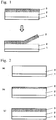
- the composite coating film of the present invention is a composite coating film made up of a film layer 3 and an inner layer 2 formed by using the coating composition of the present invention, and the film layer 3 formed on the inner layer 2 is peelable.
- the surface layer of the inner layer 2 allowed to appear by peeling the film layer 3 is exposed to air and cured due to oxidative polymerization to separately form the new film layer 3.
- any suitable method can be adopted depending on a type of base material etc.
- examples of the method include application with a brush, a trowel, a roller, air spray, airless spray, etc.
- the inner layer 2 is an uncured body of the coating composition of the present invention
- the film layer 3 is a cured body of the coating composition formed in a peelable manner on the surface of the inner layer 2.
- the film layer 3 is cured and therefore can be peeled off and, since the inner layer 2 is not cured, the surface layer of the inner layer 2 exposed to air by peeling the film layer 3 is cured so that the surface layer of the coating film can be renewed ( Fig. 1 ).
- the coating film surface layer is determined as being surface-dry based on the definition of JIS K 5600-3-2 (Ballotini method described later) under an atmosphere at 23 °C, it is judged that the film layer 3 is formed.
- the inner layer In the composite coating film of the present invention, the inner layer must be maintained in an uncured state. Therefore, it is necessary to confirm that the inner layer is uncured for the composite coating film when it is judged that the film layer is formed.
- a rubber ball is dropped onto the composite coating film to obtain rebound resilience from the rebound height of the ball.
- the rebound resilience under an atmosphere at 23 °C is 11 to 55%, it is judged that the inner layer is uncured.
- the rebound resilience is desirably within the range after long-term aerial exposure, for example, after six-month aerial exposure at 23 °C.
- the thickness of the film layer 3 as described above is in the range of 10 ⁇ m to 5 mm. Since the film layer 3 having a thickness within the range of 10 ⁇ m to 5 mm is newly formed in the surface layer of the inner layer 2 by peeling the film layer 3, the film layer 3 can be peeled off one or more times when the inner layer 2 has a thickness equal to or greater than the thickness of the film layer 3.
- the composite coating film of the present invention can be used as a single-layer coating film or can be used as an underlayer with a top coating material applied, or with an interior material such as an exterior material and a wallpaper material applied, to an upper surface thereof to form an upper layer.
- the top coating material, the interior material such as an exterior material and a wallpaper material, etc. are not particularly limited and those generally used are usable.
- a method of manufacturing the composite coating film of the present invention comprises a step of applying the coating composition of the present invention onto a basal plate 1 to form a coating film made up of an uncured body of the coating composition ( Fig. 2a ); and a step of exposing the coating film made up of an uncured body to air to cure the surface layer thereof due to oxidative polymerization so as to form the film layer 3 while maintaining a portion under the film layer 3 in an uncured state as the inner layer 2 ( Figs. 2b and 2c ).
- the coating film made up of an uncured body is exposed to air at 5 to 150 °C for one day or 20 minutes or longer to cure the surface layer thereof due to oxidative polymerization so as to form the film layer 3. Since the oxidative polymerization inhibitor present in the vicinity of the uncured surface layer volatilizes, the oxidative polymerization reaction promoting effect of the dryer is exerted, or the oxidative polymerization initiation function of the radicals present in the system is exhibited, so that only the surface layer is cured.
- the oxidative polymerization inhibitor is present in the inner layer 2 under the film layer, the oxidative polymerization reaction promoting effect of the dryer is inhibited, or the oxidative polymerization initiation function of the radicals present in the system is suppressed and, additionally, penetration of oxygen is prevented by the film layer of the cured surface layer. Furthermore, due to the effect of the organic compound inhibiting the approach between the oxidative polymerization resins, so that the inner layer 2 is maintained uncured. Drying conditions can appropriately be adjusted such that only the surface layer cures.
- alkyd resin varnish (BECKOSOL P-470-70; DIC Corporation) was wormed to 40 °C, and paraffin (melting point: 42 to 44 °C) (Wako Pure Chemical Industries) and powder polyethylene (Neowax L (melting point: 95 to 115 °C) (Yasuhara Chemical)) were heated to 70 °C and 130 °C, respectively, into a liquid state. Paraffin and polyethylene in a liquid state were mixed while stirring the alkyd resin varnish wormed to 40 °C with a disperser.
- paraffin melting point: 42 to 44 °C
- powder polyethylene Naowax L (melting point: 95 to 115 °C) (Yasuhara Chemical)
- a coating composition was prepared as in Example 1 by combining the components according to Table 1 except that polyethylene was not added.
- a coating composition was prepared as in Example 1 by combining the components according to Table 1 except that the polyethylene was not added and that the ratio between the alkyd resin and the paraffin was changed.
- a coating composition was prepared as in Example 1 by combining the components according to Table 1 except that the alkyd resin varnish was changed to alkyd resin varnish (BECKOSOL EL-8001; DIC Corporation), alkyd resin varnish (BECKOSOL EL-4501-50; DIC Corporation), or modified alkyd resin varnish (STYRESOL J-719; DIC Corporation).
- a coating composition was prepared as in Example 1 by combining the components according to Table 2 except that the alkyd-modified urethane resin (BURNOCK TD-125-HV; DIC Corporation) or acrylic resin (ACRYDIC A-1300; DIC Corporation) was mixed as a resin other than the alkyd resin with the base resin composition.
- the alkyd-modified urethane resin BURNOCK TD-125-HV; DIC Corporation
- acrylic resin ACRYDIC A-1300; DIC Corporation
- a coating composition was prepared as in Example 1 by combining the components according to Table 2 except that paraffin (melting point: 50 to 52 °C) (Showa Chemical Industry) and paraffin (melting point: 60 to 62 °C) (Kishida Chemical) were used.
- a coating composition was prepared as in Example 1 by combining the components according to Table 2 except that a dryer (cobalt octanoate xylene solution (Co: 6%)) (DIC Corporation) was used or the additive amount of the dryer (cobalt naphthenate mineral spirit solution (Co: 6%)) was changed.
- a coating composition was prepared as in Example 1 by combining the components according to Table 3 except that a dryer protectant (cyclohexanone oxime (Wako Pure Chemical Industries)) was used or the additive amount of the dryer protectant (2-butanone oxime (Tokyo Chemical Industry)) was changed.
- a dryer protectant cyclohexanone oxime (Wako Pure Chemical Industries)
- the additive amount of the dryer protectant (2-butanone oxime Tokyo Chemical Industry
- a coating composition was prepared as in Example 1 by combining the components according to Table 3 except that no dryer protectant was added and that eugenol (Wako Pure Chemical Industries) was added as a radical inhibitor.
- a coating composition was prepared as in Example 1 by combining the components according to Table 3 except that the dryer protectant was used together with eugenol (Wako Pure Chemical Industries) or tributyl phosphite (Wako Pure Chemical Industries) serving as a radical inhibitor.
- alkyd resin varnish BECKOSOL P-470-70; DIC Corporation
- paraffin melting point: 42 to 44 °C
- powder polyethylene Melting point: 95 to 115 ° C (Yasuhara Chemical Co., Ltd.)
- Paraffin and polyethylene in a liquid state were mixed while stirring the dispersed paste wormed to 40 °C with a disperser. Subsequently, a dryer protectant (2-butanone oxime (Tokyo Chemical Industry)) and a dryer (cobalt naphthenate mineral spirit solution (Co: 6%)) (Wako Pure Chemical Industries) were sequentially mixed and stirred at 300 rpm for five minutes. The components were combined according to Table 4.
- Titanium oxide Ti-PURE R-706 (Du Pont)
- oil clay CLAYTON R HY (BYK Additives & Instruments)
- a disperser to prepare a premix paste, which was then dispersed by a sand grind mill to prepare a dispersed paste.
- paraffin melting point: 42 to 44 °C
- powder polyethylene Melting point: 95 to 115 ° C (Yasuhara Chemical Co., Ltd.)
- Paraffin and polyethylene in a liquid state were mixed while stirring the dispersed paste wormed to 40 °C with a disperser. Subsequently, a dryer protectant (2-butanone oxime (Tokyo Chemical Industry)) and a dryer (cobalt naphthenate mineral spirit solution (Co: 6%)) (Wako Pure Chemical Industries) were sequentially mixed and stirred at 300 rpm for five minutes. The components were combined according to Table 4.
- a coating composition was prepared as in Example 1.
- alkyd resin varnish (BECKOSOL P-470-70; DIC Corporation) was wormed to 40 °C, and paraffin (melting point: 42 to 44 °C) (Wako Pure Chemical Industries) was heated to 70 °C into a liquid state. Paraffin in a liquid state was mixed while stirring the alkyd resin varnish wormed to 40 °C with a disperser. Subsequently, a dryer protectant (2-butanone oxime (Tokyo Chemical Industry)) and a dryer (cobalt naphthenate mineral spirit solution (Co: 6%)) (Wako Pure Chemical Industries) were sequentially mixed and stirred at 300 rpm for five minutes. The components were combined according to Table 5.
- a coating composition was prepared as in Example 1 by combining the components according to Table 5 except that the combination ratio of paraffin to the base resin composition containing the alkyd resin varnish was increased.
- a coating composition was prepared as in Example 1 by combining the components according to Table 5 without using a dryer and an oxidative polymerization inhibitor.
- a coating composition was prepared as in Example 1 by combining the components according to Table 5 without using an oxidative polymerization inhibitor while using a dryer.
- Example 1 A coating composition was prepared as in Example 1 by combining the components according to Table 5 without using paraffin.
- a composite coating film was formed with the following steps.
- the cured state of the composite coating film surface is confirmed based on a degree of dryness.
- Ballotini fine glass beads classified such that the beads do not pass through a sieve of 125 ⁇ m in nominal (size) aperture and completely pass through a sieve of 250 ⁇ m
- Ballotini fine glass beads classified such that the beads do not pass through a sieve of 125 ⁇ m in nominal (size) aperture and completely pass through a sieve of 250 ⁇ m
- the cured state of the composite coating film surface layer is confirmed based on a degree of stickiness.
- the coating film is made up of a viscous component and an elastic component.
- the elastic component stores a falling energy (kinetic energy) of this test, while the viscous component causes a loss of the energy.
- a key point of the technique of allowing peeling multiple times is that only the surface layer is reacted and cured while the inside is in the uncured state, and the rebound resilience in this test is expected to be lower than that of a conventional completely cured coating film. By comparing this value, it is shown that the inside is unreacted.
- a coating-film flow suppression effect of a flow suppressing substance is clarified.
- a cellophane tape (Cellotape CT-24; Nichiban) was attached to a portion of the coating film surface layer and the cellophane tape was pulled up ( Fig. 4 ).
- a peeled film thickness was measured with an electronic caliper.
- All of the coating films created by using the coating compositions of Examples 1 to 27 exhibited proper rebound resilience (11 to 55 %) and favorable surface dryness and surface tackiness even after one day at 23 °C or 20 minutes at 120 °C and after six months at 23 ° C. Internal flowability was favorable after initial coating without cracks or wrinkles formed on the coating film surface, and no deformation had occurred at all.
- the rebound resilience was measured as 7.9 % and 10.1 %, respectively, and it was confirmed that the inner layer was maintained in the uncured state even after being dried for six months.
- the coating films created by using the coating compositions of Comparative Examples 1 to 5 lacking any of the components contained in the coating composition according to the present invention were completely cured to the inner layer in six months and had the rebound resilience increased to about 56 to 70%.
- the coating composition of the present invention By using the coating composition of the present invention, a composite coating film made up of a cured film layer and an uncured inner layer can be obtained, and this film layer can be peeled off to renew the coating surface layer multiple times. Therefore, by applying the coating composition of the present invention, a state without damage or contamination can always be kept, or the function imparted to the coating film can be maintained, even in a place where recoating is difficult, for example.
Landscapes
- Chemical & Material Sciences (AREA)
- Life Sciences & Earth Sciences (AREA)
- Engineering & Computer Science (AREA)
- Wood Science & Technology (AREA)
- Materials Engineering (AREA)
- Organic Chemistry (AREA)
- Oil, Petroleum & Natural Gas (AREA)
- Chemical Kinetics & Catalysis (AREA)
- Paints Or Removers (AREA)
- Application Of Or Painting With Fluid Materials (AREA)
Abstract
Description
- The present invention provides a surface layer-peelable composite coating film, a coating composition for forming such a composite coating film, and a method thereof.
- An alkyd resin is an oxidative polymerization resin synthesized from a polybasic acid or a polybasic acid anhydride, a polyhydric alcohol, and a fatty acid, and the oxidative polymerization resin undergoes ester oxidation polymerization due to oxygen in air at ordinary temperature to form a three-dimensional network structure, resulting in a coating film with high solvent resistance and water resistance. An alkyd resin-based coating material is usable for various materials and is inexpensive and therefore useful for a wide range of applications from indoor wall coating to coating of large structures such as buildings, ships, and vehicles.
- For a coating material containing an alkyd resin,
Patent Document 1 discloses a radically curable resin composition and a covering material that are useful as a civil engineering and building material retaining low-temperature flexibility with high low-temperature curing property. This resin composition contains (A) a polyether acryl urethane resin, (B) an air-drying property imparting type polymer using a drying oil and/or a fatty acid-based compound thereof, and (C) an ethylenically unsaturated monomer. The component (B) is preferably an alkyd resin. For the purpose of improving a drying property, paraffin and/or wax (D) may be used together in this resin composition in addition to the components (A) to (C). -
Patent Document 2 discloses a radically curable resin composition and a covering material that are suitable for a wide range of civil engineering and building material applications as inPatent Document 1. This resin composition contains (A) a resin having a (meth)acryloyl group at a molecular end, (B) an air-drying property imparting type polymer using a drying oil and/or a fatty acid-based compound thereof, and (C) an ethylenically unsaturated monomer having a (meth)acryloyl group with a molecular weight of 160 or more. The component (B) is preferably an alkyd resin. For the purpose of improving a drying property, paraffin and/or wax (D) may be used together in this resin composition in addition to the components (A) to (C). -
Patent Document 3 discloses a coating composition having a thermosetting film formability and based on wax or a wax-like compound (e.g., polyethylene wax, paraffin wax) or a natural drying oil or an alkyd resin. This coating composition is used for preventing corrosion of a metal base material of a vehicle body, and an additive gelling at a relatively high temperature (e.g., polyvinyl chloride, and C1-8 alkyl ester of methacrylic acid or acrylic acid) can be added in a small amount so as to completely prevent coating from flowing or dripping. -
- Patent Document 1: Japanese Laid-Open Patent Publication No.
8-259643 - Patent Document 2: Japanese Laid-Open Patent Publication No.
8-283357 - Patent Document 3: Japanese Unexamined Patent Application Publication (Translation of
PCT Application) No. 8-503987 - When a surface of a coating film is scratched or soiled, or when the function imparted to the coating film is deactivated, recoating is required. The recoating is more difficult in places where the recoating is more required, such as hospital rooms and precision equipment rooms that must always be kept clean, windscreens on roads frequently damaged or contaminated, high humidity places, and factories.
- Since conventional typical coating films are designed to be completely cured, difficult recoating is necessary when a coating film surface is damaged or contaminated or the function thereof is deactivated.
- This leads to a problem of development of a coating composition, for example, a highly versatile alkyd resin-based coating composition, capable of forming a coating film that can be renewed a number of times by peeling a coating-film surface layer.
- As a result of intensive studies for solving the problem, the present inventors found that by using a certain coating composition containing a flow-inhibitory and polymerization-reaction-inhibitory substance, a dryer, and an oxidative polymerization inhibitor for an oxidative polymerization resin, a composite coating film made up of a cured film layer and an uncured inner layer can be formed. The film layer of this composite coating film can be peeled off and the surface of the uncured inner layer allowed to appear by peeling is exposed to oxygen so that a surface layer is dried and cured to form a new film layer.
- The present invention provides a coating composition comprising a base resin composition containing an oxidative polymerization resin; an organic compound having a melting point of 5 to 150 °C; a dryer; and an oxidative polymerization inhibitor containing at least one of a dryer protectant and a radical inhibitor.
- Additionally, the present invention provides a composite coating film comprising a film layer; and an inner layer, wherein
the inner layer is an uncured body of the coating composition of the present invention, while the film layer is a cured body of the coating composition formed in a peelable manner on a surface of the inner layer, and wherein
a surface layer of the inner layer exposed to air by peeling the film layer formed on the inner layer is cured due to oxidative polymerization so that another film layer is formable in a peelable manner. - Furthermore, the present invention provides a method of manufacturing a composite coating film made up of a film layer and an inner layer such that the film layer is formed in a peelable manner on a surface of the inner layer, the method comprising the steps of
applying the coating composition of the present invention onto a basal plate to form a coating film made up of an uncured body of the coating composition; and
exposing the coating film made up of the uncured body to air to cure a surface layer thereof due to oxidative polymerization so as to form the film layer while maintaining a portion under the film layer in an uncured state as an inner layer. - The composite coating film according to the present invention can be formed by applying the coating composition of the present invention onto a base material and exposing the coating composition to oxygen in air and, when the surface thereof is damaged or contaminated or a function imparted thereto is deactivated, only the film layer can be peeled off to renew the surface layer one or more times.
- Furthermore, the composite coating film according to the present invention can be used as an underlayer with a top coating material applied, or with an interior material such as an exterior material and a wallpaper material applied, thereon to form an upper layer, and the upper layer can easily be renewed by peeling the composite film layer of the present invention.
-
-
Fig. 1 is a schematic of a composite coating film of the present invention and peeling of a film layer thereof. -
Fig. 2 is a schematic of steps of formation of the composite coating film of the present invention. -
Fig. 3 is a schematic for explaining a measurement method of rebound resilience. -
Fig. 4 is a schematic for explaining a peeling test. - The present invention will now be described in detail with preferred embodiments.
- A coating composition of the present invention comprises a base resin composition containing an oxidative polymerization resin; an organic compound having a melting point of 5 to 150 °C; a dryer; and an oxidative polymerization inhibitor containing at least one of a dryer protectant and a radical inhibitor, and comprises, in one form, the 10 to 100 wt% organic compound based on the 100 wt% base resin composition and an effective amount of the dryer such that a content of metal elements in the dryer is 0.001 to 1.5 wt% based on 100 wt% solid content of the oxidative polymerization resin, and
if the oxidative polymerization inhibitor contains any one of the dryer protectant and the radical inhibitor,
0.5 to 4 moles of the dryer protectant is contained per mole of metal elements in the dryer; or
the 0.01 to 2.0 wt% radical inhibitor is contained based on 100 wt% solid content of the oxidative polymerization resin; or
if the oxidative polymerization inhibitor contains both the dryer protectant and the radical inhibitor,
when 0.5 to 4 moles of the dryer protectant is contained per mole of metal elements in the dryer, the 2.0 wt% or less radical inhibitor is contained based on 100 wt% solid content of the oxidative polymerization resin; or
when less than 0.5 moles of the dryer protectant is contained per mole of metal elements in the dryer, the 0.01 to 2.0 wt% radical inhibitor is contained based on 100 wt% solid content of the oxidative polymerization resin. - In the present invention, the base resin composition is a resin composition containing at least an oxidative polymerization resin and may further contain an oxidative polymerization compound, and a coating resin without an oxidative polymerization group.
- In the present invention, the oxidative polymerization resin contained in the base resin composition is a resin containing an oxidative polymerization group undergoing an oxidative polymerization reaction due to a reaction with oxygen in air to be three-dimensionally crosslinked, and examples thereof include, but not limited to, an alkyd resin that is a reaction product of a polybasic acid or polybasic acid anhydride, a fatty acid, and a polyhydric alcohol, a reaction product of an acrylic resin or a urethane resin and a fatty acid, etc.
- Examples of the polybasic acid or polybasic acid anhydride in the alkyd resin usable in the present invention include, but are not limited to, compounds having two or more carboxyl groups in molecules of dicarboxylic acids such as succinic acid, glutaric acid, adipic acid, pimelic acid, suberic acid, azelaic acid, itaconic acid, maleic acid , fumaric acid, phthalic acid, isophthalic acid, and terephthalic acid; tricarboxylic acids such as trimellitic acid; and tetracarboxylic acids such as pyromellitic acid, and acid anhydrides thereof.
- Examples of the fatty acid in the alkyd resin usable in the present invention include, but not limited to, a fatty acid contained in drying oil having an iodine value of 130 or more selected from the group consisting of linseed oil, tung oil, poppy-seed oil, perilla oil, sunflower oil, and safflower oil; a fatty acid contained in semi-drying oil having an iodine value of 100 to 130 selected from the group consisting of soybean oil, rice bran oil, cottonseed oil, and sesame oil; a fatty acid contained in non-drying oil having an iodine value of less than 100 selected from the group consisting of olive oil, almond oil, peanut oil, coconut oil, camellia oil, rapeseed oil, and castor oil. Examples of such fatty acids include, but not limited to, unsaturated fatty acids such as palmitoleic acid, oleic acid, linoleic acid, and linolenic acid.
- Examples of the polyhydric alcohol in the alkyd resin usable in the present invention include, but not limited to, diols selected from the group consisting of ethylene glycol, diethylene glycol, propylene glycol, 1,2-propanediol, 1,3-propanediol, 1,2-butanediol, 1,3-butanediol, 1,4-butanediol, 2,3-butanediol, 1,5-pentanediol, 1,6-hexanediol, 2,2-diethyl-1,3-propanediol, neopentyl glycol; trivalent or higher polyols selected from the group consisting of triethylene glycol, trimethylol propane, trimethylol ethane, glycerine, and pentaerythritol; and hydroxycarboxylic acid selected from the group consisting of 2,2-dimethylolpropionic acid, 2,2-dimethylol butanoic acid, 2,2-dimethylol pentanoic acid, 2,2-dimethylol-hexanoic acid, and 2,2-dimethylol octanoic acid.
- The fatty acid in the reaction product of the acrylic resin or urethane resin and the fatty acid usable in the present invention is the same as the fatty acid in the alkyd resin usable in the present invention.
- The solid content of the oxidative polymerization resin is 70 to 100 wt%, preferably 85 to 100 wt%, more preferably 95 to 100 wt% in the solid content of the total base resin composition. When the content of the oxidative polymerization resin is within the range, the drying property of the coating film is ensured.
- The oxidative polymerization compound allowed to be contained in the base resin composition in the present invention is a compound containing an oxidative polymerization group undergoing an oxidative polymerization reaction due to a reaction with oxygen in air to be three-dimensionally crosslinked, and examples thereof include, but not limited to, fatty acids contained in drying oil having an iodine value of 130 or more selected from the group consisting of linseed oil, tung oil, poppy seed oil, perilla oil, sunflower oil, and safflower oil; and fatty acids contained in semi-drying oil having an iodine value of 100 to 130 selected from the group consisting of soybean oil, rice bran oil, cottonseed oil, and sesame oil. Examples of such fatty acids include, but are not limited to, unsaturated fatty acids such as palmitoleic acid, oleic acid, linoleic acid, and linolenic acid.
- In the present invention, examples of the coating resin without an oxidative polymerization group allowed to be contained in the base resin composition are common coating resins including acrylic resin, urethane resin, epoxy resin, polyester resin, etc.
- In the present invention, the organic compound having a melting point of 5 to 150 °C is a compound that can be kneaded with the base resin composition at a temperature not lower than the melting point such that an obtained mixture forms a coating film structure without flowing at a temperature of usage environment of the coating film. Therefore, an inner layer of the composite coating film made up of an uncured body can form and maintain the coating film structure without flowing in the usage environment due to the action of the organic compound. Additionally, the organic compound has a function of intervening between components of the oxidative polymerization resin so as to hinder the approach between the oxidative polymerization resins and thereby inhibit a dry curing reaction due to an oxidative polymerization reaction. Therefore, in the present invention, the organic compound can be regarded as a flow-inhibitory and polymerization-reaction-inhibitory substance.
- In the present invention, if the melting point of the organic compound is 5 °C or higher, the coating film structure can be formed in usual usage environment etc. If the melting point is 150 °C or less, excessive heating is not required at the time of kneading with the base resin composition.
- Examples of the organic compound usable in the present invention include, but not limited to, liquid paraffin, paraffin wax, microcrystalline wax, polyethylene, polyacrylamide, polyacrylate, animal wax, vegetable wax, higher fatty acid, higher alcohol, amines, ketones, esters, etc. These organic compounds can be used singly or as a mixture of two or more compounds. Paraffins are alkanes represented by CnH2n+2, and include paraffins in the forms of liquid and solid at ordinary temperature depending on the carbon number or molecular weight. Paraffins in the form of liquid are referred to as liquid paraffin, while paraffins in the form of solid are referred to as paraffin wax. The paraffin wax is generally classified by the melting point rather than the carbon number or molecular weight. The paraffin wax includes, for example, those having a low melting point (about 42 °C) to a high melting point (about 70 °C), and those having a higher melting point. In the present invention, paraffin wax, polyethylene, or a combination thereof is preferable.
- The content of the organic compound is preferably 10 to 100 wt% based on the 100 wt% base resin composition. The content less than the lower limit leads to vulnerability to a change in temperature of the usage environment, and the content larger than the upper limit leads to an increase in time required for forming the film layer. To improve workability of peeling and ensure the number of times of peeling, the content is more preferably 15 to 50 wt%, further preferably 20 to 40 wt%.
- In the present invention, the dryer is a compound promoting oxidative polymerization of the oxidative polymerization resin such as an alkyd resin, and mainly promotes generation of a peroxide through hydrogen abstraction of an α-methylene group of a double bond in the presence of oxygen, and generation of oxygen radicals due to decomposition of the generated peroxide. The polymerization proceeds due to a radical chain reaction to form a coating film with a three-dimensional network structure.
- Examples of the dryer usable in the present invention include a metal soap composed of bonding between a metal and a long chain fatty acid. Examples of the metal usable for the metal soap include, but not limited to, metals such as cobalt, barium, vanadium, manganese, cerium, lead, iron, calcium, zinc, zirconium, nickel, tin, and strontium, preferably cobalt and manganese having a favorable surface drying property, more preferably cobalt. Examples of the long-chain fatty acid usable for the metal soap include, but not limited to, organic acids such as propionic acid, octylic acid, naphthenic acid, neodecanoic acid, tung oil acid, linseed oil acid, soybean oil acid, and resin acid, preferably propionic acid, naphthenic acid, and octylic acid, more preferably naphthenic acid and octylic acid. The metal soap usable in the present invention is preferably a cobalt salt of naphthenic acid or octylic acid, more preferably a naphthenic acid cobalt salt.
- The content of the dryer is preferably an amount in which the content of metal elements in the dryer is 0.001 to 1.5 wt% based on 100 wt% solid content of the oxidative polymerization resin. The content less than the lower limit leads to an increase in time required for forming the film layer, and the content larger than the upper limit tends to cause a defect in appearance such as shrinkage in the film layer. To improve workability of peeling and ensure the number of times of peeling, the content is more preferably 0.01 to 1.0 wt%, further preferably 0.05 to 0.5 wt%.
- In the present invention, the oxidative polymerization inhibitor is an agent inhibiting the oxidative polymerization reaction due to a reaction with oxygen in air by the oxidative polymerization resin and the oxidative polymerization compound contained in the base resin composition, and contains a dryer protectant and a radical inhibitor. The dryer protectant and the radical inhibitor can be used singly or in combination.
- In the present invention, the dryer protectant is a substance inhibiting the oxidative polymerization promoting effect of the dryer when coexisting with the dryer. Since a volatile dryer protectant is used in the coating composition of the present invention, the dryer protectant disappears due to volatilization in the vicinity of the surface of the coating film, and the oxidative polymerization promoting effect of the dryer is exerted. Consequently, only the surface layer of the coating film is cured to form a film layer. This film layer suppresses the volatilization of the inner dryer protectant and the oxidative polymerization promoting effect of the dryer is inhibited, so that the inner layer is maintained uncured.
- The dryer protectant usable in the present invention is a volatile substance having a boiling point of 300 °C or less, and example thereof include, but not limited to, methyl ethyl ketoxime, acetone oxime, butyl aldoxime, cyclohexanone oxime, dialkyl hydroxylamine, ammonia, hydroxylamine, triethylamine, dimethylethanolamine, etc. The dryer protectant is preferably methyl ethyl ketoxime and cyclohexanone oxime.
- The content of the dryer protectant is preferably 0.5 to 4 moles per mole of metal elements in the dryer. The content less than the lower limit makes the film layer thicker, and the content larger than the upper limit leads to an increase in time required for forming the film layer. To improve workability of peeling and ensure the number of times of peeling, the content is more preferably 1 to 3 moles, further preferably 1.5 to 2.5 moles. When a plurality of dryer protectants is used in combination, the total amount may be within the range described above.
- In the present invention, unlike the dryer protectant, the radical inhibitor is not a substance inhibiting the promotion of oxidative polymerization of the dryer and is a substance directly inhibiting the oxidative polymerization initiation function of radicals present in a system. Since the volatile radical inhibitor is used in the coating composition of the present invention, the radical inhibitor disappears due to volatilization in the vicinity of the surface of the coating film, and the oxidative polymerization initiation function of the radicals is exerted. Consequently, only the surface layer of the coating film is cured to form a film layer. This film layer suppresses the volatilization of the inner radical inhibitor and the oxidative polymerization initiation function of the radicals is inhibited, so that the inner layer is maintained uncured.
- The radical inhibitor usable in the present invention is a volatile substance having a boiling point of 300 °C or less, and example thereof include, but not limited to, phenolic substances such as eugenol, butylated hydroxytoluene, and butylated hydroxyanisole; and phosphite substances such as trimethyl phosphite, triethyl phosphite, and tributyl phosphite. The radical inhibitor is preferably eugenol and tributyl phosphite.
- The content of the radical inhibitor is preferably 0.01 to 2.0 wt% based on 100 wt% solid content of the oxidative polymerization resin. The content less than the lower limit makes the film layer thicker, and the content larger than the upper limit leads to an increase in time required for forming the film layer. To improve workability of peeling and ensure the number of times of peeling, the content is more preferably 0.03 to 1.0 wt%, further preferably 0.05 to 0.5 wt%. When a plurality of radical inhibitors is used in combination, the total amount may be within the range described above.
- When the dryer protectant and the radical inhibitor are used in combination, the dryer protectant can be contained in an amount of 4 moles or less per mole of metal elements in the dryer, and the radical inhibitor can be contained in a range of 2.0 wt% or less based on 100 wt% solid content of the oxidative polymerization resin. However, the dryer protectant in the range of less than 0.5 moles per mole of metal elements in the dryer and the radical inhibitor in the range of less than 0.01 wt% based on 100 wt% solid content of the oxidative polymerization resin are excluded since the oxidative polymerization inhibition effect cannot sufficiently be exerted.
- Because of the composition described above, the coating composition of the present invention can be applied onto a basal plate to form a coating film made up of an uncured body of the coating composition and, by exposing the coating film to air, the surface layer thereof can be cured due to oxidative polymerization to form a composite coating film made up of a cured film layer and an inner layer in an uncured state under the film layer. Since the inner layer of the obtained composite coating film is maintained in the uncured state, the film layer can be peeled off, and the surface layer of the inner layer exposed to air by peeling the film layer is cured due to oxidative polymerization, so that another film layer is newly formed. As long as the inner layer in the uncured state exists, the film layer can be peeled off a number of times to renew the surface layer of the coating film.
- To the coating composition of the present invention, a pigment component can generally be added in addition to the essential components described above. Examples of the pigment component usable in the present invention include, but not limited to, color pigments such as titanium dioxide, carbon black, red iron oxide, and phthalocyanine blue, extender pigments such as calcium carbonate, talc, mica, and clay, and antirust pigments. The content of the pigment component in the coating material is preferably 0.1 to 70 %, more preferably 0.1 to 50 %, in terms of the pigment weight concentration (PWC) based on the solid content of the coating composition. If the PWC is too low, the concealing property of the coating film may not be sufficient, and if the PWC is too high, the film layer may become difficult to form.
- The coating composition of the present invention can further contain commonly used coating additives. Examples of the coating additives usable in the coating composition of the present invention can include, but not limited to, ultraviolet absorbers, light stabilizers, viscosity modifiers, surface conditioners, antioxidants, fungicides, plasticizers, antifoamers, etc. The coating additives are generally used in an amount of 0.01 to 10 wt% based on the 100 wt% coating composition.
- An organic solvent can also be contained in the coating composition of the present invention to the extent that the effects of the present invention are not affected.
- As shown in
Fig. 1 , the composite coating film of the present invention is a composite coating film made up of afilm layer 3 and aninner layer 2 formed by using the coating composition of the present invention, and thefilm layer 3 formed on theinner layer 2 is peelable. The surface layer of theinner layer 2 allowed to appear by peeling thefilm layer 3 is exposed to air and cured due to oxidative polymerization to separately form thenew film layer 3. - For a coating method, any suitable method can be adopted depending on a type of base material etc. Although not particularly limited, examples of the method include application with a brush, a trowel, a roller, air spray, airless spray, etc.
- In the composite coating film of the present invention, the
inner layer 2 is an uncured body of the coating composition of the present invention, and thefilm layer 3 is a cured body of the coating composition formed in a peelable manner on the surface of theinner layer 2. As described above, only thefilm layer 3 is cured and therefore can be peeled off and, since theinner layer 2 is not cured, the surface layer of theinner layer 2 exposed to air by peeling thefilm layer 3 is cured so that the surface layer of the coating film can be renewed (Fig. 1 ). - In the composite coating film of the present invention, when the coating film surface layer is determined as being surface-dry based on the definition of JIS K 5600-3-2 (Ballotini method described later) under an atmosphere at 23 °C, it is judged that the
film layer 3 is formed. - In the composite coating film of the present invention, the inner layer must be maintained in an uncured state. Therefore, it is necessary to confirm that the inner layer is uncured for the composite coating film when it is judged that the film layer is formed.
- In the present invention, as shown in
Fig. 3 , a rubber ball is dropped onto the composite coating film to obtain rebound resilience from the rebound height of the ball. In the present invention, when the rebound resilience under an atmosphere at 23 °C is 11 to 55%, it is judged that the inner layer is uncured. - Even though being within the range described above, if the rebound resilience subsequently goes out of the range, this means that the curing of the inner layer is proceeding. Therefore, once the rebound resilience within the range is exhibited, the rebound resilience is desirably within the range after long-term aerial exposure, for example, after six-month aerial exposure at 23 °C.
- The thickness of the
film layer 3 as described above is in the range of 10 µm to 5 mm. Since thefilm layer 3 having a thickness within the range of 10 µm to 5 mm is newly formed in the surface layer of theinner layer 2 by peeling thefilm layer 3, thefilm layer 3 can be peeled off one or more times when theinner layer 2 has a thickness equal to or greater than the thickness of thefilm layer 3. - The composite coating film of the present invention can be used as a single-layer coating film or can be used as an underlayer with a top coating material applied, or with an interior material such as an exterior material and a wallpaper material applied, to an upper surface thereof to form an upper layer. The top coating material, the interior material such as an exterior material and a wallpaper material, etc. are not particularly limited and those generally used are usable.
- A method of manufacturing the composite coating film of the present invention comprises
a step of applying the coating composition of the present invention onto abasal plate 1 to form a coating film made up of an uncured body of the coating composition (Fig. 2a ); and
a step of exposing the coating film made up of an uncured body to air to cure the surface layer thereof due to oxidative polymerization so as to form thefilm layer 3 while maintaining a portion under thefilm layer 3 in an uncured state as the inner layer 2 (Figs. 2b and 2c ). - More specifically, for example, the coating film made up of an uncured body is exposed to air at 5 to 150 °C for one day or 20 minutes or longer to cure the surface layer thereof due to oxidative polymerization so as to form the
film layer 3. Since the oxidative polymerization inhibitor present in the vicinity of the uncured surface layer volatilizes, the oxidative polymerization reaction promoting effect of the dryer is exerted, or the oxidative polymerization initiation function of the radicals present in the system is exhibited, so that only the surface layer is cured. On the other hand, since the oxidative polymerization inhibitor is present in theinner layer 2 under the film layer, the oxidative polymerization reaction promoting effect of the dryer is inhibited, or the oxidative polymerization initiation function of the radicals present in the system is suppressed and, additionally, penetration of oxygen is prevented by the film layer of the cured surface layer. Furthermore, due to the effect of the organic compound inhibiting the approach between the oxidative polymerization resins, so that theinner layer 2 is maintained uncured. Drying conditions can appropriately be adjusted such that only the surface layer cures. - The present invention will hereinafter more specifically be described based on Examples and Comparative Examples; however, the present invention is not limited to the following Examples.
- In a preparatory stage, alkyd resin varnish (BECKOSOL P-470-70; DIC Corporation) was wormed to 40 °C, and paraffin (melting point: 42 to 44 °C) (Wako Pure Chemical Industries) and powder polyethylene (Neowax L (melting point: 95 to 115 °C) (Yasuhara Chemical)) were heated to 70 °C and 130 °C, respectively, into a liquid state. Paraffin and polyethylene in a liquid state were mixed while stirring the alkyd resin varnish wormed to 40 °C with a disperser. Subsequently, a dryer protectant (2-butanone oxime (Tokyo Chemical Industry)) and a dryer (cobalt naphthenate mineral spirit solution (Co: 6%)) (Wako Pure Chemical Industries) were sequentially mixed and stirred at 300 rpm for five minutes. The components were combined according to Table 1.
- From the atomic weight of cobalt: 58.93 and the molecular weight of 2-butanone oxime: 87.12, the number of moles of the dryer protectant per mole of metal elements in the dryer was calculated.
- After completion of stirring, the mixture was visually confirmed as being homogeneous and used as a coating composition.
- A coating composition was prepared as in Example 1 by combining the components according to Table 1 except that polyethylene was not added.
- A coating composition was prepared as in Example 1 by combining the components according to Table 1 except that the polyethylene was not added and that the ratio between the alkyd resin and the paraffin was changed.
- A coating composition was prepared as in Example 1 by combining the components according to Table 1 except that the alkyd resin varnish was changed to alkyd resin varnish (BECKOSOL EL-8001; DIC Corporation), alkyd resin varnish (BECKOSOL EL-4501-50; DIC Corporation), or modified alkyd resin varnish (STYRESOL J-719; DIC Corporation).
- A coating composition was prepared as in Example 1 by combining the components according to Table 2 except that the alkyd-modified urethane resin (BURNOCK TD-125-HV; DIC Corporation) or acrylic resin (ACRYDIC A-1300; DIC Corporation) was mixed as a resin other than the alkyd resin with the base resin composition.
- A coating composition was prepared as in Example 1 by combining the components according to Table 2 except that paraffin (melting point: 50 to 52 °C) (Showa Chemical Industry) and paraffin (melting point: 60 to 62 °C) (Kishida Chemical) were used.
- A coating composition was prepared as in Example 1 by combining the components according to Table 2 except that a dryer (cobalt octanoate xylene solution (Co: 6%)) (DIC Corporation) was used or the additive amount of the dryer (cobalt naphthenate mineral spirit solution (Co: 6%)) was changed.
- A coating composition was prepared as in Example 1 by combining the components according to Table 3 except that a dryer protectant (cyclohexanone oxime (Wako Pure Chemical Industries)) was used or the additive amount of the dryer protectant (2-butanone oxime (Tokyo Chemical Industry)) was changed.
- From the atomic weight of cobalt: 58.93, the molecular weight of butanone oxime: 87.12, and the molecular weight of cyclohexanone oxime: 113.16, the number of moles of the dryer protectant per mole of metal elements in the dryer was calculated.
- A coating composition was prepared as in Example 1 by combining the components according to Table 3 except that no dryer protectant was added and that eugenol (Wako Pure Chemical Industries) was added as a radical inhibitor.
- A coating composition was prepared as in Example 1 by combining the components according to Table 3 except that the dryer protectant was used together with eugenol (Wako Pure Chemical Industries) or tributyl phosphite (Wako Pure Chemical Industries) serving as a radical inhibitor.
- Carbon black (MA 100; Mitsubishi Chemical Corporation) and oil clay (CLAYTONR HY (BYK Additives & Instruments)) were mixed with the alkyd resin varnish (BECKOSOL P-470-70; DIC Corporation) while being stirred with a disperser to prepare a premix paste, which was then dispersed by a sand grind mill to prepare a dispersed paste.
- In a preparatory stage, paraffin (melting point: 42 to 44 °C) (Wako Pure Chemical Industries) and powder polyethylene (Neowax L (melting point: 95 to 115 ° C) (Yasuhara Chemical Co., Ltd.)) were heated to 70 °C and 130 °C, respectively, into a liquid state.
- Paraffin and polyethylene in a liquid state were mixed while stirring the dispersed paste wormed to 40 °C with a disperser. Subsequently, a dryer protectant (2-butanone oxime (Tokyo Chemical Industry)) and a dryer (cobalt naphthenate mineral spirit solution (Co: 6%)) (Wako Pure Chemical Industries) were sequentially mixed and stirred at 300 rpm for five minutes. The components were combined according to Table 4.
- After completion of stirring, the mixture was visually confirmed as being homogeneous and used as a coating composition.
- Titanium oxide (Ti-PURE R-706 (Du Pont)) and oil clay (CLAYTONR HY (BYK Additives & Instruments)) were mixed with the alkyd resin varnish (BECKOSOL P-470-70; DIC Corporation) while being stirred with a disperser to prepare a premix paste, which was then dispersed by a sand grind mill to prepare a dispersed paste.
- In a preparatory stage, paraffin (melting point: 42 to 44 °C) (Wako Pure Chemical Industries) and powder polyethylene (Neowax L (melting point: 95 to 115 ° C) (Yasuhara Chemical Co., Ltd.)) were heated to 70 °C and 130 °C, respectively, into a liquid state.
- Paraffin and polyethylene in a liquid state were mixed while stirring the dispersed paste wormed to 40 °C with a disperser. Subsequently, a dryer protectant (2-butanone oxime (Tokyo Chemical Industry)) and a dryer (cobalt naphthenate mineral spirit solution (Co: 6%)) (Wako Pure Chemical Industries) were sequentially mixed and stirred at 300 rpm for five minutes. The components were combined according to Table 4.
- After completion of stirring, the mixture was visually confirmed as being homogeneous and used as a coating composition.
- A coating composition was prepared as in Example 1.
- In a preparatory stage, alkyd resin varnish (BECKOSOL P-470-70; DIC Corporation) was wormed to 40 °C, and paraffin (melting point: 42 to 44 °C) (Wako Pure Chemical Industries) was heated to 70 °C into a liquid state. Paraffin in a liquid state was mixed while stirring the alkyd resin varnish wormed to 40 °C with a disperser. Subsequently, a dryer protectant (2-butanone oxime (Tokyo Chemical Industry)) and a dryer (cobalt naphthenate mineral spirit solution (Co: 6%)) (Wako Pure Chemical Industries) were sequentially mixed and stirred at 300 rpm for five minutes. The components were combined according to Table 5.
- From the atomic weight of cobalt: 58.93 and the molecular weight of 2-butanone oxime: 87.12, the number of moles of the dryer protectant per mole of metal elements in the dryer was calculated.
- After completion of stirring, the mixture was visually confirmed as being homogeneous and used as a coating composition.
- A coating composition was prepared as in Example 1 by combining the components according to Table 5 except that the combination ratio of paraffin to the base resin composition containing the alkyd resin varnish was increased.
- A coating composition was prepared as in Example 1 by combining the components according to Table 5 without using a dryer and an oxidative polymerization inhibitor.
- A coating composition was prepared as in Example 1 by combining the components according to Table 5 without using an oxidative polymerization inhibitor while using a dryer.
- A coating composition was prepared as in Example 1 by combining the components according to Table 5 without using paraffin.
[Table 1] components NV Example 1 (wt%) Example 2 (wt%) Example 3 (wt%) Example 4 (wt%) Example 5 (wt%) ' Example 6 (wt%) Example 7 (wt%) Example 8 (wt%) base resin composition alkyd resin BECKOSOL P-470-70 70 77.00 77.00 58.10 83.59 88.78 - - 70.21 BECKOSOL EL-8001 100 - - - - - 70.09 - - BECKOSOL EL-4501.50 50 - - - - - - 82.44 - STYRESOL J-719 50 - - - - - - - 10.92 alkyd-modified urethane resin BURNOCK TD-I25-HV 50 - - - - - - - - acrylic resin ACRYDICA-1300 60 - - - - - - - - organic compound paraffin melting point 42 to 44 °C 100 18.35 21.35 40.64 14.64 9.31 23.86 13.97 18.59 melting point 50 to 52 °C 100 - - - - - - - - melting point 60 to 62 °C 100 - - - - - - - - polyethylene Neowax L (melting point 95 to 115 °C) 100 3.00 - - - - 3.90 2.30 3.04 dryer cobalt naphthenate mineral spirit solution (Co 6%) 68 1.40 1.40 1.06 1.52 1.62 1.82 1.09 1.42 cobalt octanoate xylene solution (Co 6%) 32 - - - - - - - - oxidative polymerization inhibitor dryer protectant 2-butanone oxime 0 0.25 0.25 0.20 0.24 0.29 0.33 0.20 0.25 cyclohexanone oxime 0 - - - - - - - - radical inhibitor eugenol 0 - - - - - - - - tributyl phosphite 0 - - - - - - - - pigment color pigment Mitsubishi Carbon Black MA 100 100 - - - - - - - - Ti-PURE R-706 100 - - - - - - - - extender pigment CLAYTONR HY 100 - - - - - - - - total 100.00 100.00 100.00 100.00 100.00 100.00 100.00 100.00 organic compound with melting point of 5 to 150 °C (wt%)/100 wt% base resin 39.6 39.6 99.9 25.0 15.0 39.6 39.5 39.6 Co in dryer (wt%)/100 wt% oxidative polymerization resin 0.16 0.16 0.16 0.16 0.16 0.16 0.16 0.16 dryer protectant (mol)/mole of Co 2.0 2.0 2.1 1.8 2.0 2.0 2.1 2.0 radical inhibitor (wt%)/100 wt% oxidative polymerization resin - - - - - - - - [Table 2] components NV Example 9 (wt%) Example 10 (wt%) Example 11 (wt%) Example 12 (wt%) Example 13 (wt%) Example 14 (wt%) Example 15 (wt%) base resin composition alkyd resin BECKOSOL P-470-70 70 73.73 70.66 77.00 77.00 77.00 78.08 68.31 BECKOSOL EL-8001 100 - - - - - - - BECKOSOL EL-4501-50 50 - - - - - - - STYRESOL J-719 50 - - - - - - - alkyd-modified urethane resin BURNOCK TD-125-HV 50 10.32 - - - - - - acrylic resin ACRYDIC A-1300 60 - 8.24 - - - - - organic compound paraffin melting point 42 to 44 °C 100 17.57 16.84 - 6.12 18.35 18.56 16.28 melting point 50 to 52 °C 100 - - - 6.12 - - - melting point 60 to 62 °C 100 - - 18.35 6.11 - - - polyethylene Neowax L (melting point 95 to 115 °C) 100 2.87 2.75 3.00 3.00 3.00 3.04 2.66 dryer cobalt naphthenate mineral spirit solution (Co 6%) 68 1.34 1.28 1.40 1.40 - 0.27 10.79 cobalt octanoate xylene solution (Co 6%) 32 - - - - 1.40 - - oxidative polymerization inhibitor dryer protectant 2-butanone oxime 0 0.24 0.23 0.25 0.25 0.25 0.05 1.98 cyclohexanone oxime 0 - - - - - - - radical inhibitor eugenol 0 - - - - - - - tributyl phosphite 0 - - - - - - - pigment color pigment Mitsubishi Carbon Black MA 100 100 - - - - - - - Ti-PURE R-706 100 - - - - - - - extender pigment CLAYTONR HY 100 - - - - - - - total 100.00 100.00 100.00 100.00 100.00 100.00 100.00 organic compound with melting point of 5 to 150 °C (wt%)/ 100 wt% base resin 36.0 36.0 39.6 39.6 39.6 39.5 39.6 Co in dryer 100 wt% oxidative polymerization resin 0.14 0.16 0.16 0.16 0.16 0.03 1.35 dryer protectant (mol)/mole of Co 2.0 2.0 2.0 2.0 2.0 2.1 2.0 radical inhibitor (wt%)/100 wt% oxidative polymerization resin - - - - - - - [Table 3] components NV Example 16 (wt%) Example 17 (wt%) Example 18 (wt%) Example 19(wt%) Example 20 (wt%) Example 21 (wt%) Example 22 (wt%) Example 23 (wt%) Example 24 (wt%) base resin composition alkyd resin BECKOSOL P-470-70 70 76.96 76.99 77.13 76.84 77.00 76.45 77.18 76.90 76.90 BECKOSOL EL-8001 100 - - - - - - - - BECKOSOL EL-4501-50 50 - - - - - - - - - STYRESOL J-719 50 - - - - - - - - - alkyd-modified urethane resin BURNOCK TD-125-HV 50 - - - - - - - - - acrylic resin ACRYDIC A-I300 60 - - - - - - - - - organic compound paraffin melting point 42 to 44 °C 100 18.31 18.35 18.38 18.31 18.35 18.22 18.39 18.32 18.32 melting point 50 to 52 °C 100 - - - - - - - - - melting point 60 to 62 °C 100 - - - - - - - - - polyethylene Neowax L (melting point 95 to 115°C) 100 3.00 3.00 3.01 2.99 3.00 2,98 3.01 3.00 3.00 dryer cobalt naphthenate mineral spirit solution (Co 6%) 68 1.40 1.40 1.40 1.40 1.40 1.39 1.40 1.40 1.40 cobalt octanoate xylene solution (Co 6%) 32 - - - - - - - - - oxidative polymerization inhibitor dryer protectant 2-butanone oxime 0 - 0.20 0.08 0.45 - - - 0.20 0.20 cyclohexanone oxime 0 0.33 0.06 - - - - - 0.06 0.06 radical inhibitor eugenol 0 - - - - 0.25 0.96 0.02 0.12 0.08 tributyl phosphite 0 - - - - - - - - 0.04 pigment color pigment Mitsubishi Carbon Black MA 100 100 - - - - - - - - - Ti-PURE R-706 100 - - - - - - - - - extender pigment CLAYTONR HY 100 - - - - - - - - - total 100.00 100.00 100.00 100.00 100.00 100.00 100.00 100.00 100.00 organic compound with melting point of 5 to 150 °C (wt%)/100 wt% base resin 39.6 39.6 39.6 39.6 39.6 39.6 39.6 39.6 39.6 Co in dryer (wt%)/100 wt% oxidative polymerization resin 0.16 0.16 0.16 0.16 0.16 0.16 0.16 0.16 0.16 dryer protectant (mol)/mole of Co 2.0 2.0 0.6 3.6 - - - 2.0 2.0 radical inhibitor (wt%)/100 wt% oxidative polymerization resin - - - - 0.46 1.79 0.04 0.22 0.22 [Table 4] components NV Example 25 (wt%) Example 26 (wt%) Example 27 (wt%) base resin composition alkyd resin BECKOSOL P-470-70 70 73.37 65.41 77.00 BECKOSOL EL-8001 100 - - - BECKOSOL EL-4501-50 50 - - - STYRESOL J-719 50 - - - alkyd-modified urethane resin BURNOCK TD-125-HV 50 - - - acrylic resin ACRYDIC A-1300 60 - - - organic compound paraffin melting point 42 to 44 °C 100 17.48 15.59 18.35 melting point 50 to 52 °C 100 - - - melting point 60 to 62 °C 100 - - - polyethylene Neowax L (melting point 95 to 115 °C) 100 2.86 2.55 3.00 dryer cobalt naphthenate mineral spirit solution (Co 6%) 68 1.33 1.19 1.40 cobalt octanoate xylene solution (Co 6%) 32 - - - oxidative polymerization inhibitor dryer protectant 2-butanone oxime 0 0.24 0.21 0.25 cyclohexanone oxime 0 - - - radical inhibitor eugenol 0 - - - tributyl phosphite 0 - - - pigment color pigment Mitsubishi Carbon Black MA 100 100 0.18 - - Ti-PURE R-706 100 - 11.01 - extender pigment CLAYTONR HY 100 4.54 4.04 - total 100.00 100.00 100.00 organic compound with melting point of 5 to 150 °C (wt%)/100 wt% base resin 39.6 39.6 39.6 Co in dryer wt% oxidative polymerization resin 0.16 0.16 0.16 drver protectant (mol) mole of Co 2.0 2.0 2.0 radical inhibitor (wt%)/100 wt% oxidative polymerization resin - - - [Table 5] components NV Comparative Example 1 (wt%) Comparative Example 2 (wt%) Comparative Example 3 (wt%) Comparative Example 4 (wt%) Comparative Example 5 (wt%) base resin composition alkyd resin BECKOSOL P-470-70 70 96.87 53.70 78.29 77.19 97.90 BECKOSOL EL-8001 100 - - - - - BECKOSOL EL-4501-50 50 - - - - - STYRESOL J-719 50 - - - - - alkyd-modified urethane resin BURNOCK TD-125-HV 50 - - - - - acrylic resin ACRYDIC A-1300 60 - - - - - organic compound paraffin melting point 42 to 44 °C 100 1.00 45.12 21.71 21.40 - melting point 50 to 52 °C 100 - - - - - melting point 60 to 62 °C 100 - - - - - polyethylene Neowax L (melting point 95 to 115 °C) 100 - - - - - dryer cobalt naphthenate mineral spirit solution (Co 6%) 68 1.81 1.00 - 1.40 1.78 cobalt octanoate xylene solution (Co 6%) 32 - - - - - oxidative polymerization inhibitor dryer protectant 2-butanone oxime 0 0.32 0.18 - - 0.32 cyclohexanone oxime 0 - - - - - radical inhibitor eugenol 0 - - - - - tributyl phosphite 0 - - - - - pigment color pigment Mitsubishi Carbon Black MA 100 100 - - - - - Ti-PURE R-706 100 - - - - - extender pigment CLAYTONR HY 100 - - - - - total 100.00 100.00 100.00 100.00 100.00 organic compound with melting point of 5 to 150 °C (wt%)100 wt% base resin 1.5 120.0 39.6 39.6 0.0 Co in dryer (w%)/100 wt% oxidative polymerization resin 0.16 0.16 - 0.16 0.16 dryer protectant (mol)/mole of Co 2.0 2.0 - - 2.0 radical inhibitor (wt%)100 wt% oxidative polymerization resin - - - - - - A composite coating film was formed with the following steps.
- Step 1: Each of the coating compositions of Examples 1 to 27 and Comparative Examples 1 to 5 was applied to a dish-shaped container (base area: about 34 cm2) of about 3.3 cm in radius and about 7.5 mm in height to a dry film thickness of 2.5 mm (
Fig. 2a ). - Step 2: The created coating film was dried under an atmosphere at 23 °C for one day or dried under an atmosphere at 120 °C for 20 minutes to obtain a dry initial coating film (
Fig. 2b ). - Step 3: The coating film was dried under an atmosphere at 23 °C for six months (
Fig. 2c ) and a temporal change was observed to confirm formation of a desired composite coating film. - An evaluation test was performed on each of the obtained composite coating films under the following conditions. The evaluation results are shown in Tables 6 to 11.
- The cured state of the composite coating film surface is confirmed based on a degree of dryness.
- In accordance with the definition of JIS K 5600-3-2, about 0.5 g of Ballotini (fine glass beads classified such that the beads do not pass through a sieve of 125 µm in nominal (size) aperture and completely pass through a sieve of 250 µm) was dropped from the height of 100 mm onto a coated surface of a horizontally placed coated plate, and the test piece was tilted after 10 seconds and lightly swept with a brush to remove the Ballotini.
-
- +: When the Ballotini can be removed without scratching, it is determined that a surface is dried.
- -: When the Ballotini cannot be removed since the coating film is scratched or the Ballotini is stuck, it is determined that a surface is undried.
- The cured state of the composite coating film surface layer is confirmed based on a degree of stickiness.
- Under an atmosphere at 23 °C, the surface of the coating film was pressed with a finger to evaluate the presence/absence of stickiness (tackiness).
-
- +: sticky.
- -: not sticky.
- The coating film is made up of a viscous component and an elastic component. The elastic component stores a falling energy (kinetic energy) of this test, while the viscous component causes a loss of the energy. A key point of the technique of allowing peeling multiple times is that only the surface layer is reacted and cured while the inside is in the uncured state, and the rebound resilience in this test is expected to be lower than that of a conventional completely cured coating film. By comparing this value, it is shown that the inside is unreacted.
- From a position of height H1 (70 cm) under an atmosphere at 23 °C, a rubber ball (made of silicone and having a spherical shape with the diameter of 2 cm, the weight of 5 g, and the hardness of 50 measured in accordance with JIS K 6253-2012 "Rubber, vulcanized or thermoplastic -Determination of hardness-") was allowed to free-fall onto a coating film placed on a marble base, and the rebounding height H2 of the rubber ball in this case was measured (
Fig. 3 ). By using the height H1 as a denominator and the rebound height H2 as a numerator, rebound resilience (%) expressing the value thereof as a percentage is defined to make evaluations based on the magnitude of the value. The test was performed three times and the average value was used. A film thickness of a coating film sample A for the measurement test was standardized to 2.5 mm so as to eliminate the influence of film thickness. -
- Rebound resilience of 0 to 10%: The surface layer is insufficiently cured.
- Rebound resilience of 11 to 55%: The surface layer is sufficiently cured and the inner layer is in an uncured state.
- Rebound resilience of 56 % or more: The inside is excessively cured.
- A coating-film flow suppression effect of a flow suppressing substance is clarified.
- Under an atmosphere at 23 °C, a created coated plate was tilted by 90 ° and allowed to stand for one hour, and the presence/absence of flow (deformation) was visually confirmed.
-
- +: No cracks or wrinkles are observed in the film layer and no distortion has occurred in the entire coating film.
- -: Cracks or wrinkles are observed in the film layer, or distortion has occurred in the entire cording film.
- For the coating film proved as having the cured surface layer in the test described above, it is confirmed whether the film layer can be peeled off.
- After the coating film was cut off at a portion adhering to the inner wall of the dish-shaped container with a cutter knife, a cellophane tape (Cellotape CT-24; Nichiban) was attached to a portion of the coating film surface layer and the cellophane tape was pulled up (
Fig. 4 ). A peeled film thickness was measured with an electronic caliper. -
- ++: When all the film layer can be peeled off from the inner layer without breaking along the way, it is determined as being peelable.
- +: Even though the film layer is broken along the way, when all the film layer can finally be peeled off from the inner layer, it is determined as being peelable.
- -: If at least a portion of the film layer cannot be peeled off from the inner layer, it is determined as not being peelable.
- All of the coating films created by using the coating compositions of Examples 1 to 27 exhibited proper rebound resilience (11 to 55 %) and favorable surface dryness and surface tackiness even after one day at 23 °C or 20 minutes at 120 °C and after six months at 23 ° C. Internal flowability was favorable after initial coating without cracks or wrinkles formed on the coating film surface, and no deformation had occurred at all.
- For example, immediately after peeling off the film layers of the composite coating films using the coating compositions of Examples 1 and 2 after six months, the rebound resilience was measured as 7.9 % and 10.1 %, respectively, and it was confirmed that the inner layer was maintained in the uncured state even after being dried for six months.
- On the other hand, the coating films created by using the coating compositions of Comparative Examples 1 to 5 lacking any of the components contained in the coating composition according to the present invention were completely cured to the inner layer in six months and had the rebound resilience increased to about 56 to 70%.
- By using the coating composition of the present invention, a composite coating film made up of a cured film layer and an uncured inner layer can be obtained, and this film layer can be peeled off to renew the coating surface layer multiple times. Therefore, by applying the coating composition of the present invention, a state without damage or contamination can always be kept, or the function imparted to the coating film can be maintained, even in a place where recoating is difficult, for example.
-
- 1
- basal plate
- 2
- uncured portion of coating film
- 3
- cured portion of coating film
- 4
- cellophane tape
- A
- coating sample for measurement having coating film thickness of 2.5 mm
| evaluation period | evaluation items | Example 1 | Example 2 | Example 3 | Example 4 | Example 5 | Example 6 | Example 7 | Example 8 |
| 23 °C×20 min (reference) | rebound resilience (%) | 9.9 | 7.0 | 18.3 | 4.9 | 3.7 | 8.1 | 12.3 | 21.7 |
| surface dryness | - | - | - | - | - | - | - | ||
| surface tackiness | - | - | - | - | - | - | - | - | |
| internal flow | + | + | + | + | + | + | + | + | |
| 23 °C×1 day | rebound resilience (%) | 33.5 | 22.8 | 36.8 | 18.5 | 12.3 | 31.4 | 35.7 | 39.1 |
| surface dryness | + | + | + | + | + | + | + | + | |
| surface tackiness | + | + | + | + | + | + | + | + | |
| internal flow | + | + | + | + | + | + | + | + | |
| peeling | ++ | ++ | ++ | ++ | ++ | ++ | ++ | ++ | |
| peeled film thickness (µm) | 120 | 220 | 170 | 240 | 280 | 170 | 130 | 150 | |
| 23 °C×6 months | rebound resilience (%) | 40.2 | 31.0 | 43.7 | 27.9 | 49.9 | 41.5 | 41.1 | 44.0 |
| surface dryness | + | + | + | + | + | + | + | + | |
| surface tackiness | + | + | + | + | + | + | + | + | |
| internal flow | + | + | + | + | + | + | + | + | |
| peeling | ++ | ++ | ++ | ++ | ++ | ++ | ++ | ++ | |
| peeled film thickness (µm) | 190 | 320 | 270 | 310 | 850 | 250 | 210 | 230 |
| evaluation period | evaluation items | Example 9 | Example 10 | Example 11 | Example 12 | Example 13 | Example 14 | Example 15 |
| 23 °C×20 min (reference) | rebound resilience (%) | 22.9 | 19.4 | 29.2 | 14.3 | 9.2 | 9.8 | 9.2 |
| surface dryness | - | - | - | - | - | - | - | |
| surface tackiness | - | - | - | - | - | - | - | |
| internal flow | + | + | + | + | + | + | + | |
| 23 °C×1 day | rebound resilience (%) | 38.7 | 41.1 | 38.6 | 35.7 | 31.9 | 17.4 | 36.1 |
| surface dryness | + | + | + | + | + | + | + | |
| surface tackiness | + | + | + | + | + | + | + | |
| internal flow | + | + | + | + | + | + | + | |
| peeling | ++ | ++ | ++ | ++ | ++ | + | ++ | |
| peeled film thickness (µm) | 110 | 130 | 100 | 110 | 120 | 80 | 250 | |
| 23 °C×6 months | rebound resilience (%) | 43.8 | 44.0 | 46.2 | 43.0 | 40.1 | 24.6 | 53.1 |
| surface dryness | + | + | + | + | + | + | + | |
| surface tackiness | + | + | + | + | + | + | + | |
| internal flow | + | + | + | + | + | + | + | |
| peeling | ++ | ++ | ++ | ++ | ++ | ++ | ++ | |
| peeled film thickness (µm) | 200 | 220 | 180 | 190 | 200 | 170 | 970 |
| evaluation period | evaluation items | Example 16 | Example 17 | Example 18 | Example 19 | Example 20 | Example 21 | Example 22 | Example 23 | Example 24 |
| 23 °C×20 min (reference) | rebound resilience (%) | 10.0 | 10.0 | 9.7 | 9.9 | 10.3 | 10.0 | 9.8 | 9.5 | 9.8 |
| surface dryness | - | - | - | - | - | - | - | - | - | |
| surface tackiness | - | - | - | - | - | - | - | - | - | |
| internal flow | + | + | + | + | + | + | + | + | + | |
| 23 °C×1 day | rebound resilience (%) | 28.9 | 29.9 | 35.2 | 14.2 | 31.1 | 14.7 | 36.3 | 26.2 | 24.3 |
| surface dryness | + | + | + | + | + | + | + | + | + | |
| surface tackiness | + | + | + | + | + | + | + | + | + | |
| internal flow | + | + | + | + | + | + | + | + | + | |
| peeling | ++ | ++ | ++ | + | ++ | + | ++ | ++ | ++ | |
| peeled film thickness (µm) | 100 | 110 | 200 | 70 | 100 | 60 | 190 | 100 | 100 | |
| 23 °C×6 months | rebound resilience (%) | 35.2 | 36.7 | 43.9 | 24.0 | 40.1 | 23.7 | 43.1 | 30.2 | 27.2 |
| surface dryness | + | + | + | + | + | + | + | + | + | |
| surface tackiness | + | + | + | + | + | + | + | + | + | |
| internal flow | + | + | + | + | + | + | + | + | + | |
| peeling | ++ | ++ | ++ | ++ | ÷+ | ++ | ++ | ++ | ++ | |
| peeled film thickness (µm) | 180 | 190 | 870 | 170 | 150 | 120 | 820 | 130 | 120 |
| evaluation period | evaluation items | Example 25 | Example 26 |
| 23 °C×20 min (reference) | rebound resilience (%) | 30.2 | 37.5 |
| surface dryness | - | - | |
| surface tackiness | - | - | |
| internal flow | + | + | |
| 23 °C×1 day | rebound resilience (%) | 43.5 | 47.2 |
| surface dryness | + | + | |
| surface tackiness | + | + | |
| internal flow | + | + | |
| peeling | ++ | ++ | |
| peeled film thickness (µm) | 140 | 130 | |
| 23 °C×6 months | rebound resilience (%) | 49.2 | 51.5 |
| surface dryness | + | + | |
| surface tackiness | + | + | |
| internal flow | + | + | |
| peeling | ++ | ++ | |
| peeled film thickness (µm) | 230 | 220 |
| evaluation period | evaluation items | Example 27 |
| 120 °C×20 min. | rebound resilience (%) | 46.0 |
| surface dryness | + | |
| surface tackiness | + | |
| internal flow | + | |
| peeling | ++ | |
| peeled film thickness (µm) | 90 | |
| 23 °C×6 months | rebound resilience (%) | 46.4 |
| surface dryness | + | |
| surface tackiness | + | |
| internal flow | + | |
| peeling | ++ | |
| peeled film thickness (µm) | 90 |
| evaluation period | evaluation items | Comparative Example 1 | Comparative Example 2 | Comparative Example 3 | Comparative Example 4 | Comparative Example 5 |
| 23 °C×20 min (reference) | rebound resilience (%) | 0.0 | 25.0 | 6.9 | 7.1 | 0.0 |
| surface dryness | - | - | - | - | - | |
| surface tackiness | - | - | - | - | - | |
| internal flow | - | + | + | + | ||
| 23 °C×1 day | rebound resilience (%) | 0.0 | 25.4 | 8.4 | 35.1 | 17.5 |
| surface dryness | - | - | - | + | + | |
| surface tackiness | - | - | - | + | + | |
| internal flow | - | - | - | + | - | |
| peeling | not applicable | not applicable | not applicable | ++ | ++ | |
| peeled film thickness (µm) | - | - | - | 120 | 360 | |
| 23 °C×6 months | rebound resilience (%) | 68.0 | 56.2 | 59.6 | 69.6 | 71.3 |
| surface dryness | + | + | + | + | + | |
| surface tackiness | + | + | + | + | + | |
| internal flow | + | + | + | + | + | |
| peeling | - (completely cured) | - (completely cured) | - (completely cured) | - (completely cured) | - (completely cured) | |
| peeled film thickness (µm) | - | - | - | - | - |
Claims (11)
- A coating composition comprising: a base resin composition containing an oxidative polymerization resin; an organic compound having a melting point of 5 to 150 °C; a dryer; and an oxidative polymerization inhibitor containing at least one of a dryer protectant and a radical inhibitor.
- The coating composition according to claim 1, comprising the 10 to 100 wt% organic compound based on the 100 wt% base resin composition and an effective amount of the dryer such that a content of metal elements in the dryer is 0.001 to 1.5 wt% based on 100 wt% solid content of the oxidative polymerization resin, wherein
if the oxidative polymerization inhibitor contains any one of the dryer protectant and the radical inhibitor,
0.5 to 4 moles of the dryer protectant is contained per mole of metal elements in the dryer; or
the 0.01 to 2.0 wt% radical inhibitor is contained based on 100 wt% solid content of the oxidative polymerization resin; or
if the oxidative polymerization inhibitor contains both the dryer protectant and the radical inhibitor,
when 0.5 to 4 moles of the dryer protectant is contained per mole of metal elements in the dryer, the 2.0 wt% or less radical inhibitor is contained based on 100 wt% solid content of the oxidative polymerization resin; or
when less than 0.5 moles of the dryer protectant is contained per mole of metal elements in the dryer, the 0.01 to 2.0 wt% radical inhibitor is contained based on 100 wt% solid content of the oxidative polymerization resin. - The coating composition according to claim 1, wherein the oxidative polymerization resin is an alkyd resin that is a reaction product of a polybasic acid or a polybasic acid anhydride, a fatty acid, and a polyhydric alcohol.
- The coating composition according to claim 1, wherein the oxidative polymerization inhibitor is a volatile substance having a boiling point of 300 °C or less.
- A composite coating film comprising: a film layer; and an inner layer, wherein
the inner layer is an uncured body of the coating composition according to any of claims 1 to 4, while the film layer is a cured body of the coating composition formed in a peelable manner on a surface of the inner layer, and wherein
a surface layer of the inner layer exposed to air by peeling the film layer formed on the inner layer is cured due to oxidative polymerization so that another film layer is formable in a peelable manner. - The composite coating film according to claim 5, wherein the film layer is determined as being surface-dry based on the definition of JIS K 5600-3-2.
- The composite coating film according to claim 6, wherein the rebound resilience is 11 to 55 %.
- The composite coating film according to claim 5, wherein the film layer has a thickness in a range of 10 µm to 5 mm, and wherein the inner layer has a thickness equal to or greater than the thickness of the film layer.
- The composite coating film according to claim 5, wherein the other film layer has a thickness in a range of 10 µm to 5 mm.
- A method of manufacturing a composite coating film made up of a film layer and an inner layer such that the film layer is formed in a peelable manner on a surface of the inner layer, the method comprising the steps of:applying the coating composition according to any of claims 1 to 4 onto a basal plate to form a coating film made up of an uncured body of the coating composition; andexposing the coating film made up of the uncured body to air to cure a surface layer thereof due to oxidative polymerization so as to form the film layer while maintaining a portion under the film layer in an uncured state as an inner layer.
- The method of manufacturing according to claim 10, wherein the film layer has a thickness in a range of 10 µm to 5 mm, and wherein the inner layer has a thickness equal to or greater than the thickness of the film layer.
Applications Claiming Priority (2)
| Application Number | Priority Date | Filing Date | Title |
|---|---|---|---|
| JP2015132782 | 2015-07-01 | ||
| PCT/JP2016/069349 WO2017002885A1 (en) | 2015-07-01 | 2016-06-29 | Surface layer-peelable composite coating film, coating composition for forming composite coating film, and method |
Publications (3)
| Publication Number | Publication Date |
|---|---|
| EP3318615A1 true EP3318615A1 (en) | 2018-05-09 |
| EP3318615A4 EP3318615A4 (en) | 2019-03-20 |
| EP3318615B1 EP3318615B1 (en) | 2020-06-17 |
Family
ID=57829897
Family Applications (1)
| Application Number | Title | Priority Date | Filing Date |
|---|---|---|---|
| EP16817993.5A Active EP3318615B1 (en) | 2015-07-01 | 2016-06-29 | Surface layer-peelable composite coating film, coating composition for forming composite coating film, and method |
Country Status (4)
| Country | Link |
|---|---|
| US (1) | US10538676B2 (en) |
| EP (1) | EP3318615B1 (en) |
| JP (1) | JP6746400B2 (en) |
| CN (1) | CN107922784B (en) |
Family Cites Families (20)
| Publication number | Priority date | Publication date | Assignee | Title |
|---|---|---|---|---|
| JPS5747366A (en) * | 1980-09-03 | 1982-03-18 | Dainippon Toryo Co Ltd | Coating compound composition |
| JPH02500450A (en) | 1986-06-12 | 1990-02-15 | ウイトコ・コーポレーション | Corrosion inhibiting composition for coatings on metals |
| AT388921B (en) | 1987-06-17 | 1989-09-25 | Vianova Kunstharz Ag | WATER-DISCOVERABLE VARNISH VARNISHES BASED ON WATER-SOLUBLE ALKYD RESINS |
| JP2681286B2 (en) * | 1988-10-06 | 1997-11-26 | 関東自動車工業株式会社 | Rust inhibitor composition |
| JPH02170877A (en) * | 1988-12-23 | 1990-07-02 | Matsushita Electric Works Ltd | Production of silicon alkoxide-based coating |
| DE4240810A1 (en) | 1992-12-04 | 1994-06-09 | Teroson Gmbh | Coating compositions with thermosetting film formation and its use |
| JP3674076B2 (en) | 1995-03-22 | 2005-07-20 | 大日本インキ化学工業株式会社 | Resin composition, civil engineering and building materials and covering materials |
| JP3674081B2 (en) | 1995-04-18 | 2005-07-20 | 大日本インキ化学工業株式会社 | Resin composition, civil engineering and building materials and covering materials |
| JP3392615B2 (en) * | 1996-01-31 | 2003-03-31 | 新日本製鐵株式会社 | Composition capable of forming lubricating film and galvanized steel sheet having excellent lubricity using this composition |
| JP4044167B2 (en) * | 1997-01-23 | 2008-02-06 | 関西ペイント株式会社 | Coating composition and painted metal plate using the same |
| EP1057857B1 (en) * | 1999-06-03 | 2003-10-29 | Dainippon Ink And Chemicals, Inc. | Curing accelerator and resin composition |
| JP2003138214A (en) * | 2001-10-30 | 2003-05-14 | Asahipen Corp | Gel varnish and gel paint |
| TW200301264A (en) * | 2001-12-19 | 2003-07-01 | Asahi Glass Co Ltd | Processes for production of powdered fluorine containing resins with curable functional groups and coating compositions containing the same |
| KR100820408B1 (en) | 2006-08-09 | 2008-04-10 | 현대자동차주식회사 | Antirust Wax Composition |
| CN101386770A (en) * | 2007-09-14 | 2009-03-18 | 中涂化工(上海)有限公司 | High weather resistant leadless catalyst alkyde resin top-coat |
| JP5298615B2 (en) * | 2008-04-23 | 2013-09-25 | Dic株式会社 | Preservation method of air drying unsaturated resin composition, civil engineering structure using the same, and construction method of civil engineering building |
| CN105518091B (en) * | 2013-07-10 | 2018-03-30 | 关西涂料株式会社 | Coating composition |
| JP2015189792A (en) | 2014-03-27 | 2015-11-02 | 日本ペイント株式会社 | Water-based normally dry paint composition |
| CN103937393B (en) * | 2014-05-06 | 2016-04-20 | 天津灯塔涂料工业发展有限公司 | A kind of phenol aldehyde modified alkyd rustproof paint and preparation method thereof |
| JP6023774B2 (en) * | 2014-11-05 | 2016-11-09 | 大日本塗料株式会社 | Coating composition for galvanized steel and coating method using the same |
-
2016
- 2016-06-29 EP EP16817993.5A patent/EP3318615B1/en active Active
- 2016-06-29 CN CN201680050768.7A patent/CN107922784B/en not_active Expired - Fee Related
- 2016-06-29 US US15/740,093 patent/US10538676B2/en not_active Expired - Fee Related
- 2016-06-29 JP JP2016128592A patent/JP6746400B2/en not_active Expired - Fee Related
Also Published As
| Publication number | Publication date |
|---|---|
| EP3318615A4 (en) | 2019-03-20 |
| CN107922784A (en) | 2018-04-17 |
| US10538676B2 (en) | 2020-01-21 |
| EP3318615B1 (en) | 2020-06-17 |
| JP2017014503A (en) | 2017-01-19 |
| US20180194951A1 (en) | 2018-07-12 |
| JP6746400B2 (en) | 2020-08-26 |
| CN107922784B (en) | 2020-10-30 |
Similar Documents
| Publication | Publication Date | Title |
|---|---|---|
| ES2584064T3 (en) | Drying agent for self-oxidizing coating compositions | |
| RU2626860C2 (en) | Dryer for self-applicable coating compositions | |
| EP2688964B1 (en) | Alkyd-based coating composition | |
| JP6177983B1 (en) | MULTILAYER COATING FORMATION METHOD AND COATING COMPOSITION | |
| KR102273368B1 (en) | Eco-friendly green lacquer composition and preparation methoed therof | |
| CN101035874A (en) | Thermosetting powder coating composition | |
| JP2018532822A (en) | Radiation curable composition for low gloss coating | |
| BR112015013432B1 (en) | DRYER FOR AN AIR DRYING SELF-OXIDABLE RESIN COMPOSITION | |
| JPWO2021006290A1 (en) | Curable resin composition, cured film, coated resin molded body and multilayer film | |
| CN101993531B (en) | Vinyl modified polyester polyatomic alcohol, two-part curable paint composition and condensate | |
| JP7011556B2 (en) | Coating composition and method for forming a multi-layer coating film | |
| JP5863936B1 (en) | Aerosol coating composition and metal machine part having the coating film | |
| JP2022041147A (en) | Paint composition | |
| EP3318615B1 (en) | Surface layer-peelable composite coating film, coating composition for forming composite coating film, and method | |
| CN106543871B (en) | Aqueous clear coating composition | |
| TW297043B (en) | ||
| WO2017002885A1 (en) | Surface layer-peelable composite coating film, coating composition for forming composite coating film, and method | |
| JP7406176B1 (en) | Bright paints and coated articles | |
| JP6097046B2 (en) | Rust preventive composition and rust preventive coated steel | |
| JP2022151823A (en) | Low-gloss coating composition | |
| JP2008189894A (en) | Alkyd coating composition and method for producing the same | |
| JP3704322B2 (en) | Method for producing paint resin using recovered polyethylene terephthalate | |
| TW201335299A (en) | Drier for auto-oxidisable coating compositions | |
| JPS6183263A (en) | Oxidative drying-type paint | |
| Kumar et al. | Study on effects of micron and nano zinc oxide pigments on air drying property of alkyd paint |
Legal Events
| Date | Code | Title | Description |
|---|---|---|---|
| STAA | Information on the status of an ep patent application or granted ep patent |
Free format text: STATUS: THE INTERNATIONAL PUBLICATION HAS BEEN MADE |
|
| PUAI | Public reference made under article 153(3) epc to a published international application that has entered the european phase |
Free format text: ORIGINAL CODE: 0009012 |
|
| STAA | Information on the status of an ep patent application or granted ep patent |
Free format text: STATUS: REQUEST FOR EXAMINATION WAS MADE |
|
| 17P | Request for examination filed |
Effective date: 20180124 |
|
| AK | Designated contracting states |
Kind code of ref document: A1 Designated state(s): AL AT BE BG CH CY CZ DE DK EE ES FI FR GB GR HR HU IE IS IT LI LT LU LV MC MK MT NL NO PL PT RO RS SE SI SK SM TR |
|
| AX | Request for extension of the european patent |
Extension state: BA ME |
|
| DAV | Request for validation of the european patent (deleted) | ||
| DAX | Request for extension of the european patent (deleted) | ||
| RIC1 | Information provided on ipc code assigned before grant |
Ipc: C09D 201/00 20060101AFI20170117BHEP Ipc: C09D 7/12 20060101ALI20170117BHEP Ipc: C09D 5/20 20060101ALI20170117BHEP Ipc: B05D 7/24 20060101ALI20170117BHEP Ipc: C09D 167/08 20060101ALI20170117BHEP |
|
| A4 | Supplementary search report drawn up and despatched |
Effective date: 20190218 |
|
| RIC1 | Information provided on ipc code assigned before grant |
Ipc: C09D 5/20 20060101ALI20190212BHEP Ipc: C09D 201/00 20060101AFI20190212BHEP Ipc: C09D 7/40 20180101ALI20190212BHEP Ipc: B05D 7/24 20060101ALI20190212BHEP Ipc: C09D 167/08 20060101ALI20190212BHEP |
|
| GRAP | Despatch of communication of intention to grant a patent |
Free format text: ORIGINAL CODE: EPIDOSNIGR1 |
|
| STAA | Information on the status of an ep patent application or granted ep patent |
Free format text: STATUS: GRANT OF PATENT IS INTENDED |
|
| INTG | Intention to grant announced |
Effective date: 20200115 |
|
| GRAS | Grant fee paid |
Free format text: ORIGINAL CODE: EPIDOSNIGR3 |
|
| GRAA | (expected) grant |
Free format text: ORIGINAL CODE: 0009210 |
|
| STAA | Information on the status of an ep patent application or granted ep patent |
Free format text: STATUS: THE PATENT HAS BEEN GRANTED |
|
| AK | Designated contracting states |
Kind code of ref document: B1 Designated state(s): AL AT BE BG CH CY CZ DE DK EE ES FI FR GB GR HR HU IE IS IT LI LT LU LV MC MK MT NL NO PL PT RO RS SE SI SK SM TR |
|
| REG | Reference to a national code |
Ref country code: GB Ref legal event code: FG4D |
|
| REG | Reference to a national code |
Ref country code: CH Ref legal event code: EP |
|
| REG | Reference to a national code |
Ref country code: DE Ref legal event code: R096 Ref document number: 602016038404 Country of ref document: DE |
|
| REG | Reference to a national code |
Ref country code: IE Ref legal event code: FG4D |
|
| REG | Reference to a national code |
Ref country code: AT Ref legal event code: REF Ref document number: 1281280 Country of ref document: AT Kind code of ref document: T Effective date: 20200715 |
|
| PGFP | Annual fee paid to national office [announced via postgrant information from national office to epo] |
Ref country code: DE Payment date: 20200617 Year of fee payment: 5 Ref country code: FR Payment date: 20200626 Year of fee payment: 5 |
|
| PG25 | Lapsed in a contracting state [announced via postgrant information from national office to epo] |
Ref country code: SE Free format text: LAPSE BECAUSE OF FAILURE TO SUBMIT A TRANSLATION OF THE DESCRIPTION OR TO PAY THE FEE WITHIN THE PRESCRIBED TIME-LIMIT Effective date: 20200617 Ref country code: NO Free format text: LAPSE BECAUSE OF FAILURE TO SUBMIT A TRANSLATION OF THE DESCRIPTION OR TO PAY THE FEE WITHIN THE PRESCRIBED TIME-LIMIT Effective date: 20200917 Ref country code: GR Free format text: LAPSE BECAUSE OF FAILURE TO SUBMIT A TRANSLATION OF THE DESCRIPTION OR TO PAY THE FEE WITHIN THE PRESCRIBED TIME-LIMIT Effective date: 20200918 Ref country code: FI Free format text: LAPSE BECAUSE OF FAILURE TO SUBMIT A TRANSLATION OF THE DESCRIPTION OR TO PAY THE FEE WITHIN THE PRESCRIBED TIME-LIMIT Effective date: 20200617 Ref country code: LT Free format text: LAPSE BECAUSE OF FAILURE TO SUBMIT A TRANSLATION OF THE DESCRIPTION OR TO PAY THE FEE WITHIN THE PRESCRIBED TIME-LIMIT Effective date: 20200617 |
|
| PGFP | Annual fee paid to national office [announced via postgrant information from national office to epo] |
Ref country code: GB Payment date: 20200924 Year of fee payment: 5 |
|
| REG | Reference to a national code |
Ref country code: LT Ref legal event code: MG4D |
|
| REG | Reference to a national code |
Ref country code: NL Ref legal event code: MP Effective date: 20200617 |
|
| PG25 | Lapsed in a contracting state [announced via postgrant information from national office to epo] |
Ref country code: LV Free format text: LAPSE BECAUSE OF FAILURE TO SUBMIT A TRANSLATION OF THE DESCRIPTION OR TO PAY THE FEE WITHIN THE PRESCRIBED TIME-LIMIT Effective date: 20200617 Ref country code: RS Free format text: LAPSE BECAUSE OF FAILURE TO SUBMIT A TRANSLATION OF THE DESCRIPTION OR TO PAY THE FEE WITHIN THE PRESCRIBED TIME-LIMIT Effective date: 20200617 Ref country code: HR Free format text: LAPSE BECAUSE OF FAILURE TO SUBMIT A TRANSLATION OF THE DESCRIPTION OR TO PAY THE FEE WITHIN THE PRESCRIBED TIME-LIMIT Effective date: 20200617 Ref country code: BG Free format text: LAPSE BECAUSE OF FAILURE TO SUBMIT A TRANSLATION OF THE DESCRIPTION OR TO PAY THE FEE WITHIN THE PRESCRIBED TIME-LIMIT Effective date: 20200917 |
|
| REG | Reference to a national code |
Ref country code: AT Ref legal event code: MK05 Ref document number: 1281280 Country of ref document: AT Kind code of ref document: T Effective date: 20200617 |
|
| PG25 | Lapsed in a contracting state [announced via postgrant information from national office to epo] |
Ref country code: AL Free format text: LAPSE BECAUSE OF FAILURE TO SUBMIT A TRANSLATION OF THE DESCRIPTION OR TO PAY THE FEE WITHIN THE PRESCRIBED TIME-LIMIT Effective date: 20200617 Ref country code: NL Free format text: LAPSE BECAUSE OF FAILURE TO SUBMIT A TRANSLATION OF THE DESCRIPTION OR TO PAY THE FEE WITHIN THE PRESCRIBED TIME-LIMIT Effective date: 20200617 |
|
| PG25 | Lapsed in a contracting state [announced via postgrant information from national office to epo] |
Ref country code: SM Free format text: LAPSE BECAUSE OF FAILURE TO SUBMIT A TRANSLATION OF THE DESCRIPTION OR TO PAY THE FEE WITHIN THE PRESCRIBED TIME-LIMIT Effective date: 20200617 Ref country code: EE Free format text: LAPSE BECAUSE OF FAILURE TO SUBMIT A TRANSLATION OF THE DESCRIPTION OR TO PAY THE FEE WITHIN THE PRESCRIBED TIME-LIMIT Effective date: 20200617 Ref country code: PT Free format text: LAPSE BECAUSE OF FAILURE TO SUBMIT A TRANSLATION OF THE DESCRIPTION OR TO PAY THE FEE WITHIN THE PRESCRIBED TIME-LIMIT Effective date: 20201019 Ref country code: ES Free format text: LAPSE BECAUSE OF FAILURE TO SUBMIT A TRANSLATION OF THE DESCRIPTION OR TO PAY THE FEE WITHIN THE PRESCRIBED TIME-LIMIT Effective date: 20200617 Ref country code: RO Free format text: LAPSE BECAUSE OF FAILURE TO SUBMIT A TRANSLATION OF THE DESCRIPTION OR TO PAY THE FEE WITHIN THE PRESCRIBED TIME-LIMIT Effective date: 20200617 Ref country code: IT Free format text: LAPSE BECAUSE OF FAILURE TO SUBMIT A TRANSLATION OF THE DESCRIPTION OR TO PAY THE FEE WITHIN THE PRESCRIBED TIME-LIMIT Effective date: 20200617 Ref country code: CZ Free format text: LAPSE BECAUSE OF FAILURE TO SUBMIT A TRANSLATION OF THE DESCRIPTION OR TO PAY THE FEE WITHIN THE PRESCRIBED TIME-LIMIT Effective date: 20200617 Ref country code: AT Free format text: LAPSE BECAUSE OF FAILURE TO SUBMIT A TRANSLATION OF THE DESCRIPTION OR TO PAY THE FEE WITHIN THE PRESCRIBED TIME-LIMIT Effective date: 20200617 |
|
| REG | Reference to a national code |
Ref country code: CH Ref legal event code: PL |
|
| PG25 | Lapsed in a contracting state [announced via postgrant information from national office to epo] |
Ref country code: PL Free format text: LAPSE BECAUSE OF FAILURE TO SUBMIT A TRANSLATION OF THE DESCRIPTION OR TO PAY THE FEE WITHIN THE PRESCRIBED TIME-LIMIT Effective date: 20200617 Ref country code: SK Free format text: LAPSE BECAUSE OF FAILURE TO SUBMIT A TRANSLATION OF THE DESCRIPTION OR TO PAY THE FEE WITHIN THE PRESCRIBED TIME-LIMIT Effective date: 20200617 Ref country code: IS Free format text: LAPSE BECAUSE OF FAILURE TO SUBMIT A TRANSLATION OF THE DESCRIPTION OR TO PAY THE FEE WITHIN THE PRESCRIBED TIME-LIMIT Effective date: 20201017 |
|
| REG | Reference to a national code |
Ref country code: DE Ref legal event code: R097 Ref document number: 602016038404 Country of ref document: DE |
|
| PG25 | Lapsed in a contracting state [announced via postgrant information from national office to epo] |
Ref country code: MC Free format text: LAPSE BECAUSE OF FAILURE TO SUBMIT A TRANSLATION OF THE DESCRIPTION OR TO PAY THE FEE WITHIN THE PRESCRIBED TIME-LIMIT Effective date: 20200617 Ref country code: LU Free format text: LAPSE BECAUSE OF NON-PAYMENT OF DUE FEES Effective date: 20200629 |
|
| REG | Reference to a national code |
Ref country code: BE Ref legal event code: MM Effective date: 20200630 |
|
| PLBE | No opposition filed within time limit |
Free format text: ORIGINAL CODE: 0009261 |
|
| STAA | Information on the status of an ep patent application or granted ep patent |
Free format text: STATUS: NO OPPOSITION FILED WITHIN TIME LIMIT |
|
| PG25 | Lapsed in a contracting state [announced via postgrant information from national office to epo] |
Ref country code: CH Free format text: LAPSE BECAUSE OF NON-PAYMENT OF DUE FEES Effective date: 20200630 Ref country code: DK Free format text: LAPSE BECAUSE OF FAILURE TO SUBMIT A TRANSLATION OF THE DESCRIPTION OR TO PAY THE FEE WITHIN THE PRESCRIBED TIME-LIMIT Effective date: 20200617 Ref country code: LI Free format text: LAPSE BECAUSE OF NON-PAYMENT OF DUE FEES Effective date: 20200630 Ref country code: IE Free format text: LAPSE BECAUSE OF NON-PAYMENT OF DUE FEES Effective date: 20200629 |
|
| 26N | No opposition filed |
Effective date: 20210318 |
|
| PG25 | Lapsed in a contracting state [announced via postgrant information from national office to epo] |
Ref country code: SI Free format text: LAPSE BECAUSE OF FAILURE TO SUBMIT A TRANSLATION OF THE DESCRIPTION OR TO PAY THE FEE WITHIN THE PRESCRIBED TIME-LIMIT Effective date: 20200617 Ref country code: BE Free format text: LAPSE BECAUSE OF NON-PAYMENT OF DUE FEES Effective date: 20200630 |
|
| REG | Reference to a national code |
Ref country code: DE Ref legal event code: R119 Ref document number: 602016038404 Country of ref document: DE |
|
| GBPC | Gb: european patent ceased through non-payment of renewal fee |
Effective date: 20210629 |
|
| PG25 | Lapsed in a contracting state [announced via postgrant information from national office to epo] |
Ref country code: GB Free format text: LAPSE BECAUSE OF NON-PAYMENT OF DUE FEES Effective date: 20210629 Ref country code: DE Free format text: LAPSE BECAUSE OF NON-PAYMENT OF DUE FEES Effective date: 20220101 |
|
| PG25 | Lapsed in a contracting state [announced via postgrant information from national office to epo] |
Ref country code: TR Free format text: LAPSE BECAUSE OF FAILURE TO SUBMIT A TRANSLATION OF THE DESCRIPTION OR TO PAY THE FEE WITHIN THE PRESCRIBED TIME-LIMIT Effective date: 20200617 Ref country code: MT Free format text: LAPSE BECAUSE OF FAILURE TO SUBMIT A TRANSLATION OF THE DESCRIPTION OR TO PAY THE FEE WITHIN THE PRESCRIBED TIME-LIMIT Effective date: 20200617 Ref country code: FR Free format text: LAPSE BECAUSE OF NON-PAYMENT OF DUE FEES Effective date: 20210630 Ref country code: CY Free format text: LAPSE BECAUSE OF FAILURE TO SUBMIT A TRANSLATION OF THE DESCRIPTION OR TO PAY THE FEE WITHIN THE PRESCRIBED TIME-LIMIT Effective date: 20200617 |
|
| PG25 | Lapsed in a contracting state [announced via postgrant information from national office to epo] |
Ref country code: MK Free format text: LAPSE BECAUSE OF FAILURE TO SUBMIT A TRANSLATION OF THE DESCRIPTION OR TO PAY THE FEE WITHIN THE PRESCRIBED TIME-LIMIT Effective date: 20200617 |